
Peri Parkes, Painter
One of the great joys of compiling my new book East End Vernacular, artists who painted London’s East End streets in the 20th century to be published in October, has been the discovery of forgotten paintings and painters – thanks to suggestions sent in by you, the readers of Spitalfields Life. Yet perhaps the most spectacular discovery of all has been the paintings of Peri Parkes (1952-2009) which had entirely slipped from the public eye, and of which I am delighted to publish a selection for the very first time here today.
Thanks to your generous support, we have now almost raised enough money to publish East End Vernacular and we only need a couple more investors. Click here for more information about how you can help.
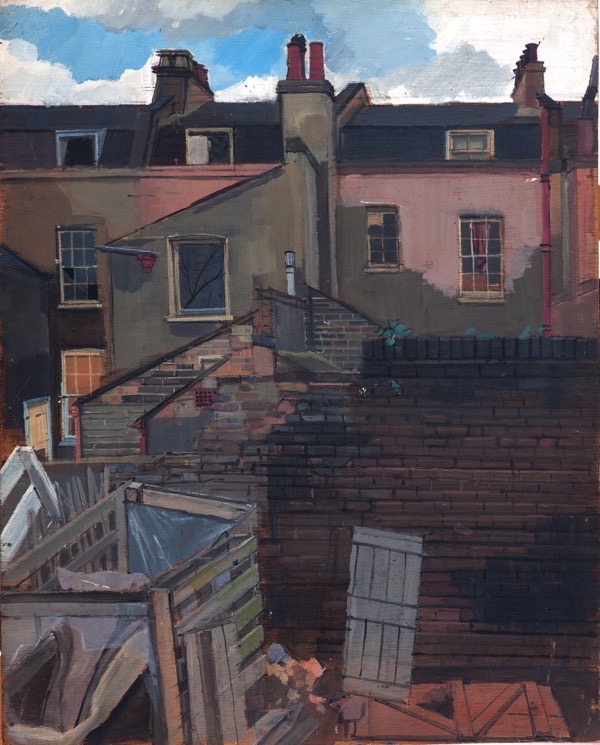
House in the East, 1980-81
Just over a week ago, the artist Doreen Fletcher, who is celebrated for her paintings of the East End which were first seen in theses pages wrote to me about Peri Parkes.
Doreen wrote, ‘My good friend Peri Parkes was perhaps the artist with the most integrity I have ever met. His standards were so high that he was reluctant to exhibit anything he produced, always finding the outcome lacking somehow. Fellow artists tried hard to persuade him to have a one man show to no avail. He painted the East End assiduously during the eighties until he took a teaching post in Cornwall in 1992, however he continued to revisit to Bow right up until his death too soon at the age of fifty-six.’
On Doreen’s recommendation, I took the train to Hertford last weekend to meet Peri’s daughters, Lucie & Zoe who showed me fifty of their father’s paintings which have been mostly stored in a cupboard since he died in 2009. The quality and significance of this work was immediately apparent and I knew at once that I must devote a chapter in East End Vernacular to celebrate the rare talent and rigorous vision of Peri Parkes.
Out of the tragedy of a broken relationship, Peri Parkes created a transcendent series of paintings and it is impossible not to touched by the self portraits that he included in his work, of the lonely man walking in the park or climbing onto his bike.
Today, Lucie & Zoe are the custodians of this legacy and they spoke affectionately to me about their father as we sat surrounded by his wonderful paintings.
Zoe – My father was from Hampstead Garden Suburb in Finchley. He had a Greek mother – who named him Pericles, she came from quite a well-to-do family and his father was a solicitor. Dad was born and grew up there but he left home very young, about sixteen. Then he met Lindsey, my mum, and they had me when he was just eighteen. My grandmother bought a house in Ridge Rd Crouch End and we all lived there.
Lucie – When he was nineteen, he got a scholarship to the Slade. I should add that when he was sixteen, he went off to Afghanistan, back-packing. He and mum first met at the railway station, just before he was about to leave and there was obviously a spark. Once he came back, they met up again and married when he was eighteen and mum was seventeen.
Zoe – When I was a baby, he used to take me off to college with him. He put me on his back and off we would go to the Slade.
Lucie – Mum had agoraphobia after she had Zoe, so he had to take her with him – a nineteen-year-old with his baby.
Zoe – They split up when I was six and Lucie was three, around 1979. He went to stay with his friend Martin Ives in a prefab in Condor St, Stepney and we stayed with our mum in her mum’s house. After that he got a housing association flat next to Bow Rd Station and then he moved just around the corner to Mornington Grove.
Lucie – He never had a studio, he just painted in the flat where he lived. He was completely unmaterialistic and his whole flat was his studio with bare floors, bare walls, furniture that he picked up from skips or off the street, boxes and then piles and piles of paints. All over the furniture there was paint splatters and full ashtrays. He did not really ever think about comfort.
Zoe – He was so driven by painting. He had a one track mind. He did not really want anything else in life but to be able to paint and to go to the pub.
Lucie – We used to go and stay with him every other weekend in the prefabs and hang around in the back yard, I remember doing snail races and counting slugs while he painted.
Zoe – He took us round galleries quite a lot, which as children was quite boring to us – but he used to get very enthusiastic about things he wanted to see.
Lucie – To say he was very self-absorbed is only half the picture because he was not egotistical, he was actually quite a humble person, and a loving and affectionate dad. I remember lying in bed in the prefabs when it was freezing cold and he used to tell us stories, and they were brilliant. We loved him and loved being with him, but he was not really able to give to his relationships because everything was about painting.
Zoe – I think he struggled with depression a lot, whether it was to do rejection as an artist or with not getting things right. He was a real perfectionist and he had massive temper flare ups if he was not satisfied with his work. Yet he had a real community in London. He used to go to the Coborn Arms every night and he had a crew of friends there.
Lucie – Nothing he did was ever right or good enough for him. He was always striving to be better. He could not give his paintings away let alone sell them but, if he did give one away to a family member, he took it back because it was not quite good enough. If he was here now, he would be looking at his paintings, very dissatisfied, and he would want to make changes.
He was driven to paint what he saw in front of him. I do not think he was driven to tell the story of the East End, it was just that, wherever he was, he painted obsessively to capture what he was seeing. Most of them are from his window in his living room or the back of his prefab.
Zoe – He was always submitting pictures for exhibitions and competitions, and he took the rejection quite personally.
Lucie – When his relationship broke down with mum he was deeply hurt. I think the more things went wrong in his life, the more he channelled everything into painting. I can remember him taking us home on the tube once and him looking at us and tears pouring down his face. That sticks with me because I knew then that he really cared and was hurt by the whole thing, but he could not express any of that – it all went into his painting.
Zoe – I look at these paintings and I see them as dad’s life at the time, from the time arrived in the East End in 1977 until he left in 1992. The style at the beginning is quite different from the later ones. He went on holiday to the tiny town of St Just on the farmost westerly point of Cornwall and fell in love with it. The day after returning from holiday he saw a job for a part time art teacher there in the newspaper, it was like an act of fate. He had taught Art at the Blessed John Roche School in Poplar and he wanted out of London. He loved it in Cornwall and lived in the most remote place. He said Cornwall was as close as he could get to Greece in this country.
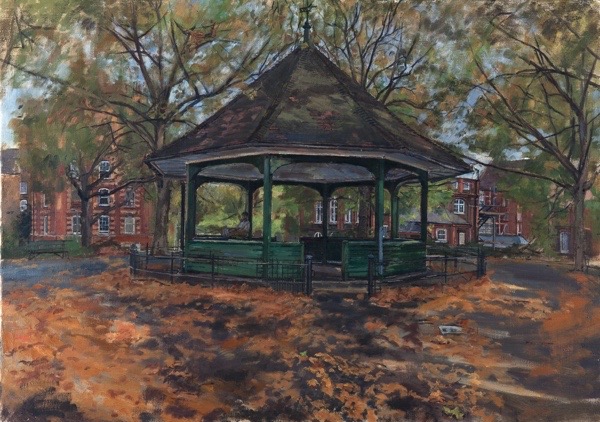
Arnold Circus, 1990-92
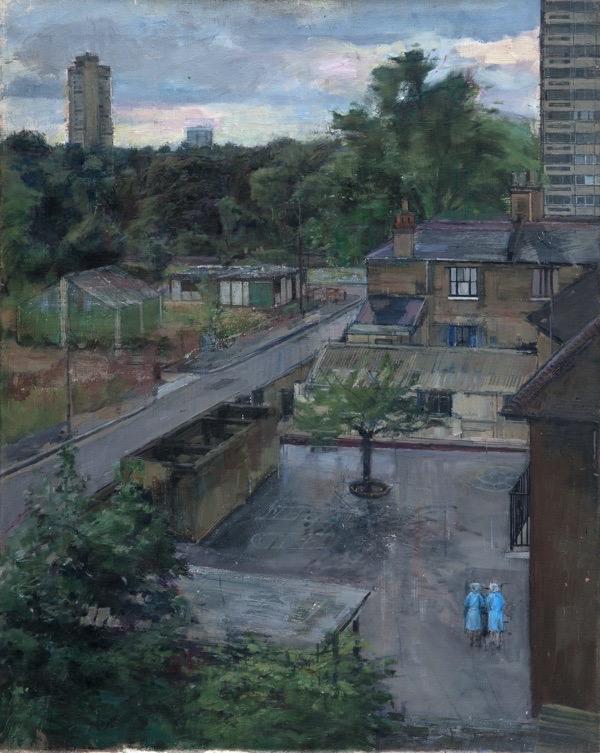
The Dinner Ladies, c.1986-9 (Wellington Way School, Bow E3)
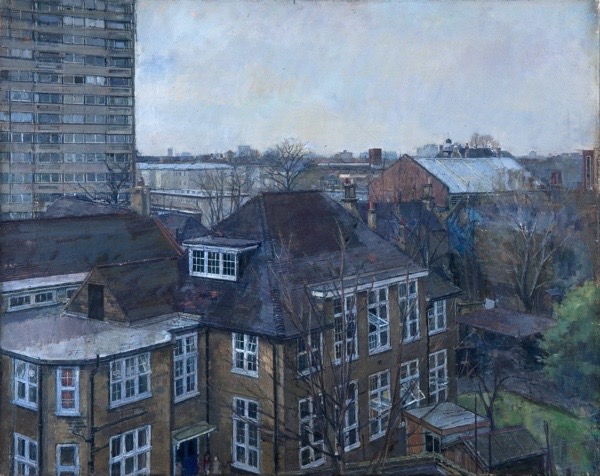
Wellington Way School E3, 1985-6
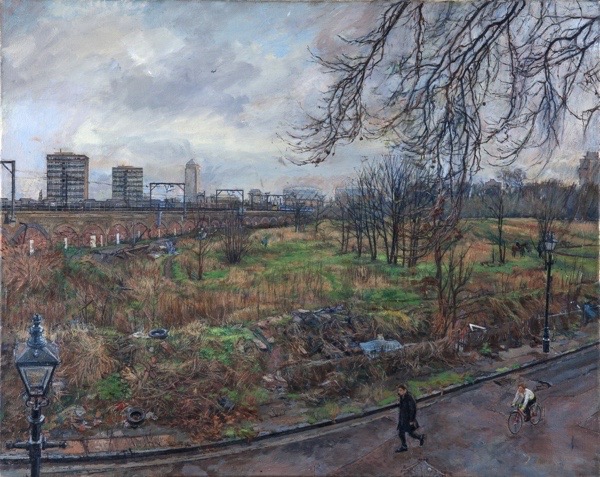
Bow Triangle in Winter, 1990-92
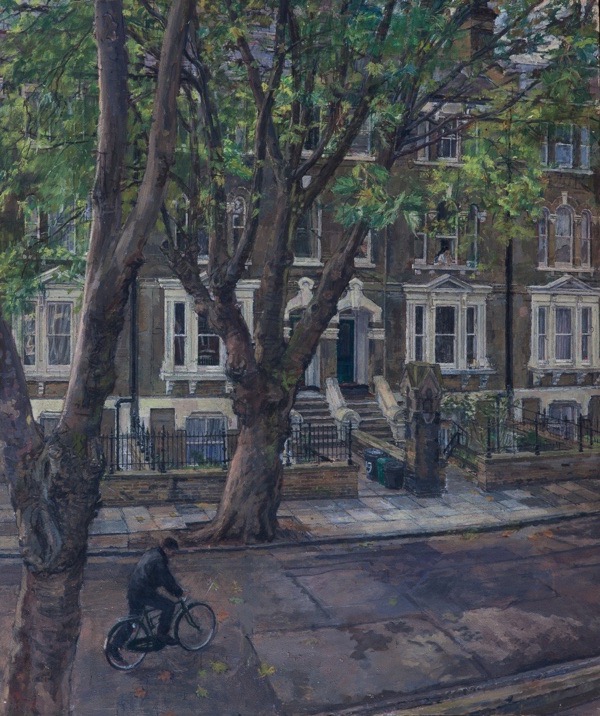
The Departure, c.1992-4 (Mornington Grove, Bow E3)
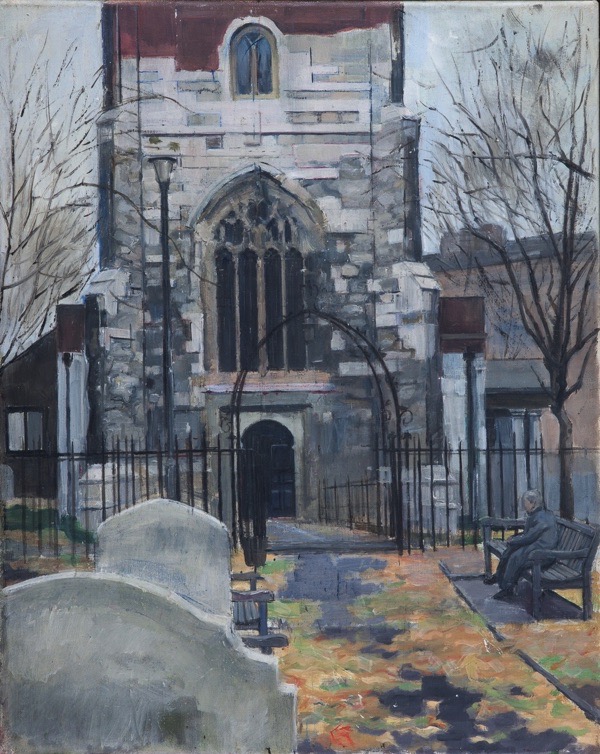
Bow Church, c.1987-92
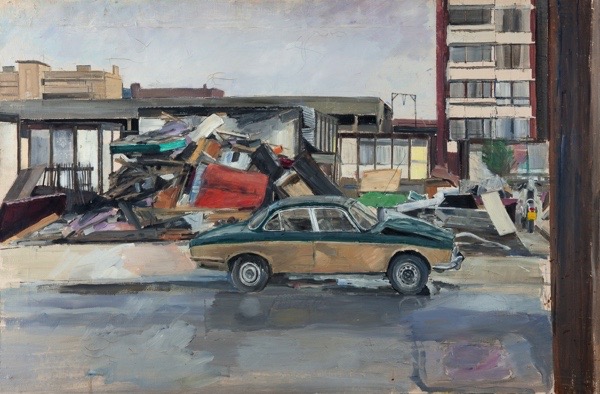
Condor St, Stepney, 1977-80

Condor St, Stepney, c.1980

City view from St Bernard’s School, St Matthew’s Row, E2, c.1987 (Click on this image to enlarge)
Paintings copyright © Estate of Peri Parkes
Take a look at some of the other artists featured in East End Vernacular
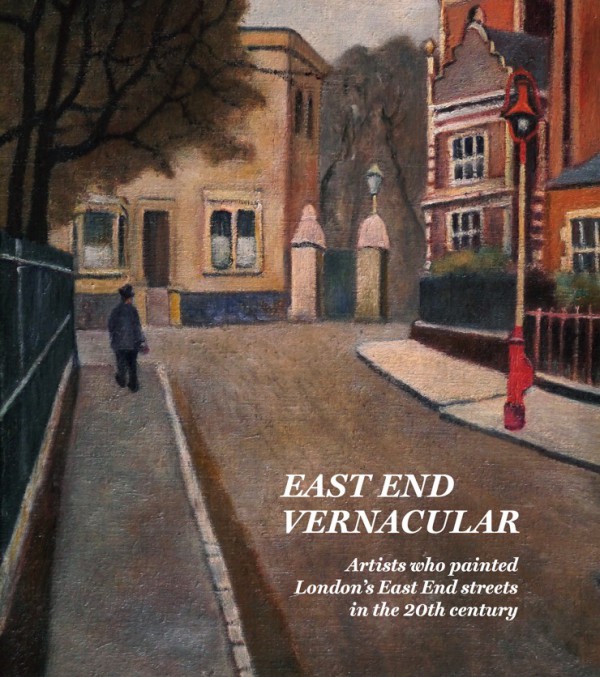
Click here to preorder a copy of EAST END VERNACULAR for £25
John Stow’s Survay Of Spittle Fields, 1598
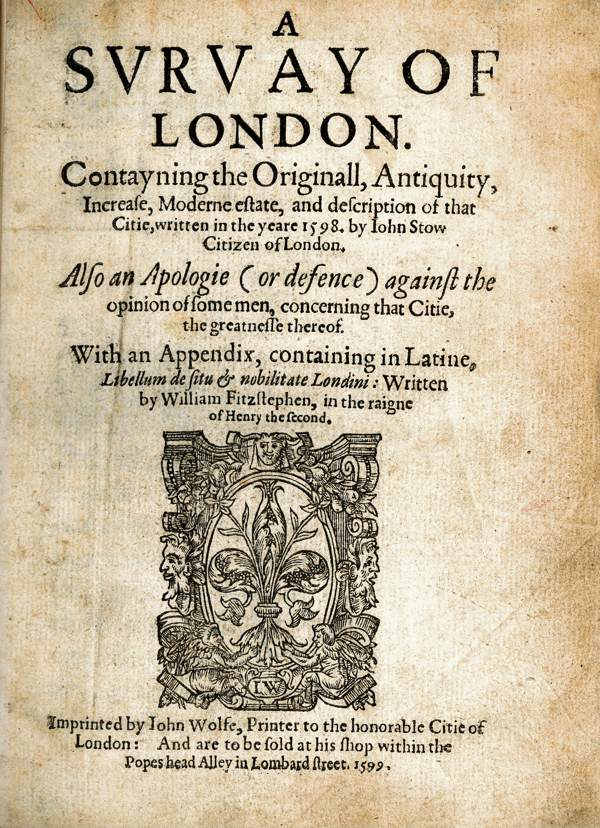
The Bishopsgate Institute has a 1599 copy of John Stow‘s Survey Of London and it touches me to see the edition that John Stow himself produced, with its delicate type resembling gothic script, and I find it sobering to recognise what a great undertaking it was to publish a book four hundred years ago – requiring every page of type to be set and printed by hand.
Born into a family of tallow chandlers, John Stow became a tailor yet devoted his life to writing and publishing, including an early edition of the works of Geoffrey Chaucer who had lived nearby in Aldgate more than a century earlier. In Stow’s lifetime, the population of London quadrupled and much of the city he knew as a youth was demolished and rebuilt, inspiring him to write and publish his great work – a Survey that would record this change for posterity. Consequently, on the title page of the Survey, Stow outlines his intention to include “the Originall, Antiquity, Increase, Modern estate and description of that citie.”
Yet in contrast to the dramatic changes he witnessed at first hand, John Stow also described his wonder at the history that was uncovered by the redevelopment, drawing consolation in setting his life’s experience against the great age of the city and the generations who preceded him in London .
SPITTLE FIELDS
There is a large close called Tasell close sometime, for that there were Tasels planted for the vse of Clothworkers: since letten to the Crosse-bow-makers, wherein they vsed to shoote for games at the Popingey: now the same being inclosed with a bricke wall, serueth to be an Artillerieyard, wherevnto the Gunners of the Tower doe weekely repaire, namely euerie Thursday, and there leuelling certaine Brasse peeces of great Artillerie against a But of earth, made for that purpose, they discharge them for their exercise.
Then haue ye the late dissolued Priorie and Hospitall, commonly called Saint Marie Spittle, founded by Walter Brune, and Rosia his wife, for Canons regular, Walter Archdeacon of London laid the first stone, in the yeare 1197.
On the East side of this Churchyard lieth a large field, of olde time called Lolesworth, now Spittle field, which about the yeare 1576 was broken vp for Clay to make Bricke, in the digging whereof many earthen pots called Vrnae, were found full of Ashes, and burnt bones of men, to wit, of the Romanes that inhabited here: for it was the custome of the Romanes to burne their dead, to put their Ashes in an Vrna, and then burie the same with certaine ceremonies, in some field appoynted for that purpose, neare vnto their Citie: euerie of these pots had in them with the Ashes of the dead, one peece of Copper mony, with the inscription of the Emperour then raigning: some of them were of Claudius, some of Vespasian, some of Nero, of Anthonius Pius, of Traianus, and others: besides those Vrnas, many other pots were there found, made of a white earth with long necks, and handels, like to our stone Iugges: these were emptie, but seemed to be buried ful of some liquid matter long since consumed and soaked through: for there were found diuerse vials and other fashioned Glasses, some most cunningly wrought, such as I haue not seene the like, and some of Christall, all which had water in them, northing differing in clearnes, taste, or sauour from common spring water, what so euer it was at the first: some of these Glasses had Oyle in them verie thicke, and earthie in sauour, some were supposed to haue balme in them, but had lost the vertue: many of those pots and glasses were broken in cutting of the clay, so that few were taken vp whole.
There were also found diuerse dishes and cups of a fine red coloured earth, which shewed outwardly such a shining smoothnesse, as if they had beene of Currall, those had in the bottomes Romane letters printed, there were also lampes of white earth and red, artificially wrought with diuerse antiques about them, some three or foure Images made of white earth, about a span long each of them: one I remember was of Pallas, the rest I haue forgotten.I my selfe haue reserued a mongst diuerse of those antiquities there, one Vrna, with the Ashes and bones, and one pot of white earth very small, not exceeding the quantitie of a quarter of a wine pint, made in shape of a Hare, squatted vpon her legs, and betweene her eares is the mouth of the pot.
There hath also beene found in the same field diuers coffins of stone, containing the bones of men: these I suppose to bee the burials of some especiall persons, in time of the Brytons, or Saxons, after that the Romanes had left to gouerne here. Moreouer there were also found the sculs and bones of men without coffins, or rather whose coffins (being of great timber) were consumed. Diuerse great nailes of Iron were there found, such as are vsed in the wheeles of shod Carts, being each of them as bigge as a mans finger, and a quarter of a yard long, the heades two inches ouer, those nayles were more wondred at then the rest of thinges there found, and many opinions of men were there vttred of them, namely that the men there buried were murdered by driuing those nayles into their heads, a thing vnlikely, for a smaller naile would more aptly serue to so bad a purpose, and a more secret place would lightly be imployed for their buriall.
And thus much for this part of Bishopsgate warde, without the gate.

A copper coin from the Spitalfields Roman Cemetery that I wear around my neck
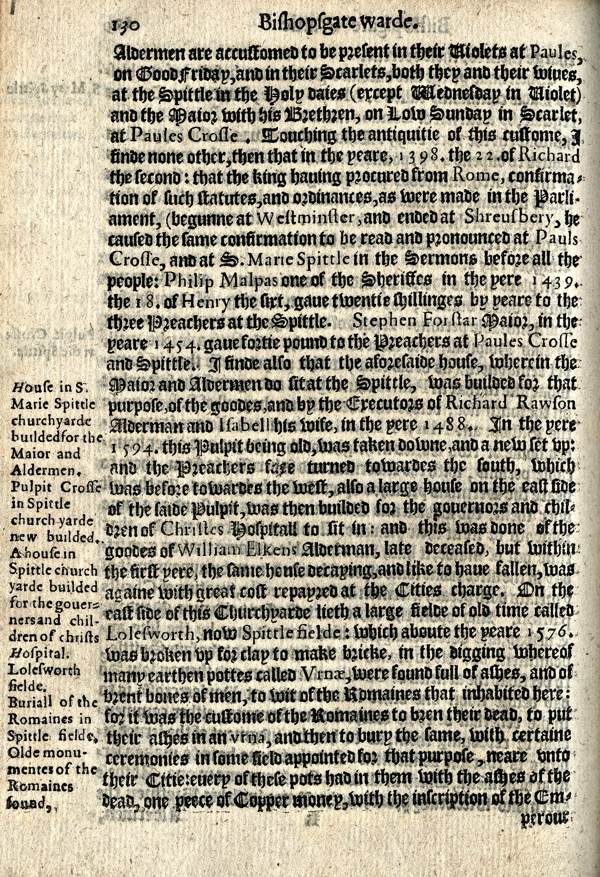
Bishopsgate Ward entry by John Stow in his Survey of London
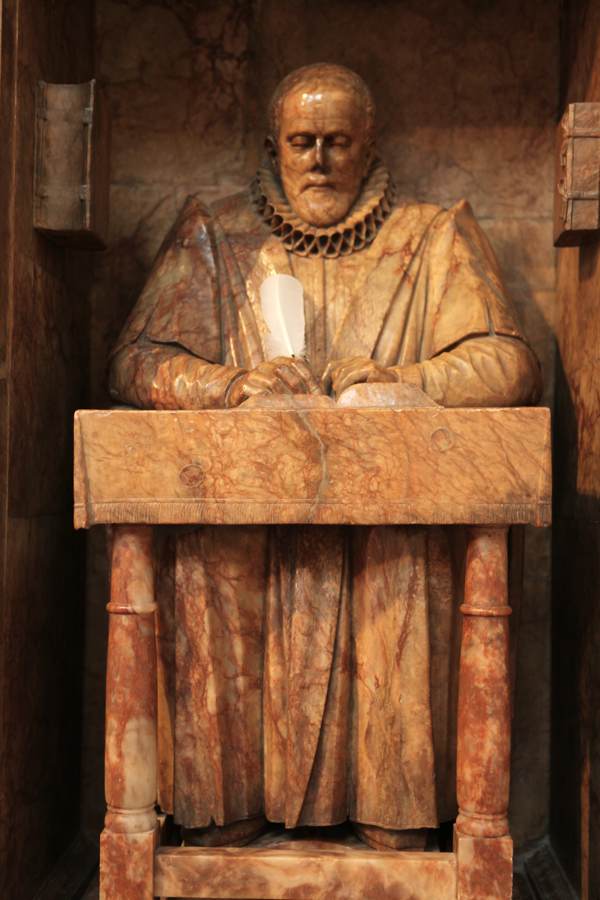
Monument to John Stow in St Andrew Undershaft
Archive images courtesy Bishopsgate Institute
Photograph of Stow’s monument copyright © Colin O’Brien
You may also like to read about
Lollipop People
Let us now praise the Lollipop People. Those benign spirits who arrive miraculously twice a day, like guardian angels or fairy godparents, glowing fluorescent, wielding their wands and shepherding their flocks safely across the road to and from school.
When the City of London & Cripplegate Photographic Society approached me offering their services to collaborate with Spitalfields Life, I knew at once that the Lollipop People would be the subject – to my eyes, they are unacknowledged, universally-loved, heroes and heroines who deserve to be celebrated and photographed.
Yet, getting to the right place at the right time and capturing these timid fleeting spirits, proved more challenging than we had anticipated. We discovered that, due to the Education Cuts, the Lollipop People are an endangered species and, such is the unassuming nature of these modest folk, some shunned the lens while others would not give their names.
Thankfully, through tenacity and charm, Cathryn Rees and Jean Jameson were able to produce this slim portfolio of elegant portraits that must serve as the historical record of these hardy, altruistic souls.
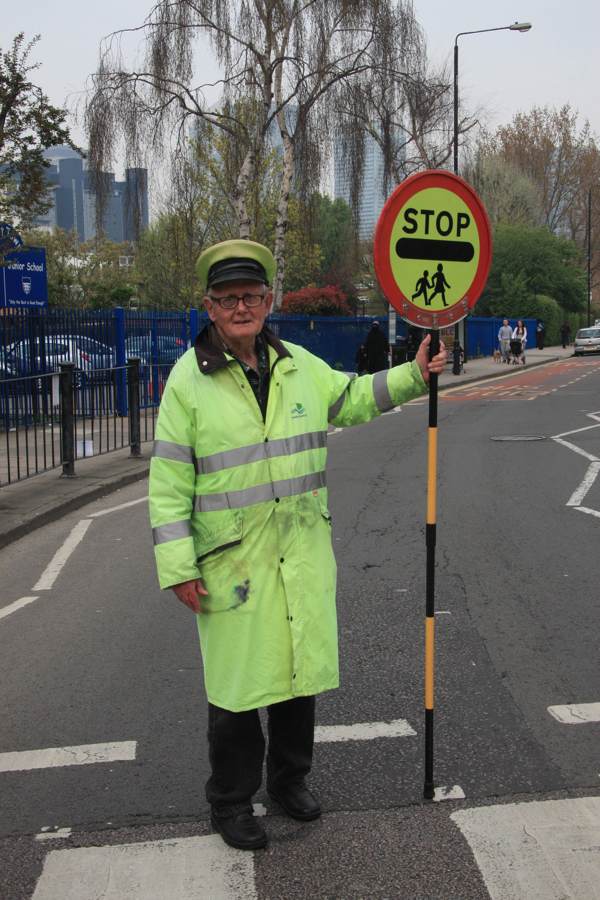
Frank Smith at Cubbitt Town School, Isle of Dogs (Photo by Cathryn Rees)
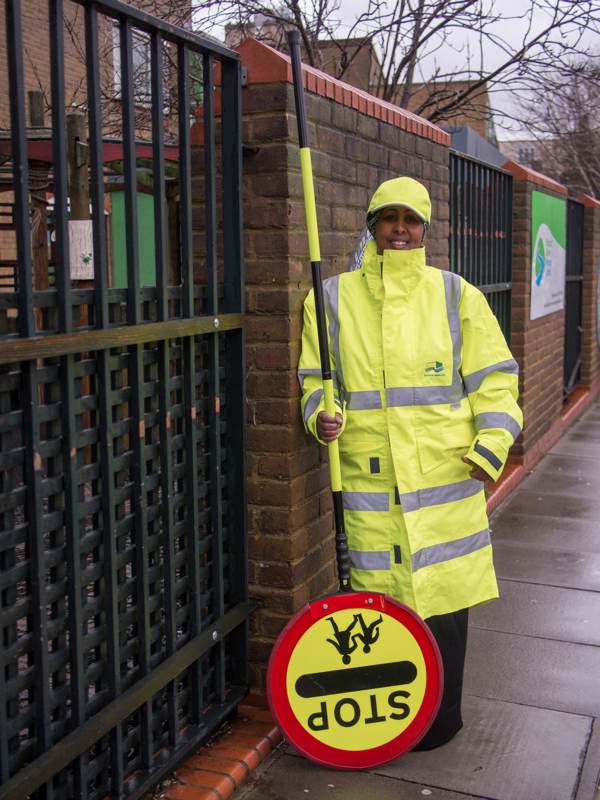
Sabah at Bigland Green School, Limehouse (Photo by Jean Jameson)
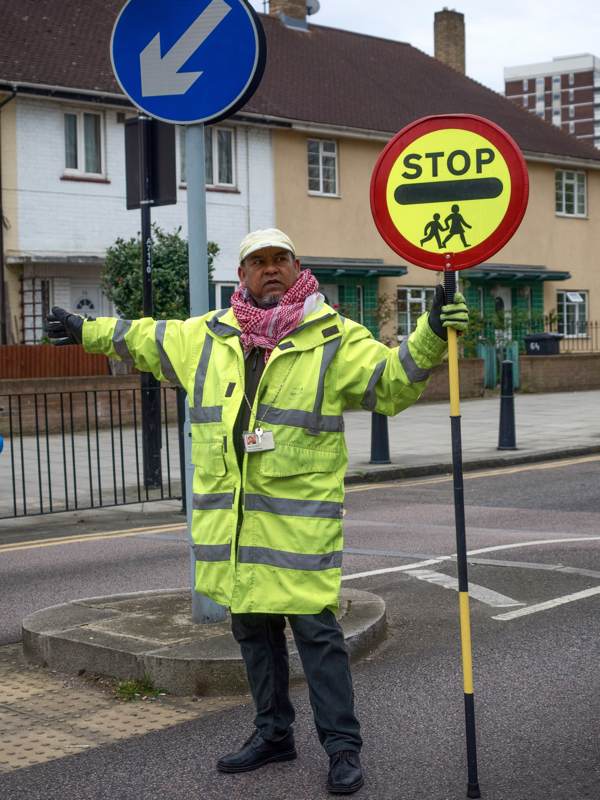
Abdul Rif at Caley Primary School, Bow (Photo by Jean Jameson)
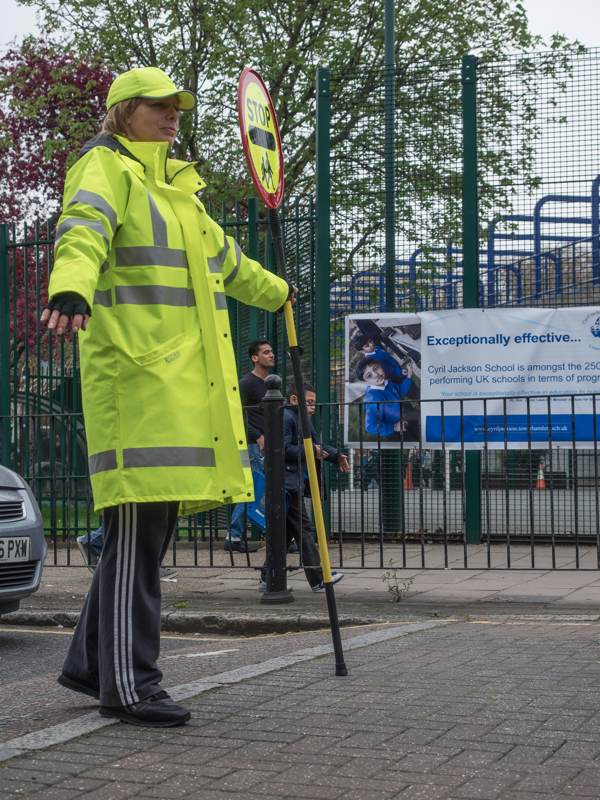
At Cyril Jackson Primary School, Limehouse (Photo by Jean Jameson)
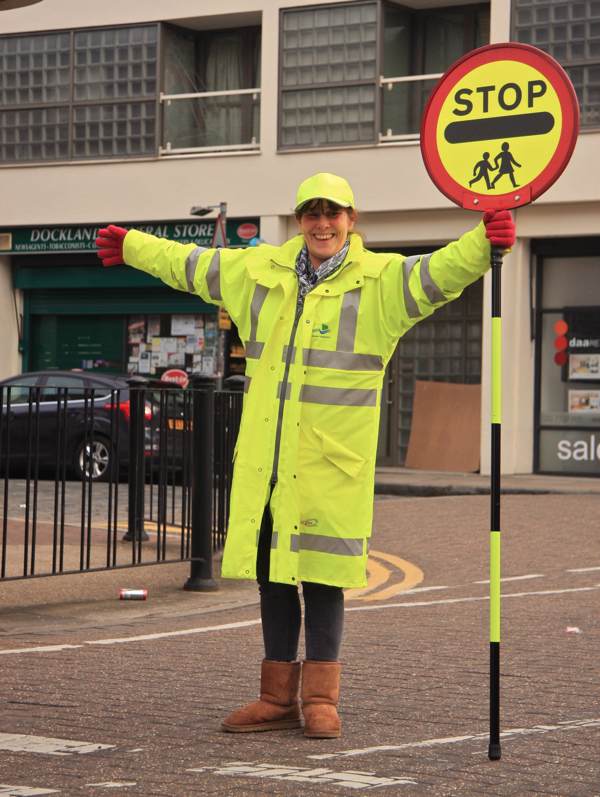
Jackie Clarke, St Peter’s School, Wapping (Photo by Cathryn Rees)

At Cyril Jackson Primary School, Limehouse (Photo by Jean Jameson)
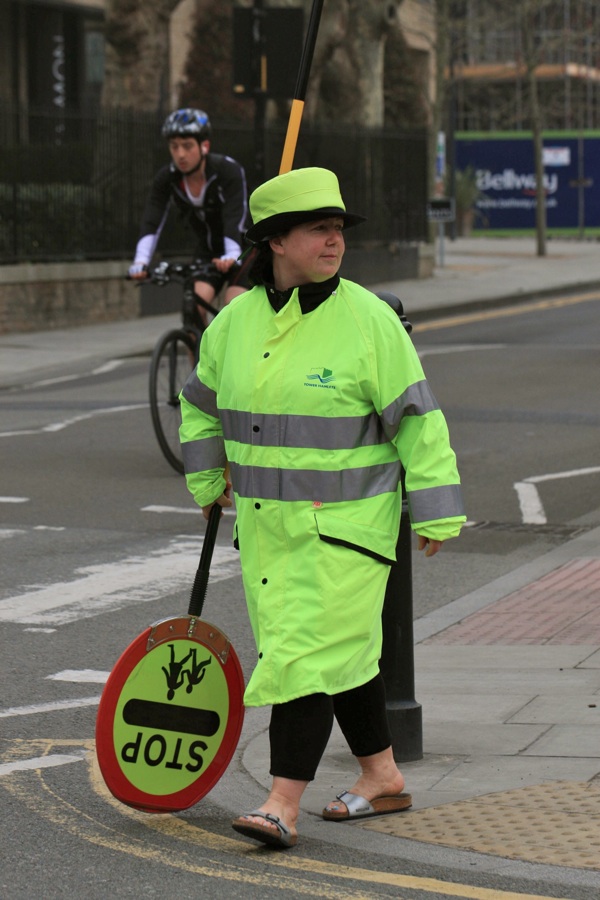
Julie Hutchinson at Mayflower School, Poplar (Photo by Cathryn Rees)
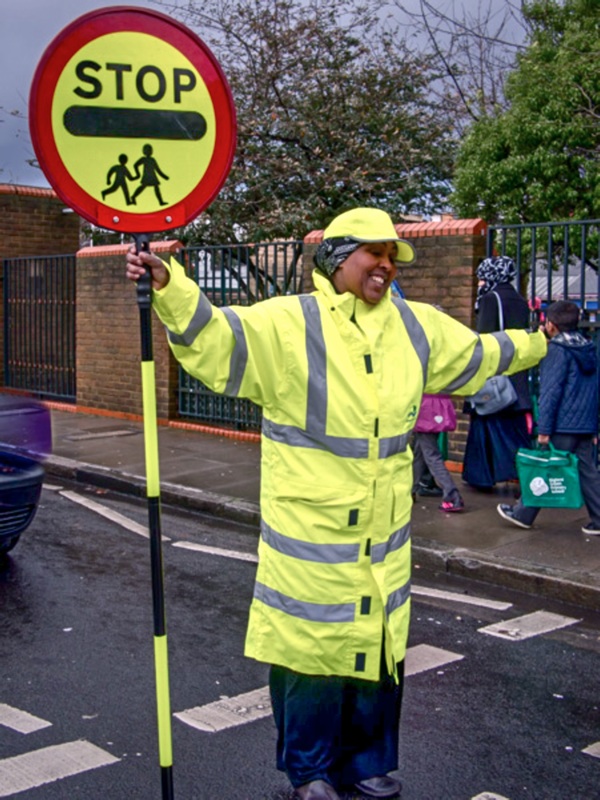
Sabah at Bigland Green School, Shadwell (Photo by Jean Jameson)
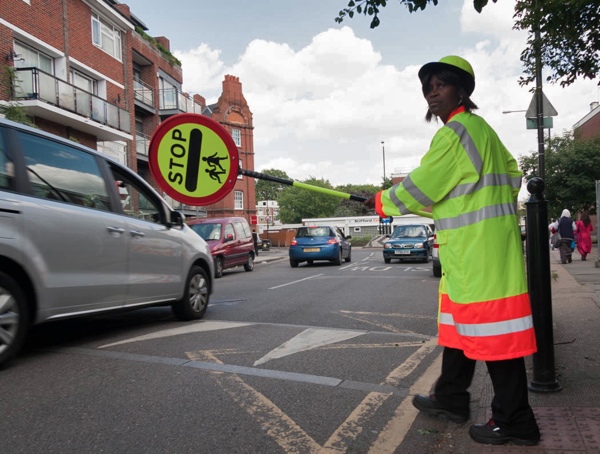
At Redlands Primary School, Stepney (Photo by Cathryn Rees)
Photographs copyright © Cathryn Rees & Jean Jameson
Learn more about City of London & Cripplegate Photographic Society, London’s oldest photographic society, founded in 1899
You my also like to read about
Keith Parmenter, Dry Cleaner
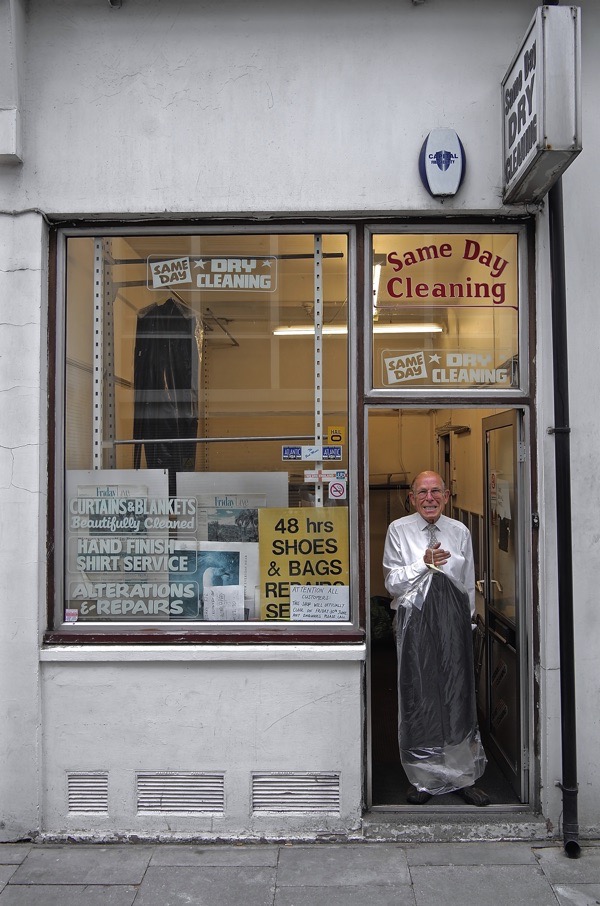
Keith Parmenter – ‘I had one lady crying when I said I was leaving’
You have only one day left to collect your dry cleaning from Keith Parmenter’s tiny shop in Princeton St, Holborn, because he is closing tomorrow forever after twenty-eight years. When I visited yesterday, Keith had a mere half a dozen suits on the rail and he was clearing out his shop while awaiting collection of these, which gave me the opportunity for a chat to learn the story that lies behind this modest establishment, measuring just ten by fifteen feet.
In these quiet streets situated between Theobalds Row and High Holborn, Keith has been a popular figure for decades. He is the custodian of house keys and the recipient of parcels for his neighbours, and renowned among the worthy members of the legal profession who rely upon Keith to get their dark suits cleaned efficiently at short notice in readiness for important court cases – you might say he keeps their reputation spotless.
Although his workplace is small, Keith is a man of the world who has seen life and is celebrated for recounting tales of his youthful adventures upon the seven seas. I was as touched to meet Keith as his customers are sad to see him go, and it reminded me how much individuals such as he contribute to the distinctive character of our city.
“I will have had this shop twenty-eight years this September. I also used to have half the cafe on the corner and I had sunbeds in the basement, a solarium – two and half businesses. I was already involved in this before I came here, I took over a dry cleaning shop in Cowcross St next to Smithfield Market. I just met somebody one day who already had a shop and they were a bit short of money, so I squared a few things up and worked with them for a little while and saw how it was done. Then I saw this advertised, and I applied and took over this shop.
I was born in Stratford and I went away to sea as a merchant seaman when I was fifteen and a half. My first trip was on a an Esso oil tanker. I was a galley boy because I always had weak eyes. Although I wanted to, I could not be on deck I could only go into the catering, but in the end I found it to be the best. I worked for the New Zealand Shipping Co, the Port Line, the Union Castle Line encircling Africa and the Cunard Line subsidiary which used to sail from St Catherine Dock beside Tower Bridge. I used to go on four week trips to Italy, via Porto, Lisbon, Cadiz and Seville. It was chartered by Harveys of Bristol and we brought back wooden barrels of port from Porto.
I had a lovely upbringing in Stratford, more-or-less where the Olympic Park is now, and my dad used to buy and sell horses, scrap metal, rags, fruit and veg. He was a proper costermonger. It was all in the family. My grandfather, he came from Belgium and he had a secondhand shop and he would also buy and sell horses. He had stables where the Olympic Park is, that was all open land by the River Lea where I used to ride horses bareback. It was a wonderful time – to be in Stratford and live like that. I had the best of both worlds.
When I did go to school in Canning Town, I was not a very good scholar. I used to play football and I used to box. It was close to the docks and I saw all the ships’ funnels, and I was mesmerised by them. It intrigued me and I always loved history and geography, and that gave me the urge to go away to sea. There was lots of seamen from East London, on every ship I sailed there was always one. At first, I followed in my dad’s trade, I had a scrap yard and I used to buy and sell scrap, and I did house clearances. There is not much I have not done!
It has been wonderful here in Holborn. That gentleman who has just gone by, he is a top barrister. I have met barristers and judges, and got on with everyone. I had one lady crying when I said I was leaving. I have friends from all the different Inns of Court. There is one customer – I am not sure what he does – he is something to do with the Royal Family and last year I went to one of the Queen’s Garden Parties. He got me an invitation and I thought to myself, ‘I would have never believed this when I was a boy in Stratford,’ because I was a bit of a rascal. It has been fabulous here. This is a lovely area.
That building on the corner opposite used to be Yorkshire Television and I saw all the stars from the different shows sitting outside. It was very busy then but it has gone a lot quieter now. I have decided to have a break and I want to do a bit of travelling. Hopefully, I can keep strength up because I still feel pretty good and I work out every day.”
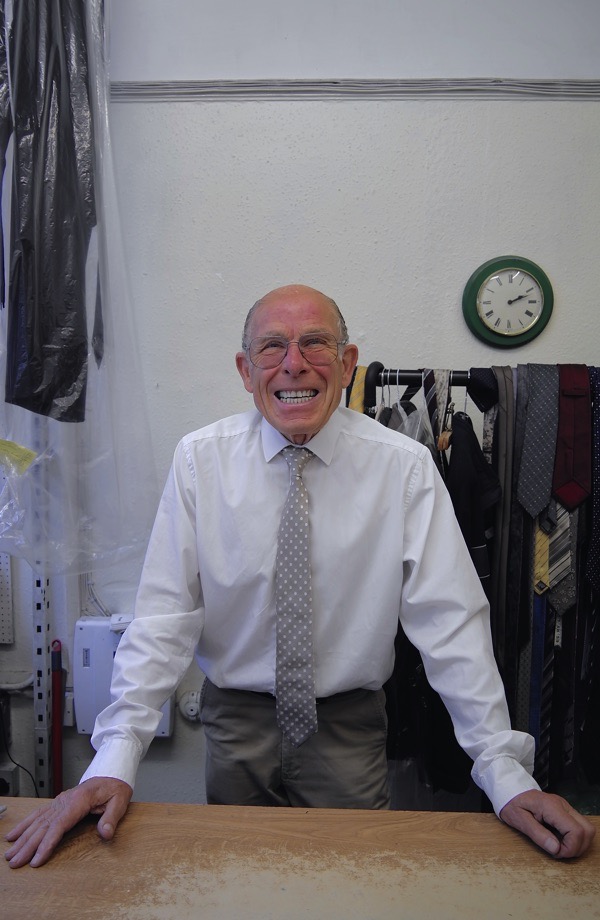
‘I would have never believed this when I was a boy in Stratford’
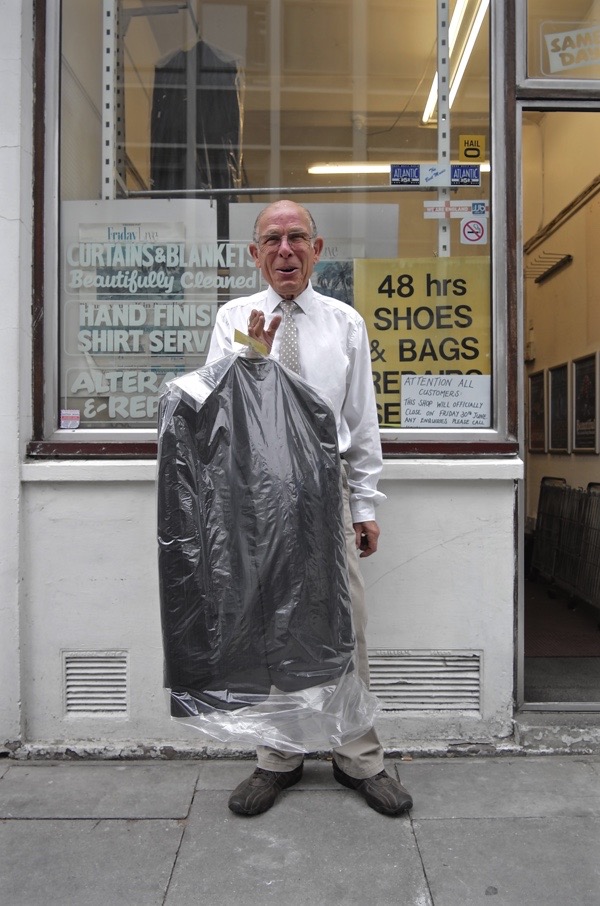
Keith Parmenter’s last days of dry cleaning
You might also like to read about
Marius Webb, Bookseller At Foyles
Today I publish an interview by Sebastian Harding with Marius Webb who worked at Foyles in 1965. Marius spoke from his home in Australia, recalling his role in the Foyles staff strike, his take on the British class system and the habits of shoplifters. Visit Sebastian’s website Chronicles of Charing Cross Rd to read or contribute more stories of life at London’s most famous bookshop.
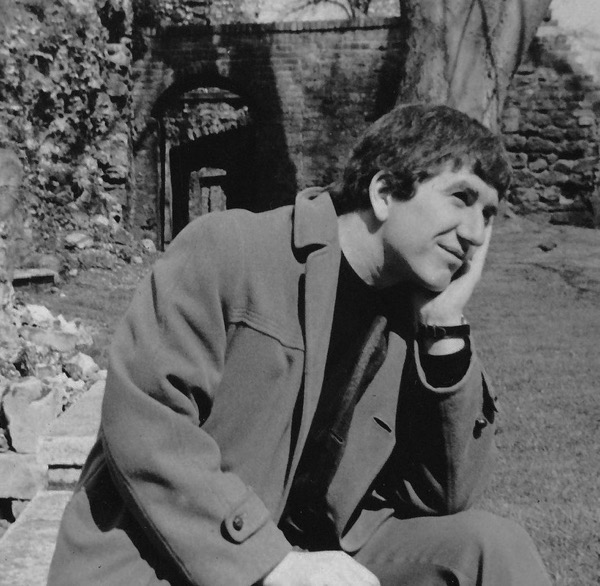
Marius Webb in 1965
Sebastian Harding – How did you begin at Foyles?
Marius Webb – I was born in London. My father was English, from Battersea, and he was working for Battersea Council when war broke out. My mother had come to the United Kingdom from New Zealand via Australia. After the war, they decided that London was appalling and they should get out, so they came to Australia. But I left when I was twenty-one and came back by ship to Europe.
My first experience of London was the grim reality of staying with my aunt and uncle in Balham. One day, I saw an advertisement in the paper for a job at Foyles that paid £10 a week. During my University year I had a part in establishing a small bookshop in Melbourne called ‘The Paperback’ and I had also studied English at University so had a good knowledge of literature. I passed the interview and was told I could begin work on the following Monday.
I remember the first week at Foyles very well. The policy was that all new staff went directly into the mailroom. You sat around this enormous table and opened all the mail that came in. Someone would come up from transport area with a huge sack full of mail and dump it on the table. There were a couple of stout old ladies who managed the room and they would sort the mail out. Christina (Christina Foyle, owner of the Foyles business from 1963) was an avid stamp collector and, equipped with a paper knife, you had to open the invoices in a particular way so that the stamp was saved.
Bucket loads of money orders was what came in most most frequently. Talk about having a cash cow! We were at the fag end of the British Empire and people all over the world were members of the Foyles book club. They would send off monthly for a new book sent with a money order. Foyles also ran a book club which did reprints of famous books from the twenties and thirties. This was a considerable part of their business and so the mailing room was quite an operation.
It was good for someone new because you could speak to the people opening mail on either side of you. The mail room was the fulcrum of the whole place with approximately twenty people working there at one time.
Sebastian Harding – Can you describe Charing Cross Rd in the sixties?
Marius Webb – I loved it. I had come from Melbourne which was a recently planned city where every road was straight but London still had that ancient air. I loved Charing Cross Rd because it had such a distinct character. Everything south of Tottenham Court Rd station was just full of little bookshops and music shops, and I guess most of that has gone now. It had so much character and interest. Some of the smaller bookshops were unique and, of course, there was the proximity of the theatre where you could get in for nine pence in the Gods. London felt like a really creative force.
Sebastian Harding – Many have fond memories of the eccentricities of Foyles, did that affect working there?
Marius Webb – They did not trust staff with money so there were a number of queuing systems. The customer would queue up first to a till where a staff member gave them a note of the cost of their book. The customer would take a written piece of paper over to the till where they paid. This was incredibly naïve as it meant staff could steal quite easily and many of my colleagues did.
For instance, if their friend came in wanting to buy a book they would write down one shilling for a book worth a pound. Their friend would take it to the cash till, pay the shilling and then come back to their friend who would stamp their receipt and no one would be any the wiser!
I remember people would go up to the Art department, help themselves to a few books and then go down and sell them to the second hand department. Took them ages to work that one out! Many staff knew about regular shoplifters but there was an attitude of, “Oh that’s too bad.” I remember I once saw an old lady behind a stack. When I came round to see what was going on I saw she was sweeping a whole heap of books into a suitcase!
Sebastian Harding – Do you remember the interior of the store?
Marius Webb – None of the rooms in the building were large because it had been cobbled together from a group of buildings that had once served a whole series of other purposes. The ground floor had much higher ceilings and the ‘New Releases’ area of the store felt like a Victorian salon with cornices from an earlier life. I remember the windows were quite splendid which meant they were great for displaying books.
Sebastian Harding – Can you remember the people who ran the store?
Marius Webb – Christina Foyle’s husband, Ronald Batty, was the manager and he was quite formidable. I did not realise at first that he was married to her but he was a hands-on military sort of chap. He would sweep in and out, ordering the old ladies around and calling people out from the mail table and giving them orders to go to one of the departments. He was the General Manager, the Human Resources Manager, Chief Personnel Officer. Everything went through him as far as staff were concerned. There was an Australian called Mr Green who was in charge of new releases. He was very fancy but ultimately quite sad – he was gay and had obviously come to London to get away from Australia – very efficient but not very strong-willed.
Sebastian Harding – What began the chain of events that led to your dismissal and the strike?
Marius Webb – In my second week working at the store, I was assigned to the ground floor ‘New Releases.’ It was a terrific area to be in. I got to know authors like Len Deighton (writer of The Ipcress File), who would come in to see how their books were selling. One of the things that struck me from the outset were some of the more Victorian ways of the organisation. I remember arriving for my shift, running up the marble stairs and there would be two or three old ladies on their knees scrubbing the stairs by hand with rags. Coming from Australia, I was just appalled but that was actually quite typical of the London of those days – the remnant of the old working class being kept in their place.
The other thing that I remember was having a surprise at the end of the second week when we got paid. We were paid nine pounds ten whereas the advertisement I had answered said quite clearly £10 a week. Dropping ten shillings does not sound like much, but when you are only getting paid ten pounds it is quite a lot. It did immediately make me question what sort of employer advertises a wage and then does not pay it. I was used to Australia where we had minimum wage and an eight hour day – these were things we accepted as normal.
As time passed, the style of management at Foyles became abundantly clear. The first thing that happened was an incident with a fellow from Sweden with whom I had worked with in the mail room. He had his own small art bookshop and had come to London to better his English and make some contacts. In the second or third week, I ran into him and he was wearing a dust coat and pushing a trolley and told me he had been put in the transport department, after originally applying to work in the Art Department.
I said “That doesn’t sound right. Go and talk to Mr Batty as it sounds like some sort of mistake.” Later that day, I saw him again and he had just been sacked. He explained the situation to Mr Batty and he was told: “Well you’re working in the Mail department and if you don’t like it you’re sacked.” I thought “Crikey! This is very strange.” This was a guy who wanted to make connections between Foyles and his own successful bookstore in Sweden, and there there was a good possibility it would have been beneficial to both parties. That chap’s dismissal was one of quite a few sackings that happened over my first month of working there, most workers did not have any comeback and it just became endemic.
I was getting increasingly concerned at the number of people getting dismissed and I mentioned it to my uncle. He was a draughtsman and the draughtsman’s union was one of the toughest. He told me I needed to speak to the Shop Workers’ Union (USDAW) which I had no knowledge of.
I met one of the organisers and he said, “You are entitled to this amount but they can still pay you what they like.” He told me to be careful that my employers did not hear I had been speaking to the union, as previous Foyles employees had lost their jobs as a result of this. He told me I could join up, but to have any influence I would need a lot of people to join.
A number of us became friends and every so often we would go to the Pillars of Hercules for drinks after work. One evening, I brought the subject up and we all agreed that the way we were being treated was not up to scratch and that we should join the union together. There were about three or four of us at the start and we agreed to keep mum, but before long we had about twenty.
We needed to have union meetings and I was appointed to lead them even though I had not a clue how to run a meeting, and it was after one of these that I was ratted. One fellow who was a bit of a goody-goody and quite close to Mrs Foyle had been invited to a meeting. He was generally pro-management and, of course, he passed on the word to Mr Batty. Not long after that, I was called into Mr Batty’s office and told I had not been satisfactory and I had been late for work.
I rang the union and this guy told me to get my arse up to the offices real quick. They had an offset printer and we created some very simple leaflets and posters. We got down to Foyles the following morning so we could give out these leaflets to people as they arrived for work.
All the people coming into work were all my friends, so even if they were not members of the union, when they found out what had happened they decided to join the strike. The twenty people who were already part of the union joined me outside immediately and it was not long before we had fifty to sixty people. The union cranked out more leaflets and we were soon handing them out to every customer trying to enter the building. This had a devastating effect on business because 50% of customers said, “Oh in that case, I’m not coming in,” and this escalated very quickly. Then, because we had the placards in the street, someone phoned the newspapers and within an hour or two the Evening Standard had us on the front page.
The story was even reported in Australia and my auntie kept all the clippings from the local newspapers because she thought it was fantastic. For the first few days, there was a huge amount of media attention because Foyles was a well known institution so it was a good hook to hang the story on and the strike was led by young people. There was a lot of unexpected support from the customers, the authors and the publishers.
Sebastian Harding – What was the outcome?
Marius Webb – The strike actually lasted for just three days. At first the shop’s owners ignored it and tried to solve it themselves. At the end of the second day, Christina Foyle walked around the shop and apparently offered people £5 to stay and work the following day, but some people were so offended by this they came out to join the strike just to spite her. By the third day, the management realised they were in deep trouble because they saw from the tills what was happening.
They immediately convened a Foyles conference with the union, as well as further talks about the rates of pay and the conditions that people were working under. We were all quite pleased and back at work by the end of the third day, and I was put into a new department.
After four or five days, it became transparent that nothing had changed. They refused to change anything and so we had a meeting with the unions where they let us know they were not getting very far with their own negotiations. We decided that we needed to go on strike again and this second strike ended up lasting for six weeks. We had no idea it would last this long! This was about 50% of the workforce, around 100 people. The fact we stayed outside the shop, continually leafleting meant that eventually they had to resolve the issue. It was not hugely satisfactory, but we did get pay rises and a bit of respite from the continual sackings.
I remember there was one worker in the transport department who was a real cockney. He started out against the strike, then joined the union and by the time I left he wanted to be the union boss!
Marius Webb went on to have a successful career in radio working for many years as a reporter for the Australia Broadcasting Corporation and he and his wife now live between Australia and Italy.
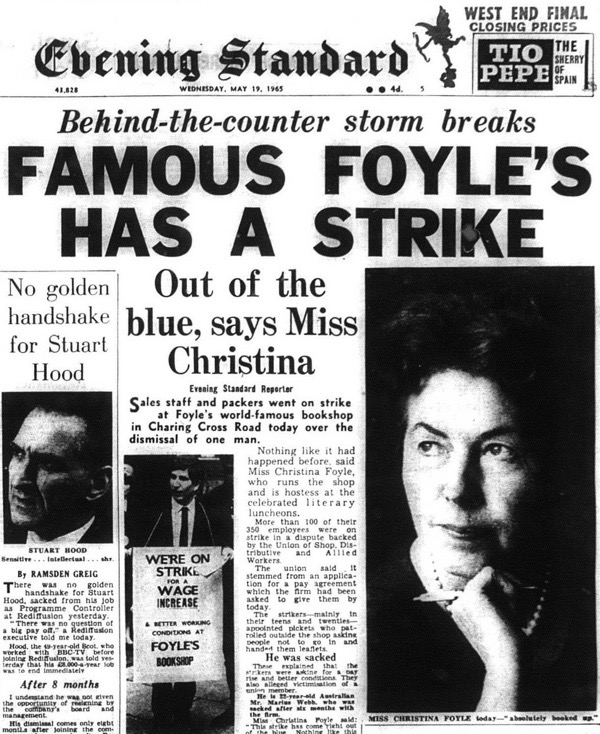
The Evening Standard, May 19th 1965
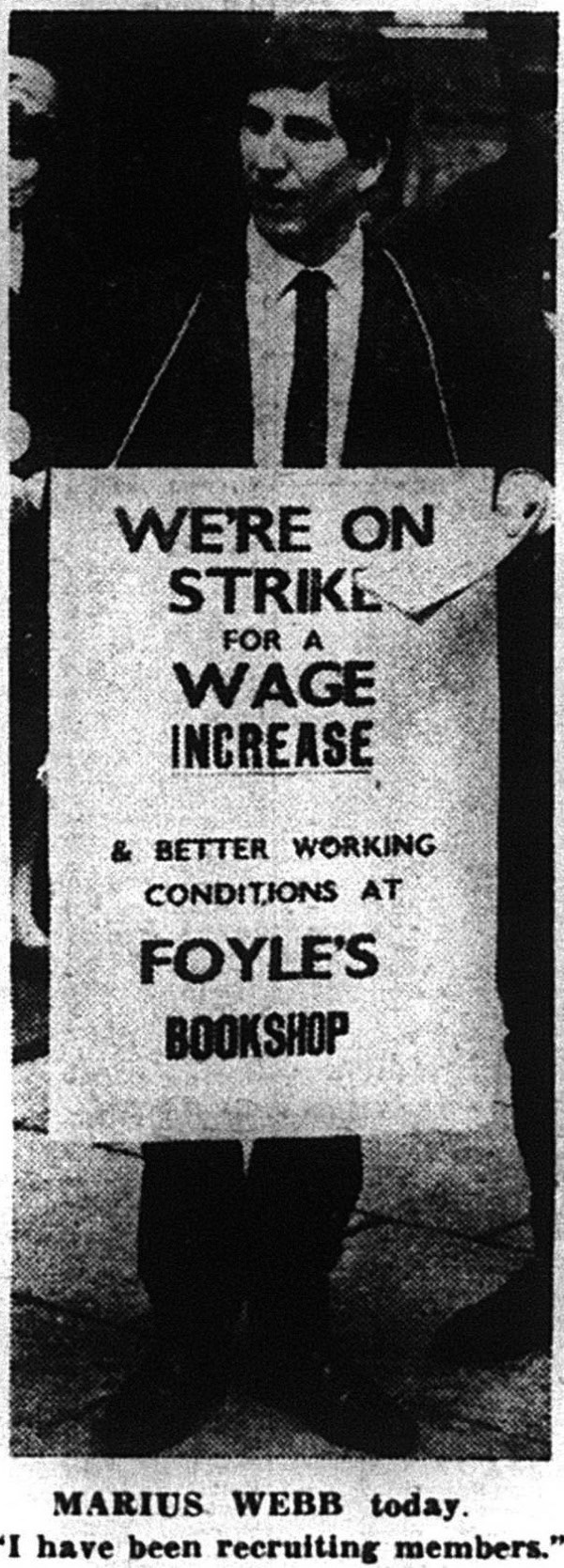
Marius on the front page of The Evening Standard, May 19th 1965
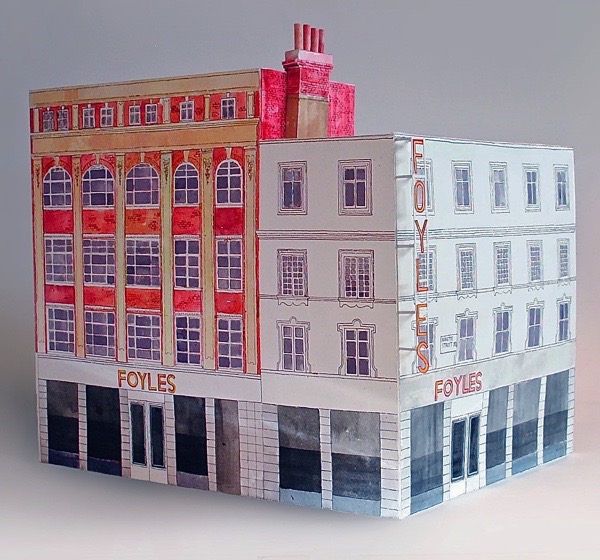
Sebastian Harding’s model of Foyles

Sebastian Harding in Smithfield
You also like to read about
Fulham Palace
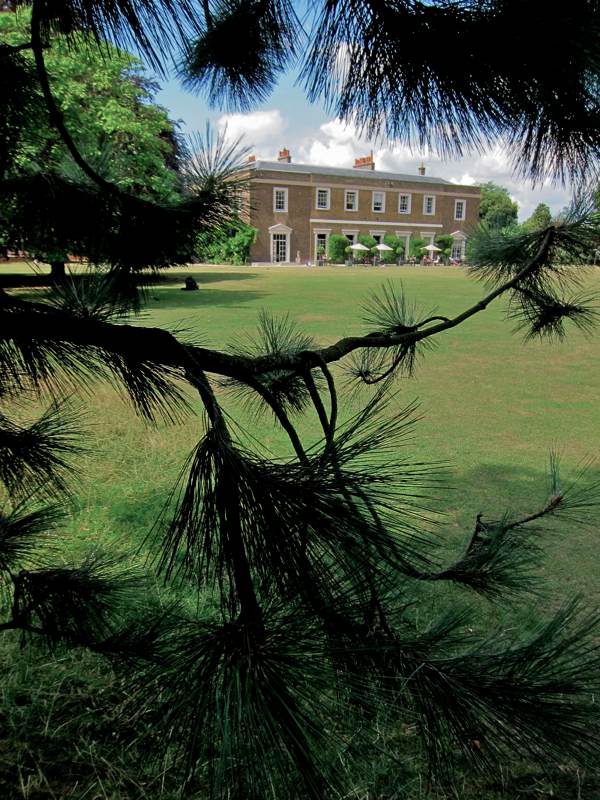
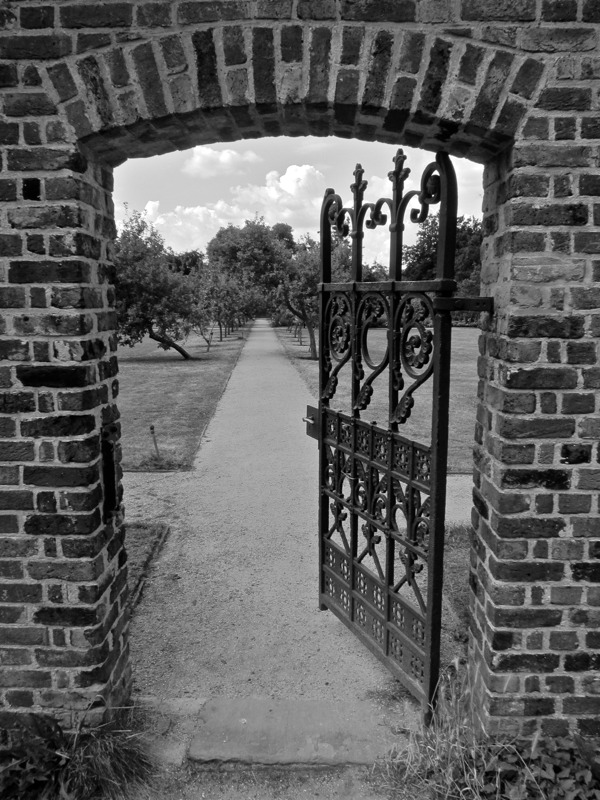
You leave Putney Bridge Station, cross the road, enter the park by the river and go through a gate in a high wall to find yourself in a beautiful vegetable garden with an elaborate tudor gate. Beyond the tudor gate lies Fulham Palace, presenting an implacable classically-proportioned facade to you across a wide expanse of lawn bordered by tall old trees. You dare to walk across the grass and sneak around to the back of the stately home where you discover a massive tudor gateway with ancient doors, leading to a courtyard with a fountain dancing and a grand entrance where Queen Elizabeth I once walked in. It was only a short walk from the tube but already you are in another world.
For over a thousand years the Bishops of London lived here until 1975 when it was handed over to the public. But even when Bishop Waldhere (693-c.705) acquired Fulham Manor around the year 700, it was just the most recent dwelling upon a site beside the Thames that had already been in constant habitation since Neolithic times. Our own St Dunstan, who built the first church in Stepney in 952, became Bishop of London in 957 and lived here. By 1392, a document recorded the great ditch that enclosed the thirty-six acres of Britain’s largest medieval moated dwelling.
Time has accreted innumerable layers and the visitor encounters a rich palimpsest of history, here at one of London’s earliest powerhouses. You stand in the tudor courtyard admiring its rich diamond-patterned brickwork and the lofty tower entrance, all girded with a fragrant border of lavender at this time of year. Behind this sits the Georgian extension, presenting another face to the wide lawn. Yet even this addition evolved from Palladian in 1752 to Strawberry Hill Gothick in 1766, before losing its fanciful crenellations and towers devised by Stiff Leadbetter to arrive at a piously austere elevation, which it maintains to this day, in 1818.
Among the ecclesiastical incumbents were a number of botanically-inclined bishops whose legacy lives on in the grounds, manifest in noteworthy trees and the restored glasshouses where exotic fruits were grown for presentation to the monarch. In the sixteenth century, Bishop Grindal (1559-1570) sent grapes annually to Elizabeth I, and “The vines at Fulham were of that goodness and perfection beyond others” wrote John Strype. As Head of the Church in the American Colonies, Bishop Henry Compton (1675-1753), sent missionaries to collect seeds and cuttings and, in his thirty-eight tenure, he cultivated a greater variety of trees and shrubs than had previously been seen in any garden in England – including the first magnolia in Europe.
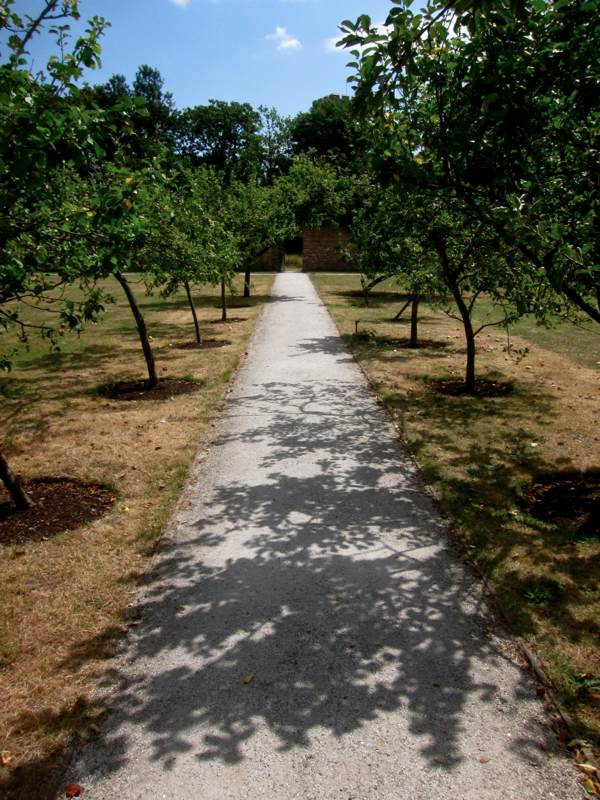
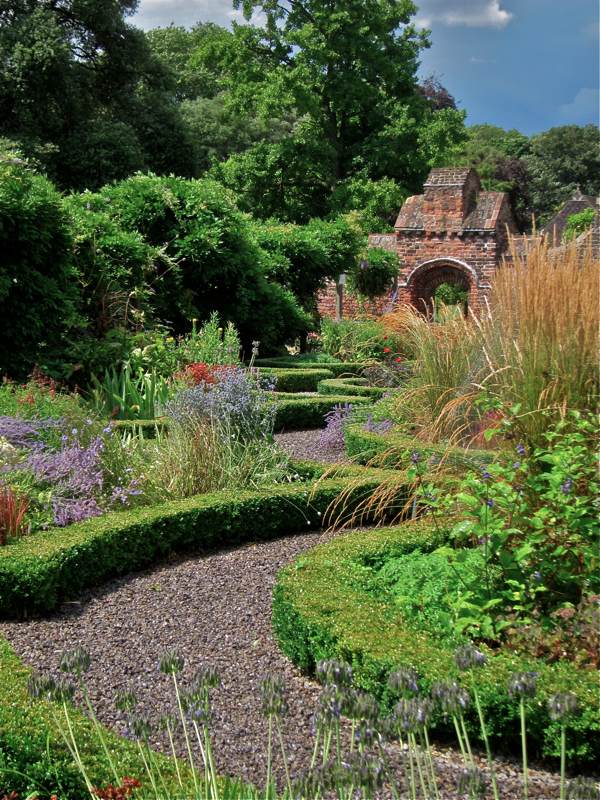
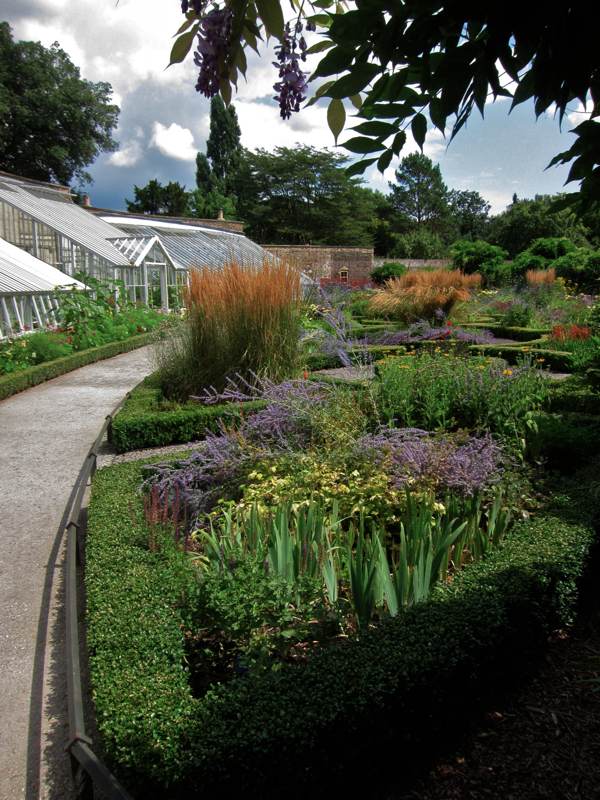
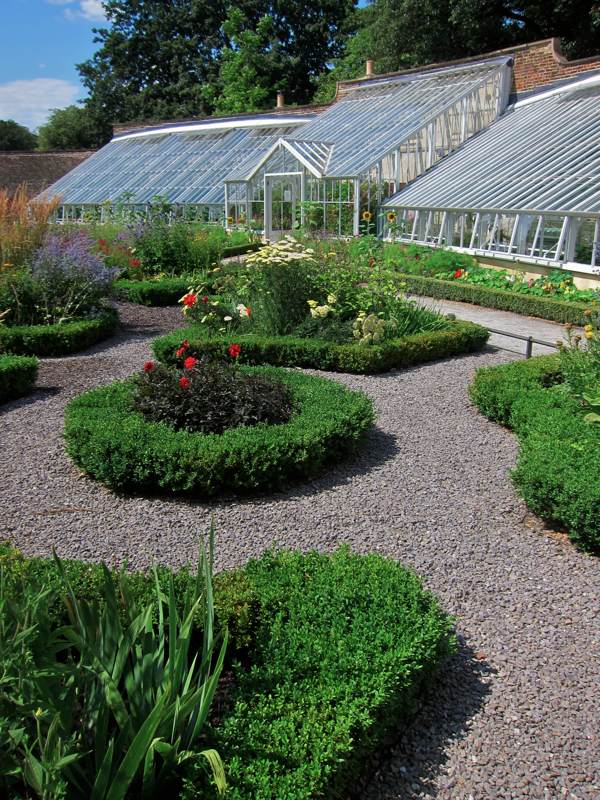
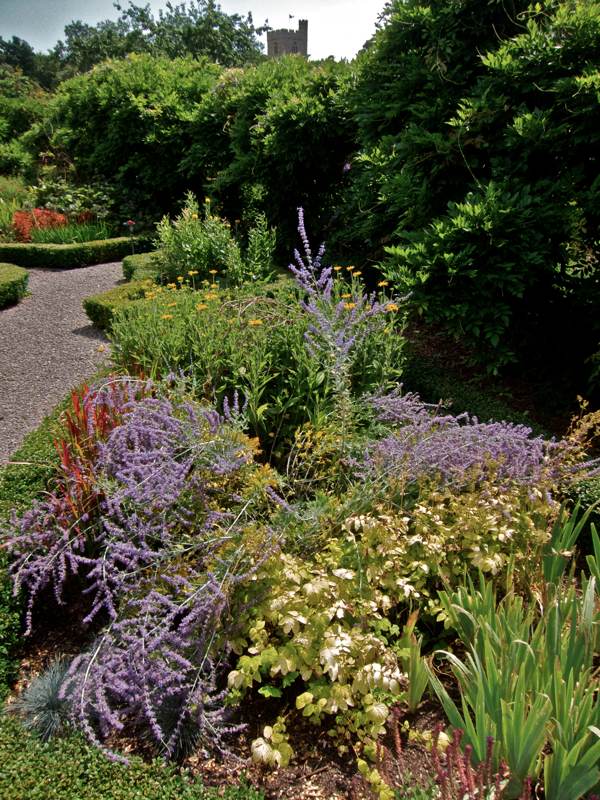
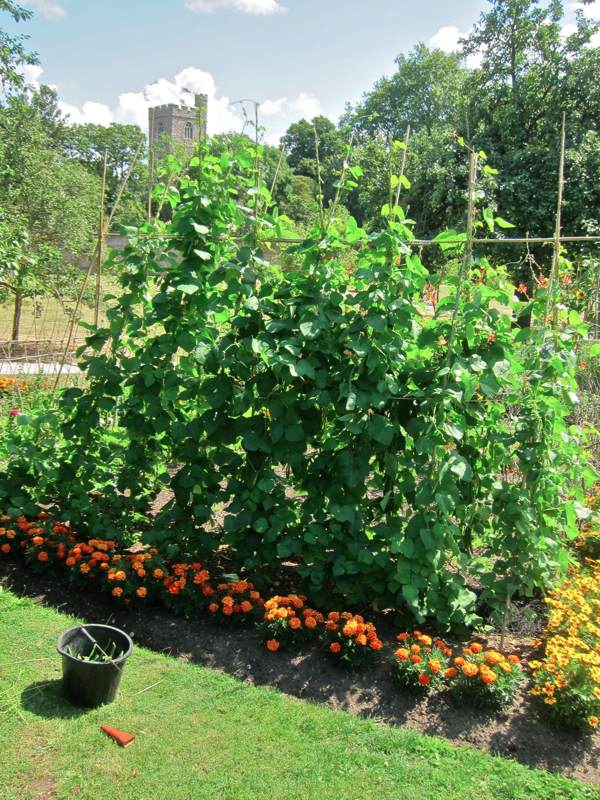
At this time of year, the newly-planted walled garden proposes the focus of popular attention with its lush vegetable beds interwoven with cosmos, nasturtiums, sweet peas and french marigolds. A magnificent wisteria of more than a century’s growth shelters an intricate knot garden facing a curved glasshouse, following the line of a mellow old wall, where cucumber, melons and tomatoes and aubergines are ripening.
The place is a sheer wonder and a rare peaceful green refuge at the heart of the city – and everyone can visit for free .

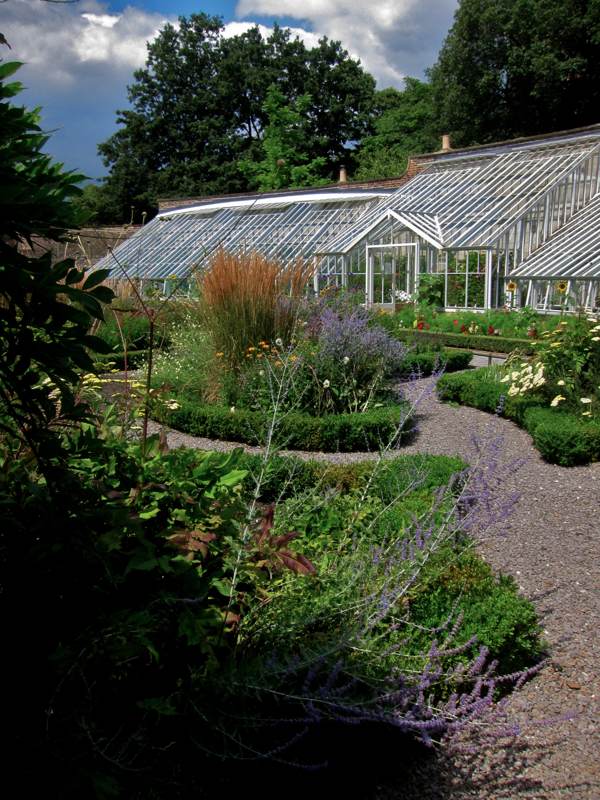

Cucumbers in the glasshouse
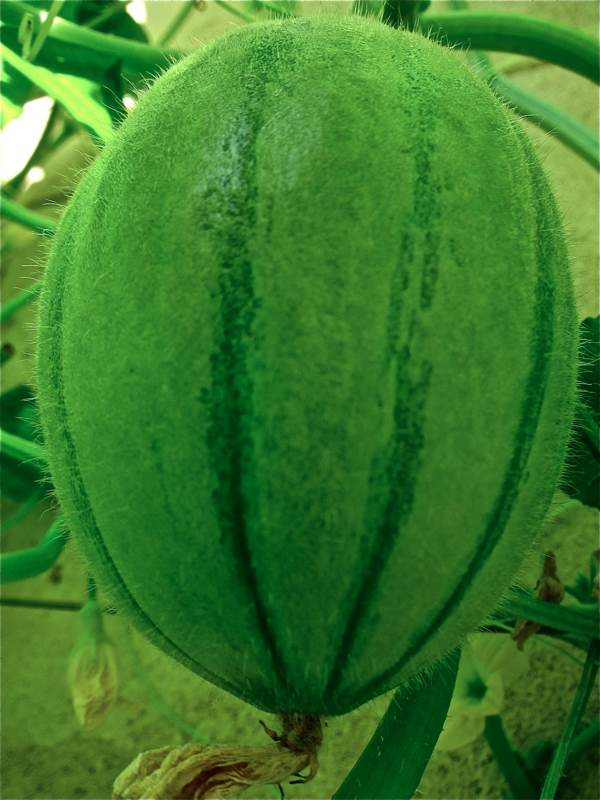
Melon in the glasshouse


Five hundred year old Holme Oak
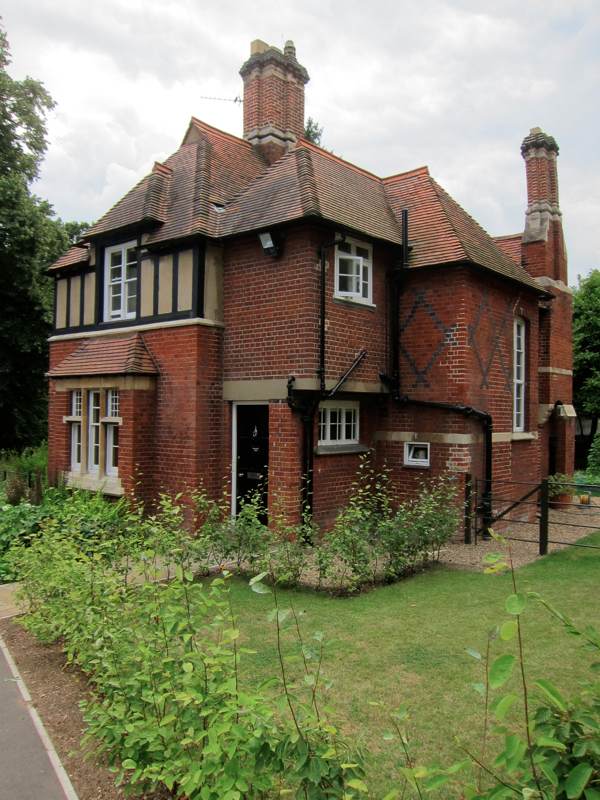
Coachman’s House by William Butterfield
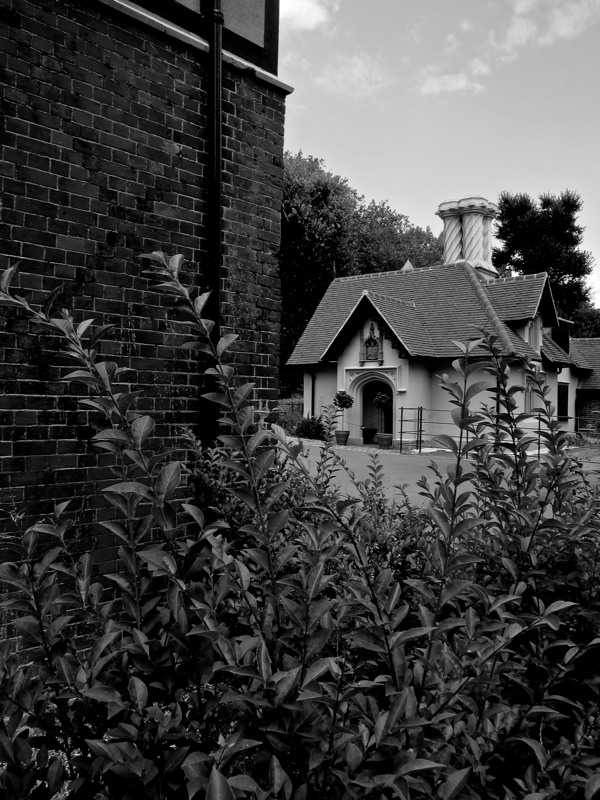
Lodge House in the Gothick style believed to have been designed by Lady Hooley c. 1815
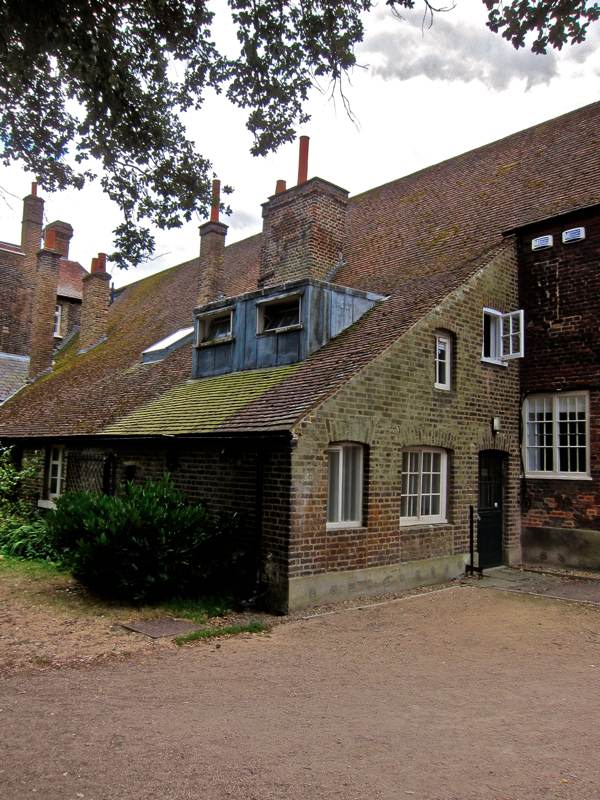
Tudor buildings in the foreground with nineteenth century additions towards the rear.
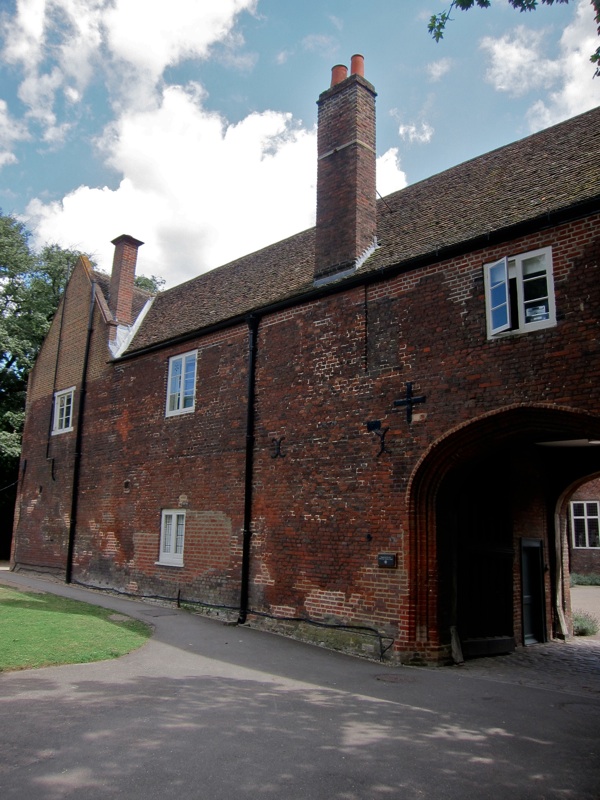
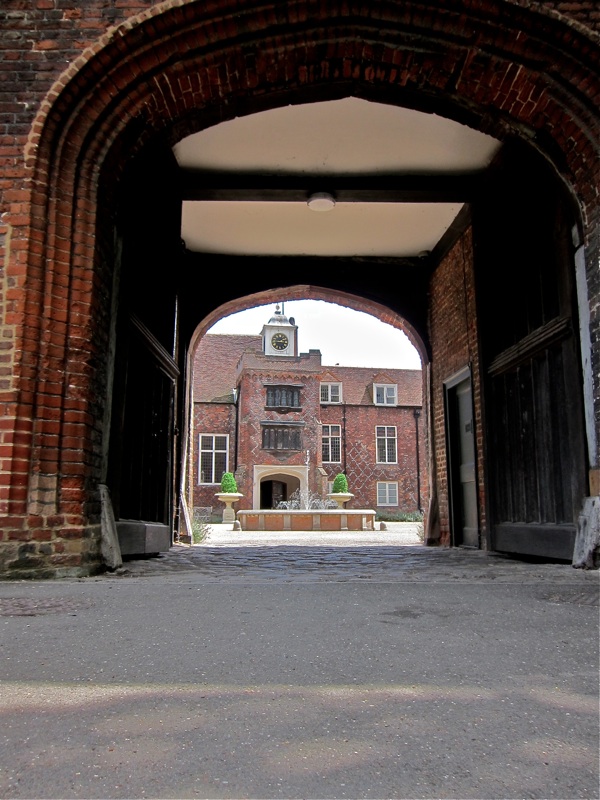
Sixteenth century gate with original oak doors
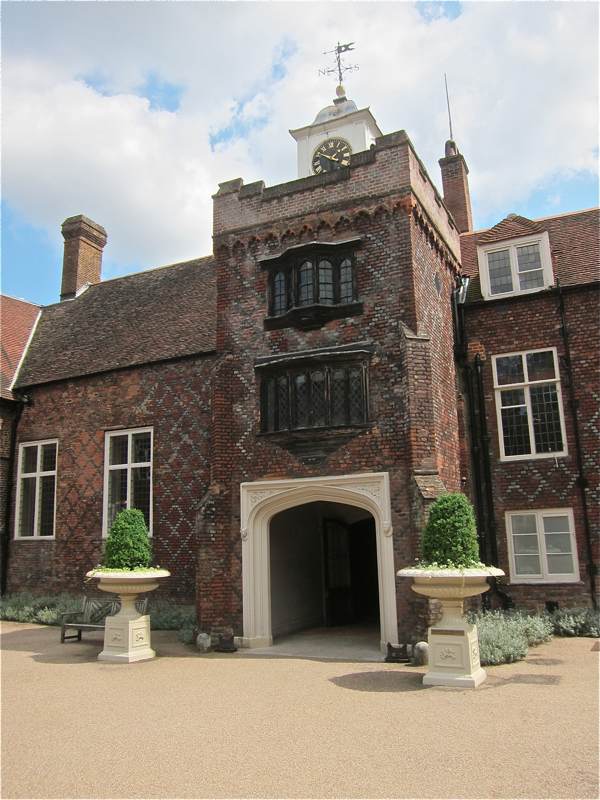
The courtyard entrance
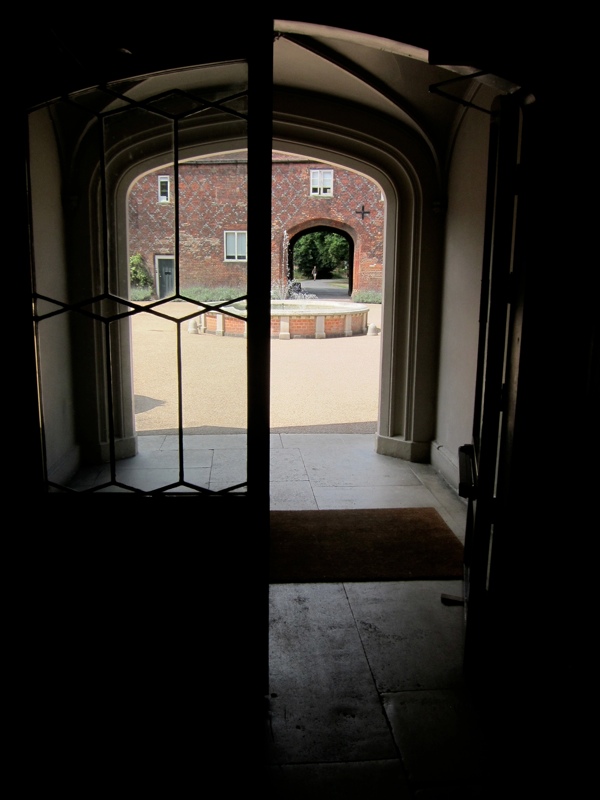
Looking back to the fountain
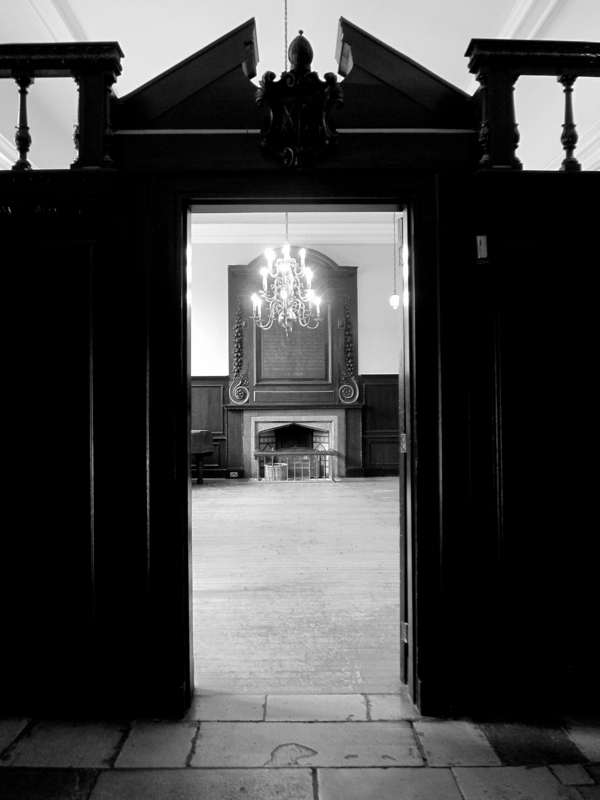
Entrance to the medieval hall where Elizabeth I dined
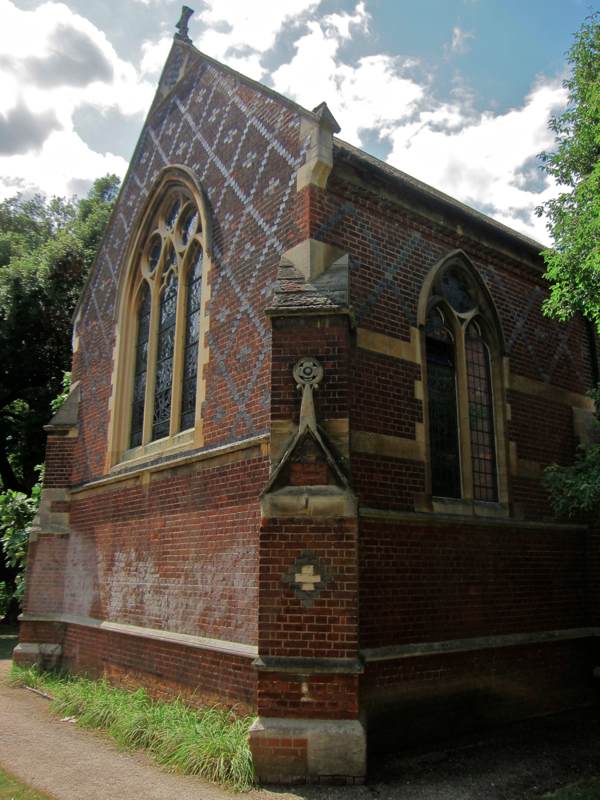
Chapel by William Butterfield
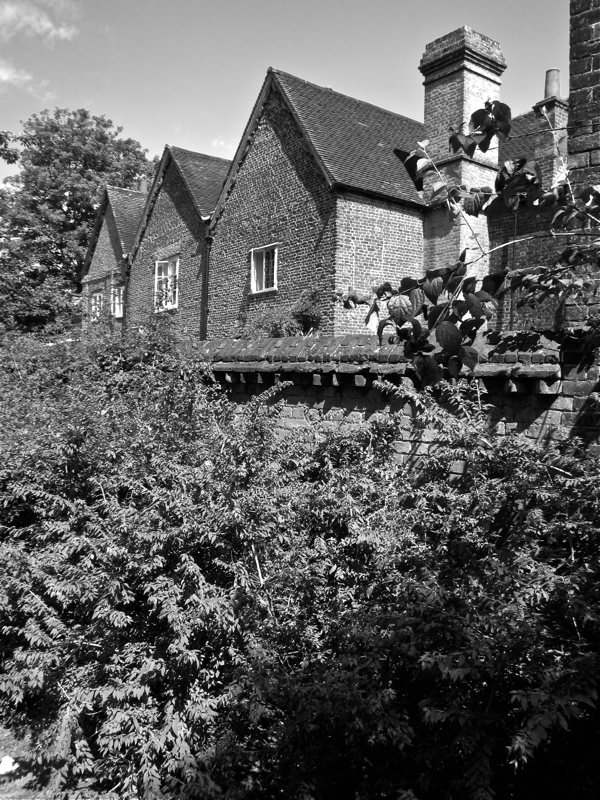
Tudor gables
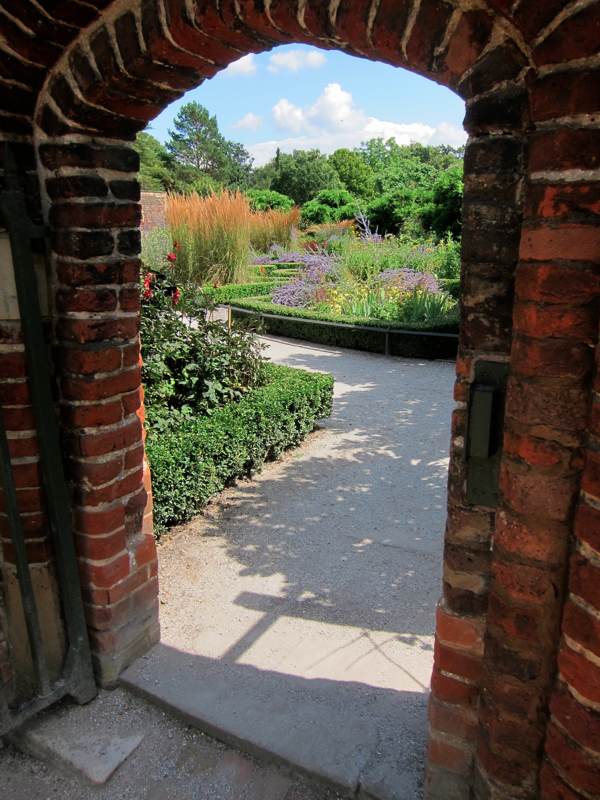
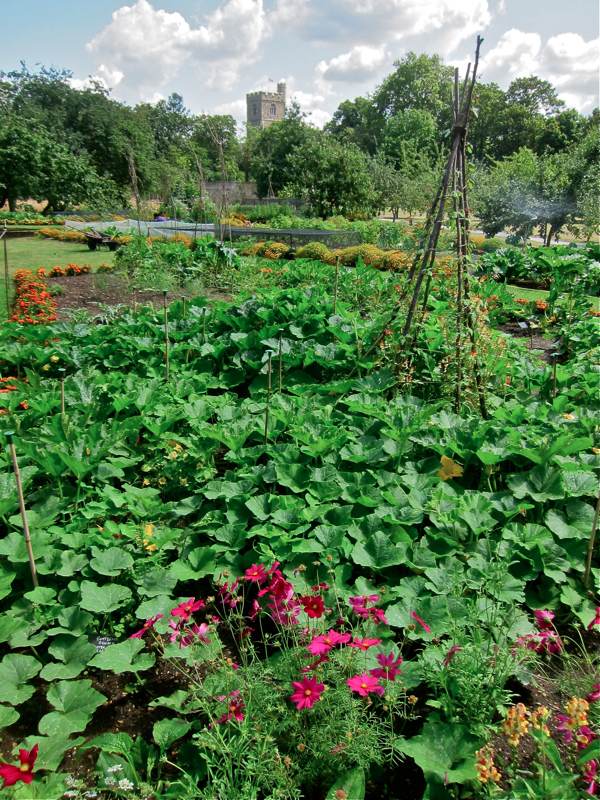
All Saints, Fulham seen from the walled garden
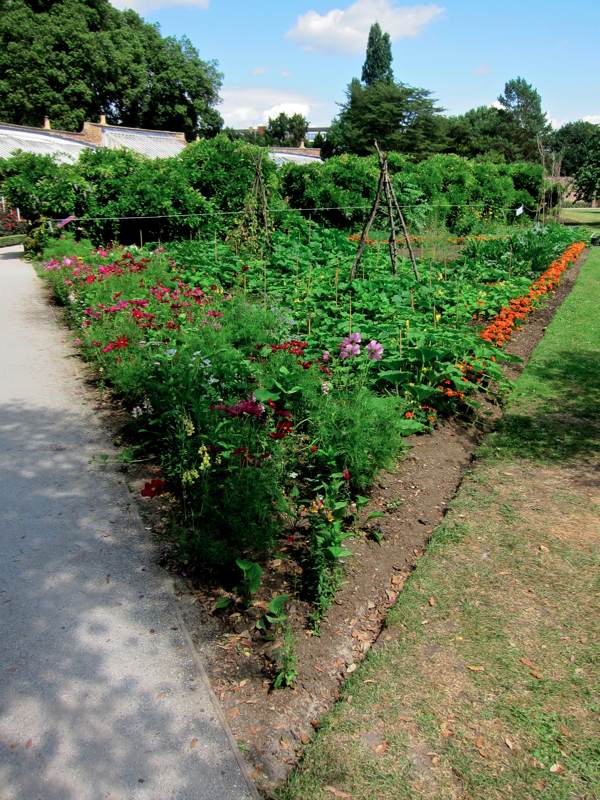

Freshly harvested carrots and vegetable marrows
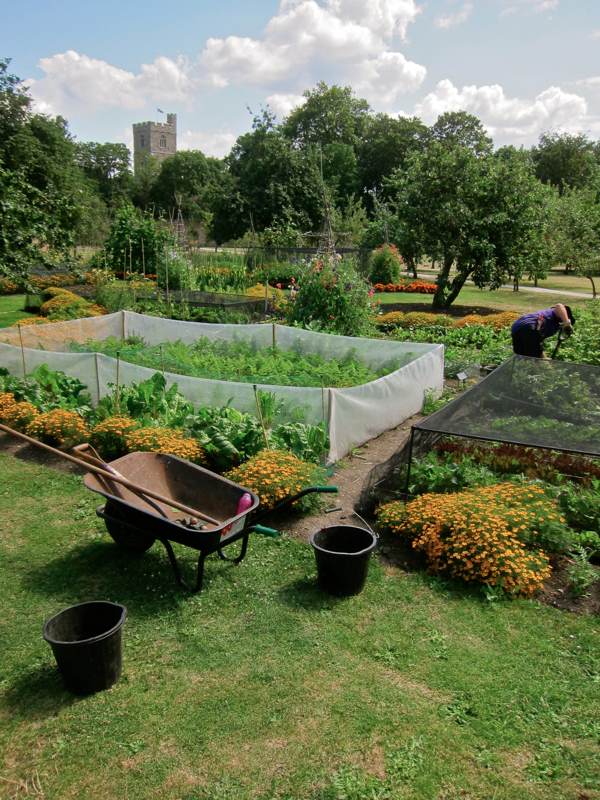
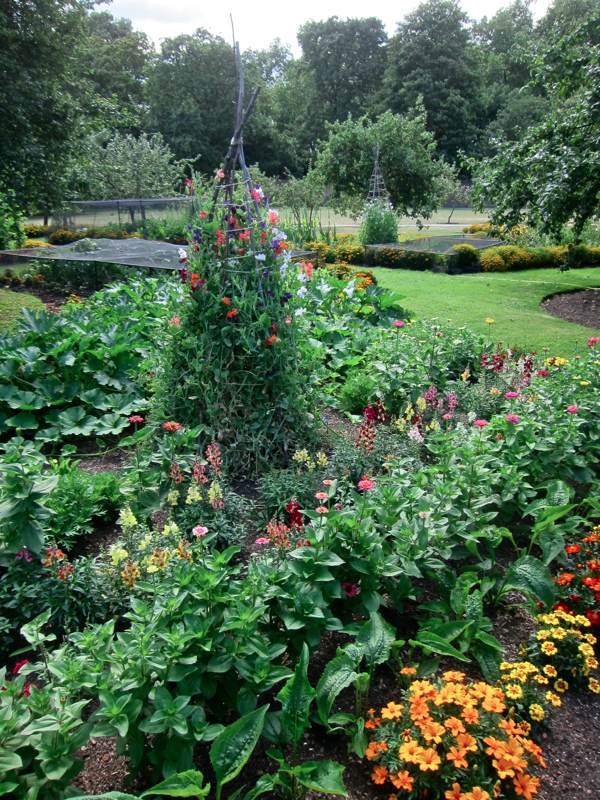
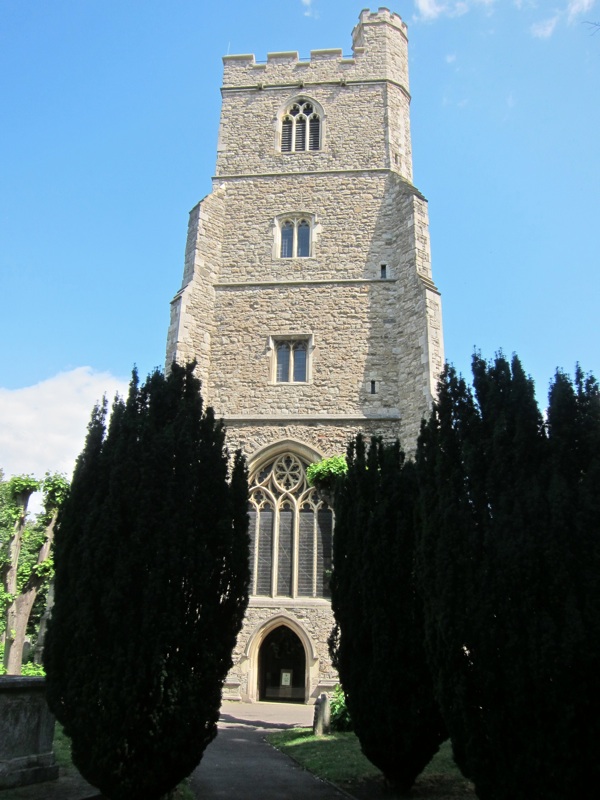
Ancient yews preside at All Saints Fulham
Visit Fulham Palace website for opening times and details of events – admission is free
So Long, Maurice Sills
With sadness, I must announce the death of Maurice Sills yesterday afternoon – just a few weeks before what would have been his one hundred and second birthday in July
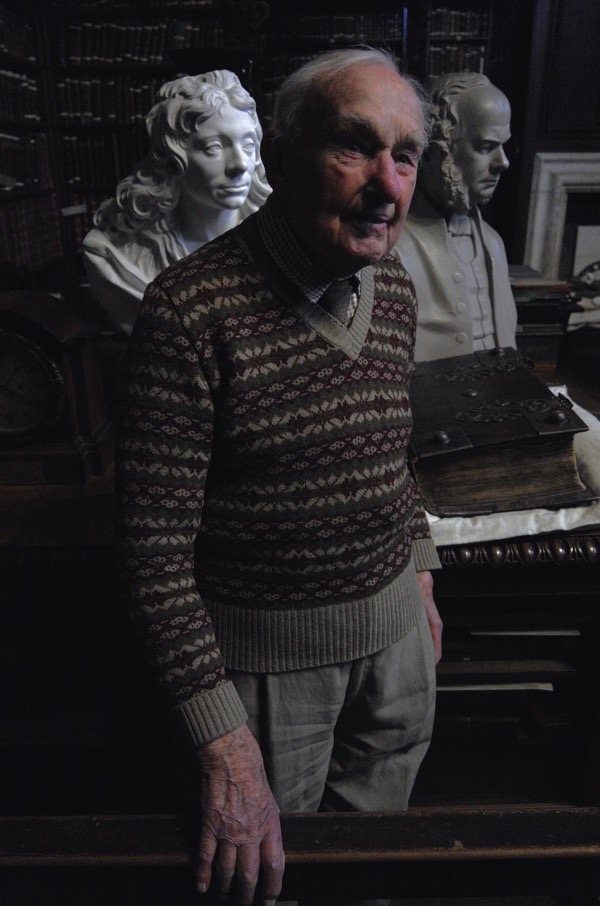
Maurice Sills – ‘I learnt to live – I think – a full life’
If you were to read the staff list at St Paul’s Cathedral, where Maurice Sills was described simply as ‘Cathedral Treasure’, you might assume that a final ‘r’ had been missed from the second word. But you would be wrong, because Maurice Sills was in the world longer than you or I have been in the world – longer, I venture, than anyone reading this article. The truth is that Maurice Sills lived to be nearly one hundred and two years old, and he genuinely was a ‘Cathedral Treasure’ at St Paul’s.
Travelling to work by rail and tube from his home in North London three times a week, Maurice regularly gave up his seat to what he termed ‘old ladies,’ by which he meant women of a generation later. There was an infectious enthusiastic energy about Maurice which he kept alive through a long term involvement with sport and his delight in the presence of young people.
We met in the Chapter House at St Paul’s but Maurice was keen to take me up to the magnificent library, embellished with luxuriant carving by Grinling Gibbons, high in the roof of the old cathedral. When completed, the shelves were empty since all the books had been destroyed in the fire, but now the library is crowded with ancient tomes and Maurice had catalogued every one.
In this charismatic shadowy place, Maurice was completely at home – as if the weight of all his years fell away, rendered insequential by comparison with the treasures of far greater age that surrounded us, sequestered in an ancient library where time stood still.

Maurice – My earliest memory of anything – it must’ve been 1918 – was when I was staying with a relation who was manager of a grocer’s shop called Palmer’s in Mare St, Hackney, while my mother was having another child. They sold provisions – on one side you had bacon, butter and so forth and the other side fruit and vegetables. I can still picture us going down the wooden stairs of the shop into the cellar and, in the cellar, there was an oil stove, one of these with little holes in the top that cast lights onto the ceiling – I can still see those lights there. I worked out from my relations who I stayed with that it was a Zeppelin raid! So that was my first memory of life – those little marks on the ceiling while I was down in the cellar.
The Gentle Author – Maurice, are you a Londoner?
Maurice – Certainly I’m a Londoner, if West Norwood is London, yes. I was born there in 1915 and my baby brother still lives in the same house where he and I and five brothers were born, six of us all together.
The Gentle Author – What were your parents?
Maurice – My father worked in the Co-operative Bank. My mother was purely a mother, with six boys she had no choice but to be a mother! Norwood, in those days, was almost a village. My mother’s family were the local undertakers and everybody knew them. When somebody else opened up another undertakers that caused trouble. My parents got married a few months after my mother’s father died. My mother had to look after him when he was a widower, so she couldn’t get married. That’s how families were in those days, but when her father died that was freedom, so she had a quiet wedding and we were brought up in the house.
The Gentle Author – And what kind of childhood did you have?
Maurice – Being the eldest of six I had a lot of freedom because my mother had enough to do looking after the others – the three youngest boys were triplets. So I learnt to enjoy life. I was encouraged to enjoy sport by my father who played cricket and I became scorer for his team when I was eight. Cousins made sure I knew what soccer was like, so I enjoyed soccer for the whole of my days until lately. I played for my old school boys until I was forty-nine when I then got hurt badly and had to give up. My mother said, ‘Serve you right, you should’ve given up before,’ but I still played cricket until I was demoted to be the umpire because they wanted younger people, they said.
The Gentle Author – How old were you then?
Maurice – About eighty. They often asked me, as an umpire, where my dog was? Well, a blind man has a dog!
The Gentle Author – Did your parents bring you up to London to the West End?
Maurice – No, because we didn’t go far. We had a fortnight’s holiday every year in Bognor, Eastbourne or Clacton – a long way then. Other than that, the only outings I took on my own would be on bank holidays when I went to Crystal Palace where there was always a lot to see, whether it was motorcycle racing, speedway racing, or concerts.
When I was eleven, I obtained a free place at St Clement Dane’s school close to Bush House in the Aldwych, so I used to travel from South London on a tram every day to the Embankment and walk up the road to school.
The Gentle Author – What were your impressions of the city then?
Maurice – One was of The Lord Mayor’s show, which was not always on a Saturday as it is today. We were allowed to go into the churchyard at St Clement Danes and see the procession go by. The other thing which stuck in my mind was that every Christmas, Gamages in Holborn used to have a cricket week where well-known cricketers came, so I would go to obtain their autographs. But other than that, in a quiet way, I suppose I got to know London very well. I had a season ticket to town so, after two or three years, I would go to museums on my own. I was allowed complete freedom.
The Gentle Author – How wonderful for you to explore London.
Maurice – It meant I learnt a lot about it. I went to evening classes at Bolt Court just off Fleet Street. There were lectures on the City of London and summer evenings would be spent walking round to see things we had heard about.
The Gentle Author – Were you a good student?
Maurice – I did all the essays I was asked to do. I kept them til a few months ago when I was moving into an old people’s home and I decided I’d just got to say goodbye to them. I’ve no regrets. It was all wastepaper, it had been in a drawer for twenty years.
The Gentle Author – What age did you leave school?
Maurice – Seventeen. At that time it was very difficult to get a job.
The Gentle Author – This is the Depression?
Maurice – 1932. Like in the world today, it’s not who you are but who you know, and my father knew somebody so I started working. I went for interviews in banks, but I couldn’t pass the medical test. They weren’t very sure about my heart so they wouldn’t take me on. My father knew somebody at Croydon, not too far from where we lived, at the Co-operative there, so I worked at the office from 1932 to 1940, doing clerical work, and playing football and cricket, until the war came and I then went into the Navy for five years.
The Gentle Author – How did your involvement with St Paul’s Cathedral come about?
Maurice – In 1978, when I was at evening class at Bolt Court, a lady said to me at the tea break,‘You’ve just retired, you could come and help at St Paul’s.’ I came for a few months every Thursday and one day I took a school party round. Evidently, they wrote and said they had an interesting time, because the Dean asked me the next day if I could come more often.
The Gentle Author – Did you know the history already?
Maurice – I’d already got the background you see. I went home and said to my wife, ‘They want me to come more often, and she said, ‘Well, why can’t you?’ She was younger than me and was keeping me in the state of life that I wanted. She was kind. She only made one mistake in her life but there we are. She put up with it and suffered me for forty years!
The Gentle Author – Were you the mistake?
Maurice – Yes!
The Gentle Author – Why have you stuck with St Paul’s?
Maurice – After the Dean asked me and my wife said, ‘Of course you can,’ I took it on and for twenty-odd years I did all the school visits to the cathedral. But eventually they decided that the modern idea was to have an education department which meant they wanted a full-time paid person. I had been working twenty years for nothing and, because I worked for nothing, I enjoyed it – I didn’t have to worry what the other people thought. So I wouldn’t have put in for the new job and, fortunately, the headmaster at the Cathedral School said, ‘If they don’t want you, you can come here every day.’ So then I moved to working in the school.
The Gentle Author – Were you teaching?
Maurice – Helping out in various ways, especially hearing children read and going with the boys to watch them play football and cricket. For the last fifteen years I went every day, until eighteen months ago when I decided to cut it down and now I only go on Monday, Wednesday and Friday. But the little children make a fuss of me.
The Gentle Author – How are you involved with the cathedral?
Maurice – In the morning I’m in the Cathedral School but then, after school lunch, I help in the library. One of my jobs is to ensure that we have two copies of every service, I put them all in order and file them away. I look up letter queries for the librarian. When people write to say, ‘I believe my great grandfather was in the choir at St Paul’s,’ I go through the records. Usually they hadn’t, they had sung here but with a visiting choir probably.
The Gentle Author – Do you know the collection well?
Maurice – Oh yes, many years ago the librarian decided we ought to have a list of all the books. And so, in my spare time, for about five years I wrote down on sheets of paper all the books. The ones in Greek were difficult, I just had to copy the alphabet. Those records are kept and the librarian still consults them today.
The Gentle Author – That’s a big achievement.
Maurice – I was lucky I had a librarian who chased me around in good fun and called me rude things, saying, ‘Get some overalls on you lazy so-and-so and get some work done!’
The Gentle Author – Do you like the cathedral?
Maurice – It’s given me a great deal. I’ve walked with school parties up to the top of the dome at least two thousand times, but I can’t do it any longer.
The Gentle Author – When was the last time you went up on top?
Maurice – Oh, probably five years ago. I’ve only become an invalid in the last two to three years really.
The Gentle Author – You don’t seem like an invalid.
Maurice – I’m wearing out. It’s hard work now – I have to make myself come here whereas I used to be dashing here. When I was a schoolteacher, I knew how many days before the next holiday. But here, when the school says they’re away for three weeks, ‘Oh,’ I say, ‘I’m going to miss you. And the school lunch!’
The Gentle Author – Do you have any opinions about Wren’s architecture?
Maurice – Only insofar as I’ve read so much about it that I realise, in my lack of knowledge, what a wonderful person Wren was to do what he did, despite all the handicaps that he was up against.
The Gentle Author – What kind of man do you think Christopher Wren was?
Maurice – Well, he was so gifted at so much, you see, he was brilliant not just in one subject but in many things. And he persisted in what he wanted, even though it wasn’t always easy for him financially. He was a marvellous person to have done it and I realise it was 300 years ago, you know.
The Gentle Author – Three times your lifetime.
Maurice – That’s right and a lot has changed in my lifetime, so 300 years ago it was very different…
The Gentle Author – What do you think are the big changes in your lifetime?
Maurice – One of the biggest is computers, and now I realise my day is up. If I sit on the tube in the morning, if there are a dozen people – six here, six there – nine of them are playing with these tablets and phones. I’m not talking to anybody you see!
The Gentle Author – It’s rare to meet someone so senior, so I want to ask what have you learned in your life?
Maurice – I’ve learnt from experience how wonderful it can be to have sensible friends and a sensible upbringing and a perfect wife. My parents were strict insofar as we were told what was right and what was wrong. ‘I’d rather your hand was cut off than you stole something,’ my mother would say.
I learnt to live – I think – a full life. I’ve enjoyed my sport. How fortunate I have been in life that I have been pushed to do things rather than had ambition. I have no ambition.
When I was ending my time in the Royal Navy a colleague who was a schoolteacher said, ‘When the war is over you would make a good schoolteacher,’ and I said, ‘Of course I wouldn’t – my schoolteachers would laugh if you said that.’ But when the war was over, they were so short of male teachers, they were willing to take almost anybody. The result was my mate made me fill out a form – he pushed me and I became a teacher.
Every Christmas, I hear from about two dozen of my pupils of fifty years ago. When I go to watch cricket at the Oval when the season starts, one of my pupils of 1959, he’ll be there saying, ‘Oh you’re still breathing! We prayed for you every night and you always turned up in the morning despite our prayers!’
(Transcript by Rachel Blaylock)
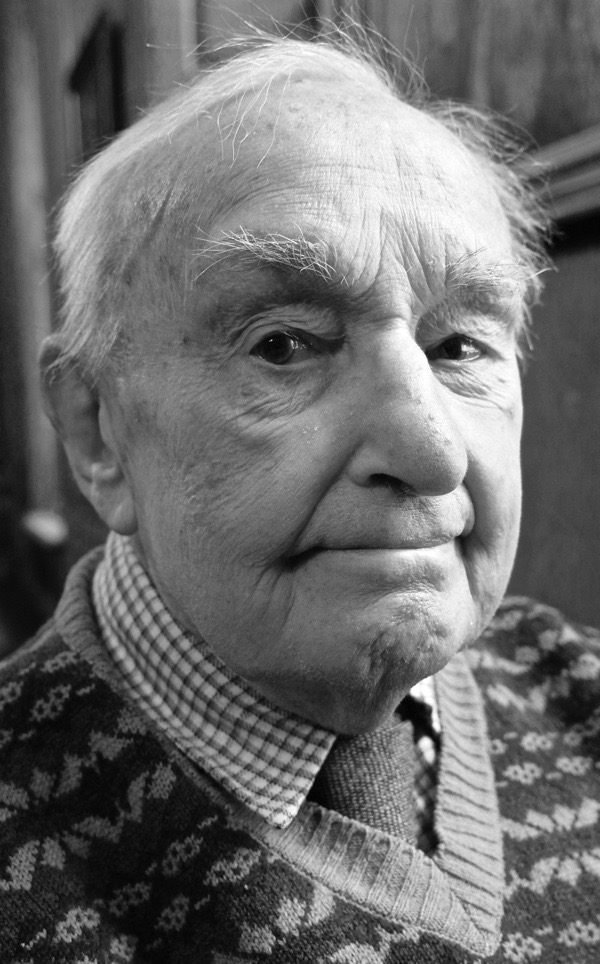
Maurice Sills (1915-2017)












