
Benjamin Kipling, Bell Tuner
In this first of an occasional series of features celebrating the work of former employees of the Whitechapel Bell Foundry, I present my interview with Benjamin Kipling the Bell Tuner, who now works for Matthew Higby & Co, Church Bell Engineers.
You can experience a virtual reality film of the Whitechapel Bell Foundry, The Final Bell created by VISUALISE, as part of ART NIGHT 2017 on Saturday 1st July 6-11pm in Spitalfields Market.
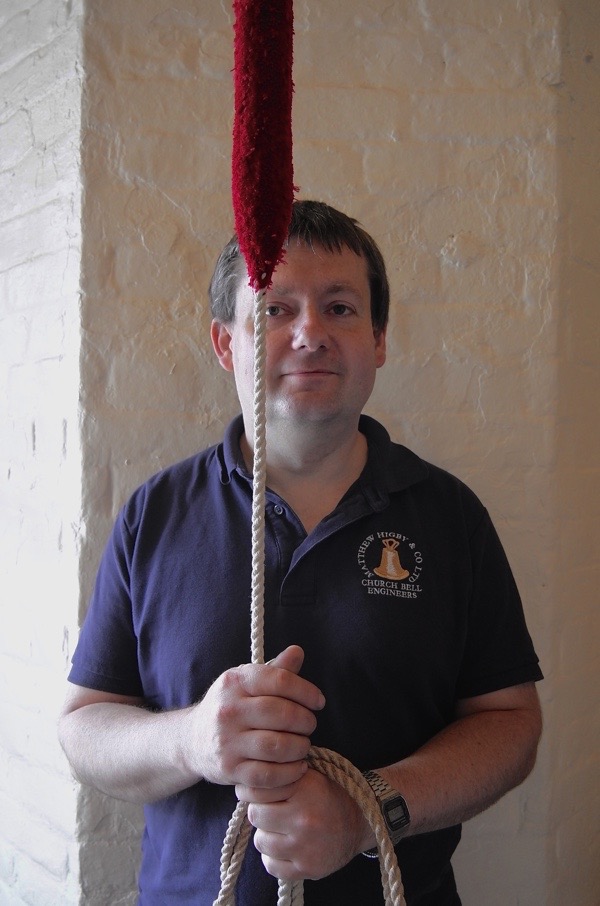
Benjamin Kipling
On a recent Sunday morning, I joined Benjamin Kipling and his bellringing pals for a congenial breakfast in Waterloo Station after they had rung the bells before the service at St John’s church across the road. Once we had finished our chat, I accompanied Benjamin who could not resist returning to Francis Octavius Bedford’s handsome bell tower of 1822 to ring again after the service. With a new job in Somerset from Monday to Friday, Benjamin commutes back and forth by car each weekend to fulfil his bellringing commitments in the capital. Even when we shook hands to say goodbye and he climbed into his sports car, Benjamin was setting off to judge a ringing contest in Cranford as a detour on his journey to the West Country – such is the passion of the man for bells.
The Gentle Author – How should a bell sound?
Benjamin Kipling – A nice bell should have a crisp, clear strike note, followed by the hum coming through underneath, and the hum should be stable and long-lasting.
The Gentle Author – What does the job of a bell tuner consist of?
Benjamin Kipling – Well, the basics involve mounting the bell, mouth upwards, on a very big vertical lathe and taking metal out of different areas inside to alter the partial tones within the mouth. A bell does not just produce a single frequency, a bell has lots and lots of different modes of vibration, and each mode of vibration produces a different frequency and therefore a different note. The standard for bell tuning for the last century has been to aim towards what we refer to as Simpson tuning, so the five lowest notes in the bell strike a minor chord.
The Gentle Author – Why cannot a bell be cast to make the right sound?
Benjamin Kipling – The thickness of the wall of a bell has to be precise to get exactly the right note and – to be perfectly honest – casting techniques just are not that good, they never have been. So to get a bell absolutely precise, the only way is to cast it deliberately too thick and scratch a bit off.
The Gentle Author – Once a bell has been cast, are you the next person to work on it?
Benjamin Kipling – The people in the loam shop dig the newly cast bell out from the mould, removing the core of bricks and loam, and doing a little bit of tidying up on the inscription. Then the bell is passed to me and I do a bit more work to the inscription just to make it looks as nice as possible. I start by putting the bell mouth down on the lathe and skimming across it to give a flat surface on the top before I turn the bell over, bolt it to the machine, and tune it.
The Gentle Author – How do you assess a bell in order to tune it?
Benjamin Kipling – This has been one of the limiting factors in the development of bell tuning. It was only in late Victorian times with the advent of the calibrated tuning fork that it became possible to accurately record the frequencies within a bell. Calibrated tuning forks were the normal way of doing things up until the nineteen seventies and Whitechapel’s tuning forks were still in use until the end – we used them sometimes to double check.
Today, we have other ways of doing it. An electronic stroboscope tuner employs a microphone attached to a light which shines through a spinning wheel, and you can adjust the speed so that if there is a frequency in the sound that corresponds to the spinning wheel, it will appear to stand still. This is the method I use for finishing tuning bells because it is reliably accurate, but there is also a quicker – if slightly less accurate way – of pitching bells using a laptop computer and Fourier Transform software which instantly reads the main partial tones.
The Gentle Author – So it is a question of striking the bell and then bridging the difference between what it is and what you want it to sound like, do you expect to get there immediately or is it a long process?
Benjamin Kipling – Bell tuning is a job of many stages. Calculating what I am aiming for in a particular bell gives me the size of the gap. Usually, I try and make a series of cuts that will get me halfway between where I was and where I need to be, so I can check the bell is responding as I expect it to. Then I will go half as far again, and half as far again, and gradually close in, which theoretically means I never get there. Yet, in practice, this is engineering not mathematics and if I overshoot by a fraction of a semitone then nobody is going to notice. I try and tune a bell to within a cent, which is 1/100 of a semitone, but nobody is going to hear if it is two or three cents out.
The Gentle Author – Are there different kinds of cuts you make to a bell?
Benjamin Kipling – Only in terms of shallow cuts or deep cuts, but they are in different areas of the bell. For instance, if you cut metal out of the shoulder of the bell, the second partial tone flattens more quickly. In the middle of the bell, it is the hum note, the lowest one, that flattens the most quickly. Towards the lip, it is the nominal tone which flattens most quickly. Generally, wherever you take metal off a bell all of the partial tones will move – so it is a juggling act.
The Gentle Author – What is the minimum number of cuts?
Benjamin Kipling – One! But if you are tuning a bell and you are getting very close, you might make one little scratch and test it again, and make another scratch and test it again – it could take dozens.
The Gentle Author – Do you rely upon your ears or instruments?
Benjamin Kipling – The ear is always the final arbiter as to whether a bell sounds good or not. The instruments are there to tell me what is wrong and by how much. I can hear if something is wrong with a bell but I may not necessarily be able to tell exactly what is wrong or by how much, and that is where the instrumentation comes in.
The Gentle Author – Tell me some bells that you are proud to have tuned.
Benjamin Kipling – Absolutely. The five largest at St James Garlickhythe and also all ten of the new bells at St Dunstan-in-the-West on Fleet Street. The tenor bell there is the only bell where I have ever managed to get it to exactly where I want within a fraction of a 100th of a semitone. On paper, that is the best bell I have ever cut. In practice, bigger bells always sound better than little bells. They have more presence and more power, and so the best of all would probably be the largest bell I have tuned, which was for a carillon in the United States. It was cast at 43 hundredweight – a little over two tonnes – and finished at 37 hundredweight, after I tuned six hundredweight out of it. You could hit the bell, walk away, come back a couple of minutes later and still hear it humming.
The Gentle Author – Is there an element of subjectivity in this work?
Benjamin Kipling – There is more than one way to skin a cat. You get differences in character of bells and that can be down to how the tuner approaches the bell. Also, the shape of a bell varies according to who cast it. There are subtle differences between the profile of a Whitechapel Bell, the profile of a Taylor bell or a Gillett & Johnson bell.
The Gentle Author – How did you become a bell tuner?
Benjamin Kipling – At school, I did not like music very much which was maybe because I did not want to learn to play an instrument. I had an interest in music theory, but the teachers did not think it was worthwhile teaching me music theory if I was not going to be learning an instrument. So I dropped music at the earliest opportunity.
Then, in sixth form, a friend of mine who was a bell ringer said, ‘Why don’t you come along on Wednesday night and learn to ring bells?’ So I did and I found it very addictive, and bell ringing became my hobby and I did a lot of bell ringing at university. I studied Physics, then I dropped out and started Computer Science, until I dropped out of that as well. I spent quite a long time at Nottingham University without getting a degree. Possibly, that was because I was spending too much of my time ringing bells rather than getting any work done.
The Gentle Author – Yet you have managed to fit all those things together in your career, how did you enter the industry of bell making?
Benjamin Kipling – There was a bell hanging company in Nottingham at the time, Hayward Mills. I got a holiday job with them and stayed for a couple of years. However, I discovered I was not keen on site work but I did like the theory behind the tuning of bells and, although Hayward Mills did not have a bell tuning machine, they were considering getting one. So when I dropped out from university, they took me on full time, doing admin and occasional bell hanging, with a view to me being the one who would do the tuning when they got a bell tuning machine which – a couple of years later – they did.
The Gentle Author – Are you a self-taught bell tuner?
Benjamin Kipling – Partly. I found some tuning graphs on the internet showing how the different partial tones respond according to where you take metal off a bell. But I had to teach myself how to drive the machine and how much metal to take off, which obviously is nerve-wracking and involves taking off tiny amounts to begin with and checking. Then you find the sound of the bell has hardly changed and so you take off a bit more, until you realise you actually have to take quite a bit of metal off to make any significant difference.
The Gentle Author – Did you ever take too much off?
Benjamin Kipling – The simple answer is ‘No.’ If you are gradually homing in on what you want, that should not be a problem. In practice, with four of the five partial tones, it is possible to go back up again if necessary. Generally, you are thinning the wall of the bell and making it more flexible so it vibrates at a lower frequency. Each time you take a little off, the notes go down. However, by taking more metal off the lip of the bell, it is possible to get four of those five to come back up. So there are usually ways of sorting these things out.
The Gentle Author – Do you find this rewarding work?
Benjamin Kipling – Oh absolutely, it is a lasting legacy. Hopefully my handiwork will be there for centuries because bells do not go out of tune. A lot of old bells were never in tune to begin with, they would just try and cast a bell as close as they could to the right note and, if it was a long way out, they would take out a hammer and chisel and try and chip bits off until it was bearable. That is the reason why old bells are retuned.
The Gentle Author – Is retuning a major part of your work?
Benjamin Kipling – Oh yes. At Whitechapel, probably half of the bells I tuned were old ones that came in for retuning.
The Gentle Author – How is that different?
Benjamin Kipling – The difference is that, whereas a new bell has been cast with enough metal in the right places to be able to do what you want, in an old bell the chances are there may not be enough metal in the places you need. You just have to try and push it in the right direction as much as you can. In the last few years, we tended to do more tuning of old bells on the outsides as well as on the insides and I found you can get much better results by doing that.
The Gentle Author – What are the oldest bells you have retuned?
Benjamin Kipling – Bells over a certain age tend to be listed for preservation.
The Gentle Author – They cannot be retuned?
Benjamin Kipling – It means there is a presumption against tuning, but different dioceses have a different interpretation of what that means. In some dioceses, you will never get permission to tune a listed bell, while in other dioceses – as long as you put a sensible case forward – they have no problem with you retuning anything of any age. The diocese that I have found which is most likely to give permission for tuning old bells is Bath & Wells. There were some bells in Bath & Wells diocese from the fourteenth, if not the thirteenth century, that I have tuned. The profile of bells and the composition of the bell metal has changed remarkably little in all those years.
The Gentle Author – Does bell tuning make you happy?
Benjamin Kipling – Absolutely, when people ask me what my job is, I like to see the expressions on their faces, ranging from disbelief that there could be such a job to complete fascination.
The Gentle Author – Tell me about the Royal Jubilee bells.
Benjamin Kipling – These were cast for St James Garlickhythe but first they were installed in a barge to go down the Thames as part of the Royal Jubilee pageant in 2012.
The Gentle Author – Where were you on that day?
Benjamin Kipling – I was close to St James Garlickhythe, struggling to get to the water’s edge to catch a view of them going past from the bank of the Thames, along with umpteen thousand other people, but the crowds were so deep that I missed them. The framework was fabricated at an engineering company in Edenbridge, so I did hear them and got to ring them on the frame in the works even if I never got to hear them on the river or see them in the barge. The sound of bells tends to bounce off water in a pleasing way. Certainly, I know the bells at St Magnus the Martyr at the northern end of London Bridge sound at their best if you stand just the other side of the river and I think the same is probably true of the Southwark Cathedral bells if you stand on the north bank. People told me my bells did sound very nice on the river.
Transcript by Rachel Blaylock
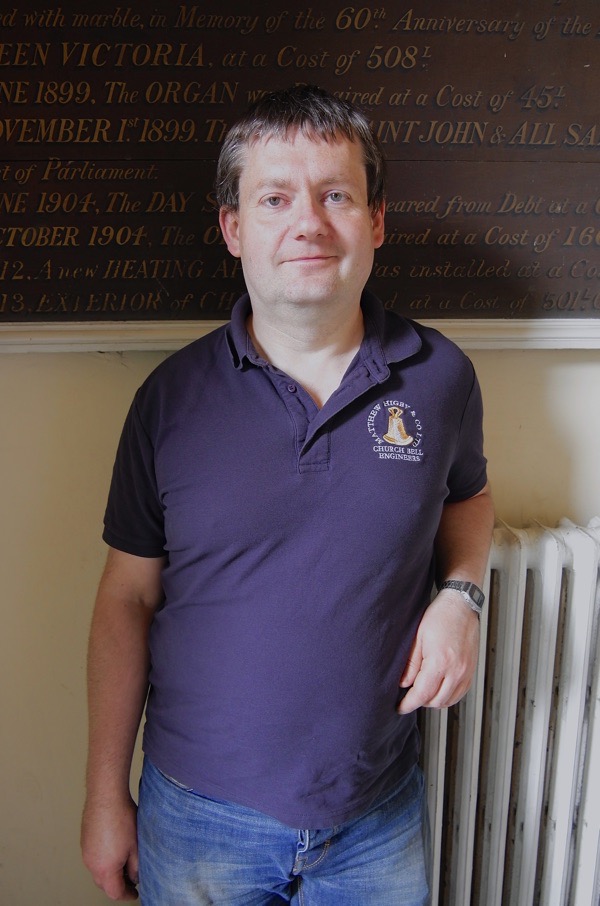
Benjamin Kipling, Bell Tuner
You may also like to read about
Royal Jubilee Bells at Garlickhythe
A Visit To Great Tom At St Paul’s
The Most Famous Bells in the World
John Claridge at Whitechapel Bell Foundry
Roland Collins, Artist
In the twelfth of my series of profiles of artists featured in EAST END VERNACULAR, Artists who painted London’s East End streets in the 20th century to be published by Spitalfields Life Books in October, I present Roland Collins’ paintings. Click here to learn how you can support the publication of EAST END VERNACULAR
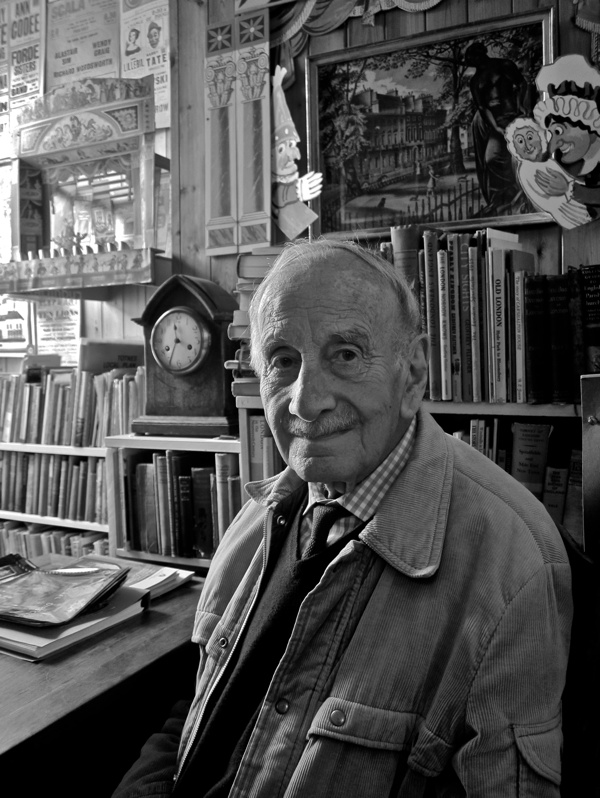
Roland Collins
Ninety-seven year old artist Roland Collins lived with his wife Connie in a converted sweetshop south of the river that he crammed with singular confections, both his own works and a lifetime’s collection of ill-considered trifles. Curious that I had come from Spitalfields to see him, Roland reached over to a cabinet and pulled out the relevant file of press cuttings, beginning with his clipping from the Telegraph entitled ‘The Romance of the Weavers,’ dated 1935.
“Some time in the forties, I had a job to design a lamp for a company at 37 Spital Sq” he revealed, as if he had just remembered something that happened last week,“They were clearing out the cellar and they said, ‘Would you like this big old table?’ so I took it to my studio in Percy St and had it there forty years, but I don’t think they ever produced my lamp. I followed that house for a while and I remember when it came up for sale at £70,000, but I didn’t have the money or I’d be living there now.”
As early as the thirties, Roland visited the East End in the footsteps of James McNeill Whistler, drawing the riverside, then, returning after the war, he followed the Hawksmoor churches to paint the scenes below. “I’ve always been interested in that area,” he admitted wistfully, “I remember one of my first excursions to see the French Synagogue in Fournier St.”
Of prodigious talent yet modest demeanour, Roland Collins was an artist who quietly followed his personal enthusiasms, especially in architecture and all aspects of London lore, creating a significant body of paintings while supporting himself as designer throughout his working life. “I was designing everything,” he assured me, searching his mind and seizing upon a random example, “I did record sleeves, I did the sleeve for Decca for the first Long-Playing record ever produced.”
From his painting accepted at the Royal Academy in 1937 at the age of nineteen, Roland’s pictures were distinguished by a bold use of colour and dramatic asymmetric compositions that revealed a strong sense of abstract design. Absorbing the diverse currents of British art in the mid-twentieth century, he refined his own distinctive style at his studio in Percy St – at the heart of the artistic and cultural milieu that defined Fitzrovia in the fifties. “I used to take my painting bag and stool, and go down to Bankside.” he recalled fondly, “It was a favourite place to paint, especially the Old Red Lion Brewery and the Shot Tower before it was pulled down for the Festival of Britain – they called it the ‘Shot Tower’ because they used to drop lead shot from the top into water at the bottom to harden them.”
Looking back over his nine decades, surrounded by the evidence of his achievements, Roland was not complacent about the long journey he had undertaken to reach his point of arrival – the glorious equilibrium of his life when I met him.
“I come from Kensal Rise and I was brought up through Maida Vale.” he told me, “On my father’s side, they were cheesemakers from Cambridgeshire and he came to London to work as a clerk for the Great Central Railway at Marylebone. Because I was good at Art at Kilburn Grammar School, I went to St Martin’s School of Art in the Charing Cross Rd studying life drawing, modelling, design and lettering. My father was always very supportive. Then I got a job in the studio at the London Press Exchange and I worked there for a number of years, until the war came along and spoiled everything.
I registered as a Conscientious Objector and was given light agricultural work, but I had a doubtful lung so nothing much materialised out of it. Back in London, I was doing a painting of the Nash terraces in Regent’s Park when a policeman came along and I was taken back to the station for questioning. I discovered that there were military people based in those terraces and they wanted to know why I was interested in it.
Eventually, my love of architecture led me to a studio at 29 Percy Studio where I painted for the next forty years, after work and at weekends. I freelanced for a while until I got a job at the Scientific Publicity Agency in Fleet St and that was the beginnings of my career in advertising, I obviously didn’t make much money and it was difficult work to like.”
Yet Roland never let go of his personal work and, once he retired, he devoted himself full-time to his painting, submitting regularly to group shows but reluctant to launch out into solo exhibitions – until reaching the age of ninety.
In the next two years, he enjoyed a sell-out show at a gallery in Sussex at Mascalls Gallery and an equally successful one in Cork St at Browse & Darby. Suddenly, after a lifetime of tenacious creativity, his long-awaited and well-deserved moment arrived, and I consider my self privileged to have witnessed the glorious apotheosis of Roland Collins.
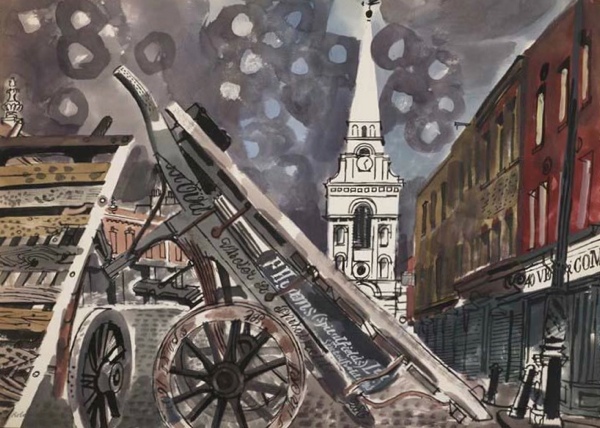
Brushfield St, Spitalfields, 1951-60 (Courtesy of Museum of London)
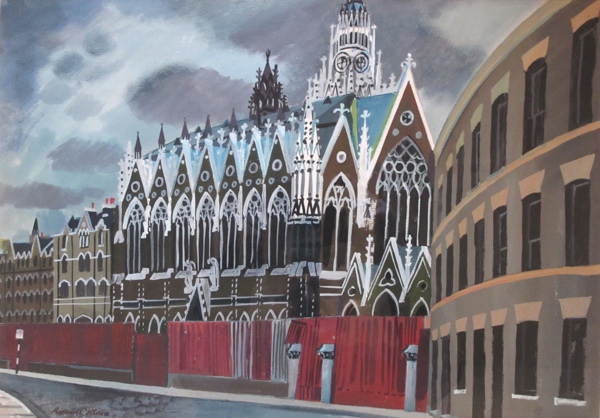
Columbia Market, Columbia Rd (Courtesy of Browse & Darby)
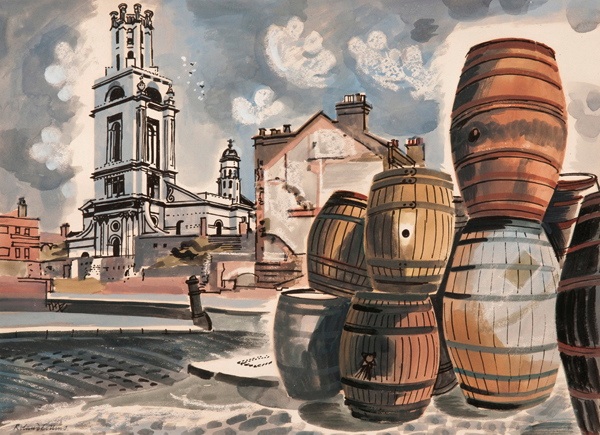
St George in the East, Wapping, 1958 (Courtesy of Electric Egg)
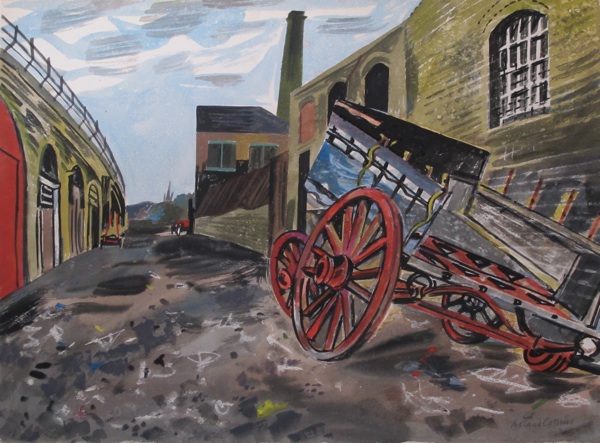
Mechanical Path, Deptford (Courtesy of Browse & Darby)
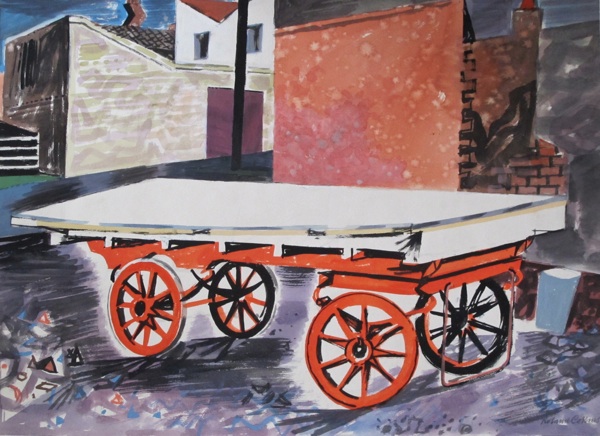
Fish Barrow, Canning Town (Courtesy of Browse & Darby)
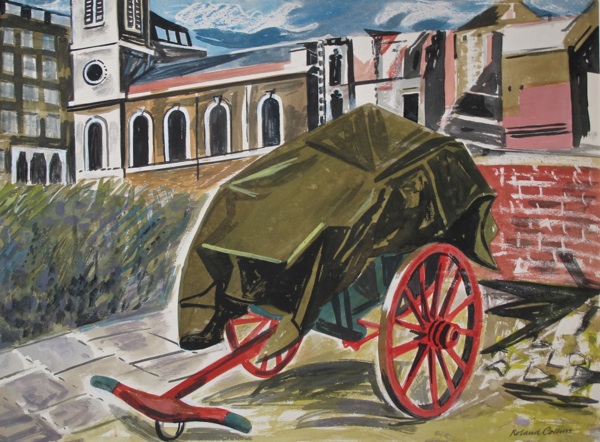
St Michael Paternoster Royal, City of London (Courtesy of Browse & Darby)
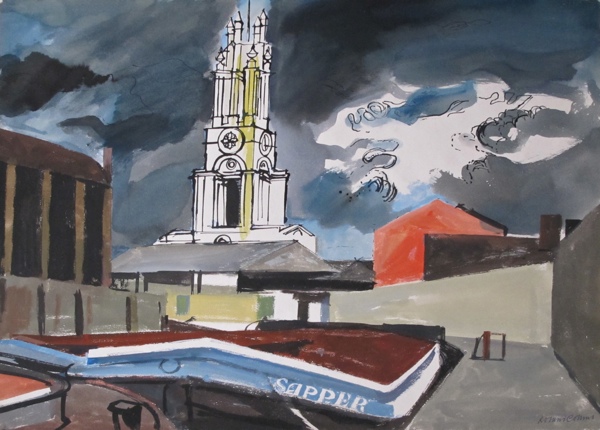
St Anne’s, Limehouse (Courtesy of Browse & Darby)

St John, Wapping, 1938
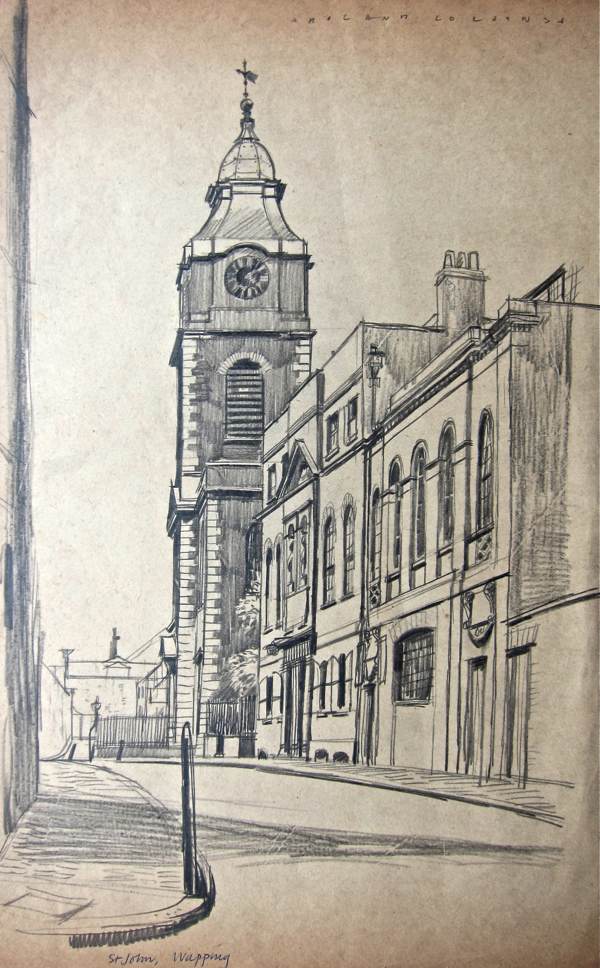
St John, Wapping, 1938
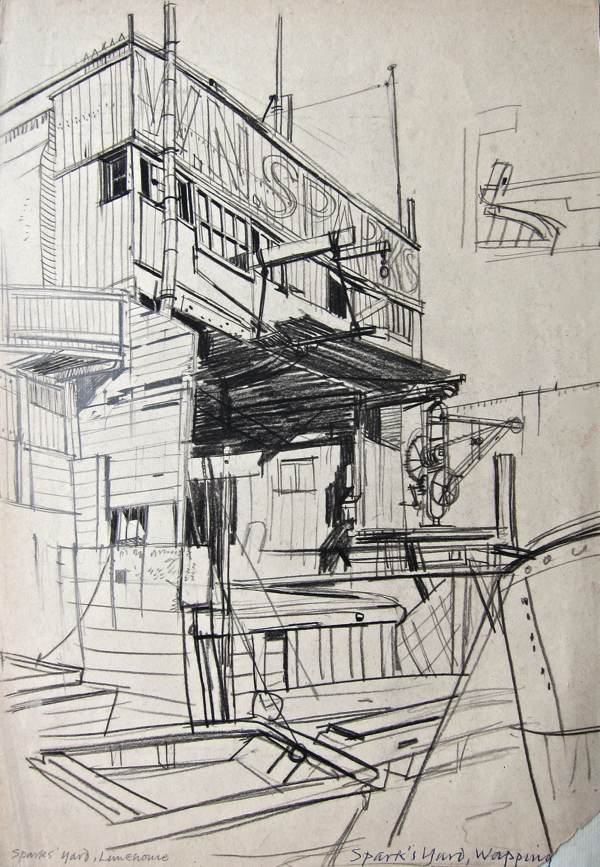
Spark’s Yard, Limehouse
Images copyright © Roland Collins
Click here to preorder a copy of EAST END VERNACULAR for £25
John Allin, Artist
In the eleventh of my series of profiles of artists featured in EAST END VERNACULAR, Artists who painted London’s East End streets in the 20th century to be published by Spitalfields Life Books in October, I present John Allin’s paintings. Click here to learn how you can support the publication of EAST END VERNACULAR

Gun St, Spitalfields
John Allin (1934-1991) began painting while serving a six month prison sentence for minor theft, and achieved considerable success in the sixties and seventies with his vivid intricate pictures recalling the East End of his childhood. There is a dreamlike quality to these visions in sharp focus of an emotionalised cityscape, created at a time when the Jewish people were leaving to seek better housing in the suburbs and their culture was fading from those streets which had once been its home.
Returning from National Service in the Merchant Navy, Allin worked in the parks department planting trees, later as a swimming pool attendant and then as a long distance lorry driver – all before his conviction and imprisonment. After discovering his artistic talent, he devoted himself to painting and won attention with his first exhibition in 1969 at the Portal Gallery, specialising in primitive and outsider art. In 1974, he collaborated with Arnold Wesker on a book of reminiscence, “Say Goodbye: You may never see them again” in which he reveals an equivocation about the East End. “I saw it as a place where people lived, earned their living, grew up, moved on … they had dignity … I like painting the past with dignity…” he said in an interview with Wesker, “but what they’ve done to the East End is diabolical! They’ve scuppered it, built and built and torn down and torn out and took lots of identity away and made it into just a concrete nothing… But people go on, don’t they? Eating their eels and giving their custom where they’ve always given their custom … Funny how people can go on and take anything and everything.”
Like Joe Orton in the theatre, Allin’s reputation as an ex-con fuelled his reputation in newspapers and on television but he found there was a price to pay, as he revealed to Wesker, “You know how I started painting don’t you? In prison! Well, when I come out the kids at school give my kid a rough time … the silly bloody journalists didn’t help. ‘Jail-bird becomes painter!’ You’d’ve thought I’d done God knows what … I mean the neighbours used to say things like ‘Look at ‘im! Jail-bird and he’s on telly! Ought to be sent back inside the nick!’ I was the oddity in the district, the lazy fat bastard that paints. Give me a half a chance and I’d move mate.” In fact, Allin joined Gerry Cottle’s Circus, touring as a handyman to create another book, “John Allin’s Circus Life” in 1982.
Although he was the first British recipient of the international Prix Suisse de Peinture Naive award in 1979, the categorisation of Outsider or Primitive artist is no longer adequate to apply to John Allin. More than twenty years after his death, his charismatic paintings deserve to be recognised as sophisticated works which communicate an entire social world through an unapologetically personal and emotionally charged visual vocabulary.

Spitalfields Market, Brushfield St.

Great Synagogue, Brick Lane.

Jewish Soup Kitchen, Brune St.

Christ Church School, Brick Lane.

Heneage St and Brick Lane.
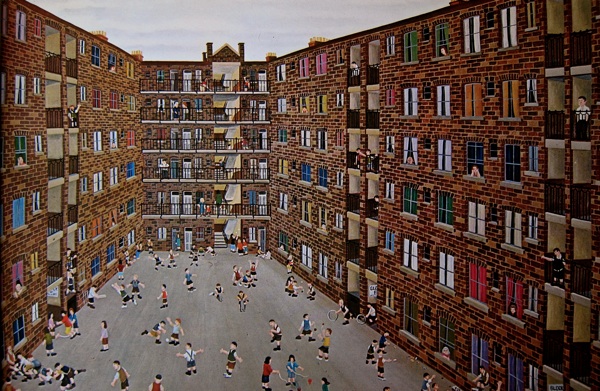
Rothschild Dwellings, Spitalfields.

Whitechapel Rd.

Christ Church Park, Commmercial St.

Wentworth St.

Fashion St with gramophone man in the foreground..

Churchill Walk.

Young Communist League rally, corner of Brick Lane and Old Montague St.

Hessel St.

Snow Scene.

Anti-Fascist Rally at Gardiners’ Corner, 1936.

Cole’s Chicken Shop, Cobb St.

Factory Workers
Henry Silk, Artist
In the tenth of my series of profiles of artists featured in EAST END VERNACULAR, Artists who painted London’s East End streets in the 20th century to be published by Spitalfields Life Books in October, I present David Buckman‘s profile of Henry Silk. Click here to learn how you can support the publication of EAST END VERNACULAR
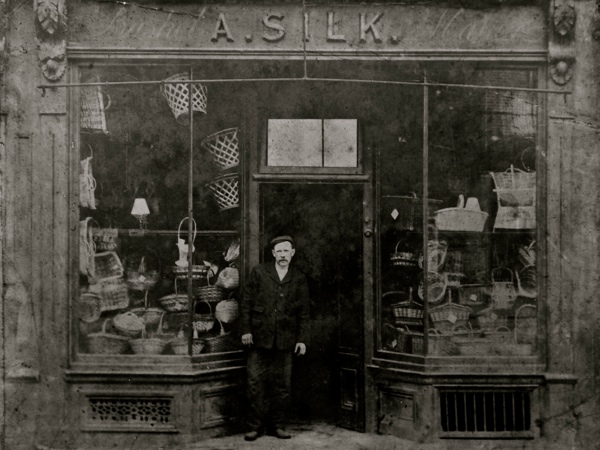
At his Uncle Abraham’s basket shop in Bow
Which of the members of the members of the East London Group of painters most closely embodied what the Group stood for ? There are many advocates for Archibald Hattemore, Elwin Hawthorne, Cecil Osborne, Harold & Walter Steggles, and Albert Turpin – all painters from backgrounds that were not arty in any conventional sense who became inspired by their teacher John Cooper, the founder of the Group. Yet for some, the shadowy figure of Henry Silk, creator of highly personal and poetically understated images, is pre-eminent.
Silk’s talent was quickly recognised as far away as America, even while the Group was just establishing itself in the early thirties. In December 1930, when the second Group show was held in the West End at Alex. Reid & Lefevre, the national press reported that over two-thirds of pictures were sold, listing a batch of works bought by public collections. The Daily Telegraph and Sunday Times revealed that, in addition to British purchases, the far-away Public Gallery of Toledo in Ohio had bought Silk’s ‘Still Life’ for six guineas.
American links continued when, early in 1933, Helen McCloy filing an insightful survey of the group’s achievements for the Boston Evening Transcript, judged Silk to have “the keenest technical sense of all the limitations and possibilities of paint.” Coincident with McCloy’s article, Hope Christie Skillman in the College Art Association’s publication Parnassus, distinguished Silk as “perhaps the most original and personal of the Group,” finding in his works such as The Railway Track, The Platelayers, The Tyre Dump and The Wireless Set, “beauty where we were taught not to see it.”
Silk’s early life is obscure. He was an East Ender, born on Christmas Day 1883, who worked as a basket maker for an uncle, Abraham Silk, at his workshop and shop in the Bow Rd. Fruit baskets were in great demand then and men making baskets became features of Silk’s pictures. “He used to work for three weeks at basket-making and spend the fourth in the pub,” Group member Walter Steggles remembered, describing Silk’s erratic work and drink habits. Yet Steggles also spoke of Silk with affection, admitting “He was a kind-hearted man who always looked older than his years.”
Silk was the uncle of Elwin Hawthorne, one of the leading members of the group, and lived for a time with that family at 11 Rounton Rd in Bow. Elwin’s widow Lilian – who, as Lilian Leahy, also showed with the group – remembered Silk as “generous to others but mean to himself. He would use an old canvas if someone gave it to him rather than buy a new one.” This make-do-and-mend ethos was common among the often-hard-up Group members when it came to framing too. Cooper directed them to E. R. Skillen & Co, in Lamb’s Conduit St, where Walter Steggles used to buy old frames that could be cut to size.
During the First World War, the young Silk was already sketching. Even on military service in his early thirties, during which he was gassed, he would draw on whatever he could find to hand. By the mid-twenties, he was attending classes at the Bethnal Green Men’s Institute and exhibited when the Art Club had its debut show at Bethnal Green Museum early in 1924. The Daily Chronicle ran a substantial account of the spring 1927 exhibition, highlighting Henry Silk, the basket maker, whose paintings depicted “Zeppelins and were bought by an officer ‘for a bob.’”
Yorkshireman, John Cooper, who had trained at The Slade, taught at Bethnal Green and, when he moved to evening classes at the Bow & Bromley Evening Institute, he took many students with him including George Board, Archibald Hattemore, Elwin Hawthorne, Henry Silk, the Steggles brothers and Albert Turpin. They were members of the East London Art Club that had its exhibition at the Whitechapel Art Gallery in the winter of 1928, part of which transferred to what is now the Tate Britain early in 1929. These activities prompted the series of Lefevre Galleries annual East London Group shows throughout the thirties, with their sales to many notable private collectors and public galleries, and huge media coverage.
Henry Silk was a prolific artist. He contributed a significant number of works to the Whitechapel show in 1928, remained a significant exhibitor at the East London Group-associated appearances, showed with the Toynbee Art Club and at Thos Agnew & Sons. Among his prestigious buyers were the eminent dealer Sir Joseph Duveen, Tate director Charles Aitken and the poet and artist Laurence Binyon. Another was the writer J. B. Priestley, Cooper’s friend, who over the years garnered an impressive and well-chosen modern picture collection. Silk was also regarded highly by his East London Group peers, Murroe FitzGerald, Hawthorne’s wife Lilian and Walter Steggles, who all acquired works of his.
As each of the East London Group artists acquired individual followings as a result of the annual and mixed exhibitions, the Lefevre Galleries astutely organised solo shows for several of them. Elwin Hawthorne, Brynhild Parker and the brothers Harold & Walter Steggles all benefited. Yet, in advance of these, in 1931 Silk had a solo show of watercolours at the recently established gallery Walter Bull & Sanders Ltd, in Cork St. The small exhibition was characterised by an array of still lifes and interiors. Writing in The Studio magazine two years earlier, having visited Cooper’s Bow classe, F. G. Stone noted that Silk often saw “a perfect design from an unusual angle, and he has a Van Goghian love of chairs and all simple things.”
Cooper urged his students to paint the world around them and Silk met the challenge by depicting landscapes near his home in the East End, also sketching while on holiday in Southend and as far away as Edinburgh. Writing the foreword to the catalogue of the second group exhibition at Lefevre in December 1930, the critic R. H. Wilenski said that French artists were fascinated by the “cool, frail London light.” and many asked him “what English artists have made these aspects of London the essential subject of their work.” He responded, “The next time a French artist talks to me in this manner I shall tell him of the East London Group, and the members’ names that I shall mention first in this connection will be Elwin Hawthorne, W. J. Steggles and Henry Silk.”
Even after the East London Group held its final show at Lefevre in 1936, Henry Silk continued to show in the East End, until his death of cancer aged only sixty-four on September 24th 1948.

Thorpe Bay
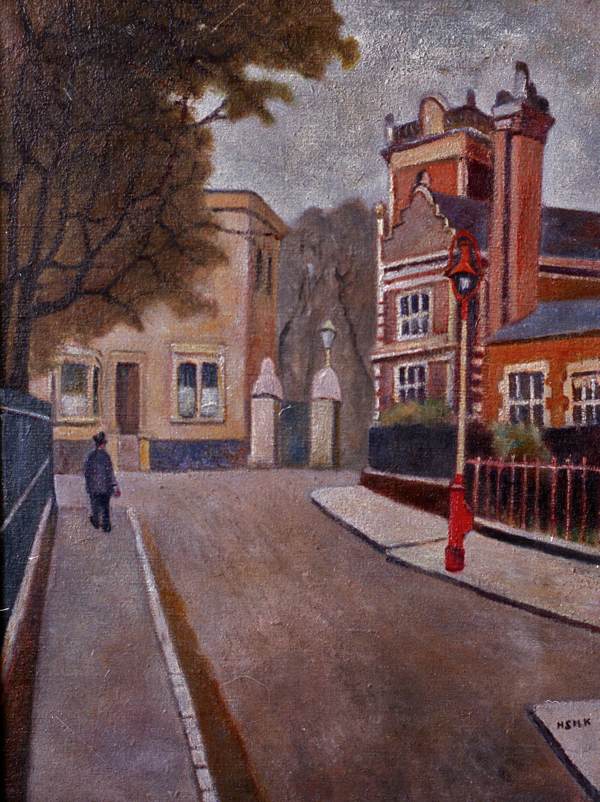
St James’ Rd, Old Ford
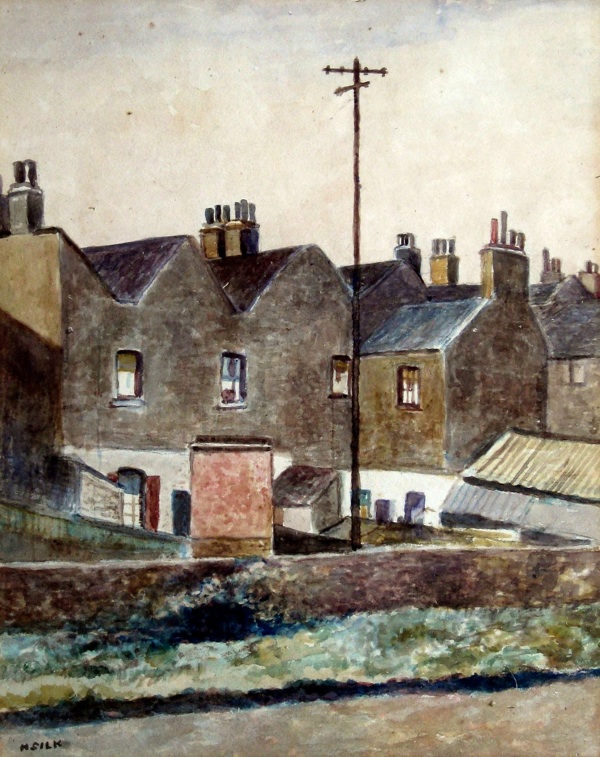
Old Houses, Bow (Walter Steggles Bequest)
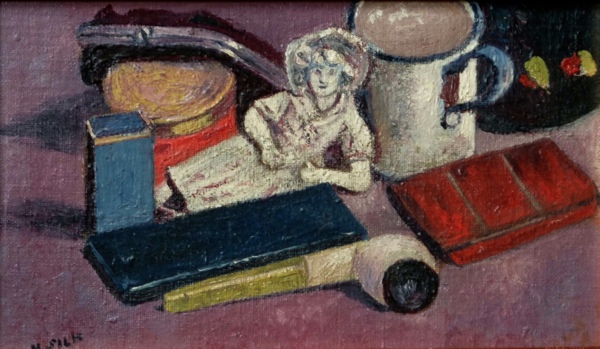
My Lady Nicotine
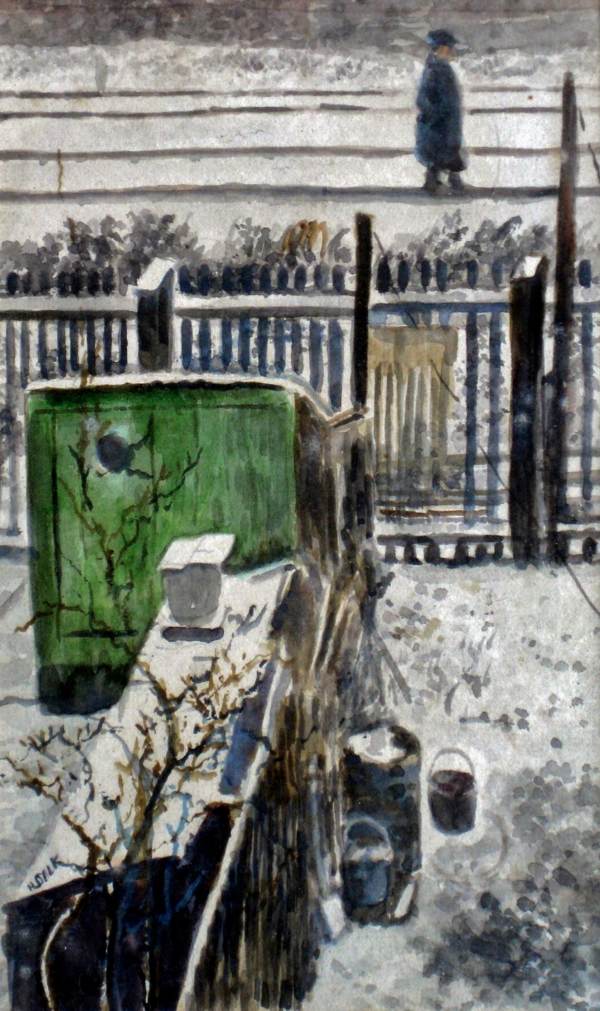
Snow (Walter Steggles Bequest)
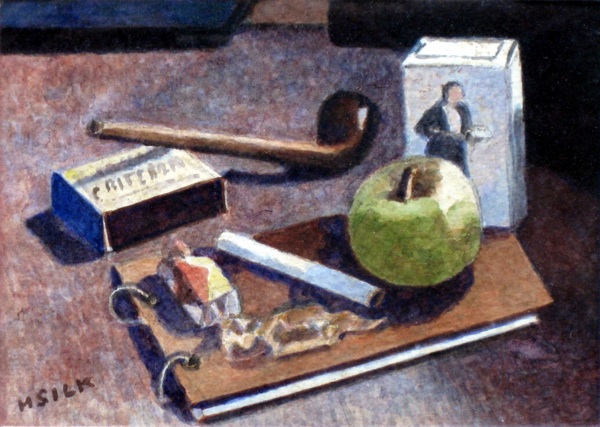
Still Life (Walter Steggles Bequest)
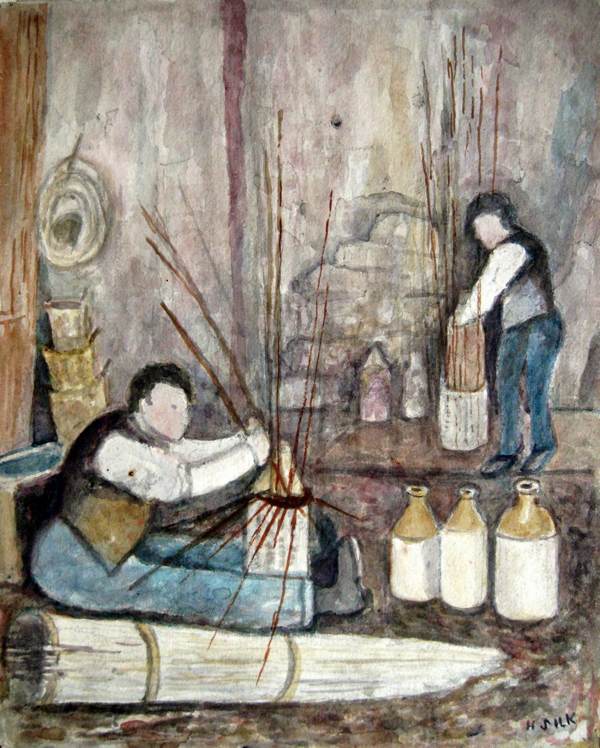
Basket Makers (Courtesy of Dorian Osborne)
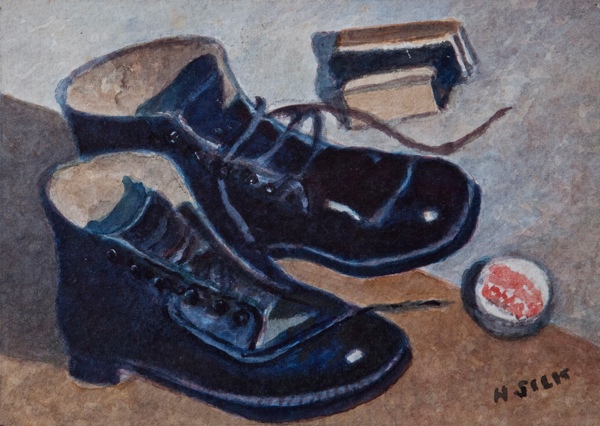
Boots, Polish and Brushes
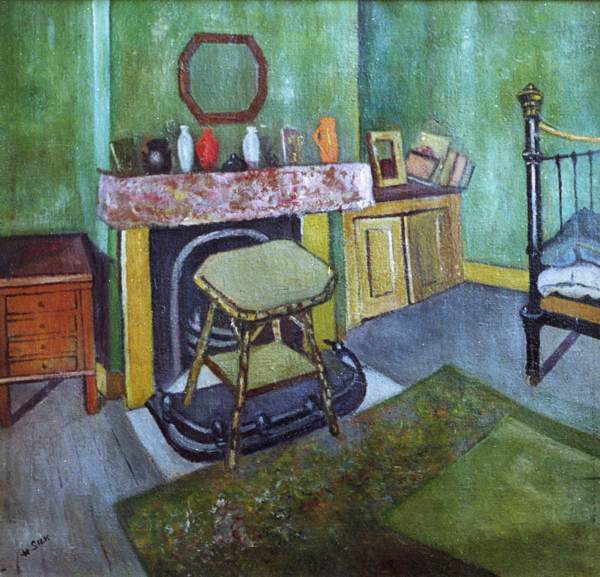
The Bedroom
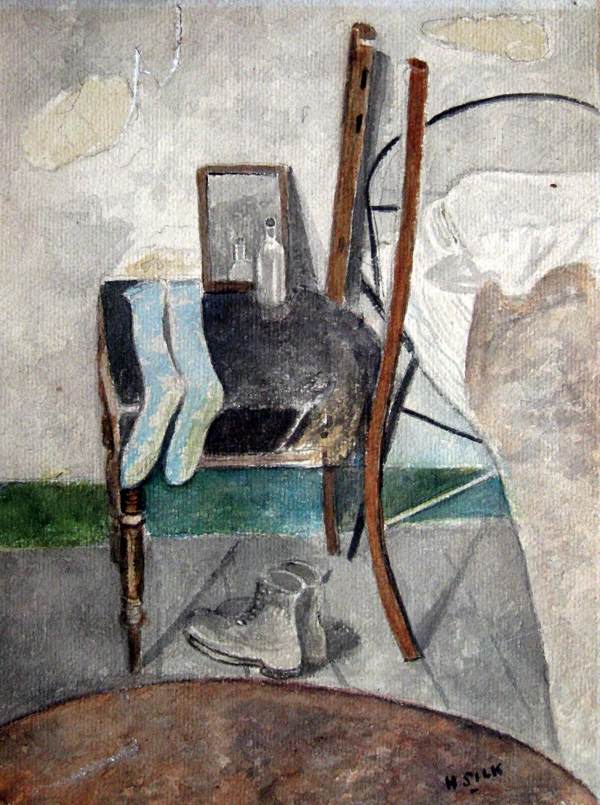
Bedside chair (Courtesy of Dorian Osborne)
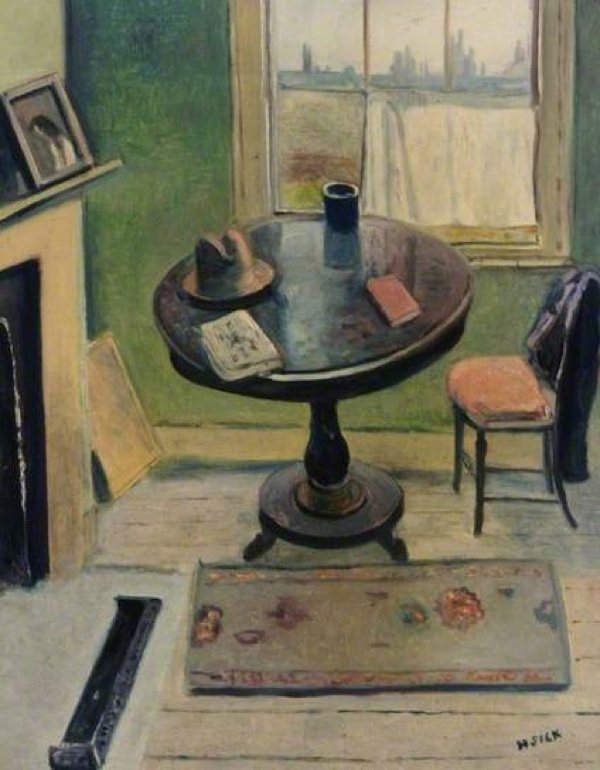
Hat on table, 1932 (courtesy of Doncaster Museum)
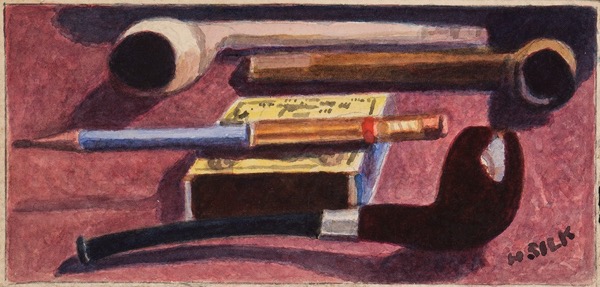
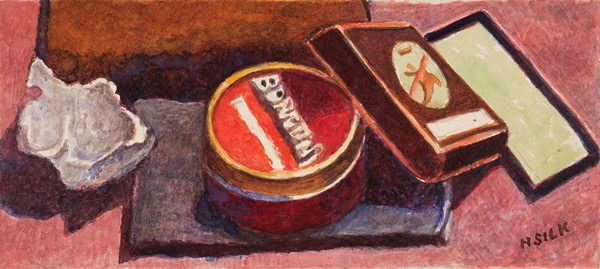
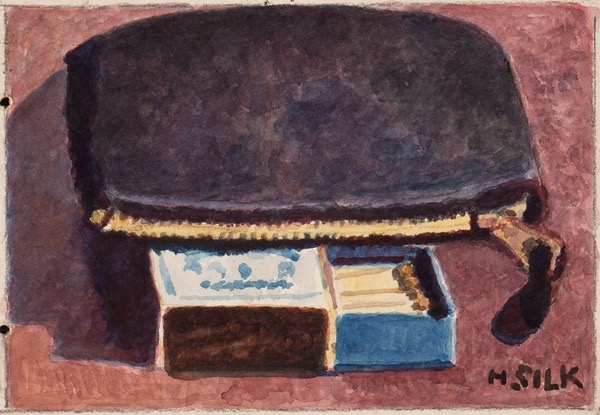
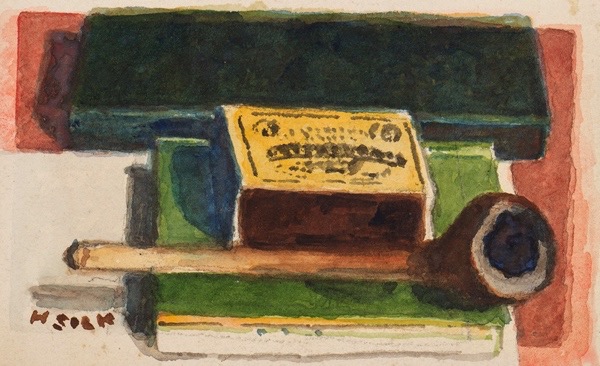
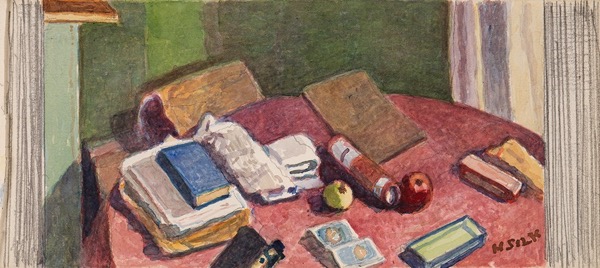
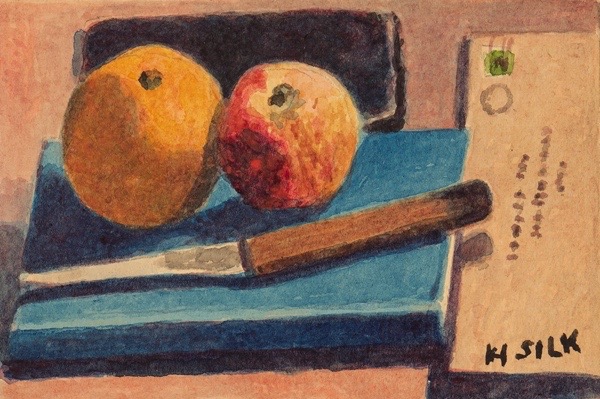
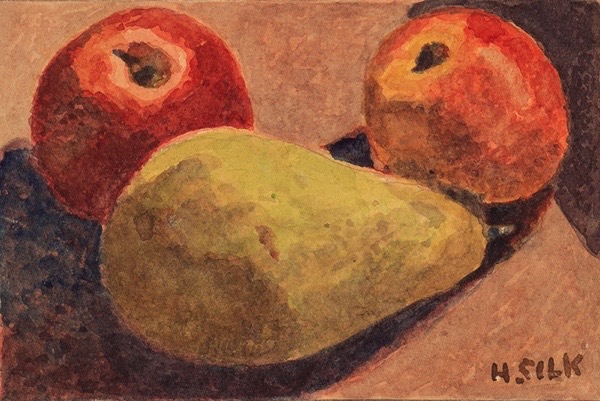
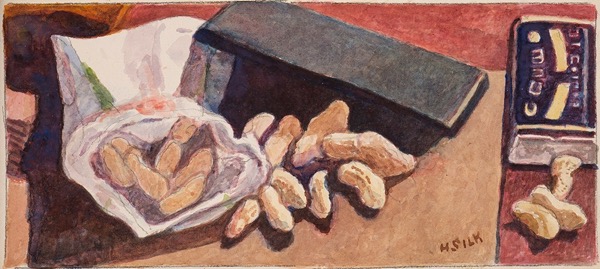
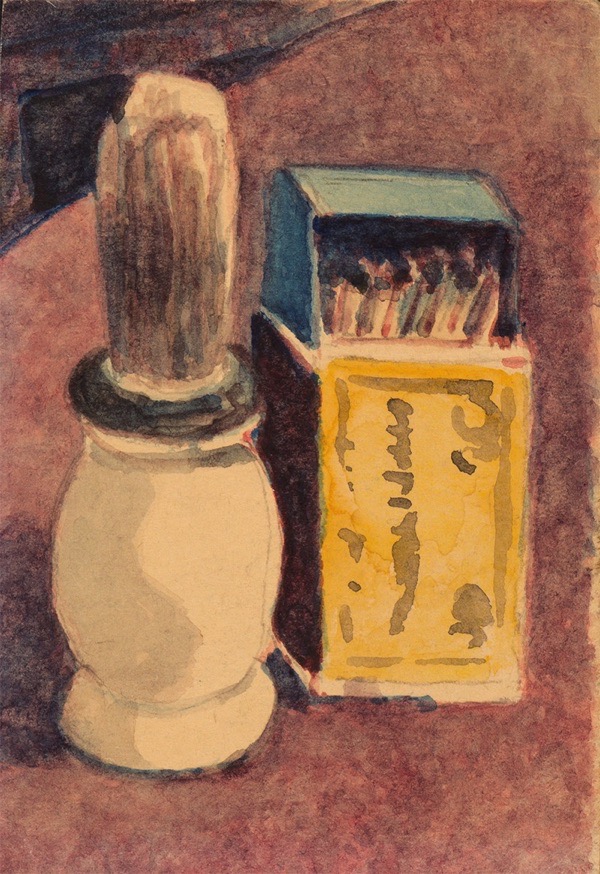
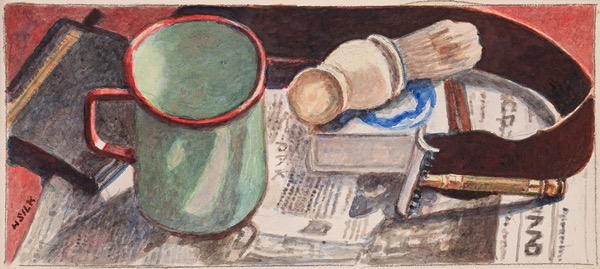
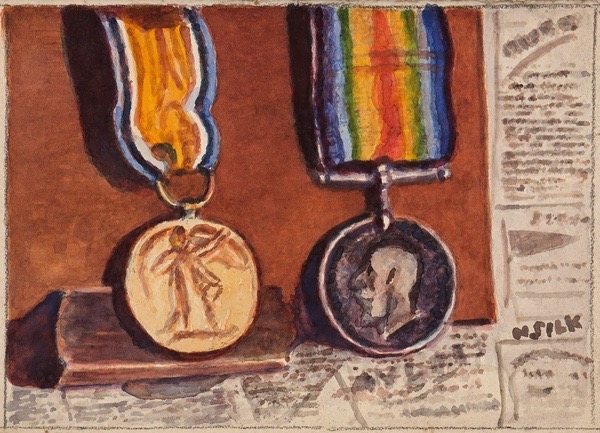
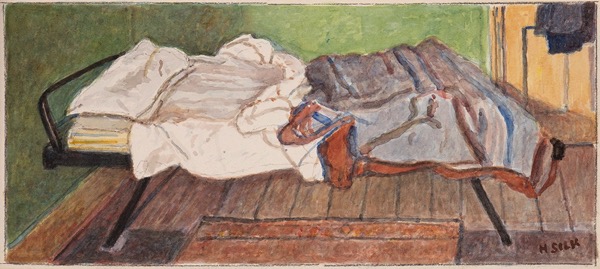
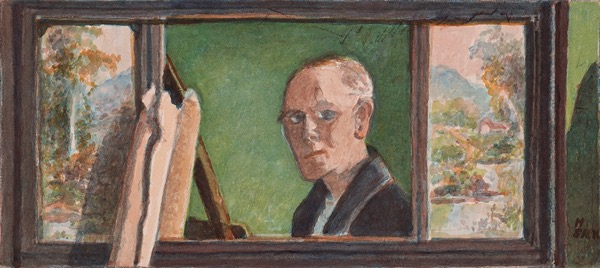
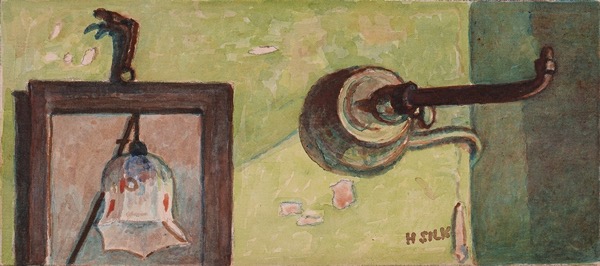
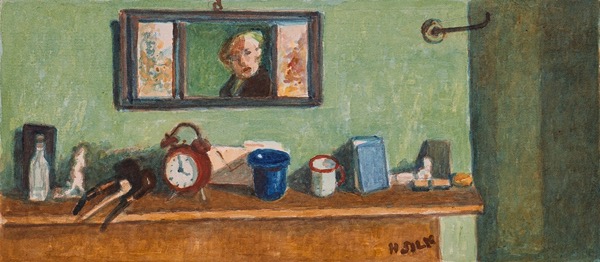
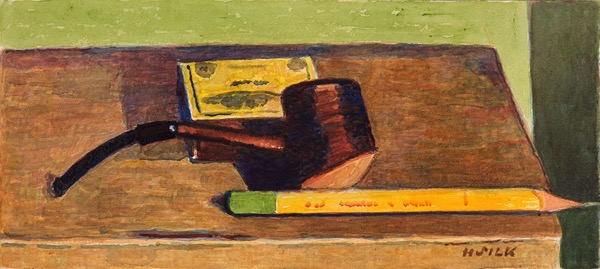
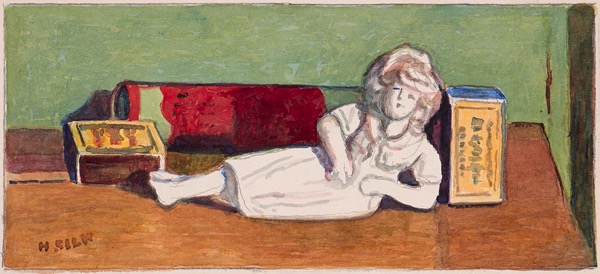
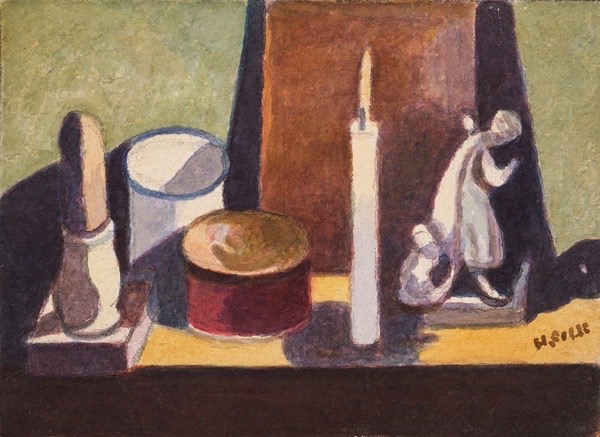
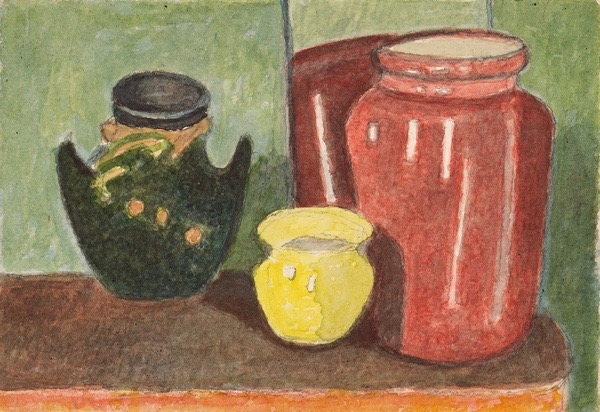
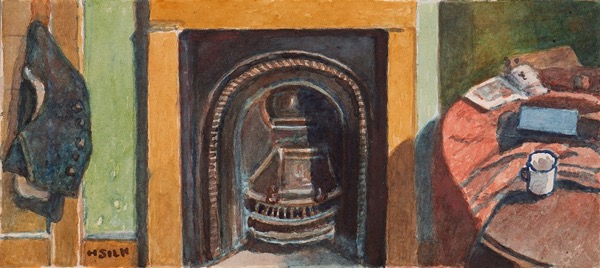
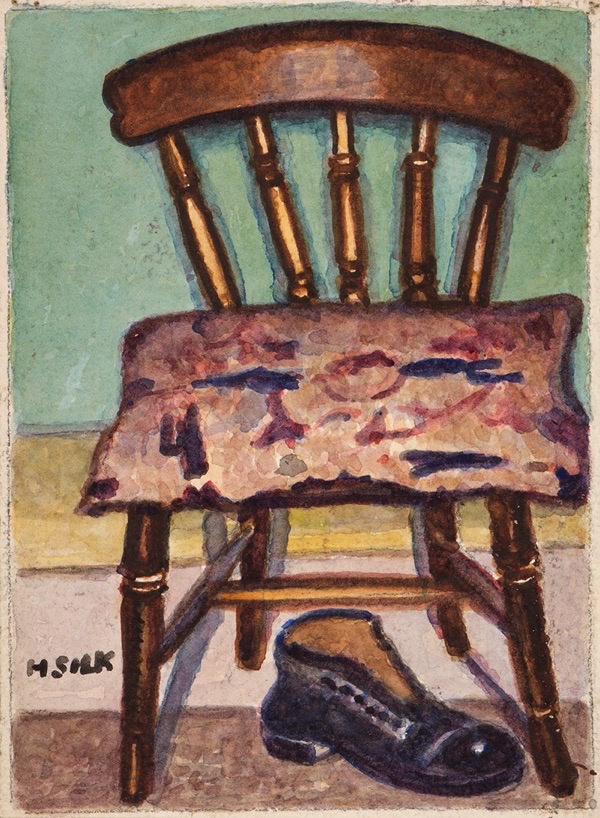
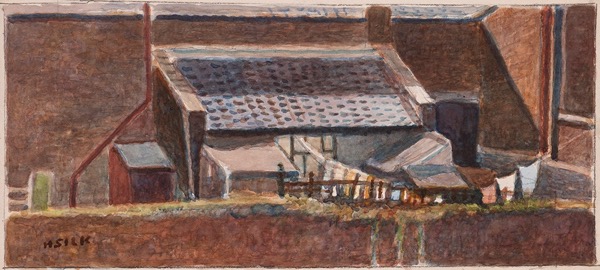
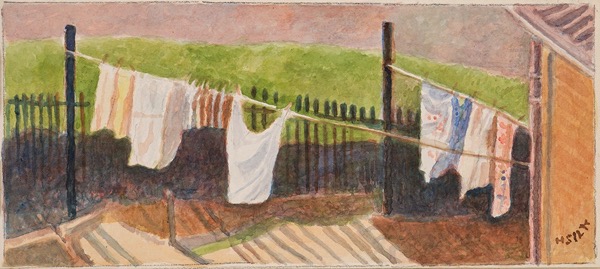
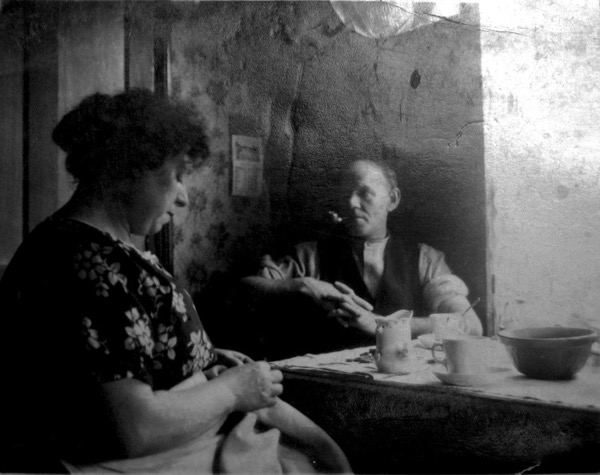
Henry Silk and his sister
Click here to preorder a copy of EAST END VERNACULAR for £25
Pearl Binder, Artist
In the ninth of my series of profiles of artists featured in EAST END VERNACULAR, Artists who painted London’s East End streets in the 20th century to be published by Spitalfields Life Books in October, I present the work of Pearl Binder. Click here to learn how you can support the publication of EAST END VERNACULAR

“City and East End meet here, and between five and six o’clock it is a tempest of people.”
This is Aldgate pictured in a lithograph of 1932 by Pearl Binder, as one of a series that she drew to illustrate The Real East End by Thomas Burke, a popular writer who ran a pub in Poplar at the time. Among the many details of this rainy East End night that she evokes so atmospherically with such economy of means, notice the number fifteen bus which still runs through Aldgate today. In her lithographs, Pearl Binder found the ideal medium to portray London in the days when it was a grimy city, permanently overcast with smoke and smog, and her eloquent visual observations were based upon first hand experience.
This book was brought to my attention by Pearl Binder’s son Dan Jones who is also an artist. He explained that his mother came from Salford to study at the Central School of Art and lived in Spread Eagle Yard, Whitechapel in the nineteen twenties and thirties. It was an especially creative period in her life and an exciting time to be in London, when one of as the first generation after the First World War, she took the opportunity of the new freedoms that were available to her sex.
In Thomas Burke’s description, Pearl Binder’s corner of Whitechapel sounds unrecognisably exotic today, “It is in one of the old Yards that Pearl Binder has made her home, and she has chosen well. She enjoys a rural atmosphere in the centre of the town. Her cottage windows face directly onto a barn filled with hay-wains and fragrant with hay, and a stable, complete with clock and weather-vane; and they give a view of metropolitan Whitechapel. One realises here how small London is, how close it still is to the fields and farms of Essex and Cambridgeshire.” From Spread Eagle Yard, Pearl Binder set out to explore the East End, and these modest black and white images illustrate the life of its people as she found it.
Her best friend was Aniuta Barr (known to Dan as Aunt Nuta), a Russian interpreter, who remembered Lenin, Kalinin and Trotsky coming to tea at their family home in Aldgate when she was a child. Dan described Aunt Nuta announcing proudly, “Treat this bottom with respect, this has sat upon the knee of father Lenin!” He called her his fairy godmother, because she did not believe in god and at his christening when the priest said, “In the name of the father, the son and the holy ghost…”, she added, “…and Lenin”.
Pearl Binder’s origins were on the border of Russia and the Ukraine in the town of Swonim, which her father Jacob Binderevski, who kept Eider ducks there, left to come to Britain in 1890 with a sack of feathers over his shoulder. After fighting bravely in the Boer War, he received a letter of congratulation from Churchill inviting him to become English. Pearl lived until 1990 and Nuta until 2003, both travelling to Russia and participating in cultural exchange between the two countries through all the ups and downs, living long enough to see the Soviet Union from beginning to end in their lifetimes.
Pearl left the East End when she married Dan’s father Elwyn Jones, a young lawyer (later Lord Elwyn Jones and member of parliament for Poplar), and when they were first wed they lived at 1 Pump Court, Lincoln’s Inn Fields, yet she always maintained her connections with this part of London. “Mum was trying to fry an egg and dad came to rescue her,” was how Dan fondly described his parents’ meeting, adding,“I think the egg left the pan in the process,” and revealing that his mother never learnt to cook. Instead he has memories of her writing and painting, while surrounded by her young children Dan, Josephine and Lou. “She was amazingly energetic,” recalled Dan,“Writing articles for Lilliput about the difficulties of writing while we were crawling all over the place.”
Pearl Binder’s achievements were manifold. In the pursuit of her enormous range of interests, her output as a writer and illustrator was phenomenal – fiction as well as journalism – including a remarkable book of pen portraits Odd Jobs (that included a West End prostitute and an East End ostler), and picture books with Alan Lomax and A.L.Lloyd, the folk song collectors. In 1937, she was involved in children’s programmes in the very earliest days of television broadcasting. She was fascinated by Pocahontas, designing a musical on the subject for Joan Littlewood at the Theatre Royal Stratford East. She was an adventurous traveller, travelling and writing about China in particular. She was an advocate of the pearly kings & queens, designing a pearly mug for Wedgwood, and an accomplished sculptor and stained glass artist, who created a series of windows for the House of Lords. The explosion of creative energy that characterised London in the nineteen twenties carried Pearl Binder through her whole life.
“She was always very busy with all her projects, some of which came about and some of which didn’t.” said Dan quietly, as we leafed through a portfolio, admiring paintings and drawings from his mother’s long career. Then as he closed the portfolio and stacked up all her books and pictures that he had brought out to show me – just a fraction of all of those his mother created – I opened the copy of The Real East End to look at the pictures you can see below and Dan summed it up for me. “I think it was a very important part of her life, her time in the East End. She was really looking at things and using her own eyes and getting a feel of the place and the people – and I think the best work of her life was done during those years.”
 A Jewish restaurant in Brick Lane.
 A beigel seller in Whitechapel High St.

A Jewish bookshop in Wentworth St.

A slop shop in the East India Dock Rd. Pearl Binder’s self-portrait

Pearl Binder ( 1904-1990)
You may also like to read about
Anthony Eyton, Painter
In the eighth of my series of profiles of artists featured in EAST END VERNACULAR, Artists who painted London’s East End streets in the 20th century to be published by Spitalfields Life Books in October, I present the work of Anthony Eyton. Click here to learn how you can support the publication of EAST END VERNACULAR
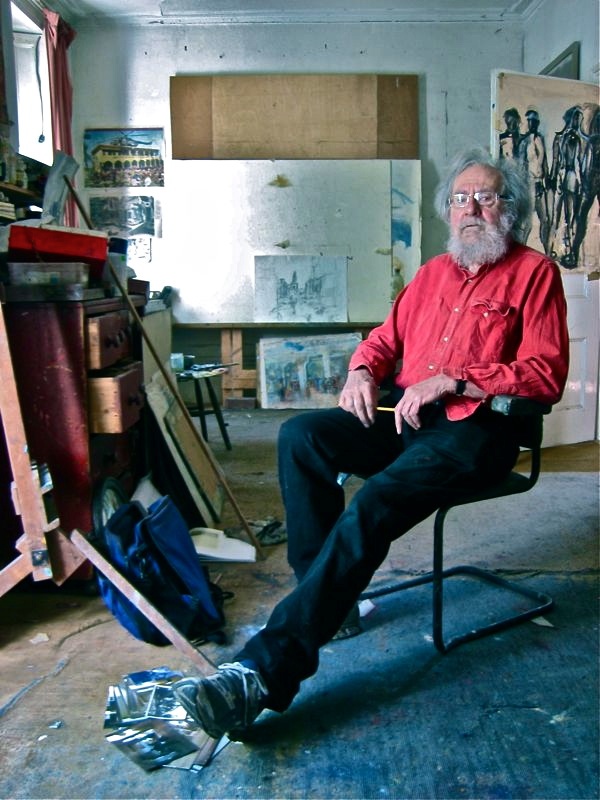
I took the 133 bus from Liverpool St Station, travelling down south of the river to visit the ninety-six year old painter Anthony Eyton at the elegant terrace in the Brixton Rd where has lived since 1960 – apart from a creative sojourn in Spitalfields, where he kept a studio from 1968 until 1982. It was the 133 bus that stops outside his house which brought Anthony to Spitalfields, and at first he took it every day to get to his studio. But then later, he forsook home comforts to live a bohemian existence in his garret in Hanbury St and the result was an inspired collection of paintings which exist today as testament to the particular vision Anthony found in Spitalfields.
A tall man with of mane of wiry white hair and gentle curious eyes, possessing a benign manner and natural lightness of tone, Anthony still carries a buoyant energy and enthusiasm for painting. I found him working to finish a new picture for submission to the Royal Academy before five o’clock that afternoon. Yet once I arrived off the 133, he took little persuasion to lay aside his preoccupation of the moment and talk to me about that significant destination at the other end of the bus route.
“That biggest strangest world, that whirlpool at Spitalfields, and all the several colours of the sweatshops, and the other colours of the degradation and of the beautiful antique houses derelict – I think the quality of colour was what struck me most.” replied Anthony almost in a whisper, when I asked him what drew him to Spitalfields, before he launched into a spontaneous flowing monologue evoking the imaginative universe that he found so magnetically appealing.
“From Brick Lane to Wilkes St and in between was special because it’s a kind of sanctuary.” he continued, “And looking down Wilkes St, Piero della Francesca would have liked it because it has a kind of perfection. The people going about their business are perfectly in size to the buildings. You see people carrying ladders and City girls and Jack the Ripper tours, and actors in costume outside that house in Princelet St where they make those period films, and they are all in proportion. And the market was still in use then which gave it a rough quality before the City came spilling over and building its new buildings. Always a Mecca on a Sunday. I used to think they were all coming for a religious ceremony, but it’s pure commerce, and it’s still there and it’s so large. It’s very strange to me that people give up Sunday to do that… – It’s a very vibrant area , and when Christ Church opens up for singing, the theatre of it is wonderful.”
Many years before he took a studio in Spitalfields, Anthony came to the Whitechapel Gallery to visit the memorial exhibition for Mark Gertler in 1949, another artist who also once had a studio in an old house in one of the streets leading off the market place. “Synagogues, warehouses, and Hawksmoor’s huge Christ Church, locked but standing out mightily in Commercial St, tramps eating by the gravestones in the damp church yard. “Touch” was the word that recurred,” wrote Anthony in his diary at that time, revealing the early fascination that was eventually to lead him back, to rent a loft in an eighteenth century house in Wilkes St and then subsequently to a weavers’ attic round the corner in Hanbury St where the paintings you see below were painted.
Each of these modest spaces were built as workplaces with lines of casements on either side to permit maximum light, required for weaving. Affording vertiginous views down into the quiet haven of yards between the streets where daylight bounces and reflects among high walls, these unique circumstances create the unmistakable quality of light that both infuses and characterises Anthony Eyton’s pictures which he painted in his years there. But while the light articulates the visual vocabulary of these paintings, in their subtle tones drawn from the buildings, they record elusive moments of change within a mutable space, whether the instant when a model warms herself at the fire or workmen swarm onto the roof, or simply the pregnant moment incarnated by so many open windows beneath an English sky.
Anthony’s youngest daughter, Sarah, remembers coming to visit her father as a child. “It was a bit like camping, visiting daddy’s studio,” she recalled fondly, “There were no amenities and you had to go all the way downstairs, past the door of the man below who always left a rotten fish outside, to visit the privy in the yard that was full of spiders which were so large they had faces. But it was exciting, an adventure, and I used to love drawing and doing sketches on scraps of paper that I found in his studio.”
For a few years in the midst of his long career, Spitalfields gave Anthony Eyton a refuge where he could find peace and a place packed with visual stimuli – and then eight years ago, a quarter of a century after he left, Anthony returned. Frances Milat who was born and lived in the house in Hanbury St came back from Australia to stage a reunion of all the tenants from long ago. It was the catalyst for a set of circumstances which prompted Anthony to revisit and do new drawings in these narrow streets which, over all this time, have become inextricable with his identity as an artist.
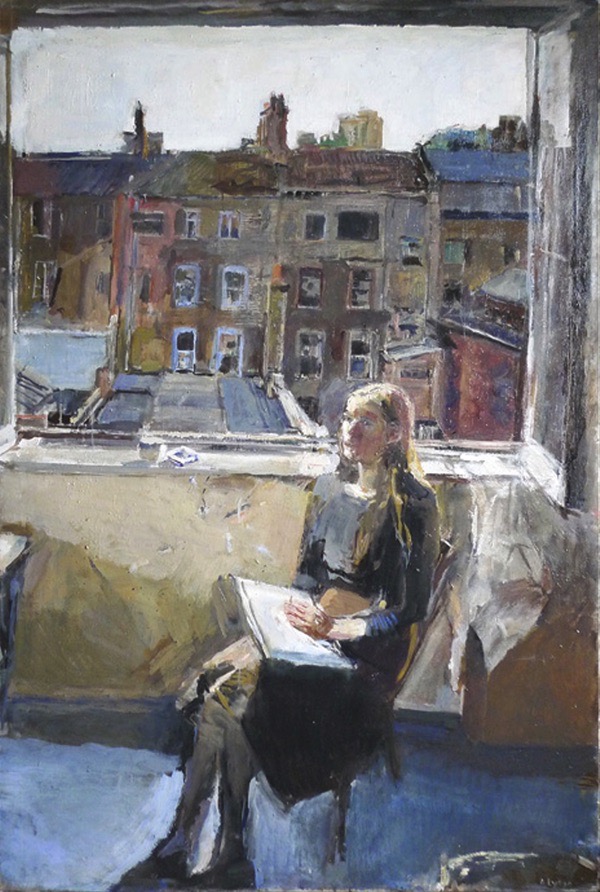
Christine, 1976/8 – “She was very keen that the cigarette smoke and grotty ashtray should be in the picture to bring me down to earth.”
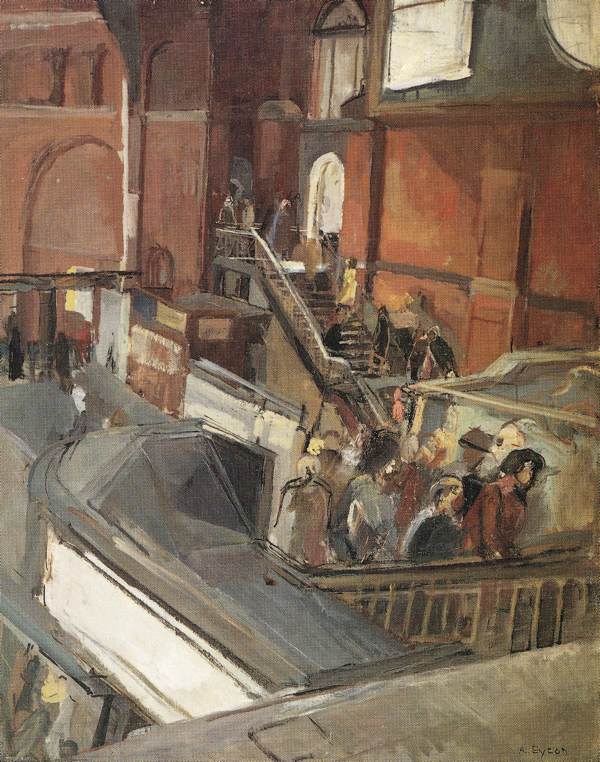
Liverpool St Station, mid-seventies
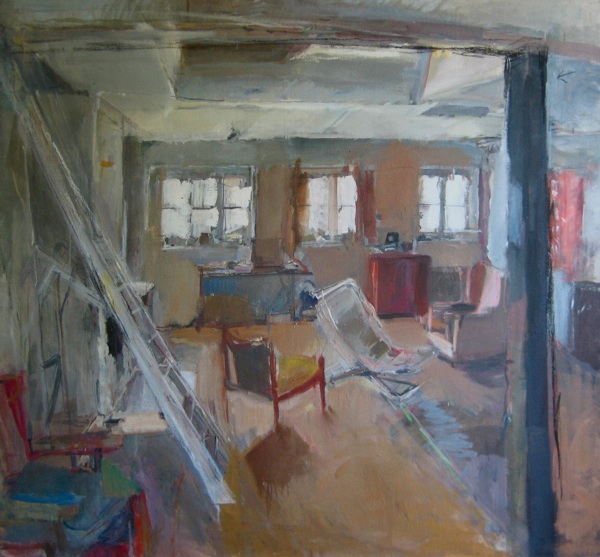
Studio interior, 1977
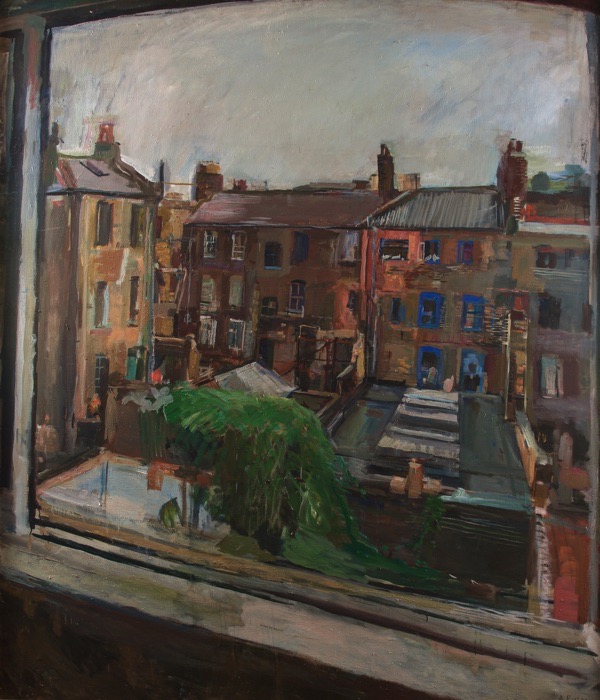
Back of Princelet St, 1980

Girl by the fire, 1978
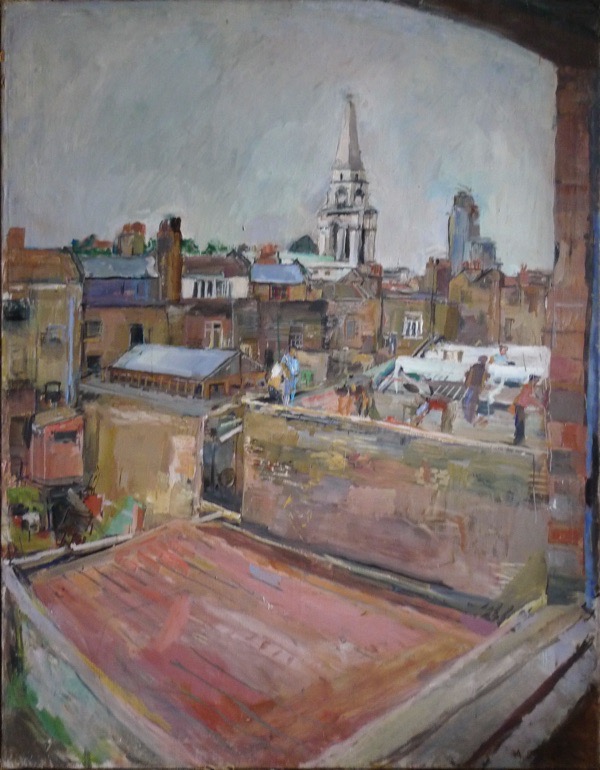
Workers on the roof, 1980
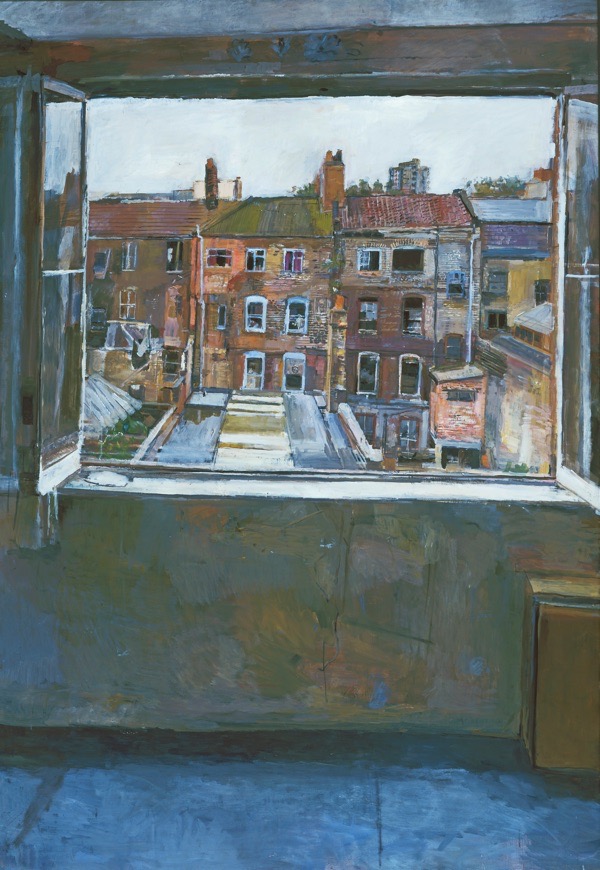
Open window, Spitalfields, 1976-81 (Courtesy of Tate Gallery)
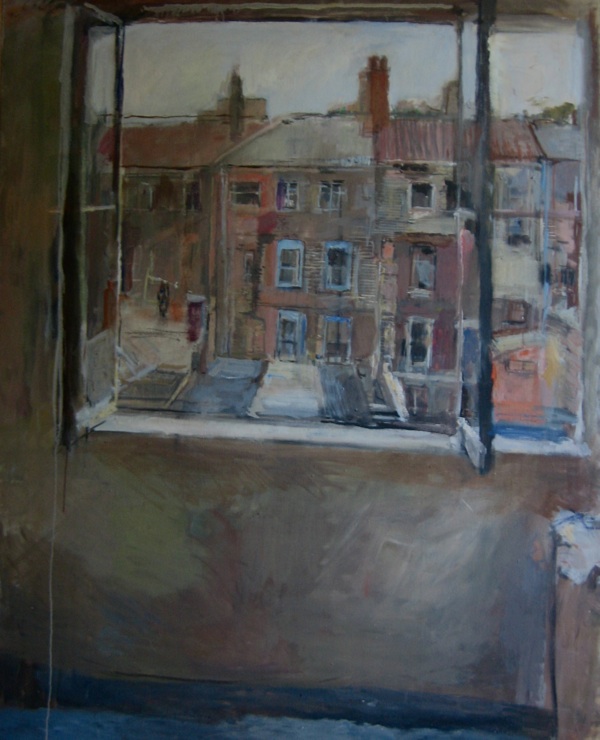
Open window, Spitalfields, 1976
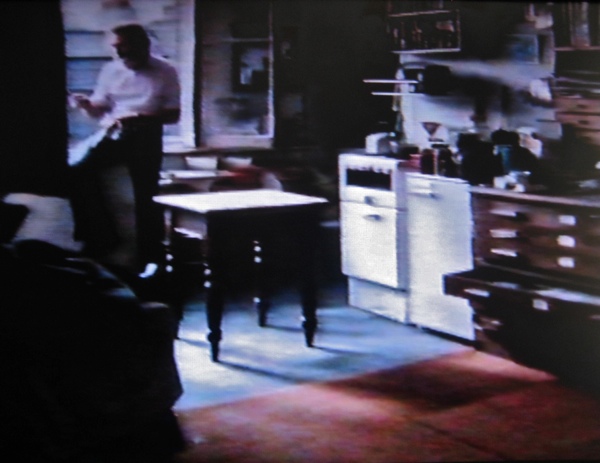
Anthony Eyton working in his Hanbury St studio, a still from a television documentary of 1980

Wilkes St, 2011
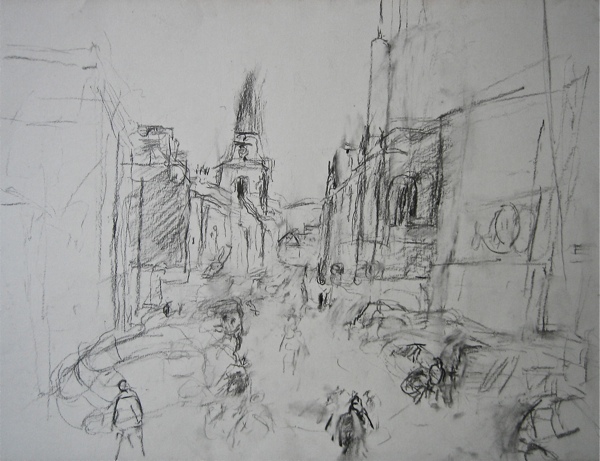
Fournier St from Banglatown, 2011
Pictures copyright © Anthony Eyton
Paintings by Anthony Eyton are currently on display at Eleven Spitalfields, 11 Princelet St, E1 6QH, as part of the exhibition SUBSTANCE & LIGHT until 5th July
Elwin Hawthorne, Painter
In the seventh of my series of profiles of artists featured in EAST END VERNACULAR, Artists who painted London’s East End streets in the 20th century to be published by Spitalfields Life Books in October, I present David Buckman‘s profile of Elwin Hawthorne. Click here to learn how you can support the publication of EAST END VERNACULAR
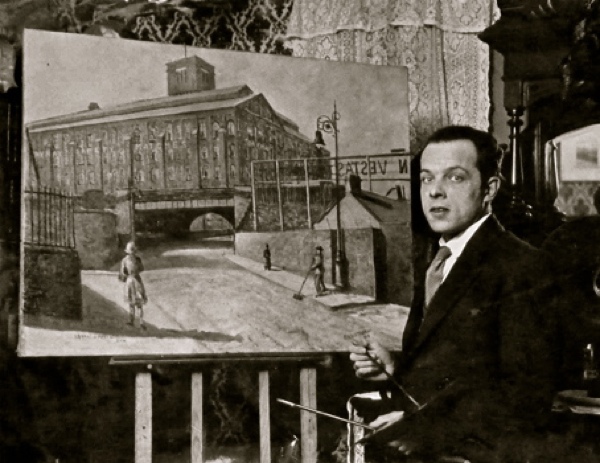
Elwin Hawthorne with his painting of the Bryant & May Factory, 1929
In November 2008, when Sotheby’s auctioned pictures assembled by Sir David and Lady Scott, there was keen bidding for oils by Elwin Hawthorne. Sir David acquired a taste for the artist’s work in the early nineteen thirties when Hawthorne was a star exhibitor at Alex Reid & Lefevre’s galleries of work by the emerging East London Group.
Yet by the time of that Sotheby’s sale, Hawthorne was a forgotten name to all but a tiny group of enthusiasts who, like Scott, had been seduced by his melancholy, rather surreal views of London suburbs. The artist died in 1954, unremarked apart from family and friends, when he ought to have been in his prime as a creative artist. Instead, disheartened by the lack of opportunities to exhibit, he had lost heart in his work.
While researching my book From Bow to Biennale: Artists of the East London Group, I was lucky to meet Elwin Hawthorne’s widow, Lilian, then living in Vicarage Lane, East Ham. She had also exhibited with the Group, and provided invaluable memories of the triumphs and disappointments of her late husband’s career. Finally, when Lilian died in 1996, so unregarded was Elwin’s output that rescue work had to be carried out to save several pictures – two of these are among his paintings in my book.
Elwin and Lilian moved into a newly-built block of flats in September 1953, only thirteen months before he died. Since the coal bunker had no shelf, Elwin used one of his fine oil paintings on board “Trinity Almshouses, Mile End Rd,” shown at Lefevre in 1935. After Elwin died, Lilian rescued it, filling in two screw holes with wood filler and painting over the damage. A canvas entitled “Ilfracombe” was also discovered in the coal bunker, rolled up and flattened like an old rag under a pile of rubbish – this has recently been professionally de-creased and mounted on a panel.
By the time of his death, Hawthorne had become a versatile artist, competent in oils, watercolour and printmaking, though his career as a painter in oils, his main achievement, was concentrated in just fifteen years, 1925-40.
Born in the Bromley sub-district of Poplar in 1905, to a father who was house painter and decorator, his background was not auspicious for what he wanted to do. Elwin, his parents, five brothers and a sister and a basket-maker uncle, Henry Silk ( another member of the East London Group), lived hugger-mugger in a small, crowded two-storey building.
When Elwin left elementary school at fourteen with no qualifications, he became an errand boy. While unemployed he developed an interest in painting which led to classes at the Bethnal Green Men’s Institute and then the Bow & Bromley Evening Institute where the teacher was the inspirational John Cooper who was trained at the Slade School of Art.
Although he originally showed under his correctly spelled surname of “Hawthorn,” when his work was chosen for the 1928 Whitechapel Art Gallery East London Art Club exhibition, the forerunner of the East London Group Lefevre series at in the West End in the nineteen thirties, he was catalogued as “Hawthorne” and urged to retain that spelling.
He became a prolific exhibitor at Lefevre Galleries’ annual exhibitions and elsewhere, and attracted widespread press attention. When the first East London Group show was held late in 1929, R R Tatlock, writing in the Daily Telegraph, devoted three paragraphs of a large review to Hawthorne, praising the subdued palette that would become an abiding characteristic of his work. At the second Lefevre exhibition in 1930, The Times judged Hawthorne, “the most original artist of the group, producing pictures of East London which are the English equivalents – though more matter of fact – of what Utrillo is doing for Paris.” In fact, Hawthorne was compared to Utrillo several times .
In 1930, Lefevre signed a contract with Hawthorne to pay him a modest salary of eight pounds monthly in return for a first-refusal option on his work, with financial adjustments to be made as pictures sold. At this time. Elwin was about two years into a three-year period as assistant to Walter Sickert, who had lectured to Cooper’s Bow classes and exhibited with the East London Group for a short period. Sickert had taken an interest in Hawthorne, who supported the veteran artist on several important works.
Hawthorne was a full-time artist of great professionalism and some of his meticulous work sheets survive, including details such as each painting’s title and size, descriptions of the subjects, prices and whether sold or returned, or – in a few cases – destroyed when they did not fulfil his high standards. In the case of one work, there is the inscription, “Returned to me, now in the possession of Steggles, by exchange.” His fellow in the East London Group, Walter Steggles, thought highly of Elwin, commenting to me, “It is my opinion that Elwin was the best painter of London in the Twentieth Century. I am not alone in this view as a number of important collectors have expressed similar opinions to me.”
Notable collectors of Elwin’s work were abundant. In 1938, as well as Sir David Scott and his Foreign Office colleague Montague Shearman, Hawthorne was able to list among his buyers the “Contemporary Art Society, Earl of Sandwich, Viscount D’Abernon, Earl of Radnor, Earl of Rutland, Sir Edward Marsh, Gerald Kelly RA, J B Priestley, Charles Laughton, James Agate and numerous others.” Today, eight public collections in Britain hold Hawthorne paintings.
After signed the contract with Hawthorne which would continue for most of the nineteen thirties, Lefevre realised they had a star whose pictures were not restricted to the annual East London Group exhibitions. He was included in mixed shows both in Britain and overseas, and was given two Lefevre solo exhibitions.
His first was in 1934, coinciding with one by Vanessa Bell of the Bloomsbury Group, with her work accompanied by a foreword by Virginia Woolf in the catalogue. Hawthorne’s was well received, The Times critic commenting on his “discovery of artistic meaning in the commonplace.” Meanwhile, the Sunday Referee’s writer, who contended that “Mrs. Woolf’s mystical flutings on the theme of her sister’s paintings simply bewilder” yet found Bell’s work, “essentially commonplace.” The critic judged Hawthorne “an outstanding, possibly great artist in the making” and praised his display as “easily the best one-man show in town.”
In 1938, a second solo exhibition followed, but this time in tandem with one by Sickert’s third wife, Thérèse Lessore. Leading critics covered it, including T W Earp, Jan Gordon and Eric Newton. Again, Hawthorne’s work was generally favoured, with the critic of The Scotsman – who had liked his first solo show – seeing in his small pictures, “an impression of complete sincerity that is rare and inspiring.”
By this time, Hawthorne’s figure painting was developing yet even in one of his early works from 1929 – the picture of the Bryant & May Match Factory which proved a favoured subject for East London Group artists – the handling of the figures is assured. For his fellow East London Group member Cecil Osborne, the absence of figures in Hawthorne’s work, gave them “a ‘Sunday Morning look” with the sparsely populated streets contributing to their surreal quality. John Cooper was keen that his students visited exhibitions and it is possible that Hawthorne may have viewed the controversial 1936 International Surrealist Exhibition at the New Burlington Galleries, although a surreal atmosphere had already permeated Hawthorne’s work years earlier.
Hawthorne had other preoccupations in 1936. Along with Walter Steggles, he had a painting chosen for the British pavilion at the Venice Biennale, with a contribution entitled “Una Via Di Londra.” It was a great accomplishment for a former errand boy to have his work shown alongside professional artists such as Sir Alfred Gilbert, Duncan Grant, Dame Barbara Hepworth and Philip Wilson Steer. Also in 1936, The Artist included a lengthy, illustrated profile of him as the twelfth in its “Artists of Note” series, beginning by extending “our special gratitude” to John Cooper, since “it is the East London Group that has given us Elwin Hawthorne”.
Although the final East London Group exhibition at Lefevre was in 1936, the gallery continued to promote individual artists’ works until World War II brought disarray to the art market. The hostilities effectively ended Hawthorne’s exhibiting career. After Army service, for which he was temperamentally unsuited, he returned to Lefevre, but they had nothing for him and suggested he take a job. He handled wages for radio and electronics firm Plessey, teaching art in schools part-time. Then, in 1954, he was taken ill on a bus to Woodberry Down School and died soon after in hospital. Elwin Hawthorne was only forty-nine, and he left a widow and two children – and he created a body of atmospheric paintings that survive to be acknowledged and appreciated now for their distinctive vision.
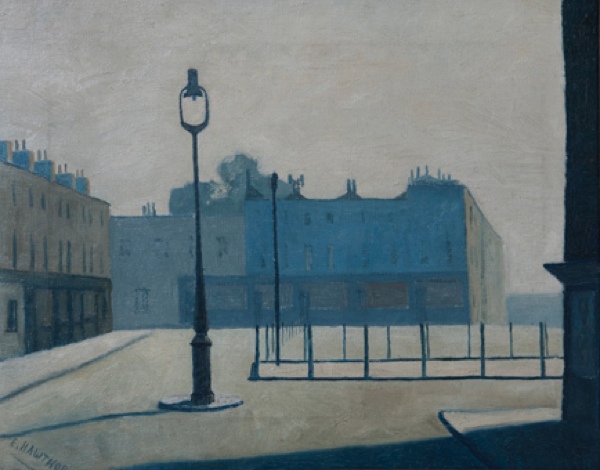
Cumberland Market, 1931 (Private collection)
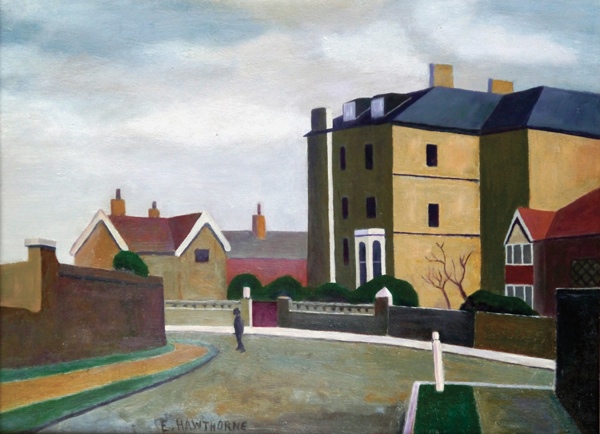
Grove Park Rd W4, 1935 (Private collection)

Whipps Cross, 1933 (Gabriel Summers)
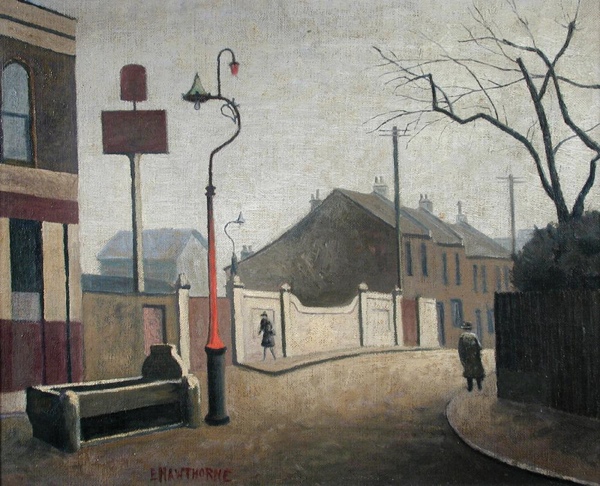
The Mitford Castle, 1931 (Private collection)
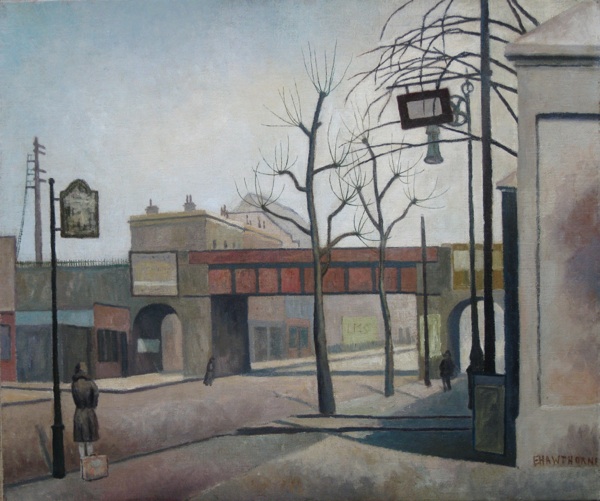
Bow Rd, 1931

Victoria Memorial Buckingham Palace, 1938 (Private collection)
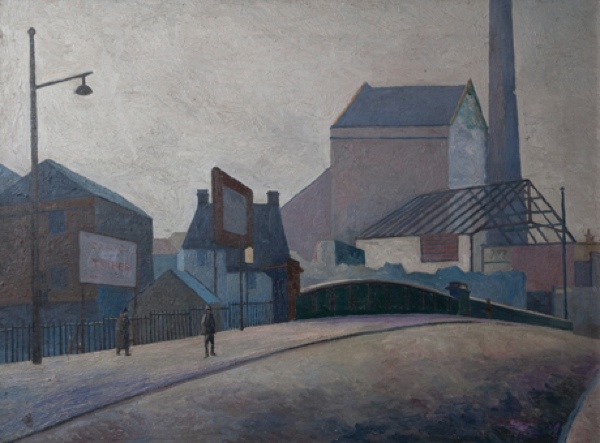
Demolition of Bow Brewery, 1931 (Private collection)
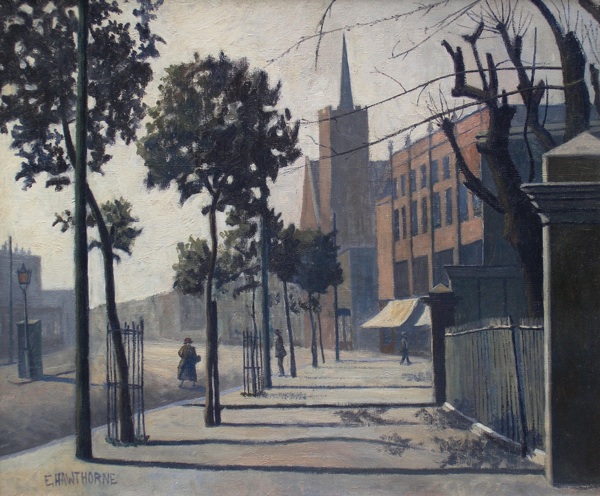
The Guardian Angels, 1931 (Louise Kosman, Edinburgh
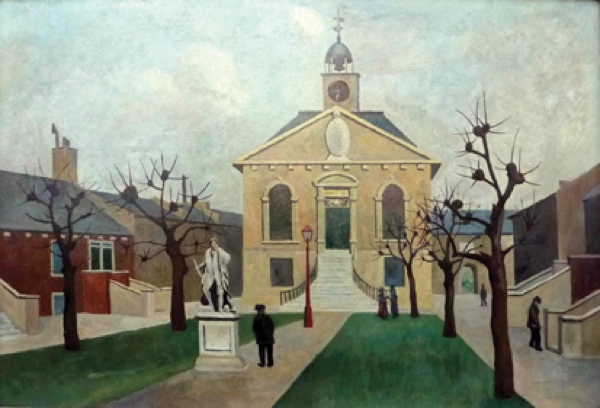
Trinity Almshouses, Mile End Rd, 1935 (Private collection) – rescued from use as a shelf in a coal bunker.
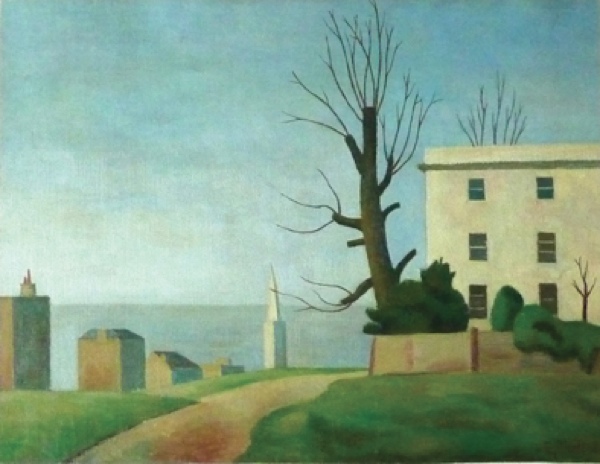
Ilfracombe, c.1931 (Private collection) – discovered rolled up in the coal bunker.
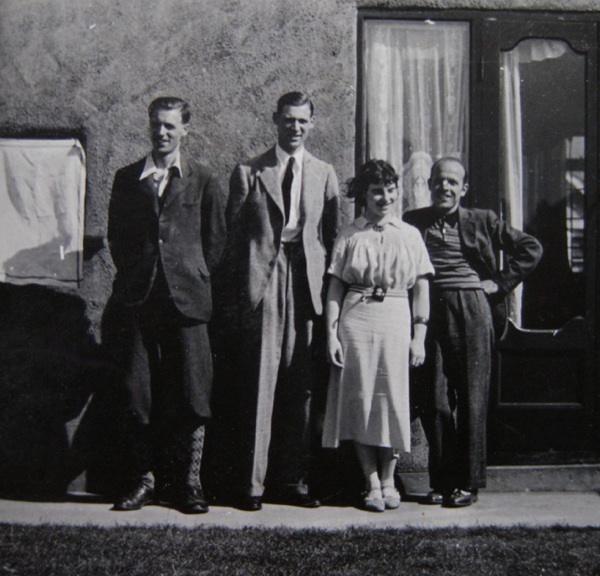
Walter and Harold Steggles, Lilian and Elwin Hawthorne (right), c.1937 (Walter Steggles Bequest)












