Jock McFadyen, Painter
In the sixth of my series of profiles of artists featured in EAST END VERNACULAR, Artists who painted London’s East End streets in the 20th century to be published by Spitalfields Life Books in October, I present the paintings of Jock McFadyen. Click here to learn how you can support the publication of EAST END VERNACULAR
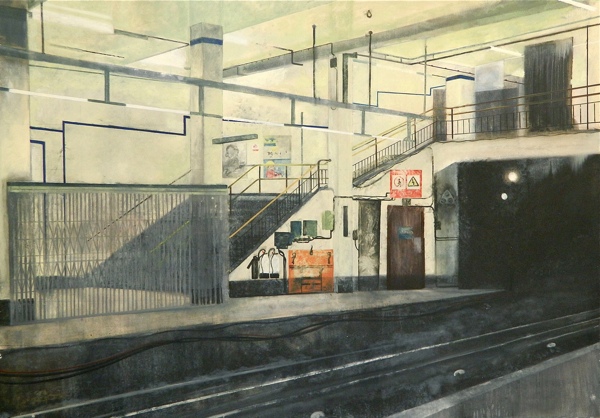
Aldgate East by Jock McFadyen
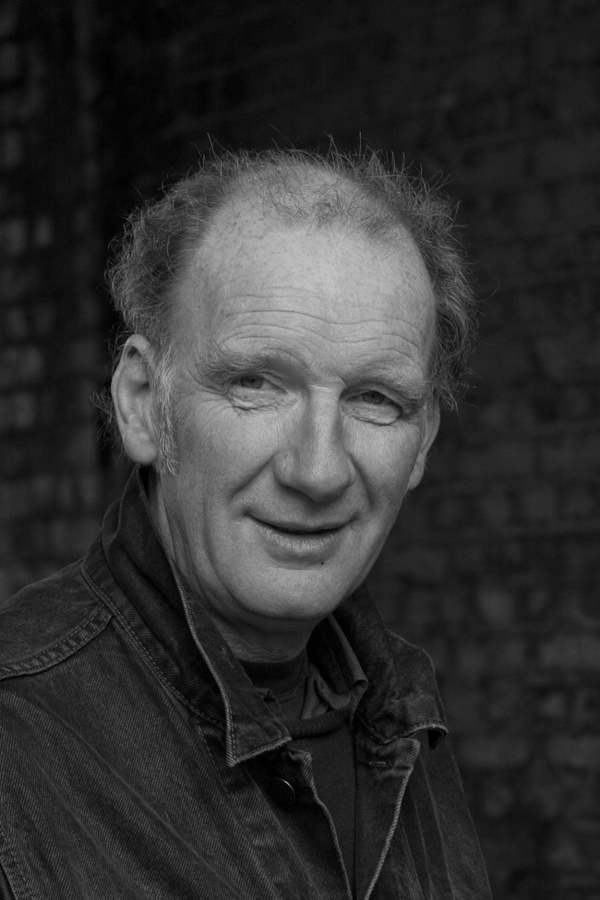
Hidden behind an old terrace facing London Fields is a back street with a scrapyard and a car repair garage, and a row of anonymous industrial units where painter Jock McFadyen has his studio. You enter through a narrow alley round the back to discover Jock in his lair, a scrawny Scotsman with freckles, tufts of ginger hair, and beady eyes that look right through you. Yet such is the modesty of his demeanour, he acted more like the caretaker than the owner – concentrating on the coffee and biscuits, and leaving me to gasp at his vast canvasses of landscapes on a scale uncommon in our age.
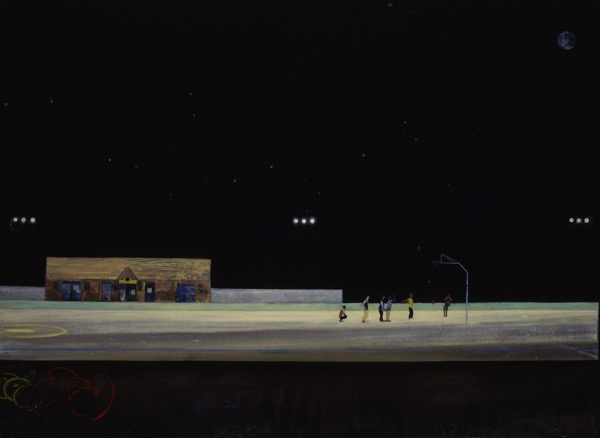
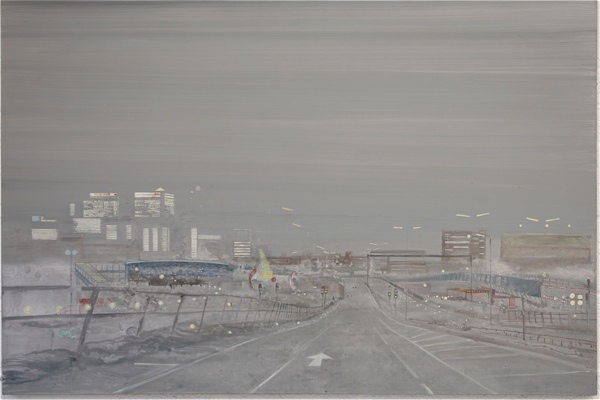
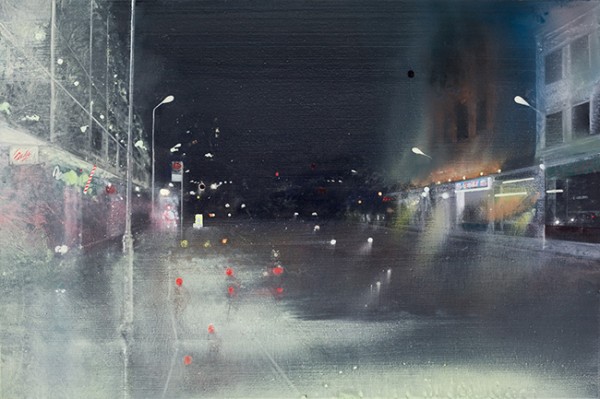
The works of man appear insubstantial, either dwarfed by the scale of the landscape or partly obscured by meteorological effects in Jock’s paintings. With plain titles such as “Dagenham,” “Looking West,” “Pink Flats,” and “Popular Enclosure,” he evokes the terrain where East London unravels into Essex beneath apocalyptic northern skies, encompassed by an horizon that extends beyond your field of vision when you stand in front of these pictures.
Originating from Paisley, Jock has lived and worked in the East End since 1978, with studios in Butler’s Wharf, Bow and the Truman Brewery before arriving in London Fields twenty years ago. Although he has painted a whole series of epic landscapes of the East End, Jock remains ambivalent about its impact upon his work. “It’s difficult to say how much a place affects you because my real influences are other painters like Lowry and Sickert,” he admitted to me with a shrug, “You’re never just painting what’s in front of your nose, you’re aware of the history of painting.”
“When I was a student at Chelsea in the seventies, the previous generation were the pop artists and my work was quite stark and self-referential.” he confessed with a chuckle, breaking into a shy grin, “But when I became Artist in Residence at the National Gallery in 1981, I realised I couldn’t spend my life just making art about art, so I started painting what I saw in the street – What could be less fashionable?”
“Then in 1991, I got commissioned to design a set for the Royal Ballet. They thought, ‘It’s urban despair, let’s get Jock McFadyen!'” he continued, sipping his coffee with relish, “There were no figures in my design, because the dancers were the figures. And that’s when I realised I had been a landscape painter all along – I’d been painting people in places.”
So there we left our conversation – but before I departed his studio, I paused to admire a huge canvas of magnificent old rotting warehouses on the River Lea. It occurred to me that Jock came from Glasgow – a decayed port city with a vibrant working class culture – and felt at home in the East End, a location with a similar identity. I saw Jock looking at me and I realised he knew what I was thinking. “If you are a landscape painter you can only paint one place at a time,” he said, anticipating my words “So the question is ‘Are you an East End painter or are you just a landscape painter that happens to live here?'”

Jock McFadyen in London Fields
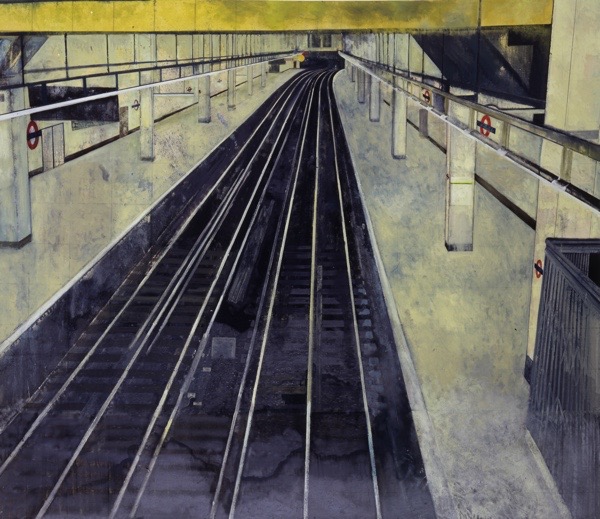
Aldgate East
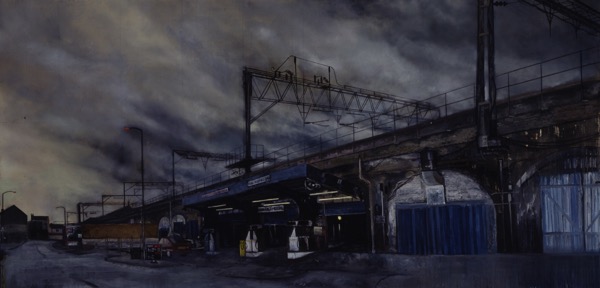
Three Colts Lane
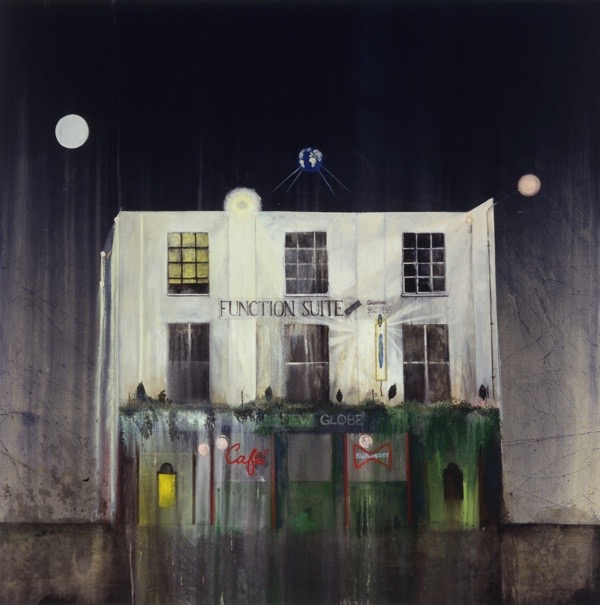
The New Globe
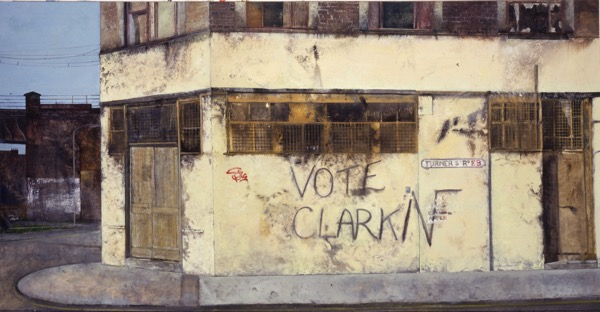
Turner’s Rd
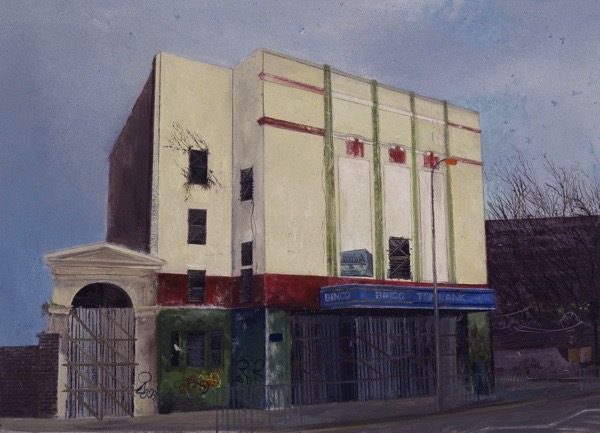
Bingo Hall, Mare St
Bethnal Green Garden
Looking West

Bud

From Beckton Alp

Goodfellas

Showcase Cinemas

Tate Moss

Pink Flats

Jock & Horseshoe Jake in front of Popular Enclosure

Dagenham
Roman Rd
Jock McFadyen
Paintings copyright © Jock McFadyen
Portraits copyright © Lucinda Douglas Menzies
Click here to preorder a copy of EAST END VERNACULAR for £25
Rose Henriques, Artist
In the fifth of my series of profiles of artists featured in EAST END VERNACULAR, Artists who painted London’s East End streets in the 20th century to be published by Spitalfields Life Books in October, I present the paintings of Rose Henriques. Click here to learn how you can support the publication of EAST END VERNACULAR
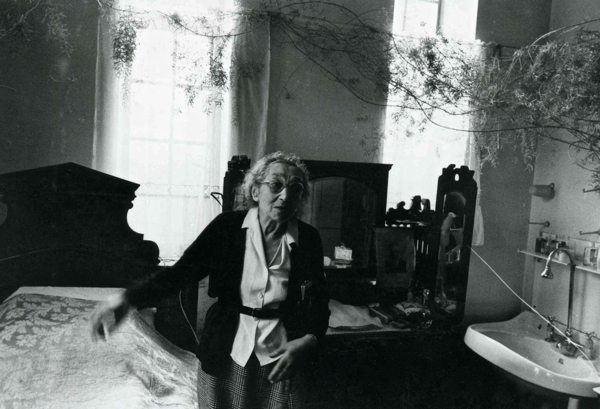
Portrait of Rose Henriques (1889- 1972) © Ian Berry
Born into an Orthodox Jewish family in Stoke Newington, Rose devoted herself to life of altruistic endeavour, serving as a nurse at Liverpool St Station in the First World War and then as an ambulance driver based in Cannon St Rd in the Second World War.
In 1917, she married Basil Henriques and together they established and ran the settlement in Berners St (later known as Henriques St) pursuing philanthropic work among the Jewish community in the East End for more than half a century.
Yet somehow Rose also managed to produce a stream of paintings that document the times she lived in intimate human detail, exhibiting her work at the Whitechapel Gallery from 1934 onwards and holding two solo shows there,’Stepney in War & Peace’ in 1947 and ‘Vanishing Stepney’ in 1961.
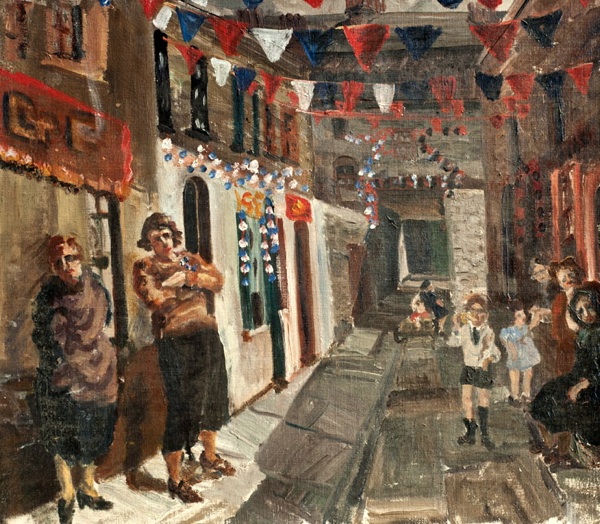
Coronation Celebrations in Challis Court, 1937
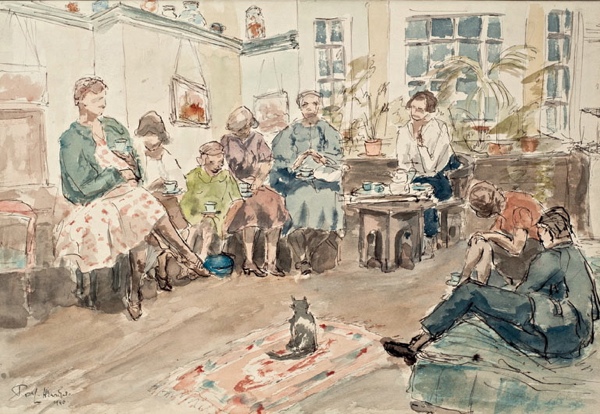
Nine O’Clock News, The Outbreak of War
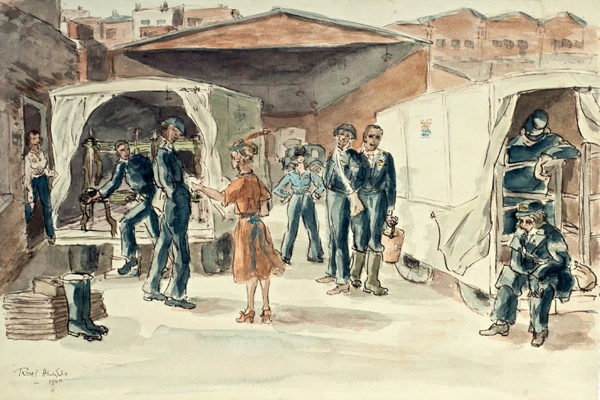
The New Driver, Ambulance Station, Cannon St Rd

Next Day, Watney St Market, 1941
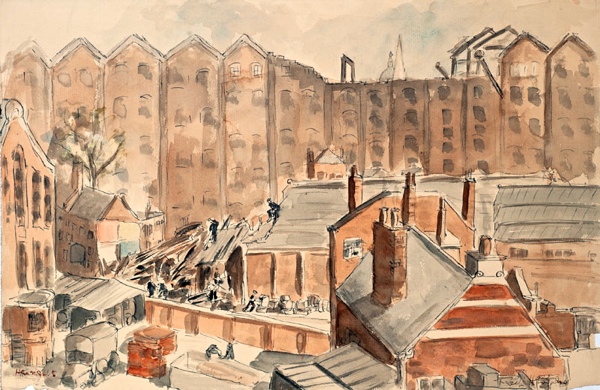
Bombed Second Time, The Foothills, Tilbury & Southend Railway Warehouses, 1941

Dual Purpose, School Yard in Fairclough St, Tilbury & Southend Railway Warehouses, forties
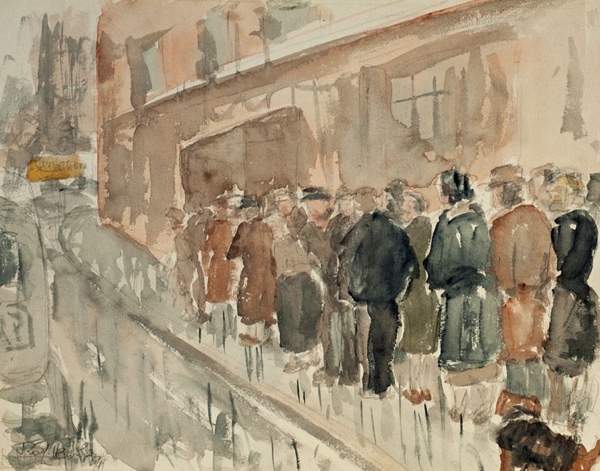
Line outside Civil Defence Shelter, Turner St, 1942
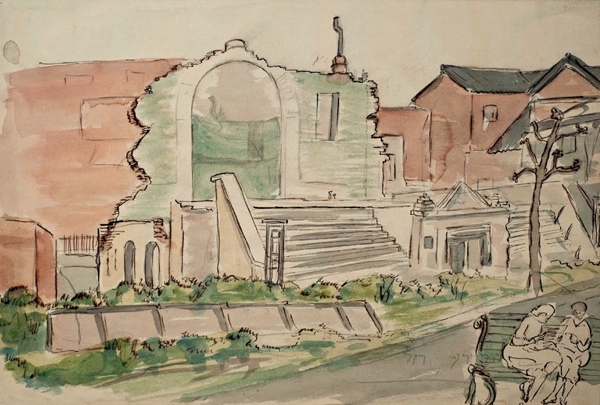
Stepney Green Synagogue, forties
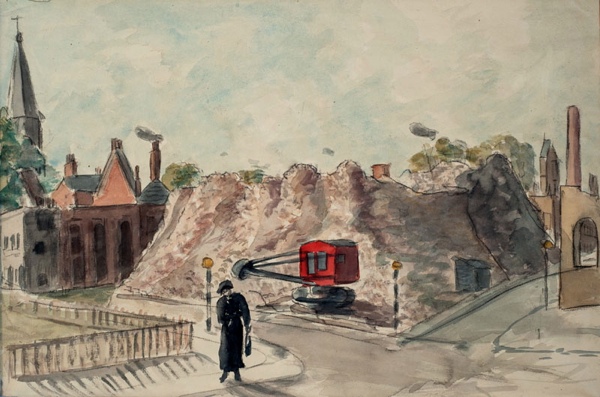
The Brick Dump, Exmouth St, forties

Club Row Animal Market Carries On, 1943
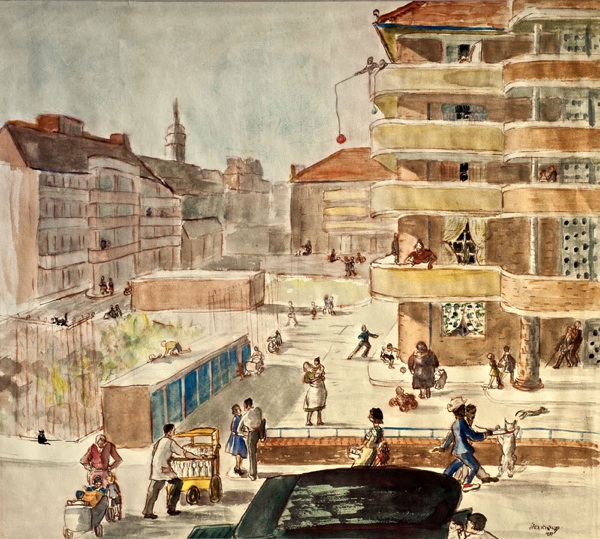
Fait Accompli, Berner St, 1951
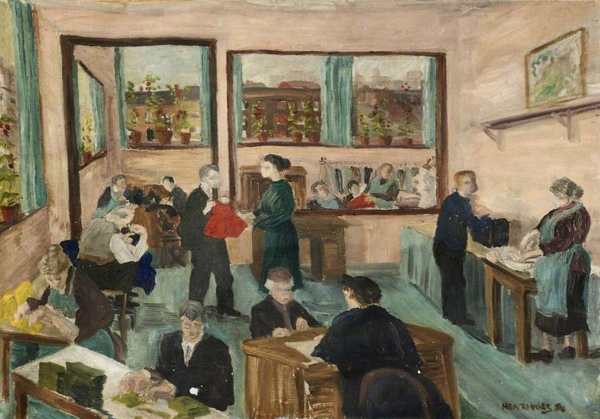
Workrooms for the Elderly, 1954
Archive images courtesy Tower Hamlets Local History Library & Archives
Cyril Mann, Painter
In the fourth of my series of profiles of artists featured in EAST END VERNACULAR, Artists who painted London’s East End streets in the 20th century to be published by Spitalfields Life Books in October, I present the apocalyptic paintings of Cyril Mann. Click here to learn how you can support the publication of EAST END VERNACULAR
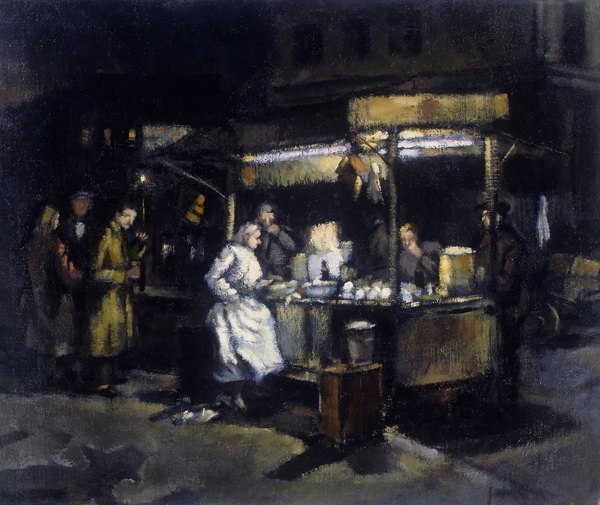
Tubby Isaac’s Jellied Eel Stall, Petticoat Lane, c. 1950
After serving as a Gunner in the Royal Artillery in World War II, Cyril Mann returned to live in a tiny flat in Paul St with his wife Mary and small daughter Sylvia in 1946. Close to where the Barbican stands today, this area at the boundary of the City of London had suffered drastic bomb damage and much of it remained a wasteland for decades. Roving around these desolate streets as far east as Spitalfields, Cyril Mann discovered the subject matter for a body of works which became the focus of a major exhibition at the Wildenstein Gallery in 1948.
Losing his hair in his thirties, Cyril Mann had the look of a man older than his years. Through the Depression he had been unemployed and close to starvation, yet thanks to a trust fund set up by Erica Marx he entered the Royal Academy Schools at twenty years old in 1931. For one so young, he had already seen a great deal of life. At twelve, he had been the youngest boy ever to win a scholarship to Nottingham College of Art, before leaving at fifteen to be a missionary in Canada. Quickly abandoning this ambition, he became a logger, a miner and a printer, until returning to London to renew his pursuit of a career as an artist. Ever restless, he moved to Paris after three years at the Royal Academy and there he met his first wife Mary Jervis Read.
Forced to leave his wife and baby when he was called up in 194o, Cyril Mann did not paint at all for the duration of the war. Back in London and battling ill-health, he set out to make up for lost time. The fragmented urban landscape of bombsites that was familiar to Londoners was new to him and, turning his gaze directly into the sun, he sought to paint it transfigured by light. Channelling his turbulent emotion into these works, Cyril Mann strove to discover an equilibrium in the disparate broken elements he saw before him, and many of these paintings are almost monochromatic, as if the light is dissolving the forms into a mirage.
During these years, Cyril Mann’s life underwent dramatic change. He obtained a teaching job at the Central School of Art in 1947 and exhibited at the prestigious Wildenstein Galery, showing his new works in 1948. Yet at the same time, his marriage broke down and he found himself alone, painting in the tiny flat in Paul St. Whilst critically acclaimed, his exhibition was a commercial failure because, in post-war London, nobody wanted to see images of bombsites and consequently these important works became forgotten.
Yet, through his struggle, Cyril Mann’s work as an artist had acquired a new momentum and, after 1950, a bold use of colour returned to his painting. In 1956, he was offered a flat in the newly-built modernist Bevin Court built by Tecton in Islington, where today a plaque commemorates him. In 1964, he moved east to Leyton and then Walthamstow,where he died in 1980.
At a time when all other artists turned away from painting the London streets, Cyril Mann made it his subject. While these pictures may not have suited the taste of the post-war capital, they comprise a unique body of work that witnesses the spirit and topography of these threadbare years. As his second wife, Renske who met Cyril Mann in 1959, assured me, “I believe he is the most significant London painter of the nineteen-forties, post-war.”
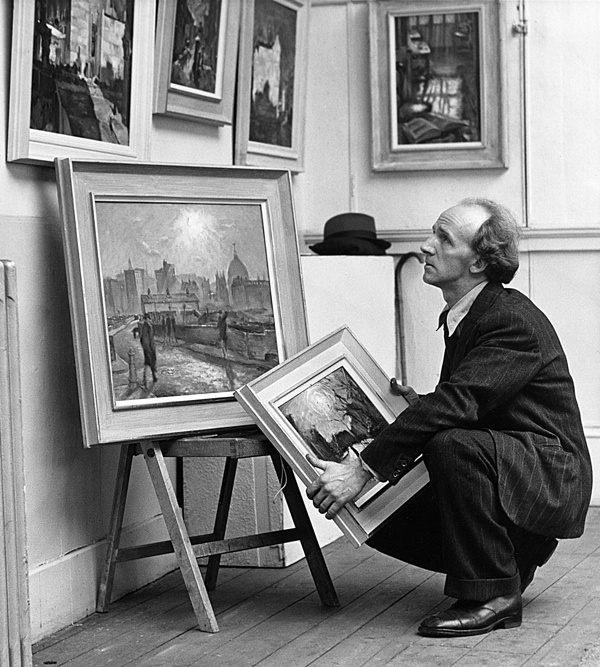
Cyril Mann preparing for his exhibition at Wildenstein Gallery in 1948
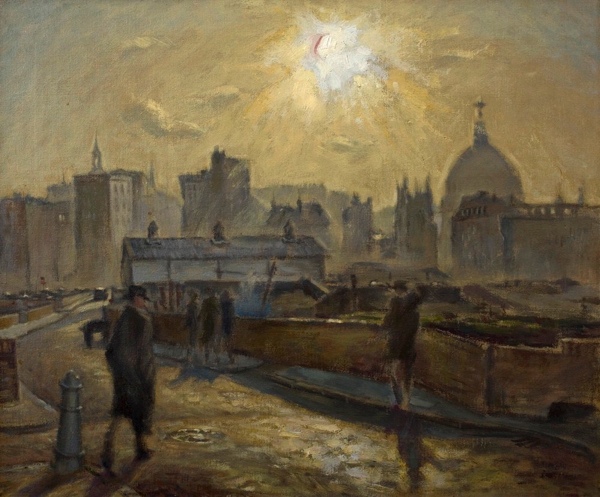
St Paul’s from Moor Lane, 1948
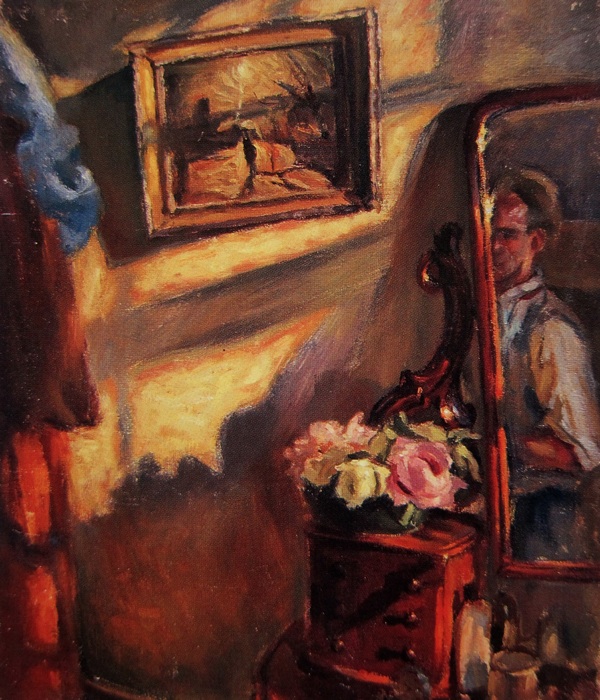
Cyril in his crowded flat in Paul St, c. 1950
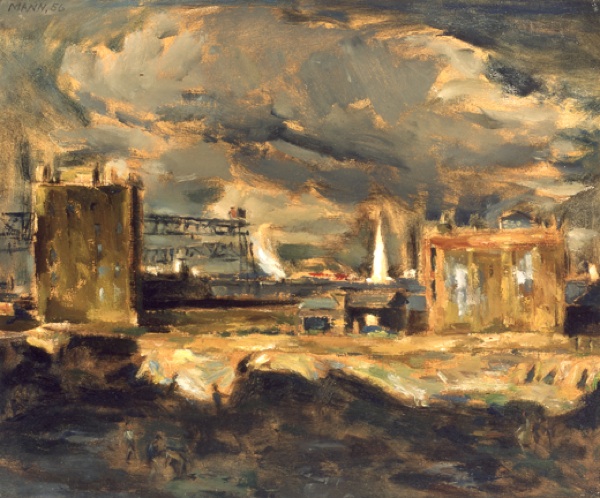
Christ Church Spitalfields seen across bombsites from Scrutton St
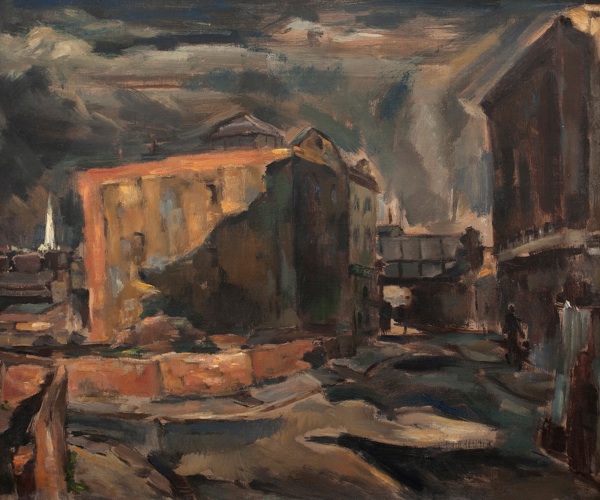
Christ Church Spitalfields seen over bombsites from Redchurch St
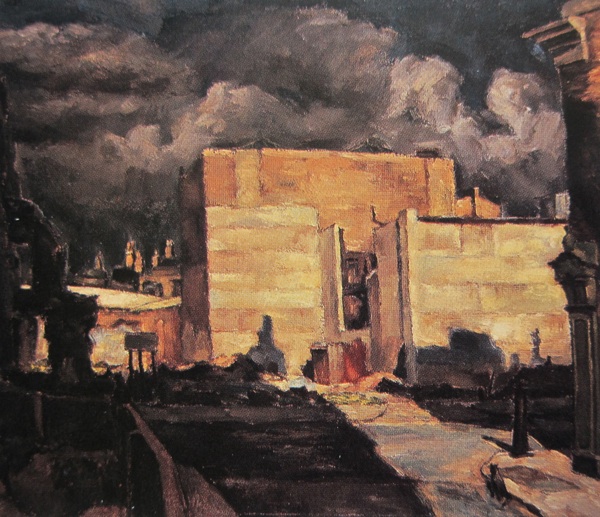
Bomb site in Paul St with cat, c. 1950
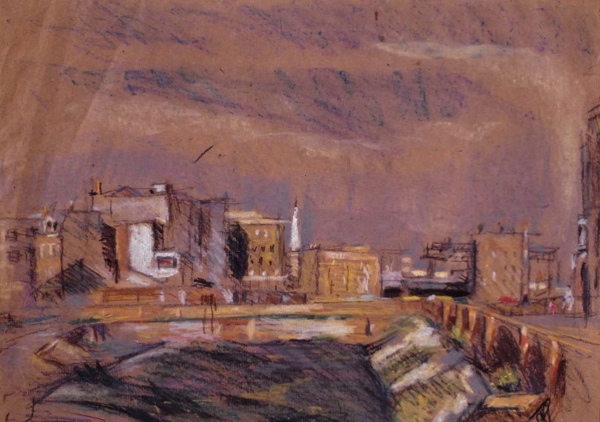
Christ Church Spitalfields seen from Shoreditch
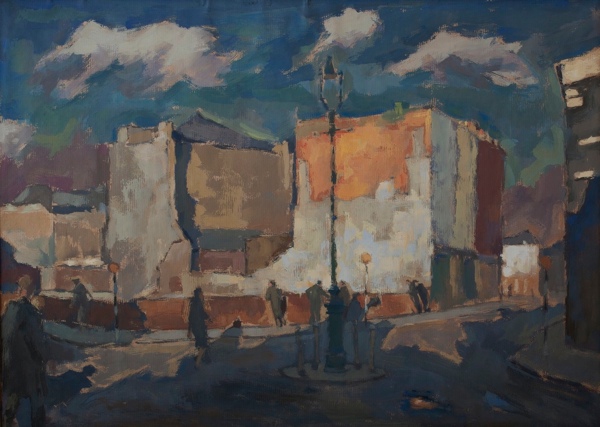
Bomb sites around Paul St, c. 1950
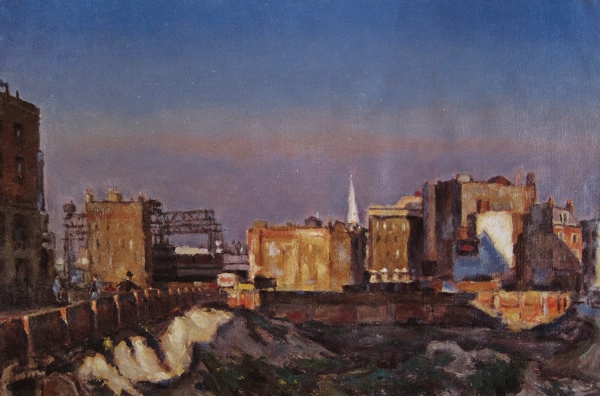
Christ Church Spitalfields from Worship St, c. 1948
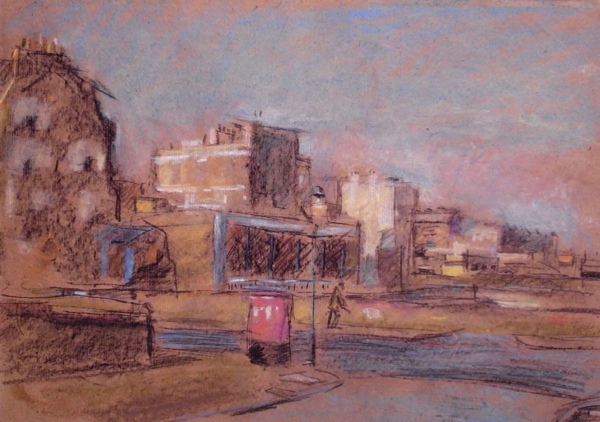
Streetscape with red pillar box
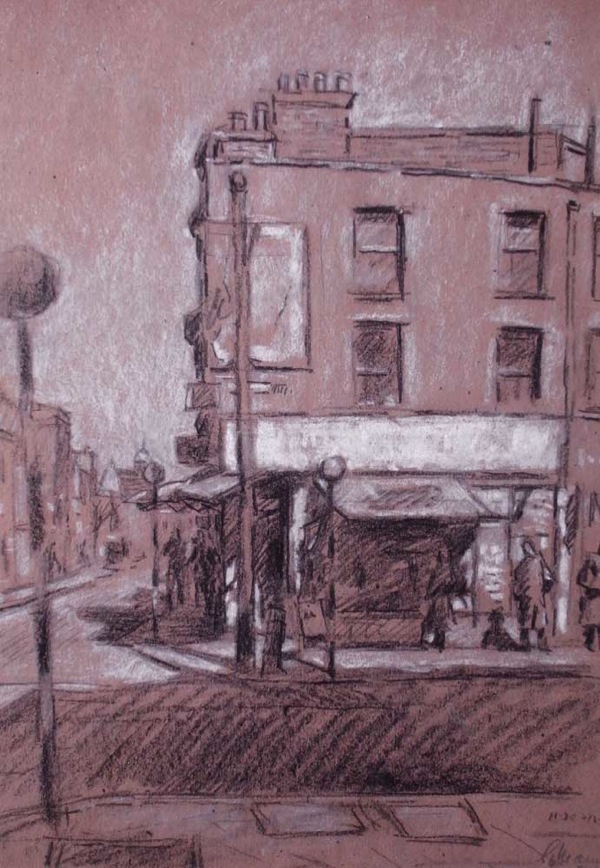
East End shop
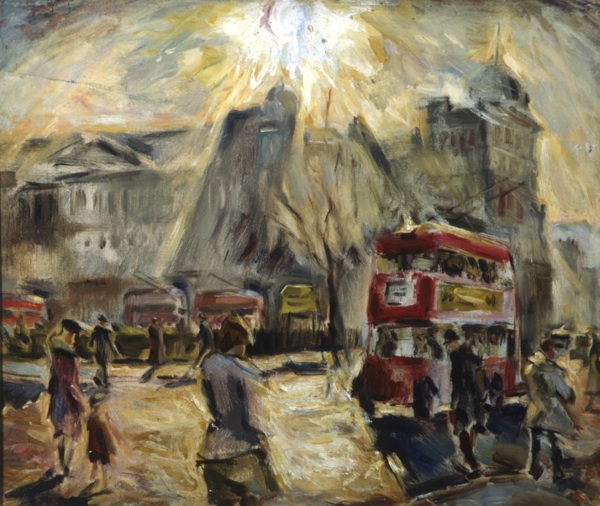
Trolley bus in Finsbury Sq, c. 1949
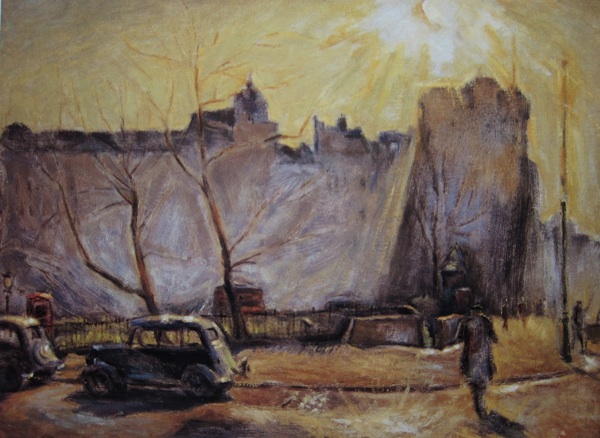
Finsbury Sq, c. 1949
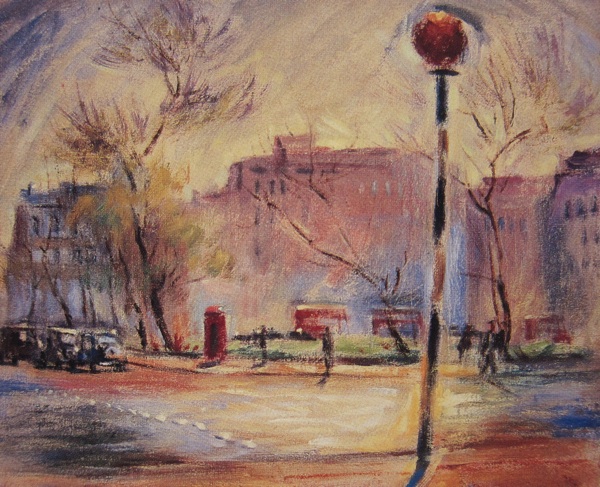
Finsbury Sq, c. 1949

Red lamp post, Old St

Bombsite at Old St
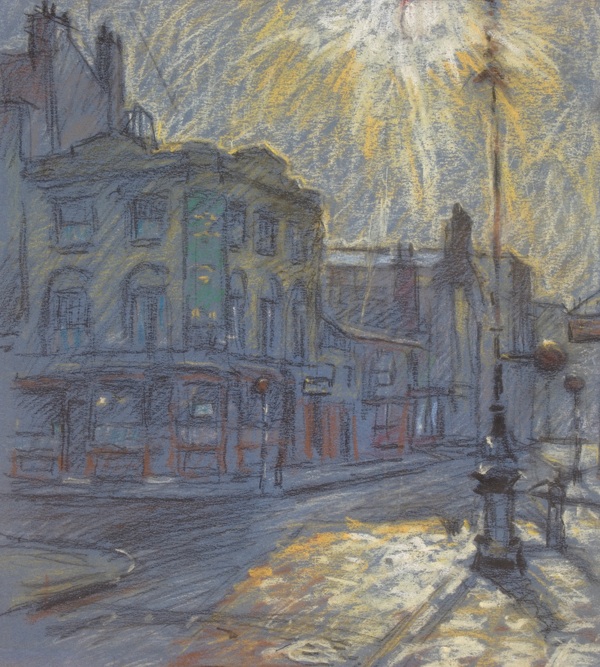
Cock & Magpie, Wilson St, Shoreditch
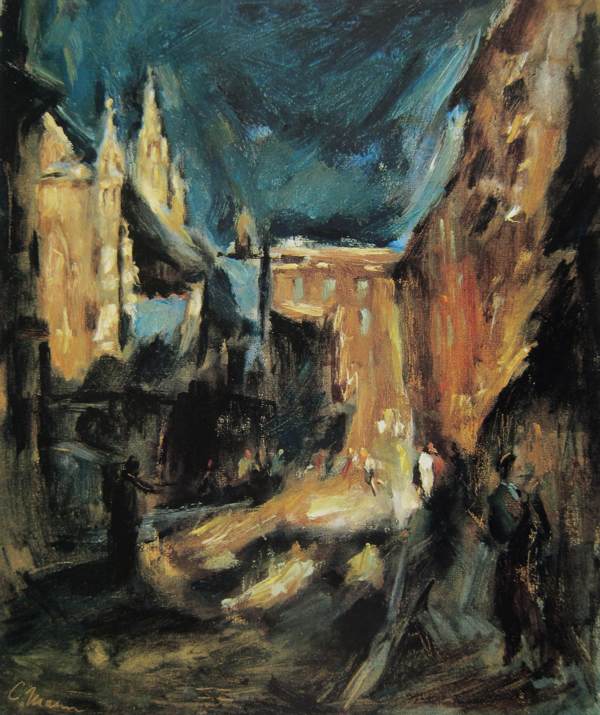
St Michael, Shoreditch, c. 1948
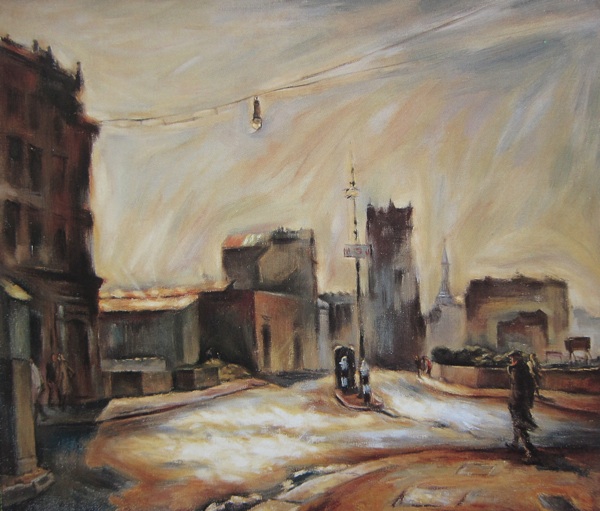
St Michael and St Leonard’s Shoreditch from Leonard St, c. 1950

Angel Islington from City Rd, 1950
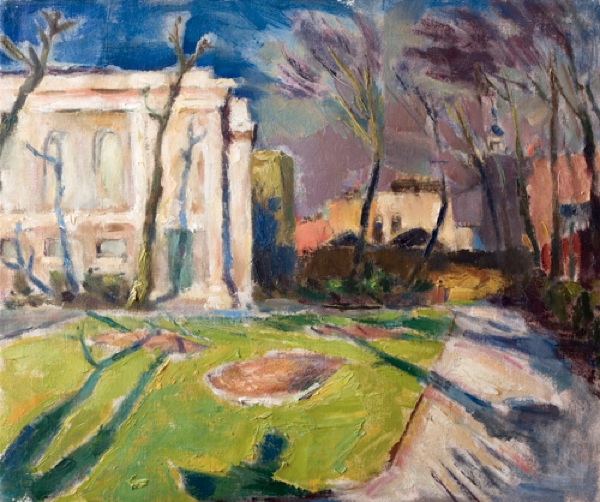
St James Church, Pentonville Rd, Islington, 1950
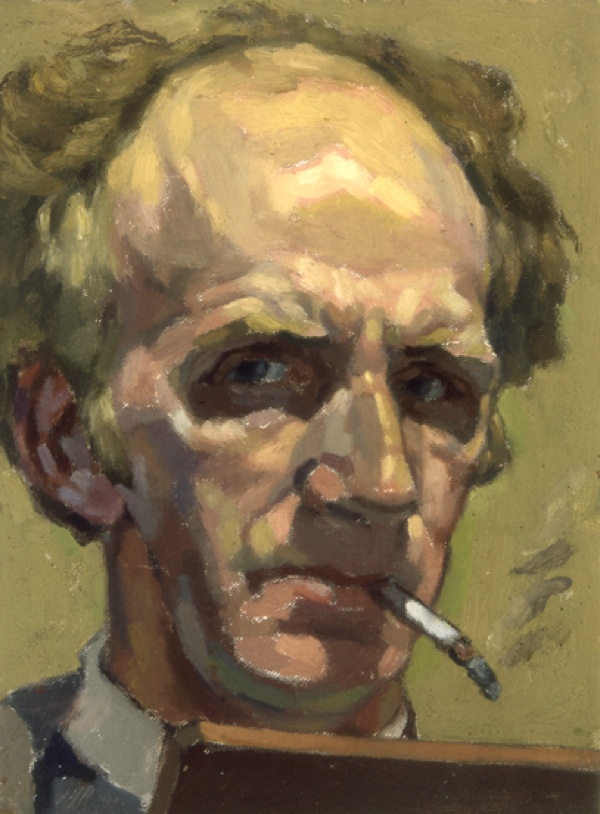
Cyril Mann (1911-1980)
Images copyright © Estate of Cyril Mann
Paintings by Cyril Mann can be seen at Piano Nobile Gallery
Phil Maxwell & Hazuan Hashim’s East End Films
In celebration of Phil Maxwell & Hazuan Hashim’s AUSTERITY FIGHT which premieres at Rich Mix in the Bethnal Green Rd tomorrow, Friday 16th June as part of EAST END FILM FESTIVAL 2017, I am offering this retrospective of their films. Click here to book for Austerity Fight.
Sandra, 2008
Les, 2010
Olive, 2010
From Cable St to Brick Lane, 2012
East End Lives, 2009
East End Lives 2, 2010
East End Lives, 3 2010
https://vimeo.com/173258928
The Photographer, 2016
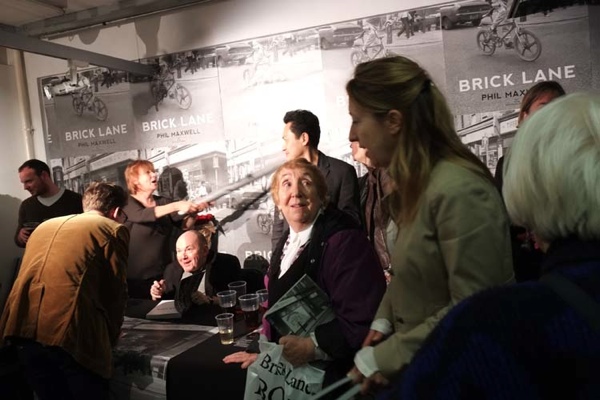
Phil Maxwell signs copies of BRICK LANE at the launch in 2014 (Photograph by Simon Mooney)
You may also like to look at Phil Maxwell’s photography
Phil Maxwell in Bethnal Green Rd
Dan Jones, Artist
In the third of my series of profiles of artists featured in EAST END VERNACULAR, Artists who painted London’s East End streets in the 20th century to be published by Spitalfields Life Books in October, I present the joyous vision of Dan Jones. Click here to learn how you can support the publication of EAST END VERNACULAR
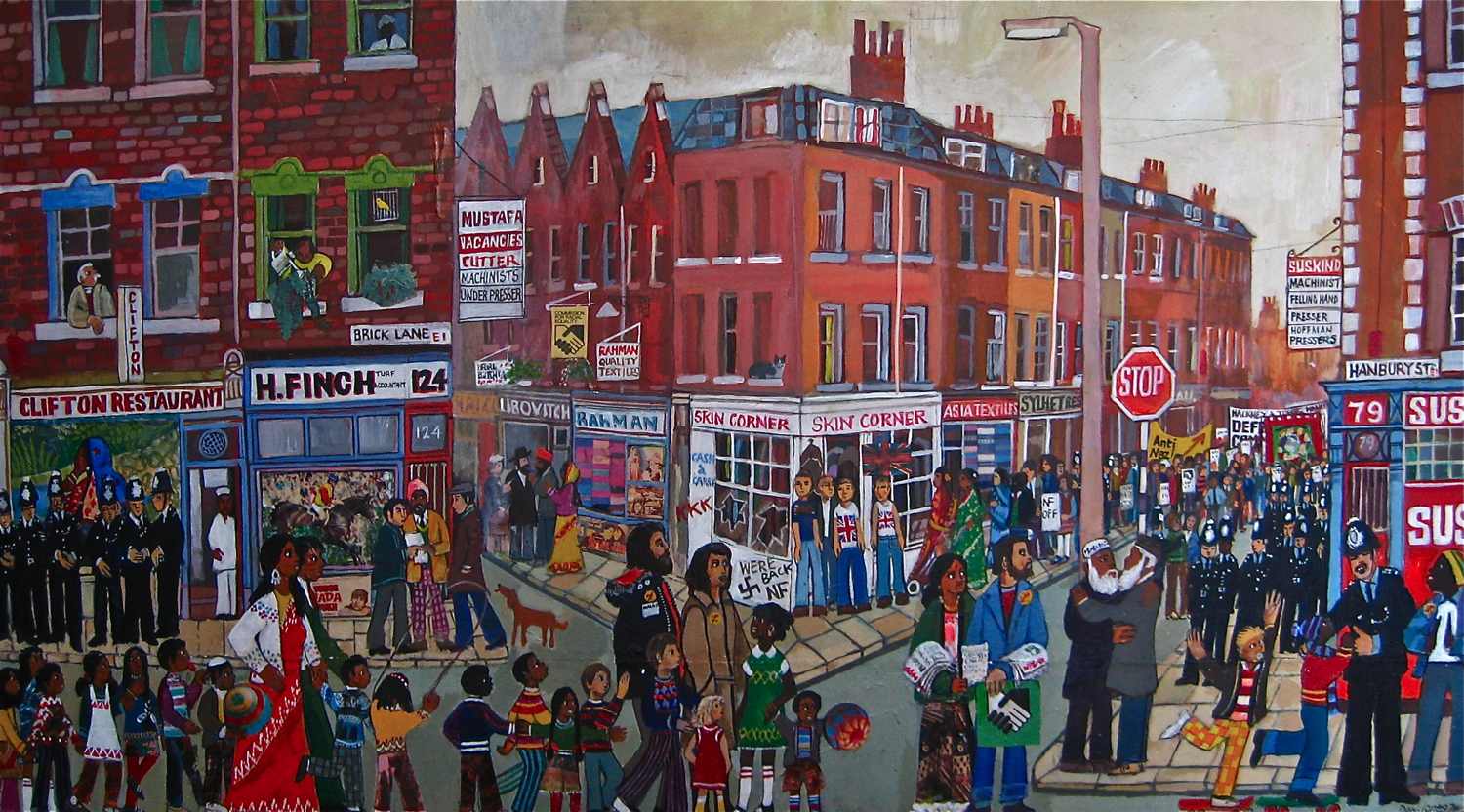
Click to enlarge Dan Jones’ painting of Brick Lane 1978
In Dan Jones’ exuberant and playful painting, Brick Lane is a stage upon which an epic political drama is enacted. From this vantage point at the corner of the Truman Brewery, we see an Anti-Racist demonstration advancing up Brick Lane, while a bunch of skinheads stand at the junction with Hanbury St outside the fortuitously named “Skin Corner.” Meanwhile, a policeman stops a black boy on the opposite corner in front of a partially visible sign reading as “Sus,” in reference to the “Sus” law that permitted police to stop and search anyone on suspicion, a law repealed in 1981. And in the foreground of all this action, life goes on – two senior Bengali men embrace, as Dan and his family arrive to join the march, while bystanders of different creeds and colours chat together.
Dan Jones’ mother was the artist Pearl Binder, who came to live in Whitechapel in the nineteen twenties, and since 1967, Dan has lived down in Cable St where he brought up his family in an old terraced house next to the Crown & Dolphin. A prolific painter, Dan has creating many panoramic works – often of political scenes, such as you see here, as well as smaller pictures produced to illustrate two books of Nursery Rhymes, “Inky, Pinky, Ponky” and “Mother Goose comes to Cable St,” both published in the eighties. In recent years, he has undertaken a series of large playground murals portraying school children and the infinite variety of their games and rhymes.
Employed at first in youth work in the Cable St area, and subsequently involved in social work with immigrant families, Dan has been a popular figure in the East End for many years, and his canvases are crammed with affectionate portraits of hundreds of the people that he has come to know through his work and political campaigning. Today Dan works for Amnesty International, and continues to paint and to pursue his lifelong passion for collecting rhymes.
There is a highly personal vision of the East End manifest in Dan Jones’ paintings, which captivate me with the quality of their intricate detail and tender observation. When Dan showed me his work, he pointed out the names of all the people portrayed and told me the story behind every picture. Like the Pipe & Drum Band in Wapping painted by Dan in 1974 – to give but one example – which had been going since the eighteen eighties using the same sheet music. Their performances were a living fossil of the music of those days, until a row closed them down in 1980. “They were good – good flute players and renowned as boxers,” Dan informed me respectfully.

The End of Club Row, 1983. Club Row was closed after the government banned animal markets
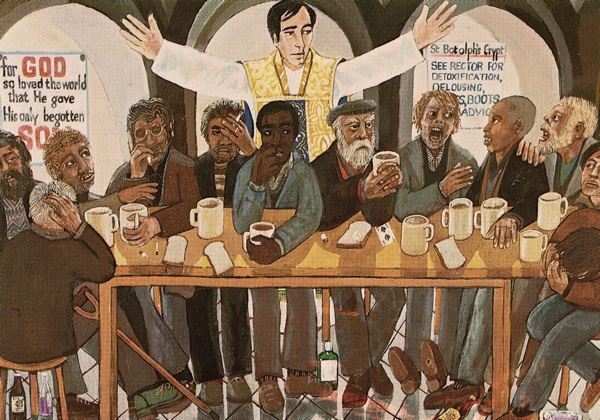
Last Supper at St Botolph’s, Aldgate. Rev Malcolm Johnson preaches to the homeless at Easter 1982.

Pipe and Drum Band in Tent St, Wapping, 1974.
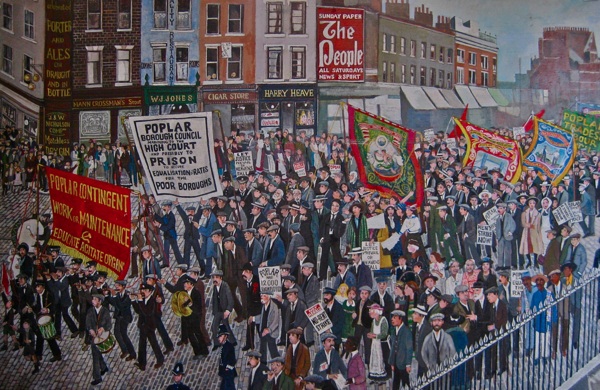
The Poplar Rates Rebellion of 1921

Parade on the the sixtieth anniversary of the Battle of Cable St, 1996
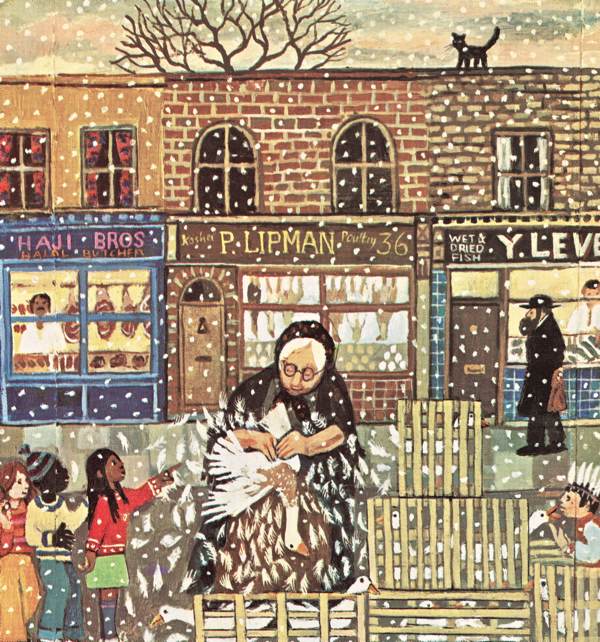
Live poultry sold in Hessel St.

Fishing at Shadwell Basin.

Tubby Isaacs in Goulston St, Petticoat Lane.

Palaseum Cinema in Commercial Rd

A Teddy Bear rampages outside the Whitechapel Bell Foundry.
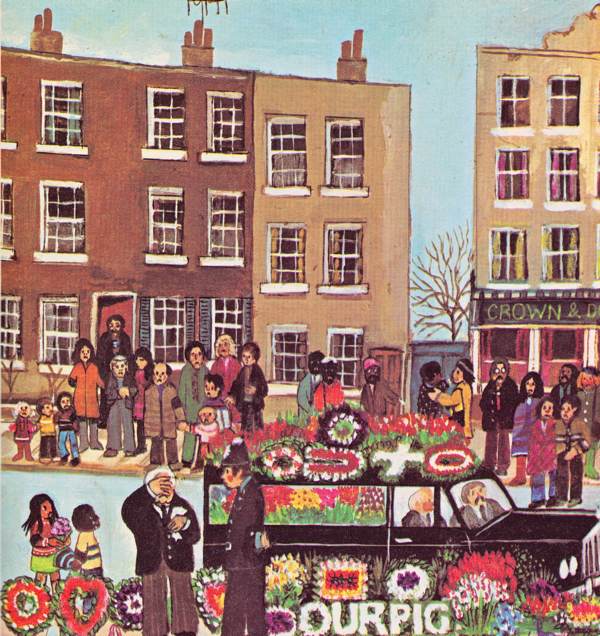
Funeral of a pig in Cable St, Dan Jones and his family come out of their house to watch.

Christ Church School, Brick Lane

Liverpool St Station
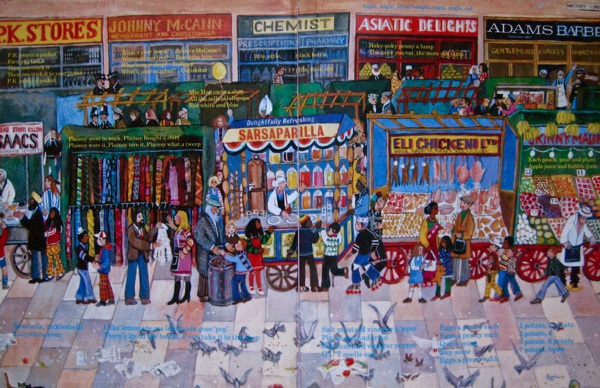
Watney Market
Paintings copyright © Dan Jones
Click here to preorder a copy of EAST END VERNACULAR for £25
Doreen Fletcher, Painter
In the second of my series of profiles of artists featured in EAST END VERNACULAR, Artists who painted London’s East End streets in the 20th century to be published by Spitalfields Life Books in October, I present the remarkable paintings of Doreen Fletcher. Click here to learn how you can support the publication of EAST END VERNACULAR
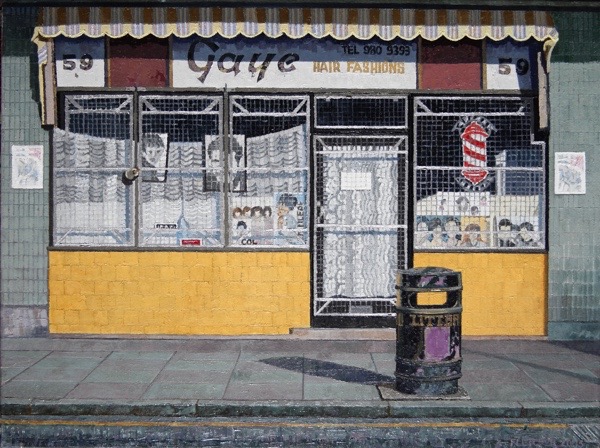
Hairdresser, Ben Jonson Rd, 2001
This is a small selection of the paintings and drawings created by Doreen Fletcher in the East End between 1983 and 2003. “I was discouraged by the lack of interest,” admitted Doreen to me plainly, explaining why she gave up after twenty years of doing this work. Then, for a decade, all these pictures sat in Doreen’s attic until I persuaded her to take them out two years ago and let me photograph them for publication here on Spitalfields Life.
Doreen came to the East End in 1983 from West London. “My marriage broke up and I met someone new who lived in Clemence St, E14,” she revealed, “it was like another world in those days.” Yet Doreen immediately warmed to her new home and felt inspired to paint. “I loved the light, it seemed so sharp and clear in the East End, and it reminded me of the working class streets in the Midlands where I grew up,” she confided to me, “It disturbed me to see these shops and pubs closing and being boarded up, so I thought, ‘I must make a record of this,’ and it gave me a purpose.”
For twenty years, Doreen conscientiously sent off transparencies of her pictures to galleries, magazines and competitions, only to receive universal rejection. As a consequence, she forsook her art work entirely in 2003 and took a managerial job, and did no painting for the next ten years. But eventually, Doreen had enough of this too and has recently rediscovered her exceptional neglected talent in painting.
Many of Doreen’s pictures exist as the only record of places that have long gone and it is highly gratifying that she is finally receiving the recognition she deserves, not just for outstanding quality of her painting but also for her brave perseverance in pursuing her clear-eyed vision of the East End in spite of the lack of any interest or support.
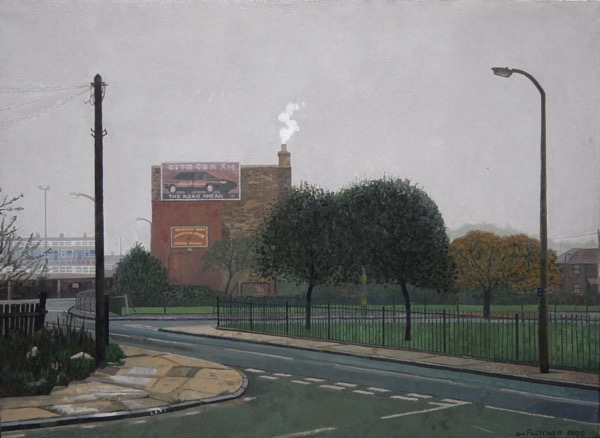
Bartlett Park, 1990
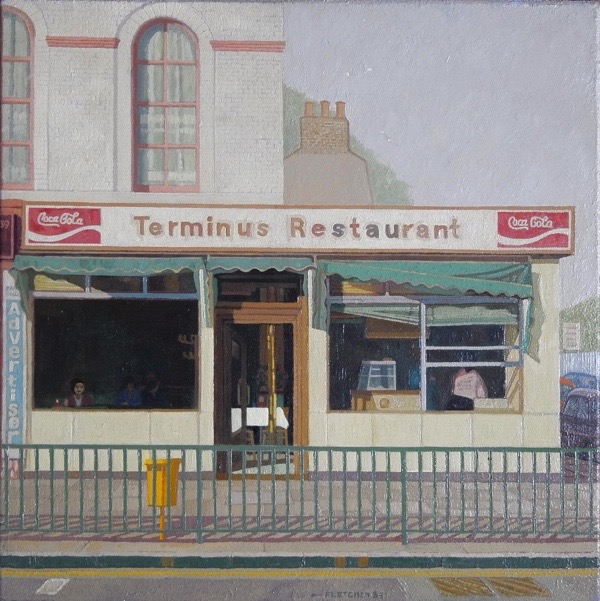
Terminus Restaurant, 1984
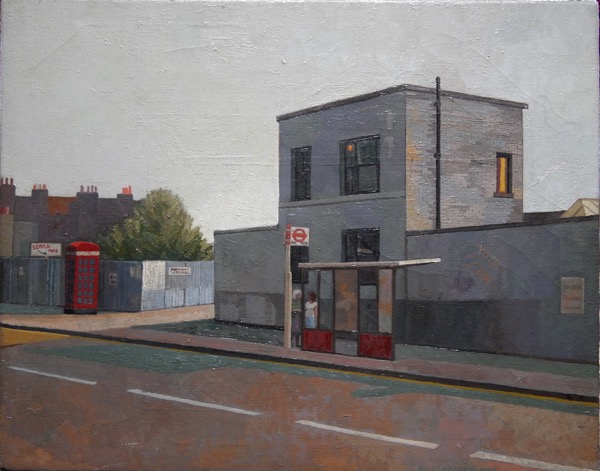
Bus Stop, Mile End, 1983
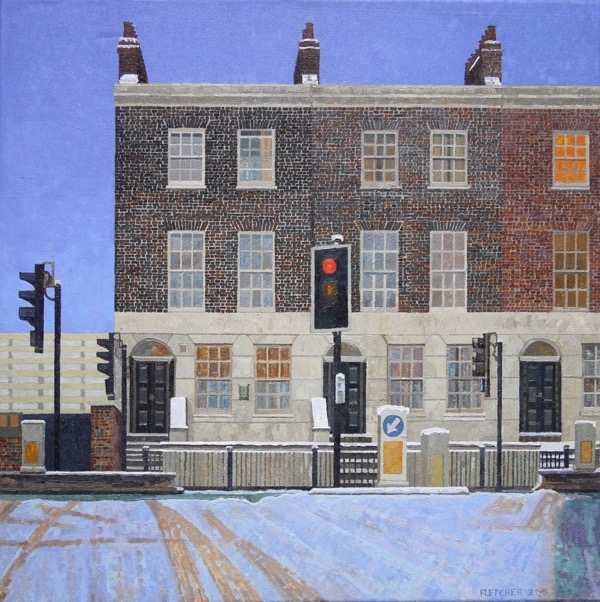
Terrace in Commercial Rd under snow, 2003
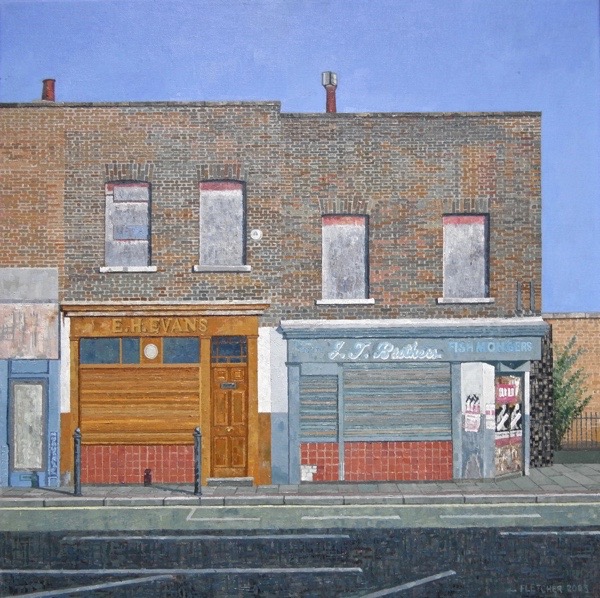
Shops in Commercial Rd, 2003
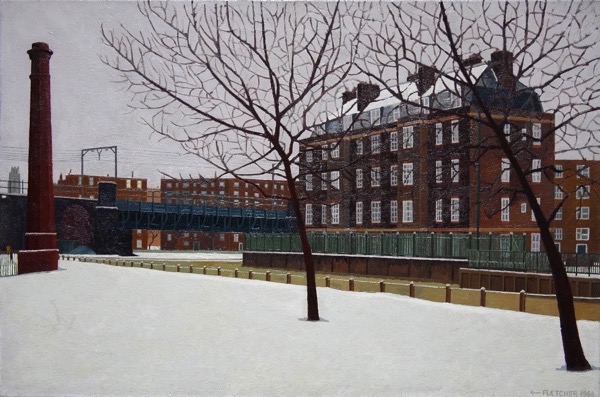
Snow in Mile End Park, 1986
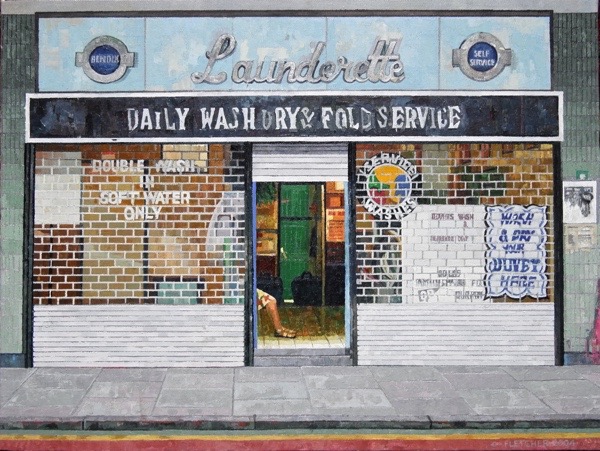
Laundrette, Ben Jonson Rd, 2001
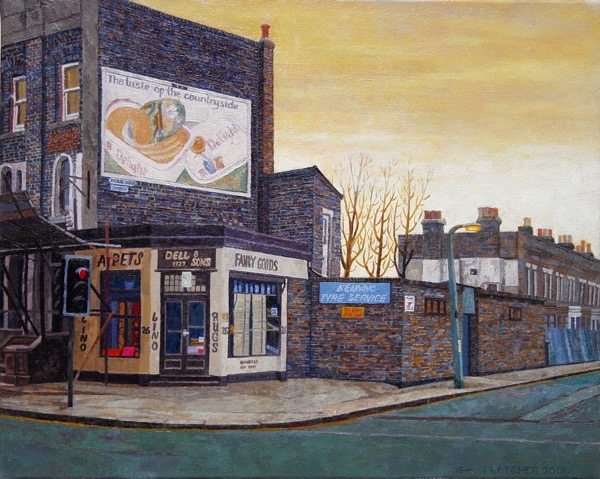
The Lino Shop, 2001
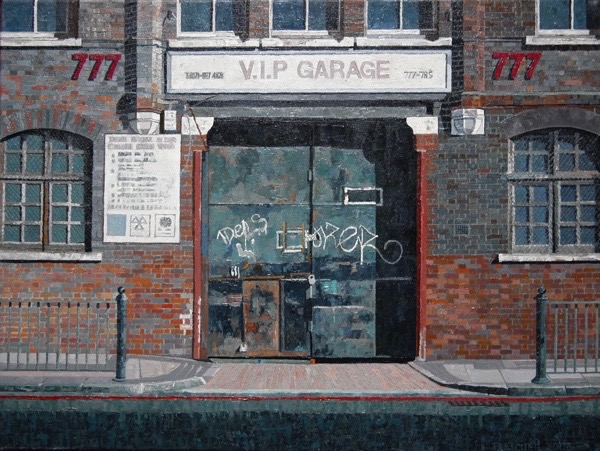
Caird & Rayner Building, Commercial Rd, 2001
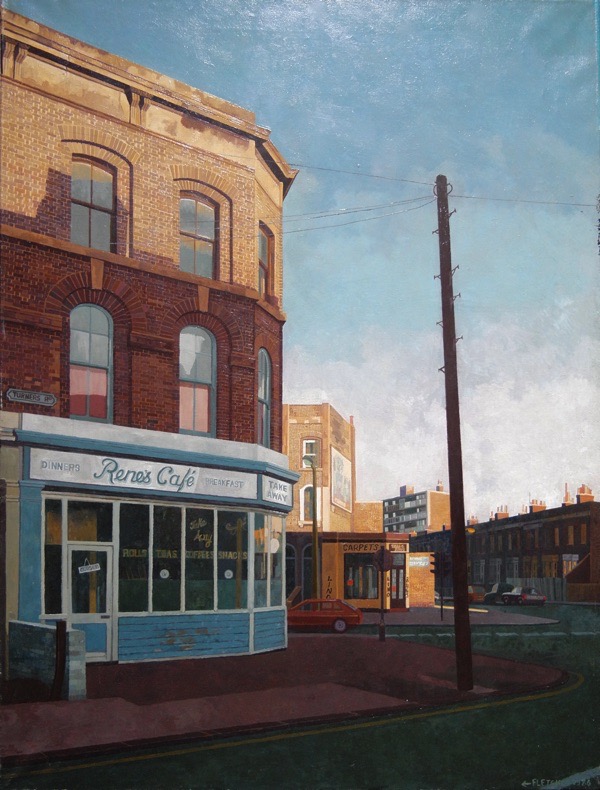
Rene’s Cafe, 1986
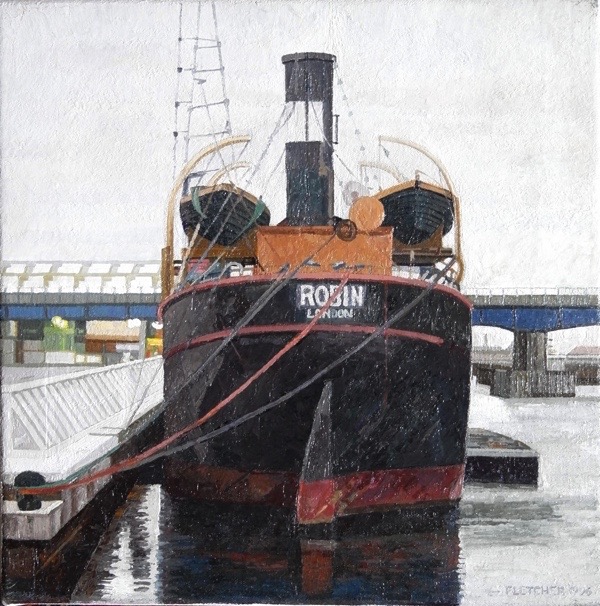
SS Robin, 1996
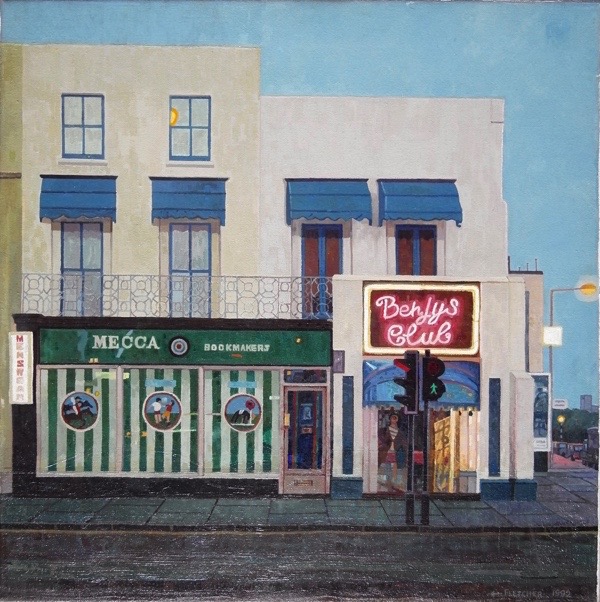
Benji’s Mile End, 1992
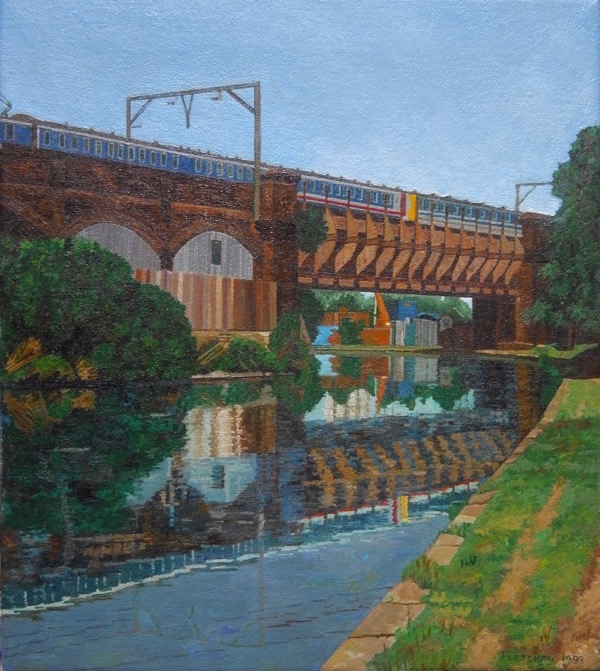
Railway Bridge, 1990
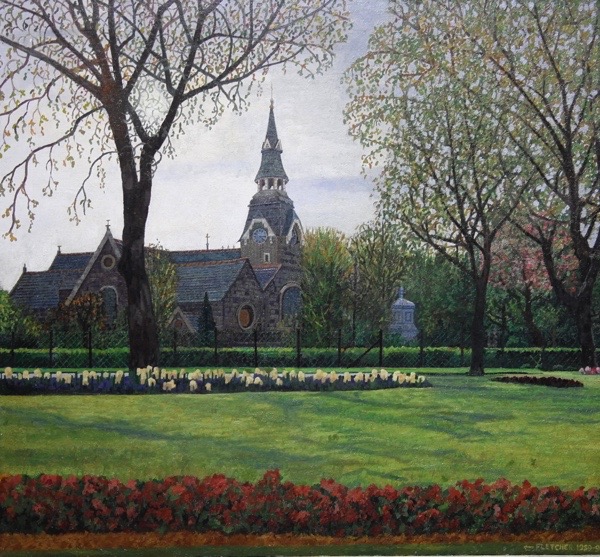
St Matthias Church, 1990
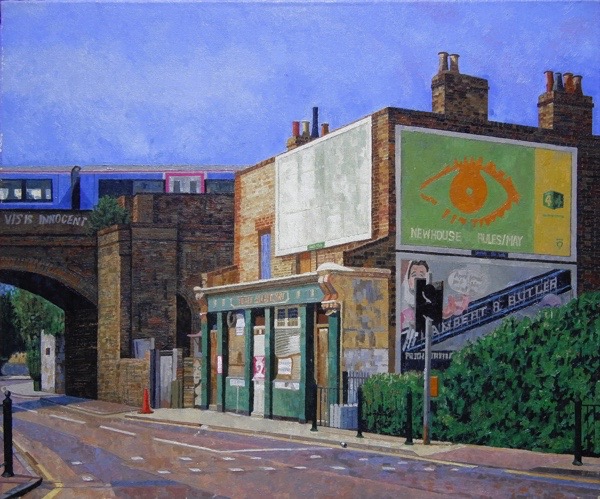
The Albion Pub, 1992
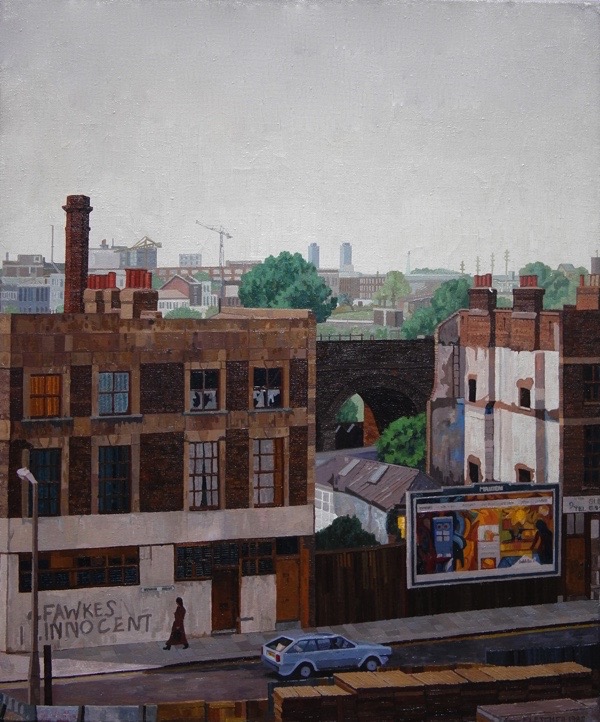
Turner’s Rd, 1998
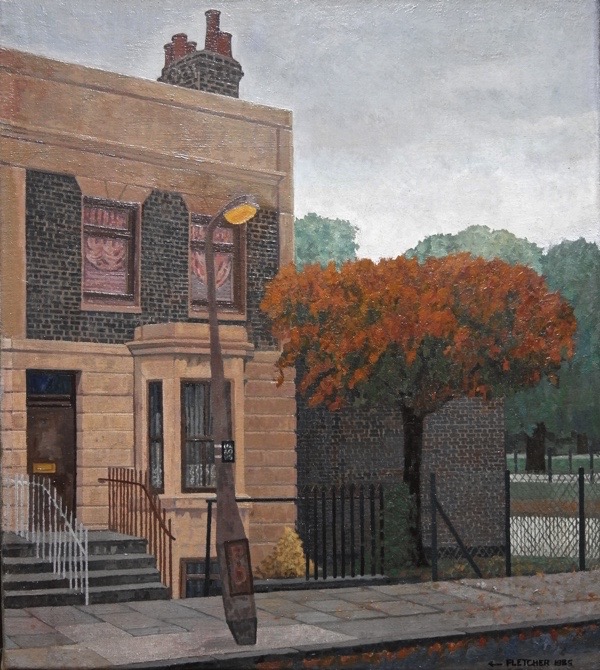
The Condemned House, 1983
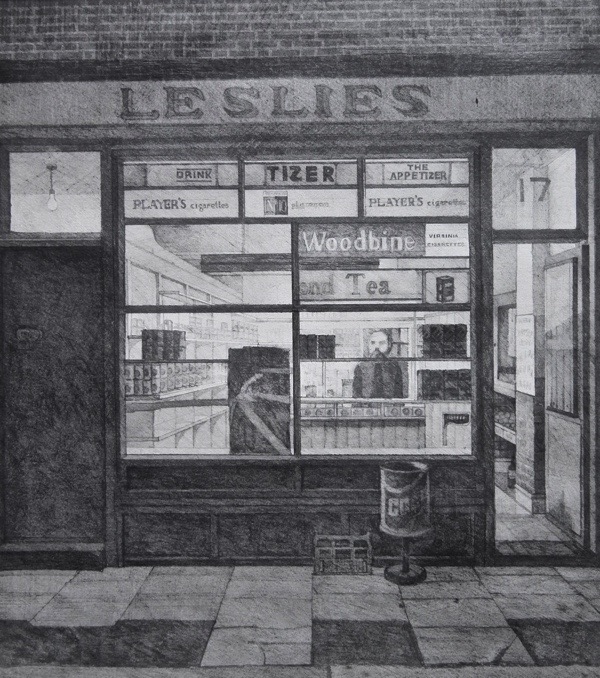
Leslie’s Grocer, Turner’s Rd, 1983 (Pencil Drawing)
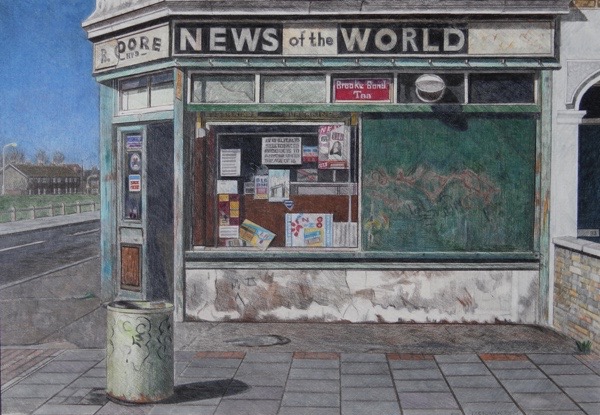
Newsagents, Canning Town, 1991 (Coloured Crayon Drawing)
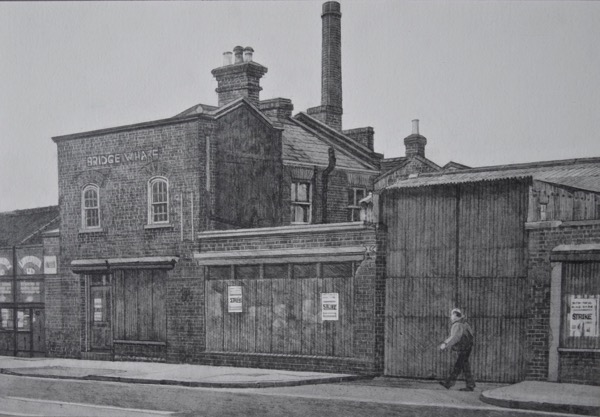
Bridge Wharf, 1984 (Pencil Drawing)
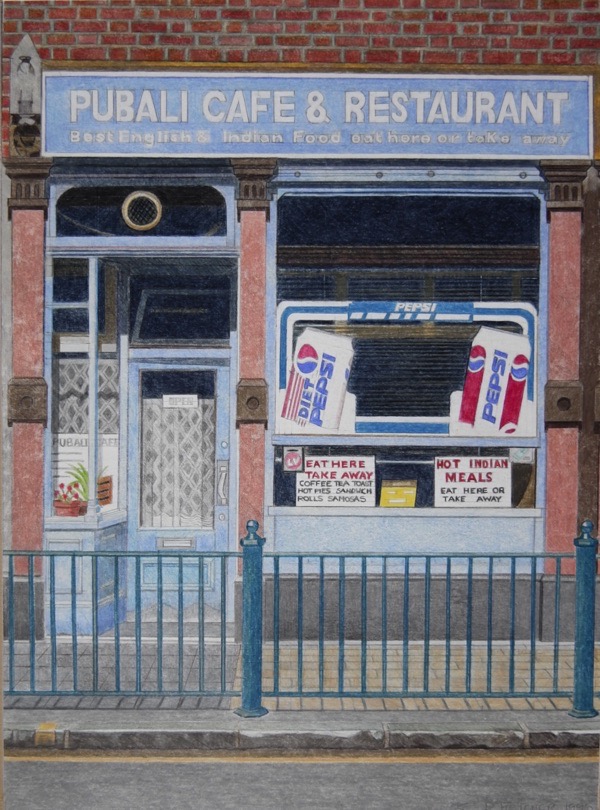
Pubali Cafe, Commercial Rd, 1990 (Coloured Crayon Drawing)
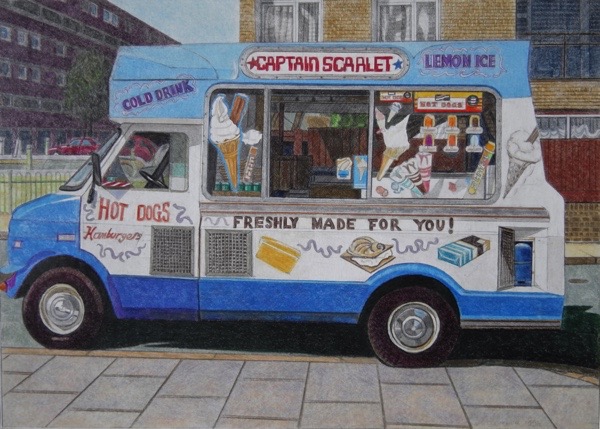
Ice Crean Van, 1990 (Coloured Crayon Drawing)
Images copyright © Doreen Fletcher
Click here to preorder a copy of EAST END VERNACULAR for £25
In the first of a series of profiles of artists featured in EAST END VERNACULAR, Artists who painted London’s East End streets in the 20th century to be published by Spitalfields Life Books in October, David Buckman author of From Bow to Biennale examines the life of Albert Turpin, artist, window cleaner & Mayor of Bethnal Green. Click here to learn how you can support the publication of EAST END VERNACULAR
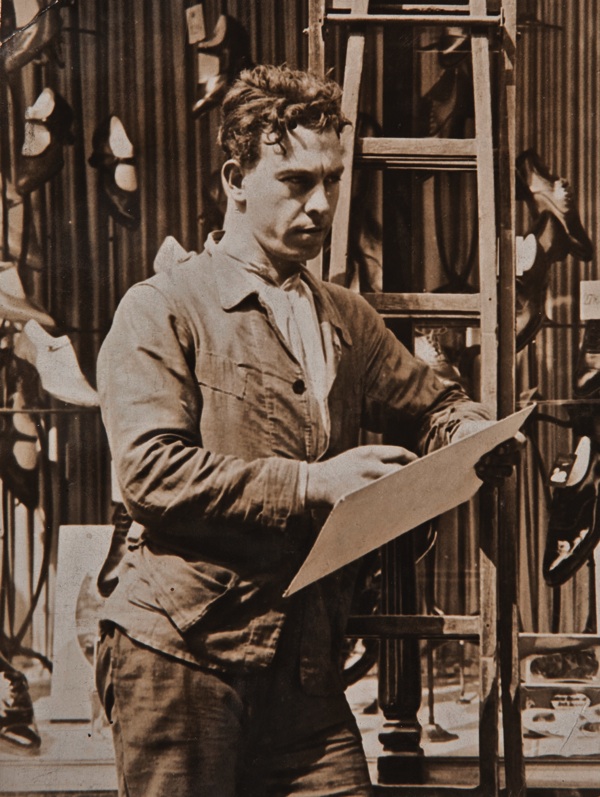
Albert Turpin, Artist, Window Cleaner & Mayor of Bethnal Green
It is thanks to chance that the work of artist Albert Turpin has been preserved. Based in Claredale House, Claredale St, Bethnal Green, Turpin pursued his mission to record the area where he had been born and lived until his death in 1964. His work always sold well but, by the time his widow Sally died in 1981, Turpin’s realism had become unfashionable.
With their only daughter Joan living abroad, Sally worried about what to do with the legacy of paintings remaining after Turpin’s death. They might easily have ended in a skip but, luckily, storage was secured and they survived. Chance also played an important part in steering Turpin towards the East London Group and John Cooper, the man who inspired it.
Turpin’s background was not an auspicious one for an aspiring artist, born in 1900 in Ravenscroft Buildings off Columbia Rd, Bethnal Green, an area of acute deprivation. His father earned what little he could at jobs including being a tea-cooper, feather sorter and casual docker. When Albert Turpin left Globe Rd School at fourteen, like his father, he tried a bit of everything to earn a crust. But at fifteen, he joined the army until – at his father’s insistence – when the first World War was killing thousands, he was extracted and enlisted in the Royal Marines.
On ship, he began “to dabble away, trying to get Gibraltar and other overseas scenes down on canvas.” He was sufficiently encouraged by shipmates that, after he married Sally Fellows in 1922 and took up window cleaning, he finished the windows by lunchtime so he could spend the rest of the day painting. Interviewed after the Second World War when he was an established exhibitor at the Whitechapel Art Gallery’s East End Academy shows, Turpin revealed his motives as “a love of nature and a desire to copy it,” and the wish to show others “the beauty in the East End and to record the old streets before they go.”
Turpin was aware that tuition could improve his technique and he spent six years taking evening classes at Bethnal Green Working Men’s Institute and at the Bow & Bromley Commercial Institute, showing paintings in exhibitions held by the Institute at the Bethnal Green Museum. Among Albert’s teachers in Bethnal Green was the inspirational John Cooper, whose classes at Bow led to the important East London Art Club show at the Whitechapel Art Gallery in December 1928, in which Albert exhibited ten canvasses. They included characteristic and popular Turpin subjects, such as ‘The Dustbin,’ ‘At the Ale House,’ ‘Street Scene,’ ‘The Fruit Stall’ and ‘Jellied Eels’, but a portrait of ‘The Artist’s Wife’ was not for sale.
The Whitechapel show was so successful that Charles Aitken, Director of the National Gallery, Millbank, (now Tate Britain), transferred some of the pictures to his own gallery, including several of Turpin’s. Then, in the spring of 1929, a modified version of the Tate show toured to Salford, featuring Turpin’s ‘The Artist’s Wife’ and ‘The Dustbin,’ which had been bought by the influential dealer Sir Joseph Duveen.
While studying in Bethnal Green, Turpin met other future East London Group exhibitors who continued their tuition with John Cooper at Bow – men such as George Board, Archibald Hattemore, Elwin Hawthorne and the Steggles brothers, Harold and Walter. Hawthorne’s wife Lilian recalled Albert fondly as“a jolly chap” and Walter Steggles, who sketched with him, remembered his great sense of humour, describing Turpin as a man who “made jokes about everything including himself. He was liked by all who knew him.”
When Alex Reid & Lefevre launched the first of its eight annual exhibitions of work by the East London Group in November 1929, Turpin showed three pictures and in following years he contributed regularly to other East London Group exhibitions, as well as these annual shows at the Lefevre Galleries. But latterly his submissions became sporadic and his work was not present in the sixth exhibition in December 1934 or the last in December 1936. Group member Cecil Osborne told me that John Cooper had declined one of Turpin’s later pictures, a painting of his wife, and that the artist “went off in a huff and that was the last we saw of him.” Yet by the mid-thirties, Turpin had other demands upon his time.
In his fascinating unpublished autobiography, Turpin recalls how, once, on the way to an art group, he had been impressed to hear a speech by Bill Gee, a working class activist. It was during the winter of 1926, in the year of the General Strike, and Turpin wrote that Gee “did not teach me anything I did not already know, but what he did do was to make me forget all about my art class and join up with the organised workers right there.” Turpin joined the Labour Party, becoming affiliated to the North-East Bethnal Green Branch and eventually also to the Co-operative Party.
The East London Group had no political affiliations itself, but for Albert Turpin his political standpoint and his art merged naturally. His cartoons in local newspapers always “had a message,” Walter Steggles recalled. Speaking of Turpin’s painting ‘The Dustbin,’ originally displayed at the Whitechapel Art Gallery, Steggles recalled Turpin’s original title was ‘Man Must Eat,’ and the canvas depicted a man eating food scavenged from a bin – until Turpin modified the picture to avoid offending the public. Yet Turpin’s forthright titles did not deter the critics. Writing about the picture he submitted to the second Lefevre exhibition in December 1930, that model of refinement, The Lady, compared Turpin’s subjects to those of Daumier and Hogarth, praising his “rare and precious gift! – a sense of the physical beauty of oil paint.” Later Lefevre contributions would include titles that speak for themselves, such as ‘Unemployed,’ ‘Night Shelter,’ ‘Rags’ and ‘Slum Clearance.’
It was a tribute to Turpin’s physical stamina and determination that while earning his living as a window cleaner, he managed to pursue his political career and his art. He was an active anti-Fascist protester and, while a member of the Bethnal Green Borough Council, appeared at Old St Police Court accused of using insulting words and behaviour and assaulting a constable. He was also active in the Ex-Servicemen’s National Movement “for Peace, Freedom and Democracy” and supported the Republicans in the Spanish Civil War.
The Second World War offered further outlets for Turpin’s artistic talents. Having served part-time with the London Fire Brigade from early 1938, then full-time in September 1939 when he acted as secretary of a branch of the Fire Brigades Union, Turpin joined the National Fire Service in August 1941, remaining with it until October 1946. From 1940, he was an official Fire Brigade War Artist with his work exhibited both in Britain and North America. While an instructor at a London Fields Fire Service training school, after telling students the right way of doing a thing, he would sometimes “make a lightning sketch to show what might happen if they ignored my advice.”
After leaving the Fire Service, Turpin resumed window cleaning and part-time painting and was unanimously elected Mayor of Bethnal Green, 1946-47. He refused to wear mayoral robes, the Evening News reported, “because he thinks it is a waste of taxpayers’ money.” As a man with a strong moral standpoint, loathing gambling and – his mother having died of cirrhosis of the liver – refusing to clean pub windows, Turpin found Dr Frank Buchman’s Moral Re-Armament (MRA) movement attractive when he encountered it in 1946. Buchman hoped for “moral and spiritual rearmament” to achieve “a hate-free, fear-free, greed-free world.” After seeing the MRA play ‘The Forgotten Factor,’ Turpin was gripped by their message and became active in the cause. Early in 1947, MRA’s publication ‘New World News’ pictured Turpin on its cover as “Victory Mayor,” standing among blitzed ruins.
Until his death, seventeen years later, he continued to make drawings and paintings of Bethnal Green, Stepney, Hackney, Hoxton and Islington. Although the East London Group was no longer active post-war, Turpin still showed his pictures – at Morpeth School in Bethnal Green, Whitechapel Art Gallery, Guildhall Art Gallery and Qantas Gallery in Piccadilly.
Albert Turpin’s paintings are a unique record of the old East End by one who knew it intimately.
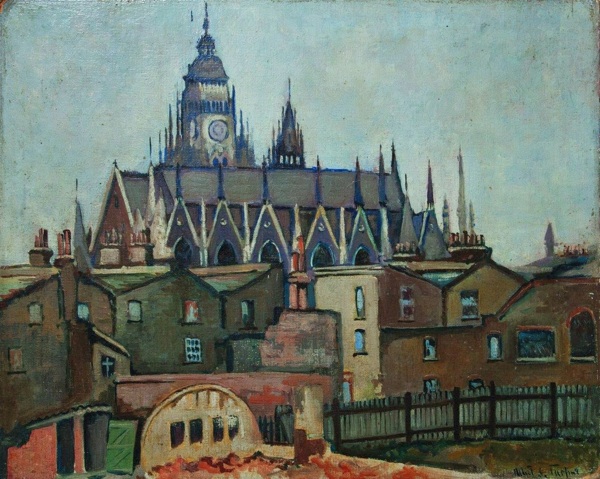
Columbia Market – Oil on board

The Arches, Mare St – Oil on board

Cable St – Oil on board

Marian Sq, Hackney – Oil on canvas, 1952

Rebuilding St Matthew’s Church, Bethnal Green – Oil on canvas, c.1956

Verger’s House, Shoreditch – Oil on canvas, 1954

Salmon & Ball, Bethnal Green – Oil on canvas, c.1955

Shakey’s Yard in Winter – Oil on Canvas, c.1952
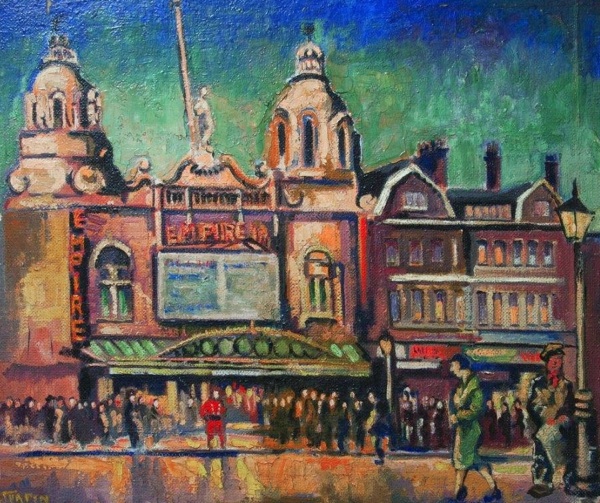
Hackney Empire – Oil on board