
Libby Hall, Collector of Dog Photography
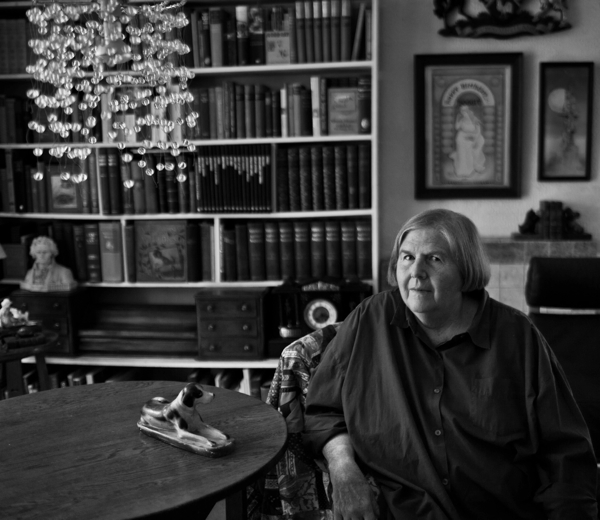
Libby Hall
Between 1966 and 2006, Libby Hall collected old photographs of dogs, amassing many thousands to assemble what is possibly the largest number of canine pictures ever gathered by any single person. Libby began collecting casually when the photographs were of negligible value, but by the end she had published four books and been priced out of the market. Yet through her actions Libby rescued an entire canon of photography from the scrap heap, seeing the poetry and sophistication in images that were previously dismissed as merely sentimental. And today, we are the beneficiaries of her visionary endeavour.
A joyful iconoclast by nature who has recently had, “Stop! Do not resuscitate, living will extant,” tattooed on her chest – Libby Hall is a born and bred New Yorker originating from the Upper East Side of Manhattan, who moved into her house in Clapton in 1967 with her husband the newspaper cartoonist, Tony Hall, and has stayed ever since.
“My husband Tony and I used to go to Kingsland Waste, where we had a friend who did house clearances, and in those days they sold old photo albums and threw away the pictures. So I used to rescue them and I began sorting out the dogs – because I always liked dogs – and it became a collection. Then I started collecting properly, looking for them at car boot sales and auctions. And eventually a publisher offered me an advance of two thousand pounds for a book of them, which was fantastic, and when each of my books was published I just used the royalties to buy more and more photographs. I had a network of dealers looking out for things for me and they would send me pictures on approval. They were nineteenth century mostly and I only collected up until 1940, because I didn’t want to invade anyone’s privacy. Noboby was interested until my first book was published in 2000, and afterwards people said I had shot myself in the foot because everybody started collecting them and they became very expensive, but by then I had between five and six thousand photographs of dogs.
Dogs have always been powerfully important to me, I’ve lived with dogs since the beginning of my days. There’s a photo of my father holding me as baby in one arm and a dog in the other – dog’s faces were imprinted upon my consciousness as early as humans, and I’ve always lived with dogs until six weeks ago when my dog Pembury died. For the last month, friends have been ringing my bell and there’s only silence because he doesn’t come and I open the door to find them in tears. It was an intense relationship because it was just the two of us, Pembury and me, and as he got older he depended on me greatly. So it is good to have my freedom now but only for a little while. At one point, we had three dogs and four cats in this house. We even had a dog and a cat that used to sleep together, during the day they’d do all the usual challenging and chasing but at night they’d curl up in a basket.
When I was eleven, I wanted a dog of my own desperately, I’d been campaigning for five years and I wanted a cocker spaniel. My father contacted a dog rescue shelter in Chester, Connecticut, and they said they had one. But as we walked past the chain link fence, there was a dog barking and we were told that it was going to be put down the next morning. Of course, we took that dog, even though he wasn’t a cocker spaniel. We wondered if they always told people this, but Chester and I were inseparable ever after.”
With touching generosity of spirit, Libby confided to me that her greatest delight is to share her collection of pictures. “What matters to me is others seeing them, I never made any money from my books because I spent it all on buying more photographs.” she said.
These photographs grow ever more compelling upon contemplation because there is always a tension between the dog and the human in each picture. The presence of the animal can unlock the emotional quality of an image of people who might otherwise appear withheld, and the evocation of such intimacy in pictures of the long dead, who are mostly un-named, carries a soulful poetry that is all its own. Bridging the gap of time in a way that photographs solely of humans do not, Libby’s extraordinary collection constitutes an extended mediation upon mortality and the fragility of tender emotions.
“I put my heart and soul into it, and it was very hard giving up collecting, but my fourth book was the ultimate book, and it coincided with the realisation that my husband Tony was dying, so I realised that it was the end of a period of my life.” Libby concluded with a melancholy smile, sitting upon the couch where Pembury expired and casting her eyes thoughtfully around the pictures of dogs lining the walls. I asked Libby how she felt now that her collection is housed elsewhere. “I’ve got the books,” she reminded me, placing her hand upon them protectively, “I have no visual memory at all, so I keep going back to look at them.”


The two stripes on this soldier’s sleeve meant he had been wounded twice and was probably on leave recovering from the second wound when this photograph was taken.


HRH the Princess of Wales with her favourite dogs on board the royal yacht Osborne.

John Brown 1871. The dogs are Corran, Dacho, Rochie and Sharp, who was Queen Victoria’s favourite.


George Alexander, Actor/Manager, with his wife Florence.

This photograph of Mick came with the collar he is wearing.

Queen Victoria and Sharp (pictured above with John Brown) at Balmoral in 1867.


Ellen Terry.


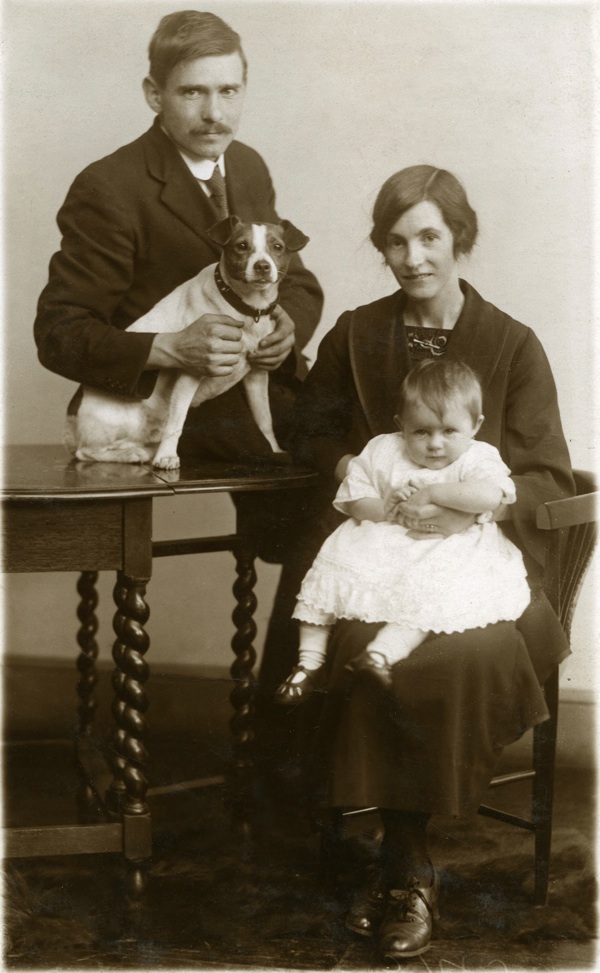

Charles Dickens with his devoted dog Turk.


Libby’s recently deceased dog Pembury wearing the vest that was essential in his last days.

Libby on the couch where Pembury died six weeks ago.

One of Libby’s six dog dolls’ houses. – “I think dolls’ houses with dolls are rather scary but dolls’ houses with dogs are ok.”

Libby Hall – “I put my heart and soul into it.”
[youtube VYXUJvTQ9IM nolink]
[youtube dxQ4OJG4kr8 nolink]
Portraits of Libby Hall copyright © Martin Usborne
Dog photographs copyright © The Libby Hall Collection at the Bishopsgate Institute
Libby Hall selected these favourite dog photographs from her books – Prince and Others, Prince and Other Dogs II, Postcard Dogs, Postcard Cats and These Were Our Dogs, all published by Bloomsbury.
You may also like to take a look at
The Dogs of Spitalfields in Spring
The Dogs of Spitalfields in Winter
Spitalfields In Kodachrome
Photographer Philip Marriage rediscovered these colourful images recently, taken on 11th July 1984

Brushfield St

Crispin St

Widegate St

White’s Row

Artillery Passage

Brushfield St

Artillery Passage

Brushfield St

Fashion St

Widegate St

Artillery Passage

Gun St

Brushfield St

Gun St

Brushfield St

Parliament Court

Leyden St

Fort St

Commercial St

Brushfield St
Photographs copyright © Philip Marriage
You may also like to take a look at
In Old Bermondsey
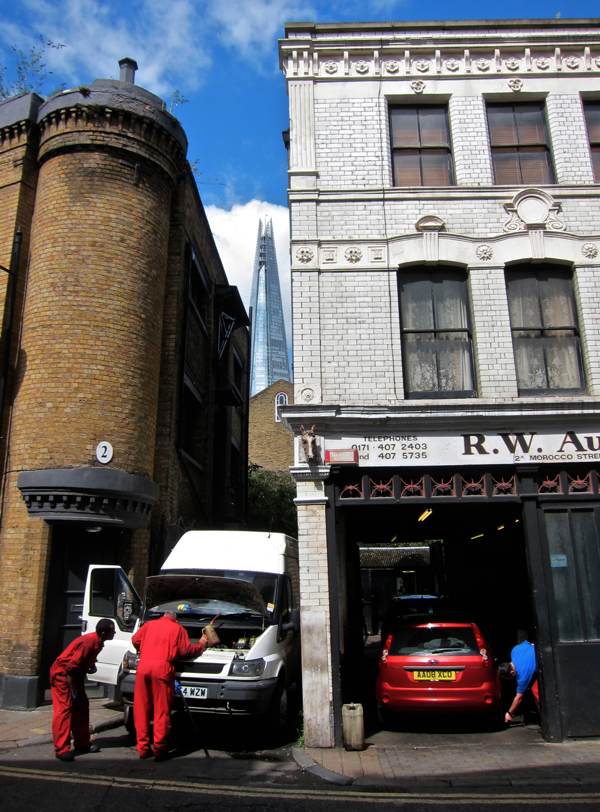
The horse’s head upon the fascia reveals that RW Autos was once a farrier
Twenty-five years ago I had reason to visit Bermondsey St frequently but I have hardly been there since, so I thought it was time to walk down across the river and take a look. Leaving the crowds teeming like ants upon the chaotic mound that is London Bridge Station in the midst of reconstruction, I ventured into Guy’s Hospital passing the statue of Thomas Guy, who founded it in 1721, to sit with John Keats in a stone alcove from old London Bridge now installed in a courtyard at the back.
From here, I turned east through the narrow streets into Snowsfields, passing the evocatively named Ship & Mermaid Row, and Arthur’s Mission of 1865 annotated with “Feed my Lambs” upon a plaque. An instruction that has evidently not been forgotten, as the building adjoins the Manna Day Centre which offers refuge and sustenance to more than two hundred homeless people each day.
At the end of Snowsfields is the crossroads where Bermondsey St meets the viaduct carrying the railway to and from London Bridge, and the sonorous intensity of the traffic roaring through, combined with the vibration from the trains rattling overhead, can be quite overwhelming. Yet the long narrow street beckons you south, as it has done for more than a thousand years – serving as the path from the Thames to the precincts of Bermondsey Abbey, a mile away, since the eleventh century. When I first came here, I never ventured beyond Bermondsey Sq. Only when I learned of the remains of the medieval gatehouse in Grange Walk beyond, with the iron hinges still protruding from the wall today, did I understand that Bermondsey St was the approach to the precincts of the Abbey destroyed by Henry VIII in 1536.
There is an engaging drama to Bermondsey St with its narrow frontages of shops and tall old warehouses crowded upon either side, punctuated by overhanging yards and blind alleys. A quarter of a century ago, everything appeared closed down, apart from The Stage newspaper with its gaudy playbill sign, a couple of attractively gloomy pubs and some secondhand furniture warehouses. I was fascinated by the mysteries withheld and Bermondsey St lodged in my mind as a compelling vestige of another time. Nowadays it appears everything has been opened up in Bermondsey St, and the shabbiness that once prevailed has been dispelled by restoration and adaptation of the old buildings, and the addition of fancy new structures for the Fashion & Textile Museum and the White Cube Gallery.
Yet, in spite of the changes, I was pleased to discover RW Autos still in business in Morocco St with the horses’ heads upon the fascia, indicating the origin of the premises as a farrier. Nearby, the massive buildings of the former London Leather Exchange, now housing dozens of small businesses, stand as a reminder of the tanning industry which occupied Bermondsey for centuries, filling the air with foul smells and noxious fumes, and poisoning the water courses with filth.
The distinctive pattern of streets and survival of so many utilitarian nineteenth and eighteenth century structures ensure the working character of this part of Bermondsey persists, and you do not have to wander far to come upon blocks of nineteenth century housing and old terraces of brick cottages, interspersed by charity schools and former institutes of altruistic endeavour, which carry the attendant social history. Thus Bermondsey may still be appreciated as an urban landscape where the past is visibly manifest to the attentive visitor, who cares to spend a quiet afternoon exploring on foot.
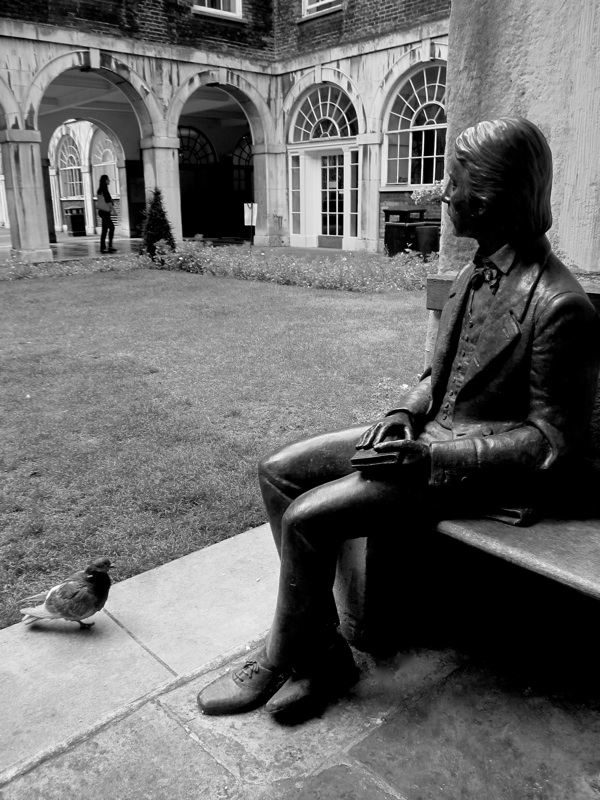
John Keats at Guy’s Hospital
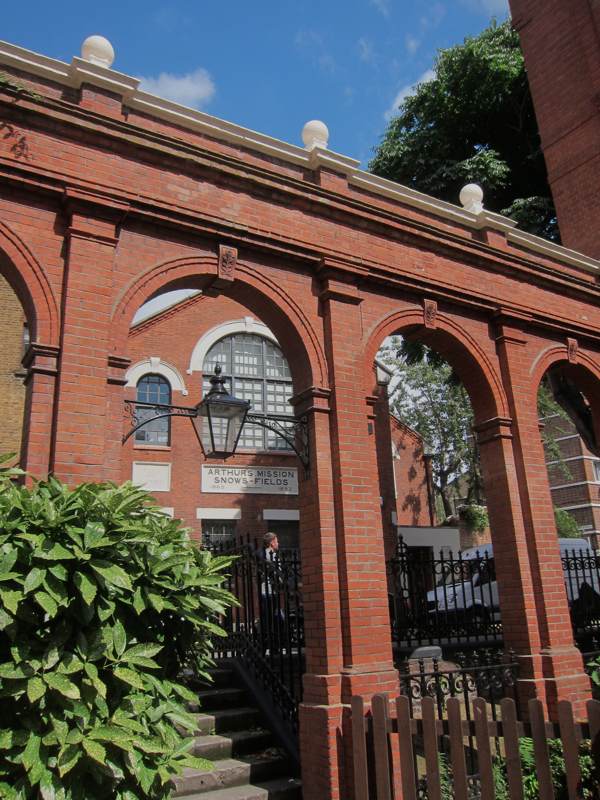
Arthur’s Mission in Snow’s Fields seen from Guinness Buildings 1897
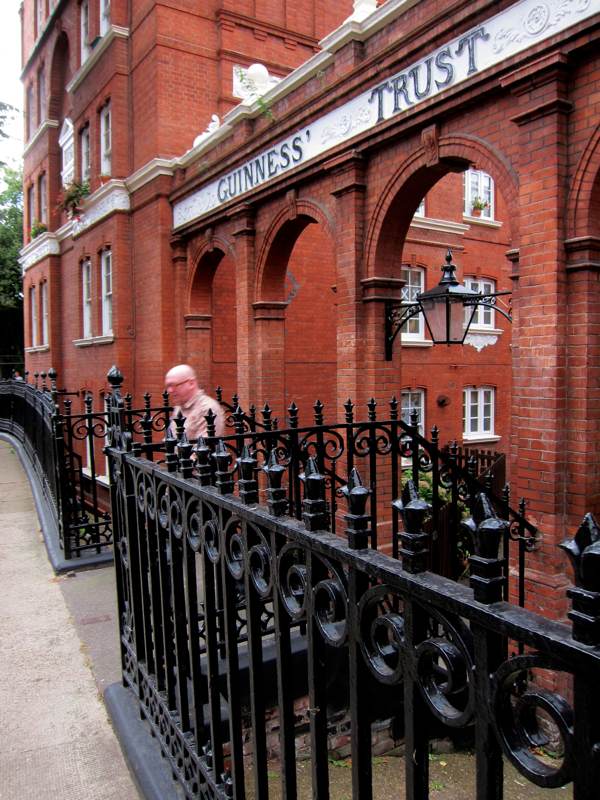
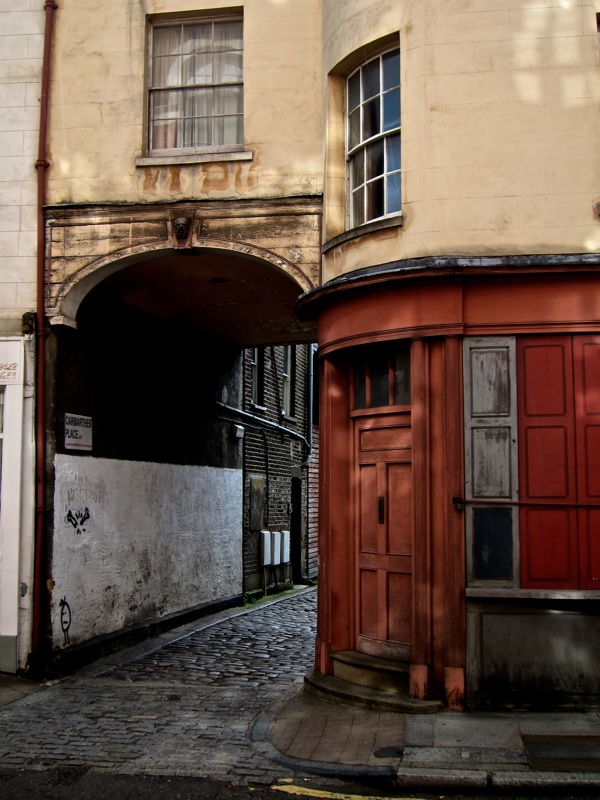
In Bermondsey St
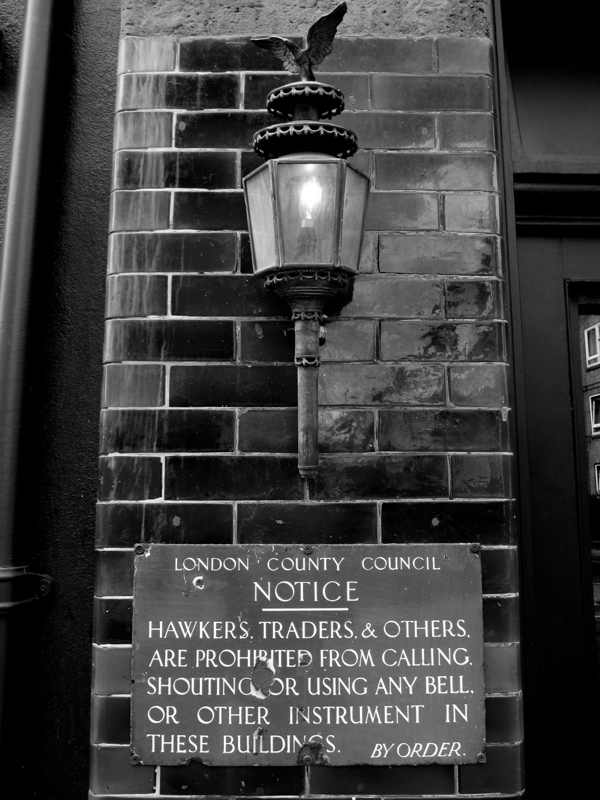
At the Woolpack
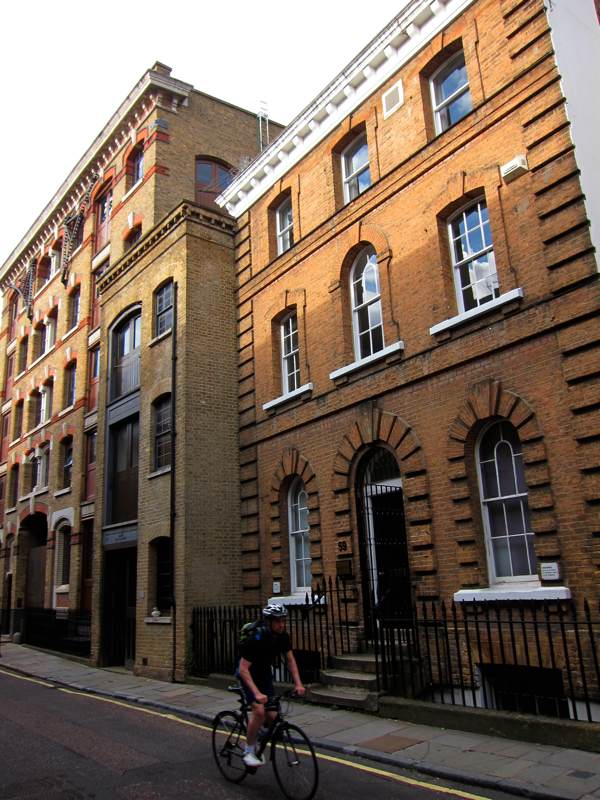
Old warehouses in Bermondsey St


St Mary Magdalen Bermondsey – the medieval tower is the last remnant of the Abbey founded in the eleventh century
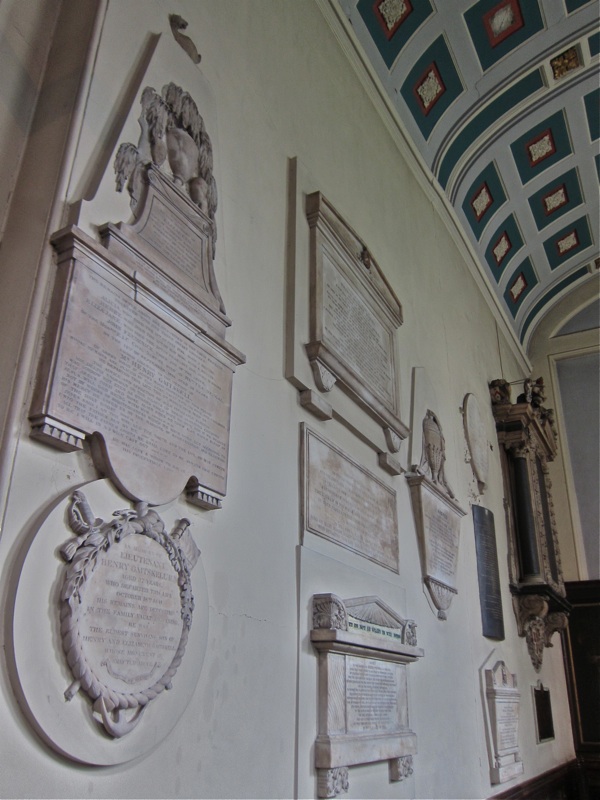
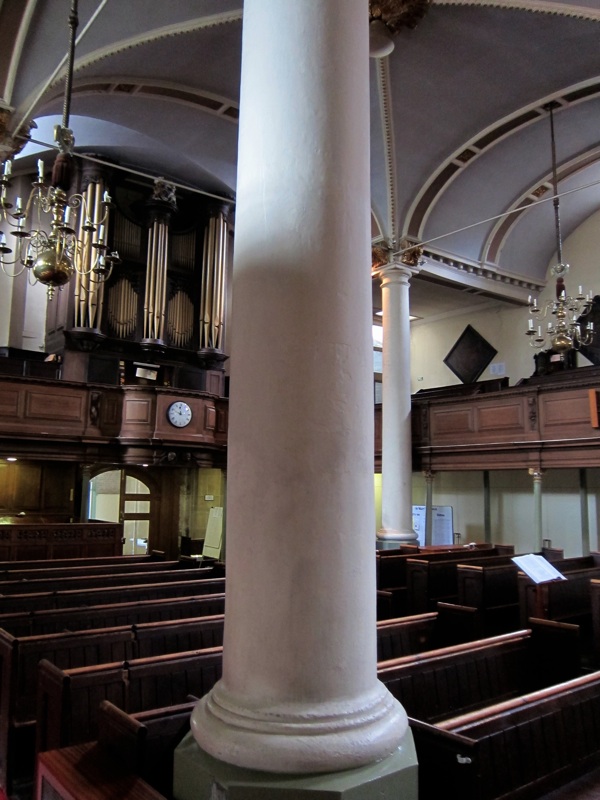
In St Mary’s Bermondsey St
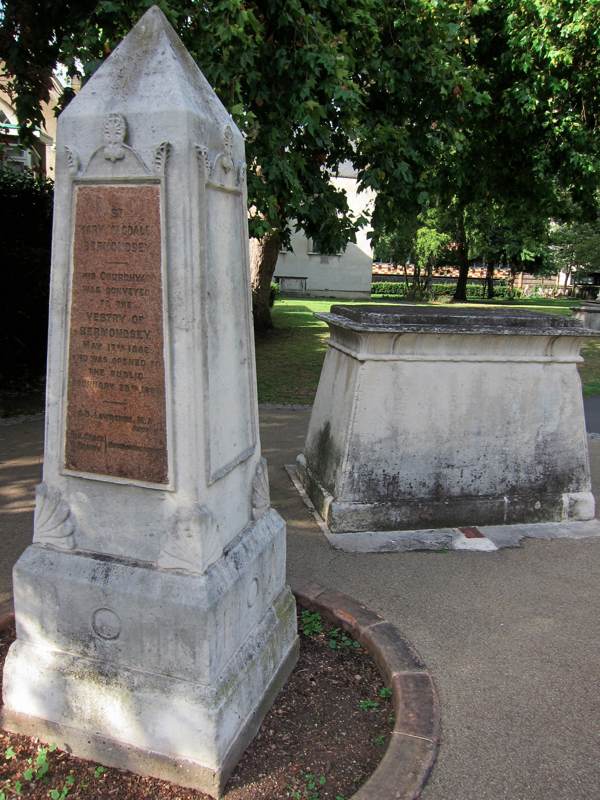
In St Mary Magdalen Graveyard
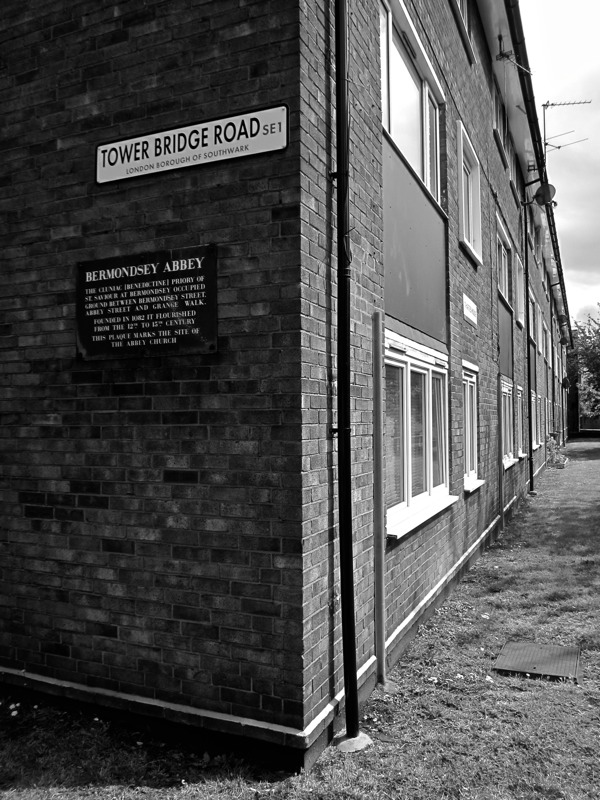
This plaque marks the site of the abbey church
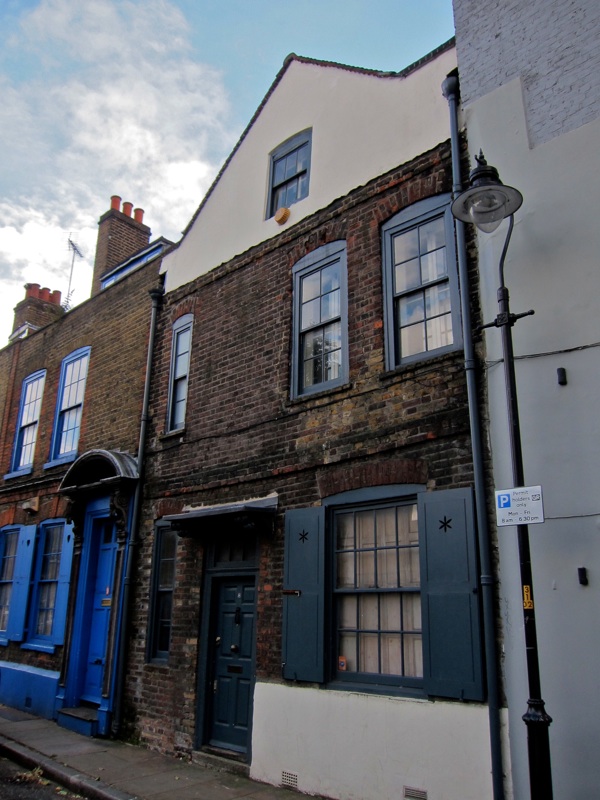
Old houses in Grange Walk – the house on the right is claimed to be the Abbey gatehouse with hinges of the gates still visible
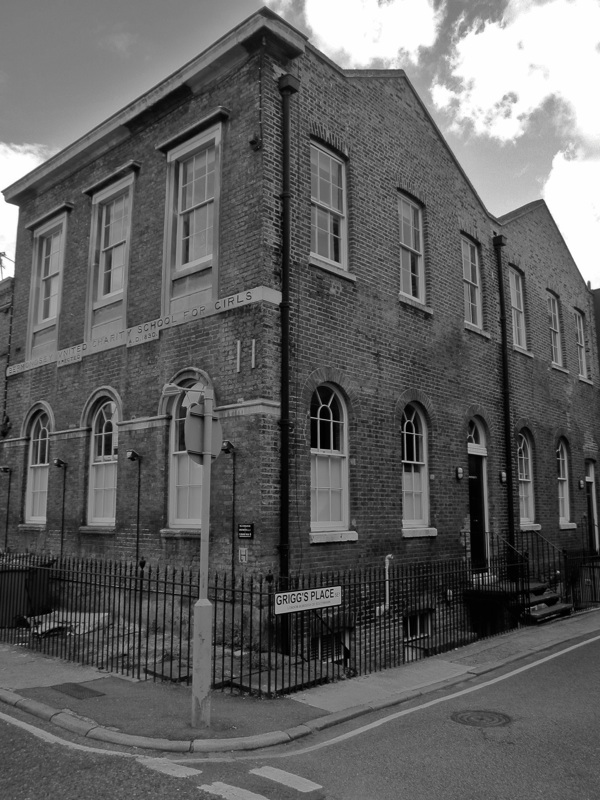
Bermondsey United Charity School for Girls in Grange Walk, 1830

In Grange Walk
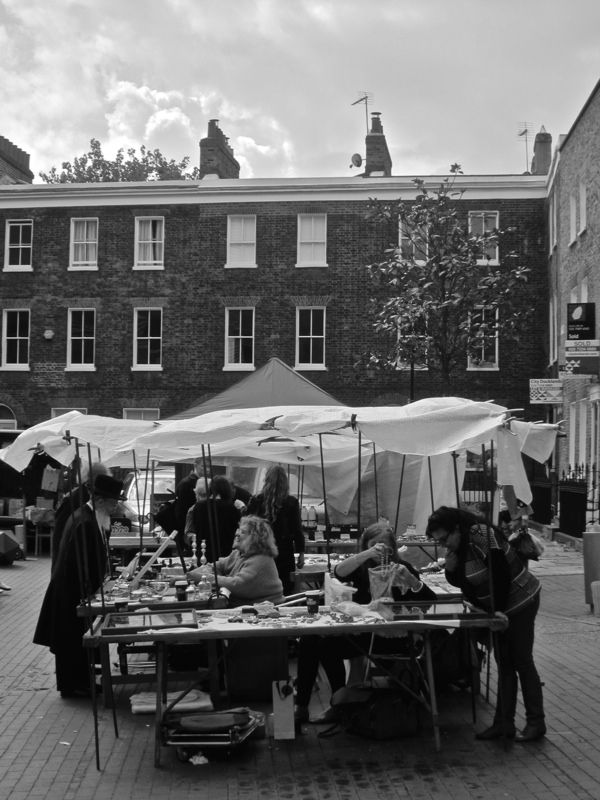
Bermondsey Sq Antiques Market every Friday

A cottage garden in Bermondsey
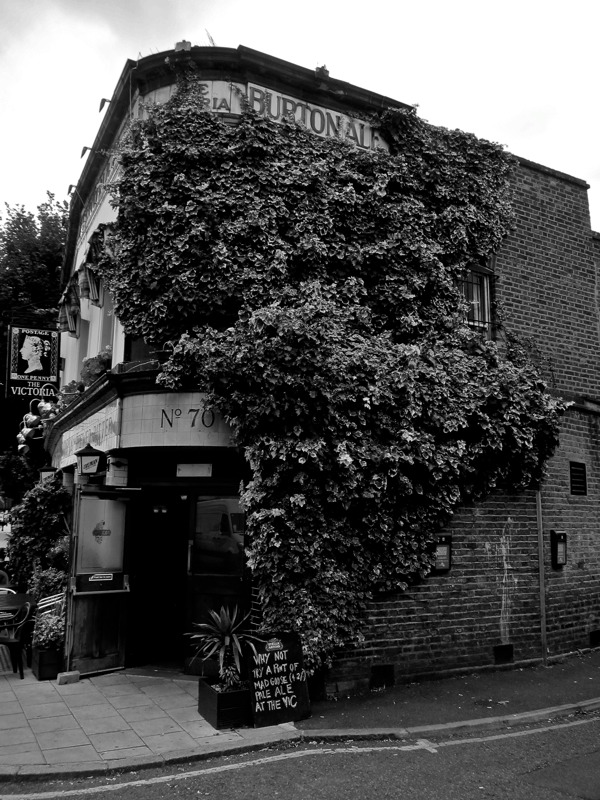
The Victoria, a magnificent tiled nineteenth century pub with its original spittoon, in Pages Walk

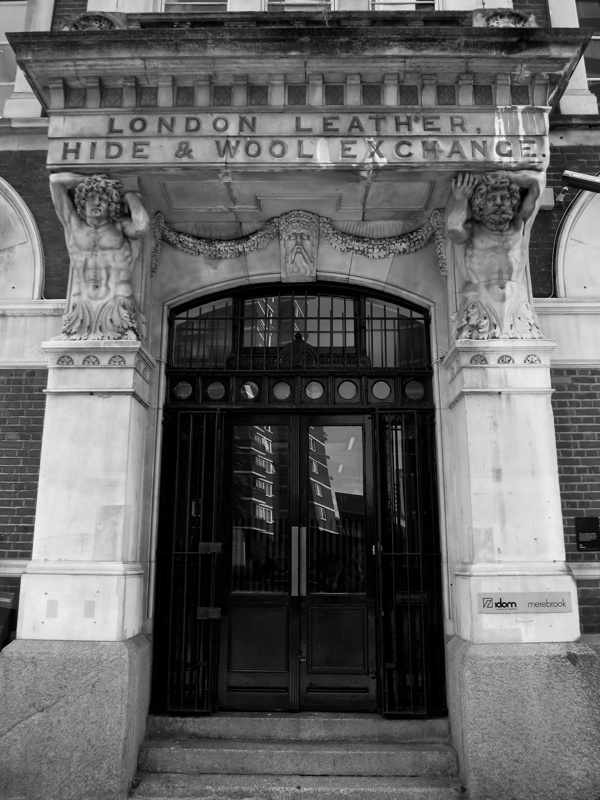
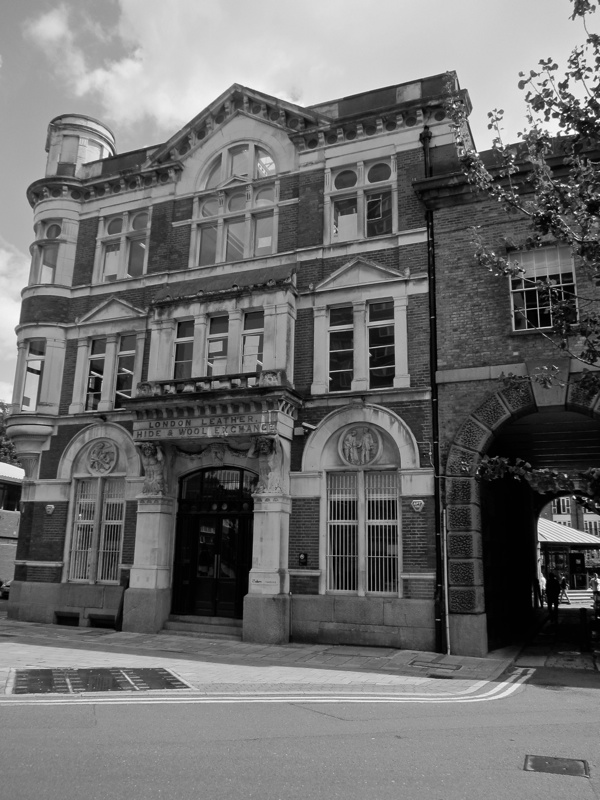
London Leather, Hide & Wool Exchange built 1878 by George Elkington & Sons, next to the 1833 Leather Market, it remained active until 1912.

At the entrance to St Thomas’ Church
You may also like to take a look at
Street Scene by Barnett Freedman
Today I present another extract from my new book EAST END VERNACULAR, Artists who painted London’s East End streets in the 20th century to be published by Spitalfields Life Books in October. We still need a couple more investors, so please click here to learn how you can support the publication of EAST END VERNACULAR

Street Scene by Barnett Freedman (Click this image to enlarge)
When I first saw Street Scene by Barnett Freedman (Reproduced courtesy of the Tate Gallery), I thought I half-recognised the location as either Whitechapel or Bethnal Green and I delighted in the painting as an evocation of the streetlife of the Jewish East End in the early twentieth century.
Surely that is The George in Bethnal Green Road in the background? In particular, the two ostentatiously dressed woman in their contrasting outfits recalled for me the custom of people to promenade along Aldgate to Whitechapel at weekends in their finery, window shopping and greeting friends, enjoying their social life in public. Indeed, Pearl Binder included a similar pair of young women togged up to the nines in one of her lithographs of Aldgate in the twenties. I also wondered if the shabby old street musician with his violin was a Russian immigrant who had arrived like Barnett Freedman’s parents at the end of the nineteenth century.
Barnett Freedman was born in Lower Chapman St, Stepney Green in 1901. A sickly child who endured extended hospital stays, he was confined to bed between the ages of nine and thirteen, yet managed to educate himself, learning to read, write, play music and draw and paint while sequestered in a hospital ward.
By the age of sixteen, Barnett was earning his living as a draughtsman to a monumental mason for a few shillings a week, while for the next five years he spent his evenings undertaking classes at St Martin’s School of Art. Before long, he moved to an architect’s office, creating attractive drawings from his employer’s rough sketches and, taking the opportunity offered by a surge in demand for the war memorials to hone his skill as a letteringh artist.
With remarkable tenacity and self-belief, Barnett applied over three successive years for a London County Council Scholarship that would enable him to study at the Royal College of Art under the direction of Sir William Rothenstein. Experiencing rejection on each occasion, Barnett summoned the courage to present his portfolio in person to Rothenstein who recognised his talent and applied to the London County Council Chief Inspector himself on behalf of the young artist. As a consequence, a stipend of £120 a year was granted, enabling Barnett to begin his studies full time in 1922.
At the Royal College of Art, Barnett’s talent flourished among fellow students including Edward Bawden, Raymond Coxon, Henry Moore, Vivian Pitchforth and John Tunnard. Yet even after graduating in 1925, he continued to struggle to support himself and in 1929, ill-health prevented him working for a year. This situation as resolved when William Rothenstein took Barnett onto the staff of the Royal College in 1930. In the same year, he married fellow illustrator, Claudia Guercio, and, during the thirties, enjoyed an increasingly successful career as an illustrator and commercial artist.
Barnett’s lithographs for Siegfried Sassoon’s Memoirs of an Infantry Officer, published in 1931, were one of many highlights during his long association with Faber and Faber, for whom he also illustrated works by the Brontës, Walter de la Mare, Charles Dickens, Edith Sitwell, William Shakespeare and Leo Tolstoy. As a commercial artist, he undertook prestigious commissions for Ealing Films, the General Post Office, Curwen Press, Shell-Mex, British Petroleum, Josiah Wedgwood and London Transport, earning popular success.
Appointed as an official War Artist, along with Edward Ardizzone and Edward Bawden, Barnett accompanied the expeditionary force in the spring of 1940 before the retreat at Dunkirk, and was awarded a CBE for this work in 1946. Yet Barnett always retained his East End accent and once, when he hailed a taxi to the Athenaeum Club, the incredulous cabbie famously retorted, “What, you?”
Street Scene was painted between 1933 and 1939, and subsequently he reworked the image as a lithograph for Lyons Corner House. Barnett’s son Vince, who was born in 1934, recalled his father working on the picture in the first floor studio of the family home in a back street of Gloucester Rd, West London. Vince revealed to me that the building on the right of the painting was based their house, 11 Canning Place. “The fiddler was to be found at the Gloucester Road end of Canning Place just about every day, and was a figure of some threat to me at the age of four!” he recalled, “The small person on the right, with his nanny Miss Wiggle, is a reference to me!”
No wonder that I was unable to place the location of this painting precisely in the East End because it is not a literal scene at all but a composite of Bethnal Green and Gloucester Road. I often wonder if the East End itself is actually a place or a culture, and this painting proposes an answer to my quandary. Barnett Freedman employed diverse topographic elements create a portrait of a society he knew intimately, constructing an entirely subjective portrayal of his environment and personal heritage. Look in the left top corner of the painting and you will see the artist raising his hat to you, ambling happily along the pavement and eternally at home in his own East End universe. Vincent Freedman summed up his father’s achievement in these words, “A huge optimism and compassion shows itself to me in all his work and life. Humanity was his central driving force.”
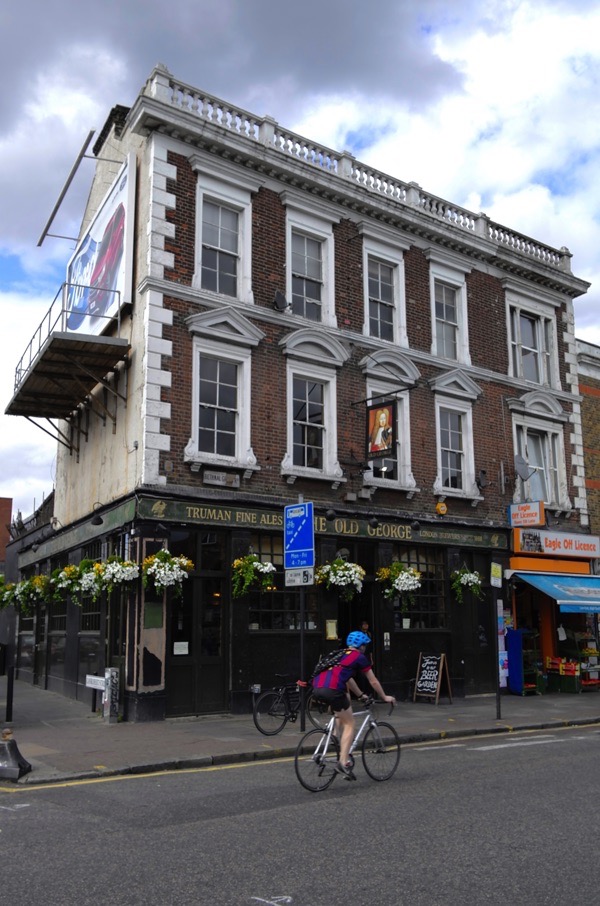
The Old George in Bethnal Green
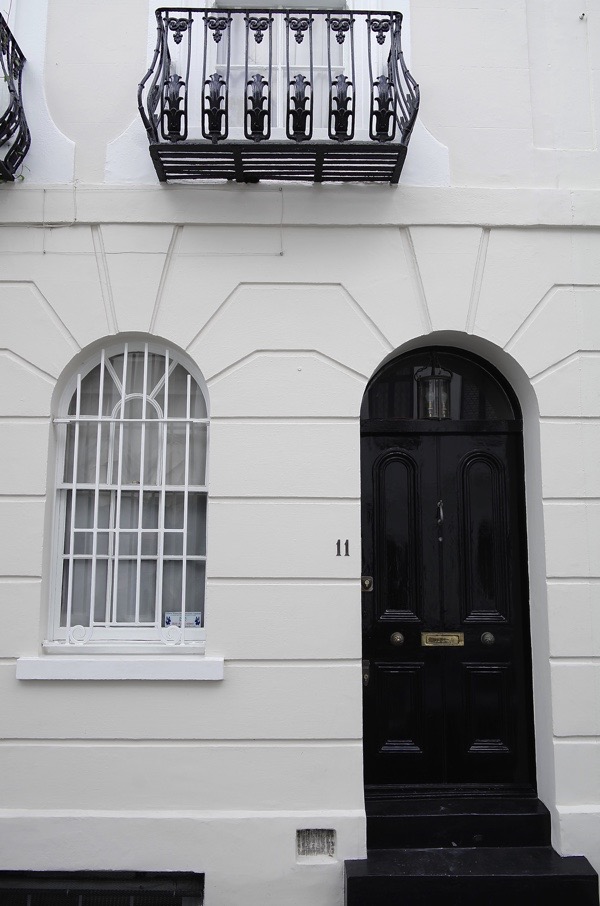
Barnett Freedman’s house at 11 Canning Place, Gloucester Rd
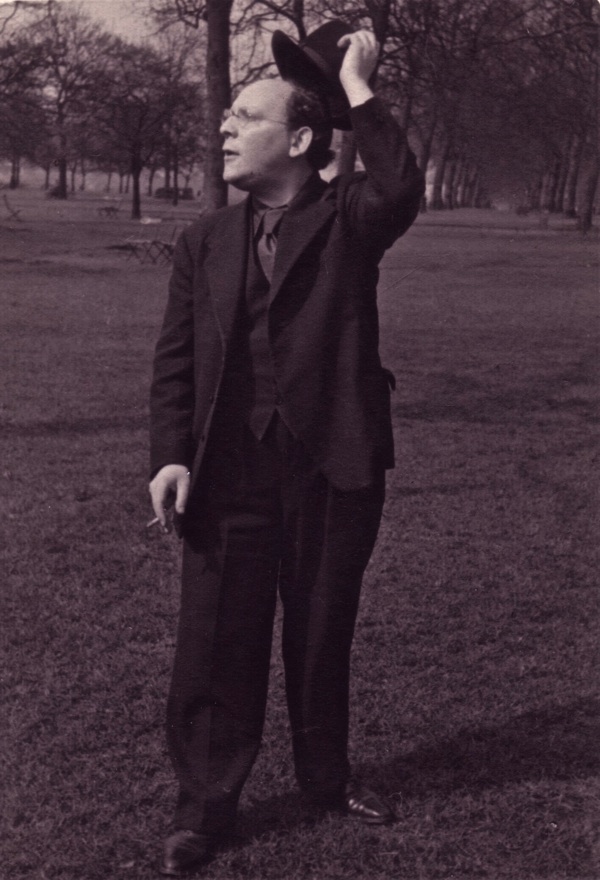
Barnett Freedman in Hyde Park
Take a look at some of the other artists featured in East End Vernacular
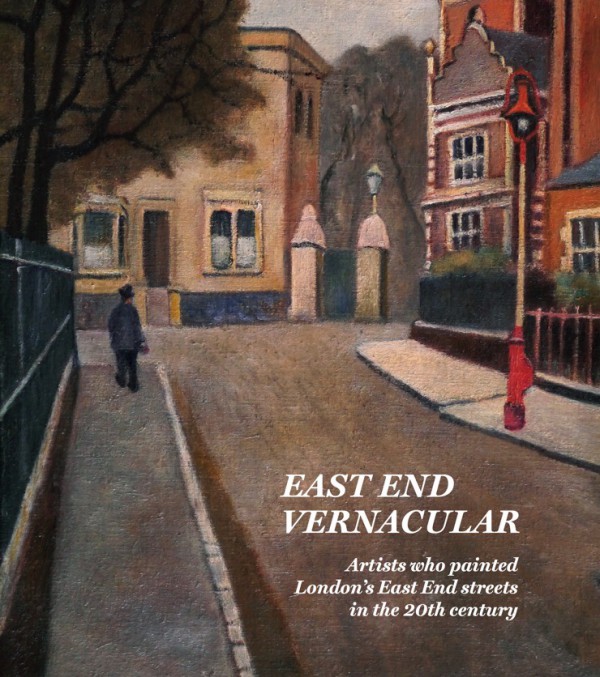
Click here to preorder a copy of EAST END VERNACULAR for £25
In Old Rotherhithe
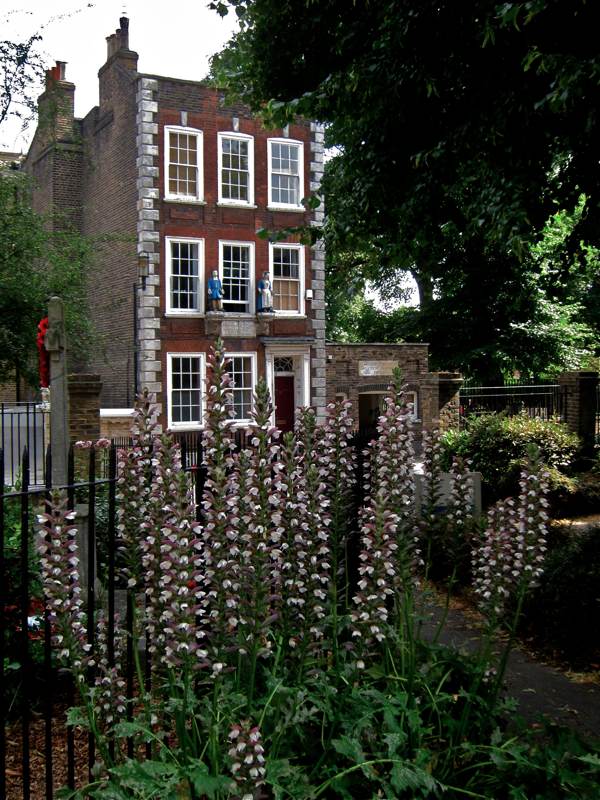
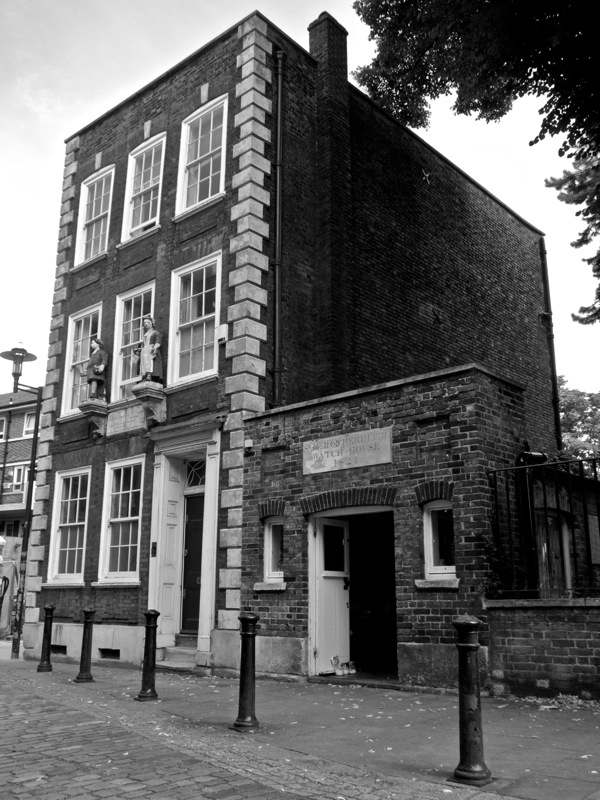
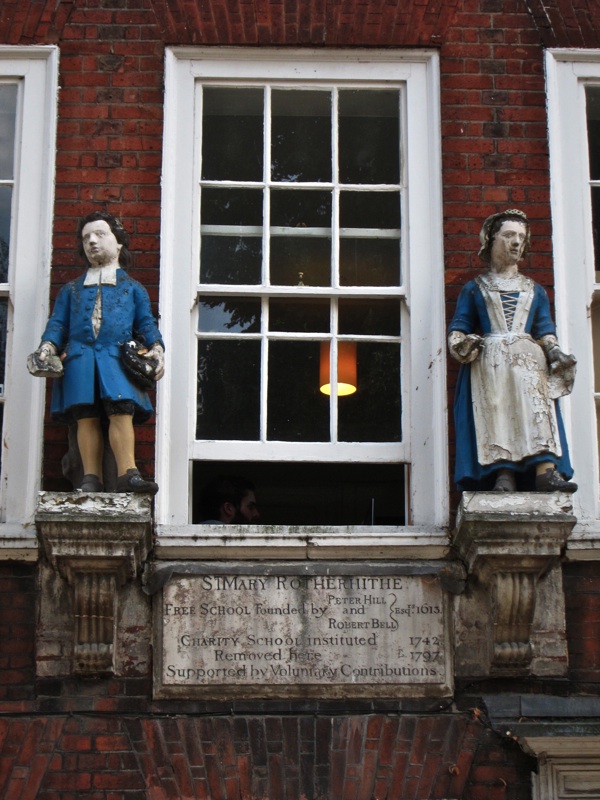
St Mary Rotherhithe Free School founded 1613
To be candid, there is not a lot left of old Rotherhithe – yet what remains is still powerfully evocative of the centuries of thriving maritime industry that once defined the identity of this place. Most visitors today arrive by train – as I did – through the Brunel tunnel built between 1825 and 1843, constructed when the growth of the docks brought thousands of tall ships to the Thames and the traffic made river crossing by water almost impossible.
Just fifty yards from Rotherhithe Station is a narrow door through which you can descend into the 1825 shaft via a makeshift staircase. You find yourself inside a huge round cavern, smoke-blackened as if the former lair of a fiery dragon. Incredibly, Marc Brunel built this cylinder of brick at ground level – fifty feet high and twenty-five feet in diameter – and waited while it sank into the damp earth, digging out the mud from the core as it descended, to create the shaft which then became the access point for excavating the tunnel beneath the river.
It was the world’s first underwater tunnel. At a moment of optimism in 1826, a banquet for a thousand investors was held at the bottom of the shaft and then, at a moment of cataclysm in 1828, the Thames surged up from beneath filling it with water – and Marc’s twenty-two-year-old son Isambard was fished out, unconscious, from the swirling torrent. Envisaging this diabolic calamity, I was happy to leave the subterranean depths of the Brunels’ fierce imaginative ambition – still murky with soot from the steam trains that once ran through – and return to the sunlight of the riverside.
Leaning out precariously upon the Thames’ bank is an ancient tavern known as The Spread Eagle until 1957, when it was rechristened The Mayflower – in reference to the Pilgrims who sailed from Rotherhithe to Southampton in 1620, on the first leg of their journey to New England. Facing it across the other side of Rotherhithe St towers John James’ St Mary’s Rotherhithe of 1716 where an attractive monument of 1625 to Captain Anthony Wood, retrieved from the previous church, sports a fine galleon in full sail that some would like to believe is The Mayflower itself – whose skipper, Captain Christopher Jones, is buried in the churchyard.
Also in the churchyard, sits the handsome tomb of Prince Lee Boo. A native of the Pacific Islands, he befriended Captain Wilson of Rotherhithe and his two sons who were shipwrecked upon the shores of Ulong in 1783. Abba Thule, the ruler of the Islands, was so delighted when the Europeans used their firearms to subdue his enemies and impressed with their joinery skills in constructing a new vessel, that he asked them to take his second son, Lee Boo, with them to London to become an Englishman.
Arriving in Portsmouth in July 1784, Lee Boo travelled with Captain Wilson to Rotherhithe where he lived as one of the family, until December when it was discovered he had smallpox – the disease which claimed the lives of more Londoners than any other at that time. At just twenty years old, Lee Boo was buried inside the Wilson family vault in Rotherhithe churchyard, but – before he died – he sent a plaintive message home to tell his father “that the Captain and Mother very kind.”
Across the churchyard from The Mayflower is Rotherhithe Free School, founded by two Peter Hills and Robert Bell in 1613 to educate the sons of seafarers. Still displaying a pair of weathered figures of schoolchildren, the attractive schoolhouse of 1797 was vacated in 1939 yet the school may still be found close by in Salter Rd. Thus, the pub, the church and the schoolhouse define the centre of the former village of Rotherhithe with a line of converted old warehouses extending upon the river frontage for a just couple of hundred yards in either direction beyond this enclave.
Take a short walk to the west and you will discover The Angel overlooking the ruins of King Edward III’s manor house but – if you are a hardy walker and choose to set out eastward along the river – you will need to exercise the full extent of your imagination to envisage the vast vanished complex of wharfs, quays and stores that once filled this entire peninsular.

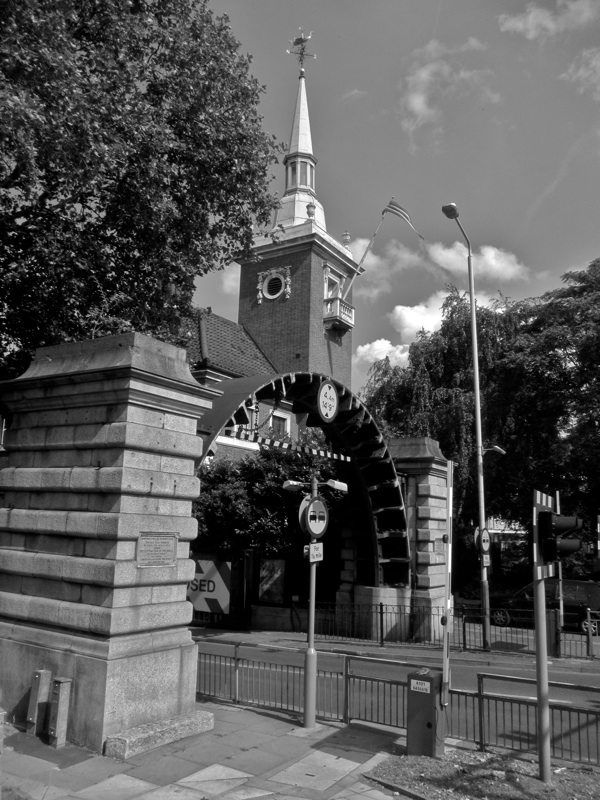
At the entrance to the Rotherhithe road tunnel stands the Norwegian Church with its ship weather vane
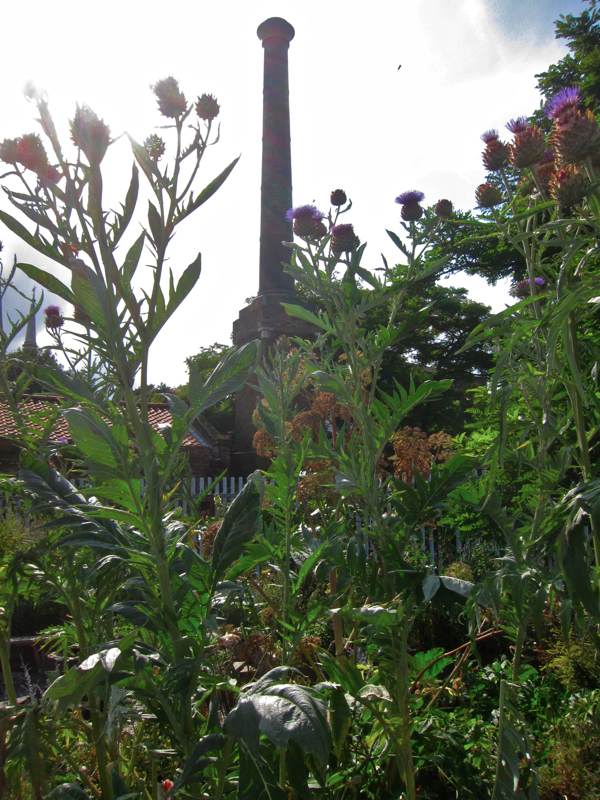
Chimney of the Brunel Engine House seen from the garden on top of the tunnel’s access shaft
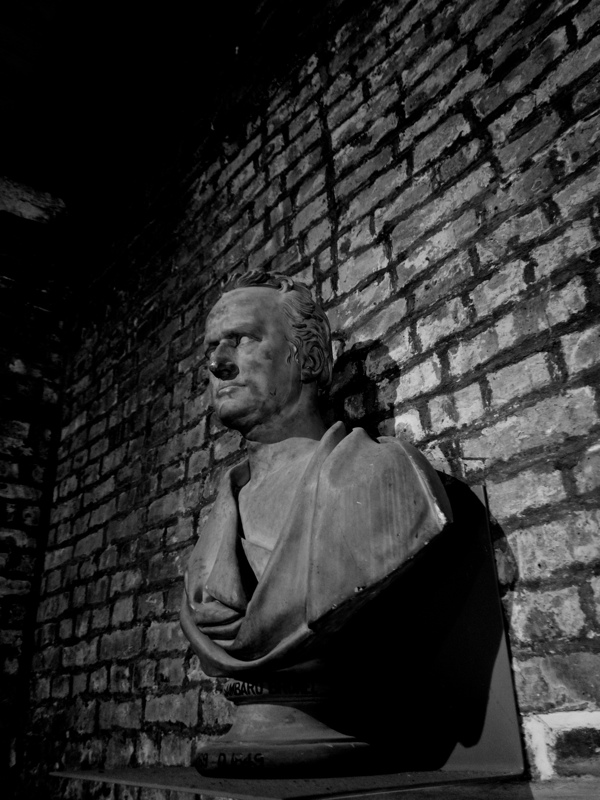
Isambard Kingdom Brunel presides upon his audacious work
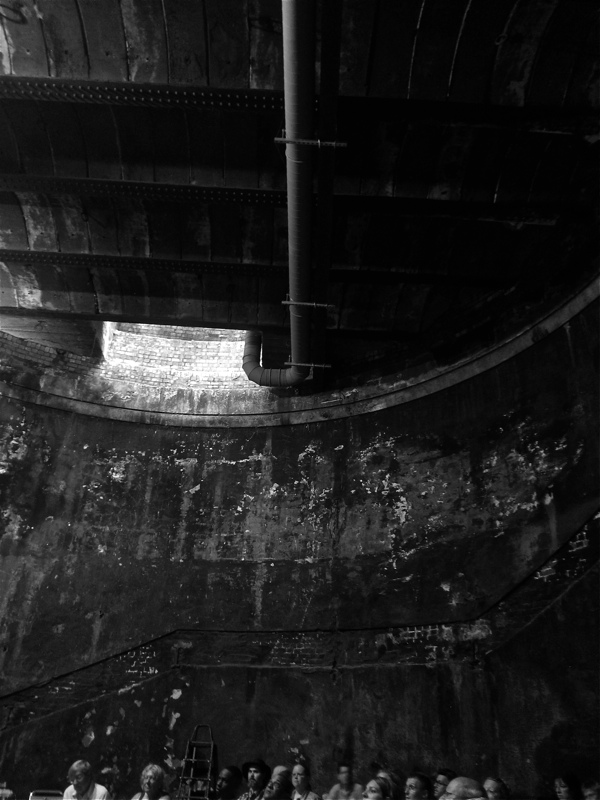
Visitors gawp in the diabolic cavern of Brunel’s smoke-blackened shaft descending to the Thames tunnel
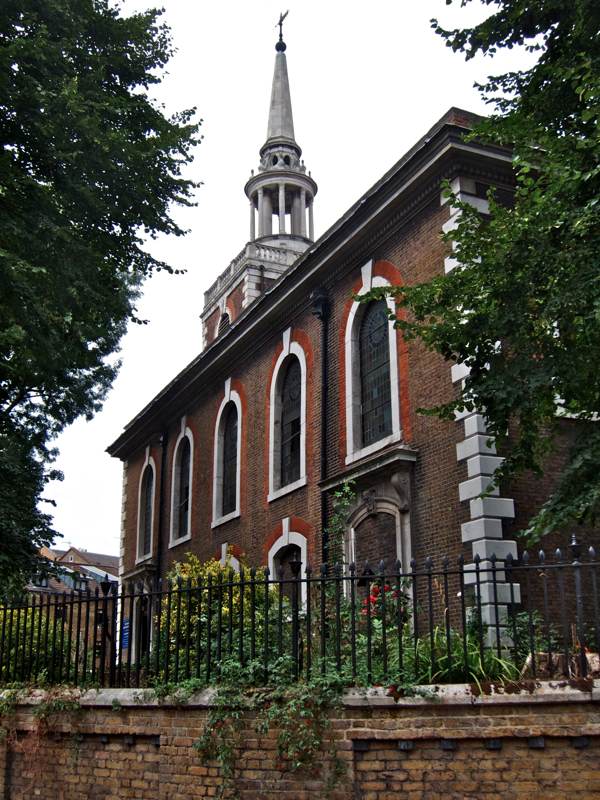
John James’ St Mary’s Rotherhithe of 1716
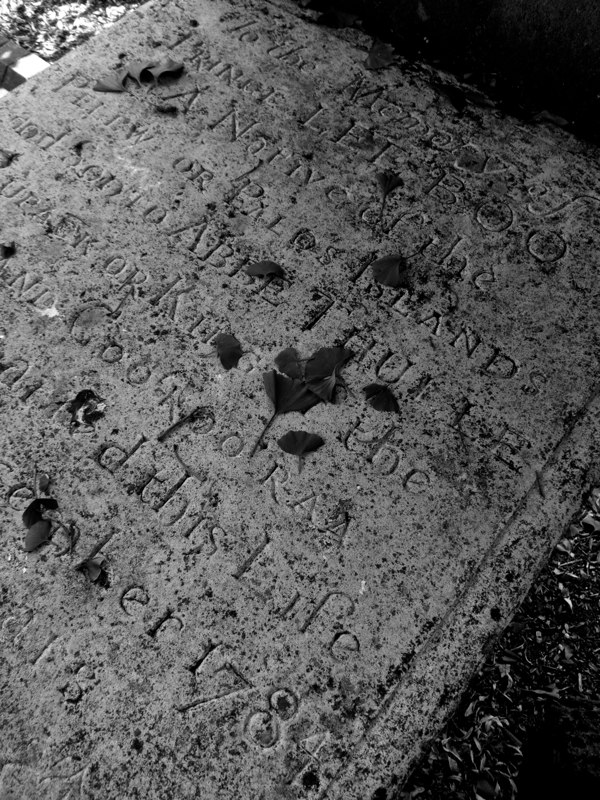
The tomb of Prince Lee Boo, a native of the Pelew or Pallas Islands ( the Republic of Belau), who died in Rotherhithe of smallpox in 1784 aged twenty
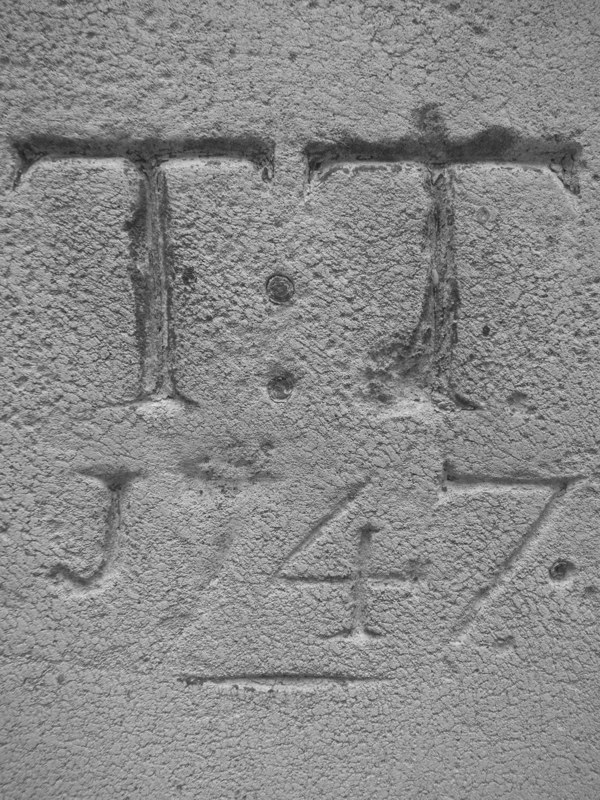
Graffiti upon the church tower
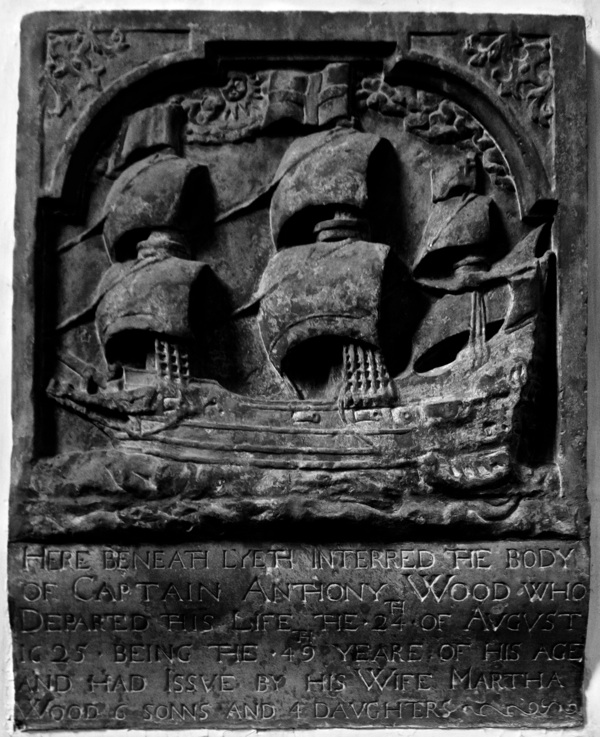
Monument in St Mary’s, retrieved from the earlier church
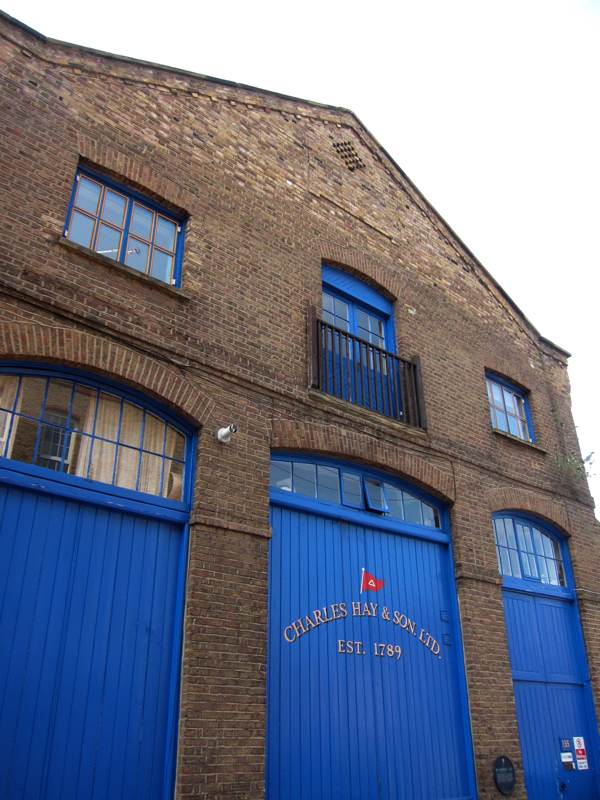
Charles Hay & Sons Ltd, Barge Builders since 1789
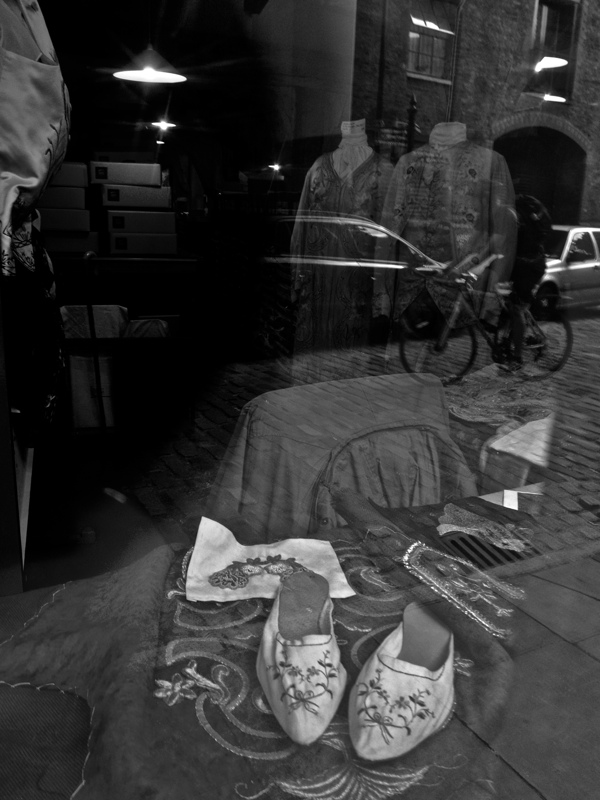
Peeking through the window into the costume store of Sands Films
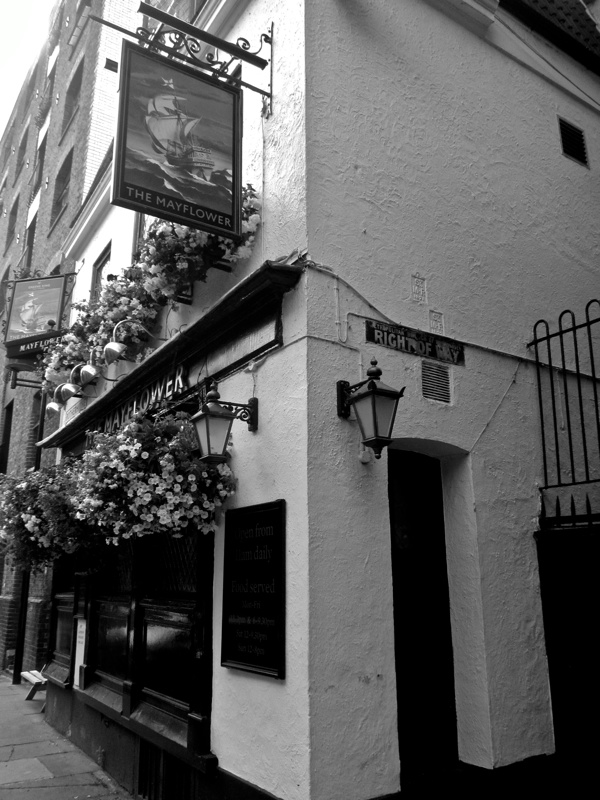
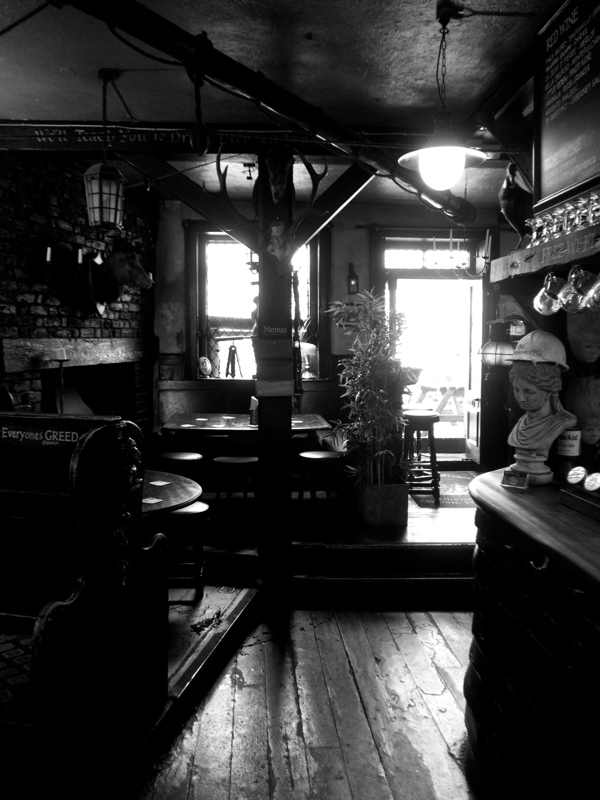
Inside The Mayflower
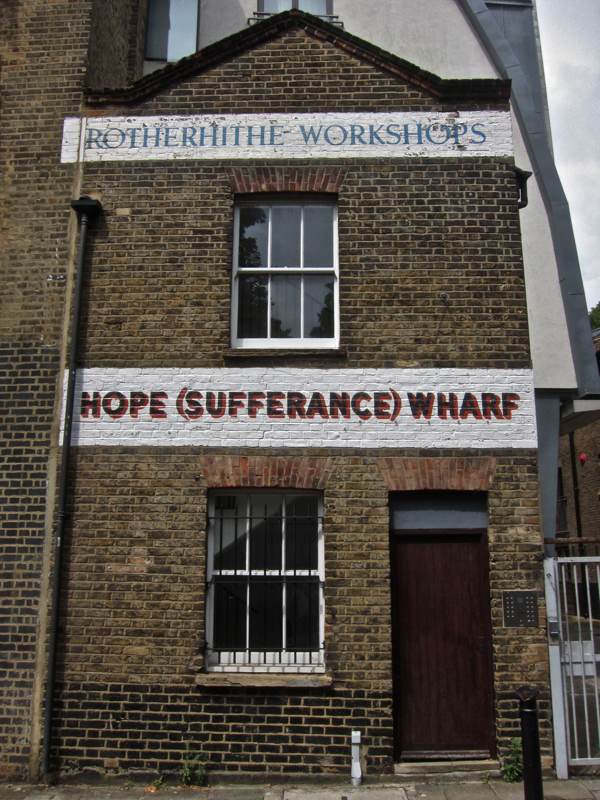
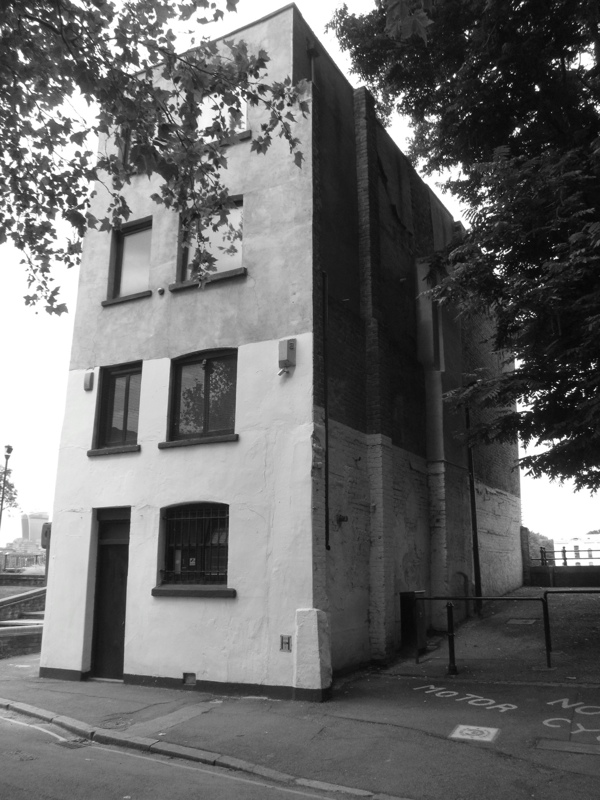
A lone survivor of the warehouses that once lined the river bank
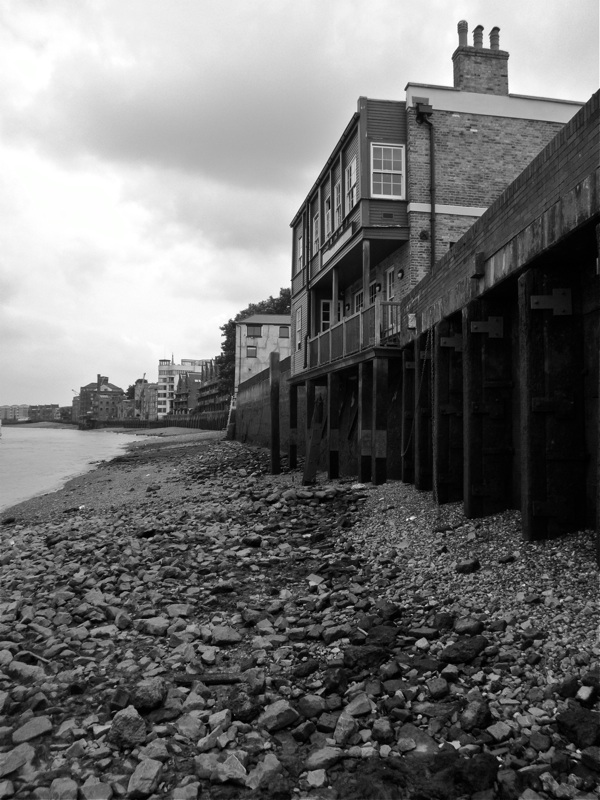
Looking east towards Rotherhithe from The Angel
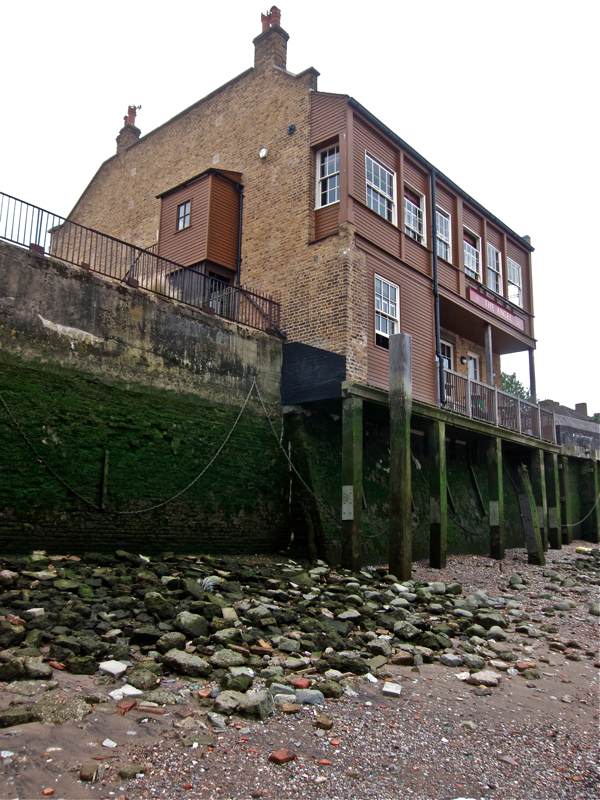
The Angel
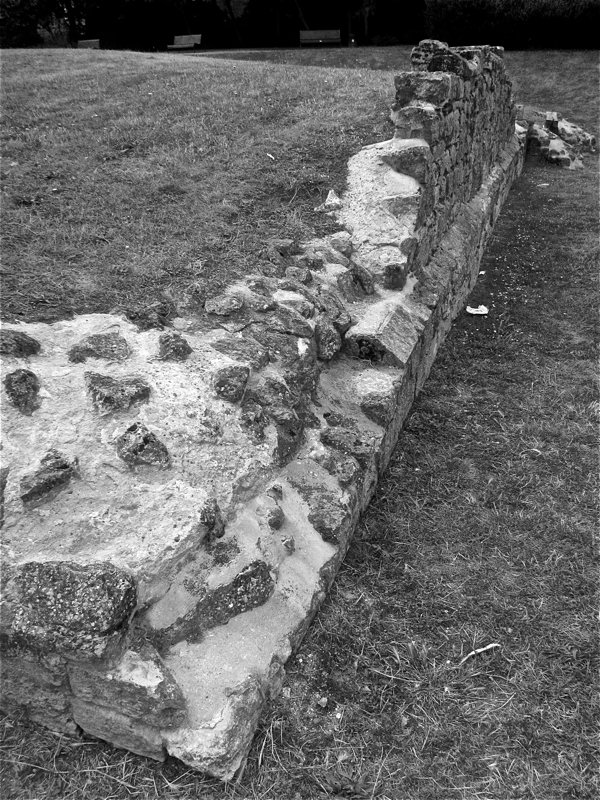
The ruins of King Edward III’s manor house
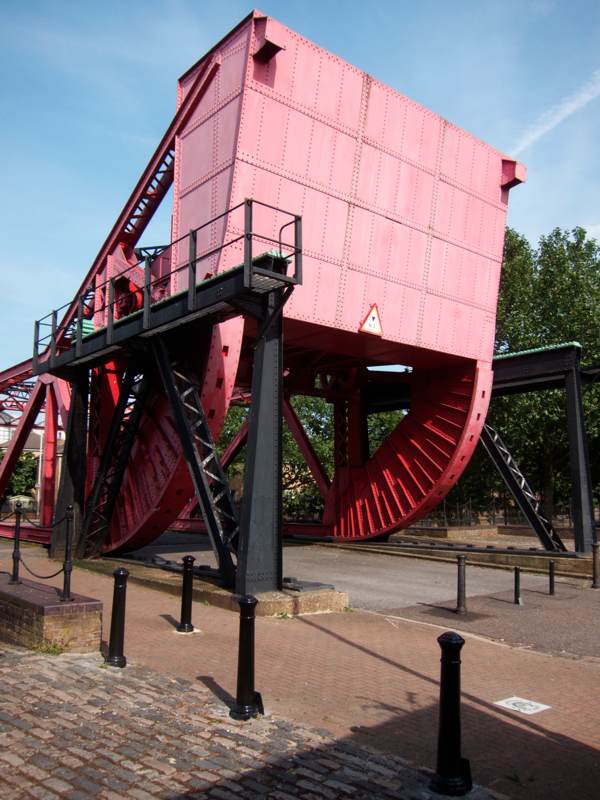
Bascule bridge
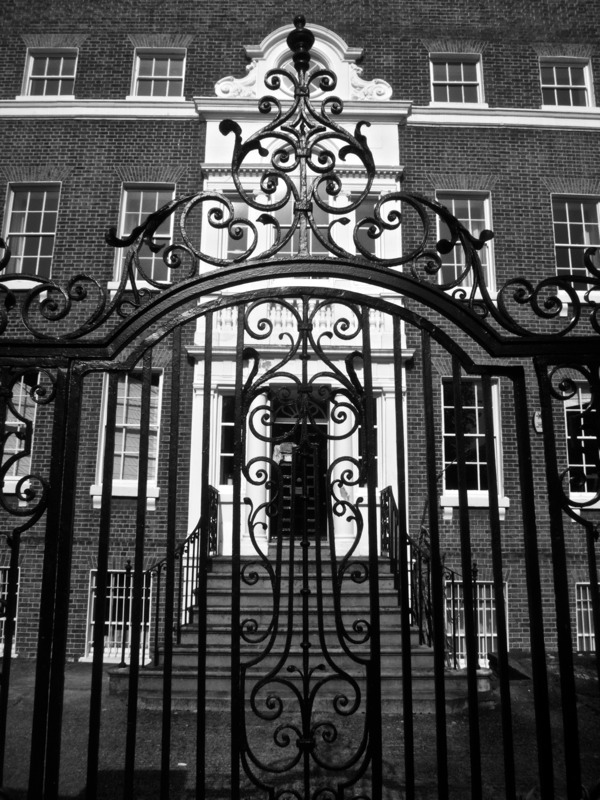
Nelson House
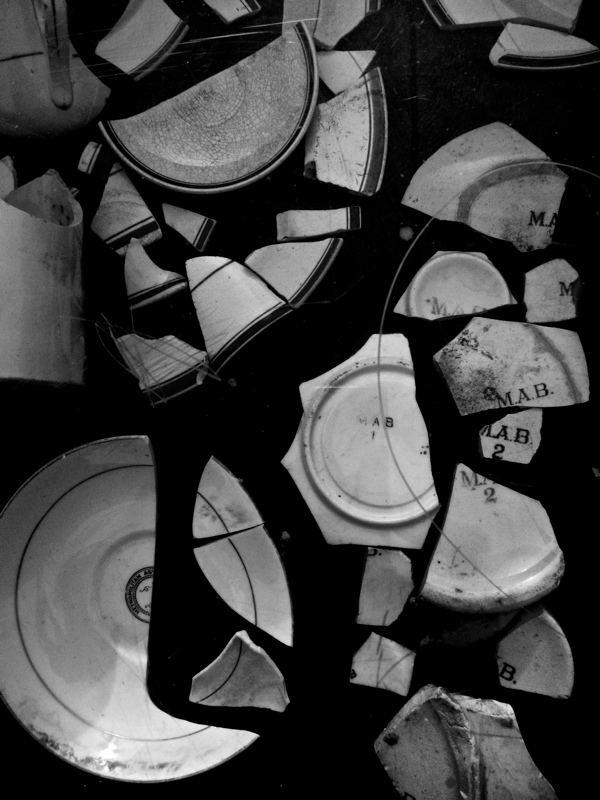
Metropolitan Asylum Board china from the Smallpox Hospital Ships once moored here
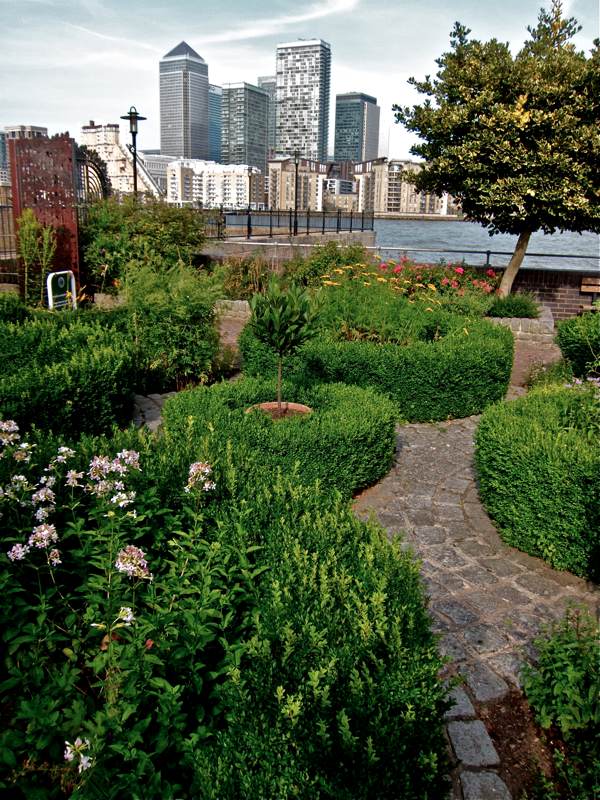
Looking across towards the Isle of Dogs from Surrey Docks Farm
Take a look at
Adam Dant’s Map of Stories from the History of Rotherhithe
and you may also like to read
Florence Nightingale in Cleveland St
The distinguished historian Ruth Richardson makes a last-minute plea for the complex of historic buildings on the site of the listed eighteenth century Cleveland St Workhouse, revealing the participation of Florence Nightingale in the creation of the Nightingale Pavilion Wards added when the Workhouse became a hospital in the nineteenth century.
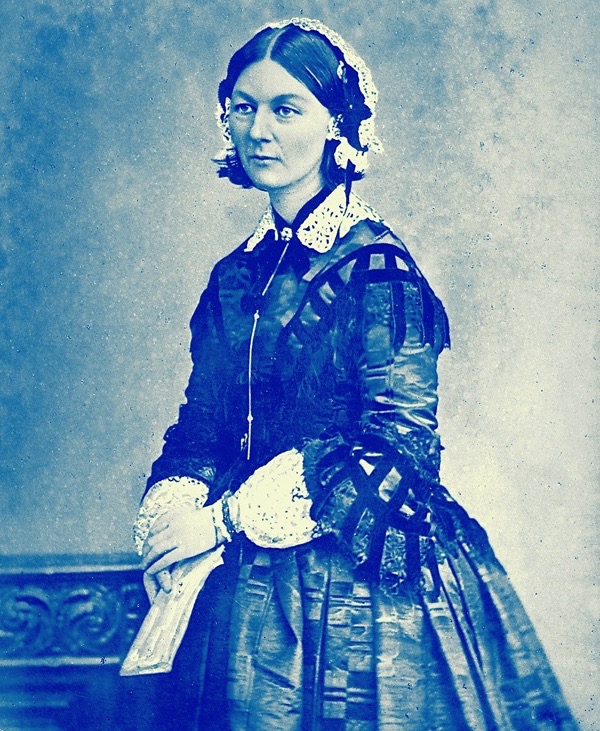
This Thursday evening, 6th July, the Planning Committee for the Borough of Camden will meet at Camden Town Hall to discuss an application for the redevelopment of the Dickens Workhouse, the Nightingale Pavilion Wards and their attendant buildings in Cleveland St, Fitzrovia, W1.
Readers of Spitalfields Life will already be familiar with the discovery that Charles Dickens lived in the same street and the knowledge that, while he was writing Oliver Twist, there was a shop opposite the Workhouse run by a certain Bill Sykes. The story of the poor murdered Italian Boy has also been told in the pages of Spitalfields Life and through him we remember the thousands of Covent Garden parishioners buried in the consecrated burial ground surrounding the Cleveland St Workhouse. Yet the Nightingale Pavilion Wards tell an equally important story of Florence Nightingale’s involvement in the evolution of compassionate medical care in this country towards the National Health Service that we cherish today.
I photographed the site recently and discovered the buildings entirely populated by property guardians, as illustration – if such were needed – of the suitability of all these properties for conversion to residential use rather than the needless and wanton destruction proposed by the developers.
We hope that Camden Council will make a good decision and we want to see the Workhouse, the Nightingale Pavilions, and the other buildings refurbished as housing for local people, because this historic site deserves preservation.
You can see the relevant Planning Applications here:
2017/0415/L – The gutting of the Workhouse at 44 Cleveland St and redevelopment into flats
Comments are still being accepted by the Planning Officer (who is recommending the developer’s plans to the Planning Committee for approval). PLEASE CLICK HERE TO MAKE YOUR COMMENT. Quote the numbers of the Planning Applications and be sure to make it clear if you are objecting.
ALTERNATIVELY, you can write direct to Kate.Henry@camden.gov.uk – be sure to quote the numbers of the Planning Applications and your postal address and make it clear if you are objecting
Click here to read the Council for British Archaeology’s letter of objection
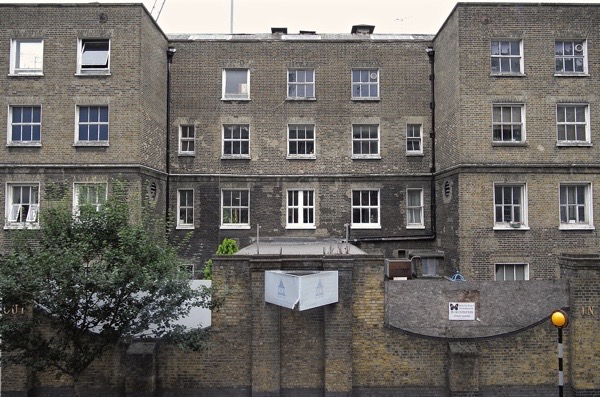
The Workhouse
The Workhouse was built in the seventeen-seventies as an ‘H’ shaped block fronting onto Cleveland St with wings at front and rear. Originally the poorhouse for the parish of Covent Garden, it became the Strand Union Workhouse in the eighteen-thirties, serving a union of parishes in the Strand district under the hated New Poor Law. Charles Dickens was aware of the changing regime and wrote about it in Oliver Twist. As a closed institution, the wider public had only fearful knowledge of what went on inside. For the next forty years, Cleveland St Workhouse was among the worst of London workhouses, ameliorated only in the eighteen-fifties by the kindly ministrations of Dr Joseph Rogers, and the flowers and prayers of Miss Louisa Twining, founder of the Workhouse Visiting movement.
When the Strand Union Workhouse was investigated by The Lancet Sanitary Commission in the eighteen-sixties, they found more than five hundred people were sharing around three hundred beds, crammed together so tightly that access was often only from the foot of each bed. There was one medic, and no paid or trained nurses and over 90% of the inmates were sick, dying, disabled, infirm, elderly, mentally handicapped, nursing mothers or children. Fewer than 10% of the inhabitants were ‘able-bodied’ and it was they who nursed everybody else. The food was poor, cleanliness objectionable, latrines insanitary, and so on.
The Plans
The current developer’s plans for the Workhouse site – which they call the “Middlesex Hospital Annex ” – make little improvement on their last attempt, an abominable design with two new blocks covered in a bright green cladding flanking the eighteenth century workhouse. Only a few concessions have been granted: the frontages of the Victorian Masters’ and Matrons’ houses, which have stood either side of the main Workhouse frontage for around one hundred and fifty years, are to remain. Also a portion of the elegant front wall built in the early twentieth century will survive, though unfortunately in an asymmetric form. Anyone looking at these new plans would be forgiven for thinking it is the same scheme in a new guise.
These plans reduce the Workhouse building to a shell, destroying its interior, its roof, its back wall, every window and everything attached to it. The plan proposes the entire destruction of the rest of the site, including the two fine Nightingale Pavilions attached to the rear of the Workhouse, all the hospital staff accommodation, the mortuary and its chapel. All this for a generic eight storey block.
The Singing Soil
The developers deflect any criticism of their current plans from historians by employing an ex-employee of English Heritage to write a report emphasising the lack of destructive potential in their projected ‘development.’ So it is no surprise to read that, apparently, nothing on the site is worth saving. By suggesting that burials were confined to a small area on the north side, the report also argues that few remain. Yet we know burials were made all over the site. Human remains have been encountered whenever building work has been undertaken and, in the nineteenth century, Dr Rogers described deep graves going down more than twenty feet.
The precise dimensions of the Workhouse site are known from a vellum map dated 1790. It records the area dedicated to the eternal rest of the dead at an outdoor service of consecration led by the Anglican Bishop of London, Beilby Porteous, who promised the parishioners of Covent Garden buried there they would be free from all indignity “for ever.” Unfortunately, this sacred map and the promise it contains have been treated by the developer’s heritage consultant as if it were of no more significance than an estate agent’s record of property ownership.
Since the publication of my piece on the Italian Boy in these pages, the ominous silence concerning the presence of the dead has been addressed by an archaeological report which appeared on the Camden Planning website. Rather than entertain the likelihood that this graveyard offers a rare opportunity for archaeologists to excavate an eighteenth century extra-mural parish burial ground for the poor, this report suggests that if the remains buried there are found to be disarticulated (ie jumbled) then it is suggested that a ‘watching brief’ would be a sufficient role for archaeologists. Consequently, despite Bishop Beilby’s promise, merely an archaeological ‘oversight’ of the excavation of the dead is intended and the de-sacralizing of this consecrated site by means of a contractor’s JCB is contemplated with disquieting equanimity.
Some might suggest this treatment is entirely consistent with a burial ground run for decades by Mr Bumble and his kind, that was situated conveniently opposite a medical school connected to the Workhouse by a tunnel under the road. The glazed pavers which remain to this day in the pavement outside the Master’s house reveal the route. The 1832 Anatomy Act, directing that any pauper might be dissected before burial, is apparently of no material consideration in this case. Those archaeological experts employed by the developer appear blissfully unaware of the sardonic moment in Oliver Twist when the parish undertaker offers Mr Bumble a pinch of snuff from his own patent-coffin-shaped snuffbox.
The Nightingale Pavilions
Most curiously, no-one within the developer’s extensive payroll seems to have made any serious effort to examine the history of the Nightingale Pavilions which replaced the rear wings of the Workhouse, preserving the building’s original footprint on a larger scale. Yet they carry an important history, even if in the current plans they are to be obliterated.
The pair of Nightingale Pavilions are good quality buildings which have plenty of life in them yet. Each contains three floors of Nightingale wards, their solid walls punctuated by tall windows and sanitation towers placed midway along their external flanks. Between these Pavilions lies an unexpectedly large open space which was the principal part of the graveyard, probably still largely undisturbed and currently occupied by portacabins and glazed structures with shallow foundations. The Pavilions are robustly built of good brick, with contrasting darker red-brick string-courses and neatly matching window arches in the characteristic Victorian manner.
Although the developer’s heritage consultant insists that the Pavilion wards must not be referred to as “Nightingale” wards and denies strenuously that Florence Nightingale had anything to do with them, he is mistaken. This fine pair of structures are most certainly Nightingale Pavilions containing Nightingale Wards and they deserve to be accurately recognised as unique examples of such before Camden Council’s Planning Committee contemplates their obliteration.
These buildings can legitimately be called “Nightingale Pavilion Wards” because they were built to accord with Florence Nightingale’s specifications by an architect known to her and she made her own personal proposals for their use.
Florence Nightingale & the Transformation of Cleveland St
To understand Florence Nightingale’s involvement with Cleveland St, we have to look back to the eighteen-fifties, which saw the Great Exhibition, a cholera epidemic, and war in the Crimea. The first of these provided a national self-image of social cohesion and peaceful co-existence after the unsuccessful push for greater democracy by the Chartists and the disruptive impact of the revolutions across Europe in 1848. The Crimean War was a watershed in the home territory – the sheer incompetence of the army to provide for its own sick and wounded exposed repugnant attitudes towards ordinary soldiery. Lord William Paulet told Florence Nightingale that she was ‘pampering the brutes’ and she never forgot it.
Florence Nightingale was a deeply religious woman who pondered long and hard upon the nature of Charity and why God had caused Jesus Christ to be born into the working classes. For her, every life was sacred and, although she had been groomed for a high society marriage, she chose a different destiny for herself. Successfully battling her family’s opposition to becoming a nurse, she became superintendent of a hospital for ladies in Harley St. During the notorious John Snow cholera epidemic of August and September 1854, the huge influx of desperately ill and dying poor to the hospitals became the catalyst for her to leave the Harley St ladies’ institution in the hands of her well-trained subordinates in order to nurse those in far greater need – cholera patients at the Middlesex Hospital.
She found this experience of nursing in the Middlesex Hospital invaluable in her later work on hospital design. Not long afterwards, Florence Nightingale was called to serve in the Crimea and she returned from this searing experience with a determination not to forget the thousands of servicemen who had needlessly died there, not of wounds but of infections and epidemic diseases. She was intolerant of official obfuscation after witnessing the sanitary improvements at Scutari which had saved so many lives and she fought for the rest of her life for improvements in hospital provision and nursing care. Her designs for and advocacy of Pavilion plan hospitals emerged directly from her personal nursing experience.
After her return from the War, she wrote three important editorials in the most influential architectural journal of the day, The Builder. Initially a critique of a poorly designed new military hospital at Netley, Florence Nightingale laid out the arguments for improved hospital design. These anonymously published editorials were reprinted in her Notes on Hospitals, which famously opens with the words: ‘The first requirement in a hospital is that it should do the sick no harm’. This book consolidated her ideas about hospitals organised to promote health, rather than merely to contain the sick. She realised many hospitals fostered illness and death among patients and staff. Alongside good diet and professional nursing, her fundamental lessons for hospital design were ventilation, cleanliness, light, air and space for every patient, including ventilated plumbing facilities in every ward. Tall windows were key to her vision, as they provided both good light and high-level ventilation, and served to space beds apart, providing access for nursing care, and helping to prevent the spread of disease. These ideas were enormously influential. Architects scrambled to have their work endorsed by her and charitable hospitals were swift to adopt her Pavilions in their plans.
Next, Florence Nightingale turned her sights on the moribund Poor Law workhouse system. To her, a patient was anyone requiring nursing care and she argued that if the sick and children were taken out of the workhouses, the Poor Law could operate better for those for whom it was intended – the healthy poor, which was less than 10% of the total workhouse population.
Her ideas and practical recommendations for hospitals assisted the efforts of workhouse reformers, such as those of the Cleveland St doctor Dr Joseph Rogers, the Lancet Sanitary Commission, and the nationwide workhouse-visiting pioneer Louisa Twining, whose work began at Cleveland St. Eventually, administration of the Poor Law was transferred to a new body, the Local Government Board and, once the separation of the sick from the healthy became official policy, a new building programme began. The poor from Cleveland St were transferred to a new building at Edmonton and the Workhouse itself upgraded with the addition of two new Nightingale Pavilions.
The architect of these Nightingale Pavilion Wards was John Giles, who corresponded with Florence Nightingale concerning his designs for the new Poor Law Infirmary at Highgate, which he built according to her principles. He had read her Notes on Hospitals and letters survive which confirm that he invited her to look over his drawings and suggest improvements.
Yet Florence Nightingale had plans of her own for the upgraded Cleveland St Workhouse. Using the Nightingale Fund, collected for her own use after the Crimean War, she had established a training school for nurses at the new St Thomas’s Hospital and planned to do the same for workhouse nursing at Cleveland St. She and Sir Sidney Waterlow conferred over the appointment of a Nightingale-trained nurse as Matron of the new Asylum, which would have enabled the establishment of a Nightingale training school at Cleveland St. Unfortunately, the parish Guardians swiftly appointed a non-Nightingale nurse to avoid any challenge to their governance.
Thus Florence Nightingale’s association with Cleveland St and its Nightingale Pavilion Wards is five-fold:
1. Her Builder editorials, consolidated in Notes on Hospitals, laid out the fundamental design criteria for Pavilion wings and wards, to which those in Cleveland St conform.
2. Florence Nightingale was a key figure in the post-Crimean War Poor Law amelioration movement, which emerged from Cleveland St Workhouse, led by its Medical Officer Dr Joseph Rogers and by Miss Louisa Twining.
3. Florence Nightingale’s argument that class should not be a consideration in the care of the sick brought about the separation of the infirm and dying from the healthy in workhouses, which led directly to the creation of the Central London Sick Asylum in Cleveland St.
4. The architect of the new Pavilion wings, John Giles, knew Florence Nightingale’s Notes on Hospitals and conferred directly with her concerning the design of Pavilion Wards.
5. Florence Nightingale had well-developed plans for a nursing school in the new infirmary at Cleveland St, but was stymied by what she called “Poor Law Mindedness.”
The Nightingale Pavilions are perhaps unique in England in being attached to an eighteenth century poorhouse. Historic England know of no other instance while Jeremy Taylor, leading historian of Pavilion Plan hospitals, thinks the Cleveland St assemblage is highly unusual and Peter Higginbotham, the author of the workhouses.org believes its configuration is unique.
The Euston Arch and St Pancras Station are precedents in this case – two Camden buildings, the one controversially destroyed and the other preserved for magnificent new use. These Nightingale Pavilion Wards are an important monument to Florence Nightingale and to what she called her ‘children’ – the thousands of working-class soldiers who died needlessly in the Crimea. These buildings deserve to be preserved as witness to this history and re-used to provide much-needed good quality housing for Londoners.
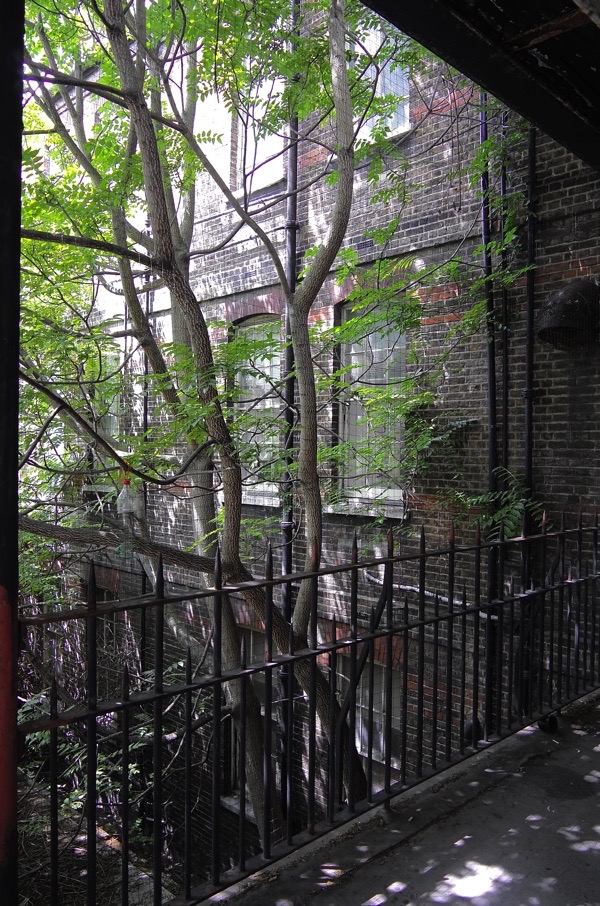
Nightingale Pavilion Ward
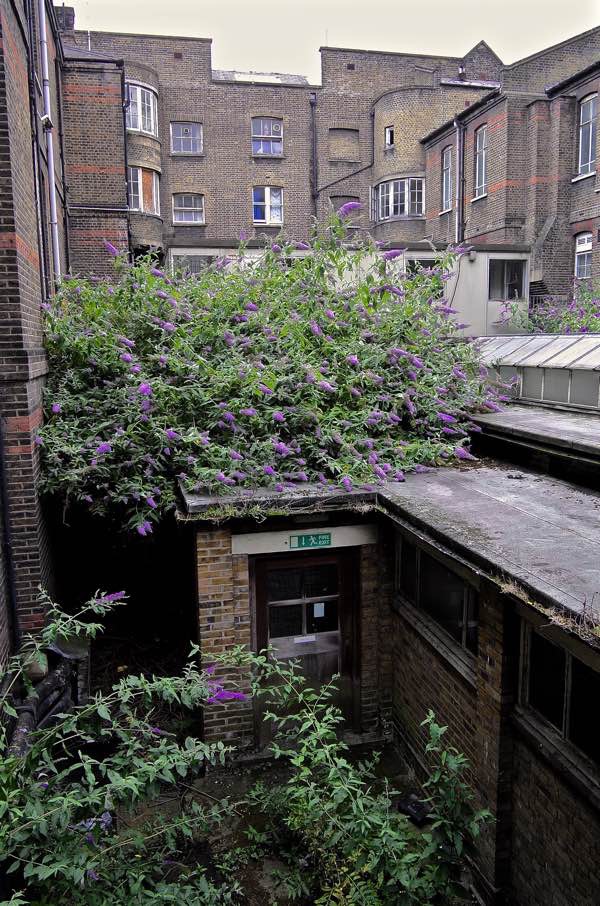
Rear view of the Workhouse with Nightingale Pavilion wings on either side
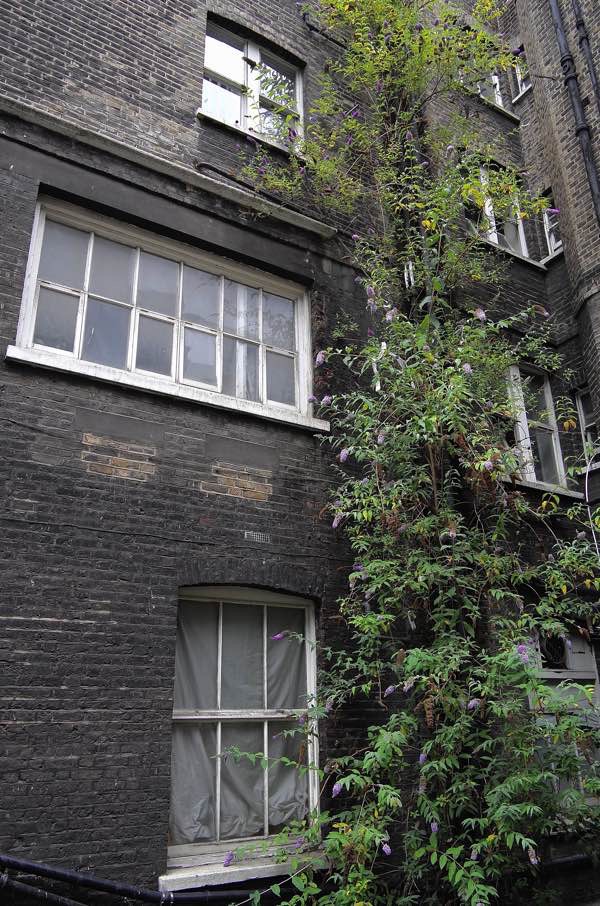
Windows on the south wing of the Workhouse
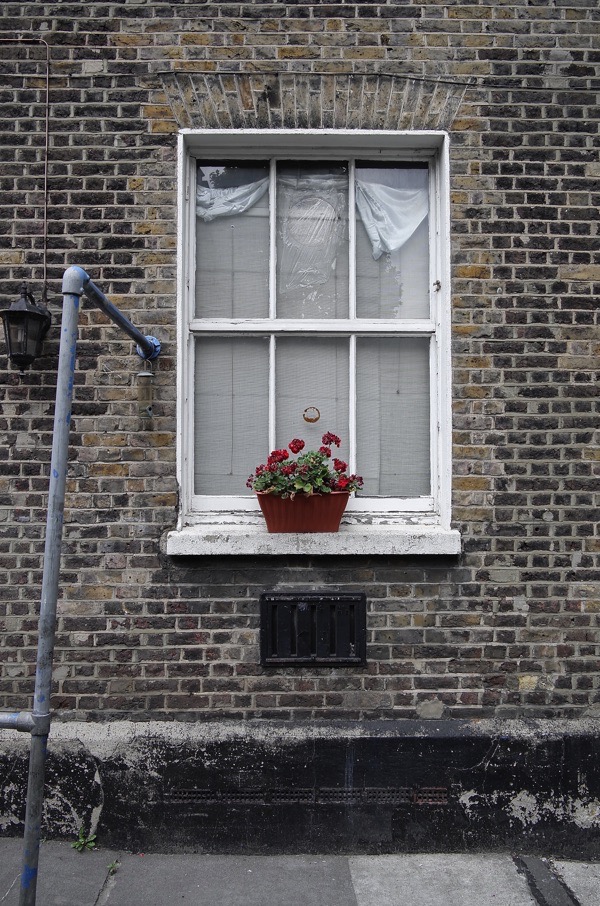
Window on the front of the Workhouse
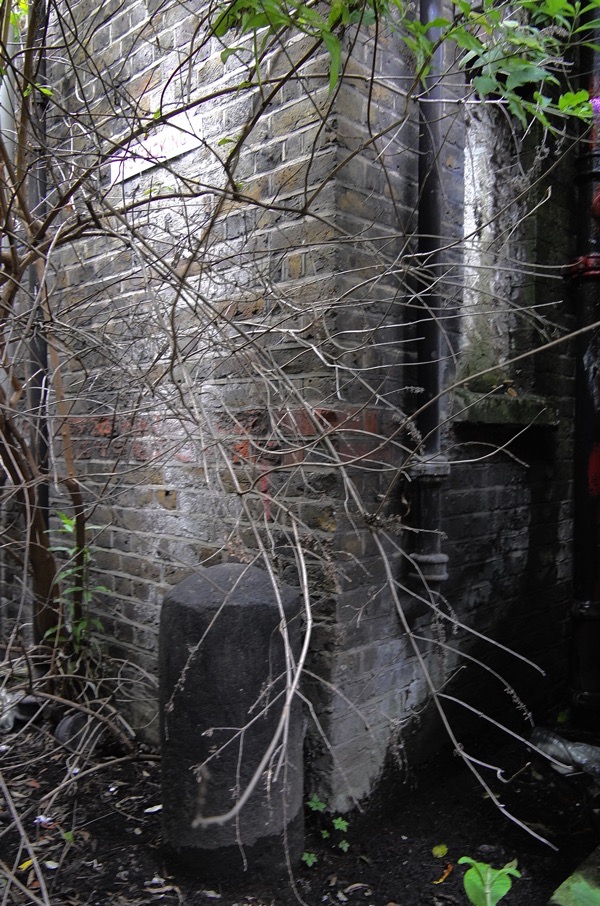
Stone bollard on the side of the Workhouse
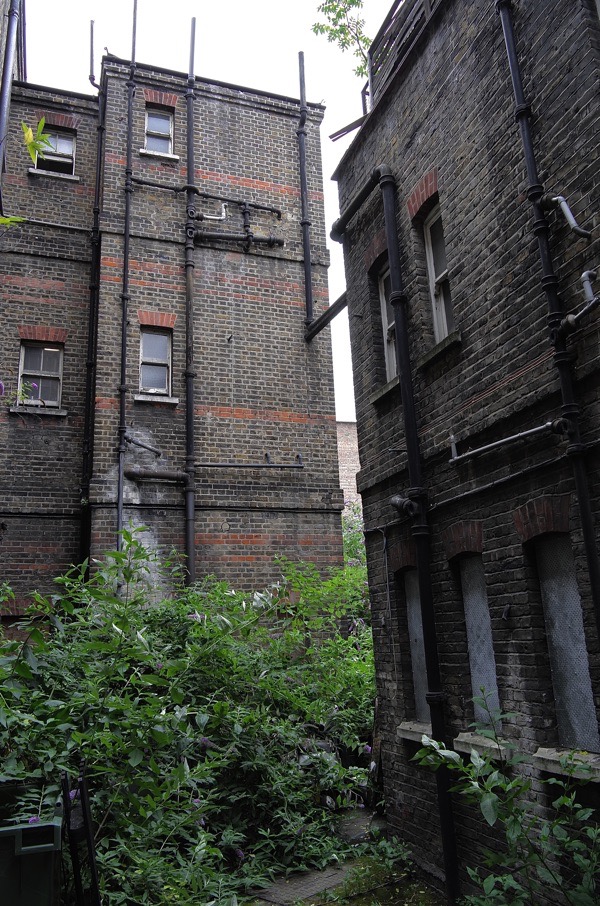
Sanitation tower attached to the south Nightingale Pavilion
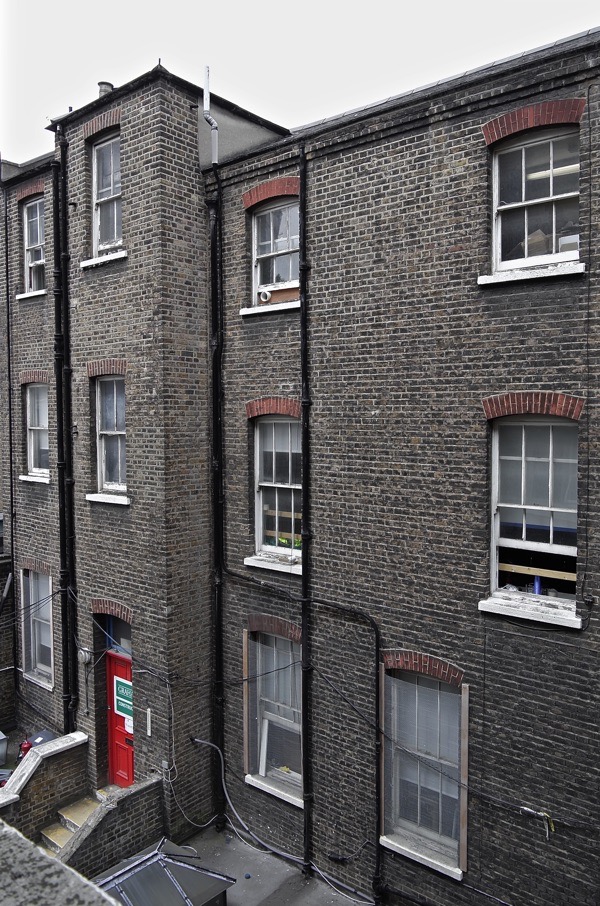
The Matrons’ House
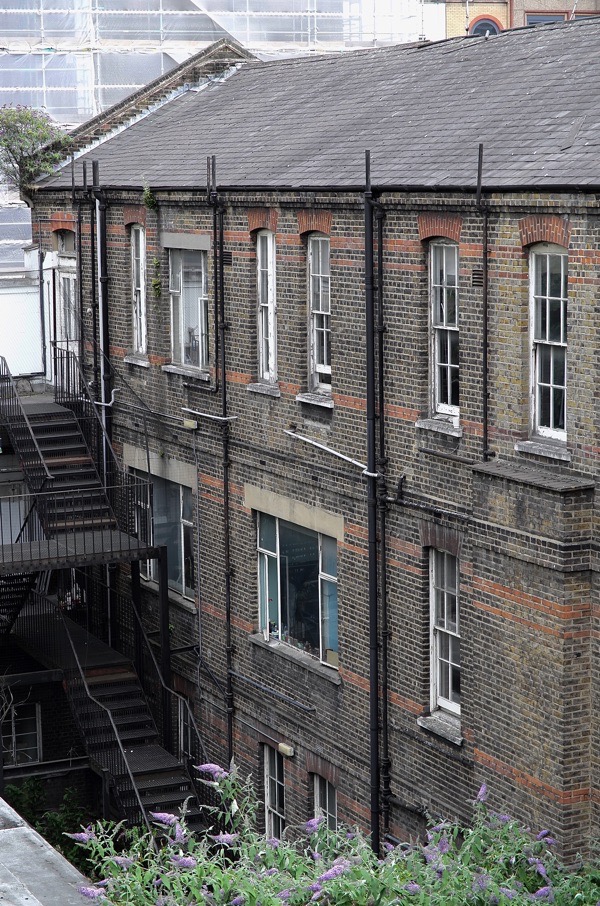
Eastern extent of the south Nightingale Pavilion
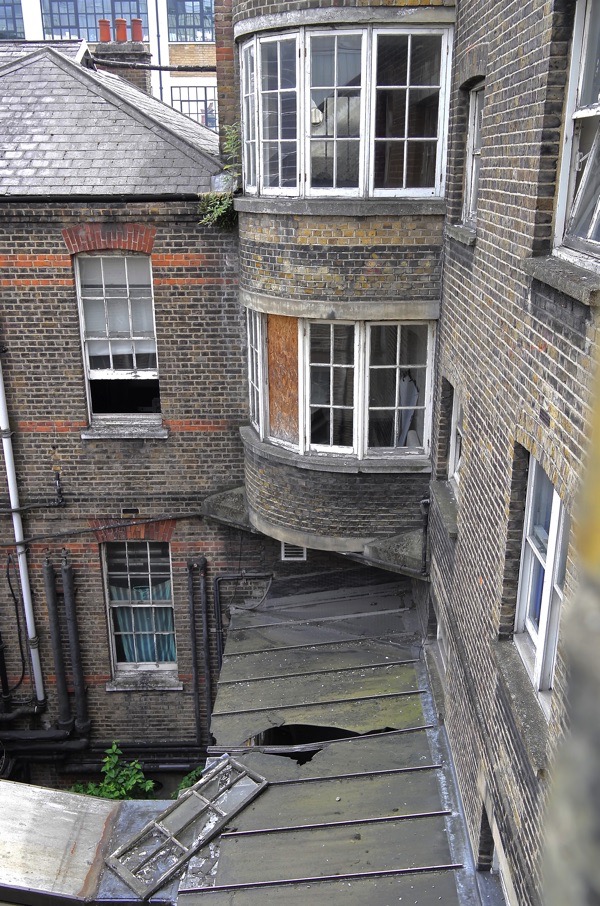
Bow windows where the Nightingale Pavilions meet the Workhouse building
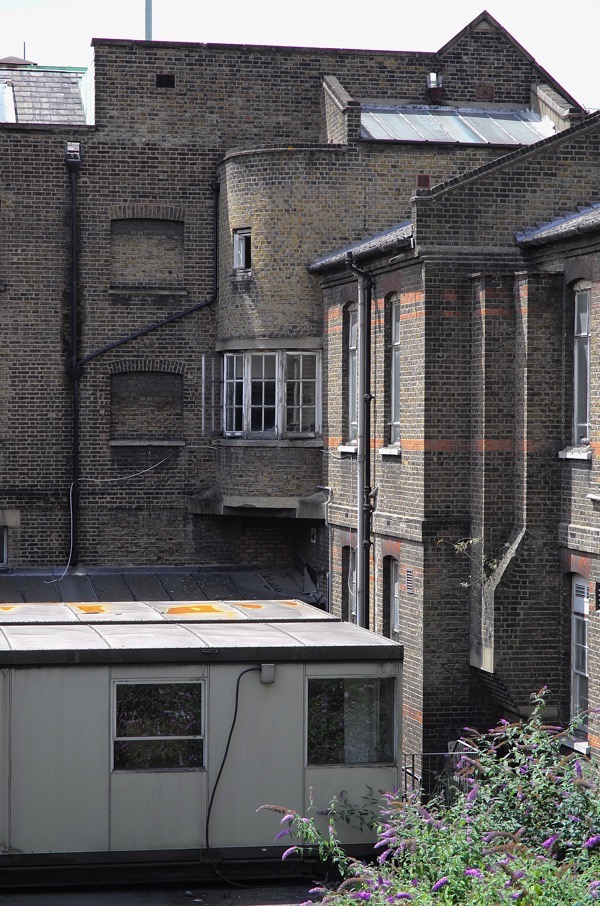
Architectural integration of the Workhouse and the north Nightingale Pavilion
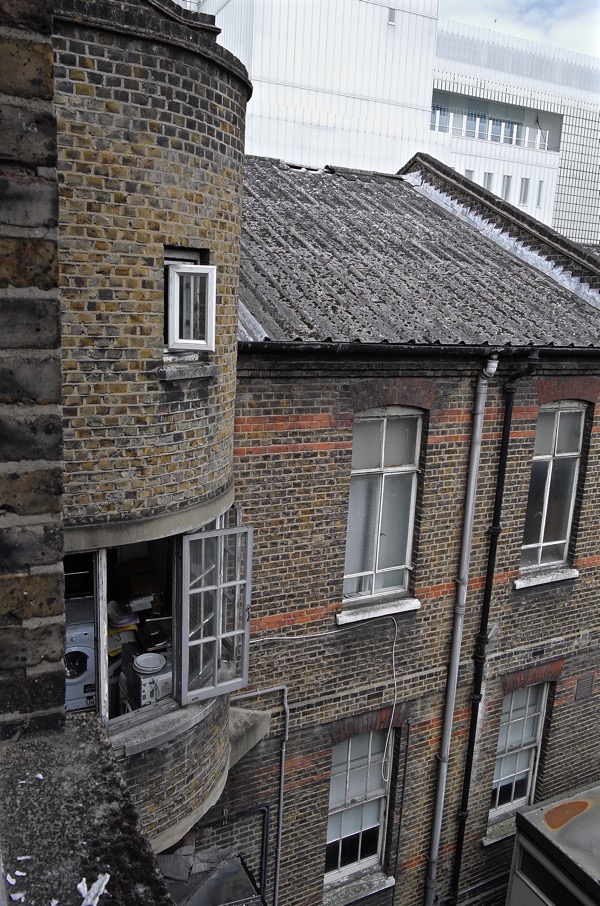
Looking from the Workhouse towards the north Nightingale Pavilion ward
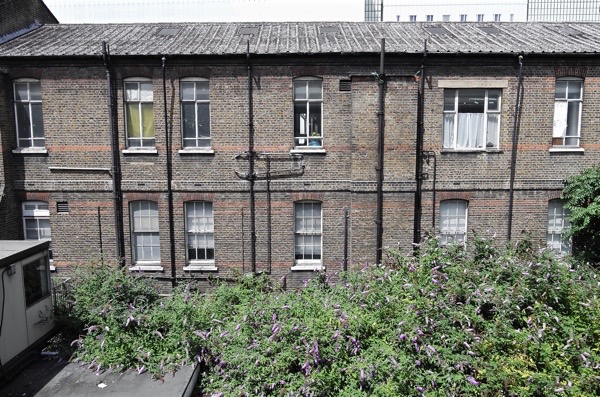
Elevation of the north Nightingale Pavilion
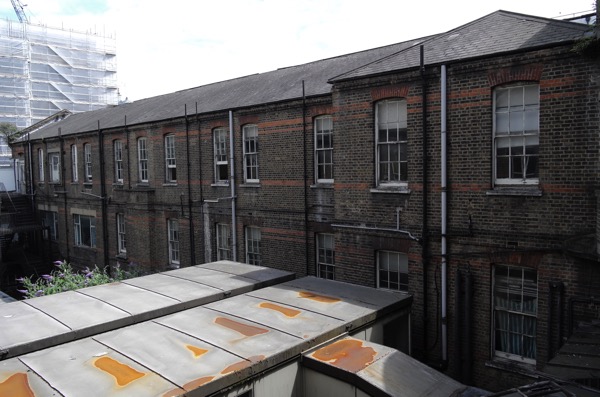
The south Nightingale Pavilion
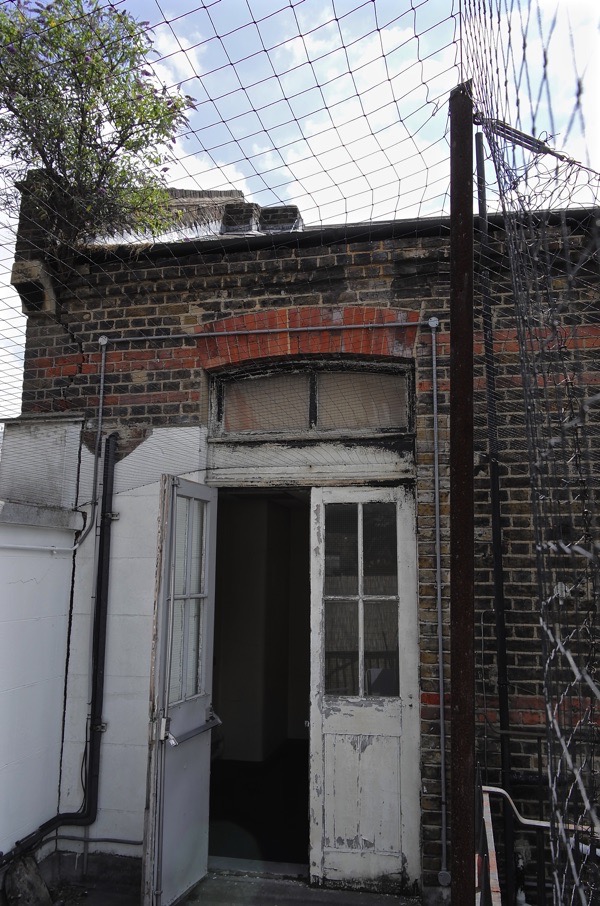
End wall of south Nightingale Pavilion
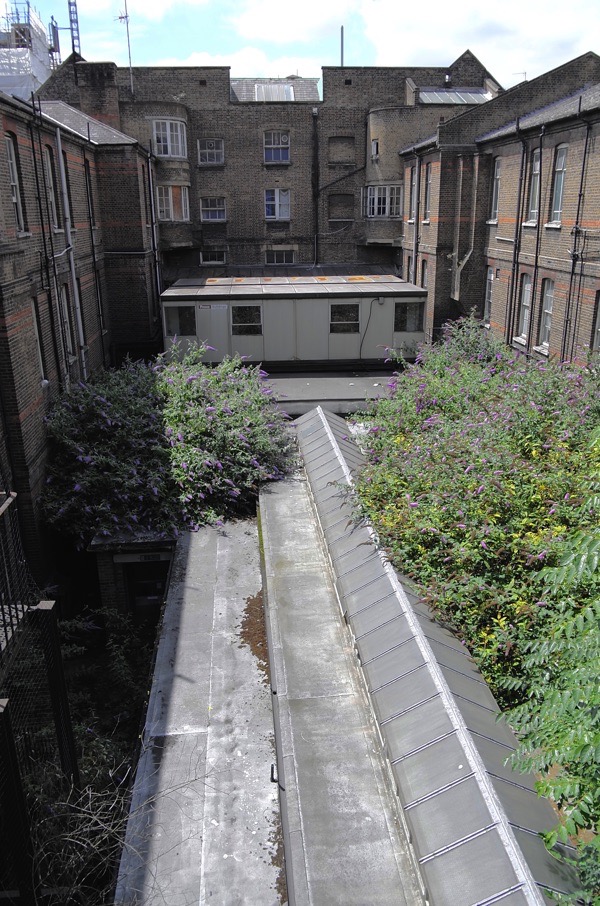
Looking back towards the Workhouse across the burial ground occupied by one storey modern buildings
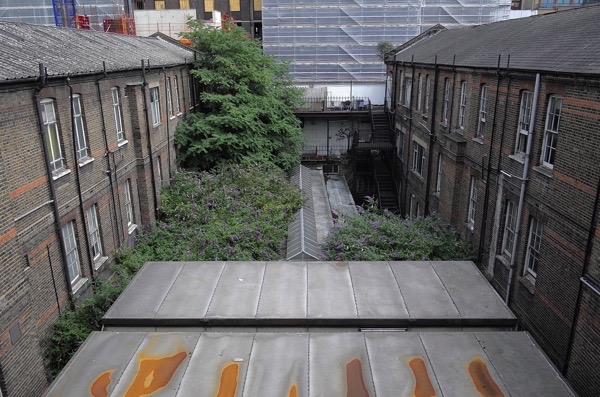
View east from the Workhouse
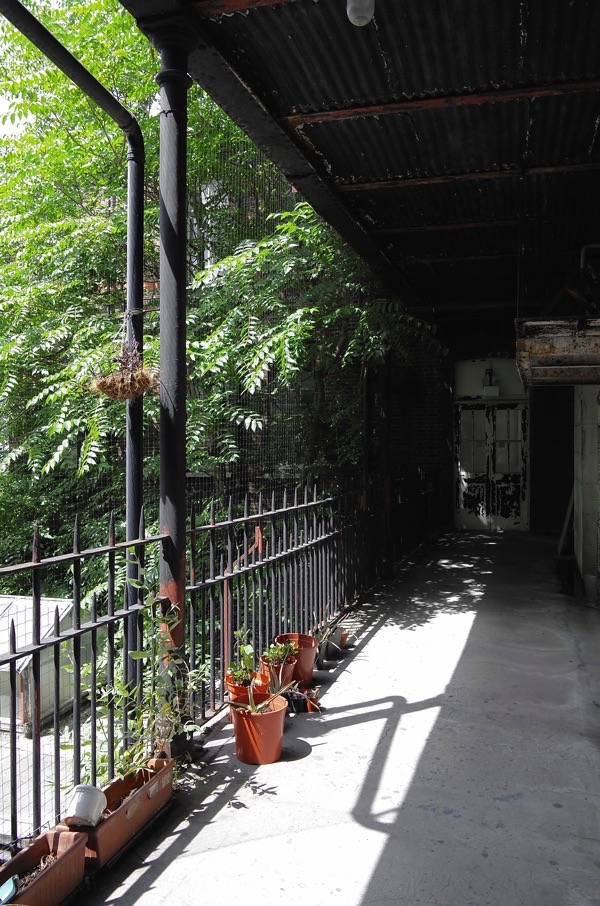
Gallery linking the Nightingale Pavilions
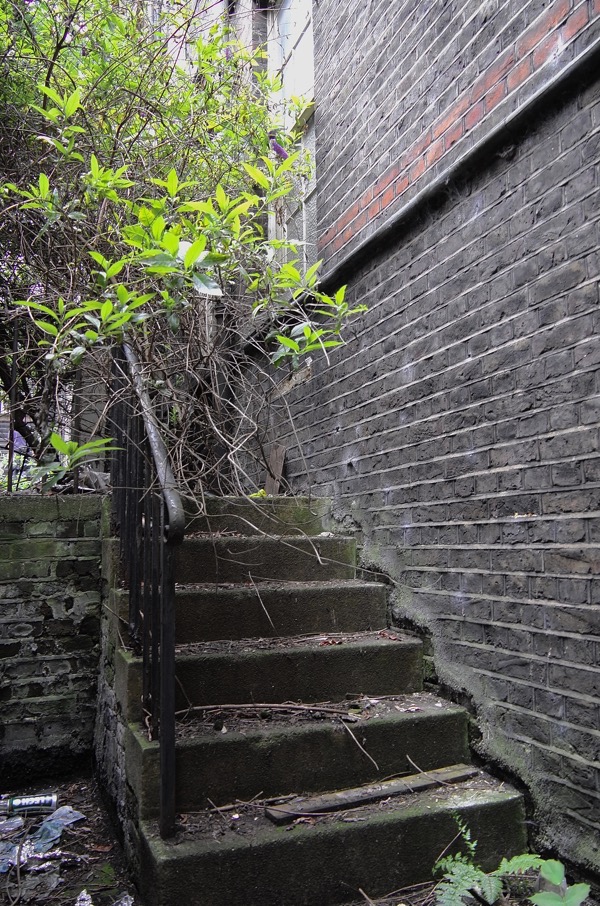
Staircase at rear of the Workhouse
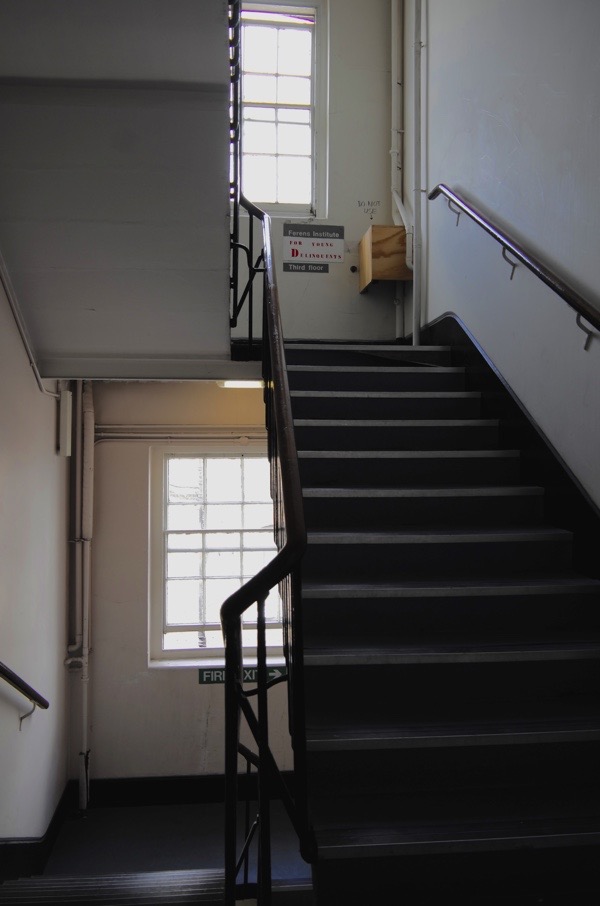
Eighteenth century staircase in the Workhouse
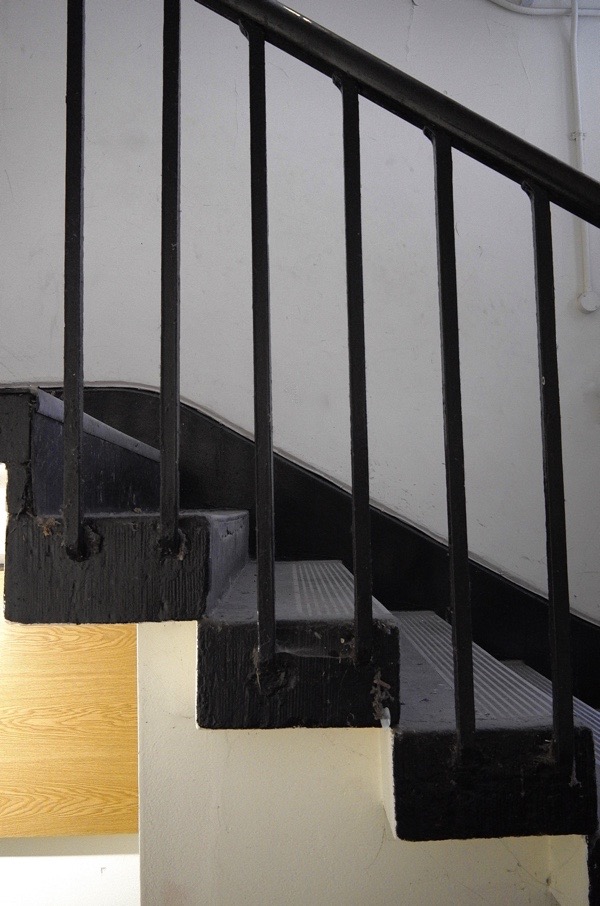
Cantilevered stone steps
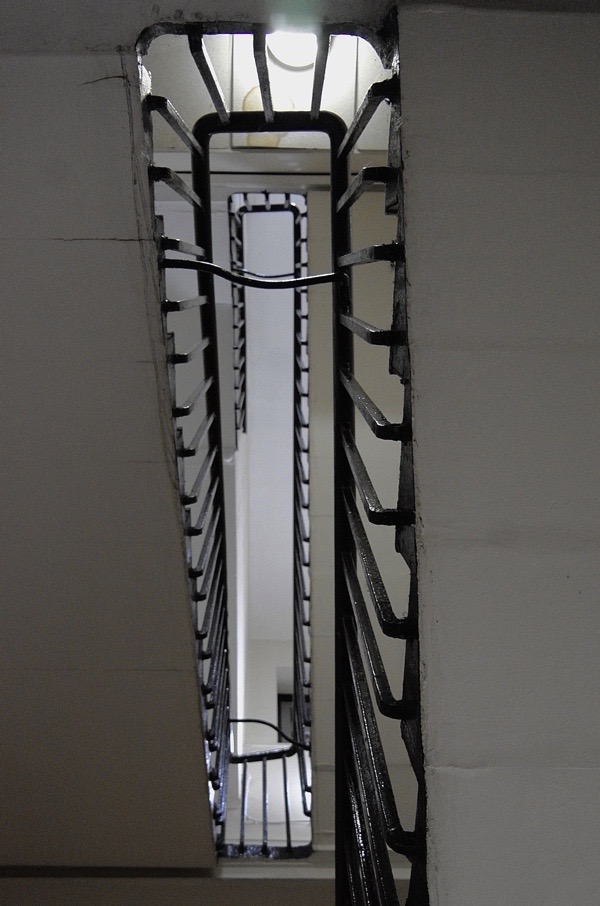
Looking up the stairwell
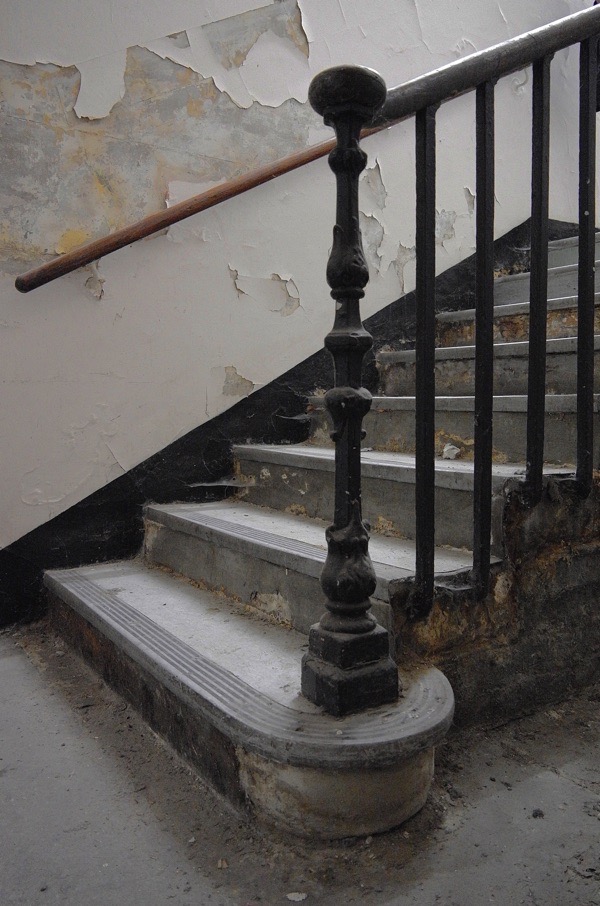
Decorative cast iron newel post
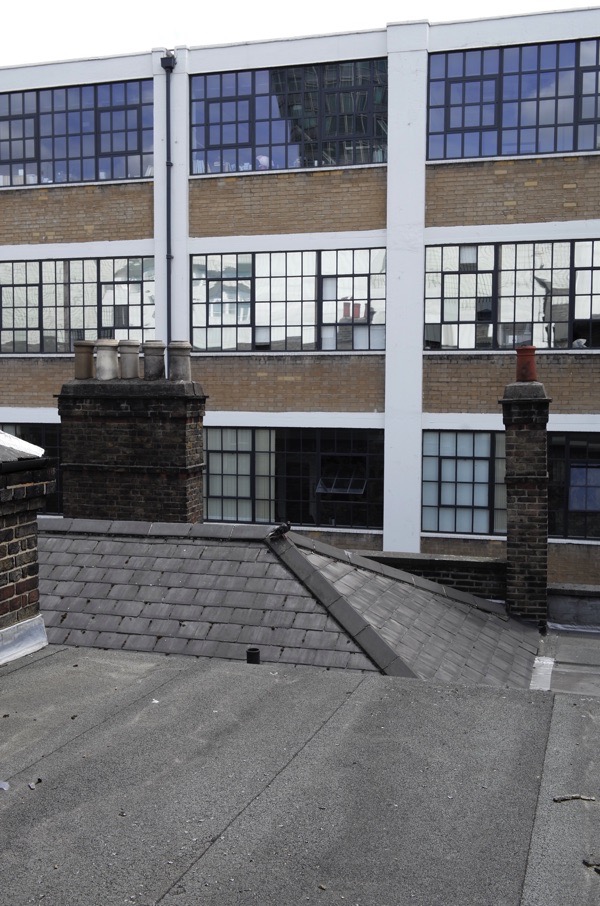
Chimney pot details
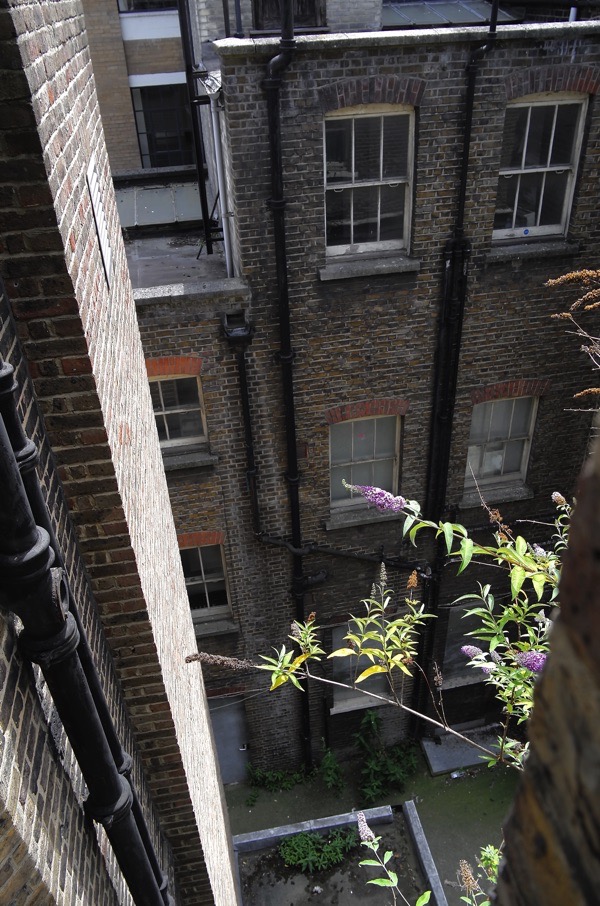
Sanitary tower attached to the Workhouse
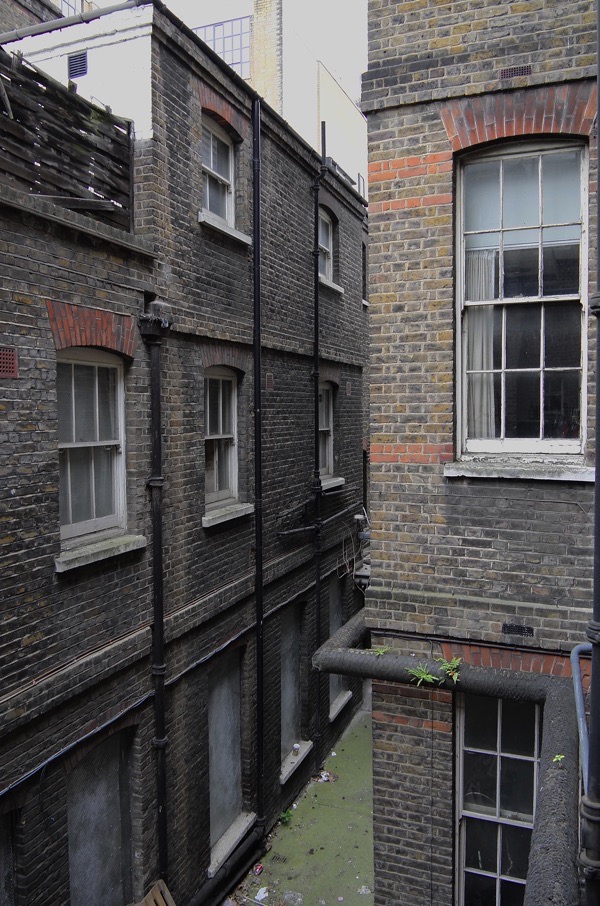
Elevation of the Masters’ House
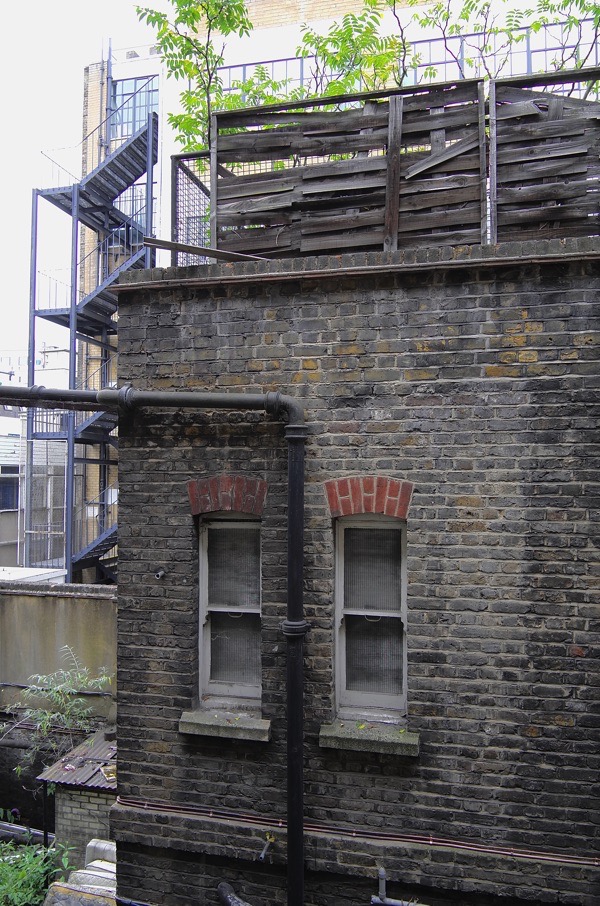
Detail of the Masters’ House
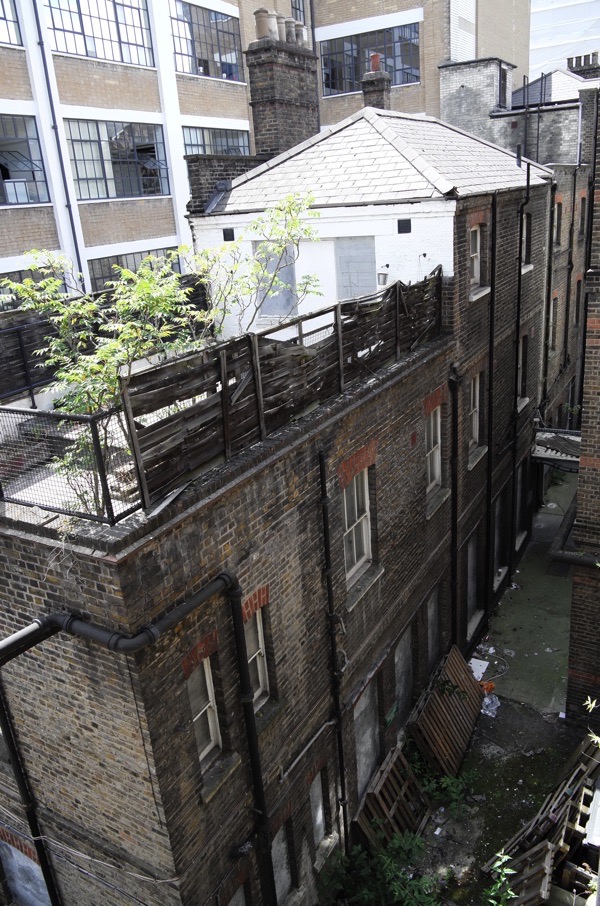
The Masters’ House
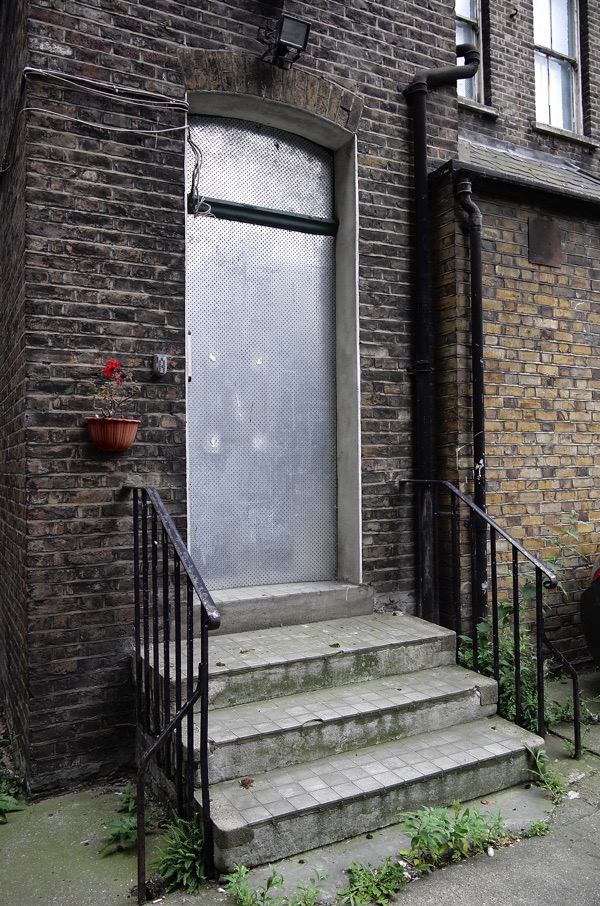
Entrance to the Masters’ House
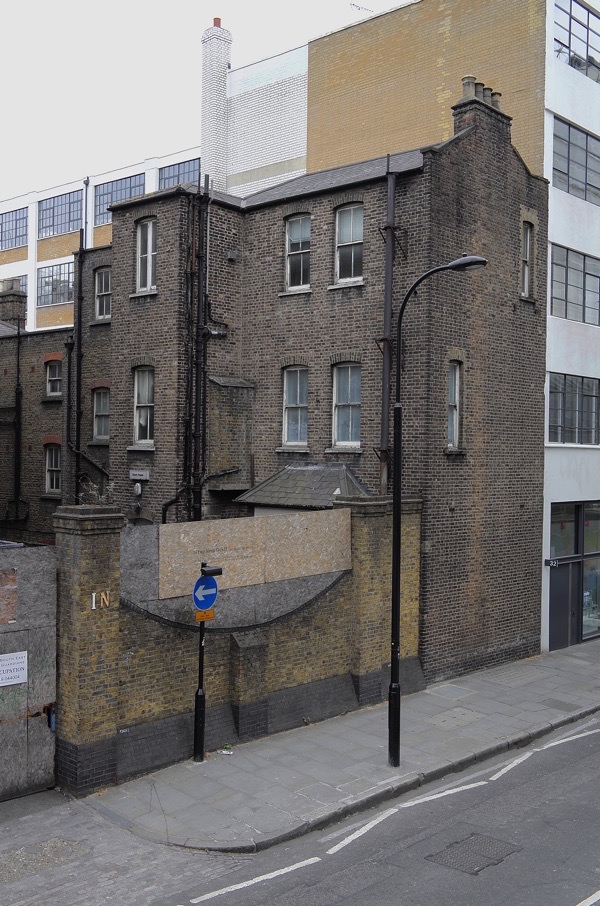
The Masters’ House seen from Cleveland St with the glass pavers just visible in the pavement beneath the end wall, indicating the tunnel used for carting the corpses of paupers under the road to the medical school opposite for dissection
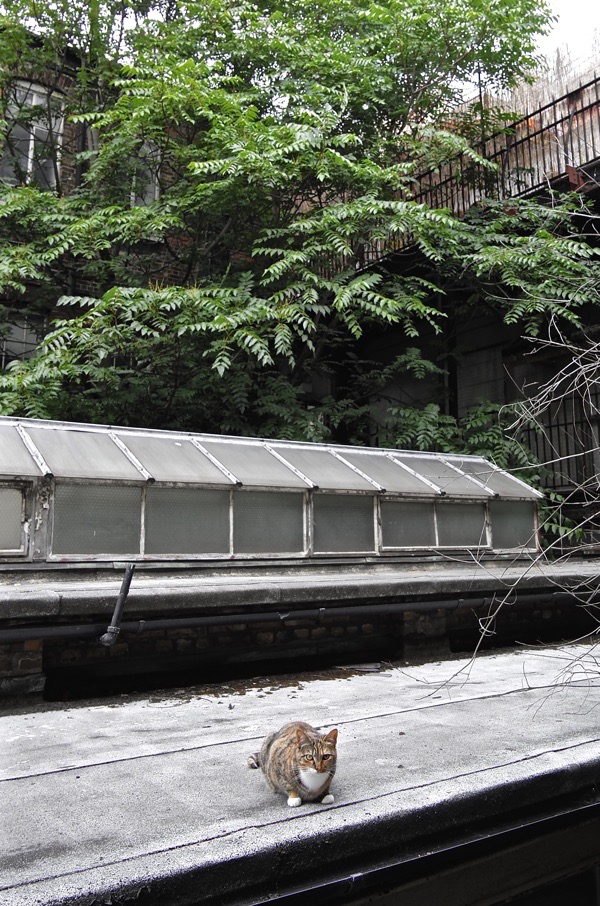
The presiding spirit of Cleveland St
You may also like to read
The Stranger’s Guide To London
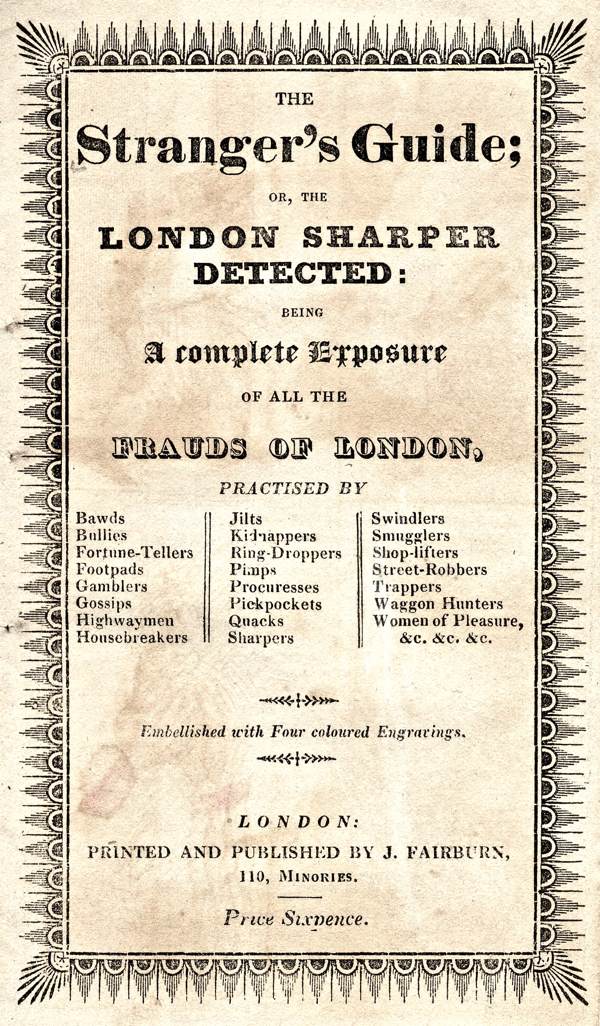
Any readers from out of town who are preparing a visit to the capital this summer might like to read these excerpts from The Stranger’s Guide, exposing all the frauds of London, that I found in the archive at the Bishopsgate Institute.
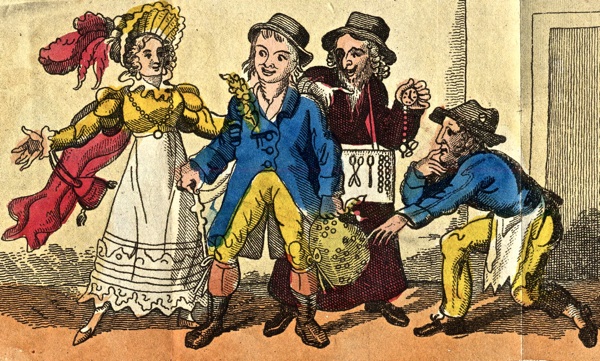
The Countryman arrived in London.
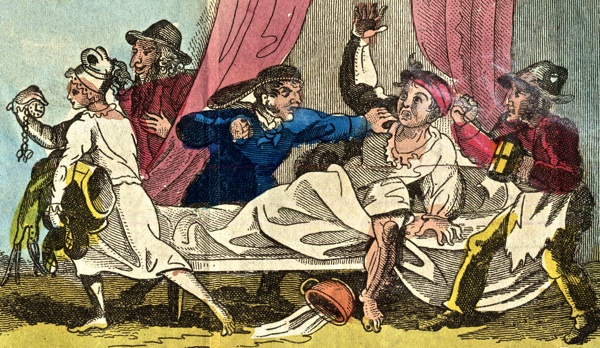
Beaten by bullies & robbed.
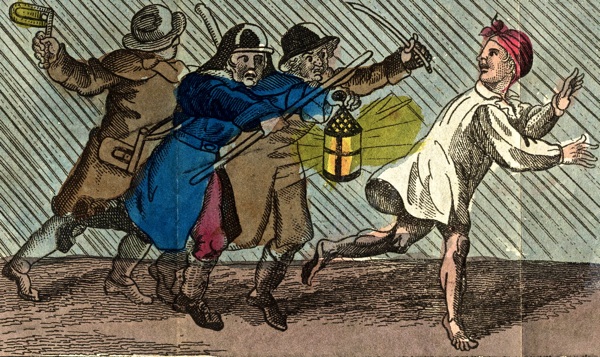
Escaped & chased by watchmen.
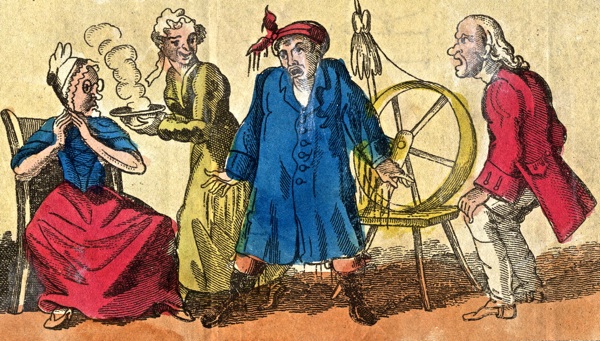
Returned home gives a queer account of London.
BAWDS – Beware, young women, of those who, without any knowledge, pretend to be acquainted with you, your families and friends. This is an old bait to entice young women to their den to be devoured by the ravenous wolves to whom the bawd is a provider. Beware, ye unthinking young men, of receiving letters of assignation to meet at her house, for such letters are calculated to ensnare you and bring you to misery and destroy your health, fame and fortune. Avoid, ye countrymen and women, the pretended friendships of strangers that welcome you to town upon the arrival of the coach and that accost you at the inns, as they generally attend there for that purpose. If you once permit them to converse with you, they will by their artful speeches, so far ingratiate themselves into your good graces as the engage your belief, get the better of your resolutions and at length bring you, by listening to their stories, to ruin and destruction.
BULLIES – Are dependent upon bawds & whores, sometimes the bully pretends to be the husband of the whore, whose bread he eats, whose quarrel he fights, and at whose call he is ready to do as commanded. It is very common for these women to bring home a gentleman and on entering the house ask the maid in a whisper if her master is at home. The maid according to former instructions replies, “No, he is gone out of town and will not return until tomorrow.” Upon which the gentleman is invited in and entertained with a story of the bully’s jealousy and the whore’s constancy. When the gentleman expresses a desire to leave and the bill being called for, he finds fault with the change, then the maid enters and says her master is below and immediately the bully appears and demands to know the gentleman’s business there – if means to debauch his wife? He then blusters and talks about bringing an action but at length is pacified by the bill being discharged.
DUFFERS – These are a set of men that play upon the credulity of both sexes, by plying at the corner of streets, courts and alleys, their contraband wares, which generally consist of silk handkerchiefs made in Spitalfields, remnants of silk purchased at the piece brokers, which they tell you are true India, and stockings from Rag Fair or Field Lane, sometimes stolen, sometimes bought at very low prices, which they declare are just smuggled in from France, and therefore can afford to give you a bargain, if you will become the purchaser. On the other hand, should you not purchase, you will get abused and your pocket picked, at which they are very dexterous. Or, should you give them money to change, they tell you they will step to the public house to get it changed and come again in an instant. Then you see them enter the house and discover later, upon enquiry, they have escaped by the back door, to your great loss and mortification.
FORTUNE TELLERS & CONJURERS – Almost all countries abound with these vermin. In London, we have several very famous in the Astrological Science, who pretend to a knowledge of future events by observations of the celestial signs of the zodiac. The better to carry on their delusions, they can tell you whether your life will be happy or miserable, rich or poor, fruitful or barren, and thousand incidents to please your fancy and raise your curiosity, insinuating at the same time (if they think you have money about you) that much good awaits you, therefore they must have a greater price for their intelligence. Who would not give or guinea, nay two – say they for the completion of their wishes, be it wisdom or wealth, rather than a half a crown to learn that they might live in folly and poverty the rest of their lives?
FOOTPADS – Are so numerous and so often described in the public papers that little new light can be thrown upon them and their practices. Daring insolence and known-down arguments are generally their first salute, after which they rifle your pockets and, if you have but little of value about you, they often maim or violently bruise you for want of that you are not in possession of. These shocking acts of these rapacious sons of plunder call for the interference of the magistracy to put a stop to their daring and consummate impudence as they exhibit, in and about the metropolis, skulking in bye-lanes, desolate places, hedges and commons, in order to waylay the unsuspecting stranger or countryman.
GAMBLERS – There are so many methods of gambling as there are trades and they move in so many spheres, from the most noble dukes and duchesses to the most abandoned chimney-sweeper, pretenders to honour and honesty, versed in various tricks and arts, by which many among the nobility and the gentry have squandered away their fortunes for the occupation of a Complete Gambler or in the true sense of the word, an Expert Gambler. The better to put you on guard against this villainy, I will mention several of the most fashionable and alluring passtimes at which various methods of deluding and cheating are practiced with some success, viz. gaming houses and horse races, cock-fighting, bowling, billiards, tennis, pharo, rouge et noir, hazard &c. together with routs, assemblies, masquerades and concerts, of a particular or private nature. In the latter of these, you will find notorious gamblers of the female sex, who deal in art and deception, as well as some more notorious male cheats who barter one commodity for another without a reference of credit or making it a debt of honour.
HANGERS-ON – These are a set of men of an indolent life, who rather than labour to gain a livelihood, will submit to any meanness that they may eat the bread of idleness. There are many kinds, some pretending to understand the sciences, others the arts, some set up for authors, others wits and the like. Hangers-on will eat or drink with you wherever you stay but will never offer to pay a farthing, however in lieu thereof, they will tell you an indecent story or sing you the latest lewd song. These you will easily find out and may easily get rid of by not treating or encouraging them upon your arrival.
HIGHWAYMEN – Are desperate and resolute persons who having spent their patrimony or lavished their substance upon whores and gamesters, take to the road, in order to retrieve their broken fortunes and either recoup them by meeting with good booty or end their lives in Newgate. The best means to avoid highwaymen is not to travel by night and in be cautious in displaying money, banknotes or other valuables at the inns you put up at, and be careful what company you join for fear they learn of whither you are going and for what purpose – if to pay or receive money, they will almost certainly waylay and rob, if not murder you.
JILTS – Are ladies of easy virtue, who, through an hypocritical sanctity of manners, and pretensions to virtue and religion, draw the countryman and inexperienced cit into their clutches. Of all whores, the jilt is the most to be avoided – for knowing more than others, she is capable of doing more mischief.
KIDNAPPERS or CRIMPS – A set of men of abandoned principles, who having lavished away their fortunes enter into the pay of the East India Company, in order to recruit their army – and, in time of war, when a guinea or two is advertised to be given to any person that brings a proper man, of five feet eight or nine inches high, these kidnappers lie in wait in different places of rendezvous, in order to entrap men for money.
RING-DROPPERS – These are a set of cheats, who frequently cheat simple people, both from the country and in London, out of their money, but most commonly practice their villainous arts upon young women. Their method is to drop a ring just before such persons come up, when they accost them thus, “Young woman, I have found a ring and I believe it is gold for it has a stamp upon it.” Immediately, an accomplice joins in, who being asked the question replies, “It is gold.” “Well” says the formers, “As this young woman saw me pick it up, she has the right to half of it.” As it often happens that the young person has but a few shillings in her pocket, the dropper says, “If you have a mind for the ring, you shall have it for what you have got in your pocket and whatever else you can give me,” which sometimes turns out to be a good handkerchief, cloak or other article. The deluded creature then shows the ring to another person in the street who informs her she is cheated by sharpers and the ring is not worth tuppence, being only brass gilt with a false stamp put on the deceive the unwary.
PICK-POCKETS – There are more pick-pockets in and about London than in all Europe besides, that make a trade and what they call a good living by their employment. The opera, playhouses, capital auctions, public gardens &c swarm with them. And, of late years, they have introduced themselves into our very churches and more particularly Methodist meetings. Therefore it would be prudent, when in a crowd, to keep one hand on your money and the other on your watch, when you find anyone push against you. Pocket books are only secure in the inside pocket with the coat buttoned and watch chains should be run through a small loop contrived for the purpose of securing the watch in the fob.
QUACKS – These are a set of vile wretches who pretend to be versed in physic and surgery, without education, or even knowledge of a common recipe. If they think the patient is able to pay handsomely, they make them believe their case is desperate and generally turn them out worse than they find them.
SETTERS – These are a dangerous set of wretches who are capable of committing any villainy, as well by trapping a rich heir into matrimony with a cast-off mistress as by coupling a young heiress to a notorious sharper, down to the lowest scene of setting debtors for the bailiff and his followers. Smitten at the first glance of a lady, you resign your heart and hand at discretion, which she immediately accepts, on a presumption that delays are dangerous. The conjugal knot being tied, you find the promised and wished-for land, houses and furniture, the property of another and not of yourself.
SMUGGLERS – These are a numerous race of people that have no other way of living than following the illegal practice of smuggling. Two different gangs are concerted in carrying on this wicked business, the first to import the goods from abroad and the other to dispose of them when landed, but if the first were taken and punished as they deserve, the latter would fall of course.
WAGON HUNTERS – These are errant thieves, that ply in the dusk of the evening to rob the wagons upon their arrival. They are equally skillful in cutting away portmanteaus, trunks and boxes from behind chaises &c, if not thoroughly watched, which is the duty of every driver to take care of, by attending to the vehicle under his charge and giving a good look-out.
Images courtesy Bishopsgate Institute
You may also like to read about












