The Travels Of Colin O’Brien
A retrospective of work by our late and greatly-missed contributing photographer Colin O’Brien, entitled DECISIVE MOMENTS opens next week at the Hanbury Hall in Hanbury St, E1. Staged by Unit G, it focusses on Colin’s travel photography and runs daily from Monday 17th July until Saturday 12th August. Admission is free.
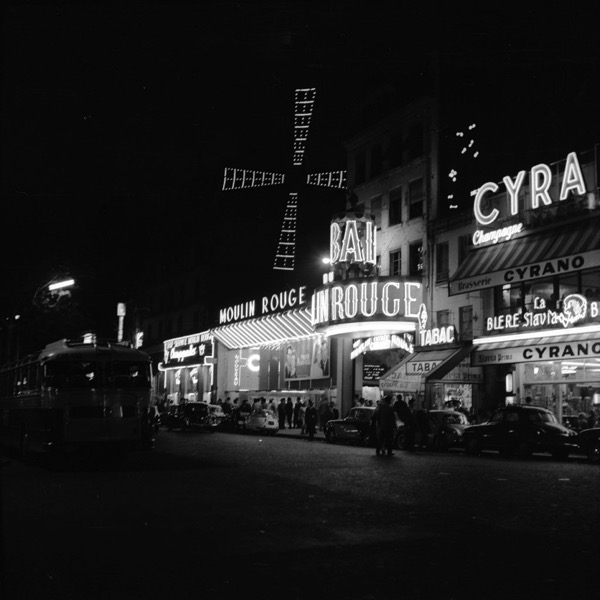
Moulin Rouge, Paris, 1968
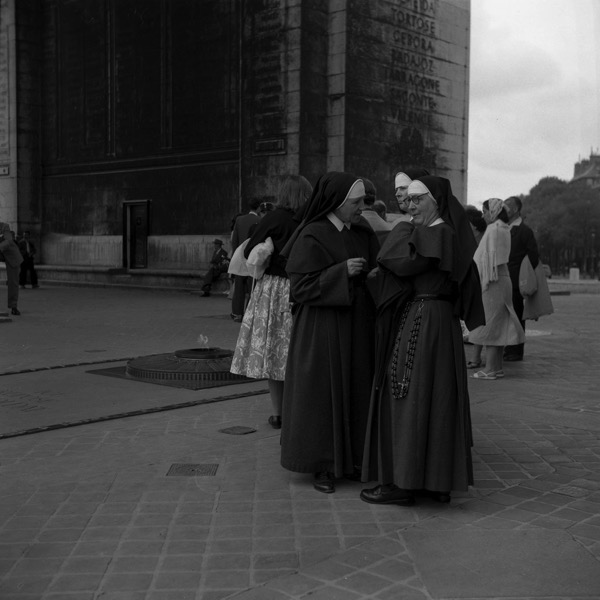
Nuns, Paris, 1968
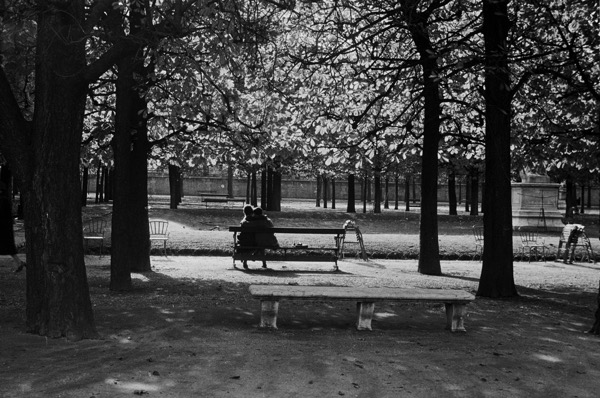
Lovers in the park, Paris, 1968
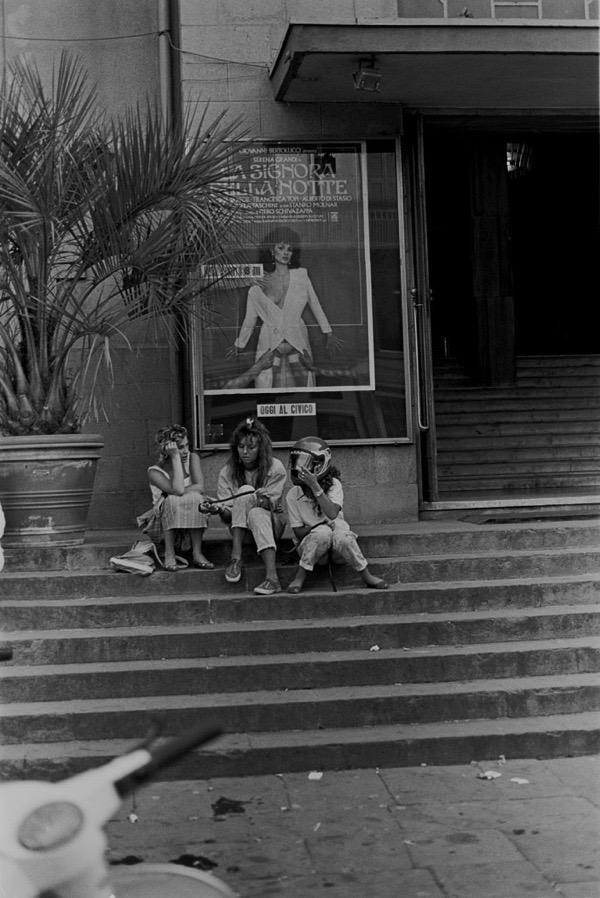
Girls outside Cinema, Italy
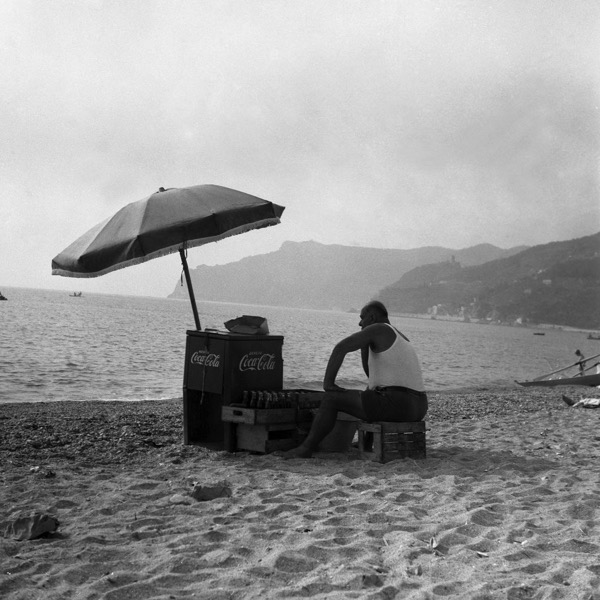
Coca-Cola man on Italian Beach
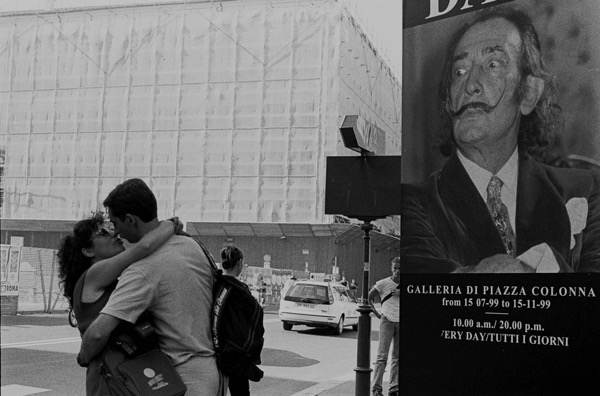
Lovers kissing in Rome
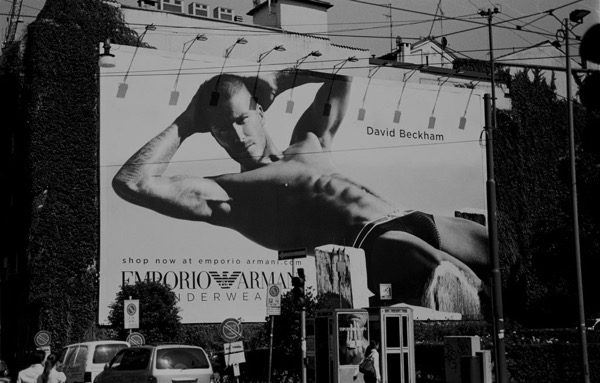
David Beckham in Milan
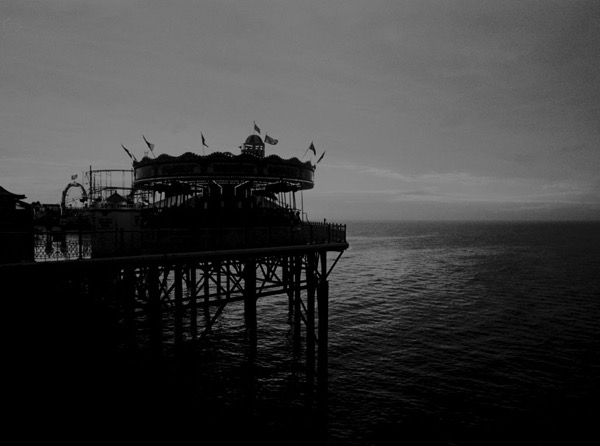
Brighton Old Pier
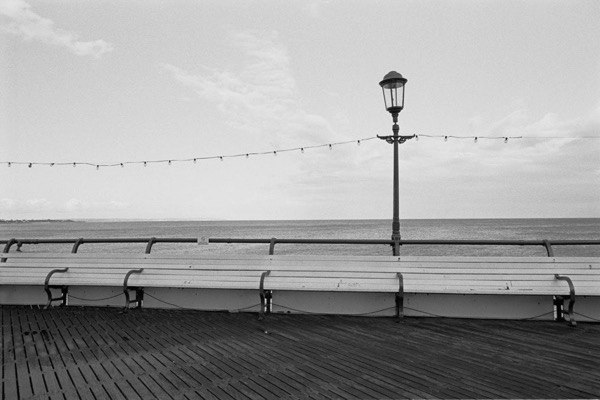
Eastbourne Esplanade, 2001
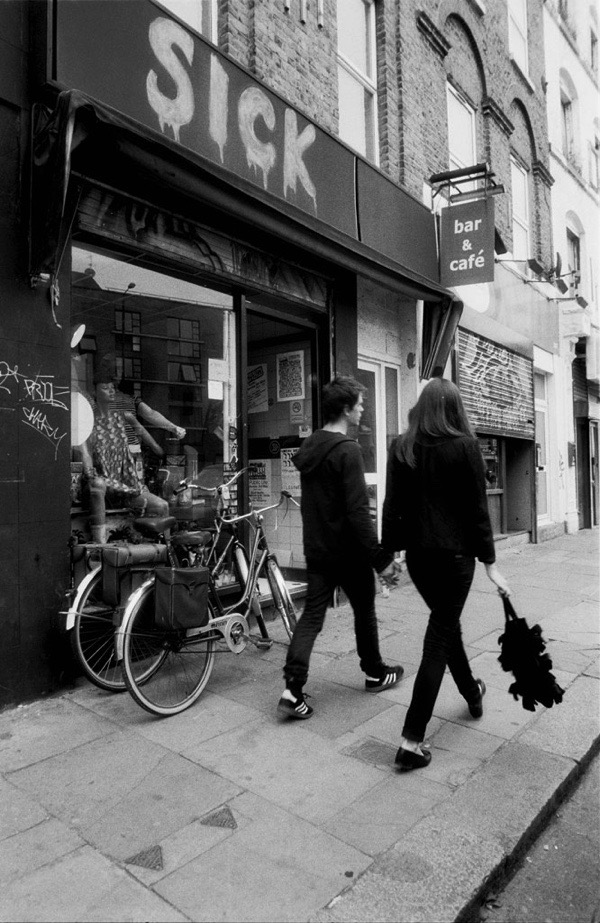
Bethnal Green, 2008
Photographs copyright © Estate of Colin O’Brien
You may also like to read about
Colin O’Brien’s Last Assignment
Tim Marten, Guitar Repairs
I am sorry to report that after thirty seven years on Denmark St, Tim Marten is being evicted and has had his lease revoked by the developers currently redeveloping this corner of Soho
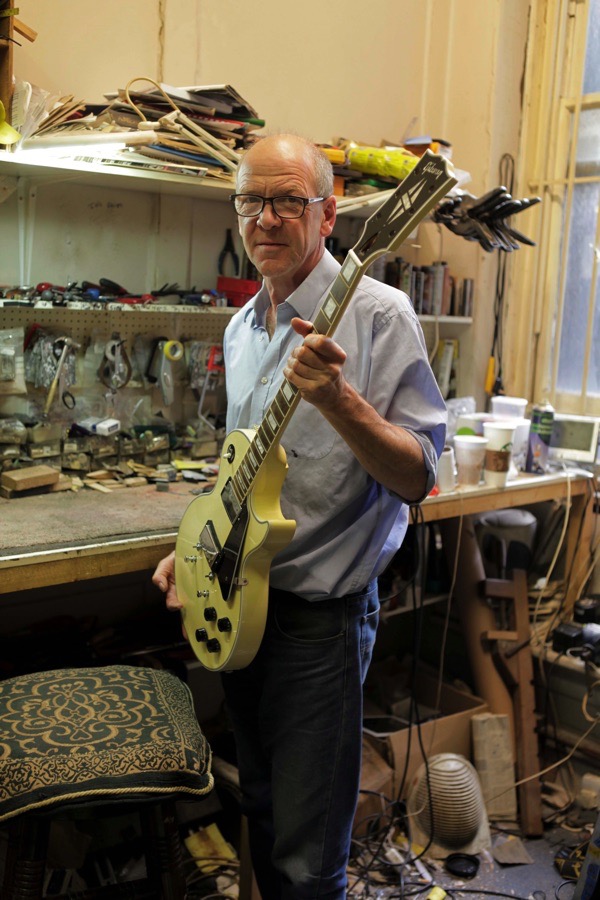
Tim Marten by Colin O’Brien
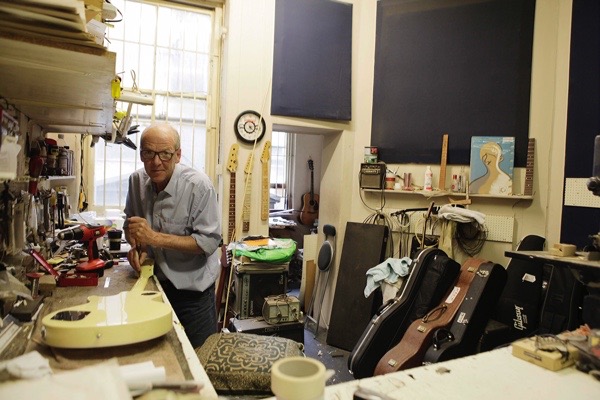
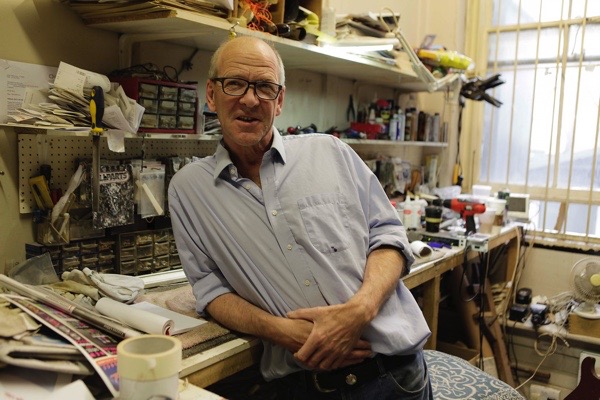
Guitars have been manufactured in Denmark St since the days of Queen Anne but now – thanks to the redevelopment of the neighbourhood – Tim Marten is one of the very last to make and repair instruments in this corner of Soho. I visited Tim in the tiny panelled workshop in the beautiful sixteen-nineties house where he pursues his trade, pending three months’ notice to quit at any time.
“When I was a teenager I wanted to learn to play guitar, and I couldn’t afford to buy one and I was reasonably good at woodwork, so I made one. It was horrible! As soon as I’d finished it, I began to understand where I’d gone wrong, so I embarked on my second one and I cured some of the mistakes I’d made the first time round. After about eighteen months – maybe longer – with the help of various other people, I’d finished my third, curing the mistakes I’d made the second time round. I refined it down and down, until I had a guitar I could actually go out and play. It held its own against factory-made bought guitars. That was quite a reasonable instrument, and I went from there!
I came from an engineering background. My father and my uncle were both very good engineers and I used to build Airfix kits and fly model aeroplanes. I was always interested in mechanics and quite good at understanding how things worked. I was one of those small boys whose immediate reaction after Christmas lunch was to start taking their toys apart to see how they worked.
I spent my late teens and early twenties playing in bands round London and Bristol and, if anyone had problems, I’d fix their guitars. It just escalated from there. I was fortunate to meet someone who worked behind the counter at Andy’s Guitar Workshop in Denmark St, just across the road from where I am now. It was the first specific guitar repair workshop in Central London. That was in 1979.
It was run by Andy Preston but it was called ‘Andy’s‘ because that was the name of the Greek greengrocers on the ground floor and we were in the basement. There were quite a few music shops in the street but Andy’s had flats above and a greengrocer at street level. Our customers had to go round the back and down the stairs to our workshop below. I was twenty-two and I had some ideas I was working on for designs for guitars, and my friend who was the counter hand said, ‘Why don’t you come down and speak to the guys I work with?’ So I did and we had a long chat, and I was offered my first job and I’ve been doing it ever since.
Then I joined Led Zeppelin as a guitar technician and went off touring for ten years. I worked for various other bands and had a shop of my own up in Church Lane, Hornsey, just underneath The Kinks‘ studio. So I got to know Ray Davies and did a lot of touring with The Kinks. I played guitar professionally and found I earned more money gigging three nights a week than I did mending guitars in my little workshop, so it became a necessity to go out each Thursday, Friday and Saturday and play. Back in those days, it was quite a lucrative thing to do.
Things went spectacularly wrong in 2000, and I lost the shop and my business. But within a couple of days of realising that was going to happen and wondering what on earth I was going to do with myself, Andy Preston rang up from his hugely-expanded guitar shop which had become internationally known and taken over the whole building. He asked me to come back and run his repair department because they needed somebody with experience. So the door opened and I walked into it.
I stayed there until Andy went bust and sold his shop onto Rick Harrison, when I started working independently and I’ve been independent ever since. I’ve had my workshop in this room for about six years, before that it was Central Sound recording studios. I have no proof but I have been told that David Gray recorded Babylon in this very room. The building has listed status and is as it was constructed after the Great Fire of London, one of four remaining buildings in Denmark St from that time. This was originally intended as housing and it is slated to be returned to housing. I am going to be booted out and this is going to be turned into luxury flats. I am on two months’ notice, so that could happen as soon as six months from now.
I don’t think the ethos of Denmark St has changed very much at all since I first came here in 1979. Up until four or five years ago, when Cliff Cooper sold out the leases to the current owners who are property developers, there was very little change in the street apart from the signs above the shops as businesses came and went. Denmark St has always been a bit of a shabby sideshow in very nice way.
From the fifties, it was always the centre for music, when the music publishers started moving in and then the recording studios followed. There were three recording studios here in the sixties. From the eighties, shops came and went but they were always music shops, and the place was in need of a lick of paint. It has always been like that and, to a certain extent, that is its charm. Now restaurants are moving in, the developers are taking over and we are being moved out. It’s coming to an end despite our loudest protests.
We got hit very hard by the internet and it took the industry a while to adapt. I think that was one of the reasons Andy got into financial difficulties. For the repair side of the business, the internet helps no end. I get a lot of work from people who have bought guitars online. They come in the door, I take one look at it and say, ‘You just got this on ebay, didn’t you?’ and they ask, ‘Yes, how did you know?’ and I say, ‘Because if you’d played it before you bought it, you’ never have bought it!’ I tell them, ‘Yes I can fix it for you but it’s going to cost more money than if you had bought it properly from a shop in the first place.’ So I view the internet as a mixed blessing, although I do make a lot of money out of people who buy stuff and find that it is not as described. I end up sorting it out.
It’s the tinkering side of things, the satisfaction of getting things right, that I like. I do mostly repairs now and only a little design work. There’s a lot of satisfaction in getting something working properly and you give it back to the customer, and a big smile comes over them. ‘Oh wow, that’s brilliant! I’ve been fighting this thing for years – if only I’d known you ten years ago!’
Like any job, it can become repetitive. There are certain repairs you do in your sleep. That’s what I call the bread-and-butter work. It’s well paid, so – if I spend three days a week doing that – I know that I’ve made enough to sit down and do something a bit more creative.
In this industry, it’s a great way to spend a day but it’s a lousy way to make a living. Especially making guitars, because it is so time-consuming and you can’t compete with the guys who have got all the machinery and industrial spraying facilities. The quality of the stuff coming out of the far east now is so good that you have to be able to charge a disproportionate amount of money for a guitar because it is handmade. Or you do bespoke work, I enjoy making things that you couldn’t buy in a shop.
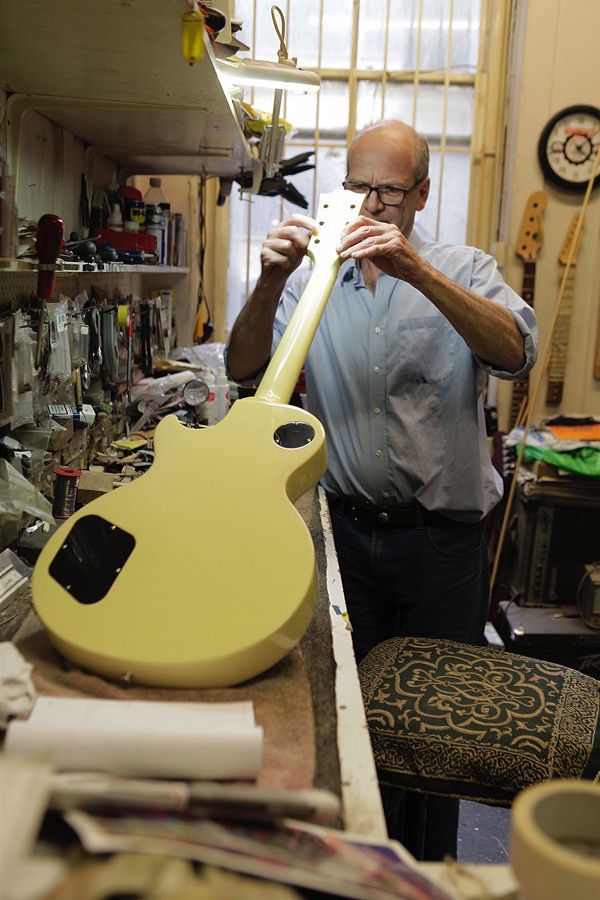
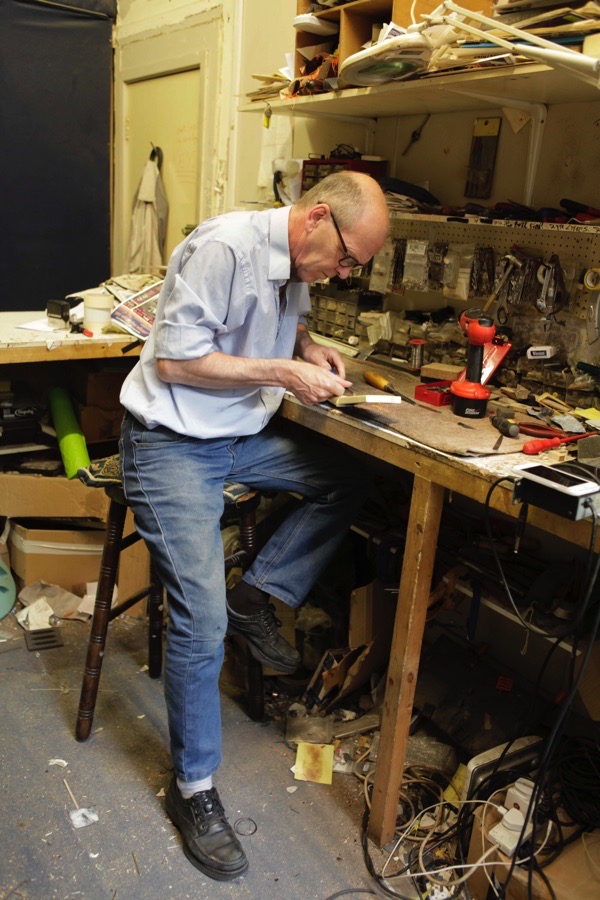
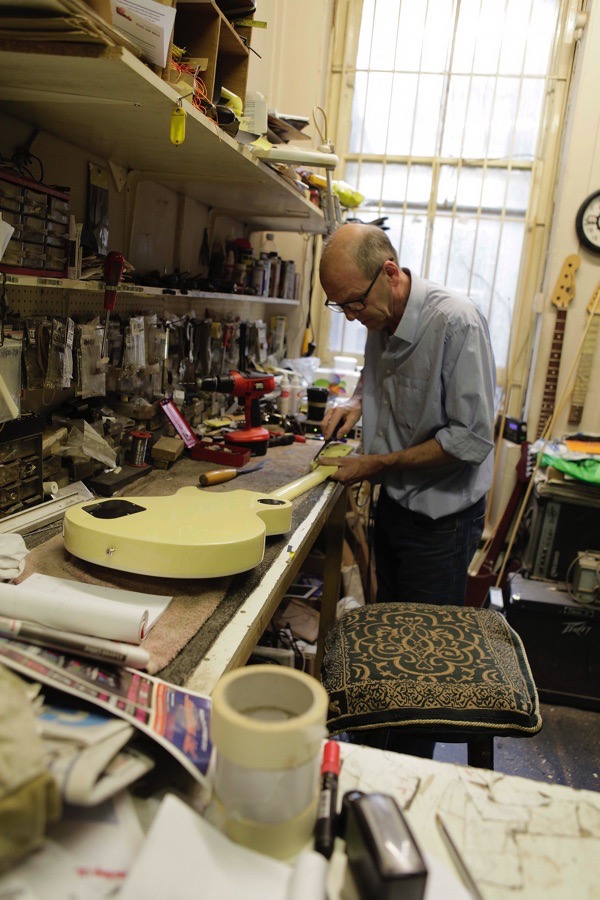
If you look around my workshop, you will see that I am surrounded by projects that I have got halfway through but never got around to finishing. It’s what I do in the quiet periods, but I’ve acquired a reputation for being good at repairs and it’s getting to the point where I have more work than I can do. If you look around, there’s thirty guitars here waiting to be repaired. They are numbered up to fifty-seven and I am working on number twenty-six at the moment. Some of them will take five minutes but others will take me three weeks to fix.
I’ve always got three or four jobs on the go at once and, as you can see, there there are guitars lying around in various stages of repair. While I am waiting for glue or lacquer to dry, I will put it on one side and return to it tomorrow. Repairing instruments is a job where you don’t work on one at a time and finish it.
When I was running the repair department at Andy’s Guitar Workshop, I had four people working under my supervision and I enjoyed the responsibility and the teaching and the social life as well. Now it’s just me yet I am not alone because I have a constant stream of customers and the phone never stops ringing.”
Photographs copyright © Estate of Colin O’Brien
Tim Marten, Guitar Repairs, 9 Denmark Street, London, WC2H 8LS
You may also like to read about
At St Augustine’s Tower

St Augustine’s Tower
I wonder how many people even notice this old tower, secreted behind the betting office in the centre of Hackney? Without a second glance, it might easily get dismissed as a left-over from a Victorian church that got demolished. Yet few realise St Augustine’s Tower has been here longer than anything else, since 1292 to be precise.
“It is an uncompromising medieval building, the only one we have in Hackney,” Laurie Elks, the custodian of the tower, admitted to me as we ascended its one hundred and thirty-five steps, “and, above all, it is a physical experience.” Climbing the narrowing staircase between rough stone walls, we reached the top of the tower and scattered the indignant crows who, after more than seven centuries, understandably consider it their right to perch uninterrupted upon the weather vane. They have seen all the changes from their vantage point, how the drover’s road became a red route, how London advanced and swallowed up the village as the railway steamed through.
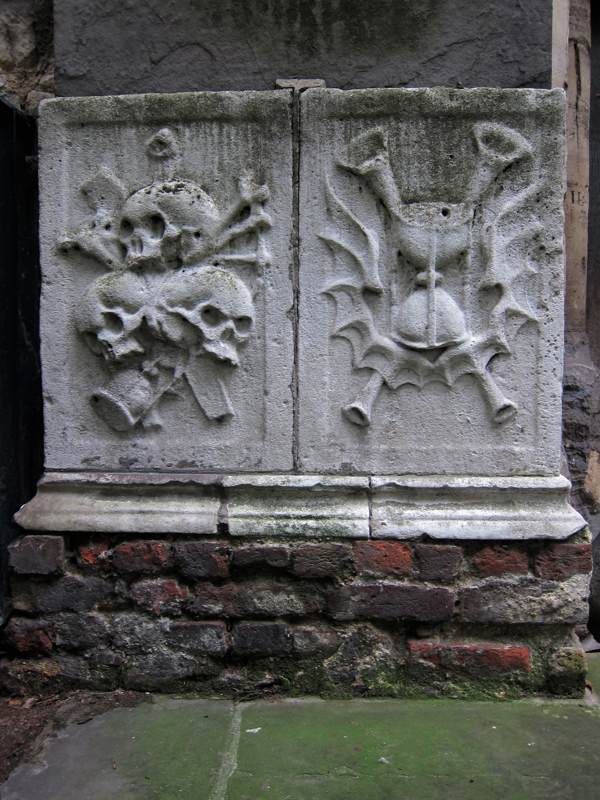
Yet inside the tower, change has been less dramatic and Laurie is proud of the lovingly-preserved cobwebs that festoon the nooks and crevices of his cherished pile, offering a haven for shadows and dust, and garnished with some impressive ancient graffiti. The skulls and hourglasses graven upon stone panels beside the entrance set the tone for this curious melancholic relic, sequestered among old trees just turning colour now as autumn crocuses sprout among the graves. You enter through a makeshift wooden screen, cobbled together at the end of the eighteenth century out of bits and pieces of seventeenth century timber. On the right stands an outsize table tomb with magnificent lettering incised into dark granite recording the death of Capt Robert Deane, on the fourth day of February 1699, and his daughters Mary & Katherine and his son Robert, who all went before him.
“There was no-one to wind the clock,” revealed Laurie with a plaintive grimace, as we stood on the second floor confronting the rare late-sixteenth-century timepiece that was once the only measure of time in Hackney, “so I persuaded my sixteen-year-old daughter, Sam, that she would like to do it and she did – until she grew unreliable – when I realised that I had wanted to wind the clock myself all along. I would come at two in the morning every Saturday and go to the all-night Tesco and buy a can of beans or something. Then I would let myself in and, sometimes, I didn’t put on the light because I know the building so well – and that was when I fell in love with it.” Reluctantly, Laurie has relinquished his nocturnal visits since auto-winding was introduced to preserve the clock’s historic mechanism.
It was the Knights Templar who gave the tower its name when they owned land here, until the order was suppressed in 1308 and their estates passed to the Knights of St John in Clerkenwell who renamed the church that was attached to the tower as St John-at-Hackney. Later, Christopher Urstwick, a confidant of Henry VII before he became king, retired to Hackney as rector of the church and used his wealth to rebuild it. Yet, to the right of the entrance to the tower, rough early medieval stonework is still visible beneath the evenly-laid layers of sixteenth century Kentish ragstone – bounty of the courtier’s wealth – that surmount it.
When the village of Hackney became subsumed into the metropolis, with rows of new houses thrown up by speculators, a new church was built down the road in 1797, but it was done on the cheap and the tower was not strong enough to carry the weight of the bells. Meanwhile, the demolition contractor employed to take down the old church was defeated by the sturdy old tower and it was retained to hold the bells until enough money was raised to strengthen the new one. Years later, once this had been effected, the fashion for Neo-Classical had been supplanted by Gothic and it suited the taste of the day to preserve the old tower as an appealing landmark to remind everyone of centuries gone by.
Thus, no-one can say they live in Hackney until they have made the pilgrimage to St Augustine’s Tower – where Laurie is waiting to greet you – and climbed the narrow stairs to the roof, because this is the epicentre and the receptacle of time, the still place in the midst of the mayhem at the top of Mare St.


The view from the top of the tower towards the City of London.


A bumper crop of conkers in Hackney this year, as seen from the parapet.

Laurie Elks, Custodian of the Tower


St Augustine’s Tower is open on the last Sunday of every month (except December) from 2pm-4:30pm
James Mackinnon, Artist
Today I present another extract from my new book EAST END VERNACULAR, Artists who painted London’s East End streets in the 20th century to be published by Spitalfields Life Books in October. Click here to preorder your copy
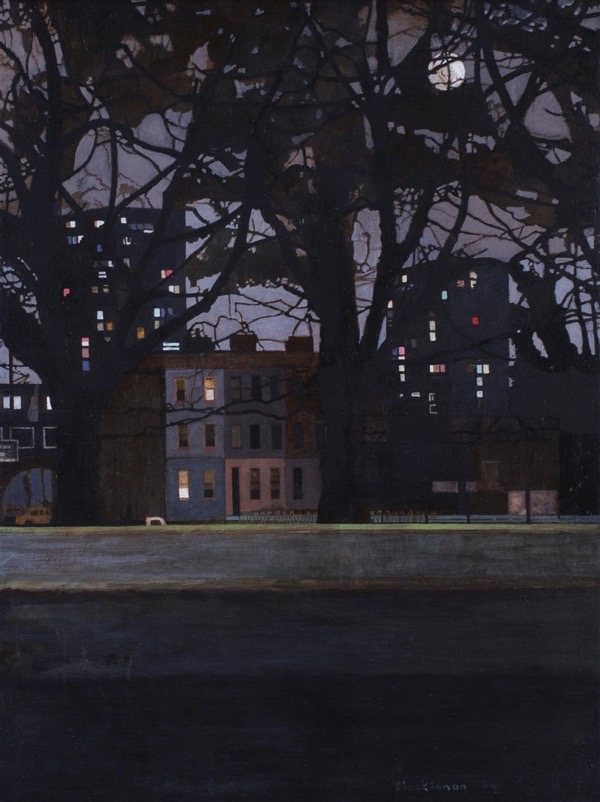
Twilight at London Fields, 2012
Recently, I met with the artist James Mackinnon (born 1968) whose streetscapes of the East End in general and London Fields in particular have captivated me for years. The seductive sense of atmosphere and magical sense of possibility in these pictures is matched by the breathtaking accomplishment of their painterly execution to powerful effect.
Remarkably, James is a third generation artist, with his uncle Blake and grandfather Hugh before him – which perhaps accounts for the classical nature of his technique even if his sensibility is undeniably contemporary.
We sat outside Christ Church, Spitalfields and chatted about the enduring allure of the East End for artists. I was sorry learn that James has been forced to leave due to a combination of the rising rents and lack of recognition for his work.
Like several others I have met while researching my book, he is an artist who is genuinely deserving of appreciation by a much wider audience. It is very disappointing that the rewards for such a prodigiously talented painter as James Mackinnon are so little that he can no longer afford to be in the East End, and the East End is lesser for it.
“I grew up in South London in Lee Green and I used to go to the Isle of Dogs through the foot tunnel under the Thames and I was mystified by the area north of the river. Sometimes I would bunk off school with a sketchbook and go wandering there. It seemed a mysterious land, so I thought ‘What’s further up from the Isle of Dogs?’ I was a kid and I had been taken up to the West End, but I had never been to the East End and I sensed there was something extraordinary over that way.
I had always loved drawing and I got a scholarship in art to Dulwich College when I was eleven. The art department was wonderful and I got massive support, so I used be in the art block most of the time.
Later on, having left home and gone through college, there was a big recession and it was tough, all the students were scrabbling around for work, I had an epiphany. I was sat next to the Thames and I realised I just wanted to look at buildings and paint them. Since I was a child, buildings and their atmosphere, the feeling of buildings always had this resonance that I could not put my finger on.
As a kid, I was painting with poster paint and drawing with felt tips, and I was obsessed with the Post Office Tower. There was an art deco Odeon in Deptford that was derelict for years and it was demolished at the end of the eighties, and that had a huge effect on me. I sat in the back of my dad’s car and we drove past on the way up to London, and I would see this building and almost have a heart attack, I had such strong feelings about it. My God this thing is extraordinary, I am in love with it! It was falling to bits, it had pigeons sitting in the roof and it had wonderful art deco streamlining but it had this atmosphere, an elegance and a sadness. Even with the Post Office Tower, I felt it had this presence as though it were a person. That comes to the fore when you paint and you feel the place. You are not just concentrating on the architecture, it’s an emotional thing.
So with painting and drawing skills, I wanted to explore the landscape and often the hinterland. There is something compelling about going to a place you do not really know about – the mysterious world of places. The atmosphere of places is borne out of people and their residue, it’s about people living in a place.
By exploring, I was slowly drawn to where my heart was guiding me. In the early nineties, I moved to the East End because it was affordable and I had always wanted to explore there. And I was there until around 2013. I lived in Hackney and had a great time there, and made some great friends.
I was struggling as an artist, there was a lot of signing on the dole, but it was an act of faith, I knew it was what I had to do. I had always painted buildings.
I lived near London Fields and there is this little terrace of Georgian houses with a railway line and overhead electric wires, and there are some tower blocks in the distance, and you have all this grass. That was at the bottom of my road, it was such an interesting juxtaposition. A lot of East London landscapes have that, you might get a church sitting next to a railway line, next to tower block, next to the canal and a bit of old railing and some graffiti. That funny mixture. So I would just go and paint what I wanted. I painted what I was drawn to. For a long time, I was obsessed with Stratford. No-one had done anything to it at that time and I would go round the back streets and I roamed the hinterlands. I walked through to Plaistow and it is all part of a certain landscape that you find in the East End. To make a picture, you have got to find something that moves you and it can be something at the bottom of your road that resonates for you and makes the right composition for a painting. It’s hard to explain.
I had a go at having a studio but I was always a struggling artist so, when it came to rent day, it got tricky. It’s lovely having a studio but I could not afford it. I tried living in my studio for a bit to save money on the rent but the landlord found out and there was a cat and mouse game.
By the time I left, I think I had found myself. There is something in the painting that says it is me rather than anyone else and that has evolved from having done it for twenty years. I just about managed to survive. I realised I have got the tenacity and self belief. This is what I love. You find your path after a lot of struggle but it only comes by doing it. You realise that a great painting can come from something very ordinary, you can go for a walk and there might be something round the corner that knocks you out. There was a lot of that in the East End and I am still obsessed by it though it is changing hugely. Some of the landscapes have changed and some of the shops have gone. I miss Hackney in many ways but I do not miss struggling and rents going up. The area has changed.
So now I have moved to Hastings. I had a little boy and it became untenable to carry on living in the East End. I had no choice.”
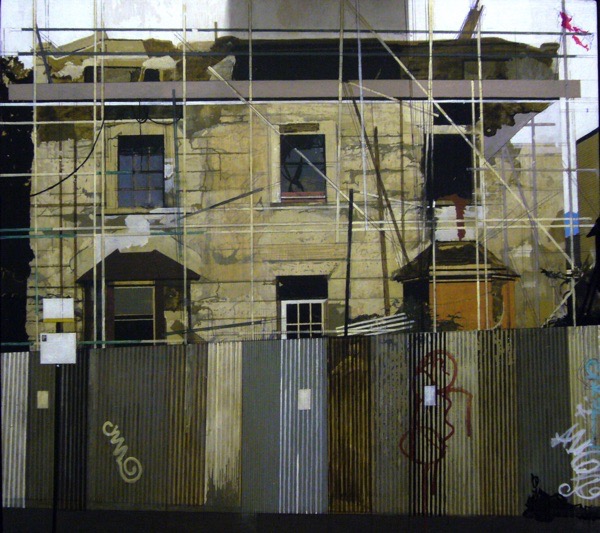
Homage to James Pryde, 2009 (The Mole Man’s House)
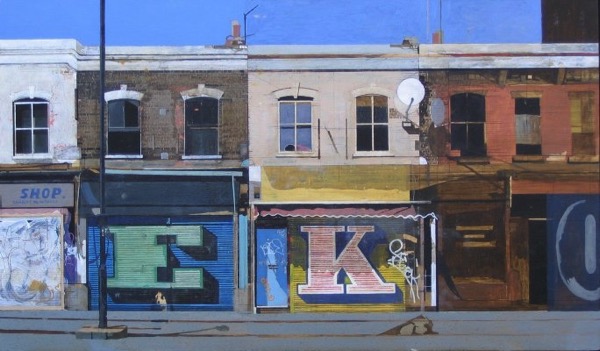
Broadway Market
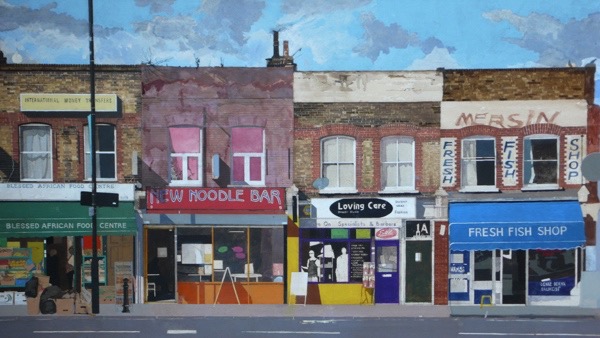
Shops in Morning Lane, 2014
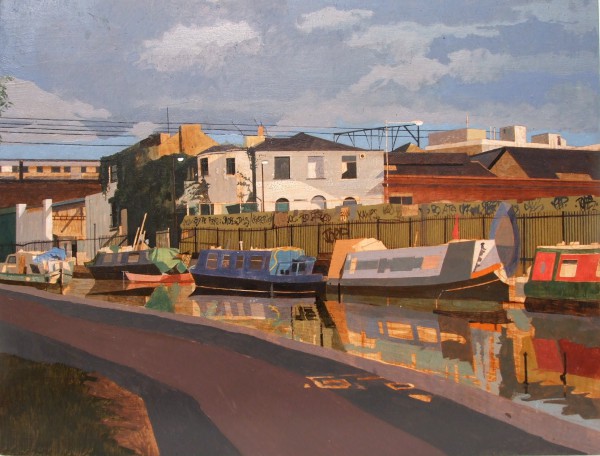
Hackney Canal near Mare St, 2012
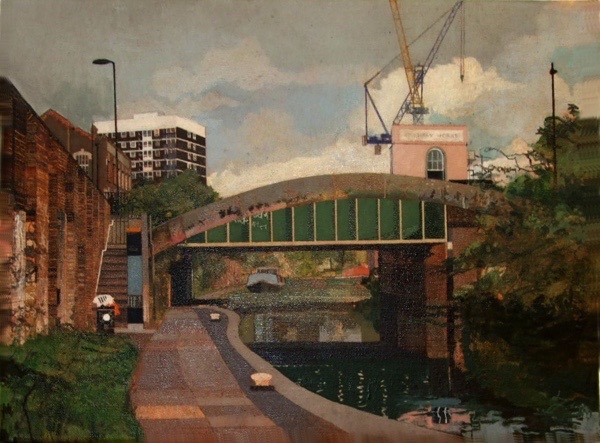
Canal, Rosemary Works 2014

Savoy Cafe, Hackney, 2012
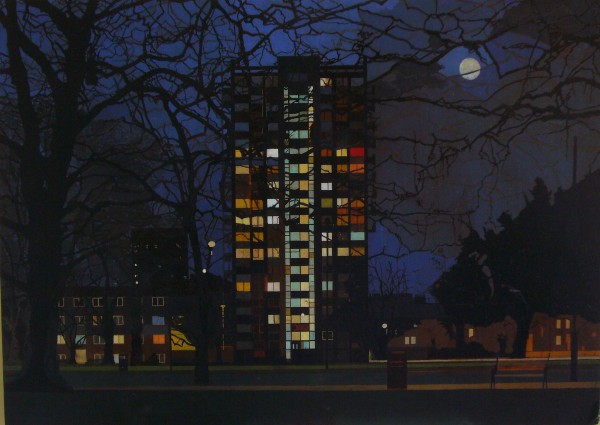
James Tower, London Fields, 2012
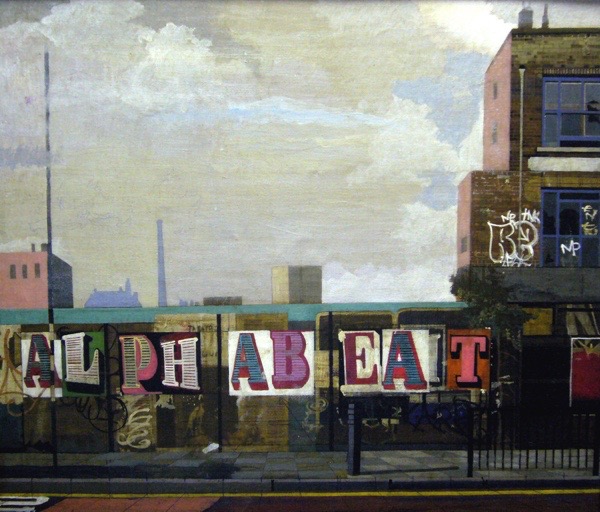
Alphabeat, 2007
Paintings copyright © James Mackinnon
James Mackinnon’s paintings are available from the Millinery Works
Take a look at some of the other artists featured in East End Vernacular
The Tale Of Old Flo & Her Orphans
With Henry Moore’s Draped Seated Woman – better known as Old Flo – due to return to the East End for a temporary stay at Canary Wharf prior to being permanently installed at the new Town Hall in Whitechapel in 2020, Mark Richards tells the story behind her troubled exile and explores London’s orphaned art, a legacy of post-war regeneration
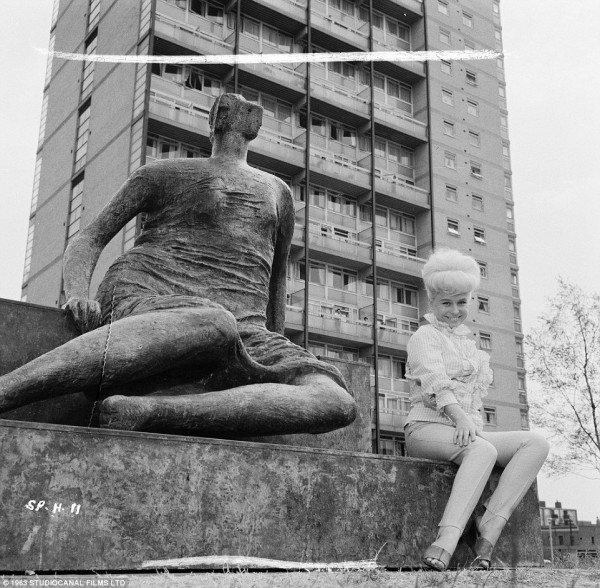
Old Flo in happier days
In 2012, when Lutfur Rahman, then Mayor of Tower Hamlets, proposed to sell Henry Moore’s sculpture Draped Seated Woman, he was widely condemned by the media and the art establishment alike, and a public campaign was launched to prevent the sale, generating a great deal of publicity. What most people do not know is that this public campaign had no impact and was not a factor in the decision to abandon the sale, which happened due to work done by a small team behind the scenes. Most importantly, the wider implications of this attempted sale appear to have passed everyone by.
To understand the context and the scale of the issue we must go back to post-war London, when much of the city lay in ruins and the capital was a patchwork of bomb sites and partially demolished buildings. The country’s finances were in ruins also and the London Olympics of 1948 were known as the ‘austerity games’ due to the shoestring budget. As one of the associated cultural events, the London County Council held the first of a series of outdoor sculpture exhibitions. The first exhibition in 1948 was the precursor to the Patronage of the Arts Scheme, by which the LCC purchased sculptures to enrich the lives of Londoners as part of the post-war regeneration of the capital.
The driving force behind these exhibitions and the subsequent scheme for purchasing art was the LCC Parks Committee which announced, “…this is almost certainly the first time a municipal authority in this country has embarked on such a venture. It is, however, fitting that the Council as the largest municipal authority in the Empire, if not in the world, should take a share in the encouragement of visual arts both for the sake of the artists, whose work is part of our national heritage, and also to give Londoners an increased opportunity to enjoy art.” (Mrs Patricia Strauss, Chair of the Parks Committee, Open Air Exhibition of Sculpture, 1948)
This exhibition was a milestone of public art in London, representing a move away from the display of traditional statuary into the open air display of contemporary public art for the enrichment of the lives of Londoners, and it planted the seeds that would grow into the Patronage of the Arts Scheme over the following decade.
Following the exhibition, the Contemporary Art Society donated Henry Moore’s Three Standing Figures, 1947 to the LCC for permanent display at Battersea Park and this almost certainly triggered the scheme that resulted in the purchase of Draped Seated Woman some fourteen years later. Like Draped Seated Woman, this sculpture was abandoned when the Greater London Council was closed in 1986 and is an orphan artwork.
In 1956, a committee was formed to advise the LCC on the purchase of public art for London. Sir Alan Bowness, Director of the Tate Gallery from 1980–88, was a member and knew both Henry Moore and Sir Isaac Hayward, then leader of the LCC, who encouraged the siting of works of art on new housing estates, schools and in parks, so that they could be enjoyed by the people of London.
Over the life of the Patronage of the Arts Scheme around seventy pieces of public art were purchased for London, including five by Henry Moore, as well as works by leading artists such as Barbara Hepworth, Elizabeth Frink, Lynn Chadwick and others.
You will no doubt have seen some of them dotted around London and perhaps never made the connection to the LCC. As became evident later, all of them are now orphans with no clear title of ownership. Their abandonment by the GLC, and subsequently the Department of the Environment, represents a staggering failure of governance during the closure of the GLC in 1986. A report was produced by GLC staff in 1983 recommending that the sculptures be put in trust for London but this was never followed through.
After the GLC was closed, only the late Tony Banks MP pursued the matter in the House of Commons but with little success. Hansard records a series of exchanges that imply the government of the day knew about the sculptures and intended selling them to offset the cost of closing the GLC. Either way, when other artworks were transferred into and out of the London Residuary Body through a series of statutory instruments these sculptures were mysteriously left out. They were not sold or transferred, and instead were simply allowed to drift into ambiguity of ownership to the detriment of London.
Since 1986, many of the sculptures have been stolen, mislaid, damaged or destroyed. In a period of austerity, they remain at grave risk of being lost, stolen by metal thieves or sold to bolster failing local authority budgets. Nobody has overall responsibility for this public collection which is worth tens of millions, and the various local authorities, schools and colleges where the sculptures stand appear to have no idea that they do not have clear title of ownership to the works in their possession.
When I heard about the proposed sale of Old Flo by Tower Hamlets, I was determined to stop it. I had some knowledge of the sculpture – it was an important work that was based on Henry Moore’s shelter drawings and so had a particular resonance for London, given that Stepney where it had been based was one of the most heavily-bombed areas of the city. The drapery allowed Moore to create tension in the figure and, when you examine the shelter drawings, you can see the connection between those poignant drawings and this colossal sculpture.
I always thought of this sculpture as being of a mother listening to the fall of bombs outside the shelter and wondering whether her children, her friends or her house would survive the bombardment. She represented for me a stoic figure full of resolve mixed with a sense of alertness, tension and vulnerability belied by her immense scale.
In the end, Old Flo was saved by the actions of a small group of people. Working with the support of the Art Fund and Farrer & Co solicitors, who provided pro bono advice, five of us went to the London Metropolitan Archives to do the research into the original purchase of Old Flo. It proved to be an exciting journey into the murky history of art acquisition and the regeneration of post-war London.
The story of this work of art began to reveal itself in the dusty, and often crumbling, minutes of the long defunct London County Council. The original idea that the sculpture had been a gift to London by Henry Moore and was therefore held in trust turned out to be false, documentation showed it was purchased for a fair market rate by the LCC.
We discovered that Old Flo had been bought for the Stifford Estate in Stepney by the London County Council. Then I tried to find out how it ended up in the hands of Tower Hamlets Council, which did not exist at that time. I followed the trail through the files, minutes, transfer documents and statutes, showing the demise of the LCC, the rise and fall of the GLC and the creation and closure of the London Residuary Body. Eventually, I discovered that title of ownership to the sculpture had never been transferred to Tower Hamlets at any time in its history. Consequently, they were not the owner and therefore had no right to sell it.
The sculpture had gone from the LCC to the GLC and then, when the GLC was closed, had been transferred to the London Residuary Body. Subsequently, on the closure of the LRB, title of ownership to all seventy sculptures was accidentally transferred to the London Borough of Bromley via a ‘sweep-up’ order in 1997, even though Bromley had no knowledge of this.
Working with the Art Fund we persuaded the London Borough of Bromley to lodge a legal challenge to the sale acting in their capacity as successor to the LRB. Bromley’s position was that the sculpture was a cultural asset and needed to be saved for London, and I have nothing but praise for their approach – they are the unacknowledged heroes of this case. As a result of their intervention, Tower Hamlets was forced to remove the sculpture from auction after it had been listed for sale by Christie’s for January 2013. The case then became like Jarndyce & Jarndyce in Bleak House, with both sides arguing that the sculpture was theirs.
A long legal case ensued at which I was a witness in the Court of Chancery in 2015. Lutfur Rahman was removed from office for electoral irregularities. Meanwhile, the whole focus of the campaign behind the scenes had been to delay any sale until he was gone, since the vast majority of councillors at Tower Hamlets were opposed to the sale.
Following Rahman’s removal, the outcome of the legal case was largely academic when it comes to Old Flo but, in the end, title of ownership was determined to sit with Tower Hamlets due to a legal technicality. They had ‘converted’ the sculpture by lending it to the Yorkshire Sculpture Park without Bromley’s permission and six years later it had become theirs under the rules on limitation. The judge in the case supported all aspects of Bromley’s claim to title of ownership except on the single issue of ‘conversion,’ and rejected Tower Hamlets’ other claims in their entirety. The judgment is a matter of public record and can be found by clicking here.
What is not recorded is that the late Norman Palmer QC, the world’s leading authority on the law of bailment, believed that the Tower Hamlets case on conversion was flawed and could be defeated by an argument that Old Flo was held in bailment which is not covered by limitation. But this argument was never pleaded in the case, so we will never know if he was correct.
John Biggs, the new Mayor of Tower Hamlets, gave me his personal assurance that Old Flo would not be sold and she was therefore saved for the nation. My involvement ended in 2015 and, at that time, the plans were that the sculpture would be returned to London and displayed outside of the Museum in Docklands. This never happened and it is now destined for Canary Wharf instead, prior to installation at the new Town Hall in Whitechapel in 2020 As it stands, Old Flo remains in public ownership but her future is far from secure – as she is not held in trust, she could be sold at any time at the whim of a politician. If this was to happen, there are now no grounds to challenge the decision.
The future of the remaining sculptures is also less than rosy – their title of ownership remains uncertain and the failure to address this or put them into trust has left them with no clear owner. Had Bromley won the Old Flo case then all of the sculptures would have been put into trust and protected in perpetuity, but this is unlikely to happen now and no public bodies seem willing to pick up the baton and protect this remarkable series of sculptures, some of which are falling into disrepair.
They include many works of which you may be familiar such as The Watchers by Lynn Chadwick at Roehampton College (stolen in 2006 but now recast), Single Form Memorial and Monolith-Empyrean by Barbara Hepworth, Two-Piece Reclining Figures No. 1 and No. 3 by Henry Moore, The Lesson by Franta Belsky in Satchwell Rd, Robert Clatworthy’s The Bull in Danebury Avenue, opposite Portswood Place in Wandsworth, and many more.
Others have not fared so well and the list of important works which have been stolen includes like Elisabeth Frink’s Birdman from Sedgehill School in Lewisham and Georg Ehrlich’s Drinking Calf from Garratt Green School in Wandsworth, while sculptures like the Henry Moore on the Brandon Estate remain at serious risk of metal theft.
Someone needs to take the initiative and protect these sculptures as a legacy for London, but who is up to the task?
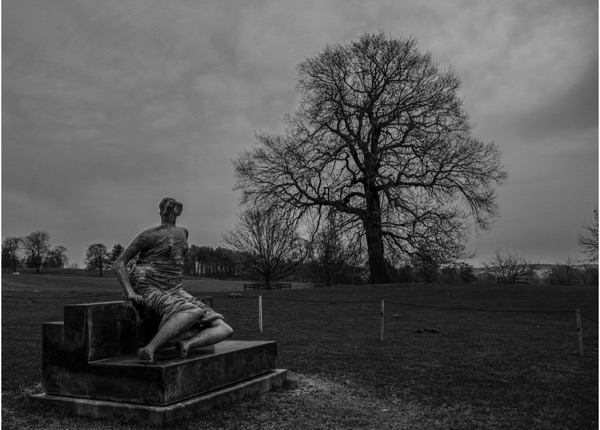
Old Flo at Yorkshire Sculpture Park (Photo by Mark Richards)
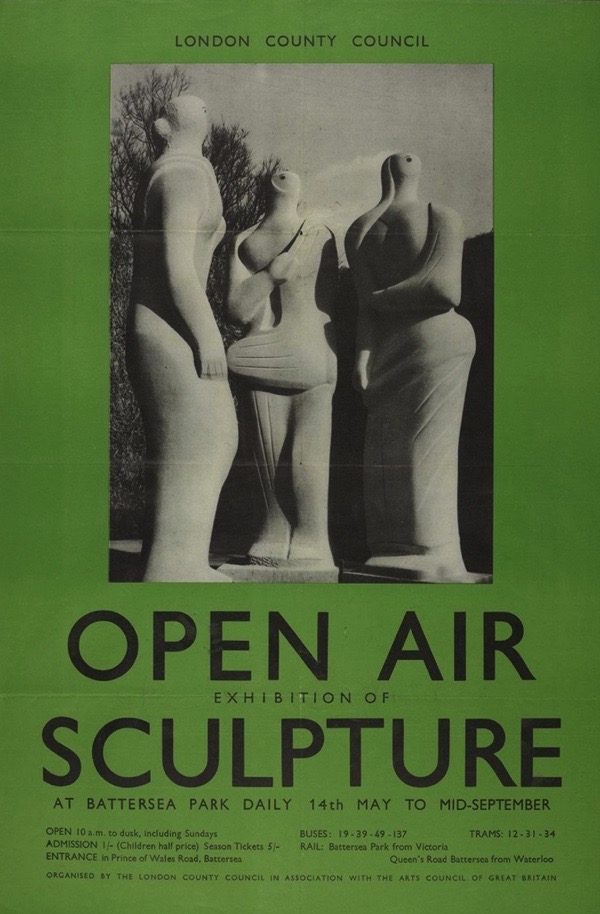
Poster for the 1948 open air art exhibition at Battersea Park
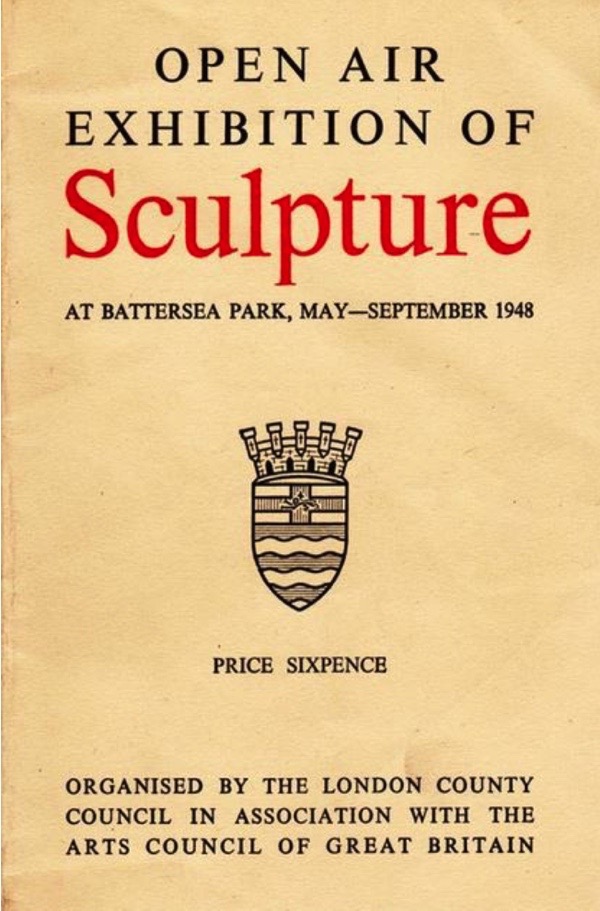
Programme for the 1948 exhibition with an introduction by Patricia Strauss
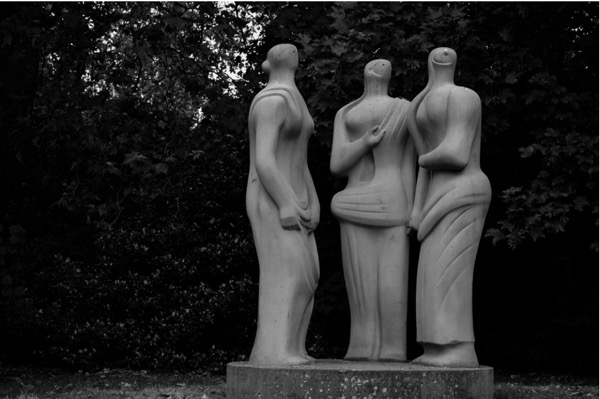
Three Standing Figures by Henry Moore, Battersea Park (Photo by Mark Richards)
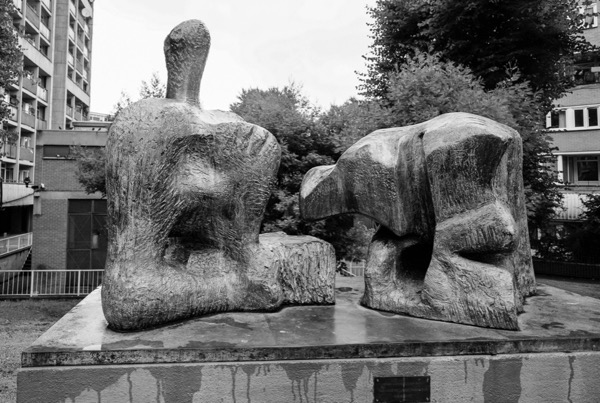
Two Piece Reclining Figure No. 3 by Henry Moore, Brandon Estate (Photo by Mark Richards)
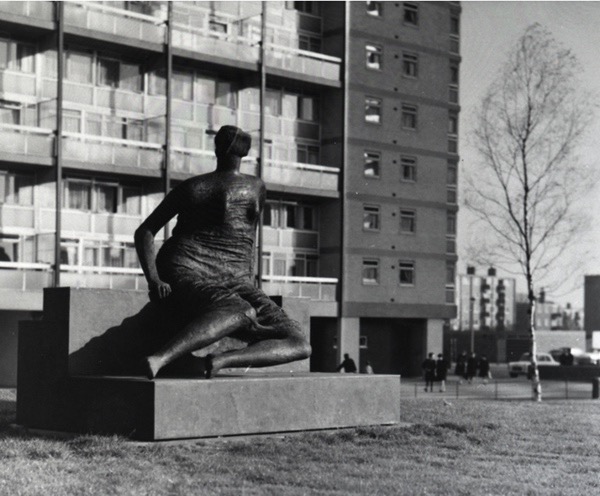
Old Flo on the Stifford Estate c.1964
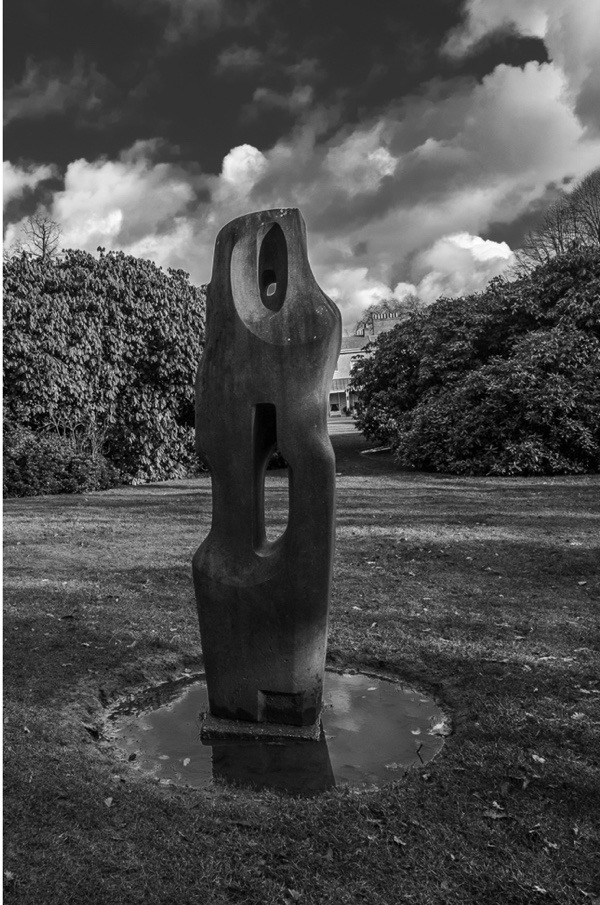
Monolith-Empyrean by Barbara Hepworth, Kenwood House (Photo by Mark Richards)
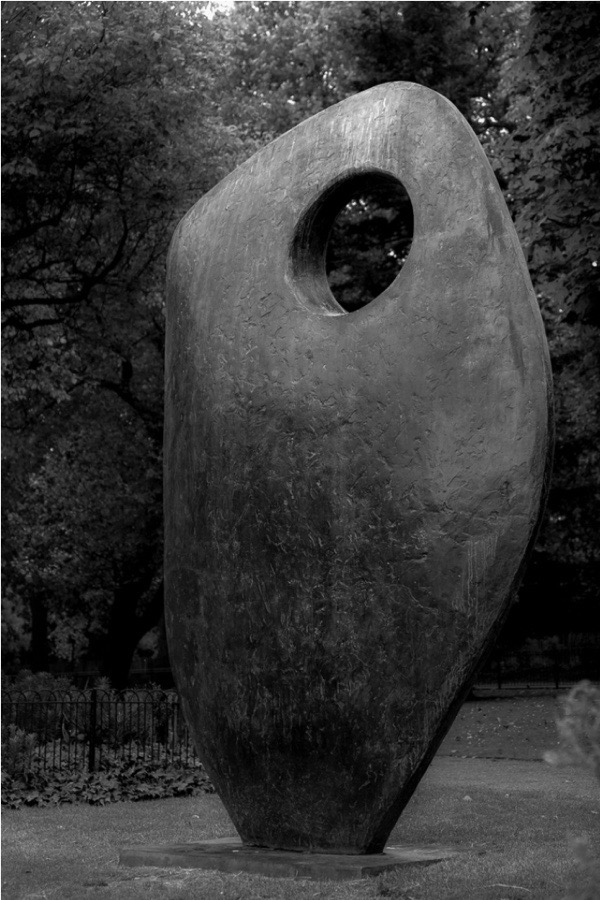
Single Form Memorial by Barbara Hepworth, Battersea Park (Photo by Mark Richards)
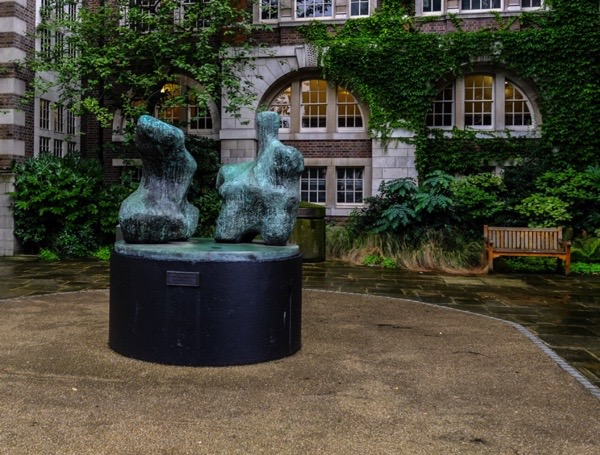
Two Piece Reclining Figure No. 1 by Henry Moore, Chelsea School of Art (Photo by Mark Richards)
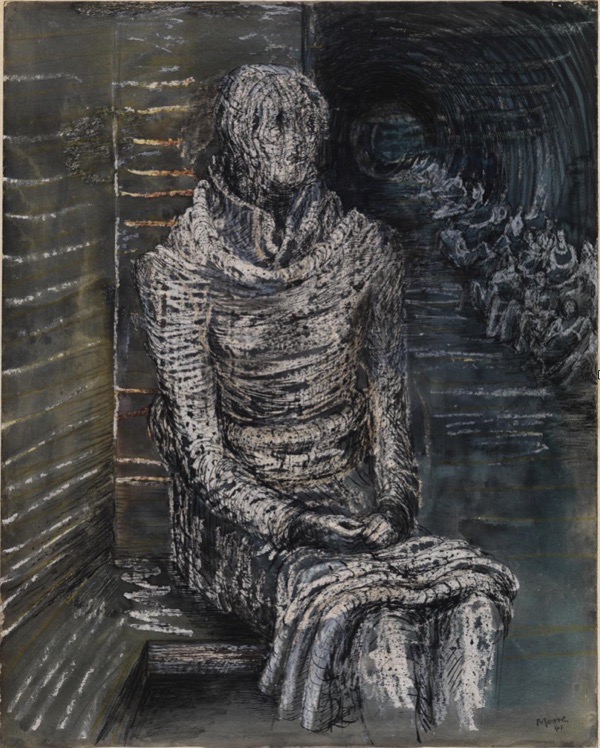
Woman Seated in the Underground, 1941 by Henry Moore
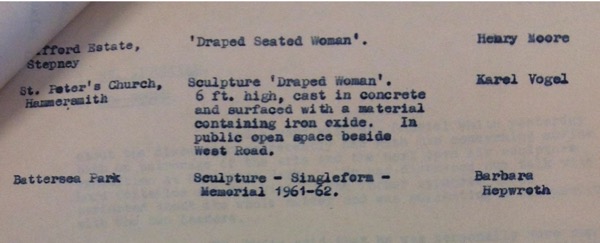
LCC report 19 March 1964 listing Draped Seated Woman and Single Form Memorial
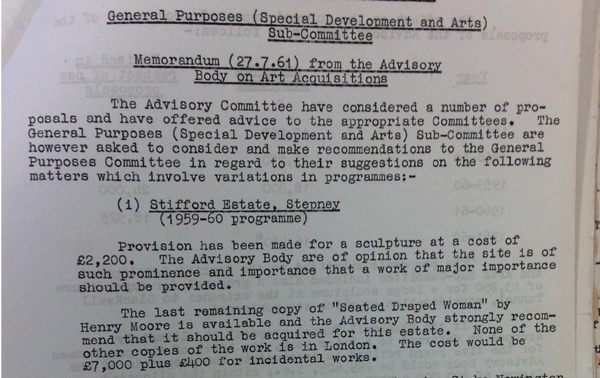
CC minutes 27 July 1961 recording the decision to buy the sculpture
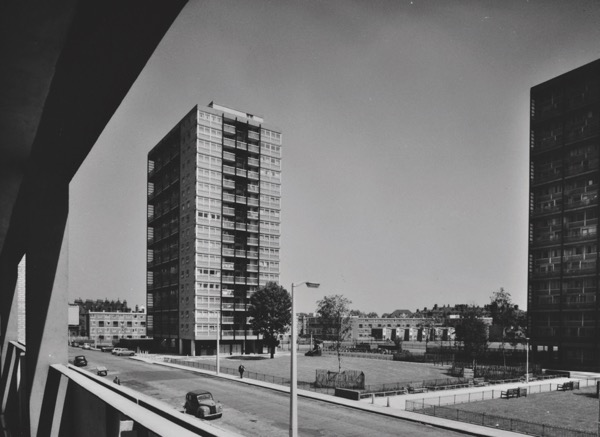
The Stifford Estate c.1965 showing the location of Draped Seated Woman
Mark Richards is the Chief Executive Officer at the Museum of Vancouver in British Columbia, Canada
You may also like to read about
Christ Church Spitalfields by Leon Kossoff
Today I present another extract from my new book EAST END VERNACULAR, Artists who painted London’s East End streets in the 20th century to be published by Spitalfields Life Books in October. Click here to preorder your copy

(Click on this image to enlarge)
Presiding over Spitalfields for three hundred years, Nicholas Hawksmoor’s Christ Church in Commercial Street is the East End’s most enduring landmark and it has caught the imagination of many artists. Yet perhaps Leon Kossoff (born 1926) has captured its awe-inspiring scale more effectively than anyone else in a recurrent series of paintings and drawings executed over the past half century.
Born just half a mile up the road in Shoreditch, Leon grew up on the Boundary Estate where his family ran a bakery but, at the age of nine, a trip to the National Gallery inspired him with a love of painting which was to become the consuming passion of a lifetime. When his school was evacuated to Norfolk in 1939, Leon had the good fortune to stay with the Bishop family in Kings Lynn who encouraged his interest in art, which led him to make his first paintings and, on his return to London in 1943, he enrolled for art classes at Toynbee Hall.
Even before he ever drew it, Christ Church was a landmark on Leon’s landscape, both culturally and literally. Built with the proceeds of a coal tax in the early eighteenth century, Christ Church was constructed as an emblem of power to impress the Huguenot immigrants of Spitalfields and encourage their conversion to Anglicanism. Its overbearing scale makes the onlooker feel small, yet equally it offers the converse experience to those leaving the church, to whom, elevated upon the steps of the portico, the world appears spread out below. For the child of first generation immigrants, such as Leon, the building was a constant reminder of his place in the continuum of successive waves of immigration which have come to define the East End.
Leon first drew Christ Church in the fifties when he was living in Bethnal Green and the building was derelict, returning to the subject again in the seventies when it was under threat of demolition. But it was not until the eighties, when he had moved from the East End to Willesden, that he undertook drawings which became the basis for his series of paintings of this monumental subject beginning in 1987.
This densely wrought painting completed in 2000 embodies both the complex emotionalism of Leon’s personal response to everything that Christ Church represents and the struggle of the onlooker to contain such titanic architecture.
“In the dusty sunlight of this August day, when this part of London still looks and feels like the London of William Blake’s Jerusalem, I find myself involved again in making drawings, and the idea of a painting begins to emerge. The urgency that drives me to work is not only to do with the pressures of the accumulation of memories and the unique quality of the subject on this particular day but also with the awareness that time is short, that soon the mass of this building will be dwarfed by more looming office blocks and overshadowed, the character of the building will be lost forever, for it is by its monumental flight into unimpeded space that we remember this building.” Leon Kossoff, March 1989
After serving in the Second World War, Leon studied commercial art at St Martin’s and then painting at the Royal College of Art. Despite winning international acclaim for his work in recent decades, Leon Kossoff remains a modest, reclusive figure and he has returned to Arnold Circus and the Boundary Estate in the last few years undertaking a series of affectionate, intimate drawings of the urban landscape of his childhood.

Prints of Leon Kossoff’s drawing of Saturday Afternoon, Arnold Circus are on sale at Leila’s Shop in Calvert Avenue in aid of the Friends of Arnold Circus.
Images copyright © Leon Kossoff
Reproduced courtesy of Annely Juda Gallery, London
Take a look at some of the other artists featured in East End Vernacular
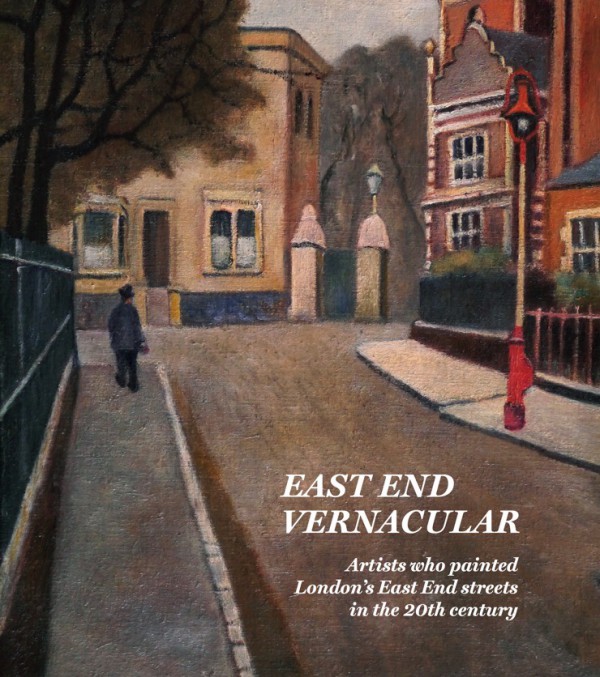
Click here to preorder a copy of EAST END VERNACULAR for £25
In City Churchyards

In the churchyard of St Dunstan’s in the East, Idol Lane
If ever I should require a peaceful walk when the crowds are thronging in Brick Lane and Columbia Rd, then I simply wander over to the City of London where the streets are empty at weekends and the many secret green enclaves of the churches are likely to be at my sole disposal. For centuries the City was densely populated, yet the numberless dead in the ancient churchyards are almost the only residents these days.
Christopher Wren rebuilt most of the City churches after the Great Fire upon the irregularly shaped medieval churchyards and it proved the ideal challenge to develop his eloquent vocabulary of classical architecture. Remarkably, there are a couple of churches still standing which predate the Fire while a lot of Wren’s churches were destroyed in the Blitz, but for all those that are intact, there are many of which only the tower or an elegant ruin survives to grace the churchyard. And there are also yards where nothing remains of the church, save a few lone tombstones attesting to the centuries of human activity in that place. Many of these sites offer charismatic spaces for horticulture, rendered all the more appealing in contrast to the sterile architectural landscape of the modern City that surrounds them.
I often visit St Olave’s in Mincing Lane, a rare survivor of the Fire, and when you step down from the street, it as if you have entered a country church. Samuel Pepys lived across the road in Seething Lane and was a member of the congregation here, referring to it as “our own church.” He is buried in a vault beneath the communion table and there is a spectacular gate from 1658, topped off with skulls, which he walked through to enter the secluded yard. Charles Dickens also loved this place, describing it as “my best beloved churchyard”
“It is a small small churchyard, with a ferocious, strong, spiked iron gate, like a jail. This gate is ornamented with skulls and cross-bones, larger than the life, wrought in stone … the skulls grin aloft horribly, thrust through and through with iron spears. Hence, there is attraction of repulsion for me … and, having often contemplated it in the daylight and the dark, I once felt drawn towards it in a thunderstorm at midnight.” he wrote in “The Uncommercial Traveller.”
A particular favourite of mine is the churchyard of St Dunstan’s in the East in Idol Lane. The ruins of a Wren church have been overgrown with wisteria and creepers to create a garden of magnificent romance, where almost no-one goes. You can sit here within the nave surrounded by high walls on all sides, punctuated with soaring Gothic lancet windows hung with leafy vines which filter the sunlight in place of the stained glass that once was there.
Undertaking a circuit of the City, I always include the churchyard of St Mary Aldermanbury in Love Lane with its intricate knot garden and bust of William Shakespeare, commemorating John Hemminge and Henry Condell who published the First Folio and are buried there. The yard of the bombed Christchurch Greyfriars in Newgate St is another essential port of call for me, to admire the dense border planting that occupies the space where once the congregation sat within the shell of Wren’s finely proportioned architecture. In each case, the introduction of plants to fill the space and countermand the absence in the ruins of these former churches – where the parishioners have gone long ago – has created lush gardens of rich poetry.
There are so many churchyards in the City of London that there are always new discoveries to be made by the casual visitor, however many times you return. And anyone can enjoy the privilege of solitude in these special places, you only have to have the curiosity and desire to seek them out for yourself.

In the yard of St Michael, Cornhill.

In the yard of St Dunstan’s in the East, Idol Lane.

At St Dunstan’s in the East, leafy vines filter the sunlight in place of stained glass.


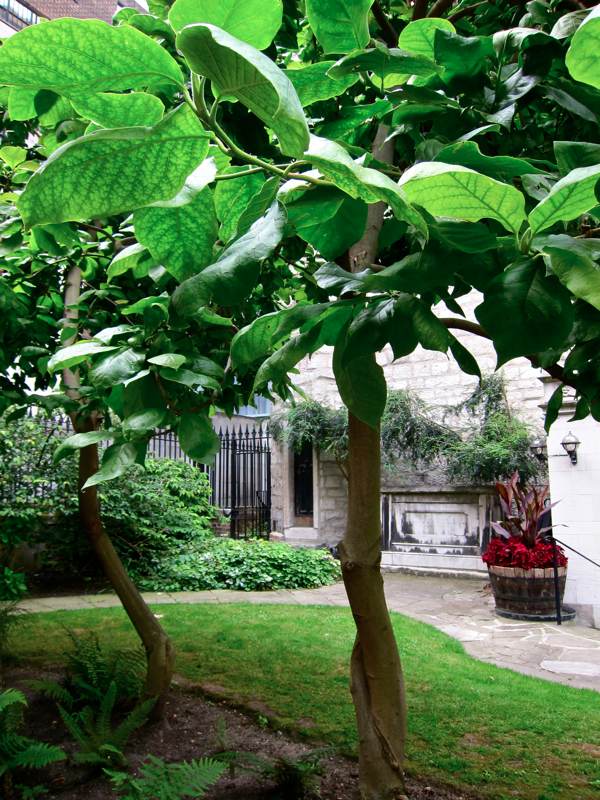
In the yard of St Olave’s, Mincing Lane.

This is the gate that Samuel Pepys walked through to enter St Olave’s and of which Charles Dickens wrote in The Uncommercial Traveller – “having often contemplated it in the daylight and the dark, I once felt drawn towards it in a thunderstorm at midnight.”

Dickens described this as ““my best beloved churchyard.”


In the yard of St Michael Paternoster Royal, College St.


In the yard of St Lawrence Jewry-next-Guildhall, Gresham St.

In the yard of St Mary Aldermanbury, Love Lane, this bust of William Shakespeare commemorates John Hemminge and Henry Condell who published the First Folio and are buried here.


In the yard of London City Presbyterian Church, Aldersgate St.


In the yard of Christchurch Greyfriars, Newgate St, the dense border planting occupies the space where once the congregation sat within the shell of Wren’s finely proportioned architecture.

In the yard of the Guildhall Church of St Benet, White Lion Hill.


In St Paul’s Churchyard.
You may also like to read about