Raju Vaidyanathan, Photographer
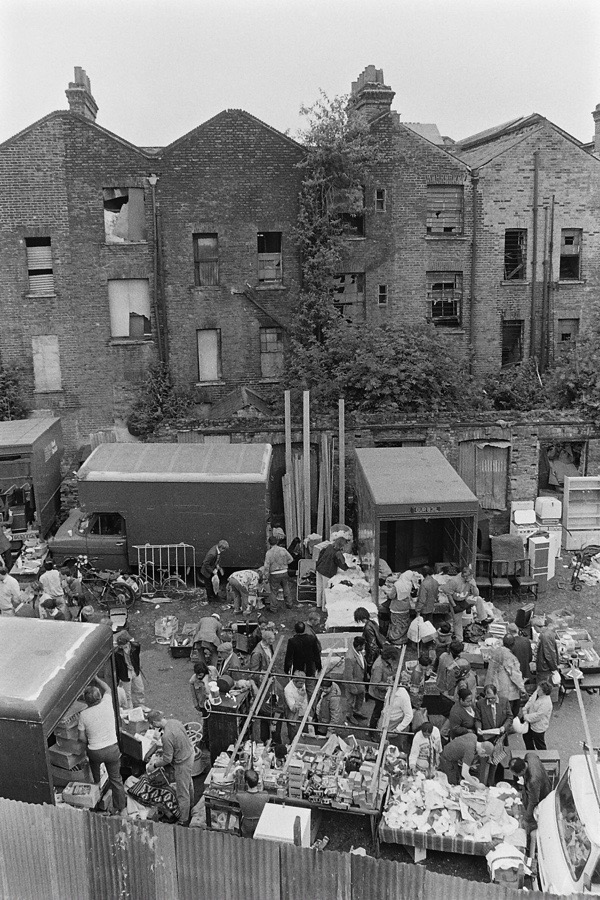
Back of Cheshire St, 1986
“I used to climb up on the railway bridge and take photos,” explained photographer Raju Vaidyanathan when he showed me this picture which he has seen for the first time only recently even though he took it thirty years ago. A prolific taker of photos around Spitalfields, Raju possesses over forty thousand negatives of people and personalities in the neighbourhood which, after all this time, he is now beginning to print. So I went down to the Idea Store in Watney Market where Raju works to learn more about his remarkable photography.
“I was born in Brick Lane above the shop that is now called ‘This Shop Rocks,’ and I still live on the Lane. My father, Vaithy came to this country in 1949, he was brought over as one of the very first chefs to introduce Indian cooking and our family lineage is all chefs. They brought him over to be chef at the Indian embassy and the day he arrived he discovered they had already arranged a room for him and that room was on Brick Lane, and he lived there until he died.
In 1983, I managed to get hold of an old camera that someone gave me and I started taking photos. As a kid I was very poor and I knew that I was not going to be able to afford take photos, but someone said to me, ‘Instead of taking colour photos, why don’t you take black and white?’ I went to the Montefiore Centre in Hanbury St and the tutor said he would teach me how to process black and white film. So that is what I did, I am a local kid and I just started taking photos of what was happening around me, the people, the football team, the youth club – anything in Brick Lane, where I knew all the people.
Photography is my passion but I also like local history and learning about people’s lives. Sometime in the late eighties, I realised I was not just taking photographs for myself but making a visual diary of my area. I have been taking photos ever since and I always have a camera with me. I am a history collector, I have got all the Asian political leaflets and posters over the years. In the Asian community everyone knows me as the history guy and photographer
Until four years ago, I had been working until nine or ten o’clock every night and seven days a week but then they restructured my hours and insisted I had to work here full time at the Idea Store. Before, I was only working here part-time and working as a youth worker the rest of the time. Suddenly, I had time off in the evenings.
People started saying, ‘You’ve got to do something with all these photos.’ So I thought, ‘Let me see if I can start sorting out my negatives.’ I started finding lots put away in boxes and I took a course learning how to print. For the last two years, I go in once a week and print my photos and see what I have got. I bought a negative scanner and I started scanning the first two boxes of negatives. I have never seen these photos because I never had the money to print them. I just used to take the photos and process the film. So far, I have scanned about eight thousand negatives and maybe next year, once I have sorted these out, I will start scanning all the others.”
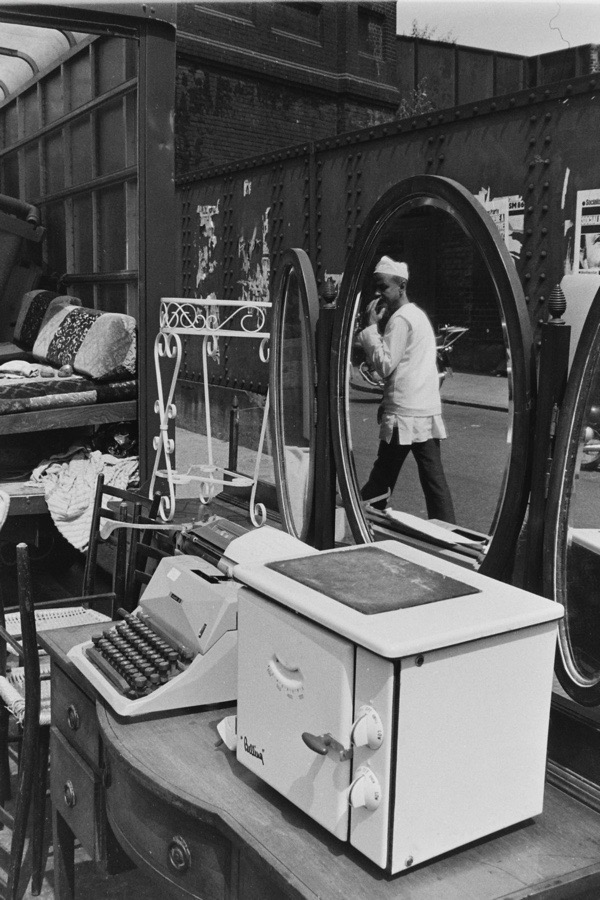
Junk on Brick Lane, 1985
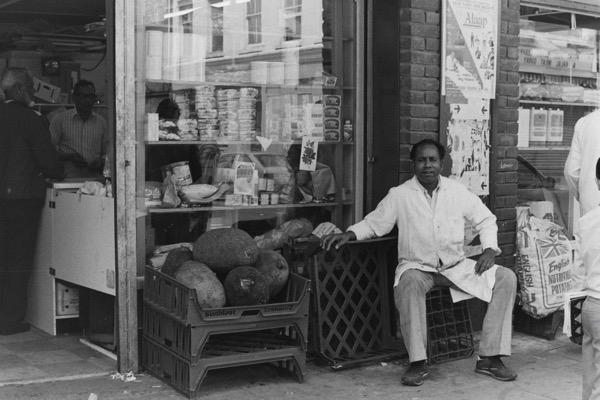
Outside Ali Brothers’ grocery shop, Fashion St 1986. His daughter saw the photo and was so happy that his picture was taken at that time.
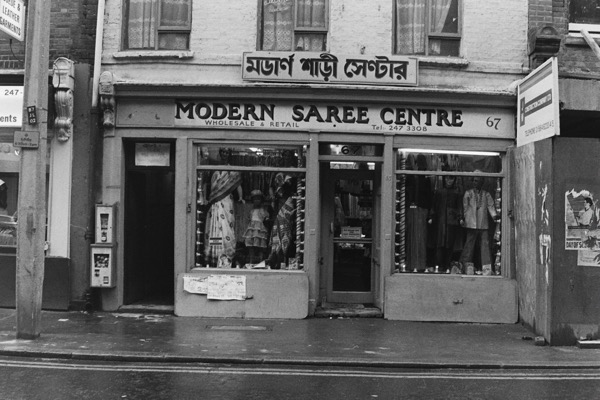
Modern Saree Centre 1985. It moved around a lot in Brick Lane before closing three years ago.
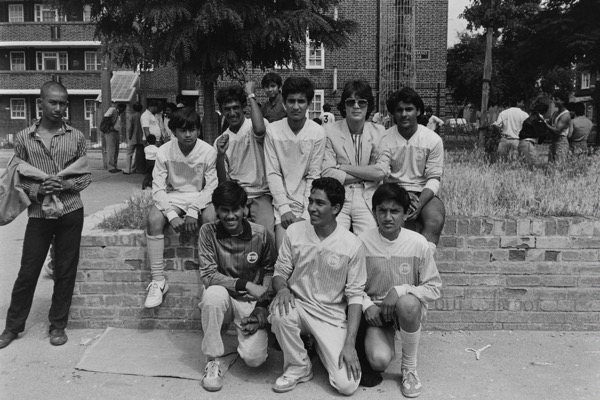
BYM ‘B’ football team at Chicksand Estate football pitch known as the ‘Ghat’ locally, 1986
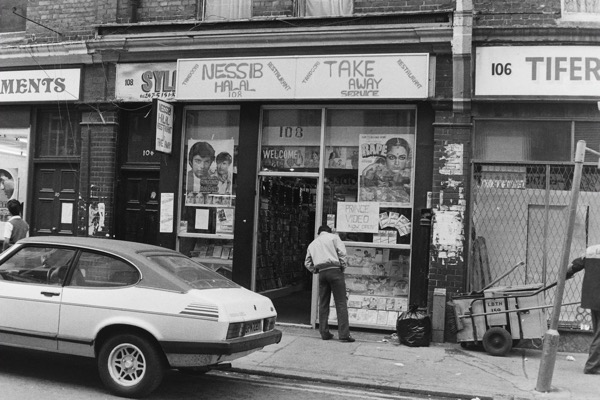
108 Brick Lane, 1985. Unable to decide whether to be a café or video store, it is now a pizza shop.
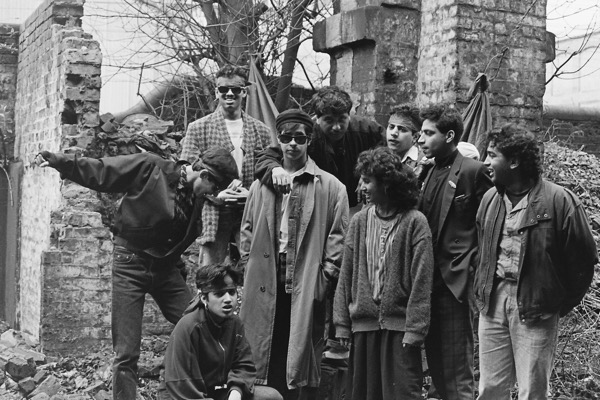
‘Joi Bangla Krew’ around the Pedley Street arches. The BBC recently honoured Haroun Shamsher from Joi (third from left) and Sam Zaman from ‘State of Bengal (far left) with a music plaque on Brick Lane

Myrdle Street, 1984. Washing was hung between flats until the late nineties.
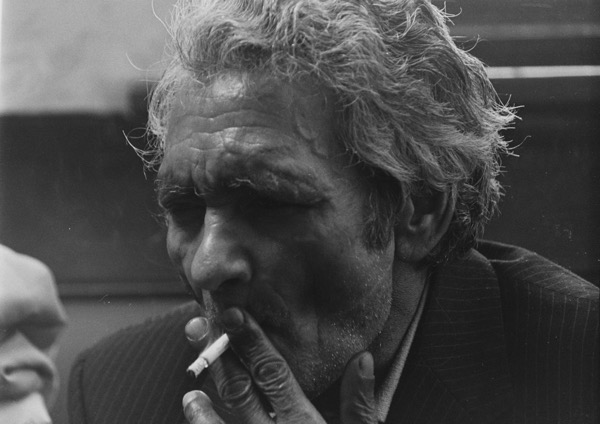
Chacha at Seven Stars pub 1985. Chacha was a Bangladeshi spiv and a good friend of my father. Seven Stars was the local for the Asian community until it closed down in 2000.
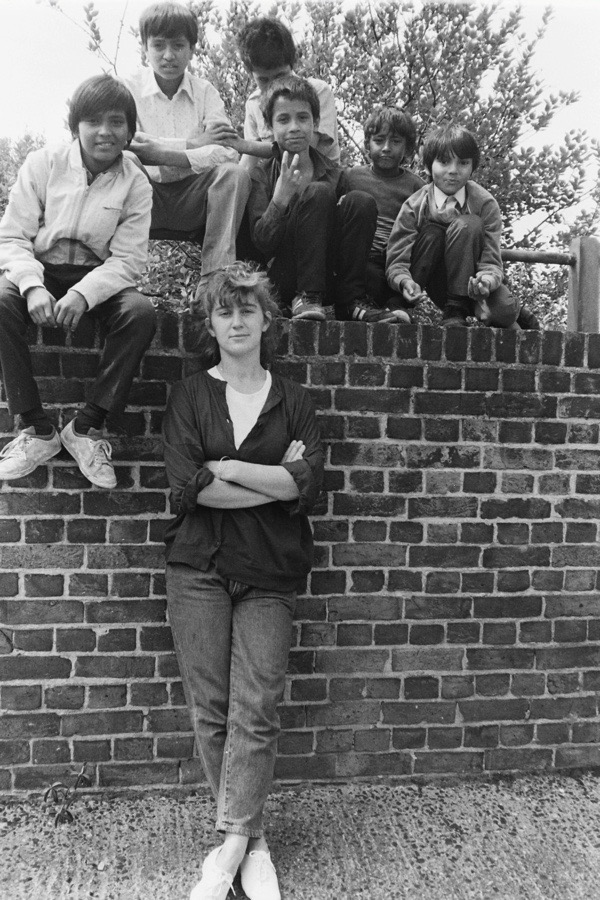
Teacher Sarah Larcombe and local youths (Zia with the two fingers) on top of the old Shoreditch Goods Station, which was the most amazing playground
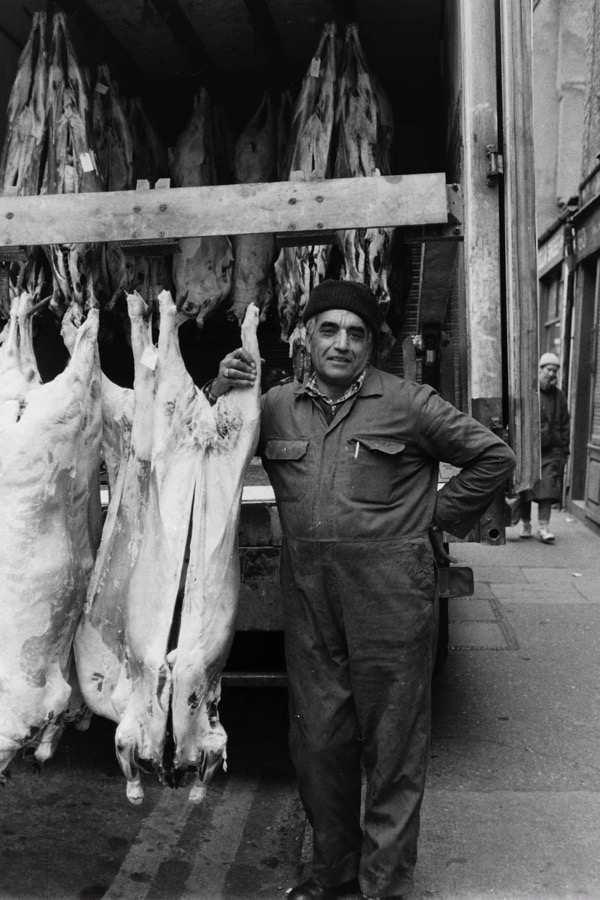
Halal Meat Man on Brick Lane, 1986
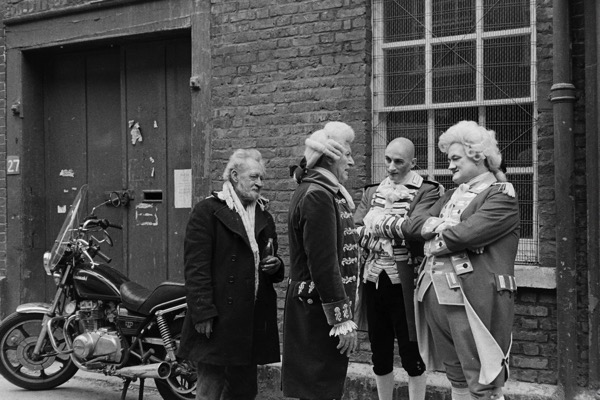
Filming of ‘Revolution’ in Fournier St, 1986. The man tapping for cash was killed by some boys a few months later.
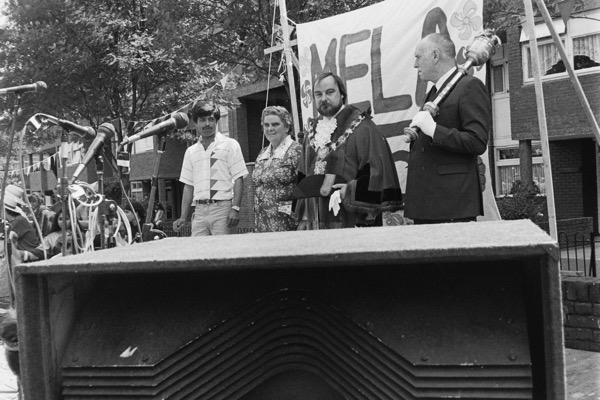
Mayor Paul Beaseley and Rajah Miah (later Councillor) open the Mela on Hanbury Street, 1985
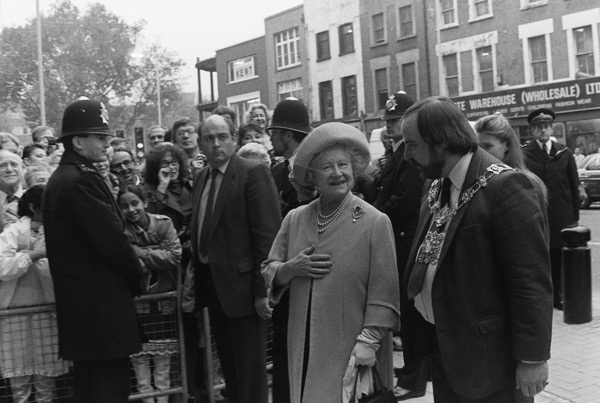
The Queen Mother arrives at the reopening of the Whitechapel Gallery, 1986

Photographs copyright © Raju Vaidyanathan
You may also like to take a look at
Grace Oscroft, Artist
Today I present another extract from my new book EAST END VERNACULAR, Artists who painted London’s East End streets in the 20th century to be published by Spitalfields Life Books in October. Click here to preorder your copy
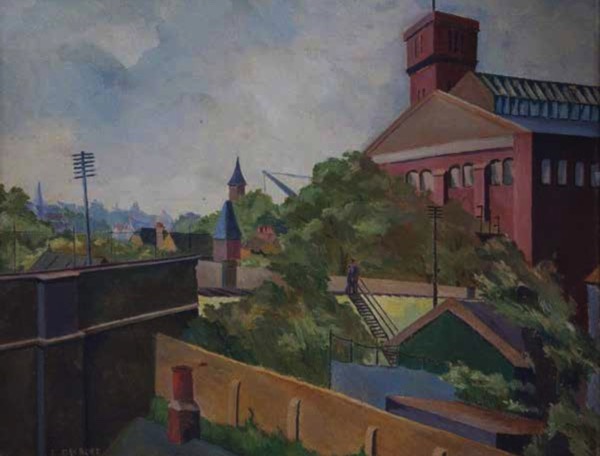
Bryant & May Factory, Bow
The Oscroft family ran a cycle shop opposite the church in Bow and lived nearby. As the only daughter, Grace Oscroft (1903-72) was expected to keep house for her parents and three brothers upon leaving school at fourteen.
Two of Grace’s brothers were considered to have artistic talent and when, in her early twenties, she accompanied her younger brother John to classes at Bow & Bromley Institute, tutor John Cooper recognised her natural ability.
In later years, John Oscroft recalled that his sister Grace always had an inclination to draw but worked on pictures infrequently. Fellow artist Cecil Osborne offered a simple explanation for this, recalling that Grace would only ever “bring along a painting from time to time” and complained that her domestic duties granted her little opportunity for creative work.
As a consequence, Grace’s street scenes were of locations around Bow and she specialised in rooftop pictures that she could paint from the bedroom windows of the family home. In those days, Bow was heavily industrialised and John recalled that ‘the only blade of grass being in the churchyard.” Grace painted the factories and foundries that surrounded her. The most notable of these was the huge red brick Bryant & May factory that dominated Bow and it is impossible that Grace was unaware of the matchgirls’ 1888 strike which challenged the exploitative working conditions and suffering they endured from working with phosphorus
Although John did not show any pictures, remarkably Grace had five paintings in the East London Art Club exhibition at the Whitechapel Gallery in 1928 and, to further this success, her picture Garden in Bow was hung at the Tate Gallery the following year. The Evening Standard ran an article featuring Grace entitled, ‘East End Shopgirl Artists’ and the Westminster Gazette reported “Miss Oscroft, who in every day life sells bicycle parts, was surprised when she heard that Sir Joseph Duveen had bought her painting for £5 5s.” – although John denied Grace ever served in the cycle shop in Bow.
“It was my first original effort and I am greatly pleased. Mr Cooper had advised me to try something on my own,” declared Grace with understated pride. Subsequently, she contributed paintings to the East London Group shows at the Lefevere Galleries in 1930, 1931 and 1932. As evidence of Grace’s self-assurance and articulacy as an artist, Walter Steggles remembered her earning “sixpence a week pocket money by lecturing on pictures”
In 1935, the Oscrofts took over another cycle business in New Southgate. Grace lived independently there above the shop and although the family’s house in Bow was destroyed in the blitz, fortunately no-one was at home at the time.
After her brothers married and left home, Grace committed to caring for her mother who suffered with rheumatism. After the death of her mother, she took a variety of employment to support herself, as housekeeper to a doctor, despatch clerk at the Co-operative store in Edmonton and then in a glove factory. Grace remained single throughout her life, confessing in 1954, “I only ever had one sweetheart, but he was taken from me,” referring to Elwin Hawthorne who married Lilian Leahy.
She died in St Joseph’s Hospice, Hackney in 1972 and her death certificate recorded her occupation as ‘warehouse clerk (retired),’ yet the authority and accomplishment of Grace Oscroft’s few works testify to a significant artistic talent that might have discovered fuller expression in different circumstances.
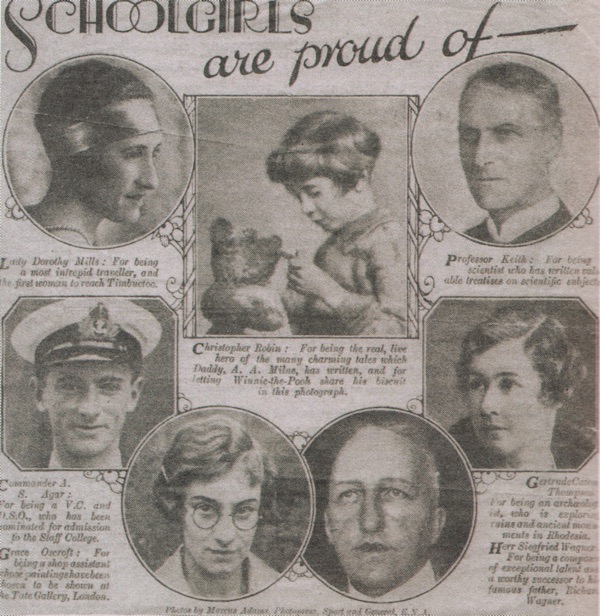
Grace Oscroft (bottom left), 1929
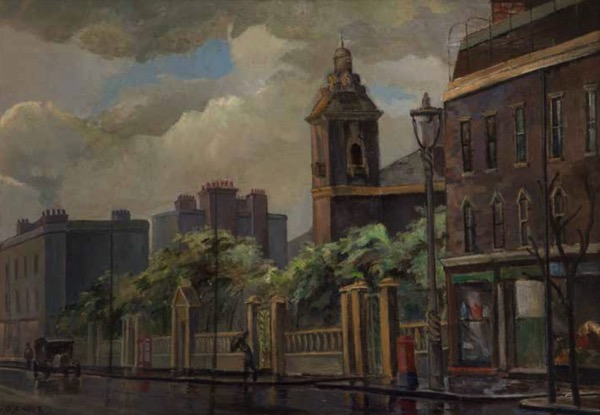
St Clement’s Hospital, Bow
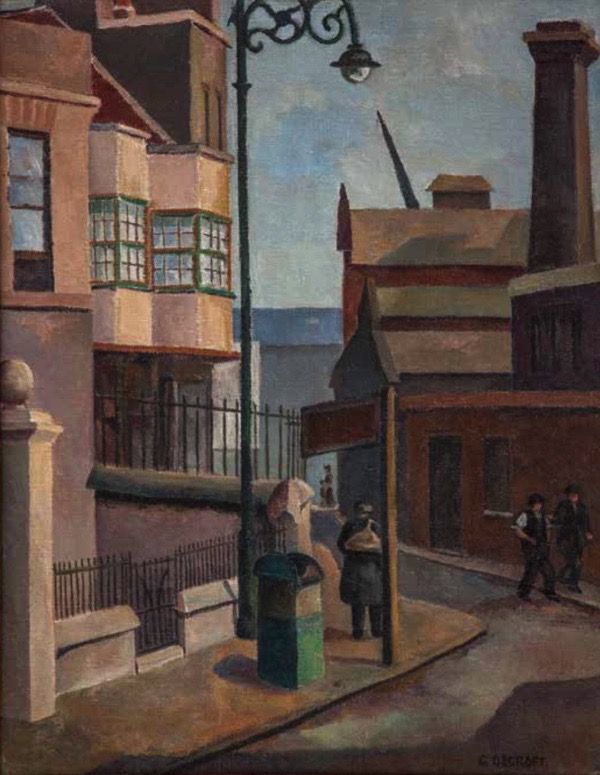
Old Houses, Bow

The same view today
Paintings copyright © Estate of Grace Oscroft
With grateful thanks to David Buckman for the use of his research
Take a look at some of the other artists featured in East End Vernacular
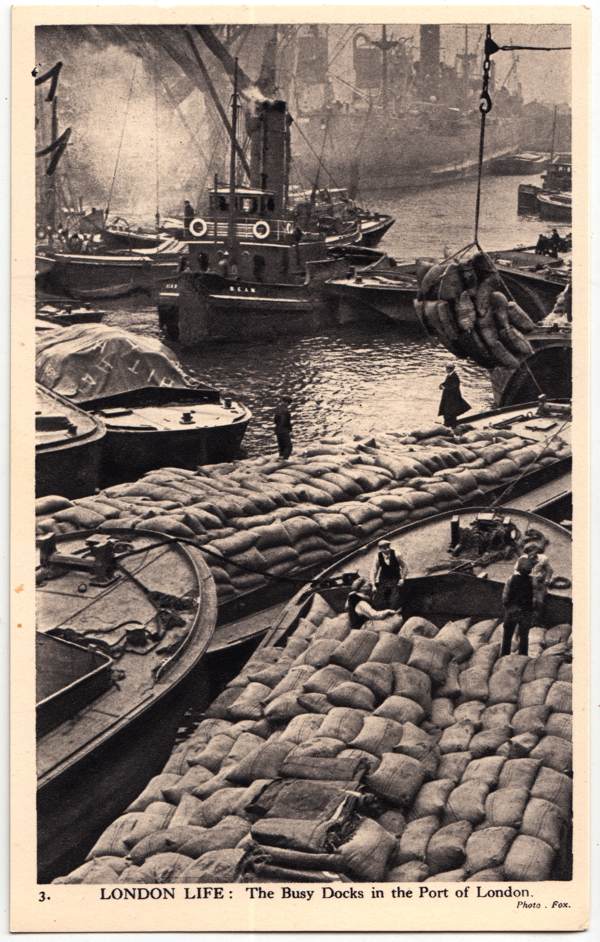
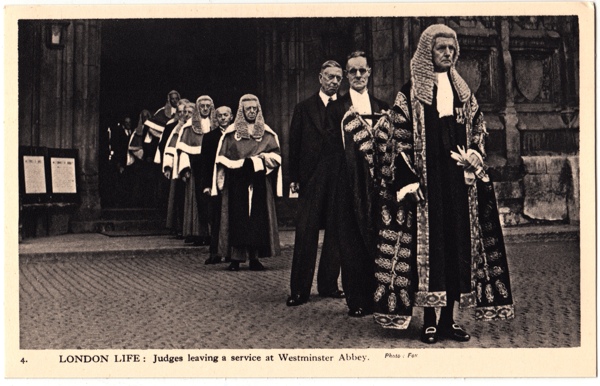
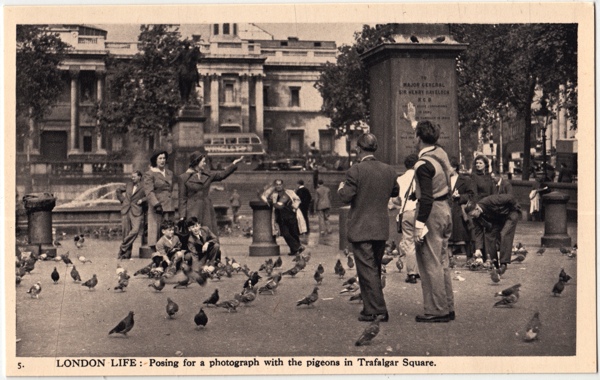
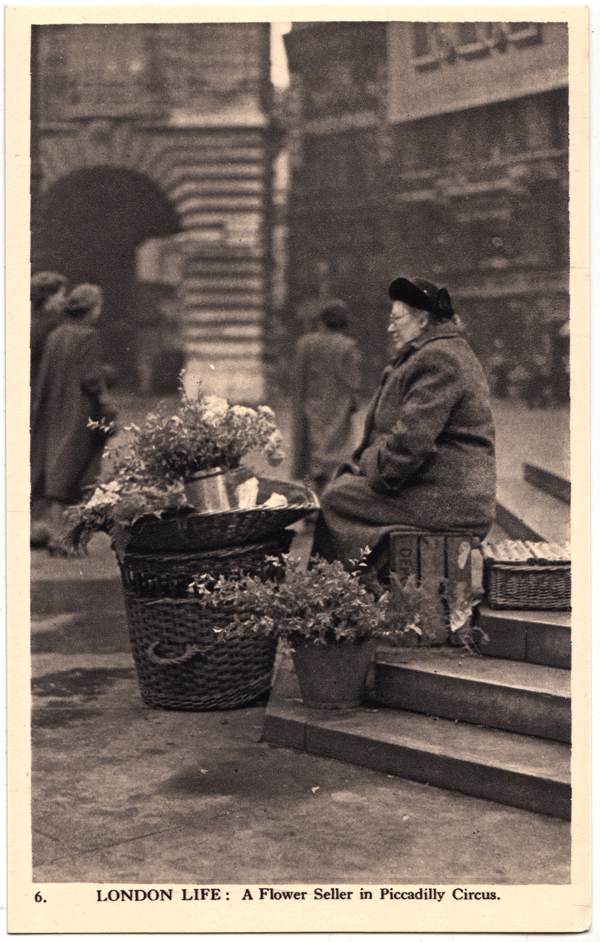
Charles Skilton’s London Life, 1950
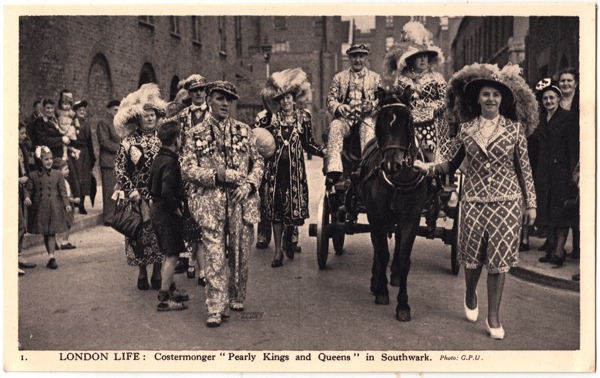
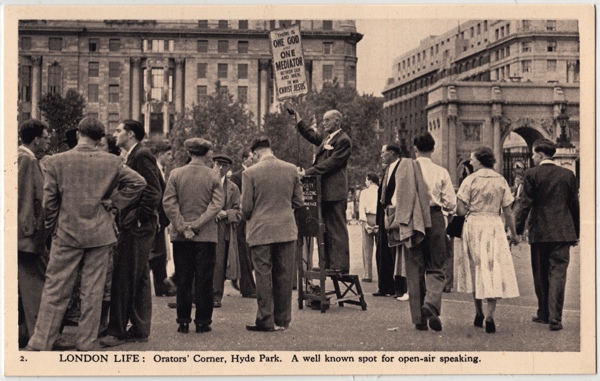
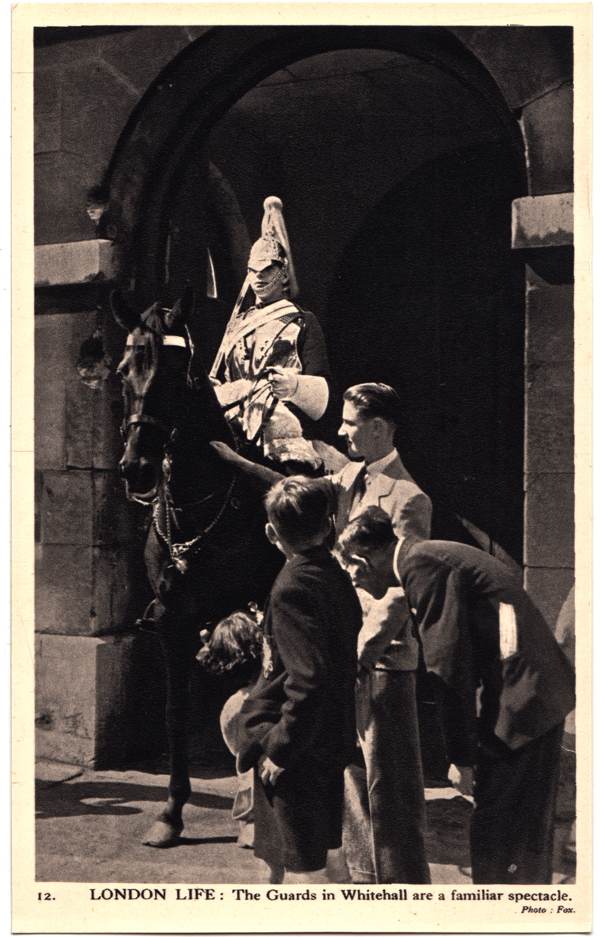
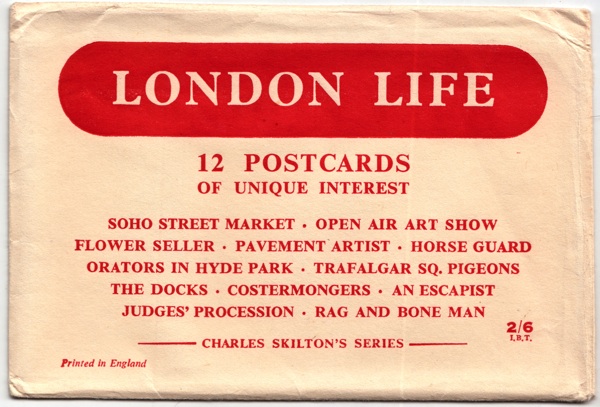
Now that the summer visitors are here and thronging in the capital’s streets and transport systems, I thought I would send you this fine set of postcards published by Charles Skilton, including my special favourites the escapologist and the pavement artist.
Looking at these monochrome images of the threadbare postwar years, you might easily imagine the photographs were earlier – but Margaret Rutherford in ‘Ring Round the Moon’ at The Globe in Shaftesbury Ave in number nine dates them to 1950. Celebrated in his day as publisher of the Billy Bunter stories, Charles Skilton won posthumous notoriety for his underground pornographic publishing empire, Luxor Press.
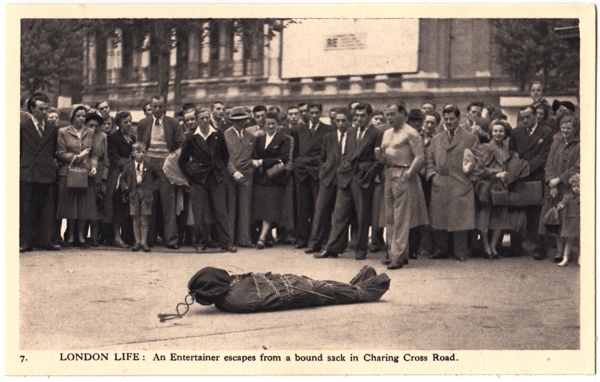
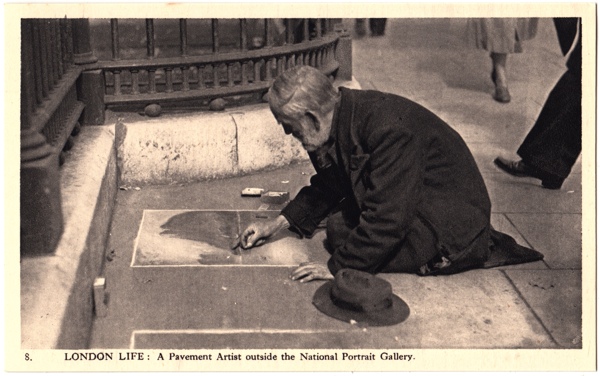
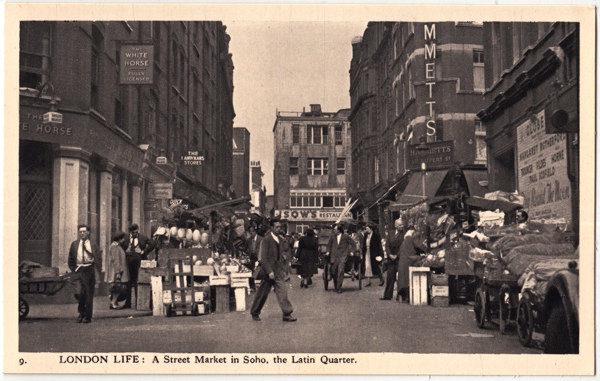

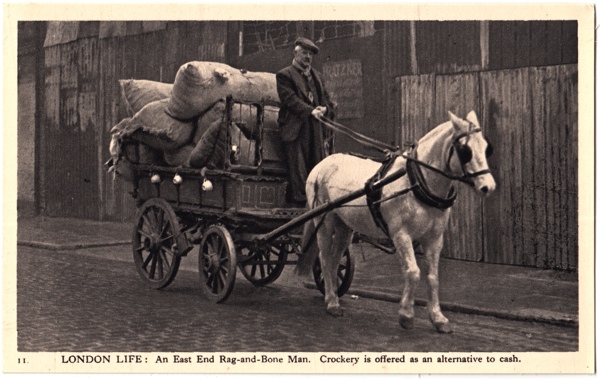
You may also like to take a look at
Ronald Morgan, Artist
Today I present another extract from my new book EAST END VERNACULAR, Artists who painted London’s East End streets in the 20th century to be published by Spitalfields Life Books in October. Click here to preorder your copy
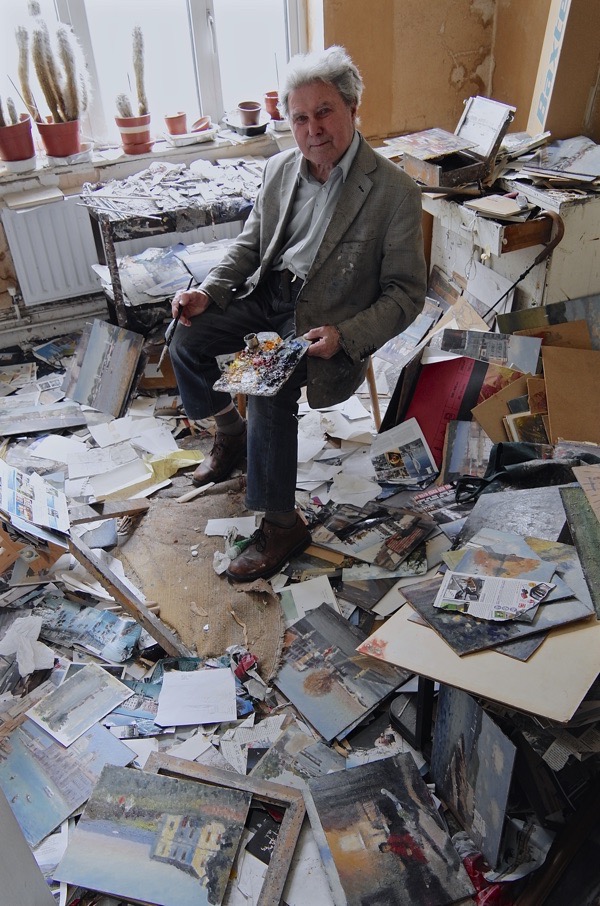
‘I like the East End, it has a nice feel to it’
This is my portrait of Ronald Morgan in the studio at his flat in Bow where I visited him recently. Ronald has lived the batchelor life in an attractive art deco block of flats in Bow for forty years and it is furnished as if he had only just moved in, yet the piles of discarded sketches which litter the floor of his quiet studio at the rear of the building more than testify to his prodigious output in this time.
I discovered Ronald Morgan’s work through his painting of a Salvation Army band standing in the rain at the junction of Parnell and Tredegar Rd in Tower Hamlets’ art collection and I was fascinated to discover that he is a long time resident of the borough, even though leads a quiet life devoted to painting and keeps a resolutely low profile in the East End.
“I was born in 1936 near Cannock in Staffordshire. When I was about twelve my parents bought me some watercolours and I dabbled about in an amateurish way. When I was fifteen, I went to Walsall School of Art and I was there doing graphic design, we called it ‘commercial art’ in those days. I left the School at eighteen and couldn’t get a job as a graphic designer, so I had to work in an industrial drawing office, drawing machinery, that sort of thing. I was a junior draftsman.
The principal of the School of Art invited me to join the Walsall Society of Artists of which he was the secretary, so I became a junior member when I was eighteen. I mentioned to him one day that I was going to submit some work to the Royal Academy Summer Show. ‘My boy, you’ll be wasting your time and money,’ he informed me, ‘I am a graduate of the Royal College of Art and a close friend of Henry Moore – he was the best man at my wedding – and I’ve been submitting pictures for forty years, but never had one accepted.’ What an idiot! Anyway, I was undaunted so I sent in two drawings and they were both accepted, and one got shown in the exhibition. When he found this out, he was so annoyed. Instead of saying, ‘Congratulations!’ he didn’t speak to me again for a whole year, and next year I sent in three pictures and got two in the show. I was showing there every year after that.
After working in the drawing office, I got a job in a local government planning department – doing illustrations, that sort of work. As I was exhibiting so many times in London, coming down by train all the time, I thought, ‘I might as well live there.’ So I applied for several jobs and eventually I got one working for the London Borough of Haringey. The chap in charge saw my watercolours and said, ‘Could you do something like that for us?’ So I said, ‘Yes, certainly,’ and I moved down here. I got digs in Hornsey and, after four years, I moved to Hammersmith Council. It was a similar sort of thing, the boss saw my work and said, ‘We’d like you to do some work like that for us.’
All these years, I was painting in every available moment of my own time. I paint on location, so I’d go out with my easel and I took trips abroad around Europe. Now it is more difficult because I am eighty-one, and carrying an easel and paint box around is quite heavy. I still work very hard and I’d never give it up, even though I feel very tired sometimes. I do a lot of walking though and I still paint out of doors, I was painting the other week in Richmond by the Thames. Turner painted there, he was a great painter – one of my favourites.
I won quite a few awards including the Lord Mayor’s Art Award in 1974, for a street scene in Islington. It is nice to sell pictures – it gives you confidence, you know. I sell on the internet occasionally through the Royal Society of British Artists. I sold a picture of Venice to a woman in Hong Kong a few weeks ago!
From Hammersmith, I applied for a job at the drawing office in Tower Hamlets when the Town Hall was here in Bow. I became the senior draftsman and I thought, ‘I’d love to live in the East End.’ I like the East End, it has a nice feel to it. So I came and painted a lot in the streets around here. I painted several Salvation Army bands including one in Whitechapel, where it all started. I have painted kids playing football in the street in the East End. I painted all along the Regent’s Canal and the River Lea. I was painting down by the River Lea twenty years ago on a very windy day. A gust of wind almost blew my easel over and I grabbed hold of it, but my picture had gone – into the river – three hours work wasted! It just floated away.
I have lived in this flat for about forty years. I paint full time now, every day of the week. I just love painting streets, I put my easel up and paint. When you see a subject under certain lighting conditions – bright light or evening light – it’s so exciting. I have even got people to pose for me in the street. I say, ‘Madame or Sir, could you stand there for about ten minutes while I paint you?’ and they’ve done it.
The worst thing is when someone gets out of their Porsche with a cigar and says, ‘I’d love to buy your painting.’ This happened to me at Putney, the man said, ‘I live just down the road and I’ve always wanted a picture of this stretch of the river.’ So I said, ‘As a favour, you can have it unframed for £300.’ He said, ‘£300 for a small painting like that!’ I wanted to say, ‘If you can afford a Porsche, you can afford three hundred quid for a painting.’
I have lived in London for about fifty years and I have seen a tremendous amount of change. When I first came, there were all these lovely old buildings. They were ancient and falling apart some of them but marvellous to paint, whereas now they have been replaced by modern developments which are not so attractive. I still enjoy the East End and I love to paint the river, I think I have painted whole of this end of the river right down to the coast.”
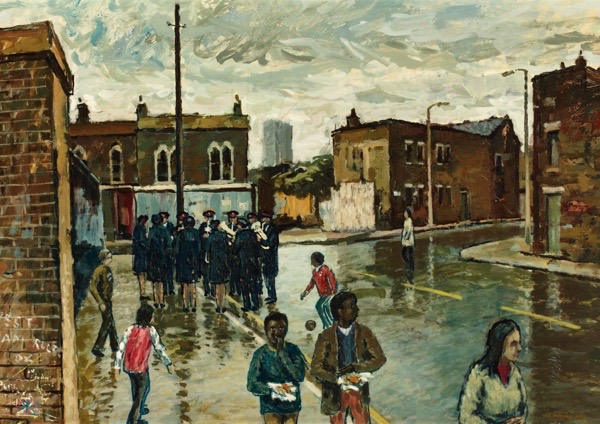
Salvation Army Band at the junction of Parnell and Tredegar Rd in Bow, 1978. Painted from sketches made a few years earlier, before the houses were demolished.
Painting copyright © Ronald Morgan
Reproduced courtesy of Tower Hamlets Local History Library & Archives
Take a look at some of the other artists featured in East End Vernacular
Click here to preorder a copy of EAST END VERNACULAR for £25
Beano Season In The East End

A beano from Stepney in the twenties (courtesy Irene Sheath)
We have reached that time of year when a certain clamminess prevails in the city and East Enders turn restless, yearning for a trip to the sea or at the very least an excursion to glimpse some green fields. In the last century, pubs, workplaces and clubs organised annual summer beanos, which gave everyone the opportunity to pile into a coach and enjoy a day out, usually with liberal opportunity for refreshment and sing-songs on the way home.

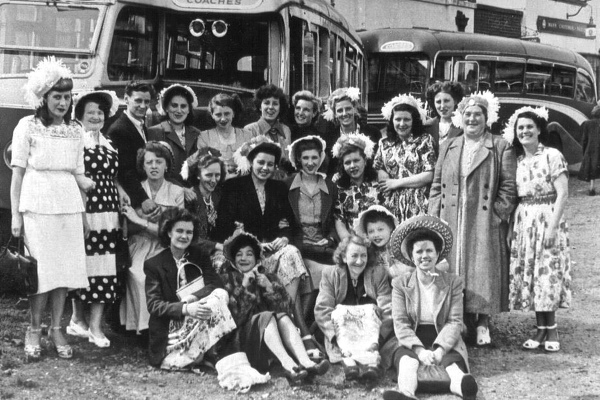
Ladies’ beano from The Globe in Hartley St, Bethnal Green, in the fifties. Chris Dixon, who submitted the picture, recognises his grandmother, Flo Beazley, furthest left in the front row beside her next door neighbour Flo Wheeler, who had a fruit and vegetable stall on Green St. (courtesy Chris Dixon)
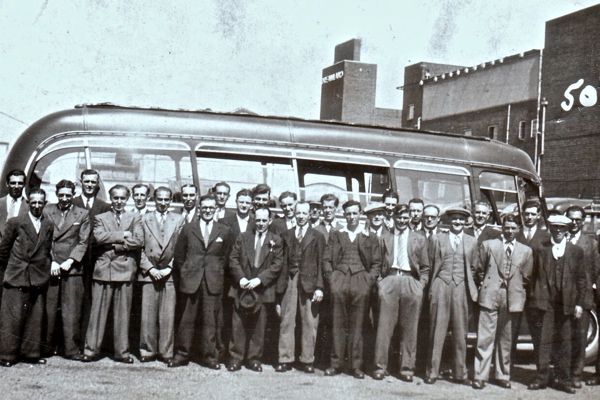
Another beano from the fifties – eighth from the left is Jim Tyrrell (1908-1991) who worked at Stepney Power Station in Limehouse and drank at the Rainbow on the Highway in Ratcliff.
Mid-twentieth century beano from the archive of Britton’s Coaches in Cable St. (courtesy Martin Harris)
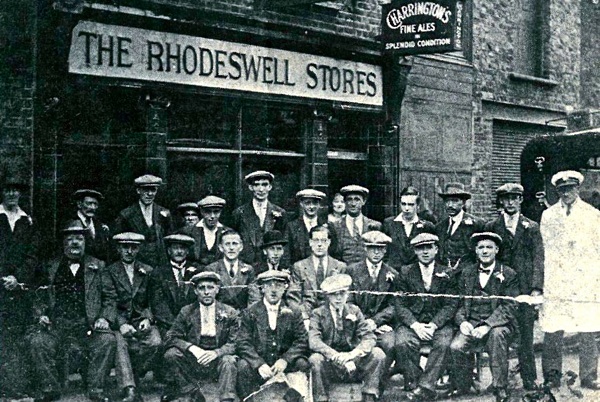
Beano from the Rhodeswell Stores, Rhodeswell Rd, Limehouse in the mid-twenties.
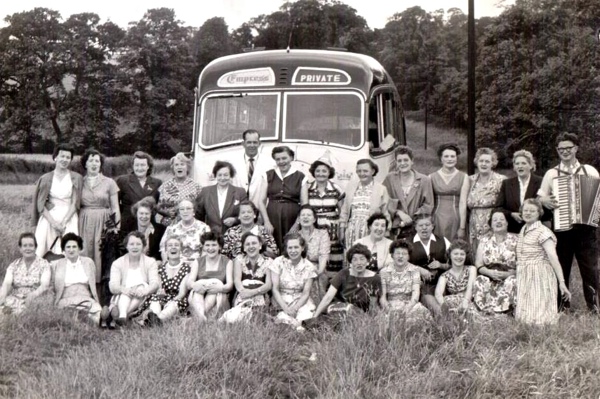
Taken on the way to Southend, this is a ladies’ beano from The Beehive in the Roman Rd during the fifties or sixties in a coach from Empress Coaches. The only men in the photo are the driver and the accordionist. Joan Lord (née Collins) who submitted the photo is the daughter of the publicans of The Beehive. (Courtesy Joan Lord)
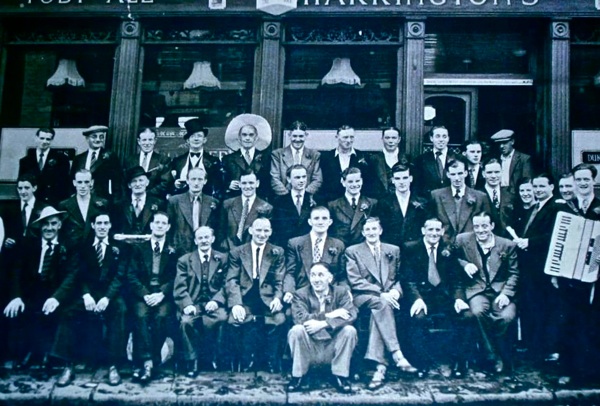
Terrie Conway Driver, who submitted this picture of a beano from The Duke of Gloucester, Seabright St, Bethnal Green, points out that her grandfather is seventh from the left in the back row. (Courtesy Terrie Conway Driver)
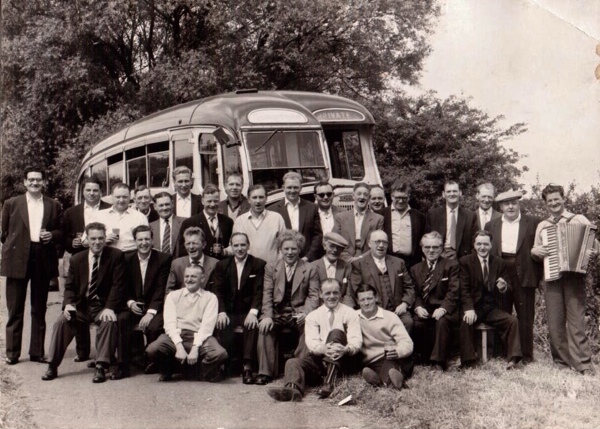
Taken on the way to Southend, this is a men’s beano from The Beehive in the Roman Rd in the fifties or sixties in a coach from Empress Coaches. (Courtesy Joan Lord)

Beano in the twenties from the Victory Public House in Ben Jonson Rd, on the corner with Carr St. Note the charabanc – the name derives from the French char à bancs (“carriage with wooden benches”) and they were originally horse-drawn.

A crowd gathers before a beano from The Queens’ Head in Chicksand St in the early fifties. John Charlton who submitted the photograph pointed out his grandfather George standing in the flat cap holding a bottle of beer on the right with John’s father Bill on the left of him, while John stands directly in front of the man in the straw hat. (Courtesy John Charlton)
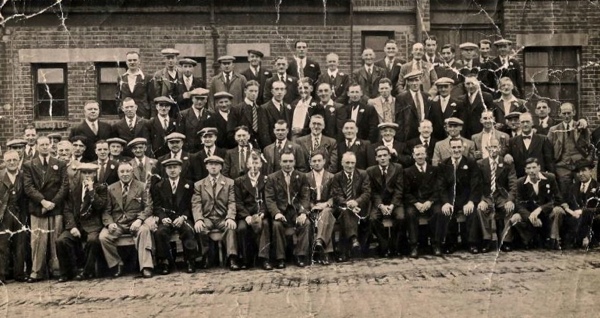
Beano for Stepney Borough Council workers in the mid-twentieth century. (Courtesy Susan Armstrong)

Martin Harris, who submitted this picture, indicated that the driver, standing second from the left, is Teddy Britton, his second cousin. (Courtesy Martin Harris)
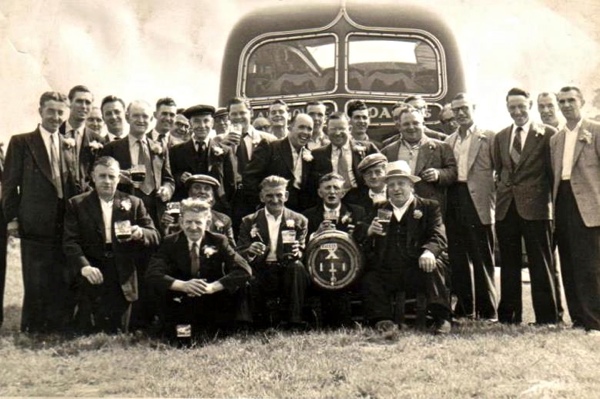
In the Panama hat is Ted Marks who owned the fish place at the side of the Martin Frobisher School, and is seen here taking his staff out on their annual beano.
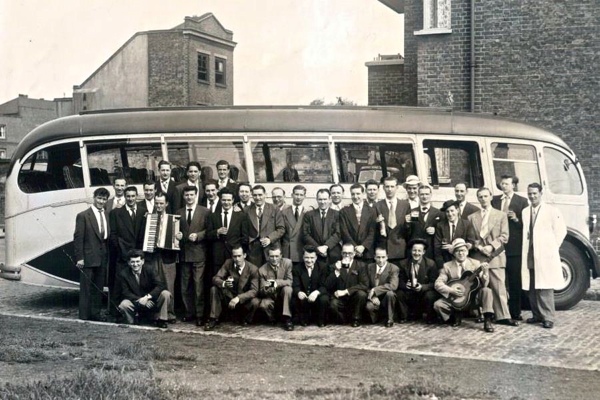
George, the father of Colin Watson who submitted this photo, is among those who went on this beano from the Taylor Walker brewery in Limehouse. (Courtesy Colin Watson)
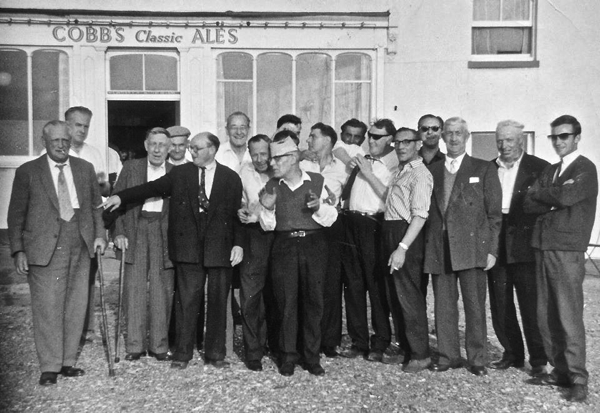
Pub beano at Margate. (Courtesy John McCarthy)
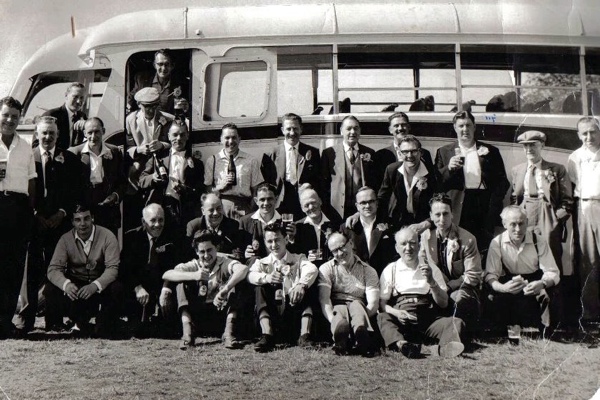
Men’s beano from c. 1960 (courtesy Cathy Cocline)
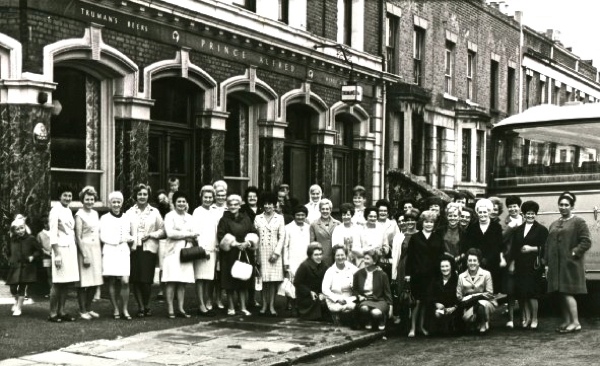
Late sixties or early seventies ladies’ beano organised by the Locksley Estate Tenants Association in Limehouse, leaving from outside The Prince Alfred in Locksley St.
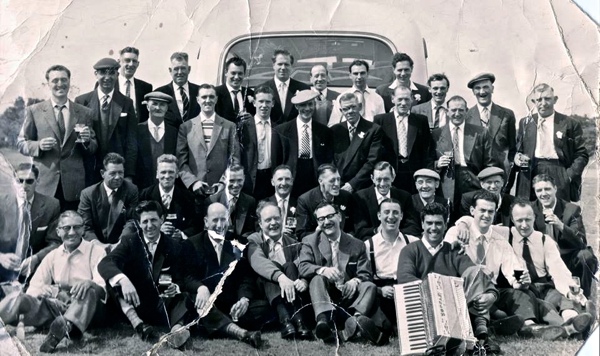
The father of John McCarthy, who submitted this photo, is on the far right squatting down with a beer in his hand, in this beano photo taken in the early sixties, which may be from his local, The Shakespeare in Bethnal Green Rd. Equally, it could be a works’ outing, as he was a dustman working for Bethnal Green Council. Typically, the men are wearing button holes and an accordionist accompanies them. Accordionists earned a fortune every summer weekend, playing at beanos. (courtesy John McCarthy)

John Sheehan, who submitted this picture, remembers it was taken on a beano to Clacton in the sixties. From left to right, you can seee John Driscoll who lived in Grosvenor Buildings, Dan Daley of Constant House, outsider Johnny Gamm from Hackney, alongside his cousin, John Sheehan from Constant House and Bill Britton from Holmsdale House. (Courtesy John Sheehan)
Photographs courtesy Tower Hamlets Community Homes
You may also like to read about
Chris Kelly’s Cable St Gardeners
Photographer Chris Kelly returned to Cable St Community Gardens to take these vibrant portraits of the gardeners. Previously, Chris made a set of portraits in black and white, which became an exhibition and a book, and were also featured here on Spitalfields Life
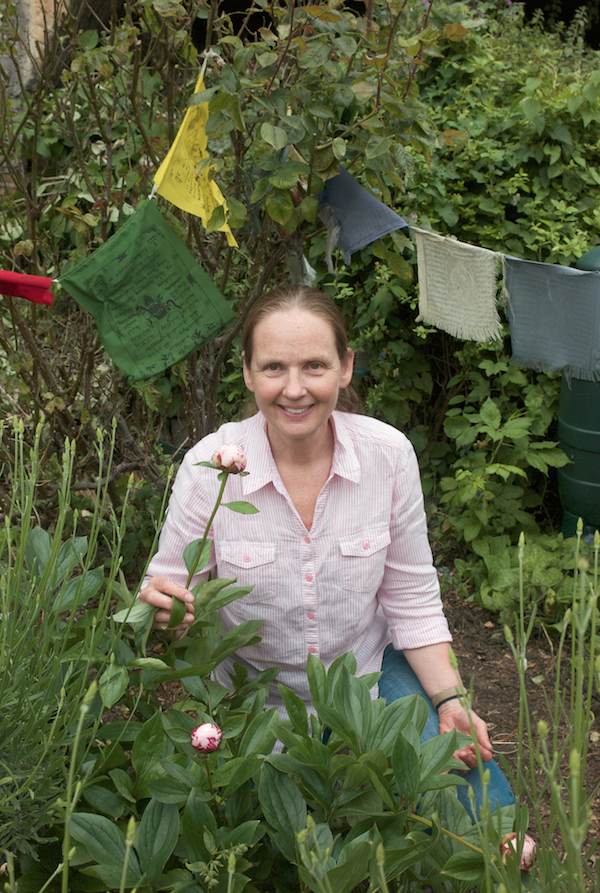
Jane Sill – I hope to grow more vegetables in future. Other plants have taken over the space, especially poppies. They remind me of my grandfather who was wounded and left for dead of the first day of the Battle of the Somme, 1st July, 1916. He survived, was nursed in France and eventually brought back to this country. The Tibetan prayer flags were brought back from Lhasa by a friend.
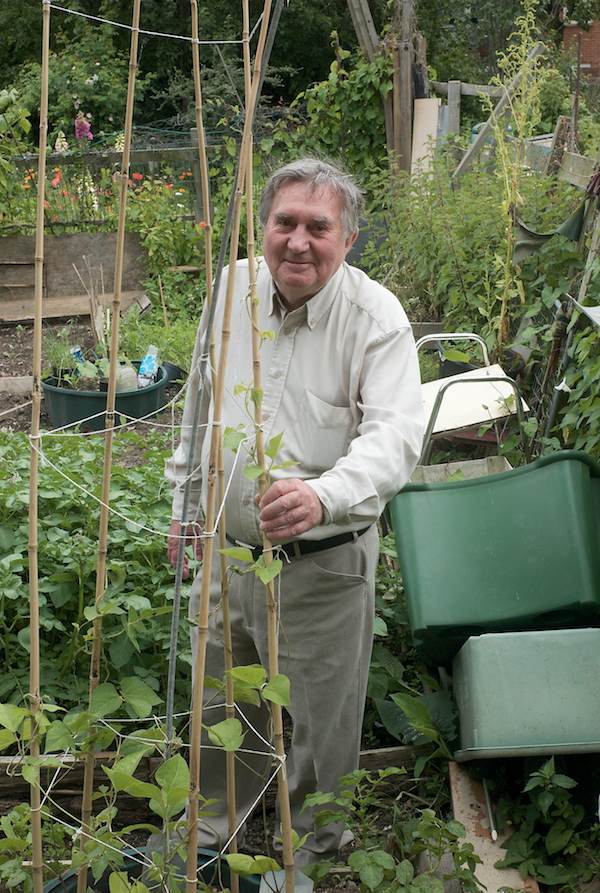
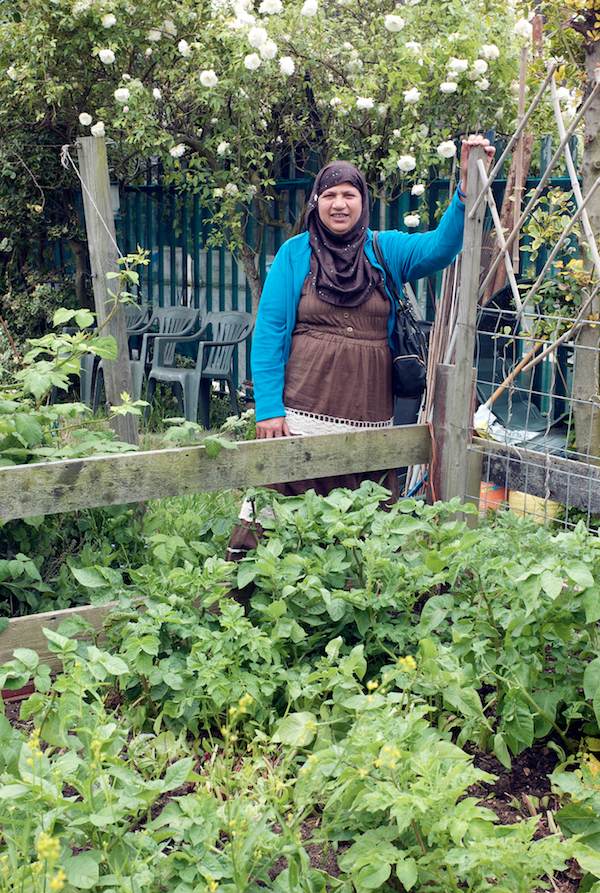
Anwara Begum – I’m growing more varieties of vegetables now. I have Bangladeshi pumpkins and different types of Bangladeshi cucumbers. I grow aubergines and chillies in my greenhouse – one of them is too hot even for me.
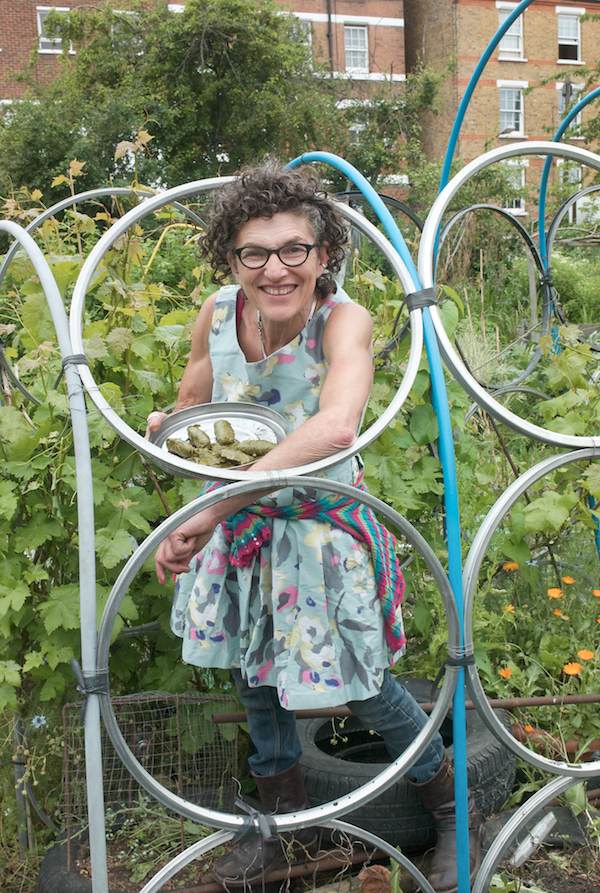
Manda Helal – Manda’s vines, pretty and delicious.
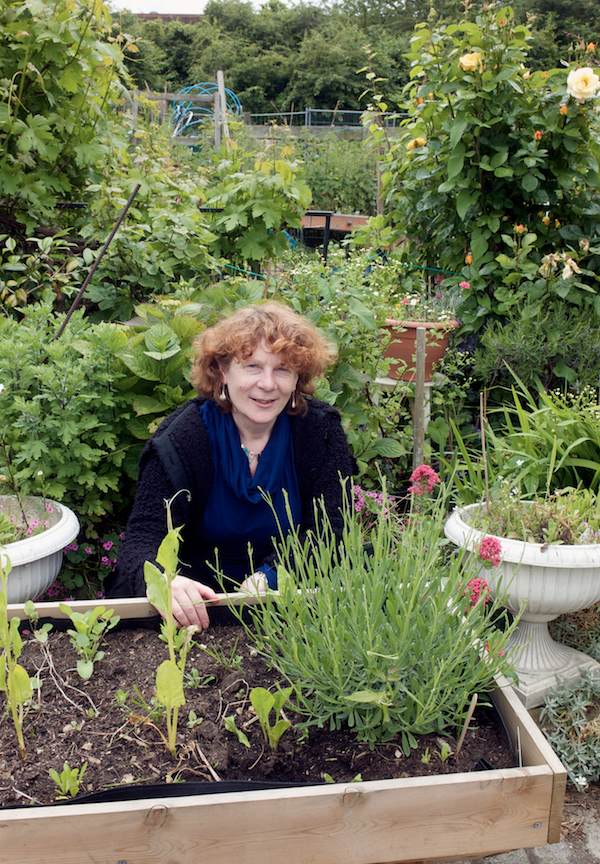
Marian Monas – I’ve been coming to the gardens for a few months. I live just around the corner. Eventually I hope to have a plot or to share one, but in the meantime I’m growing things in a raised planter. I’m happy with anything that grows really. I’ve got herbs, chard, rhubarb, lavender – and there are visits from a friendly rat.
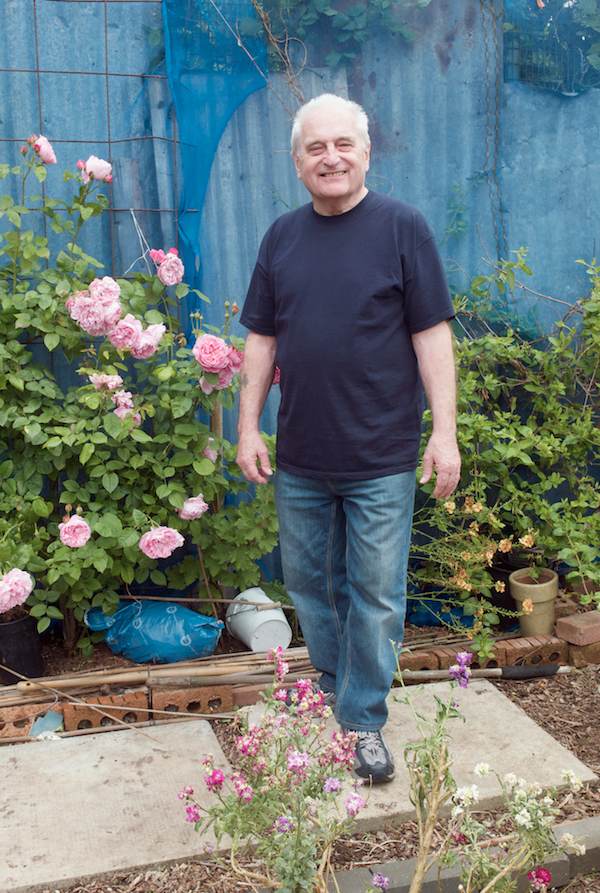
Ron Osborne – I was one of the original gardeners here back in the seventies and I had a plot for about ten years. Then I started the Shadwell Basin Project for local youth and became involved with other things. I came back when Gina got this plot and we both spend time on it, but it’s basically hers.
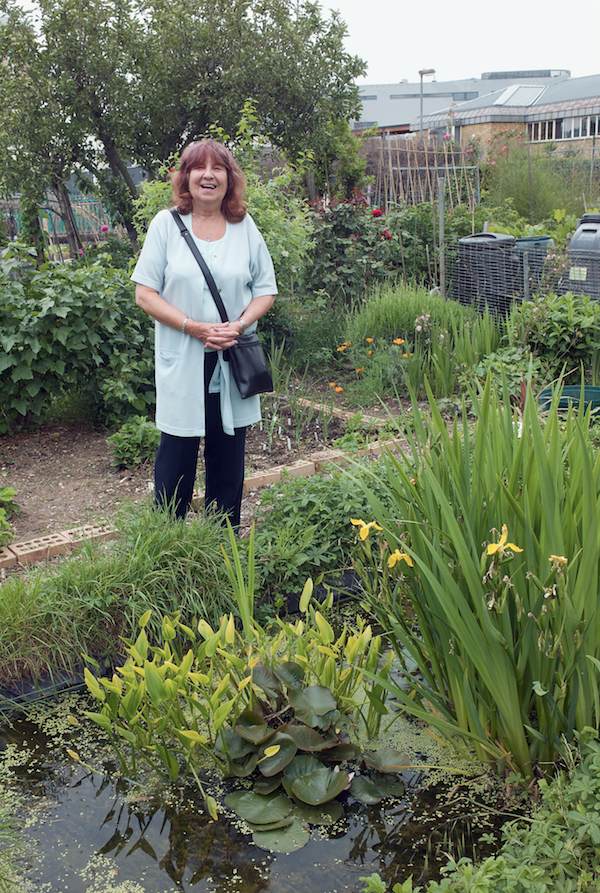
Anne Herbert – Anne moved out of the area in 2005 but always comes back to the gardens on Open Day and keeps in touch with some of the other gardeners. Part of Anne’s former plot is now a well stocked pond.
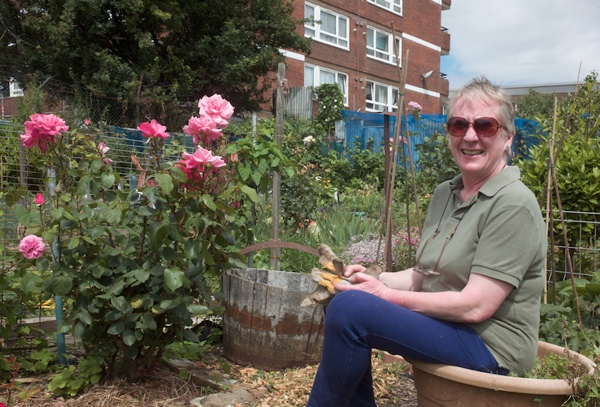
Ann Ahern – I moved to Tower Hamlets from Notting Hill in 1999 and I’ve had my plot here since 2005. I live just eight minutes away. I’m growing mixed flowers, a few vegetables and I have a pond. My nephew has a seed bed on part of the plot. I’m not so good with seeds.
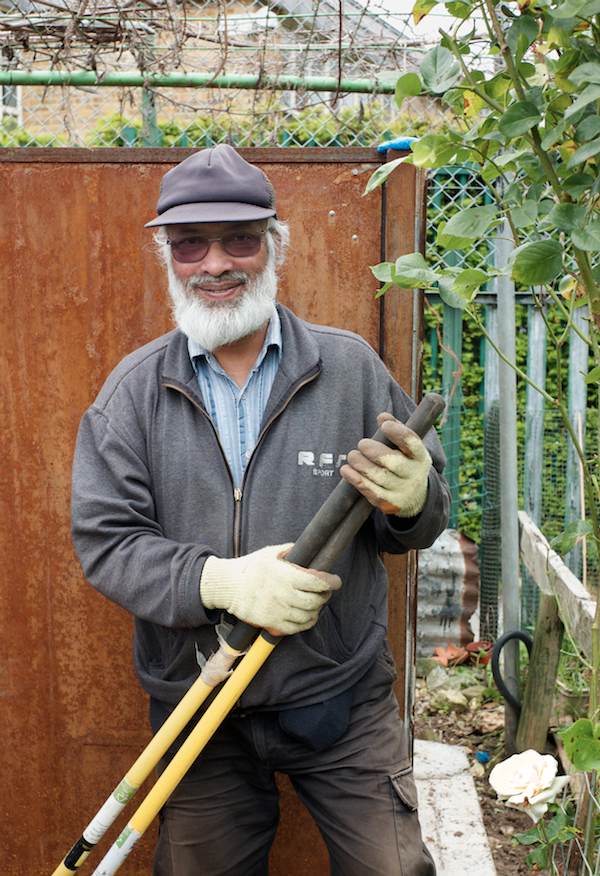
Monir Uddin – My latest project is to specialise in roses. I’m transplanting them, but they are quite tricky to grow and it takes at least a year for the roots to become established. I’m a photographer and I hope to photograph the roses for cards and calendars.
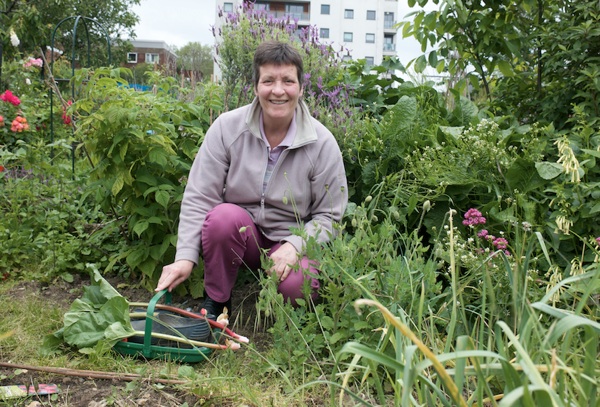
Helen Keep
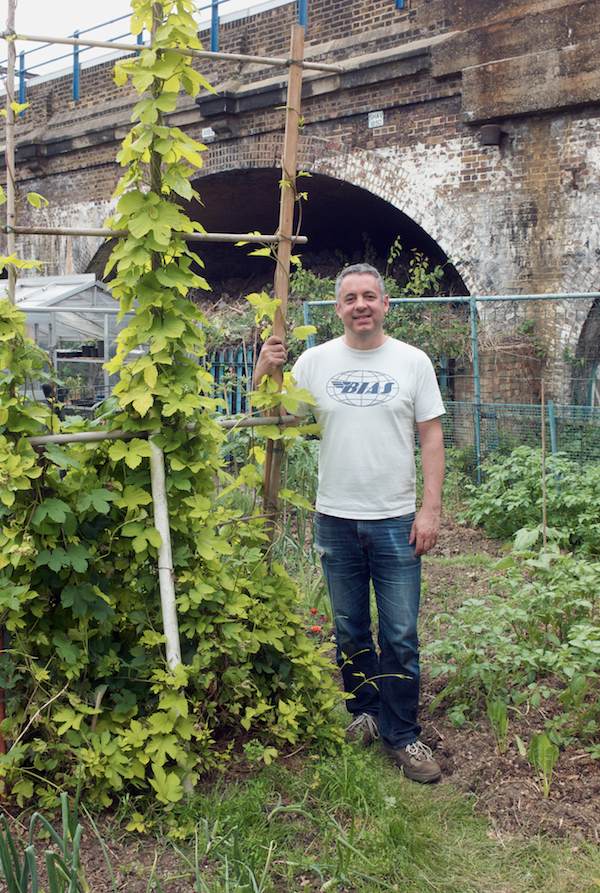
Emir Hasham – Emir’s plot houses one of two beehives introduced to the gardens recently.
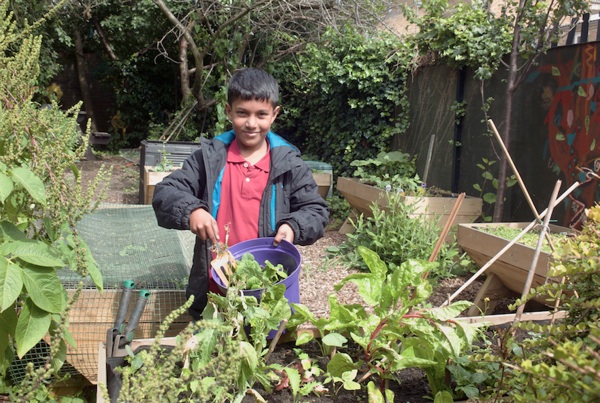
Hasan Chowdhury – I’m twelve and I’m the youngest gardener here. I first came with our neighbour Angel, who has a cat, and then Jane let me take over these raised planters. I’m growing spinach and potatoes, three different types of pumpkins, peas and coriander. I first learned about gardening from my mum and I like it because gardening is fun.
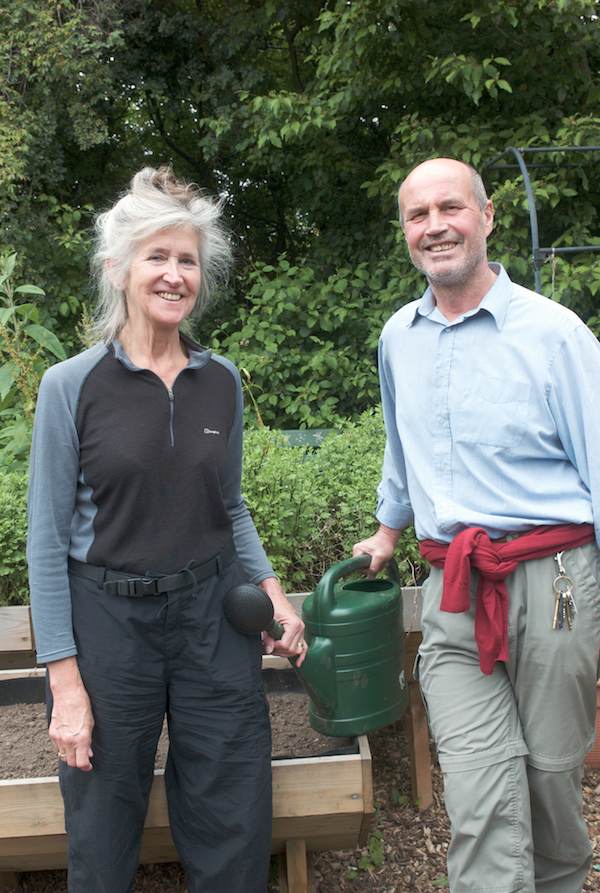
Suzanne & Mark Lancaster – We started gardening here fairly recently. It’s lovely to come to this beautiful oasis of flowers, birds and greenness in the heart of the East End. We live on busy Brick Lane, so it’s a joy to have somewhere so pretty and tranquil for a break. We hope to grow french beans, rhubarb and herbs in our raised planters.
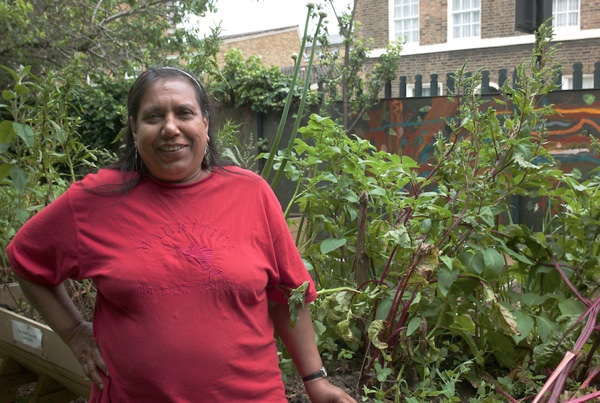
Devika Jeetun – I’ve been coming to the gardens for a long time. I had to give up my plot when I was caring for my brother and I’m on the waiting list now. I’m growing herbs and vegetables in raised planters – potatoes, tomatoes, runner beans, spring onions and coriander. And I’m looking forward to having a plot again.
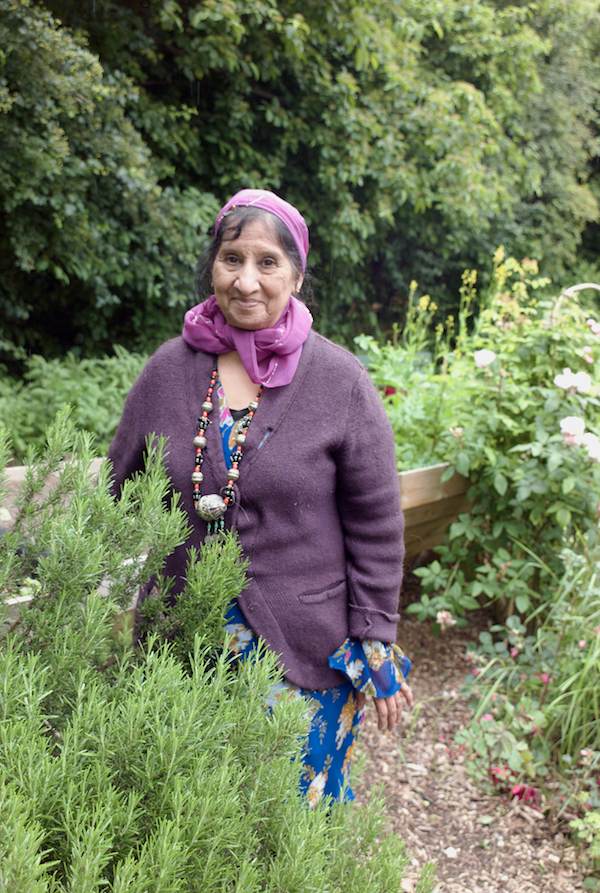
Balkis Karim
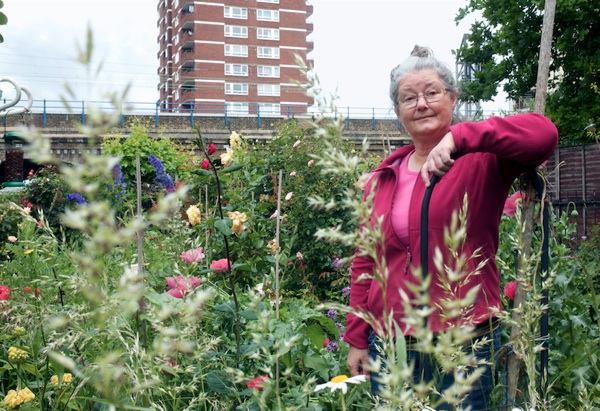
Annemarie Cooper – I’ve been gardening here for sixteen years and I don’t bother so much with vegetables now, my garden is basically a wildlife area. Those of us who encourage frogs have been using lion poo to keep the cats away from the ponds and it seems to work.
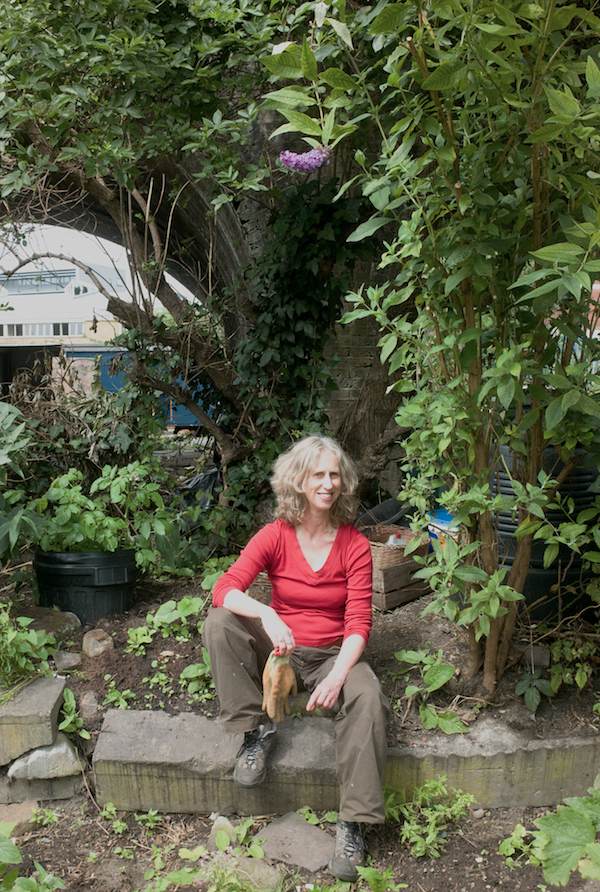
Sheila McQuaid – My gardening is more organised now. I come here at least twice a week. I’m growing different types of vegetables such as squashes and courgettes and I use the greenhouse for tomatoes. But the fruit has not been so good this year, so I’m growing more herbs, especially varieties of mint – I’m into mint tea in quite a big way.
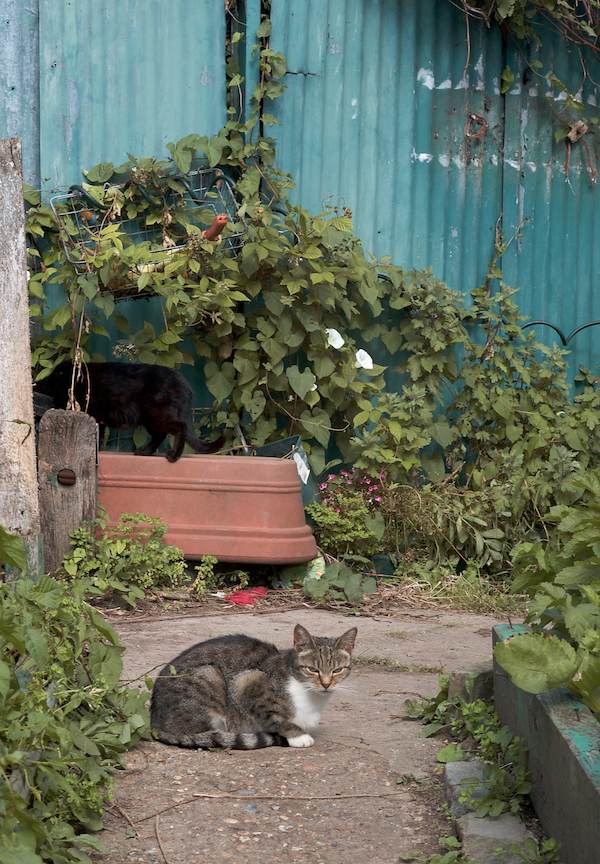
Photographs copyright © Chris Kelly
To learn more about Cable Street Community Gardens or buy copies of the Cable St Gardeners book, contact Jane Sill janesill@aol.com or visit www.cablestreetcommunitygardens.co.uk
You may like to see the black and white series of Chris Kelly’s Cable St Gardeners
or take a look at these other pictures by Chris Kelly
Three Paintings By John Allin
Today I present another extract from my new book EAST END VERNACULAR, Artists who painted London’s East End streets in the 20th century to be published by Spitalfields Life Books in October. Click here to preorder your copy
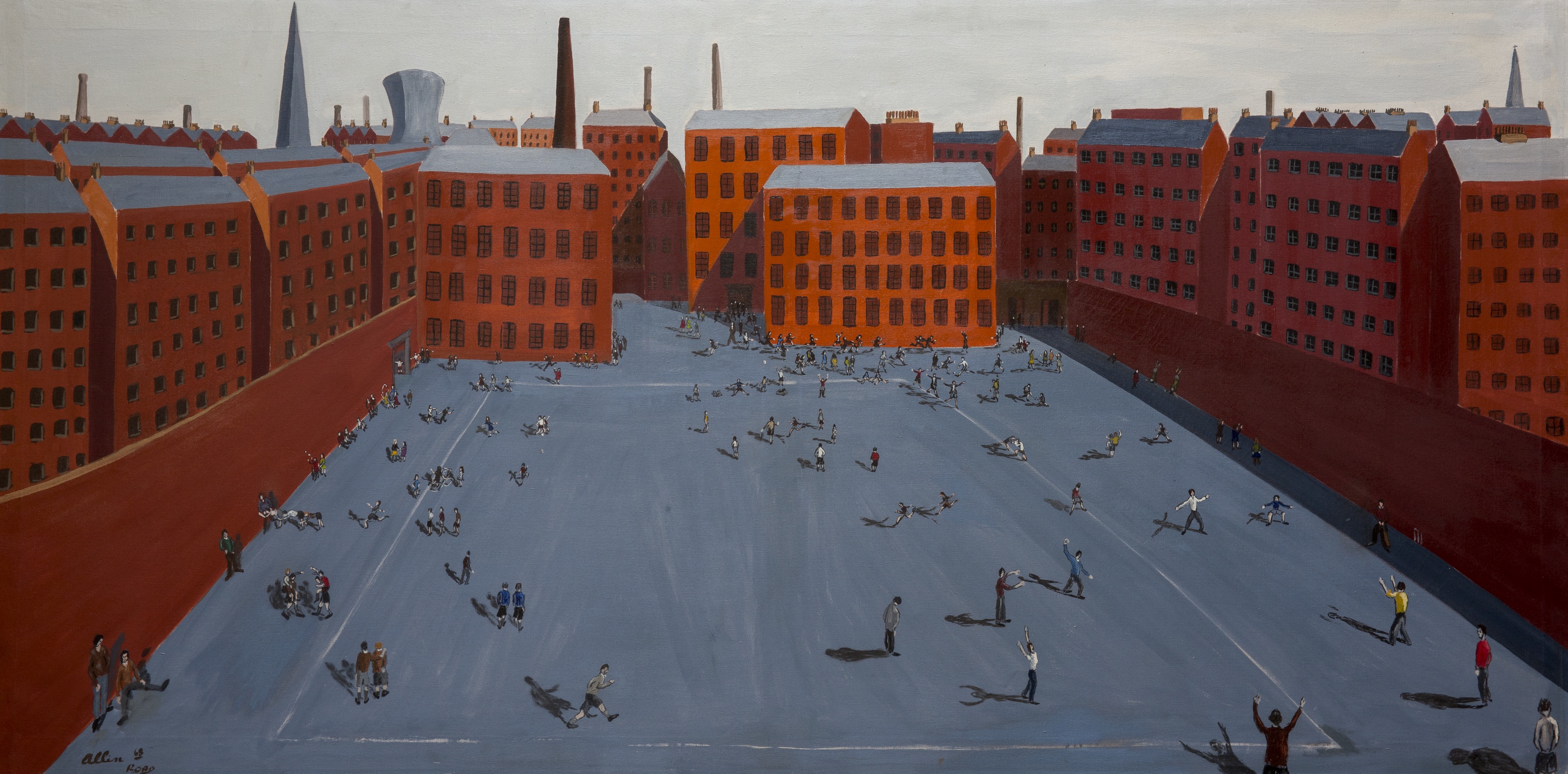
Schoolyard, 1968 (Click to enlarge this image)
I thought you might like to see these three fascinating paintings by John Allin (1934-1991) which have just come to light recently and which will be displayed at Townhouse gallery in Spitalfields in October, when East End Vernacular is published. All are dated 1968, yet there is wide divergence of styles between these pictures. The painting of an East End laundry with customers delivering their sacks of dirty washing is characteristic John Allin territory, but the paintings of the schoolyard and the park stray into a different, more painterly realm.
John Allin is celebrated for his paintings of familiar East End streets, yet he also portrayed imaginary scenes that dramatised states of being, such as the school yard which resembles a prison yard above. These emotive, less literal pictures are painted in a freer style, suggesting that there is a greater complexity and creative depth to the work of John Allin than is commonly assumed, when the appreciation of his painting is burdened with the reductive label of ‘primitive’ or ‘outsider’ art.
Recently, as part of my research for East End Vernacular, I travelled up to Walthamstow to meet John Allin’s mentor, the artist Sotirakis Charalambou, who remembered his former friend and colleague with great affection, and spoke about the particular struggles encountered by an artist from the East End half a century ago.
“In the East End at that time, there were not many of us who were doing ‘alternative’ things and so we gravitated to each other. We came together on the street. I met John and we became fast friends. He had just got out of prison but it was not for theft, as is generally believed, it was for receiving. John had begun to paint in prison and wanted to continue and I encouraged him to do that. He would paint at home and then come and paint at my place. I’d wake up in the morning and he’d be painting on the wall in my bedroom. I never taught him because I don’t believe in teaching but I encouraged him, I thought he was extremely talented and it was just a question of finding the confidence in his talent. He had a great passion for painting and wanted to paint his life and his environment, and the people in the East End, and how he felt about it all.
Eventually, he thought he should show his work to a gallery, so he went along to the Portal Gallery and they were very enthusiastic. He had several show there and, for a short time, he took a studio in Space Studios at Fish Island, Hackney Wick, where I was, and he did some good work there but he was uncomfortable. He painted the studio red because he did not like the clinical white.
Success did not affect John’s personality, he was just happy that he could buy a decent car and have a bit more money. He got better at painting and, as his processes and techniques evolved, he became more ambitious with the work and was able to realise his visions more confidently. He worked very hard, I’ve got a painting he did on a plastic tablecloth because in the beginning money was a real problem. He was like Paul Gauguin, forced to paint on sackcloth!
As his technique improved, he used better materials. As you know, he used a lot of flat colour so, at first, he would use a lot of turps almost turning the oil paint into tempera which worried me because I thought the paint might fall off. But his technique improved incredibly and he began to use the oil paint more freely.
I think he was pretty angry about the way the council and the government were treating the working class, he felt very strongly about that. He was sent to prison for receiving some shirts but the reason he got such a long sentence was because he was a cockney working class kid. They were making an example of an East End lout, as they thought.
With John, I think painting was something he discovered that he could do and he could express himself, talk through his paintings about the things he enjoyed and the things that concerned him about the social and political reality that he experienced, the injustice of it. And the value of the people in the East End that he loved and admired. It was very personal. He was a warm, loving man and he loved the people he painted. He treated everybody equally and he wanted to say, ‘Here we are!’
He was a visionary artist and the fact that was not trained academically was to his advantage. He would have been completely destroyed at art school, his vision would have been crushed. He would not finish or even start a painting unless he had a very strong feeling or vision for it. He was complete in that sense. His vision was clear.
I think what happens to people who live in less privileged circumstances, if they cannot project themselves in any other way, they try to find a vehicle by which they can express themselves independently. In the East End, schools were set up so they fed local industry and the level of education was to prepare people for that. But what happens is that, if there is no outlet, people turn inwards and they might by accident come across a book of paintings or be inspired by a teacher and think, ‘Well, I can do that.’ It was an independent means of development which was out of the critical eyes of their peers or even their family, the could disappear into a room and do it independently, and it became a vehicle to grow and make association beyond the social limitations they found themselves living within.”

Park, 1968
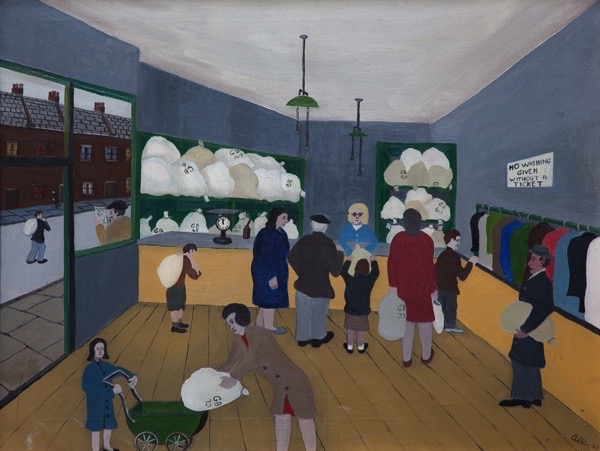
Laundry, 1968
Paintings copyright © Estate of John Allin
Click here to see more paintings by John Allin
Take a look at some of the other artists featured in East End Vernacular