Ian Lowe, Blacksmith
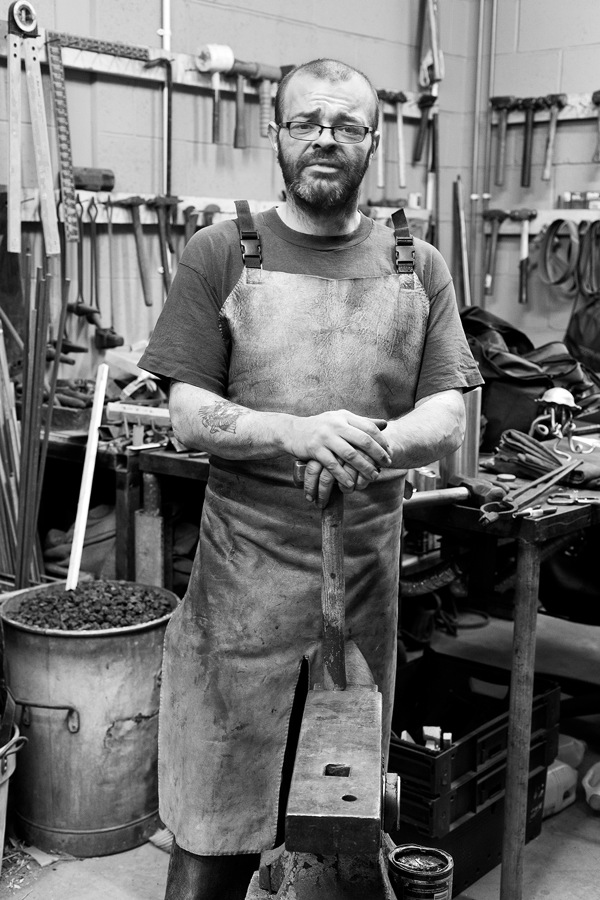
“I am happy to be a blacksmith, it’s a noble trade”
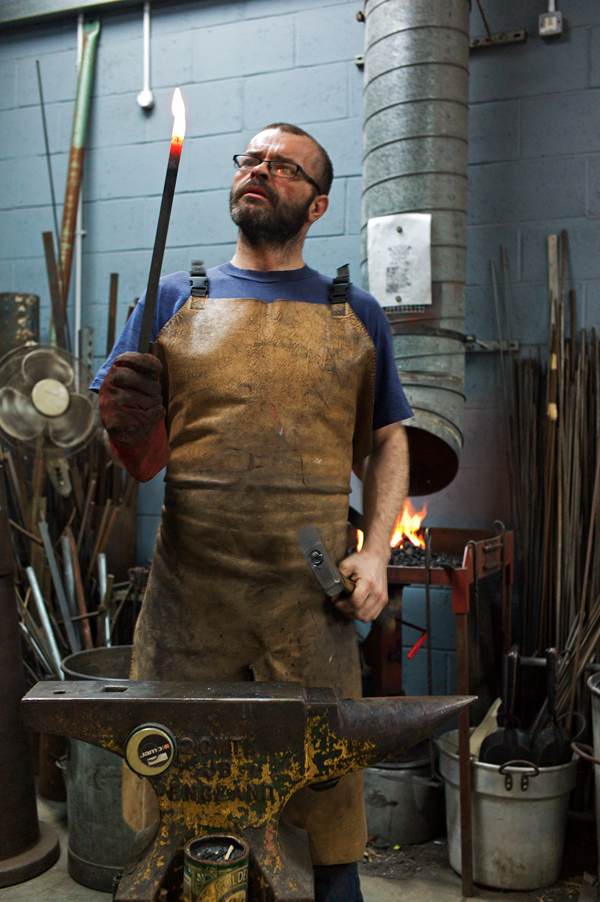
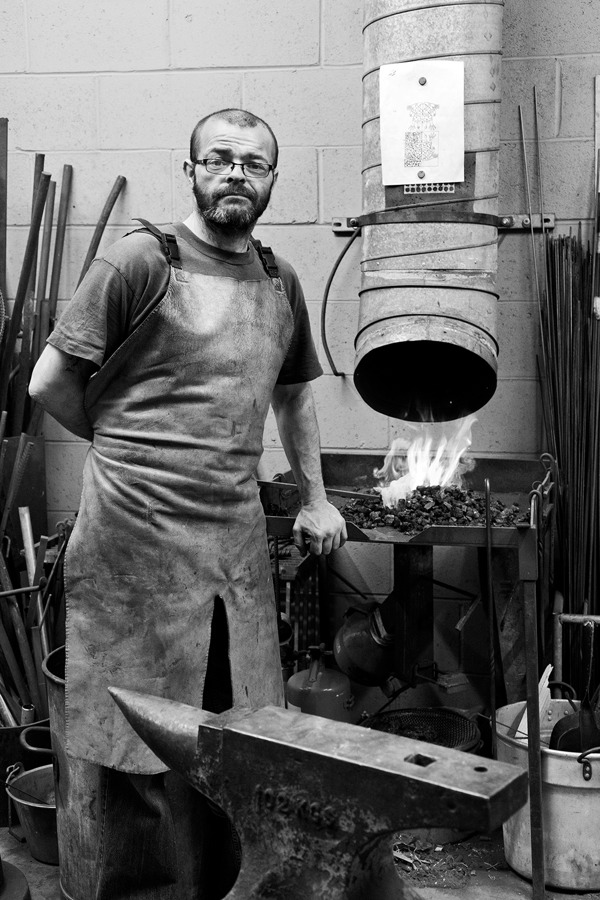
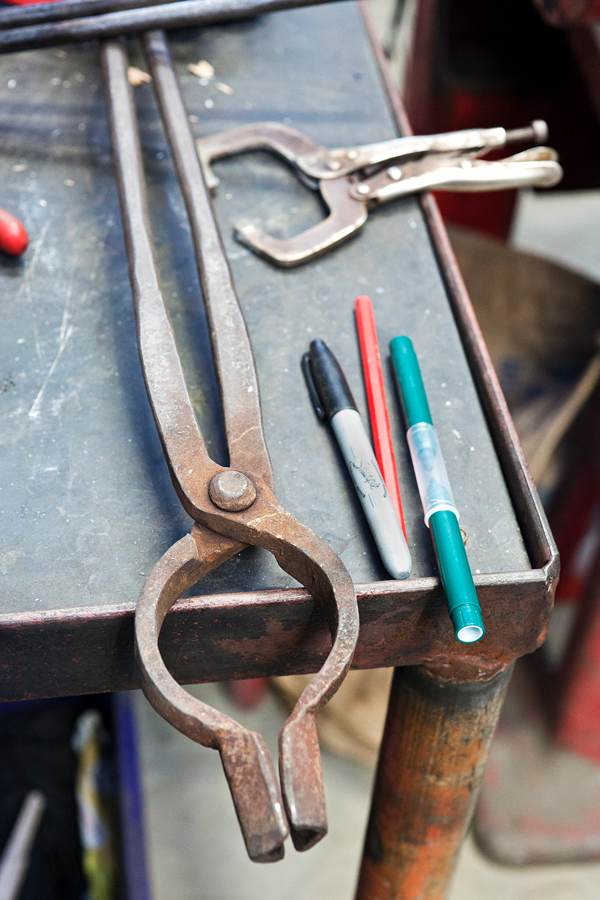
Ian Lowe‘s forge is in the shadow of the ancient tower of St Dunstan’s, Stepney, and it is a singularly appropriate location for this line of work, since St Dunstan – who brought Christianity to Tower Hamlets over a thousand years ago and founded the church in 952 – was also a Blacksmith. When I saw Ian wield his red hot tongs, it reminded me of the stone carving over the church door illustrating the local legend of Dunstan catching the devil by the nose with a similar implement and, possessing the necessary phlegmatic temperament and brawny physique, it is not impossible to imagine his contemporary equivalent in the forge also undertaking such a feat.
“I’ve never met anyone that didn’t enjoy it,” Ian admitted to me with droll understatement, “You get to play with fire and hit things!” Yet even this quip revealed the age-old nature of his trade, since the word Smith derives from old English, ‘smyten’ – to hit, and the common surname ‘Smith’ reflects the former ubiquity and diversity of Smiths, whose skills were essential to our society even until the last century. There were once Blacksmiths (who worked iron, known as ‘the black’) and Whitesmiths (who did fullering and polishing to produce bright steel), not to mention Goldsmiths, Silversmiths, Tinsmiths and Coppersmiths.
Ian is a proud Yorkshireman from Pontefract and he told me that, when the Vikings ruled the north, the automatic penalty for killing a Smith was death because they were of such critical importance in making weapons for war, as well as tools for work, and he said it as if it were yesterday. “Vicars and Blacksmiths alone were able to perform weddings, exchanging the rings over the anvil,” Ian assured me, “Forges were at crossroads and became social centres where people gathered around the fire. If you wanted everyone to know something, you told the Smith.” And so it is in Stepney these days, I was reliably informed.
“During the late fifties through to the seventies, Blacksmithing was pretty much gone. It was down to a couple of lads who fought tooth and nail to keep it alive.” Ian explained, adopting an elegiac tone as he ignited in the fire, “Now in the UK, there are less than a thousand registered Blacksmiths and only one Grand Master Blacksmith.” Ian did an apprenticeship with Glen Moon, a Master Blacksmith in Bradmore near Sydney and then travelled Europe for two years, meeting more than four hundred Blacksmiths and working with more than a hundred. Before this, Ian studied English Literature at university. “I just fell into it,” he confessed, “My ex-wife was selling jewellery that she imported from the Far East and she asked me to repair it when it broke, so I thought I can make better stuff than this and I got to the point where I was semi-professional. But I got frustrated with making little things.”
“I’ve been a Blacksmith for eight years now,” he continued, holding a strip of iron in the fire with tongs,“Yet I think it will take fifty to sixty years before I master it. It’s the doing of it that I enjoy, it’s about making something beautiful and long-lasting. You see pieces in London from the fourteenth century and I hope my work will outlast my great-grandchildren.”
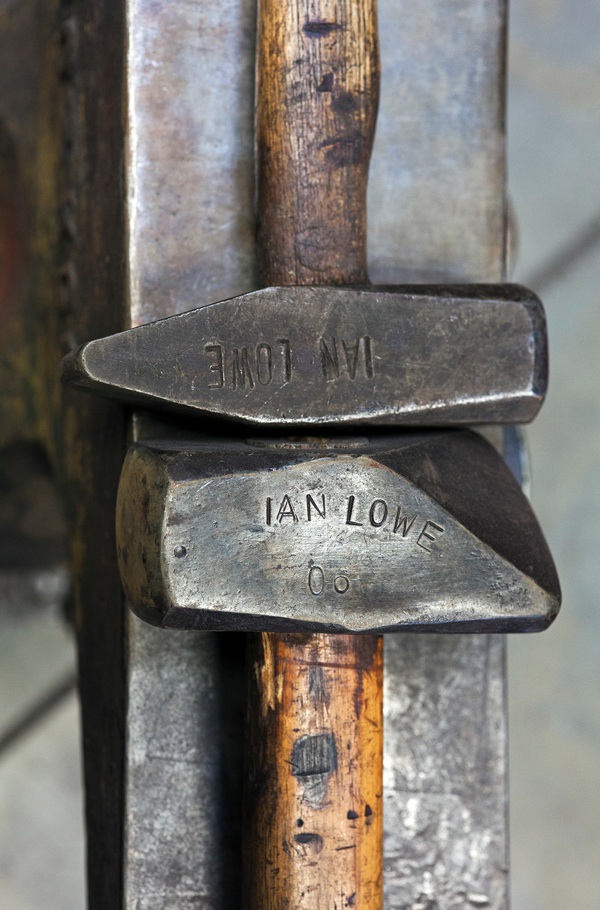
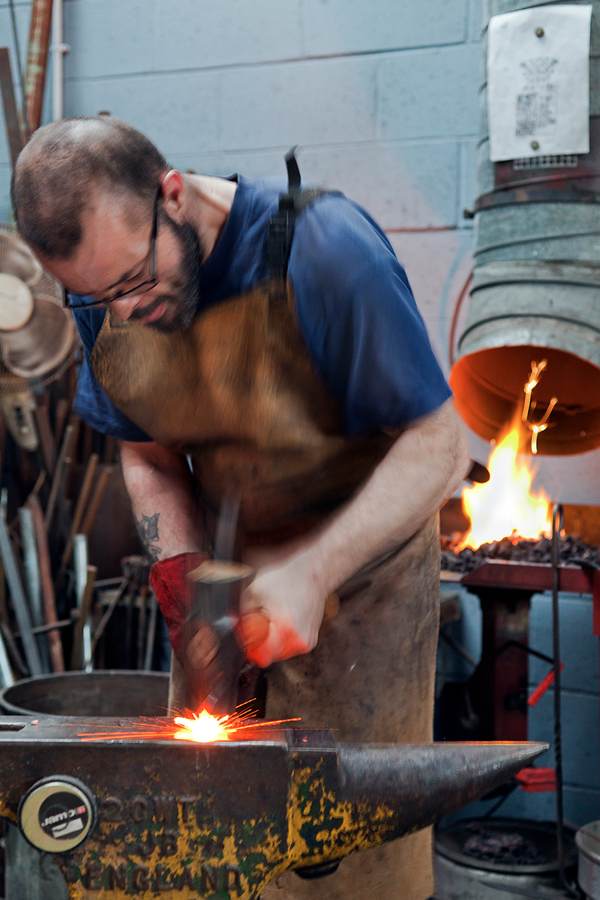
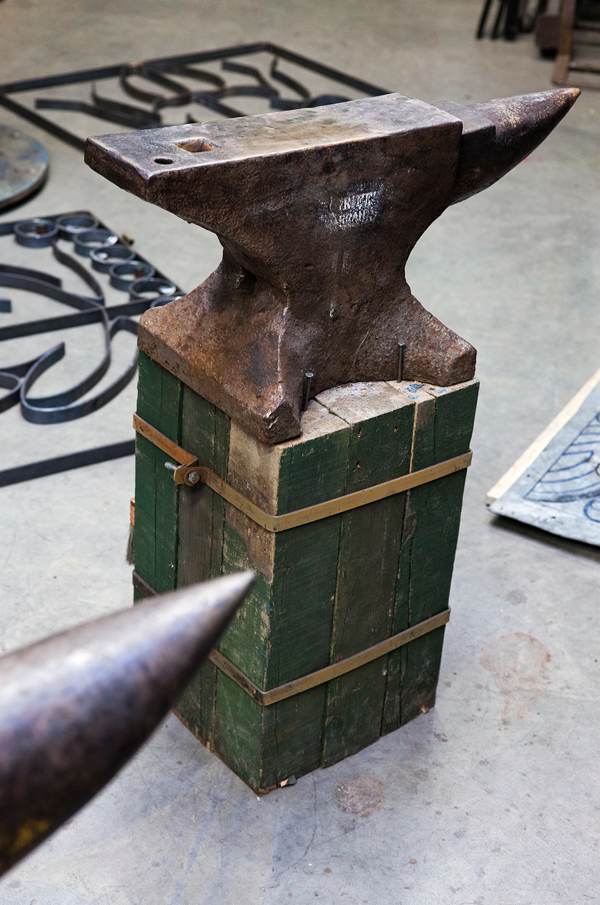
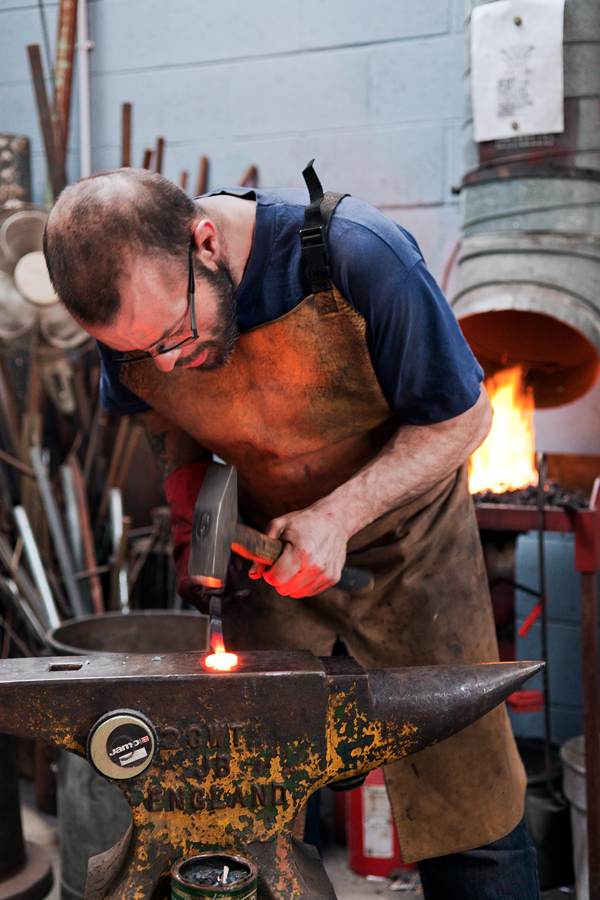
“People think the hammer is a crude tool, but it is capable of finesse, like a paint brush – I could make you a pair of earrings with my hammer” he declared, lifting the implement in question and making vigorous blows to the red hot steel upon the anvil, “After the hammer, the most important tool is the fire. Without heat, steel is not malleable but when it is hot it becomes like stiff clay – if your hands were fireproof, you could bend it.”
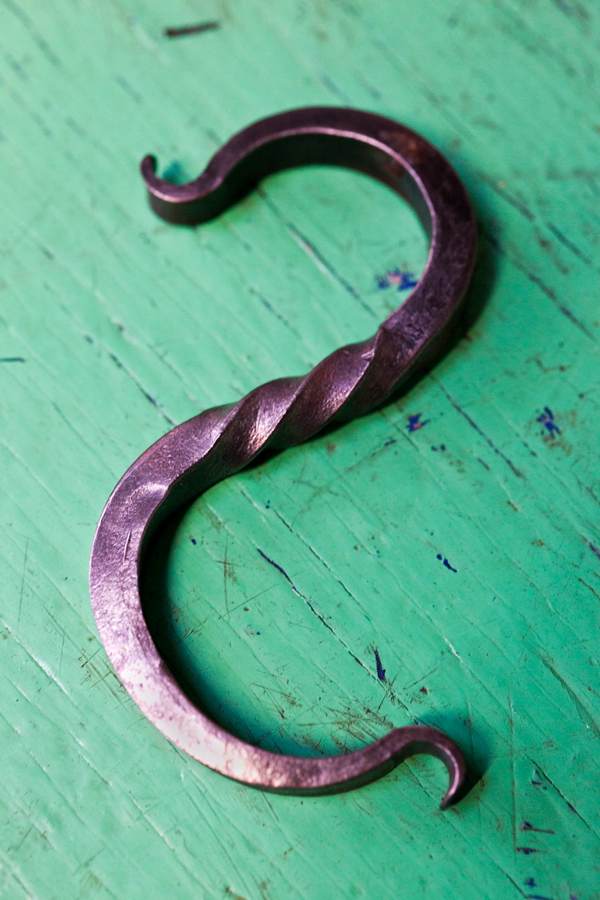
I watch mesmerised as Ian twisted the rod with his tongs, shaping it with the hammer and moulding it to his desire. “‘By hammer and hand, do all stand’ – that’s the Blacksmith’s creed,” he declared, holding up his creation in triumph.

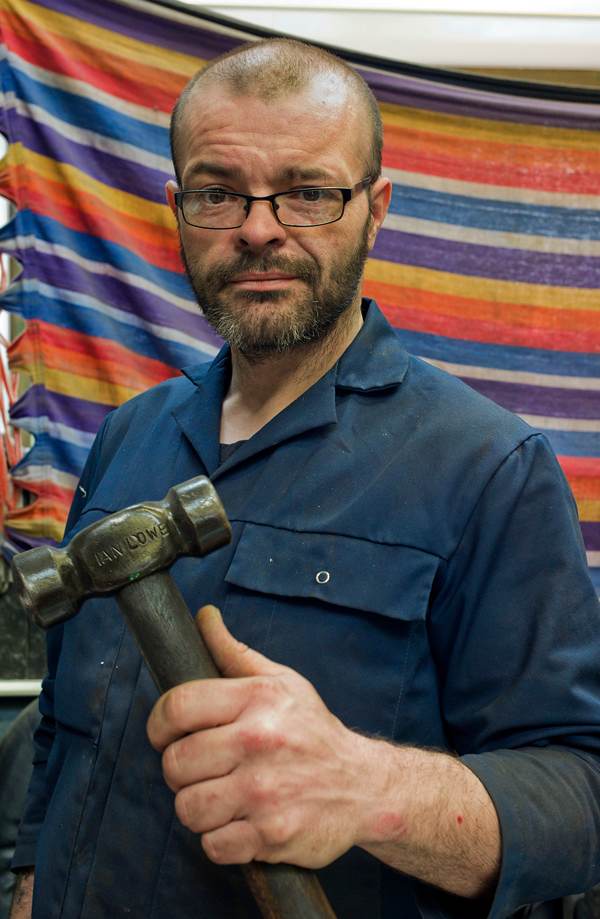
“The Blacksmith is the king of trades.”
Photographs copyright © Alex Pink
You can visit Ian Lowe in his forge at Stepney City Farm
You may also like to read about
At James Hoyle & Sons, Iron Founderers
Dr Margaret Clegg, Keeper of Human Remains
“They were once living, breathing people – they are you.”
In Spitalfields, people often talk of the human remains that were removed from the crypt – nearly a thousand bodies that were once packed in tight during the eighteenth century, safe from resurrectionists and on their way to eternal bliss.
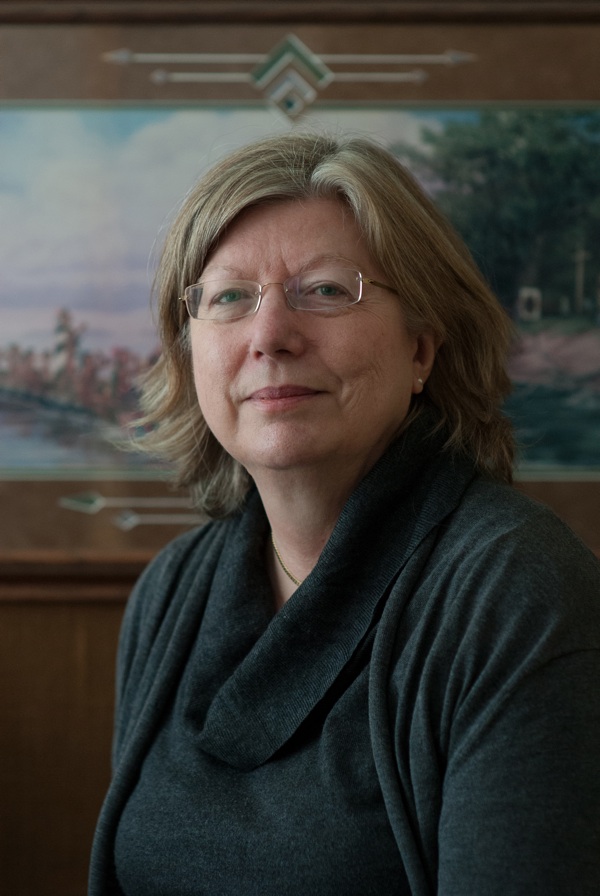
During the nineteen eighties, they were exhumed and transferred to the Natural History Museum where they rest today under the supervision of Dr Margaret Clegg, Head of the Human Remains Unit, who guards them both with loving attention and scholarly rigour, unravelling the stories that these long-ago residents of Spitalfields have to tell us about the quality of their lives and the nature of the human species.
“From the very first lecture I attended on the subject as an undergraduate, I became fascinated by what human remains can tell us about ourselves,” Dr Clegg admitted to me enthusiastically, “You can’t help but feel some kind of relationship when you are working with them. They were once living, breathing people – they are you.”
Dr Clegg led me through the vast cathedral-like museum and we negotiated the swarming mass of humanity that crowded the galleries on that frosty morning, until we entered a private door into the dusty netherworld where the lights were dimmer and the atmosphere was calm. Next week, Dr Clegg is making the trip to Spitalfields to deliver a report on the human remains – a venerable message home from these ex-residents in the form of a lecture at Christ Church – and thus our brief conversation served as a modest preamble to set the scene for this hotly-anticipated event.
“Dr Theya Mollison did the original excavation of the remains in the nineteen-eighties. There were more than nine hundred and for about half we know their age, sex, and when they were born and when they died, from the coffin plates. After they were removed, the remains were brought here to the Natural History Museum for longer-term analysis and study of the effects of occupation and the types of diseases they suffered. We had a large amount of information and could tell who was related to who. We could also tell who died in childbirth, and we have juveniles so we got information on childhood mortality and the funerary practices for children and babies, for example.
We have a special store for human remains at the museum, where each individual is stored in a separate box – it’s primarily bones but some have fingernails and hair. Any bodies that had been preserved were cremated when they were exhumed. The museum applied for a faculty from the Diocese of London to store the bones, the remains are not part of our permanent collection. The first faculty was for ten years and over time a second and third faculty were granted, but this will be the final one during which a decision will be made about the final disposition of the bones. During these years, the bones have been studied intensively. They are quite rare, there are very few such collections in which we know the age and sex of so many. They are probably our most visited and most researched collection. We have our own internal research and visiting researchers come from all over the world – for a wide variety of research purposes, including important work in forensics and evolutionary studies.
I am by training a biological anthropologist, and I am interested in the study of human archaeological remains from the perspective of how they grew and developed and what that can tell us about them.
In Spitalfields, you can compare families of the same age – one that ages quickly and one that ages slowly, which tells us something about the variables when we try to calibrate the date of remains at other sites. You can’t always tell what they did but you can tell, for example, that they used their upper body or that they developed muscles in their arms or legs as a direct result of their occupation. My dad was a printer and when he started out he used a hand press and developed a muscle in his arm as a consequence of using it. He’s seventy-nine and it’s still there. In those days, people started work at twelve or thirteen while the muscles were still developing and these traits quickly became established based upon their occupation. They were the ordinary working people of eighteenth century Spitalfields.
We get half a dozen emails a year from families who want to know if their ancestor who was buried in Christ Church is in the collection, but often I can’t help because they were buried in the churchyard or another part of the church. Occasionally, relatives ask if they can come and see them.”

Bonnet collected during excavations at Christ Church.

Shroud collected during excavations at Christ Church.

Cotton winding sheet collected during excavations at Christ Church.

Gold lower denture formed from a sheet of gold which was cut and folded around the lower molars.

Medicine bottle found in a child’s coffin during excavations at Christ Church.

Archaeological excavations in the crypt of Christ Church, Spitalfields, London, 1984-1986.
Excavation images © Natural History Museum
Portrait of Dr Clegg © Sarah Ainslie
Tickets for Dr Clegg’s lecture “LIFE & DEATH IN SPITALFIELDS: The human remains from Christ Church Crypt” on Tuesday 16th April are available from the Huguenots of Spitalfields Festival
You may also like to read about
Here’s Willy Moon
Celebrating the release of Willy Moon’s first album Here’s Willy Moon tomorrow, I republish my interview from 2010 as a testimony to the years of perseverance it has taken this talented songwriter to arrive at his auspicious recording debut at just twenty-three.

Let me introduce Willy Moon, who has been sitting alone in his room for more than a year to write songs. Before the world heard Willy Moon, I was familiar with his music because Willy Moon was my neighbour. Over all this time, I have heard him in the distance while I have been writing at my desk, as he sat at his keyboard singing to himself, exploring the emotional subtleties of his lyrics in the deliberate careful way you might feel your way into a new pair of gloves.
If I had not revealed that I took this photo of Willy Moon myself, you might think – perhaps – this was an old postcard I found somewhere, but this is how he actually looks. If you meet Willy Moon in the street in Spitalfields or even if you see him weeding his garden, this is how he will be. Like Gilbert & George, his flawless demeanour is reassuringly consistent. Fastidiousness is an under-rated virtue these days and Willy Moon has it in spades. One weekend, we spent a happy Sunday afternoon together taking hundreds of pictures in between cups of tea and animated chat, until we chose this single photograph to show you as the fruit of our collaboration.
Willy Moon’s songs interest me because they are irresistibly jangling pop tunes that persist in the mind vividly and then grow in emotional resonance upon further listening. They have the rare authority of nursery rhymes – even when you hear Willy Moon’s melodies for the first time, you feel you already know them, as if they had always been around. In November 2009, Willy Moon posted a recording of one song on MySpace and followed it in December with a second one, and he did not have to wait long before he received approaches from a whole series of major record companies, managers and music industry lawyers.
Millions of people sit in their bedrooms humming and strumming to themselves for years, hoping this might happen and knowing that it can only be a dream. But the attention Willy Moon drew was not accidental. Willy Moon knew what he is doing. Through his talent, tenacity and intelligent application, he brought this situation about. Willy Moon drew these people to him with the magnetic force that the silver orb in the sky controls the tides. Happening at twenty years old, it was a beautiful moment in the life of Willy Moon because the possibilities that dawned were infinite.
“I found it odd – unexpected – not that I don’t see the value of my work but I thought I would have to struggle for five years before I got any attention paid to me,” Willy Moon admitted to me in amused reflection, before revealing a characteristically rigorous attitude to the pursuit of songwriting. “I’m putting myself to the test, to see what I can do – it’s a challenge and a means to evolve. I am never happy with anything unless it is better than I did before.” he said.
The first song Willy Moon posted on MySpace was ‘Girl, I wanna to be your man.’“It took a long time to record because I was doing it all on my own and I had to work out how to use the recording software.” he confessed to me with amiable levity, introducing the song, as we sat and listened together. It appears to be a bright innocent song of unrequited love with a brittle sheen and a catchy melody that carries you through. But as the title lyric persists through repetition, accumulating emotional impact, the longing becomes frantic. With a vocal line balanced at the edge of optimism and self-deception, this is simultaneously the ballad of a hopeful extroverted young man and of an introverted secret obsessive too. And it is this tension that makes the number so compelling.
Willy Moon is a classical songwriter, powerfully aware of his predecessors, learning by immersing himself in the work of those he admires most, in particular the Beatles and those who influenced them, Little Richard, Buddy Holly, Fats Domino, James Brown and the entire canon of early Motown artists. All Willy Moon’s songs are based upon dramatic progression, structured upon the essential poetic elements of bridge, verse and chorus, “I like to play with an idea and put the pieces together. I write parts of the song separately and combine them – different ideas that come together to form one whole.”
Next, Willy Moon posted a recording of ‘She says she loves me’ on MySpace, a delirious celebration of emotional fulfillment, in jubilant contrast to the earlier song and a work of greater musical ambition too. There is an authentic danceable exuberance here that affectionately declares its musical influences while refashioning them into something vibrantly contemporary. On consideration, it is no surprise that Willy Moon drew all this heat with his home-made recordings because they are an accomplished pair of love songs that anyone can relate to, counterpointing each other to create a complete emotional drama in microcosm.
What planet did Willy Moon come from that has endowed him with this singular charm and Bowie-esque other-worldliness? The answer is New Zealand. Growing up with parents who were both teachers, he was encouraged to be independent, read widely and think for himself from an early age. When his mother and father decided to travel the world, taking jobs as supply teachers in different capitals, Willy Moon and his elder sister came along too. Willy Moon remembers sharing a single room in the Rotherhithe YMCA years ago, when his parents slept in the bed, and he and his sister slept on the floor. “It was all very much on the cheap,” he recalled happily, telling me they lived on bread and cheese. “It was exciting – especially coming from Wellington, New Zealand – we went out and saw all the sights in London.” he added, explaining how when he was nine and his sister was twelve, they were free to explore the city by day while their parents where at work
As soon as he was old enough, Willy Moon came back to London and made Spitalfields his home. So now I have done the neighbourly thing and made the introductions, you can hear Willy Moon’s songs for yourself.
[youtube uVnJhf_L3f0 nolink]
[youtube _GTGGeNVdcY nolink]
[youtube GaWXA5e0YTQ nolink]
[youtube LxsxAqpTSoU nolink]
Nicholas Borden’s East End View
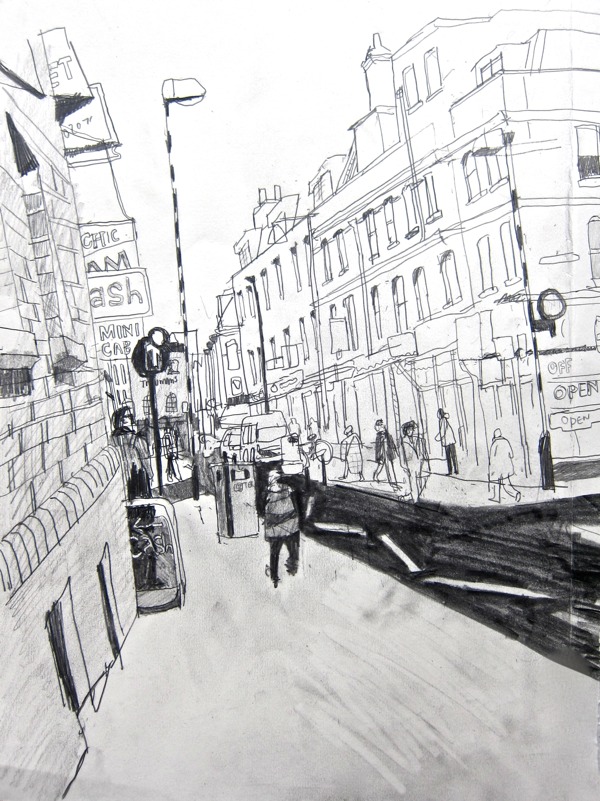
Brick Lane, looking north
You may recall Nicholas Borden, the artist I came upon painting in the street last year in Bethnal Green. As a consequence of the tremendous response that his work received, Nicholas was offered his first exhibition which opens next week in Spitalfields, so I caught up with him recently to see how he was getting along. While the rest of London has spent the winter indoors, Nicholas braved the streets of the East End in all weathers – becoming a familiar sight, working discreetly with his easel or drawing board.
“At art college, they put me off painting altogether for more than ten years but now I’ve got the strength of character to know what I’m doing, and this is the direction I want to go.” Nicholas assured me,“I’ve been doing a lot of paintings and drawings of the streets of Spitalfields which has proved very fruitful, and there’s lots of historic architecture that I find appealing.”
Although he is softly spoken, it soon becomes apparent in conversation that Nicholas has a passion which drives him forward, making him impervious to the freezing temperatures. “It’s a blessing to be given this exhibition,” he confided to me with a grin, as we sat in his studio surrounded by piles of the streetscapes executed in paint and in pencil that are the outcome of this last extraordinarily productive winter.
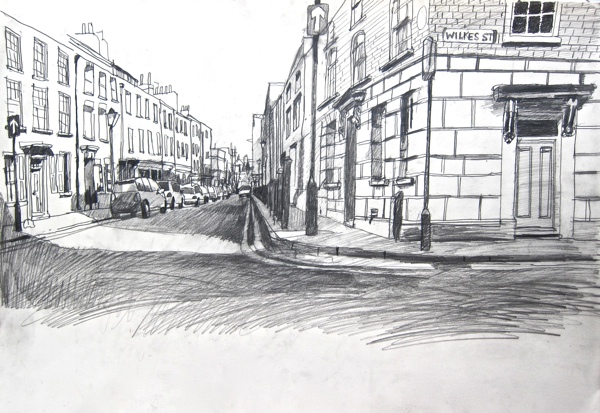
Princelet St, looking east
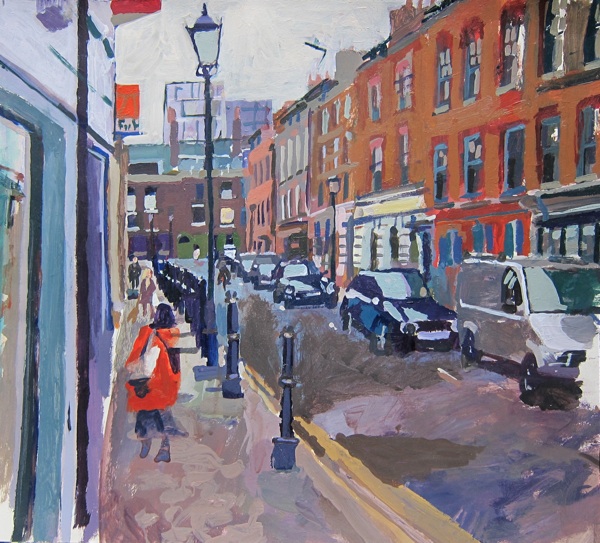
Princelet St, looking west
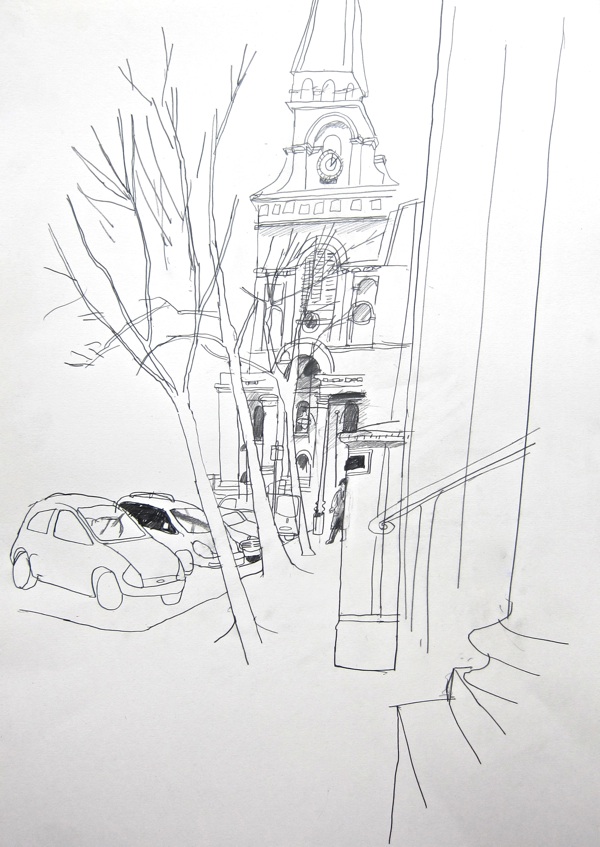
Brushfield St, looking east
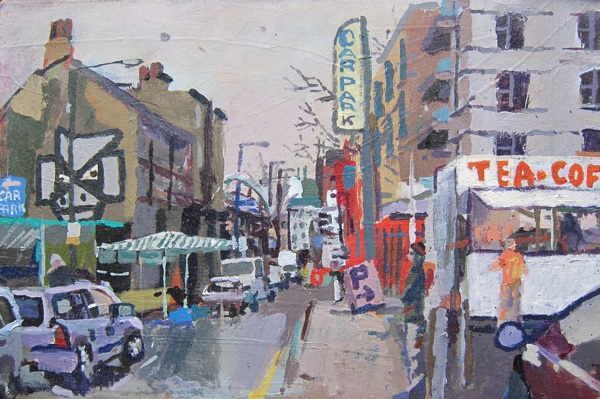
Sclater St, looking west
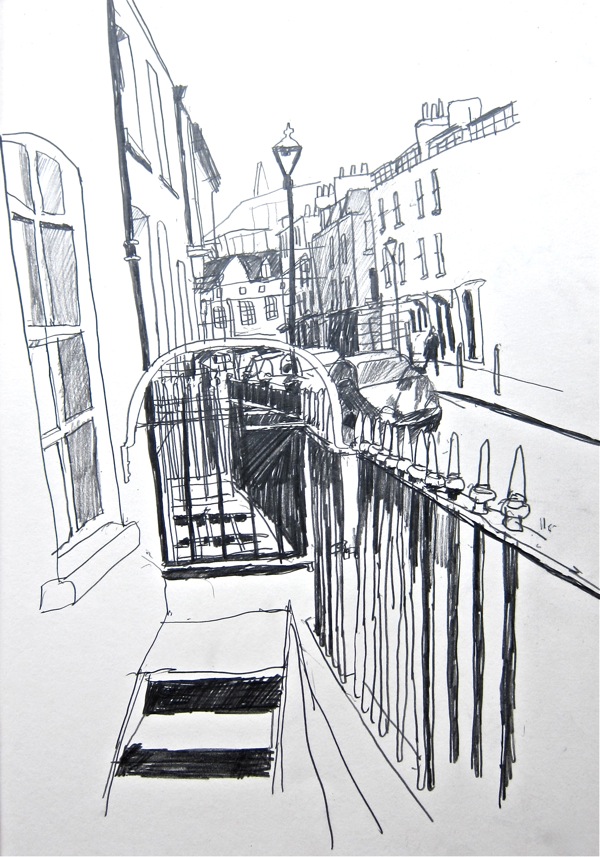
Fournier St, looking west
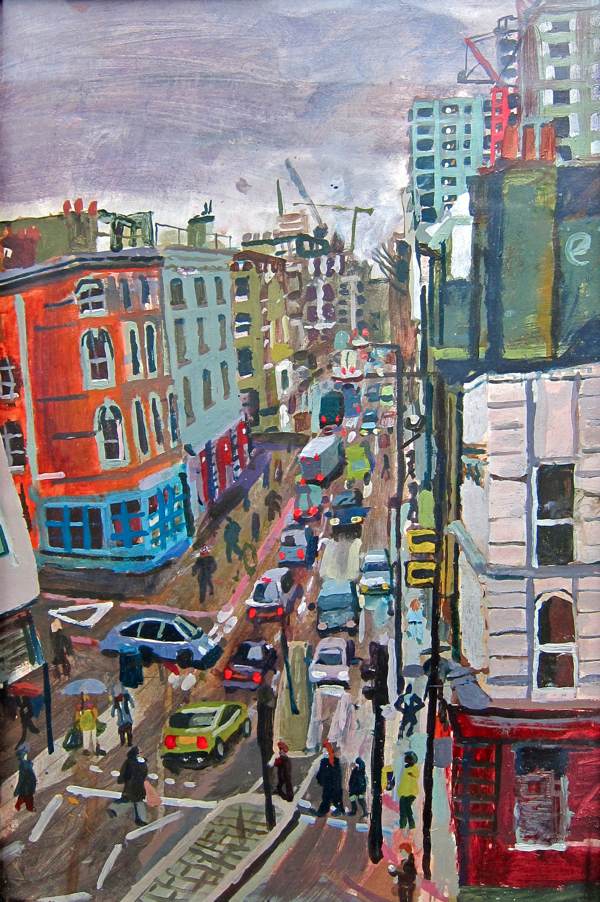
Commercial St, looking south
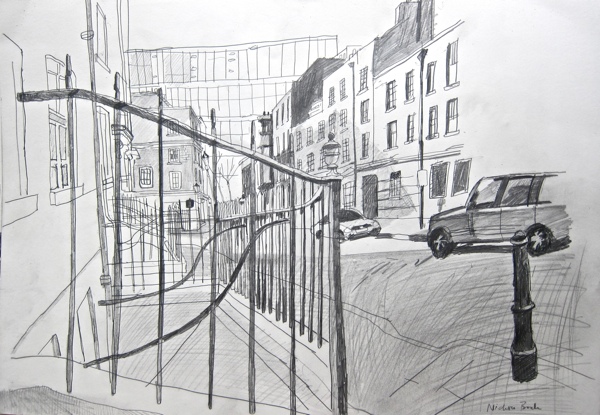
Elder St, looking south
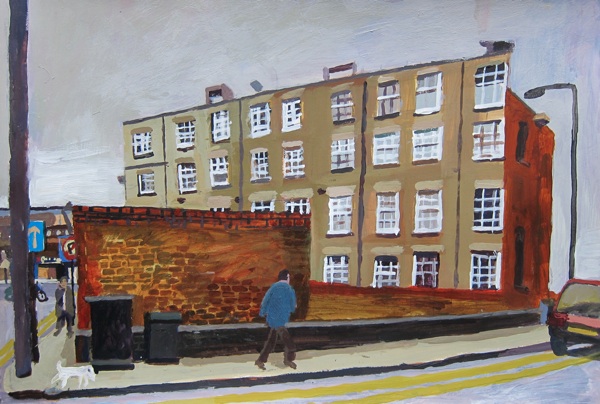
Fleur de Lys St, looking north
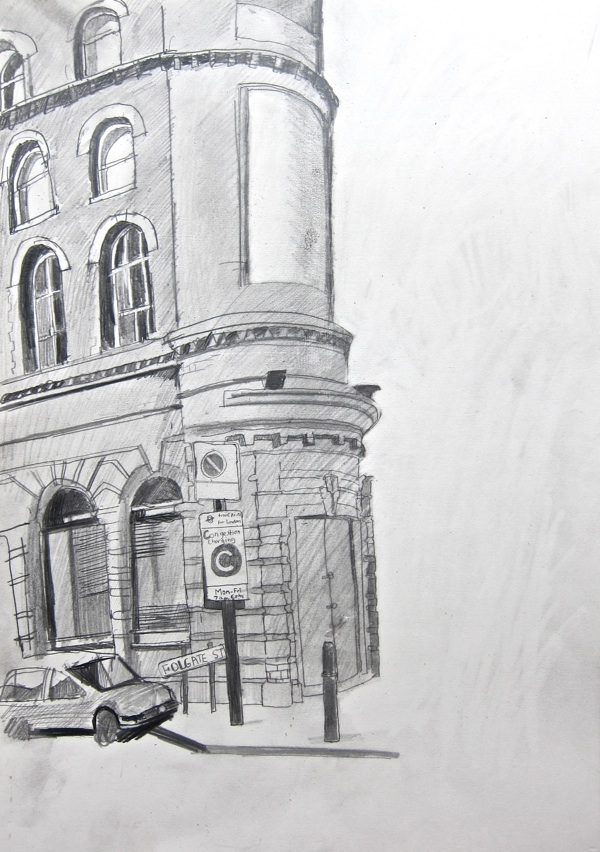
Corner of Folgate St & Commercial St
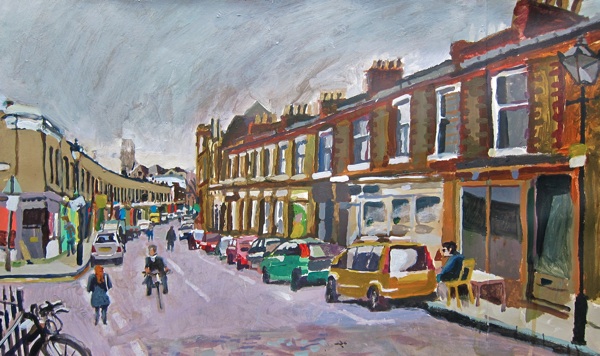
Columbia Rd, looking west
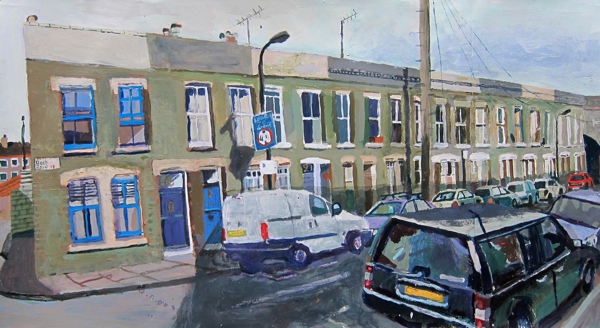
Beck Rd, looking north
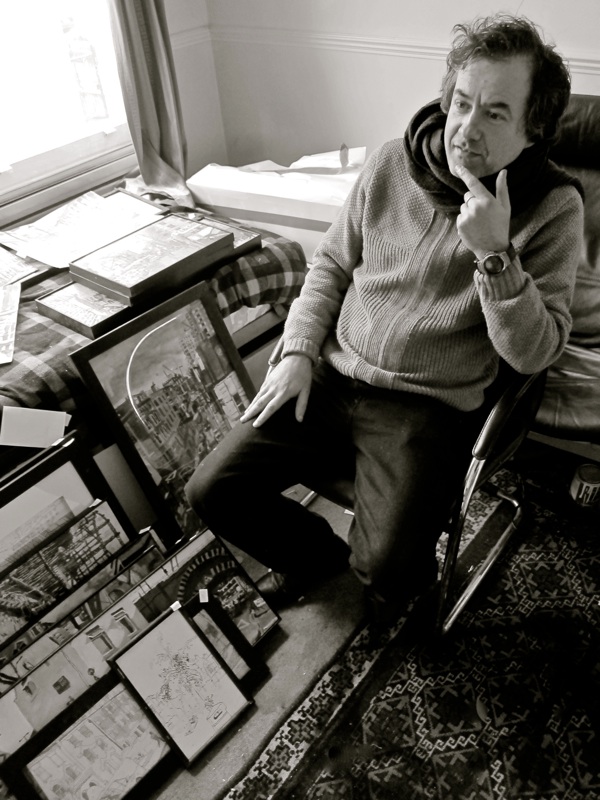
Nicholas Borden in his studio
Images copyright © Nicholas Borden
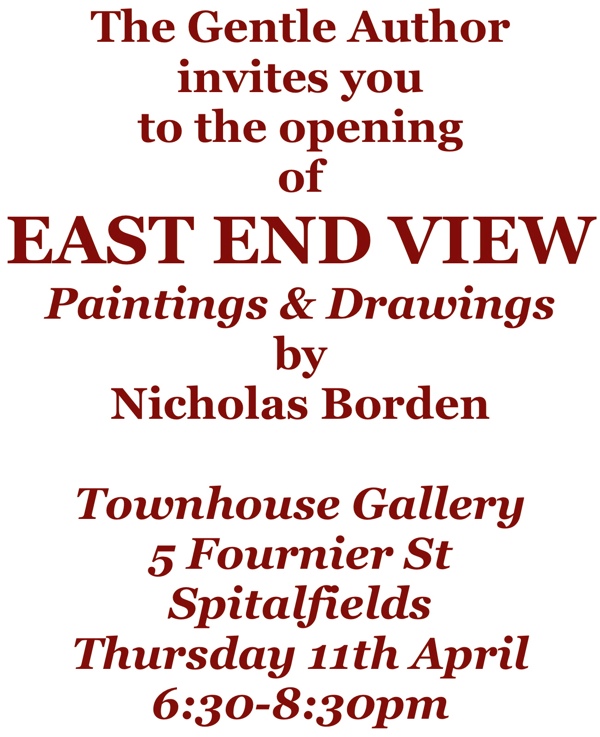
Nicholas Borden’s EAST END VIEW is at Townhouse, 5 Fournier St, until 21st April
You may like to read my original interview
John Claridge’s Boxers (Round Twelve)
I am rooting for Contributing Photographer & Ex-Boxer John Claridge to go the full fifteen rounds with his awe-inspiring series, produced in collaboration with our good friends at London Ex-Boxers Association. There is an overwhelming spiritual intensity – as if Francisco Goya had got hold of a camera – distinguishing this authoritative set of portraits of London Boxers.

Sam Pasha (First fight 1948 – Last fight 1954)

Lenny Lee (ABA Trainer since 1979 – “the most famous cornerman in Britain”)
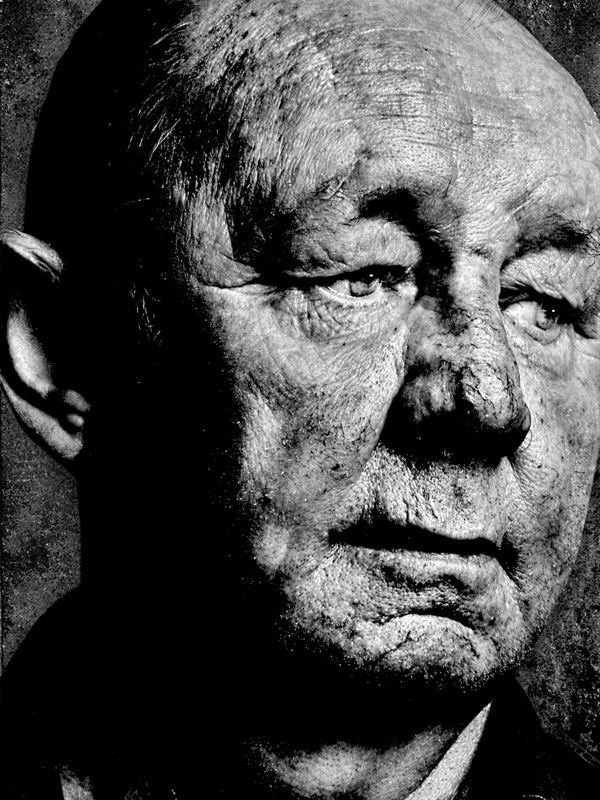
Jim Butler (First fight 1952 – Last fight 1955)

Danny Williams (Boxing fan and member of LEBA for twenty years)

Leslie Bird (First fight 1954 – Last fight 1956)

John Scanlon (First fight 1963 – Last fight 1980)

Paul Jenkins (First fight 1976 – Last fight 1980)

Ron Duncombe (First fight 1953 – Last fight 1956)

Wally Lodge (First fight 1946 – Last fight 1952)
Photographs copyright © John Claridge
Take a look at the entire series
John Claridge’s Boxers (Round One)
John Claridge’s Boxers (Round Two)
John Claridge’s Boxers (Round Three)
John Claridge’s Boxers (Round Four)
John Claridge’s Boxers (Round Five)
John Claridge’s Boxers (Round Six)
John Claridge’s Boxers (Round Seven)
John Claridge’s Boxers (Round Eight)
John Claridge’s Boxers (Round Nine)
John Claridge’s Boxers (Round Ten)
John Claridge’s Boxers (Round Eleven)
At Anna Maria Garthwaite’s House
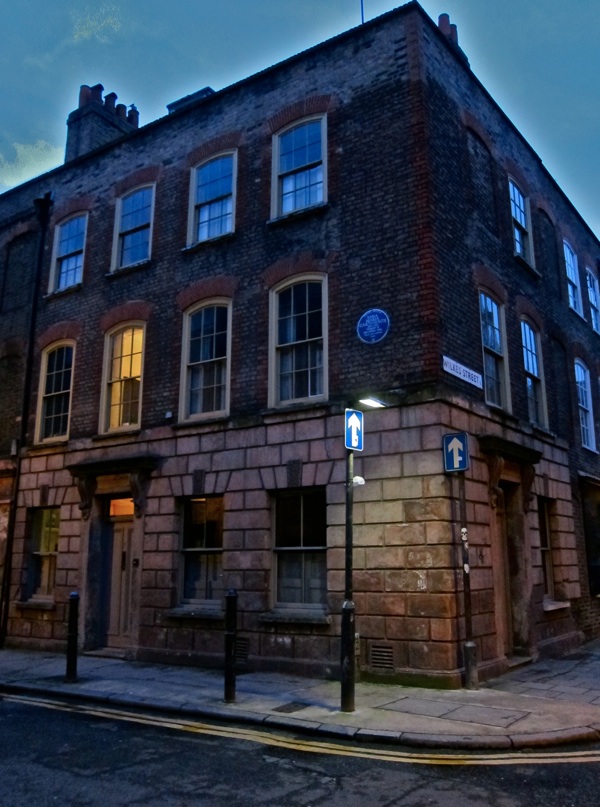
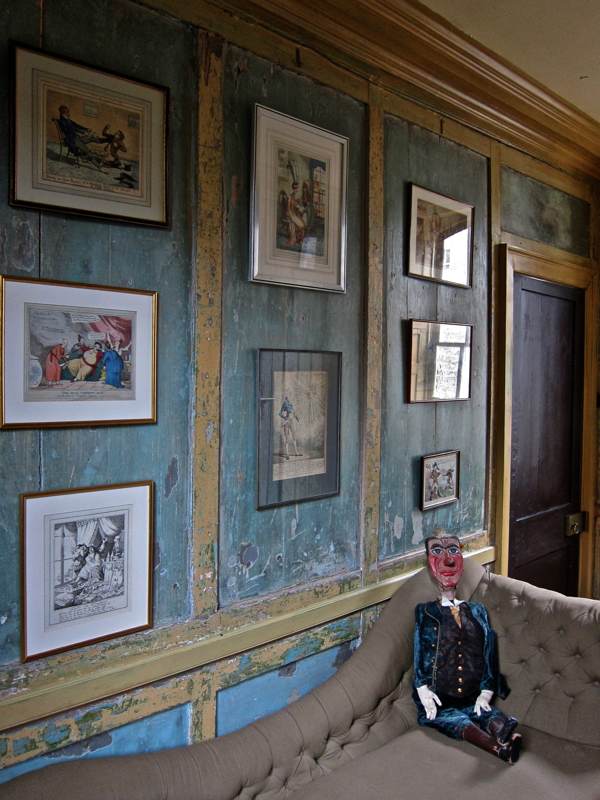
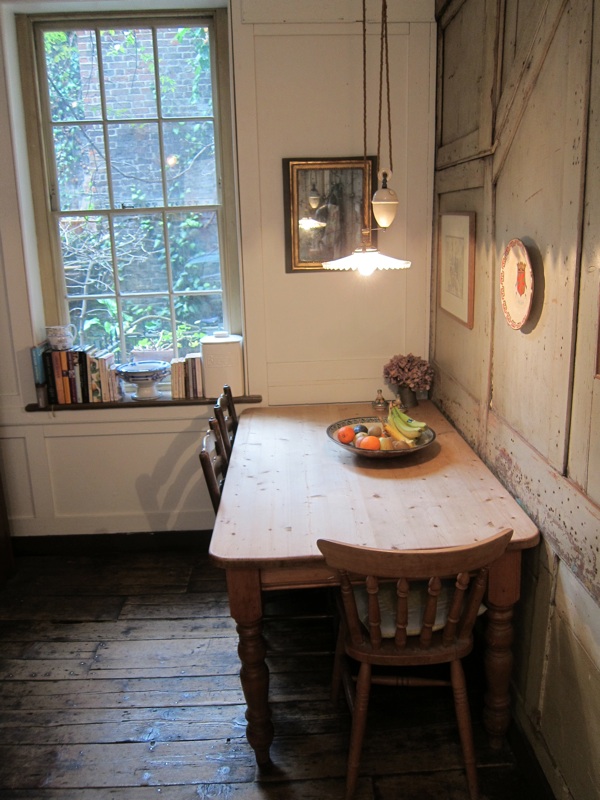
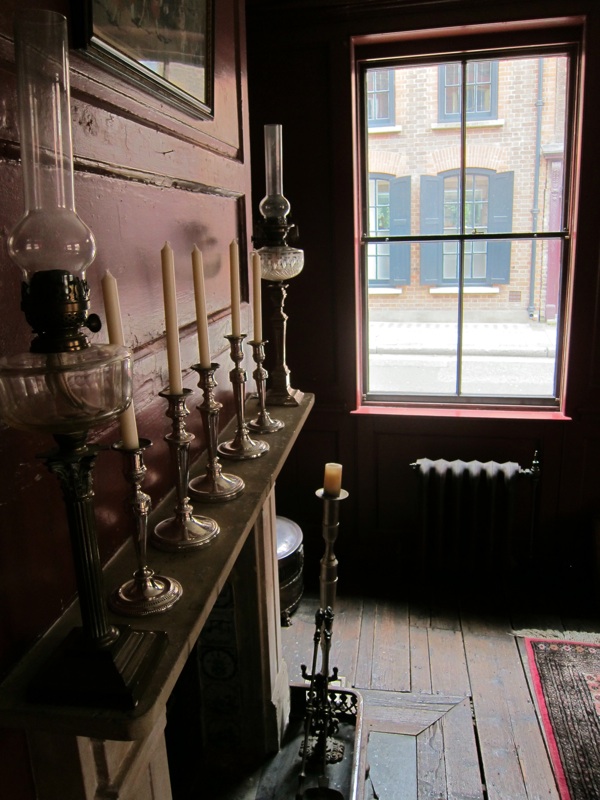
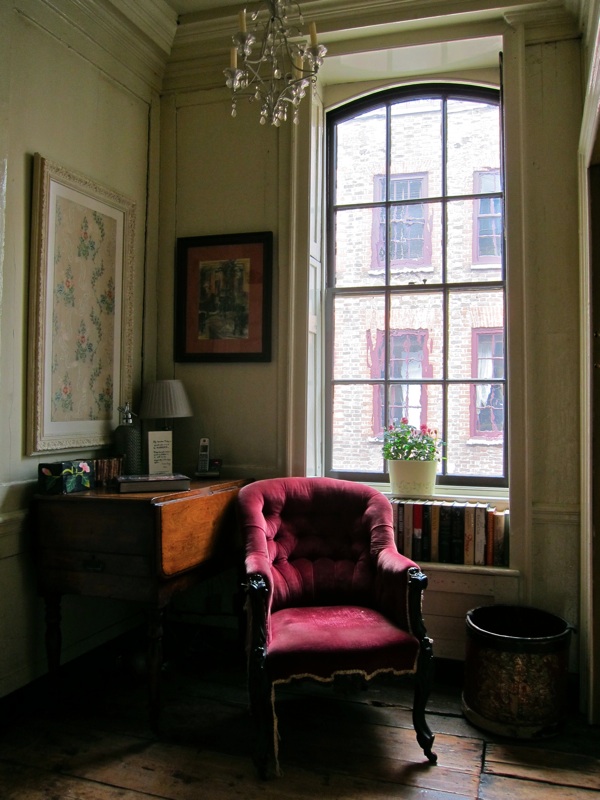
Anna Maria Garthwaite, the most celebrated texile designer of the eighteenth century, bought this house in Spitalfields when she was forty years old in 1728, just five years after it was built. Its purchase reflected the success she had already achieved but, living here at the very heart of the silk industry, she produced over one thousand patterns for damasks and brocades during the next thirty-five years.
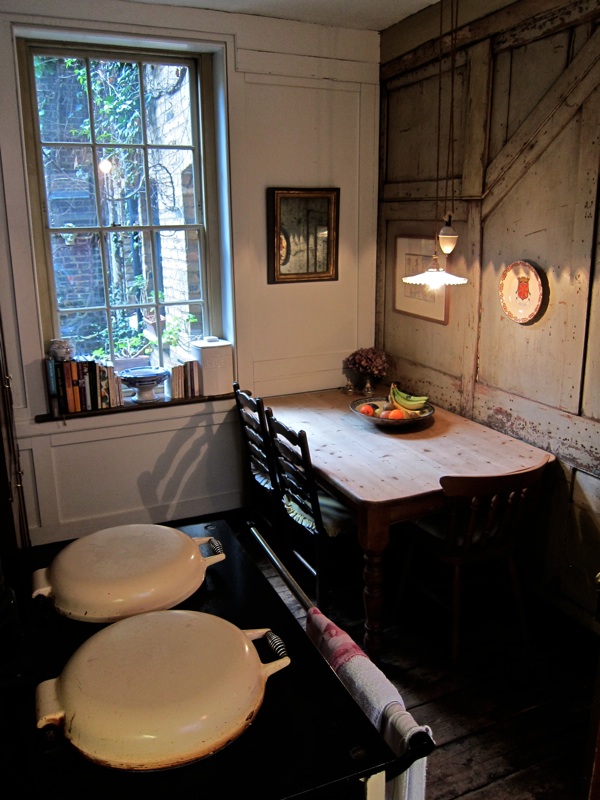
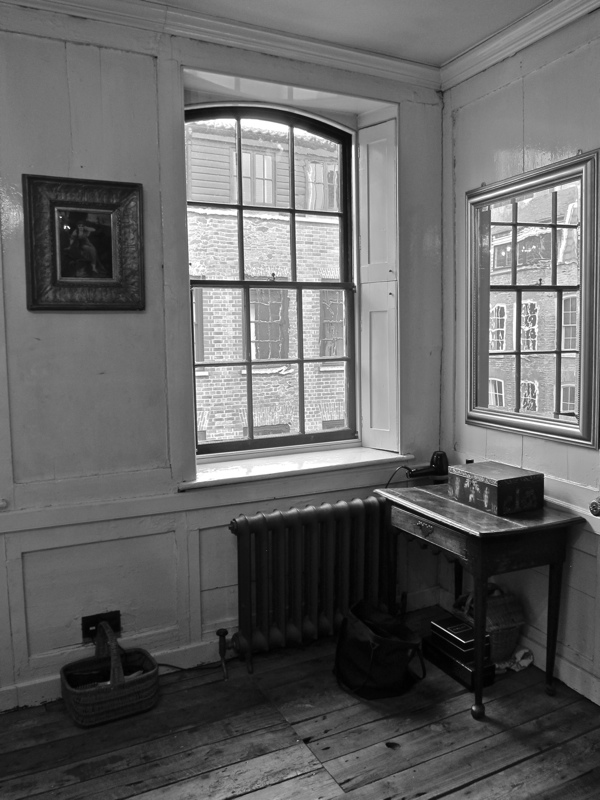
The first owner of the house was a glover who used the ground floor as a shop with customers entering through the door upon the right, while the door on the left gave access to the rooms above where the family lived. For Anna Maria Garthwaite, the ground floor may also have been used to receive clients who would be led up to the first floor where commissions could be discussed and deals done. The corner room on the second floor receives the best light, uninterrupted by the surrounding buildings, and this is likely to have been the workroom, most suited to the creation of her superlative designs painted in watercolours – of which nearly nine hundred are preserved today at the Victoria & Albert Museum.
Anna Maria Garthwaite contrived an enormous variety of sprigged patterns each with different permutations of naturalistically rendered flowers, both cultivated and wild species. Yet equally, her work demonstrates a full understanding of the technical process of silk weaving, conjuring designs that make elegant employment of the possibilities of the medium and the talents of skilled weavers. Many of her designs are labelled with the names of the weavers to whom they were sold and annotated with precise instructions, revealing the depth of her insight into the method as well as offering assistance to those whose job it was to realise her work. She was credited by Malachi Postlethwayt in The Universal Dictionary of Trade and Commerce of 1751 as the one who “introduced the Principles of Painting into the loom.”
Born in Grantham, Lincolnshire, Garthwaite moved to York with her twice-widowed sister Mary in 1726, coming to down to London two years later – and it is tempting to imagine that the pair became a familiar sight, taking long walks eastwards from the newly built-up streets into the fields beyond, where they collected wild flowers to serve as inspiration for botanically-accurate designs.
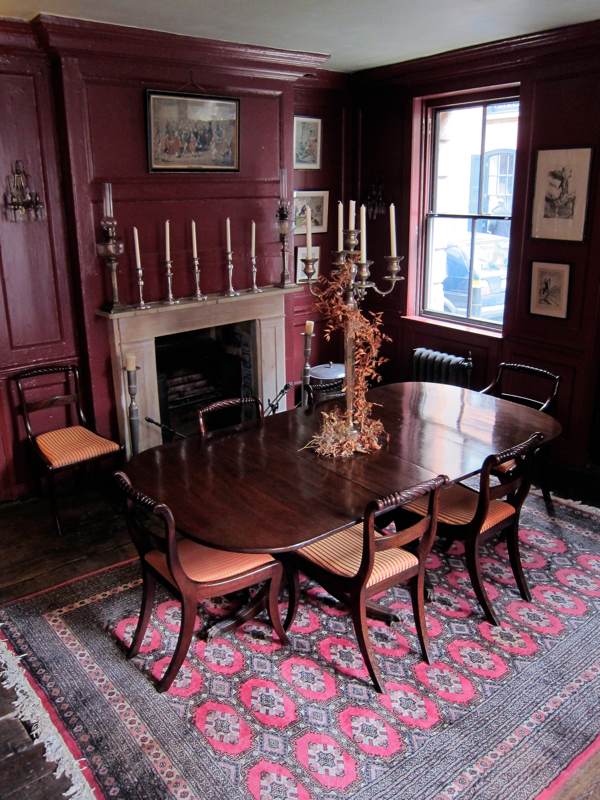
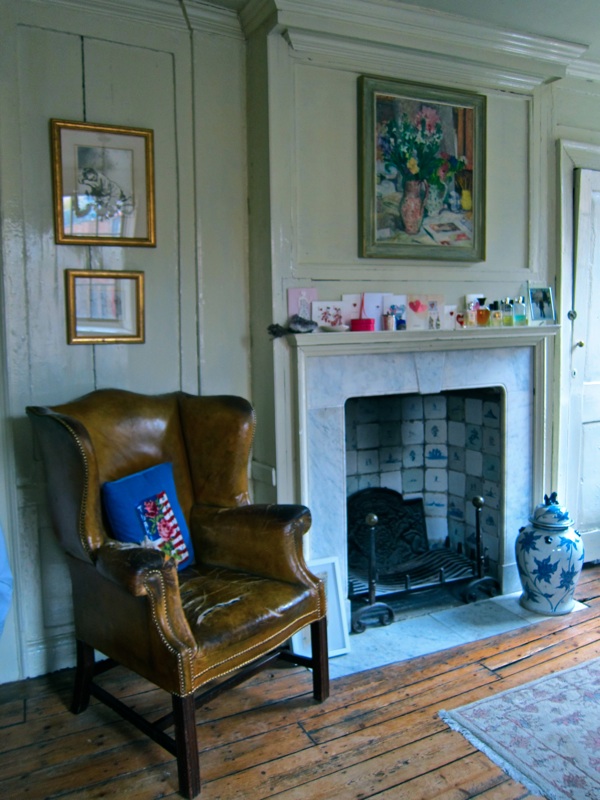
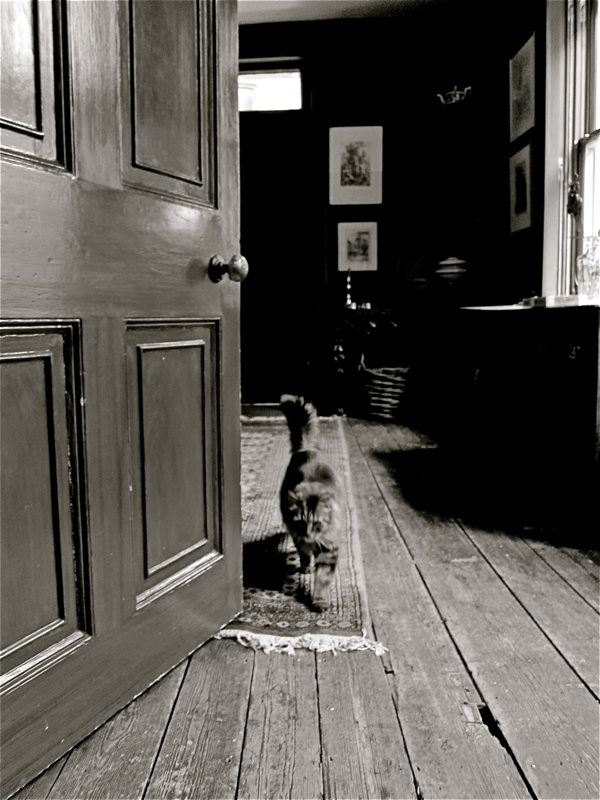
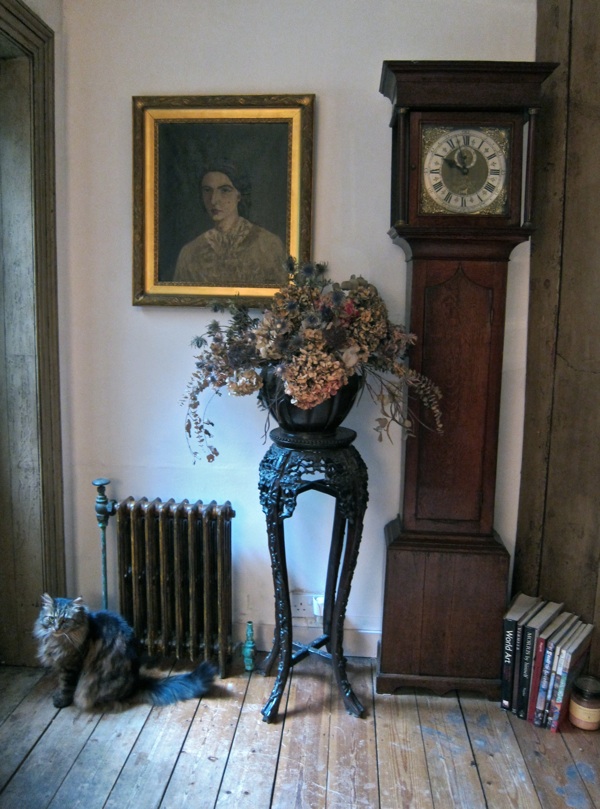
In spite of its commanding corner position at the junction of Wilkes St and Princelet St (known as Princes St in Anna Maria Garthwaite’s time), this is a modest dwelling – just one room deep – and, nearly three centuries later, it retains the atmosphere of a domestic working environment. In common with many of the surrounding properties, the house bears witness to the waves of migration that have defined Spitalfields through the centuries, subdivided for Jewish residents in the nineteenth century – the Goldsteins, the Venicoffs, the Marks, the Hellers, who were superseded by Bengalis in the sixties and seventies, until restoration in 1985 revealed the interiors and unified the spaces again.
Apart from wear and tear of centuries, and the stucco rendering on the exterior from 1860, Anna Maria Garthwaite would recognise her old house as almost unchanged if she were to return today.
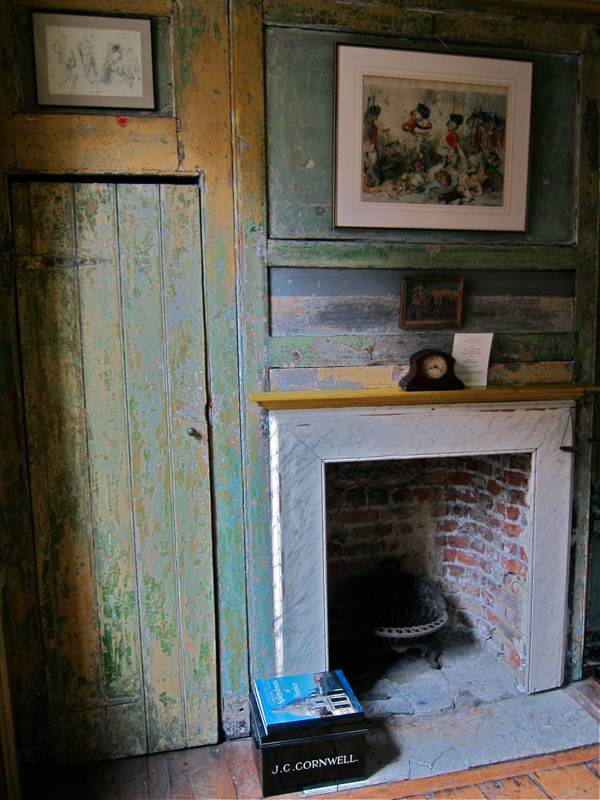
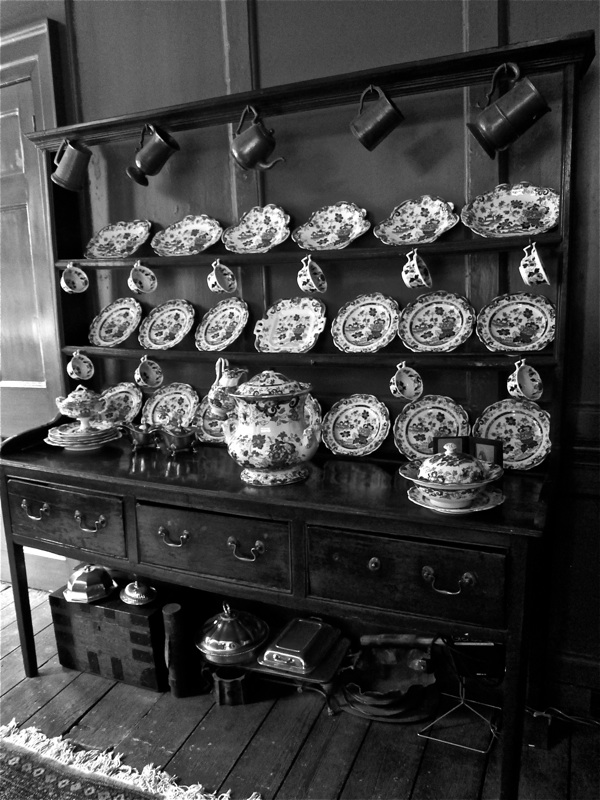
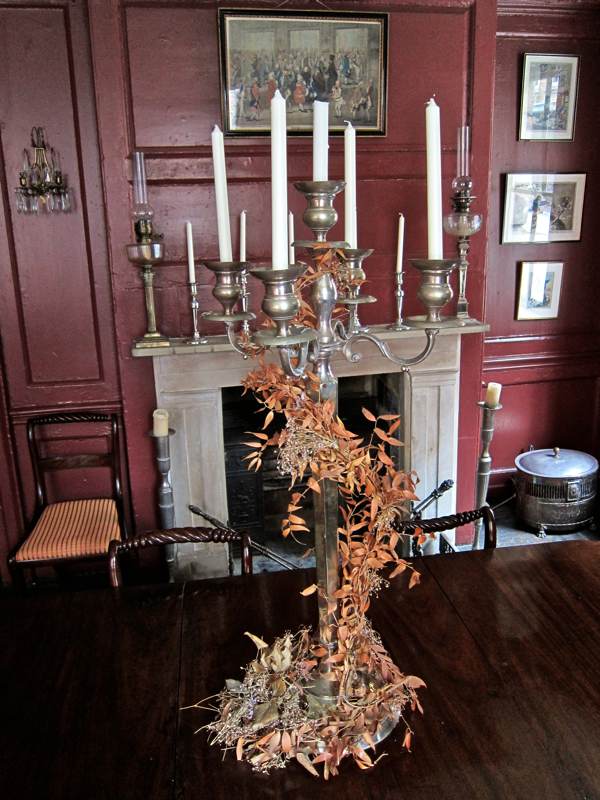
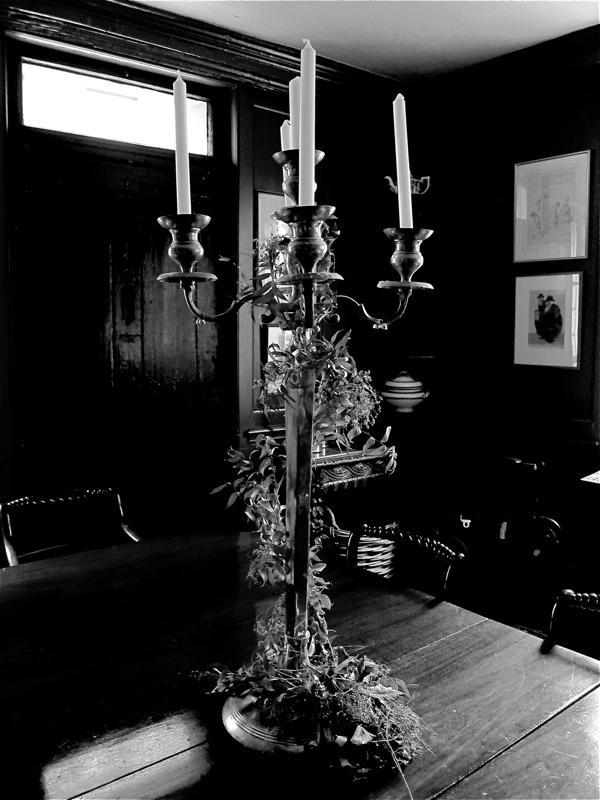
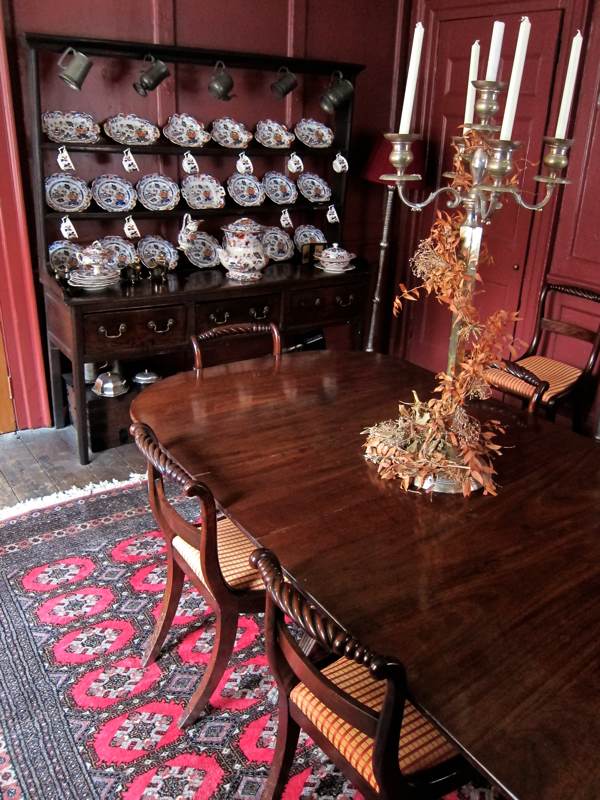
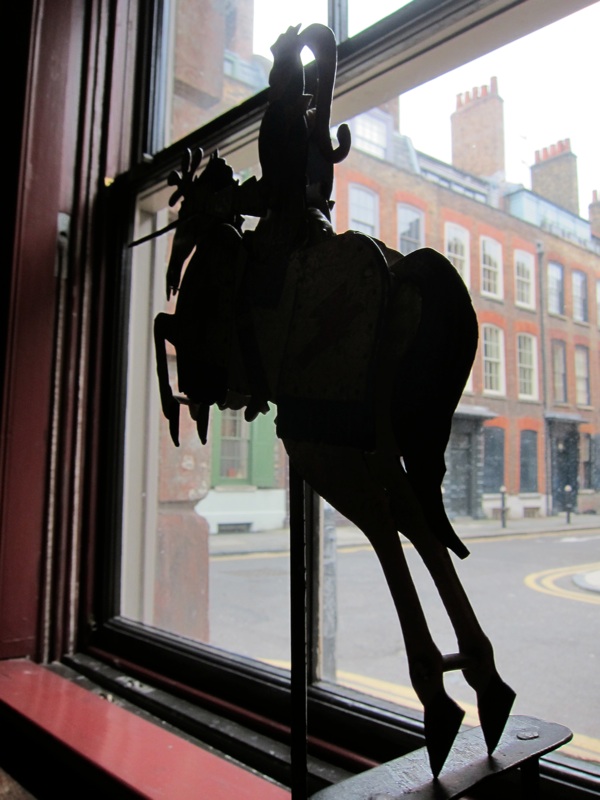
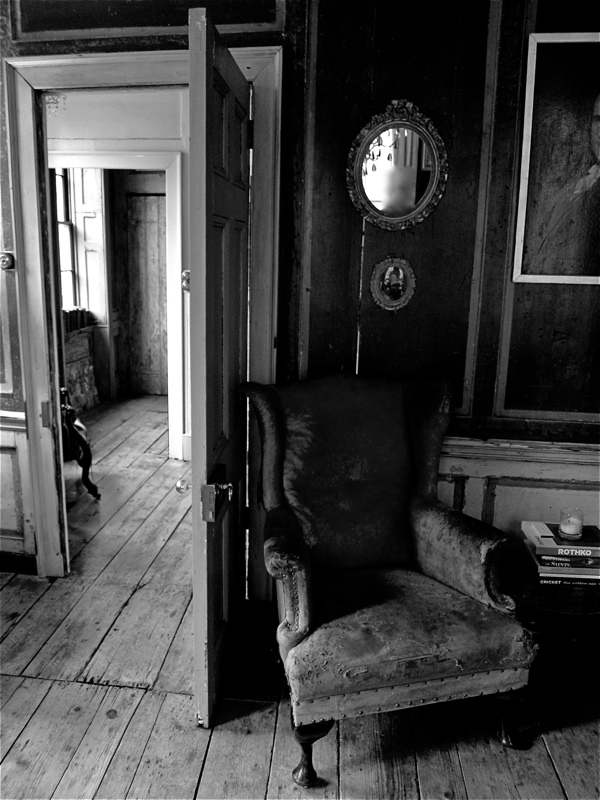
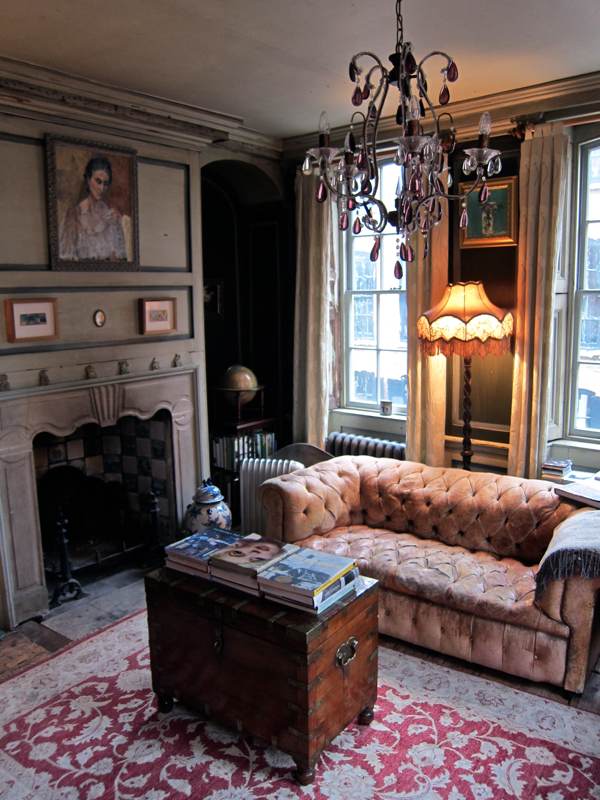
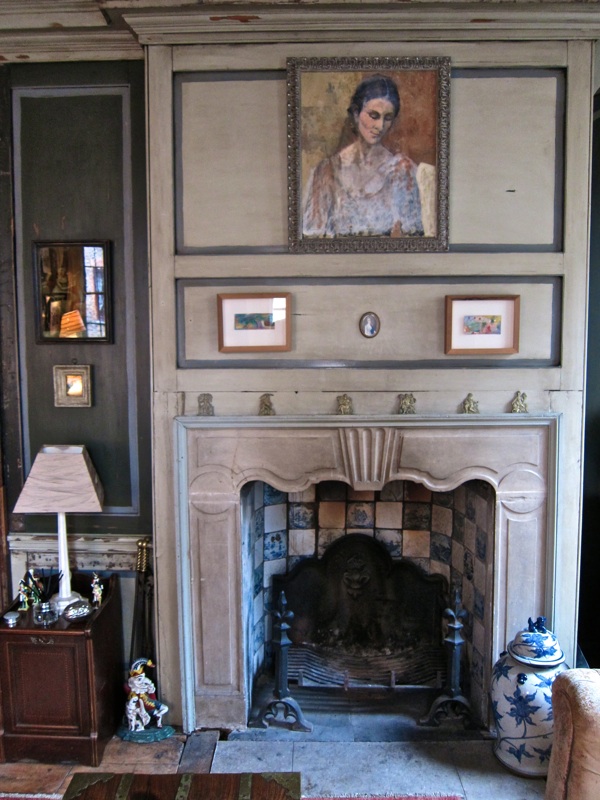
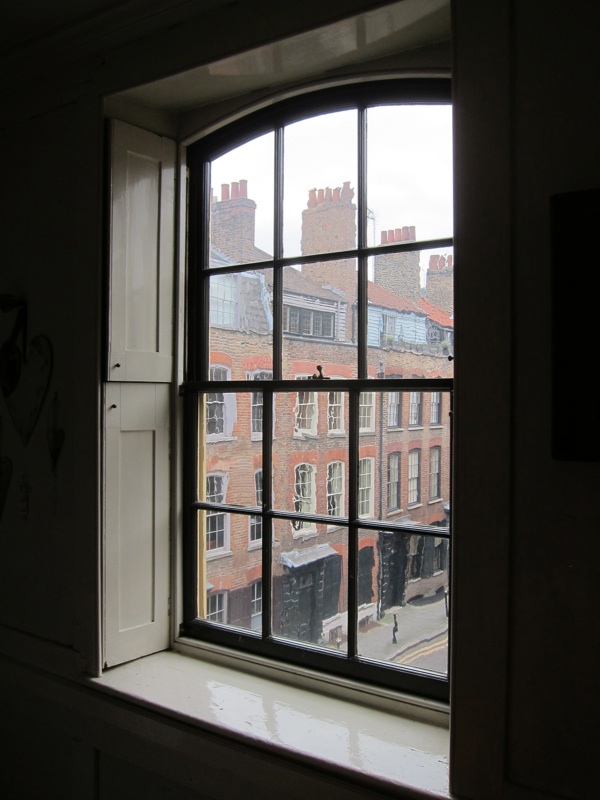
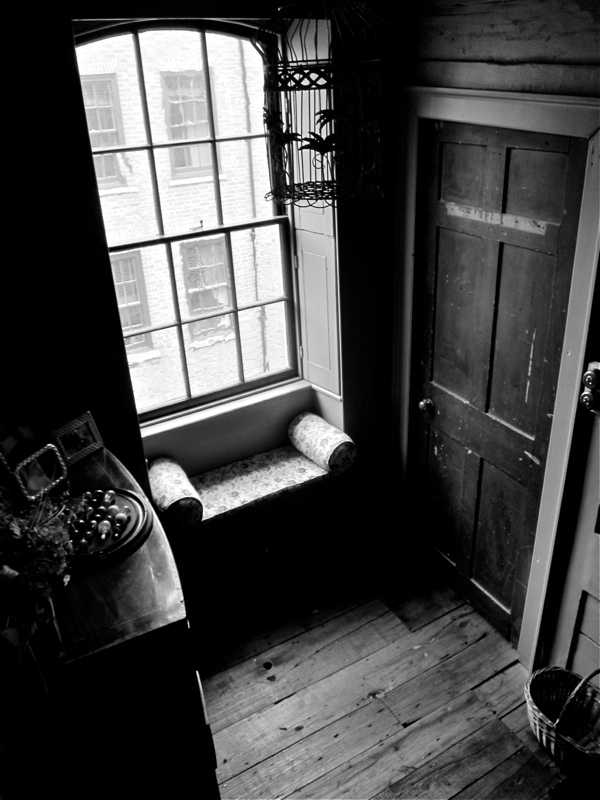
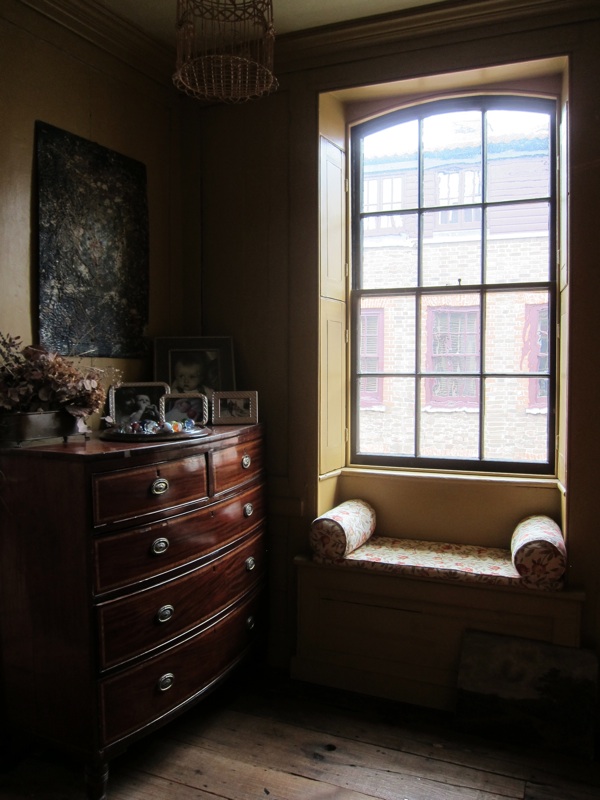
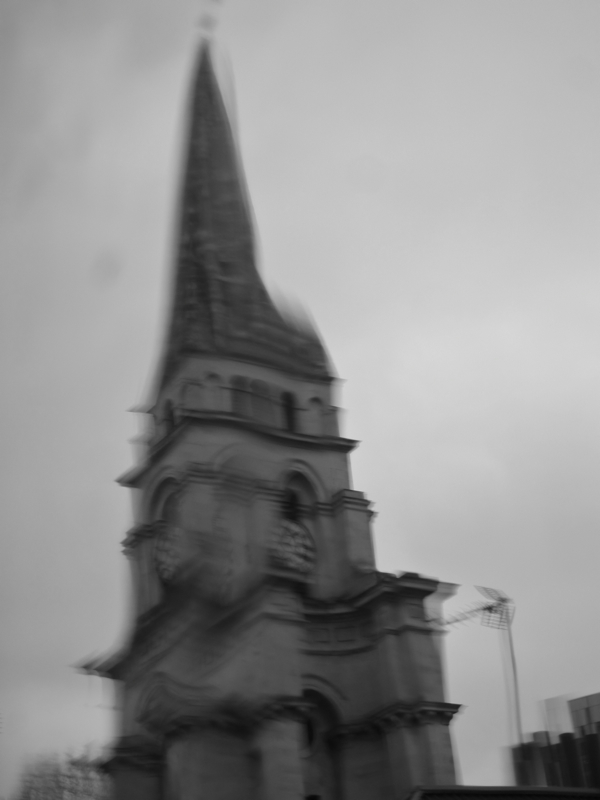
Christ Church seen through an old glass pane from Anna Maria’s Garthwaite’s workroom.
There will be an opportunity to visit Anna Maria Garthwaite’s House on Tuesday 16th April, further details and tickets from the Huguenots of Spitalfields Festival
You may also like to read more about Spitalfields silk
Soerditch by Dant (Chapter Six)
Time for this week’s dose of SOERDITCH, Diary of a Neighbourhood, Adam Dant’s sly satire upon the social ironies of the “New” East End – each cartoon a beautifully rendered view of the neighbourhood, captioned with a clueless thing overheard on the street.
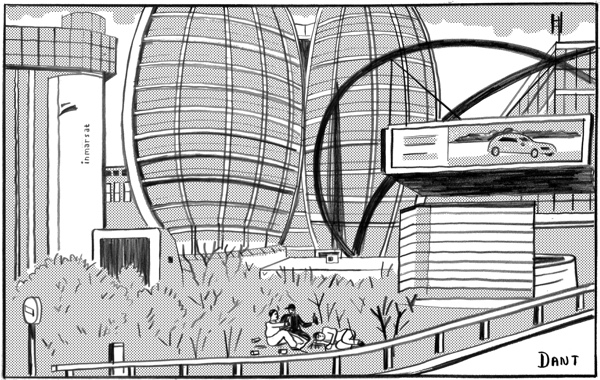
“I’m no expert, but listen … if I was architecting a building, I would not model it on a pair of buttocks!”

“They served the canapés from dustbin lids and the cocktails were in old baked bean tins … so cool!”

“My girlfriend’s started a business making laptop cases from coffee bean sacks, our flat’s a total hessian sh*t hole.”

“Got a spare £7.24 love?” … “Not funny! You asked that yesterday.” … “No, yesterday it was £6.30, it’s gone up.”

“Hey, this is where that ‘right-on’ printers was where you had your ‘class war rant’ pamphlets done.” … “Yeah, keep that one quiet at KMPG please.”

“Do you ever imagine other cities existing beneath this one?” … “No, they’re usually on top!”
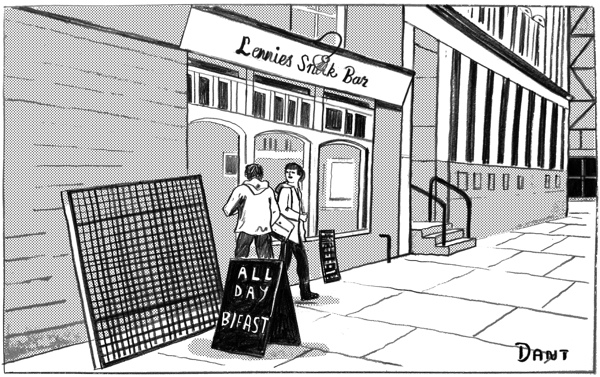
“They’ve got no soya milk, I’m just popping back home to fetch mine – want me to pick up your fags too?”

“Delivery of lambs’ tongues and pigs’ **seh0les for you…”
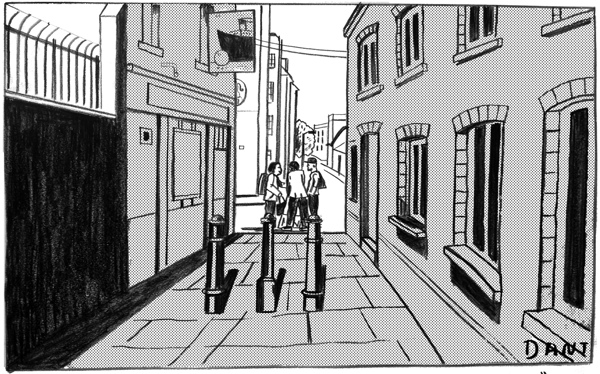
“I dare you to chuck this toy money into the drug dealer’s car instead – go on, it’d be soo funny…!”

“Glad they moved the soup kitchen … I was getting cleaned out by all the tramps at the ‘when I grow rich’ church!”

“This was an old railwayman’s chapel but apparently some architects are turning it into a neo-Victorian Cuban bar …”

“Wot’s iz name?” … “Crack-hound?”
Soerditch is the old name for Shoreditch, quoted by the historian John Stow in his Survey of London 1598, as “so called more than four hundred yeares.” It means sewer ditch, in reference to the spring beside Shoreditch Church, once the source of the lost River Walbrook which flowed from there towards the City of London.
Drawing from a pair of unlikely inspirations, namely Giles‘ cartoons for the Daily Express and Hiroshige‘s ‘One Hundred Famous Views of Edo,’ Adam Dant pulls off an astonishing sleight of hand – simultaneously portraying the urban landscape of Shoreditch with spare lines and flat tones that evoke the woodcuts of Hiroshige, while also satirising the manners and mores of the people through witty social observations in the manner of Giles.
The exhibition runs at Eleven Spitalfields Gallery until 26th April and all one hundred and twenty-five cartoons are published in an album with an introduction by Jarvis Cocker, produced in the style of Giles’ celebrated annuals and available to buy online from Spitalfields Life Shop.
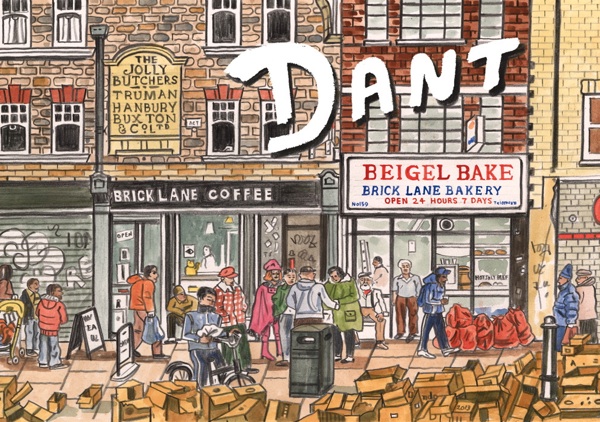
Click here to buy your copy of SOERDITCH by DANT – Diary of a Neighbourhood (125 Views of Shoreditch) – while stocks last!
Cartoons copyright © Adam Dant
Adam Dant is represented by Hales Gallery
You may also like to see these earlier selection of cartoons by Dant
Soerditch by Dant (Chapter One)
Soerditch by Dant (Chapter Two)
Soerditch by Dant (Chapter Three)