Terry Penton, Painter & Decorator

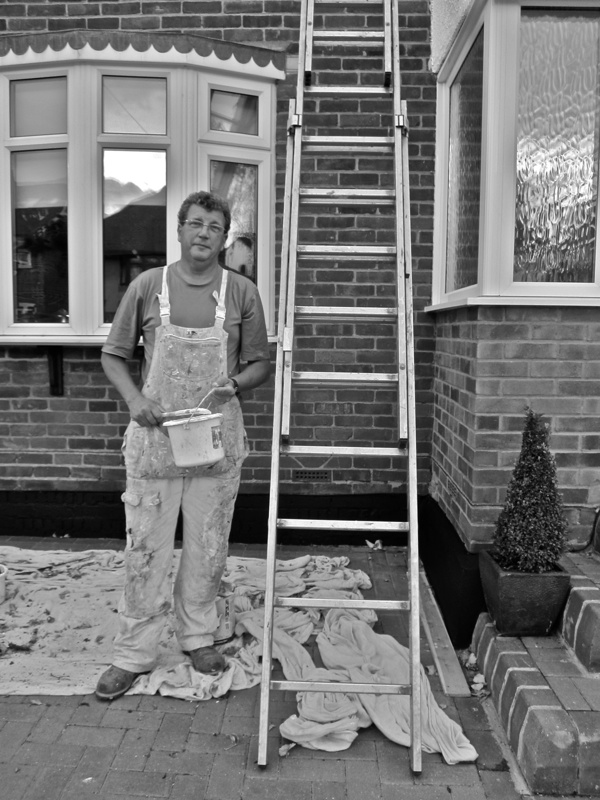
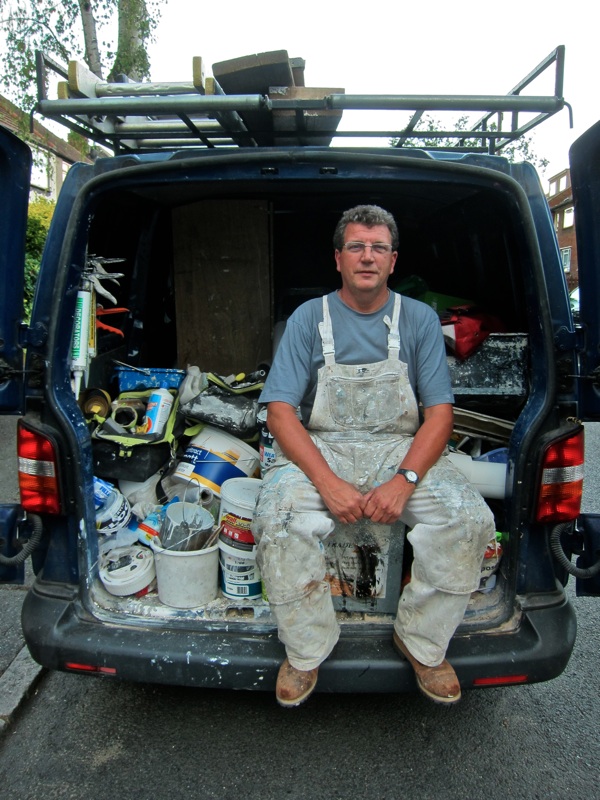
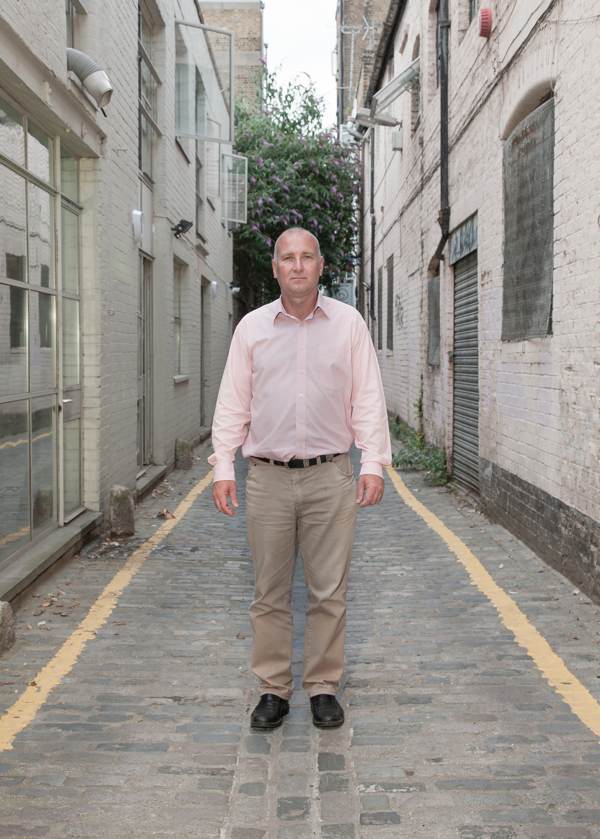
You might think that the life of a painter & decorator might be uneventful, but this has not been the case for Terry Penton. “I’m thinking of writing a book,” he revealed to me, “I’ve been through so many things and so much has happened to me, and with everything I’ve done there is a story to tell.”
After bringing up his family in Bethnal Green, Terry moved to Chingford ten years ago. At one end of the street is the expanse of the King George V Reservoir and at the other is Epping Forest where Terry walks his dog every day, observing the sunset over the East End. “People don’t realise there’s sheep grazing in E4,” he informed me.
With a restless spirit and a fearless nature, Terry has always been open to the opportunities that life offers and, as a consequence, he has been granted an enviable breadth of experience and knowledge – as I quickly discovered when I sat down for a chat with him yesterday.
“I was born at 5 Treby St, Mile End, and lived there until I was four. John, my dad, was a Painter & Decorator for Stepney Borough Council. He died of lung cancer when I was three and we couldn’t afford the rent. Eve, my mother had four children so she took refuge at Parnell Rise Methodist Church and she worked there as a caretaker.
At the church, she met someone. George’d not long come from Jamaica on the Windrush. He was a bus conductor on the number eight route. She and George got married, and all her family disowned her and all her family disowned us too. The church wrote and said that now she had a husband we must get out. But we read it as because she had married a black man. They gave her one week’s notice.
I was six when we moved to Brooke Rd, Clapton. At first, it seemed everything was fine because there were other families from the West Indies but there was a lot of resentment and we had all sorts of trouble including bricks through the window. The black community didn’t like it that my step-dad had married a white woman. When my mother got pregnant and had another baby, one of the neighbours in the street asked to have a look, when she had it in a pram, and when they saw it was a mixed race baby, they spat in her face and called her a whore.
Because of my dad, I didn’t see colour. He brought me up like a Jamaican and I could speak the patois. I learnt that what colour or religion you are doesn’t matter, there’s good and bad in all. I was in a bunch of kids that included Irish kids, kids from Manchester, black kids, Turkish Cypriots and Greek Cypriots. We hadn’t been exposed to racism so it didn’t matter to us.
After we moved to Brooke Rd, my step-dad started drinking and we had holes in our shoes – he had a nice suit and tie, and we had nothing. My mother worked in a laundrette and I used to go round the bins collecting Domestos bottles for the tuppence deposit on each one. I walked to Manor House on Saturday to wash motors at nine years old. We learnt to survive. My old man hit me with a buckle until I stopped him at sixteen.
I never liked school from day one. The only subjects I engaged with were Carpentry, Geography and English – and that was because you could write stories. I had an argument with a teacher who pulled me up to the front of the class and told me to bend over, and he kicked me and he caught me underneath which resulted in me having to have an operation. Three months later, I got out of hospital and went back and bashed him up. Then I got suspended and stayed suspended, I left school at thirteen years and four months. By then, I was working for a local butcher, going down to Smithfield at three o’clock in the morning and loading lorries up. I went back to school at fifteen but left after three months and started as a trainee butcher in Bethnal Green at West Layton Butchers at £3 a week.
They played pranks on me, sending me to walk all the way to the Roman Rd and back to buy wire mesh gloves when such things didn’t exist. At the time I thought it was meant to be funny, so what I decided to do was to throw a bucket of livers’ blood over them through the grille at the side door, while they was putting the rubbish out. Unfortunately, two old ladies walked past. One had just had a blue rinse and it was covered in blood, so she went into the shop to complain and I was sacked on the spot.
I couldn’t get another job in butchery because I couldn’t get the references, so I worked five years in the rag trade and then I went into the building game at eighteen, until I was twenty years of age when I got a job working as a mobile caretaker for the Greater London Council. I became resident caretaker in the Ocean Estate, Stepney. I was courting then and a maisonette became available in Bethnal Green, so I put in for it – only the local office didn’t like the fact that my girlfriend was living with me and I was told to get married. We married in St Matthews Bethnal Green on 29th March, 1980. After two years, my son Daniel was born in Barts Hospital, two years later my son Steven was born and twelve months later my son Frankie was born.
At that time, we were told that the GLC was handing over our caretakers’ contracts to Tower Hamlets, so at this point I joined the National Union of Public Employees as a Shop Steward, becoming Branch Secretary, Branch Chair and negotiating our terms and conditions, so we would be protected when the handover came. D-Day came on 31st October 1985, and if you didn’t sign your contract you were dismissing yourself. I was approached by management and offered a senior position if I got the other guys to sign, which I refused to do. Out of thirty-three caretakers, eleven refused to sign and were dismissed. We had to fight on our own because we were without contracts and I set up a tent and camped outside the Town Hall, and we occupied the Town Hall on an number of occasions. It went to court but, in the end, I left after thirteen years caretaking with nothing. I always believed being a caretaker was a kind of social work, I started a football team for kids on the block and I kept an eye on the old folks. A well-organised caretaker is the key to a good estate.
I became a member of Stepney & Bethnal Green Labour Party and went to Nottingham to support the miners, I was on the picket line in Wapping for a year and I was in Dover supporting the P&O workers. I even stood for election in Weavers’ Ward but got a disappointing six hundred votes.
While working for the Council, I attended Hackney Building College in my own time and did a City & Guilds in Painting & Decorating. I had three children and a wife, and rent to pay, so once I lost my job I went out and did Painting & Decorating. I also did decorative effects and I used to sell furniture and fireplace surrounds and then I’d marbleise them. I took a workshop in the Sunbury Workshops in the Boundary Estate but the recession kicked in and I couldn’t afford it. I was approached by a printer called “Johnny the Ace” who was looking for a little workshop to share for printing leaflets and flyers and he would pay 80% of the rent. So I partitioned the unit, and I could do my furniture at the front while he was doing his printing at the back.
A couple of months went by and I discovered he was printing money. I was faced with the option of going to the police and face the consequences of being revealed as a grass, so I decided not to say anything. But the workshop was wired and I was charged with conspiracy to produce counterfeit goods. The printer “Johnny the Ace” was working for the police, and it was a complete set up and there was nothing I could to about it.
I pleaded my innocence and told them I’d been set up, but I was advised by my barrister to go guilty and seek leniency. I received three years of which I served eighteen months. I’d been going to Tower Hamlets College doing an Access Course to go to University with a view to becoming a Probation Officer. I studied English, Maths, Sociology, Economics, Law and Politics. I went to London Guildhall University where I was studying for an Honours Degree in Law & Politics.
When I come out of prison, they approached me to return to University but I said ‘No,’ and I went back to Painting & Decorating. I’d like to give something back and I’d like to teach young people Painting & Decorating and decorative effects. My eldest son works with me as as Plasterer, I taught him Painting & Decorating. All my children work, they’ve got a sense of responsibility and they’ll never forget where they’ve come from.
Now we live in North Chingford and it’s not as friendly as Bethnal Green, but there’s this politeness here. People say, ‘Good morning’ and they thank the driver when they get off the bus. It’s taken me ten years to get used to it.”
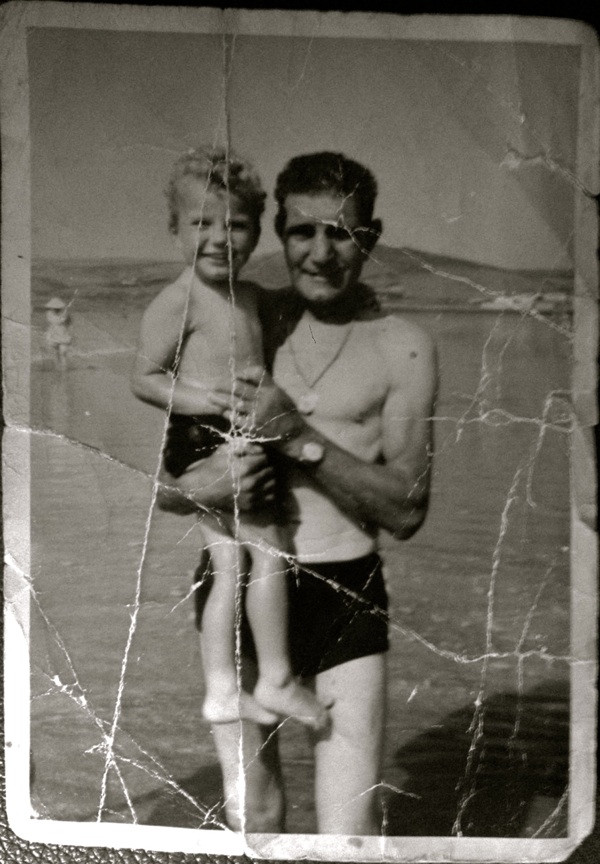
Terry aged three with his father John in Ilfracombe, 1959 – “The Summer before my father died, we went down to see him at the convalescent home in Devon. He bought me a pair of woollen swimming trunks with a seahorse sewn onto them, and to this day I love seahorses.”
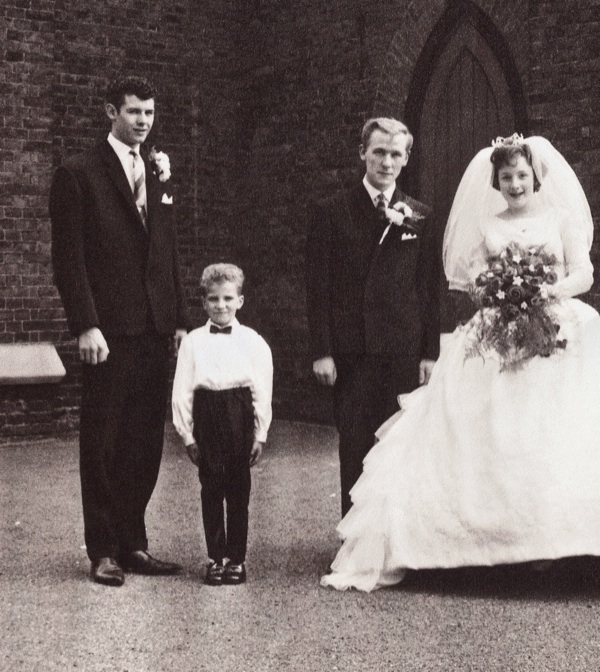
Terry as a six year old at his sister’s wedding, 1963.
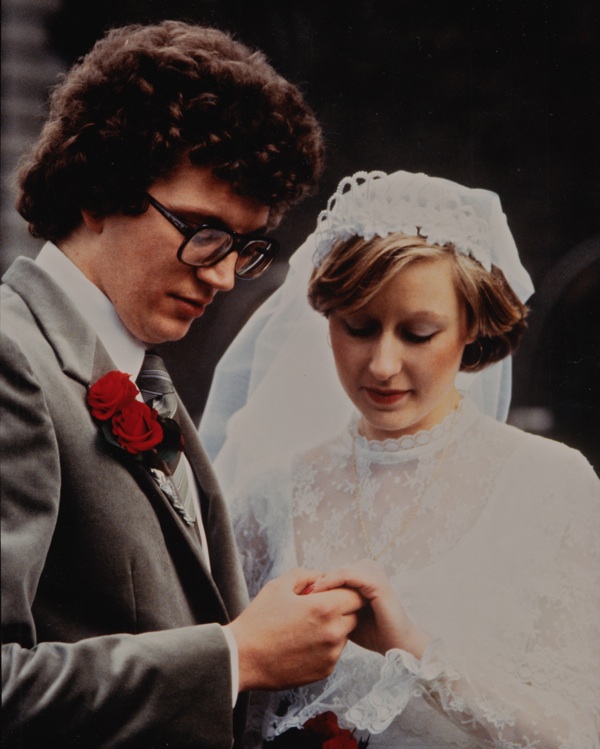
Terry’s marriage at St Matthew’s, Bethnal Green, 29th March 1980.
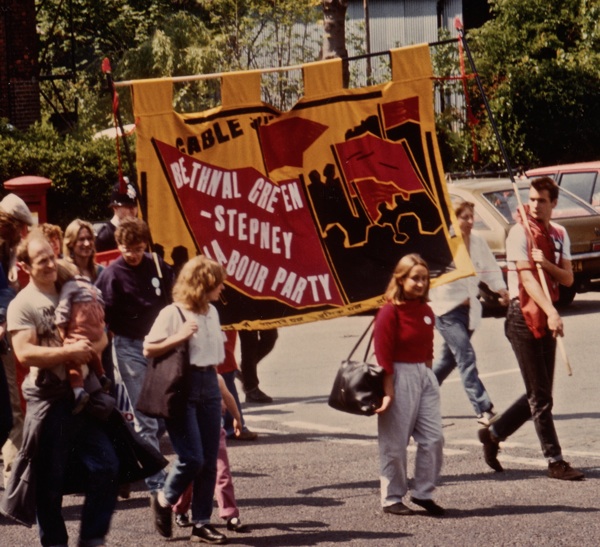
Terry carries the banner for Stepney & Bethnal Green Labour Party in the eighties.
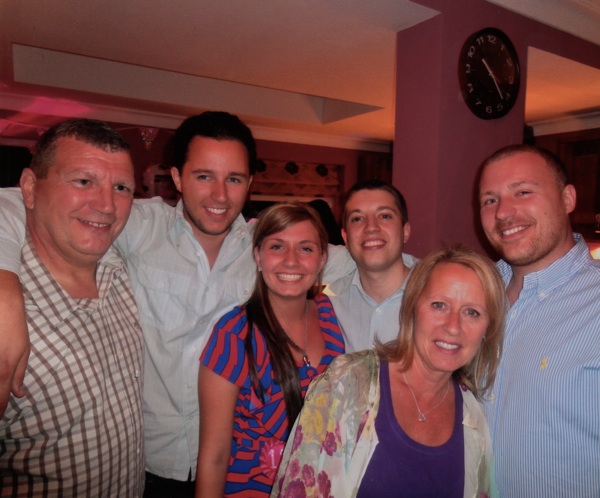
Terry with his family today
Terry Penton, Painter & Decorator
You may also like to read about
Among The Cockneys & The Mockneys

“Barry Grantham & John Barnes, ‘Underneath the Arches’…”
There are two floors at the Bethnal Green Working Men’s Social Club. Downstairs, where the original members who are long-term residents of the East End congregate – and upstairs, where the younger fashionable folks that arrived more recently gather to party.
Yet last Saturday night, everyone was united on the same floor as Cockneys & Mockneys rubbed shoulders to celebrate their shared affection for all things East End, at the closing party of the Cockney Heritage Festival held upstairs in the main hall. And Spitalfields Life Contributing Photographer Sarah Ainslie & I were there in the thick of it, enjoying a right old knees up with the best of them.
With its crusty carpets, ragged curtains and Christmas decorations still hung up from the three years ago, the Bethnal Green Working Men’s Club is the most charismatic authentically scruffy venue for a large scale shindig in the East End. Arriving to a belting chorus of ‘My Old Man’ already resounding throughout the building, Sarah & I knew we were in for an unforgettable evening.
Notable acts in a lively programme were Barry & Joan Grantham and John Barnes. Barry Grantham told me that he and Joan had been performing together for more than fifty years, playing the variety circuit in its final years alongside luminaries such as Max Miller and Wilson, Keppel & Betty. Now in advanced age, it was an heroic feat for Joan to climb the steps onto the stage to take her place at the keyboard, but we were more than grateful when she and Barry performed ‘Any Old Iron’ in the style of local boy Harry Champion, born in Bethnal Green in 1865.
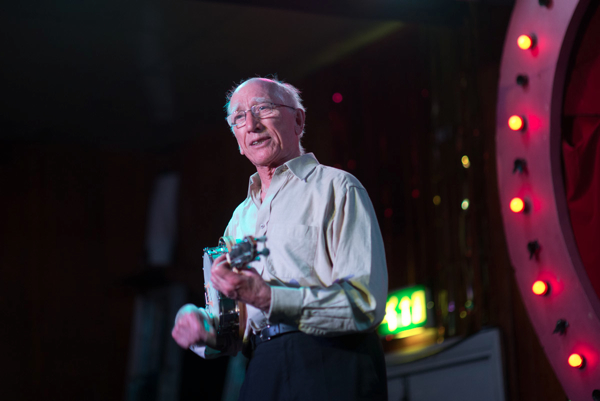
John Barnes revealed to me that he first played the ukelele-banjo in public at age twelve in 1939 and seventy-four years later, he is still going strong. “I’m not a professional, I’m just someone that people always ask to perform,” he admitted with endearing modesty. “I’m eighty-six and I’m lucky” he added with a winning smile, and when I asked what he meant, John explained, “No-one would be interviewing me at eighty-six if it weren’t for my ukelele-banjo playing.”
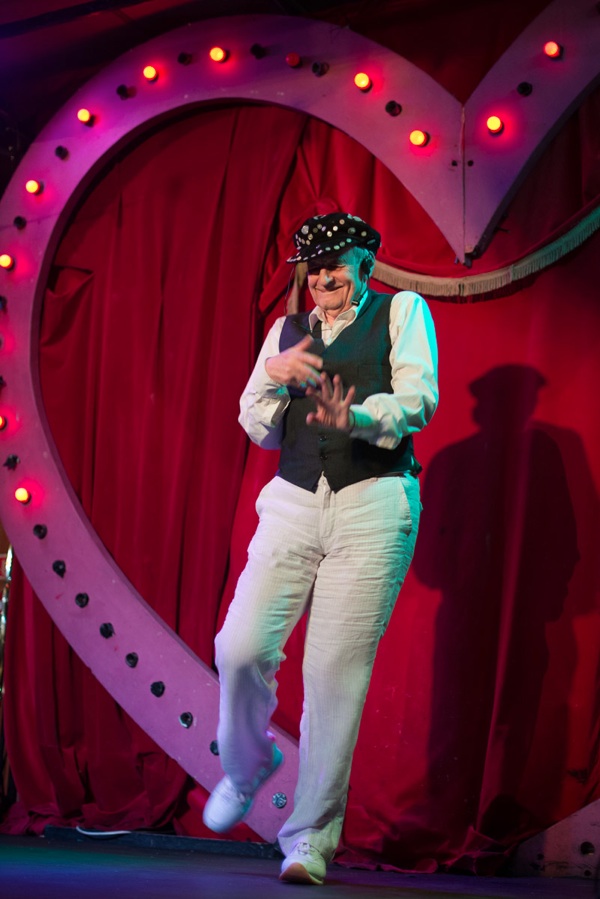
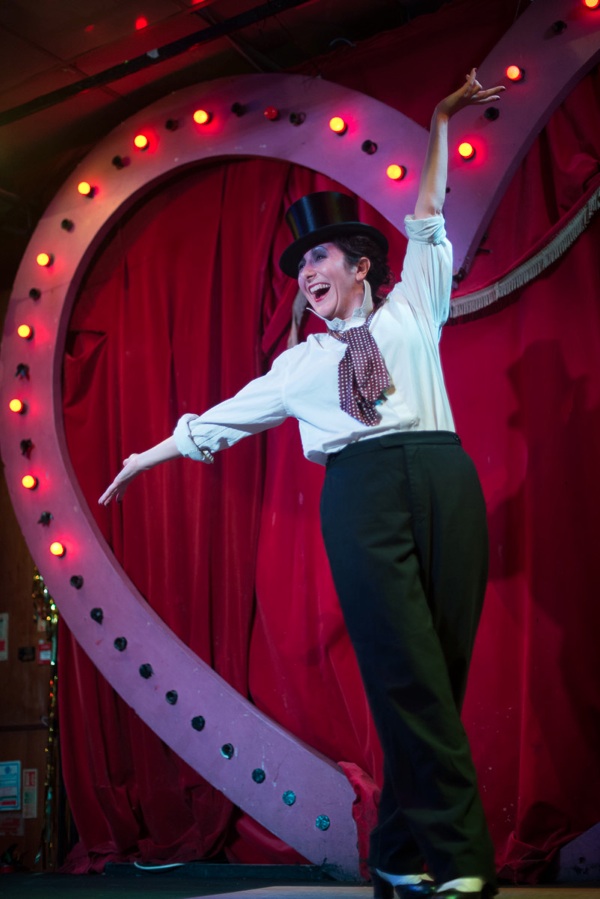
Josephine Shaker, more commonly seen as a tap-dancing penguin at London Zoo, brought some bravura foot-work to the proceedings with her tap version of ‘Burlington Bertie from Bow.’ “I made up the act for tonight, “ she confessed to me afterwards, “I’m wearing my husband’s suit, he’s a jazz musician.” Yet in spite of her apparent nonchalance, I discovered that Josephine has show business in her blood. “My grandmother was a chorus girl on the Tivoli circuit,” she confided to me.
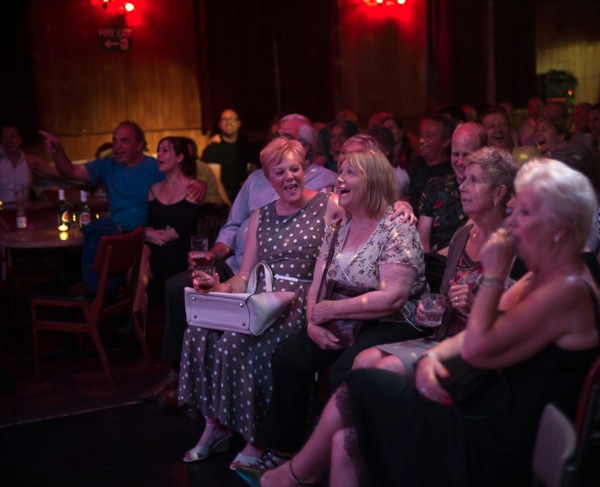
As the evening progressed and more and more locals piled in from the surrounding pubs, audience participation grew livelier until the chairs and tables were swept away from in front of the stage to create a space for dancing.
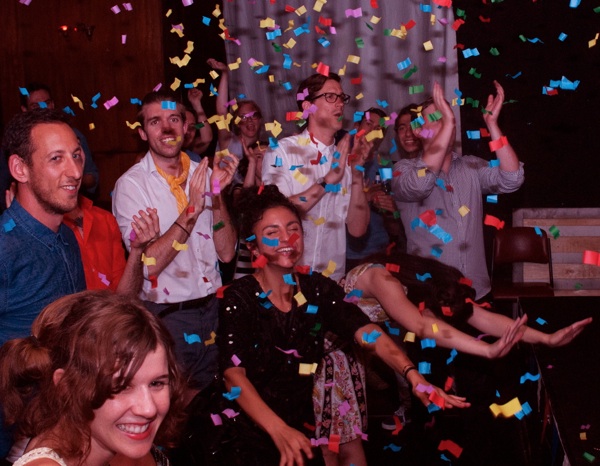
The elbows were out, the knees were up. They were calling for ‘The Lambeth Walk,’ ‘My Old Man,’ ‘Roll Out the Barrel’ and ‘Maybe It’s Because I’m a Londoner?’ They knew all the words and they could not get enough of it, and these were the Mockneys! It was both a vivid demonstration of the age-old principle in the East End that all those who come here eventually go native and also confirmation that the future of Cockney culture is assured.
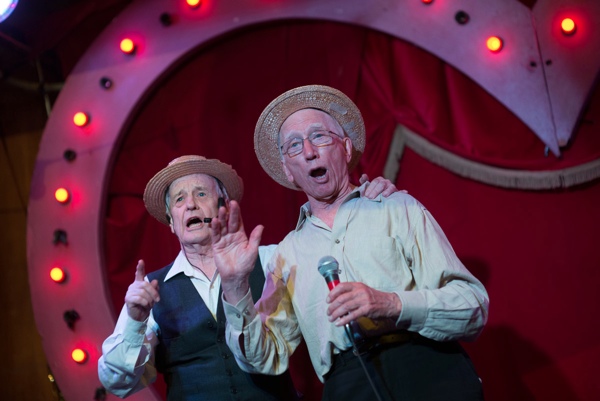
Barry Grantham once performed with Max Miller.
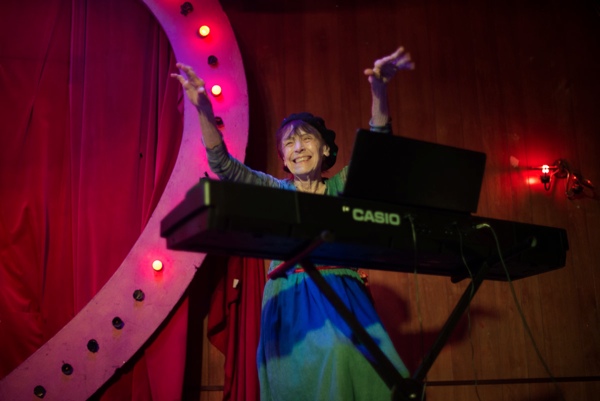
Joan Grantham accompanied Barry on keyboards.
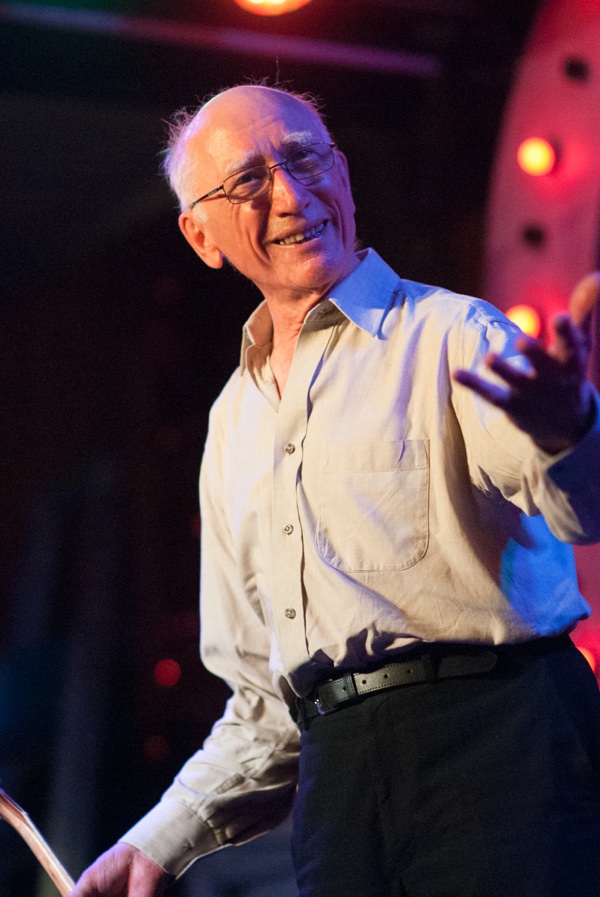
John Barnes
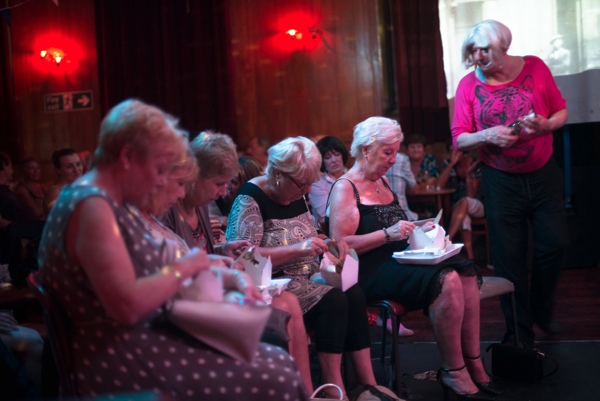
A short interlude for pie & mash served by Stephanie.
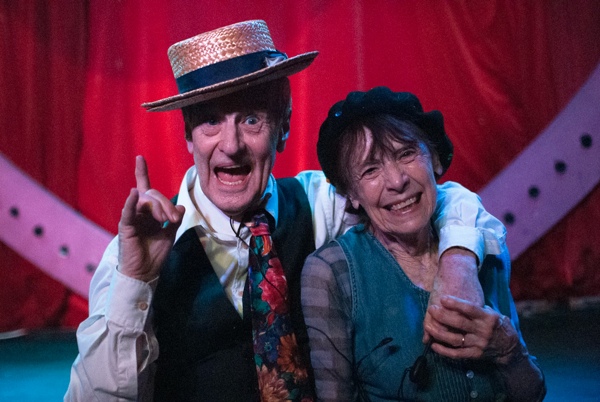
Barry & Joan Grantham have performed together for more than fifty years.
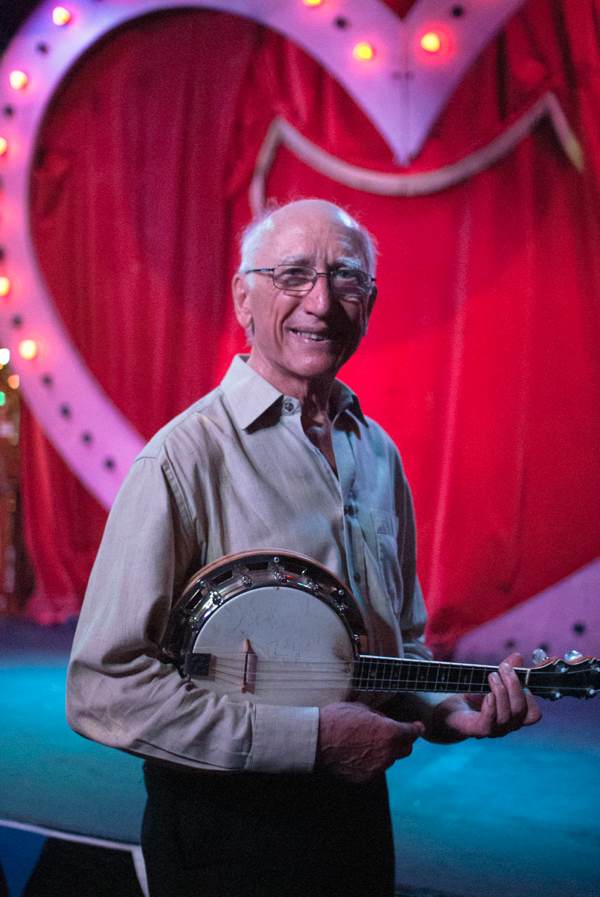
John Barnes first played his ukelele banjo in public at aged twelve in 1939.
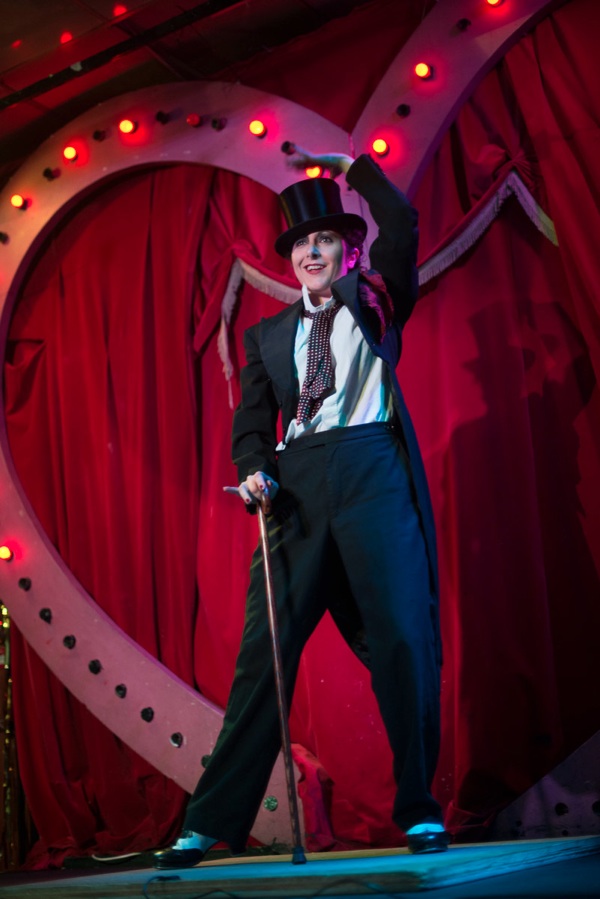
Josephine Shaker’s perfomance of Burlington Bertie was a highlight of the evening.
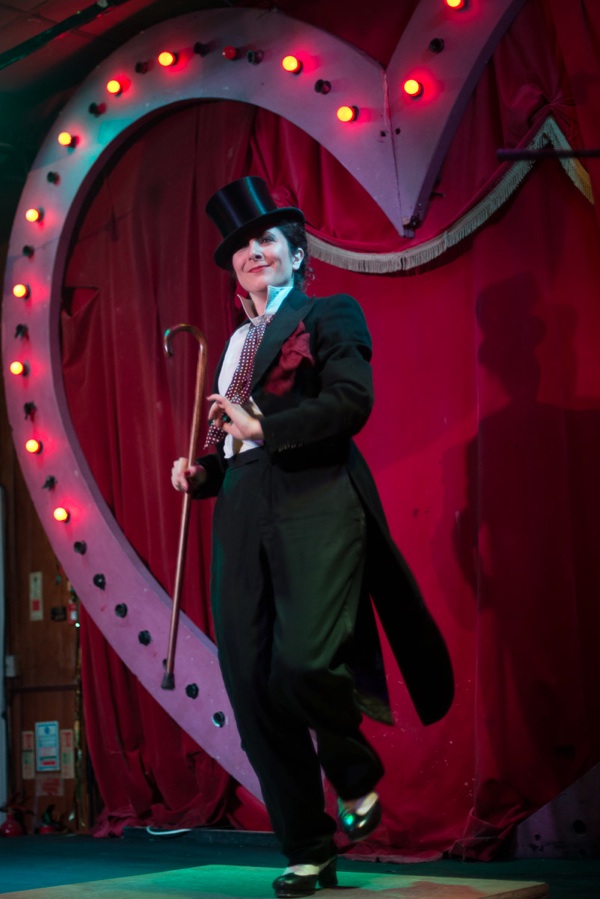
“I’m Bert, Bert, I haven’t a shirt…”
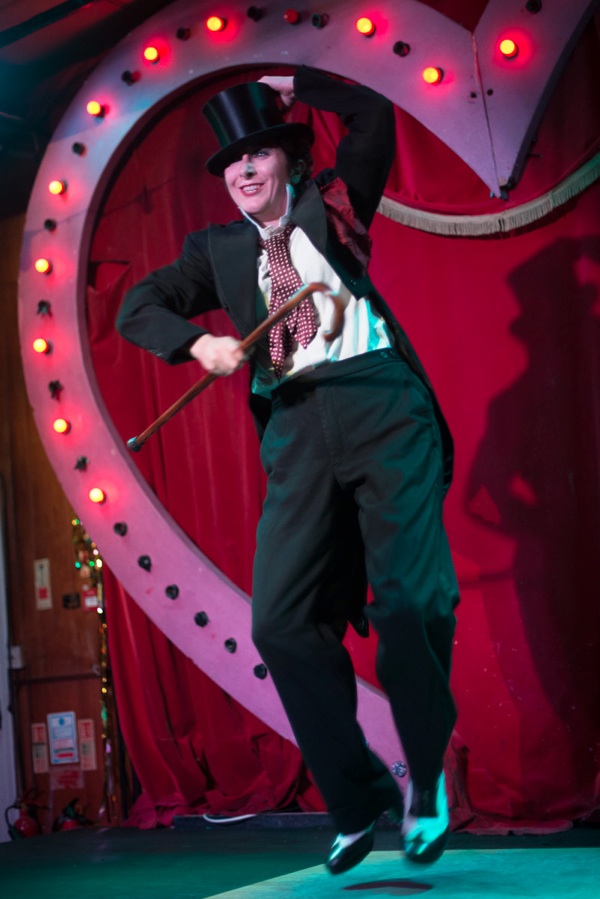
“I’ve just had a banana with Lady Diana, I’m Burlington Bertie from Bow….”
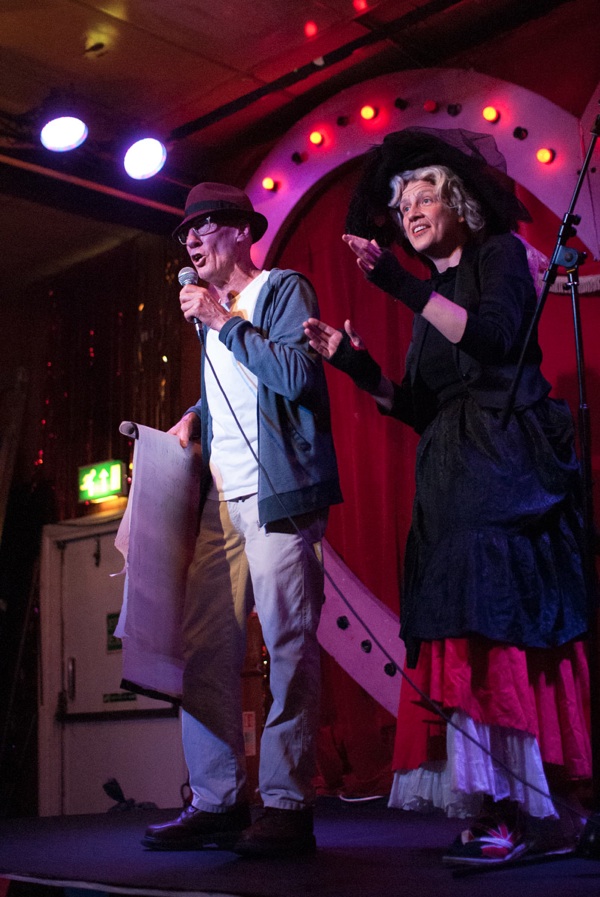
Harry Bennett and Coster friend.
“Maybe it’s because I’m a Londoner that I love London so…’
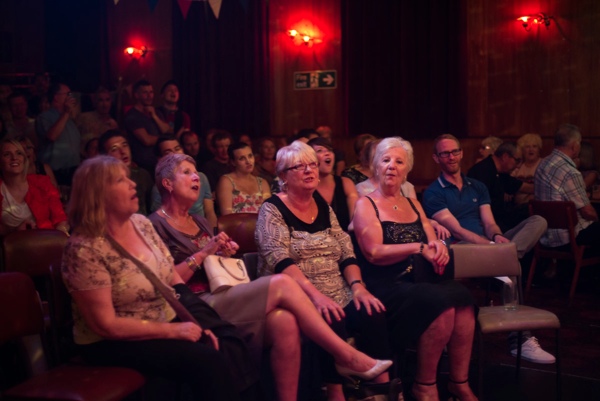
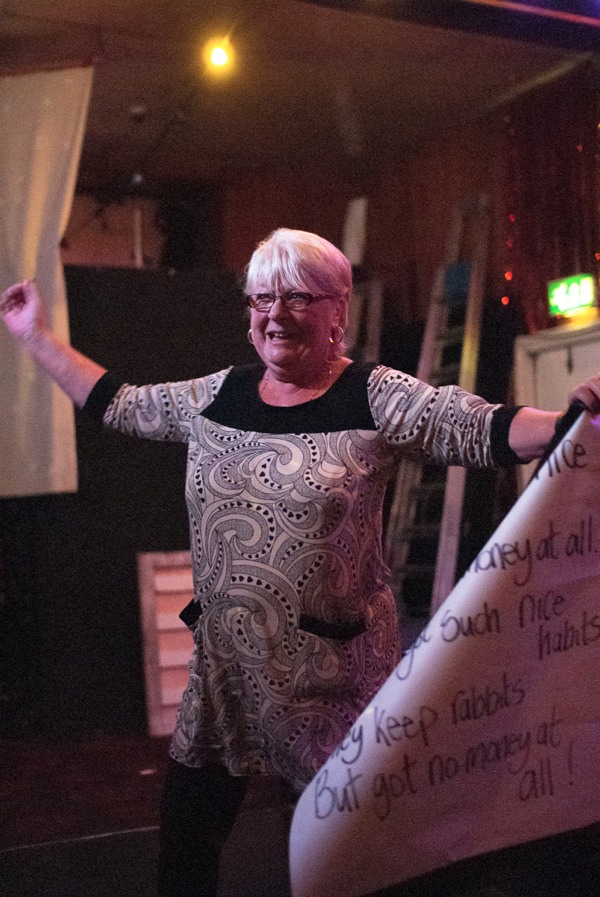
“Nice people with nice manners but got no money at all…”
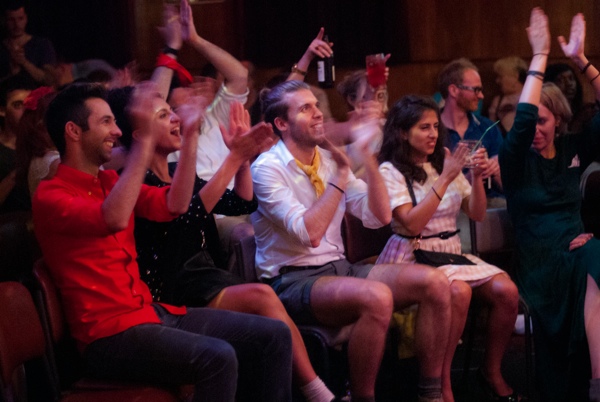
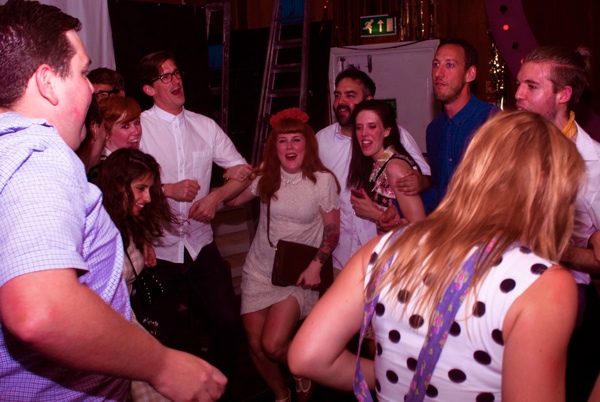
The Mockneys give it their best shot at “Any Old Iron”
Photographs copyright © Sarah Ainslie
You may also like to read about
Gary Allen, The Cockney Bard
“Hear the voice of the Bard, who Present, Past & Future sees….”
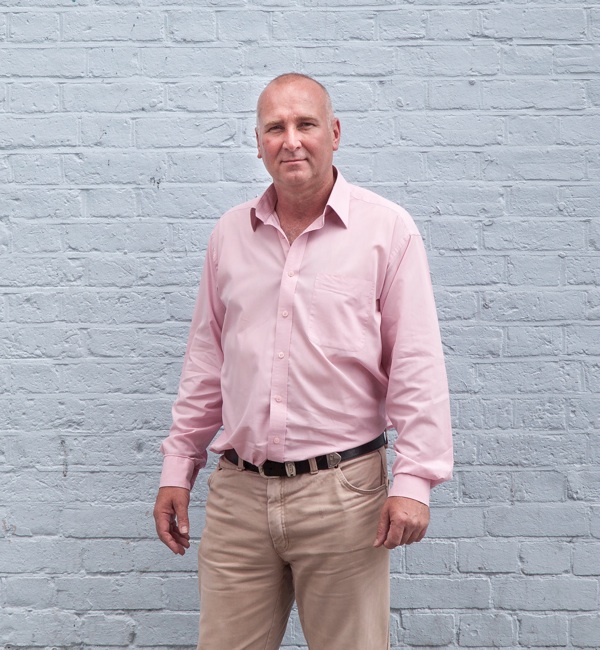
“Are you familiar with the Muse?” was the first question Gary Allen, the Cockney Bard, asked me when we met for lunch at E.Pellicci on Friday. “I believe that the soul is the mind,” he volunteered, leaning closer across the table, “and that the soul is separate from the brain – so I get inspiration.” In spite of his metaphysical rhetoric, Gary had a broad smile, a healthy tan and seemed very much of this world, yet as I peered credulously into his gleaming eyes there was an intensity that revealed something else.
“At thirty-three, I discovered I could write very quickly – somebody was talking to me,” he admitted, filling with amazement again twenty years later, “and when I read it back it, it was as if somebody else had written it. I didn’t know where it came from.”
Gary found that he had the ability to write fast, transcribing as many as two hundred words per minute in an unbroken sequence without punctuation, often in blank verse and archaic vocabulary. This was surprising in many ways, not least because Gary was an East Ender from Plaistow who had left school early and received no education in literature. Other mysterious powers were granted along with the writing – healing and second sight – Gary revealed. “Two or three months later, I began to hear the voices,” he whispered to me, “And the writing has continued, I could do it 24/7 if I wanted.”
“I wrote a message once and it told me to go to Belgrave Sq at 1pm and meet someone,” he confessed, “And I went there and met Ronald Bailey and I asked do you know the name ‘Ulla’? and he said, that’s my wife who died sixteen months ago, how did you know that?”
We had not yet ordered lunch and already my head was spinning at Gary’s revelations. “I’m not religious but I do believe in God as a the Spirit of Nature that created us all,” he announced, as if this were a clarification of what he had previously disclosed, “you have to believe in a magical creator who made everything and we’re all part of that.”
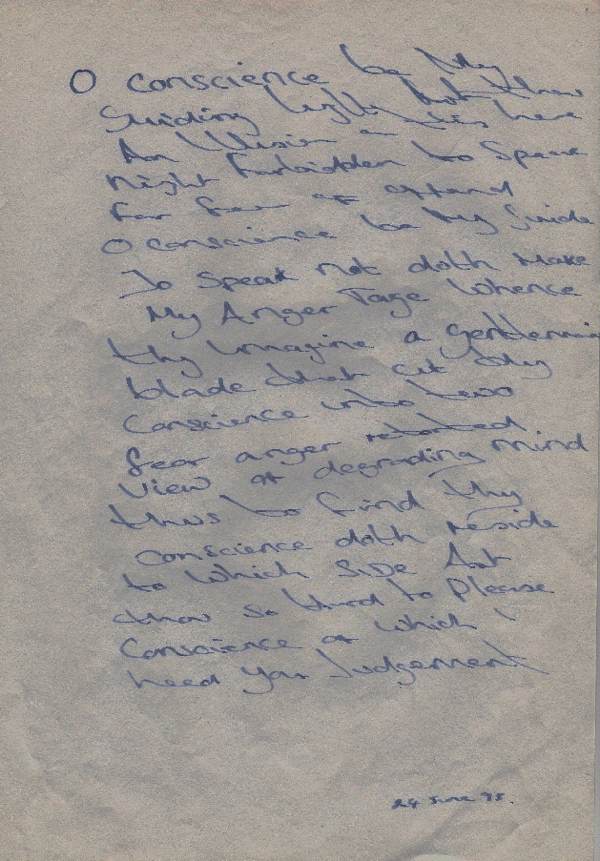
Around us, the lunch service clattered as Gary brought out a folder with his poems filed in transparent plastic pockets. Scanning his spidery writing, he read from the manuscripts, filling with strong emotion as he intoned the sacred texts – mostly melancholic meditations upon loss, in unexpected contrast to his seemingly-extrovert nature. “I gave up my business for this passion,” he confided, “I’ll admit life has been hard but this has been priceless.” Gary told me that before he was even dating his wife Shona, a singer/actress and Marilyn Monroe tribute artist, he informed her that they would one day be married at a medieval wedding and gave her the date as St Georges Day, and he was right. Furthermore, Gary dressed as a knight in armour and Shona dressed as a princess, and they arrived on horseback to their wedding that included minstrels and jousting,
“I’ve been on a personal journey,” he confirmed in understatement, “I want people to see the beauty. If they can see the beauty, my job is done.” I did not know what to make of what Gary told me, though it was clear that he believes in the truth of his own life. His writing, his healing and his insight are apparently normal experiences to him, yet he also seemed strangely detached from it all as if he were an enigma to himself.
“It’s not from me, I am just the vessel for it,” he assured me with a modest smile. A born showman, Gary is a paradoxically cheery mixture of modesty and big claims. “I want people to look for the flaw because there is no flaw,” he challenged, spreading his hands wide in declamatory style and smiling with an easy confidence.
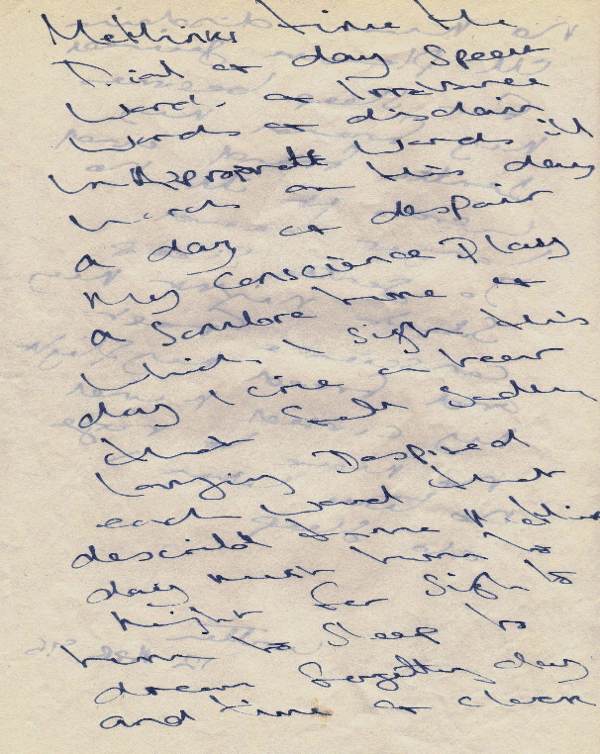
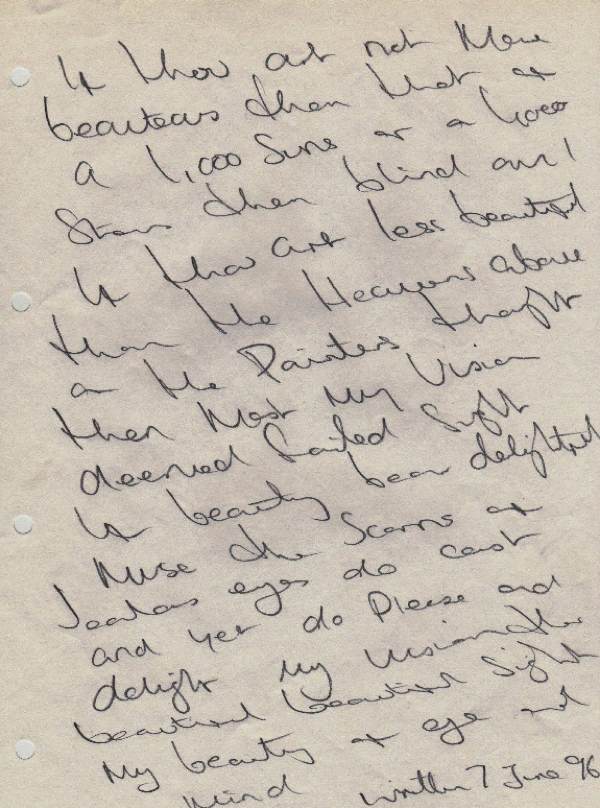
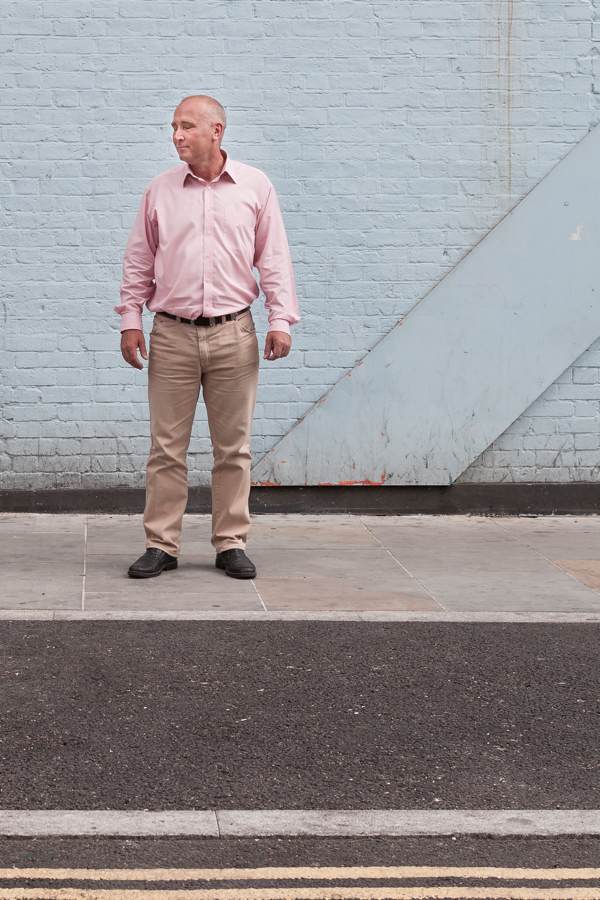
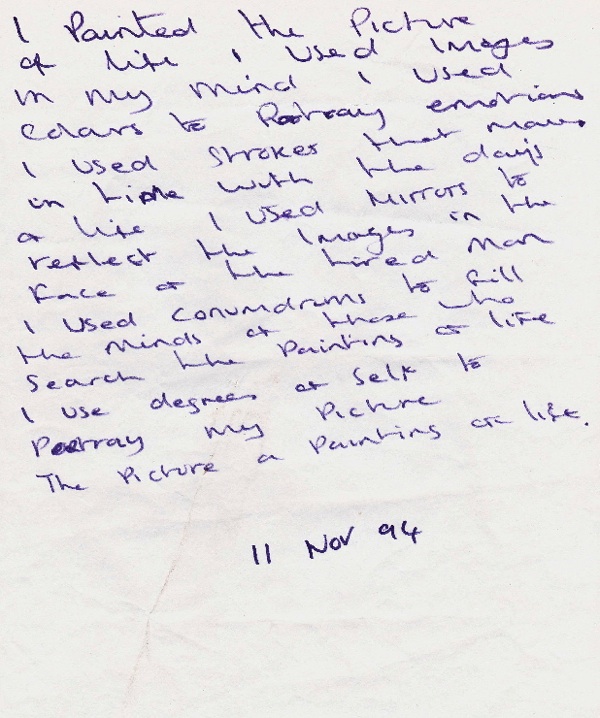
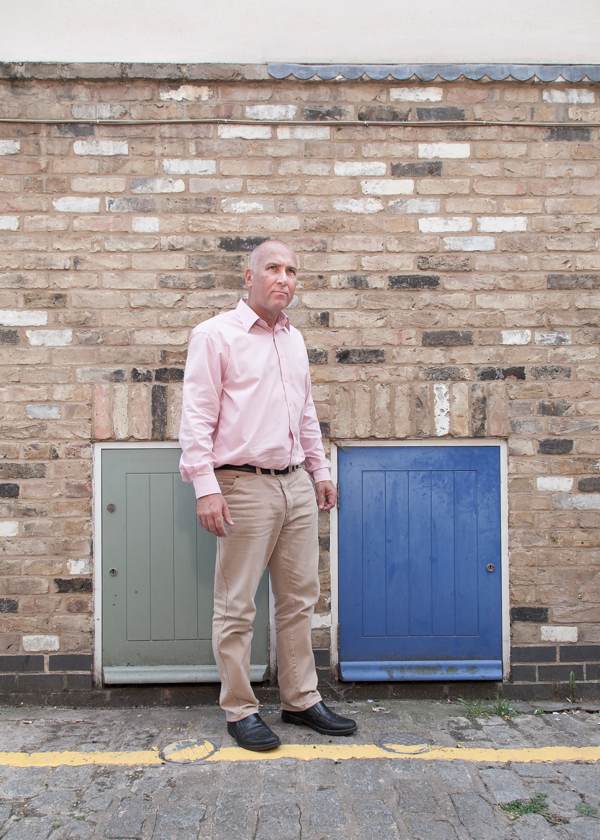
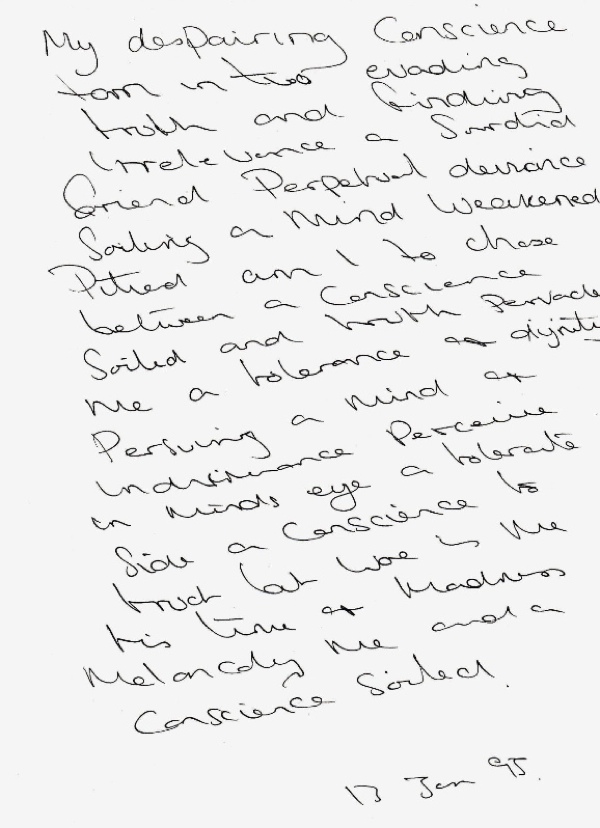
An example of Gary’s writing.
[youtube CMe7dh8pO1c nolink]
[youtube ACdKzLT11qU nolink]
Photographs copyright © Ravi Juneja
Poems copyright © The Cockney Bard
Moyra Peralta’s Worldly Goods
“These are all my worldly goods,” said Darren when he spread out these modest items to show Photographer Moyra Peralta in 1997. Moyra asked those she had befriended who lived upon the street to permit her to photograph the contents of their pockets and these pictures were the result.
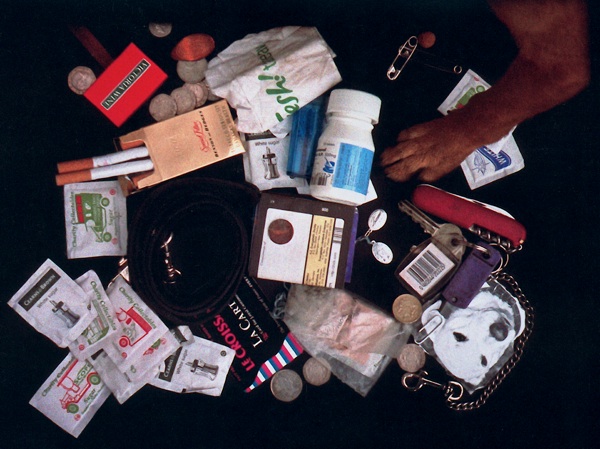
Darren (Waterloo) – Dog, dog leads, keys on key-ring, penknife, cigarettes, lighter, matches, loose change, shoppers’ points card, religious medals on a string, prayer printed on a metal plate, photo of a dog, paperclip, safety pins, nine packets of sugar, paper serviette, personal papers, pain-killers, emery board and several plastic change bags.
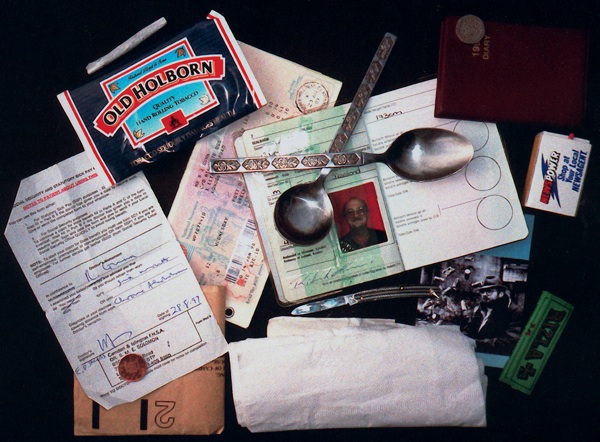
Richard (Holborn) – Busking spoons (for `ham and egg-ing’, ie begging), diary, passport, one roll-up , matches, tobacco, cigarette papers, allowance book, medical prescription, Department of Social Security letter, penknife, photograph, paper tissues, and twenty-one pence.
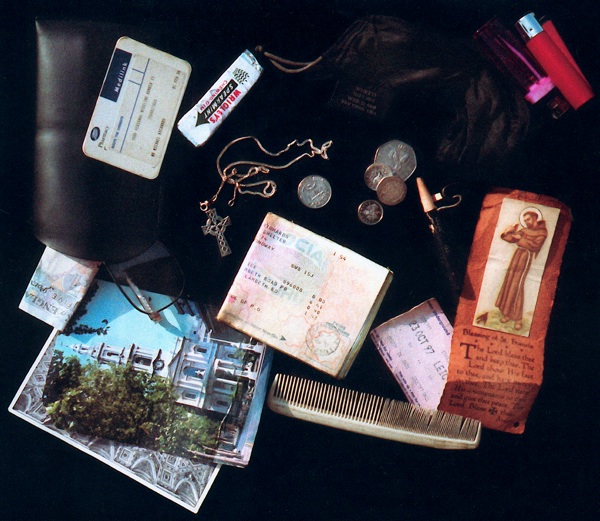
Michael (Covent Garden) – Social Security book, moneybag, a pair of spectacles with case, a religious picture and prayer, a crucifix and chain, a five pound note, London Underground travel ticket, loose change, a US coin, two lighters, a pencil, comb, a chewing gum, a Medilink card and church postcards.
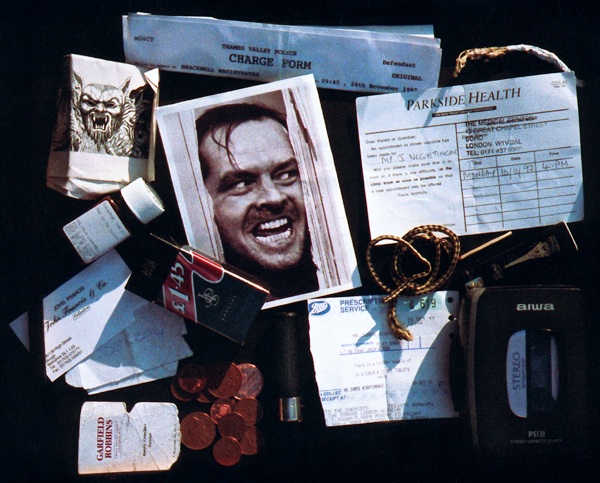
Chris, Malcolm & Jimmy (Trafalgar Sq) – Personal stereo, lighters, cigarettes, vitamin tablets, legal and medical papers, a photograph of Jack Nicholson, a cartoon drawing, copper coins, a match, a wristband and a lucky sprig of heather.

Sean (Covent Garden) – A Begging placard, a peeled orange, money tin, loose change, a paper hankie, cashew nuts, a pair of socks, an origami flower, a pocket dictionary, a postcard, a religious picture, a whistle, shoelaces, a plaster, a broken pencil and an Irish coin.
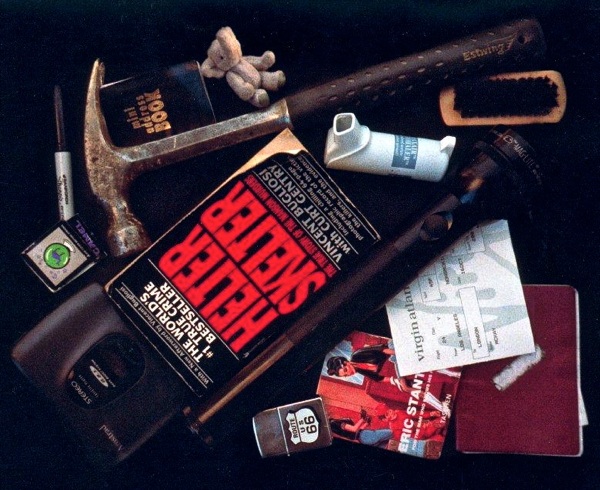
Rory – Virgin Atlantic docket, address book, a miniature elephant mascot, a personal stereo, two paperbacks, `british passport, an inhaler, a brush, two cigarette lighters, a matchbook, a pen, a hammer (for breaking into squats) and a torch (belonging to a friend).
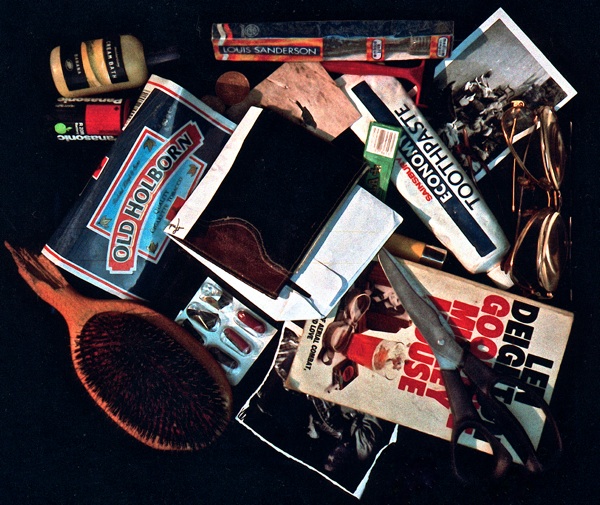
Johnnie (Holborn) – A hairbrush, reading glasses, cigarette papers, tobacco, a lighter, a pair of scissors, a razor, a toothbrush, a toothpaste, vitamin capsules, a wallet, photographs, an envelope with more photographs, batteries, coins, a pen, a paperback and cream bath lotion.
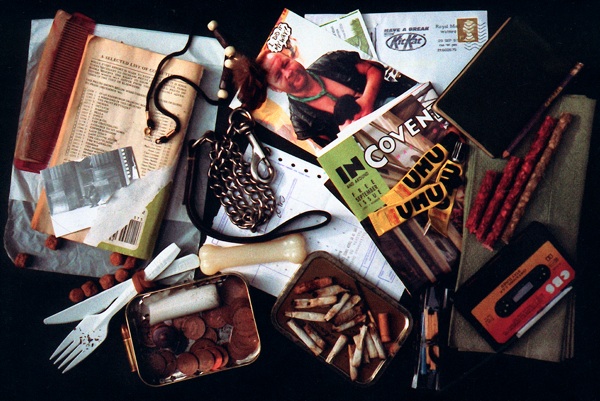
Simon (Holborn) – A tobacco tin, some dog-ends, matches, a candle stub, loose change, paper towels, dog biscuits and bone, a collar and lead, a necklace, combs, a prescription, a notebook, a paperback, two photos, stamps, a copy of In & Around Covent Garden magazine, a cassette, a button, an envelope, a pencil, a bullet, a plastic knife and fork, and three tubes of glue.
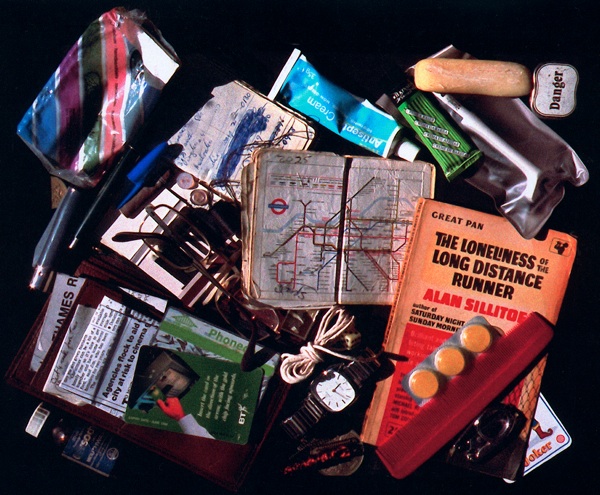
Ray (Strand) – a wallet, a notebook, tissues, an address book, a news cutting, an Outreach contact card, phone cards, dice, a stamp, loose change, combs, a pair of spectacles, a watch, a pen, a playing card, a cigar stub, a pen cap, bottle of mouthwash, matches, buttons, shaving cream, soap, a piece of string, a needle, thread, a safety razor in a plastic case, throat sweets, scissors, antiseptic cream, wire and wire springs and a paperback.
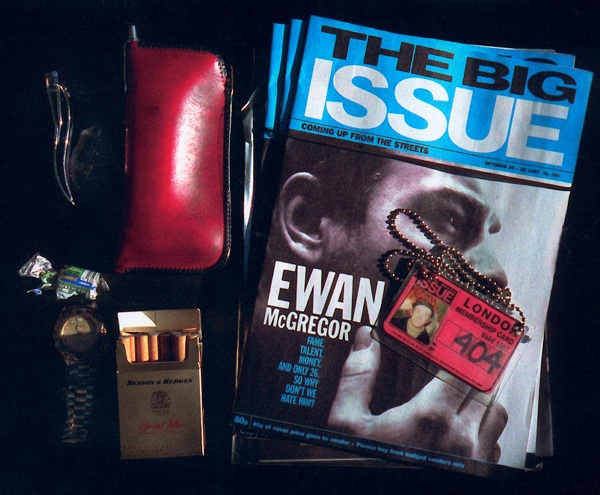
Tommy (Holborn Station) – Copies of The Big Issue, a Vendor’s Identity Card, a spectacle case, cigarettes, peppermints, nail-clippers and a wristwatch.
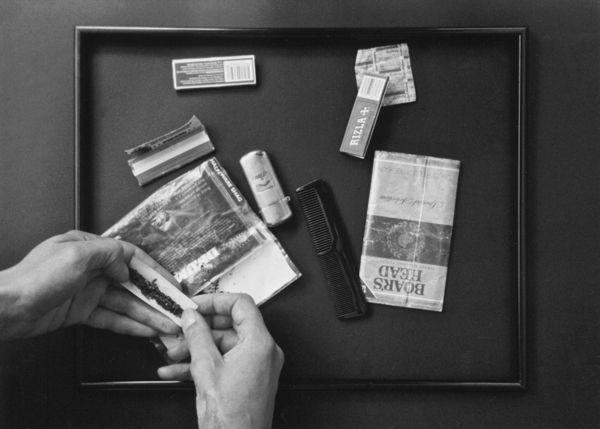
Tony & Sandy – Rolling tobacco, a lighter, cigarette papers, painkillers, a plaster and a comb.
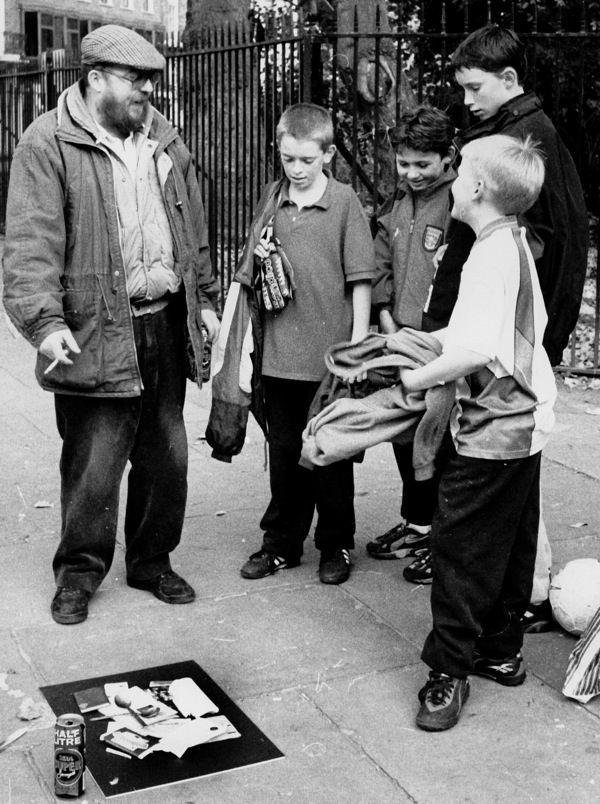
Richard displays his worldly goods in Holborn.
Photographs copyright © Moyra Peralta
Signed copies of ‘NEARLY INVISIBLE,’ including these photographs and more by Moyra Peralta plus writing by John Berger & Alan Bennett, are available directly from Moyra. Email moyra.peralta@zen.co.uk to get your copy.
You may also like to read about
Andrew Coram’s Collection
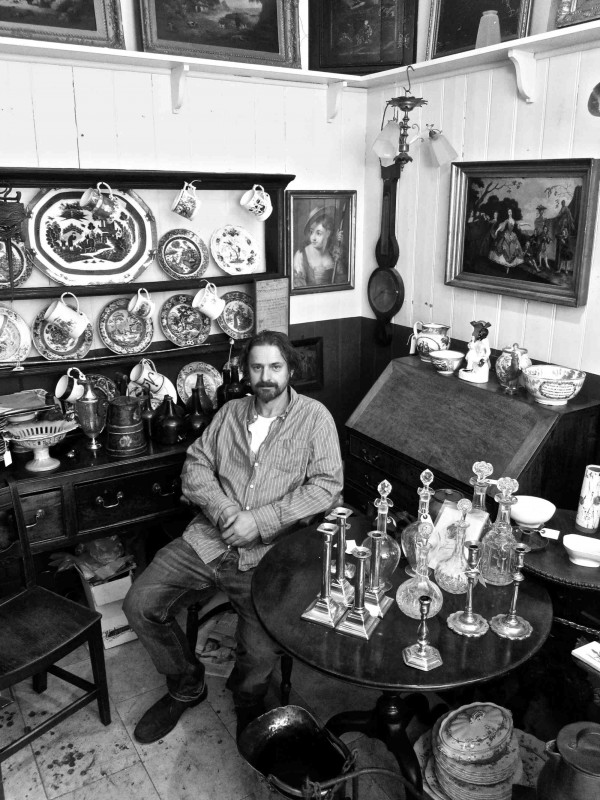
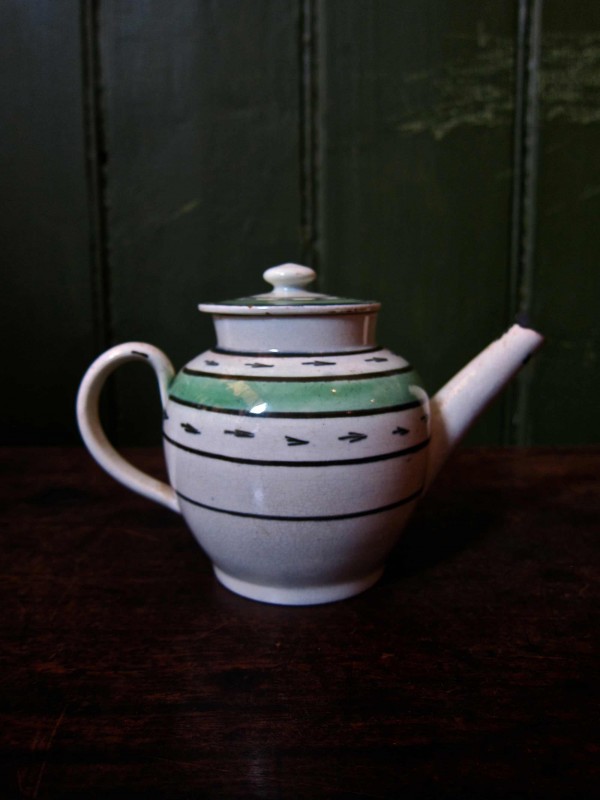
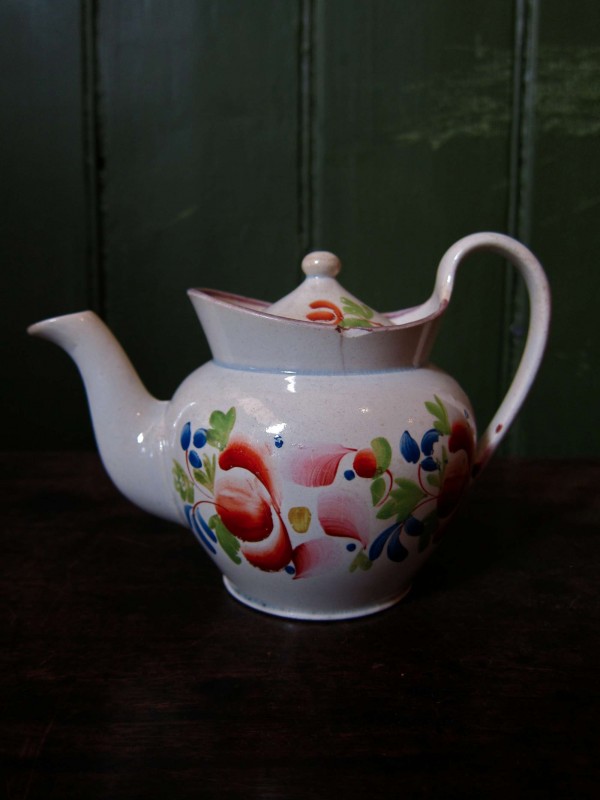
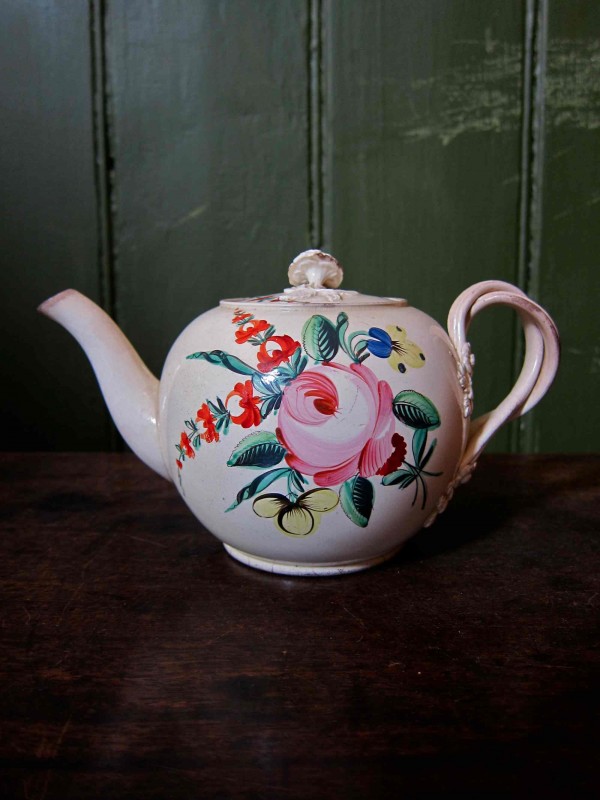
Andrew Coram‘s Antique Shop at 86 Commercial St has long been my favourite window in London – it has all the mystery and romance that you might hope for in such a place. And recently, Andrew has put some of his personal collection of beautiful old china on sale, so I asked him to let me photograph his treasured pieces as a record before they all get sold and disappear.
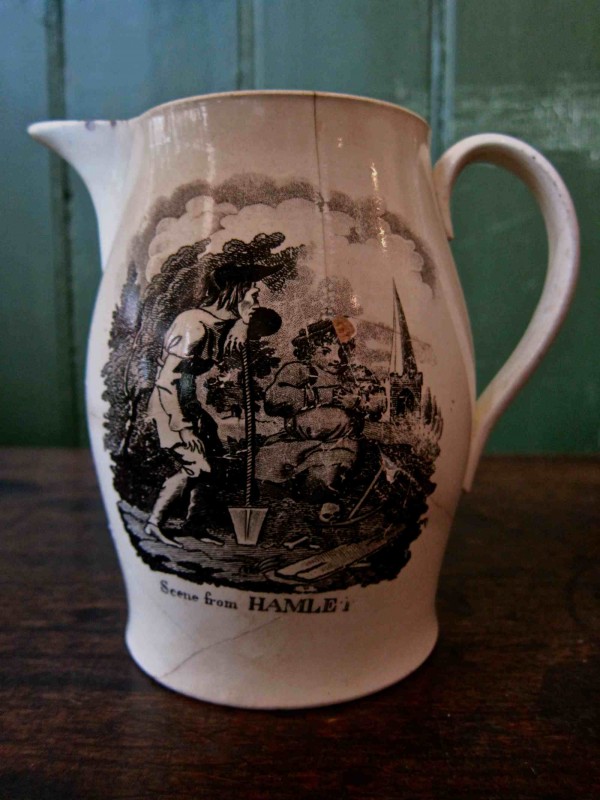
1790s Creamware jug with the gravedigger scene from Hamlet
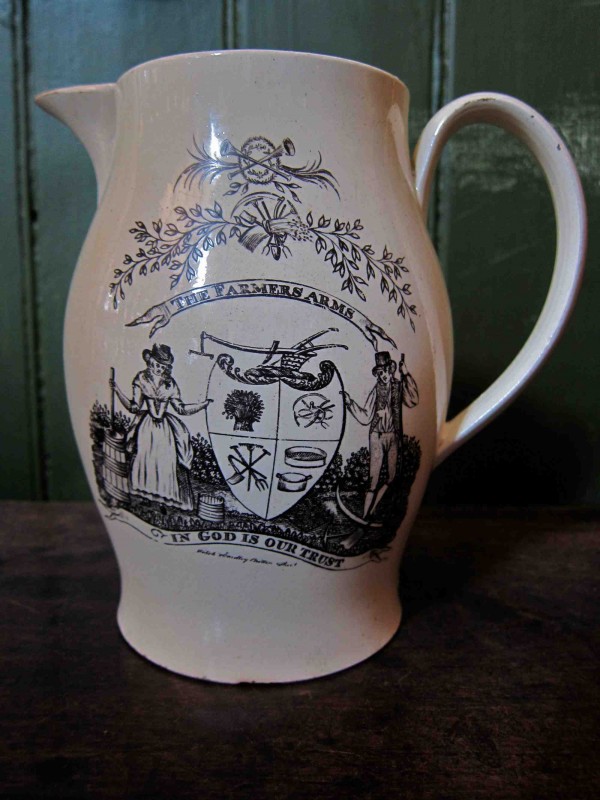
1790s Creamware jug, The Farmer’s Arms
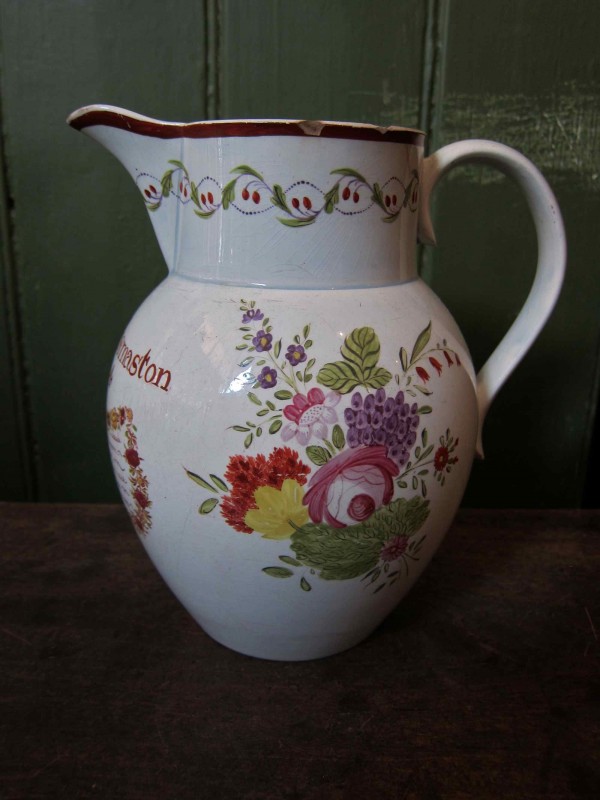
Hand painted Pearlware jug with floral motif, 1794
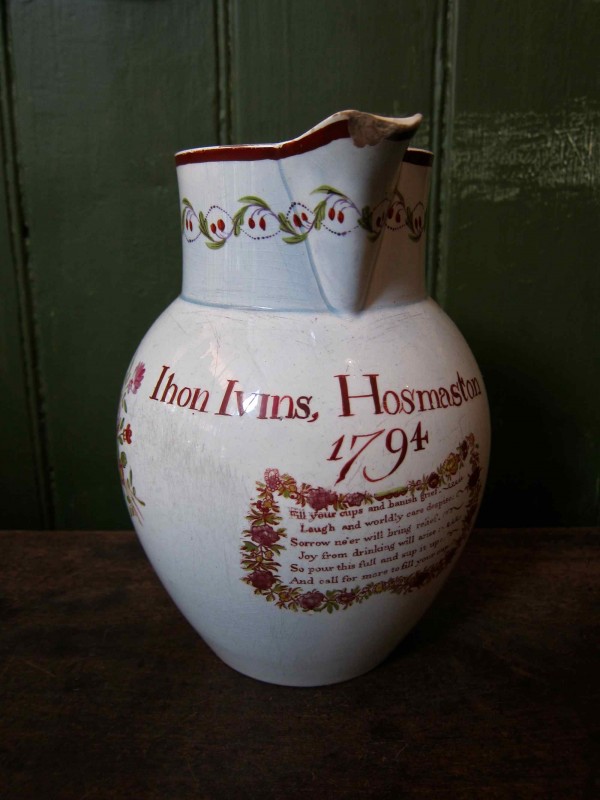
Front of the same jug, inscribed “John Ivins, Hosmaston, 1794 – Fill your cups and banish grief, Laugh and worldly care despise, Sorrow ne’er will bring relief, Joy from drinking will arise, So pour this full and sup it up, And call for more to fill your cup.”
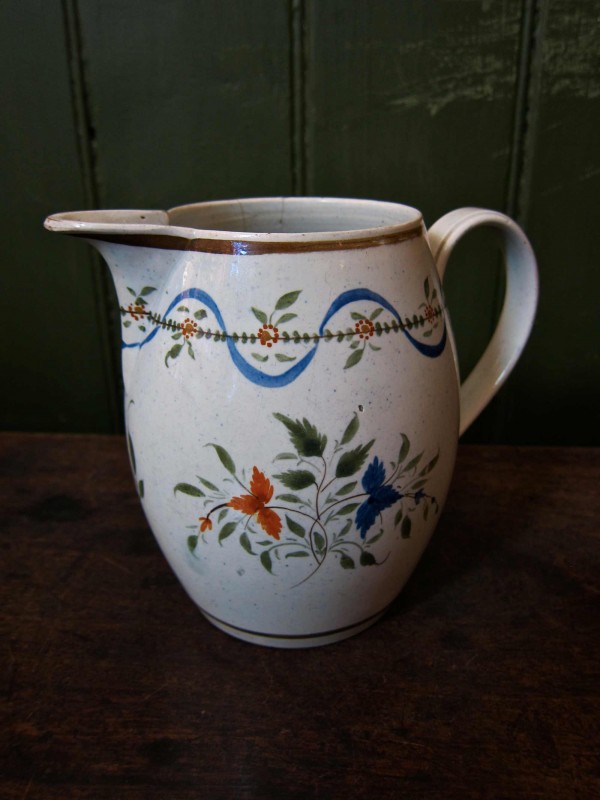
1790s, Prattware jug with hand-painted motifs
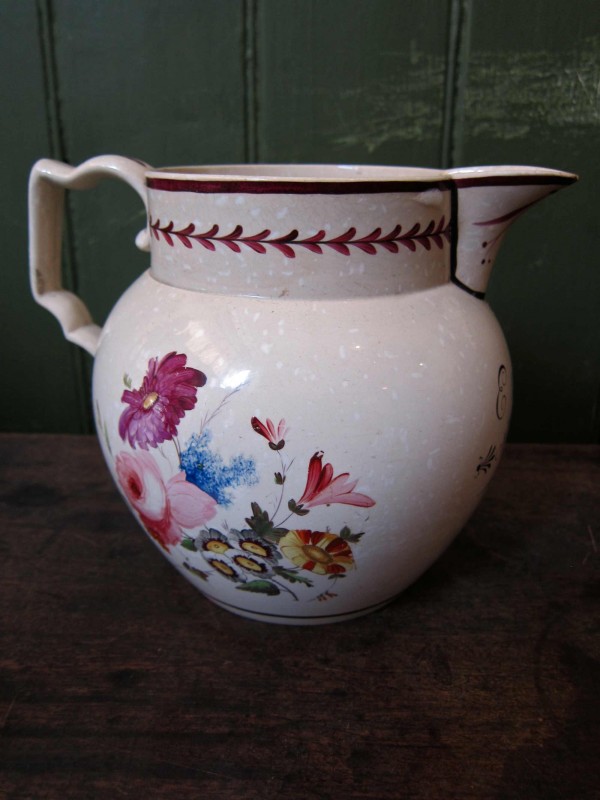
1825, hand-painted Pearlware jug
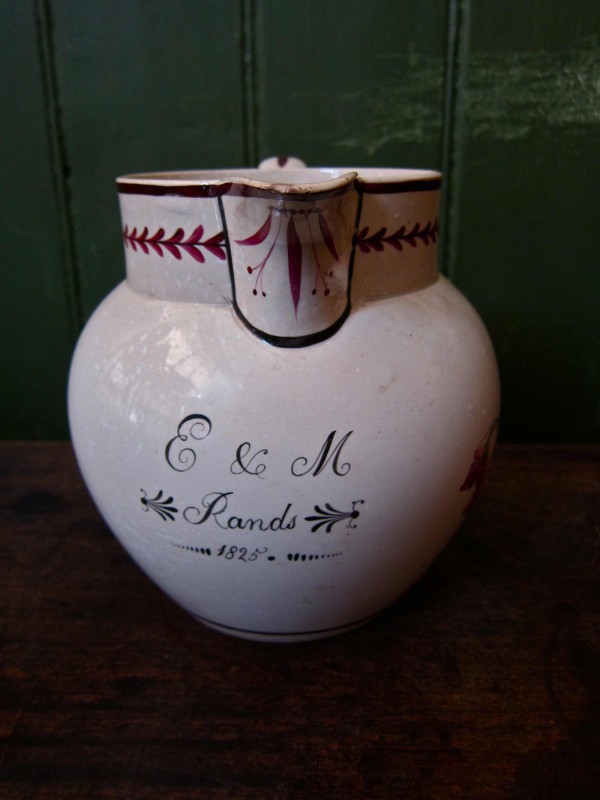
Front of the same jug
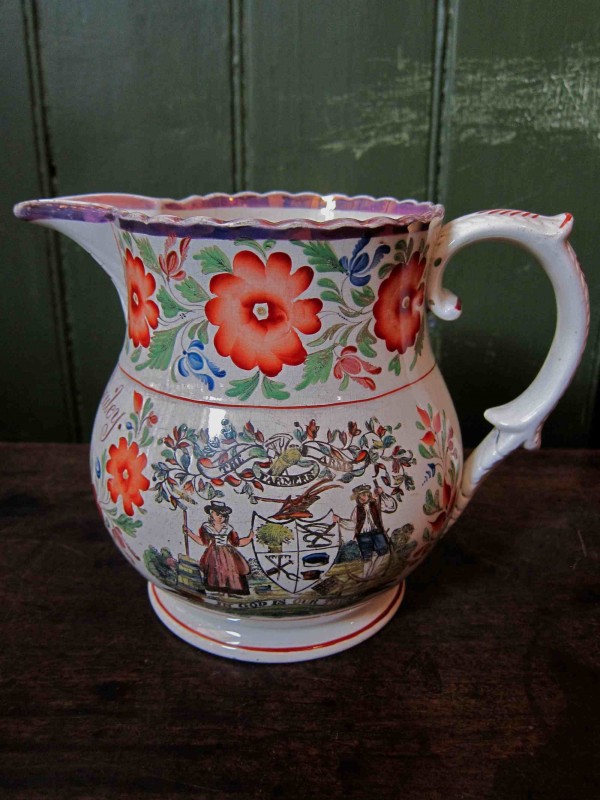
Painted lustreware jug, The Farmer’s Arms, 1833
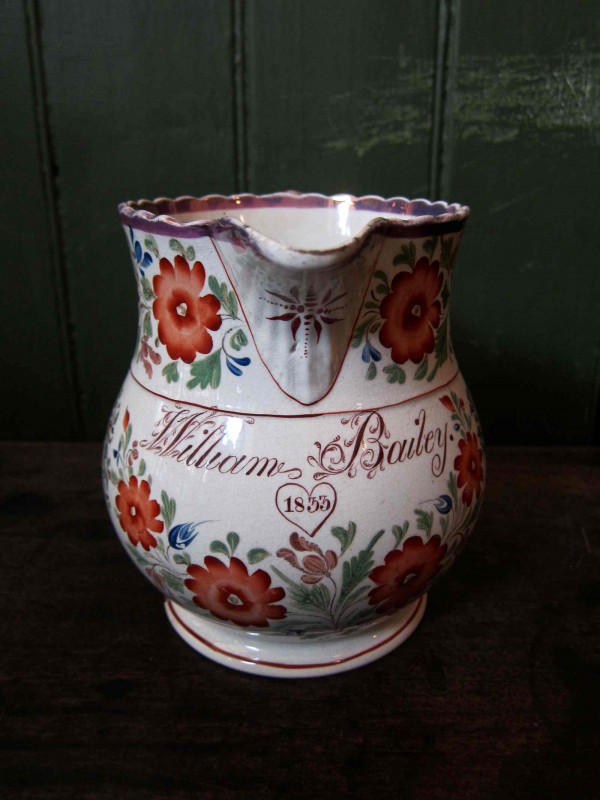
Front of the same jug
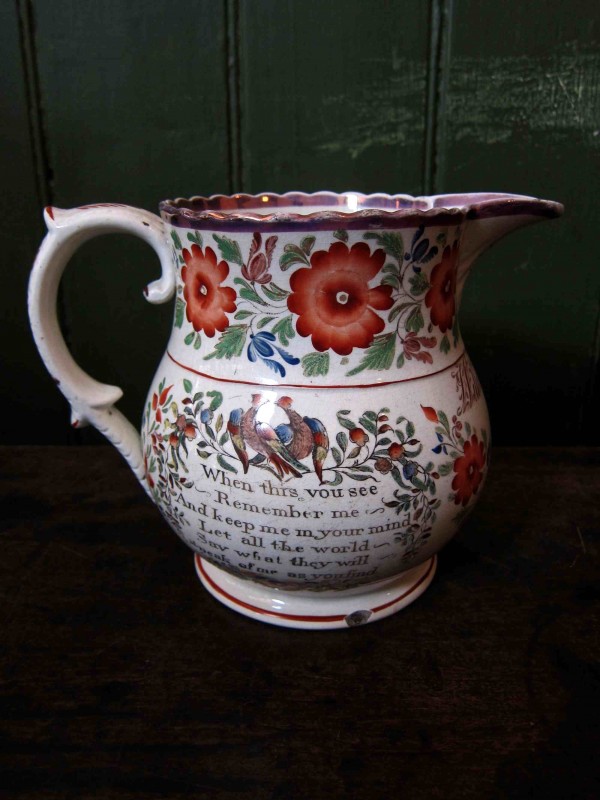
Reverse of the same jug – “When this you see, Remember me, And keep me in your mind, Let all the world, Say what they will, Speak of me as you find.”
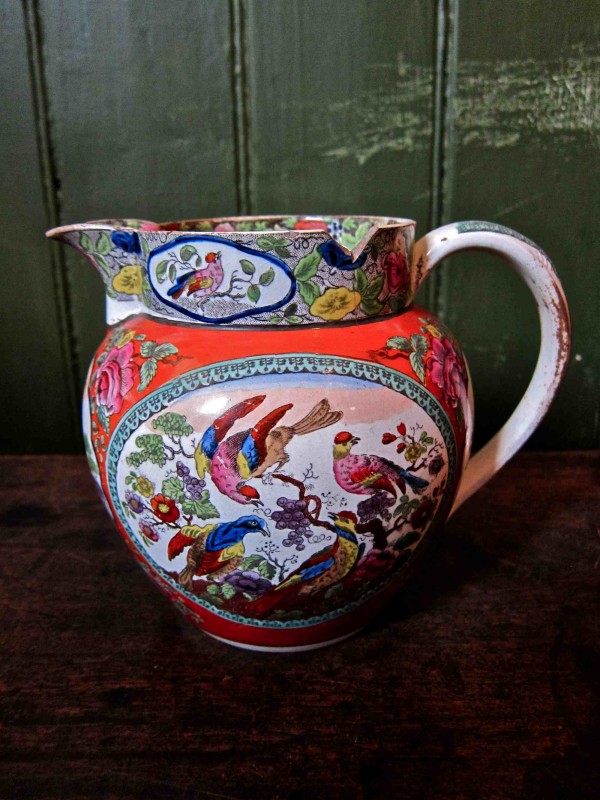
Early nineteenth century jug with transfers and hand-painted enamel decoration
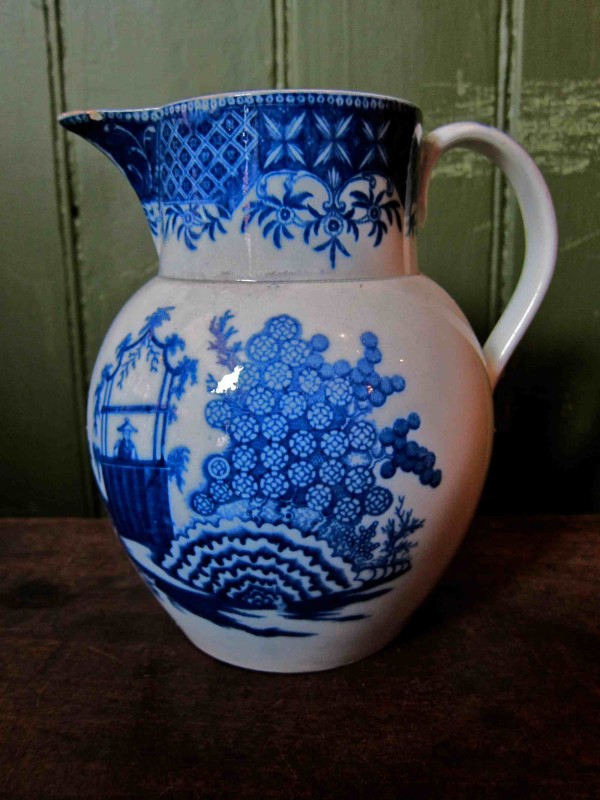
1790s, blue and white jug, with the boy on a buffalo design, Leeds Pottery
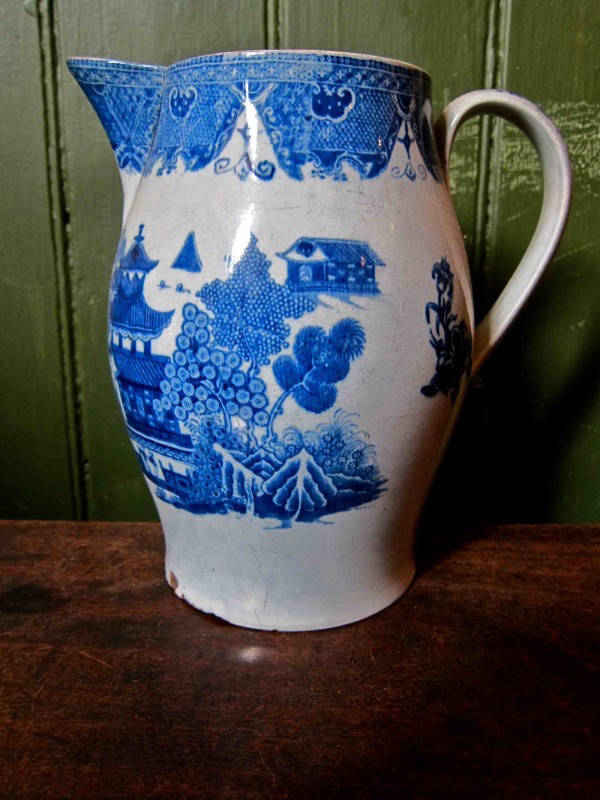
1790s blue and white jug, possibly Leeds Pottery
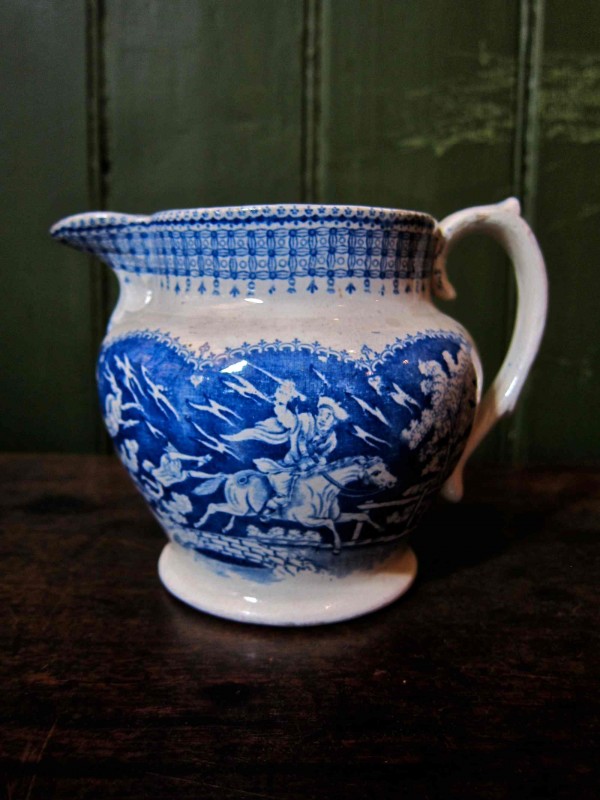
Early nineteenth century Tam O’Shanter jug
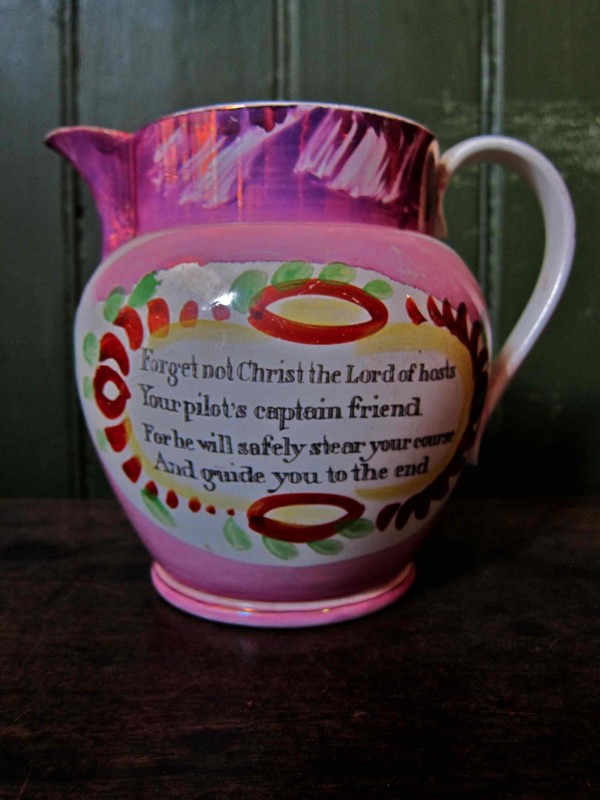
Early nineteenth century Sunderland Lustreware jug
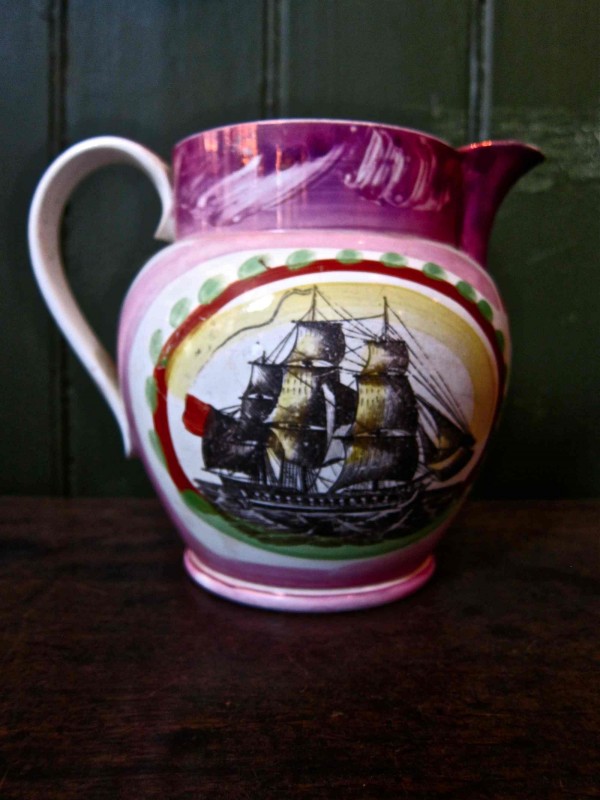
Reverse of the same jug
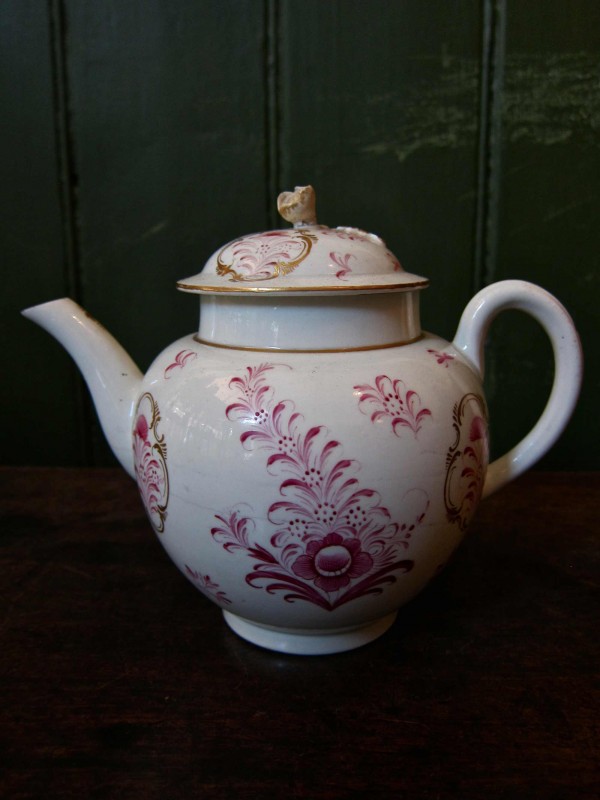
1720s Worcester teapot
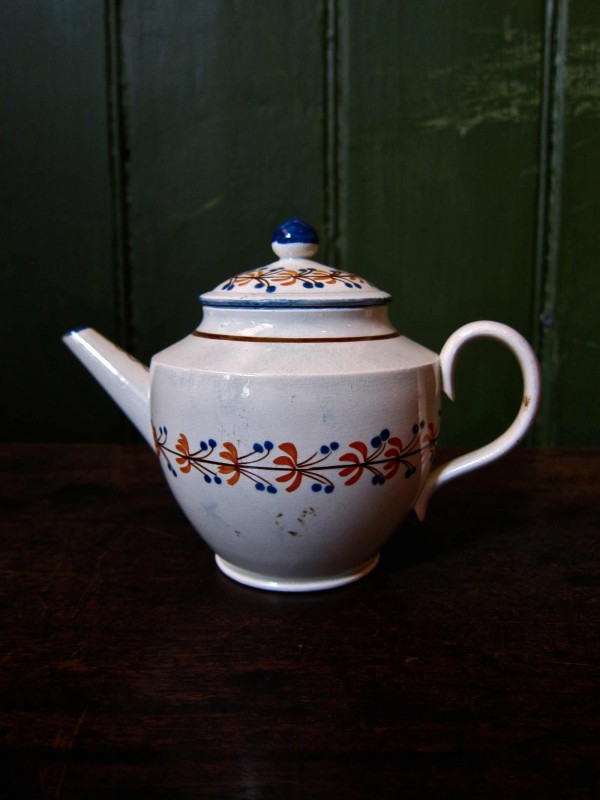
1790s teapot
1790s teapot
1790s teapot
1780s teapot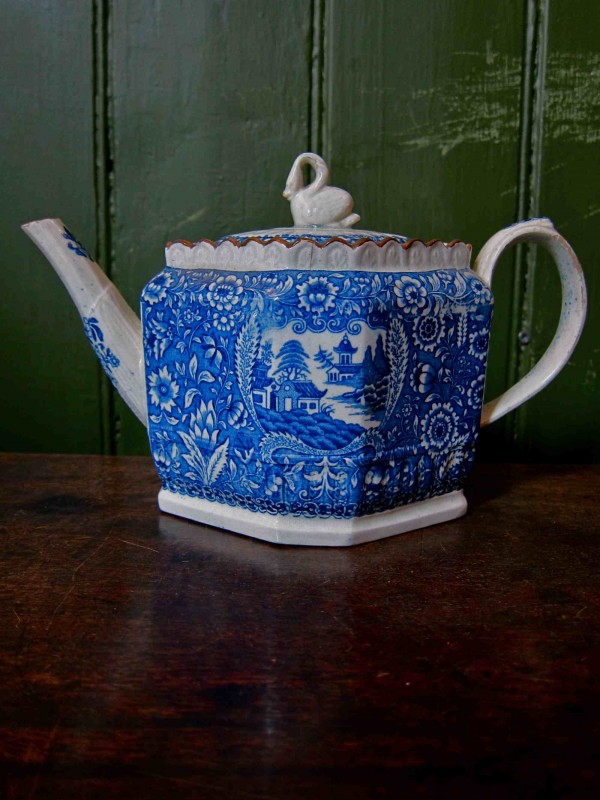
1790s blue and white teapot with swan finial
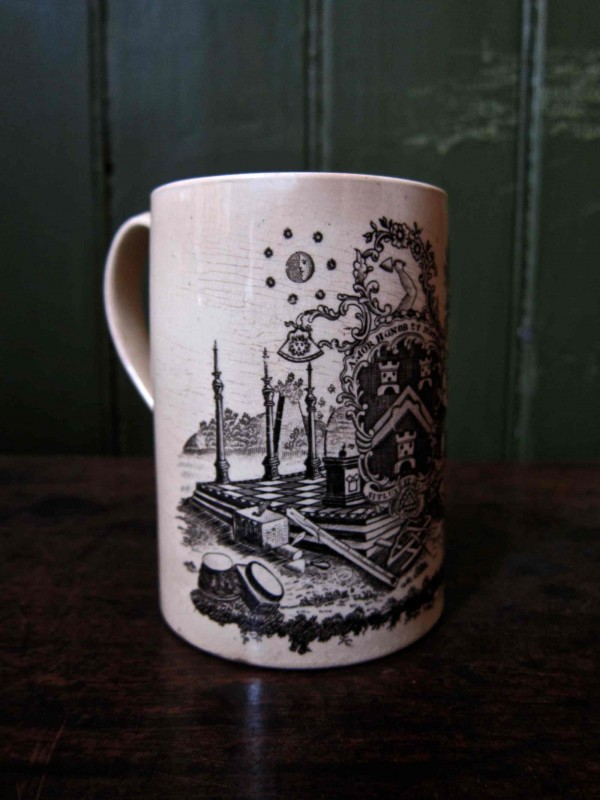
Masonic Creamware mug
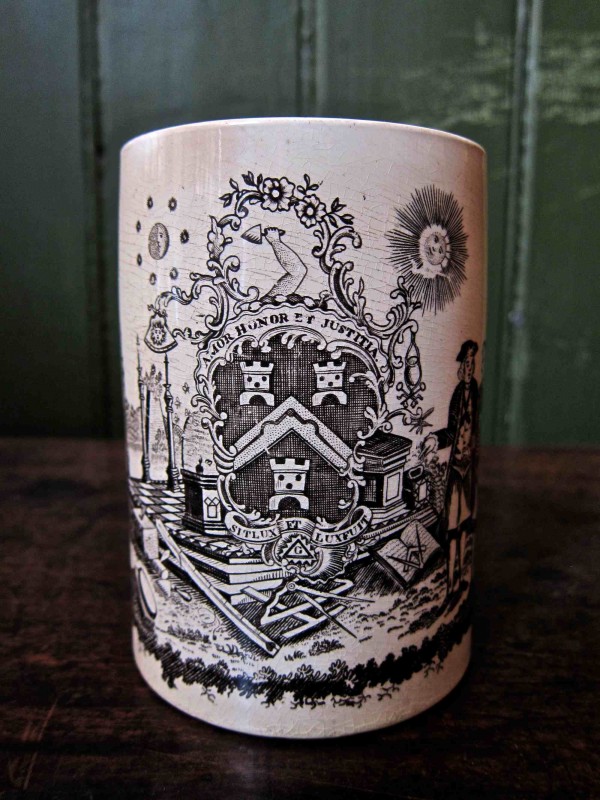
Front of the same mug
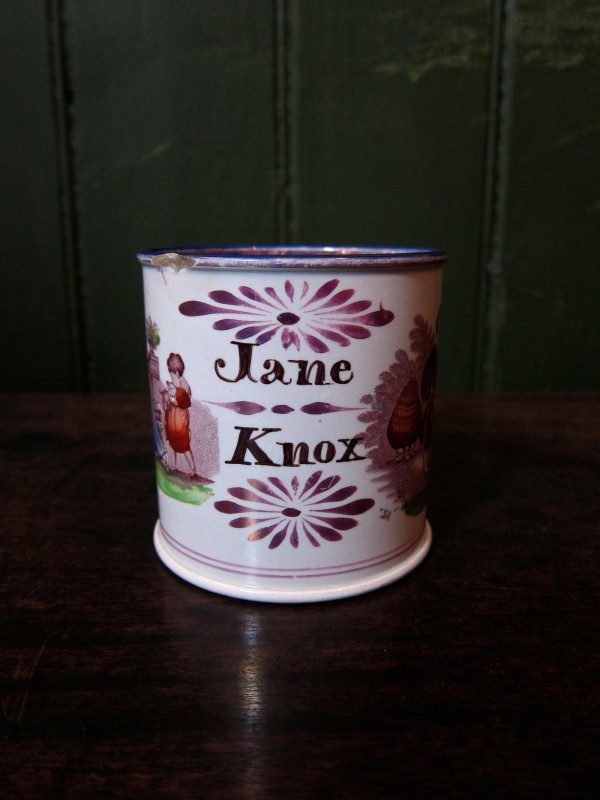
Early nineteenth century Lustreware christening mug
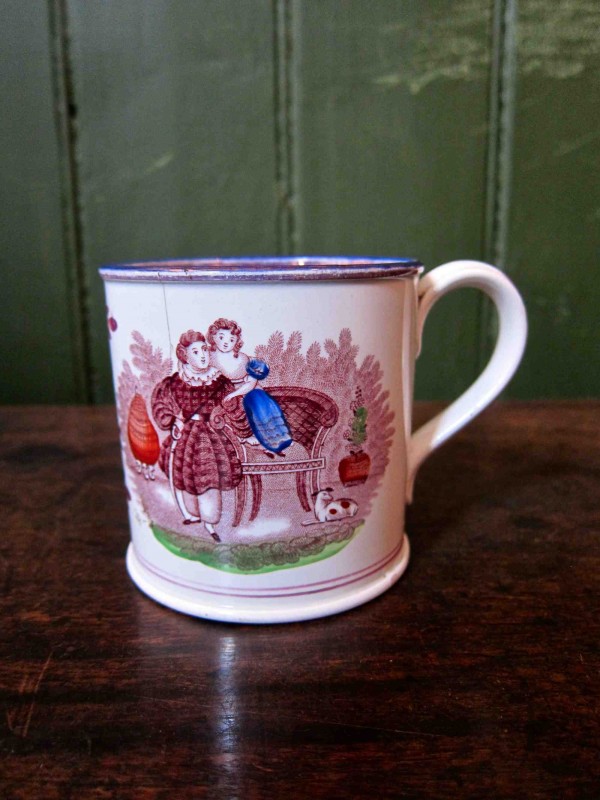
Side of the same mug
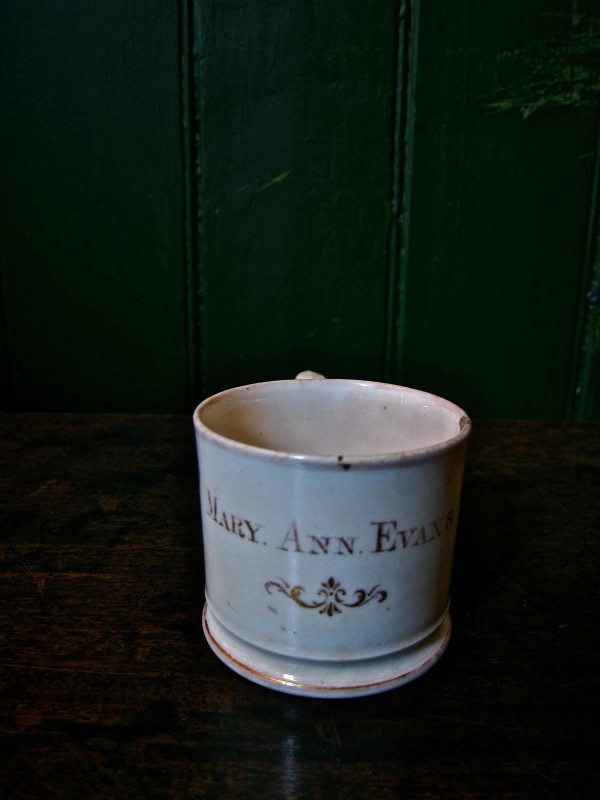
Early nineteenth century christening mug of Mary Ann Evans – is this George Eliot?
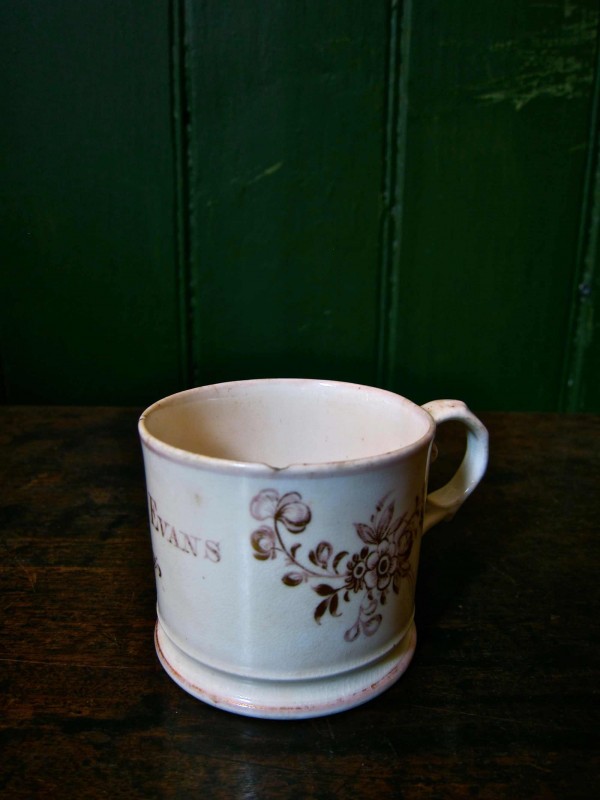
The side of the same mug
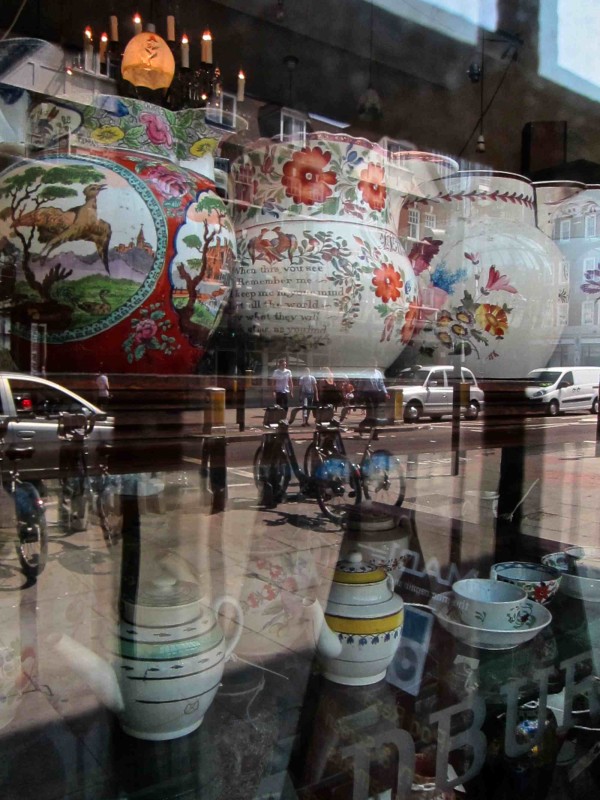
Andrew Coram’s window
Bedell Coram, 86 Commercial St, E1 6LY
You may like to read my original profile
Terry Smith, Envelope Cutter

There is not much that Terry Smith does not know about envelopes. He has been cutting them for fifty years at Baddeley Brothers, the long-established family firm of fine stationery manufacturers in Hackney. “When I tell people I make envelopes, sometimes they look at you and ask, ‘What does it take to make envelopes?’ Terry revealed to me with a knowing smile, “So I tell them to get hold of a piece of paper and a knife and a ruler, and try to cut out the shape – because that is the trade of envelope making.”
Envelopes, especially of the brown manila variety, are mostly mundane objects that people prefer not to think about too much. But, at Baddeley Brothers, they make the envelopes of luxury and the envelopes of pleasure, envelopes with gilt crests embossed upon the flap, envelopes with enticing windows to peer through and envelopes lined with deep-coloured tissue – envelopes to lose yourself in. This is envelope-making as an art form, and Terry Smith is the supreme master of it.
Did you know there are only four types of envelope in the world? Thanks to Terry, the morning post will never be the same as I shall be categorising my mail according to styles of envelope. Firstly, there is the Diamond Shape, made from a diamond-shaped template and in which all four points meet in the middle – once this is opened, it cannot be resealed. Secondly, there is the “T” Style, which is the same as the Diamond Shape, only the lower flap ends in a straight edge rather than a point – permitting the top flap to be tucked underneath, which means the envelope can be reused. Thirdly, there is the Wallet, which is a rectangular envelope that opens on the long side. And lastly, the Pocket – which is a rectangular envelope that opens upon the short side.
“The skill of it is to make all the points meet in the middle,” confided Terry, speaking of the Diamond Shape, and I nodded in unthinking agreement – because by then I was already enraptured by the intriguing world of bespoke envelope-making.
“I was born in Shoreditch, and my mother and father were both born in Hackney. My dad was a telephone operator until the war and then he became a chauffeur afterwards. My first job, after I left school at fifteen, was at a carton maker but I was only there for three or four weeks when a friend came along and said to me, would I like to work in a ladies clothing warehouse? And I did that for a year until it got a bit iffy. The Employment Exchange sent me along to Baddeley Brothers and I joined when I was seventeen, and stayed ever since.
The company was in Tabernacle St then and I worked in the warehouse alongside the envelope cutters. It was a good thing because as somebody left another one joined and I worked with them, and I picked stuff up. Eventually when one left, they said to me, ‘Do you think you can do it?’ And I said, ‘Oh yes, give me a try.’ At first, I did the easy ones, punching out envelopes, and then I started to learn how to make the patterns and got into bespoke envelopes.
It is something that I should like to pass on myself, but I have not found anyone that can handle the paper. Once you have got the paper under the guillotine, it can be hard to get just the shape you want. And it can be quite difficult, because if the stack shifts beneath the pattern it can be very tricky to get it straight again. After you have trimmed the paper in the guillotine, then you put it in the adjustable press, and set up your pattern to cut through the paper and give you the exact shape of the envelope. I design all the patterns and, if we need a new knife, I design the shape and make the pattern myself. All of this can be done on a computer – the trade is dying, but this firm is thriving because we do bespoke. If a customer comes to us, I will always make a sample and nine times out of ten we get the job. You won’t find many people like me, because there’s not many left who know how to make bespoke envelopes.
I retired at sixty-five after I trained somebody up, but two months later I got the phone call saying, ‘Will you please come back?’ That was two years ago nearly and I was pleased to come back because I was getting a bit bored. It’s a great pleasure producing envelopes, because I can do work that others would struggle with. There’s a lot of pressure put upon you, you’ve got a couple of machines waiting and a few ladies making up the finished envelopes.
I was brought up with sport and I ran for London, I am a good all-rounder. I am a swimming instructor with disabled people at Ironmonger’s Row Baths. Every morning, I do press ups and sit ups to keep in shape – a good hour’s work out. I know that when I come into work, I’m ready to go. I’m probably fitter than most of the people here.
They’ve asked me how long can I go on making envelopes and I answer, ‘As long as I am able and as long as I am needed.'”
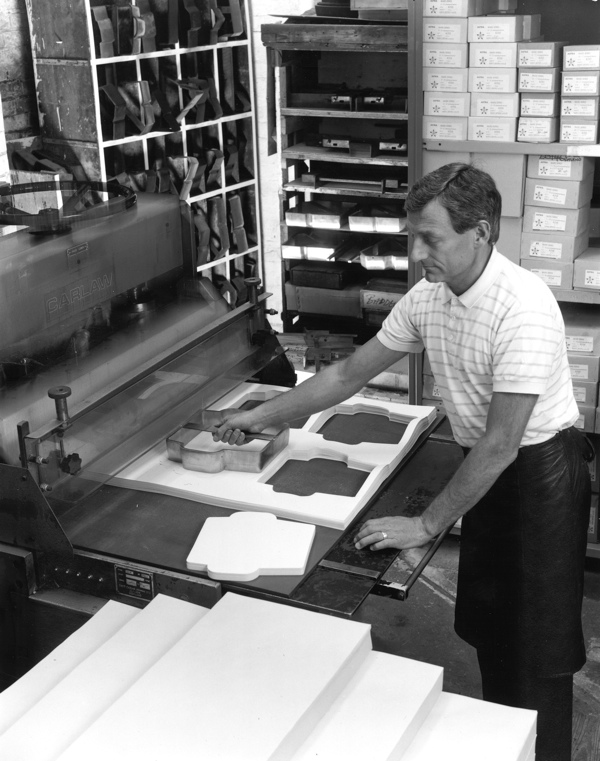
Terry at work making envelopes in 1990 in Boundary St.

Terry sets a knife to cut the final shape of a stack of envelopes

Die cutting, 1990

Jim Roche checking the quality of foiling on envelopes
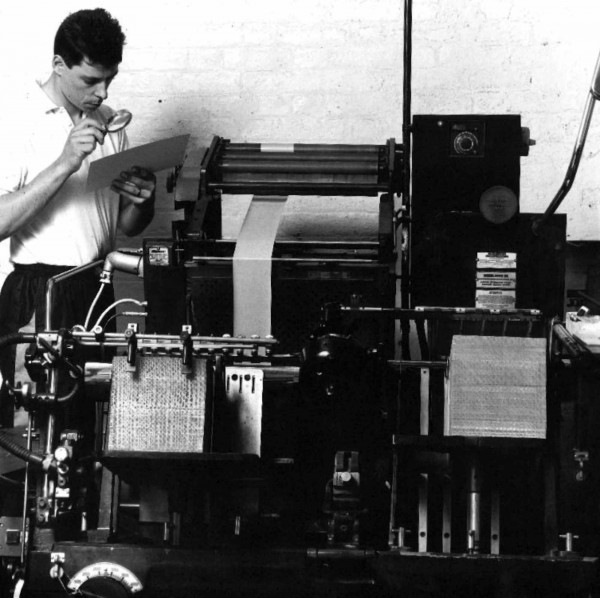
Checking the quality of foiling, 1990
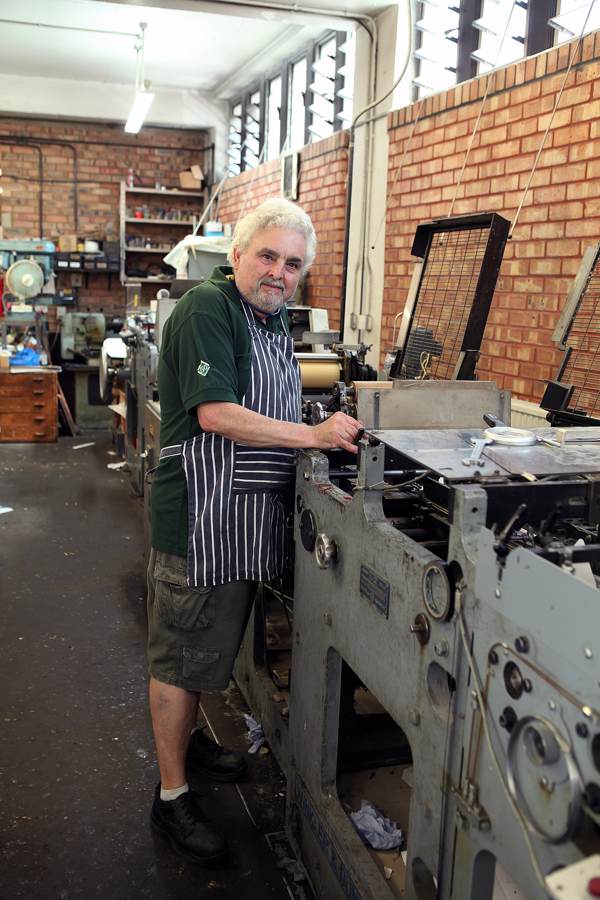
Alan Reeves and envelope machine

Alan Reeves and envelope machine, 1990

Gary Cline

Die press proofing, 1990

Folding envelopes by hand

Folding envelopes by hand, 1990

Gita Patel & Wendy Arundel – “We are the best hand finishers”

Proofing Press, 1990

Alan Reeves, Gary Cline, Terry Smith and Jim Lambert.

Baddeley Brothers at Boundary St in the building that is now the Boundary Hotel, 1990

Colour photographs copyright © Colin O’Brien
Black & white photographs copyright © Baddeley Brothers
You may also like to read about
Moyra Peralta’s Street Portraits

Sylvia in Tenterground, Spitalfields
Since I published it last week, this compelling photograph has been haunting me with its tender emotional resonance. Sylvia’s once-smart shoes and flowery dress tell us about the life she wished to lead – and maybe about the life she had led – yet it is apparent from Moyra Peralta‘s affectionate portrait that the life Sylvia aspired to was lost to her forever. Unwillingly to enter a night shelter, she slept rough in Spitalfields in the seventies and today this photograph exists as the only lasting evidence that, in spite of her straitened circumstance, Sylvia kept her self-respect.
Following my recent gallery of Moyra Peralta’s Spitalfields pictures, today I publish this selection of her London portraits. Through the seventies and until the end of the nineties, Moyra Peralta befriended people living on the street in the capital, visiting them several times each week. “I miss that world terribly,” she admitted to me, looking back on it, “my relationships were more social than photographic, but in the process of those relationships I took portraits – there are those here that I knew over thirty years, most of these people I knew for well over twenty to thirty years.”
“Definitions of the homeless lost all meaning for me.” Moyra emphasised, “As a photographer, I tried to show the human face, rather than the problem of homelessness itself because those termed ‘homeless’ are not an alien grouping – they are people of all ages and backgrounds, many of whom have met with crippling misfortunes.”
Moyra’s intimate photographs succeed as portraits of heroic individuals, evoking the human dignity of those marginalised by society. “To me, those I have photographed are an important part of our social history.” Moyra asserted to me, “I want my photographs to rescue people from oblivion and celebrate their lives lived in a climate of disregard.”

John T in Lincoln’s Inn Fields.

Bert known as ‘Birdman’ slept outdoors since the age of fourteen. He had an affinity with the black swans and sparrows in St James’ Park and was treated with tolerance by the Park Police.

Two men sitting in a cellar.

Maxie on the steps of the Cumberland Hotel, Marble Arch.

Maxie pours Stan a drink at Marble Arch.

Eddie and Brian tell tall stories on Kinsgway

Brian raps on the church door, Kingsway

Man and a cat in a Cyrenian short stay hostel, 1974.

Grant and pal laughing at the Bullring, South Bank

Mary reads the Big Issue in Holborn

Tommy M in Lincoln’s Inn Fields

Bill H, Cyrenian House, Barons Court, in the seventies.

Brian D at Middlesex Hospital, 1997

Brian’s begging hand.
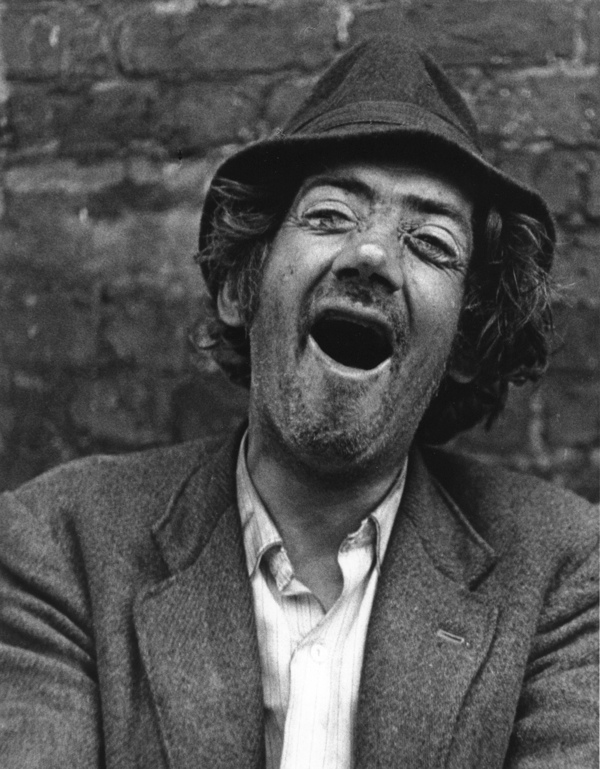
Francis at Cable St

JW and Jim at Pratt St, Camden

John T, Storyteller, Whetstone 1995.
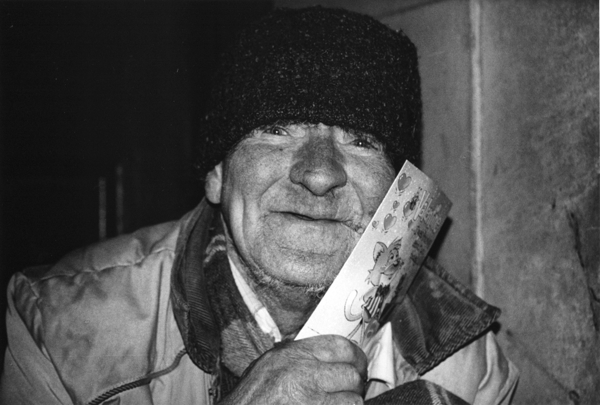
John T, the valentine.

Kerry’s Christmas Tree, Kingsway 1994.

Drag artistes from the Vauxhall Tavern give a surprise performance to entertain guests at a night shelter, 1974

Drag artistes improvise costumes at the Vauxhall shelter.

Billy and Maxie, two ex-servicemen at Marble Arch, 1976. Billy (left) died of a broken heart the year after Maxie’s death

Billy at Marble Arch in the seventies.
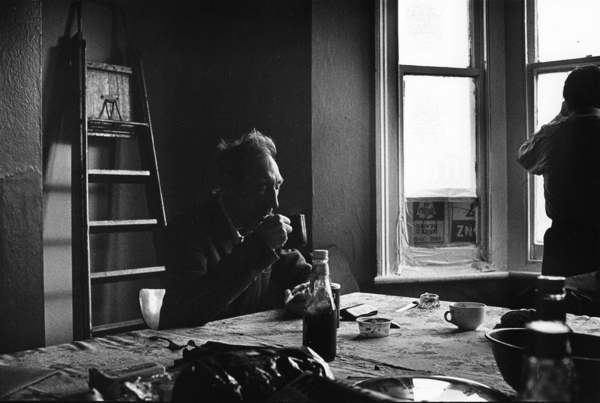
Sid takes tea at Ashmore Rd short stay hostel in West London.

Resident washing dishes at West London Mission, St Luke’s House – part of former Old Lambeth Workhouse, 1974.

Tiny, ex-circus hand and born wanderer extends a greeting at the Vauxhall Night Shelter, 1974.

Man and his bottle in Central London, seventies

Disabled Showman Zy with his wheels.

Zy plays a trick with his teeth

Brian the Poet in Kingsway, 1994.

Photographs copyright © Moyra Peralta
Signed copies of ‘NEARLY INVISIBLE,’ including these photographs and more by Moyra Peralta plus writing by John Berger & Alan Bennett, are available directly from Moyra. Email moyra.peralta@zen.co.uk to get your copy.
You may also like to read about