
East End At Night
Reader David Rees sent me these soulful photographs of the East End and the City of London at night

The Still & Star, Aldgate
“I have always loved the great practitioners of night photography, Bill Brandt, Brassaï, Alfred Stieglitz, Harold Burdekin and the Virginia railway photographs of O. Winston Link. Parts of the East End and the City are still astonishingly quiet and empty after dark. The emptiness makes it less likely that anyone is going to ask what you are doing taking photographs. Additionally, my eyesight has been failing in the last few years to the degree that I find it quite uncomfortable in daylight, so my flaring corneas have turned me into a vampire snapper. The London half of my family line has been East End for many generations.” – David Rees

Bell Lane, Spitalfields

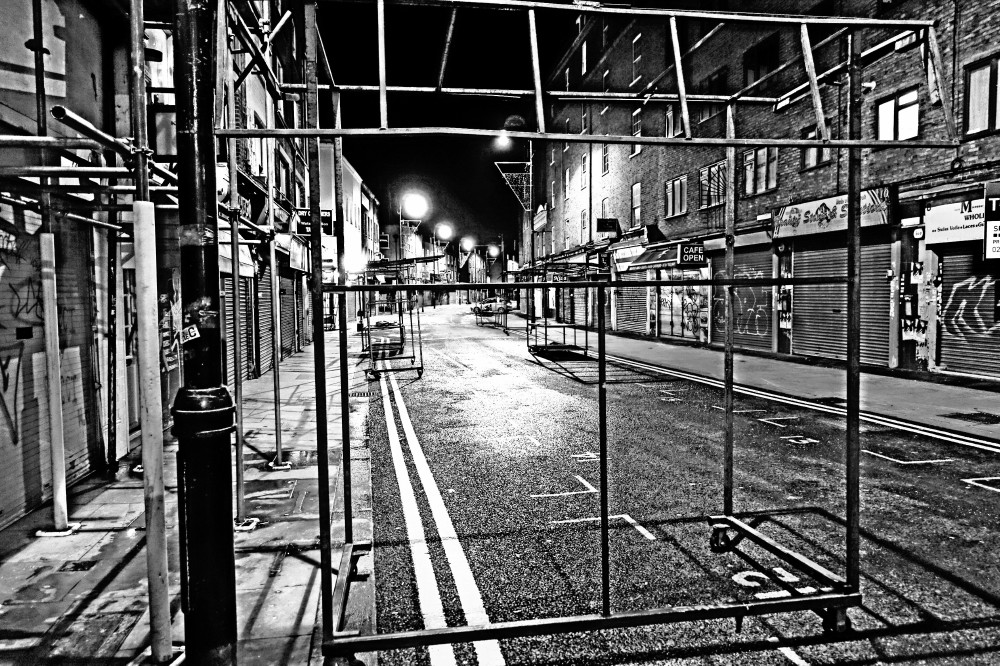
Wentworth St


Tower Hill


St Margaret Pattens, City of London


Little Somerset St

Aldgate


St Olave’s, Seething Lane


The Tower

Tower Bridge
Photographs copyright ©
You may also like to take a look at
Tony Norman’s Geezers
Reader Tony Norman from Brighton sent me these wonderful photographs of sculptures he has made, inspired by the faces in photographs by Phil Maxwell, John Claridge & Markéta Luskačová published in the pages of Spitalfields Life. “I rely on driftwood and metal-detecting pieces,” he explained to me, “I try and make them without changing the bits. As my stock of wood reduces it gets harder to make anything, but it is fun.”

Geezer Shopping
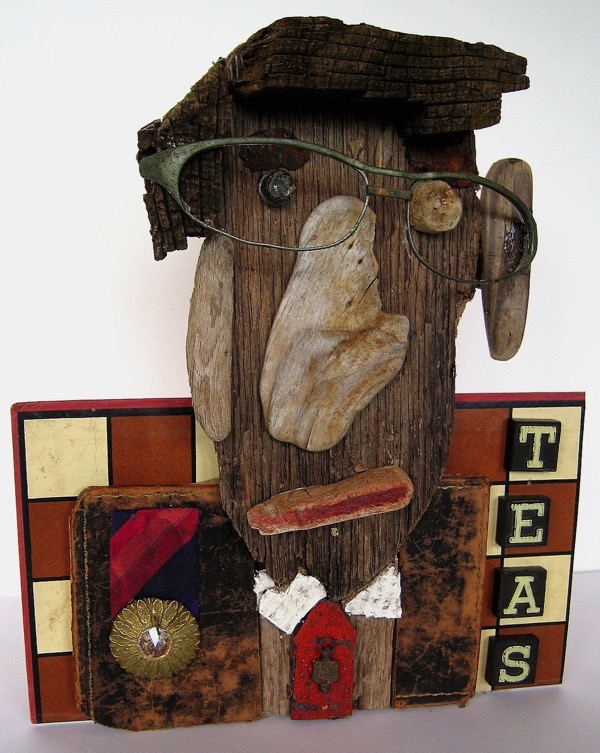
Cafe Geezer
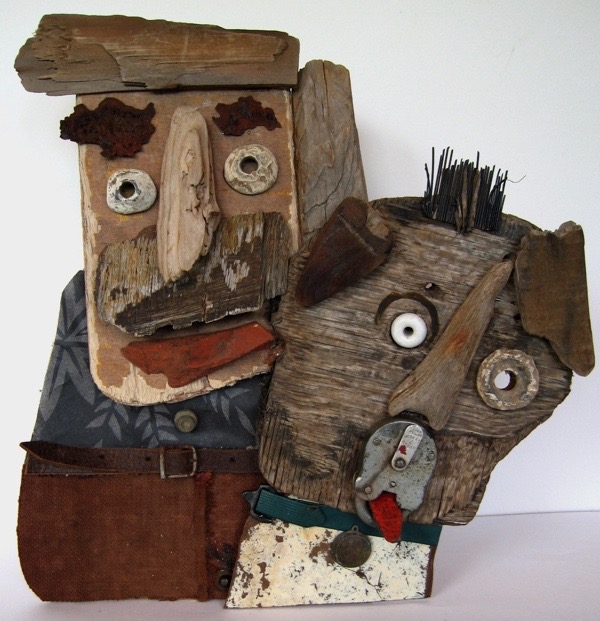
Walkies

Geezer & Dog
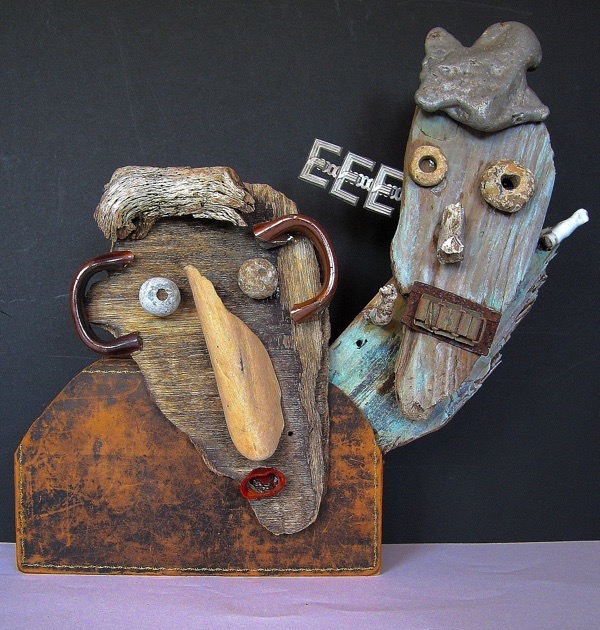
This town comin’ like a ghost town
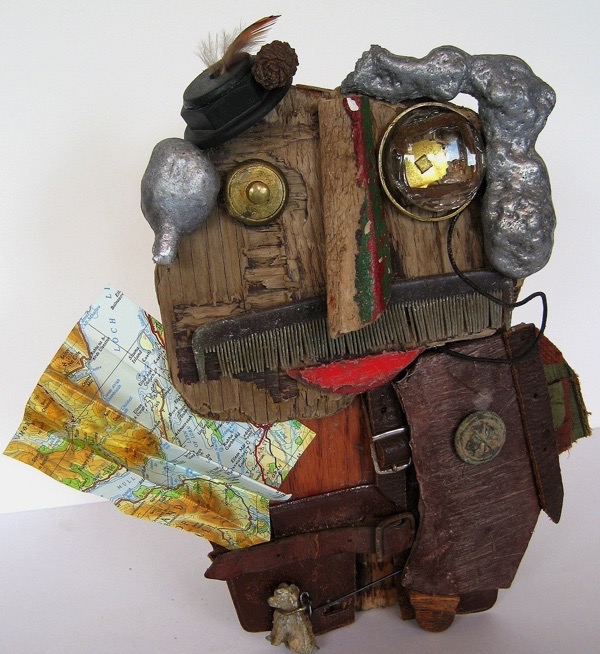
Geezer with a map
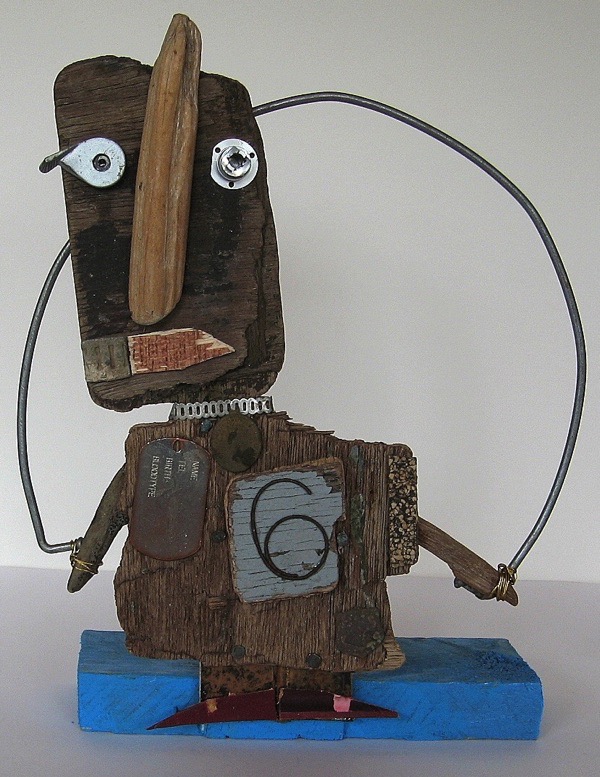
Skipping Girl

Ron & Rene
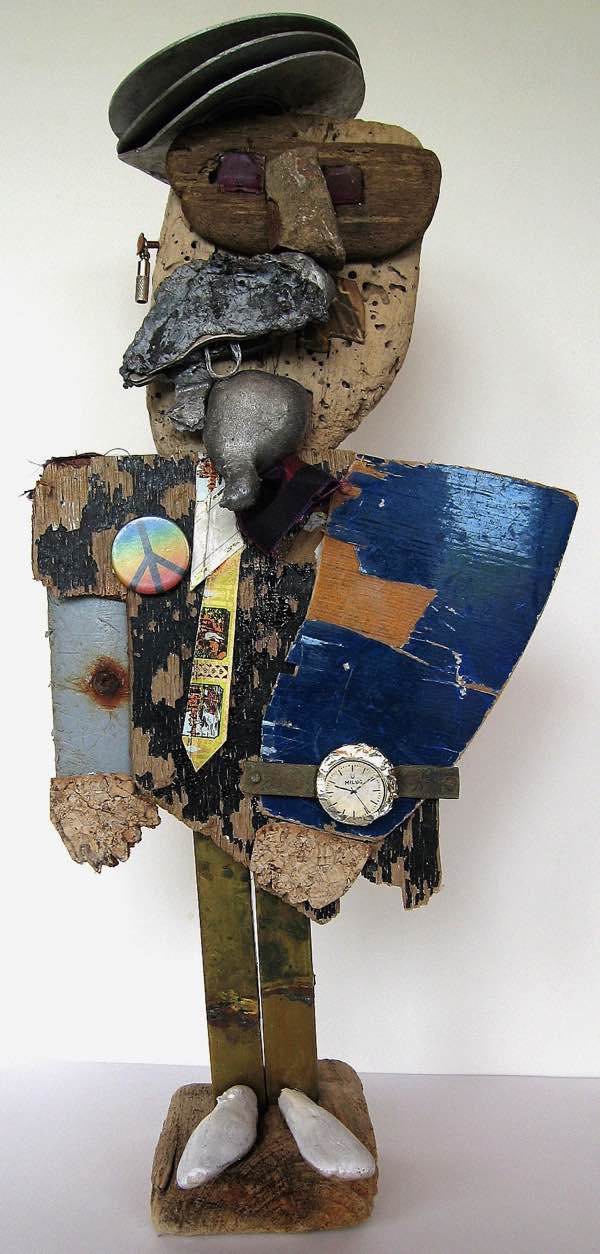
Brighton Geezer
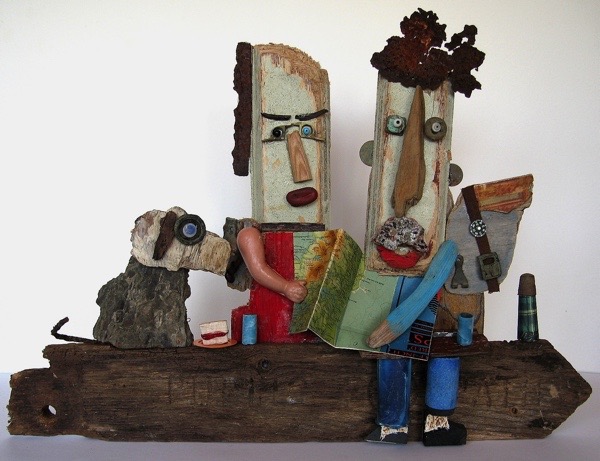
Picnic
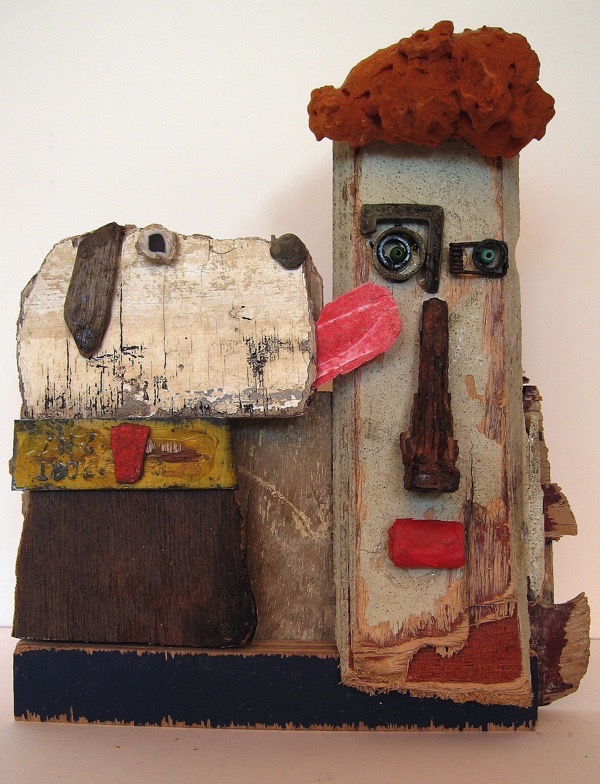
Licked
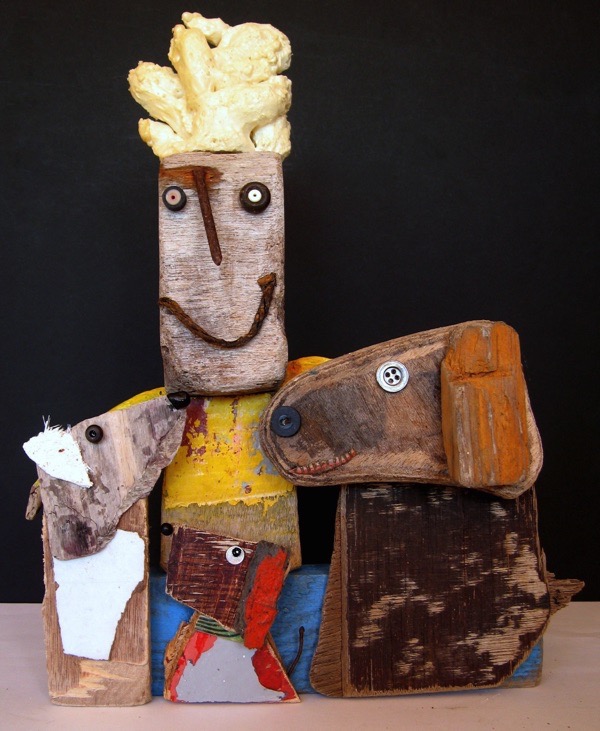
Happy
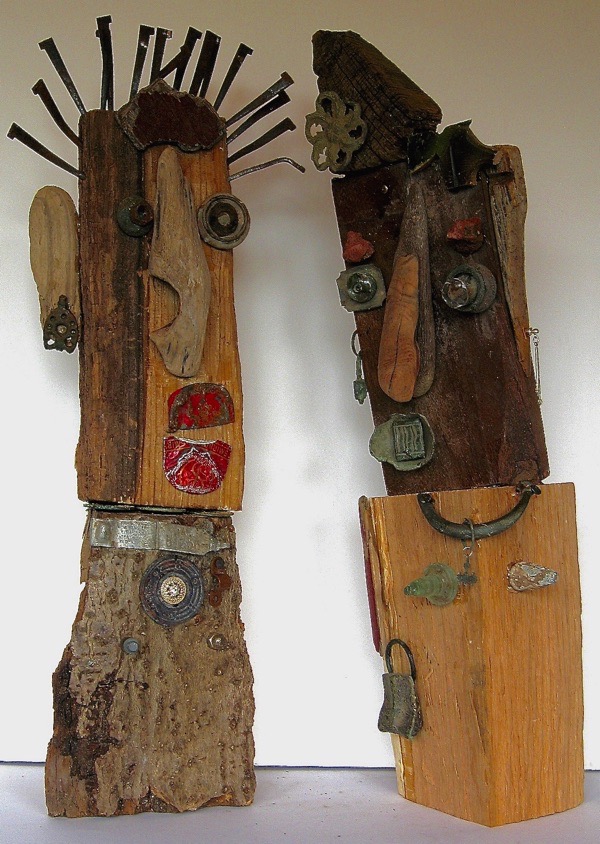
Talking Heads
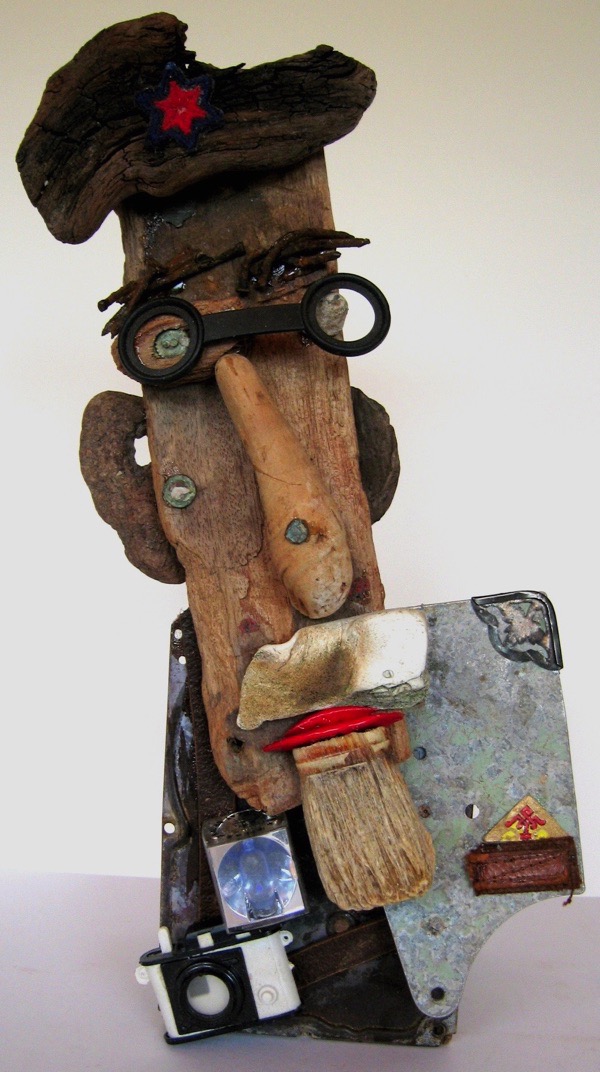
Geezer with camera
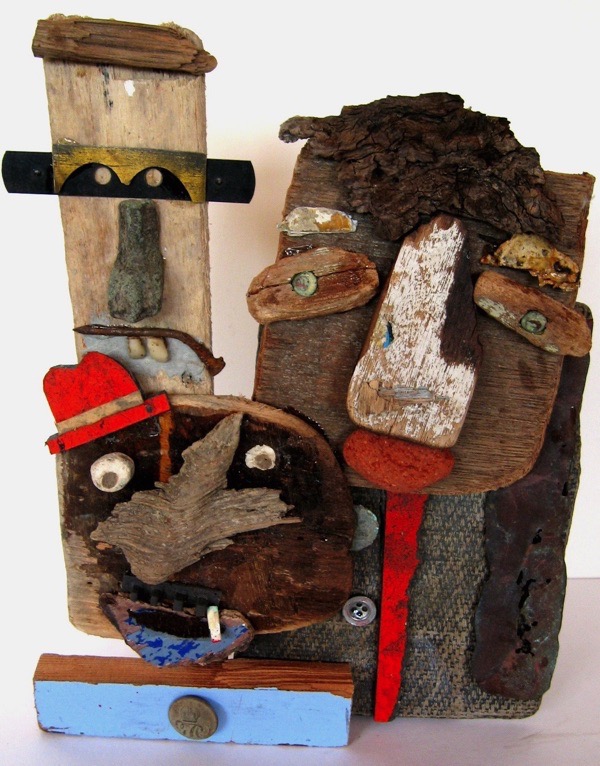
Gangster Crims
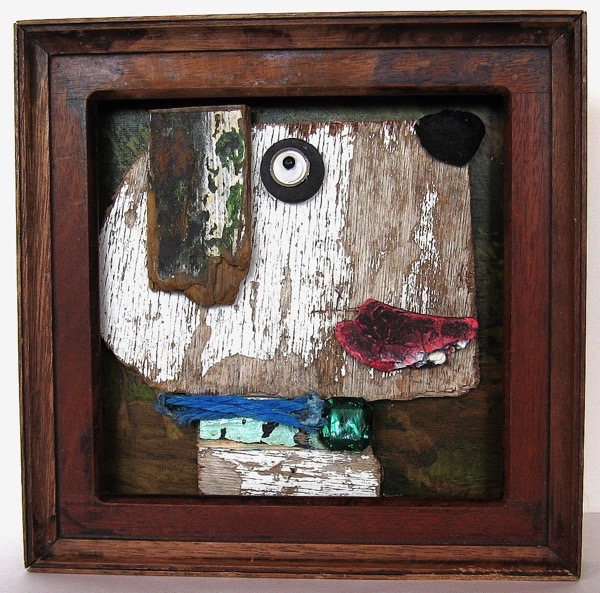
Bowser
Images copyright © Tony Norman
You may also like to take a look at
A Blue Plaque For A.S. Jasper
Next week on Wednesday November 21st at 11am a blue plaque is being unveiled for A.S. Jasper, author of A HOXTON CHILDHOOD & THE YEARS AFTER at his last home in Walthamstow, 37 First Avenue, E17 9QG. As A.S. Jasper’s publisher, I shall be there with the author’s son Terry Jasper and we shall both say a few words. I hope as many readers as can make it will join us.
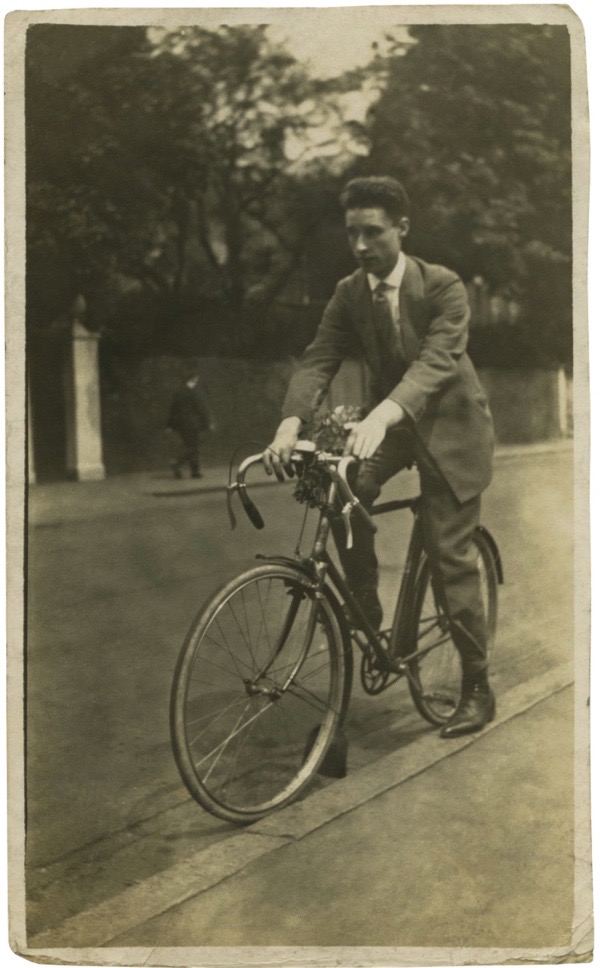
Albert Stanley Jasper
“The initials stand for Albert Stanley, but he was always know as Stan, never Albert,” admitted Terry Jasper, speaking of his father when we met at F. Cooke’s Pie & Mash Shop in Hoxton Market. A.S. Jasper’s A Hoxton Childhood was immediately acclaimed as a classic in 1969 when The Observer described it as “Zola without the trimmings,.” Nearly half a century later, Spitalfields Life Books published the definitive edition accompanied by the sequel, The Years After.
“In the late sixties, my mum and dad lived in a small ground floor flat. Looking out of the window onto the garden one morning, he saw a tramp laying on the grass who had been there all night. My dad took him out a sandwich and a cup of tea, and told him that he wouldn’t be able to stay there” Terry recalled, “I think most people in that situation would have just phoned the police and left it at that.” It is an anecdote that speaks eloquently of Stan Jasper’s compassionate nature, informing his writing and making him a kind father, revered by his son all these years later.
Yet it is in direct contrast to the brutal treatment that Stan received at the hands of his own alcoholic father William, causing the family to descend in a spiral of poverty as they moved from one rented home to another, while his mother Johanna struggled heroically against the odds to maintain domestic equilibrium for her children. “My grandmother, I only met her a couple of times, but once I was alone with her in the room and she said, ‘Your dad, he was my best boy, he took care of me.'” Terry remembered.
“There are a million things I’d like to have asked him when he was alive but I didn’t,” Terry confided to me, contemplating his treasured copy of his father’s book that sat on the table between us, “My dad died in 1970, he was sixty-five – It was just a year after publication but he saw it was a success.”
“When he was a teenager, he was a wood machinist and the sawdust got on on his lungs and he got very bad bronchitis. When I was eight years old, the doctor told him he must give up his job, otherwise the dust would kill him. My mum said to him that this was something he had to do and he just broke down. It was very strange feeling, because I didn’t think then that grown-ups cried.”
Stan started his own business manufacturing wooden cases for radios in the forties, employing more than seventy people at one point until it ran into difficulties during the credit squeeze of the fifties. Offered a lucrative buy-out, Stan turned it down out of a concern that his employees might lose their jobs but, shortly after, the business went into liquidation.”He should have thought of his family rather his workers,” commented Terry regretfully, “He lost his factory and his home and had to live in a council flat for the rest of his life.”
“My dad used to talk about his childhood quite a lot, he never forgot it – so my uncle Bob said, ‘Why don’t you write it all down?’ And he did, but he tried to get it published without success. Then a friend where I worked in the City Rd took it to someone he knew in publishing, and they really liked it and that’s how it got published. When the book came out in 1969, he wanted to go back to Hoxton to see what was still left, but his health wasn’t good enough.”
Terry ‘s memories of his father’s struggles are counterbalanced by warm recollections of family celebrations.”He always enjoyed throwing a party, especially if he was in the company of my mother’s family. It wasn’t easy obtaining beer and spirits during the warm but somehow he managed to find a supply. He was always generous where money was concerned, sometimes to a fault, and he had a nice voice and didn’t need much persuading to get up and sing a song or two.”
Stan Jasper only became an author in the final years of his life when he could no longer work, and the success of A Hoxton Childhood encouraged him to write The Years After, which was found among his papers after his death and is published now more than forty years later. The two works exist as companion pieces, tracing the dramatic journey of the author from the insecurity of his early years in Hoxton to the comfortable suburban existence he created for his family as an adult. The moral lessons he learnt in childhood became the guidelines by which he lived his life.
Together, A.S. Jasper’s A Hoxton Childhood & The Years After comprise an authentic testimony of the survival and eventual triumph of a protagonist who retains his sense of decency against all the odds. “He said he would always settle for the way life turned out,” Terry concluded fondly.
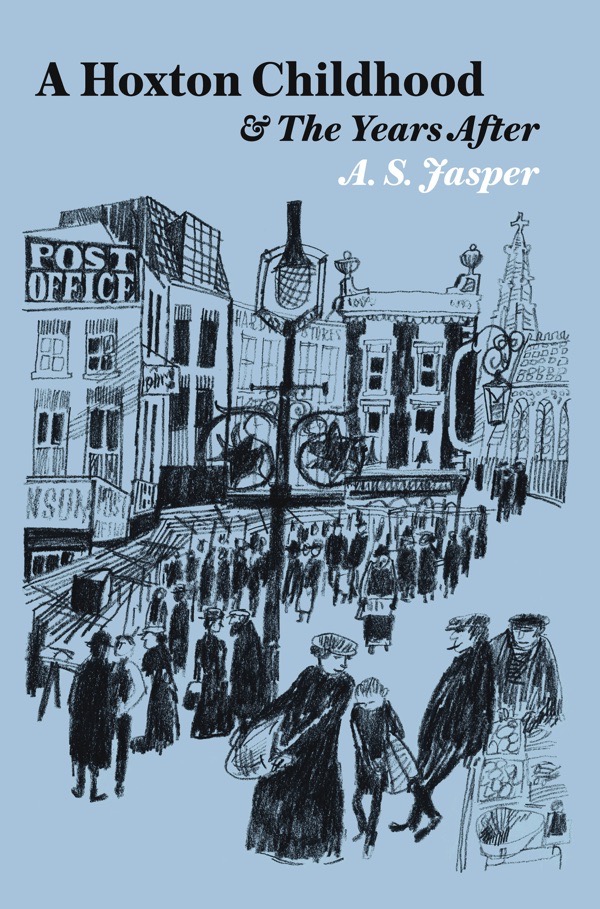
Click here to order a copy of A HOXTON CHILDHOOD for £20

Stan (on the right) with his brother Fred

Stan and his wife Lydia

Terry as a boy

Terry with his dad Stan

Stan and his sister Flo
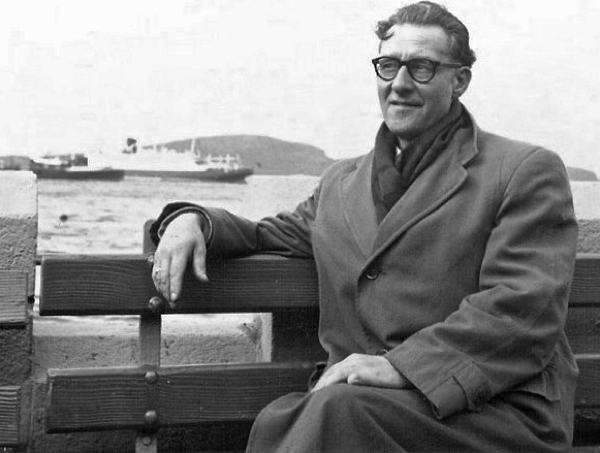
Stan Jasper

Terry with his mum and dad at Christmas
[youtube blfONuzyfRQ nolink]
Stan Jasper with his dog Nipper
You may also like to read about
A Hoxton Childhood & The Years After
James Boswell, Artist & Illustrator

Cockney Cats
Cockney Cats will be converging upon the Idea Store in Whitechapel this Saturday night, 17th November at 7pm, to hear The Gentle Author reading from THE LIFE & TIMES OF MR PUSSY, A MEMOIR OF A FAVOURITE CAT as part of the Write Idea Festival. Click here for free tickets
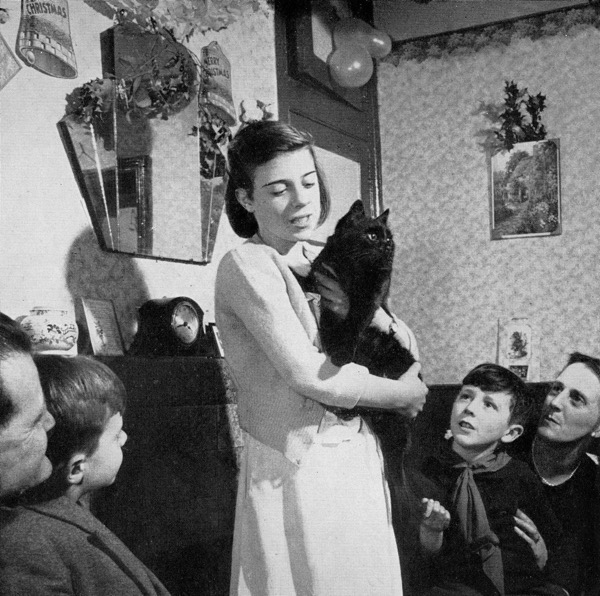
These are Cockney Cats by Warren Tute, with photographs by Felix Fonteyn from 1953, in the archive at Bishopsgate Institute
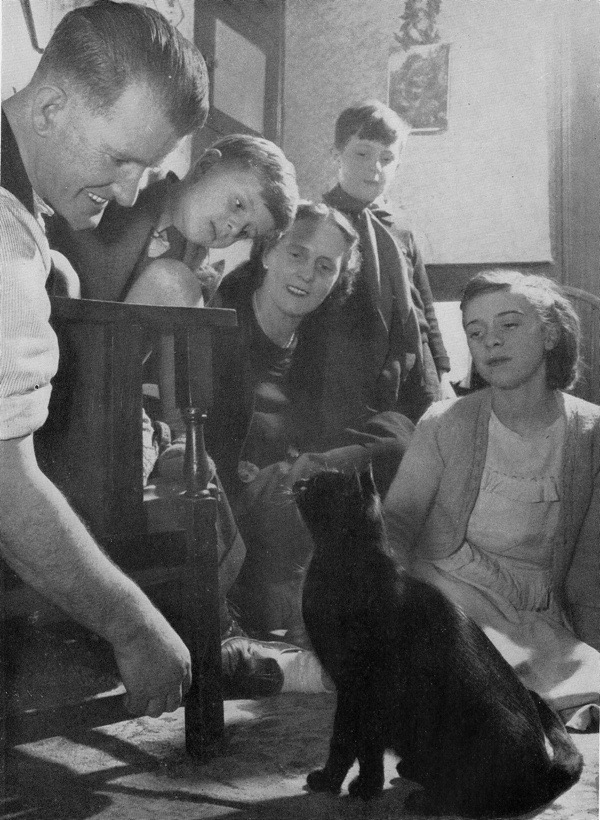
Micky is the centre of the Day family of Copley St in the parish of Stepney. The whole family pamper him and have a wonderful time
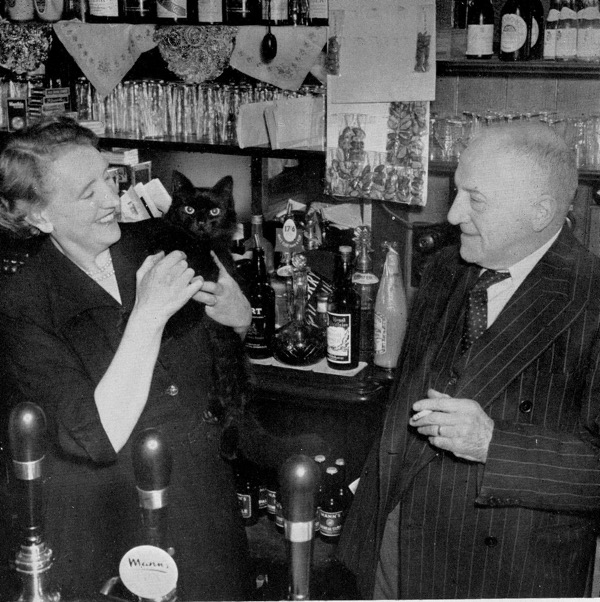
Bill on weekdays, William on Sundays, the cat at the Bricklayers Arms in Commercial Rd has a wonderful life since the Guv’nor Jim Meade was once a Dumb Animals’ Food Purveyor. At seventy-seven Jim looks back on a long and distinguished life in Stepney during his thirty-two years as Guv’nor.
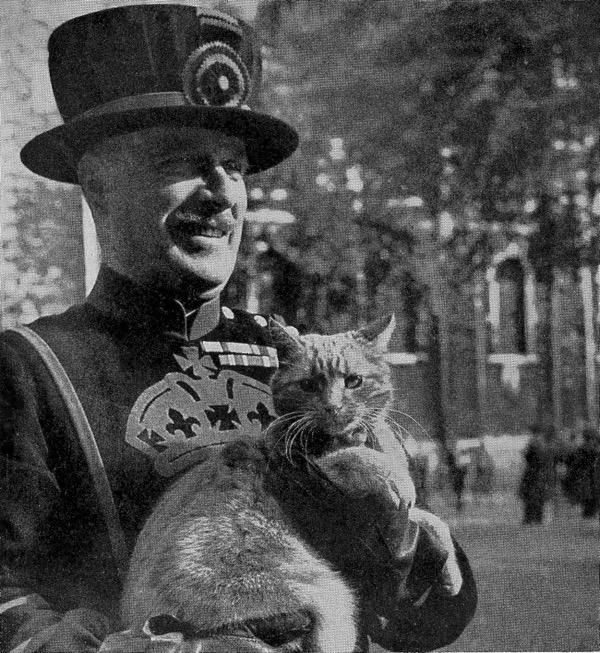
Yeoman Warder Clark & Pickles on Tower Green
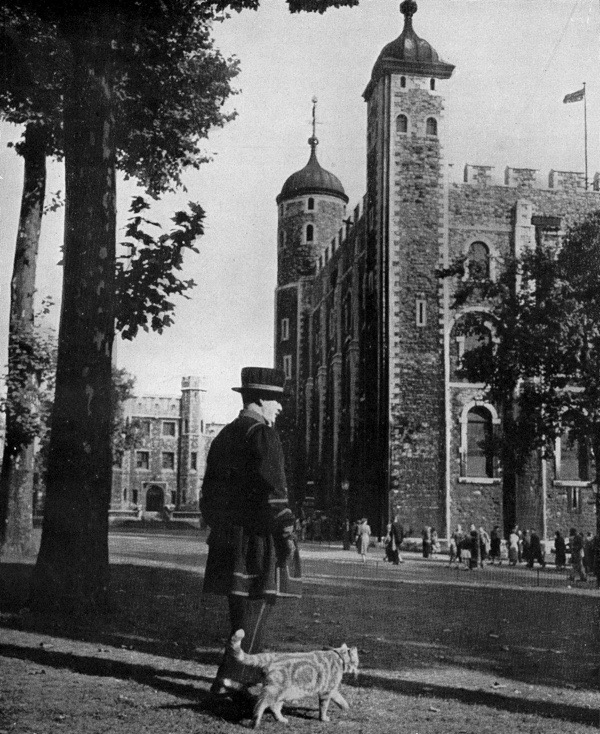
On duty at the Tower of London
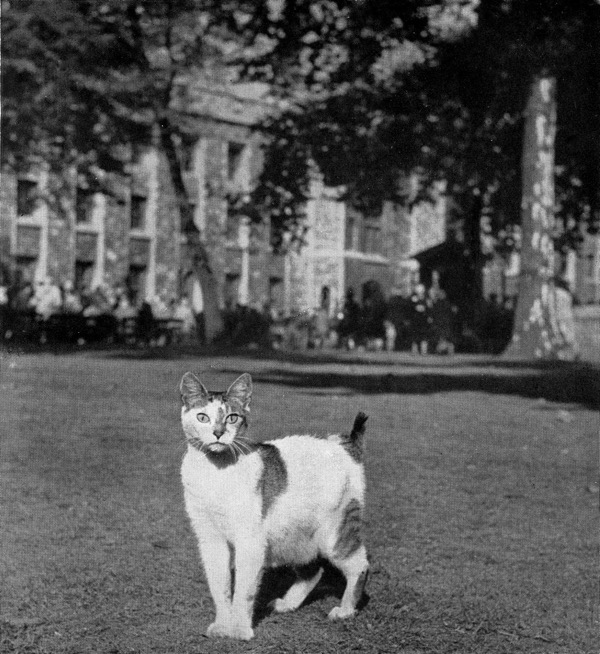
The tail-less cat of the guardroom who came out to watch Pickles being photographed
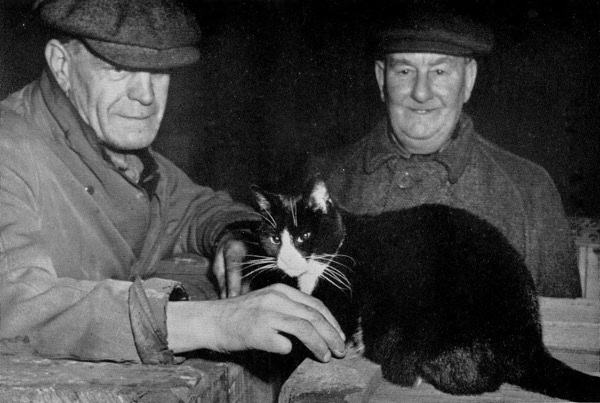
Min, Port of London Authority cat has many friends among the dockers and very good ratting at night
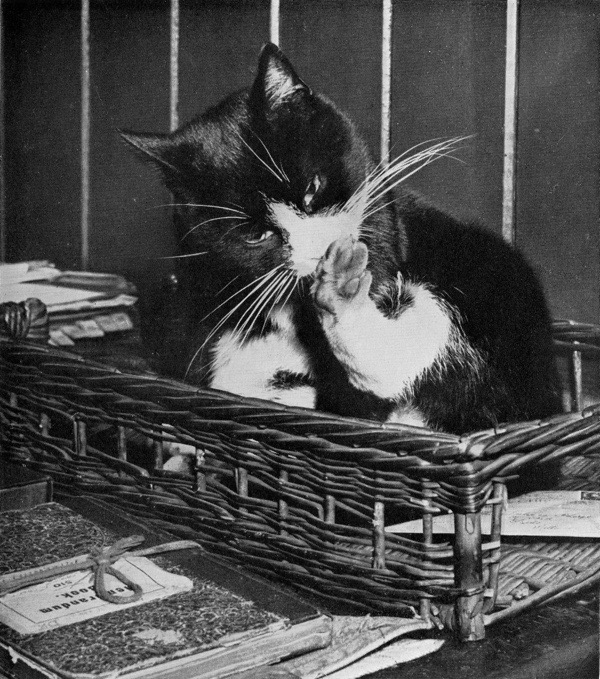
Min of the magnificent whiskers has made her home in the office of K Warehouse in the Milwall Docks
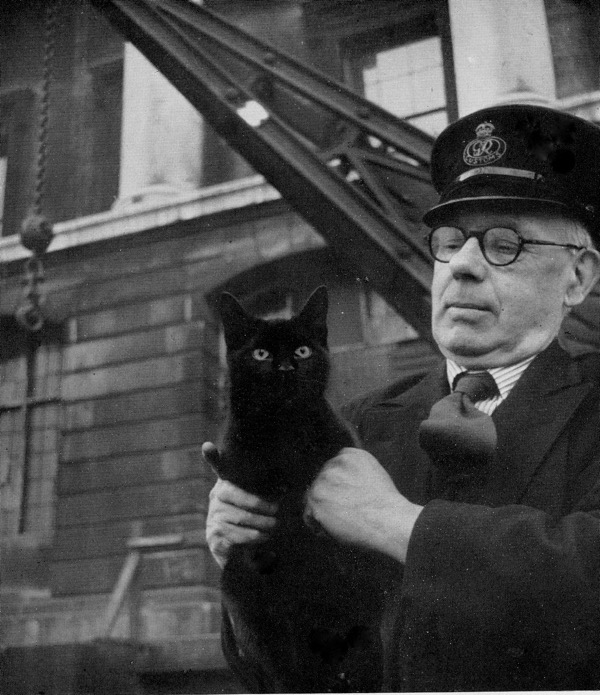
Customs & Excise cat guards the Queen’s Warehouse and is paid a Treasury Allowance of sixpence a day
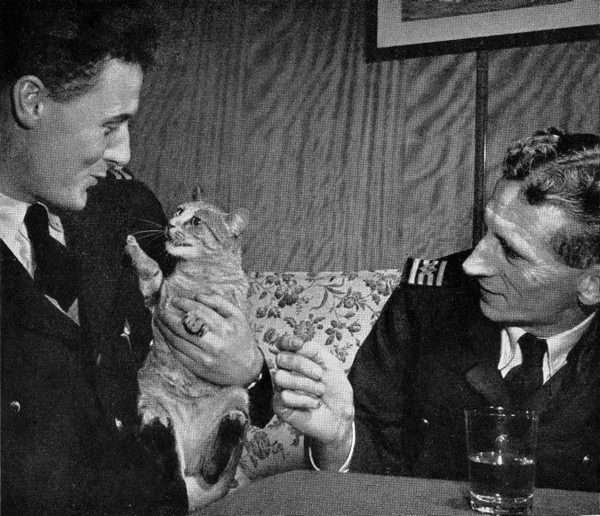
Mitzi has the run of her ship from the lifeboats to the Officers’ Mess
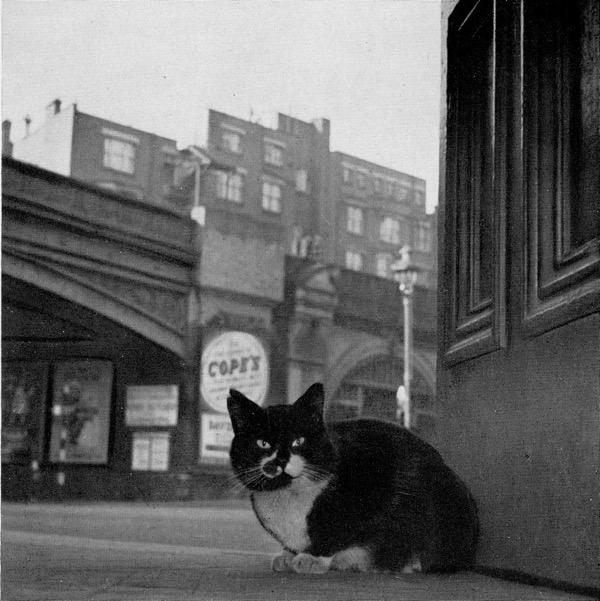
Old Bill the railway cat, his favourite position is the entrance to Blackfriars Station
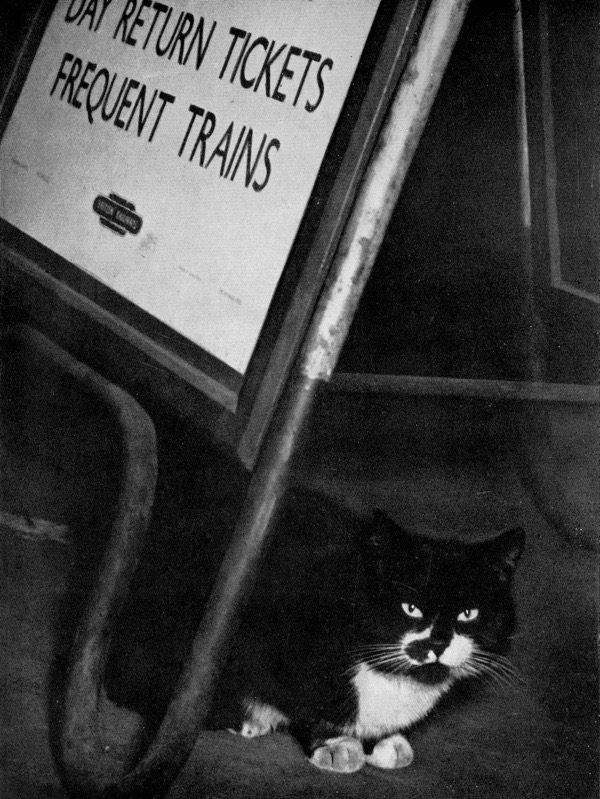
Old Bill takes cover when necessary in the rush hour
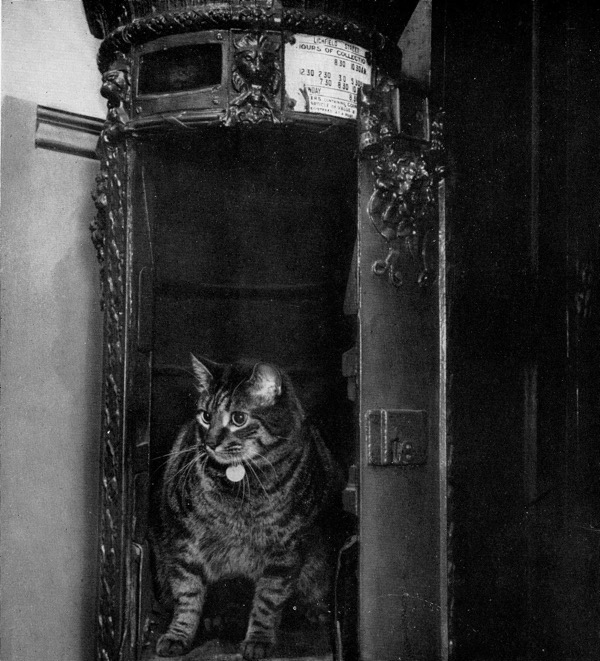
Tibs the Great (1950-64), the official Post Office cat at Headquarters, does not normally live in this 1856 pillarbox
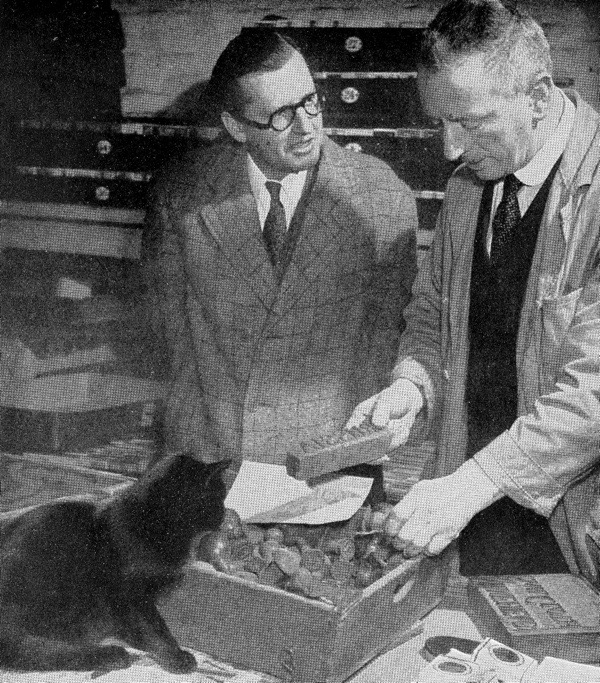
This cat’s curiosity unearthed a box of ancient stamps and seals, some dating back to Queen Anne
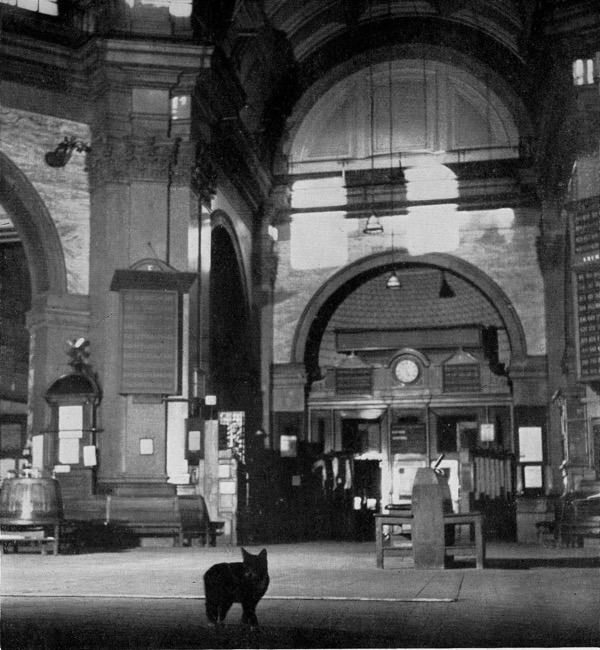
Minnie the Stock Exchange cat was a self-willed and determined kitten who adopted the dealing floor as her own preserve
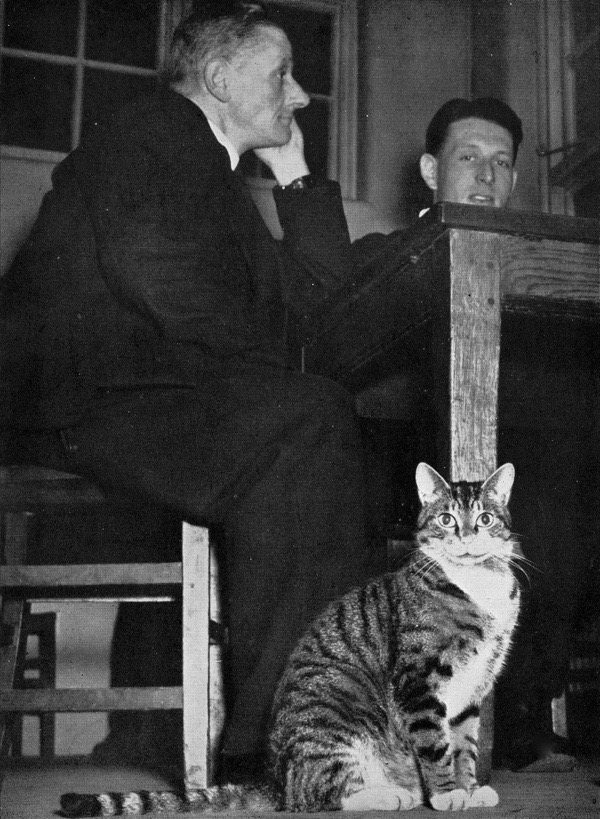
Minnie enjoys the banter in the tea room
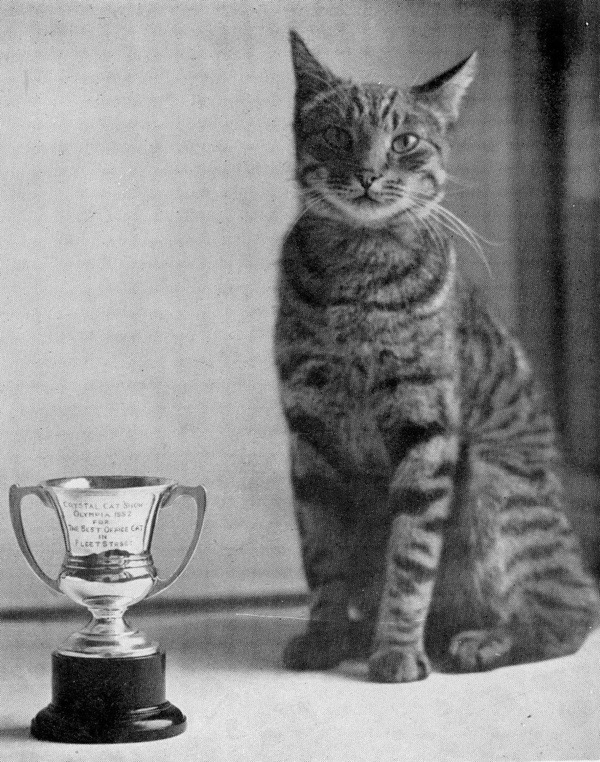
Tiger of The Times is the best office cat in Fleet St
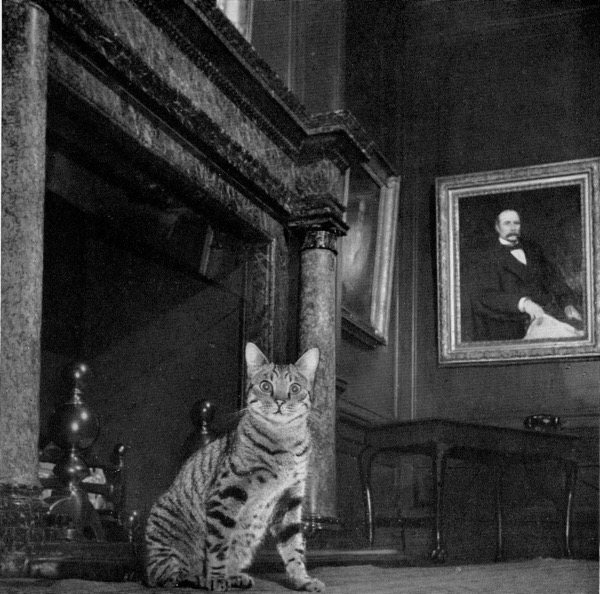
Tiger of The Times is equally at ease whether in the Board Room …
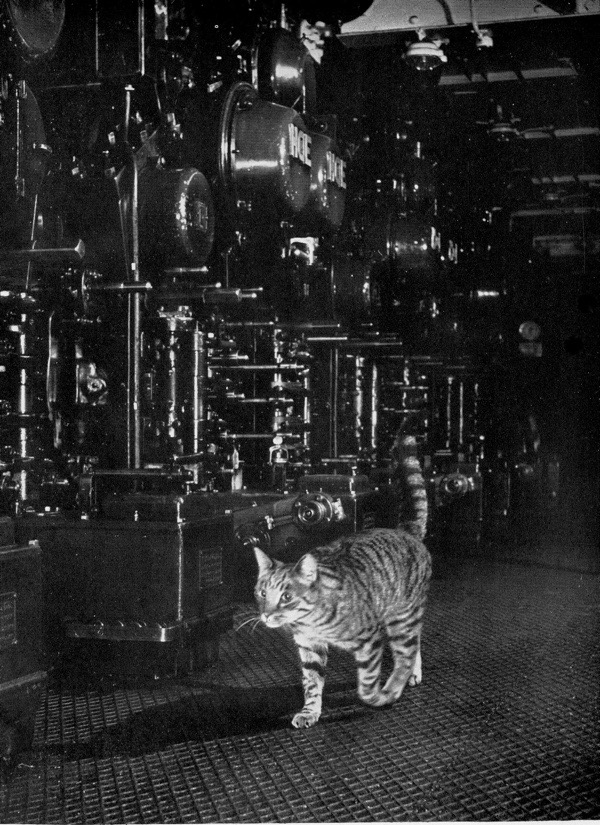
… or doing his rounds in the Print Room
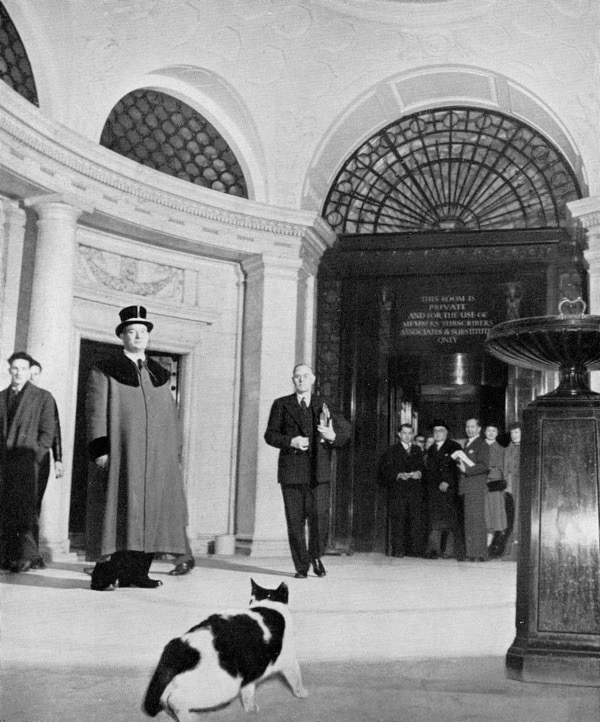
Sneaking back into Lloyds of London is difficult even for the resident cat
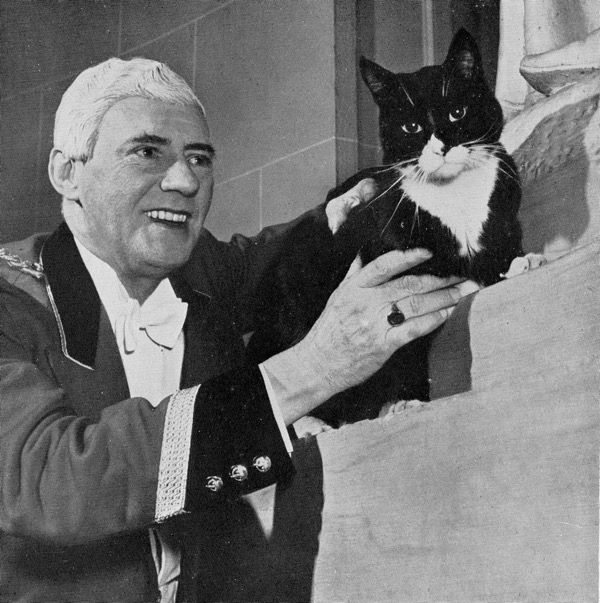
Cecil is the Front of House cat at the Theatre Royal Drury Lane
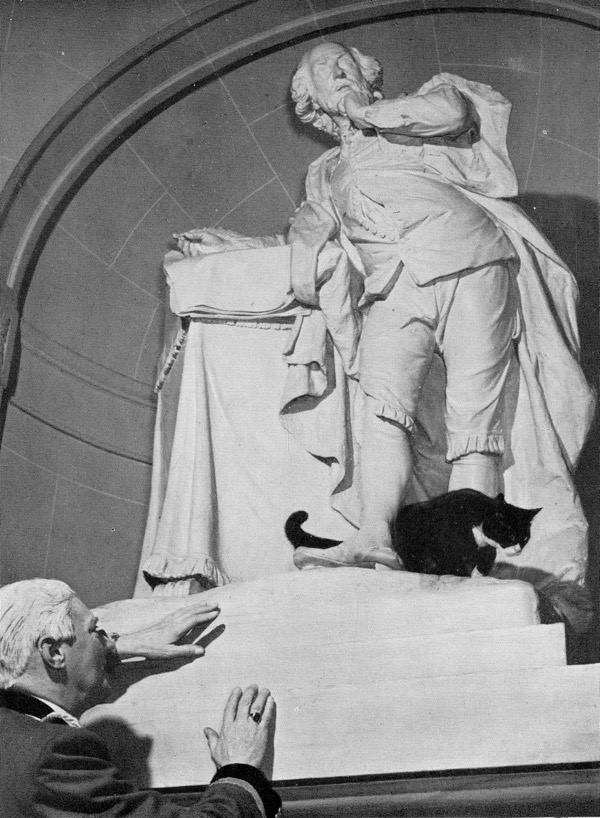
Cecil is very elusive in his many hiding places from which he has to be coaxed by the Royal Waiter before the performance can begin
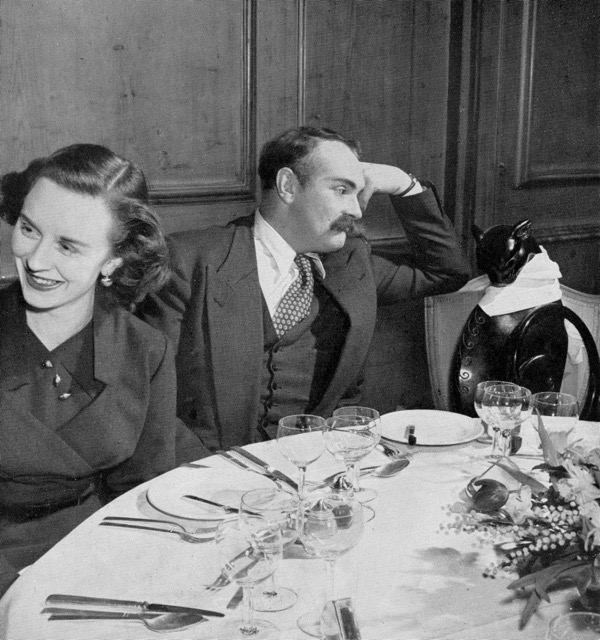
When thirteen people sit down to dine at the Savoy and the thirteenth guest is Jimmy Edwards, almost anything can happen. The famous black cat is invited to occupy the fourteenth place so that everyone can enjoy the sparkling conversation.

Bill at the Tower of London (1935-47)
Images courtesy Bishopsgate Institute
You may also like to take a look at
Schroedinger, Shoreditch Church Cat
Doorkins Magnificat, Southwark Cathedral Cat
The Cats of Spitalfields (Part One)
A Tea Party For Doreen Fletcher
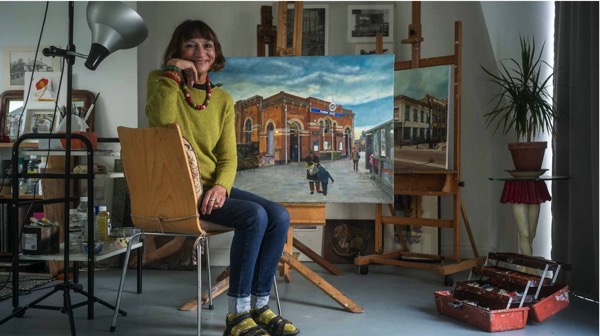
Portrait of Doreen Fletcher in her studio by Stuart Freedman
Please join me for for a tea party with complimentary sponge cakes at 3pm on Sunday 25th November at the Nunnery Gallery to celebrate the publication of DOREEN FLETCHER, PAINTINGS by Spitalfields Life Books prior to Doreen Fletcher’s retrospective which opens at Bow Arts on January 24th 2019.
We have commissioned celebrated cake maker Jackie Stern to bake a selection of delicious varieties of sponge cake for you to choose from.
Doreen will be signing copies of her handsome monograph and will be in conversation with The Gentle Author. They will be discussing her paintings of the East End which have justly won Doreen such acclaim in recent years and tracing the long journey to this auspicious moment.
DOREEN FLETCHER, PAINTINGS reveals the full breadth of Doreen Fletcher’s achievement for the first time, including the largest selection of her work yet assembled including many unseen paintings from private collections.
Doreen’s monograph has been published with the generous support of the following readers of Spitalfields Life:
Alison Anderson, Vivian Archer, Clifford & Fiona Atkins, Graham Barker, Roxy Beaujolais, Jill Browne, Dana Burstow, Tamara Cartwright Loebl, Charlie De Wet, Keith Evans, John Gillman & Mary Winch, Mark Hamsher & Elna Jacobs, Carolyn Hirst, Terry Jasper, Stella Herbert, Michael Keating, Hilda Kean, Bernard Lamb, Pat Lowe, Tim Mainstone, Julia Meadows, Robert Medcalfe, Angus Murray, Caroline Murray, Ros Niblett, Jan O’Brien, Delamain Ogilby Ltd, Sian Phillips, Tim Sayer, Aubrey Silkoff, Larry & Linda Spivack, Penelope Thompson, Gillian Tindall, Robert Welham, Jane Williamson, Jill Wilson, Derek Wood and Julian Woodford. A contribution was made in memory of Beryl Boulton.
You may also like to take a look at
The Triumph of Doreen Fletcher
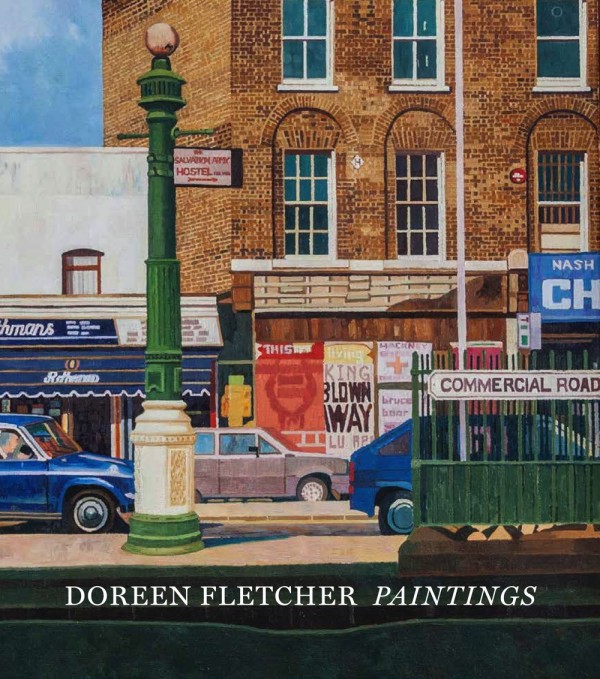
CLICK HERE TO ORDER A SIGNED COPY OF DOREEN FLETCHER’S BOOK FOR £20
Markéta Luskačová At Tate Britain
Favourite photographer Markéta Luskačová is currently exhibiting her pictures at Tate Britain until May 12th 2019, including a fine selection of her photographs of Brick Lane. I can reveal that I am collaborating with Markéta to compile a monograph of her superlative photography of London since 1976, which I hope to publish towards the end of next year.
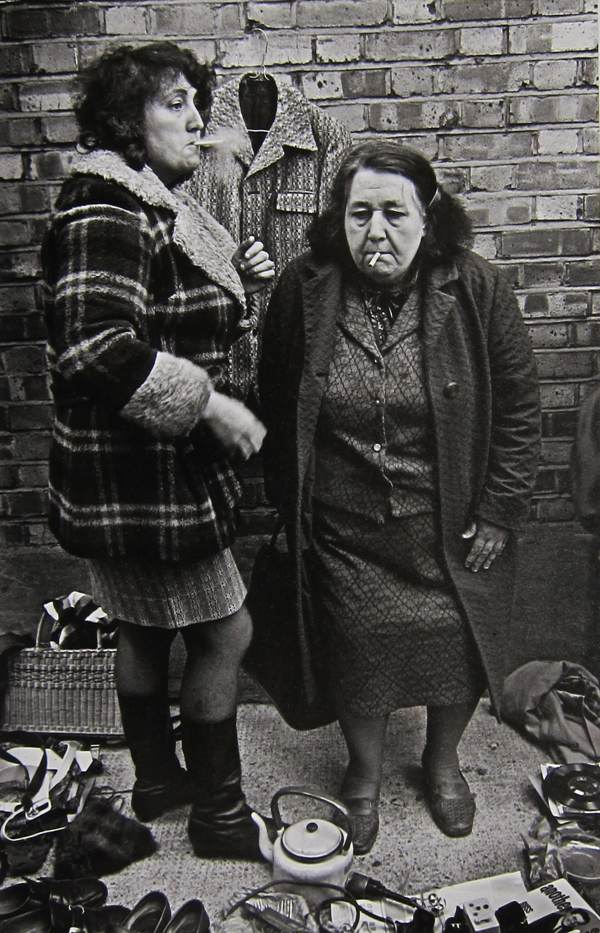
Two women with a cigarette, Cheshire St 1977.
When photographer Markéta Luskačová came from Prague in the mid-seventies, it became her great delight to visit the markets in London since they were forbidden under Communist rule in her own country. It was Brick Lane market in particular that took Markéta’s fancy, both as a subject for photography and a source of cheap produce. In fact, such was the enduring nature of her fascination and need, Markéta continued coming to Spitalfields to take photographs and get her weekly supply of fruit and vegetables for over thirty years.
As a young photographer in Czechoslovakia, Markéta went out to visit remote villages which were so poor that the collectivisation imposed elsewhere by the Communists was not viable, and she recorded a way of life barely changed for centuries in breathtakingly beautiful pictures, first exhibited in Prague in 1971 and later shown at the Victoria & Albert Museum in 1983. By chance, Markéta’s photographs were seen in Prague by Colin Osman, editor of Creative Camera, who was on a visit from London to attend the opera and he published them in his magazine, drawing international recognition for the quality of her vision.
In London, Markéta showed her work to Norman Hall, the renowned picture editor of The Times but when she told him she wanted to photograph markets, he dismissed it as “a subject for beginners” yet she set out undiscouraged.
“I went to Brick Lane and I never left. I fell in love with it.” she admitted to me, “Most of all, I photograph things I like and I was lucky enough that somebody saw my work and supported my photography for a little while.”
A year later, Markéta took her photographs of Brick Lane to Norman Hall and, looking at them, he declared, “This may be a subject for a beginner, but it is not a beginner that took these photographs.”
“I was poor,” recalled Markéta, “so I needed to do my shopping there as it was the cheapest place to buy things. I could identify with the people in Brick Lane because they were immigrants and they were in need of cheap goods. Once I had done my shopping, I would leave my bag with a stallholder while I took my photographs.”
In 1991, Markéta had a one woman show at the Whitechapel Gallery of her photographs of Spitalfields, establishing her reputation as a major photographic talent in this country. Those pictures – of which a selection are published here today – were the result of a two-year residency in which she selected from and printed her pictures taken between 1975 and 1990. Yet it is less widely known that these represent only a portion of those Markéta has taken in Brick Lane as result of her long-term relationship with the market which now extends over thirty years.
In particular, Markéta recorded the last days of the ancient market in birds and animals that existed in Sclater St and Club Row until it was closed down in 1990 as a result of protests by animal rights activists. Markéta shared a natural sympathy with the dealers, observing their affection for their charges, unlike the hard-line protestors, one of whom pushed her in front of a car.
Famously, Markéta photographed the sale of a lion cub in Brick Lane. She remembers that it was first offered at £150 and then the price diminished to £100 and finally £75, over successive weeks, as the cub grew and became less cuddly and more threatening. Eventually, the seller came back one Sunday without the lion but clasping a tray of watches that he had swapped the creature for. In Brick Lane, Markéta found her primary subject as a photographer, offering an entire society in realistic detail and a mythological universe of infinite variety.
“I don’t go to Brick Lane regularly anymore, sometimes six months passes between one visit and another” Markéta confided to me,“I photographed what I saw there and what I thought it was good to record, be it a face or a smile, an animal or a shoe. I believe in the evidential quality of photography, and I know that unless things are done in a visually interesting way they are not remembered.”
A woman with a gentle manner and a piercing gaze, Markéta Luskačová’s magnificent photographs reflect her own personality. They are simultaneously generous in their humanity yet unsentimental in revealing the nature of people. More than twenty years after her last show in the East End it is my delight to show a selection of her Brick Lane pictures here today.

Lion cub and dog, Club Row Market 1977.
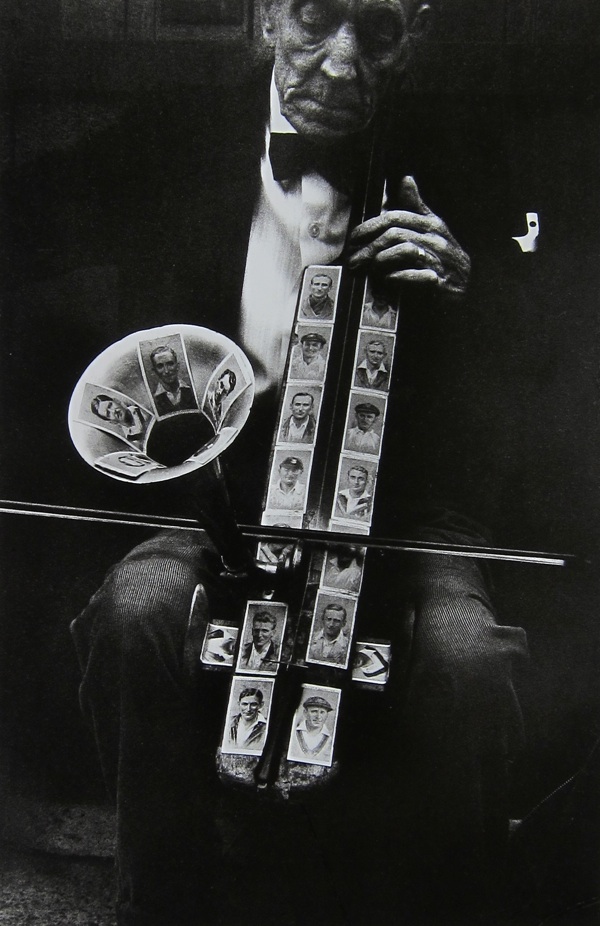
Street musician, Cheshire St 1977.
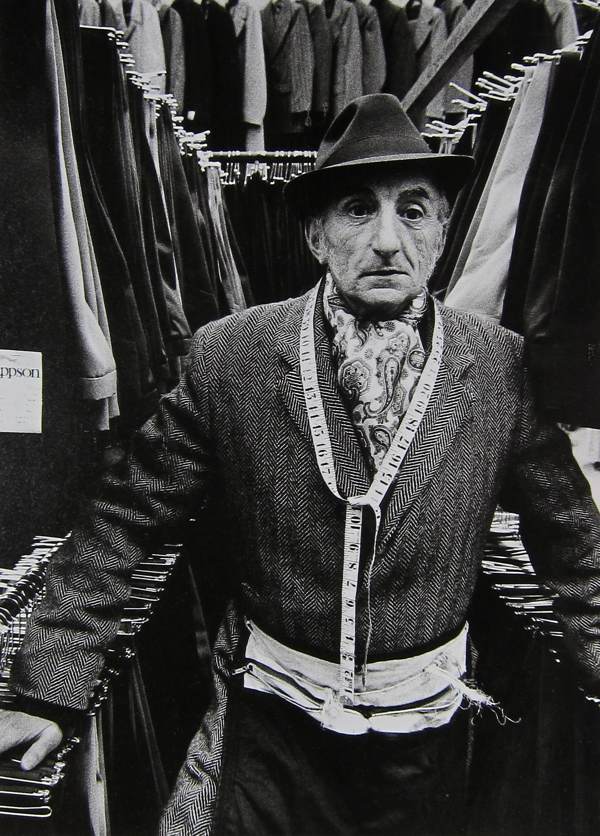
Man selling trousers, Petticoat Lane 1974.
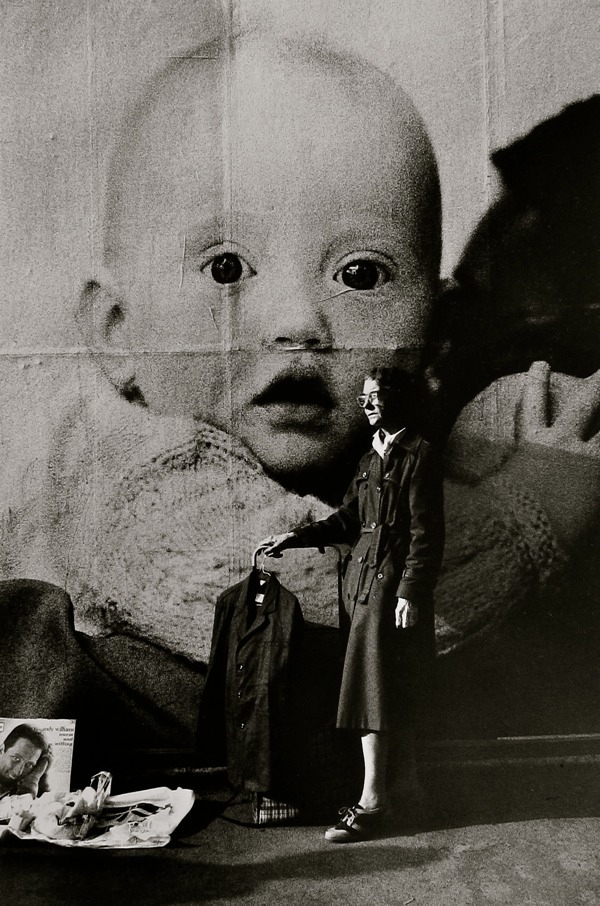
Woman in front of a poster, Bethnal Green Rd 1990.

Woman in the Knave of Clubs, Bethnal Green Rd 1976.

Man with a clock, off Cheshire St 1989.
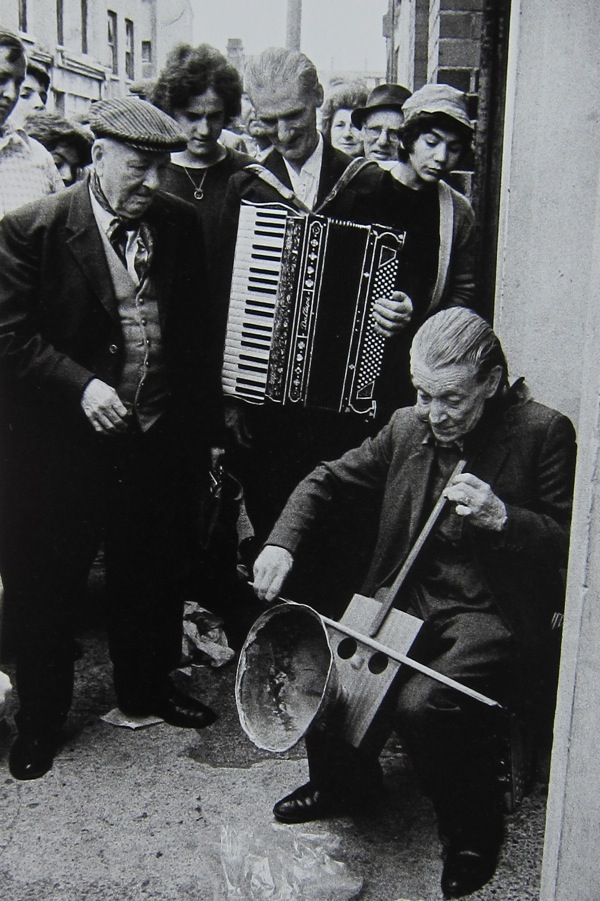
Street musician, Cheshire St 1979.
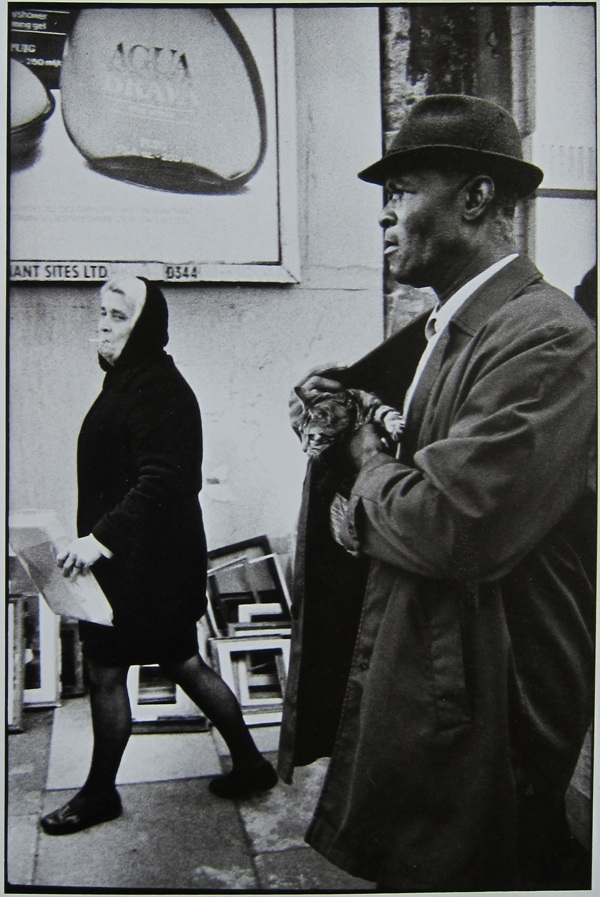
Man with kitten, 1977.

Girls from Canon Barnett Primary School in the train on their way back from the seaside, 1988.
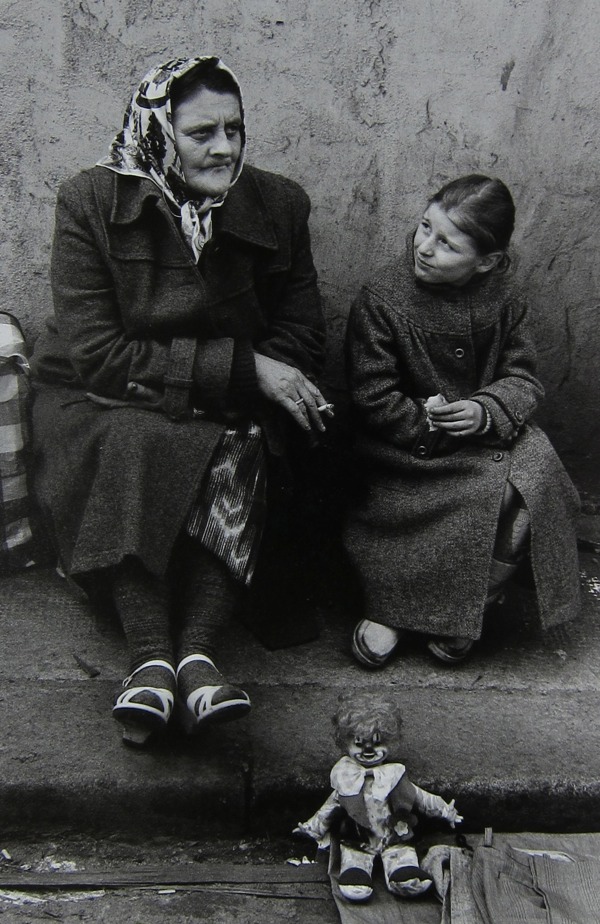
Woman and child, Sclater St 1976.

Old man and children with donkey, Sclater St 1980.
Photographs copyright © Markéta Luskačová
You may also like to take a look at
The Dark Nights Of Old London

The temperature is plunging and I can feel the velvet darkness falling upon London. As dusk gathers in the ancient churches and the dusty old museums in the late afternoon, the distinction between past and present becomes almost permeable at this time of year. Then, once the daylight fades and the streetlights flicker into life, I feel the desire to go walking out in search of the dark nights of old London.
Examining hundreds of glass plates – many more than a century old – once used by the London & Middlesex Archaeological Society for magic lantern shows at the Bishopsgate Institute, I am in thrall to these images of night long ago in London. They set my imagination racing with nocturnal visions of the gloom and the glamour of our city in darkness, where mist hangs in the air eternally, casting an aura round each lamp, where the full moon is always breaking through the clouds and where the recent downpour glistens upon every pavement – where old London has become an apparition that coalesced out of the fog.
Somewhere out there, they are loading the mail onto trains, and the presses are rolling in Fleet St, and the lorries are setting out with the early editions, and the barrows are rolling into Spitalfields and Covent Garden, and the Billingsgate porters are running helter-skelter down St Mary at Hill with crates of fish on their heads, and the horns are blaring along the river as Tower Bridge opens in the moonlight to admit another cargo vessel into the crowded pool of London. Meanwhile, across the empty city, Londoners slumber and dream while footsteps of lonely policemen on the beat echo in the dark deserted streets.

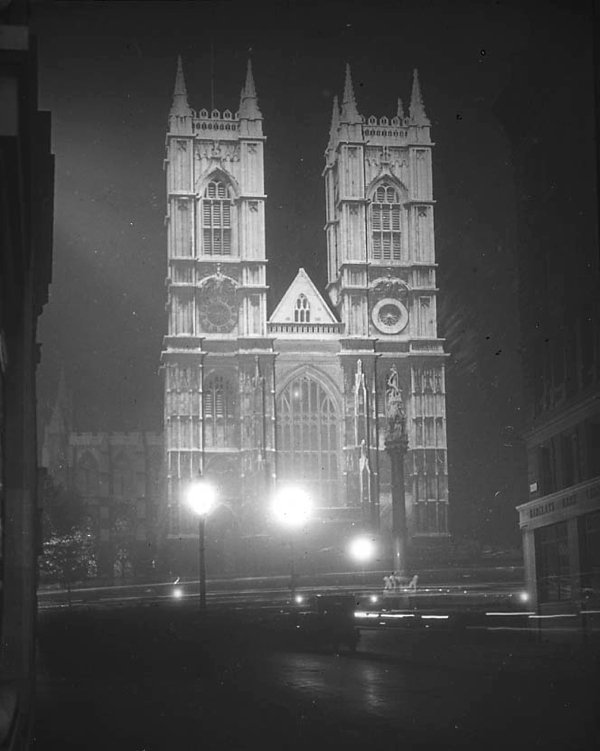


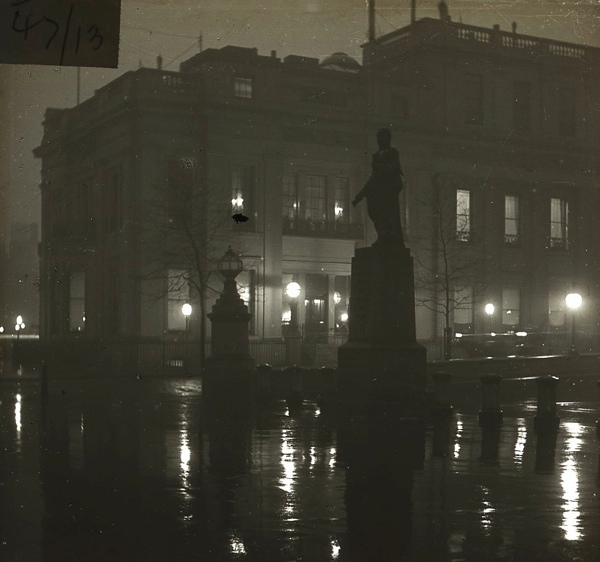


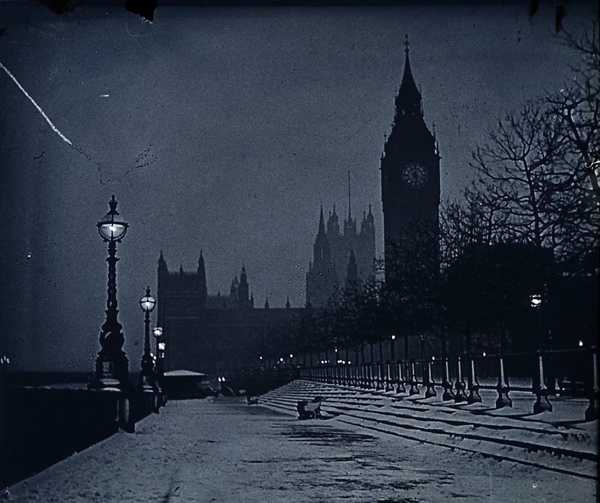


Glass slides courtesy Bishopsgate Institute
Read my other nocturnal stories
On Christmas Night in the City
On the Rounds With the Spitalfields Milkman
Other stories of Old London












