In Old Marylebone
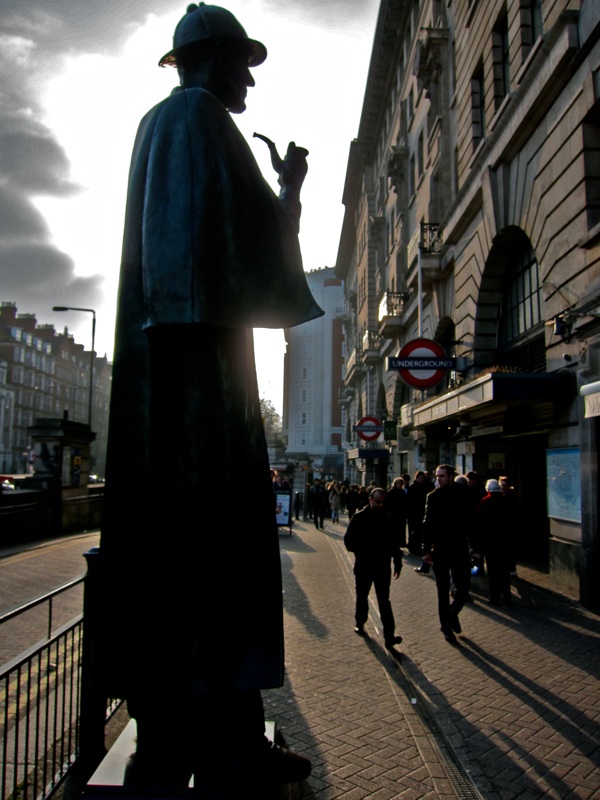
I took the Metropolitan Line from Liverpool St Station over to Baker St and spent a pleasant afternoon exploring the wonders of Marylebone. Peeling off from the teeming crowds heading for Madame Tussauds and the Planetarium, I crossed Euston Rd to the parish church of St Mary, that once stood upon the banks of the bourne which gives the place its name and flowed south from here towards Oxford St where it became the Tyburn. Thomas Hardwick’s cool classicism of 1813 promised a welcome respite from the clamour of the traffic racing past outside, an effect only marginally undermined by the array of gruesome Lentern sculptures of the Crucifixion including a skeleton carrying a cross.
From here, I took the shortcut through the cobbled churchyard, beside St Marylebone School founded as the Day School of Industry in 1791, and turned right past the obelisk commemorating Charles & Sarah Wesley that commands a tiny yard, offered now as a garden of ease and reflection for exhausted shoppers struggling up from Oxford St. Lest I should get distracted by the fancy shops in the High St myself, I turned right again into Paddington St to peer into James Taylor & Sons, Shoemakers since 1857, when the founder walked from Norwich to start the business.
Crossing the road, I entered the narrow Grotto Passage which offers a portal to another Marylebone than the affluence which prevails elsewhere. Through the passage, you discover the Grotto Ragged & Industrial School beside a huge Laundry House at the centre of Ossington Buildings, a nineteenth-century complex of social housing dating from 1888. These narrow streets lead you through to the seclusion of Paddington St Gardens, a former burial ground, bordered by iron bollards with St Mary Le Bone 1828 in relief. Here in the gardens, school children at play and mothers with their tots attest to the domestic life of Marylebone, while in Chiltern St I discovered Webster’s Ironmongers in business since 1870, a rare survivor of the traditional businesses that once lined these streets before the chain stores of Oxford St ventured northwards. The current owner has been behind the counter for thirty years, cherishing Websters as a temple to the glories of hardware and household goods.
Turning another corner into Manchester St, with its magnificent early nineteenth century terraces, delivered my return to the London of wealth, ascending in architectural grandeur as I strolled down towards Manchester Sq, commanded by The Wallace yet fascinating to me for the elaborate drinking fountain given by the Citizens of Shoreditch and the wrought iron curlicules of the decorative lamps upon the stucco villas. Turning east across Thayer St and into Marylebone Lane, the Golden Hind Fish Bar has long been a personal landmark with its immaculate fascia of 1914, perfect save the loss of the letter ‘D,’ spelling “Golden Hin…”
A different urban landscape opens up beyond the charismatic meander of Marylebone Lane, it is that of wide boulevards and tall mansions comprising Wimpole St and Harley St, interwoven by cobbled mews in which you can wander, as if behind the scenes at the theatre, observing the scenery from the reverse – where the mish-mash of accreted structures concealed by those impermeable facades are revealed. Leaving these exposed thoroughfares where the traffic hurtles through and the pavement grants no shelter to the lone pedestrian, I set out to walk west as the shadows lengthened, crossing Marylebone High St again and following Paddington St as it became Crawford St where the neighbourhood declines towards Edgeware Rd.
My destination was Robert Smirke’s St Mary’s Bryanston Sq of 1823, defining a favourite corner of Marylebone where, bordered by the Euston Rd, Edgeware Rd and Oxford St, a quiet enclave of old London persists.
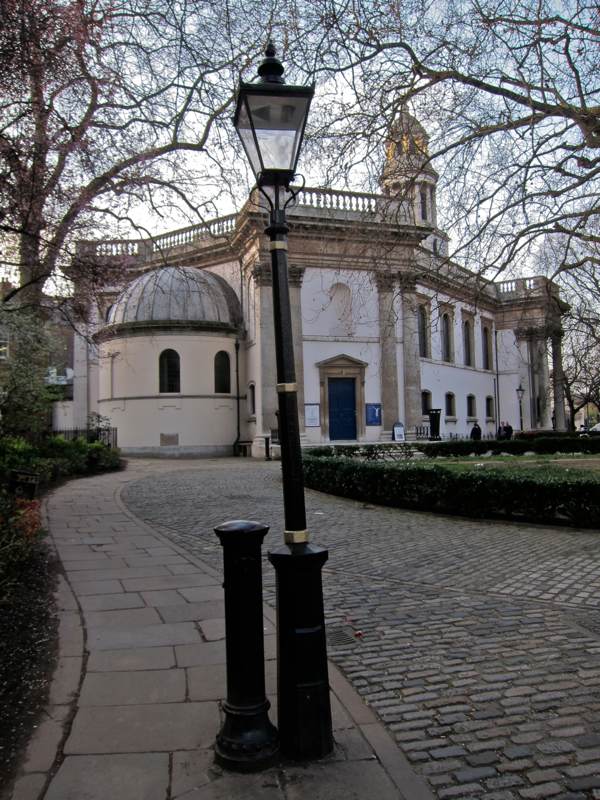
Marylebone Parish Church by Thomas Hardwick 1813

Inside Marylebone Parish Church
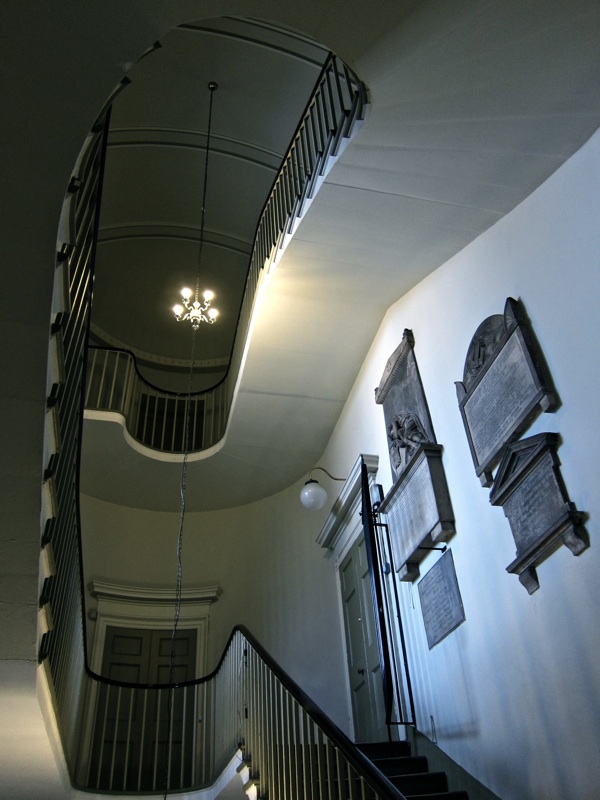
Staircase by Thomas Hardwick
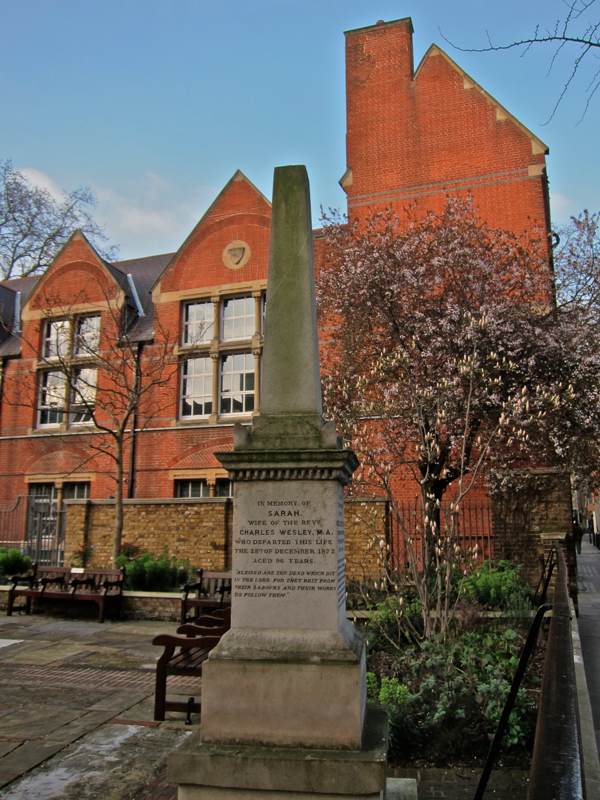
Memorial to Charles & Sarah Wesley in Marylebone High St

James Taylor & Sons Ltd, shoes made since 1857
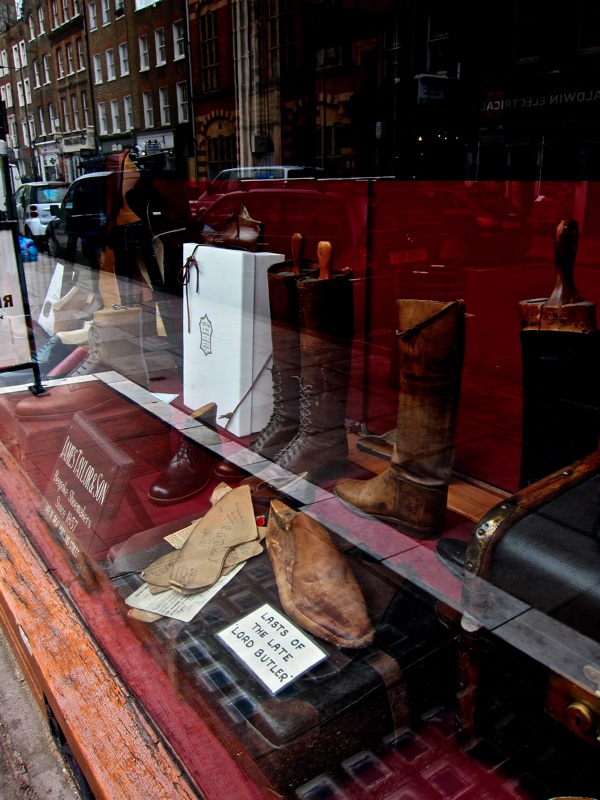
The late Lord Butler’s lasts
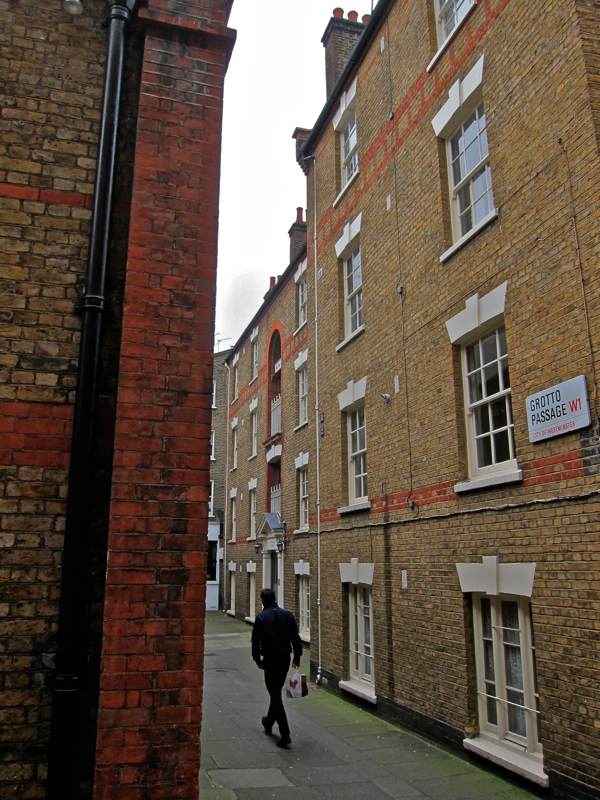
Industrial dwellings in Grotto Passage
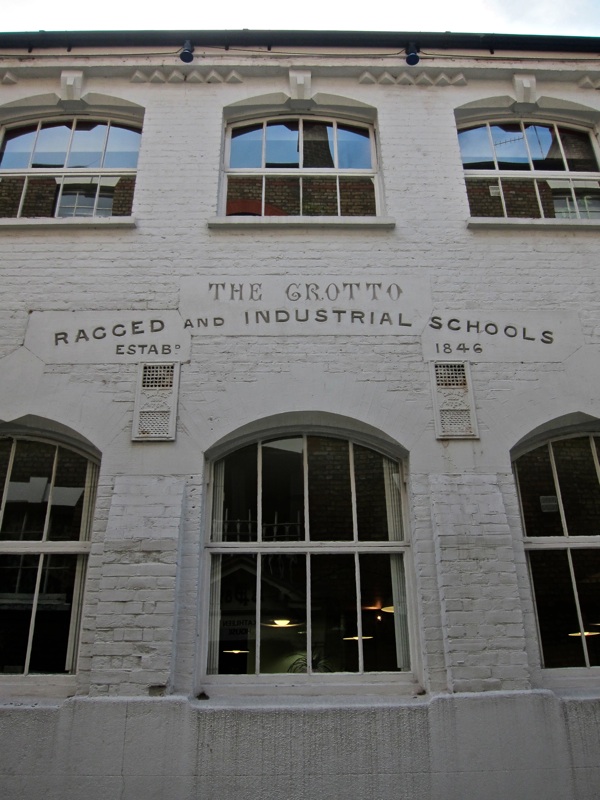
The Grotto Ragged & Industrial School, Established 1846
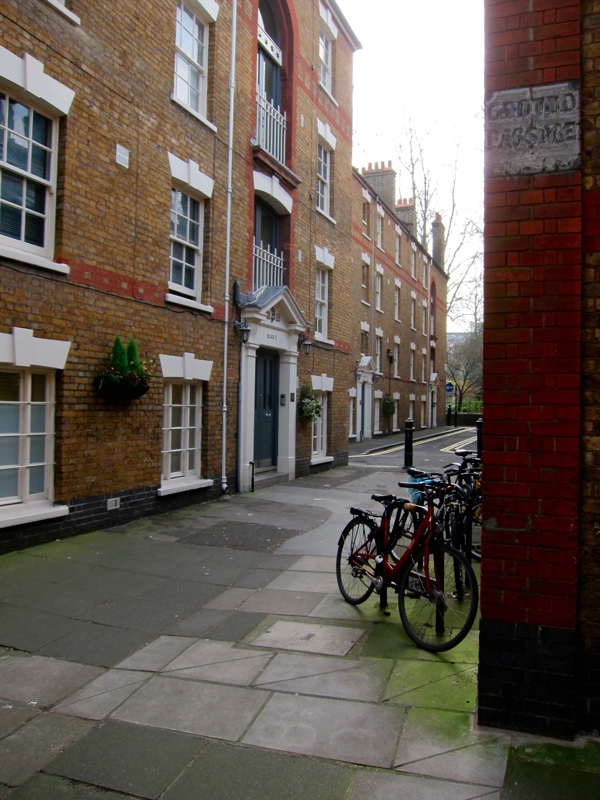
Looking through Grotto Passage towards Paddington St Gardens
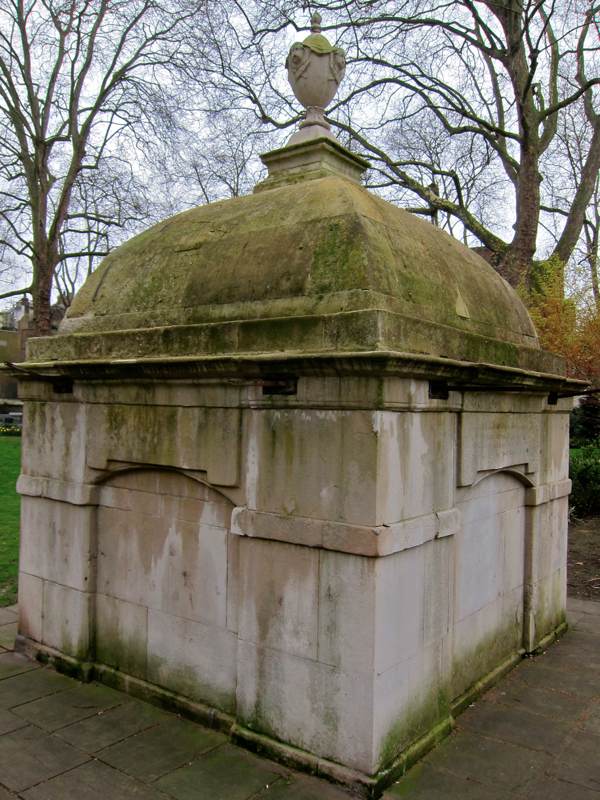
Old mausoleum in Paddington St Gardens
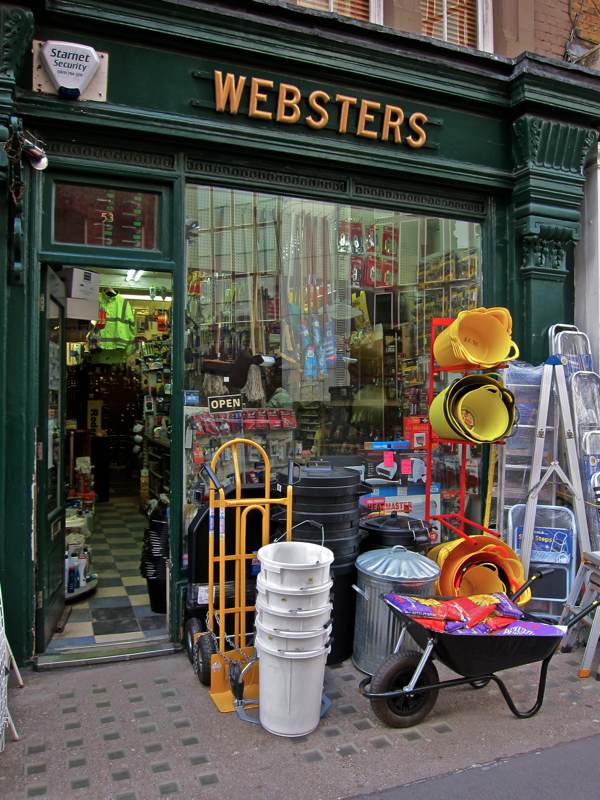
Websters of Chiltern St since 1870
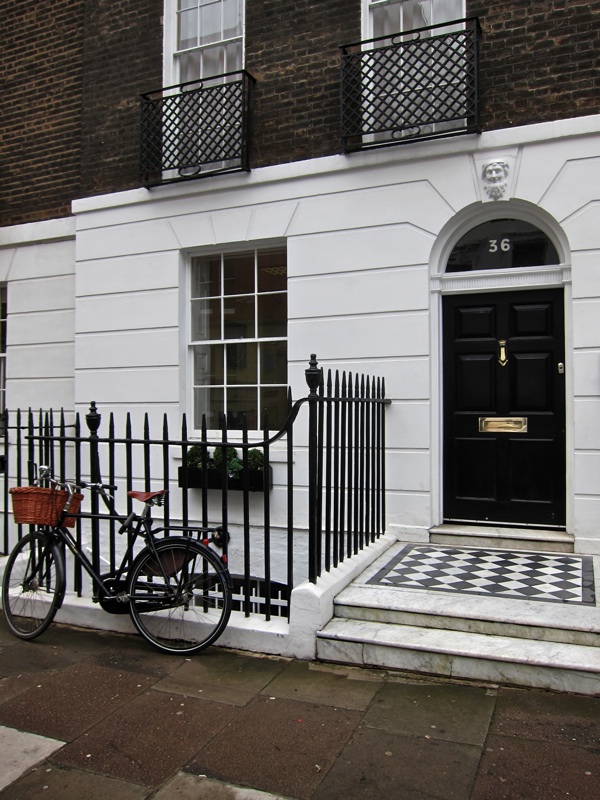
In Manchester St
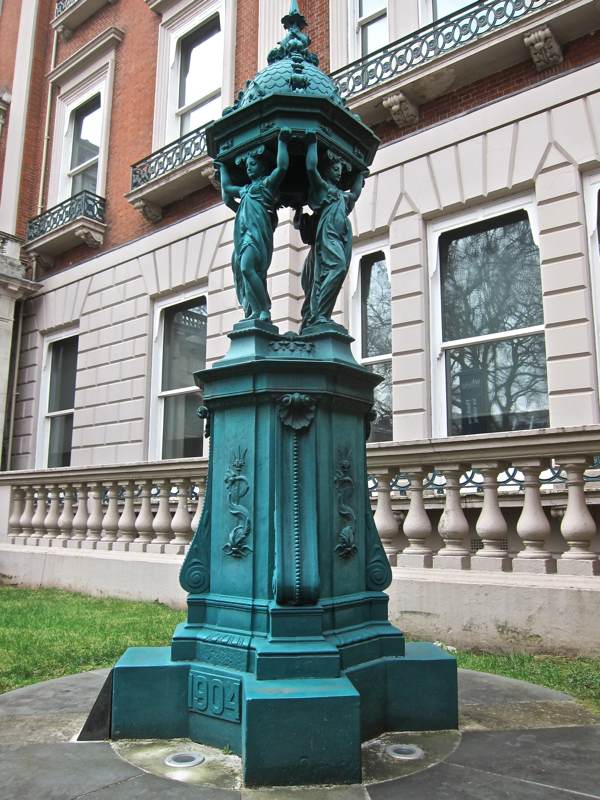
Drinking fountain from Shoreditch now in the grounds of The Wallace
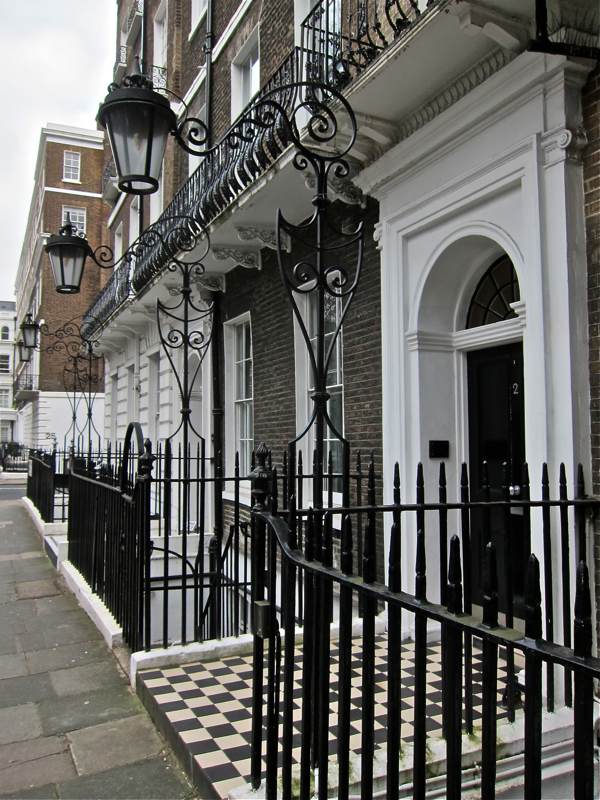
Decorative lamps in Manchester Sq
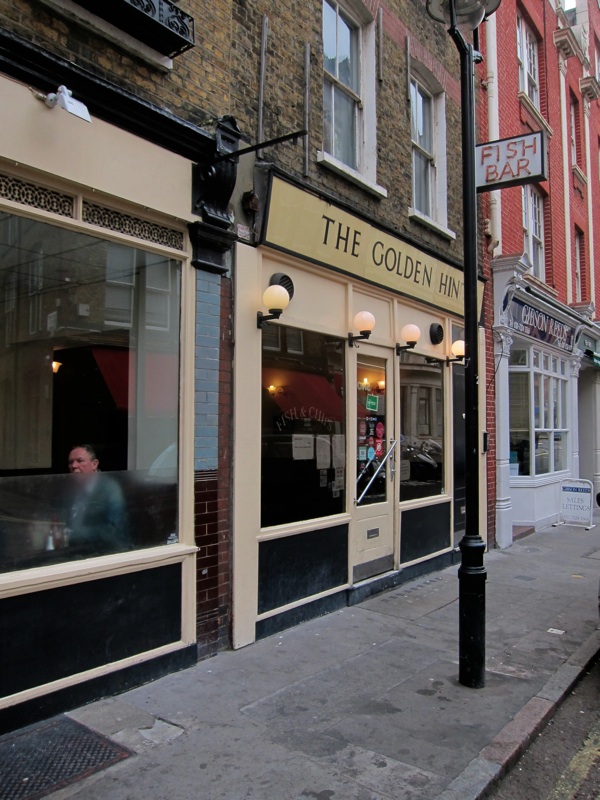
The Golden Hind Fish Bar of 1914 in Marylebone Lane
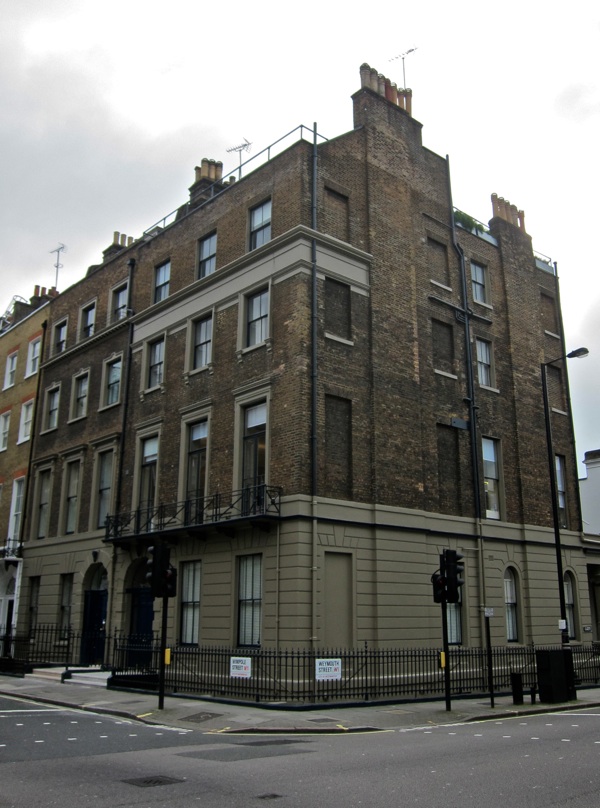
44 Wimpole St
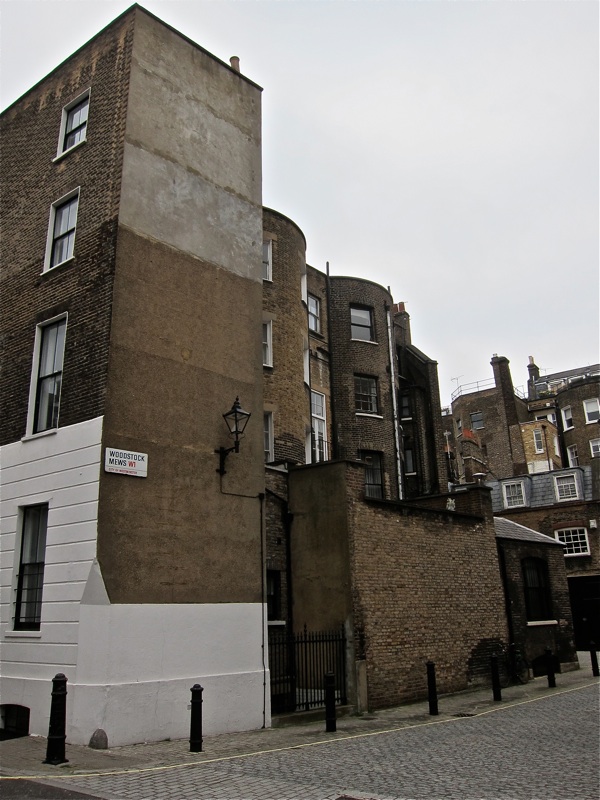
“cobbled mews in which you can wander, as if behind the scenes at the theatre”
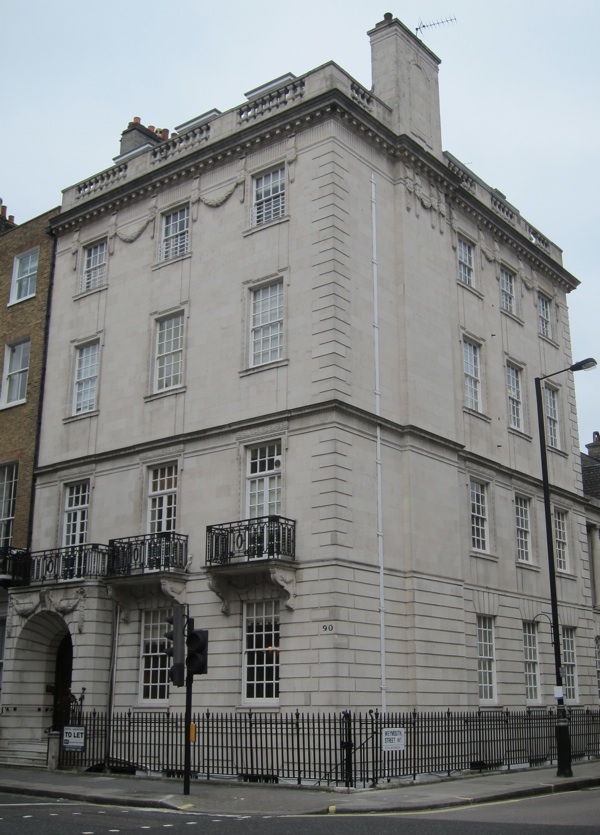
90 Harley St, London’s oldest dental practice established 1924

“the mish-mash of accreted structures concealed by those impermeable facades”

Daunt Books, Marylebone High St
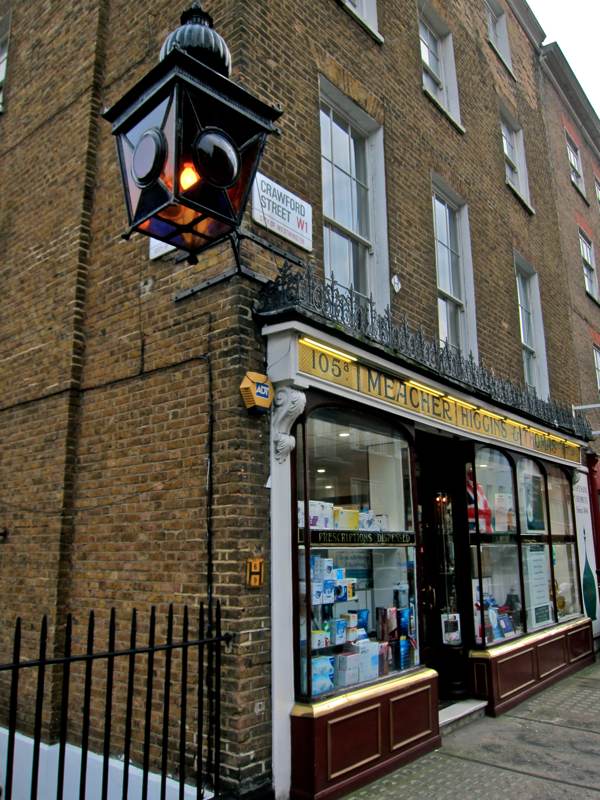
Meacher, Higgins & Thomas, chemist since 1814 – Purveyors of photographic chemicals
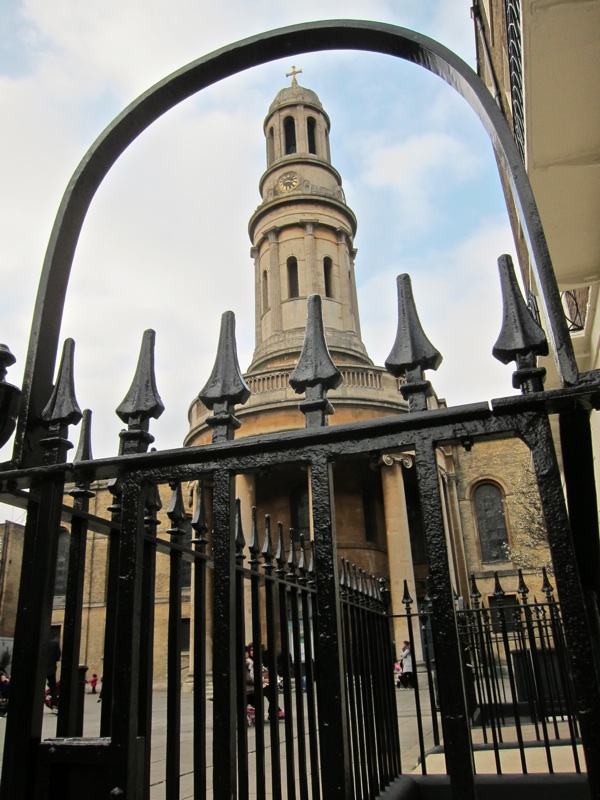
St Mary’s, Bryanston Sq, by Robert Smirke
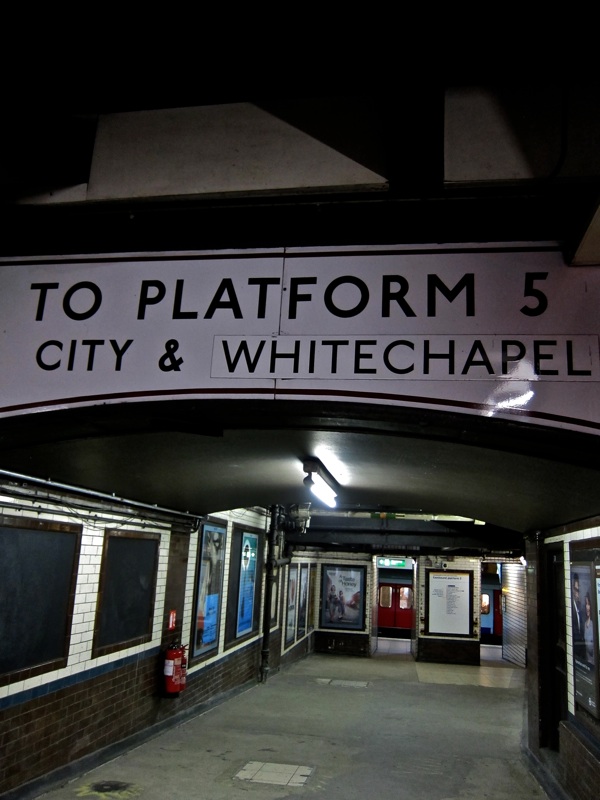
At Baker St, the return to Whitechapel
You may also like to take a look at
The Dogs Of Old London
Click to enlarge
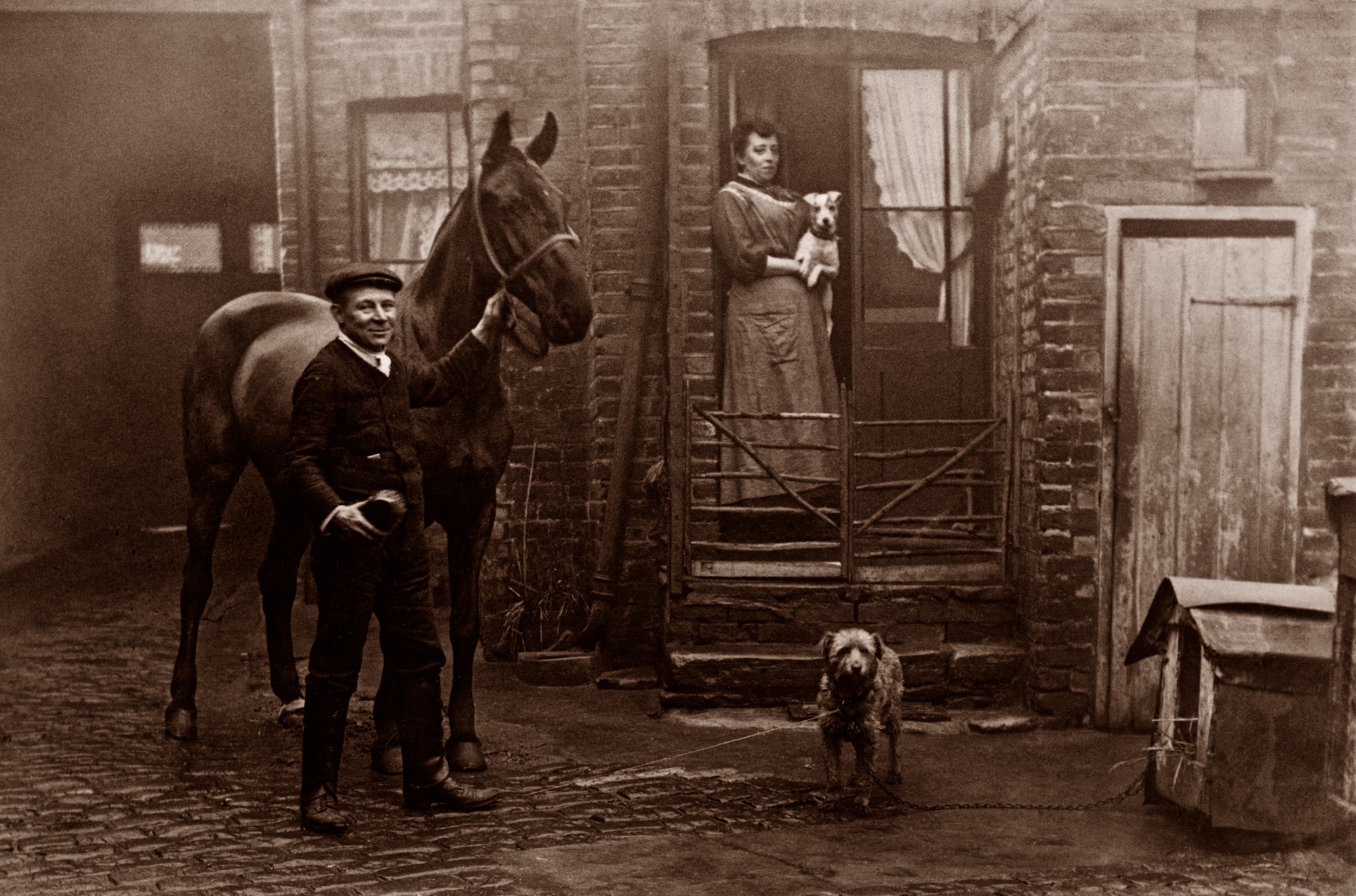
Sometimes in London, I think I hear a lone dog barking in the distance and I wonder if it is an echo from another street or a yard. Sometimes in London, I wake late in the night and hear a dog calling out to me on the wind, in the dark silent city of my dreaming. What is this yelp I believe I hear in London, dis-embodied and far away? Is it the sound of the dogs of old London – the guard dogs, the lap dogs, the stray dogs, the police dogs, the performing dogs, the dogs of the blind, the dogs of the ratcatchers, the dogs of the watermen, the cadaver dogs, the mutts, the mongrels, the curs, the hounds and the puppies?
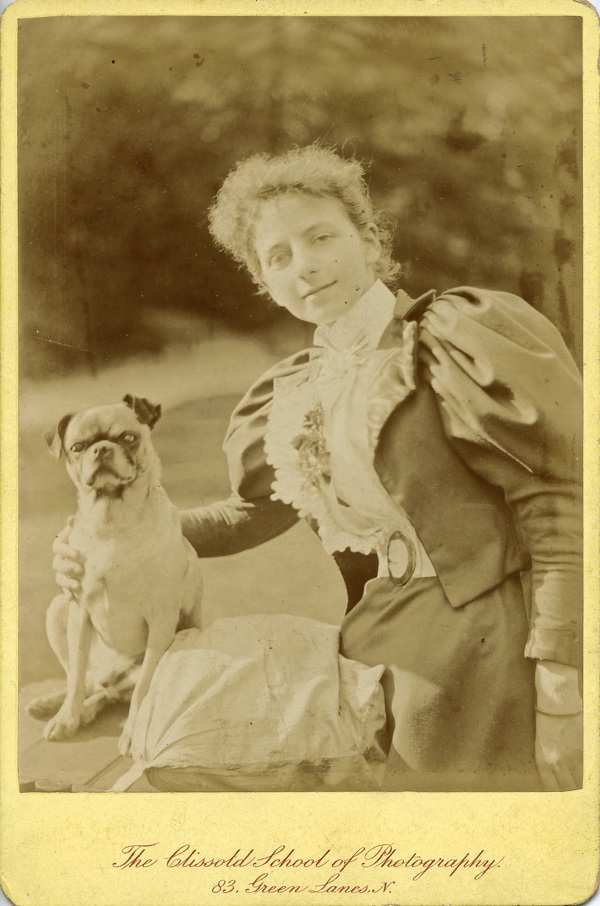
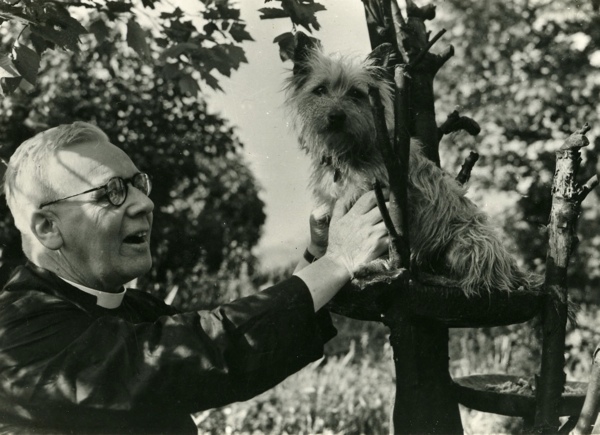
Libby Hall, who has gathered possibly the largest collection of dog photography ever made by any single individual, helped me select the dogs of old London from her personal archive. We pulled out those from London photographic studios and those labelled as London. Then, Libby also picked out those that she believes are London. And here you see the photographs we chose. How eager and yet how soulful are these metropolitan dogs of yesteryear. They were not camera shy.
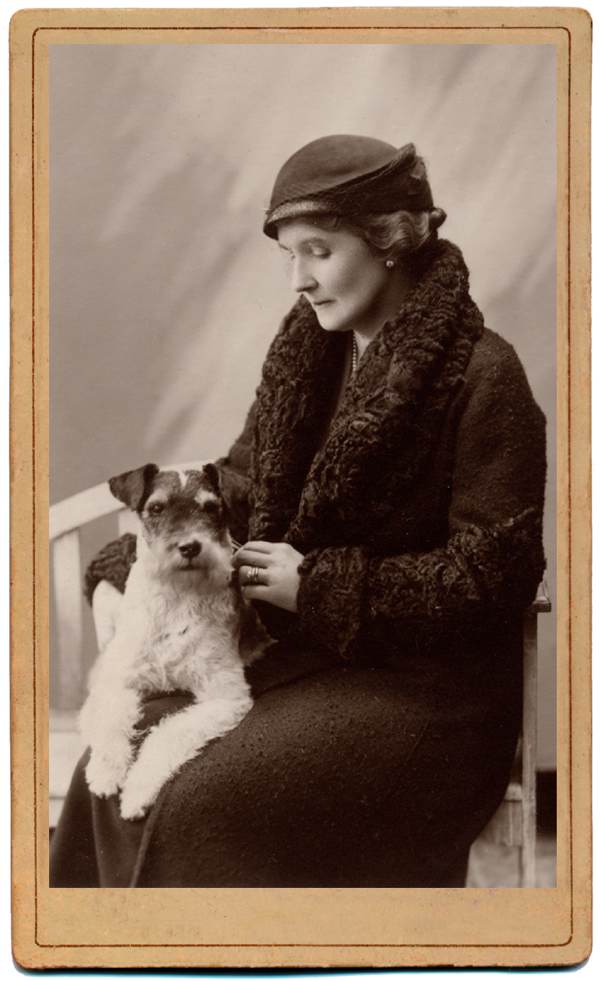
The complete social range is present in this selection, from the dogs of the workplace to the dogs of the boudoir, although inevitably the majority are those whose owners had the disposable income for studio portraits. These pictures reveal that while human fashions change according to the era and the class, dogs exist in an eternal universal present. Even if they are the dogs of old London and even if in our own age we pay more attention to breeds, any of these dogs could have been photographed yesterday. And the quality of emotion these creatures drew from their owners is such that the people in the pictures are brought closer to us. They might otherwise withhold their feelings or retreat behind studio poses but, because of their relationships with their dogs, we can can recognise our common humanity more readily.
These pictures were once cherished by the owners after their dogs had died but now all the owners have died too, long ago. For the most part, we do not know the names of the subjects, either canine or human. All we are left with are these poignant records of tender emotion, intimate lost moments in the history of our city.
The dogs of old London no longer cock their legs at the trees, lamps and street corners of our ancient capital, no longer pull their owners along the pavement, no longer stretch out in front of the fire, no longer keep the neighbours awake barking all night, no longer doze in the sun, no longer sit up and beg, no longer bury bones, no longer fetch sticks, no longer gobble their dinners, no longer piss in the clean laundry, no longer play dead or jump for a treats. The dogs of old London are silent now.
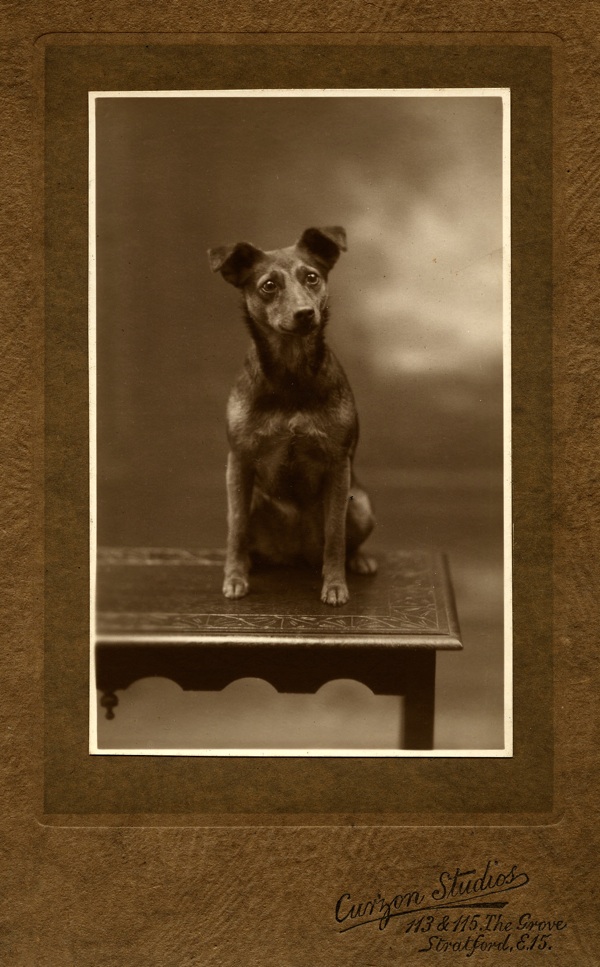


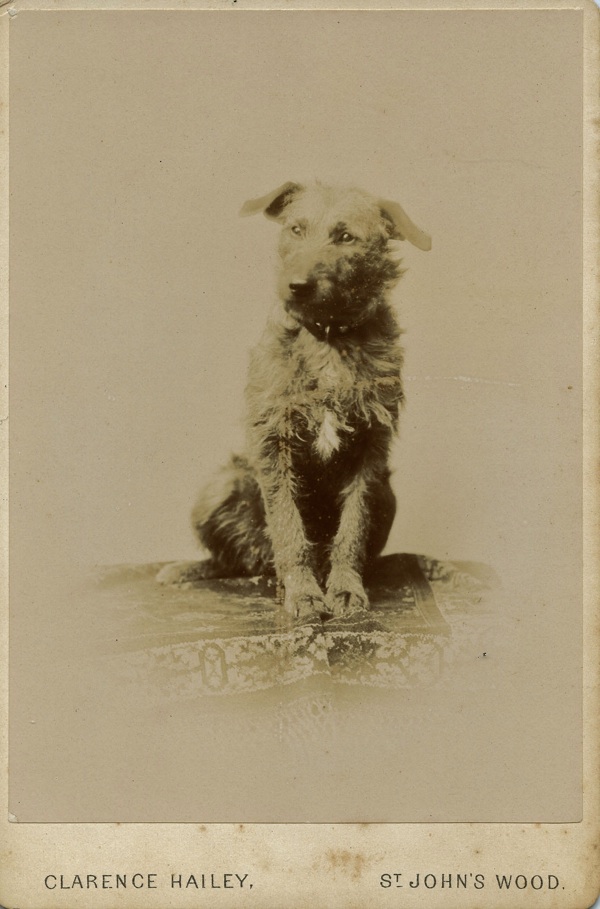
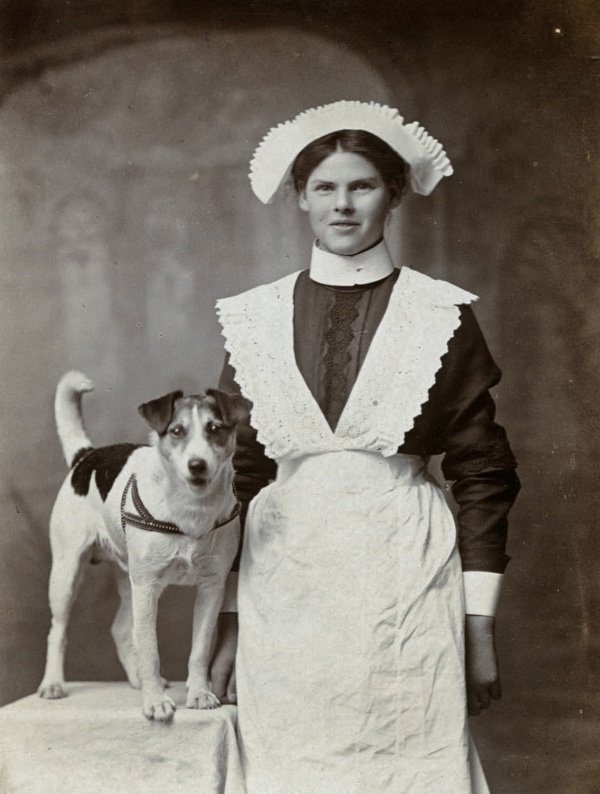
Arthur Lee, Muswell Hill, inscribed “To Ruby with love from Crystal.”
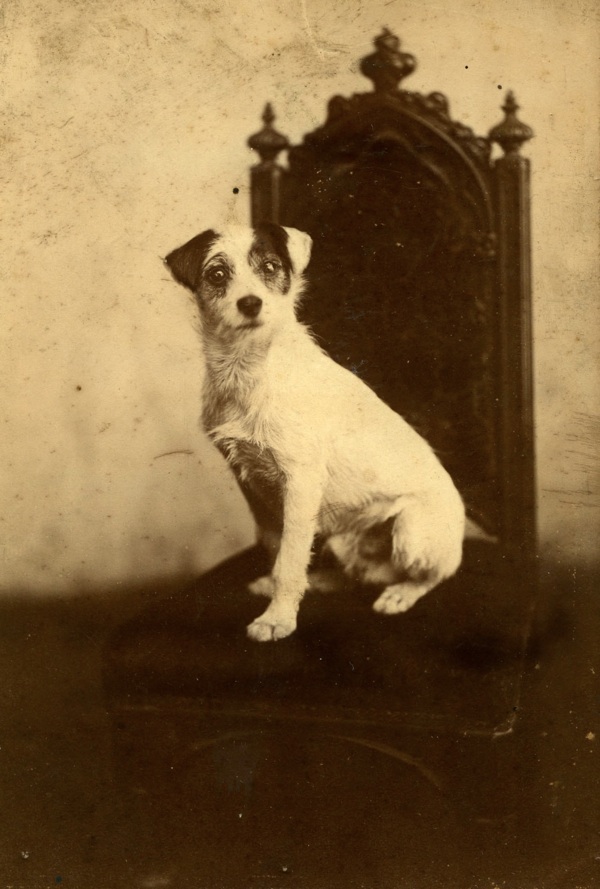
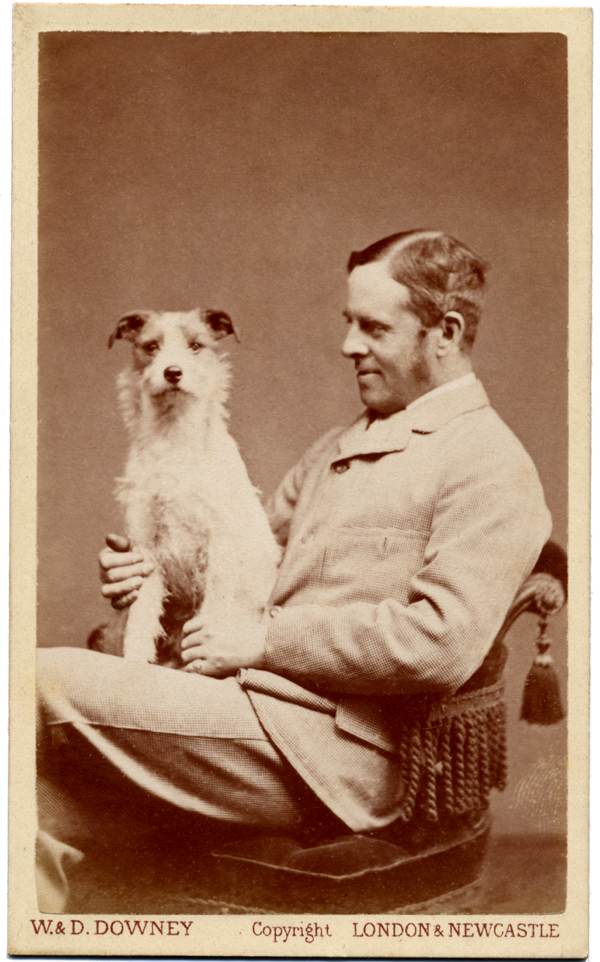

Ellen Terry was renowned for her love of dogs as much as for her acting.
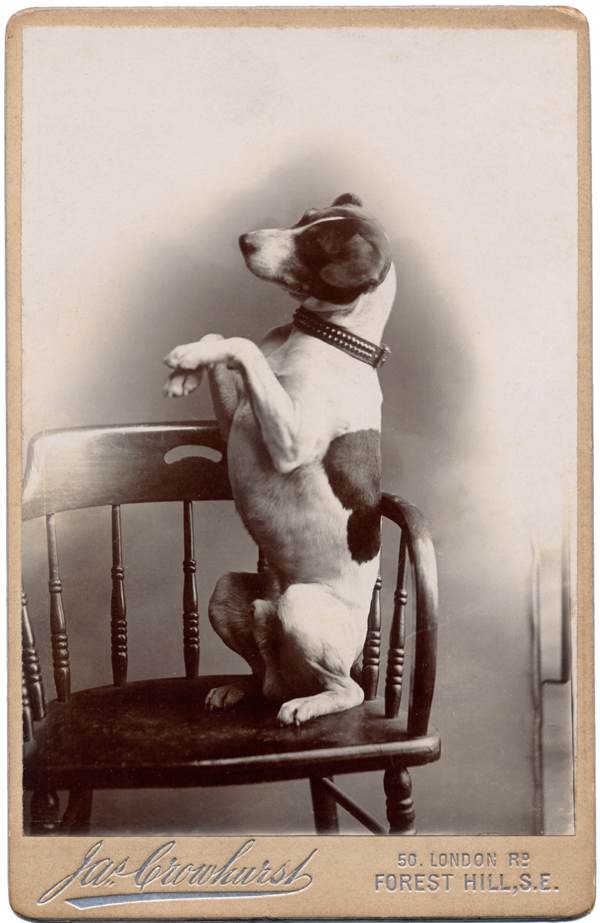




W.Pearce, 422 Lewisham High St.
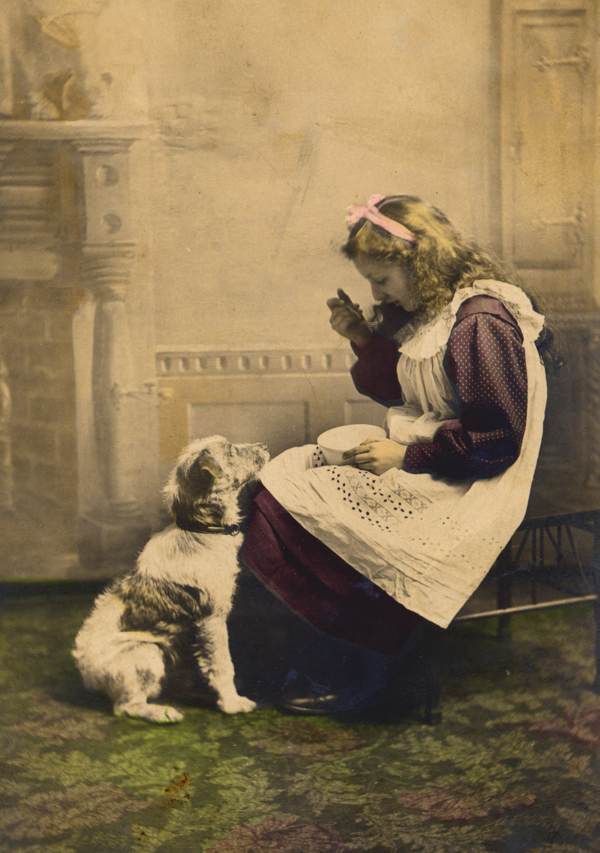
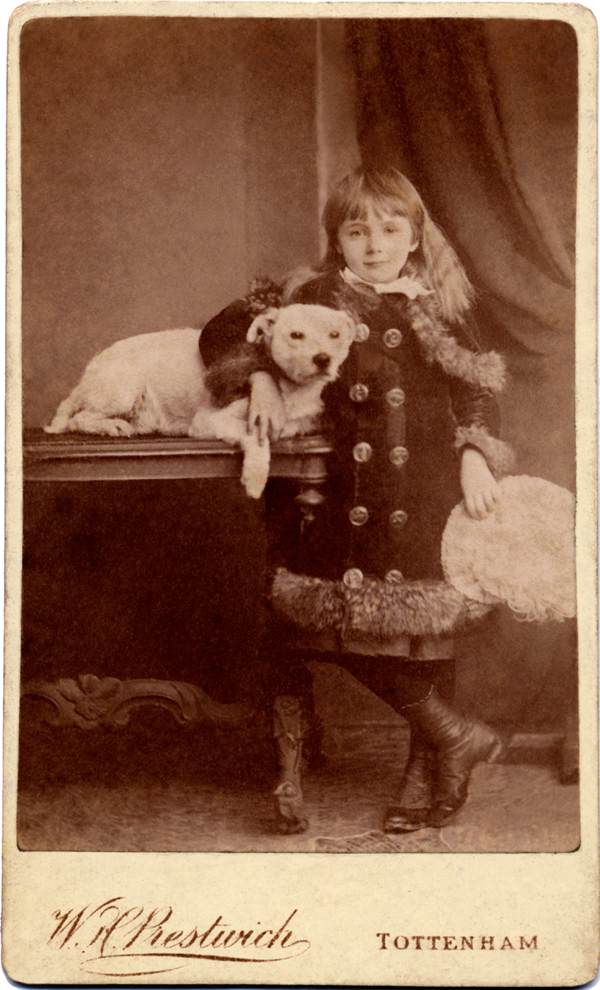
This girl and her dog were photographed many times for cards and are believed to be the photographer’s daughter and her pet.
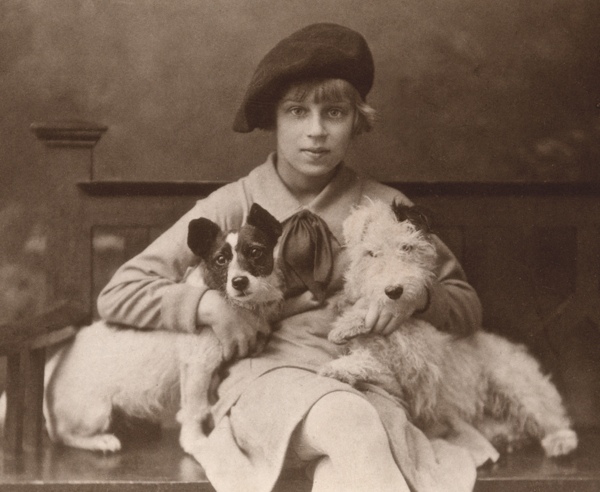
Emberson – Wimbledon, Surbiton & Tooting.


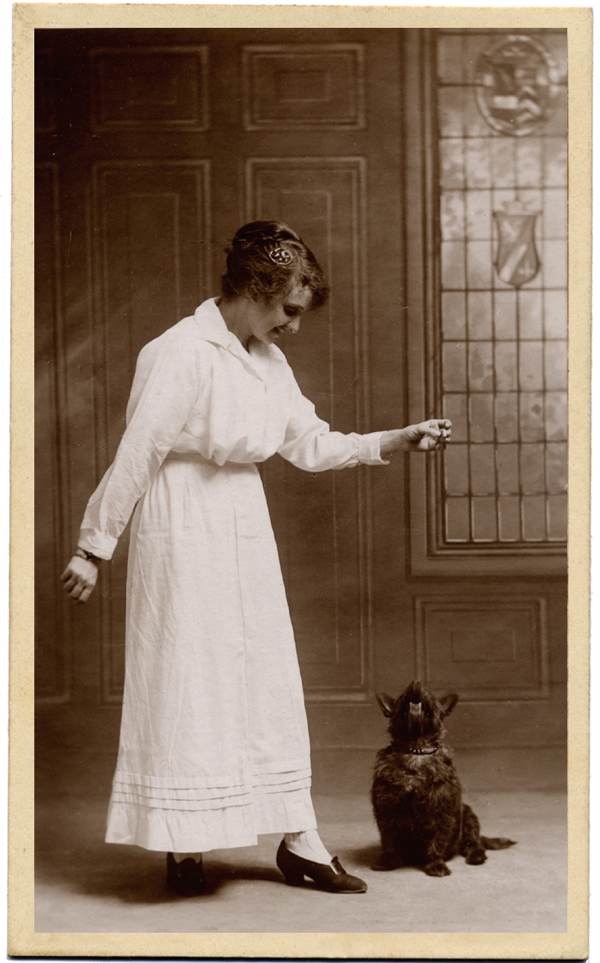
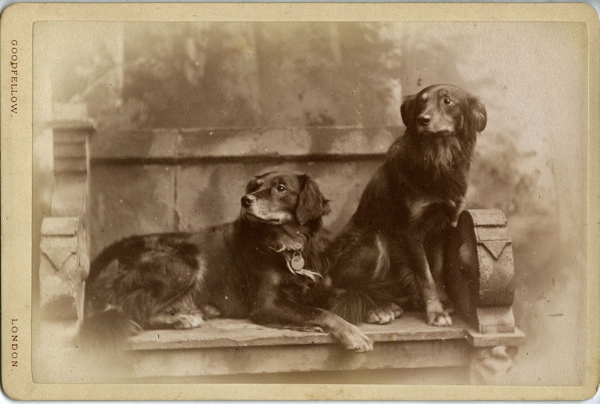

Edward VII’s dog Caesar that followed the funeral procession and became a national hero.



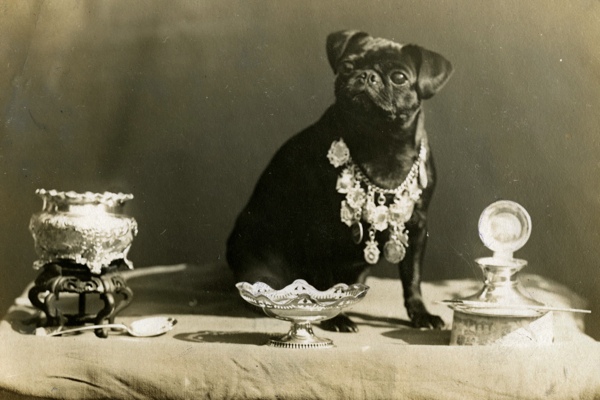
A prizewinner, surrounded by trophies and dripping with awards.

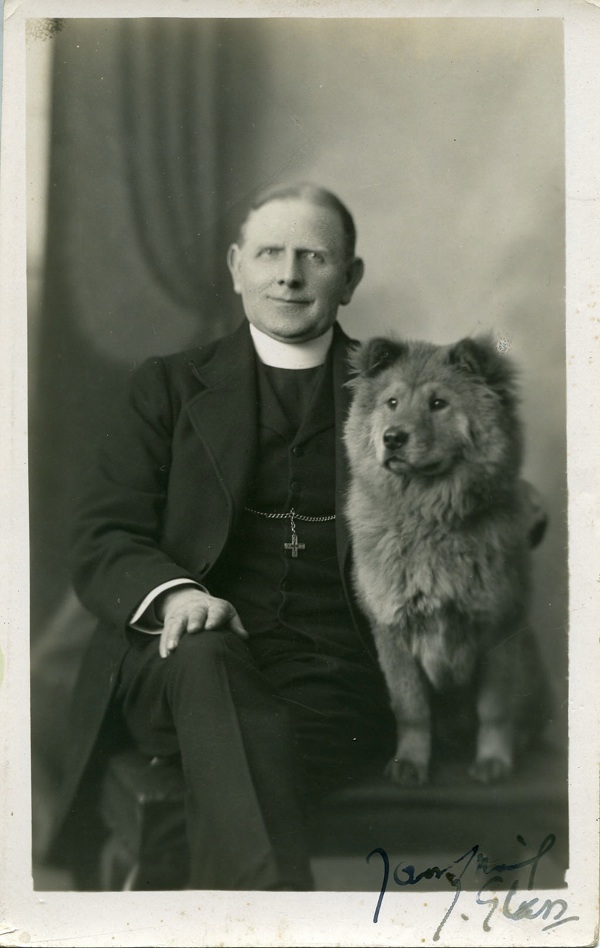
The Vicar of Leyton and his dog.


The first dog to be buried here was run over outside the gatekeeper’s lodge, setting a fashionable precedent, and within twenty-five years the gatekeeper’s garden was filled with over three hundred upper class pets.

Libby Hall, collector of dog photographs.
Photographs copyright © The Libby Hall Collection at the Bishopsgate Institute
You may like to read my original profile
Libby Hall, Collector of Dog Photography
Jonny Hannah’s Fast Cars & Ukeleles
Our friends at Mainstone Press in Mile End who are famous for their illustrated books of the works of Edward Bawden and Eric Ravilious have just published Jonny Hannah’s Fast Cars & Ukuleles. Every page of this eccentric alphabet book is full to bursting, crammed with visual detail and graphic delights celebrating the artist’s personal obsessions. Visit an exhibition of Jonny Hannah’s original artwork at Vout O Reenees in the crypt of the Catholic Martyrs’ Church at 30 Prescott St, E1 until mid-January.
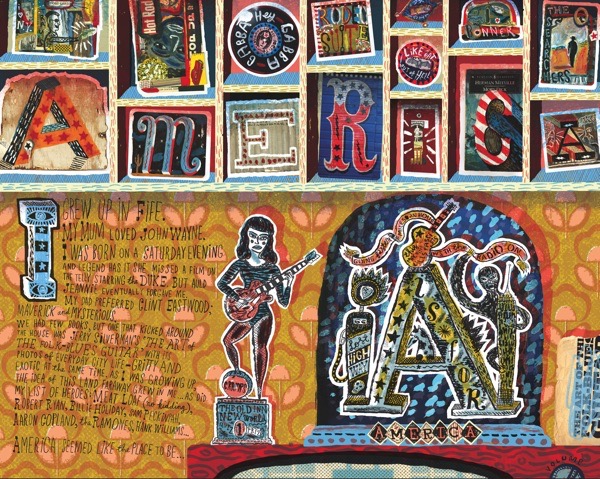
A for America
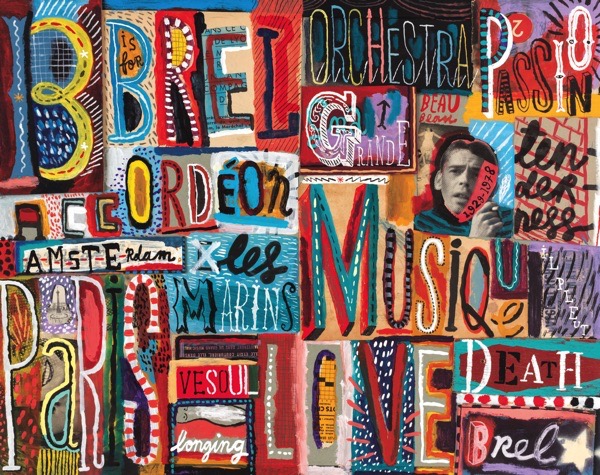
B for Brel
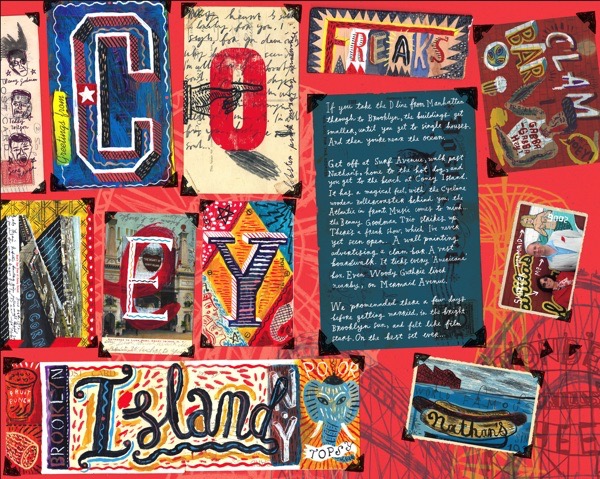
C for Coney Island
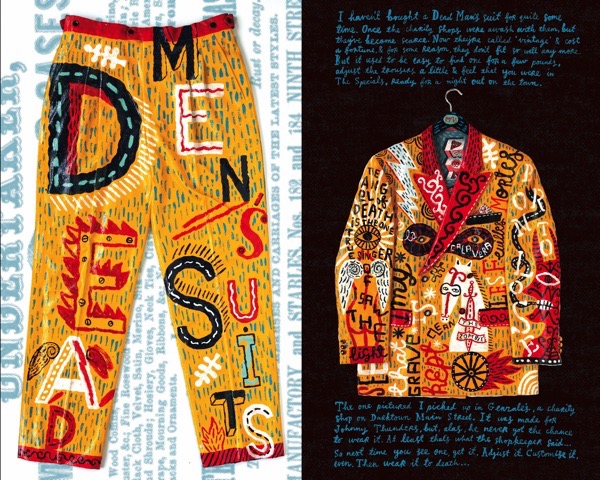
D for Dead Man’s Suit
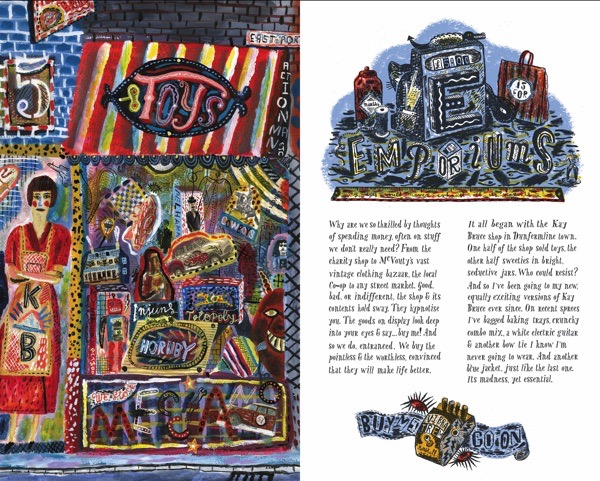
E for Emporiums
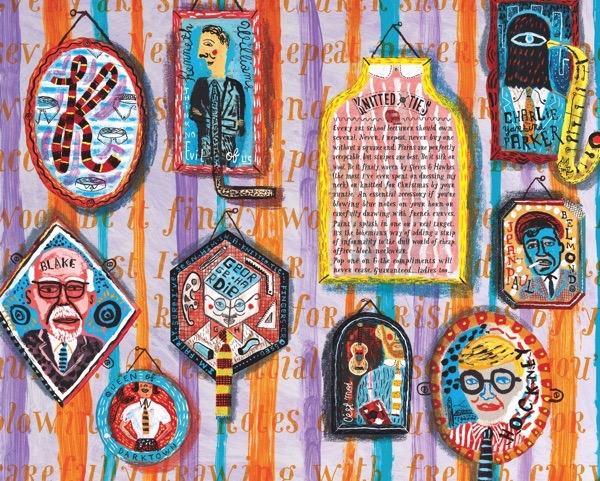
K for Knitted Ties
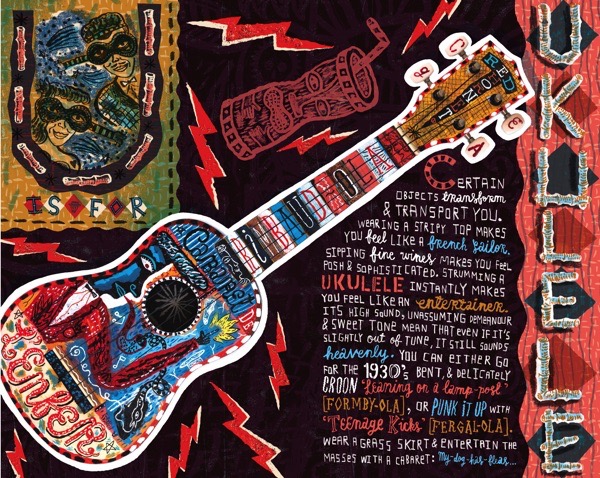
U for Ukelele
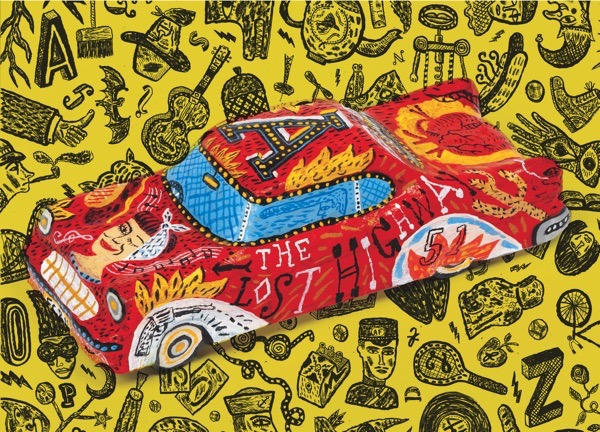
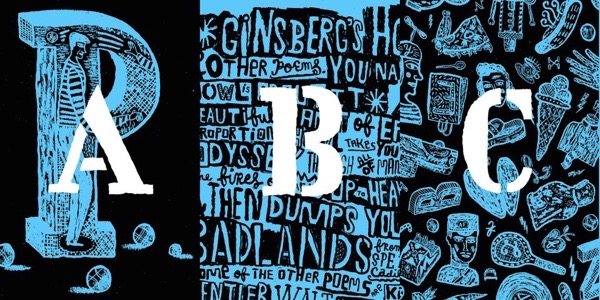
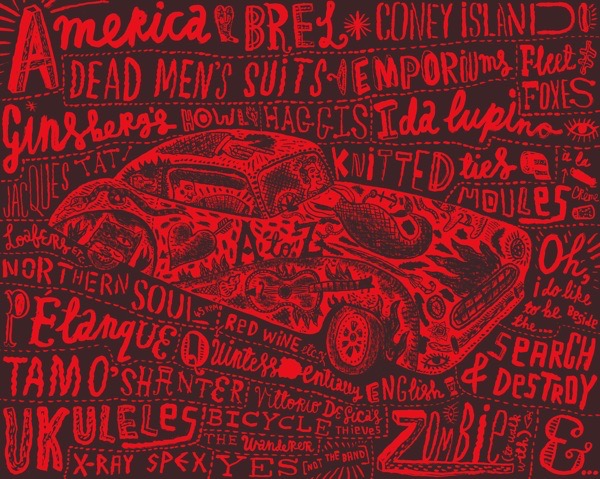
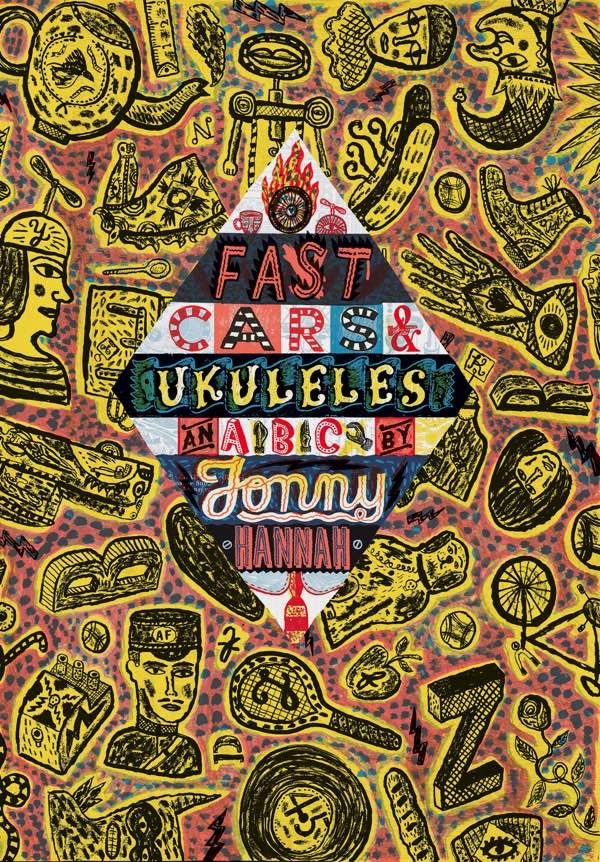
Click here to order a copy of Jonny Hannah’s Fast Cars & Ukeleles from Mainstone Press
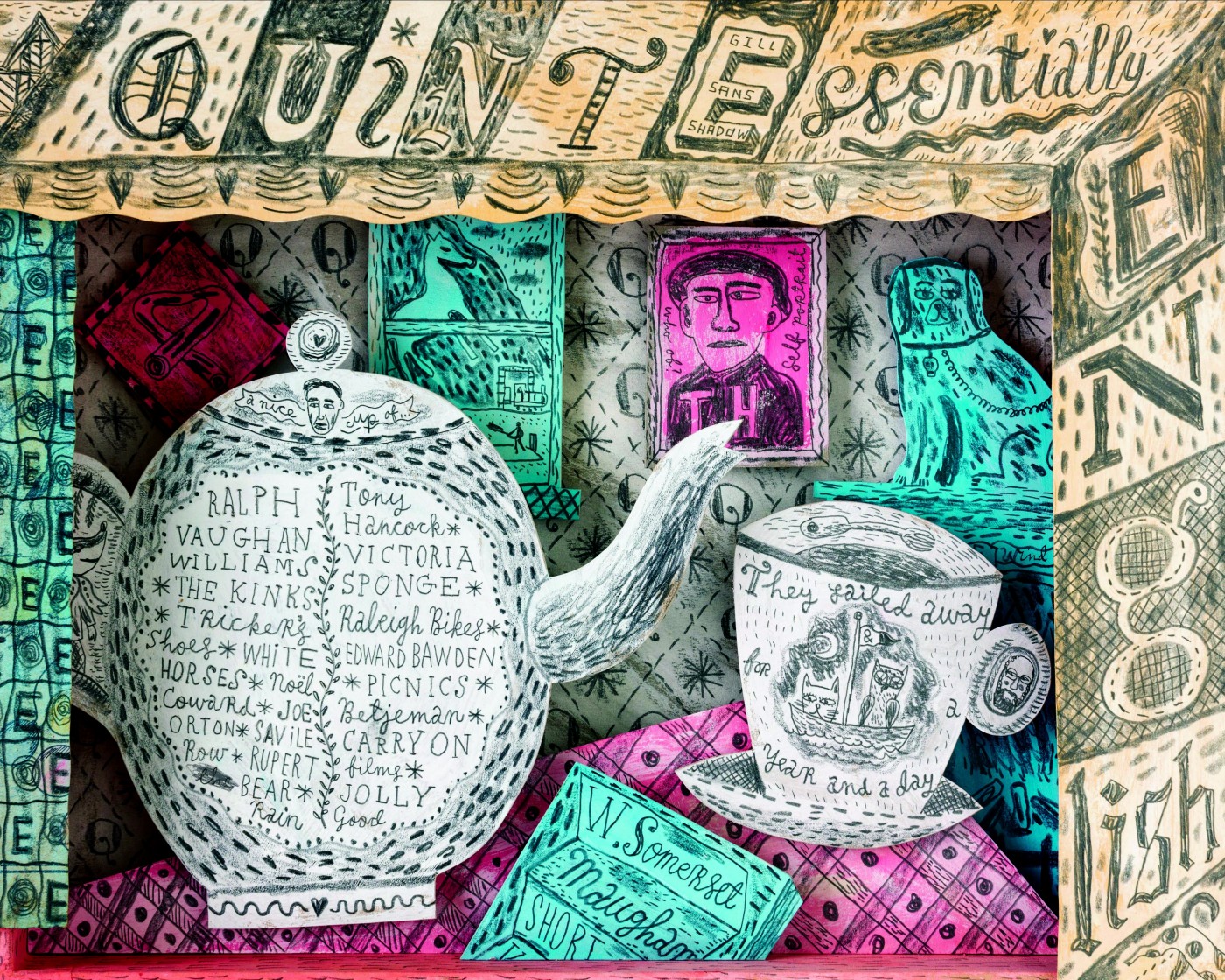
Q for Quintessentially English
Images copyright © Jonny Hannah
At Fishmongers’ Hall
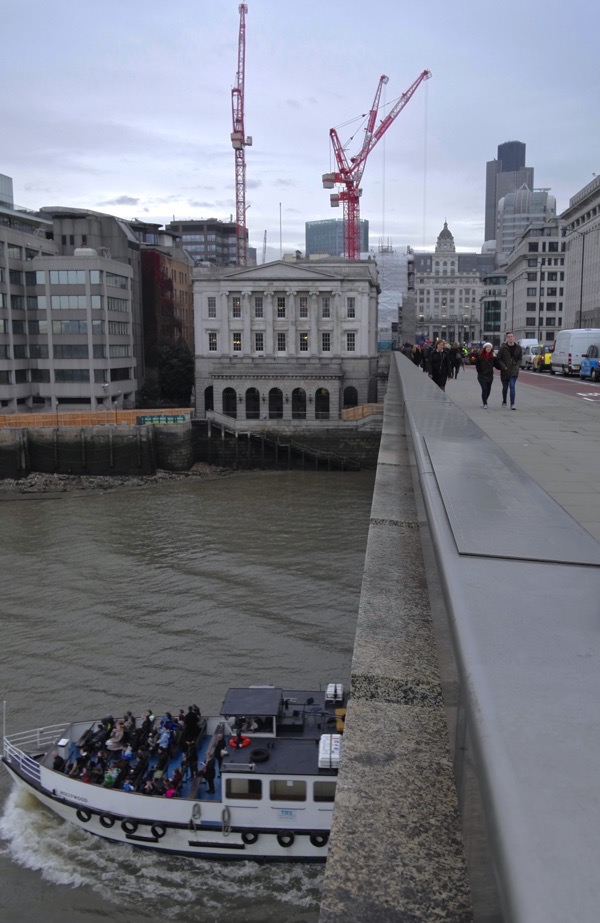
This palatial building of Portland stone tucked under the west side of the foot of London Bridge is Fishmongers’ Hall. Many a time I have passed by on an errand to the Borough to buy fresh fish and cast my eyes upon it. So – as one for whom the worship of fish is almost a religion – I was delighted to enter this temple to the wonders of the deep.
The Fishmongers’ Company were already long-established on this site when they received their first Royal Charter in 1272 from Edward I, the fish-loving king, and their earliest hall on this site was recorded in 1301. A monopoly on fish trading brought great wealth to the Company, and in the fourteenth century three fishmongers were successive Lord Mayors of London, John Lovekyn, Sir William Walworth and William Askham. Subsequently, they secured Fishmongers’ Wharf in 1444 and retained its sole usage for unloading their catch until 1666, prior to the development of Billingsgate Market which traded on the east side of London Bridge until 1982.
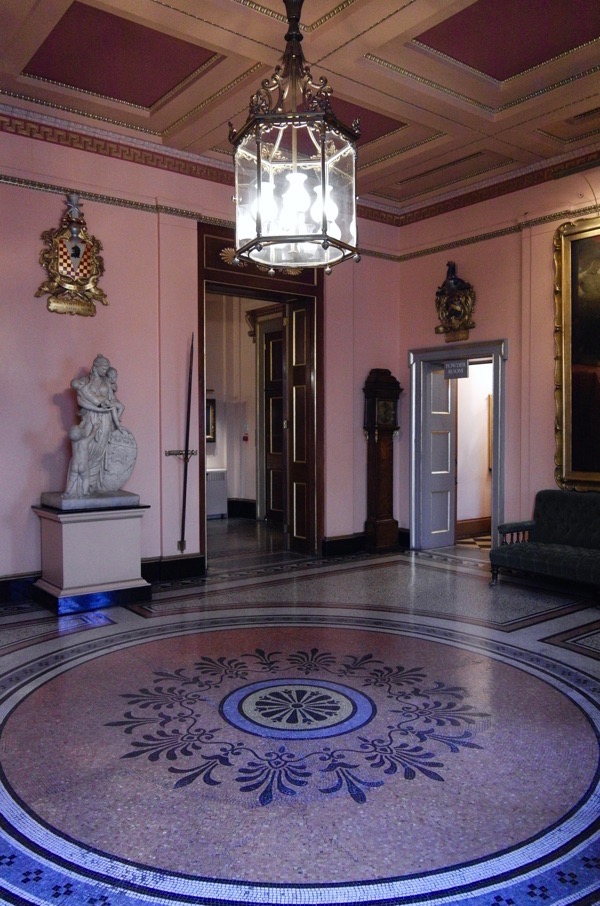
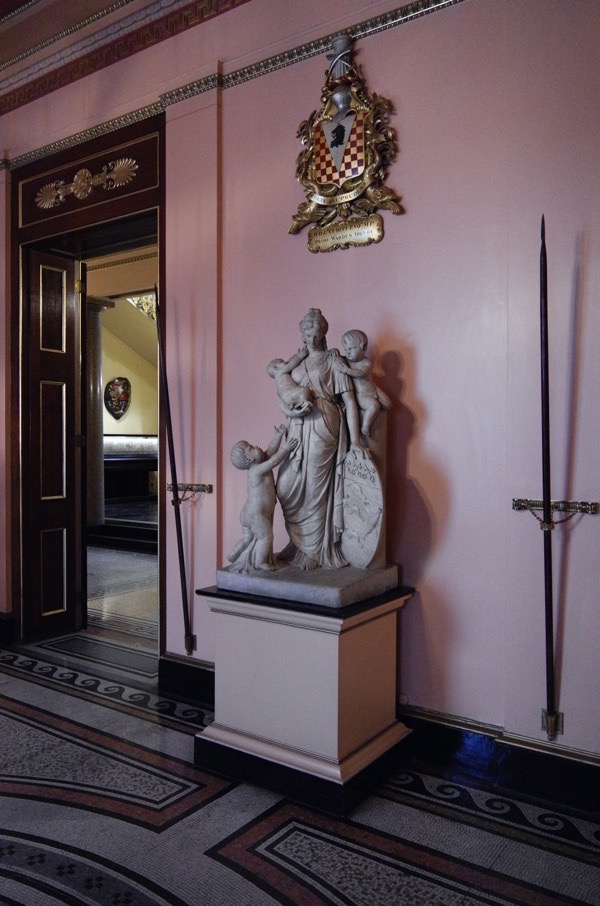
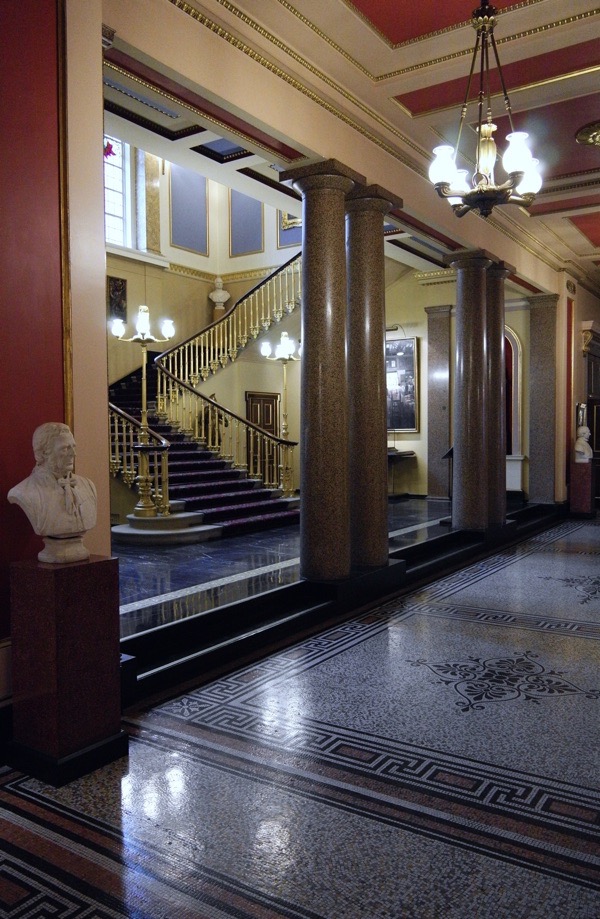
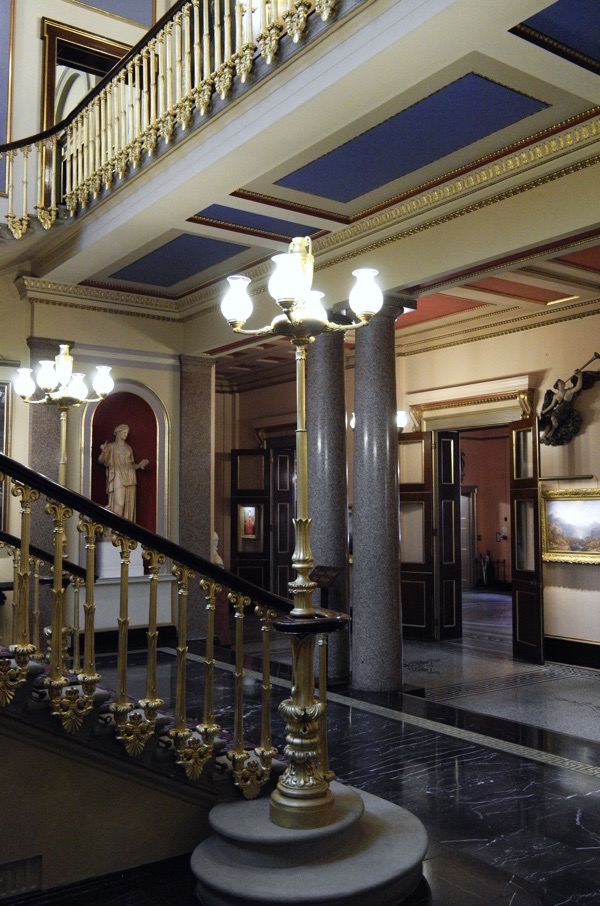
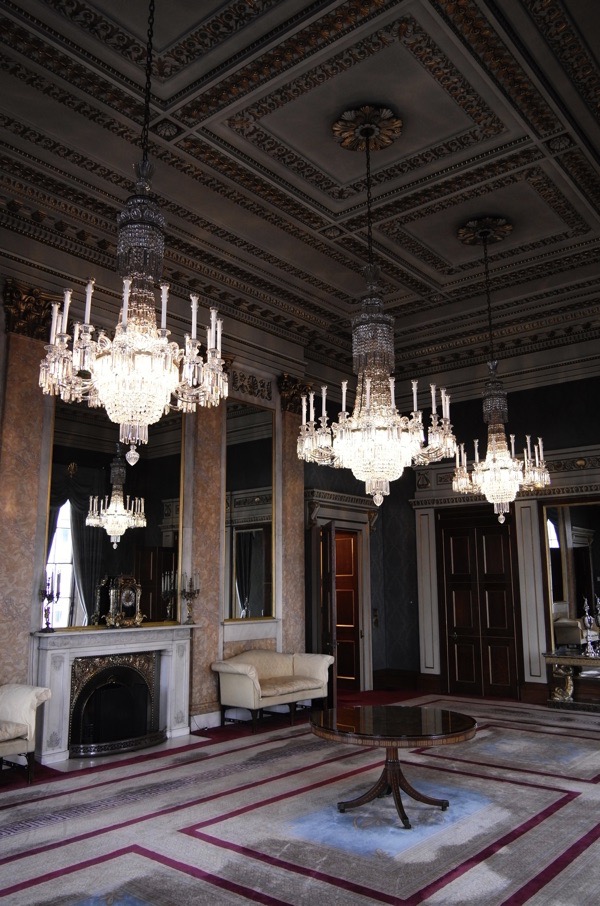
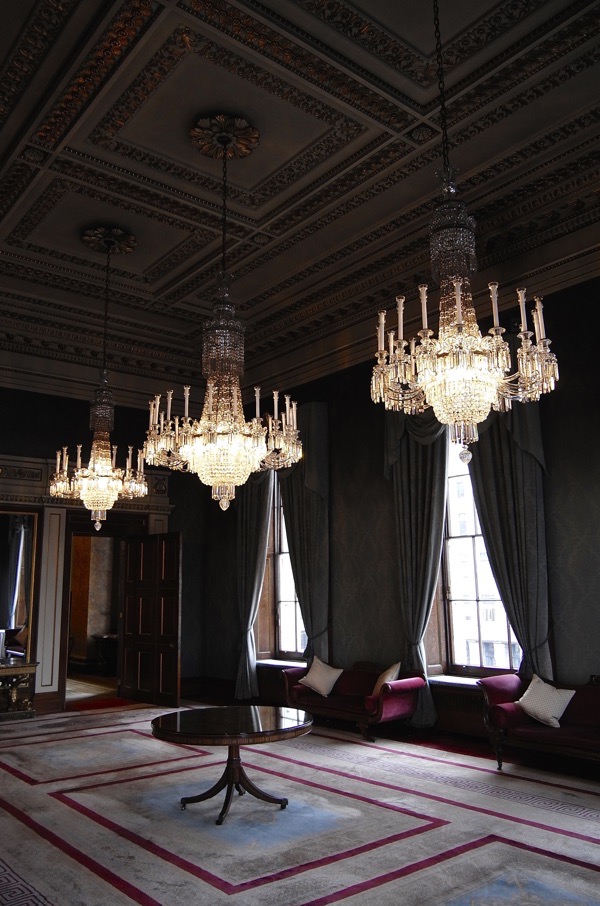
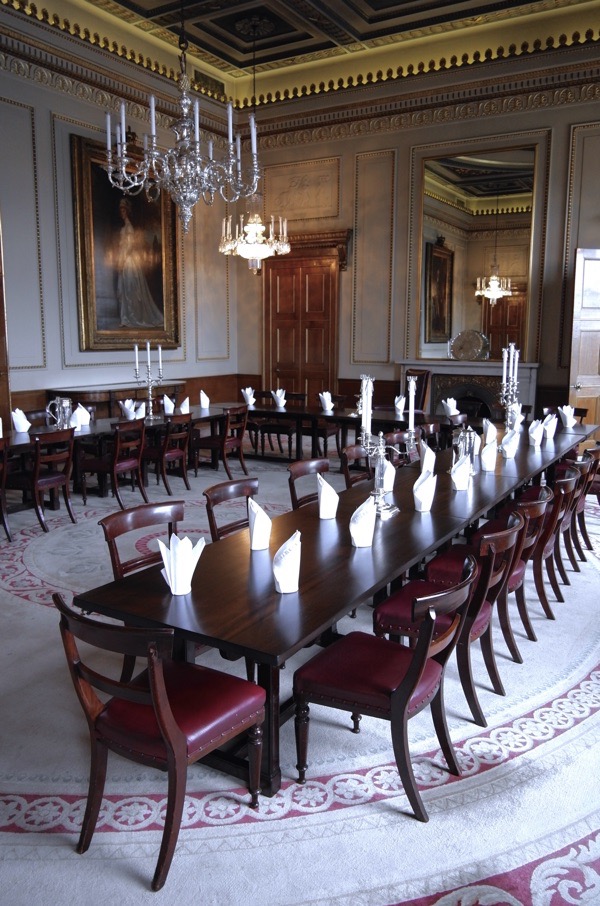
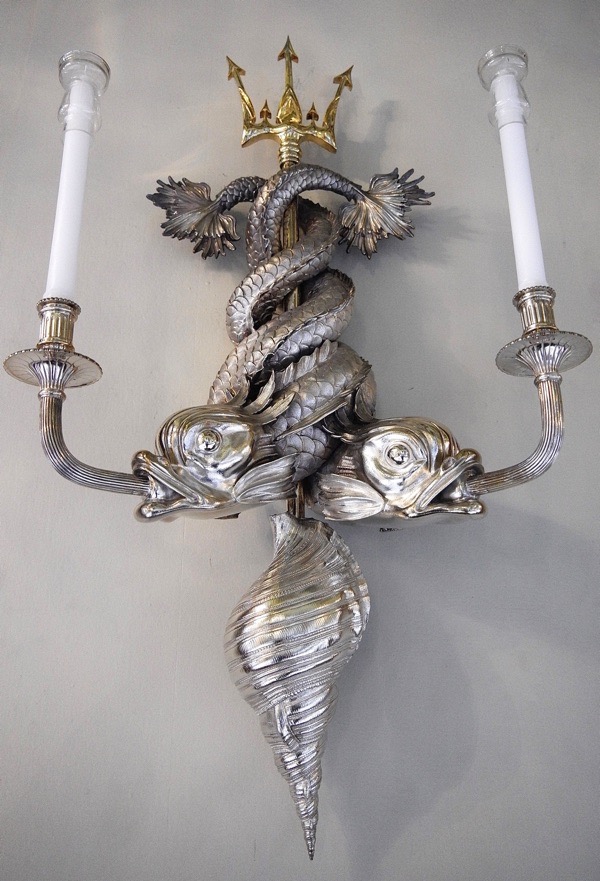
This most-recent Fishmongers Hall was constructed as part of the new London Bridge in the eighteen-thirties, designed by Henry Roberts but constructed from drawings by George Gilbert Scott. The tone is partly that of a stately home and partly that of a lofty public institution, yet salmon pink walls in the vestibule and mosaics gleaming like fish scales conjure an atmosphere unique to the Fishmongers’ Company, heightened by an astonishing collection of historic paintings, sculptures and artefacts which evoke all things fishy.
A lavishly embroidered funeral pall created by nuns around 1500, portraying Christ handing the keys of Heaven to St Peter the fisherman and embellished with mermen and mermaids, testifies to a former age of credulity, while a sturdy chair fabricated with timber from old London Bridge and with a seat containing a stone from the same source reminds us of the detail of history in this spot. The combination of architectural opulence and multiple fish references suggests that the Hall itself might be understood as a fishmonger’s distinctive vision of Heaven, where St Peter awaits the newly-departed at the head of a gilded staircase.
At every turn in this building, you are reminded of fish, the ocean and the ancient trade established more than seven centuries in this place, which fills your mind with thoughts of fishmongery and makes it startling to peer out from the prevailing silence in the Fishmongers’ Hall upon the clamour of the modern city with the Shard looming overhead.
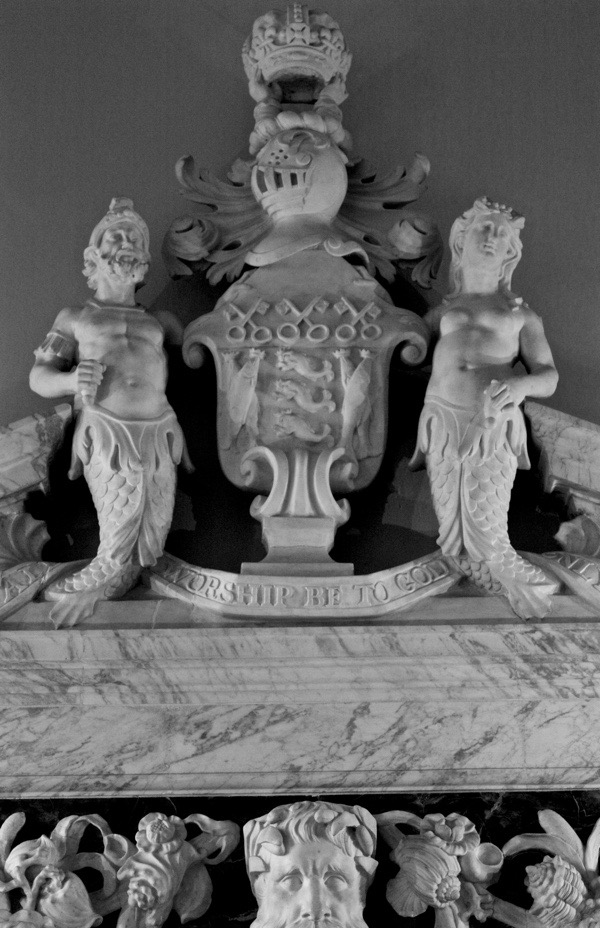
Crest of the Fishmongers’ Company
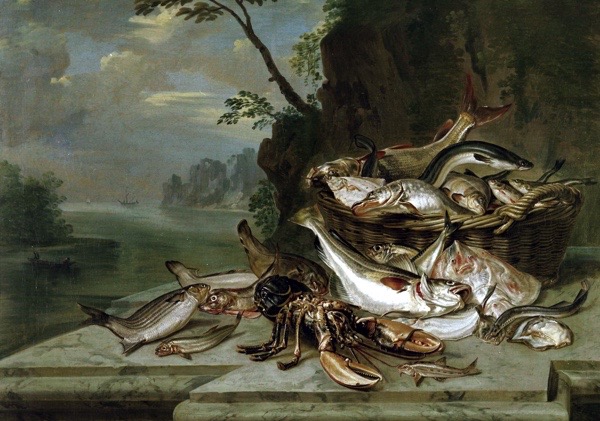
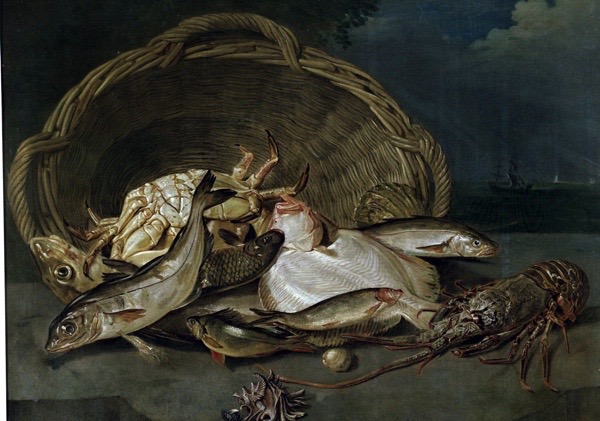
Wonders of the Deep, 1 by Arnold Von Hacken
Wonders of the Deep, 2 by Arnold Von Hacken
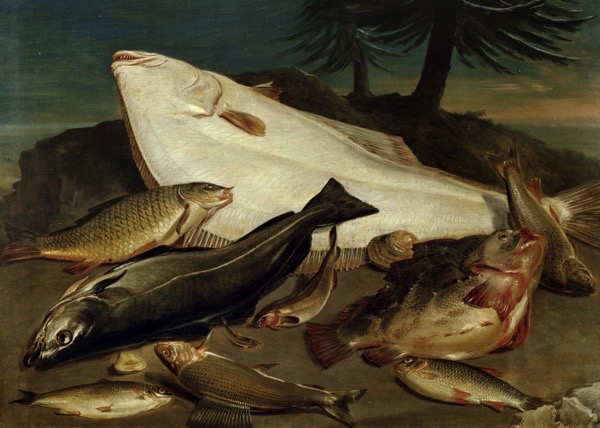
Wonders of the Deep, 3 by Arnold Von Hacken
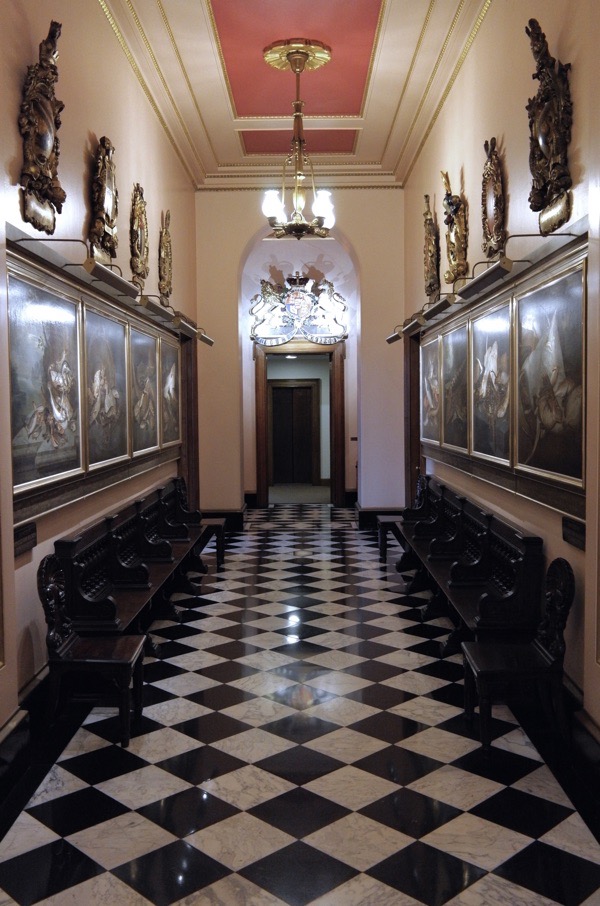
Arnold Von Hacken’s eight paintings of Wonders of the Deep
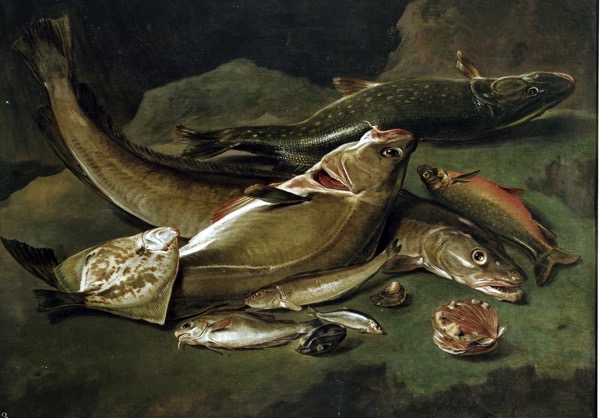
Wonders of the Deep, 4 by Arnold Von Hacken
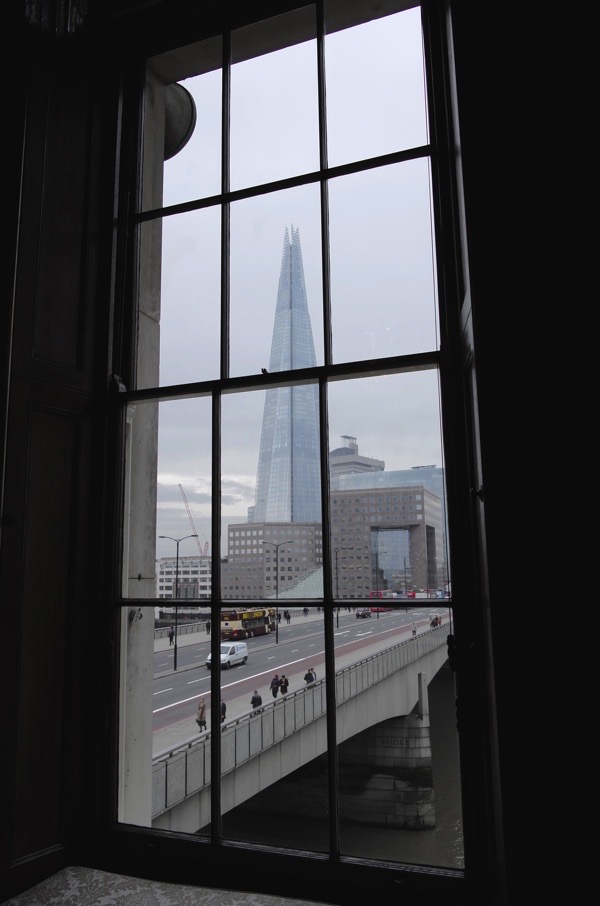
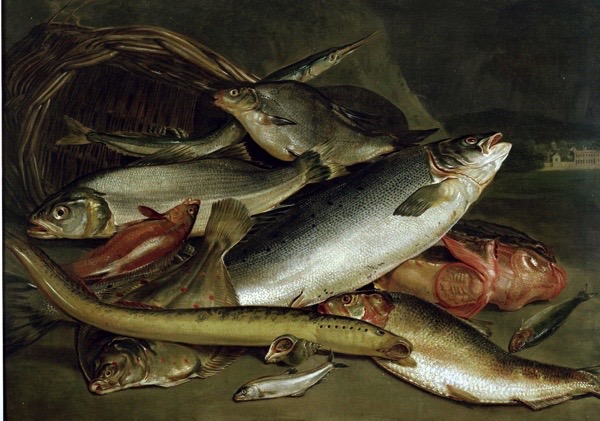
Wonders of the Deep, 5 by Arnold Von Hacken
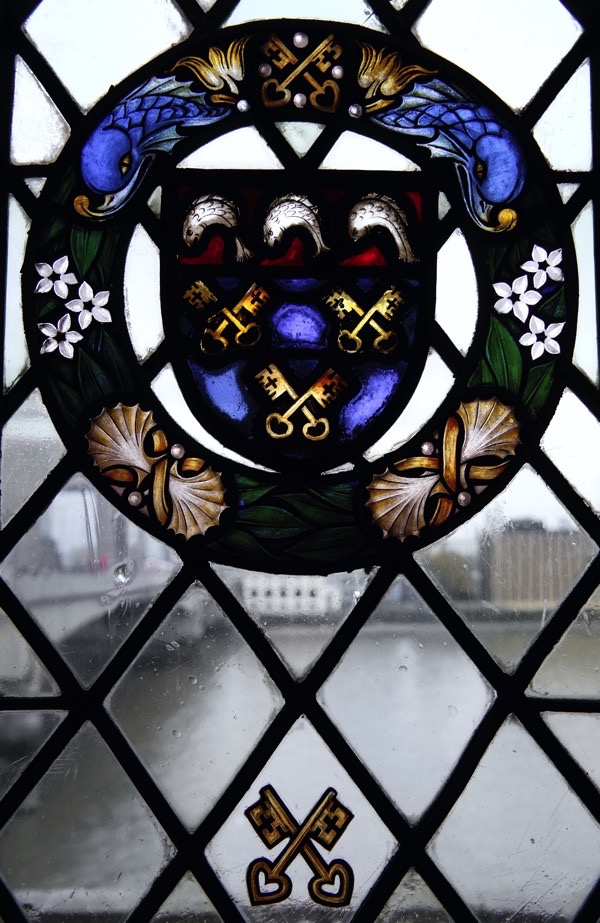
This stained glass of the earlier Fishmongers’ Crest dates from the before the Fire of London
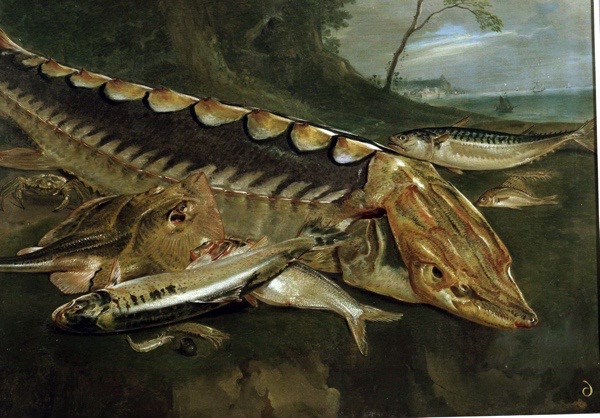
Wonders of the Deep, 6 by Arnold Von Hacken
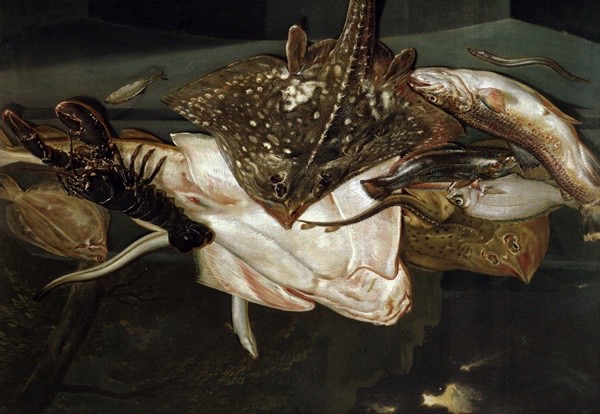
Wonders of the Deep, 7 by Arnold Von Hacken
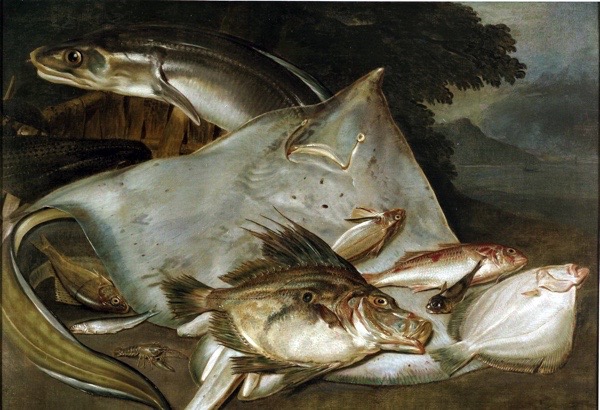
Wonders of the Deep, 8 by Arnold Von Hacken
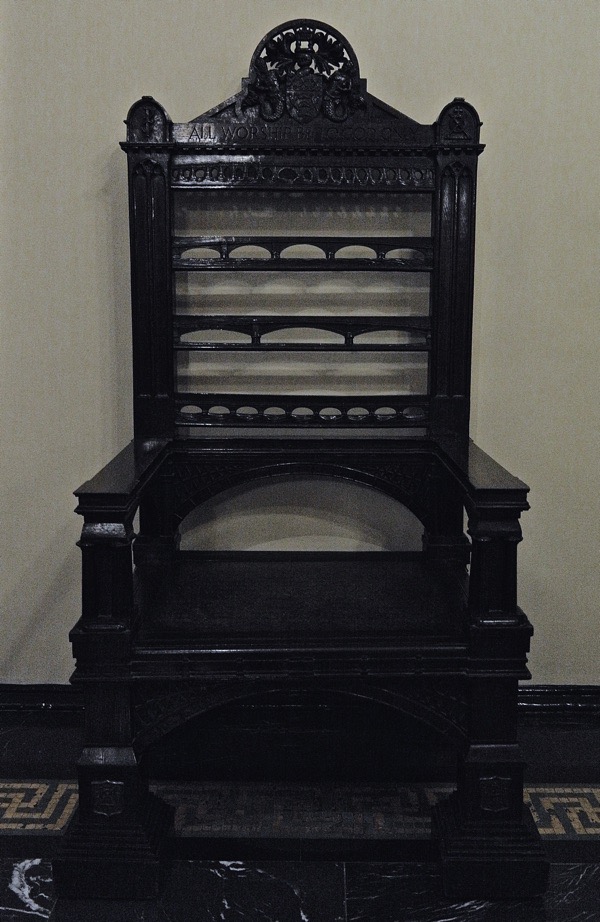
Chair made from the timber of old London Bridge with a seat including a piece of stone from the bridge and a back showing designs of subsequent bridges
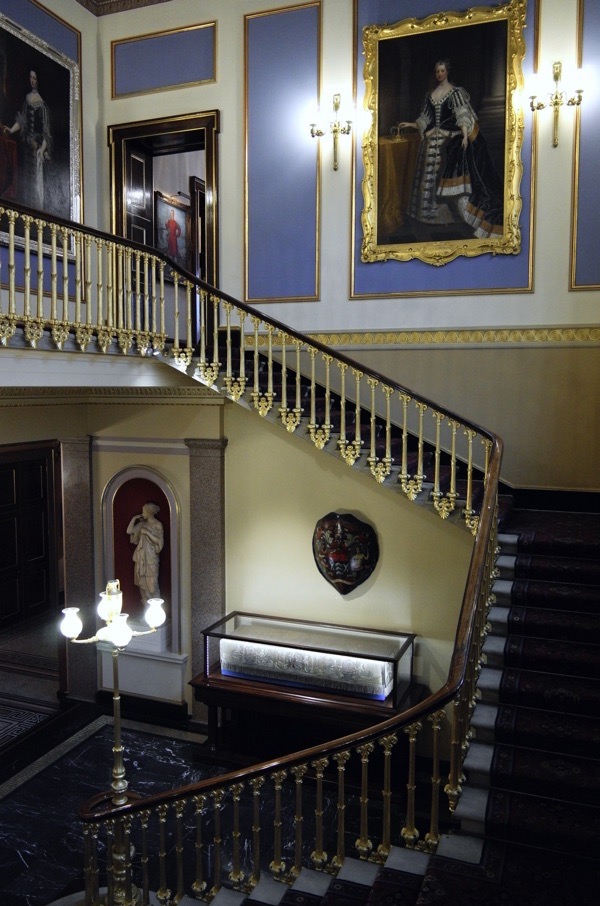
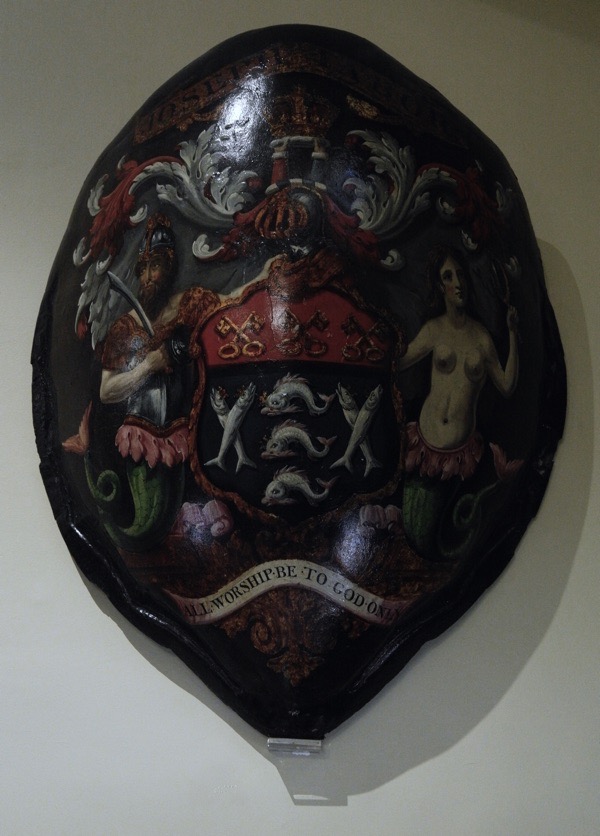
Turtle shell painted with the crest of the Fishmongers’ Company
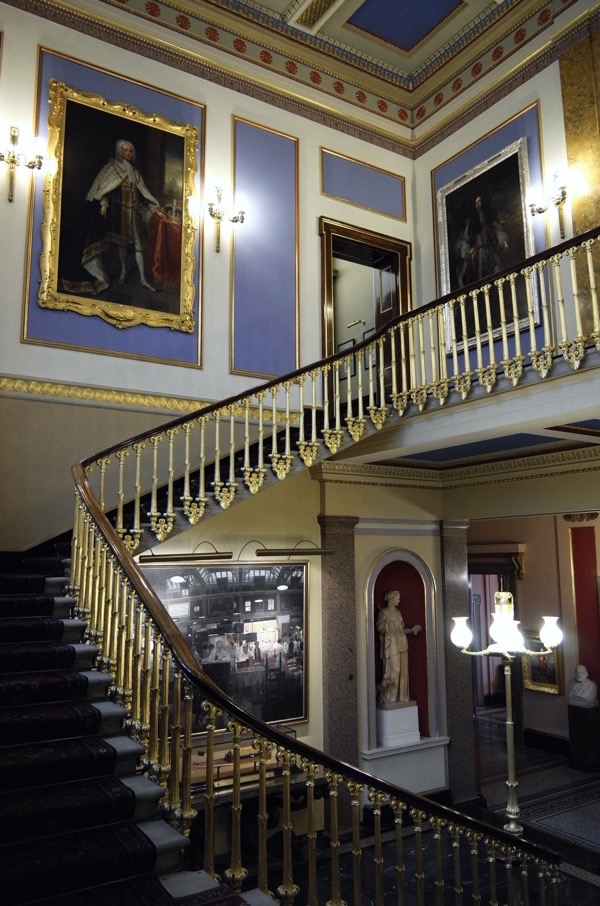
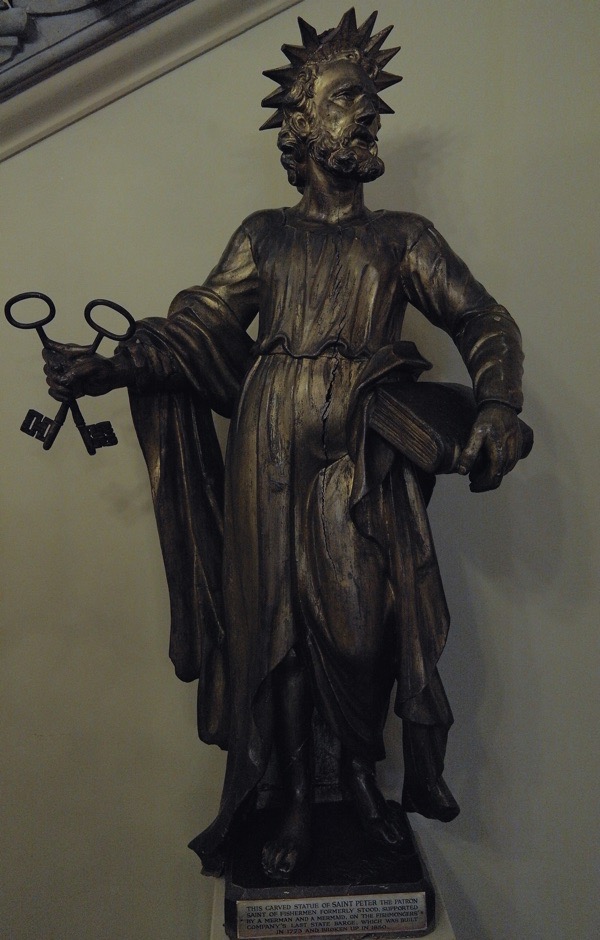
Figure of St Peter the Fisherman from the Fishmongers’ barge
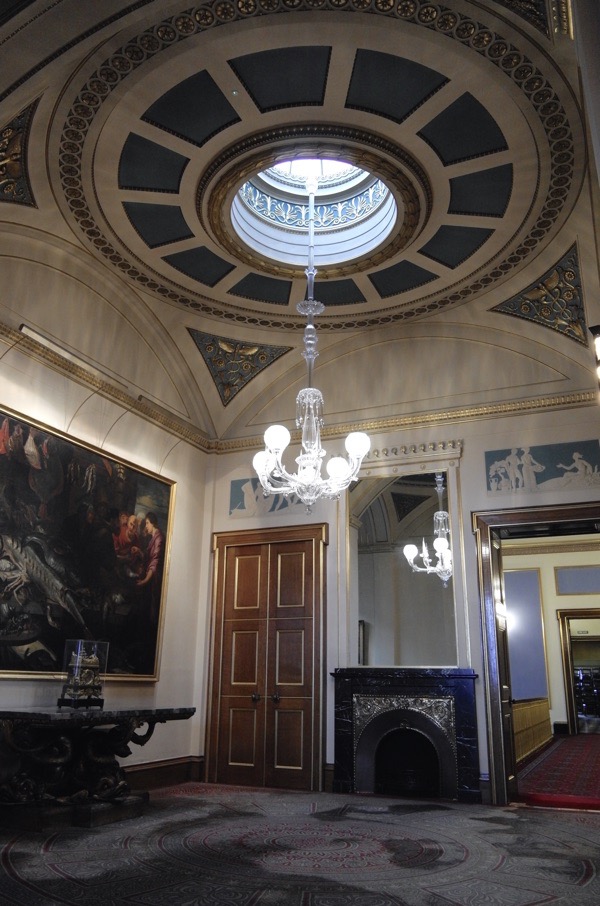
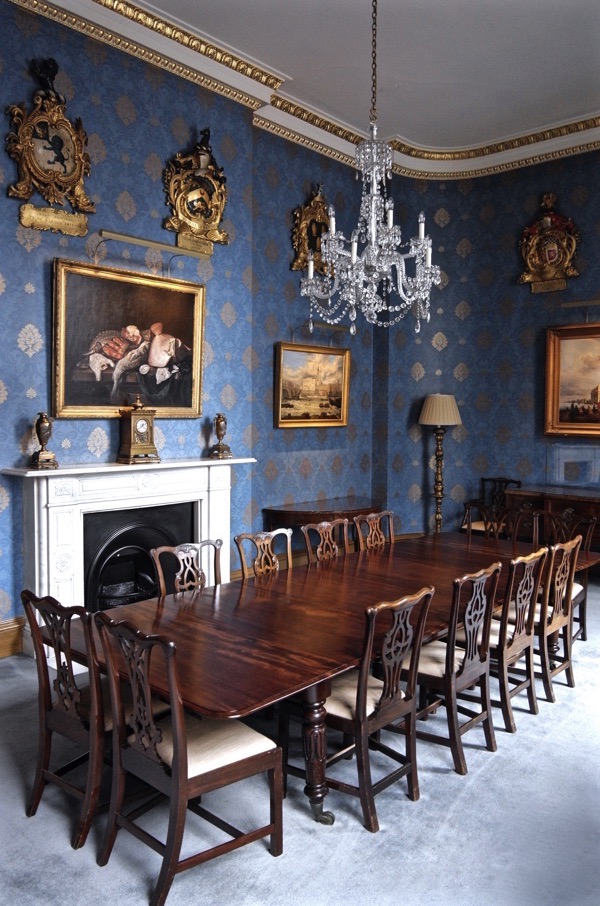
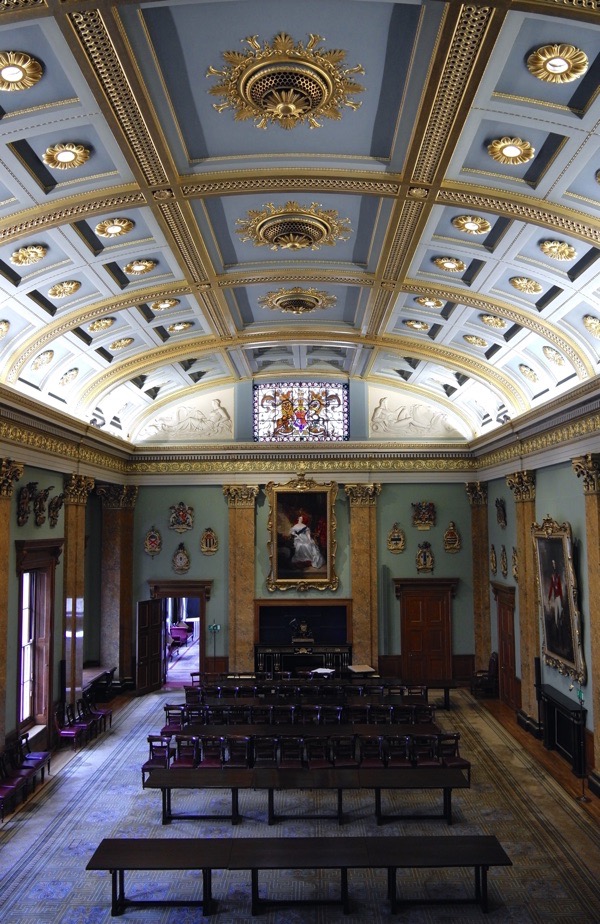
Queen Victoria presides over the Great Hall
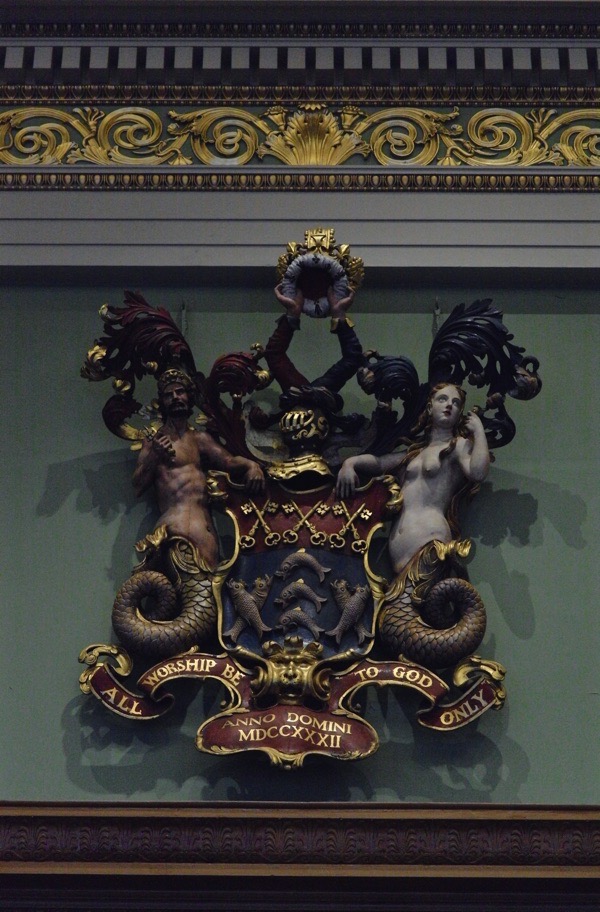
Fishmongers’ crest in the Great Hall
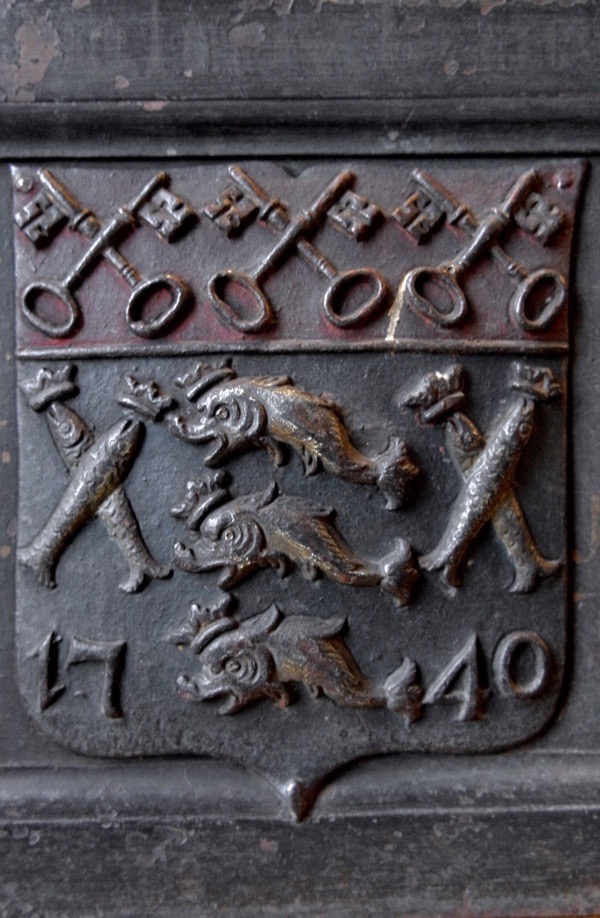
Fishmongers’ crest from a steel muniment box
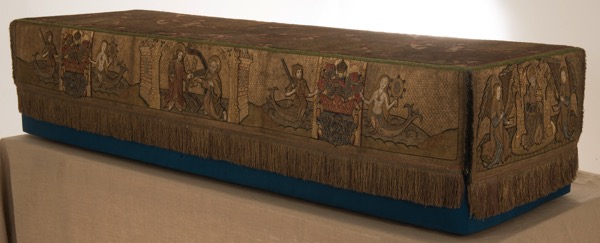
Fishmongers’ funeral pall embroidered by nuns c. 1500
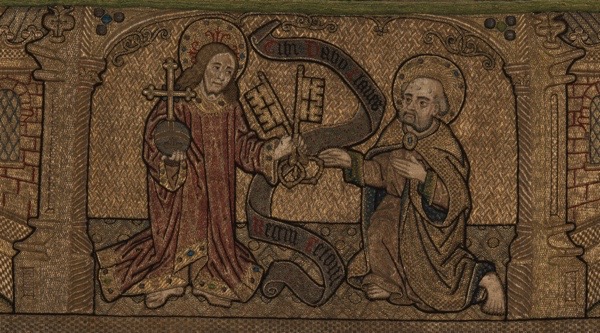
Christ hands the keys of Heaven to St Peter, the Fisherman
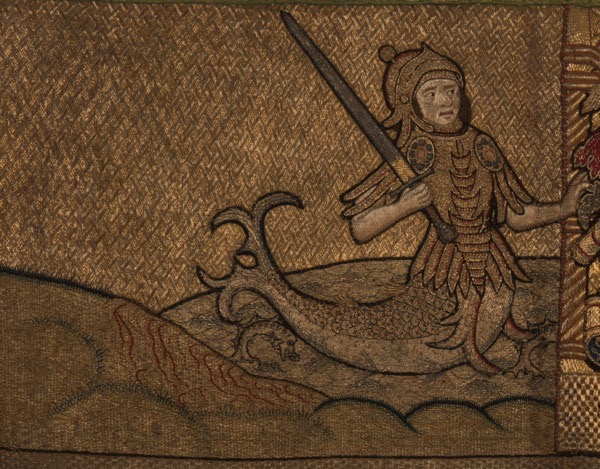
Merman from the pall
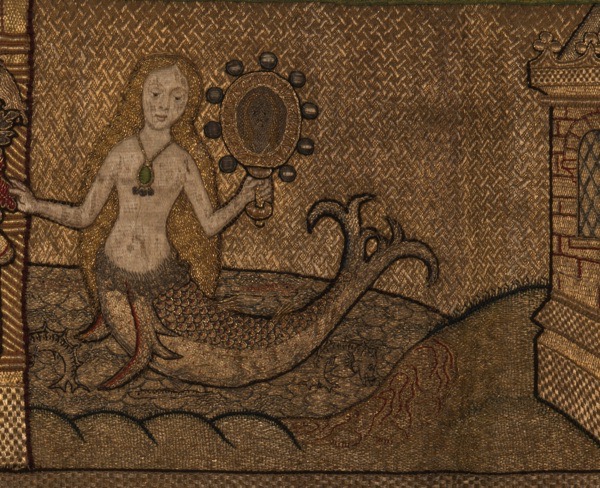
Mermaid from the pall

Fishmongers’ Hall, Fishmongers’ Wharf
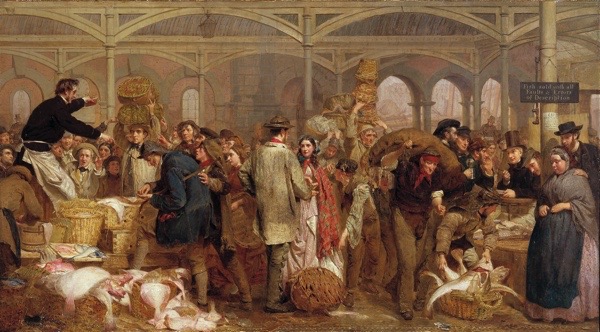
Interior of Billingsgate Market at 6am by George Elgar Hicks
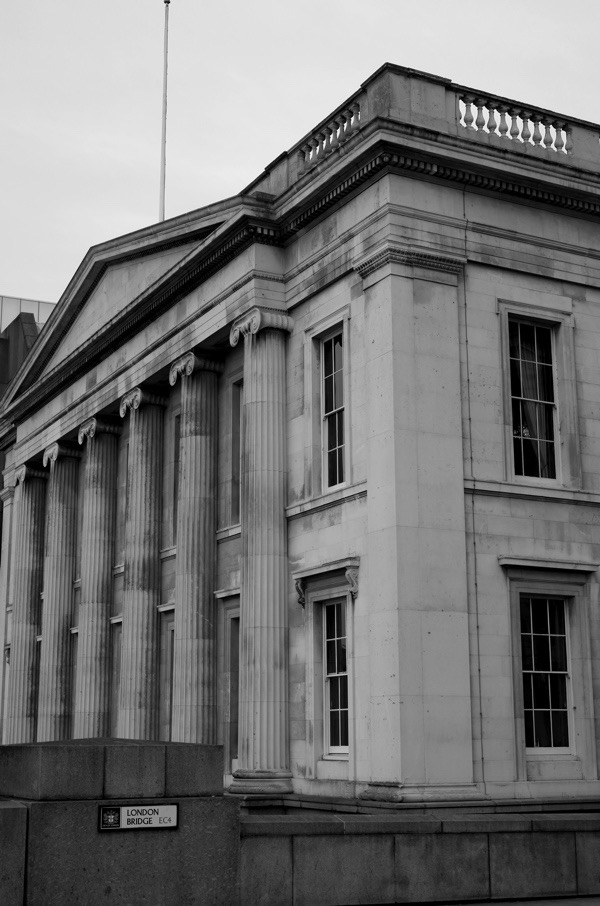
Fishmongers’ Hall, London Bridge
Paintings reproduced courtesy of Fishmongers’ Hall
You may also like to take a look at
Painting The Hamlets
Tonight is the opening of a new exhibition of paintings from Tower Hamlets Local History Library & Archives, PAINTING THE HAMLETS, including several pictures from the collection that were featured in EAST END VERNACULAR, Artists who painted London’s East End streets in the 20th century. The show is at 277 Bancroft Rd, E1 4OQ and runs until 25th April 2019.
This Sunday 25th November at 3pm at Nunnery Gallery, Bow, we are throwing a tea party to celebrate the launch of DOREEN FLETCHER, PAINTINGS, serving complimentary tea and homemade sponge cakes to all. Doreen will be signing copies of her new monograph and in conversation with The Gentle Author. Doreen Fletcher’s RETROSPECTIVE opens at the Nunnery Gallery, Bow Arts on 25th January and runs until 24th March 2019.
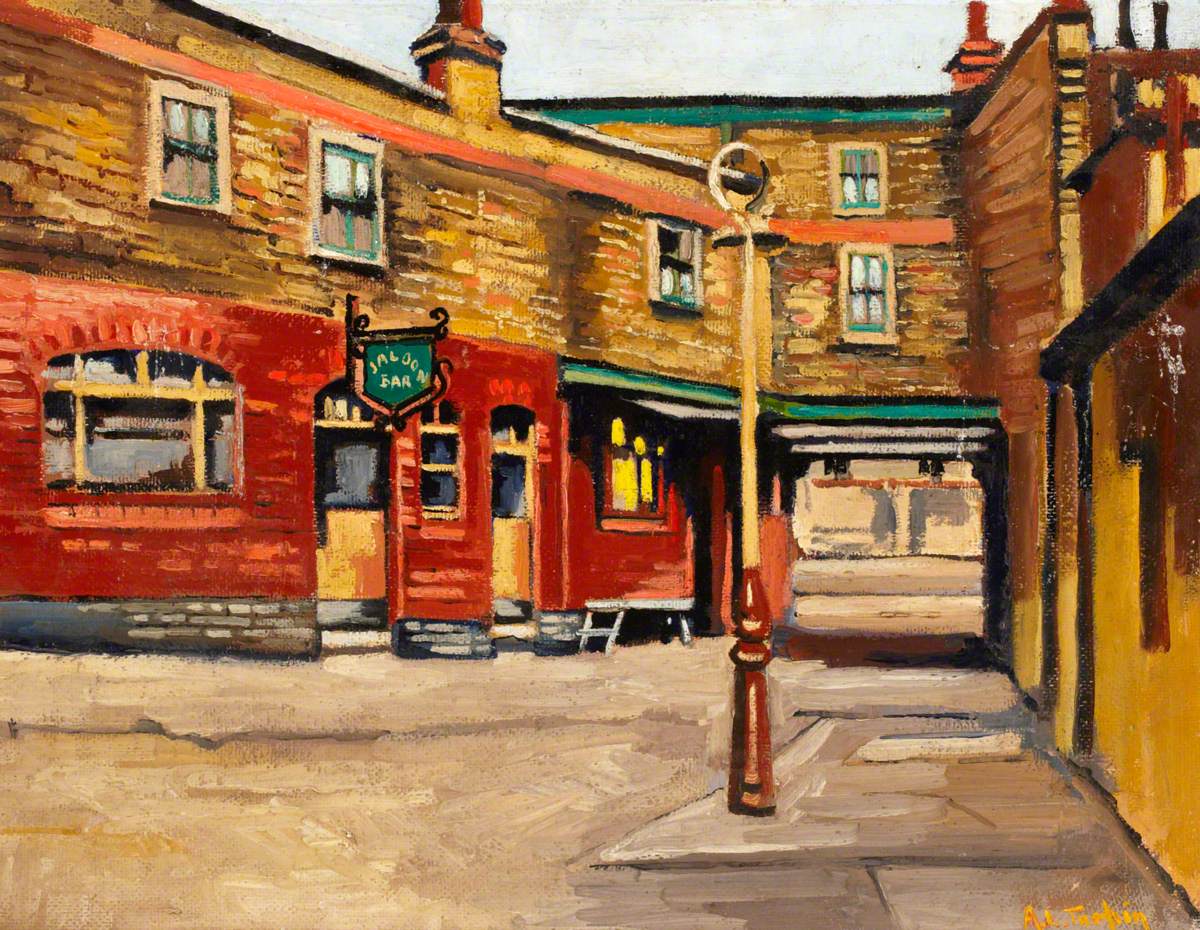
Albert Turpin – Jolly Butcher’s, Cabbage Court, Brick Lane, c1953
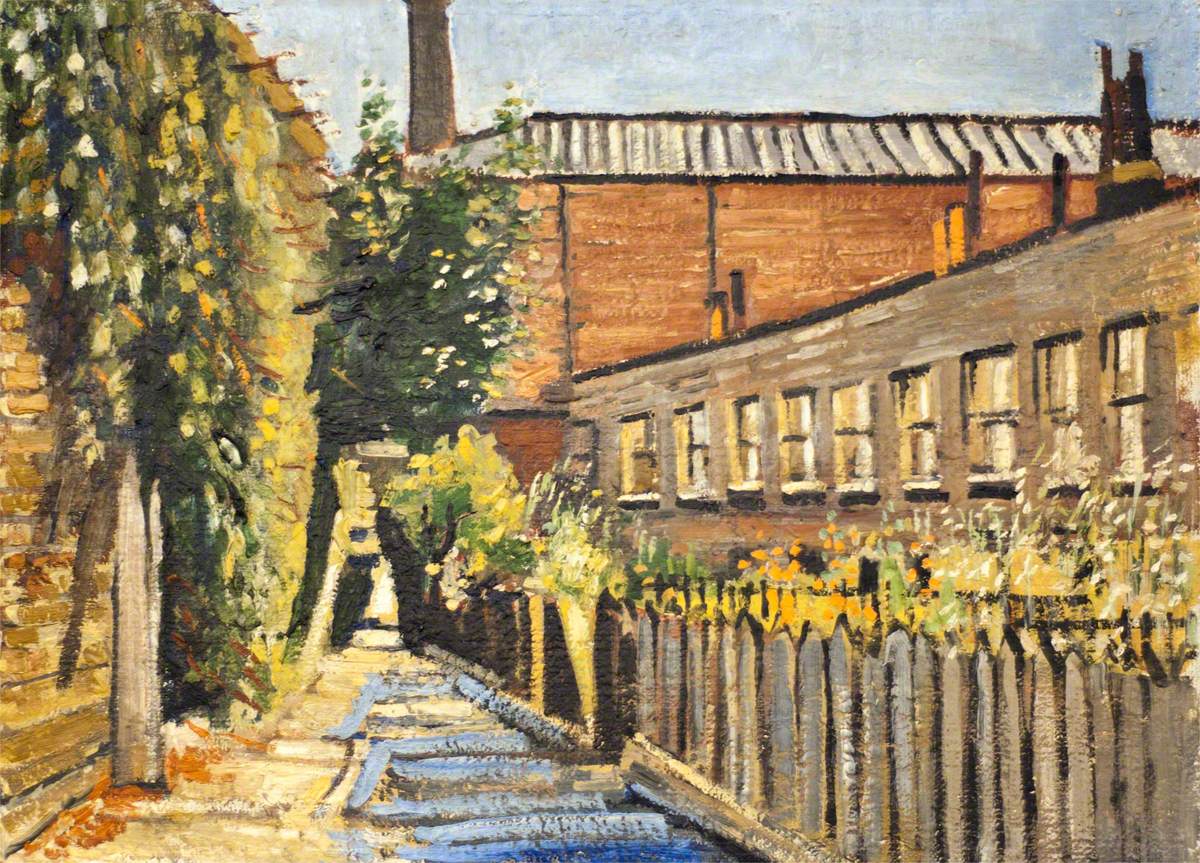
Albert Turpin – Belle Vue Place, Cleveland Way
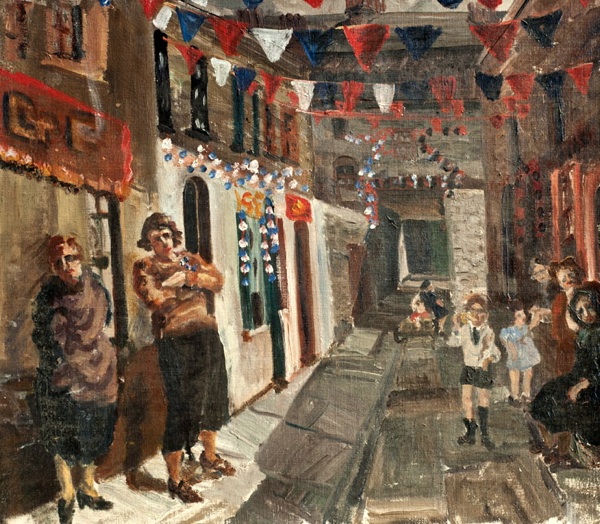
Rose Henriques – Coronation Celebrations in Challis Court, 1937
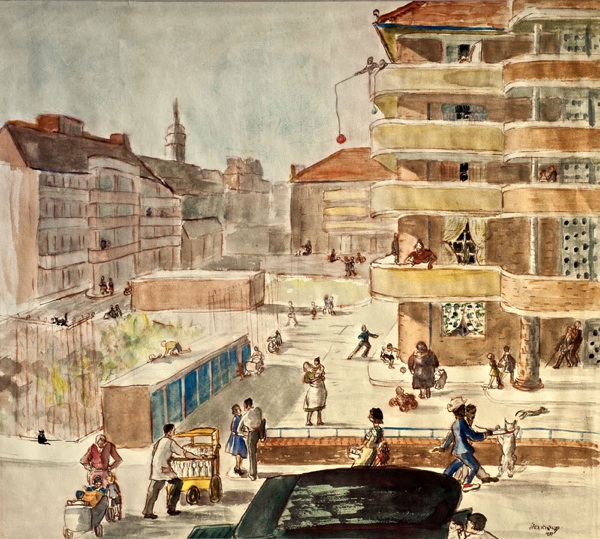
Rose Henriques – Fait Accompli, Berner St, 1951

Noel Gibson – Hessel St

Noel Gibson – Tower House, Fieldgate St, Whitechapel
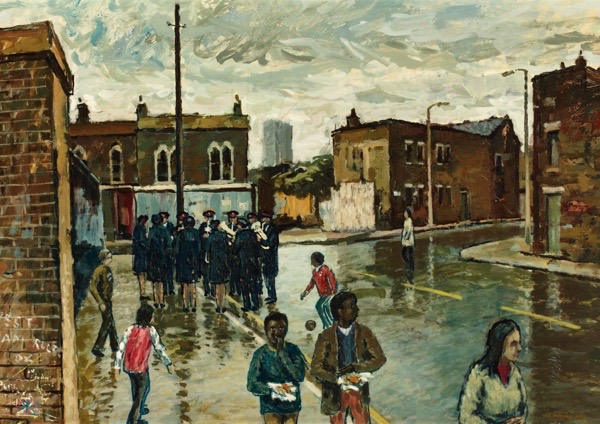
Ronald Morgan – Salvation Army Group
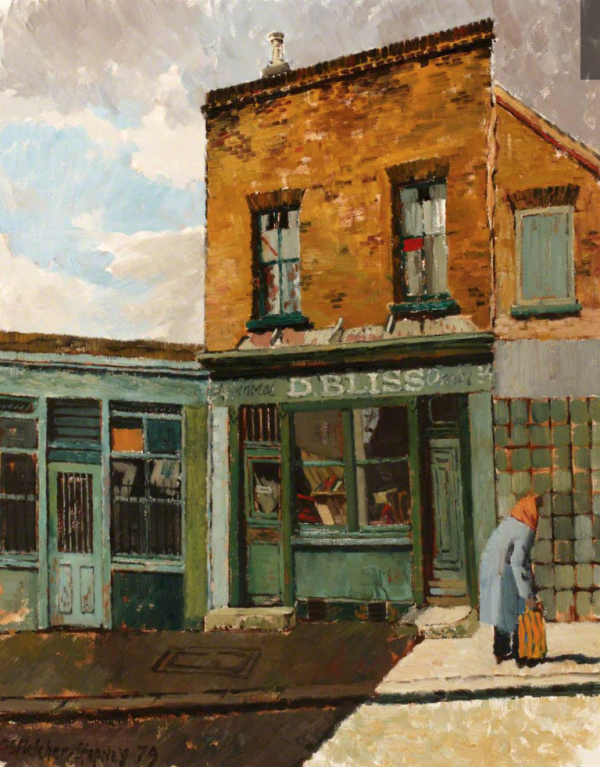
Geoffrey Fletcher – D.Bliss, Alderney Rd, 1979
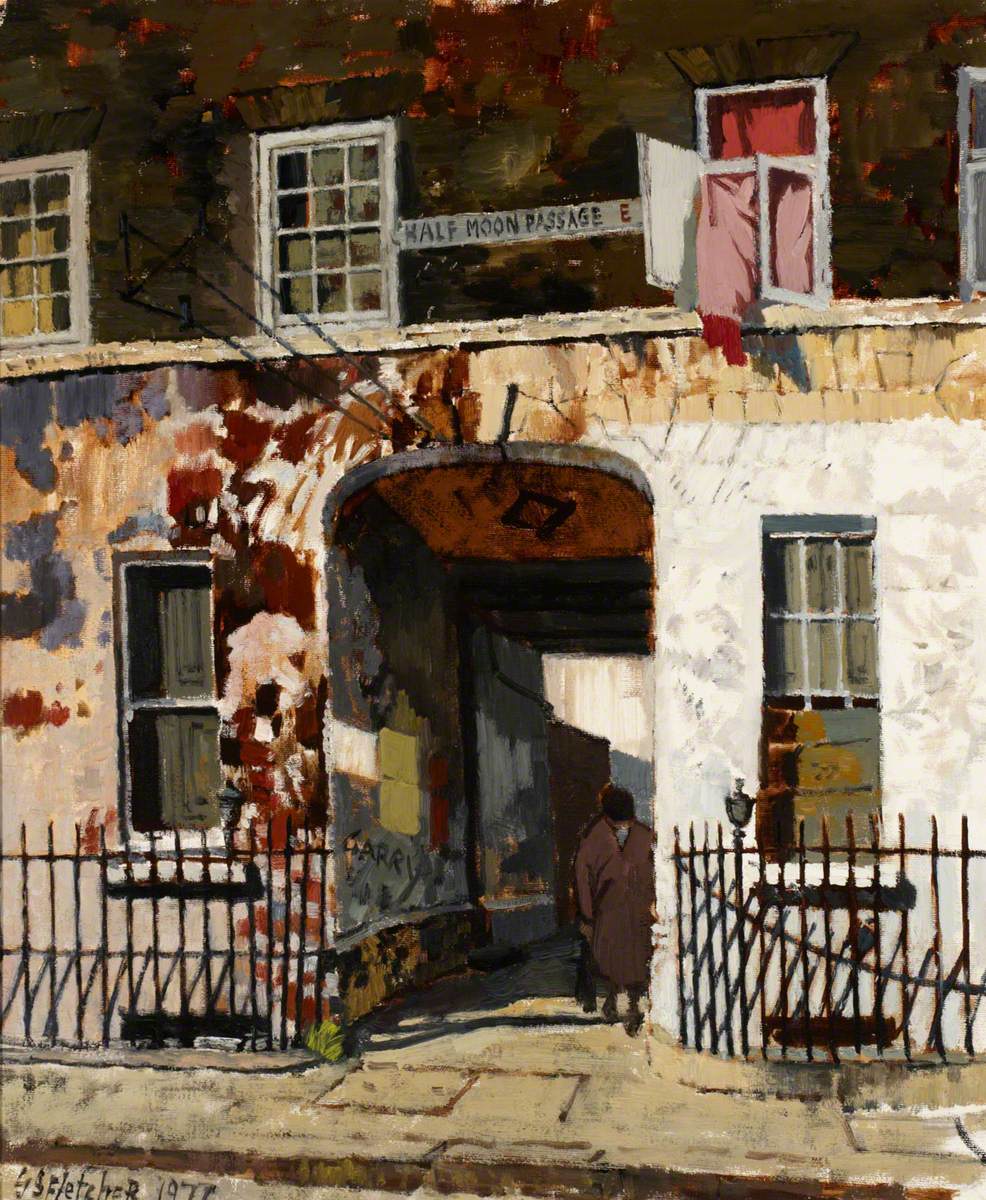
Geoffrey Fletcher – Half Moon Passage, Alie St, 1977

Doreen Fletcher – Snooker Club, Afternoon, 1985
Paintings courtesy of Tower Hamlets Local History Library & Archives
You may also like to read about
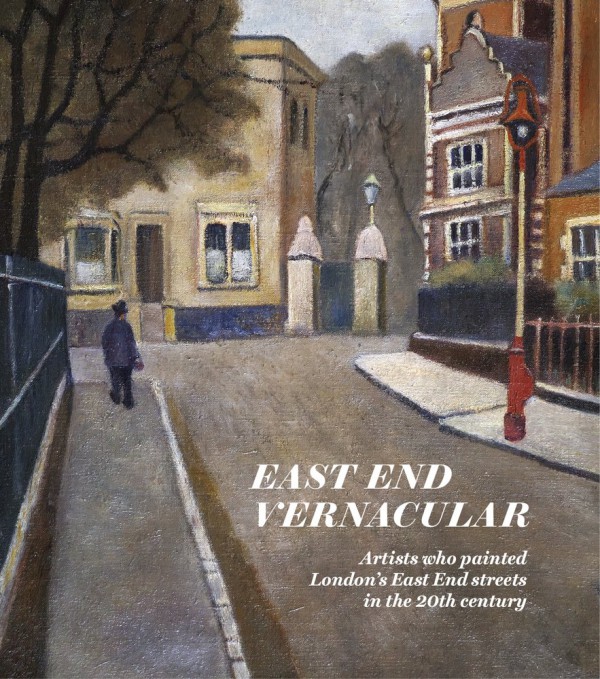
Click here to order a signed copy of EAST END VERNACULAR for £25
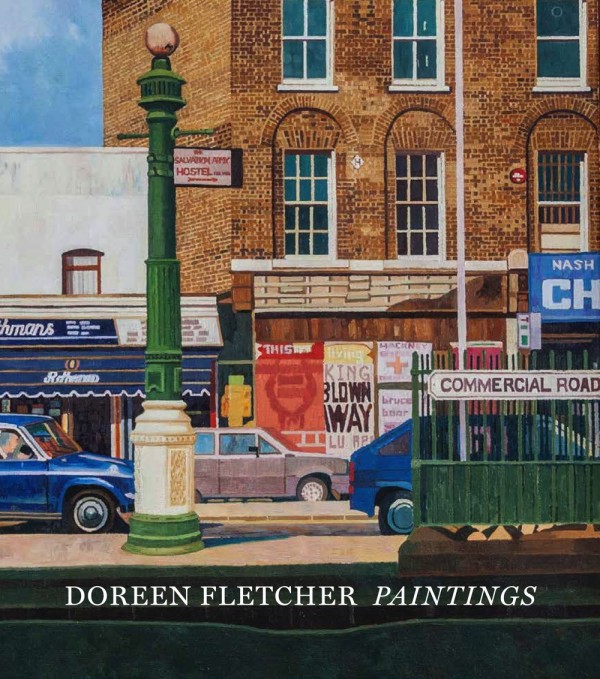
Click here to order a signed copy of DOREEN FLETCHER, PAINTINGS for £20

Lew Tassell At The Queen’s Silver Jubilee
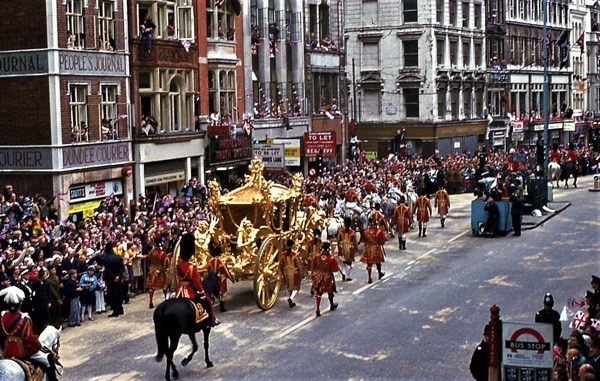
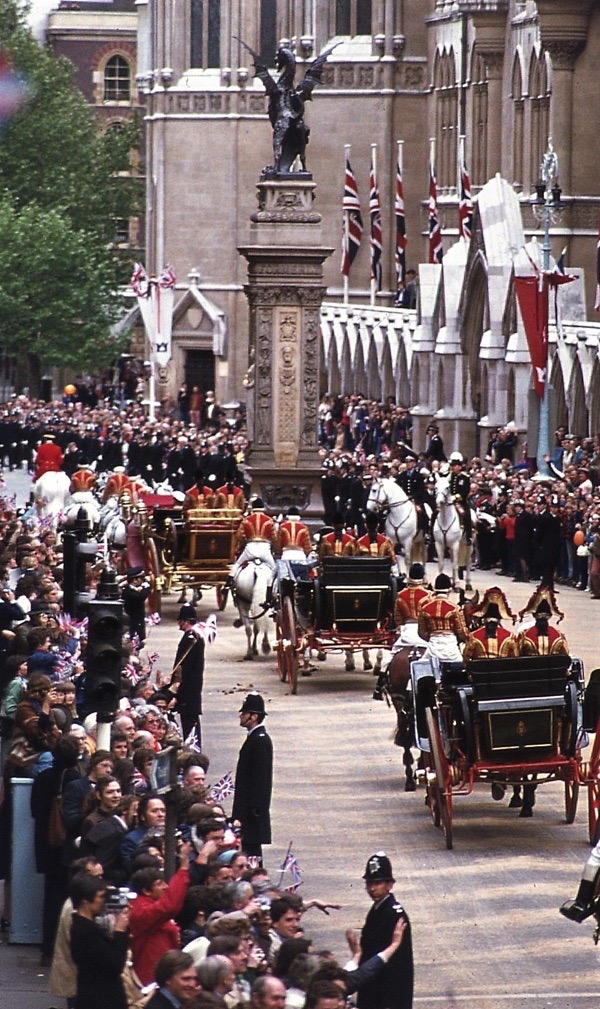
Another time-travelling adventure escorted by our old friend Detective Constable Lew Tassell of the Fraud Squad, thanks to his personal photographs published here for the first time
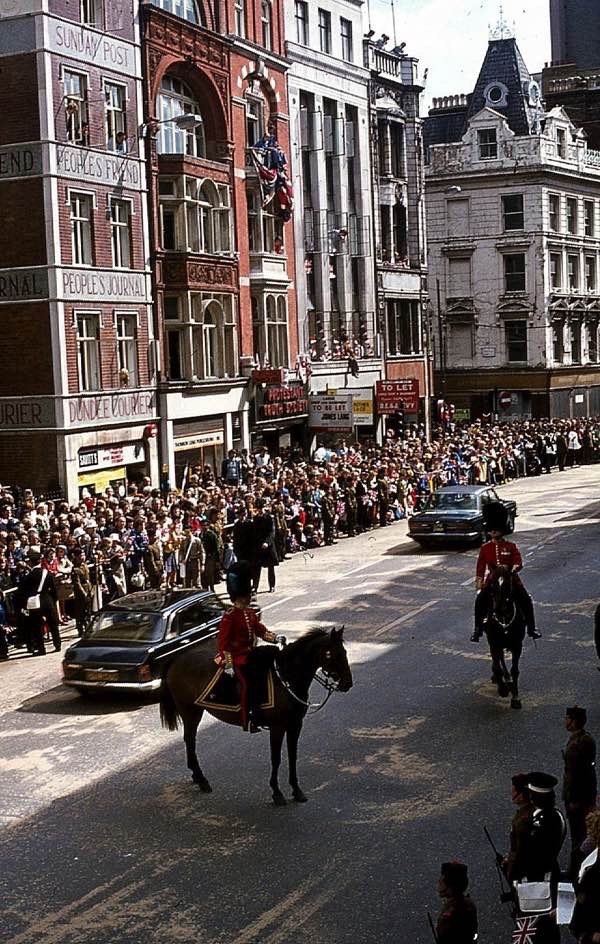
“As I recall, the day was dull and overcast but this did not stop crowds coming out to line the route from Buckingham Palace to St Paul’s Cathedral. As you can see from my pictures, I was situated on the south side of Fleet St at the western end. The dull weather did not help me at all, taking pictures with a manual camera and lens, especially as I used an Agfa transparency film which was very “slow.” Consequently some of my photographs are not as sharp as they might be, particularly Earl Mountbatten with Princess Margaret. The date was 7th June 1977. I was a Detective Constable during the summer of the celebrations, attending a course at the Detective Training School at Peel House in Hendon. Before going to Hendon, I spent a lot of time doing preparatory security work along the route of the procession and returned to the City for the big day.” – Lew Tassell
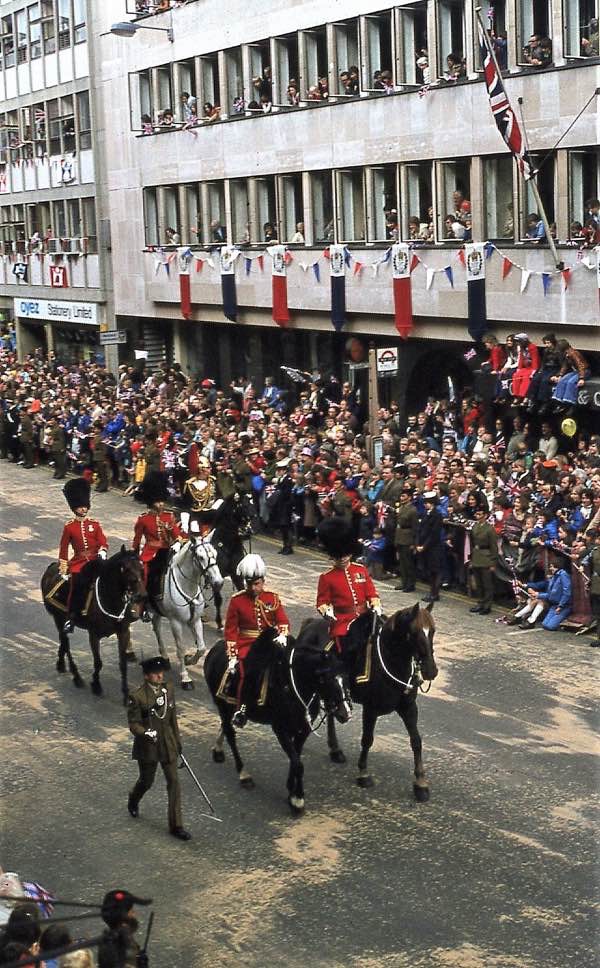
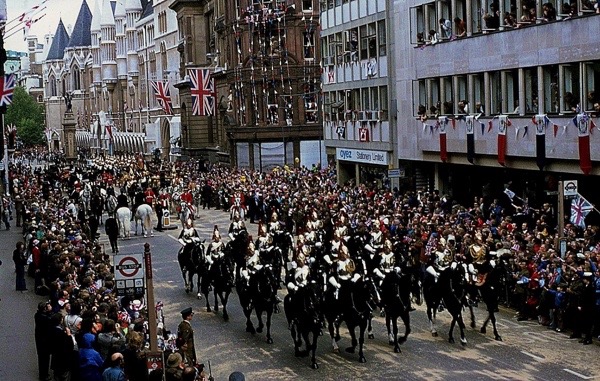
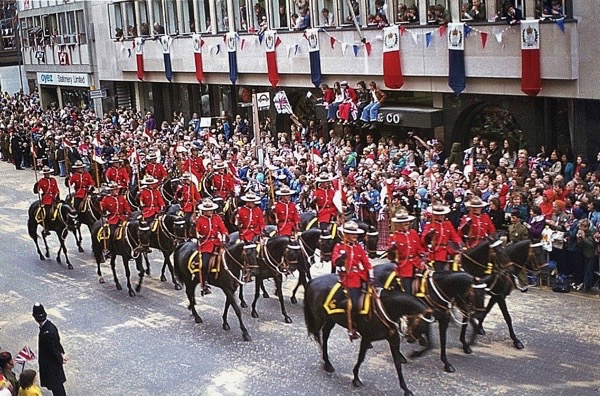
Spot the boys in flares sitting on the canopy
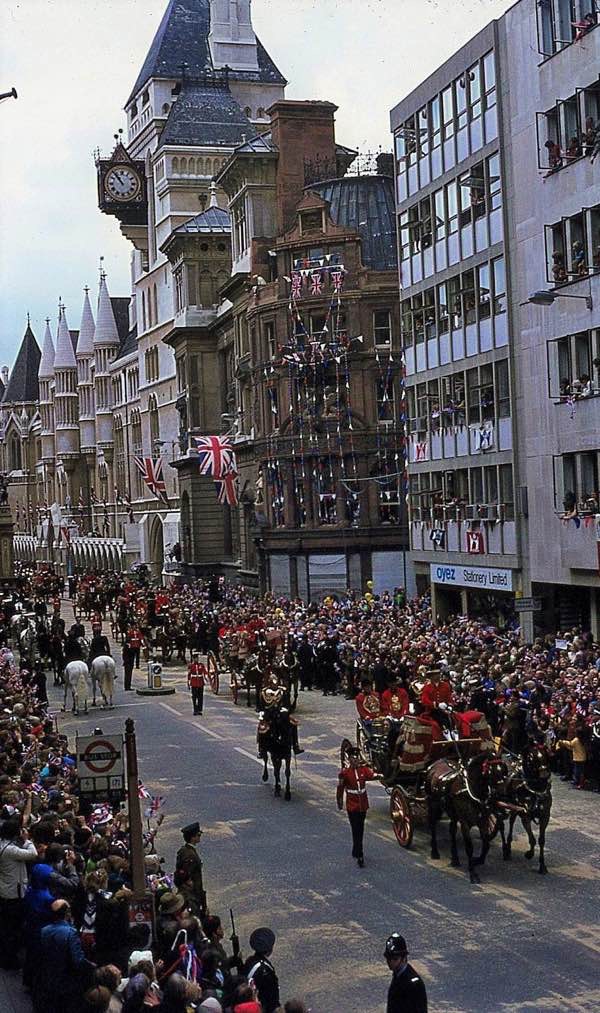
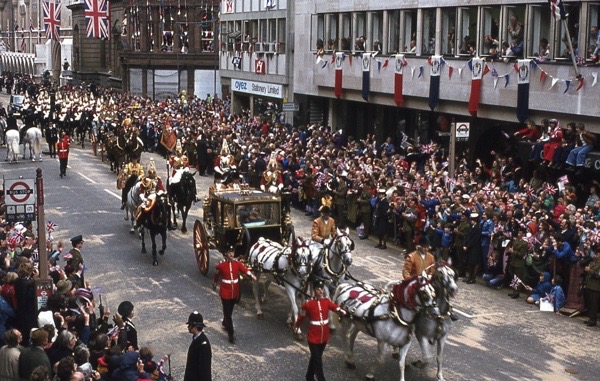

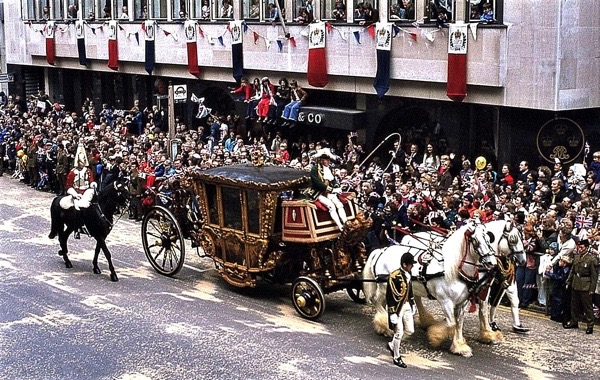

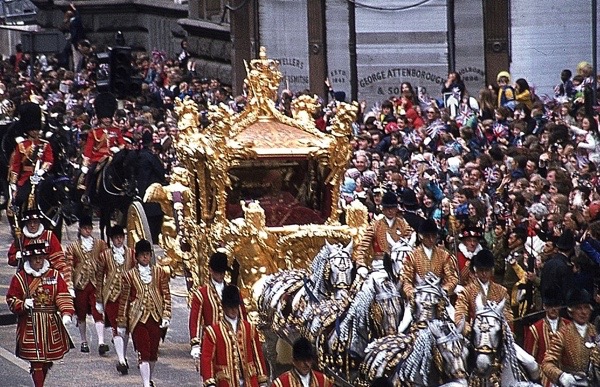
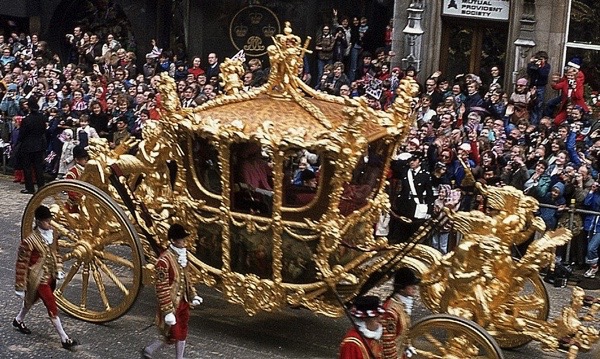
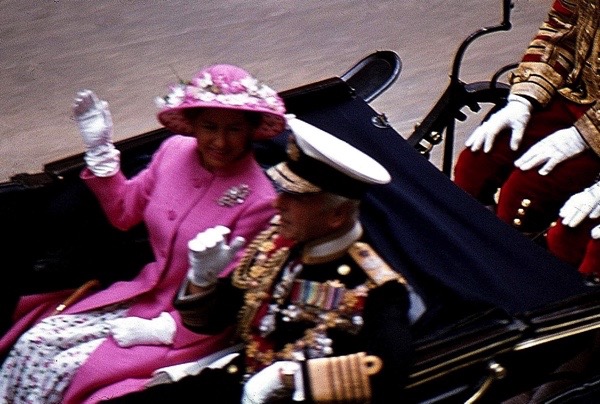
Earl Mountbatten & Princess Margaret
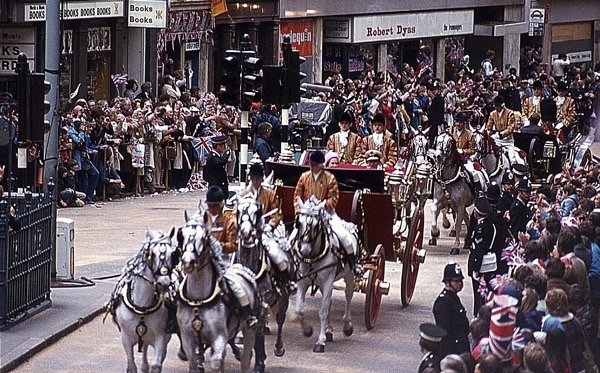
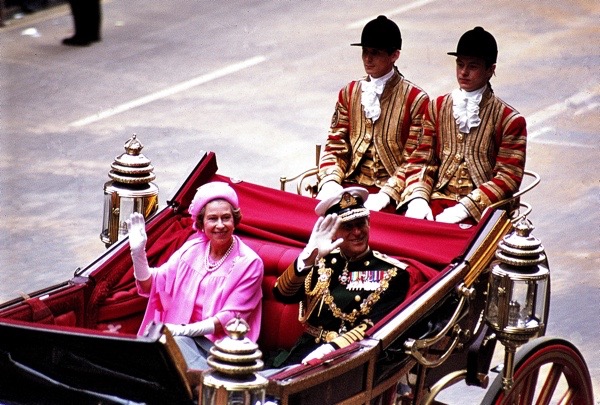
The Queen & Prince Philip

Detective Constable Lew Tassell of the Fraud Squad, 1977
Photographs copyright © Lew Tassell
You may also like to take a look at
On Night Patrol With Lew Tassell
On Top Of Britannic House With Lew Tassell
David Power, Showman

David Power lives in a comfortable Peabody flat round the back of the London Coliseum and, with his raffish charm, flowing snowy locks and stylish lambswool sweater, he is completely at home among the performers of theatre land. Yet, although David may have travelled only a short distance to the West End from his upbringing in the East End, it has been an eventful and circuitous journey to reach this point of arrival.
Blessed with a superlative talent, both as a pianist and as a composer, David interrupted our conversation with swathes of melody at the keyboard – original compositions of assurance and complexity – and these musical interludes offered a sublime counterpoint to the sardonic catalogue of his life’s vicissitudes. Settled happily now with his third wife, David organises charity concerts which permit him to exercise his musical skills and offer a lively social life too. At last, winning the appreciation he always sought, David has discovered the fulfilment of his talent.
“I’ve done a lot of things in my time. All my family were boxers. In those days you had thirty or forty fights a week before you could make a living. It was a different world. Them days we had some good fights but they were hungry then. They punched the fuck out of each other but they were all friends too.
Me, I love boxing but I was a prodigy at the piano at the age of five. My mother, Lily Power, she couldn’t afford no piano lessons for me because we were poor. People have no idea how hard it was in the thirties and forties. I was born in Hounslow and my mother moved us back to Spitalfields where she was from.
My mum paid five shillings a week rent at 98 Commercial St but she wouldn’t let me answer the door when the rent collector came round. Today you couldn’t buy it for two million. Wilkes St was called the knocking shop because the brass went round there for the top class girls. They said, “Can we help you out, any way you like?” Itchy Park, next to the church, we called that Fuck Park – you could get it in there for sixpence. It was a wonderful, wonderful world.
Then I was evacuated to Worcester but I ran away about nine times. Each time, the police picked me up when I got to Paddington Station and put me on the train back again, I was nine years old. It was very funny.
They gave my mother an old pub in Worcester and she took in twenty armaments workers. There was no water, it was outside in the scullery. She charged one pound fifty a week for bed and breakfast and I used to get up at five-thirty to do the fires each morning in 1940. The most wonderful thing was when they brought gas into the house and we had a gas stove, and I didn’t have to worry about making up the fire each morning and heating the water for everyone for bath night on Friday. I got in a lot of trouble at school because I was Jewish and they used to say, “Show us your horns!” and that’s how I got into fighting.
I started work in Spitalfields Market when I was fourteen, I worked with a Mr Berenski selling nuts – peanuts and walnuts. The place was piled high with nuts! I had to stack them up with a ladder. I remember once the sack split and the nuts went everywhere and he chased me around the market. But Harry Pace, my cousin, he was a middleweight, he protected me.
I got a job in The Golden Heart playing the piano at weekends, earning one pound for two sessions. An old guy asked me to play, “When I leave the world behind,” and I thought, “He ain’t got long to go.” I earned three pounds, seventeen shillings and tuppence but, when my father discovered, he hit me round the ear and said, “You’ve been thieving!” Then my mother explained what I had been doing, and he took the money and gave me two bob.
After the war, my mother moved to Westcliff on Sea and that’s when she could afford two and sixpence for piano lessons for me, but by then I was much more interested in sport. As a child, I could play any music that I heard on the radio but, when I had my first lesson at ten years old, I thought crochets and quavers were sweets. There was a big Jewish community in Westcliff and I went to Southend Youth Club and started boxing there until I was called up for the army. I played football for Southend, we won the cup and I scored two goals. In the army, I sent my mum one pound a week home, but I was supposed to have been a concert pianist at eighteen. Fortunately, my Colonel liked music and I was in the NAAFI playing the piano and he asked me to play for the officers. They shipped me out to Hong Kong and Singapore and I played twice a month in the Raffles Hotel on Sundays and for the Prime Minister of Hong Kong.
When I came out the army, I was supported by Harriet Cohen, a concert pianist. I told her I was a ragged man but she wrote to the principal of the Guildhall School of Music. The professor told me to play flat, so I lay on the floor. I said, “You asked me to play flat, you fucking nitwit.” Then I went for an audition at the Windmill Theatre but they only offered me eight pounds a week for playing fourteen shows, so I jacked it in and did the Knowledge and became a cab driver, and got married in 1960. Then I decided to go into the markets and I worked in Covent Garden for twelve months as a porter, until my wife’s dad and I went into hotels – The Balmoral in Torquay and Hotel 21 in Brighton, but in the recession of the nineties I went bankrupt. We couldn’t compete with the deals offered by the big chains where businessmen used to bring their dolly birds at weekends.
Then I went on the road selling and I was earning three or four hundred pounds a week, especially in Wales. They didn’t know what a carpet was there. I once bought ten thousand dog basket covers for five pounds and sold them all at four for a pound as cushion covers in Pitsea Market. And that’s when I went into Crimplene, and then china, and then ties. Those were great days. Eventually, I went back in the taxi, worked like a slave, had a heart attack and died. Half of my heart is dead. I’ve been in and out of hospital with the old ticker ever since, so I decided to give something back by holding concerts for University College London Hospital. I do it all. I know talent when I see it and we have shows every month.
I never played the piano for twenty years, until ten years ago I went back to it – I wrote a piece of music when my wife died. I always wanted to be a pianist because music is something I get wrapped up in. A lot of people never believed I played the piano because I was so ragged, I had a ragged upbringing. If you come from the background that I came from, you’ve got keep putting money on the table. To be dedicated to music, you to have to be rich or a fool. I’m a born showman, that’s what they tell me, “David, you’re a showman.””

David (on the left) enjoys a picnic with his mother Lily and brothers and sisters in Itchy Park, Spitalfields in the nineteen thirties

David as a young boxer in the nineteen fifties

Concert Pianist Harriet Cohen encouraged David to become a professional pianist.

David Power, Showman