
Burdekin’s London Nights
Click here order a signed copy of The Gentle Author’s ON CHRISTMAS DAY for £10

East End Riverside
As you will have realised by now, I am a night bird. In the mornings, I stumble around in a bleary-eyed stupor of incomprehension and in the afternoons I wince at the sun. But as darkness falls my brain begins to focus and, by the time others are heading to their beds, then I am growing alert and settling down to write.
Once I used to go on night rambles – to the railway stations to watch them loading the mail, to the markets to gawp at the hullabaloo and to Fleet St to see the newspaper trucks rolling out with the early editions. These days, such nocturnal excursions are rare unless for the sake of writing a story, yet I still feel the magnetic pull of the dark city streets beckoning, and so it was with a deep pleasure of recognition that I first gazed upon this magnificent series of inky photogravures of “London Night” by Harold Burdekin from 1934 in the Bishopsgate Library.
For many years, it was a subject of wonder for me – as I lay awake in the small hours – to puzzle over the notion of whether the colours which the eye perceives in the night might be rendered in paint. This mystery was resolved when I saw Rembrandt’s “Rest on the Flight into Egypt” in the National Gallery of Ireland, perhaps finest nightscape in Western art.
Almost from the beginning of the medium, night became a subject for photography with John Adams Whipple taking a daguerrotype of the moon through a telescope in 1839, but it was not until the invention of the dry plate negative process in the eighteen eighties that night photography really became possible. Alfred Stieglitz was the first to attempt this in New York in the eighteen nineties, producing atmospheric nocturnal scenes of the city streets under snow.
In Europe, night photography as an idiom in its own right begins with George Brassaï who depicted the sleazy after-hours life of the Paris streets, publishing “Paris de Nuit” in 1932. These pictures influenced British photographers Harold Burdekin and Bill Brandt, creating “London Night” in 1934 and “A Night in London” in 1938, respectively. Harold Burdekin’s work is almost unknown today, though his total eclipse by Bill Brandt may in part be explained by the fact that Burdekin was killed by a flying bomb in Reigate in 1944 and never survived to contribute to the post-war movement in photography.
More painterly and romantic than Brandt, Burdekin’s nightscapes propose an irresistibly soulful vision of the mythic city enfolded within an eternal indigo night. How I long to wander into the frame and lose myself in these ravishing blue nocturnes.

Black Raven Alley, Upper Thames St

Street Corner
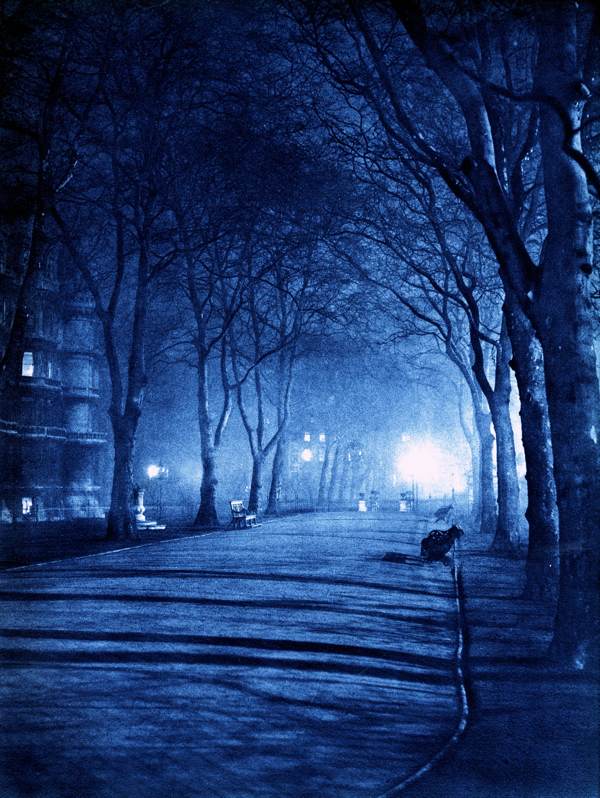
Temple Gardens
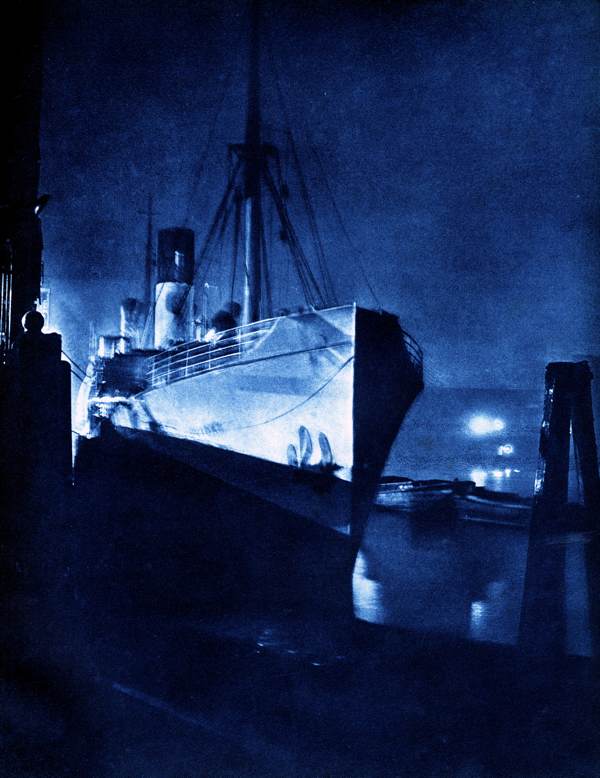
London Docks
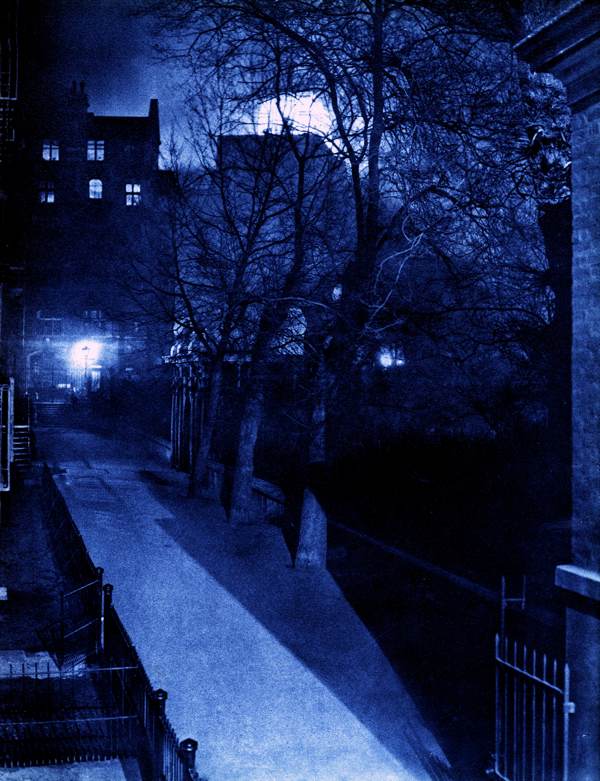
From Villiers St
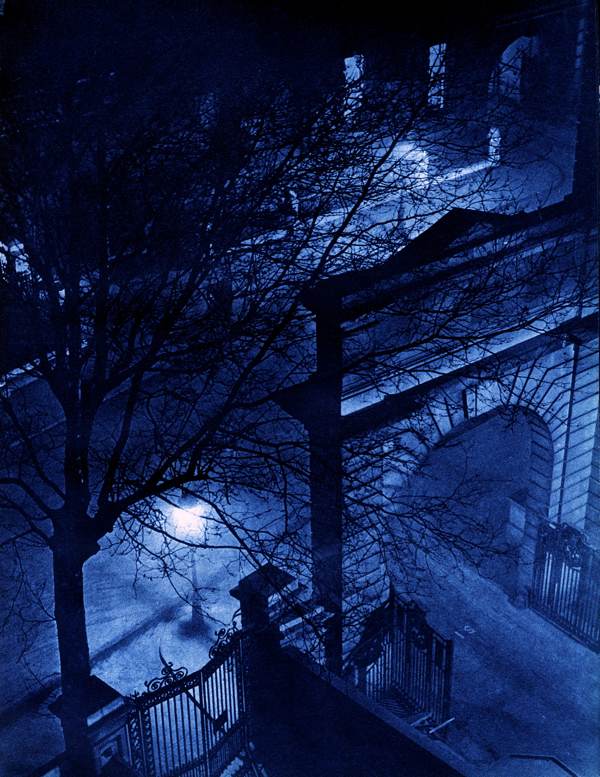
General Post Office, King Edward St
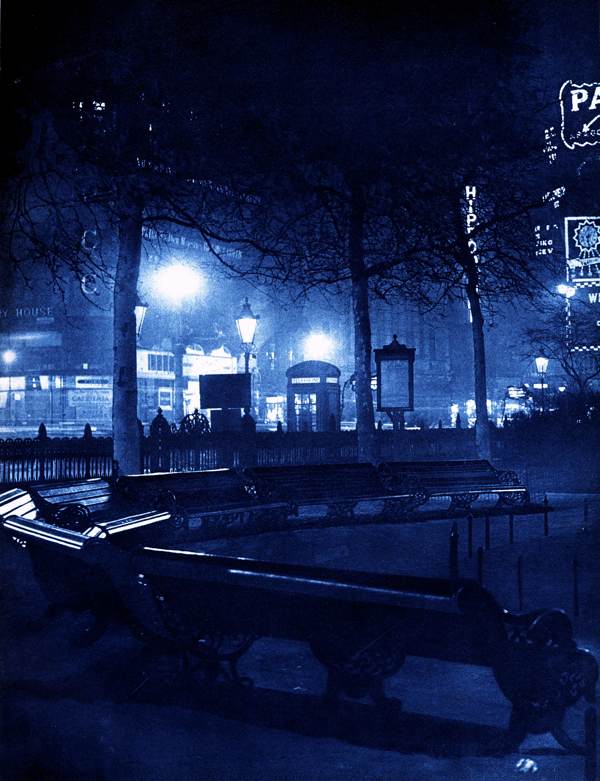
Leicester Sq
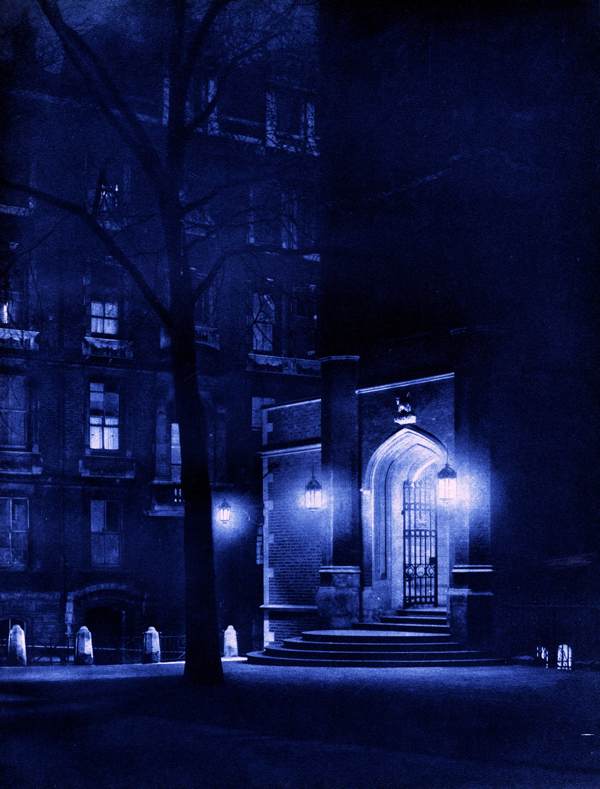
Middle Temple Hall
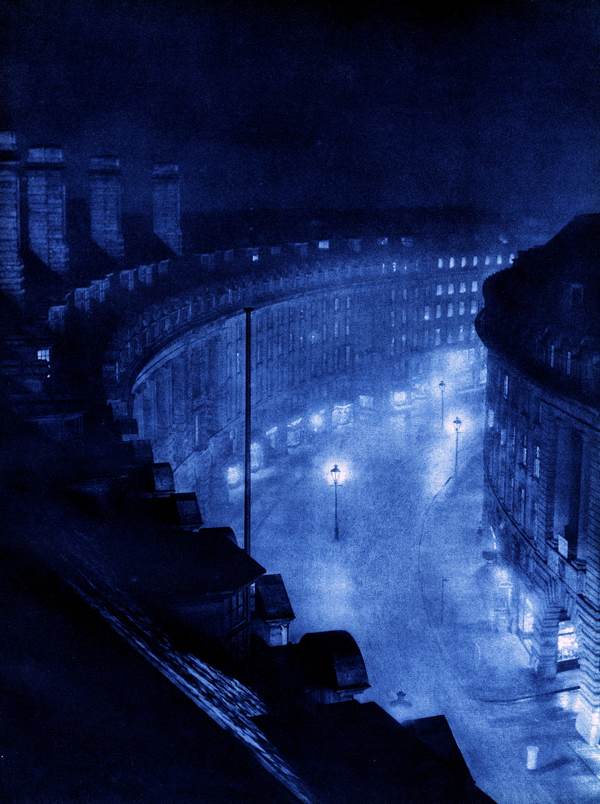
Regent St

St Helen’s Place, Bishopsgate
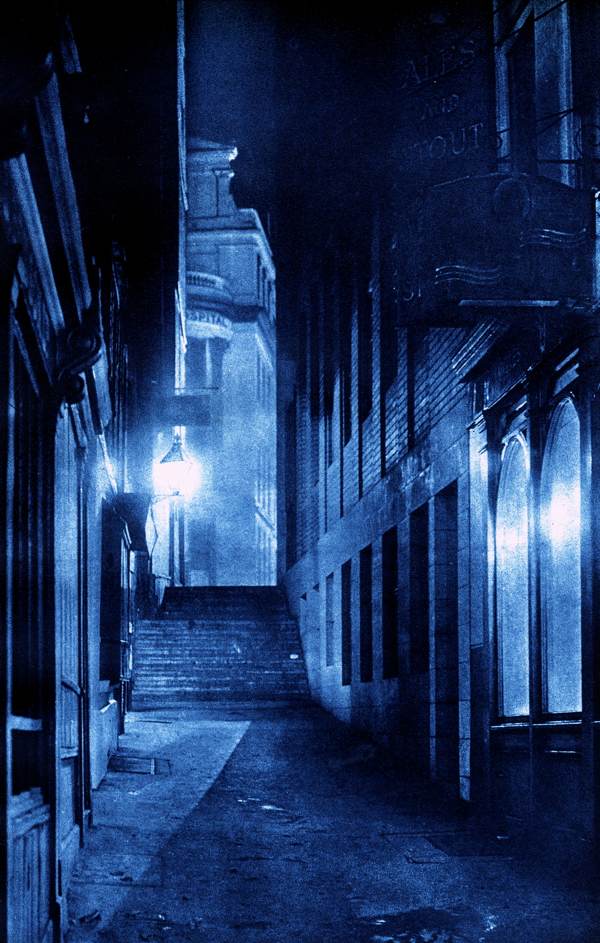
George St, Strand
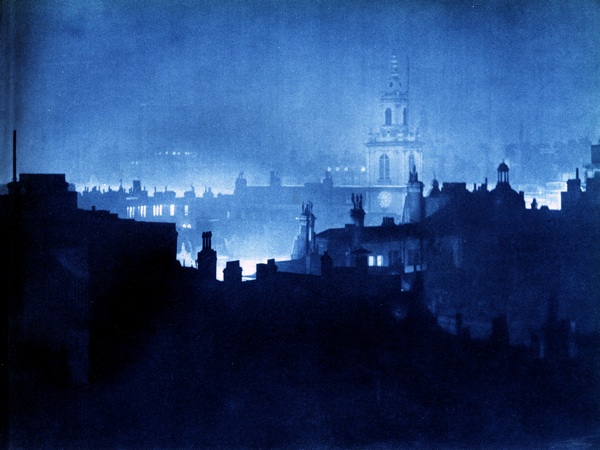
St Botolph’s and the City

St Bartholomew’s Hospital, Smithfield
Images courtesy © Bishopsgate Institute
You might like to read these other nocturnal stories
On Christmas Night in the City
Night at the Brick Lane Beigel Bakery
Night at The Spitalfields Market, 1991
At Two Temple Place
Click here order a signed copy of The Gentle Author’s ON CHRISTMAS DAY for £10
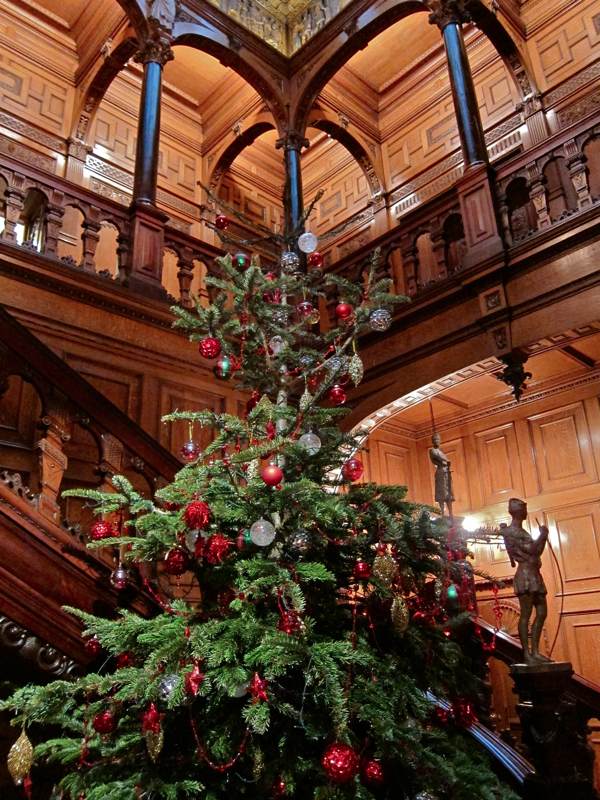
If you were to take a turning off the Strand, walk down Essex St, then descend Milford Stairs to Milford Lane, emerging within the shadow of the nineteenth century edifice of Two Temple Place, then sneak between the ornate railings and slip in through a crack in the panelled door – you might find yourself alone, as I did, in the hallway of the extravagant mansion built for the reclusive William Waldorf Astor when he inherited a hundred million dollars in 1890, became the richest man in the United States and fled to London in exile.
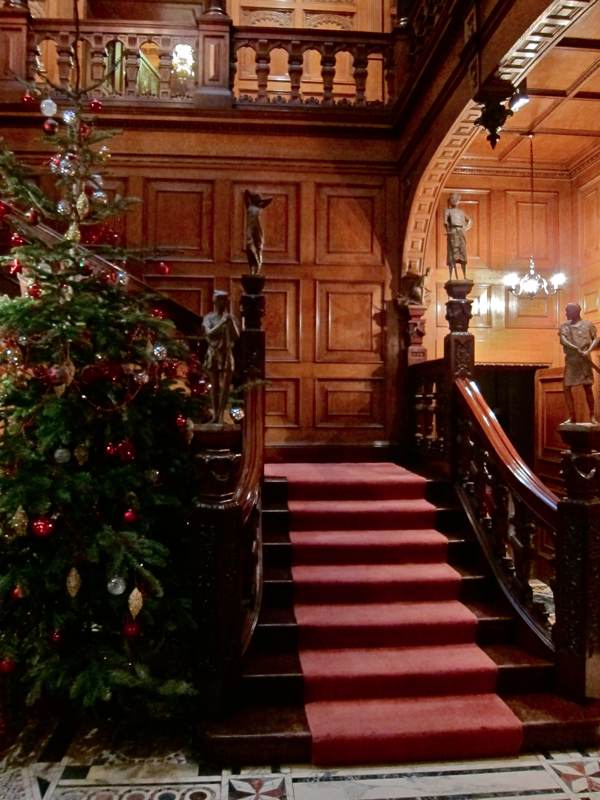
“America is not a fit place for a gentleman to live,” he declared after receiving death threats and kidnap attempts upon his children. Yet even before you know the details or learn that Astor employed pre-eminent architect, John Loughborough Pearson – luring him with an unlimited budget – you sense that you are at the portal to a fantasy. The staircase is oak, the panelling is mahogany, the pillars are solid ebony and the marble floor is inlaid with jasper, porphyry and onyx. Twelve characters from Robin Hood sculpted by Thomas Nicholls upon the newel posts emerge from the gloom, harbingers of another world that awaits you at the head of the stair.
So frustrated was Astor that, in 1892, he released announcements of his own death in the vain hope of winning greater privacy, only compounding his personal enigma once they were revealed as false. After Astor’s wife died in 1894, he often retreated from his family home in the more fashionable Carlton House Terrace to sleep at Two Temple Place, built as the headquarters of his sprawling business empire. “There I am safe,” he confided to Lady Warwick and showed her a lever upon the first floor which locked every entrance to the building. Similiarly at Hever Castle, Astor’s primary country residence, he had a drawbridge constructed that could be raised each night.
Two Temple Place is the glorious product of an idiosyncratic and unfettered imagination. After Astor’s death in 1919, it was rented and then sold for use as offices, only opened to visitors in 2011 by the Bulldog Trust, when it was revealed to the wider public as a lost masterpiece of late nineteenth century architecture.
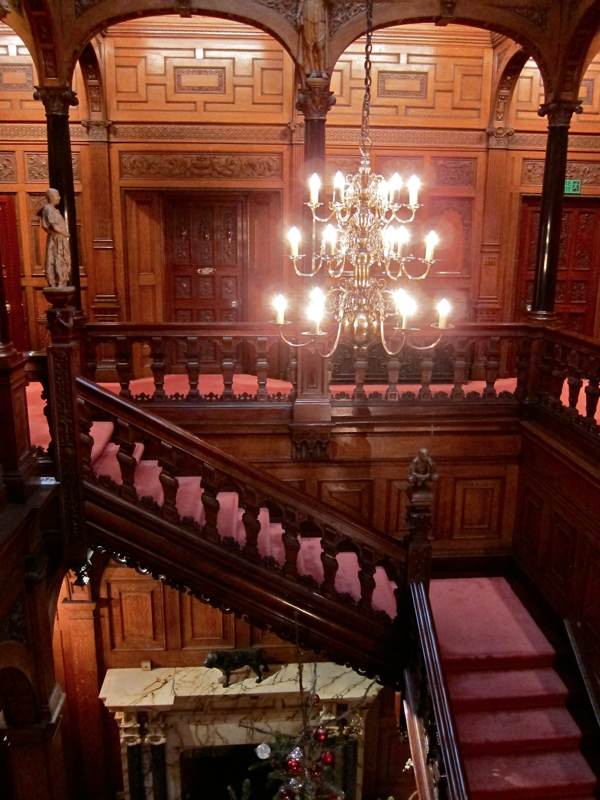
Standing at the foot of the staircase, you understand why Astor felt “safe,” in the sense that you are entirely enclosed by the wood-lined room which permits no window to the outside world. Comprising a square stairwell, the space rises to an enclosed gallery with arches similar to those in engravings by Esher.
The bitter aroma of pine from the Christmas tree rises in the soporific warmth of the central heating as you ascend in the shadows to the gallery, where the extent of the literary iconography which recurs throughout the building becomes apparent. At each corner of the stairwell stand Astor’s favourite protagonists from novels – Hester Prynne, Rip Van Winkle, The Pathfinder and The Last of the Mohicans – characteristically, all are outsiders who are misunderstood. Above them is a Shakespearian frieze with eighty-two identifiable characters from Anthony & Cleopatra, Henry VIII, Othello and Macbeth, significantly chosen as plays that dramatise the torments of power. Yet, remarkably, the proportion and order of the space, the lustre of the materials and the expertise of the workmanship place everything in perspective – the chaos of human endeavour is reconciled within this sanctuary of the imagination.
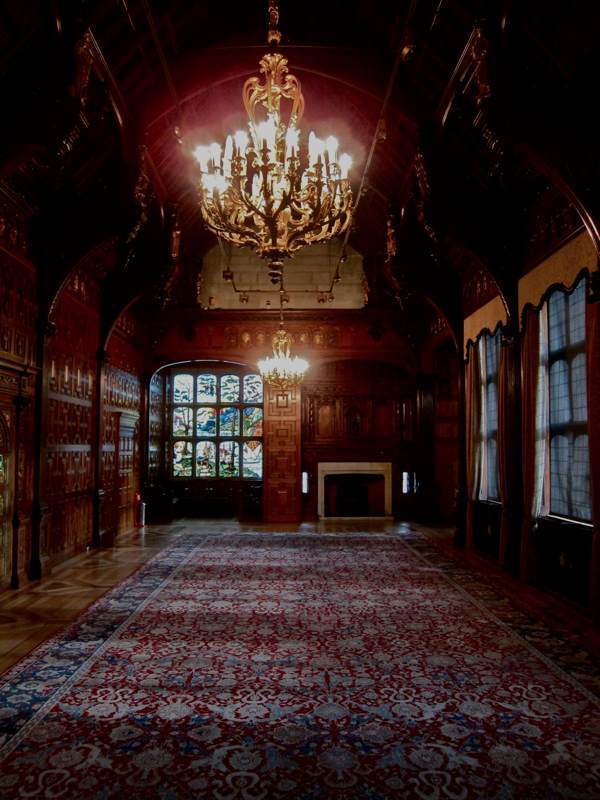
Unsurprisingly, Astor’s private office is equipped with both a secret door and discreet drawers for the storage of champagne, the latter hinting at a brighter side to his nature. Through the secret panel is the largest room in the building, known as The Great Hall or The Mediation Room, where Astor summoned those he chose to do business with. I was told that Pencil Cedar was chosen for the panelling in this room, emitting a relaxing aroma calculated to dispel any tension, yet such is the grandiose nature of the seventy-foot long hall, I doubt anyone would seek controversy in the face of its creator.
At either end, stained glass windows portray the rising and setting sun while the epic mahogany hammer-beam ceiling above is modelled upon the design of the roof in Middle Temple Hall, a wooden frieze depicts a mixture of personalities from history and myth, including Bismarck and Pocahontas, and characters from Ivanhoe perch upon the beams – gilded, just in case you might fail to notice them in the flurry of literary references. Once the time comes to leave, overwhelmed by the wealth of detail, your eye falls upon the Arthurian heroines by George Frampton languishing upon the rear of the door.
You stumble back into the vestibule, intoxicated by the decorative excess yet seduced by the dazzling assurance of your host. There are so many corners and doors within this intricate building, which retains the presence and personality of its creator so vividly, you half-expect William Waldorf Astor to appear at any moment and pull the lever to lock all exits. Yet who could object to spending Christmas holed up by the fire at Two Temple Place and letting the outside world recede far away?
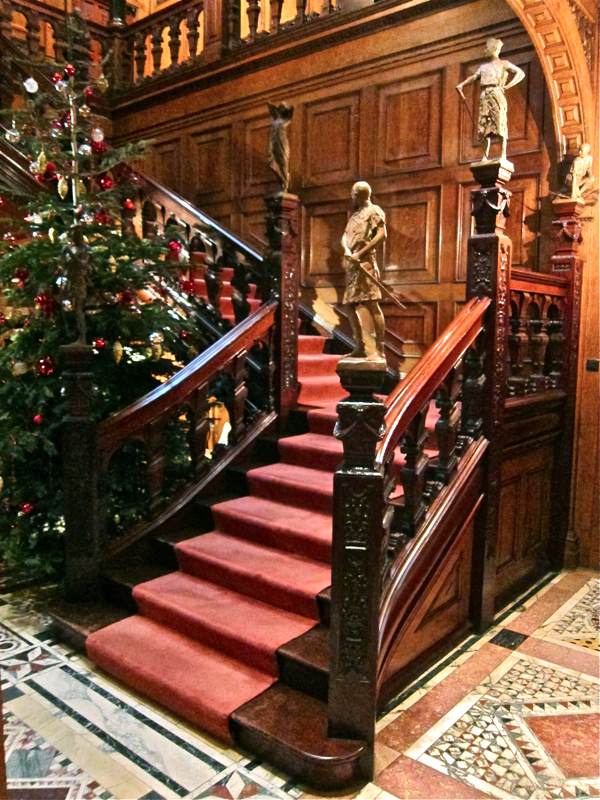
Twelve characters from Robin Hood sculpted by Thomas Nicolls adorn the newel posts
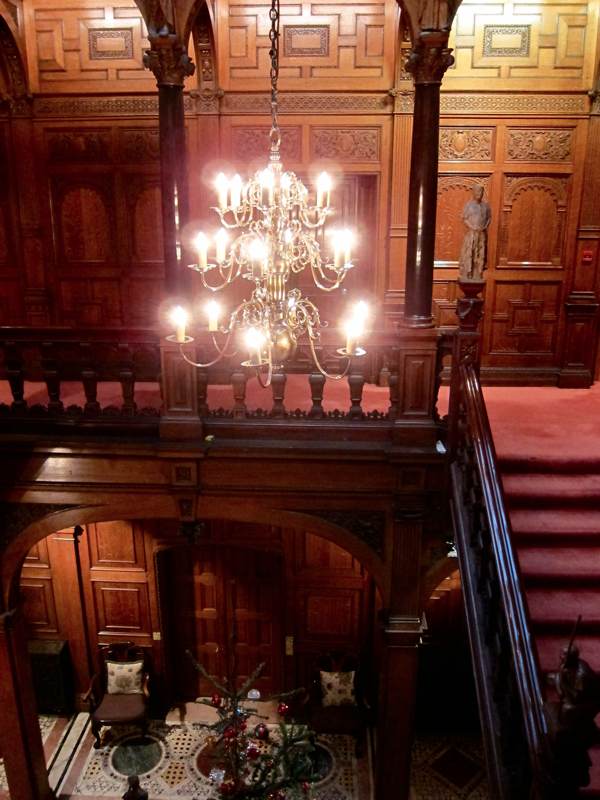
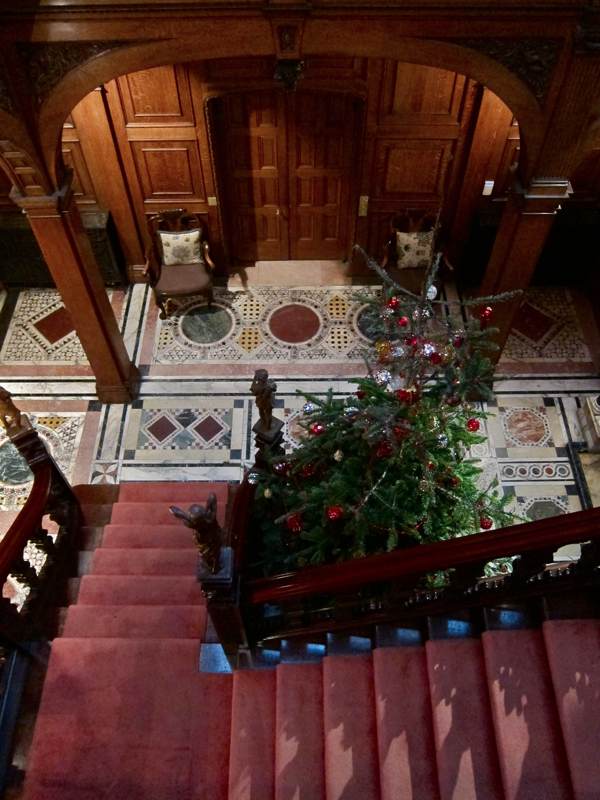
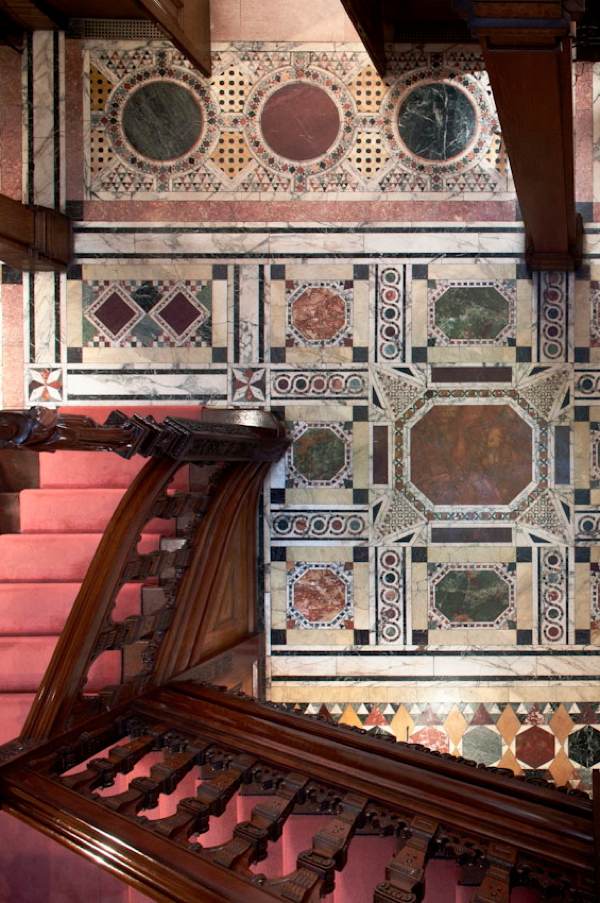
The floor is inspired by the Cosmati pavement in Westminster Abbey
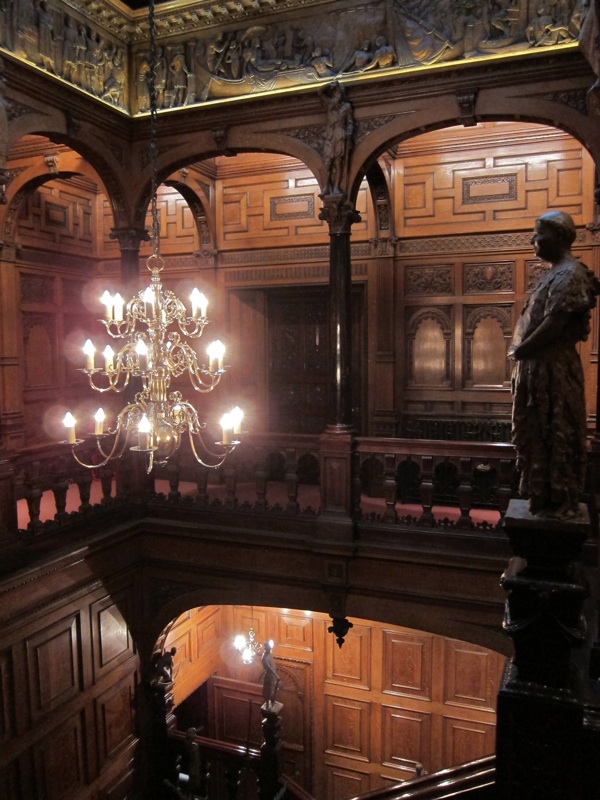
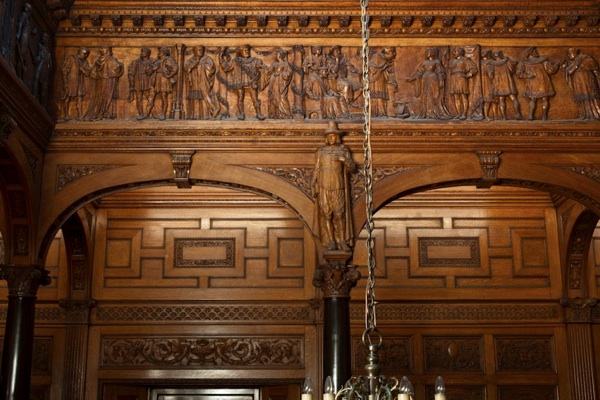
Scenes from Shakespeare with eighty-two identifiable characters filling the frieze above the stairwell
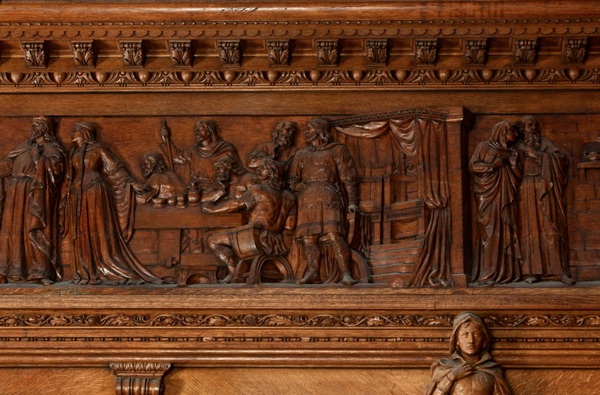
Frieze of a scene from Macbeth
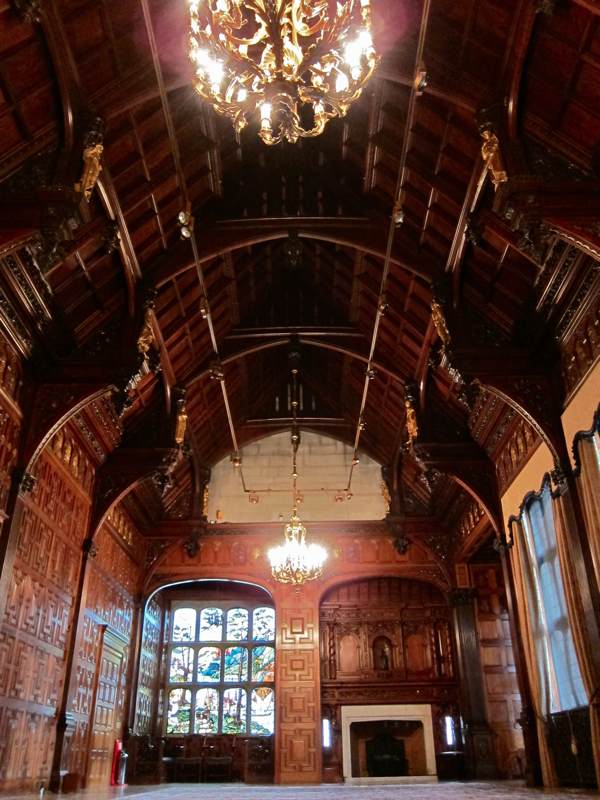
The Great Hall
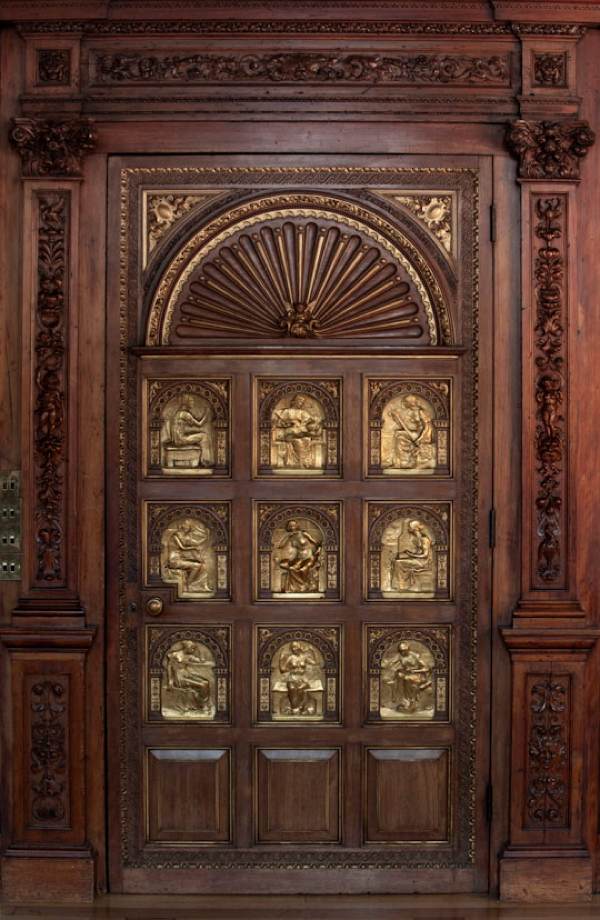
Gilt panels by George Frampton upon the door in the Great Hall depict heroines of Arthurian myth
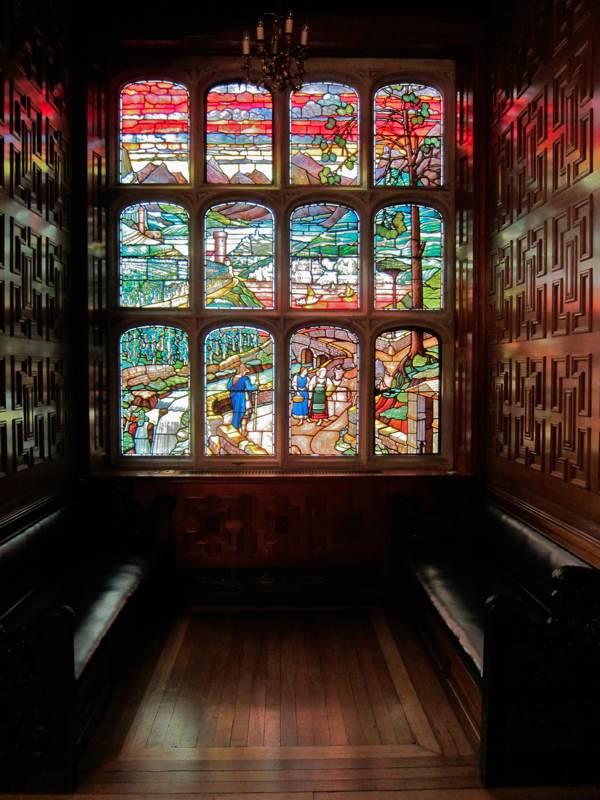
The window by Clayton & Bell at the west end of the Great Hall depicts sunset in the Swiss Alps
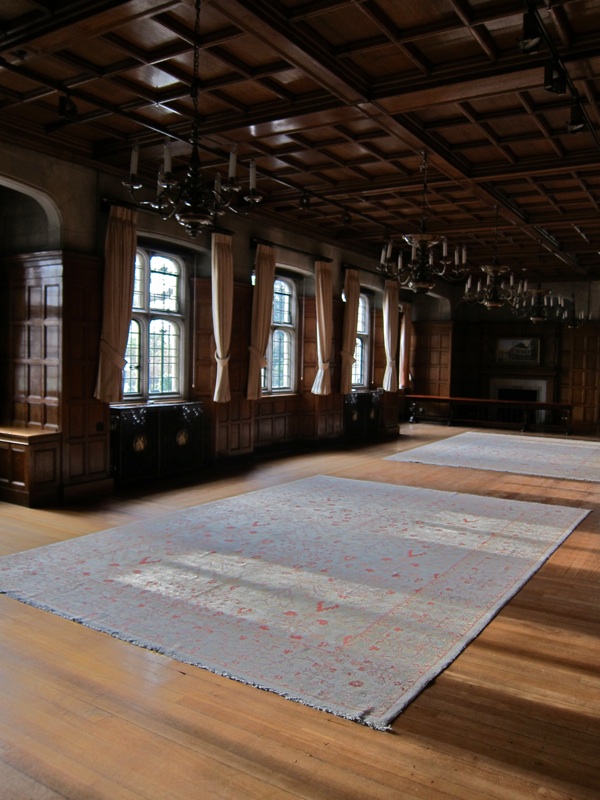
Ground floor reception room overlooking the Thames
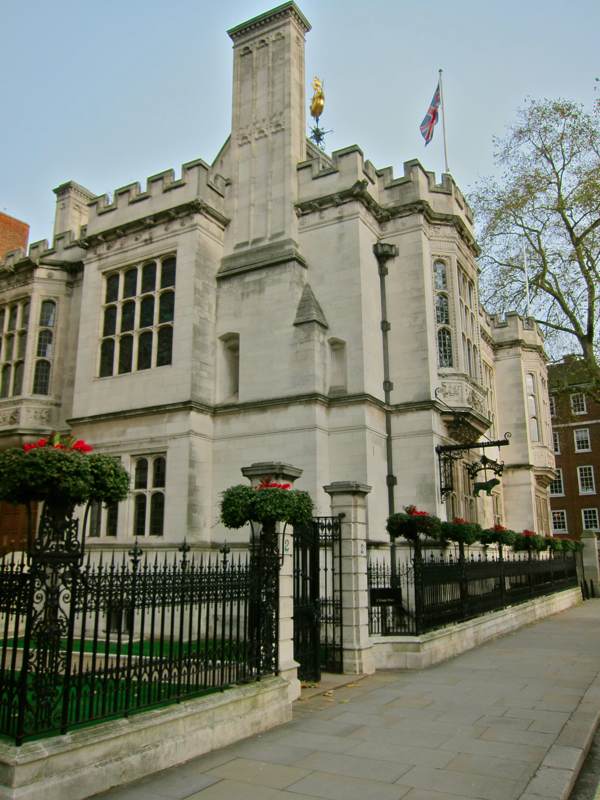
The entrance on Temple Place
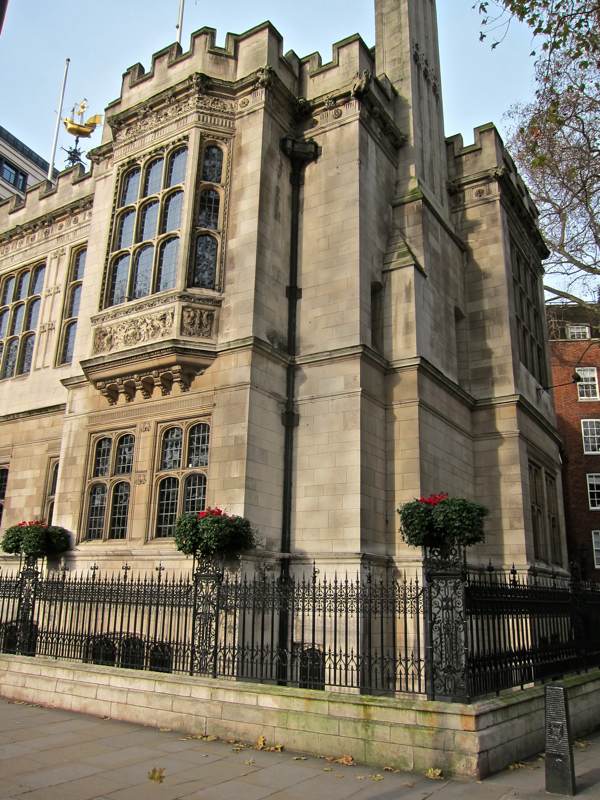
Weathervane by J. Starkie Gardner depicts Columbus’ caravel in which he discovered America
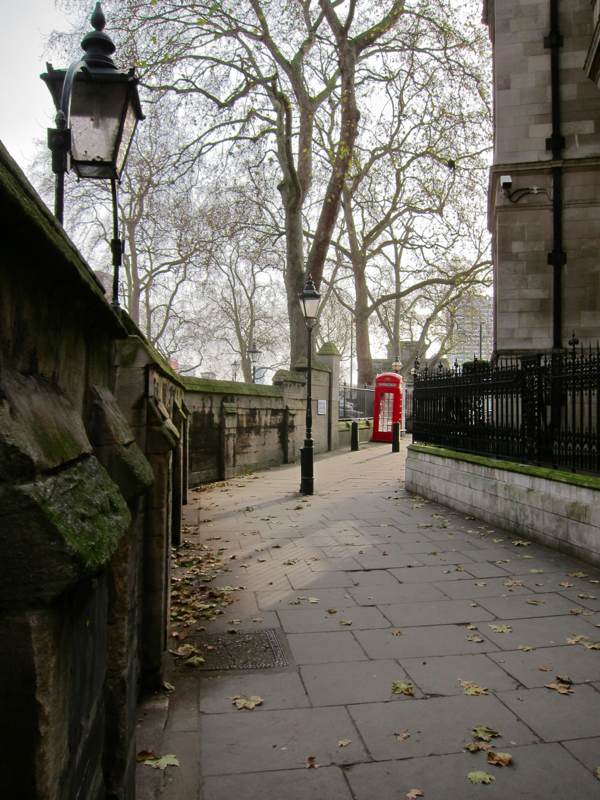
In Milford Lane
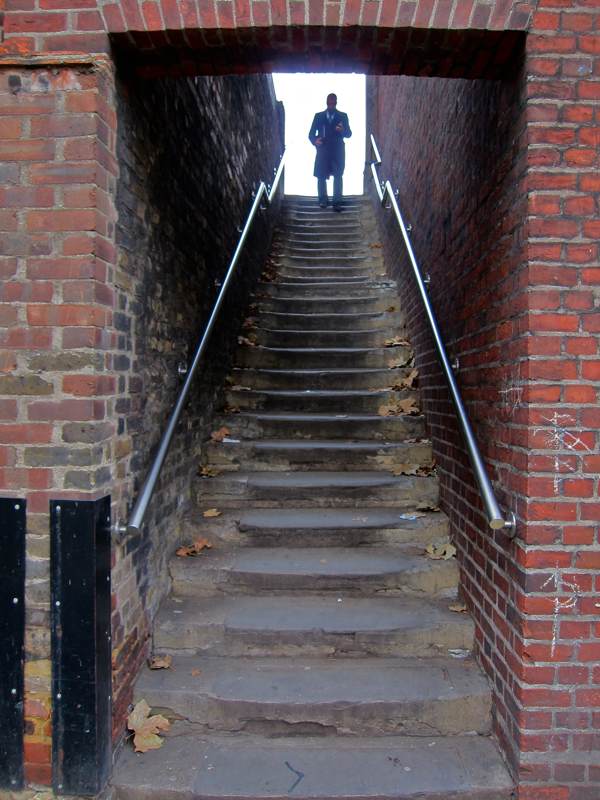
Milford Stairs leading to Essex St
Winter Light In Spitalfields
Click here order a signed copy of The Gentle Author’s ON CHRISTMAS DAY for £10

The inexorable descent into the winter darkness is upon us, even if just a couple of weeks from now we shall reach the equinox and days will start to lengthen. At this season, I am more aware of light than at any other – especially when the city languishes under an unremitting blanket of low cloud, filtering the daylight into a grey haze that casts no shadow.
Yet on some recent mornings I have woken to sunlight and it always lifts my spirits to walk out through the streets under a clear sky. On such days, the low-angled sunshine and its attendant deep shadow conjures an exhilarating drama.
In these particular conditions of light, walking from Brick Lane down Fournier St is like advancing through a cave towards the light, refracting around the vast sombre block of Christ Church that guards the entrance. The street runs from east to west and, as the sun declines, its rays enter through the churchyard gates next to Rectory illuminating the houses opposite and simultaneously passing between the pillars at the front of the church to deliver light at the western end where it meets Commercial St.
For a spell, the shadows of the stone balls upon the pillars at the churchyard gate fall upon the houses on the other side of the street and then the rectangle of light, admitted between the church and the Rectory, narrows from the width of a house to single line before it fades out. At the junction with Commercial St, the low-angled sun directed through the pillars in the portico of Christ Church casts tall parallel bars of light and shade that travel down Fournier St from the Ten Bells as far as number seven, reflecting off the window panes to to create a fleeting pattern like stars within the gloom of the old church wall.
As you can see from these photographs, I captured these transient effects of light with my camera to share with you as a keepsake of winter sunshine, for consolation when those clouds descend again.
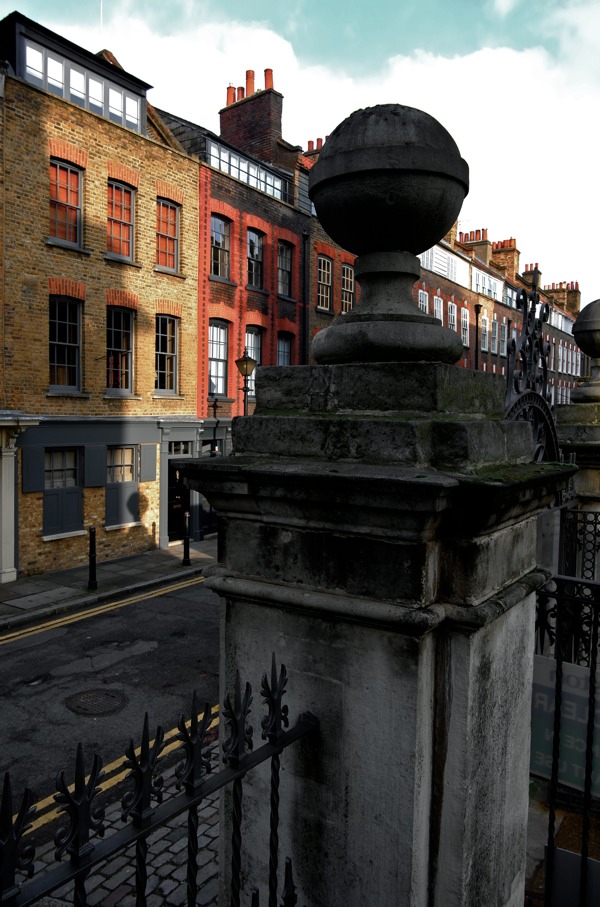
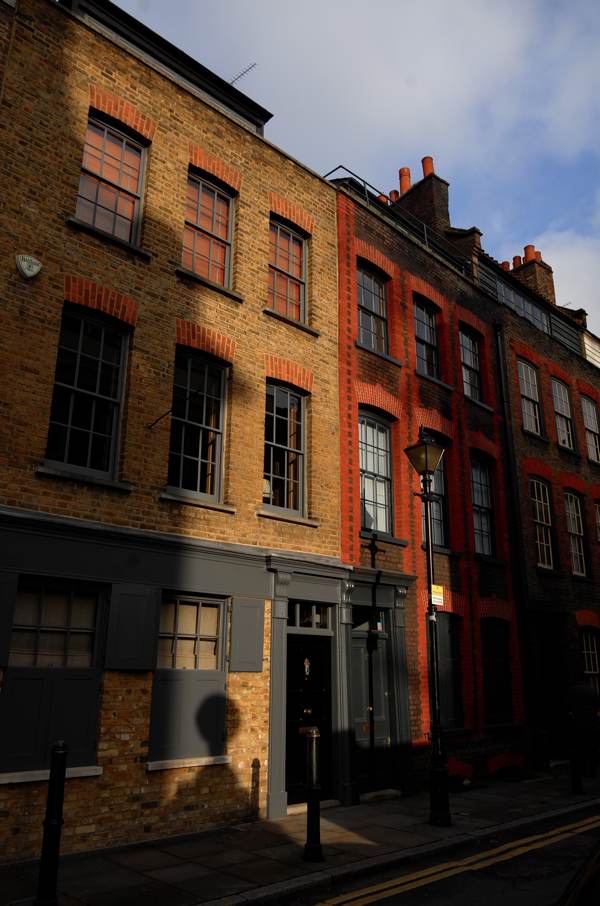

The last ray

The shadow of the cornice of Christ Church upon the Rectory


The shadow of the pillars of Christ Church upon Fournier St
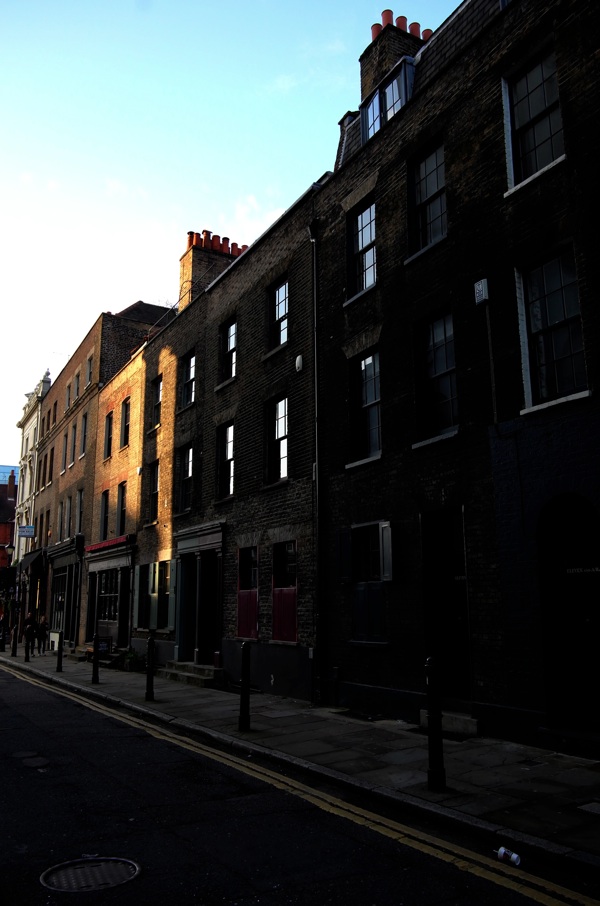

Windows in Fournier St reflecting upon the church wall


In Princelet St
You may also like to read about
At The Boar’s Head Parade
Click here order a signed copy of The Gentle Author’s ON CHRISTMAS DAY for £10
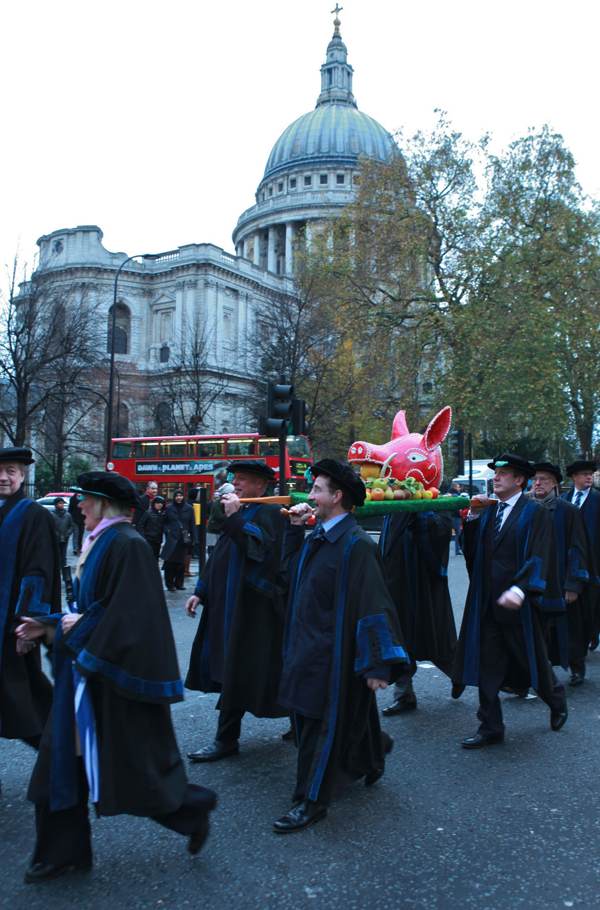
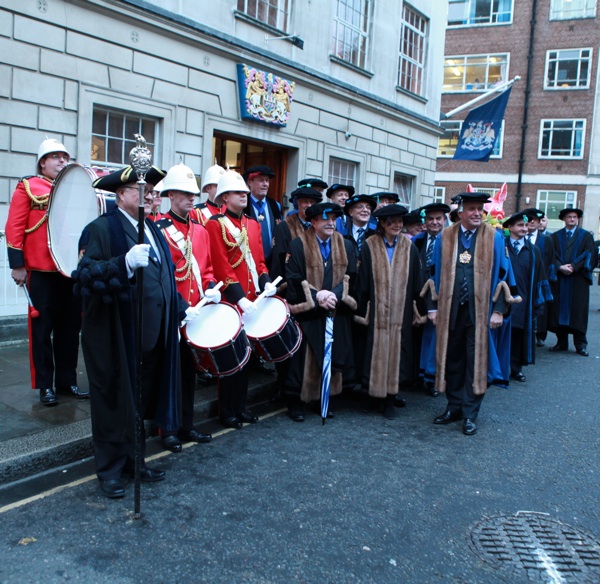
One cold day many years ago, photographer Colin O’Brien & I were greeted by the Beadle of The Worshipful Company of Butchers, when we arrived at their Hall in St Bartholomew’s Close, Smithfield, to join a small crowd eagerly awaiting the annual appearance of the celebrated Boar’s Head in the first week of Advent, marking the beginning on the Christmas season in London.
This arcane tradition which has its origin in 1343 when the Lord Mayor, John Hamond, granted the Butchers of the City of London use of a piece of land by the Fleet River, where they could slaughter and clean their beasts, for the token yearly payment of a Boar’s Head at Christmas.
To pass the time in the drizzle, the Beadle showed us his magnificent staff of office dating from 1716, upon which may be discerned a Boar’s Head. “Years ago, they had a robbery and this was the only thing that wasn’t stolen,” he confided to me helpfully, ” – it had a cover and the thieves mistook it for a mop.”
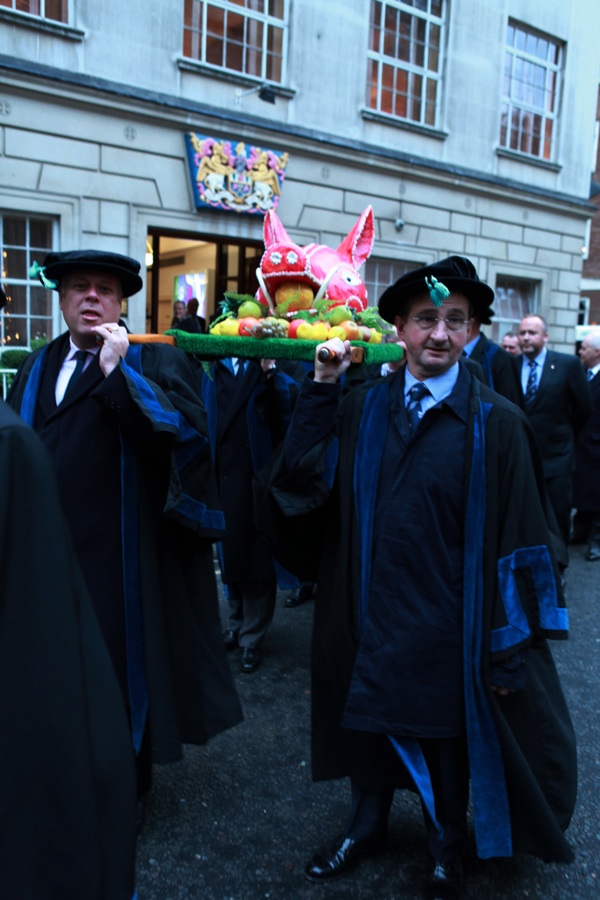
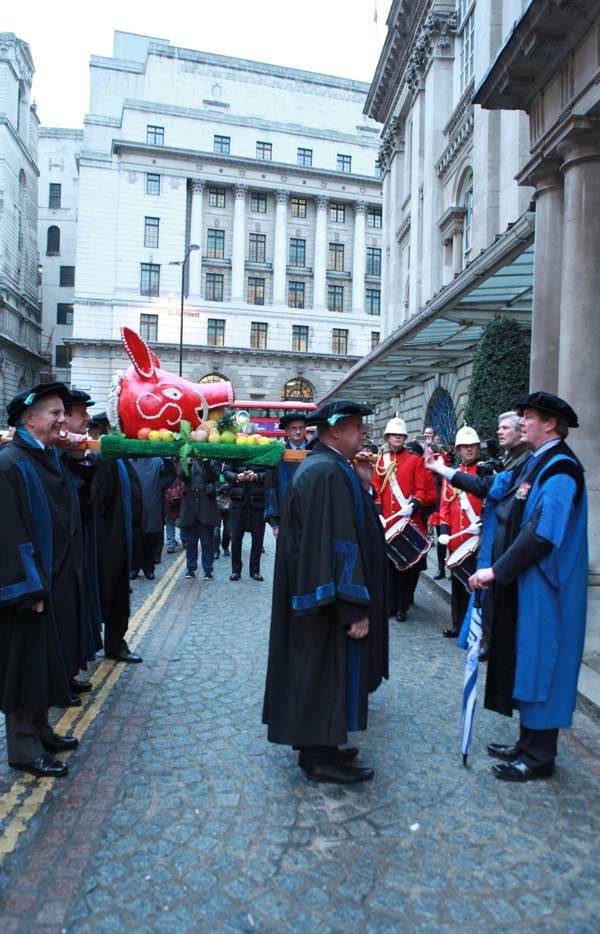
Before another word was spoken, a posse of members of the Butcher’s Company emerged triumphant from the Hall in blue robes and velvet hats, with a livid red Boar’s Head carried aloft at shoulder height, to the delighted applause of those waiting in the street. Behind us, drummers of the Royal Logistics Corps in red uniforms gathered and City of London Police motorcyclists in fluorescent garb lined up to receive instructions from the Master of the Company.
Everyone assembled to pose for official photographs with the perky red ears of the Boar sticking up above the crowd, providing the opportunity for a closer examination of this gloss-painted paper mache creation, sitting upon a base of Covent Garden grass and surrounded by plastic fruit. As recently as 1968, a real Boar’s Head was paraded but these days Health & Safety concerns about hygiene require the use of this colourful replica for ceremonial purposes.
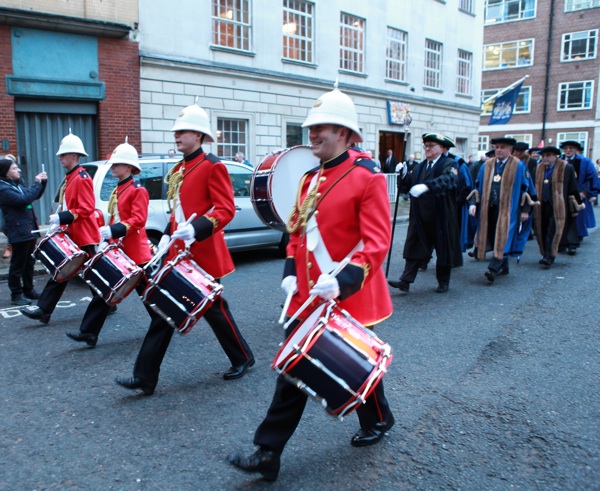
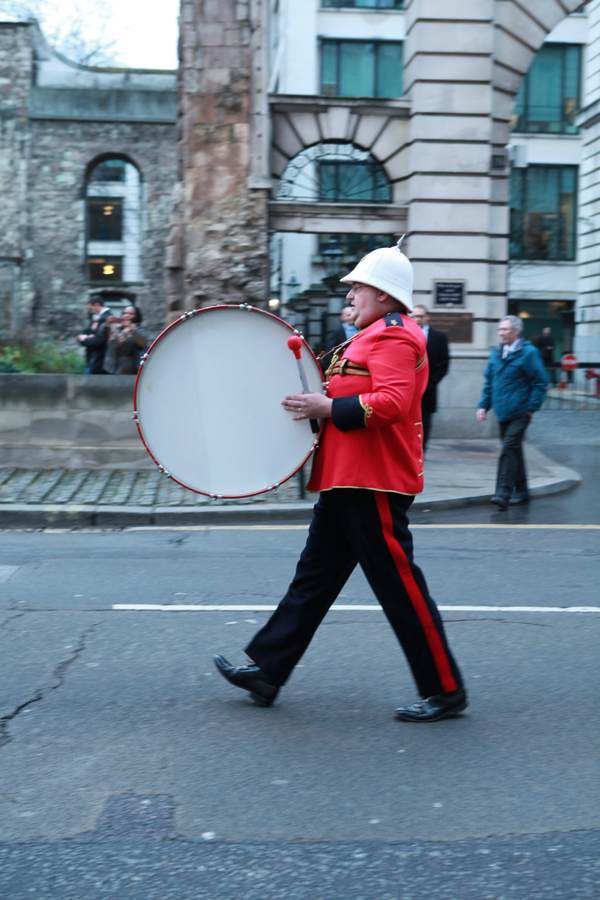
The drummers set a brisk pace and before we knew it, the parade was off down Little Britain, preceded by the police motorcyclists halting the traffic. For a couple of minutes, the City stopped – astonished passengers leaned out of buses and taxis, and office workers reached for their phones to capture the moment. It made a fine spectacle advancing down Cheapside, past St Mary Le Bow, with the sound of drums echoing and reverberating off the tall buildings.
The rhythmic clamour accompanying the procession of men in their dark robes, with the Boar’s Head bobbing above, evoked the ancient drama of the City of London and, as they paraded through the gathering dusk towards the Mansion House looming in the east on that occluded December afternoon, I could not resist the feeling that they were marching through time as well as space.

Neil Hunt, Beadle of The Worshipful Company of Butchers
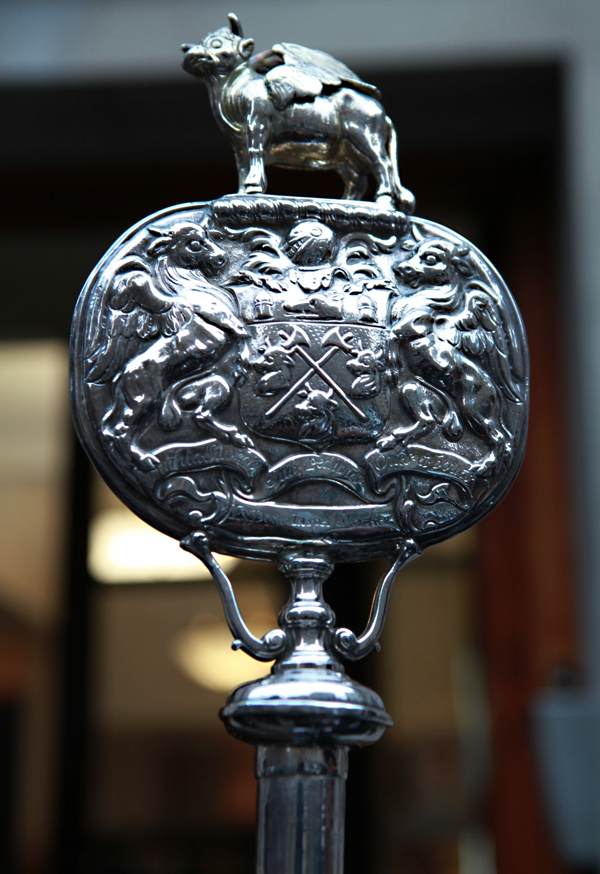
The Beadle’s staff dates from 1716
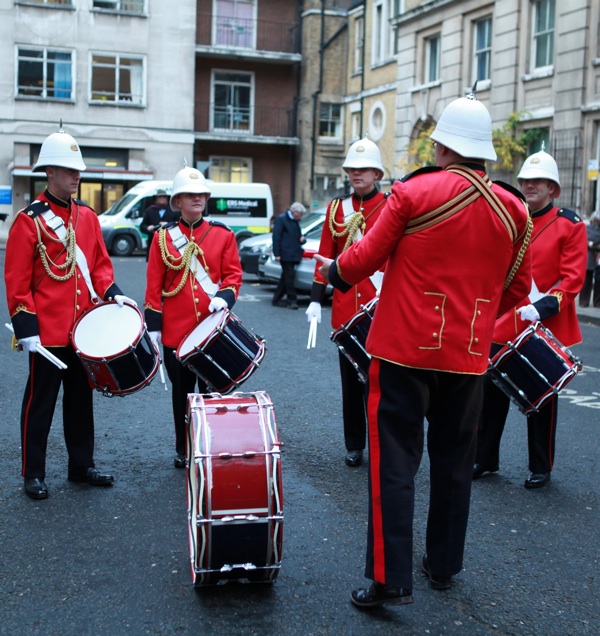
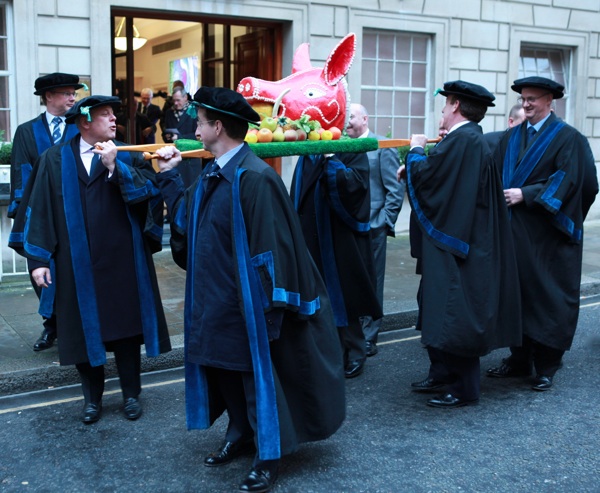
Leaving St Bartholomew’s Close
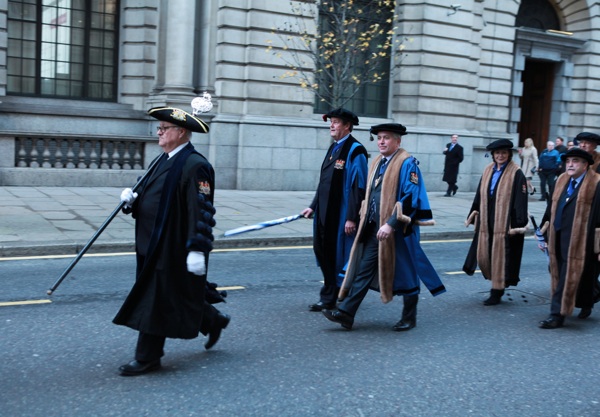
Advancing through Little Britain
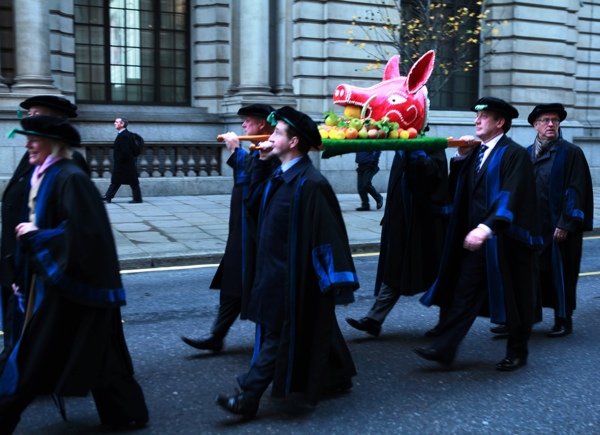
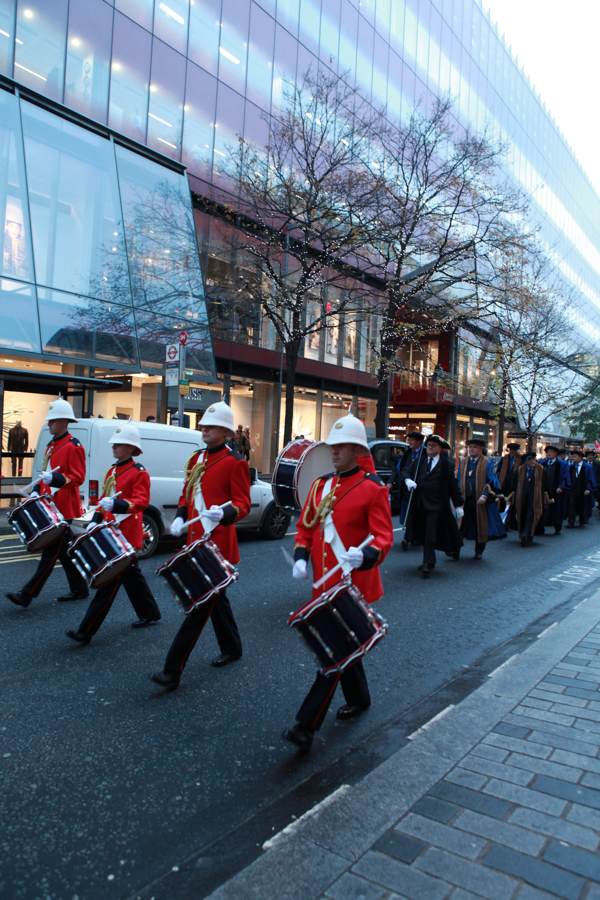
Entering Cheapside

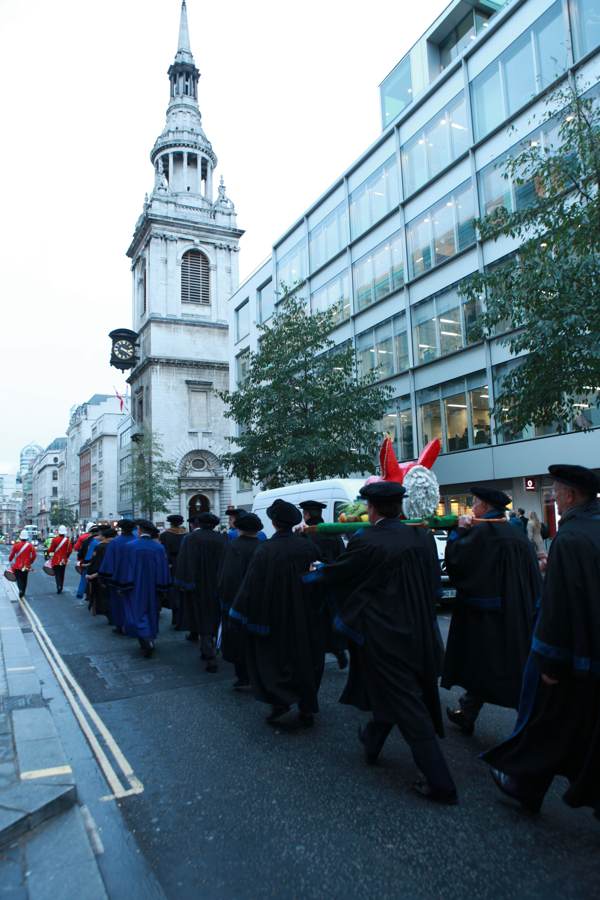
Passing St Mary Le Bow
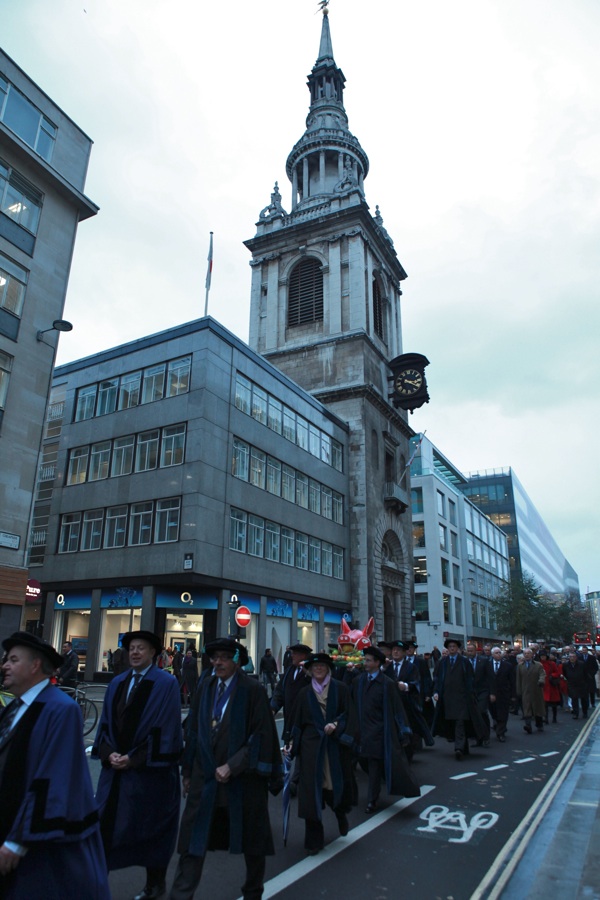
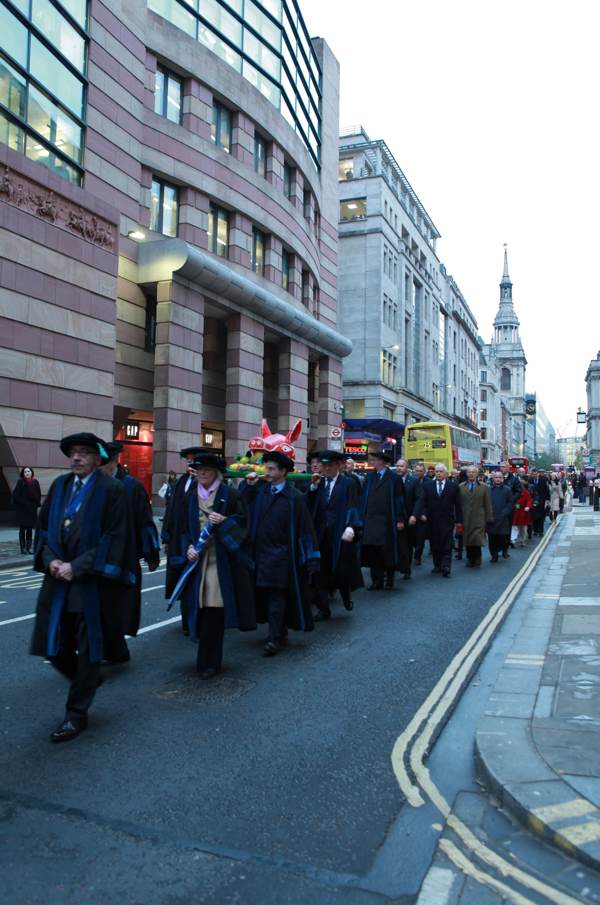
In Cheapside
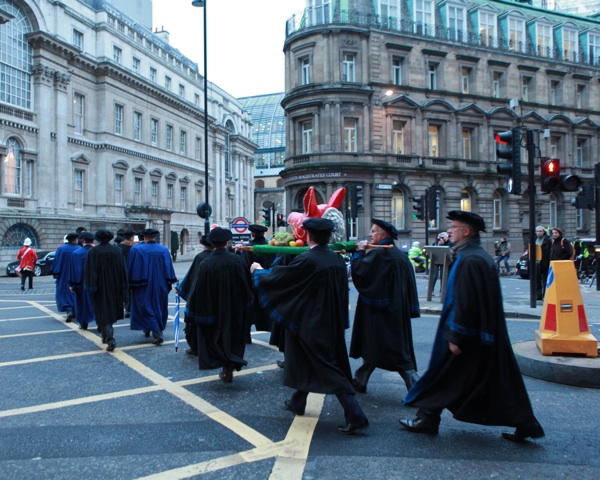
Approaching the Mansion House
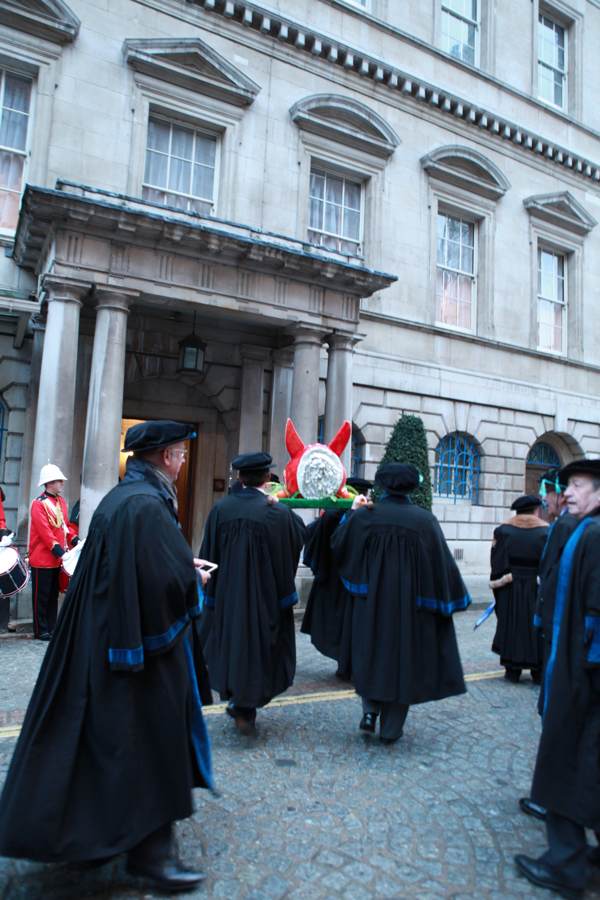
The Boar’s Head arrives at the Mansion House
Photographs copyright © Estate of Colin O’Brien
You may also like to read about
Eleanor Crow’s East End Ironmongers
Click here order a signed copy of The Gentle Author’s ON CHRISTMAS DAY for £10
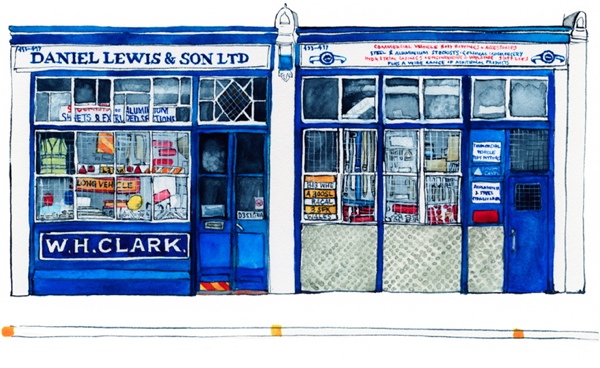
Daniel Lewis & Son Ltd, Hackney Rd
As you can see, illustrator Eleanor Crow shares my love of ironmongers. “The inventive displays and signage of hardware stores make these my favourite shopfronts,” she confessed to me, “I have only to see the serried ranks of brooms, pots, latches and pans to be reminded of some useful item that needs purchasing immediately.” Alas, three favourites have closed recently but we trust the others will be fulfilling our architectural ironmongery and plumbing requirements for years to come.
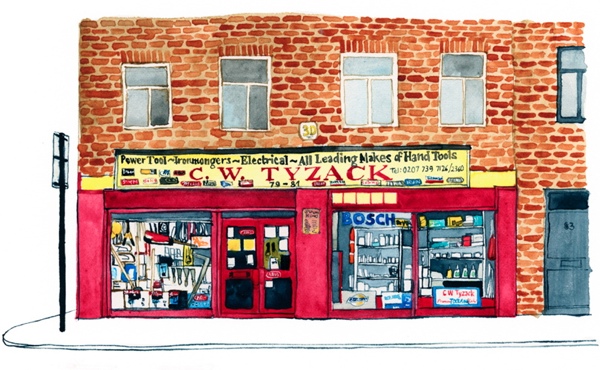
C W Tyzack, Kingsland Rd
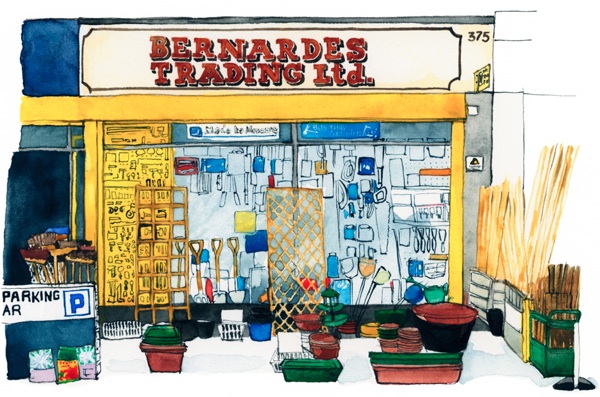
Bernardes Trading Ltd, Barking Rd
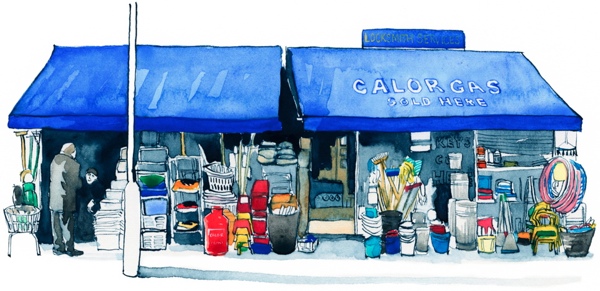
Bradbury’s, Broadway Market
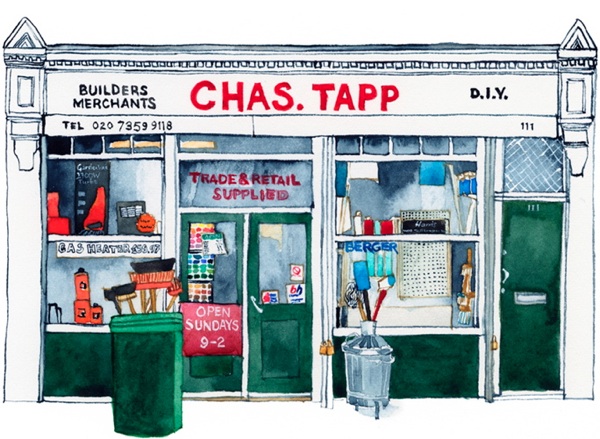
Chas Tapp, Southgate Rd
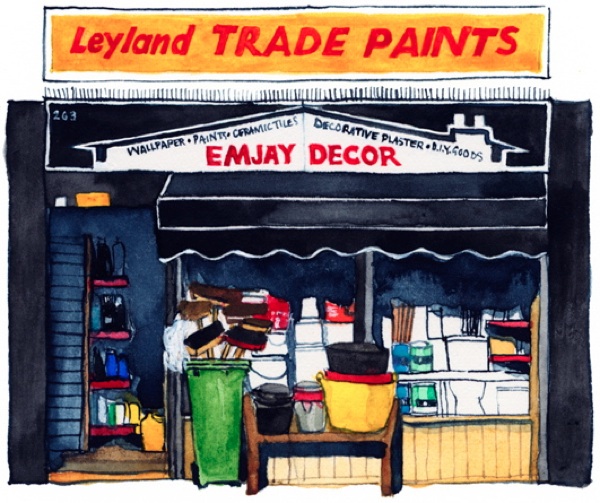
Emjay Decor, Bethnal Green Rd
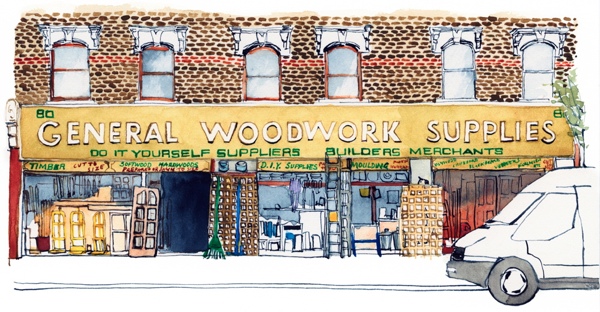
General Woodwork Supplies, Stoke Newington High St

Diamond Ladder Factory, Lea Bridge Rd
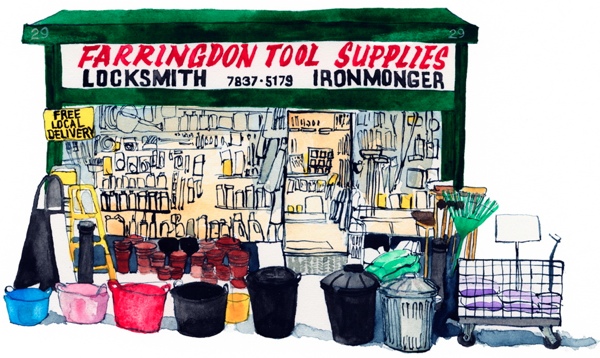
Farringdon Tool Supplies, Exmouth Market
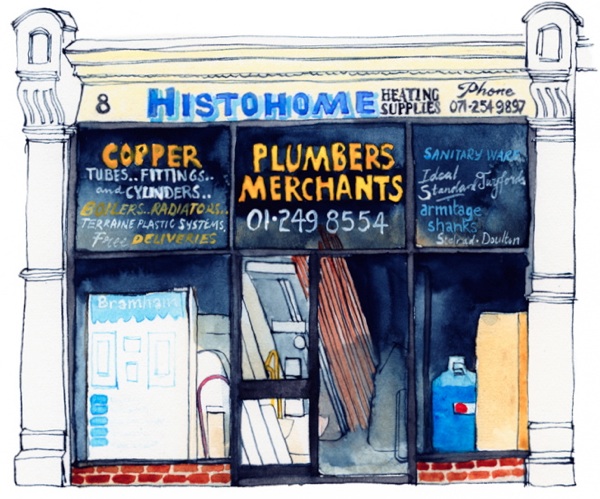
Histohome, Stoke Newington High St
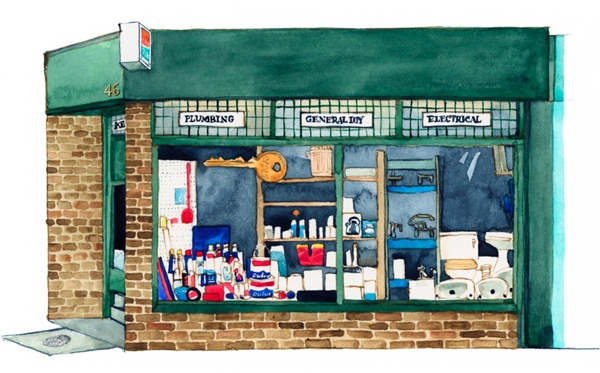
KAC Hardware, Church St
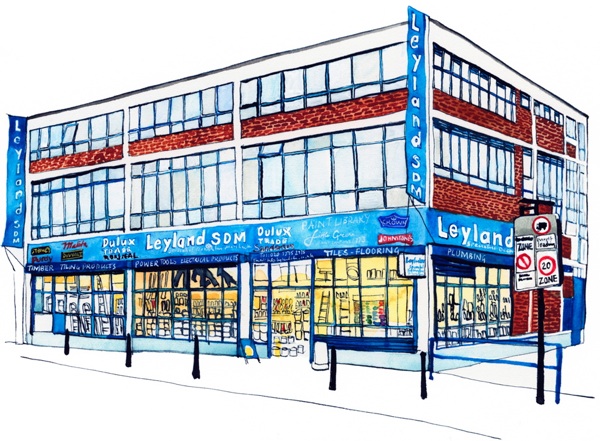
Leyland SDM, Balls Pond Rd
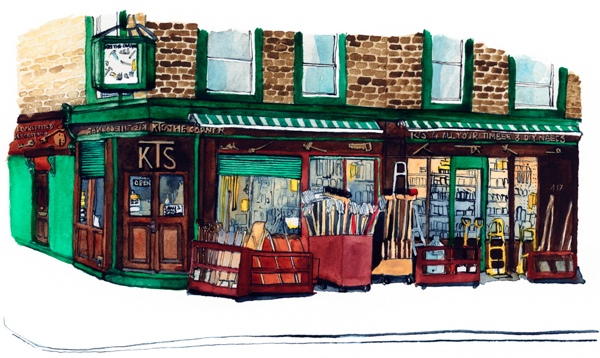
KTS the Corner, Kingsland Rd
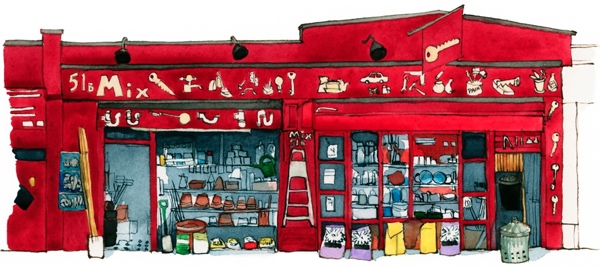
Mix Hardware, Blackstock Rd
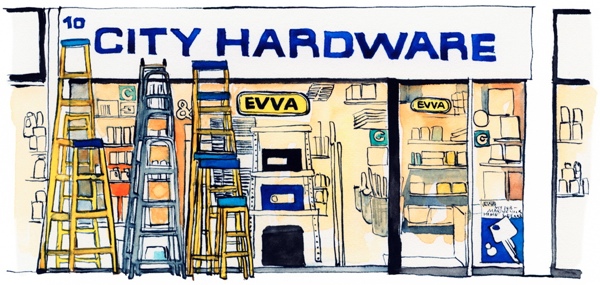
City Hardware, Goswell Rd
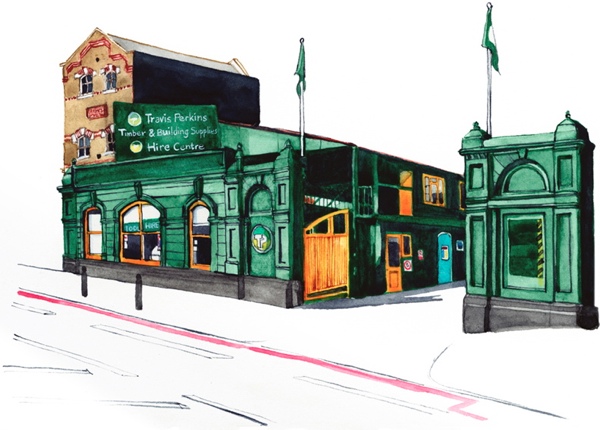
Travis Perkins, Kingsland Rd
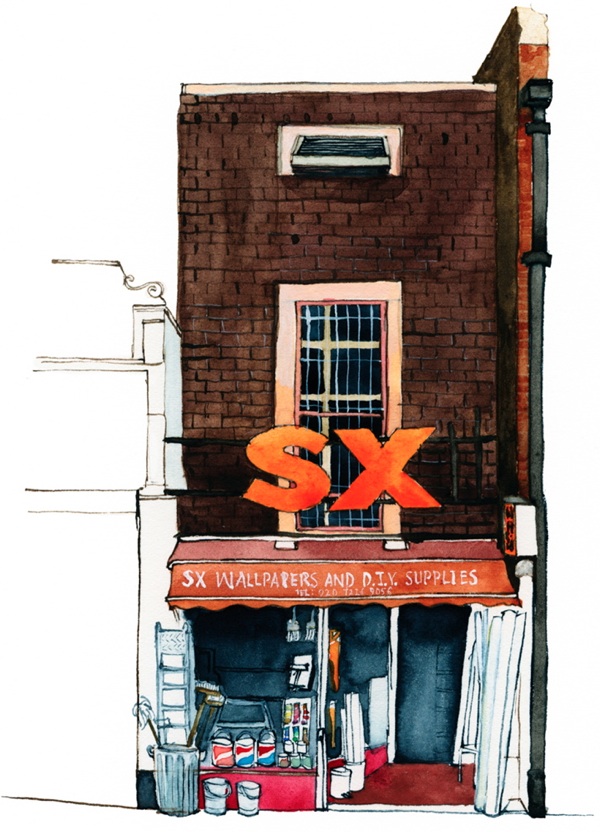
SX, Essex Rd
Illustrations copyright © Eleanor Crow
You may also like to see Eleanor Crow’s other East End illustrations
Eleanor Crow’s East End Bakers
Eleanor Crow’s East End Fish Shops
and read about more ironmongers
At London’s Oldest Ironmongers
Receipts from London’s Oldest Ironmongers
George Fuest, Baker
I am reading my short story ON CHRISTMAS DAY this Saturday 2nd December at 11am as part of the BLOOMSBURY JAMBOREE at the Art Workers’ Guild in Queens Square, WC1N 3AT.
CLICK HERE FOR TICKETS
CLICK HERE TO ORDER A SIGNED COPY FOR £10
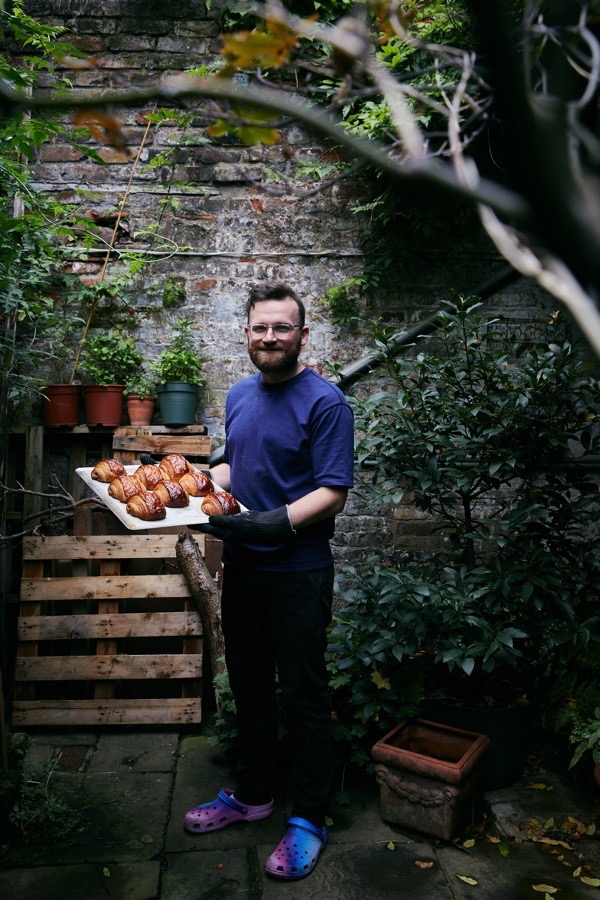
George Fuest by Patricia Niven
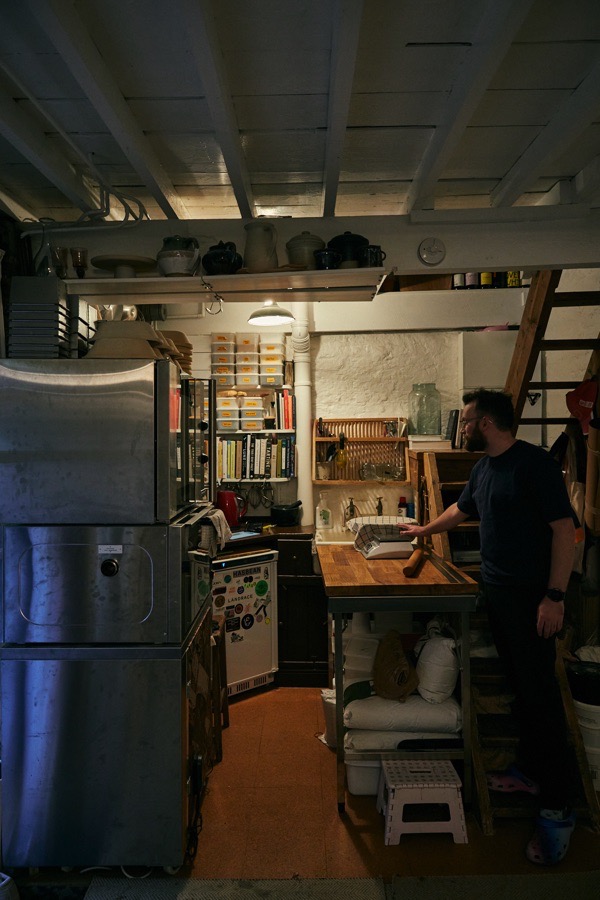
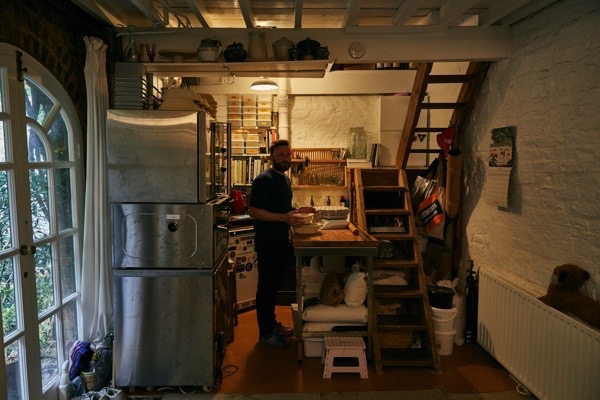
Last January, I was intrigued to hear of a baker running a solo bakery from a shed in the backyard of a house in Fournier St, by the name of Populations Bakery. Orders could placed online, I learnt, and collected from the front door direct from the baker George Fuest on Friday. So I ordered Galettes des Rois, without any expectation but as a treat to lift my spirits in the first weeks of New Year, only to be astonished by the sophistication and accomplishment of these sweet treats.
Over the past year, a stream of delights followed including a magnificent Simnel cake at Easter and an unforgettable birthday cake in the autumn – all evidence of a truly outstanding talent in baking. Then last week I happened to meet George one cold morning in the cycle lane in Westminster just below Big Ben as it struck nine. He was on his way to make deliveries but he stopped his bike and handed me a mince pie. It was my first Christmas moment and now I am spoiled because I cannot imagine any other being as good as George’s.
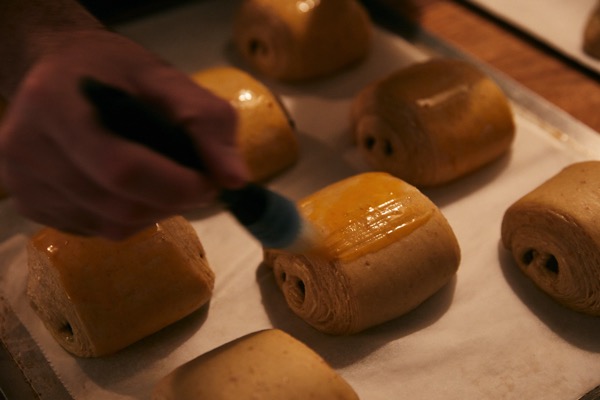
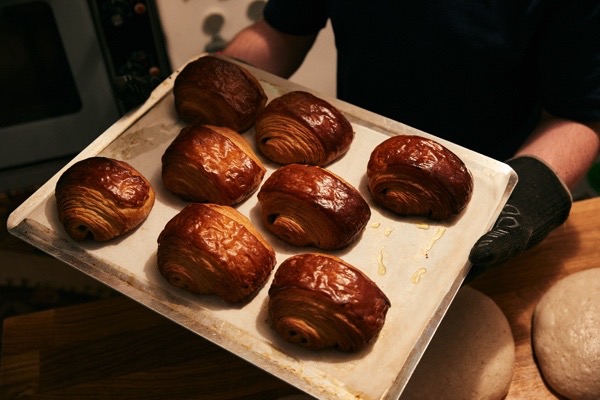
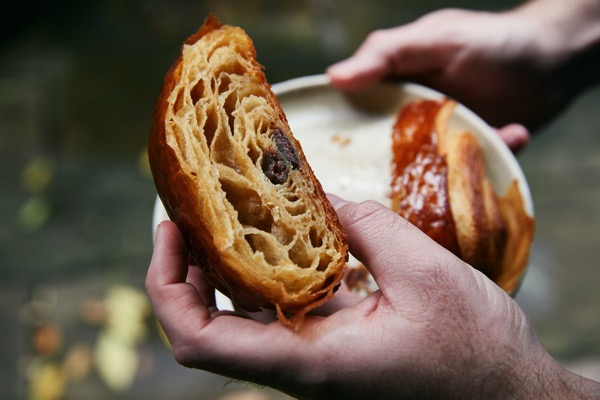
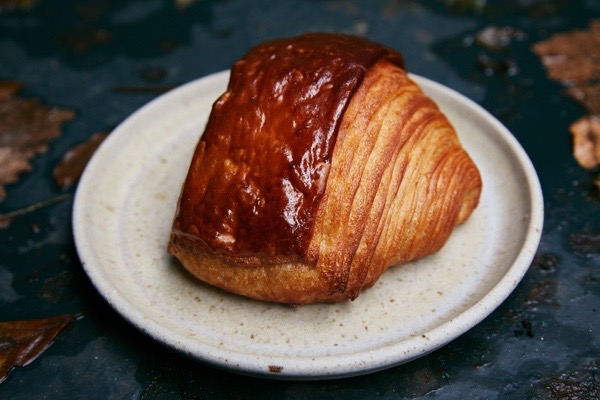
Contributing photographer Patricia Niven & I joined George for a session in the bakery recently – before the Christmas rush began – to see for ourselves what goes on. George baked loaves of bread, croissants, danish pastries and pains au chocolate with an ease which belied his precision and expert judgement, while he explained to us how and why he conjured his bakery into being in the house where he grew up.
“Even before Lockdown I used to make a lot of bread and pastries. When I left university, I was trying to start a website and to finance that I worked as bike courier for Little Bread Pedlar delivering pastries to coffee shops. That was when I realised I just really enjoyed eating pastries and it inspired me to start baking.
I started working at a coffee shop as a barista because I wanted to get into the coffee industry. But then, when Lockdown happened, I started baking a lot more regularly and delivering to friends and family, mostly as a way to have something to do, to get out on my bike and go and see people, delivering supplies. Then I did some charity fundraisers because people wanted to pay for my pastries but I did not think they were good enough, so I asked people to make donations to charity rather than take money from them. And it grew from there.
I was attracted to the mission of a bakery employing heritage grains, supporting farmers that are focussing on regenerative agricultural practices. I realised I really wanted to be a baker. I am interested in being the middle person between the farmer and the customer, and promoting this approach to baking.
During Lockdown I could get on my bike and deliver direct. I used to bake though the early hours of the morning and then be cycling around London for six or seven hours a day. Now people come and collect, and I have some drop-off points around London.
I am self taught though a lot of trial and error, and a lot of reading recipes. And I did work experience at Flore Bakery in Bermondsey and at Landrace Bakery in Bath and I did holiday cover at Toad Bakery in Camberwell. I learnt a lot that way.
When you work with specialty grain, there is a lot of trial and error anyway because you can only learn how to interpret the flour by working with it. With modern cereals, you get this complete consistency that industrial processes require – they want the baking to be the same every time.
That is not the case with heritage grain where you can get different characteristics from field to field, so every sack of flour can be quite different which means you are always learning – as a baker – the properties of the grain and what you can do with it. The baking tastes better. In commercial production, there is no requirement for flavour. Modern wheat is roller milled which strips off a lot of elements of the grain but, with stoneground, the entire grain is ground.
I call my bakery Populations because it focusses on genetically diverse wheat. With modern wheat you get a monoculture where every plant is genetically identical which makes them vulnerable to infections and pests, so they require a lot of pesticides and herbicides which are oil-based chemicals. With populations-diverse wheat, you have a blend of many different wheats which are grown in the same field and the seeds saved, and the process is repeated again and again. This creates a complete genetic diversity in the crop and it will be different in every part of the country because it will adapt to wherever it is grown.
This may sound like the past, employing traditional methods and not using modern fertilisers, but it is also the future because it is the way crops need to be grown to reduce our dependency on fossil fuels and start regenerating the land.
When I am baking, it is a lot of hours work. When I started out, I did not have many customers so I would be cycling seventy kilometres a day to deliver bread and pastries, after five or six hours of baking beforehand. It kept me fit but it was not really sustainable.
I would love to open a community-based coffee shop and bakery, and I am also enjoying small scale wholesale. This Christmas I am making mince pies for ten select coffee shops in London and it is lovely to get the feedback.
There are so many things I enjoy about this work. I love the challenge of woking with different grains and learning new methods. I still enjoy eating the pastries and my bread too!.”
Click here to order from Populations Bakery and collect from Fournier St
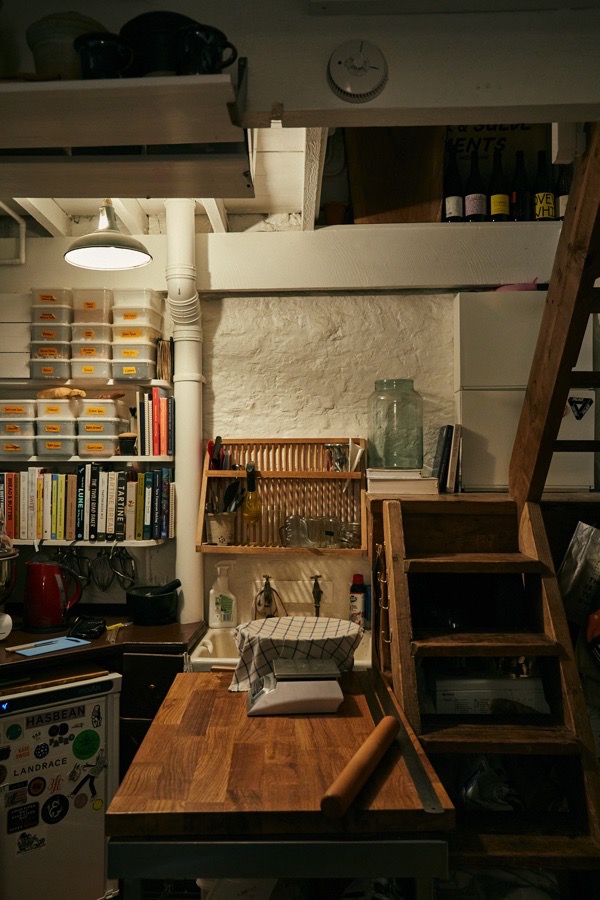
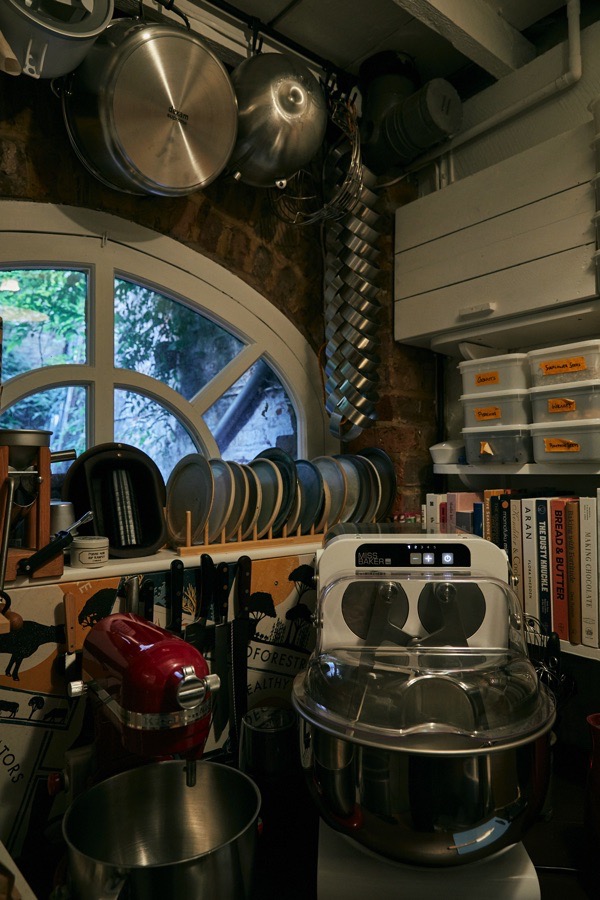
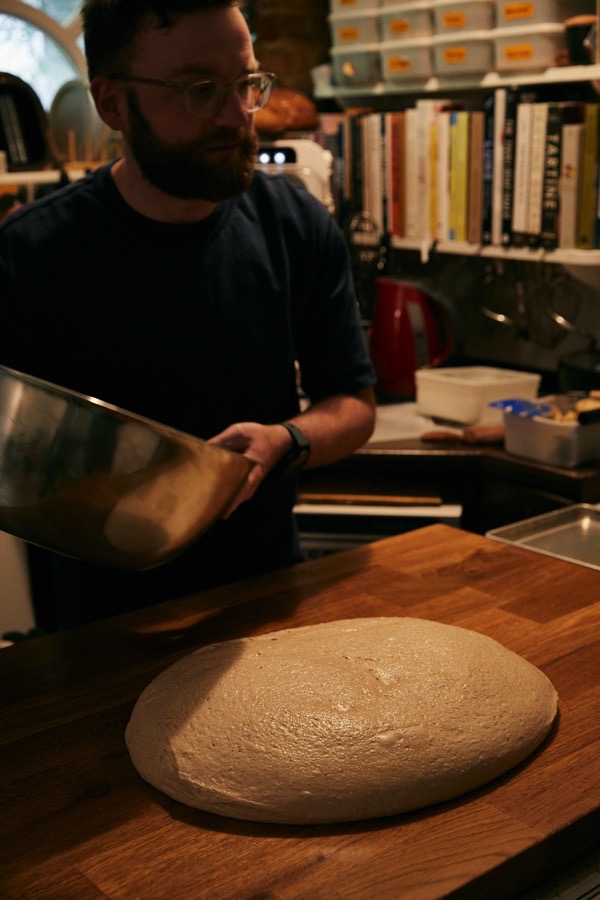
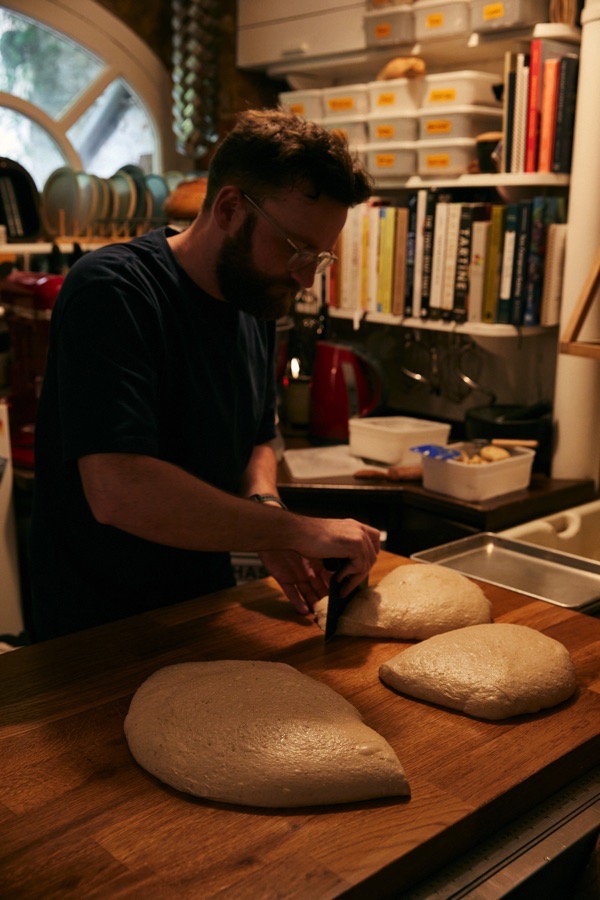
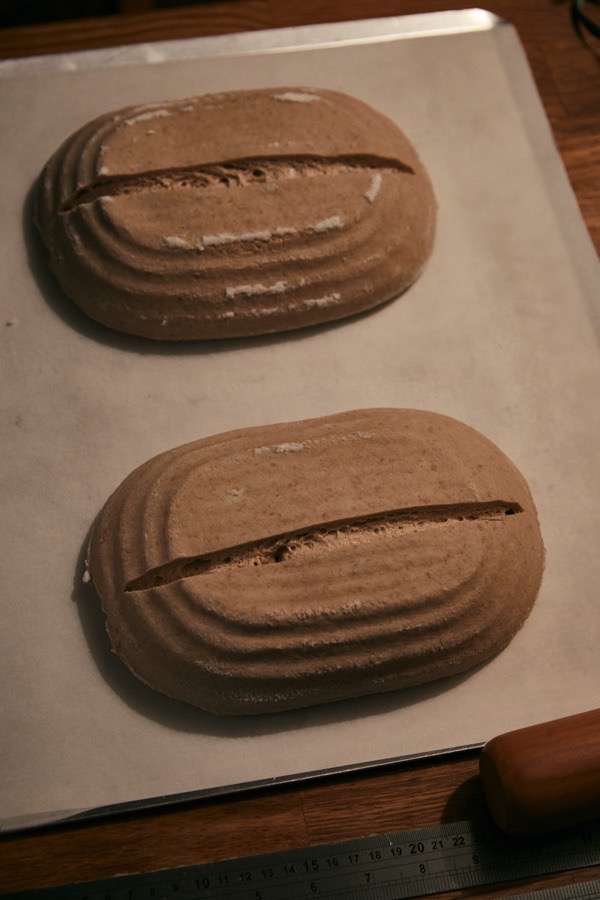
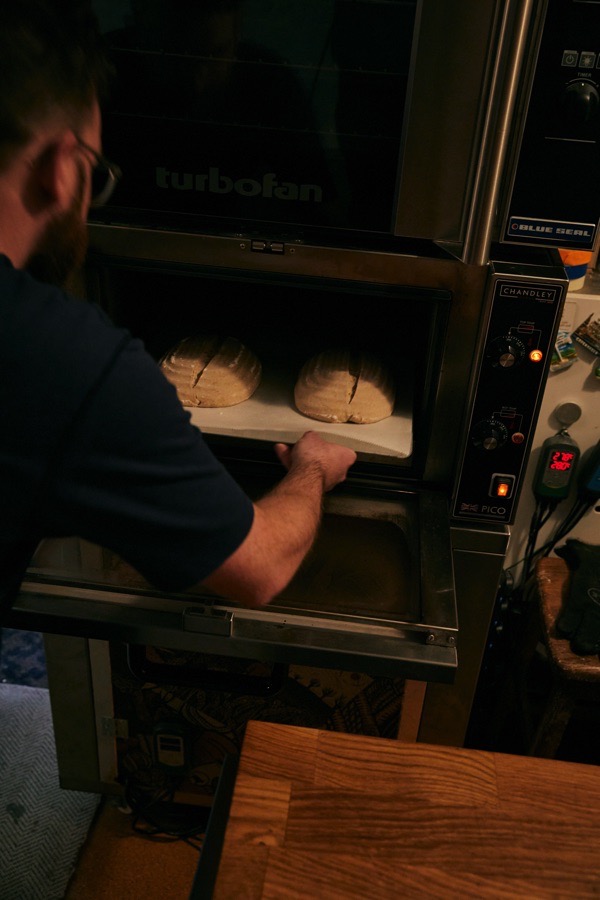
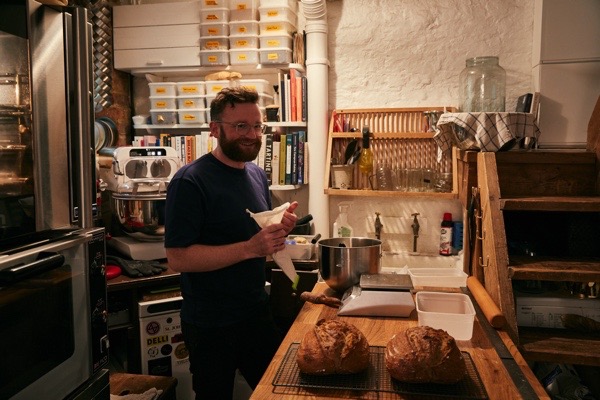
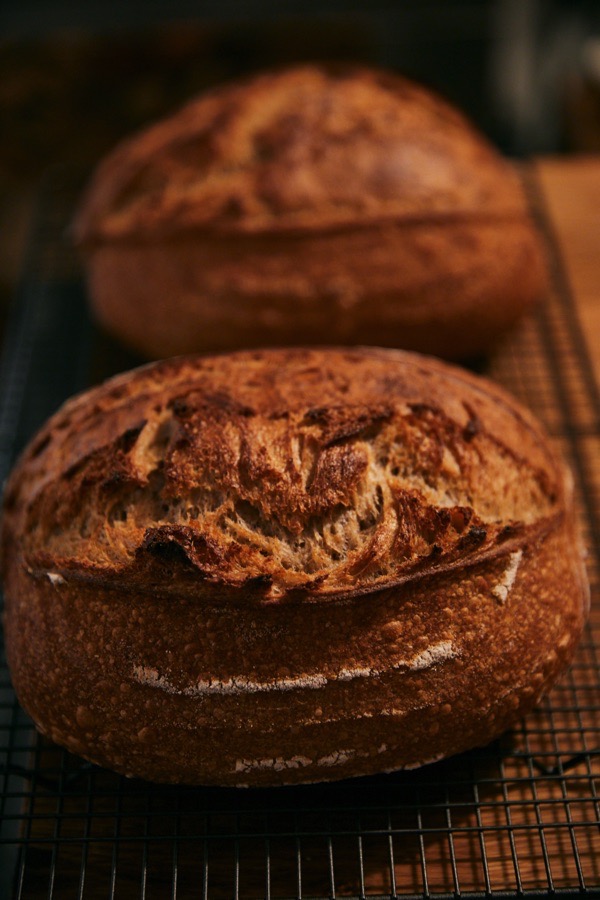
Sough dough loaves
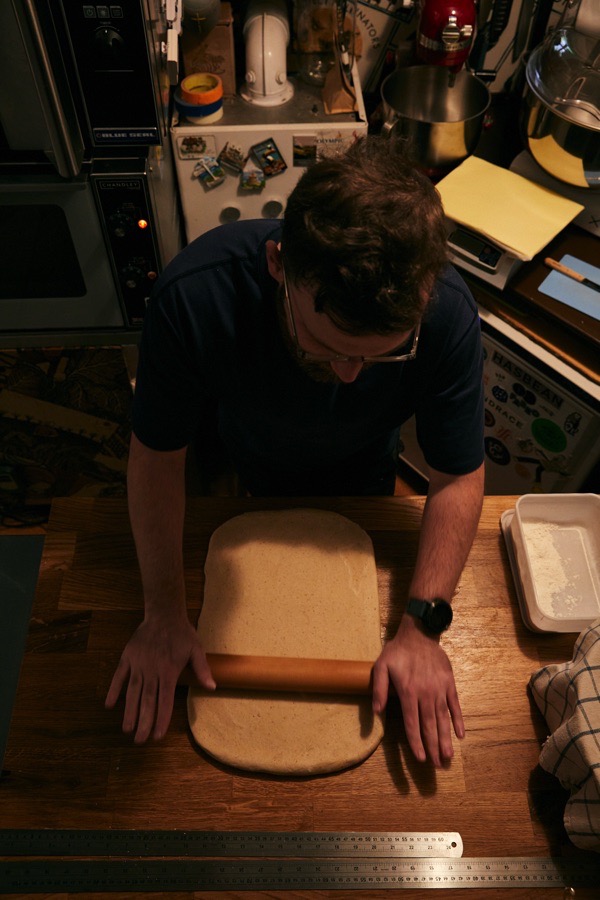
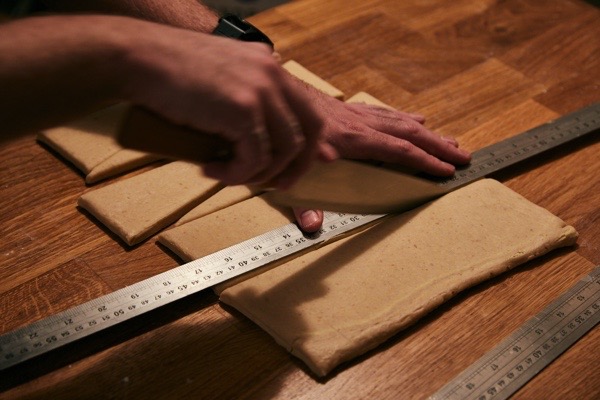
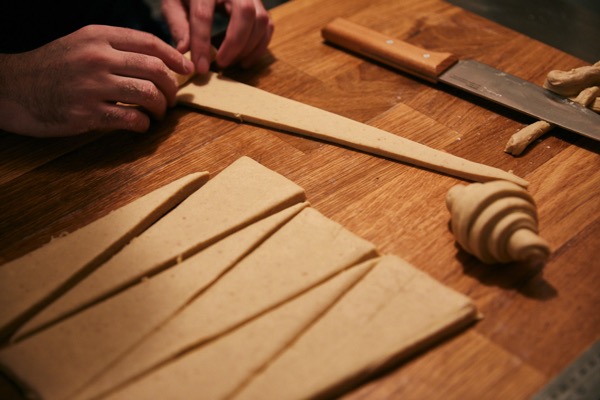
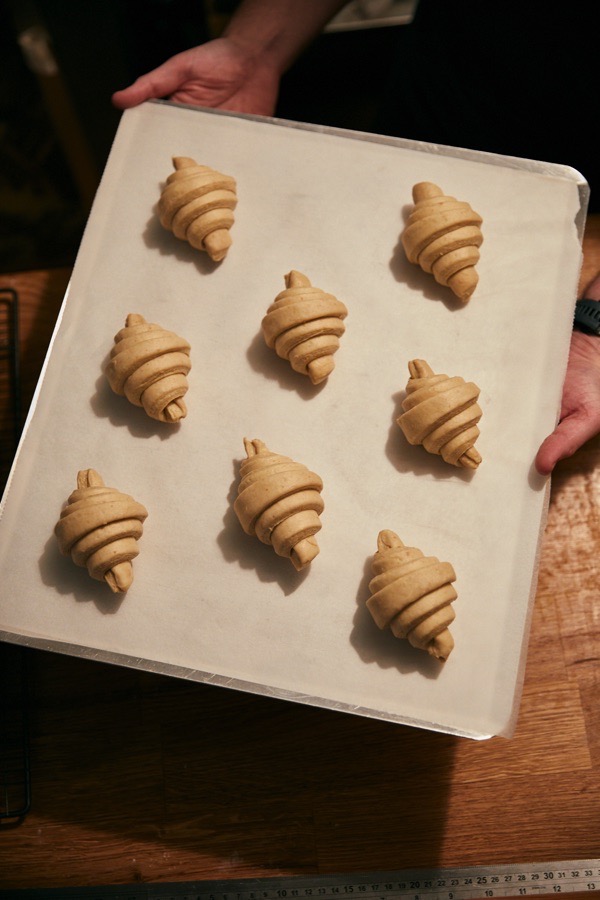
Croissants
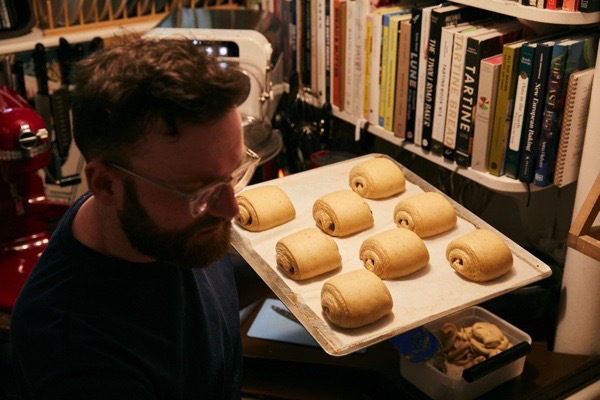
Pains au chocolate
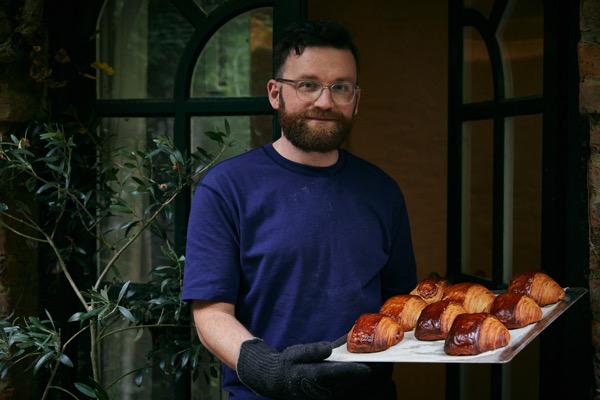

George Fuest
Photographs © Patricia Niven
You may also like to read about
Joan Lauder, The Cat Lady Of Spitalfields
I am reading my short story ON CHRISTMAS DAY next Saturday 2nd December at 11am as part of the BLOOMSBURY JAMBOREE at the Art Workers’ Guild in Queens Square, WC1N 3AT.
CLICK HERE FOR TICKETS
CLICK HERE TO ORDER A SIGNED COPY FOR £10
In my imagination, Joan Lauder (1924-2011) was a mysterious feline spirit in human form who prowled the alleys and back streets, a self-appointed guardian of the stray cats and a lonely sentinel embodying the melancholy soul of the place.
Here are Rodney Archer’s memories with Phil Maxwell’s black and white photos from the eighties and Clive Murphy’s colour pictures from the nineties.
One day, when I went round to enjoy a cup of tea and shot of rum with Rodney in his cosy basement kitchen in Fournier St, he told me about Joan, the Cat Lady, who made it her business to befriend all the felines in Spitalfields during the nineteen eighties.
Rodney: Joan went all around the neighbourhood feeding the cats regularly and she had names for them. You’d see her crouching, looking through the corrugated iron surrounding Truman’s Brewery, waiting for the cats to come and then they suddenly all appeared. I think once I saw her there and I asked her what she was doing, and she said ‘I’m waiting for the cats to appear.’
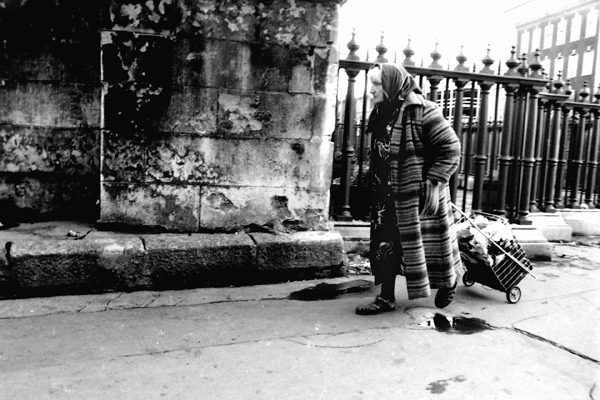
‘My darlings,’ she really did call them, ‘My darlings,’ and it was wonderful in a way that she had this love of cats and spent her life encouraging them and feeding them and keeping them alive. I could never quite work it out, but she had a bag, like one of those trolleys you carry, full of cat food. Now, either she’d taken the tops off the tins or something, since I noticed – because she had a kind of witchlike aspect – that although she put her hands right into the tin to feed them and then just threw it down, I never saw any cat food on her hands. It was like something out of Grimm’s Fairy Tales.
Over the years, I would chat to her but she was someone that you had to have some time for, because once she began she went on and on. The Cat Lady was strange – she spent all her money on the cats – she was like a character out of Dickens. She was almost a street person, except she had a place to live. And she did get benefits and she wasn’t an alcoholic or anything, she was very doughty, she had a bit of a moustache.
She was the kind of woman that, a hundred years ago, people would have been fearful of in a way. There was something awesome about her, because she had her own aura and she was there to feed the cats, and the cats were much more important to her than people. I’d talk about my cat to her and I think once she stopped by my door, and I opened it, and my cat sat looking at her.
The Gentle Author: I’ve heard she had this mantra, “Cats are better than rats.” Were there a lot of rats at that time?
Rodney: I think there were. When the market was still going and you had all the fruit and vegetables, the rats would come out to feed. I never saw that myself, but you might see a rat running along the curb. A lot of people said they were looking forward to the market closing because the area would be cleaner and neater, but I regretted that the market left and there weren’t cabbages everywhere.
The Gentle Author: Can you remember when you first saw the Cat Lady?
Rodney: I think I first saw her on the corner of Fournier St and Brick Lane. She had a huge physical endurance, but I think she must have been exhausted by her journey every day, because she would often stop for quite a long time, and she’d just be there looking around. I suppose she might have been looking for the cats. That’s why you could catch up with her and ask her how she was doing.
One day I just spoke to her, maybe I’d seen her around, and I said, ‘Are you feeding the cats?’ And she told me, and I said had a cat and so we talked about cats and the wisdom of cats and that kind of thing. And afterwards, I’d see her quite often. She didn’t talk much to me about her life – but she was the Great Mother of all the cats in Spitalfields.
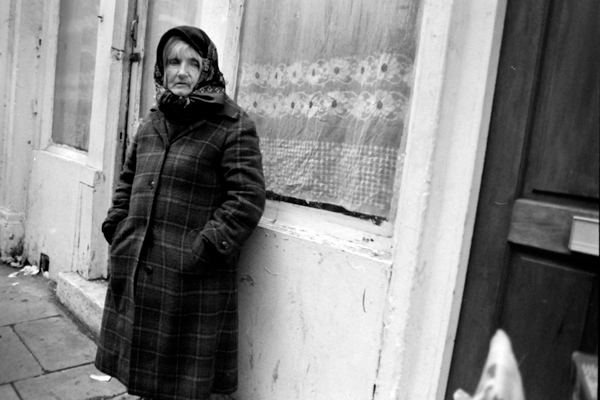
Phil Maxwell photographed Joan, the Cat Lady, in the eighties
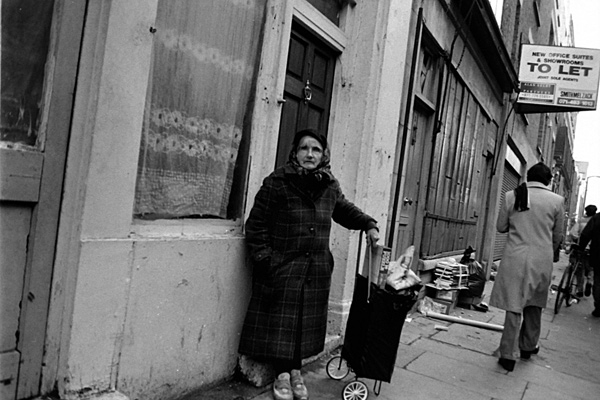

The cat lady on Brick Lane in the late nineteen eighties.
Phil: The woman in this photograph was always dressed in a head scarf and large coat. Usually she would pull a shopping bag on wheels behind her. She was the Cat Lady of Spitalfields. She knew where every cat and kitten lived in the wild and made it her task to feed them every day. Her bag was full of cat food which she would serve on newspaper at designated spots around Spitalfields.

Phil: The Cat Lady pauses for a second beside the Seven Stars pub on Brick Lane. She has just left some food in the ‘private road’ for some cats.

Phil: The Cat Lady floats past Christchurch School on Brick Lane – with her eyes closed, she contemplates the next cat awaiting a delivery.

Phil: The Cat Lady waits outside her favourite cafe in Cheshire St. Now a trendy boutique, in the nineteen-eighties you could buy a cup of tea and a sandwich for less than a pound at this establishment.

Phil: The Cat Lady ‘kept herself to herself’ and avoided the company of others

Phil: It must be about twenty years since I last saw the Cat Lady of Spitalfields. She devoted her life to feeding the stray cats of the area. I have no idea where she lived and I never saw her talking to another person. She seemed to live in her own separate cat world. Even though I was sitting opposite her when I took this photograph, I felt that she had created a barrier and would be reluctant to engage in conversation. It was impossible to make eye contact. I’m pleased I photographed her on the streets and in her Cheshire St cafe. She would not recognise Cheshire St and Brick Lane today.
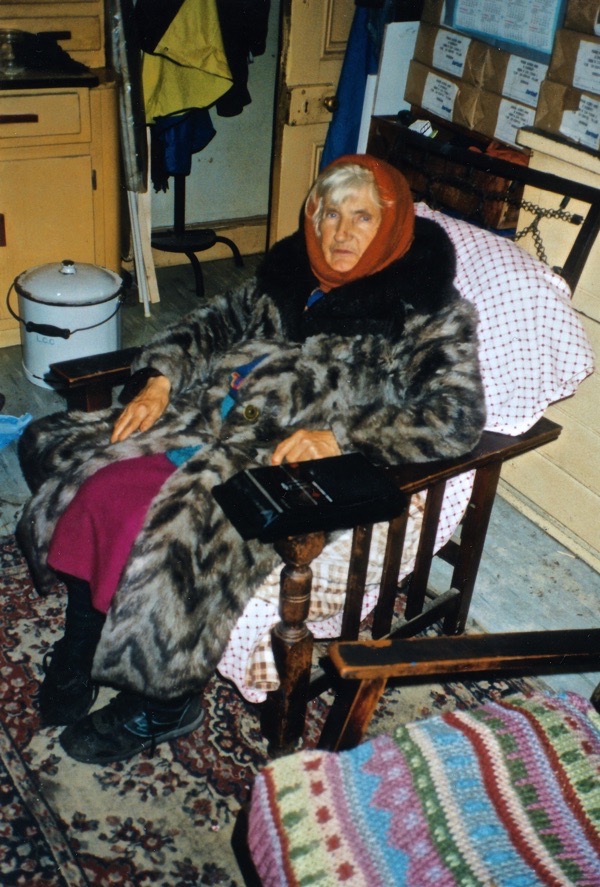
Clive Murphy’s portrait of Joan Lauder
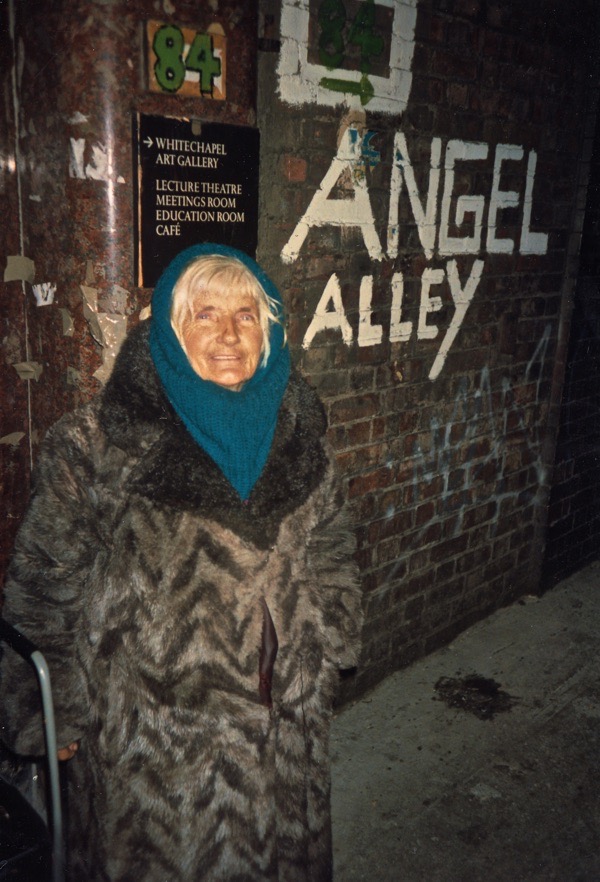
At Angel Alley, Whitechapel, 5th March 1992
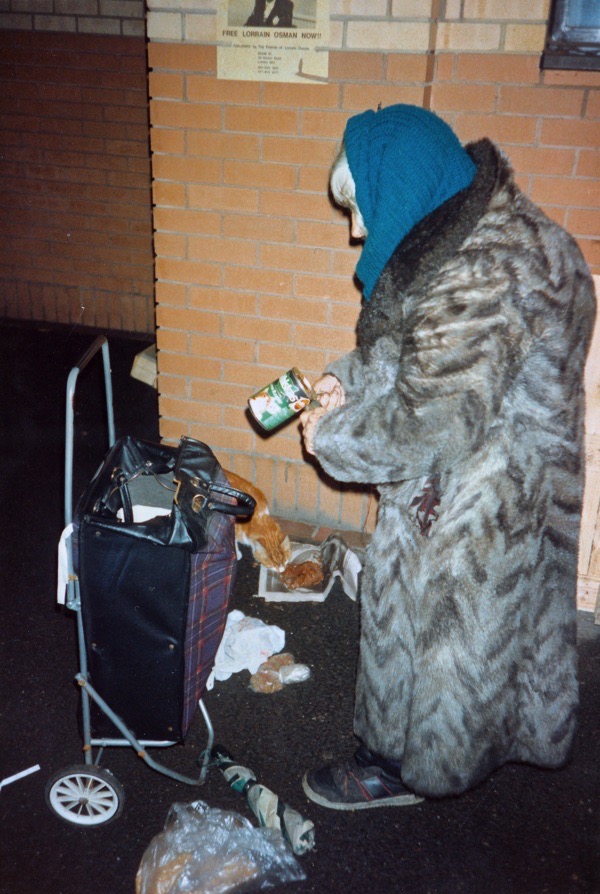
Feeding the cat from The White Hart in Angel Alley, 5th March 1992

In Gunthorpe St, 5th March 1992

Buying cat food at Taj Stores, Brick Lane, 3rd August 1992
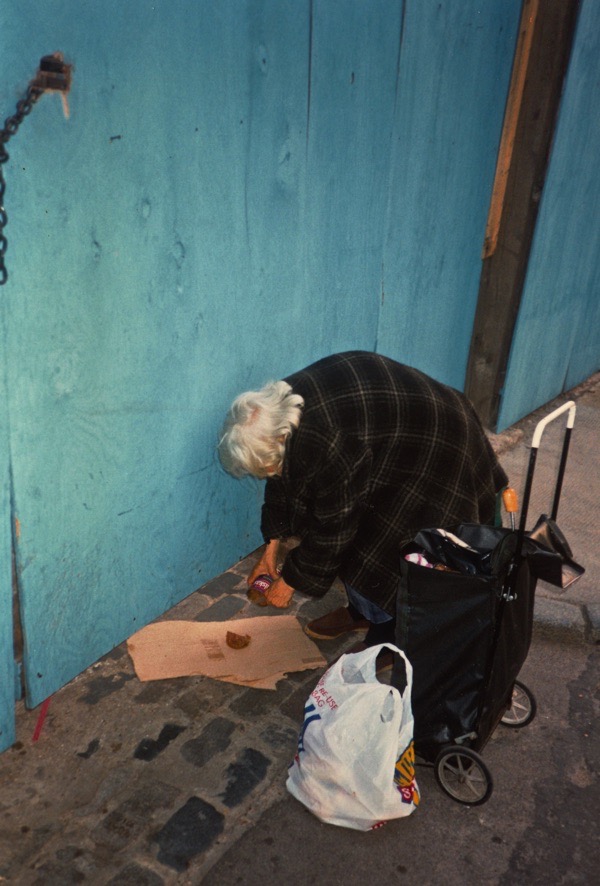
In Wentworth St, 3rd August 1992
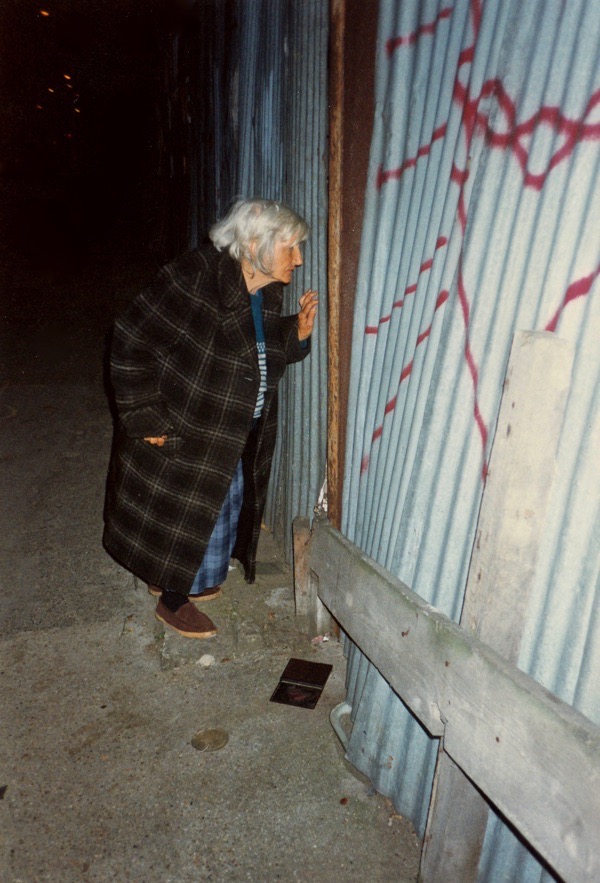
Calling a cat, Bacon St, 3rd August 1992

The cat arrives, Bacon St, 3rd August 1992
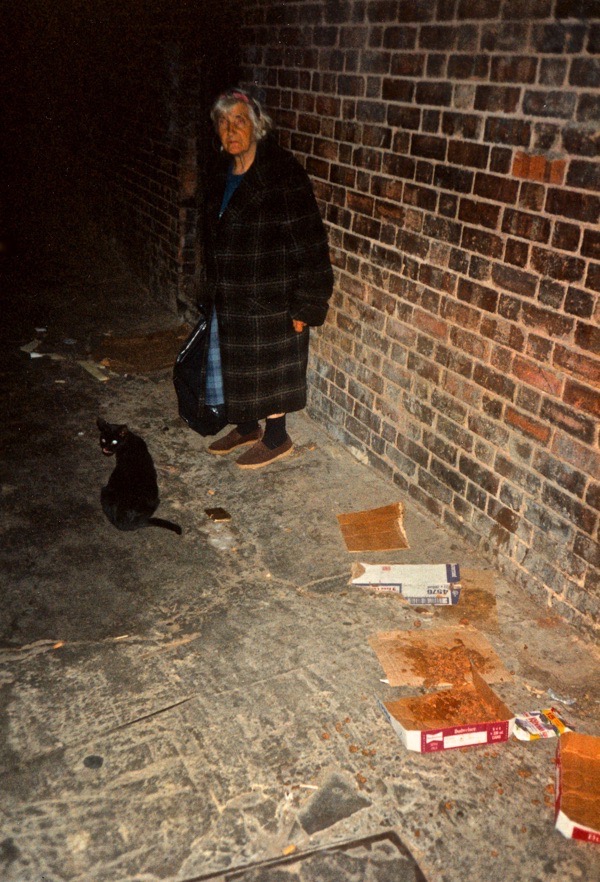
Alley off Hanbury St, 2nd August 1992
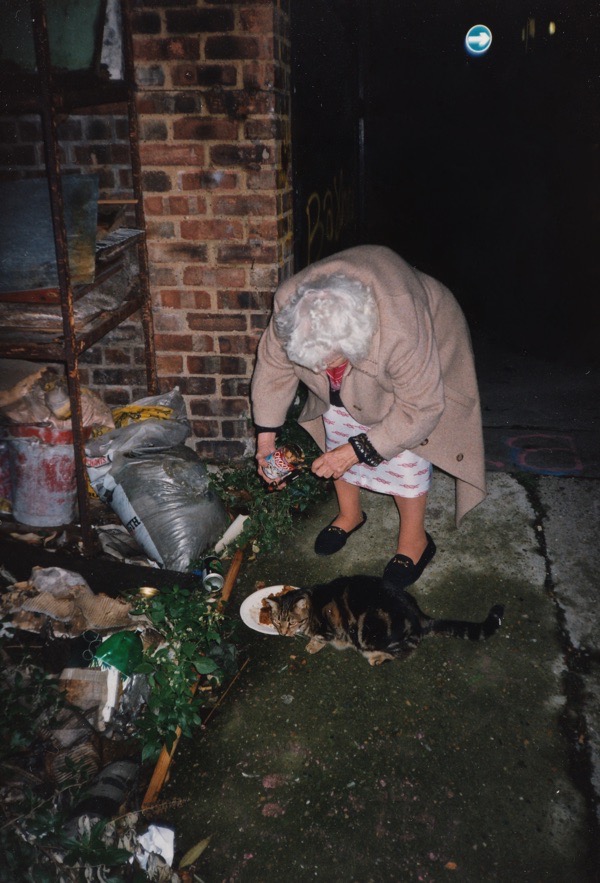
Hanbury St, 26th November 1995
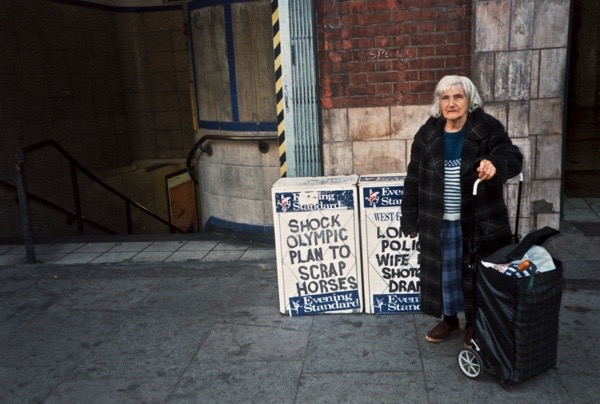
At Aldgate East, 3rd August 1992

At Lloyds, Leadenhall St, 3rd August 1992
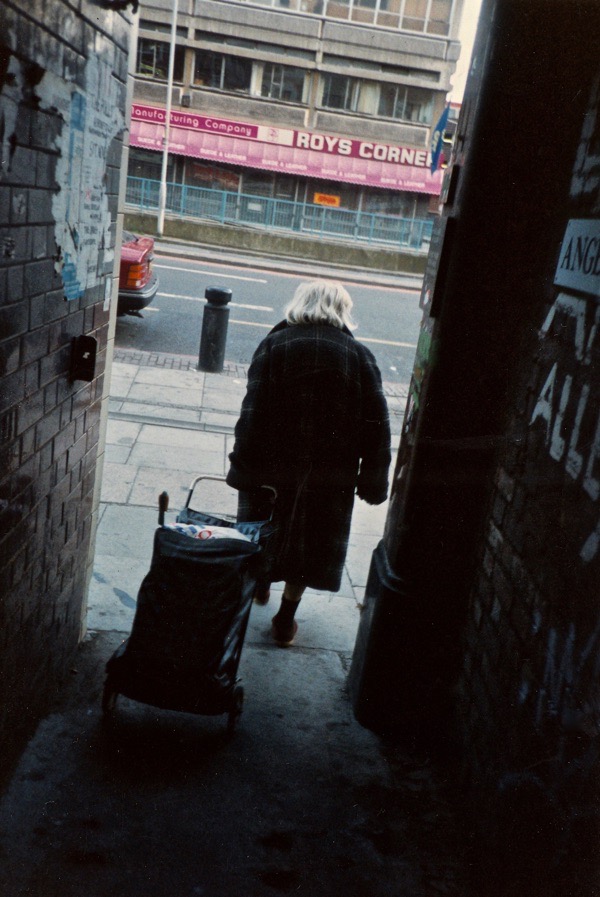
Walking from Angel Alley into Whitechapel High St, 3rd August 1992
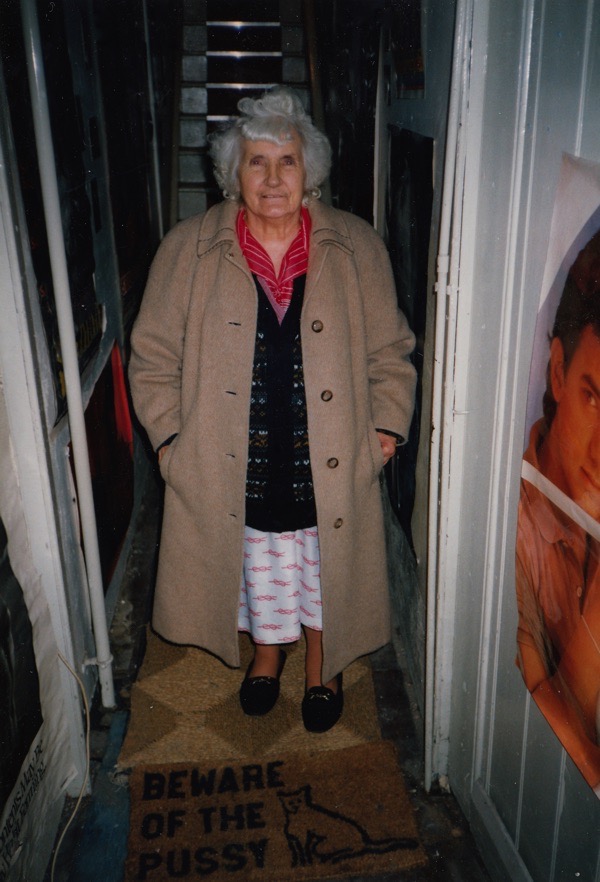
Beware Of The Pussy, 132 Brick Lane, 26th November 1995
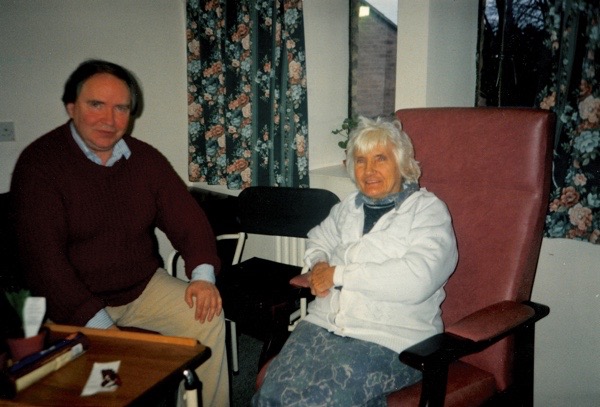
Clive visits Joan in her Nursing Home, 1995
Clive: The women I have loved you could count upon the digits of one hand – my mother, her mother, our loyal companion Maureen McDonnell, the poet Patricia Doubell and the demented, incontinent Joan Lauder, the Cat Lady of Spitalfields who, in 1991, when I first spoke to her was already my heroine, a day-and-night-in-all-weathers Trojan, doggedly devoting herself to cats because human beings had for too long failed her.
She looked at me with suspicion when I suggested we tape record a book. Only my bribe that half of any proceeds of publication would fall to her or her favoured charities and enable the purchase of extra tins of cat food persuaded her at least to humour me. I could swear I saw those azure eyes, set in that pretty face, dilate.
I had entrapped her with the best of intentions as she, I was to learn, often entrapped, also with the best of intentions, the denizens of the feral world to have them spayed or neutered in the interests of control. But to the end, her end, I don’t think she ever trusted or respected me. I once found her surreptitiously laying down Whiskas in my hallway for my own newly-adopted cat which I named Joan in her honour. And she once spat the expletive ‘t***’ at me in a tone of total dismissal. To be called a foolish and obnoxious person was hardly comforting, given that I believe my own adage ‘in dementia veritas’ holds all too often true.
Black & white photographs copyright © Phil Maxwell
Colour photographs copyright © Clive Murphy












