My Old Christmas Decorations

I do not know when my grandmother bought this glass decoration and I cannot ask her because she died more than twenty years ago. All I can do is hang it on my tree and admire it gleaming amongst the deep green boughs, along with all the others that were once hers, or were bought by my parents, or that I have acquired myself, which together form the collection I bring out each year – accepting that not knowing or no longer remembering their origin is part of their charm.
Although I have many that are more elaborate, I especially admire this golden one for its simplicity of form and I like to think its ridged profile derives from the nineteen thirties when my mother was a child, because my grandmother took the art of Christmas decoration very seriously. She would be standing beech leaves in water laced with glycerine in October, pressing them under the carpet in November and then in December arranging the preserved leaves in copper jugs with teazles sprayed gold and branches of larch, as one of many contrivances that she pursued each year to celebrate the season in fastidious style.
Given the fragility of these glass ornaments, it is extraordinary that this particular decoration has survived, since every year there are a few casualties resulting in silvery shards among the needles under the tree. Recognising that a Christmas tree is a tremendous source of amusement for a cat – making great sport out of knocking the baubles to the ground and kicking them around like footballs – I hang the most cherished decorations upon the higher branches. Yet since it is in the natural course of things that some get broken every year and, as I should not wish to inhibit the curiosity of children wishing to handle them, I always buy a couple more each Christmas to preserve the equilibrium of my collection.
Everlasting baubles are available – they do not smash, they bounce – but this shatterproof technological advance entirely lacks the poetry of these fragile beauties that can survive for generations as vessels of emotional memory and then be lost in a moment. In widespread recognition of this essential frailty of existence, there has been a welcome revival of glass ornaments in recent years.
They owe their origins to the glassblowers of the Thuringian Forest on the border of Germany and the Czech Republic where, in Lauscha, glass beads, drinking glasses, flasks, bowls and even glass eyes were manufactured since the twelfth century. The town is favoured to lie in a wooded river valley, providing both the sand and timber required for making glass and in 1847 Hans Greiner – a descendant of his namesake Hans Greiner who set up the glassworks in 1597 with Christoph Muller – began producing ornaments by blowing glass into wooden moulds. The inside of these ornaments was at first coloured to appear silvery with mercury or lead and then later by using a compound of silver nitrate and sugar water. In 1863, when a gas supply became available to the town, glass could be blown thinner without bursting and by the eighteen seventies the factory at Lauscha was exporting tree ornaments throughout Europe and America, signing a deal with F.W.Woolworth in the eighteen eighties, after he discovered them on a trip to Germany.
Bauble is a byword for the inconsequential, so I do not quite know why these small glass decorations inspire so much passion in me, keeping their romance even as other illusions have dissolved. Maybe it is because I collect images that resonate personally? As well as Father Christmas and Snowmen, I have the Sun, Moon and Stars, Clocks and even a Demon to create a shining poem about time, mortality and joy upon my Christmas tree. I cannot resist the allure of these exquisite glass sculptures in old-fashioned designs glinting at dusk amongst the dark needles of fir, because they still retain the power to evoke the rich unassailable magic of Christmas for me.

This pierrot dates from the nineteen eighties

Three of my grandmother’s decorations. The basket on the left has a piece of florists’ wire that she placed there in the nineteen fifties

This snowman is one of the oldest of my grandmother’s collection

Bought in the nineteen eighties, but from a much older mould

Baubles enhanced with painted stripes and glitter

The moon, sun and stars were acquired from a shop in Greenwich Avenue on my first visit to New York in 1990, amazingly they survived the flight home intact


These two from my grandmother’s collection make a fine contrast of colour

Even Christmas has its dark side, this demon usually hangs at the back of the tree

It is always going to be nine o’clock on Christmas Eve

Three new decorations purchased at Columbia Rd

A stash of glittering beauties, stored like rare eggs in cardboard trays
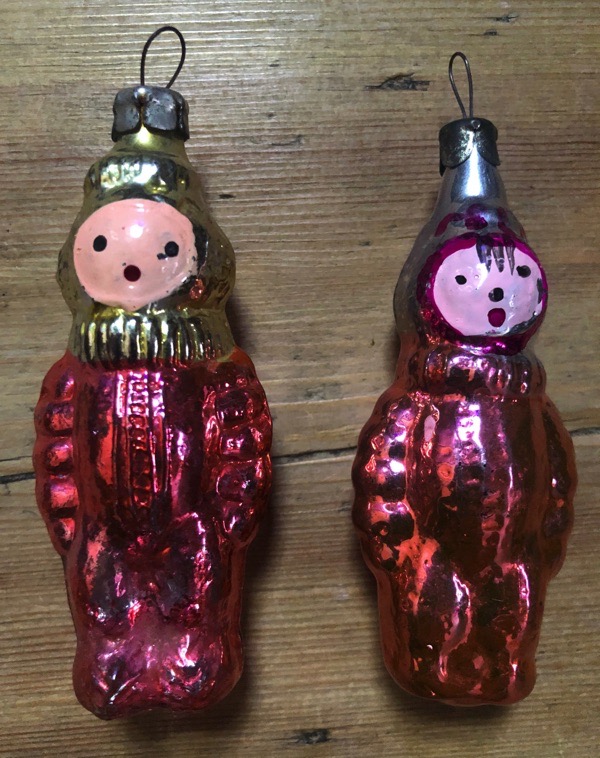
Russian cosmonauts from the sixties that I bought in Spitalfields Market

My first bicycle, that I found under the tree one Christmas and still keep in my attic
Books For Christmas
If you are seeking Christmas presents for family and friends, you need look no further because Spitalfields Life books make ideal gifts which you can have personally inscribed…

CLICK HERE TO ORDER THE GENTLE AUTHOR’S LONDON ALBUM
Between the covers of this magnificent red Album with a gilded cover you will discover more than 600 of the Gentle Author’s favourite pictures of London in print for the first time, setting the wonders of our modern metropolis against the pictorial delights of the ancient city, and celebrating the infinite variety of life in the capital.
Take a walk through time with the Gentle Author as your guide – be equally amazed at what has been lost of old London and charmed by the unfamiliar marvels of London today.

CLICK HERE TO ORDER THE GENTLE AUTHOR’S CRIES OF LONDON
The Gentle Author assembles a choice selection of CRIES OF LONDON, telling the stories of the artists and celebrated traders, and revealing the unexpected social realities contained within these cheap colourful prints produced for the mass market.
For centuries, these lively images of familiar hawkers and pedlars have been treasured by Londoners. In the capital, those who had no other means of income could always sell wares in the street and, by turning their presence into performance through song, they won the hearts of generations and came to embody the spirit of London itself.

CLICK HERE TO ORDER THE CREEPING PLAGUE OF GHASTLY FACADISM
The Gentle Author presents a humorous analysis of facadism – the unfortunate practice of destroying an old building apart from the front wall and constructing a new building behind it – revealing why it is happening and what it means.
As this bizarre architectural fad has spread across the capital, The Gentle Author has photographed the most notorious examples, collecting an astonishing gallery of images guaranteed to inspire both laughter and horror in equal measure.

CLICK HERE TO ORDER THE LIFE & TIMES OF MR PUSSY
“This small, beautiful book is an elegy to companionship. Encompassing both the everyday and the profound, it should be judged no less valid for the fact that the friend in question is a cat.” Times Literary Supplement
Anyone that has a cat will recognise the truth of this tender account by The Gentle Author. Filled with sentiment yet never sentimental, THE LIFE & TIMES OF MR PUSSY is a literary hymn to the intimate relationship between humans and animals.

CLICK HERE TO ORDER TRAVELLERS CHILDREN IN LONDON FIELDS
A handsome photography book collecting together Colin O’Brien’s portraits of the Travellers’ Children in London Fields.
These pictures record an extraordinary meeting between a photographer and a group of Irish Travellers’ children in London Fields in 1987, yet the subject of Colin O’Brien’s tender and clear-eyed photographs is no less than the elusive drama of childhood itself.

CLICK HERE TO ORDER A MODEST LIVING, MEMOIRS OF A COCKNEY SIKH
“a timely reminder of all that modern Britishness encompasses” The Observer
In this first London Sikh biography, Suresh Singh tells the candid and sometimes surprising story of his father Joginder Singh who came to Spitalfields in 1949.
Joginder sacrificed a life in the Punjab to work in Britain and send money home, yet he found himself in his element living among the mishmash of people who inhabited the streets around Brick Lane.
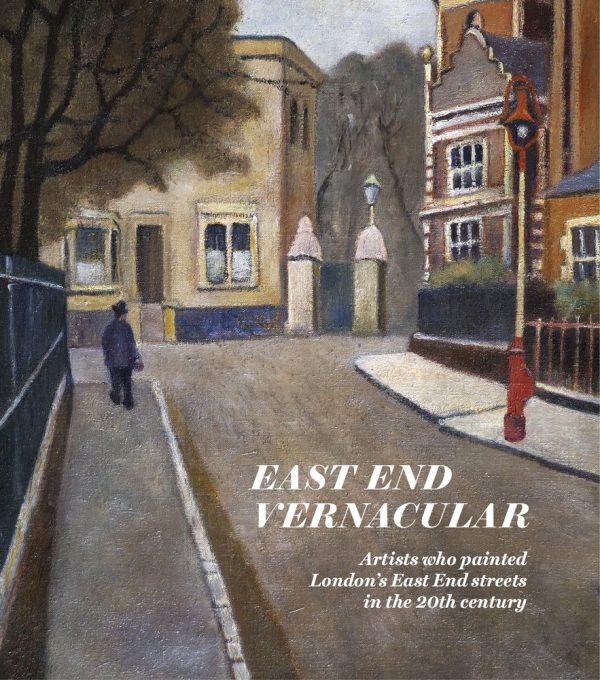
CLICK HERE TO ORDER EAST END VERNACULAR
The Gentle Author presents a magnificent selection of pictures – many never published before – revealing the evolution of painting in the East End and tracing the changing character of the streets through the twentieth century.
“A fragment of the riches flowing from a continued fascination with London’s topography” – Evening Standard
“Harvested from the thirties to the present day, Spitalfields Life’s gorgeous collection of East End paintings is more knees-up than misery-fest” – Hackney Citizen
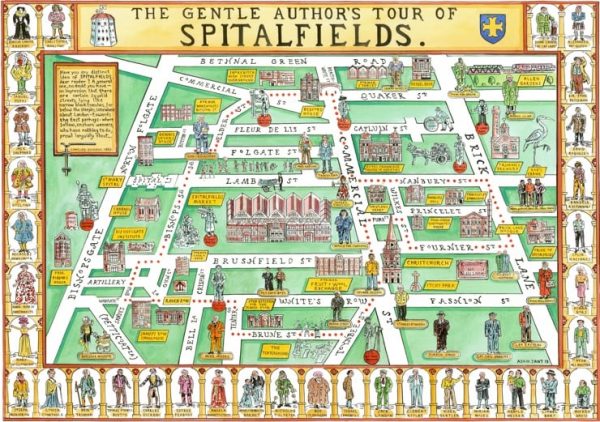
CLICK HERE TO ORDER THE MAP OF THE GENTLE AUTHOR’S TOUR
Follow in the footsteps of all those who came before, with a keen eye and an open heart, to discover the manifold wonders of Spitalfields.
Adam Dant has populated The Gentle Author’s Tour with portraits of more than fifty people – both the living and the dead – who have lived and worked in Spitalfields over the past two millennia.
Ramble through two thousand years of culture in the heart of London and discover some of the people and places that make this historic neighbourhood distinctive.
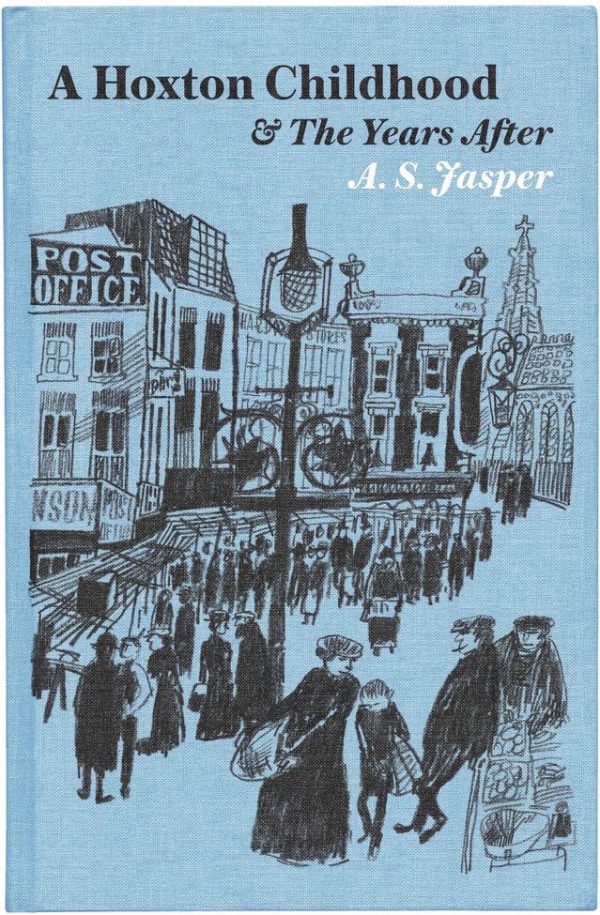
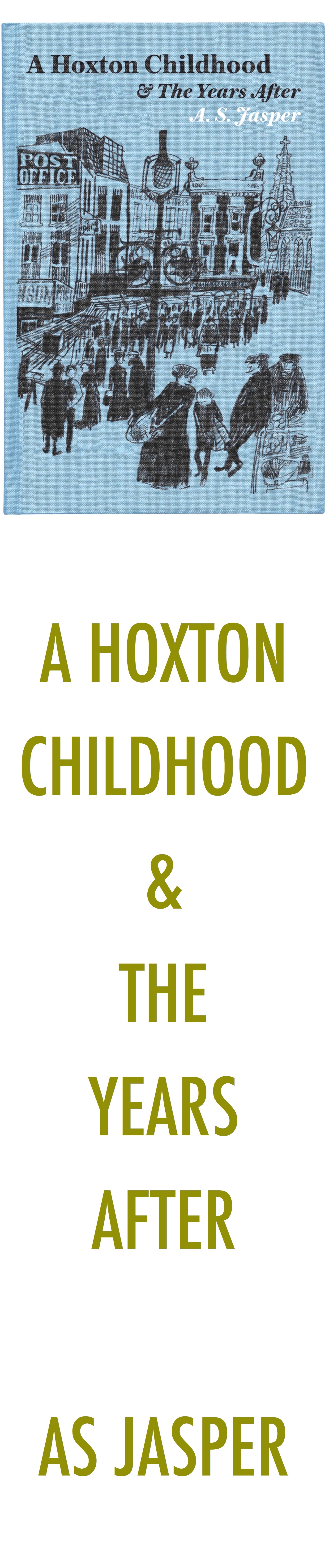
CLICK HERE TO ORDER A HOXTON CHILDHOOD
AS Jasper’s tender memoir of growing up in the East End of London at the beginning of the twentieth century was immediately acclaimed as a classic when it was described by the Observer as ‘Zola without the trimmings.’
In this definitive new edition, A Hoxton Childhood is accompanied by the first publication of the sequel detailing the author’s struggles and eventual triumph in the cabinet-making trade,The Years After.

CLICK HERE TO ORDER ON CHRISTMAS DAY
The Gentle Author picks up the threads of Christmas fiction from Charles Dickens, Dylan Thomas and George Mackay Brown to weave a compelling tale of family conflicts ignited and resolved in the festive season.
In Old Stepney
Click here to buy GIFT VOUCHERS for The Gentle Author’s Tours in 2024
Click here order a signed copy of The Gentle Author’s ON CHRISTMAS DAY for £10
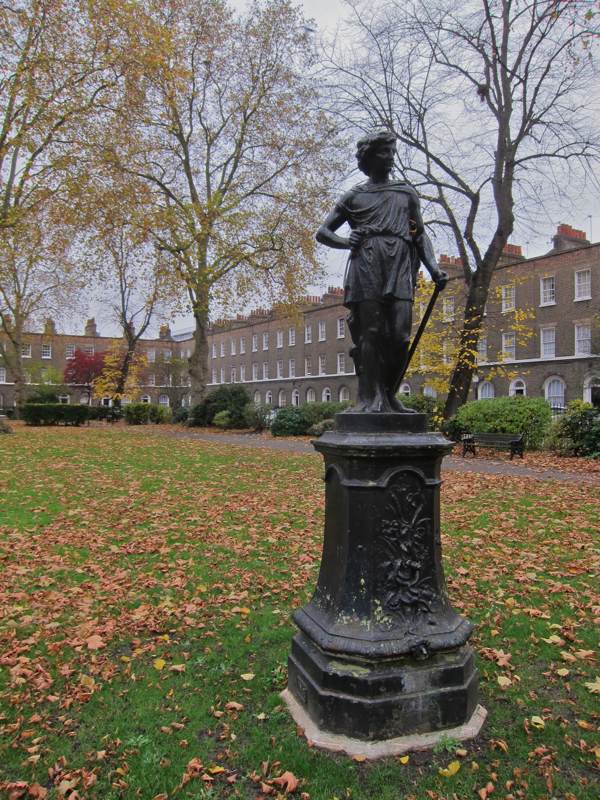
Albert Gardens
In spite of the bombing, the slum clearances and redevelopments, the East End is still with us. In Stepney, there is an entire quarter of early nineteenth century terraces and squares that have survived the changes of the twentieth century. They are magnificent examples of the human quality of streetscape cherished by East Enders and also plangent reminders of what has been lost.
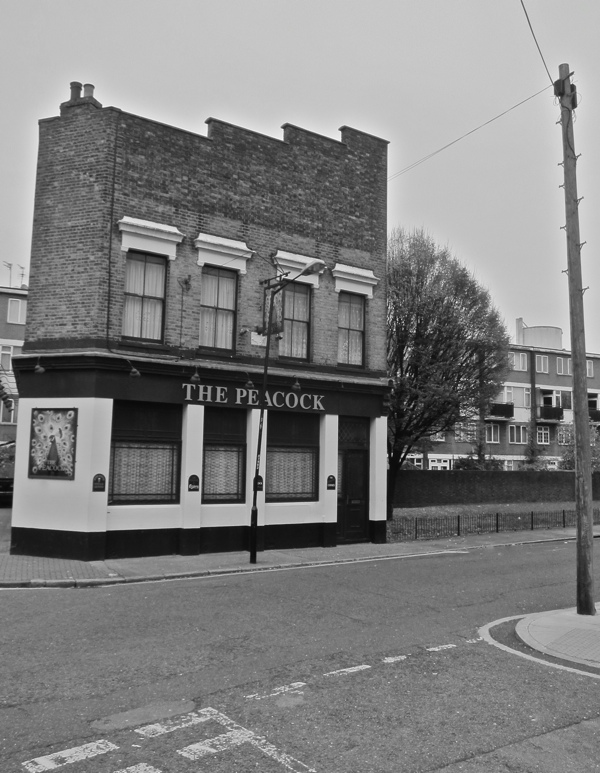
The Peacock, Aylward St
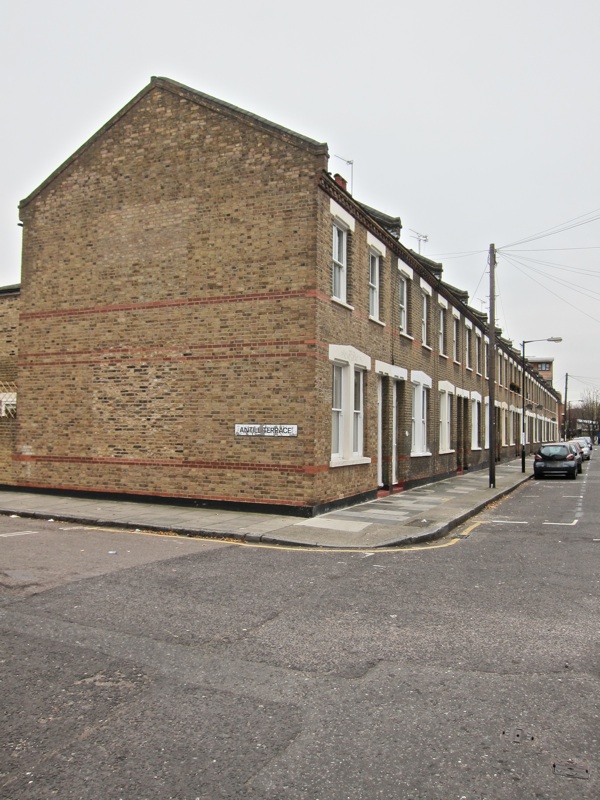
Corner of Antil Terrace and Senrab St
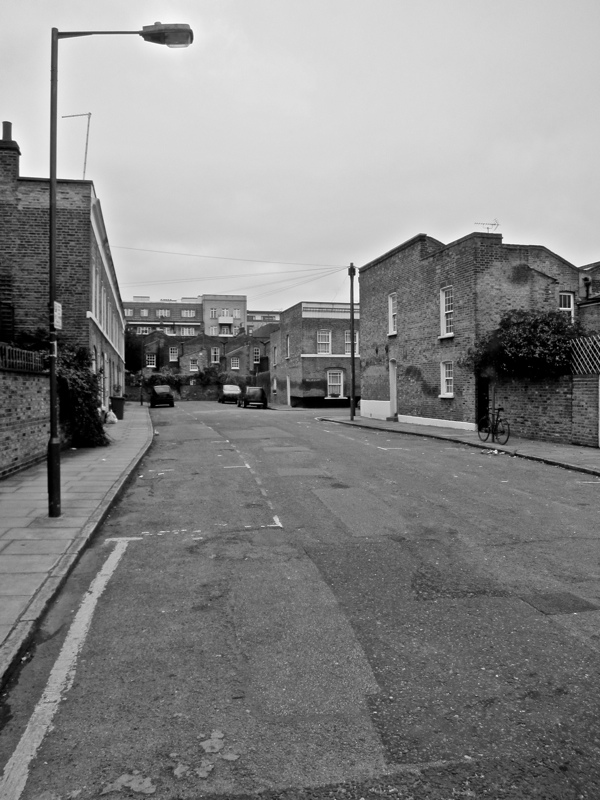
Corner of Antil Terrace and Dunelm St
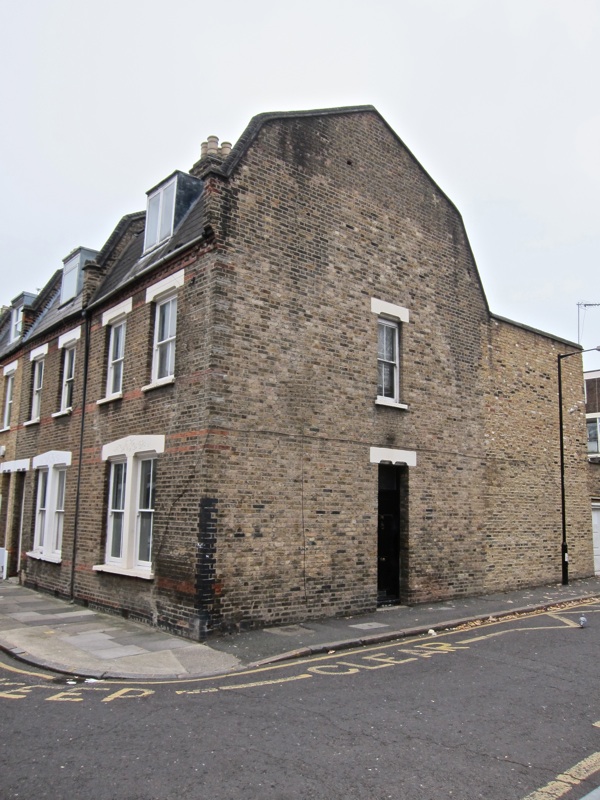
Corner of Dunelm St
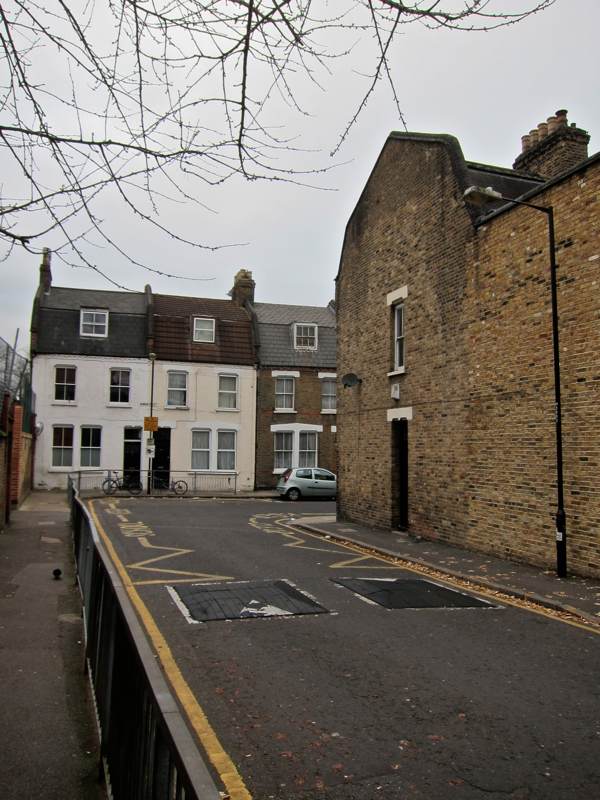
Senrab St

Who will rescue The Royal Duke, 474 Commercial Rd, designed by W.E. Williams, 1879
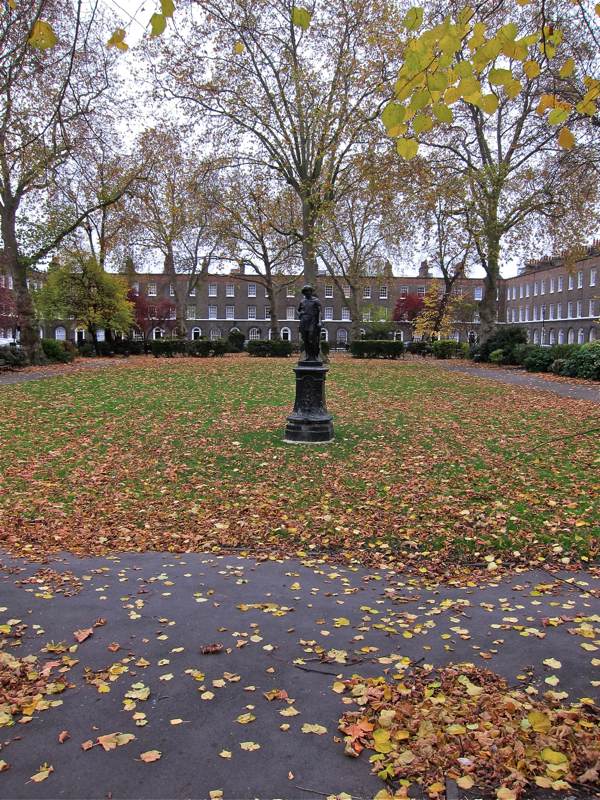
Shepherd Boy in Albert Gardens, dated 1903, “Fonderies d’art du Val D’Orne, Paris”
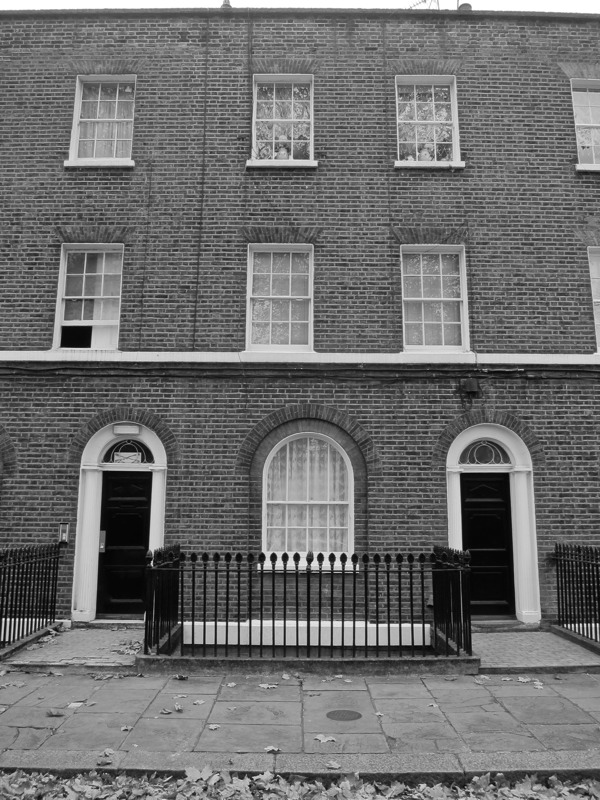
In Albert Gardens
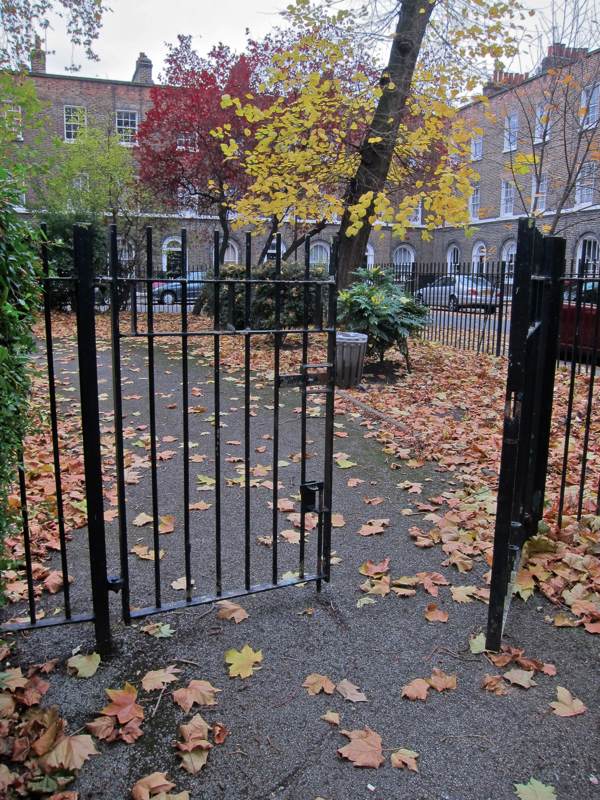
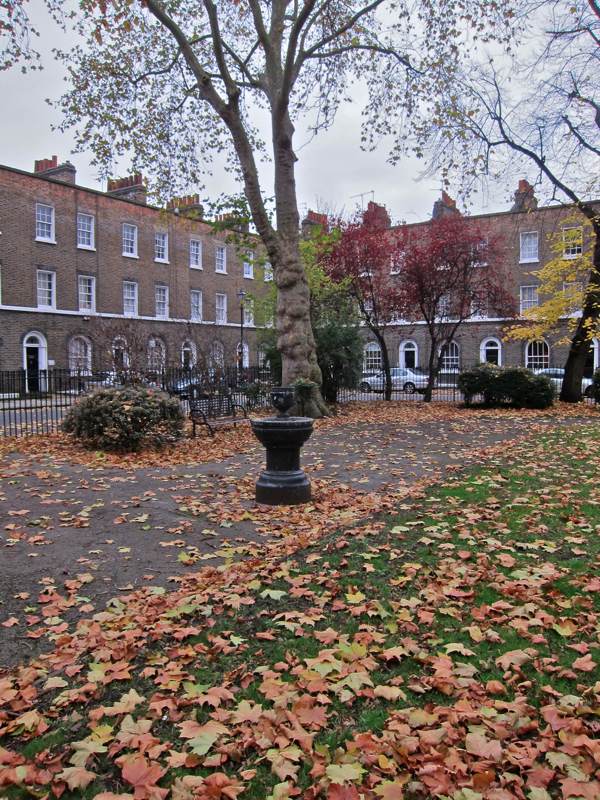
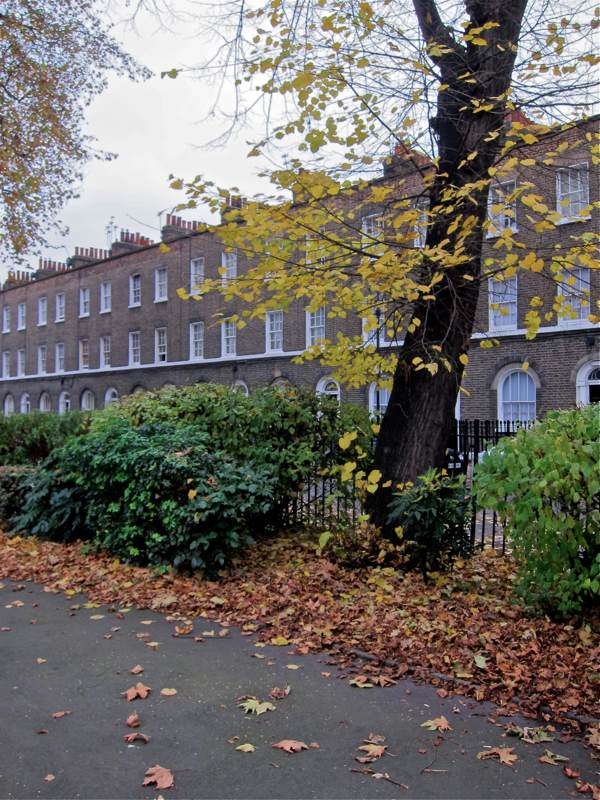
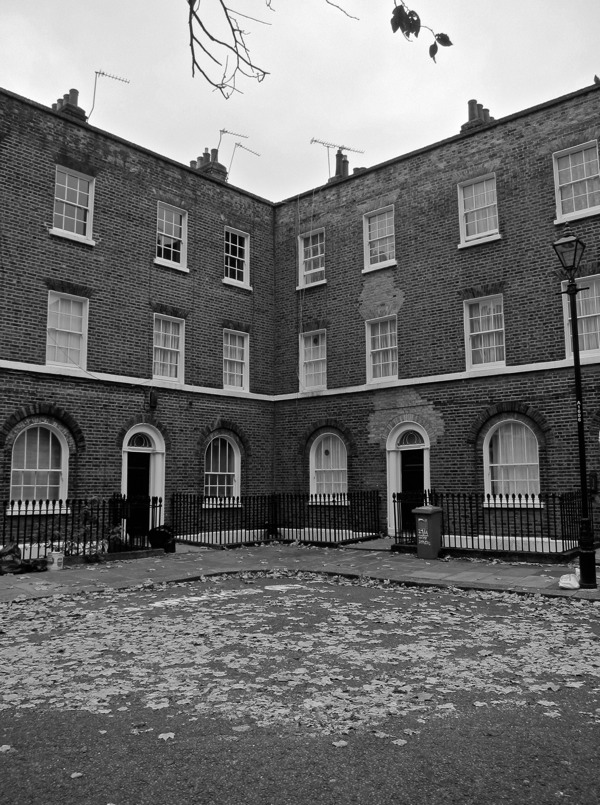
South East corner of Albert Gardens
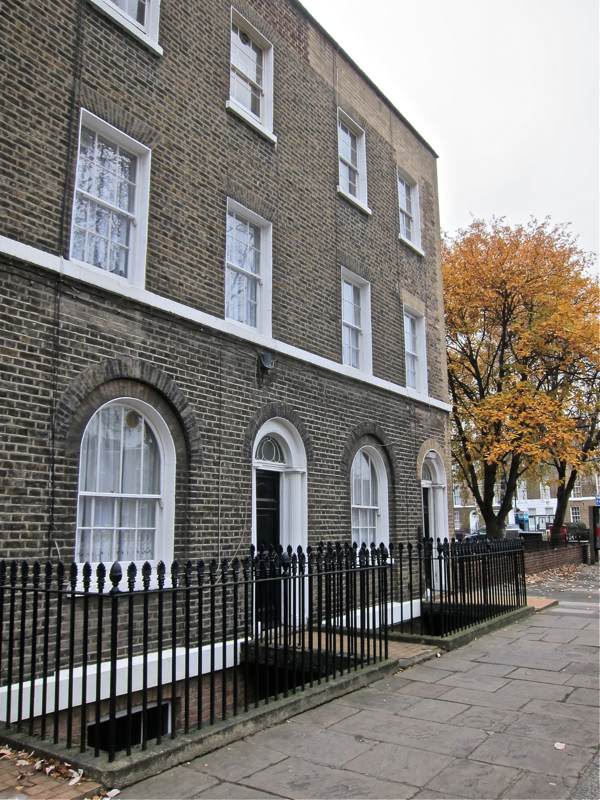
North West corner of Albert Gardens
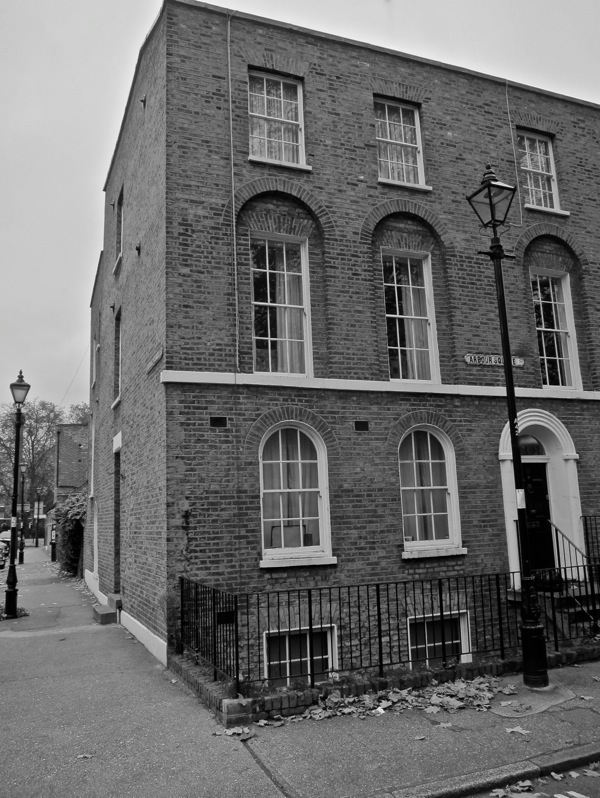
South East corner of Arbour Sq
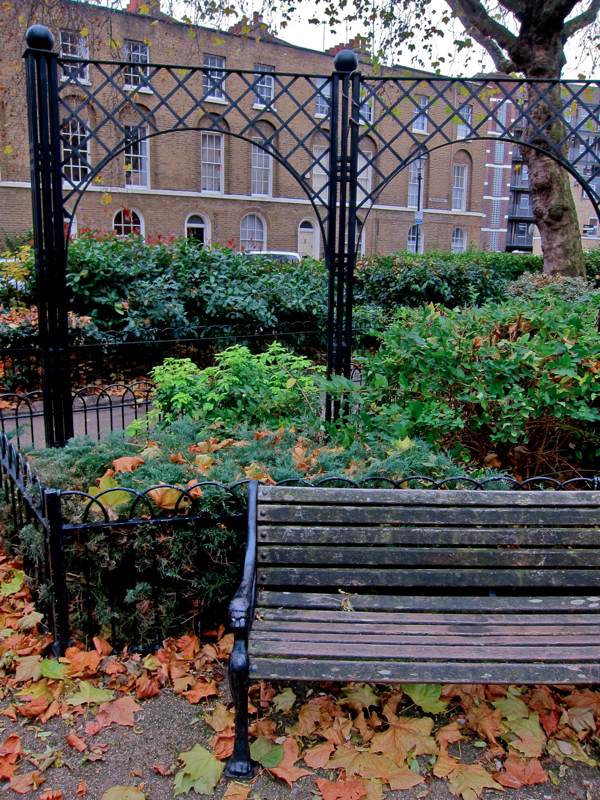
In Arbour Sq Gardens
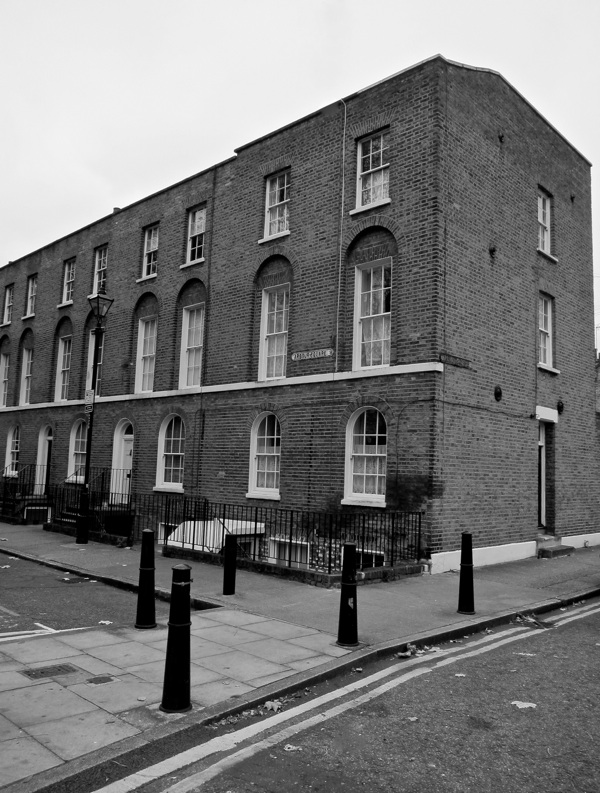
South West corner of Arbour Sq
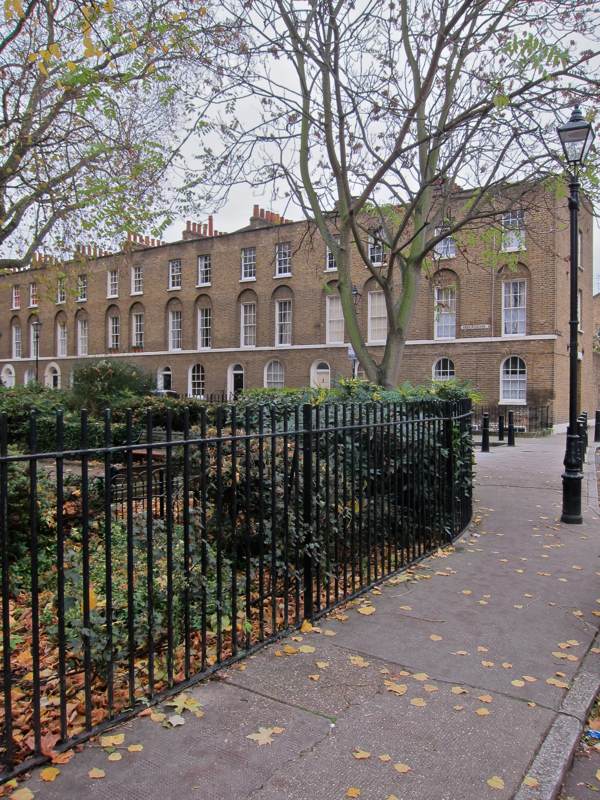
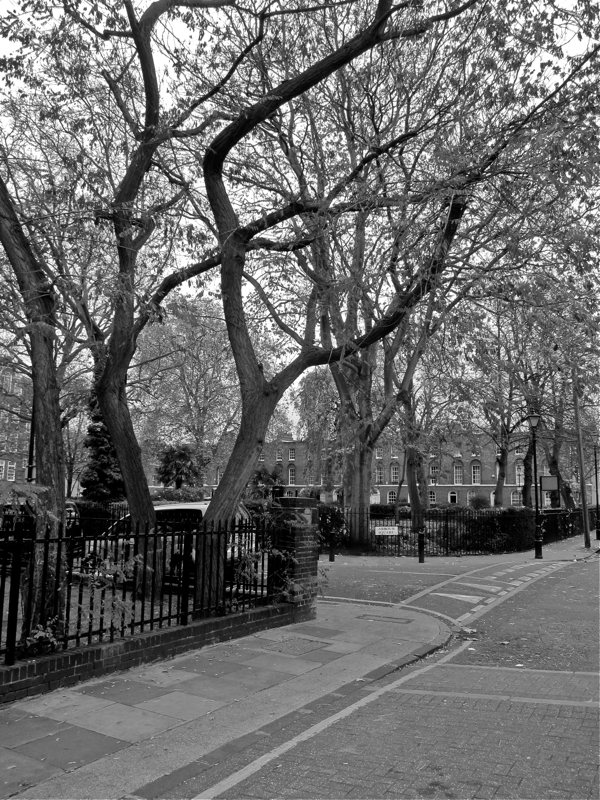
North West corner of Arbour Sq
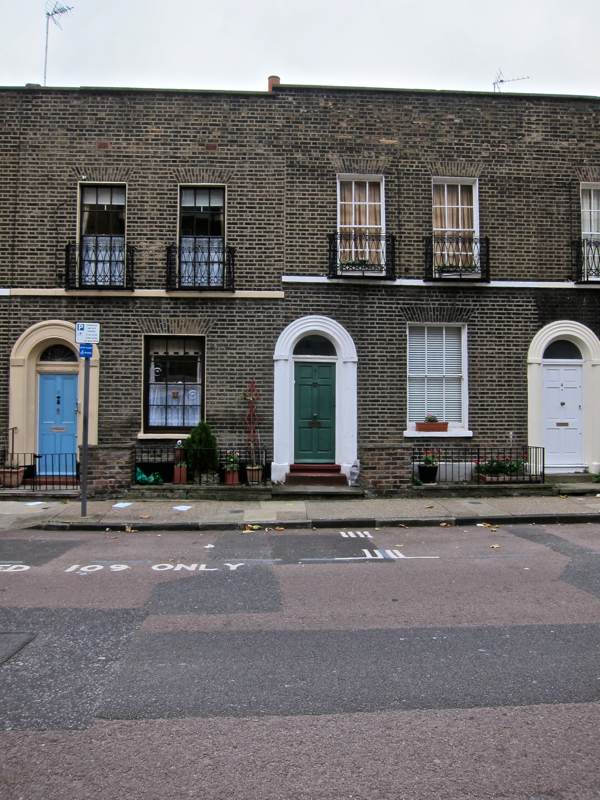
Terrace in East Arbour St
You may also like to read about
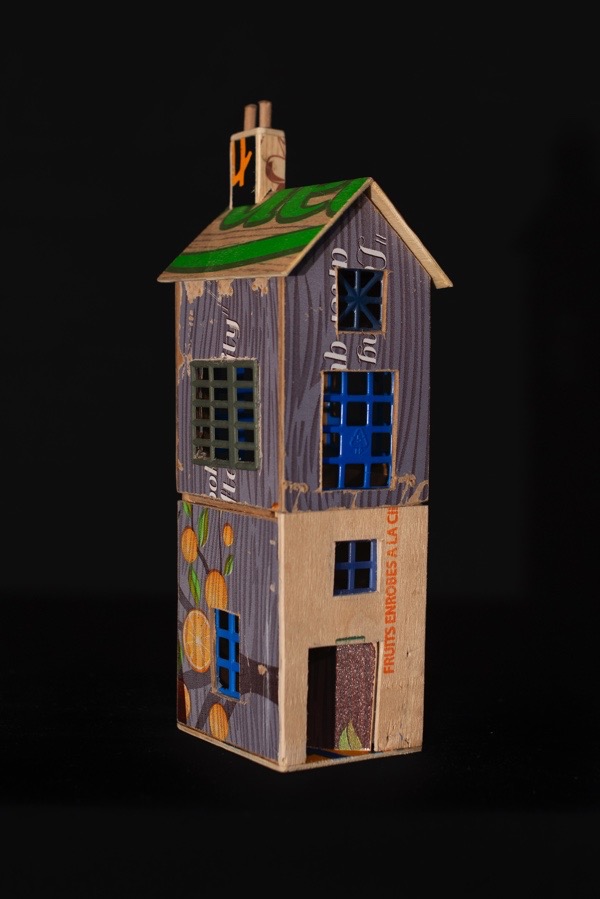
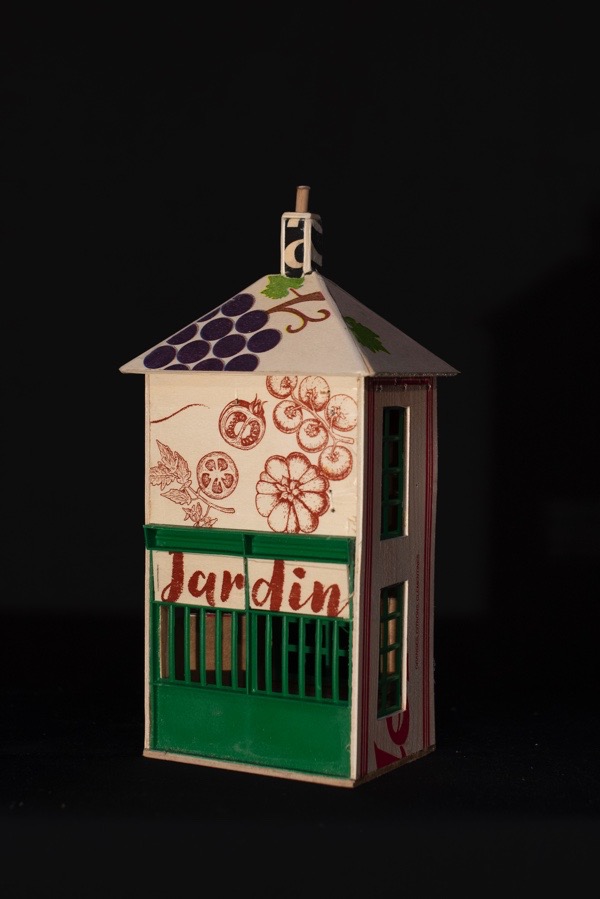
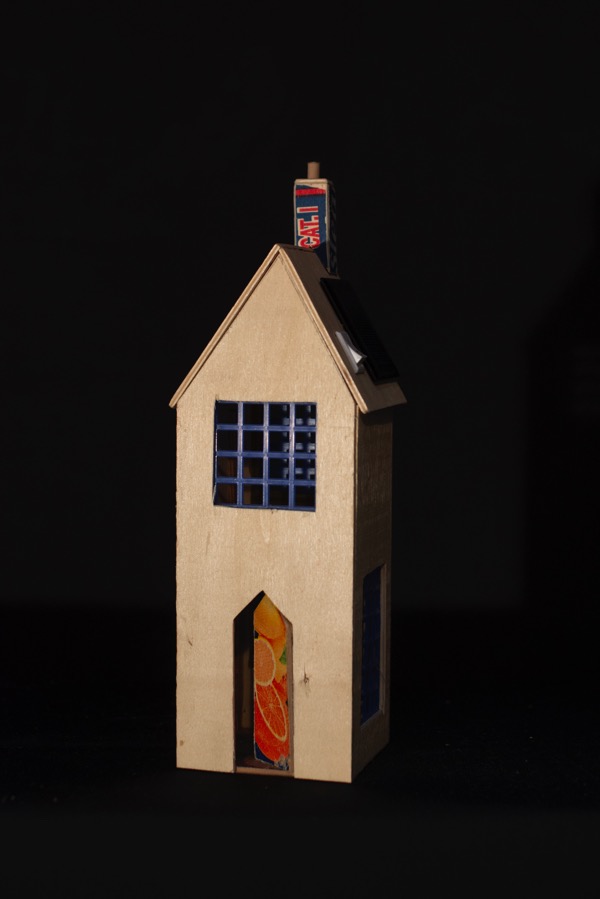
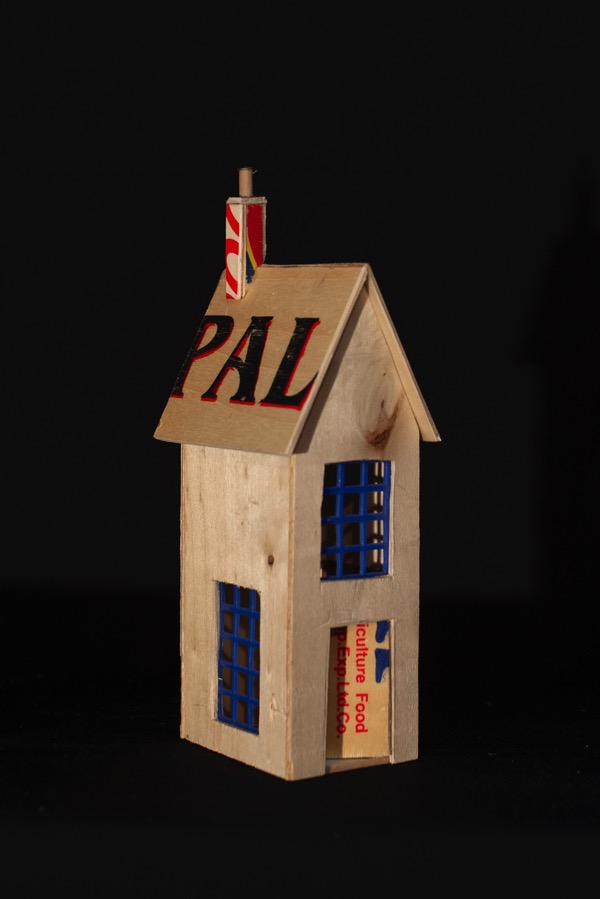
Robson Cezar’s Solar-Powered Houses From Whitechapel Market
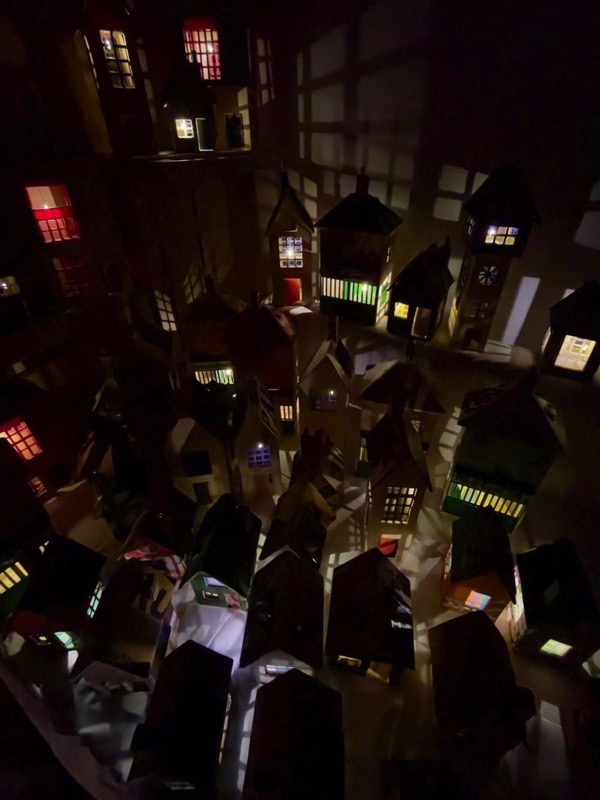
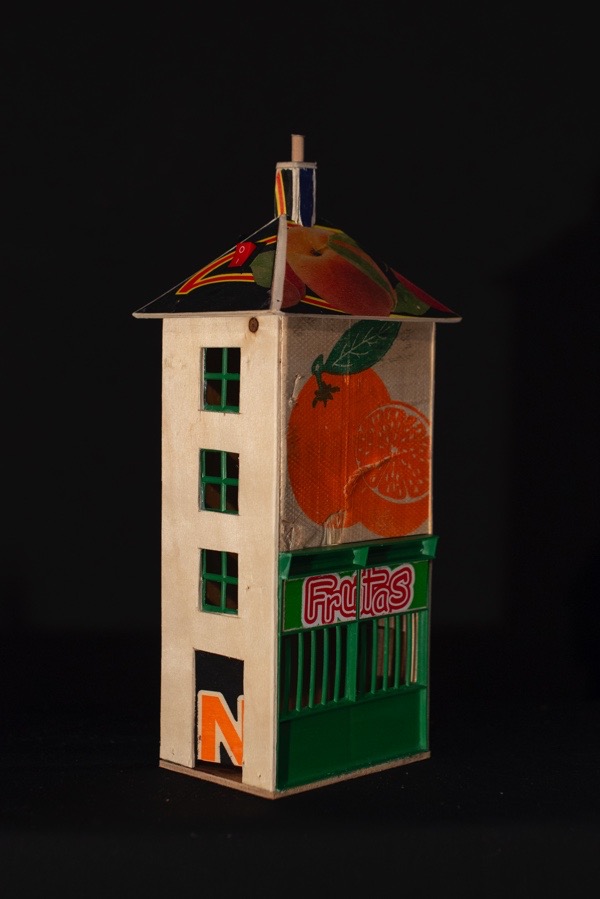
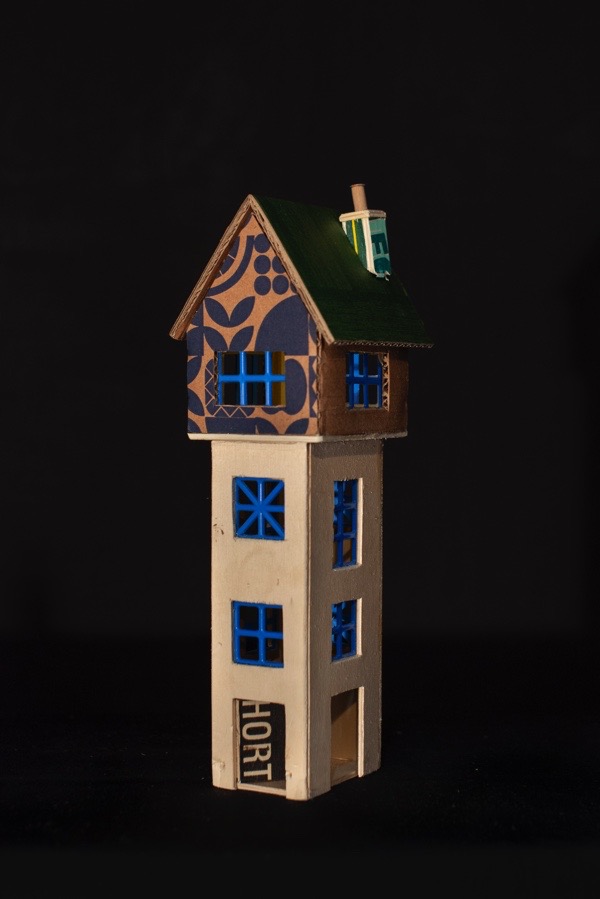
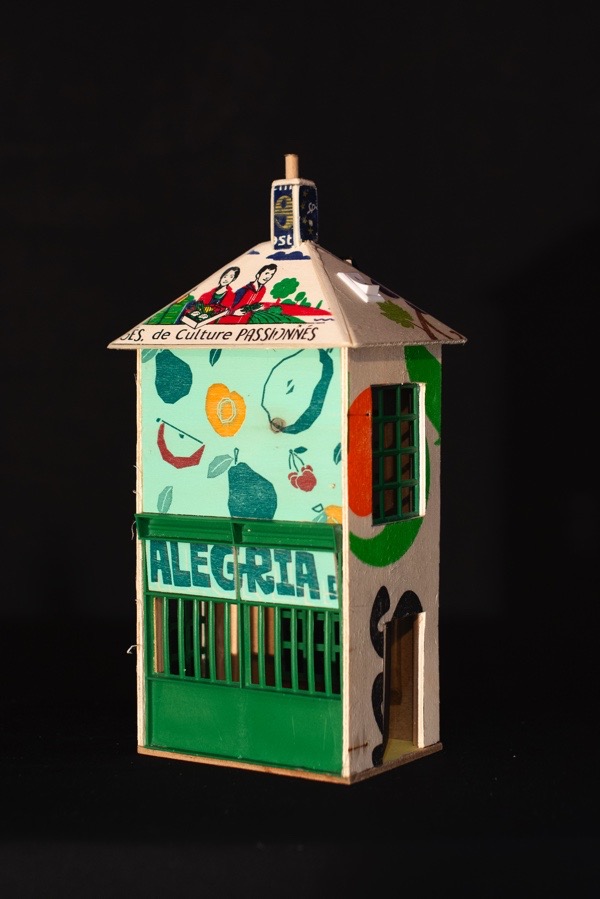
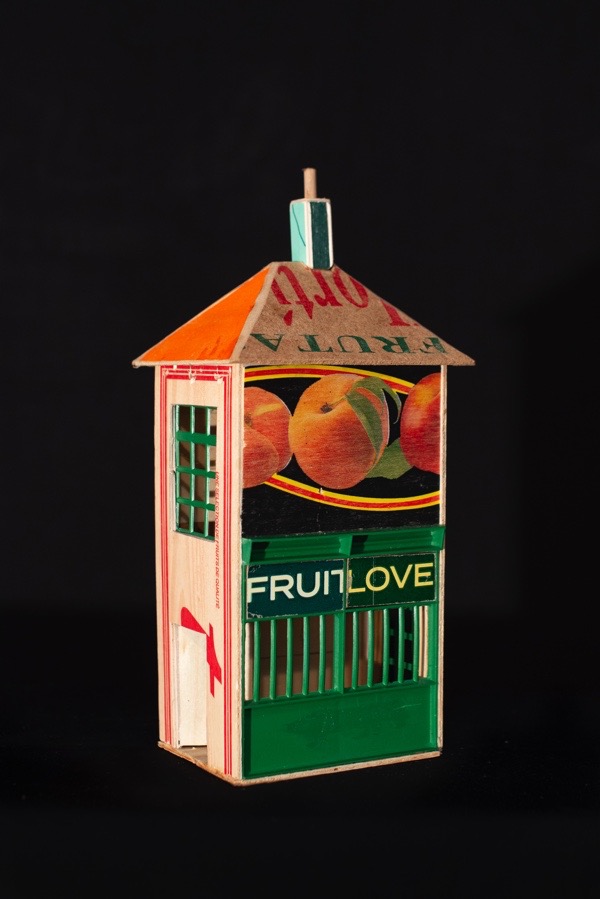
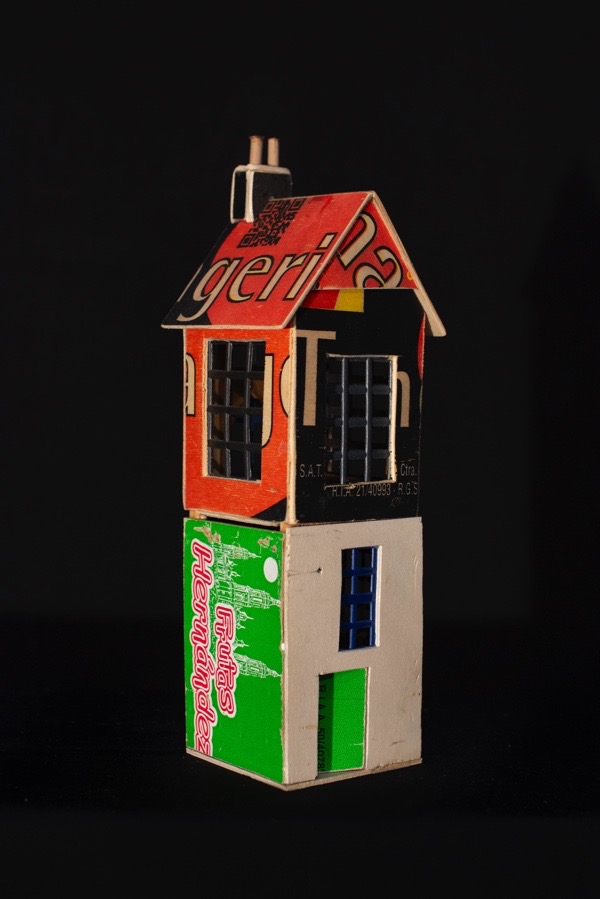
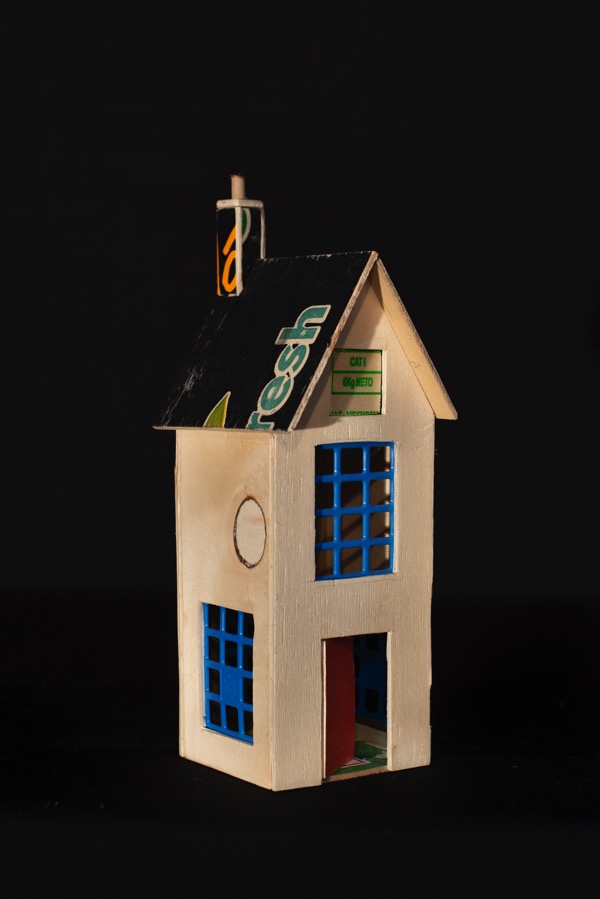
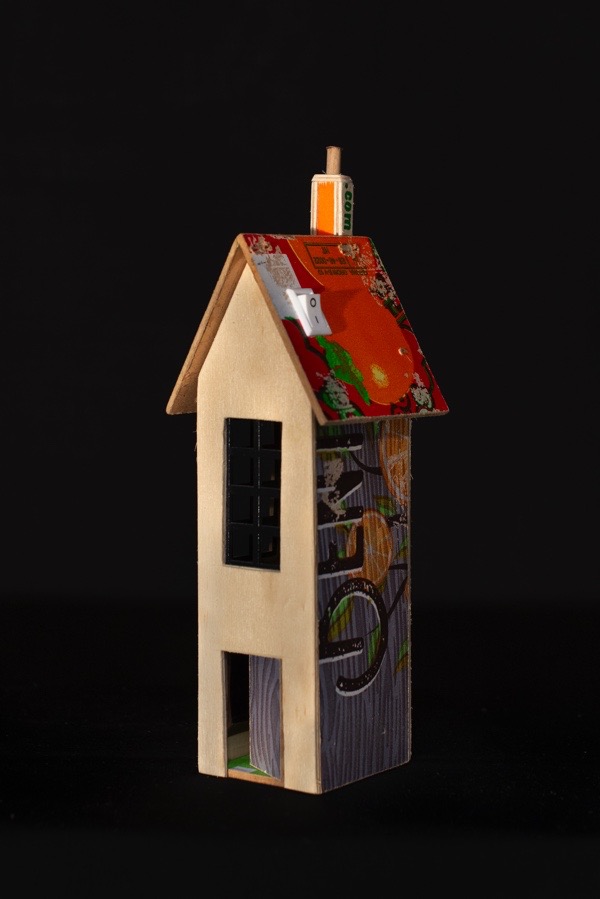
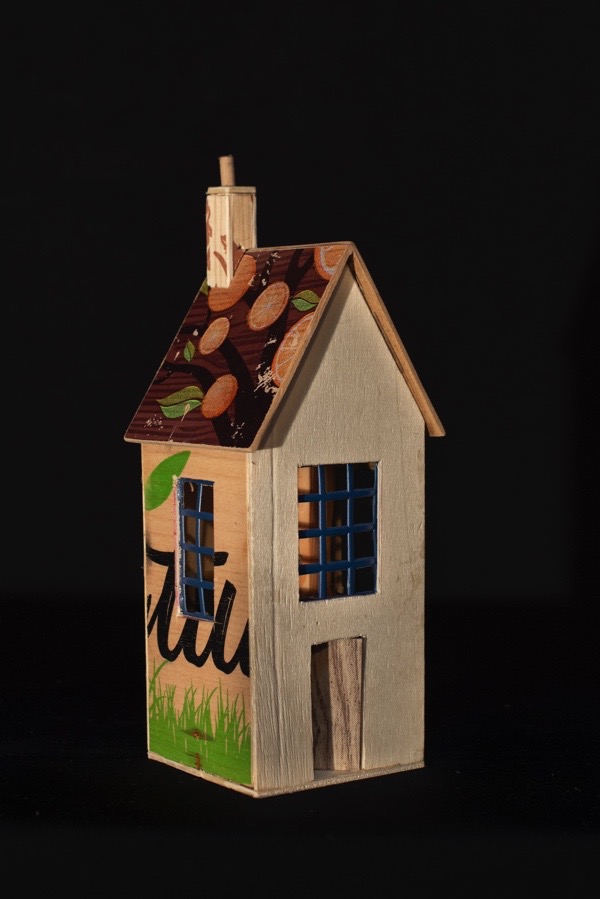
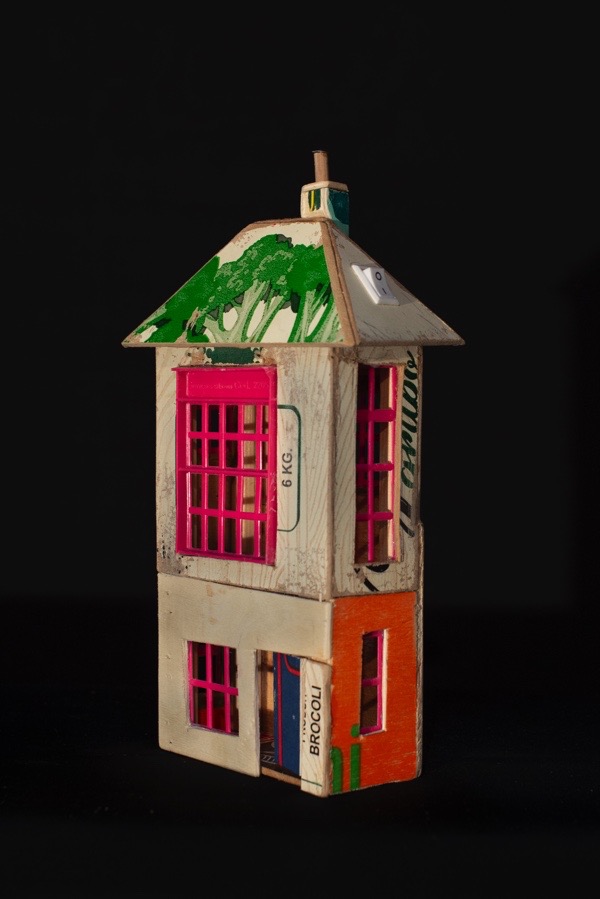
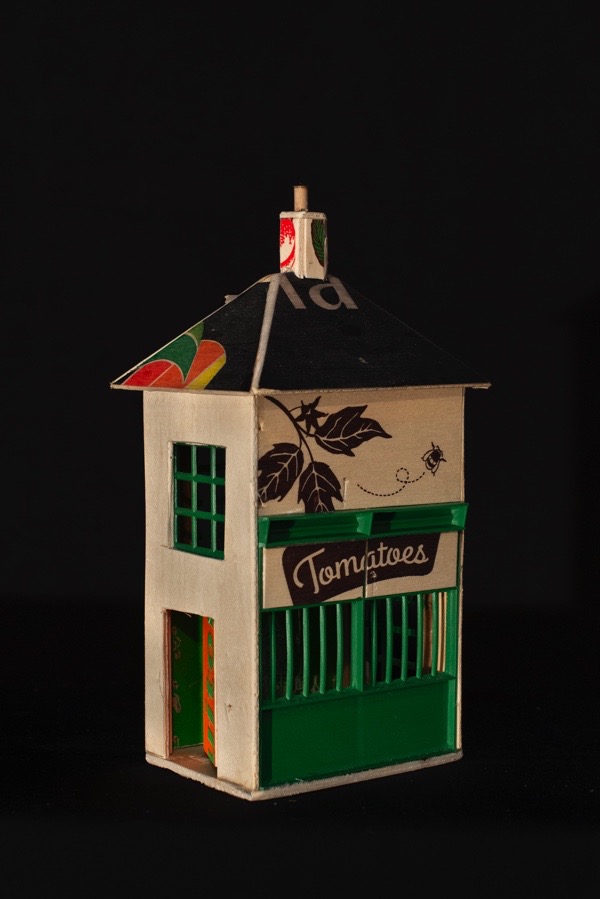
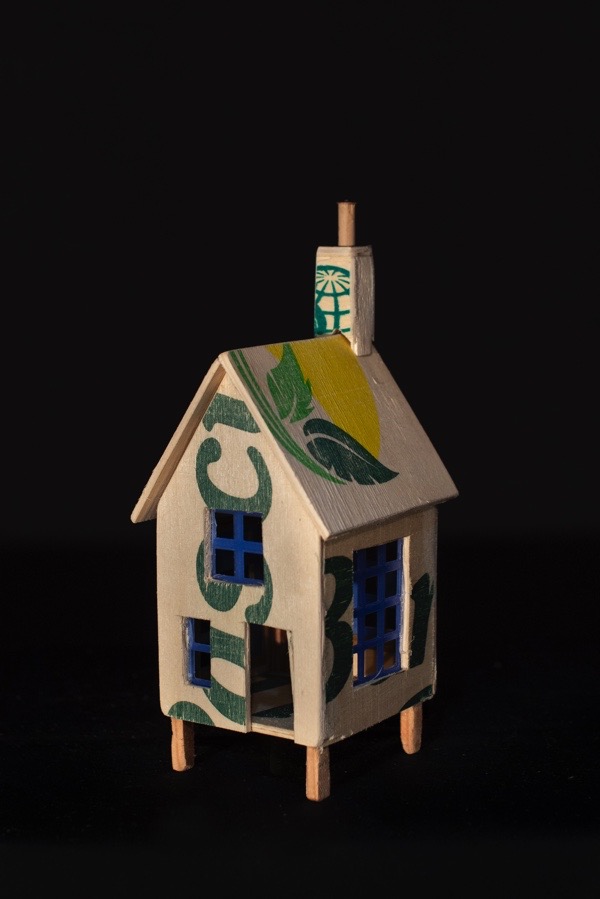
Over recent years, we have featured the evolution of Spitalfields artist Robson Cezar‘s wooden houses made from boxes collected for him by the stallholders at Whitechapel Market. This year, Robson has reached the ultimate realisation of his design by fitting his recycled houses with solar panels, which means they charge in daylight and light up automatically at dusk. And they will do this more or less indefinitely.
Robson has enjoyed employing the colours, printed lettering and images of fruit and vegetables on the boxes, and made windows from coloured mushroom crates. Each house is a day’s work and he has been working for months to create this spectacular new collection. Contributing Photographer Sarah Ainslie visited Robson’s studio in Bow to photograph the houses and take his portrait.
Robson has made two kinds of houses fitted with solar panels. He has made a collection of sturdy cardboard ones of similar design but each with different colours, lettering and images. These are £48 each. You can buy these from our online shop by clicking here
He has also made twenty larger wooden houses of unique design, photographed individually below. These are £140 each. We are selling them on a first-come-first-served basis, so if you would like one please email spitalfieldslife@gmail.com giving your first, second and third choice, and we will supply payment details.
These houses are sculptures not toys and we do not recommend them for children under the age of twelve.
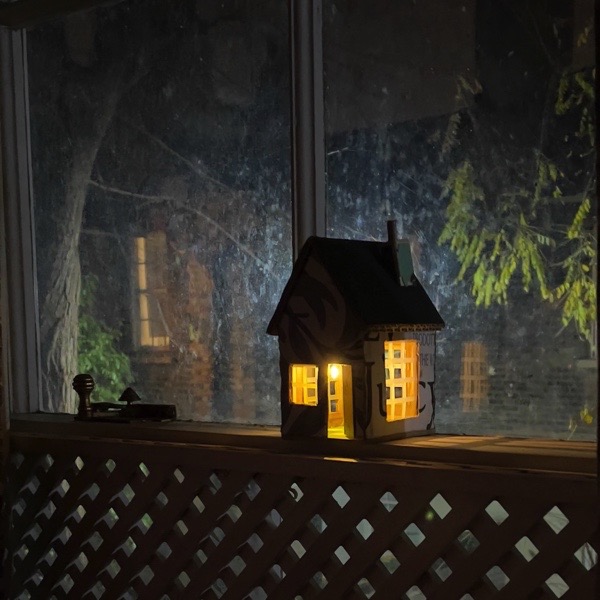
If you place your house in a sunny spot it will light up every night automatically
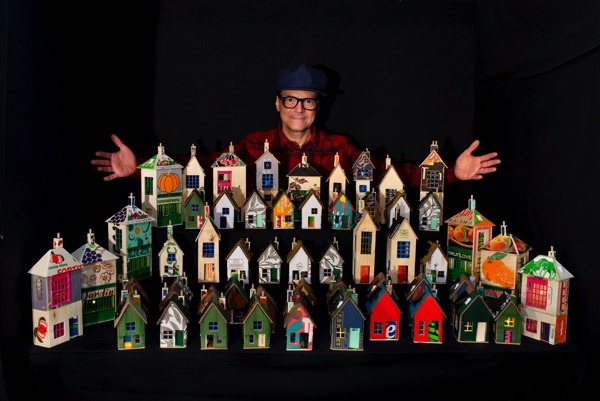
Robson and his houses
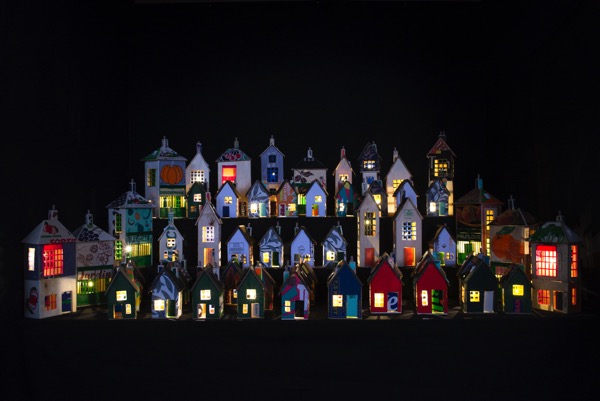
The houses lit up by solar power
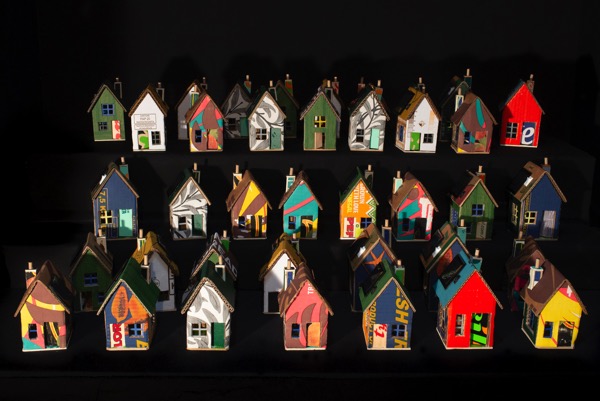
Robson Cezar’s cardboard houses
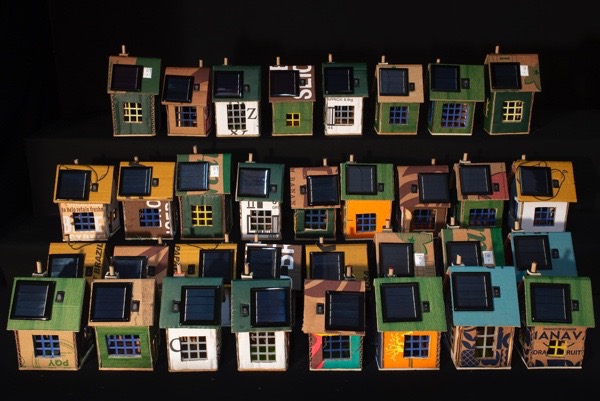
Sideways view of the cardboard houses showing the solar panels
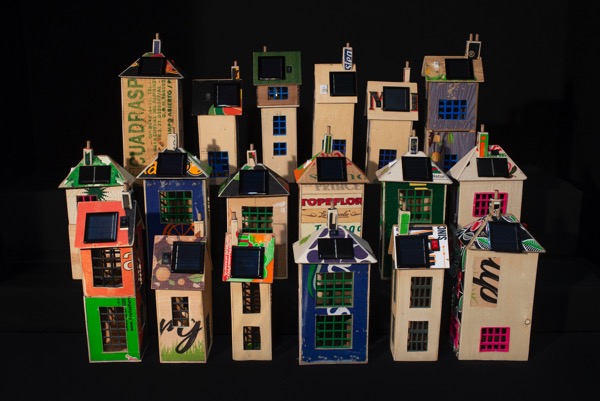
Sideways view of the wooden houses showing the solar panels
A
B
C
D
E
F
G
H
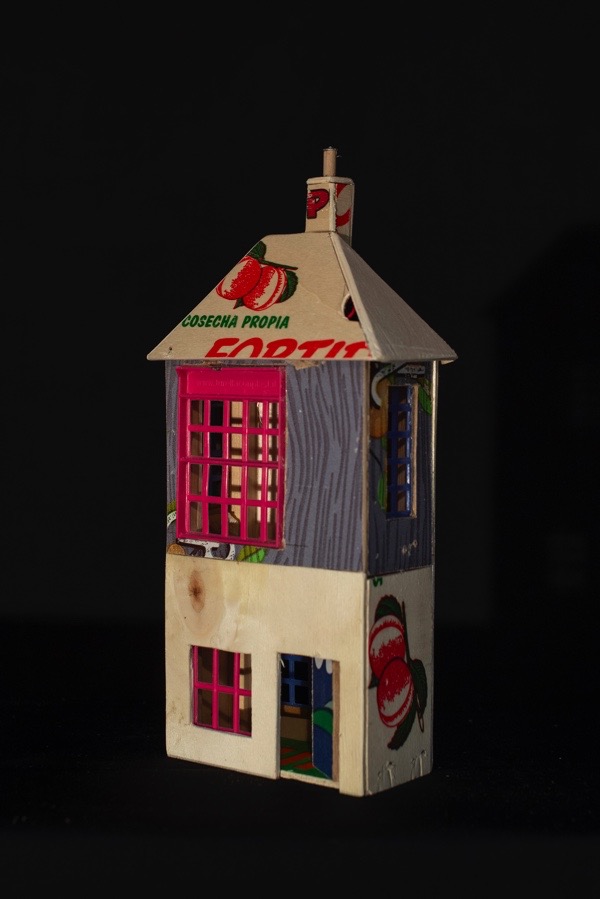
I
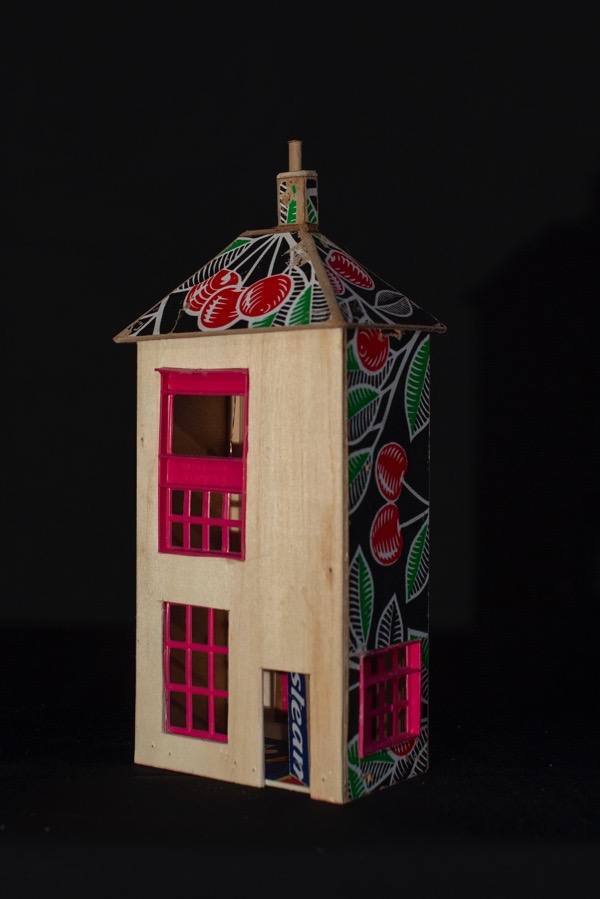
J
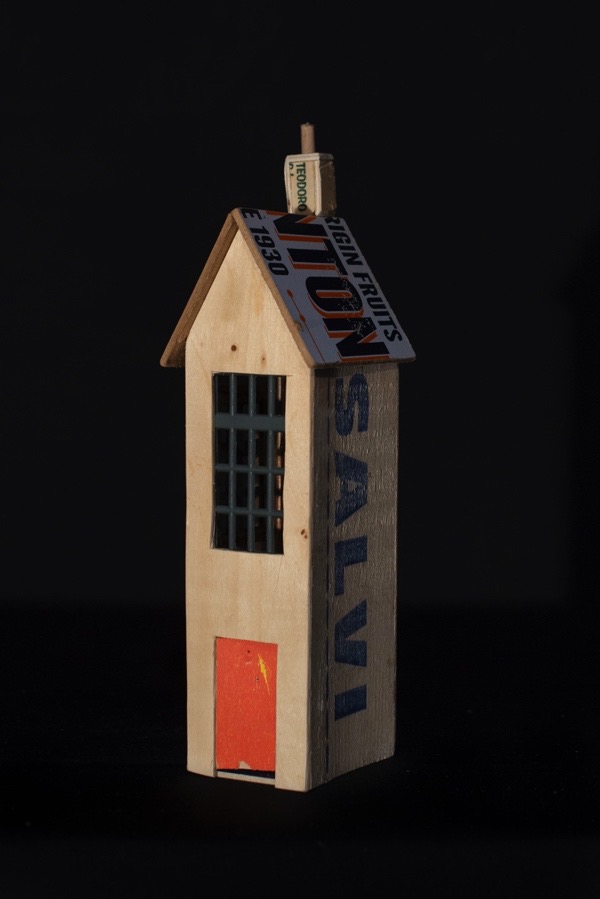
K
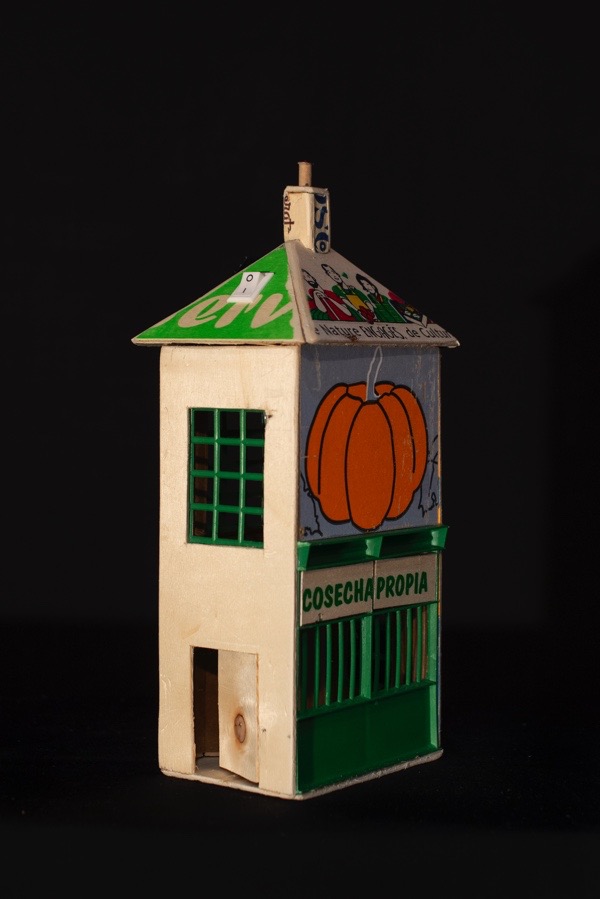
L
M
N
O
P
Q
R
S
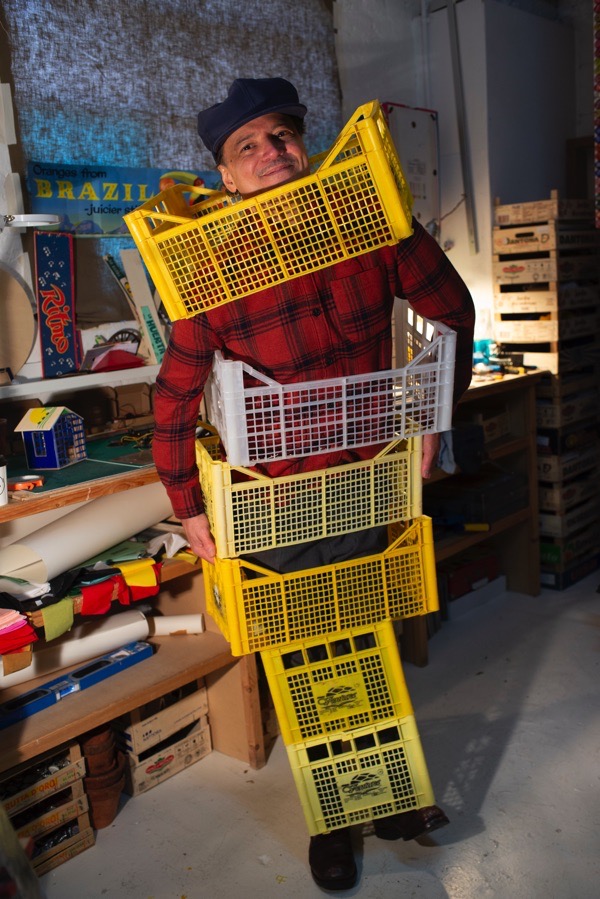
Robson Cezar in his studio
Photographs copyright © Sarah Ainslie
You may also like to take a look at
At The Bethnal Green Weightlifting Club
Click here to buy GIFT VOUCHERS for The Gentle Author’s Tours in 2024
Click here order a signed copy of The Gentle Author’s ON CHRISTMAS DAY for £10

Dominic Patmore, Powerlifter
In Turin St, there is a single-storey brick building so unassuming that even the locals do not know what it is, yet this is home to the celebrated Bethnal Green Weightlifting Club. The esteemed members believe their association dates from 1926, but a poster for the New Bethnal Green Weightlifting & Physical Culture Club on the wall inside the gym, dated 1931, suggests that its origin may be earlier.
Even the most senior member, Ron Whitton of Columbia Rd, is a relative newcomer who joined in 1946. He greeted Contributing Photographer Sarah Ainslie & I when we paid a visit, fresh from his twice-weekly swim in the Serpentine and preparing for his twice-weekly weightlifting session to follow. A sprightly octogenarian, Ron is a shining exemplar of the health benefits of body-building and weightlifting. “I’ve always been a keep fit guy,” he vouched, indicating the photos of his former glories upon the wall,“there’s not many guys of eighty-three still training.”
“In 1946, it was just an old shed in the playground with one or two bars and a set of dumbbells, where a couple of guys who’d come out of the forces started weight-training,” Ron recalled fondly, casting his eyes around the hallowed space, “Around 1948, Jack Brenda, Secretary of the Club, opened up this place but it was like something out of the Hammer House of Horrors then, it had been closed for years and there was no equipment, but we got it going and we’ve been here ever since.”
That Saturday morning, we encountered a mutually respectful crew of all sizes of male and female weightlifters absorbed in their training session, punctuated with intense cathartic moments when a major lift was ventured and one among them heaved and strained, channelling the support of their comrades egging them on, before throwing the weight down with a clang onto the mat. Although there were those who had the obvious advantage of size, most compelling in their lifts were those skinny individuals of diminutive stature who appeared to summon resources of strength from the ether in lifting weights that looked far beyond their apparent capacity.
“I started because I liked the idea of being strong,” powerlifter Laura Porter admitted to me, “but now I’m obsessed – it’s the satisfaction when you get a new personal best. I’m not super-duper strong yet, but I’m not bad and I like the feeling of being powerful.”
“It’s a good thing for women to do because it’s good for your bone strength, counteracting any tendency to brittle bones,” she revealed with a blush, “I’m approaching forty so I think about these things, but I hope to be weightlifting and competing in my sixties and beyond.”
A relaxed family atmosphere prevails at Bethnal Green Weightlifting Club, uniting enthusiasts of all ages and walks of life. “There was a time when every London borough had places like these but now there only two left in the entire capital,” Martin Bass, Club Secretary informed me, readily indicated pals that joined with him over forty years ago – and demonstrating the modest camaraderie among all those who seek transcendence of their physical and spiritual limits, here in confines of the gym, as a counterpoint to the external challenges of life’s journey beyond its walls.
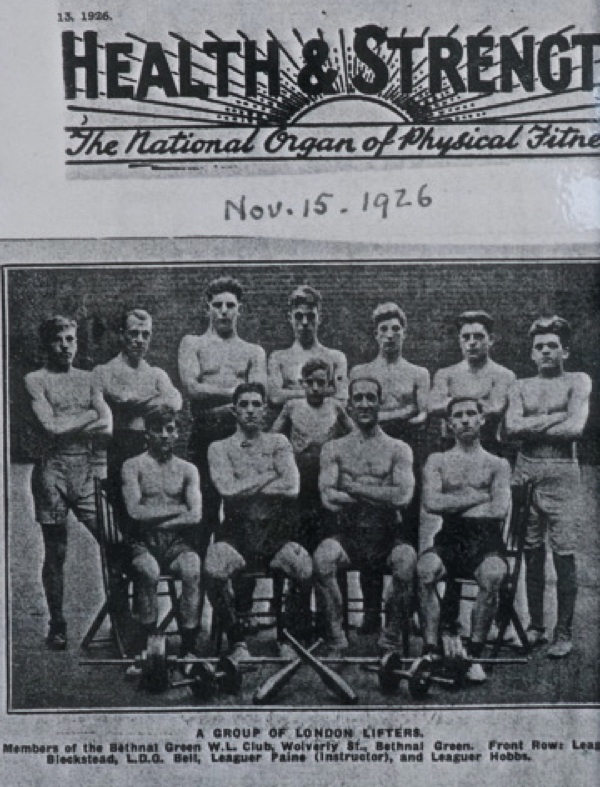
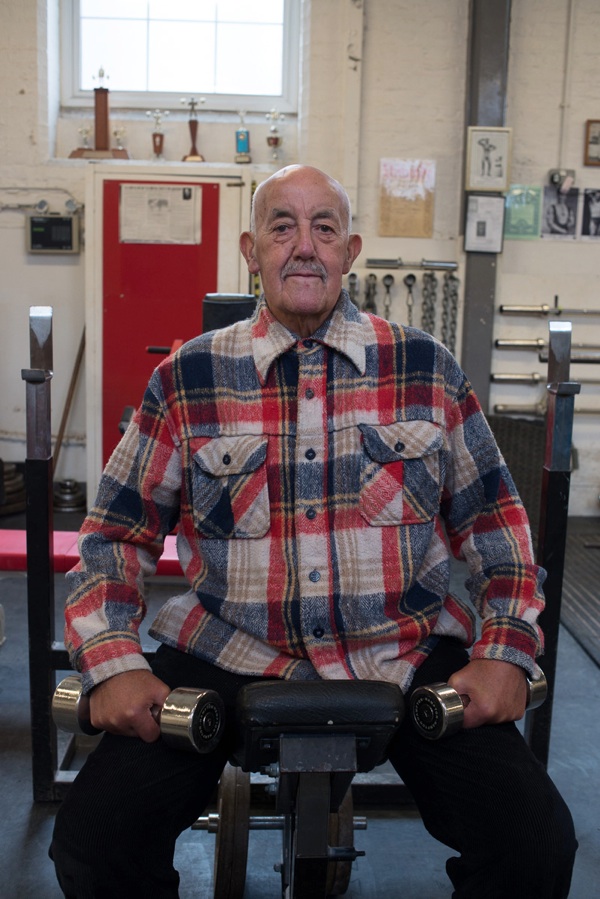
Ron Whitton, still weighlifting at eighty-three

Ron is second from right at the Bethnal Green Physique Contest of 1952 – London’s first body-building contest. “all the other have passed away”

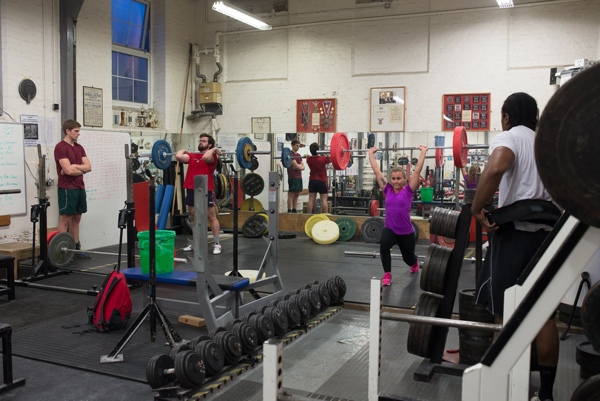

Laura Porter, Powerlifter
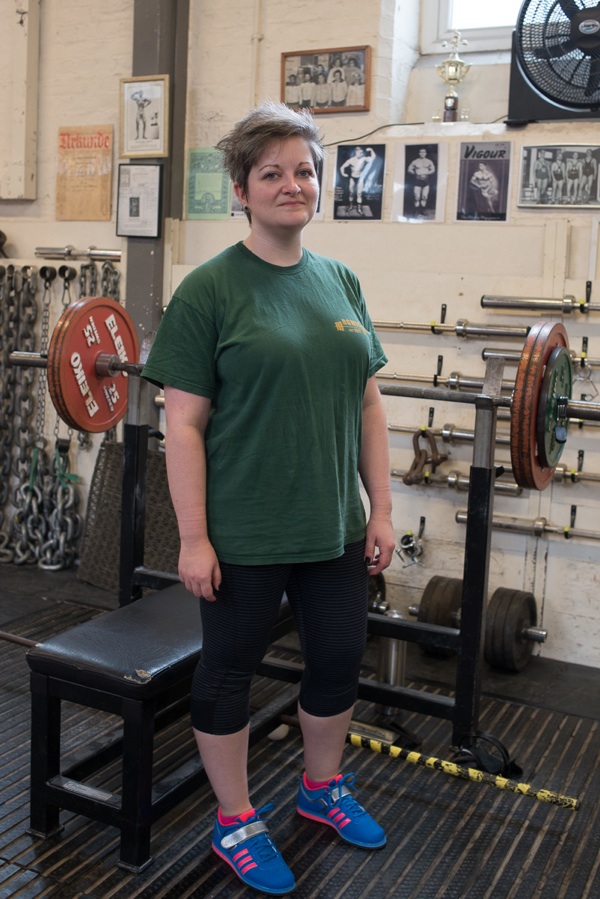
Laura – “I like the feeling of being powerful”

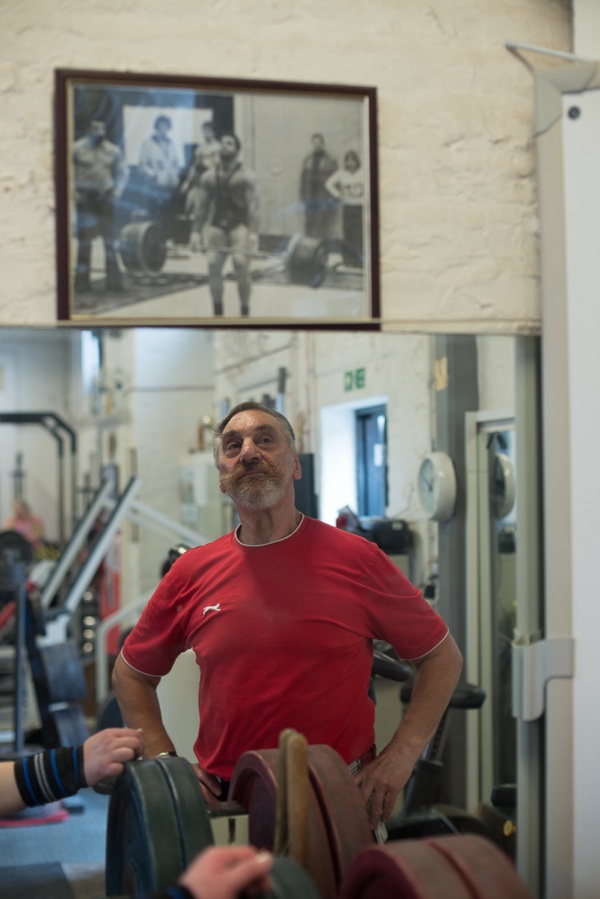

Martin Bass, Club Secretary and Member for forty-five years
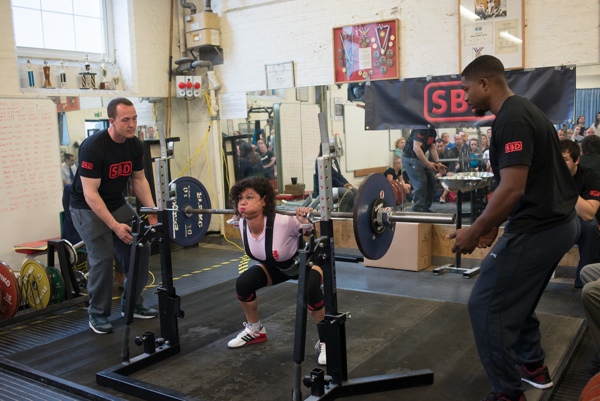
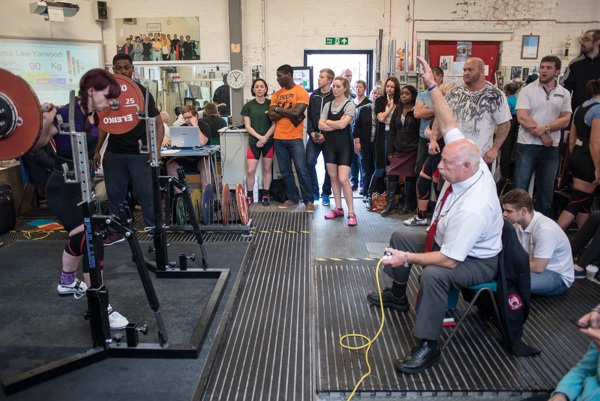
At the Women’s Powerlifting Contest
Photographs copyright © Sarah Ainslie
Bethnal Green Weightlifting Club, 229 Bethnal Green Rd, E2 6AB – entrance in Turin St
You may also like to read about
The Musclemen of Bethnal Green
Chris Chappell, Master of Taoism
Simon Mooney At the Repton Boxing Club
Henrietta Keeper’s Photographs
Click here to buy GIFT VOUCHERS for The Gentle Author’s Tours in 2024
Click here order a signed copy of The Gentle Author’s ON CHRISTMAS DAY for £10

Henrietta Keeper, Singer
Henrietta Keeper (widely known as “Joan”), the vivacious octogenarian ballad singer who used to perform at E.Pellicci in the Bethnal Green Rd every Friday, once invited me to round to her tiny flat to show me her remarkable collection of photographs and meet her daughter Lesley, custodian of the family album.
These pictures show Henrietta’s life as it existed within a small corner of the East End on the boundary of Spitalfields and Bethnal Green in the nineteen fifties. On one side of Vallance Rd was Cranberry St where Henrietta’s mother-in-law Selina lived and took care of her daughters while the family waited for a house of their own. On the other side of Vallance Rd was Selby St where Henrietta’s husband Joe and his brother Jim ran Keeper & Co, making coal deliveries. And at the end of Vallance Rd was New Rd where Henrietta worked as a machinist at Bartman & Co making coats and jackets.
Having grown up in Bethnal Green during the war and brought her own family up though the austerity that followed, Henrietta was a woman of indefatigable spirit. Most remarkable of all, she sang throughout her life, winning innumerable singing competitions and giving free concerts.
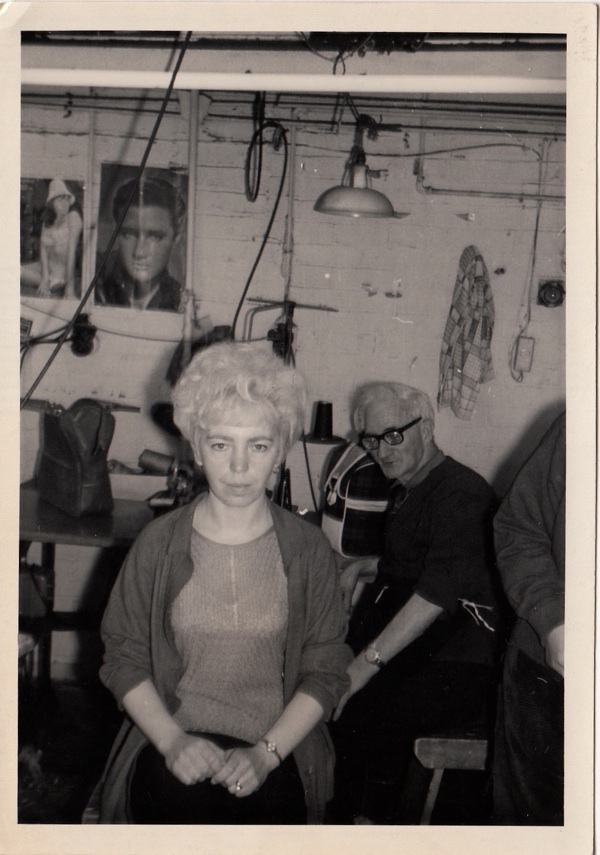
Henrietta with fellow machinist Izzie. “When I was nineteen I started here and I became the top machinist,” she explained, “I think my hair looks a bit like Barbara Windsor’s in this picture.”
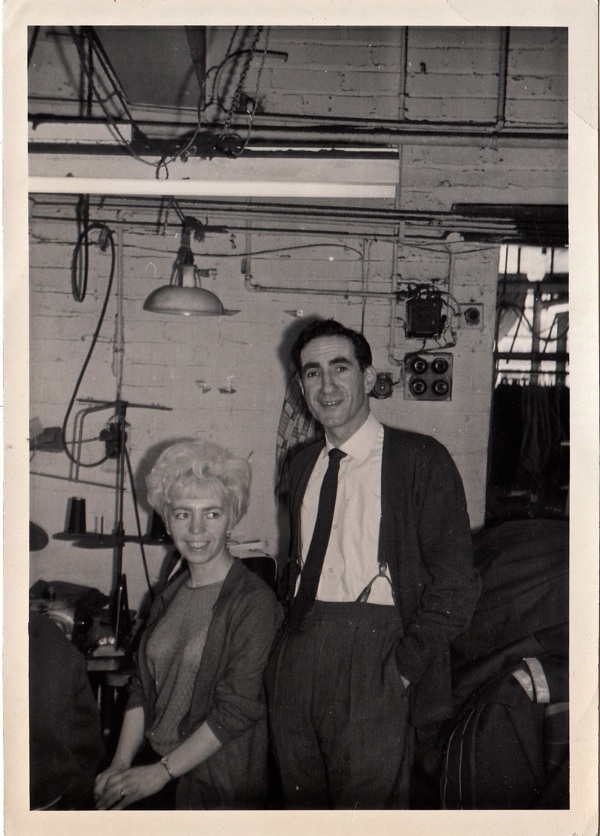
Henrietta with Mr Bartman at Bartman & Co.

“This is Selina Keeper, my mother-in-law at her house in Cranberry St. She was real Victorian lady. She used to whip the cup of tea off the table before you had finished it!” said Henrietta. And Lesley added, “She had a best front room that she kept under lock and key, and only once – when she unlocked it – did I go in, but she said ‘Get out!’ You couldn’t touch anything. It had to be kept perfect.”

“My husband Joe took this picture of his two best friends George Bastick and Leslie Herbert in Nelson Gardens next to St Peter’s Church, Bethnal Green. What a pity he isn’t in it?”

Coronation Day, 1953, celebrated at Hemming St, Bethnal Green. Lesley is in the blazer on the right hand side of the front row and Henrietta can be distinguished by her blonde hair beneath the Union Jack, peering round the lady in front of her.

“This is Jim Keeper, my brother-in-law, with his horse Trigger. My husband, Joe, worked with him and he had the biggest coal round in the East End – Keeper & Co. Joe was so strong he could carry a two hundredweight sack of coal on his back up the stairs of the buildings with ease. The brothers used to go home to lunch with their mum in Cranberry St and take Trigger with them. She always collected the horse manure for her roses while they were there and when the Queen Mother visited the East End, she leaned over the fence and said ‘This one should win best garden.'”

“Taken in 1947 at Southend, when I was twenty, this is Cathy Tyler, my sister Marie and me – I was known as Minxie at the time and we all sang together like the Andrews sisters. I was a bit shocked when I saw it because you can see I am pregnant. I thought, ‘Is that me?'”

Henrietta (far right) photographed with her workmates by a street photographer around Brick Lane during a lunch break in the fifties.

This is Henrietta’s daughter Lesley visiting Petticoat Lane with her grandfather James Keeper in 1953. “He was a delivery man with a horse and cart, they called it a ‘carman,'” Henrietta remembered, “he was also a cabinet-maker and he brought me beautiful polished wooden boxes that he made.”

Henrietta and her husband Joe with their daughter Lesley on a trip to Columbia Rd.

The two children on the right are Lesley and Linda Keeper playing at Cowboys and Indians with their friends in the nineteen fifties in Cranberry St while they lived with their grandmother. Lesley remembers Mrs Dexter across the road who called out “Play nicely on the debris!” to the children and you can see the bomb site where they played in the back of the photograph. Today Cranberry St no longer exists, just the stub of road beside Rinkoff’s bakery in Vallance Rd indicates where it once was.

Henrietta singing at a Holiday Camp at Selsey Bill in the nineteen sixties.
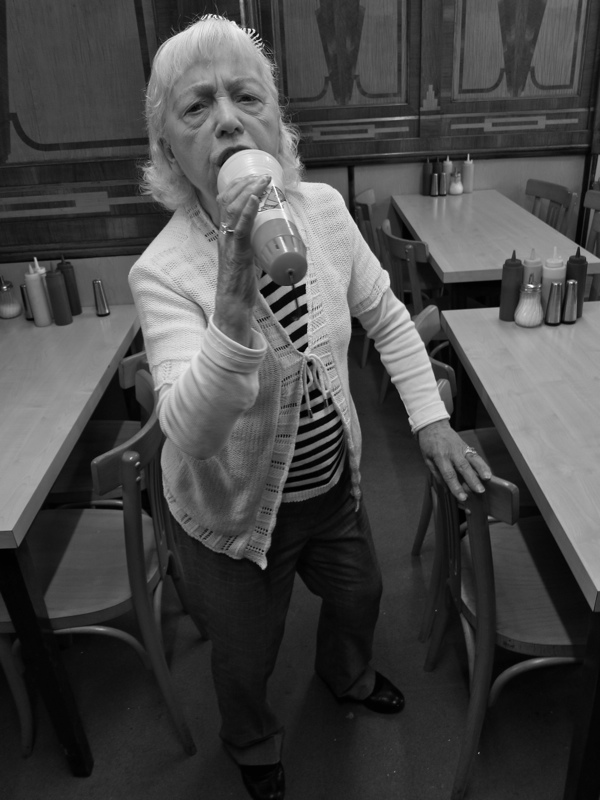
Henrietta singing at Pelliccis
You may like to read my original portrait
George Cruikshank’s Christmas In London
Click here to buy GIFT VOUCHERS for The Gentle Author’s Tours in 2024
Click here order a signed copy of The Gentle Author’s ON CHRISTMAS DAY for £10
As we brace ourselves for the forthcoming festive season, let us contemplate George Cruikshank‘s illustrations of yuletide in London 1838-53 from his Comic Almanack which remind us how much has changed and also how little has changed. (You can click on any of these images to enlarge)
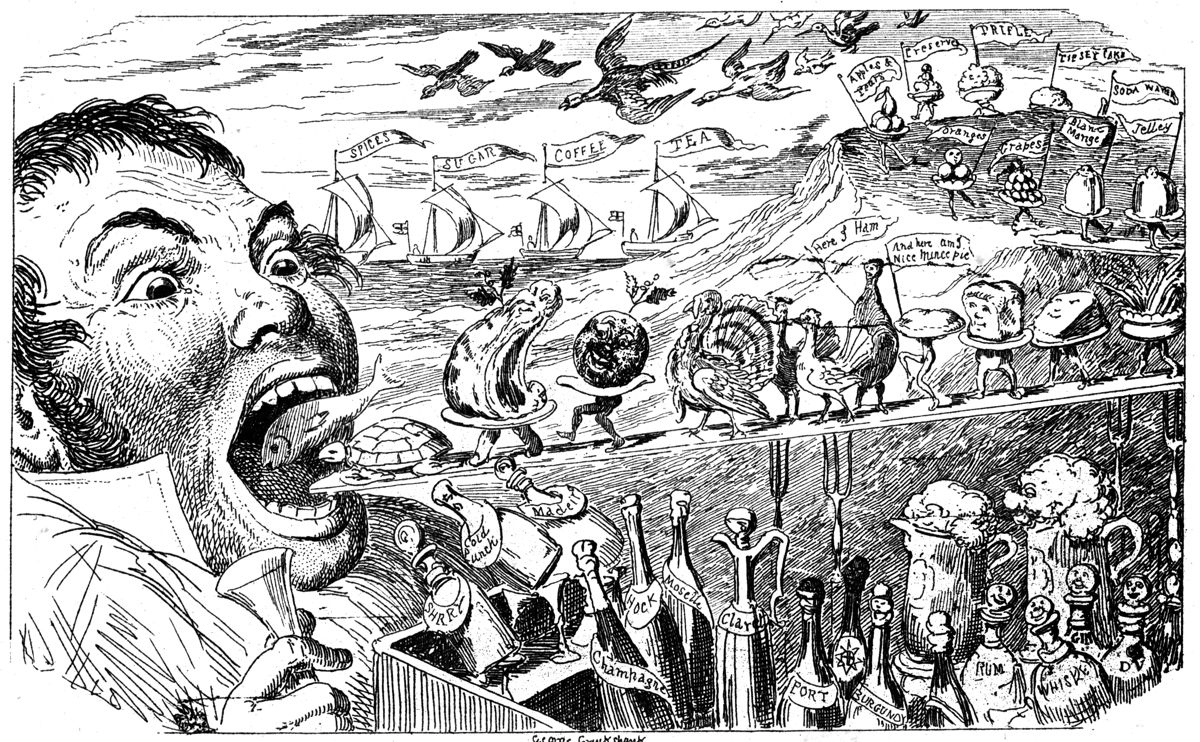
A swallow at Christmas
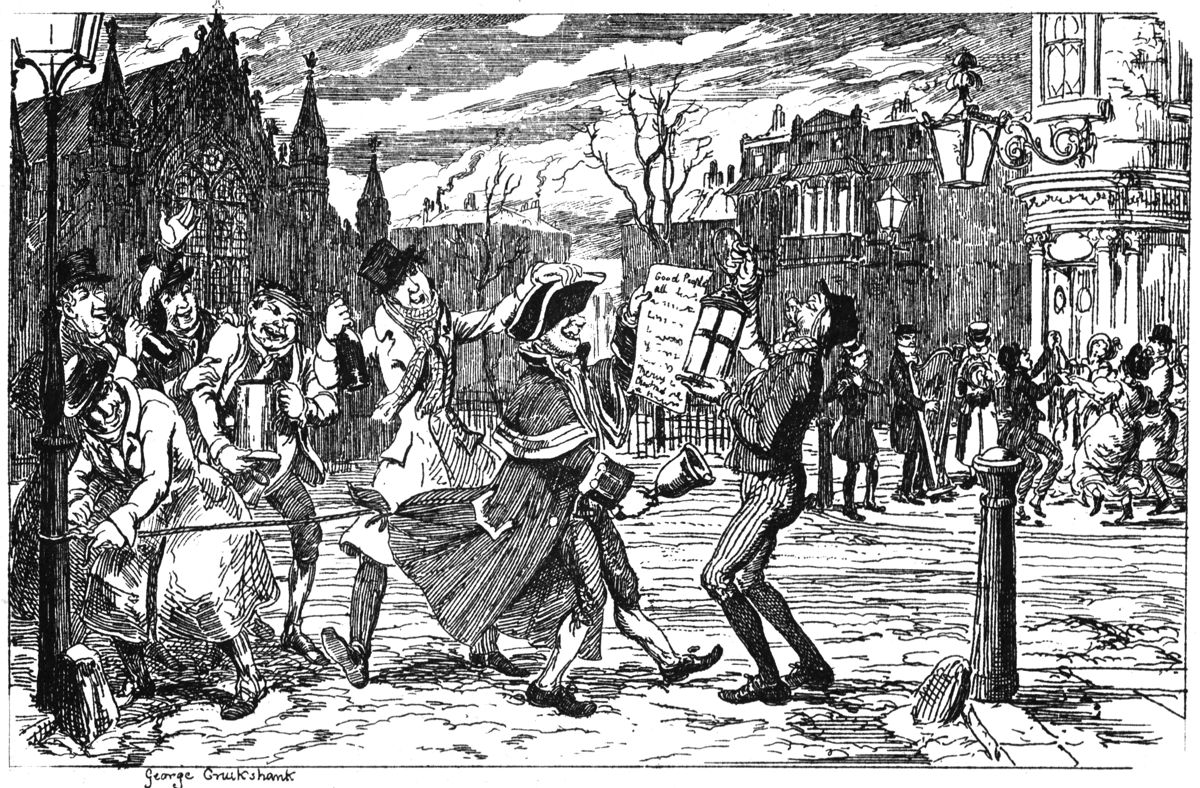
Christmas Eve

Christmas Eve
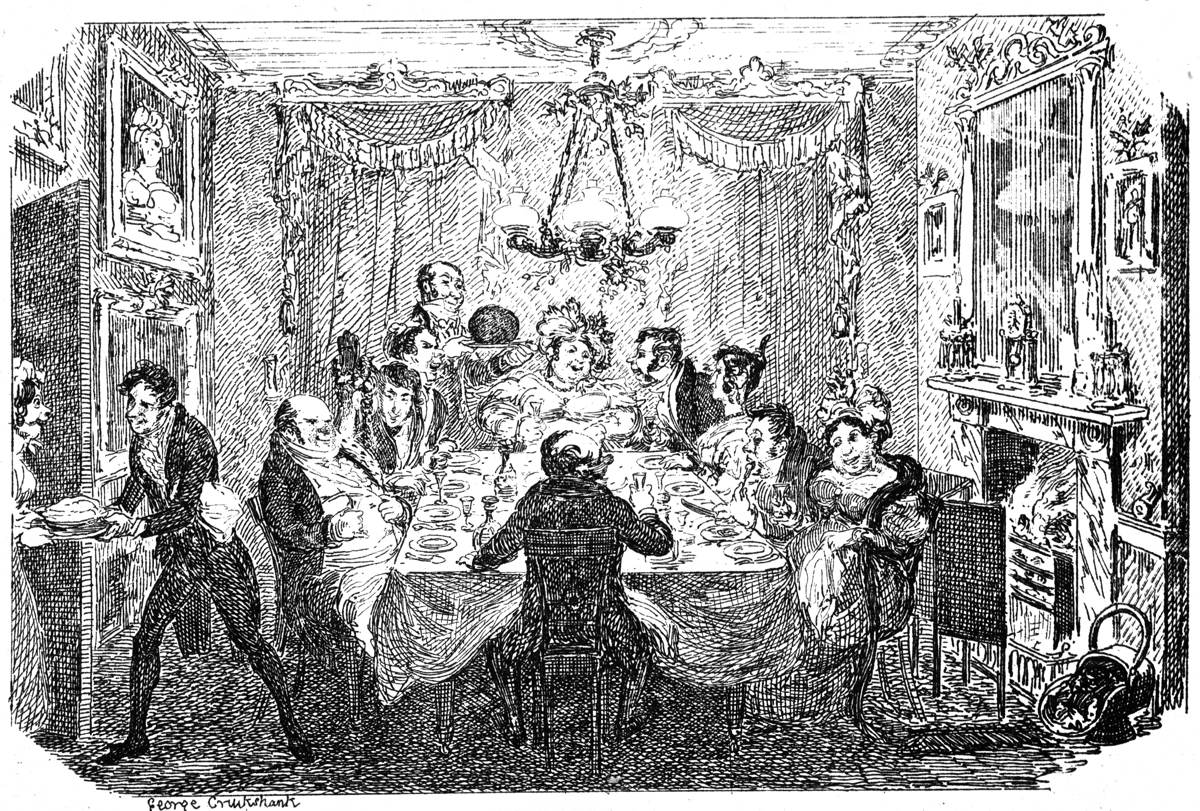
Christmas dining

Christmas bustle
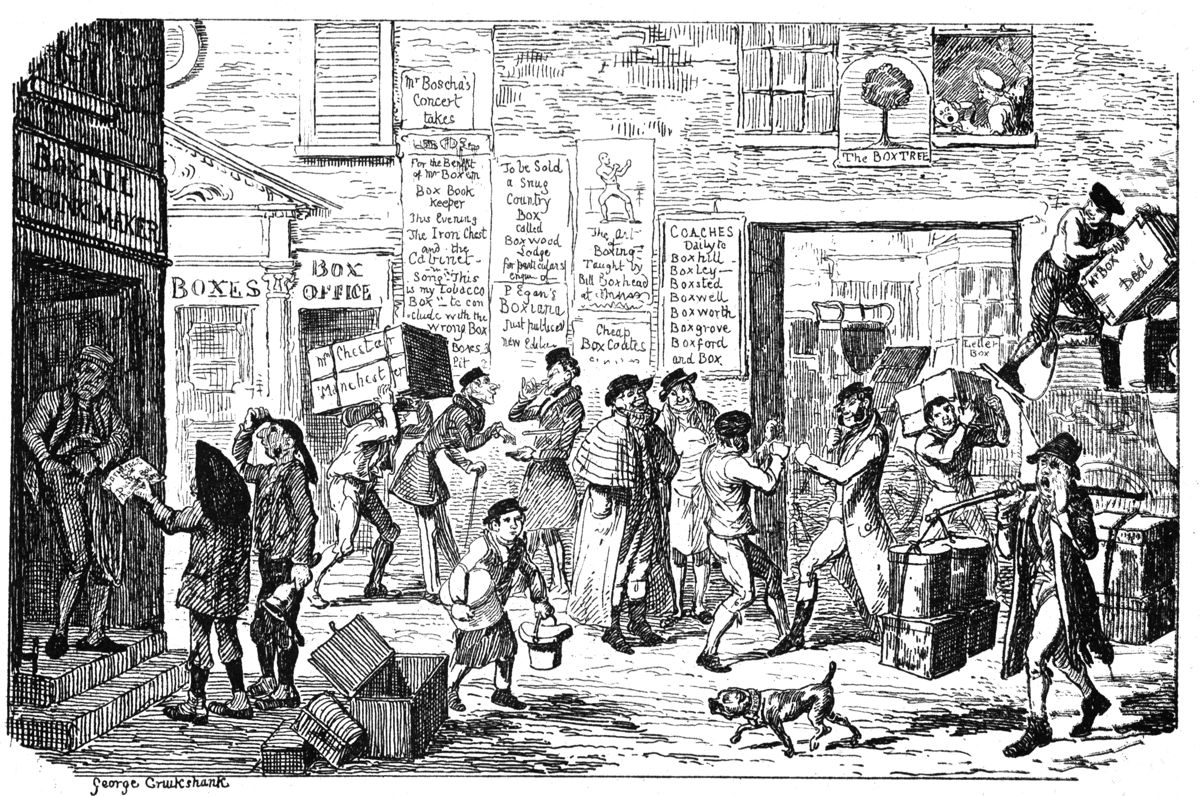
Boxing day
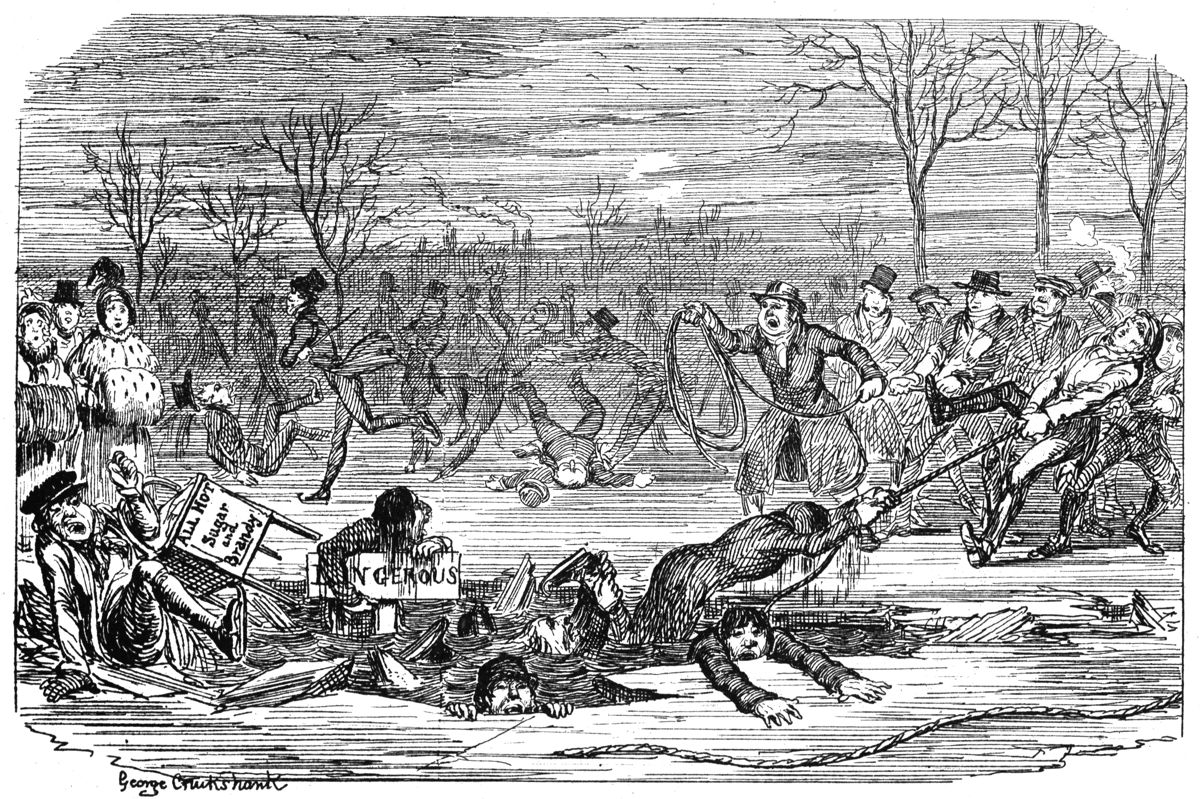
Hard frost
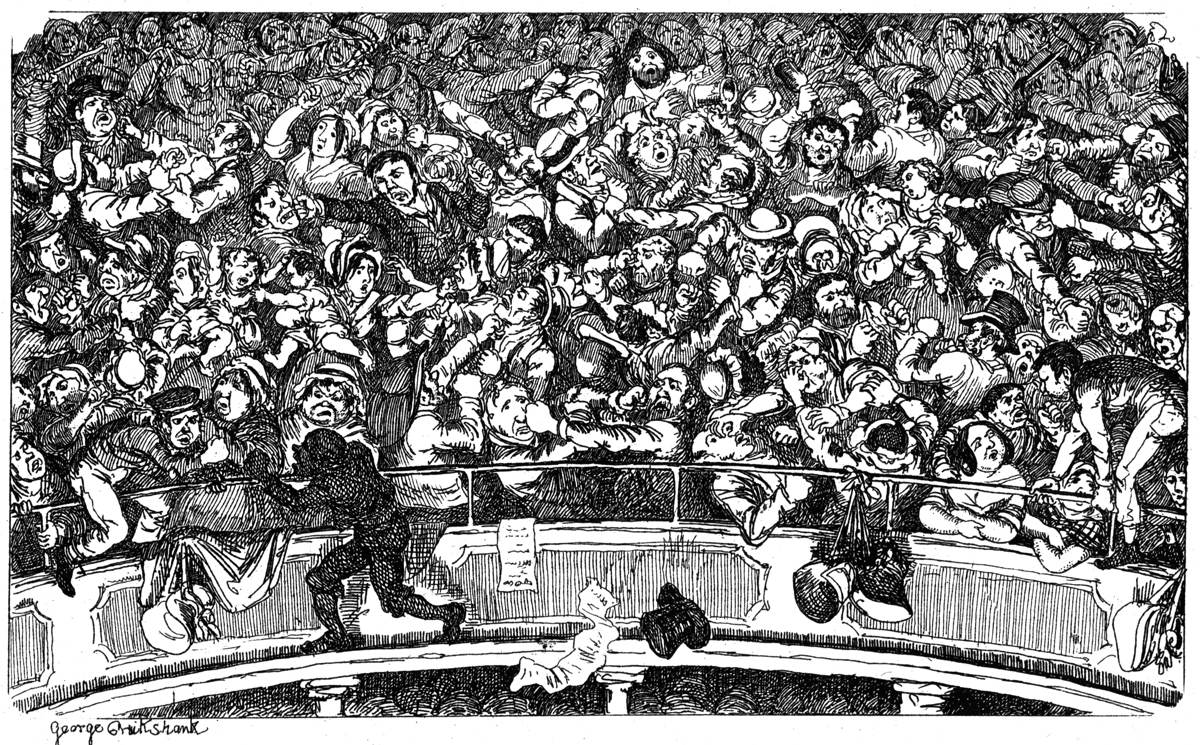
A picture in the gallery
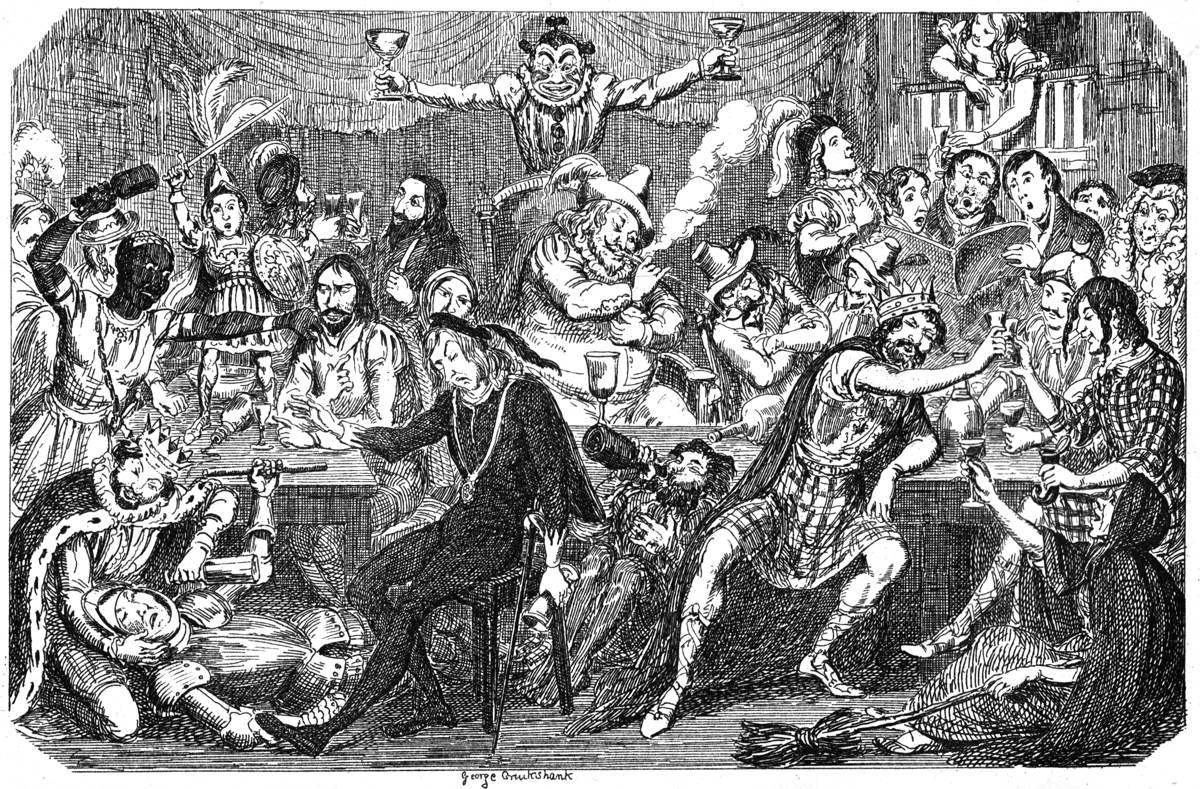
Theatrical dinner

The Parlour & the Cellar
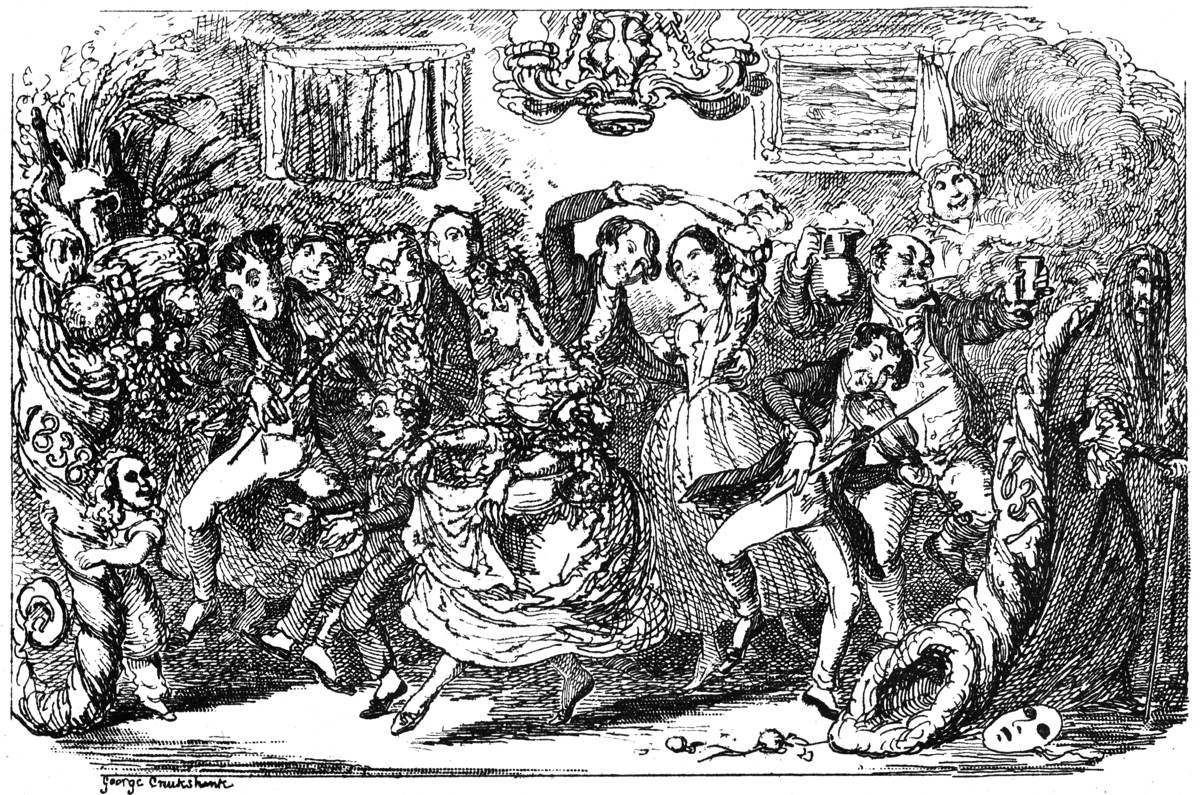
New Year’s Eve
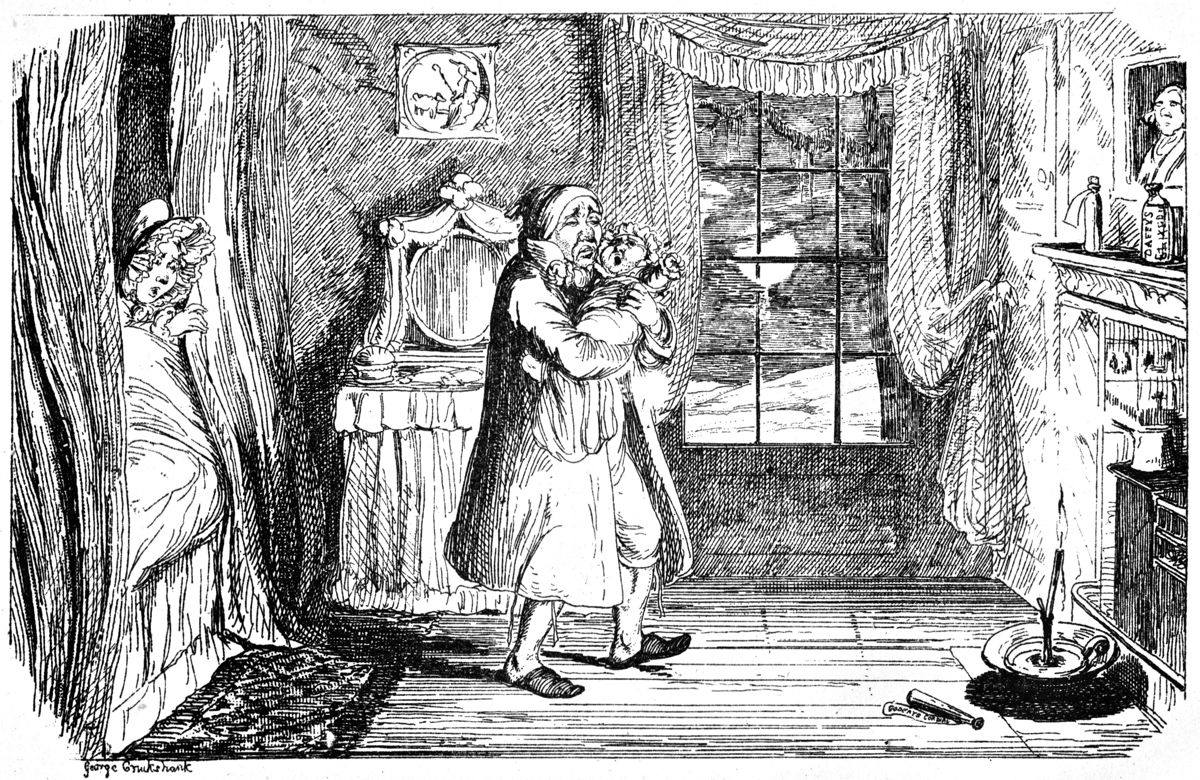
New Year’s birth
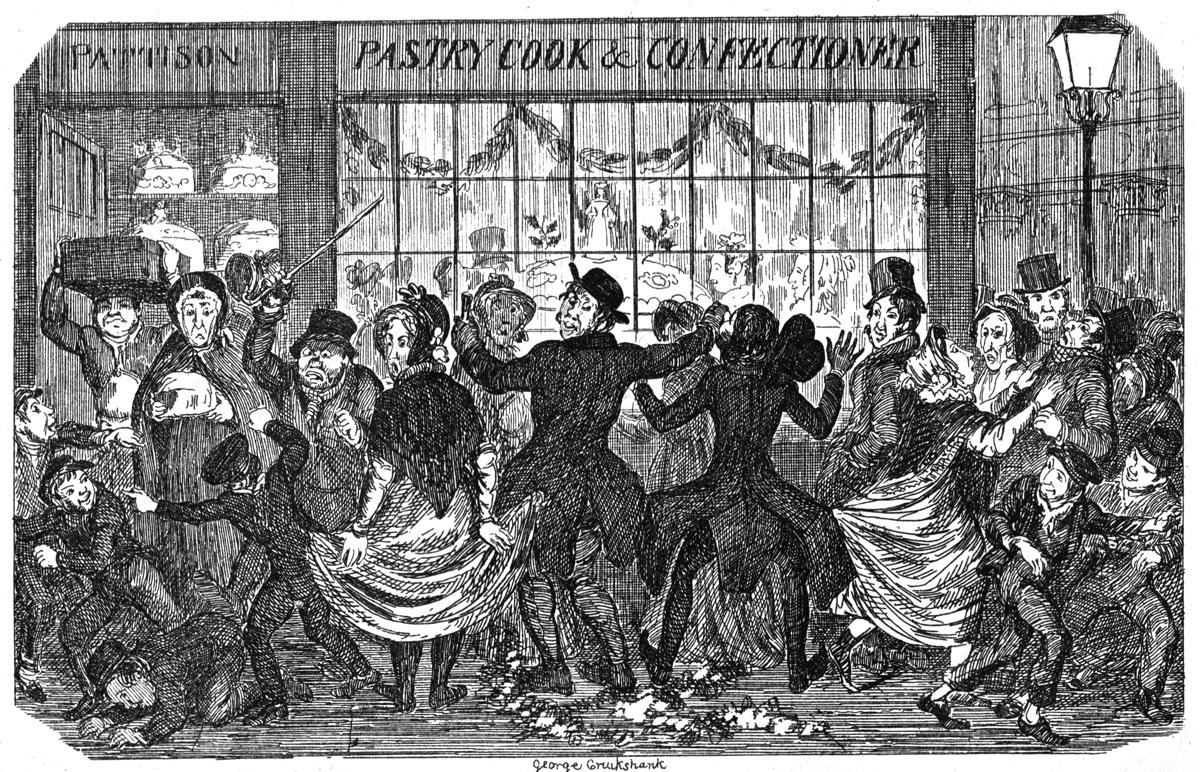
Twelfth Night – Drawing characters
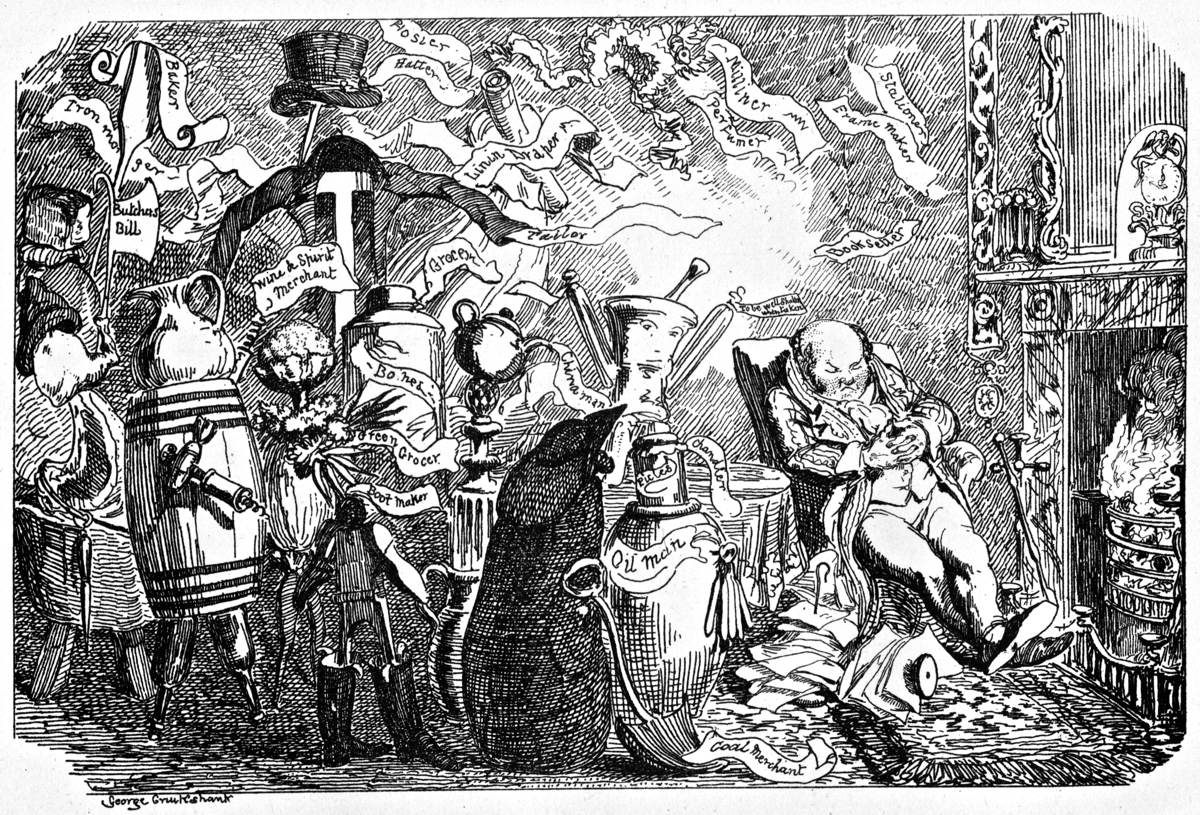
January – Last year’s bills
You may also enjoy
George Cruikshank’s Comic Alphabet