
Christmas Ravioli At E Pellicci
Click here to order a signed copy of The Gentle Author’s new book ON CHRISTMAS DAY for £10

Elide Pellicci looks down upon Maria & Nevio Pellicci
If you should spot a light, gleaming after hours in the back kitchen at E. Pellicci in the Bethnal Green Rd at this time of year, that will be Maria Pellicci making the Christmas ravioli for her family as she has done each year since 1962.
Maria originates from the same tiny village of Casciana near Lucca in Tuscany as her late husband Nevio Pellicci (senior). And, to her surprise, when Maria first arrived in London she discovered his mother Elide Pellicci, who came over in 1899, was already making ravioli to the same recipe that she knew from home in Italy.
Elide is the E. Pellicci celebrated in chrome letters upon the primrose yellow art deco facade of London’s best-loved family-run cafe, the woman who took over the running of the cafe in the thirties after the death of her husband Priamo who worked there from 1900 – which means we may be assured that the Christmas ravioli have been made here by the Pelliccis in this same spot for over a century.
Thus it was a great honour that Contributing Photographer Patricia Niven & I were the very first outsiders to be invited to witness and record this time-hallowed ritual in Bethnal Green. But I regret to inform you that this particular ravioli is only ever made for the family, which means the only way you can get to taste it is if you marry into the Pelliccis.
“It’s a Tuscan Christmas tradition – Ravioli in Brodo – we only do it once a year and every family has their own recipe,” Maria admitted to me as she turned the handle of the machine and her son Nevio Pellici (junior) reached out to manage the rapidly emerging yellow ribbon of pasta. “My mother and my grandmother used to make it, and I’ve been doing it all my life.”
In recent years, Maria has been quietly tutoring Nevio in this distinctive culinary art that is integral to the Pellicci family. “I was going with the boys to see Naples play against Arsenal tonight, but that’s down the drain,” he declared with good grace – revealing he had only discovered earlier in the day that his mother had decided the time was right for making the special ravioli, ready for the whole family to eat in chicken broth on Christmas Day.
“He’s a good boy,” Maria declared with a tender smile, acknowledging his sacrifice, “years ago I used to stay here on my own making the ravioli until eleven o’clock at night.”
“She’s trying to hand it over to me,” Nevio confirmed proudly.
“Nevio’s good and he’s got the patience,” Maria added encouragingly, as Nevio lowered the pasta carefully onto the ravioli mould.
“I’ve got the rubbish job, I have to fill the ravioli,” he complained in mock self-pity, grinning with pleasure as the two of them set to work with nimble fingers to fill the ravioli. Although the precise ingredients are a fiercely guarded secret, Maria confided to me that the filling comprises beef and pork with Parmigiano and Percorino, along with other undisclosed seasonings. “Everyone does it differently,” she confessed modestly, making light of the lifetime of refining that lies behind her personal recipe.
Already Maria had cooked the mixture slowly for a hour and added a couple of eggs to bind it, and – now it had cooled – she and Nevio were transferring it into the ravioli mould. “We used to do this by hand,” she informed me, turning contemplative as she watched Nevio expertly produce another ribbon of yellow pasta to sit on top of the mould. “We rolled the pasta out on the table before we had the machine. Sometimes, large families used to fill the whole table rolling out enough pasta to feed everyone on Christmas Day. When my mother was small, they were poor and lived in a hut but they had their own flour and eggs, so they could always make pasta.”
It was Nevio’s task to turn the mould over and press it down hard onto the table, binding the layers of pasta together. Then, with intense concentration as Maria waited expectantly, he peeled the ravioli away from the mould, revealing a sheet that looked like a page of neatly upholstered postage stamps. Making swift work of it, Maria wielded her little metal wheel by its wooden handle, separating the individual ravioli and transferring them to a metal tray.
In the kitchen of the empty restaurant, mother and son surveyed their fine handiwork with satisfaction. Each mould produced forty ravioli and, in the course of the evening, they made eight batches of ravioli, thus producing three hundred and sixty ravioli to delight the gathered Pelliccis on Christmas Day – and thereby continuing a family tradition that extends over a century. Yet for Maria, Ravioli in Brodo is more than a memento of her origin in Tuscany, making it here in the East End over all this time incarnates this place as her home.
“I am happy here and I know everyone in Bethnal Green,” she admitted to me, “It’s my village and it’s my family.”

Maria & Nevio rolling out the pasta

Maria sprinkles semolina in the mould to stop the pasta sticking


Maria & Nevio placing the meat filling in the ravioli


Nevio presses down on the ravioli mould

The ravioli are turned out from the mould

Maria cuts out the individual ravioli


Over three hundred ravioli ready for Christmas Day

Elide & Priamo, the Pellicci ancestors look down in approval upon the observance of making Christmas ravioli for more than a century in Bethnal Green
Photographs copyright © Patricia Niven
E.Pellicci, 332 Bethnal Green Rd, E2 0AG
You may like to read my other Pellicci stories
Maria Pellicci, The Meatball Queen of Bethnal Green
Colin O’Brien’s Pellicci Portraits ( Part One)
Colin O’Brien’s Pellicci Portraits (Part Two)
Christmas At The Salvation Army, 1975
Click here to order a signed copy of The Gentle Author’s new book ON CHRISTMAS DAY for £10

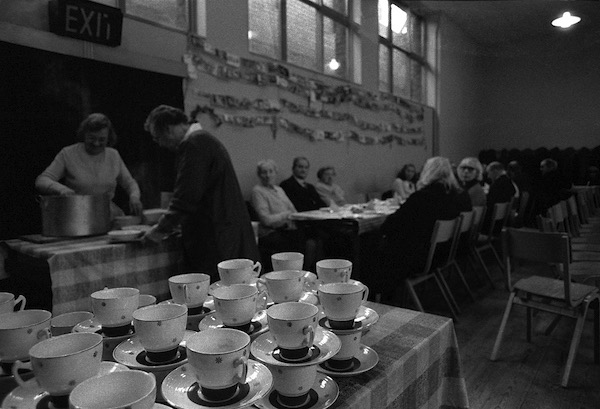
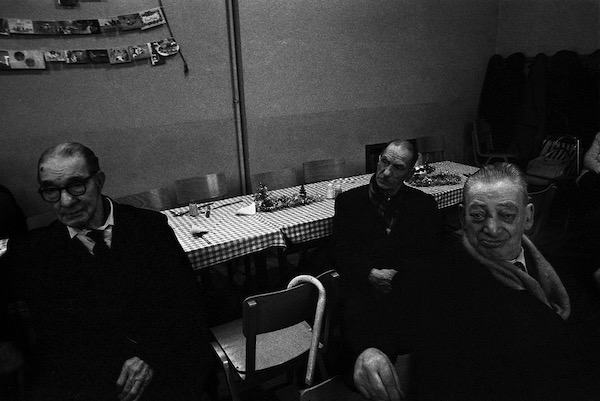
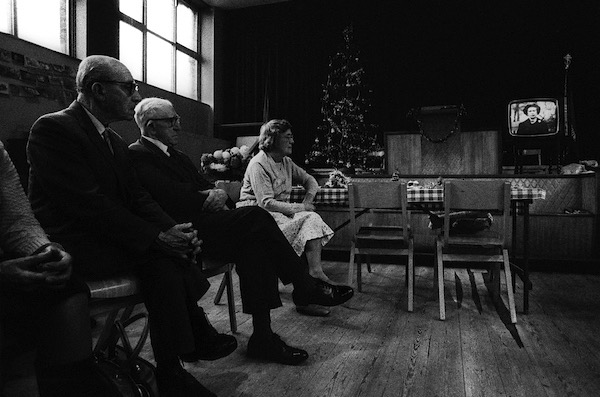
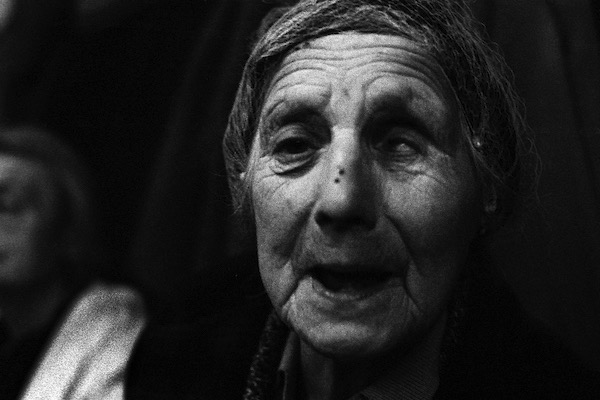
Photographer David Hoffman recently discovered these pictures he took at the Salvation Army Christmas Day lunch in Cambridge Heath Rd in 1975
“On Christmas Day 1975, I was squatting in Fieldgate Mansions in Whitechapel and it was a bit boring because all my friends were away for the holiday. The shops were shut and I was looking for something interesting to do with the day. I had seen that the Salvation Army were holding an open Christmas lunch at Sigsworth Hall in Globe Rd so I rocked up there with my camera and, without any formality, I just started to take photographs.
It was terribly dark. I had no flash and I had to work hard in the darkroom to coax these images from the horribly under-exposed and heavily over-developed film. The prints I made at the time were flat and grey but, now that I have been able to convert them to digital files, they do look a bit better and remind me of a very different era, now lost without trace.” – David Hoffman






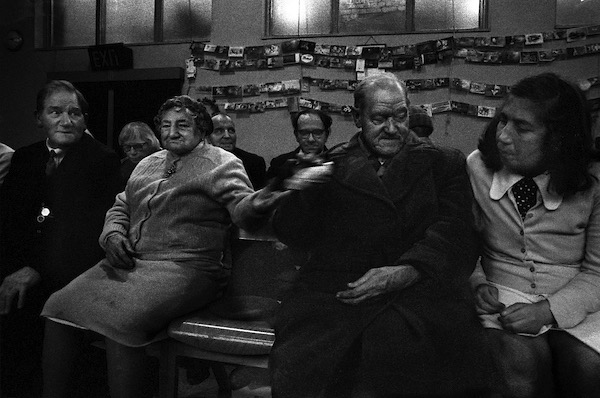


Photographs copyright © David Hoffman
You may also like to take a look at
David Hoffman at Fieldgate Mansions
My Winter Walks In the City
Many years ago, when my last relative died, for the first time in my life I had no longer any obligations at Christmas so, in recognition of this, I decided to walk all night through London on Christmas Eve alone, when the rest of the city was sleeping, and savour my strange moment of liberation. You can read my account below.
This year, as a the result of a commission by Barbican Arts Centre, you can join me for a two hour storytelling ramble across the empty square mile, from the steps of St Paul’s Cathedral through the narrow alleys and lanes to the Bank of England, in search of the wonders and the wickedness of the City of London. These walks take place on 28th & 30th December and are conceived to elevate and uplift that curious moment of hiatus between Christmas and New Year.
Click here to book for The Gentle Author’s Winter Walks Through the City of London
On New Year’s Day, you are invited to join my walk around Spitalfields to blow away the cobwebs of 2023 and step forward with me into 2024. We shall ramble through two thousand years of culture in the heart of London and encounter some of the people and places that make this ancient neighbourhood distinctive. We will follow in the footsteps of all who came before, with a keen eye and an open heart, to experience the manifold wonders of Spitalfields.
Click here to book for The Gentle Author’s Tour of Spitalfields on January 1st

ON CHRISTMAS NIGHT IN THE CITY
Fortified by a late supper of lamb cutlets, I set out after eleven through the streets of Spitalfields just as some of the residents were making their way to Christ Church for the midnight service, but I did not join them, instead I walked out into the City on Christmas Eve. As I passed through Brick Lane, the ever-optimistic curry touts were touting to an empty street and in Commercial St a few stragglers who had been out for the night loitered, but I left them all behind as I entered the streets of the City of London where there was no-one. Passing through the deserted Leadenhall Market, illuminated like a fairground, I slipped into the web of narrow alleys to emerge at the Bank of England. Here where the Bank, the Mansion House and the Royal Exchange face each other at this famous crossroads, the place was empty save a lonely policeman patrolling outside the Bank of England.
I headed down to the river and as I crossed the footbridge above the dark water with powerful currents churning in the depths below, I could enjoy the panorama of the vast city of empty rooms around me. Tonight, I was the sole rambler through its passages and byways, an explorer in the unknown territory of the familiar city, transformed by the complete absence of inhabitants. The sound of the gulls’ cry registered as it had not before and birdsong followed me throughout my journey into the dark streets, in which for the first time ever I heard the echo of my own footsteps in the centre of London.
Yet just as I had befriended the emptiness, I came round a corner in Southwark to see the cathedral glowing with light and the tune of a carol blowing on the breeze. I stepped down to the cathedral door and discovered a candlelit service in progress. An usher saw me through the glass door, and although I kept a respectful distance – imbued with the generosity of the season, he could not resist coming outside to lead me in. Before I knew it, I was in the midst of the service and it was overwhelming in contrast to the cold dark streets to which I had acclimatised. But once the bishop had led the choir in a procession through a haze of incense as the congregation sang “O Come all Ye Faithful,” the service was over. So as quickly as I arrived, I was able to return to my wandering.
Hastening Eastward along the Thames, I came to Tower Bridge where I crossed and skirted around the Tower of London. In the absence of floodlighting, its grim austerity came to the fore, yet even though all the gates were shut for the night I could see a few of the residents’ individual lights still burning within. From here I set out Westward, along Cheapside and Cannon St, where I came upon the fabled London Stone, built into an illuminated box in the wall, as I was passing on my way to St Pauls. Here also, the floodlighting was off, allowing Wren’s great cathedral to loom magnificently among the trees like some natural excrescence, a towering cliff of rock, eroded into pinnacles.
Winding my way onwards along the Strand through the courtyards and alleys, I found myself in Lincoln’s Inn Fields and I had it to myself. And in homage to the writer most famous for his walks by night through London, I visited the Old Curiosity Shop. Already, the night was drawing on and I discovered a sense of urgency, walking on purposefully even though I did not where I was going. At the Savoy, I turned down Carting Lane where I came upon one of just three people that I saw suffering the misfortune of sleeping out last night, though equally I was also aware of many bundled up in dark clothing with backpacks walking slowly and keeping to the shadows. I could only presume these people were walking all night in preference to sleeping in the frost.
I followed the Embankment along to Parliament Sq where there was no-one, apart from the antiwar protesters sleeping peacefully in their tents and statues of dead men standing around on plinths. Big Ben struck three in the morning and, without any traffic, I could sense the sound travelling around me, bouncing and reverberating off the stone buildings as I made my way up Whitehall. Coming to the end of Downing St, two policemen with machine guns on duty behind the fortifications spotted me, the lone figure in the street, and I realised they were focusing on me. Then, to my surprise, one waved, and so I returned the wave automatically and the atmosphere of unease was broken.
There were plenty of taxis for hire circling Trafalgar Square – they were the only traffic on the road by this time – but absurdly there were no customers to rent them. Looking through Admiralty Arch, I espied Buckingham Palace tempting me, and I wanted to go walking around St James’ Palace too, but weariness was also coming upon me. It was time to return home. I walked doggedly across Covent Garden, along Holborn and over Smithfield, then through the Barbican and so I found myself in Spitalfields again.
The city was as still as the grave and there was a keen edge to the wind, yet I had kept warm by walking continuously. It was as though I had travelled through a dream – a dream of an empty city. Although I delighted in the privilege of having London to myself, it is an alien place with nobody in it, so I was eager to renounce my monopoly and give the city back to everyone else again, because I longed for the reassurance of my warm bed. Already children were waking to unwrap parcels that appeared mysteriously in the night, although I must confess I saw no evidence of nocturnal deliveries upon my walk. It was now 4:30am on Christmas Morning and as I approached my front door, even before I took out the key to place it in the lock, a cry of a certain cat was heard from just inside, where he had been waiting upon my return for all this time.

Leadenhall Market at 11:50pm on Christmas Eve.

At the Bank at Midnight.

In Southwark Cathedral, 1:00am Christmas Morning.

Leaving Southwark Cathedral.

The London Stone in Cannon St.

At St Pauls, 2:00am Christmas Morning.

The Old Curiosity Shop, 2:30am.

At the Savoy, 2:45am.
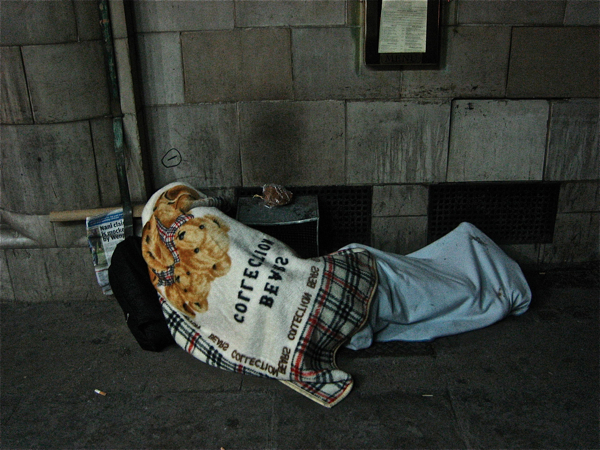
In Carting Lane, next to the Savoy.

A lonely photographer at the London Eye, 2:55am

The Nativity scene in Trafalgar Square, 3:15am.
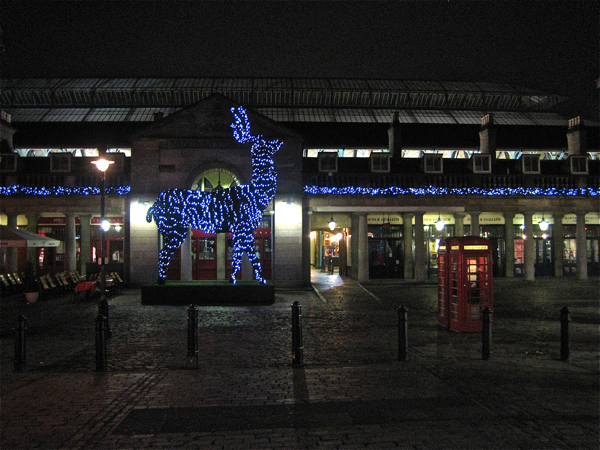
In Covent Garden, 3:30am.

At High Holborn, 3:45am.

At the Barbican, 4:00am on Christmas Morning.
The New Christmas Dinner Song
Click here to order a signed copy of The Gentle Author’s new book ON CHRISTMAS DAY for £10
I am grateful to John Foreman, Folk Singer and Printer of the Catnap Press in Camden Town, also known as The Broadsheet King, who kindly sent me his reprint of The New Christmas Dinner Song as originally published by Taylor of Brick Lane in the nineteenth century

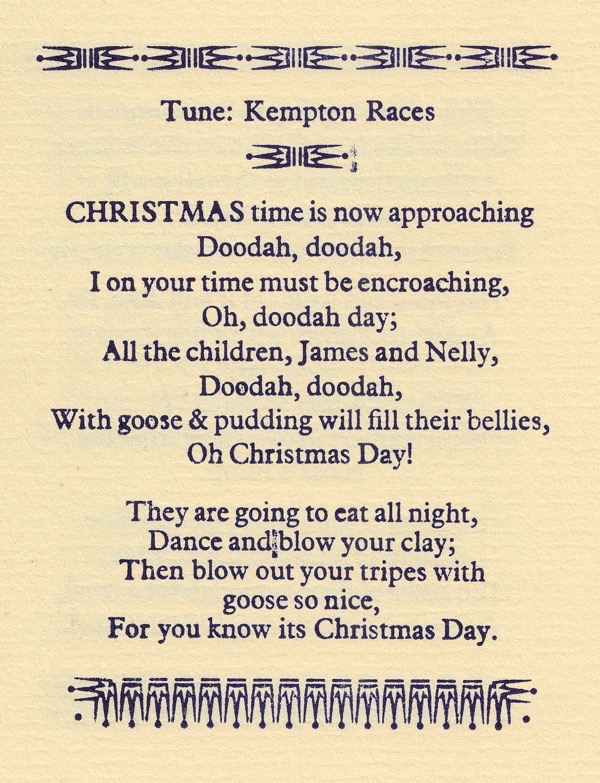
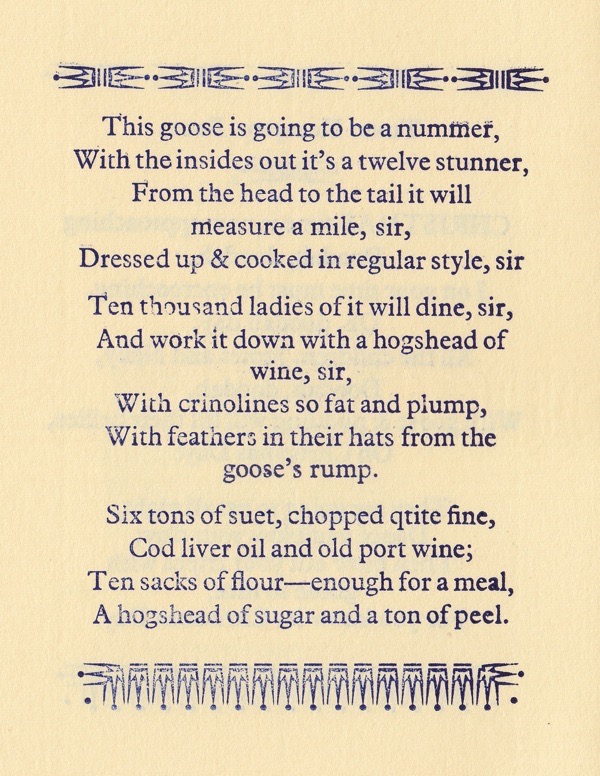
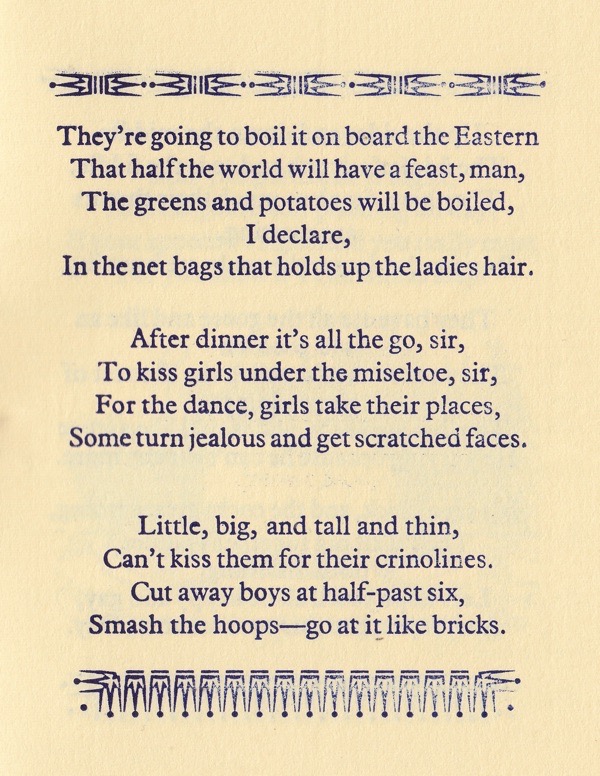
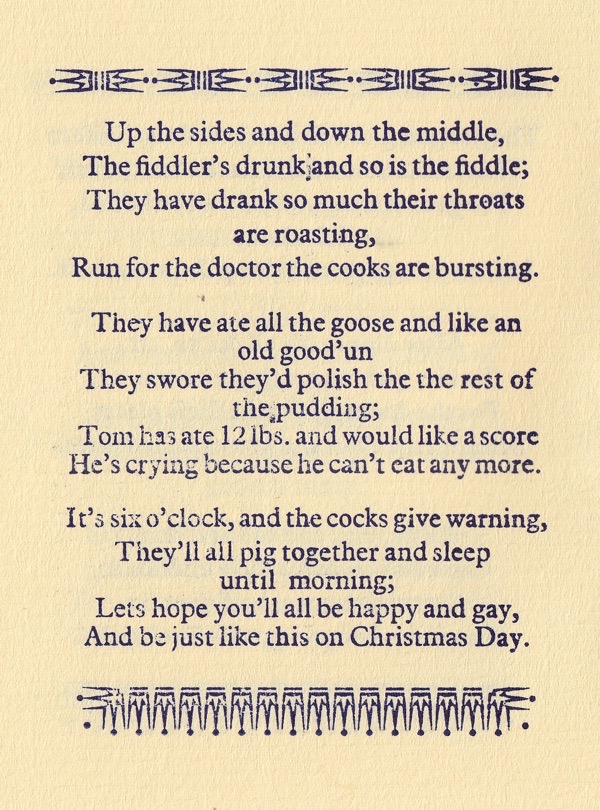
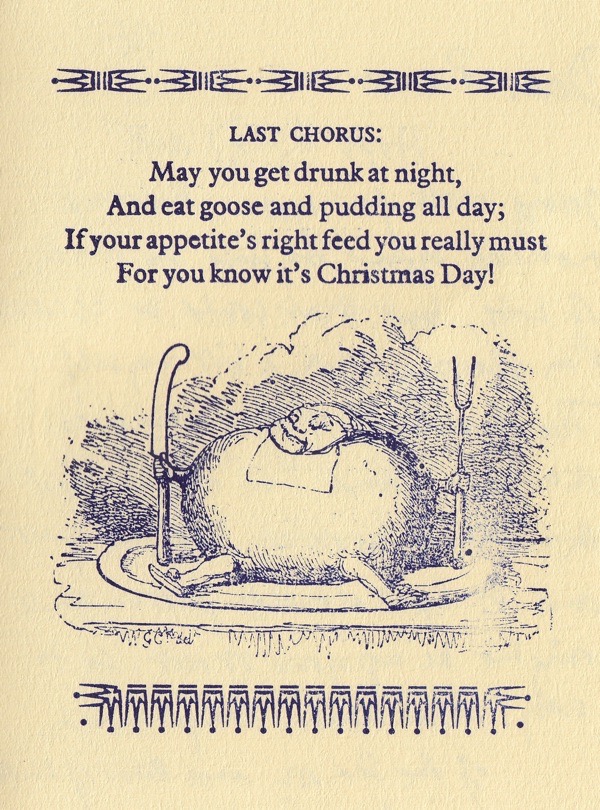
John Foreman, The Broadsheet King
You may also like to take a look at
The Smithfield Christmas Eve Meat Auction
Click here to order a signed copy of The Gentle Author’s new book ON CHRISTMAS DAY for £10
Carnivorous readers will be delighting to learn that – after a few years’ break – the traditional Smithfield Christmas Eve meat auction returns this year hosted by G Lawrence & Co on Grand Avenue in the Central Market from 10am. Blow you can read my account of a visit there with the late photographer Colin O’Brien.

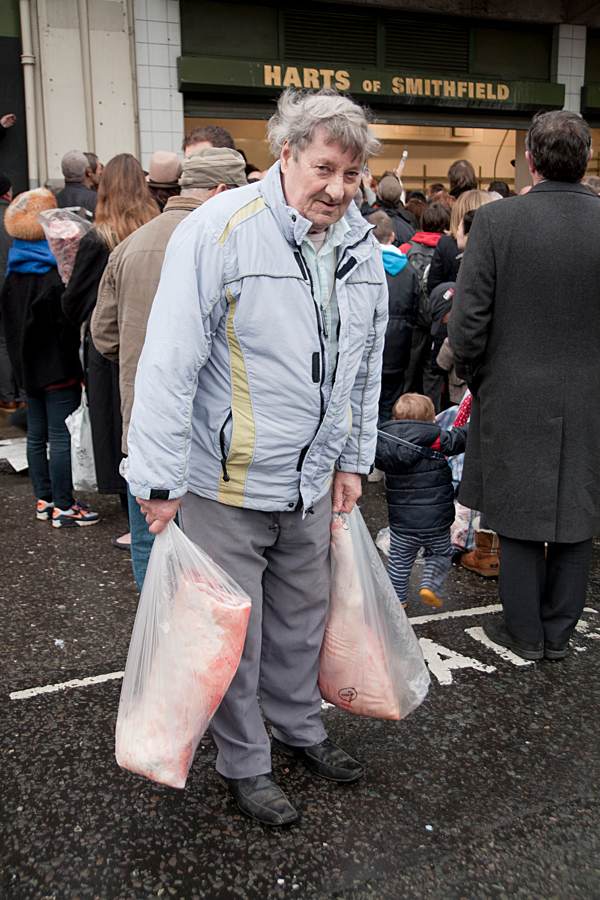
The carnivores of London converged upon Smithfield Market, as they do every year for the annual Christmas Eve auction staged by Harts the Butcher. At ten in the morning, the rainy streets were almost empty yet, as I came through Smithfield, butchers in white overalls were wheeling precarious trolleys top-heavy with meat and fowls over to the site of the auction where an expectant crowd of around a hundred had gathered, anxiously clutching wads of banknotes in one hand and bags to carry off their prospective haul in the other.
Photographer Colin O’Brien met me there. He grew up half a mile away in Clerkenwell during the nineteen fifties and, although it was his first time at the auction, he remembered his father walking down to Smithfield to get a cheap turkey on Christmas Eve more than sixty years ago. Overhearing this reminiscence, a robust woman standing next to us in the crowd struck up a conversation as a means to relieve the growing tension before the start of the auction which is the highlight of the entire year for many of stalwarts that have been coming for decades.
“You can almost guarantee getting a turkey,” she reassured us with the authority of experience, revealing she had been in attendance for fifteen successive years. Then, growing visibly excited as a thought came into her mind, “Last year, I got thirty kilos of sirloin steak for free – I tossed for it!”, she confided to us, turning unexpectedly flirtatious. Colin and I stood in silent wonder at her good fortune with meat.“We start preparing in October by eating all the meat in the freezer,” she explained, to clarify the situation. “Last night we had steak,” she continued, rubbing her hands in gleeful anticipation, “and steak again tonight.”
Yet our acquaintance was terminated as quickly as it began when the caller appeared in a blood-stained white coat and red tie to introduce the auction. A stubby bullet-headed man, he raised his hands graciously to quell the crowd. “This is a proper English tradition,” he announced, “it has been going on for the last five hundred years. And I’m going to make sure everybody goes away with something and I’m here to take your money.”
His words drew an appreciative roar from the crowd as dozens of eager hands were thrust in the air waving banknotes, indicative of the collective blood lust that gripped the assembly. Standing there in the midst of the excitement, I realised that the sound I could hear was an echo. It was a reverberation of the famously uproarious Bartholomew Fair which flourished upon this site from the twelfth century until it was suppressed for public disorder in 1855. Yesterday, the simple word “Hush!” from the caller was enough to suppress the mob as he queried, “What are we going to start with?”
The answer to his question became manifest when several bright pink loins of pork appeared as if by magic in the hatch beside him, held by butchers beneath, and dancing jauntily above the heads of the delighted audience like hand puppets. These English loins of pork were soon dispatched into the crowd at twenty pounds each as the curtain warmer to the pantomime that was to come, followed by joints of beef for a tenner preceding the star attraction of day – the turkeys! – greeted with festive cheers by the hungry revellers. “Mind your heads, turkeys coming over…” warned the butcher as the turkeys in their red wrappers set out crowd-surfing to their grateful prospective owners as the cash was passed hand to hand back to the stand.
It would not be an understatement to say that mass hysteria had overtaken the crowd, yet there was another element to add to the chaos of the day. As the crowd had enlarged, it spilled over into the road with cars and vans weaving their through the overwrought gathering. “I love coming for the adventure of it,” declared one gentleman with hair awry, embracing a side of beef protectively as if it was the love of his life, “Everyone helps one another out here. You pass the money over and there’s no pickpockets.”
After the turkeys came the geese, the loins of lamb, the ribs of beef, the pork bellies, the racks of lamb, the fillet steaks and the green gammon to complete the bill of fare. As the energy rose, butchers began to throw pieces of red meat into the crowd to be caught by their purchasers and it was surreal to watch legs of lamb and even suckling pigs go flying into the tumultuous mass of people. Finally, came tossing for meat where customers had the chance of getting their steaks for free if they guessed the toss correctly, and each winning guess was greeted with an exultant cheer because by then the butchers and the crowd were as one, fellow participants in a boisterous party game.
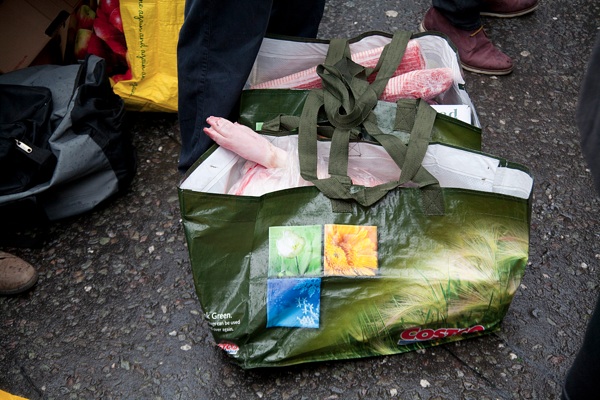
Just ninety minutes after it began, the auction wrapped up, leaving the crowd to consolidate their proud purchases, tucking the meat and fowls up snugly in suitcases and backpacks to keep them safe until they could be stowed away in the freezer at home. In the disorder, I saw piles of bloody meat stacked on the muddy pavement where people were tripping over them. Yet a sense of fulfilment prevailed, everyone had stocked up for another year – their carnivorous appetites satiated – and they were going home to eat meat.
As I walked back through the narrow City streets, I contemplated the spectacle of the morning. It resembled a Bacchanale or some ancient pagan celebration in which people were liberated to pursue their animal instincts. But then I realised that my thinking was too complicated – it was Christmas I had witnessed.




Photographs copyright © Estate of Colin O’Brien
You might also like to read about
The Whitechapel Mission At Christmas
Click here to order a signed copy of The Gentle Author’s new book ON CHRISTMAS DAY for £10
Today I recall a visit to the Whitechapel Mission with my friend the late photographer Colin O’Brien

Before dawn one Christmas Eve, Photographer Colin O’Brien & I ventured out in a rainstorm to visit our friends down at the Whitechapel Mission – established in 1876, which opens every day of the year to offer breakfasts, showers, clothes and access to mail and telephones, for those who are homeless or in need.
Many of those who go there are too scared to sleep rough but walk or ride public transport all night, arriving in Whitechapel at six in the morning when the Mission opens. We found the atmosphere subdued on Christmas Eve on account of the rain and the season. People were weary and shaken up by the traumatic experience of the night, and overcome with relief to be safe in the warm and dry. Feeling the soothing effect of a hot shower and breakfast, they sat immobile and withdrawn. For those shut out from family and social events which are the focus of festivities for the rest of us, and facing the onset of winter temperatures, this is the toughest time of the year.
Unlike most other hostels and day centres, Whitechapel Mission does not shut during Christmas. Tony Miller, who has run the Mission and lived and brought up his family in this building over the last thirty-five years, had summoned his three grown-up children out of bed at five that morning to cover in the kitchen when the day’s volunteers failed to show. Although his staff take a break over Christmas which means he and his wife Sue and their family have to pick up the slack, it is a moment in the year that Tony relishes. “40% of our successful reconnections happen at Christmas,” he explained enthusiastically, passionate to seize the opportunity to get people off the street, “If I can persuade someone to make the Christmas phone call home …”
Tony estimates there are around three thousand people living rough in London, whom he accounts as follows – approximately 15% Eastern Europeans, 15% Africans and 5% from the rest of the world, another 15% are ex-army while 30%, the largest proportion, are people who grew up in care and have never been able to establish a secure life for themselves.
Among those I spoke with on Christmas Eve were those who had homes but were dispossessed in other ways. There were several vulnerable people who lived alone and had no family, and were grateful for a place where they could come for breakfast and speak with others. Here in the Mission, I recognised a collective sense of refuge from the challenges of existence and the rigours of the weather outside, and it engendered a tacit human solidarity. “This is going to be the best Christmas of my life,” Andrew, an energetic skinny guy who I met for the first time that morning, assured me, “because it’s my first one free of drugs.” We shook hands and agreed this was something to celebrate.
Tony took Colin & me upstairs to show us the pile of non-perishable food donations that the Mission had received and explained that on Christmas Day each visitor would be given a gift of a pair of socks, a woollen hat, a scarf and pair of gloves, with a bar of chocolate wrapped inside. Tony told me that on Christmas Day he and his family always have a meal together, but his wife Sue also invites a dozen homeless guests – so I asked him how he felt about the lack of privacy. “My kids were born here,” he replied with a shrug and a smile and an astonishing generosity of spirit, “after thirty years, I don’t have a problem with it.”




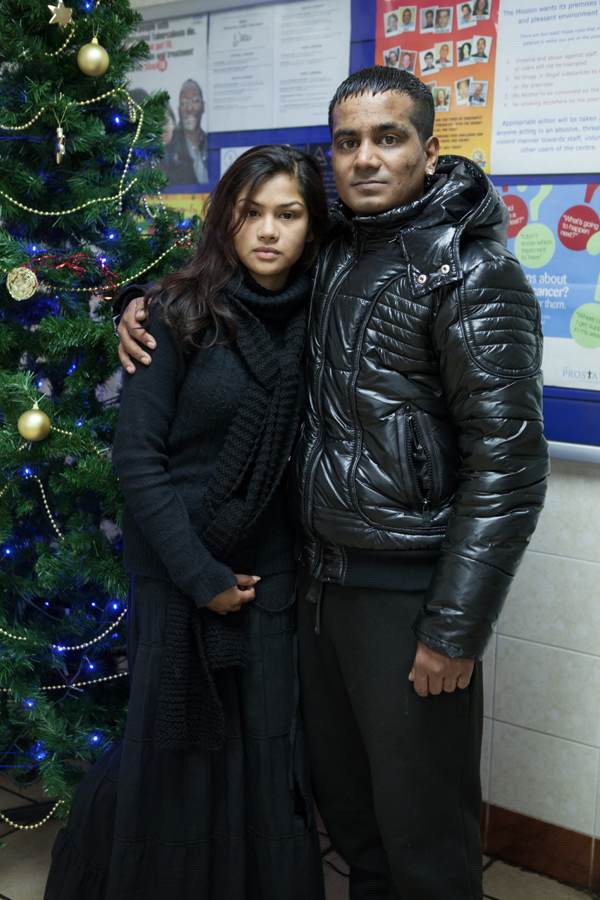
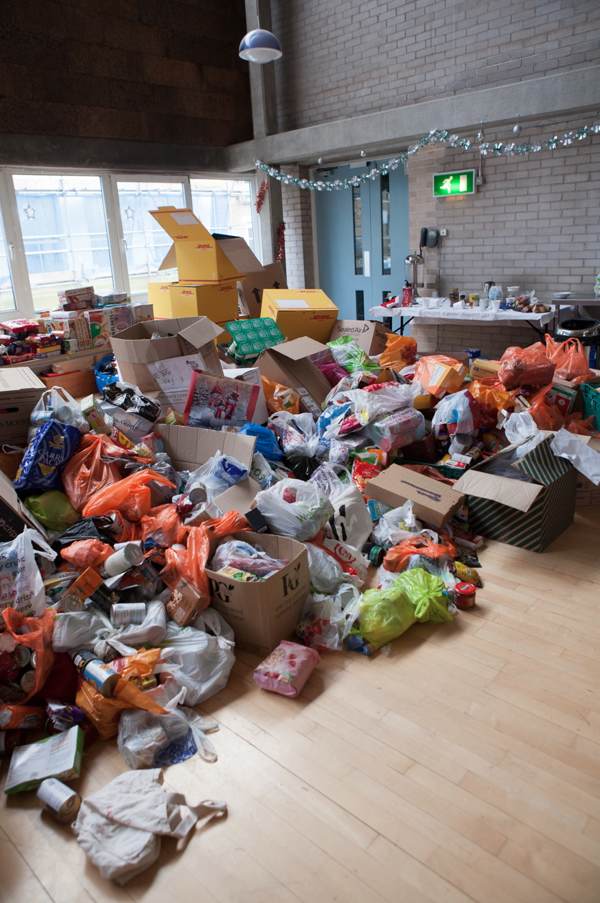
Food donations
Photographs copyright © Estate of Colin O’Brien
Click here to donate to the work of the Whitechapel Mission
You may also like to read about
My Old Christmas Decorations

I do not know when my grandmother bought this glass decoration and I cannot ask her because she died more than twenty years ago. All I can do is hang it on my tree and admire it gleaming amongst the deep green boughs, along with all the others that were once hers, or were bought by my parents, or that I have acquired myself, which together form the collection I bring out each year – accepting that not knowing or no longer remembering their origin is part of their charm.
Although I have many that are more elaborate, I especially admire this golden one for its simplicity of form and I like to think its ridged profile derives from the nineteen thirties when my mother was a child, because my grandmother took the art of Christmas decoration very seriously. She would be standing beech leaves in water laced with glycerine in October, pressing them under the carpet in November and then in December arranging the preserved leaves in copper jugs with teazles sprayed gold and branches of larch, as one of many contrivances that she pursued each year to celebrate the season in fastidious style.
Given the fragility of these glass ornaments, it is extraordinary that this particular decoration has survived, since every year there are a few casualties resulting in silvery shards among the needles under the tree. Recognising that a Christmas tree is a tremendous source of amusement for a cat – making great sport out of knocking the baubles to the ground and kicking them around like footballs – I hang the most cherished decorations upon the higher branches. Yet since it is in the natural course of things that some get broken every year and, as I should not wish to inhibit the curiosity of children wishing to handle them, I always buy a couple more each Christmas to preserve the equilibrium of my collection.
Everlasting baubles are available – they do not smash, they bounce – but this shatterproof technological advance entirely lacks the poetry of these fragile beauties that can survive for generations as vessels of emotional memory and then be lost in a moment. In widespread recognition of this essential frailty of existence, there has been a welcome revival of glass ornaments in recent years.
They owe their origins to the glassblowers of the Thuringian Forest on the border of Germany and the Czech Republic where, in Lauscha, glass beads, drinking glasses, flasks, bowls and even glass eyes were manufactured since the twelfth century. The town is favoured to lie in a wooded river valley, providing both the sand and timber required for making glass and in 1847 Hans Greiner – a descendant of his namesake Hans Greiner who set up the glassworks in 1597 with Christoph Muller – began producing ornaments by blowing glass into wooden moulds. The inside of these ornaments was at first coloured to appear silvery with mercury or lead and then later by using a compound of silver nitrate and sugar water. In 1863, when a gas supply became available to the town, glass could be blown thinner without bursting and by the eighteen seventies the factory at Lauscha was exporting tree ornaments throughout Europe and America, signing a deal with F.W.Woolworth in the eighteen eighties, after he discovered them on a trip to Germany.
Bauble is a byword for the inconsequential, so I do not quite know why these small glass decorations inspire so much passion in me, keeping their romance even as other illusions have dissolved. Maybe it is because I collect images that resonate personally? As well as Father Christmas and Snowmen, I have the Sun, Moon and Stars, Clocks and even a Demon to create a shining poem about time, mortality and joy upon my Christmas tree. I cannot resist the allure of these exquisite glass sculptures in old-fashioned designs glinting at dusk amongst the dark needles of fir, because they still retain the power to evoke the rich unassailable magic of Christmas for me.

This pierrot dates from the nineteen eighties

Three of my grandmother’s decorations. The basket on the left has a piece of florists’ wire that she placed there in the nineteen fifties

This snowman is one of the oldest of my grandmother’s collection

Bought in the nineteen eighties, but from a much older mould

Baubles enhanced with painted stripes and glitter

The moon, sun and stars were acquired from a shop in Greenwich Avenue on my first visit to New York in 1990, amazingly they survived the flight home intact


These two from my grandmother’s collection make a fine contrast of colour

Even Christmas has its dark side, this demon usually hangs at the back of the tree

It is always going to be nine o’clock on Christmas Eve

Three new decorations purchased at Columbia Rd

A stash of glittering beauties, stored like rare eggs in cardboard trays
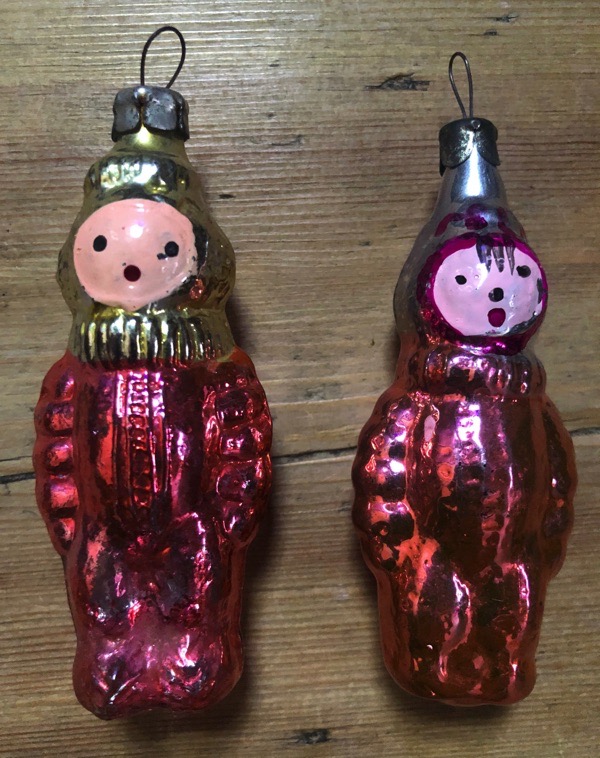
Russian cosmonauts from the sixties that I bought in Spitalfields Market

My first bicycle, that I found under the tree one Christmas and still keep in my attic












