Rehan Jamil’s Whitechapel Portraits
Photographer Rehan Jamil was commissioned by the Survey of London to take these portraits of local people in their homes for the Histories of Whitechapel project which is currently underway, recording not just the buildings but the ways of life of the residents – just as C.R. Ashbee did in his first volume of the Survey covering Trinity Green in 1895. An exhibition of these pictures is running currently at Aldgate Coffee House, 68 Whitechapel High St, E1 7PL

Tobaris Ali, Canon Street Rd – ‘I arrived in 1965 and became a volunteer at the mosque in 1976. It is a good area, good for education – I have grandchildren now and education is important’

Sabira Rouf, Royal Mint St – ‘ The older I get, the more I appreciate the area where I live. The richness of culture, diversity and community spirit is in direct contrast to the neighbouring City of London. I am grateful I am on this side.

Keith Harrington, Booth House, Whitechapel Rd – ‘We have a roof garden, it’s nice up there’

Alan Green, Victoria Park Sq – ‘I have lived here for almost twenty years now. My Dad grew up in the area before the Second World War, so it is been rather like coming home although it has changed a lot since then. I love the diversity and the real sense of pride in our history of welcoming and supporting immigrants from across the world.’

Suparna Roy Barman, Mansell St – ‘I feel at home in Whitechapel, I feel I have everything here so I can stay at home and experience everything. The city is on my door step and it is a creative area – art and culture are important to me.’

Tigs, Myrdle Court – ‘I have lived in Myrdle Court for nine years and it is a special place. There is a sense of community in the building that is rare in London.’

Anjali Chakrabarty, Whitechapel Rd – ‘I love living here, I use to work in a school close by. I went on a Silver Surfer course and now I use the computer to talk to my mother in Bangladesh.’

Beattie Orwell, Collingwood Estate – ‘I used to love Whitechapel years ago, it was lovely – lovely shops, all the stalls – we used to walk around to see if we could find a young man. My kids all went to the Brady Centre Club, they could do with them clubs now.’

The Rahman family, Vallance Rd – ‘It is very nice to live within the community, everything literally in walking distance but also very expensive and overcrowded.’

Umer Farooq, Cable St – ‘It is a ground floor flat, so I have a garden which is really nice.’

Alex Rhys-Taylor, Brune St – ‘It is a privilege to live in Whitechapel, a part of London where local history and everyday life hold answers to some of the most pressing issues of our age.’

Farid Khan, Cephas St – ‘The school and hospital are close by. There are local people I know and traditional shops for special ingredients here.’
Photographs copyright © Rehan Jamil
Click here to make your contribution to the Survey of Whitechapel
You may also like to take a look at
Night At Spitalfields Market
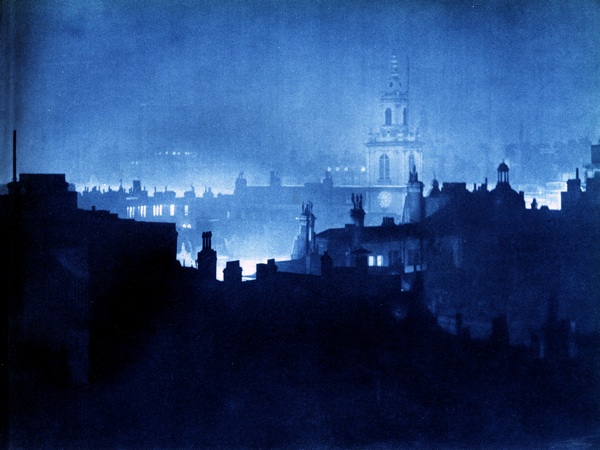
Although they were taken only a quarter of a century ago, these photographs by Mark Jackson & Huw Davies preserved in the archive at Bishopsgate Institute, seem now to be images from the eternal night of history – with fleeting figures endlessly running, fetching and carrying, pushing barrows from the flaring lights out into the velvet blackness, where a bonfire burns beneath the great tower of Christ Church, Spitalfields, looming overhead.
Mark Jackson & Huw Davies were poets with cameras, aware that they were in an epic world with its own codes and customs, and they recognised the imperative to record it before it disappeared. No one asked them and no one paid them. As recent graduates, Mark & Huw shared a tiny flat and worked, as a courier and in a restaurant respectively, to buy film and subsidise their project. Each evening they took the last tube to Liverpool St Station and spent the night at the market, taking pictures and befriending the traders, before going straight back to work again in the morning, often without any sleep.
Like many of the most inspiring cultural projects, this remarkable body of photography was the result of individuals pursuing their own passion. Mark & Huw were committed to record what no one else was interested to look at. Neither became photographers and their greater project to record all the London markets was reluctantly abandoned when they went off to pursue other careers, but their Spitalfields Market photographs are unrivalled in the photography of markets.
Photographs copyright © Mark Jackson & Huw Davies
You may also like to take a look at
Mark Jackson & Huw Davies at the Spitalfields Market
Ivor Robins, Fruit & Vegetable Purveyor
The Last East End Chair Frame Makers

Jim & Hales Vaughan, fifth generation furniture makers
These are the last days of the last chair frame makers in the East End. Within a matter of weeks, brothers Jim & Hales Vaughan of H Vaughan Ltd will retire after a lifetime making bespoke chair frames, closing their old factory situated in the last shipwright’s loft in Blackwall, prior to redevelopment. So it was my privilege to pay a visit, making the acquaintance of Jim & Hales and photographing their premises as a record for posterity.
When you step off the Dockland Light Railway in Blackwall these days, you find yourself surrounded by a forest of ugly towers that has grown in recent years, casting the location into anonymity – as if you have arrived in any fast-growing, boom and bust economy on the planet where buildings are thrown up and torn down with alacrity.
Yet in a narrow side street, beside a closed down pub, sits a small brick-built Victorian factory with a decorative gable and cornice, lettered H VAUGHAN LTD. Here, you step through a cobbled yard into a modest workshop with a pitched roof supported by huge wooden beams and punctuated by tall glass panels flooding the factory with sunlight. Here are the last hand made chair frames ready to be collected by their customers and whisked away to the upholsterers. Here are the remaining pieces of old heavy machinery awaiting removal. Here is the store room, hung with myriad wooden patterns for more than forty years of chair making. Here is the wood store, with a depleted stock of beech, oak and walnut planks.
Here I met James & Hales Vaughan who have run the firm in recent years with the help of Jim’s sons, Paul & Michael. Fortunately, they were happy to take a break from clearing out the factory to chat to me and have their portraits taken. In the front office, I found ledgers containing designs for furniture stretching back through the last century, while in the drawing office cabinets overflowed with working drawings produced by generations of chair frame makers.
This is a story that stretches back even further than you might imagine. Shoreditch and Bethnal Green were traditionally the centre of the furniture and cabinet making trade in the East End and this is where H Vaughan started at the beginning of the last century. Yet even before this there was Edward Vaughan, Cabinet Maker, born in 1857 and before that Henry Vaughan, Cabinet Maker & Wholesale Furniture Manufacturer, born in 1818. Behind them were generations of Silk Dressers and Fan Makers, for this is a Huguenot family that has prospered in London by pursuing an artisan tradition through the centuries until the present day.
As the last sawdust settled upon H Vaughan Ltd, Jim Vaughan sat in his office and told me his story while his brother Hales listened from the next room, popping in to deliver an intermittent commentary, and I could not escape the realisation that I was hearing the poignant epilogue to five generations of furniture makers and the end of this particular industry in the East End.
“My grandfather started the firm in 1902, everyone used to call him Jim Vaughan but in fact he was Herbert Vaughan. At that point it was a trade mill, they used to supply the components for settee and chair frames to upholsterers, and they used to supply the components for cupboards and chest of drawers. I remember my father making the curved fronts for chests. At first, they were in Hoxton Sq then Redchurch St, then Brick Lane before we came here. We were bombed out of Redchurch St in the Second World War and when my father (he was Herbert Vaughan as well) got the premises in Brick Lane after the war, he managed to get the contract to make frames for utility furniture – you had to have a special certificate to do it and he was one of the few frame makers that got that. Then he had the idea of making copies of furniture and that was how we became bespoke chair frame makers.
I started off to be a Quantity Surveyor and lasted about a year. I could not stand the night classes and so in 1964 my dad said, ‘Would you like to join in the business?’ and I said ‘Yeah, Why not?’ My brother Hales is older than me, but it was quite a few years later that he joined. He had done an Engineering degree and was working on submarine cables but they did not have much work for him to do. It was government contract work, an odd system which consisted mostly of writing reports. So when the summer break came, my father said to him, ‘Would you like to try working for us for a bit?’ That was in 1969 and he has been here ever since. Our sister Rosemary worked here in the office for a little while too.
When I came here, I had never worked in wood before and I never got on with woodwork at school, I did not enjoy the joints, doing mortice and tenons by hand. So I started off in the office and then I worked in the factory sweeping up and ‘pulling out’ timber from the back of the machine. I used to get all the wood chips fly all over me! From there, I progressed to the bands aw then I did some frame making. Slowly but surely we started losing staff and we could not replace them. So we let the firm get smaller and smaller until I ended up running the mill with my son while, in the making shop, we had two makers and my brother Hales doing the design work and some of the tricky machining that no-one else can do. Any machinery problems Hales, can sort it out.
In 1973, our premises in Brick Lane were pulled down. We got compensation in as much as they paid for all the removal expenses and for getting this factory wired. Before we moved out, someone came round from the Greater London Industrial Archaeology Society and they documented our old factory. This is luxury to what we used to have in Brick Lane – all the timber was kept outside in an alleyway and we had to chop it down to size, working outside in all weathers even when it was pouring with rain and the wind blowing. We had a sanding shop the size of this office with a big belt sander and dolly sanders and that room would get filled up with sawdust so it was like a fog in there, because there was no extraction. That was how it always was.
When we were in Brick Lane, we were supplying manufacturing upholsterers – small upholsterers that would have half a dozen three piece suites. that was one of the bread-and-butter things that we used to do all the time, and we used to do some work for bigger companies where we would supply fifty tub chairs or a dozen chesterfields at a time. We used to have a full sized removal lorry of furniture frames go out every week as regular as clockwork.
When I first started in Brick Lane, every shop there was something to do with wood and the furniture industry. Hales & I used to collect our timber in a hand cart and wheel it back to the factory. I used to go up the road for all our nails and screws. You would go in there and say, ‘Can I have two pound of nails?’and they would weigh them out for you on the scales, that was ow it was done. I used to pop over to Nichols & Clarke for nuts and bolts. We used to get our polishes at Rustins on the corner of Virginia Rd run by a little old lady with pebble glasses and we went to for carriage bolts to Lewis & Sons in the Hackney Rd. We had a wood carver in the Sunbury Workshops in Swanfield St and a wood turner in Redchurch St.
Once we moved down here to Blackwall, we were still doing a fair amount. We used to do fifty office swivel chairs at a time but slowly that dwindled off and then we were doing a lot of Knoll settees. At the moment, the popularity seems to be for settees with turned legs but over the years it has been getting quieter and quieter as people on the industry are retiring, like we are now. The demand is not there any more. Getting bespoke upholstery done is quite expensive and it is a throwaway society we have now. People think nothing of spending two or three thousand pounds on a three piece suite, having it two or three years and then throwing it away – not having it re-upholstered. It is the modern trend for everything. Our furniture frames and made to last. We do not actually put a stamp on them that says they are guaranteed for life but they will last a lifetime.
Within the next two to three months, we are closing the business down and retiring. We are just clearing out all the old machinery and are getting rid of the pattern frames. We have sold this building and it will be redeveloped. We have rented a container in Rochester and we are going to store our drawings there for a year in case any of our bespoke customers want them but, after that year, it will be the end.”


Jim Vaughan at the rip saw – ‘I’ve been in sawdust all my life’


Jim Vaughan’s son Paul – sixth generation furniture maker


Fifty years of patterns for chair frames


Ledgers with records of all the designs produced in the recent generations


Cabinets full of a lifetime’s worth of working drawings for chair frames

Hales Vaughan in the Drawing Office

Designs by Charlie Addiman

Scrapbook of designs by Charlie Addiman

You may also like to take a look at
Trinity Green Almshouses Are Saved

Thanks in no small part to the large number of letters of objection, not least those written by you the readers of Spitalfields Life, Tower Hamlets Council refused Sainsbury’s proposal for a twenty-eight storey tower of luxury flats overshadowing Christopher Wren’s magnificent Grade I Trinity Green Almshouses in Whitechapel, last winter and this week – in an extraordinary development – Sainsbury’s announced they have abandoned the plan for the tower entirely. This unexpected and welcome declaration may be explained by the fact that Sadiq Khan, Mayor of London, refused to use his executive powers to ‘call in’ the planning application and override local democracy, as his predecessor Boris Johnson did with the cases of the Spitalfields Fruit & Wool Exchange and Norton Folgate.


(Click this image to enlarge)
Trinity Green Almshouses in Mile End survive because some illustrious friends saved these distinguished and benign examples of social housing, which were built at the end of the seventeenth century under the supervision of Sir Christopher Wren.
CR Ashbee, founder of the Guild of Handicrafts at Essex House, was so dismayed to see the destruction of a palace in Bow which once belonged to James I, he launched a campaign in 1895 to rescue Trinity Green Almshouses when demolition and redevelopment were suggested upon the implausible premise that it would be too expensive to repair the drains.
With the vocal support of William Morris, Octavia Hill, Lord Leighton, Walter Besant and many others, Ashbee succeeded in his goal and Trinity Green became the first historic building in the East End to be saved for posterity. As part of his campaign, he published a handsome monograph, surveying and recording the building in detail, from which the drawings here are reproduced. This monograph became the origin of the Survey of London which continues to this day.

CR Ashbee, saviour of Trinity Green – drawing by William Strang in 1903

Trinity Green seen from the Master’s House


Retired naval gentlemen in the club room at Trinity Green


Statue of Captain Richard Naples


Elevation on Mile End Rd


A game of draughts

Model ship from the frontage on Mile End Rd


Cat at the foot of the statue of Captain Maples
Click here to learn more about the FRIENDS OF TRINITY GREEN
You may also like to read about
Pumps Of Old London
“We never know the worth of water till the well is dry” -Thomas Fuller, 1732
Hardly anyone notices this venerable pump of 1832 in Shoreditch churchyard, yet this disregarded artifact may conceal the reason why everything that surrounds it is there. Reverend Turp of St Leonard’s explained to me that the very name of Shoreditch derives from the buried spring beneath this pump, “suer” being the Anglo-Saxon word for stream.
The Romans made their camp at this spot because of the secure water source and laid out four roads which allowed them to control the entire territory from there – one road led West to Bath, one North to York, one East to Colchester and one South to Chichester. In fact, this water source undermined the foundations of the medieval church and caused it to collapse, leading to the construction of the current building by George Dance but, even then, there were still problems with flooding and the land was built up to counteract this, burying the first seven steps out of ten at the front of the church. Later, human remains from the churchyard seeped into this supply (as in some other gruesome examples) and it was switched over to mains water. Today, the sad old pump in Shoreditch has lost its handle, had its nozzle broken and even its basin is filled with concrete, yet a lone primrose flowers – emblematic of the mystic quality that some associate with these wellsprings, as sources of life itself.
Before the introduction of the mains supply in London, the pumps were a defining element of the city, public water sources that permitted settlement and provided a social focus in each parish. Now, where they remain, they are redundant relics unused for generations, either tolerated for their picturesque qualities or ignored by those heedless of their existence. When I began to research this subject, I found that no attention had been paid to these valiant survivors of another age. So I set out West to seek those other pumps that had caught my attention in my walks around the city and make a gallery for you of the last ones standing.
Holborn is an especially good place to look for old pumps, there I found several fine examples contemporary with the stately Georgian squares, and the Inns of Court proved rewarding hunting ground too. At Lincoln’s Inn, the porter told me they still get their water supply untreated from the Fleet river, encouraging me to explore South of Fleet St at the Temple, although to my disappointment Pump Court no longer has a pump to justify its name.
Up in Soho, at Broadwick St, you will find London’s most notorious pump, the conduit that brought a cholera epidemic killing more than five hundred people in 1854. Now it has been resurrected as a monument to the physician who detected the origin of the infection and had the pump handle removed. Today, the nearest pub bears his name, John Snow. The East End’s most famous specimen, the Aldgate Pump – that I have written of elsewhere in these pages – was similarly responsible for a lethal epidemic, underlining the imperative to deliver a safe water supply, an imperative that ultimately rendered these pumps redundant.
Perhaps the most gracious examples I found were by St Paul’s Cathedral, “Erected by St Faith’s Parish, 1819,” and in Gray’s Inn Square. Both possess subtle expressive detail as sculptures that occupy their locations with presence, and in common with all their pitiful fellows they stand upright like tireless flunkies – ever hopeful and eager to serve – quite oblivious to our indifference.
In Shoreditch churchyard, this sad old pump of 1832 has lost its handle, had its nozzle broken and basin filled with concrete, and is attended by a lone primrose.
In Queen’s Sq, Holborn this pump of 1840 has the coats of arms of St Andrew and St George.
In Bedford Row, Holborn, this is contemporary with its colleague in Queens Sq.
In Gray’s Inn Sq – where, in haste, a passing lawyer mislaid a red elastic band.
This appealing old pump in Staple Inn is a pastiche dated 1937.
This is the previous pump in the location above, more utilitarian and less picturesque.
In New Square, Lincoln’s Inn.
Between Paternoster Sq and St Paul’s Churchyard.
Outside the Royal Exchange in Cornhill. The text on the pump reads, “On this spot a well was first made and a house of correction built thereon by Henry Wallis Mayor of London in the year 1282.” Designed by architect Nathaniel Wright and erected in 1799.
Aldgate Pump marks the boundary between the East End and the City of London. The faucet in the shape of a wolf commemorates the last of these beasts to be shot outside the walls of the City.
London’s most notorious pump in Broadwick St, Soho. Five hundred people died in the cholera epidemic occasioned by this pump in 1854. Reinstated in 1992 to commemorate medical research in the service of public health, the nearby pub is today named “John Snow” after the physician who traced the outbreak to this pump. A red granite kerbstone across the road marks the site of the original pump.
Archive image courtesy Bishopsgate Institute
You may also like the to read about
Pavement Pounders
The work of Geoffrey Fletcher (1923–2004) is an inspiration to me, and today I am publishing his drawings of London’s street people in the nineteen sixties from Geoffrey Fletcher’s Pavement Pounders of 1967. For an introduction to Geoffrey Fletcher’s writing, I recommend The London Nobody Knows which has been reprinted with a new introduction by Dan Cruickshank.
Charlie Sylvester -“I’m Charlie Sylvester, Charlie of Whitechapel. I’ve been on the markets over forty years. I can’t keep still too long, as I have to serve the customers. Then I must take me pram and go fer some more stock. Stock’s been getting low. I go all over with me pram, getting stock, I sell anythin’ – like them gardening tools, them baking tins and plastic mugs. All kinds of junk. Them gramophone records is classic, Ma, real classic stuff. Course they ain’t long playing? Wot do you expect? Pick where you like out of them baking tins. Well, I’ll be seeing you next you’re in Whitechapel. Don’t forget. Sylvester’s the name.”
Peanuts, Tower Hill – “We’ve only been doin’ this for a few months, me peanut pram and I. I only comes twice a week, Saturdays and Sundays. Sundays is best. It’s a hot day. Hope it will stay. I’m counting on it. How many bags do I sell in a day? I’ve never counted ’em. All I want is for to sell ’em out.”
Doing the Spoons, Leicester Sq -“I’ve been in London since 1932, doin’ the spoons, mostly. I does it when I’m not with the group – if they’re away or don’t show up. I’m about the only spoon man left. No, the police don’t bother us much – they know we’re old timers. We’re playing the Square tonight, later when the crowds will come.”
The Man with the X-Ray Eyes – “It’s the facial characteristics. I can usually guess within a year. It’s the emanations – that’s why they call me the man with the X-ray eyes. I’ve been doing it thirty-two years. Thirty -two years is a long time. I’m off-form today. Sometimes I am off-form and then I won’t take their money. I’m in show business. You see me on TV before the cameras. My show took London, Paris and New York by storm.”
Selections from ‘The Merry Widow,’ Oxford St – “You need a good breath for one o’ these. It’s called a euphonium. Write it down, same as when a man makes a euphemism at dinner. If I smoked or got dissipated, I couldn’t play. I can’t play the cornet, as it is, but that’s because I only have one tooth, as I’ll show you – central eating, as you say, Guv. I come from Oldham. When I was a boy of ten, I worked in Yates’ Wine Lodge, but I broke the glasses. I’m seventy-three now, too old for a job. But I don’t want a job, I have this – the euphonium. Life is an adventure, but things is bad today. People will do you down and not be ashamed of it. They’ll glory in it. Well, that’s it. My mother-in-law is staying with us so we have plenty to eat. She gives me the cold shoulder. I’m going for a cuppa tea. Have a nice summer and lots of luck.”
Lucky White Heather – “I’ve been selling on the London streets all my life, dearie. Selling various things – gypsy things – clothes pegs – it used to be clothes pegs. The men used to make them, but they won’t now – they’re onto other things. There wasn’t much profit in them, either. You sold them at three ha’pence a dozen. That was in the old days, dearie. Now I could be earning a pound while you’re drawing me. We comes every day from Kent. People like the lucky heather. But I’ll give you the white elephant – they’re very lucky. If they weren’t, we wouldn’t be selling them on the streets of London now, would we, dearie?”
Pavement Artist at Work, Trafalgar Sq – “I’ve been away two years, I haven’t been well, but I’m back again now. I’ve worked in other parts, but nearly always in London. Used to be outside the National Gallery, where I did Constable. I used to do copies of Constable. I do horses, dogs and other animals. The children like animals best, and give me money. I’m only playing about today, you might say. I haven’t prepared the stone. It gives it a smooth surface, makes the chalks sparkle. Makes them bright and clear, y’know. These pastels are too hard. I like soft ones, but everything’s gone up and I can’t afford them. Oh yes, I always clean off the stones. I won the prize for the best pavement artist in London.”
L.S.D. the Only Criterion, Tavistock Sq – “I’ve been here thirty years. I became a combined tipster and pavement artist because I had the talent, and because I believe in independence. Some people buy my drawings. I don’t go to the races now. I used to – Epsom, Ascot and all that. I have my regulars who come to see me and leave me money in my cap. That’s what it’s for. The rank and file are no good. It’s quiet Saturdays except when there’s a football match – Scoltand, say – and they stay round here. Weather’s been terrible – no-one about. Trafalgar Sq is where the money is, but they fights. I’ve sen the po-leece intervene when they’ve been fighting among themselves, and they say, ‘ere, move on, you?’ It’s money what’s at the bottom of it. Money an’ greed. Like I’ve got written here.”
The Best Friend You Have is Jesus – “Forty years I’ve been selling plants in London, and for over thirty years the Lord’s work has been done. In 1935, I was backing a dog – funnily enough it was called ‘Real Work’ – at New Cross. All at once, a small voice, the voice of the Lord, spoke to me and said ‘Abel (My name is Abel), I’ve got some real work for you to do.’ I gave up drink and dogs and got the posters on the barrow – the messages. I’ve been thousands of miles all over London doing the work of the Lord. London is wicked, and it’s getting worse. But God is merciful, and always gives a warning. It’s like Sodom and Gomorrah. The Lord says ‘Repent’ before His wrath comes. He could destroy London with an earthquake. Remember Noah? – how God wanted them to go in the Ark? But they wouldn’t. They said, ‘We’re going to have a good time…’ The Lord could destroy London with His elements. It dosen’t worry me as I’m doing the Lord’s work. Let these iris stand in water when you get ’em home.”
One Minute Photos, Westminster Bridge – “‘Happy Len,’ they call me, but my real name’s Anthony. Fifty years on the bridge. 1920 I came, and my camera was made in 1903. It’s the only one left. I have to keep patching it up. The man who made it was called ‘Moore,’ and he came from Dr Barnardo’s. They sent him to Canada, and he and a Canadian got together, a bit sharp like, and they brought out this camera. Died a millionaire. I’m seventy-three, and I’ve seen some rum ‘uns on the bridge. There was a woman who came up and took all her clothes off, and the bobby arrested her for indecent behaviour. Disgraceful. The nude, I mean. She was spoiling my pitch.”
Music in the Strand – “I had to make some money to live, and so I came to play in the streets. I’ve never played professionally, I play the piano as well but I never had much training. I’m usually here in the Strand but sometimes I play in Knightsbridge, sometimes in Victoria St. There’s not so many lady musicians about now. I only play classical pieces.”
Horrible Spiders – “Christmas time is the best for us, Guv, if the weather ain’t wet or cold. Then the crowds are good humoured. I like my picture and I’m going to pick out an extra horrible spider for you in return. I’ll tell you a secret – some of the spiders ain’t made of real fur. They’re nylon. But yours is real fur, and it’s very squeaky.”
Salty Bob – “Come round behind the stall and have a bottle of ale. It’s a sort of club, a private club. It’s a grand life sitting here drinking, watching the world go by. I’ve been selling salt and vinegar for fifty years and I’m seventy now. I’ve seen some changes. Take Camden Passage, it’s all antiques, like Chelsea, none of the originals left hardly. Let me pour you another drink. Here we are snug and happy in the sun. I’ve just picked up nine pounds on a horse, and I’ve got another good one for the four-thirty. Next time you’re passing, join me for another drop of ale. No, you can’t pay for it. You’ll be my guest, same as now, at our private club behind the bottles of non-brewed, an’ the bleach.”
Don’t Squeeze Me Till I’m Yours – “That’s a German accordion – they’re the best. Bought it cheap up in the Charing Cross Rd. I do the mouth organ too, this is an English one – fourteen shillings from Harrods. I began with a tin whistle and worked me way up. I’ve a room in Mornington Crescent. My wife died, luvly woman, thrombosis. I could see here everywhere, lying in bed and what not, so I cleared out. I got to livin’ in hostels. But I couldn’t stand the class of men. I work here Mondays, Fridays sometimes. I also work Knightsbridge and ‘ere. I work Aldgate Sundays. I do well there. I gets a fair livin.’ So long as I’ve got me rent, two pounds ten, and baccy money, I don’t want nothing else.”
A Barrel Organ Carolling Across a Golden Street – They received their maximum appreciation in the East End, in the days when the area was a world apart from the rest of London, and the appearance of a barrel organ in Casey Court, among patrons almost as hard pressed as the organist, meant an interval for music and dancing, while the poor little monkey, often a prey to influenza, performed his sad little capers on the organ lid.
Sandwich Man – Consult Madame Sandra – “It’s a poor life, you only get twelve shillings and sixpence a day and you can’t do much on that now, can you, sir? It was drink that got me, the drink. When I come off the farms, I became a porter at Clapham Junction, sir. I worked on the railways, but I couldn’t hold my job. So I dropped down, and this is what I do now. All you can say is you’re in the open air. Sometimes I sleep in a hostel, sometimes I stay out. Just now I’m sleeping out. It was the drink that done it, sir.”
Matchseller – “I was a labourer – a builder’s labourer – an’ I come frae Glasgow. I’ve not been down here in London verra long – eight years. Do i like it here? Weel, the peepull, the peepull are sociable, but they not gie you much, so you only exist. Just exist. I don’t sleep in no hostel, I sleep rough. I haven’t slept in a bed in four weeks. I sleep anywhere. I like a bench in the park or on the embankment. I like the freedom. Anywhere I hang my hat, it’s home sweet home to me.”
A Romany – Apart from the Romany women who sell heather and lucky charms in such places as Villiers St and Oxford St, the gypsies are rapidly disaapearing from Central London. Only occasionally do you see them at their traditional trade of selling. lace paper flowers of cowslips. Modern living vans are invariably smart turn-outs that have little in common with the carved and painted caravans of fifty years ago. They are with-it-gypises-O! Small colonies can still be found on East End bombsites, which the Romanies favour for winter quarters.
‘A Tiny Seed of Love,’ Piccadilly – “Oh yes, Guvnor, they’re good to me if the weather’s fine. Depends on the weather. I can’t play well enough, as you might say. I used to travel all over, four or five of us, saxo, drums, like that. Sometimes there was as many as eight of us. Then it got dodgy. I’m an old hand now. I’ve settled down. I got two rooms at thirty-two bob a week, Islington way. Where could you get two rooms for sixteen shillings each in London? I can easily get along at the price I pay. What’s more, I’ve married the woman who owns the house, too. She’s eight years older than I am, but we get along amicable.”
You may also like to take a look at
At Bow Church
In 1311, the residents of Bow became sick of trudging through the mud each winter to get to the parish church of St Dunstan’s over in Stepney, so they raised money to build a chapel of ease upon a piece of land granted by Edward II ‘in the middle of the King’s Highway.’ Seven hundred years later, it is still there and now the traffic hurtles past on either side, yet in spite of injuries inflicted by time, the ancient chapel retains the tranquillity of another age.
Even as you step through the churchyard gates of St Mary and cast your eyes along the undulating stone path bordered by yews, the hubbub recedes as the fifteenth century tower looms up before you. At this time of year, daisies spangle the grass among the tombs as a reminder of the former rural landscape of Bow that has been overtaken by the metropolis. Partly rebuilt in 1829 after a great storm brought down the tower, new ashlar stone may be easily distinguished from the earlier construction, topped off in the last century by red bricks after the church took a direct hit in World War II.
Once you enter the door, the subtly splayed walls of the nave, the magnificent wooden vaulted roof and the irregular octagonal stone pillars reveal the medieval provenance of the ancient structure which is domestic in proportion and pleasing in its modest vernacular. Escaping the radical alterations which damaged too many old churches, St Mary was restored gently in 1899 by C R Ashbee, who set up his School of Handicrafts in Bow at the end of the nineteenth century. Ashbee inserted twenty-two foot oak beams across the nave at ceiling height to hold the structure together, fitted discreet double-glazing to exclude the sound of iron cartwheels upon the cobbles and added a choir vestry at the rear in understated Arts & Crafts design.
Beneath your feet, previous residents of Bow lie packed together in a vault sealed by a Health Inspector in 1890, now rehydrated by rising water as tributaries of the River Lea flow beneath the shallow foundations. Meanwhile, on the day of my visit, a mother and toddler group played happily upon the floor inches above above the charnel house and laughing children delighted in racing up and down the nave – past the stone font of 1410, replaced in 1624 with a one of more modern design and which lay in the rector’s garden for three hundred years before it was re-instated.
Monuments to members of the wealthy Coborn family loom overhead. One is for Alice who died of smallpox at fifteen years old on her wedding day in 1699 and, challenging it from across the nave, a much more elaborate memorial to her wealthy step-mother Prisca who died two years later – hinting perhaps at long-forgotten family tensions.
Diverting the eye from such distractions, the architecture draws your attention forward and an elaborate Tudor ceiling rewards your gaze in the chancel, where C R Ashbee’s richly-coloured encaustic tiles rival the drama of the celandines in the churchyard outside and a curious post-war Renaissance style window offers whimsical amusement with its concealed animals lurking within the design.
Not overburdened with history, yet laced with myriad stories – St Mary’s was once the parish of Samuel Henshall who saw the potential in patenting the corkscrew before anyone else and of George Lansbury, the pioneering Socialist, whose granddaughter, the actress Angela Lansbury, who came back to honour his centenary recently.
Reflecting the nature of our era, the current focus of work at St Mary’s is the organisation of a food bank to serve the needs of local people, but if Geoffrey Chaucer or Samuel Pepys came through Bow – as they did centuries ago – they would still recognise the chapel of ease of their own times and its lively East End parish, of rich and poor, fish merchants, reformers and entrepreneurs.
The bells of Bow
Oak beam added by C R Ashbee as part of his restoration of 1900 and double-glazing, against the noise of the cartwheels upon the cobbles, which is the oldest example in a church in Britain
Tudor roof in the chancel
Bow’s oldest monument, commemorating Grace Amcott, wife of wealthy ‘ffyshmongr’ 1551
Encaustic tiles of 1900 by C R Ashbee
Iron Flag from the tower discovered among the bomb damage of World War II
East Window with architectural design and concealed animals
Cat from the east window
Parish chest, seventeenth century
Medieval font of 1410, rescued after three hundred years in a garden
C R Ashbee’s choir vestry of 1900
Medieval tower restored in 1829 with ashlar stone and with brick after World War II bomb damage
The statue of Gladstone has his hands daubed with red paint
Bow in 1702
Bow Church seen from the east, early eighteenth century
Bow Church seen from the west, eighteenth century
Bow Church seen from the west, early nineteenth century
1905
C R Ashbee’s drawing of his proposal for the renovation of the church in 1899
St Mary’s Football Team, 1910
St Mary’s Football Team, 1938
Wartime damage
With grateful thanks to Joy Wotton for her kind assistance with this feature
You may also like to read about
Easter Flowers at St Dunstan’s