
At The Pathology Museum
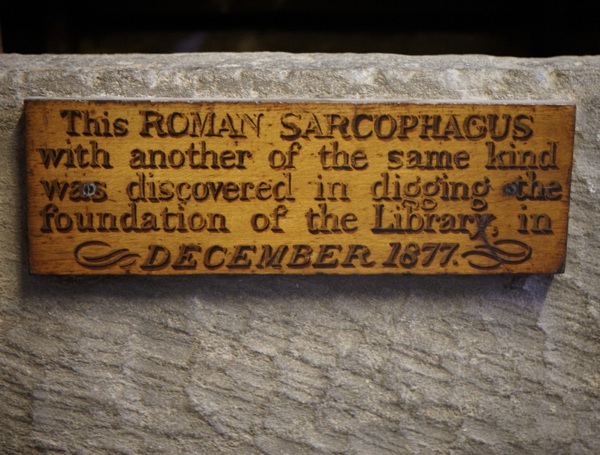
You enter a door at the hospital and over it are the words, ‘Whatsoever thy hand findeth to do, do it with thy might.’ Then the first thing you come upon as you climb the stairs is a vast stone sarcophagus, stored on the landing as if it were a spare piece of medical equipment. It is wedged half open as if the inhabitant had climbed out and could return at any moment, and a sign above it warns ‘Smoking Prohibited,’ just in case they considered lighting up.
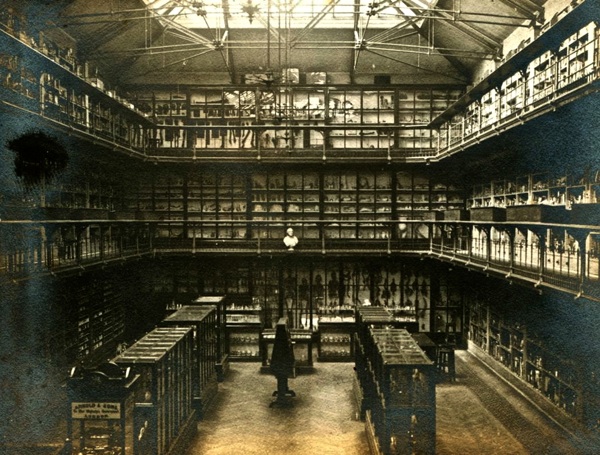
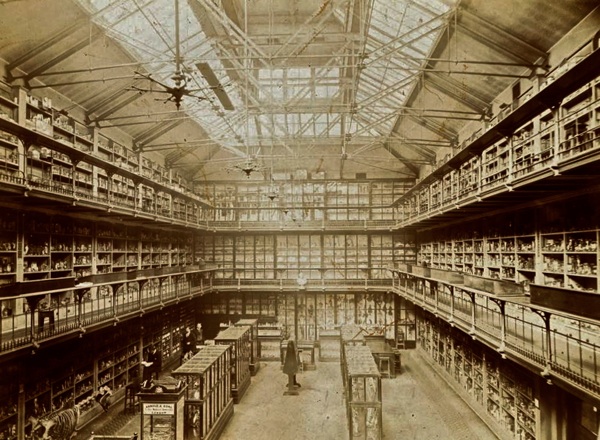
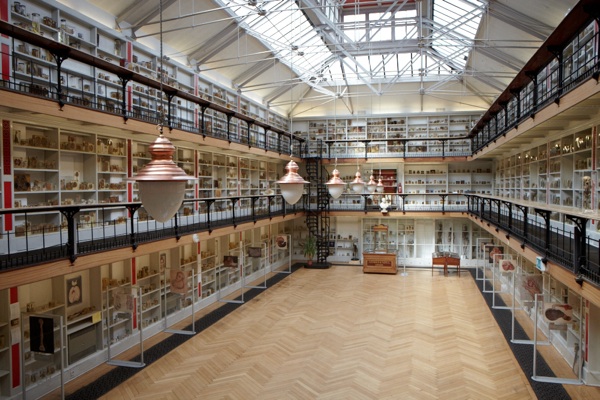
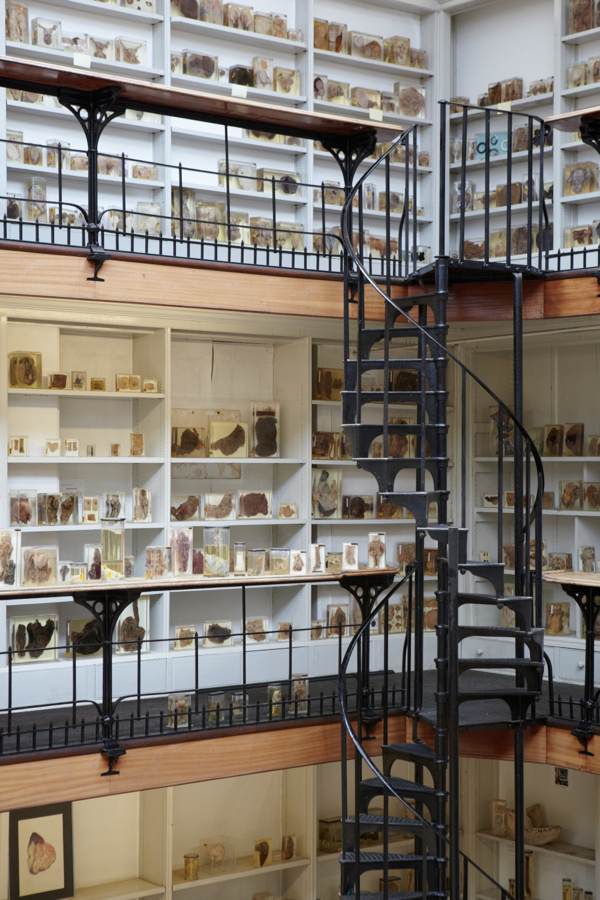
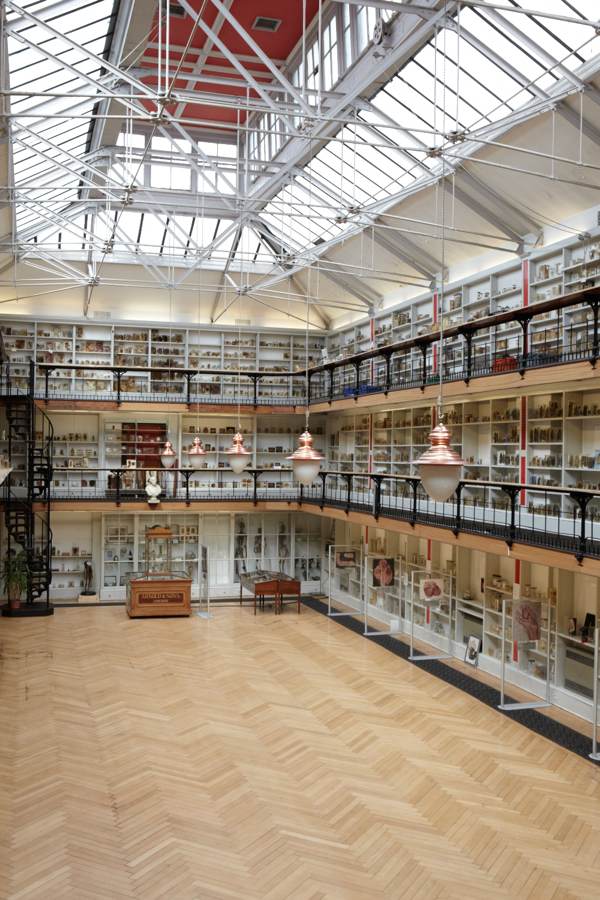
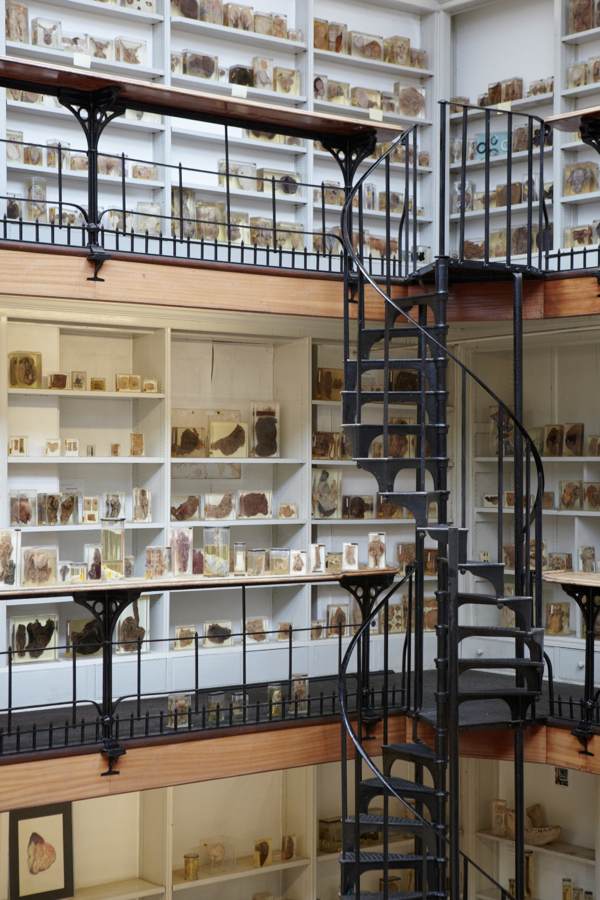
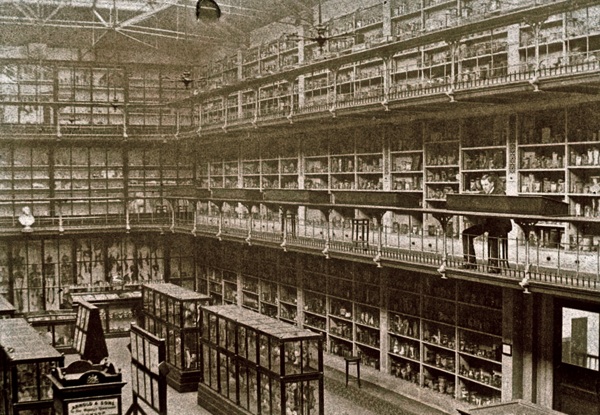
By the time you reach the top of the winding staircase in this lonely corner of West Smithfield, you are emotionally prepared to enter Barts Pathology Museum – one of the saddest and strangest places I have ever been. Arranged in bottles and jars, preserved in fluids and organised upon shelves spanning three storeys, is a vast, encyclopaedic collection of human body parts acquired by the hospital over centuries, for the study of anatomy and ailments. There are more varieties of carcinomas and hernias, more malformations and deformations, more ways that the human body can be blighted and broken than in your worst nightmares.
Each one of the five thousand specimens represents a different example of human suffering, and you stand overawed to see pain quantified and categorised in this way. Gazing around from the centre of the room at the expansive galleries that run floor to ceiling, I became wary to approach the display in any direction out of reluctance at what I might discover.
In such a circumstance, Contributing Photographer Patricia Niven & I were grateful to be greeted by the pragmatic enthusiasm of Carla Valentine, Technical Assistant Curator. “I’m a mortician,” she admitted reassuringly, “for eight years, I worked in mortuaries doing autopsies, but this is what I always wanted to do. I wanted to do it since I was ten, I think some people are born to do this. I was always cutting up slugs and worms from the garden, and probably I was a weird child.”
Carla has been employed to work upon the conservation of the collection.“They’re all leaking over there,” she revealed, gesturing to a long gallery lined with organs in bottles that she has been transferring into safe containers. I learnt that in recent decades, the practice of preserving new specimens has ceased, except in rare cases. “The only people who are placed in here now are those who choose to be,” Carla explained helpfully, “if, for example, they have some unusual cancer that they want to have put on display.”
Eager to reward our interest, Carla drew our attention to the case of foreign objects extracted from the human body – the toothbrush removed from the oesophagus in 1944, the pencil case removed from the bladder in 1932, the needle removed from the heart in 1879, the torch removed from the rectum in 1933 and the metal dart removed from the brain at an unspecified date. It became apparent that each specimen had its own story, even if they were not always obvious.
“We have a lot of Victorian factory workers,” Carla informed me, moving on and indicating a case of semi-disintegrated jaw bones that were examples of ‘Phossy Jaw’ – the condition acquired by those who worked with phosphorus in the manufacture of matches. Beside them were specimens that illustrated ‘Chimney Sweeps’ Cancer’ – the testicular cancer that came about as a result of a life spent climbing up chimneys. And then there was the fractured mandible of the fourteen year old boy whose head was caught between the rollers of a rotary printing machine and died a week later. And I shall not easily forget the metal cap designed to hold together the broken pieces of the skull of a man run over by a carriage, that enabled him to live several years after.
Proudly, Carla showed us the inguinal hernia from around 1750 that is the earliest specimen in the collection, preserved by Percivall Potts – one of the museum’s most celebrated curators. “Unfortunately the perspex box was leaking, so I decided that – for the safety of the specimen and for aesthetic appeal – I would put the hernia into a glass pot with fresh fluid.” Carla confided to me cheerfully. You stand helpless in front of these examples and others, nodding politely at the explanations and feeling numb as you seek to discover a relationship with what you are seeing. The skull of John Bellingham who murdered the Prime Minister in 1812 and the skull of a Norman killed at the Battle of Hastings in 1066 leer back at you, and a vision of the largest centipede you ever saw in your life that, although safely preserved in a glass bottle, nevertheless wriggles deep into your consciousness.
There is certain grim grandeur to this museum designed by Edward l’Anson in 1878, where mustachioed busts of James Paget and John Hunter, two nineteenth curators, stare eternally upon their creations from either end of the gallery. Once you have confronted the detail for yourself, you cannot but admire the moral courage of those who were unflinching in their pursuit of medical science. As Carla Valentine concluded sagely, this is a museum of how we got to where we are today in medicine. Yet I could not resist a surge of personal grief when confronted with particular examples of afflictions suffered by those I have known closely and so, after everything I had seen, it made me grateful for my own good health.
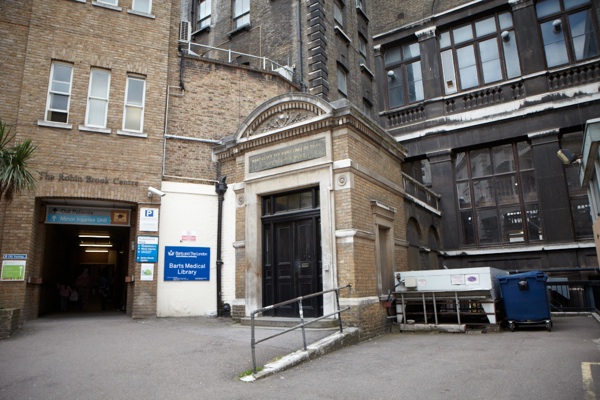
In a lonely corner of the hospital.
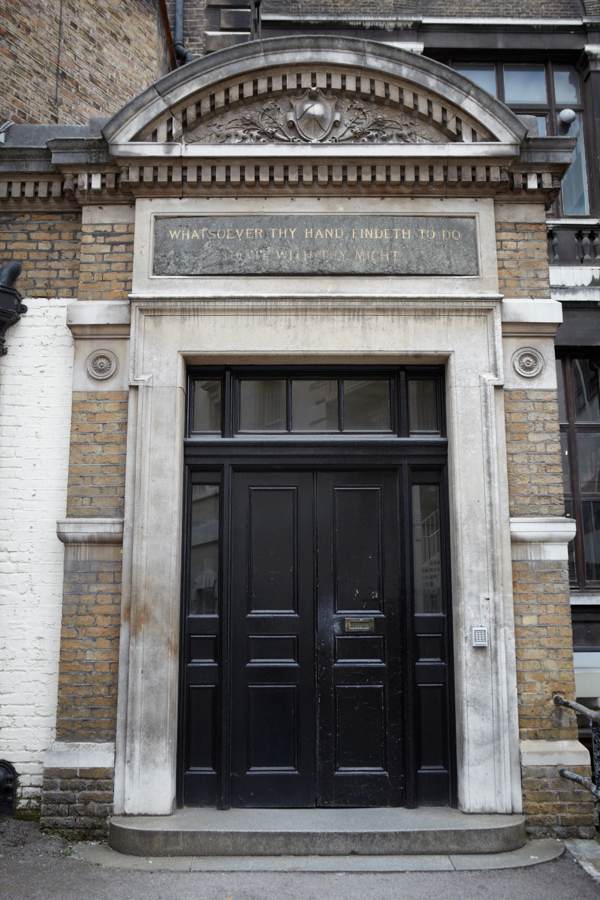
“Whatsoever they hand findeth to do, do it with thy might”
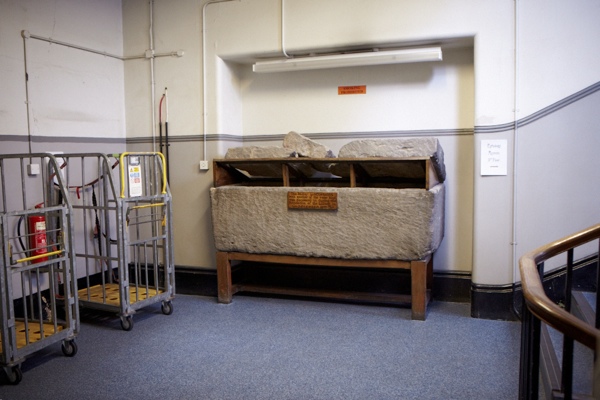
The sarcophagus on the stair.
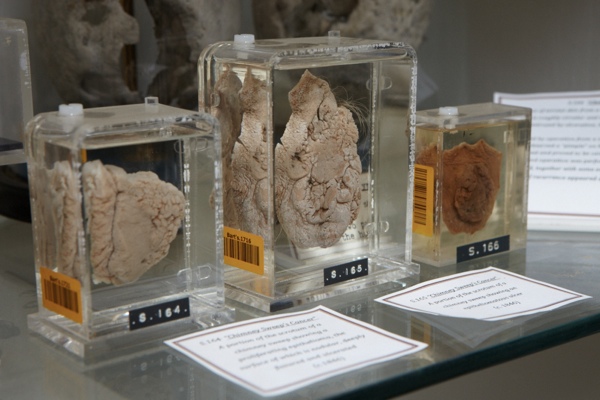
Specimens of ‘Chimney Sweeps’ Cancer’
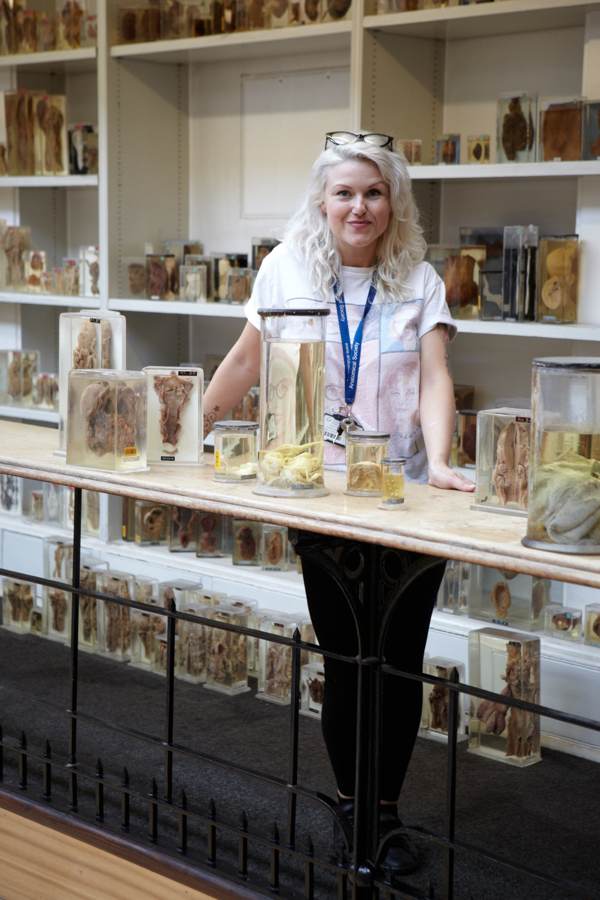
Carla Valentine, Technical Assistant Curator & Mortician.
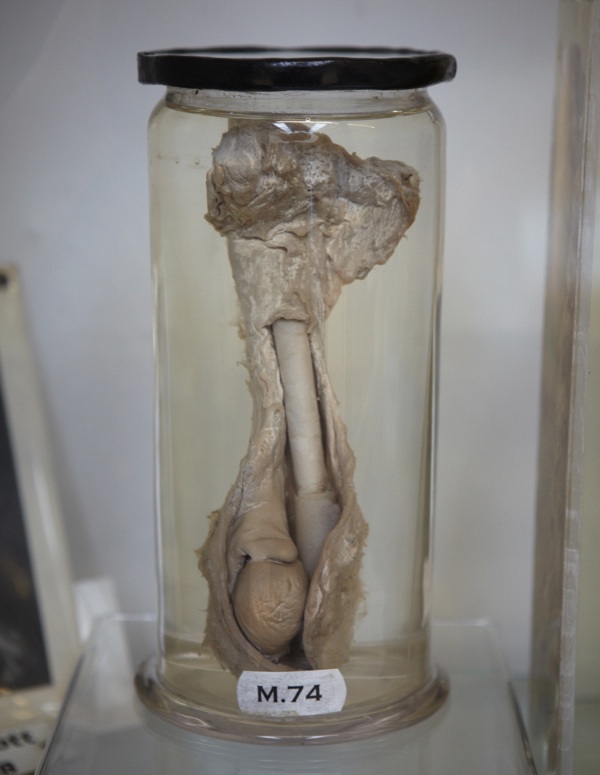
The oldest specimen is this inguinal hernia from around 1750, preserved by by Percivall Potts.
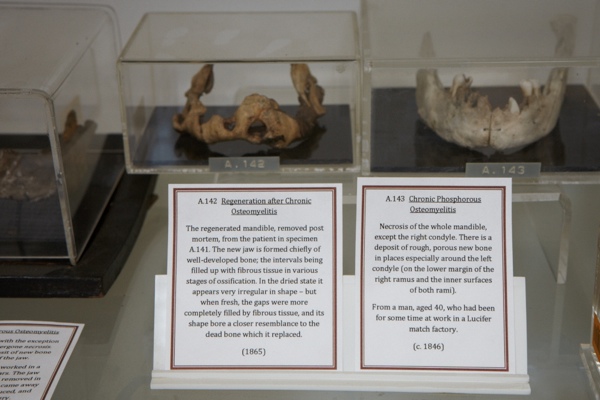
Specimens of ‘Phossy jaw’ – a decay of the jaw bone caused by exposure to phosphorus and suffered by workers in East End match factories in the nineteenth century.
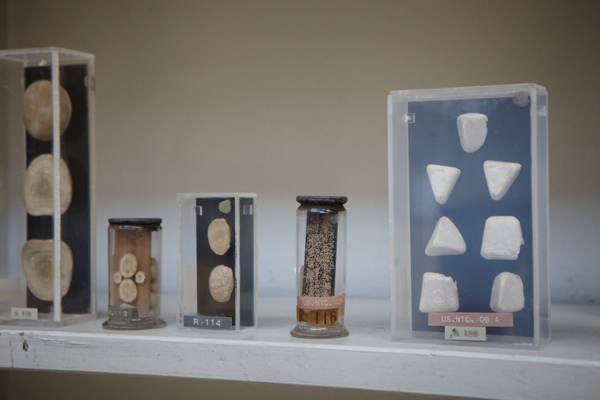
Bladder stones
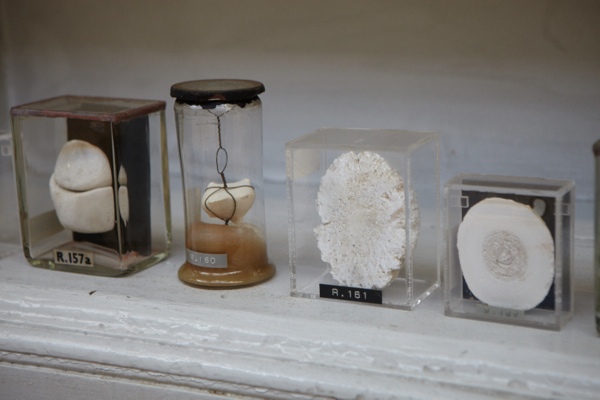
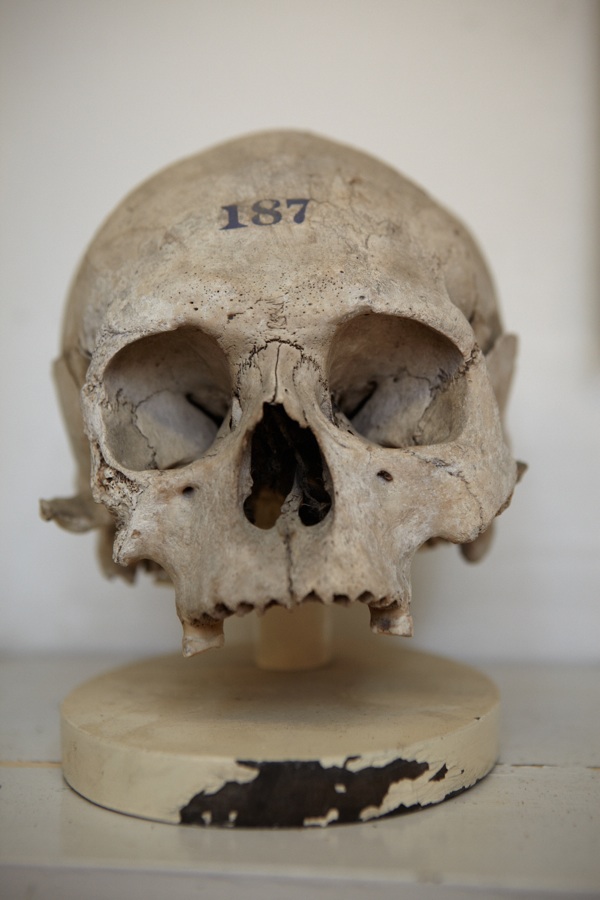
Skull of John Bellingham, the assassin who killed the Prime Minister, Spencer Percival, in 1812.
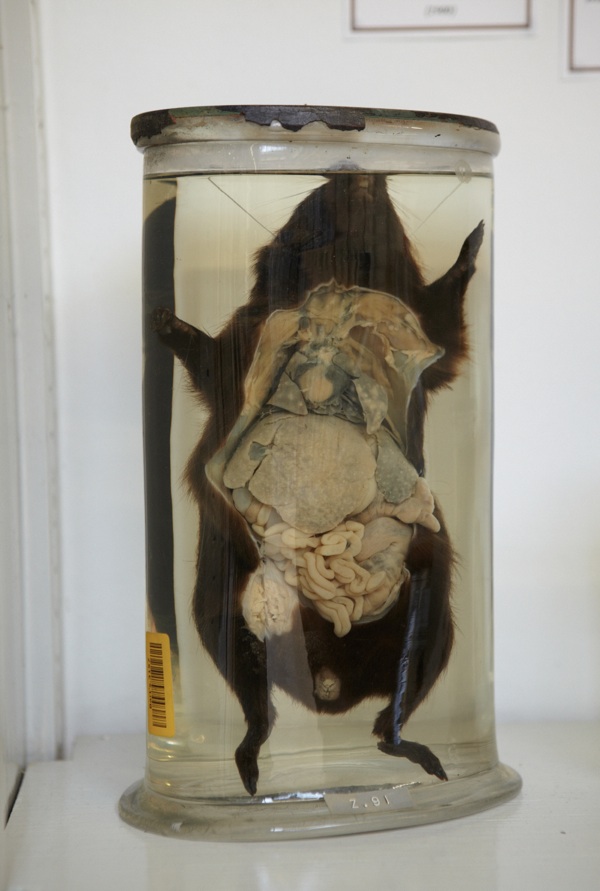
A rat that suffered from tuberculosis
Photographs copyright © Patricia Niven
Archive images courtesy of the Royal London Hospital Archives
You may also like to read about
Wonderful London
It is my pleasure to publish these dignified and characterful portraits of Londoners, believed to be by photographer Donald McLeish (1879-1950), selected from the three volumes of Wonderful London edited by St John Adcock and produced by The Fleetway House in the nineteen-twenties.

Telescope Man on Westminster Bridge

Old woman who inhabited the alleys off Fleet St

Breton Onion Seller

Costermonger and child

Cats’ Meat Man

Knife Grinder

Charwoman

Islington Window Cleaner

Flower Seller

Concertina Player

Hurdy-Gurdy Man

Gramophone Man

Escapologist

Wandering Harpist

Street Sweeper
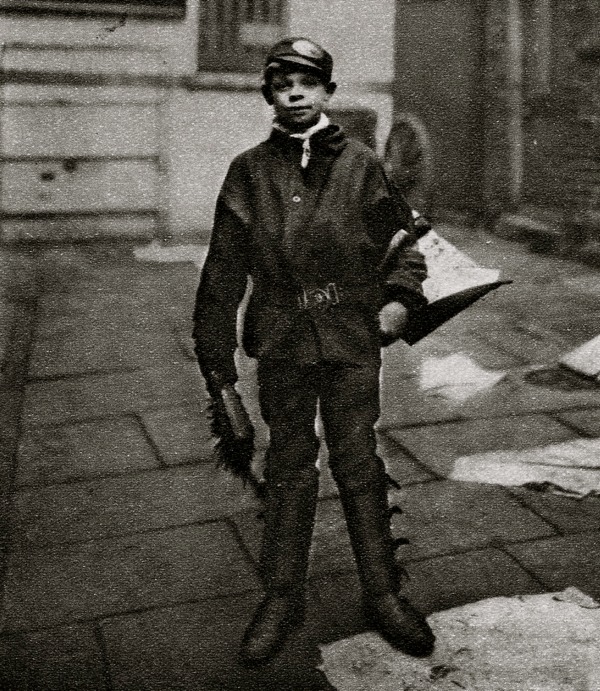
Scavenger

District Messenger

Telephone Messenger

Railway Fireman
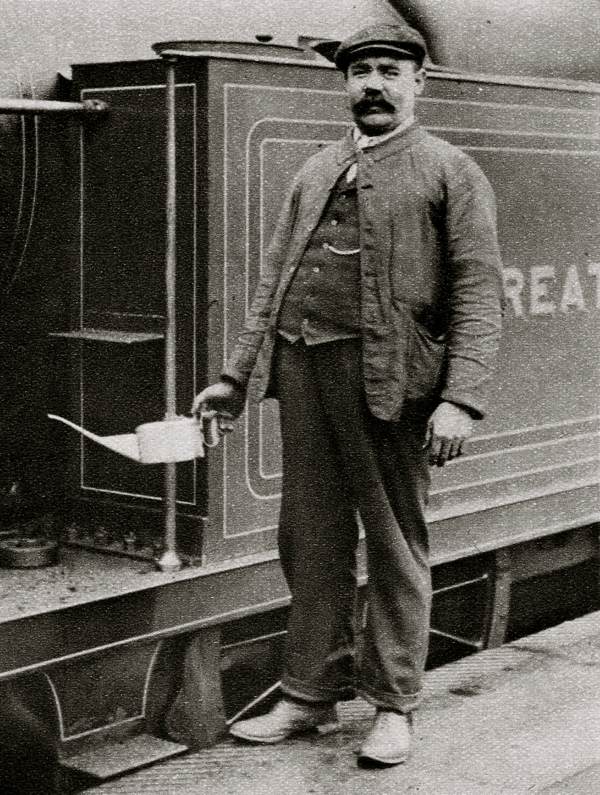
Railway Engine Driver

Carman

Railway Porter

Gold Beaters

Gas Fitters

Chimney Sweep
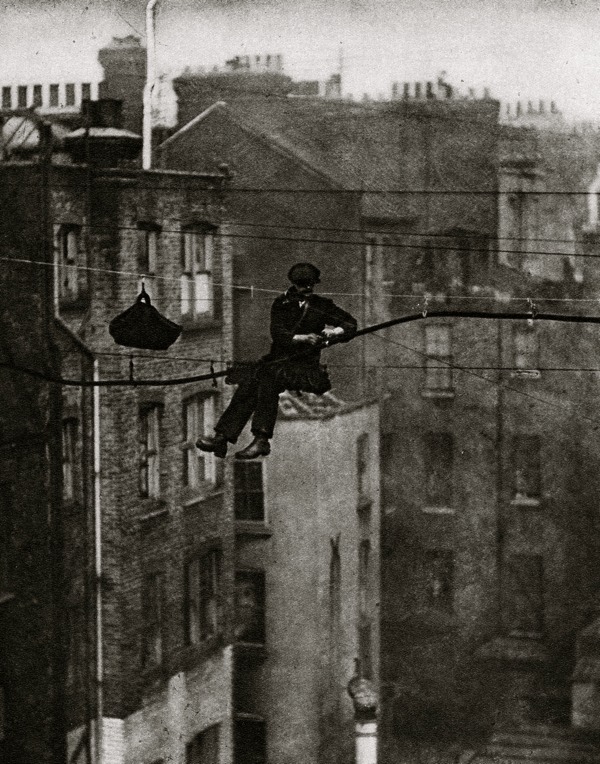
Telephone Cable Man
Photographs courtesy Bishopsgate Institute
You might also like to take a look at
John Thomson’s Street Life in London
William Nicholson’s London Types
Announcement Of Mick Taylor’s Funeral
For more than fifty years, Mick Taylor stood outside the Beigel Bakery, gracing our community with his personal charisma and enlivening the life of Brick Lane with his colourful outfits. I hope as many readers as are able will join me at Mick’s funeral next Wednesday 20th December at 9:00am at City of London Cemetery & Crematorium, Aldersbrook Rd, Manor Park, London E12 5DQ. Please note the funeral will commence at 9:00am precisely so please be sure to arrive in plenty of time.

“I was a war child, I had no father but I had a mother. On 9th November 1945, I was born in my grandmother’s bed in Maclaren St, Hackney. My mother couldn’t afford to keep me so my grandmother and grandfather, Florence and George Taylor brought me up. I never had anything new, only secondhand things, but they brought me up well. My grandfather was a lovely man, he never hit me. He only had one eye, he was blinded in World War I, and he worked on the barges on the River Lee. My grandmother used to pawn his suit every Monday, buy veg on Tuesday, and get it back again on Thursday when he got paid, so he could wear it at the weekend. She taught me how to cook, and I still cook dinner every Sunday.
One day, when I worked for Truman’s, I got up at seven thirty in the morning and my grandmother had a heart attack and died in front of me. I went to work but I couldn’t work because my mind was falling to bits. So I told the foreman, and then I went wandering all over the place for four days until the police picked me up and took me to Hackney Hospital and, while I was under observation, I cut my wrists. I wanted to die because my grandmother was dead.
The woman in the next bed there was Frances Shea, Reggie Kray’s wife, she had mental problems. It sent her a little crazy being married to one of the Krays, but she was a lovely girl. I dressed up smart for her. Sixteen weeks we were together, she needed a bit of company and I took care of her. Then, when they sent her home, she died at once of an overdose but I don’t believe it. I loved her, and she cured me of the loss of my grandmother.
After that, I worked for the council and I did various jobs, I started my life all over again. I’ve been married a couple of times. I’ve lived my life, I’ve enjoyed it, I’ve had some good times. I’ve two sons but I don’t know where they are. Me and their mother divorced and I’ve never seen them again.
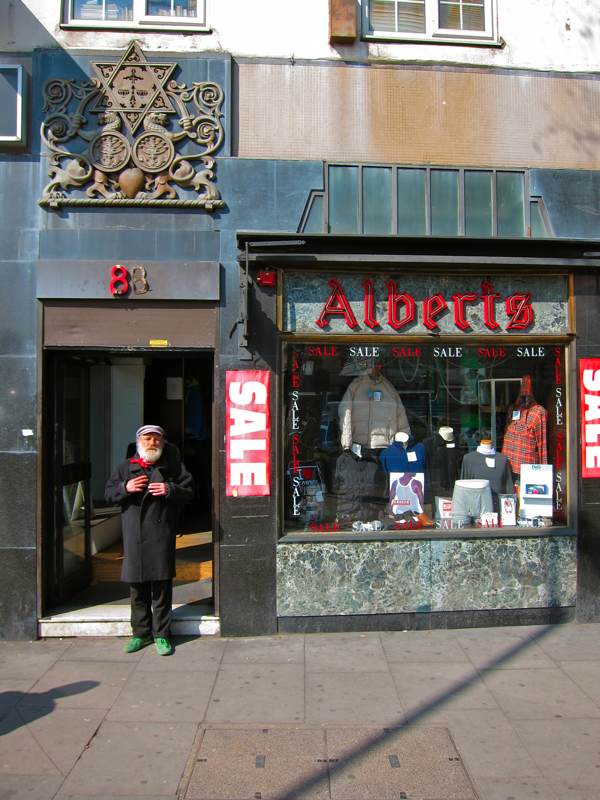
I never had much money but I’ve always made myself smart with a few quid and a suit and shirt – buying the right clothes, the right colour, the right cut. I used to go to Albert’s in Whitechapel and pay seventy five pounds for a pair of shoes, a suit, and a shirt. For my birthday, when I was seven years old, I came down with my grandmother to buy Italian shoes in Cheshire St for two pounds, two shillings and sixpence – pointed black shoes with Cuban heels. I already knew what I wanted at seven years old – you’re born with it, your style.
If you come down here to Brick Lane somebody always helps you out with a sandwich or something. Sometimes I come here without a penny in my pocket but I get a cup of tea. All it takes is to ask nicely and people will help you out. Knowing how to make a shilling, that’s what it’s all about and I’ve sold anything you care to mention over the years. You can find old things in the street and bring them down here and sell them, and people would always buy them and that way you are never without anything”

You may also like to read about
George Cruikshank’s Festive Season In London
As we brace ourselves for the forthcoming festive season, let us contemplate George Cruikshank‘s illustrations of yuletide in London 1838-53 from his Comic Almanack which remind us how much has changed and also how little has changed. (You can click on any of these images to enlarge)
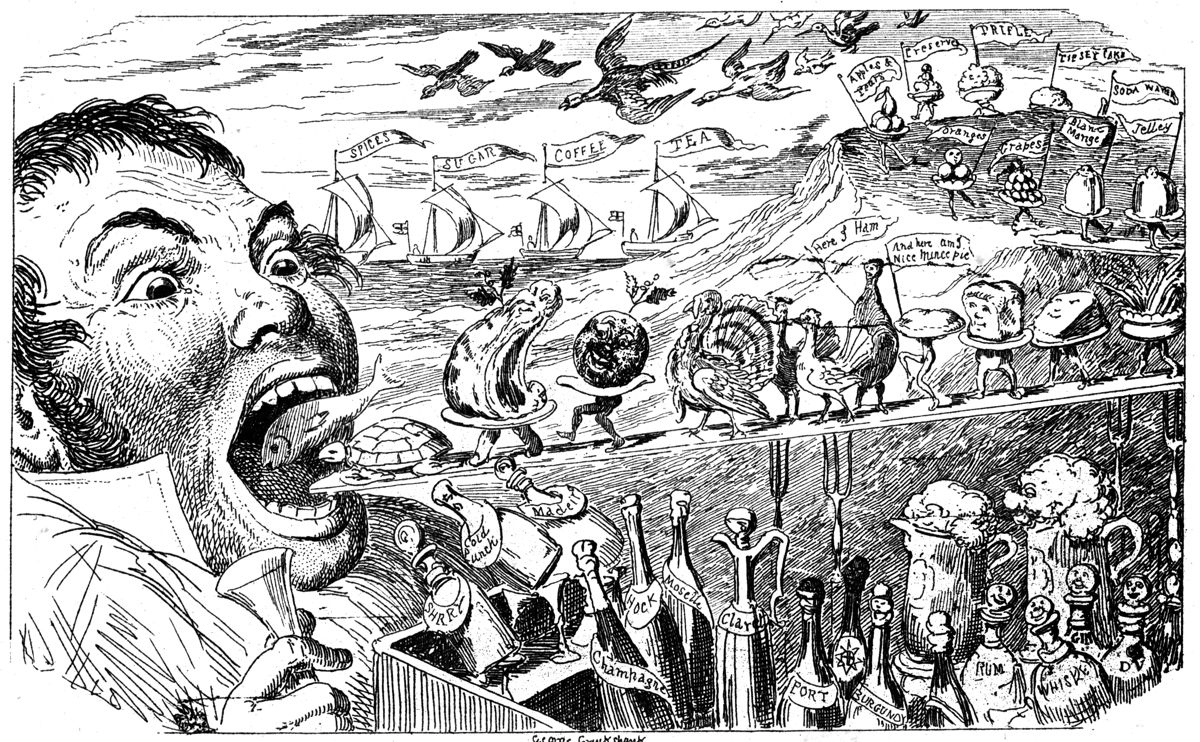
A swallow at Christmas
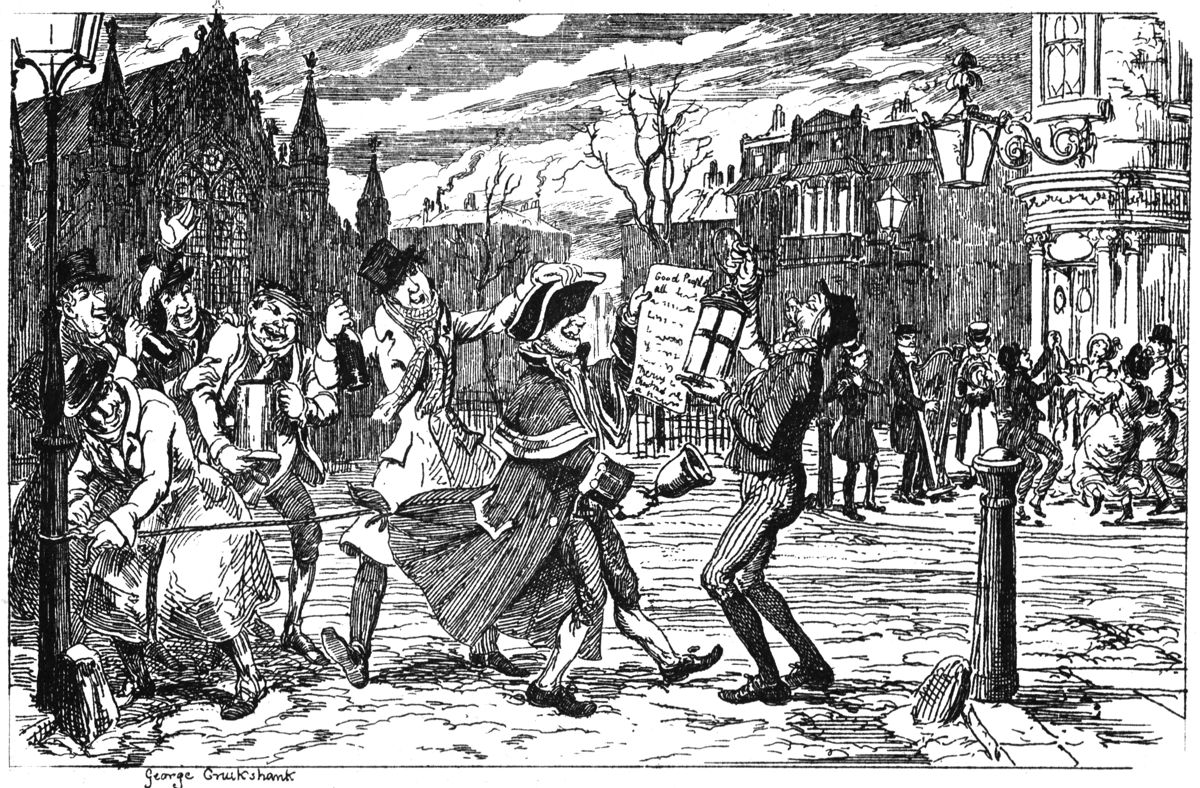
Christmas Eve

Christmas Eve
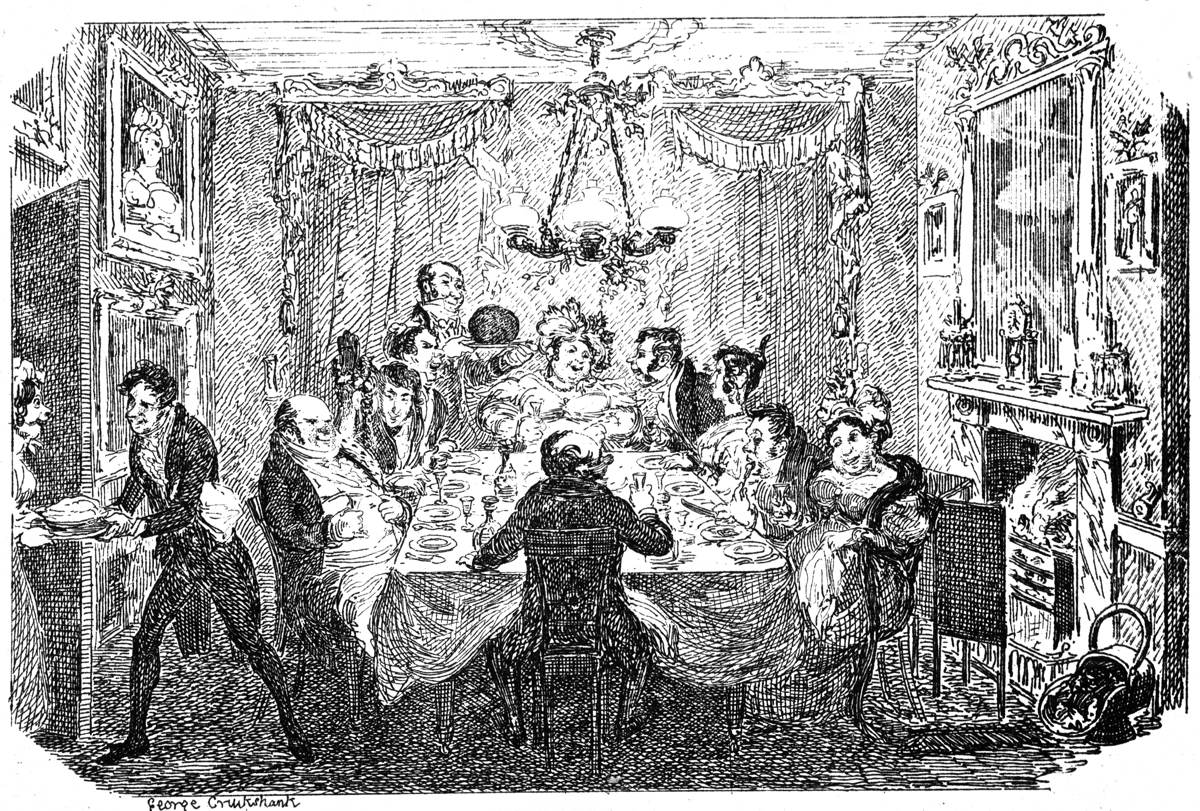
Christmas dining

Christmas bustle
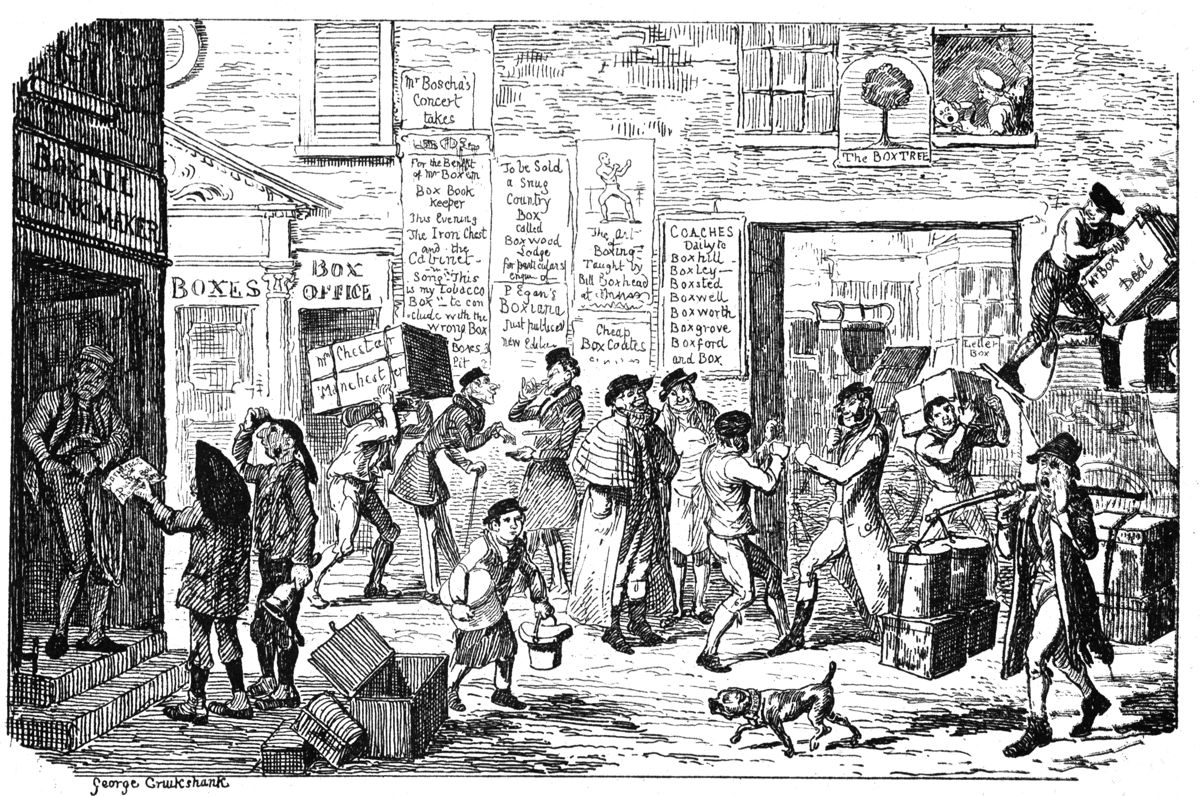
Boxing day
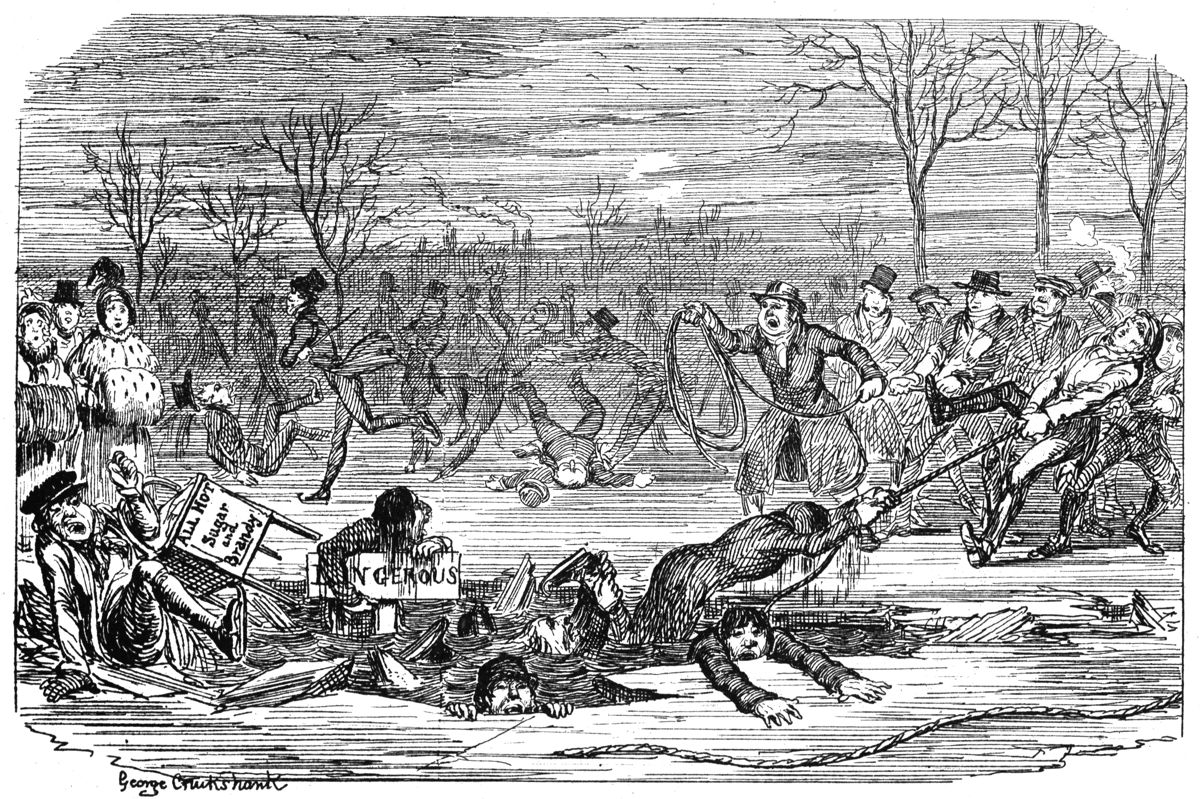
Hard frost
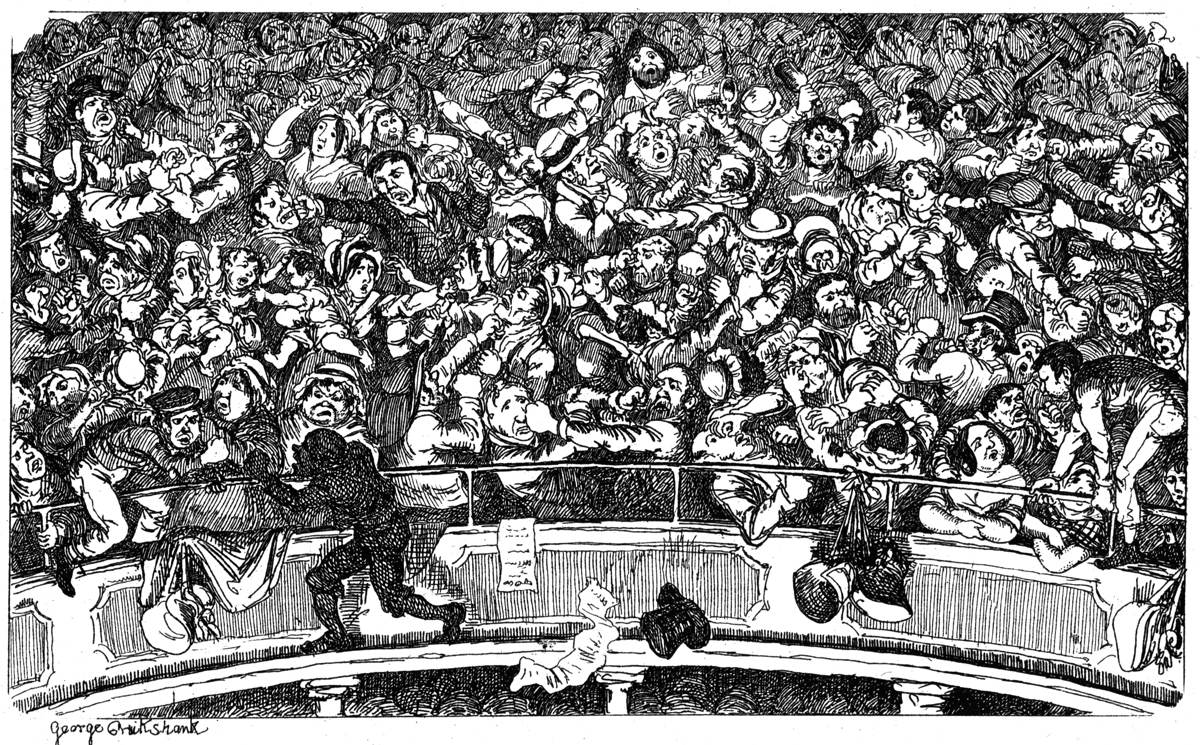
A picture in the gallery
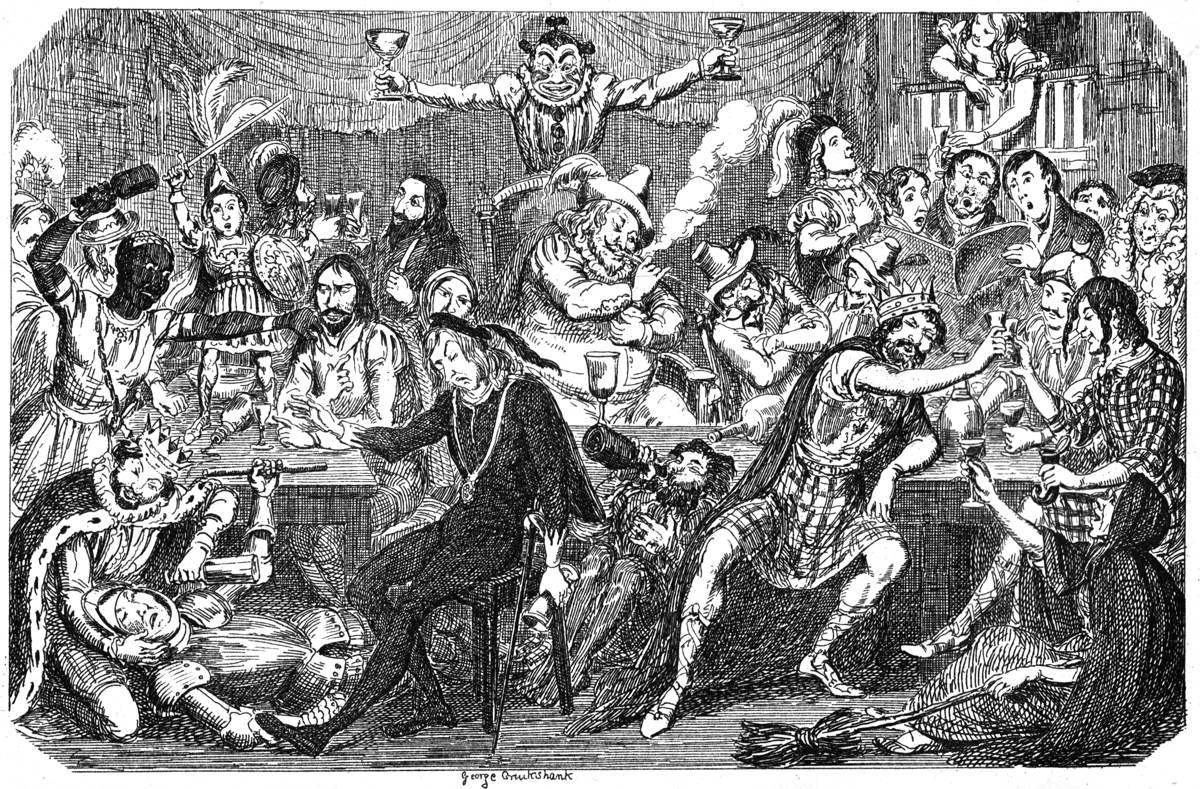
Theatrical dinner

The Parlour & the Cellar
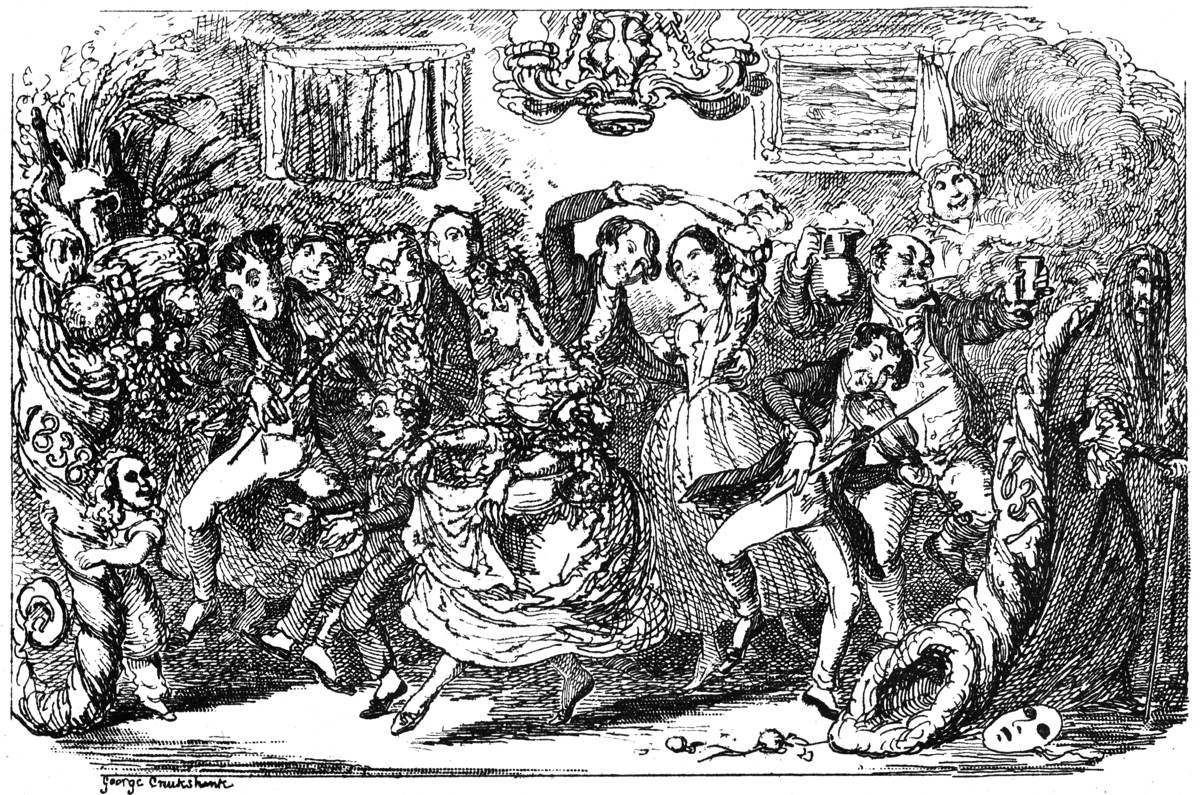
New Year’s Eve
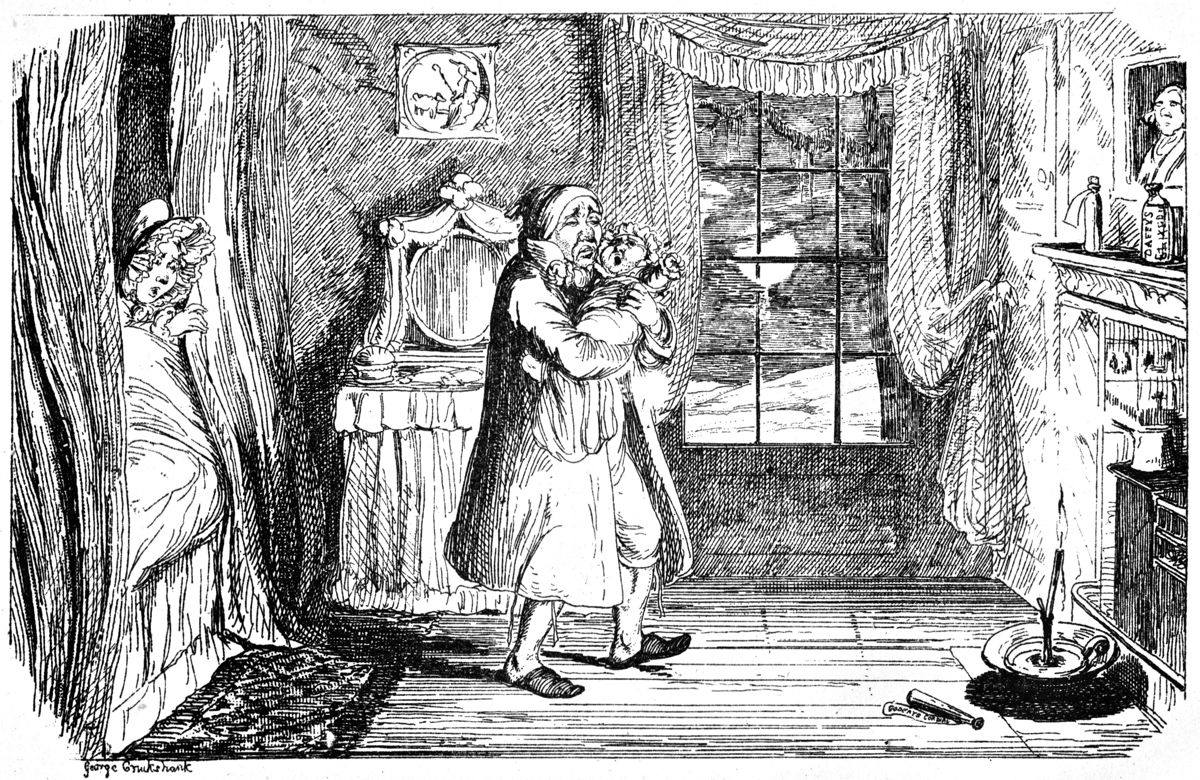
New Year’s birth
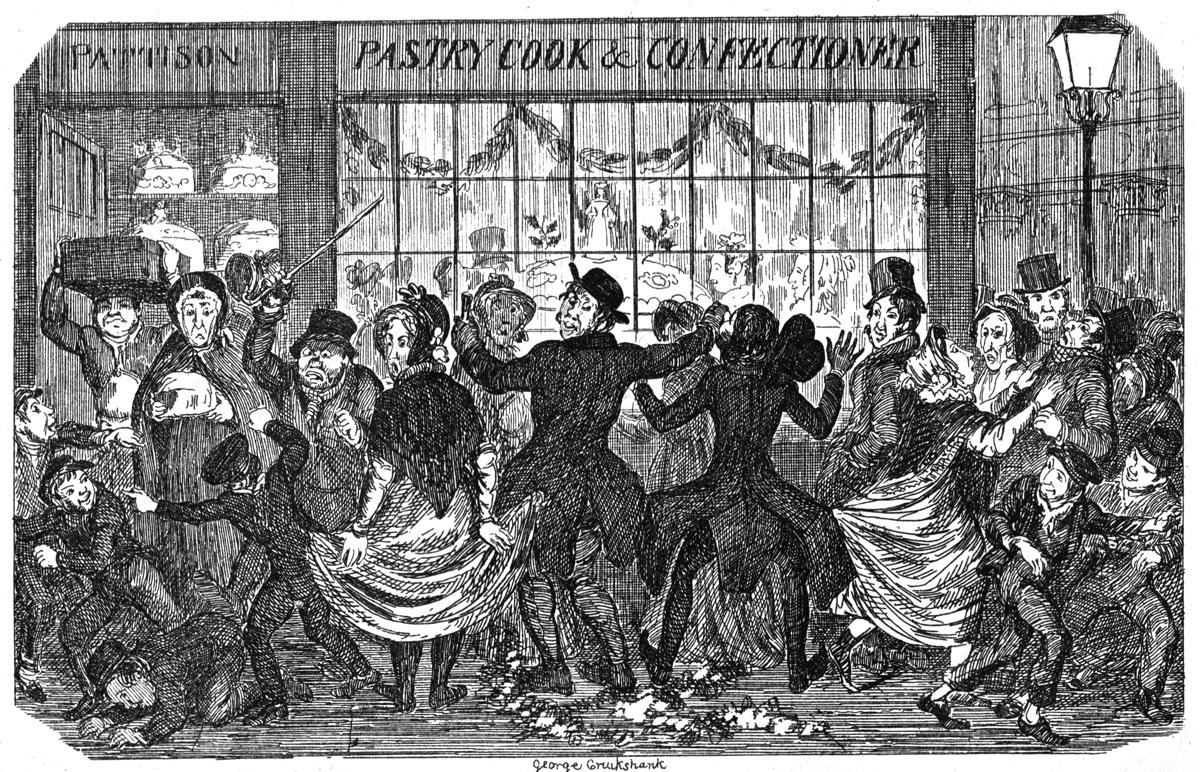
Twelfth Night – Drawing characters
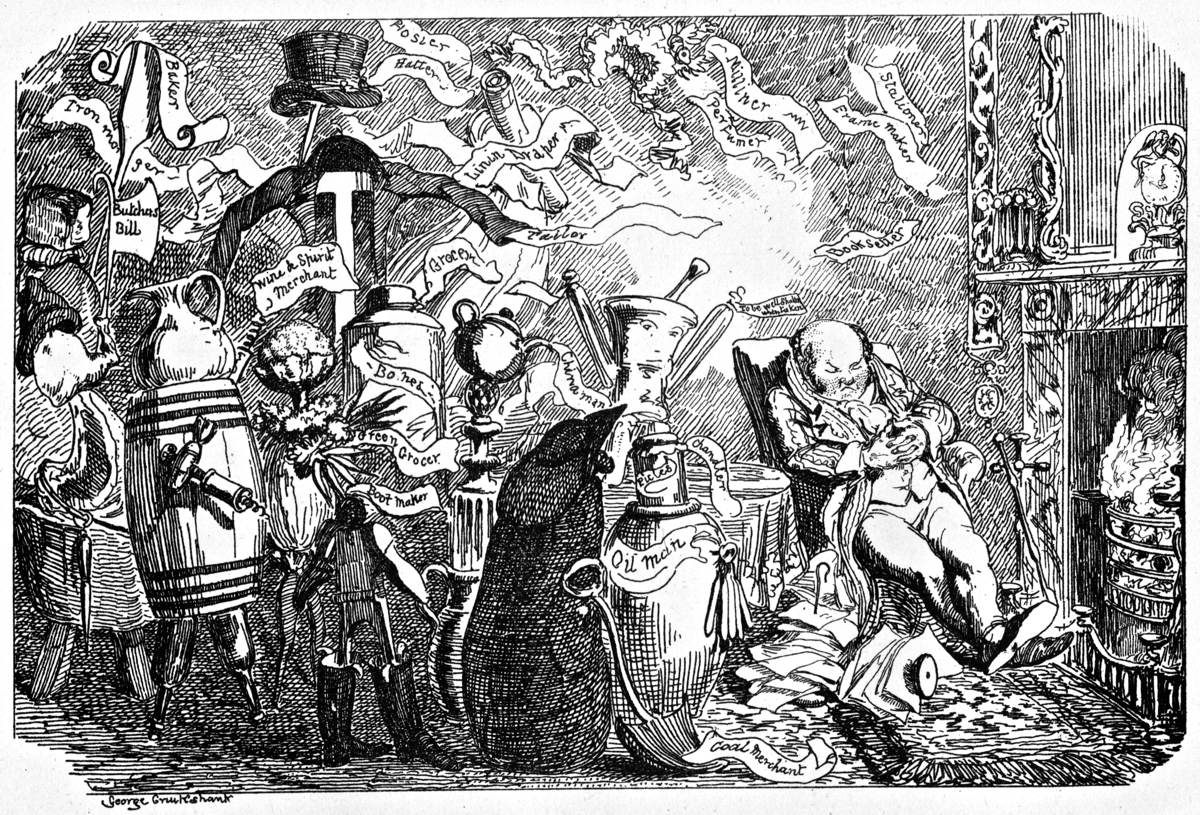
January – Last year’s bills
You may also enjoy
George Cruikshank’s Comic Alphabet
The Vocabulary Of Beer
I offer this choice selection of the language of drinking lest it may be of use to any of my readers who might be planning to take a draught over the forthcoming festive season.
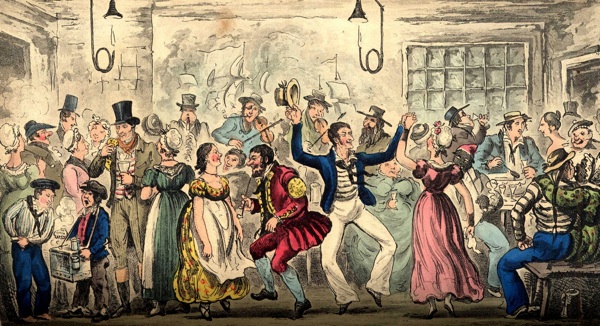
Life in the East – At the Half Moon Tap, 1830
Barrel – A cask built to hold thirty-six gallons.
Beer – There is no bad beer but some is better than others.
Binder – The last drink, which it seldom proves to be. Also used to describe the person who orders it.
Boiling Copper – Vessel in which wort is boiled with hops.
Boniface – Traditional name for an innkeeper, as used by George Farquhar in ‘The Beaux’ Stratagem.’
Bragget – A fancy drink made of fermented honey and ale.
Brewer – The artist who by his choice of barley and other ingredients, and by his sensitive control of the brewing process, produces beer the way you like it.
Butt – A cask built to hold one hundred and eight gallons.
Buttered Beer – A popular sixteenth century drink of spiced and sugared strong beer supplemented with the yolk of an egg and some butter.
Cardinal – A nineteenth century form of mulled ale.
Casual – An occasional visitor to the pub.
Cheese – A heavy wooden ball used in the game of skittles.
Chitting – The appearance of the first shoots while the barley is growing during the first stage of the malting process.
Coaching Glass – An eighteenth century drinking vessel with no feet that was brought out to coach travellers and consumed at one draught.
Collar – The frothing head on a glass of beer between the top of the beer and the rim of the glass.
Crinze – An earthenware drinking vessel, a cross between a tankard and a small bowl.
Crawler – One who visits all the pubs in one district, drinking a glass of beer in each.
Dipstick – An instrument used to measure the quantity of wort prior to fermentation.
Dive – A downstairs bar.
Dog’s Nose – Beer laced with gin.
Down The Hatch – A toast, usually for the first drink.
Finings – A preparation of isinglass which is added to the beer in the cask to clarify it.
Firkin – A cask built to hold nine gallons.
Flip – Beer and spirit mixed, sweetened and heated with a hot iron.
Fob – The word used in a brewery to describe beer froth.
Goods – The name used by the brewer to describe the crushed malted grains in the mash tuns.
Grist – Malt grains that have been cleaned and cracked in the brewery mill machines.
Gyle – A quantity of beer brewed at one time – one particular brewing.
Heel Tap – Term for beer left at the bottom of the glass.
Hogshead – A cask built to hold fifty-four gallons.
Hoop – A device displayed outside taverns in the middle ages to indicate that beer was sold. Later, it became the practice to display certain objects within the hoop in order to differentiate one tavern from another. eg The Hoop & Grapes
Kilderkin – Cask holding eighteen gallons.
Lambswool– A hot drink of spiced ale with roasted apples beaten up in it.
Liquor – The term used in the brewing industry for water.
Local – The pub round the corner.
Long Pull – Giving the customer more than they ordered, the opposite of a short pull.
Lounge – The best-appointed and most expensive bar of the public house.
Mash – The mixture of crushed malted grains and hot liquor which is run through the masher into the mash tun and from which is extracted liquid malt or wort.
Merry-Goe-Down – Old term describing good ale.
Metheglin – A spiced form of mead.
Mether Cup – A wooden drinking cup used by the Saxons, probably for Metherglin.
Mud-In-Your-Eye, Here’s – Traditional toast, with a meaning more pleasant than it sounds.
Nappy – Term describing good ale, foaming and strong.
Noggin – Small wooden mug, a quarter pint measure.
Noondrink – Ale consumed at noon when trade was slacker. Also, High Noon, drunk at three o’clock when street trading was finished.
One For The Road – Last drink before leaving the pub.
Pig’s Ear – Rhyming slang for beer.
Pocket – A large sack made to contain one and a half hundredweight of hops.
Porter – Popular in the late eighteenth and nineteenth centuries among London market porters, equivalent to a mixture of ale, beer and twopenny.
Public Bar – Where everything is cheapest and decoration and equipment is smiplest.
Puncheon – Cask built to hold seventy-two gallons.
Quaff – To drink in large draughts.
Regular – One of the mainstays of the public house.
Round – An order of drinks for more than one person.
Saloon Bar – Enjoying better amenities than a Public Bar and therefore more expensive to the customer.
Shandy – A drink of beer mixed with ginger beer, or sometimes beer and lemonade.
Short – A gin or whisky, usually taken before a meal.
Small Beer – A beer of lesser gravity, hence a trifling matter.
Smeller – A man employed in the brewery to examine casks after they have been washed and prior to their being filled with beer.
Snifter – Colloquial term for a drink.
Snug or Snuggery – Semi-private apartment in the pub, by custom reserved for use of the regulars.
Sparge – To spray hot liquor onto the grist in the mash tuns.
Spell, To Take A – To go round to the local for a beer, coined by Mr Peggotty in David Copperfield.
Stingo – A strong ale, similar to Barley Wine, popular during the winter months and usually sold in a bottle.
Stool – A useful piece of furniture for a customer who wants to stay at the bar, but is anxious to sit down.
Swig – To take a draught of beer, generally a large one.
Thirst – Suffering enjoyed by beer drinkers.
Tipple – To drink slowly and repeatedly.
Trouncer – The drayman’s mate who pushed and manhandled the wagon over potholes.
Tumbler – A flat bottomed drinking glass, derived from the Saxon vessel that could not stand upright and must be emptied in one draught.
Tun – Vessel in the brewery where the fermenting takes place.
Twopenny – A pale, small beer introduced to London from the country in the eighteenth century at fourpence a quart.
Wallop – Mild ale.
Wassail – Hot ale flavoured with sugar, nutmeg and roasted apples.
What’s Yours? – An invitation which sums up the companionable atmosphere of a public house.
Wort – The solution of mash extract in water, derived from the grist in the mash tuns.
Image from Tom & Jerry’s Life in London courtesy Bishopsgate Institute
In Stepney, 1963
Contributing writer Gillian Tindall’s memoir of her first visits to Stepney in 1963 is accompanied by photographs of the East End taken in that era by her husband Richard Lansdown, published here for the first time. Gillian’s account of post-war demolition and ‘relocation’ of residents is strangely familiar as history appears to be repeating itself in the redevelopment and ‘decanting’ of our own time.
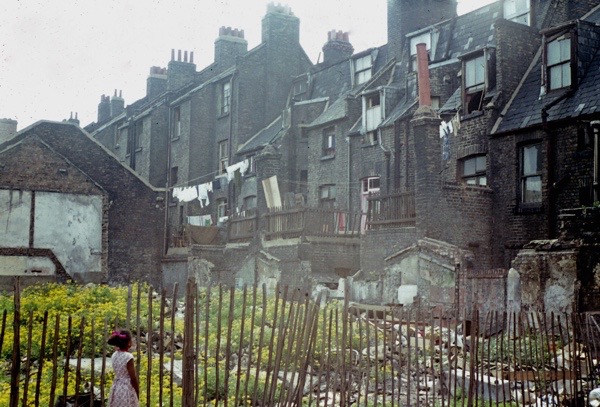
Old Montague St
The number of people who actually remember the Blitz that struck the East End between 1940 and 1944 is fast diminishing, yet everyone has heard of it. Today, it is generally assumed that the acres and acres of undistinguished post-war flats that are now the dominant architecture of much of the East End are the result of post-Blitz rebuilding. In fact, the truth is rather different
It was twenty years after the worst of the Blitz that I first got to know Whitechapel and Stepney, Tower Hamlets’ ancient heartlands. It was 1963, the summer after the coldest winter for a century and so long ago that I can almost see – separate from my present self – the girl that I was then. She wears a checked cotton dress she made herself on a sewing machine and her plait of hair is pinned up. She is walking rapidly round the area with a pack of index cards from the Stepney Old People’s Welfare Association in a small basket. In her flat sandals, she is exploring the East End for the first time.
In those days, a pungent scent of hops from Charringtons’ Anchor Brewery enveloped a stretch of the Mile End Rd, and sometimes a dray cart pulled by huge shire horses rolled sonorously past and turned in at the great gates. The jingling harness and the rhythmic clopping of heavy, whiskered hooves, were an assertion of a long tradition that in only a few years would become extinct, but the girl who was me did not know that. Nor could she guess that the small shops in Whitechapel with Jewish names over the doors, selling kosher meat or Fancy Trimmings or jellied eels, were in their final years too. You do not know much when you are young.
I was employed by the Welfare Association, on a casual basis, to find out how many of several thousand old ladies on their books, and a smaller number of old gentlemen, were still at their recorded addresses, and how well – or not – they were managing. Their children, I learnt from conversations with them, had usually moved to London’s northern suburbs, or to Dagenham or Basildon – or had been ‘relocated’ more recently under The Greater London Plan. The old people’s cards mostly showed birth-dates in the 1880s, some even in the 1870s. Some had been widowed ever since the War of 1914-18, and one or two were even old enough to have lost sons in that war. Often, when I was invited into their houses, the mantlepieces in their front rooms were dressed with the bobbled chenille runners of the Victorian age, with symmetric ornaments at each end – a décor almost extinct today but commemorated in the two china dogs that are the symbol of Spitalfields Life Books.
Some of them would try to detain me with sagas of ancient achievements or griefs, to which I listened with a guilty awareness that I had many more names to visit in the next two hours. Today, how much I would like to have these garrulous old people back, even for one afternoon! They spoke of happy times past, of ‘nice shops’ and good markets and celebrations for forgotten victories and jubilees, of synagogues and Baptist Sunday schools, a world of neighbourliness which they perceived as dispersed and lost. To prolong the chat they would offer me very strong tea, to which very sweet, tinned milk was automatically added. Then I would be taken to see the place in the cracked wall of the kitchen or the upstairs bedroom where “you can see the daylight through it, darlin’, can’t you?”, and the privy in the backyard with the perennially leaking roof – “It isn’t very nice, you see, ‘specially when it rains. My husband, he could have fixed that, but now I’m on me owney-oh…”
I would assure them that the Old People’s Welfare would try to do something about these things. It took me a while to discover the extent to which the forces of bureaucracy were preventing such simple, ad hoc improvements from being carried out. Not long before, Stepney Council had specifically refused a landlord permission to make good minor damage to three houses in White Horse Rd, near Stepney Green. ‘The carrying out of substantial works of repair to this old and obsolete type of property would seriously prejudice the Council planning proposals for the redevelopment for residential purposes of this part of Stepney and Poplar Reconstruction Area.’
These post-war plans were not dreamed up by individual Councils. The Greater London Plan was imposed by the London County Council (the fore-runner of the Greater London Council), but the local authorities had adopted its assumptions with blinkered enthusiasm. As early as 1946, warning local voices had been raised, especially about the way the envisaged Brave New Stepney of high-rise blocks set in ‘green spaces’ did not seem to allow any place for the small businesses that had long been the life-blood of the East End. The truth was that Labour thinking in those years had an aversion to small businesses. And so carried away were the Council by the prospect of reducing the borough’s population substantially by moving half of them out of London (a key element of the Plan) that the views of the inhabitants themselves counted for little. An early, enthusiastic description of the Plan in a popular illustrated magazine shocks the reader of today by its Stalinist disregard for the population’s own preferences:
‘A New East End for London… will create a new and better London, of town planning on scientific lines… [It] will make a clean sweep of two-thirds of Stepney and one-third of the neighbouring borough of Poplar… More than 1,960 acres will be transformed… 3 ½ miles long and 1 1/2 miles wide.’
I noticed that among all the old people I visited, whether in snug little houses that only need the roof mended and a bathroom added to the back or in multi-occupied, once-elegant terraces or in serviceable Victorian tenements, the refrain was “Oh, it’s all coming down round here, dear.” I could tell that though they were acquiescent about the change, believing it to be in some way inevitable, they felt hurt at a profound, inarticulate level by what was being done. It became clear to me that something terrible was happening, a social assault that went far beyond any rational response to the Blitz.
It was true that to the east of St Dunstan’s church, in the ancient heart of Stepney, the war had left a scene of devastation. The bombs arrived here in battalions, aiming at the gasholders and the docks, although the church itself was hardly touched. But why, over twenty years later, was the place still a wilderness reminiscent of Ypres just after World War I? On what must once have been a street corner, the remains of a shoe-shop stood, apparently untouched since it was set alight by an incendiary bomb in 1940. Burnt shoes still littered the dank interior of the shop, among other rain-sodden rubbish.
On the west side of the church, running towards Jubilee St, there was still whole grid of streets standing, solid, liveable homes, many of which seemed hardly touched by bomb-blast – indeed the London County Council’s own contemporary maps of bomb-damage show that to have been the case. But not long after I first walked those streets they had almost all been boarded up. Other streets were already being supplanted by long fences of corrugated iron, with just the occasional public house left isolated on a corner without anyone to go to it. Here, I was told, was where a ‘green space’ was arbitrarily planned. Yet it could have been sited to the east of the church without destroying a whole neighbourhood, reducing to worthlessness in the eyes of the dispossessed inhabitants what had been the fabric of their existence. All coming down – people’s memories, the meaning of their lives.
The Welfare Association’s annual report for that year had lots to report on gifts, fuel grants, outings, chiropody and meals-on-wheels but – perhaps diplomatically – on the subject of ‘relocation’ it had little to say.
Walking back up Stepney Green, an ancient curving route with trees and grass down the centre of it, a few runs of substantial old houses were still standing. I dreaded that, next time I came past, the iron screens would have taken over here too. In fact, this did not happen. Stepney Green itself was saved in the nick of time and rehabilitated. Unknown to me in that summer of 1963, a rebellious Conservation movement was beginning to grind into action. Post-war doctrines about the State knowing what was best for its citizens were at last being questioned, on the political Left as well as the Right. The ‘slum-clearing’ obsession, fixated on the need to destroy the architecture of the past in order to eradicate the poverty of that past, as if the streets themselves were somehow the source of urban ills, was at last perceived to be false. On the contrary, when whole districts were laid waste, crime and vandalism increased. By the seventies articles in illustrated magazines were not about a future of radiant towers but had titles such as ‘An Indictment of Bad Planning’. As the distinguished commentator Ian Nairn put it, the East End had not been destroyed so much by the War but had been ‘broken on the planners’ wheel’.
Today, it lives again in another form. The synagogues and Baptist chapels have been replaced by mosques, the Kosher butchers by Halal butchers. Whitechapel market is full of sarees and bright scarves. The Welfare Association is no longer in the same headquarters under the same name, but survives as Tower Hamlets Friends & Neighbours. We can at least be grateful for what has been saved – or re-born.
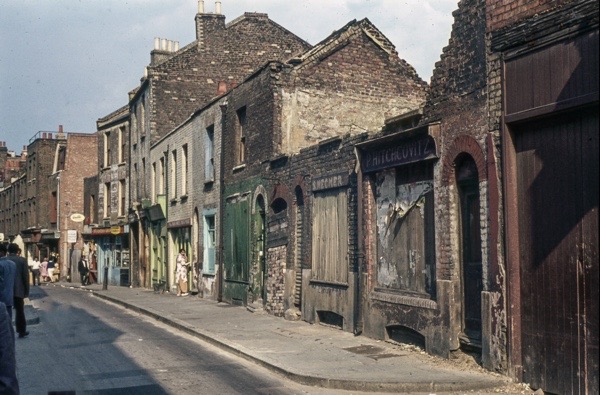
Old Montague St
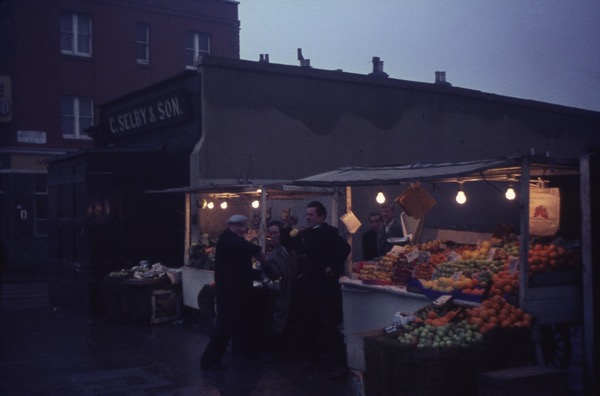
Fruit Stall in Bow

Jubilee St
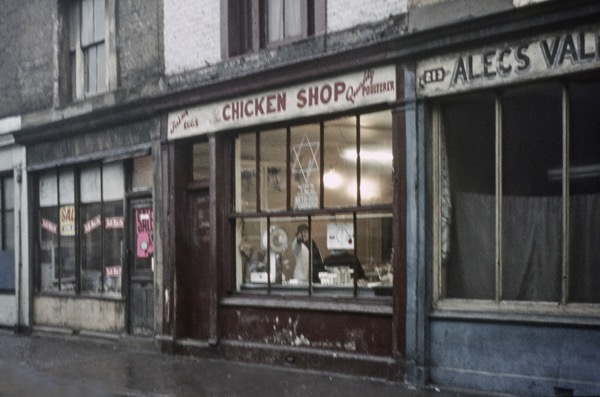
Jubilee St
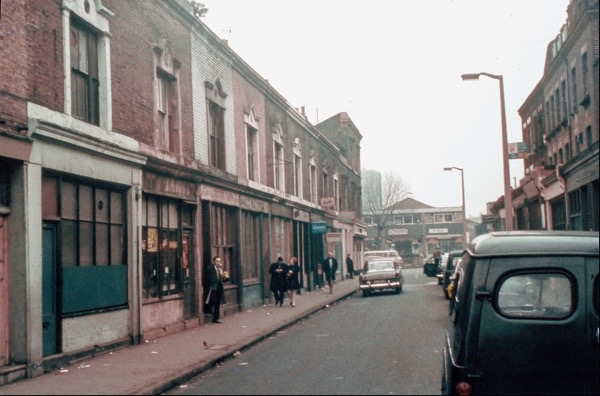
Jubilee St
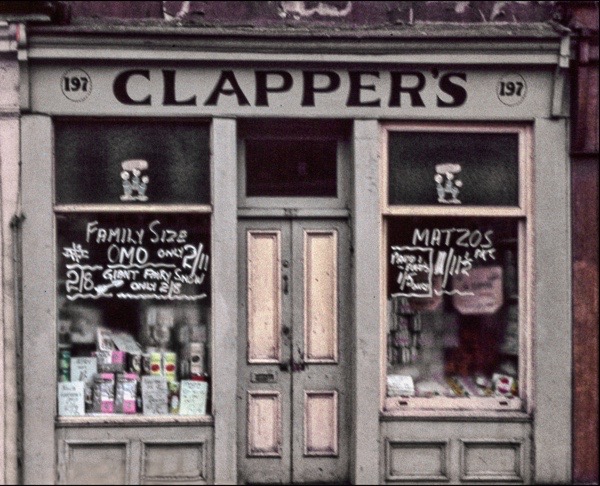
Jubilee St
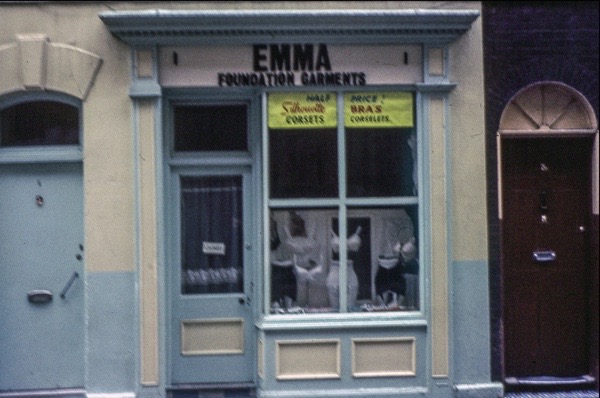
Off Mile End Rd
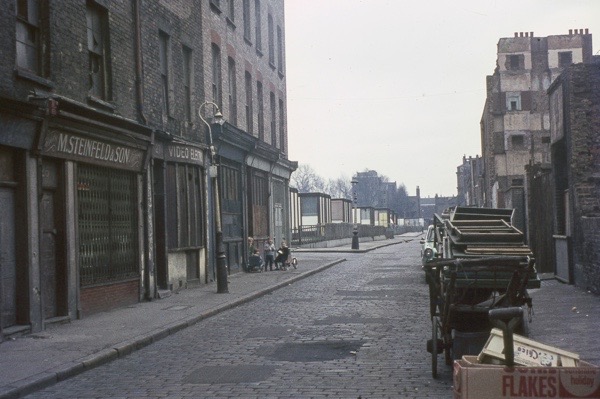
Buxton St
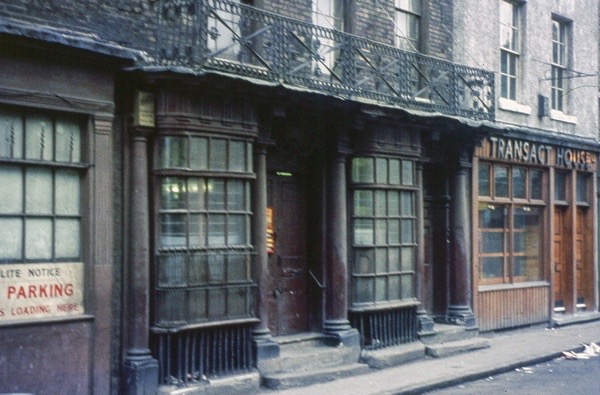
Artillery Lane
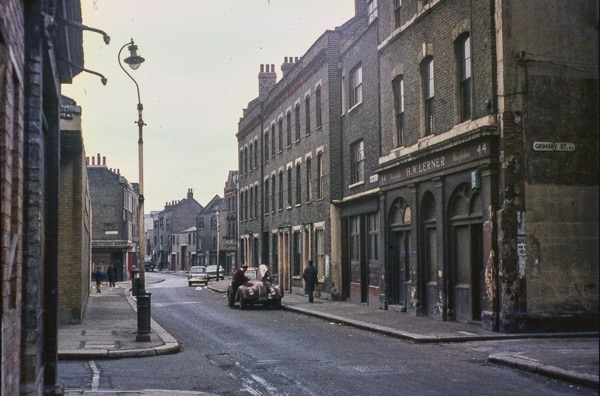
Cheshire St
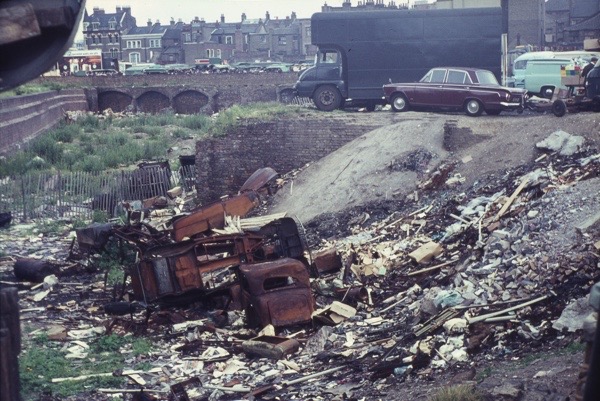
Bombsite at Club Row
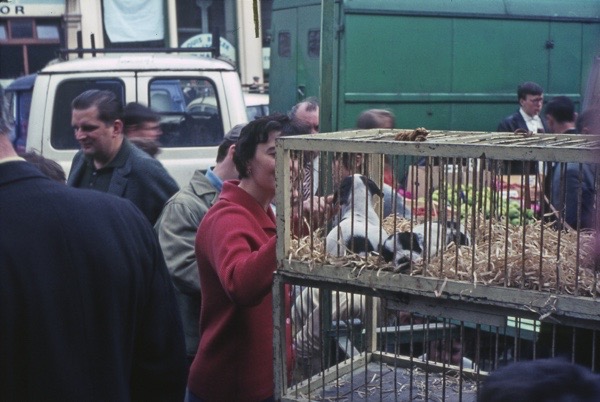
Club Row Animal Market
Photographs copyright © Richard Lansdown
Gillian Tindall’s The Tunnel Through Time, A New Route For An Old Journey is out now as a Vintage paperback
You may also like to read these other stories by Gillian Tindall
Spitalfields Parties of Yesteryear
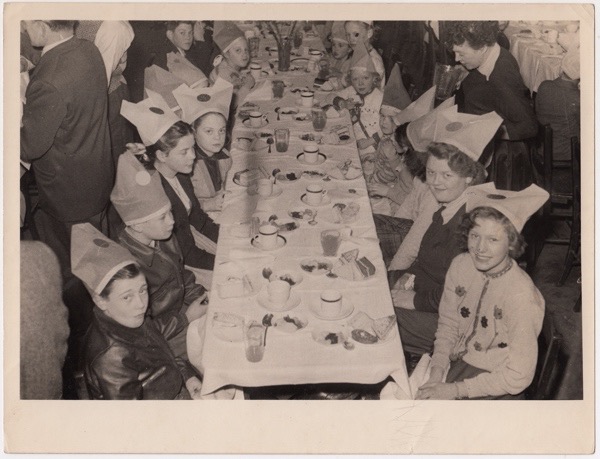
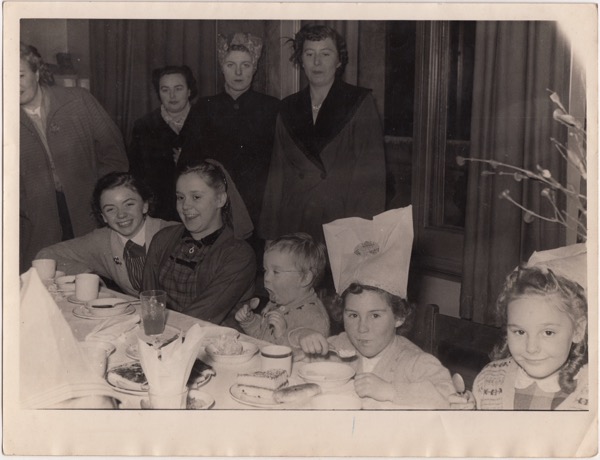
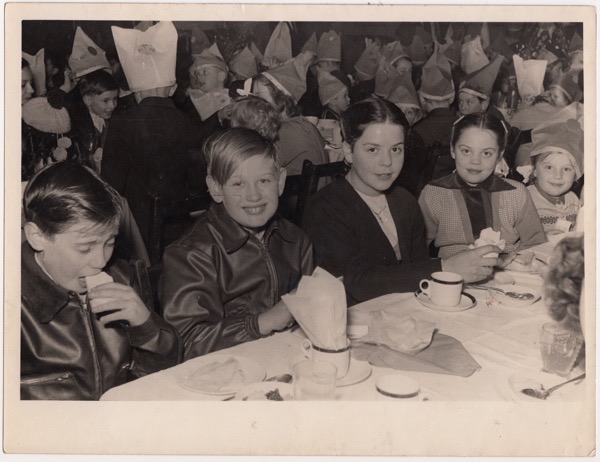
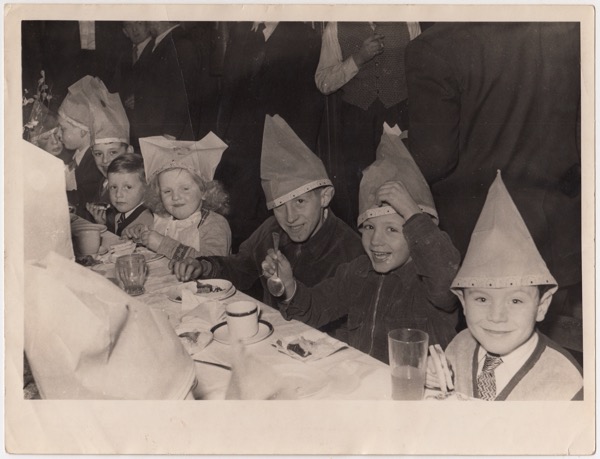
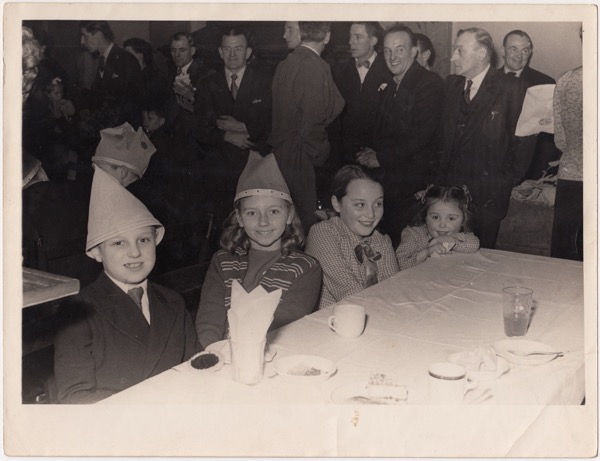
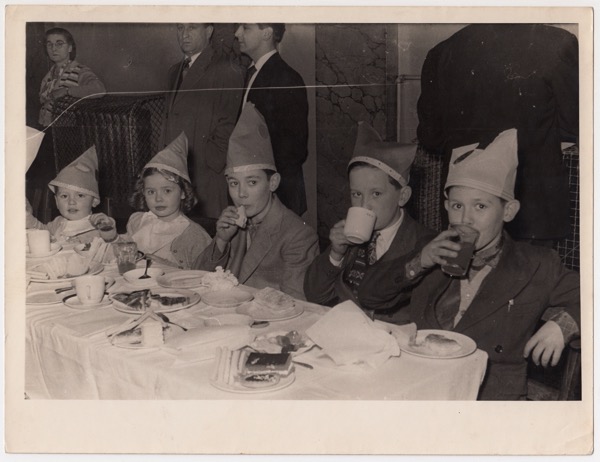
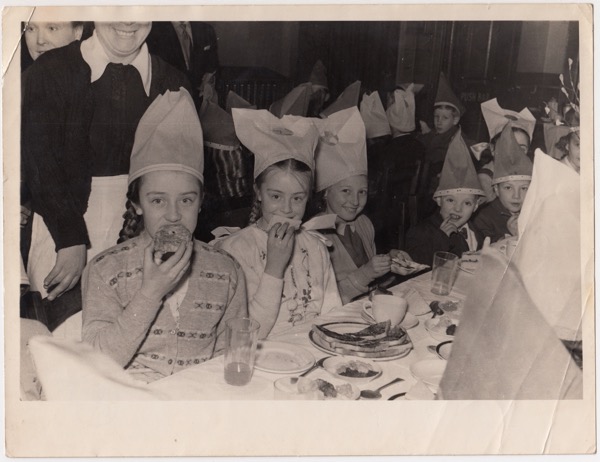
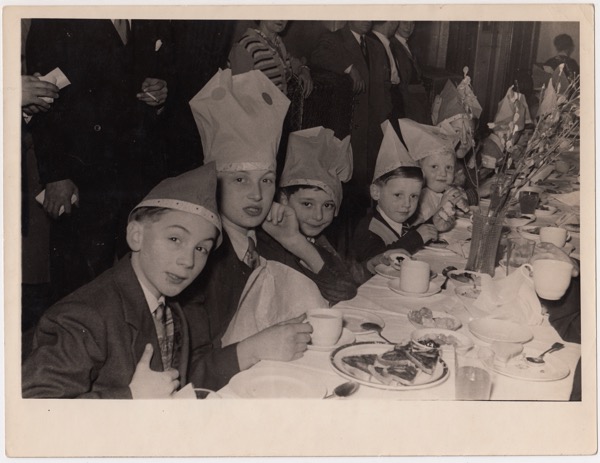
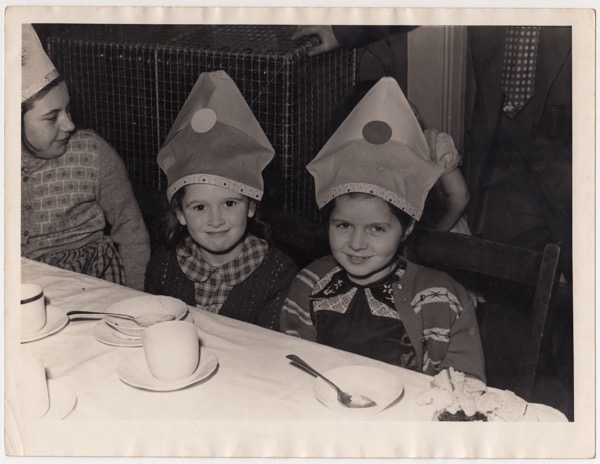
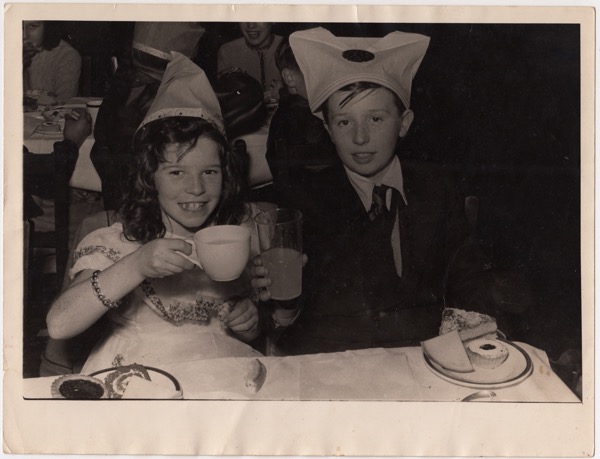
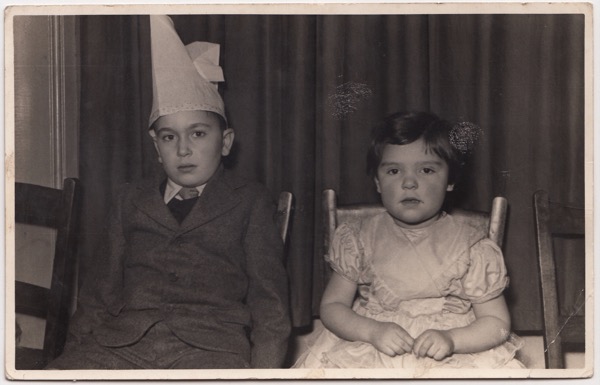
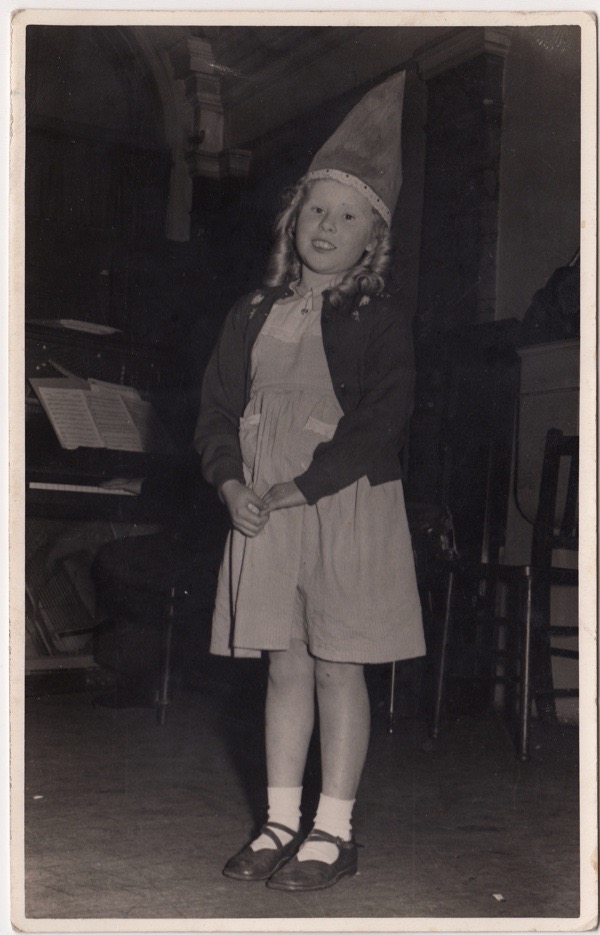
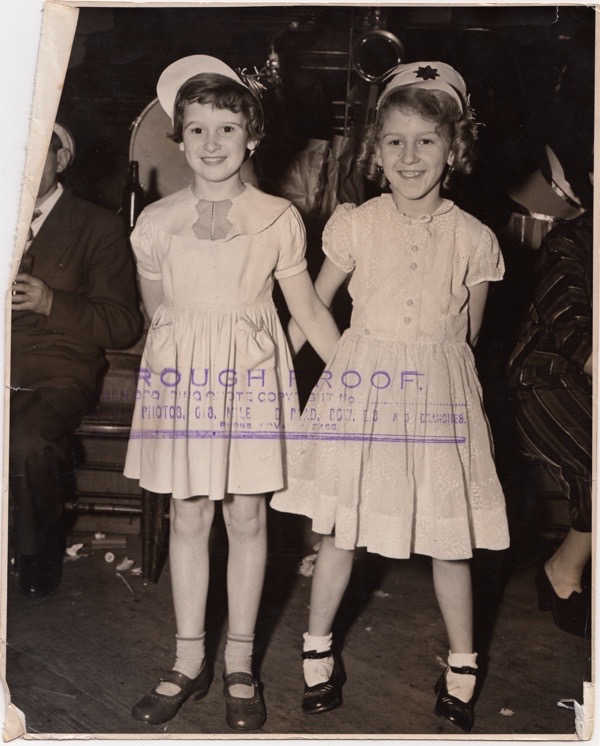
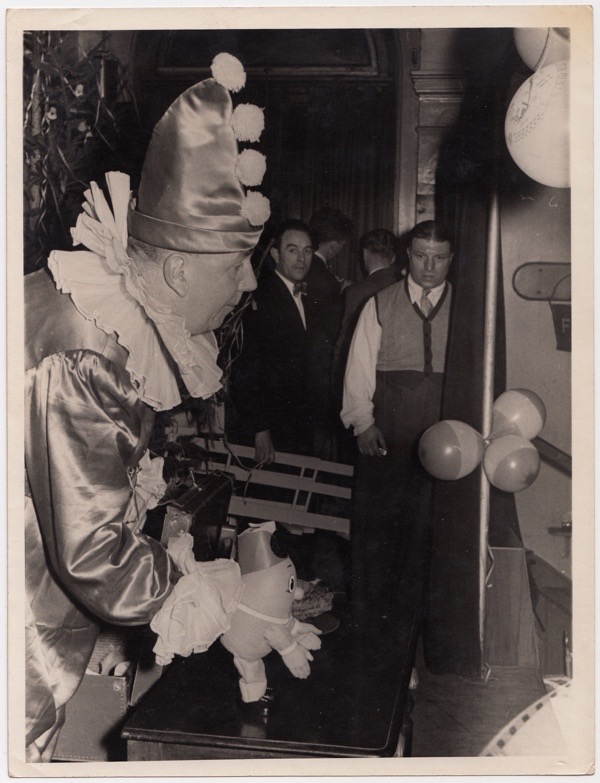
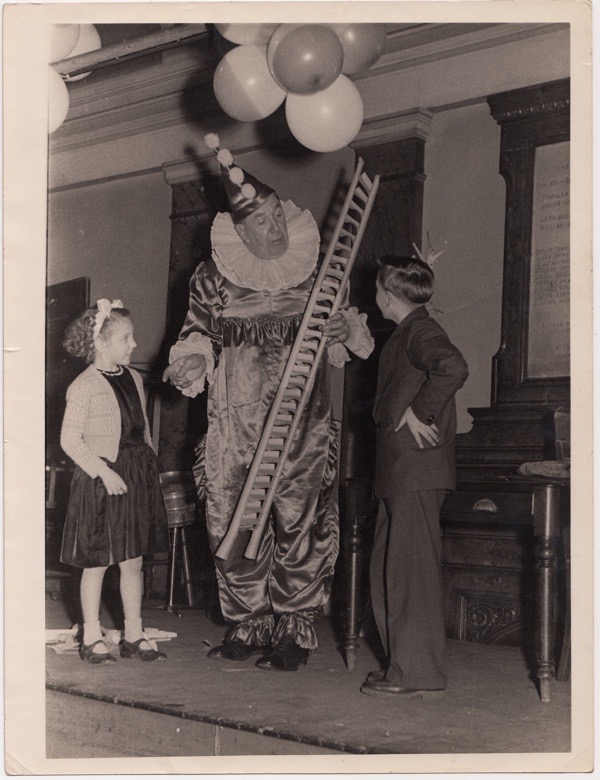
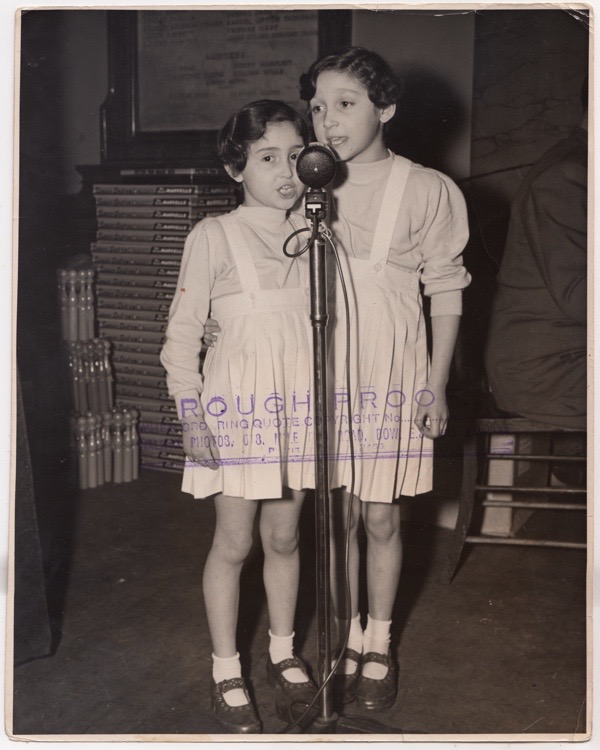
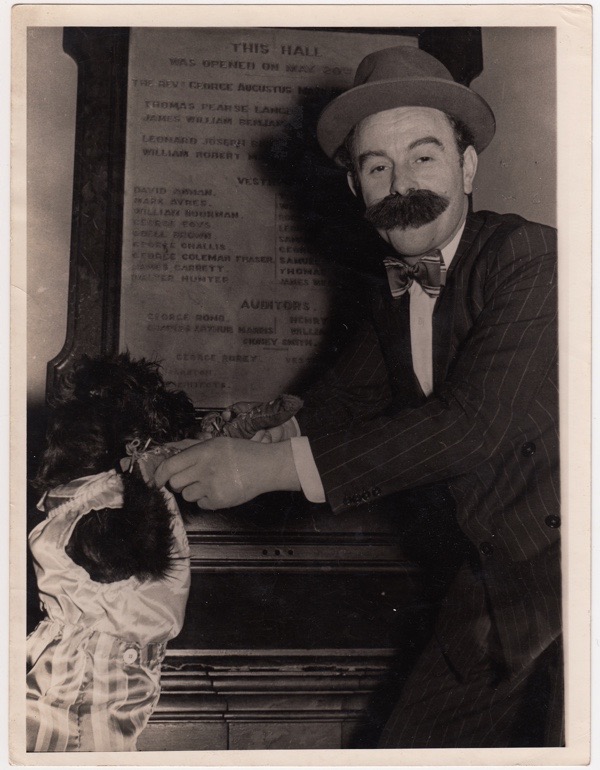
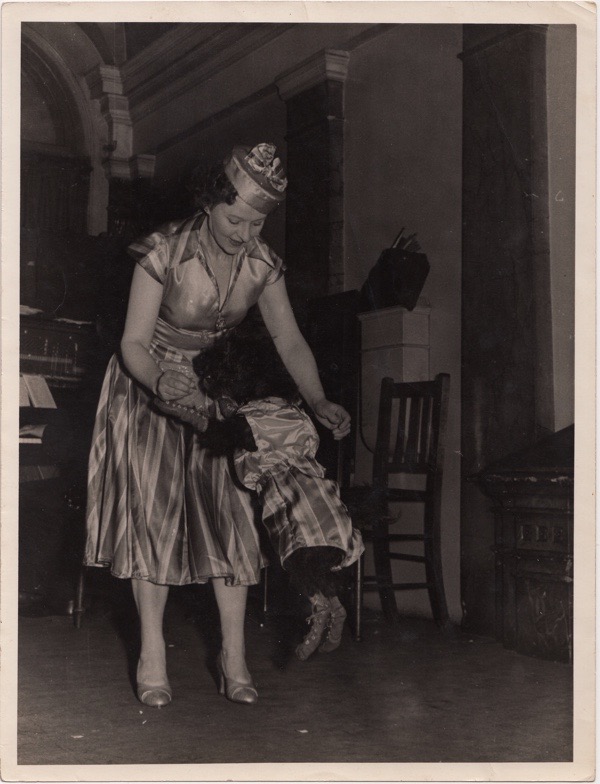
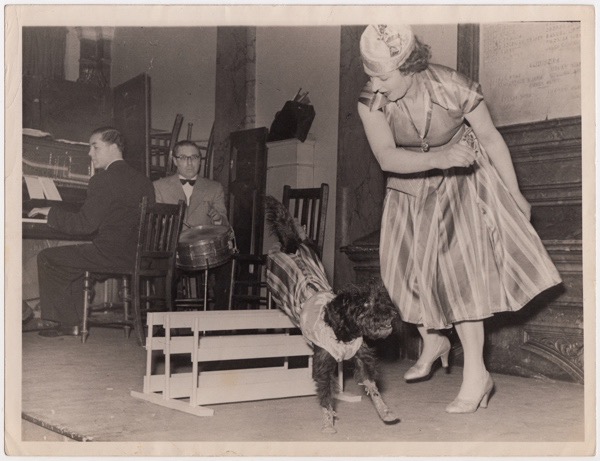
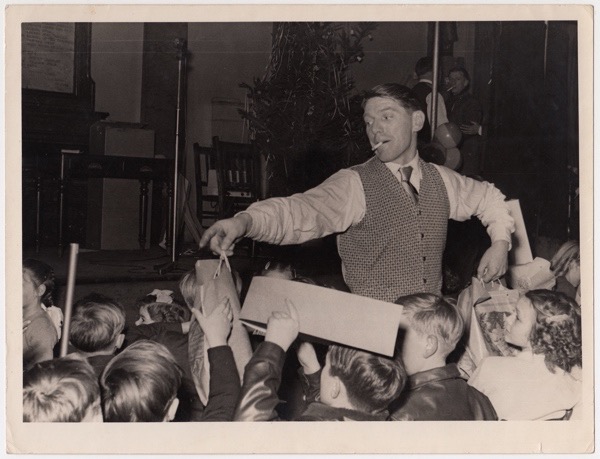
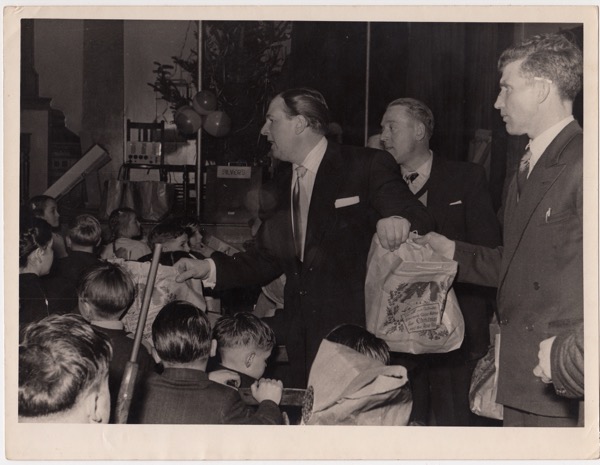
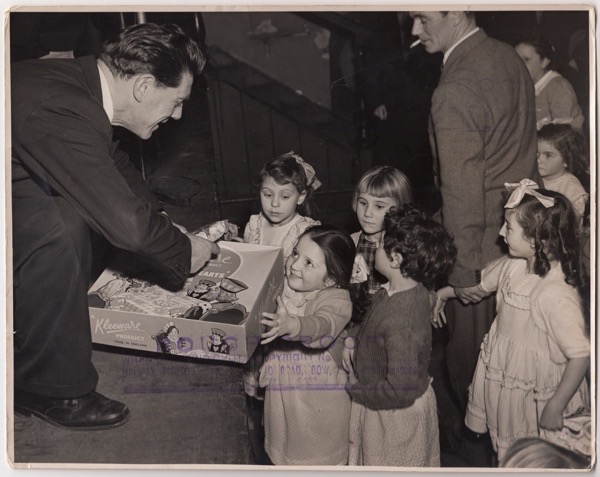
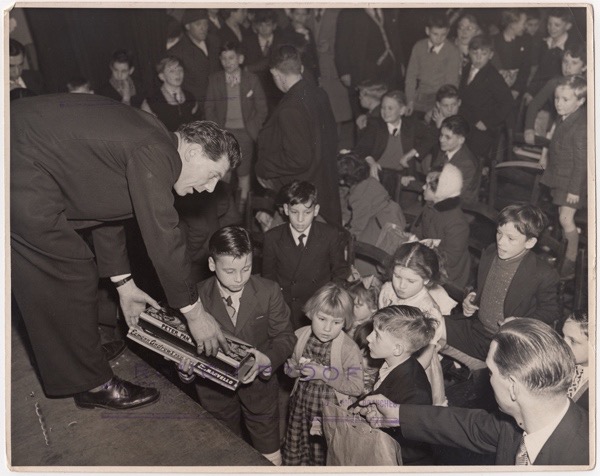
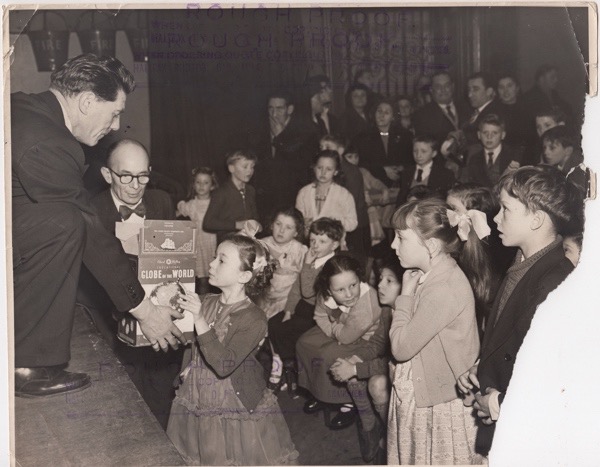
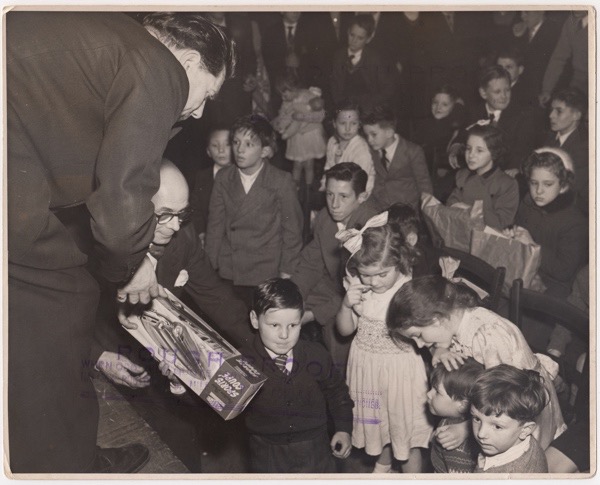
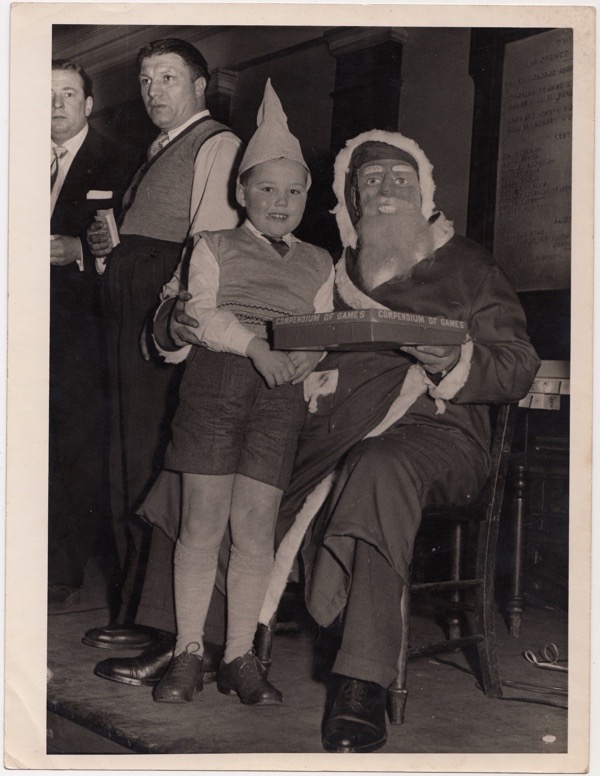
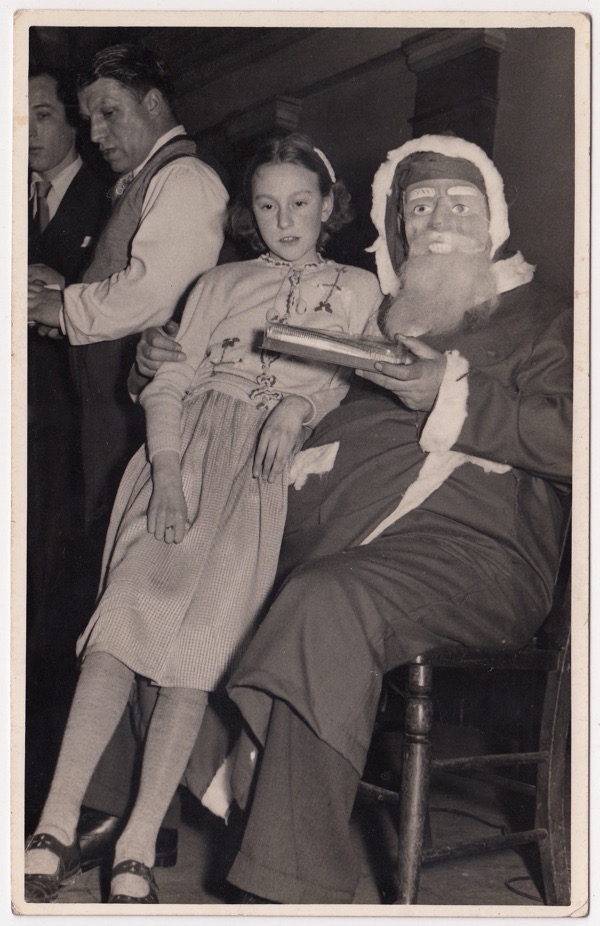
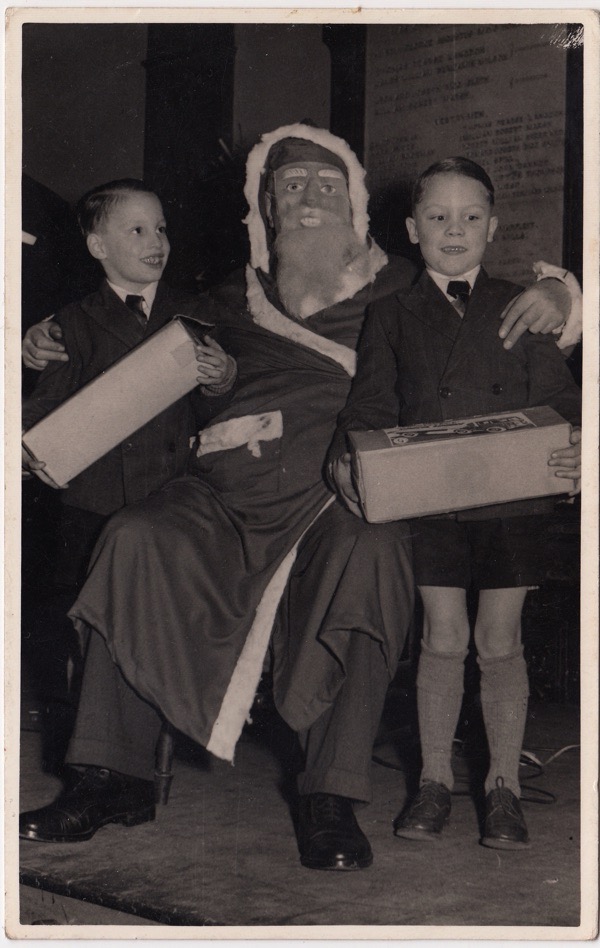
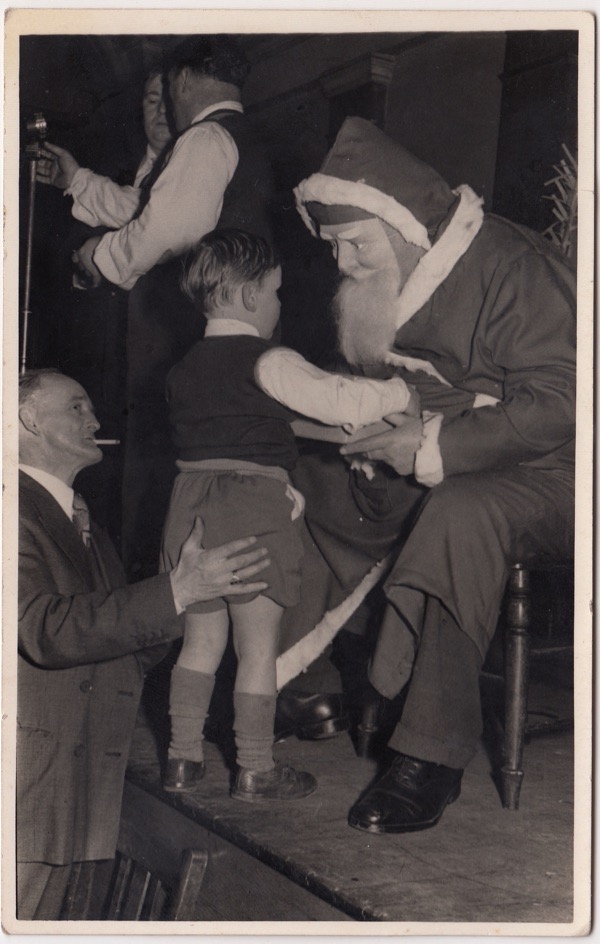
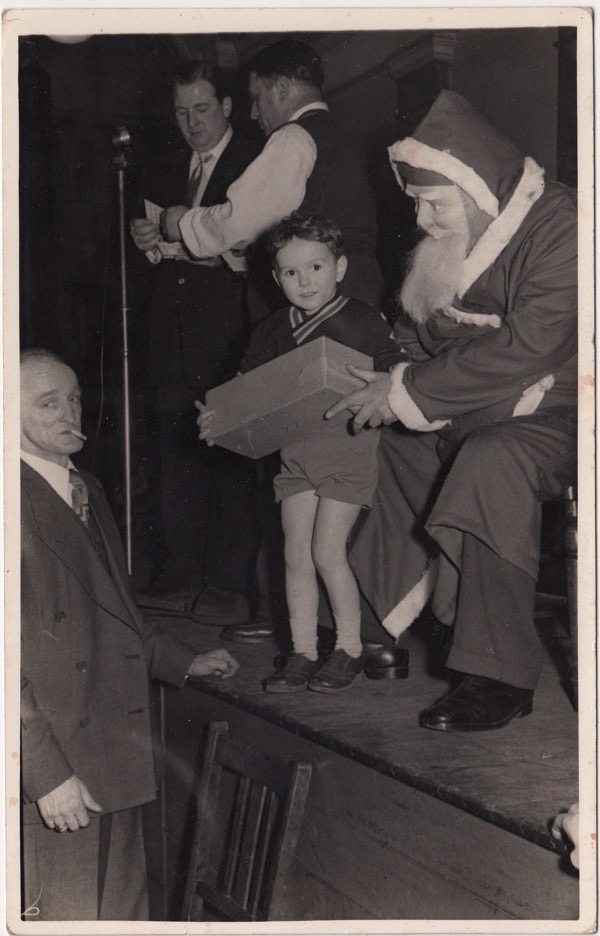
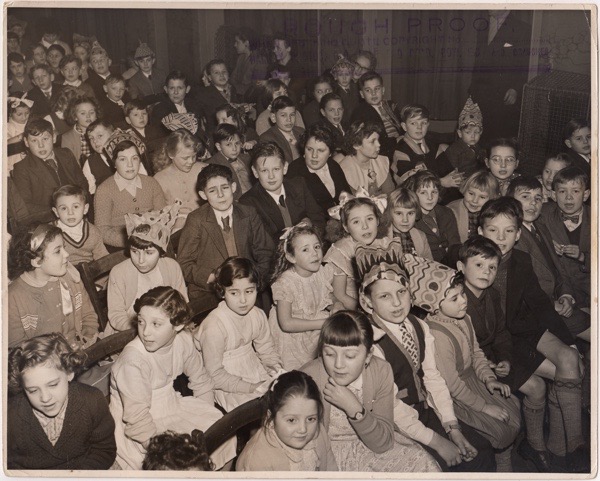
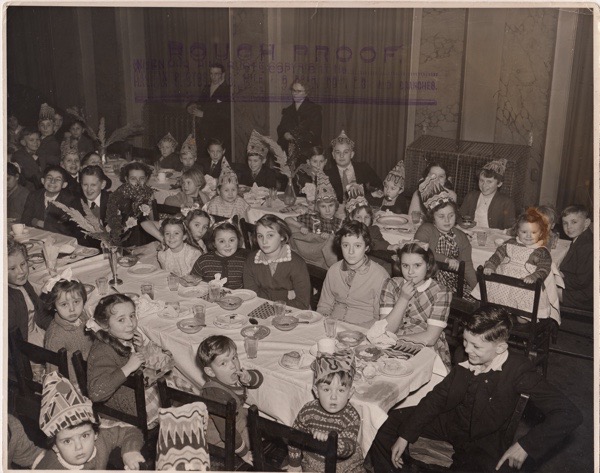
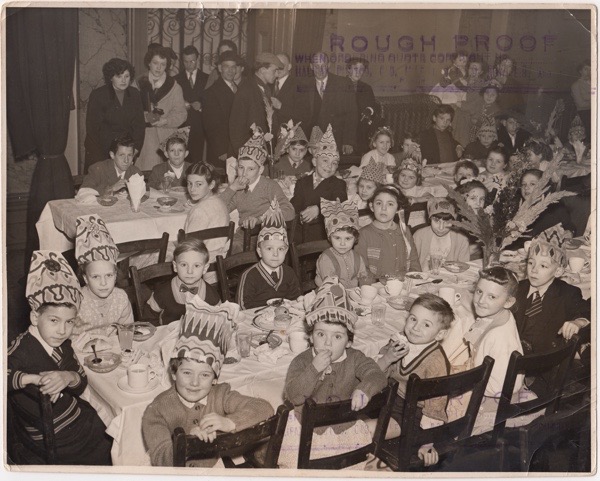
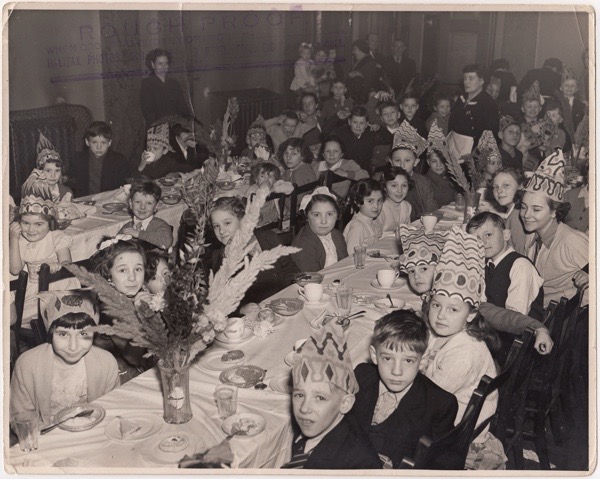
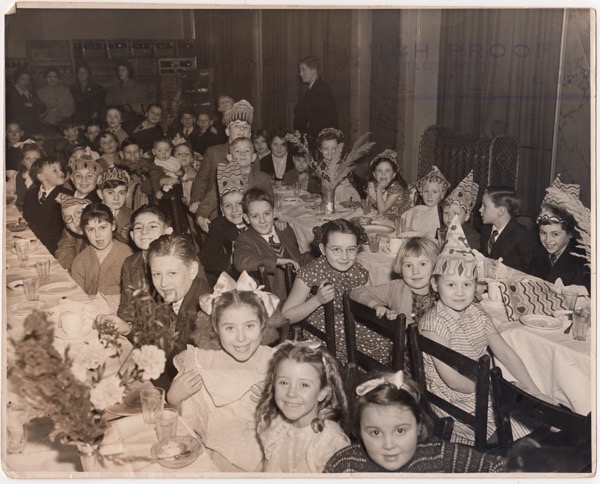
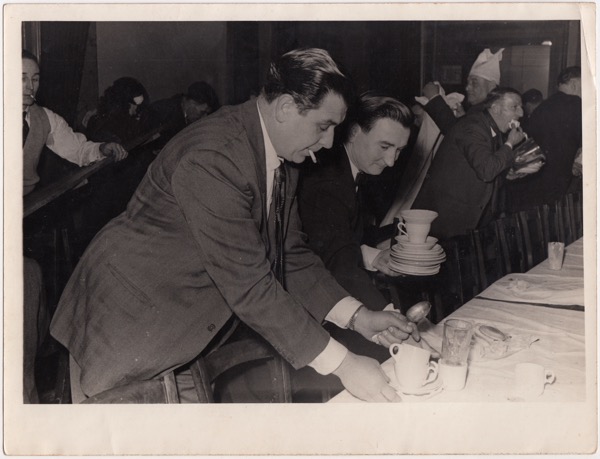
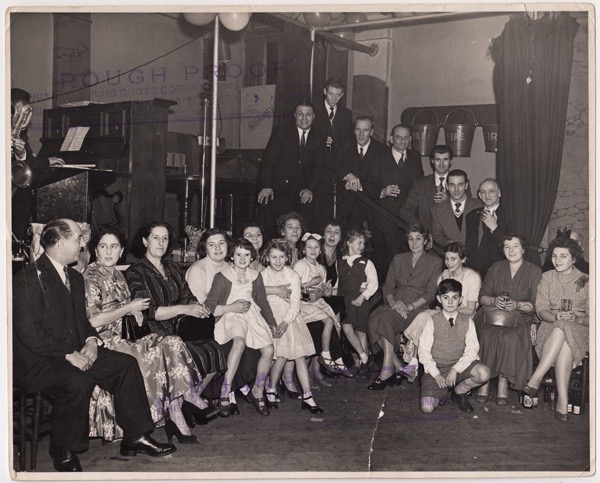
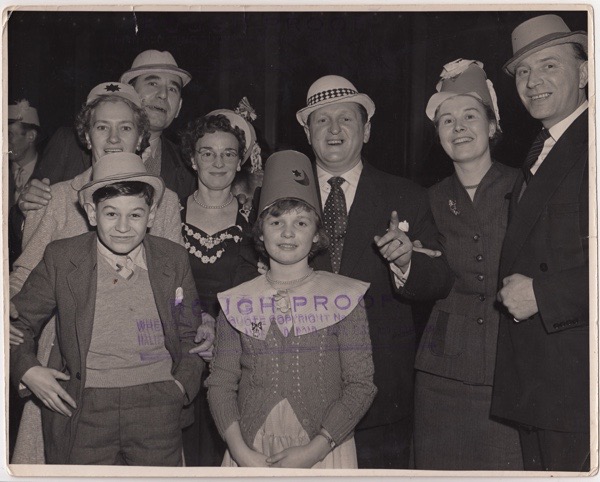
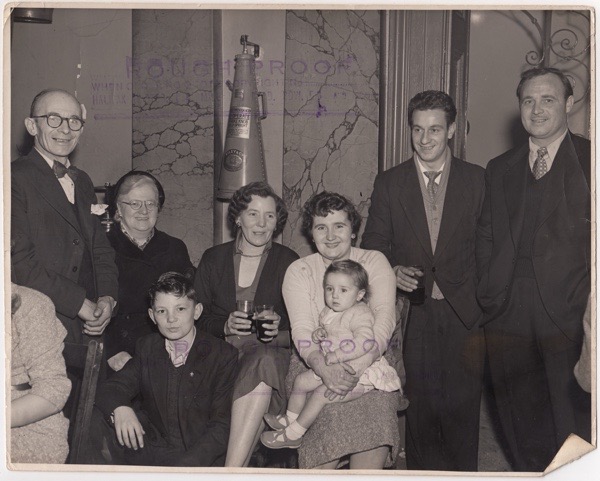
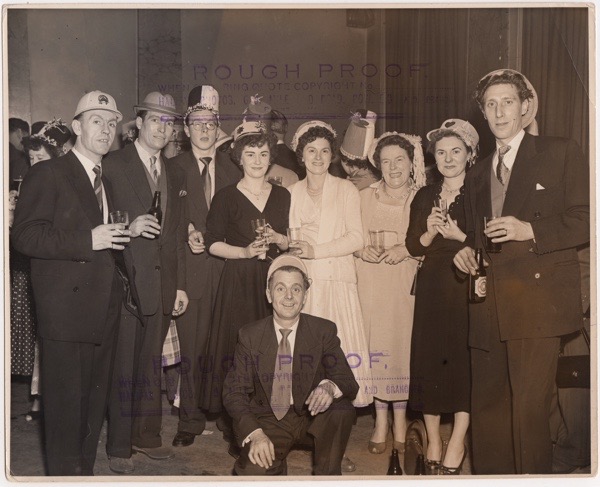
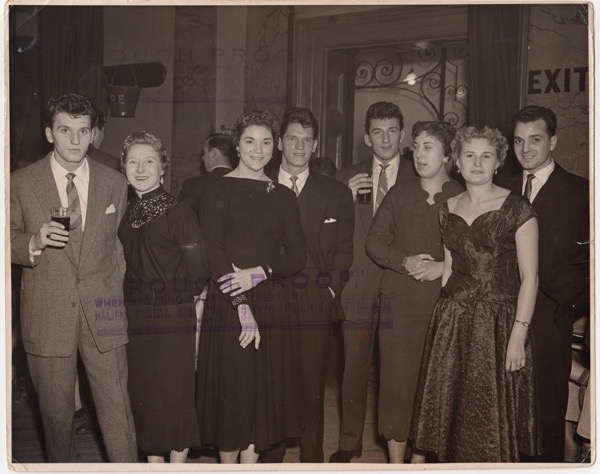
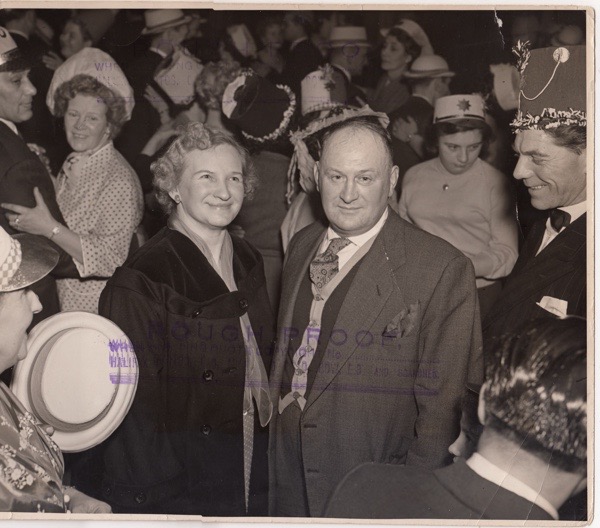
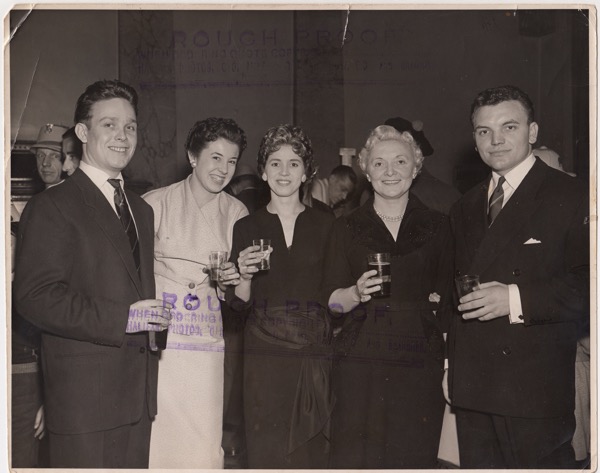
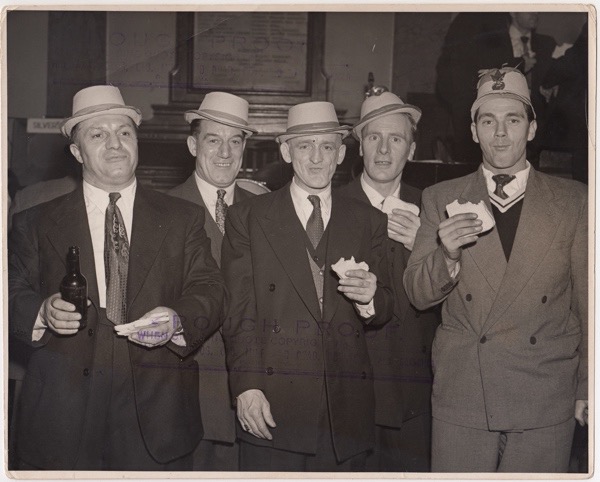
The van drivers of the Spitalfields Market certainly knew how to throw a party, as illustrated by this magnificent collection of photographs in the possession of George Bardwell who worked in the market from 1946 until the late seventies. George explained to me how the drivers saved up all year in a Christmas Club and hired Poplar Town Hall to stage shindigs for their families at this season. Everyone got togged up and tables overflowed with sponge cakes and jam tarts, there were presents for all and entertainments galore. Then, once the tables were cleared and the children safely despatched to their beds, it was time for some adult entertainment in the form of drinks and dancing until the early hours.
You may also like to take a look at












