The Toy Theatre Publishers Of Old St
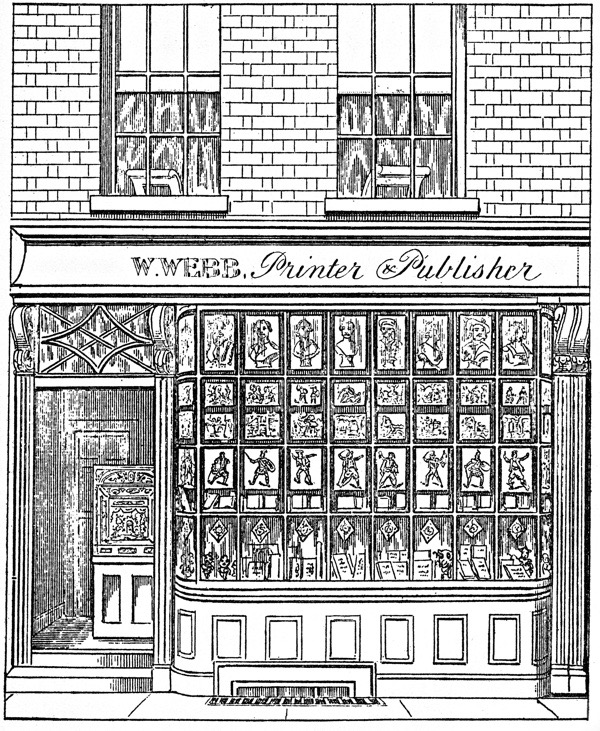 William Webb, 49 Old St, 1857
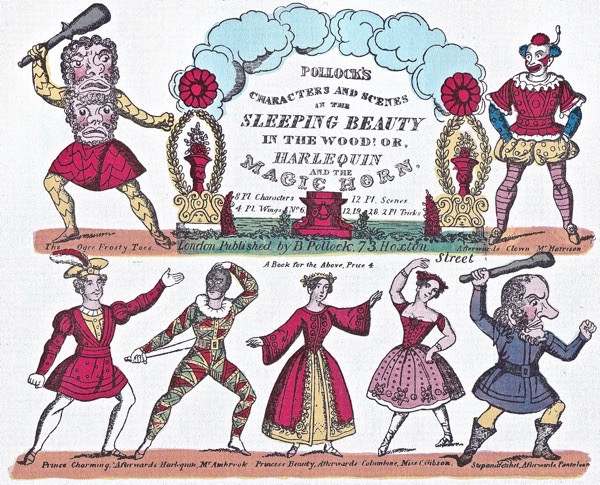
These days the vicinity of Old St is renowned for its digital industries but, for over a hundred years, this area was celebrated as the centre of toy theatre manufacture in London. For centuries, these narrow streets within walking distance of the City of London were home to highly skilled artisans who could turn their talents to the engraving, printing, jewellery, clock, gun and instrument-making trades which operated here – and it was in this environment that the culture of toy theatres flourished.
Between 1830 and 1945, at a handful of addresses within a half mile of the junction of Old St and City Rd, the modest art of publishing engraved plates of characters and scenery for Juvenile Dramas achieved its metier. The names of the major protagonists were William Webb and Benjamin Pollock. The overture was the opening of Archibald Park’s shop at 6 Old St Rd in 1830, and the drama was brought to the public eye by Robert Louis Stevenson in his essay A Penny Plain and Twopence Coloured in 1884, before meeting an ignominious end with the bombing of Benjamin Pollock’s shop in Hoxton St in 1945.
Responsibility for the origin of this genre of publishing belongs both to John Kilby Green of Lambeth and William West of Wych St in the Strand, with the earliest surviving sheets dated at 1811. Green was just an apprentice when he had the notion to produce sheets of theatrical characters but it was West who took the idea further, publishing plates of popular contemporary dramas. From the beginning, the engraved plates became currency in their own right and many of Green’s vast output were later acquired by Redington of Hoxton and eventually published there as Pollock’s. West is chiefly remembered for commissioning artists of acknowledged eminence to design plates, including the Cruickshank brothers, Henry Flaxman, Robert Dighton and – most notably – William Blake.
Green had briefly collaborated to open Green & Slee’s Theatrical Print Warehouse at 5 Artillery Lane, Spitalfields, in 1805 to produce ‘The Tiger’s Horde’ but the first major publishers of toy theatres in the East End were Archibald Park and his family, rising to prosperity with premises in Old St and then 47 Leonard St between 1830 until 1870.
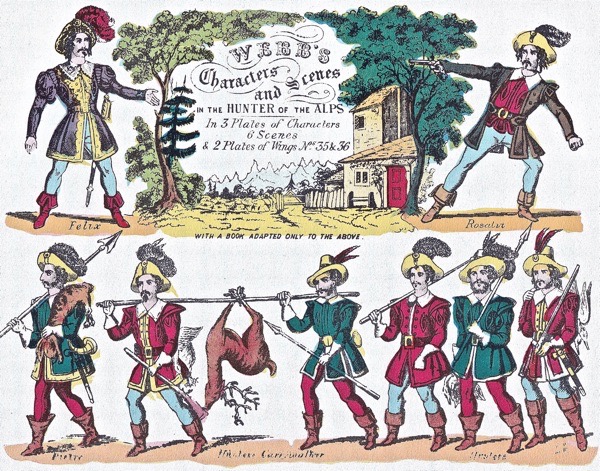
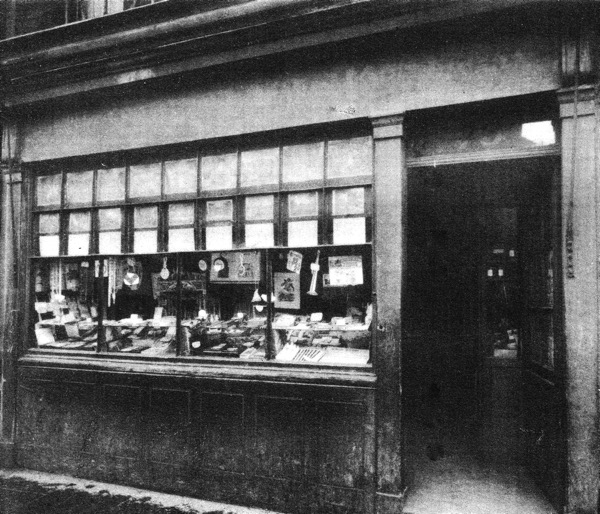
Park’s apprentice from 1835-42, William Webb, set up on his own with shops in Cloth Fair and Bermondsey before eventually opening a quarter a mile from his master at 49 (renumbered as 146) Old St in 1857. Webb traded here until his death in 1898 when his son moved to 124 Old St where he was in business until 1931. Contrary to popular belief, it was William Webb who inspired Robert Louis Stevenson’s famous essay upon the subject of toy theatres. Yet a disagreement between the two men led to Stevenson approaching Webb’s rival Benjamin Pollock in Hoxton St, who became the subject of the story instead and whose name became the byword for toy theatres.
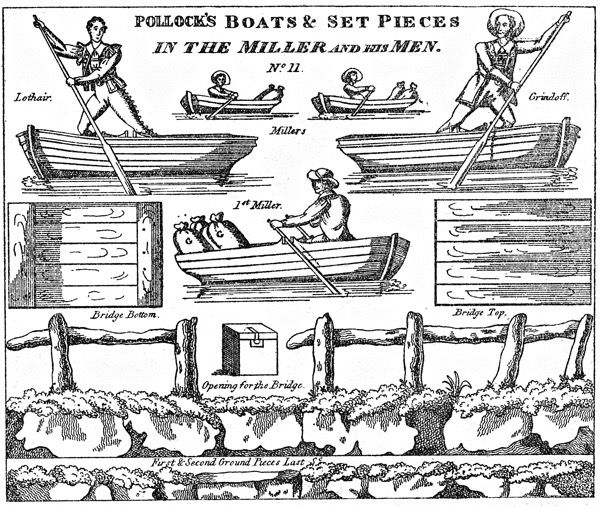
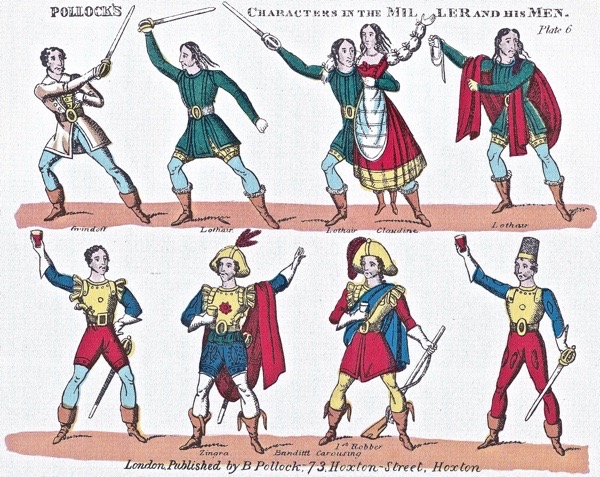
In 1876, at twenty-one years old, Benjamin Pollock had the good fortune to acquire by marriage the shop opened by his late father-in-law, John Redington in Hoxton in 1851. Redington had all the theatrical plates engraved JK Green and, in time, Benjamin Pollock altered these plates, erasing the name of ‘Redington’ and replacing it with his own just as Redington had once erased the name ‘Green’ before him. Although it was an unpromising business at the end of the nineteenth century, Pollock harnessed himself to the work, demonstrating flair and aptitude by producing high quality reproductions from the old plates, removing ‘modern’ lettering applied by Redington and commissioning new designs from the naive artist James Tofts.
In 1931, the writer AE Wilson had the forethought to visit Webb’s shop in Old St and Pollock’s in Hoxton St, talking to William Webb’s son Harry and to Benjamin Pollock, the last representatives of the two surviving dynasties in the arcane world of Juvenile Dramas. “In his heyday, his business was very flourishing,” admitted Harry Webb speaking of his father,” Why, I remember we employed four families to do the colouring. There must have been at least fifteen people engaged in the work. I could tell their work apart, no two of them coloured alike. Some of the work was beautifully done.”
Harry recalled visits by Robert Louis Stevenson and Charles Dickens to his father’s premises. “Up to the time of the quarrel, Stevenson was a frequent visitor to the shop, he was very fond of my father’s plays. Indeed it was my father who supplied the shop in Edinburgh from which he bought his prints as a boy,” he told Wilson.
Benjamin Pollock was seventy-five years old when Wilson met him and ‘spoke in strains not unmingled with melancholy.’ “Toy theatres are too slow for the modern boy and girl,” he confessed to Wilson, “even my own grandchildren aren’t interested. One Christmas, I didn’t sell a single stage.” Yet Pollock spoke passionately recalling visits by Ellen Terry and Charlie Chaplin to purchase theatres. “I still get a few elderly customers,” Pollock revealed, “Only the other day, a City gentleman drove up here in a car and bought a selection of plays. He said he had collected them as a boy. Practically all the stock has been here fifty years or so. There’s enough to last out my time, I reckon.”
Shortly after AE Wilson’s visit to Old St & Hoxton, Webb’s shop was demolished while Benjamin Pollock struggled to earn even the rent for his tiny premises until his death in 1937. Harry Webb lived on in Caslon St – named after the famous letter founder who set up there two centuries earlier – opposite the site of his father’s Old St shop until his death in 1962.
Robert Louis Stevenson visited 73 Hoxton St in 1884. “If you love art, folly or the bright eyes of children speed to Pollock’s” he wrote fondly afterwards. Stevenson was an only child who played with toy theatres to amuse himself in the frequent absences from school due to sickness when he was growing up in Edinburgh. I too was an only child enchanted by the magic of toy theatres, especially at Christmas, but I cannot quite put my finger on what still draws me to the romance of them.
Even Stevenson admitted “The purchase and the first half hour at home, that was the summit.” As a child, I think the making of them was the greater part of the pleasure, cutting out the figures and glueing it all together. “I cannot deny the joy that attended the illumination, nor can I quite forget that child, who forgoing pleasure, stoops to tuppence coloured,” Stevenson concluded wryly. I cannot imagine what he would have made of Old St’s ‘Silicon Roundabout’ today.
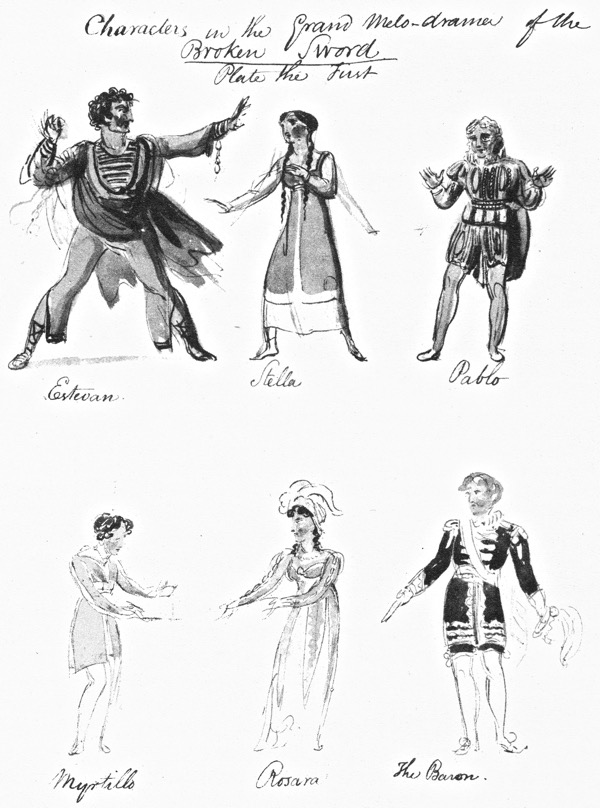
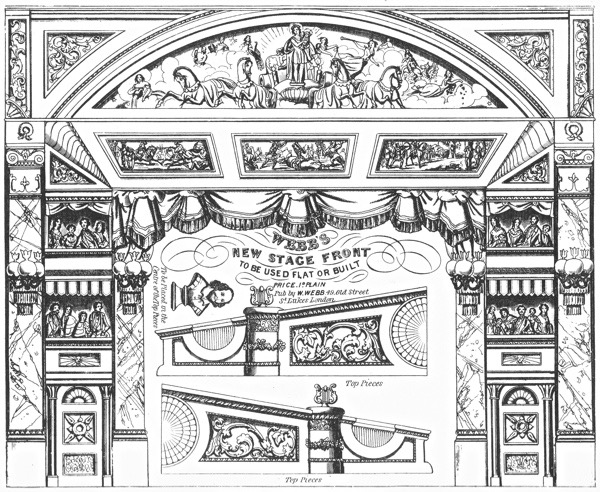
Drawings for toy theatre characters by William Blake for William West
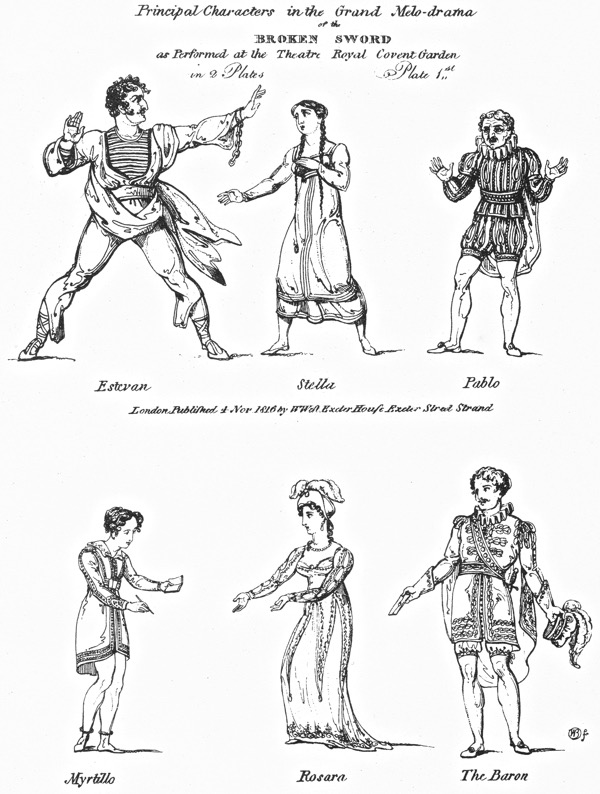
The sheet as published by William West, November 4th 1816 – note Blake’s iniitals, bottom right
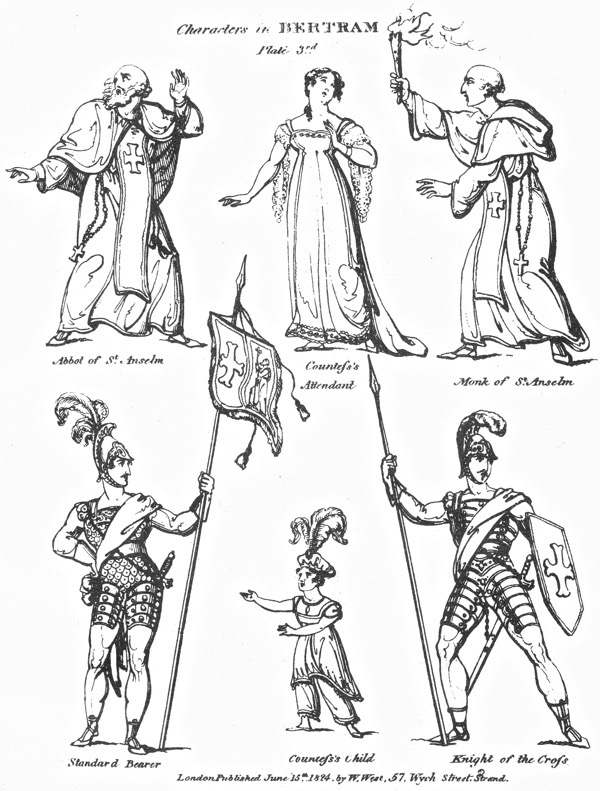 Another sheet engraved after drawings by William Blake, 1814
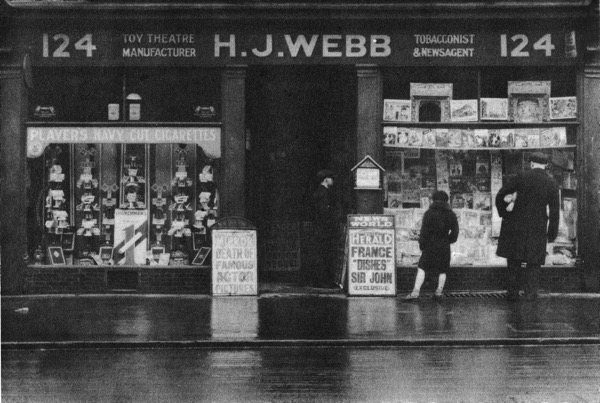
124 Old St, 1931

73 Hoxton St (formerly 208 Hoxton Old Town) 1931
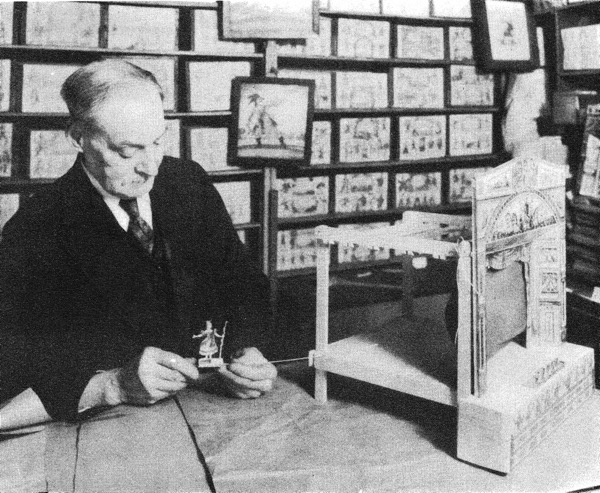
Benjamin Pollock at his shop on Hoxton St in 1931



You may also like to read about
The Gentle Author’s Childhood Christmas
This short story was commissioned by Monocle and is available in print in The Winter Weekly
Over successive Christmases, as I was growing up in Devon, I witnessed the disintegration of my family until today I am the lone survivor of the entire clan, the custodian, charged with carrying the legacy of all their stories. Where once I was the innocent child in the midst of a family drama unknown to me, now I am a sober adult haunted by equivocal memories of a conflict that only met its resolution in death. Yet in spite of this, whenever I examine the piles of old photographs of happy, smiling people which are now the slim evidence of the existence of those generations which precede me, I cannot resist tender feelings towards them all.
I was an only child and, though I wished for playfellows occasionally, I do not regret my childhood solitude because the necessity to invent my own amusement gave me my life as a writer. Since there were just the three of us, I had quite separate relationships with my mother and my father, and I never perceived us as a family unit. My father’s parents and my mother’s father died before I was born, and so it was only when we went to visit my grandmother at Christmas that we were forced to confront our identity as part of a larger tribe.
Even the journey to my grandmother’s house, a mere forty minute drive over the hills, was fraught with hazard. As I lay in bed surrounded by my presents newly-unwrapped on Christmas morning, I could hear my parents in the kitchen below discussing which was the greater risk – of skidding on black ice on the upland roads or getting washed away in floods surging down the valleys. Though, throughout my entire childhood, we never encountered any mishap on this journey, even if the emotional dangers of the visit were immense.
In the week before Christmas, my mother would have her hair ‘done’ in hope of passing her mother’s inspection on Christmas Day and as we climbed into the car, even as she closed the door, she would be checking in the mirror and repeatedly asking, “Do you think my hair looks alright?” Complementing my mother’s worry over her hair was my father’s anxiety over his engine. As the owner of a series of secondhand wrecks bought on the cheap, he was reluctant to undertake any journey that involved an incline, which proved to be something of a problem in Devon. Consequently, journeys of more than a few miles were uncommon in my childhood and our rare summer holidays were taken at seaside resorts less than twenty miles from home.
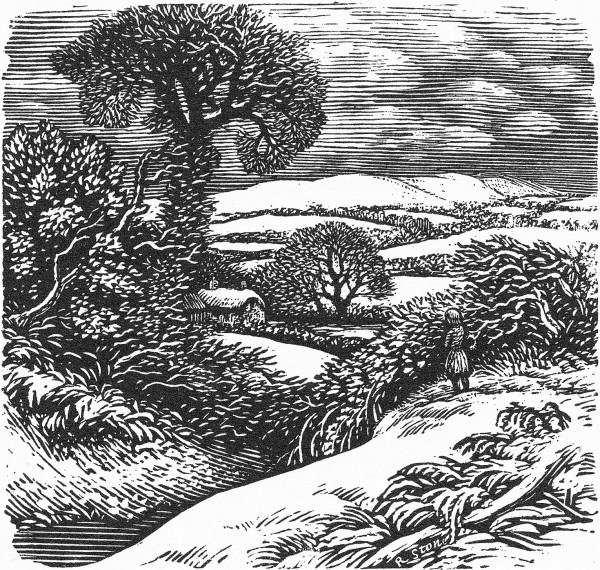
While my parents sat consumed by silent dread in the front of the car on Christmas morning, I was naively entranced by the passing landscape, with its bare fields sparkling in the frost or puddled by rain, and the old cottages punctuating the hedgerows. Over the years, I grew to know this journey intimately and experienced a child’s delight in the transformation wrought upon the landscape by the changing seasons. Yet the final steep descent into the small town of old stone buildings where my grandmother lived was always accompanied by a corresponding rise in tension. My father’s palpable anxiety about black ice coinciding precisely with the approaching ordeal. Invariably, we arrived as late as he could manage and, parking in the yard in the back of grandmother’s house, pass through the wooden garden gate and walk slowly down the path in trepidation to arrive at the kitchen door.
Inside the house, my grandmother would be discovered at the scrubbed wooden table, beating something vigorously in a mixing bowl, smoking a cigarette and still dressed in the fur coat and velvet turban she wore to church that morning. One memorable Christmas, she cast down her wooden spoon as we entered. “You look a fright, Valerie! What have you done to your hair?” she exclaimed, advancing and running her fingers through my mother’s hair to dishevel it. My mother ran through the hallway, up the stairs and along the passage to lock herself into the bathroom, as she re-entered the emotional drama of her childhood in the place where she had grown up.
It was the last house in the town, a late-Victorian villa at the end of a line with only fields beyond, and I was entranced by its gothic architecture. The stained glass porch with colourful encaustic tiles was the threshold to a dwelling which contained mysteries from the years before I came into the world. This was an effect compounded by the hallway, with its ancient grandfather clock whose chimes conjured an atmosphere of stately gloom and dark wooden staircase ascending in a spiral to the upper rooms where the ghosts of the past dwelled. Halfway up the stair hung an old oil painting in a gold frame of sailboats emerging from the mist like apparitions coalescing from the miasma of time. Yet even this also contained a mystery of its own, since I was led to understand that there was another painting that might be discerned beneath this nineteenth century nautical scene, which had been overpainted upon a seventeenth century Dutch interior.
Dominating the hallway at Christmas was my grandmother’s spectacular annual display. Each December, she arranged winter foliage in a gleaming copper jug upon the oak hall table as the climax of her year’s endeavours in competitive flower-arranging. When the carpet crunched beneath my footstep once, I lifted it to find beech twigs pressed between sheets of The Daily Telegraph. My discovery occasioned a complex explanation of the alchemical magic of standing beech branches in jars of glycerine to preserve the leaves which might then be flattened beneath the carpet until November, when they could be sprayed gold to serve as the flourish in my grandmother’s festive arrangement of holly, scots pine, ivy, and Christmas Roses.
Of equal fascination to me were these Christmas ‘roses’ which were like no other roses I had ever seen and grew close to the ground beside an old wall in my grandmother’s garden. With their curious, pale wax-like petals which came into flower when all the other plants died away, I believed they were unique to her and their extraordinary qualities were an expression of her mastery of nature itself.
My grandmother occupied a prominent position within her immediate community. It was a status that was confirmed when she undertook the role of Elizabeth I, enthroned upon a float in the town carnival, outfitted in a starched lace ruff and a dress of embroidered velvet and satin spangled with pearls. The other members of the Women’s Institute dutifully enacted the supporting roles of ladies in waiting, clad in second rate outfits and offering obeisance to their omnipotent monarch.
Naturally, she had conscientious reasons for wrecking her daughter’s hairstyle that Christmas morning. The act was an expression of the burden of responsibility that fell upon her and she could not avoid it. She had been brought up to be particular, educated into the expectations that are the birthright of the privileged, and she wore her fastidiousness as a badge of honour. As the youngest daughter of a declining aristocratic family without any inheritance, my grandmother gamely overcame the obvious disappointment in her marriage to a bank manager and still hoped to reassert the fortunes of her noble line by marrying my mother off to local land-owning gentry. She felt it had been churlish of her daughter not to co-operate.
Yet my mother’s most cherished possession was a copy of Cicely M. Barker’s ‘Book of the Flower Fairies,’ inscribed by my grandfather “To the little girl who loves all the wild flowers” and she dreamed of going to university to study Botany. She had no interest in cultivating the attentions of boorish yeoman farmers. Instead she escaped, climbing over a wall with her suitcase at night and fleeing from the typing and secretarial college where she had been sent when the possibility of higher education had been denied her. Running away to the nearest market town, she took a room in a lodging house, found employment at the local library and married my father, who was the handsome centre-forward in the city football team and worked as an engineer at a foundry.
Consequently, my mother’s marriage was the death of my grandmother’s social aspirations. And since my grandfather gave up his position as a bank manager to go on the stage, pursuing an energetic career as a conjurer in vaudeville that led him to an early grave, she became a lone sentinel of her class. Mercifully, the bank granted her the right to stay in the house that he had rented from them on favourable terms, leaving her domestically secure yet struggling to keep up appearances for the rest of her days.
She displayed no photographs of my mother or my father or me anywhere lest visiting Rotarians might see them, but once a year she invited us over at Christmas as an act of Christian charity, thereby ameliorating her own sense of loss. The truth was that, even in relation to my grandmother’s straightened circumstances, we were the poor relations. My father laid out the bills next to his pay packet each week and often wept in helpless anger when his meagre earnings as a mechanical engineer were insufficient to cover our modest living expenses. One day, I came home from school for lunch only to discover my mother in despair because her housekeeping money had run out and we had nothing to eat. Yet at Christmas, we wore the best clothes we had and, maintaining solidarity, did our best to keep up appearances and resist my grandmother’s insinuations.
Once emotions had subsided and I had persuaded my tearful mother from the bathroom, we all convened in the drawing room for an aperitif. My Uncle Richard would be arriving back from the pub full of cheery good humour after drinks with his friends in the amateur dramatics and the cricket club. Seizing this moment to light another cigarette, “Would you like a glass of sherry?” my grandmother announced, filling with sudden enthusiasm, before adding with a significant glance in my father’s direction, “I think I have bottle of beer for Peter.” Reminding us of her impoverishment since the early death of my grandfather who indulged her aristocratic spending capacities, “We’ve had to cut back this year, I haven’t been able to do as much as I normally do,” my grandmother always informed us, catching my eye to indicate that I should not expect much from her. With saintly self-control, my father would open a newspaper with a sigh and take a seat by the fire, doing his best to maintain dignified silence in the face of this humiliation.
It was my grandmother’s custom to deliver her turkey to the baker on her way to church on Christmas morning and collect it again after the service, almost roasted, so that she could finish it off in the oven at home, thus permitting her to give full attention to the serious business of vegetables and, of course, the pudding. Shedding her fur coat when it came to moment of serving, she nevertheless maintained her hauteur in a well cut tweed skirt, silk blouse, pearls and crocodile court shoes, with only the addition of an apron casually slung around her waist to indicate her culinary responsibilities.
My uncle sat at the far end of the table, facing my grandmother at the head, while my mother and father sat together on one side and I sat opposite them beneath a mezzotint of Jean-François Millet’s ‘The Angelus.’ I sometimes wondered if this sombre image of a pair of down-trodden peasants praying in a field reflected my grandmother’s perception of my parents’ life. When I gazed across the table, I could see my mother sitting under a print of George Frederic Watts’ ‘Hope,’ depicting a blindfolded woman trapped on a rock in a rising tide while plucking upon the single string left on her makeshift harp. In spite of their obvious sentimentality, both of these pictures demonstrated stoic attitudes in the face of adversity which suited my grandmother’s temperament and circumstances.
Placing her cigarette carefully between her pursed lips, she leaned forward with intense short-sighted concentration to slice the turkey on the table in front of her. We each passed up our plates and, when it came my father’s turn, she would cast her eyes down the table to him and my uncle would catch her eye before reaching out to give him a playful shove. “Are you a breast or a leg man, Peter?” he asked with a chuckle and a lewd grin. This annually repeated gesture was a source of enormous amusement for him and my grandmother, but a cause of deep embarrassment for me and my mother and father.
I can only assume this jibe was a reference to my father’s supposed sexual prowess, as the only possible explanation they could entertain for my mother’s attraction to a man beneath her class. They did not wish to appreciate that my mother’s curiosity about life beyond their limited social milieu had opened her eyes to recognise sympathetic qualities in people of all kinds, rather than simply to assess the social status of new acquaintances.
It was only after my father’s death that I discovered he had been born as the illegitimate child of a young housemaid who contracted tuberculosis and had no choice but to give him up for adoption. Then, at the tender age of just eleven years old, denied a proper education, he was put to work in a foundry. As an adult, his disadvantaged origins were such a source of shame that he chose never to reveal the truth even to my mother.
Among his own mother’s surviving letters that I found preserved in a padlocked box I broke open after his death, I read her account of being committed to a sanatorium on Dartmoor where patients were exposed to the elements in a belief this treatment could clear their lungs of infection. “I don’t think I shall be home for Christmas. Must tell you it is a bitter cold place here in winter. We sleep out in the open, and when it rains it comes right in and you are not allowed to shut any doors and the wind nearly blows you out of bed,” she wrote in an unlettered cursive hand.
When I read these letters, I wondered if her words from so long ago haunted my father at these Christmas feasts. “I don’t know what sort of Christmas they spend here,” she confided in a note written from the sanatorium in the months before her death, “Have you made your Christmas pudding yet? I hope you will send me a little bit to taste. It will seem more like a Christmas to me if I can taste a bit of pudding.”
Accompanying the letters was my father’s birth certificate, confirming his father as ‘unknown.’ This single word contained a personal tragedy which grew into a lonely secret. His desire to overcome this deep sense of shame became a motivating factor which led him to marry my mother. Just as she wanted to escape the pretensions of her family, he wanted to better himself by taking a step up in the world. In this sense they fulfilled each other’s desires perfectly, even if they wanted quite different things from the union and their contrary wishes were a source of occasional conflict. This was the nature of their marriage.
“I always wanted to be a close family,” he confided to me once in a moment of weary confession, “but they weren’t having it.”
After my grandmother had carried in the flaming pudding, the crackers had exploded and my mother had done the washing up, we were able to escape the house for an afternoon walk through the cool air in the damp lanes to recover our senses. Returning for tea at dusk, I would take this opportunity to slip away from the fireside, leaving the adults to their conversation and climbing the staircase to explore the dusty attics at the top where my grandfather’s stage properties and conjuring tricks were stored. In these chilly abandoned rooms, I discovered a wind up gramophone and was happy to wear his silk top hat and play alone among the mirrored cabinets until it was time to leave.
As a child, I was spared the pain that my parents endured when confronted with the social disparity of their marriage by my grandmother. “None of these people have ever worked a day in their lives,” my father repeated to us in the car, every year on the way home, venting his vituperation at last and drawing further tears from my mother. In spite of the tensions of the day, she was always reluctant to leave her childhood home that held so many happy memories buried beneath the recent conflict.
On one of the last Christmases before my grandmother died, when I returned for the holiday from college, she insisted that I play her at Scrabble. It was already late in the day. We had had our tea and cut the Christmas cake, and we were preparing to leave. My father, who hated driving in the dark, was getting worried about the possibility of lethal black ice on the upland roads. Yet I knew my mother realised that this was a challenge I must not walk away from, even though my grandmother was county Scrabble champion of several years standing. She had memorised all the obscure yet permitted words, using unlikely letters and winning high scores. At eighty years old, she needed to prove her mind was still as sharp as a razor and she wanted to find out what I was made of too. It was a rite of passage.
Once my grandmother and I were set up on opposite sides of the dining table with the Scrabble board between us, my parents retreated to the drawing room in silence, unable to bear their suspense at the outcome. Although my grandmother generously offered to share her list of permitted words with me, I declined. I did not want her help. By now, I knew the weight of history. In fact, I would not even compete with her. Instead I chose to apply my creativity to contrive the most ingenious words I could make with my letters, without pursuing a high-scoring vocabulary or keeping an eye on the score card total. Although I knew it was a test, I persisted in the thought that it was a Christmas game.
I won. My mother and father entered and stood in the doorway with blazing eyes of unspoken elation. Withholding her emotion and describing it as ‘beginners’ luck,’ my grandmother commenced another game immediately. I maintained my non-competitive strategy while she played to win. This time, my grandmother won. Yet when we added up our scores in both games, which ran into hundreds, we discovered we had both won exactly the same number of points.
It was a strange moment of intimacy and mutual vindication. A certain truth had been revealed by Scrabble, even if it was an epiphany capable of entirely contradictory interpretations. My grandmother believed it confirmed that, in spite of my mother marrying my father, the family spirit persisted in me, while my parents believed she had been taught a lesson and could not look down upon us any more.
My uncle never left his childhood home or, to my knowledge, ever formed any significant emotional relationships beyond his immediate domestic world. Brought up with aristocratic expectations, he was a dilettante who stood apart from life, never working but passing his time in amateur dramatics, county cricket scoring and collecting jazz records. He suffered from meningitis as a child and my grandmother doted on him, favouring him over her daughter. She waited upon him until she died, knocked over by a swinging coal house door one dark winter’s night shortly before Christmas when she was eighty-four.
At the funeral in January, my uncle asked my mother, “Would you like to take anything, Valerie?” Eschewing the valuables in the house, she found a trowel and unearthed the cherished Christmas Rose, transplanting it to her own garden where she nurtured it as a living memento of her mother.
After the death of my grandmother, my uncle was left to fend for himself. He did not know how to make a bed or boil a kettle and he let the house go to pieces. He ate only microwaved frozen food and grew so fat that he could not bend over to reach the floor, living ankle deep in rubbish. The last time I visited, I discovered he had worn a path in the carpet through to the floorboards in the drawing room between his armchair and the television. Meanwhile upstairs, in his room on the first floor, he had worn the mattress through to the springs and, entering the next room, I found he had done the same in there too and in the next.
I remember telephoning him to break the news that my father had died. “Well, I never did like Peter,” was his immediate response. Eventually, an organised gang of thieves broke in and stripped the house – when he could no longer get out of bed – and he lay there helpless as they carried the silver, the grandfather clock, the old Dutch painting and the rest of the family heirlooms out to the truck.
There was only one childhood Christmas when we did not visit my grandmother. It was the year that a particularly virulent form of gastroentiritis struck. My mother, my father and me, we were all afflicted with flu and lay in our beds on Christmas Day, engulfed by fever and drowsy light-headedness engendered by lack of food. I recall lying awake with my cat in the half-light of drawn curtains, clutching a hot water bottle, and feeling overwhelmed by the weary languor of my body. Yet at three in the afternoon, we convened in the kitchen in our dressing gowns and we drank a cup of hot water together. I think it was the sweetest drink I ever tasted and I cherish the memory of that day, isolated together in our intimate cell of sickness, as my happiest childhood Christmas.
As years pass, each Christmas conjures the memories of those that came before it, until eventually the experience of recalling these memories of the past overtakes the present. Then Christmas becomes a time which contains all the former Christmases gone by. Apart from my flu Christmas, I can barely distinguish any particular years and, looking back, all those visits to my grandmother blend into the one eternal childhood Christmas which I have described here.
When I grew up and left home, I always returned for Christmas. Now that I live in the city and no longer have any relatives left alive, I have no family obligations at Christmas and I have no reason go back to Devon. Yet I miss them all, I even feel nostalgic about their fights and their angry words and I cannot resist the feeling they are all still there – my parents in their house, and my grandmother and my uncle in their house – and I wonder if they are having Christmas without me this year.
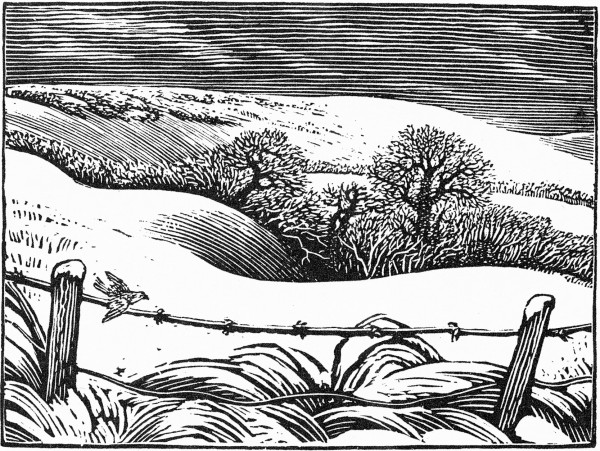
Wood Engravings by Reynolds Stone
A Walk Through Old London
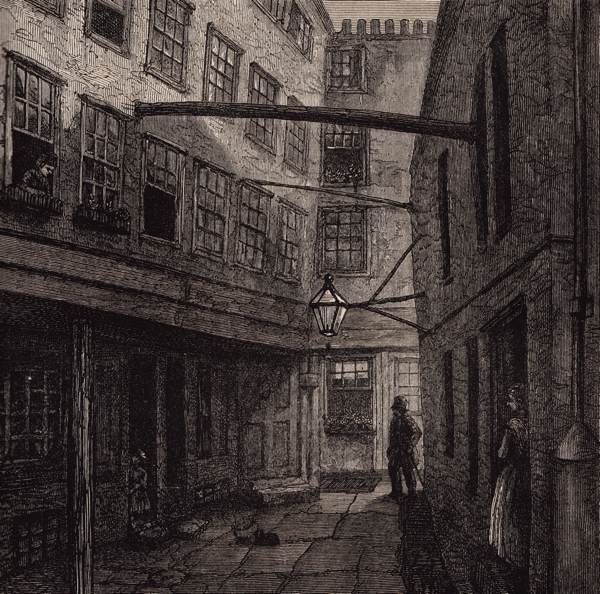
Golden Buildings off the Strand
There is the London we know and the London we remember, and then there is the London that is lost to us but recalled by old photographs. Yet beyond all this lies another London which is long forgotten, composed of buildings and streets destroyed before the era of photography. Walter Thornbury’s ‘Old & New London – how it was and how it is‘ of 1873 offers a glimpse into this shadowy realm with engravings of the city which lies almost beyond recognition. It is a London that was forgotten generations ago and these images are like memories conjuring from a dream, strange apparitions that can barely be squared with the reality of the current metropolis we inhabit today.
“Writing the history of a vast city like London is like writing a history of the ocean – the area is so vast, its inhabitants are so multifarious, the treasures that lie in its depths so countless. … The houses of old London are encrusted as thick with anecdotes, legends and traditions as an old ship is with barnacles. Strange stories of strange men grow like moss in every crevice of the bricks … Old London is passing away even as we dip our pen in the ink…” – Walter Thornbury

The Four Swans Inn, Bishopsgate – shortly before demolition
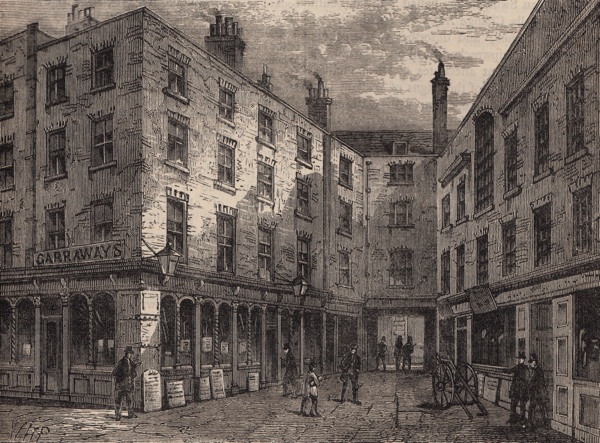
Garraway’s Coffee House – shortly before demolition after 216 years in business
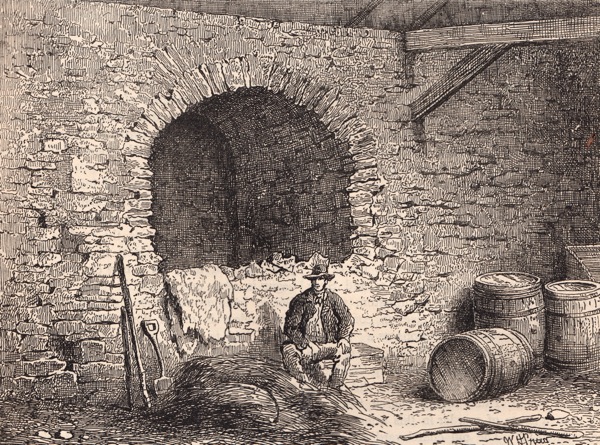
Roman wall at Tower Hill
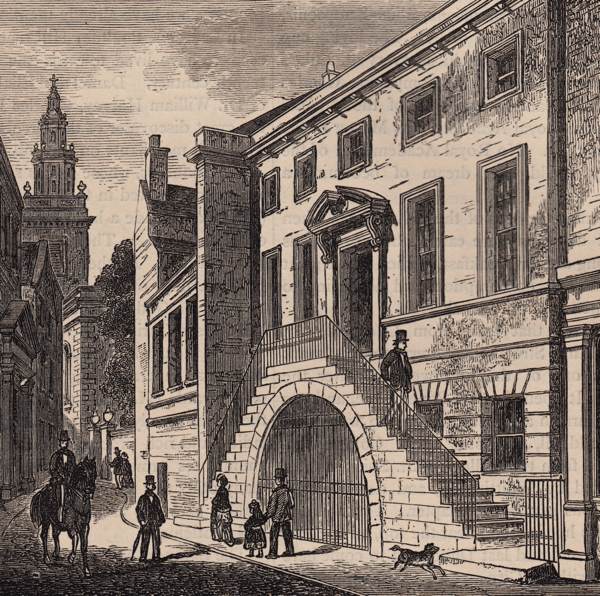
Dyer’s Hall, College St, rebuilt 1857
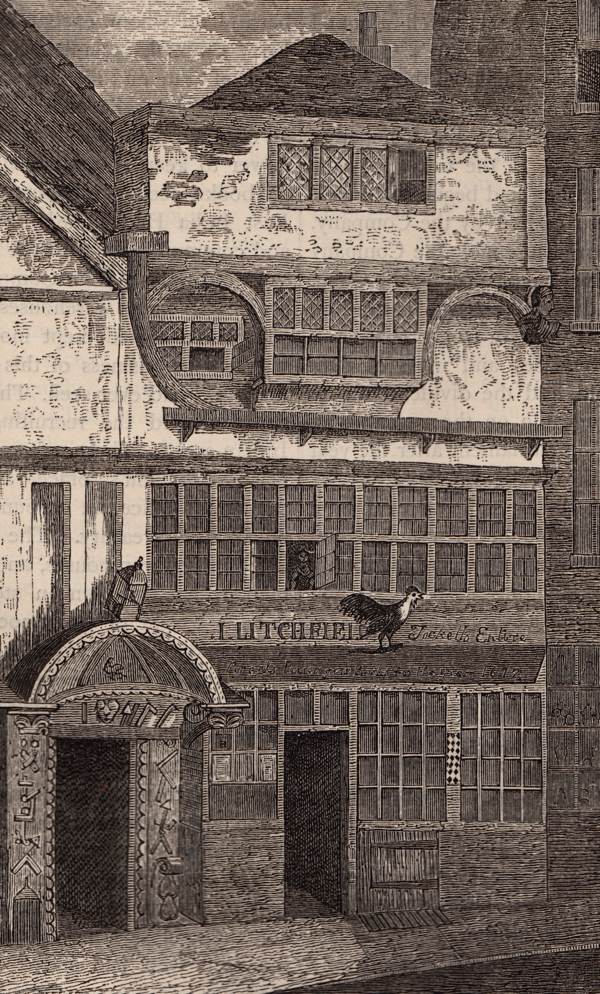
Old house in Leadenhall St with Synagogue entrance
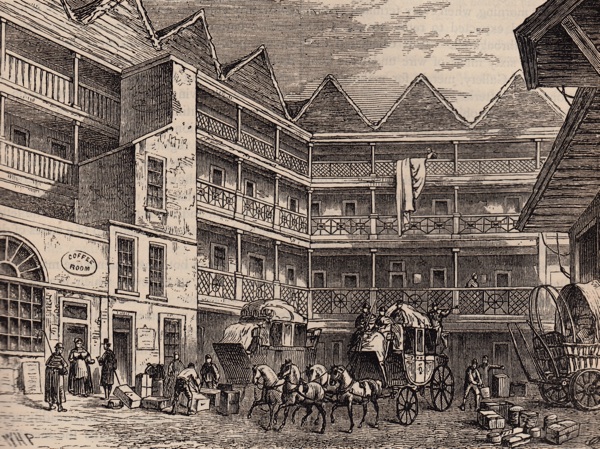
Yard of the Bull & Mouth, Aldergsgate 1820

The Old Fountain, Minories
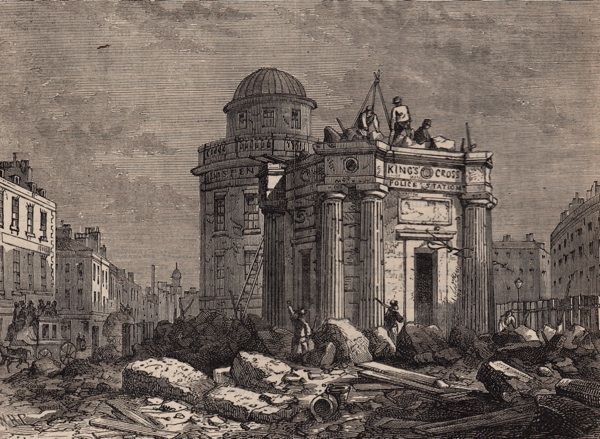
Demolition of King’s Cross in 1845
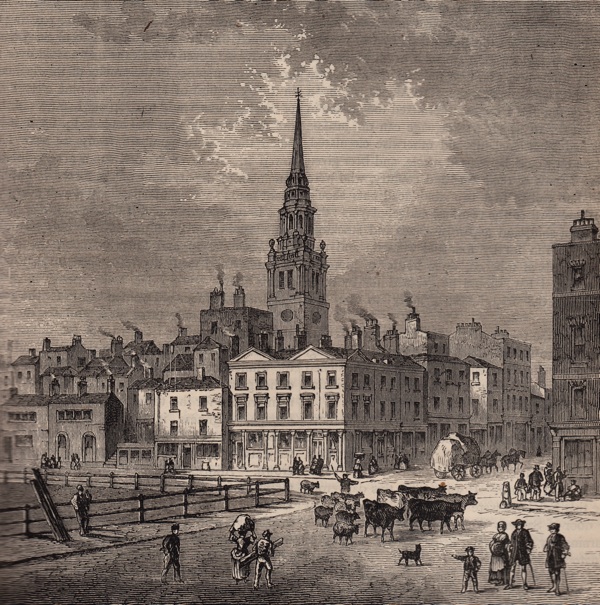
Clerkenwell in 1820 before the railway came through
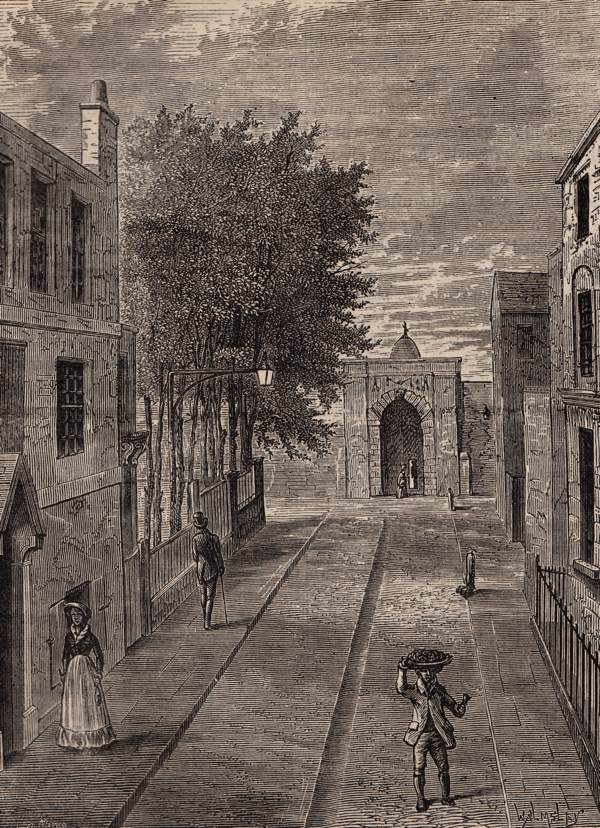
Middlesex House of Detention, Clerkenwell
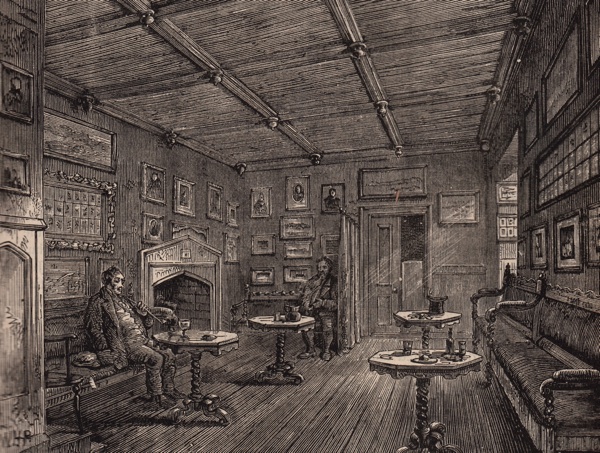
In the Jerusalem Tavern above St John’s Gate, Clerkenwell
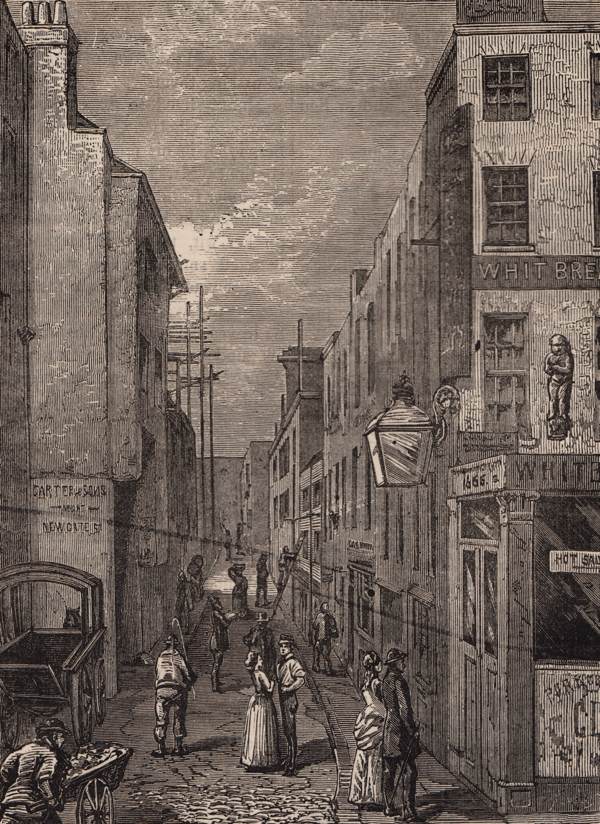
Cock Lane, Smithfield
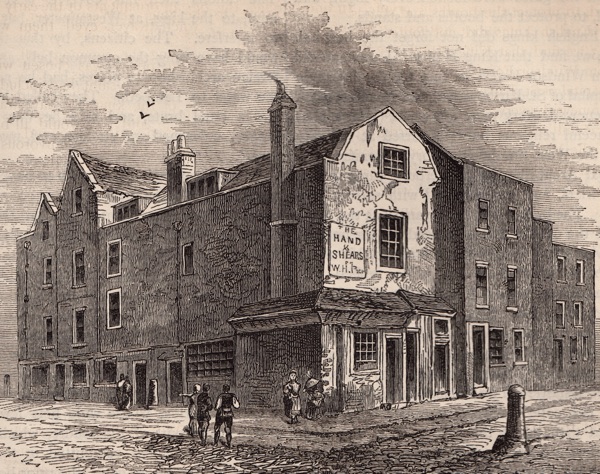
Hand & Shears, Clothfair
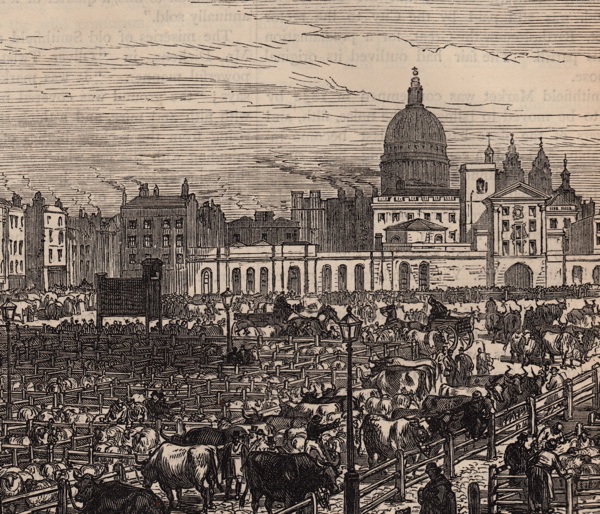
Smithfield before the construction of the covered market
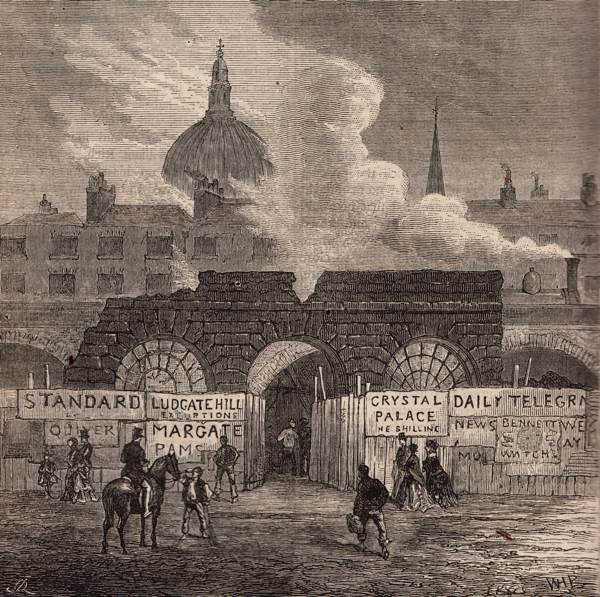
Last remnant of the the Fleet Prison demolished in 1846

The Fleet Ditch seen from the Red Lion

Back of the Red Lion seen from the Fleet Ditch
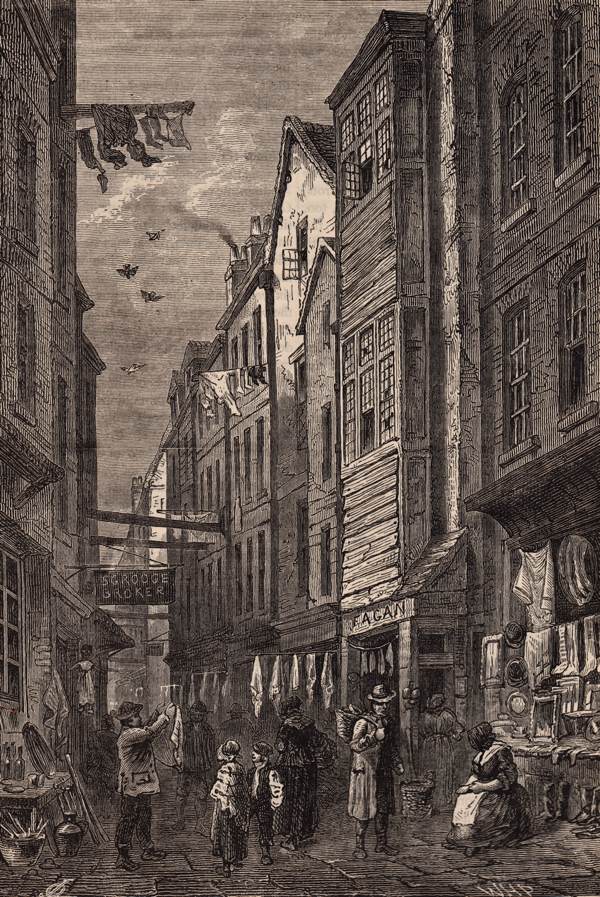
Field Lane 1840
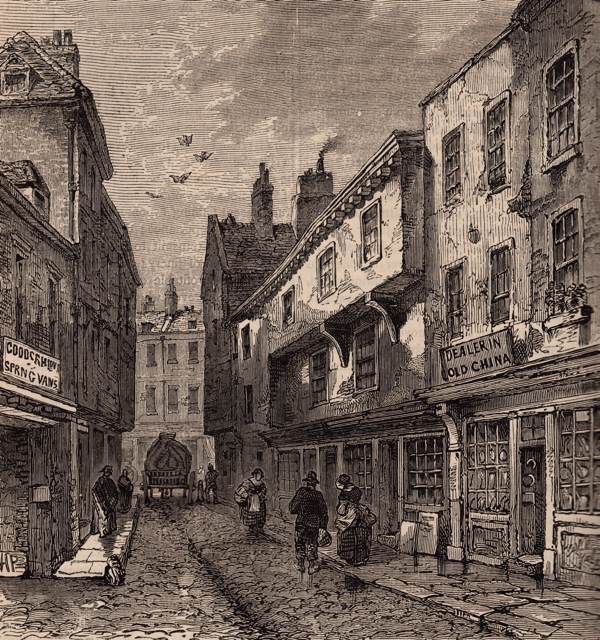
Leather Lane
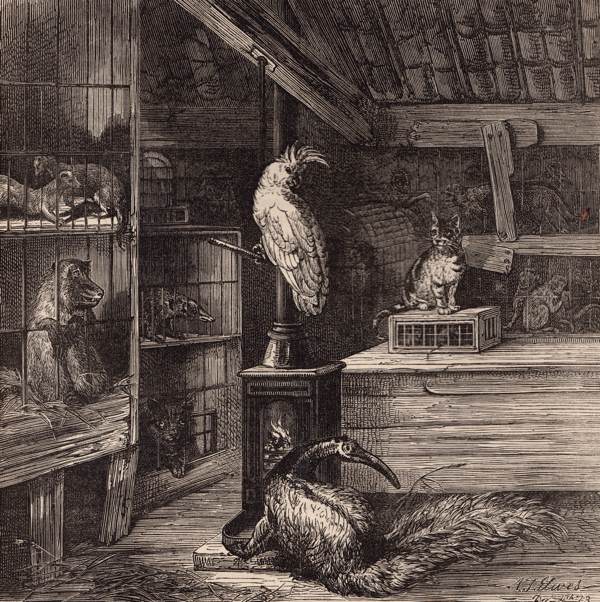
Exotic pet shop on the Ratcliffe Highway with creatures imported through the London Docks
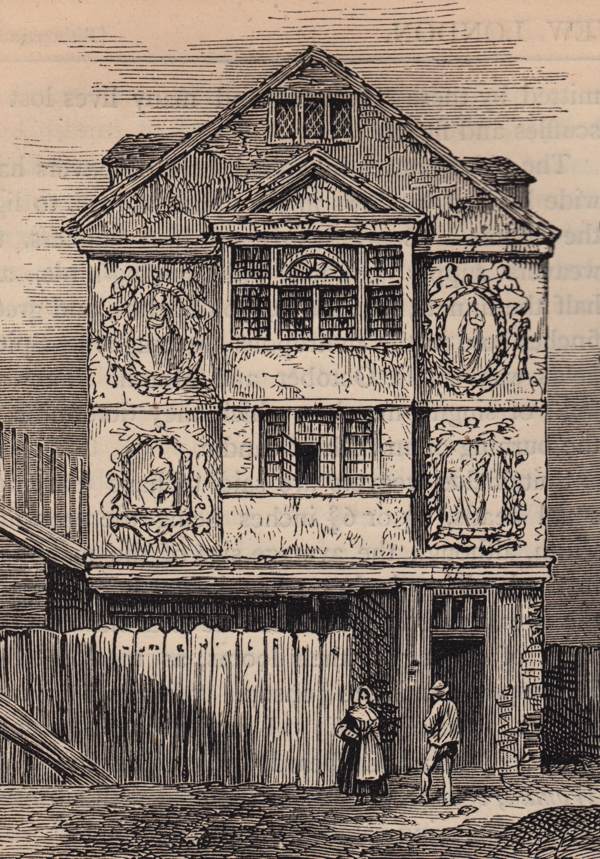
Sir Paul Pindar’s Lodge, Spitalfields
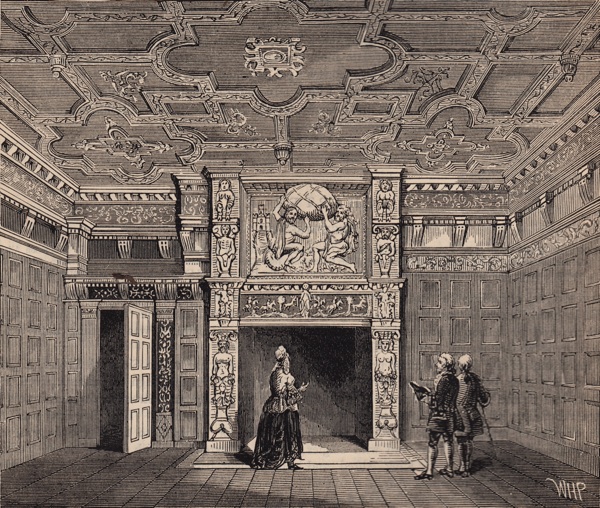
Room in Sir Paul Pindar’s House, Bishopsgate – demolished for the building of Liverpool St Station
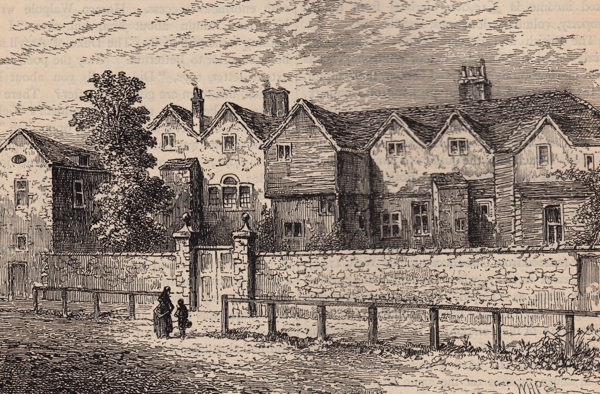
Kirkby Castle, Bethnal Green
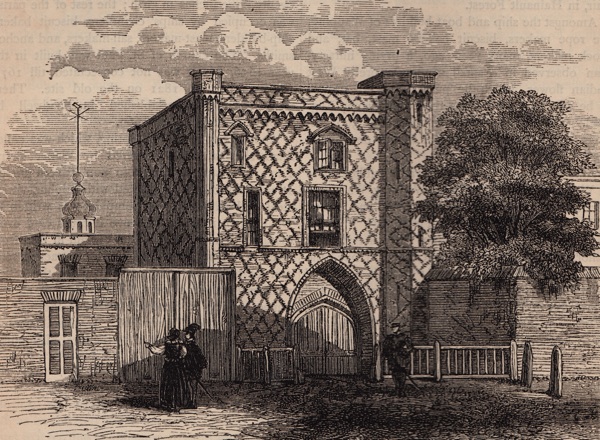
Tudor gatehouse in Stepney

Boar’s Head Yard, Borough High St
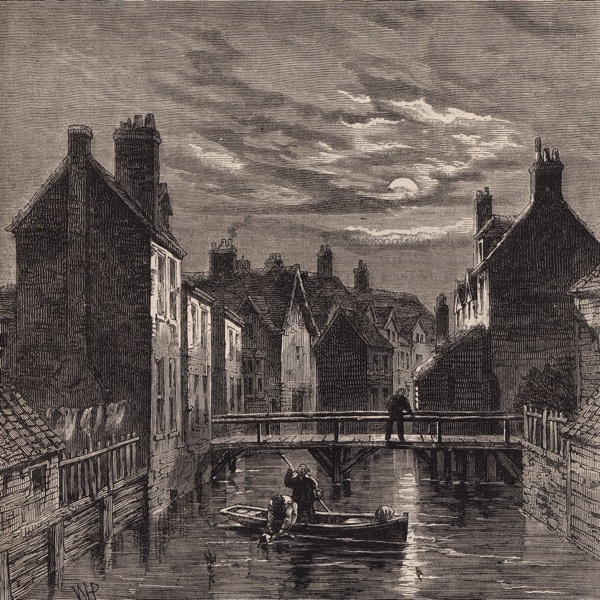
Jacob’s Island, Southwark
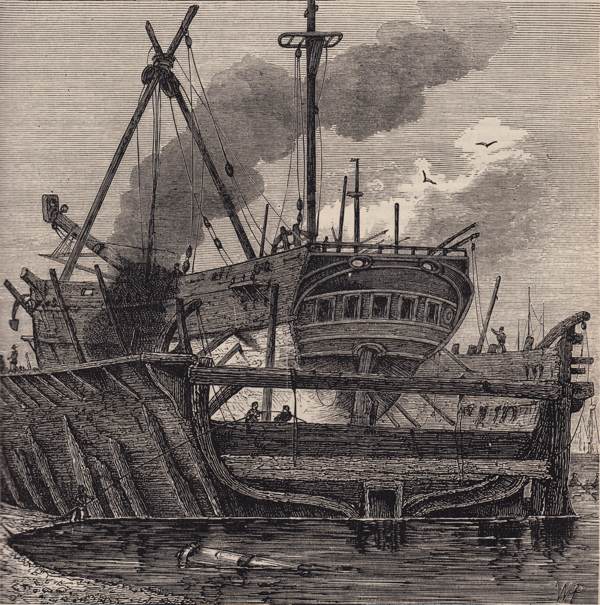
Floating Dock, Deptford
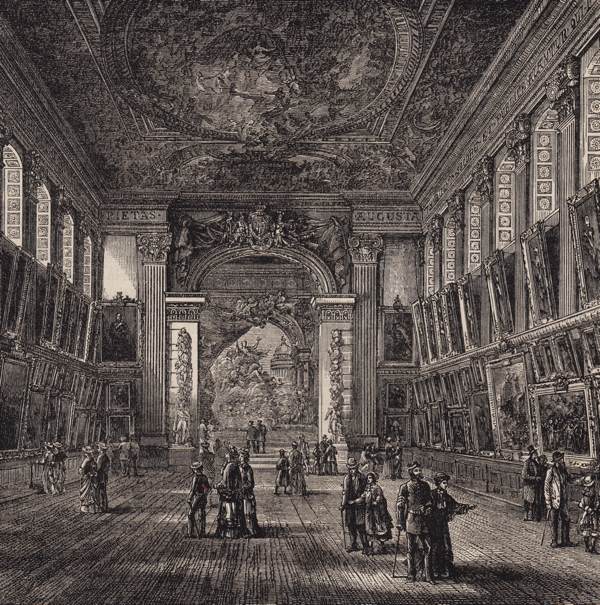
Painted Hall, Greenwich
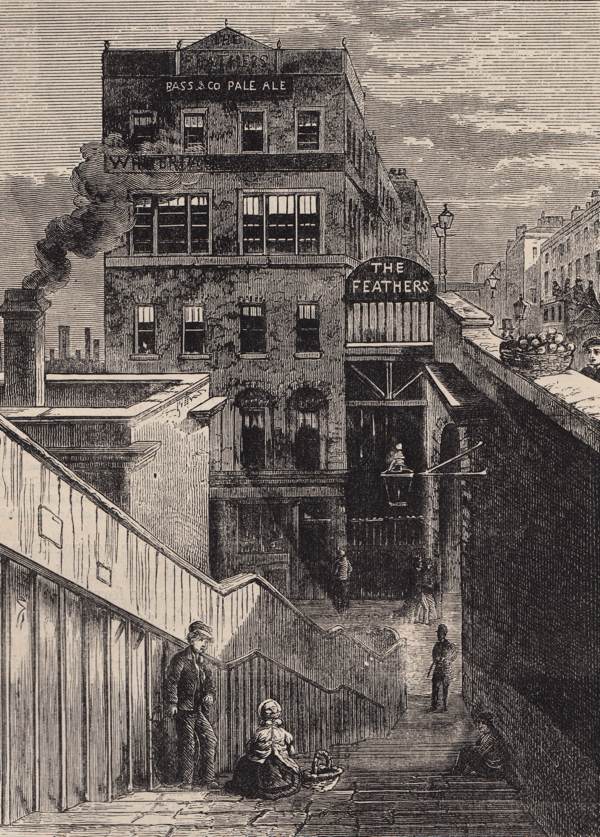
Waterloo Bridge Rd
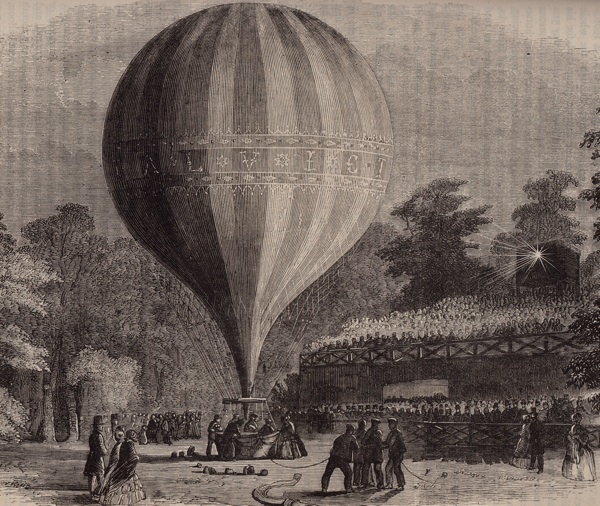
Balloon Ascent at Vauxhall Gardens, 1840
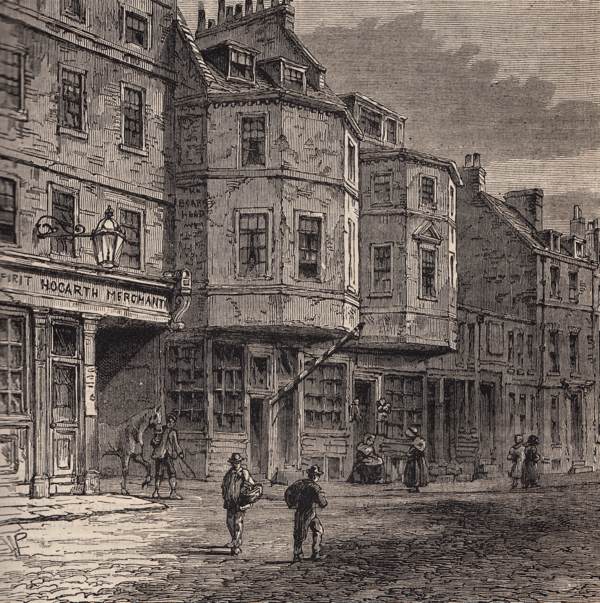
House in Westminster, believed to have been inhabited by Oliver Cromwell
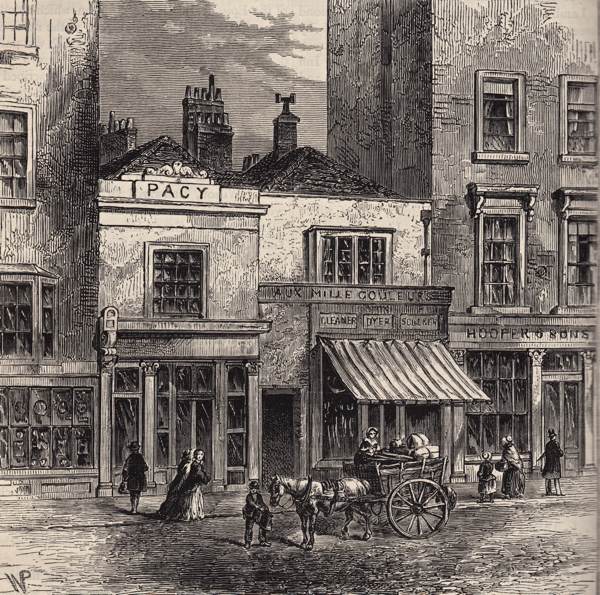
Old shops in Holborn
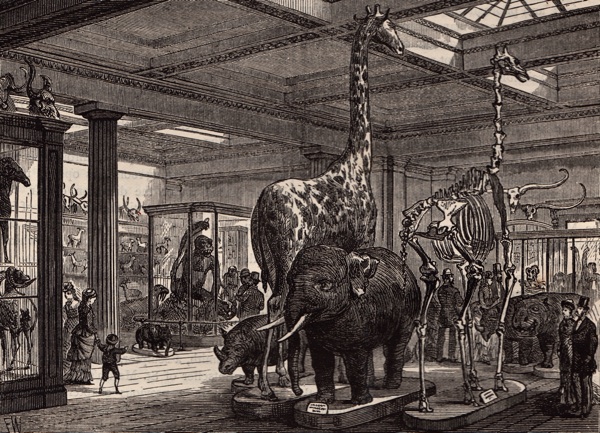
Mammalia at the British Museum
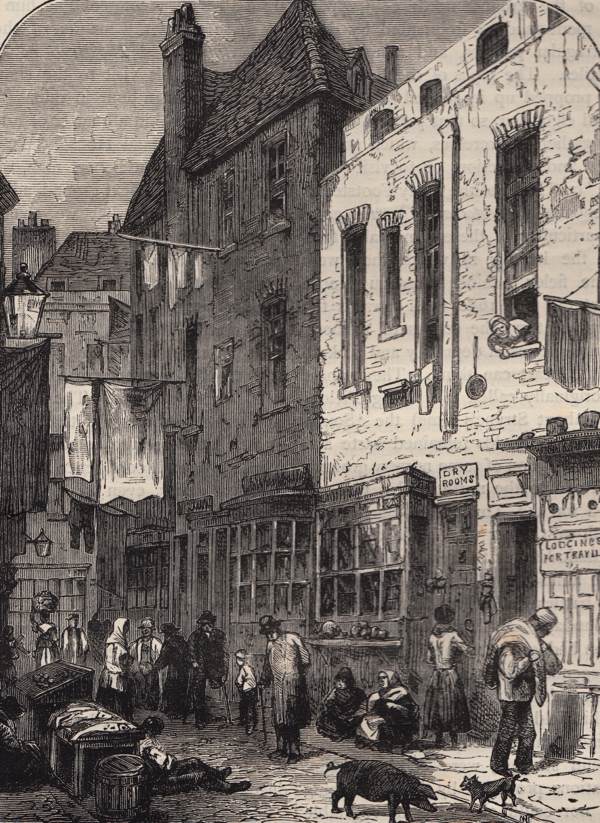
Rookery, St Giles 1850
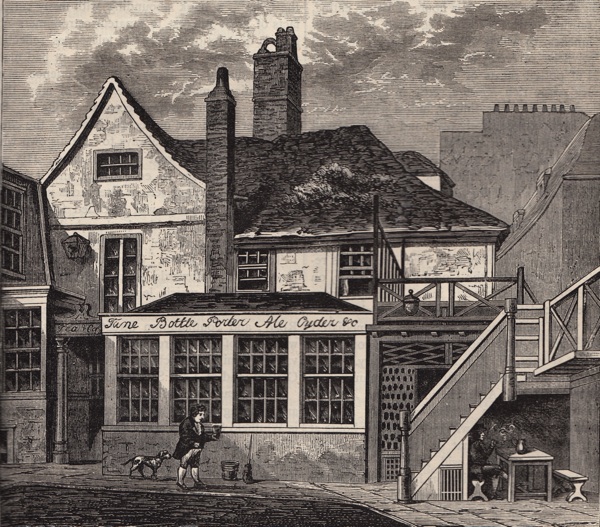
Manor House of Toten Hall, Tottenham Court Rd 1813
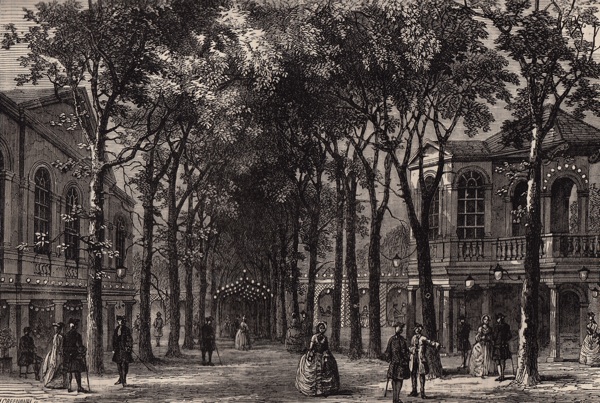
Marylebone Gardens, 1780
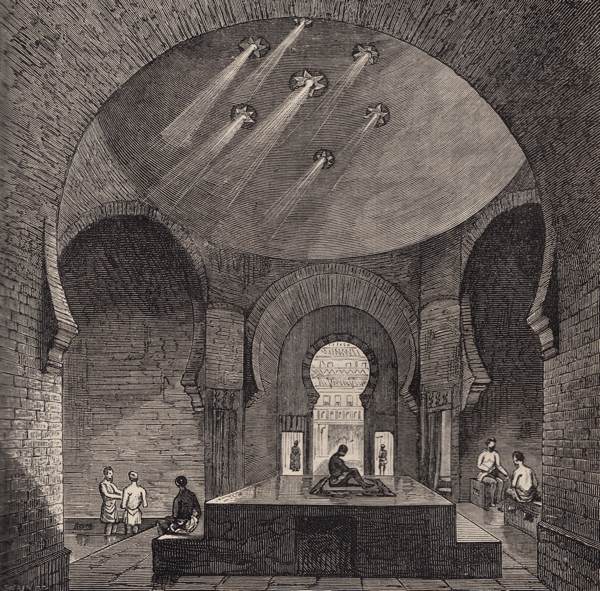
Turkish Baths, Jermyn St
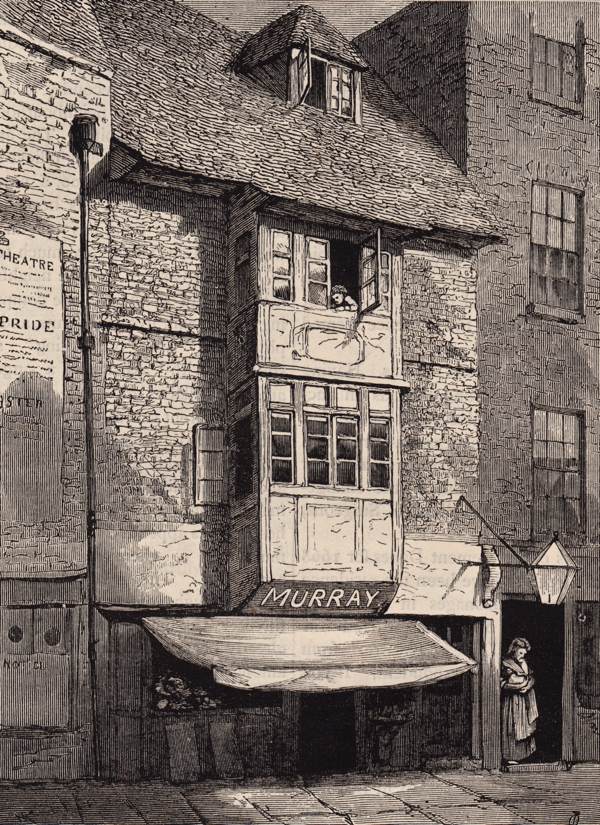
Old house in Wych St
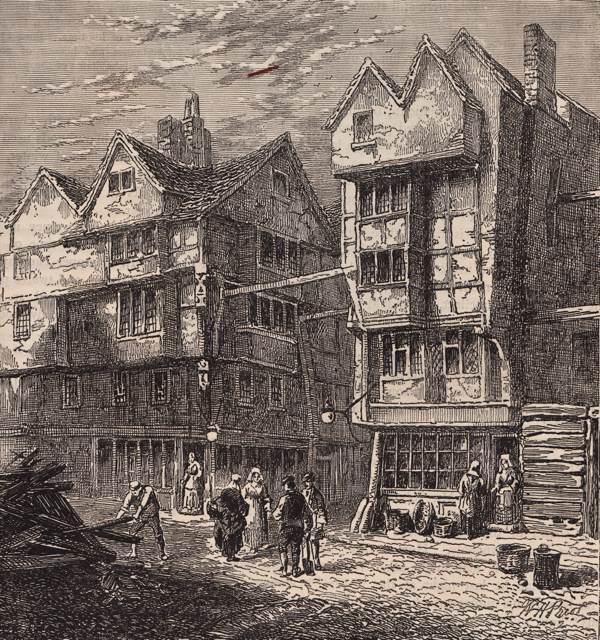
Butcher’s Row, Strand 1810
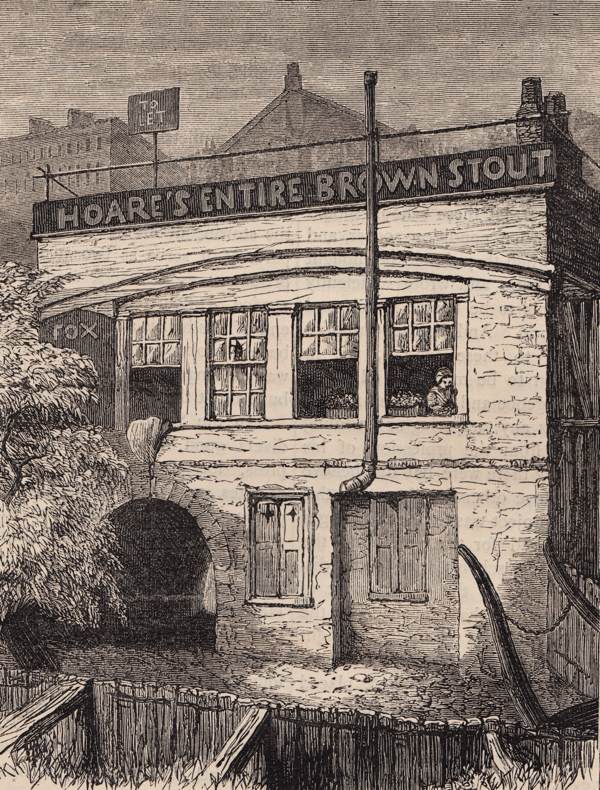
The Fox Under The Hill, Strand
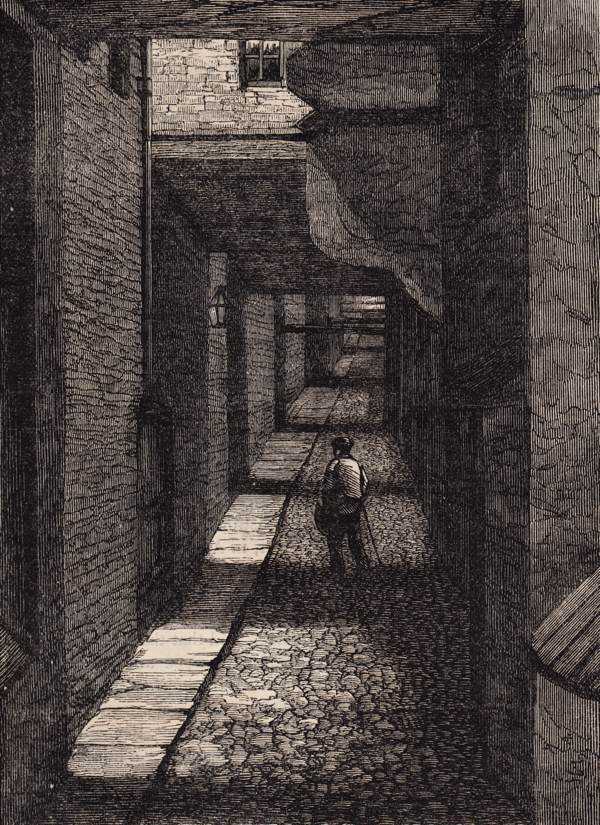
Ivy Bridge Lane, Strand
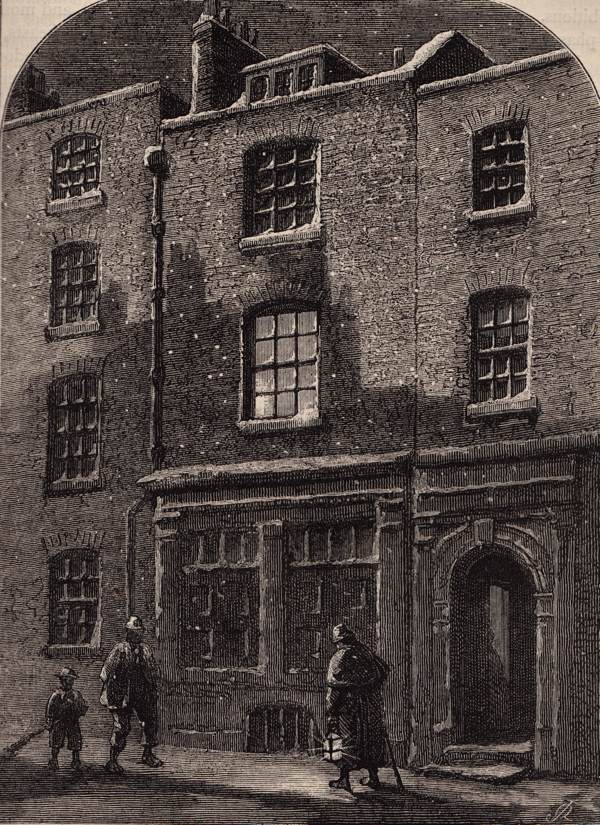
Turner’s House, Maiden Lane
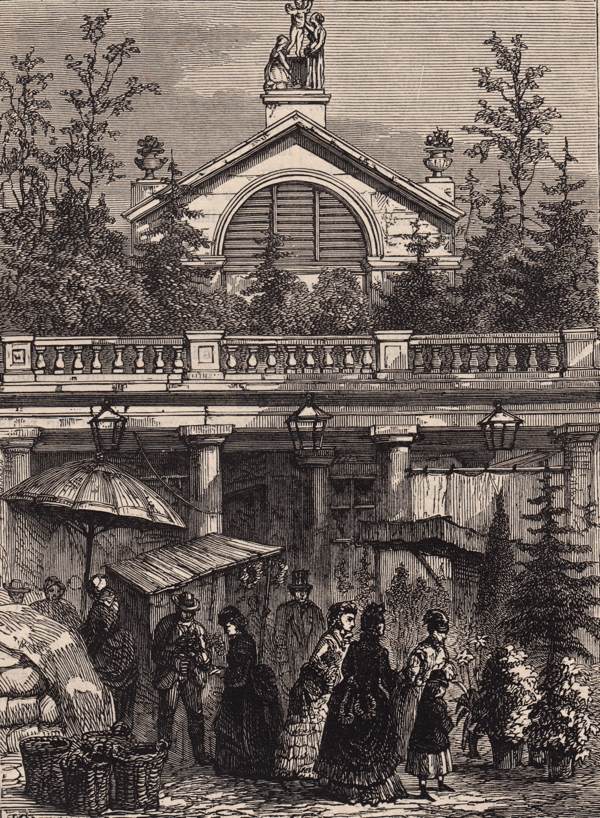
Covent Garden
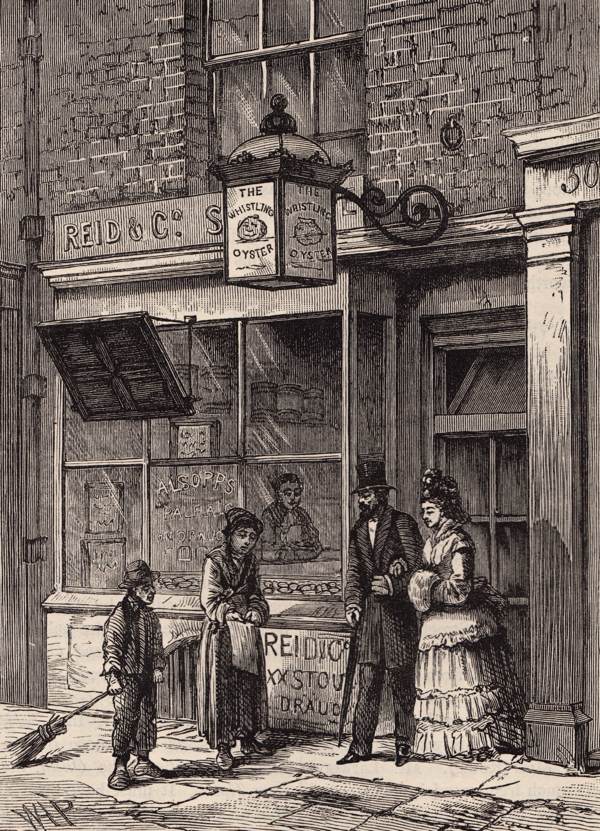
Whistling Oyster, Covent Garden
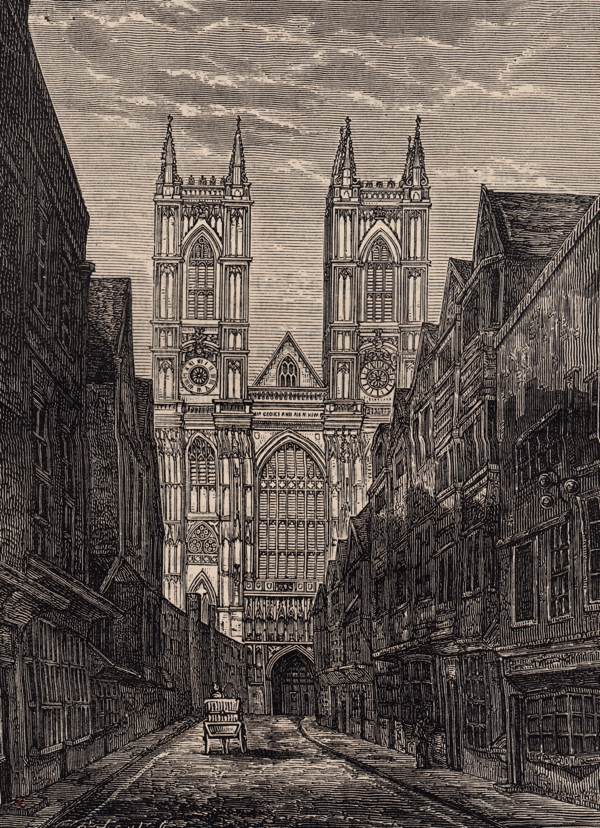
Tothill St, Westminster
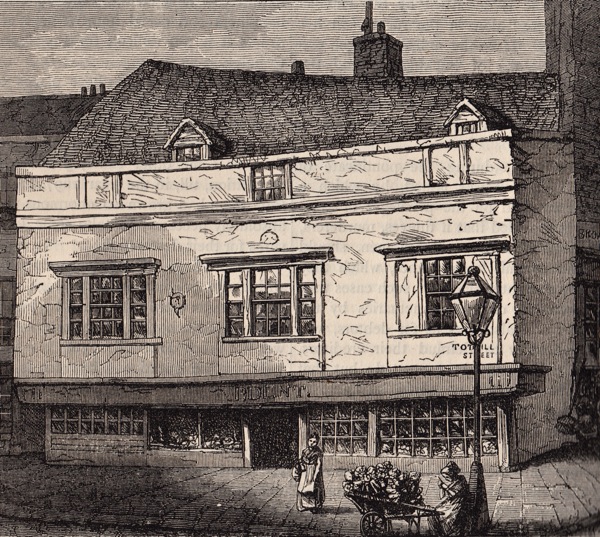
Old house on Tothill St
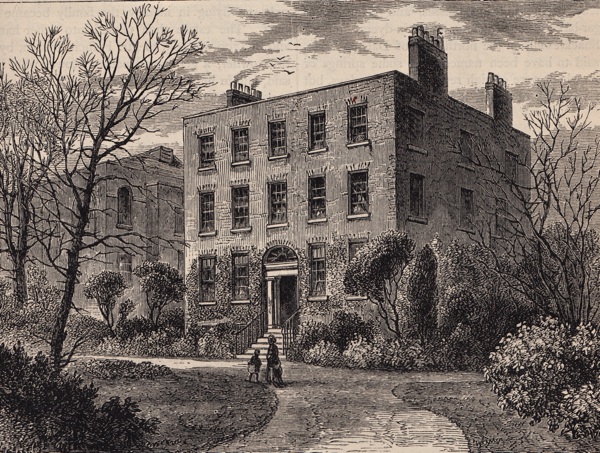
The Manor House at Dalston
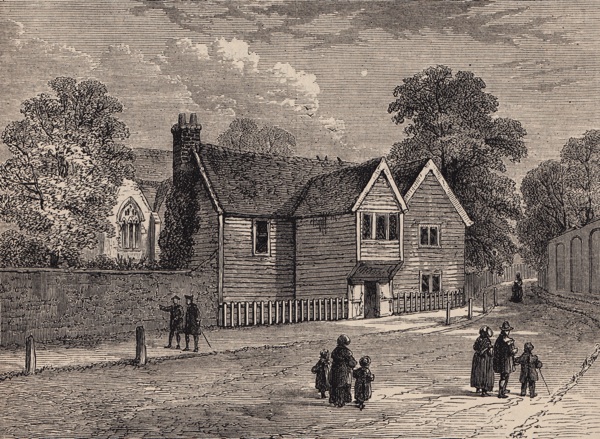
Old Rectory, Stoke Newington 1856
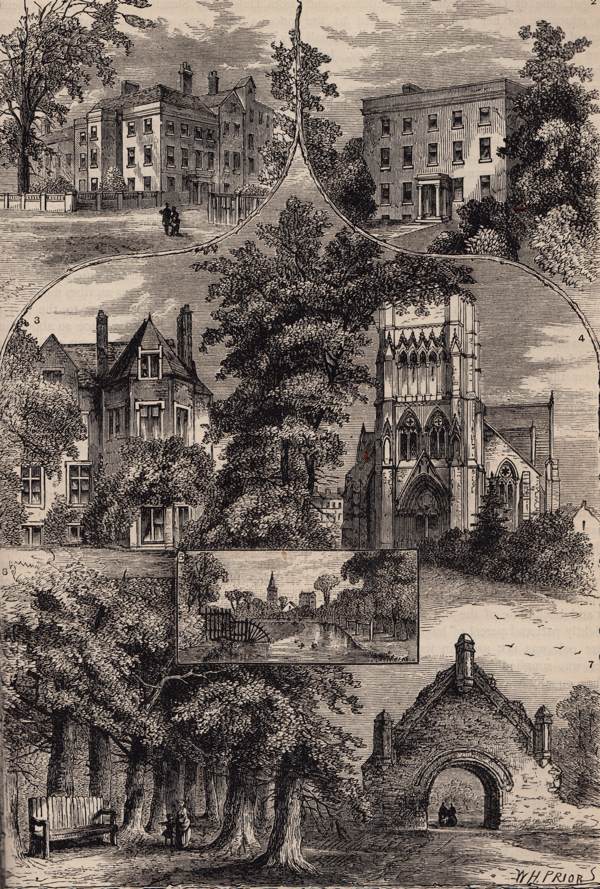
Sights of Stoke Newington – 1. Rogers House 1877 2. Fleetwood House, 1750 3. St Mary’s Rectory 4. St Mary’s New Church 5, New River at Stoke Newington 6. Queen Elizabeth’s Walk, 1800 7. Old gateway
Images courtesy Bishopsgate Institute
You may also like to take a look at
Pelliccis’ Celebrity Album

For over twenty years they have kept a celebrity album behind the counter at E.Pellicci, the Italian family-run cafe in the Bethnal Green Rd that was founded in 1900 by Priamo Pellicci. Toni (on the extreme left of the picture above) started the album after Julie Christie came in for a cup of coffee years ago and they did not think to ask for her picture until she had gone. So Toni decided that any celebrity who passes through must be recorded for posterity, either in a snapshot or at very least by an autograph on a scrap of paper. Regular customers will be familiar with this fat little album which is brought out frequently, whenever anyone feels like leafing through the pages of treasured images and savouring the memorable moments enshrined there, but now thanks to generosity of the Pellicci family I am able to publish a choice selection here for you to enjoy.
The distinguished gentleman with the stylish glasses who recurs throughout these pictures is Nevio Pellicci senior and the skinny young man who grew up to develop Groucho Marx eyebrows is Nevio Pellicci junior (in the green shirt above) whose glamorous sister Anna Pellicci is also to be seen completing the happy family group in many of the photographs.
Colin Farrell and Anna Friel were photographed at Pelliccis while filming The London Boulevard. There is no doubt that Mr Farrell carries the picture above with his graphic features and charismatic emotional presence, just as we are accustomed to seeing him do with such exuberant success in the cinema. But in this instance, while he makes a plausible show of looking cool at first glance, on closer inspection there is an undeniable element of the-rabbit-caught-in-the-headlights about his expression, whereas on the right hand side of the picture Nevio Pellici junior is hamming it up with gleeful reckless abandon.
In fact, as I examined these pictures in detail, it dawned on me that the real star turn here is not delivered by any of the celebrities, it is Nevio Pellicci junior himself with his shameless cartoon features who reveals the most potent star quality on display. Scrolling through these images, I was almost blinded by his dazzling grin that has a wattage sufficient to light up the entire Bethnal Green Rd at night. Only hoary old troupers like Michael Gambon and Su Pollard manage to avoid being upstaged by young Nevio’s incandescent smile.
The open-hearted playfulness of the album makes it irresistible. Here you see the Pellicci family (except Maria Pellicci who is always in the kitchen) as they participate in the long-running drama enacted daily at their beloved cafe. And by the end of this series, Nevio Pellicci junior has taken over from his father Nevio Pellicci senior in Bethnal Green, just as Michael Douglas took over from Kirk Douglas in Hollywood. Interestingly, a comparison of the images of Nevio senior and Nevio junior reveals that Nevio junior inherited his trademark smile from Nevio senior, just as Michael inherited the dimple from Kirk.
If you want to see the full album for yourself and pore over all the autographs too, you simply have to go round to E.Pellicci and – if you have a claim to celebrity status – you should be aware that you cannot truly be considered to have arrived until you have got your picture in Pelliccis’ album. Toni confided that he was thinking of getting the famous album insured, which sounds like a wise move to me because it is priceless.

Eastenders star Patsy Palmer, who grew up round the corner in Columbia Rd, experiences an emotional return to the cafe where she once enjoyed spaghetti as a little girl

David Schwimmer takes a break from filming Run Fat Boy Run in Columbia Rd to chill with his new friends at Pelliccis in 2007

Eager young Frank Lampard in 1998 when he played for West Ham before he transferred to Chelsea

Better known as Sergeant Lynch from Z Cars, James Ellis knows how to froth a coffee

Dizzee Rascal takes a break from filming a video to hang with his brutha in the hood, Nevio

Clive Owen enjoyed a slap-up breakfast with all the trimmings

Boxing legend Sir Henry Cooper is proud to make his mark at Pelliccis

Michael Gambon, who signed himself as Dumbledore, re-enacts a ham sandwich for the camera

Coronation St’s Ali King and Nevio Pellicci deny all the rumours
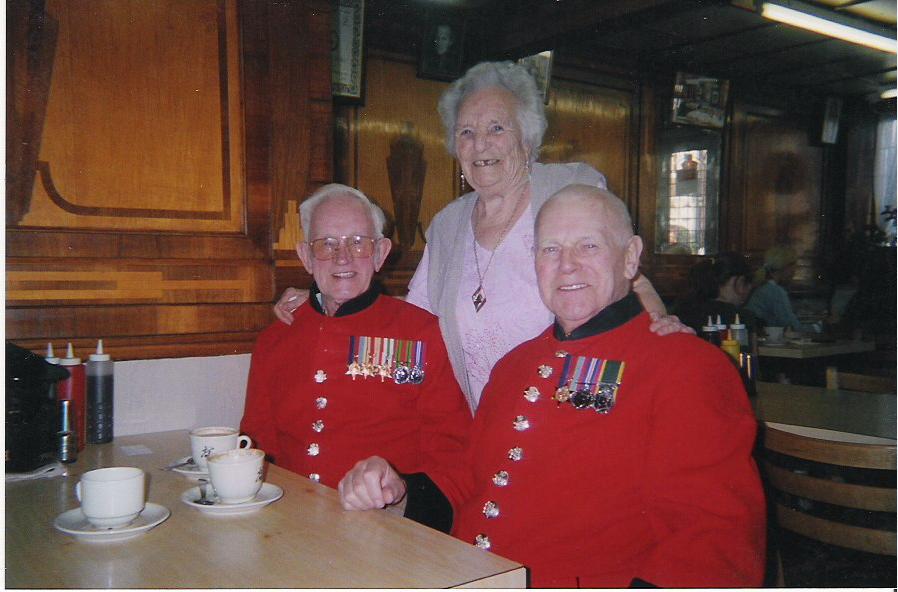
Lil Peters flirts shamelessly with two Chelsea Pensioners

Ross Kemp and the Pellicci boys

Jools Holland always pops in when he is in the East End

“I’m completely stuffed,” declared Su Pollard
You may also like to read about
At Two Temple Place
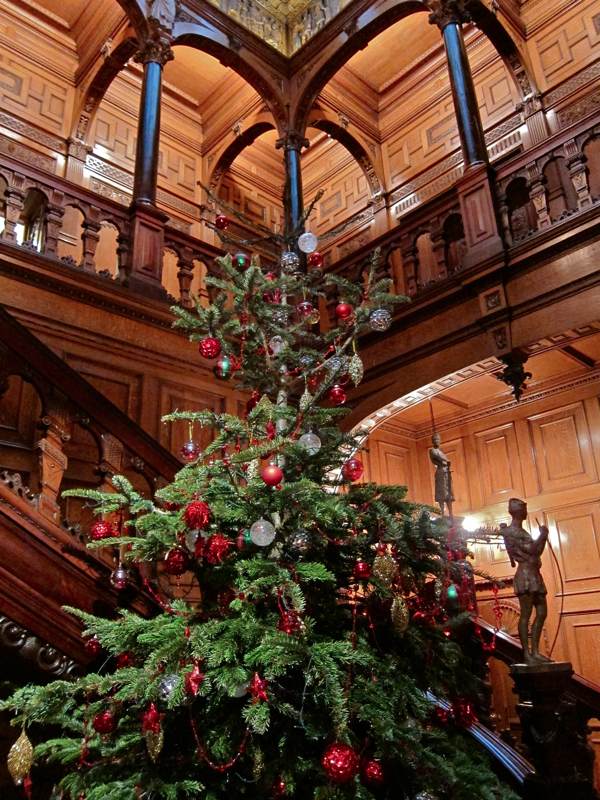
If you were to take a turning off the Strand, walk down Essex St, then descend Milford Stairs to Milford Lane, emerging within the shadow of the nineteenth century edifice of Two Temple Place, then sneak between the ornate railings and slip in through a crack in the panelled door – you might find yourself alone, as I did, in the hallway of the extravagant mansion built for the reclusive William Waldorf Astor when he inherited a hundred million dollars in 1890, became the richest man in the United States and fled to London in exile.
“America is not a fit place for a gentleman to live,” he declared after receiving death threats and kidnap attempts upon his children. Yet even before you know the details or learn that Astor employed pre-eminent architect, John Loughborough Pearson – luring him with an unlimited budget – you sense that you are at the portal to a fantasy. The staircase is oak, the panelling is mahogany, the pillars are solid ebony and the marble floor is inlaid with jasper, porphyry and onyx. Twelve characters from Robin Hood sculpted by Thomas Nicholls upon the newel posts emerge from the gloom, harbingers of another world that awaits you at the head of the stair.
So frustrated was Astor that, in 1892, he released announcements of his own death in the vain hope of winning greater privacy, only compounding his personal enigma once they were revealed as false. After Astor’s wife died in 1894, he often retreated from his family home in the more fashionable Carlton House Terrace to sleep at Two Temple Place, built as the headquarters of his sprawling business empire. “There I am safe,” he confided to Lady Warwick and showed her a lever upon the first floor which locked every entrance to the building. Similiarly at Hever Castle, Astor’s primary country residence, he had a drawbridge constructed that could be raised each night.
Two Temple Place is the glorious product of an idiosyncratic and unfettered imagination. After Astor’s death in 1919, it was rented and then sold for use as offices, only opened to visitors in 2011 by the Bulldog Trust, when it was revealed to the wider public as a lost masterpiece of late nineteenth century architecture.
Standing at the foot of the staircase, you understand why Astor felt “safe,” in the sense that you are entirely enclosed by the wood-lined room which permits no window to the outside world. Comprising a square stairwell, the space rises to an enclosed gallery with arches similar to those in engravings by Esher.
The bitter aroma of pine from the Christmas tree rises in the soporific warmth of the central heating as you ascend in the shadows to the gallery, where the extent of the literary iconography which recurs throughout the building becomes apparent. At each corner of the stairwell stand Astor’s favourite protagonists from novels – Hester Prynne, Rip Van Winkle, The Pathfinder and The Last of the Mohicans – characteristically, all are outsiders who are misunderstood. Above them is a Shakespearian frieze with eighty-two identifiable characters from Anthony & Cleopatra, Henry VIII, Othello and Macbeth, significantly chosen as plays that dramatise the torments of power. Yet, remarkably, the proportion and order of the space, the lustre of the materials and the expertise of the workmanship place everything in perspective – the chaos of human endeavour is reconciled within this sanctuary of the imagination.
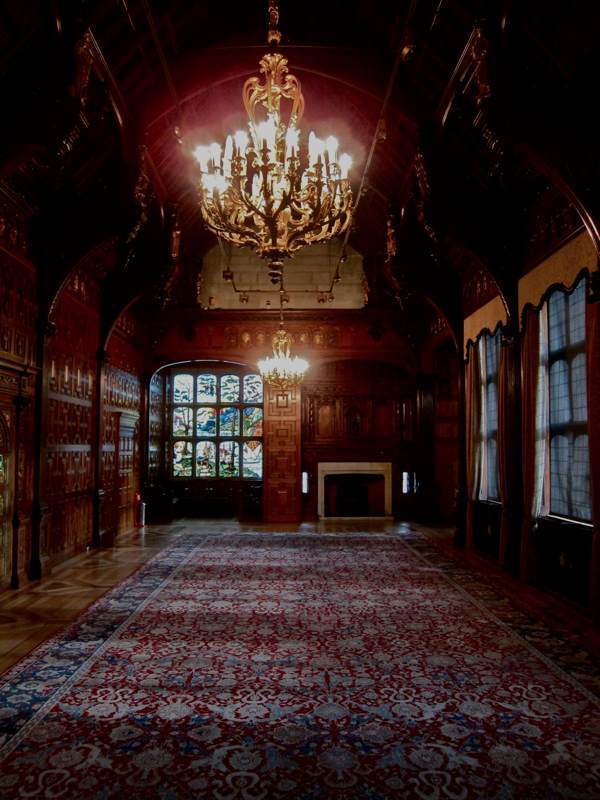
Unsurprisingly, Astor’s private office is equipped with both a secret door and discreet drawers for the storage of champagne, the latter hinting at a brighter side to his nature. Through the secret panel is the largest room in the building, known as The Great Hall or The Mediation Room, where Astor summoned those he chose to do business with. I was told that Pencil Cedar was chosen for the panelling in this room, emitting a relaxing aroma calculated to dispel any tension, yet such is the grandiose nature of the seventy-foot long hall, I doubt anyone would seek controversy in the face of its creator.
At either end, stained glass windows portray the rising and setting sun while the epic mahogany hammer-beam ceiling above is modelled upon the design of the roof in Middle Temple Hall, a wooden frieze depicts a mixture of personalities from history and myth, including Bismarck and Pocahontas, and characters from Ivanhoe perch upon the beams – gilded, just in case you might fail to notice them in the flurry of literary references. Once the time comes to leave, overwhelmed by the wealth of detail, your eye falls upon the Arthurian heroines by George Frampton languishing upon the rear of the door.
You stumble back into the vestibule, intoxicated by the decorative excess yet seduced by the dazzling assurance of your host. There are so many corners and doors within this intricate building, which retains the presence and personality of its creator so vividly, you half-expect William Waldorf Astor to appear at any moment and pull the lever to lock all exits. Yet who could object to spending Christmas holed up by the fire at Two Temple Place and letting the outside world recede far away?
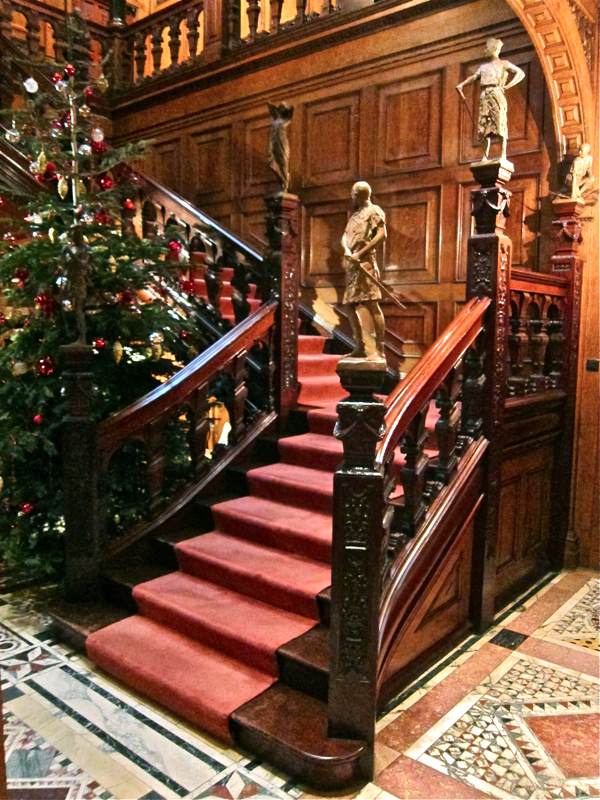
Twelve characters from Robin Hood sculpted by Thomas Nicolls adorn the newel posts
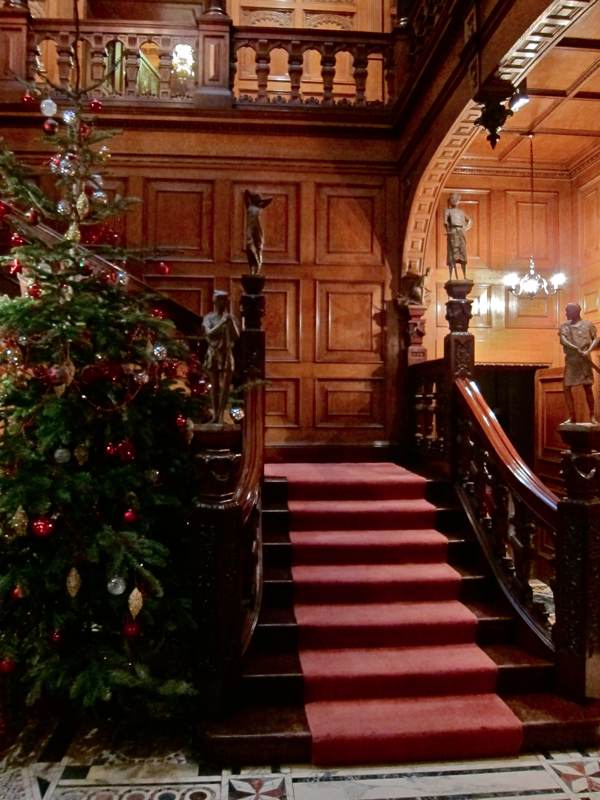
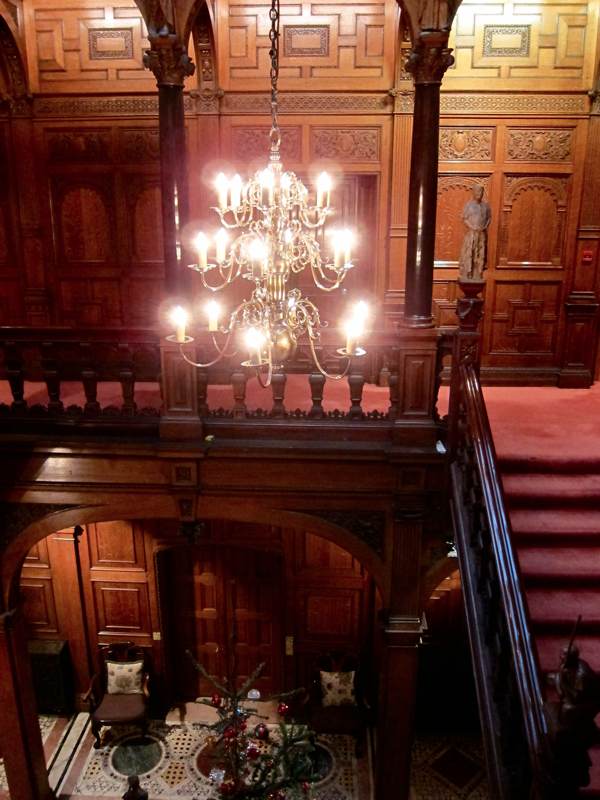
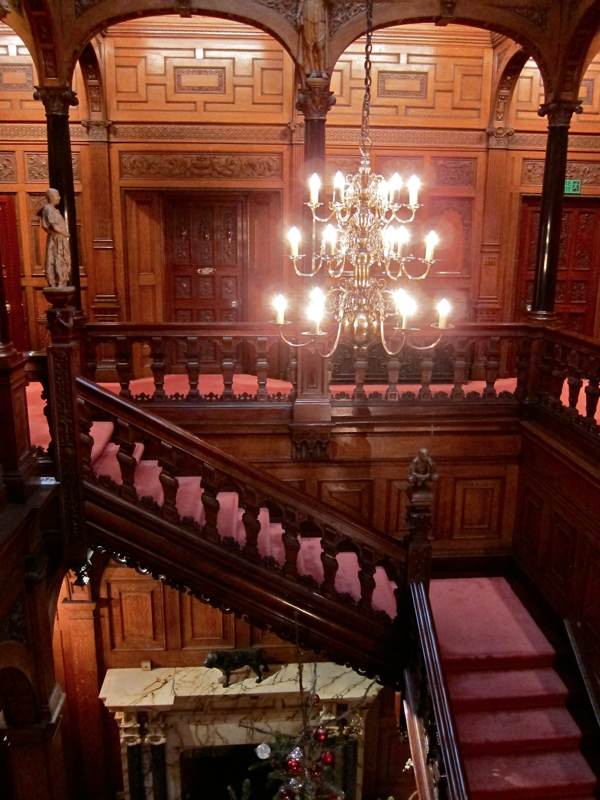
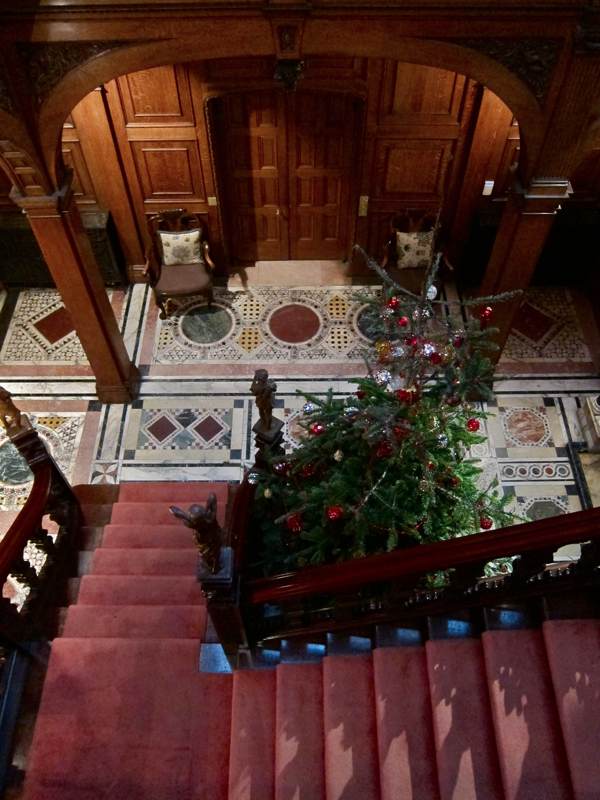
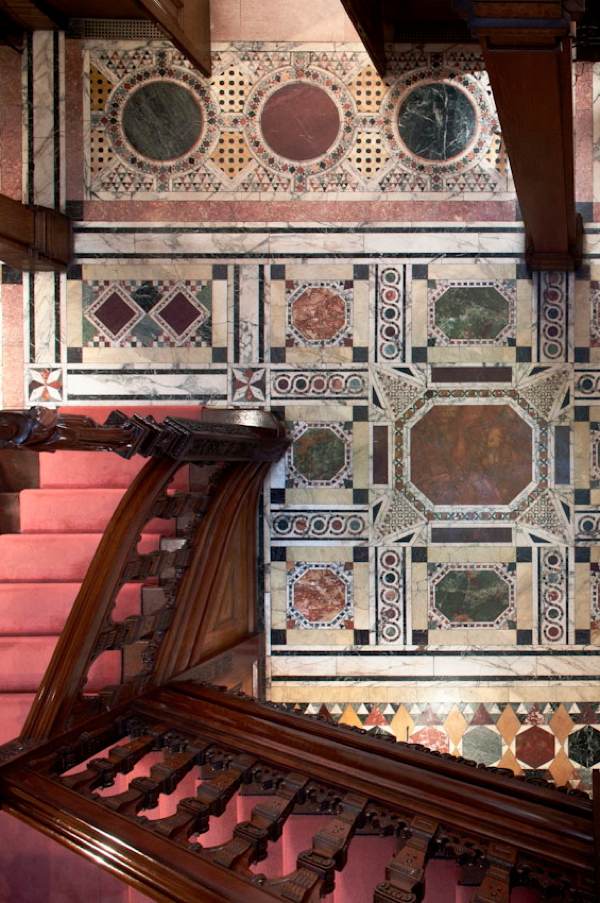
The floor is inspired by the Cosmati pavement in Westminster Abbey
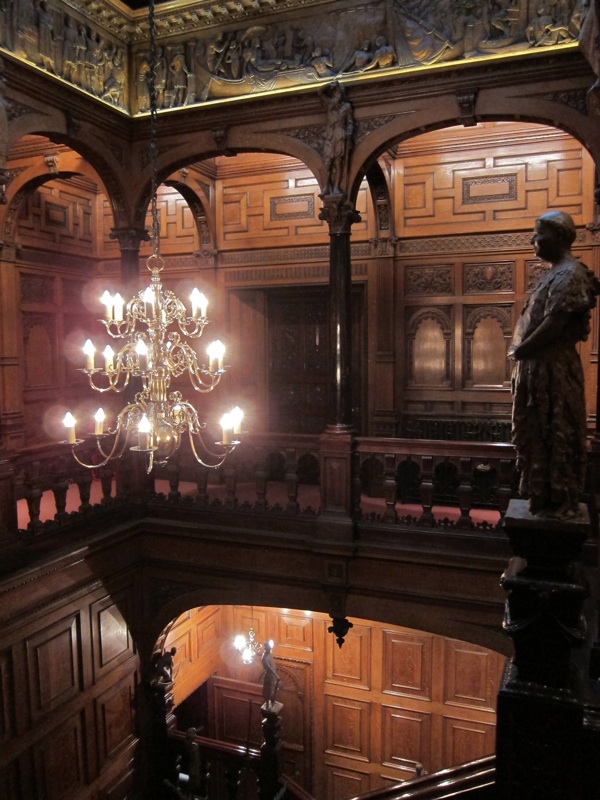
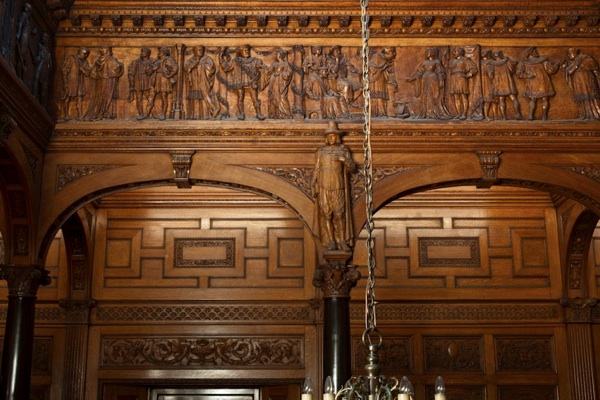
Scenes from Shakespeare with eighty-two identifiable characters filling the frieze above the stairwell
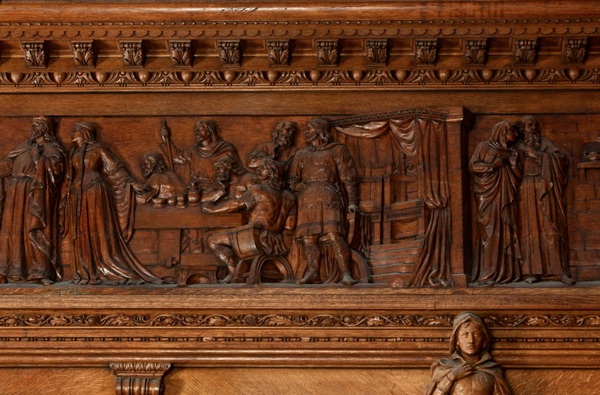
Frieze of a scene from Macbeth
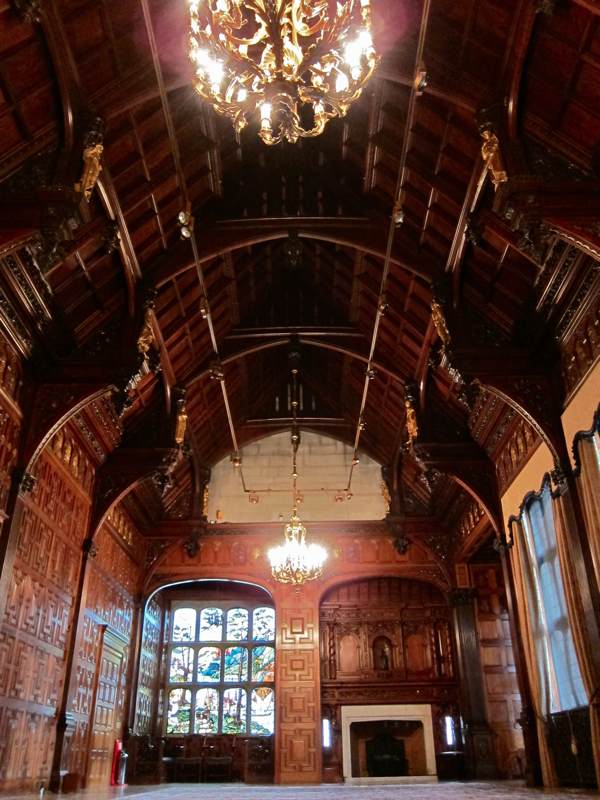
The Great Hall
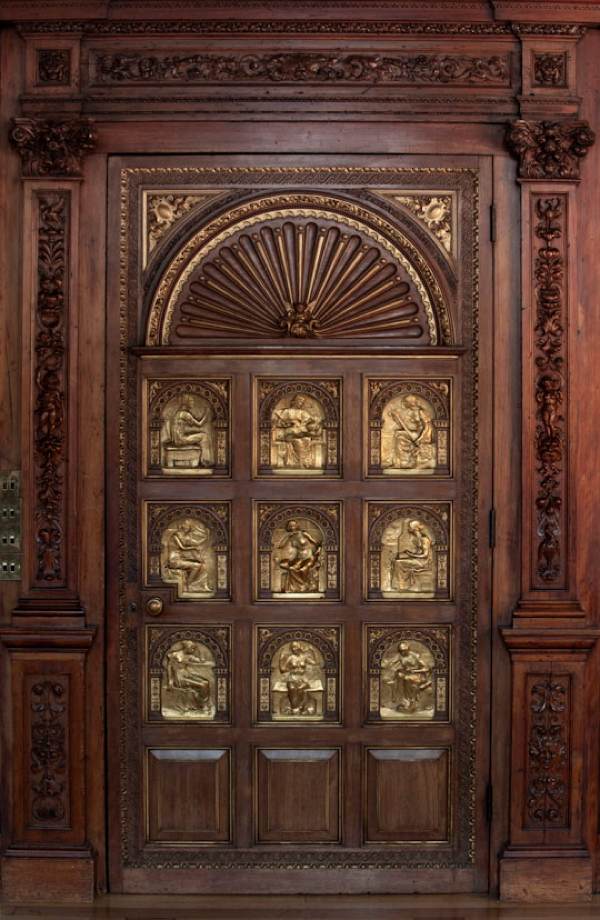
Gilt panels by George Frampton upon the door in the Great Hall depict heroines of Arthurian myth
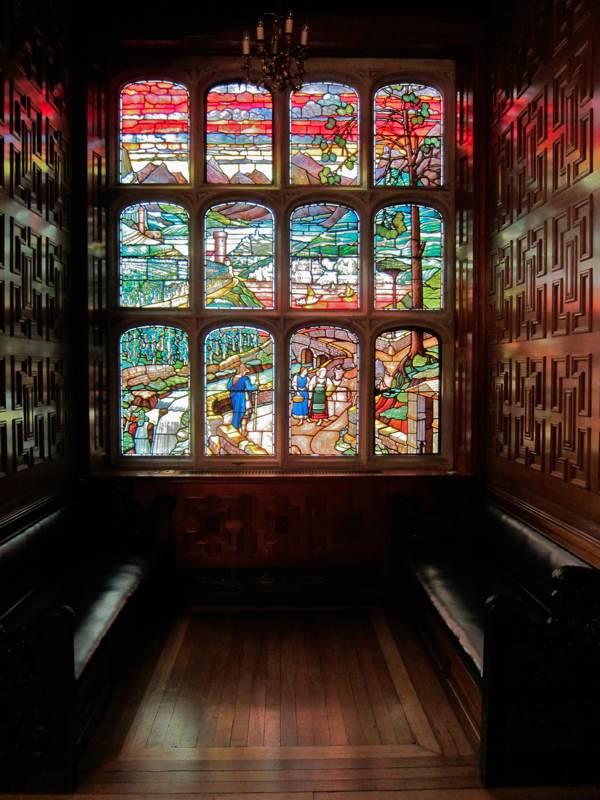
The window by Clayton & Bell at the west end of the Great Hall depicts sunset in the Swiss Alps
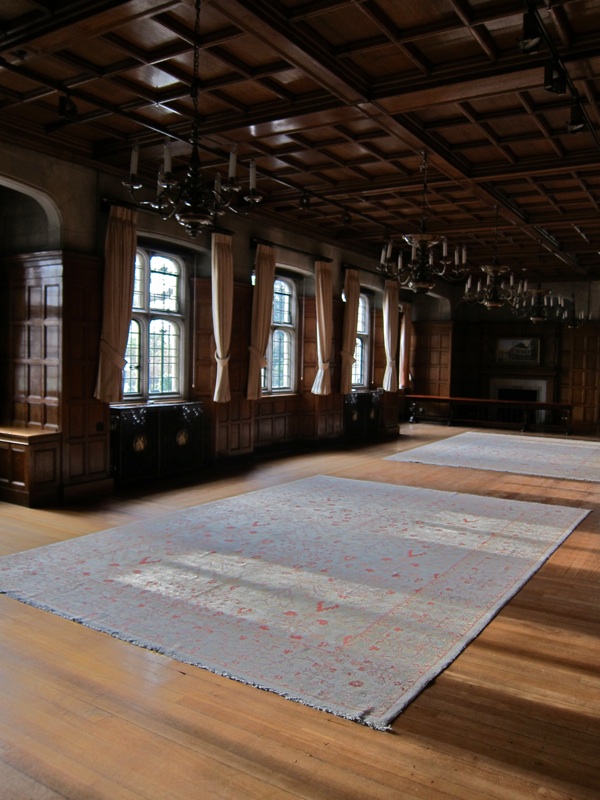
Ground floor reception room overlooking the Thames
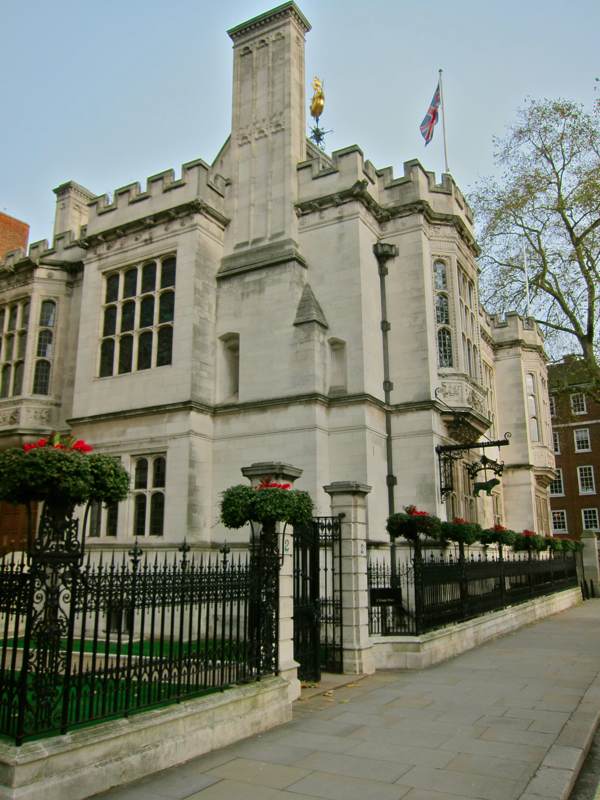
The entrance on Temple Place
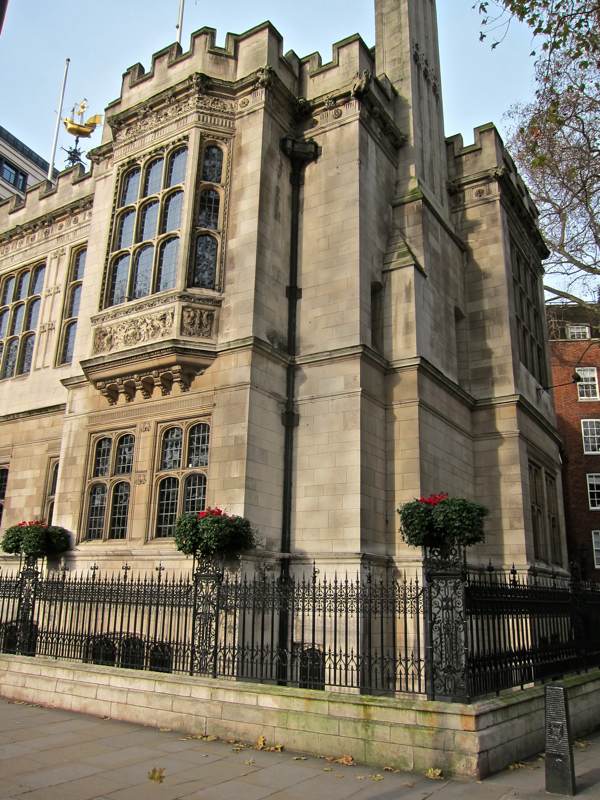
Weathervane by J. Starkie Gardner depicts Columbus’ caravel in which he discovered America
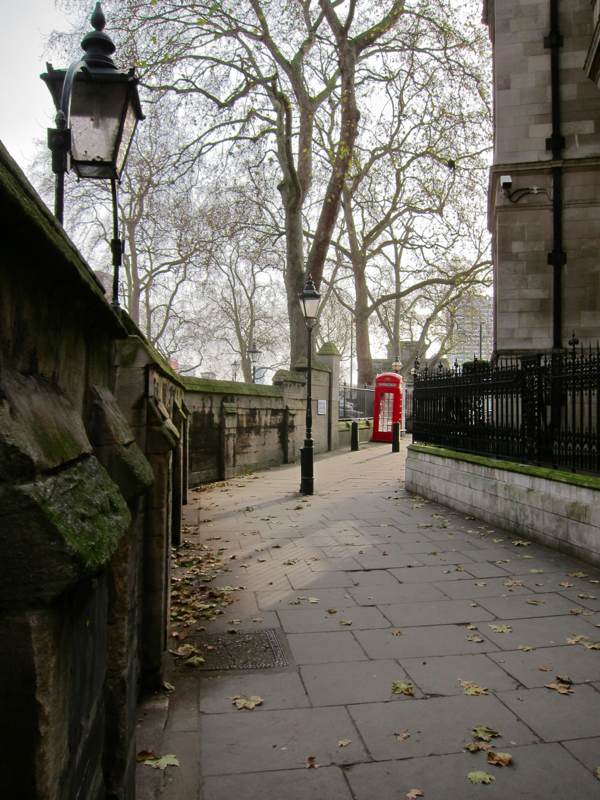
In Milford Lane
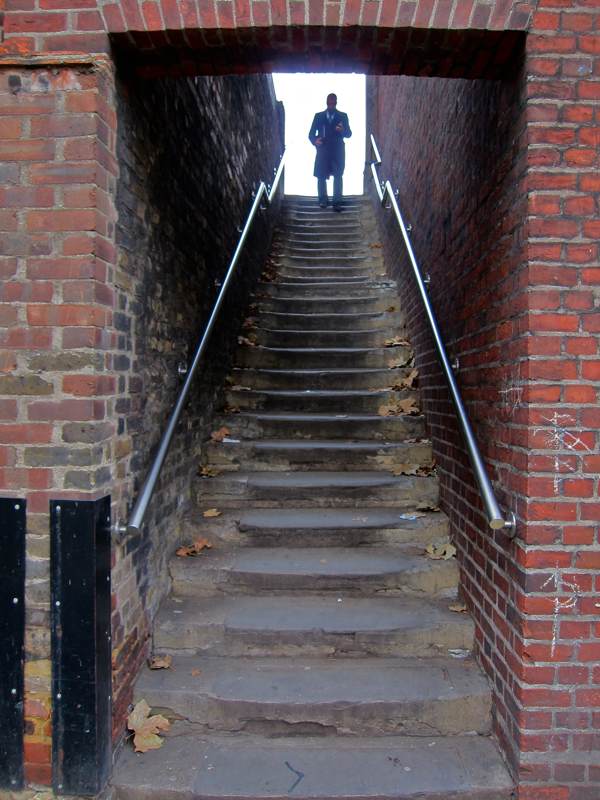
Milford Stairs leading to Essex St
Rhythm & Reaction: The Age of Jazz in Britain opens at Two Temple Place on 27th January
William West’s Tavern Anecdotes
It is my pleasure to publish this selection of the Origins of Signs by William West (1770-1854) from his Tavern Anecdotes of 1825 to be found in the Bishopsgate Library. “The absurdities which Tavern Signs present are often curious enough, but may in general be traced to that inveterate propensity which the vulgar of all countries have to make havoc with everything in the shape of a proper name,” West wrote contemptuously in his introduction.

THE MOON RAKERS
A house, by this sign. stands near Suffolk St, Southwark, and is well known to the inhabitants of that district. The natives of most counties are honoured by some ludicrous appellation by their neighbours and moon raker has long been synonymous with a Wiltshireman.
A party of Wiltshire smugglers having deposited their casks of contraband spirits in a pond, were in the act of raking them out on a moonlit night, when some excisemen cam near. Upon the latter demanding what they were about, one of the smugglers, with affected naivety, replied, “Whoy, don’t you zee that cheese there?” The idea that these pretended simpletons had actually mistaken the reflection of the moon for a cheese so diverted the excisemen that they laughed heartily and went away, and by this manoeuvre, they say, the smugglers’ kegs remained in safety.

BULL & MOUTH
This sign exhibits an instance of the corruption and perversion of language. Everybody knows that a bull has a mouth, but everyone does not know that is such a place as Boulogne, where there is a harbour, which necessarily must have an entrance, commonly called a mouth.
Originally the town was known as Boulogne Mouth, in allusion to the town and harbour of Boulogne, but the gne being generally pronounced by the Londoners on, it gradually became an and it only required the small addition of d to make and of it. The first part being before this made a bull of it, was ultimately converted to Bull & Mouth – the unmeaning title which it now bears. Situated in St Martin Le Grand, this is a house of much business, from whence several of the mails and various other coaches, to all parts of the kingdom, do take their departure.

HOLE IN THE WALL
There are various houses known by this name. That in Chancery Lane, nearly opposite to the gate leading in to Lincoln’s Inn Old Sq, is kept by Jack Randall, who has obtained the title of Nonpareil, having fought above a dozen pitched battles and proving the victor in every encounter. He weighs about ten stone six pounds and his height is about five feet six inches, but now he has retired from the ring, having nettled some blunt. There is also a noted ‘Hole in the Wall’ in Fleet St where compositors have long held their orgies.

THE DEVIL TAVERN
The Devil Tavern in Fleet St near Temple Bar was well known to the facetious Ben Jonson and the celebrated Lord Rochester also takes note of this notorious scene of revelry.

THE JOLLY SAILOR
This sign, like that of the Mariner’s Compass, Ship, Boat and Barge etc has been adopted in seaport towns, evidently in compliment to the seafaring man, as others have adopted the names of some favourite or fortunate admiral, commodore, captain etc.

ROBIN HOOD
Everyone is familiar with the history of Robin Hood. About half a century ago, there existed a debating society in London called ‘The Robin Hood Society’ which gave its name to house in Windmill St where it met.

FORTUNE OF WAR
This title is of considerable antiquity and probably originated with some veteran warrior, who had obtained prize money sufficient to enable him to retire and become publican. In Giltspur St, there is a house retaining that name, it is at the corner of Cock Lane, of Ghost notoriety.

THE WORLD TURNED UPSIDE DOWN
A sign, so named, is observable on the road to Greenwich. It is a representation of the globe with a man walking on the lower part, alluding to the state of inebriation, in which a person is sometimes said to suppose himself walking on the crown of his head.

THE LONDON ‘PRENTICE
A house so styled is situated in Old St near to Shoreditch church. This may have an allusion to the rising of the city apprentices or perhaps, more probably, taken from Hogarth’s representation of the Industrious & Idle Apprentices.

THE HORNS
There are many taverns so named but the most noted are the Horns Tavern in the vicinity of St Paul’s and the Horns at Kennington. Most of the public houses in Highgate have a large pair of horns fixed on the end of a long staff, by which it has been an ancient custom for persons to swear that they will never eat brown bread when they can get white and never kiss a maid when they can kiss the mistress, after which thy must kiss the horns and pay one shilling, to be spent in the house.

THE TANNER OF JOPPA
In Long Lane, Southwark, there is a house so named, probably having its origin in the times when Scripture names were adopted for men and things. In Acts CX V. 32, we read that the Apostle Peter dwelt for some time at the house of Simon, a tanner.

Images courtesy Bishopsgate Institute
You may also like to take a look at
Bill Crome, Window Cleaner
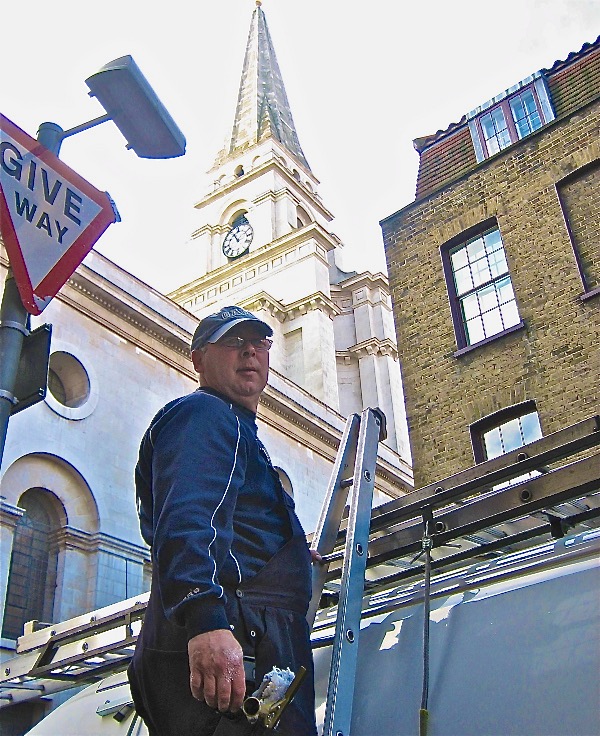
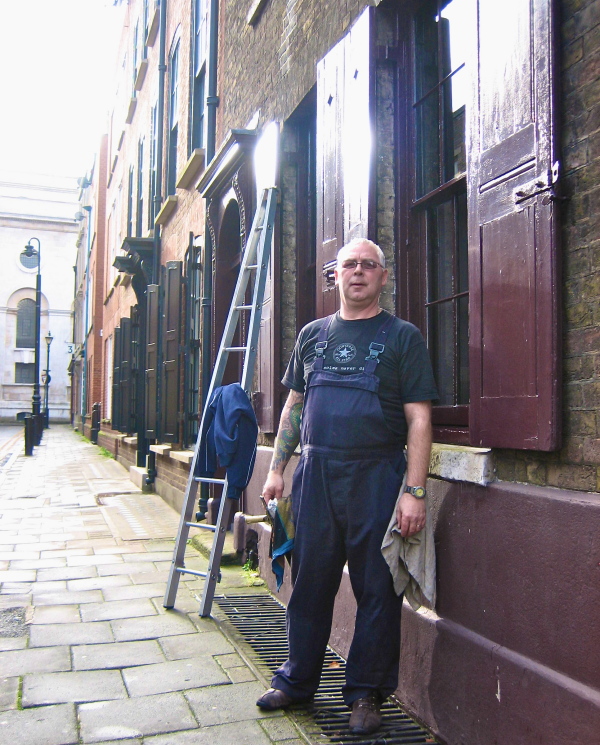
This is Bill Crome, a window cleaner of thirty years’ experience in the trade who makes a speciality of cleaning the windows of the old houses in the East End. You might assume cleaning windows is a relatively mundane occupation and that, apart from the risk of falling off a ladder, the job is otherwise without hazard – yet Bill’s experiences have proved quite the contrary, because he has supernatural encounters in the course of his work that would make your hair stand on end.
“It wasn’t a career choice,” admitted Bill with phlegmatic good humour, “When I left school, a man who had a window cleaning business lived across the road from me, so I asked his son for a job and I’ve been stuck in it ever since. I have at least sixty regulars, shops and houses, and quite a few are here in Spitalfields. I like the freedom, the meeting of people and the fact that I haven’t got a boss on my back.” In spite of growing competition from contractors who offer cleaning, security and window cleaning as a package to large offices, Bill has maintained his business manfully but now he faces a challenge of another nature entirely. Although, before I elaborate, let me emphasise that Bill Crome is one of the sanest, most down-to-earth men you could hope to meet.
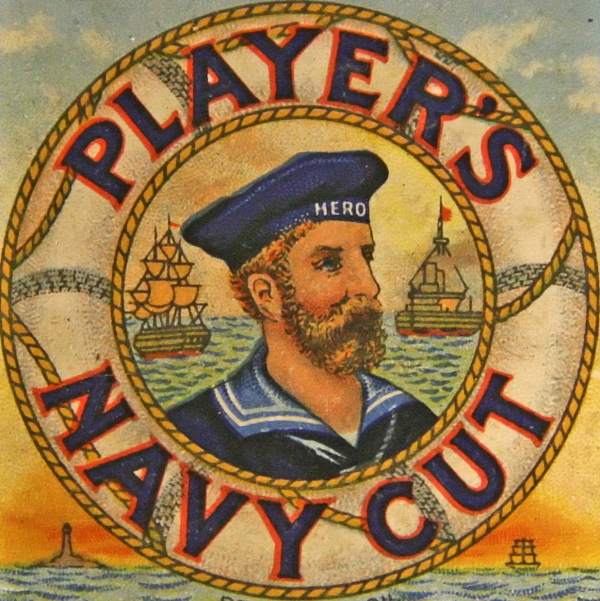
“I’ve heard there is a window cleaner in Spitalfields who sees ghosts,”I said, to broach the delicate subject as respectfully as I could. “That’s me,” he confessed without hesitation, colouring a little and lowering his voice, “I’ve seen quite a few. Five years ago, at the Society for the Protection of Ancient Buildings in Spital Sq, I saw a sailor on the second floor. I was outside cleaning the window and this sailor passed in front of me. He was pulling his coat on. He put his arms in the sleeves, moving as he did so, and then walked through the wall. He looked the sailor on the Players Navy Cut cigarette packet – from around 1900 I would guess – in his full uniform.
And then I saw a twelve year old girl on the stair, she was bent down, peering at me through the staircase. I was about to clean the window and I could feel someone watching me, then as I turned she was on the next floor looking down at me. She had on a grey dress with a white pinafore over the top. And she had a blank stare.
I did some research. I went to a Spiritualist Church in Wandsworth and one of the Spiritualists said to me, ‘You’ve got a friend who’s a sailor haven’t you?’ They told me how to deal with it. When we investigated we found it was to do with the old paintings at the Society for the Protection of Ancient Buildings. Amongst the collection were portraits of a sailor and of a girl. Once I was walking up to the top floor, and I looked at the picture of the girl, and she had a smiling face – but when I went back to collect my squeegee, I looked again and she had a frown. It sounds really stupid doesn’t it? I found a leaflet in the house explaining about the history of the paintings and how the family that gave them was dying off. The paintings are off the wall now yet they had a nice feeling about them, of sweetness and calm.”
Bill confirmed that since the paintings were taken down, he has seen no more ghosts while cleaning windows in Spital Sq and the episode is concluded, though the implications of these sinister events have been life-changing, as he explained when he told me of his next encounter with the otherwordly.
“I was cleaning the windows of a house in Sheerness, and I looked into the glass and I saw the reflection of an old man right behind me. I could see his full person, a six -oot-four-inch-very-tall man, standing behind me in a collarless shirt. But when I turned round there was no-one there.
I went down to the basement, cleaning the windows, and I felt like someone was climbing on my back. Then I started heaving, I was frozen to the spot. All I kept thinking was, ‘I’ve got to finish this window,’ but as soon as I came out of the basement I felt very scared. Speaking to a lady down the road, she told me that in this same house, in the same window, a builder got thrown off his ladder in the past year and there was no explanation for it.
I won’t go back and do that house again, I can tell you.”
As Bill confided his stories, he spoke deliberately, taking his time and maintaining eye contact as he chose his words carefully. I could see that the mere act of telling drew emotions, as Bill re-experienced the intensity of these uncanny events whilst struggling to maintain equanimity. My assumption was that although Bill’s experience at the Society for the Protection of Ancient Buildings might be attributed to a localised phenomenon, what happened in Sheerness suggests that Bill himself is the catalyst for these sightings.
“I feel that I have opened myself up to it because I’ve been to the Spiritualist Church a few times,” he revealed to me. “I do expect to see more ghosts because I work in a lot of old properties, especially round Spitalfields. I don’t dread it but I don’t look forward to it either. It has also made me feel like I do want to become a Spiritualist, and every time I go along, they say, ‘Are you a member of the church?’ But I don’t know, I don’t know what can of worms I’ve opened up.”
Bill’s testimony was touching in its frankness – neither bragging nor dramatising – instead he was thinking out loud, puzzling over these mysterious events in a search for understanding. As we walked together among the streets of ancient dwellings in the shadow of the old church in Spitalfields where many of the residents are his customers, I naturally asked Bill Crome if he has seen any ghosts in these houses. At once, he turned reticent, stopping in his tracks and insisting that he maintain discretion. “I don’t tell my customers if I see ghosts in their houses,” he informed me absolutely, looking me in the eye, “They don’t need to know and I don’t want to go scaremongering.”