
The Cabbies Shelters Of Old London
Created between 1875 and 1914, sixty of these structures were built by the Cabmen’s Shelter Fund established by the Earl of Shaftesbury to enable cabbies to get a meal without leaving their cabs unattended and were no larger than a horse and cart so they might stand upon the public highway.
Today, only thirteen remain but all are grade II listed and, on my pilgrimage around London in the sunshine, I found them welcoming homely refuges where a cup of tea can be had for just 50p.
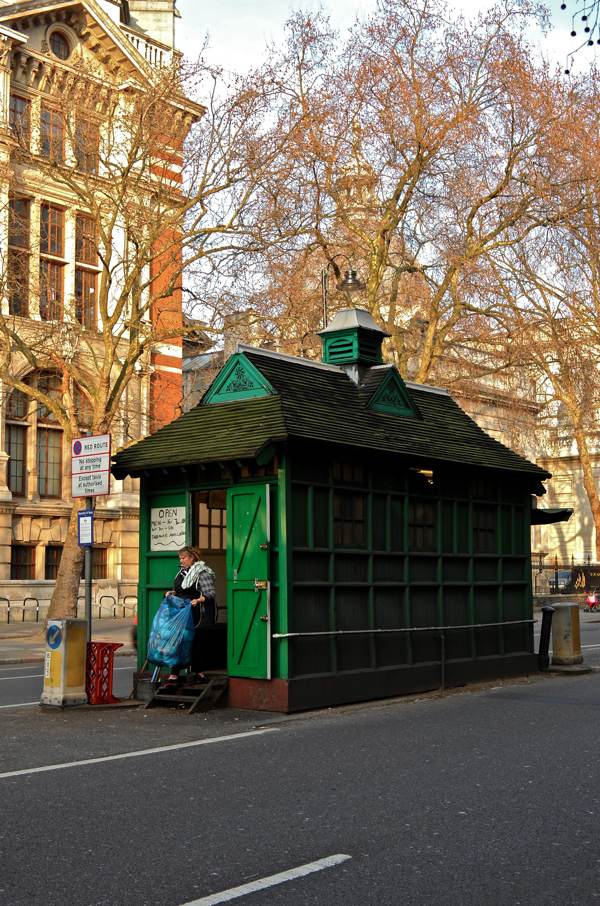
Thurloe Place, SW7
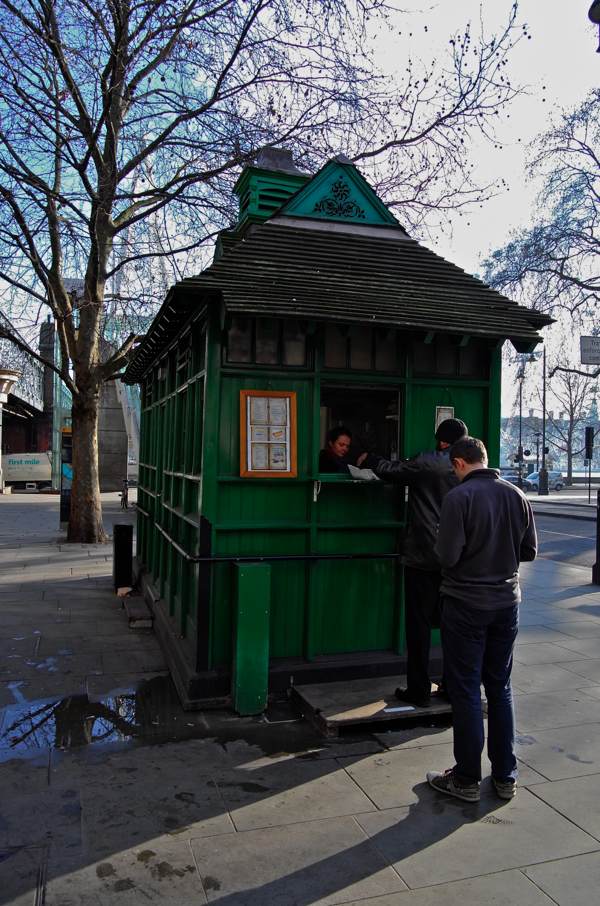
Embankment Place, Wc2
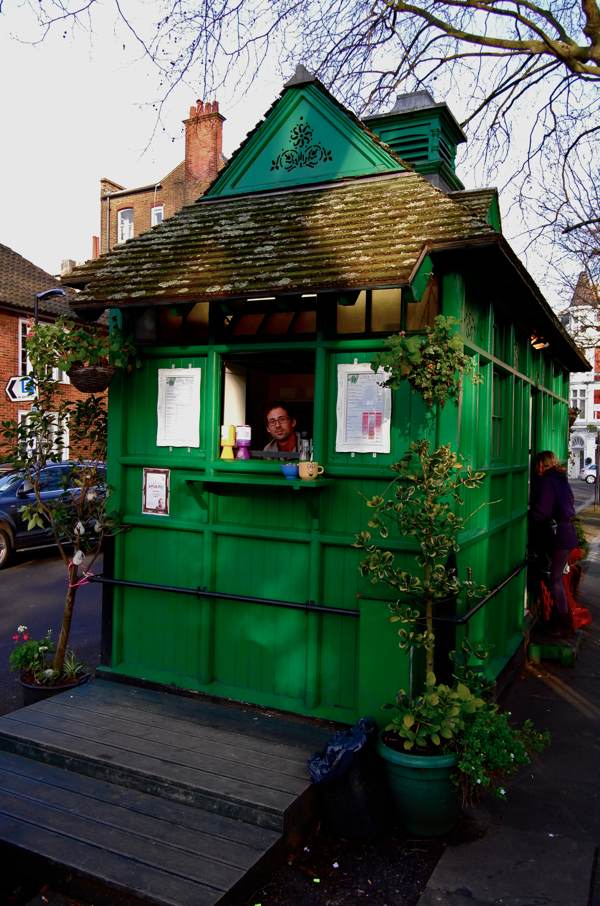
Wellington Place, NW8
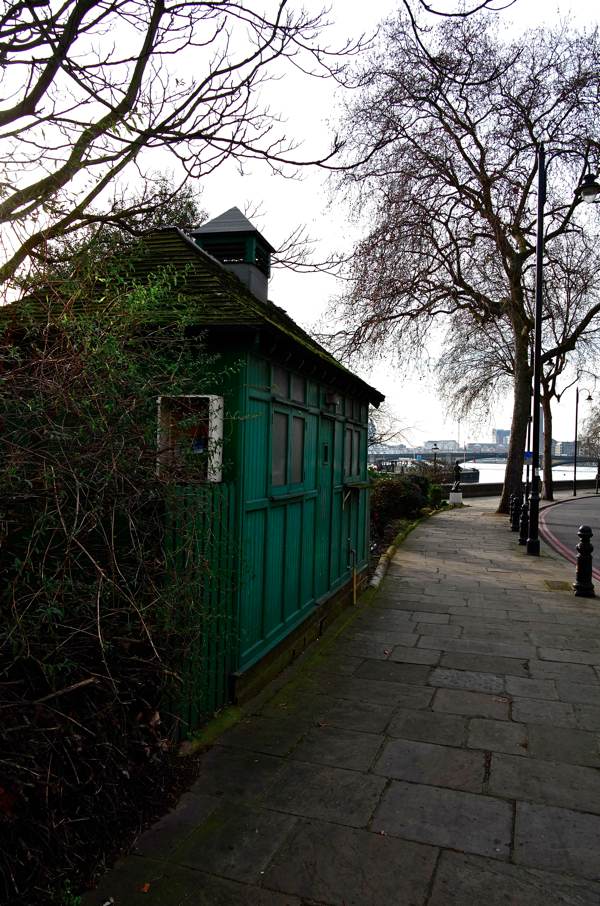
Chelsea Embankment, SW3
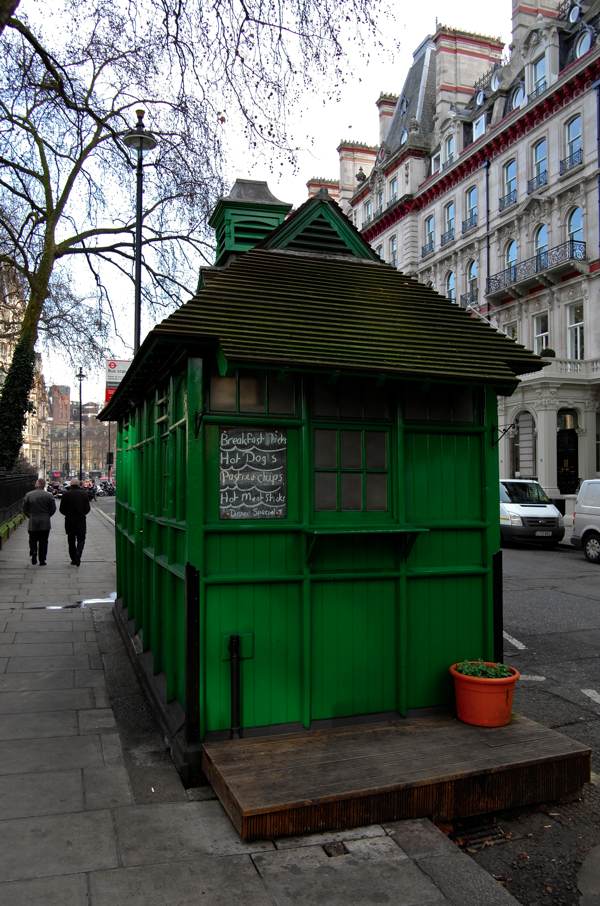
Grosvenor Gardens, SW1
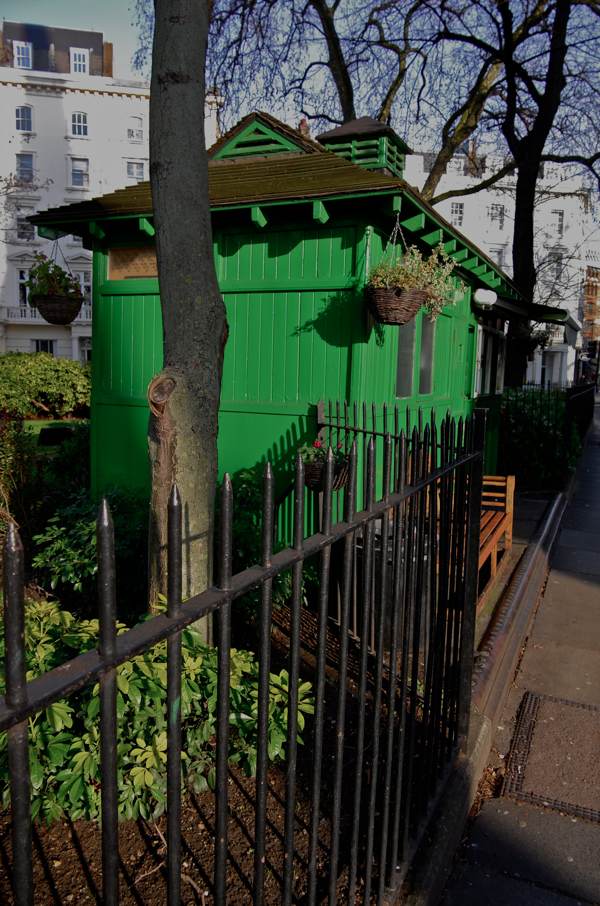
St Georges Sq, SW1
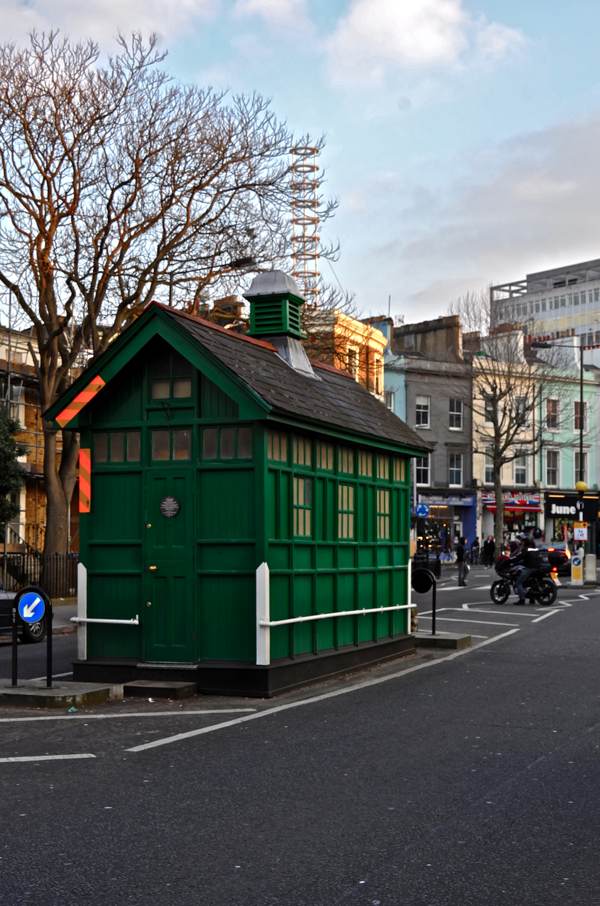
Kensington Park Rd, W11
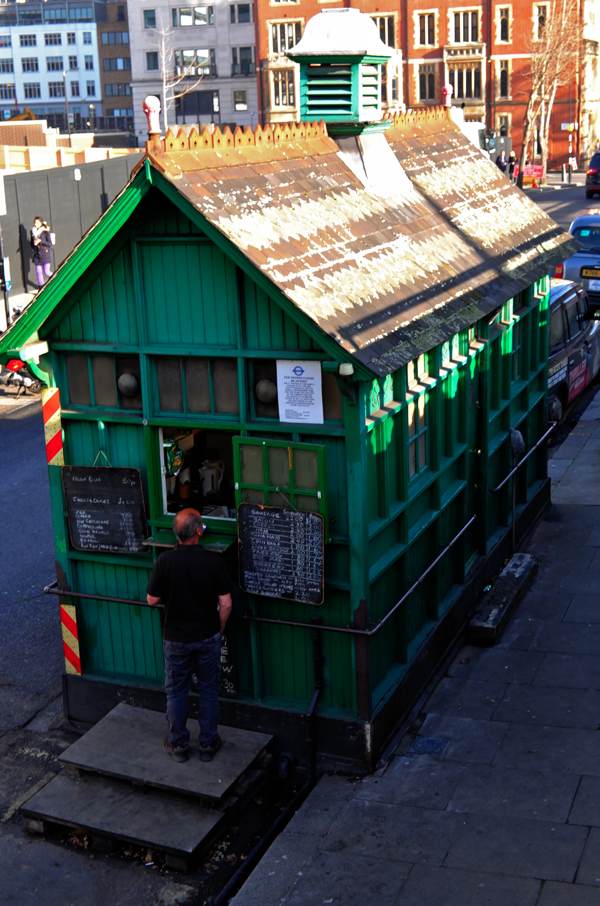
Temple Place, WC2
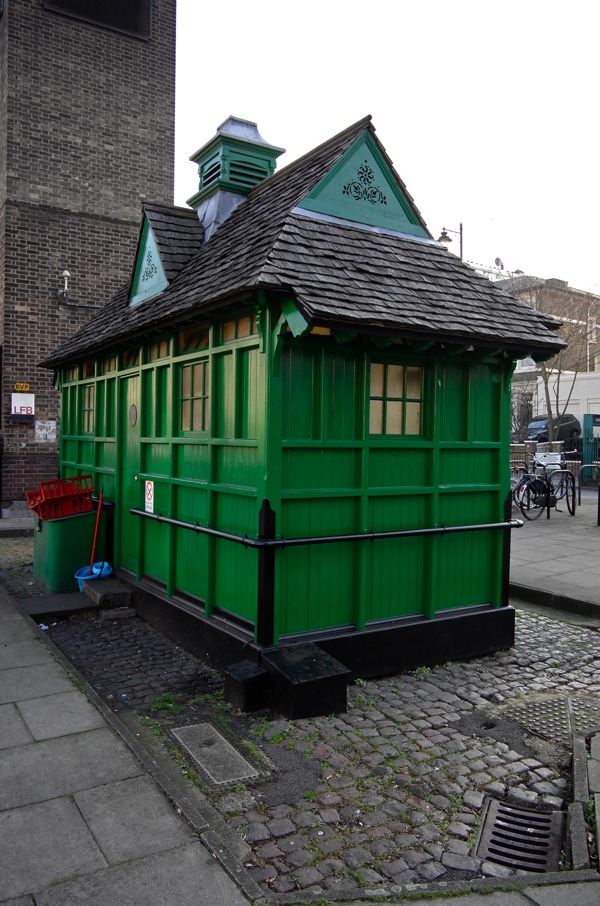
Warwick Ave, W9
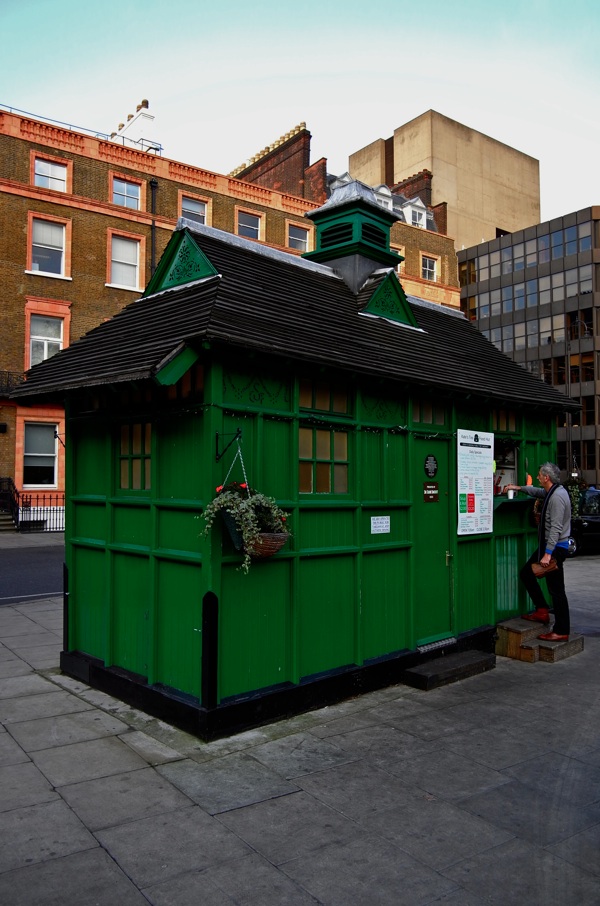
Russell Sq, WC1
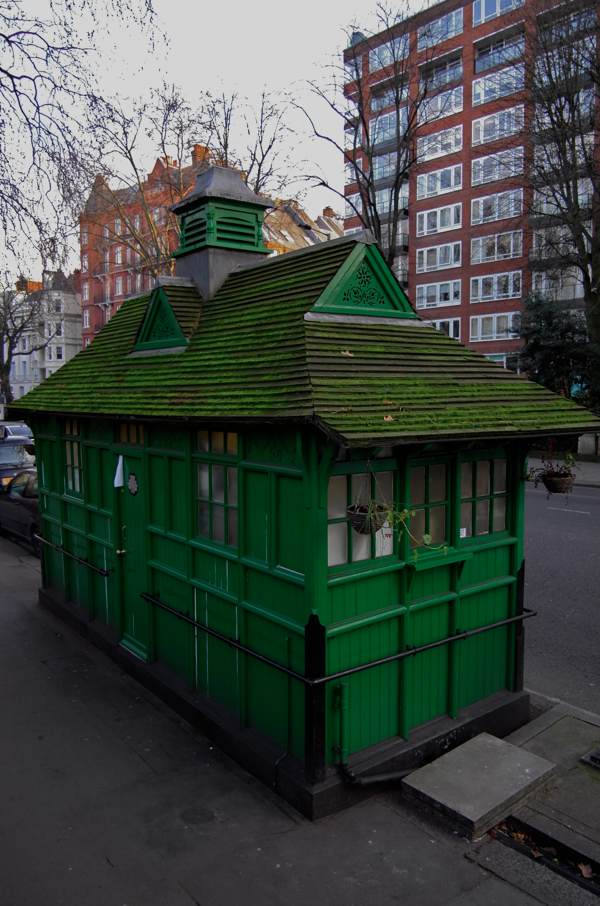
Kensington Rd, W8
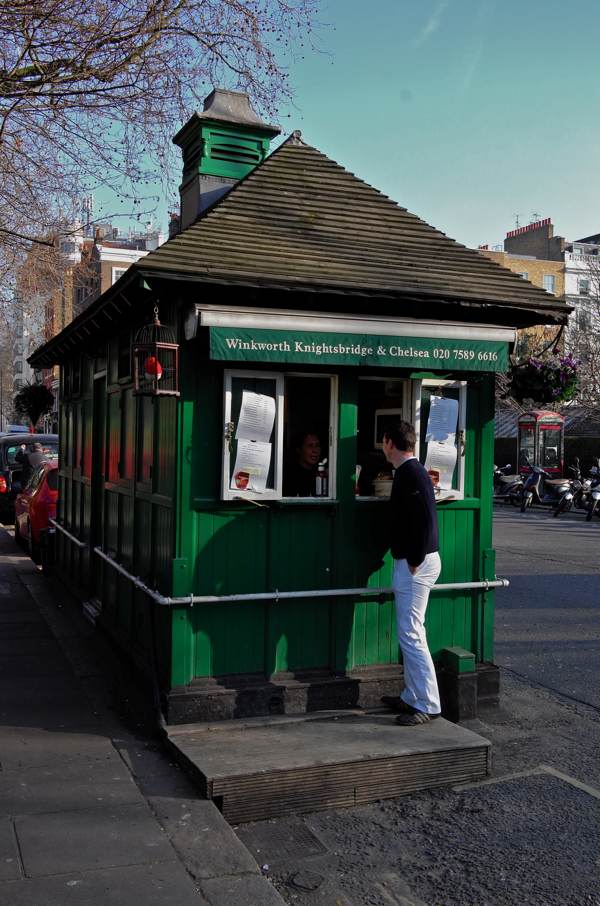
Pont St, SW1
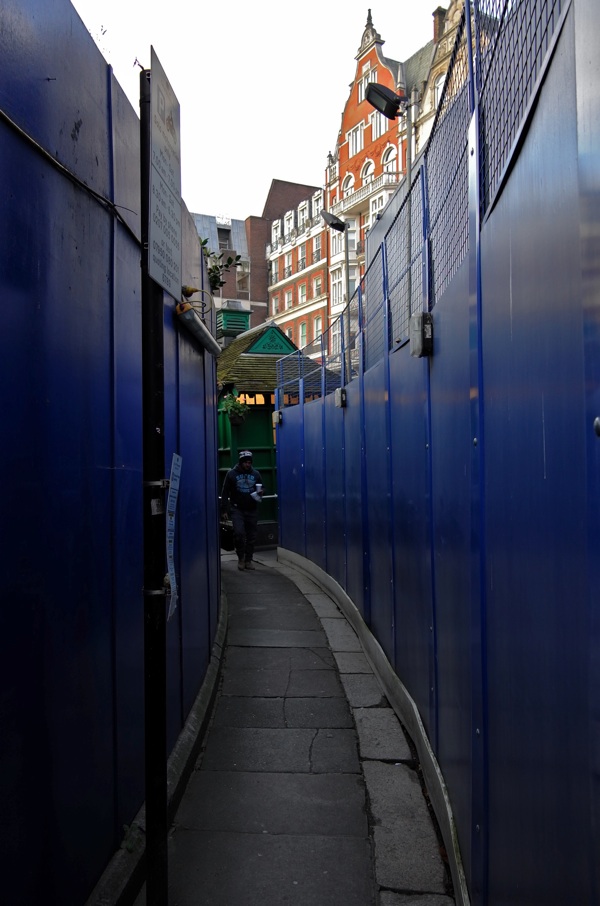
Hanover Sq, W1
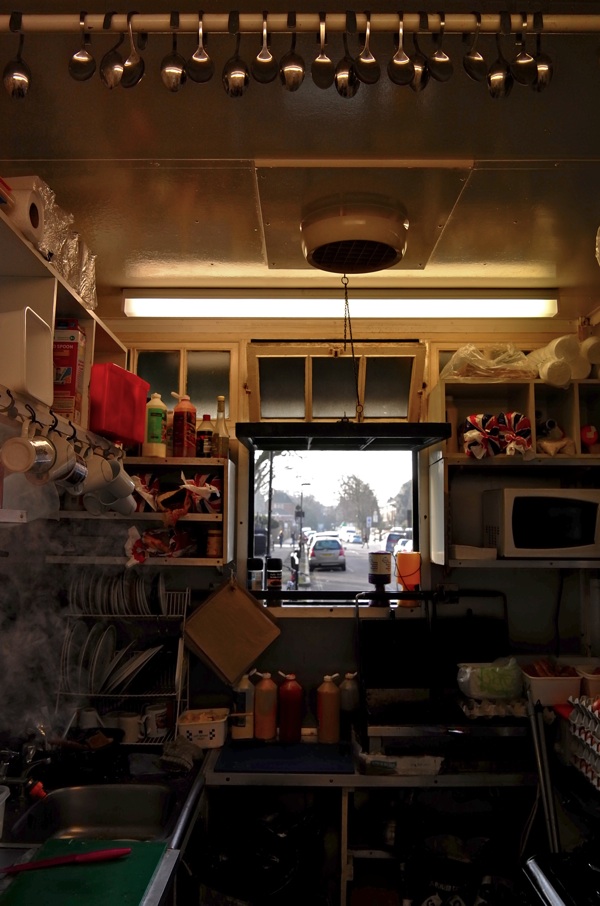
The shelter attendant at Wellington Place has special spoon-bending powers
You may also like to read about
Sarah Chapman, Matchgirl Strike Leader
Samantha Johnson sent me this proud account of her great-grandmother Sarah Chapman who was one of the Matchgirl Strike Leaders. Samantha is organising a hundred-and-thirtieth anniversary walk on July 6th, retracing the steps of the Matchgirls from Mile End to the Strand where they visited Annie Besant, which readers are invited to join. Click here for more information
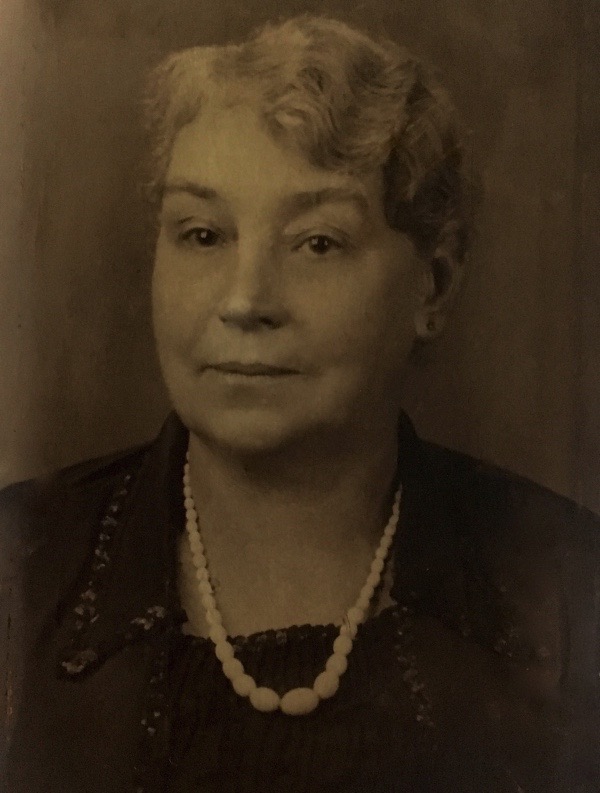
Sarah Chapman (1862 – 1945)
My great-grandmother was born on 31st October in 1862 to Samuel Chapman and Sarah Ann Mackenzie. At the time of her birth, her father was employed as a Brewer’s Servant and was also known to have worked in the docks. The fifth of seven children, Sarah’s early years were spent at number 26 Alfred Terrace in Mile End but, by the time she was nine, the family had moved to 2 Swan Court (now the back of the American Snooker Hall on Mile End Rd), where they stayed for the next seventeen years. For a working class family at this time to stay in one place for such a long time was uncommon. Other evidence of the stability of the Chapman family is that Sarah and her siblings were educated, as they were listed as Scholars in the census and could all read and write.
At the age of nineteen, Sarah was working alongside her mother and her older sister, Mary, as a Matchmaking Machinist, and by 1888 she was an established member of the workforce at the Bryant & May factory in Bow. At the time of the Strike, Sarah is listed as working in the patent area of the business, as a Booker, and was on relatively good wages, which perhaps placed her in a position of esteem among other workers. She was certainly paid more than most and this may have been because of her position as a Booker, or perhaps because she just managed to avoid the liberal fines which were meted out by the employers.
There was a high degree of unrest in the factory due to the low wages, long hours, appalling working conditions and the unfair fines system, which caused the women at the factory to grow increasingly frustrated. External influences, particularly the Fabian Society, also provided an impetus for the Strike. Ultimately, 1400 girls and women marched out of the factory, en masse, on that fateful day of 5th July 1888. The next day some 200 girls marched from Mile End down to Bouverie St in the Strand to see Annie Besant, one of the Fabians and a campaigner for women’s rights. A deputation of three (my great-grandmother Sarah Chapman, Mrs Mary Cummings and Mrs Naulls) went into her office to ask for her support. Although Annie was not an advocate of strike action, she did agree to help them organise a Strike Committee.
“We’d ‘ave come out before only we wasn’t agreed”
“You stood up for us and we wasn’t going back on you”
The first meeting of the striking Matchgirls was held on Mile End Waste on 8th July and both the Pall Mall Gazette and The Star provided positive publicity. This was followed by meetings with Members of Parliament at the House of Commons. The Strike Committee was formed and the following Matchgirls were named as members: Mrs Naulls, Mrs Mary Cummings, Sarah Chapman, Alice Francis, Kate Slater, Mary Driscoll, Jane Wakeling and Eliza Martin.
Following further intervention by Toynbee Hall and the London Trades Council, the Strike Committee was given the chance to make their case. They met with the Bryant & May Directors and by 17th July, their demands were met and terms agreed in principle. It was agreed that:
- All fines should be abolished.
- All deductions for paint, brushes, stamps, etc., should be put an end to.
- The 3d. should be restored to the packers.
- The “pennies” should be restored or an equivalent advantage given in the system of payment of the boys who do the racking.
- All grievances should be laid directly before the firm, before any hostile action was taken.
- All the girls to be taken back.
It was also agreed that a union be formed, that Bryant & May provide a room for meals away from where the work was done and that barrows be provided to transport boxes, replacing the practice of young girls having to carry them on their heads. The Strike Committee put the proposals to the rest of the workforce and they enthusiastically approved. Thus the inaugural meeting of the new Union of Women Match Makers took place at Stepney Meeting Hall on 27th July and twelve women were elected, including Sarah Chapman.
An indicator of the belief her fellow workers put in Sarah’s ability, was her election as the first TUC representative of the Match Makers’ Union. Sarah was one of seventy-seven delegates to attend the 1888 International Trades Union Congress in London and at the 1890 TUC she is recorded as having seconded a motion.
On the night of the 1891 census, Sarah was still a Booker at the match factory and living with her mother in Blackthorn St, Bromley by Bow, but in December of that same year, she married Charles Henry Dearman, a Cabinet Maker. By this time she had ceased working at Bryant & May.
Sarah and Charles had their first child, Sarah Elsie in 1892. They had five more children, one was my grandfather, William Frederick, born in 1898 when they had moved to Bethnal Green. Sarah’s two youngest sons, William and Frederick lived with her, on and off, into the thirties and she lived out her years there, dying in Bethnal Green hospital on 27th November 1945 aged eighty-three. She was survived by three of her six children, Sarah, William and Fred.
Sarah was buried alongside five other elderly people in a pauper’s plot at Manor Park Cemetery. It was a sad end to a brave life filled with challenges, not least a leading role in a Strike that was the vanguard of the New Labour Movement and helped establish Trade Unionism in this country.
It is thanks to Anna Robinson, Poet & Lecturer at the University of East London, who chose Sarah Chapman as the topic of her MA thesis, Neither Hidden Nor Condescended To: Overlooking Sarah Chapman, that I discovered the story of my great-grandmother. I contacted Anna in 2016 after I discovered her post on a family history forum appealing for information. Until then, I had no idea about Sarah’s story. Anna also discovered Sarah’s grave in Manor Park Cemetery and I was able to visit it in 2017. Regrettably, there are plans to mound over her grave.
Please sign the petition to preserve the memory of this courageous woman
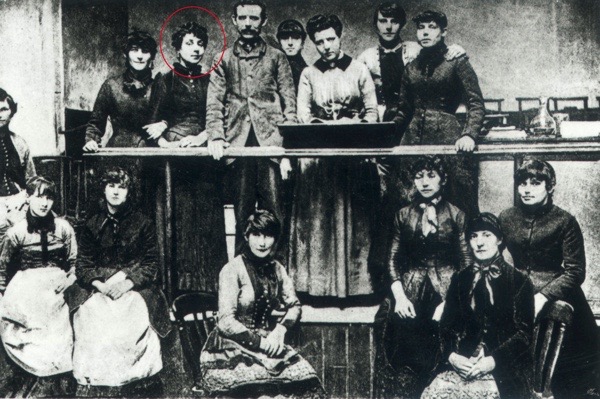
Sarah as a member of the Matchgirls Union Committee
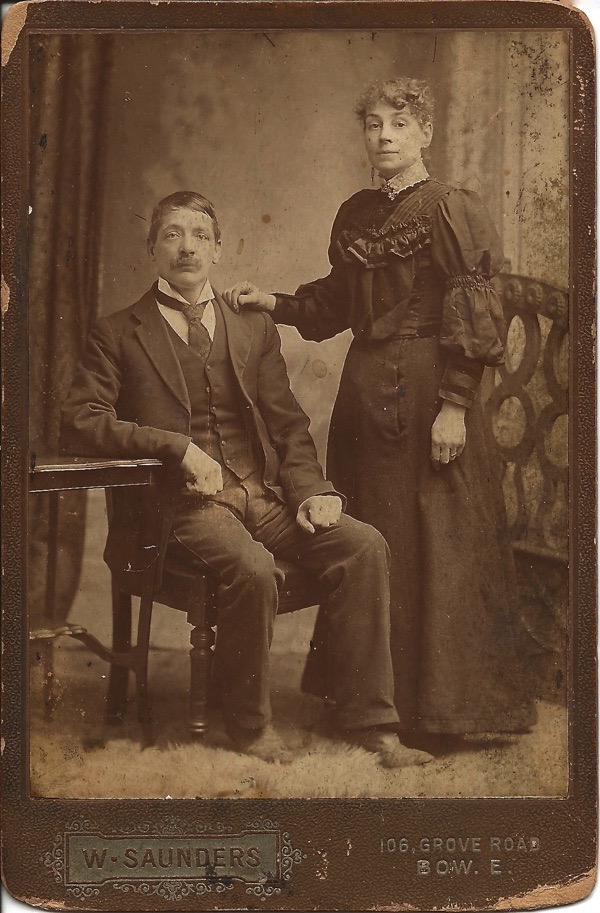
Sarah with her husband Charles Henry Dearman

Sarah with her grandson, Frederick William

Sarah in later years
You may also like to take a look at
The Map Of Rotherhithe
You are invited to join me at the launch parties celebrating publication of Adam Dant’s MAPS OF LONDON & BEYOND, in the West End at The Map House in Knightsbrige this Thursday 28th June and in the East End at The Townhouse in Spitalfields next Thursday 5th July. Meanwhile you can catch Adam at Stanfords in Covent Garden tomorrow giving an illustrated lecture about his maps.
TUESDAY 26th JUNE 6:30pm: Lecture at STANFORDS, 12-14 Long Acre, WC2. Click here to book
29th JUNE – 14th JULY: Exhibition of Maps of London at THE MAP HOUSE, 54 Beauchamp Place, SW3. Opening sponsored by Hendrick’s Gin on Thursday 28th June 6 – 8:30pm
5th – 22nd JULY: Exhibition of Maps of the East End at THE TOWN HOUSE, 5 Fournier St, E1. Opening Thursday 5th July 6 – 8.30pm
Click here to order a signed copy

Undertaking a rare trip south of the river, Adam Dant presents these maps of that fabled ‘terra incognita’ once known as Redriff.
1. (Twelfth century) The name of the village of Rotherhithe or “Rederheia” is thought to mean “cattle-landing place.”
2. (1016) King Cnut begins digging a trench from Rotherhithe to Vauxhall to lay seige to London, according to myth.
3. (c.1370) During the reign of Edward III a fleet is fitted out at Rotherhithe by order of the Black Prince and John of Gaunt.
4. (c.1400) Henry IV lives in an old stone house in Rotherhithe while suffering from leprosy.
5. (1485) The Lovell family, owners of the Manor at Rotherhithe distinguish themselves during the Wars of the Roses. Francis Lovell is made Lord Chamberlain – “The cat, the rat and Lovell the dog rule all England under a hog.”
6. (1587) The Queen grants Thomas Brickett “Le Gone Powder Mill Pond,” formerly possession of Bermondsey Abbey and source of Guy Fawkes’ gunpowder.
7. (1605) Shipwrights of England are incorporated under Royal Charter, so that ships “will not be made slenderlie and deceitfullie.”
8. (1620) The Mayflower is brought to Rotherhithe by its master Christopher Jones.
9. (1635) Reclaimed land and “inclosed” wharfs are claimed by poor tenants over preference to kings, lords and rich men.
10. (1684) Christopher Monck, Duke of Albemarle receives a grant for Saturday goods and merchandise market, and for a ferry at Rotherhithe.

11. (1699) John Evelyn records in his diary, “a dreadful fire destroying three hundred houses and divers ships.”
12. ( 1699) 18th October, revellers en route to the The Charlton Horn Fair disembark at Cuckold’s Point, marked by a tall pole topped by a pair of horns.
13. (1770) The St Helena Tea Gardens open in Deptford where evening music and dancing is supported by the lower classes and shipyard workers’ families.
14. (1725) The South Sea Company take the lease of the The Howland Great Wet Dock and plan unsuccessfully to revive fishing in Greenland. The dock is renamed Greenland Dock.
15. (1725) One thousand tons of “unfragrant” whale blubber are boiled and processed annually at Greenland Dock.
16. (1726) Lemuel Gulliver, Jonathan Swift’s sailor protagonist in “Gulliver’s Travels” is born at Redriff.
17. (1792) Eleven shipyards are recorded in the parish of Rotherhithe.
18. (1680) Charles II makes a “frolicksome excursion” to Rotherhithe.
19. (1777) The China Hall, previously “The Cock & Pye,” opens as a theatre with plays “The Wonder,” “Love in a Village,” “The Comical Courtship” and “The Lying Valet,” before burning down in 1778.
20. (1725) A nurseryman named Warner cultivates cuttings of Burgundy vines in the vicinity of Rotherhithe. He is – in time – rewarded with one hundred gallons of wine annually.

21. (1792) Forty acres of the parish are occupied by market gardeners famous for their produce, four hundred and seventy acres by pasture.
22. (1802) Work begins on Ralph Dodd’s ship canal, “The Grand Surrey Canal.”
23. (1809) The decline in the whaling trade and the increase in timber importing accounts for Greenland Dock being named “Baltic Dock,” later enlarged and reopened as “The Commercial Dock.”
24. (1825-42) The Thames Tunnel is bored by Sir Marc Brunel.
25. (1832) Raw materials such as hemp, iron, tar and corn from many Baltic countries, as well as timber, arrive at Surrey & Commercial Docks.
26.(1869) Rotherhithe Underground Station is opened to Wapping.
27. (1869) Dockers strike in Surrey Dicks for “the Dockers’ Tanner” a rate of sixpence an hour. The strike drew public attention to issues of poverty in Victorian London.
28. (1830) Ship breaking begins to take over from ship building in Rotherhithe with many ships built to fight in the Napoleonic Wars meeting their end.
29. (1850) Charles Lungley builds The Dane at Greenland Dock North Shipyard chartered by the French Government as transport during the Crimean War.
30. (1909) Surey Docks is taken over and reinvigorated by the newly formed Port of London Authority.

31. (1926) Only seven people arrive for work out of two thousand on the first day of the General Strike.
32. (1940) September 7th, Surrey Docks are set on fire in the first raid of the Blitz.
33. (1940) King Haakon VII, with the Norwegian government in exile and Norwegian resistance during World War II, came to worship at St Olav’s.
34.( 1940s) Dock workers play “The down the slot game” in social clubs such as “The Gordon Club.”
35. (1900-1950) Cunard white star liners trade from Greenland Dock to Canada and North America.
36. (1960) Princess Margaret meets her future husband, photographer Anthony Armstrong-Jones, in Rotherhithe.
37. (1970) Surrey Docks close.
38. (19810 Michael Heseltine, Secretary of State, forms “The Docklands Development Corporation” to redevelop the area of the former docks. It causes controversy, accused of favouring luxury developments over affordable housing.
39. (2000) Mudlarking on the foreshore yields clay pipes, oyster shells and the occasional Saxon or Roman coin.
40.( 2011) The new “super library” opens in Canada Water.

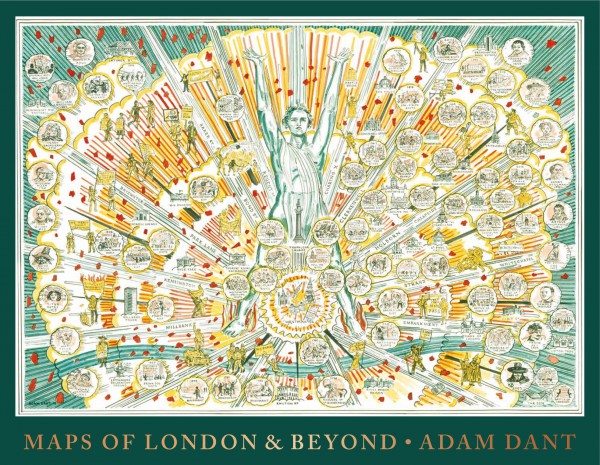
CLICK TO ORDER A SIGNED COPY OF MAPS OF LONDON & BEYOND BY ADAM DANT
Adam Dant’s MAPS OF LONDON & BEYOND is a mighty monograph collecting together all your favourite works by Spitalfields Life‘s cartographer extraordinaire in a beautiful big hardback book.
Including a map of London riots, the locations of early coffee houses and a colourful depiction of slang through the centuries, Adam Dant’s vision of city life and our prevailing obsessions with money, power and the pursuit of pleasure may genuinely be described as ‘Hogarthian.’
Unparalleled in his draughtsmanship and inventiveness, Adam Dant explores the byways of English cultural history in his ingenious drawings, annotated with erudite commentary and offering hours of fascination for the curious.
The book includes an extensive interview with Adam Dant by The Gentle Author.
Adam Dant’s limited edition prints are available to purchase through TAG Fine Arts
A New Home For Schrodinger
Ever since my cat Mr Pussy died last year, readers have been writing to enquire when I will get another and thus it is my great pleasure to introduce Schrodinger, formerly of Shoreditch Church.
With your help I am compiling a collection of stories of my old cat THE LIFE & TIMES OF MR PUSSY, A Memoir Of A Favourite Cat to be published bySpitalfields Life Books on 20th September. There are two ways you can help publish the book.
1. I am seeking readers who are willing to invest £1000 in THE LIFE & TIMES OF MR PUSSY. In return, we will publish your name in the book and invite you to a celebratory dinner hosted by yours truly. If you would like to know more, please drop me an email spitalfieldslife@gmail.com
2. Preorder a copy of THE LIFE & TIMES OF MR PUSSY and you will receive a signed and inscribed copy in September when the book is published.
Click here to preorder your copy
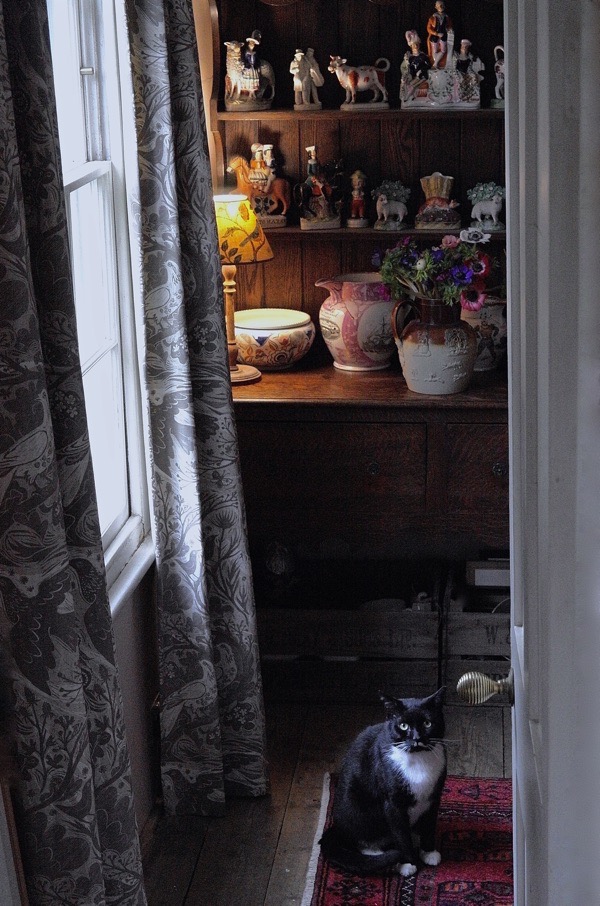
Who is this newcomer in the house, perched so warily upon the carpet? It is none other than our old feline friend, Schrodinger the Shoreditch Church cat. Reverend Paul Turp’s retirement meant that Schrodinger needed a new home, so I was asked if I might be willing to take him and thus Schrodinger came to live with me in Spitalfields.
Recently, many disappointed visitors to Shoreditch Church have been asking where the cat has gone. Over his two years there, Schrodinger acquired a popular following who celebrated him for dropping a mouse at the feet of the Bishop of London, jumping onto the shoulders of the Bishop of Stepney and parading in the aisle, singing to the audience during classical music concerts.
No doubt Schrodinger was surprised to find himself in my house, yet he quickly grew to appreciate the comfort of carpets and upholstered furniture by contrast with the stone floors and bare wooden pews of Shoreditch Church. When he arrived in the spring, I was still lighting a fire every night and this became an evident source of pleasure for him after the long winter nights he spent in the cold, sleeping in the crypt among the crumbling coffins and dusty tombs. Schrodinger arrived one Sunday after the service and quickly fell into a delighted slumber after I presented him with a dish of freshly cooked chicken, thus introducing him to my weekly ritual of a roast dinner at the end of the week.
I bought a sheepskin and put it on the old wing chair where Mr Pussy used to sit, so that Schrodinger might feel at home there. On his first night, I woke to check on him and found him lying on his back in the chair, asleep with his limbs distended in the firelight. It was an encouraging sign.
After the freedom that Schrodinger enjoyed to roam in the huge church, I feared he might grow frustrated to discover himself confined in my house and tear the place up. I covered furniture in blankets and put away breakable china. Yet Schrodinger was placid in his new home, content to sit upon his sheepskin in the warm and doze his days away. Even if my church was smaller than the one he came from, there was the compensation of domestic comfort. Most touching was his obvious delight and gratitude at eating fresh food which was a novelty for him.
We sat and regarded each other in mutual curiosity, Schrodinger in his wing chair and me perched upon the sofa. I observed that his black raiment and white collar gave him an ecclesiastical air while his curious half-handlebar moustache indicated his origin among the modish folk of Shoreditch. I wish I could reveal Schrodinger’s observations about me but he is too discreet to disclose them.
In those first weeks, Schrodinger was wary. He looked at me suspiciously as if to ascertain for what purpose I had interned him. Keeping his distance, he leapt from the wing chair if he heard footsteps on the stair and hid behind it, peering round to examine any newcomer entering the room.
Since it was Schrodinger’s reputation for vanishing which gave him his name, I was concerned that he might disappear if I let him go outside too soon, making his way back to Shoreditch Church again. So I was careful to lock the cat flap and only open windows from the top, just enough for ventilation but not sufficient to permit an agile cat to escape. Yet the very first time I left him alone in the house, Schrodinger vanished.
I arrived back after a couple of hours away and Schrodinger was no longer asleep in the chair where I had left him. I searched the house conscientiously, going from room to room systematically, peering under the bed and other furniture by torchlight. It was a mystery. I checked the windows and I could find no way out. I checked the rooms again and examined every possible hiding place – but he was nowhere to be found. There was only one conclusion. My hair stood on end at this possibility. Had he acquired the name Schrodinger after the thought experiment of Schrodinger’s Paradox – which proposes that a cat can be present and be absent at the same time – because he really had the ability to disappear?
I could not accept the notion that I had adopted a cat with supernatural powers, so I retraced my steps again and, when I turned, I found Schrodinger standing behind me. The reason I could not find him before was because he had followed quietly behind me round the house all the time I was searching. He looked at me blankly but I realised this was a cat of sly intelligence.
After three weeks, Schrodinger began to show signs of restlessness, checking the cat-flap every day and attempting to open it. He had gained weight and needed more exercise. By now, the weather had improved and it was cruel to prevent him going outside into the sunlight any longer.
Every few days, the warden at Shoreditch Church came to check on Schrodinger’s progress in his new home and offer him reassurance. He was the only person to whom Schrodinger would respond if summoned. So when the time came to let Schrodinger outside for the first time in Spitalfields, the warden came round lest he bolt off and got lost in the warren of streets, yards and alleys.
It was May Day and a fine warm morning when we opened the door and sat in the garden, waiting to see if Schrodinger would follow us outside. Sure enough he appeared, poised in the doorway. Then he walked up the path to the unmarked spot at the foot of the rambling rose where I buried the ashes of Mr Pussy and placed his paws upon the ground. He held them there for perhaps thirty seconds of stillness, before snapping out of his reverie and wandering off to explore the garden.
I was astonished by what I had witnessed but when I explained the significance of it to the warden, he reminded me that Schrodinger was used to Shoreditch Churchyard which is full of interments and so, perhaps, this moment of recognition was not so surprising. Once he had paid due respect to his predecessor, Schrodinger took a brief promenade of the garden and went back into the house. Then I unlocked the cat flap which permits him to come go as he pleases, and he has not disappeared yet.
You may expect further reports on Schrodingers’s life in Spitalfields.
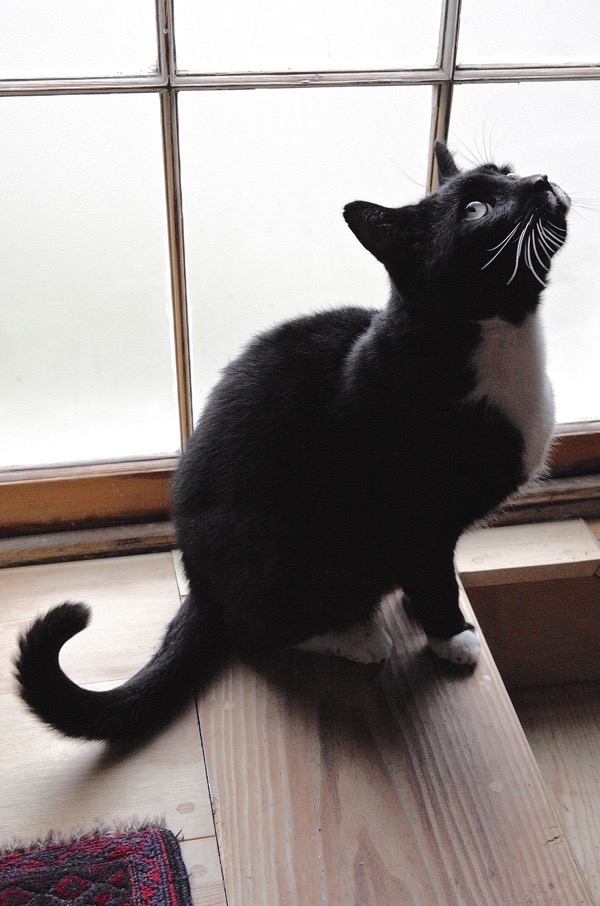
“I realised this was a cat of sly intelligence”
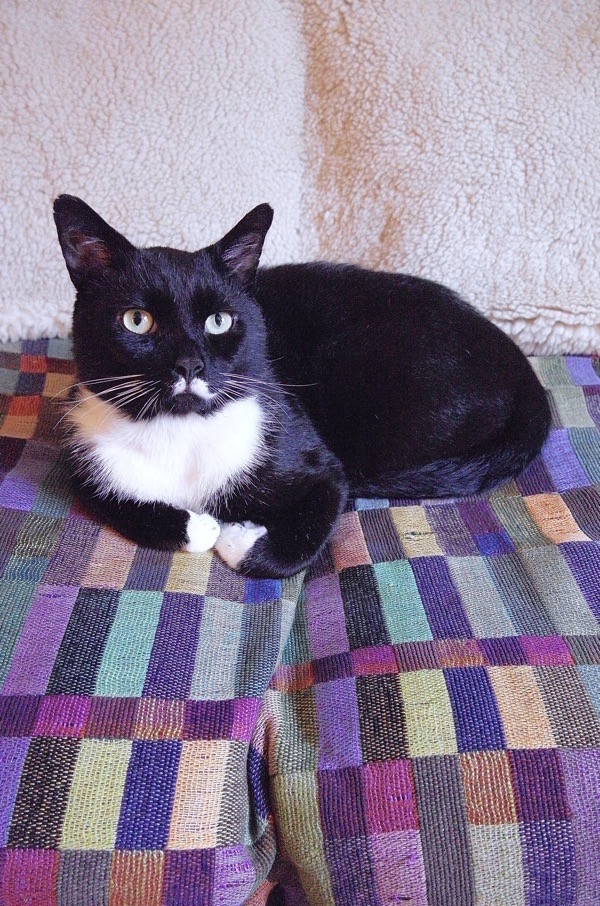
“I observed that his black raiment and white collar gave him an ecclesiastical air while his curious half-handlebar moustache indicated his origin among the modish folk of Shoreditch”
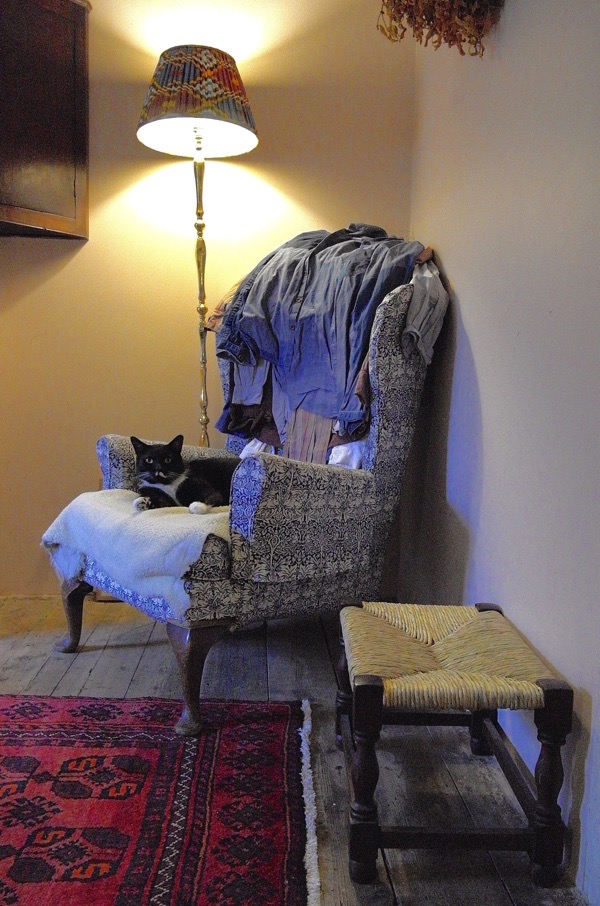
“I bought a sheepskin and put it on the old wing chair where Mr Pussy used to sit, so that Schrodinger might feel at home there”
You may also like to read about
Mr Pussy, Water Cat
Below you can read another of the stories of my old cat Mr Pussy who died last year, which I am collecting into a book entitled THE LIFE & TIMES OF MR PUSSY, A Memoir Of A Favourite Cat to be published bySpitalfields Life Books on 20th September.
There are two ways you can help publish the book.
1. I am seeking readers who are willing to invest £1000 in THE LIFE & TIMES OF MR PUSSY. In return, we will publish your name in the book and invite you to a celebratory dinner hosted by yours truly. If you would like to know more, please drop me an email spitalfieldslife@gmail.com
2. Preorder a copy of THE LIFE & TIMES OF MR PUSSY and you will receive a signed and inscribed copy in September when the book is published. Click here to preorder your copy
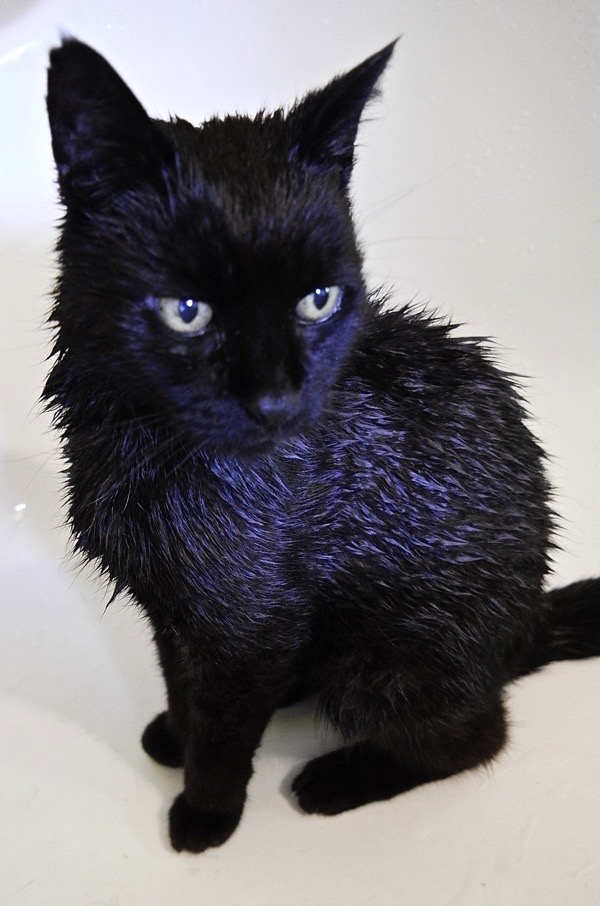
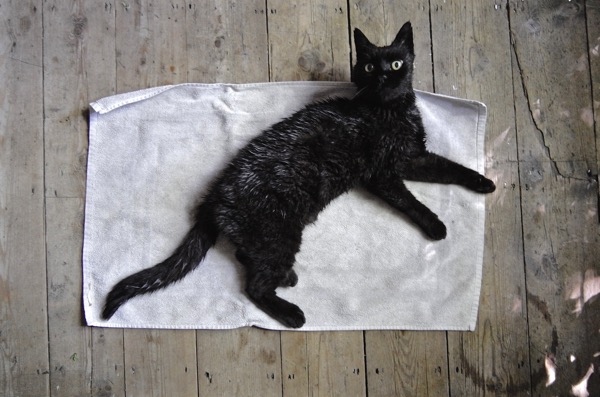
My old cat, Mr Pussy, loves water. While others detest getting their feet wet, he has never been discouraged by rain, even delighting to roll in wet grass. Consequently, when he languishes in hot weather, I commonly sponge him down with cold water – an ecstatic experience that leaves him swooning.
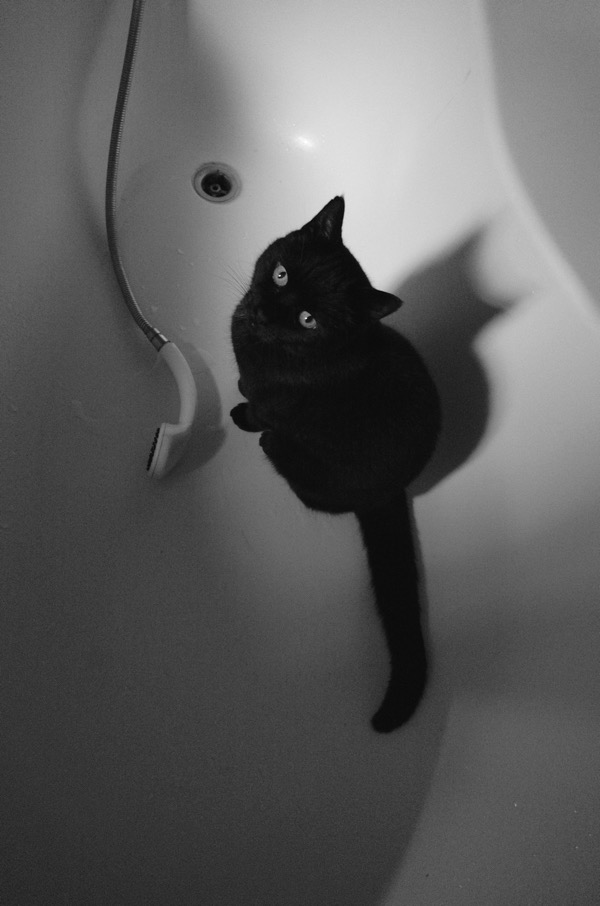
Although I am conscientious to leave him a daily dish of fresh water beside his bowl of dry biscuits, he prefers to drink rainwater or running water, seeking out puddles, ponds and dripping taps. Sometimes when I have been soaking in the bath, he has even appeared – leaping nimbly onto the rim – and craned his long neck down and extended his pink tongue to lap up my bath water, licking his lips afterwards out of curiosity at the tangy, soapy flavour. And when I choose to stand in the bath and take a shower, he likes to jump in as I jump out to lap up the last rivulets before they vanish down the drain.
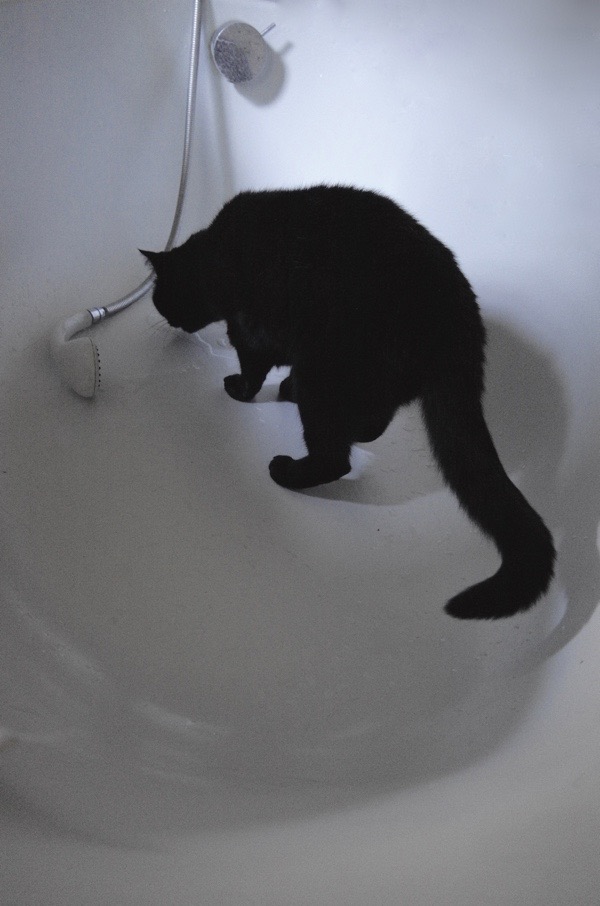
One day, I took the shower-head and left it lying upon the floor of the bath, switching on the water briefly to wash away the soap in order to leave him clean water to drink. Thus a new era began. He perched upon the rim of the bath, his eyes widening in fascination at the surge of water bouncing off the sides of the tub in criss-crossing currents. This element introduced a whole new level of interest for him and now it has become a custom, that I switch on the shower for a couple of seconds, so that he may leap onto the bath and manoeuvre himself down to lick up the racing trails before they disappear.
It was something I did occasionally to indulge him, then daily, and now he demands it whenever he sees me in proximity – perhaps a dozen times yesterday and sometimes in the middle of the night too. The game begins with the spectacle of the surge of water coursing around the bath. He gets pretty excited watching the rush. And then, as soon as the water is switched off, he lets himself down head first, leaving his back legs on the rim and moving swiftly to slurp up the rivulets as they run. Each time it is a different challenge and the combination of the necessity of quick thinking, of nimble gymnastics and the opportunity of refreshment is compelling for him.
In the winter – you will recall – I found myself letting him in and out of the drawing room door, as he sought respite from the warmth and then re-admission again five minutes later. I am aware of his controlling nature and the pleasure he draws in extricating these favours from me, yet this new game has become a compulsion for him in its own right. When it gives him such euphoria, I cannot refuse his shrill requests, trilling liking a song bird and indicating the bathroom with a deliberate twist of his neck.
From the moment I turn my steps in that direction he is ahead of me, leaping up and composing his thoughts upon the brink with the intensity of a diver before a contest. Hyper-alert when I switch on the tap momentarily, he is rapt by the sensory overload of the multiple spiralling streams of water and intricate possibilities for intervention. Running all the decisions in his mind, he may even make a move before the water is switched off. Unafraid to soak his feet, he places two paws down into the swirling current and starts to lap it up fast. Observing his skill and engagement as a credulous yet critical spectator of his sport, I cannot deny he is getting better at negotiating the bathtub runnels. His technique is definitely improving with practice.
Within a minute, the water has drained to trickles and, before I may rediscover my own purpose, he seeks a repeat performance of his new game – and thus, with these foolish pastimes, we spend our days and nights in the empty house in Spitalfields.
CLICK HERE TO PREORDER A COPY OF THE LIFE & TIMES OF MR PUSSY

So Long, Len Hoffman
Today we publish a tribute by Professor of Criminology Dick Hobbs to Len Hoffman, a widely-loved Table Tennis Coach who died last week aged ninety-four

Len Hoffman
For seventy years, Len Hoffman gave up his time to coach kids in East London.”It keeps me young,” claimed the sprightly nonagenerian as he went about his regular stint, coaching at Mossford table tennis club in Seven Kings.
Born in Bow, Len moved to Forest Gate as a child and left school at fourteen. “Dad worked on the Times, so he got me a job there working as a messenger boy. I went everywhere in London, including to Buckingham Palace.” After service in the RAF – “they sent me to Germany as the German prisoners of war were being sent back” – Len returned to work as a clerk on the Times, but could not settle. It was at this point that his obsession with sport kicked in and his long career in coaching commenced in 1947. Len worked as a school attendance officer in Newham and as a table tennis coach in schools in Newham and Barking and Dagenham.
However, it was in a scruffy ex-army shed in Sebert Rd Forest Gate that Len established what became a hotbed for British table tennis. In this unlikely setting, three or four nights per week, and on Saturday mornings and Sunday afternoons, the hut was packed solid with kids aged from five to sixteen, including Chester Barnes, who became English Junior and Senior champion, and put the sport both on the map and on the back pages. Essex and National champions followed, along with a succession of East End kids who represented England at Junior and Senior level including England Number One at Junior, Senior and Veterans level Stuart Gibbs, and Skylet Andrew a former Olympian, winner of three Commonwealth Gold medals, a World Cup Silver medal and fouerteen National titles, who is now a successful sports agent.
If table tennis was not your thing, there was always five-a-side football under floodlights. Thus, across various East End and Essex venues, Len encouraged the fledgling careers of professional footballers such as Frank Lampard senior, Chris Hughton and Harry Redknapp.
After a day’s work, Len coached table tennis and football five nights a week, “lucky I never got married, no wife would have put up with it,” he admitted to me. One of his venues was the much-missed Fairbairn House Boys’ Club in Canning Town. Founded in 1891 and with its origins in the Mansfield House University settlement, at its peak the club had a membership of nine hundred, and included facilities such as a library, theatre, workshops, gymnasium, and canteen. The club also boasted a sports’ ground at Burgess Rd East Ham, with a running track, football pitches, tennis courts and an open air swimming pool which boasted a gym, a theatre, an athletics track and an outdoor swimming pool.
Generations of young people benefitted from the quiet unassuming dedication of Len Hoffman who became the proud recipient of the British Empire Medal.
While we were chatting in his room he worked out on an exercise bike that he had adapted. “I do this every day, it’s good for me to keep moving,” he explained. When he was not working out on his Heath Robinson machine, Len regaled me with tales from a lifetime of coaching. “Chester Barnes was the best, no doubt about it. He just had that little something about him.” Yet most of his memories did not involve stars or sporting excellence, they typically involved the little details of people’s lives, of teams, players and muddy football pitches, cold church halls on a winter’s night and the reaction in 1964 of a young kid on seeing the twin towers of the old Wembley stadium exclaimed, “But it looks just like it does on the telly!” These little details recounted over half a century later were what Len Hoffman was all about.
Every Saturday morning he was picked up by Mossford Secretary, John Spero, and delivered to the club, where with undimmed enthusiasm he organised the weekly tournament and coached hordes of potential champions – along with their young brothers and sisters.
For someone like Len Hoffman, it was never solely about stars. He recognised that too often we focus on the elite end of sport, ignoring the wider benefits to be gleaned from participation. All over London and in a wide range of sports, volunteers like Len and his coaching colleagues Phil Ashleigh and Tony Cantale offer kids a chance to get out of the house and off the street, to learn a skill, make friends and build their confidence. For once, the term “unsung heroes” is entirely appropriate.
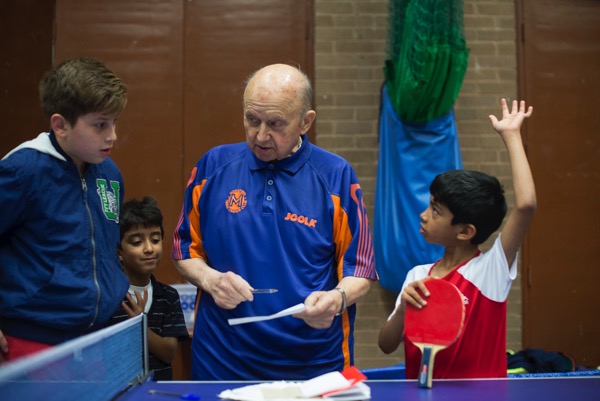
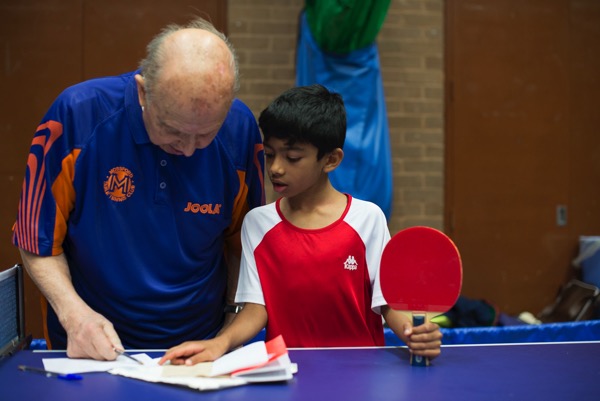

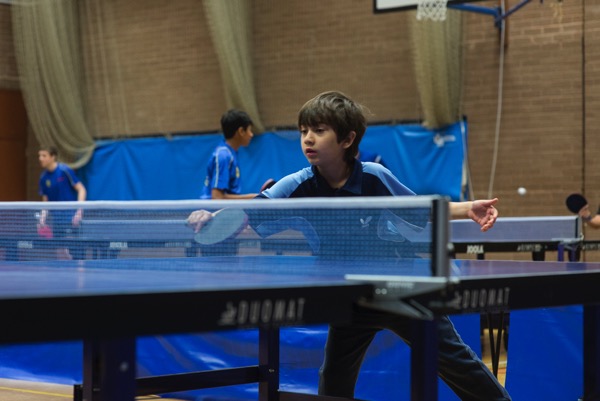




Len Hoffman, Sports Coach
Photographs copyright © Sarah Ainslie
You may also like to read about
David Robinson, Repton Boxing Club
Tony Burns, Repton Boxing Club
Hope For The Whitechapel Bell Foundry
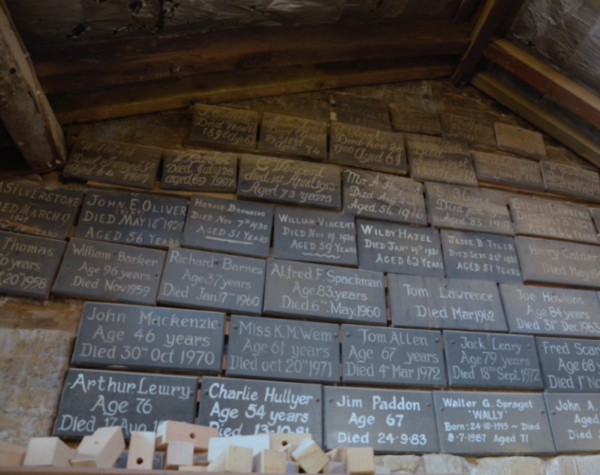
Commemorative wall to workers at Whitechapel Bell Foundry
It was in these pages that I announced the pitiful loss of the historic Whitechapel Bell Foundry – the world’s most famous bell foundry – which closed a year ago when the building was sold, all the staff lost their jobs and the equipment was auctioned off. At that time, ten thousand people signed the East End Preservation Society‘s petition to Save the Whitechapel Bell Foundry which was delivered to Downing St by Dan Cruickshank, without any response.
Last June, the building changed hands, sold first by bell founders Alan & Kathryn Hughes for £5.1 million to East End property developer Vince Goldstein who resold it on the same day to Raycliff Capital, the company of the American plutocrat Bippy Seigal, for £7.9 million. Subsequently, Raycliff have acquired two additional sites at the rear of the bell foundry and plan to redevelop the entire location as an upmarket boutique hotel with the foundry itself becoming a restaurant.
Meanwhile, the United Kingdom Historic Building Preservation Trust, an independent charity under the founding patronage of His Royal Highness, The Prince of Wales, have announced a partnership with Factum Foundation, a global leader in the use of technology for the preservation of cultural heritage and a multi-disciplinary workshop which manufactures sculptures for some of the world’s most famous artists. Together, they have the resources to buy the buildings off the developer at market value and re-open them as a foundry, re-equipped with up-to-date machinery, for the production of small bells and art casting.
This project would become an international focus for digital casting alongside traditional methods – merging old and new technology – and develop an apprenticeship and training scheme for bell-making and tuning in partnership with the Prince’s Trust. Installation of an electric furnace can deliver a zero-emission workshop with the heat produced being channelled to deliver power to a new building at the rear, providing affordable live-and-work spaces for local artisans. Many of the original foundry staff would regain their jobs and there would be increased public access.
Factum, founded by Adam Lowe, has pioneered the use of digital casting and famously cast a replica of the oldest oak tree in Windsor Great Park, which was commissioned by the Royal Academy and presented to the Queen as a gift for her ninetieth birthday in 2016.
The UK Building Preservation Trust is celebrated for buying the Burleigh Pottery Factory – one of Britain’s oldest potteries – in Stoke, after it closed a few years ago. They re-established the pottery as a commercially successful business, saving the employees’ jobs and contributing significantly to the regeneration of Stoke. This remarkable success makes them the ideal organisation to take on the Whitechapel Bell Foundry.
Thus we arrive at a watershed moment, offering a stark choice between a reinvigorated foundry with a sustainable future as an asset for London or yet another luxury boutique hotel. Raycliff commence their public consultation in a week’s time, displaying a model of their hotel in the foundry workshop. UK Building Preservation Trust and Factum have already won the support of heritage bodies and consulted with Tower Hamlets Council. Recently, a conversation between Raycliff and the partnership of UK Building Preservation Trust and Factum has been initiated.
In order to proceed, the developers require permission for change of use, from bell foundry to hotel, from Tower Hamlets Council and it is essential that this is not granted if Britain’s oldest manufacturing business, which can trace its roots in Whitechapel back to 1363, is to be saved.
The widespread disappointment at the closure of the bell foundry revealed the scale of feeling among the general public and the deep affection in which this venerable institution is held by Londoners, but now declarations of support from major political figures in the capital are required – speaking out on behalf of the people.
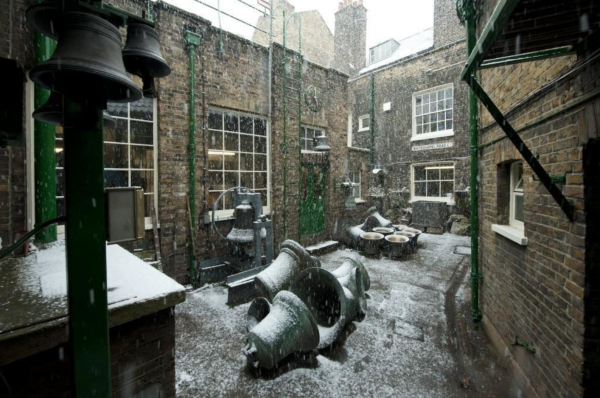
Internal courtyard of the Bell Foundry in snow (photograph by Derek Kendall)
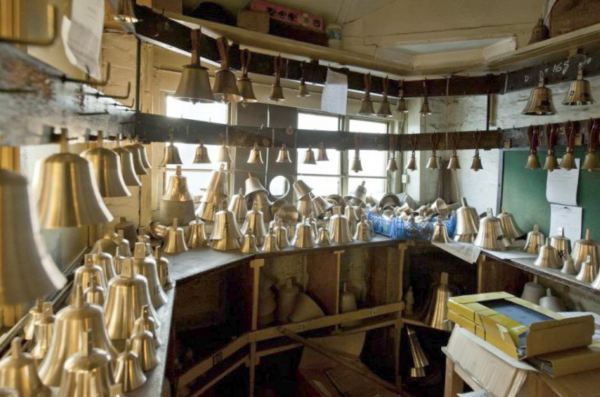
Handbell workshop at Whitechapel
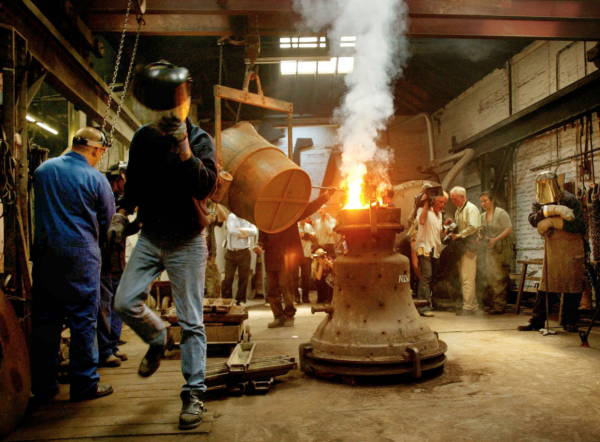
Bell cast for the memorial to commemorate the 9/11 attacks (photograph by Kieran Doherty)
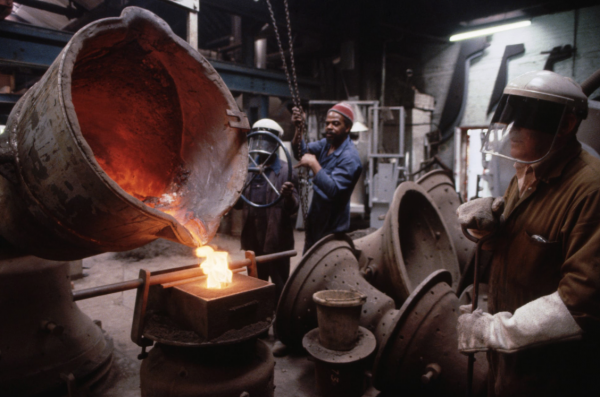
Casting bells at Whitechapel in 1997 with the traditional loam and green sand method
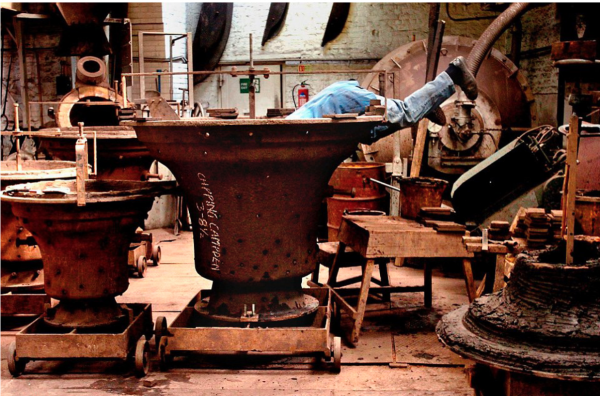
Working on a bell for St James’ Church, Chipping Campden, in 2004

Members of East End Preservation Society deliver their petition (photograph Sarah Ainslie)
“The world famous Whitechapel Foundry is a landmark – both for its splendid use and its fine historic buildings. Bells cast at the foundry have sounded in cities around the world for hundreds of years. For many, that sound represents the heart and soul of London, and in the case of Big Ben in the Palace of Westminster it is the sound of Freedom. The existing buildings deserve the highest level of recognition and protection as a unique and important part of our heritage.”
Dan Cruickshank

You may also like to read about
Royal Jubilee Bells At Garlickhythe
The Most Famous Bells in the World
A Visit To Great Tom At St Paul’s
A Petition to Save the Bell Foundry












