
Looking Down On Old London

In my dream, I am flying over old London and the clouds part like curtains to reveal a vision of the dirty monochrome city lying far beneath, swathed eternally in mist and deep shadow.
Although most Londoners are familiar with this view today, as the first glimpse of home on the descent to Heathrow upon their return flight from overseas, it never ceases to induce wonder. So I can only imagine the awe of those who were first shown these glass slides of aerial views from the collection of the London & Middlesex Archaeological Society at the Bishopsgate Institute a century ago.
Even before Aerofilms was established in 1919 to document the country from above systematically, people were photographing London from hot air balloons, zeppelins and early aeroplanes. Upon first impression, the intricate detail and order of the city is breathtaking and I think we may assume that a certain patriotic pride was encouraged by these views of national landmarks which symbolised the political power of the nation.
But there is also a certain ambivalence to some images, such as those of Horseguards’ Parade and Covent Garden Market, since – as much as they record the vast numbers of people that participated in these elaborate human endeavours, they also reduce the hordes to mere ants and remove the authoritative scale of the architecture. Seen from above, the works of man are of far less consequence than they appear from below. Yet this does not lessen my fascination with these pictures, as evocations of the teeming life of this London that is so familiar and mysterious in equal measure.

Tower of London & Tower Bridge

Trafalgar Sq, St Martin-in-the-Fields and Charing Cross Station

Trafalgar Sq & Whitehall

House of Parliament & Westminster Bridge

Westminster Bridge & County Hall

Tower of London & St Katharine Docks

Bank of England & Royal Exchange

Spires of City churches dominate the City of London

Crossroads at the heart of the City of London

Guildhall to the right, General Post Office to the left and Cheapside running across the picture

Blackfriars Bridge & St Paul’s
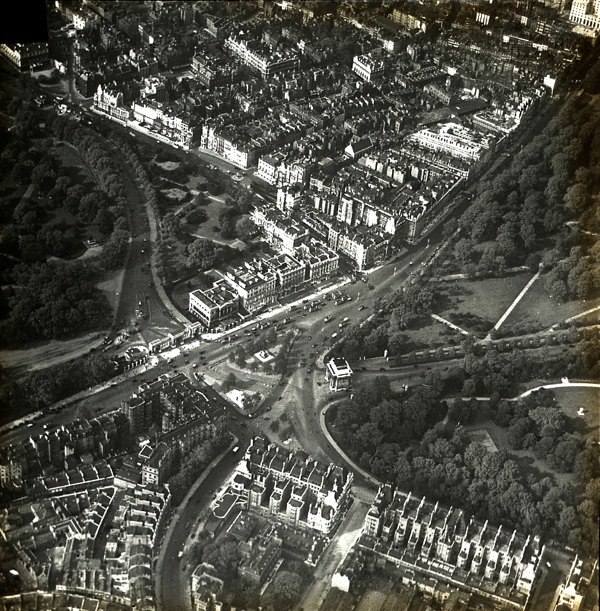
Hyde Park Corner

Buckingham Palace & the Mall

The British Museum

St James’ Palace & the Mall

Ludgate Hill & St Paul’s

Pool of London & Tower Bridge with Docks beyond
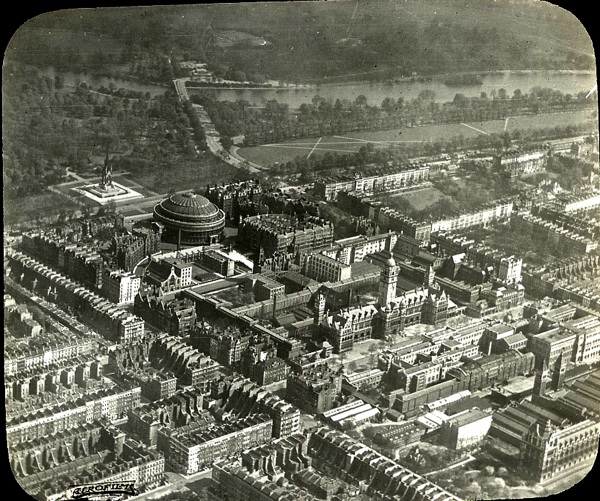
Albert Hall & Natural History Museum

Natural History Museum & Victoria & Albert Museum

Limehouse with St Anne’s in the centre & Narrow St to the right

Reversed image of Hungerford Bridge & Waterloo Bridge

Covent Garden Market & the Floral Hall

Admiralty Arch

Trooping the Colour at Horseguards Parade

St Clement Dane’s, Strand

Peter Pan in Kensington Gardens
Glass slides courtesy Bishopsgate Institute
You may also like to take a look at
The Lantern Slides of Old London
The High Days & Holidays of Old London
The Fogs & Smogs of Old London
The Forgotten Corners of Old London
The Statues & Effigies of Old London
Last Chance To Save The Custom House
I am delighted to report that we have successfully raised the £5000 needed to employ a lawyer to investigate Tower Hamlets’ dodgy decision-making over the Truman Brewery Shopping Mall and seek grounds for a Judicial Review to overturn the decision.
Now I need your help to save the eighteenth century Custom House on the riverfront in the City of London. An application has been submitted to turn it into a luxury hotel, trashing much of the historic interior including the magnificent long room overlooking the Thames.
It is obvious that this handsome building should be restored and given over to cultural use with public access, just as they have done at Somerset House in the Strand.
Please write a letter of objection before the decision meeting on Tuesday 26th October. You will find instructions for how to do this at the foot of the article below.
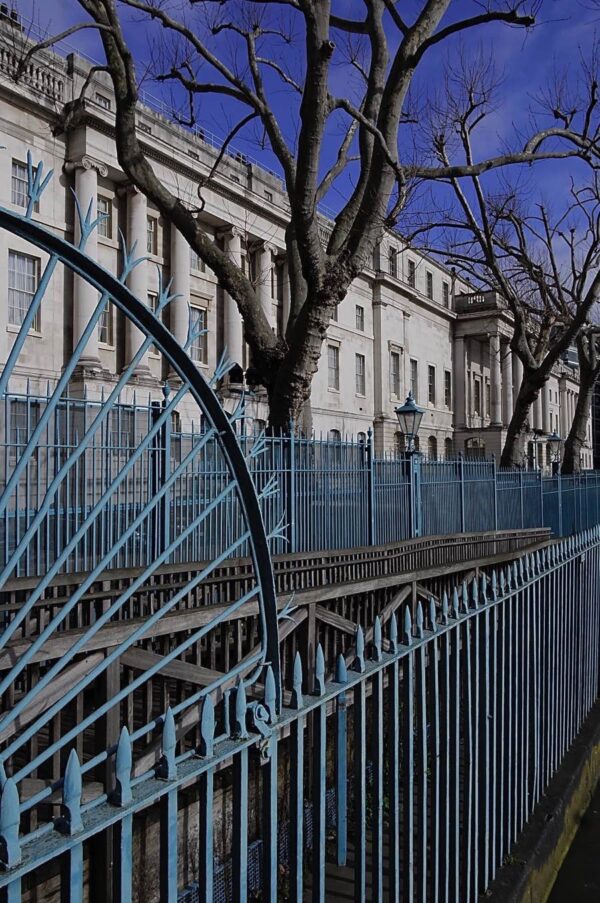
Custom House by Robert Smirke, 1825, with elements by David Laing, 1817
I walked down from Spitalfields to the Custom House. For years, I was unaware of the nature of this enormous austere building which presents an implacable front of Portland stone to the Thames between the Tower of London and old Billingsgate Market. Once I understood its purpose, then its commanding position over the Pool of London became evident.
For more than seven hundred years, this is where all cargoes passing through the Port of London were declared and duties paid, as well as serving as a passport office for migrants, registering upon arrival and departure. Perhaps no building is as central to our history as a seafaring nation than the Custom House. In recent years, we have come to re-evaluate the morality of the creation of Empire and the wealth it delivered. London was the financial capital of the system of slavery and the centre of the sugar trade, and the Custom House was part of this.
The evolution of the Custom House through the centuries follows the growth of Britain’s status as a trading nation, which makes this a pertinent moment to reflect upon the history of the building and the legacy it embodies.
In the eighteenth and nineteenth centuries, the epic Long Room – claimed to be the longest in Europe – at the heart of the Custom House was renowned as a wonder in its own right. Londoners came to observe the variety of races of traders from across the globe who attended to fulfil their obligations in the form of tariffs and taxes.
When Geoffrey Chaucer worked as Comptroller of the Customs of Wools, Skins and Tanned Hides in the Custom House, constructed by John Churchman in 1382, duties had formerly been collected since 1203 at Wool Quay just to the east. Tudor expansionism was reflected in an enlarged Custom House of 1559, destroyed a century later by the Great Fire.
Afterwards, the rebuilding of the Custom House was the first priority and it was Christopher Wren who established the pattern of the central Long Room surrounded by smaller offices, which has been maintained in the subsequent buildings each larger than the one before. It is a template that has been replicated in Custom Houses around the world.
Wren’s Custom House was destroyed by fire in 1717, initiating a series of ill-fated replacements that suffered multiple calamities. The next Custom House, designed by Thomas Ripley, caught fire in 1814, resulting in an explosion of gunpowder and spirits that dispersed paperwork as far as the Hackney Marshes. Simultaneously, the unfinished replacement, designed by David Laing, foundered when builder John Peto died unexpectedly leaving the project with insufficient financial backing.
Within two years of completion, Laing’s new Custom House developed structural problems, revealed when the ceiling of the Long Room partially collapsed in 1824. Canny architect Robert Smirke advised occupants to move out of the Long Room two days before it fell down and undertook an investigation which exposed shoddy workmanship and unstable riverfront foundations done on the cheap.
Unsurprisingly, Smirke was employed to rebuild and repair the Custom House, and he replaced the entire central section containing the Long Room in 1825. It is Smirke’s sober sensibility that prevails today, incorporating Laing’s east and west wings into an authoritative frontage of uniformity with an institutional restraint in embellishment and a spare, sombre proportion throughout.
For decades, the Custom House has been inaccessible to the public which is why a building of such central significance has become relatively unnoticed, yet it is publicly-owned. Now Her Majesty’s Revenue & Customs has vacated it and it has been leased to an offshore property developer based in the Bermuda tax haven. They have submitted a planning application for an unsympathetic conversion to a luxury hotel that will be destructive to the fabric of the grade I listed building, erasing its meaning and significance. In particular, suites of Georgian offices which are a unique survival will be destroyed and two light-box bars added to the roof, compromising the river frontage.
Meanwhile, SAVE Britain’s Heritage have prepared an imaginative alternative scheme which takes advantage of its spectacular location. The Long Room should be returned as a space for Londoners and south-facing quayside opened for permanent public access with riverside cafes, restaurants and bars, like a square in Venice.
The obvious precedents of Somerset House and Tate Modern demonstrate how the Custom House could be put successfully to public use again.
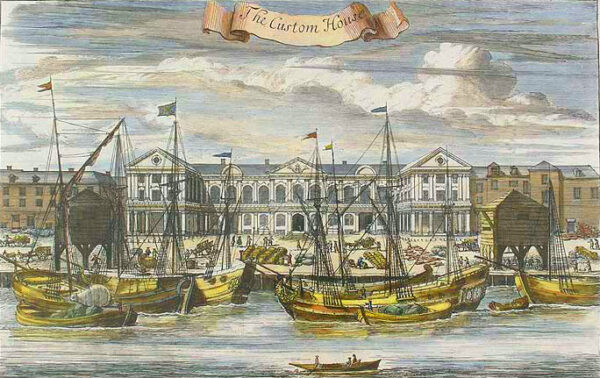
Christopher Wren’s Custom House
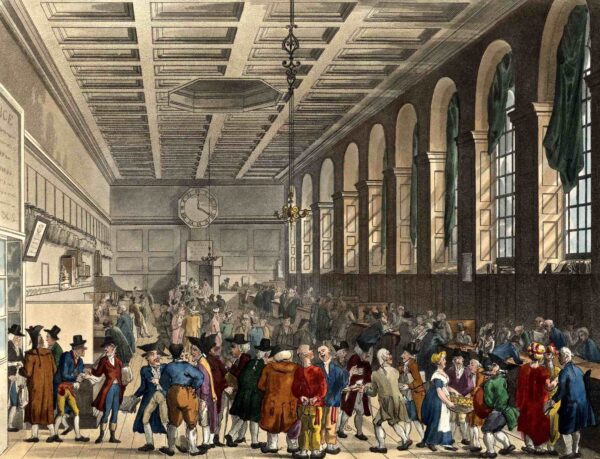
“The Custom House, in the uppermost of which is a magnificent room running the whole length of the building. On this spot is a busy concourse of nations who pay their tribute towards the support of Great Britain. In front of this building, ships of three hundred and fifty tons burthen can lie and discharge their cargoes.” From The Microcosm of London by Augustus Pugin & Thomas Rowlandson 1805 (Image courtesy Bishopsgate Institute)
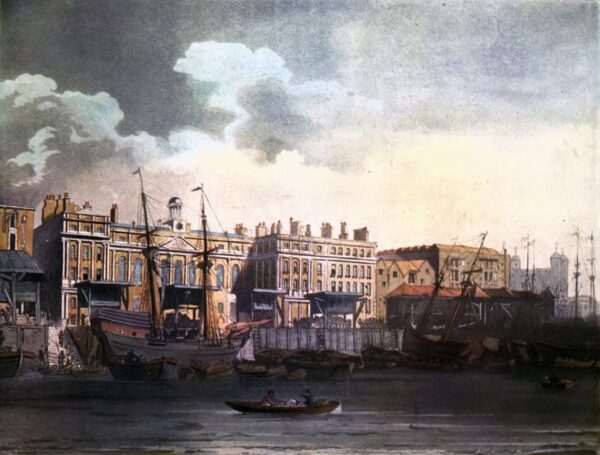
Thomas Ripley’s Custom House from The Microcosm of London by Augustus Pugin & Thomas Rowlandson, 1805
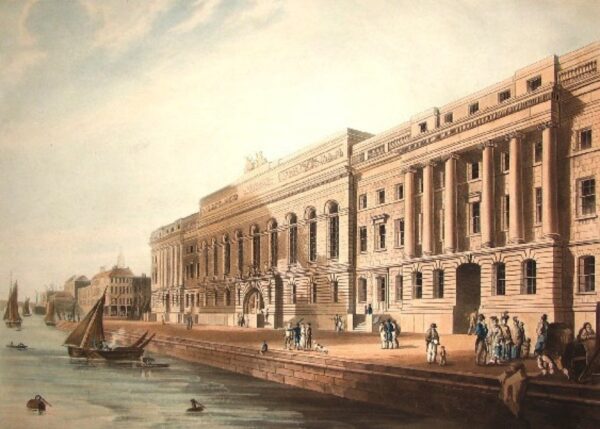
David Laing’s Custom House, 1817
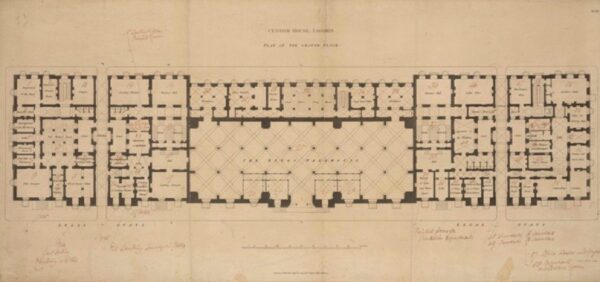
Plan of Laing’s Custom House
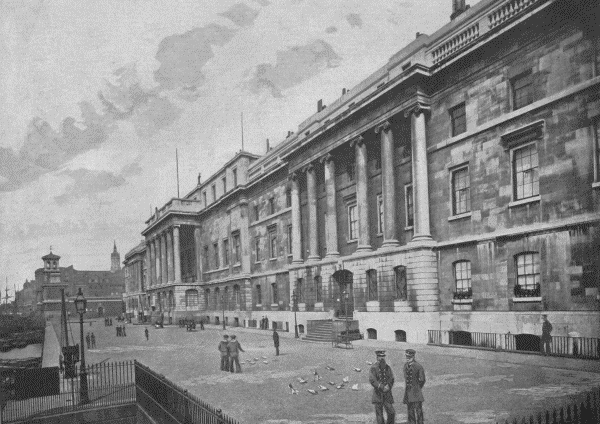
“Between London Bridge and the Tower, and – separating it from the Thames – a broad quay that was for long almost the only riverside walk in London open to the public, is the Custom House. Five earlier buildings on the same site were destroyed by fire, and the present structure was erected in 1814-17, the fine facade being designed by Sir R. Smirke. Some 2,000 officials are employed at the Custom House, and in its famous Long Room alone -190 ft by 66 ft – eighty clerks are habitually engaged. This is not surprising, for the trade of the Port of London is by far the greatest of any port in the world. The building, which is entered from Lower Thames St, contains an interesting Smuggling Museum.”
From The Queen’s London: a Pictorial & Descriptive Record of the Streets, Buildings, Parks & Scenery of the Great Metropolis, 1896
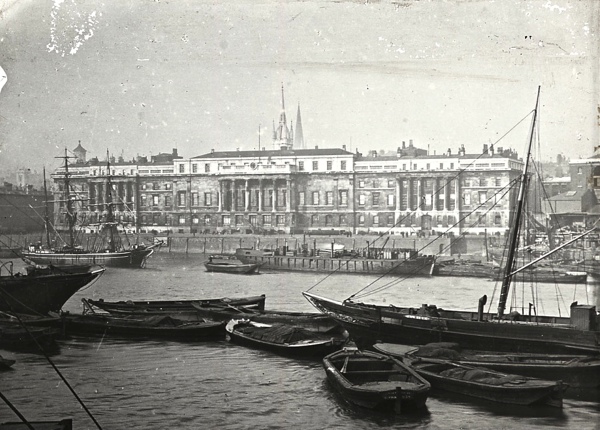
Custom House c. 1910 (Image courtesy LAMAS Collection, Bishopsgate Institute)
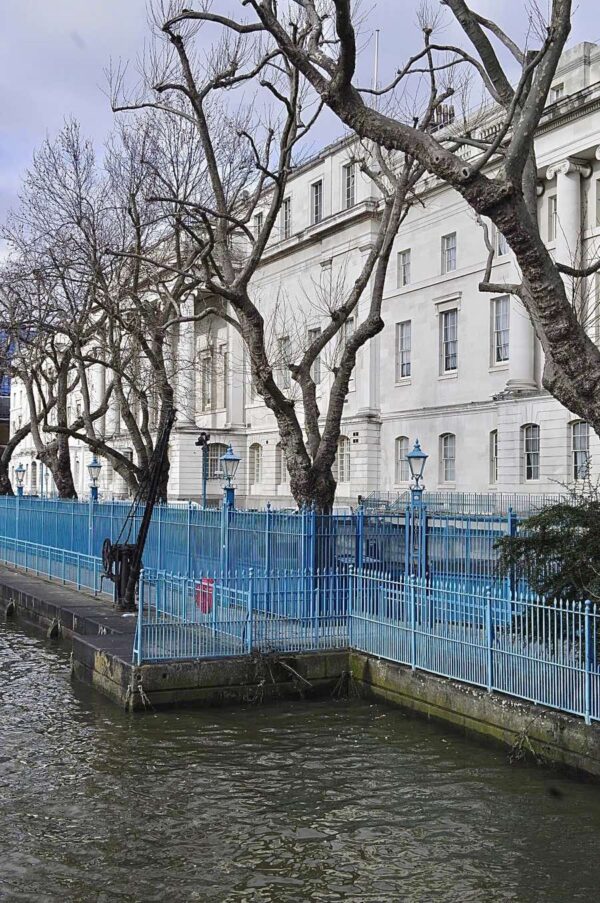
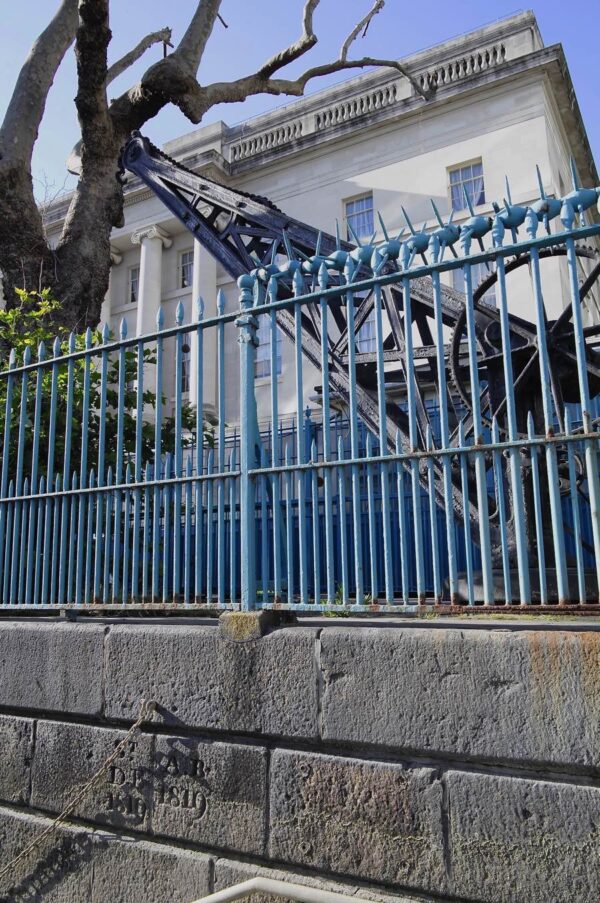
Boundaries of the parishes of All Hallows by the Tower and St Dunstan in the East, marked on the river wall which was designed by John Rennie, 1819
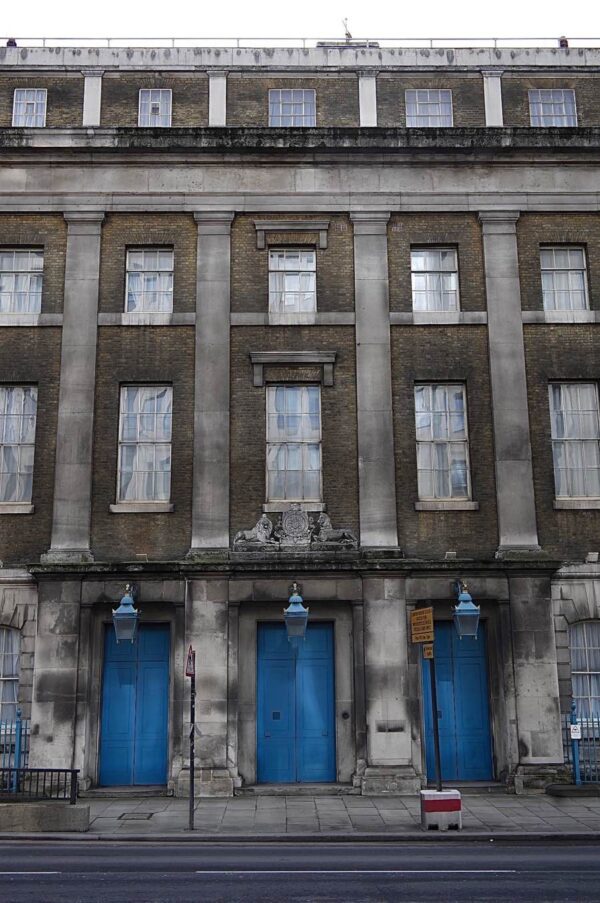
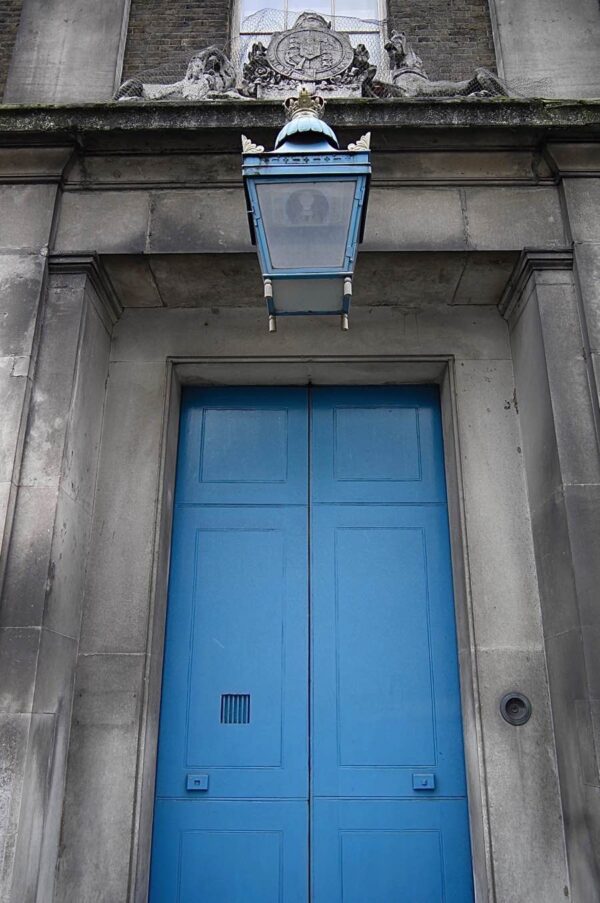
The Lower Thames St frontage with the main entrance
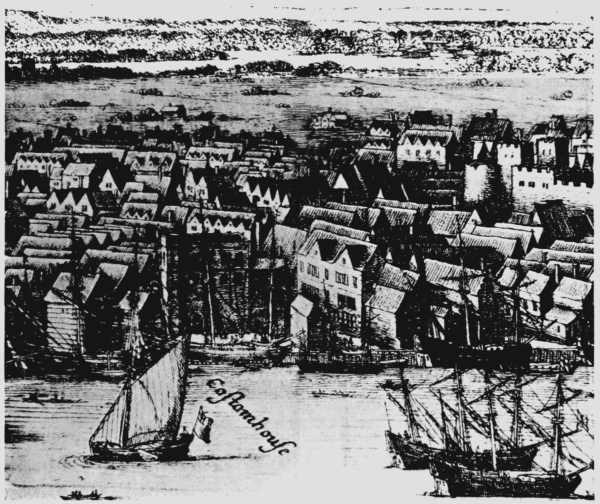
The Custom House as it appeared before the Great Fire by Wenceslas Hollar, 1647
PROPOSED REDEVELOPMENT OF THE CUSTOMS HOUSE
The offshore leaseholders of the Custom House want to undertake an unsympathetic and destructive conversion of this listed Grade I historic building into a luxury hotel when it should be put back to public use for all Londoners.
- The exclusivity of the luxury hotel development contradicts the City of London’s policy as outlined in the City Plan 2036, which gives preference to ‘office-led cultural use,’ as part of the City’s ambition to open heritage spaces to attract a wider cultural demographic.
- The hotel development will destroy suites of Georgian offices that are a unique survival.
- The hotel development will add two light box pavilions as bars on the roof which will compromise the principal frontage.
HOW TO OBJECT
Lodge an objection to the redevelopment by writing a personal letter to the City of London Corporation as soon as possible.
Please write in your own words and head it OBJECTION.
Quote Planning Applications 20/00632/LBC and 20/00631/FULMAJ
Anyone can object wherever they live. Members of one household can each write separately. You must include your postal address.
Email your objection to PLNComments@cityoflondon.gov.uk and copy it to Alastair.Moss@cityoflondon.gov.uk (Chair of Planning & Transportation Committee)
Or by post to:
The Department of the Built Environment,
City of London,
PO Box 270,
Guildhall,
London,
EC2P 2EJ
The Tragical Death Of An Apple Pie
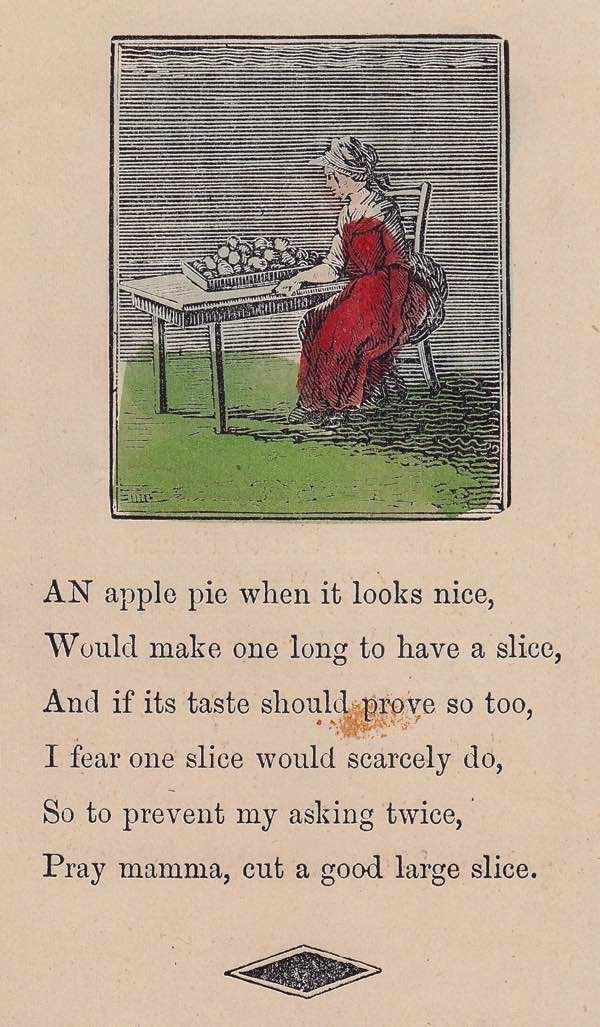
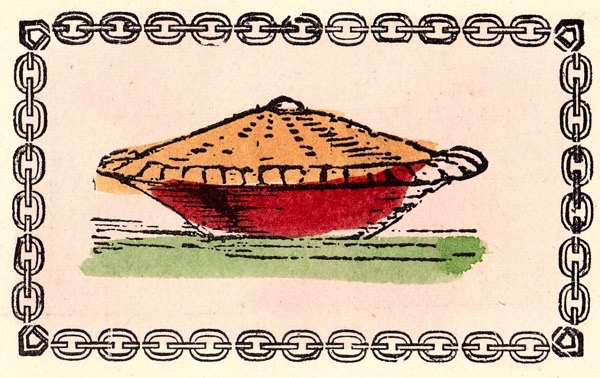
Recently, I went apple picking in the orchards of Kent and now the time in the year for apple pie has arrived. So I take this opportunity to present The Tragical Death of an Apple Pie, an alphabet rhyme first published in 1671, in a version produced by Jemmy Catnach in the eighteen-twenties.
Poet, compositor and publisher, Catnach moved to London from Newcastle in 1812 and set up Seven Dials Press in Monmouth Court, producing more than four thousand chapbooks and broadsides in the next quarter century. Anointed as the high priest of street literature and eager to feed a seemingly-endless appetite for cheap printed novelties in the capital, Catnach put forth a multifarious list of titles, from lurid crime and political satire to juvenile rhymes and comic ballads, priced famously at a halfpenny or a ‘farden.’

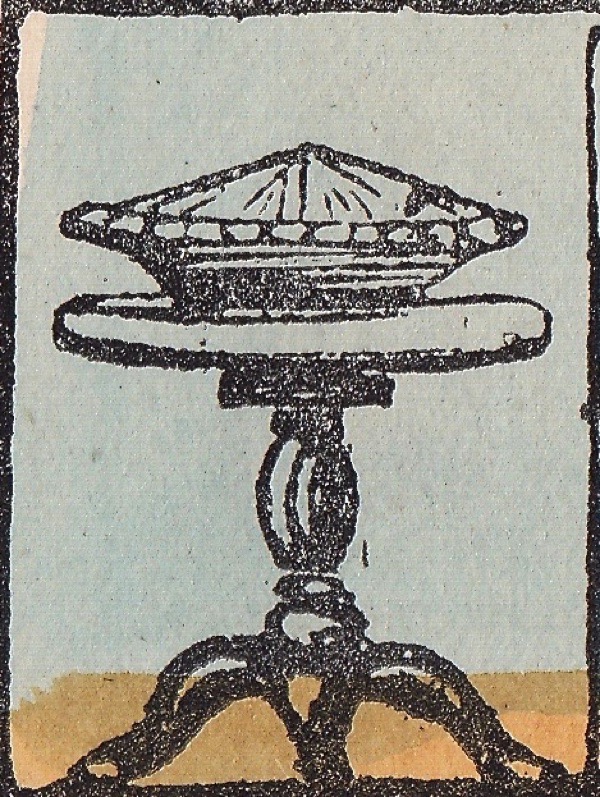
A An Apple Pie

B Bit it

C Cut it

D Dealt it
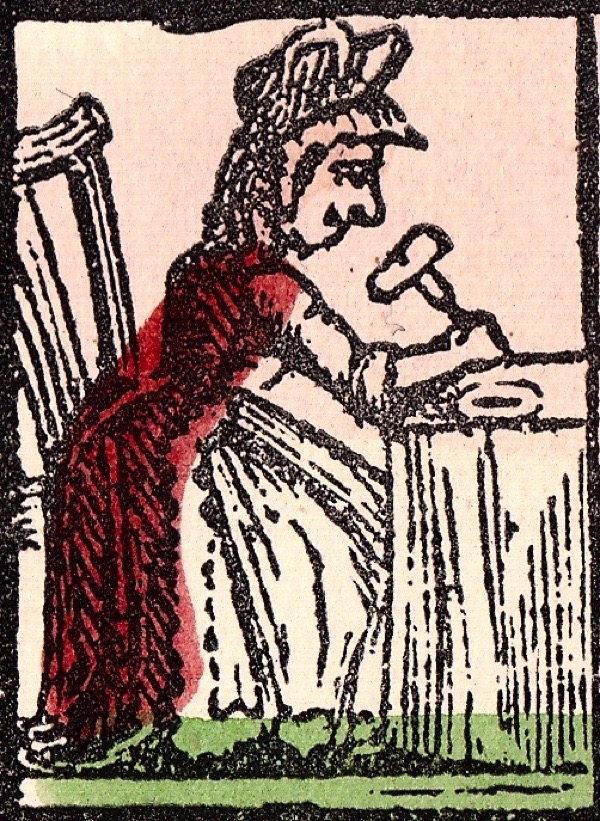
E Did eat it
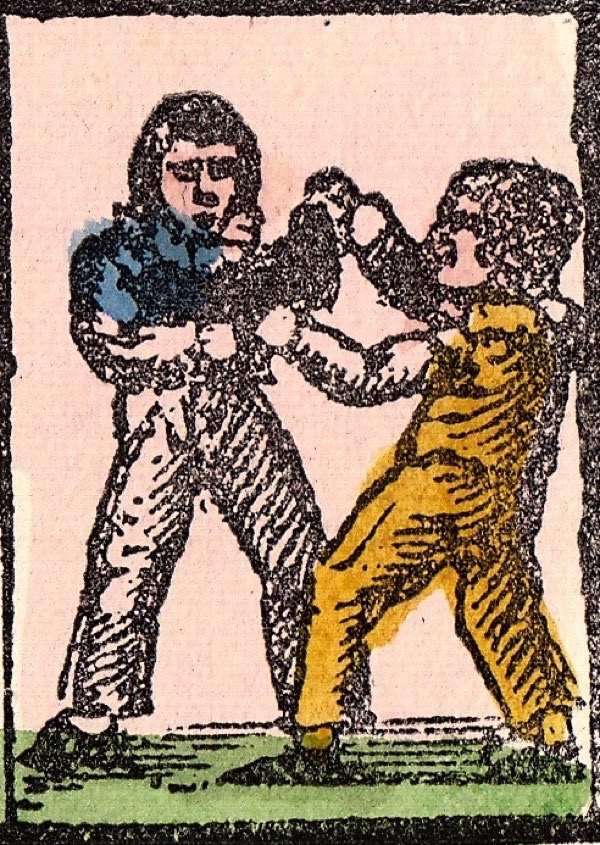
F Fought for it
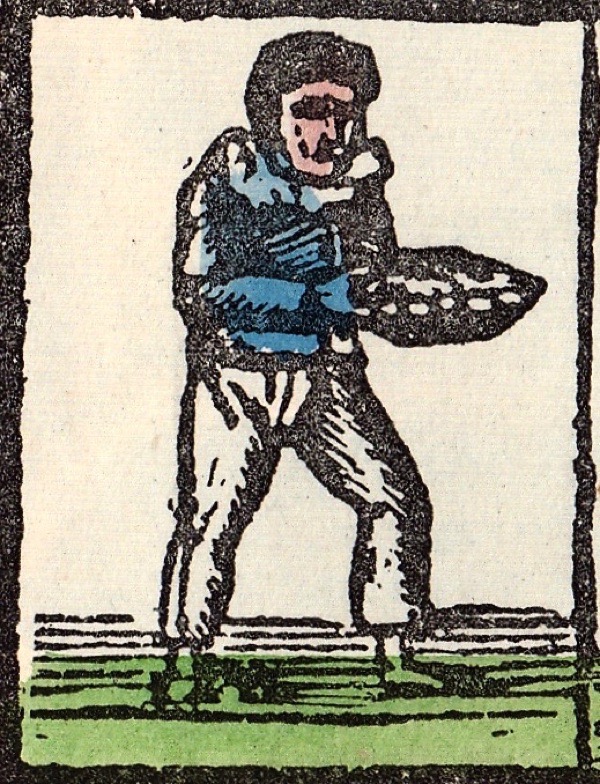
G Got it

H Had it

J Join’d for it

K Kept it
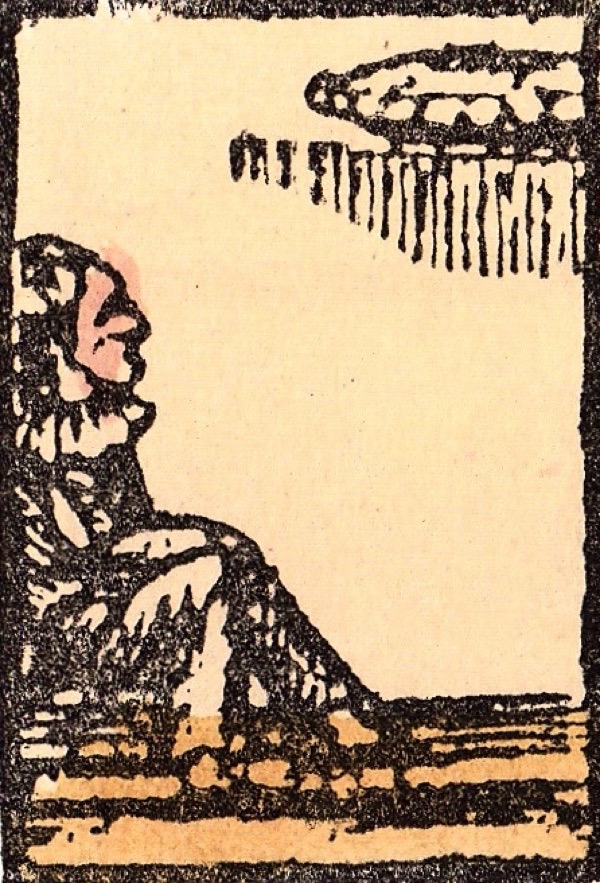
L Long’d for it
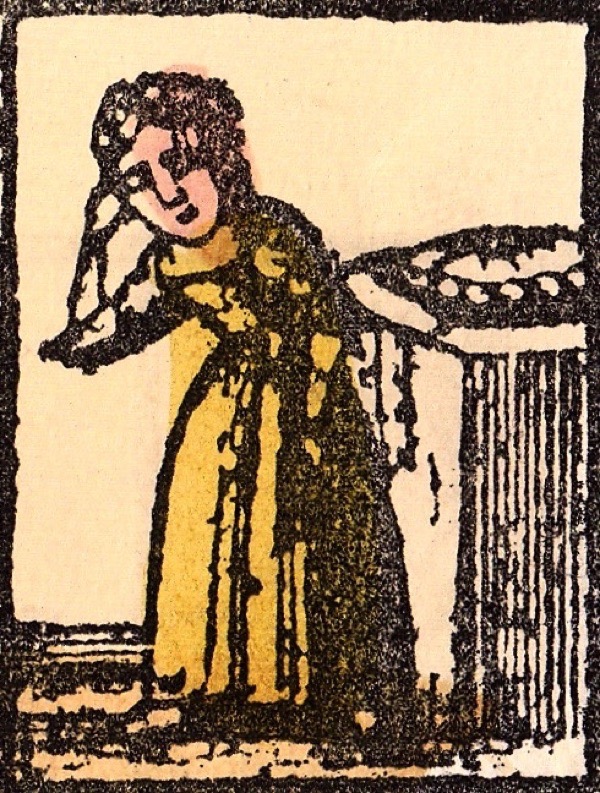
M Mourned for it
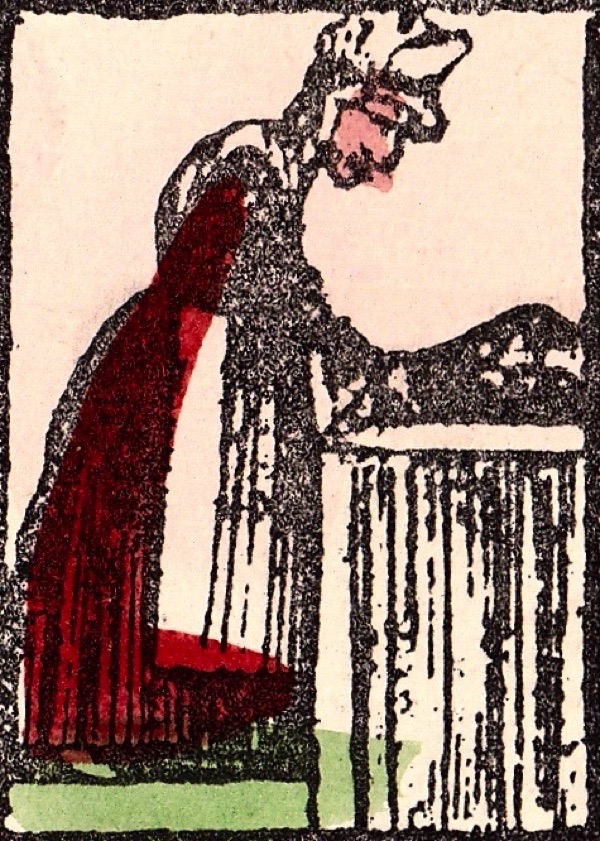
N Nodded at it
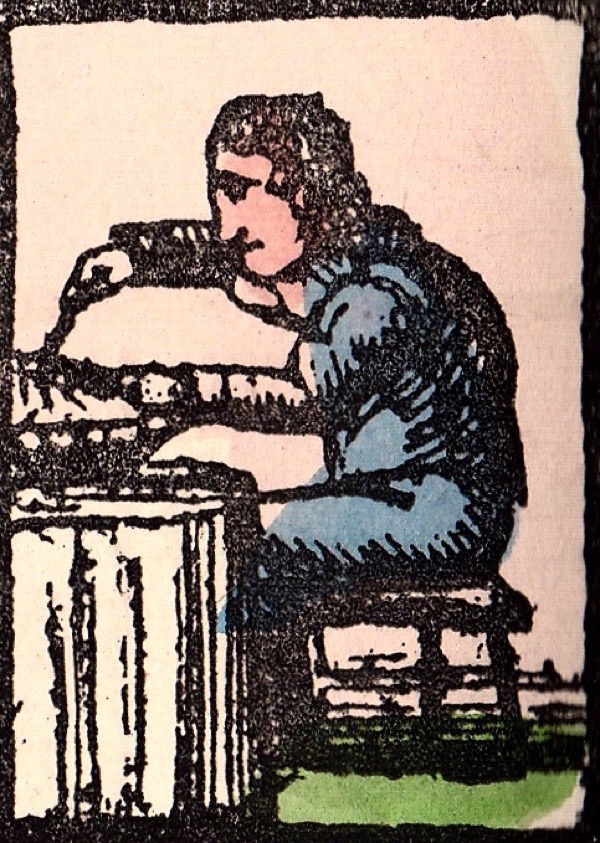
O Open’d it
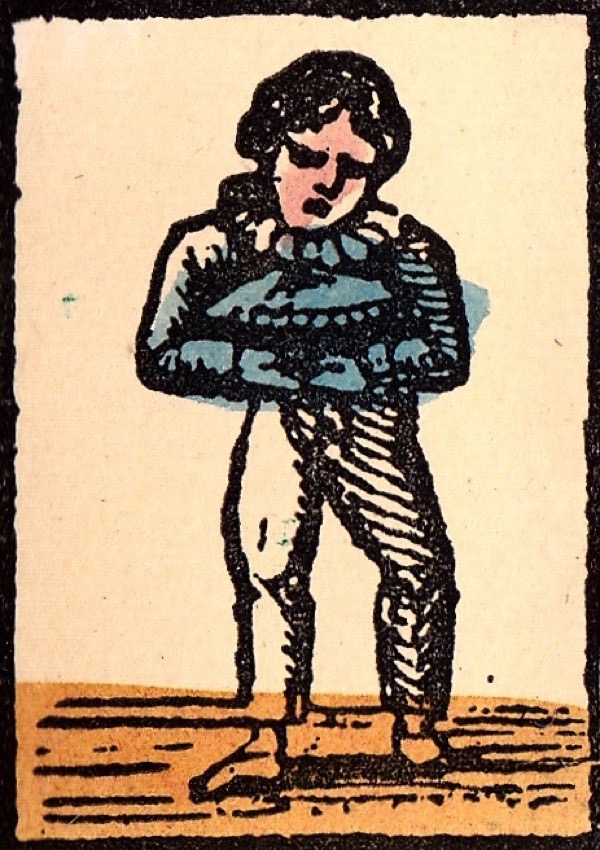
P Peeped into it
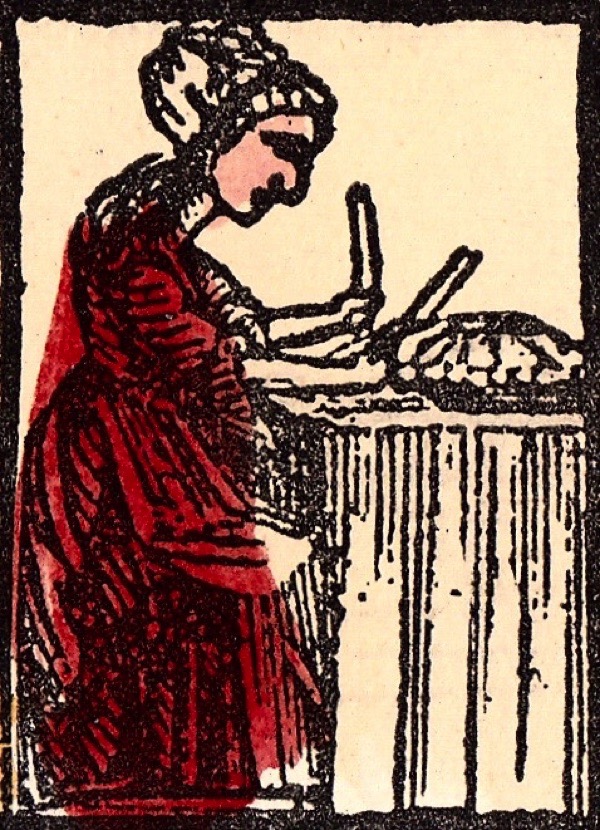
Q Quartered it
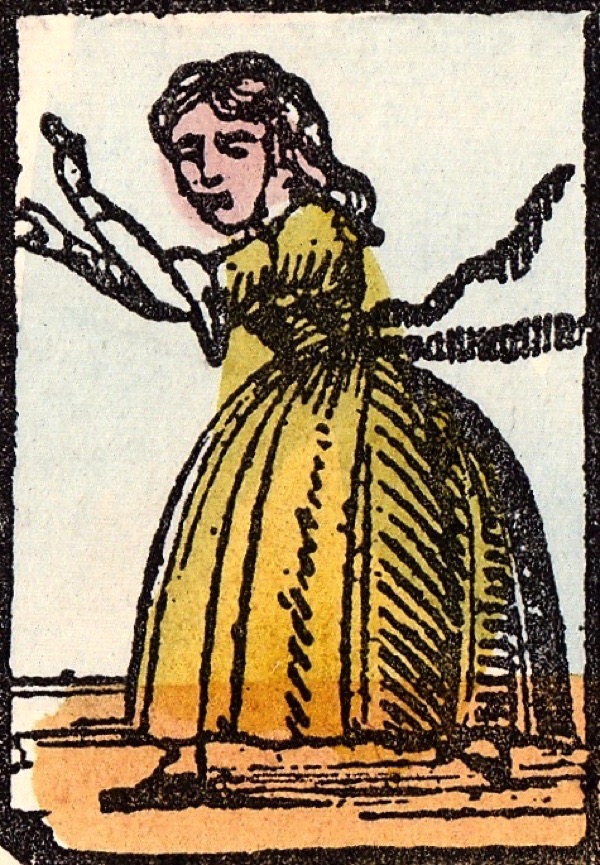
R Ran for it
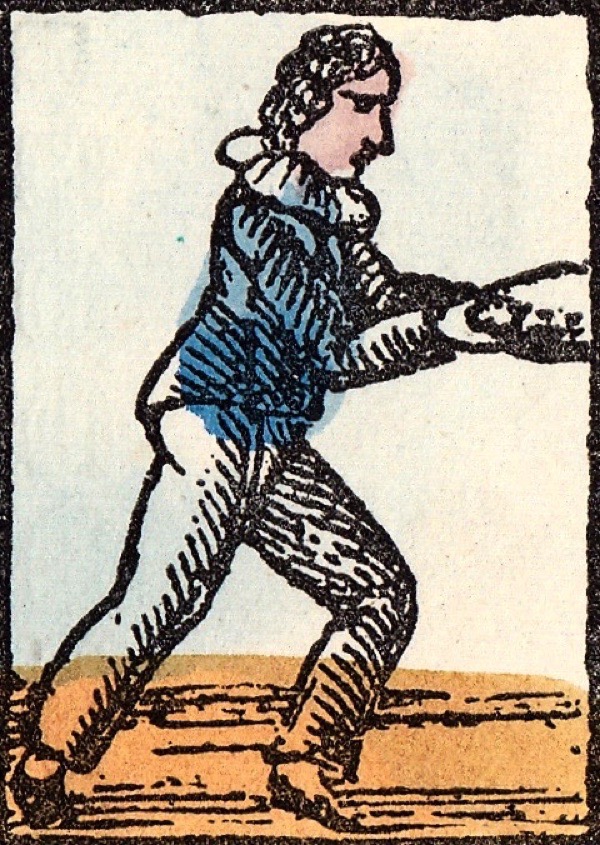
S Stole it
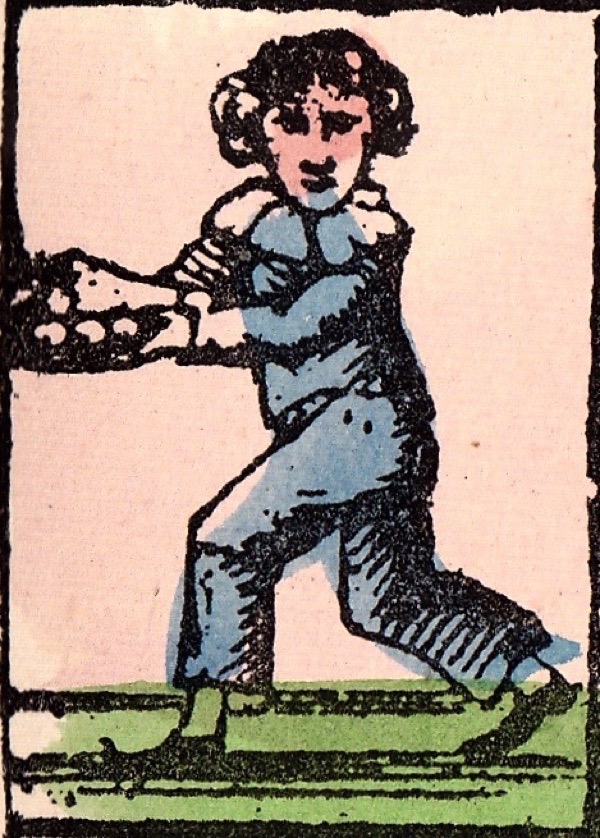
T Took it
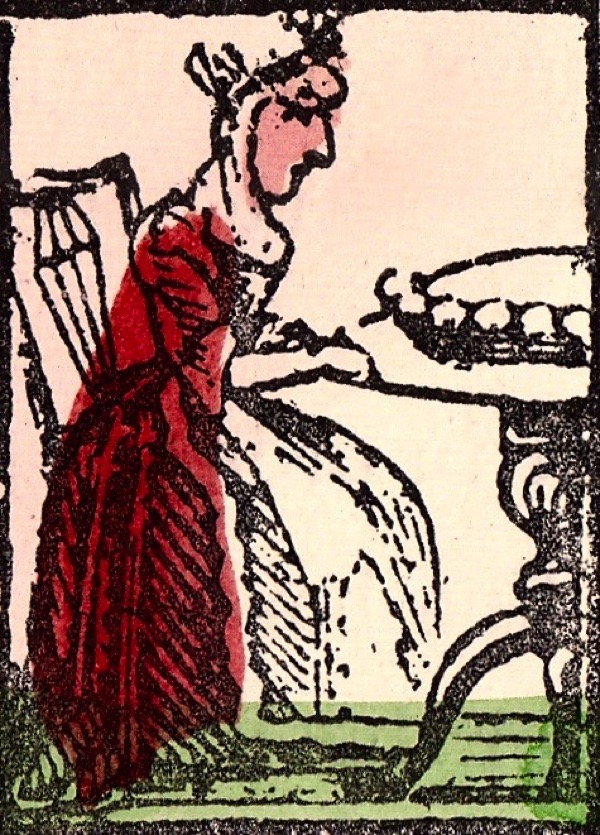
V View’d it
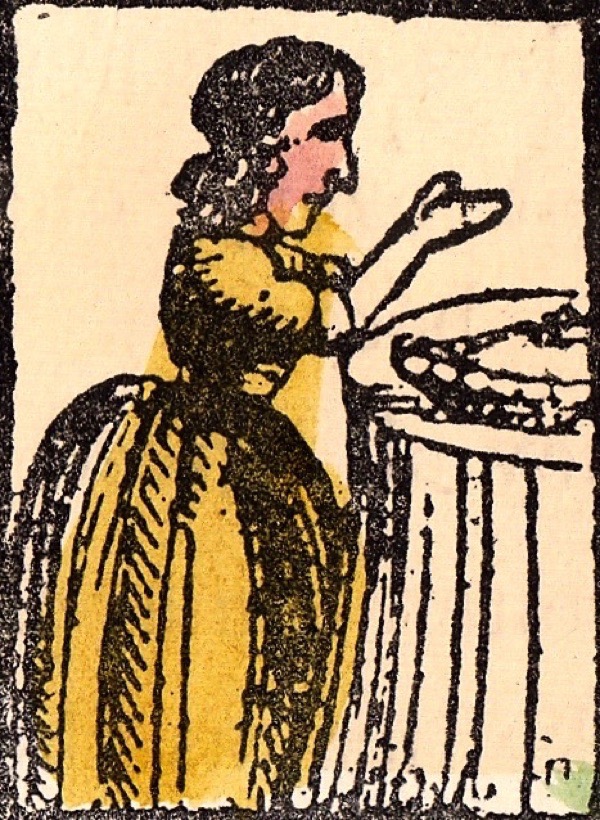
W Wanted it
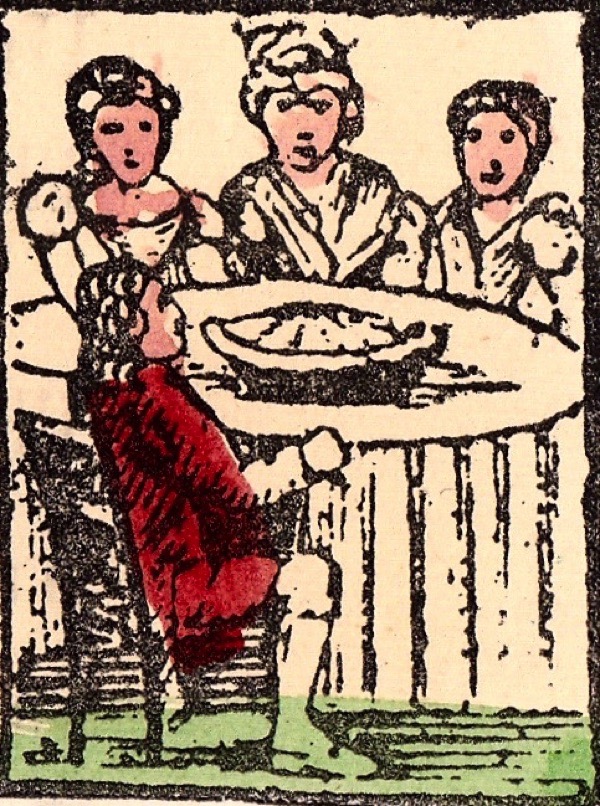
XYZ and & all wished for a piece in hand
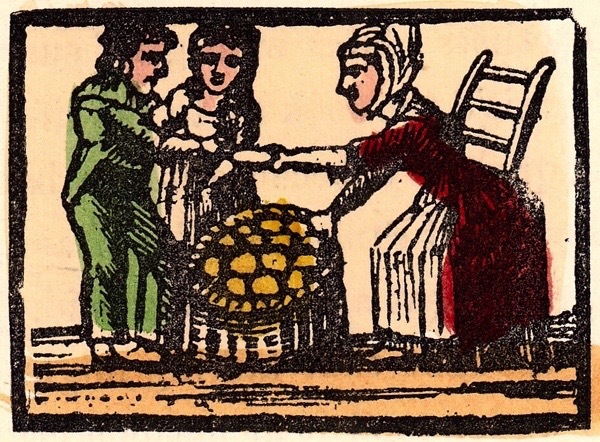
Dame Dumpling who made the Apple Pie
You may also like to take a look at
A Legal Challenge To Stop The Truman Brewery Shopping Mall
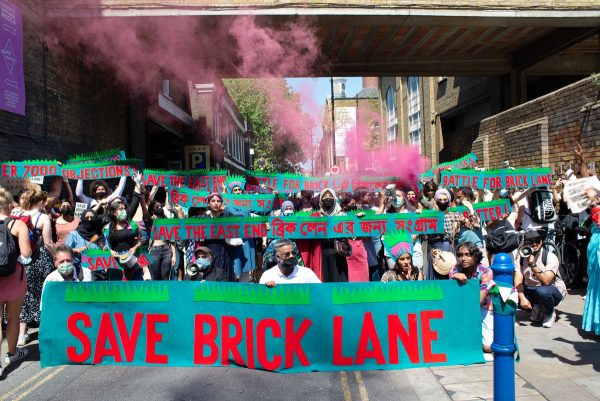
Photograph by Sarah Ainslie
We are seeking to overturn Tower Hamlets’ Council’s appalling decision to approve the Truman Brewery’s application to build a shopping mall with four floors of corporate offices in the face of massive local opposition.
The planning application received a record 7,487 letters of objection, a letter of opposition signed by 140 Brick Lane traders and a letter of objection signed by 556 local residents. Despite this overwhelming public rejection of the scheme, two councillors approved the application at a planning committee of only three people.
To pursue our legal challenge, we are employing Susan Ring of top environmental lawyers Harrison Grant who successfully won the Judicial Review at the High Court earlier this year to Save the Bethnal Green Mulberry, revealing that Tower Hamlets Council acted unlawfully.
At this stage, we are raising £5000 to pay Susan Ring and her expert colleagues to go through the council’s highly irregular process of decision making on the Truman Brewery application in forensic detail and clarify whether there are legal grounds for a Judicial Review to quash the decision.
Click here to learn more and contribute to our legal fighting fund
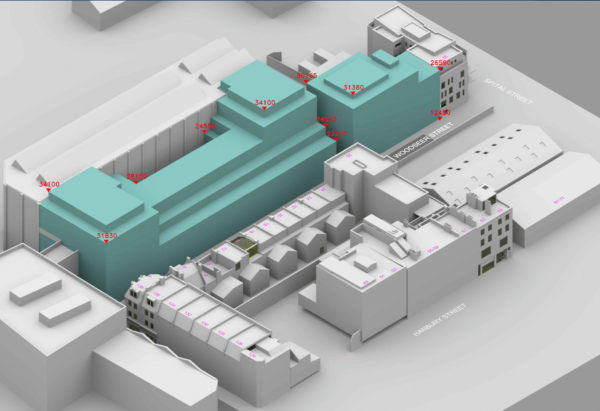
A big block on Brick Lane
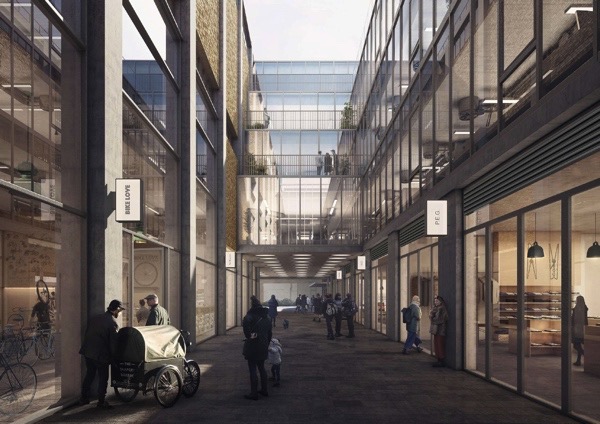
Shopping mall
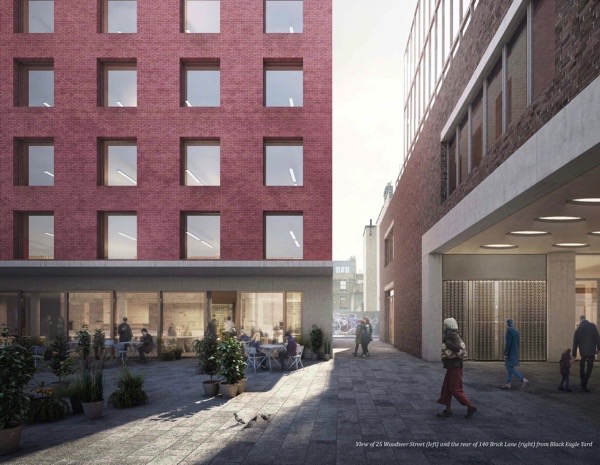
Corporate plaza
www.battleforbricklane.com
You may also like to read about
Barbara Jezewska, Teacher

Barbara as a pupil of the Central Foundation Grammar School for Girls, Spitalfields
Barbara Jezewska was not born in the East End nor was she of East End parentage, yet she lived her formative years here and it left an indelible impression upon her.“I love the people, the places and the experiences that I have known, and look for every opportunity to go back and visit,” she confessed to me, “I consider myself so rich for having grown up in a time and a place that was quite extraordinary.”
Barbara grew up in Casson St, a modest back street connecting Old Montague St and Chicksand St in Spitalfields. Opposite was Black Lion Yard, known then as the Hatton Garden of the East End because it contained eighteen jewellery shops. Old Montague St had a sleazy reputation in those days – it was a busy thoroughfare crowded with diverse life, filled with slum dwelllings, punctuated by a bomb site and a sugar factory, and lined with small shops and cafes. There, long-established Jewish traders sat alongside coffees bars in which Maltese, Somalis, Caribbeans and others congregated.
While others might consider themselves disadvantaged to grow up in such an environment, Barbara’s experience was quite the opposite and she recognised a keen sense of loss from the moment her family were rehoused in 1965 as part of the slum clearance programme. Very little of Casson St survives today and the spot where Barbara’s house stood is now a park, yet it is a location that still carries immense significance for her.
“We moved to 1 Casson St in 1957 when I was three years old. We came to London from Paxton, Berwickshire on the border with Scotland where my mother, Elizabeth Carr, had been born. My father was Polish, born in Lublin, and when he was fifteen, he ran away from home and ended up fighting in the Warsaw Uprising in 1944. He never talked about it but he had a graze on his arm that he said was from a bullet wound. I believe he met my mother while he was washing dishes at a West End hotel where she also worked. When I was eighteen he left and married again, and I only saw him a few times before he died. We became estranged and, in 1994, we got a phone call to say he had died in Poland.
My father couldn’t speak English when he arrived in this country, but he was very talented in music and he paid for guitar lessons out of his earnings. As a child, I remember him practising and practising and I didn’t appreciate what was going on, yet eventually he ended up teaching at Trinity College, Cambridge.
We shared the house in Casson St with a Greek family, the Hambis. It wasn’t partitioned, they had some rooms and we had the others. There was no bathroom, no heating and no hot running water. We did have an inside toilet but the Hambis had one in the back yard. They had five children and there were the three of us, so there was always somebody to play with and always something going on.
Across the street from us was the Beehive Nougat Factory (‘nugget’ as we used to say it). We rang the bell and asked for an old man we called ‘Uncle Alf’ who worked there, and he gave us sweets, handfuls of broken chocolates and nougat. We used to raid the bins of the textile factories and get cardboard tubes, then we’d stage incredible battles, lining up on either side of the street and hitting each other with the tubes until they broke. There was Mrs Miller who sold toys on Petticoat Lane, when she and my mother met they would talk for hours. One day, a dandelion seed – which we called fairies – floated by and went into Mrs Miller’s mouth while they were talking. She swallowed it and never noticed, so we always remembered ‘the day Mrs Miller swallowed a fairy!’ There was Mrs Isaacs, a widow who lived next door who spent all her time at the upstairs window, watching. If you did anything she didn’t approve of, she’d shout at you. One day, I was going to chalk on the wall and she shouted out, ‘Don’t you make a mess!’ I stuck my tongue out at Mrs Isaacs and she disappeared from the window, so I ran back inside and said to my mother, ‘Mrs Isaacs is coming,’ and she came round and said, ‘Your daughter stuck her tongue out at me!’
We used to play on the bomb sites and I climbed into a basement of a bombed-out house in Old Montague St. I was scared because there was a lot of rubble on top but I found some silver threepenny bits in a bag. We took them to the sweet shop and passed them off as sixpences. I think the shopkeeper realised they were silver and was happy to accept them for sweets. Round the corner in Hopetown St, lived Alfie and his parents who were the first get a television. So, at 4pm, we’d all queue up outside Alfie’s house – half a dozen of us – and ask to watch the Children’s Hour, and we’d sit on the kitchen floor to watch. The only time we went to the seaside was on a Sunday school trip, and they gave us Christmas parties at which we’d all get a present of a second-hand toy.
There were several tramps that I remember. Coco worked for the stallholders and slept in an empty building on the corner of Black Lion Yard, every morning he came out with his bucket of slops and threw it over onto the bomb site. Ivan used to wander up and down Old Montague St, and I think I saw two men trying to kill him once, dropping bricks from the roof as he walked past. Stinky Sheridan had one leg and used to sell matches in Whitechapel Rd. Whenever we saw the tramps, my mother who was a very kind person, taught me to respect them, she’d say, ‘Remember, that’s somebody’s son.’
In 1965, we were moved out as part of slum clearance to Brownlow Rd, off Queensbridge Rd in Haggerston. At the time, I was eleven and we thought it was very exciting. It was a maisonette with a bathroom, so we thought it was wonderful, but my experience when we moved was I felt lonely and missed the other children in our extended family. It felt strange. But being realistic, it would have been pretty awful staying in Casson St without any privacy or a bathroom.
I went to Robert Montefiore Primary School in Hanbury St and, when I left, I remember saying to my mother, tell the headmaster I want to go to the Central Foundation Grammar School in Spital Sq. I’d heard it was the good place to go. We were allowed out to wander around the Spitalfields Market at lunchtime. Every month the girls used to support a different charity there. We’d go down to the market and beg boxes of fruit and sell it at breaktimes and the money would go to charity. The art room overlooked the market and I did a painting of it that won a prize. I joined the choir so I could sing at St Botolph’s in Bishopsgate and get invited back for sandwiches and ice cream by the Worshipful Company of Fan Makers. I thought I was very clever because I went to a Grammar School.
My first job was at Fox’s the Chemist in Broadway Market, from four until six every day after school and all day Saturday for £2.50. At eighteen, I left school and worked for two years in the City at the National Westminster Bank in Threadneedle St. It was easy to get work, you could go to an agency and get a job, and if you didn’t like it you could go back in the afternoon and get a different one.
Then I did teacher training in Tooting. I couldn’t do it at eighteen because my father wouldn’t sign the grant form as he was about to remarry and didn’t want to commit himself, but when the divorce came through my mother signed. I asked to do my teaching practise in the East End and I was placed at Virginia Rd Primary School. I qualified as teacher in 1978, and I worked at Randal Cremer school in Hackney, I was part-time at Redlands School off Sidney St and deputy head at St Luke’s in Old St. I had wanted to be a teacher since the age of five, I think I just wanted a register and a red pen.
At forty-five, I had a son and we moved to Walthamstow and then to Hertfordshire, but I want to be back here – and one day I’ll be back. You can’t explain it to some people, because so many worked so hard to get out. I bring my son Adam to see the street art. I think he’s interested in the East End.”

Barbara keeps the button box from her childhood in Casson St. On the table are swatches from her mother’s dresses bought in Petticoat Lane and a necklace she made out of melon pips at age nine in 1963.

Barbara’s school report from the Central Foundation Grammar School in Spital Sq, July 1968.
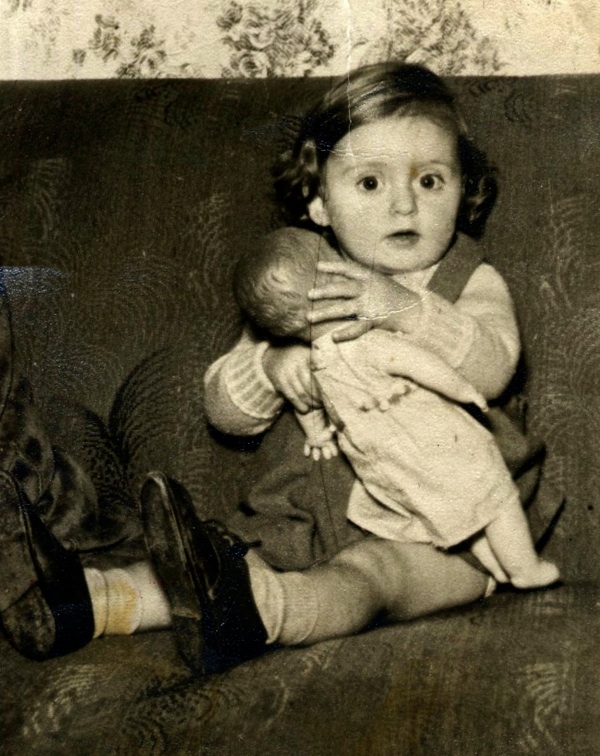
Barbara, aged three.

The ‘goal’ where Barbara and her friends played football, photographed in the eighties.

Barbara, aged five.

The furniture factory opposite Barbara’s home in Casson St, photographed in the eighties.
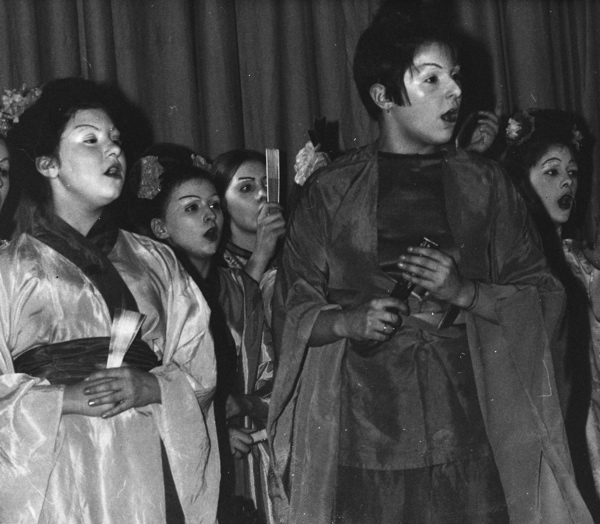
Barbara (second from the left) in the Central Foundation School production of The Mikado.

Casson St under demolition.

Jerzy Jezewska, Barbara’s father was a celebrated guitarist who taught at Cambridge.
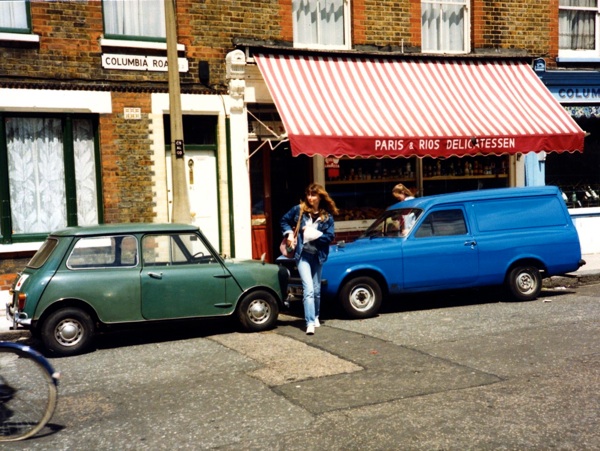
Barbara visits Columbia Rd in the eighties.
You may also like to read about
Aubrey Silkoff At The Boundary Estate
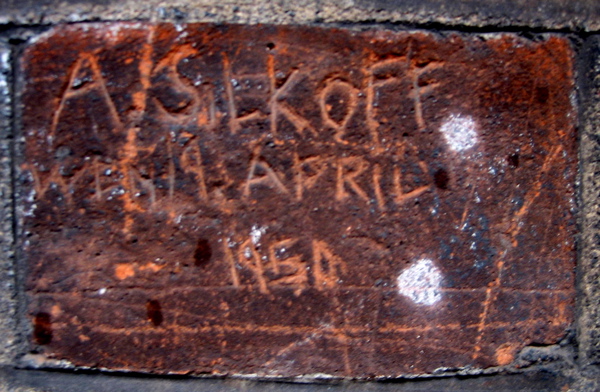
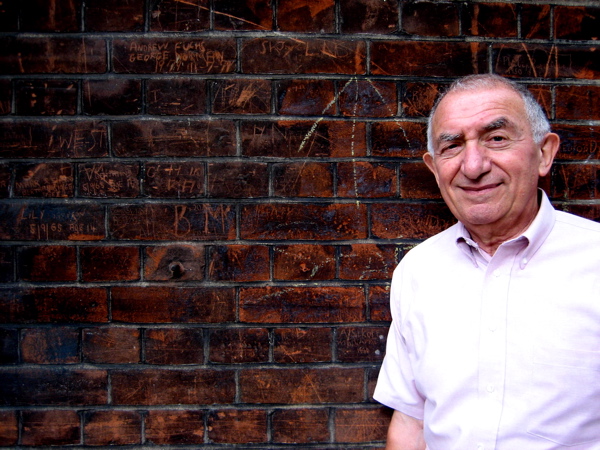
Aubrey Silkoff returned to Navarre St, Arnold Circus, to view the brick where he incised his name on the nineteenth of April 1950, when he was eleven years old. You can see it just to the left of his upper arm in the photo above, indicated by two white dots on the brick.
When I first spoke with Aubrey over the phone, he admitted that he had no memory of carving it, although he confirmed that he grew up in Laleham Buildings on the Boundary Estate and Navarre St was where he played football as a child.
Fortunately for us, 1950 was also the year of the photo craze when Aubrey and his pals acquired cameras and were able develop their pictures at the Boys Club at Virginia Rd School. As a consequence, we have a photographic record to show us some of the children who wrote their names on the wall of Wargrave Buildings at that time. Capturing the spirit and energy of a fleeting moment, these pictures allow us to put faces to the names incised on the bricks, vividly evoking the childhood world of over half a century ago which produced graffiti of such unlikely longevity. Recalling Bert Hardy’s photographs of East End children on the street, what makes these exuberant images special is that they were taken by the children themselves.
As we walked down Navarre St together, I had the strange experience of introducing Aubrey to his long forgotten graffiti. “It was something to do while we talked,” said Aubrey, explaining that he and his pals used nails from the wooden scooters they constructed to roam as far as the bombsites in the City and around St Pauls. Yet although Aubrey recognised a few names when he saw them on the wall and even matched some up to the pictures, together we confronted the limit of his fragmentary memory after so many years. “I wonder what life held for them?” he said quietly, contemplating the names on the wall, as we stood in the empty street lined with parked cars that once echoed to the noise of children playing.
“The streets were clear of vehicles, except maybe the odd coal wagon or a fruiterer with a horse and cart. There were few cars because no-one could afford one and, if someone bought one, they took all the kids for a ride in it as a novelty,” Aubrey told me, explaining how, as children, they had possession of the streets for their playground, using cans, or laying down jumpers or coats in the road, to create goalposts.
“We were a group of kids that used to know each other and spend all our time together in the streets because the flats were not conducive to living in. There was no space for us inside, so we used to be outside, swinging on the railings at the corner of Navarre St and Arnold Circus. We didn’t know anything about girls. The boys had nothing to do with girls. Half the kids were Jewish but there was no conscious decision to mix with your own kind, although I think we gravitated together because we considered ourselves outsiders. Many kids had lost their fathers in the war, and they had background problems.
You didn’t know that you don’t have much money, because it was just not to be found. I had new clothes once a year. I used to have a new suit at Passover. My mother took me down to a place off Brick Lane. There were schleppers everywhere on the street – touts for tailors. I remember going back for fittings, there wasn’t much ready-made clothing available then. I was ashamed of my parents because I was born late and I thought they were old. On the day of the V.E celebrations we came down into the yard with our food on plates and our chipped enamel cups, we didn’t have china. And when the people saw them, they asked in disapproval, ‘Can we replace them?’ That was embarrassing.
I took the eleven-plus exam which decided whether I would go to Grammar School or Secondary Modern which was inferior. I don’t know what happened but I never passed or failed, I went to a Central School instead. At the end of term we were called onto the stage and divided up between which schools we were going to. I cried because I didn’t go to Grammar School. It was cruel because it split friendships up. ‘What are you doing today? We’re doing Latin and logarithmic equations,’ they said, and I felt a failure because I didn’t do any of those things.
Nothing has been easy for me, exams were always hard. But I was never at the bottom and never excelled either, I was always in the heap. I was fortunate that in those post-war years there were expanding opportunities open to me, giving me an education and a career. Because I had no ambition, I never looked further than my nose. Though I knew I wanted to get out of the East End because I did not want to work in a tailoring sweatshop as my father and all his friends did. As a greeting they, always asked each other, “Are you working?” because the work was seasonal and people were out of work for long periods of time.
In 1958, I moved out to a bedsitter in Stoke Newington on my own. I learnt to look out for myself and be wary of what people are trying to put over you, and as a consequence I’ve been known as a cynical person throughout my life. But I have no regrets about any of it today because it gave me a sense of looking at the glass as half-empty. I never expected anything wonderful to happen and it has. I have progressed over the years and I feel very lucky indeed.
I was interested in classical music from a very early age. One day I went over to Sadler’s Wells Theatre and offered money to buy a ticket but the kiosk person said ‘You haven’t got enough’, so this couple behind me in the queue said, ‘Do you really want to see it?’ and they bought me a ticket. That was ‘La Boheme’ – I wish I could repay that couple today.”
Contemplating the photo of himself at eleven, a crucial moment in his childhood, Aubrey pointed out the spilt food on the “scruffy” jacket and interpreted his expression as “sardonic,” while I saw self-possession and humour in his youthful visage. “I’m thinking ‘Why am I here?'” he said, rolling his eyes with a droll grin.
“Now I look at all these photographs and I wonder,’Did it actually happen?'” continued Aubrey, thinking out loud. Yet when he returned to Arnold Circus, he encountered the evidence that it did happen, because nearly seventy years later, Aubrey found his name graven into the wall on Navarre St – Aubrey Silkoff, Wed 19th April 1950.
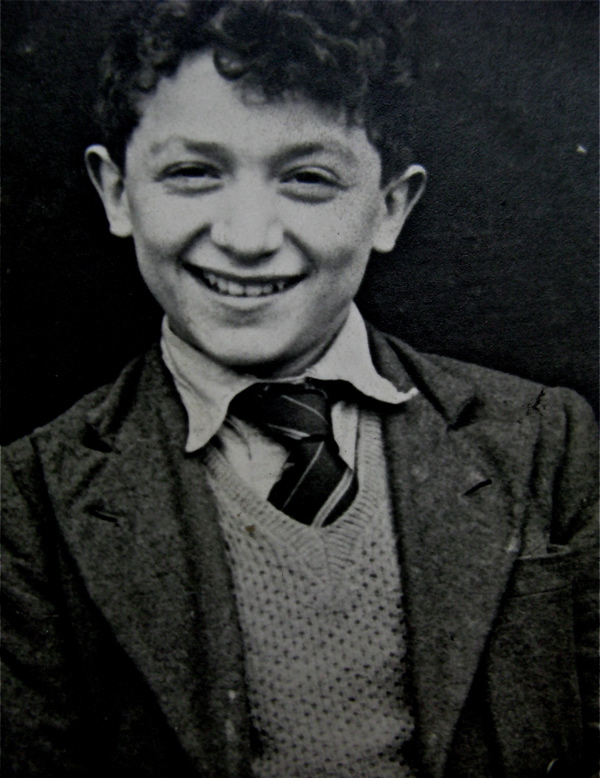
Aubrey at the time he wrote his name on the wall of Wargrave Buildings
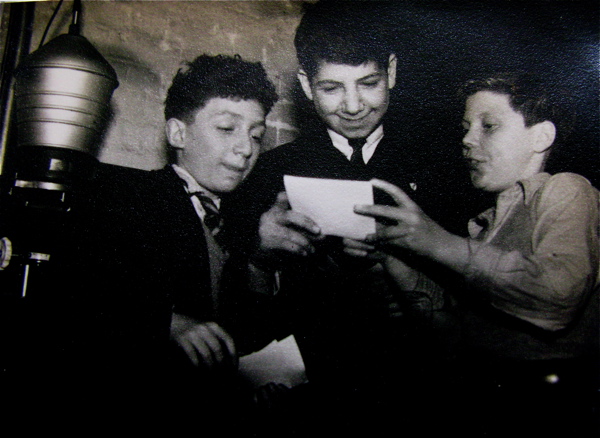
At the photographic club
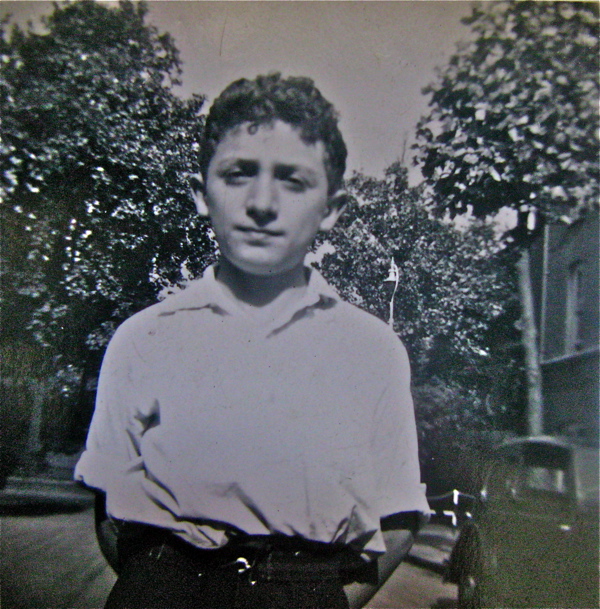
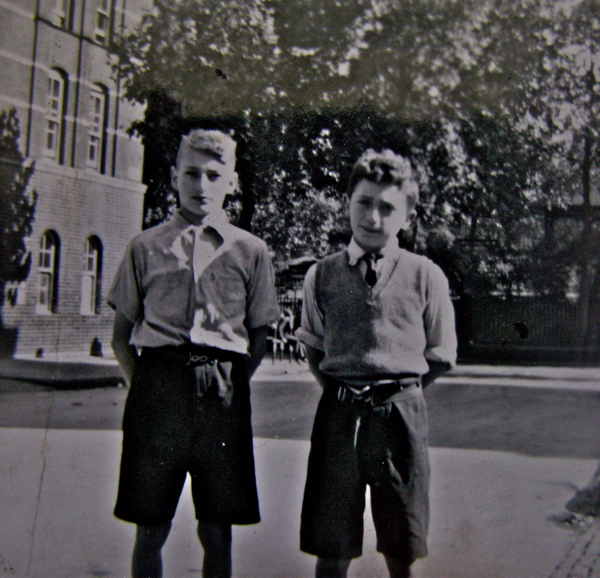
At Arnold Circus, with the bandstand visible in the background
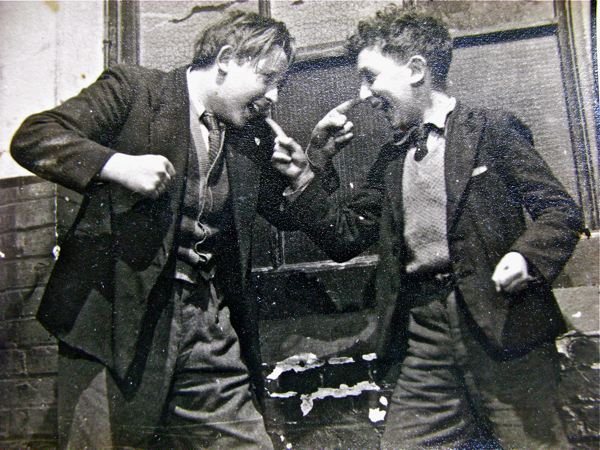
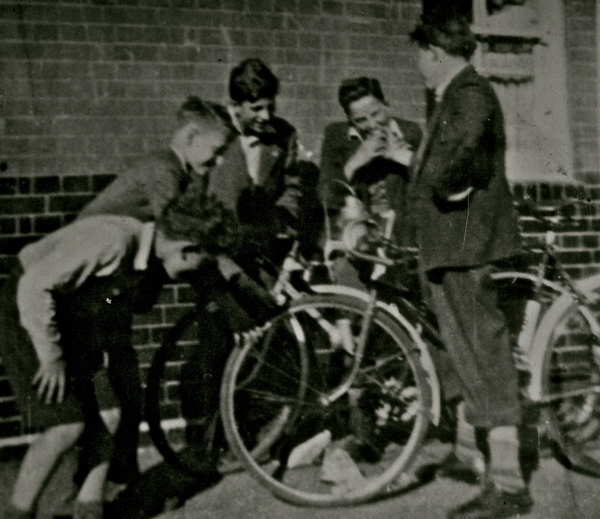
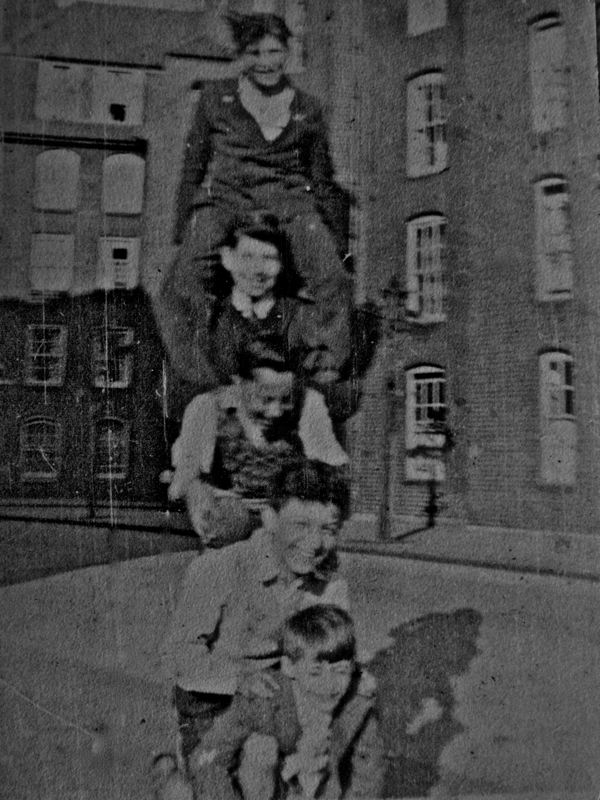
A stunt at the corner of Navarre St
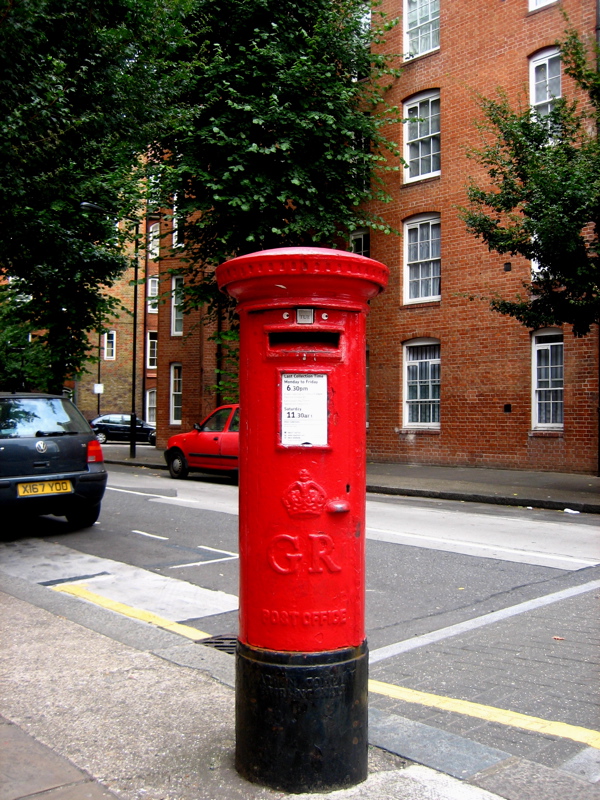
The trick revealed – this is the same pillarbox

Aubrey Silkoff – with his brick in the top left corner


You may also like to read about
At David Kira Ltd, Banana Merchants

To anyone that knows Spitalfields, David Kira Ltd is a familiar landmark at 1 Fournier St next to The Ten Bells. Here, at the premises of the market’s foremost banana merchant – even though the business left more than a quarter of a century ago – the name of David Kira is still in place upon the fascia to commemorate the family endeavour which operated on this site for over half a century.
By a fluke of history, the business that trades here now has retained the interior with minimum intervention, which meant that when David’s son Stuart Kira returned for the first time since he left in 1991, his former office, where he worked for almost thirty years – and even his old chair – was still there, existing today as part of a hairdressing salon.
This is a story of bananas and it began with Sam Kira in Southend, a Jewish immigrant from Poland who became naturalized in 1929 and started a company called “El Dorado Bananas.” Ten years later, his son opened up in Fournier St as a wholesaler, taking a lease from Lady Fox but having to leave the business almost at once when the war came, bringing conscription and wiping out the banana trade. Yet after the war, he built up the name of David Kira, creating a reputation that is still remembered fondly in Spitalfields and, since the shop remains, it feels as if the banana merchants only just left.
“When I first came to the market as a child of seven, we lived in Stoke Newington and took the 647 trolley bus to Bishopsgate and walked down Brushfield St. Every opportunity, I came down to enjoy the action and the atmosphere, and the biggest thrill was getting up early in the morning – I always remember being sent round to the Market Cafe to get mugs of tea for all the staff. When I joined my father David in 1962, aged sixteen, my grandfather Sam had died many years earlier. There was me and my father, John Neil (who had been with my father his entire working life), Ted Witt our cashier, two porters, Alf Lee and Billy Alloway (known as Billy the thief) and we had an empty boy. Our customers were High St greengrocers and market fruit traders, and we prided ourselves on only selling the best quality produce. Perhaps this was why we had a lot of customers. It was hard work and long working hours, getting up at half past four every morning to be at the market by five thirty. I used to sleep for a couple of hours in the afternoon when I got home, until about six, then I’d get up and return to bed at eleven until four thirty – I did that six days a week.
We received our shipments direct from Jamaica through the London Docks – bananas in their green state on long stalks – they arrived packed in straw on a lorry and it was very important that they be unloaded as soon as they arrived, whatever time of day or night the ship docked, because the enemy of the banana is the cold. They were passed by hand through a hatch in the floor to the ripening rooms downstairs – it took five days from arrival until they were saleable. Since the bananas came from the tropics, it was not so much the heat you had to recreate as the humidity. We had a single gas flame in the corner of each ripening room, the green bananas hung close together on hooks from the ceiling and, when the flame was turned down, a little ethylene gas was released before the door was sealed. Once they were ripened, they had to be boxed. You stood with a stalk of bananas held between your legs and struck off each bunch with a knife, placing it in a special box, three foot by one foot – a twenty-eight pound banana box.
During the sixties, dates were only sold at Christmas but in the seventies when the Bangladeshi people arrived, we started getting requests for dates during Ramadan. I contacted one of the dates suppliers and I asked him to send me thirty cases, and they were sold to Bengali greengrocers in Brick Lane before they even touched the floor. Subsequently, we sold as many dates as we could get hold of, more even than at Christmas. During this period, we also saw the decline of the High St greengrocers due to the supermarkets, however we found we were able to compensate for the loss of trade by fulfilling the requirements of the Asian community.
Eventually, they started importing pre-boxed bananas in the eighties, so our working practices changed and the banana ripening rooms became obsolete. My late father would be turning in his grave if he knew that bananas are now placed in cold storage, which means they will quickly turn black once they get home.
In 1991, when the market moved, we were offered a place in the new market hall but trading hours became a free-for-all and, although we started opening at three am, we were among the last to open. By then I was married and had children, and without the help of my father and John Neil who had both retired, I found it very difficult to cope. It was detrimental to my health – so, after a year, I sold the company as a going concern. I didn’t know what I wanted to do, but by chance I bumped into a colleague who worked in insurance and he introduced me to his manager. I realised in that type of business I could continue to be self-employed, so I trained and qualified and I have done that for the past twenty years. When I think back to the market, I only got two weeks a year holiday and I felt guilty even to put that pressure on my father and John Neil when I was away.”
Proud of his father’s achievement as a banana merchant, Stuart delighted to tell me of Ethel, the rat-catching cat – named after the ethylene gas – who loved to sleep in the warmth of the banana ripening rooms and of Billy Alloway’s tip of sixpence that he nailed to the wall in derision, which stayed there as his memorial even after he died. Stuart cherishes his memory of his time in the market, recognising it as a world with a culture of its own as much as it was a place of commerce. Today, the banana trade has gone from Spitalfields where once it was a way of life, now only the name of David Kira – heroic banana merchant – survives to remind us.

Sam Kira (far right) dealing in bananas in London and Southend.

Sam Kira’s naturalization papers.

David Kira at the Spitalfields Fruit Exchange – he is centre right in the fifth row, wearing glasses and speaking with his colleague.
 The banana trade ceased during World War II.

David Kira as a young banana merchant.

David Kira (left) with his son Stuart and business partner John Neil.

David Kira and staff.


Stuart Kira stands in the doorway of his former office of twenty years, where his father and grandfather traded for over fifty years, now part of a hairdressing salon.

David Kira Ltd, 1991
First and last pictures copyright © Mark Jackson & Huw Davies
You may also like to read about
Jimmy Huddart, Spitalfields Market Porter
Peter Thomas, Fruit & Vegetable Supplier
Ivor Robins, Fruit & Vegetable Purveyor
John Olney, Donovan Brothers Ltd
Jim Heppel, New Spitalfields Market












