
Maureen Rose, Button Maker
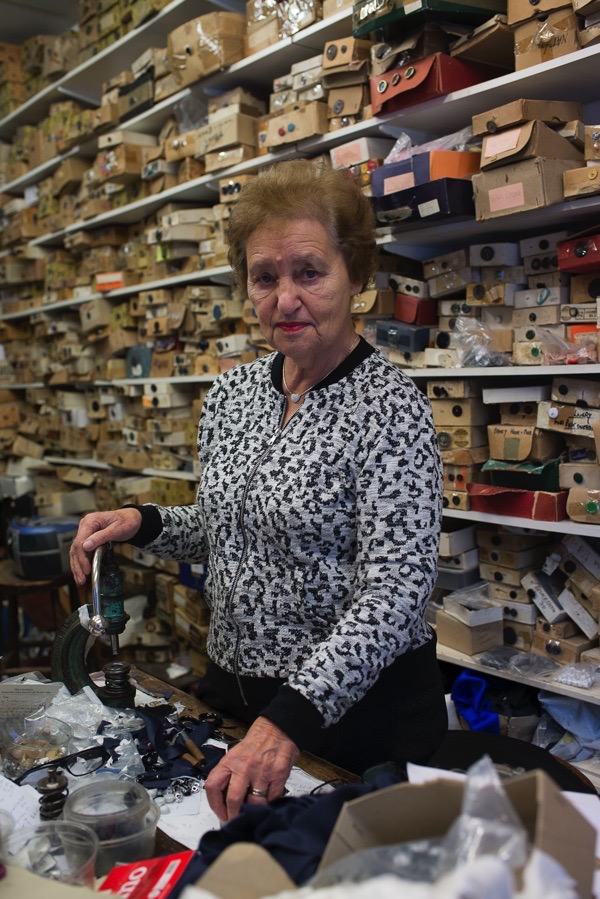
‘Every button tells a story’
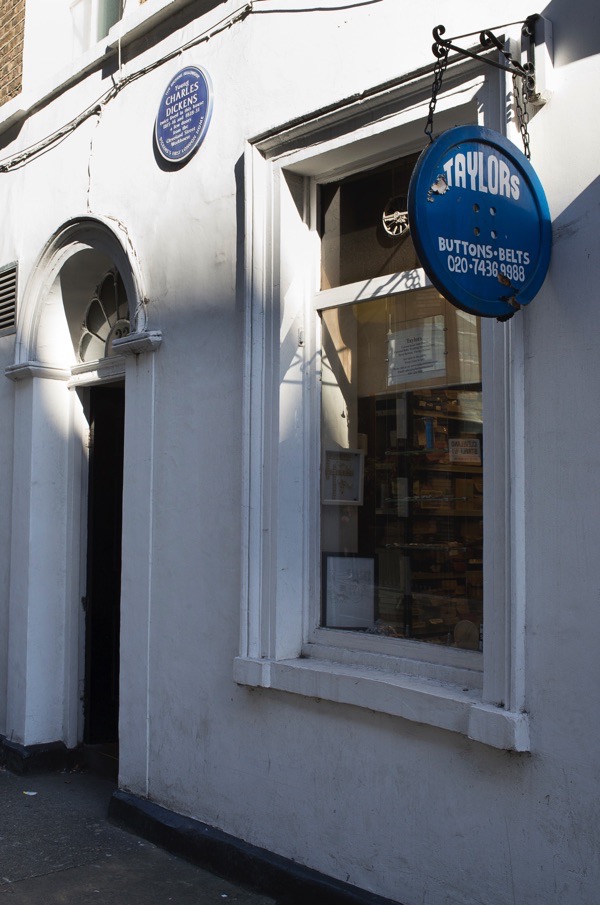
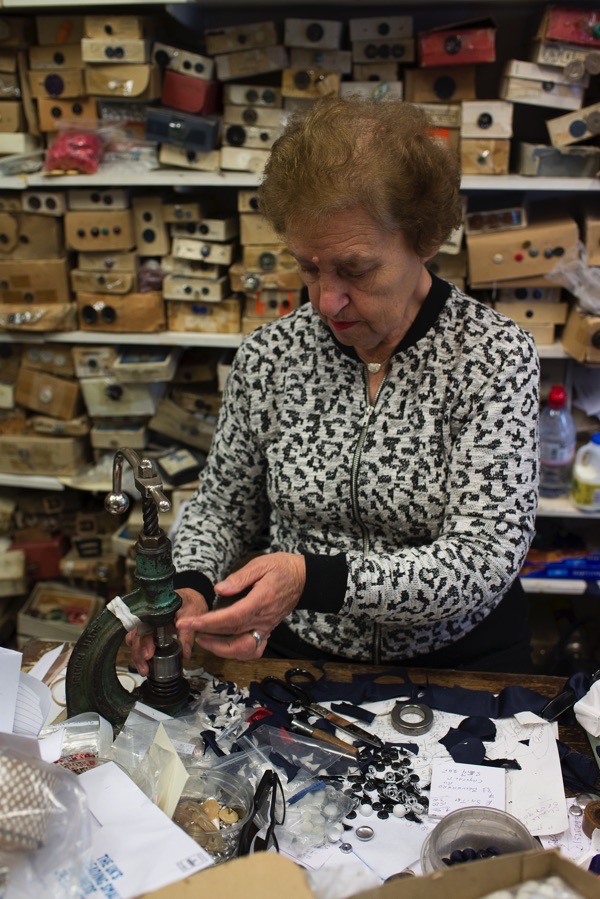
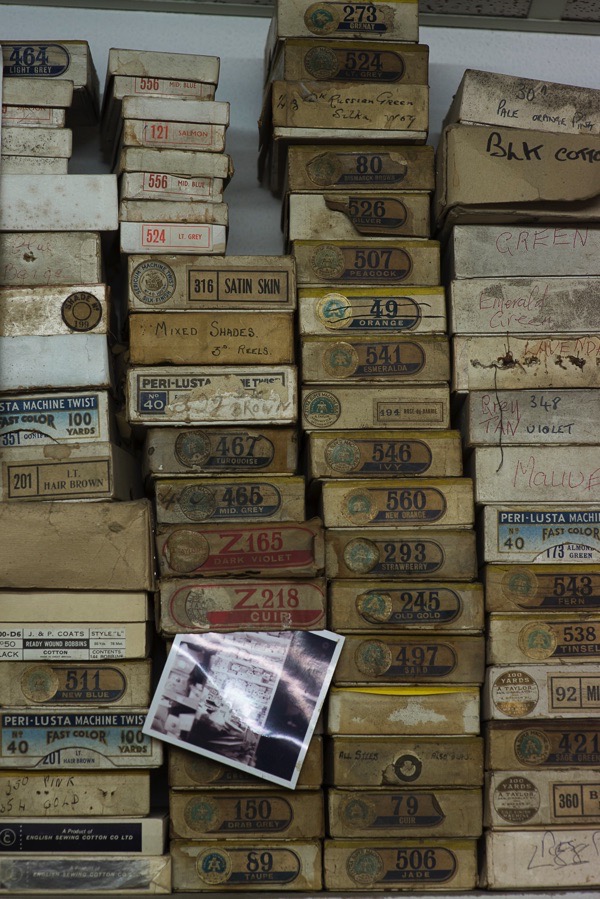
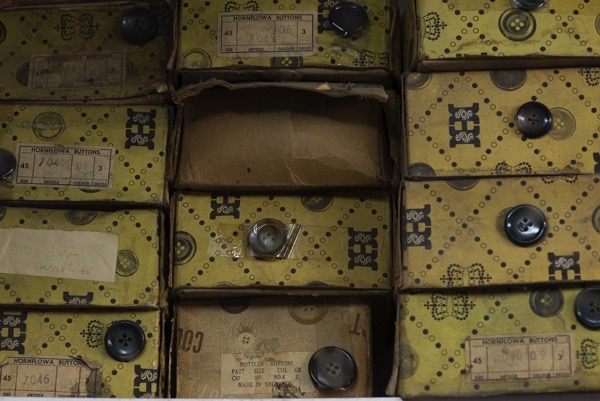
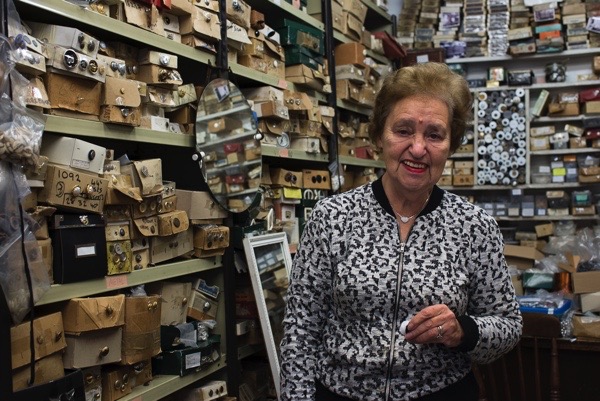
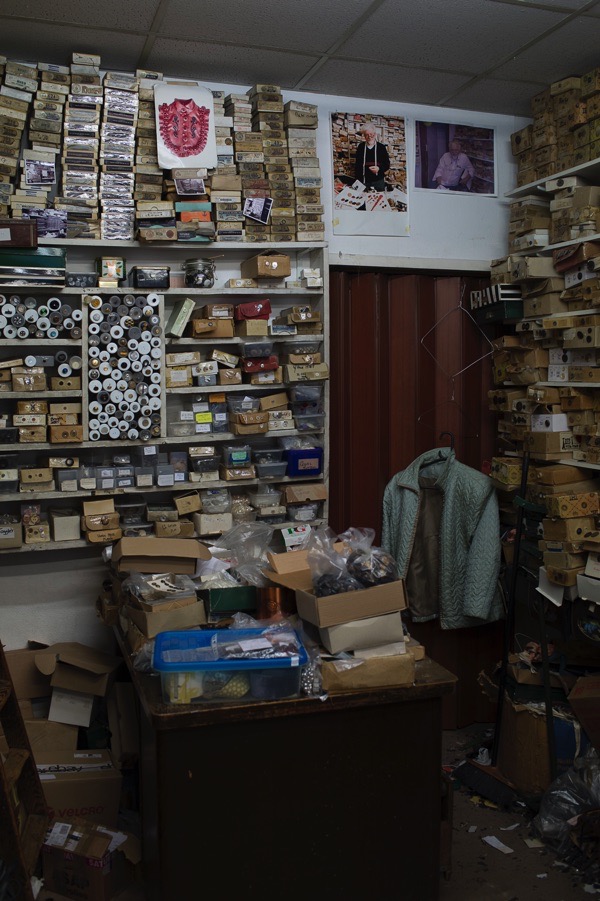
On the ground floor of the house where Charles Dickens grew up at 22 Cleveland St in Fitzrovia is a wonderful button shop that might easily be found within the pages of a Dickens novel. Boxes of buttons line the walls from floor to ceiling, some more than a hundred years old, and at the centre sits Maureen Rose, presiding regally over her charges like the queen of the buttons.
“A very nice gentleman – well turned out – stood in my doorway and asked, ‘Charles Dickens doesn’t live here anymore, does he?'” Maureen admitted to me with a sly grin. “I said, ‘No, he doesn’t.’ And he said, ‘Would you have his forwarding address?’ So I said, ‘No, but should I get it, I’ll put a note in the window.'”
Taylor’s Buttons & Belts is the only independent button shop in the West End, where proprietor Maureen sits making buttons every day. It is a cabinet of wonders where buttons and haberdashery of a century ago may still be found. “These came with the shop,” explained Maureen proudly, displaying a handful of Edwardian oyster and sky blue crochetted silk buttons.
“Every button tells a story,” she informed me, casting her eyes affectionately around her exquisite trove. “I have no idea how many there are!” she declared, rolling her eyes dramatically and anticipating my next question. “I like those Italian buttons with cherries on them, they are my favourites,” she added as I stood speechless in wonder.
“Let me show you how it works,” she continued, swiftly cutting circles of satin, placing them in her button-making press with nimble fingers, adding tiny metal discs and then pressing the handle to compress the pieces, before lifting a perfect satin covered button with an expert flourish.
It was a great delight to sit at Maureen’s side as she worked, producing an apparently endless flow of beautiful cloth-covered buttons. Customers came and went, passers-by stopped in their tracks to peer in amazement through the open door, and Maureen told me her story.
“My late husband, Leon Rose, first involved me in this business. He bought it from the original Mr Taylor when it was in Brewer St. The business is over a hundred years old with only two owners in that time. It was founded by the original Mr Taylor and then there was Mr Taylor’s son, who retired in his late eighties when he sold it to my husband.
My husband was already in the button business, he started his career in a button factory learning how to make buttons. His uncle had a factory in Birmingham – it was an old family business – and he got in touch with Leon to say, ‘There’s a gentleman in town who is retiring and you should think about taking over his business.’
Leon inherited an elderly employee who did not like the fact that the business had been sold. She had been sitting making buttons for quite some time and she said she would like to retire. So at first my mother went in to help, when he needed someone for a couple of hours a day, and then – of course – there was me!
I was a war baby and my mother had a millinery business in Fulham. She was from Cannon St in Whitechapel and she opened her business at nineteen years old. She got married when she was twenty-one and she ran her business all through the war. As a child, I used to sit in the corner and watch her make hats. She used to say very regularly to me, ‘Watch me Maureen, otherwise one day you’ll be sorry.’ But I did not take up millinery. I did not have an interest in it and I regret that now. She was very talented and she could have taught me. She had done an apprenticeship and she knew how to make hats from scratch. She made all her own buckram shapes.
I helped her for while, I did a lot of buying for her from West End suppliers in Great Marlborough St where there were a lot of millinery wholesalers. It was huge then but today I do not think there is anything left. There was big fashion industry in the West End and it has all gone. It was beautiful. We used to deal with lovely couture houses like Hardy Amies and Norman Hartnell. I used to go to see their collections, it was glamorous.
I only make buttons to order, you send me the fabric – velvet, leather or whatever – and I will make you whatever you want. We used to do only small orders for tailors for suits, two fronts and eight cuff buttons. Nowadays I do them by the hundred. I do not think Leon ever believed that was possible.
Anybody can walk into my shop and order buttons. I also make buttons for theatre, television, film and fashion houses. I do a lot of bridal work. I am the only independent button shop in the West End. I get gentleman who buy expensive suits that come with cheap buttons and they arrive here to buy proper horn buttons to replace them.
My friends ask me why I have not retired, but I enjoy it. What would I do at home? I have seen what happens to my friends who have retired. They lose the plot. I meet nice people and it is interesting. I will keep going as long as I can and I would like my son Mark to take it over. He is in IT but this is much more interesting. People only come to me to buy buttons for something nice, although I rarely get to see the whole garment.
I had a customer who was getting married and she loved Pooh bear. She wanted buttons with Pooh on them. She embroidered them herself with a beaded nose for the bear and sent the material to me. I made the buttons, which were going down the back of the dress. I said, ‘Please send me a picture of your wedding dress when it is finished.’ She sent me a picture of the front. So I never saw Pooh bear.
A lady stood in the doorway recently and asked me, ‘Do you sell the buttons?’ I replied, ‘No, it’s a museum.’ She walked away, I think she believed me.”


‘Presiding regally over her charges like the queen of the buttons’
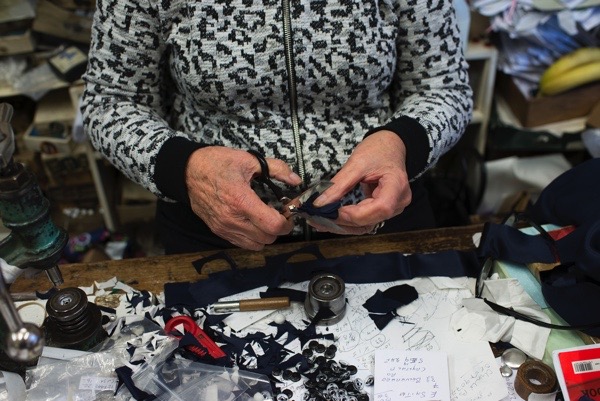
Cutting a disc of satin
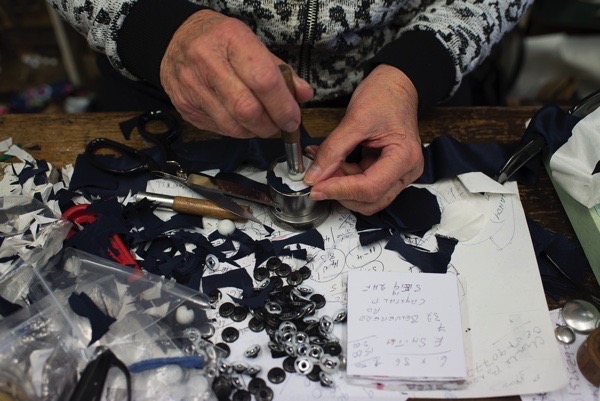
Placing it in the mould
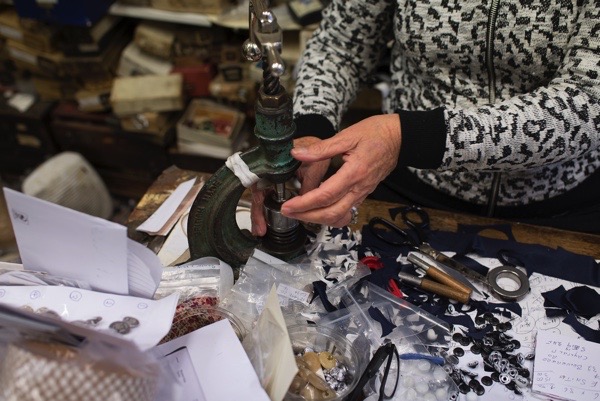
Putting the mould into the press
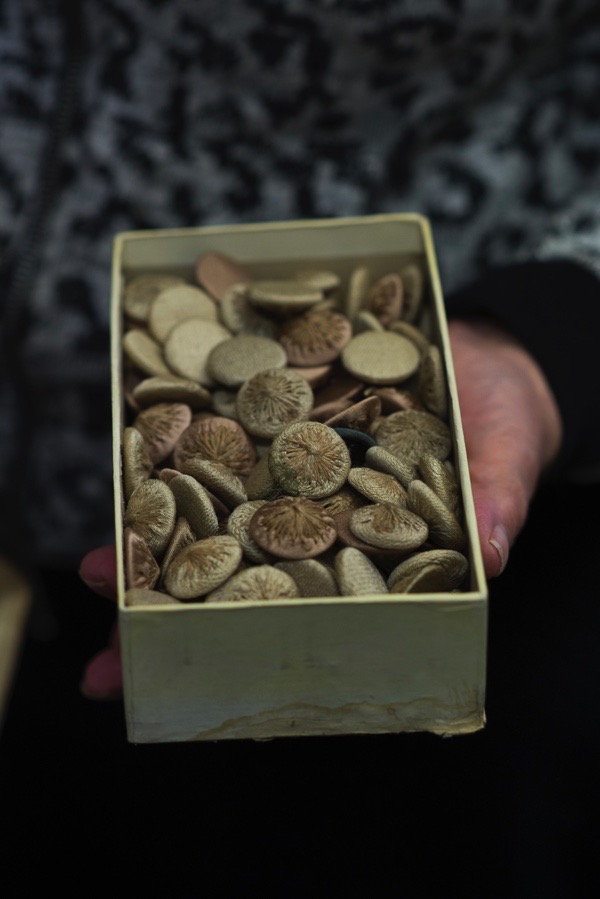
Edwardian crochetted silk buttons
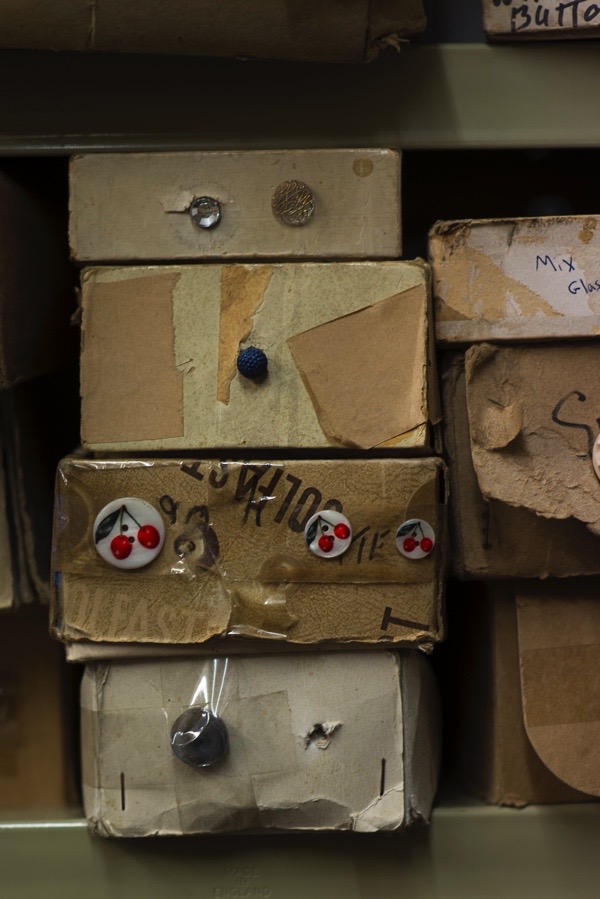
“I like those Italian buttons with cherries on them, they are my favourites”
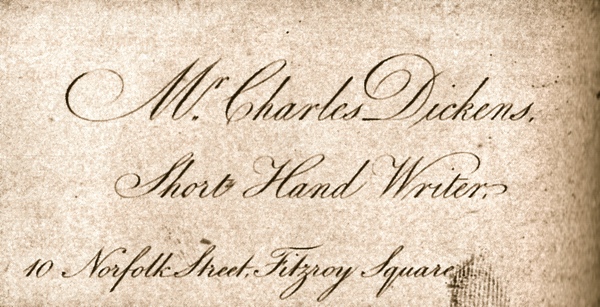
Dickens’ card while resident, when Cleveland St was known as Norfolk St (reproduced courtesy of Dan Calinescu)
You may also like to read about
Parkash Kaur, Shopkeeper
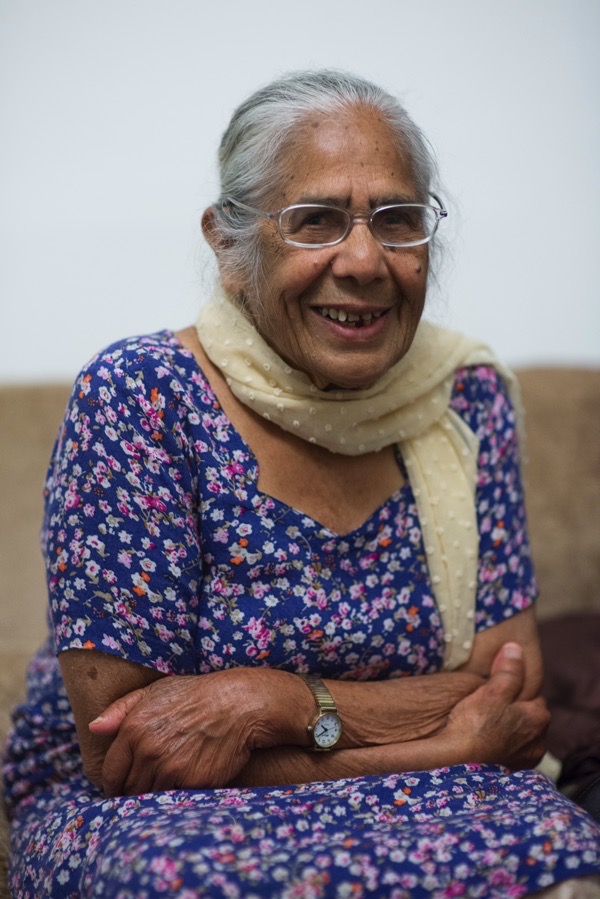
‘We Punjabi girls are strong.’
Contributing Photographer Sarah Ainslie & I first met Parkash Kaur in 2015 when we were making portraits of the residents of the Holland Estate next to Petticoat Lane in Spitalfields. It was evident then that Parkash occupied a revered position among the residents as spiritual mother to the entire estate.
Then Suresh Singh, author of A MODEST LIVING, told me that Parkash famously ran a grocers shop at 5 Artillery Passage with her husband Jarnail Singh. So close were these two Sikh families in Spitalfields that Suresh and his wife Jagir know Parkash as Aunty Ji and, in Suresh’s childhood, he knew Jarnail as Uncle Jarnail.
Jarnail came to London in 1951 from Jundalar in the Punjab to seek a better life and his wife Parkash joined him in 1953. They had been married when they were children. By 1958, they had saved enough money to put a deposit on a shop in Artillery Passage and in 1963 they bought it and moved in, opening the first Sikh grocer in East London.
Around 2000, they closed their shop and retired to live fifty yards away in the Holland Estate. Since Jarnail died in 2010, Parkash lives alone but Suresh & Jagir visit her regularly. Sarah Ainslie & I accompanied them recently and we shared a delicious dinner of Jagir’s homemade rotis and yoghurt while Parkash told her story to Suresh, who has translated it from Punjabi for us to read.
“Your father and my husband made a pact of love and they called themselves the ‘rodda’ Sikhs (the ones without turbans). They had this silent love that they kept dear between them and always knew of each other’s joy and pain, sometimes even without talking.
They sat and talked all day long in our shop at 5 Artillery Passage where me and your Uncle worked day and night. I would shut the heavy shutters in the evening and sleep on the top floor while your Uncle went to do a night shift at the rubber factory in Southall. I walked back the other day to Artillery Passage and I could not even find the door or the number. No one there spoke Hindi or Punjabi any more and I felt a deep loss. It made me very sad.
Our days started at 4am each morning when your Uncle Jarnail would bring boxes of fruit and vegetables from the Spitalfields Market across the road. Big rats would jump out of some of the boxes. I was so scared of the rats, but we had a lovely niece working for us who could catch them by their tails. She would never kill them, but lift the heavy grate from the sewer and send them back. She said they were gods.
Suresh, this was when you were very little. I remember your mother Chinee would always wave and call out ‘Sat Shri Akal’ (blessings to all) to me from far away, if she saw me in Petticoat Lane or in Itchy Park next to the big white church. She was a very observant women who always stuck by your father, Joginder.
I was so happy when your parents invited me and your Uncle Jarnail to your wedding with Jagir in 1984. It was a joyful occasion for Joginder. After his stroke, your father struggled to walk yet he would always come every day from Princelet St to our shop in Artillery Passage and ask your Uncle Jarnail, ‘Do you think we have enough roti flour?’ For a long time, we were the only shop in East London that sold roti flour and people would come from as far away as Mile End and Plaistow.
Your Uncle Jarnail and Joginder helped each other with money, they never wanted to let each other down. People would say ‘Jarnail is a jatt (a farm owner) but Joginder is a chamar (an untouchable).’ Your uncle would reply, ‘Get out of my shop! We do not believe in castes here. He is my brother.’
All the money earned by Punjabis in East London passed through our shop and we sent it over to the Punjab and exchanged it for rupees, so people could build big houses over there. Once I sat on thousands of pounds in cash all on my own while your Uncle was out, before it was sent to the Punjab. I learnt to be a very good counter of money. In those days, people were naive enough to believe that one day they would all take their families back to the Punjab and live there for ever. But in Joginder’s eyes, he knew the truth.
He was happy to spend time with your Uncle Jarnail in the shop. They often spoke of the assassin Udam Singh who lodged in 15 Artillery Passage in the thirties. He shot Michael O’ Dwyer who ordered the massacre of Sikhs in Amritsar when he was Lieutenant Governor of the Punjab.
When me and your Uncle Jarnail needed a break from the hard work of shopkeeping, dealing with customers who never wanted to pay the asking price and always wanted to barter, we would sit on the wall outside Artillery Passage and eat ice cream from another shop – just to have a change. That was our holiday.
Where are all those people who came to our shop now? All gone. The ones that we helped out, where are they? Not to be seen. But you and Jagir are here with me and you know you are always welcome in my home. I am happy that you and Jagir and look after me. Your Uncle Jarnail died and left me alone but I am strong. We Punjabi girls are strong.”
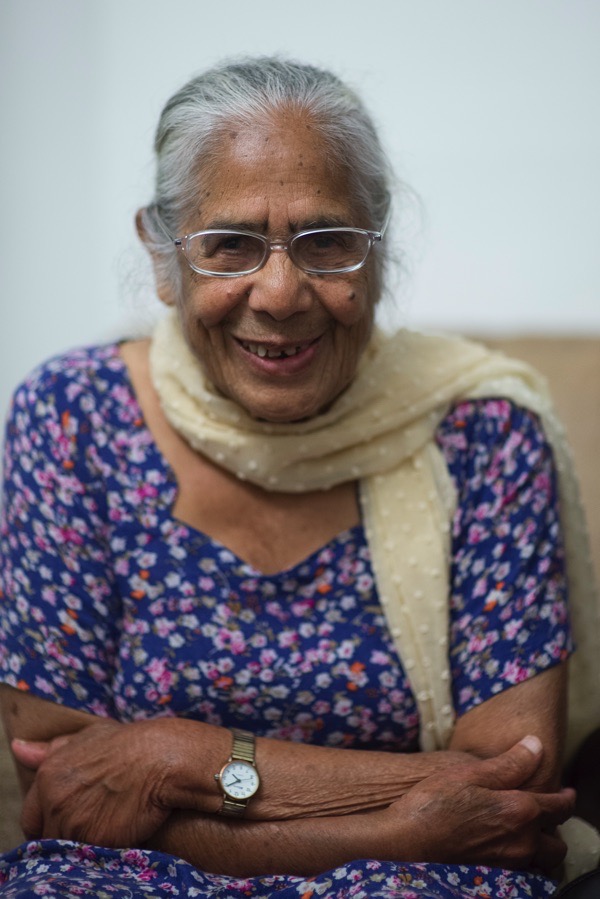
Portraits by Sarah Ainslie
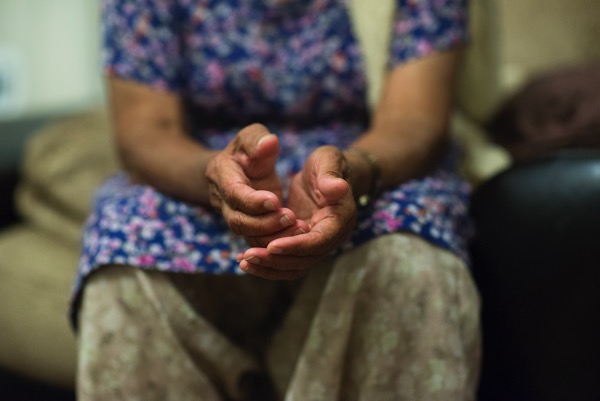
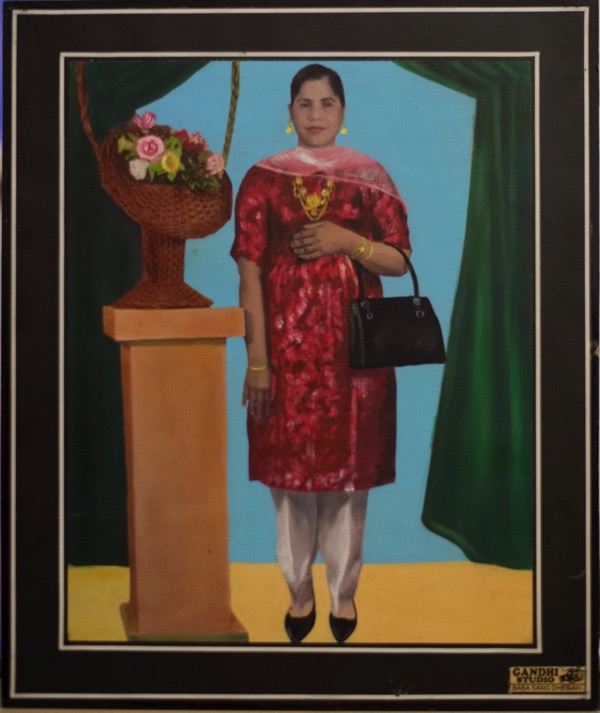
Parkash Kaur
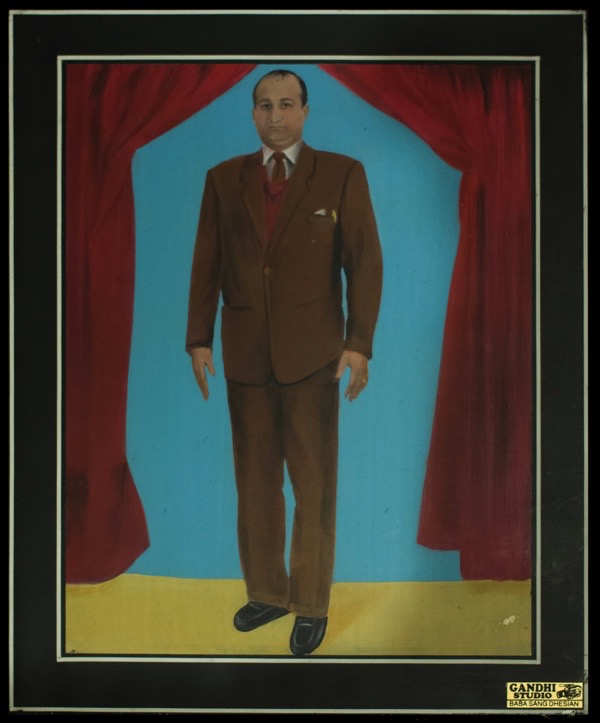
Jarnail Singh
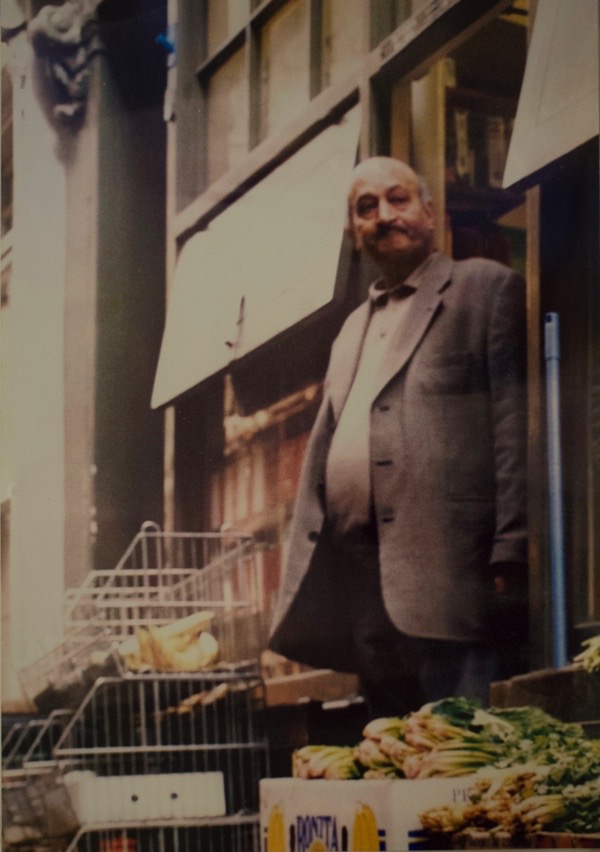
Jarnail ouside the grocery shop he ran with Parkash at 5 Artillery Passage
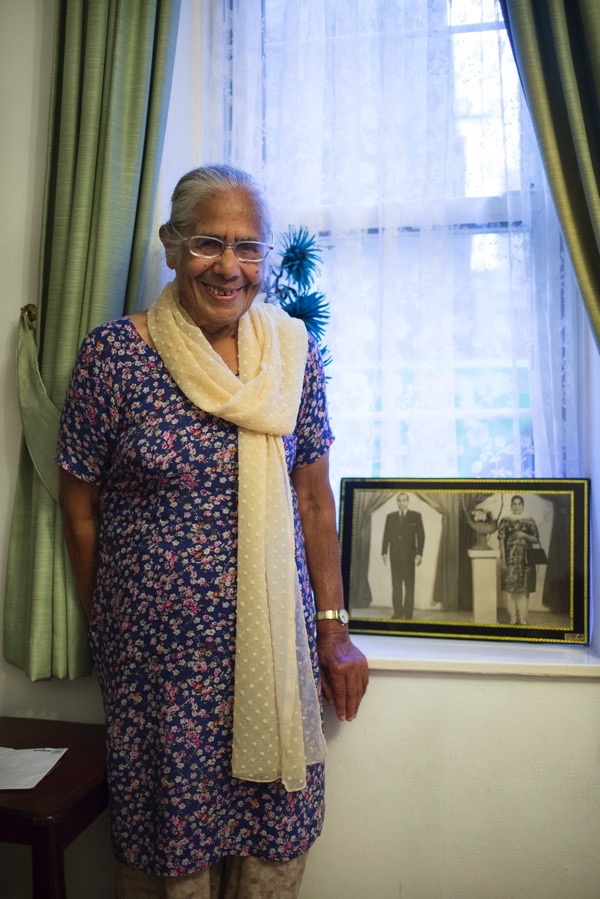
Parkash in her flat the Holland Estate (Photograph by Sarah Ainslie)
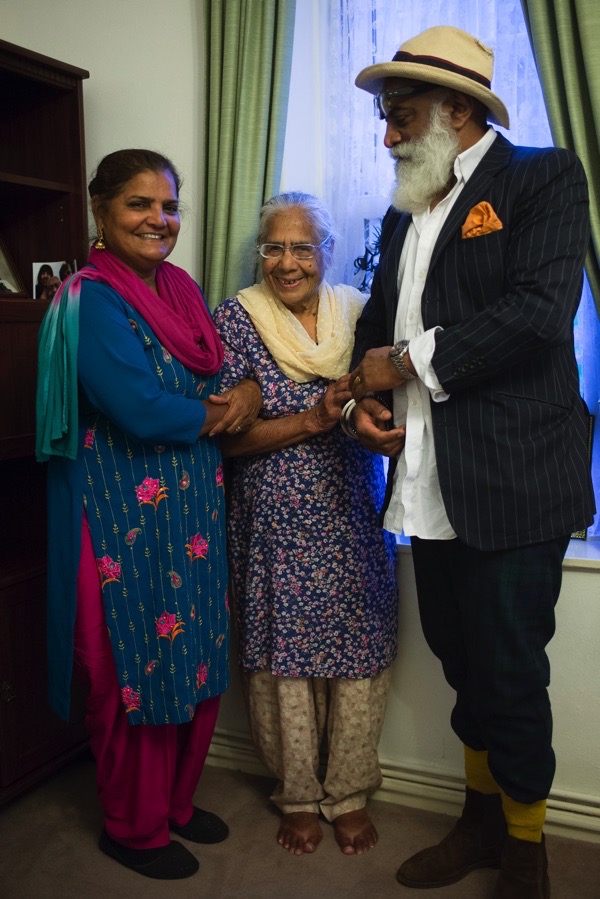
Jagir Kaur, Parkash Kaur & Suresh Singh (Photograph by Sarah Ainslie)
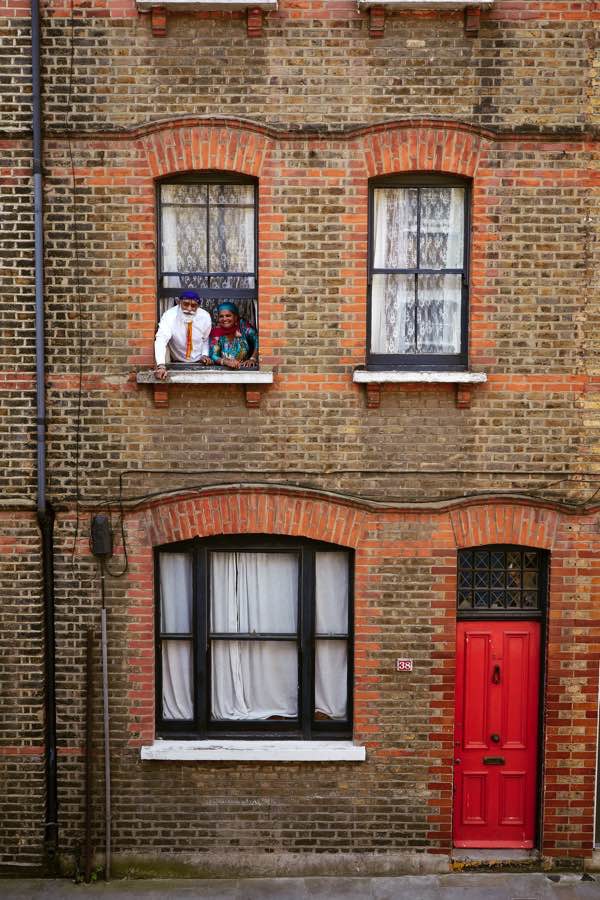
Suresh Singh & Jagir Kaur at 38 Princelet St (Photograph by Patricia Niven)
You may also like to read about
In The Debtors’ Cell
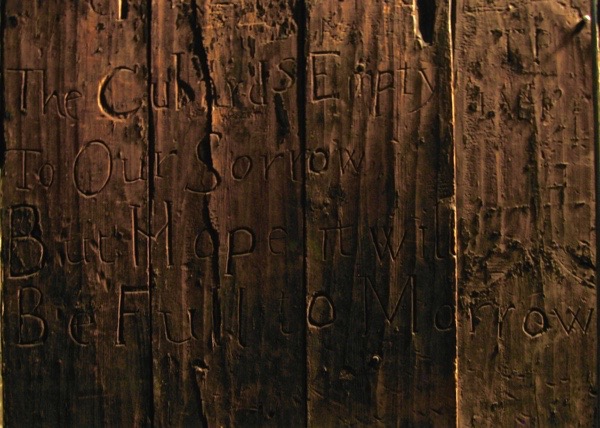
Walking into a cell from an eighteenth century prison in Wellclose Sq was an especially vivid experience for me because – if I had lived then – I and almost everyone I know would have invariably ended up in here at some point. Although almost nothing is known of the occupants of this cell, they created their own remembrance through the graffiti they left upon the walls during the few years it was in use, between 1740-1760, and these humble inscriptions still recall their human presence after all this time.
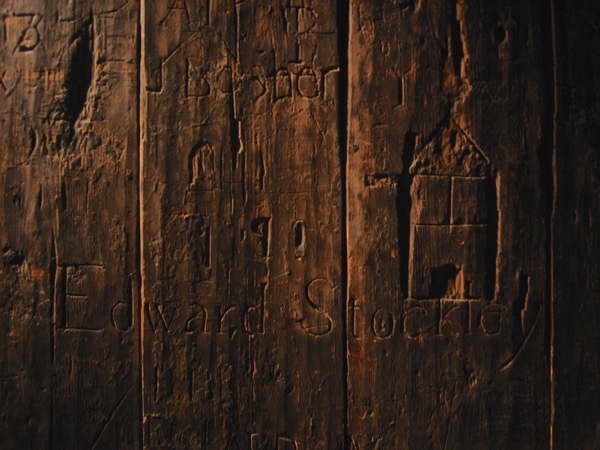
No one could fail to be touched by the emotional storm of marks across the walls. There are explicit names and dates carved with dignity and proportion, and there are dozens of crude yet affectionate images, presumably carved by those who could not write. There are also a few texts, which are heartbreaking in their bare language and plain sentiment, such as “Pray Remember the Poor Deptors.” The spelling of “deptors” after the model of “Deptford” is a particularly plangent detail.
About six feet wide and ten feet long, with a narrow door in one corner, and lined with vertical oak planks, this is one of several cells that once existed beneath the Neptune public house. There is a small window with wide bars, high upon the end wall, corresponding with street level – not enough to offer a view, but just sufficient to indicate if it was daylight. There would have been straw on the floor and some rough furniture, maybe a table and chairs, where the inmates might eat whatever food they could afford to buy from the publican, because this was a privately-managed prison run for profit.
Wellclose Sq was once a fine square between Cable St and the Highway, which barely exists any more. St Peter’s School, with its gleaming golden ship as a weathervane, is the only building of note today, though early photographs reveal that many distinguished buildings once lined Wellclose Sq, including the Danish Embassy, conveniently situated for the docks. When the Neptune was demolished in 1912, two of the cells were acquired by the Museum of London, where I was able to walk into one to meet Alex Werner the curator responsible for putting it on display. “We’re never going to know who they are!” he said with a cool grin, extending his arms to indicate all the names and pictures that people once carved with so much expense of effort, under such grim conditions, to console themselves by making their mark.
It is a room full of sadness, and even as I was taking my photographs, visitors to the museum came and went but did not linger. In spite of their exclamations of wonder at the general effect of all the graffiti, people did not wish to examine the details too closely. The lighting in the museum approximates to candlelight, highlighted some areas and leaving others in gloom, so I took along a flashlight to examine every detail and pay due reverence to the souls who whiled away long nights and days upon these inscriptions.
In a dark corner near the floor, I found this, painstaking lettered in well-formed capitals, which I copied into my notebook, “All You That on This Cast an Eye, Behold in Prison Here Lie, Bestow You in Charety.” The final phrase struck a chord with me, because I think he refers to moral charity or compassion. Even today, we equate debt with profligacy and fecklessness, yet my experience is that people commonly borrow money to make up the shortfall for necessary expenses when there is no alternative. I was brought up to avoid debt, but I had no choice when I was nursing my mother through her terminal illness at home. I borrowed because I could not earn money to cover household expenses when she lived a year longer than the doctors predicted, and then I borrowed more when I could not make the repayments. It was a hollow lonely feeling to fill in the lies upon the second online loan application, just to ensure enough money to last out until she died, when I was able to sell our house and pay it off.
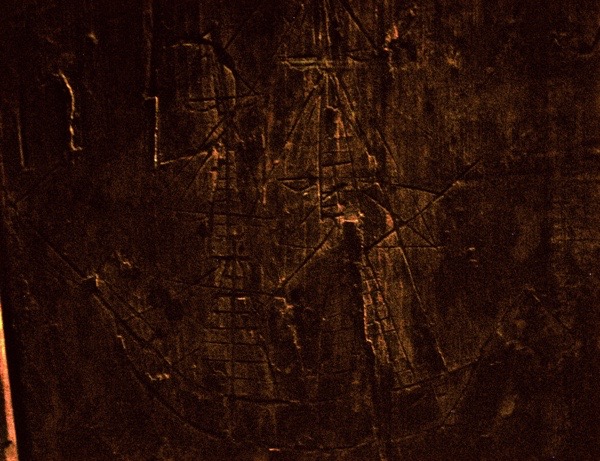
So you will understand why I feel personal sympathy with the debtors who inhabited this cell. Every one will have had a reason and story. I wish I could speak with Edward Burk, Iohn Knolle, William Thomas, Edward Murphy, Thomas Lynch, Richard Phelps, James Parkinson, Edward Stockley and the unnamed others to discover how they got here. In spite of the melancholy atmosphere, it gave me great pleasure to examine their drawings incised upon the walls. Here in this dark smelly cell, the prisoners created totems, both to represent their own identities and to recall the commonplace sights of the exterior world. There are tall ships with all the rigging accurately observed, doves, trees, a Scots thistle, a gun, anchors and all manner of brick buildings. I could distinguish a church with a steeple, several taverns with suspended signs, and terraces stretching along the whole wall, not unlike the old houses in Spitalfields.
I shall carry in my mind these modest images upon the walls of the cell from Wellclose Sq for a long time, created by those denied the familiar wonders that fill our days. Shut away from life in an underground cell, they carved these intense bare images to evoke the whole world. Now they have gone and everyone they loved has gone, and their entire world has gone generations ago, and we shall never know who they were, yet because of their graffiti we know that they were human and they lived.


You may also like to read about
A Brief Introduction To Criminality
This is an extract from THE BUSINESS, Talking with thieves, gangsters & dealers, the new book by Spitalfields Life Contributing Criminologist Professor Dick Hobbs
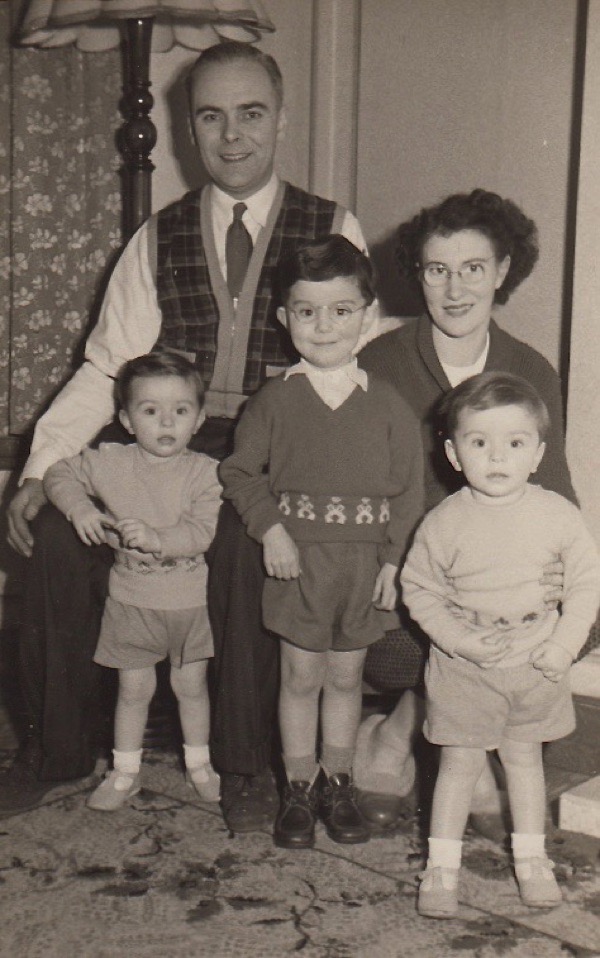
Professor Hobbs stands at the centre of this family group
I grew up in Plaistow in the fifties, born to parents who were part of a bomb-damaged generation that had experienced poverty, war, chaos and insecurity. The population that had fought fascism for six years was encouraged to keep their heads down, enjoy the spam, and wait for rationing to end. Despite the immediate benefits that the welfare state delivered, the fear of unrestrained chaos remained very real for my parents and a steady job, along with avoiding any risk, was vital if they were to quarantine their family from impending disaster.
My parents had difficulty in coping with three children born so close together, so I was taken in by my maternal grandparents, in whose home I spent most of the next few years. While I was only a few minutes’ walk from my parents, I may as well have been on another planet.
Most days, my grandfather would take me out for leisurely walks, usually to the local street market. He knew a lot of people and he would stop and talk to many of them, including a group of men who congregated at the top of the market outside Upton Park station. They were different from the other men who populated my small fifties world. Unlike the ex-servicemen who nervously smoked and drank tea through tense evenings of heavily edited reminiscences in my parents’ home, these market men were relaxed, but wary. Of what, I was not certain. They were very well dressed, in trilby hats and overcoats over dark suits, though they seemed to talk in code, and my grandfather always politely refused the coins that they offered to me.
Over half a century on, I know now that the men were thieves and bookies’ runners. Although my grandfather was a working man and no villain, he was at ease in their company and they held him in some respect. He and the men he spoke to shared something that had been acquired the hard way: a street wisdom and a willingness to do what was necessary in the face of constant grinding poverty and unemployment.
Glimpses of the quasi-Dickensian lives of older relations peppered my childhood and I pieced together fragments of conversations concerning booth boxing at Mile End Waste, fights in Victoria Park, knuckledusters and pickpockets, ‘Jackie Spot’ and coin-tossing rings, dodgy bookmakers at the races, the police horses at Cable St, rat-baiting in Brick Lane, ‘coming off worst’ in a fight with two pimps during the war and a detective’s unsuccessful attempt at blackmail. There was clearly something going on outside the gratefully received oppression of a respectable job and not everybody kept their heads down.
In many ways, the fifties were the beginning of the East End’s golden age. For generations it had been associated with poverty, filth, disease, ignorance, racism and violent depravity. But as the post-war years moved into the modern era, the gloom that had settled upon the East End appeared to be lifting. Rehousing, although it destroyed established neighbourhood networks, improved the lives of families. ‘Getting a council place’ with a bathroom, indoor toilet and perhaps central heating, was a highpoint for those who, both literally and figuratively, had dug themselves out of the insanitary rubble of the Blitz.
And there was work, and plenty of it. As ships queued up along the Thames to unload in the East End’s booming docks, dockwork – once a job that only pariahs would do – became a desirable occupation, in part due to the strength of the trade unions. Numerous other industries reliant on the docks – factories, processing plants and the like – also prospered and as London’s bomb sites were turned into construction sites, building trades and crafts blossomed. Men had money in their pockets, many of the women who had experienced paid labour during the war years never went back to full-time domestic toil and East London was no longer a place defined by poverty.
Yet it was clear to anyone involved in dockwork that the good times could not last. Cargo was becoming increasingly containerised, which mechanised dockwork and reduced the need for labour, while the ships themselves were rapidly outgrowing the narrow confines of the London Docks. But for the time being, the pubs, clubs and many of the streets of East London took on a vibrancy that inspired an irresistible cocktail of hedonism, anti-authoritarianism and embrace of skulduggery that would have been recognisable in the Wild West or the pirate havens of the eighteenth century.
However, co-existing with this vivacious world was an alternative universe where working-class families such as mine lived in terror of their children getting into trouble with the authorities. If you took liberties, you got caught, and if you got caught, the police would ruin you. For a relatively timid kid such as myself, this could be terrifying. And yet the rules of engagement were confusing: while the direction to keep your head down was commonly enforced at home with levels of violence that are difficult to explain to contemporary youth, it was clear to me that other people were taking liberties and nobody seemed to get caught.
Much of the liberty-taking had its origins in London’s docks, and every level of theft – from petty to professional, from handfuls to lorry loads – was nurtured in the neighbourhoods that serviced the world’s largest port. Local pubs were alternatives to the corner shop and few people failed to spice their lives with the odd roll of cloth, box of shirts or leg of lamb. And it was all so normal. Once I was at a friend’s house when his dad, a docker, came home from work looking as if he had put on a lot of weight. He took off his donkey jacket and then removed a sweater, and another sweater and another – all in all he wore eight sweaters under his work clothes after plundering a shipment from the Far East.
One famous tale from the sixties involved a man who was staggering down the street apparently the worse for drink. When he collapsed onto the pavement, concerned bystanders rushed to help the stricken pale-faced man, who was shivering and incoherent. Eventually, he was taken by ambulance to the casualty department at the local hospital, where nurses discovered six large frozen steaks inside the patient’s trousers, secured by clips attached to a scaffolder’s belt. The meat, which had been liberated from the nearby Royal Docks, was resting against the docker’s bare skin, causing hypothermia.
As a child, I was already learning about hypocrisy and the usefulness of denial – on occasion from inside the four walls of my respectable, law-abiding family home. It was always late at night after I had gone to bed when Mickey called. He was a docker and the brother of a close neighbour. When my mum answered the door a familiar, and somewhat reassuring, pantomime would commence.
Mickey: Hello Mary, I have got a lovely roll of material for you.
Mum: It’s not knocked off, is it?
Mickey: No, of course not, I got it from the auctions like the last lot.
Mum: All right, let’s have a look.
Even the most virtuous could be seduced by the lure of a bargain, their conscience salved by a throwaway enquiry as to the legal status of the goods on offer before the swag was unloaded into the front room of the now absolved grateful punter. However, most people did not bother with such niceties and considerable prestige was often attached to being involved in these ‘little earners’. Just like the contemporary drugs trade, goods were regularly sold on several times before reaching the eventual consumer. Normal punters, despite whatever ‘little earners’ they were on, did not see themselves as criminals. Everybody was at it.
Yet violence was an ever-present fact of life. Working-class men of my father’s generation had taken to boxing in the same way that modern-day kids play computer games. Violence had been hardwired to their sense of self and these mild-mannered but war-damaged men who had experienced extreme violence in Europe, Africa and Asia would instinctively ‘raise their hands’ to anybody threatening their home, their family or their self-respect.
When one late evening my father heard breaking glass and rushed to the front door to find a man breaking in, he opened the door and knocked the would-be intruder spark out. However, this was no burglar but a neighbour who had returned from the pub drunk and could not understand why the key to number 13 did not fit the lock to number 9. Next day, without a word from either combatant, our hungover neighbour fixed a new pane of glass to the front door. Calling the police was not an option.
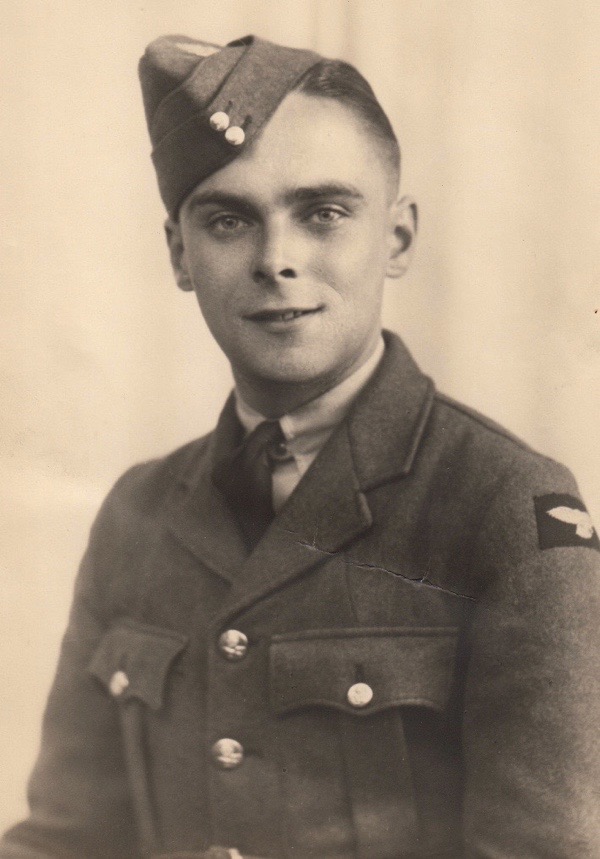
My father, Jack Hobbs, 1942
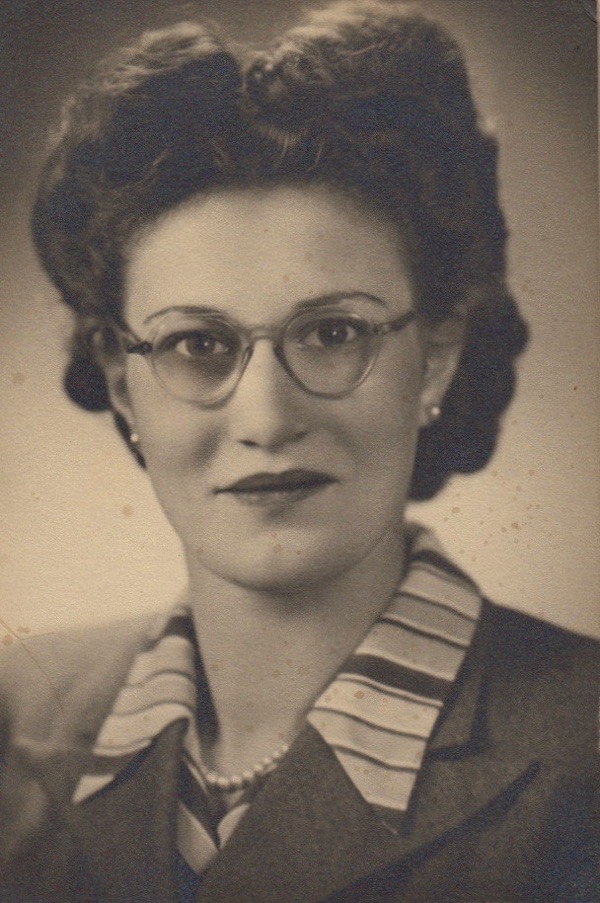
My mother, Mary Anne Reynolds, 1945
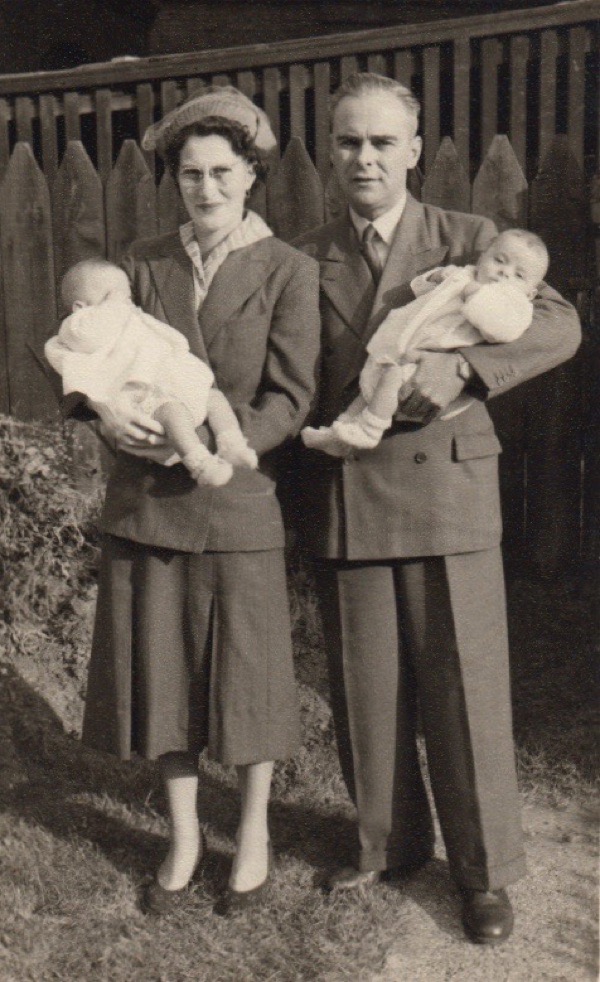
My parents with twins, Charlie & Phil, 1953
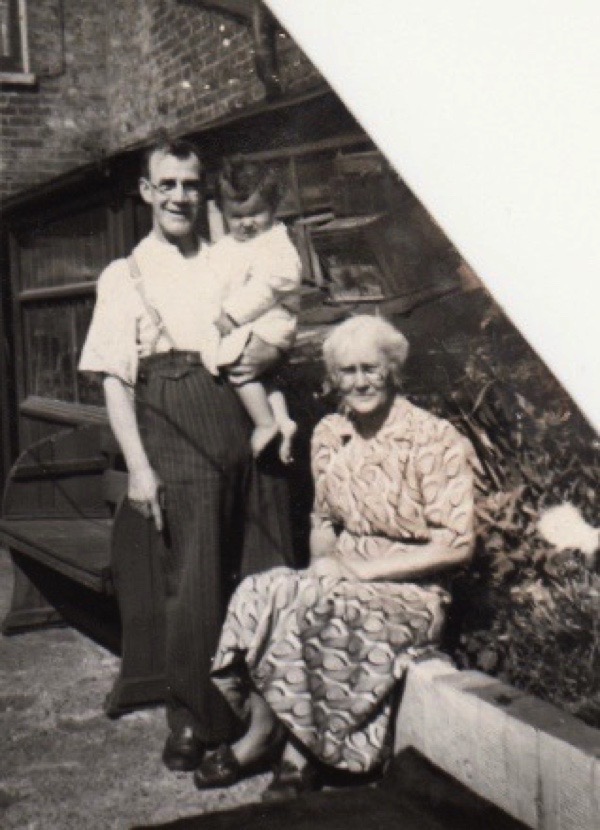
Me with my grandparents, Fred & Mary Reynolds, 1951
You may like to read these other articles by Dick Hobbs
Sam Nicholls of Nicholls & Clarke
George Cruikshank’s Comic Alphabet
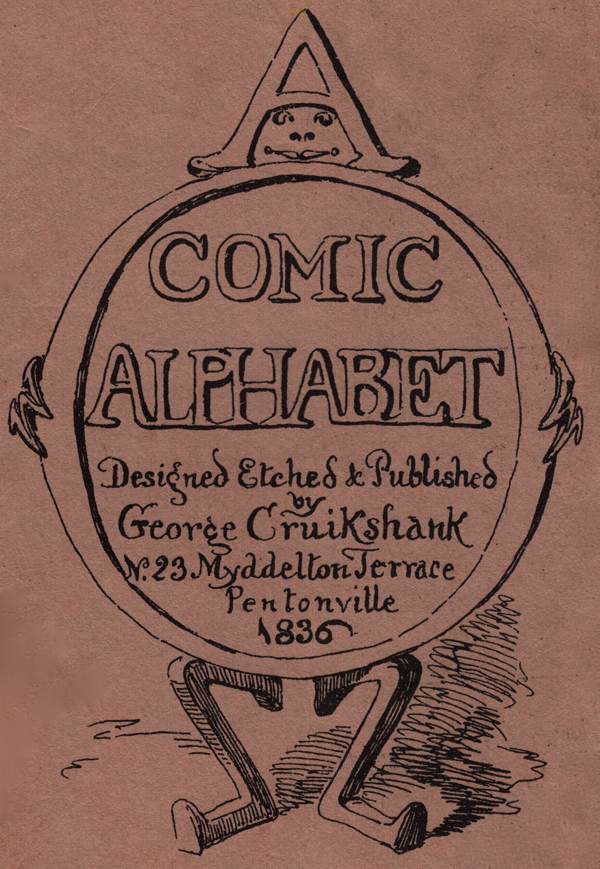


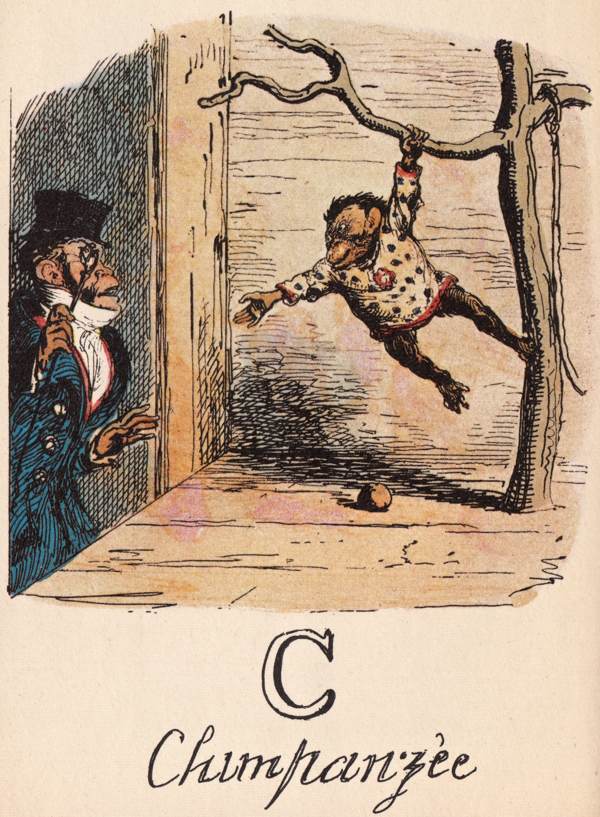
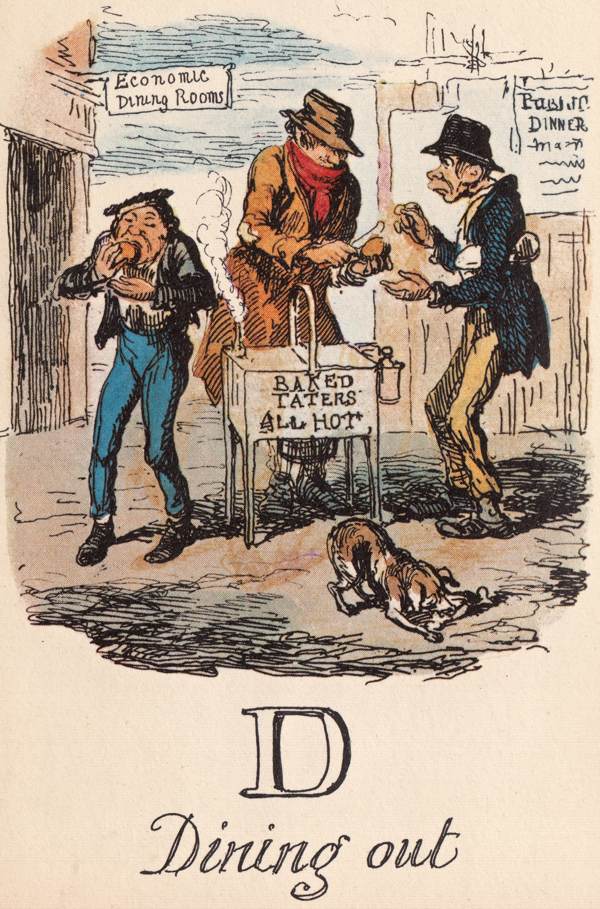

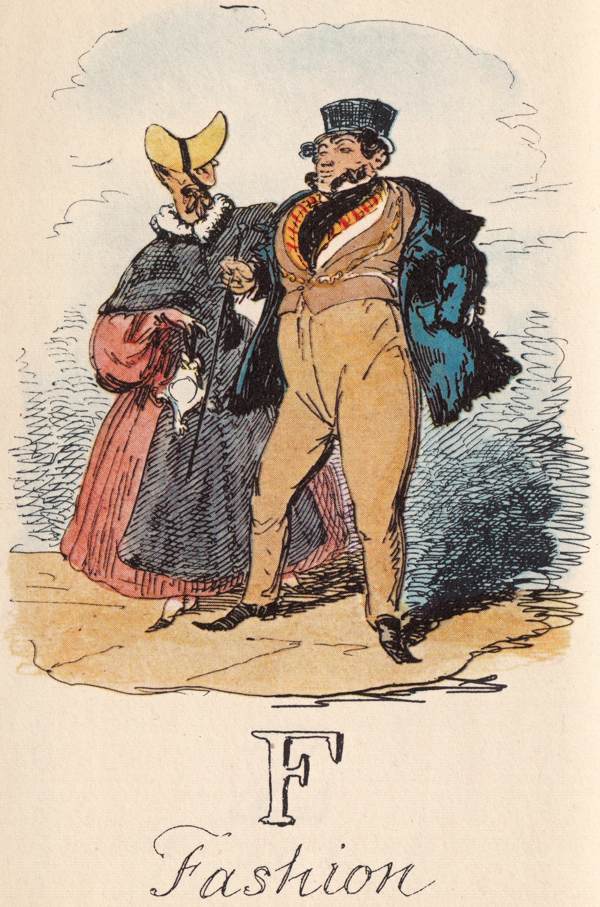

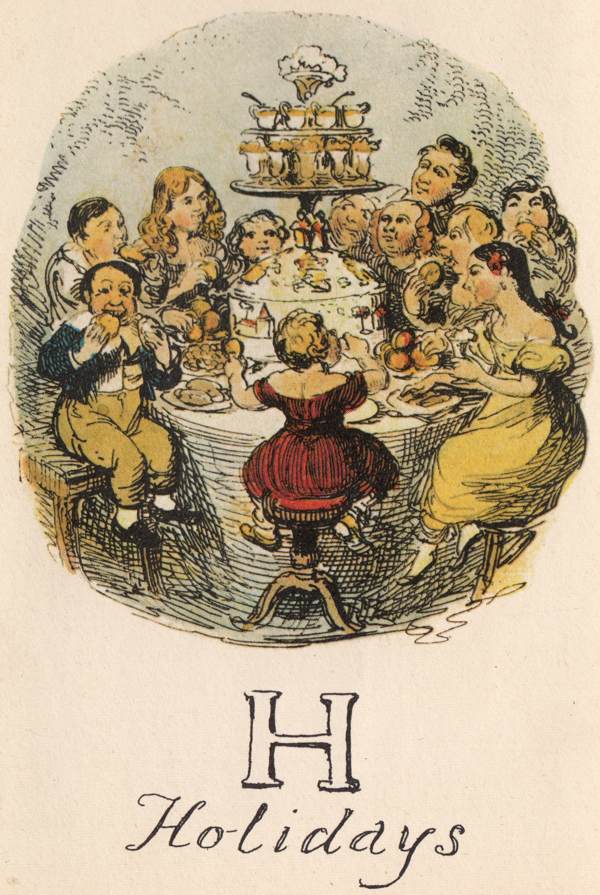
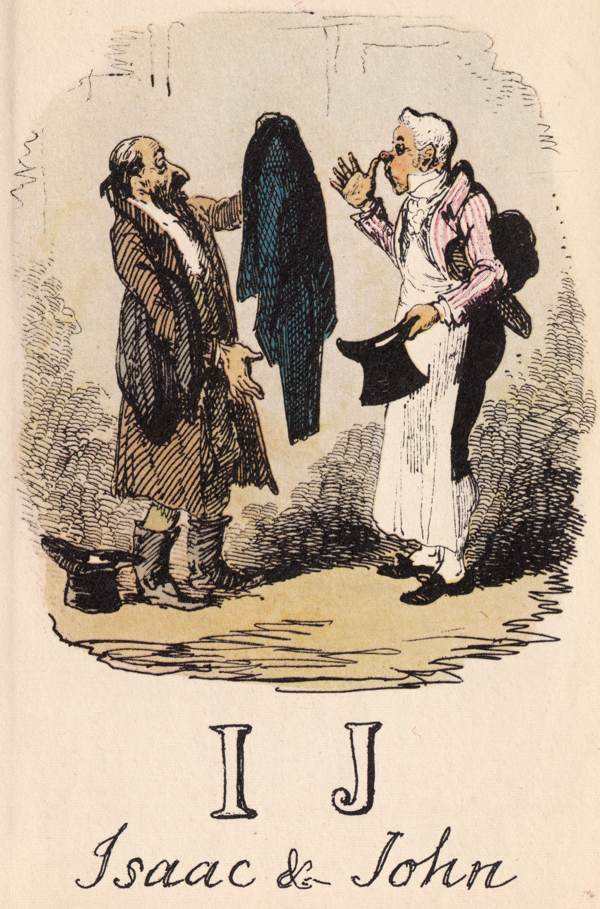

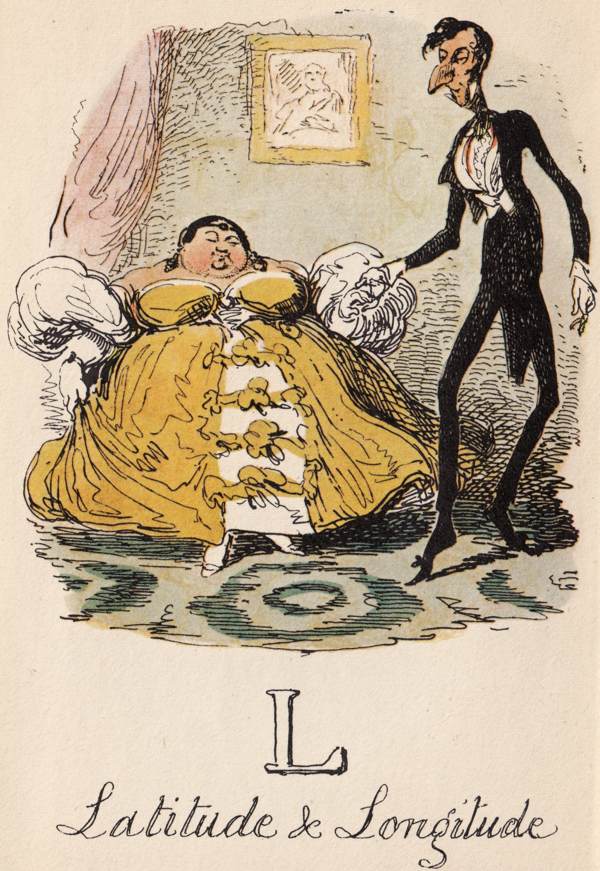
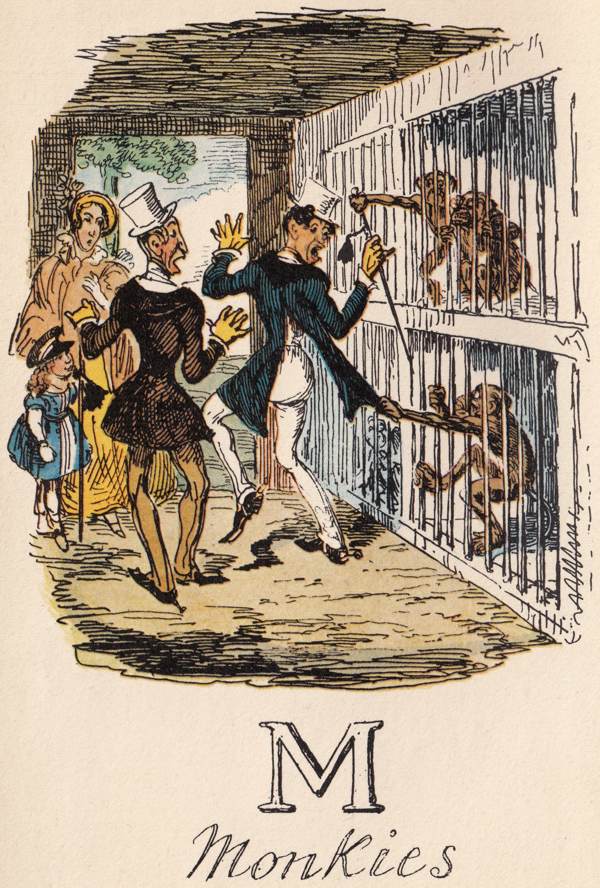
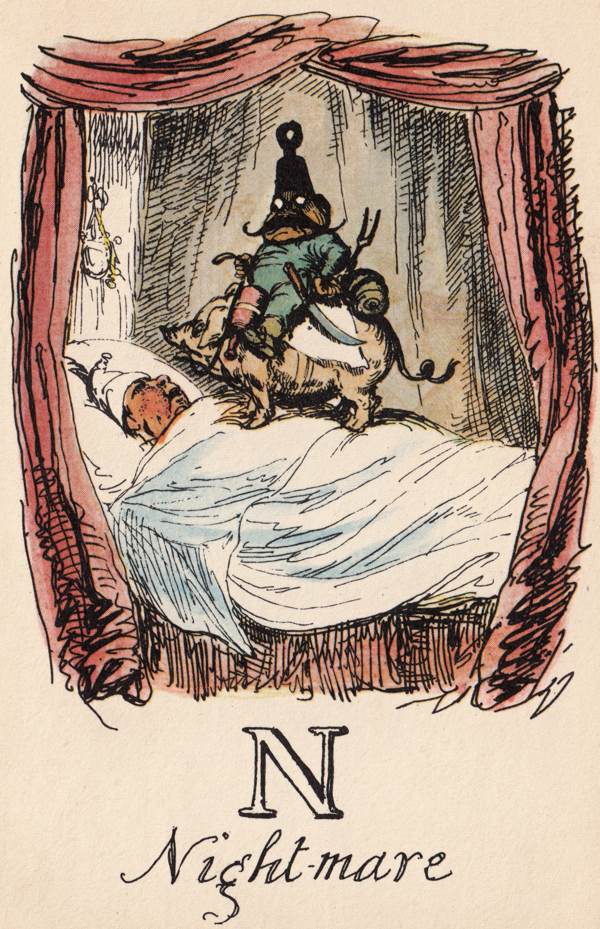
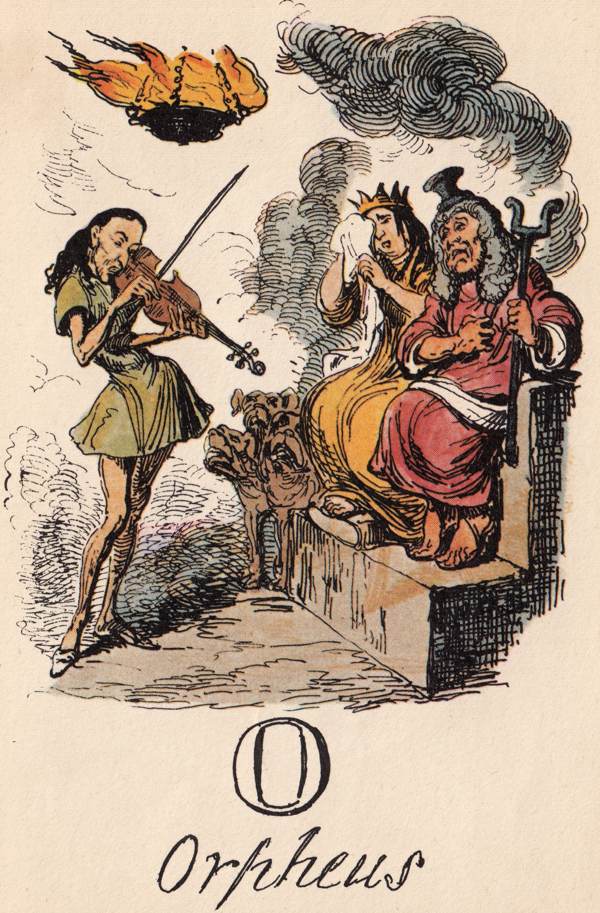
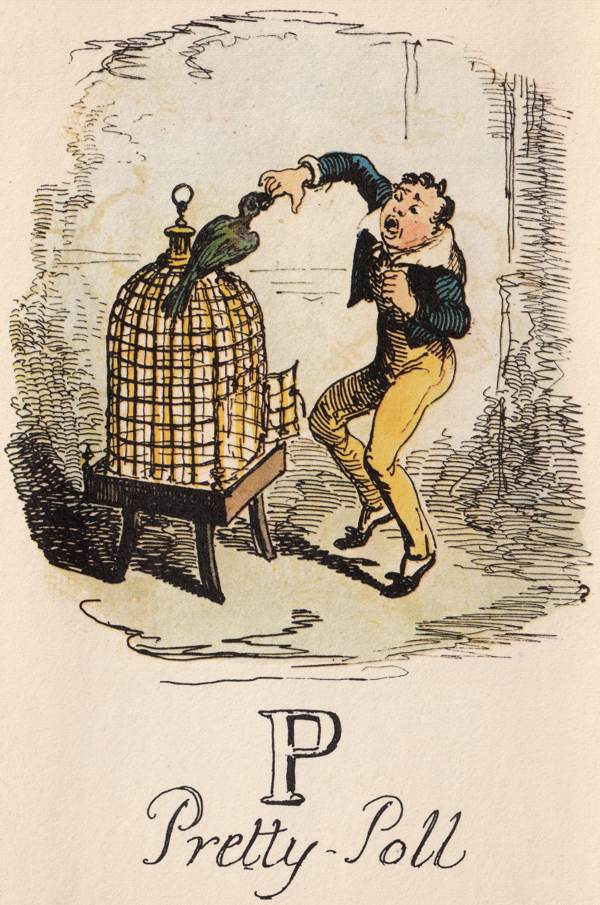
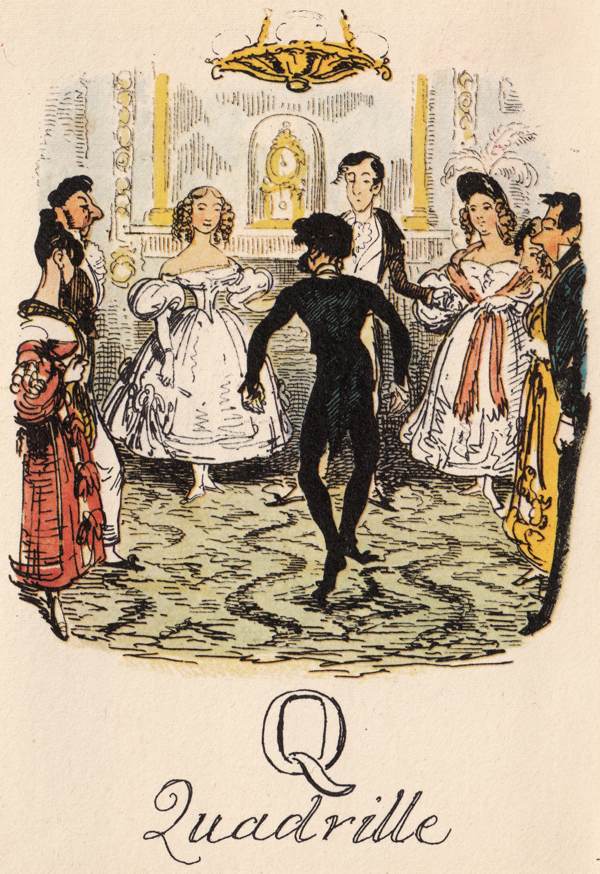
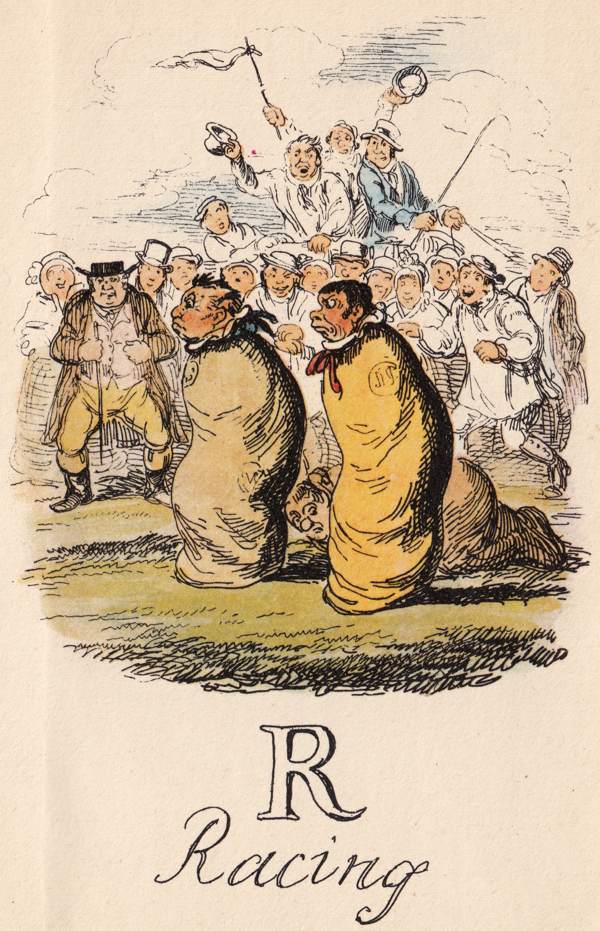
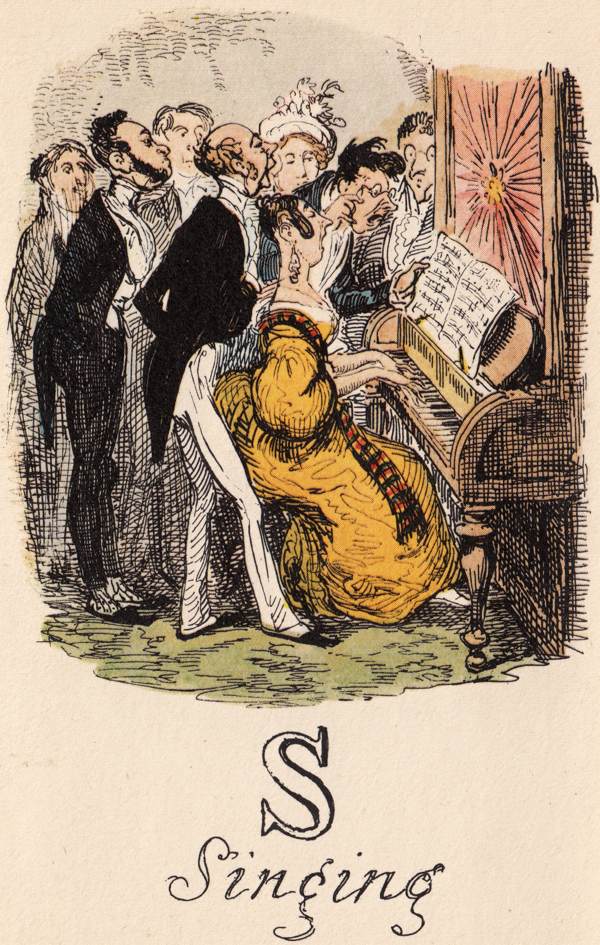
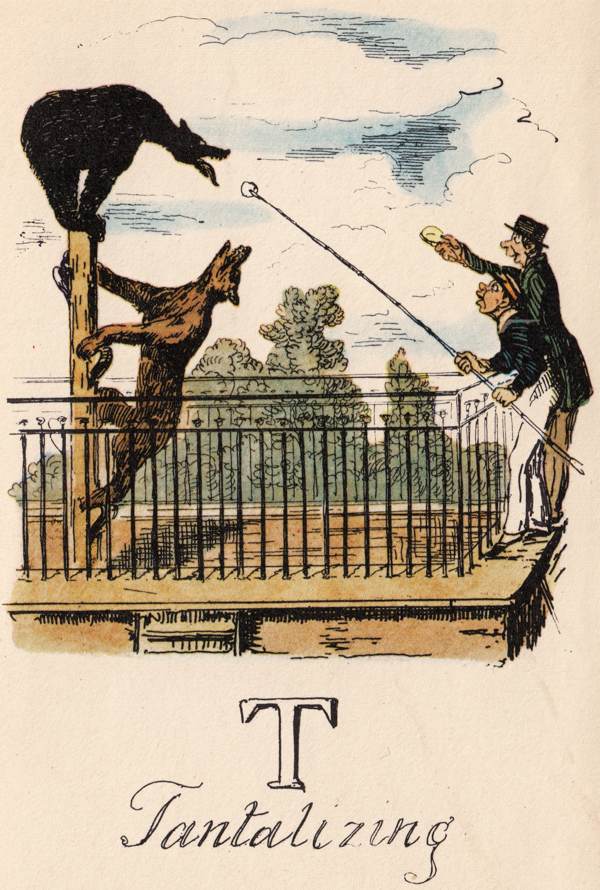
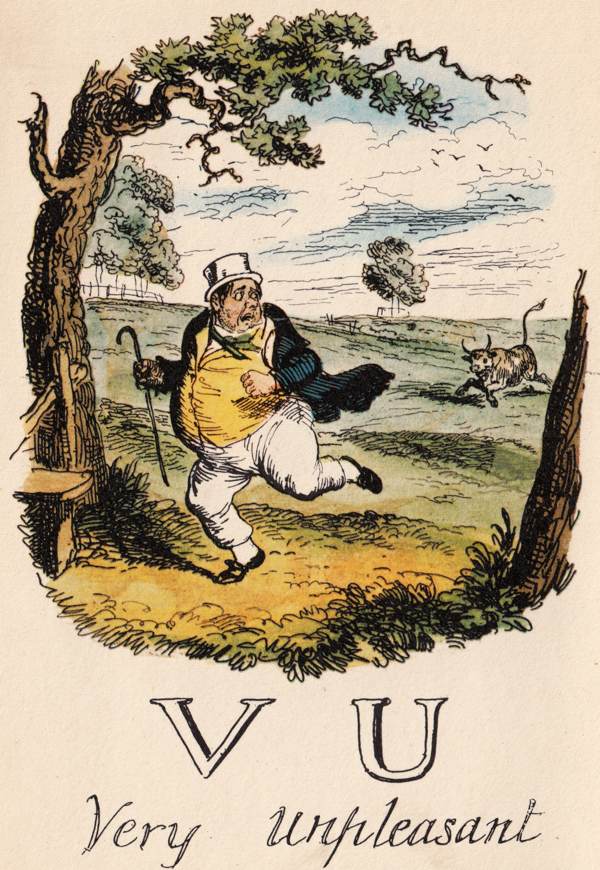
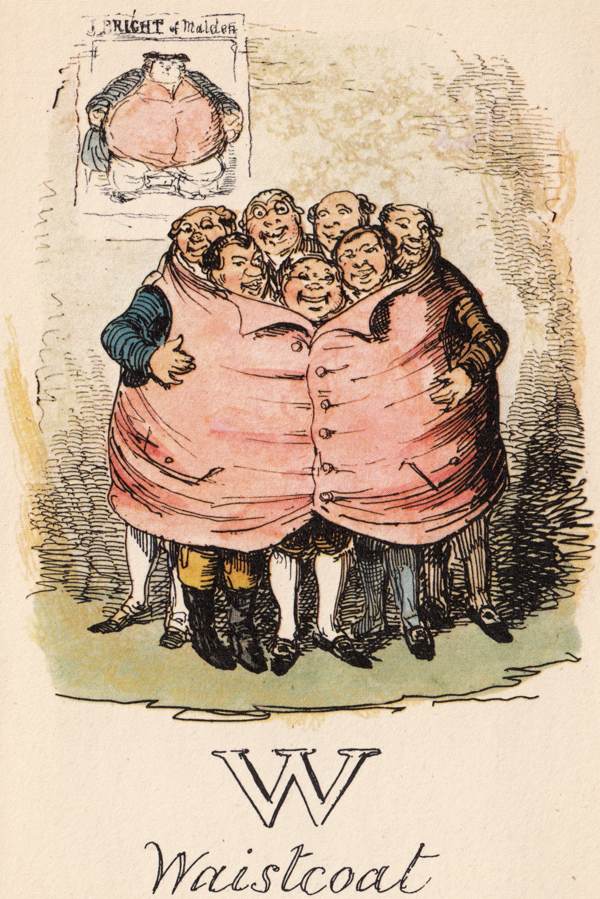
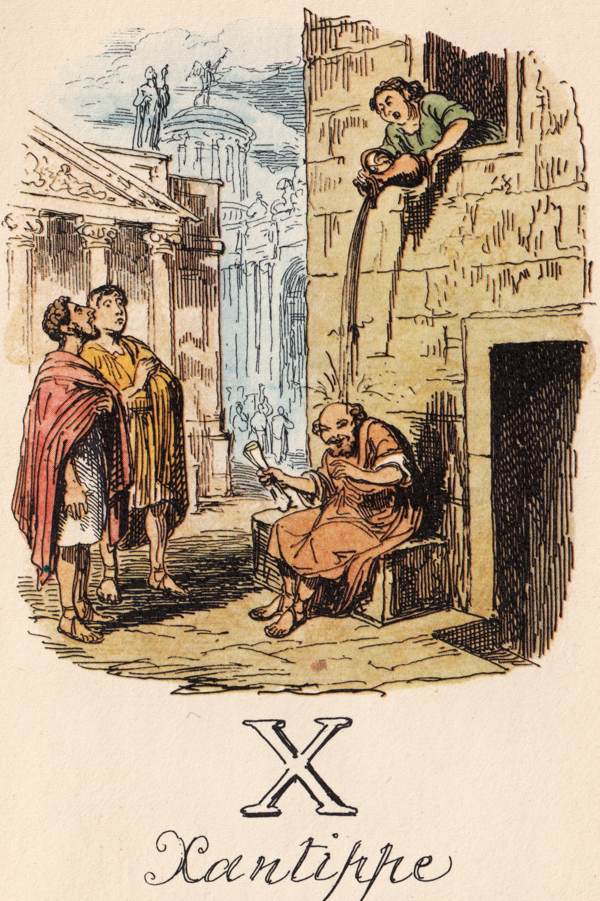
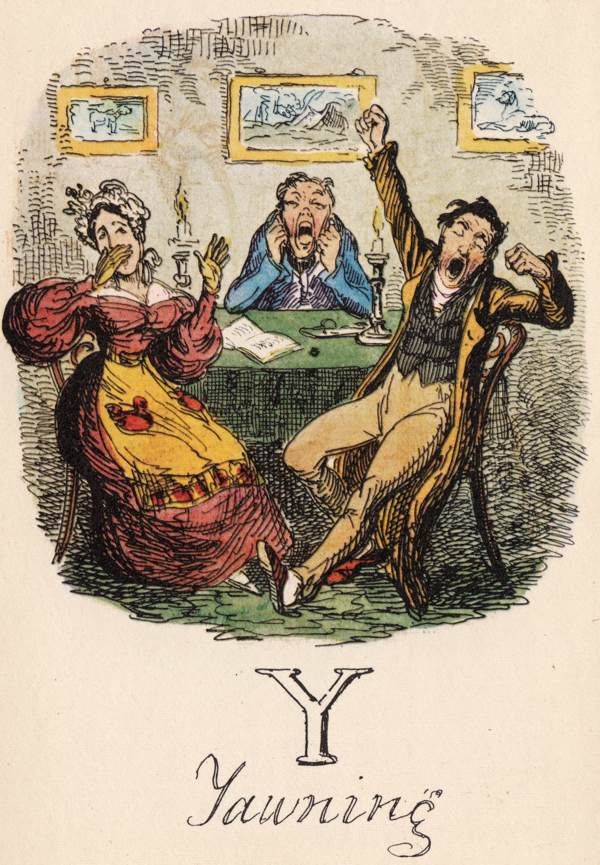
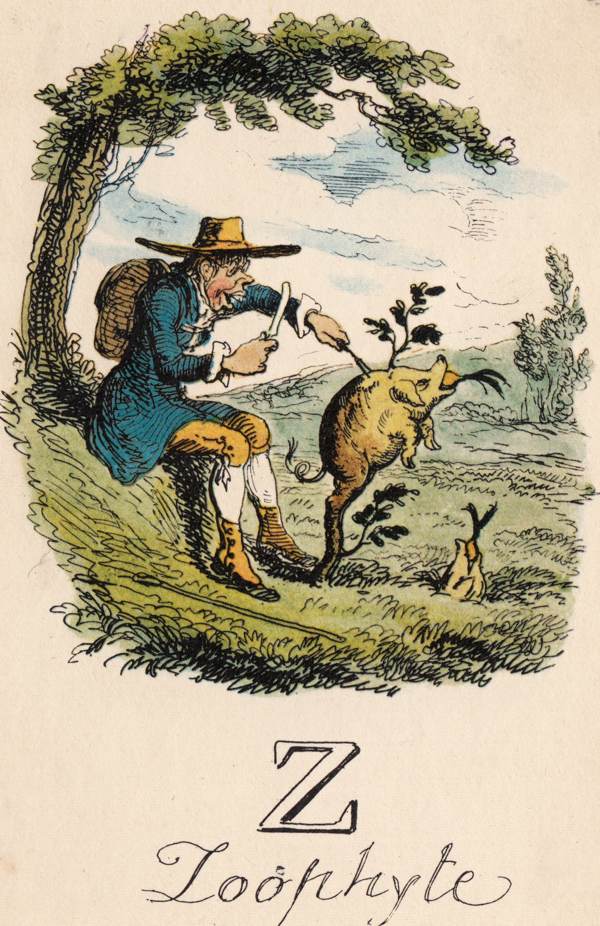

You might like to see other work by George Cruikshank
Jack Sheppard, Thief, Highwayman & Escapologist
Peter Minter, Brick Maker
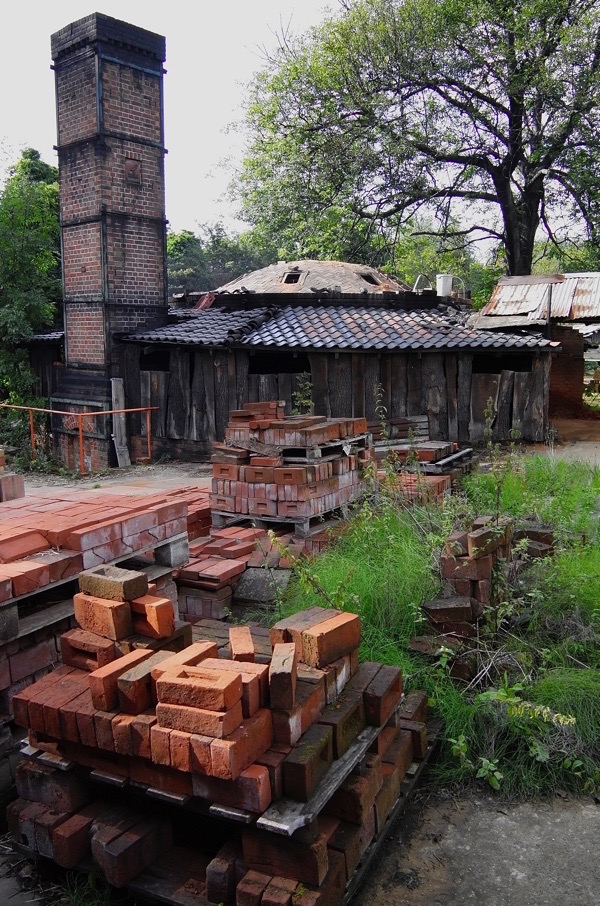
The kiln
Brick Lane takes its name from the brick works that once filled Spitalfields and I always wondered how it was in those former times. So you can imagine my delight to visit Bulmer Brick & Tile Company in Suffolk, where bricks have been made since 1450, and be granted a glimpse of that lost world.
My guide on this journey through time was Peter Minter who has been making bricks in the traditional way for seventy years. He began by taking me to the hole in the ground where they dig out the mud and pointing out the strata differentiated in tones of brown and grey. ‘You are looking at the Thames Estuary thirty-six million years,’ he declared with a mild grin of philosophical recognition.
At the lowest level is London clay, deposited in primordial times when the Thames flowed through Suffolk, used to make familiar stock bricks of which most of the capital was constructed in previous centuries. ‘Each of the strata here offer different qualities of clay for different purposes,’ Peter explained as he pointed out dark lines formed of volcanic ash that fell upon the estuary a mere twenty-five million years ago. ‘We have another fifty years of clay at this site,’ he admitted to me in the relaxed tone that is particular to an eighty-eight-year-old brick maker.
“My father, Lawrence Minter, took over this brick works in 1936 when he was thirty-five. It had been here for hundreds of years, with the earliest evidence dating from 1450, and it was a typical local brick works. His uncle, FG Minter, was a builder in London and my father was brought up by him as a surveyor.
Before my father could get established, the war came along and shut the place down. There were thirty-five or thirty-six people working here but a lot got called up and we went down to about six or seven men. We made land drain pipes for the Ministry of Supplies and that was what kept us going. Those men were old or infirm but they kept the skills alive.
I was taught by those skilled men who had been born in the nineteenth century and brought up as brick makers. Without realising, I learnt all the old secrets of brick making but it was only when I knew that this was the direction of my life that I decided I had to save it, and started using the old techniques that had been forgotten rather than the new. This is what makes us unique. I have spent my whole life working here and I probably know more about making bricks than anyone alive. The business has changed and yet it has not changed, because the essence is the same.
When my father reopened after the war, everything was already beginning to change. There was so little trade in brick making that he got into the restoration business. When conservation started to develop, I was the only person in the country who knew how to manufacture bricks in the traditional way. Other people have theories but I am the only one who knows how to do it. There is no-one with our philosophy and the way we go about it.
We start backwards. We look at an old house and its history. We do not think simply of the profit we can make from selling you a brick. We work out why the bricks were made the way they were and how they were made, what techniques were used at that time. When I look at a building, I can tell you everything about its history this way.
In London, they were manufacturing what they called the ‘London Stock,’ the cheapest brick they could produce and they used all sorts of waste material in it as well as clay. They did not think about it lasting but it turned out to be one of the finest bricks of all time. That is what they would have been making in Brick Lane in the seventeenth century.
The clay is the secret because whatever have got beneath your feet is what you have to use, its characteristics dictate what you can make. We are digging out the clay for the next summer, we always do it at the end of September and try to catch the end of the good weather, which we have just done. We want it dry and crumbly, we do not want it compressed into mud. It needs to weather, so the salts and minerals in it liberate into the atmosphere, and you avoid getting salt crystallising upon the finished bricks.
When father was running the brick works, he simply dug the clay out but gradually we have become more precise so now we select layers of clay for different jobs. In his day, you bought a brick from Bulmer – father only did ‘Tudor’ – but now we make bricks specially for each particular job. More and more of our work involves some kind of experimentation. We no longer make generic bricks, everything is specialised now. We make over one hundred and fifty different kinds of bricks in a year. We look at our clay for its degree of plasticity, the grey clay is more plastic whereas yellow clay is more sandy, so we blend the clay as necessary for each order of bricks.
We are currently making around 30,000 bricks for Kensington Palace and another 30,000 for the Tower of London. We have been making bricks for Hampton Court since 1957. For thirty years, we supplied the clay for the moulds at the Whitechapel Bell Foundry and the ‘bell bricks’ which were the radius bricks upon which they placed the mould.
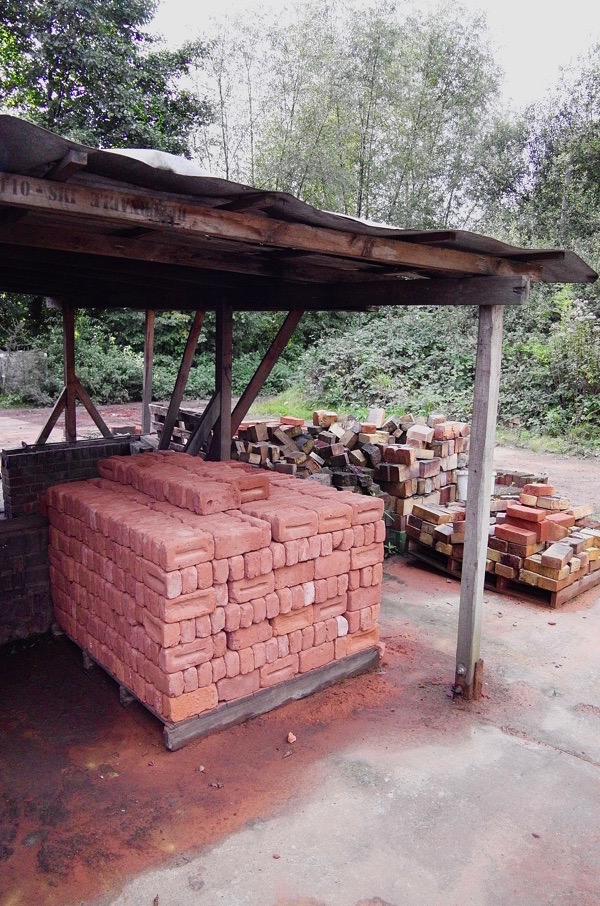
Our bricks are laid out to air dry before firing in what are called ‘hack rows’ on the ‘hack ground’ or ‘hack stead.’ These are Saxon words. Once the bricks are dry enough, we set them up in ordered lines which is called ‘skinking.’ We have covers to ensure even drying, by keeping off the sun and the rain. If they get wet, they just turn back to mud.
Once a fortnight, we fire the kiln for three days. Someone has to stay to stoke the fires continuously. I rebuilt one of the kilns myself a few years ago. I have been responsible for the construction of four of these domed-roof kilns. I could not find an expert to tell me how to do it, so I worked out how to do it myself. I did not use a wooden frame for the dome, I built it in concentric circles of bricks so it was self supporting. As a child in 1936, I remembered the original kiln being built and the man looking down through the hole in the roof without any former supporting the dome, so I knew it was possible. He was obviously very proud of what he had built, he took me outside and drew a diagram in the dust with a stick to show me how he had built it. He said, ‘When you want to rebuild it, this is what you do.’
It is a down-draught brick kiln with seven fires around the outside to heat it, the heat is drawn up to the domed roof and down through the bricks to escape through the floor. It reaches about 1200 degrees centigrade and some of the brick lining has turned to glass.
Each aspect of brick making requires different skills and we are continually honing those skills and training new people. It takes five years to train a brick maker. I have two sons in the business here and one of them has two sons, so in time they will be taking over.”
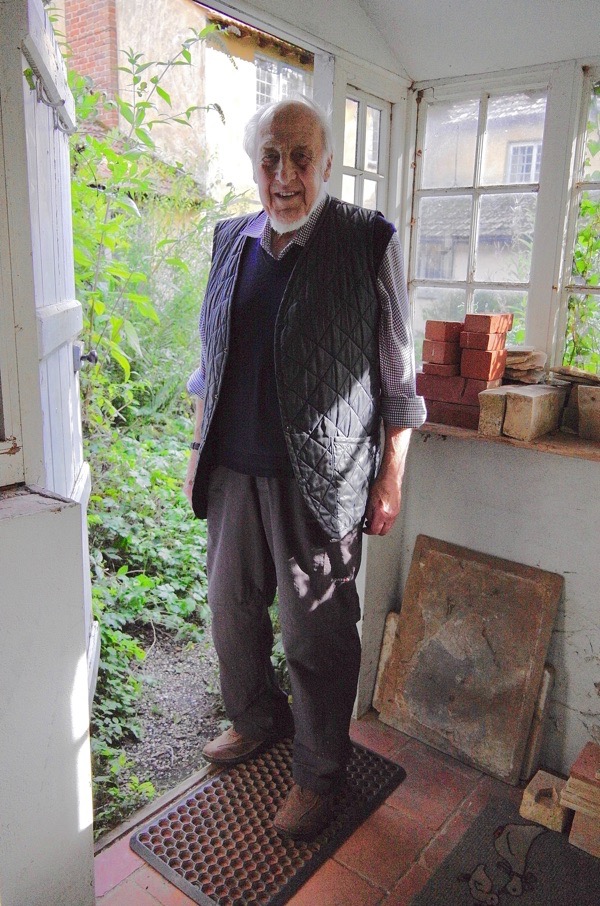
Peter Minter, seventy years a brick maker

Thames mud used for London stock bricks
Making a shaped brick in a wooden mould
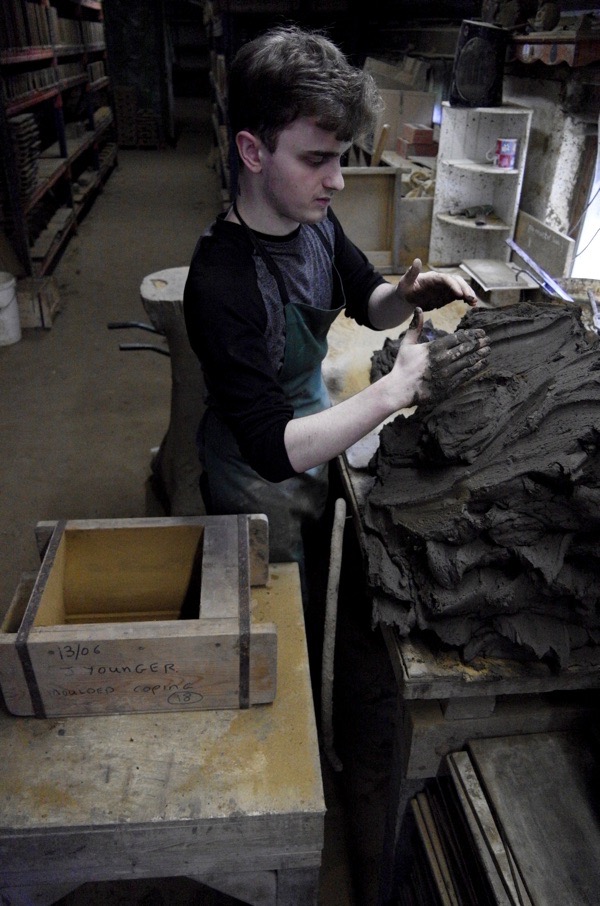
Jack has been a brick maker for two years
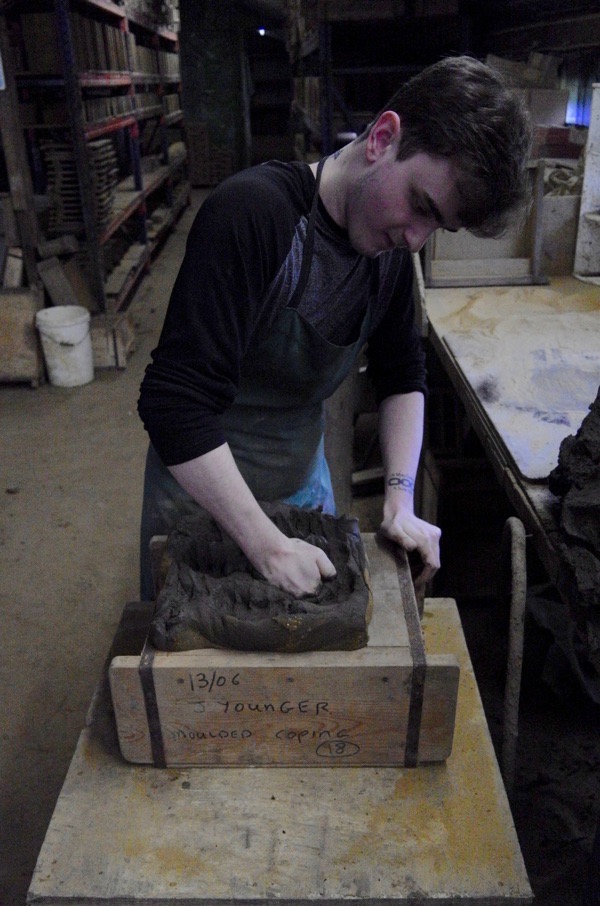
“He’s coming into quite a good brick maker’
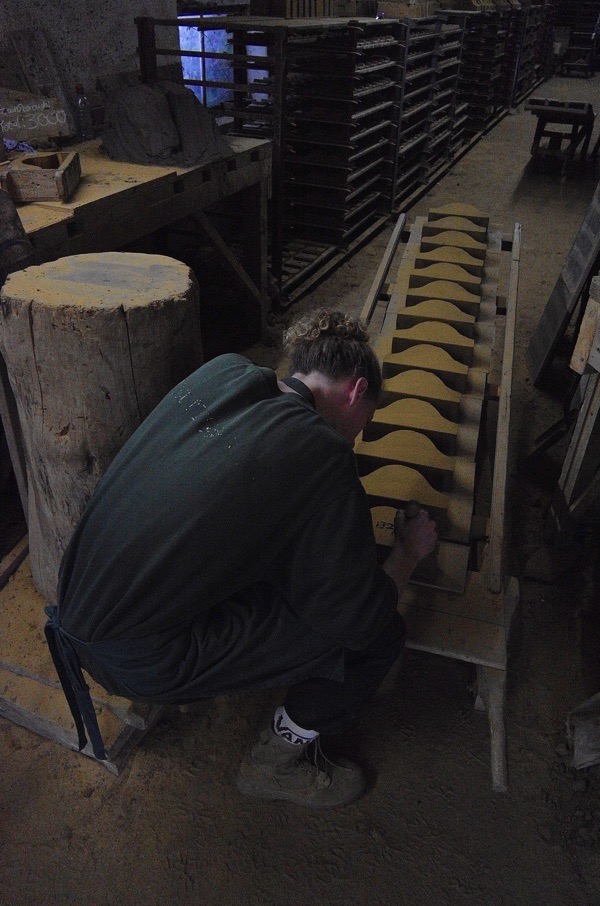
Marking a batch of shaped bricks
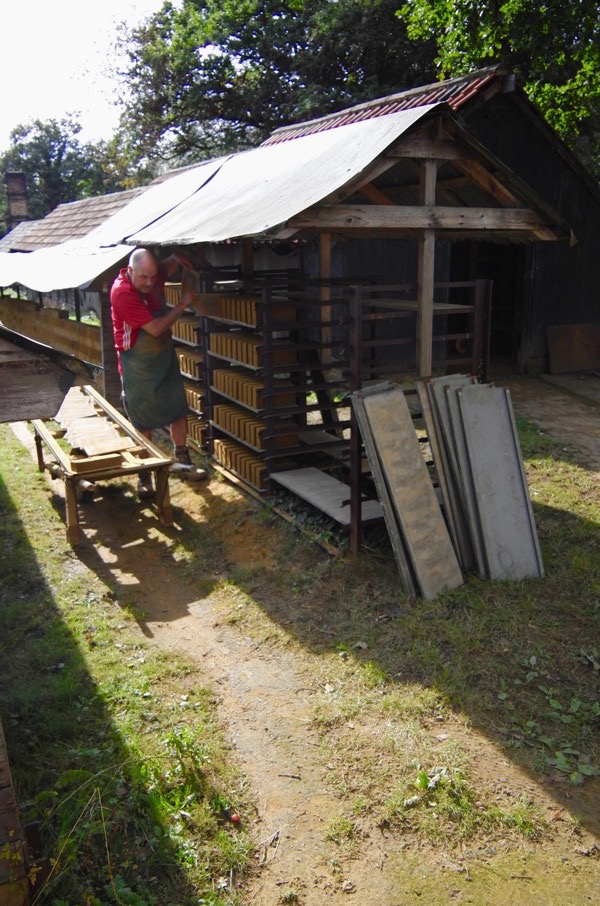
Setting the bricks out to dry on the hack ground
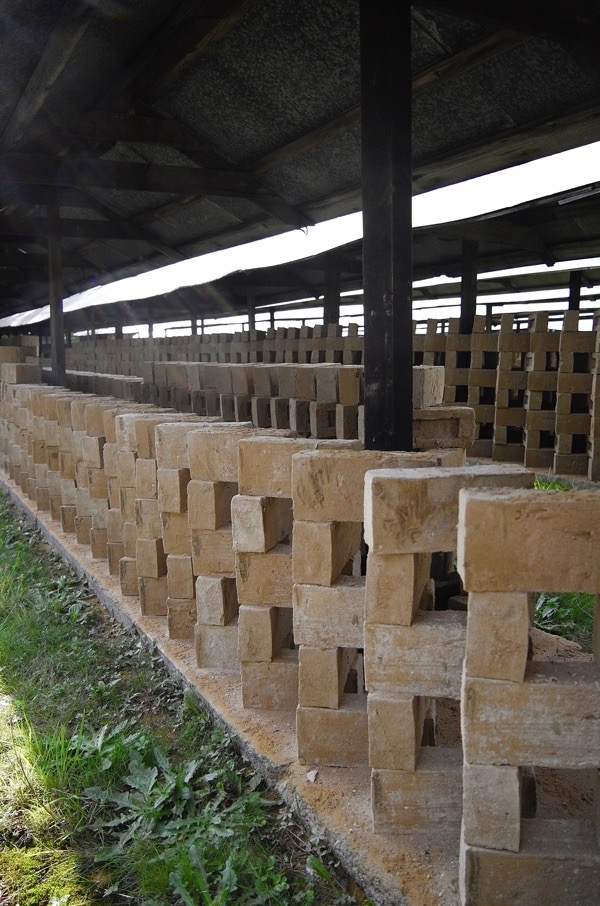
Stacking bricks in this way is called ‘skinking’
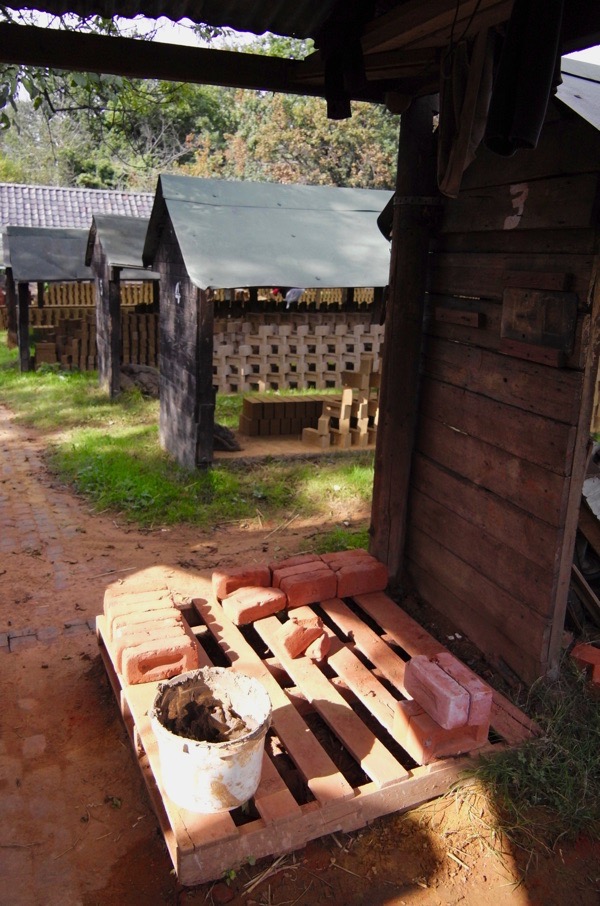
The hack ground
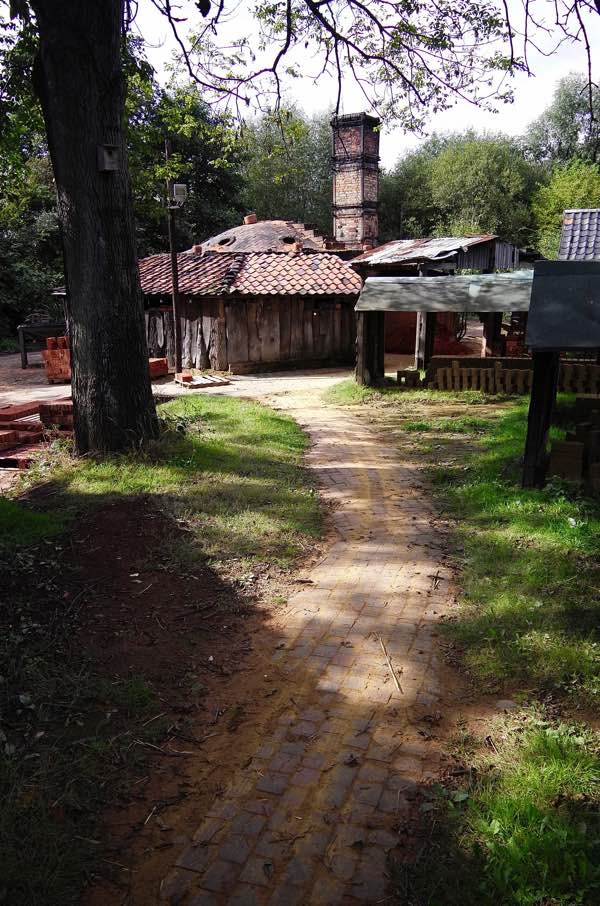
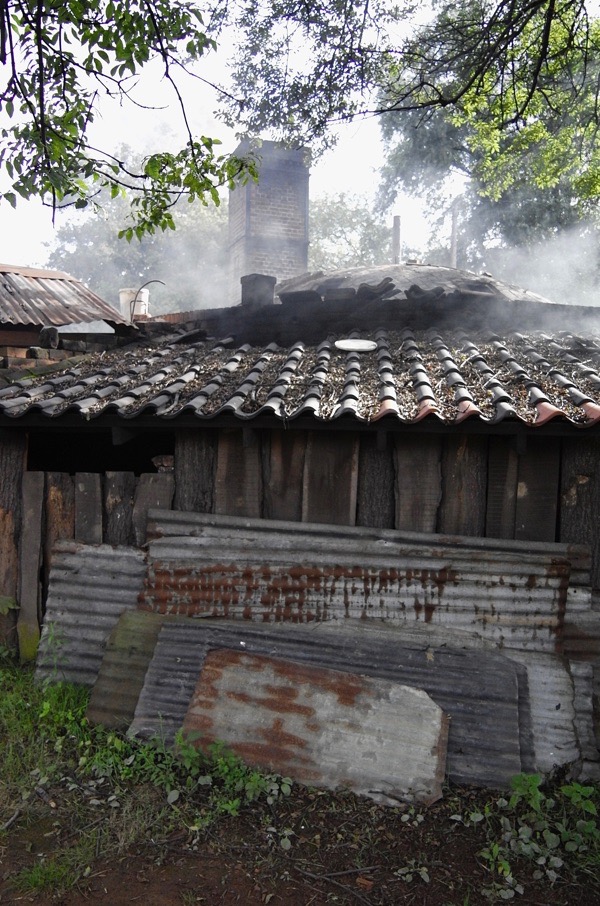
The rough cut pieces of timber around the kiln that allow smoke to escape are known as ‘skantlings.’
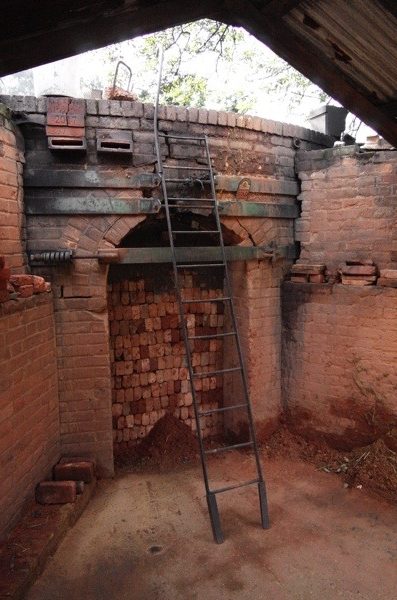
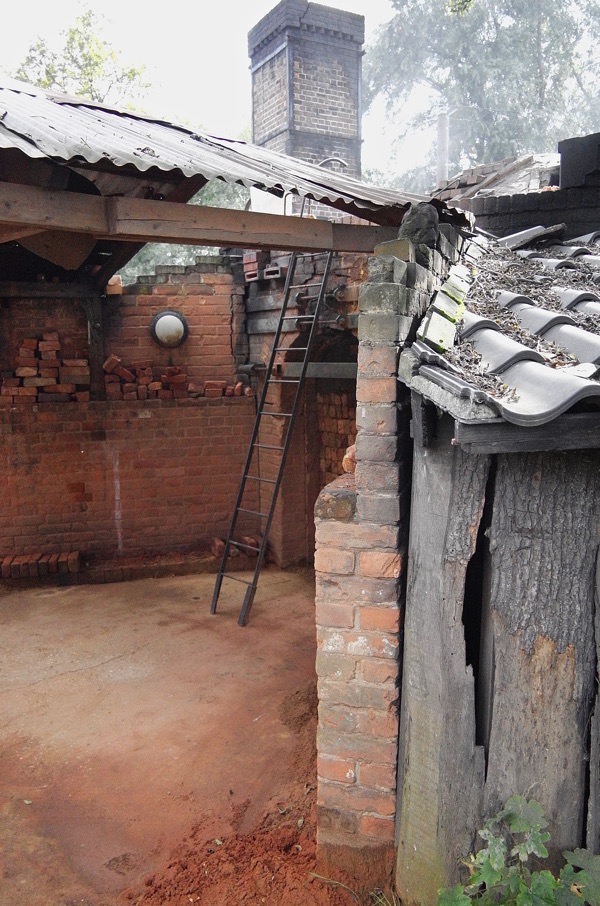
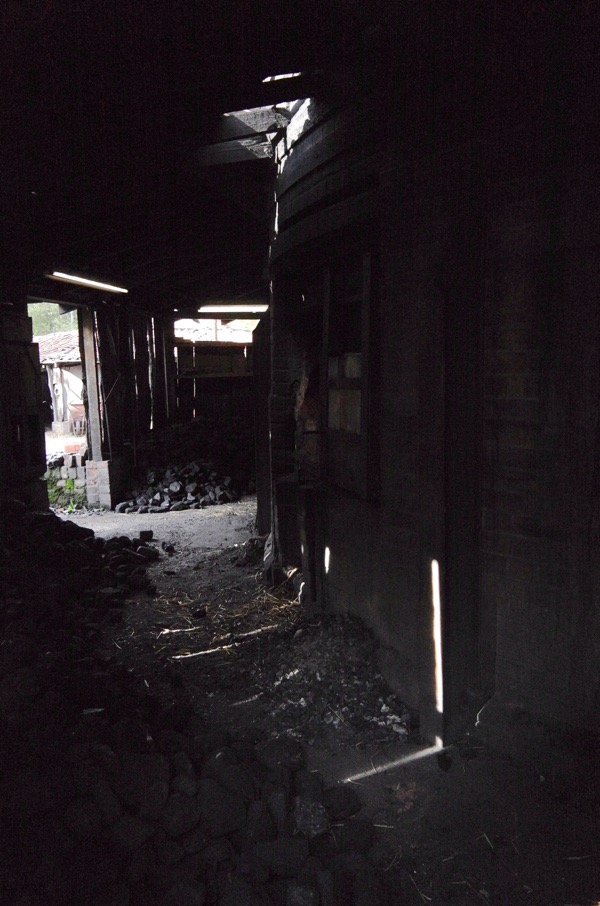
Seven fires heat the kiln
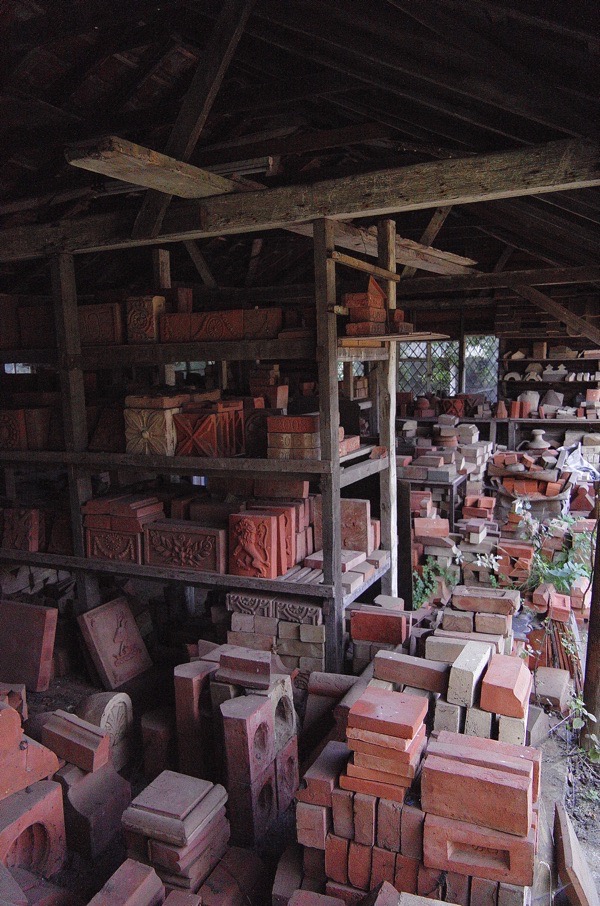
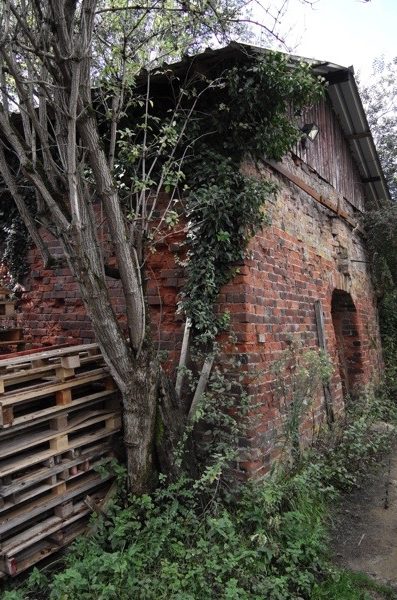
Store for brick moulds
The Bulmer Brick & Tile Company, The Brickfields, Bulmer, Suffolk CO10 7EF
Beattie Orwell, Centenarian
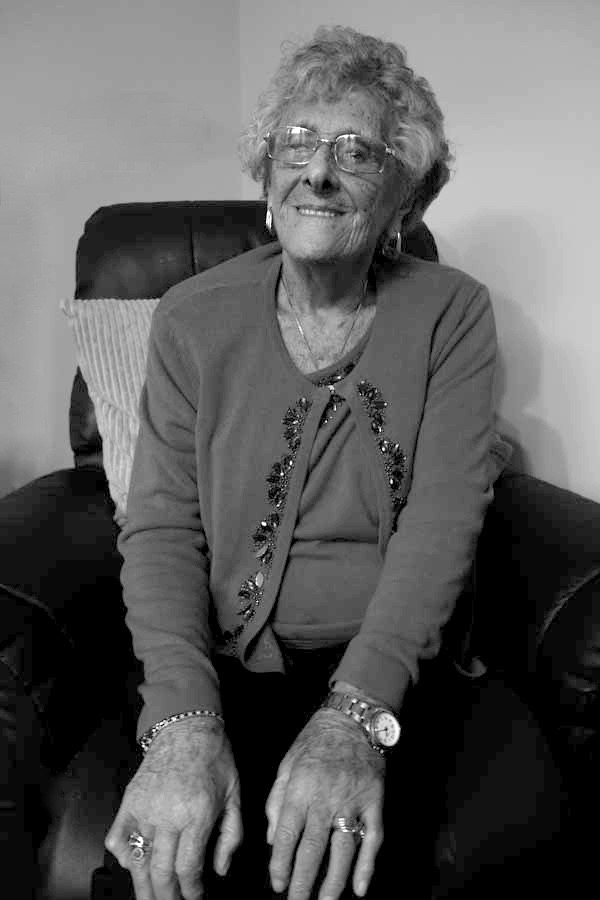
Portrait of Beattie Orwell by Phil Maxwell
It was my delight to accompany Contributing Photographer Phil Maxwell to visit one hundred and four year old Beattie Orwell and sit beside her in her cosy flat while she talked to me of her century of existence in this particular corner of the East End.
A magnanimous woman who delights in the modest joys of life, Beattie is nevertheless a political animal who is proud to be one of the last living veterans of the Battle of Cable St – a formative experience that inspired her with a fiercely egalitarian sense of justice and led to her becoming a councillor in later life, acutely conscious of the rights of the most vulnerable in society.
In spite of her physical frailty, Beattie’s moral courage grants her an astonishing monumental presence as a human being. To speak with Beattie is to encounter another, kinder world.
“I am Jewish and both my parents were East Enders, born here. My father’s parents came over from Russia. On my mother’s side, her parents were born here but her grandfather was born in Holland. So I am a bit of a mixture!
My father Israel worked as a porter at the Spitalfields Market and my mother Julia was a cigar maker at Godfrey & Phillips in Commercial St. I grew up in Brunswick Buildings in Goulston St, until I got bombed out. It was horrible, we had a little scullery, too small to swing a cat. My mother had one bedroom and, the three children, we slept in a put-you-up. I had two sisters Rebecca & Esther. Rebecca was the eldest, she very clever at dressmaking. When she was fifteen, she could make a dress. We needed her because my father died when he was forty-four, he had three strokes and died in Vallance Rd Hospital. I was only thirteen. He used to take me everywhere, he was marvellous. He took to me to the West End to visit my aunt, she was an old lady with a parrot and lived on Bewick St. We used to have a laugh with the parrot.
We moved to City Corporation flats in Stoney Lane and I went to Gravel Lane School. It was lovely school, they taught us housewifery. We had a little flat in the school and we used to clean it out, then go shopping in Petticoat Lane to buy ingredients to make a dinner, imagining we were married. The boys used to do woodwork and learnt to make stools and things like that. I loved that school. When I was twelve it closed and I went to the Jewish Free School in Bell Lane. It was very strict and religious. When the teacher wanted us to be quiet, she’d say, ‘I’m waiting!’ It was good, I enjoyed my school life.
I left when I was fourteen and I went to work right away, dressmaking in Alie St. I used to lay out material. I do not know why but I must have heavy fingers, I could not manage the silk. It used to fall out of my hands. I only lasted a week before I left, I could not stand it. Then I went to work with my sister at Lottereys in Whitechapel opposite the Rivoli Picture Palace, they used to make uniforms for solders. I went into tailoring, men’s trousers, putting the buttons on with a machine. We worked long hours and it was hard work. By the time I got married I was earning two pounds and ten shillings a week. I never earned big money. I worked all the way through the war. I gave all the money to my mother and she gave me a shilling back. I used to walk up to the West End. It was threepence on the trolley bus.
I was nineteen in 1936. I was there with all the crowds at the Battle of Cable St. I am Jewish and I knew we must fight the fascists. They were anti-semitic, so I felt I had to do it. I was not frightened because there were so many people there. If I was on my own I might have been frightened, but I never saw so many people. You could not imagine. Dockers, Scottish and Irish people were there. It was a marvellous atmosphere. I was standing on the corner of Leman St outside a shop called ‘Critts’ and everyone was shouting ‘ They shall not pass!’ I was with my friend and we stood there a long time, hours. So from there we walked down to Cable St where we saw the lorry turned over. I never saw the big fighting that happened in Aldgate because I was not down there, but I saw them fighting in Cable St near this turned over lorry. From there, we walked down to Royal Mint St, where the blackshirts were. They were standing in a line waiting for Oswald Mosley to come. So I said to my friend, ‘We’d better get away from here.’
We went back through Cable St to the place where we started. From there, the news came through ‘They’re not passing.’ We all marched past the place where Fascists had their headquarters – they threw flour over us, shouting – to Victoria Park where we had a big meeting with thousands of people. I had never seen anything like it in my life and I used to go to all the meetings. I never went dancing. My mother used to say, ‘I don’t know where I got you from!’ because I was only interested in politics. I am the only one like this in the whole family. I still know everything that is going on.
I used to go to Communist Party socials in Swedenborg Sq, off Cable St, and – being young – I used to enjoy it. Then I joined the Labour Party, the Labour League of Youth it was called. We used to go on rambles. It was lovely. We went to Southend once. I always used to march to Hyde Park on May Day and carry one of the ropes of our banner. I met my husband John in Victoria Park when I was with the Young Communists League, although I was not a member. They had a Sports Day and my husband was running for St Mary Atte Bowe because he was a Catholic. I met him and we went to a Labour Party dance. We got married in 1939.
We managed to get a flat in the same building as my mother, at the top of the stairs. They were private flats and I remember standing outside with a banner saying, ‘Don’t pay no rent!’ because the owners would not do the flats up. They did not look after us, it was horrible thing for us to have to do but it worked. I laugh now when I think about it. I was always brave. I am brave now.
We got bombed out of those flats while my husband was in the army. I had a baby so they sent me to Oxford where my husband was based with the York & Lancasters. We had a six-roomed house for a pound a week. My mother and sister came with me and they looked after my baby while I went to work in munitions. I was a postwoman too and I used to get up at four in the morning and walk over Magdalen Bridge.
I came back to the East End to try to get a flat here and I got caught in one of the air raids, but I knew this was where I had to live. My mother used to get under the stairs in Wentworth St when there was a raid and put a baby’s pot on her head. The war was terrible.
They sent my husband to Ikley Moor and it was too cold for him, so we came back for good. I managed to get two horrible little side rooms in Stoney Lane, sharing a kitchen between four and a toilet between two. I had no fridge, just a wooden box with chicken wire on the front. I used to go the Lane and buy two-pennorth of ice and put the butter in there. I had to buy food fresh everyday. There was a black market trade in fruit. These flats had been built for the police but the police would not have them, so they let them out to other people. All the flats were named after royalty, we were in Queens Buildings. I watched them building new flats in Cambridge Heath Rd but, before I could get one of them, I was offered a lot of horrible flats. Yet when I got there we were overcrowded, until we got a three bedroom flat at last, because I had two girls and a boy. I lived sixty-seven years there.
My husband never earned much money so I had to carry on working. He had twenty-two shillings a week pension from the army. He did all kinds of things and then got a job in the Orient Tea Warehouse. In 1966, when he was going to be Mayor of Bethnal Green and they would not give him time off, he went up to the Hackney Town Hall and got a job in the Town Clerk’s Office. He was always good at writing, he had lovely hand writing.
I became a councillor and I loved it. Our council was the best council, they were best to the old people. We used to go and visit all the old people’s homes. I never told them I was coming because I used to try and catch them out. We checked the quality of food and how clean it was. I organised dinners in York Hall for all the old people and trips to Eastbourne, but it has all been done away with – they do nothing now.
I was a councillor for ten years from 1972 until 1982. I had to fight to get the seat but I always loved old people, my husband was the same. He was known as the ‘Singing Mayor’ because he used to sing in all the old people’s homes. From when I was forty-two, I used to go round old people’s homes on Friday nights and I still do it. We have dinners together, turkey, roast potatoes and sausages, with trifle for afters.”
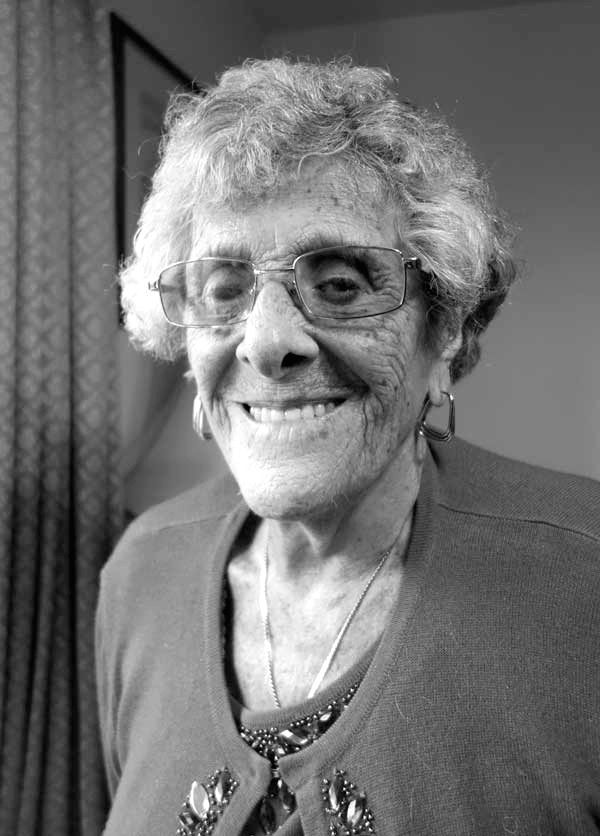
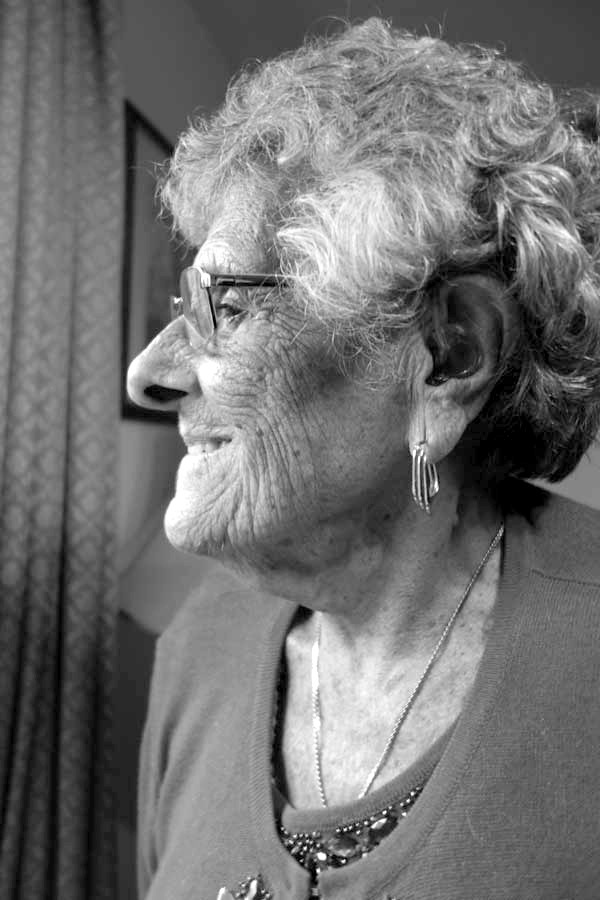
Beattie Orwell
Photographs copyright © Phil Maxwell
See more of Phil Maxwell’s work here
Phil Maxwell’s Kids on the Street
Phil Maxwell & Sandra Esqulant, Photographer & Muse
More of Phil Maxwell’s Old Ladies
Phil Maxwell’s Old Ladies in Colour












