
Swan Upping on the Thames
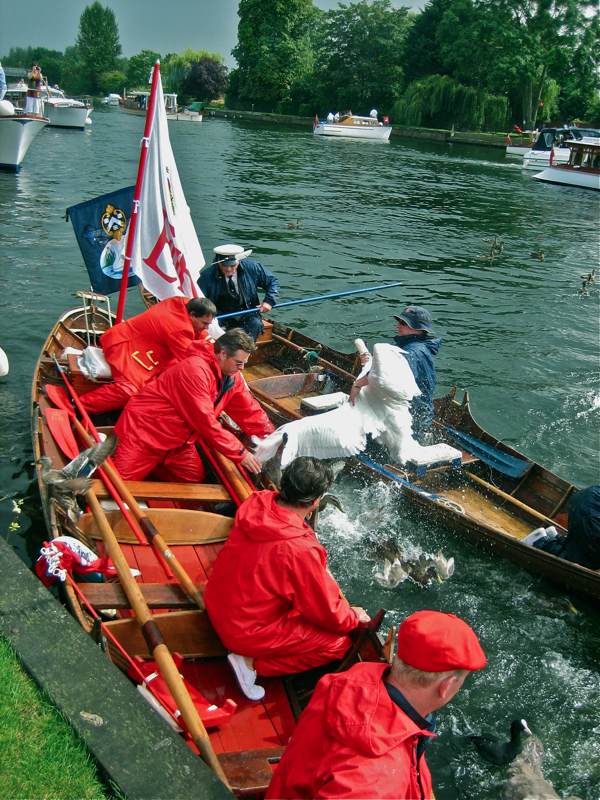
Since before records began, Swan Upping has taken place on the River Thames in the third week of July – chosen as the ideal moment to make a census of the swans, while the cob (as the male swan is known) is moulting and flightless, and before the cygnets of Spring take flight at the end of Summer. This ancient custom stems from a world when the ownership and husbandry of swans was a matter of consequence, and they were prized as roasting birds for special occasions.
Rights to the swans were granted as privileges by the sovereign and the annual Swan Upping was the opportunity to mark the bills of cygnets with a pattern of lines that indicated their provenance. It is a rare practice from medieval times that has survived into the modern era and I have always been keen to see it for myself – as a vision of an earlier world when the inter-relationship of man and beast was central to society and the handling of our fellow creatures was a important skill. So it was my good fortune this week to join the Swan Uppers of the Worshipful Company of Vintners’ for a day on the river from Cookham to Marlow, just one leg of their seventy-nine mile course from Sunbury to Abingdon over five days. The Vintners Company were granted their charter in 1363 and a document of 1509 records the payment of four shillings to James the under-swanherd “for upping the Master’s swans” at the time of the “great frost” – which means the Vintners have been Swan Upping for at least five hundred years.
Swan Upping would have once been a familiar sight in London itself, but the embankment of the Thames makes it an unsympathetic place for breeding swans these days and so the Swan Uppers have moved upriver. Apart from the Crown, today only the Dyers’ and Vintners’ Companies retain the ownership of swans on the Thames and each year they both send a team of Swan Uppers to join Her Majesty’s Swan Keeper for a week in pursuit of their quarry.
It was a heart-stopping moment when I saw the Swan Uppers for the first time, coming round the bend in the river, pulling swiftly upon their oars and with coloured flags flying, as their wooden skiffs slid across the surface of the water toward me. Attended by a flotilla of vessels and with a great backdrop of willow framing the dark water surrounding them, it was as if they had materialized from a dream. Yet as soon as I shook hands with the Swan Uppers at The Ferry in Cookham, I discovered they were men of this world, hardy, practical and experienced on the water. All but one made their living by working on the Thames as captains of pleasure boats and barges – and the one exception was a trader at the Billingsgate Fish Market.
There were seven in each of the teams, consisting of six rowers spread over two boats, and a Swan Marker. Some had begun on the water at seven or eight years old as coxswain, most had distinguished careers as competitive rowers as high as Olympic level, and all had won their Doggett’s coat and badge, earning the right to call themselves Watermen. But I would call them Rivermen, and they were the first of this proud breed that I had met, with weathered skin and eager brightly-coloured eyes, men who had spent their lives on the Thames and were experts in the culture and the nature of the river.
They were a tight knit crew – almost a family – with two pairs of brothers and a pair of cousins among them, but they welcomed me to their lunch table where, in between hungry mouthfuls, Bobby Prentice, the foreman of the uppers, told me tales of his attempts to row the Atlantic Ocean, which succeeded on the third try. “I felt I had to go back and do it,” he confessed to me, shaking his head in determination, “But, the third time, I couldn’t even tell my wife until I was on my way.” Bobby’s brother Paul told me he was apprenticed to his father, as a lighterman on the Thames at fifteen, and Roger Spencer revealed that after a night’s trading at Billingsgate, there was nothing he liked so much as to snatch an hour’s rowing on the river before going home for an hour’s nap. After such admissions, I realised that rowing up the river to count swans was a modest recreation for these noble gentlemen.
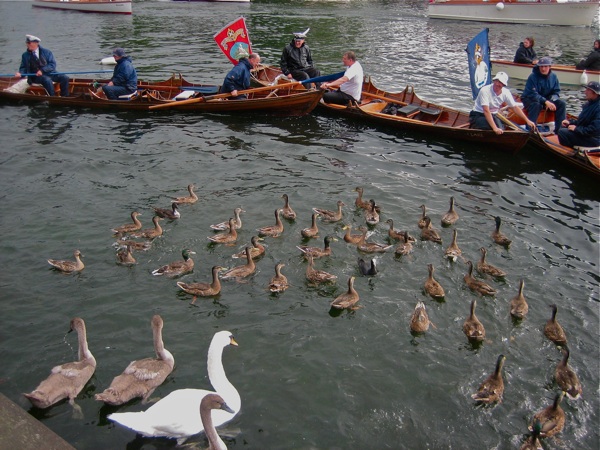
There is a certain strategy that is adopted when swans with cygnets are spotted by the uppers. The pattern of the “swan voyage” is well established, of rowing until the cry of “Aaall up!” is given by the first to spot a family of swans, instructing the crews to lift their oars and halt the boats. They move in to surround the swans and then, with expert swiftness, the birds are caught and their feet are tethered. Where once the bills were marked, now the cygnets are ringed. Then they are weighed and their health is checked, and any that need treatment are removed to a swan sanctuary. Today, the purpose of the operation is conservation, to ensure well being of the birds and keep close eye upon their numbers – which have been increasing on the Thames since the lead fishing weights that were lethal to swans were banned, rising from just seven pairs between London and Henley in 1985 to twenty-eight pairs upon this stretch today.
Swan Upping is a popular spectator sport as, all along the route, local people turn out to line the banks. In these river communities of the upper Thames, it has been witnessed for generations, marking the climax of Summer when children are allowed out of school in their last week before the holidays to watch the annual ritual.
Travelling up river from Cookham, between banks heavy with deep green foliage and fields of tall golden corn, it was a sublime way to pass a Summer’s afternoon. Yet before long, we passed through the lock to arrive in Marlow where the Mayor welcomed us by distributing tickets that we could redeem for pints of beer at the Two Brewers. It was timely gesture because – as you can imagine – after a day’s rowing up the Thames, the Swan Uppers had a mighty thirst.


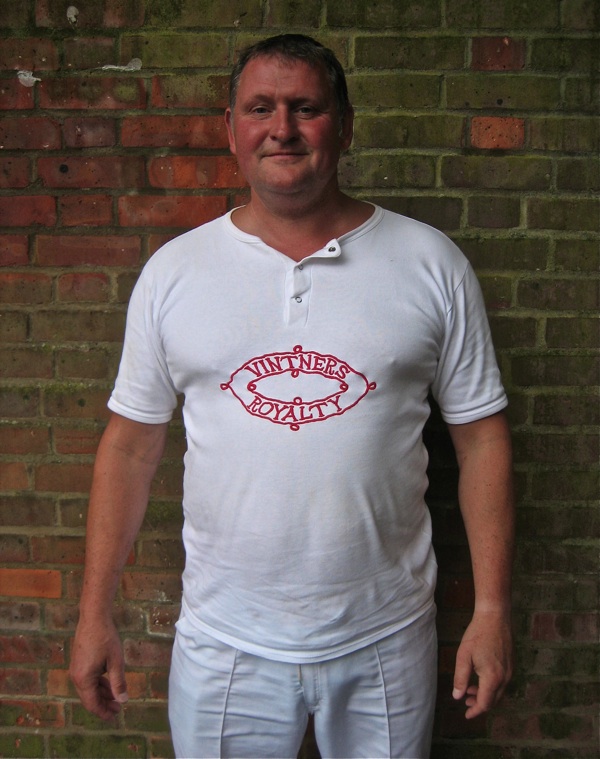
Martin Spencer, Swan Marker


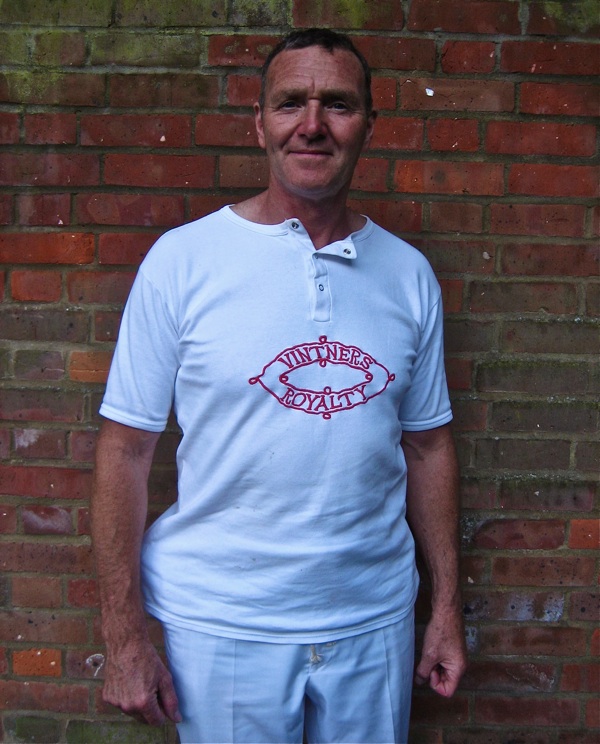
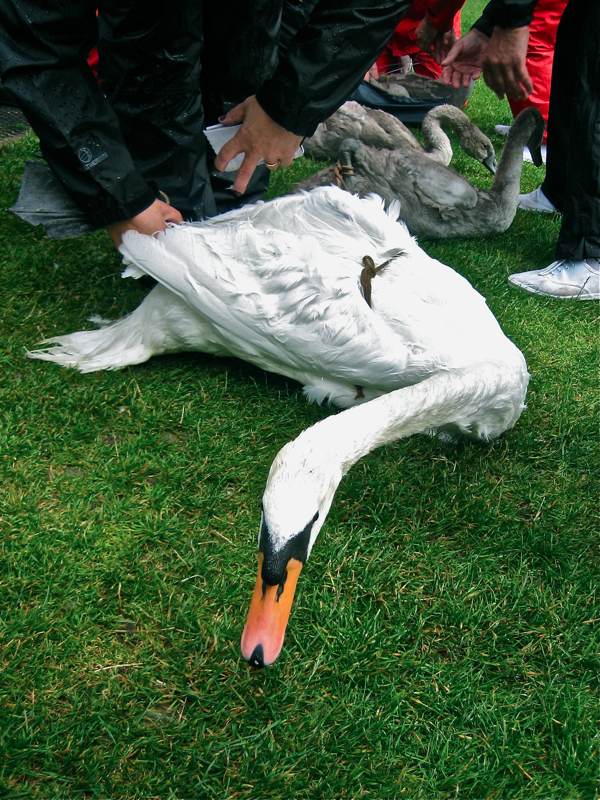

Foreman of the Uppers, Bobby Prentice


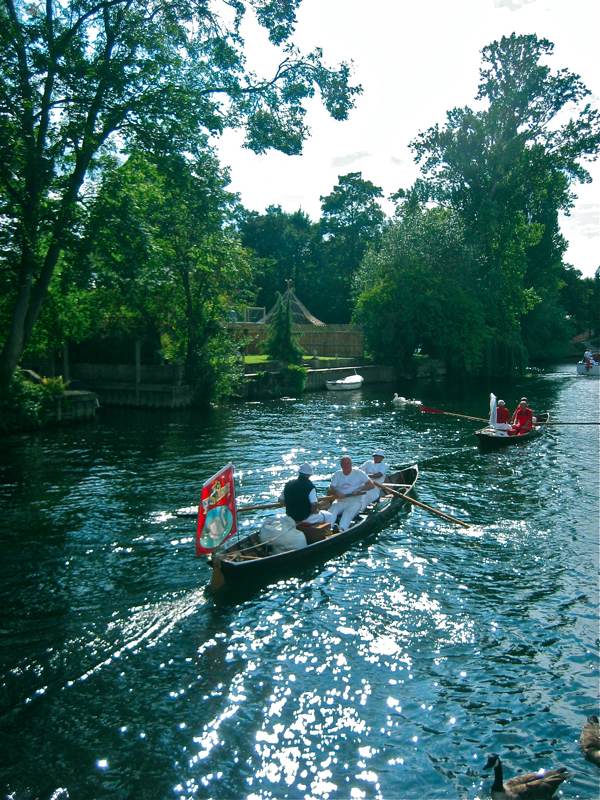
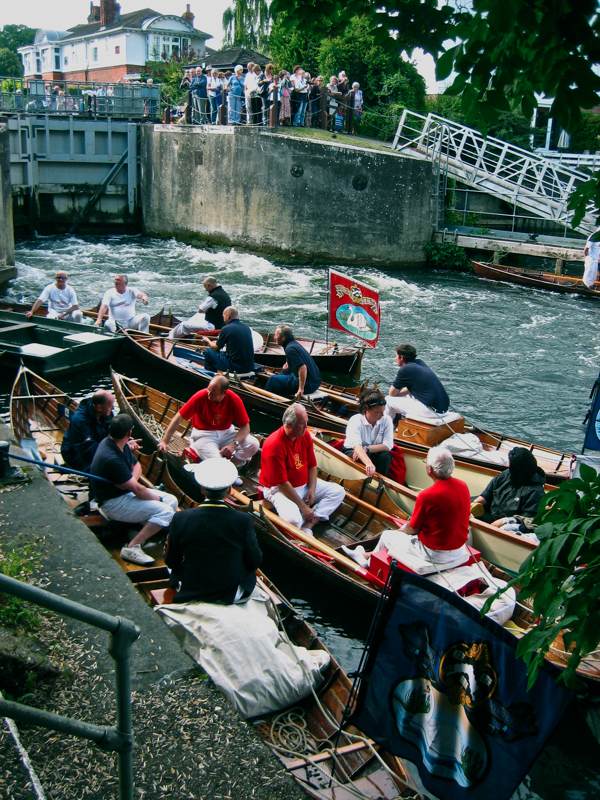
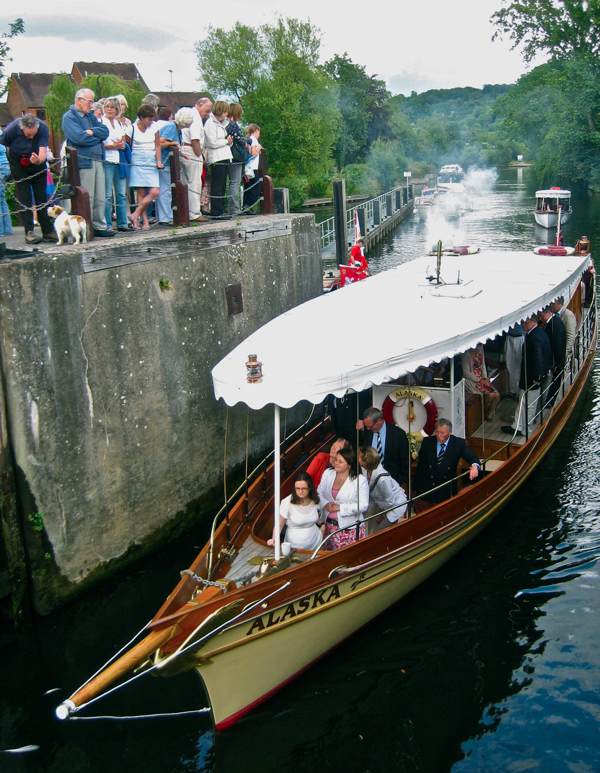


The Swan Uppers of the Worshipful Company of Vintners, 2011

The Swan Uppers of 1900


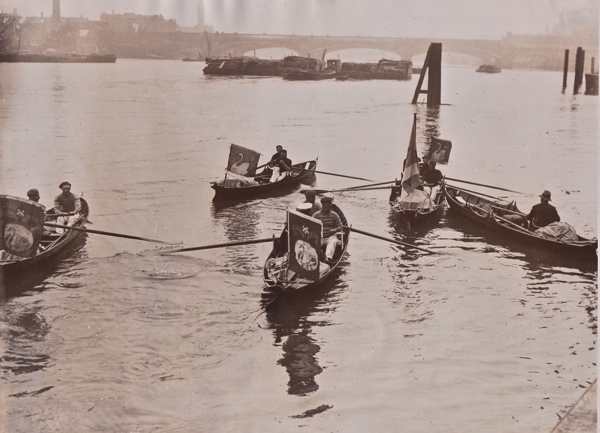
The Swan Uppers of the nineteen twenties.
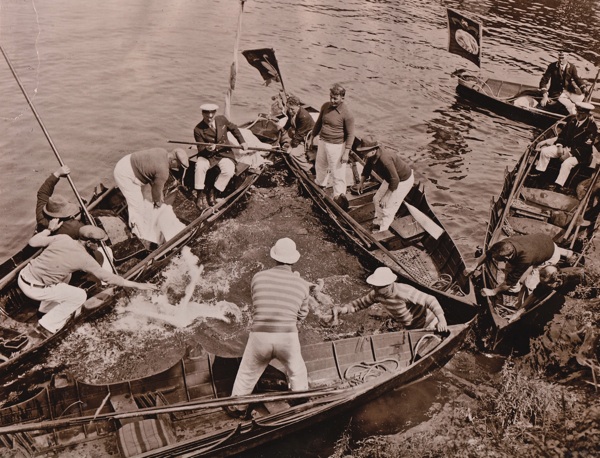

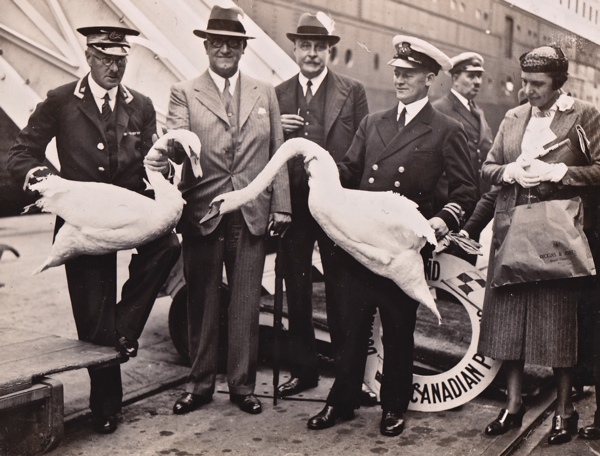
In the nineteen thirties.

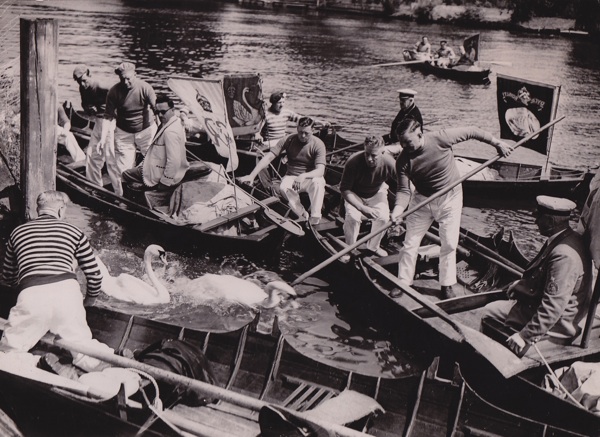

The Swan Uppers of the nineteen forties.
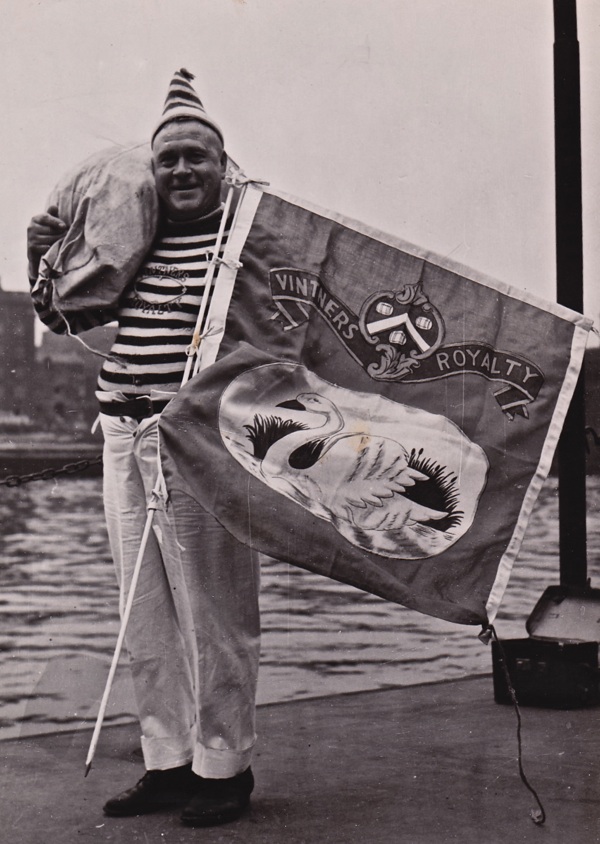
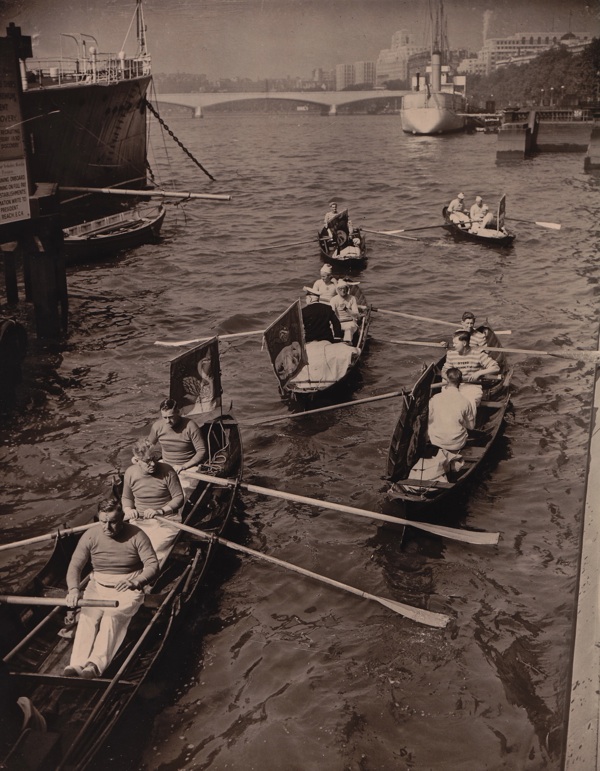
In the nineteen fifties.

Archive photographs copyright © Vintners’ Company
You may also like to read about
Colin O’Brien Goes Back To School
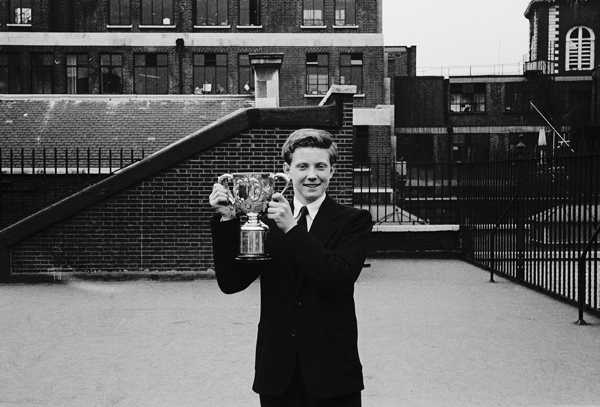
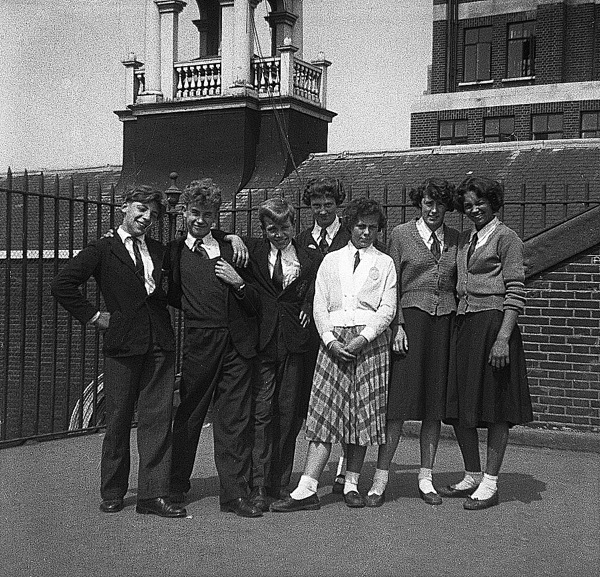
This is Colin O’Brien, head boy at Sir John Cass School in Aldgate, on the day he left the school in 1955, proudly holding aloft the Lord Broughshane Cup and making a fine show of facing the future with confidence. Standing up straight, with his hair neatly brushed, he is the incarnation of youthful optimism.
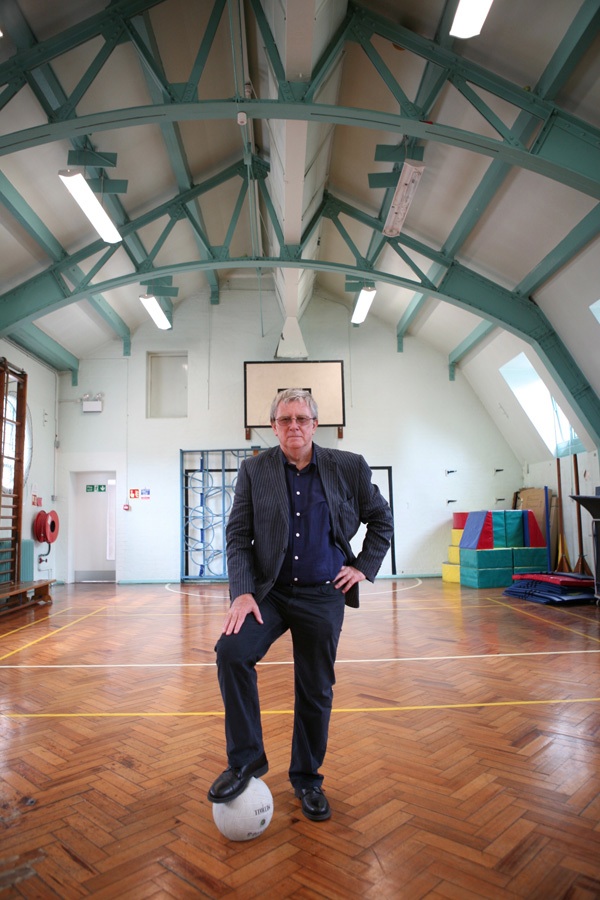
So, as you can imagine, Colin was a little tentative when he returned to his old school yesterday, more than half a century later – for the first time since that day – to attend the leavers’ evening and meet the class of 2011.
“I think I was eager to please, and I was very happy,” was Colin’s self-effacing explanation when I asked how he became head boy, as we walked up Aldgate to Sir John Cass School, “I was always top of the class, even though I am not academic and I left with no qualifications.”
While still at school, Colin had shown flair in photography, recording the life around him in Clerkenwell where he grew up and even the car crashes that he witnesses from his window, so it was perfectly natural for him to take a set of pictures of his classmates to record the moment when they knew each other best – before they went their separate ways for ever.
I joined Colin on a sentimental quest to discover his youthful self of this photograph taken in July 1955 at the Sir John Cass School. We looked first in the school trophies cabinet for the Lord Broughshane Cup but it was no longer to be found and, to Colin’s surprise, when he climbed up to the rooftop playground where the picture was taken, he discovered that a garden had grown there, with beehives in a row, and flowers and vegetables sprouting where once he used to play. Yet, unexpectedly, evidence of his youthful presence remained in the form of indentations in the bricks, where Colin and his pals used to polish pennies by rubbing them into the wall, creating round notches that remain half a century later. And, to Colin’s delight, there were names graven into the brick too, among them “S.Worthington 1955” and “Tony Racine 1954.” – names that he remembered as those of his classmates.
Once these unforseen discoveries confirmed that Colin’s memory was not a dream, his photographs not mirages and his youthful self not a spectre, we were emboldened to enter the assembly hall where, beneath the gaze of eighteenth century worthies that lined the walls, the current pupils of Sir John Cass School were gathered with their parents to say farewell to the leavers. Unlike Colin, who left at fifteen to face the world, these pupils were only completing their Primary education at ten or eleven and going on to Secondary education in the Autumn. Yet they were each required to stand up and complete a sentence that began, “When I leave university, I want to be…” and they did so with admirable resolve and ambition, even the ten-year-old realist who rewrote the sentence declaring, “I don’t know yet what I want to do when I leave university.”
Colin was there to give out the prizes to his youthful counterparts at the culmination of the evening, after performances by members of the school string orchestra and drama presentations. He shook hands with each of the leavers as they were given their bible, dictionary and thesaurus – revealing to me later that he still had his own leavers’ bible at home. And then, as the event drew to its close and all the achievements both individual and collective had been celebrated, the equivocal emotional nature of the event became apparent, as in the melee a few gave way to quiet tears. Meanwhile, there were a host of others running around with digital cameras to collect pictures of classmates as keepsakes, just had Colin had done all those years earlier.
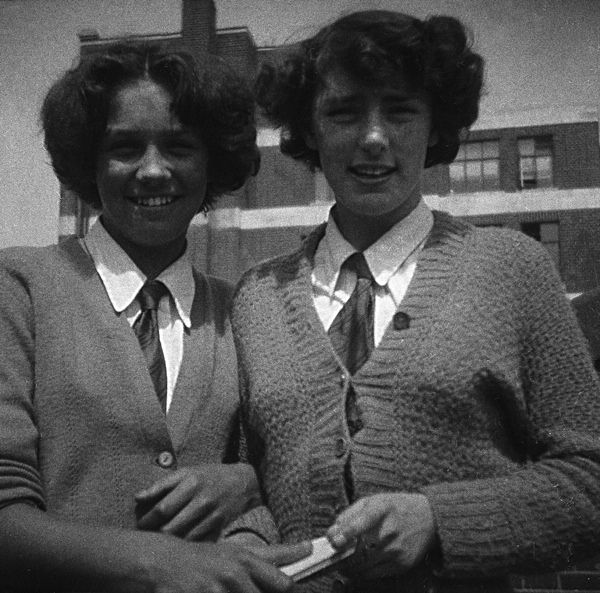
As we descended a staircase afterwards, Colin pointed out the spot where he was first told about sex, admitting that he did not believe it at the time. In the playground, he confessed that this was where he felt the tingling sensation inspired by the object of his nascent affection Olive Barker, the daughter of the caretaker of the Bishopsgate Institute. “She never even looked at me,” recalled Colin fondly, “It was my first experience of love.”
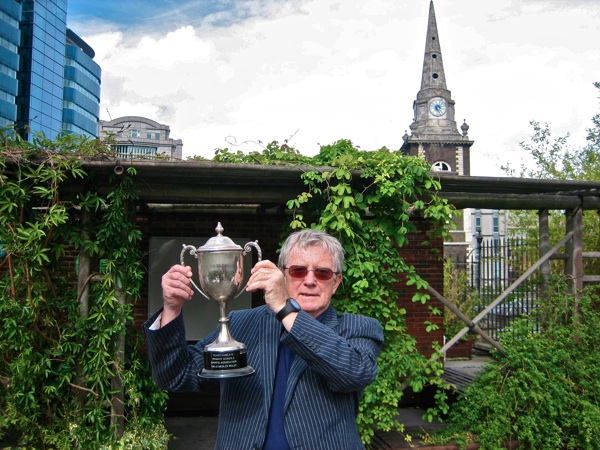
Colin O’Brien, 18th July, 2011
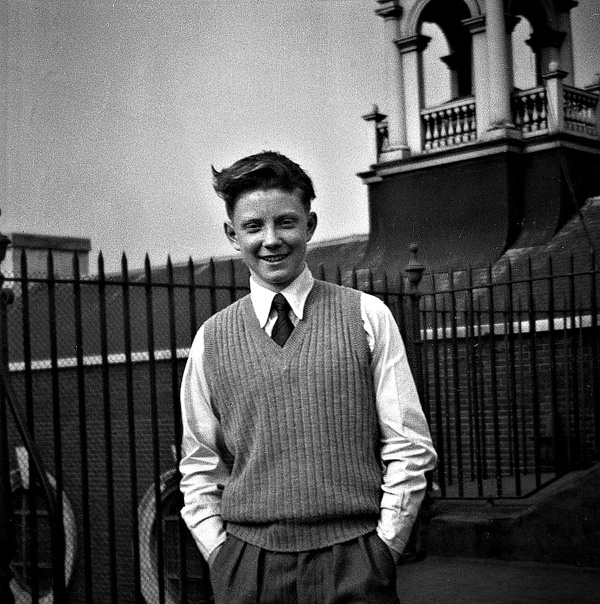
Colin O’Brien, July 1955
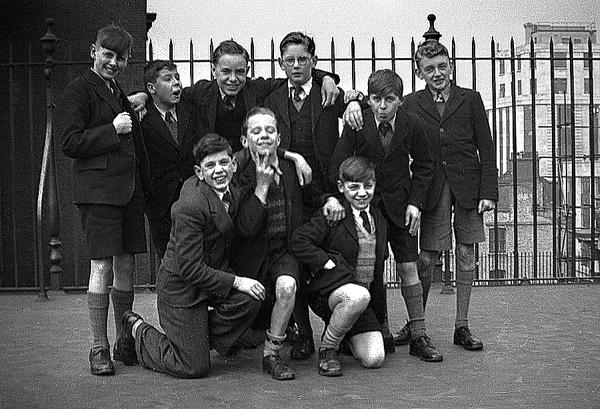
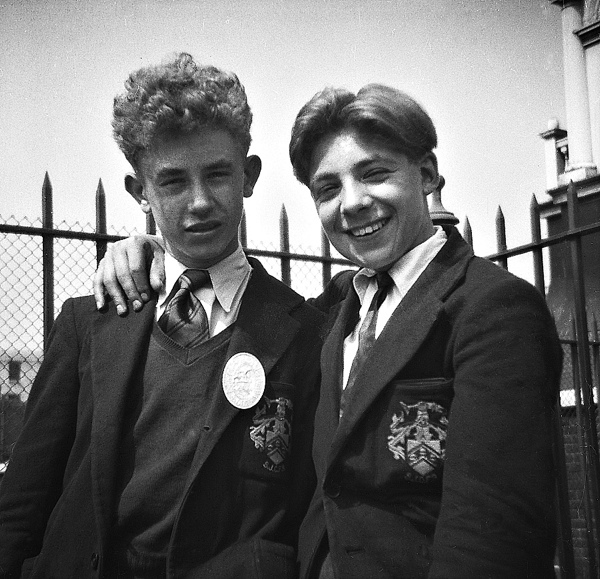
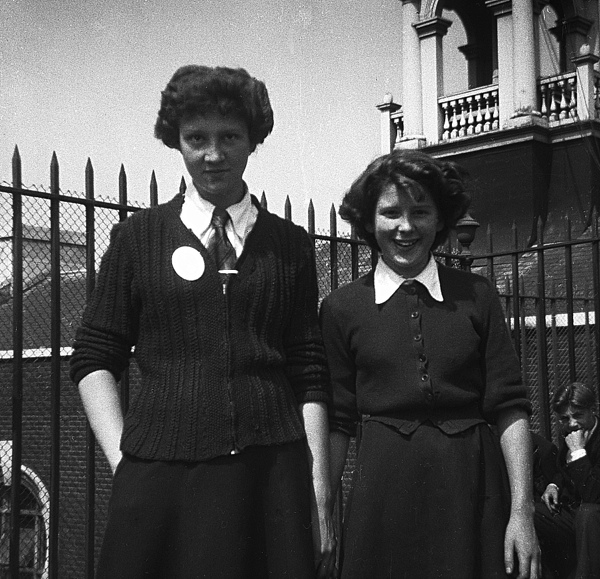
Olive Barker, the object of Colin’s unrequited youthful affection is on the right.
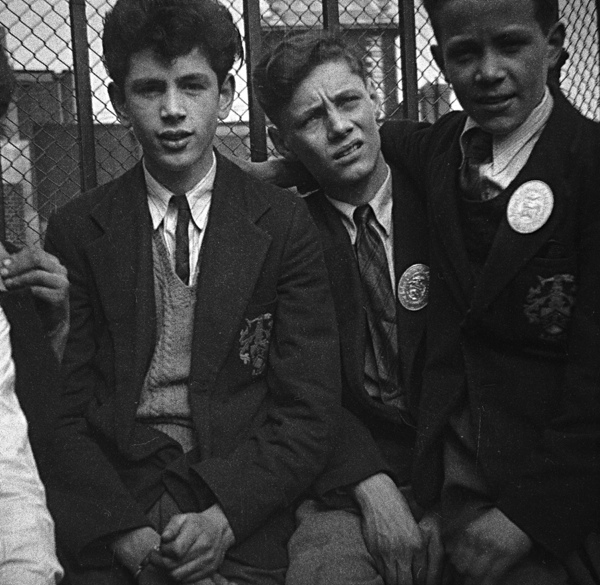
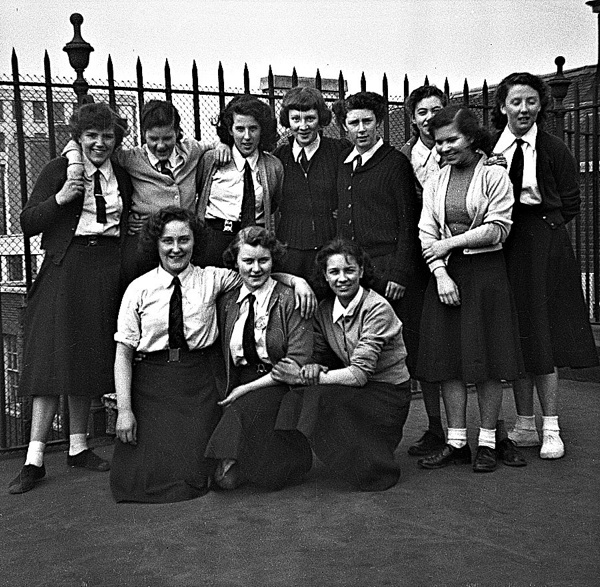
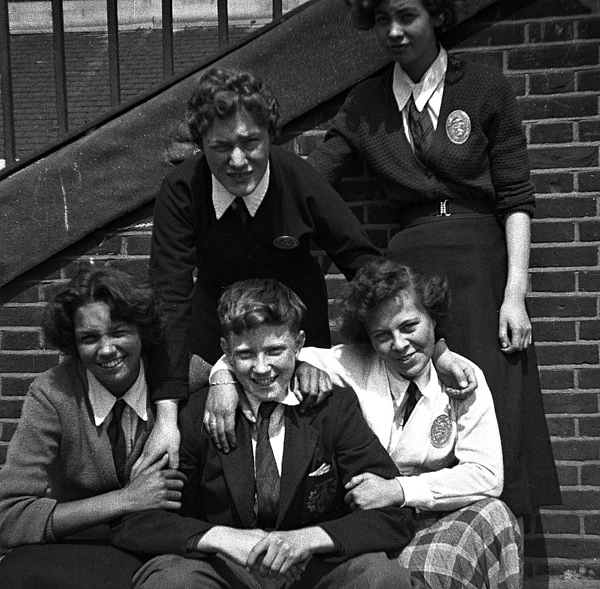
Colin & the girls
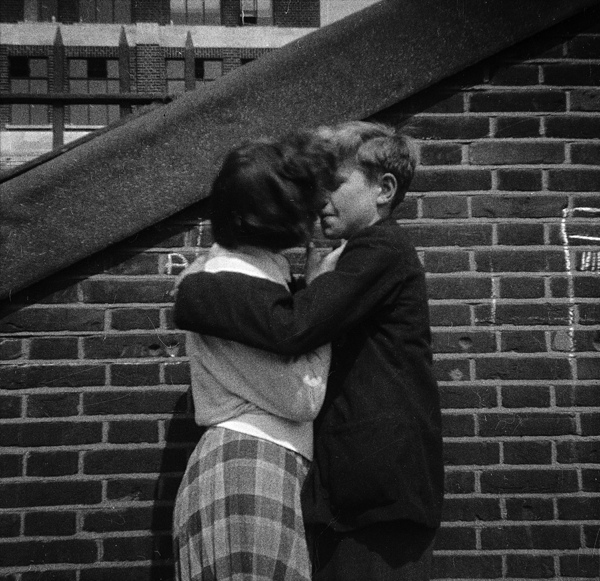
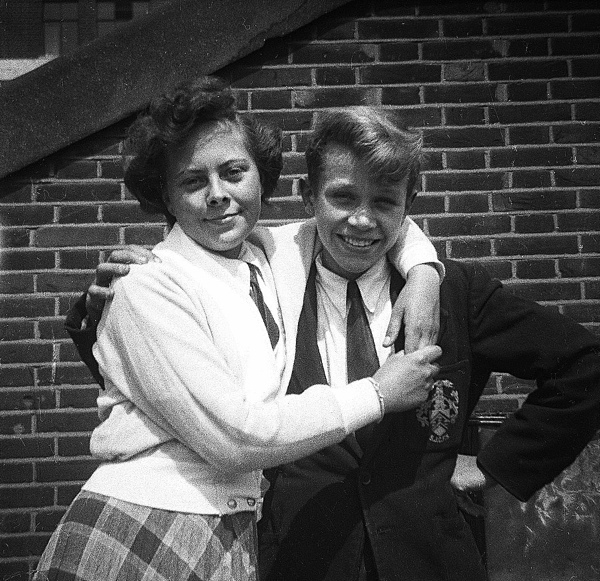
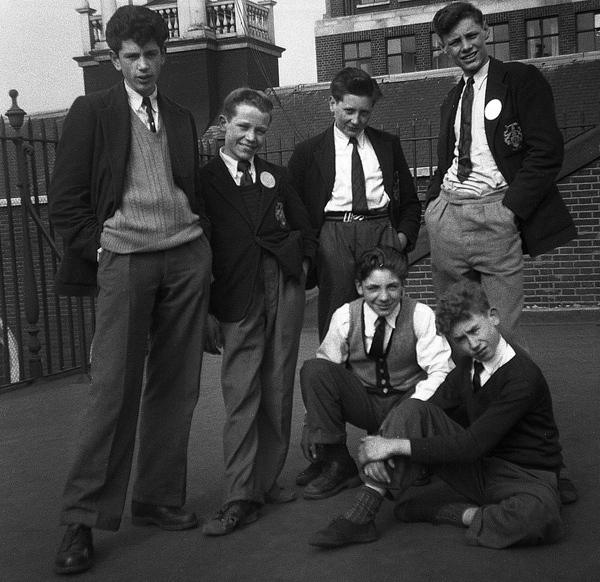
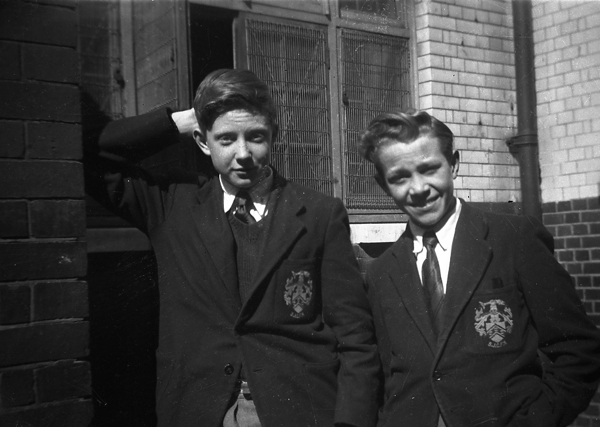
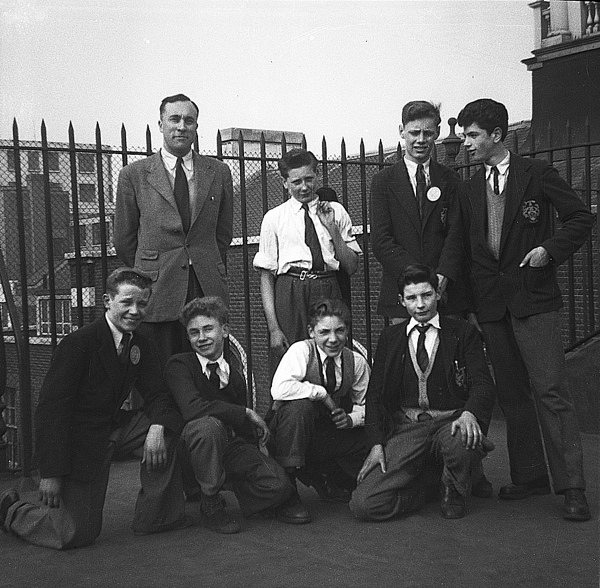
Mr Hunt with members of his class.
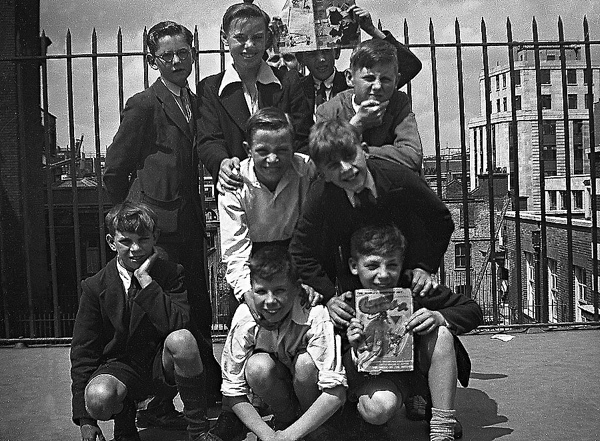
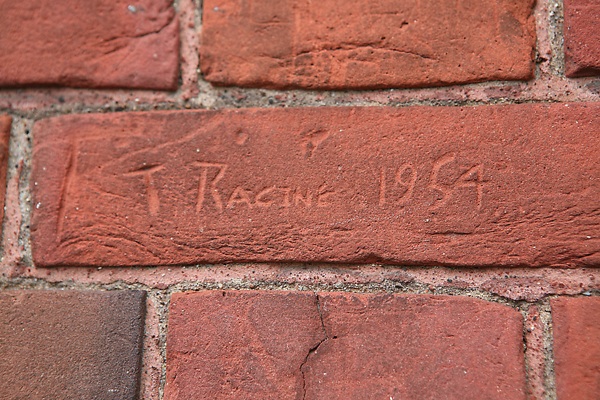
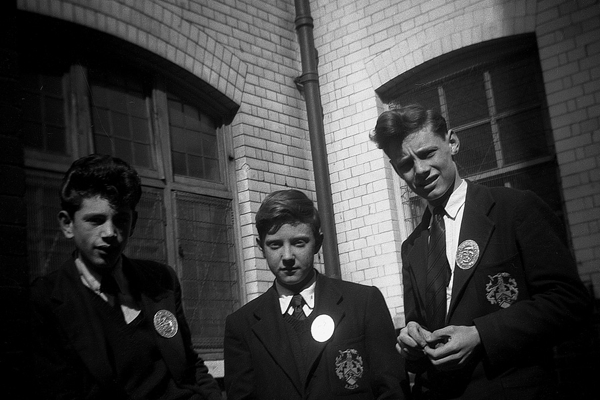
S. Worthington, Colin O’Brien and Ingrams.
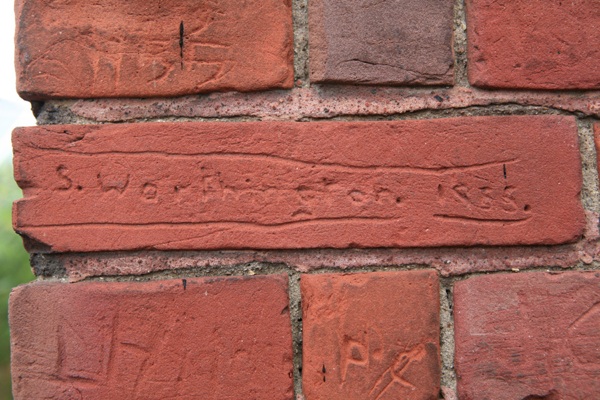
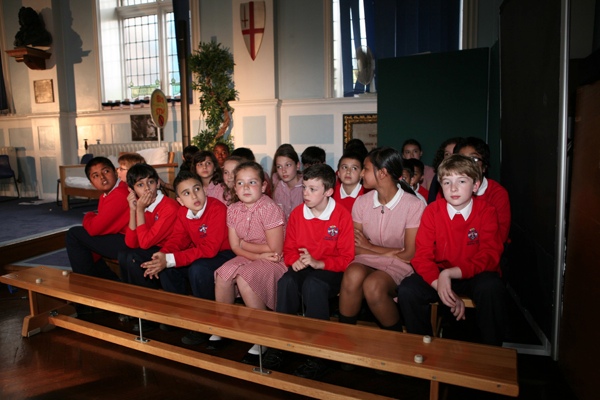
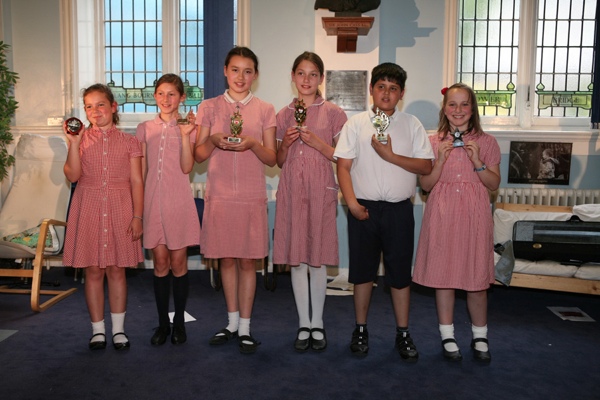
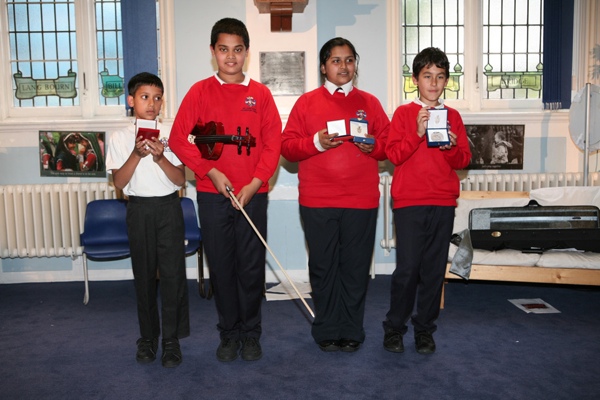

Sir John Cass School leavers, 2011.

The notches in the wall where the class of 1955 once polished pennies.
Photographs copyright © Colin O’Brien
More photographs by Colin O’Brien
Colin O’Brien’s Clerkenwell Car Crashes
Travellers’ Children in London Fields
At the 126th Italian Parade in Clerkenwell
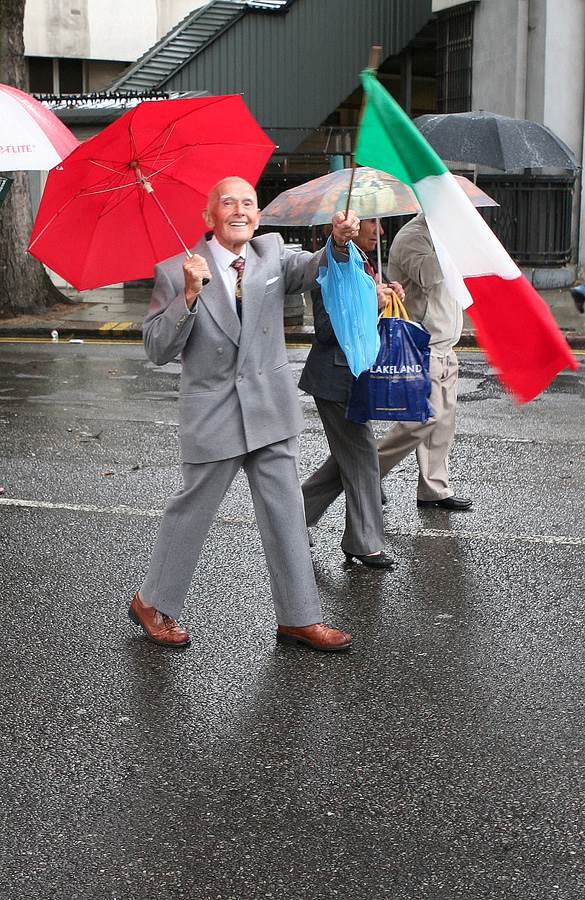
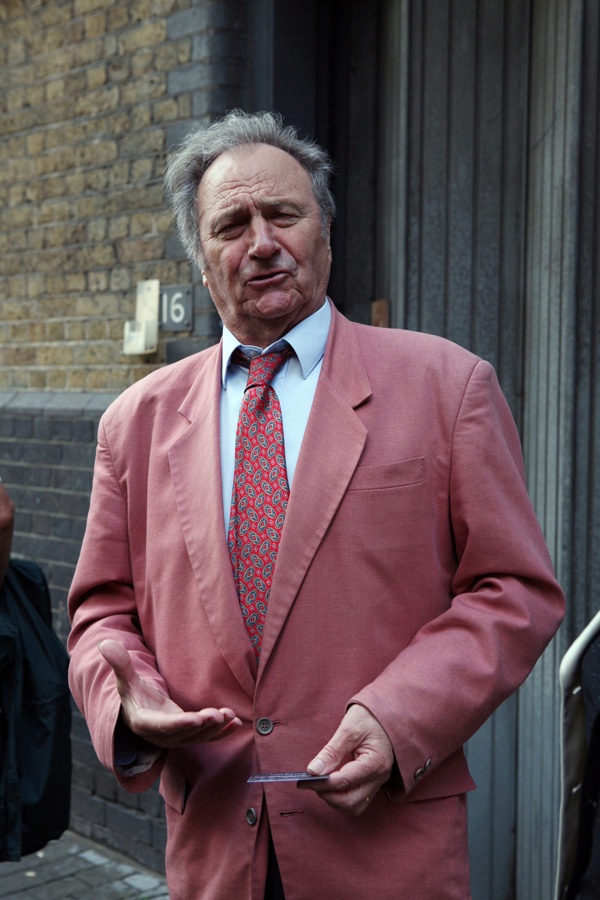
In spite of the volatile weather, alternating downpours with blazing sunshine, I set out (with my umbrella in hand) to Clerkenwell yesterday, where photographer Colin O’Brien invited me to join him at the Italian Parade that he first attended in 1946. For one Sunday each year, the narrow backstreets are transformed when the descendants of the immigrants who once lived in here in London’s “Little Italy” return to participate in a procession honouring Our Lady of Mount Carmel, and, such is their love for their culture and custom, they were not to be discouraged by a few drops of rain.
Growing up in Victoria Dwellings at the corner of the Clerkenwell Rd and Farringdon Rd, the Italian Parade was an annual fixture in Colin’s childhood and in 1946, at six years old, he marched in the procession as a little blond boy dressed in white – the picture of innocence – to celebrate his confirmation. Later, as a precocious child photographer, some of Colin’s first pictures were of the parade and when I saw these recently I suggested that he might like to return, a lifetime later, to photograph the event this year.
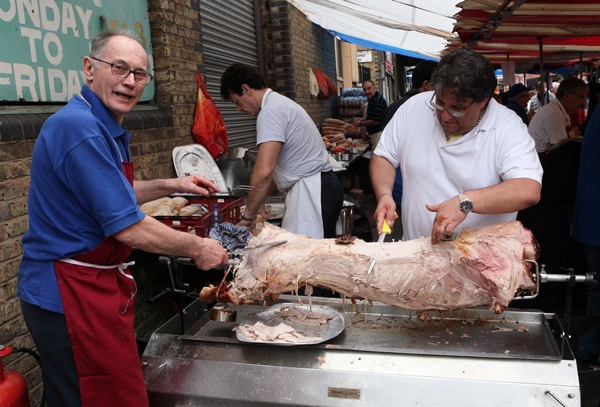
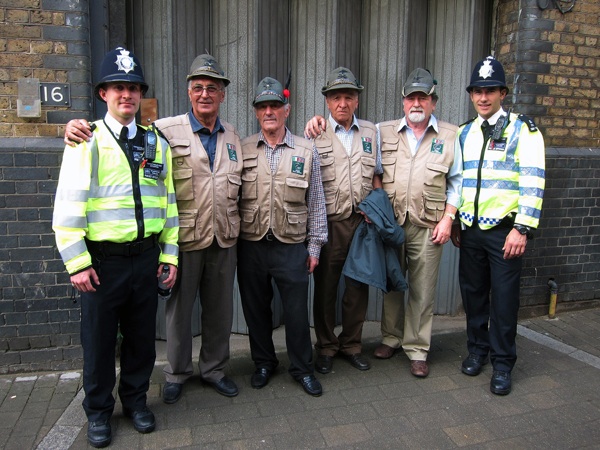
There is a certain magic that reigns on these occasions, when a Neapolitan atmosphere presides upon these London streets where for one day of each year, only Italian is spoken, and the recorded mellifluous tones of sentimental songs echo between tall old buildings towering over a full blown Festa taking place in the secret enclave of Warner St, between the major roads of Clerkenwell on either side. Here, on this special day in July, polenta is cooked in a barrel and served with sizzling sausages and Chianti, old ladies offer homemade cakes, veterans of the Alpine brigade from the nineteen fifties run a coconut shy and old friends meet to enjoy ceaseless embraces, recounting the passing years with sentimental delight.
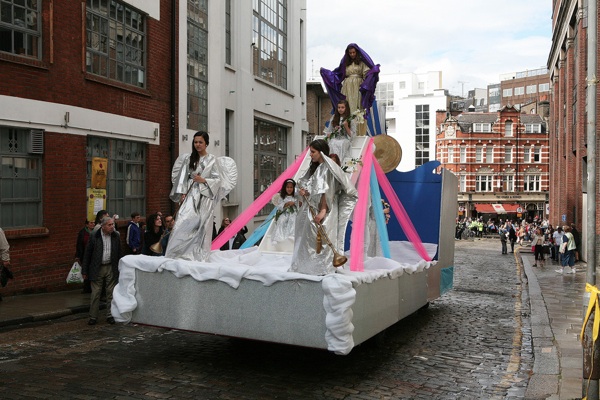
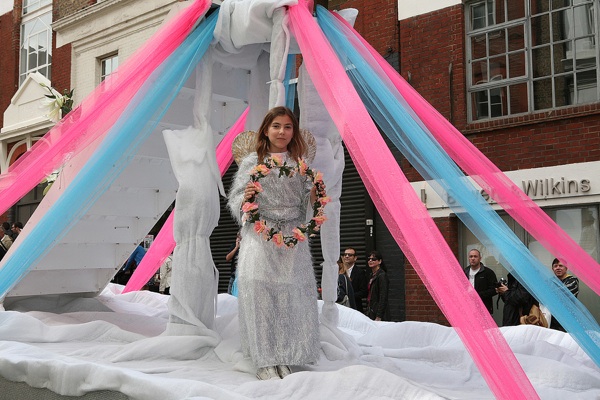
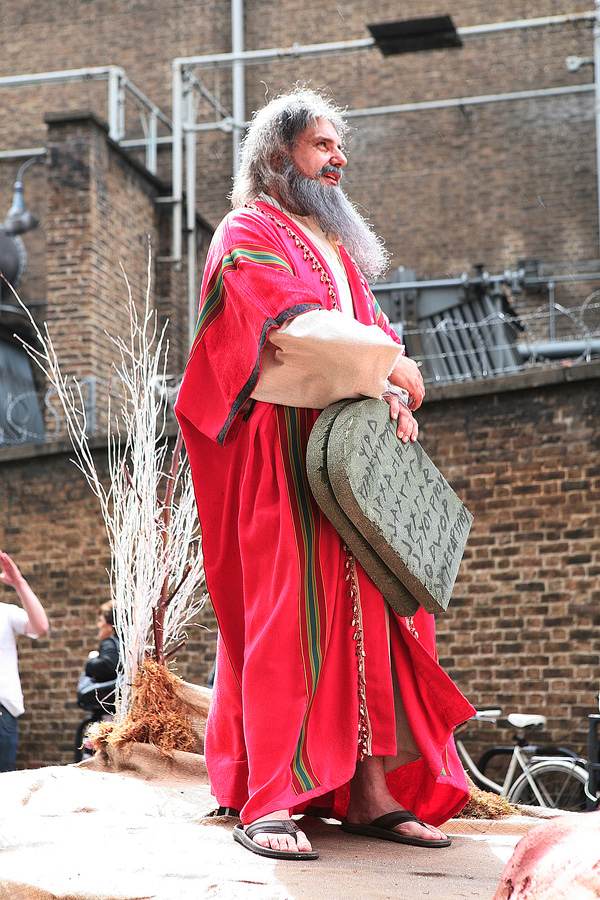
Walking a little further, you come to Back Hill where the floats assemble and encounter those who will feature in the tableaux, all toshed up in robes thrown together from pairs of old curtains, with unnatural orange makeup applied to their skin and sporting bad wigs and dodgy facial hair, all to give an authentic effect of life in Biblical times. Like a fantasy sequence from some mid-century Italian neo-realist movie, I once saw Jesus step from his car with his crown of thorns already in place. And, as you weave your way through the alleys and byways on this day, it is not uncommon to glimpse angels in tinsel nighties fleeting in the distance.
I joined the hushed crowds outside St Peter’s in the Clerkenwell Rd as the dark clouds gathered overhead and three doves were released into the lowering sky. Then, in an explosion of glitter, came the procession of saints, borne aloft and bobbing over the heads of the crowd, each with their attendant retinue of dignified matriarchs from Woking, Aylesbury, Ponders End, Epsom and Hoddesdon – to name but a few of the Italian communities represented.
When the heavens opened and the rain fell upon us, a forest of umbrellas came forth and the saints were swathed in an additional layer of polythene robes, floating ethereally upon the breeze. And, since the commentator reminded us of the afflictions of these medieval holies, like St Rita of Cascia – the patron saint of the impossible – who suffered from a splinter of the cross lodged in her forehead, we were able to draw consolation that a shower of rain was an inconsequential discomfort by comparison. Yet there was an additional poignancy to the tableau of Jesus nailed to the cross, shivering in a loin cloth, as the rain poured down upon him, and to observe the devout concentration of those who maintained their static postures whilst holding trumpets aloft in frozen moments of religious transfiguration, seemingly oblivious of the wet.
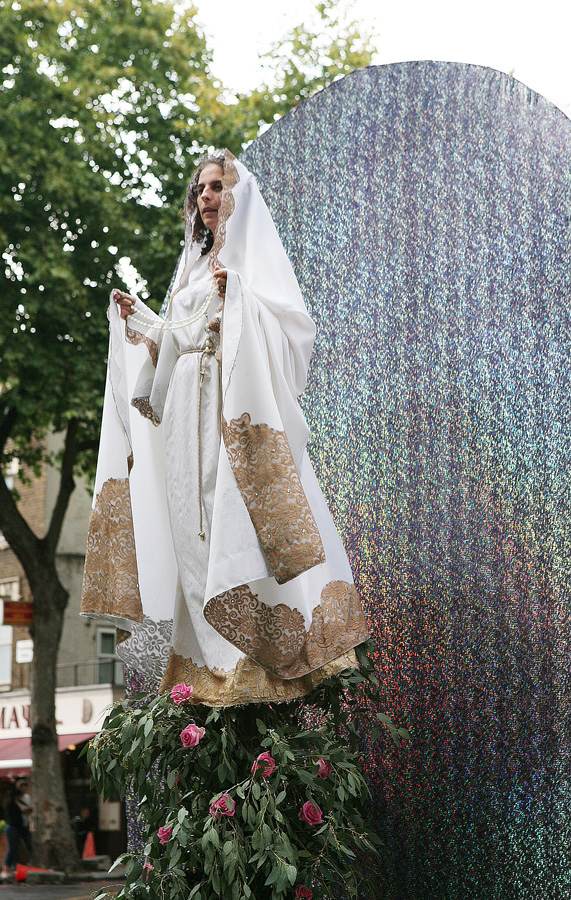
With floats and marching bands, and the latest batch of newly-confirmed little children in white, the procession approached its climax, and along came St Michele with one figure raised heavenwards to a sky that was visibly lightening. Then, sure enough, as the figure Our Lady of Mount Carmel appeared, the clouds parted and a ray of sunlight descended upon the church, the catalyst for a spontaneous round of applause from the crowd and even for some, among the credulous, to wipe away a tear.
Once the procession had walked up Rosebery Avenue, down the Farringdon Rd and returned to Ray St, the Italian community had unified for another year in celebration of its common ancestry. It was time for the devout to attend mass, crossing themselves and dipping their fingers in holy water as they entered St Peter’s, London’s oldest Italian church. While for the rest, including Colin (who is a longtime lapsed Catholic these days) and myself, it was time to savour the temporal delights of the Festa before the rain came down again.
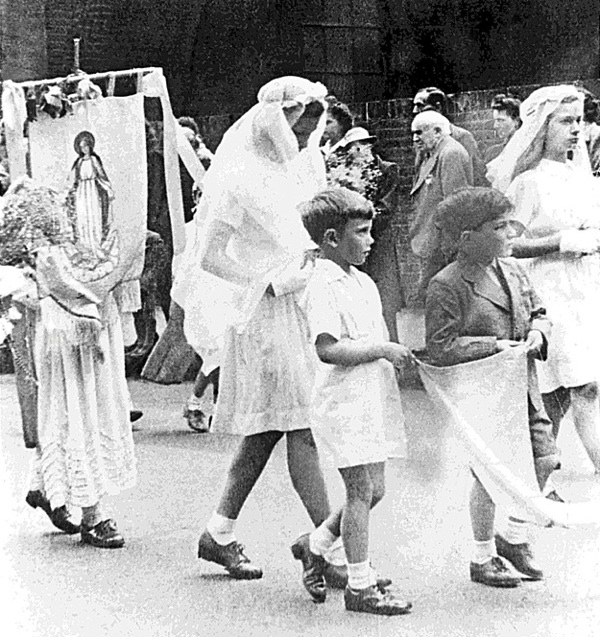
Colin O’Brien marches in the Italian procession in 1946

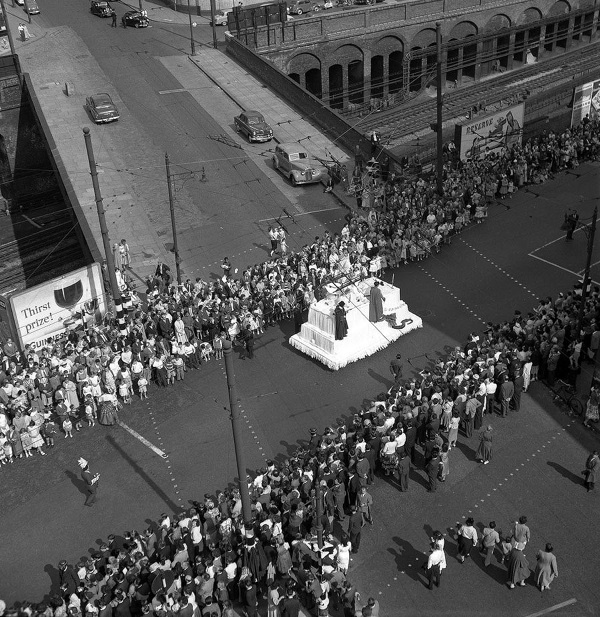
The procession photographed by Colin O’Brien in the early nineteen fifties from the flat where he grew up at the junction of the Clerkenwell Rd and Farringdon Rd.




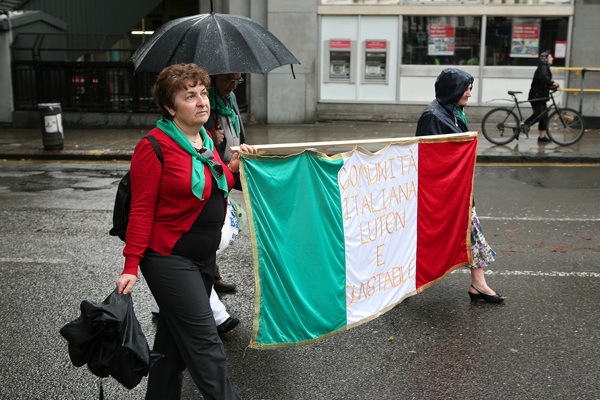
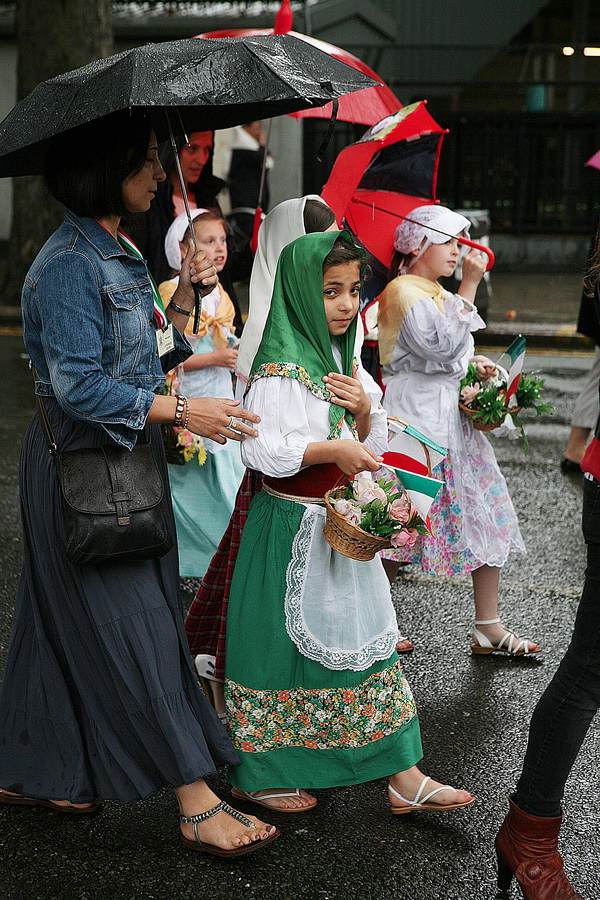
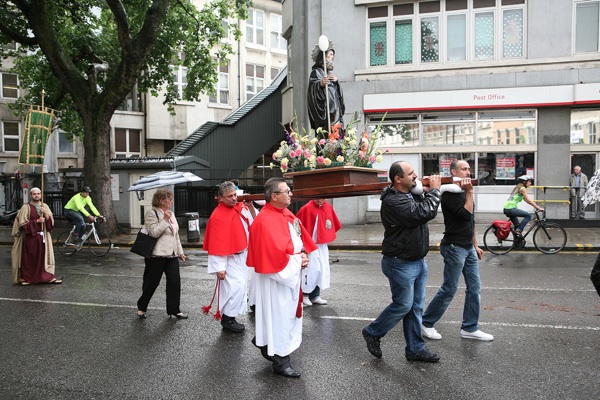
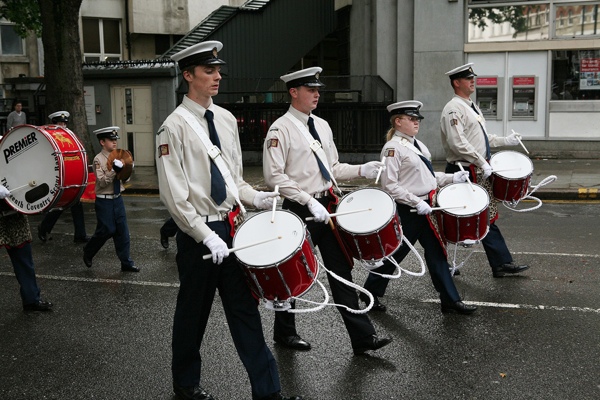
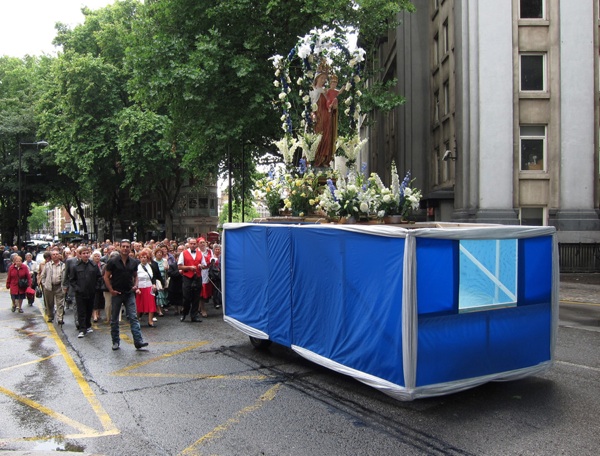
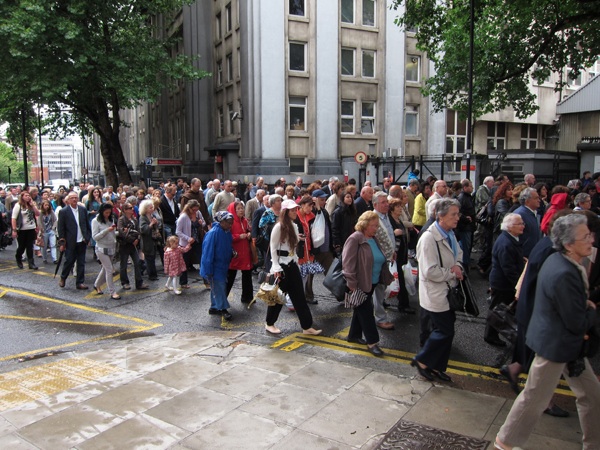
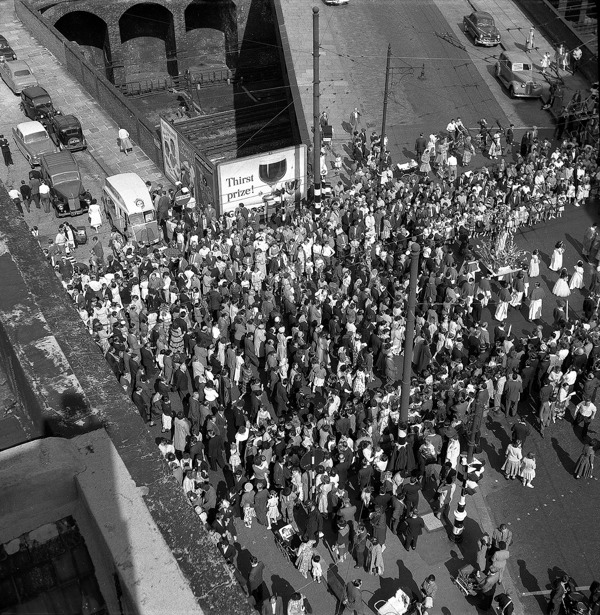
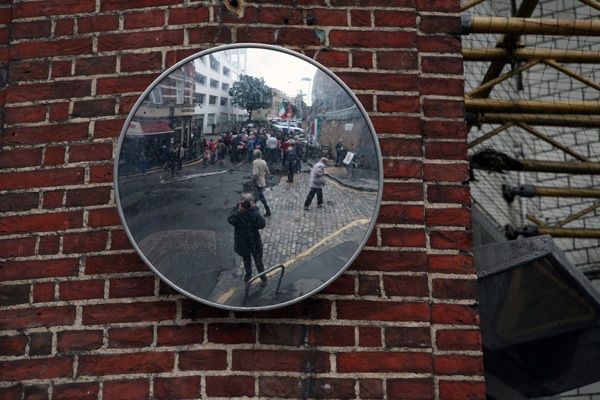
Photographs copyright © Colin O’Brien
More photographs by Colin O’Brien
Colin O’Brien’s Clerkenwell Car Crashes
At the Rag Fair in Houndsditch
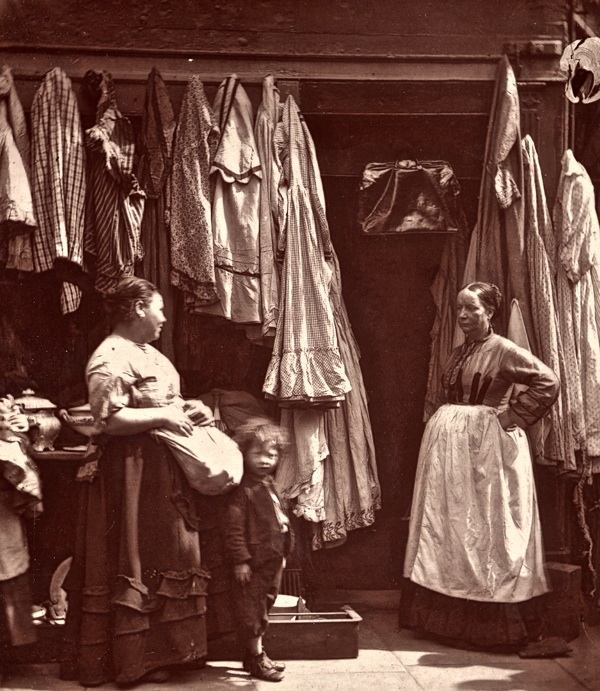
This Sunday – for a change – let us walk over to the ancient Rag Fair in Houndsditch.
In 1503, when Houndsditch was first paved over, it was already the haunt of brokers and sellers of old apparel. Ben Jonson refers to it in “Every Man in His Humour,” first performed at the Curtain Theatre in Shoreditch in 1598 – Wellbred: Where got’s thou this coat? Brainworm: Of a Houndsditch man, Sir, one of the devil’s near kinsman, a broker.
The anonymous writer of “Wonderful London: its lights and shadows of humour and sadness” 1878 has offered to be our guide, but beware, I am informed “there is an atmosphere about old clothes rather distasteful to the uninitiated nostril.” Yet we must accept the stench, because we shall have no other opportunity of visiting this lost market which disappeared over a century ago – superseded by the charity shops. vintage clothes stores and online auction sites of our day.
Summer and Winter and all year round, there can be found nowhere such an uproarious assemblage, such a scene of buying and selling, of bargaining and bating as takes place at what is almost the heart of the City of London – at the Rag Fair, in a triangular patch bounded by Houndsditch, Leadenhall St, and St Mary Axe.
At the back of the tall houses of the highway are the narrow ways, the filthy lanes and the the tortuous alleys, the open squares and the roofed-in spaces, the mighty domains of “old clo,” the headquarters of cast off habiliments, and of tatters and flinders, a shade too good for the rag merchants – coats, waistcoats, trousers, shirts, socks and stockings, and all manner of female skirts and frippery and finery, which have passed through the desperately ingenious hands of professional renovators and patchers and “translators” and cobblers, and made to appear as though fit for another spell of active service, or at any events, preferable to the utterly worn-out apparel of the poor wretches who come to the old-clothes fair on a Sunday morning to make their halfpenny bargains. And let it be understood that “twopence-halfpenny,” as it is used here, is not a figure of speech but a grim fact.
With the rest, we push our way through the dense crowds that throng Cutler St, and the Old & New Clothes Exchange, and Phil’s Buildings and Moses Sq. I can say to you that I had been hard up for a waistcoat – very hard up, I mean, of course – and had but fourpence in the world to provide the urgent requirement, I might buy one here and come away with three-halfpence to spare, with which to treat myself to a glass of beer on the strength of my bargain.
I might have purchased a pair of not so very shabby side-sprung boots for sixteen pence, and had I been in want of a tall hat, there is a vendor of these articles with a great bunch of them held above the heads of the mob at the end of a clothes prop – a judicious arrangement and one which saves them from collisions of a crushing and ruinous nature – and I might have fitted one to my head on the spot for the trifling sum of ninepence.
And then comes the oddest and, considering the enormous difficulties, the most wonderful part of the trafficking. In a dozen different spots, within twice as many yards, may be seen men and lads, provokingly scant of elbow room, struggling to divest themselves of portions of their attire and sell it, for all the world as though so many offhand pugilistic encounters were imminent, while others are down on their knees in the mire, fitting on the patched old boots, acknowledgedly but a few pence better than the wrecked rags of leather they are meant to supersede.
In due course, we find ourselves in the theatrical costume department. No matter what the newly fledged actor may be in search of he will find it here. Elizabethan “shapes,” “square-cuts,” burlesque and pantomime dresses, doublets, trunks, tights, fleshings, russet and velvet shoes, uniforms, swords, daggers, pistols and wigs of every description. To comic singers, this section of the Rag Fair commends itself as a very treasure trove when in quest of eccentric stage attire. Indeed, it is not uncommon for half a dozen of the most popular artistes of the music hall to be recognised in the Rag Fair on a Sunday morning.
Hither, too, come restaurant and coffee room waiters to buy themselves a dress coat when their old one has become too shabby for respectable service. Enterprising tradesmen, desirous of imparting an additional respectability to their establishment come also, to fit their errand boys with a cast off page’s suit.
But let us not tarry here. Around the three sides of this emporium of old clothes are long pegs literally groaning under the weight of old coats which have seen better days, but which for aught one knows may have been worn by the wealthiest in the land. At all events, many betray evidence of having been made by a fashionable snip. In front of these, on a raised platform, are piles of vests and inexpressibles, neatly folded up, as if they had just been handed down from the shelves of a clothier’s stall.
We have picked up more slang in the course of a couple of hours study of life and character around the City Clothes Exchange than could be gleaned during a month’s residence among the costermongers of Hoxton and Bethnal Green. But then, the Rag Fair is scarcely where one would expect to become imbued with lofty ideas.
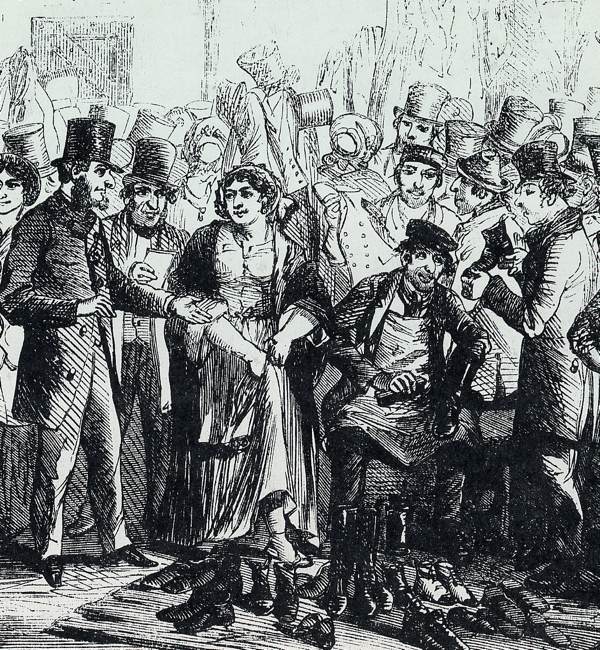
“Old boots and shoes are brightly polished, doubtless to conceal their defects.”

Phil’s Buildings & Clothing Mart consisted of four houses, two on each side, packed to the roof with old clothes of which a large proportion were put on sale and disposed of in the mart on Sunday mornings.

The Rag Fair in Houndsditch drawn from the life by Paul Renouard

Dealers in the Rag Fair drawn by A. Van Assen, 1793
Images copyright © Bishopsgate Institute
You might also like to read about Richard & Cosmo Wise, Rag Dealers
The Bollywood Dancers of Whitechapel
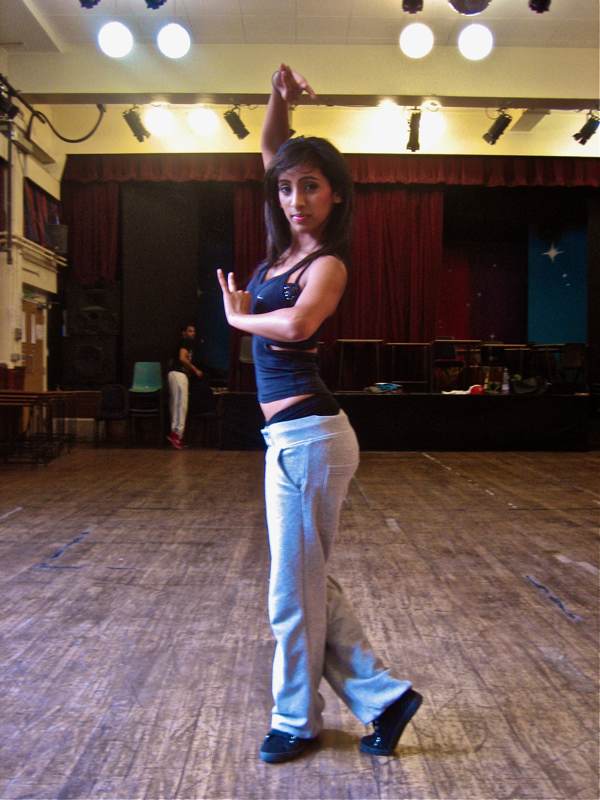
As a Summery languor settled upon the dusty streets of Whitechapel, I dropped in on the Bollywood dancers rehearsing for their new show which opens next week, where an entirely different energy prevailed. While out on the pavements people drifted like sleepwalkers, in the rehearsal studio members of Flex FX – Britain’s top Bollywood dance troupe – were dancing like demons, leaping and kicking up their heels for joy, and twisting and stretching their limbs to the pulsing music in an audacious display of overwhelming exuberance.
“This is our masterpiece. We want to show you Bollywood like you’ve never seen it before!” promised Naz Choudhury, the impassioned leader of this barn-storming crew who have played the Albert Hall, the Royal Opera House and Wembley Stadium. Such is the success of his company, that Flex FX have become a full-flown commercial enterprise reaching a popular and enthusiastic audience. And they are currently working towards a show at the O2 arena next year in which – turning the tables – they will bring Bollywood stars from India to perform in their production. Derived originally from Hindi cinema, Bollywood dance has undergone a metamorphosis in London, encountering the variety of dance genres and styles that exist here, and emerging as a more complex hybrid with an enlarged vocabulary of moves, and greater creative potential.
It was Naz who had the courage to raise the game, breaking away from the traditional amateur dance scene when he decided that his company would not perform at weddings, the prime venue for most Bollywood dance groups. Instead, he focused upon instilling a rigorous precision of moves in his dancers, to raise the technical standard of performance beyond that expected in Bollywood films. At the same time, he trained his dancers as athletes to encourage a more energetic approach, switching between contrasted styles. The outcome is a sharper, more volatile style of dance, moving between Bollywood, Street Dance and Latin within a single extended piece of up to ninety minutes of choreography. “It’s about showing everyone what we can do!” said Naz plainly.
Key to the development of the company was the arrival of the willowy Leena Patel, principal dancer and assistant choreographer, who studied Indian Classical Dance since the age of eight. Her trained presence at the heart of the company provided a core around which Naz could choreograph. “I’ve never felt so exhilarated in my life,” admitted Leena, her eyes sparkling with delight,“We want to prove that Bollywood can be as good as Contemporary Dance and Ballet.”
When Naz was thirteen, he joined a youth dance company in Brick Lane at the Kobi Nazrul centre and he has worked for the last fourteen years – the last ten as a full-time professional – to reach this moment where now, at twenty-seven years old, he is the director of his own dance company with a major reputation and a wide audience.
It is a long way from the black and white photograph below, taken twenty years ago by Phil Maxwell who lives across the hall from Naz Choudhury in Whitechapel. In the foreground of Phil’s picture, the young Naz is emerging from the lift at the head of a group of children, while in the background the logo of the National Front is written upon the wall. The children appear unaware of the writing behind them and Naz is pictured as an undefined figure emerging into another space.
The development of Bollywood dance and the transformation it has undergone in Britain, absorbing and meeting other styles, to emerge re-energised and triumphant is emblematic of Naz’s own personal journey. Through dance, he has reassessed and reinvented his own culture to create something new that reflects the world as he finds it. And Phil Maxwell’s photograph exists today as a poignant counterpoint, reminding us that Naz Choudhury’s story is one of the triumph of joy over hatred.
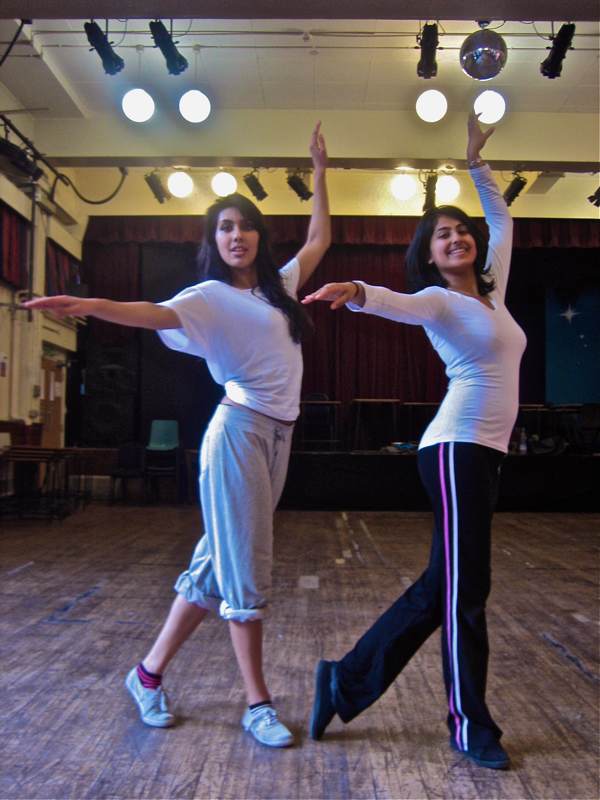
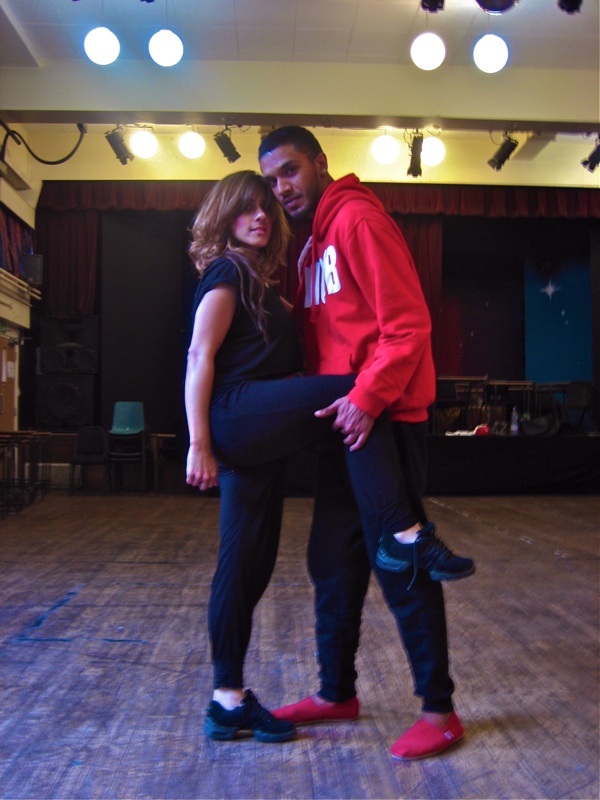
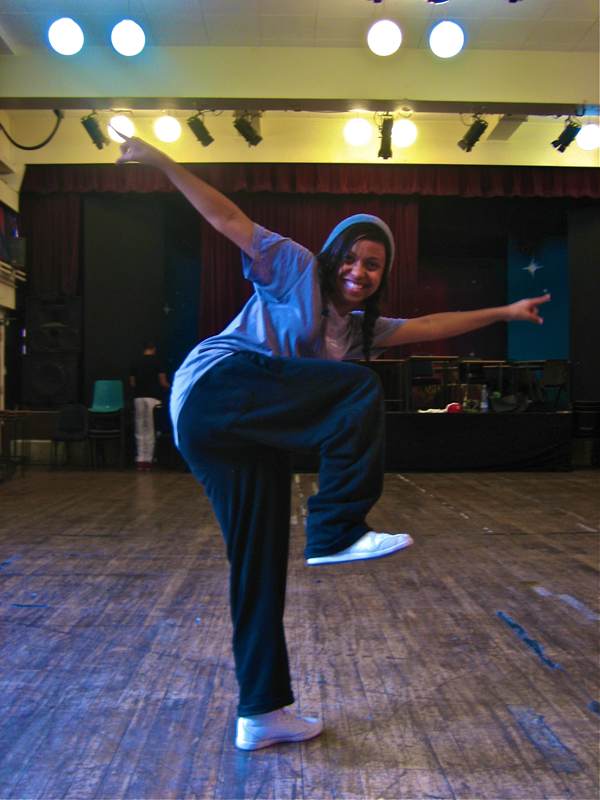
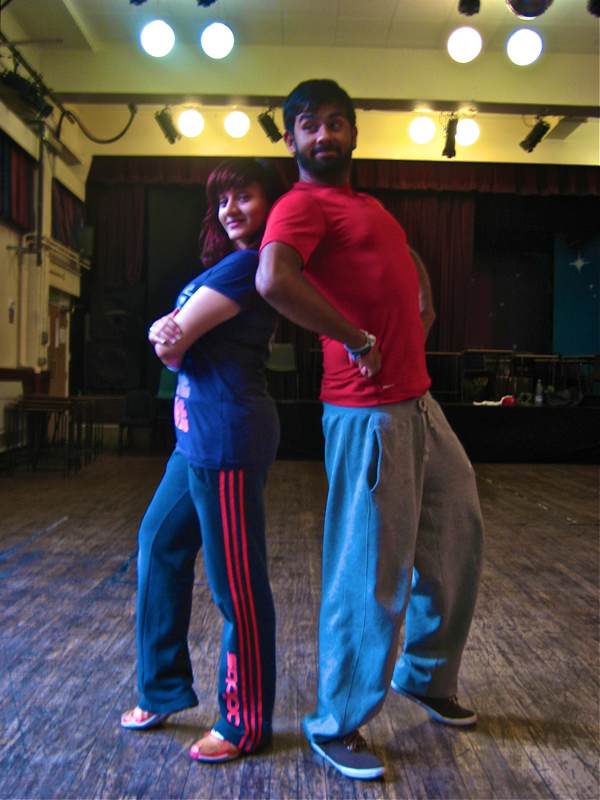
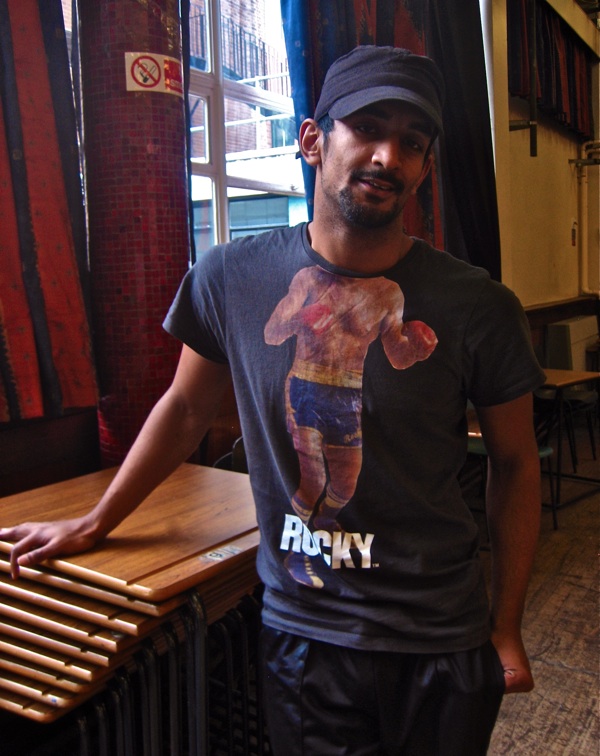
Naz Choudhury, Director of Flex FX
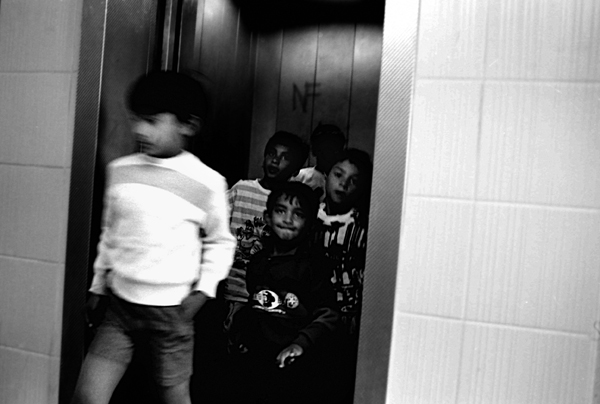
Phil Maxwell’s photograph of Naz Choudhury as a child leaving the lift in Pauline House, Whitechapel, where a National Front logo had been drawn.
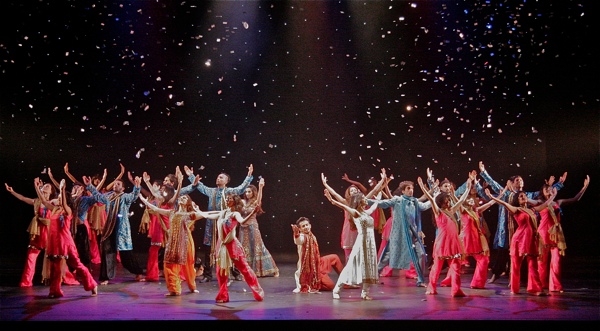
Readers are invited to the premiere of Bolly Flex at the Hackney Empire next Saturday 3oth July at 7:30pm – a ten pound discount will be given on top price tickets if you mention Spitalfields Life when you make your booking.
Watch a short film of Bolly Flex by clicking here
David Dupre, Grand Master Chimney Sweep
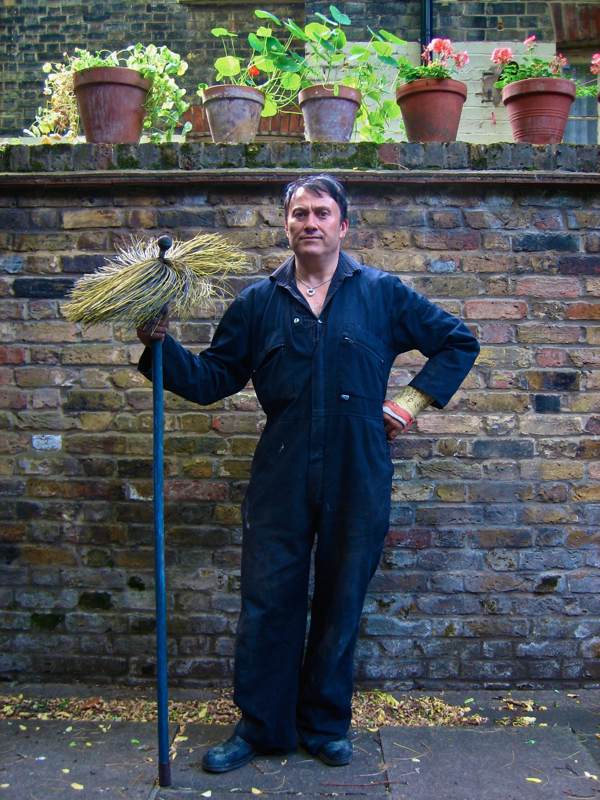
“My father was a master sweep,” explained David Dupre with a cocky flourish of his brush, “He taught me everything he knew, and I’ve learnt more – that’s why I am a grand master sweep, self-qualified.”
The nature of the sweep’s profession, going into people’s homes to sweep their chimneys and seeing all the diversity of human life, yet at the same time being reliant upon no-one, encourages a propensity to free-thinking and breeds an independence of spirit, and David is the unapologetic possessor of both. “People don’t tell me what I can and can’t do,” he informed me unequivocally.
On the day David Dupre left school, he came home in his school uniform at midday and his father was waiting for him in the kitchen to ask, “What are you going to do, David?”
“At twelve o’clock, I was in my school blazer, by one o’clock I was in my dirty overalls – and I never looked back.” declared David recklessly, with a crazed grin, after he had swept my chimney yesterday. “He was a hard man to work for, my father. He’d look at me when he was standing there with his brush up a chimney and he’d say, ‘What are you going to do?’ As if there was anything I could do at that moment.” continued David with mixed feelings of respect and frustration,“If there was a spanner out of place in the van, he blamed me for it. But there was nothing he wouldn’t do, I remember him climbing down the inside of a two hundred and seventy foot chimney in his seventies.”
Of French Huguenot descent, David’s father was born in South Africa and became the head chef and boiler stoker on a Merchant Navy vessel – “that was back in the days when the butcher was also the doctor,” explained David helpfully. From there he travelled to Yorkshire where he met an old man who taught him to be a chimney sweep, and that is all David knows. “He was an elusive man, he didn’t say much,” admitted David, ‘When I was fifteen, he was pushing sixty. He lied about his age and worked till eighty-three. He told me, ‘If I can’t sweep chimneys any more, I’ll put my head in the oven.’ And one day I went round and he had burnt his head, because he had tried to kill himself but the oven was electric.”
Significantly, David’s earliest memory of his childhood in a tenement in Brady St, Whitechapel, is how his mother used to put a scarf round his neck as a baby to protect him from the soot in the days of the London smogs. Yet it was the smoke of coal fires that created his family’s livelihood as well as a public health problem, both of which have declined since London was declared a smokeless zone and coal fires were banned.
“I made a lot more money in the eighties and nineties than now. In 1987, I was making a couple of grand a week. I could do ten or eleven chimneys in a day if the calls were close together…” recalled David, his eyes shining in swanky delight, “I’ve been in grand homes that chimney sweeps built in the nineteenth century. They were loaded! Before central heating existed to heat water, all the fires were going all the time and they used to sweep chimneys every three months. People have no idea now, they think you don’t ever need it done again.”
Relishing his distinguished pedigree and status as a free agent, David also appreciates the social mobility that goes with it. “I’ve swept the chimneys in Buckingham Palace and Kensington Palace, lovely places and the Royal staff are very pleasant people.” he confided to me in a whisper of patriotic veneration, “I remember going to the grand house of an Admiral in Whitehall with my father and they treated him with such respect. It was ‘Mr Dupre this’ and ‘Mr Dupre that.’ I’ve worked for multibillionaires and for those who are so poor I’ve given them money. But, if you see me out of my overalls, you wouldn’t think it was me. I drive a nice big yankie car and I wear expensive clothes, because I’ve earned it myself.”
Possessing the necessary diminutive stature and tenacious energetic nature for a sweep, David ran up the stairs in my house with his brushes in an old golf caddy. Once he had slotted all the poles together, he asked me to go outside and check the brush was sticking out. And, sure enough, when I reached the pavement and peered up at the stack, there was David’s brush, like a strange cartoon flower growing out of my chimney pot. Climbing the stairs again, I found that David had made short work of the job, which he had completed with strenuous determination and was already cleaning up when I returned. “My father designed the screen I place over the fireplace, most sweeps use a cloth,” he told me as he worked. “And all my brushes are specially made – I’m very particular about what I use. I’ve got the Inland Revenue to pay. I’ve got my advertising to pay, they stole the magnetic signs off my van – why would they do that? I’m just a chimney sweep.” he mused. Then, before I knew it, he tossed the vast steel drum of his vacuum cleaner over the shoulder and was barrelling off down the stairs again.
Once the job was done, it was time for the serious business of catching up, with David breaking the dramatic news that since he last swept my chimney, he got divorced from his second wife and found true love with a new fiancée. “It was the first time in my life I had a drink,” he confessed – with eloquent understatement – speaking of the stress of the divorce, before his change of fortune. “I didn’t think I’d ever be so happy, I’ve got this lady in my life now that is my life ,” he disclosed, “She’s amazing, she does my cooking!”
It was a moment to take stock, and I was favoured to hear David Dupre’s assessment of his existence as a grand master chimney sweep. “I’ve been working now for twenty-seven years and I’ve never had an action against me. I’m happy with my job, though I am a bit gutted that the work decreased by seventy-five per cent.” he said, pulling a long face, “But even if I won the lottery tomorrow, I’d still be sweeping chimneys.”
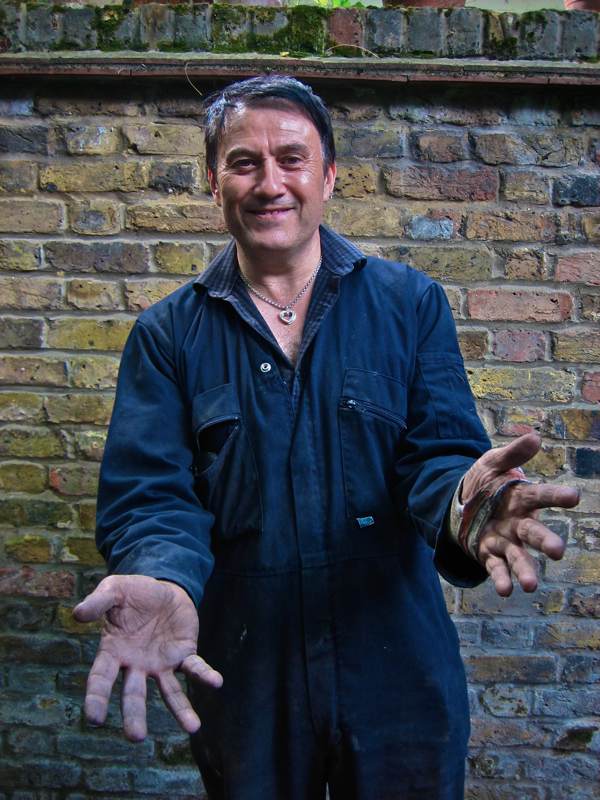
“At twelve o’clock on the day I left school, I was in my blazer, by one o’clock I was in my dirty overalls – and I never looked back.”
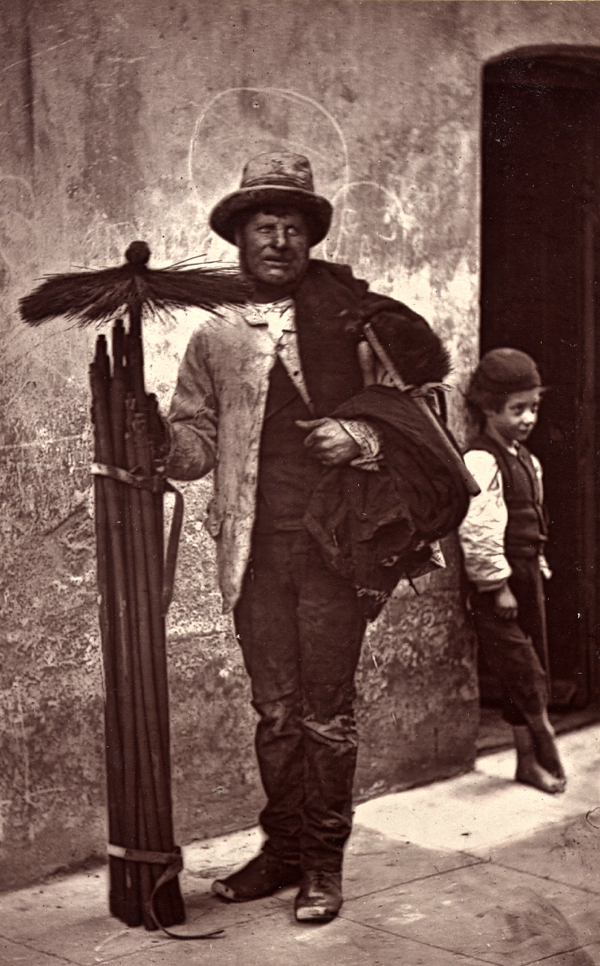
The Temperance Sweep from John Thompson’s Street Life in London, 1876
Save the Duke of Uke!

With his dark-eyed charm and dapper retro-tweeds, Matthew Reynolds is a popular character in Spitalfields, celebrated for opening Britain’s only ukelele shop The Duke of Uke and making a glorious success of it. Where once Hanbury St was a mere walk-through from Spitalfields Market to Brick Lane, in the five years since the Duke of Uke opened it became a destination, and as a result classy brands like Grenson and YMC have now opened shops there too.
Yet this transformation means the Duke of Uke will have to leave, as landlord Spencer Sheridan refuses to renew the lease, taking the opportunity instead to capitalise upon this new-found fashionability by installing another business that will deliver higher returns.
In fact, the lease ends next Monday 18th July and, although Matthew Reynolds has been searching all year, he has not yet found a place to go, but – as events came to crisis this week – Paul Belchak, the agent acting for the landlord, managed to secure three weeks grace until 4th August. In the meantime, Fifth Anniversary Benefit Concerts are taking place this Thursday, Friday and Saturday in the crypt of Christ Church, Spitalfields, and these promise to be very special events as some top musicians gather in tribute to the Duke of Uke.
Countless times, over these past years, I have walked down Hanbury St to discover excited crowds pressing their faces at the window of the Duke of Uke. Impromptu concerts became frequent events as the ukelele revival gathered pace, as more people bought ukeleles, and more were given ukeleles as presents, and more took ukelele lessons at the shop, and more fell in love with their ukeleles, and more formed ukulele orchestras. With a recording studio in the basement and nightly ukelele classes in the shop, the Duke of Uke became the centre of a certain joyful world as umpteen passersby, like myself, were seduced by the magical twangling of strings echoing down Hanbury St.
Running his business without any investors or capital behind him, Matthew Reynolds has put his heart and soul into the Duke of Uke. An inspired teacher and a born master of ceremonies, Matthew embodies the playful magnanimous spirit of the Duke of Uke, somehow managing to sustain the beautiful endeavour and keep himself too. We all owe a debt of gratitude to Matthew and he needs our help now, because a new shop will require a significant deposit and there will be the costs of the move itself – funds which he does not have. So the concerts this week are an opportunity for everyone to show their appreciation and raise money in order that the Duke of Uke may continue.
This is an important moment for Spitalfields, because the Duke of Uke is one of many small businesses that by their distinctiveness contribute to the quality and appeal of the neighbourhood. These people now find themselves challenged by landlords who are eager to maximize their incomes after many lean years. It means that independent traders need to band together to support each other and we, as the community, must support our local shops. Meanwhile, the Duke of Uke still needs to find alternative premises.
When I expressed my regret to Matthew Reynolds that after five years of hard work and all the goodwill he has engendered, he should be rewarded by being pushed out – he nodded sagely and raised a smile. “The goodwill is reward enough in itself,” he said, showing grace in moment of vulnerability.


Ukelele practice photographs © Sarah Ainslie
You may like to read my original profile of the Duke of Uke












