
Bob Paice, Warden Of The Jewel House & Pearly Pride
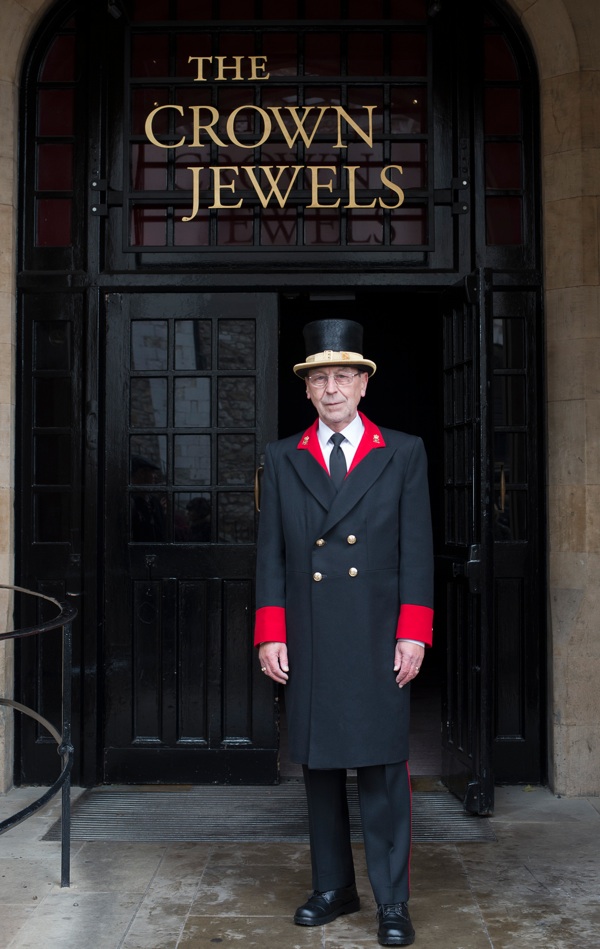
Bob Paice, in his livery as Warden of the Jewel House at the Tower of London

Bob Paice, in his suit as a Pearly Pride
On Friday, Bob Paice’s last day as Warden of the Jewel House at the Tower of London after seventeen years, Contributing Photographer Sarah Ainslie & I went down to witness Bob’s transformation as he swapped the livery of his former employment for the attire of his new identity as a Pearly Pride. Yet, although the metamorphosis was seemingly accomplished by the simple matter of a change of clothing, we discovered that this was actually the culmination of an evolutionary process which began years ago.
Overseeing Bob’s emergence as a Pearly were Larry & Doreen Golding. “We’re his mentoress and his mentor,” explained Doreen proudly, “We’re the Pearly King & Queen of Bow Bells and we’re Freemen of the City of London.” Larry & Doreen revealed that ,throughout his years at the Tower, Bob organised social events for the residents – discos, barbecues and Christmas parties – raising hundreds of thousands for St Joseph’s Hospice and so, when the Pearlies came to collect the cheques as patrons of the hospice, they recognised Bob’s potential.
“People ask us why do you dress up like this?” Doreen queried rhetorically, “The reason is, ‘We’re charity workers.'” Originating in the nineteenth century as a self-help organisation for deprived families of costermongers, these days the Pearlies devote themselves to fundraising for a wide range of charities.
“When Larry invited me to the Pearly Harvest Festival, I did the parade in my Jewel House Warden livery,” Bob recalled fondly, “After the service, we always have something to eat and drink at the pub, and I was having a cigarette outside when he said, ‘It’s about time you joined us.’ So I said, ‘Once I’ve finished this, I’ll be in,’ but he said, ‘No, I meant become a Pearly.’ That was about three years ago and then, at last year’s Pearly Parade, he said, ‘You’ve got no excuse because you’re retiring.’ I said, ‘Where do I get the buttons?'”
“People like the idea of dressing up as a Pearly , but you can be standing outside for hours in the cold and you can’t put on a coat, it’s not glamorous,” admitted Larry, speaking as the voice of experience at eighty-six years old, “You can’t clean the suit either and it can get quite sweaty and smelly in the summer. You have to sponge it down, dry it with a hair dryer and hang it out.”
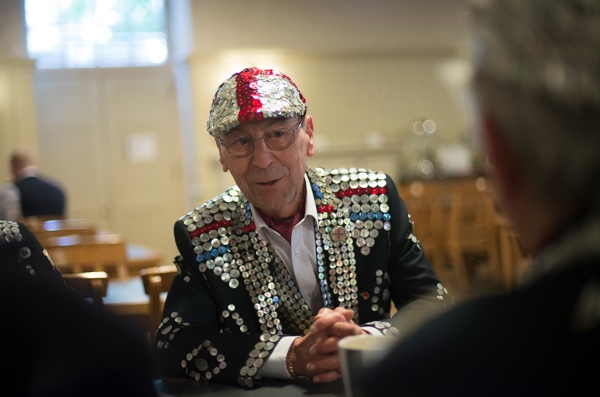
“I bought this suit in Stratford for a hundred quid,” confessed Bob, “And it has four thousand, three hundred and fifty buttons. It took me six months to get this far and already it weighs eight pounds. I sewed them all on myself with a little bit of help.”
Yet, in spite of Bob’s eager anticipation of his new role, it was also a moment to look back. “I was born and bred in Stratford, and I’ve lived my whole life there,” he confided to me, “My first job at fifteen years old was at Clarnico Sweets in Waterden Rd. When you started you got free bags of sweets but then you got sick of them. I don’t have a sweet tooth. I remember my first pay packet, I got one pound and fifty pence a week. So I gave a pound to mum and had fifty pence spending money, but I always had to ask her for a sub on Wednesday to get me through ’til Friday. Then I worked for the Bass Brewery in Silvertown, I worked on the vat floor and I went out as a van boy until I was made redundant after sixteen years.
I applied for this job when I saw an advert in the evening paper. I remember the interview, there were five of them on one side of a long table and an empty chair on the other side with a glass of water, so I thought, ‘That’s where I’m sitting.’ I got the job and, over the last seventeen years, it has become a way of life – so this is a day of mixed feelings for me.”
By now, it was time to photograph Bob wearing his Jewel House Warden’s livery for the last time and then in his Pearly outfit. I could not avoid noticing a certain melancholy in Bob’s visage as he posed in his former working outfit, an emotion that was dispelled once he donned his new suit bespangled with buttons. Within moments, tourists were requesting pictures with Bob, Doreen & Larry. “There’s no retiring when you’re a Pearly King,” Larry whispered to Bob with a grin, offering good humoured reassurance as they posed for another photograph, “you don’t retire, you just die!”
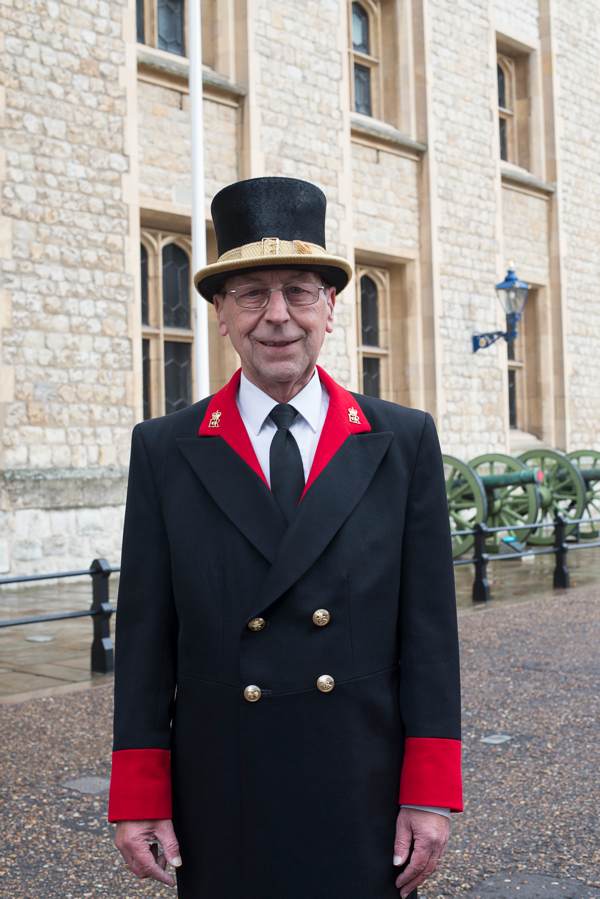
Friday was Bob’s last day as Warden at the Jewel House
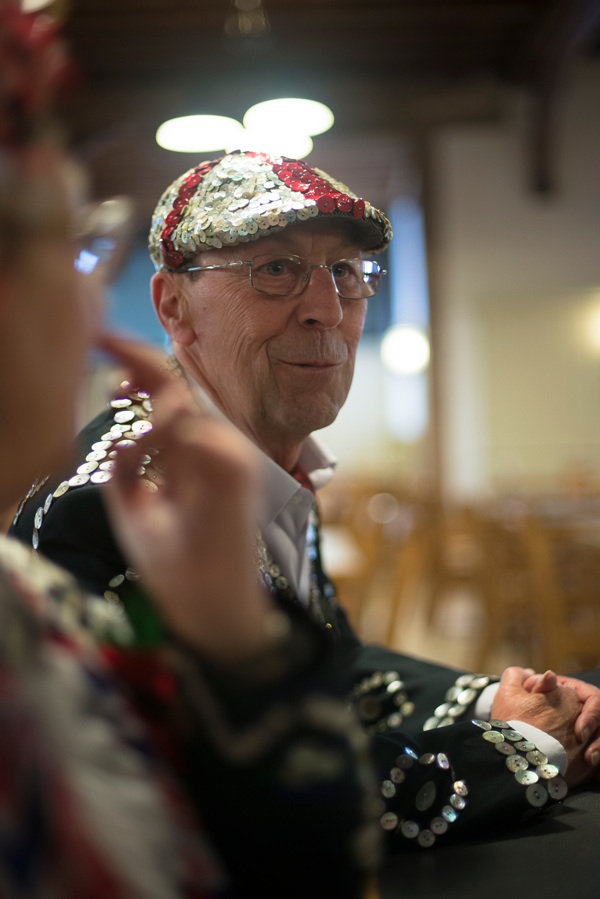
Bob relaxes with his Pearly pals
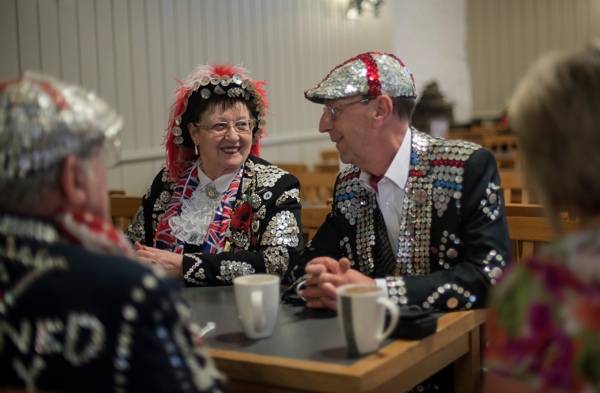
Bob with Doreen Golding, Pearly Queen of Bow Bells
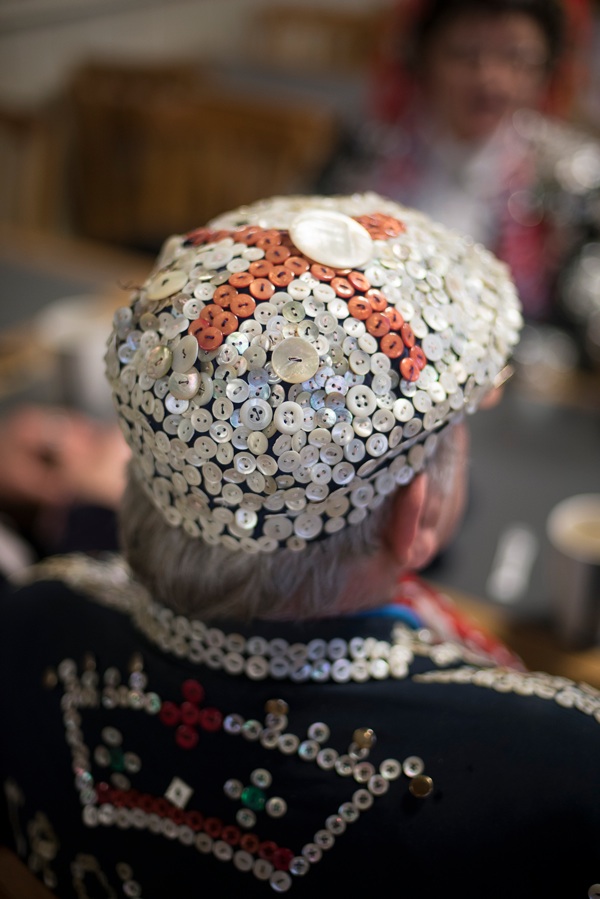
Cap of Larry Golding, Pearly KIng of Bow Bells
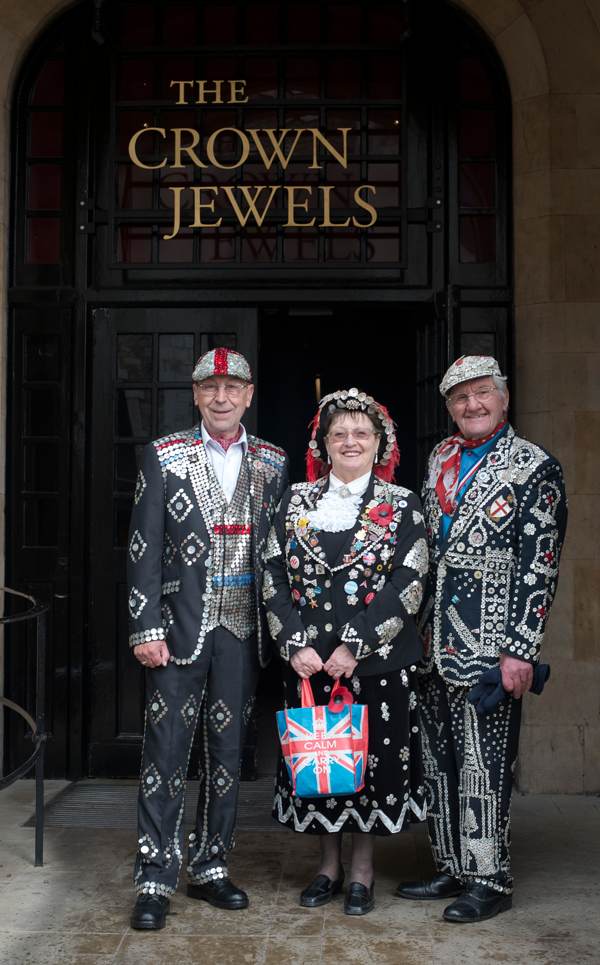
Bob with Larry & Doreen Golding, Pearly King & Queen of Bow Bells
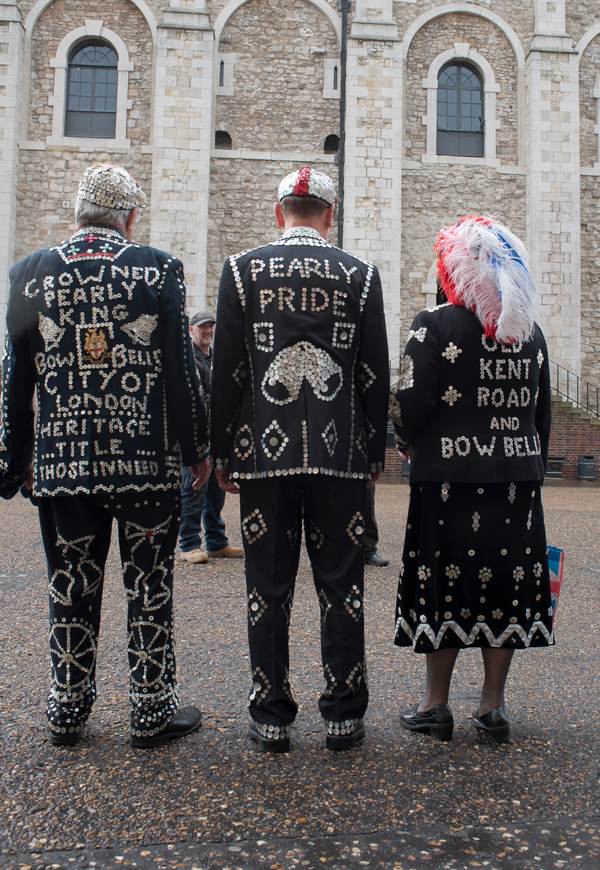
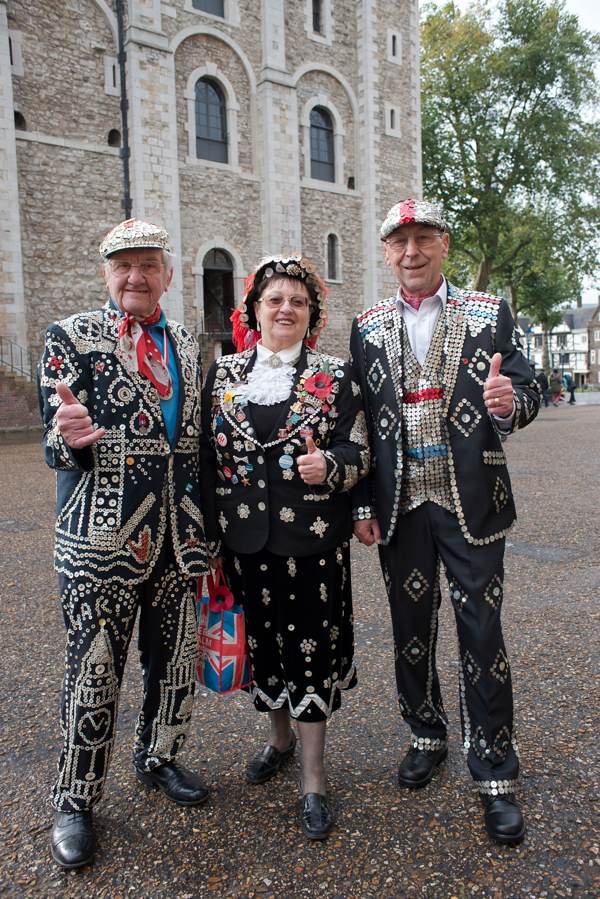
Larry, Doreen & Bob giving the Cockney salute outside the Tower
Photographs copyright © Sarah Ainslie
You may also like to read about
For I Will Consider My Cat Jeoffry
Bowing to popular demand, Paul Bommer has produced a new edition of his print inspired by Christopher Smart’s eulogy of his cat Jeoffry, coinciding with Paul’s return to Spitalfields from Norfolk bringing an exhibition of prints to the Townhouse Window in Fournier St. And today I republish my story of Christopher Smart & Jeoffry in Old St, telling the tale behind this celebrated verse.

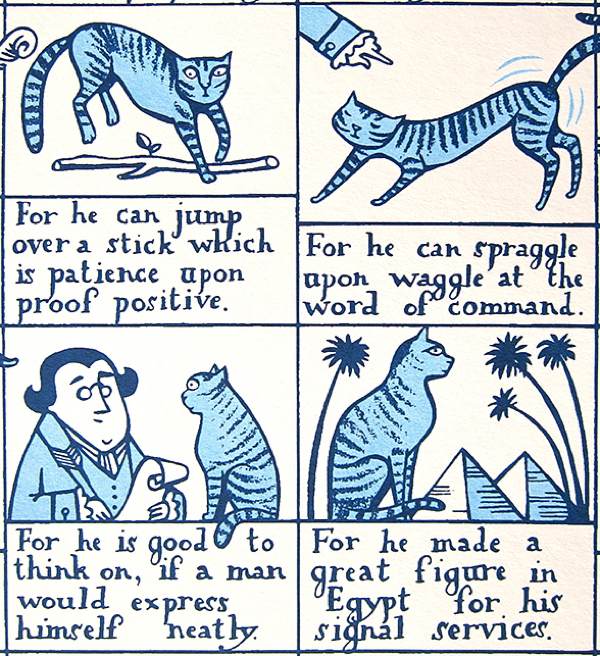
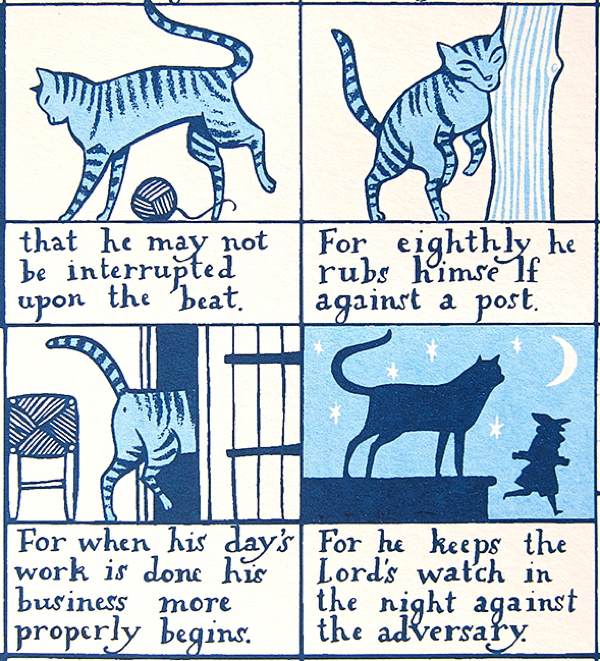
Whenever I walk along Old St, I always think of the brilliant eighteenth century poet Christopher Smart who once resided here in St Luke’s Hospital for Lunatics, with only his cat Jeoffry for solace, on the spot where the Co-operative and Argos are today. So when artist Paul Bommer asked me to suggest a subject for an illustrated print, I had no hesitation in proposing Christopher Smart’s eulogy to his cat Jeoffry, the best description of the character of a cat that I know. And, to my amazement and delight, Paul has illustrated all eighty-nine lines, each one with an apposite feline image.
In an age when only aristocrats with private incomes were able to exist as poets, Christopher Smart was a superlative talent with small means who struggled to make his path through the world and his emotional behaviour became increasingly volatile as a result. He fell into debt whilst a student at Cambridge and, even though his literary talent was acknowledged with awards and scholarships, his delight in high jinks and theatrical performances did not find favour with the University. Once he married Anna Maria Canaan, Smart was unable to remain at Cambridge and came to London, seeking to make ends meet in the precarious realm of Grub St. His prolific literary career turned to pamphleteering and satire, publishing hundreds of works in a desperate attempt to keep his wife and two little daughters, Marianne and Elizabeth Ann.
Eventually, he signed a contract to write a weekly magazine, The Universal Visitor, and the strain of producing this caused Smart to have a fit, sometimes ascribed as the origin of his madness. Yet there are divergent opinions as to whether he was mad at all, or whether his consignment was in some way political on the part of John Newbery, the man who was both Smart’s publisher and father-in-law. However, Smart made a religious conversion at this time, and there is an account of him approaching strangers in St James’ Park and inviting them to pray with him.
In Smart’s day, Old St was the edge of the built up city with market gardens and smallholdings beyond. The maps of St Luke’s Hospital show gardens behind and it was possible that like John Clare in the Northamptonshire Lunatic Asylum, Smart was simply left alone to tend the garden and get on with his writing. Consigned at first on 6th May 1757 as a “curable” patient, Smart was designated “incurable” whilst there and subsequently transferred to Mr Potter’s asylum in Bethnal Green as a cheaper option – at a location known to this day as “Barmy Park.” Meanwhile, his wife Anna Maria took their two daughters to Ireland and he never saw them again. In 1763, Smart was released through intervention of friends and lived eight another years, imprisoned for debt in King’s Bench Walk Prison in April 1770, he died there in May 1771.
“For I Will Consider My Cat Jeoffry” was never printed in Smart’s day, it was first published in 1939 after being discovered in manuscript amongst Smart’s papers, and subsequently W.H. Auden gave a copy to Benjamin Britten who wrote a famous setting as part of a choral work entitled “Rejoice in the Lamb” in 1942.
The irony is that the “madness” of Christopher Smart, which was his unravelling as a writer in his own time, signified the creation of him as a poet who spoke beyond his age. Smart is sometimes idenitified as one of the Augustan poets, notable for their formality of style and content, but the idiosyncratic language, fresh observation and fluid form of “For I Will Consider My Cat Jeoffry” break through the poetic convention of his period and allow the poem to speak across the centuries.
It is the tender observation present in these lines that touches me most, speaking of the fascination of a cat as a source of joy for one with nothing else in the world. In fact, Smart was often known as Kit or Kitty and I wonder if he saw an image of himself in Jeoffry and it liberated him from the tyranny of his circumstance. Simply by following his nature, Jeoffry becomes holy in Christopher Smart’s eyes, exemplifying the the wonder of all creation.
It was a triumphant observation for a man who was losing his life, yet it is all the more remarkable that it is solely through this playful masterpiece he is remembered today. He did not know that – at the moment of disintegration – his words were gaining immortality thanks to the presence of his cat Jeoffry. And this is why, whenever I walk along Old St with my face turned to the wind, I cannot help thinking of poor Christopher Smart.

Christopher Smart (1722-71)
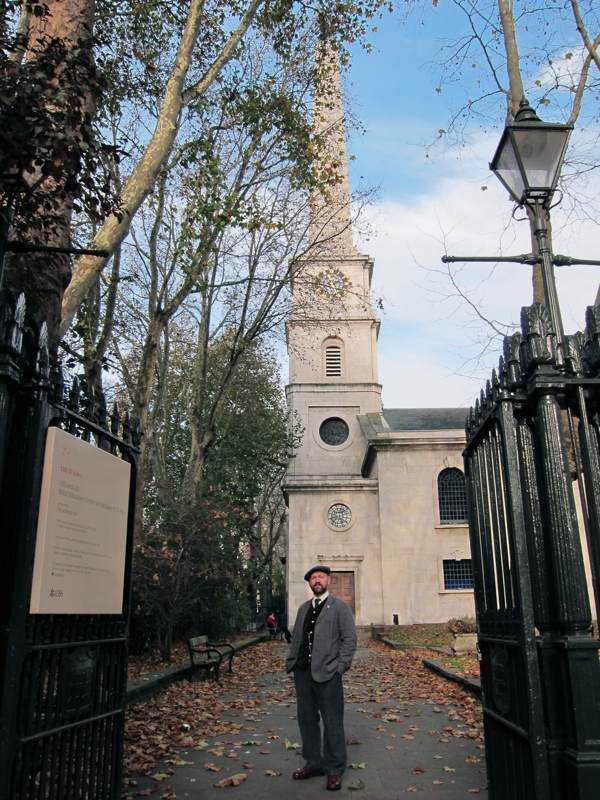
Paul Bommer at St Luke’s, Old St.


The St Luke’s Hospital for Lunatics in Old St where Christopher Smart lived with his cat Jeoffry on a site now occupied by Argos and The Co-operative.

St Luke’s Hospital for Lunatics, Old St, in the nineteenth century.

Paul Bommer in the rose garden on the site of the former St Luke’s Hospital garden where Christopher Smart’s cat Jeoffry once roamed.
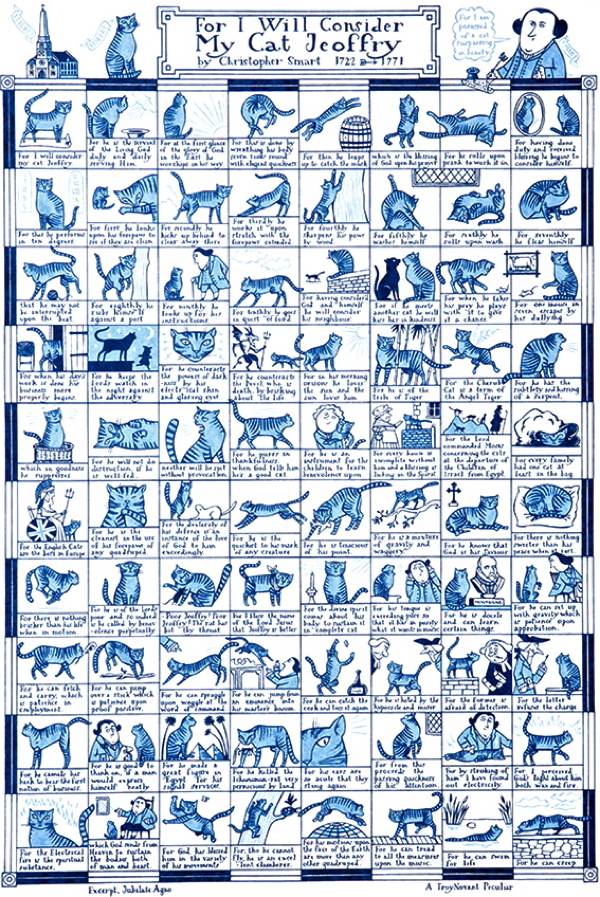
Paul Bommer’s print of Christopher Smart’s “For I will consider my cat Jeoffry.”

The Gentle Author’s cat Mr Pussy.

Copies of Paul Bommer’s new edition of Christopher Smart’s “For I will consider my cat Jeoffry” are available from the Spitalfields Life online shop.
Artwork copyright © Paul Bommer
Archive image from Bishopsgate Institute
You may also like to read about
Travellers’ Children In Marylebone
We are collaborating with Agnes B. to take Colin O’Brien‘s exhibition of portraits from 1987 of Travellers’ Children In London Fields up to theWest End and we hope you will join us there for a glass of Truman’s Beer next Thursday in Marylebone High St. The show runs until 3rd December.


[youtube jlklWeiIRCM nolink]

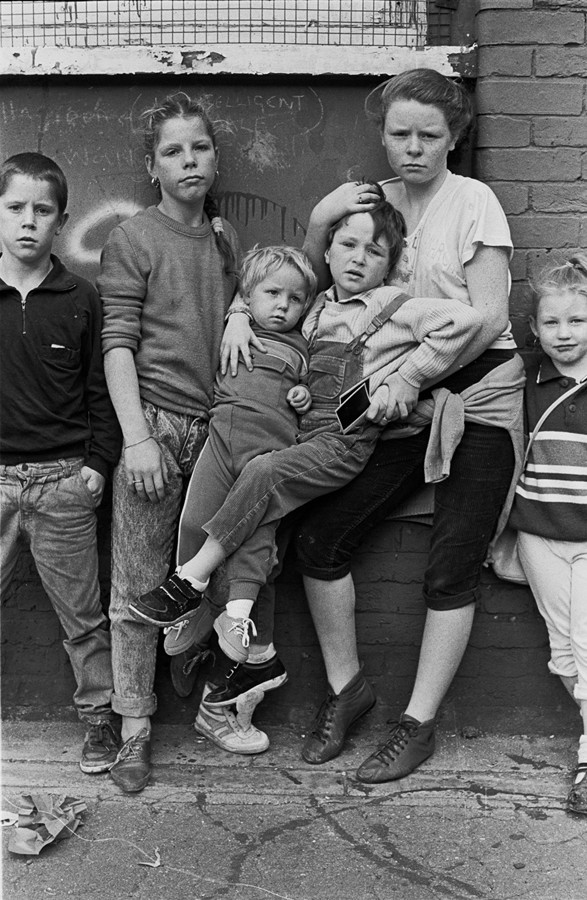



Click here to buy a signed copy of Colin O’Brien’s book for £10!
Faber Factory Plus part of Faber & Faber are distributing Travellers’ Children in London Fields nationwide, so if you are a retailer and would like to sell copies in your shop please contact bridgetlj@faber.co.uk who deals with trade orders.
You may also like to read about
At The Ghost Parade
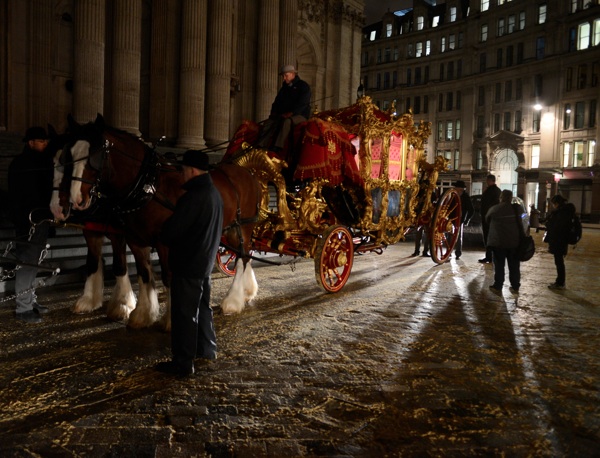
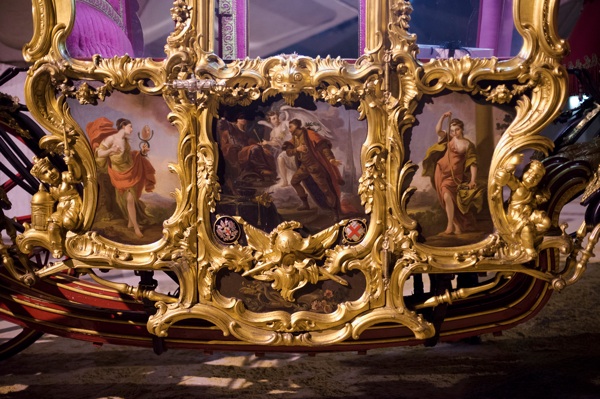
Lord Mayor’s Coach of 1757 stands outside St Paul’s Cathedral at 5am
Saturday sees the 686th Lord Mayor’s Show in the City of London yet, just to make sure it goes without a hitch, each year a nocturnal rehearsal is held at dead of night known as the ‘Ghost Parade.’ This is necessary because, although the Show has been running for centuries, there are new performers every year, namely the Lord Mayor Elect and six dray horses.
The dray horses were out on Tuesday night in the pouring rain dragging a cart around the route twice, just to get familiar with it, and, by the time Contributing Photographer Sarah Ainslie & I arrived in the Guildhall yard at 4:30am on Wednesday morning, they were returning from another circuit as the gleaming two-hundred-and-fifty-year-old coach was wheeled out. Here we were greeted by Dominic Reid, Pageantmaster for the last twenty-one parades, and successor to his father, John Reid, who oversaw twenty before him. “We have six minutes to get from here to the Mansion House,” he assured me, checking his watch conscientiously.
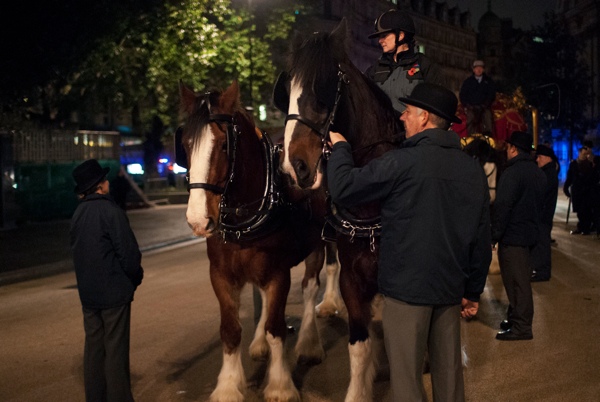
Already, the shining dray horses were being harnessed to the golden fairytale carriage as Fiona Woolf, the second-only female Lord Mayor in eight hundred years, was posing for photographers in front of it. A team of maintenance men stood by to ensure that there was no repeat of last year, when one of the wheels on the antiquated coach got stuck after sand clogged the axle. Men in bowler hats and long brown twill coats conferred, reconciling their plans before they set off. On Saturday there will be a three and a half mile procession, but tonight it was just the coach and six.
Into the empty square outside the Bank of England rolled the carriage as police riders held back the traffic until the Lord Mayor Elect had descended outside the Mansion House, taking tactfully delivered instructions from the Pageantmaster upon protocol – different ways to remove her hat, different hand shakes and, above all, where to stand. Then the constituencies gathered around a wooden table, including a posse of fellows in sharp suits, military representatives who would have their men here on Saturday en masse. Rehearsing the signing of the Mayor’s treaty of allegiance to the Armed Forces was the matter of attention. “What happens if it rains?” asked a naive first-timer. “It gets wet and we sign another later,” replied the voice of experienced pragmatism.
“She’s not of Royal stock, so she has to rehearse,” whispered a helpful policeman, leaning in close and enunciating into my ear, as before my eyes the Lord Mayor Elect reached from the carriage with her tricorn hat in hand and waved to the non-existent crowds in Poultry. Beneath the spire of St Mary-Le-Bow they passed and skirted the great cathedral to arrive outside the west front of St Paul’s. Whilst at the south entrance, the Lord Mayor Elect practised receiving a bible presented by the Bishop of London and holding her hat at the same time, the empty coach waited.
Beneath the overhanging frontage lowering in the gloom now the flood-lights were off, the golden carriage glowed mysteriously, lit from within and reflecting in the pavement that had acquired a sheen from the gently falling rain – as if it were an apparition materialised from the ether.
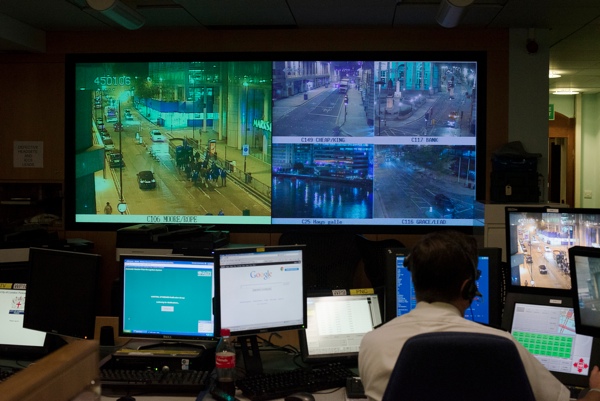
The dray horses appear on the screen in the Police Control Room in Wood St
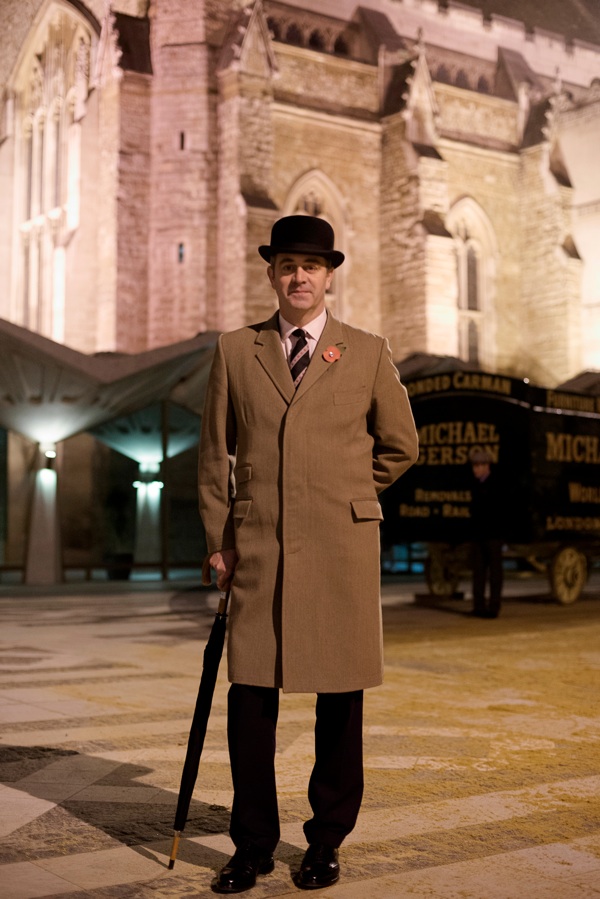
Dominic Reid, Pageantmaster since 1991
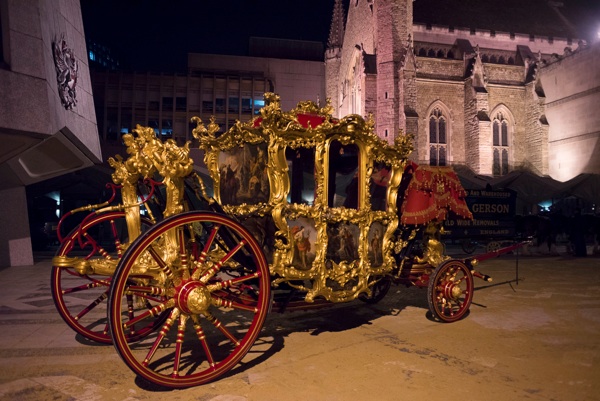
The Coach stands waiting the Guildhall Yard
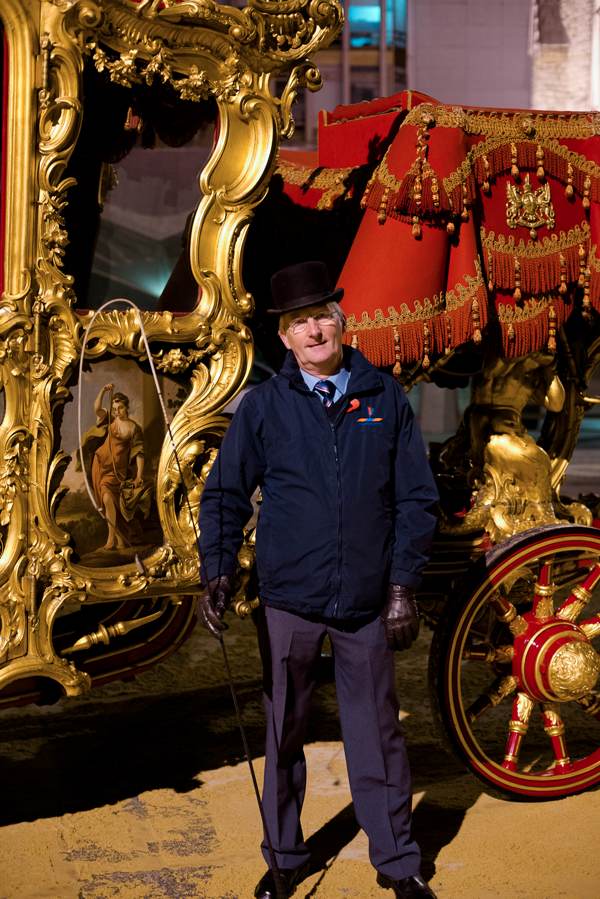
David Scott, Coach Doorman since 2007
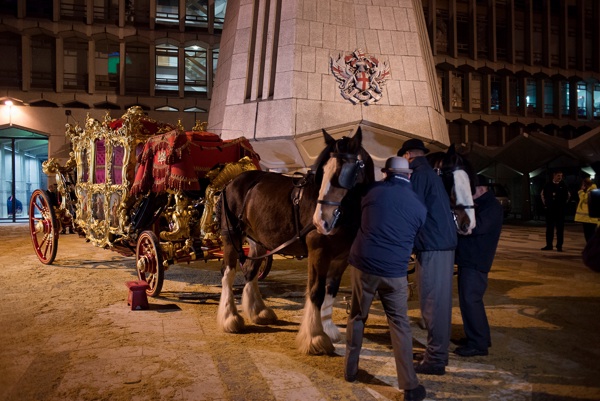
Harnessing the dray horses
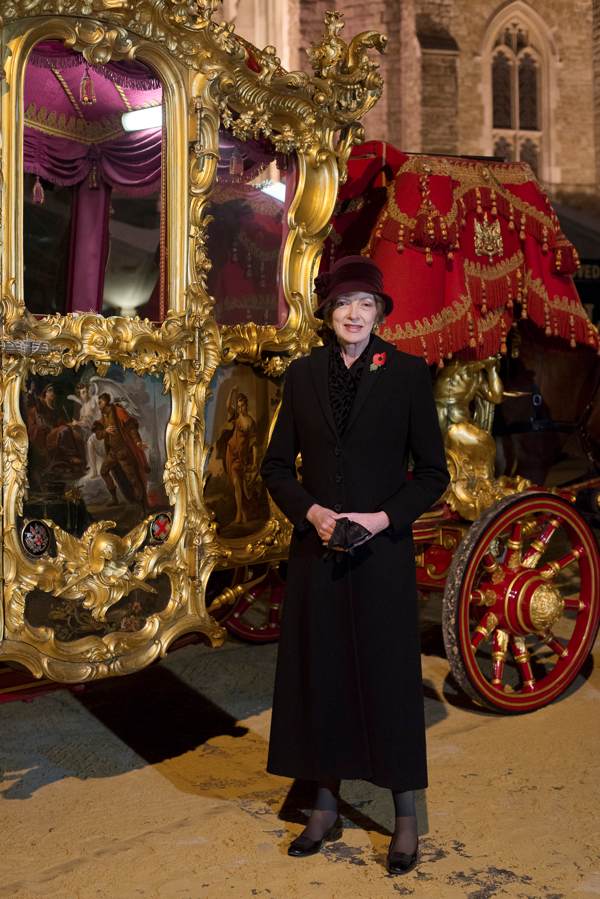
Fiona Woolf, Lord Mayor Elect – the second female in eight hundred years
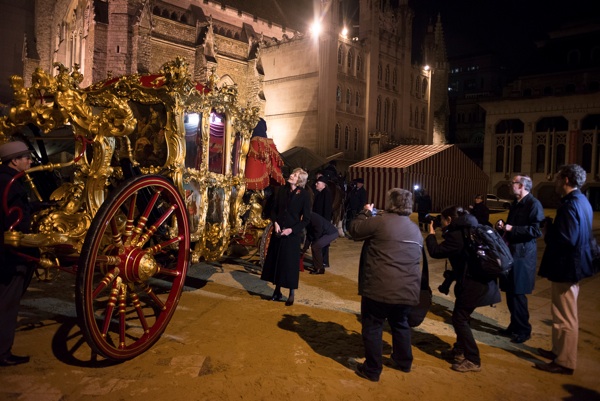
Press photographers and the Lord Mayor Elect
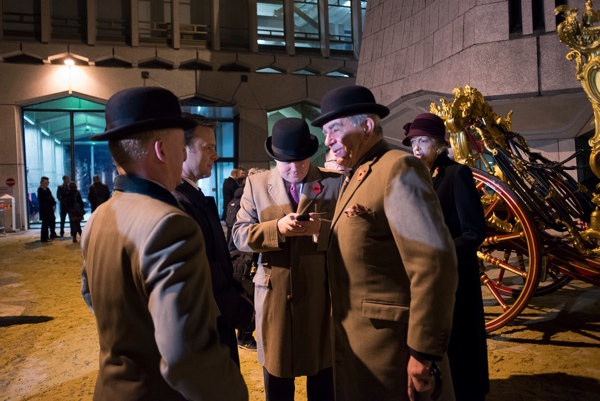
Men in bowler hats make plans
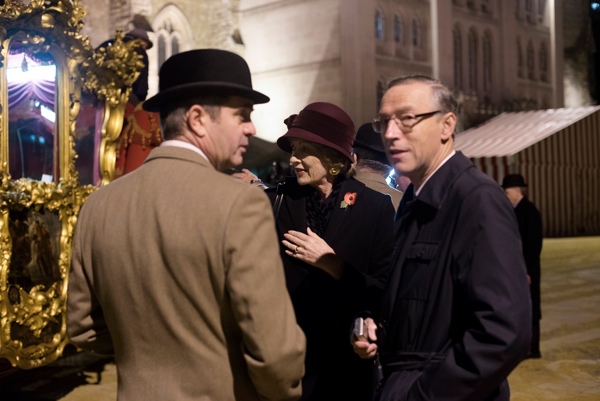
Pageantmaster confers with Lord Mayor Elect and Lord Mayor Elect’s husband, Nicholas Woolf
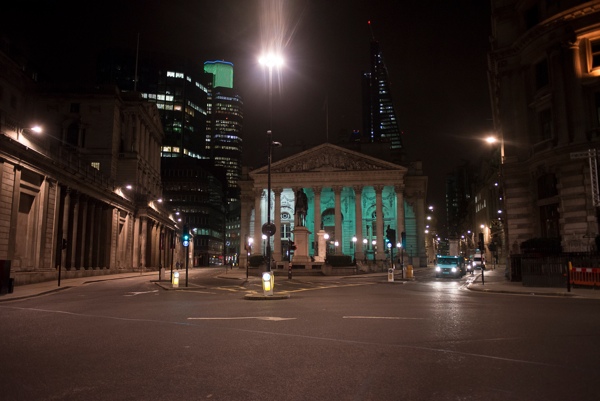
Empty streets at the Bank awaiting the procession
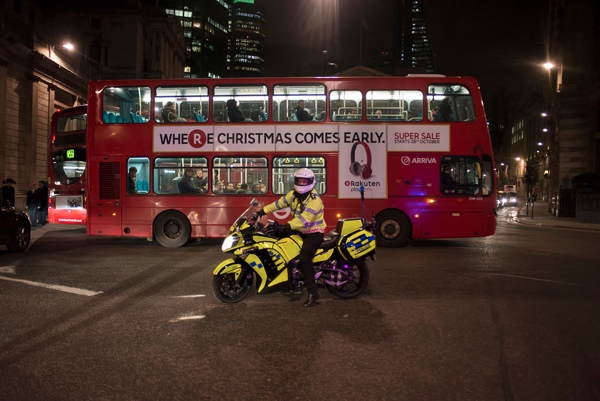
Police rider halts the traffic
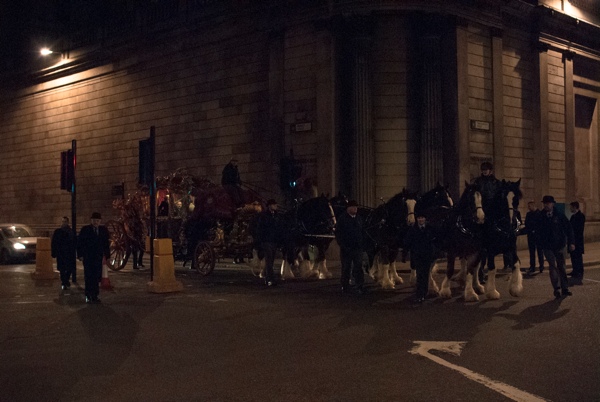
The coach passes the Bank of England
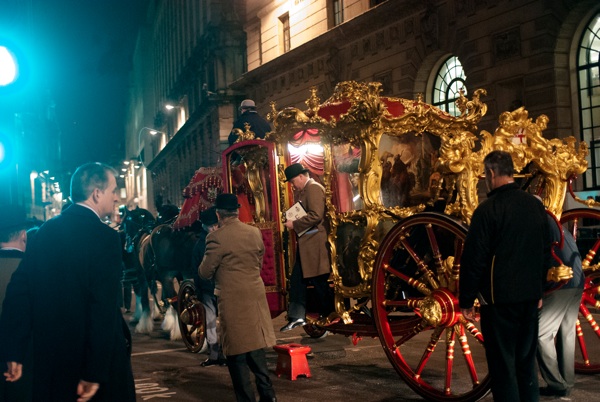
Descending at the Mansion House
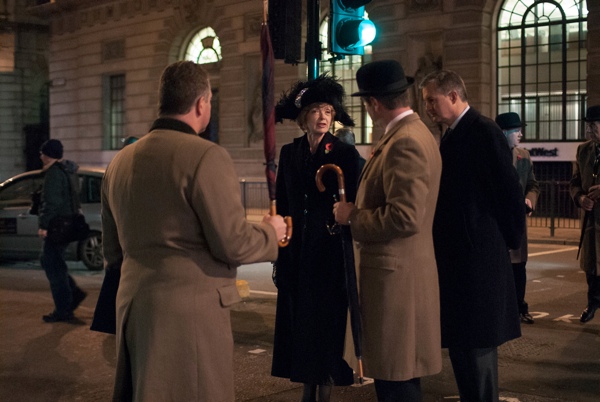
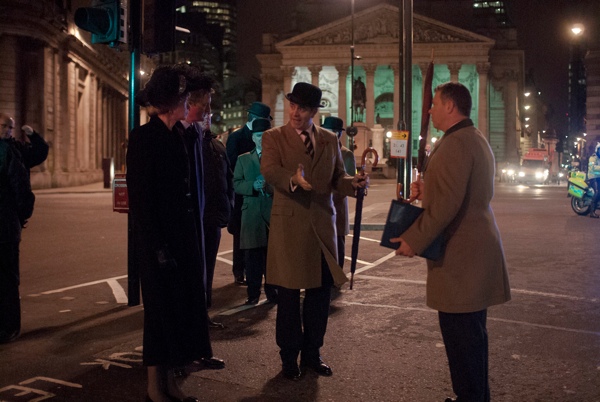
Pageantmaster explains what is required of the Lord Mayor
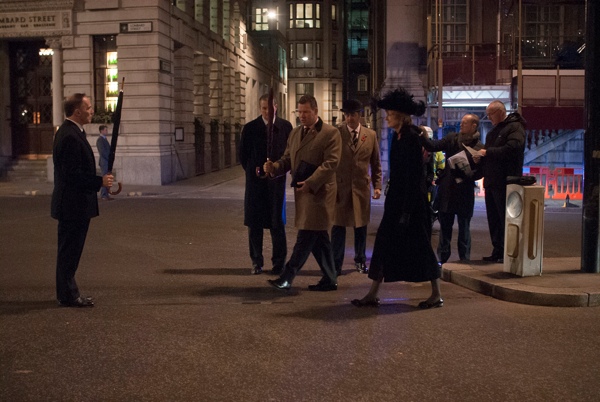
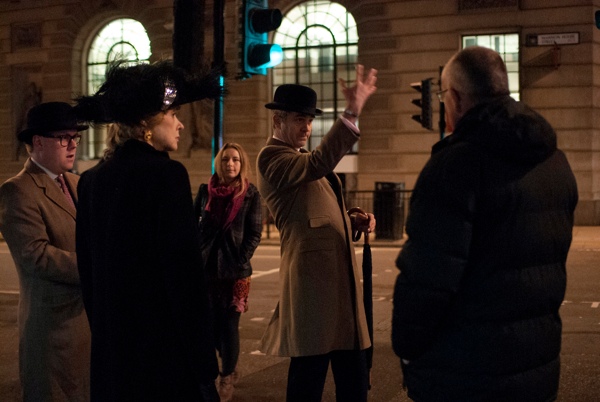
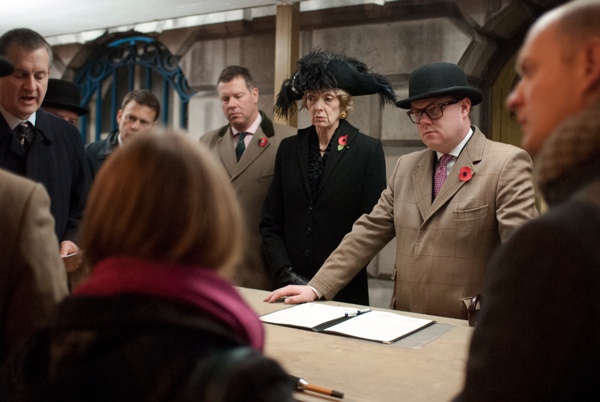
Waiting to practise signing the treaty with the Armed Forces outside the Mansion House
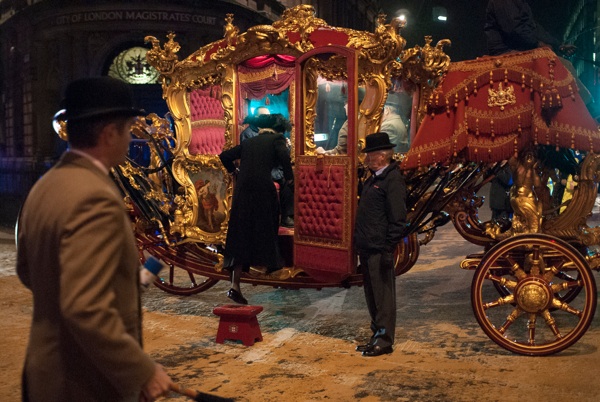
Practising climbing into the carriage
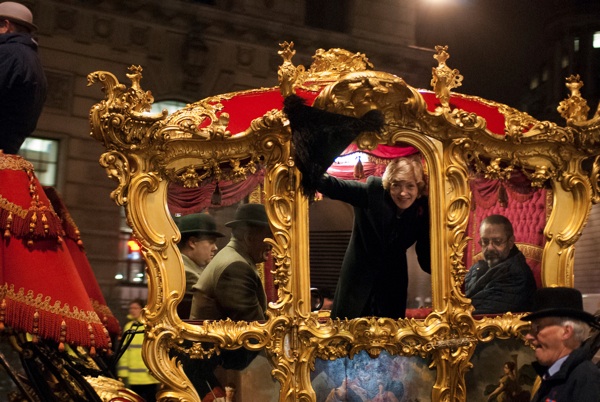
Practising waving
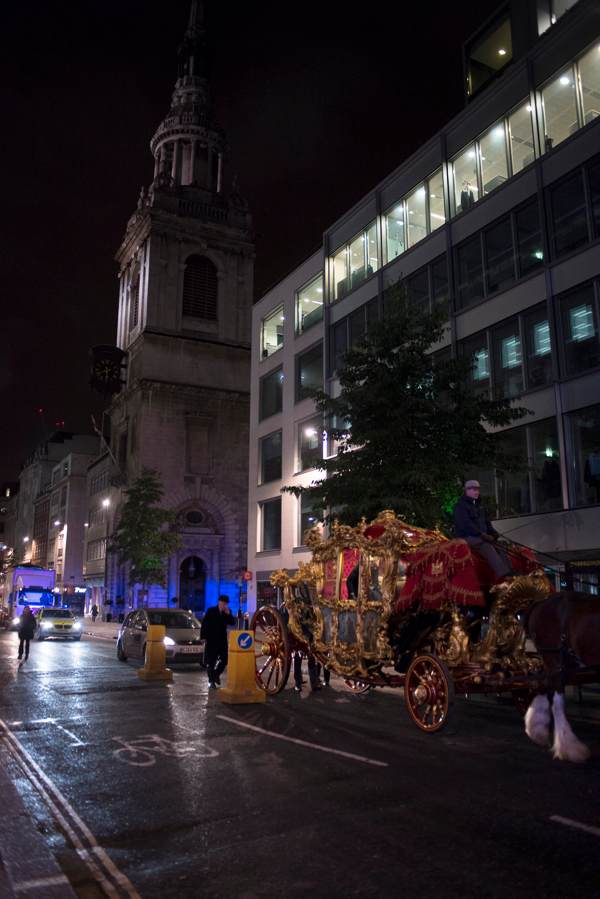
The coach approaches up Cheapside past St Mary-Le-Bow
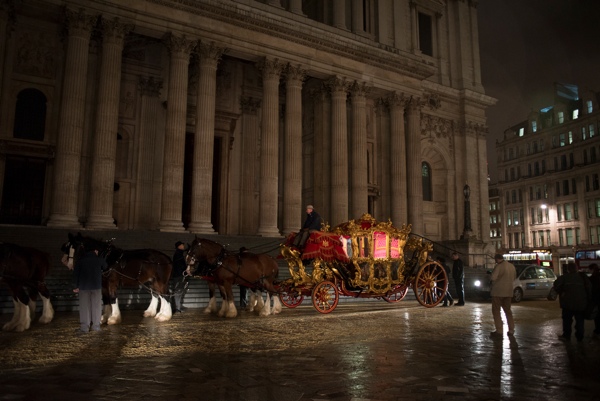
Arrival at St Paul’s
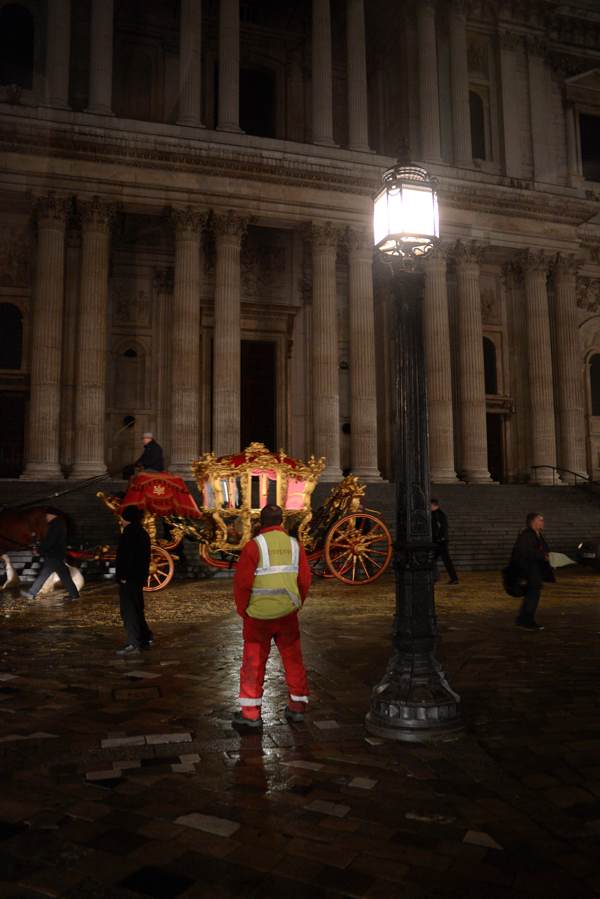
“Beneath the overhanging frontage, lowering in the gloom now the flood-lights were off, the golden carriage glowed mysteriously”
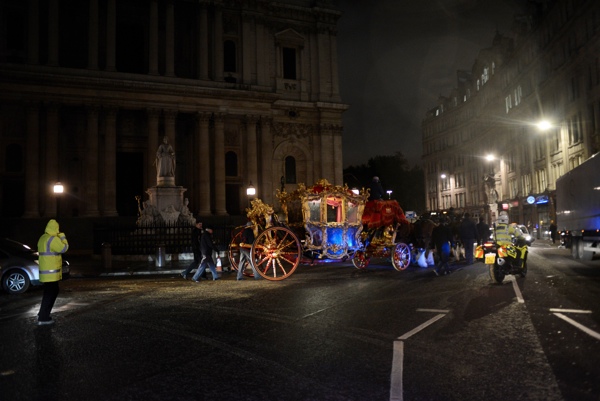
“as if it were an apparition materialised from the ether”
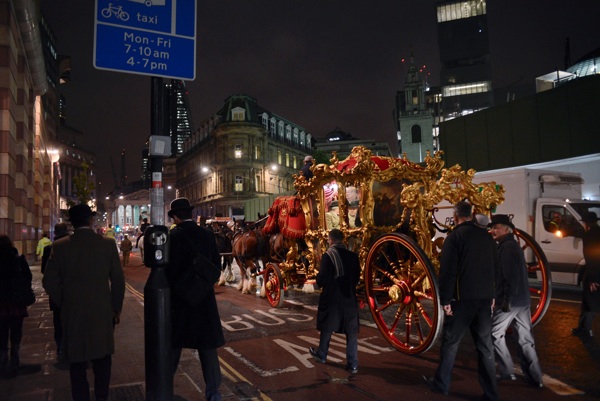
Returning home
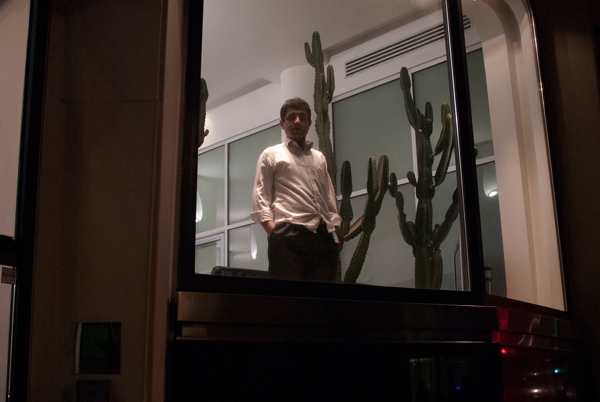
Night shift office worker gets a surprise
Photographs copyright © Sarah Ainslie
The Lord Mayor’s Show is tomorrow, Saturday 9th November, commencing at 11am
The Gentle Author’s Next Dead Pubs Crawl
Celebrating yesterday’s glorious announcement by the Geffrye Museum that – in response to the public outcry generated by readers of Spitalfields Life – they are planning to restore The Marquis of Lansdowne, which has stood on the corner of Geffrye St since at least 1838, rather than seek to demolish it – I set out upon another of my dead pubs crawls, ranging beyond Spitalfields to record a few examples for which the future is less hopeful.
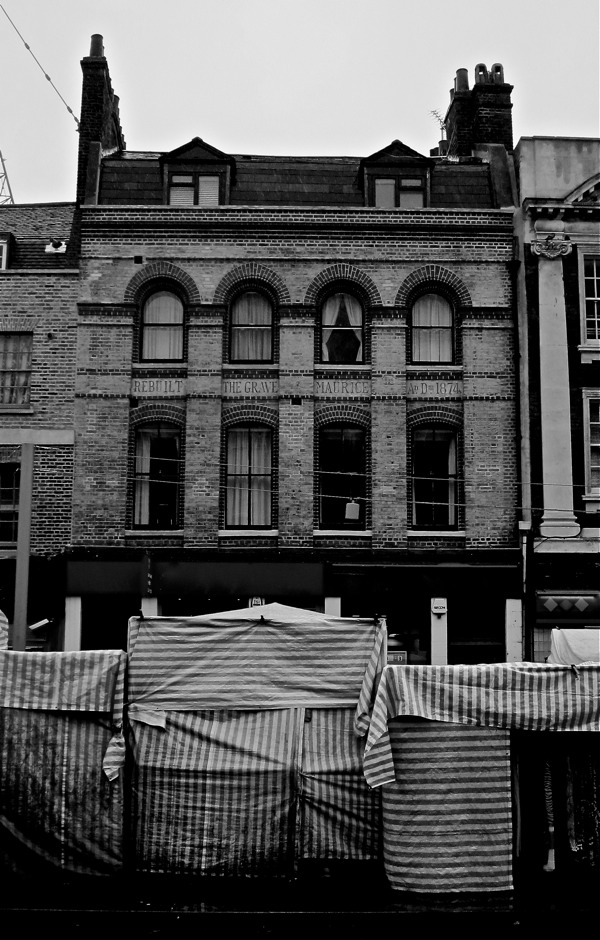
The Grave Maurice, Whitechapel Rd (1723-2010)
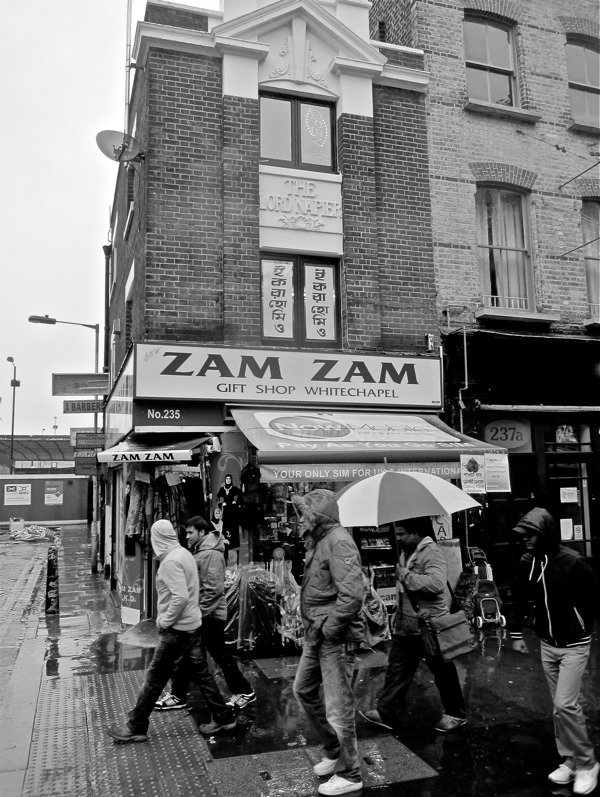
The Lord Napier, Whitechapel Rd (1878-1983)
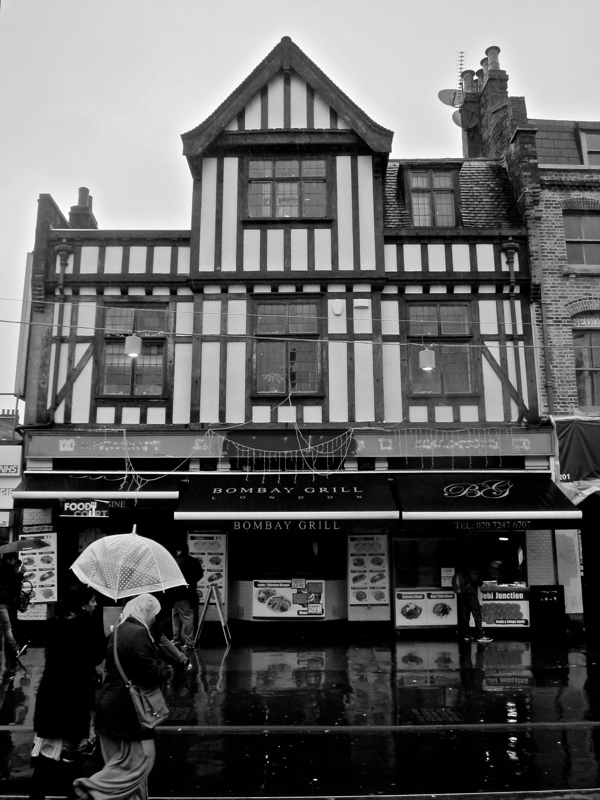
The Black Bull, Whitechapel Rd (1812-2006)
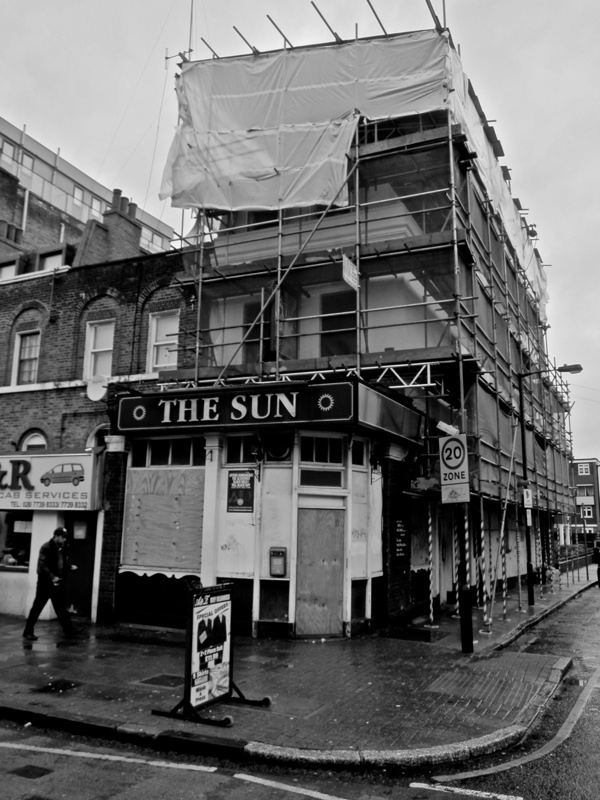
The Sun has set recently in the Bethnal Green Rd (1851-2013)
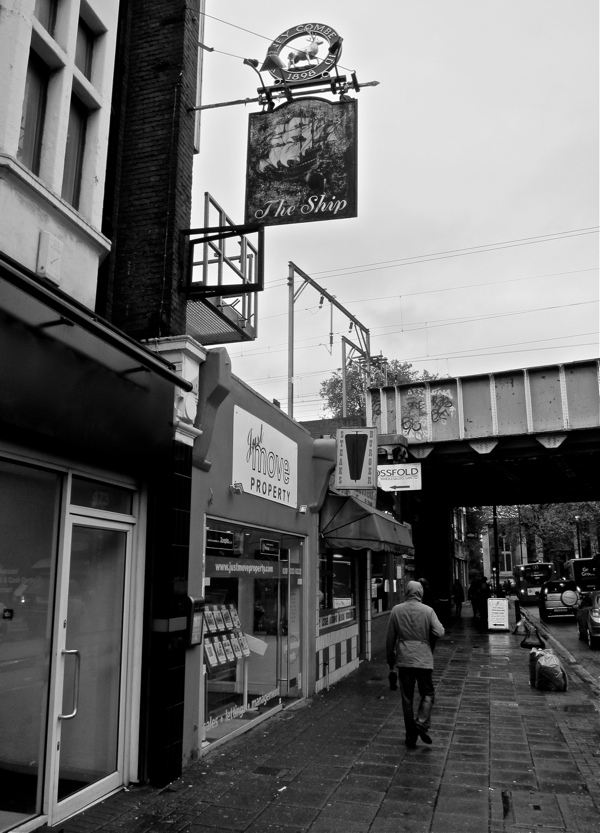
The Ship, Bethnal Green Rd (1856-2000)
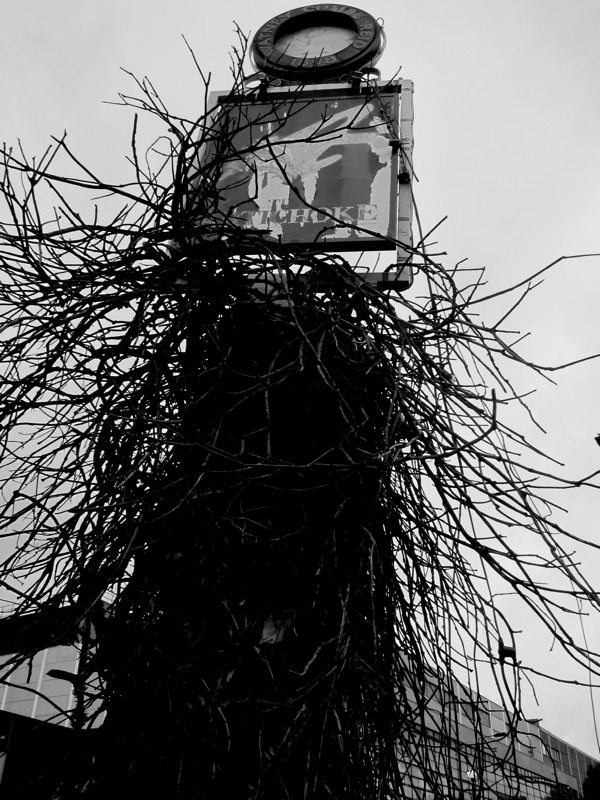
The Artichoke, Jubilee St (1847-2001)
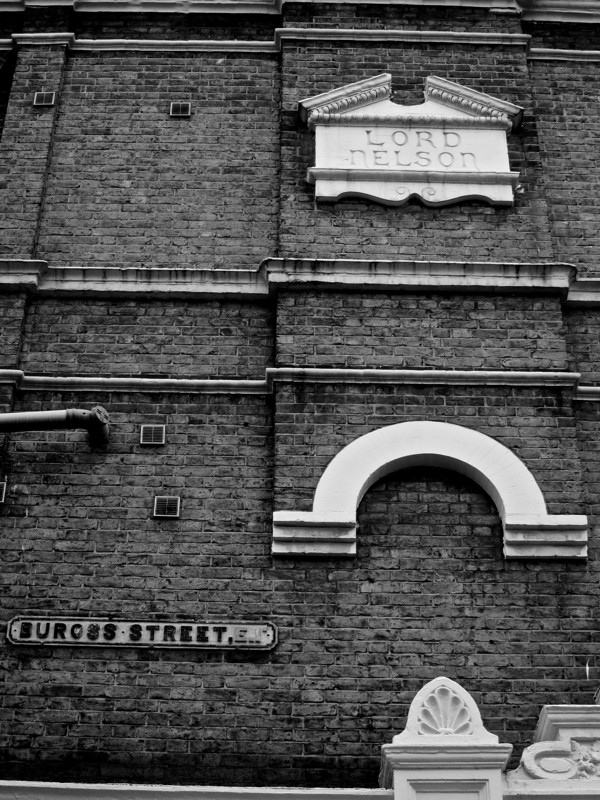 Lord Nelson, Buross St (1869-2005)
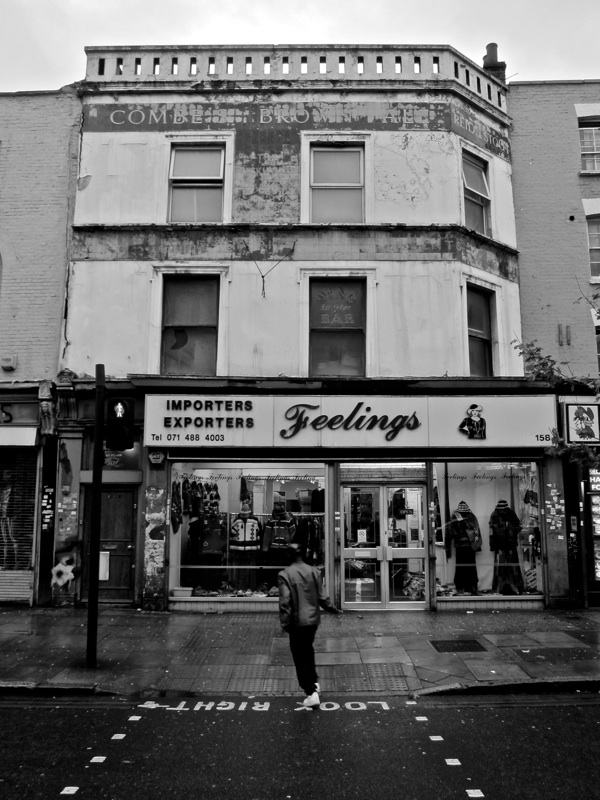
Mackworth Arms, Commercial Rd (1858-1984)
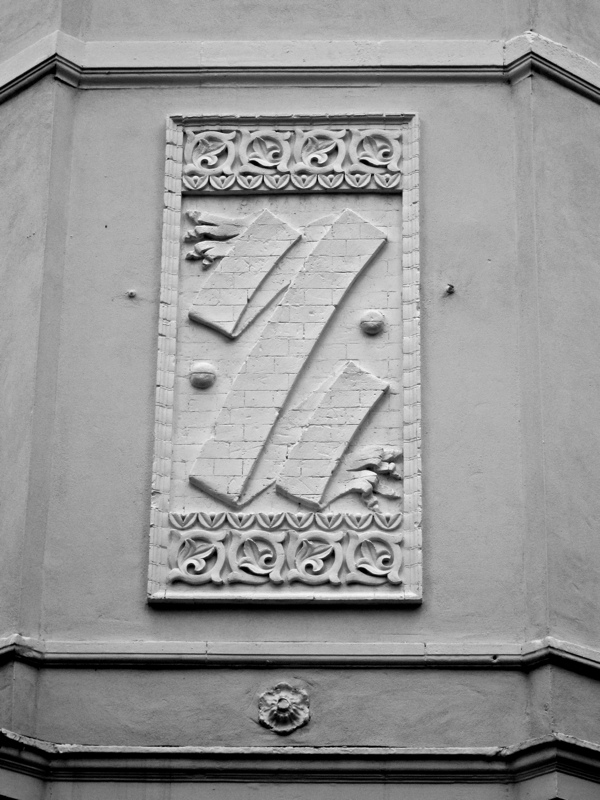
Kinder Arms, Little Turner St (1839-1904)
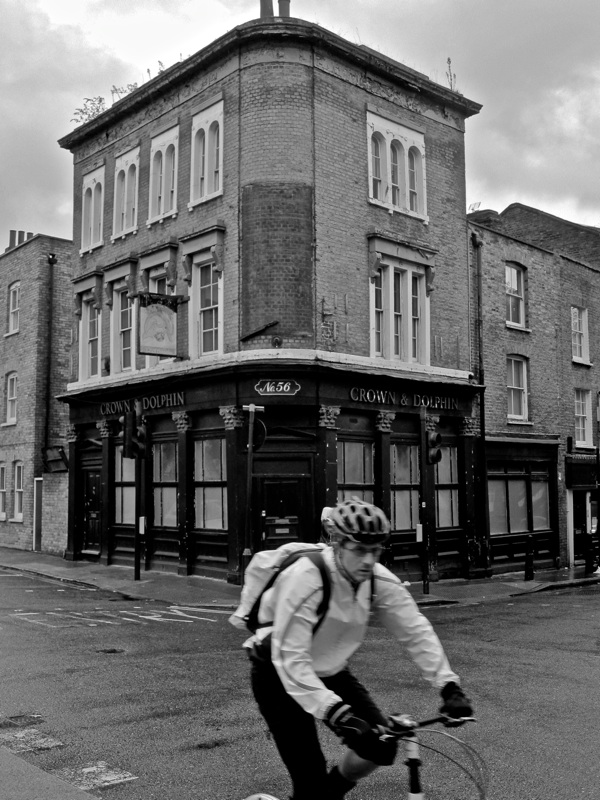
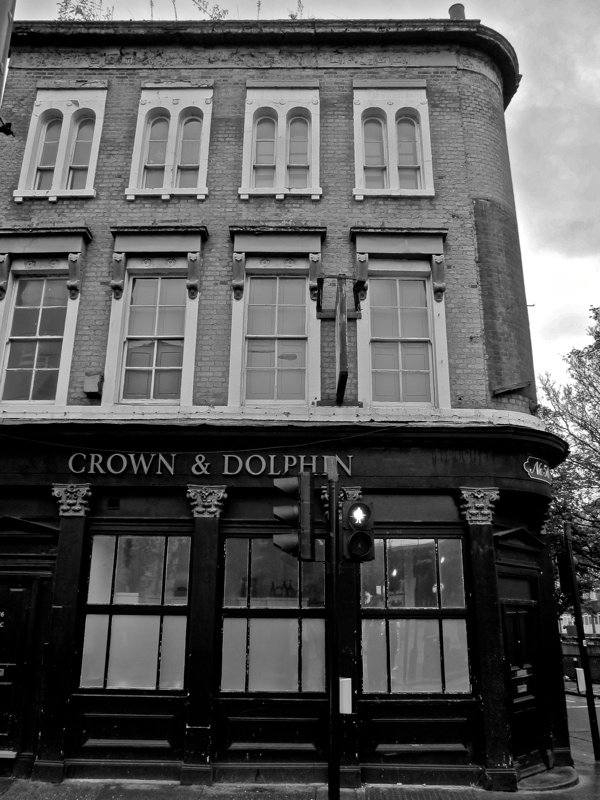
The Crown & Dolphin, Cannon St Row (1851-2002)
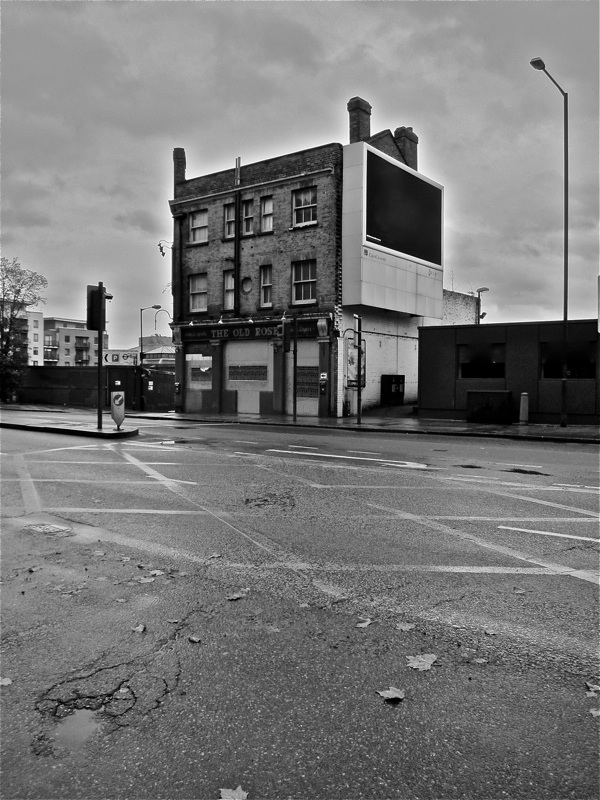
The Old Rose, The Highway (1839-2007)
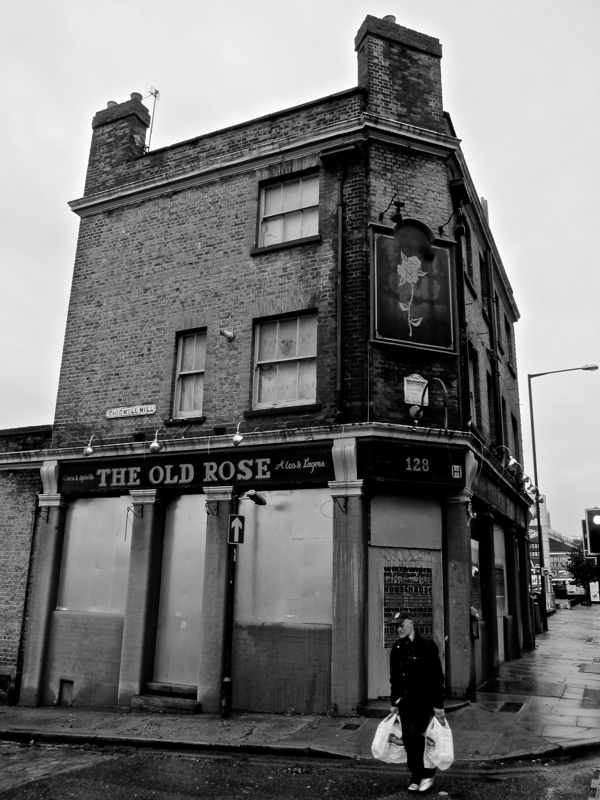
The Old Rose is the last fragment of the notorious Ratcliff Highway
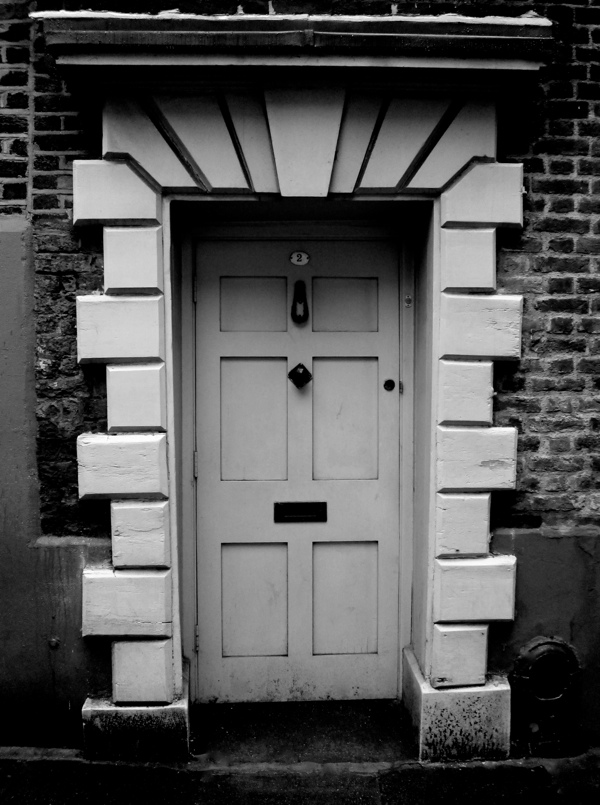
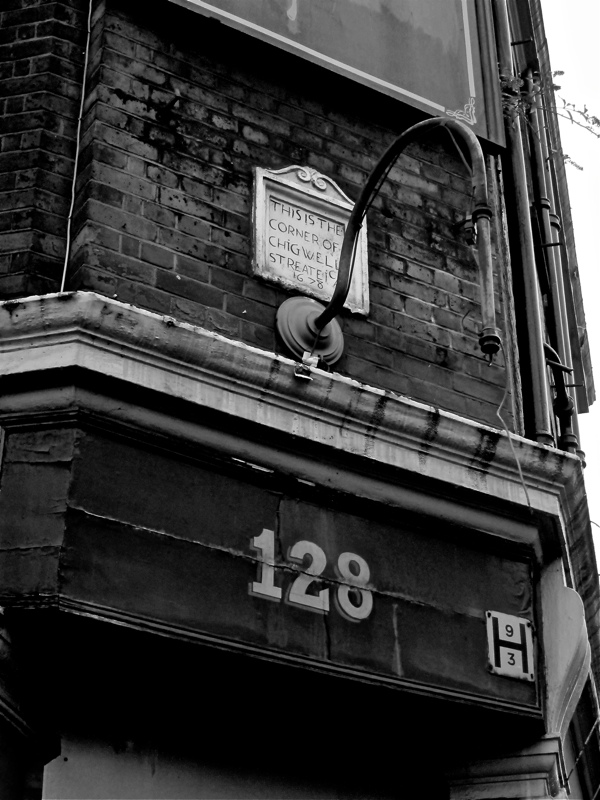
The Whitechapel Bell Foundry was a coaching inn called The Artichoke until 1738
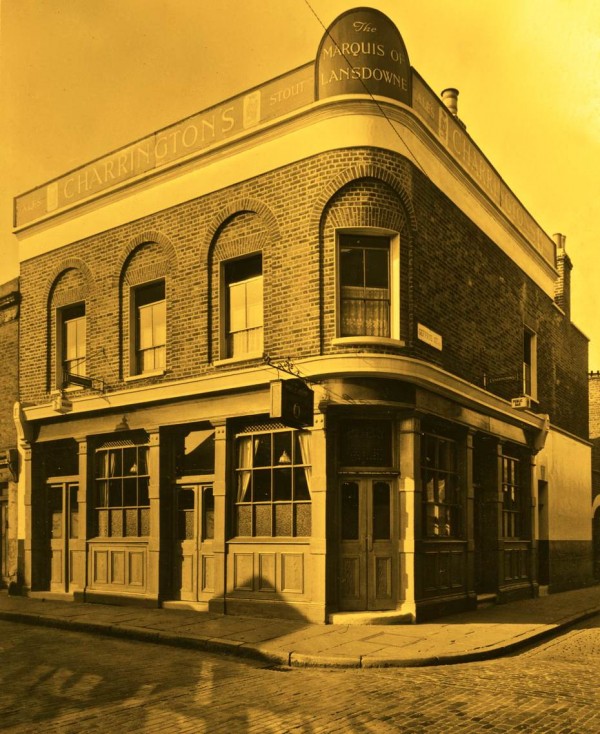
The Marquis of Lansdowne, in Cremer St since 1838 and now to be restored by the Geffrye Museum.
You may like to read about how The Marquis of Lansdowne was saved
The Pub That Was Saved By Irony
D-day for The Marquis of Lansdowne
or my other other pub crawls
The Gentle Author’s Next Pub Crawl
Joginder Singh, Shoe Maker
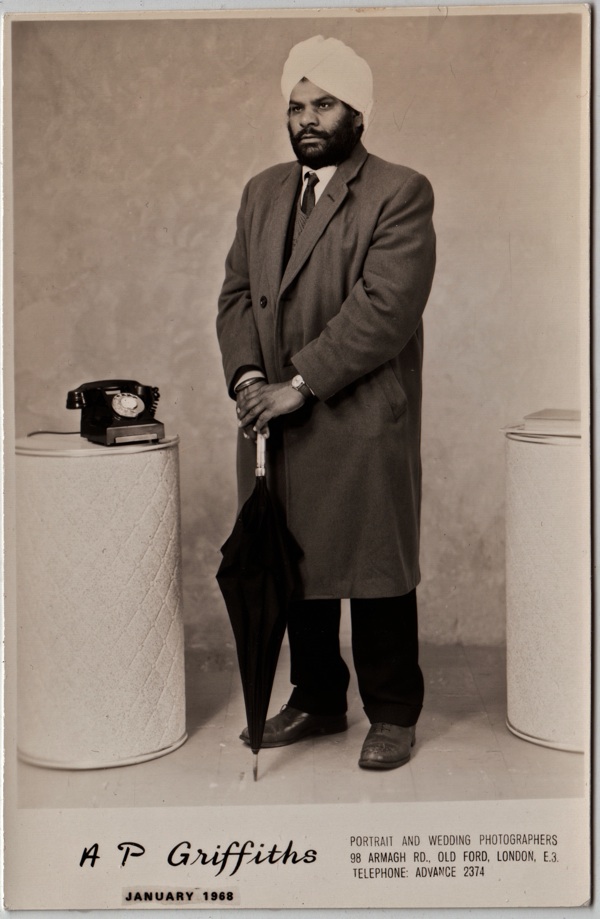
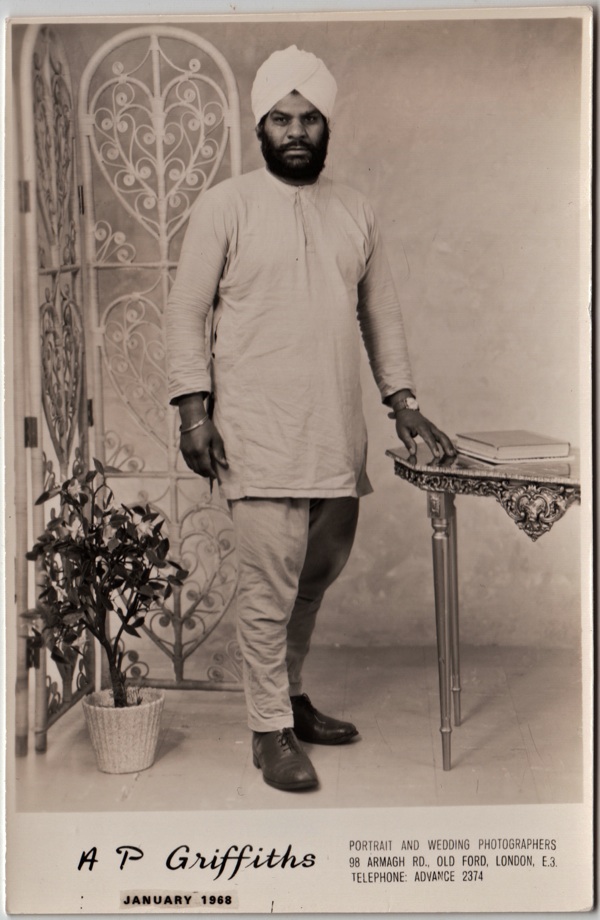
Observe these two handsome portraits of Joginder Singh taken in Bethnal Green in January 1968 and note his contrasted demeanour and clothing. In one, he wears western garb and is accompanied by the accoutrements of the modern business man, a telephone and an umbrella, while in the other he wears traditional clothing and is accompanied by a bamboo screen, a plant and a decorative table with a book. These pictures speak eloquently of the different worlds that Joginder inhabited simultaneously, as a Sikh living in Princelet St.
Nearly thirty years after Joginder’s death, his son Suresh spoke to me recently about his father’s life. In spite of the poor living conditions that his family endured in Princelet St and the racism he suffered, Suresh recalls the experience of growing up there affectionately and the family photographs which accompany this interview confirm his fond memories of a happy childhood in a crowded house in Spitalfields.
“My dad came to this country in 1949 from Nangal Kalan Hashiarpur in the Punjab. He came to Princelet St in Spitalfields and we’ve lived there ever since. He couldn’t read or write. He was a shoe shine at Liverpool St Station for twenty-one years and then he became labourer until he dropped dead in 1986 at fifty-six. My dad was tall and strong and, when they lined them all up in the village, it was decided he should be the one to go to Britain. They all said to dad, ‘Come on, let’s go!’ and he was one of the first over. All the men came first, so mum didn’t came over until 1952. My dad came by plane but she came by boat from Bombay and it took six months. She couldn’t read or write either.
My dad was a Pacificist, so he didn’t want to go in the army like my uncles who were in the Bombay Engineers. He was of the old school, he was influenced by the Naxolites, Trotskyites who came in to the Punjab from Communist China, and my dad used to hide them in the field. He didn’t like the religion or the materialism of Sikhism.
He was a shoe maker. He knew how to kill a cow, strip the hide, dry it and make shoes. He was of the lowest caste, an untouchable – because the cow was a sacred creature. He came to Spitalfields with just a satchel with shoe polish in it. When dad got here, he wore a turban and couldn’t get a job. So he went to a friend in Glasgow who said, ‘I’ll tell you how to get a job.’ He took off my dad’s turban and shaved his head, and my dad came straight back to Spitalfields and got a job at once.
My dad was not selfish, he was good to everybody. He brought lots of people over, nephews and cousins, and he’d pick people up in the street and bring them home. The Environment Health tried to close our house down because we had fifty people living in it. The Council said, ‘We’ll close this place, it’s full of bedbugs and fleas and you piss in a bucket. How can you live like this? It’s a slum.’ I was born in Mile End Hospital and I had TB at the age of ten because of the number of people that lived in our house. It’s a four storey house and, eventually, he bought it for two grand and I still live there today.
A lot of my friends at school were in the National Front but they thought I was OK because I spoke Cockney. In 1972, the National Front sold their newspapers in Brick Lane and, in 1977, when punk happened I became the first Pakistani Punk, so I attracted a lot of racist attention. I played drums for Spiz Energy on their single ‘Where’s Captain Kirk?’ that made it to number sixty in the Rough Trade vinyl chart. I was so bullied at Daneford School, I got a lot of ‘Paki-bashing’ abuse. I wasn’t terribly macho, I was a quiet boy who was interested in architecture and I went on to study it at University College London. Then I became a NEET (Not in Education, Employment or Training) and now I am principal of a school in Southwark that teaches NEETs.
Eddie Stride, Rector of Christ Church was my best mate. I remember Mary Whitehouse, Cliff Richard, Malcolm Muggeridge and Lord Longford all popping in to the Rectory at 2 Fournier St.
Other Sikhs moved out to Ilford, East Ham and Southall, but my father wanted to stay here in Spitalfields, he didn’t want to go. They said to him, ‘How can you live among Muslims and Jews?’ and he said, ‘At least they don’t gossip!’ I don’t know why my dad stayed in Spitalfields. He lived next to the synagogue and the church – Spitalfields was multicultural and I think that’s what he loved.
We still go to the Punjab every year, dad bought so much land over there, he lived in a slum here so he could send every penny back to buy fields and farms in the Punjab.”
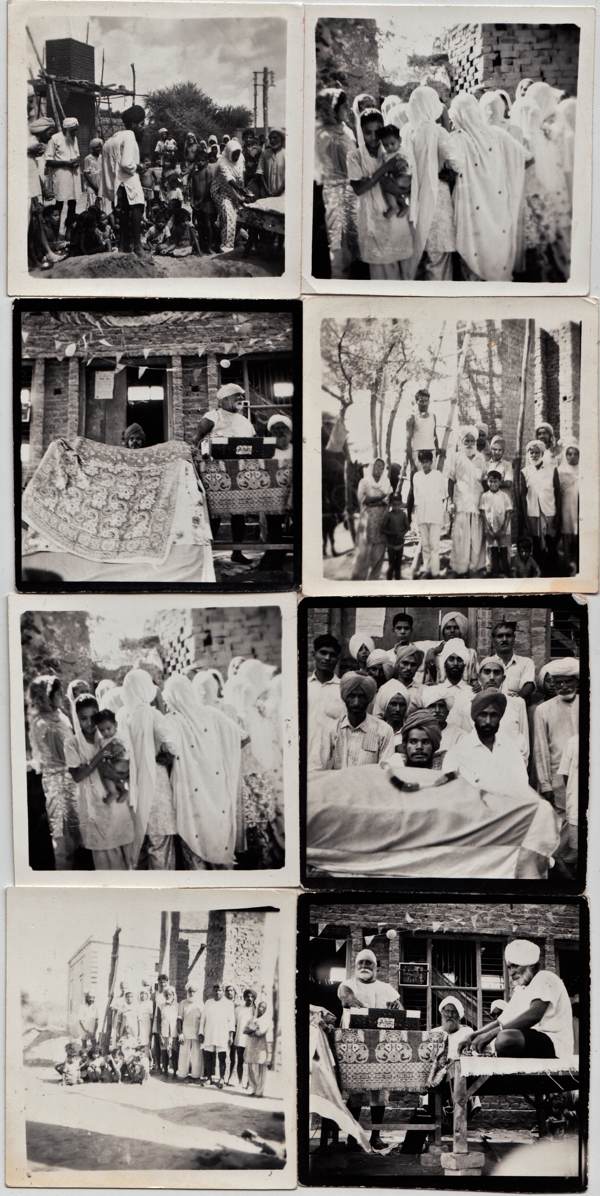
Joginder’s photographs of his trip home to the Punjab in 1972
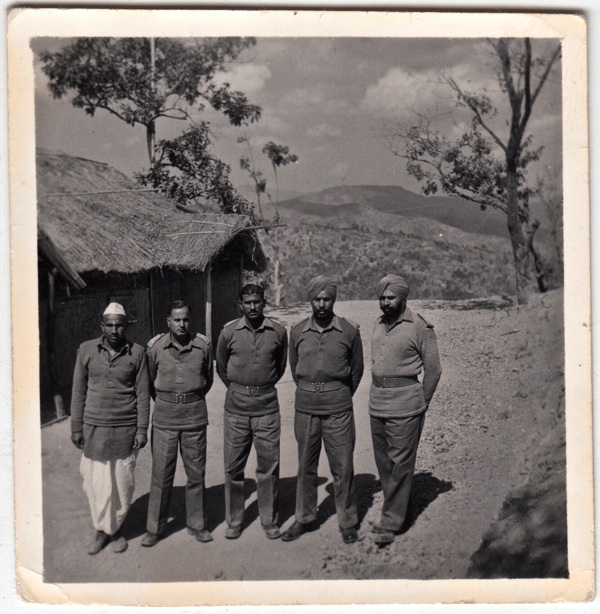
Joginder’s brothers were in the Bombay Engineers
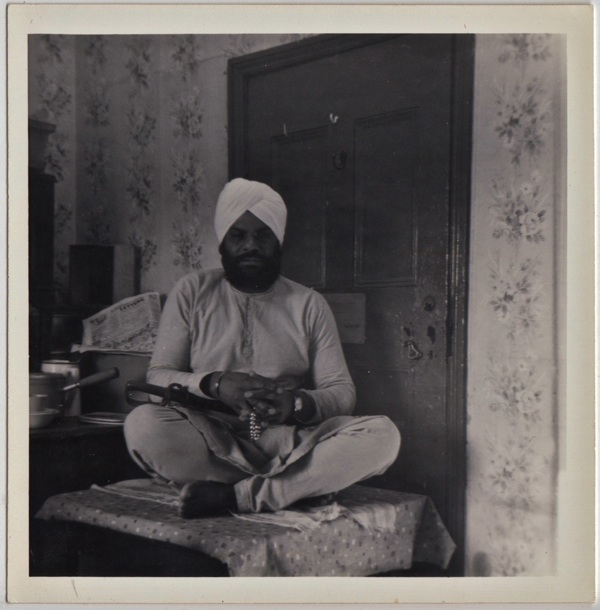
In Princelet St, 1972 – “Sometimes my father got the urge to dress up and be a Sikh”
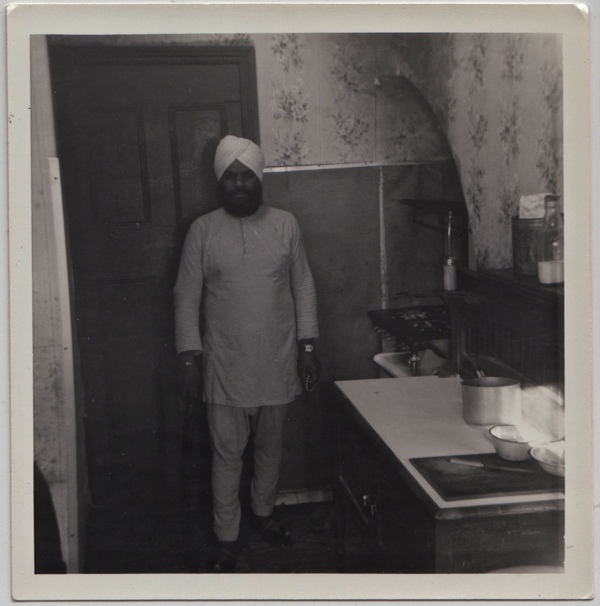
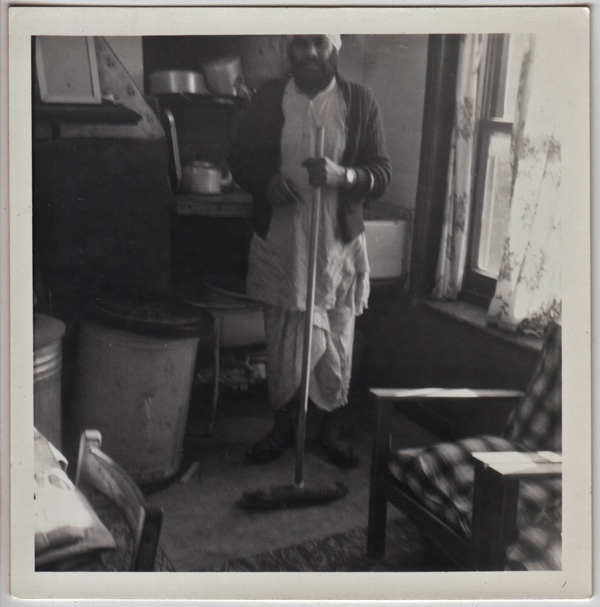
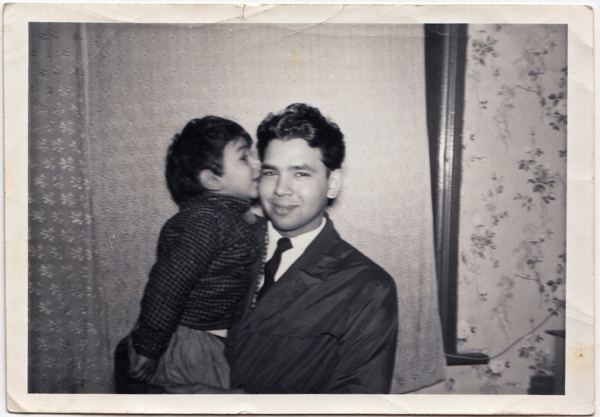
Suresh and his cousin Sarwan Singh, 1968
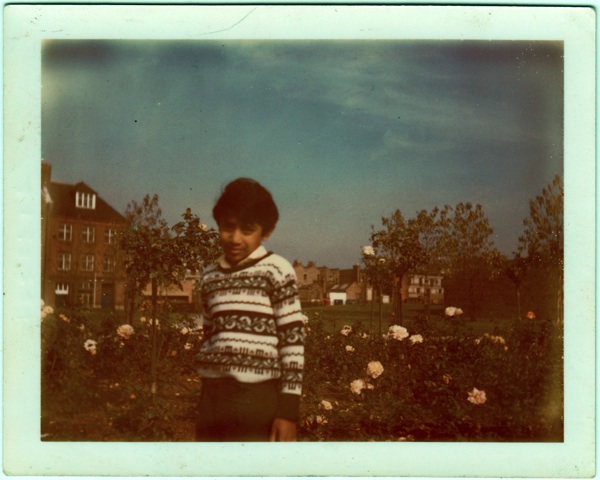
Suresh, 1972
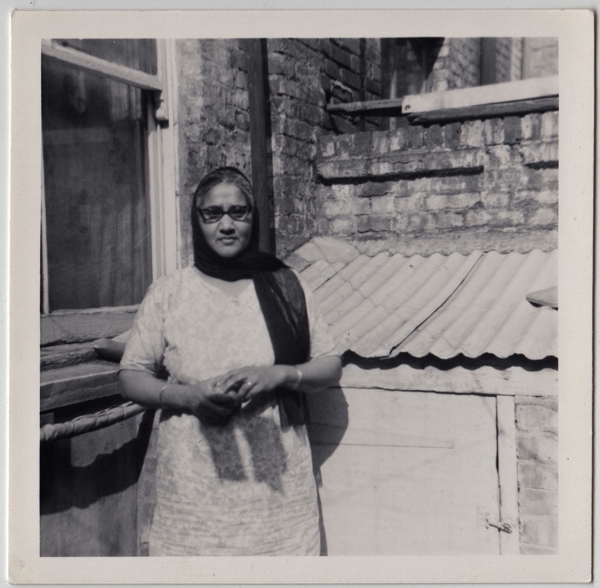
Chinnee Kaulder
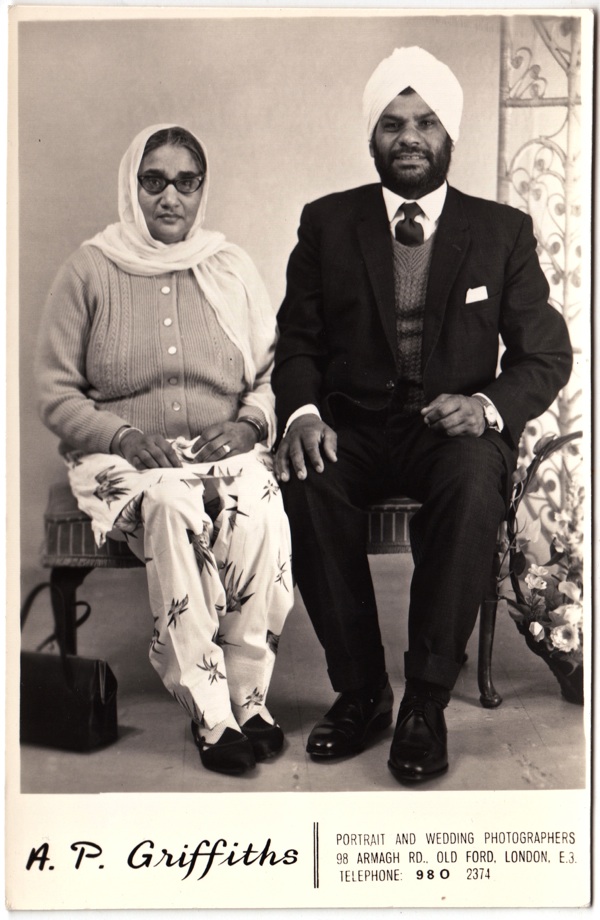
Chinnee Kaulder & Joginder Singh, 1968
Pomegranates At Leila’s Shop
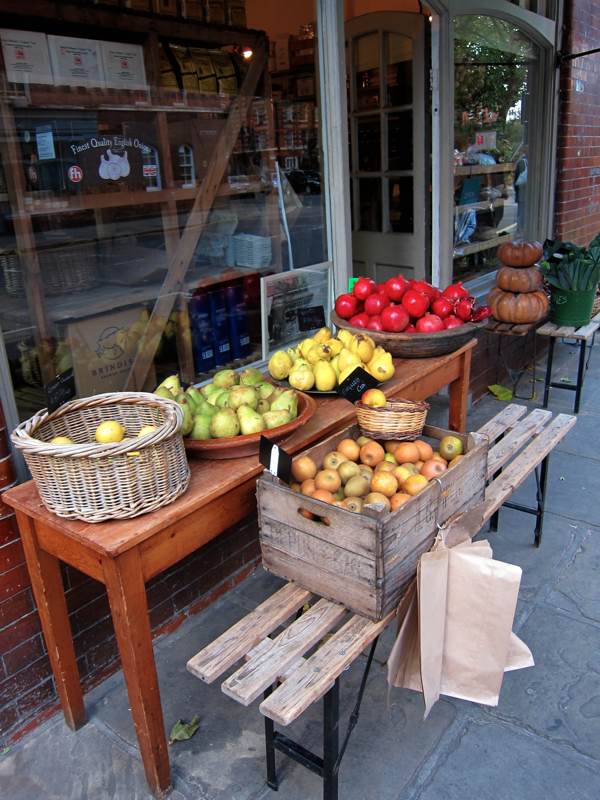
Now is the season for pomegranates. All over the East End, I have spotted them gleaming in enticing piles upon barrows and Leila’s Shop in Calvert Avenue has a particularly magnificent display of glossy red Spanish ones. Only a few years ago, these fruit were unfamiliar in this country and I do remember the first time I bought a pomegranate and set it on a shelf, just to admire it.
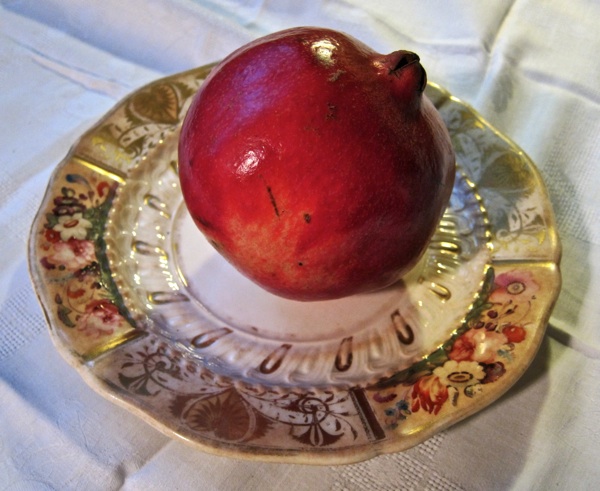
My father used to tell me that you could eat a pomegranate with a pin, which was an entirely mysterious notion. Yet it was not of any consequence, because I did not intend to eat my pomegranate but simply enjoy its intriguing architectural form, reminiscent of a mosque or the onion dome of an orthodox church and topped with a crown as a flourish. This was an exotic fruit that evoked another world, ancient and far away.
As months passed, my pomegranate upon the shelf would dry out and wither, becoming hard and leathery as it shrank and shrivelled like the carcass of a dead creature. A couple of times, I even ventured eating one when my rations were getting low and I was hungry for novelty. It was always a disappointing experience, tearing at the skin haphazardly and struggling to separate the fruit from the pithy fibre. Eventually, I stopped buying pomegranates, content to admire them from afar and satiate my appetite for autumn fruit by munching my way through crates of apples.
Then, last year, Leila McAlister showed me the traditional method to cut and eat a pomegranate – and thus a shameful gap in my education was filled, bringing these alluring fruit to fore of my consciousness again. It is a simple yet ingenious technique of three steps. First, you cut a circle through the skin around the top of the fruit and lever it off. This reveals the lines that naturally divide the inner fruit into segments, like those of an orange. Secondly, you make between four and eight vertical cuts following these lines. Thirdly, you prise the fruit open, like some magic box or ornate medieval casket, to reveal the glistening trove of rubies inside, attached to segments radiating like the rays of a star.
Once this simple exercise is achieved, it is easy to remove the yellow pith and eat the tangy fruit that is appealingly sharp and sweet at the same time, with a compelling strong aftertaste. All these years, I admired the architecture of pomegranates without fully appreciating the beauty of the structure that is within. Looking at the pomegranate displayed thus, I can imagine how you might choose to eat it one jewel at a time with a pin. It made me wonder where my father should have acquired this curious idea about a fruit which was rare in this country in his time and then I recalled that he had spent World War II in the Middle East as a youthful recruit, sent there from Devon at the age of nineteen.
Looking at the fruit opened, I realised I was seeing something he had seen on his travels so many years ago and now, more than ten years after he died, I was seeing it for the first time. How magical this fruit must have seemed to him when he was so young and far away from home for the first time. They call the pomegranate ‘the fruit of the dead’ and, in Greek mythology, Persephone was condemned to the underworld because of the pomegranate seeds that she ate yet, paradoxically, it was the fabled pomegranate which brought my youthful father back to me when he had almost slipped from my mind.
Now, thanks to this elegant method, I can enjoy pomegranates each year at this time and think of him.


“its intriguing architectural form, reminiscent of a mosque or the onion dome of an orthodox church and topped with a crown as a flourish”

First slice off the top, by running a sharp knife around the fruit, cutting through the skin and then levering off the lid.

Secondly, make radiating vertical cuts through the skin following the divisions visible within the fruit – between four and eight cuts.
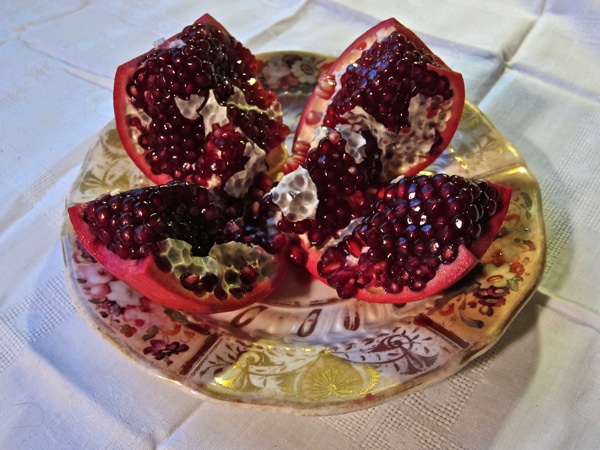
Thirdly, split open the pomegranate to create a shape like a flower and peel away the pith.
[youtube JLUCSi4jRew nolink]
Leila’s Shop, 15-17 Calvert Avenue, London E2 7JP
You may also like to read my other stories about Leila’s Shop
Vegetable Bags from Leila’s Shop
Barn the Spoon at Leila’s Shop












