
So Long, Polly Hope
Polly Hope, long-term resident of Heneage St, died last week and I am republishing my profile of her today as a tribute to a spirited woman who will be fondly remembered in Spitalfields.
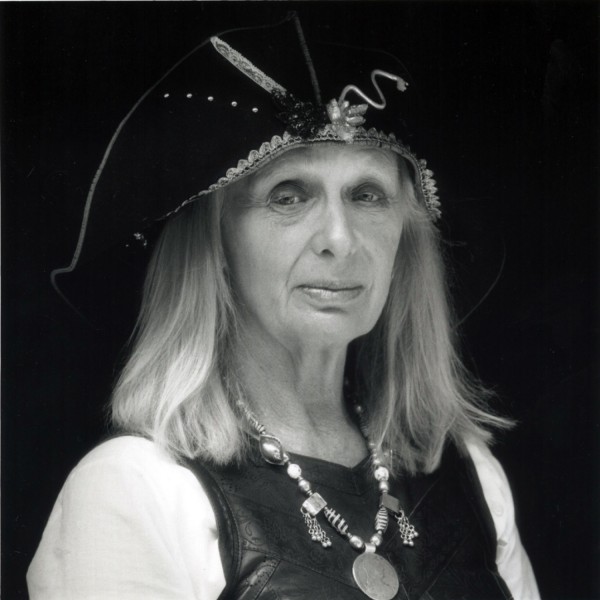
Polly Hope, 1933-2013
Polly Hope did not go out too much. And why should she, when she had her own dreamlike world to inhabit at the heart of Spitalfields? Stepping off Brick Lane, going through the tall gate, across the courtyard, past the hen house, through the studio, up the stairs and into the brewery – you would find Polly attended by the huge dogs and small cats, and a menagerie of other creatures that shared the complex of old buildings which had been her home for more than forty years.
Here, Polly had her sculpture workshop, her painting studio, her kiln, her print room, her library and her office. It went on and on. At every turn, there were myriad examples of Polly’s lifetime of boundless creativity – statues, paintings, quilts, ceramics and more. And, possessing extravagant flowing blonde hair and the statuesque physique of a dancer, Polly was a goddess to behold. One who knew who she was and what she thought, and one who did not suffer fools gladly.
So, while I was on my mettle when I visited Polly’s extraordinary dominion, equally I was intoxicated to be in the presence of one so wholly her own woman, capable of articulating all manner of surprising truths, and always speaking with unmediated candour from her rich experience of life.
“I don’t know where it comes from. My father was a general in the British Army with generations of soldiers behind him. There were no artists on the family, and I have never found any great grandmother’s tapestry or grandfather’s watercolours.
I went to Chelsea and the Slade, and hated it. They wanted to teach you how to express yourself, but I wanted to learn how to make things. So I went to live in a tiny village in Greece because it was cheap, and I supported myself and my family by writing novels under a pseudonym. That was where I discovered textiles because they still make quilts there, and I was looking for a way to make large works of art which I could transport in my car. So I used the quiltmaker to help with the sewing. Today there’s various wall hangings of mine in different places around the world.
My second husband, Theo Crosby, and I liked East London, and Mark Girouard – who was a friend – showed us this place and we bought it for tuppence ha-penny in the early seventies. At that point, the professional classes hadn’t realised Spitalfields was five minutes walk from the City, but we cottoned onto it. This was one of the little breweries put up in the eighteen forties to get the rookeries off gin and onto beer, and make a few pounds into the bargain. Brick Lane was not the area of play it is now, it was a working place then with drycleaners, ironmongers, chemists, all the usual High St shops – and I could buy everything I needed for my textiles.
I decided it was time to do some community work, so I got everyone involved. Even those who couldn’t sew for toffee apples counted sequins for me. I did all the design and oversaw the work. The plan was to make a series of tableaux to hang down either side of Christ Church but we only completed the first two – the Creation of the World and the Garden of Eden – and they hang in the crypt now. I’ve done a lot for churches, I was asked to design a reredos for St Augustine’s at Scaynes Hill, but when I saw it – it was a perfect Arts & Crafts church – I said, “What you need is a Byzantine mosaic,” and they said, ‘”Yes.” And it took six years – we offered to include people’s pets in the design in return for five hundred pounds donation and that paid for the materials.
I am jack of all trades, tapestry, embroidery, painting, ceramics, stained glass windows, illustration, graphics, pots, candlesticks and bronzes. My ambition is to be a small town artist, so if you need decorations for the street party, or an inn sign painted, or a wedding dress designed, I could do it. I can understand techniques easily. When I worked with craftsmen in Sri Lanka, or with Ikat weavers, I learnt not to go into the workshop and ask them to make what you want, instead you get them to show you their techniques and you find a way to work with that. Techniques that have been refined over hundreds of years fascinate me. I don’t see any line between craft and art, I think it’s a mistake that crept in during the nineteenth century – high art and low craft.
I’m a countrywoman and I grew up on a mountain in Wales where there were always animals around. Living here, I play Marie Antoinette with my pets which all have opera names. My step-daughter Dido even brought her geese once to stay for Christmas. I have a mixed bag of chickens which give me four or five eggs a day – one’s not pulling her weight at the moment but I don’t know which it is. When they grow old, they retire to my niece in Kent. She takes my geriatric ones. I used to have more lurchers but one died and went to the big dog in the sky, now I have a new poodle I got six months ago and a yorkie who always takes a siesta with the au pair, as well as two cats. And I always had parrots, but the last one died. I got the original one, Figaro, from the Club Row animal market. One day I found him dead at the bottom of his cage. I just like living with animals, always have done all my life. A house is not a home without creatures in it.”
Once we had emptied Polly’s teapot, we set out on a tour of the premises with a small procession of four legged creatures behind us. Polly showed me her merry-go-round horse from Jones Beach, and her hen house designed after the foundling Hospital in Florence, and her case of Staffordshire figures with some of her own slipped in among them, and the ceramic zodiac she made for Shakespeare’s Globe Theatre, complementing the building designed by her husband Theo Crosby. And then we came upon the portraits of Polly’s military ancestors in bearskins and plaid trousers, in images dating back into the nineteenth century, and then we opened the cupboard of postcards of her work, and then we pulled box files of photographs off the shelf to rummage.
We lost track of time as it grew dark outside, and I thought – if I created a private world as absorbing as Polly Hope’s, I do not think I would ever go out either.
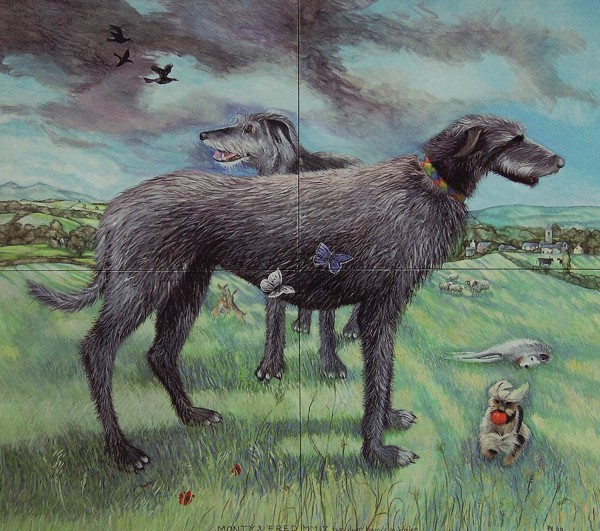
Monty & Fred, deer hound brothers, 2009.
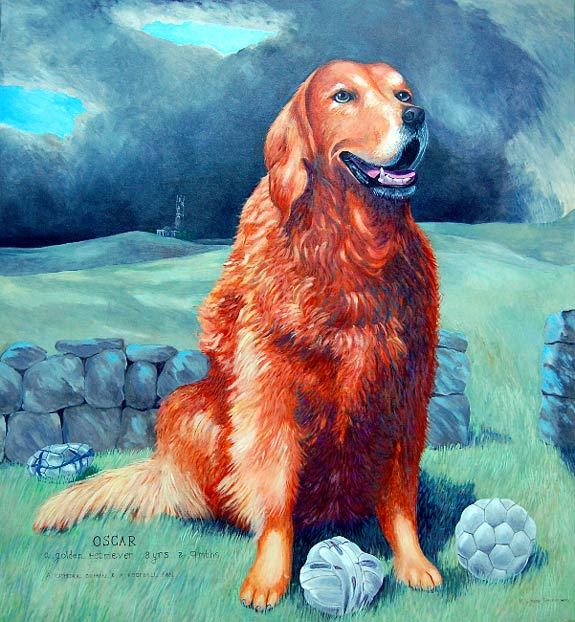
Oscar, golden retriever.
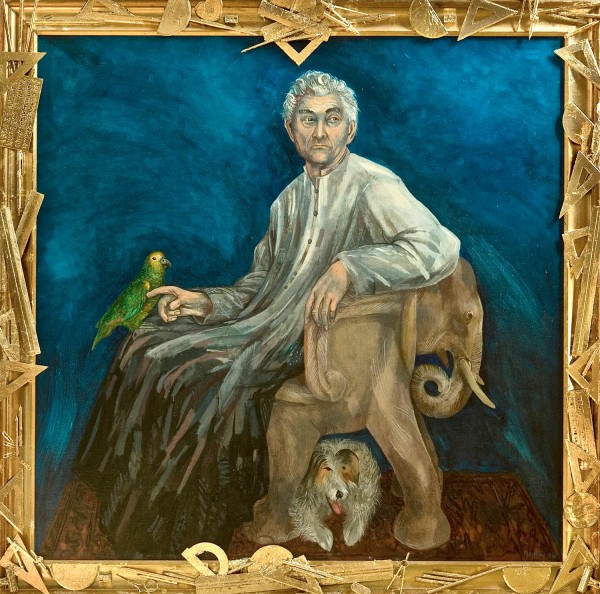
Portrait of Theo Crosby, with one of the Club Row parrots and a lurcher.
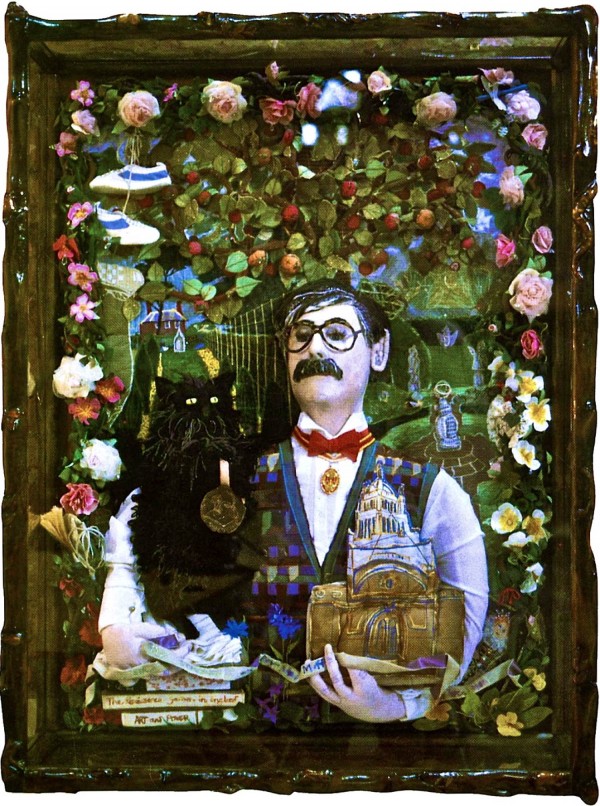
Portrait of Roy Strong and his cat.
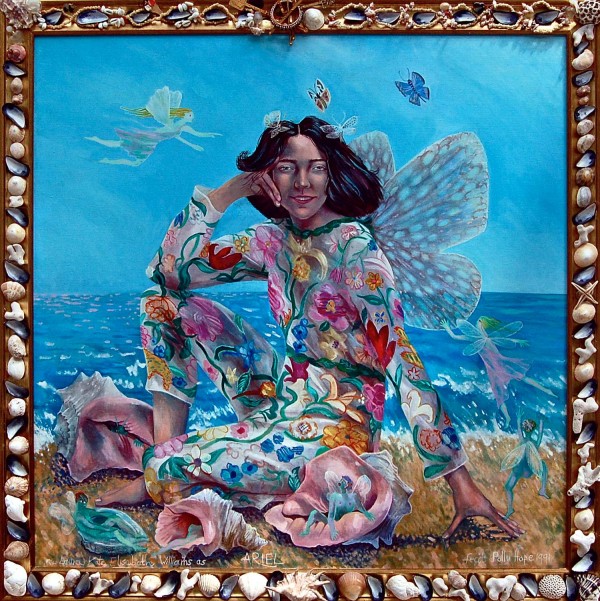
Portrait of Laura Williams depicted as Ariel.
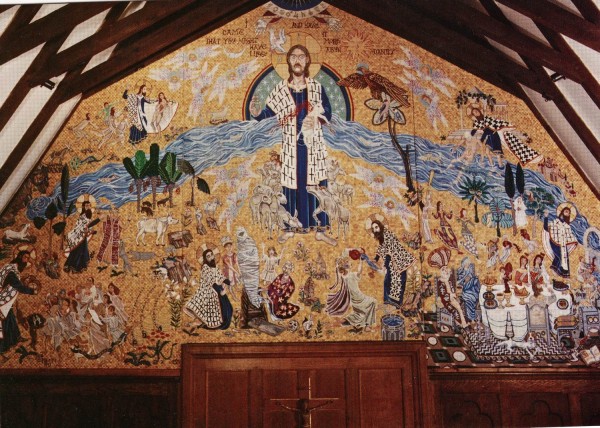
Wall hanging at St Augustine’s, Scaynes Hill, West Sussex.
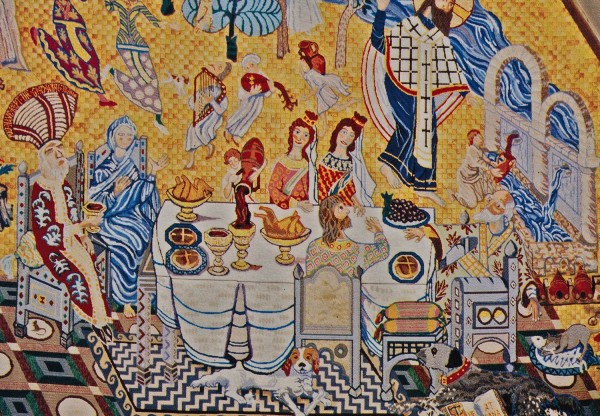
The Marriage at Canaa.
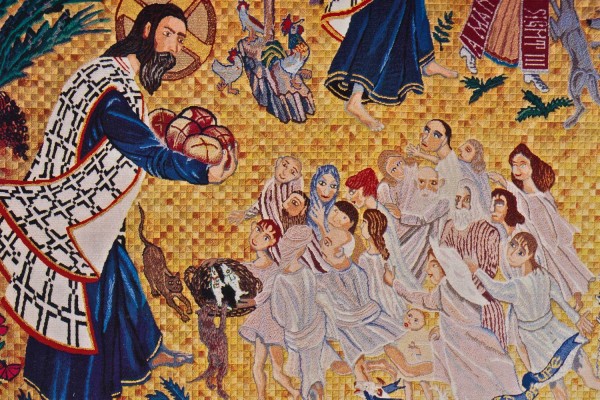
The Feeding of the Five Thousand.
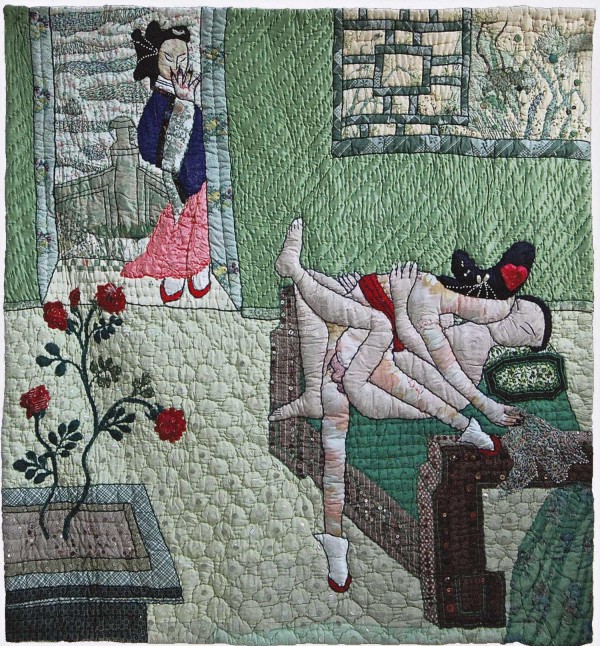
The Red Flower, applique and quilting.
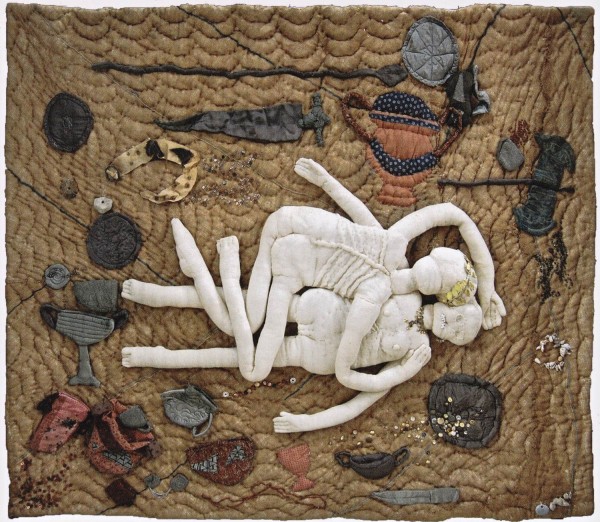
Archaeological Dig, applique and quilting.
Portrait of Polly Hope copyright © Lucinda Douglas Menzies
Artworks copyright © Polly Hope
The New & Old East London Groups
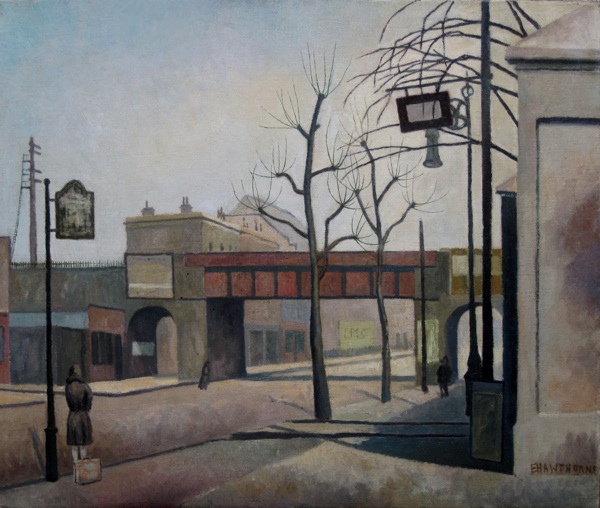
Bow Rd by Elwin Hawthorne, 1931

Bow Rd by Christine Hawthorne, 2013
Last year, The East London Group – one of major artistic movements to come out of the East End in the last century – was recovered from obscurity by David Buckman in his important book From Bow To Biennale – Artists of The East London Group. Next week, paintings by members of The East London Group are to be hung on public display in the East End for the first time in over a generation as part of an exhibition at Town House in Spitalfields that opens on Thursday 28th November. In the show, living artists exploring the urban environment today – Anthony Eyton, Peta Bridle, Nicholas Borden, Marc Gooderham, Sebastian Harding and Joanna Moore – are exhibited alongside the work of their predecessors as a tribute to the original East End London Group.
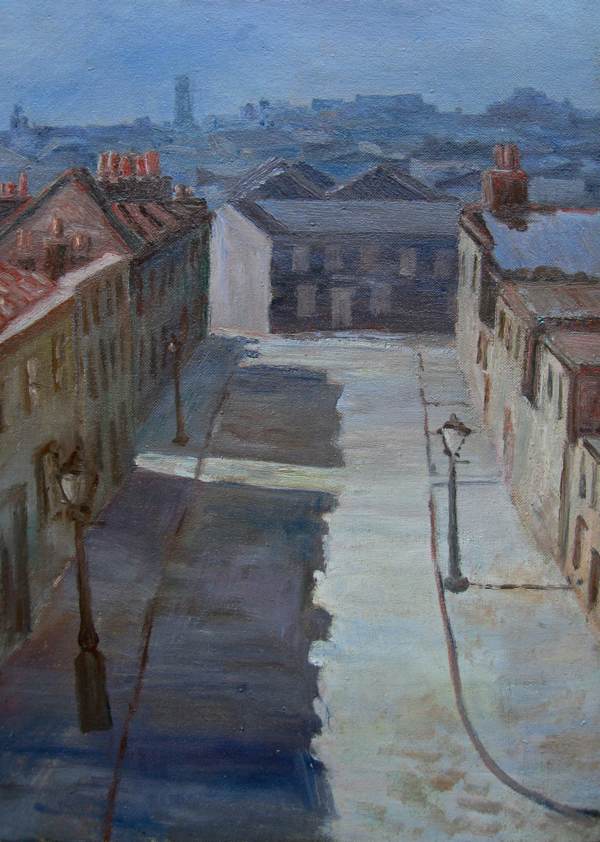
North East Bethnal Green by George Board, c. 1930
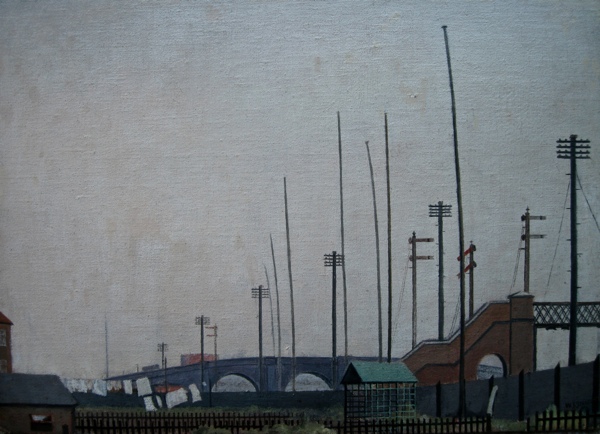
Railway Fence by Walter Steggles, c.1930
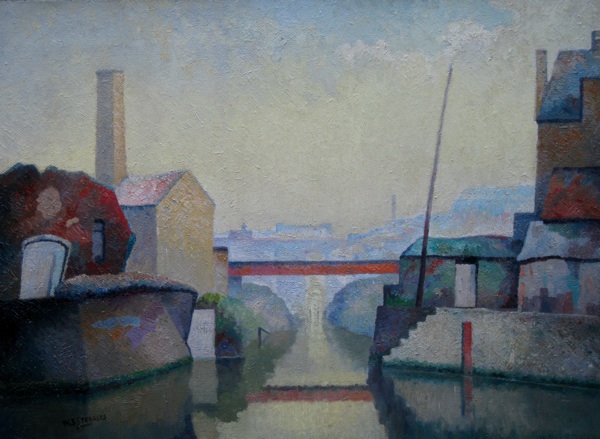
Bridge at Stratford by Walter Steggles, 1938
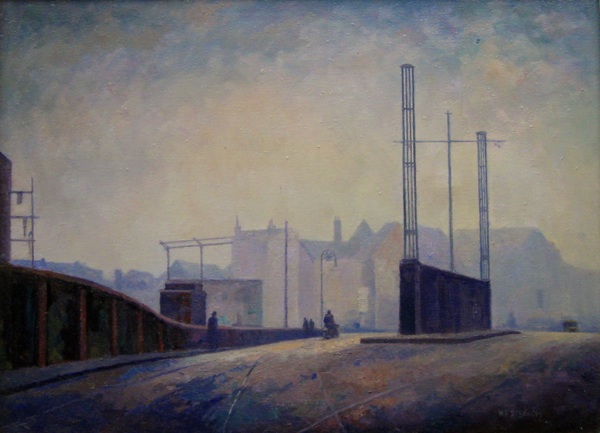
Bow Bridge by Walter Steggles, c.1930
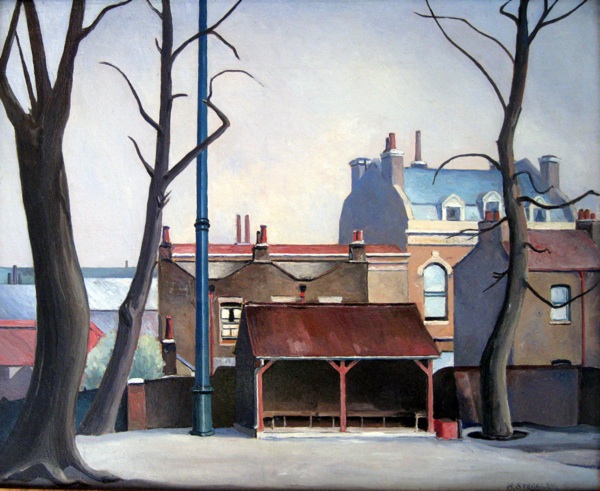
Grove Hall Park, Bow, by Harold Steggles, c. 1930
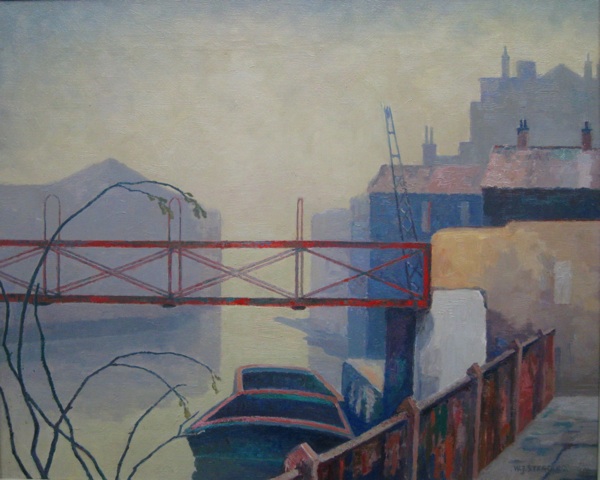
The Red Bridge by Walter Steggles, c. 1930
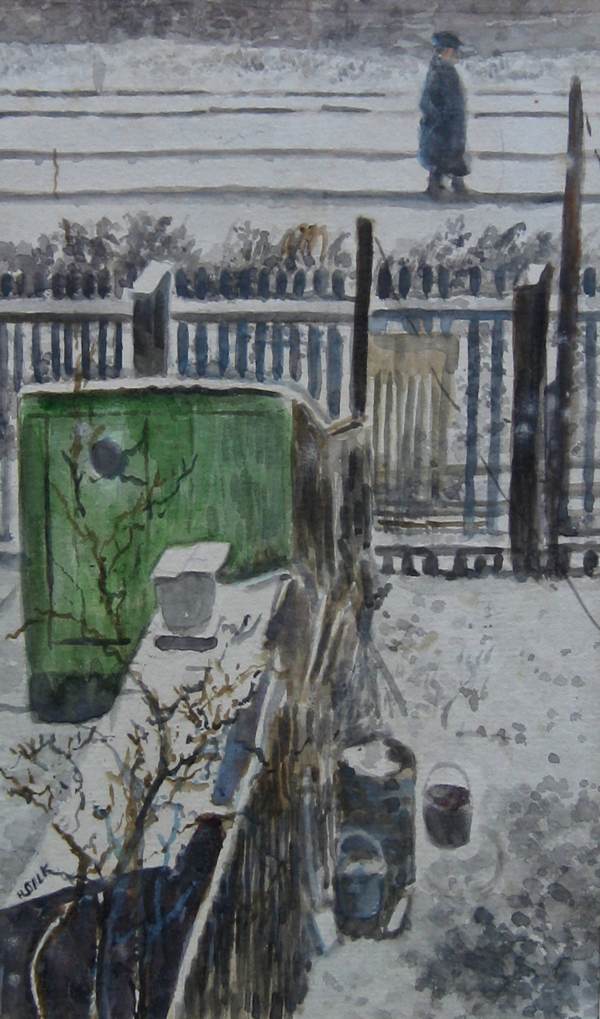
Snow at Bow by Henry Silk, c. 1930
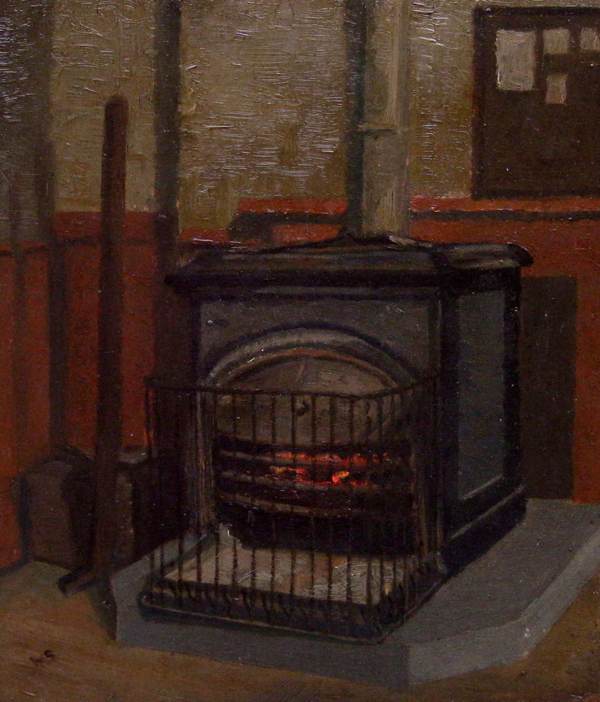
Art Classroom Stove, Whitechapel, by Walter Steggles, 1938
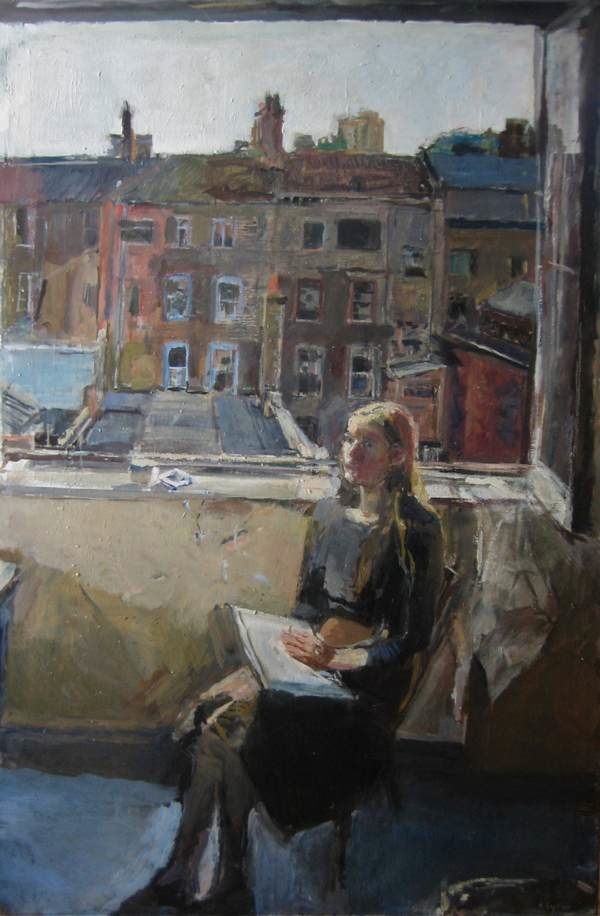
Christine in Hanbury St, Spitalfields, by Anthony Eyton, 1976/8
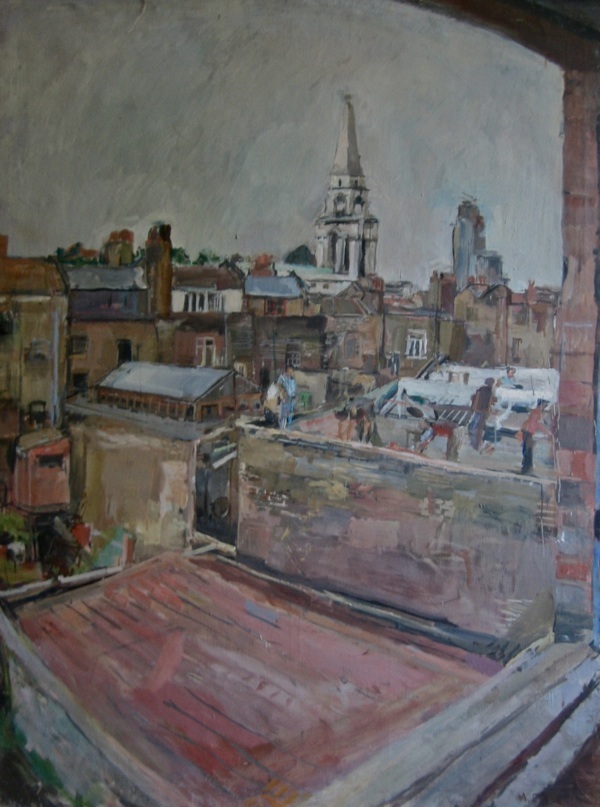
Christ Church from Hanbury St, Spitalfields, by Anthony Eyton, 1980
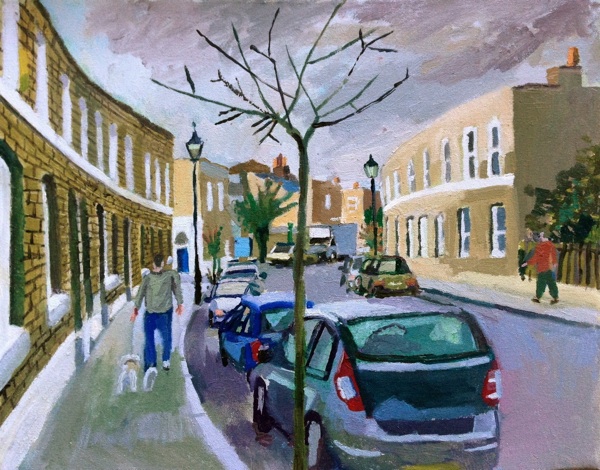
Durant St, Bethnal Green, by Nicholas Borden, 2013
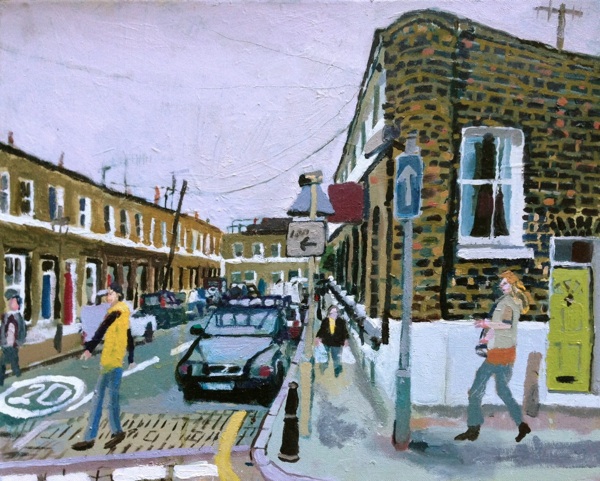
Quilter St, Bethnal Green, by Nicholas Borden, 2013
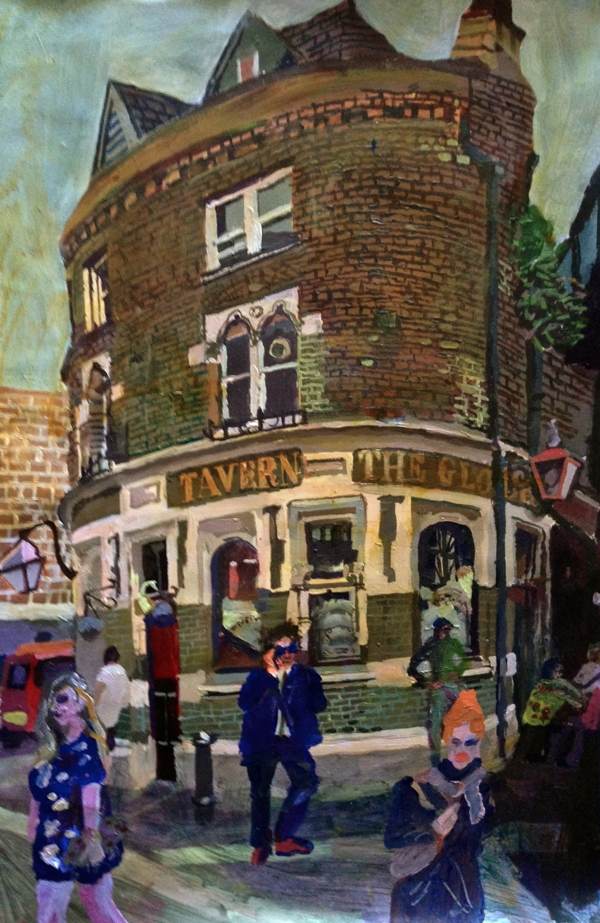
Globe Tavern, Borough Market, by Nicholas Borden, 2013
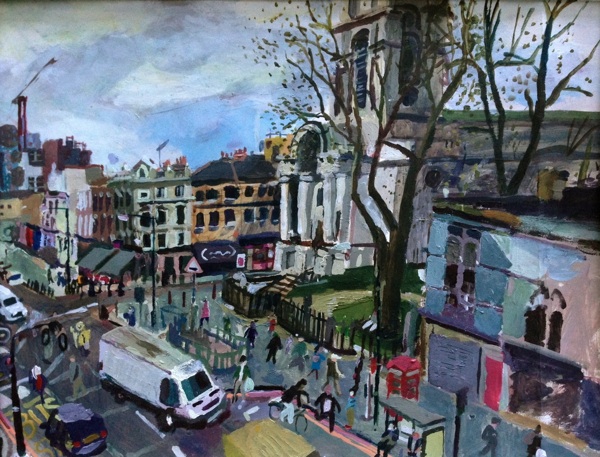
Spitalfields by Nicholas Borden, 2013
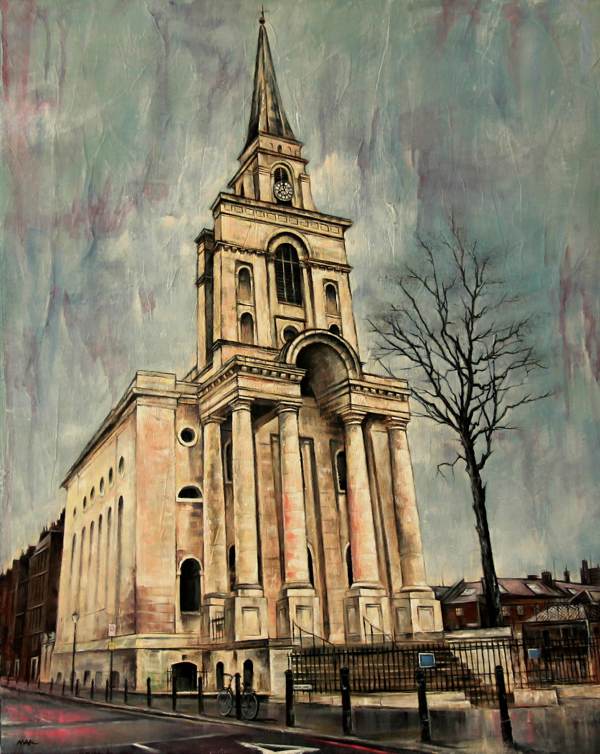
Christ Church, Spitalfields by Marc Gooderham, 2013
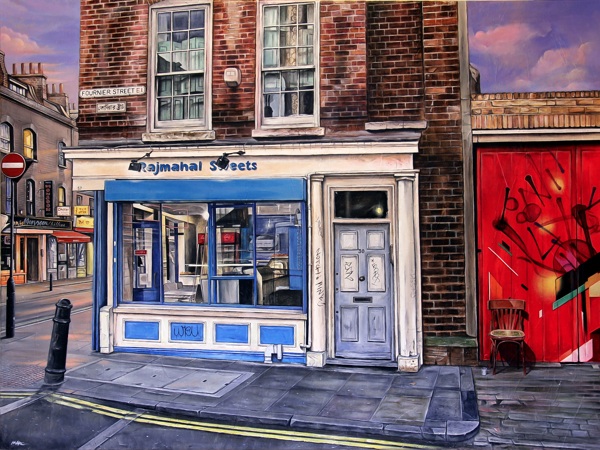
Edge of Brick Lane by Marc Gooderham, 2013
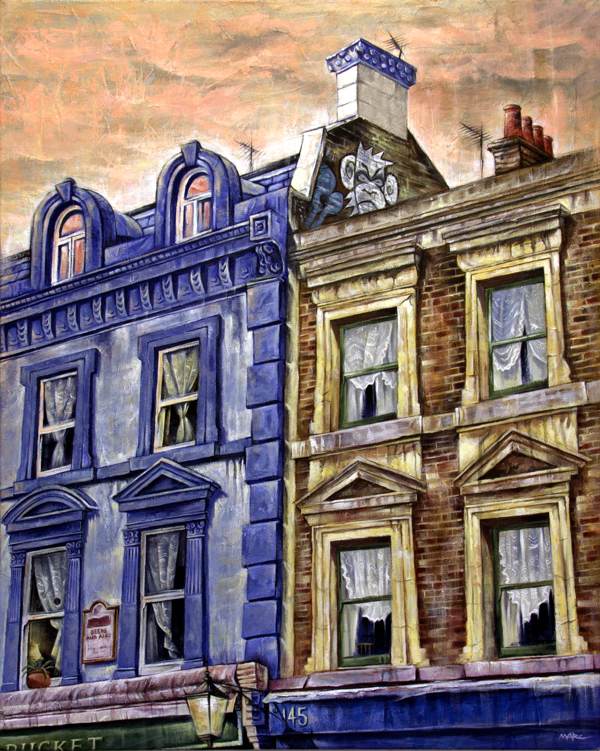
Rented Rooms, Bethnal Green Rd, by Marc Gooderham, 2013
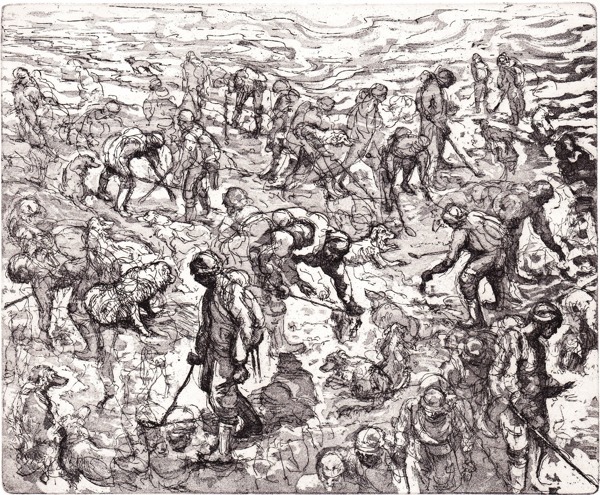
Thames Mudlarks by Joanna Moore, 2013
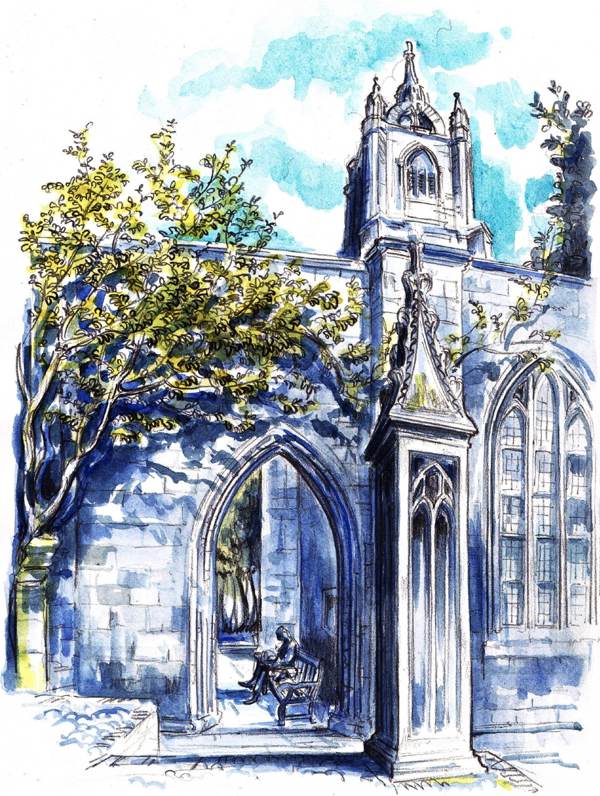
St Dunstan-in-the-East By Joanna Moore, 2013
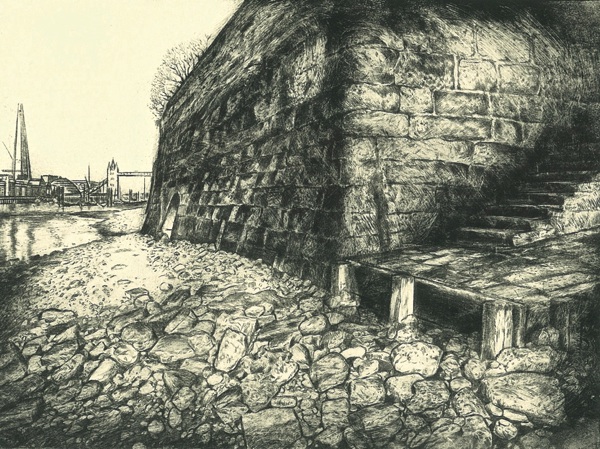
Wapping Old Stairs by Peta Bridle, 2013
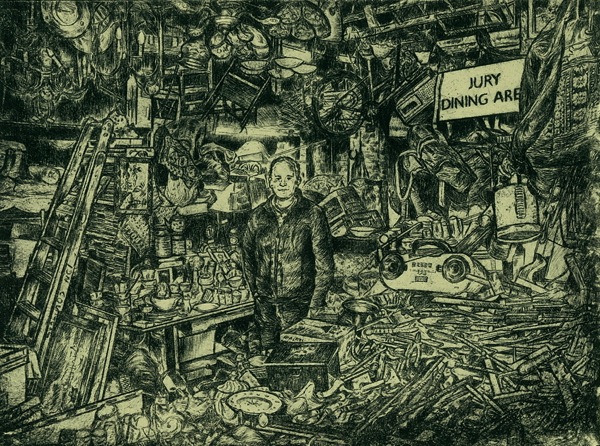
Des & Lorraine’s Junk Shop, Bacon St, 2013
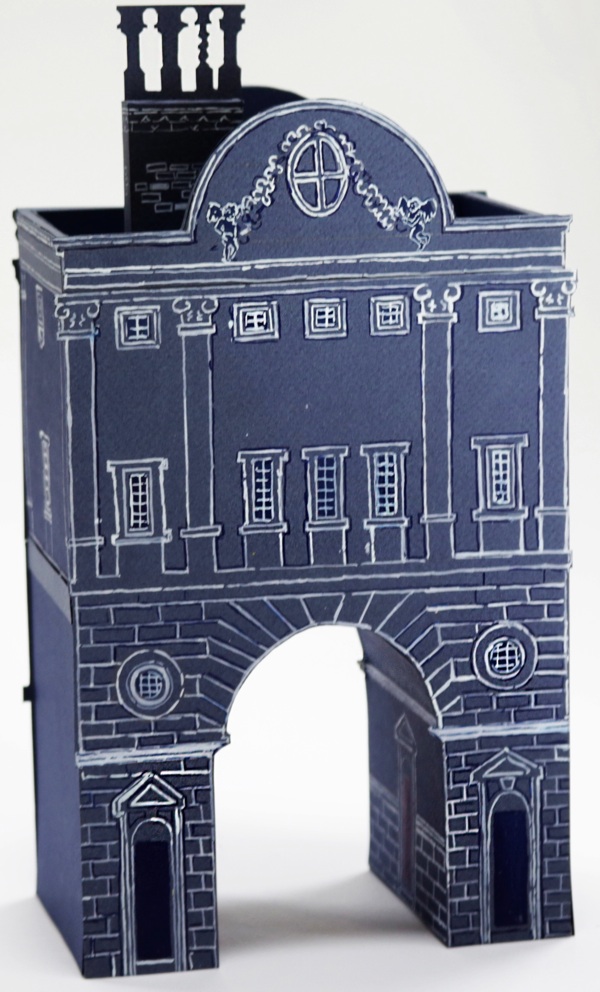
Moorgate by Sebastian Harding, 2013
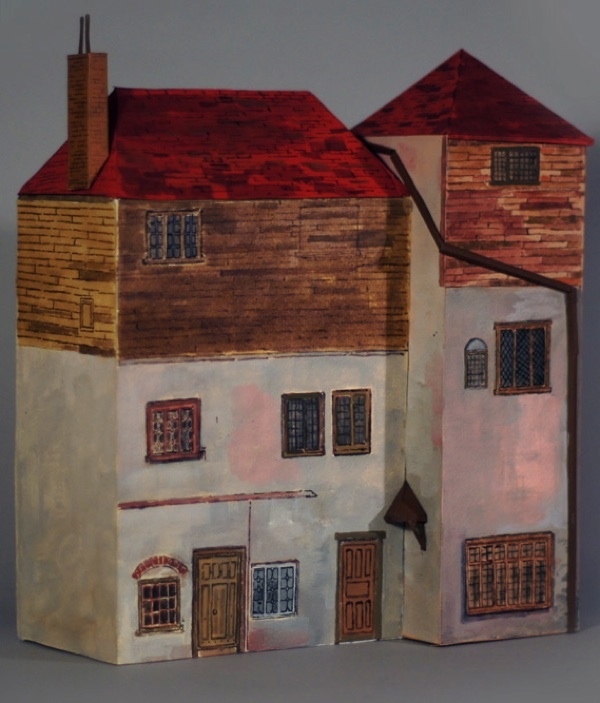
Nicholas Culpeper’s House, Spitalfields, 2013
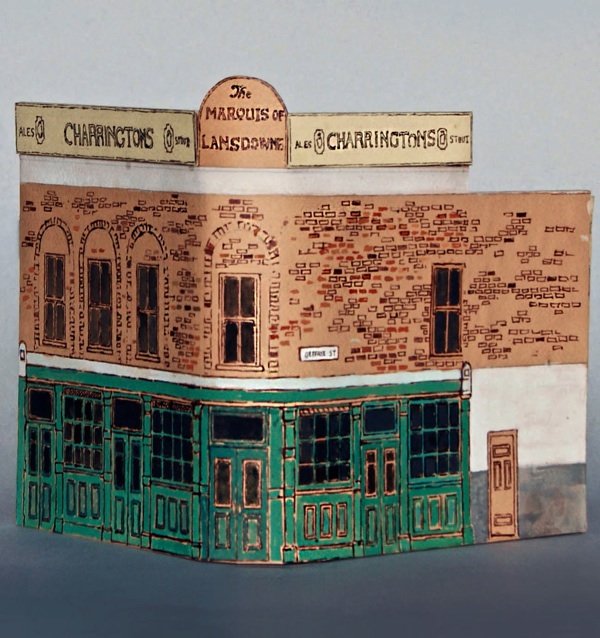
The Marquis of Lansdowne, Cremer St, by Sebastian Harding, 2013
NOW & THEN, an exhibition of the New & Old East London Groups, opens on 6:30pm Thursday 28th November at Town House, Fournier St, Spitalfields, E1. The show runs until 8th December. Weekdays 11-6pm & Weekends 11-5pm.
You may also like to read David Buckman’s features about The East London Group
Henry Silk, Artist & Basket Maker
& my features about the contemporary artists
The Drypoint Etchings of Peta Bridle
Nicholas Borden’s East End View
Truman’s London Keeper 1880 Export Stout
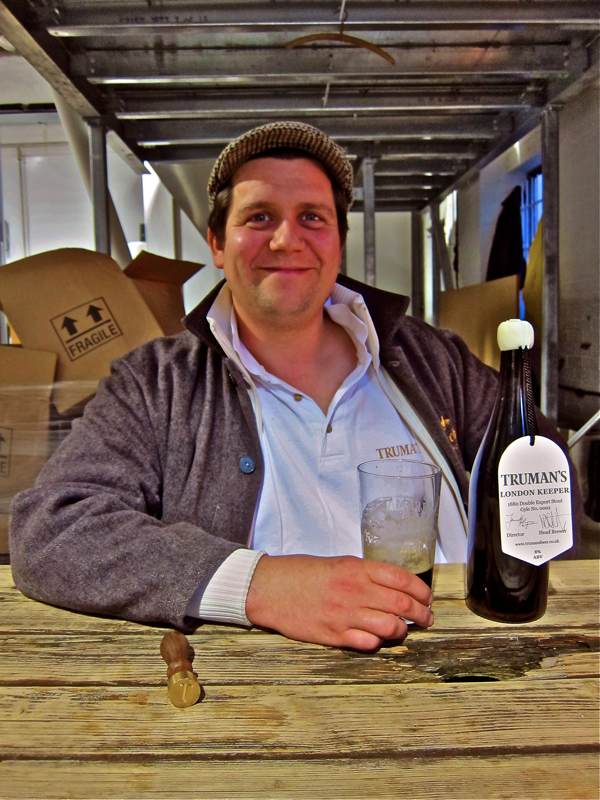
Ben Ott, Head Brewer at the New Truman’s Brewery
It was my privilege and delight to pop over to the new brewery at Hackney Wick last week and share a bottle of Truman’s London Keeper 1880 Double Export Stout wth Ben Ott, the Head Brewer. Unfortunately, he had almost emptied his glass by the time I came to take a picture, but I think Ben’s beatific smile gives an eloquent illustration of his pride and joy in this exciting new brew.
When Ben commenced brewing at Truman’s Brewery in Hackney Wick back in September, picking up from where the Brick Lane Brewery had left off twenty-four years ago, he realised that the first brew had to be special. For the first use of the original Truman’s yeast, that had been cryogenically preserved at the National Yeast Bank in Norwich, Ben adapted a recipe from a nineteenth century brewer’s record to create Truman’s London Keeper, brewing just two thousand bottles as trophies in celebration of this auspicious moment in East End brewing history
“It’s overwhelming when you go the archive, there’s quite a lot of really old Gyle books recording the brewing at Truman’s day by day,” Ben admitted to me, growing wide-eyed in wonder, “I looked for one that was one hundred years before my birth date but that turned out to be a Sunday, so then I looked at ninety-nine years before I was born – 19th April 1880 – and I found they were brewing a double export stout. I kept to the original gravity of 10/80 and I saw that there was so much pale malt, so much brown and so much black.” From this starting point, Ben researched the varieties of hops which were used at the time, seeking out modern strains with comparable qualities to compose his own recipe that would work for a contemporary taste.
If history was going to go into a bottle and be cherished, Ben decided champagne bottles should be employed, sealed with wax, and Baddeley Brothers – die-stampers and engravers who have been operating at the edge of the City of London since 1859 – were commissioned to print the labels. And James Morgan, the man responsible for the rebirth of Truman’s, signed every label alongside Ben as Head Brewer.
Truman’s London Keeper is a delicious brew for winter, warm and dark and tangy. If you love beer and the East End, then one of these bottles is the ideal keepsake – but maybe you will not be able to resist opening it for too long?

Each of the limited edition of two thousand bottles is signed by James Morgan, re-founder of Truman’s Beer and Ben Ott, Head Brewer
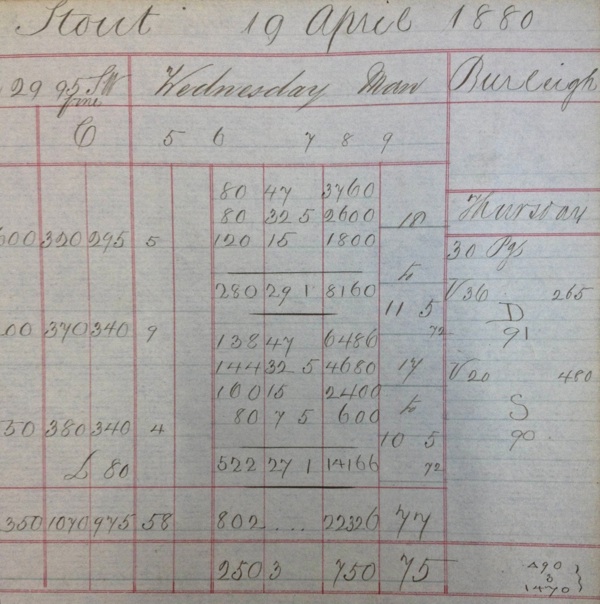
The Truman’s Gyle Book 0f 19th April 1880 that inspired Ben Ott to create Truman’s Keeper
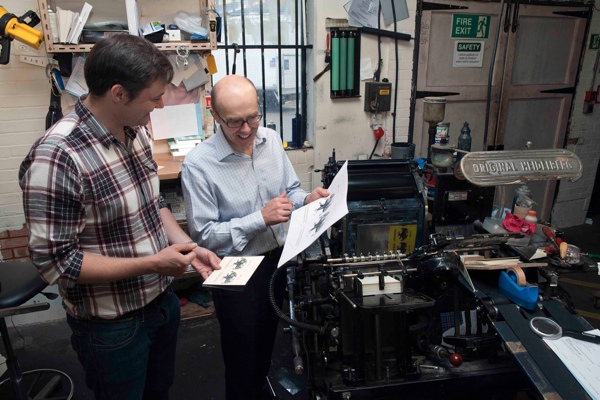
Jack Hibberd of Truman’s Beer with Charles Pertwee of Baddeley Brothers

Printing the labels on the Original Heidelberg at Baddeley Brothers in Hackney

The last Truman’s Beer brewed in Brick Lane

Head Brewer, Ben Ott, with the first Truman’s Beer brewed at the new brewery in Hackney Wick

Baddeley Brothers photographs copyright © Colin O’Brien
Click here to get your bottle of Truman’s London Keeper 1880!
You may also like to read about
First Brew at the New Truman’s Brewery
Tony Jack, Chauffeur at Truman’s Brewery
Happy Birthday East End Trades Guild!
Celebrating the first Anniversary of the launch of the East End Trades Guild this week, Chairman Shanaz Khan (Proprietor of Chaat Bangladeshi Tea House), gives the Annual Report and James Brown has produced a print that you can buy to support the work of the Guild.
[youtube dg8TvQpkEng nolink]
This commemorative linocut print by James Brown, sold in support of The East End Trades Guild is available online from James Brown, Here Today Here Tomorrow and The Herrick Gallery.
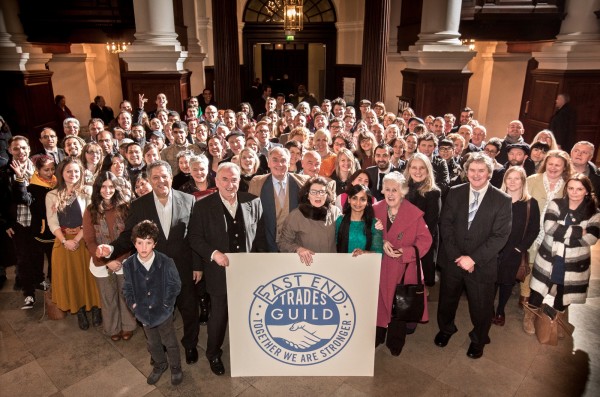
Martin Usborne’s portrait of the founding of the Guild at Christ Church Spitalfields, a year ago.
You may also like to read about
The Rise Of The East End Trades Guild
The Founding of the East End Trades Guild
Irene Stride Remembers Spitalfields
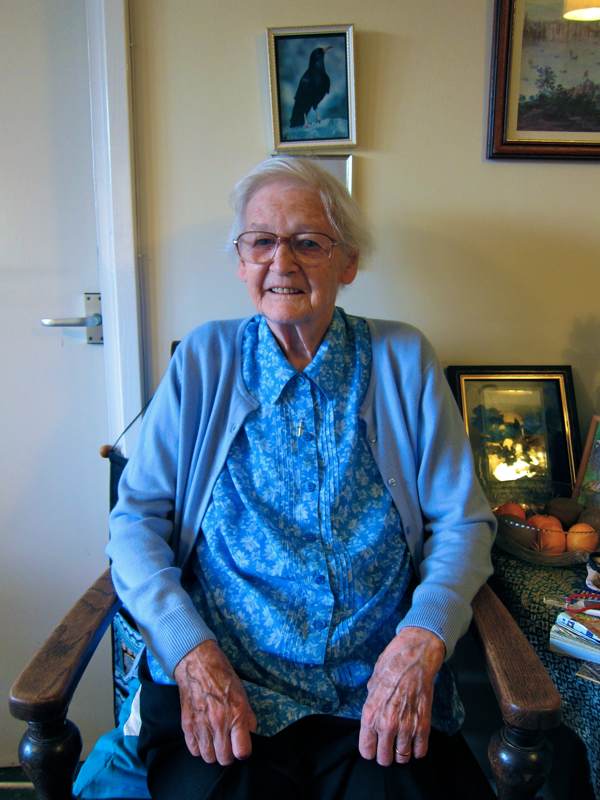
Irene Stride
Irene Stride and her husband, Rev Eddy Stride, expected to be missionaries in Africa – but fate intervened. “At that time, all the Christian missionaries were being thrown out of China by the Communists and they were going to Africa, so the Missionary Society told us to ‘Seek home ministry!’ and we ended up in Spitalfields instead,” Irene recalled fondly and without regret, when I visited her recently in her home on the Isle of Dogs.
“It was a very poor area and people said to us, ‘What are you doing taking children to a place like that?’ because it was grim, but my husband said he couldn’t live with himself if we didn’t take what was offered,” she admitted to me, “We felt there was a need in those days. We went there in 1970 and stayed until 1989, when we retired.”
In spite of their reservations, Irene and her family quickly found themselves at home in Spitalfields. “After a few weeks, my family really loved it there, because they found they could go cycling everywhere, around the City and up to the West End,” Irene told me, growing enthusiastic in recollection.“When we came, the Jewish people and the Cockneys were moving out and the Bengalis were moving in,” she added, “now the Bengalis are moving out and people from the West End are moving in.”
“The church was shut up and was dangerous inside, so we used the hall in Hanbury St for services and the crypt was a shelter for alcoholics,” Irene explained, outlining the challenges she and her husband faced, “Dennis Downham was there before us, he had cleared out the crypt and put in a dormitory and a day room. It was run by a warden and men came into the crypt if he thought they had a chance of getting off alcoholism and some did, and some didn’t. My boys used to play snooker with the men, but they got upset when they saw them next day lying passed out in the street. The men used to come and knock on the Rectory door if they thought I would give them something – a cup of tea or a sandwich – so we did get to know them quite well.”
Spitalfields became the location that defined her husband’s ministry and, even today, it is the place for which Irene holds the strongest connection. “When I was twenty-three, Eddy and I were planning to be missionaries in Algeria, because Eddy had been there for three years during the war and he felt that he should go back as a missionary,” she confided to me, “So I went to the Mount Herman Missionary Training College in Ealing while he studied Theology in Bristol. His sister was one of my best friends and I knew him before he went to Africa. Then, while he was an engineer in Algeria, his sister kept talking about him. When Eddy came home, we clicked and it went from there.”
“After college in Bristol, we went to Christ Church, West Croydon, from there we moved to West Thurrock, South Purfleet and to St Mary’s Dagenham, and we were there for eight and a half years. That was where Eddy got his instruction to go to Spitalfields and off we went. I’m very glad I went there and my two boys met wonderful wives there. It was a very interesting place with all these characters and some real gems. My son Derek thinks it is the centre of the world for him!”
“Afterwards, we retired to Lincolnshire where we had friends and the family came for weekends but, once Eddy went to be with the Lord, I thought I had better move to be with the family, so I came back to London. I came here to the Isle of Dogs and I’m very happy here. I’ve got Stephen round the corner and Derek in Spitalfields, he takes me to Rainham Marshes and we go birdwatching every Monday.”
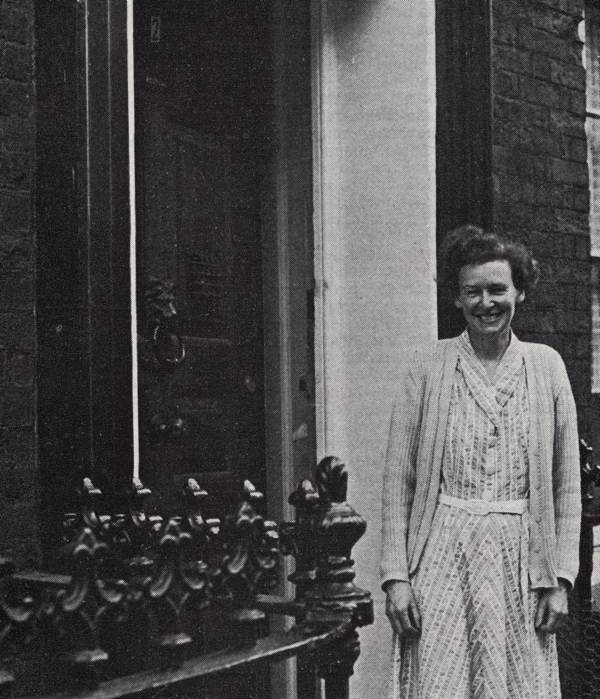
Irene Stride outside the Rectory, 2 Fournier St, summer 1975
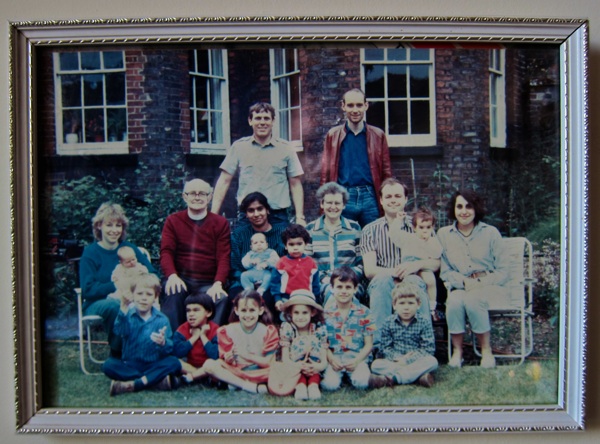
The Stride family in the Rectory garden
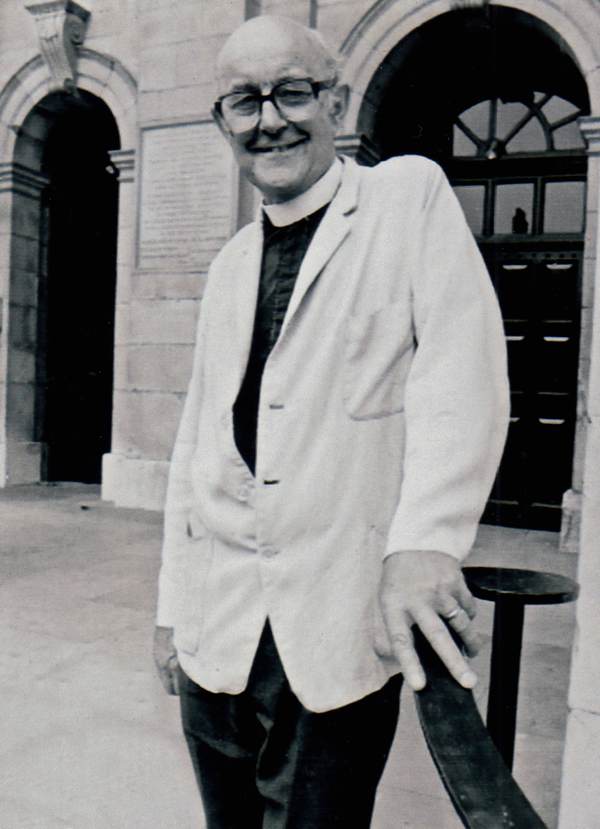
Eddy Stride outside Christ Church, Spitalfields
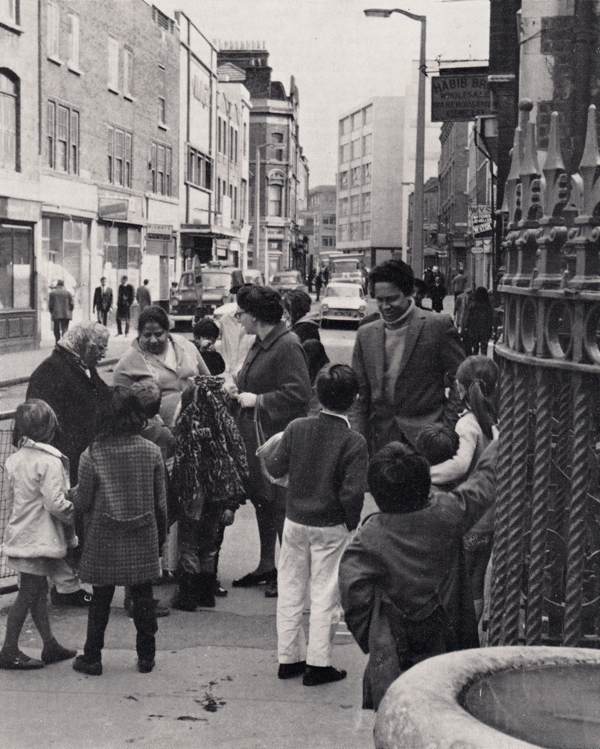
Collecting the children at the school gates, Christ Church School, Brick Lane
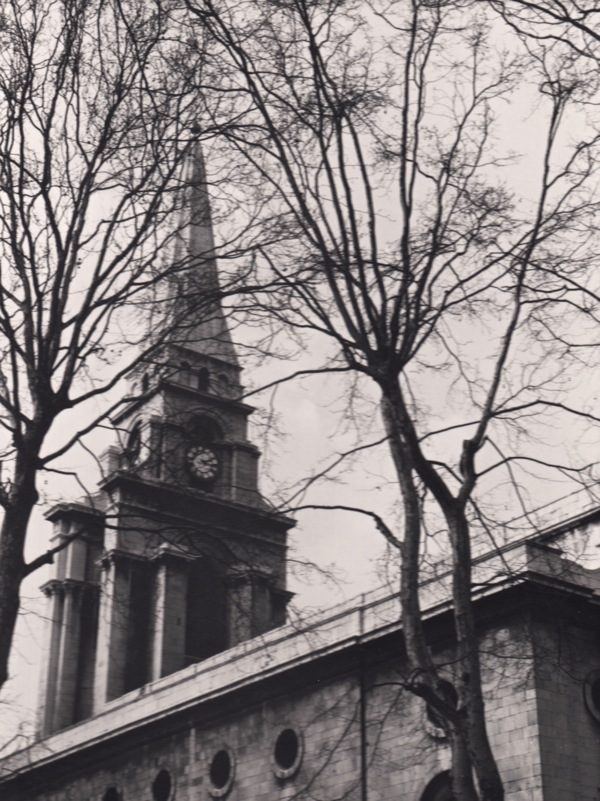
From the Christ Church Crypt brochure of 1972 – “Outside a man is faced with vast impersonal hostels, sleeping rough, or seeking the shelter of the crypt”
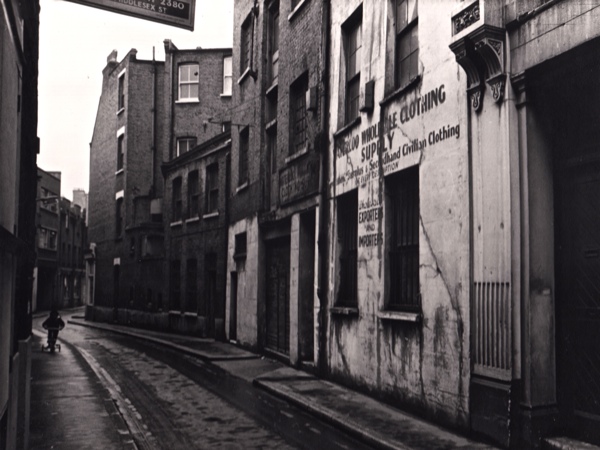
Sandys Row, 1972
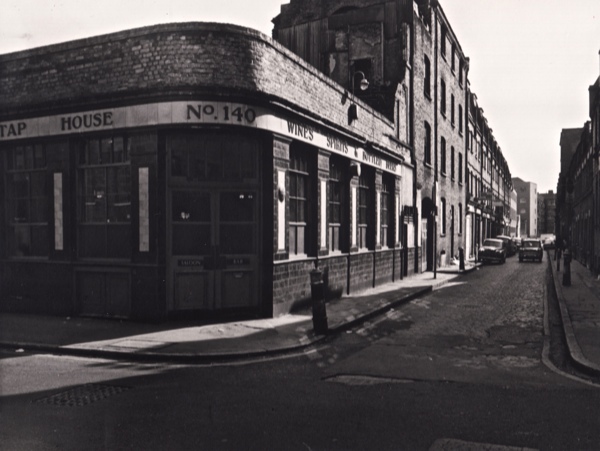
Brick Lane, 1972
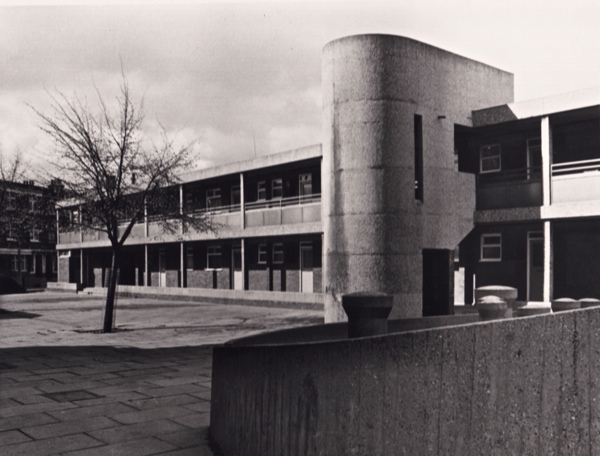
Davenant House, the ‘new’ Spitalfields, 1972
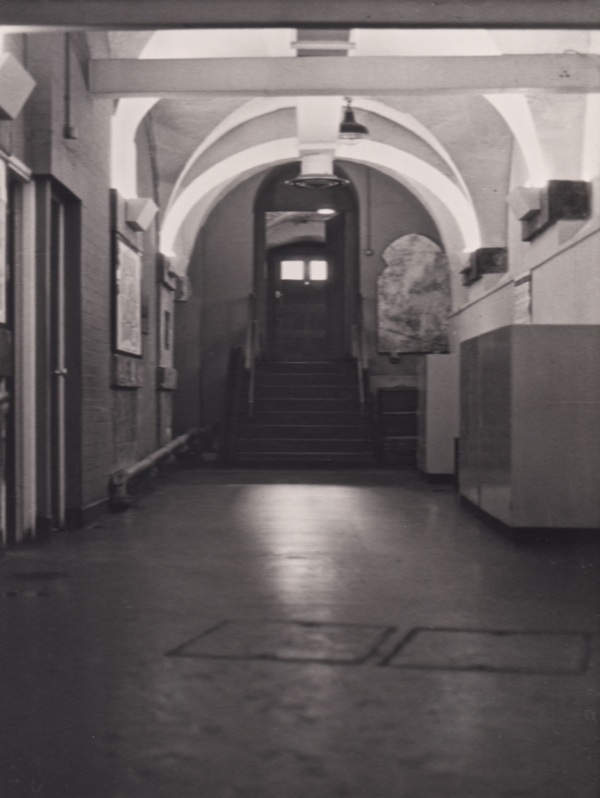
The crypt passageway
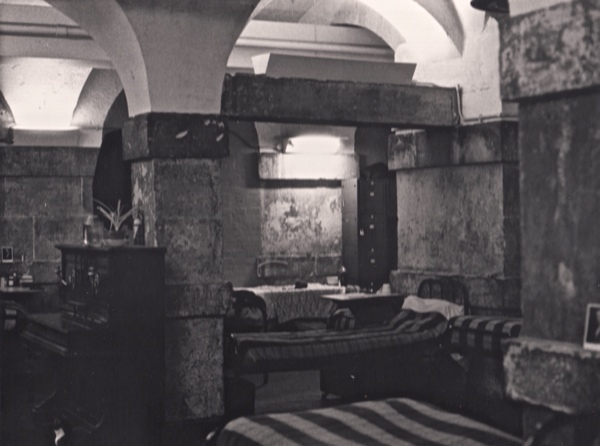
A corner of the crypt
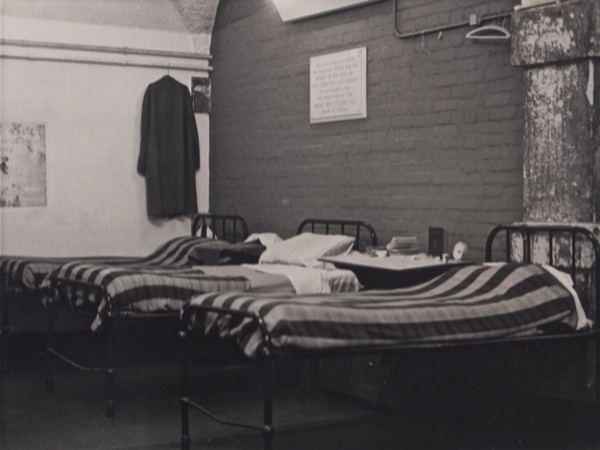
The sleeping area
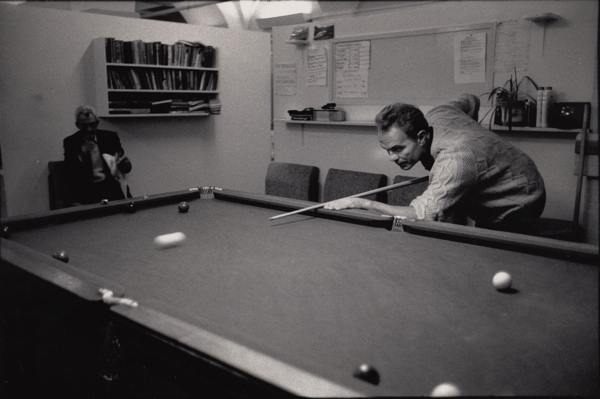
Relaxing in the crypt, the snooker table
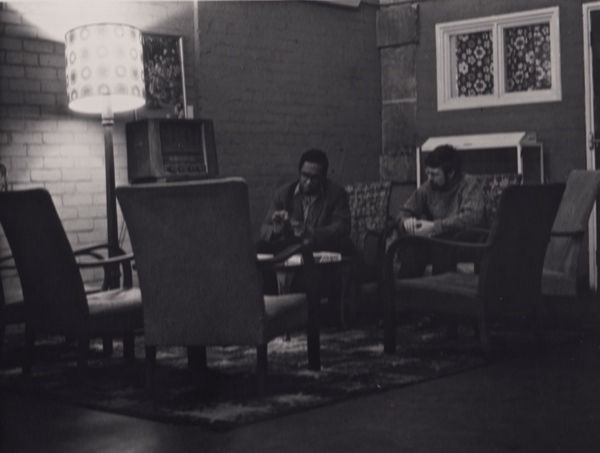
The crypt – sitting area
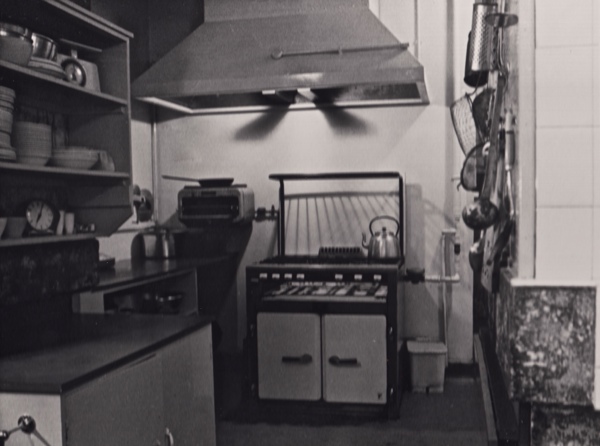
The crypt – kitchen
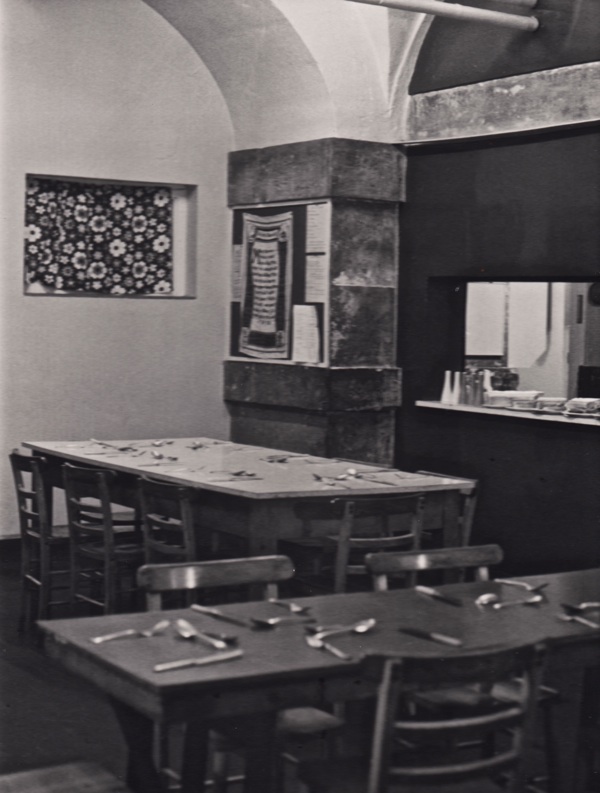
The crypt – dining room
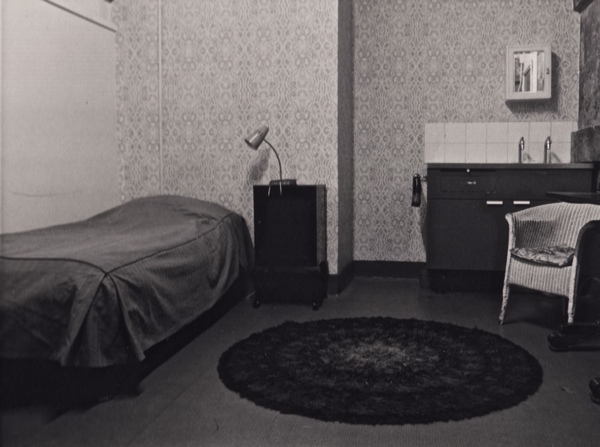
The crypt – staff room
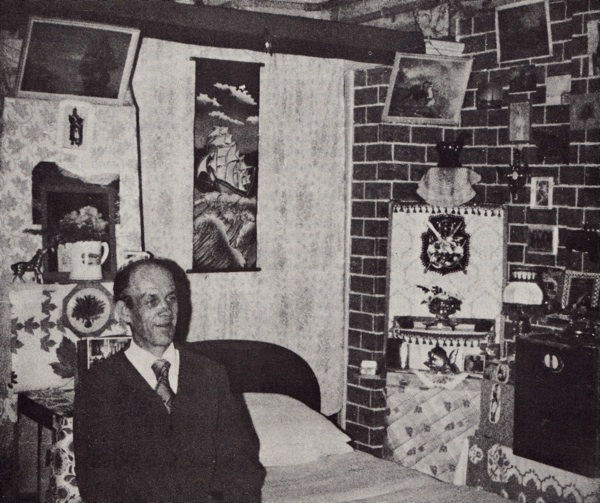
A resident of the crypt
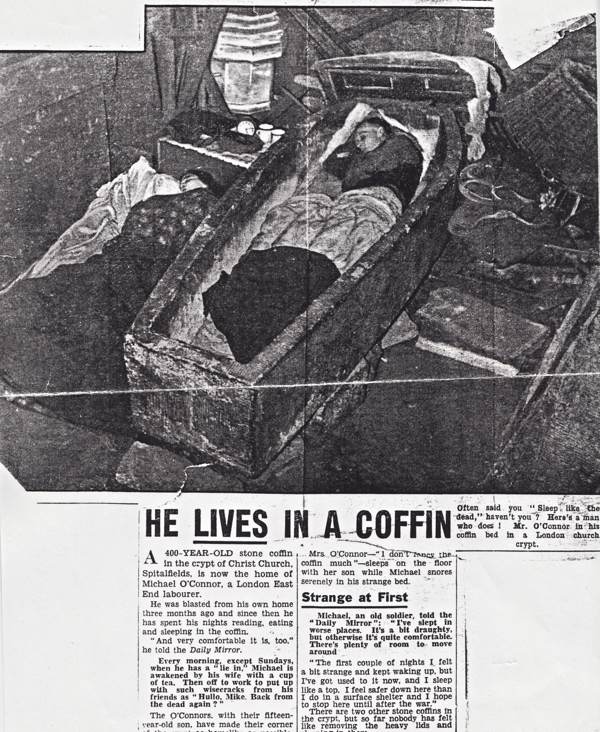
Irene’s Daily Mirror cutting tells the story of a family who took refuge in the crypt during World War II
You may also like to read about
A View of Christ Church, Spitalfields
The Secrets of Christ Church, Spitalfields
James Parkinson, Physician of Hoxton
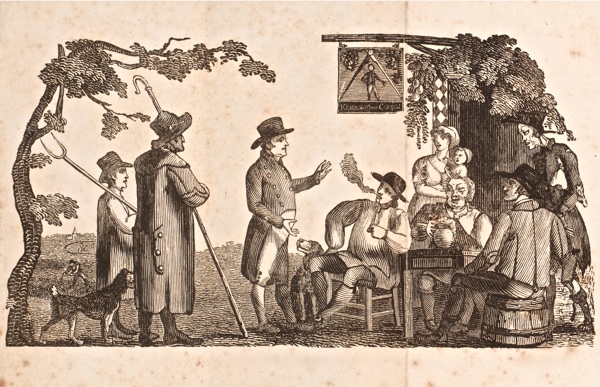
James Parkinson delivers an alehouse sermon (Image courtesy of Wellcome Library)
Eighteenth century maps show Hoxton – like Tottenham Court – as a small village surrounded by fields. To the south, only a few houses stood between it and Moor Fields, while open fields lay north and west, and to the east beyond Shoreditch, all the way to Bethnal Green.
James Parkinson, the man who would describe the disease which was posthumously given his name, was born in this hamlet in 1755. He grew up in Hoxton and, like his father before him, worked there as a Surgeon and Apothecary. Subsequently, Parkinson was followed in the same calling by his son and grandson.
He practised as a General Practitioner from his family home on the south-west corner of Hoxton Sq, which survived until the early twentieth century. Its successor on the same corner bears a plaque commemorating the Square’s most famous inhabitant. Occupied by a busy restaurant today, 1 Hoxton Sq, the site of his surgery and the house where he and his wife Mary had their six children, is no longer recognisable.
Parkinson lived all his life in Hoxton but he was far from parochial. He trained at the London Hospital and became an early member of the Medical Society of London, then housed near Fleet St – an important forum which spanned disciplinary boundaries, with members drawn from the fields of surgery, physic and pharmacy. He was also an early member of the Humane Society, devoted to the resuscitation of people injured in accidents and drownings, and a founder member of the Geological Society.
In those days, a good doctor might be called far and wide. Parkinson’s professional catchment area had a wide radius, focused on Hoxton but perhaps extending as far west as Charterhouse, as far south as the City’s edge, and as far east as Whitechapel and the scattered farms and market gardens of Hackney and Mile End. His home patch probably included most of the neighbourhood of Shoreditch and Spitalfields, including the neighbourhood that would later become famous from Arthur Morrison’s novel as ‘The Jago’ – the great slum which once existed around New and Old Nichol Streets, now buried underneath the Boundary Estate.
Doctors see and learn a great deal about their patients’ predicaments as well as their illnesses. Like many in his profession, before and since, Parkinson was exercised by the politics of the day which favoured the rich and left the poor to suffer. Politically, he was a reformer and a member of the London Corresponding Society, an organisation which pressed for social improvement at a time when criticism of the government was a dangerous endeavour.
The British government was jittery for a generation after the French Revolution and their informers infiltrated every political meeting. Parkinson got caught up in the ‘Pop-Gun Plot’, a non-existent conspiracy to kill the King dreamed up by a spy to implicate a number of London Corresponding Society members. For a time, several of them were under threat of execution if convicted, but Parkinson gave evidence to the Privy Council and it became clear, during the legal process, that the spy had fabricated the story.
The inhabitants of streets like Shoreditch High St, Pitfield St, Elder St and Fournier St would have seen Parkinson’s familiar figure passing to and fro, visiting the sick in their homes. Historically, the area was clustered with City almshouses and madhouses, some of which Parkinson served. But of those people whose disease he described, and which bears his name, we know little other than they lived in the vicinity of his surgery at 1 Hoxton Sq.
Parkinson saw enormous changes in his lifetime. Before he died in 1824, he witnessed the disappearance of the fields surrounding Hoxton and the retreat of the open country northwards. Very little now survives of the Hoxton he knew. In present-day Old St, which has encroached upon the ancient road bearing the lovely name of St Agnes le Clare, it is difficult to visualise the rural nature of the area as it was then. But vestiges of his time do survive. One house still standing on the opposite side of Hoxton Sq was among those built when the square was laid out in the sixteen-eighties and the old parish pump still stands in St Leonard’s churchyard, while the eighteenth century girls’ school rebuilt in 1802 still boasts its presence on the facade of a building at the junction of Kingsland Rd and Old St.
Among the monuments in the lovely church of St Leonard’s Shoreditch, many commemorating those who were likely patients of Parkinson, is a modern stone commemorating his life. It was erected by nursing staff at the former St Leonard’s Hospital on the Kingsland Rd, which originated as the Shoreditch Workhouse where Parkinson once served as Parish Surgeon, Apothecary and Midwife. His tombstone in the churchyard has disappeared and the site of his grave is unknown, yet Parkinson was a Church Warden at St Leonard’s and he knew its stones well.
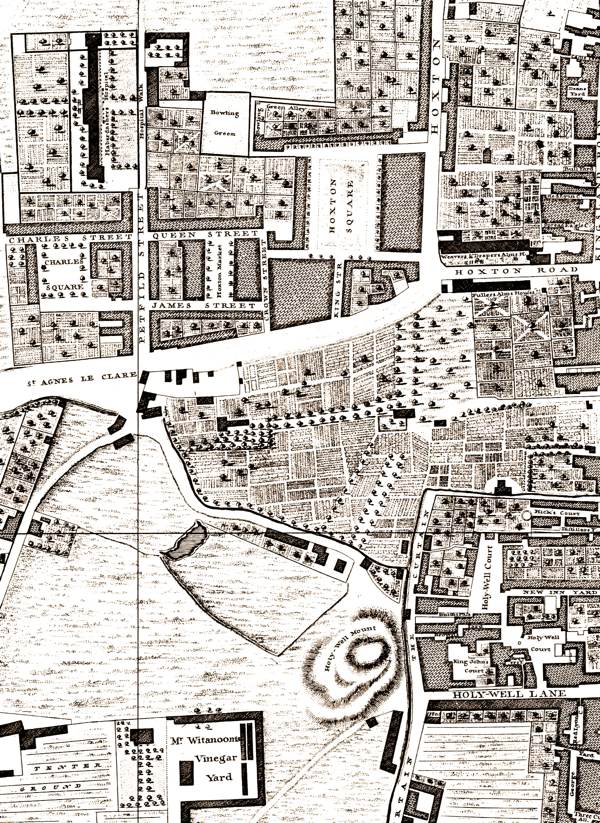
Hoxton of 1747 from John Roque’s Map
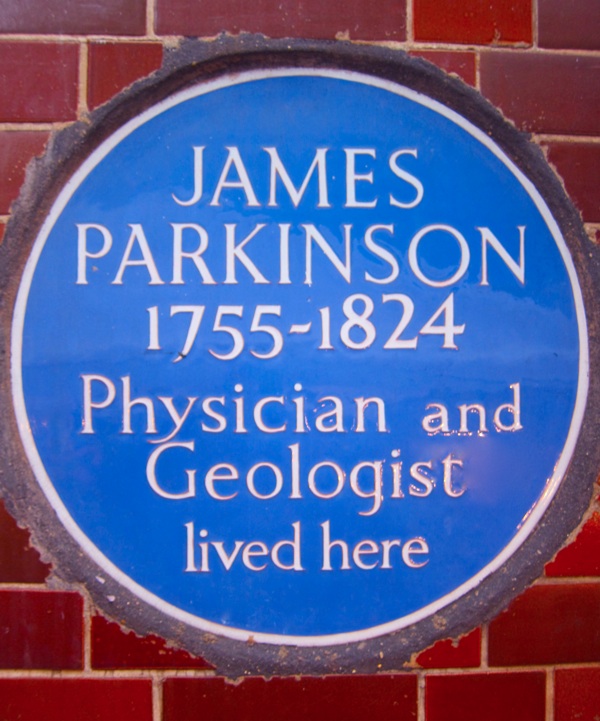
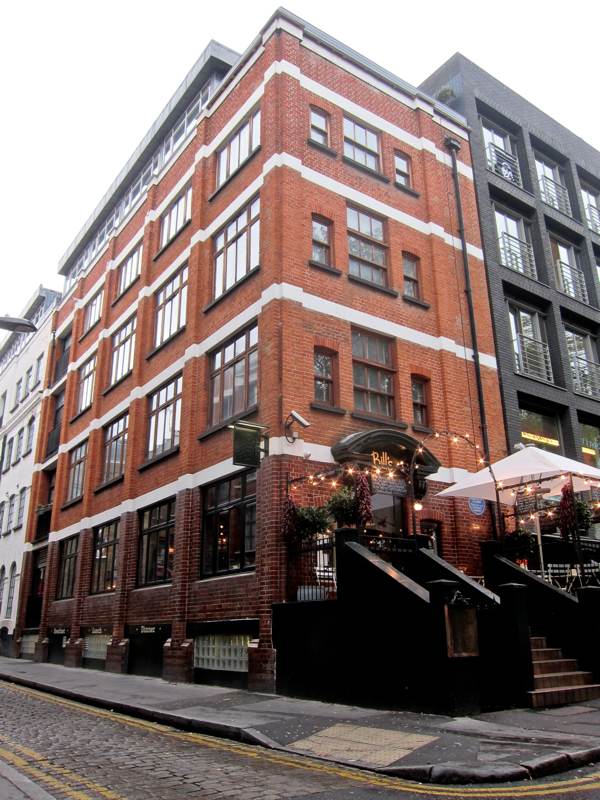
1 Hoxton Sq, today
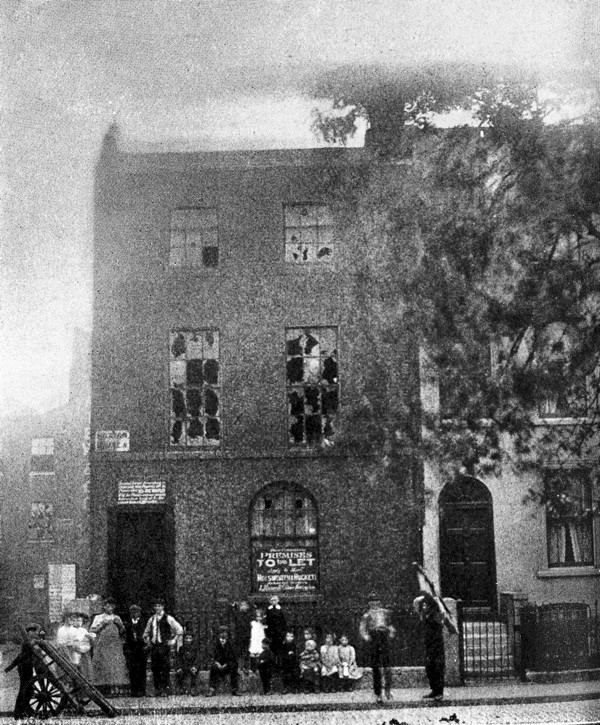
1 Hoxton Sq, c. 1900 (courtesy of the Wellcome Library, London)
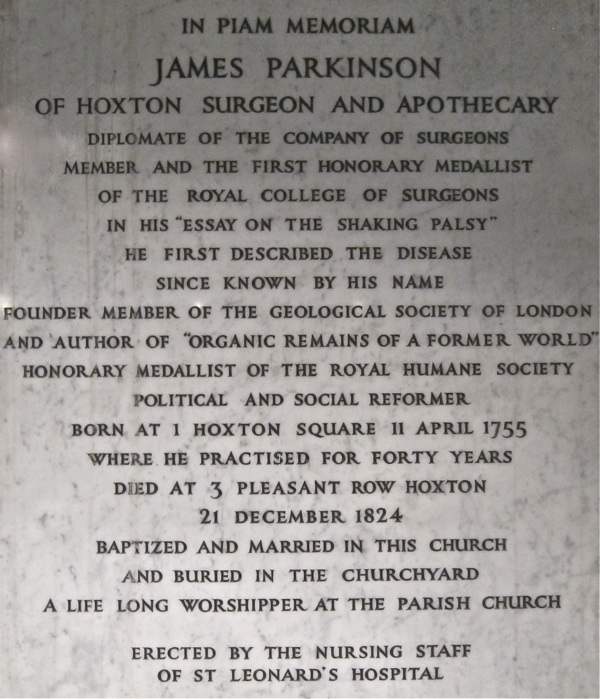
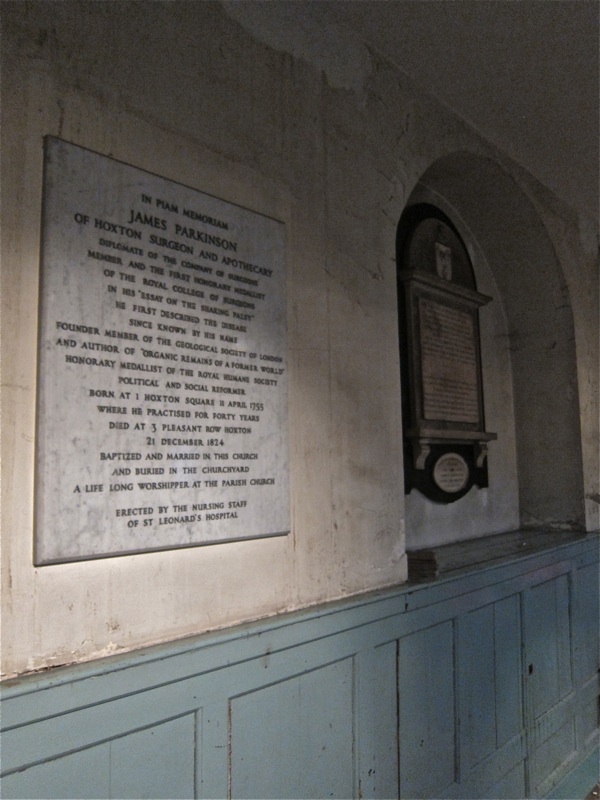
Parkinson’s memorial stone
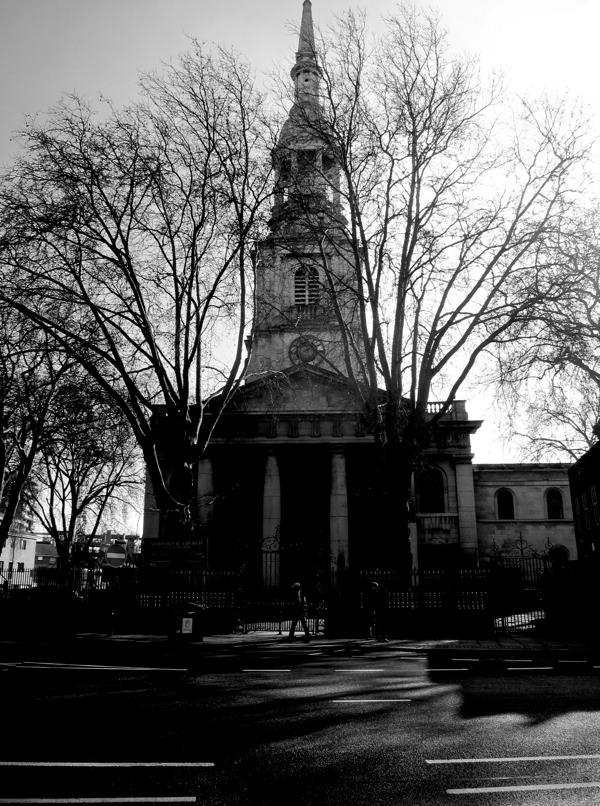
St Leonard’s Shoreditch
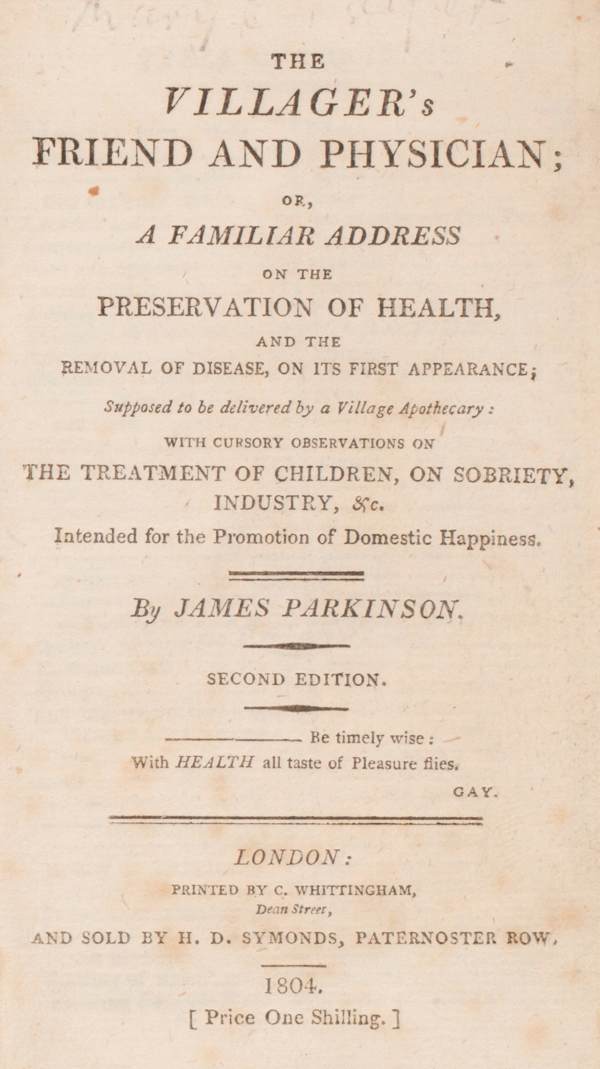
Title page of James Parkinson’s ‘Villager’s Friend & Physician’ 1804 (courtesy of the Wellcome Library)
You may also like to read about
The Hoxton Varieties Mosaic
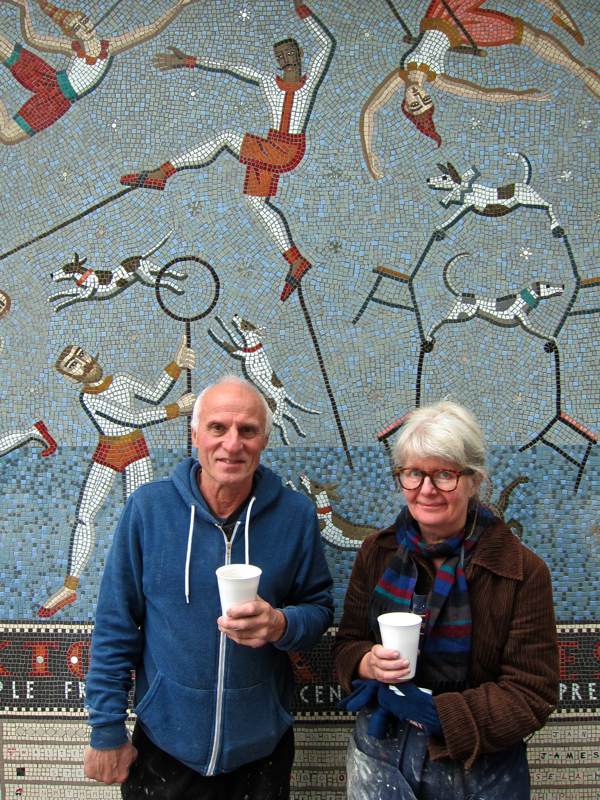
Walter Bernadin, master mosaic fixer & Tessa Hunkin, mosaic designer
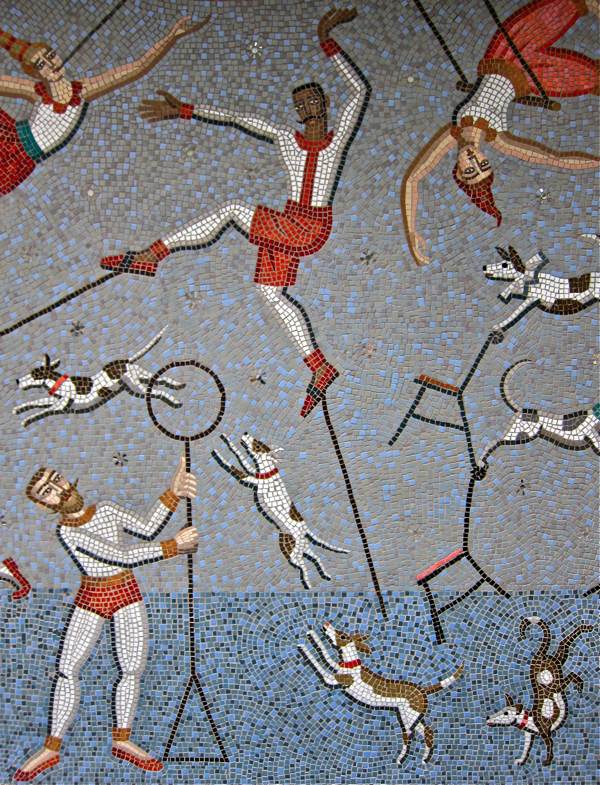
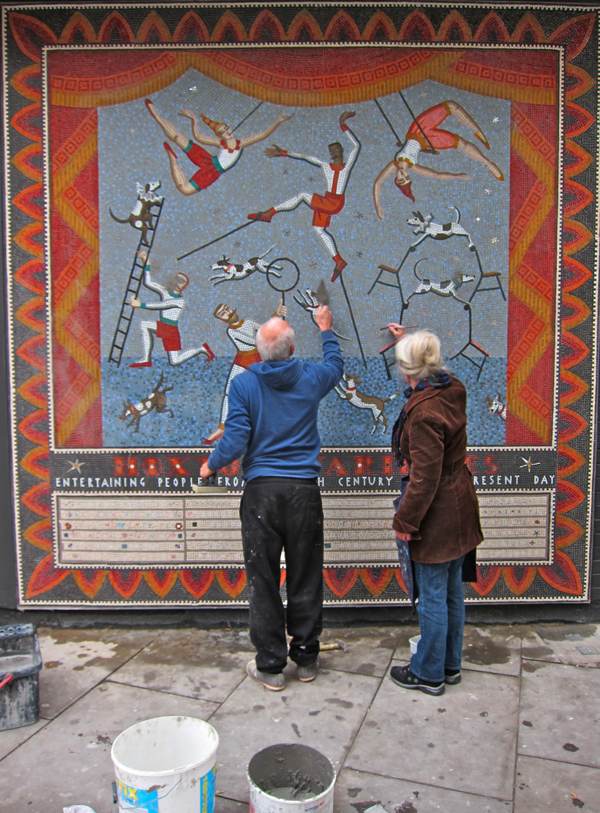
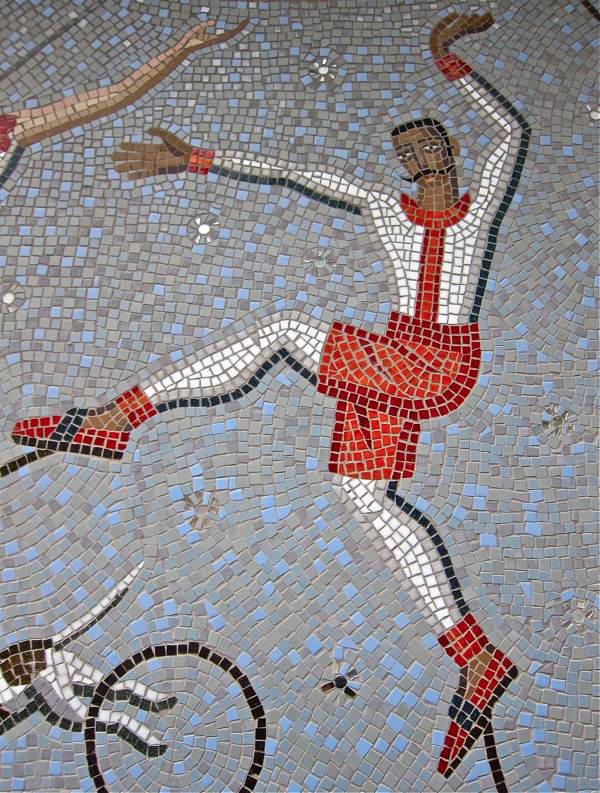
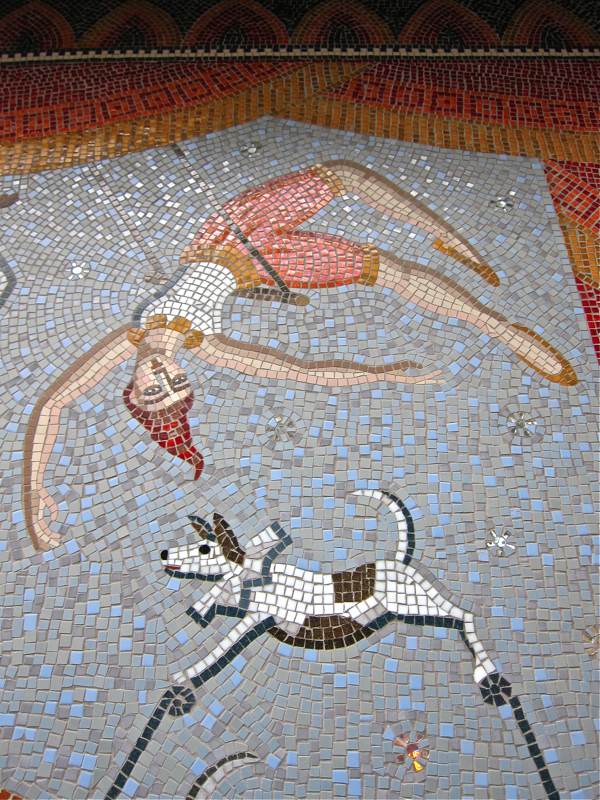
The Mosaic Makers of Hoxton have been busy again and on Sunday I had the privilege to see their latest masterpiece unveiled upon the corner of Pitfield St and Old St. Celebrating the former Varieties Music Hall that opened nearby in 1870, the mural designed by Tessa Hunkin and realised by members of Hackney Mosaic Project, illustrates the glory days of live popular entertainment in Hoxton with colourful images of acrobats and performing dogs.
When I arrived, Walter Bernadin, a sprightly white-haired Italian, was up a ladder sponging off the excess grout to reveal Tessa’s lively design in its full glory for the first time. “I am a master mosaic fixing specialist, I’ve been doing it for fifty years,” he admitted to me when I brought him a cup of hot tea to warm his cold hands, “My father Giovanni was a mosaic fixing specialist before me, so I just took on from him. We come from Sequals in Italy, most of the mosiac fixers in London are from there.”
“My father was in espionage and he had been here as a prisoner of war in Mildenhall. Then, in the sixties, there was a lot of terrazzo going on in London, so he came over in 1964. He ran a mosaic gang of forty men and I helped them out on Saturdays from the age of twelve and that’s how I learnt my trade. They put it on bridges and underpasses to cover the concrete. I could take you all over London and show you work my father done.”
Building upon the success of the Shepherdess Walk Murals, the Hoxton Varieties Mosaic is another aesthetic triumph – installing joyful artwork in unloved corners of the neighbourhood and drawing everyone back to consider the meaning of the place. Even on a grim Sunday in November, a small crowd gathered in delighted excitement to admire the exuberance of the conception as a blank wall acquired a new life in Hoxton.
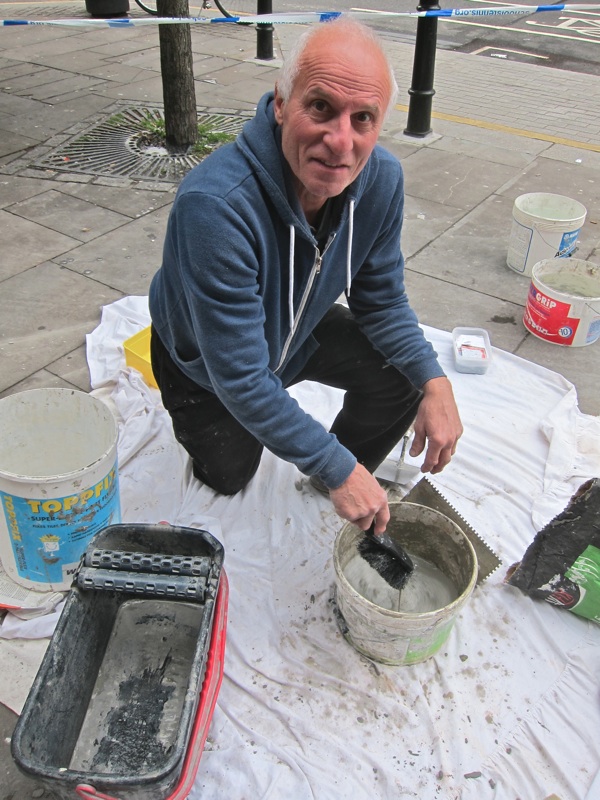
Walter Bernadin, Master Mosaic Fixing Specialist – “I could take you all over London and show you work my father done.”
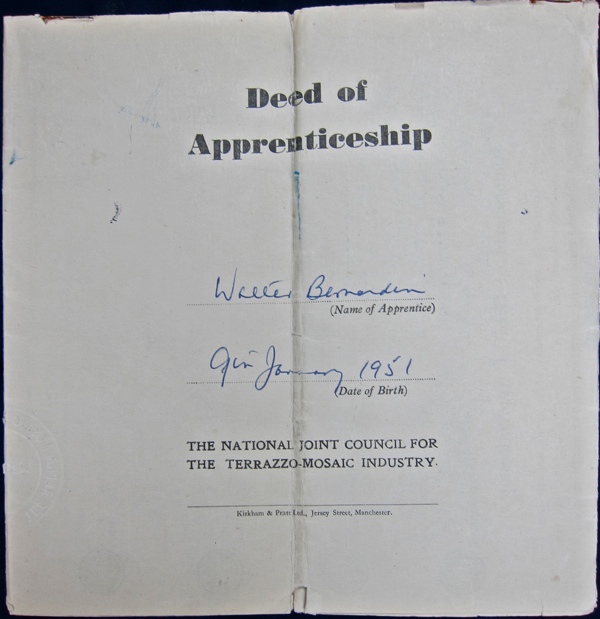
Walter still carries his deed of apprenticeship with him in the van
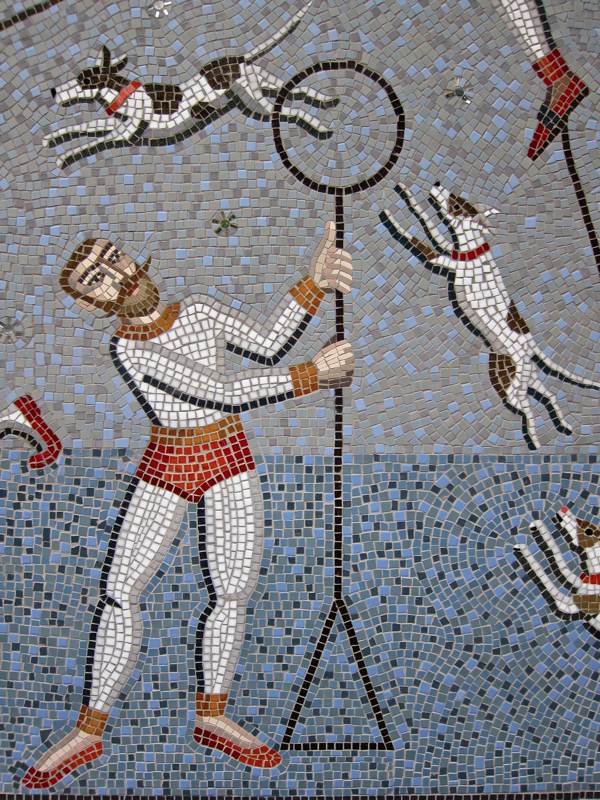
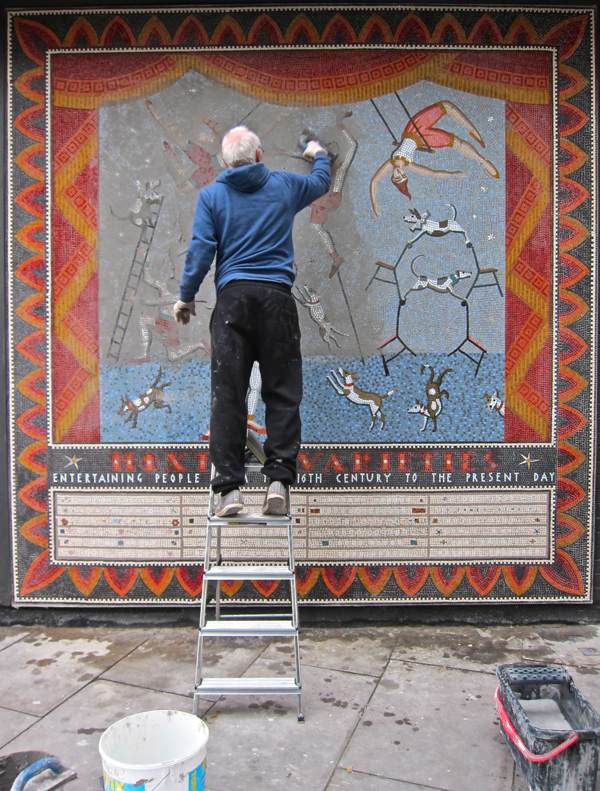
Walter sponges off the surplus grouting to reveal Tessa’s finished design
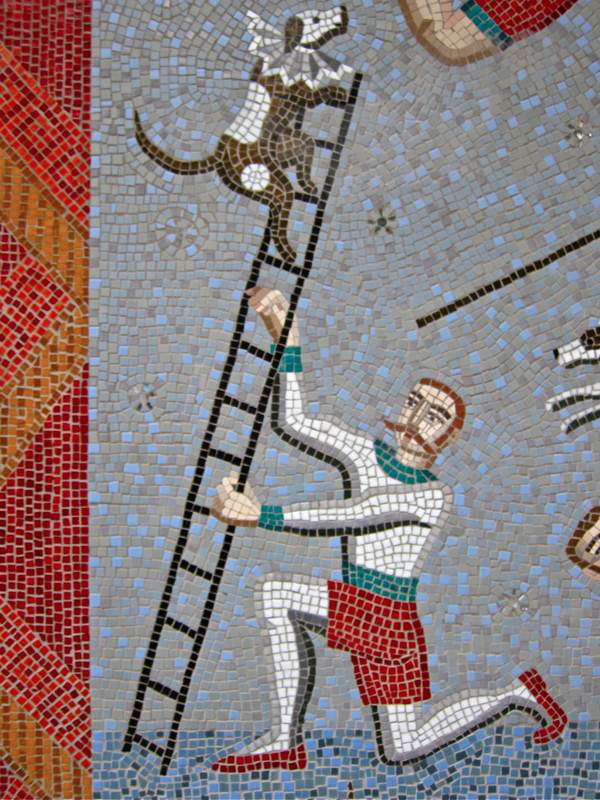
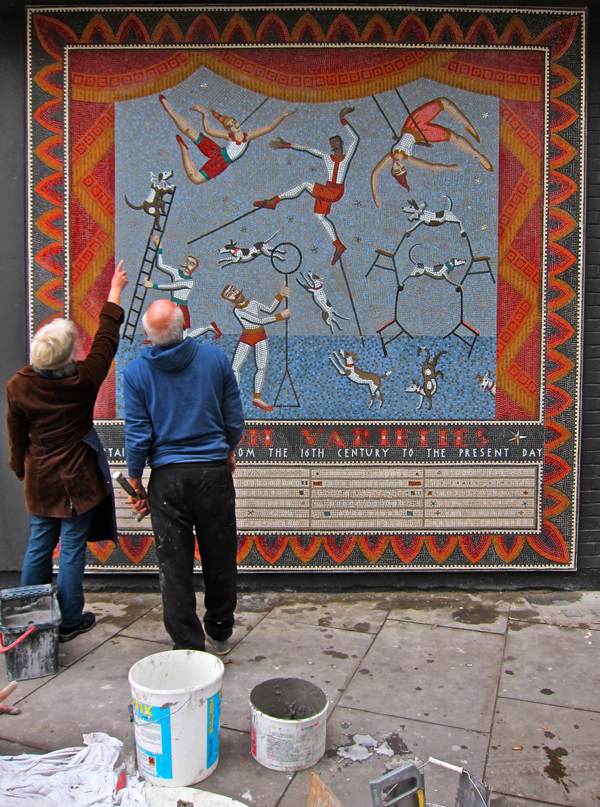
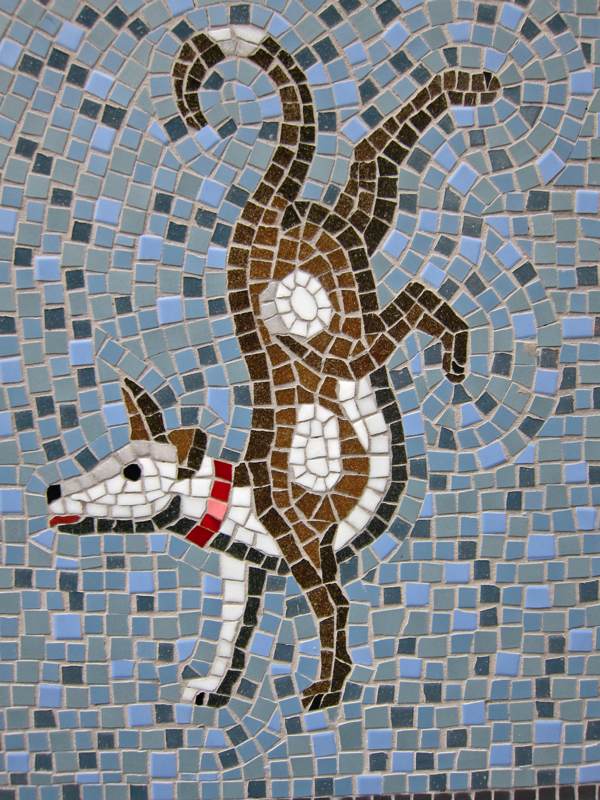
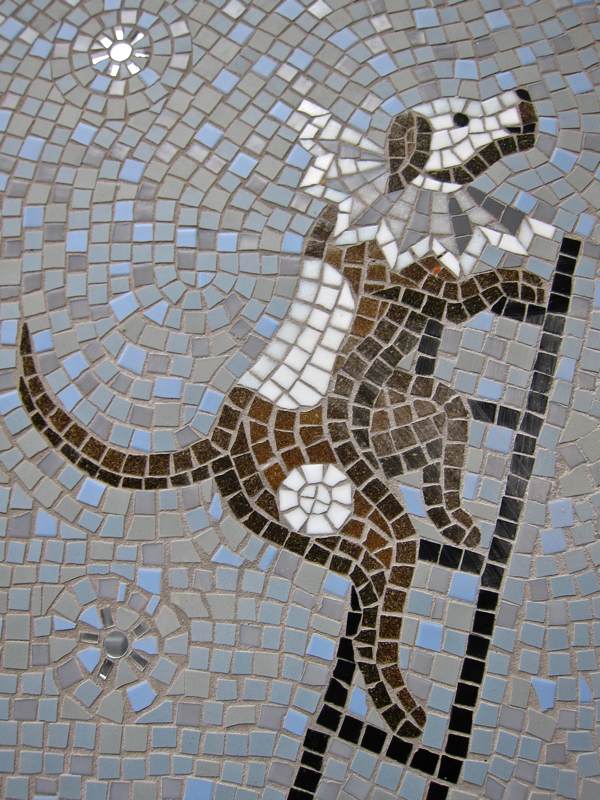
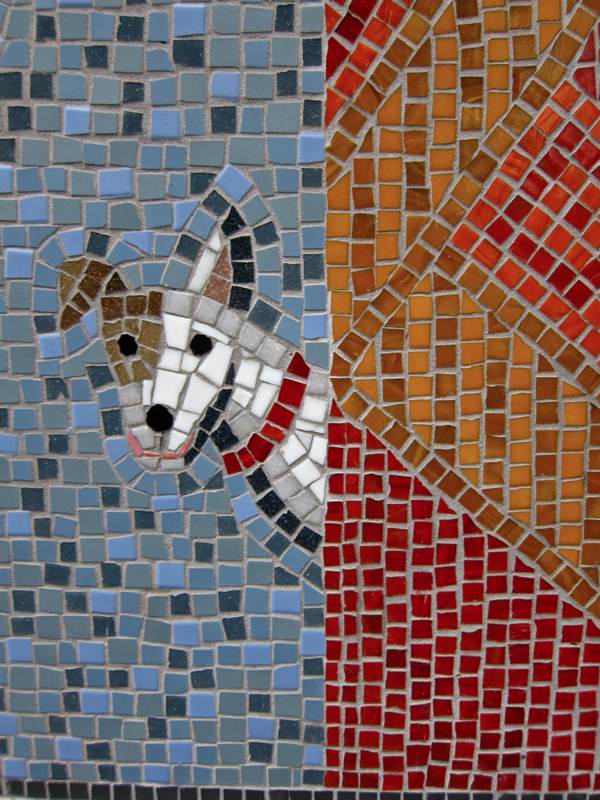
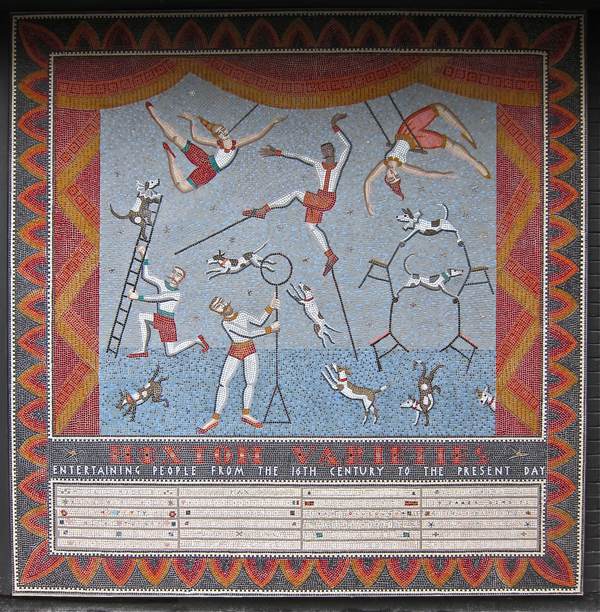
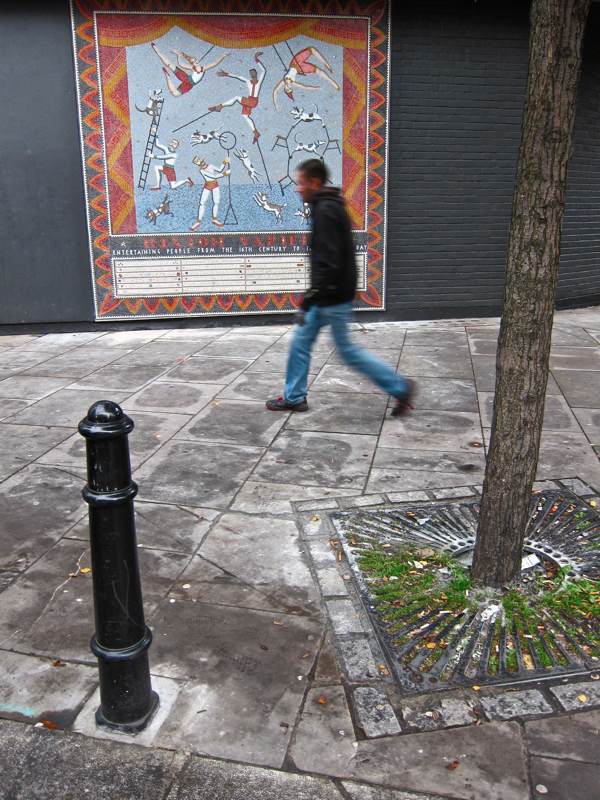
Visit the Hoxton Varieties Mosaic at the corner of Pitfield St & Old St, N1.
You may also like to read about












