Stepney’s Lost Mansions
Novelist & Historian of London Gillian Tindall takes over as guest author this week in celebration of the publication of her new book, A Tunnel Through Time, A New Route for an Old London Journey by Chatto & Windus.
With the Crossrail station already taking shape in Whitechapel, you may feel that it is drawing the East End into Central London. Yet beyond Farringdon, after stops at Moorgate, Liverpool St and Whitechapel, the new sleek Crossrail trains will accelerate and pass the rest of the East End by. From Whitechapel, the Crossrail line splits with one branch running without pause all the way to Stratford and the other to Canary Wharf.
The dividing of the ways is at Stepney Green – not the tube station on the Mile End Rd but the old roadway running down to Stepney Green Park and the Stepney City Farm. The line actually divides just before it reaches St Dunstan’s, Stepney’s ancient parish church, with the up and the down lines for the Stratford branch passing neatly on either side of its walls. Fear not – Crossrail runs thirty metres deep and it will not disturb the church, nor its graveyard where thousands of dead Londoners, including victims of the Great Plague, lie packed beneath its verdant turf.
Only a mile from Aldgate, Stepney was still green fields three hundred years ago, with just a frill of ribbon-development along the main road and around St Dunstan’s. Even at the beginning of the nineteenth century, though terraces of neat Regency houses were spreading fast, there was pasture land beyond. The Stepney of Cockney tradition only arrived with the expansion of the docks, the laying of railway lines to service them, and the rapid in-filling of the fields with rows and rows of small houses for the population that provided the work force.
But what was Stepney like before – much longer ago – when London was still contained within its medieval walls whose gates shut at night? By one of those flukes of time and chance, it is the construction of Crossrail which has helped literally to bring to light what Stepney once was. Near the church, where the line divides in two, a big access and ventilation shaft is in course of construction, and this happens to be the site of one of the area’s oldest recorded buildings. From early Victorian times until the Second World War, streets covered this acre of land and there was no possibility of recovering the lost big house that only existed as a vague folk memory. Yet bombs and planners between them have so devastated this area that archaeological excavation has now become possible. By this means, the foundations of long ago, cess-pits, animal bones, shards of pottery and glass and even the seeds of plants that once grew round a moat, have again been revealed.
The archaeologists of the Museum of London, who have undertaken the excavation, knew from local lore and earlier, partial digs that something important had stood there. Maps as late as the nineteenth century record ‘King John’s Palace’ – or, at least, the towered gateway to it. In fact, there is no evidence that King John (reigning from 1199 to 1216) had a house in Stepney. It has been said that whenever the origins of a venerable building passed from the memory of man, it is ascribed to the wicked King John because there was only one, making him easier to distinguish from the bevy of royal Henries, Edwards and Richards.
The gateway, which survived till 1858 when it was witlessly demolished by the non-conformist institution occupying the site, appears to have belonged to a Tudor edifice dating from after 1450, well over two hundred years later than John’s reign, though it may have been constructed upon the foundations of an earlier building. It is this Tudor house, complete with a moat, that the archaeologists have been excavating – thought to be the ‘Great Place’ belonging to a John Fenne, that was rented to a Lord Darcy when Henry VIII was a young and popular monarch, and the divorces, the beheadings and the Reformation lay in the future.
This was not the only grand house set in these fields at that time. Stepney, an easy walk or ride from London proper, was becoming popular as a dormitory suburb for prominent courtiers and men of the City. There were several big houses not far from St Dunstan’s church, including one where the City Farm is now that was owned by Henry Colet, a leading member of the Mercers Company. This appears to have been a traditional timbered courtyard house, not quite as grand as Lord Darcy’s home even if the Colets turned it into a meeting place for the great and good of their day.
Only one of the twenty-two children that Dame Colet bore survived, a tragic record even for those times of high infant mortality, but John Colet, the sole survivor, was to become famous. As Dean of St Paul’s, he founded the school that still bears that name in west London today. Upon his father’s death he acquired his acquired a large, timbered house for himself near by, set among orchards at the corner of today’s Salmon Lane. Here he entertained the leading European thinkers of his generation, including the reformist scholar Erasmus.
Dean Colet died of ‘the sweating sickness’ in 1519 which may have been just as well, for if he had lived fifteen years longer he – with his radical views on religion – might well have lost his head to Henry VIII, like his younger friend and protegé, Thomas More. During the chaos of the Reformation, it was probably at the former Colet house that Thomas Cromwell, the King’s right-hand man, lived in state. He sent his neighbour Darcy to the gallows for opposing the King – with Darcy angrily prophesying that one day Cromwell’s head would be cut off too. And so it was.
Two generations later, after Elizabeth had been Queen for many years, life was more settled and new money flowed from overseas. The moated Place with a gatehouse in Stepney was acquired by Henry Somerset, later Marquis of Worcester. He undertook works to smarten and modernise the property, and his name became permanently attached to it. Somerset came near to losing his own head in the next round of mayhem – the Civil War and the execution of Charles I – and, after him, the supposed ‘King John’s Palace’ became used by as series of non-conformist religious groups. A Meeting House, assorted chapels and then terraced houses were built on the gardens.
A new gentry replaced the old in Stepney. These were men who made fortunes in foreign trade and Stepney, near to where their ships were berthed, was well-recognised as ‘a convenient spot for the habitation of mariners.’ Some lived in the old, courtyard houses of earlier generations, while others built themselves modern gentlemen’s residences in classical brick. In the late eighteenth century, the old Colet house became the ‘Spring Gardens Coffee House.’ Then, in the nineteenth century it, like Dean Colet’s house, Worcester House was destroyed when these ancient mansions were pulled down to be replaced by narrow streets, as Stepney was swallowed up by London.
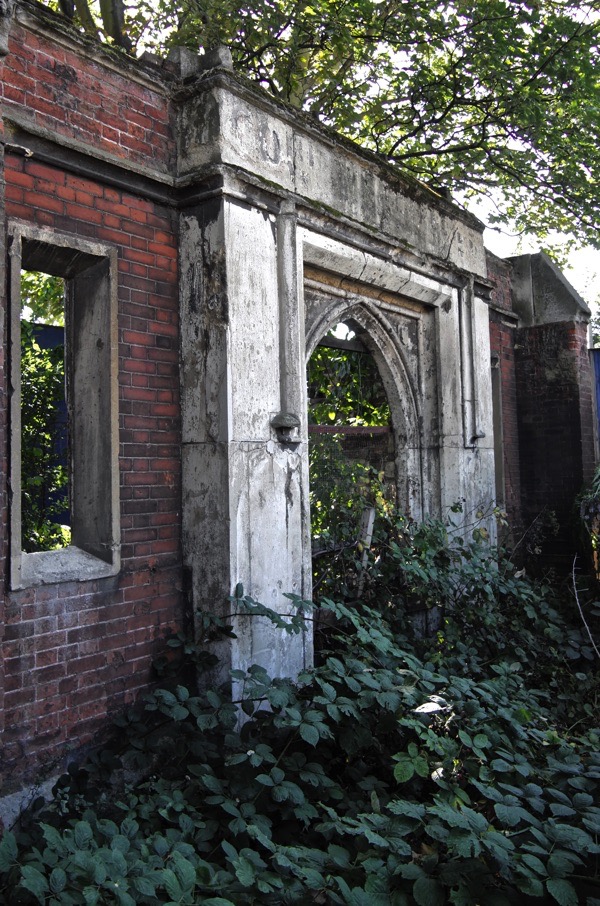
Now those streets are gone, the greater part of them needlessly demolished not by World War II bombs but by post-war planners dreaming of ‘green spaces’ and ‘radiant towers.’ Yet incendiary bombs did fall close to St Dunstan’s church onto the site of Worcester House. They destroyed a Baptist chapel which, when it was built in the eighteen forties, had been only a few yards along the road from the then-just-surviving gate-house to ‘King John’s Palace’. The chapel’s mock-Tudor doorway alone still stands (carefully preserved on the edge of the Crossrail excavation area). I suspect that increasing numbers of people may think this nineteenth century remnant is a legacy from medieval times – King John lives!
A similar illusion is also available in the heart of the City Farm just down the road, on what was once the south side of Worcester House’s grounds, near the Colets’ home. Here, in the eighteen sixties, a grand, Congregationalist church was built in the fashionable Gothic style. It too fell to firebombs early in the War. Today, sacks and seed boxes are piled up and free-range chickens peck round the stone wall and arched doorway that is all that remains. So battered have these not-very-ancient structures been, by misfortune, abandonment and the weather, that it is quite possible to believe that you are gazing at something far older – and the long-ago grand people of Stepney do not seem so far away.
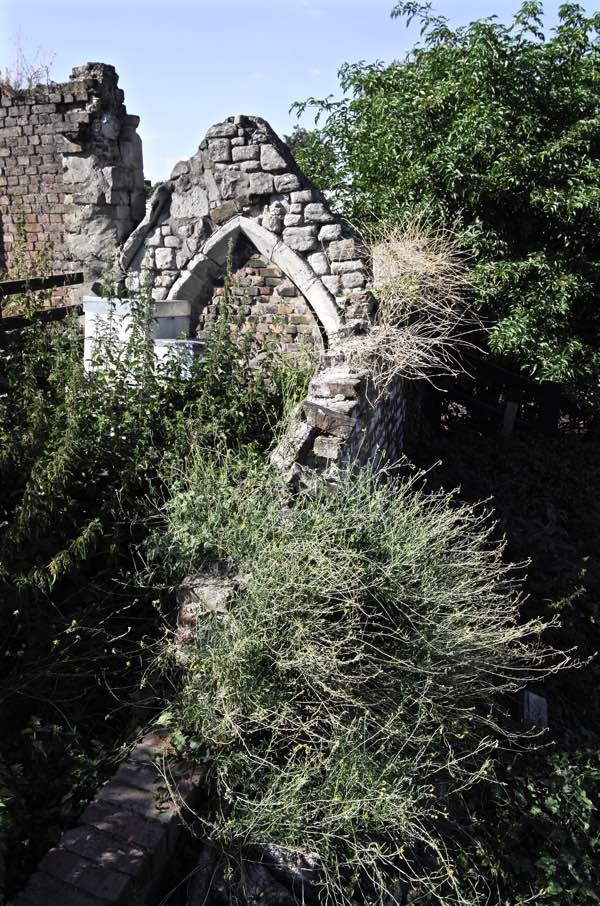
Old stone wall at Stepney City Farm
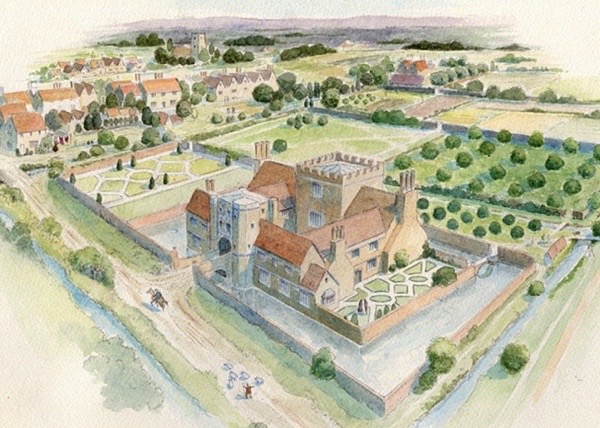
Reconstruction of the Stepney Moated Manor by Faith Vardy (Copyright © MOLA from “Stepney Green: Moated Manor House to City Farm” published by TfL)
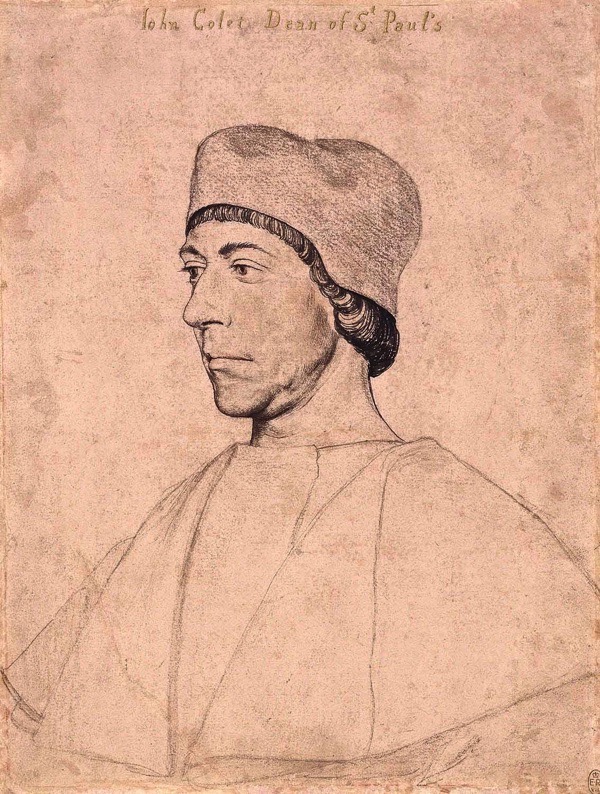
Dean Colet by Hans Holbein the younger
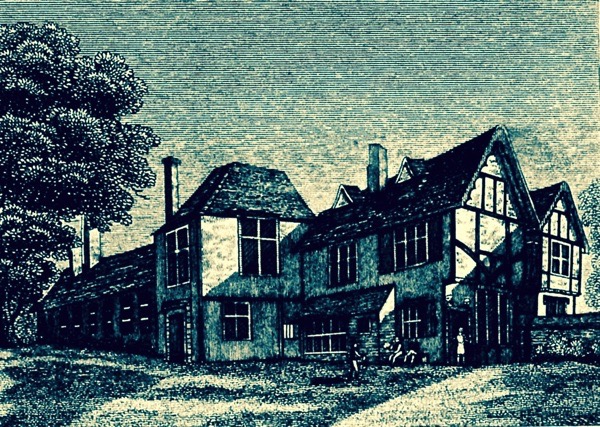
Dean Colet’s house, c.1790
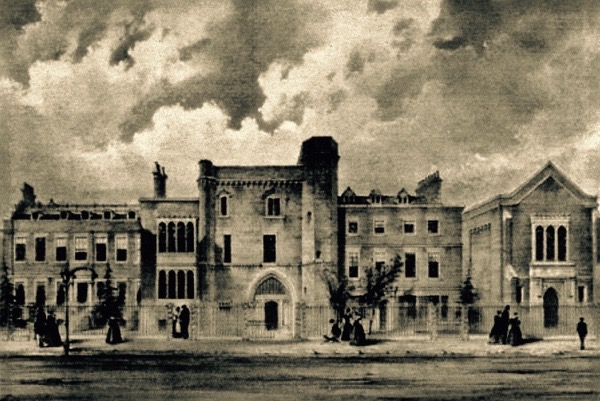
The Baptist College, 1840
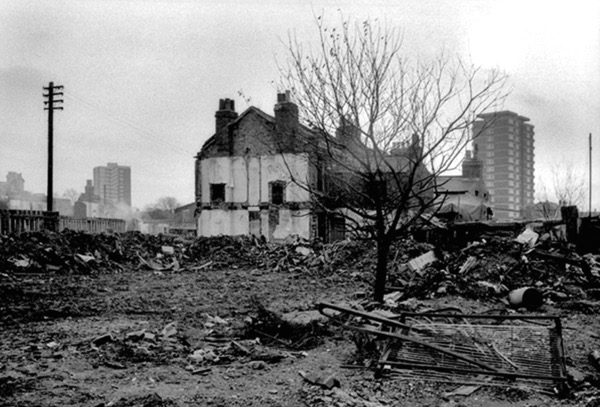
Gloomy Sunday by John Claridge (Stepney in the sixties)
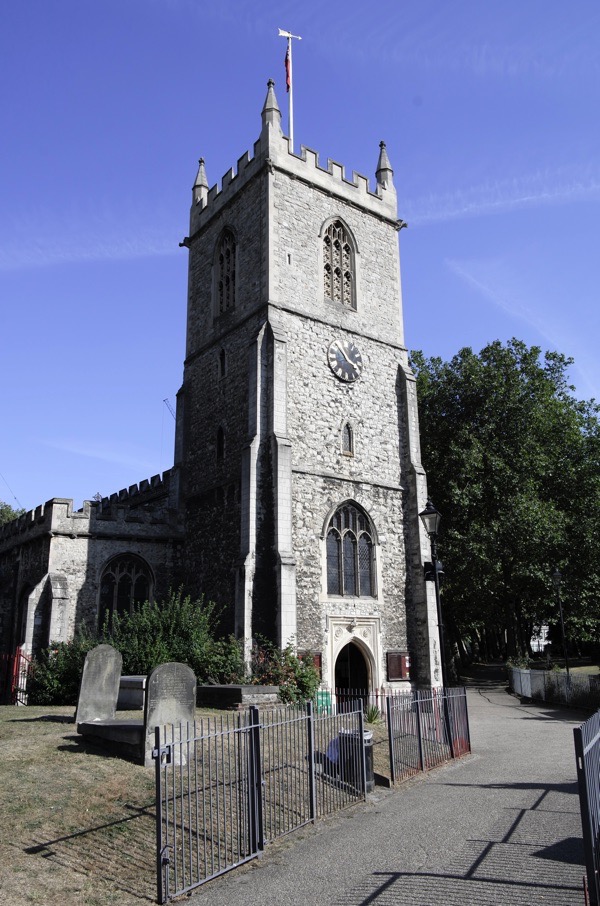
St Dunstan’s church
On Thursday 15th September at 8pm, Gillian Tindall discusses her work and reads from ‘The Tunnel Through Time’ at Libreria, 65 Hanbury St, E1 5JP, which is positioned – appropriately enough – directly over a Crossrail tunnel. In her new book, Gillian explores the history of the new Crossrail route which turns out to be only the latest scheme to traverse an ancient path across London’s buried secrets and former fields. Click here to book your free ticket
You may also like to read about
Where The White Chapel Once Stood
Novelist & Historian of London Gillian Tindall takes over as guest author this week in celebration of the publication of her new book, A Tunnel Through Time, A New Route for an Old London Journey by Chatto & Windus.
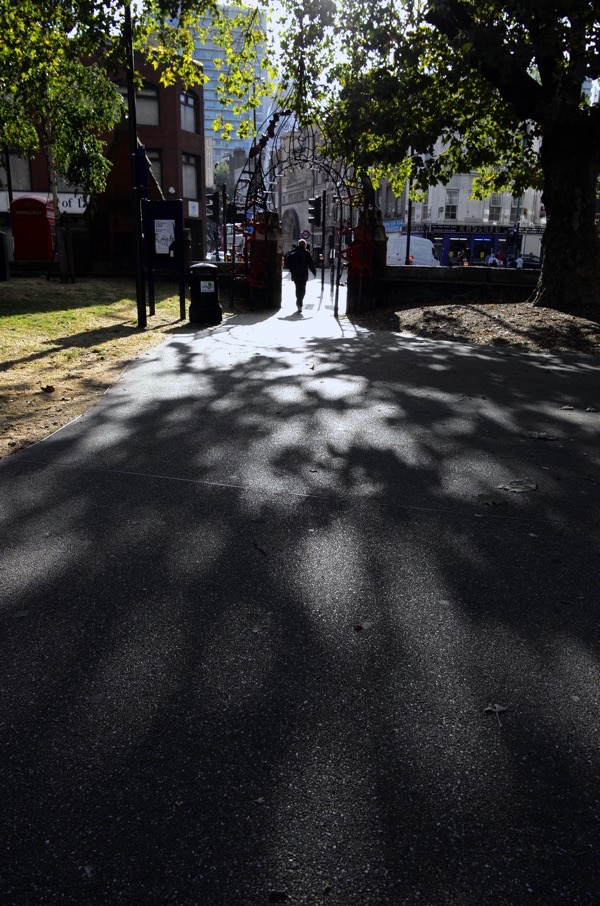
Altab Ali Park, Whitechapel
- “Oranges and lemons, say the bells of St Clements,
- You owe me five farthings, say the bells of St Martins.
- When will you pay me? say the bells of Old Bailey.
- When I grow rich, say the bells of Shoreditch…”
- “Here comes a candle to light you to bed,
- And here comes a chopper to chop off your head…”
- “Sticks and an apple, say the bells of Whitechapel…”
These lines may have been first written down in the eighteenth century, but it has been suggested that their origins lie in the tit-for-tat executions which accompanied the Reformation in the sixteenth century:
Like church bells calling from one parish to the next, Crossrail travels eastwards from Liverpool St Station to Whitechapel:
May I suggest that if Whitechapel could only suggest sticks and an apple, it was not a very salubrious neighbourhood even then?
From Aldgate, the eastern gate of the City, Whitechapel High St runs for a mile to the point where Mile End Rd starts and was long known as ‘the back door to London.’ In the fifteenth century, when a group of young noblemen on a night out in Whitechapel got into an argument with local lads which became a mass brawl, three commoners ended up dead. At that time, gentlemen usually carried daggers and no nobleman got punished.
A century later, in the Elizabethan era, there were taverns all along Whitechapel High St and in Aldgate stood the Red Lion playhouse where Shakespeare appeared early in his career. The London commentator, John Stow, complained that the street was ‘pestered with cottages and alleys’ and the fields where he had played as a child were being built over.
Three hundred years more and these dense, squalid side streets became notorious as locations of the Whitechapel Murders. In the mid-twentieth century, Whitechapel acquired new notoriety in the form of the nefarious activities of the Kray twins at The Blind Beggar, even though neither of these sensation narratives, endlessly milked today for tourists, have much to do with the reality of life in the East End.
Whitechapel has a history of mixed fortunes. Its location near both the City and the Docks, ensured that, thanks to expanding trade, many people were making a good living there in the eighteenth century. In the Georgian era, sugar refiners, rope and sail-makers, timber merchants, gun-makers, bell-founders and skilled engineers lived and worked in Whitechapel, and they were well-to-do people. Among them were Fellows of the Royal Society and authors of books on navigation for the expanding world. Captain Cook and his family had a house just beyond Mile End in the seventy-seventies, disgracefully demolished by the local authority in 1958.
Where, you may ask, did these respectable folk attend church, as they surely must have done? For centuries, the church for the huge parish of the’Tower Hamlets,’ when it contained little more than small farming settlements and a few isolated grand houses, was St Dunstan’s at Stepney. Yet already, in the Middle Ages, there were a significant number of people living just outside the City gate who did not want to trek through the mud to Stepney in winter. It was to accommodate them that a small chapel of ease was built of stone-rubble near Aldgate in the thirteenth century, rebuilt a hundred years later, given a coat of white limewash and dedicated to ‘St Mary Matfelon.’ This was the long-enduring White Chapel, which, standing out from afar, was to give its unofficial description to the place.
By the late seventeenth century, with Charles II on the throne and the old City recently burnt out in the Great Fire, it was obvious that the population of the Tower Hamlets was growing fast and one church was not enough. The parish of St Dunstan’s was divided into nine, with new churches built and St Mary’s rebuilt again, in red brick this time, to provide space for the by-now very substantial population of Whitechapel. The land round the chapel, which had unofficially received hundreds of bodies already – including probably that of Charles I’s executioner, Richard Brandon – now became a prestigious local graveyard. Sir John Cass, founder of the Stepney school that still bears his name was buried there, and so were members of the Cooke family, a distinguished clan with governmental connections and a coat of arms.
The Maddocks, another armigerous local family who were prosperous timber merchants just off Cable St, also paid for an elegant tomb of their own. Into it, between 1774 and 1810, went Nathan Maddock and his wife Elizabeth, both only in middle life, a daughter of thirteen, a sister-in-law of twenty-five, and her son when he was seventeen. It is a relief to find that Richard Maddock (who did not actually live in Whitechapel any longer but grandly in St James) was seventy when he died, and his sister seventy-nine. A James Maddock died aged nineteen, but that same year another James in the same family was negotiating the deeds of land in the area on which he intended to build and he appears to have lived so long that the tomb was full before it could accommodate him.
How do I know all this? Because the tomb, complete with a worn crest of stone feathers and a ‘demi lion rampant,’ is to be found on the site of the old churchyard to this day. It is one of only two sarcophagus tombs that have survived the clearances which took place when the ground was shut for burials in the eighteen-fifties, when the church was rebuilt for the third time in 1877, redone again after a fire in 1880, and when bombs destroyed it in 1940. With its button-lidded top, the tomb looks exactly like an enormous soup-tureen for a family of giants with a rather pretentious taste in crockery.
On seats nearby, on a grassy bank that conceals a mountain of blitz rubble, and vestigial stone walls marking the outlines of two by-gone churches, City workers eat takeaway lunches, young men smoke and look bored, while heavily-shrouded young women confer over pushchairs. Whether they admire the tomb, realise what it is or simply ignore it, I cannot say.
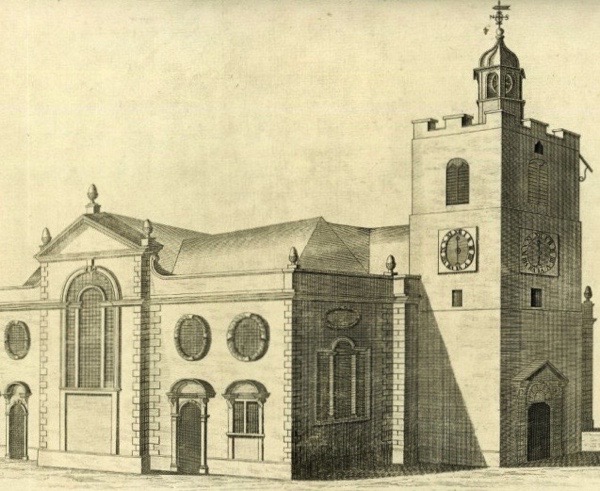
The seventeenth century incarnation of the St Mary Matfelon, the White Chapel
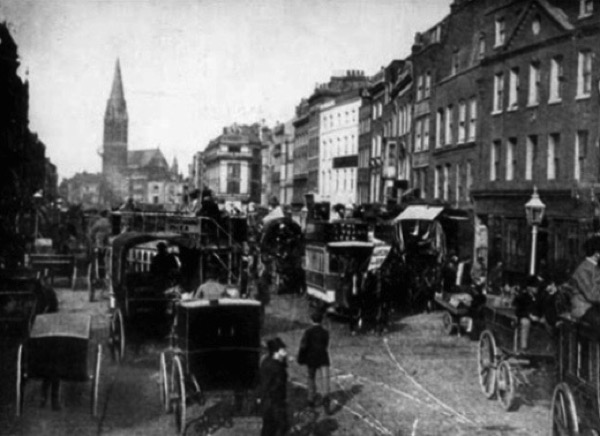
White Chapel seen from Aldgate in the early twentieth century
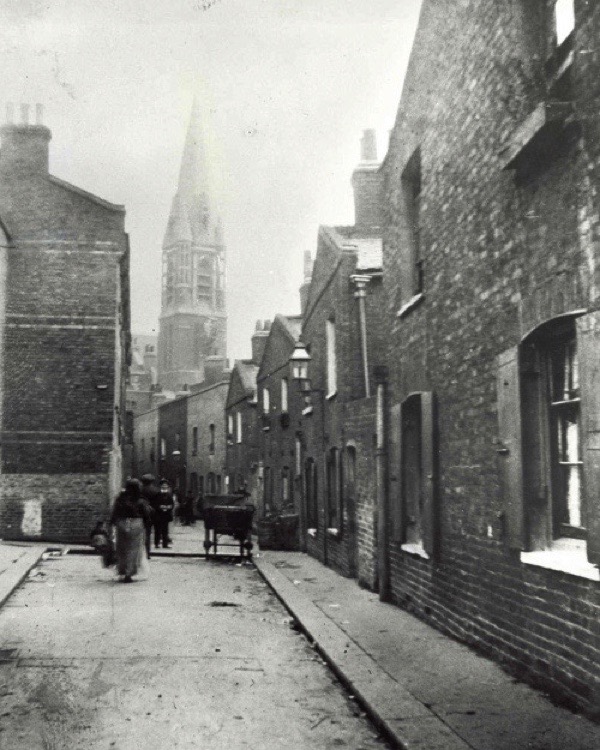
St Mary Matfelon, the White Chapel, seen from Green Dragon Yard in the nineteenth century.

White Chapel seen from the east in the early twentieth century
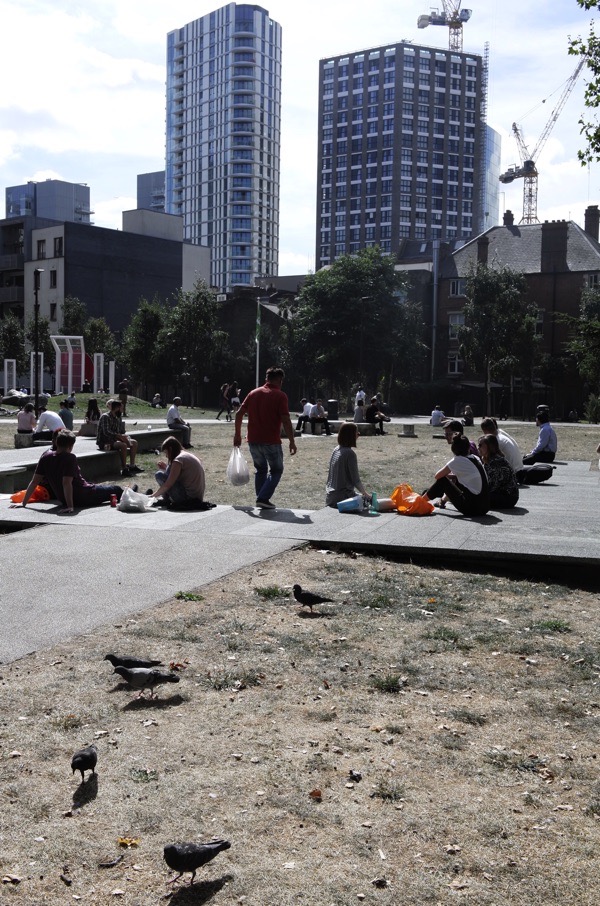
The site of the White Chapel in Altab Ali Park
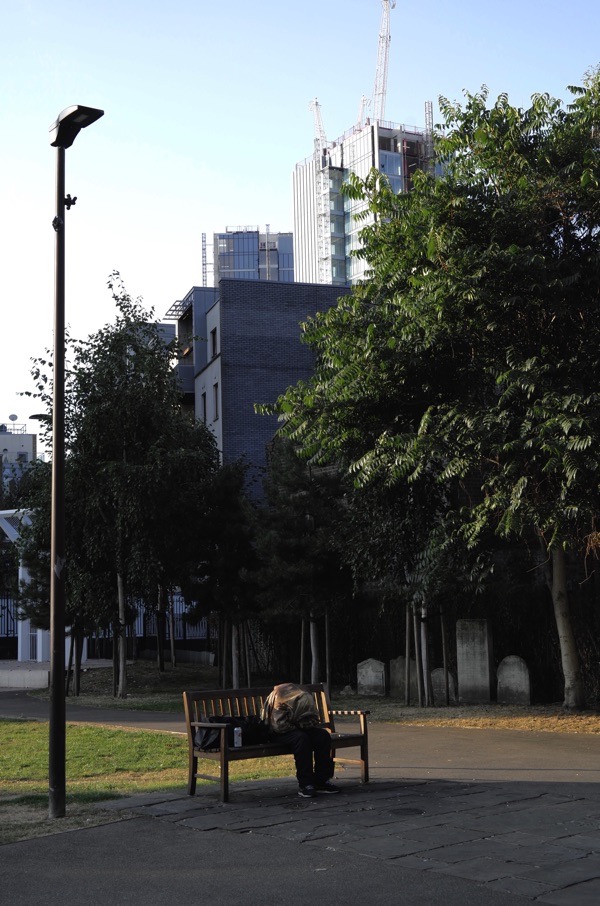
In Altab Ali Park
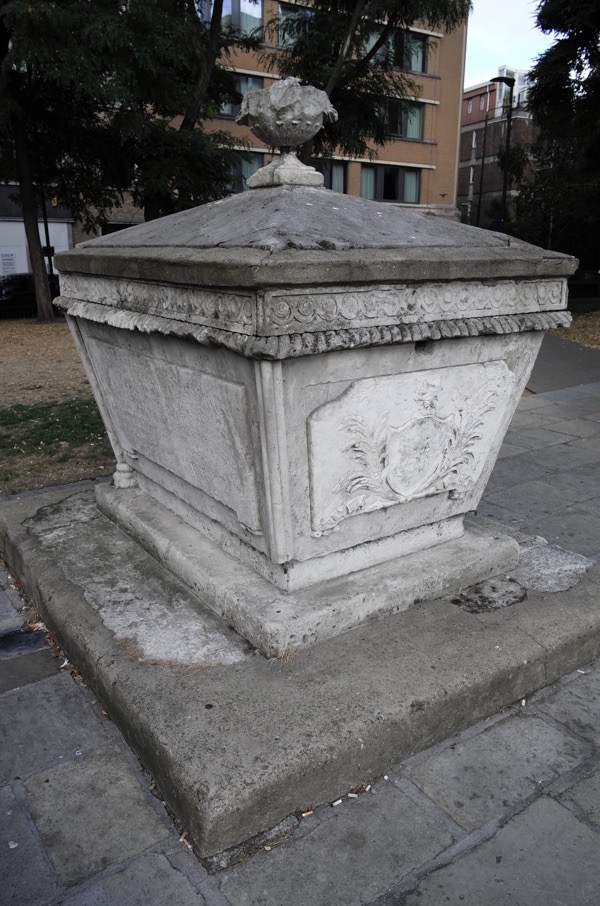
Tureen Tomb for the Maddock family in Altab Ali Park
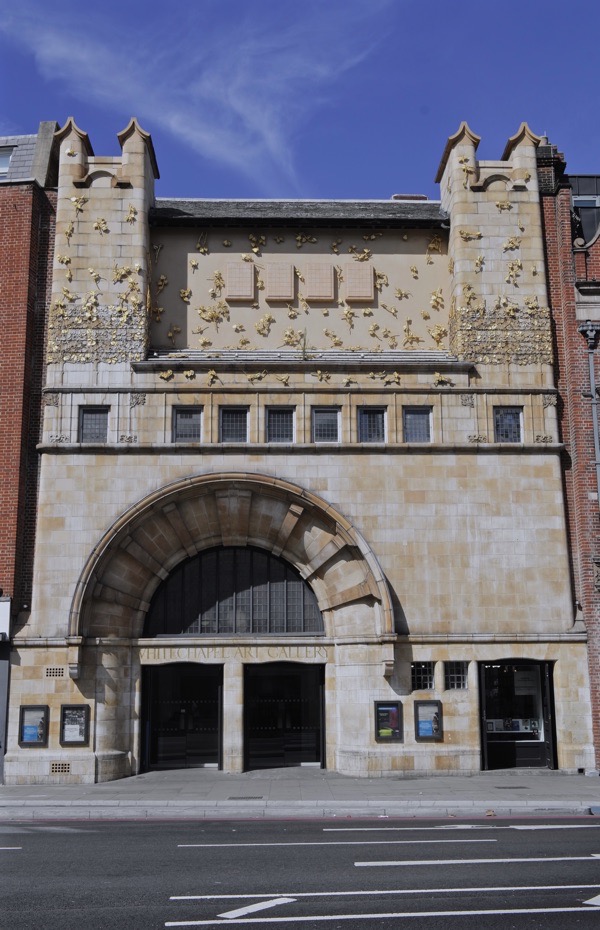
Whitechapel Art Gallery
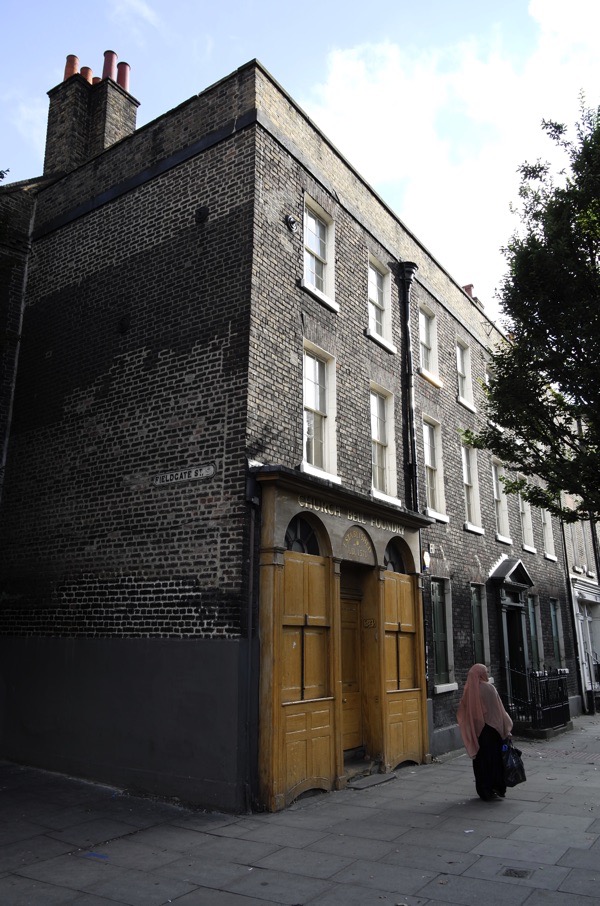
Whitechapel Bell Foundry
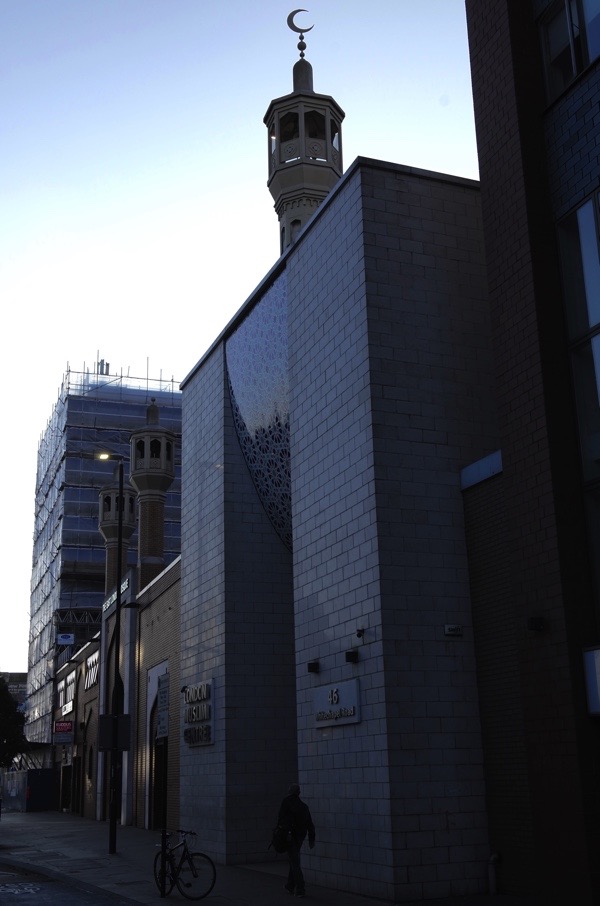
East London Mosque
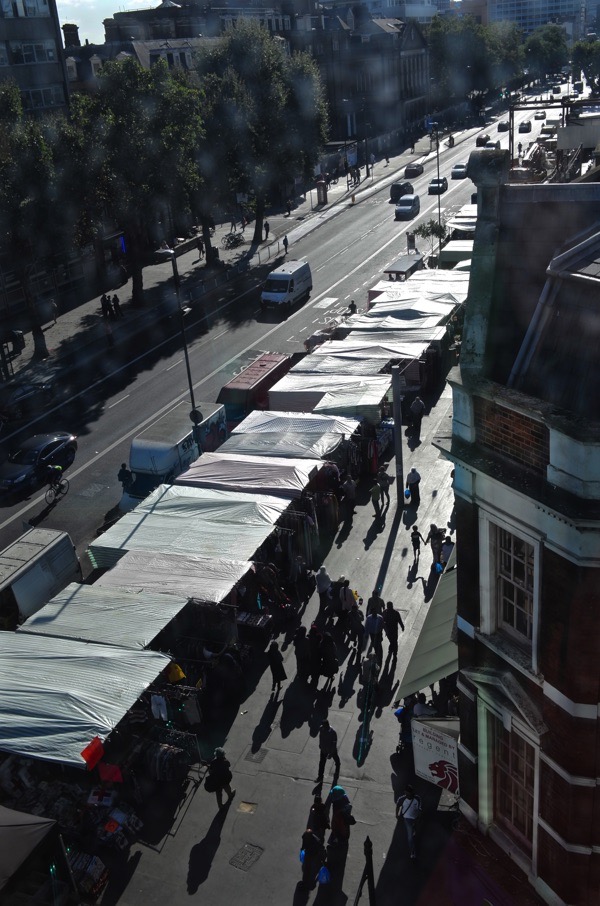
Whitechapel Market
On Thursday 15th September at 8pm, Gillian Tindall discusses her work and reads from ‘The Tunnel Through Time’ at Libreria, 65 Hanbury St, E1 5JP, which is positioned – appropriately enough – directly over a Crossrail tunnel. In her new book, Gillian explores the history of the new Crossrail route which turns out to be only the latest scheme to traverse an ancient path across London’s buried secrets and former fields. Click here to book your free ticket
You may also like to read about
Phil Maxwell at the Royal London Hospital
Phil Maxwell’s Whitechapel Market
Sir George’s Home for Respectable Girls
From Old Bedlam To Liverpool St
Novelist & Historian of London Gillian Tindall takes over as guest author this week in celebration of the publication of her new book, A Tunnel Through Time, A New Route for an Old London Journey by Chatto & Windus.
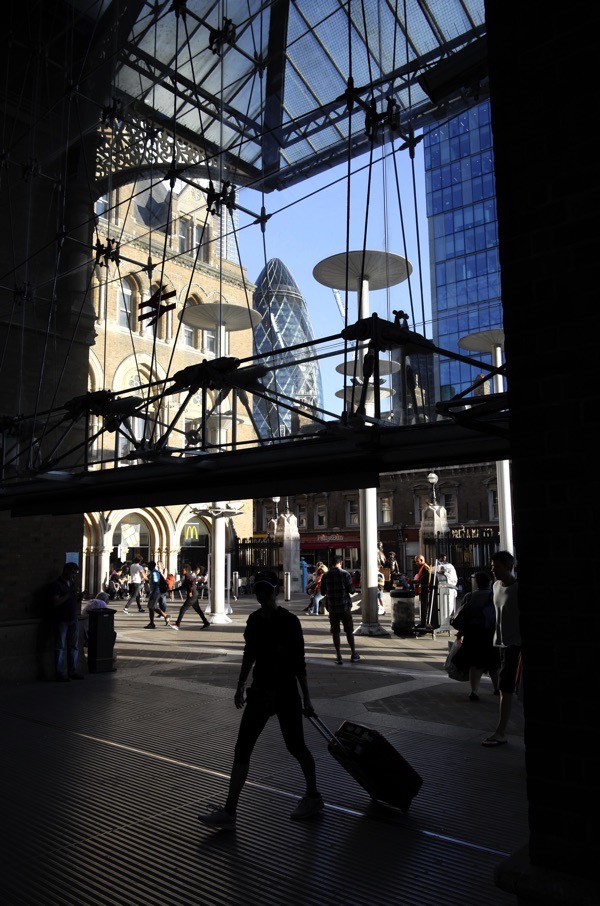
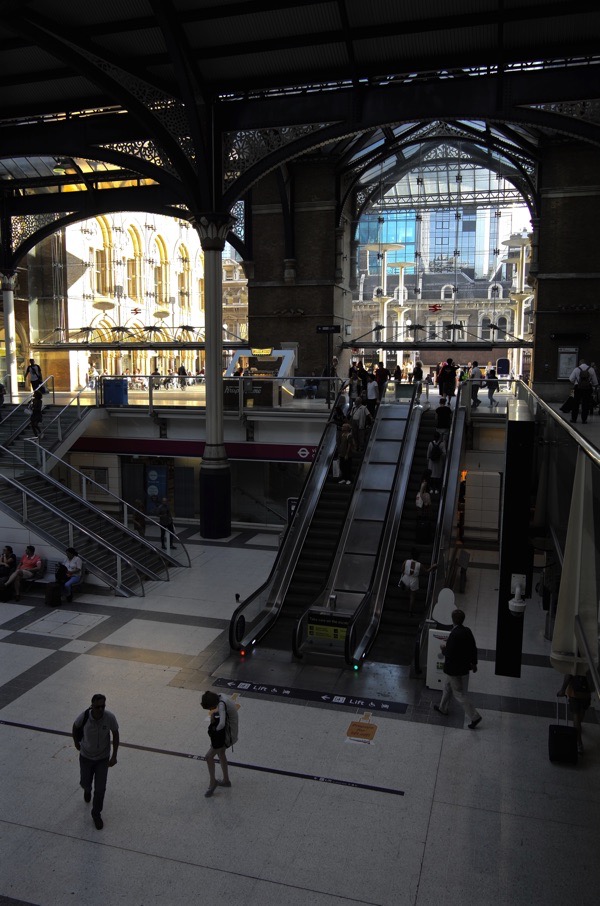
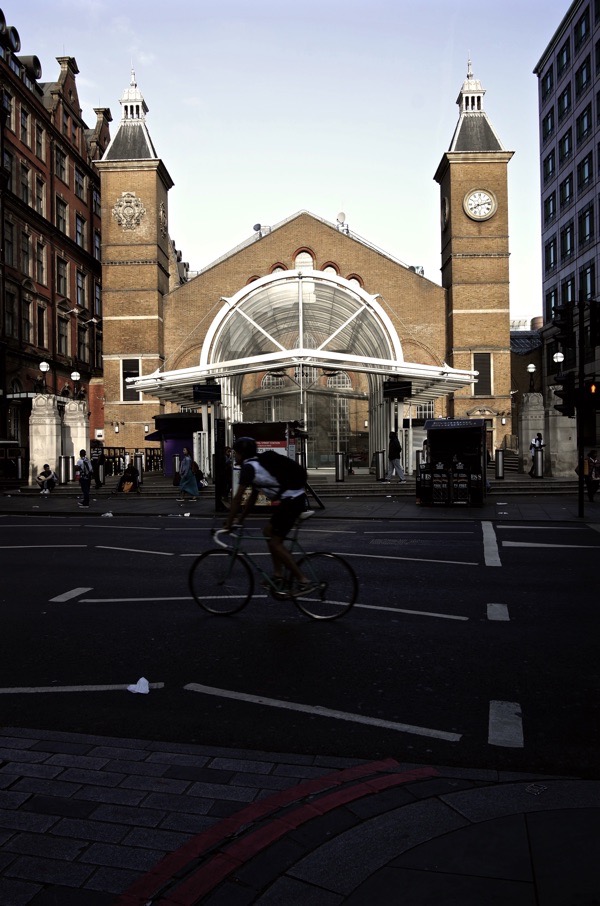
Liverpool St Station
The central section of the Crossrail line is designed to carry passengers swiftly from Paddington Station in the west to Liverpool St in the east with only three stations in between. Yet while Paddington is one of the oldest of London’s main termini – there has been a station there since the eighteen-thirties – Liverpool St Station is the newest. When the first Metropolitan line train made its way triumphantly from Paddington as far as Farringdon in the eighteen-sixties, it could – for a brief while – go no further, because the heart of old London was a railway-free area, as the City fathers wanted it.
But in a Victorian era obsessed with progress and modernity this could not last. Once a North London Line commuter station had been built in an inconspicuous side street north of London Wall that was inappropriately called Broad St, the Eastern Counties Railway saw its chance. By 1870, the Company had acquired a large swathe of adjoining land as a site for a new station in another minor side street. This was Liverpool St, a cobbled lane which had for centuries been called ‘Old Bedlam’ after the mental hospital that had originally stood there, but it had been re-named in the late eighteen-twenties after the Prime Minister of the time. Soon the two stations stood side by side, occupying a huge space – about seven hundred feet long and four hundred feet wide.
Underneath the shunting lines and coaling bays disappeared a Tudor mansion, a theatre, a gas works, breweries, a grid of tiny, ancient streets, and the trading places and homes of the small businesses and artisans that had been settled there for two centuries. Bishopsgate was forever changed, losing its traditional identity, and becoming an annex to the City, which by-and-by absorbed it.
So, through sheer chance, the City of London’s mainline station is called after a forgotten politician and stuck with the name of a west coast port at the other end of the country. Liverpool St Station has traditionally served east coast ports, notably Harwich, Yarmouth and Grimsby, but you cannot – of course – go from it to Liverpool which is far away in the north west. I am sure I am not the only person who, as a child, was confused by this. On my youthful mental map of Britain, I vaguely located Liverpool somewhere up the coast from Skegness. On the rare occasions I was taken to the station, it always seemed to smell of fish and comprised two separate parts, so that it was difficult to find your way around. What a pity the name of the cobbled side street along side its frontage was ever changed. ‘Old Bedlam Station’ would have been a much more resonant name.
As those who have been following the Crossrail excavations will already know, this cobbled side-street hid, till very recently, the last remnant of a large cemetery. Early last year, the newspapers were full of ‘discoveries’ there, although the Museum of London archaeologists employed by Crossrail knew quite well that they would find human remains – the only question had been ‘How many?’ In fact, there were two-and-a-half thousand bodies in this small segment of land, considerably more than predicted. Clearly the cemetery had been used and reused since it first opened in Elizabethan times. Not for mad paupers, as some of the lurid tales would have us believe, but simply as an extra graveyard for ordinary parishioners of the City churches, generation after generation.
Ever since the station was built, the cab rank has been located inside Liverpool St itself – although it is currently shut to all traffic while the new Crossrail station is being built. Old photographs show a line of horse-drawn vehicles which, by the early twentieth century, were known in cabbies’ slang as droshkis. At that time, many cab-drivers were Russian-Jewish immigrants. They or their families had sought refuge in England from the pogroms that were visited upon the Jews of Poland, the Baltic States, Belarus and the Ukraine.
A generation later, motor-taxis replaced the horses, but the Jewish tradition of London cab-driving persisted. One dark evening early in 1939, a line of taxis was waiting as usual. The evening rush-hour was over. Most customers had already returned hours ago to their suburban homes or were up in the West End for an evening out, and some of the drivers were thinking of heading home to Hackney or Homerton. Then they noticed, standing around in the entrance to the station, a group of about thirty children aged from early teens down to four and five year olds. They did not look like street-children – they were respectably dressed, many wearing hats, and carrying small suitcases, knapsacks or bags.
The cabbies conferred across one front-of-cab to the next. They were well aware what was going on in Europe that year and they guessed who the children were at once. They had caught sight of these groups before, but always being shepherded from the station by adults. Eventually, after some muted discussion, the driver who spoke Yiddish best (having being brought up by his grandmother) approached the group and addressed the eldest-looking girl.
“We think you are Jewish children arriving off the boat-train from Harwich. We are taxi drivers and many of us are Jewish too. Were you expecting someone to come and meet you?”
They were. But it had not happened. Some mistake, some message not getting through. Perhaps they were not expected after all? Perhaps not wanted? The children were stoical. They had been urged to behave well on their long journey across Europe but they looked very tired, and some of the smaller ones had dirty faces and been crying. The taxi-drivers conferred. One of them went to telephone his rabbi. The rabbi phoned another, who phoned someone he knew who worked with the Council for German Jewry. This had been set up in 1936 as an off-shoot from the Central British Fund that assisted immigration to Israel, when it was becoming clear that getting children away from Nazi persecution was a matter of urgency.
Wheels began to turn slowly. Someone, the drivers were told, would soon be on his way, though as he lived in Finchley it might take a little while… Meanwhile, the children were cold and hungry. A posse of drivers awaited the hastily-summoned ‘Someone’ to offer free transport as necessary, while another posse had a whip-round and took the children to a kosher café for something to eat.
So there was a happy end to this particular kindertransport story. The children were finally scooped up, sheltered for the night and distributed to foster homes. They must all be old, the ones that are still alive. Statues commemorating them and over ten thousand other children saved in those years by the Central British Fund and the Council for German Jewry, by Save the Children, and by the free-lance efforts of the late Nicholas Winton in Prague, are to be found in Liverpool St Station today. Some of their actual baggage, including cherished stuffed toys and especially precious objects, such as a pair of skates, are preserved in the Imperial War Museum.
The cabbies involved must, I assume, all be dead and gone by now. I first heard this story years ago from a friend of Whitechapel Jewish origin, now deceased, who had heard it as a child. Then, a few years ago, by chance I heard someone recounting it on BBC Radio, but I did not catch the details that would enable me find any names or date it exactly – so, if anyone can tell me more about those taxi drivers, I would be glad to hear.
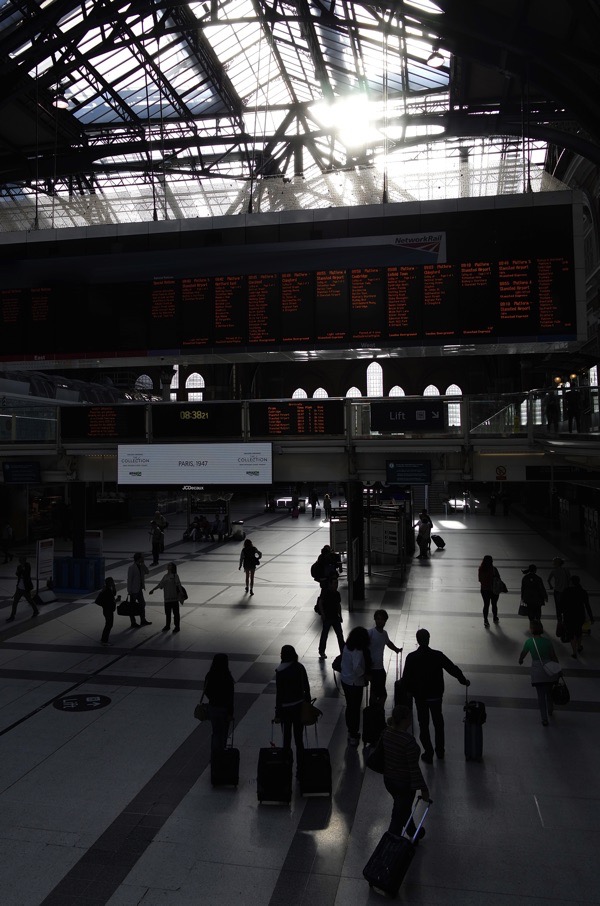
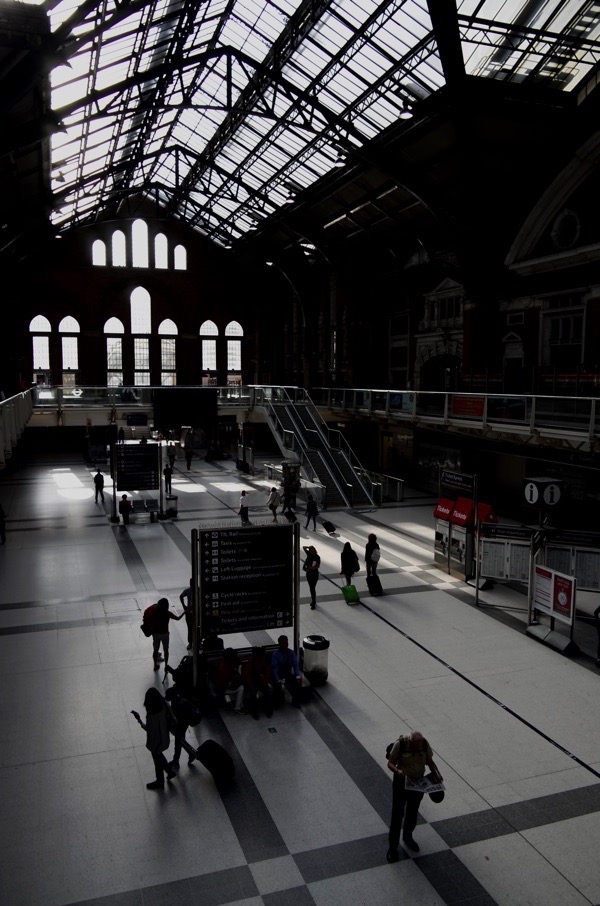
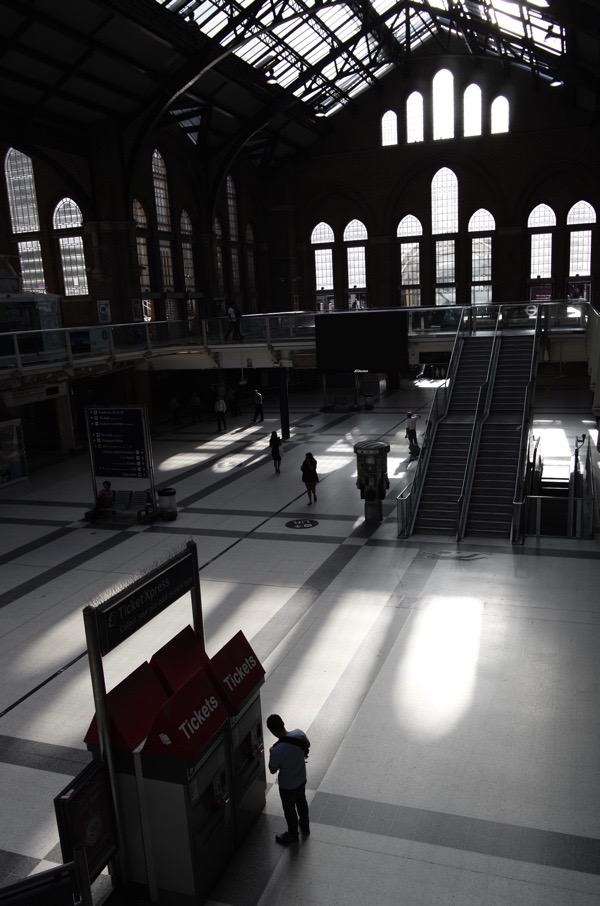
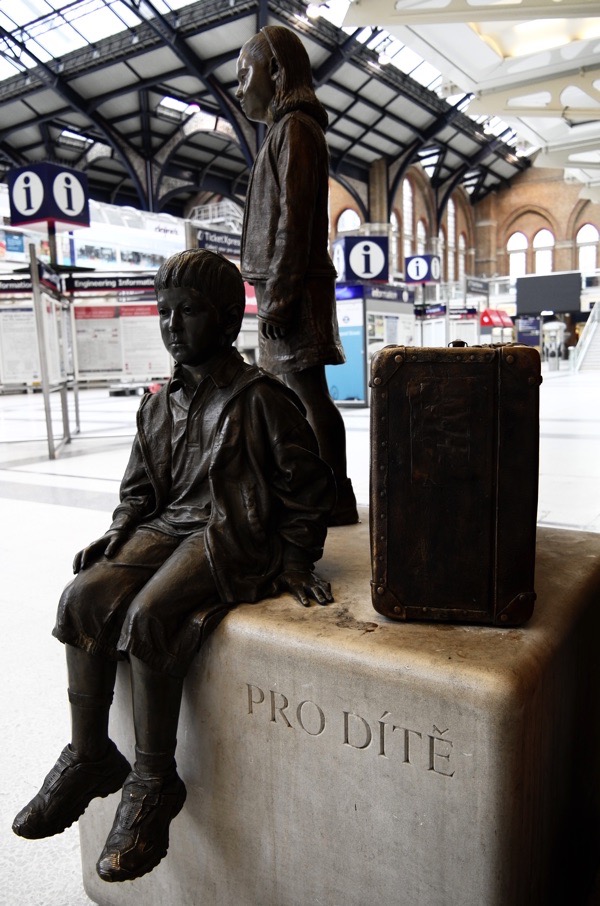
Füre Das Kind by Flor Kent, 2003
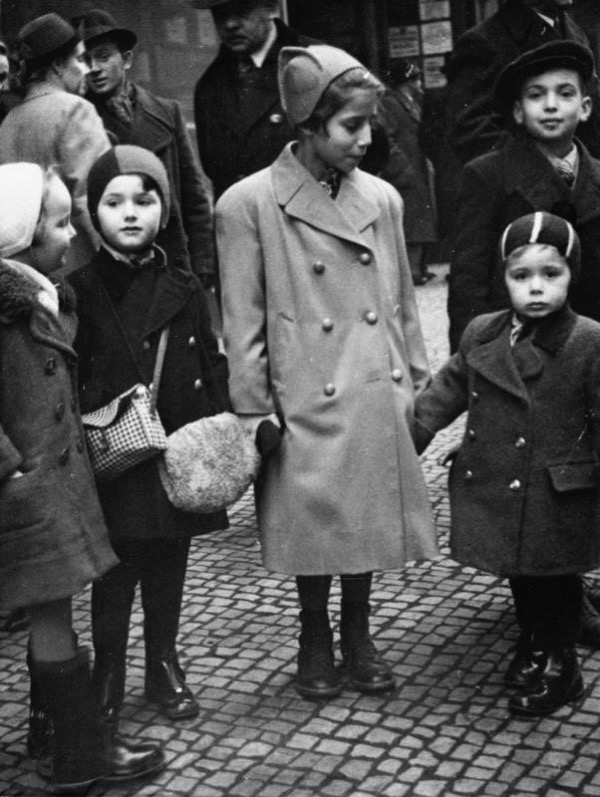
The children of the Kindertransport (Courtesy of Imperial War Museum)

Lore’s rucksack (Courtesy of Imperial War Museum)

Stephie’s puppet (Courtesy of Imperial War Museum)

Herbert’s skates (Courtesy of Imperial War Museum)
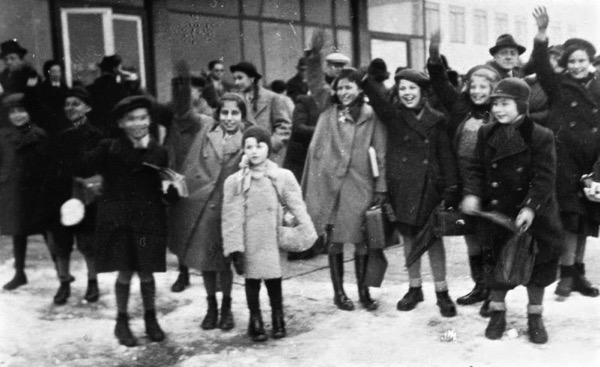
Arriving in the snow (Courtesy of Imperial War Museum)
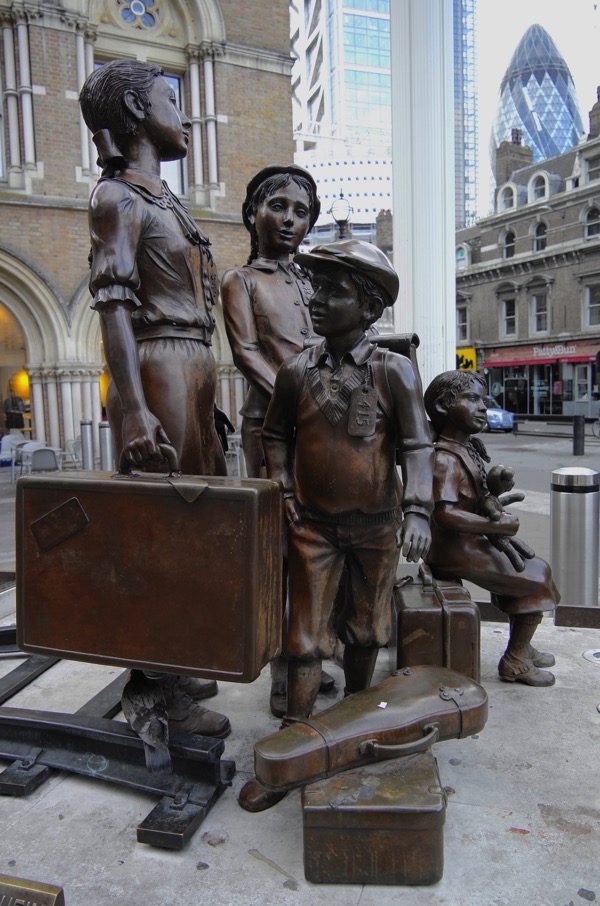
Kindertransport – The Arrival by Frank Meisler, 2006
On Thursday 15th September at 8pm, Gillian Tindall discusses her work and reads from ‘The Tunnel Through Time’ at Libreria, 65 Hanbury St, E1 5JP, which is positioned – appropriately enough – directly over a Crossrail tunnel. In her new book, Gillian explores the history of the new Crossrail route which turns out to be only the latest scheme to traverse an ancient path across London’s buried secrets and former fields. Click here to book your free ticket
You may also like to read about
Smithfield’s Bloody Past
Novelist & Historian of London Gillian Tindall takes over as guest author this week in celebration of the publication of her new book, A Tunnel Through Time, A New Route for an Old London Journey by Chatto & Windus.
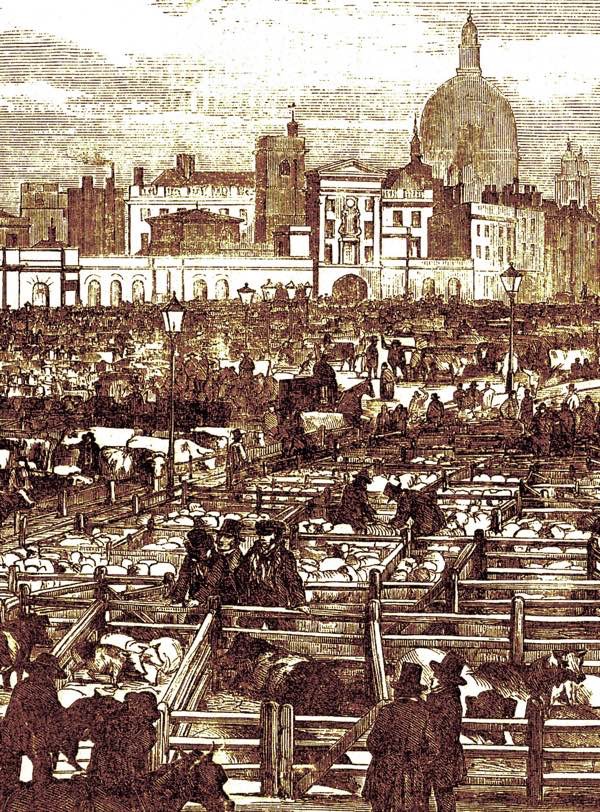
As Crossrail advances from Farringdon towards Moorgate and Liverpool St, it crosses one of the oldest of London’s play-spaces. Smithfield means ‘smooth field’ and, though the Romans called it by a different name, they recognised that this green expanse was too useful to be covered in houses.
By the twelfth century, there was a fair held on Smithfield every Friday for the buying and selling of horses, and a growing market for oxen, cows and – by-and-by – sheep as well. An annual fair was held every August around St Bartholmew’s Day, in front of Bartholomew’s Hospital which had been founded in 1123. This open ground was also much in demand for tournaments – sometimes involving royalty – as well as jousts and other sports, demonstrations, riots, and public entertainments, including executions.
Some of these uses survived into the nineteenth century, long after the walls enclosing the City were reduced to isolated fragments and London itself had swelled and swelled, crossing the river Fleet, covering Holborn, St Giles and Soho with streets, running up through Clerkenwell and swallowing Islington. Moo-ing, snorting and baa-ing herds were still driven on the hoof by men and dogs through these busy streets towards Smithfield, sometimes from hundred of miles away. Similarly, geese and ducks were hustled along in great flocks, their delicate feet encased in cloth for protection. They were all going to their deaths, though they did not know it – till the stench of blood and the sounds of other animals inspired noisy fear in them, as they were driven across the bridges over the Fleet and along lanes whose names already marked their destiny – Cow Lane, Cowcross, Chick Lane and Cock Lane. For seven hundred years, Smithfield was a place of open-air slaughter, ankle deep each market-day in mud, manure and blood. In Great Expectations (written in the eighteen-sixties but set back in time to Dickens’ youth in the eighteen-twenties) young Pip comes across the market and refers to it as ‘the shameful place, being all asmear with filth and fat and blood and foam [which] seemed to stick to me.’
Others besides Dickens were aware, by the early decades of the century, that this chaotic scene was out of place in up-to-date, heart-of-the-Empire, Victorian London. People wrote pamphlets, raised the matter in Parliament and wheels began to turn. By the eighteen-fifties, a modern slaughterhouse was established on one of the last remaining bits of open land between Kentish Town and Islington, and Smithfield was reconstructed as a wholesale meat depot of covered pavilions in iron and glass. This is the Market that is still in use today. Recently, an attempt by the Corporation of London to redevelop the Smithfield General Market for high-rise offices was fought off, successfully making the point that, with the new Farringdon Crossrail station just around the corner, a far livelier use is appropriate. Small shops, workshops and cafés are planned, and the Museum of London is going to be moved there to a much more suitable location than its present ill-designed roundabout.
Yet it was not just beasts who were driven to their deaths in old London. For hundreds of years, until the late eighteenth century, London’s main place of execution was Tyburn, a lonely crossroads along the Oxford road, approximately where Marble Arch is today. At times, the cart carrying its load of manacled prisoners out to these gallows must have crossed paths with unruly crowds of cattle coming in. The main difference was that, unlike the beasts, the men and women in the cart knew what their journey’s end would be.
Long before it was decided to hold hangings in an isolated spot, the obvious place had always been Smithfield, with lots of room for crowds to watch the spectacle and learn the message that disobedience did not pay. One of the first to be made an example in Smithfield was the Scotsman William Wallace, who was hung, drawn and quartered there in 1305, before he was sent north in bits to be exhibited as if he were, indeed, meat from the market. Subsequently, Wallace has been elevated, on shaky evidence, into a national hero and a plangent memorial stands today in front of St Bartholomew’s Hospital. Later in the same century, Wat Tyler, leader of the Peasants’ Revolt marched his men to Smithfield to parley with the king, but after a quarrel he was stabbed and then decapitated.
Common criminals were routinely hanged at Smithfield, a little further to the west ‘under the elms,’ but the best remembered executions are of those who were burned alive for heresy in the Reformation. These are usually called the ‘Marian burnings’, since the great number were Protestants targeted by Queen Mary, the fervently Catholic daughter of Henry VIII’s first discarded wife. But, even before Mary came to the throne and started her crusade to return England to the Old Faith, a few paid the extreme penalty under Henry VIII and his son Edward VI for being too Protestant.
One of these was Joan Bocher, a devout Annabaptist from Kent, who was sent to the stake in Smithfield in 1550. The Vicar of nearby St Sepulcre church was one John Rogers, who was himself a follower of William Tyndale, translator of the Bible into English. Nevertheless, he found Bocher and several others too fanatical for his taste, condoning their burning by order of Edward with the remark that it was a punishment ‘sufficiently mild, for heresy.’ One wonders if he felt the same, five years later, when he was summarily rounded up and sent to the stake for preaching what the new Queen Mary thought was heresy. It is recorded that he went ‘almost gaily’ to his fate, accompanied on his way by his wife and ten children, one a babe in arms. The literal belief, held by almost all such victims of every religious persuasion, that heaven was very near and that their moment of extreme suffering would assure them a privileged place, was clearly an effective morale-booster – as it appears to be for suicide bombers in the our own time.
Burning alive as a punishment for having the wrong ideas died out early in the seventeenth century and the exact location of these deaths at Smithfield was forgotten until one day in March 1849, when a new sewer was being dug across the market not far from the church of St Bartholomew the Great. About three feet down, the workmen discovered stones blackened by fire, ashes, and fragments of charred human bones. Passersby gathered and some took away bits of bone as relics or mementoes, but quickly the site was covered and forgotten again in the reigning spirit of Victorian modernity and what was generally known as Progress.
Progress had its effect upon hangings, which were now restricted to murderers and moved from Tyburn back to the City, outside Newgate Gaol. On hanging days, the bell of St Sepulcre (‘the bell of Old Bailey’ in the traditional song) would toll and the condemned man or woman would be brought out to a crowd of spectators. But, by the mid-century, a number including Charles Dickens – who made sure of seeing several executions himself – declared that the spectacle was degrading and did not act as a deterrent. From 1868, a dozen years after the slaughter of animals had been moved off to the new premises in Islington, hangings took place only within Newgate. The riotous Bartholomew Fair was already a thing of the past and Smithfield’s centuries of bloody history were at an end too.
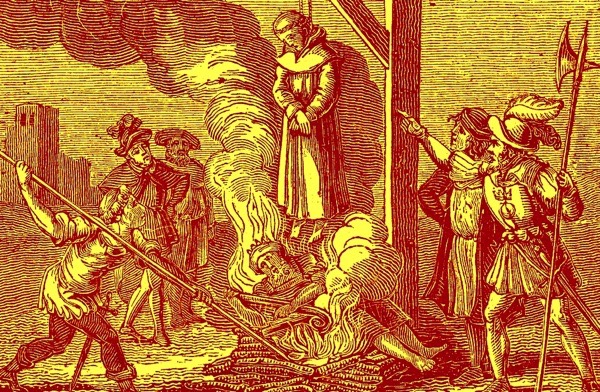
A burning at Smithfield
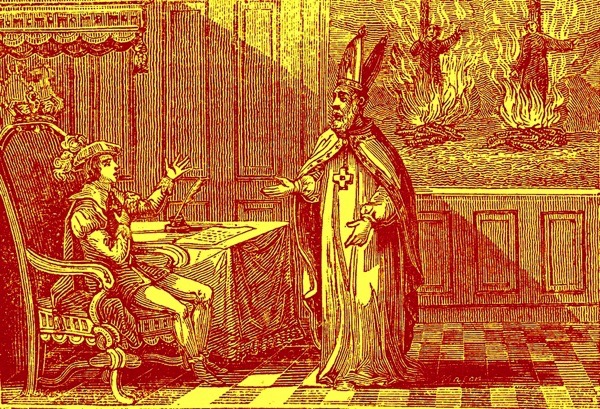
Archbishop Cranmer remonstrates with Joan Bocher, subsequently burnt at Smithfield for heresy
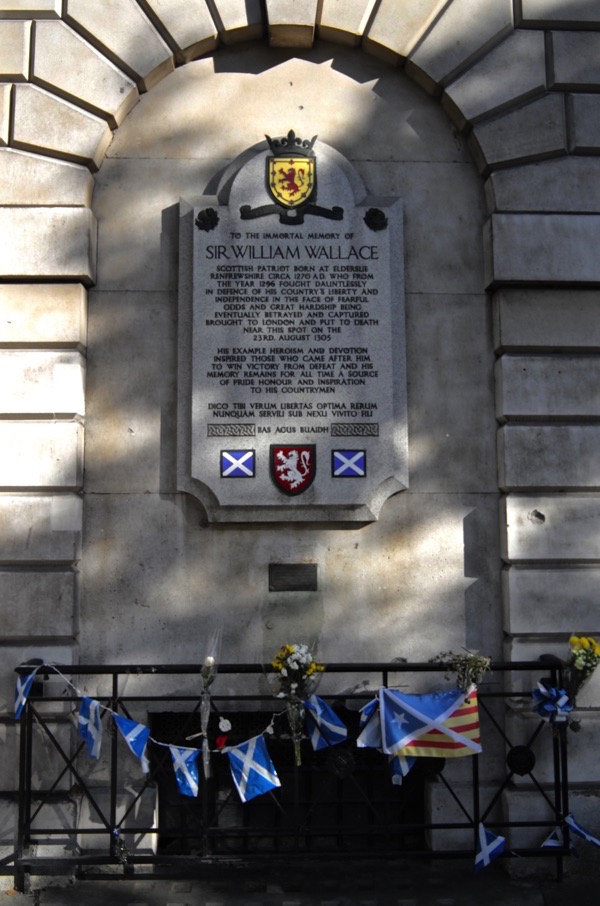
Momument to William Wallace outside Bart’s Hospital
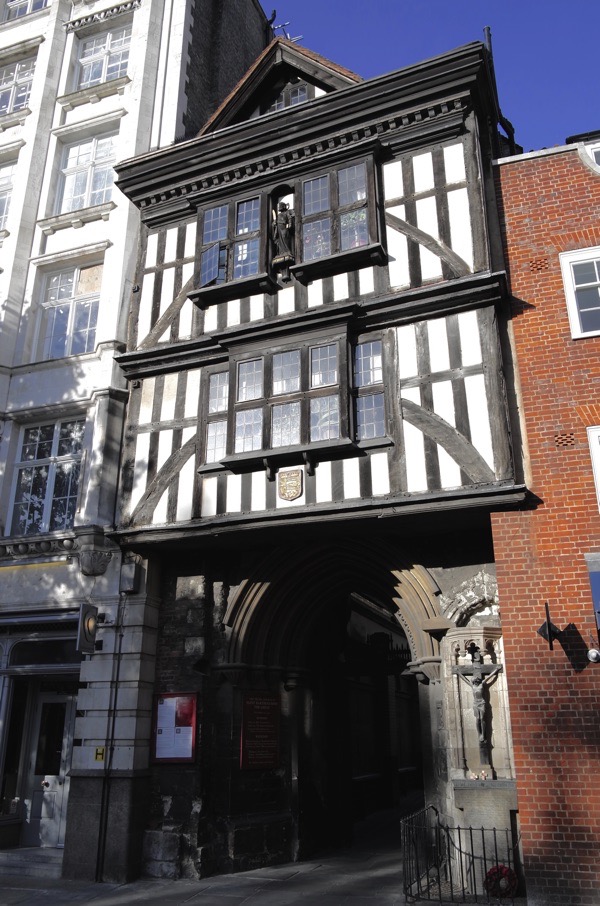
Gateway to St Bartholomew the Great, once the entrance to the Augustinian priory
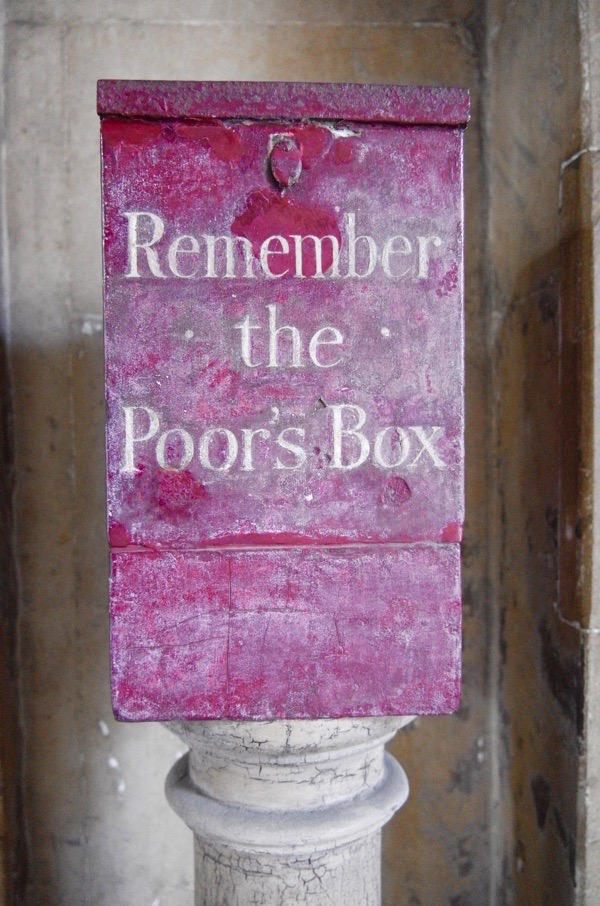
Poor box at Bart’s Hospital
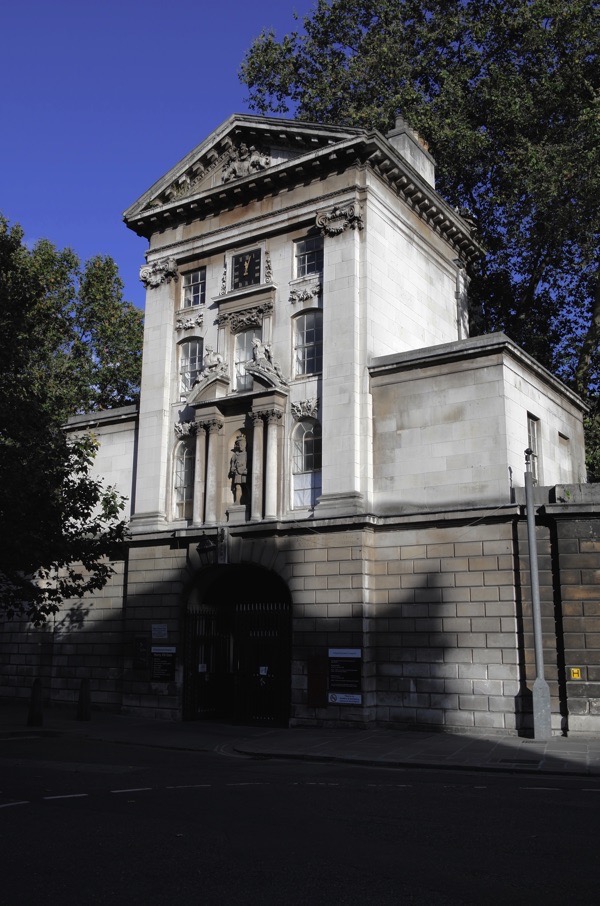
Henry VIII gate to Bart’s Hospital
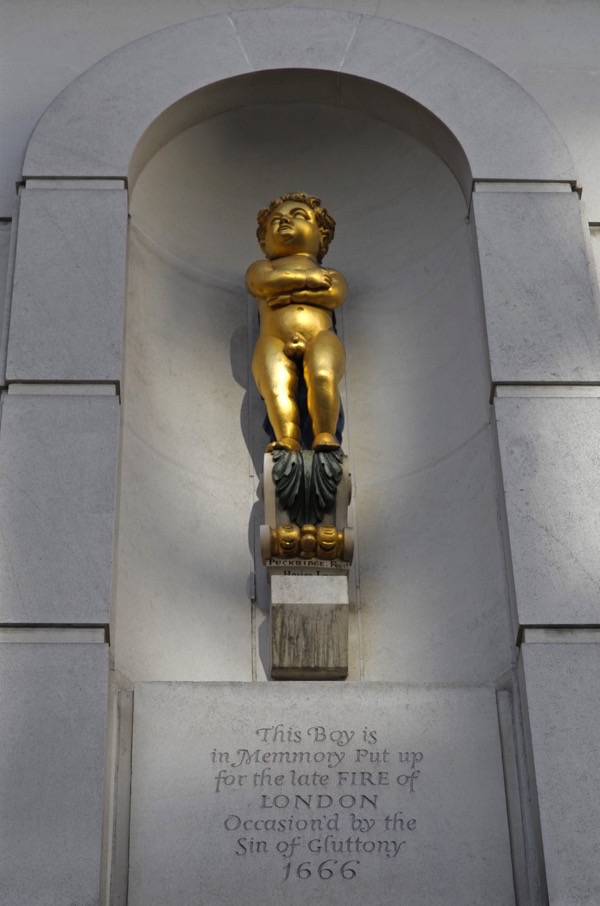
Golden boy on the corner of Cock Lane
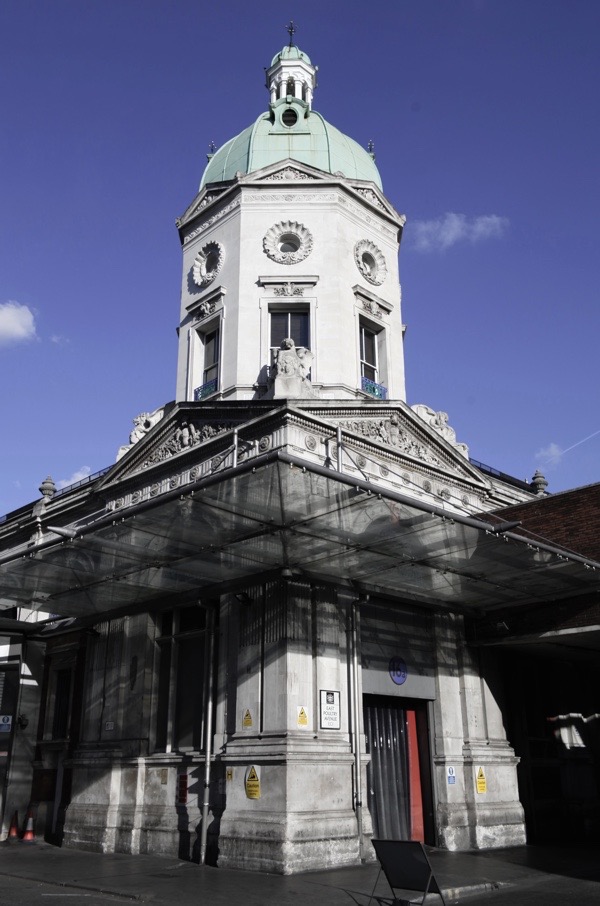
Cupola at Smithfield Market by Horace Jones 1866
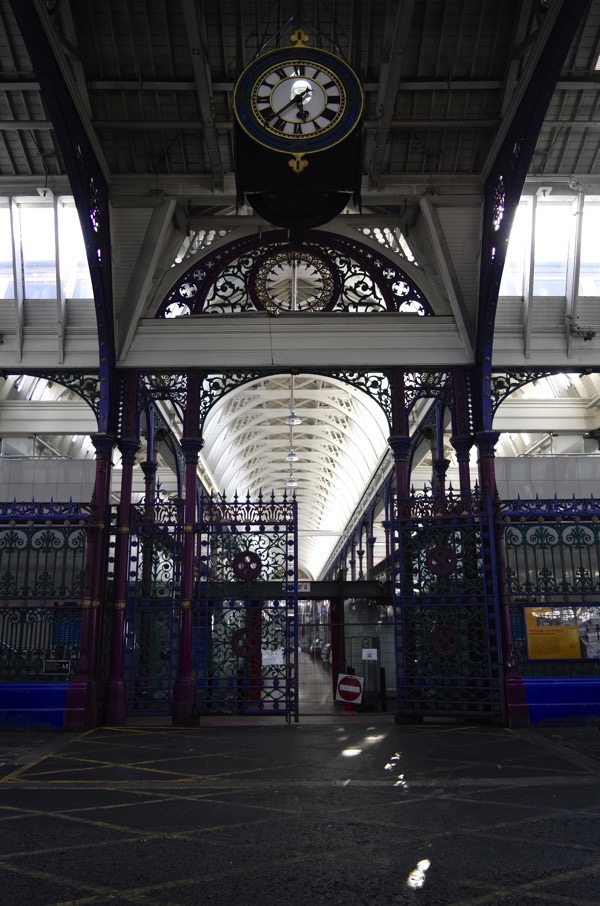
Arcade at Smithfield Market by Horace Jones 1866
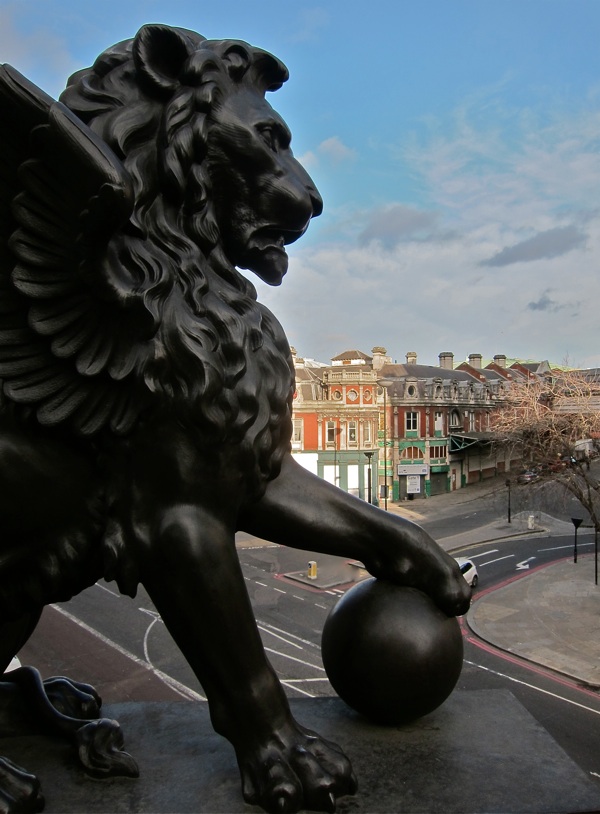
Smithfield General Market of 1868 was recently saved from demolition

Bartholomew Fair by Augustus Pugin & Thomas Rowlandson, courtesy Bishopsgate Institute (Click to enlarge this image)
On Thursday 15th September at 8pm, Gillian Tindall discusses her work and reads from ‘The Tunnel Through Time’ at Libreria, 65 Hanbury St, E1 5JP, which is positioned – appropriately enough – directly over a Crossrail tunnel. In her new book, Gillian explores the history of the new Crossrail route which turns out to be only the latest scheme to traverse an ancient path across London’s buried secrets and former fields. Click here to book your free ticket
You may also like to read about
Smithfield Christmas Eve Meat Auction
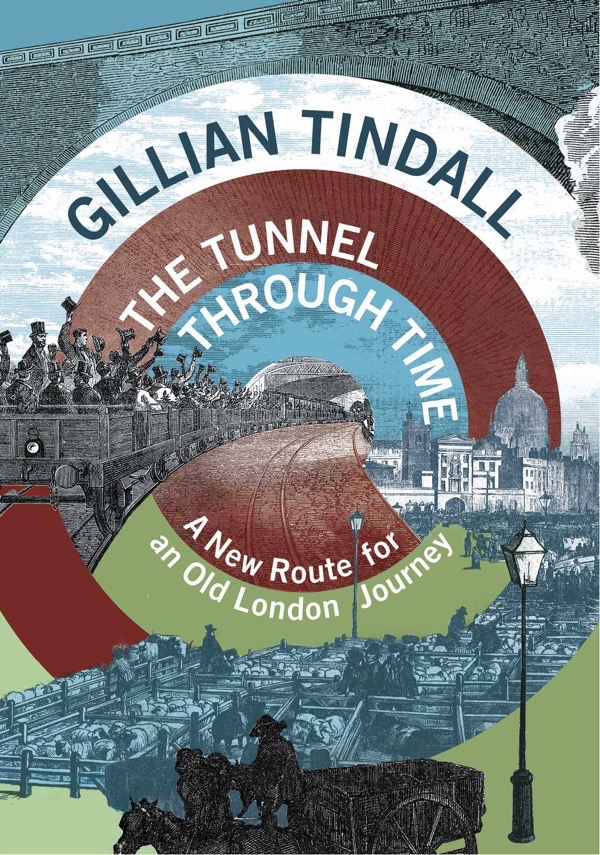
The Tunnel Through Time
It is my delight to welcome the distinguished Novelist & Historian of London Gillian Tindall as guest author for the next week in celebration of the publication of her new book, A Tunnel Through Time, A New Route for an Old London Journey by Chatto & Windus. And thus I leave you in Gillian’s capable hands until my return on Monday 12th September.
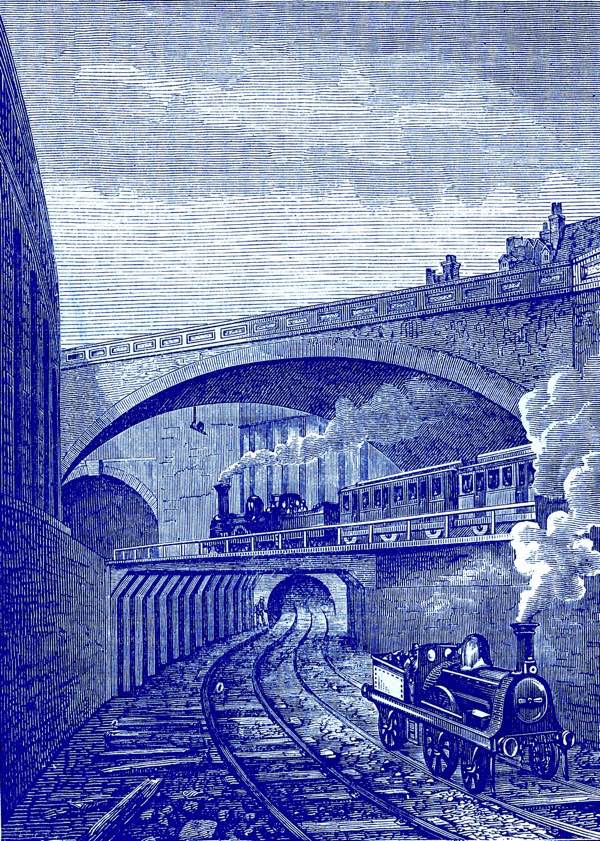
The Crossrail-Elizabeth line, through the heart of Central London and out a long way on both sides, should be fully open by the summer after next. Thus, with its promise of streamlined trains and light-filled stations, one more chapter will be added to the saga of London’s subterranean passageways – yet even this part of the story is already over a hundred and fifty years old.
London’s first Underground railway had its ceremonial opening early in 1863. A party of top-hatted movers-&-shakers went on a trip in open wagons, and to a grand dinner on tables laid out next to the tunnel at Farringdon where the line terminated. The very same month, the first manuscript version of what became Alice in Wonderland was produced, illustrated by the Lewis Carroll himself and called Alice’s Adventures Under Ground. Carroll, for all that he appeared to be a shy and unworldly academic, had tapped directly into the feeling of the times. For this first Underground – arriving long before New York’s Subway or the Paris Métro – aroused not just a lot of public interest but also anxiety.
Tales of secret underground passages as routes for smugglers, criminals or escaping members of persecuted royal families, had always been the stuff of romantic and scary stories, yet railways themselves had only arrived in London over the previous twenty-five years, so they still seemed new and invasive. They also made the capital a dirtier place. Consequently, it was not surprising the the City Corporation refused to let any of the train companies build a main station right in the centre, which is why Euston and Kings Cross, soon to be joined by St Pancras, stood glaring wistfully across the main road that separated them from Bloomsbury. Twenty years before, a railway line to and from the docks had been allowed to insert itself into Fenchurch St in the far eastern corner of the City, near the Tower, but nothing had yet been allowed in from the north. Broad St Station was soon to be built, well outside old London wall, but in 1863 no Liverpool St Station was there yet, just a terminus up at Shoreditch where the contested Bishopsgate Viaduct still stands.
So the point of the new Underground line, snaking from Paddington along to Kings Cross and then down the path of the Fleet river to what became Farrington Station, was to bring trains as near as possible to the City without actually entering its fiercely-guarded square mile. This first Metropolitan Railway was the brain-child of the City’s official Solicitor, Charles Pearson, a man of advanced ideas. Its trains were, of course, to be pulled by steam engines – it would be thirty-odd years before the electric tube became a possibility – so there was no difference in kind between trains shuttling back and forth along the new line and the ones carrying passengers much further out to the north and west. The idea of City workers being able to ‘commute’ (then an unknown word) from homes in the country began as an idealistic notion in Pearson’s active imagination.
The new line functioned like a branch of the main lines, diving down into a tunnel, or rather into a series of tunnels interrupted by openings to let the steam out and the air in. Unlike a modern tube, which is constructed by deep boring, it was built by cut-and-cover, with the whole area of each section laid bare for the track-laying and then roofed over again when complete. These hugely disruptive works were sited wherever possible along existing roadways, mainly along the Marylebone-Euston Rd.
Naturally, people living near the route fussed that all this digging might make their houses unstable. When Crossrail was first announced, the very same anxieties surfaced, though Crossrail, like the other deep tube lines, is unlikely to cause a tremor even in the deepest foundations. The real losers in the eighteen-sixties were the poor living in ancient and ramshackle houses alongside the Fleet. At the time, Punch was full of jokes about slum dwellers gleefully leasing out their cellars for the trains, but – in fact – these houses were demolished and only the landlords got any compensation. It would be many years before anyone showed concern about dispossessed tenants, although one journalist, John Hollingshead, wrote more imaginatively – “the ancient ways upon which our forefathers stood, made bargains, drank, feasted, and trained their children, are to be deserted, closed, built upon, transformed or utterly destroyed… plastered over with the bills of some authorised auctioneer to be sold as ‘old rubbish’… carted off in a hundred wagons leaving not a trace behind.”
Most of the criticism of the line, before it opened, centred on the issue of smoke. Surely, it was said, people would be asphyxiated in the tunnels, and chemists’ shops along the route would be besieged by white-facing, gasping travellers seeking restoratives? There was also a more fundamental criticism of digging down into the earth, traditionally regarded as the domain of the Underworld. Even some clergymen joined in this fear, suggesting that the Almighty might be minded to punish both railway developers and users for such feckless, Devil-tempting behaviour. And when a shored-up embankment gave way near Farringdon six months before the line was due to open, spewing out Fleet waters mixed with dead bodies from a pauper graveyard, the religious constituency felt entirely justified.
However, once more money was raised, the line opened almost on time, ran without a hitch and was a success with customers from the beginning. The Illustrated London News wrote – “the tunnels, instead of being close, dark, damp and offensive, are wide, spacious, clean and luminous, and more like a well-kept street at night than a subterranean passage.”
London took the Metropolitan line to its heart and, within a couple of years, the network was expanding – into what became the Circle line round inner London, and eastwards to Moorgate and Liverpool St on the same trajectory that Crossrail is taking today. It also linked up with the London, Chatham & Dover line, London’s first ever railway, via an obtrusive viaduct across Ludgate Hill obscuring the view of St Paul’s – the viaduct remained there till 1990. The City fathers do not seem to have realised that by keeping railway stations at a distance from the sacred heart of the capital they might be creating other eyesores.
Charles Pearson died just before his great project opened but, if he came back now, I think he would be delighted to see that his dream of a central interchange is at last being realised in Farringdon. For a long time, it was an old-fashioned and little-regarded station on an ageing minor line, with buddleia sprouting from its sooty walls as if the Fleet river were trying to reclaim its lost bed. Now Farringdon Station is being doubled in size to carry Crossrail as well as the north-south railway line through London to Brighton. When complete, it will offer a direct route to five different international airports – Stansted & Luton in the north, City Airport to the east, Gatwick in the south and Heathrow in the west. The narrow rabbit-hole really has turned into Wonderland, of a kind.
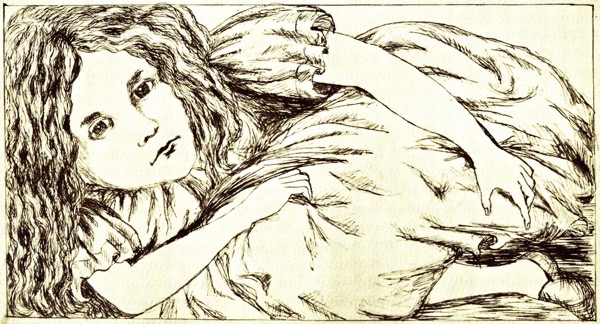
Lewis Carroll’s Alice’s Adventures Underground tapped into the fascination with subterrannea
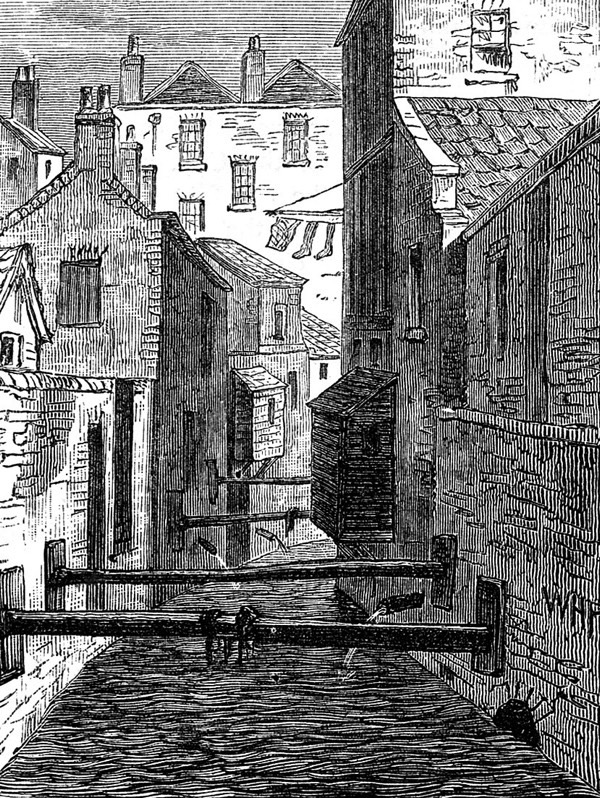
The Fleet seen from the back of the Red Lion
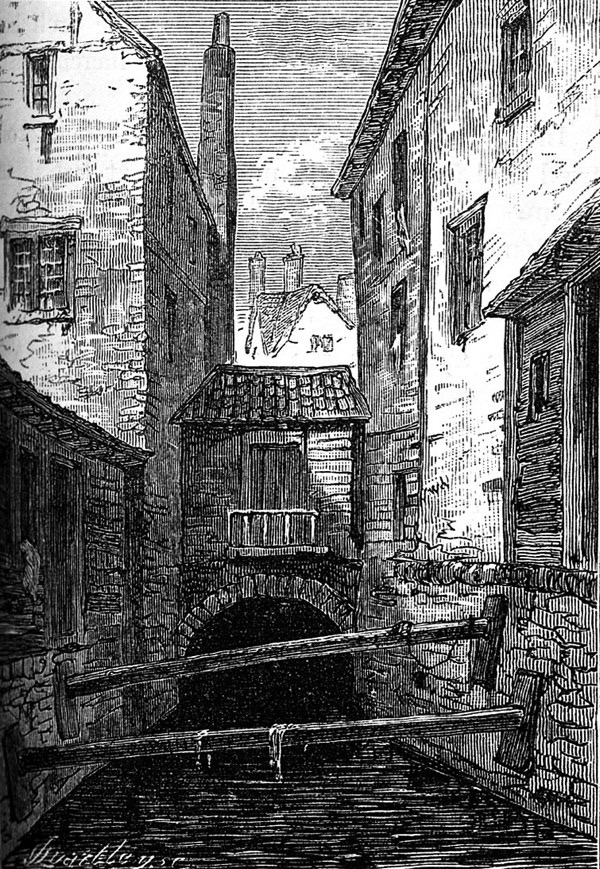
Back of the Red Lion seen from the Fleet
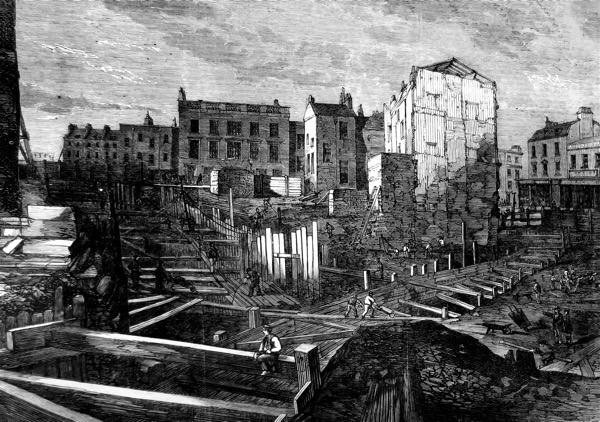
Works on the Fleet tunnel February 1862
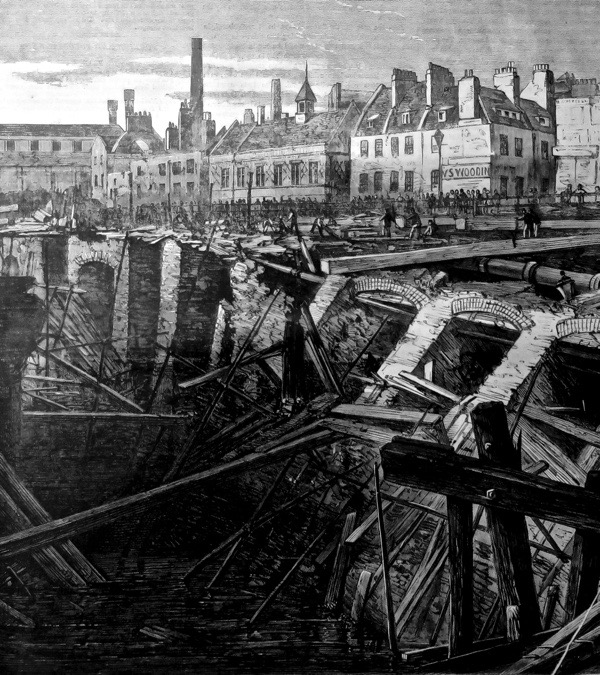
Collapse of the Fleet tunnel, June 1862
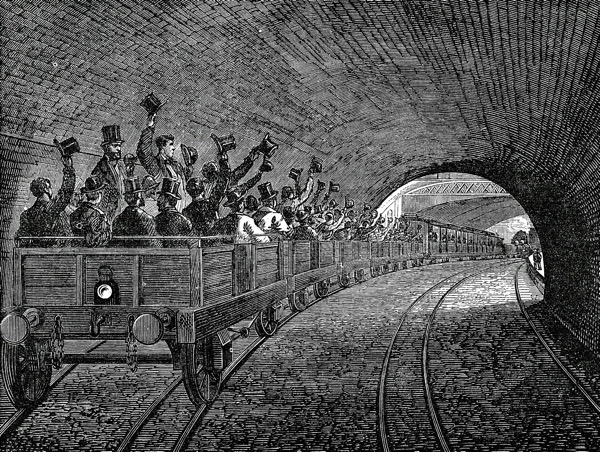
The first trip on the Underground, 1863
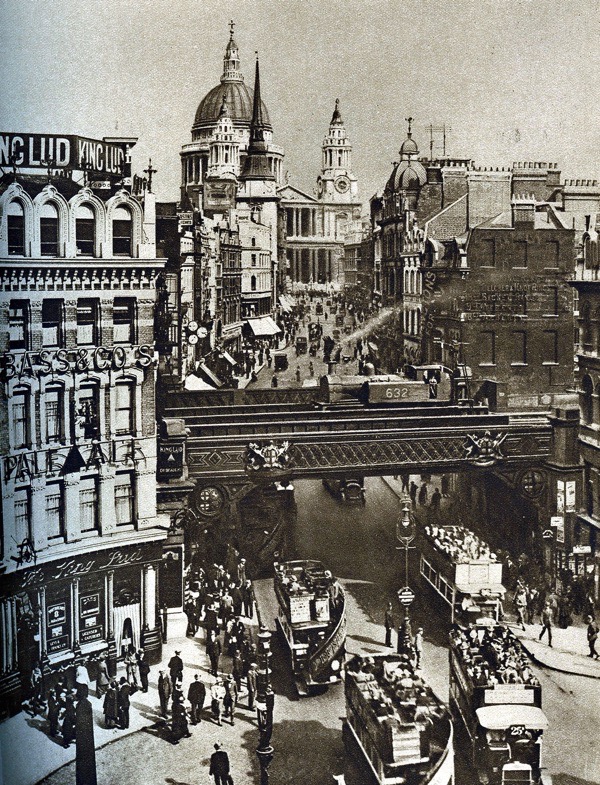
The railway viaduct that obstructed the view of St Paul’s Cathedral until 1990
On Thursday 15th September at 8pm, Gillian Tindall discusses her work and reads from ‘The Tunnel Through Time’ at Libreria, 65 Hanbury St, E1 5JP, which is positioned – appropriately enough – directly over a Crossrail tunnel. In her new book, Gillian explores the history of the new Crossrail route which turns out to be only the latest scheme to traverse an ancient path across London’s buried secrets and former fields. Click here to book your free ticket
You may also like to take a look at
Richard Lee, Bicycle Spares Seller
Celebrating the seventh anniversary of Spitalfields Life with a week of favourite posts from the past year
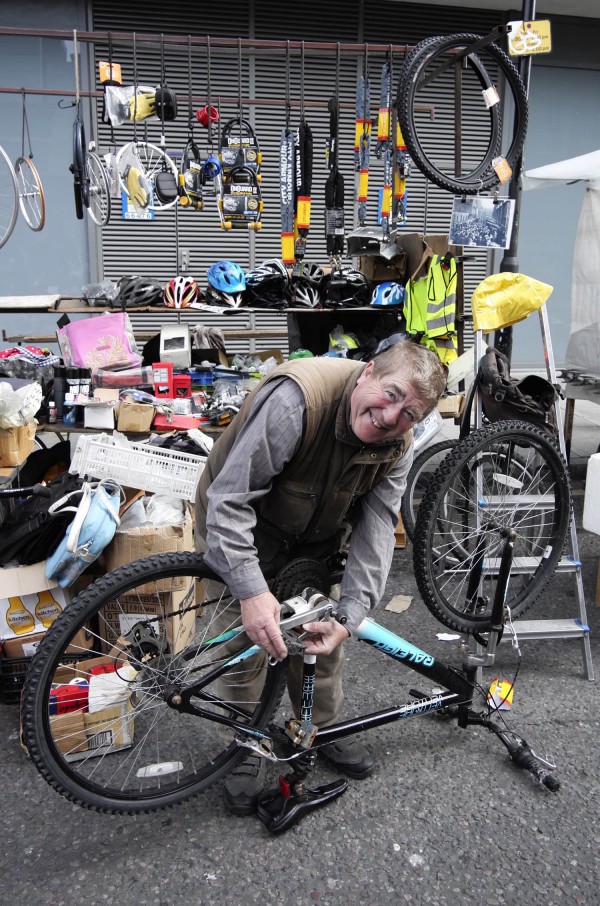
Richard Lee
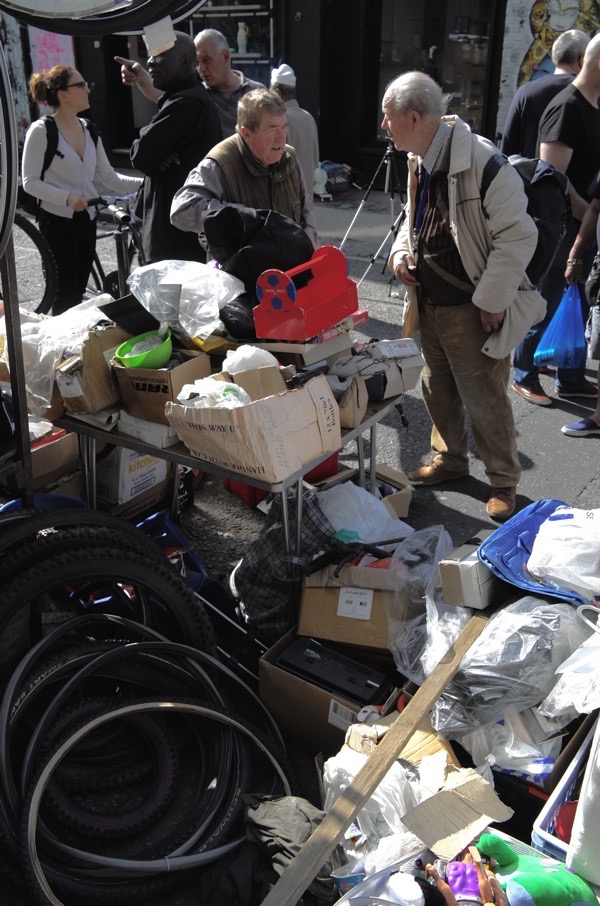
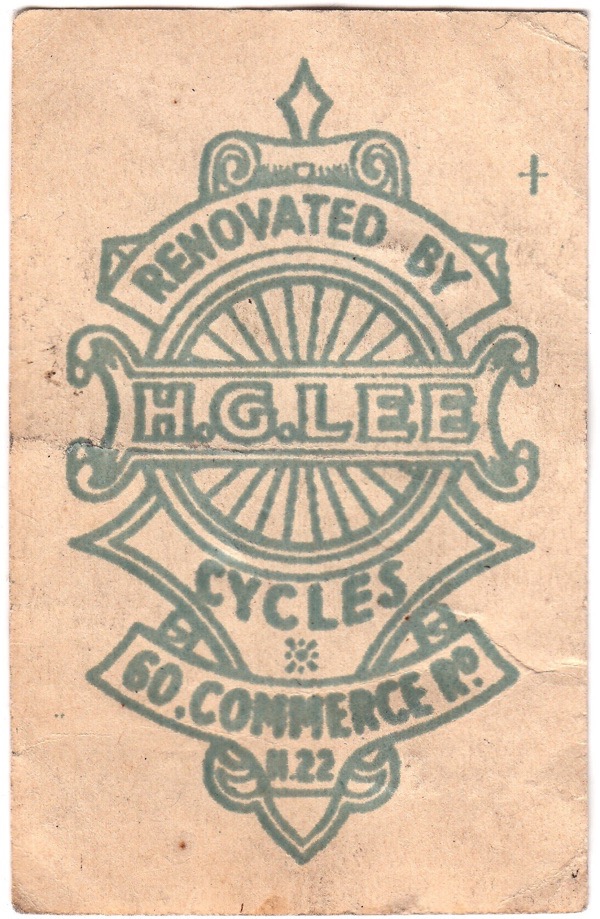
You need to be at Sclater St Market at dawn when the sunlight arrives horizontally from the east, and traders greet you and bid you good morning like one of their own. At six o’clock, I was awaiting the arrival of Richard Lee whose grandfather Henry William Lee started trading bicycles in this market in the eighteen-eighties, initiating a tradition continued through two world wars by his son Henry George Lee, and culminating in Richard Lee who was there every Sunday for over sixty years. Yet the time had come for Richard’s departure from Sclater St and I was there to record his final Sunday, after one hundred and thirty years of his family trading in bicycles and bicycle parts in the market.
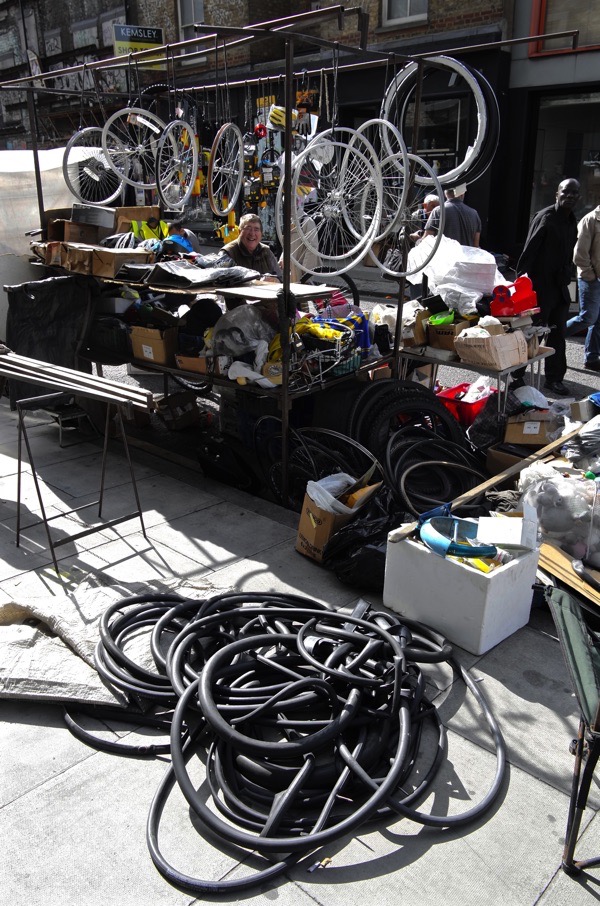
In this time, three generations of Lees saw the street change beyond all recognition and that morning Richard parked his van at the foot of a tower block, built upon a former bomb site where nineteenth century terraces once stood. In fact, as he set to work with stoic good humour, unpacking his battered van and assembling the stall – in recognition of his responsibility as custodian of the history of the market – Richard passed me some black and white photographs, showing the heaving market crowds of yesteryear enfolded by rows of small shops and proud Victorian pubs. Most remarkably, Richard’s father and grandfather are visible to the left of one of the pictures beside a stall hung with tyres and inner tubes which looks just as it does today.
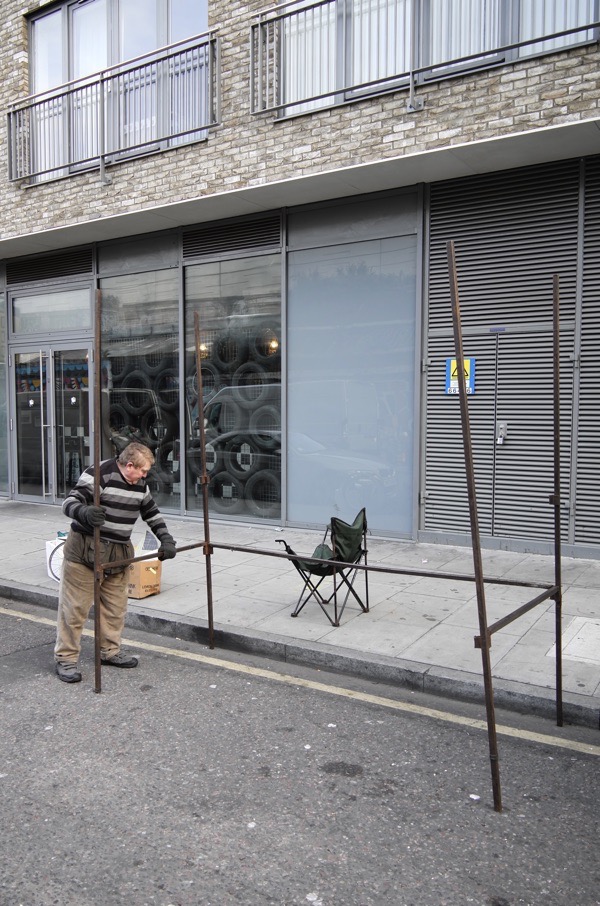
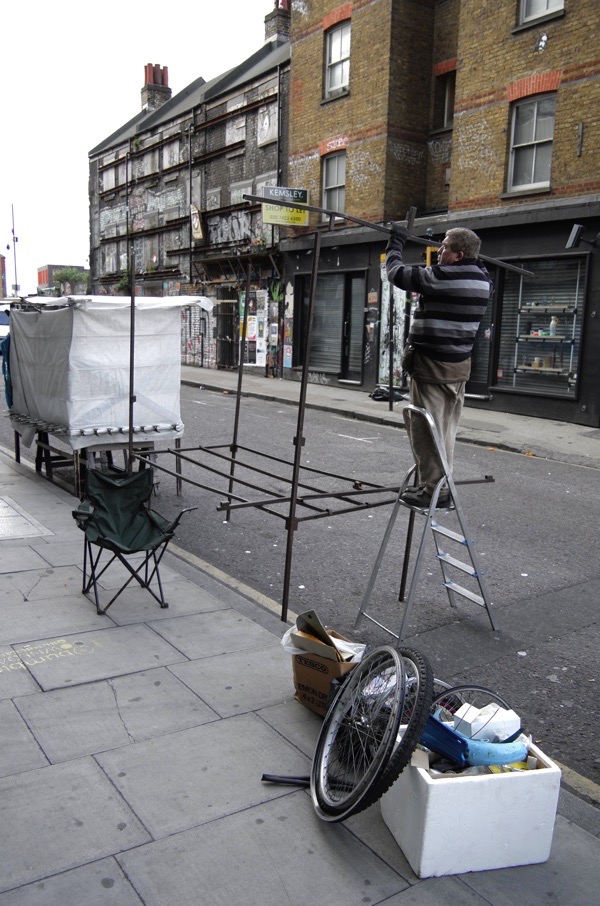
Richard had been down there each Sunday since he was five years old and began working in the stall at thirteen. Over seventy and of robust stature, he could still assemble his stall by slotting metal poles together with limber ease, informing me with satisfaction that this particular incarnation was manufactured to his specification fifty years ago at the cost of fifty pounds. ‘We used to wheel a barrow from Islington and my father pushed a bicycle and carried another over his shoulder,’ he admitted, recalling the arduous labour of former times.
Once the stalls were in place yet before the stock was unpacked, Richard Green and Clive Brown, stallholders at the western end of the market, convened with Richard over a cup of tea made from water boiled on a primus stove and Richard broke the news that he had sold his house in Essex and cancelled the debit for his weekly market licence. Only if the exchange of contracts upon his house did not go ahead would he return for another week. ‘My kids have flown and I can’t afford to keep a four bedroom house,’ he confessed in sober realism, ‘You can’t live on a pension anymore.’ Richard’s solution was to return to the north of England – whence his grandfather came to London in the nineteenth century – and buy a small house, leaving him enough money to live out his days.
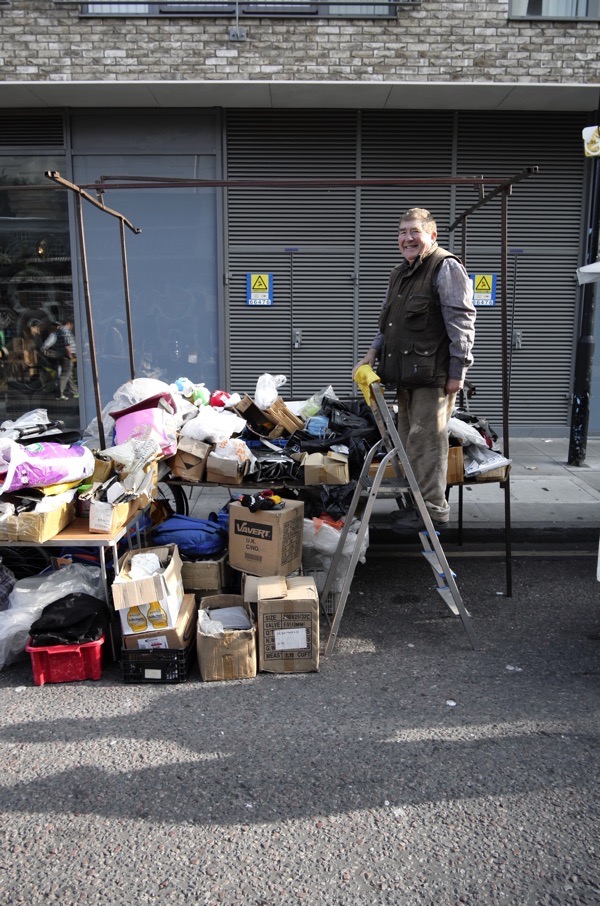
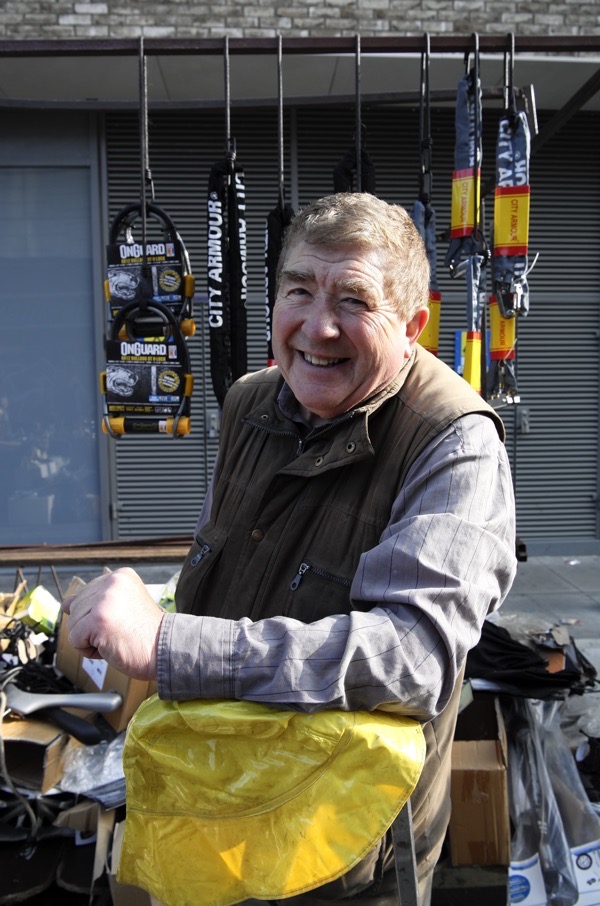
Yet, before this could happen, another day’s trading awaited. Richard’s assistant ‘Steady Eddie’ arrived to hang up the tyres and inner tubes that are the long-recognised symbol and sign of the Lees’ stall, thereby completing the four hour process of setting up.
Through the passage of the day, Richard stood at the front while Eddie sat at the rear undertaking repairs and their dialogue consisted of ‘Eddie, got a left-handed pedal?’ and ‘Richard, got a new inner tube?’ Recycled inner tubes repaired by Richard were priced at only one-pound-fifty compared to five pounds for a new one, yet customers could not resist offering just a pound. And when Richard fitted that left-handed pedal, the customer offered him five pounds, refused the ten pound charge asked for both the replacement pedal and the service. ‘I’ll take it off again!’ threatened Richard rolling his eyes, ‘I can’t do it for £5,’ – before he let it go for five pounds. ‘You see why I’m leaving,’ he confided to me in a whisper, catching my eye in weary resignation. ‘I like it when they offer you more than you ask,’ he added with a grin, summoning his humour again, ‘that doesn’t happen very often.’
‘When I was a kid down the waste, there’d be a rag and bone man who left stuff behind and, when he’d gone, I used to sell it,’ Richard continued, warming at the tender reminiscence. He cast his eyes to the left of his stall where he had spread out boxes of his grown-up children’s unwanted toys, cleared out in anticipation of his house sale, yet drawing a lot of interest in the market. ‘It’s a lot of old junk,’ he confessed apologetically, ‘it’s all stuff I’d throw away, but there’s more money in it than the proper stuff.’
The weather was kind for Richard’s last day of trading and a spell of unbroken sunshine brought out large crowds onto Brick Lane and into Sclater St but, by three o’clock as he started to pack up, dark clouds were gathering over Spitalfields. I asked Eddie what he would do without Richard. ‘I’m not a lazy man, I’m going to volunteer at a charity shop,’ he explained, ‘It’s Monday to Friday and there’s no lifting. I came to this country in 1978 but after thirty-five years working for British Rail, my back is gone.’
Old friends and regular customers came to pay their respects to Richard as the descending sun reached the western end of Sclater St. All appeared as usual, everyone packing up as they do each week at that time, yet Richard was packing up for ever. Unknown to all but a few that afternoon, something remarkable was passing into history.
Robert Green helped Richard carry his boxes to the van and told me he would wait until he was ready to go. Leaving them to their task, I paid my respects to Richard, shook hands and handed him the bottle of champagne I had secreted in my bag. But as I turned to go, he called me back. Richard brought out a spanner which had belonged to his grandfather, was used by his father and served Richard too. In use in this place all this time. After more than a century, it had become bent into a subtle curve that fitted the hand. Richard held up his cherished talisman to show me, glowing with pride and delight.
To my mind, the meaning of Sclater St as a place will always be bound up with the human qualities of Richard Lee and his fellow market stalwarts. Whatever architectural changes arrive in this contested site, I shall never be able to walk through Sclater St without thinking of Richard and the hardworking endeavours of his colleagues and their forebears, week after week, in all weathers and through centuries.
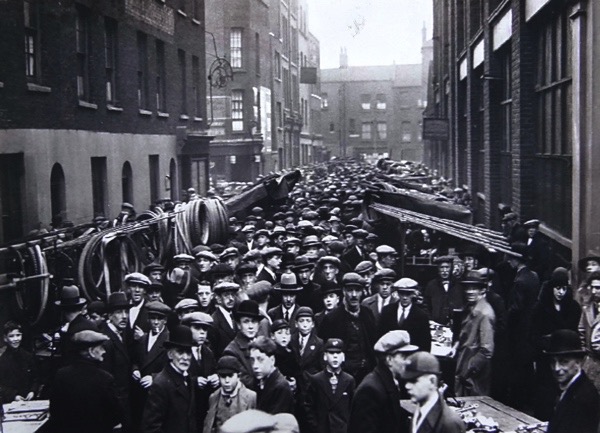
Henry George Lee (as a boy) is to be seen on the extreme left of this photo and his father Henry William (with hat and moustache) is the fifth from the left in this picture taken in the twenties
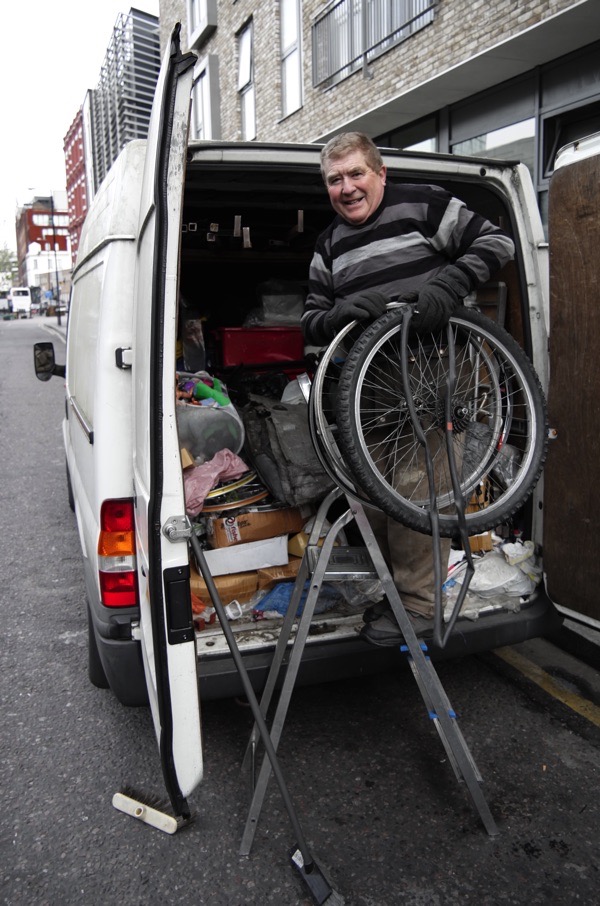
Unpacking the van at 6am
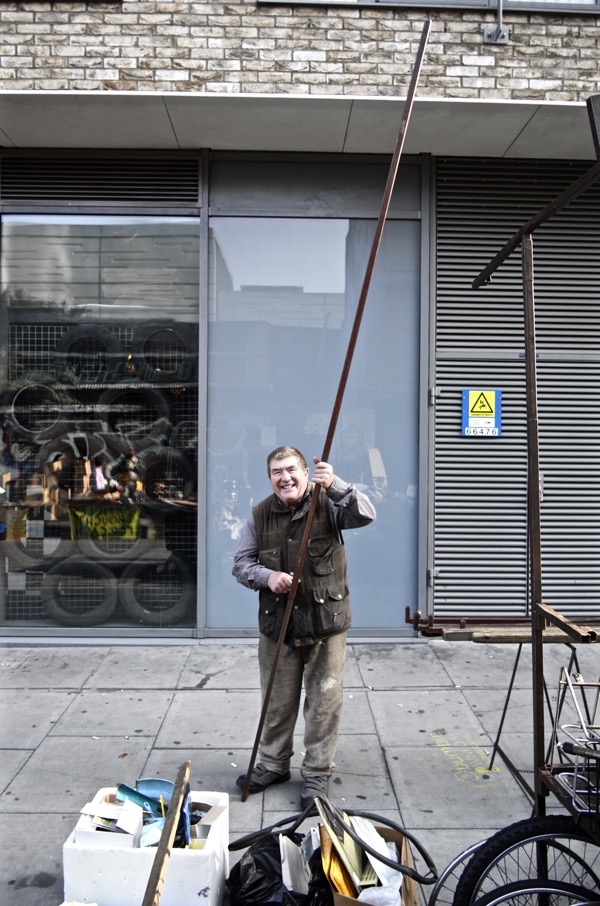
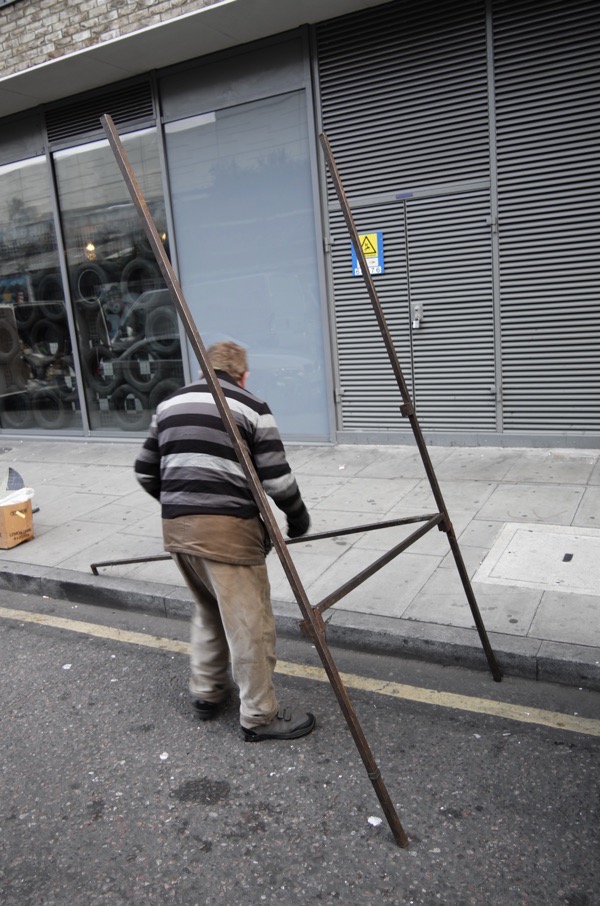
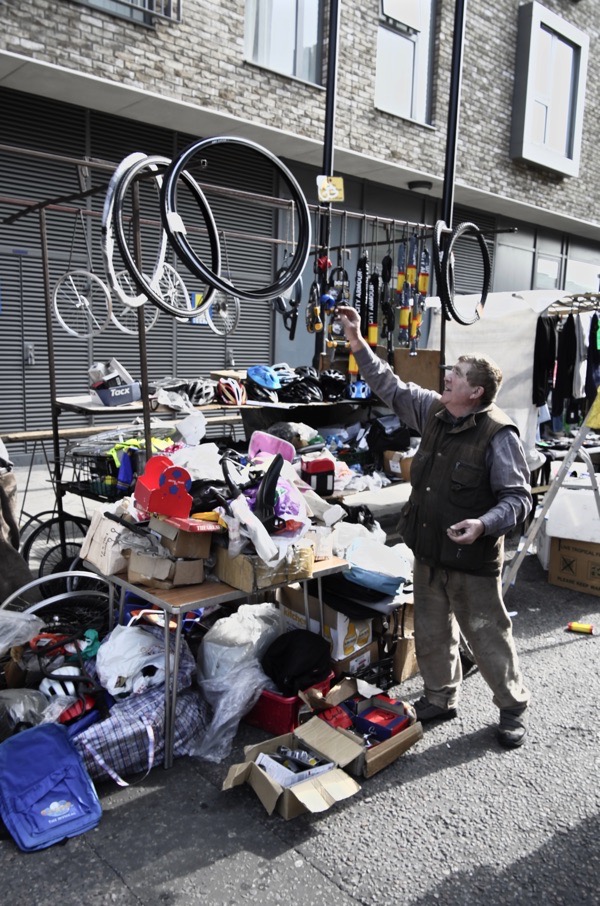
Tossing a tyre
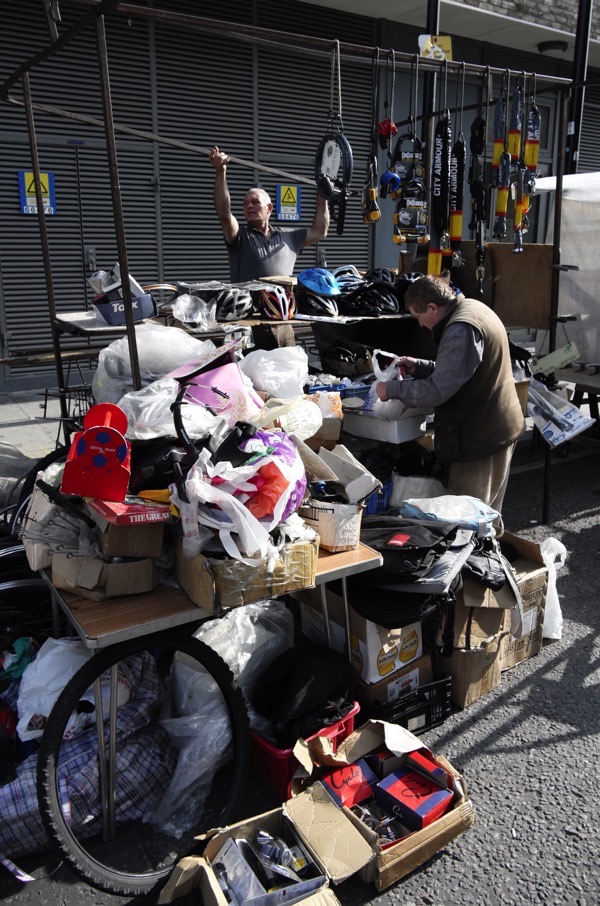
‘Steady Eddie’ arrives to lend a helping hand
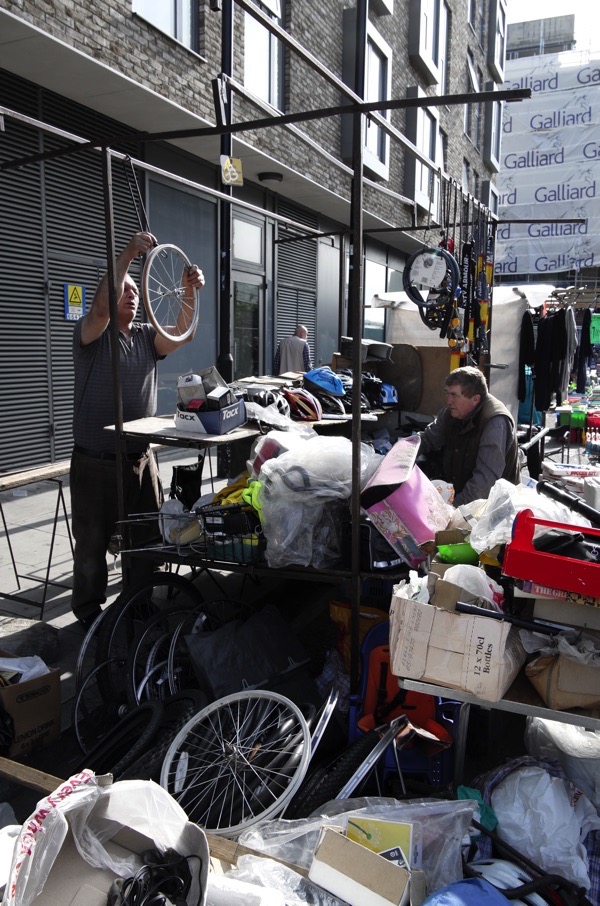
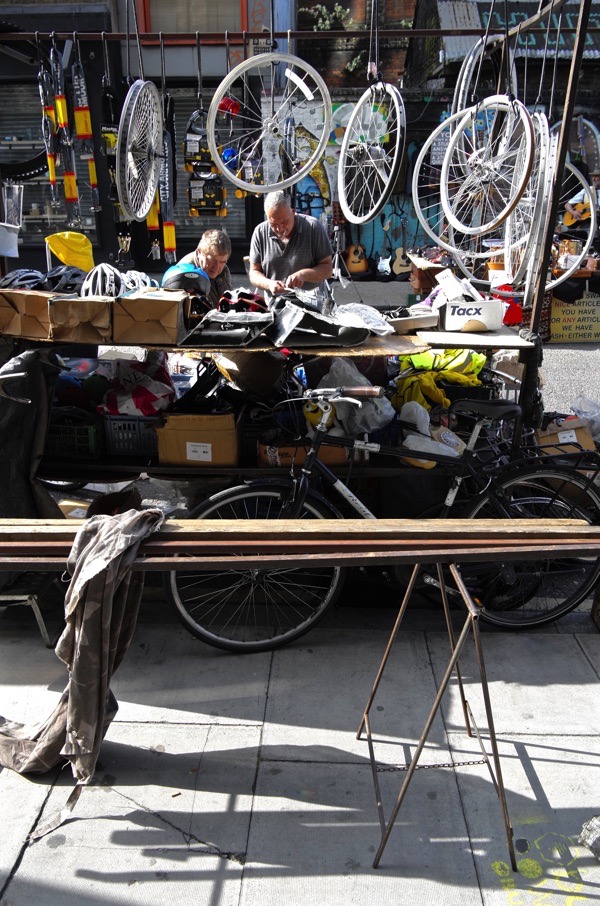
“I first came down here when I was five and I was thirteen when I started working on the stall.”
Clive Brown, stallholder opposite Richard Lee, shows off a case of vintage Leica cameras
Patricia & Robert Green, stallholders next to Richard Lee
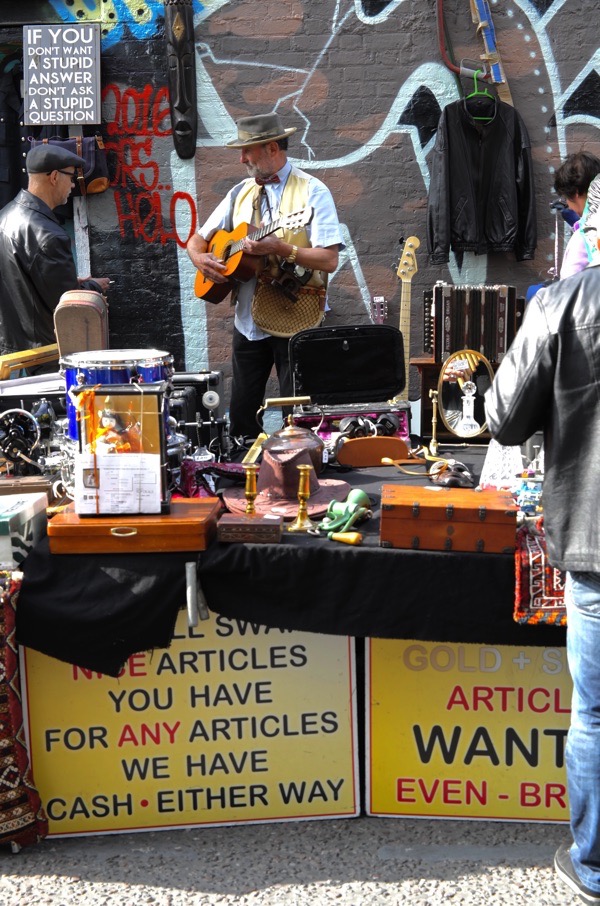
Clive serenades the market, mid-afternoon
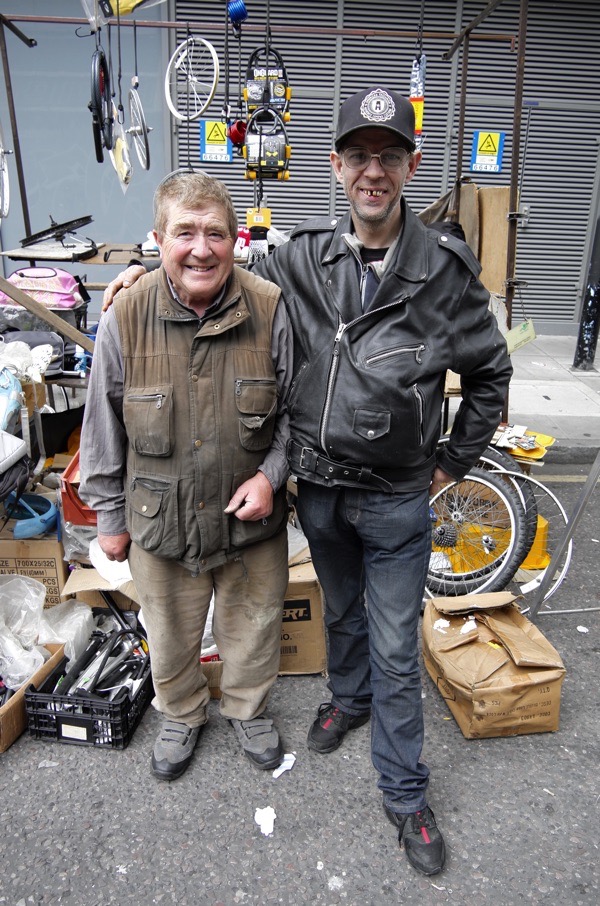
Richard with Gary Aspey, wheel truer
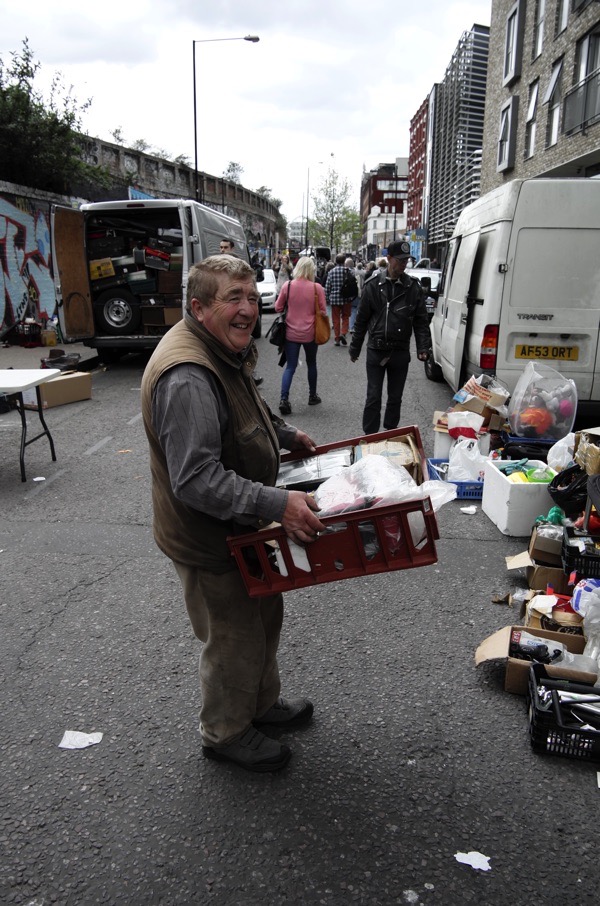
Packing up at 5pm
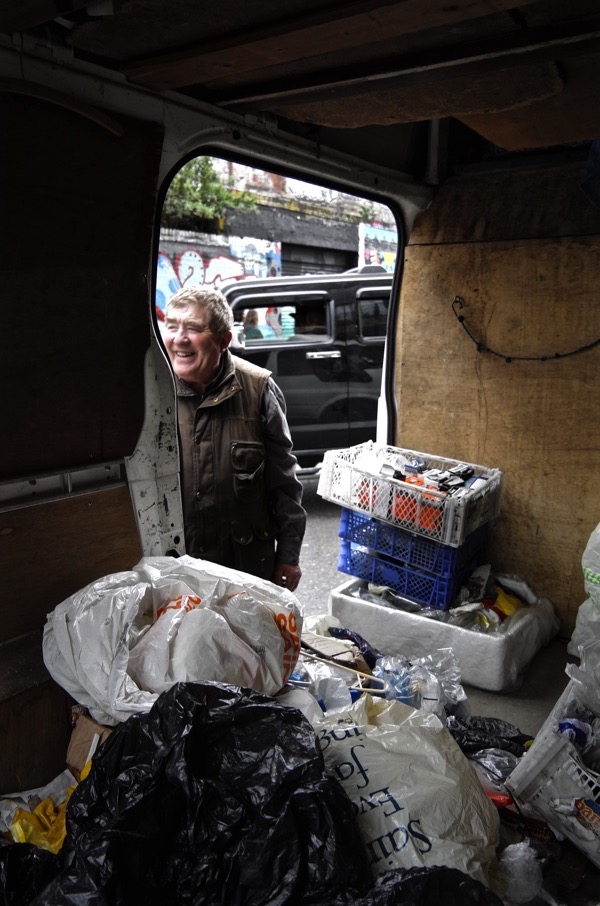
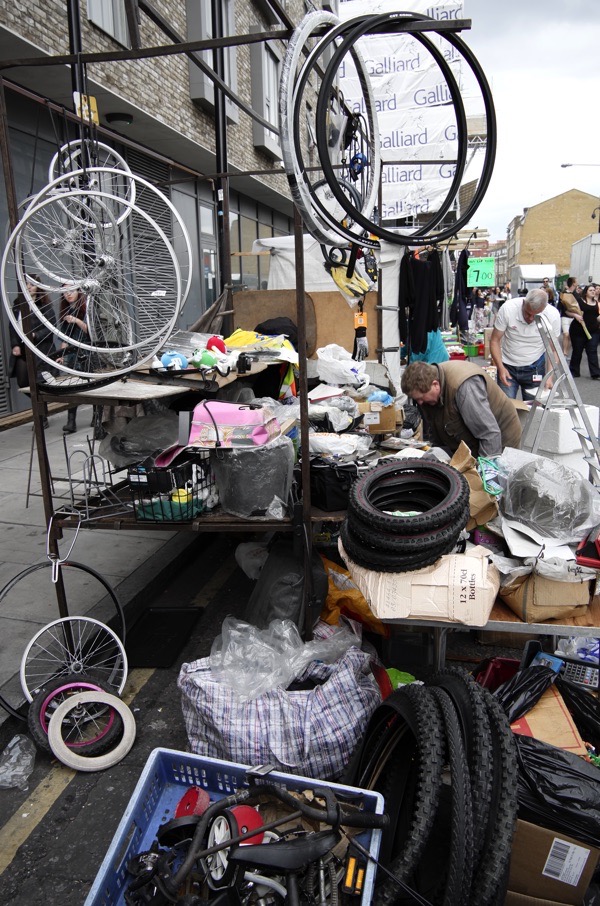
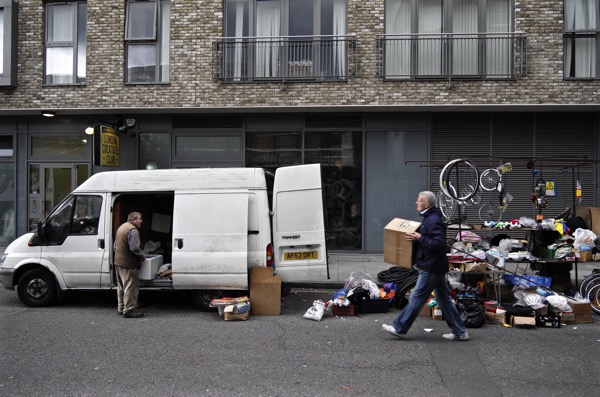
Packing the van at 6pm
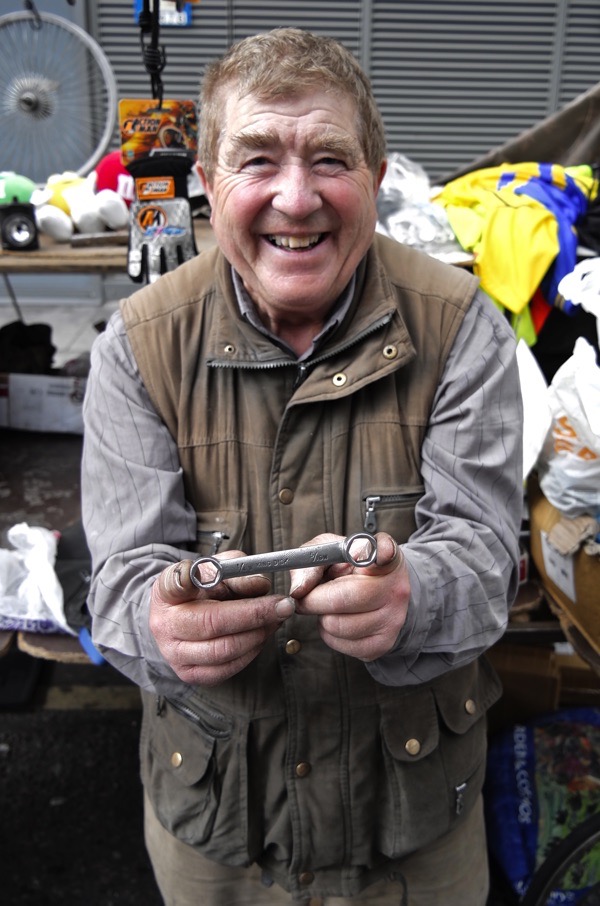
Richard shows off his grandfather’s spanner ‘King Dick’- in use in this market by three generations over more than a century
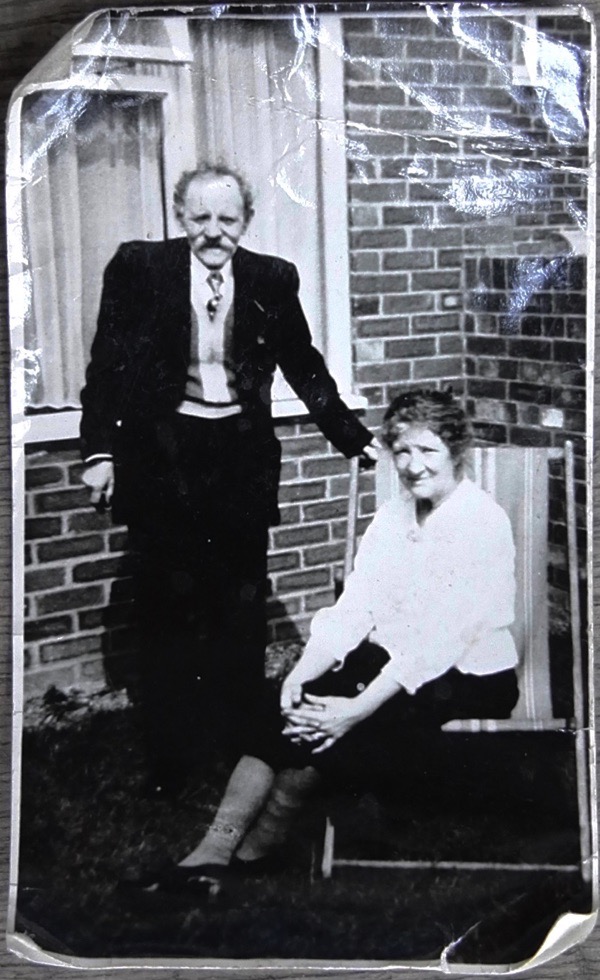
Henry Wiliam Lee started trading in the market in the eighteen-eighties
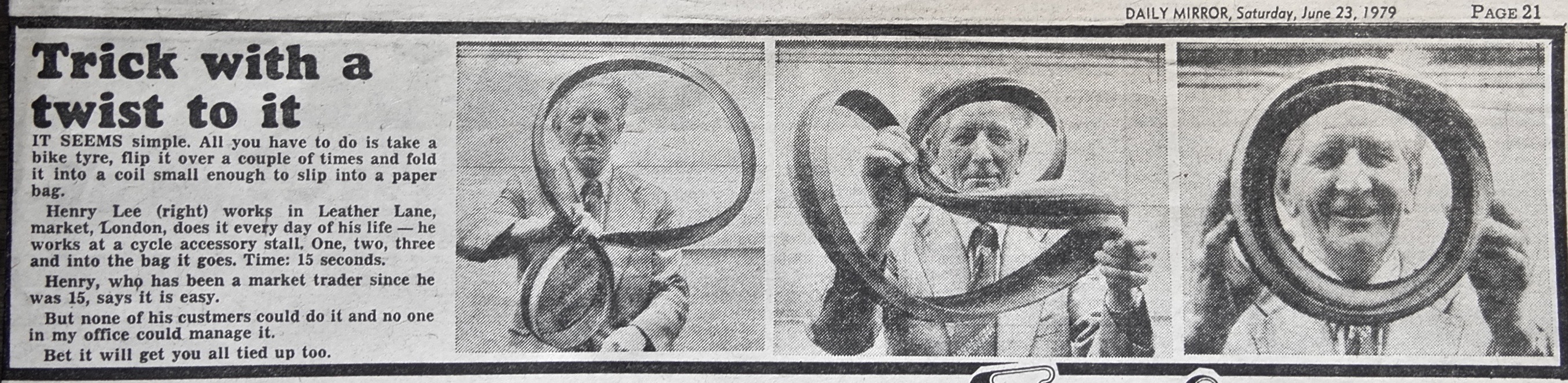
Henry George Lee shows the proper way to fold a bicycle tyre in the Daily Mirror, 1979 (Click image to enlarge)
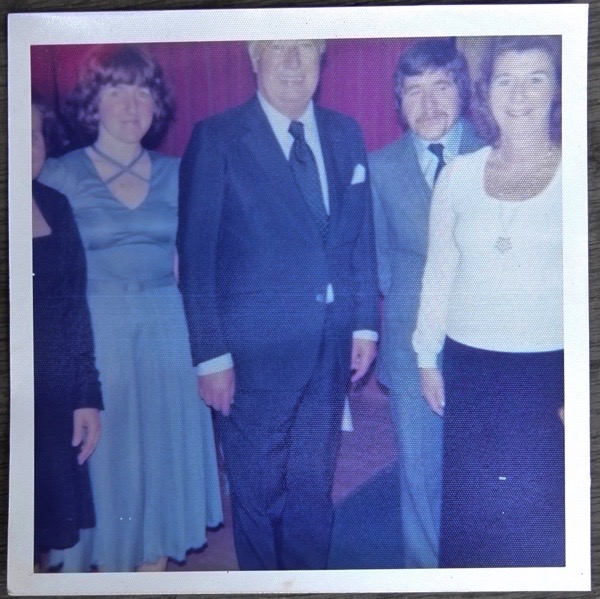
Richard Lee meets Edward Heath in the seventies
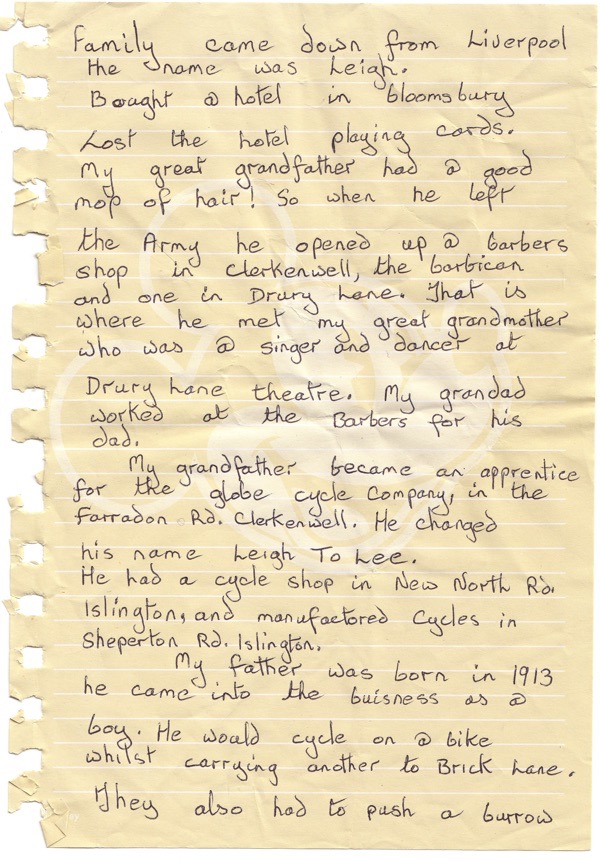
Richard Lee’s account of his family history
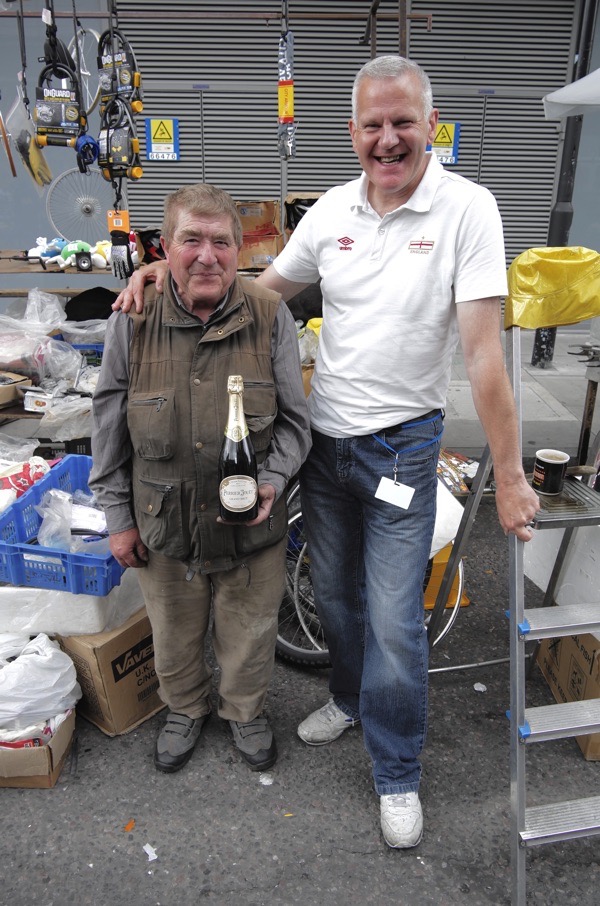
Richard Lee with Robert Green, old friend and long-term holder of the next pitch in Sclater St, celebrating the culmination of 130 years of the Lee family trading in the market
You might also like to read about
Doreen Fletcher, Artist
Celebrating the seventh anniversary of Spitalfields Life with a week of favourite posts from the past year
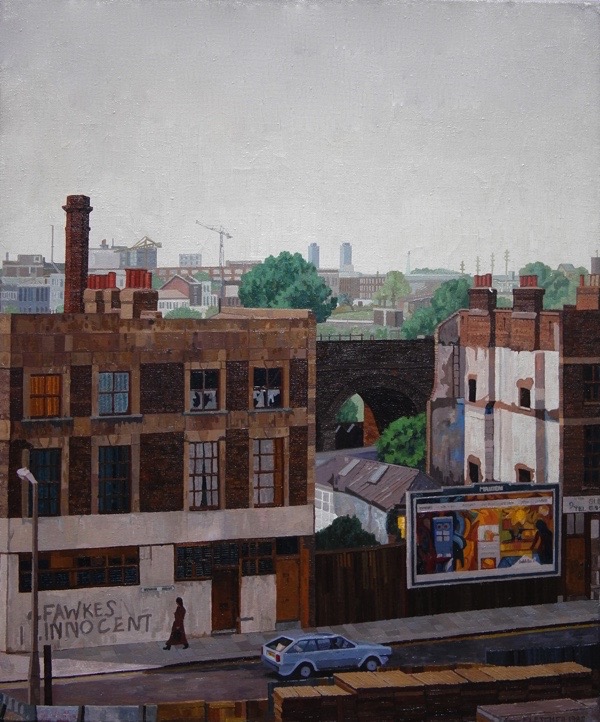
Turner’s Rd, 1998
Doreen Fletcher – Looking back, I suppose I was very spoiled. From a young age I liked painting and my dad used to take me to the toy shop and we had to buy the best, most expensive paints. I was an only child, born into a working class family, and my parents, Colin & Alice, were semi-literate, I guess you would say.
I was a bit of a loner, I liked going for long walks. I passed the eleven-plus but I had a very difficult time at Grammar School because, although I was clever, I came from the wrong side of the tracks. I used to have to wear this hat and every morning, as I was walking to school, the Secondary Modern kids would come and knock it off my head. When I got to school, I had to pretend I was from somewhere else, because all the other kids they came from families who were doctors, solicitors, and so I felt, you know… odd.
The Gentle Author – What was the first landscape that you knew?
Doreen Fletcher – It was grey. Grey, brown streets with sparrows, lots of sparrows and pigeons. I used to long for colour. I grew up in a two-up, two-down terrace in Stoke-on-Trent, but every Sunday my parents used to take me on a bus into the country and I just loved colour.
I remember, when I was five, I was bought a set of encyclopaedias from the guy who came round knocking on street doors and it had colour pictures in it – paintings – and I thought they were wonderful. And I suppose that was when I started to be interested in visual things – plus at Grammar School, when we were doing Art, I did not have to talk and my accent in those days was quite broad. All the other girls spoke with posh accents, so I would paint in silence and it was something I was good at, so I got praise for that.
The Gentle Author – What work did your parents do?
Doreen Fletcher – Oh Alice, my mother, she was a servant. She worked in a munitions factory during the war and then she became a servant afterwards. It gave her ideas about not having the newspaper on the table and no tomato ketchup, and healthy eating. So in her case, there was a slight social mobility. She was very very fussy about the front step being clean. Colin, my dad, started off as a farm worker, he had wanted to be a vet but the fact that he did not like school – could hardly read or write – stood in the way.
After I was born, they moved to the town because he could earn more money and, in the late fifties, when they started putting up pylons he worked on that, and then later he worked putting in pipes for North Sea Gas too. When he was fifty-seven, he had a brain haemorrhage when he was working, probably because of the pneumatic drills, and he did not work again after that.
The Gentle Author – So what took you away from the Potteries?
Doreen Fletcher – I did not like living in a small town. I hated the constrictions and the pettiness. I wanted to go to Art School in London, and I met a boy who got a place in one and I moved with him to London.
The Gentle Author– But did you apply to Art School yourself?
Doreen Fletcher – Yes, I did a Foundation Course in Newcastle but after that I became a model. I did that for a long time.
The Gentle Author – Where did you live when you came to London?
Doreen Fletcher – I moved to Colliers Wood in South West London and I got a job at an Art School as a model. Gradually, I started taking photographs and doing drawings but – at that point – I did not really know what I wanted to paint, except that it was almost a compulsive activity.
I did quite a lot of self portraits and still lives. It was only when I moved to Bayswater in 1976 that I developed a strong interest in urban landscape. For me, it was a very exciting place to be – having come from this small town – and it was close to the Serpentine Gallery, Kensington Gardens, Notting Hill Gate and Portobello Rd. I started painting the local streets – the Electric Cinema, the Serpentine Boathouse – and then I became interested in Underground stations at night – Bayswater, Paddington – and this continued when I moved to the East End.
The Gentle Author – What brought you to the East End?
Doreen Fletcher – Simply that the relationship I was in broke up and I met someone new and the housing was cheap in the East End. It was relatively cheap to rent at that time because lots of people were moving away, so artists were still moving in to places like Bow and Mile End.
The Gentle Author – How do you remember the East End as it was then?
Doreen Fletcher – There was corrugated iron everywhere! I loved it here because I had had enough of the sophistication of the West End. It seemed to me like coming back home here – lots of corner shops and tiny pubs. There was a community but, after a couple of years, I realised that they were not staying, and the corner shops and pubs were closing.
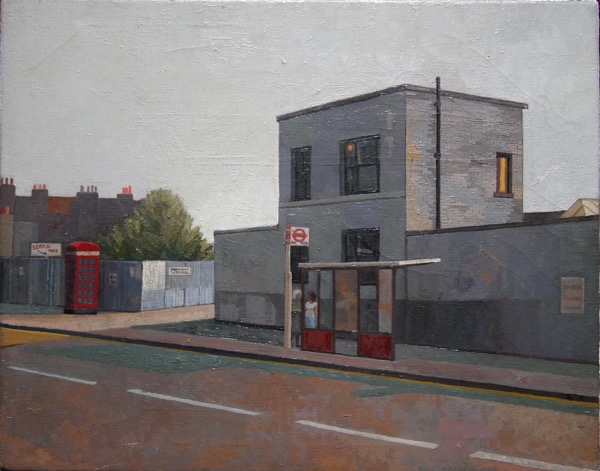
Bus Stop, Mile End, 1983
The Gentle Author – Why did you start painting the East End?
Doreen Fletcher – I was visually excited by being somewhere new. The first painting I did in the East End was the bus stop in Mile End in 1983, and then I think I did Renee’s Café next. Once I realised they were going, it triggered this idea of painting the pubs and the shops.
The Gentle Author – Was this your full time occupation?
Doreen Fletcher – No, I was working as a model. It was the most boring job you could imagine but I just stuck at it during term time, so I would have periods of full-time painting and I could keep myself by working three days a week as model.
The Gentle Author – How central to your life were your paintings at that time?
Doreen Fletcher – Very. That was my focal point. My studio was a small room at the top of a run-down three-storey house in Clements St. It faced north so the lighting was good in the day time.
I spent a lot of time just walking around at all times of day and in different weather conditions. Eventually a specific scene imprinted itself on my mind which I felt could have potential as a painting. I would make thumbnail sketches sketches on the spot and take a picture with my camera.
Once I had gathered as much information as I could, I would make a highly detailed drawing which acted as a basis for the painting. This might evolve gradually over a period of months or even years, as a tension built up between my need to represent reality and the demands made by the painting itself. I always struggled to resolve it in an abstract and objective way as well as recording a recognisable subject.
I used to try and work twenty-eight hours a week, I never wanted to become a Sunday painter.
The Gentle Author – Did you have ambition for this work?
Doreen Fletcher – Yes and I did have some limited success in the eighties. I had a show at Spitalfields Health Centre on Brick Lane and then at Tower Hamlets Library in Bancroft Rd. Local people loved my paintings but there was limited interest from any critics.
The Gentle Author – Did you pursue other avenues to get recognition for your work?
Doreen Fletcher – Once a month, I used to send off for lots of slides in response to competitions and requests for submissions in Artists’ Newsletter but it never seemed to go anywhere.
The Gentle Author – How did you maintain morale through that twenty year period?
Doreen Fletcher – I have an optimistic nature and I remained optimistic up until the late nineties when my interest in the genre waned and I think it affected the quality of what I was doing. I realised I was coming to the end of the series I was doing of the East End.
The Gentle Author – What told you that you were coming to the end?
Doreen Fletcher – The East End was changing and I was not really interested any more. The new build made it very dense, taking away the individuality and the sense of community. At first, I was interested while it was being built – on the Isle of Dogs, for instance – but once it became functional there were just too many people.
The Gentle Author – At the time you concluded the series, were there changes in your life?
Doreen Fletcher – I became more involved in teaching Art to kids with special needs. I grew more interested too, because I appeared to be good at it and my work was successful. Gradually, I became involved in the tutorial side of it as well and supporting other lecturers.
The Gentle Author – Did you find that rewarding?
Doreen Fletcher – Yes, I was earning money from it and it was rewarding working with other people, so I became more and more involved in that.
The Gentle Author – Once you had completed nearly twenty years of painting the East End, what were your feelings about that series of work?
Doreen Fletcher – I felt that I had tried very hard to be successful, to get my work out there and get it seen. I had hoped for some kind of recognition. I was never ambitious in terms of international recognition or anything like that, but I did feel that the work was good enough to be recognised more than it was
The Gentle Author – Were you disappointed?
Doreen Fletcher – Yes. I remember the day I made a conscious decision to pack away my paints. It was November 16th 2004. I said, ‘That’s it!’ I am not going to paint again.
The Gentle Author – Do you think your project reached its culmination?
Doreen Fletcher – At the time I thought not, but looking at the work again, I am very very glad I did it now – what I think was important was that I recorded something which has gone.
The Gentle Author – Do you think that you evolved as a painter by doing this work?
Doreen Fletcher – I think, if I had I been taken on by a gallery, I would have developed more as a painter. Instead, I think I found a method of working that suited what I was doing and I stayed with it. Maybe with a bit more encouragement I would have done what I am doing now – since I have come back to painting – which is pushing the boundaries?
The Gentle Author – Do you have a criterion for judging if one of your paintings is successful?
Doreen Fletcher – Yes, a painting is successful for me when I believe I have captured a moment.
Transcript by Louisa Carpenter
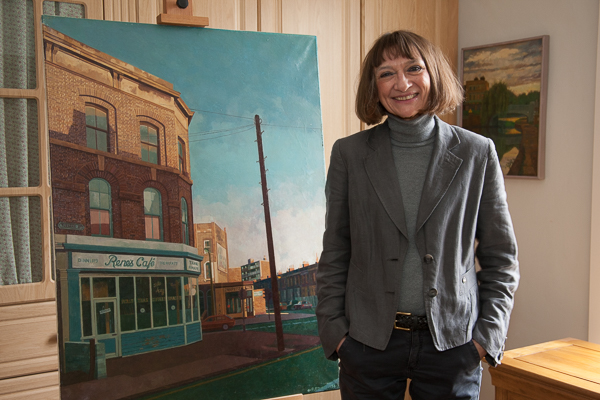
Portrait of Doreen Fletcher by Lucinda Douglas Menzies
You may also like to take a look at