
Relics At St Paul’s From Before The Fire
Three hundred and fifty years ago today, on 2nd September 1666, the Great Fire of London started

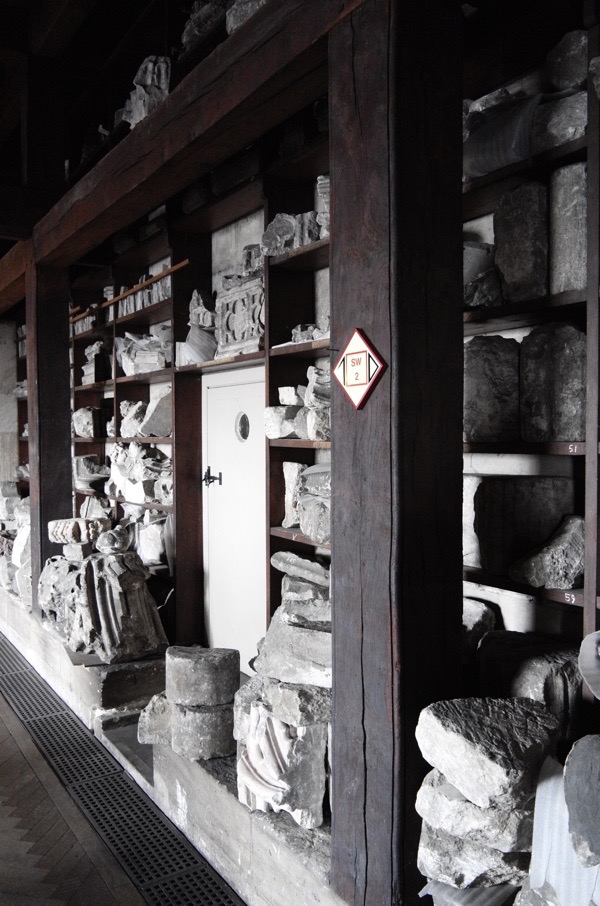
Fragments of Old St Paul’s stored in the triforium at New St Paul’s
Sir Christopher Wren’s success at St Paul’s Cathedral is to have envisaged architecture of such absolute assurance that it is impossible to imagine it could ever have been any different than it is today. Yet Wren was once surveyor of Old St Paul’s, confronted daily with a tottering gothic pile and carrying the onerous responsibility for this vast medieval shambles upon his shoulders, until the Great Fire took it away three hundred and fifty years ago.
The spire of Old St Paul’s collapsed in 1561 and, in Wren’s, time wooden scaffolding was necessary to hold up the poorly-built Cathedral. Parts of the cloister were carried off to build Somerset House and even a fancy new portico designed in the classical style by Inigo Jones failed to ameliorate the general picture of decay and dereliction.
When the Great Fire of London began in September 1666, the Stationers Company stored their books and paper in the crypt of the Cathedral for safe-keeping and residents piled their precious furniture in the churchyard – one of the few open spaces in the City – so that it might be safe even if they lost their homes in the conflagration. These prudent measures only exacerbated the catastrophe when a spark set fire to the wooden roof of the Cathedral which collapsed into the crypt, sending a river of molten lead running down Ludgate Hill, igniting a violent inferno of paper that brought down the entire building and consumed all the furniture in the churchyard as well.
After the pyre of Old St Paul’s was at last extinguished in September, weeks after the Fire had been quenched elsewhere in the City, it became a popular pastime to scavenge through the ruins for souvenirs. You might assume nothing survived but, if you know where to look and what to look for, there are relics scattered throughout New St Paul’s.
Commemorating the three hundred and fiftieth anniversary of the destruction of Old St Paul’s, I thought I would make a photographic inventory of what is left. There are Roman tiles, an Anglo-Saxon hog’s back tomb, a Viking grave marker and multiple stone fragments of the Cathedral itself, catalogued in the nineteenth century – although I was most fascinated by seventeenth-century effigies that withstood the Fire.
Medieval monuments and statuary were destroyed in the Reformation, and Oliver Cromwell famously stabled his horses in the Cathedral at the time of the English Revolution, but there was a brief period when new monuments and figures were installed prior to the Great Fire of London and a handful of these remain today.
John Donne would have conjured an astute sonnet upon the metaphysical irony of his monument being the only one surviving intact. In his last days, he insisted upon modelling for his own effigy, wrapped in a shroud, and the resultant sculpture is distinguished by remarkably naturalistic drapery. Yet, in spite of this, I can only see it as an image of a flame in which the great poet glimmers eternally.
A small collection of seventeenth-century human effigies rest down in the crypt, burnt black by the Fire. Carved from pale marble or alabaster, they have been transfigured by the furnace-like temperature of the conflagration and emerged charcoal-black, glistening and broken, as if they had been excavated like coal – as if they were creatures of another time, as remote as prehistoric creatures. But, even as they were ravaged by apocalyptic lfire and damaged beyond recognition, some have retained fine detail of armour and clothing, and all have acquired presence. These compelling fragmentary forms are worthy of Henry Moore, charmed stones that manifest an eternal spirit forged in fire.
Unsurprisingly, Christopher Wren had little interest in the relics of Old St Paul’s because he was looking to the future. Wary of medieval foundations, he had his New St Paul’s re-aligned to avoid them. Yet, although Wren had most of the ancient stone broken up to use as infill for New St Paul’s, there are a couple of spots in the crypt where you can see fragments of detailed Romanesque carving sticking out from the wall, hidden in plain sight, to remind us that – even though Old St Paul’s has gone – it is still with us.

Roman tiles and Anglo-Saxon grave cover in the triforium
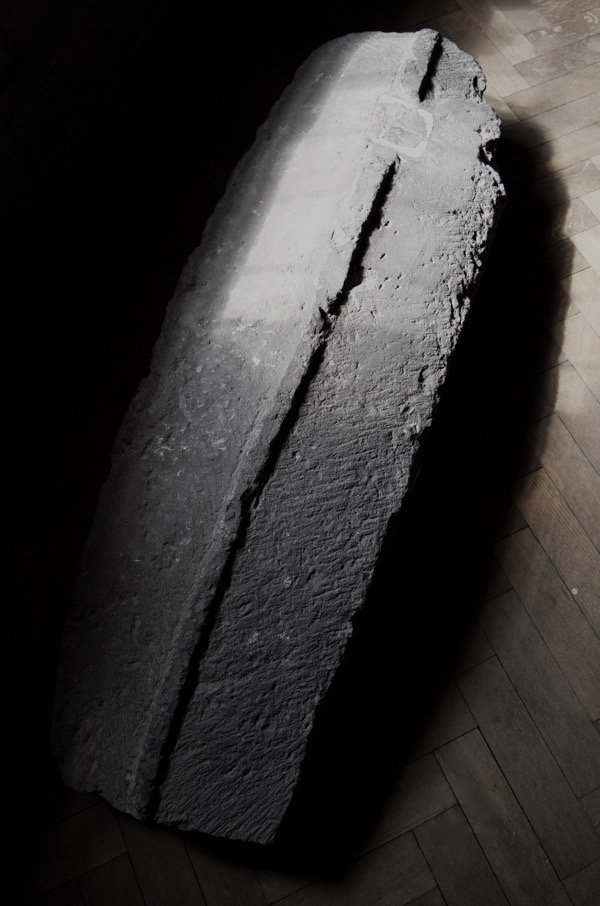
Hogback grave cover, dating from 1000-1050 AD, possibly from the grave of King Athelstan
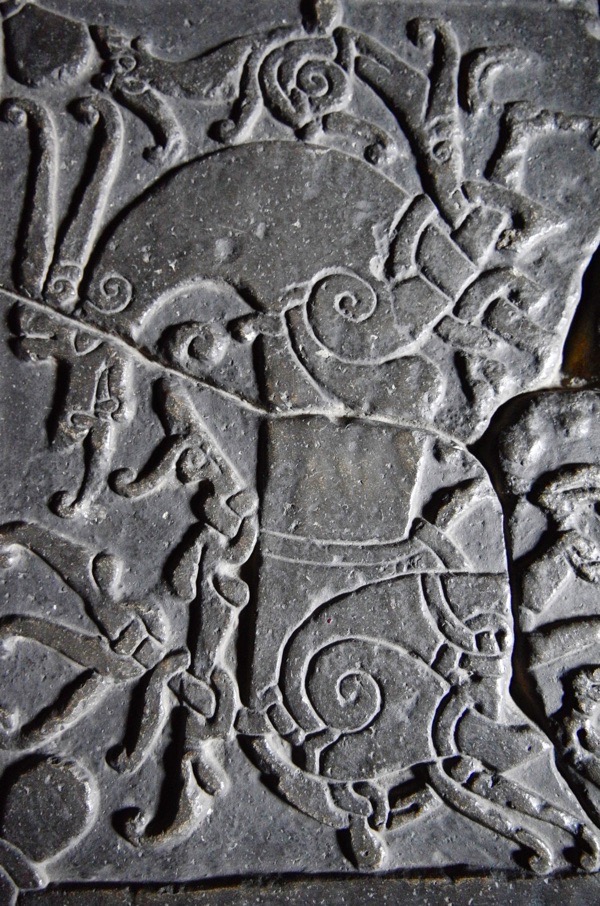
Viking grave marker, dating from 1125-50AD, dug up in 1852 in the churchyard
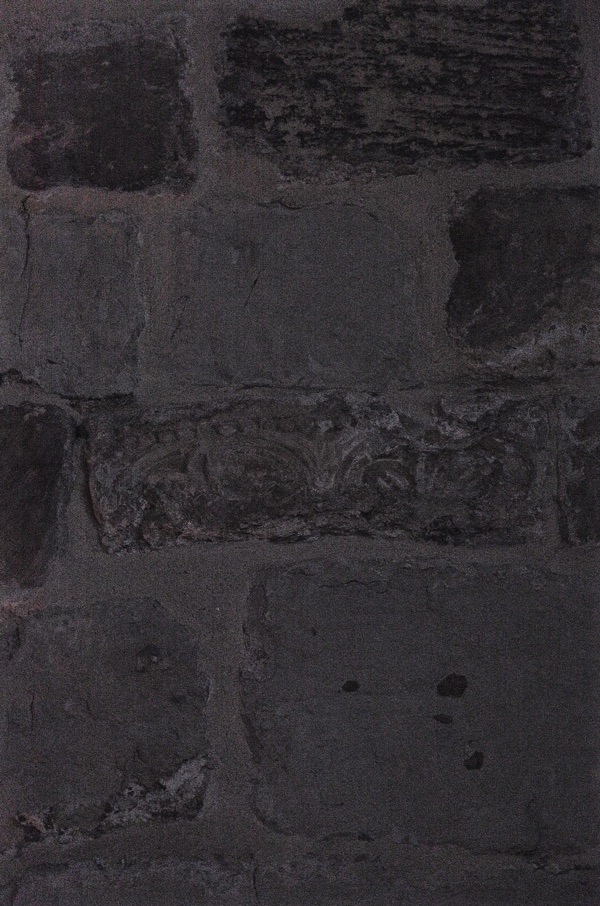
Twelfth century Romanesque carving of foliage in the wall of the crypt
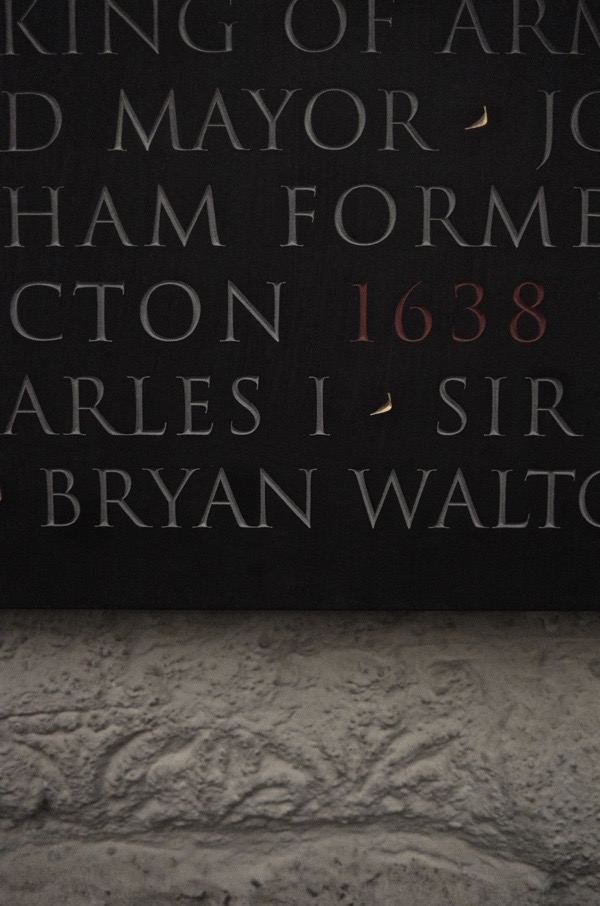
Twelfth century Romanesque carving of foliage in the wall of the crypt
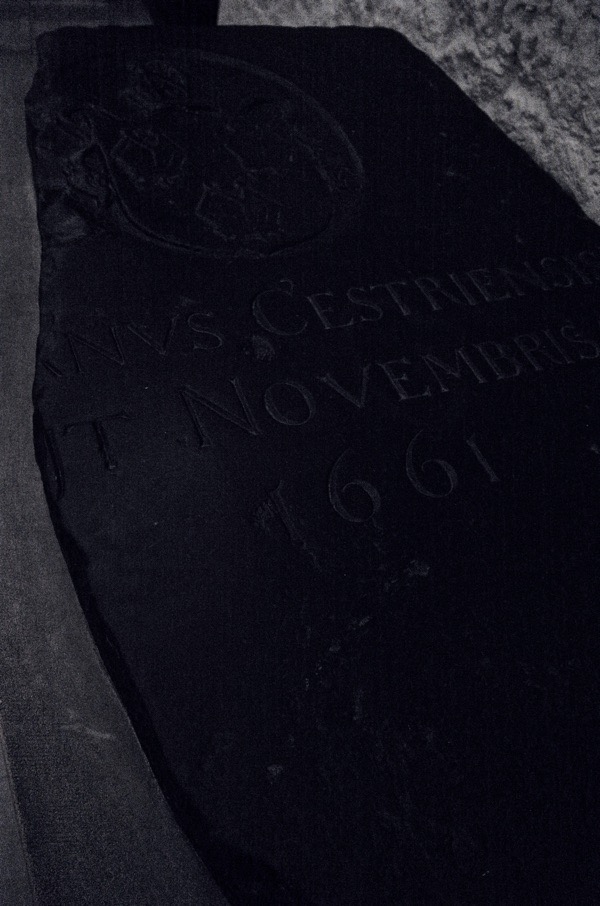
Ledger stone of Brian Walton, Bishop of Chester, died 1661
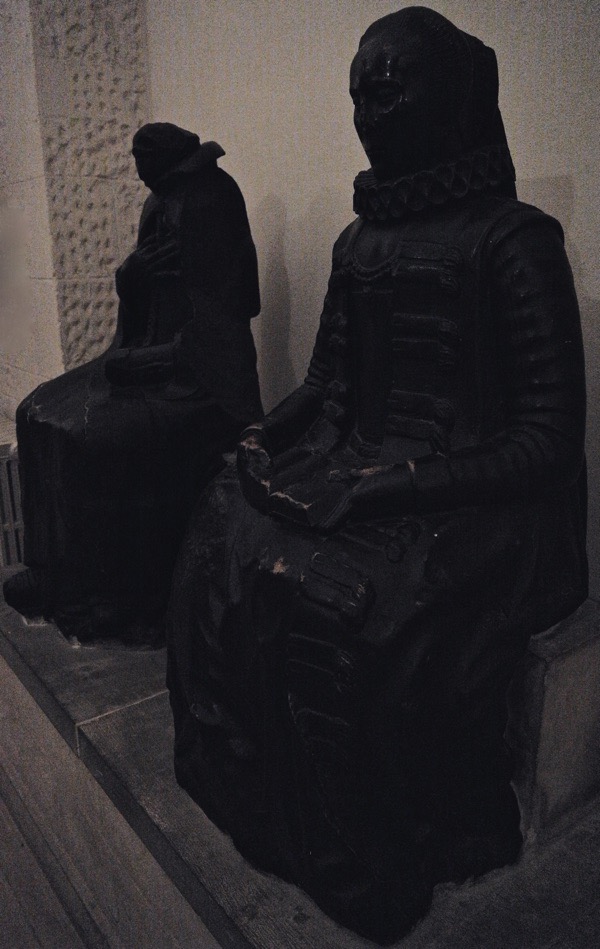
Sir John & Eliza Wolley
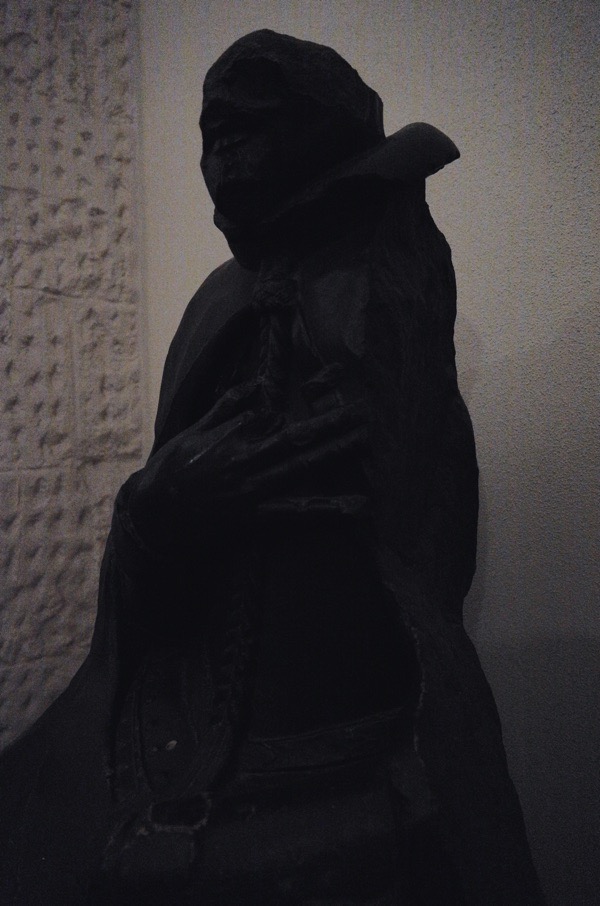
Sir John Wolley, Latin Secretary to Elizabeth I, died 1596
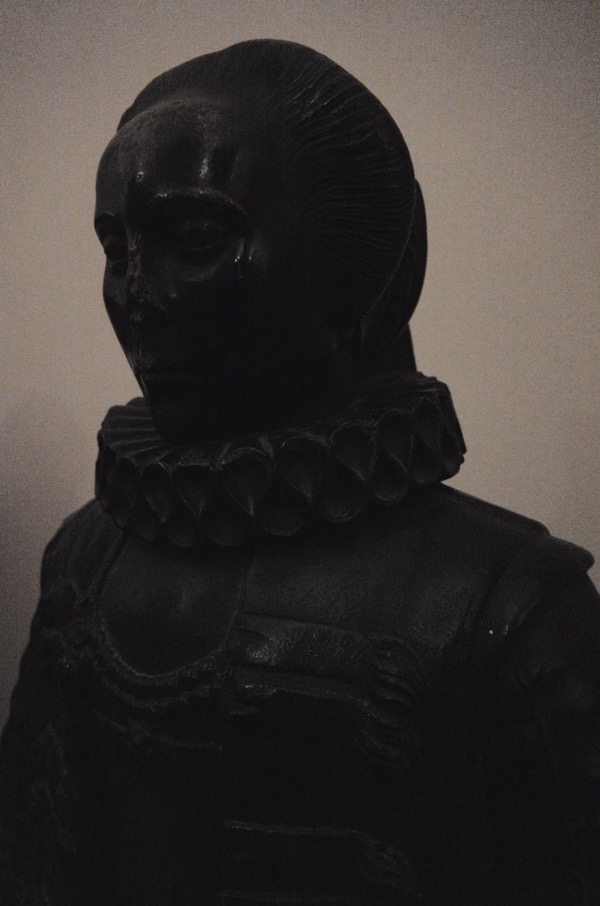
Eliza Wolley, Lady of the Privy Chamber to Elizabeth I, died 1600
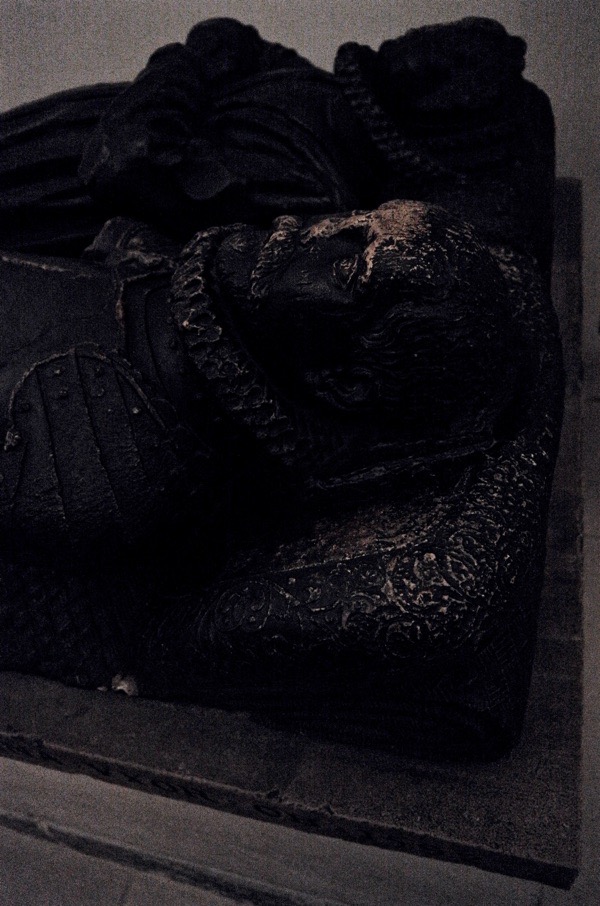
Sir Thomas Heneage Vice-Chamberlain to Elizabeth I, died 1594, & Anna Heneage, died 1592

Unknown effigy
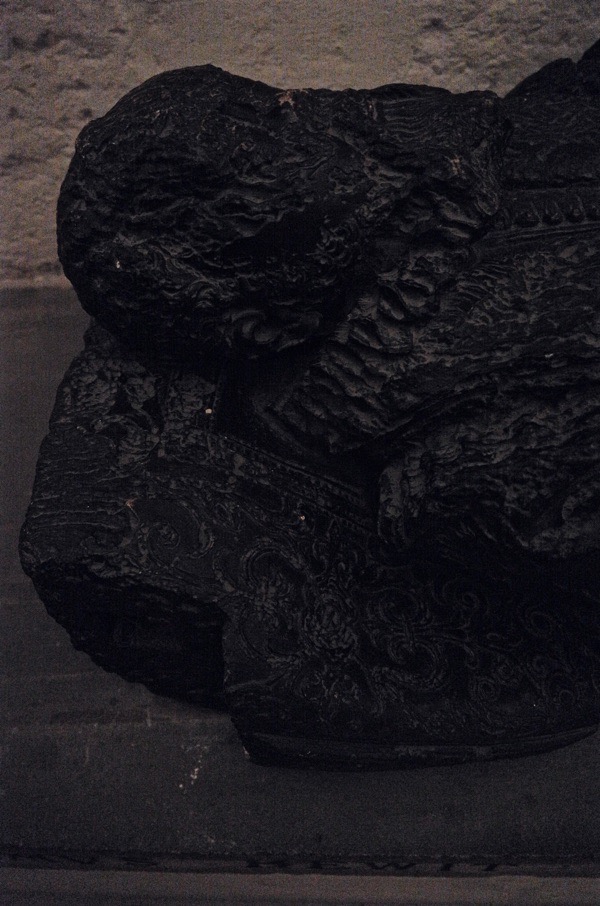
Unknown effigy
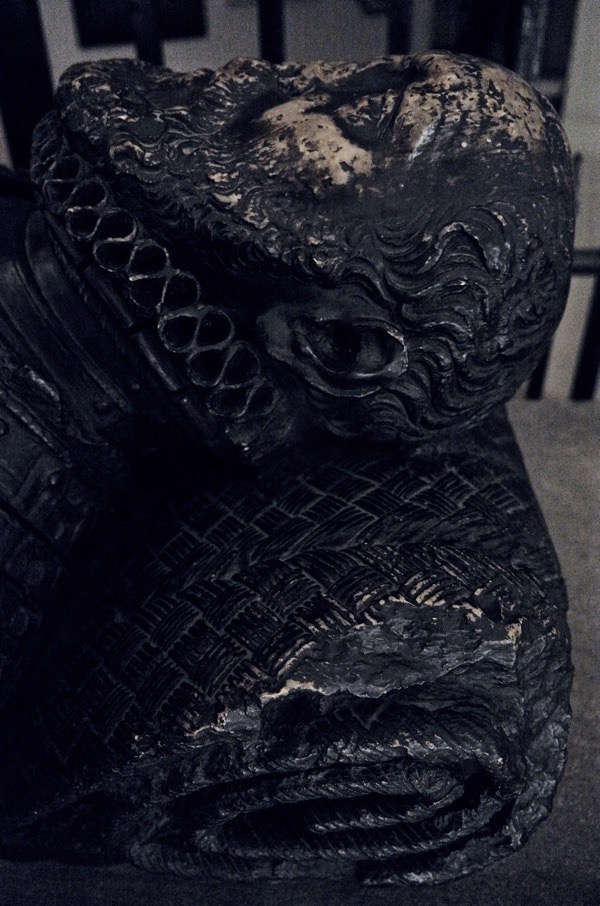
William Cokain, Mayor of London 1619, died 1626
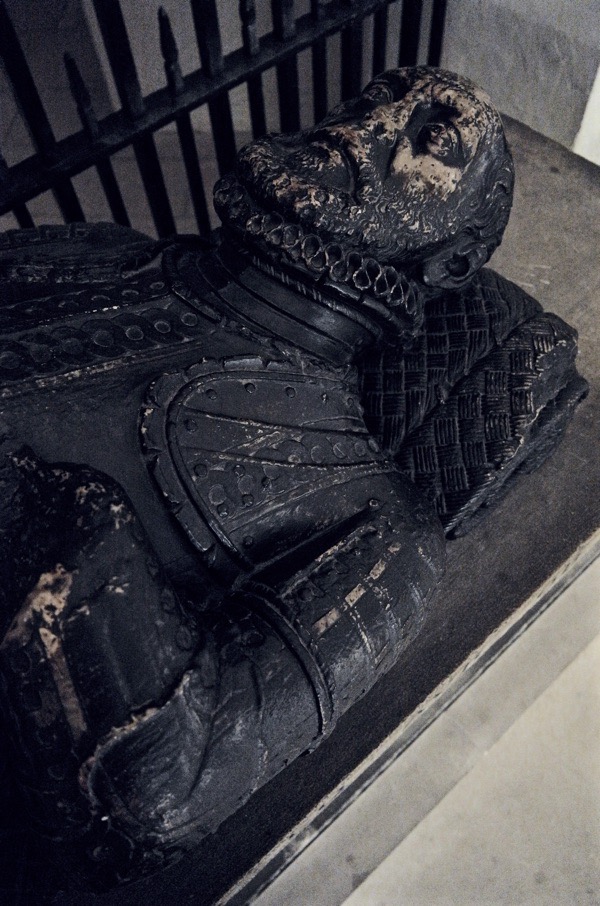
William Cokain, Mayor of London 1619, died 1626
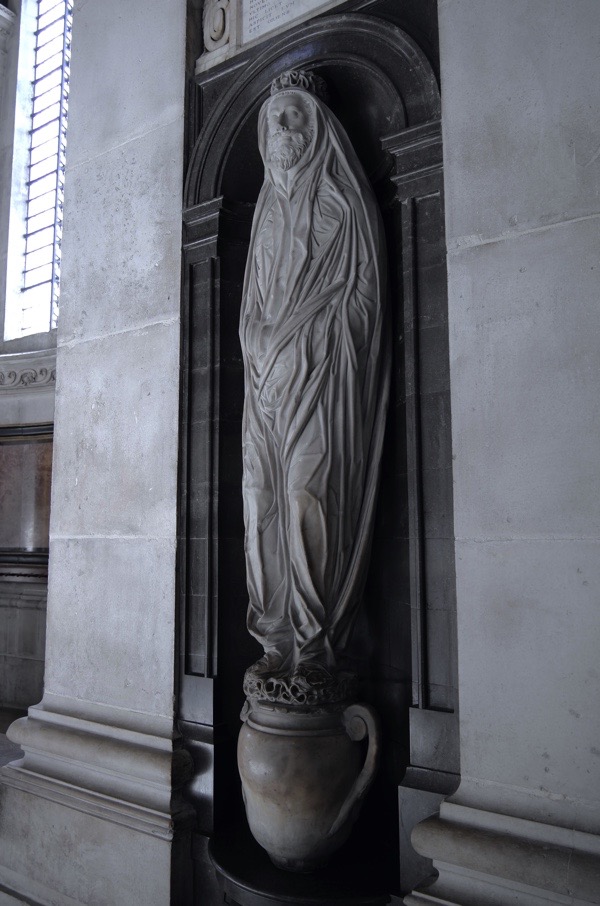
John Donne, Poet & Dean of St Paul’s (1572-1631), monument by Nicholas Stone
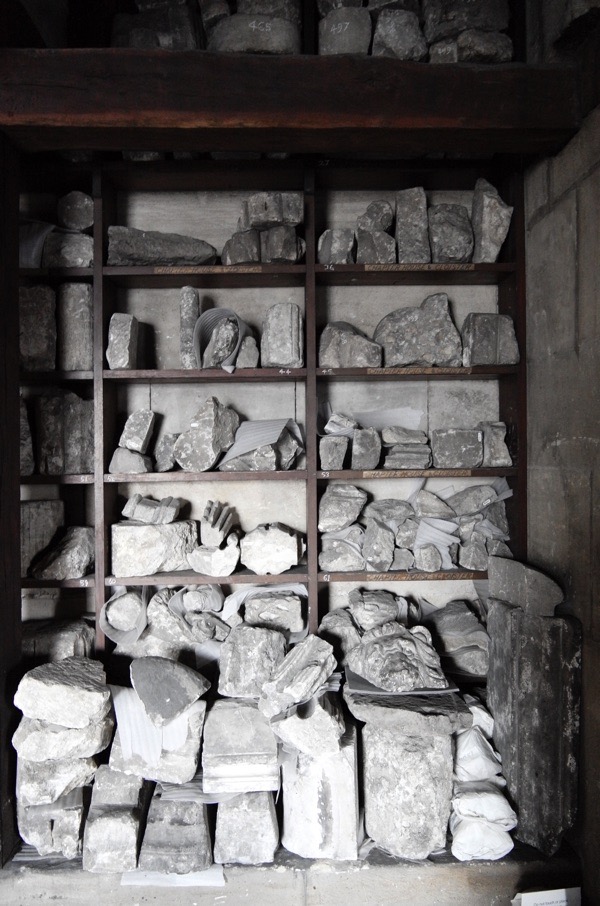
Caen & Reigate stones from Old St Paul’s (1180-1666 AD) excavated by Francis Penrose, Cathedral Surveyor in the nineteenth century
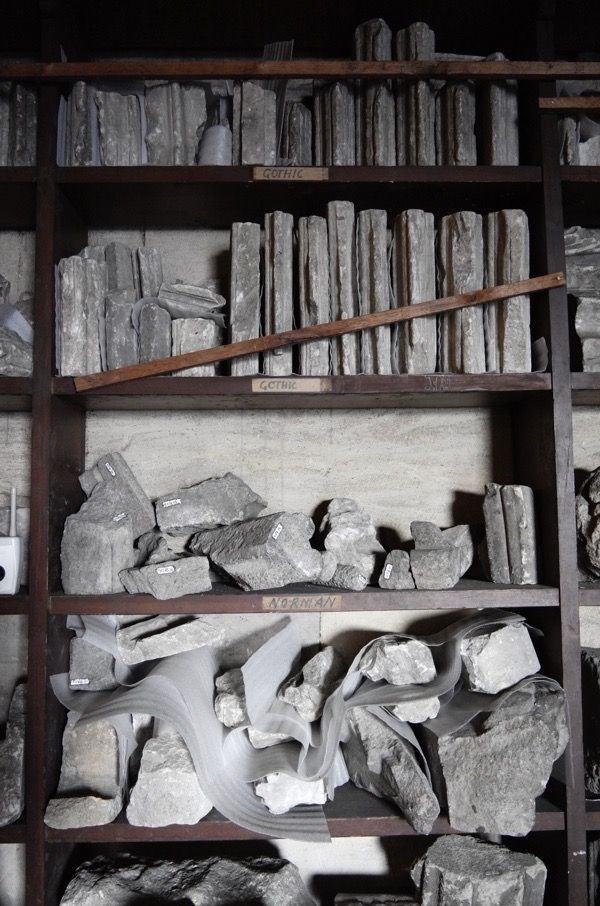
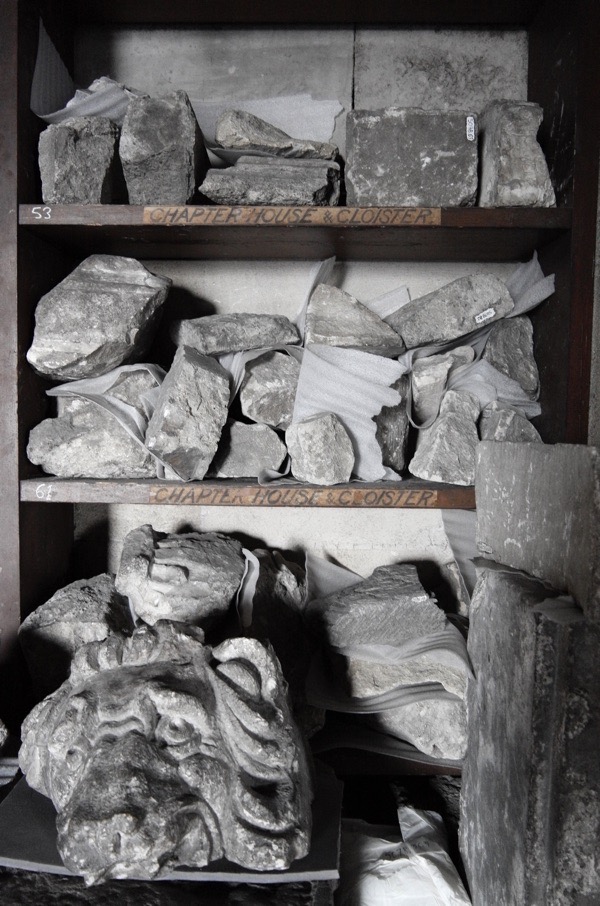
This lion is a fragment of Inigo Jones portal to St Paul’s which inspired Christopher Wren


Click to enlarge this comparative plan of 1872 which superimposes the outlines of Old and New St Paul’s (Reproduced courtesy of St Paul’s)
A programme of walks, talks and tours, special sermons & debates to mark the 350th anniversary of the Great Fire of London is runs at St Paul’s until April 2017. Click here to learn more about the Fire at St Paul’s
You may also like to read my other stories of St Paul’s Cathedral
Charles Keeping, Artist
Celebrating the seventh anniversary of Spitalfields Life with a week of favourite posts from the past year
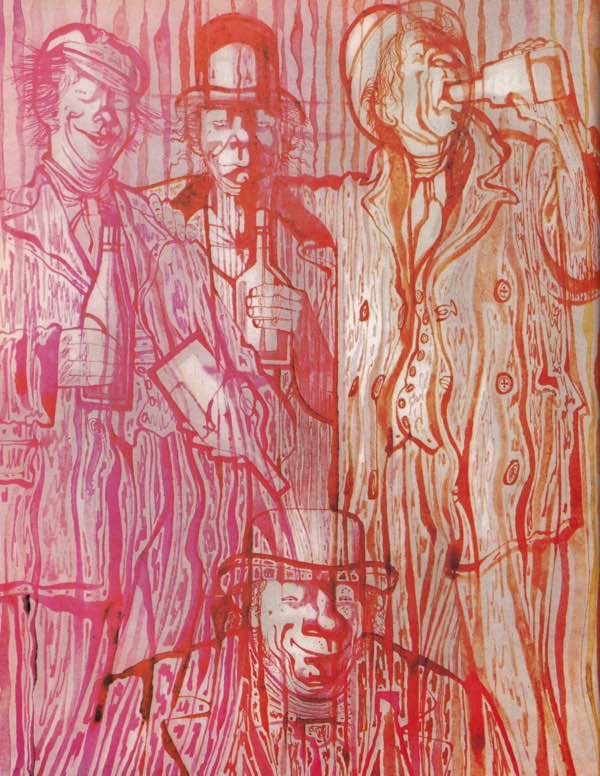
The illustrations of Charles Keeping (1924–1988) burned themselves into my consciousness as a child and I have loved his work ever since. A major figure in British publishing in the last century, Keeping illustrated over one hundred books (including the entire novels of Dickens) and won the Kate Greenaway and Carnegie Medals for his superlative talent.
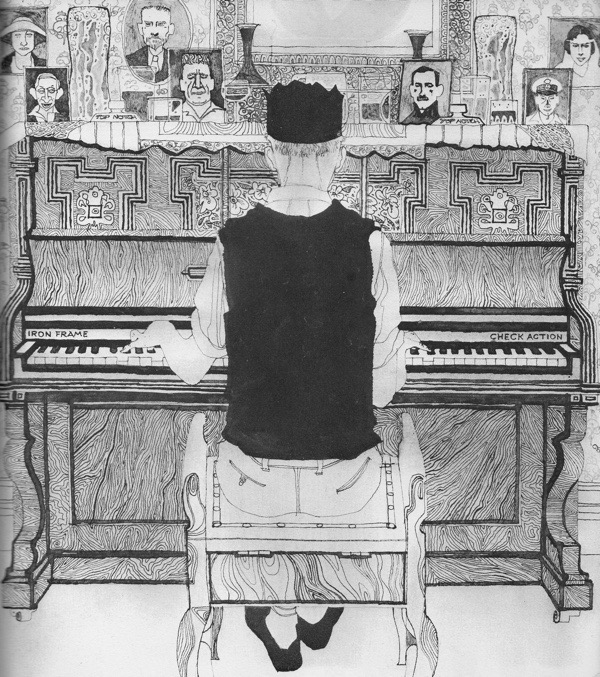
In 1975, Keeping published ‘Cockney Ding Dong,’ in which he collected songs he remembered sung at home as a child. Illustrated with tender portraits of his extended family, the book is an unusual form of autobiography, recreating an entire cultural world through drawing and popular song.
Recently, I visited the Keeping Gallery at Shortlands in Kent to meet Vicky and Sean Keeping who talked to me about their father’s work, as we sat in the family home where they grew up and where much of his work is now preserved and displayed for visitors. You can read my interview at the end of this selection of illustrations from ‘Cockney Ding Dong.’
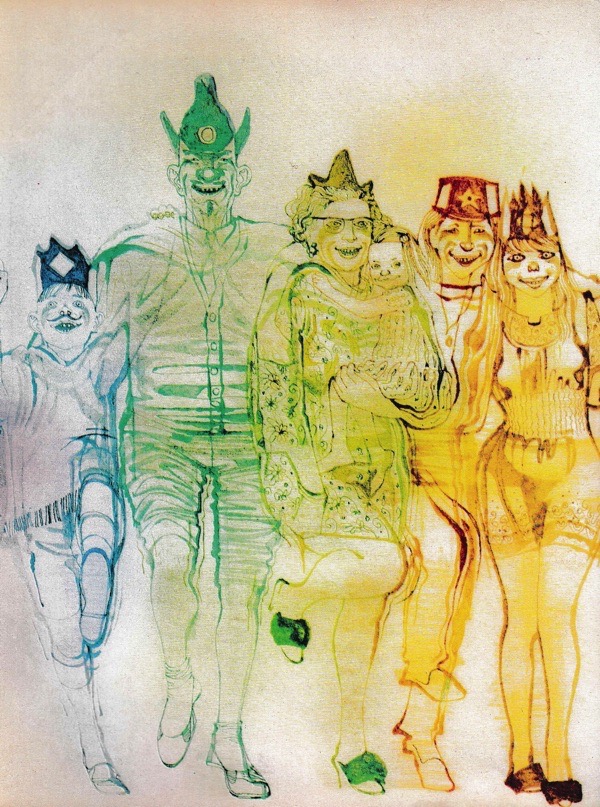
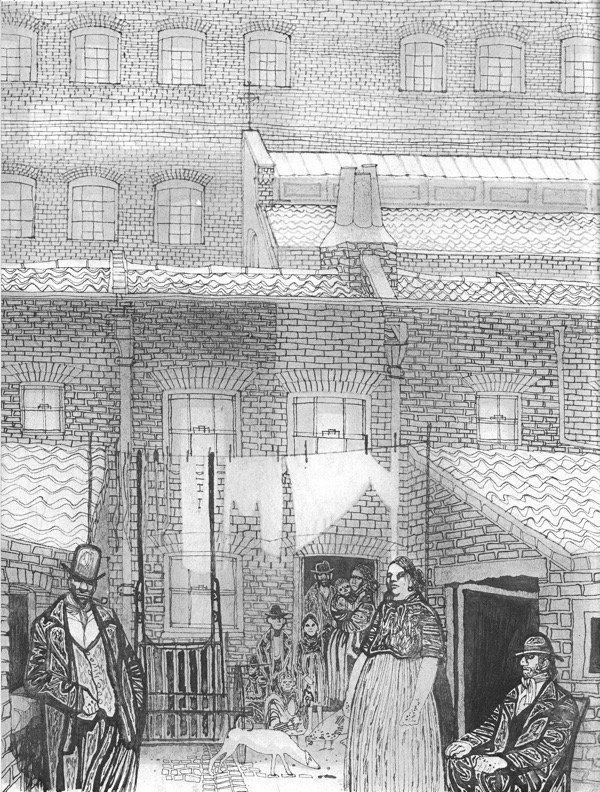
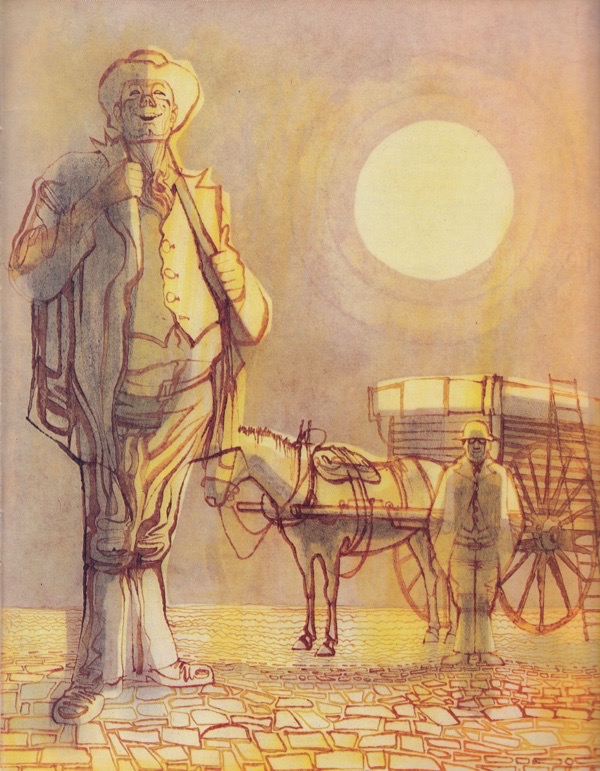
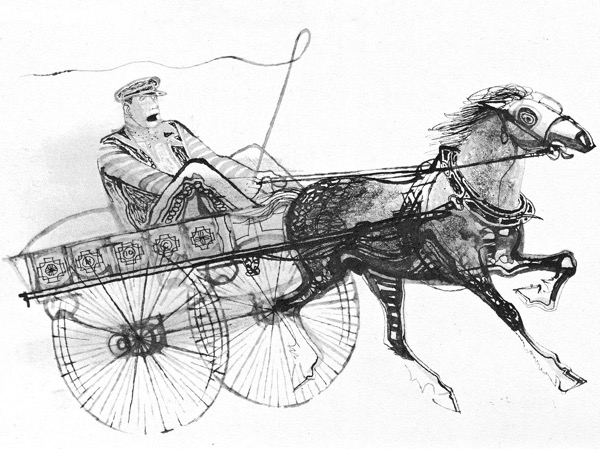
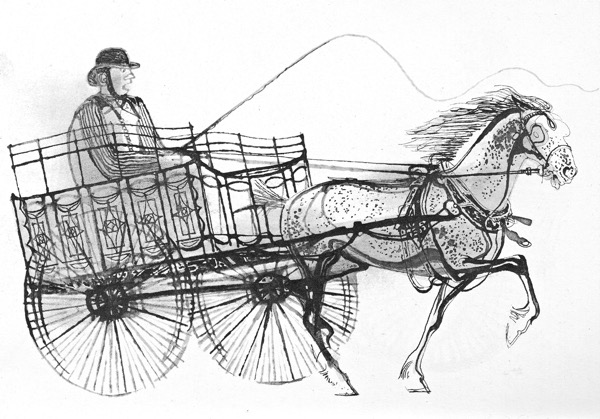
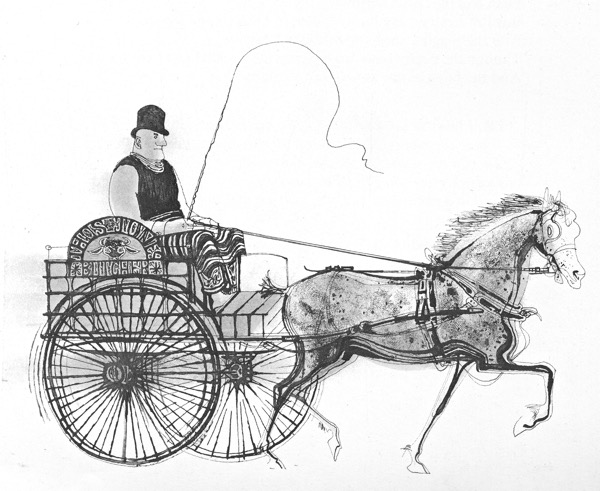

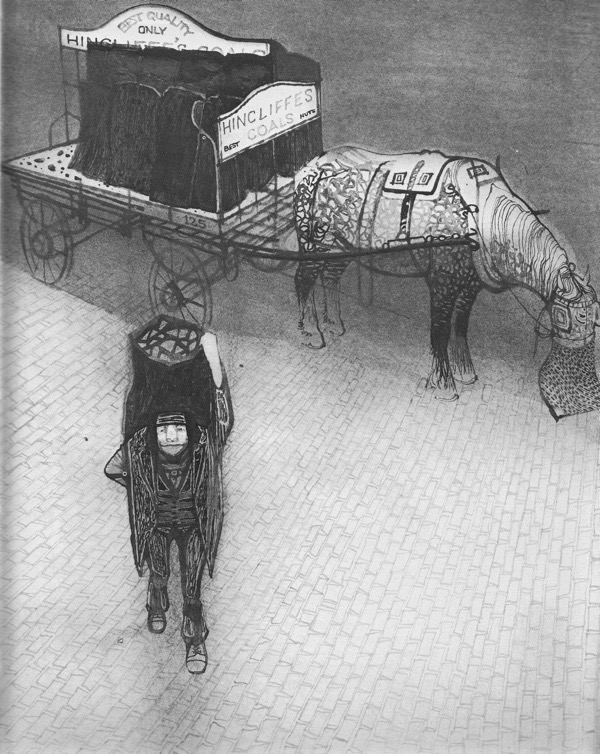
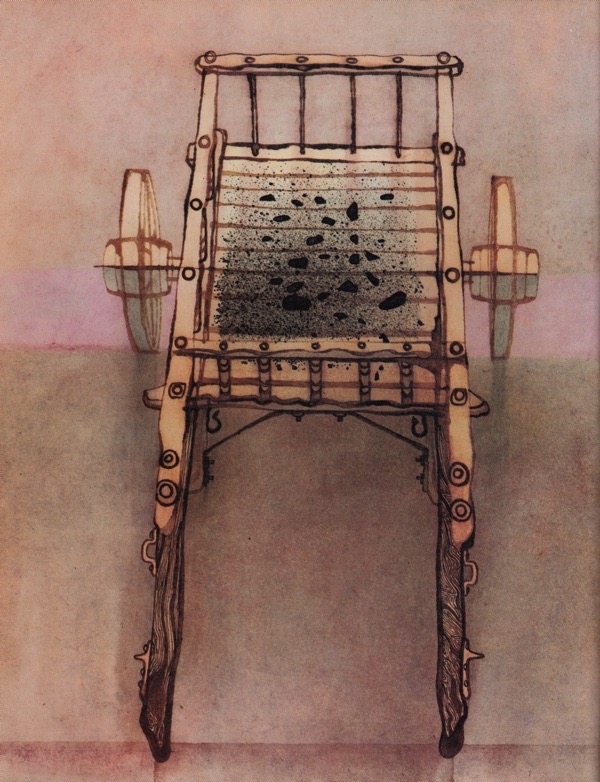
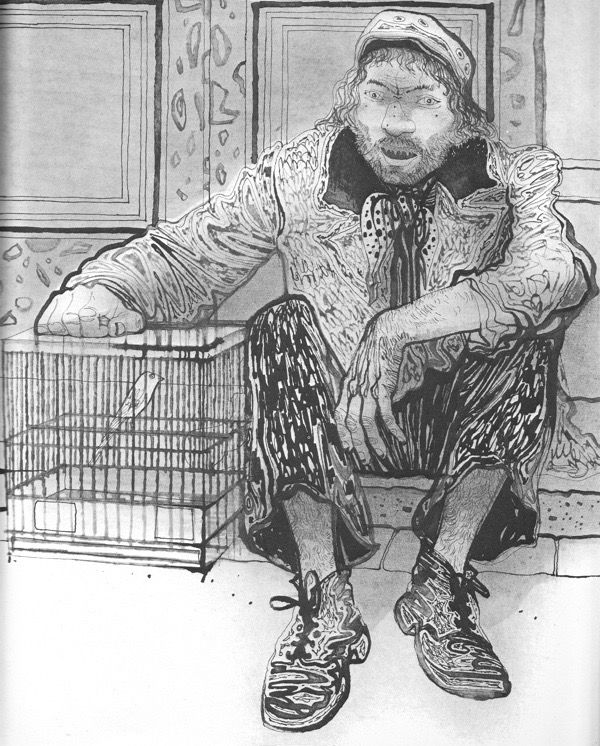
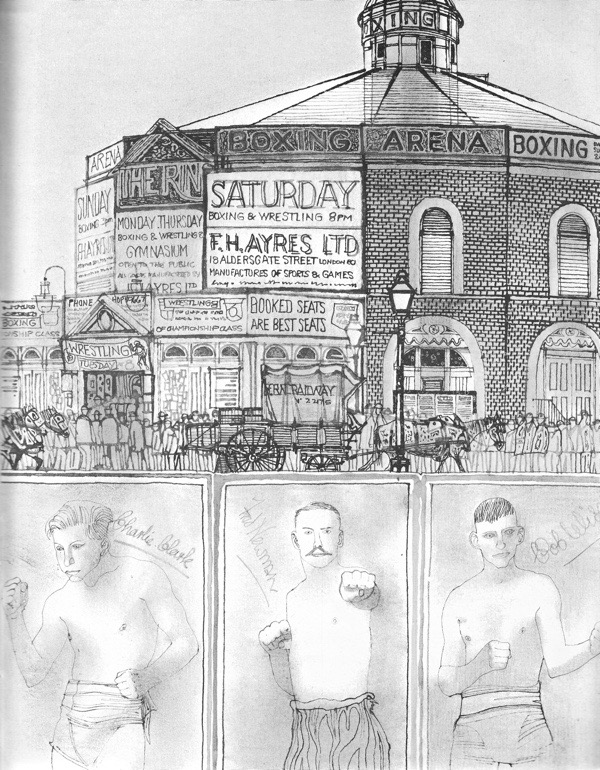
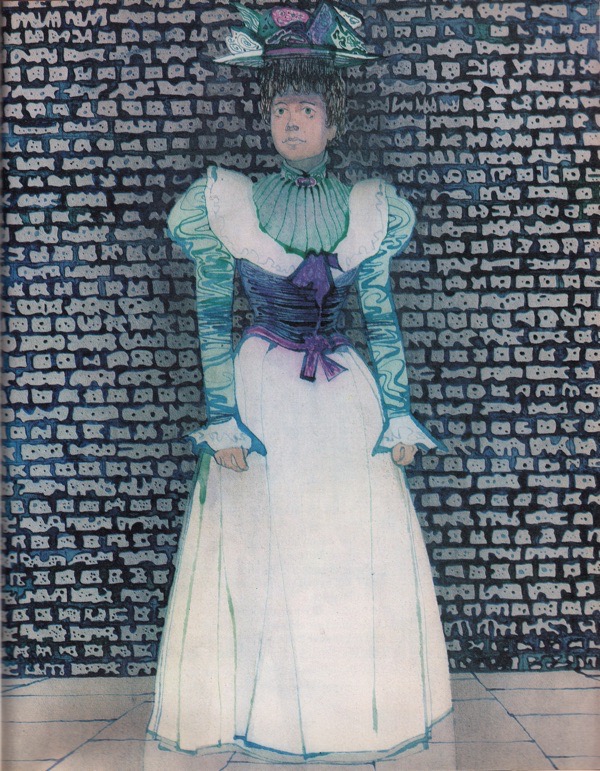
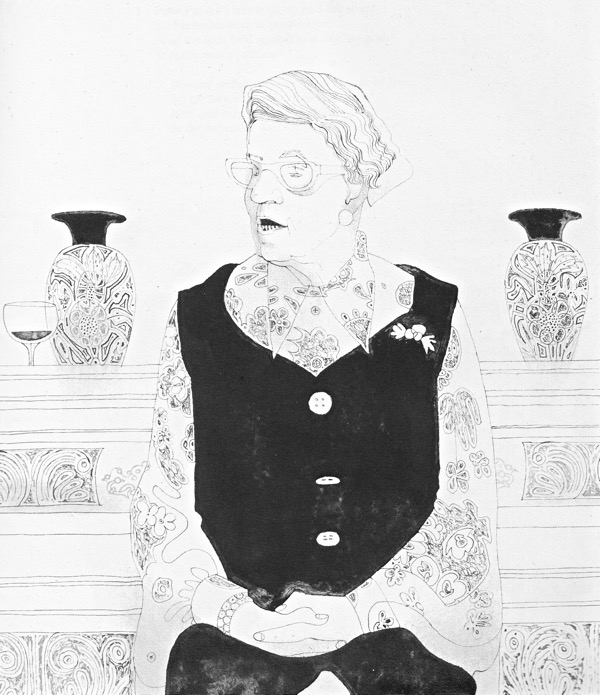
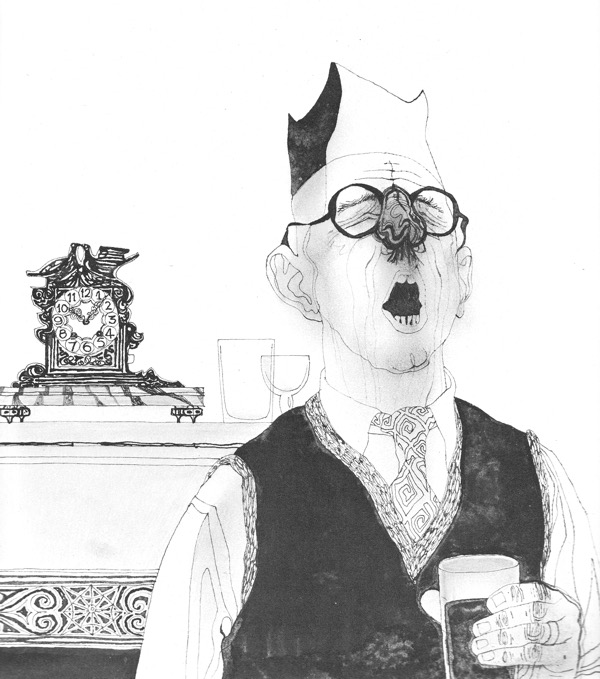
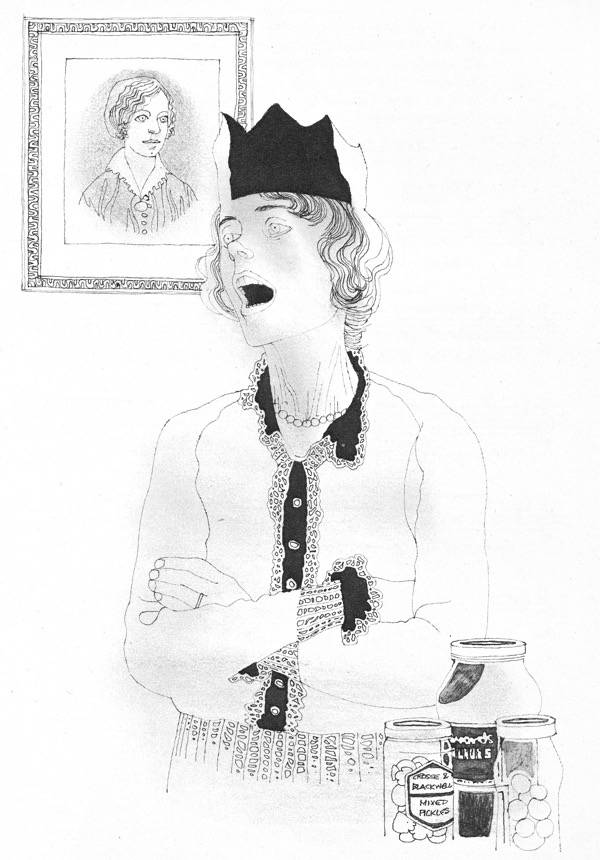
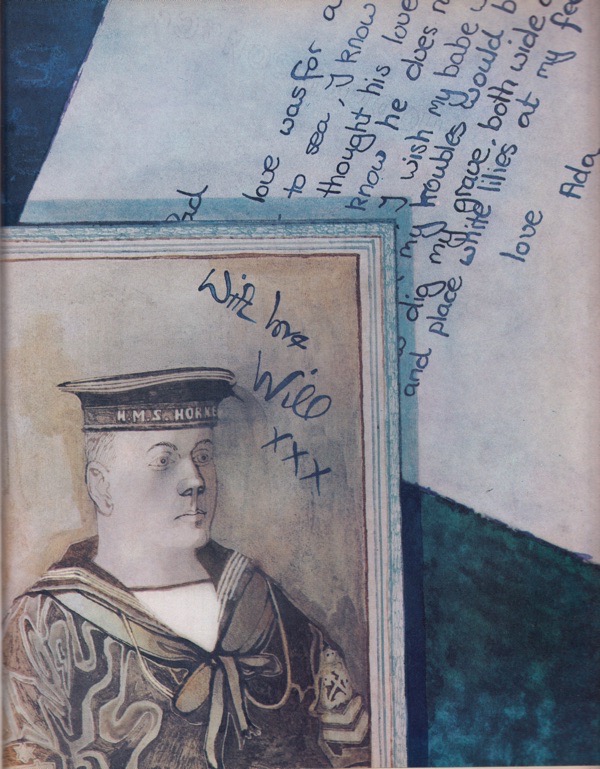
Illustrations copyright © Estate of Charles Keeping
The Gentle Author – So why did your father create ‘Cockney Ding Dong’ ?
Vicky Keeping – We come from a family – he came from a family – where they all got together. They’d have their beer, they enjoyed their beer, and their Guinness – some of the women drank Guinness – and they would all sing and his Uncle Jack would play the piano. And everybody had their own song, so people would give their song and Dad loved that. We still know them all still, because we loved it, and people didn’t say, ‘Oh no, I’m not going to do it!’ They just got up and sang, and it was lovely and the songs were all from the music hall.
The Gentle Author – But he wasn’t a Cockney – where was he was from?
Vicky Keeping – He was from Vauxhall and he was born in Vauxhall Walk, Lambeth. He was very much brought up by the female side of his family. His father passed away when he was ten, he had a burst ulcer. He was a driver on the Daily Star.
Sean Keeping – Before that, his father had been a professional boxer between about 1912 and 1922. He had many professional fights. I know he definitely fought the British champion at the time and won! A chap called Ernie Rice.
His father came from a very poor family and he was orphaned. They had a watercress stall in Lambeth Walk but they died in the workhouse. His mother’s family were also Londoners from Lambeth who came from a nautical background – his grandfather had been a sailor in the Merchant Navy. In the eighteenth century, they had come up to London from the West Country. Like many families, they had not originated in London.
Vicky Keeping – His grandfather was very important to Dad, because he was a great storyteller and would tell stories from his voyages and the different people he met and he was – I suppose – a bit ahead of his time because he was welcoming to all and would speak very positively about the people he met around the world. Dad loved hearing his stories, so he learnt from his grandfather that storytelling was important. That came through to us as well – when we sat round the family tea table we were encouraged to tell stories.
Very sadly, Dad’s dad and Dad’s grandfather passed away in the same year – in 1934 – when Dad was ten. It left Dad and his sister Grace and their mum Eliza very poorly off, but they lived in this extended family with Dad’s granny who was a very strong influence. Dad idolised her and his aunties, and they thought he was the blonde blue-eyed boy and they loved him dearly.
Sean Keeping – They lived in a small terraced house in 74 Vauxhall Walk, which was right alongside the market, and Dad’s early influences were not just his family but also the characters in Vauxhall Market – those often crop up in his books.
Vicky Keeping – One of the things that Dad loved to do in the garden was to look through a little knot hole to see the Schweppes bottling plant and the workhorses and that was something that never left him, that memory of horses.
There was no obvious creativeness in his background, but Dad said his father used to come home – because he worked in print – and bring home paper, and Dad’s sister Grace used to write a story and Dad would illustrate it.
Sean Keeping – He was not a child who would have gone running around the streets, they were children who would sit at home writing a story and drawing. From a very young age, Dad showed a fantastic aptitude for drawing and we’ve got some drawings of his from when he was twelve and thirteen, and they are really fantastic – showing a London of working horses and working people, that’s what he was trying to depict in his drawings.
Vicky Keeping – He was called up in the Second World War but he worked for Clowes the printers when he left school at thirteen. He was not a particularly great scholar at school. One of the things was that he found difficult was that he was left-handed and the teachers would try to get him to write with his right hand.
Sean Keeping – Working for Clowes the printers, he would go around on a horse & cart delivering paper, and that was where he met one of the characters who had a great influence on him – Tom Cherry. Many of the burly-looking men driving a horse through London in Dad’s pictures – they’re Tom Cherry, and usually he drew a little boy sitting next to him which was Dad. Tom had a great influence, telling him stories about London and the people of London.
Vicky Keeping – Dad became a Telegrapher on a frigate and he was on the boat at D-Day. After the war, he tried to get into Art College but that was very difficult, so he worked collecting pennies from gas meters. He worked for the Gas Light & Coke Company and he would go around on a bicycle, with a big sack on his shoulder with all the pennies in it, going from door to door in North Kensington. He used to tell us funny stories. At that time, North Kensington was a poor area and I think he got a lot out of the characters he met there, but he hated working for a company, for a boss, and he decided he wanted to do something better.
He went to night classes at the Regent St Polytechnic but, because he left school at thirteen with no formal qualifications and had been through the war, it was very difficult for him to get in at first. He tried and tried, and eventually he spent time in a psychiatric hospital due to his experiences in the War. I think it was also to do with his father. When his father and his grandfather died in the same year, they were laid out in the front room and – as a ten year old – Dad had to go and kiss them. That had a profound effect on him. He spent six months in a psychiatric hospital and two weeks of those were in a deep sleep. Yet he talked about the great characters he met there and there was a Psychiatrist, Dr Sargent, who knew Dad should go to Art College and he supported him in writing letters – and eventually that’s what happened.
Sean Keeping – When Dad went to Art College, he had to fight hard to get a grant because, at that stage, his mother had been widowed for a number of years and she had a job cleaning, so there was not a lot of money around. But eventually, he got a grant to go to Regent St Polytechnic. Right after the war, there were two types of students – those that had just come out of the forces who were much more mature and those who had come directly from school. So it was an interesting mix of people and mix of cultures.
The Gentle Author – How did he set out to make an income as an illustrator?
Sean Keeping – Dad was not motivated by making a career or making money or even motivated – I think – by success. Dad was motivated by one thing and that was doing what he wanted to do – drawing pictures of things that he wanted to draw pictures of – so he never really thought about a career. But then he got a job on the Daily Herald, drawing the strip cartoon and that started to pay very well, and from that he was able to move out of the council flat that he lived in with his mother in Kennington and buy a small terraced house in Crystal Palace.
When they were looking for houses, once he was making money from the strip cartoon, they looked in two areas – one was Crystal Palace and the other was Chelsea. Now the idea that you might choose Crystal Palace or Chelsea to look for a house nowadays is an strange idea, but they decided on Crystal Palace!
(Transcription by Rachel Blaylock)
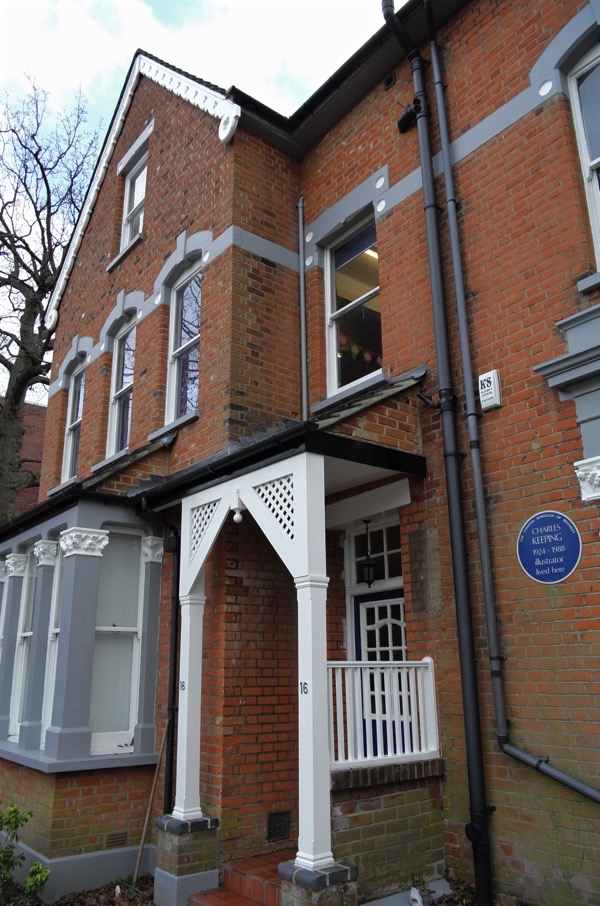
Visit The Keeping Gallery at Shortlands in Kent where you can see the work of both Charles & Renate Keeping preserved in their family home. Visits are by appointment arranged through the website and Shortlands is a short train ride from Victoria.
Schrödinger, Church Cat
Celebrating the seventh anniversary of Spitalfields Life with a week of favourite posts from the past year
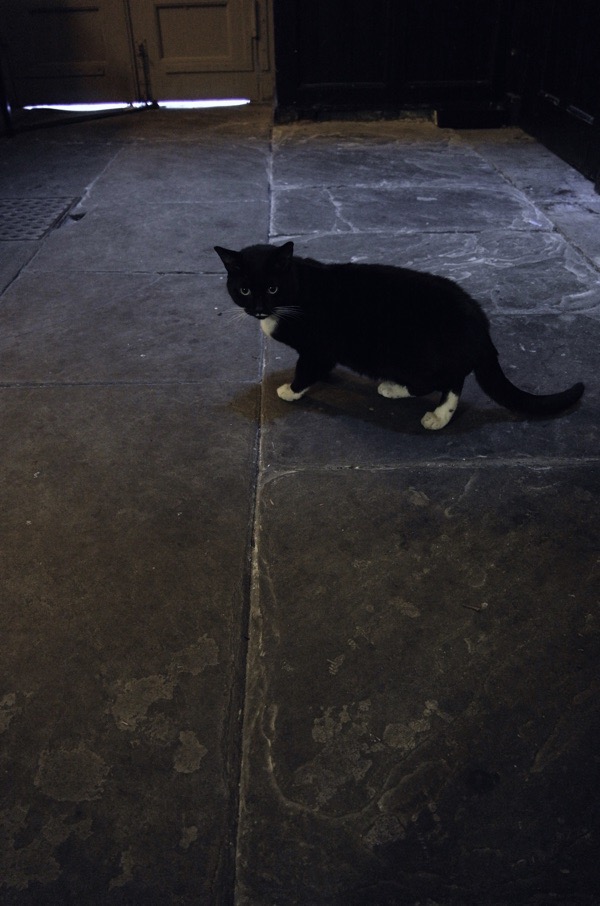
Schrödinger, the incumbent feline
At the end of last summer, Robin Gore-Hatton, Verger of St Leonard’s in Shoreditch, noticed a skinny cat hanging around the portico and gave him food and water. “He was thin and hungry, so I took pity on him,” Robin admitted to me.
A lithe and limber creature, Schrödinger disposed of the church’s mouse problem with alacrity, thus earning his keep in exchange for services in pest control. “Like most cats, I realise he adopted his owner rather than the other way around,” Robin added, acknowledging that Schrödinger has now established himself as a permanent fixture at the church.
Conscientious in his duties, Schrödinger may usually be found at his customary position sitting discreetly beneath a table just inside the door where he observes the constant flow of visitors, retreating under the pews when crowds arrive. “He’s shy,” confirmed Robin, “but it’s like he’s biding his time to assert his presence.” Certainly, frayed corners of two hessian-covered notice boards in the side aisle attest to Schrödinger marking his territory.
“It does feel like he’s the boss,” Robin confessed to me with a helpless grin, as we strolled around the church with Schrödinger following close at his ankles in expectation of dinner time. “Only I feed him,” Robin whispered in covert explanation,“otherwise everyone would give him food and he’d grow fat.”
Yet in spite of his usual feline qualities, there is also an air of mystery to this implacable creature that is capable of vanishing and reappearing without explanation. “Sometimes at night, he disappears,” Robin confided, “and then I find him in the morning asleep in the crypt – I think he feels at home down there, which is something we share in common.”
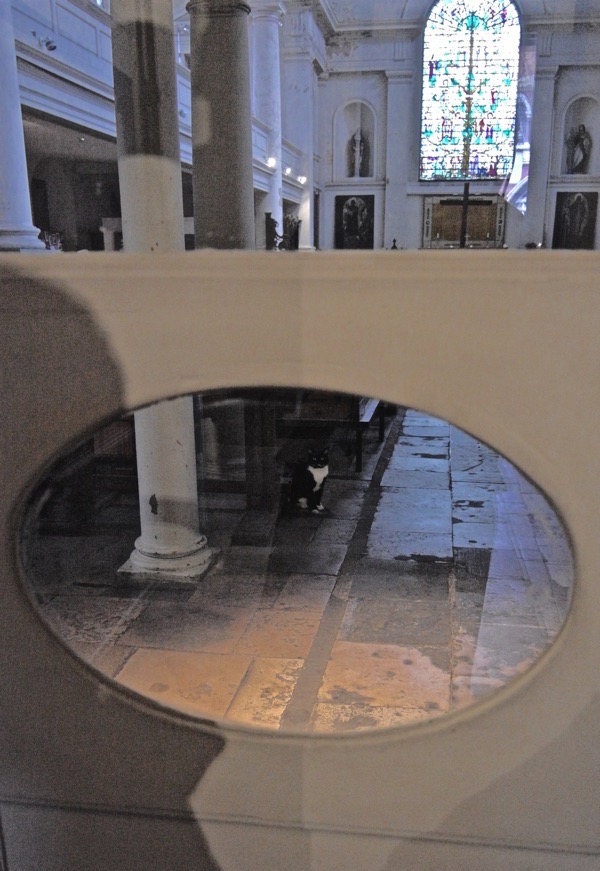
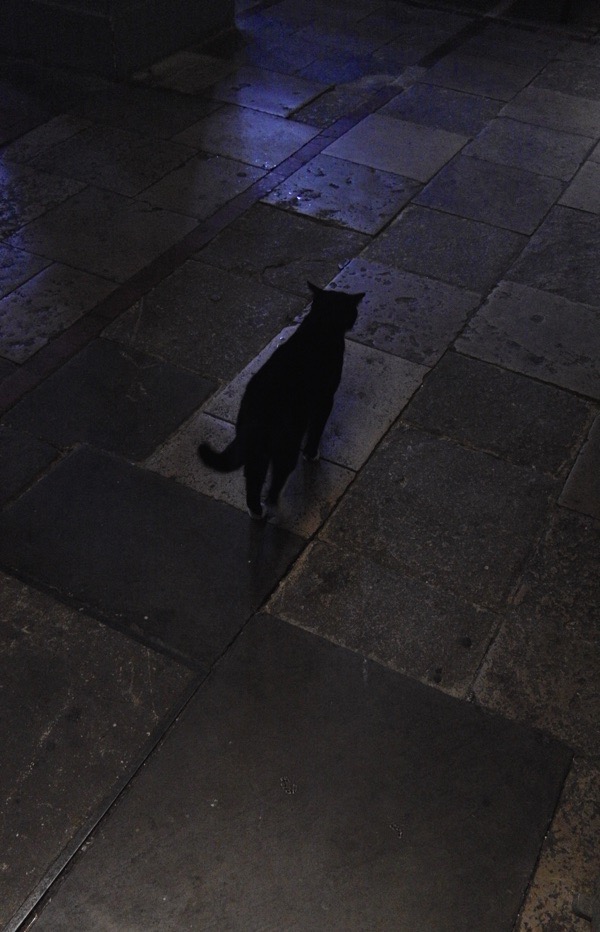
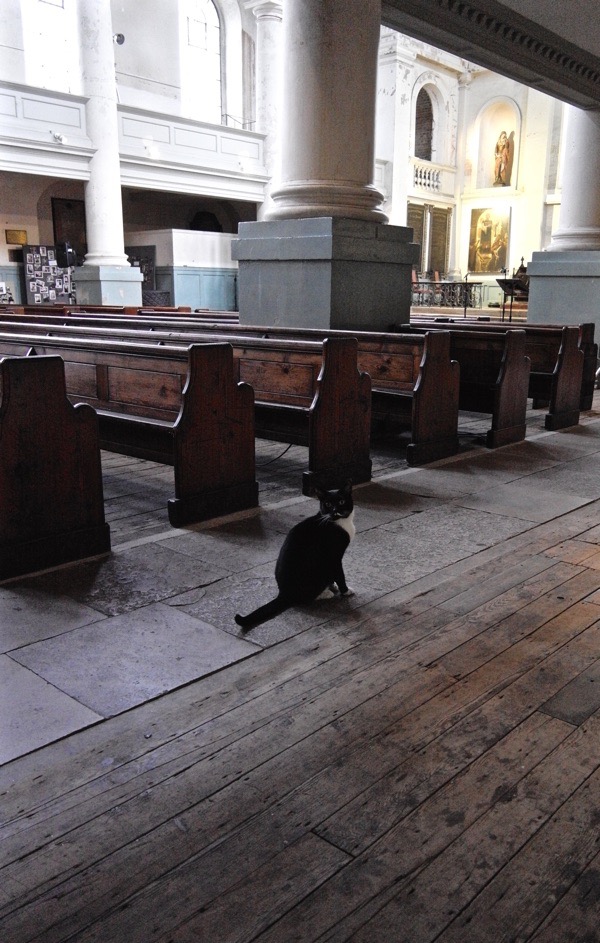
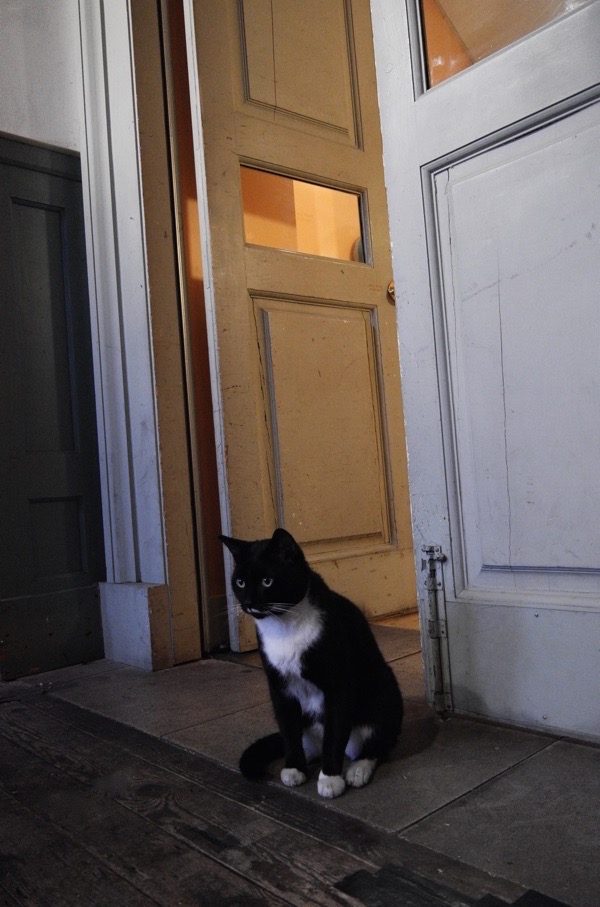
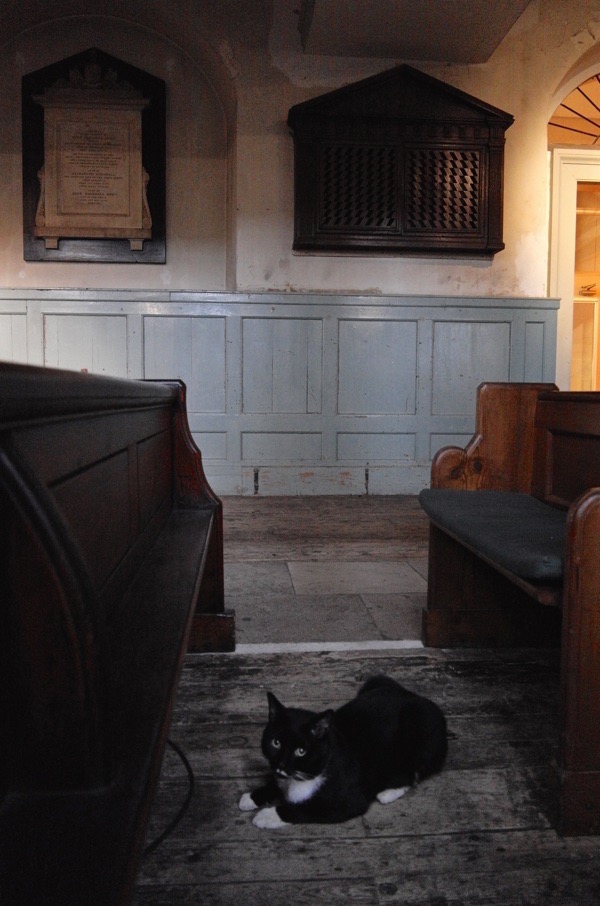
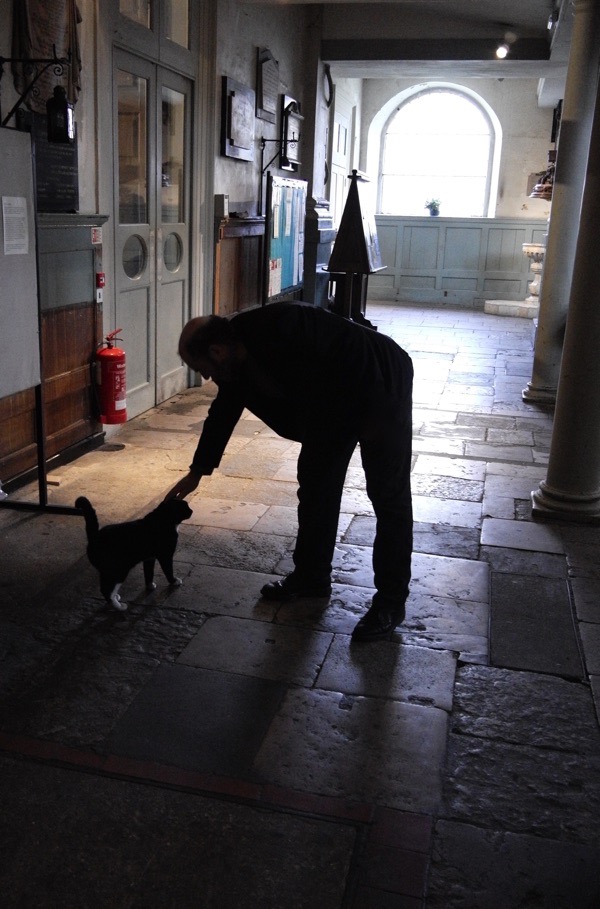
Schrödinger and Robin Hatton-Gore, Verger at St Leonard’s – “It does feel like he’s the boss”
You may also like to read about
The Cats of Spitalfields (Part One)
The Cats of Spitalfields (Part Two)
Blackie, the Last Spitalfields Market Cat
and read about
At Clapton Beauty Parlour
Celebrating the seventh anniversary of Spitalfields Life with a week of favourite posts from the past year
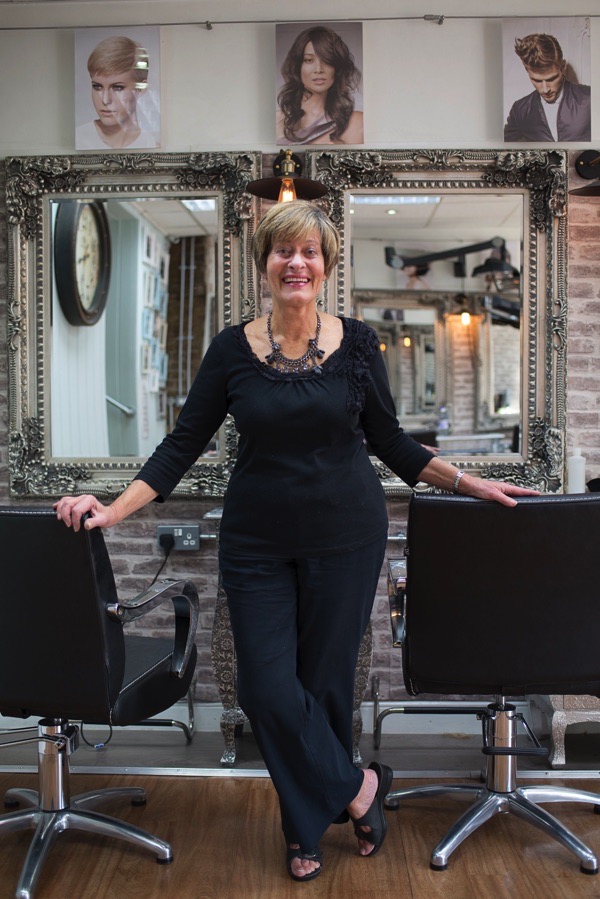
Marcia Manning
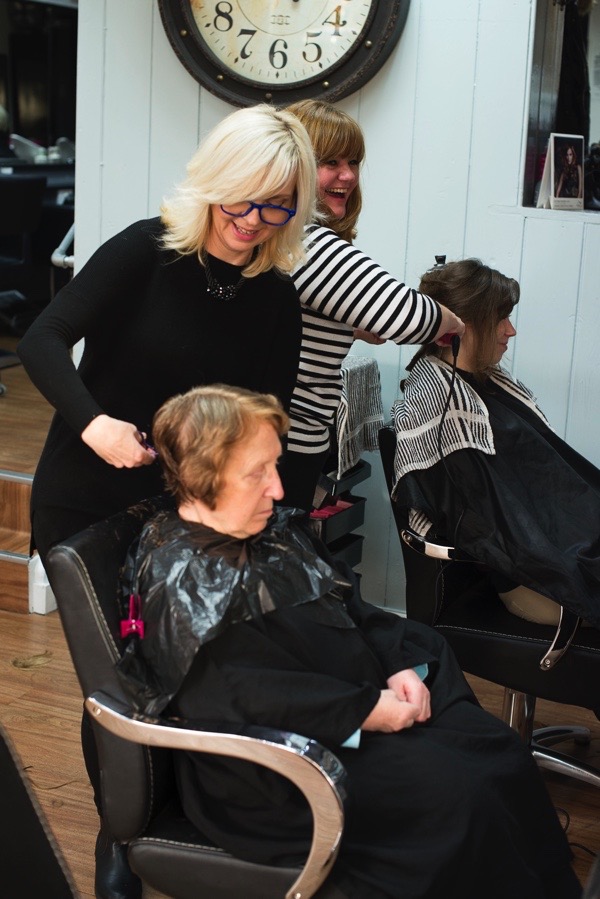
Marcia believes that Clapton Beauty Parlour, opened by her parents in 1930, is London’s oldest family-run salon and I have no reason to doubt her. For me, it was the perfect excuse to take another trip to the hairdresser and the ideal opportunity to learn more of Hackney’s hidden hairdressing heritage. And Contributing Photographer Sarah Ainslie came along to capture Clapton’s celebrated coiffeuses.
“Both my grandparents’ families lived in Chatsworth Rd, my mother’s family lived in 104 and my father’s family lived at 83. He had his eye on my mother for a year until he got his opportunity to speak to her when the Prince of Wales visited Hackney. The route took him along Chatsworth Rd, so my father positioned himself behind my mother in the crowd and tapped her on the shoulder and asked to take her to the cinema. My aunt went as a chaperone, that’s what good class people did that in those days. My mother was maybe sixteen or seventeen and they started a courtship, and got married when mother was twenty-one in 1930. She was five months older than my father so, when they took the lease on this salon, it had to be in her name. She was already twenty-one but he was still twenty and they opened at Easter to catch the business.
My father’s family were all barbers. They lived above the shop at 83 Chatsworth Rd and the younger four brothers were all taught barbering by the eldest. Originally, the family came over from Russia where they were lumberjacks – none of them were barbers, it started here with the eldest brother. My father began when he left school at twelve and had to go out to work, he was a natural hairdresser. I recall him saying that hairdressing is a young man’s trade, because physically you cannot stand all day after the age of forty or fifty and because it’s the youngsters who dictate fashion.
When they opened this salon, it was ladies’ hairdressing. It was men’s barbering in Chatsworth Rd but when they opened this shop it was ladies only. He switched because he was a very futuristic man and he saw the future was in ladies’ hairdressing. After my parents opened up the salon, they were very often short of money and they would go to my grandmother in Chatsworth Rd who gave them money to keep them going. She would pawn her rings and reclaim them later. They used to worked until midnight. My mother made sandwiches for the girls who were working all day until 10:00 or 11:00pm. I remember them telling me that customers queued up outside from 6.30 or 7:00am to have their hair done before work.
My father was the hairdresser and my mother was very good at beauty and make up. Father took in fancy goods like gloves, handbags and they sold a lot of jewellery. He bought it and she sold it. Father sent her to Revlon and Max Factor to learn to do make up, so she knew all about that, and we sold all Max Factor and Revlon products here and also Leichner theatrical make up.
They lived above the salon at first and used Hackney Baths to wash. In 1936, when they had enough money, they bought a house in Upper Clapton. Father was a very advanced man. He learnt to drive and they were the first amongst their friends to have a fridge and a freezer and a mangle for wringing the washing. I loved using the mangle!
In the thirties, Vidal Sassoon was working in Whitechapel where he did his apprenticeship and then had his salon. He was only seventeen but in those days, you left school earlier – you were a man at fifteen or sixteen. His life was disrupted by the war when his salon was bombed out. The Sassoon family knew my parents and he came to see my father and asked, ‘I’ve got a few customers and I don’t want to lose them, can I work in your salon?’ My father replied, ‘Yes you can, here are the keys.’ Our salon was closed during the war because my father was in the fire service and he was injured and, after he recovered, he was stationed in Victoria Park on the anti-aircaft guns in the Home Guard. So he said to Vidal, ‘Here are the keys. Keep the salon clean. Use any products. Make sure you lock up.’
I first came here in 1974. I was never going into hairdressing. I went to Woodberry Down school in the year it opened and, when we had a careers evening, the headmistress said to my father ‘Well now Mr Manning, we’ve got to discuss Marcia’s future.’ She saw me as a model pupil. Although I had failed the scholarship exam, it was my luck that Woodberry Down opened that year so I became a model pupil and got six O levels and three A levels. Yet my father told her that I would be going into the family business. Well, that was all I needed to hear and I gritted my teeth against it. I went on to become a linguist and I studied at Holborn College of Languages but – low and behold – here I am today.
I’ve never done hairdressing but I’ve been running the place. The fact that I never learnt hairdressing has held me back, so I took myself off to Weller to do some short courses, even though you can’t just ‘do hairdressing,’ it’s a four-to-five year apprenticeship. I did colouring and that gave me a certain respect here among the staff. Before that, it was like running a plumbing business without being a plumber yourself, you can’t do it. Here, I’ve been a secretary with languages trying to keep these girls in order. My brother gave me a pat on the back and said, ‘Mum and dad would be really proud of you.’ I’ve managed to bring the salon into its eighty-fifth year.
About thirty years ago, there was a big thing about sunbeds, so I decided to go the Hair & Beauty Show at Olympia where they were displaying them. I had some empty rooms upstairs and I got a loan from the bank, and – my goodness it took off – I repaid the loan very quickly. You had to wait for an appointment, it was that busy, and I think this is also what my father found when he started, it took off.
We have one customer who is a hundred years old, Mrs Goodman. She is so alert, she comes on Wednesdays and we have lovely chats about the early days. She remembers my father and he has been dead for forty-two years. She must have been coming here for between fifty to sixty years. I have many customers who remember my father doing their hair for their weddings.
From the age of three or four, I was put on the counter and told that I had an important job, to watch. As far as I can remember, I’ve always been here. I love being here because this is where Mother and Father are, I feel the closeness. I just feel a bond with this place – this is my home.”
Once Marcia had told her story and given me a tour of the premises, from the former basement kitchen to the water tank in the roof, it was time for a word with Dawn Hammond, Marcia’s protégé and proud successor.
“It was my Saturday day job and I am the owner now. I took over seven years ago but Marcia still comes in two days a week and helps out. I lived just across the road when I was fifteen or sixteen and I saw there was a Saturday girl wanted. My mum used to do our neighbours’ hair and her own hair at home, she wanted to be a hairdresser but became a machinist. It was convenient for me, I didn’t have to fork out for bus fares and then Marcia took me on as an apprentice. I wanted to be an architect, but I haven’t got the brains for that. In architecture, you have to draw lines but in hair you have to draw angles, 180 and 360 degrees. If you hold the hair up, you just get a short back and side but, if you do an inverted bob. It’s all to do with angles.
Customers are different today. They see these models in the papers with black hair one week and blonde the next, they might be wigs. They say, ‘I want my hair like this’ – they have got black hair and they want it blonde, it ain’t gonna happen! When customers come in we turn into psychologists and, once we get to know them, they tell us their problems. I’ve got a customer who used to live near Victoria Park and now she has moved to Hove, but she still comes back to get her hair done. I ask her about her children and she asks about mine. With customers that we have been doing for years, we have a strong bond.”
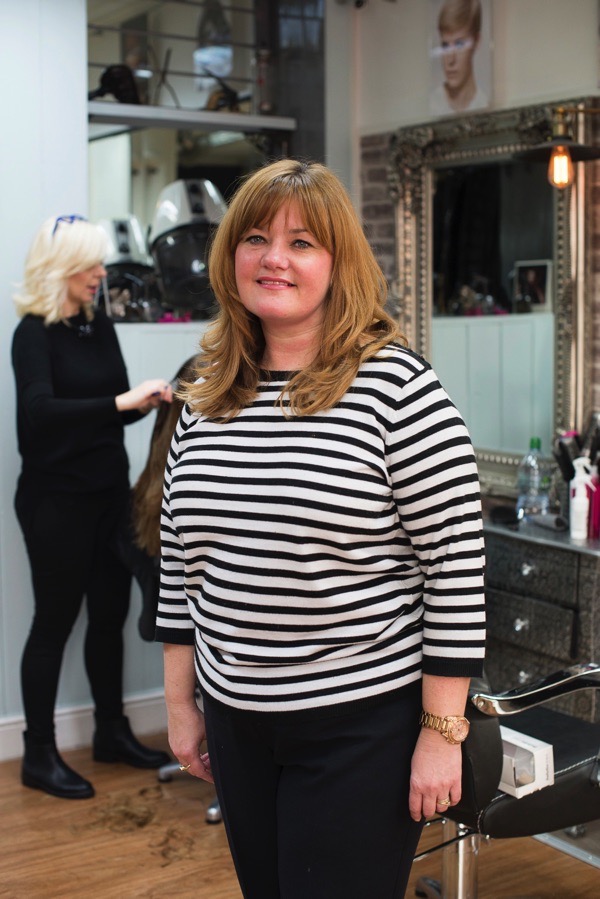
Dawn Hammond
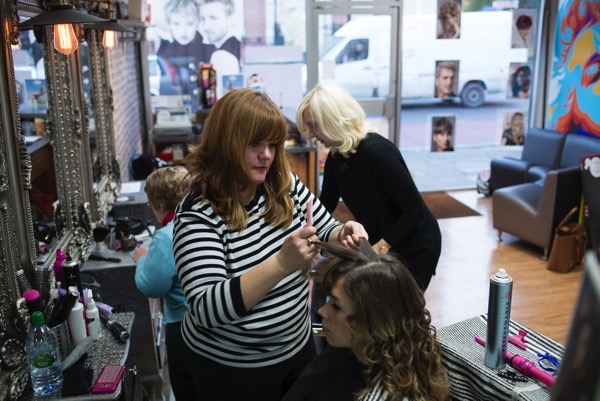
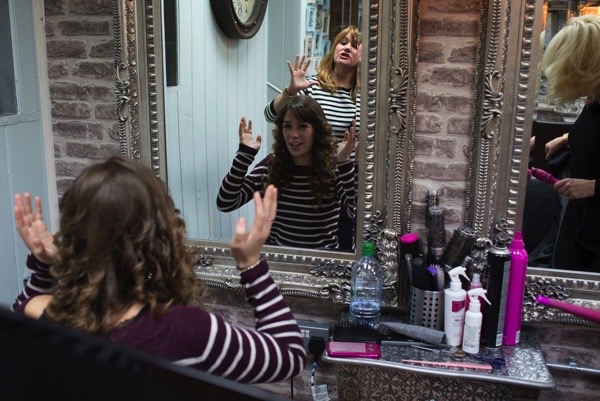
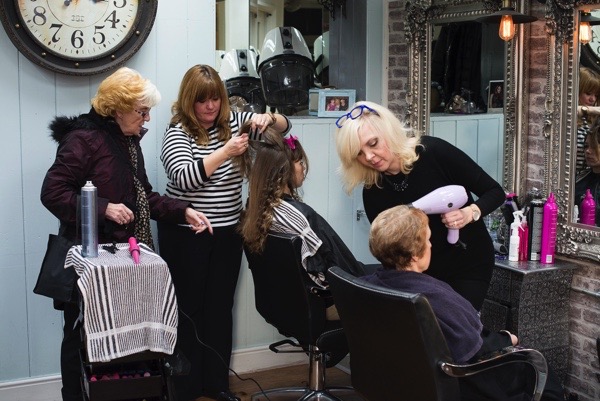
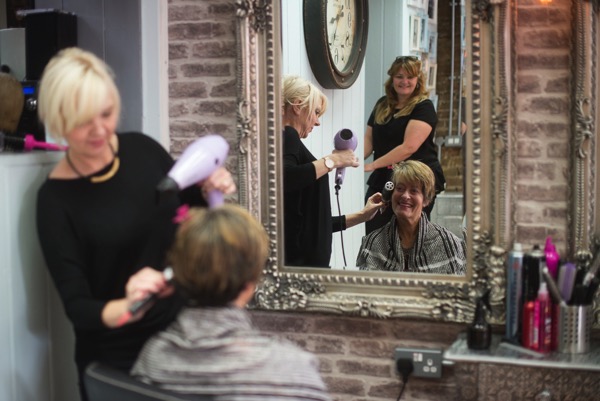
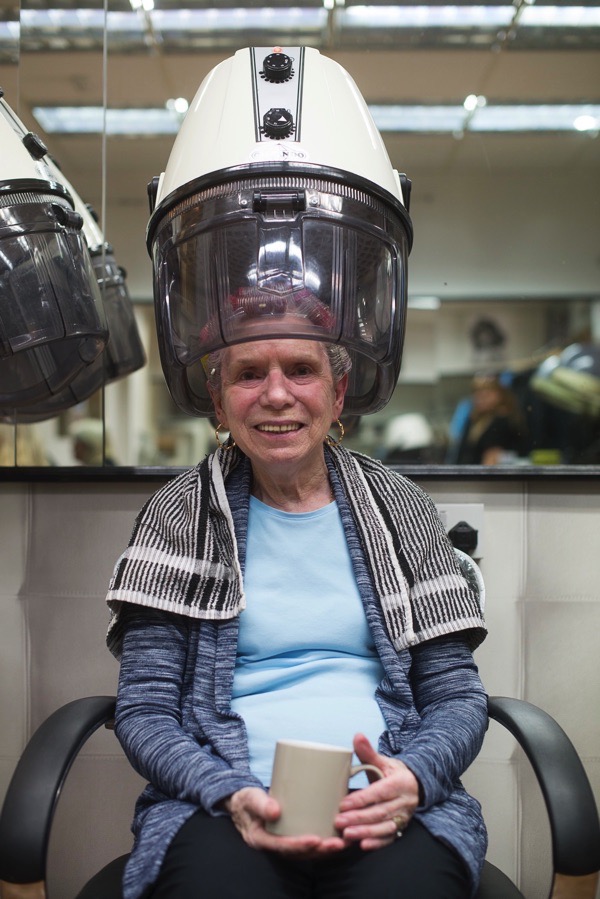
Marcia enjoys a blow dry
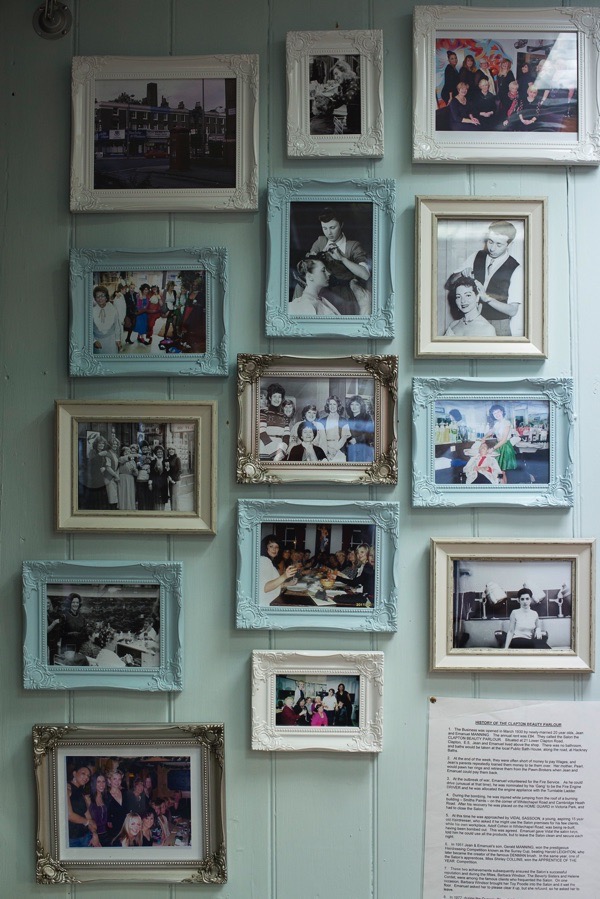
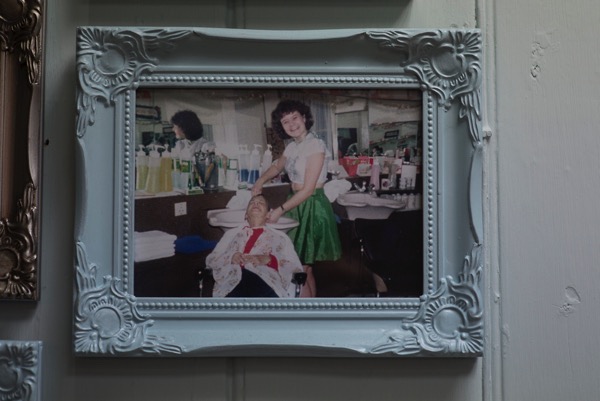
The shrine to Clapton Beauty Parlour’s history
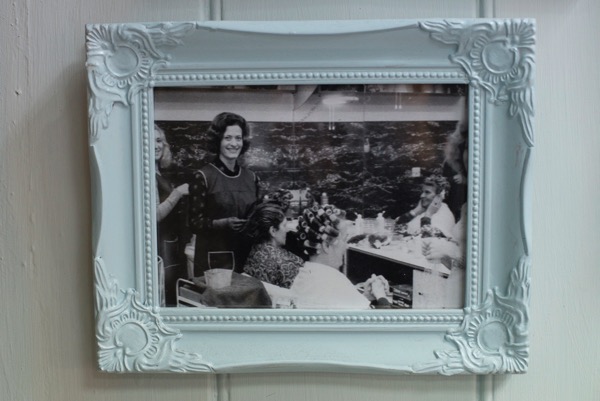
Marcia in the seventies
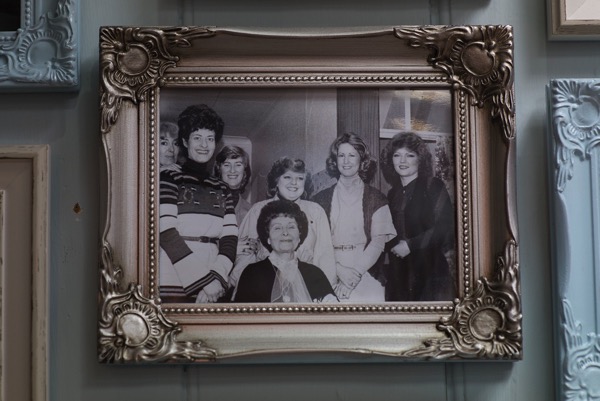
Marcia stands on the left and her mother sits in the centre at the salon in the eighties
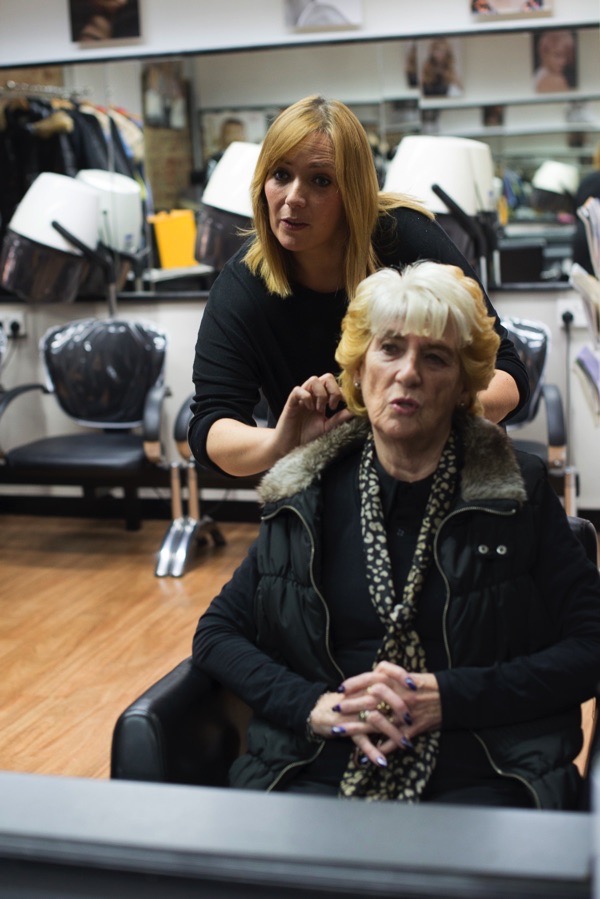
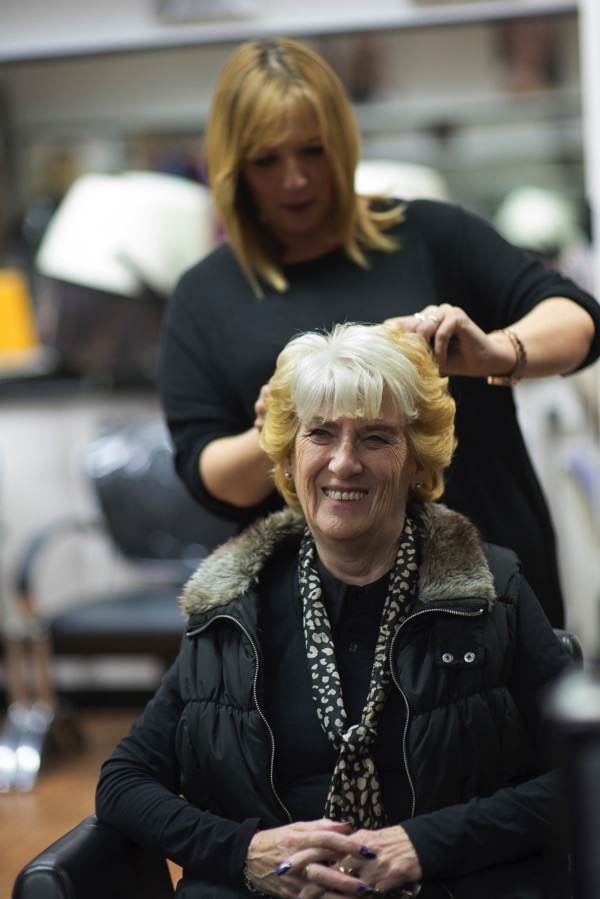
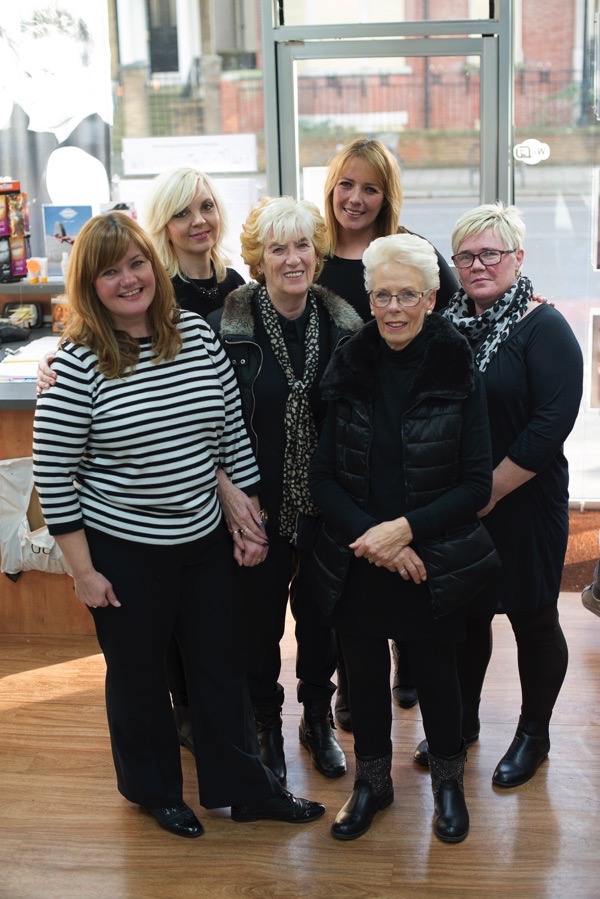
Customers and coiffeuses in Clapton
Photographs copyright © Sarah Ainslie
Transcript by Simon Scott
Book your appointment at CLAPTON BEAUTY PARLOUR, 21 Lower Clapton Rd, Hackney, E5 0NS
You may also like to read about
Aaron Biber, London’s Oldest Barber
Frank Foster, Shirt Maker
Celebrating the seventh anniversary of Spitalfields Life with a week of favourite posts from the past year
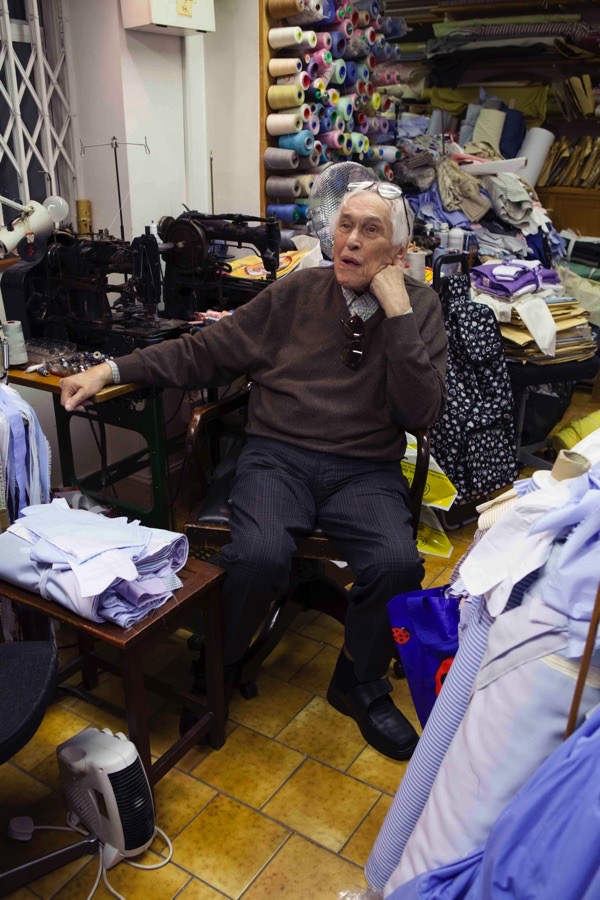
Frank Foster, a legend in shirting
There is an anonymous door in Pall Mall on the opposite side of the road from the line of grandiose clubs of St James. Go through this door, walk down to the low-ceilinged basement and you will discover Frank Foster and his wife Mary, who have been working since 1958 in two small rooms that barely add up to any space at all. Yet this modest workshop contains Frank’s entire world of experience as a cosmopolitan conjurer of cotton and silk, who made shirts for anyone-who-was-anyone in the latter half of the twentieth century and is now in his ninety-third year.
Contributing Photographer Colin O’Brien & I found Frank parked behind a crowded desk of presidential scale in the front room, overlooked by a line of large brass scissors mounted upon the wall, gleaming like badges of office. This is where Frank clasps his nimble fingers and ruminates upon the changing world, cogitating his long life and the insights granted to him uniquely as shirt maker to the rich and famous.
‘When I look at my hand, the fourth finger is like mum’s and other fingers are like dad,’ Frank admitted to me in tender recollection, ‘The way the nails grow, I can see their hands even though they are dead.’
Born in Shadwell in 1923 into a family where his father struggled even to raise three shillings a week rent, as a boy Frank was the last person in the East End to catch typhoid in forty-seven years – which he ascribes to eating food scraped off the pavement in Watney St Market. ‘I know it’s true because they came to find me forty-seven years later to see if I was a carrier,’ he confessed to me, ‘Which I’m not.’
‘You have to remember, poor people never had shirts years ago and that’s also why tails were put on shirts because they never wore pants. I didn’t have shirts growing up until some discarded ones came from uncles. I had discarded trousers from uncles too, but when you had grown-ups’ trousers altered, the legs were very wide so you had to be careful not show your three piece when wearing them. We were very poor and I was always embarrassed about that, especially wearing altered shirts that looked ghastly.
I was a youngster when war broke and they evacuated me from Shadwell because the Docks were badly bombed – it was set alight. As a consequence, I went to live with an aunt in Brent, Hendon, which I thought was the country. That’s how I broke away from Shadwell. I was a natural artist. When I was at school, I used to draw and the other kids gathered round to watch. It’s in my soul. I had some success and exhibited portraits in five galleries when I was fourteen – including The Whitechapel Gallery, East End Academy and Coolings Gallery in Bond St. My paintings were sent to Moscow as an aid to Russia and never came back. But, being a young lad, I had to get a measly job with Bernstein, a printing company in Aldersgate. They produced rubbish – they weren’t fine lithographers. I was a printers’ boy, I earned the princely sum of seventeen shillings and sixpence a week, and I was there on one occasion when Aldersgate St was set alight.
At the same time, I was learning to be a cartographer with the Ministry of Agriculture & Fisheries, but it was very boring and I didn’t like it. I was only about seventeen at the time, so after three weeks I just left. Then, like an idiot, I volunteered for the RAF in the Euston Rd for a lovely job which was to be a rear gunner. The life expectancy was about three weeks. When I told my dad, I said, ‘I’m going to be called up so I volunteered.’ I shan’t tell you what he called me. He said, ‘ You f**king mug!’ He went to Euston Rd and told them my real age and they cancelled it all, but nevertheless I did have to go into the army. They called me up as a driver with the Royal Army Service Corps. I was rubbish at all that stuff!
I made my first shirt over sixty years ago, I was art school trained as a textile printer at Central, which was in Kingsway. At first, I made ties and I thought of looking up the Huguenot silk weavers in Spitalfields. So I went there and I found one Huguenot – I couldn’t pronounce his name – who wove some silk for me for ties. He introduced me to what is called ‘crying’ or ‘weeping’ silk. I said, ‘I don’t quite understand what that is,’ so he showed me silk that he had woven and when you squashed it together it made a beautiful noise of sobbing, the yarn was so fine. I bought that silk and made ties of it. A little while after, that stopped and you won’t hear anything of it because it is something specifically done by Huguenots.
I first had a new shirt of my own when I was eighteen. I got it because I had already started printing the scarves and I was earning a great deal of money. I went to Hilditch & Key in Jermyn St. They were a French company then, so my shirt was made in Paris. It was a silk shirt and I paid fifteen guineas which I could hardly afford. It was striped, nothing plain – fancy, trying to show off!
I’m not an expensive shirt maker although I am a good shirt maker. When I first went into business as a young lad, I was making silk squares for scarves that were printed by me by with rubber blocks. The silks I printed were picked up by people who loved the stuff including the royal family and, when I was discovered by them, it gave me a very good income for a while. You’ve heard of Princess Marina? This was 1947, just after the war. I supplied my scarves to Harrods and all the other stores and, while I was out selling, people were asking me if I could supply them with other things.
In those days, I had the Carmelite nuns working for me. They are a closed order but I was in contact with these people. You have to treat them fairly and not exploit them. If you are not honest they will find out. If they think you are making too much profit on their labour, that is also not allowed. Anyway, I conformed and we got on very well. Consequently, I was able to provide other things that the Carmelites could make for me and one of those things was ladies’ underwear, but they wouldn’t make ladies underwear that was black because they considered it not a nice thing, although men think it is a nice thing nuns don’t. Making other things, I discovered they were able to make shirts all by hand with hand-finished button holes. So that’s how I became a scarf maker, an underwear maker and a shirt maker. Not a very good title, is it?
My price when I started making shirts was four pounds, four shillings and that was tough, so I started doing shirt recutting and recollaring for laundries. My first place was 37 Bond St next to Sotheby’s – I make shirts now for the boss. In those days, I was sharing premises with a tailor and paid seven pounds a week, that was in 1956. But I didn’t get on with the tailor so I found a place of my own at 10 Clifford St.
An old boy I made shirts for, he financed me. He asked me, ‘Where do you live?’ and I said, ‘I live a long way out, I can’t afford a flat.’ So he said, ‘Can you afford £12 a week?’ I said, ‘Yes, I think so but I’d also like a workplace.’ So he said,’ Have you £5 a week?’ and he introduced me here in Pall Mall and I signed a lease for twenty-one years for five pounds a week – now it’s four hundred a week, it’s not easy.
I’ve made shirts for almost everybody you can think about. All the Shakespearian actors – John Gielgud, the Redgraves, Lawrence Olivier, everybody. You mention a name and I’ll tell you if I’ve made shirts for them – Marlon Brando and Orson Welles, when they were still slim, Robert Mitchum, Frank Sinatra, Sammy Davis Junior, Cary Grant, Ray Milland, I could go on and on. I’ve done the Bond films for over thirty years.
Orson Welles phoned me from the Ritz one day to ask if I would go round with samples because the designs could only be sanctioned by the Art Director of the film he was in. I said, ‘No, there are hundreds of samples here and I’m just round the corner,’ but he wouldn’t come. He was as far from me as I am from you, pretty much, so eventually we had a stand-off and the studio, they did all the running and fetching. He was making life awkward and that’s what some of these stars are like. They want to tell me about their fathers who are tailors and give me some competition. They want to be know-alls.
Tony Curtis, I didn’t like him at all. I went round to the Dorchester and he didn’t offer me a cup of coffee when I was spending hours with him. Then his kinky wife came out of the bathroom stark naked and said, ‘Oh I’m sorry, I didn’t know you were here.’ These people are not humble, they are used to being applauded, they are in the limelight – it’s all false. But Gregory Peck was a gentlemen and Robert Mitchum, although he was tough guy, was a gentlemen too. You have to go through a lot of people before you find the genuine ones.
I worked for Berman’s film costumiers for fifteen years and made shirts for Norman Wisdom at thirty-five shillings each and never made any money but was introduced to lots of film stars. So Norman Wisdom, being a mate of mine, we shared a flat. We both bought food and when I was buying Nescafe he was buying Camp Coffee. I said to Norman, ‘Why do you buy this crap?’ ‘You’ve got to remember Frank, I was a boy soldier,’ he replied. Norman was badly treated by his father who used to throw him up in the air as a child and drop him, and that’s how Norman learnt to fall. He always took me to a restaurant in Tottenham Court Rd called Olivelli’s. It was all theatricals. The ones that went there were down and out, yet they were lovely people. I never had money to eat there but Norman had plenty, he generated more money than the Bond films. He liked the ladies but he was married, that’s the reason he shared a flat with me.
My production of shirts is very small, I’m a top grade shirt maker. My shirts you can turn them inside out and the insides are better than the top side of many so-called famous shirt makers. Nowadays I am very limited how many I can make because I can’t get people to do it. People don’t want to come into trades where they they have to use their hands, they don’t want to make things by hand, they don’t want to cut things by hand. They want to do everything with modern machinery. We still use a button hole machine that is a hundred years old. It’s an antique but works beautifully.
The secret of making a good shirt is skill, patience and knowing about textiles. Every piece of cloth we sell is high quality. We charge £175 per shirt. If you want a silk shirt made out of fine quality Macclesfield silk, we charge you the same money as a cotton one. We’re not a greedy company – I’d like to be greedy but it’s not in my nature. Coming from a poor family, I know what money means.
I love making shirts, I can look at an individual and when I measure him, I can see all the problems and the build. So when you leave here, I’ll remember your build and how you stand and hold your head. That’s not me trying, it comes – I can’t tell you how. I remember fine details about people, their eye colour, and their hair, how it grows. It’s a strange thing, I suppose the eye becomes accustomed to noticing these things.
When someone comes in, first you measure the neck. You have to notice the space between the shoulder and the bottom of the ear. People with thin necks can take a deeper collar. People who are fat with a short neck need a collar that balances with the shirt. You then measure the front shoulder to see how wide that is and from there you go down to the half-chest, across the top of the chest. From there you go to the abdomen and then to the hips and then to the waist. We don’t use shirt tails, we cut shirts with square bottoms and side vents. Our shirt tails are very smart, especially when men like to disrobe in front of their females. Then you have to do the cuffs, and cuffs have to be measured according to wrists. Where watches are concerned, you have to make allowances for rich people who have bulky complicated watches. We then do what is called a ‘button gauntlet’ to enable rich men to have the choice – if need be – to have the choice of rolling their sleeves up. Workers don’t have button gauntlets because no-one gives them the choice or option to roll their sleeves.’
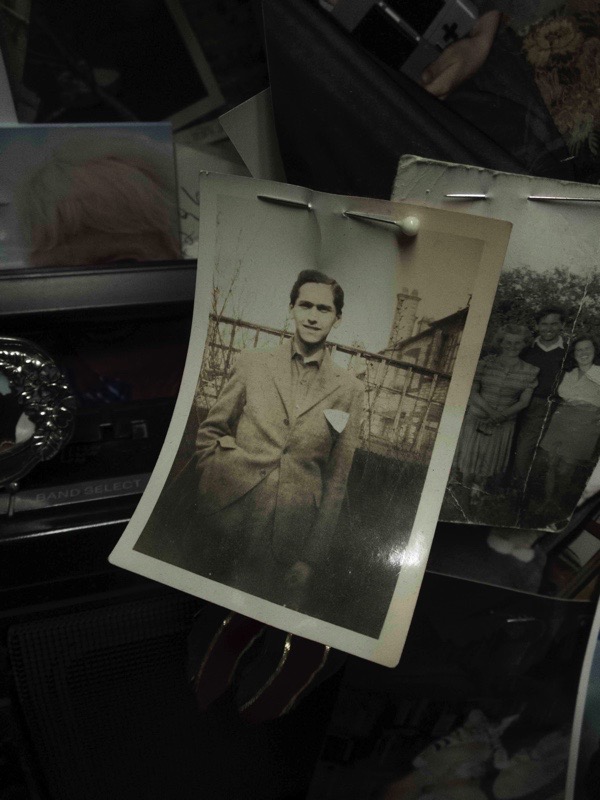
Frank as a young man
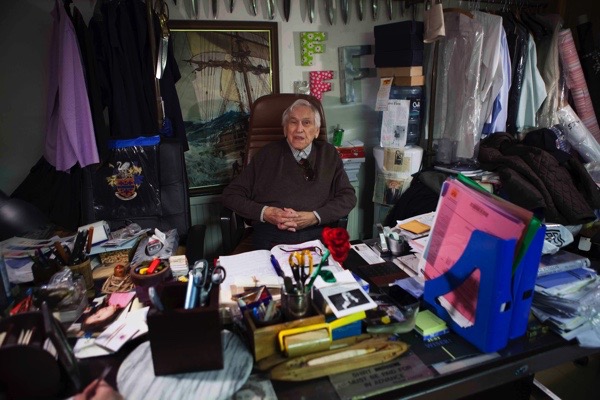
Frank at his desk – ‘I’d like to be greedy but it’s not in my nature’
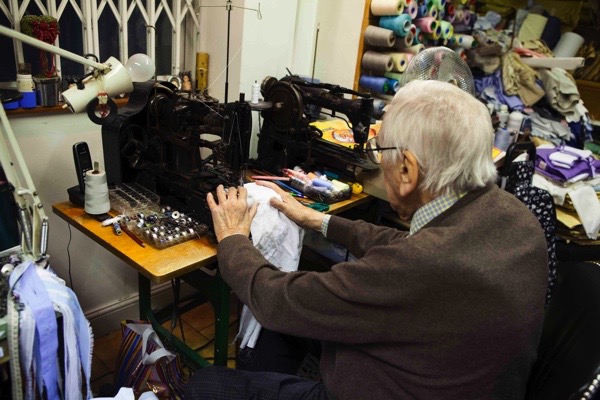
Frank demonstrates his hundred-year-old buttonhole machine he acquired sixty years ago
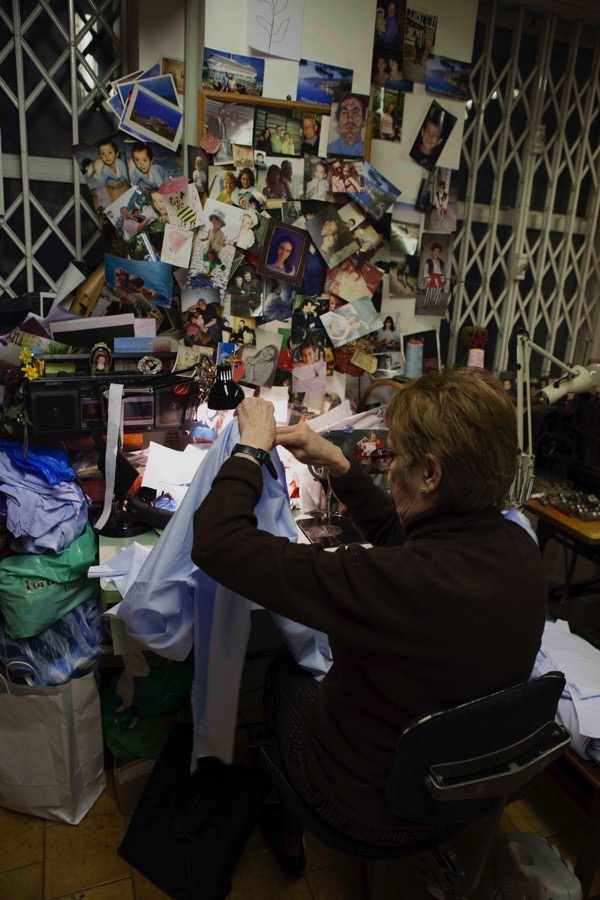
Mary Foster
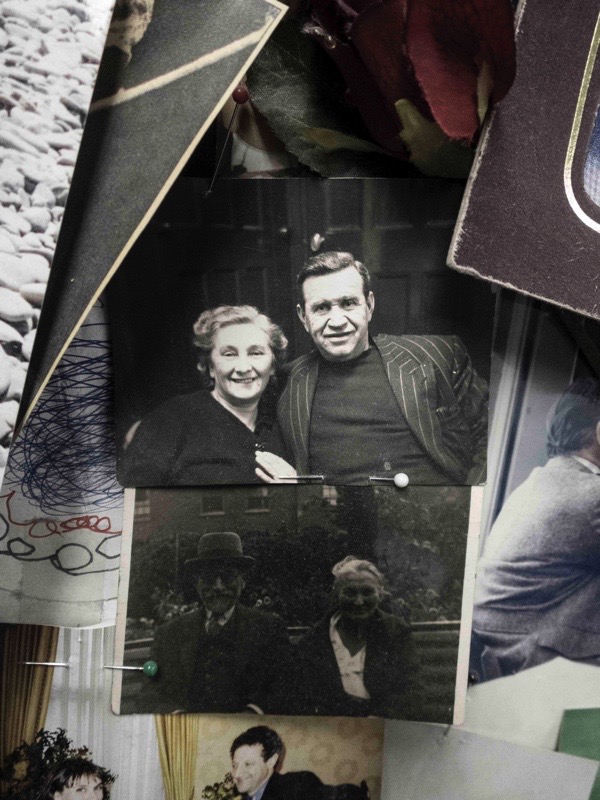
Frank’s parents and grandparents
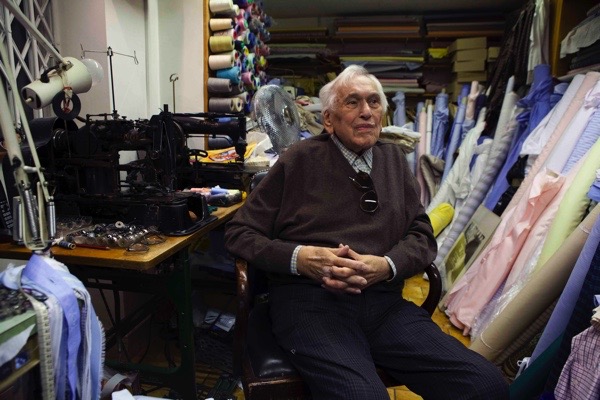
‘That’s what some of these stars are like – they want to tell me about their fathers who are tailors and give me some competition…’
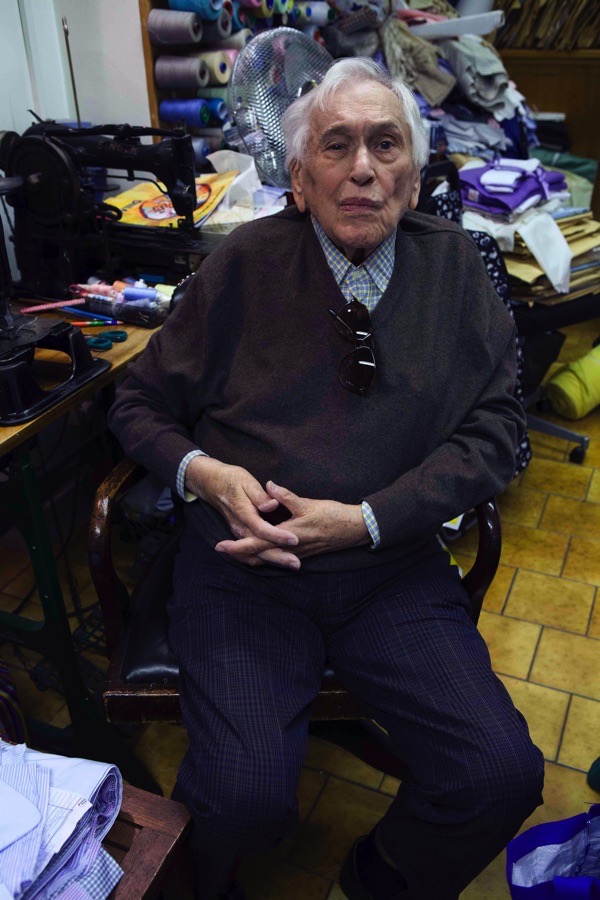
Frank Foster – ‘I love making shirts’
Photographs copyright © Estate of Colin O’Brien
FRANK FOSTER SHIRTS, 40 Pall Mall, St James’, SW1Y 5JG
You may also like to read about
Roman Ruin At The Hairdresser
Celebrating the seventh anniversary of Spitalfields Life with a week of favourite posts from the past year
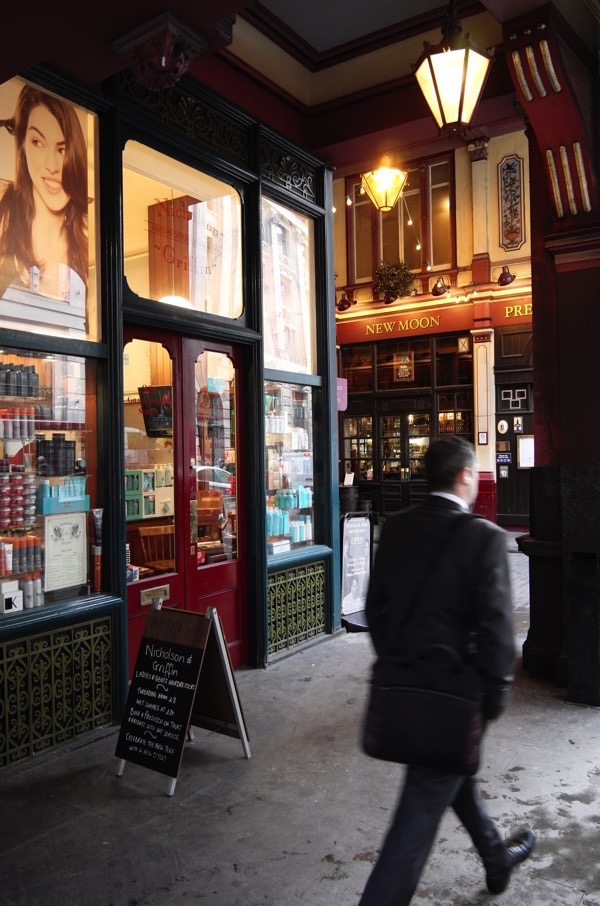
Nicholson & Griffin, Hairdresser & Barber
The reasons why people go the hairdresser are various and complex – but this week Jane Sidell, Inspector of Ancient Monuments, and I visited a salon in the City of London for a purpose quite beyond the usual.
There is a hairdresser in Gracechurch St at the entrance to Leadenhall Market that is like no other. It appears unremarkable until you step through the tiny salon with room only for one customer and descend the staircase to find yourself in an enormous basement lined with mirrors and chairs, where busy hairdressers tend their clients’ coiffure.
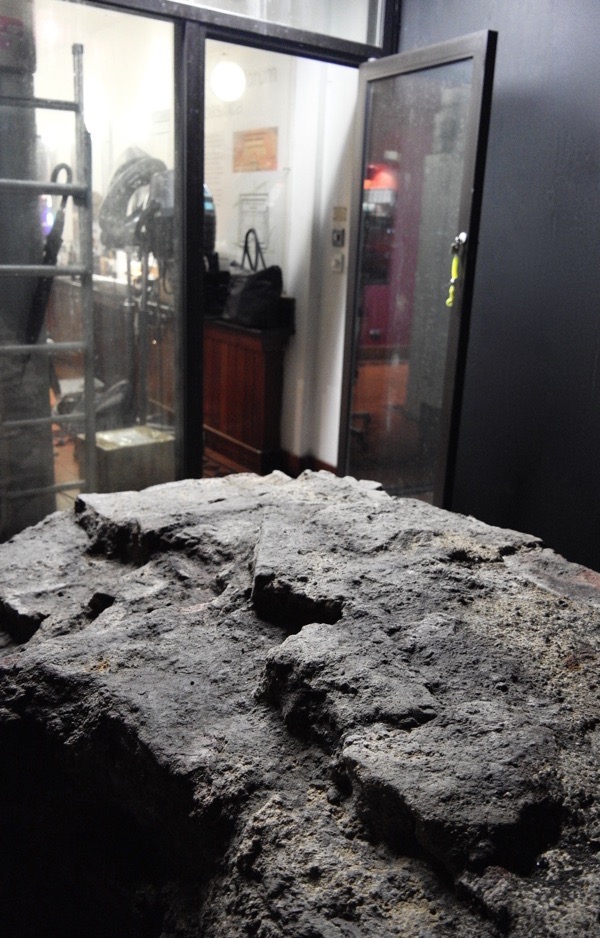
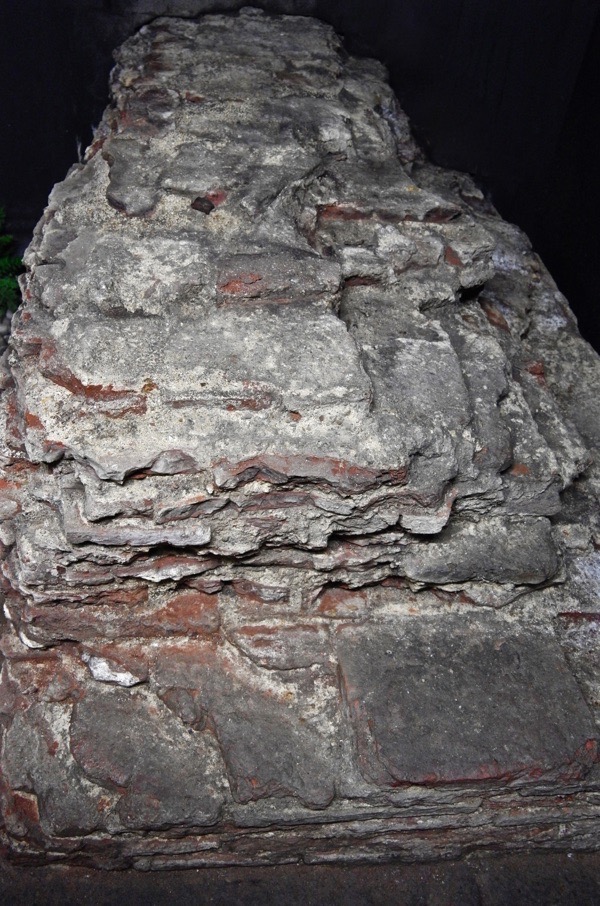
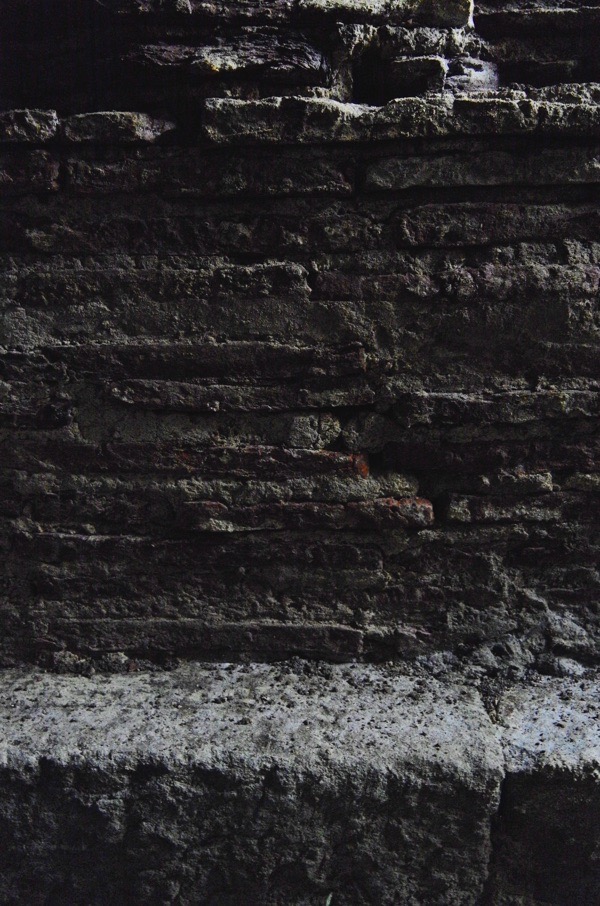
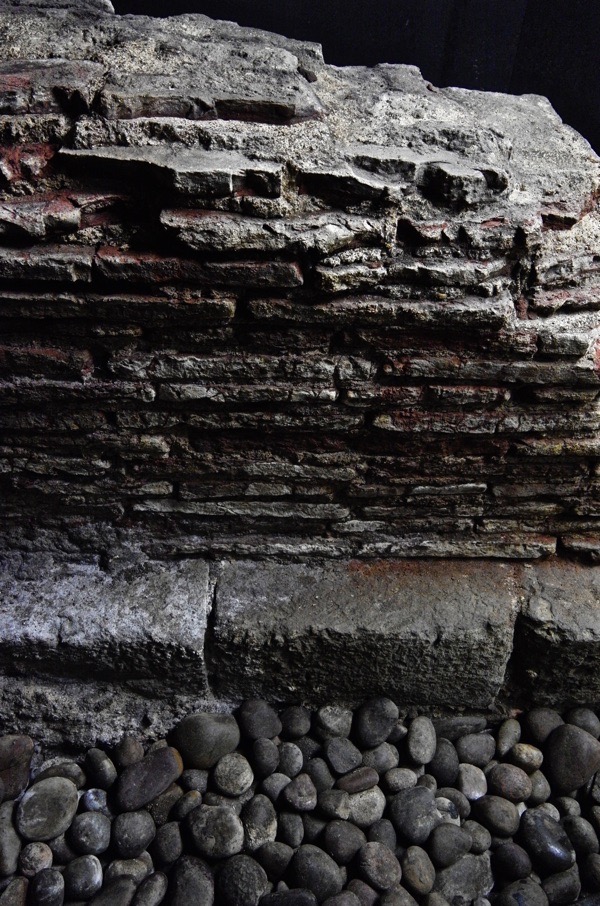
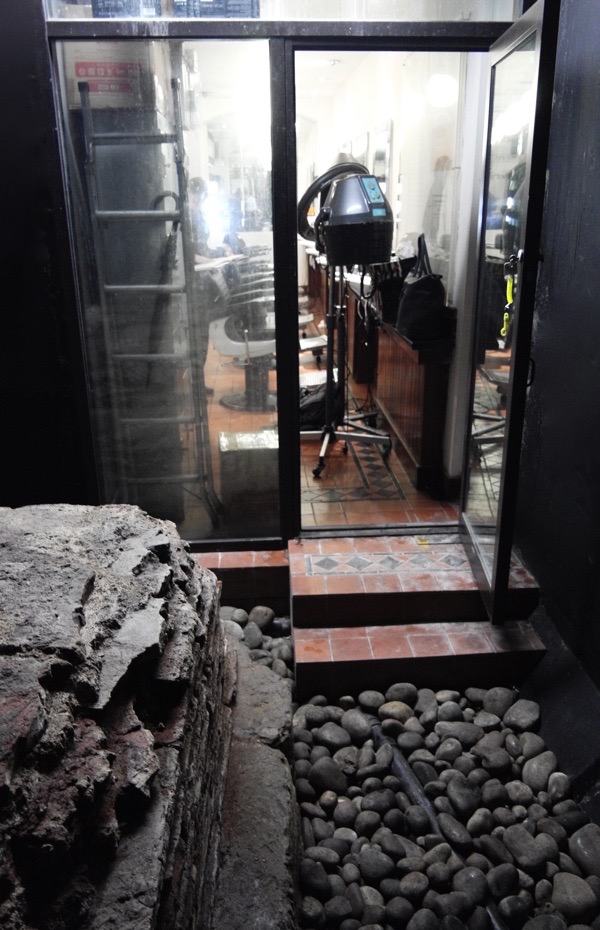
At the far corner of this chamber, there is a discreet glass door which leads to another space entirely. Upon first sight, there is undefined darkness on the other side of the door, as if it opened upon the infinite universe of space and time. At the centre, sits an ancient structure of stone and brick. You are standing at ground level of Roman London and purpose of the visit is to inspect this fragmentary ruin of the basilica and forum built here in the first century and uncovered in 1881.
Once the largest building in Europe north of the Alps, the structure originally extended as far west as Cornhill, as far north as Leadenhall St, as far east as Lime St and as far south as Lombard St. The basilica was the location of judicial and financial administration while the forum served as a public meeting place and market. With astonishing continuity, two millennia later, the Roman ruins lie beneath Leadenhall Market and the surrounding offices of today’s legal and financial industries.
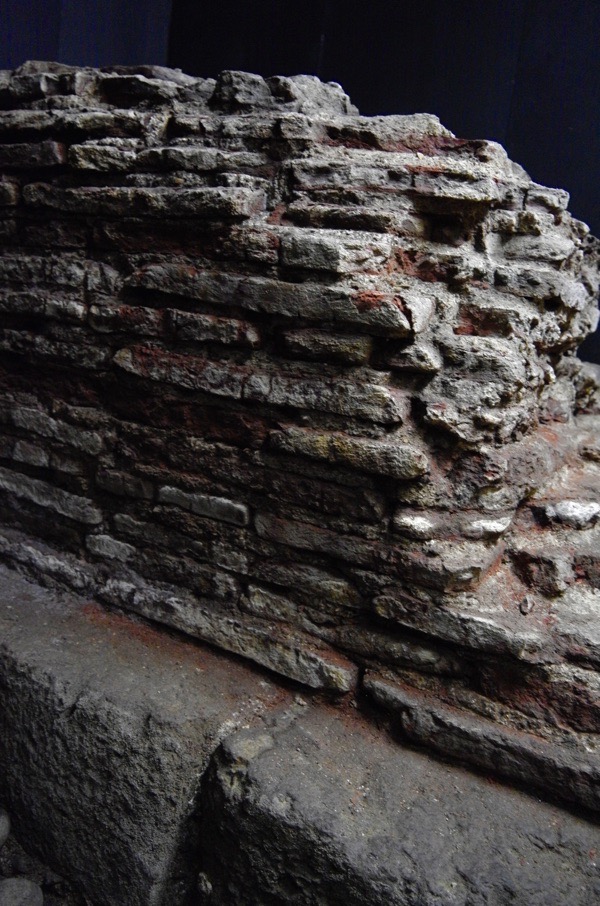
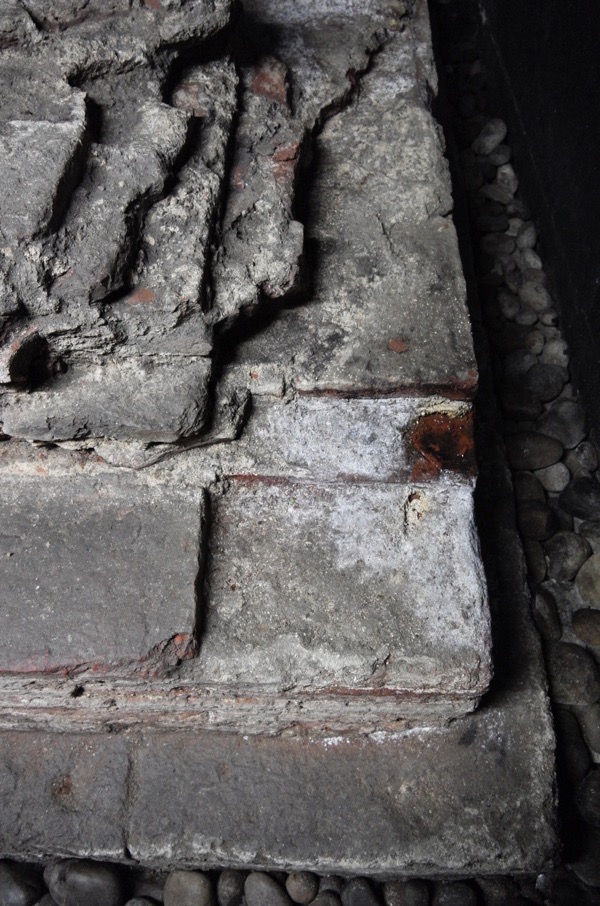
In the dark vault beneath the salon, you confront a neatly-constructed piece of wall consisting of fifteen courses of locally-made square clay bricks sitting upon a footing of shaped sandstone. Clay bricks were commonly included to mark string courses, such as you may find in the Roman City wall but this usage as an architectural feature is unusual, suggesting it is a piece of design rather than mere utility.
Once upon a time, countless people walked from the forum into the basilica and noticed this layer of bricks at the base of the wall which eventually became so familiar as to be invisible. They did not expect anyone in future to gaze in awe at this fragment from the deep recess of the past, any more than we might imagine a random section of the city of our own time being scrutinised by those yet to come, when we have long departed and London has been erased.
Yet there will have been hairdressers in the Roman forum and this essential human requirement is unlikely ever to be redundant, which left me wondering if, in this instance, the continuum of history resides in the human activity in the salon as much as in the ruin beneath it.
You may also like to read about
William Oglethorpe, Cheese Maker Of Bermondsey
Celebrating the seventh anniversary of Spitalfields Life with a week of favourite posts from the past year
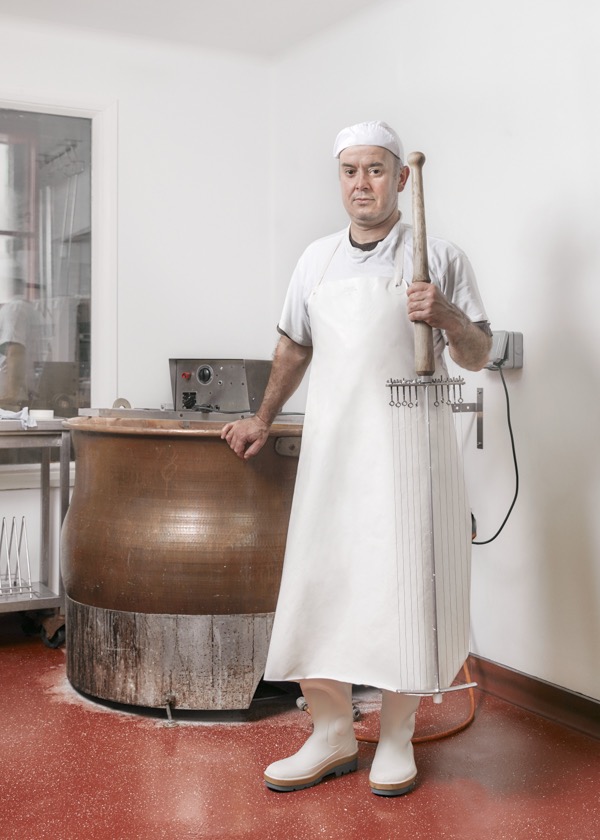
William Oglethorpe, Cheese Maker of Bermondsey
Everyone knows Cheddar, Stilton, Wensleydale and Caerphilly, but now there is an unexpected new location on the cheese map of Great Britain. It is Bermondsey and the man responsible is William Oglethorpe – seen here bearing his curd cutter as a proud symbol of his domain, like a medieval king wielding a mace of divine authority.
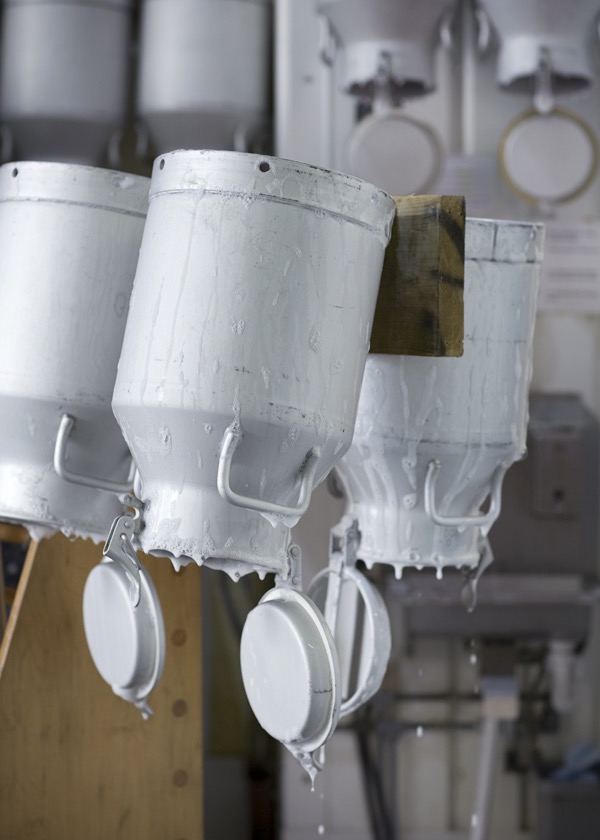
Photographer Tom Bunning & I went along to Kappacasein Dairy under the railway arches beneath the main line out of London Bridge early last Tuesday morning to investigate this astonishing phenomenon. As we stepped from the chill of the autumn morning, we entered the humid warmth of the dairy and encountered a line of empty milk churns.
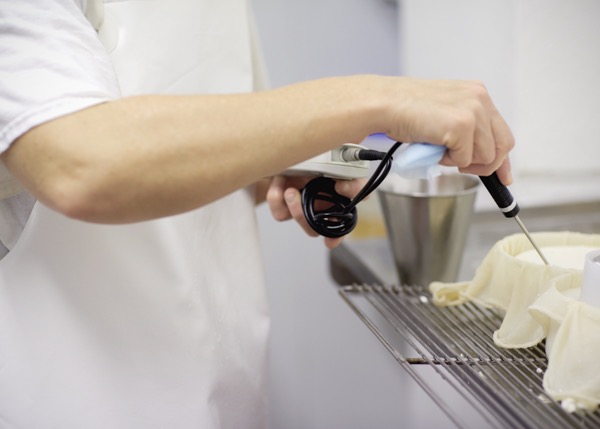
Already Bill had been awake since quarter to four. He had woken in Streatham then driven to Chiddingstone in Kent and collected six hundred litres of milk. Beyond us, in a separate room with a red floor and a large glass window sat a hundred-year-old copper vat containing that morning’s delivery of milk, which was still warm. Bill with his fellow cheesemakers Jem and Agustin, dressed all in white, worked purposefully in this chamber, officiating like priests over the holy process of conjuring cheese into existence. I stood mesmerised by the sight of the pale buttery liquid swirling against the gleaming copper as Bill employed his curd cutter, manoeuvring it through the milk as you might turn an oar in a river.
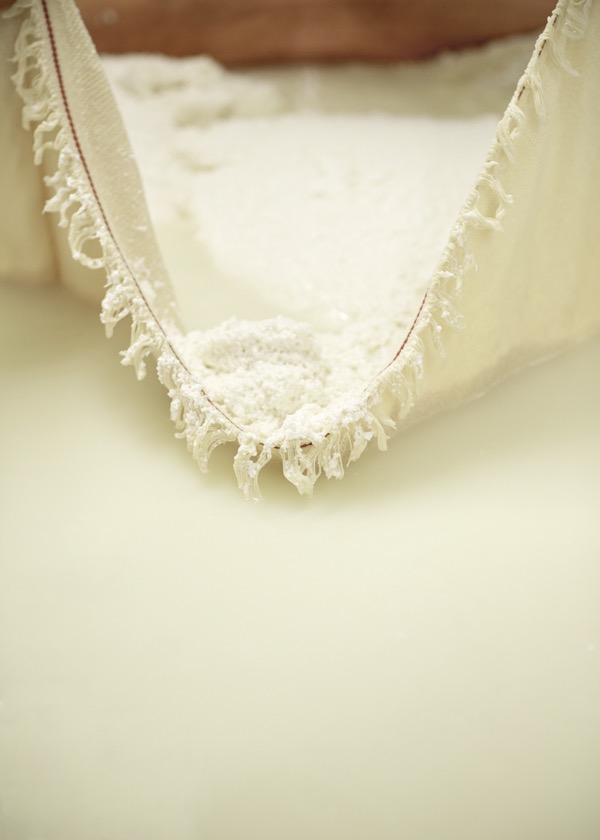
Taking a narrow flexible strip of metal, he wrapped a cloth around it so that the rest extended behind like a flag. Holding each end of the strip and grasping the corners of the cloth, Bill leaned over the vat plunging his arms deep down into the whey. When he lifted the cloth again, Agustin reached over with practised ease to take two corners of the cloth as Bill removed the sliver of metal and – hey presto! – they were holding a bundle of cheese, dredged from the mysterious depth of the vat. It was as spellbinding as any piece of magic I have ever seen.
“Cheesemaking is easy, it’s life that is hard,” Bill admitted to me with a disarming grin, when I joined the cheesemakers for their breakfast at a long table and he revealed the long journey he had travelled to arrive in Bermondsey. “I grew up in Zambia,” he explained, “And one day a Swiss missionary came to see my father and asked if I’d like to go to agricultural school in Switzerland.”
“I earned a certificate of competence,” he added proudly, assuring me with a wink, “I’m a qualified peasant.” Bill learnt to make cheese while working on a farm in Provence with a friend from agricultural college. “It was simply a way to sell all the milk from the goats, we made a cheese the same way the other farmers did,” he informed me, “We didn’t know what we were doing.”
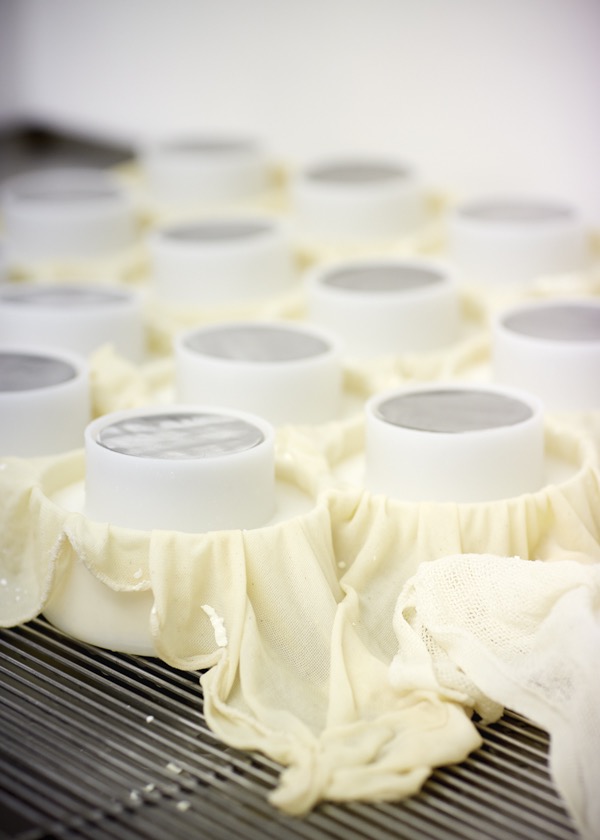
Bill took me through to the next railway arch where his cheeses are stored while they mature for up to a year. He cast his eyes lovingly over the neat flat cylinders each impressed with word ‘Bermondsey’ on the side. Every Wednesday, the cheeses are attended to. According to their type, they are either washed or stroked, to spread the mould evenly, and they are all turned before being left to slumber in the chilly darkness for another week.
It was while working for Neals Yard Dairy that Bill decided to set up on his own as cheese maker. Today, Kappacasein is one of handful of newly-established dairies in London producing distinctive cheeses and bypassing the chain of mass production and supermarkets to distribute on their own terms and sell direct to customers. Yet Bill chooses to be self-deprecating in his explanation of why he is making cheese in London. “It’s just because I can’t buy a farm,” he claims, shrugging in enactment of his role of the peasant in exile, cast out from the rural into the urban environment.
“I’m interested in transformation,” Bill confided to me, turning serious as he reached his hand gently down into the vat and lifted up a handful of curds, squeezing out the whey. These would form the second cheese to come from the vat that morning, a ricotta. All across the surface, nodules of cheese were forming, coming into existence as if from primordial matter. “I don’t want to interfere,” Bill continued, thinking out loud and growing philosophical as he became absorbed in observing the cheese form, “Nature’s that much more complicated – if you let it do its own thing that’s much interesting to me than trying to impose anything. It’s about finding an equilibrium with Nature.”
Let me confess I had an ulterior motive for being there. A few weeks ago, I ate a slice of Bill’s Bermondsey cheese and became hooked. It was a flavour that was tangy and complex. One piece was not enough for me. Two pieces were not enough for me. Eventually, I had to seek the source of this wonder and there it was in front of me at last – the Holy Grail of London cheese in Bermondsey.
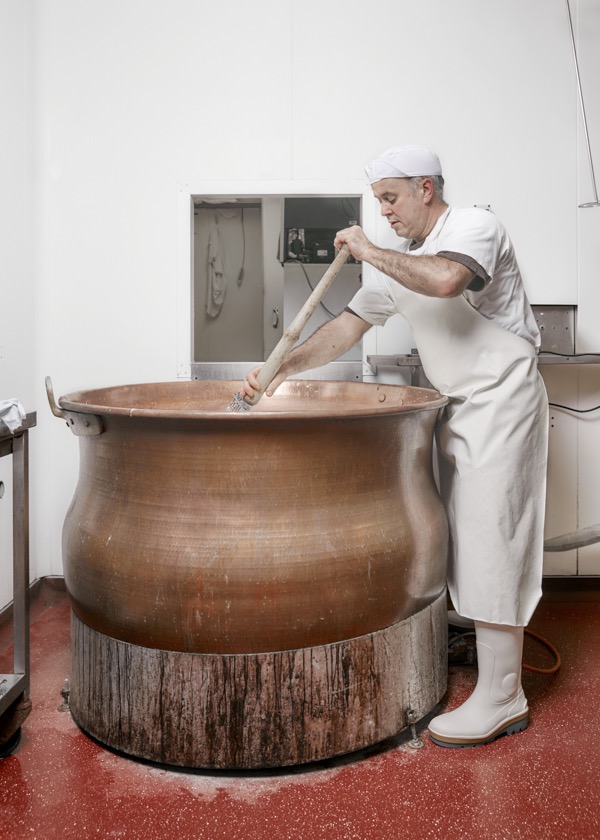
Cutting the curd
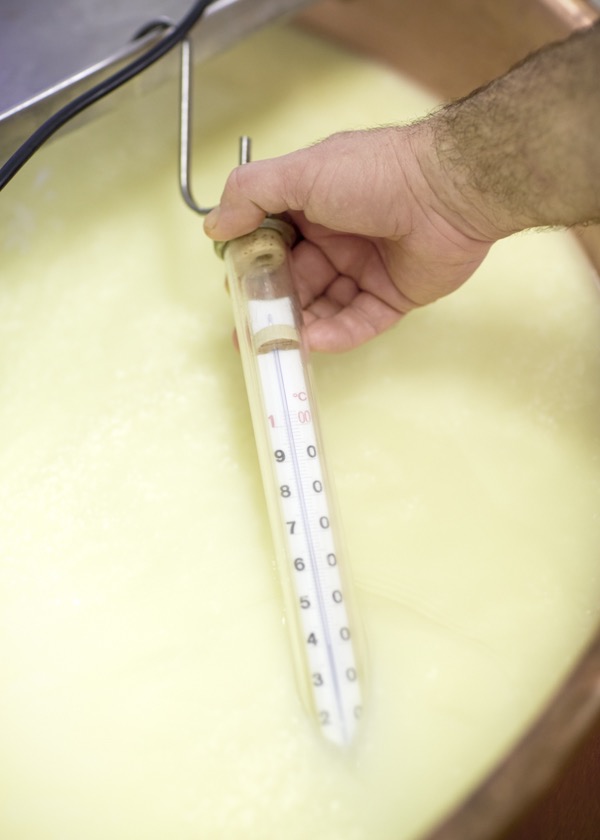
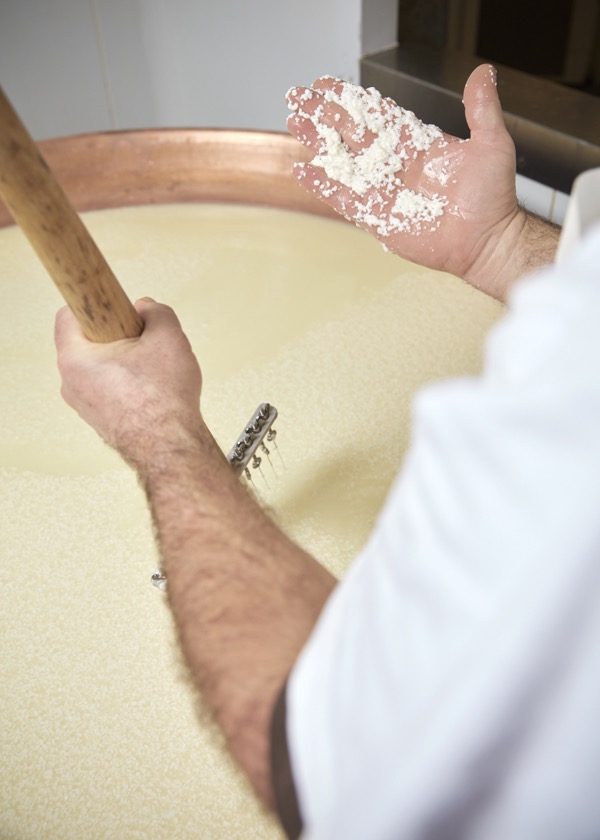
The curds
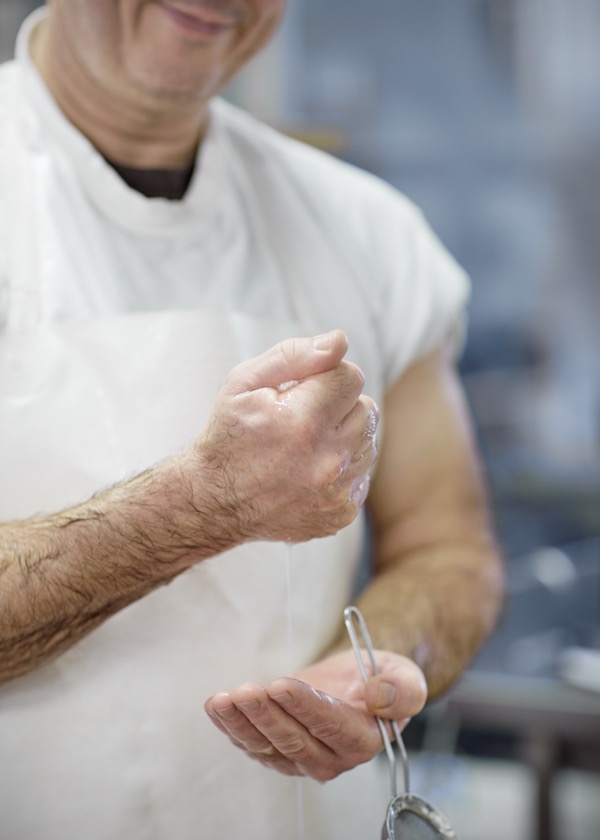
Squeezing the curds
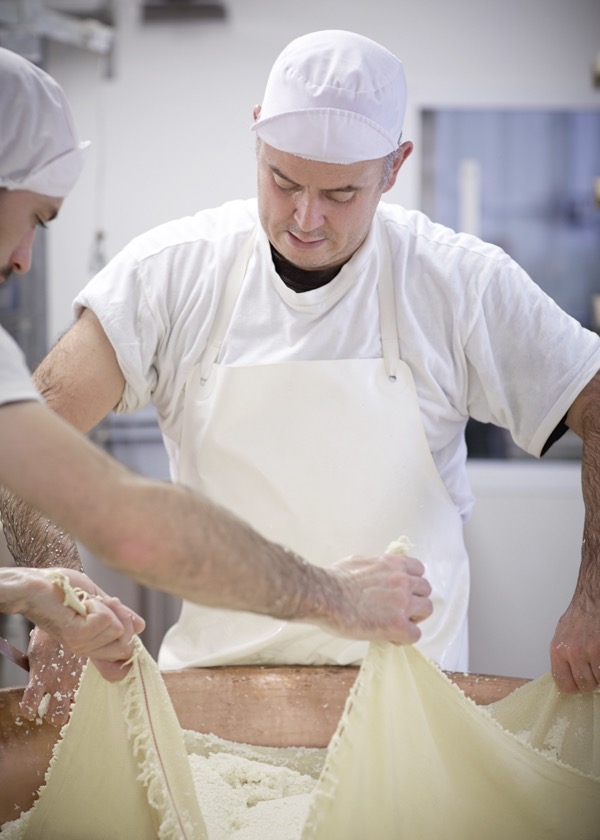
Scooping out the cheese
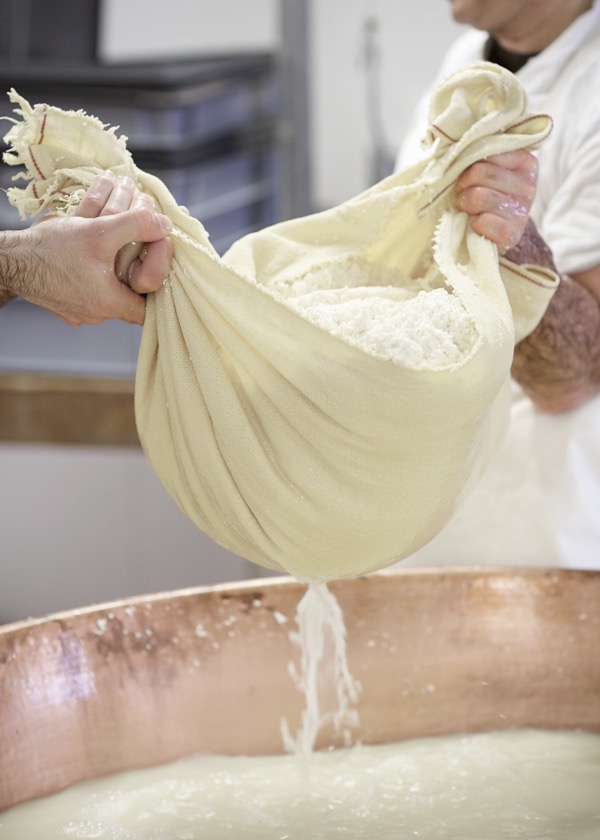
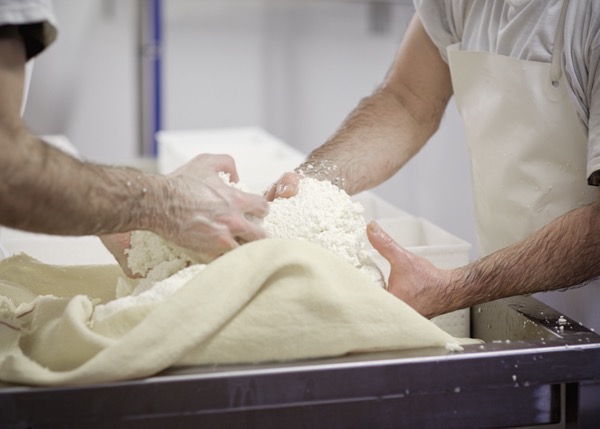
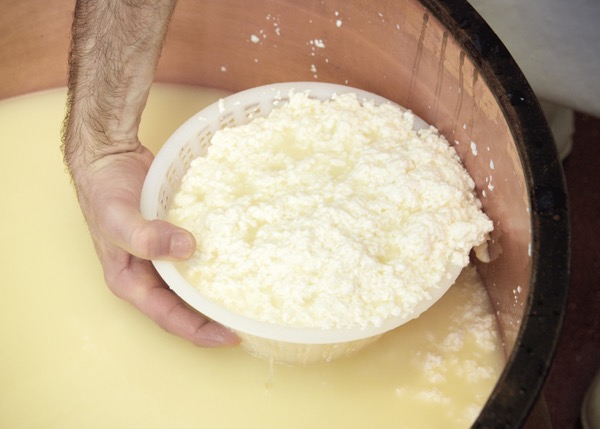
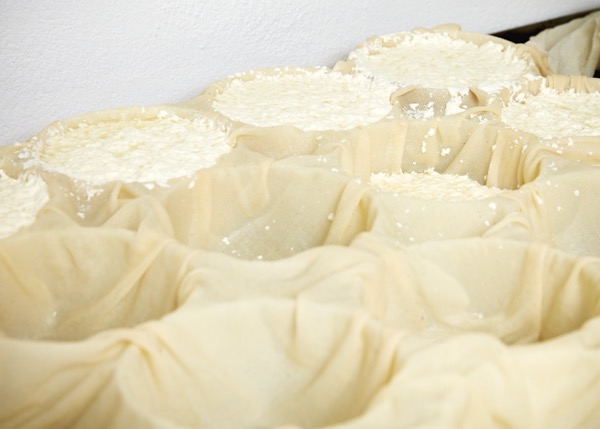
The second batch of cheese from the whey is ricotta
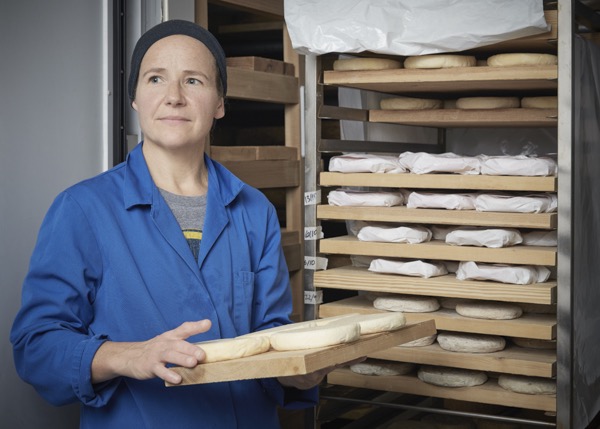
Jem Kast, Cheese Maker
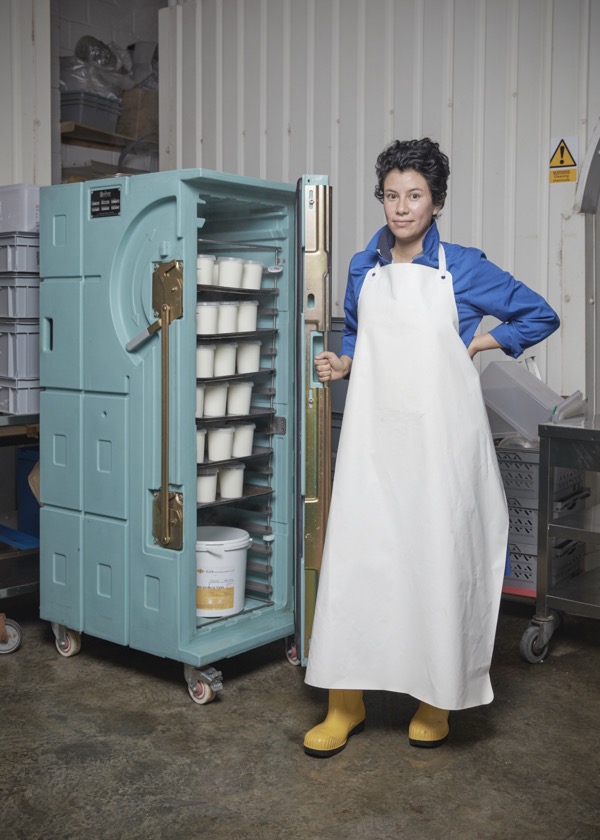
Ana Rojas, Yoghurt Maker
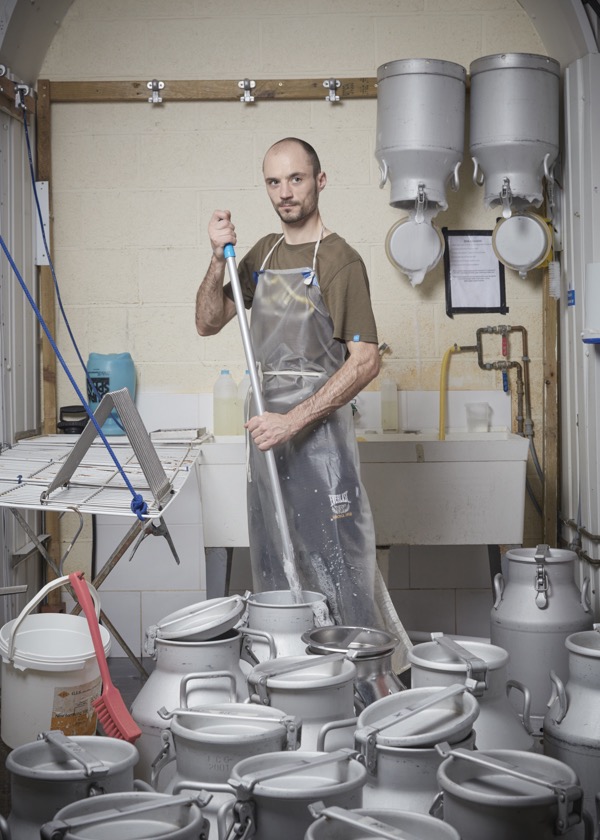
Agustin Cobo, Cheese Maker
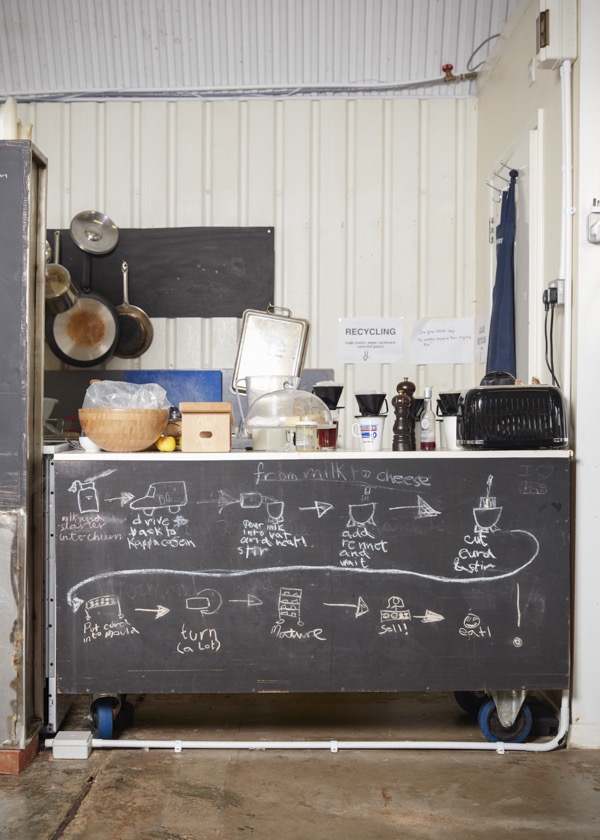
The story of cheese
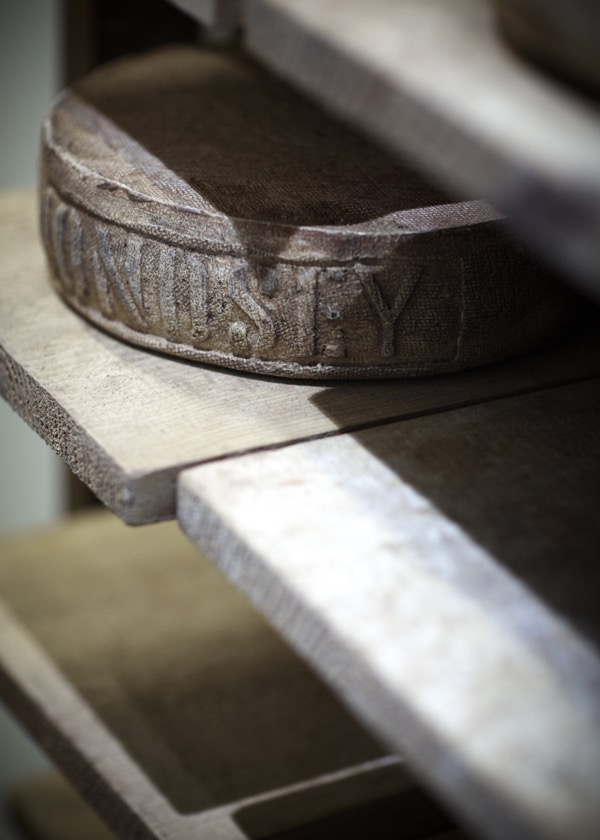
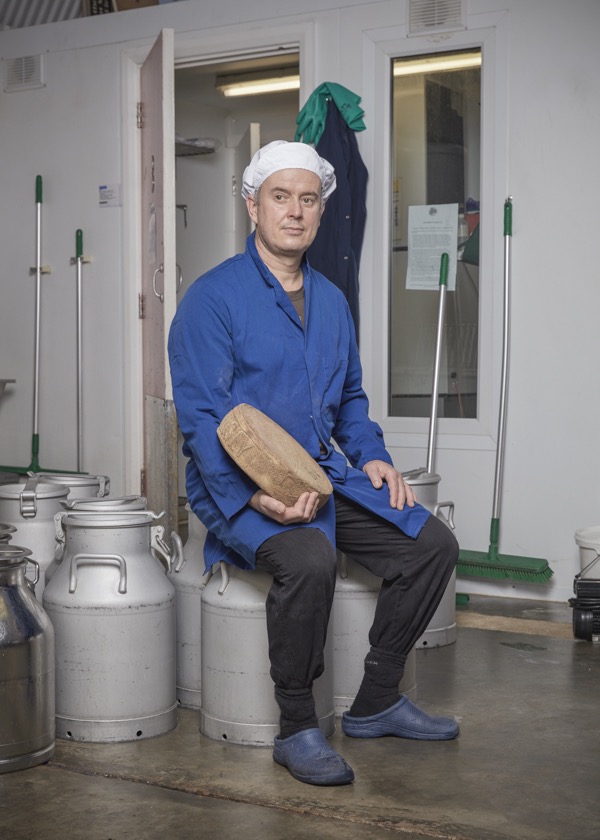
William Oglethorpe, Cheese Maker of Bermondsey
Photographs copyright © Tom Bunning
Visit KAPPACASEIN DAIRY, 1 Voyager Industrial Estate, Bermondsey, SE16 4RP












