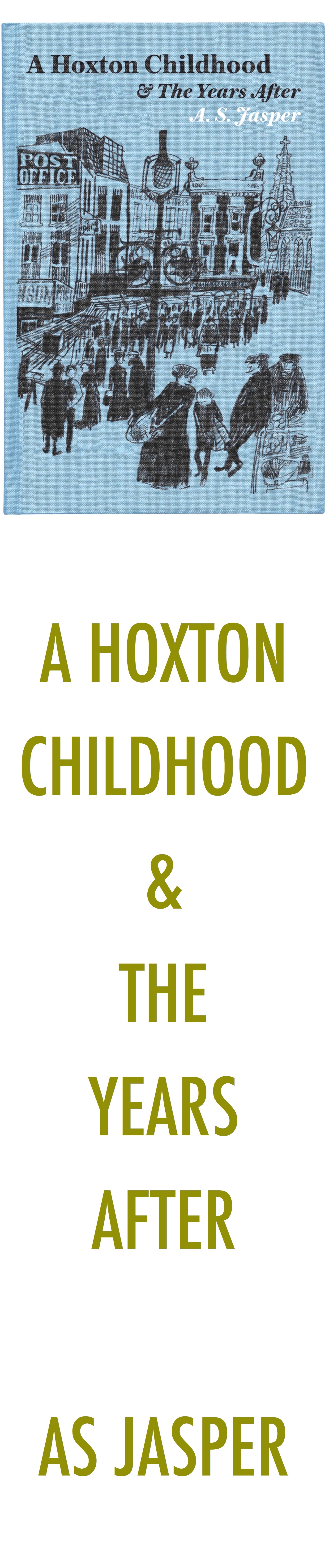
Seventh Annual Report
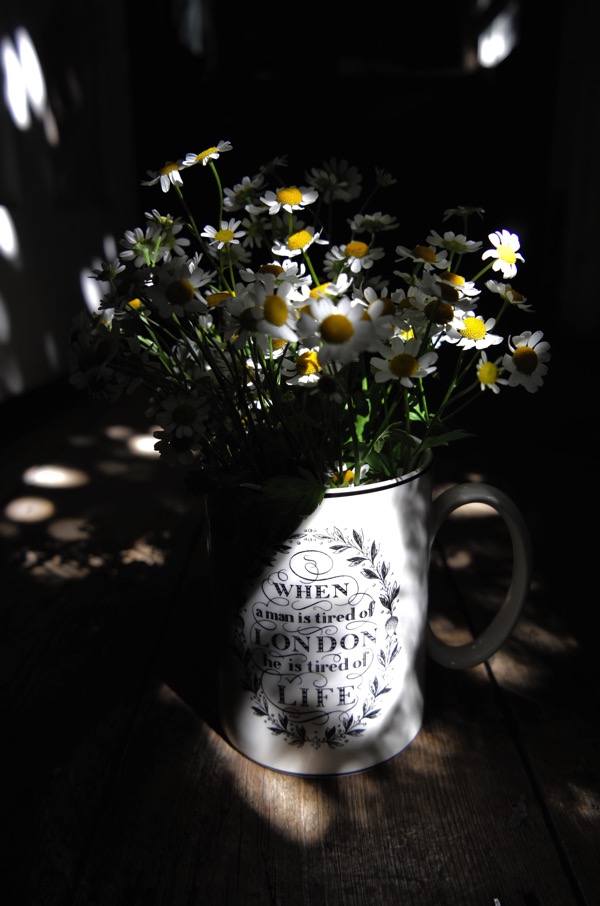
Today, after publishing more than 2,600 posts and over 31,000 photographs in these pages, we arrive at the end of the seventh year of Spitalfields Life. Customarily I produce a celebratory annual report reflecting upon the anniversary of my starting to write in August 2009, but this year the moment is coloured with sadness by the unexpected death of my good friend and long-term contributing photographer Colin O’Brien a week ago.
My deepest sympathies are with Jan O’Brien, his widow after thirty-five years of married life. We plan to organise a memorial service for Colin and the date will be announced in the autumn, so that you may join us in paying your respects.
Foolishly, when I set out to write Spitalfields Life every day, it never occurred to me that the people I wrote about and whom I worked with might die, or that the acknowledgement of their passing would become part of the project. I have discovered that my ambition to pursue stories no-one else would write carries a certain responsibility, causing me to recognise that if my account is perhaps the only written record of a person’s life then I have a singular duty to do them justice.
Inevitably, many of the people whose stories you read in these pages become friends and, like others in Spitalfields, I feel the tragic loss of Rodney Archer who was such a popular figure in our community. Equally, I was alarmed to get the call from Viscountess Boudica of Bethnal Green the night her flat was burgled and I found myself wedging a broom handle across her kitchen window, where the thieves had entered, to prevent further criminal ingress. Readers will no doubt all be relieved to hear that the reports from Uttoxeter are good and the Viscountess assures me she is settling in well, up in Staffordshire.
The act of producing a story every day makes me very conscious of time passing, of the transient nature of the world and of the rapidity of change. Yet writing is both a consolation and a bulwark against all these things, a means to preserve, record and cherish the fleeting brilliance of life. Consequently, I have never had cause to regret my promise that I made seven years ago to publish a story every day, because it has filled my life with such richness of experience. Undertaking this work has introduced me to so many people that I should never have met in any other circumstances, while the constant search for subject matter forces me to explore the world more conscientiously, uncovering wonders that would otherwise pass me by.
Publishing books is another means to cherish pictures and stories that deserve permanence, and I am very proud of the three Spitalfields Life Books publications for which I was responsible as publisher in the past year – Baddeley Brothers, Cries of London & John Claridge’s East End. Baddeley Brothers tells the story of London’s oldest-established specialist printers, Cries of London celebrates four centuries of artists’ images of street traders and John Claridge’s East End is a candid insider’s portrait of an entire society observed by a distinctive photographic talent.
This November, Spitalfields Life Books is taking the bold step of publishing its first biography. The Boss of Bethnal Green is Julian Woodford’s shrewd account of the breathtakingly-appalling life of Joseph Merceron, Huguenot, gangster and corrupt magistrate, who ruled Bethnal Green & Spitalfields from his house in Brick Lane through violence and intimidation for half a century.
More recent criminals and political miscreants in the East End pale by comparison with Joseph Merceron’s staggering violence and ruthlessness, and Julian Woodford’s eloquent biography – the first on this subject – makes compelling reading for all those interested in eighteenth century London, anyone fascinated by the capital’s criminal history and everyone who loves an exciting true story well told.
And thus, with all these thoughts in mind, I come to the end of this seventh year of Spitalfields Life.
I am your loyal servant
The Gentle Author
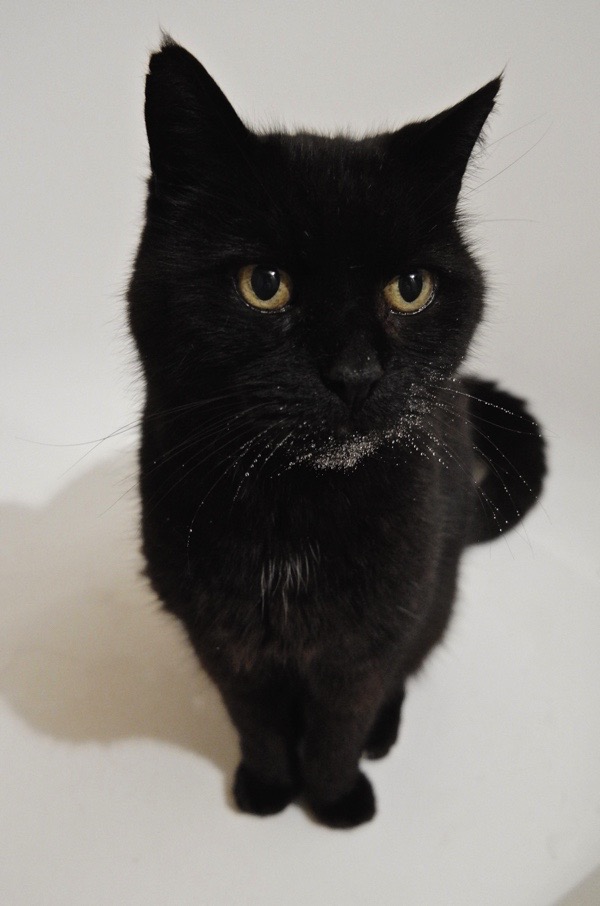
The Gentle Author’s cat, Mr Pussy, fifteen years old and still thirsty

Published October 2015

Published November 2015
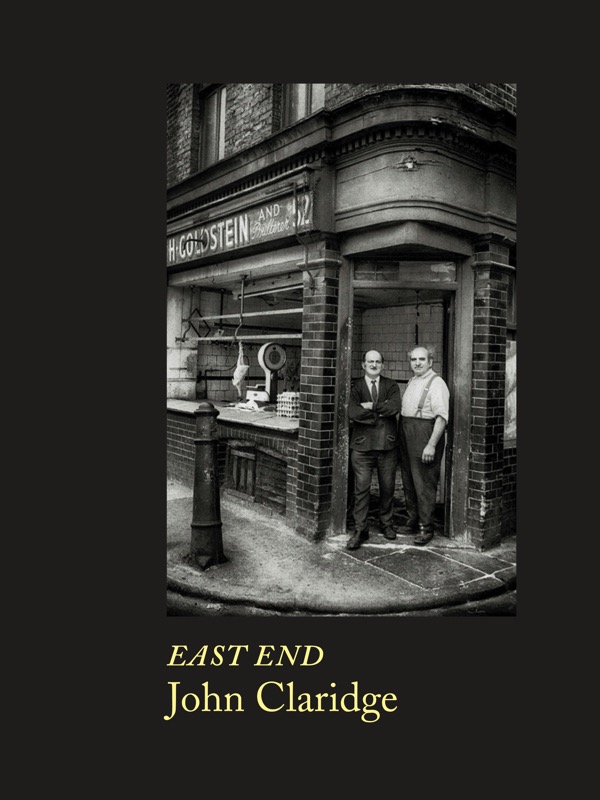
Published June 2016
For the next week, I shall be publishing favourite stories from the past year and I am delighted to announce that the distinguished Novelist & Historian of London, Gillian Tindall will then take over for the week commencing Monday 5th September to celebrate the publication of her new book The Tunnel Through Time, until my return on Monday 12th September.
You may like to read my earlier Annual Reports
Save The Royal Exchange Murals!
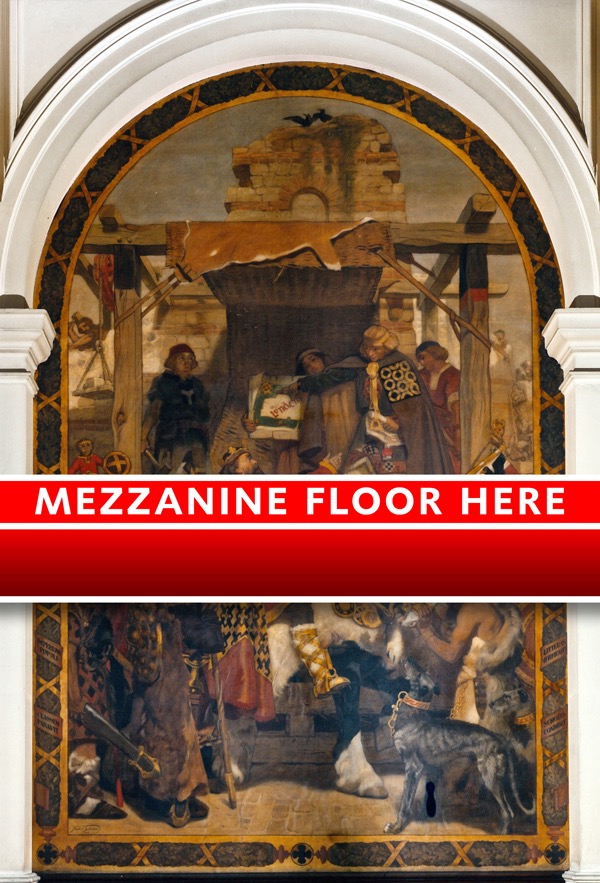
Alfred the Great repairing the walls of the City of London by Sir Frank Salisbury, 1912
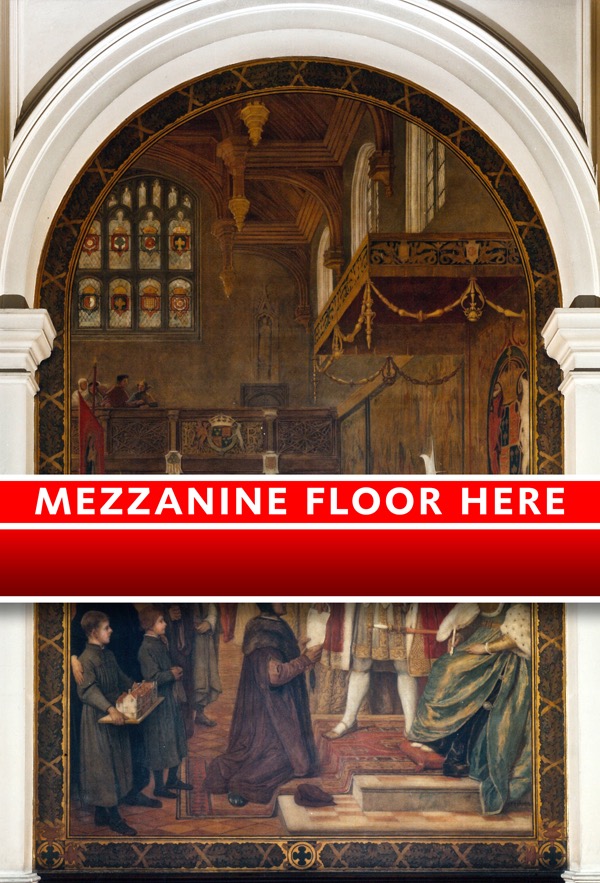
The Foundation of St Paul’s School, 1509, by William F Yeames, 1905

Reconciliation of the Skinners & Merchant Taylors’ Companies by Lord Mayor Billesden, 1484, by Edwin A Abbey, 1904
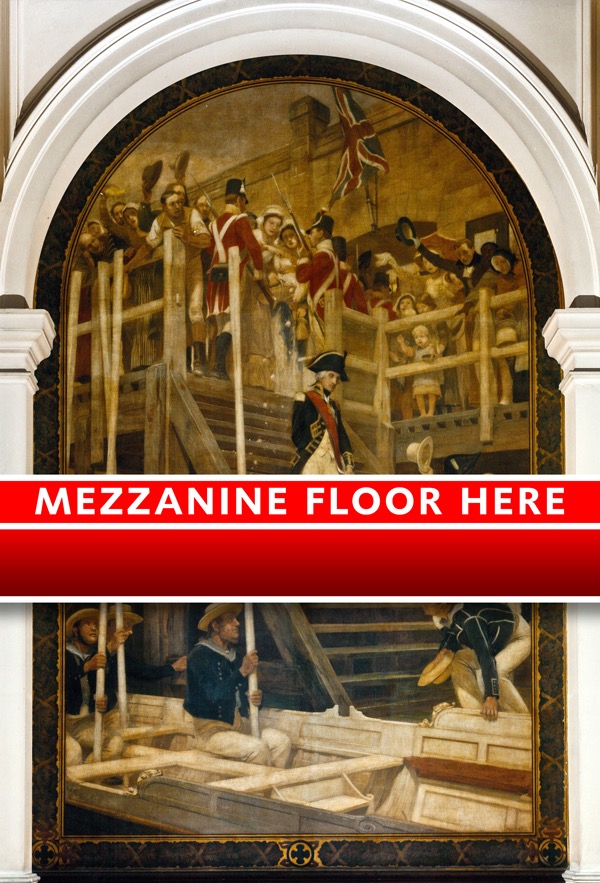
Nelson leaving Portsmouth, 18th May 1803, by Andrew C Gow, 1903

King John sealing Magna Carta by Ernest Normand, 1900
A developer proposes inserting a new mezzanine in the Royal Exchange which will bisect London’s greatest murals and mask a 25cm section across most of the pictures with a silicon seal where the new floor touches the surface of the paintings.
So I asked designer Adam Tuck to create the montages at the top of this feature as an illustration of how this intervention may affect the composition of these pictures. I do not think it will be an improvement. The top strip with the words ‘Mezzanine Floor Here’ represents the depth of the floor, while the lower strip gives an indication of how the bulk of the floor is likely to mask the picture for a viewer.
It was a greivous error when obstacles were first placed in front of these paintings in the eighties, yet the existing shops do not touch the murals and it has always been possible to walk around the restaurant on the first floor and view the sequence of paintings from above. The developer claims that their new proposal will make the murals more visible, when it actually chops most of them in two, making it impossible to view them in their entirety.
The justification for turning the interior of William Tite’s Grade I listed Royal Exchange of 1844 into a Duty-Free-type shopping mall selling glitzy gifts is that this is necessary to make it ‘sustainable,’ when revenues earned by the City’s other properties are more than sufficient to sustain the Exchange.
It is a disappointing course of action, especially since the Royal Exchange is essentially a public building and, in my opinion, the City has a moral duty to maintain it as an unobstructed showcase for all to see these important murals telling the story of our capital.
Below you can view the full sequence of paintings in their glory. Arnold Bennett saw them and wrote, ‘You have to pinch yourself in order to be sure that you have not fallen into a tranced vision.’
You can view the planning application and object on the City of London Planning website
You can read the Victorian Society’s letter of objection by clicking here
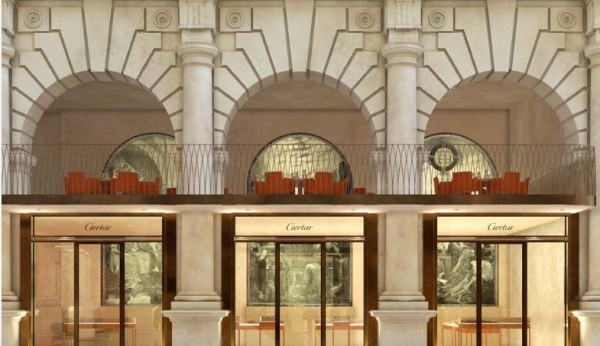
The developer’s proposal
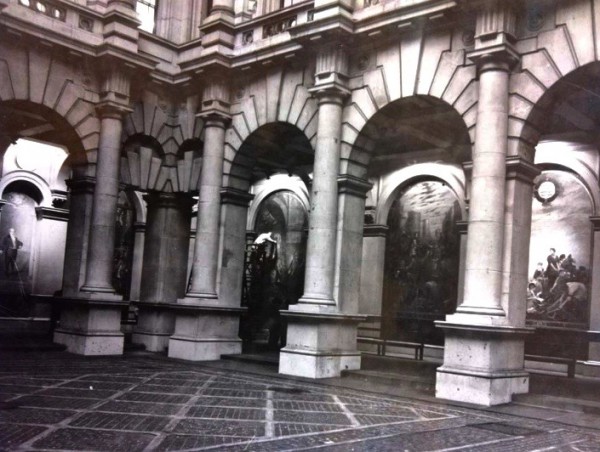
The murals as they were intended to be viewed, without obstacles
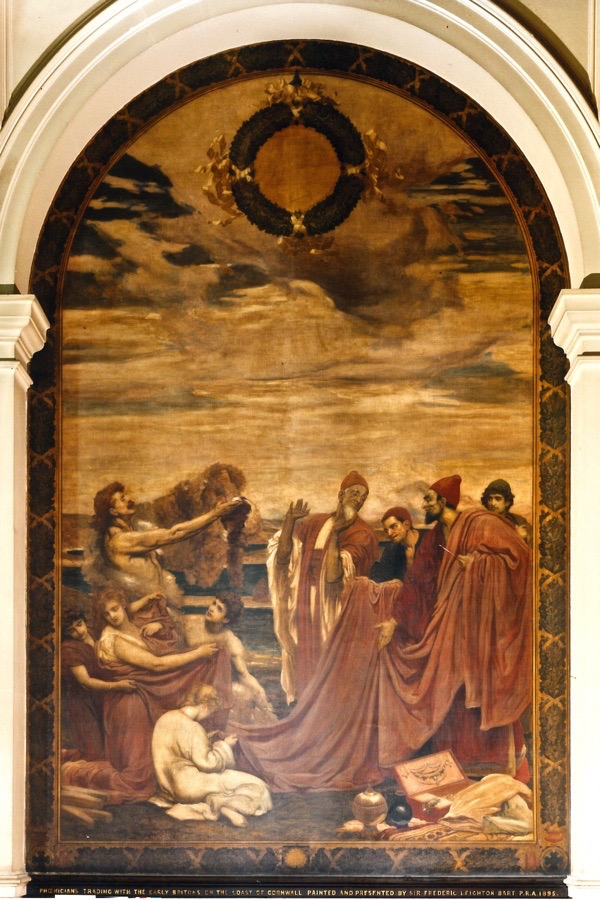
Phoenicians trading with early Britons on the coast of Cornwall by Lord Frederick Leighton, 1895
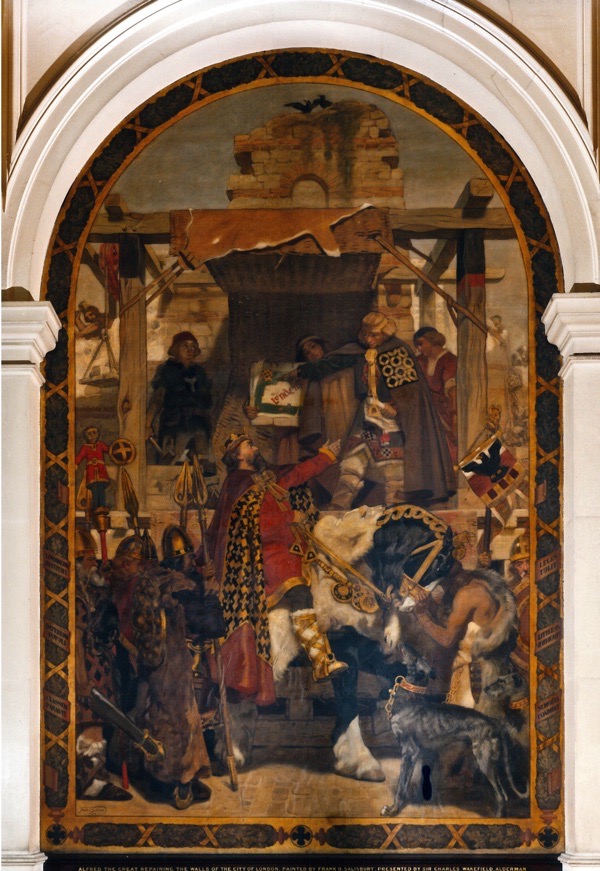
Alfred the Great repairing the walls of the City of London by Sir Frank Salisbury, 1912
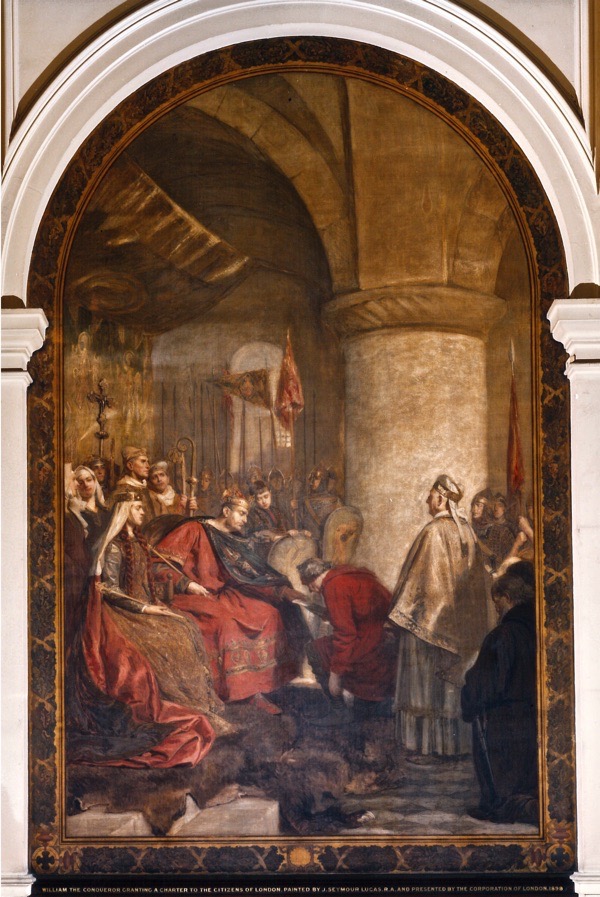
William the Conqueror granting a Charter to the Citizens of London by John Seymour Lucas, 1898
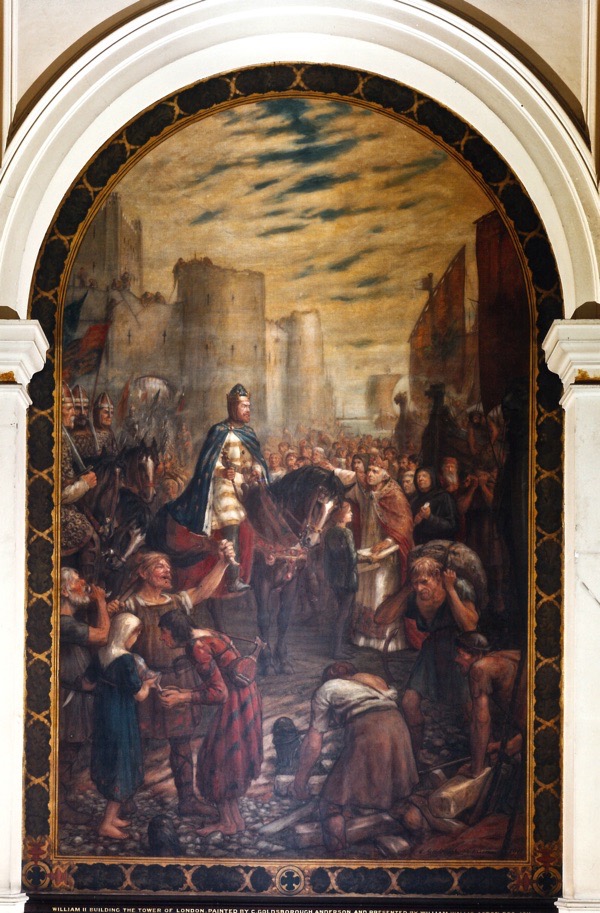
William II building the Tower of London by Charles Goldsborough Anderson, 1911
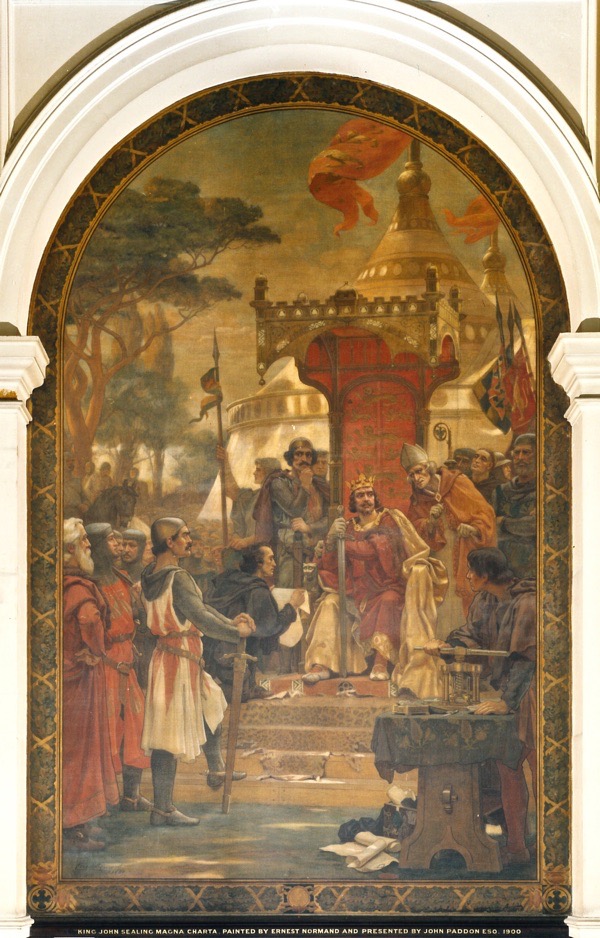
King John sealing Magna Carta by Ernest Normand, 1900
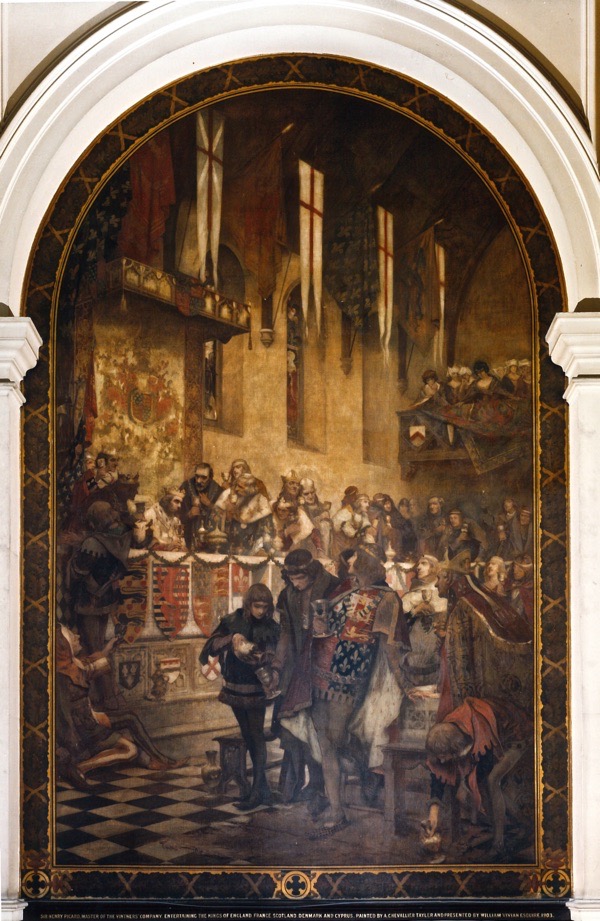
Sir Henry Picard, Master of the Vinters’ Company entertaining Kings of England, France, Scotland Denmark & Cyprus by Albert Chevallier Tayler, 1903
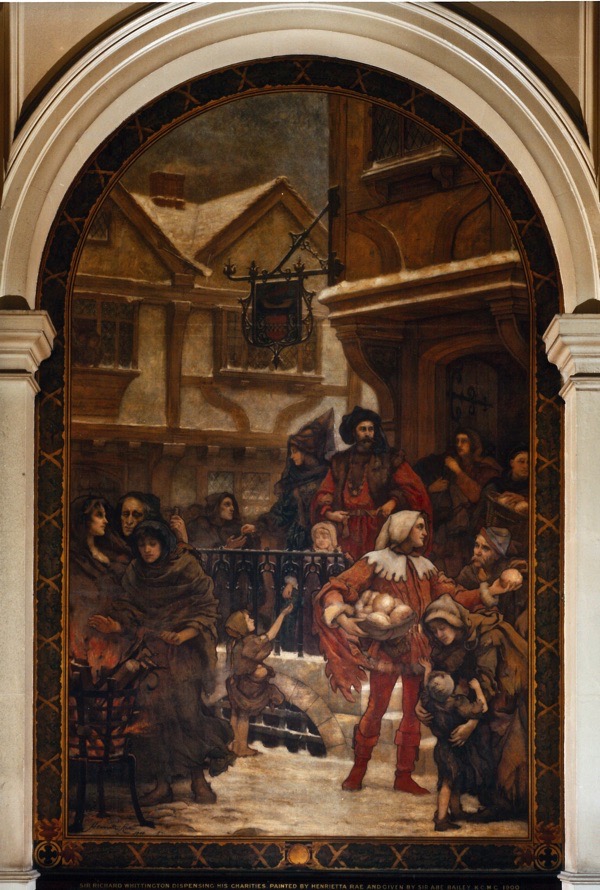
Sir Richard Whittington dispensing his Charities by Henrietta Rae, 1900
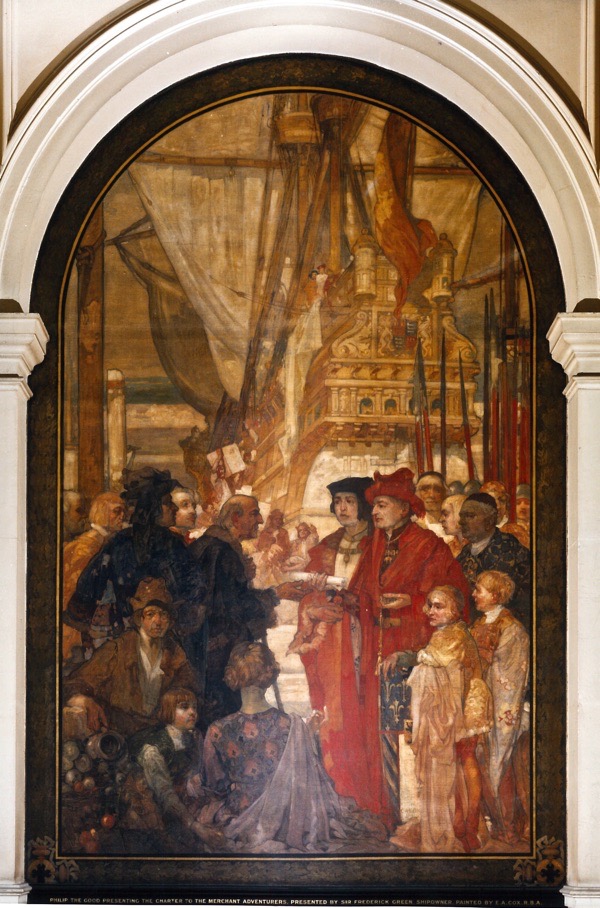
Philip the Good presenting the charter to the Merchant Adventurers by Elija A Cox, 1916
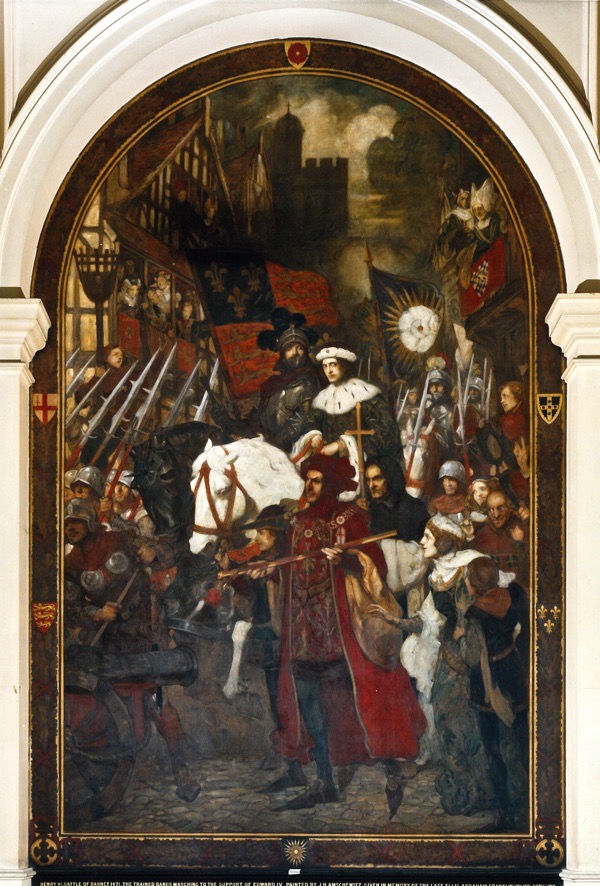
Henry VI Battle of Barnet 1471, the Trained Bands marching to the support of Edward IV by John H Amschewitz, 1911
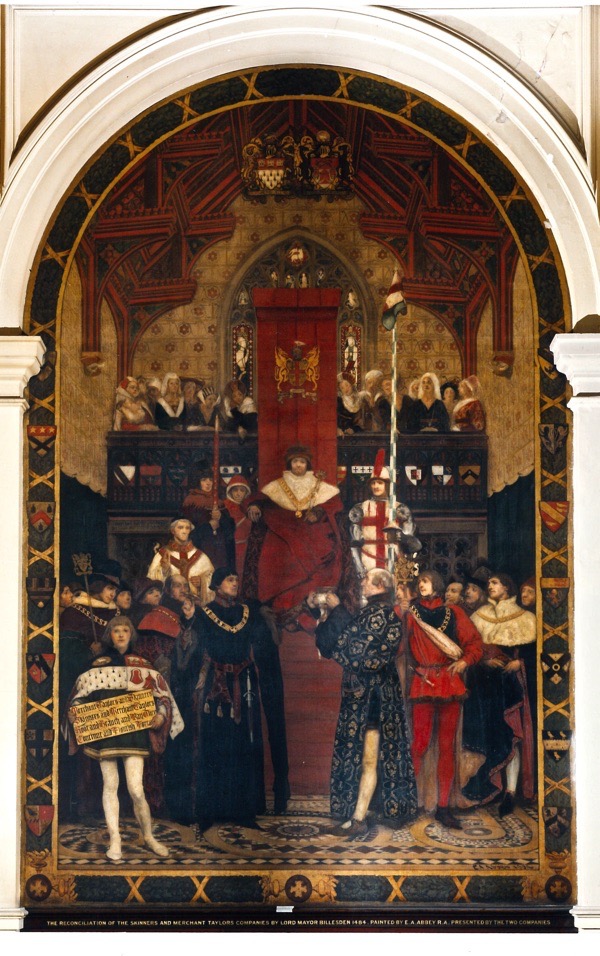 Reconciliation of the Skinners & Merchant Taylors’ Companies by Lord Mayor Billesden, 1484, by Edwin A Abbey, 1904
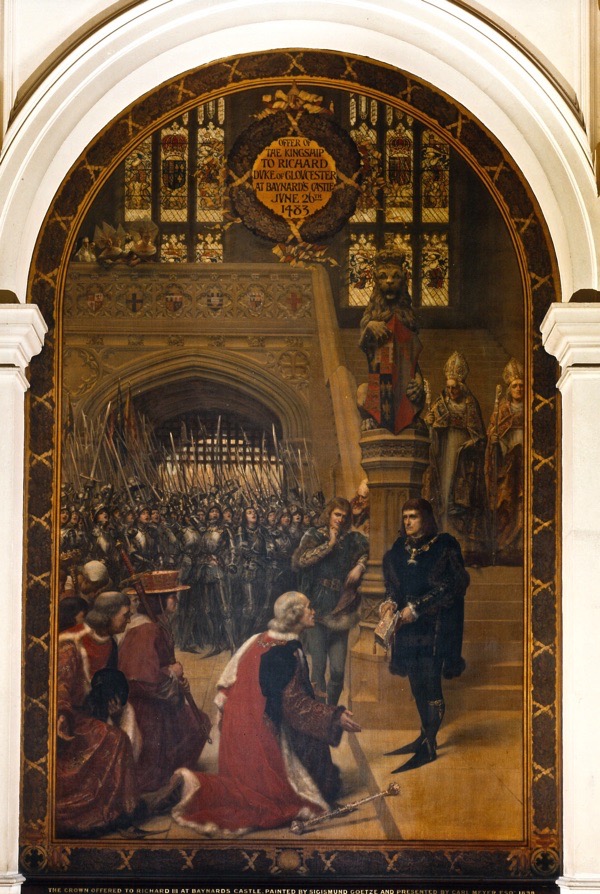
The Crown offered to Richard III at Baynard’s Castle by Sigismund Goetze, 1898
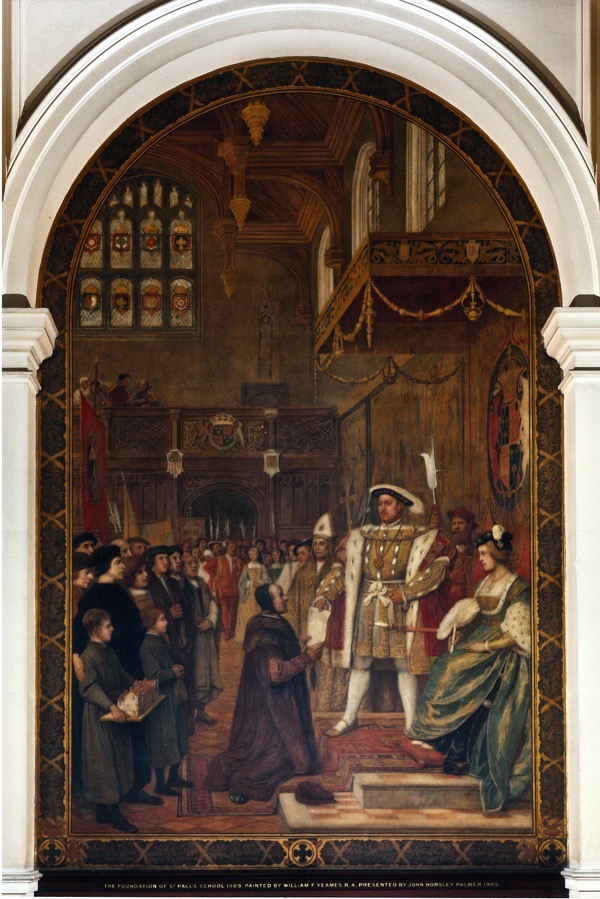
The Foundation of St Paul’s School, 1509, by William F Yeames, 1905
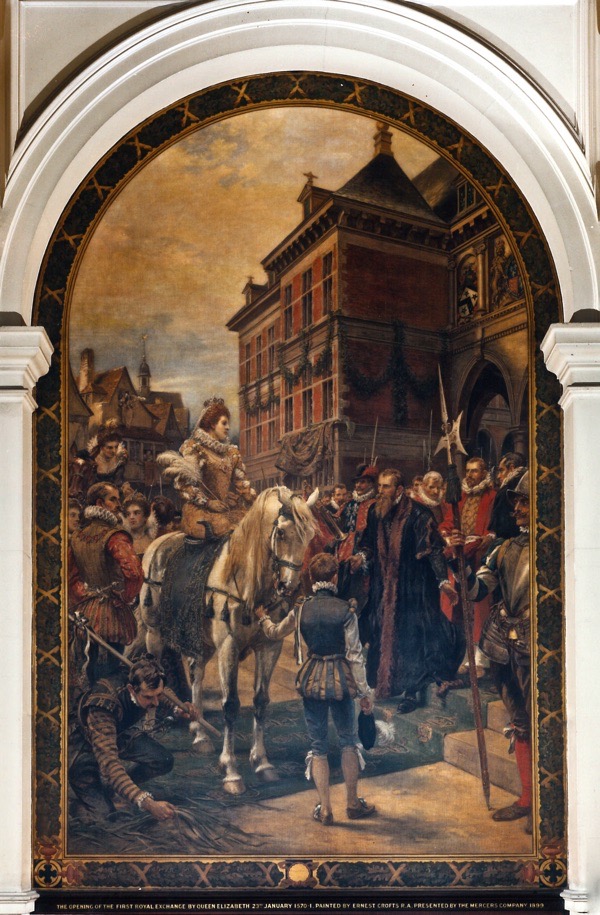
The Opening the first Royal Exchange by Queen Elizabeth I by Ernest Crofts, 1899
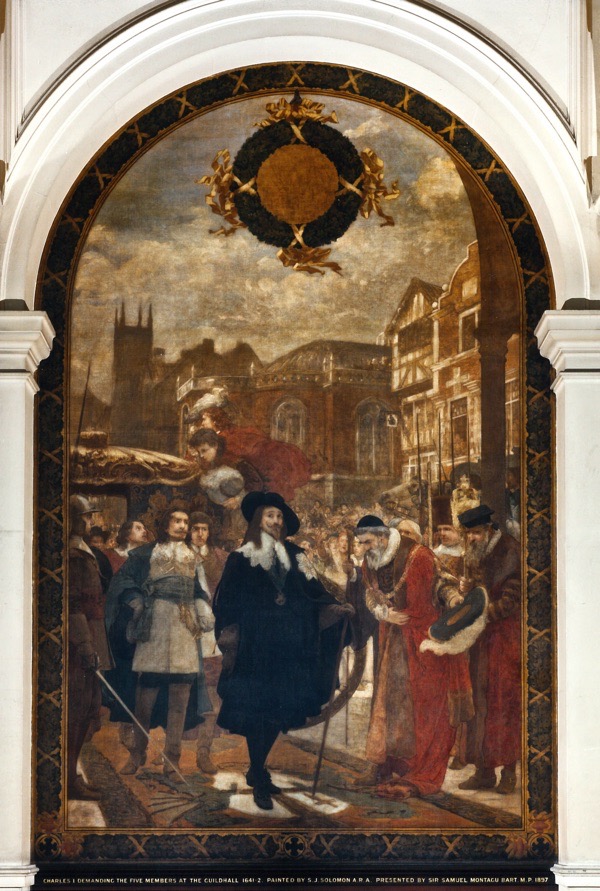
Charles I demanding the Five Members at the Guildhall, 1641-42, by Solomon J Solomon, 1897
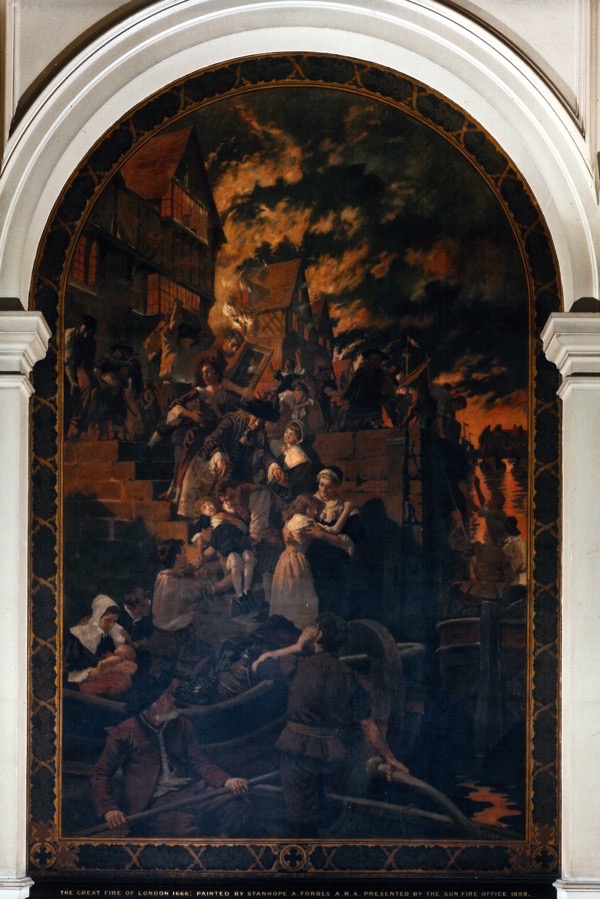
The Great Fire of London, 1666, by Stanhope Forbes, 1899
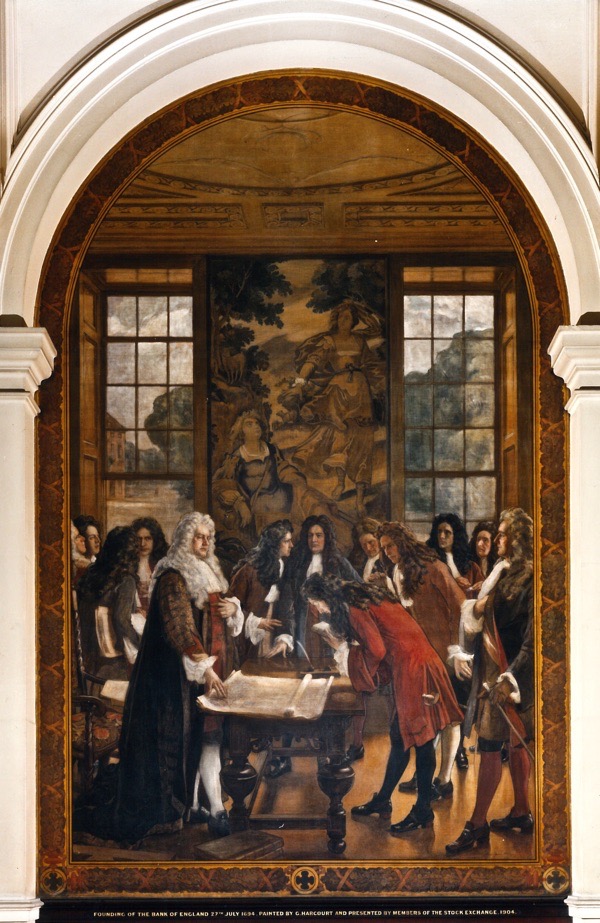
Founding of the Bank of England, 27th July 1694, by George Harcourt, 1904
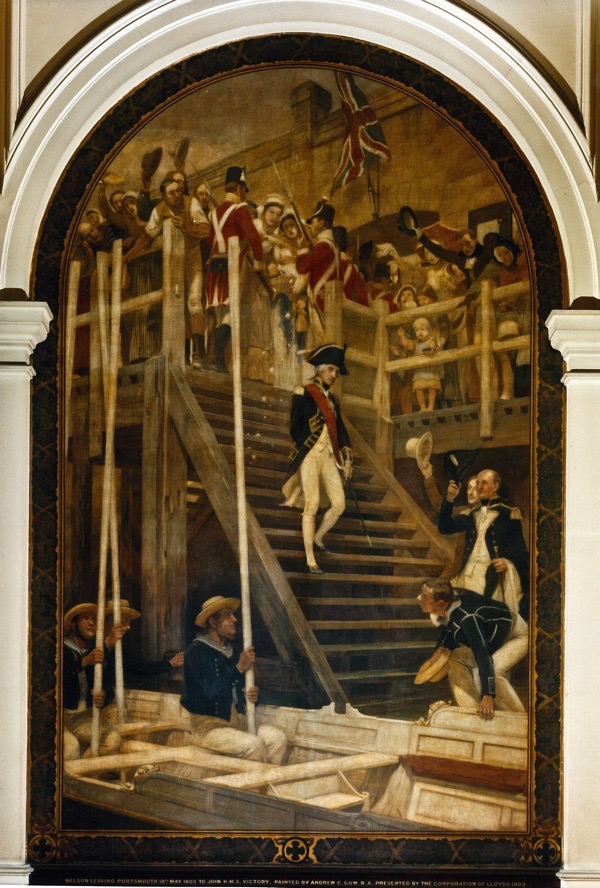
Nelson leaving Portsmouth, 18th May 1803, by Andrew C Gow, 1903
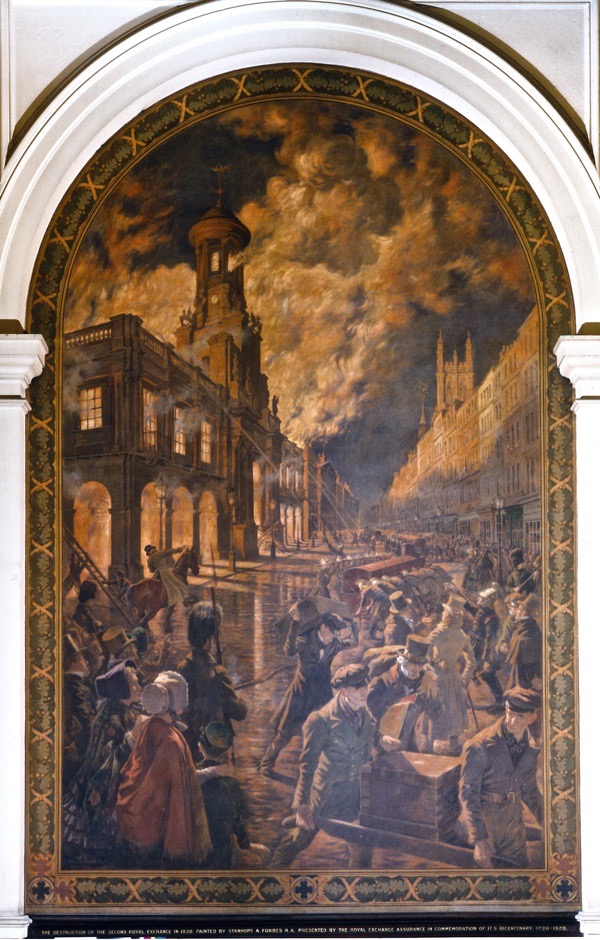
Destruction of the Second Royal Exchange in 1838 by Stanhope Forbes, 1899
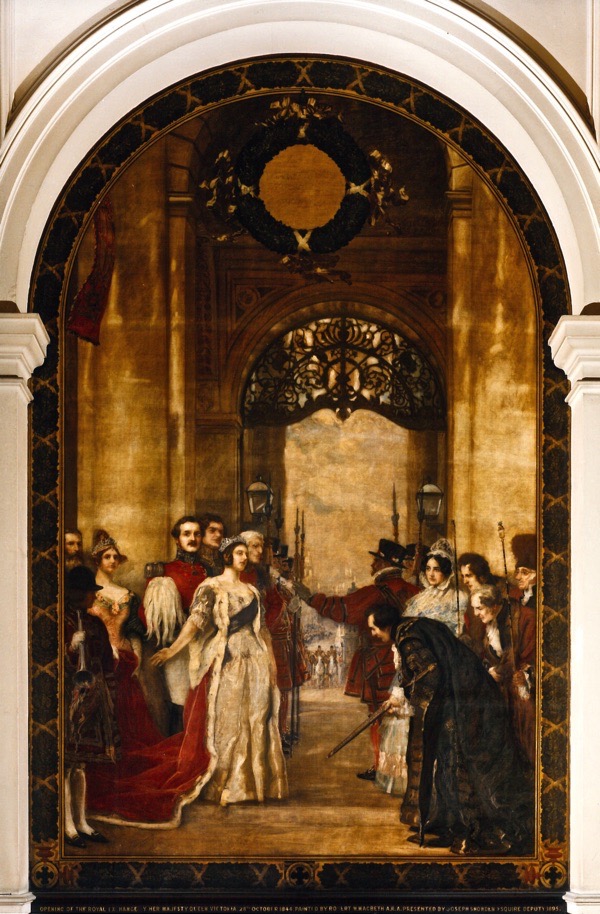
Opening of the Royal Exchange by Her Majesty Queen Victoria, 28th October 1844, by Robert W Macbeth, 1895
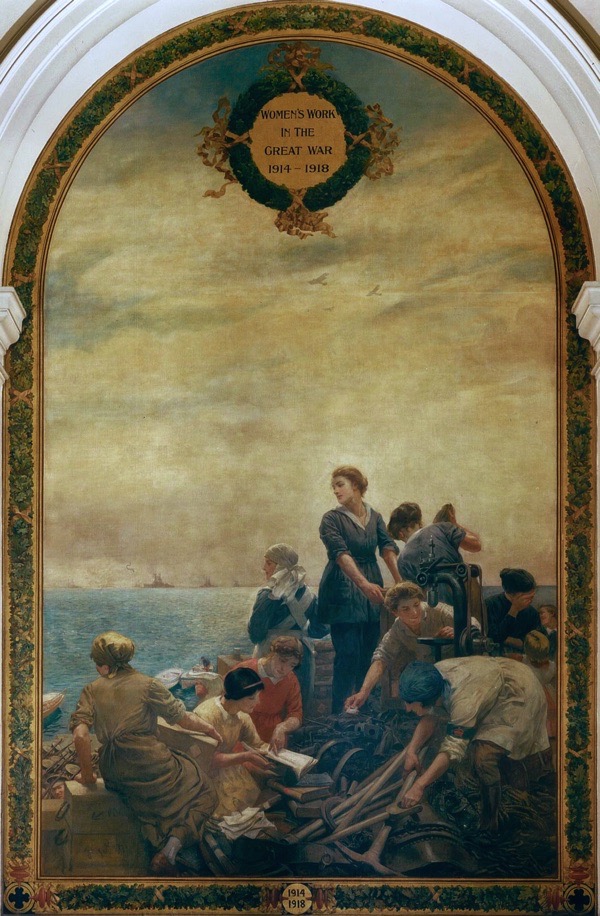
Women’s Work in the Great War, 1914-1918, by Lucy Kemp-Welch, 1922
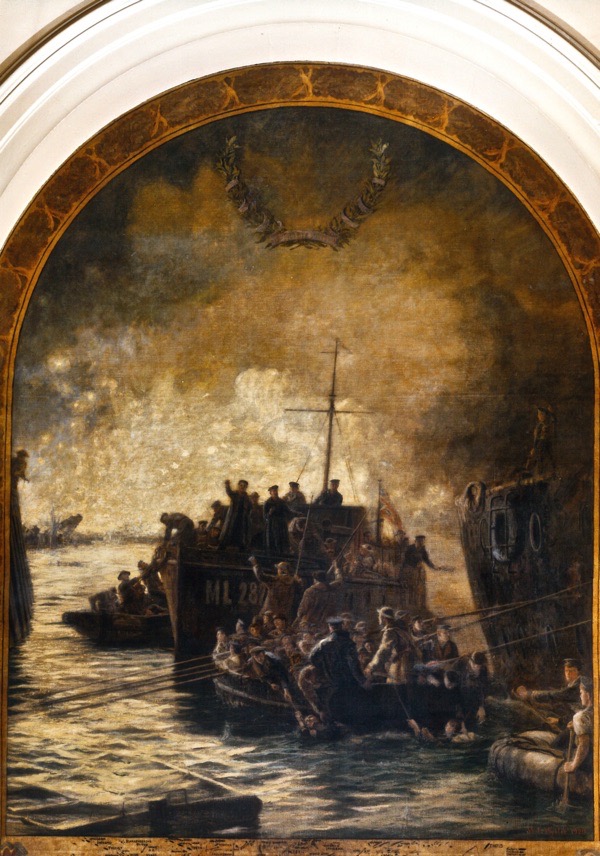
Blocking of Zeebrugge Waterway, St George’s Day, 23rd April 1918, by W L Wyllie, 1920
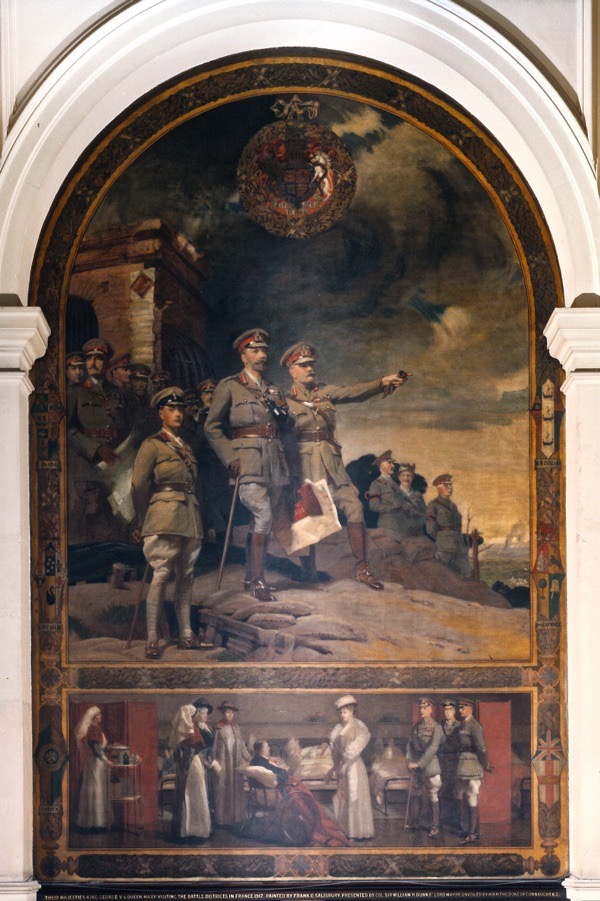
Their Majesties King George V & Queen Mary visiting the Battle Districts in France, 1917, by Sir Frank Salisbury, 1917
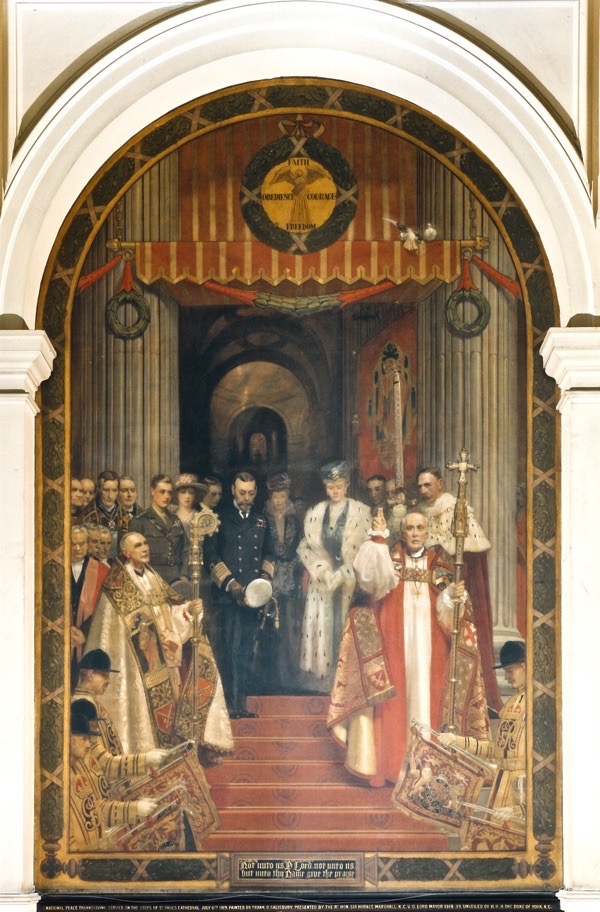
National Peace Thanksgiving Service on the steps of St Paul’s Cathedral, 6th July 1919, by Sir Frank Salisbury, 1919
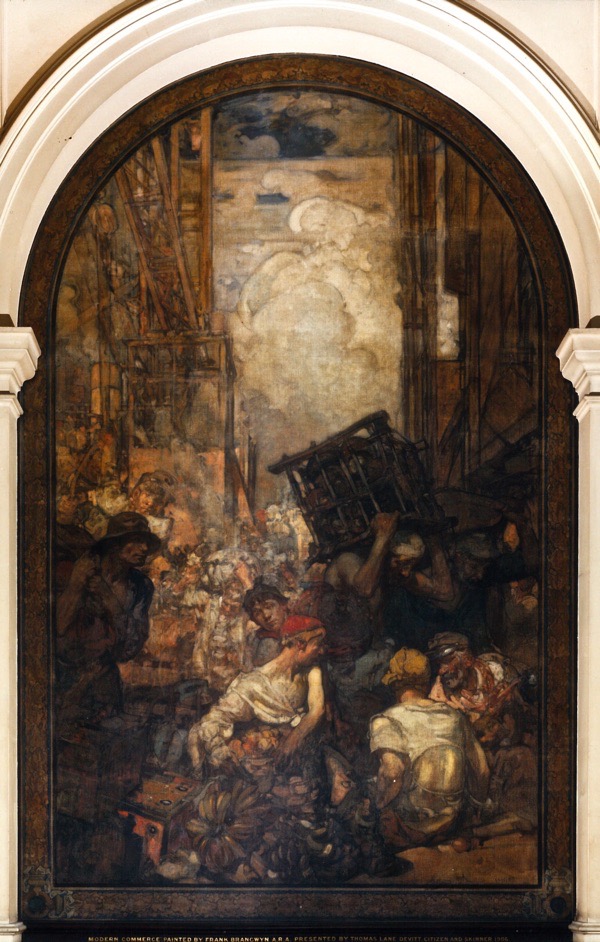
Modern Commerce by Sir Frank Brangwyn, 1906
Images courtesy of the Mercers Company
You may also like to take a look at
An Excursion To Tudeley
Today I publish an account of my last assignment with Photographer Colin O’Brien, who died last week, a day’s excursion with a coachload of East Enders picking blackcurrants in Kent organised by Company Drinks. Details of a Memorial Service for Colin O’Brien will be announced in the autumn.
Colin & I met at quarter-to-eight, in the cool of the morning, at Empress Coaches in Bethnal Green and were the driver’s only passengers until we reached Dagenham, where he pulled up on the pavement next to the library and eager blackcurrant pickers embarked clutching their pots and bags.
Mid-morning, the coach was winding down a Kentish farm lane and all seemed well until an autocratic landowner driving a four-by-four pulled up beside us, exasperated at being unable to pass. When it was explained that we were a coachload of blackcurrant gleaners, he feigned alarm as if had caught a gang of thieves red-handed and, after a tense conversation with various agricultural employees, it became clear that we were expected at a neighbouring farm. As the coach returned down the lane, Colin & I drew great amusement in imagining this ‘gentleman farmer,’ breathing a sigh of relief that no ‘dirty cockneys’ would get their hands on his blackcurrants this year.
Arriving at our destination, we passed through the tiny village of Tudeley, lined with twisted weather-boarded cottages, before we saw the field of blackcurrants, stretched out in long lines and harbouring their purple fruit beneath dense foliage. These rows had already been picked mechanically several times, as we could tell by the thousands of blackcurrants littering the ground, but since it was no longer viable to harvest the bushes again this season we were permitted to glean the remaining fruit that would otherwise go to waste.
With barely a word, everyone set to work, pleased to be in the fresh air after sitting on the coach and excited by the prospect of blackcurrants. Pulling back branches revealed purple fruit hanging in the shade, sharp on the tongue yet irresistibly tangy. A disparate bunch, we were all unified in our delight at blackcurrants and took the opportunity to taste as many as we could, occasionally whooping with joy to discover branches heavy with fruit concealed beneath the leaves.
Colin worked his way up and down the rows with his camera, and had no problem finding subjects who were eager to show off their precious harvest of blackcurrants, while I picked pint-sized cups of fruit which I donated to boost the haul of some younger pickers.
At lunchtime, while Colin & I took a break from the heat of the sun in the shade of a hedge, eating our sandwiches with the other pickers, I confessed to him that I had spied a beautiful country pub far away across the field and I could not resist the thought that it would be a very attractive prospect to pay a visit for refreshment. Colin confided that to me that the very same thought had occurred to him and confirmed that he had taken his set of portraits. Yet we both agreed that we felt uncomfortable admitting this idea to the other pickers, even though we had effectively completed our assignment.
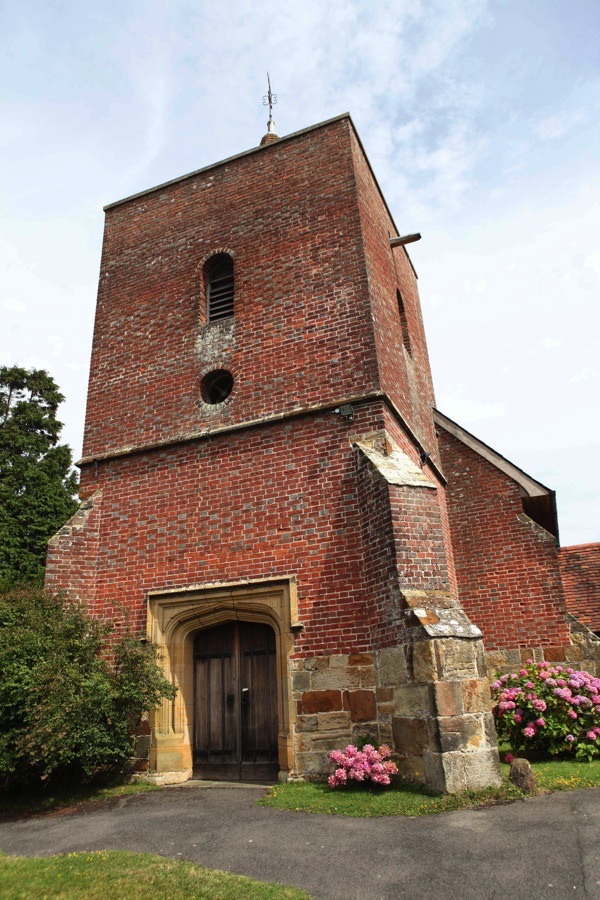
Consulting the map of Tudeley, while munching my sandwiches, I noticed that there was a church at the centre of the village. ‘Why don’t we go for a walk up the road and visit the church?’ I suggested to Colin and then, with his assent, we made our departure from the group, explaining our purpose and sloping off down the lane. ‘Shall we go in and have a drink now or shall we visit the church first?’ I asked Colin once we arrived at the pub. ‘Let’s walk up to the church first,’ Colin decided, and I dutifully accompanied him up the hill, leaving the pub behind yet hopeful of a swift return.
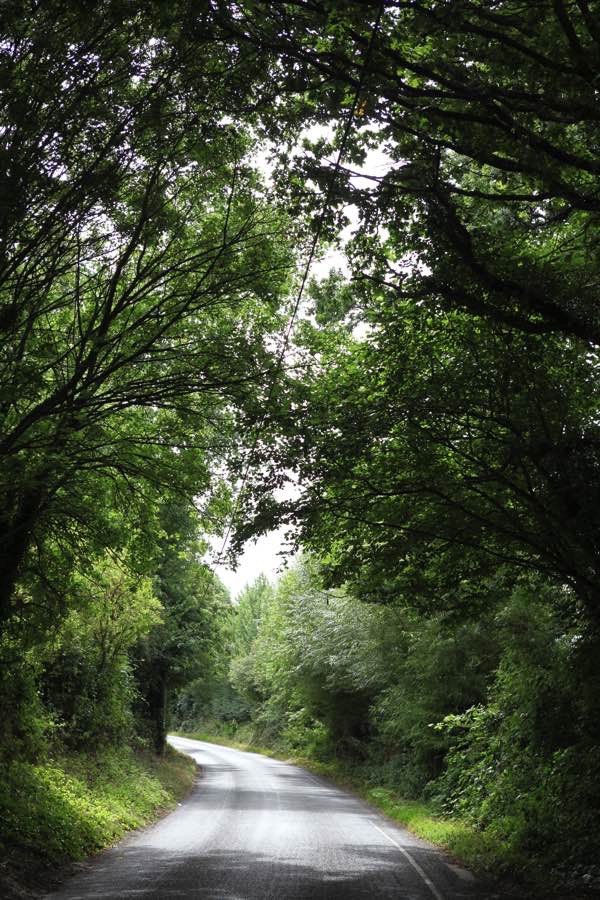
The first wonder we encountered was Tudeley Hall, a charismatic half-timbered medieval pile with twisted brick chimneys and a line of old red roses blooming in the front garden. Tall trees lined our path upon either side, arching in a vault over the road and filtering the rays of the sun to spectacular effect. ‘You could wait for days for the light to be as it is now,’ said Colin, as he pressed his shutter to capture a picture of the lane shimmering in hazy sunlight.
Turning off the main road, we approached the church up a pathway lined by well-kept cottages with gardens in flower, arriving at the graveyard dignified by ancient yews, and sat there upon a bench to admire the view across the farmland of Kent in the stillness of the summer afternoon. We were ready to walk back down the hill to the pub, when we decided to go inside the church and take a look.
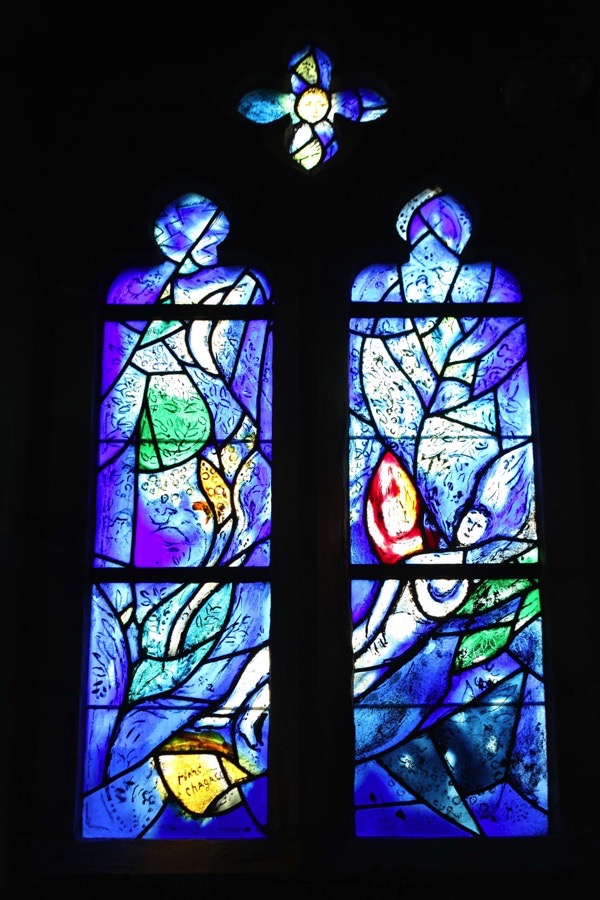
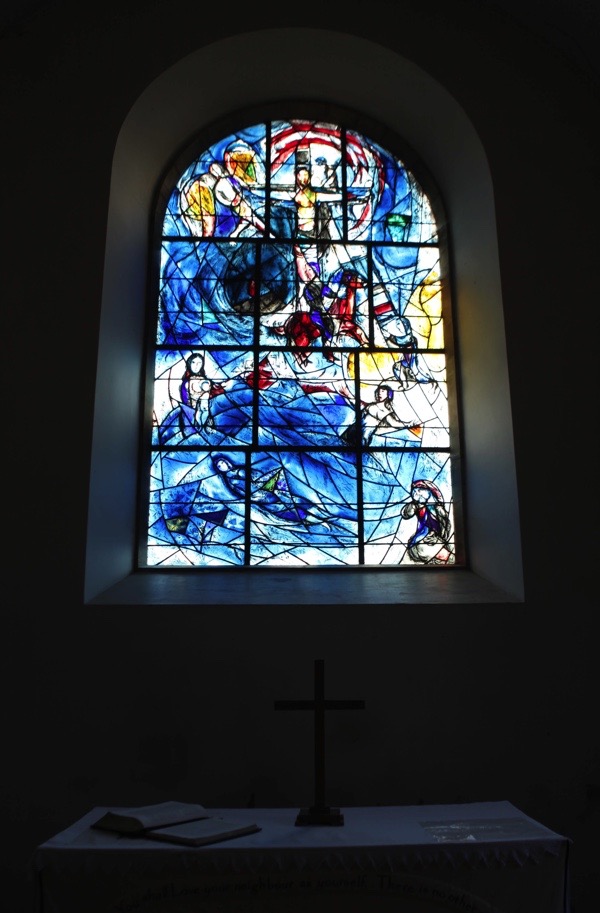
An unexpected revelation awaited us. Leaving the dazzling glare behind, it took a moment for my eyes to adjust to the low light inside, where coloured glass gleamed with rich hues illuminating the gloom of the shadowy interior. All Saints, Tudeley, is the only church in the world to have all the windows designed by Marc Chagall.
We learnt the poignant story behind these windows – how local landowners Sir Henry & Lady D’Avigdor-Goldsmid commissioned Chagall to create the east window as a memorial to their daughter Sarah, who drowned aged twenty-one in a sailing accident in 1963, and how, when Chagall came in 1967 to see his worked installed, he fell in love with this small bare church and said, ‘I will do them all.’
Spellbound by the vision, Colin photographed each of the windows, beginning on the north side with the creation of the world from the blue void and culminating in a pair of south-facing windows executed in the golden tones of the sun, with images dissolving into light. Realising that we had to leave if we were not to keep the blackcurrant pickers waiting or miss the coach back, I only persuaded Colin to go once I had taken some pictures of him standing beneath the large east window.
I checked my watch as we walked sharply back down the hill and, when we reached the pub, I realised it was too late for a drink but instead I went inside and asked if I could use the toilet. Once I emerged from the bathroom, Colin was holding two bottles of lemonade with straws in them and we sipped upon them as we walked up the lane to the coach.
The blackcurrant pickers were waiting for us, their lips and fingers stained with purple juice. ‘We know where you’ve been!’ they teased, as we climbed on board the coach, confronting us with the realisation of how transparent our departure from the field had appeared. Fortunately, Colin was able to show his photographs of the Marc Chagall windows, serving as both our alibi and as illustrations of our adventure.
I was thinking what a lesson the day had been – that the instinct to stray was one that should not be resisted because you never know what wonders you might discover – when I fell asleep. Colin & I woke up in London and he descended from the coach at Hackney Downs, where the days’ harvest was delivered to be cooked and bottled with lemon juice, prior to being made into blackcurrant soda. I stayed with the coach until it reached the depot off Mare St beside the canal and walked back from there to Spitalfields, with my plastic box of blackcurrants in my bag.
The excursion to Tudeley was our final assignment, our last day together and the last time I saw Colin O’Brien.
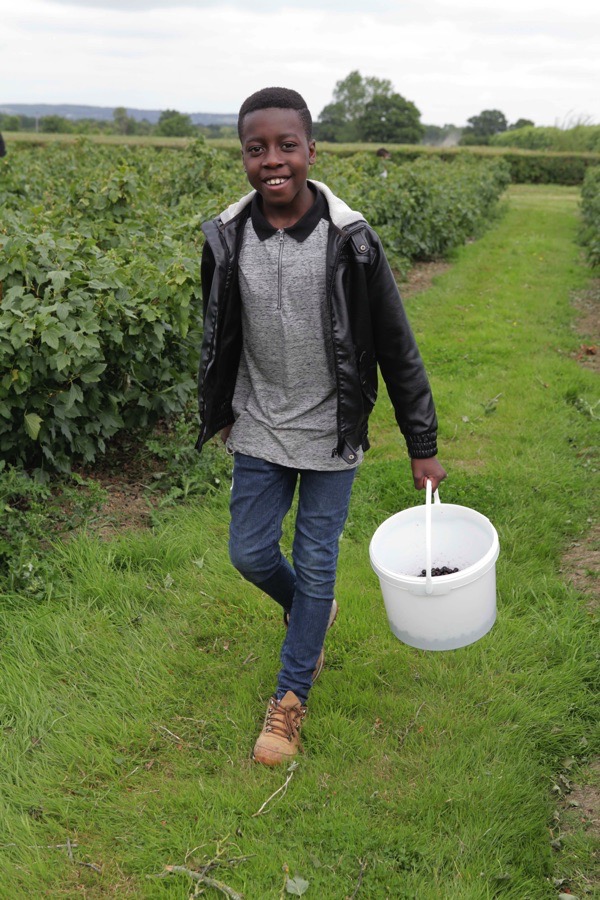
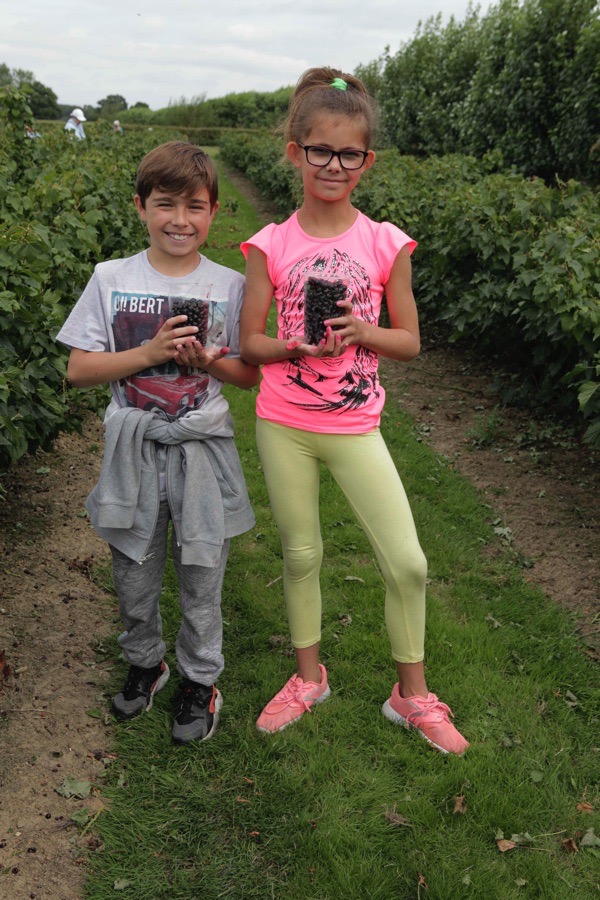
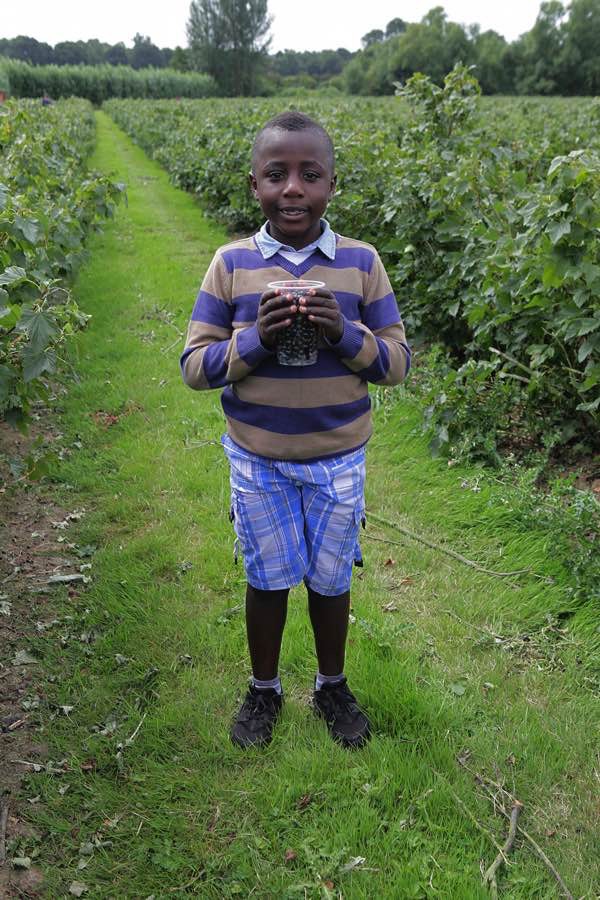
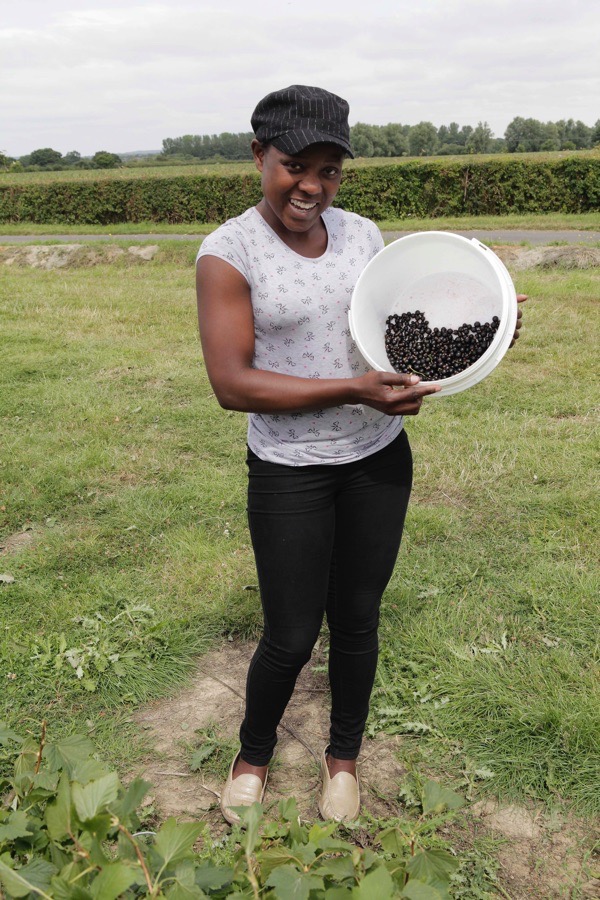
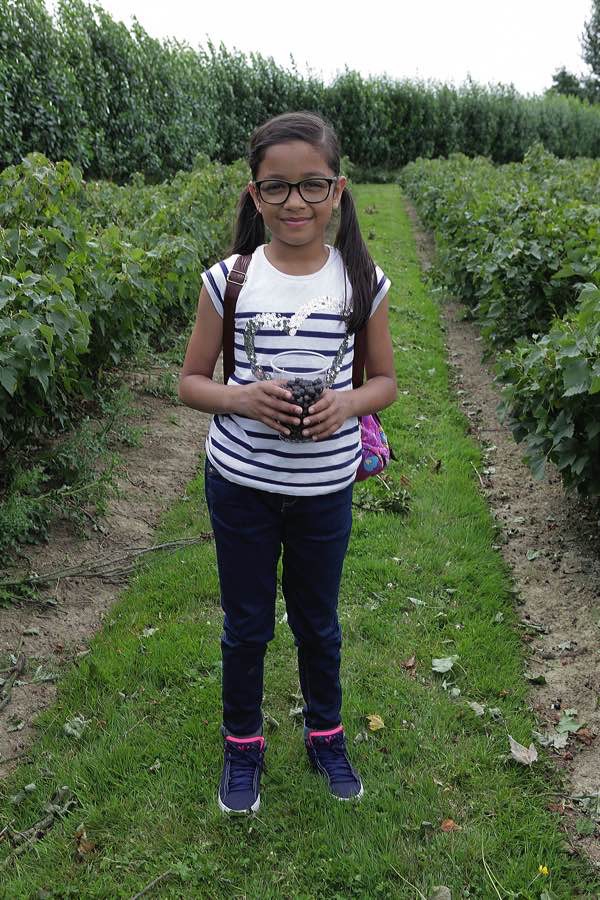
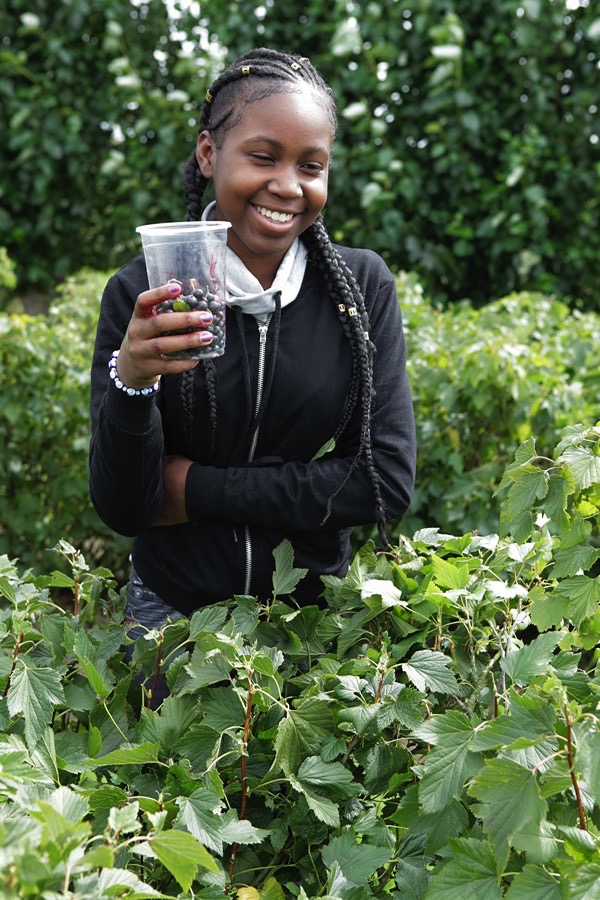
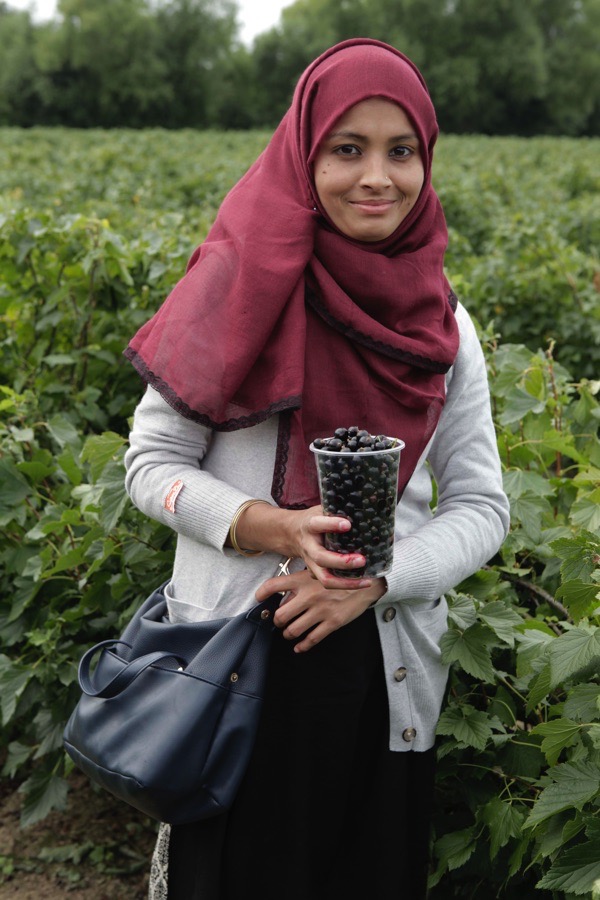
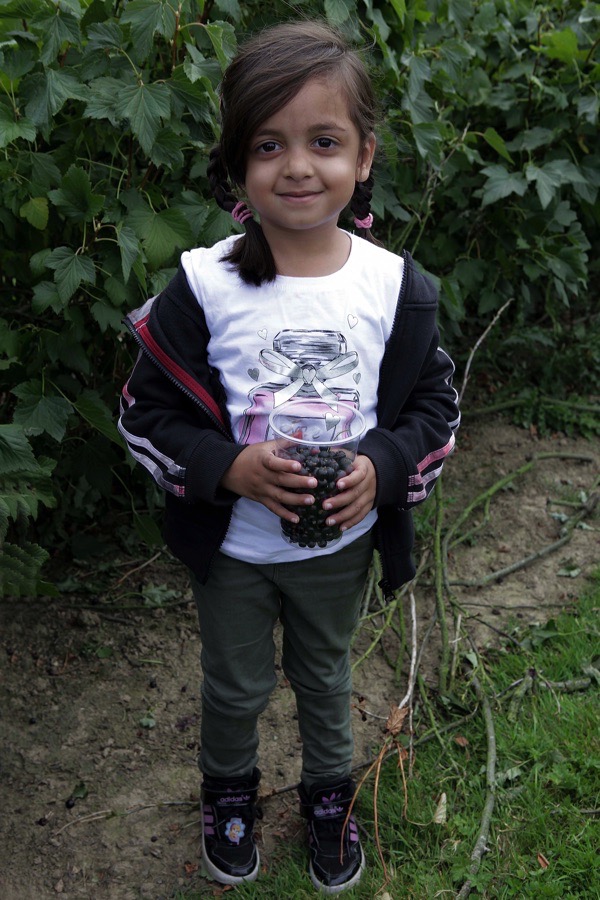
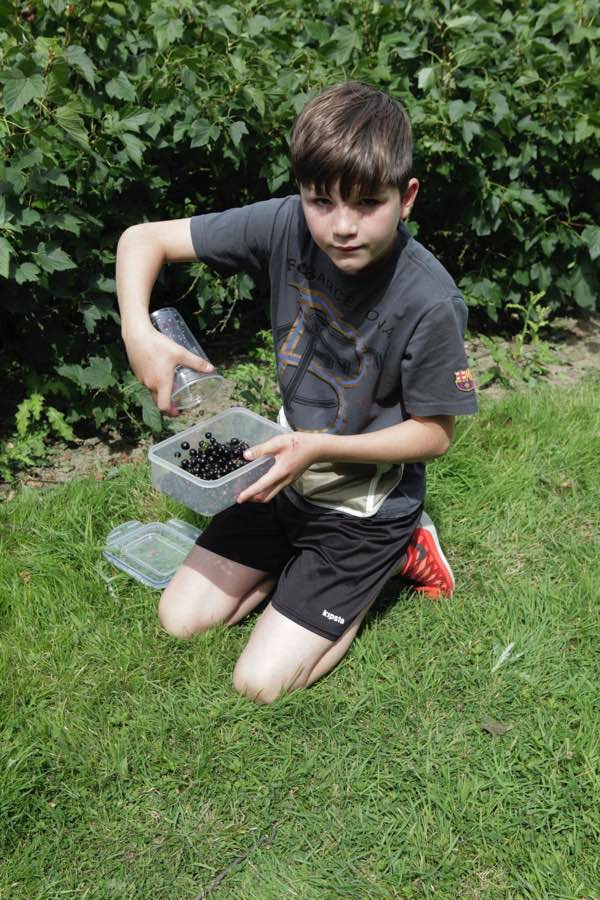
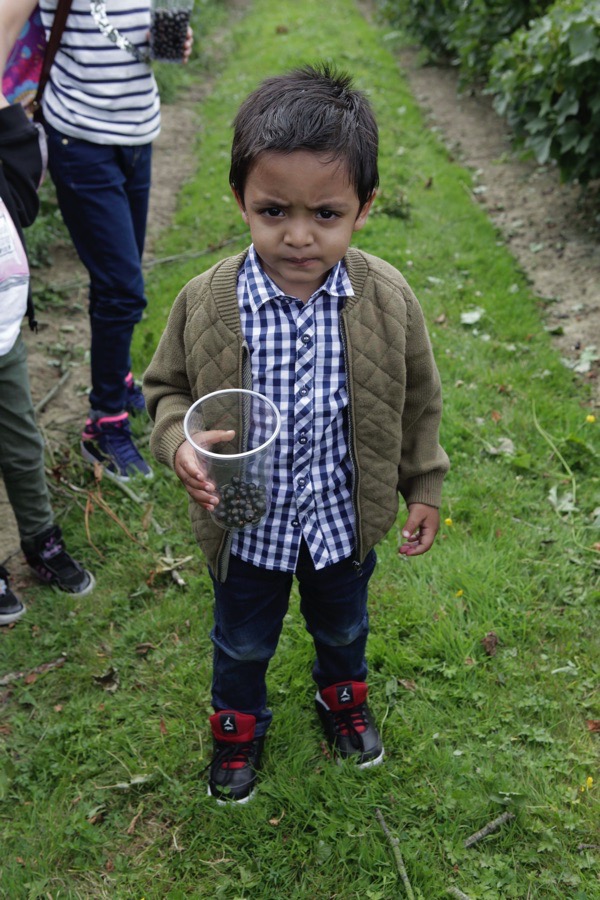
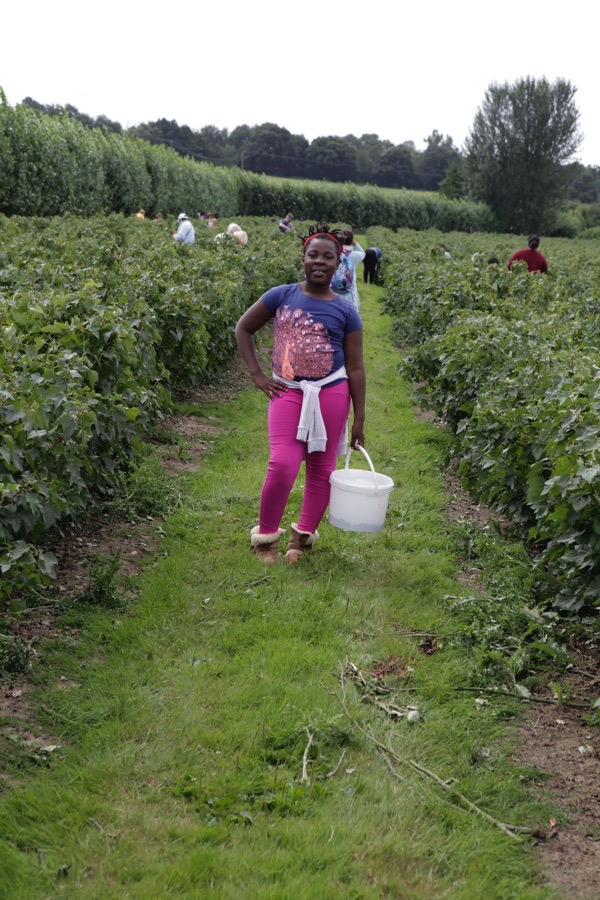
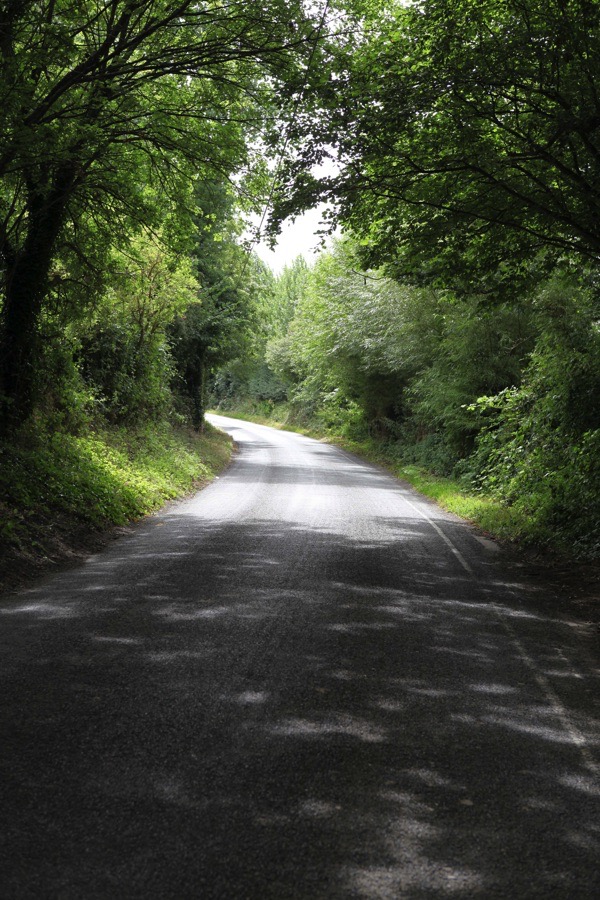
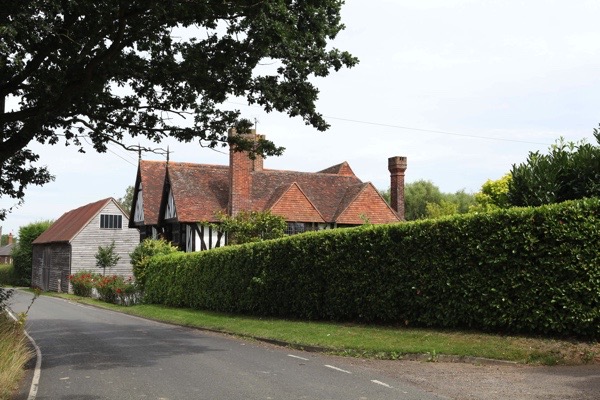
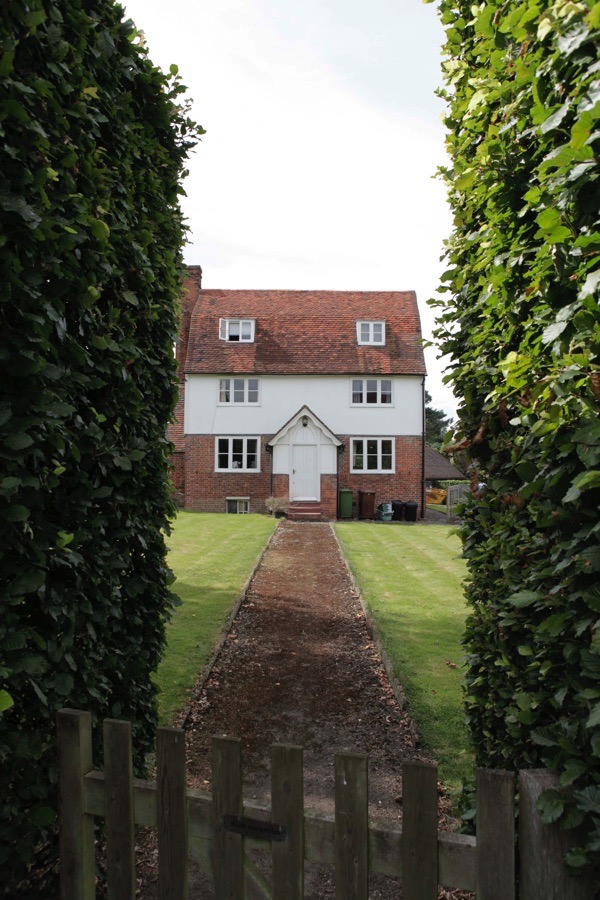
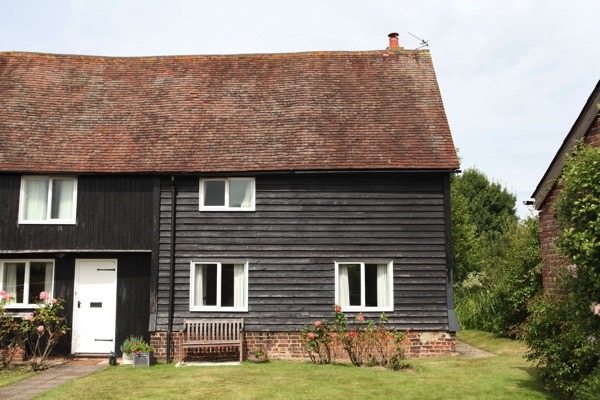
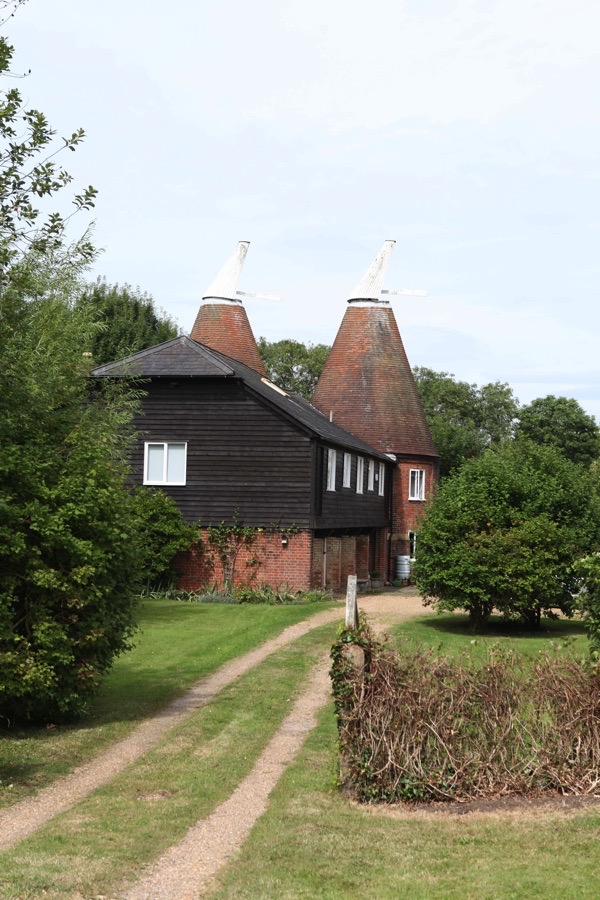
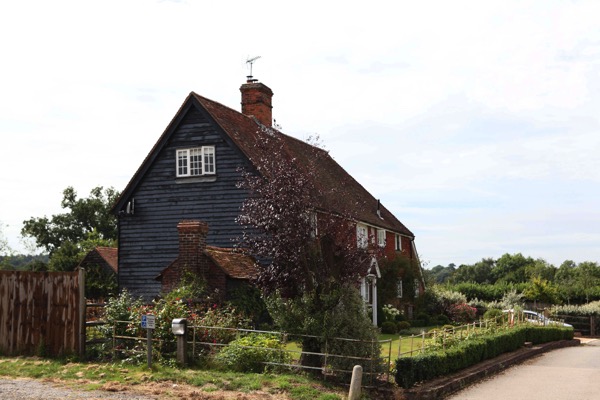
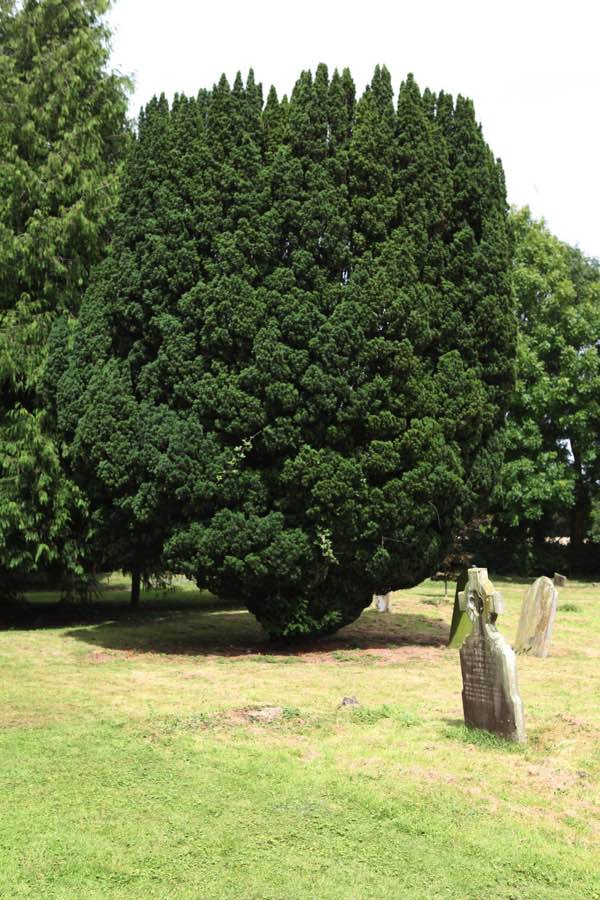
Photographs copyright © Estate of Colin O’Brien
Movements, Deals & Drinks is a project by international artist group Myvillages, founded in 2003 by Kathrin Böhm, Wapke Feenstra & Antje Schiffers. The project was commissioned by Create and is registered as a Community Interest Company with the name Company Drinks. Company Drinks is supported by the Borough of Barking & Dagenham.
You may also like to read about these other Company Drinks projects photographed by Colin O’Brien
Julie Price, Artist
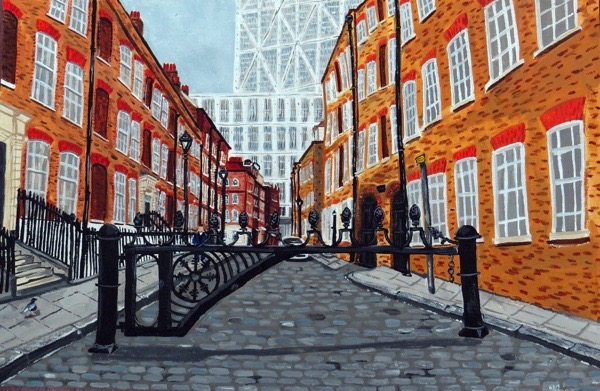
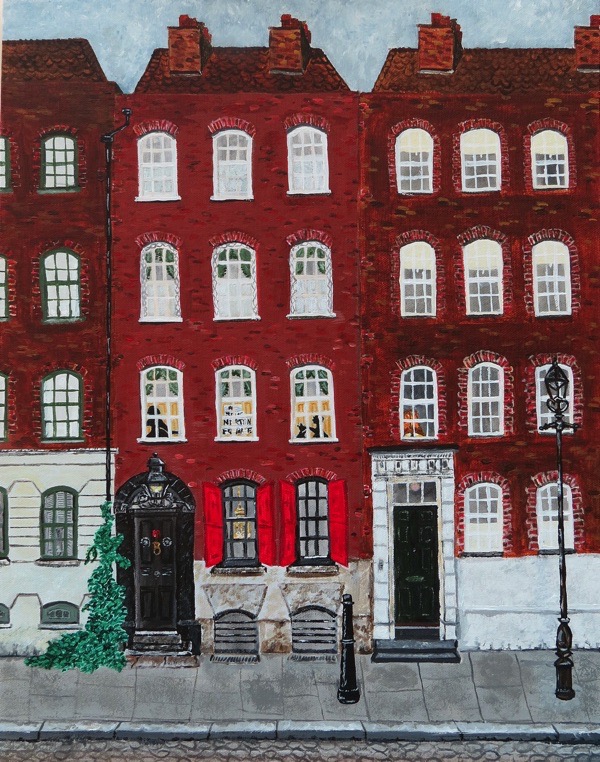
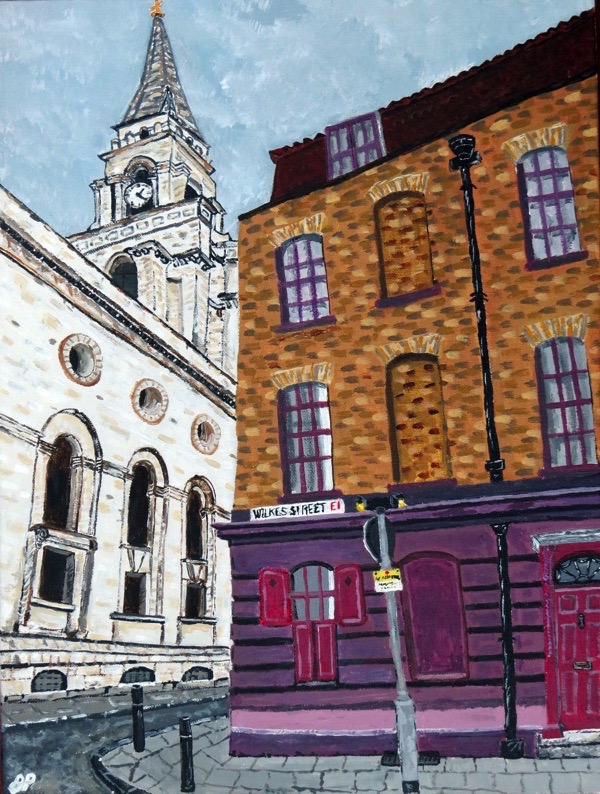
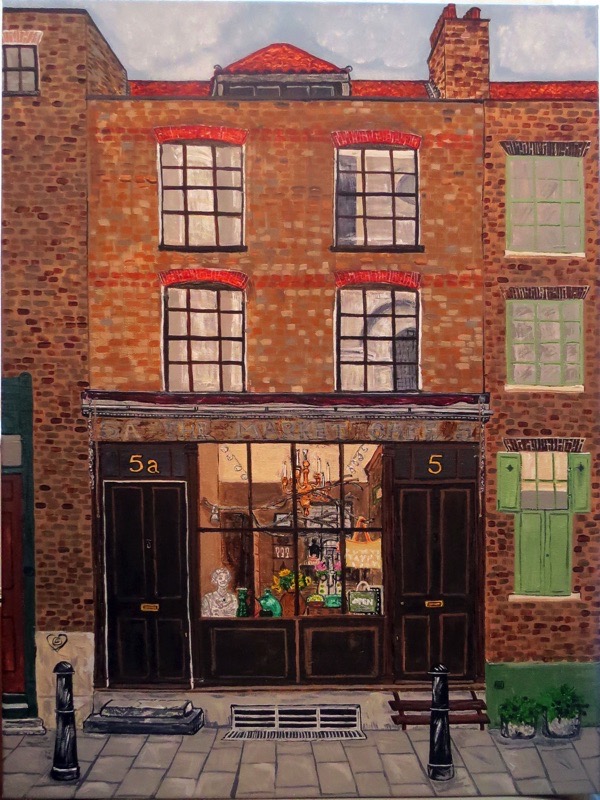
Later this week, I shall be publishing my final assignment with Colin O’Brien – but today I am delighted to introduce you to the joyous paintings of Julie Price, whose debut exhibition opens in the New Artist Fair at the Old Truman Brewery on 9th September and runs until 11th September.
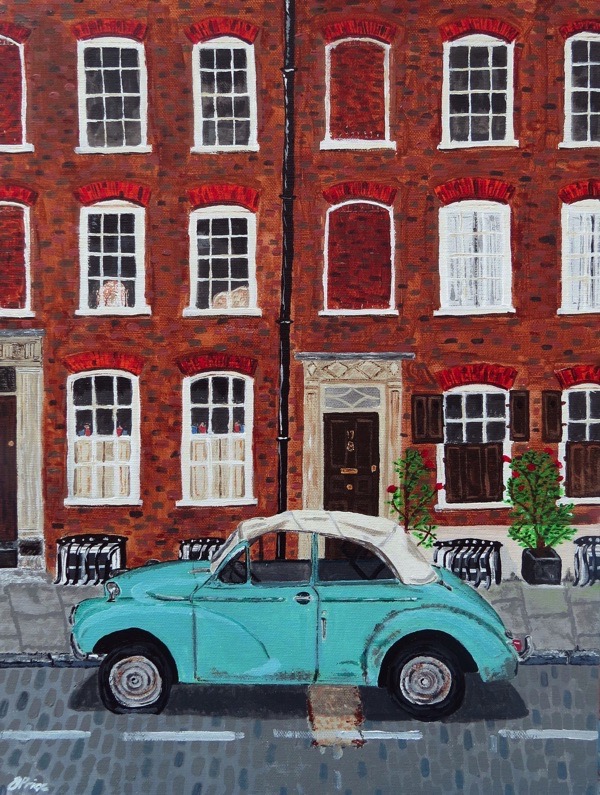
Elder St
Folgate St
Dennis Severs’ House, Folgate St
Wilkes St
Townhouse, Fournier St
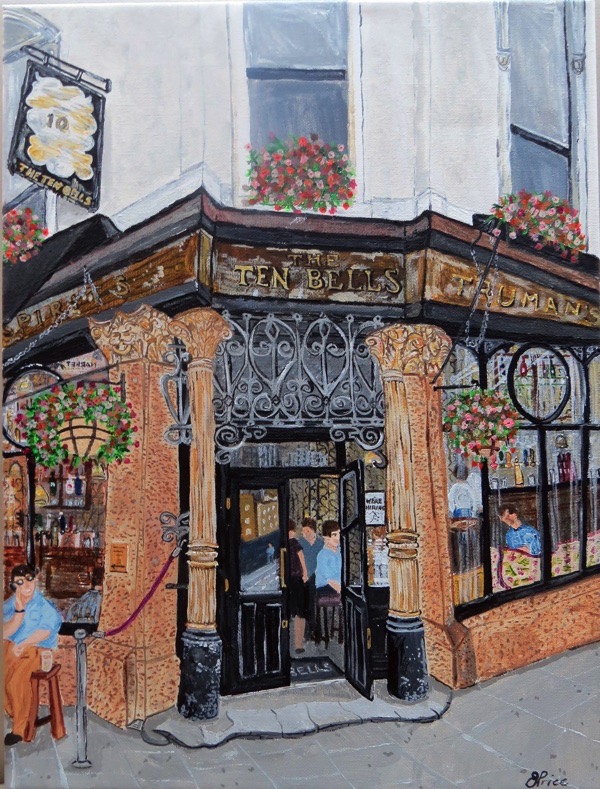
Ten Bells
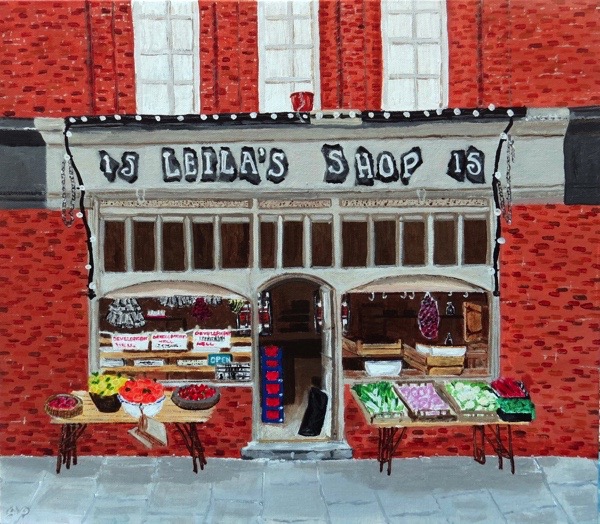
Leila’s Shop, Calvert Avenue
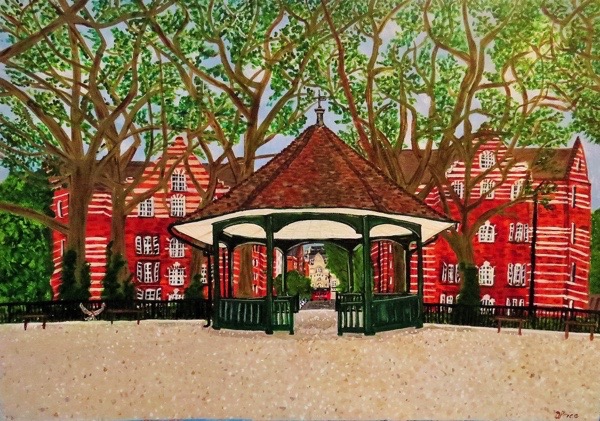
Arnold Circus
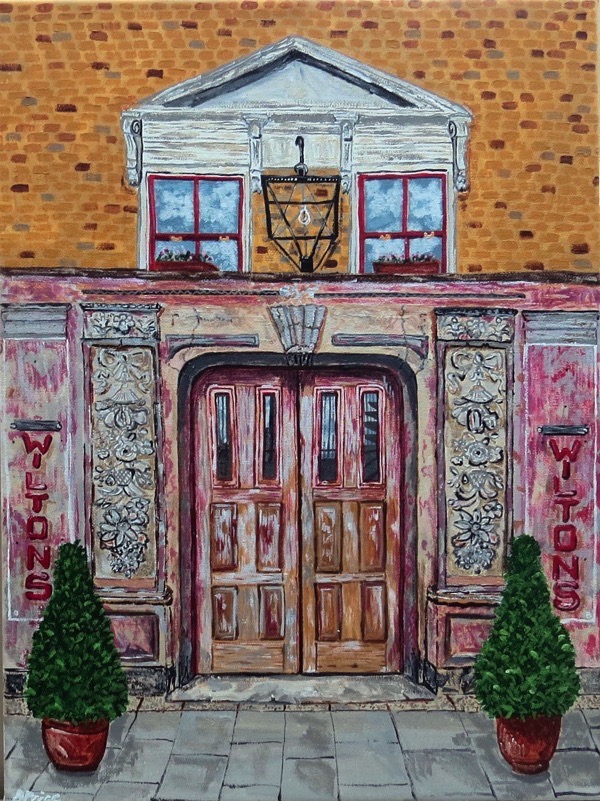
Wilton’s Music Hall
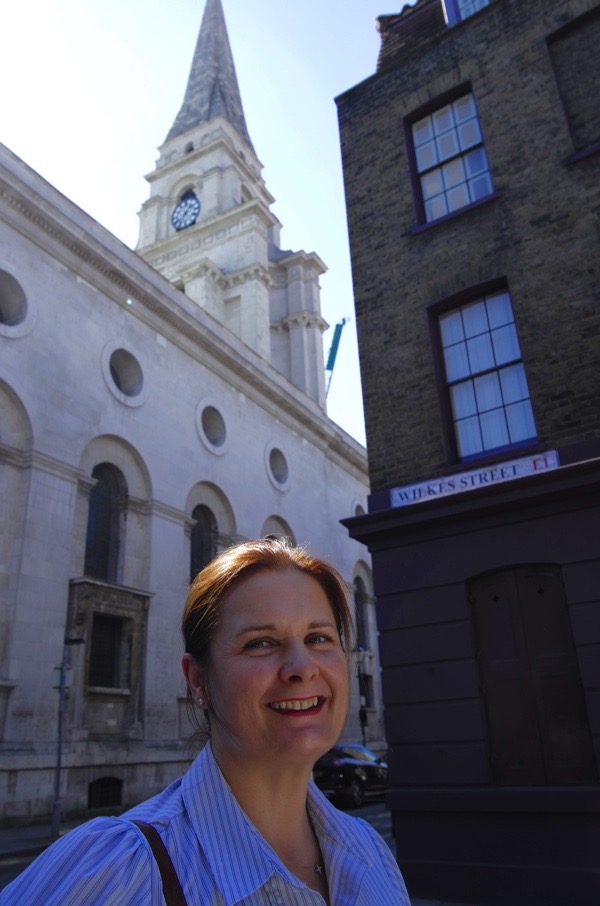
Julie Price in Spitalfields
Paintings copyright © Julie Price
You may also like to take a look at
So Long, Colin O’Brien
With deep sadness, I announce the loss of my good friend and long-term Contributing Photographer Colin O’Brien, who died unexpectedly last Friday aged seventy-six. Later this week I will publish our final assignment together, undertaken a week ago, when we enjoyed an excursion picking blackcurrants in Kent.
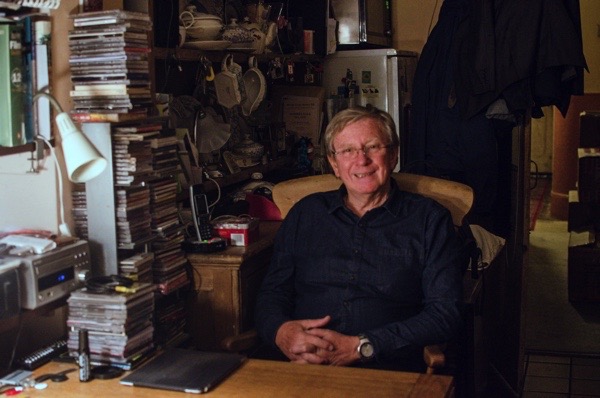
A recent portrait of Colin O’Brien in his Hackney kitchen by Bob Mazzer
One day, I was walking through Exmouth Market in Clerkenwell when a photograph caught my eye through the window of a restaurant and stopped me in my tracks. I went inside and was truly astonished by a series of large black and white photographs of car crashes upon the wall. I had never seen anything like these pictures before, but the grace and accomplishment of these breathtaking images convinced me that they had been taken by one of the great photographers of our time.
Imagine my surprise when I realised that all the photographs had been taken in Clerkenwell by a photographer I had never heard of, Colin O’Brien. Immediately, I wrote to Colin and was delighted to meet a man who was as modest as he was talented. Quickly, we fell into a working partnership, creating stories together using his photographs accompanied by my words. In subsequent years, we undertook more than fifty assignments together.
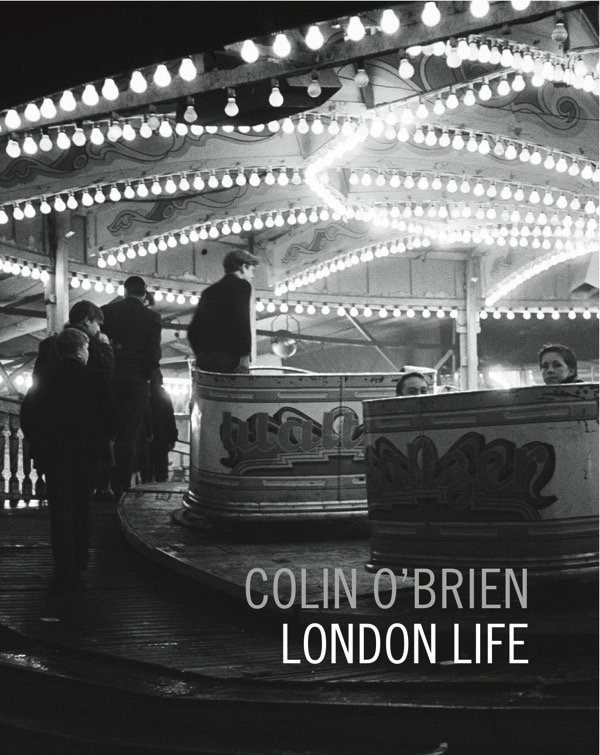
It was Colin who persuaded me to become a publisher and create ‘Spitalfields Life Books,’ when he asked me to publish his photographs of ‘Travellers’ Children in London Fields’ in 2013, beginning his collaboration with book designer Friederike Huber. Two years later, they worked together to produce his authoritative and tender monograph of the capital through seven decades entitled ‘London Life,’ which I also published.
Colin once said to me that while Don McCuillin went away to photograph war and David Bailey occupied himself with fashion and celebrities, he had stayed at home and simply photographed the life of people on the street. A purist who managed to resist any commercial imperative or editorial intervention, Colin took only the photographs he pleased, resolutely pursuing his own personal interests and focussing particulary upon the everyday lives of Londoners.
Colin’s brilliant portraits of children reveal his singular empathy with the young and also his unassuming nature, never putting himself above those he photographed, so that subjects discovered a rare freedom in front of his lens, liberated by his kindly nature to present themselves as they pleased.
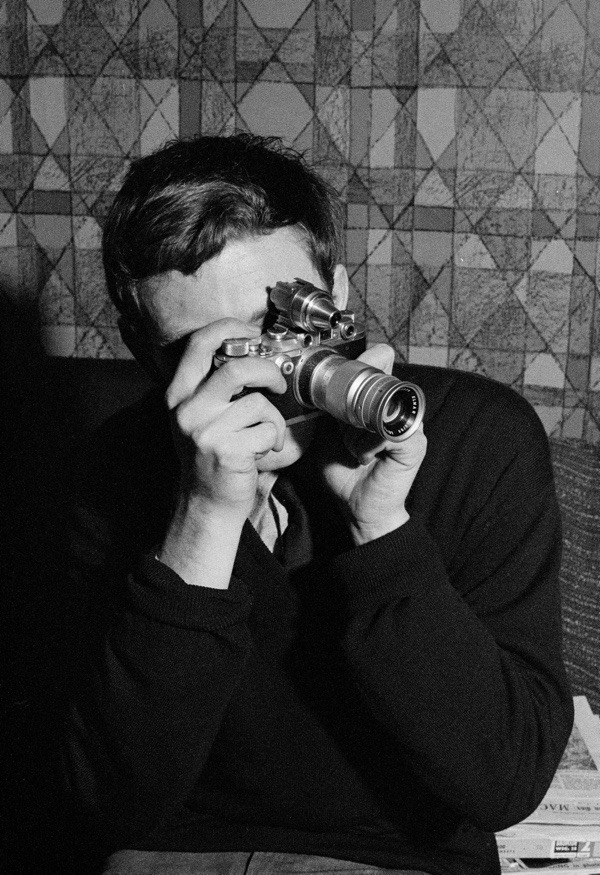
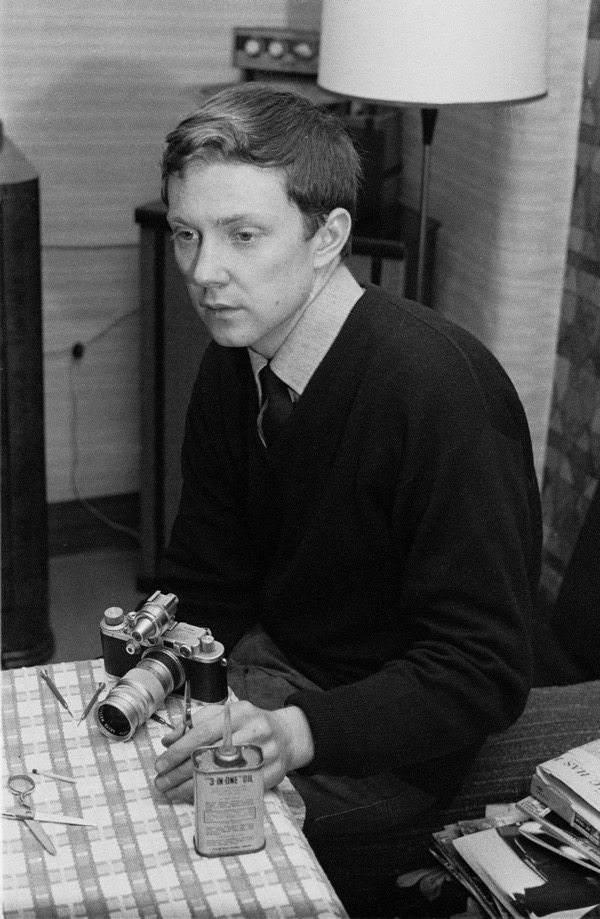
In his teens, Colin was fortunate enough to receive a 1931 Leica camera from a neighbour in Clerkenwell who worked as a chauffeur and ‘discovered’ it left behind by a wealthy client. It was with this lucky acquisition that Colin took much of his precocious early work, some of which was exhibited to great acclaim last year at the Leica Gallery, delivering a satisfying poetic resolution to the narrative arc of his long photographic career.
I was grateful to Colin for his reliable ability to put people at their ease, his extraordinary stamina and resilient good humour, but most of all I feel privileged to have collaborated with such an inspirational talent. My admiration for Colin’s genius only increased over time. The sheer volume of his work between 1948 and 2016 is monumental – I believe his achievement in photography is unique and incomparable, and I know he was one of the great masters of our time.
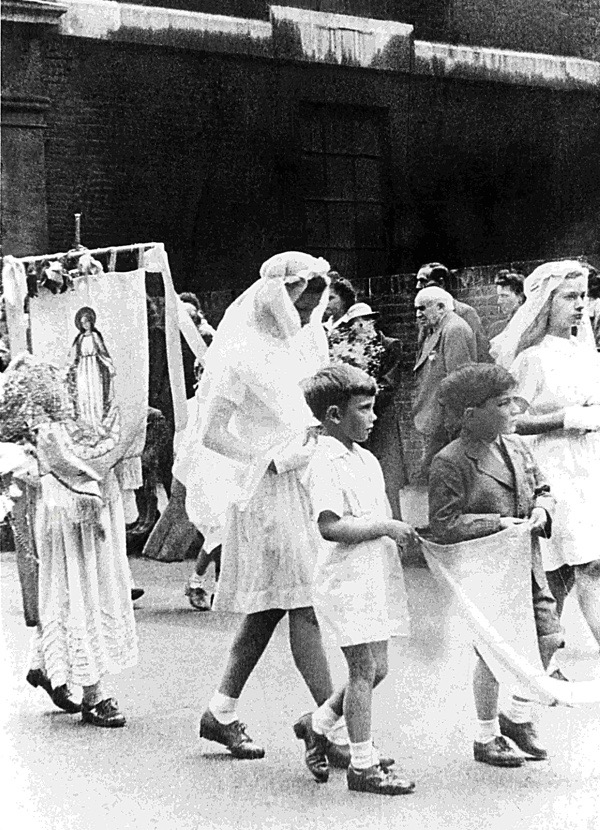
Colin marches in the Clerkenwell Italian procession in the forties
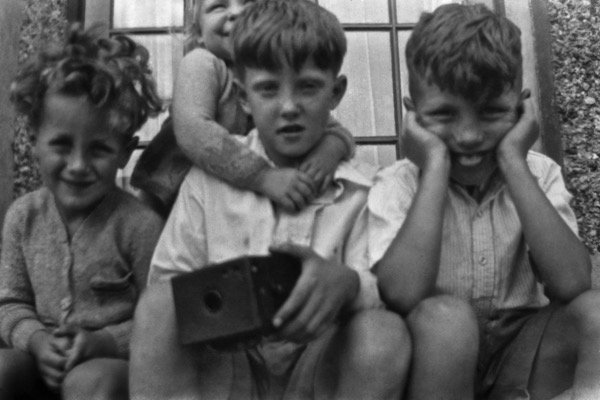
Colin with his first camera, a Box Brownie
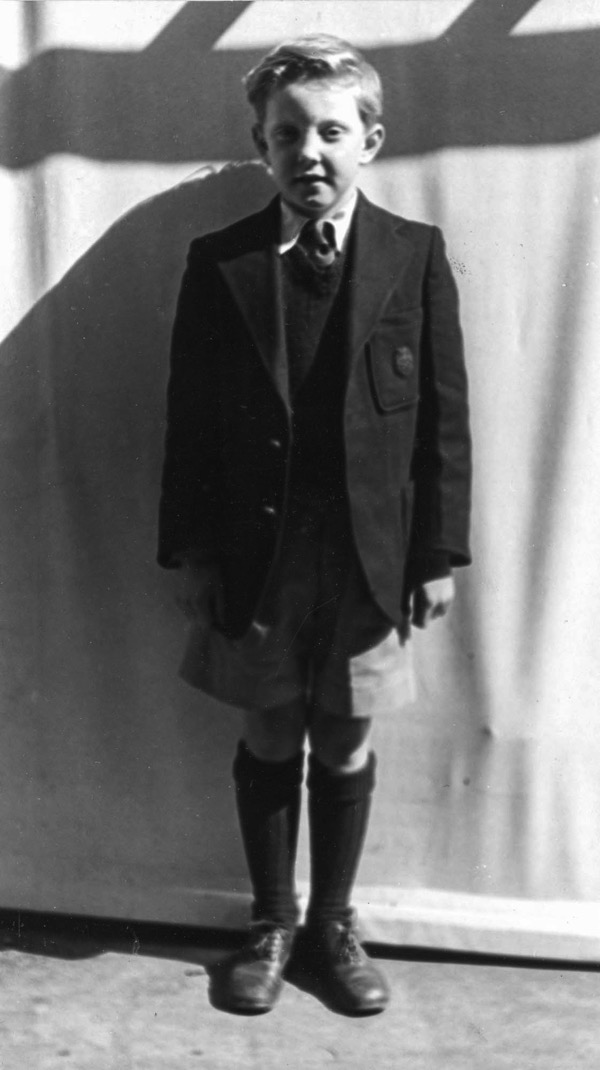
Colin photographed by Solly, a local Photographer in Exmouth Market
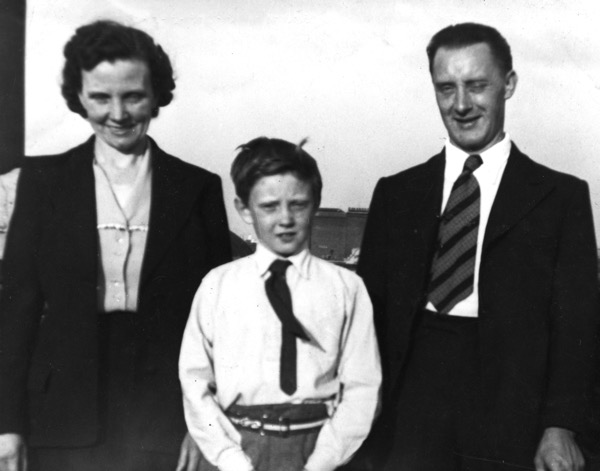
Colin’s parents with their young son the roof of Victoria Dwellings, Clerkenwell
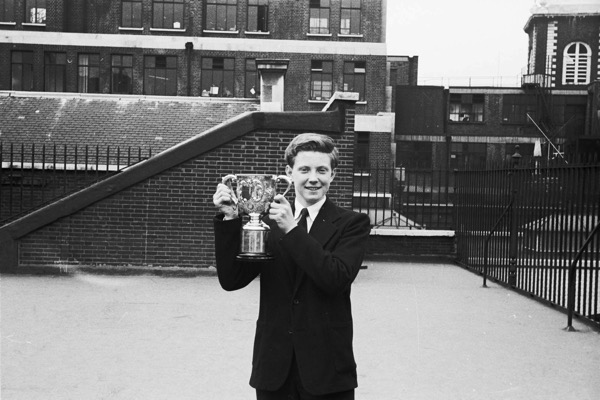
Colin as Head Boy at Sir John Cass School, Aldgate
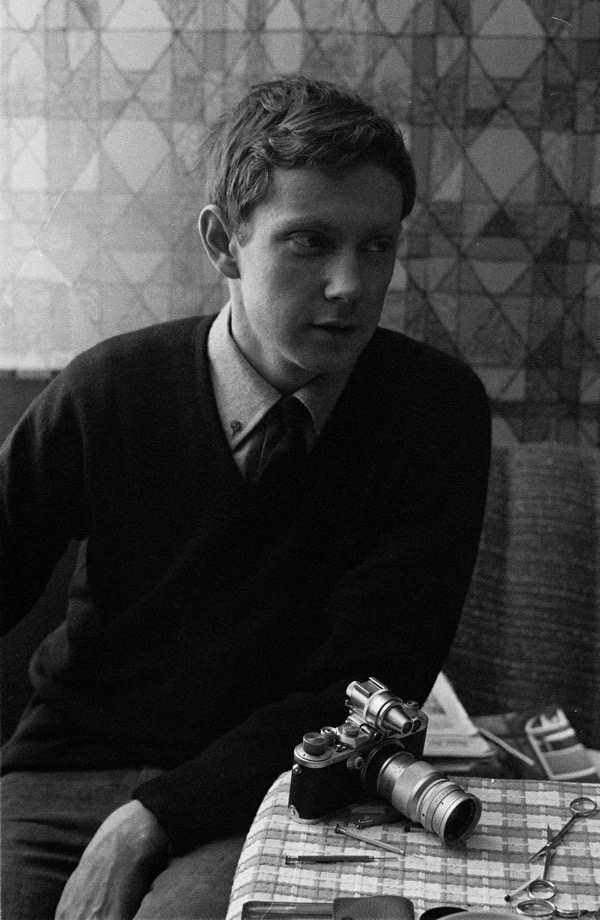
Colin with his first Leica
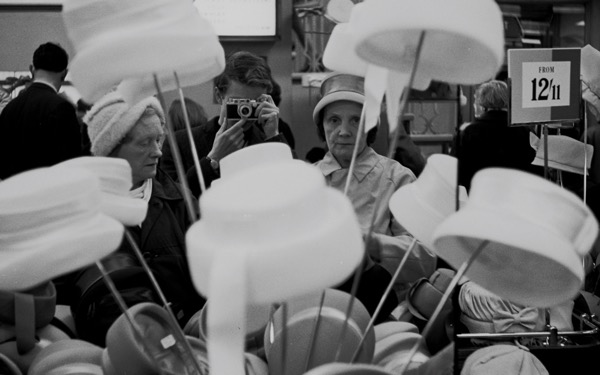
Colin photographs his mother trying on hats in Oxford St in the fifties
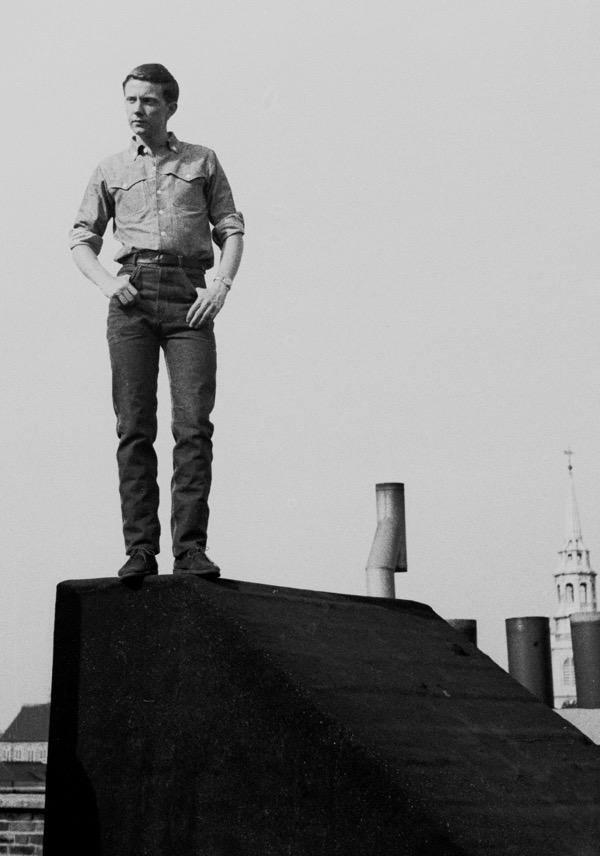
Colin on the roof of Victoria Dwellings with St James Clerkenwell in the background
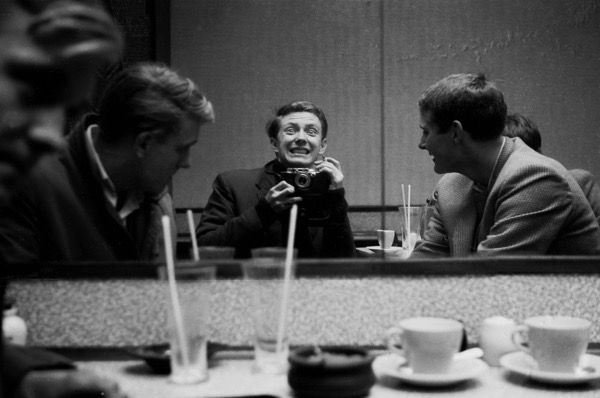
A self-portrait, skylarking with pals at the Kardomah Cafe, Oxford St
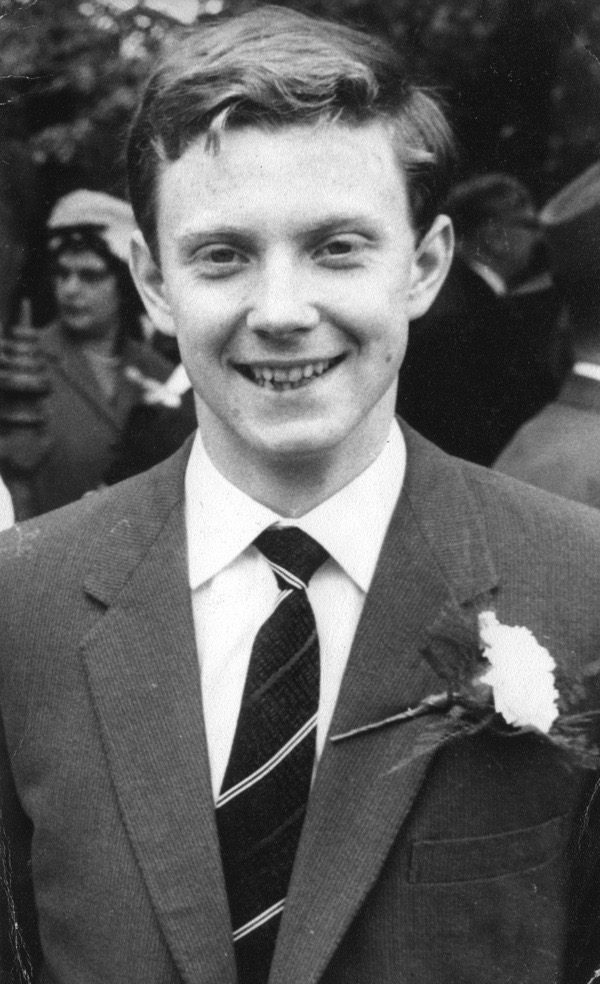
Colin looking sharp in the sixties
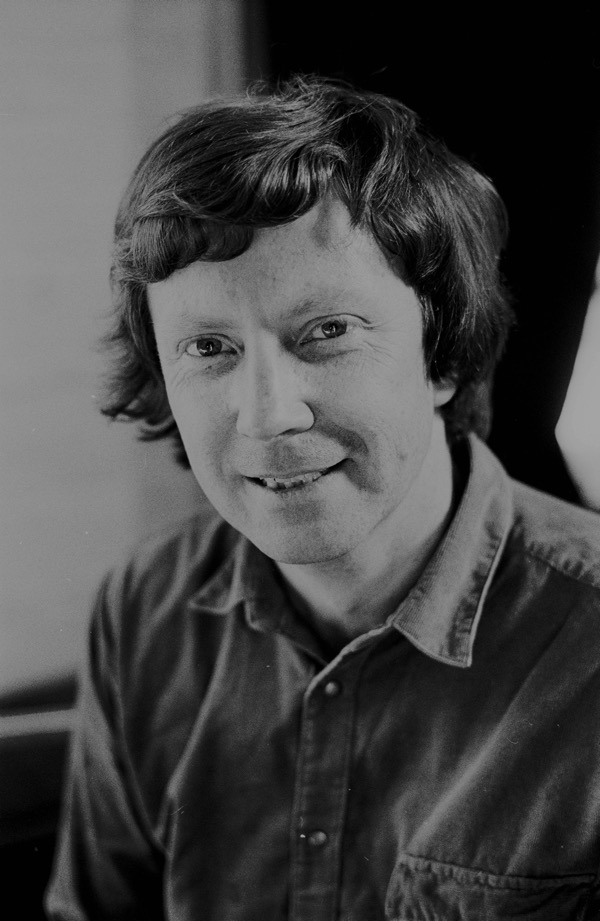
Colin looking with-it in the seventies
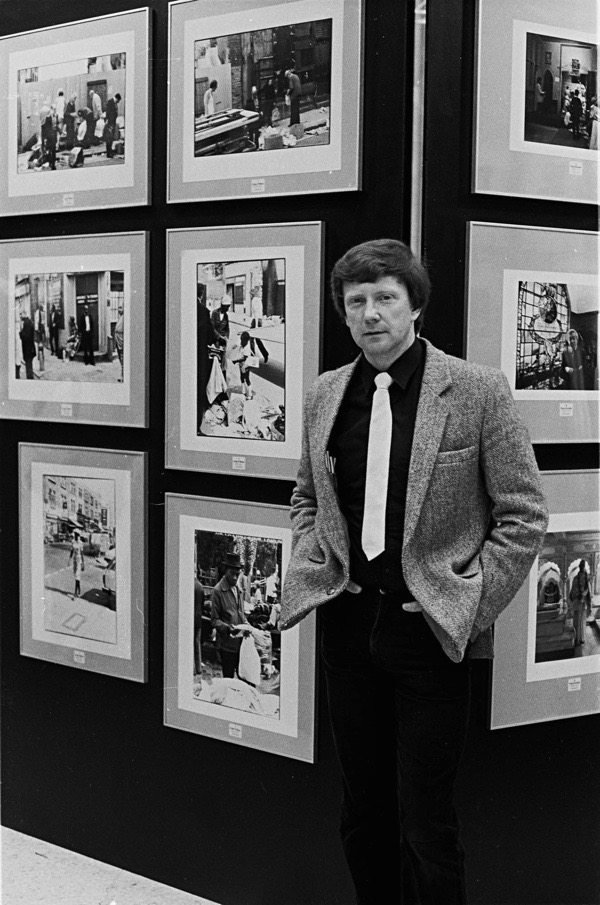
Colin at his photography show on Waterloo Station

Colin at the Aldgate Press for the printing of ‘Travellers Children in London Fields’

[youtube jlklWeiIRCM nolink]
Colin talks about photographing the ‘Travellers Children in London Fields’
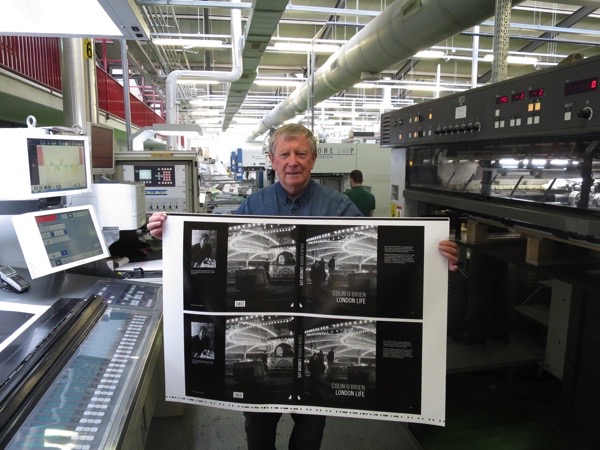
Colin at L.E.G.O for the printing of ‘London Life’
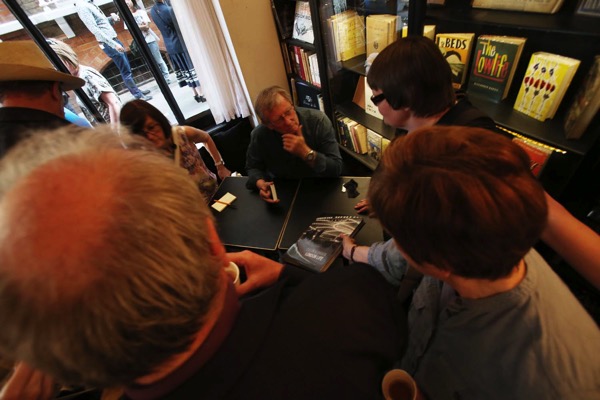
Colin at the launch of ‘London Life’ (photo by Simon Mooney)
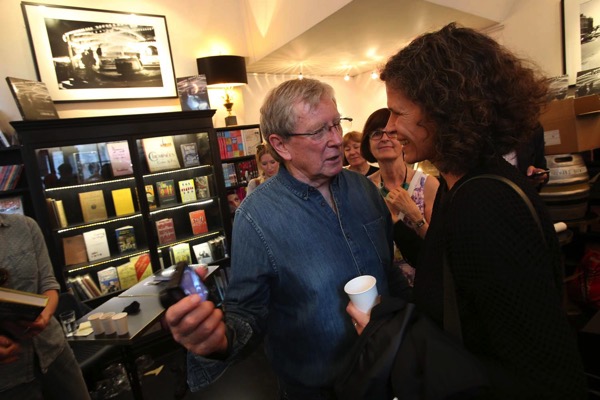
Colin with Friederike Huber who designed ‘London Life’ (photo by Simon Mooney)
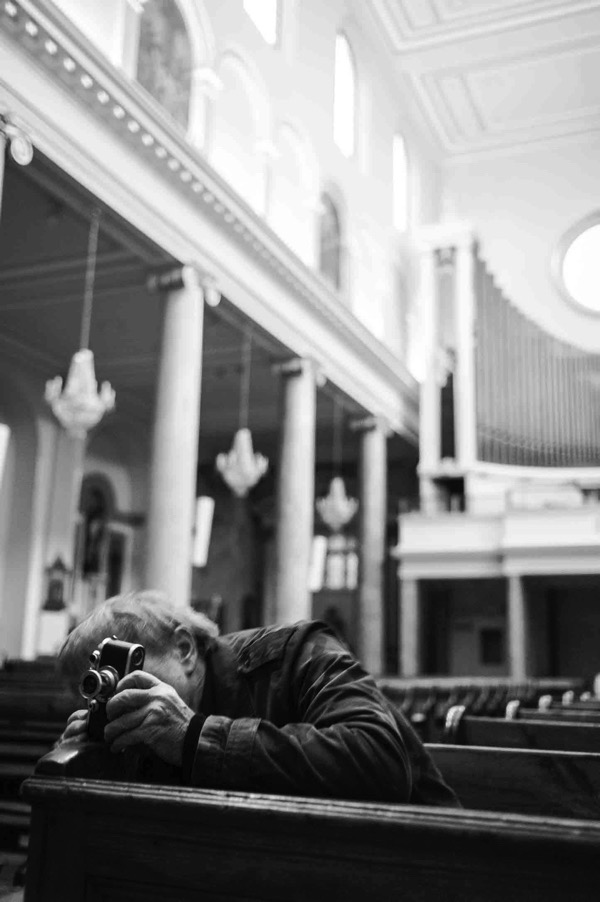
Colin taking a photo in the Italian church in Clerkwenwell with his 1931 Leica (photo by Alex Pink)
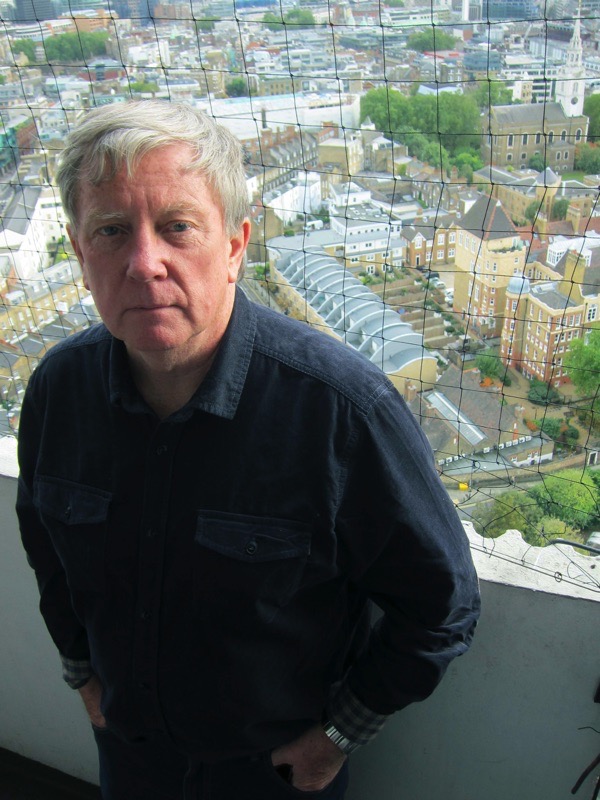
Colin O’Brien (1940-2016)
The Gentle Author’s portrait of Colin O’Brien on the balcony of the flat in Michael Cliffe House, Clerkenwell, which Colin moved into with his parents when it was newly-built in 1966
You may like to take a look at this selection of Colin O’Brien’s work
Colin O’Brien’s Travellers Children in London Fields
Colin O’Brien’s Brick Lane Market
Colin O’Brien’s Clerkenwell Car Crashes
Colin O’Brien at the Clerkenwell Italian Parade
Colin O’Brien Goes Back to School
The Fly-Pitchers of Spitalfields
Colin O’Brien’s Kids on the Street
Colin O’Brien’s Pellicci Portraits
At Smithfield Christmas Eve Meat Auction
So Long, Clerkenwell Fire Station
On the Buses With Colin O’Brien
Among the Druids on Primrose Hill
Jasmine Stone & Sam Middleton, Campaigning Stratford Mothers
At the Spitalfields Nativity Procession
Scything on Walthamstow Marshes
George Parrin, Ice Cream Seller
Colin O’Brien’s Last Days of London
Decanted From Robin Hood Gardens
Today’s story is the last of seven features by Contributing Writer Delwar Hussain and the third in a series of three related stories exploring the fate of Robin Hood Gardens housing estate in Poplar
While visiting Robin Hood Gardens, Contributing Photographer Sarah Ainslie & I found our impressions were like shifting sands. Whenever we formed a picture, someone else said something to contradict it, changing our view of the place.
Rugena Ali, whose family lived there for more than twenty years, initially corresponded with me by email. I wanted to hear her stories about growing up in Robin Hood Gardens but Rugena was reticent. Alongside other residents, she and her family had been part of the campaign to stop the demolition. I wondered if this explained her reluctance, since the campaign failed and her family had been ‘decanted.’ Yet I persisted and she sent me this –
‘Delwar, we have stories, of fires, police raids, random shootings on the fifth floor, but also of games we used to play. Memories of how our landing was used for gossip and to pass on information, and of the 10pm ladies walking club! And happy memories of weddings. And how the ladies on the estate used to come together after a death to support families. We used to live in each other’s houses and I was babysat by practically everyone at some point. The adventures in the park were endless and there were dramas including someone being attacked by a dog. Then, entire estate cricket matches (which stopped after the ball smashed our kitchen window), rounders and football! It really was incredible growing up there.
I will be visiting my family on Sunday, maybe if you are free you can come by and interview all of us siblings together? I’m also sure my mum will have a lot to say!’
And she did. They all did.
Rugena lives in Essex now and works for Girlguiding. In the sitting room of her parents’ new home in Mile End, Rugena introduced her mother Amirun and brothers – Amirul who is a science teacher, Sahedul who is an aid worker and Hasan, a student.
Robin Hood Gardens was a refuge for the family. In 1992, following a racist attack against one of Rugena’s siblings, the Council wanted to re-house the family and offered them a flat on the estate. One of Rugena’s older sisters and two family friends, Joyce and Margaret, went to look at the place. They were not impressed and wanted to wait and see what else came up but, fearful of what might happen if they stayed where they were, Rugena’s mother was keen to move out immediately. So she and her husband went to have a look at the flat at Robin Hood Gardens and rang the bell of the neighbour.
‘Shamima’s father was in and showed us around their flat,’ Rugena’s mother remembered, ‘and we decided to take it because we realised what good neighbours we’d have.’
Amirul interrupted, ‘I remember our very first meal was at Shamima’s house. When we moved in, people turned up to help us, they even helped clean our windows.’
Rugena’s mother continued, ‘Yes, we did have good neighbours. They would pick the children up from school and drop them off. There were all sorts of people living there, Bengali families, a fireman and his family, the Pakistanis, the woman with the dogs…’
‘…the druggie family…’ someone added.
‘In the mid-to-late nineties, heroin came to the estate,’ Amirul explained, ‘One night there was a loud banging at the door. My mum looked through the window and four policemen had pinned someone against our door. There was always Kitkat foil lying around everywhere and then ITV news did a story about a druggie family from the estate…’
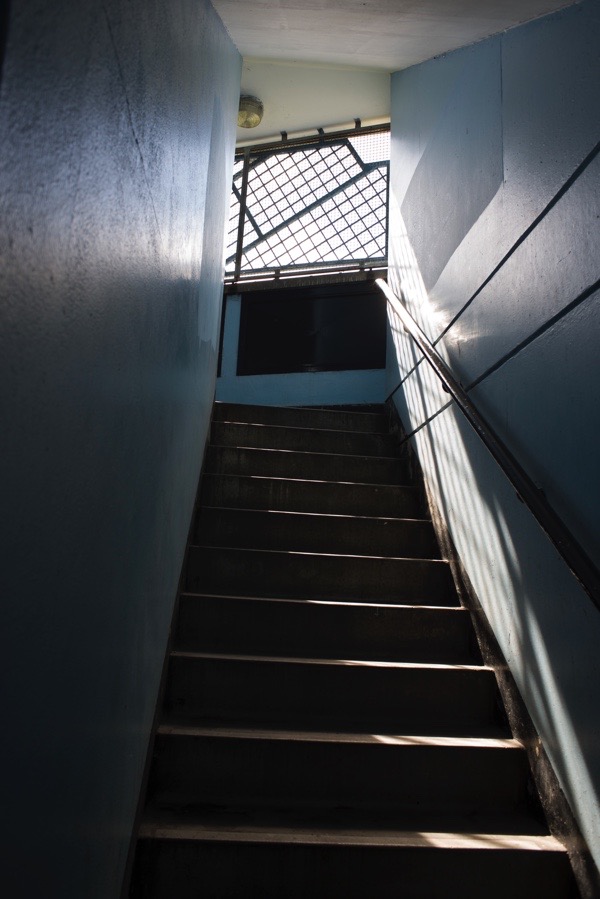
‘Is the staircase still blue?’ Sahedul asked me, like an expatriate enquiring about the old country.
‘Yes,’ I confirm.
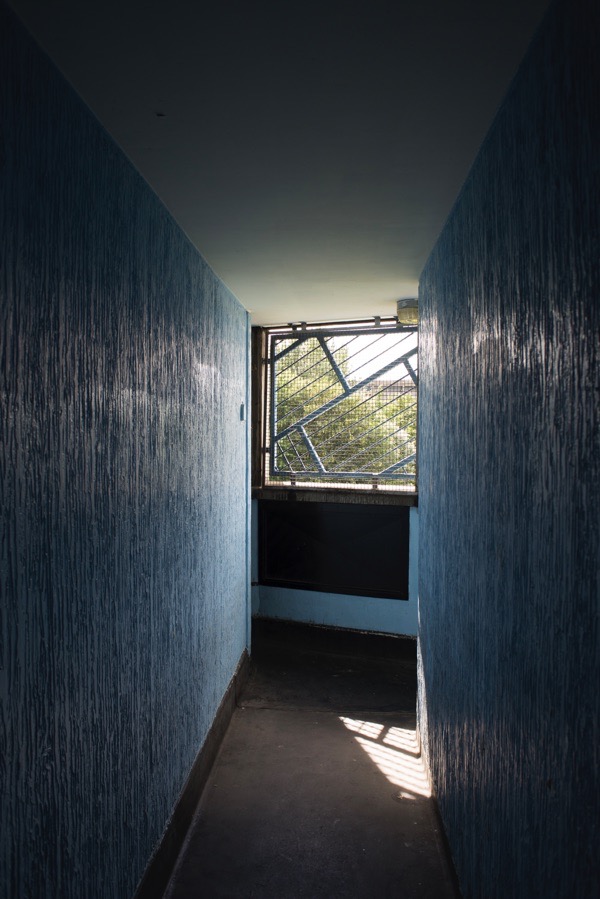
‘They painted it blue so people couldn’t use syringes there,’ Sahedul continued, ‘Once, a man in a suit, who obviously worked at Canary Wharf, knocked on our door asking if we had any kitchen foil he could use to smoke heroin…’
‘…we were always worried about our children,’ Rugena’s mother added.
‘As far as the Council was concerned, their behaviour was always reactive with Robin Hood Gardens,’ Sahedul informed me, ‘If anything happened, the Council would do something about it, but they were never pro-active – ‘The estate is on the news for drugs, let’s do something about it ’ – an automatic response, never about people.’
Our conversation about Robin Hood Gardens ebbed and flowed, collapsing the past and the present, the good and the hard times, and both happy and distressing events. Memories of a dead man found in a car intermingled with tales of another stabbed for £20, followed by accounts of weddings between neighbours on the landings, rumours of secret rooms in the building, a description of someone breaking limbs while jumping off balconies and neighbours running out of the building with their gold and passports to escape a fire.
When Rugena’s mother left us to tend to Sunday lunch, I asked Rugena, Amirul and Sahedul about the campaign they were involved with to stop the demolition of Robin Hood Gardens and Amirul took up that story.
‘At the beginning, we received letters informing us that architects had been employed to redesign the estate. Then we received more post saying that Swan Housing had won the bid and we thought they were going to thoroughly clean and fix Robin Hood Gardens, you know, regenerate it. We were told that we were going to get a new bathroom and a new kitchen, and we thought it was going to be fantastic.’
‘You can appreciate how top-down it was,’ Sahedul recalled, ‘People who lived there were never involved in the process. They didn’t speak to us, they just sent us letters and later they would call this ‘consultation’. Many on the estate were illiterate and unable to read what was sent. I believe it was done that way on purpose, they didn’t want any resistance to their plans and so they did the bare minimum.’
‘I remember attending cabinet meetings at Tower Hamlets Council,’ Rugena explained to me, ‘also a meeting at a fancy hotel somewhere. They told us we would get to choose our own interior on the new estate. Some people were concerned about open-plan layouts and didn’t want that. Children at the local school were asked to draw pictures of their perfect bathroom, something the architects might use in their designs. No-one expected that everyone was simply going to be moved out and the buildings demolished.’
I talked about the woman Sarah & I met the first time we visited Robin Hood Gardens. She told us she had been promised that she could move back into the new, regenerated estate once it was complete. I said I thought it sounded a bit far-fetched and maybe the woman had misunderstood.
‘No, it’s true,’ Rugena and her siblings replied in unison.
‘That woman isn’t wrong. They call it ‘double-decant’. They made so many promises like that,’ Amirul assured me, ‘and, as far as I know, many of them haven’t been kept and won’t be honoured. They promised that they would pay transportation costs and any damages incurred to belongings, they also promised a lump sum of ten or five thousand pounds to people if they were willing to move out. We know some people who took it and others who didn’t. Some who didn’t move out, including our neighbour Shamima’s family, were offered like-for-like housing and some compensation. But the value of their property was reduced and so was what they were offered.’
Rugena took up the story. ‘Once we learnt what was being planned, we drew up a petition for the building to be listed and took it around the estate. Then we took a second one around asking that tenants should have more say in the process. We attended so many meetings to try and stop them. Our family were the only ones involved who didn’t own their flat, but we did it because we believed in saving what we had.’
‘If you were against the proposals, why did you move out?’ I asked.
‘The main issue was our father,’ Rugena admitted, ‘He has dementia and uses a wheelchair. When the lift broke in the building, he would be stuck in the flat and it might be days until he could get out. We attended campaign meetings knowing that we were on the relocation list, but we did it for him.’
The current house in Mile End was the first they were offered. Amirul, his mother and his father’s occupational therapist came to view it. Amirul liked it from the start. Though it is much bigger than the flat in Robin Hood Gardens, their mother thought it too small. She thought this because the family’s life in Robin Hood Gardens was not just inside the flat, there was also the landings, the garden and other people’s homes. All those people and their intermingled lives, it was a world in itself and collectively much bigger than the new house.
‘It was not easy to leave,’ Amirul confided, ‘But once word got out that we had accepted this house, virtually everyone came to help. People were crying. Some drove our things over to Mile End and others were desperate to move in next to us. Yet some people did stop talking to us, feeling cheated that we had left, as if we had left them behind.’
Although he missed Robin Hood Gardens, Amirul confessed it feels surreal when he goes back. He said, ‘It feels like a porthole to me now, there are so many gaps which used to be full of so much life.’
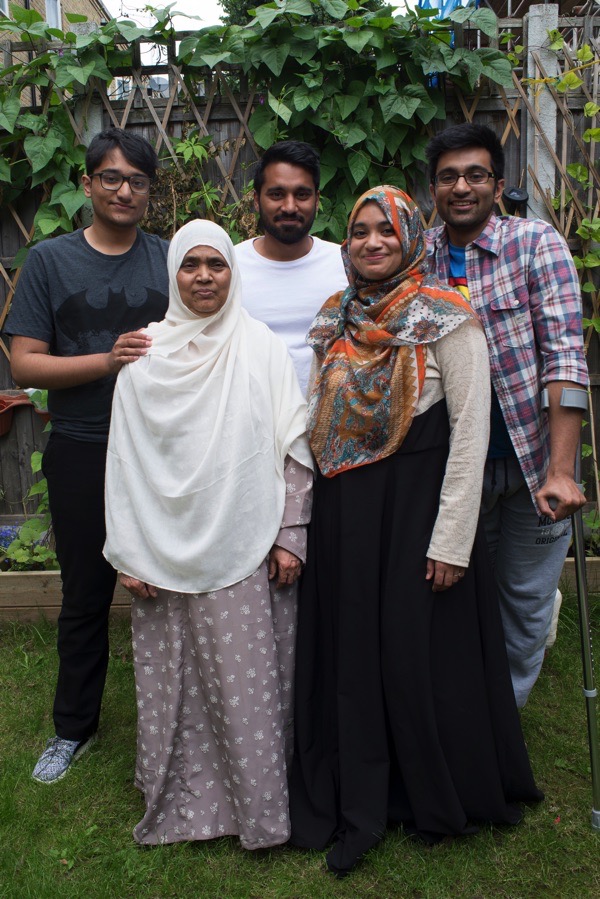
Finally, we went out into the garden to take a family photo. In one corner was a plum tree that Rugena’s mother grew from seed on the landing at Robin Hood Gardens and then transplanted into the earth at her new home. It was the perfect place to take the picture.
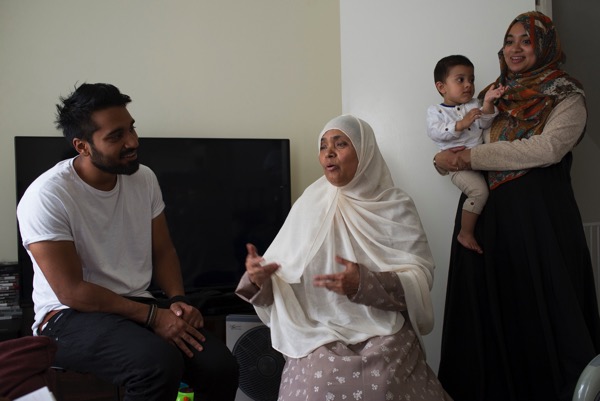
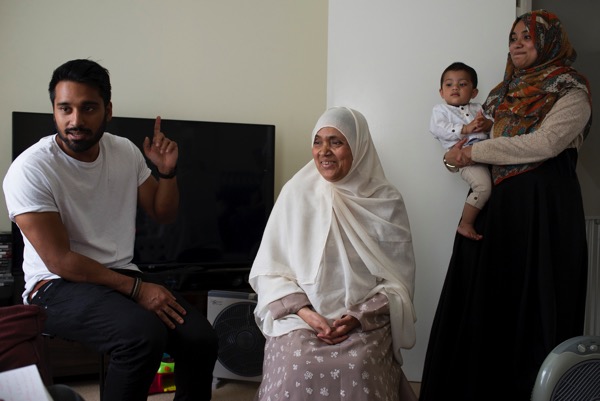
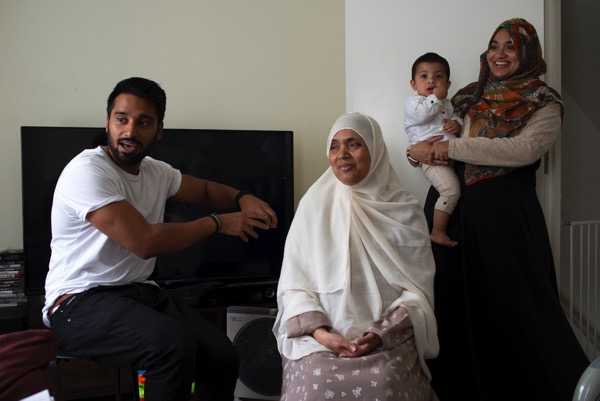
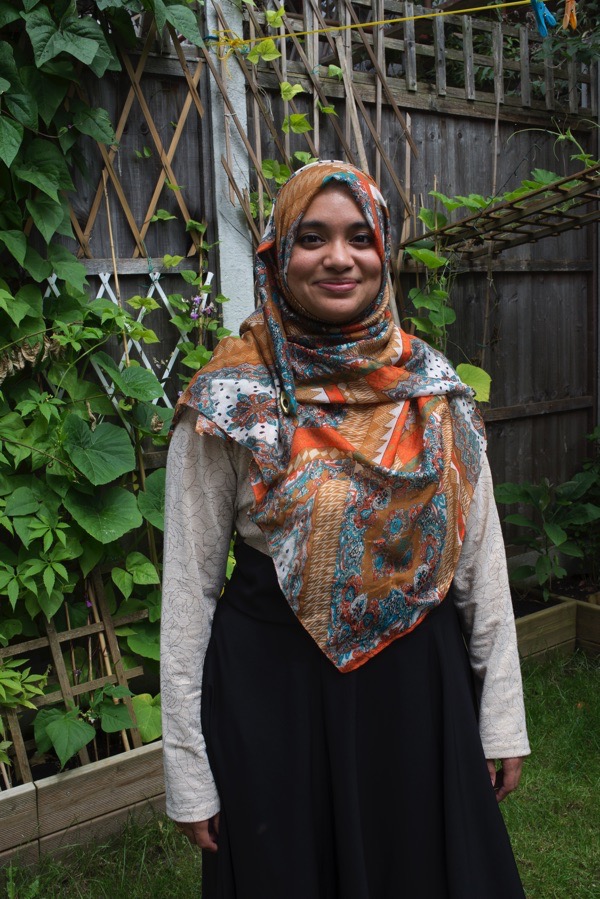
Rugena Ali
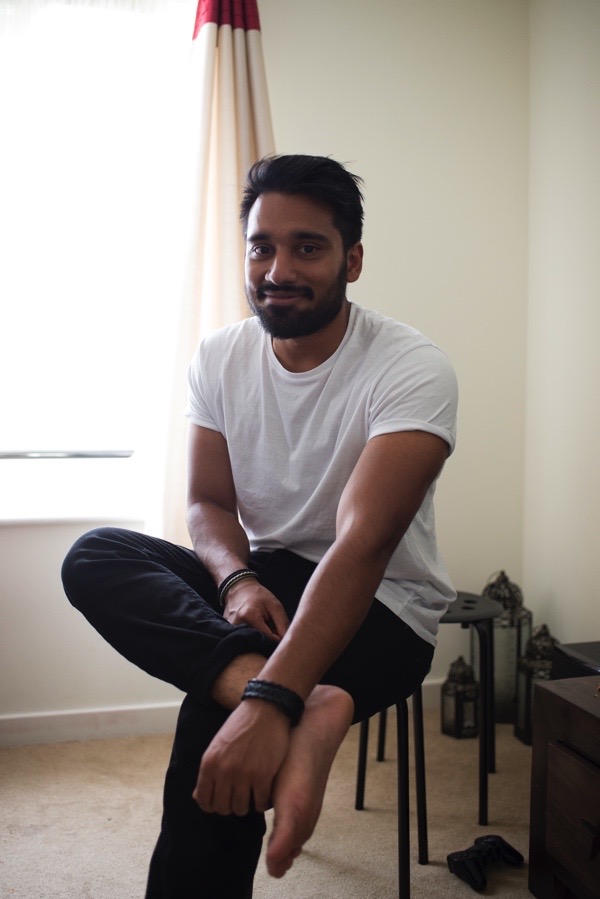
Sahedul Islam
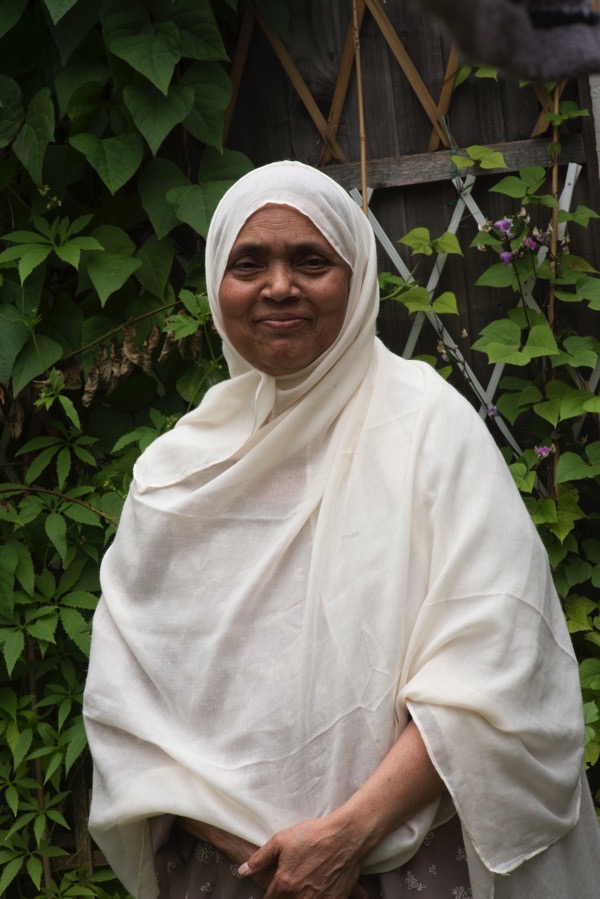
Amirun Nessa

Amirul Islam
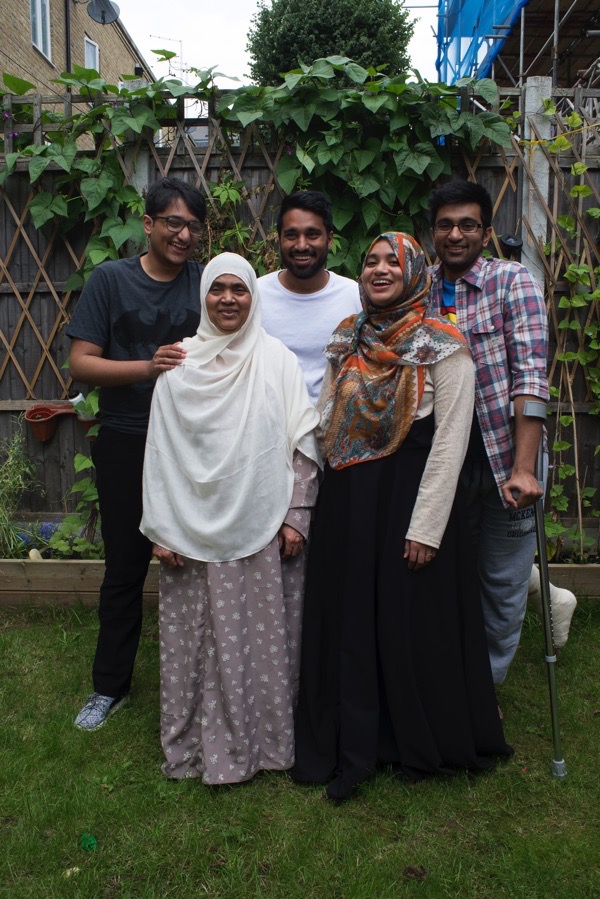
In the garden at Mile End
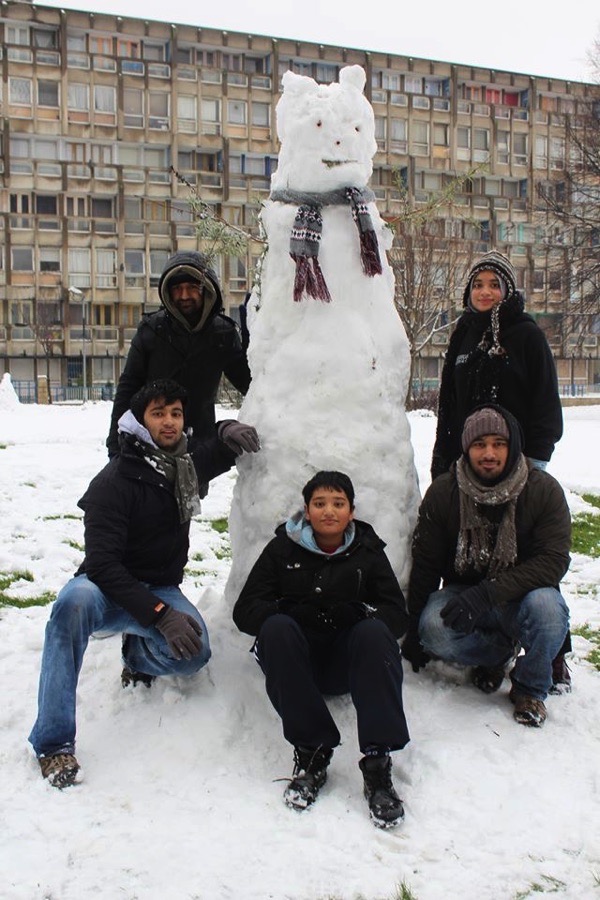
Happy Days At Robin Hood Gardens
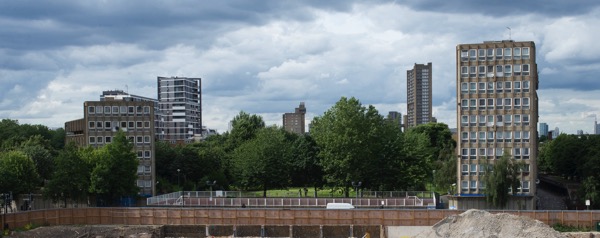
Photographs copyright © Sarah Ainslie
If you live or once lived in Robin Hood Gardens and would like to tell your story, please contact Spitalfieldslife@gmail.com
You may like to read the earlier parts of this story
Return To Robin Hood Gardens
Today’s story is the sixth of seven features by Contributing Writer Delwar Hussain and the second in a series of three related stories exploring the fate of Robin Hood Gardens housing estate in Poplar
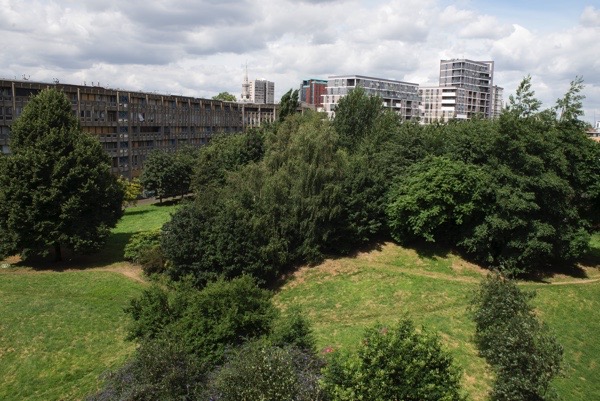
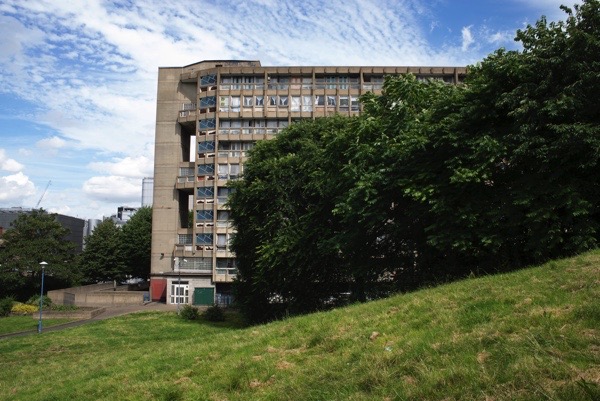
When Contributing Photographer Sarah Ainslie & I returned to Robin Hood Gardens, it was a beautiful day. The blue sky made the estate look different, not as dystopian or disorientating as it had seemed when we first visited. In fact, with the light embracing the grey concrete, Robin Hood Gardens appeared an optimistic place, hopeful even.
We walked around the garden and explored the mound between the two buildings. The trees were aged and the bushes overgrown, Robin Hood’s ‘Sherwood Forest,’ if you will. It was peaceful there, in spite of the seamless gush of the traffic reminding us of where we were and the occasional thunderous roar of planes at the nearby London City Airport.
Sarah & I wanted to talk to people in Building Two, which is still occupied, to discover what it is like to live there. Currently, the majority are classified as temporary tenants and have been installed after the permanent residents, many of whom lived there for over twenty years, had been ‘decanted.’ Temporary tenants do not have the legal rights that permanent residents possess and it is unlikely that they will be among the lucky five hundred and sixty to get a home in the new Blackwall Reach Regeneration Project. Also resident in Building Two are some long-term residents who own their flats and refuse to leave.
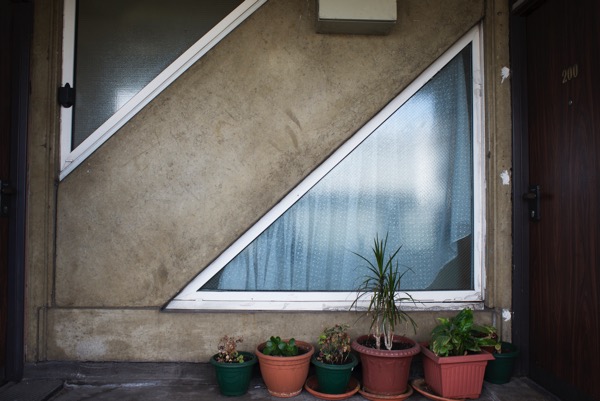
On the landing outside flat number 131, a lady chewed betel nut, her mouth red with its juices. Beside the door, pumpkin vines grew in a tub, along with beans, spinach and some leafy Bengali vegetables. Placed next to them was an exercise bike.
‘You won’t make me get rid of the plants will you?’ she asked, concerned after I asked her what she was growing.
‘No, we’re not here for that,’ I assured her, ‘We are writing about the demolition of the building. What do you think about it?’
‘I’ve lived here for three years,’ she said, ‘and I don’t know where we will be re-housed when the building is knocked down. We’re just temporary and they don’t tell us anything. We’ll be moved on, but we’re hoping it won’t be too far.’
‘How is it living here?’ I enquired.
‘I like it. I know everyone on this floor, we recognise each other and have a chat. I’m waiting for my neighbour now so that we can go and buy fish.’
The neighbour arrived and, as they walked away, the first lady asked if we could do something about the plumbing in her flat. ‘It’s broken again and no one has come to fix it, or they have come, but haven’t been able to fix it. The entire flat was flooded recently, the water ended up on the landing. Mine wasn’t the only affected house. It happened to my neighbour too.’
‘Have you contacted your Housing Officer?’ I queried.
‘My who?’
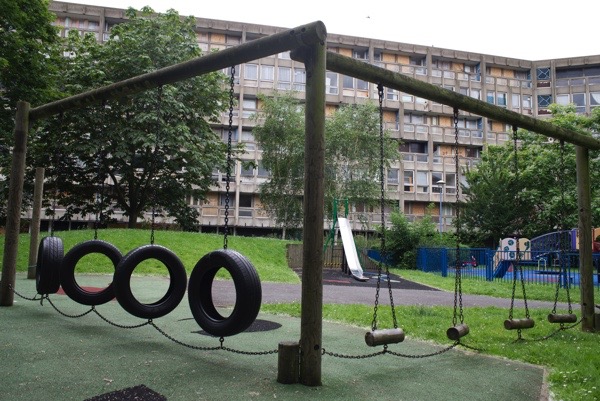
No sooner had they left than three kids appeared on a ‘Hello Kitty’ bike. It was the start of the school holidays. I recalled the notice in the playground warning children to be wary of strangers.
‘What are you doing?’ the boy asked with bravado.
‘Interviewing people,’ I replied. ‘I’m going to interview you now – Why do you play here on the landing and not in the playground? It looks like a good place to play.’
‘We’re not allowed because dangerous people do dangerous things there. My sister saw someone light a firework once and throw it.’
Sarah asked whether the children liked living there and the elder of the two sisters interjected –‘This building used to be a white building but it’s now black, no one cleans it, and people throw rubbish out of the balcony, even glass bottles.’
Just as she said this, and as if to illustrate her point, we saw a bin bag hurled from the floor above and spew its entrails on the ground below. I had never seen flying bin bag before and I could not help but laugh at the coincidence, but the kids did not think it was funny. I noticed then that we have been standing next to one of the communal bins and there was a shopping trolley, a washing machine and a television dumped there. The kids bade us goodbye to continue happily going up and down the landing on their bike.
We were lucky to find Harun Miah at home. He is forty years old and works as a waiter in an Indian restaurant in Gravesend. It was Harun’s only day off in the week and he was sleeping when we rang the doorbell but he let us in, informing us that his wife and children were away, before excusing himself and returning to bed, letting Sarah and I wander around his flat.
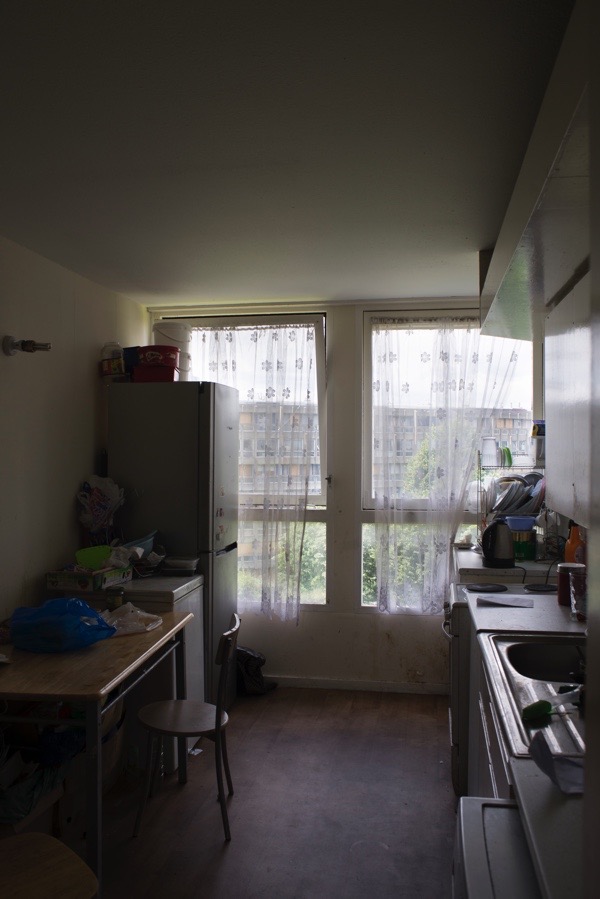
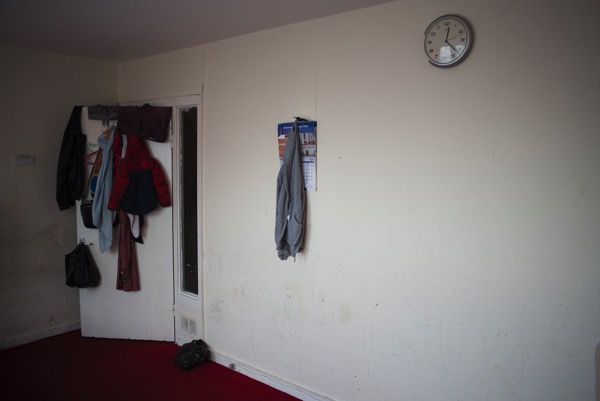
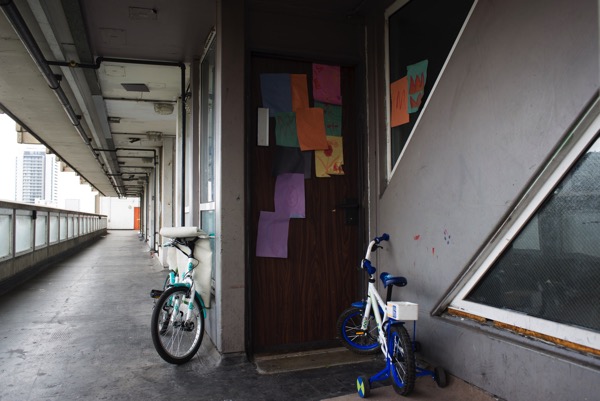
Bright light drenched the landing at the entrance to the flat where there was a jam of prams, children’s bikes and unopened letters. Next to it was the kitchen where repetitive patterns on net curtains intermingled with the view outside. The sitting room, two bedrooms, bathroom and toilet were all downstairs on the floor below. It was obvious that the flat had not been cared for long-term, as indicated by a pervasive smell of damp, with mould growing upon walls of peeling wallpapers and a general build-up of grime.
Later, Harun told me that he and his family had been living in the flat for just under a year but the physical condition of the place was the result of many years of neglect. It appeared that the Council had given up maintaining the building a long time before Harun moved in and at some indeterminate time, like flotsam and jetsam, his family will be moved on again.
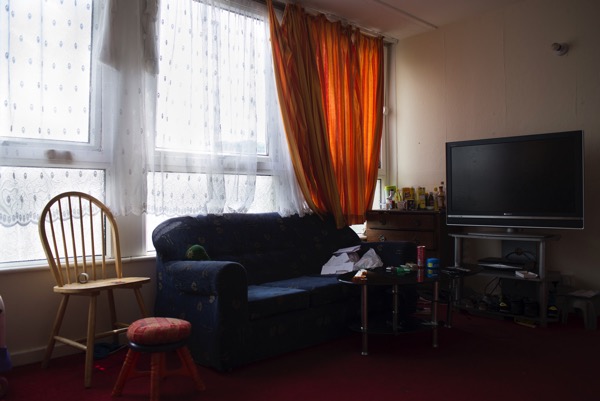
I followed the red carpet downstairs to the sitting room. Despite the net curtains, here too, sunlight streamed into the room. Outside, a Docklands Light Railway train rumbled past. On top of a baby’s cot sat a rucksack with the school motto ‘Let’s Work Together’ emblazoned upon it. I pored through a pile of children’s books, hoping to find a copy of Robin Hood.
Before we left, I woke Harun so he could unlock his front door for us. He works in the restaurant until 4am each morning and, in between long yawns, he explained that his wife had taken their three children away for the holidays, visiting grandparents in Bangladesh they had not met before. Despite the poor condition of housing, Harun told me he likes living in Robin Hood Gardens.
‘I like the views from the windows, I like the light. It is close to the shops and the DLR station. The flat is good, it just needs fixing up,’ he said.
Back on the landing, we bumped into Matilda, an outreach worker for Linkage Poplar, visiting some of the older people residents, who told us about John Murray & his wife. Both in their seventies, they had recently been in hospital –
‘A few weeks ago he had a fall and his wife managed to get downstairs to call for help, but, as she opened the door, she herself fell onto the landing. Eventually, an ambulance came and took them both to A&E, from where they were transferred to Mile End Hospital. The doctors said she broke her hip. It was very sweet, seeing them in beds next to each another. John & his wife love living here and won’t move out. Then there’s Joyce too, she’s in a wheelchair, the same age as John. She’s been in her flat since the building was built and she doesn’t want to move out either.’
Sarah & I knocked on John Murray’s door and he came downstairs on our third knock. Handsome and youthful in appearance yet frail and slight, John’s movements were slow and deliberate. His clothes were too big for him and dishevelled. He was not expecting visitors other than a Carer that afternoon.
John was born in Dublin and came to London in the fifties, briefly working for the Royal Air Force, while his wife was in the Women’s Auxiliary Air Force at Northolt. John told me that he cannot remember how long he has been living in Robin Hood Gardens but that ‘her upstairs’ – meaning his wife – would know.
I asked whether he minded moving to a new place. ‘I don’t know. Maybe it will be fine?” he said, ‘as long as it’s on the ground floor. She can’t do stairs any more, you see. She will know how long we’ve been here. Are you sure you don’t want to come up and meet her?’
‘No,’ we say, ‘we’ll come back when she’s feeling better.’
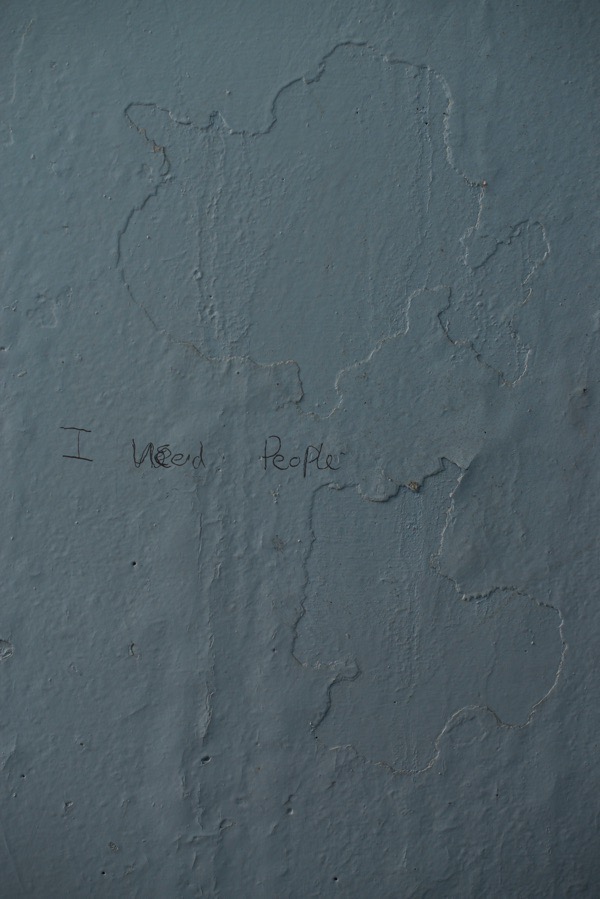
Sarah & I said ‘Goodbye’ to John, and took the staircase down. I recalled what the man who let us in to the building the first time we visited had said about people taking heroin on the staircases. They are endless, claustrophobic spaces, where only one person can go up or down at a time. Painted blue, there is graffiti with ‘Sheima loves her mum,’ on one wall and, ‘I need people,’ on another.
(This feature concludes tomorrow)

Photographs copyright © Sarah Ainslie
You might like to read the first part of this story