The Battle Of Tolmers Square
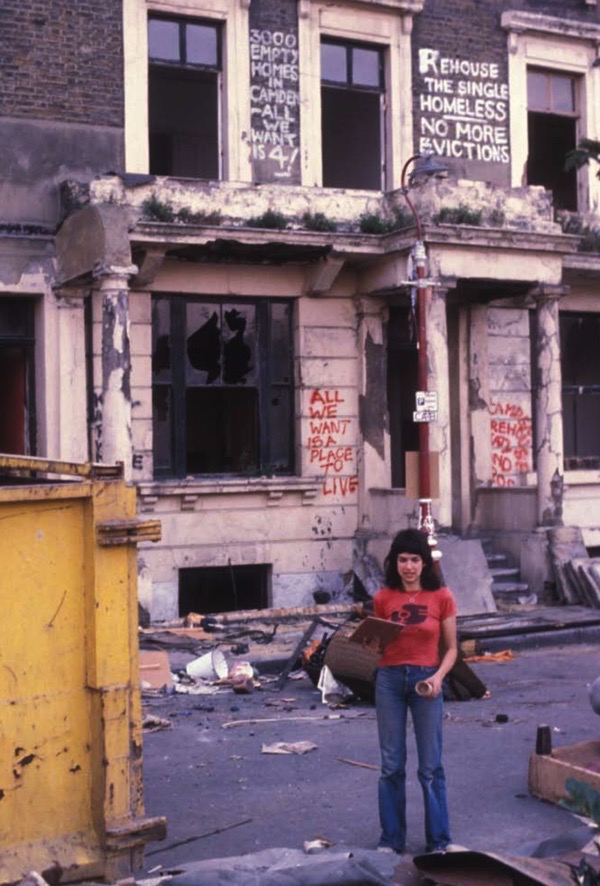
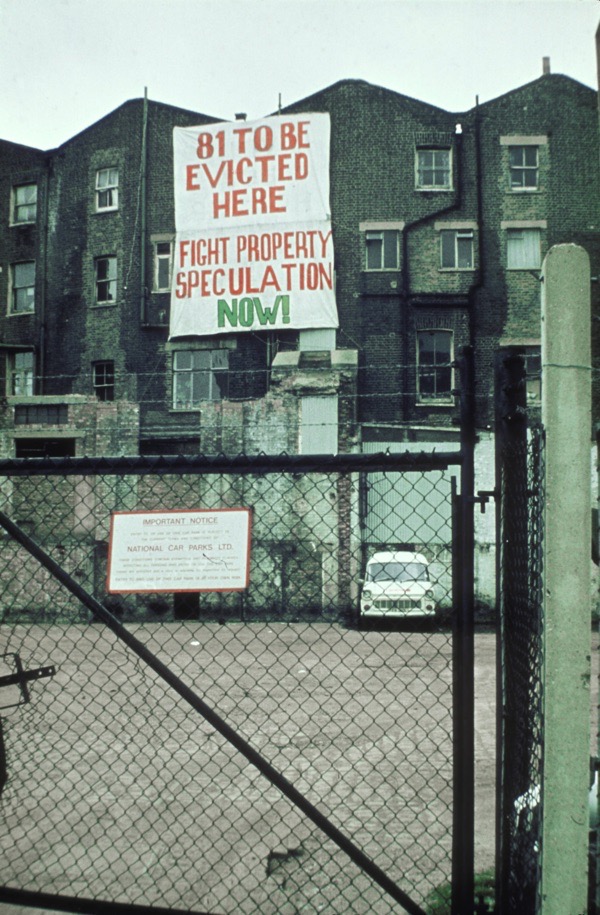
On Monday 5th February at 7:30pm, veteran housing activist Nick Wates will be giving a talk at Leila’s Cafe introduced by Will Palin and hosted by the EAST END PRESERVATION SOCIETY, about his seminal experiences in Camden in the seventies, occupying Tolmers Sq after the council attempted to evict local residents and sell the land off to property developers. Nick will reflect upon the lessons of Tolmers Sq and their relevance for campaigns today.
Click here to book your free ticket
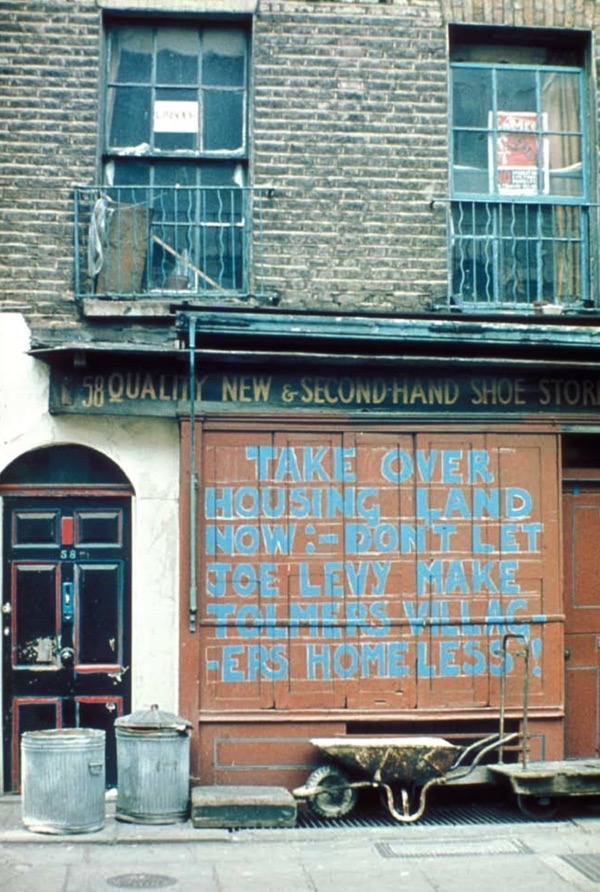
“The Tolmers Sq campaign dominated my life for six years. I was obsessed by it, I lived and breathed it. I spent hours in smoke-filled meetings. I paced the streets and talked to people. I wrote thousands of words and did frequent all-nighters preparing artwork for printers. Then I repeated the process in Limehouse before escaping Inner London to bring up my two children on the South Coast and experiment with community planning.
Yet neighbourhoods all over the country are still facing the destructive power of property speculators and mismanagement by local and central government. The housing crisis is worse than it was then. And community activists are still burning themselves out trying to make the world a better place and create sustainable urban neighbourhoods.
I am looking forward to sharing my memories of our campaign to save Tolmers Sq and revealing some of the tools of our trade as activists at the time, as evidence that it was not all merely a dream.” – Nick Wates
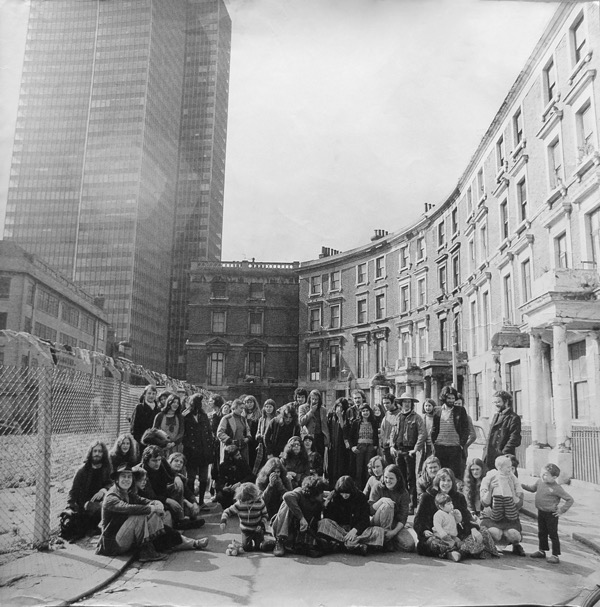
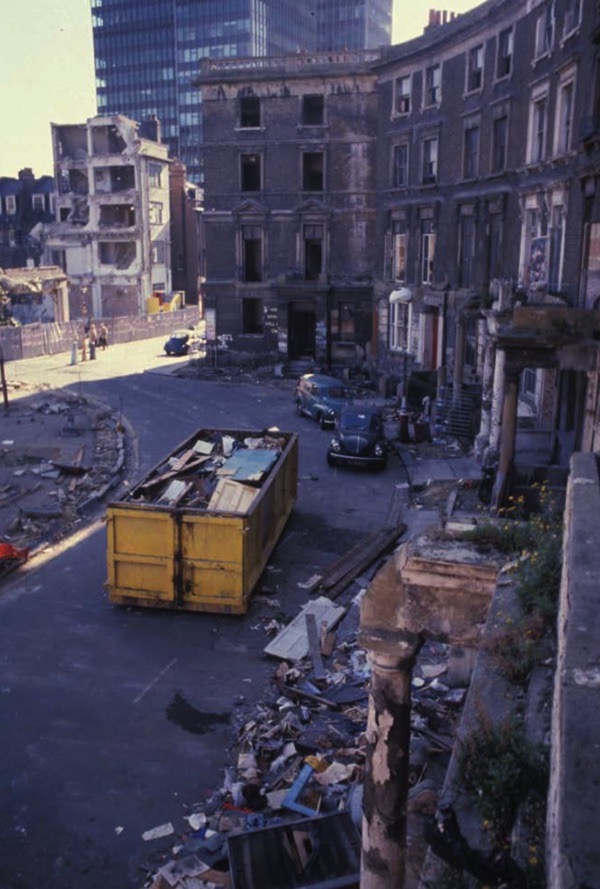
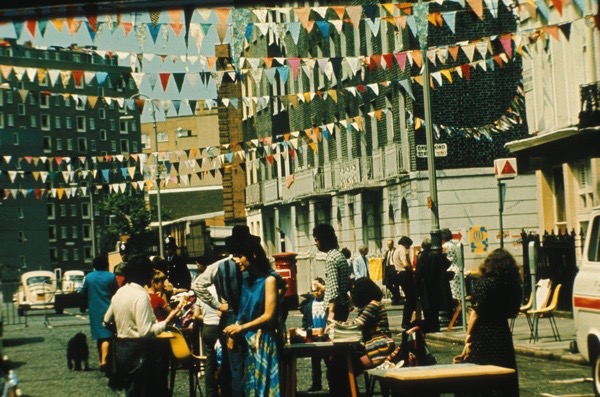

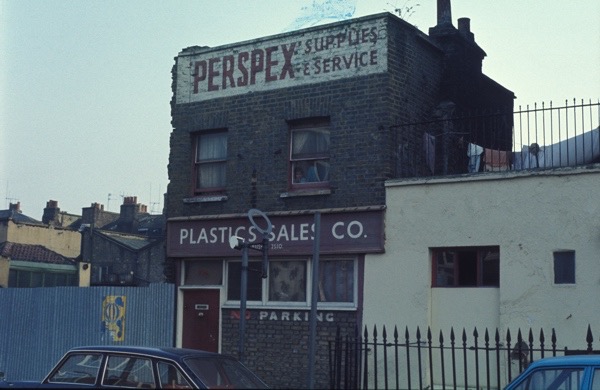
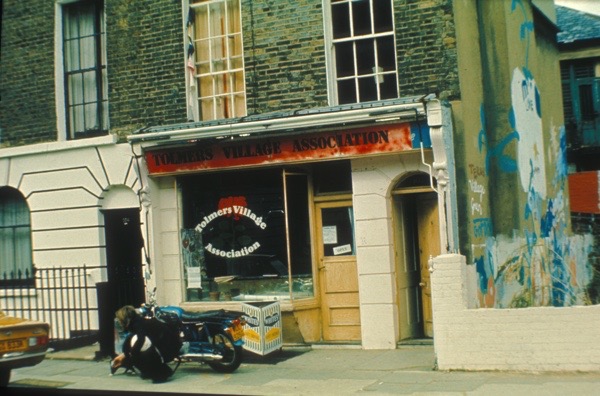
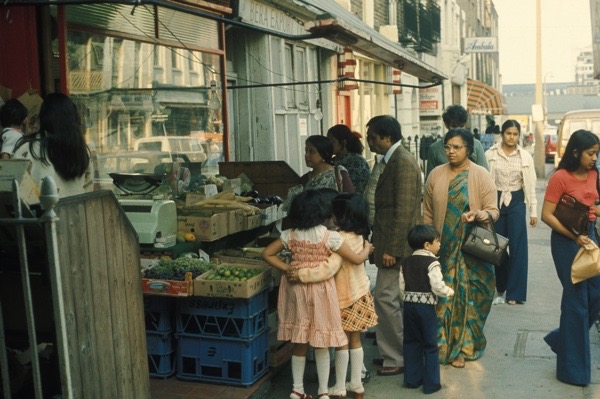
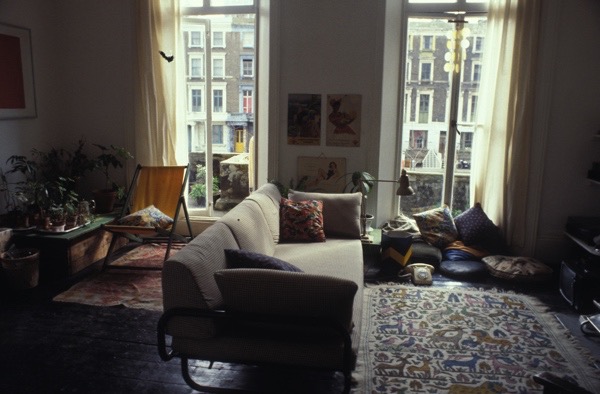
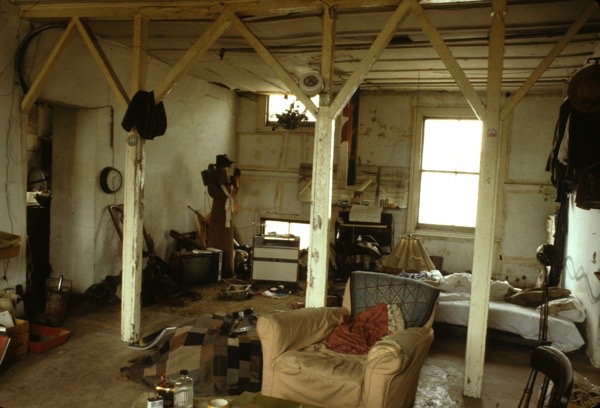
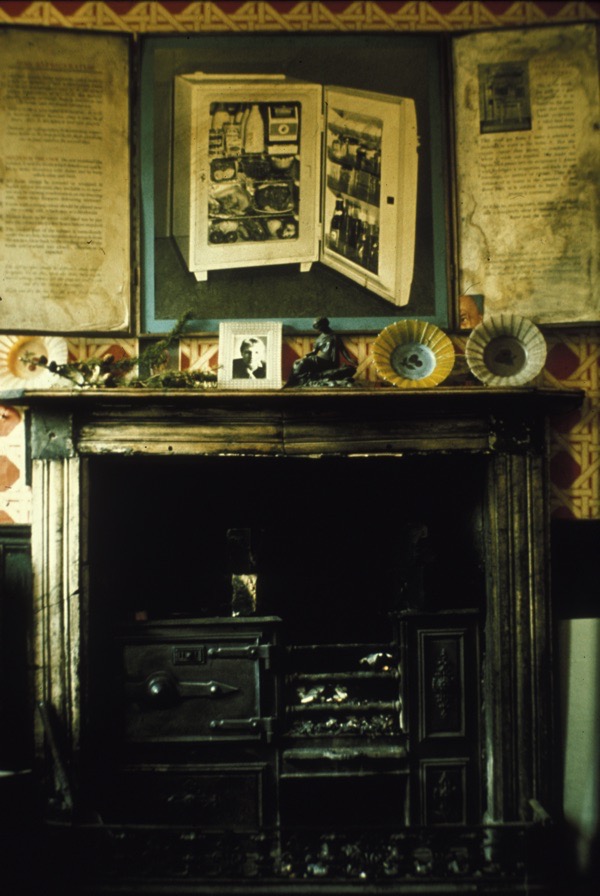
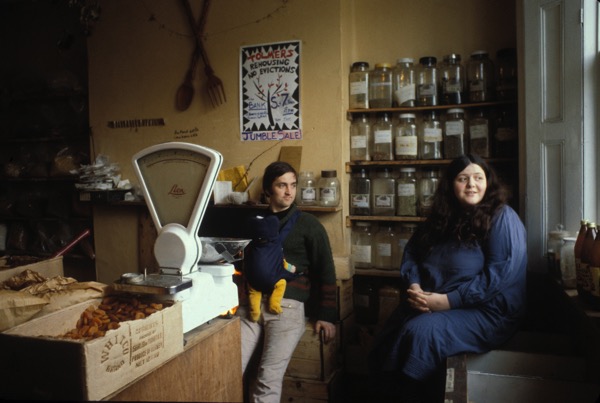
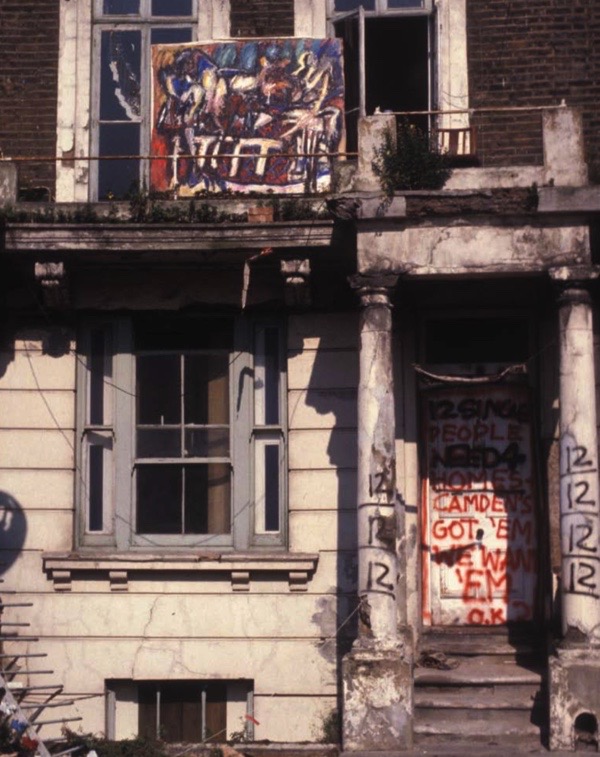
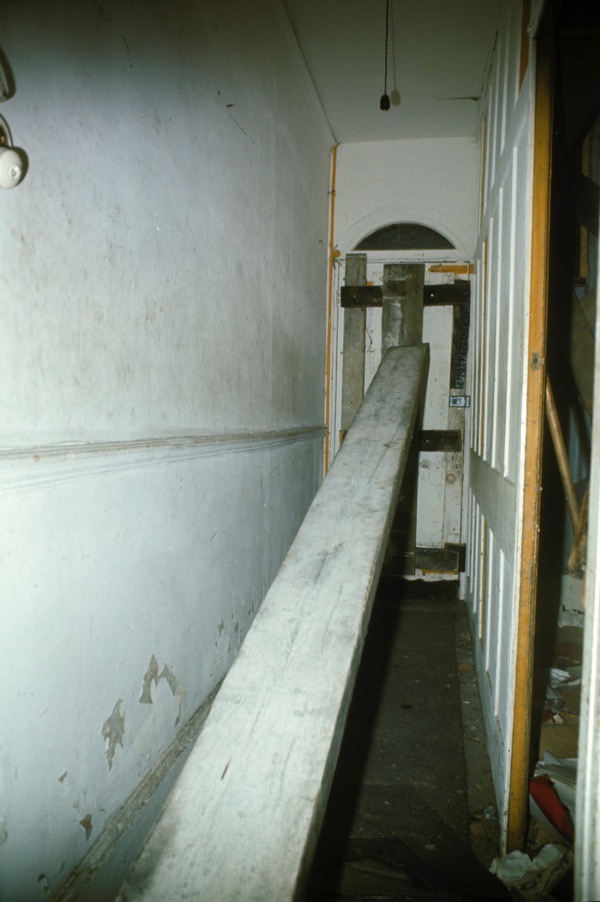
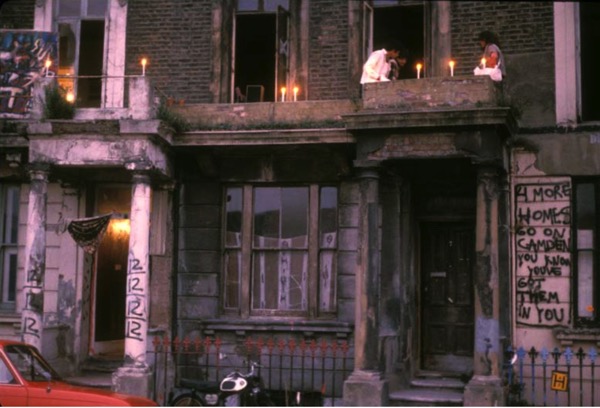
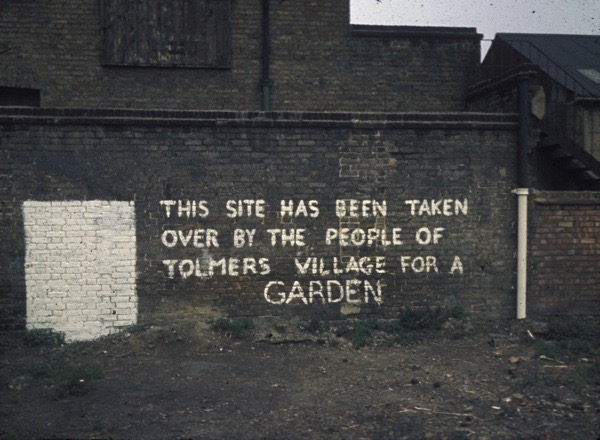
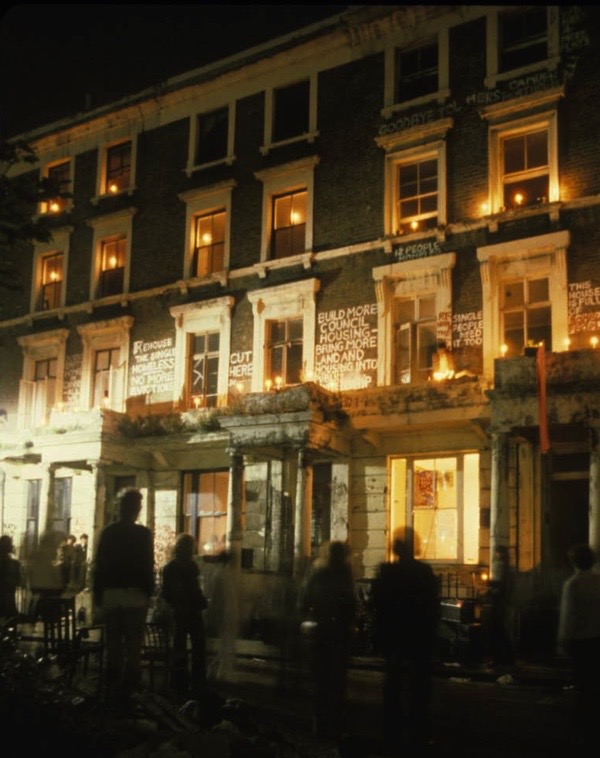
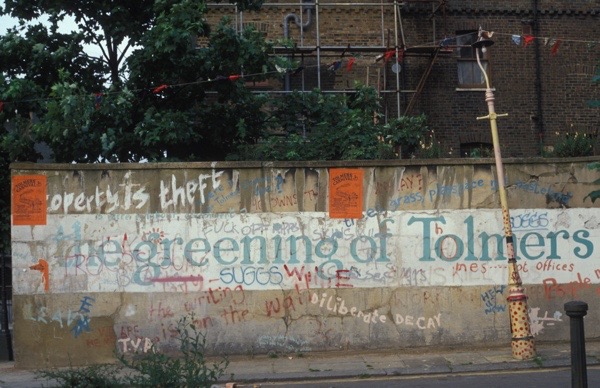


Tolmers Square campaign timeline
1957
Tolmers Sq Tenant Association (TSTA) formed.
1959
Developers submit planning application for a twenty-two-storey office tower on the south side of Tolmers Sq and TSTA launch anti-office campaign.
1960
London County Council (LCC) rejects planning application for office development and starts preparing plans for a comprehensive housing development.
1962
Stock Conversion, a property company headed by Joe Levy, starts buying land in the Tolmers area. TSTA campaign for tenants displaced by the nearby Euston Centre development.
1963
LCC starts trying to demolish ‘unfit’ houses in the area.
1965
Reorganisation of London government. LCC replaced by the Greater London Council (GLC), and the Borough of St Pancras amalgamated into Camden. Central Government refuses to give Camden permission to buy land or to build offices.
1966
Camden Council starts negotiations with Stock Conversion to purchase land in the area and provide support for office development.
1967
Camden Council continues to demolish ‘unfit’ housing.
1968
Camden Council submits Compulsory Purchase Order (CPO) for a small area of housing.
1970
Central Government rejects CPO. Camden Council starts negotiations with Stock Conversion for the whole Tolmers area.
1971
The beginning of opposition from some Labour councillors to a deal involving office development.
1973
The issue starts receiving considerable publicity. Squatters start moving into empty property. Camden Council approves the ‘Levy Deal’. Students from University College London survey the area. Claudius Offer (masterminded by Christopher Booker & Bennie Gray) presented to Camden Council. It still involves building offices but the profits would go to the Council. Tolmers Village Association (TVA) formed. Stop the Levy Deal campaign launched.
Camden Council reject the Levy Deal. House collapses in Hampstead Rd.
1974
General Election. TVA holds exhibition to involve local people in the area’s future. Camden makes CPO on a few buildings. TVA publishes Tolmers Destroyed pamphlet, occupies derelict land and holds first summer carnival. Stock Conversion discloses new plans to develop without the Council. Camden submit a CPO for all of Stock Conversion’s property. General Election.
1975
Squatters summonsed by Stock Conversion. Squatters’ anti-eviction campaign. Locally made film Tolmers: Beginning or end? shown on BBC2. Camden Council buys all of Stock Conversion’s property in the area. Camden Council applies for an Office Development Permit for 300,000 square feet.
1976
Camden Council approves new scheme, a mix of rehabilitation and new build, housing and offices. Publication of The Battle for Tolmers Square by Routledge.
1977
Temporary landscaping of Tolmers Sq
1978
Last Tolmers carnival
1979
Squatters evicted by Camden.
1982
Camden organise ceremony to mark the ‘completion’ of the Tolmers Sq development.
2010
Tolmers photos and posters included in the Goodbye London exhibition in Berlin.
2011
Tolmers in Colour published.
2018
Plans for HS2 show Euston Station expanding into the Tolmers area.
[youtube 7LjAmpFGVCI nolink]

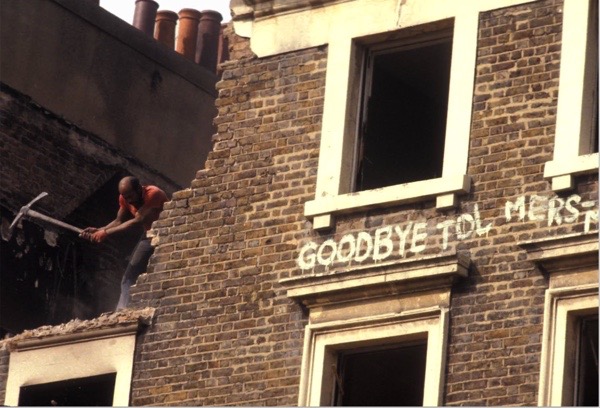
Photographs copyright © Nick Wates
You may also like to read about
The Wonders Of St Michael & All Angels
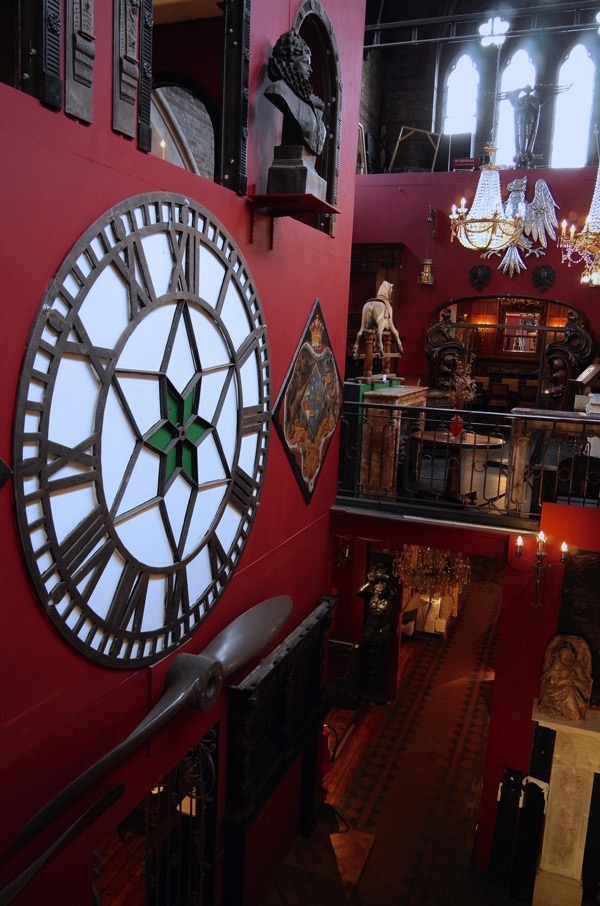
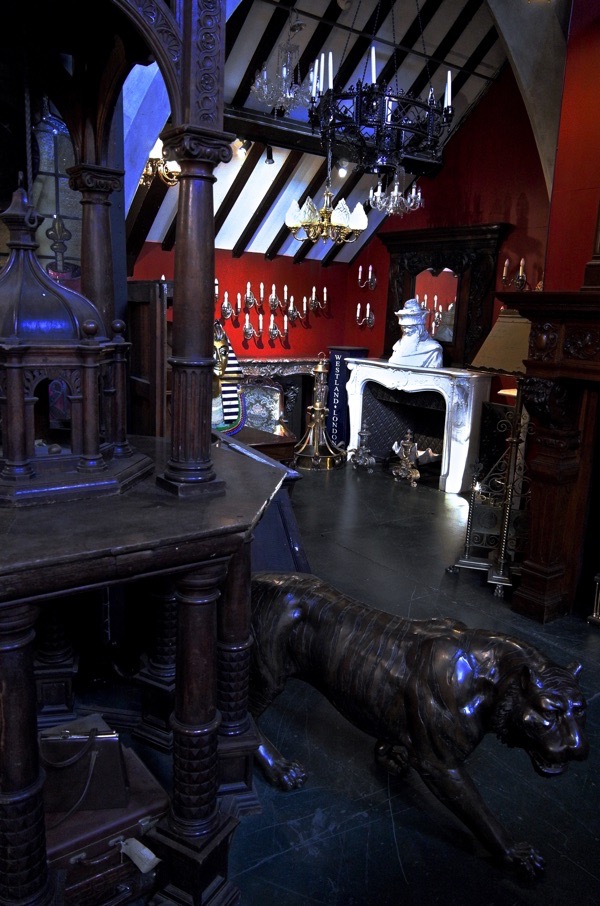
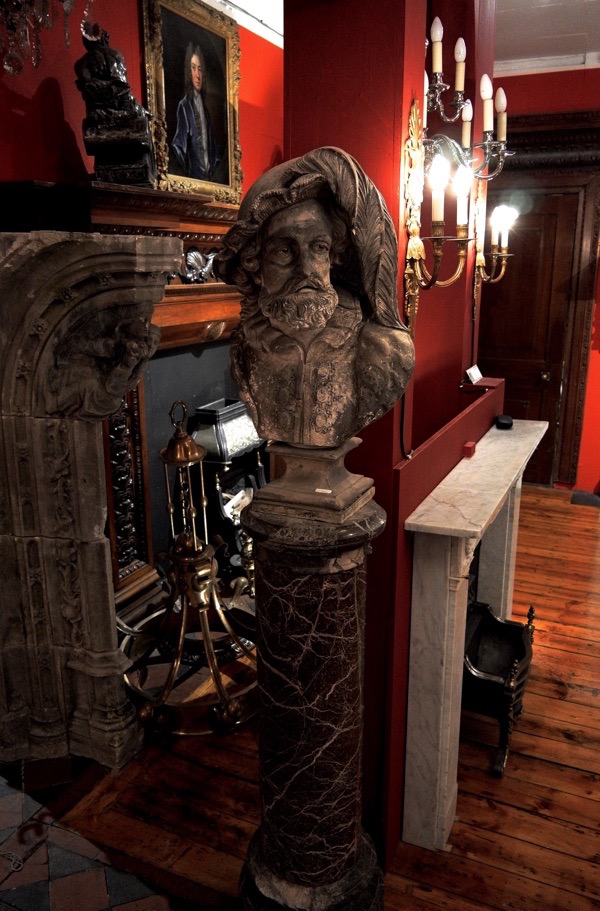
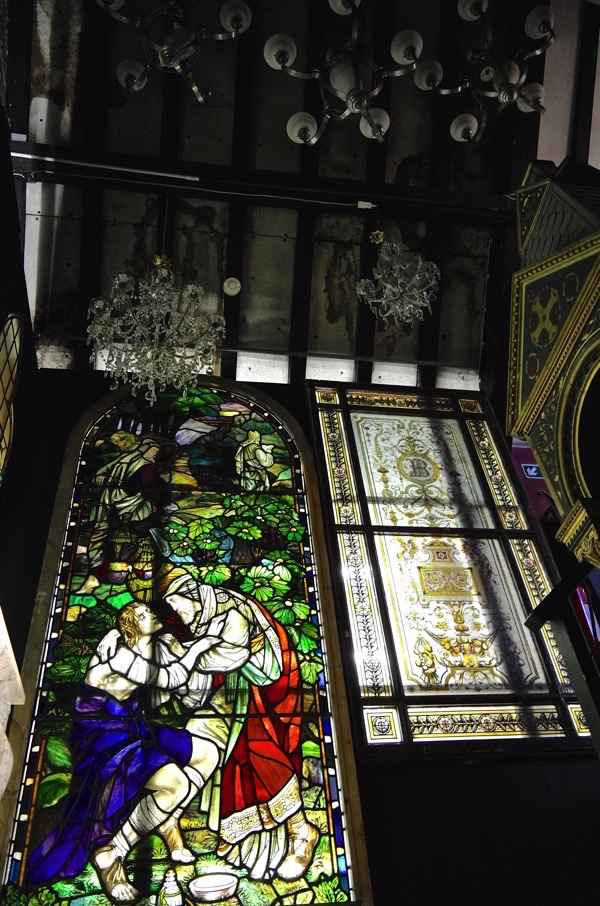
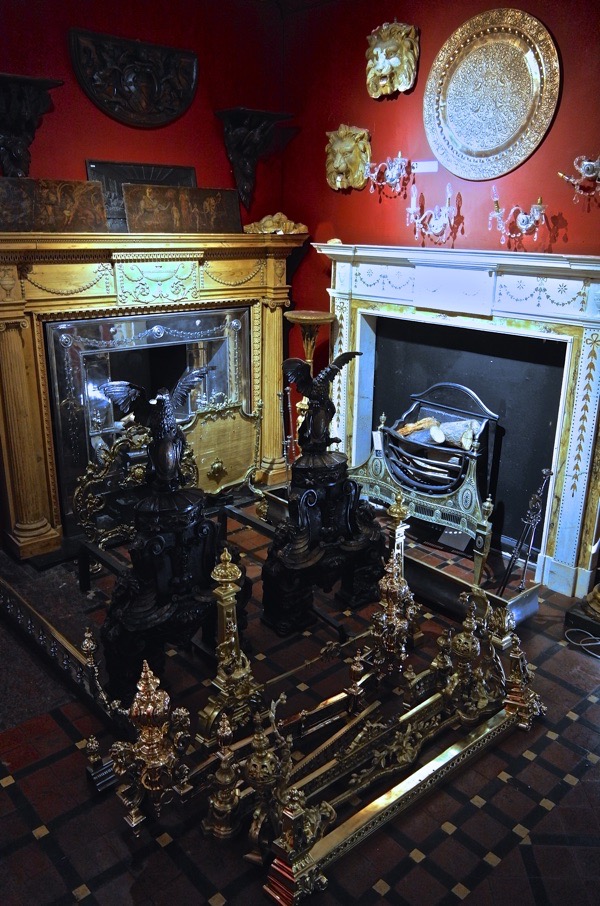
Such is the overwhelming collection of unlikely paraphernalia that you encounter when you visit St Michael & All Angel’s in Shoreditch, it is as if you have walked into the mansion of Charles Foster Kane. You feel you are exploring chambers in the unconscious mind of some deranged architect or a netherworld filled with keepsakes assembled by an acquisitive time-traveller. The surrealism of multiple architectural elements from different eras arranged in random combinations within a disorienting labyrinth filling the church is as intoxicating as any film by Jean Cocteau.
In his ‘Buildings of England,’ Niklaus Pevsner wrote, “The whole is an eminently picturesque fantasy and it is a great shame that it has fallen into such shocking neglect” – yet today St Michael & All Angels has found an alternative role that proposes a strange complement to its fanciful design. Deconsecrated long ago, the handsome High Victorian Gothic church, designed by James Brooks in 1865, has been a showroom for Westland architectural salvage since 1977 and the eclectic display of statues, fireplaces and chandeliers in this setting is a breathtaking spectacle to behold.
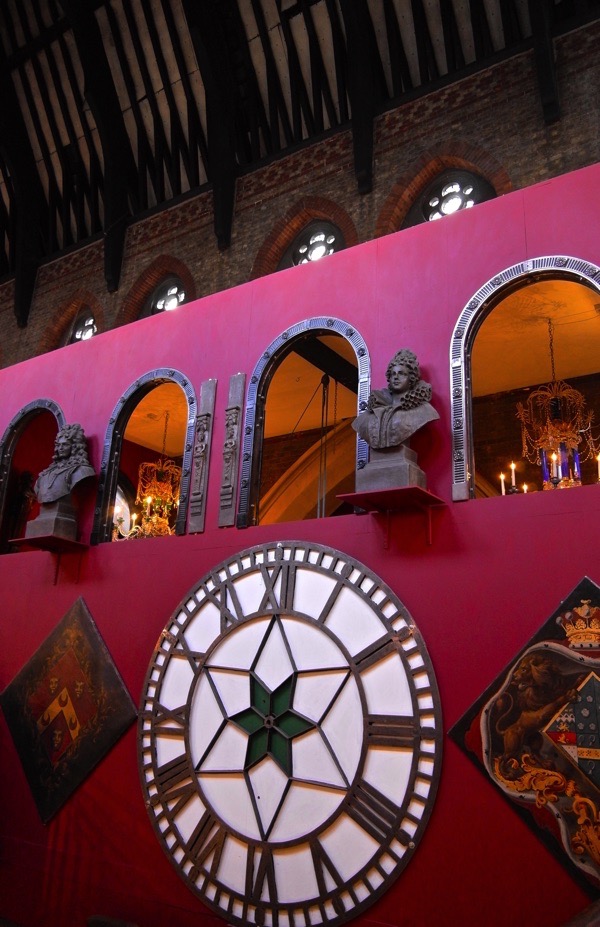
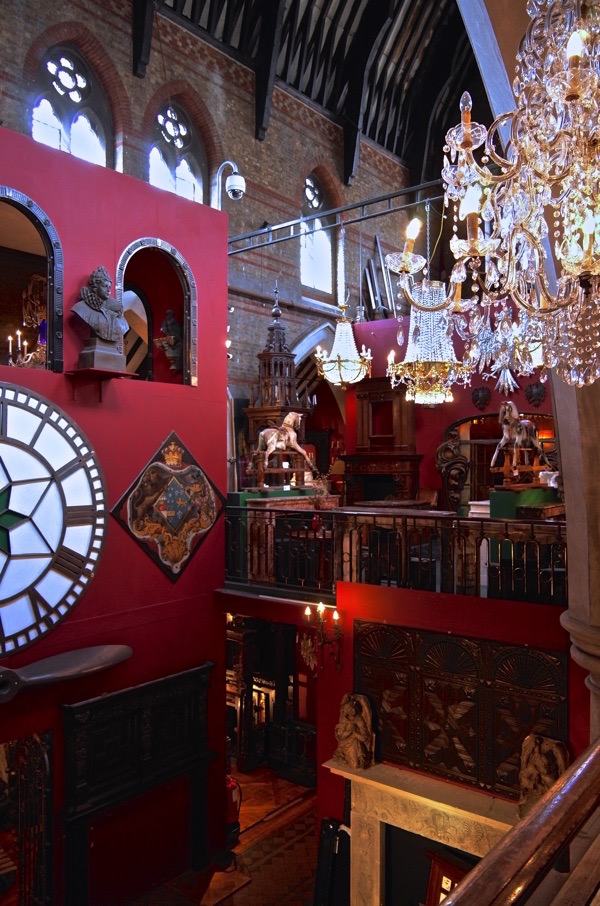
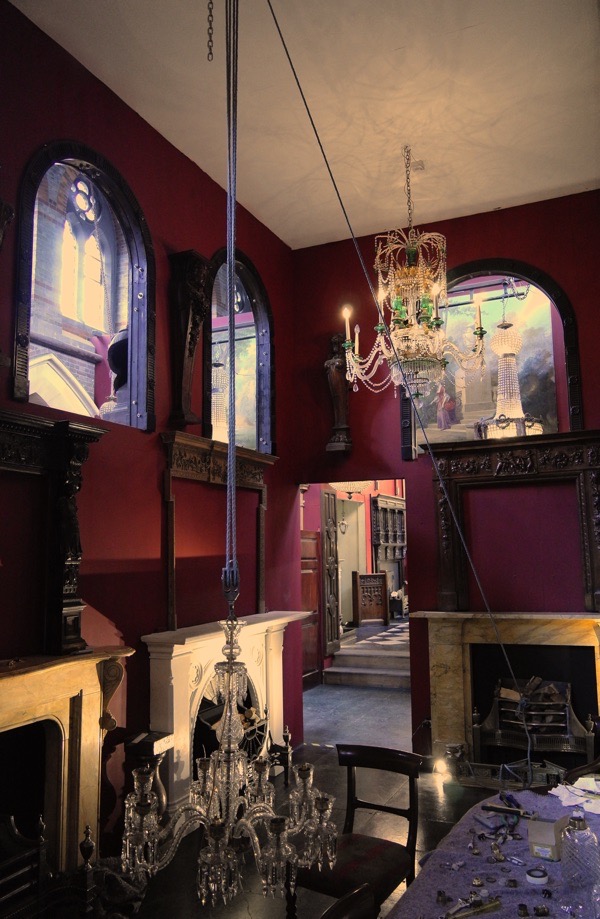
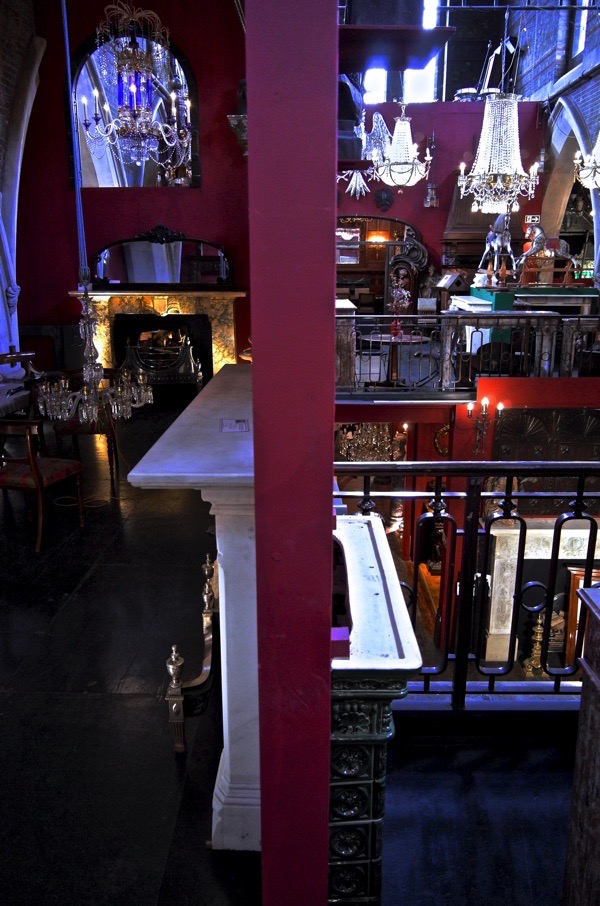
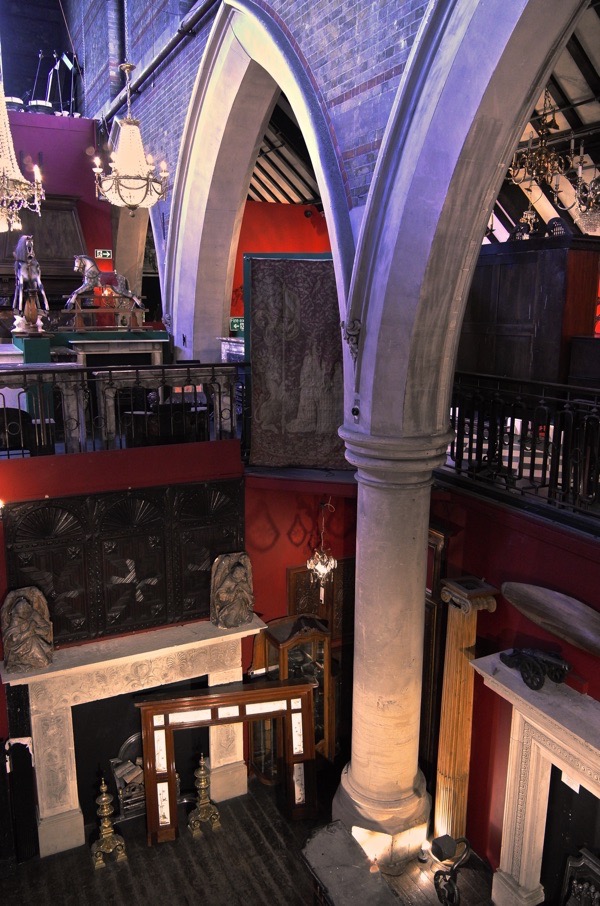
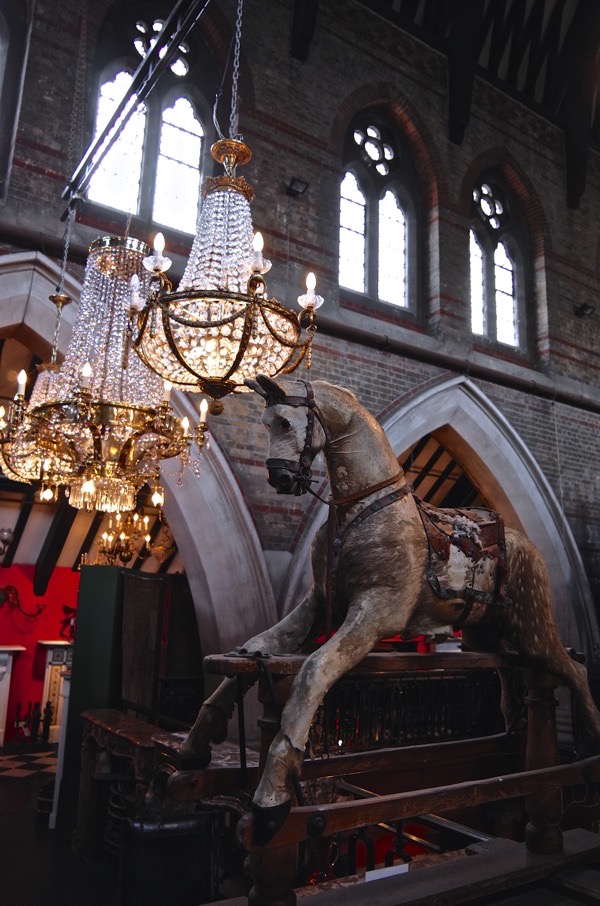
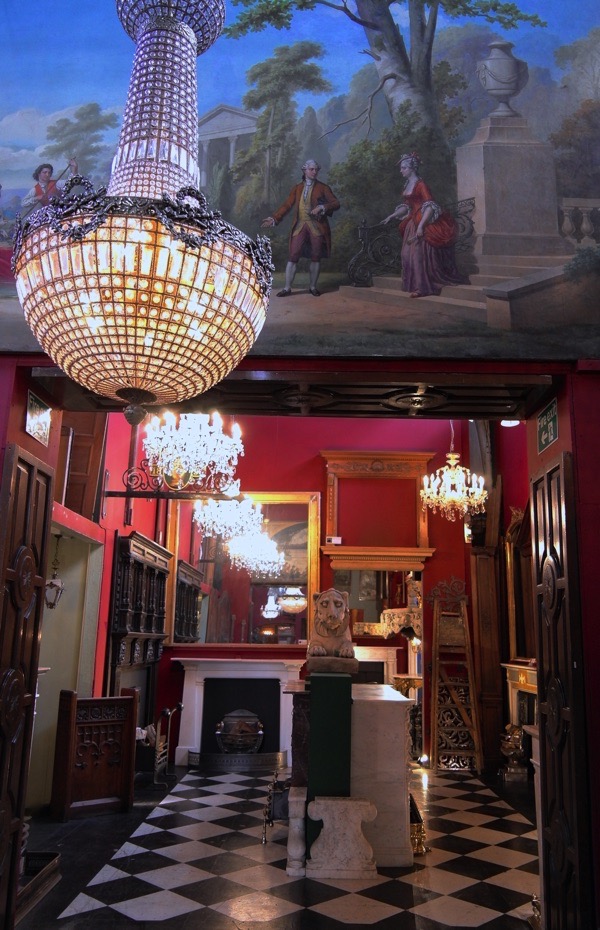
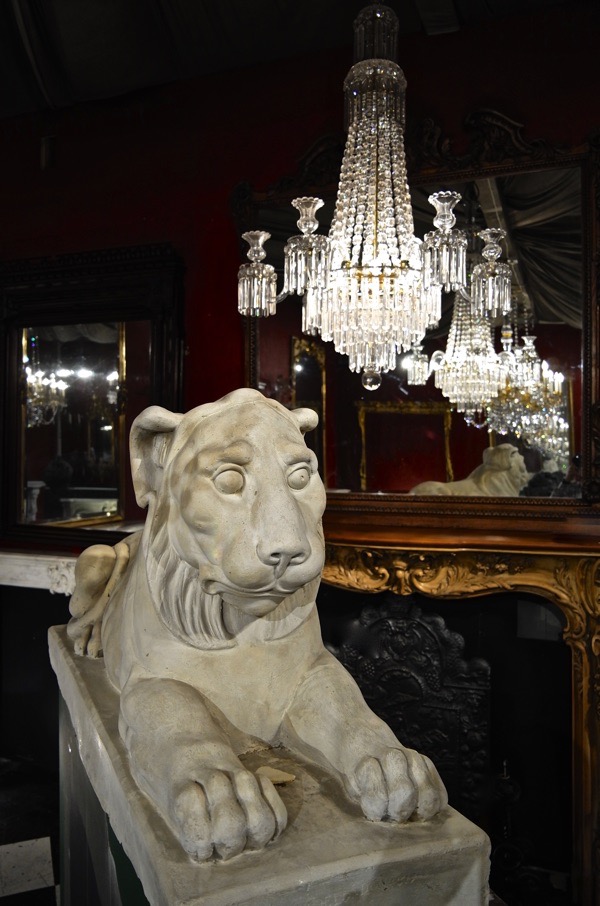
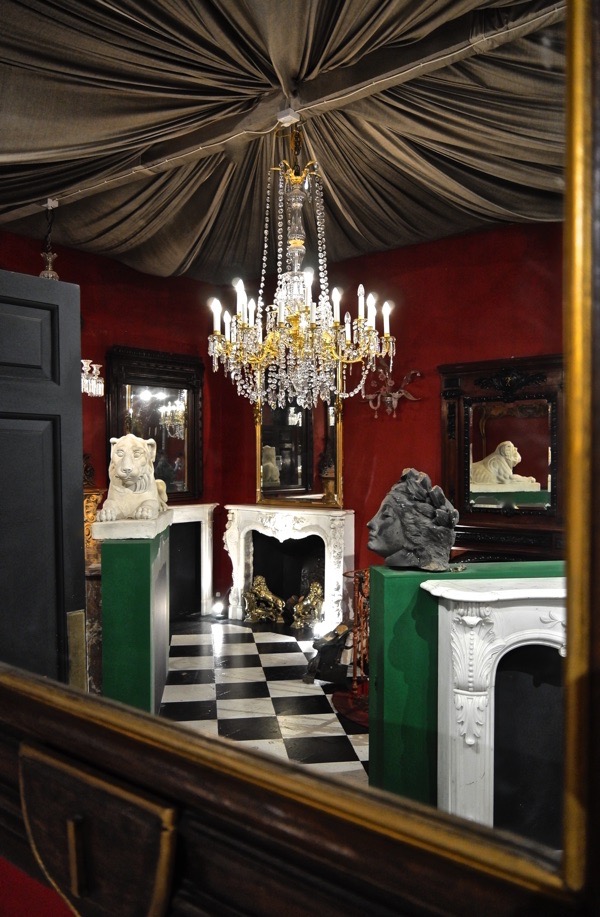
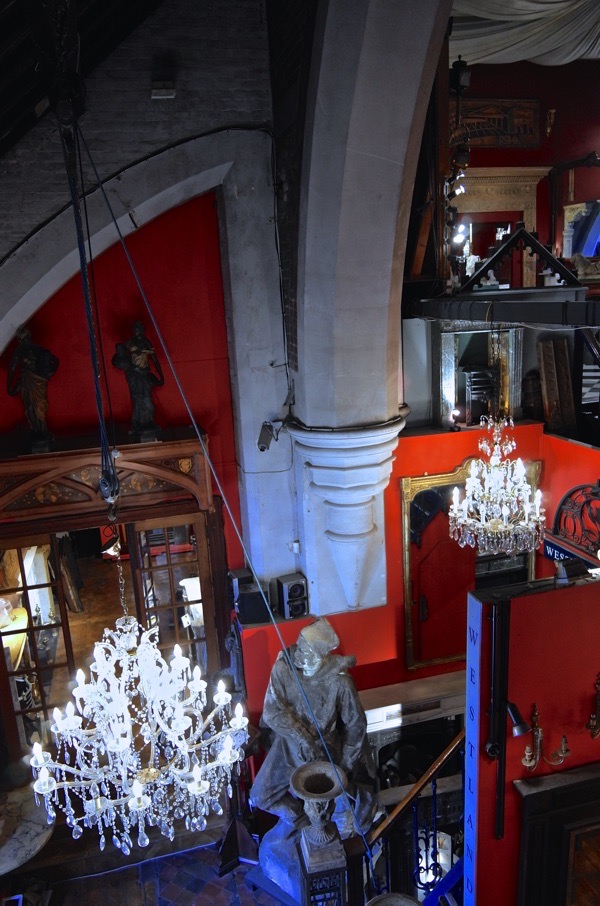
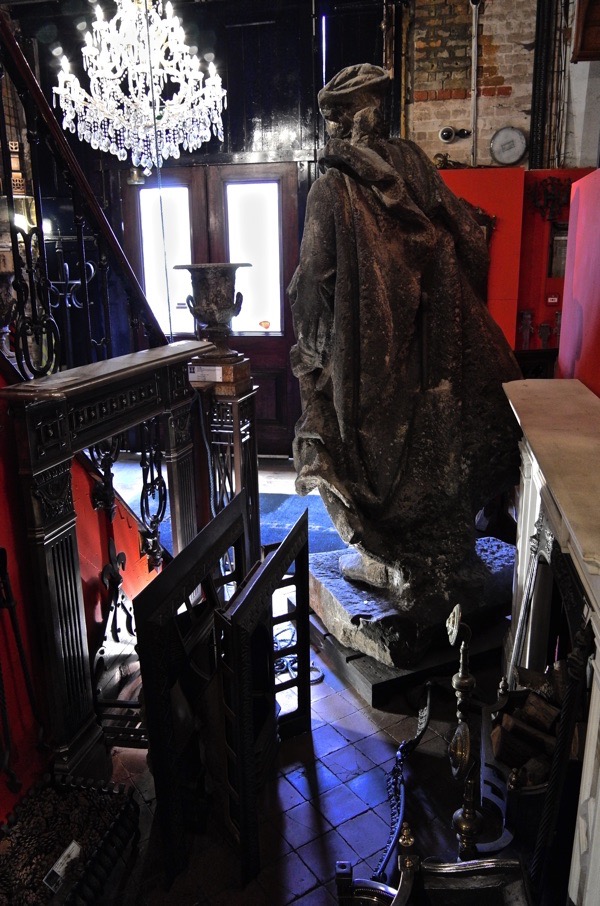
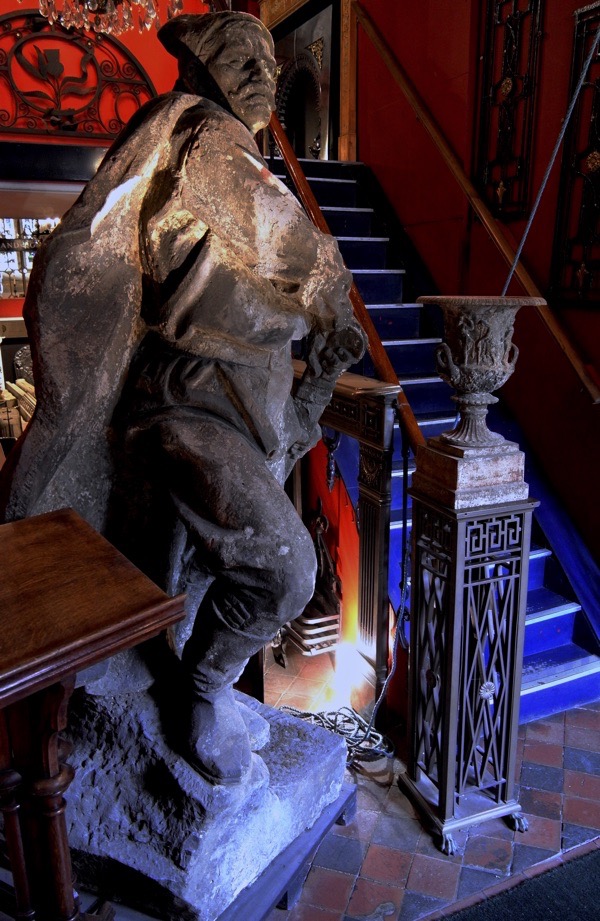
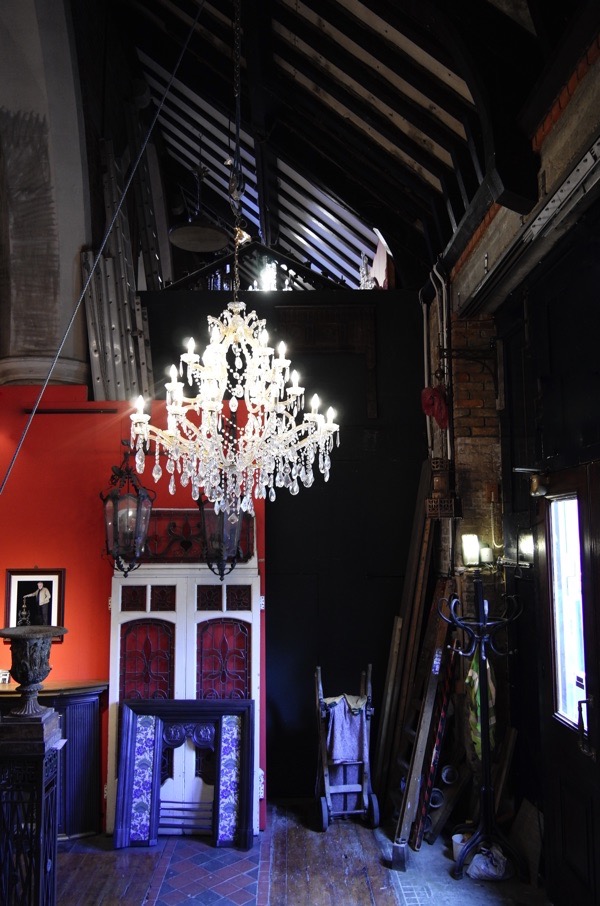
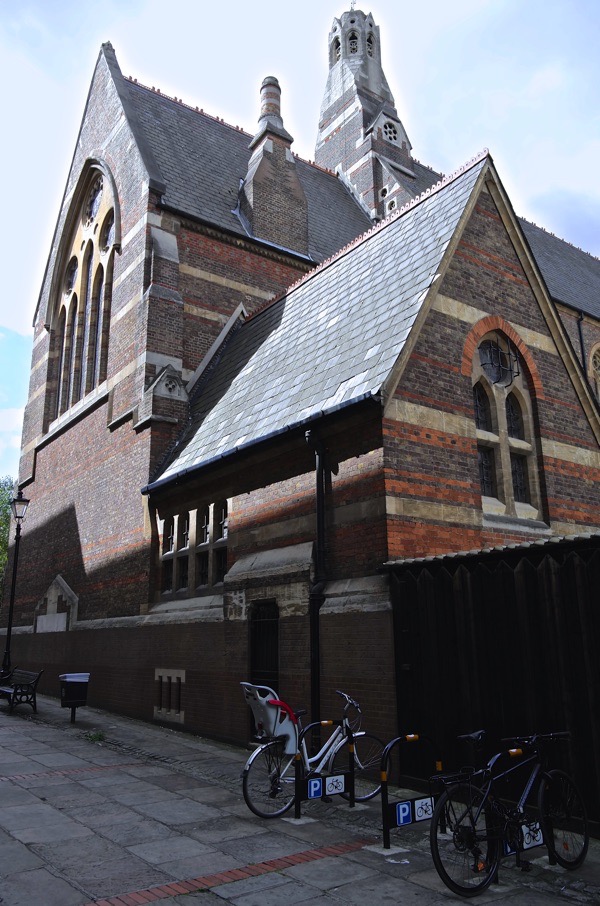
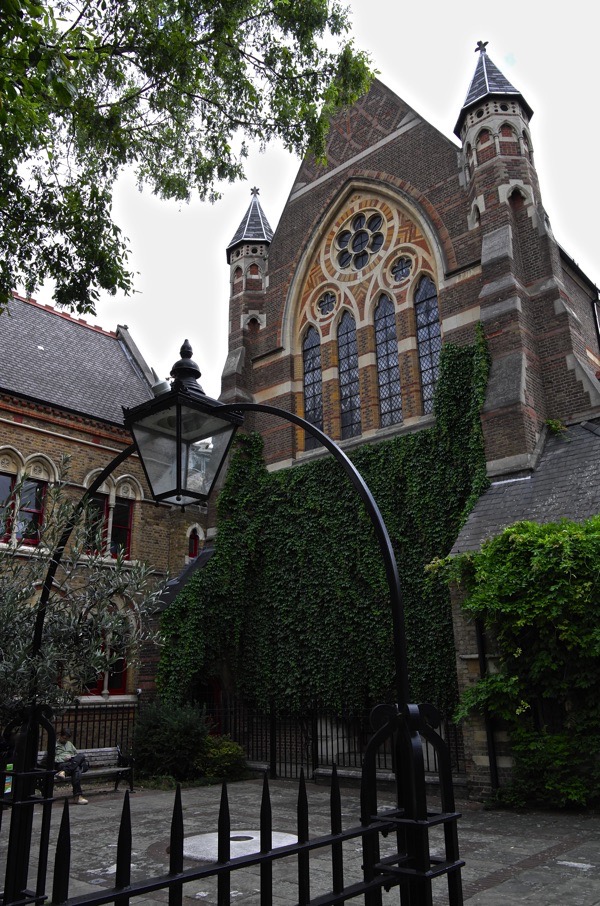
The church and adjoining clergy house
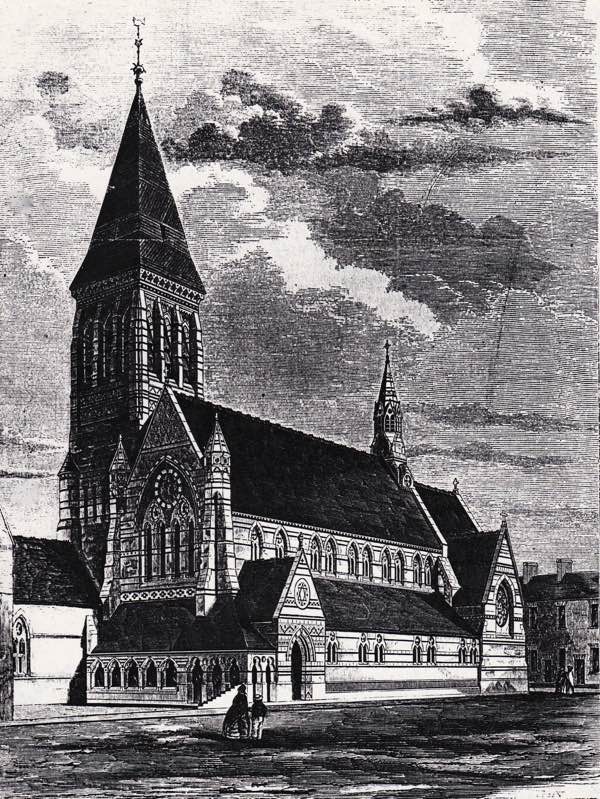
St Michael & All Angels, Leonard St, Shoreditch, 1865
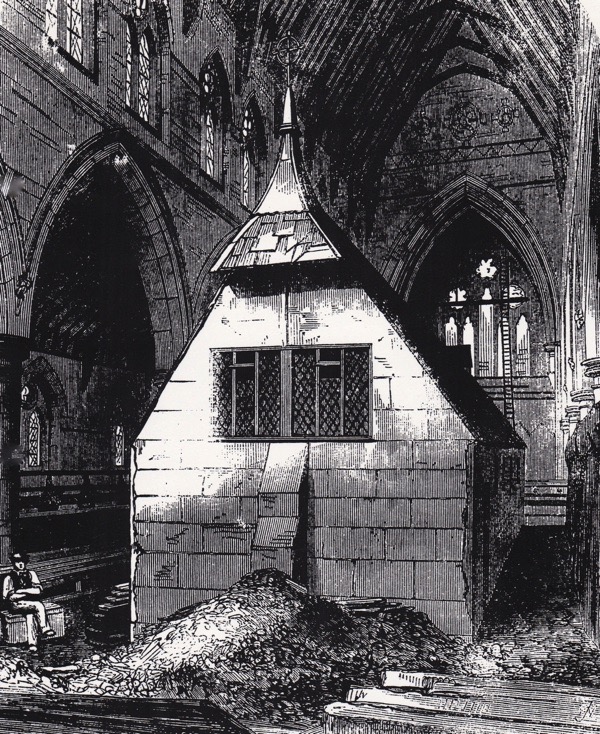
In a strange precursor of its current use, this engraving of 1865 shows the makeshift church built within the structure while it was under construction.
Westland, St Michael & All Angels’ Church, Leonard St, EC2A 4QX
You may also like to read about
Thomas Onwyn’s London

Born in Clerkenwell in 1813, as the eldest son of a bookseller, Thomas Onwhyn created a series of cheap mass-produced satirical prints illustrating the comedy of everyday life for publishers Rock Brothers & Payne in the eighteen forties and fifties. In his time, Onwhyn was overshadowed by the talent of George Cruickshank and won notoriety for supplying pictures to pirated editions of Pickwick Papers and Nicholas Nickleby, which drew the ire of Charles Dickens who wrote of “the singular Vileness of the Illustrations.”
Nevertheless, these fascinating ‘Pictures of London’ that I came upon in the Bishopsgate Institute demonstrate a critical intelligence, a sly humour and an unexpected political sensibility. In this social panorama,originally published as one concertina-fold strip, Onwhyn contrasts the culture and lives of rich and the poor in London with subtle comedy, tracing their interdependence yet making it quite clear where his sympathy lay.

The Court – Dress Wearers.

Dressmakers.

The Opera Box.
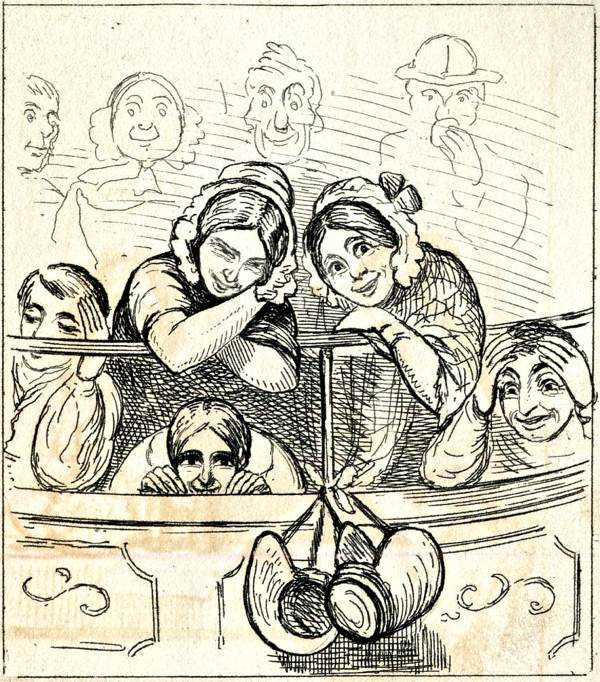
The Gallery.

The West End Dinner Party.

A Charity Dinner.

Mayfair.

Rag Fair.

Music of the Drawing Room.

Street Music.
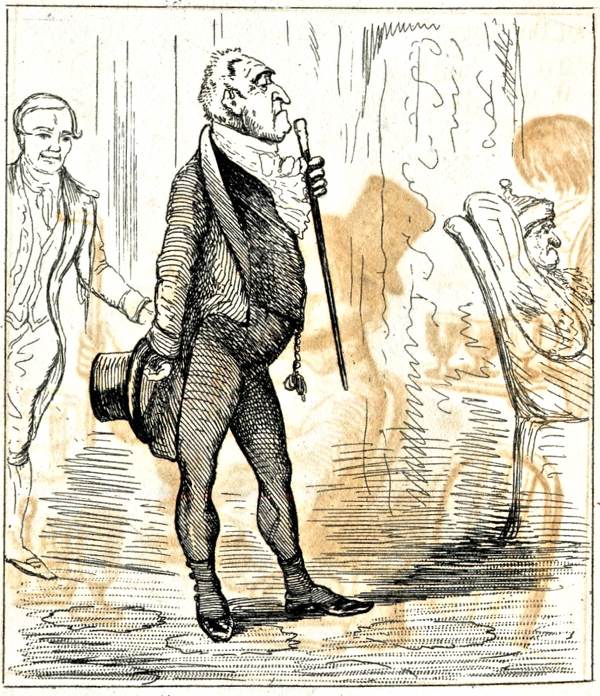
The Physician.

The Medical Student.
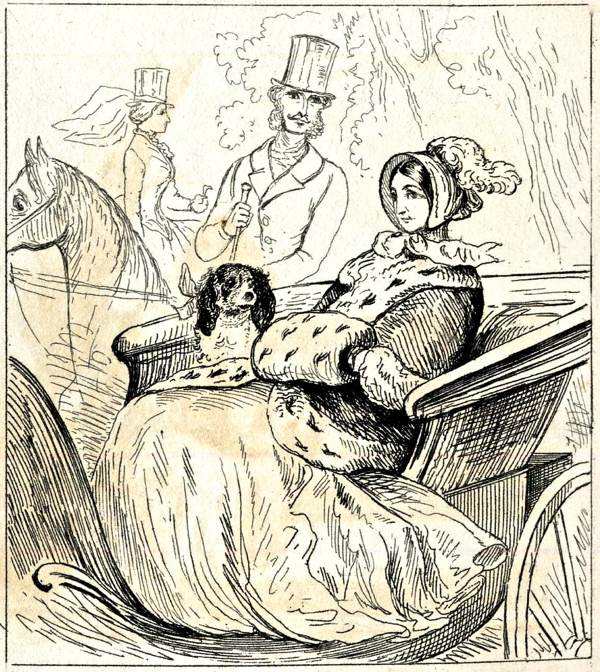
The Parks – Day.

The Parks – Night.

The Club – The Wine Bibber.

The Gin Shop – The Dram Drinker.

The Shopkeeper.

The Shirtmaker.

The Bouquet Maker.

The Basket Woman. (Initialled – T.O. Thomas Onwhyn)
Images courtesy Bishopsgate Institute
You may also like to take a look at
Old Trees In Greenwich Park

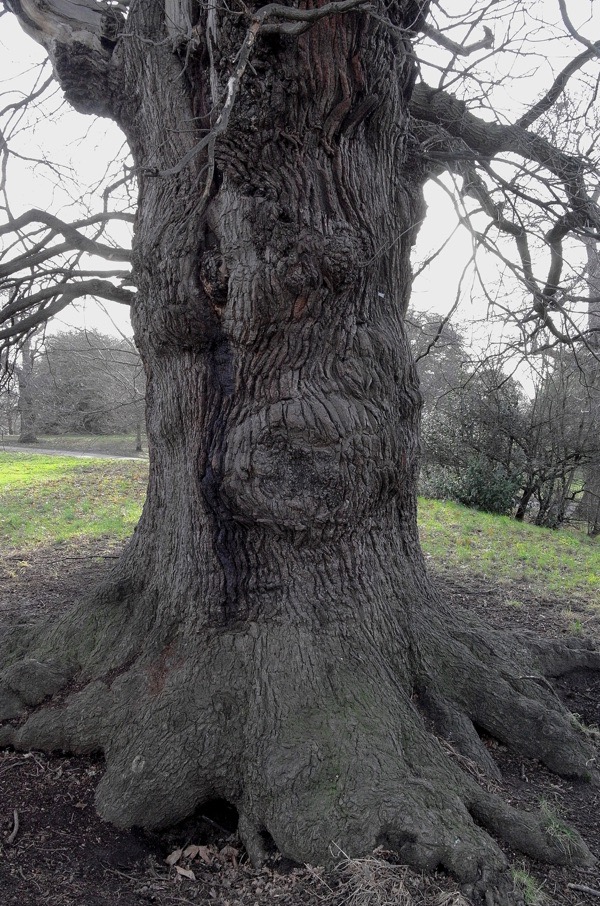
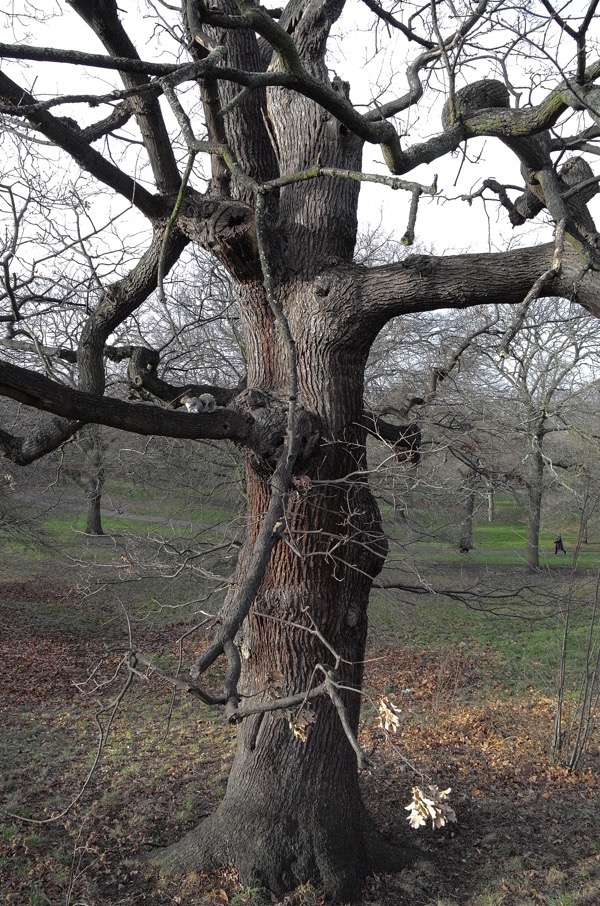
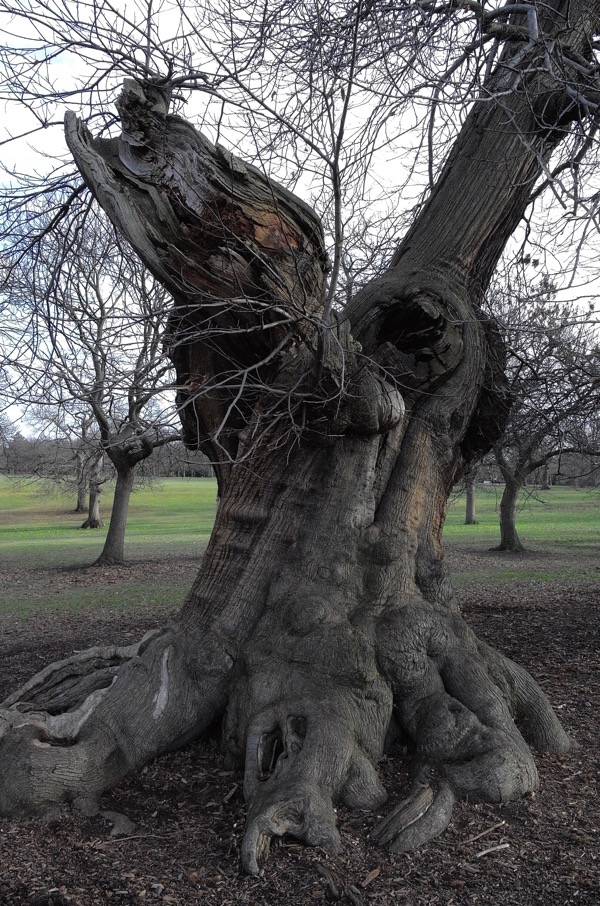
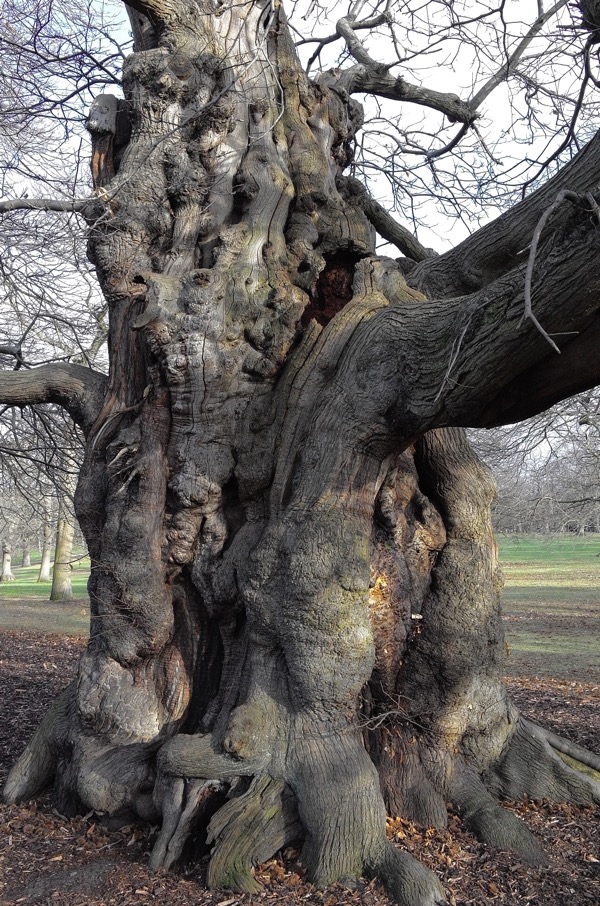
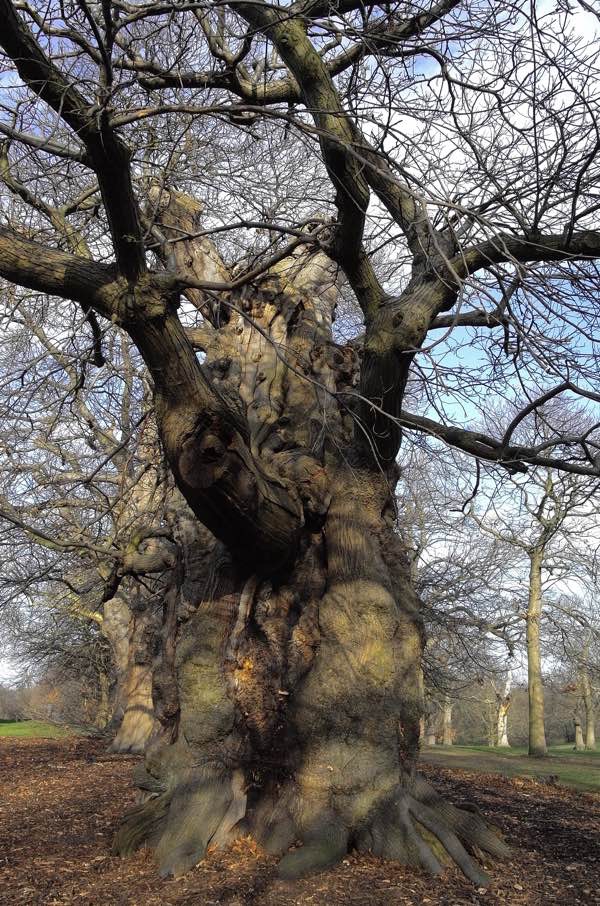
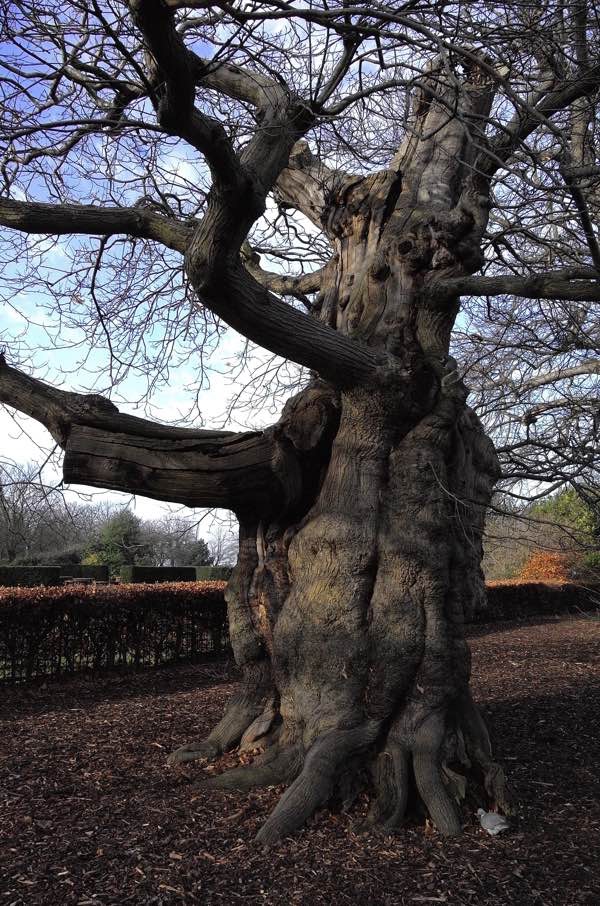
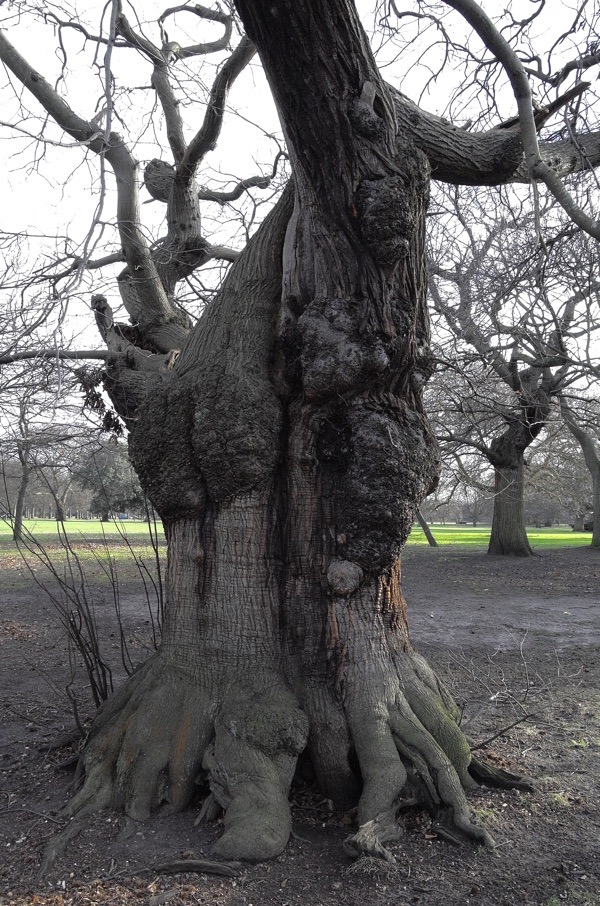
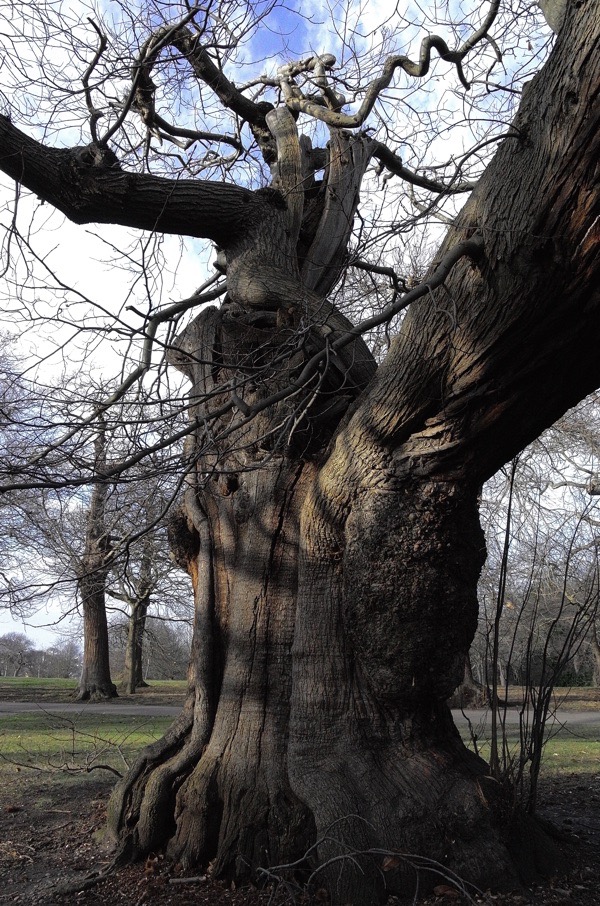
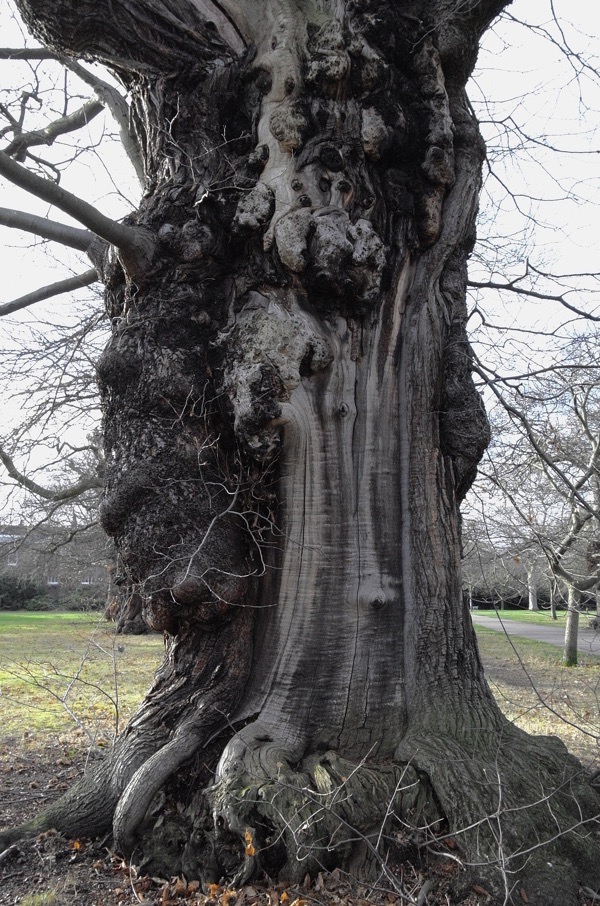
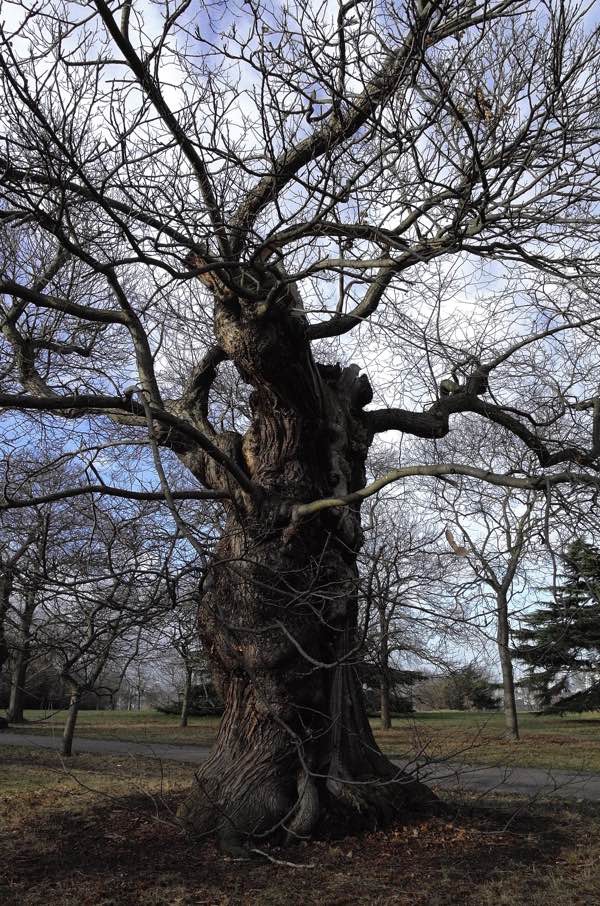
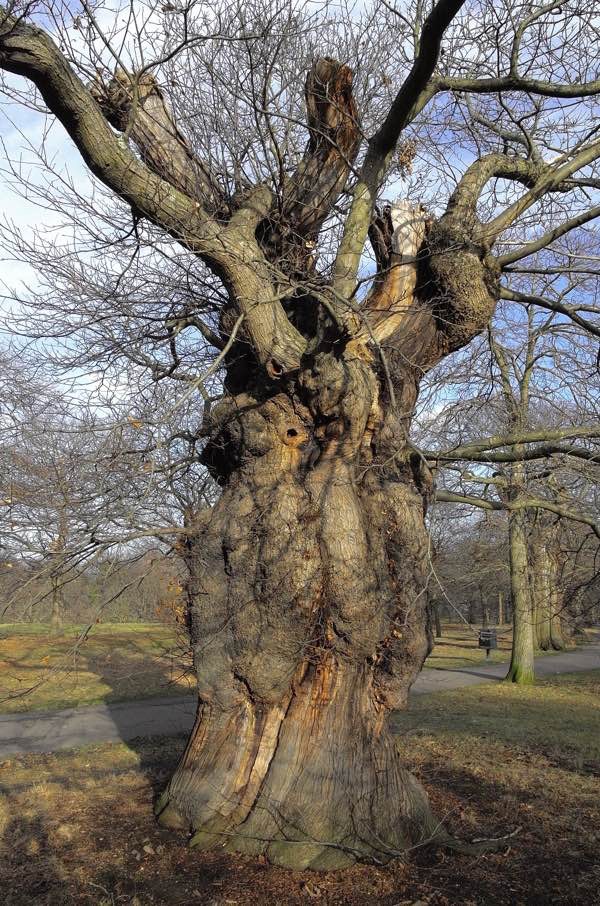
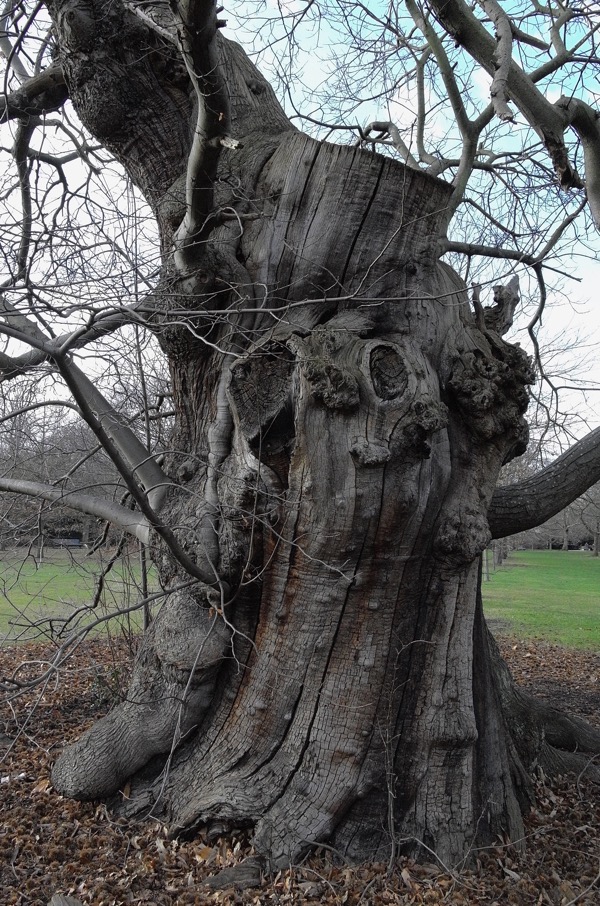
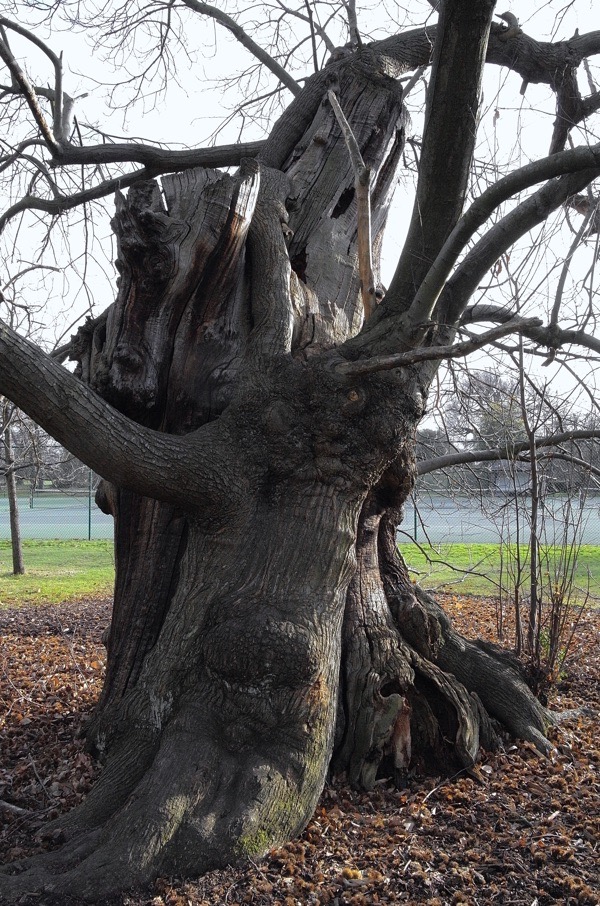
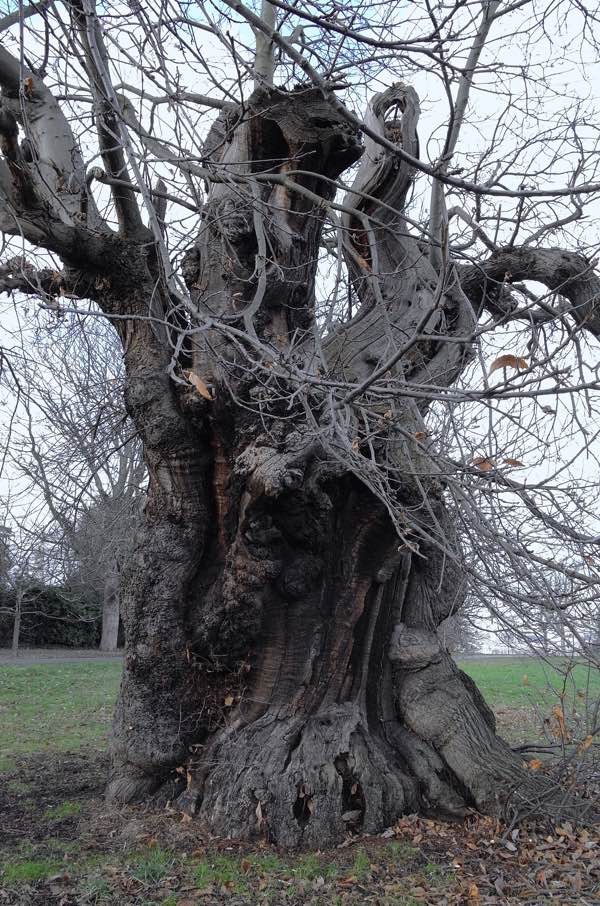
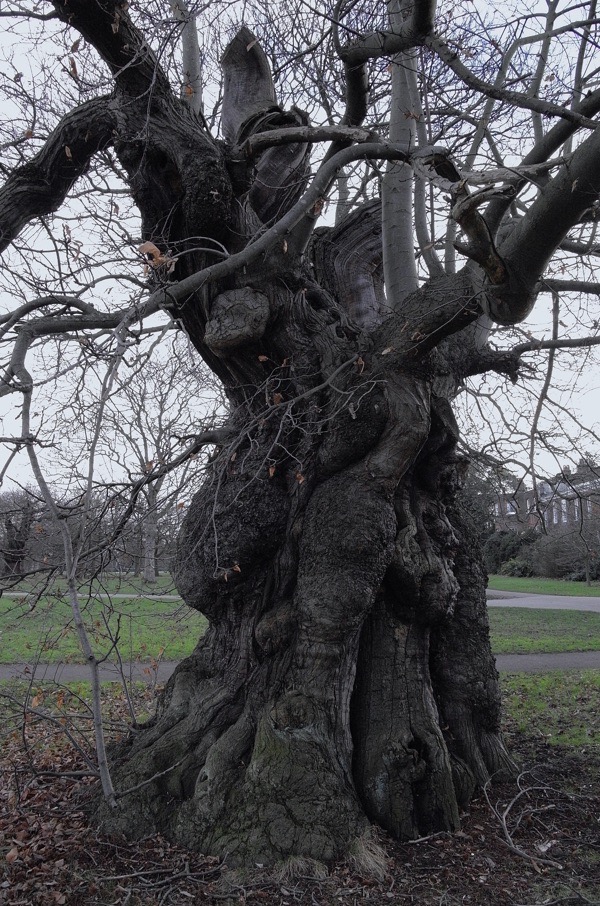
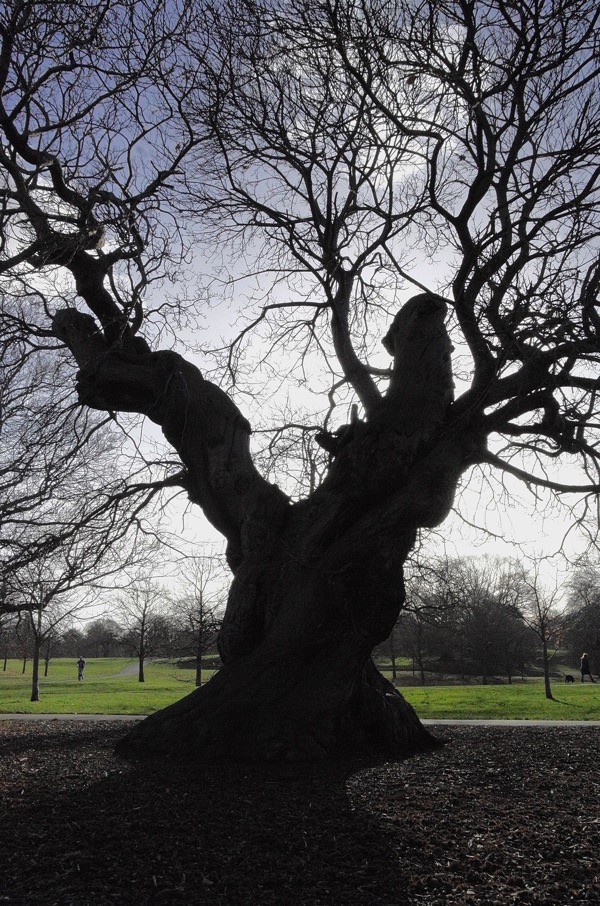
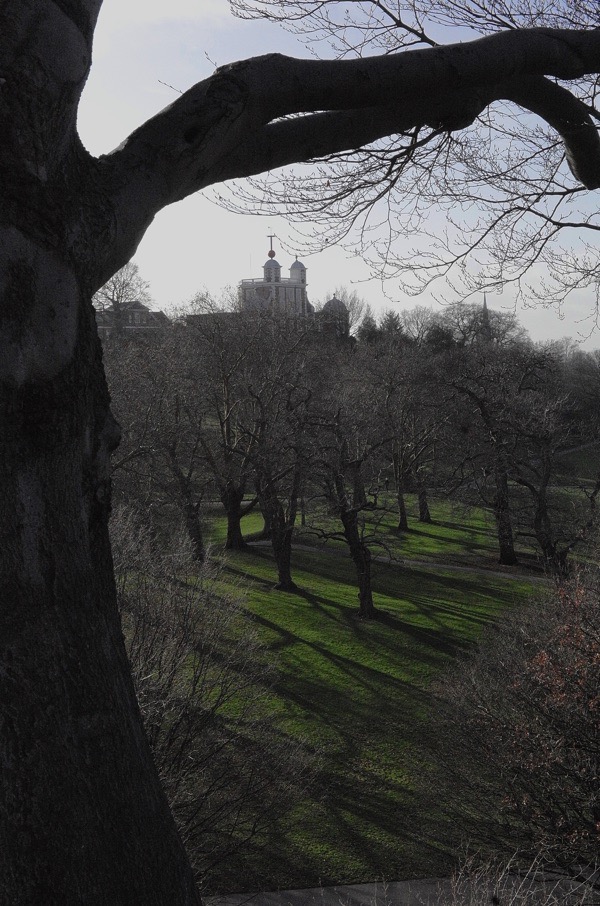
On the day my cat died last summer, I went for a walk in Greenwich Park to seek consolation and was uplifted to encounter the awe-inspiring host of ancient trees there. I promised myself I would return in the depths of winter to photograph these magnificent specimens on a clear day when they were bare of leaves. So that was what I did last week, braving the bitter wind and the plunging temperatures for an afternoon with my camera.
In the early 1660’s, Charles II commissioned Le Notre, gardener to Louis XIV, to design the layout of the landscape and the impressive avenues of sweet chestnuts remain, many now approaching four hundred years old. These ancient trees confront you, rising up in the winter sunlight to cast long shadows over the grass and dominating the lonely park with their powerful gnarly presences worthy of paintings by Arthur Rackham.
I have always been in thrall to the fairy tale allure cast by old trees. As a small child, I drew trees continuously once I discovered how easy they were to conjure into life upon paper, following the sinuous lines where I pleased. This delight persists and, even now, I cannot look at these venerable sweet chestnuts in Greenwich without seeing them in motion, as if my photographs captured frozen moments in their swirling dance.
Throughout my childhood, I delighted to climb trees, taking advantage of the facility of my lanky limbs and proximity of large specimens where I could ascend among the leafy boughs and spend an afternoon reading in seclusion, released from the the quotidian world into an arena of magic and possibility. Since the life span of great trees surpasses that of humans, they remind us of the time that passed before we were born and reassure us that the world will continue to exist when we are gone.
Secreted in a dell in the heart of the park, lies the Queen Elizabeth Oak, planted in the twelfth century. Legend has it, Henry VIII danced with Anne Boleyn beneath its branches and later their daughter, Elizabeth I, picnicked in its shade when this was a hunting ground for the royal palace at Greenwich. After flourishing for eight hundred years, the old oak died in the nineteenth century and then fell over a century later, in 1991, but still survives within a protective enclosure of iron railing for visitors to wonder at.
If any readers seek an excuse to venture out for a bracing walk in the frost, I recommend a pilgrimage to pay homage to the old trees in Greenwich Park. They are witnesses to centuries of history and offer a necessary corrective to restore a sense of proportion and hope in these strange times.
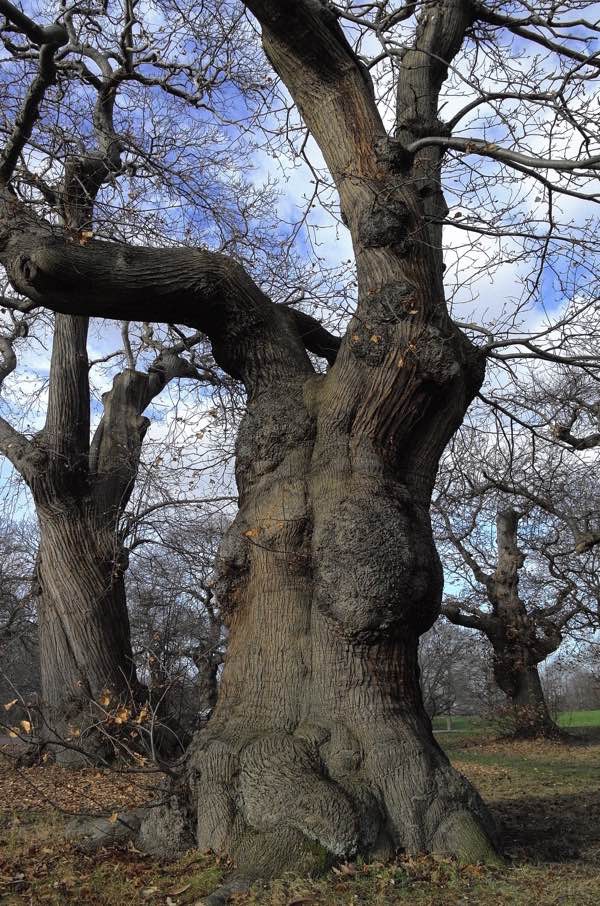
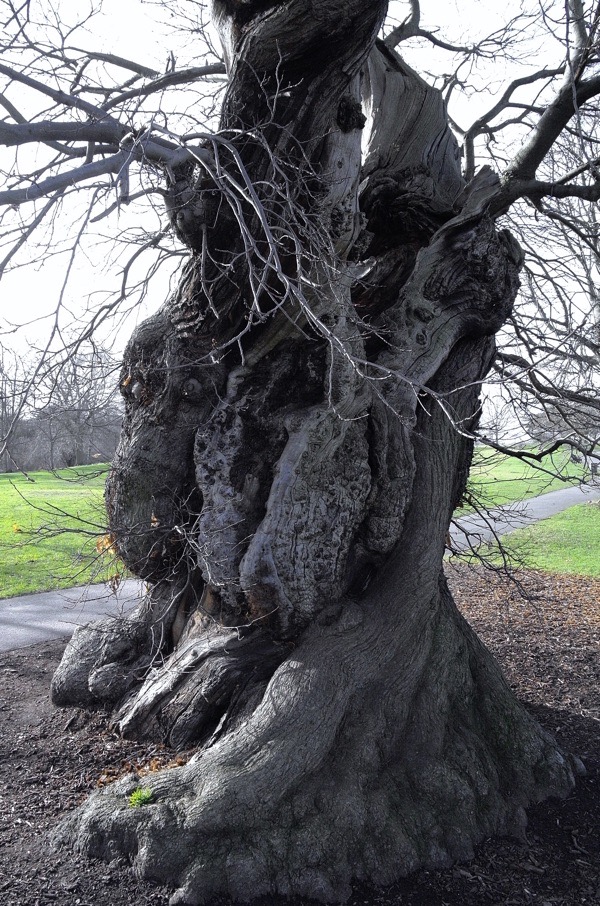

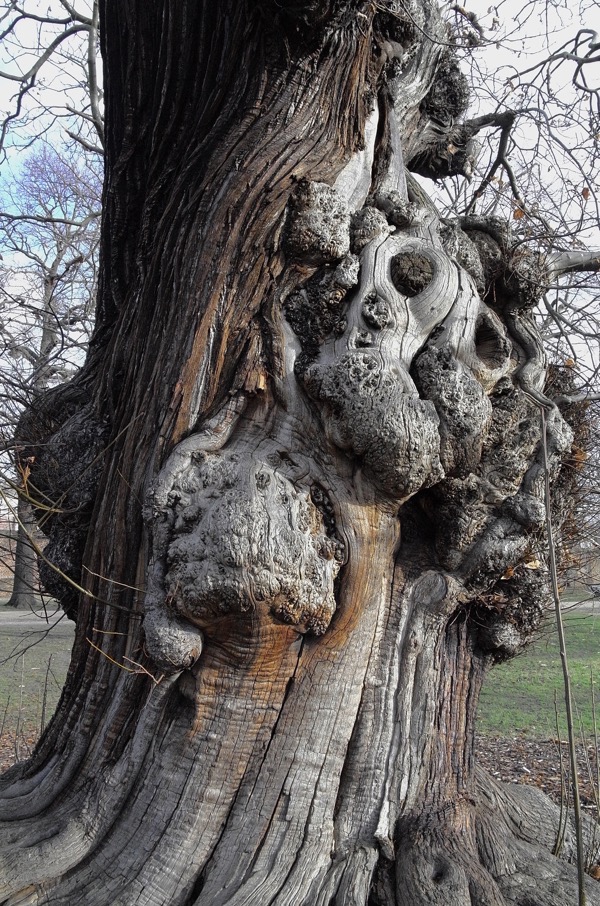
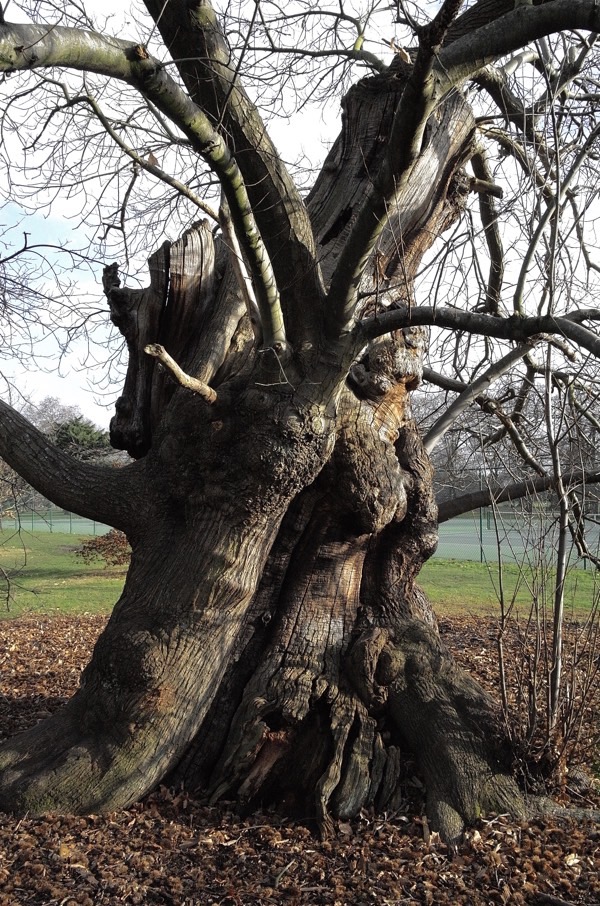
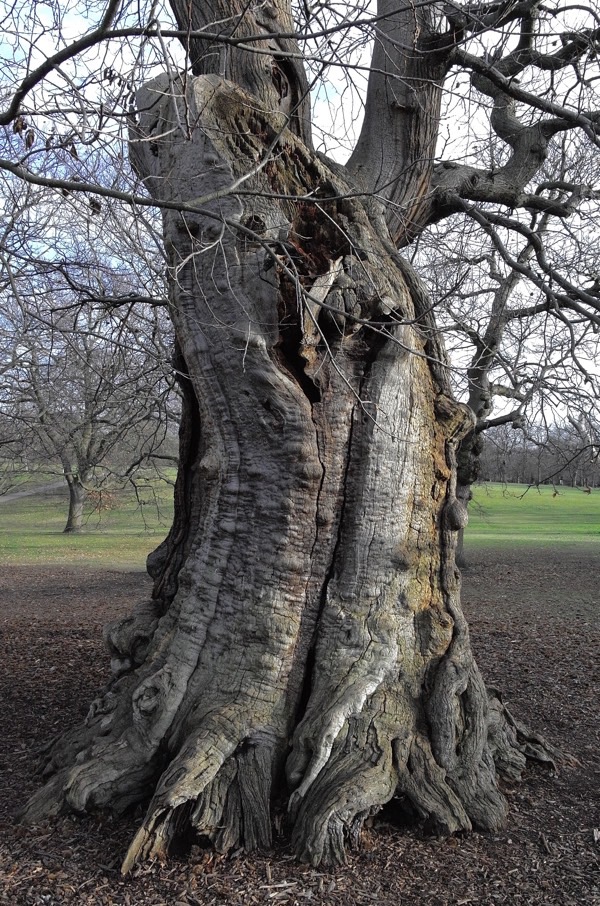
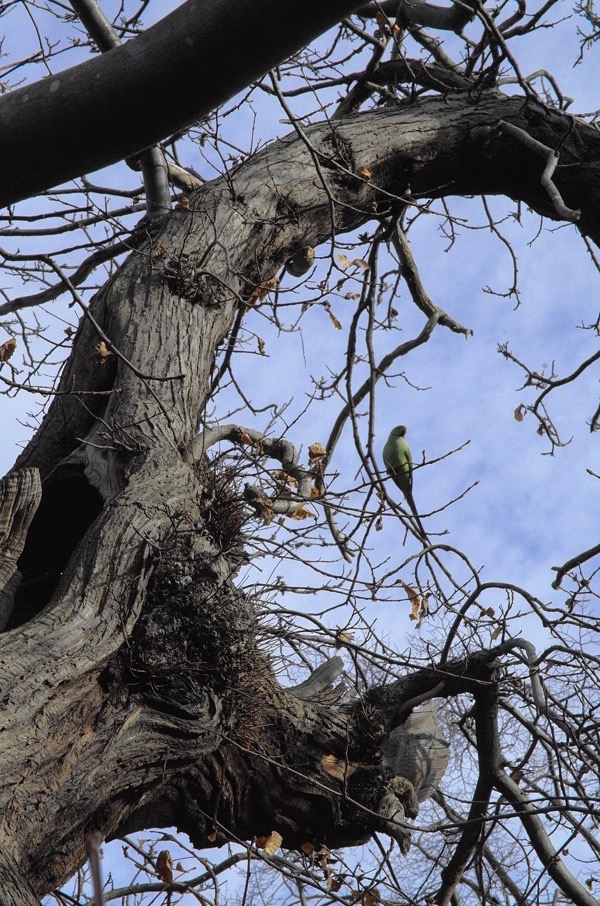
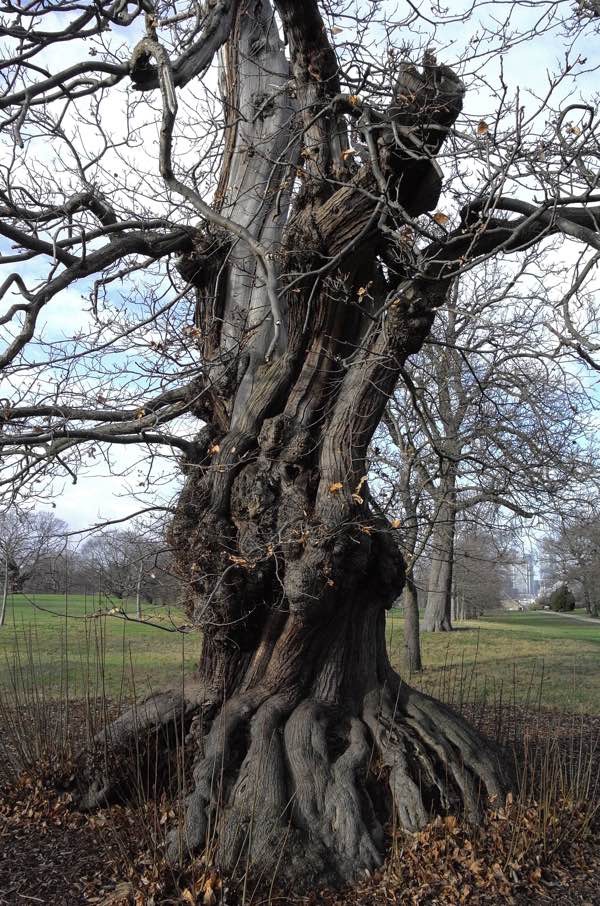
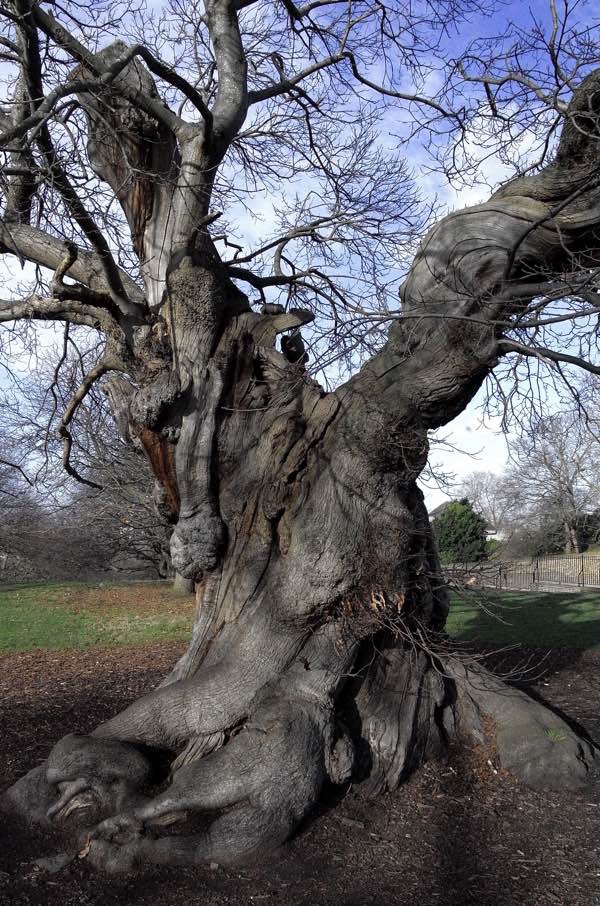

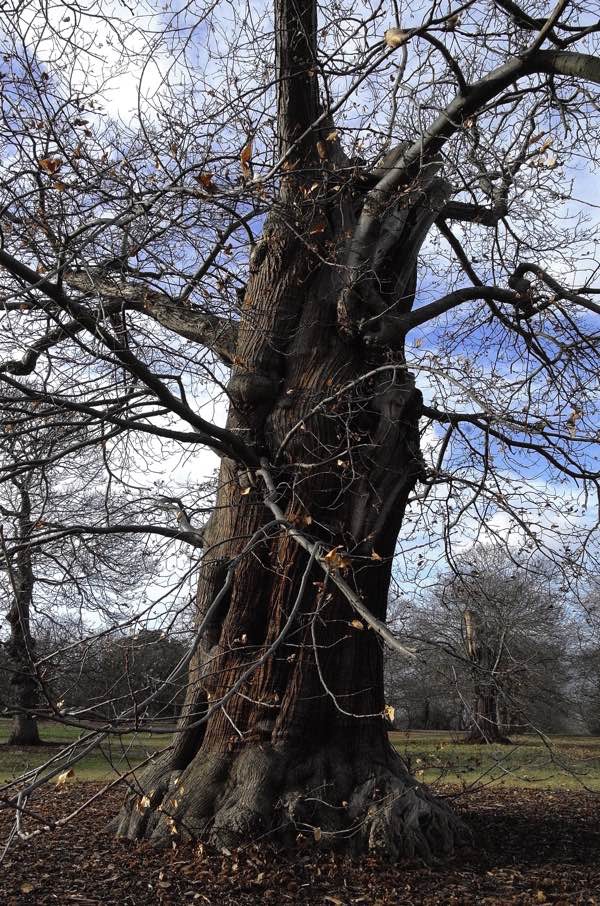
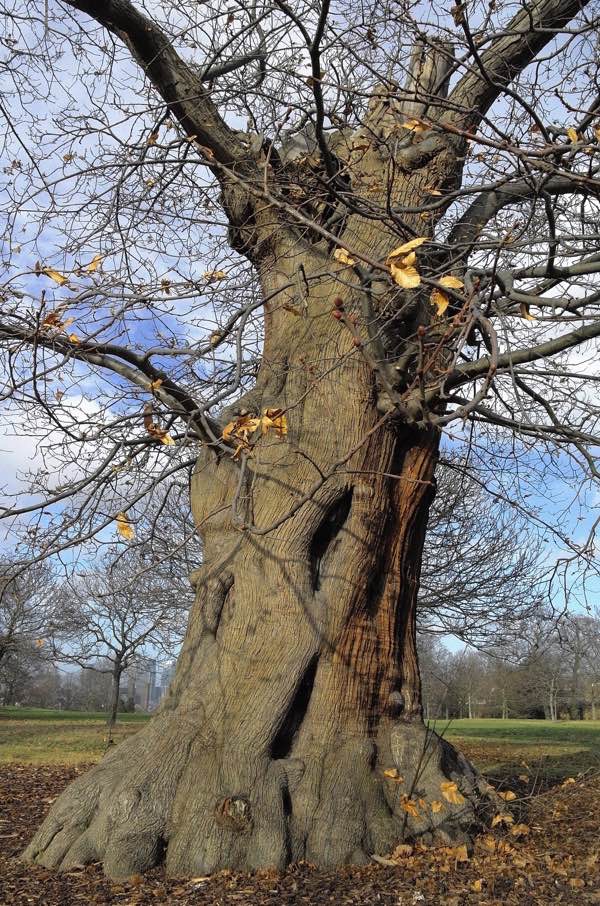
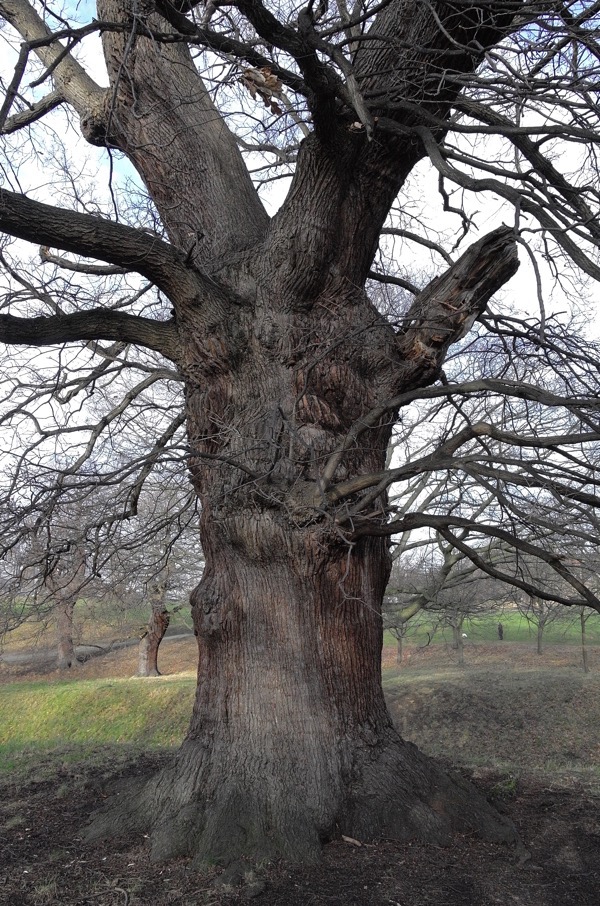
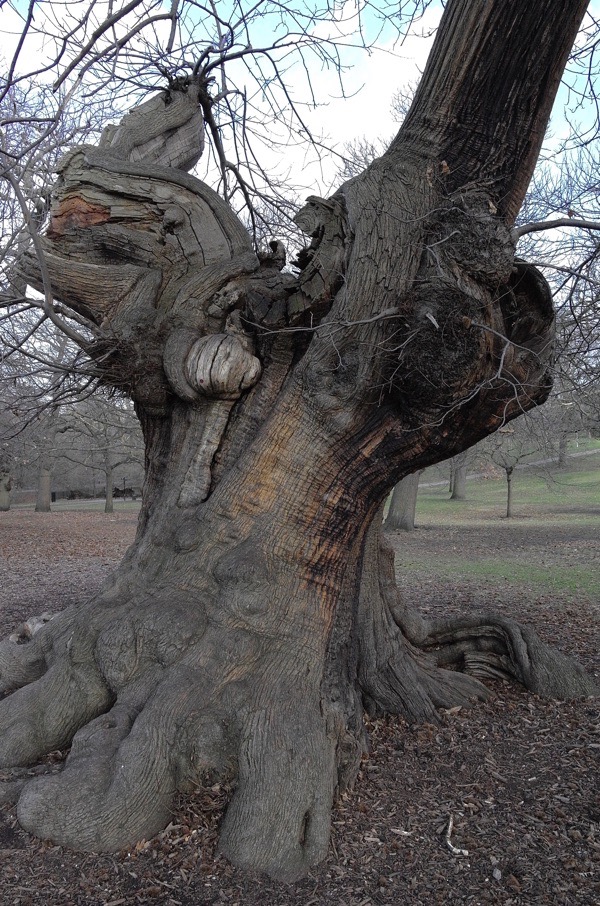
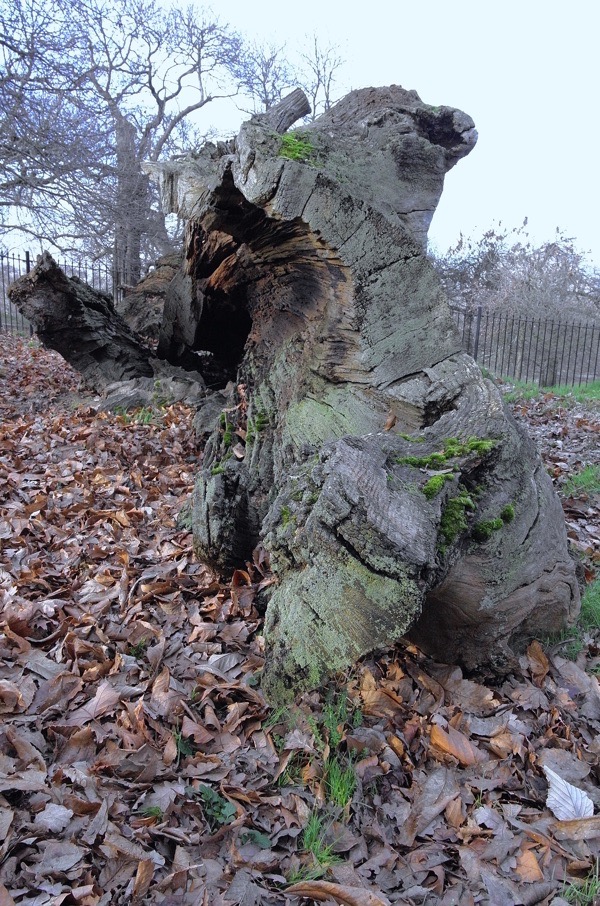
Queen Elizabeth’s Oak dating from the twelfth century
You may also like to read about
Write Your Own Blog In 2018
Spend a weekend with me in an eighteenth century weaver’s house in Fournier St, enjoy delicious lunches, savour freshly baked cakes from historic recipes, discover the secrets of Spitalfields Life and learn how to write your own blog
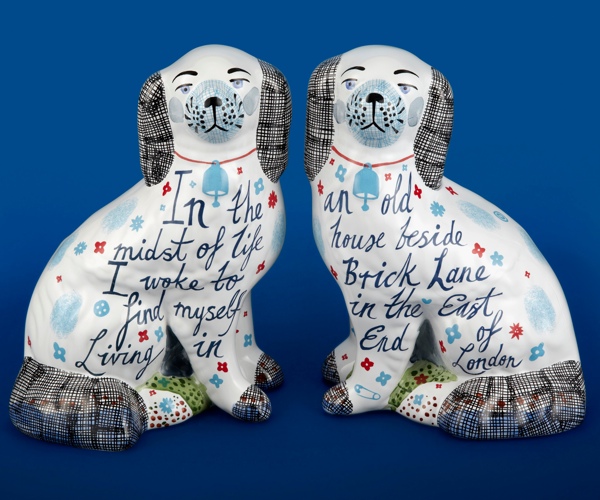
HOW TO WRITE A BLOG THAT PEOPLE WILL WANT TO READ – 3rd & 4th FEBRUARY and 19th & 20th MAY
This course will examine the essential questions which need to be addressed if you wish to write a blog that people will want to read.
“Like those writers in fourteenth century Florence who discovered the sonnet but did not quite know what to do with it, we are presented with the new literary medium of the blog – which has quickly become omnipresent, with many millions writing online. For my own part, I respect this nascent literary form by seeking to explore its own unique qualities and potential.” – The Gentle Author
COURSE STRUCTURE
1. How to find a voice – When you write, who are you writing to and what is your relationship with the reader?
2. How to find a subject – Why is it necessary to write and what do you have to tell?
3. How to find the form – What is the ideal manifestation of your material and how can a good structure give you momentum?
4. The relationship of pictures and words – Which comes first, the pictures or the words? Creating a dynamic relationship between your text and images.
5. How to write a pen portrait – Drawing on The Gentle Author’s experience, different strategies in transforming a conversation into an effective written evocation of a personality.
6. What a blog can do – A consideration of how telling stories on the internet can affect the temporal world.
SALIENT DETAILS
The next courses will be held at 5 Fournier St, Spitalfields on 3rd & 4th February and also 19th & 20th May. Each course runs from 10am-5pm on Saturday and 11am-5pm on Sunday.
Lunch will be catered by Leila’s Cafe of Arnold Circus and tea, coffee & cakes by the Townhouse are included within the course fee of £300.
Accomodation at 5 Fournier St is available upon enquiry to Fiona Atkins fiona@townhousewindow.com
Email spitalfieldslife@gmail.com to book a place on the course.
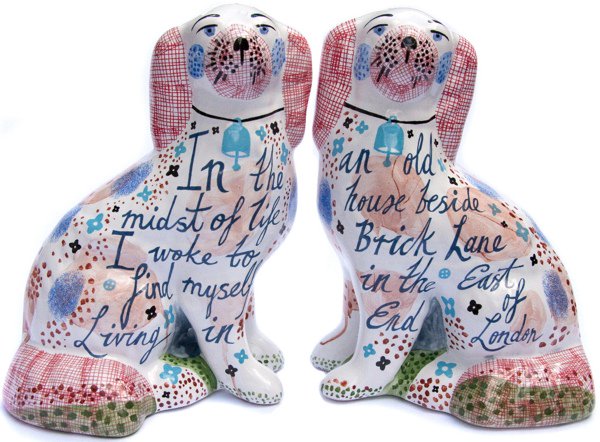
Comments by students from courses tutored by The Gentle Author
“I highly recommend this creative, challenging and most inspiring course. The Gentle Author gave me the confidence to find my voice and just go for it!”
“Do join The Gentle Author on this Blogging Course in Spitalfields. It’s as much about learning/ appreciating Storytelling as Blogging. About developing how to write or talk to your readers in your own unique way. It’s also an opportunity to “test” your ideas in an encouraging and inspirational environment. Go and enjoy – I’d happily do it all again!”
“The Gentle Author’s writing course strikes the right balance between addressing the creative act of blogging and the practical tips needed to turn a concept into reality. During the course the participants are encouraged to share and develop their ideas in a safe yet stimulating environment. A great course for those who need that final (gentle) push!”
“I haven’t enjoyed a weekend so much for a long time. The disparate participants with different experiences and aspirations rapidly became a coherent group under The Gentle Author’s direction in a gorgeous house in Spitalfields. There was lots of encouragement, constructive criticism, laughter and very good lunches. With not a computer in sight, I found it really enjoyable to draft pieces of written work using pen and paper. Having gone with a very vague idea about what I might do I came away with a clear plan which I think will be achievable and worthwhile.”
“The Gentle Author is a master blogger and, happily for us, prepared to pass on skills. This “How to write a blog” course goes well beyond offering information about how to start blogging – it helps you to see the world in a different light, and inspires you to blog about it. You won’t find a better way to spend your time or money if you’re considering starting a blog.”
“I gladly traveled from the States to Spitalfields for the How to Write a Blog Course. The unique setting and quality of the Gentle Author’s own writing persuaded me and I was not disappointed. The weekend provided ample inspiration, like-minded fellowship, and practical steps to immediately launch a blog that one could be proud of. I’m so thankful to have attended.”
“I took part in The Gentle Author’s blogging course for a variety of reasons: I’ve followed Spitalfields Life for a long time now, and find it one of the most engaging blogs that I know; I also wanted to develop my own personal blog in a way that people will actually read, and that genuinely represents my own voice. The course was wonderful. Challenging, certainly, but I came away with new confidence that I can write in an engaging way, and to a self-imposed schedule. The setting in Fournier St was both lovely and sympathetic to the purpose of the course. A further unexpected pleasure was the variety of other bloggers who attended: each one had a very personal take on where they wanted their blogs to go, and brought with them an amazing range and depth of personal experience. “
“I found this bloggers course was a true revelation as it helped me find my own voice and gave me the courage to express my thoughts without restriction. As a result I launched my professional blog and improved my photography blog. I would highly recommend it.”
“An excellent and enjoyable weekend: informative, encouraging and challenging. The Gentle Author was generous throughout in sharing knowledge, ideas and experience and sensitively ensured we each felt equipped to start out. Thanks again for the weekend. I keep quoting you to myself.”
“My immediate impression was that I wasn’t going to feel intimidated – always a good sign on these occasions. The Gentle Author worked hard to help us to find our true voice, and the contributions from other students were useful too. Importantly, it didn’t feel like a ‘workshop’ and I left looking forward to writing my blog.”
“The Spitafields writing course was a wonderful experience all round. A truly creative teacher as informed and interesting as the blogs would suggest. An added bonus was the eclectic mix of eager students from all walks of life willing to share their passion and life stories. Bloomin’ marvellous grub too boot.”
“An entertaining and creative approach that reduces fears and expands thought”
“The weekend I spent taking your course in Spitalfields was a springboard one for me. I had identified writing a blog as something I could probably do – but actually doing it was something different! Your teaching methods were fascinating, and I learnt a lot about myself as well as gaining very constructive advice on how to write a blog. I lucked into a group of extremely interesting people in our workshop, and to be cocooned in the beautiful old Spitalfields house for a whole weekend, and plied with delicious food at lunchtime made for a weekend as enjoyable as it was satisfying. Your course made the difference between thinking about writing a blog, and actually writing it.”
“After blogging for three years, I attended The Gentle Author’s Blogging Course. What changed was my focus on specific topics, more pictures, more frequency, more fun. In the summer I wrote more than forty blogs, almost daily from my Tuscan villa on village life and I had brilliant feedback from my readers. And it was a fantastic weekend with a bunch of great people and yummy food.”
“An inspirational weekend, digging deep with lots of laughter and emotion, alongside practical insights and learning from across the group – and of course overall a delightfully gentle weekend.”
“The course was great fun and very informative, digging into the nuts and bolts of writing a blog. There was an encouraging and nurturing atmosphere that made me think that I too could learn to write a blog that people might want to read. – There’s a blurb, but of course what I really want to say is that my blog changed my life, without sounding like an idiot. The people that I met in the course were all interesting people, including yourself. So thanks for everything.”
“This is a very person-centred course. By the end of the weekend, everyone had developed their own ideas through a mix of exercises, conversation and one-to-one feedback. The beautiful Hugenot house and high-calibre food contributed to what was an inspiring and memorable weekend.”
“It was very intimate writing course that was based on the skills of writing. The Gentle Author was a superb teacher.”
“It was a surprising course that challenged and provoked the group in a beautiful supportive intimate way and I am so thankful for coming on it.”
“I did not enrol on the course because I had a blog in mind, but because I had bought TGA’s book, “Spitalfields Life”, very much admired the writing style and wanted to find out more and improve my own writing style. By the end of the course, I had a blog in mind, which was an unexpected bonus.”
“This course was what inspired me to dare to blog. Two years on, and blogging has changed the way I look at London.”
So Long, Dorothy Rendell
I feel touched and privileged to have been given the eleventh hour opportunity last year to interview Artist Dorothy Rendell who died yesterday. It is a matter of regret that she did not receive the recognition she deserved for her painting earlier in her life, yet I take consolation that she died with a copy of my interview at her bedside and she took great delight in the many appreciative comments she received for her work, regarding this late public acknowledgement as vindication of a kind.
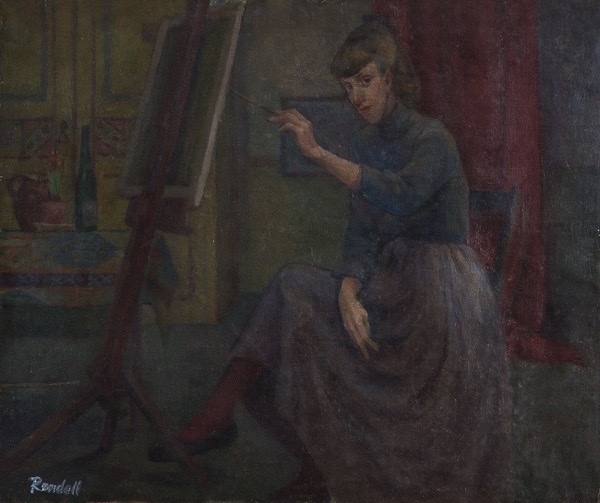
Self portrait by Dorothy Rendell
In recent months, I enjoyed visiting Dorothy Rendell to hear her stories, admire her paintings and share her company. At ninety-four years old, Dorothy was taking her ease, relaxing in the warm with a glass of red wine and a cigarette while contemplating the winter sunlight in the garden of her tiny cottage at Mile End Place. Blessed with magnificent cheek bones and a profile worthy of Edith Sitwell, Dorothy was a natural raconteuse who possessed the hauteur of another age, tempered by an endearing, caustic sense of humour.
Studying at St Martin’s School of Art during World War Two, Dorothy began her career as an artist with a studio in Kensington where she encountered the likes of Henry Lamb, Carel Weight and Orovida Pissarro. Yet it was in Stepney working for more than forty years at Harry Gosling School that she discovered the joyful expression of her abilities and here she undertook a series of portraits of pupils that spanned her career.
Just a handful of unexhibited oil paintings bear witness to a significant talent which might have made Dorothy famous if she had received the recognition she deserved. Instead it led her to the East End – by way of Italy – and ultimately to a modest life of fulfilment as an inspirational and passionate art teacher.
“Very few people really say what they think and say it bluntly and openly regardless, they couch it round with tact, but I am not like that. At ninety-four, I do not belong to any age. When I think ‘fifty years ago today,’ it does not seem all that time ago to me.
I had to give up my art work because I had no money and I could not find anywhere to paint. I had a huge studio at the back of a house in Warwick Gardens, Kensington, which was freezing cold and falling down, the rain would drip in. It had once belonged to Jacob Epstein. It was the most romantic studio. People used to love coming round and I had constant visitors. I used to paint there but I wasted an awful lot of time working to make money when I should have been painting. I exhibited at the Leicester Gallery and at the Royal Academy, but I never had a solo show. I just put things up here and there. I muddled through life really, but I have had an interesting life.
I came to the East End because I could not get a job anywhere else, people were terribly against women artists. They still are in this country. I used to go for teaching jobs and I had very good credentials, including references from Henry Lamb, Vivian Pitchforth and Mr Dickie who was an Inspector of Schools, but I never got the job because some man would come along and swipe it. This used to infuriate me because I knew that I was better and I was better at teaching too. I never thought I would own a house and when I came to live in Mile End Place, people said, ‘You’re crazy, you’ve bought a load of rubble, but I think it’s marvellous!’ All of my life has been flukes like that.
I started drawing very early on, at ten years old. Dorothy Rushforth, my mother, came from the north of England and went to art school, she was quite advanced for her time. My father came from a long line of gentleman farmers in Devonshire and he was a bit of a villain. His family lost all their money through one of them being a gambler. So he travelled the world on luxury liners doing doubtful business deals and brought people back and my mother had to entertain them and cook for them. They just frittered away their lives.
My mother encouraged me to draw and when I was eighteen I got a prize for the best artist in the school but nobody mentioned it and nobody took me to prize giving. It is most extraordinary when I think about it now! Of course, the war was on and one was whisked from here to there.
I came up to London in wartime and I was by myself, I did not know a soul. I got one room in an attic in Pembroke Sq, Notting Hill Gate. There were lots of interesting people and a very good cinema there, with marvellous French films, I had never seen anything like them. It was exciting. Then I got into St Martin’s School of Art through doing evening classes because I had to work in the day to earn money. At art school, I met Vivian Pitchforth who was a well known draftsman and if you were taught how to draw by him, it was a great honour. Somehow, he noticed me. I do not know how because I never said a word to anyone.
The art school was in Charing Cross Rd then, it was lovely. I inhabited all those dumps in Old Compton St where you got cheap meals for tuppence ha’penny. We all used to go to them, I am quite sure we were eating horseflesh! There were lots of little cafes, it was wonderful. Robert Beulah who was a Royal Academician, his mother ran a cafe there and she quite liked me, she thought I was quiet and well behaved – so we had a little clientele there. It was very good. I loved my years in Soho, living in that awful attic in Notting Hill Gate which is probably worth a fortune now! How life changes.
I met Henry Lamb, the artist, and I thought he was marvellous, he was very quiet and very scholarly. He became my friend and he followed my work when I left art school, and he used to write to me over the years. I never earned any money as an artist, I had not got the gift of making money, I would always belittle my work. I do a picture and think, ‘That’s quite good’ but then I would think ‘That bit there needs changing.’ I remember doing a painting of lemons, I was quite pleased with it. I did it in my father’s bank which was open on Sunday, so I put all these lemons on the counter with a cauliflower and I painted them. I did not think much of it yet years after I put it in an exhibition and people said, ‘You’re brilliant!’ It means a lot when you are eighteen but there you are, what does it matter now? I enjoyed doing it.
I tried getting my work exhibited by galleries but it was an awful fag, I made a living by doing odd jobs. I travelled a lot and I read a terrific amount because I was too shy to talk to people – and that was a good thing because I got a wide vocabulary. I travelled all over Italy, you did not hitch then but I got lifts somehow and I used to draw in cafes. I found that this was terribly popular and I could draw because of my marvellous tuition. It was wonderful.
When I first went to Florence, somebody sent me there and said, ‘Try and make a go of it!’ I did not have any money, if I had a few quid I was surprised. I shared a house with extraordinary people. One or two very wealthy, one or two officers in the army, a Spanish girl, various other people, and me. I used to go out and draw in the evening because I love watching Italian life outdoors. Those drawings are scattered all over Italy. It was fun, I loved drawing ordinary people sitting around chatting. They did not mind where I came from. I loved it. I would love to be Italian.
Eventually, I came to the East End and I had to go round awful schools. I was not used to these East End types of all nationalities but I stuck it out – I think I must had a bit of character – and I eventually got a job at Harry Gosling School where they had a remarkable headmistress. She was astonishing, she became my best friend instantly. She was called Sybil Mary Parry. She got me going on life really. She got some brilliant results. She was a state scholar, which means she was the best eighteen year old taking exams in the county. She was very intelligent and she had a big clientele of boyfriends, who all played rugby for Wales. I can still hear here shrieking across the room when the television was on and Wales were playing.
The school was in a very poor part of the East End and I could see that for the children it was life or death to get a good education, and she saw to it that they did. She was very eccentric, she would talk to people all the time and even go round to the betting shop herself to put her ten bob on the Derby. Sibyl used to keep a bottle of sherry in her filing cabinet. She was a marvellous character. She is not forgotten.
She used to publicise my children’s art and I became quite well known with the inspector. He really loved this school and he used to come every week or so just to see it. What a school! It turned out some marvellous people and I still hear from them. Old people get in touch and say, ‘You used to teach me.’
You are dropped in, and you either survive or you die – but I survived.”
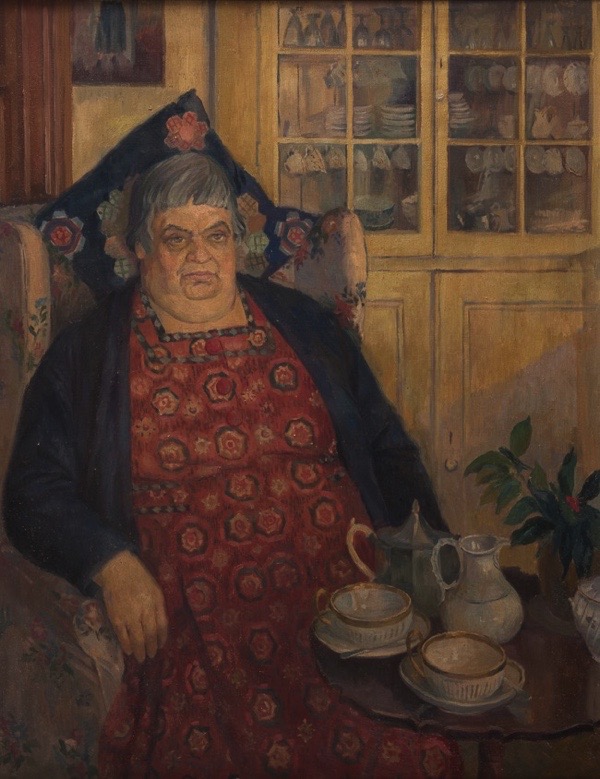
Orovida Pissarro, Camille Pissarro’s granddaughter. “I met her through Carel Weight whom I encountered in Warwick Gardens, he had a studio down the road. One day, I was looking outside a junk shop in the Earl’s Court Rd and he asked me, ‘What are you wanting?’ I said, ‘I’m going out to buy a chair because I have a quartet coming to practice in my studio and I have not got four chairs.’ He said, ‘Come with me, I can give you a chair.’ So he took me to his house and we became friends.
I used to cook for Orovida at her home in Redcliffe Gardens, she was a great gourmet. She was Jewish but she loved roast pork. After the meal, she would go to sleep and I would be painting away. She had no children, she was hermaphrodite. I realised that very quickly. She had lovely things and she would get out bundles of letters from Zola. I loved going to see her but she was eccentric and very demanding, she liked daft things on the television like Doctor Finlay’s Casebook. She used to have a birthday party every year with a lot of interesting people and I went along with Carel Weight, and we would have a feast of roast pork. She was a very good painter and her paintings were quite interesting. Orovida liked being painted and it was a marvellous interior with lovely things round her. I knew her for years until she died.”
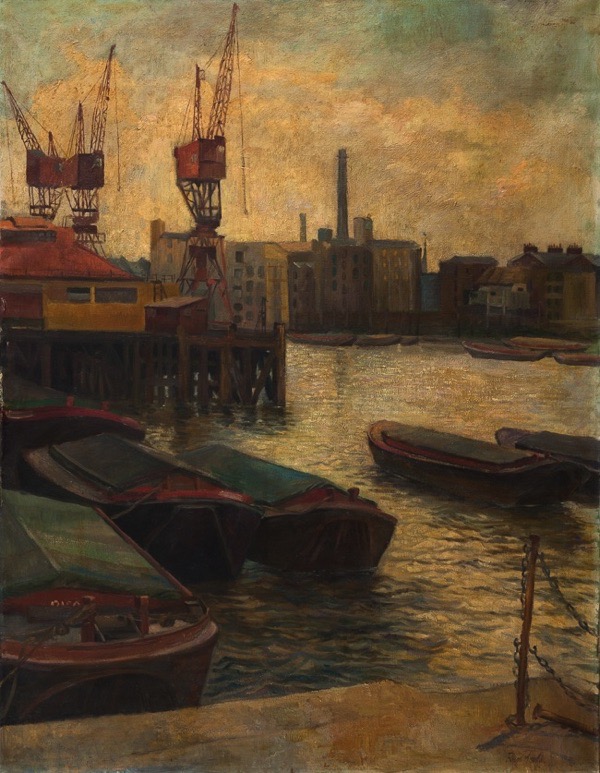
Wapping – “I got a window from a pub beside Wapping Pier Head and it took me weeks. I did drawings and squared it up. I am not one of those who does quick ones.”
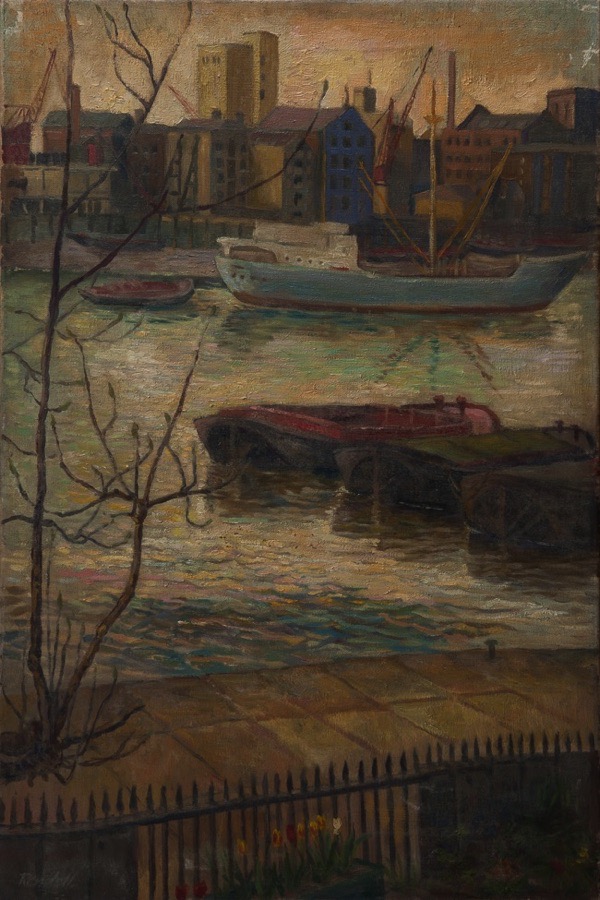
Wapping, View from an upper window at Wapping Pier Head in spring
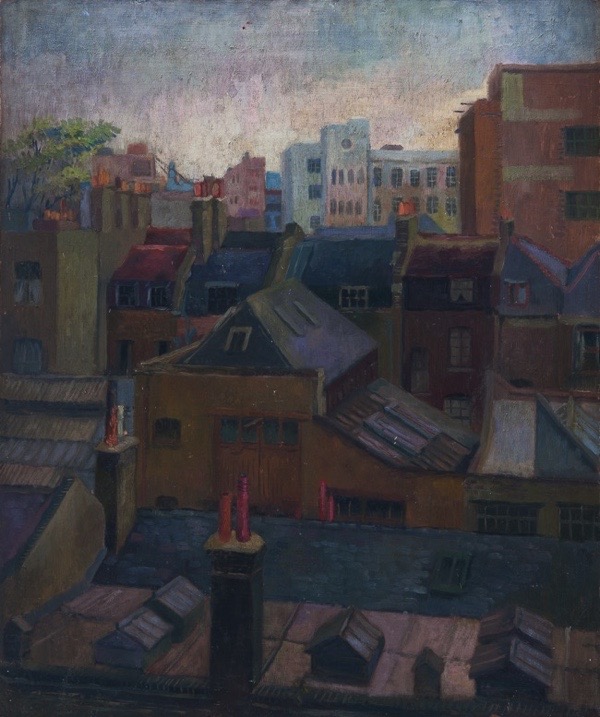
View across Mount Pleasant from Doughty St -“I had a friend who had a flat there, next door to Dickens’ House. I had many a meal there and stayed the night. She was a teacher and a writer, but she was always having affairs in Paris. With her job and boyfriends, the crises she put me through. A good friend.”
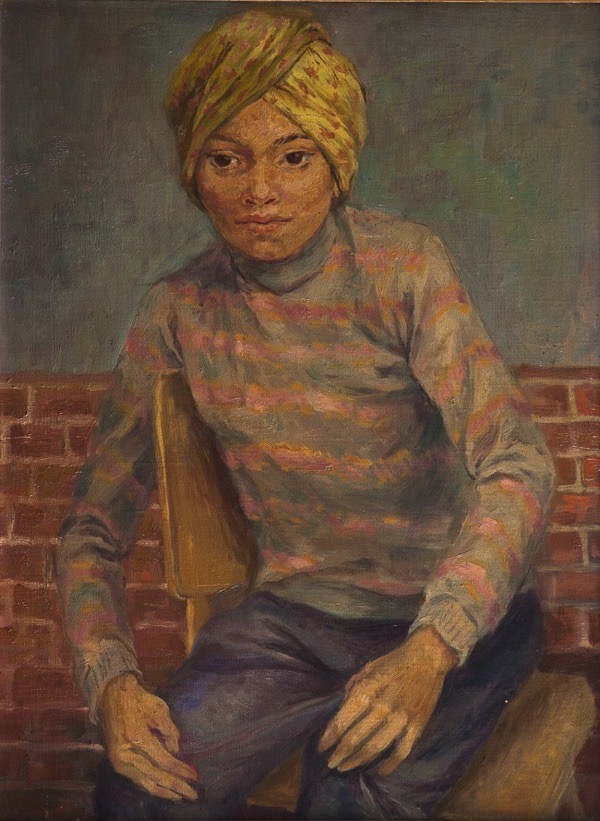
One of Dorothy’s pupils at Harry Gosling School
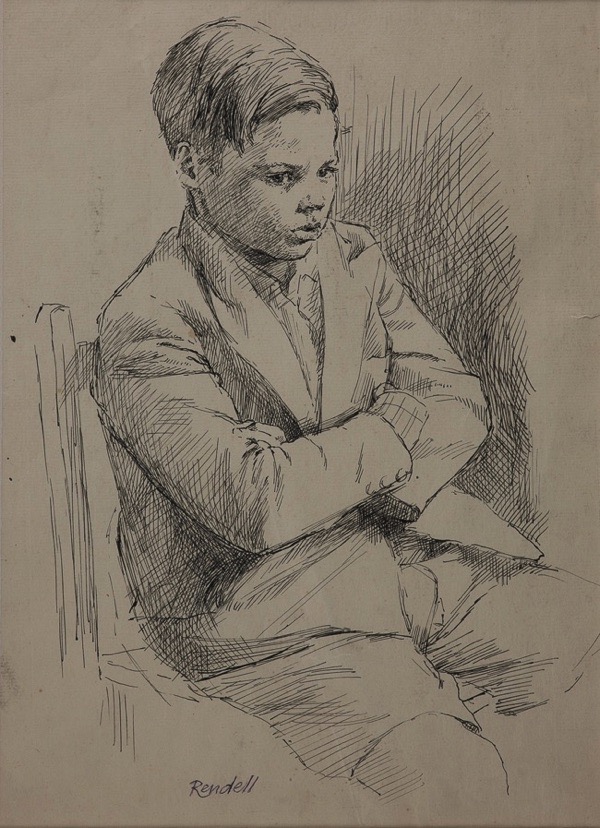
“This little boy was one of the pupils I taught. A little horror! He’d been badly behaved – so the head teacher told me, ‘Take him and make him sit for you!’ So he had to sit still for about two or three days. I think I did a painting of him too”
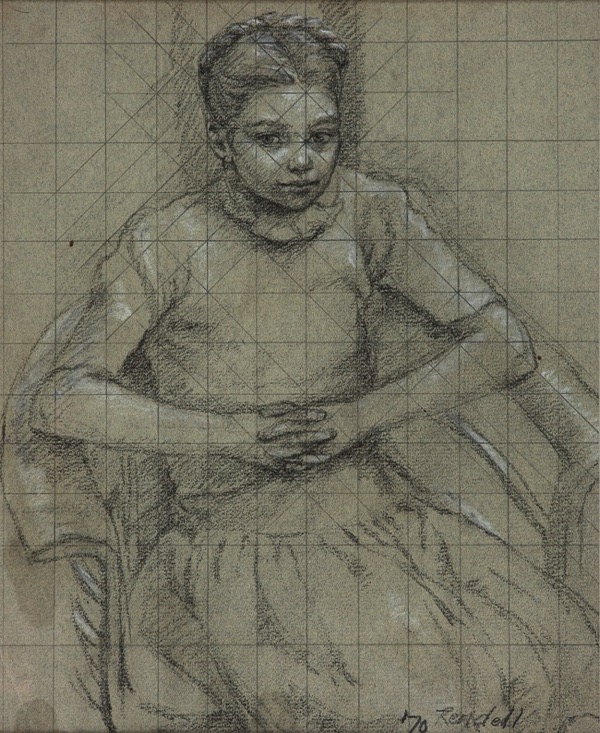
“This is a nice little girl who had a terrible life. She was pretty and I liked her, so I drew her. I think I probably went to her house. It was squared up for a painting but I don’t know what happened to the painting. Children are very good to draw as long as they are not commissioned, when they are commissioned they are hellish. One mother came to me and wanted a portrait of her daughter. She looked a nice kid and I didn’t charge very much. She wore jeans, but when she turned up she was all dressed up – it was awful!”
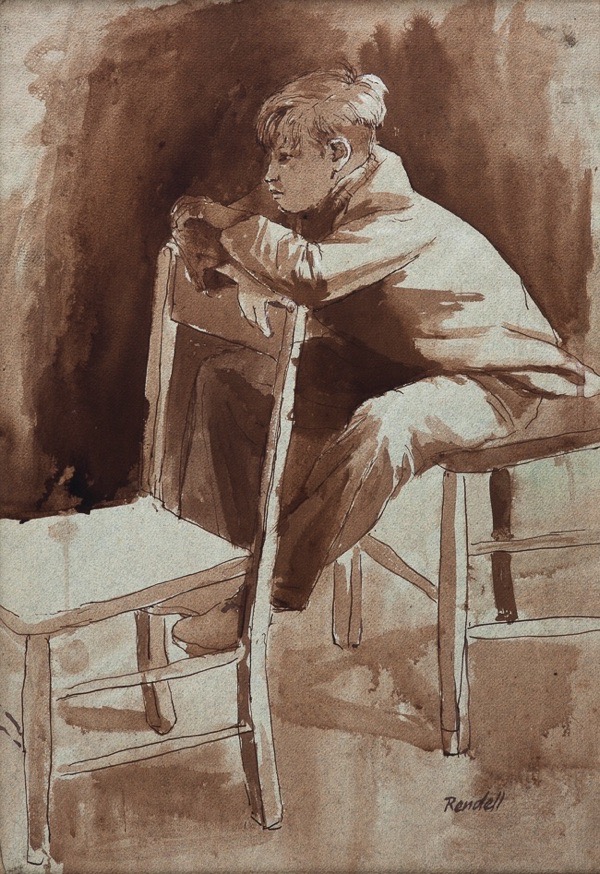
“I used to give them their drawings. They used to beg me for them and were so persuasive that I used to hand them over, until one day a boy took my drawing and folded it up in half and put it in his pocket. I nearly screamed! They never did that in Italy, they treasure their drawings there.”
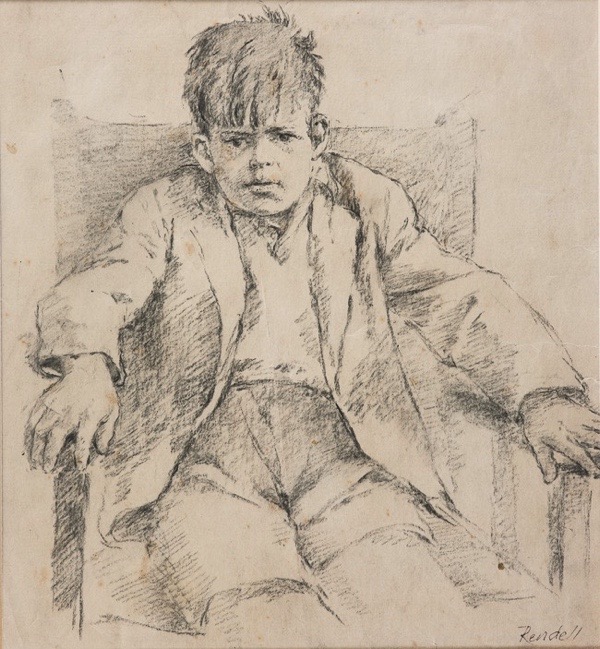
“This is Harry. Miss Parry, the head teacher, she adored this drawing. Harry was really thick and he used to look at you with that blank expression, but he was marvellously funny and he made a tremendous effort. Somebody who used to work with me said, ‘I’m going to bring Harry to Miss Parry’s funeral,’ and I said, ‘But he’ll be middle aged now.’ She found him and he came to the funeral. I couldn’t believe it. He was a lorry driver for Charringtons.”
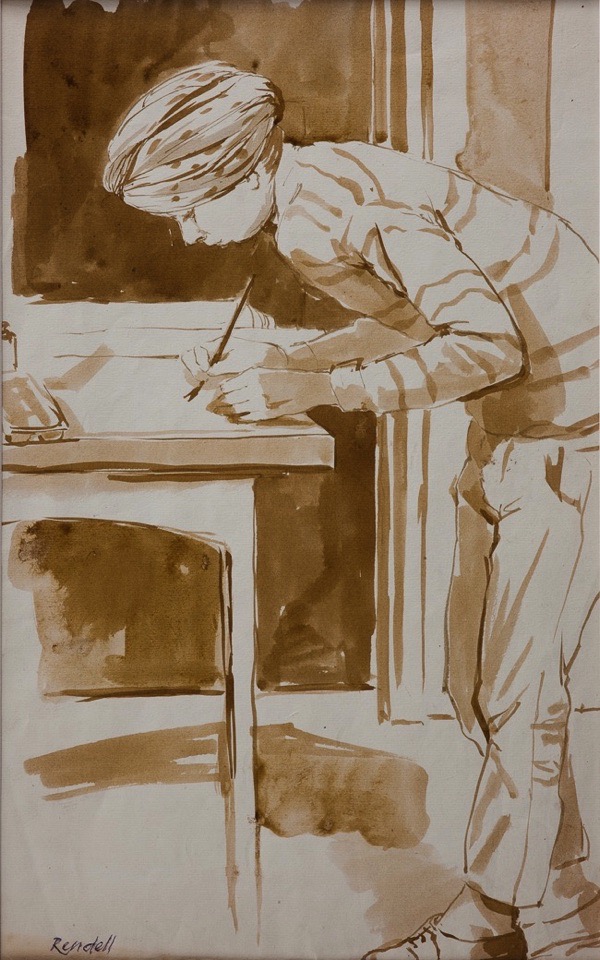
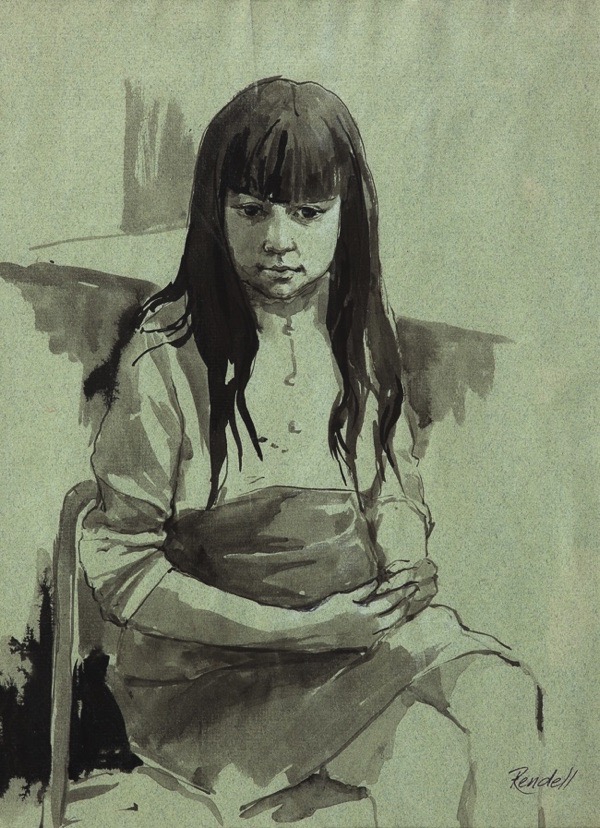
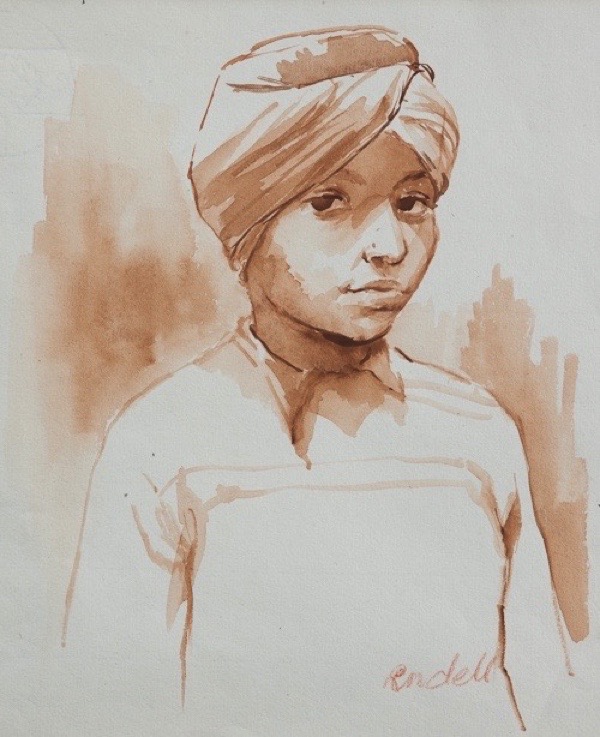
“This was a little Afghan girl, I thought she was beautiful. She was a vain little girl who would sit for hours in the art room. Miss Parry thought it was better for pupils to sit with me than to sit and do nothing, so she would send the badly behaved ones to the art room and I would draw them. They liked being drawn, they were flattered by it.”
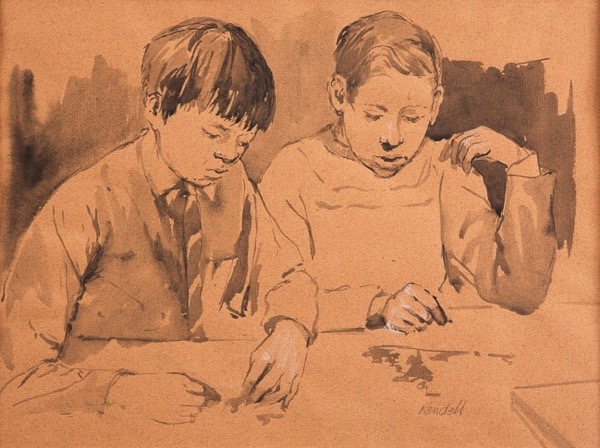
“I never had any absentees from my art classes, they were always very keen. As my head teacher used to say, ‘They’ll always go to art with you!’ They enjoyed doing it. There were always a certain number who could not draw, who found it very difficult. I would get them started making patterns but they would think they could not do that. So I would say, ‘Yes you can.’ I would get something like an electric light bulb and say, ‘Make some patterns from what you can see with that.’ – repeating and so forth. And they would come up with some marvellous things. Then they got keen. You have to think up strange things to get children really interested.”
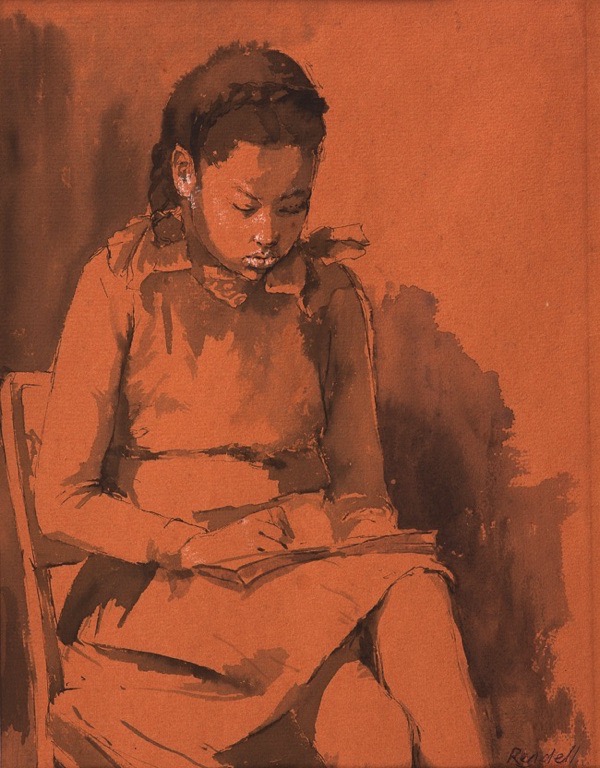
“This little girl, I got to know her mother and father, and she went on to grammar school. The children of immigrants always did much better than the English ones because their parents wanted them to work.”
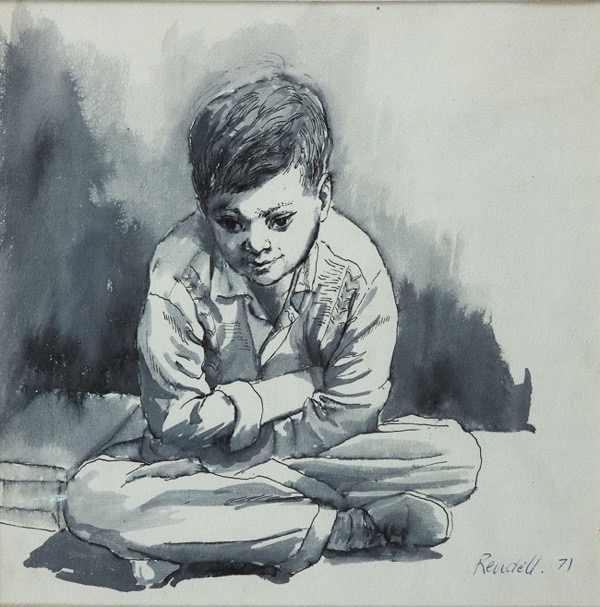
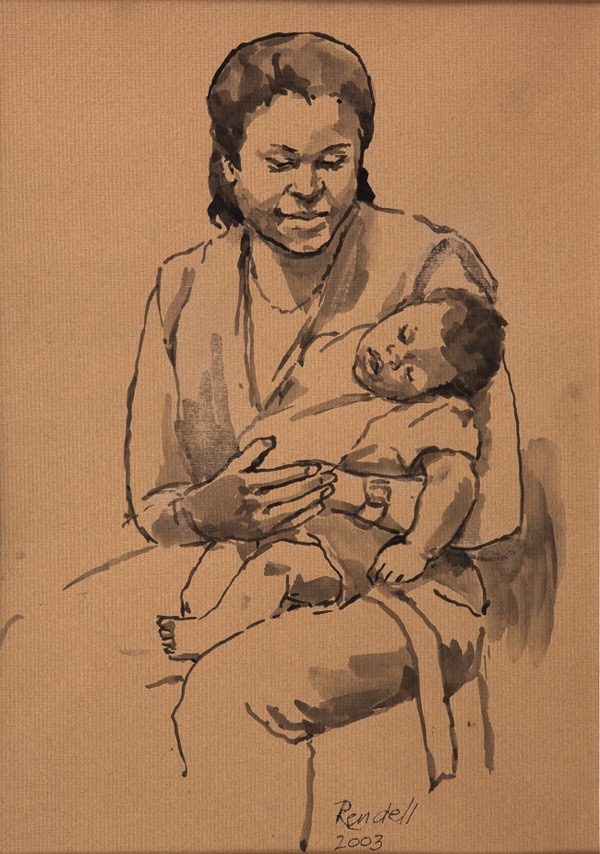
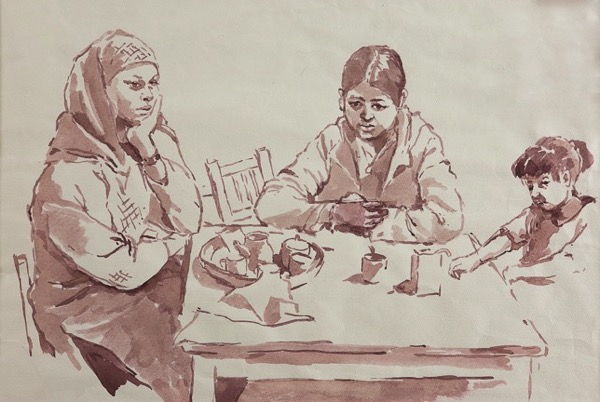
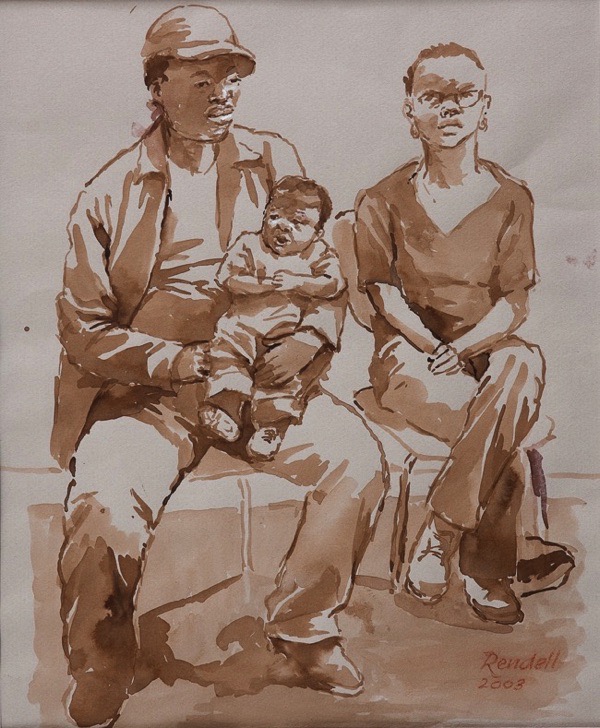
“This was in the doctor’s waiting room. Quite a well known doctor round here invited me to draw there.”
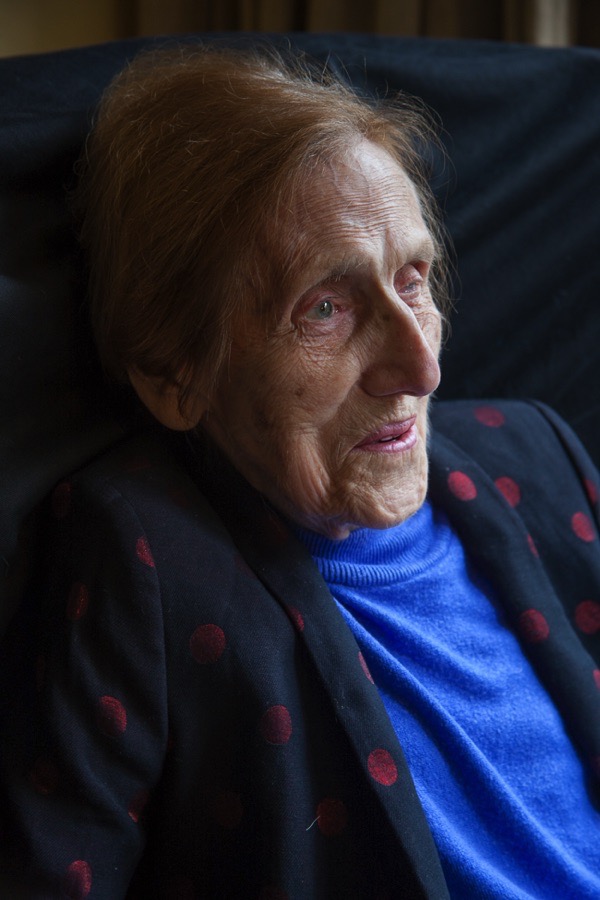
“When I started teaching I thought I would teach in the West End but they would not take women, so I had to move to the East End – but I don’t regret that at all because I got so wrapped up in it and there were all these places where I could go and draw.” Dorothy Rendell (1924-2018)
Paintings copyright © Estate of Dorothy Rendell
Portrait of Dorothy Rendell at ninety-four © Lucinda Douglas Menzies
A Letter To Crest Nicholson
This is the text of my letter that was emailed to Crest Nicholson yesterday. A hard copy was also sent by guaranteed delivery to arrive at their corporate headquarters in Surrey today.
17th January 2018
To
It has come to my attention that you have used my photograph of the Bethnal Green Mulberry tree without my permission on your leaflets and in an exhibition for your proposed development of the former London Chest Hospital.
This photograph was first published on my blog www.spitalfieldslife.com on 24th April 2015.
Here is the link: https://spitalfieldslife.com/2015/04/24/the-oldest-tree-in-the-east-end/
I have appended a copy of the picture alongside a scan of your leaflet.
I am furious that a large company like Crest Nicholson should take my property with such brazen disregard for the law of copyright. There is no excuse for this disingenuous behaviour on your part.
I would never have given permission if you had sought it, but I cannot stop the use that has occurred and for that you should pay me a fee.
You will find my invoice for this usage accompanying this letter and I require confirmation from you on the following points:
1. You will cease circulating the leaflet with my photograph on it and destroy remaining copies.
2. You will remove my photograph from your exhibition.
3. You will make no further use of my photograph or reproduce it again in any medium.
Please understand that I take this breach of copyright very seriously and if I do not receive assurances from you on the three points above and payment in full within ten working days, I shall have no choice but to pursue action against you.
Yours sincerely
The Gentle Author
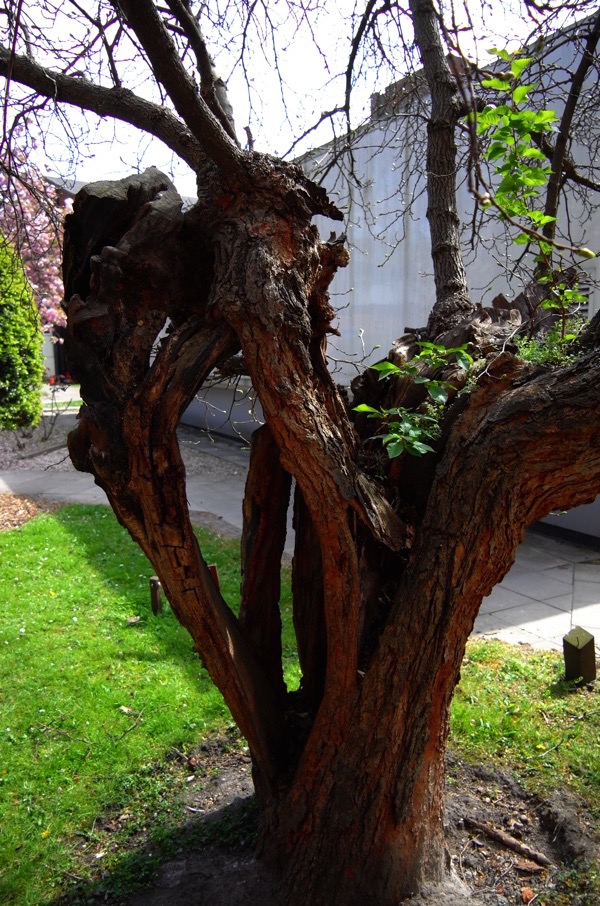
The Gentle Author’s photograph of the Bethnal Green Mulberry taken in April 2015 before Crest Nicholson purchased the London Chest Hospital
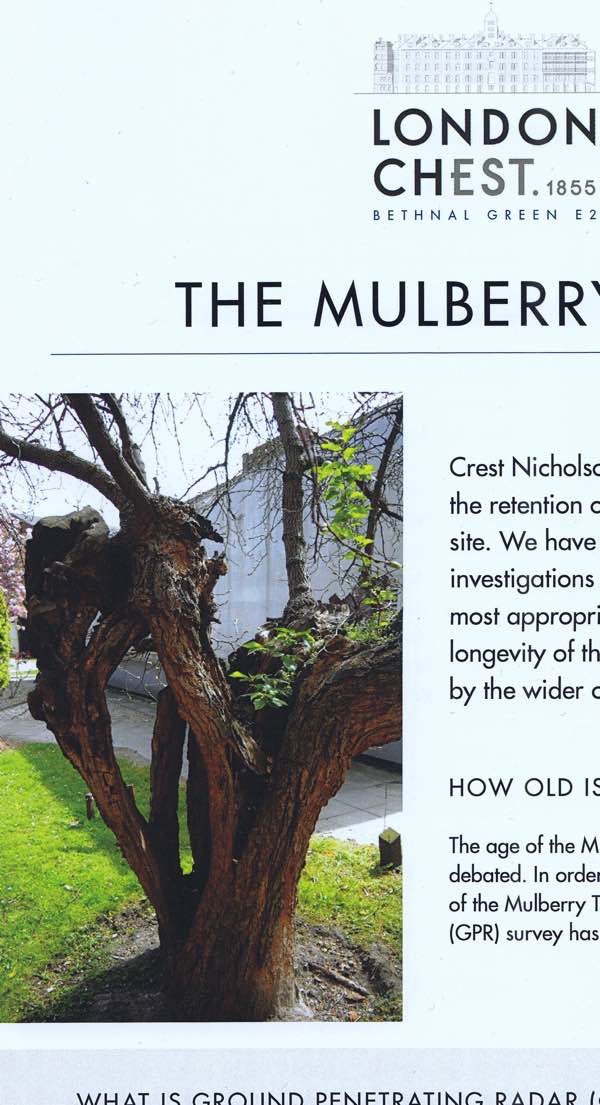
The Gentle Author’s photograph as reproduced without permission by Crest Nicholson in their leaflet and exhibition for their proposed London Chest Hospital development
You may also like to read about
Here We Go Round The Bethnal Green Mulberry
A Plea For The Bethnal Green Mulberry