Lucinda Douglas-Menzies At Billingsgate Market
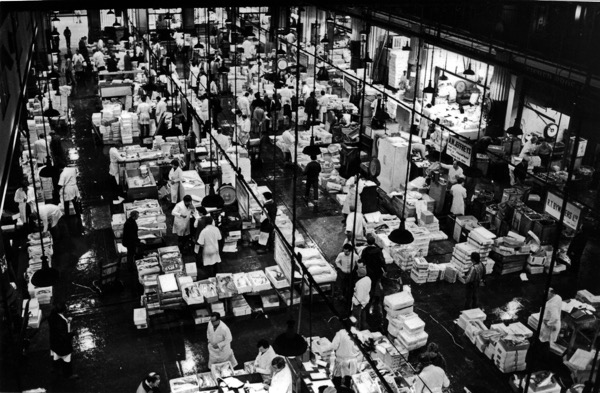
Contributing Photographer Lucinda Douglas-Menzies took these photographs, published for the first time today, just before old Billingsgate Market closed for good on 17th January 1982 – thirty-six years ago – capturing the last flurry of activity at the ancient market which had been operating almost unchanged for centuries next to London Bridge.
“I was working as a photographer’s assistant at the time and, knowing that the market was about to close its doors, went one morning very early around 5:00am, shown round by my friend Julian Birch who bought fish for restaurants. I remember metal chests of drawers with water dripping through them containing live eels squirming in each drawer and the ice house with years and years of ice built up on the walls where giant fish were stored, their tails standing up, frozen stiff. The porters in their grubby white overalls and leather hats for carrying heavy cold boxes of fish on their heads, displayed quick wits and innate humour despite the harsh working conditions.” Lucinda Douglas-Menzies
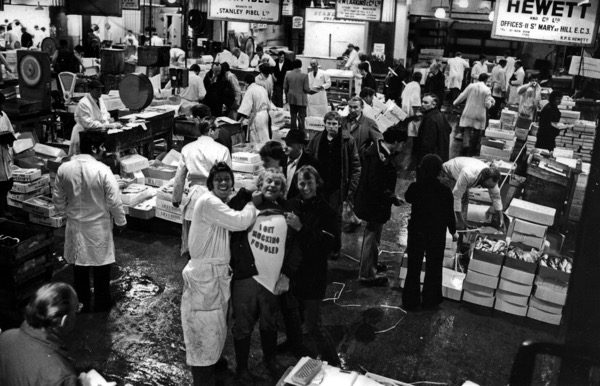
‘I get mucking fuddled’
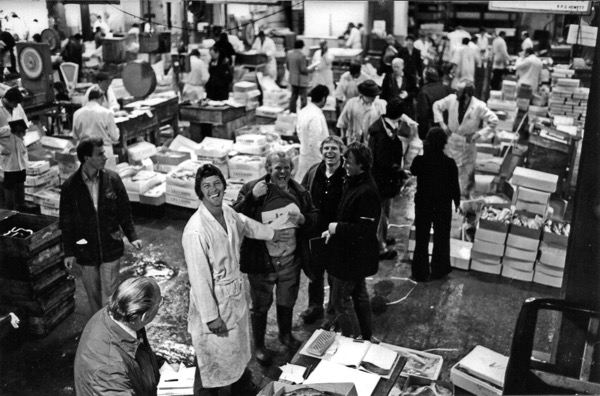
… a moment later
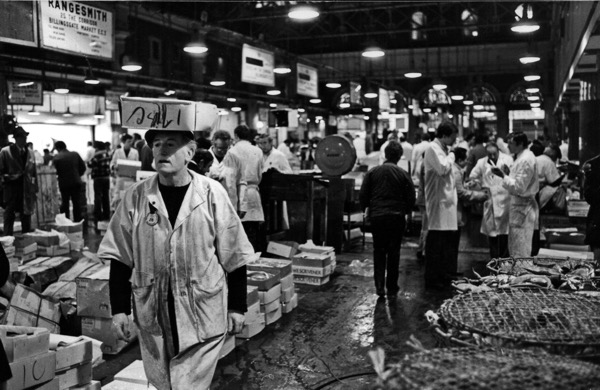
Porter with a box of crabs
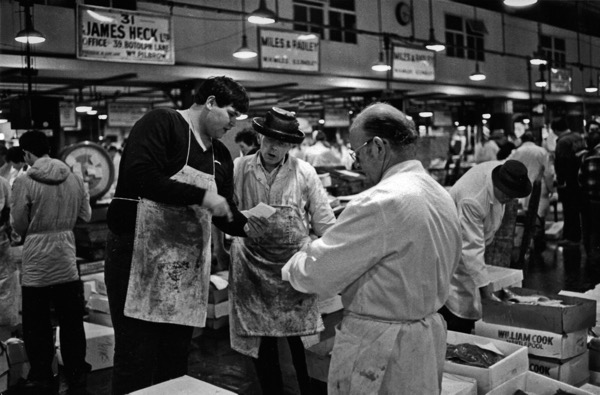
The man on the left is ‘Big Greg’
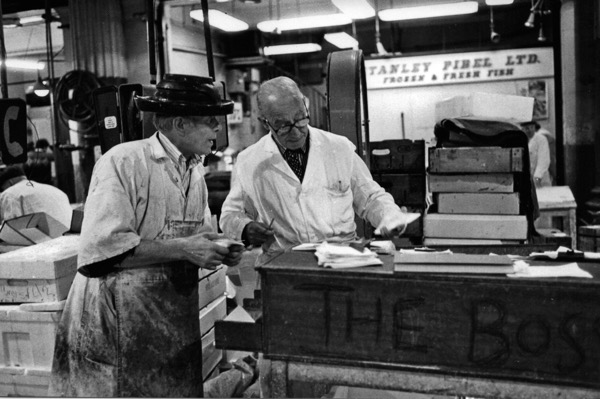
The Boss
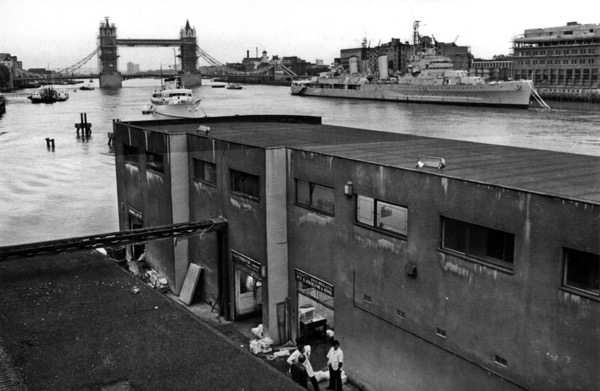
Looking towards Tower Bridge from Billingsgate
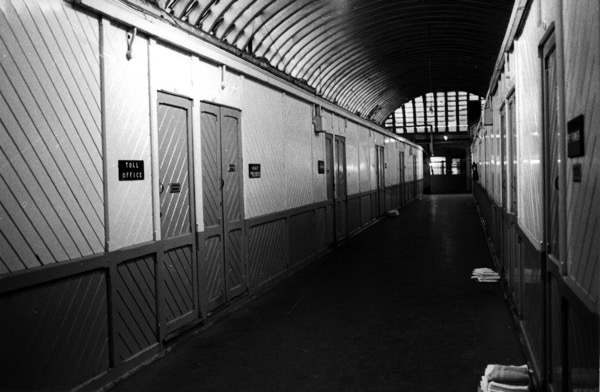
The Toll Office corridor at Billingsgate
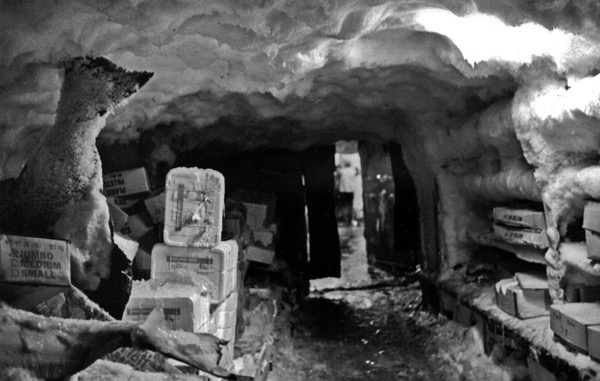
The ice house at Billingsgate
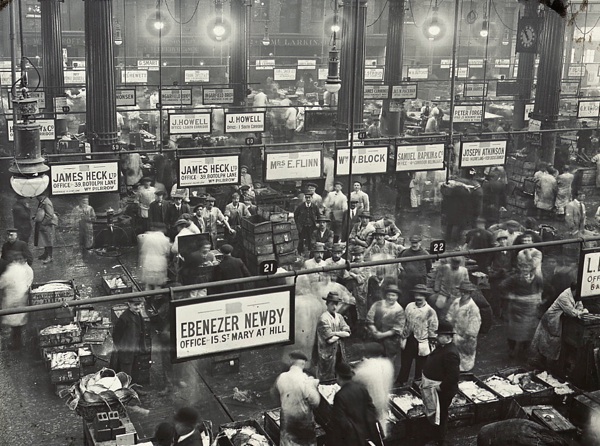
Billingsgate Market, c. 1910

Billingsgate 1809 by Thomas Rowlandson & Augustus Pugin
Photographs copyright © Lucinda Douglas Menzies
Archive images courtesy Bishopsgate Institute
You may like to take a look at these other Billingsgate stories
John Gillman’s Bus Tickets

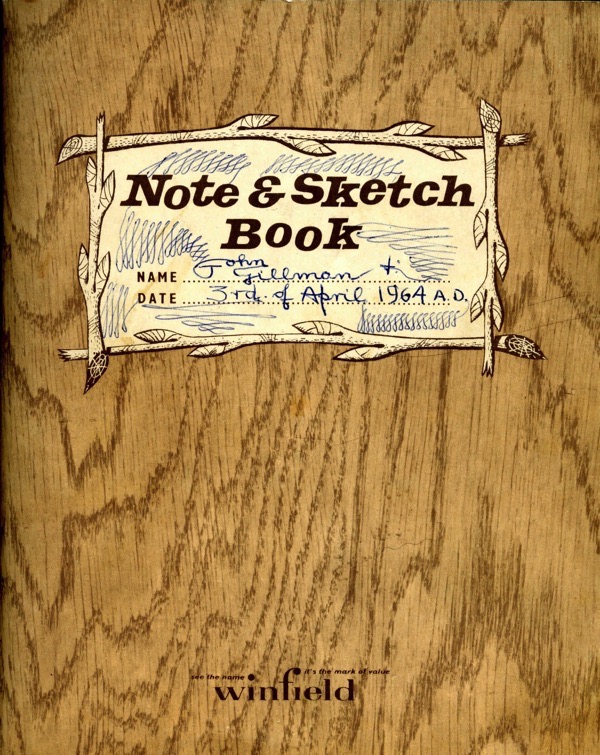
John Gillman, 1964
Look at this bright young lad in his snazzy red blazer with his hair so neatly combed, how he radiates intelligence and initiative – trust him to come up with a smart idea, like collecting every variety of London bus, trolley and tram ticket so that people might wonder at them half a century later in the age of contactless! Here John Gillman explains his cunning ploy –
“This album has followed me around for more than fifty years and survived house moves, down-sizings and other clear-out initiatives. Unlike other collections of mine (such as stamps & coins), that have long since disappeared, there was something about it that I believed to be important.
I had not looked at it for many years until The Gentle Author suggested the Bishopsgate Institute might like to add it to their archive, which – to my delight – they have. This prompted me to look at it again with a more considered gaze and what I found was quite surprising.
It was a slightly disconcerting but nonetheless enjoyable encounter with my younger self. The album contains a number of tickets that I bought between the ages of eleven and thirteen, along with an eclectic mix of older miscellaneous examples. So it is a like a diary of my youthful journeys taken.
In 1961, some friends and I discovered that there was enjoyment – and occasionally excitement – to be had by buying Red Rover bus tickets. These entitled you to unlimited travel at the weekend and there are seven examples in the album. We would head off as soon after the ticket became valid at 9:30 in the morning and return in the early evening for dinner. Occasionally, we would take a packed sandwich lunch but we would also eat out – usually fish and chips or, on one occasion, pie and mash with liquor in the East End.
We also held aspirations to purchase a Green Rover ticket one day which allowed access to country buses but, since I do not have one in the collection, I must presume we never did this. We planned to head off into Kent and visit Pratts Bottom – mainly because we found the name hilarious and wanted to see it on a signpost.
What strikes me most today are the detailed notes I wrote. Much of it is in my very best handwriting and, in some cases, I used a typewriter (although I have no idea where I gained access to one). I clearly undertook a lot of research and some items I still find fascinating. The ‘Workman’s Ticket,’ for example, with – as I noted assiduously – ‘unusual punch holes.’ And the special editions, such as those for the Festival of Britain in 1951 and Last Tram Week in 1952. Some are even earlier, issued before 1933, as indicated in my meticulous notes. There is also a collection of 1963 Christmas tickets in gay colours. I remember that the yellow version was particularly rare and the one in my album had obviously spent some time on the floor of the bus.
Each morning, on the way to school, we added up the digits that made up the ticket number – and, if they totalled twenty-one, it was going to be a lucky day. Some people believed that the initials next to the number on the older tickets foretold the initials of your future wife, which proved to be something of a challenge if it was just an ‘X’.”

(click to enlarge and study the tickets in detail)

(click to enlarge and study the tickets in detail)

(click to enlarge and study the tickets in detail)

(click to enlarge and study the tickets in detail)
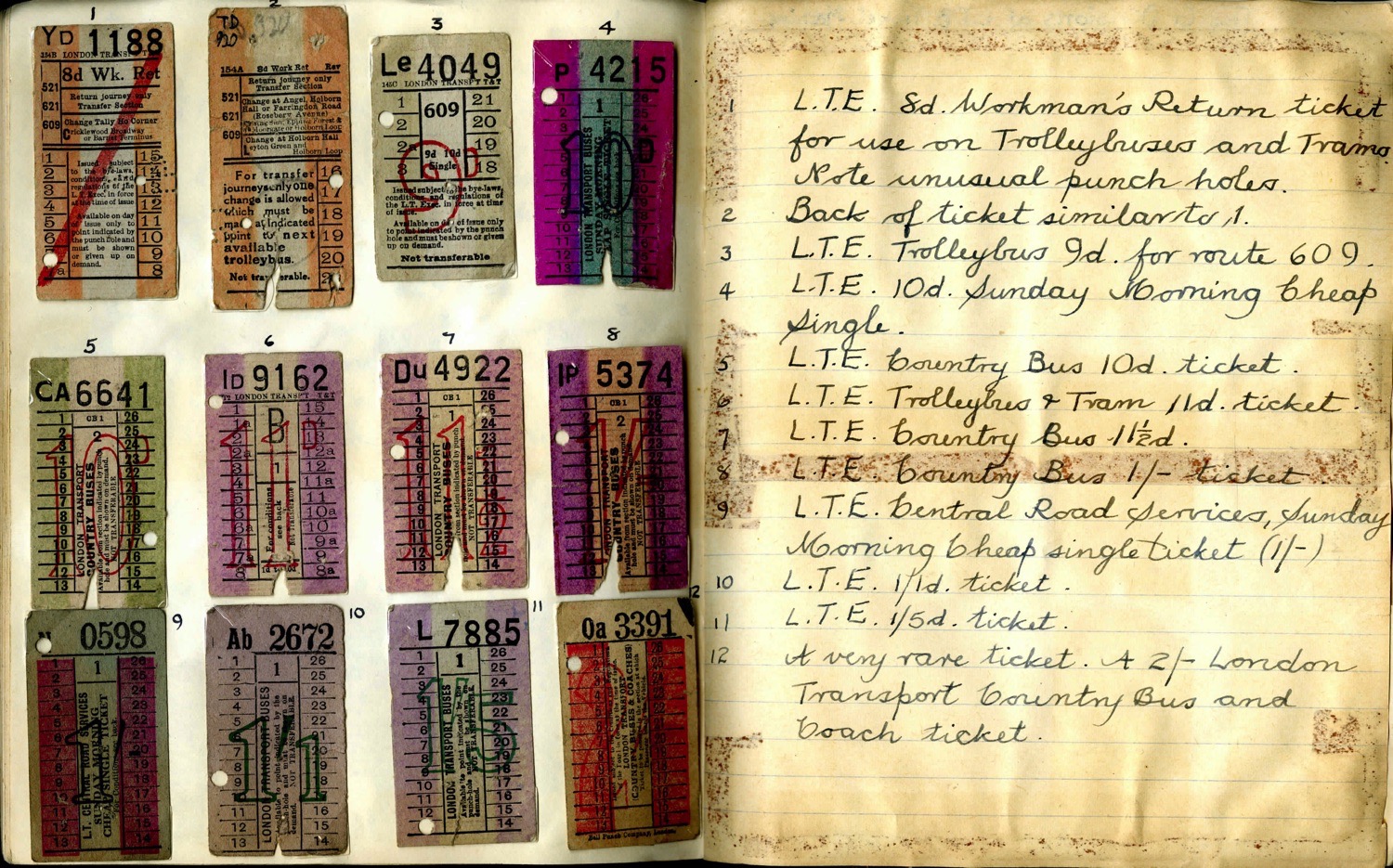
(click to enlarge and study the tickets in detail)

(click to enlarge and study the tickets in detail)

(click to enlarge and study the tickets in detail)

(click to enlarge and study the tickets in detail)

(click to enlarge and study the tickets in detail)

(click to enlarge and study the tickets in detail)

(click to enlarge and study the tickets in detail)

(click to enlarge and study the tickets in detail)

(click to enlarge and study the tickets in detail)

(click to enlarge and study the tickets in detail)
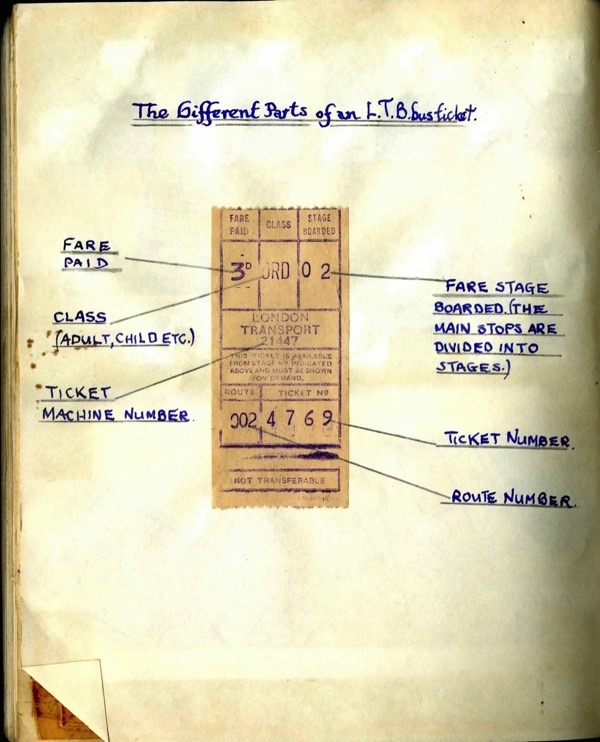
Images courtesy Bishopsgate Institute
You may also like to take a look at
Charles Hindley’s Cries Of London
A prized acquisition in my Cries of London collection is a second edition of Charles Hindley’s ‘History of the Cries of London, Ancient & Modern’ from 1884. My predecessor had the same idea to collect images of the Cries and trace their development over time and, in his book, he reprints many wood blocks from earlier chapbooks, including the set below. Originally just the size of a thumbnail, these anonymous finely-observed prints evoke the circumstance and demeanour of hawkers and pedlars in early-nineteenth century London with startling economy of means.
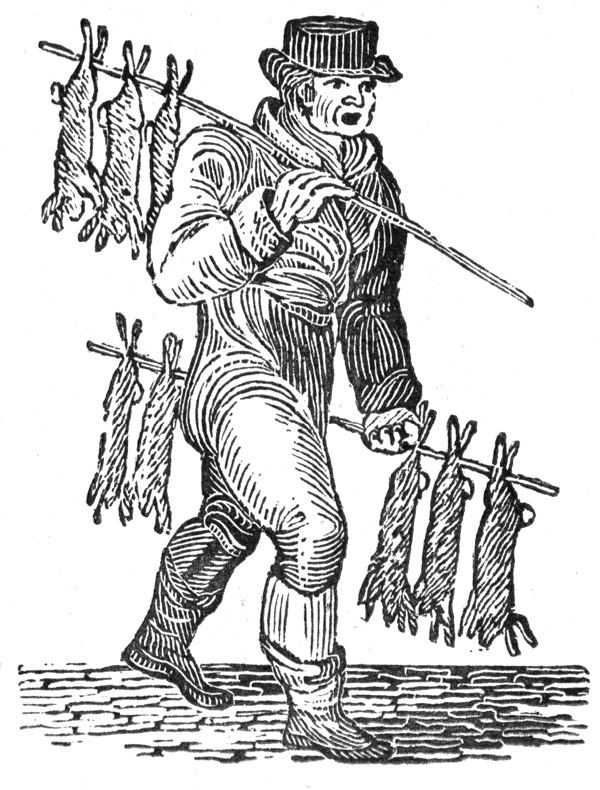
The Rabbit Man – Buy my rabbits! Rabbits, who’ll buy? Rabbit! Rabbit Who will buy?
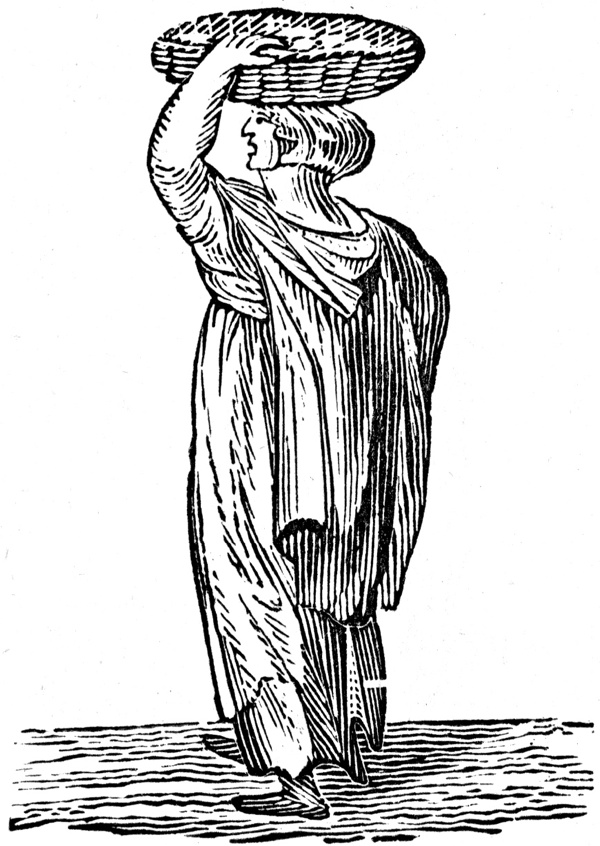
New Cockles – Buy my cockles! Fine new cockles! Cockles fine and cockles new!
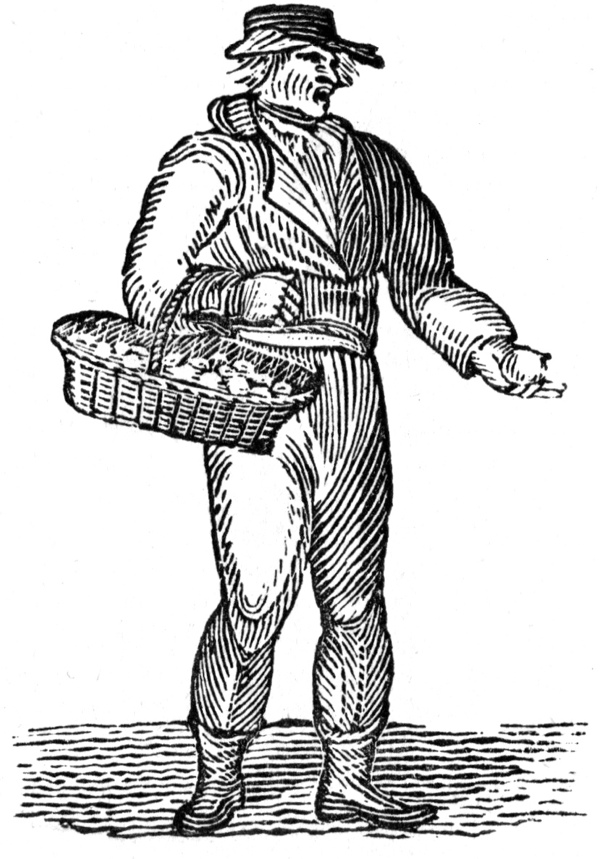
Banbury Cakes – Buy my nice and new Banbury Cakes! Buy my nice new Banbury Cakes, O!
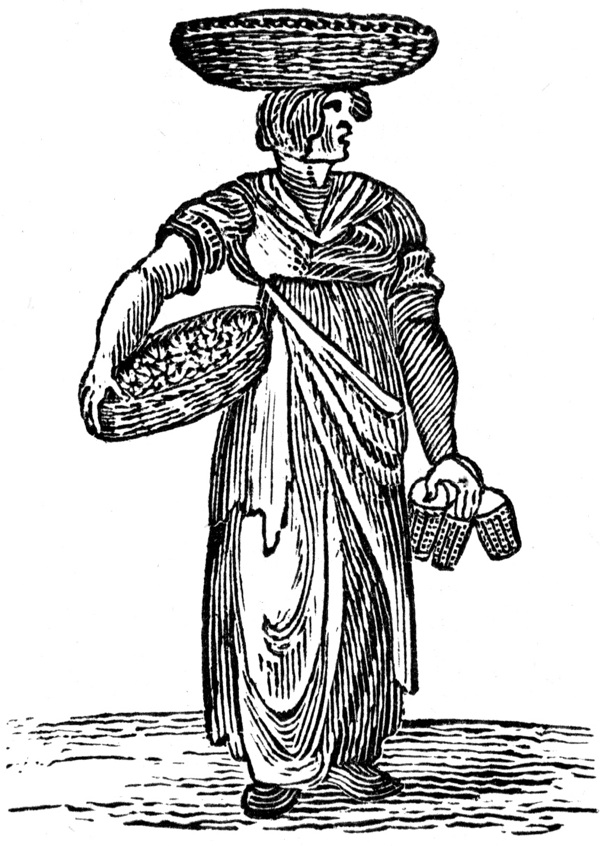
Mulberries – Mulberries, all ripe and fresh today! Only a groat a pottle – full to the bottom!
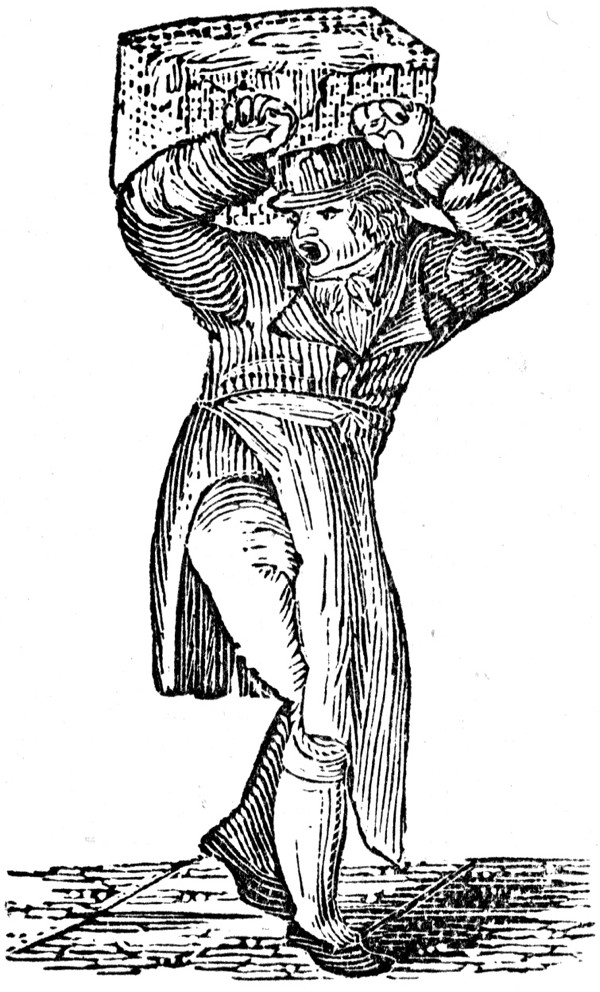
Capers, Anchovies – Buy my capers! Buy my nice capers! Buy my anchovies! Buy my nice anchovies!
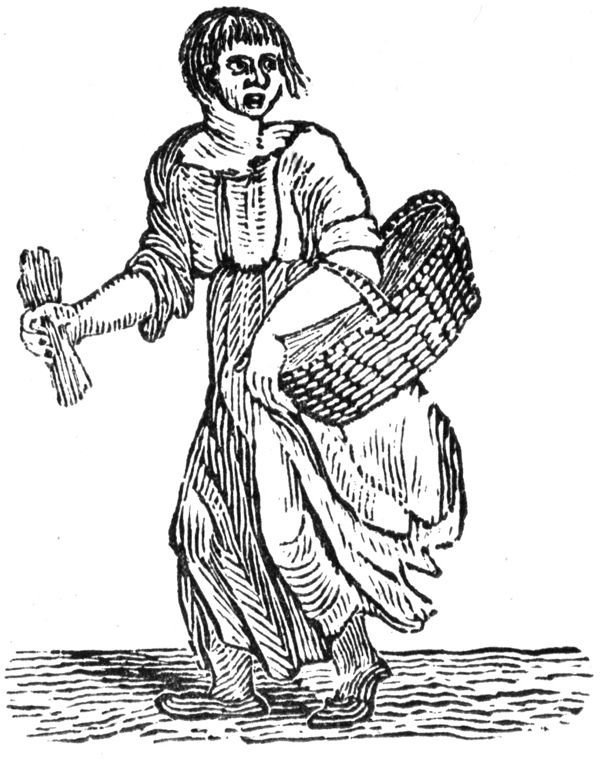
Lavender – Buy my lavender! Sweet blooming lavender! Sweet blooming lavender! Blooming lavender!
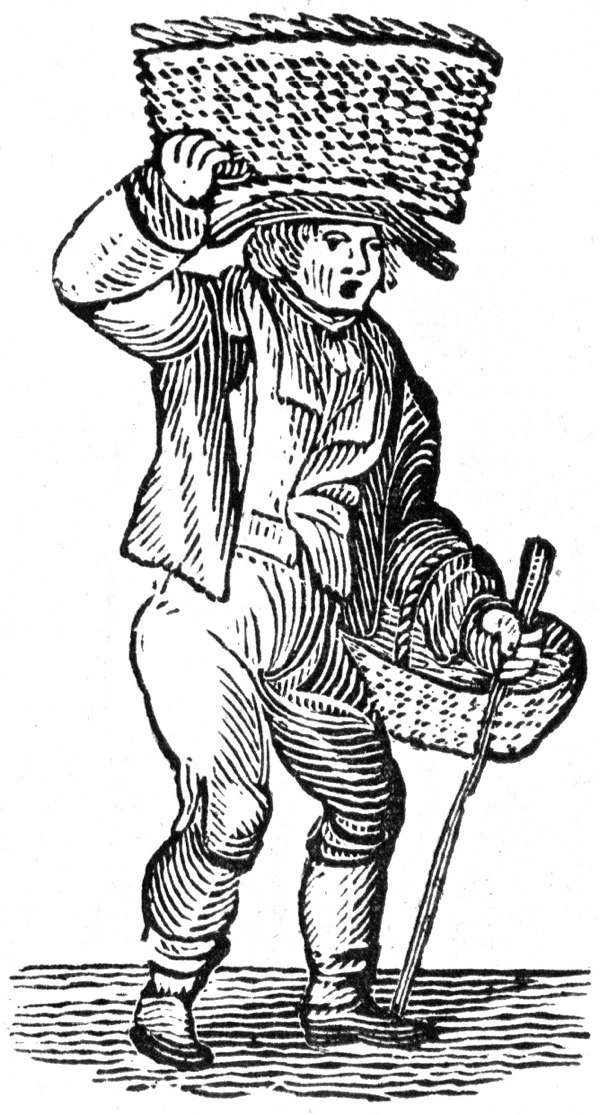
Mackerel – Live mackerel! Three a-shilling, O! Le’ping alive, O! Three a-shilling,O!
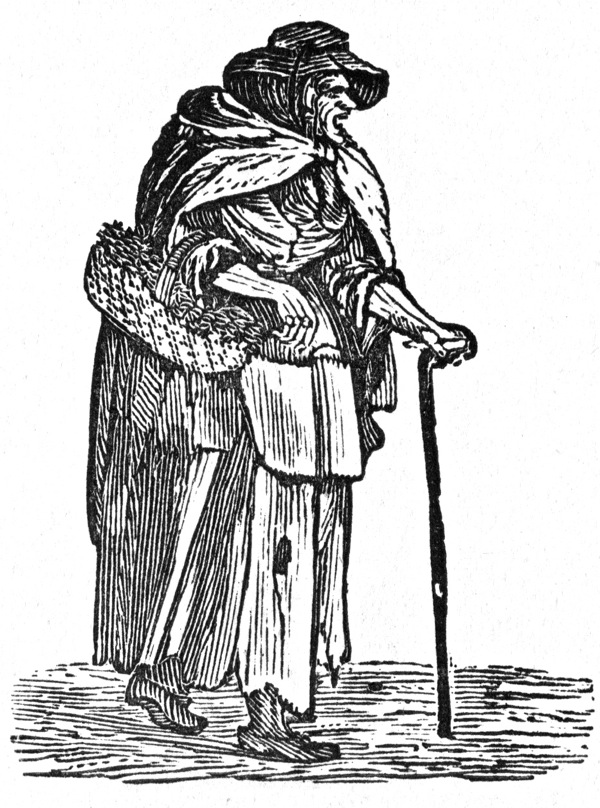
Shirt Buttons – Buy my shirt buttons! Shirt buttons! Buy shirt buttons! Buttons!
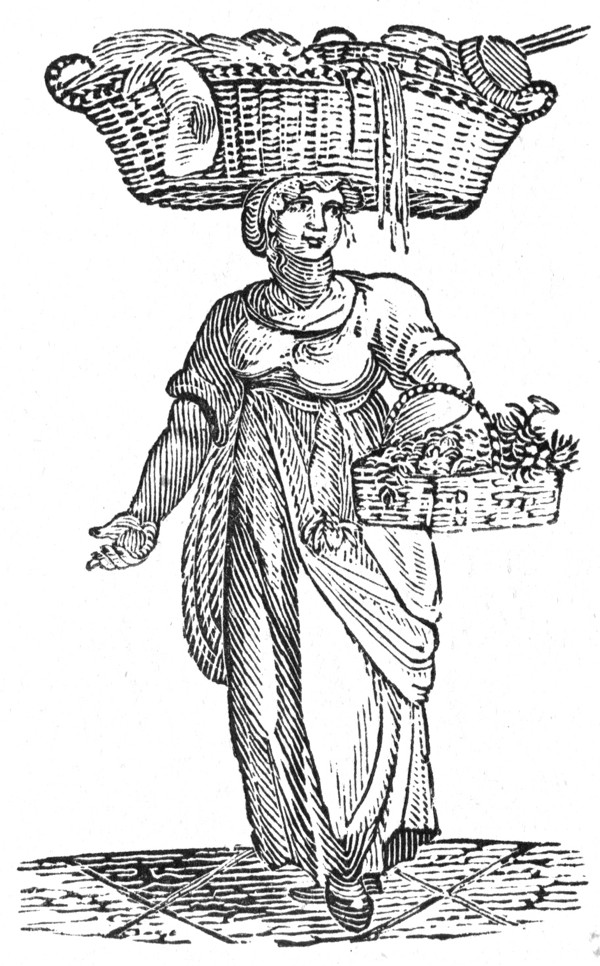
The Herb Wife – Buy rue! Buy sage! Buy mint! Buy rue, sage and mint, a farthing a bunch!
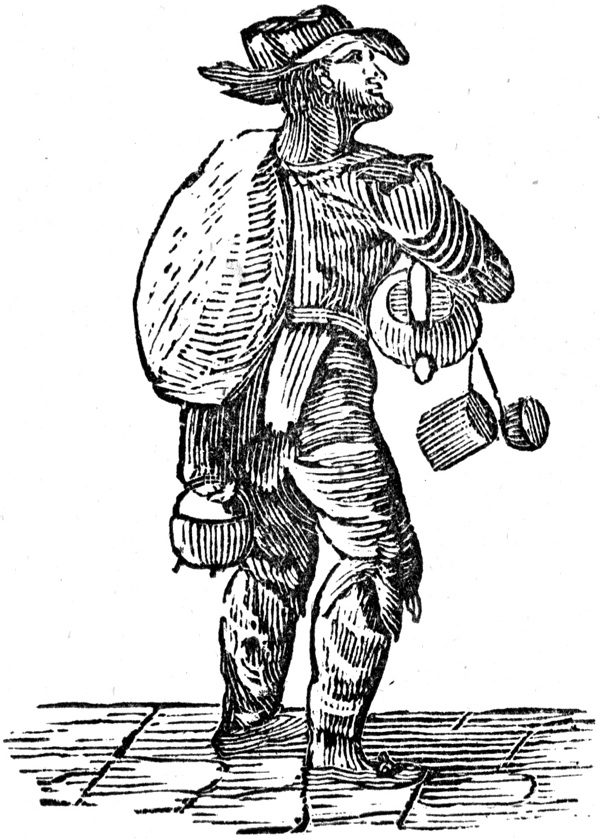
The Tinker – Maids, I mend old pots and kettles! Mend old pots and kettles, O!
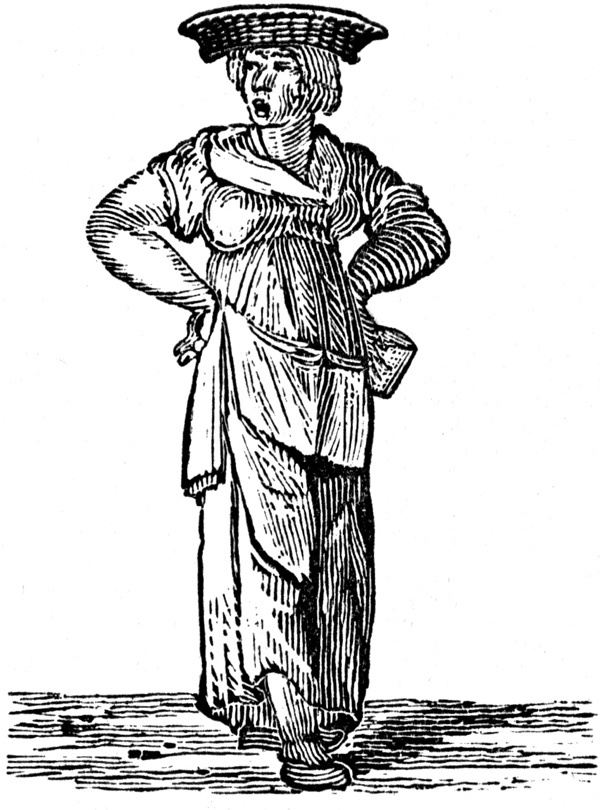
Buy fine flounders! Fine dabs! – All alive, O! Fine dabs! Fine live flounders, O!
You may also like to take a look at these other sets of the Cries of London I have collected
More John Player’s Cries of London
More Samuel Pepys’ Cries of London
Geoffrey Fletcher’s Pavement Pounders
William Craig Marshall’s Itinerant Traders
H.W.Petherick’s London Characters
John Thomson’s Street Life in London
Aunt Busy Bee’s New London Cries
Marcellus Laroon’s Cries of London
William Nicholson’s London Types
Francis Wheatley’s Cries of London
John Thomas Smith’s Vagabondiana of 1817
John Thomas Smith’s Vagabondiana II
John Thomas Smith’s Vagabondiana III
Thomas Rowlandson’s Lower Orders
Here We Go Round The Mulberry Tree
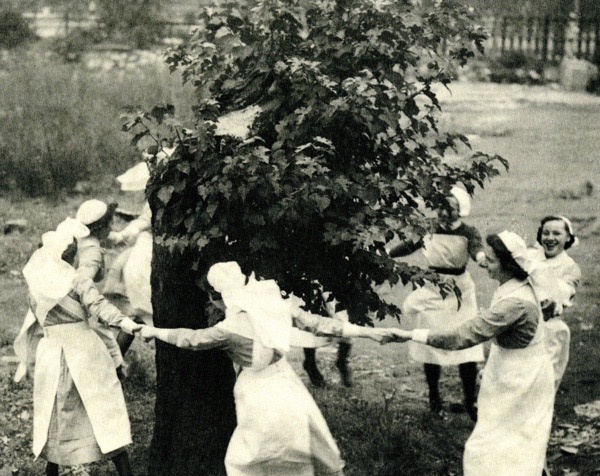
Nurses dance round the ancient Bethnal Green Mulberry in the grounds of the London Chest Hospital, 1944 (Courtesy of the Royal London Hospital Archives)
Regular readers will be familiar with the argy-bargy over the ancient Bethnal Green Mulberry at the former London Chest Hospital. Developers Crest Nicholson want to dig it up to plonk a block of luxury flats on the site, even though there is plenty of room in the grounds to move their proposed building and save the Mulberry which is subject to a Tree Protection Order. Subsequently, more than five thousand people have signed a petition asking Crest Nicholson to spare the tree.
Despite this, Crest Nicholson have submitted their planning application to Tower Hamlets for permission to uproot the Mulberry Tree and go ahead with their overblown development, which includes hideous ‘heritage-style’ additions to the listed hospital building and a disappointingly small amount of ‘affordable’ housing. Readers are strongly encouraged to write objections before the closing date of Tuesday 16th January and below you will find a helpful guide to how to object effectively.
In their haste – before they had even submitted their application for the development – Crest Nicholson obtained permission last spring to dig up the tree from Tower Hamlets Senior Arborcultural Officer, Edward Buckton acting ‘under delegated powers’ without any consultation of councillors, until it was quashed at Judicial Review in the High Court in a judgement confirming the waiver was granted unlawfully.
Over the past year, Crest Nicholson have contrived some ingenious attempts to discredit the history of the tree which is widely believed to have been planted by Bishop Bonner in the garden of his Bishop’s Hall that occupied the site of the Chest Hospital in the sixteenth century.
The first misdirection was a report commissioned from planning consultants ‘Tree: Fabrik’ who conveniently dismissed any notion that the Bethnal Green Mulberry is a veteran tree, suggesting instead that it is a more recent planting which might easily survive being dug up and moved out of the way.
Local heritage campaigner Tom Ridge paid for legal action at the High Court out of his own pocket and commissioned Chartered Arboriculturist Julian Forbes-Laird, expert witness in matters arborcultural and the technical editor of the British Standard for tree protection, to make his own survey of the Bethnal Green Mulberry.
Forbes-Laird’s report as submitted to the High Court makes compelling reading. “I identify the Mulberry as a veteran tree,” he wrote, “I cannot understand how any reasonable arboriculturist could conclude otherwise.” He quotes Gascoigne’s map of 1703 confirming the location of the Bishop’s Hall and describes the commemorative inkwell kept at the Royal London Hospital in Whitechapel. Dating from 1915, this inkwell has a brass plate explaining it was made from a branch of the Mulberry beneath which Bishop Bonner sat while deciding which heretics to execute, confirming that the tree was already considered to be ancient over than a century ago.
In response to a feeble claim by the developer that concrete found among the roots proves the recent origin of the tree, Forbes-Laird points out that the Romans used concrete to build the Pantheon. He confirms, “there is no evidence that the Mulberry stands upon modern made ground, meaning that it could, indeed, be as old as is believed.”
Most sobering is Forbes-Laird’s conclusion, “Overall, I consider that the intended tree works offer very little chance of the tree’s survival.” Thankfully, Tom Ridge won his Judicial Review and, in a Consent Order sealed by the High Court in July, the permission was quashed.
Nevertheless, Crest Nicholson have persisted in their campaign of misinformation. At their exhibition last summer, they produced a leaflet discrediting the history of the Bethnal Green Mulberry and – demonstrating astonishing arrogance and disingenuousness – they reproduced my photograph of the tree without permission in their publication and on their display panels.
In this leaflet, Crest Nicholson report the results of another ‘scientific’ survey they have commissioned, this time Ground Penetrating Radar (GPR) which again – surprise, surprise – delivers their desired conclusion, claiming the earth was not disturbed prior to 1855. However, they ignore an illustration in the Illustrated London News of June 28th 1851 which shows the fully grown Mulberry tree.
Yet it is Crest Nicholson’s justification for digging up and moving the tree because it is in ‘poor quality soil’ which plumbs the depths of nutty desperation. If the Mulberry has flourished for centuries, what could be the problem with the soil? Have Crest Nicholson and their expensive horticultural consultants never heard of compost? The developers helpfully assure us they have taken cuttings to replace the Bethnal Green Mulberry if they kill it by digging it up, which is a bit like the British Museum saying they have bought new pots to replace their ancient Greek vases if they get broken. ‘Never mind, it was only an old one!’
Even with recent revisions, this is a vast overblown development which damages the Victoria Park Conservation Area, offers a disappointing low level of ‘affordable’ housing and makes crude alterations to the listed Chest Hospital building. Crest Nicholson need to pay attention to the wishes of local people by saving the Mulberry tree and reconsidering their whole development.
CLICK HERE TO SIGN THE PETITION IF YOU HAVE NOT YET DONE SO
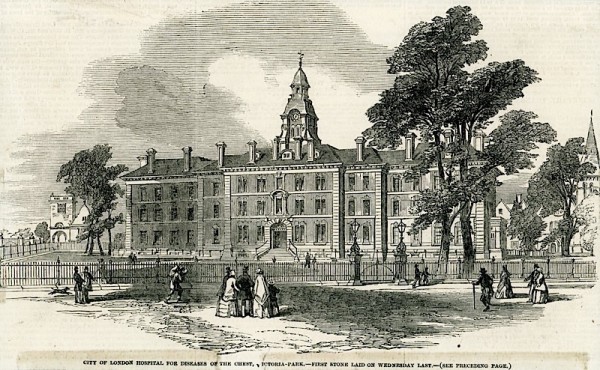
This engraving of the completed London Chest Hospital published by the Illustrated London News on June 28th 1851 shows the fully-grown Mulberry tree to the left of the main building (Courtesy of Tower Hamlets Local History Library & Archives)
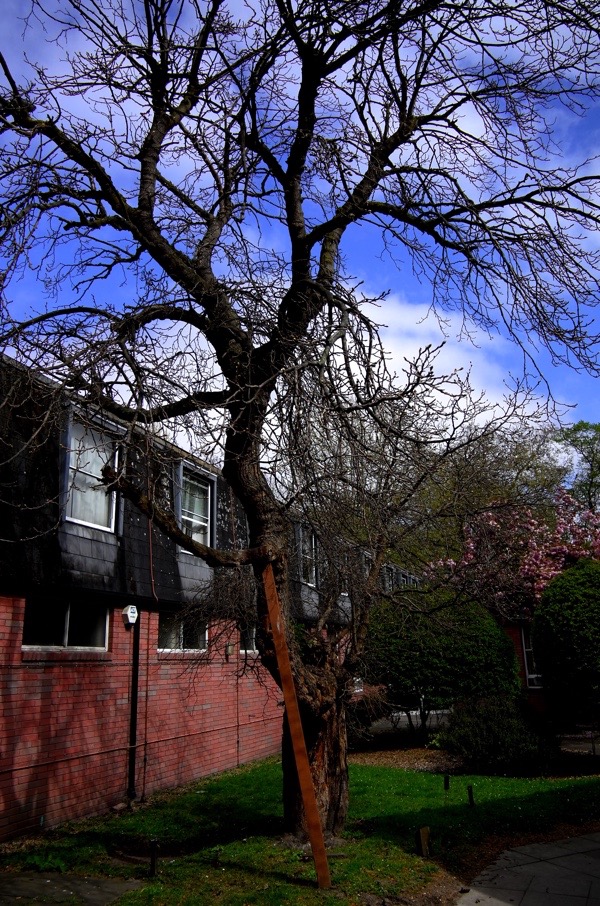
The Bethnal Green Mulberry
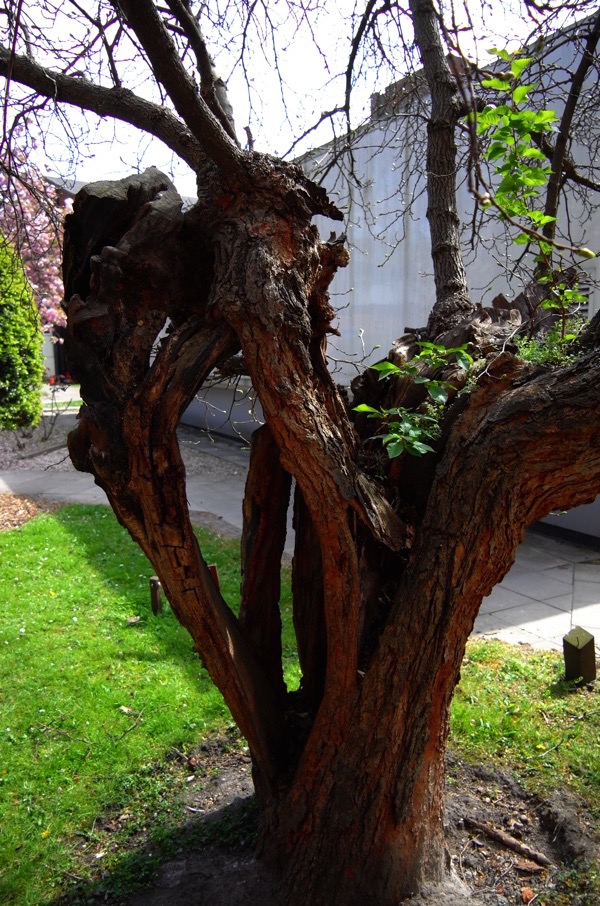
In spite of bomb damage in the Second World War, the Bethnal Green Mulberry flourishes
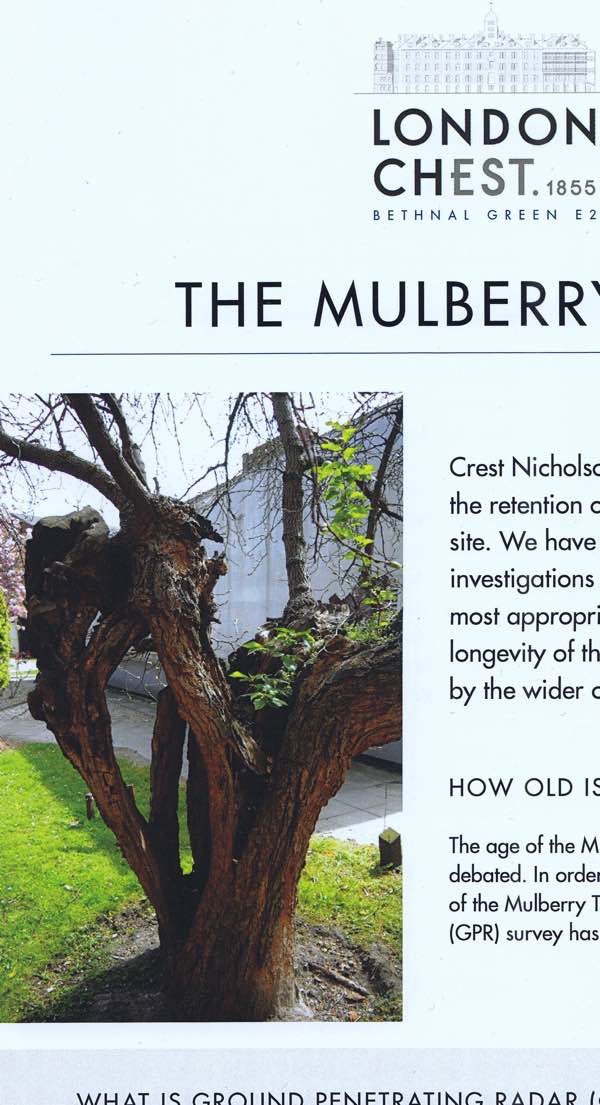
The Gentle Author’s photograph reproduced without permission by Crest Nicholson in their leaflet and exhibition discrediting the history of the Bethnal Green Mulberry
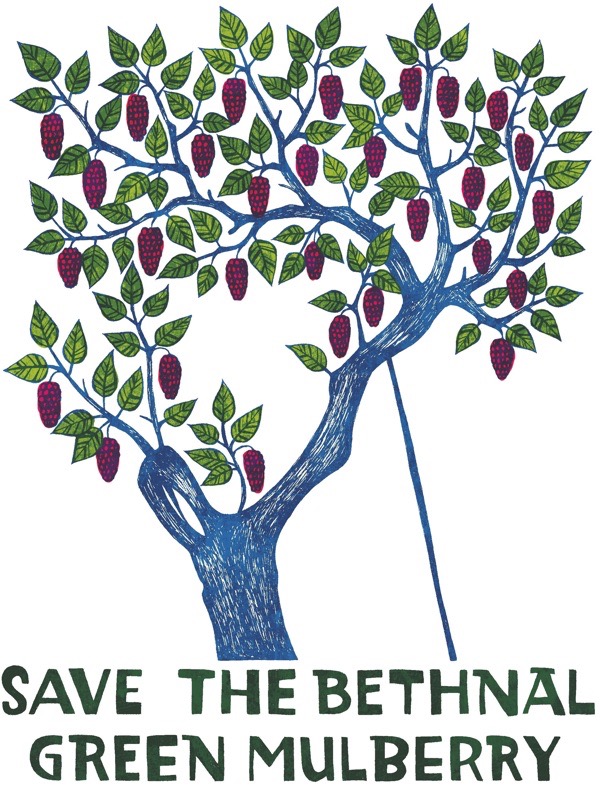
Design by Paul Bommer
This is a simple guide to how to object effectively to the Crest Nicholson Application to redevelop the former London Chest Hospital in Bethnal Green.
Although the deadline is 16th January, Tower Hamlets Council will accept emails and letters until the Hearing of the Application, which is likely to be in March. Please send comments as soon as possible to be sure they are included in the planning officer’s report.
It is important to use your own words and add your own personal reasons for opposing this development. Any letters which simply duplicate the same wording will count only as one objection.
Be sure to state clearly that you are objecting to the application.
If you do not include your postal address your objection will be discounted.
Points in bold are material considerations and are valid reasons for Councils to refuse Applications.
Planning application PA/16/03342/A1
1. SOCIAL HOUSING
The level of social housing is below 28%, too far beneath the Mayor’s target of 50%.
2. THE LISTED BUILDING
The application proposes to demolish the Grade II listed 1860s south wing, causing harm to the designated heritage asset, and would therefore fail to comply with Paragraph 66 of the Planning (Listed Buildings and Conservation Areas) Act 1990; National Planning Policy Framework paragraphs: 126, 131, 132, 133 and 134; as well as Tower Hamlets Local Plan Policy SP12.
The proposal would see the roof structure of the listed buildings unnecessarily rebuilt with new materials, involving the loss of original historic fabric when the applicant’s own survey notes that the chimneys are in ‘good condition’, and that the roof is ‘in a sound condition’. As such National Planning Policy Framework paragraphs: 126, 131, 132, 133 and 134 should be applied.
3. THE VICTORIA PARK CONSERVATION AREA
The development will damage the Victoria Park Conservation Area. The conservation area appraisal notes that: ‘Landmark institutional buildings generally sit within their own landscaped gardens, in keeping with the open character and setting of Victoria Park. The London Chest Hospital, opened in 1855, is the most significant of these buildings, in terms of its presence in the urban environment’.
The construction of large blocks beside the London Chest Hospital will deprive a landmark listed building of its open landscaped space and destroy the character of the conservation area. Paragraph 72 of the Planning (Listed Buildings and Conservation Areas) Act 1990, and National Planning Policy Framework paragraphs 137 and 138 should therefore be applied when considering this application.
4. THE MULBERRY TREE
Deep concerns exist over the proposed digging up of the ancient Mulberry Tree and the unlikelihood of its survival if it is moved. No credible evidence has been put forward that this tree, which is subject to a Tree Protection Order, is not a veteran tree.
Paragraph 118 of National Planning Policy Framework 2012 states that ‘planning permission should be refused for development resulting in the loss of … aged or veteran trees found outside ancient woodland, unless the need for, and benefits of, the development in that location clearly outweigh the loss’
Paragraph 197 of The Town and Country Planning Act 1990 states that local planning authorities, ‘must ensure, whenever it is appropriate, that in granting planning permission for any development adequate provision is made, by the imposition of conditions, for the preservation or planting of trees’.
WHERE TO SEND YOUR OBJECTION
Letters and emails should be addressed to
planningandbuilding@towerhamlets.gov.uk
or
you can post your objection direct on the website by following this link
You will need to register to comment
Quote application: PA/16/03342/A1
Town Planning, Town Hall, Mulberry Place, 5 Clove Crescent, London, E14 2BG
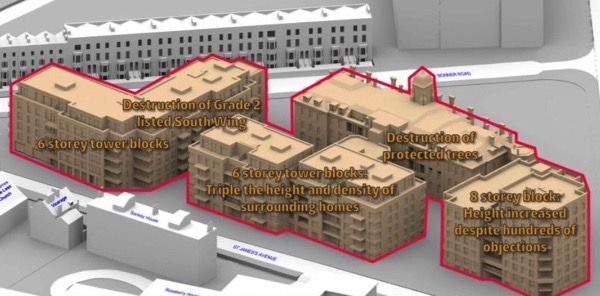
Crest Nicholson’s proposed redevelopment of London Chest Hospital
You may like to read my other stories about Mulberries
A Plea For The Bethnal Green Mulberry
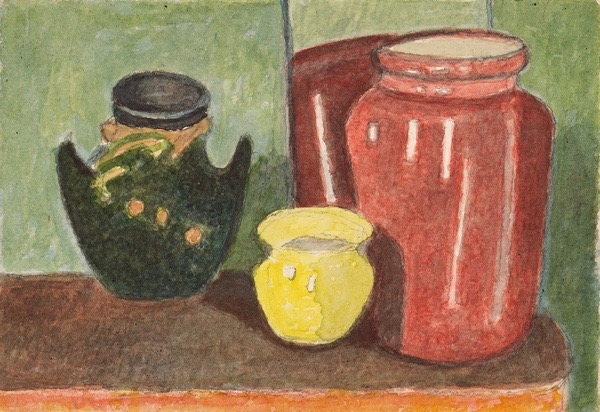
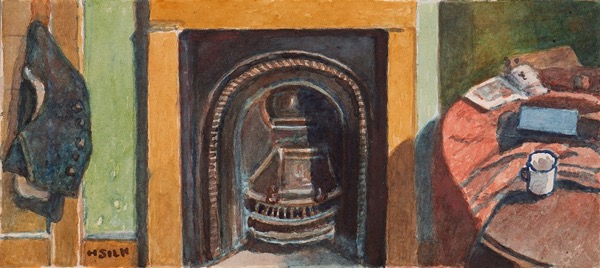
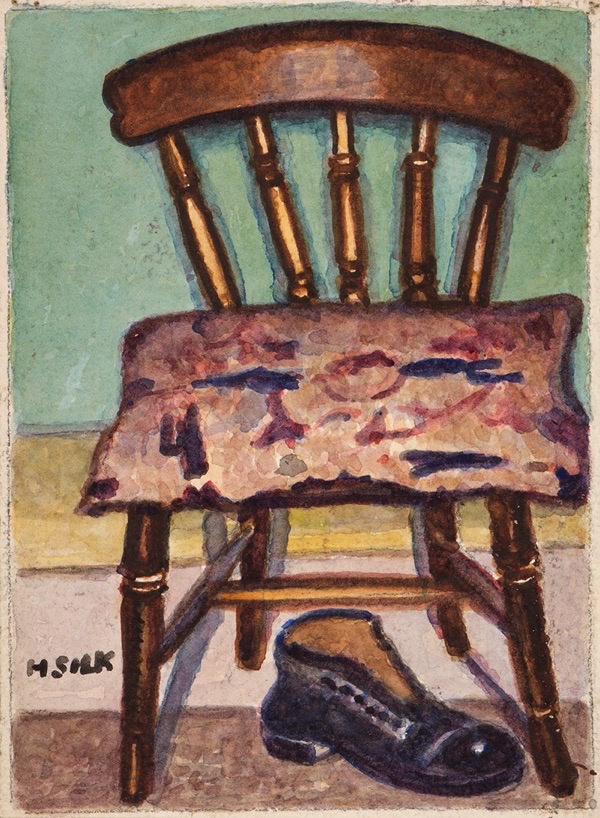
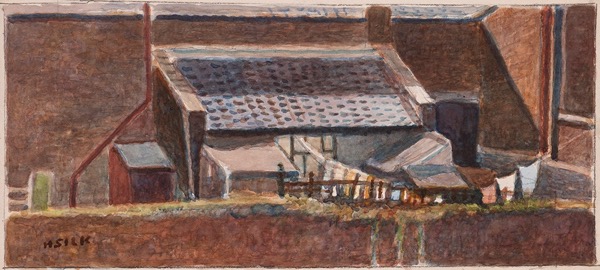
Henry Silk At Abbott & Holder
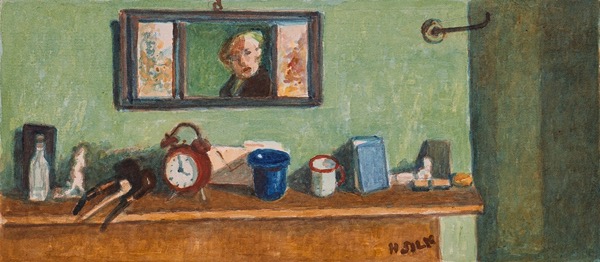
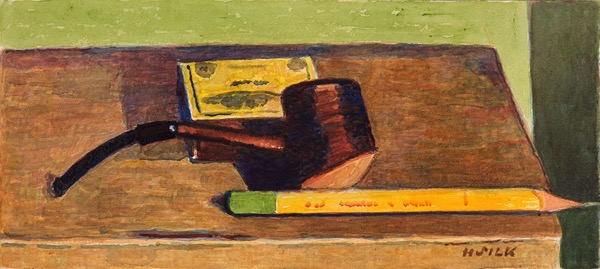
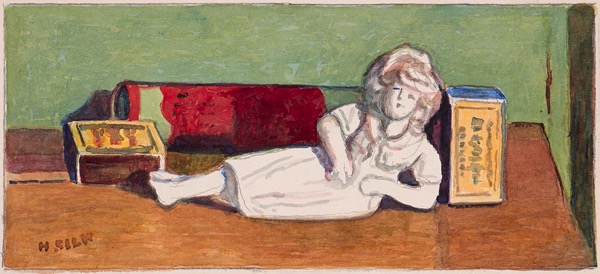
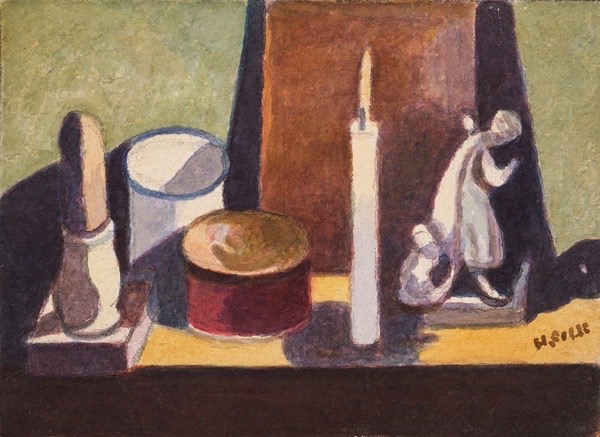
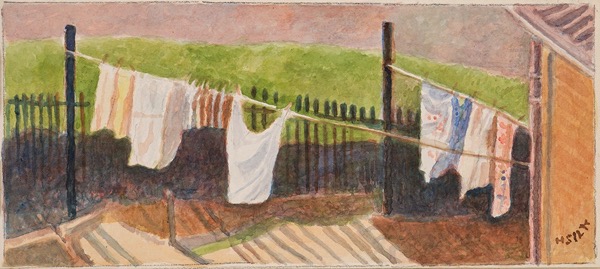
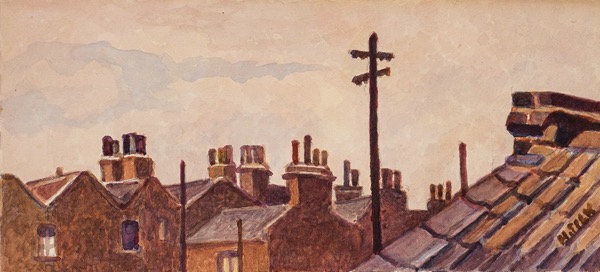
Join me for the opening of Henry Silk & East End Vernacular at 6pm next Thursday 18th January at Abbott & Holder in Museum St, Bloomsbury, to view a room of watercolours from the thirties by Henry Silk that have never been exhibited before. These are complemented by a room I have curated of paintings from my book East End Vernacular, Artists who painted London’s East End streets in the 20th century. Below you can read my profile of Henry Silk, a favourite artist of mine.
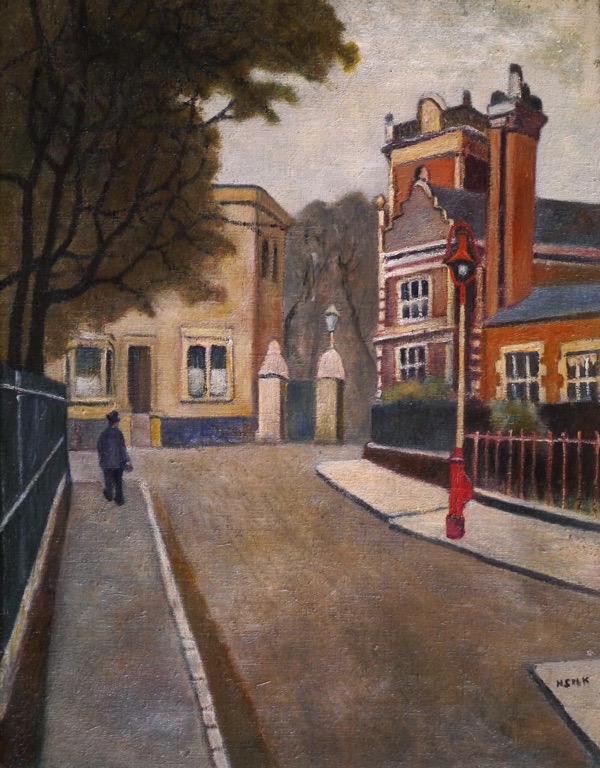
St James’ Rd, Old Ford
The earliest knowledge we have of Henry Silk (1883-1948) as an artist is that he was already sketching while serving in the First World War, when he would draw on whatever came to hand. Born on Christmas Day 1883, Henry worked for his uncle, Abraham Silk at his workshop in the Bow Rd making fruit baskets that were in great demand by porters, costermongers and greengrocers.
“He was a kind-hearted man who always looked older than his years. He was, I think, affected by his horrendous experiences in the First World War,” recalled fellow artist Walter Steggles fondly, “He used to work for three weeks at basket-making and spend the fourth in the pub.”
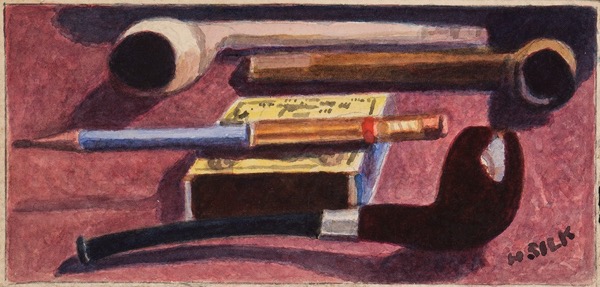
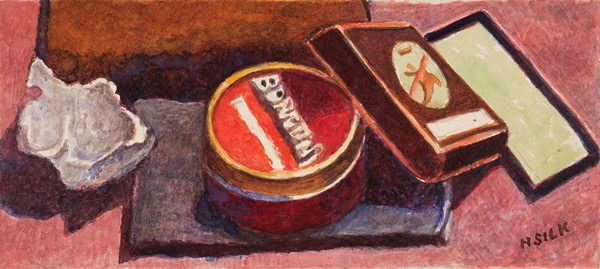
Of the various artists who were to form the East London Group, Henry Silk’s work was the most personal, executed in a plain style that often resolved forms into flat areas of colour. Yet a close examination of these paintings reveals close attention paid to the relative proportions of the separate elements of the composition, which were brought to vivid life by dramatic choices of colour. The consummate nature of this distinctive poetic vision suggests it was evolved by an artist working in isolation.
In fact, Henry had already been painting for many years when he attended classes at the Bethnal Green Men’s Institute and exhibited in the Art Club’s debut show at the Bethnal Green Museum in 1924. Reporting on their 1927 exhibition, the Daily Chronicle highlighted Henry’s paintings which depicted “Zeppelins and were bought by an officer ‘for a bob.’”
Henry was a prolific artist who contributed several works to the East London Art Club show at the Whitechapel Gallery in 1928, remained a significant exhibitor in all the East London Group shows over subsequent years, as well as showing paintings with the Toynbee Art Club and at Thomas Agnew & Sons. Works were purchased by Joseph Duveen and Charles Aitken, Director of the Tate Gallery. Henry’s talent was quickly recognised as far away as the United States and when the second East London Group show was held at the Lefevre Galleries in December 1930, the Daily Telegraph revealed that, in addition to home purchases, the Public Gallery of Toledo, Ohio bought his Still Life for six guineas.
The following year saw Henry’s debut solo show at Walter Bull & Sanders Ltd in Cork St, Mayfair. This small exhibition of twenty-three watercolours was characterised by luminous still lifes and interiors, reflecting Henry’s bachelor existence lodging in his sister’s family home in Rounton Rd, Bow.
The green interior of Henry’s sparsely furnished room and the view over the tracks from the rear of this dwelling, situated at the junction of three different railway lines, served as the inspiration for many of his pictures. In 1928, a writer for the Studio observed that he often saw “a perfect design from an unusual angle, and he has a Van Goghian love of chairs and all simple things.”
Suggesting that these works were entirely consistent with a modest nature, Lilian Leahy who married Henry’s nephew Elwin Hawthorne recalled he was “generous to others but mean to himself. He would use an old canvas if someone gave it to him rather than buy a new one.”
Henry continued to show his work, even after the East London Group held its final show at the Lefevre Galleries in 1936, until his death at sixty-four in 1948.
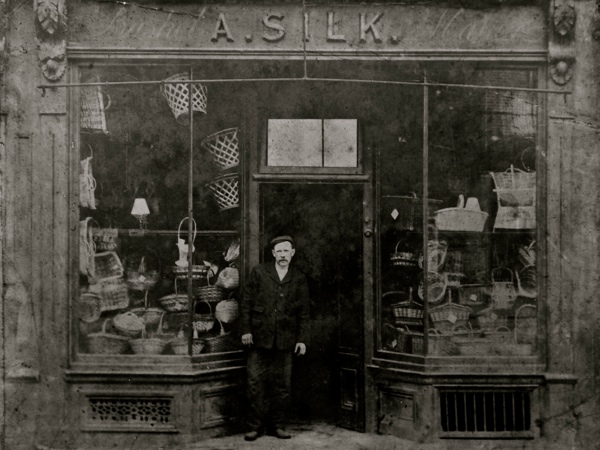
At Henry Silk’s Uncle Abraham’s basket shop in Bow
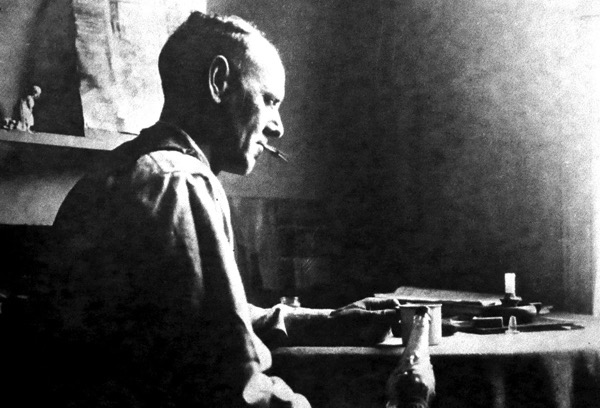
Henry Silk at his room in Rounton Rd, Bow

Thorpe Bay
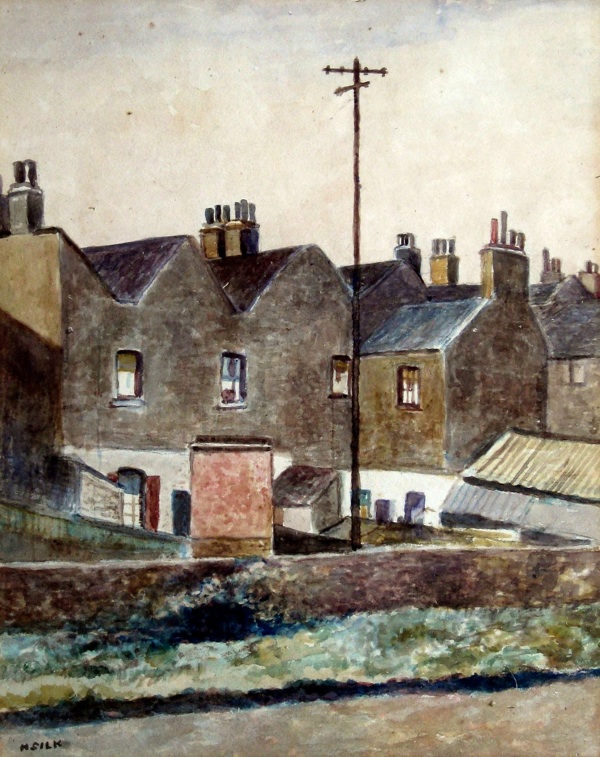
Old Houses, Bow (Walter Steggles Bequest)
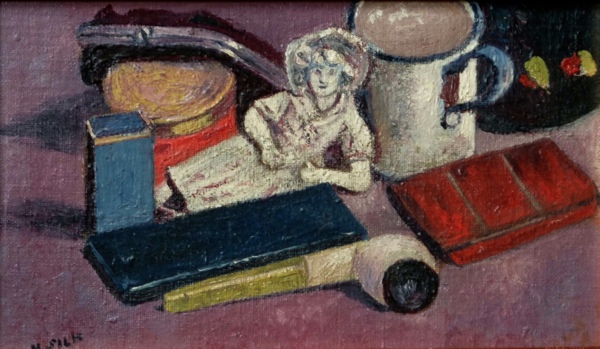
My Lady Nicotine
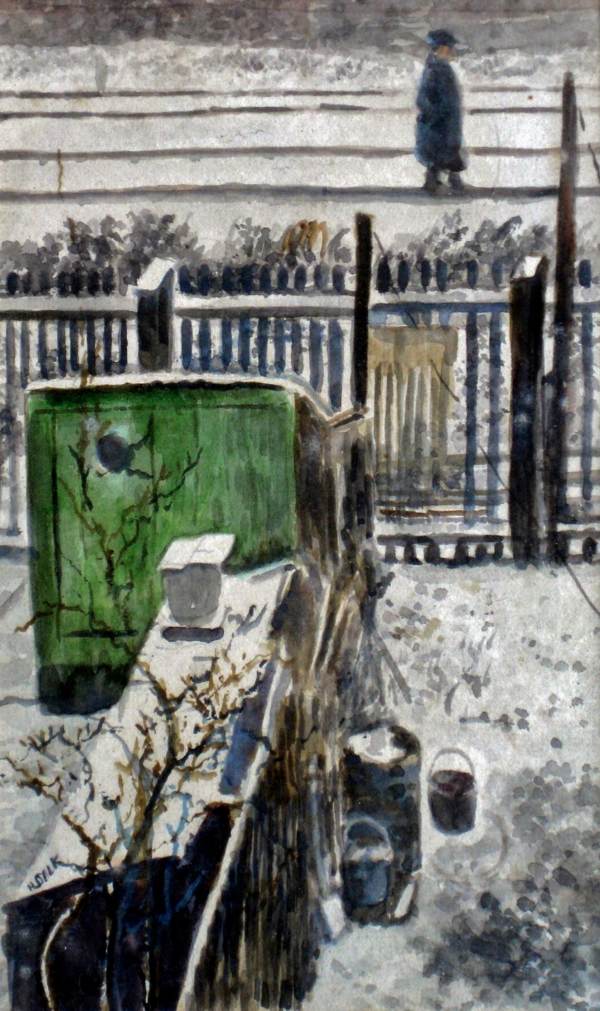
Snow (Walter Steggles Bequest)
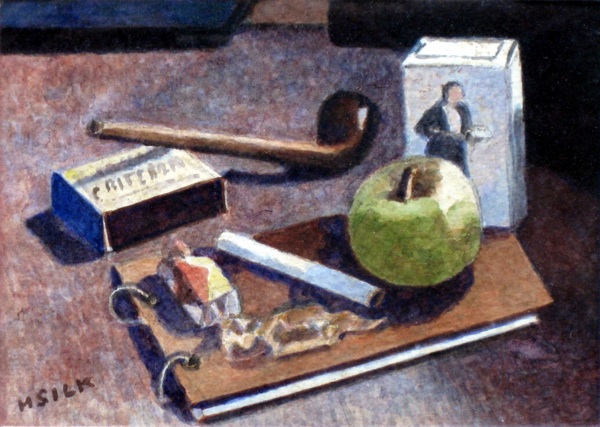
Still Life (Walter Steggles Bequest)
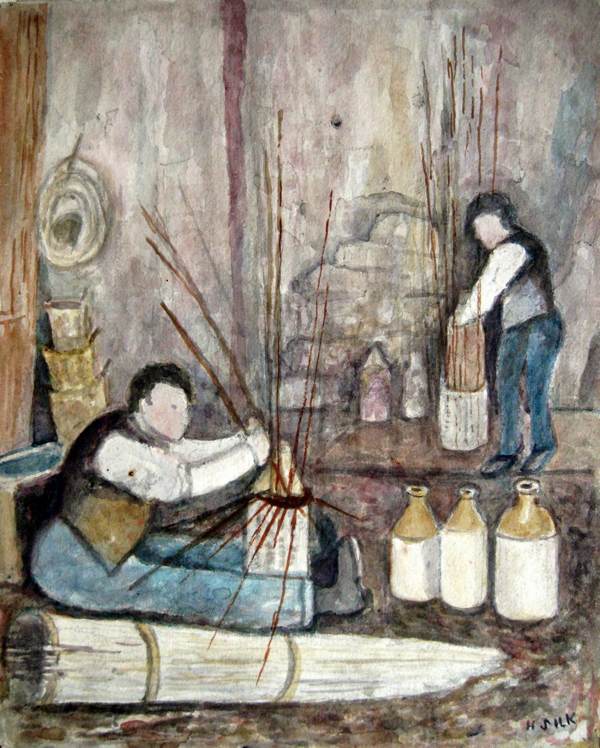
Basket Makers (Courtesy of Dorian Osborne)
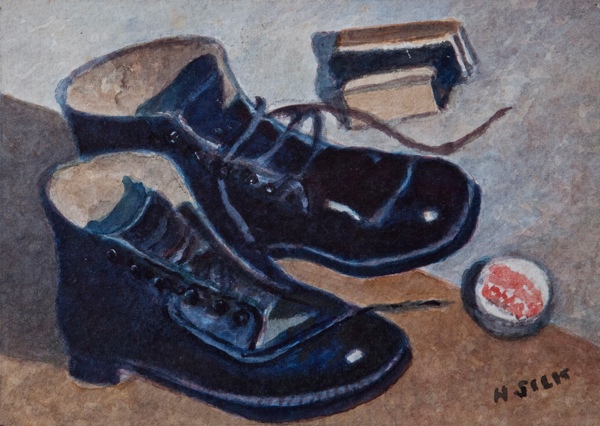
Boots, Polish and Brushes
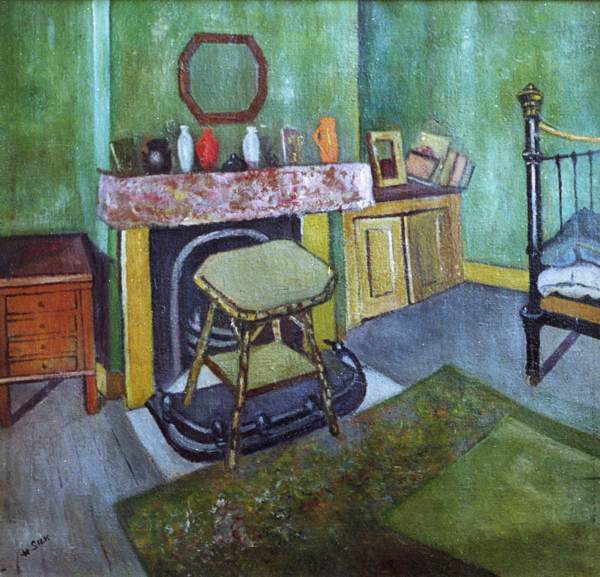
The Bedroom
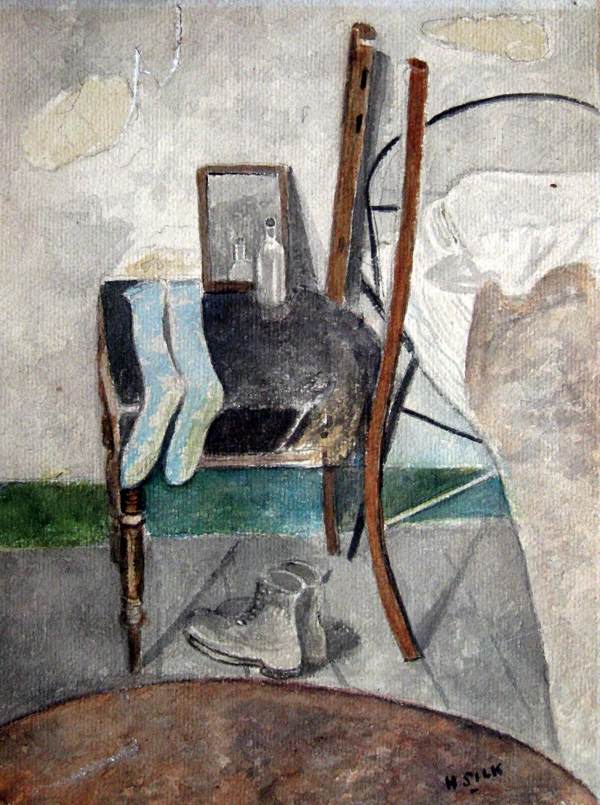
Bedside chair (Courtesy of Dorian Osborne)
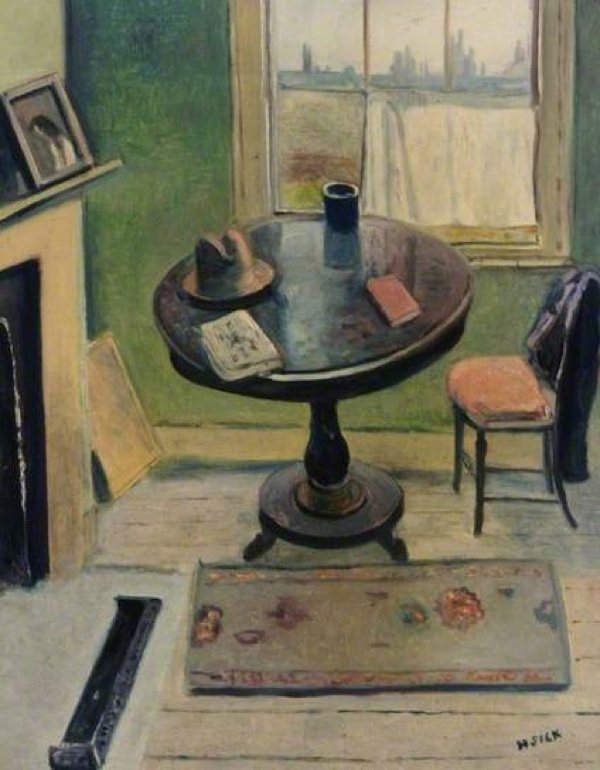
Hat on table, 1932 (courtesy of Doncaster Museum)
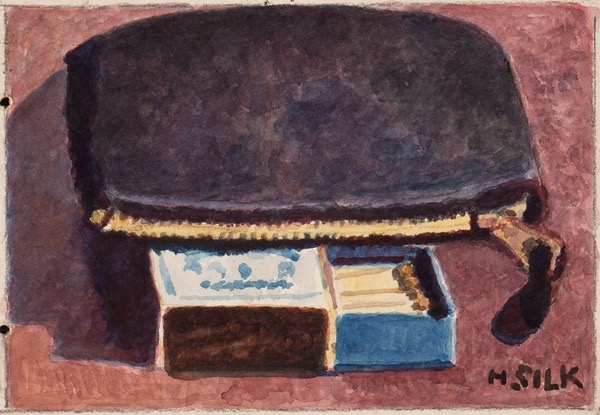
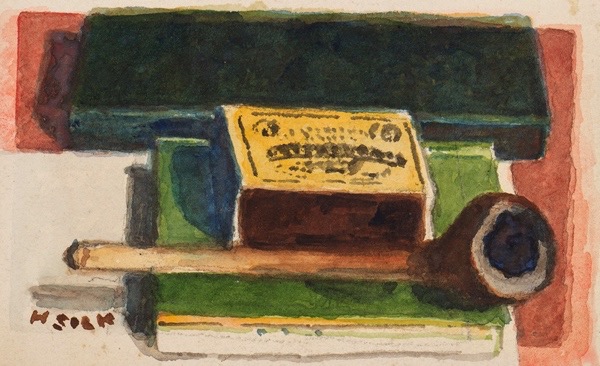
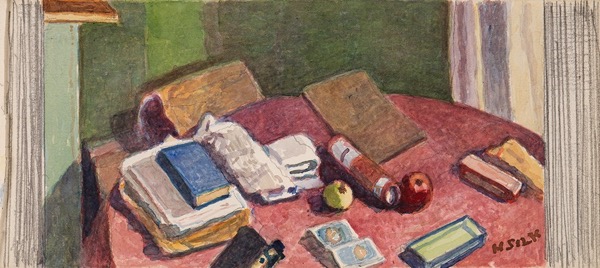
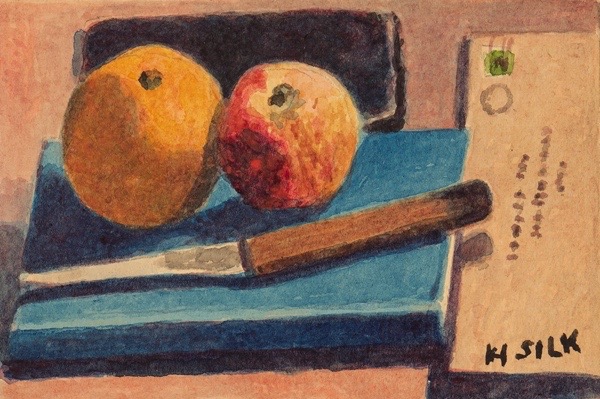
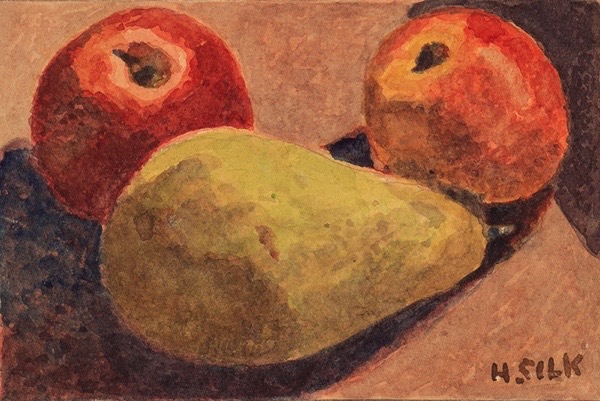
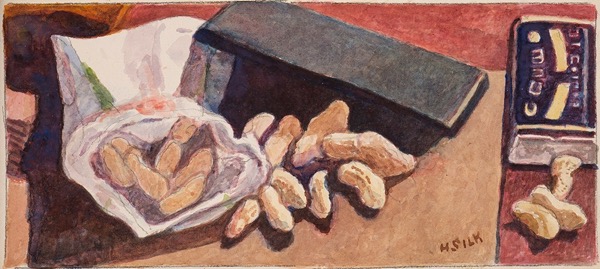
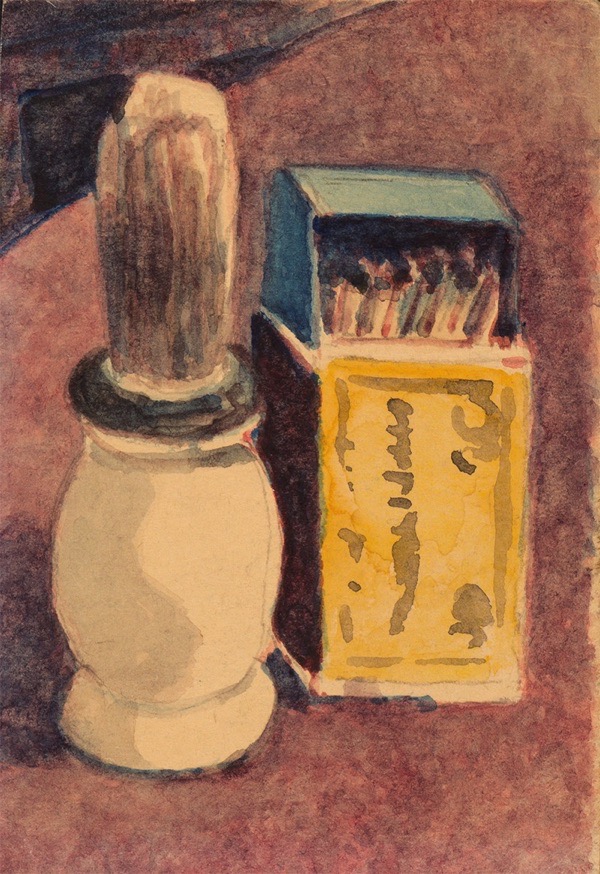
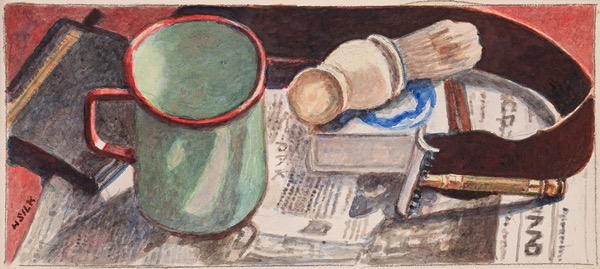
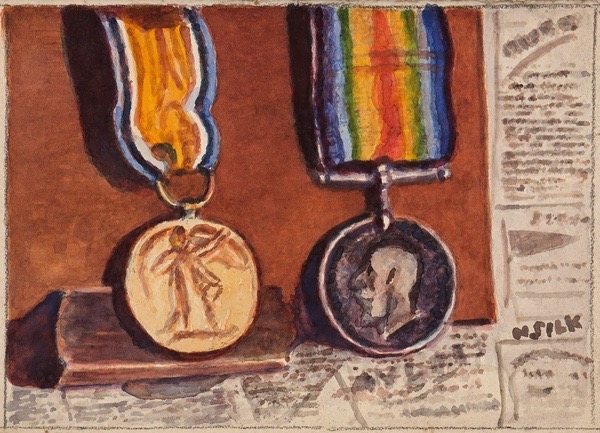
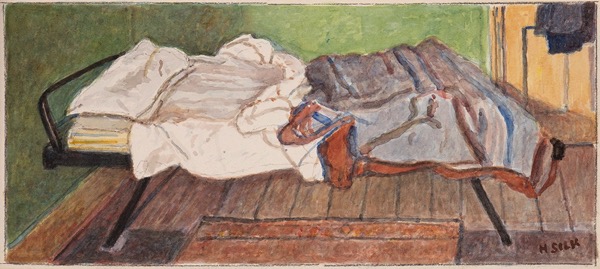
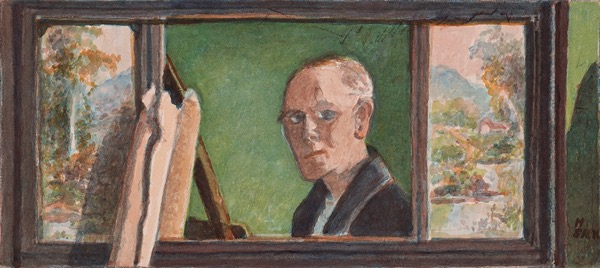
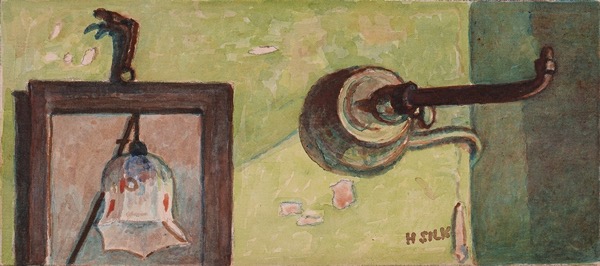
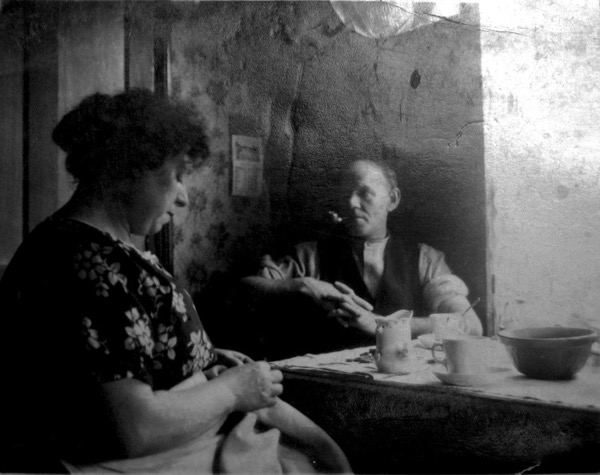
Henry Silk and his sister
ABBOTT & HOLDER, 30 MUSEUM ST, BLOOMSBURY, WC1A 1LH
If you would like to attend my gallery talk on Thursday 25th January, please call 020 7637 3981 for further information.
You may also like to read about
East End Vernacular At Abbott & Holder
William Whiffin, Photographer
William Whiffin (1878-1957) is one of the great unsung London photographers, which makes it a rare pleasure to present this gallery of his pictures from the collection of his granddaughter Hellen Martin. Born into a family of photographers in the East End, Whiffin made his living with studio portraits and commercial commissions, yet strove to be recognised for his artistic photography.
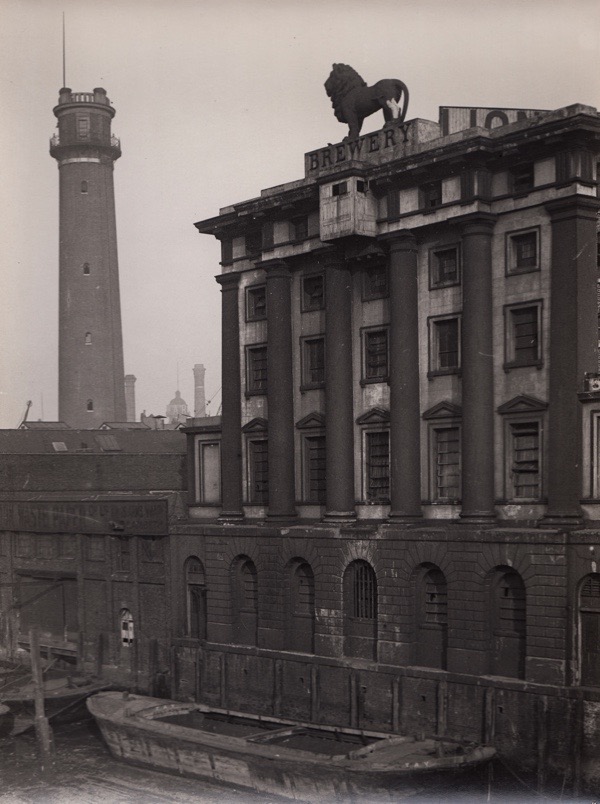
Lion Brewery and the Shot Tower, South Bank
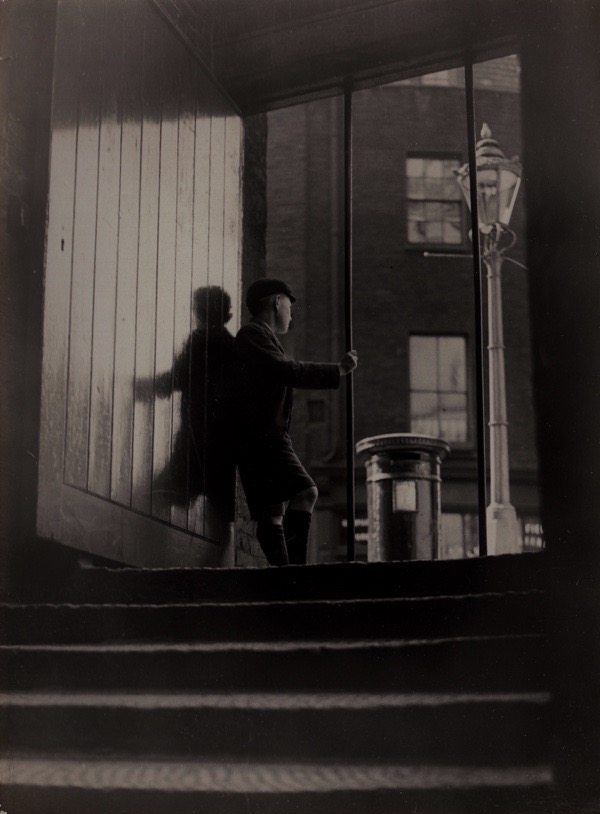
The photographer’s son Sid Whiffin at Cooper’s Stairs, Old Queen St
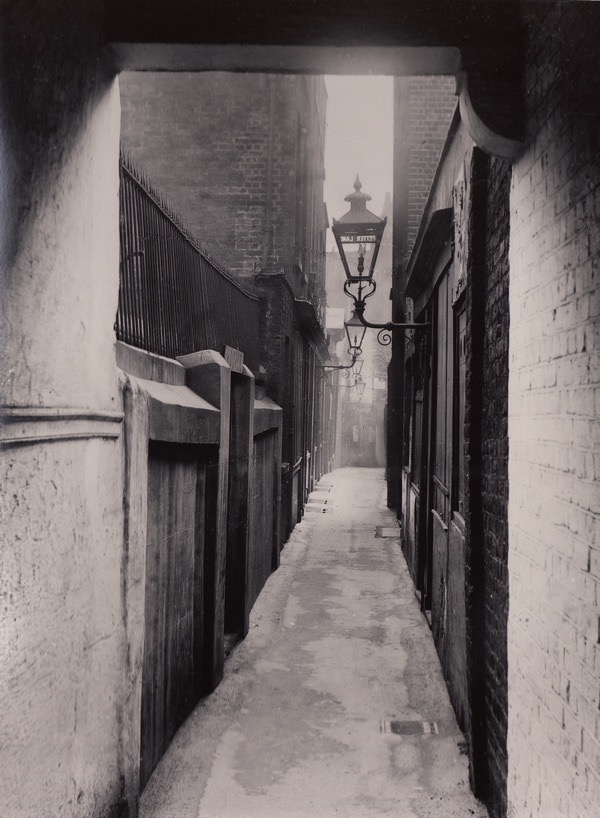
Off Fetter Lane
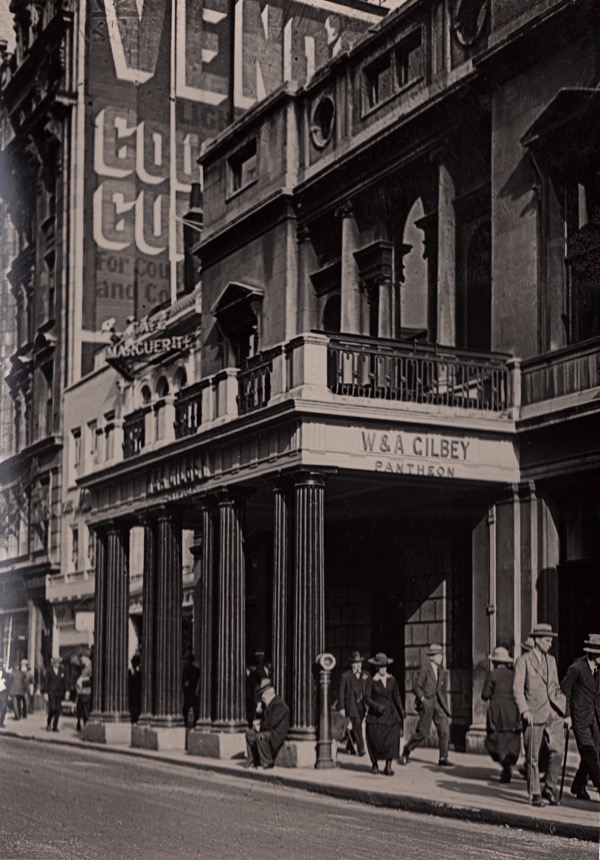
The Pantheon, Oxford St
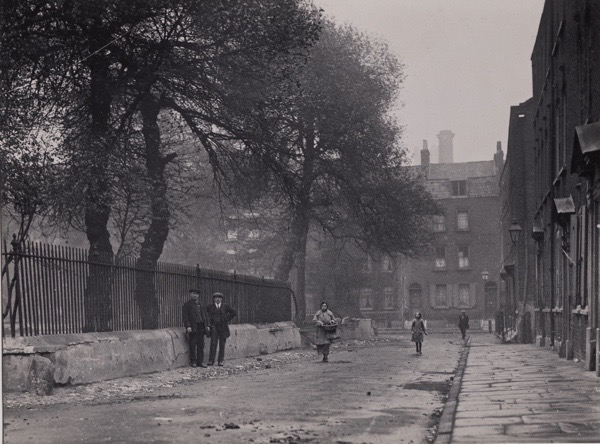
In Princes Sq, Stepney
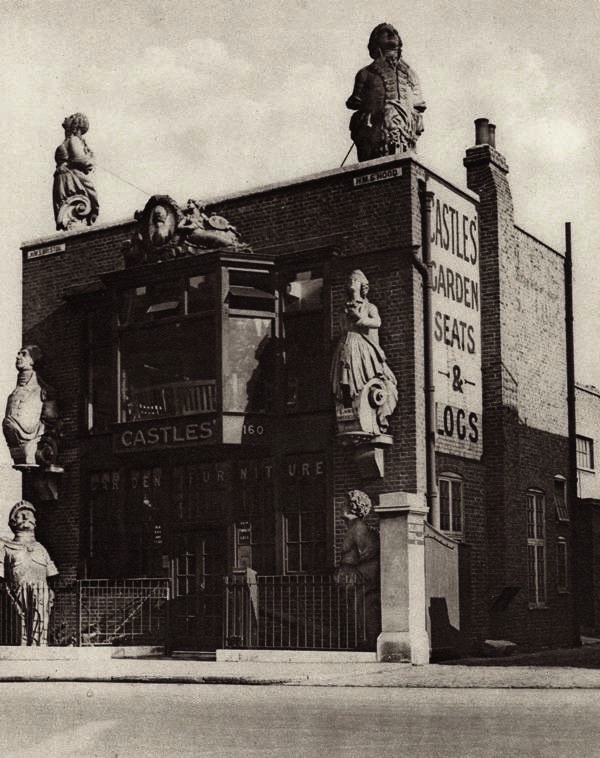
Figureheads of fighting ships in Grosvenor Rd
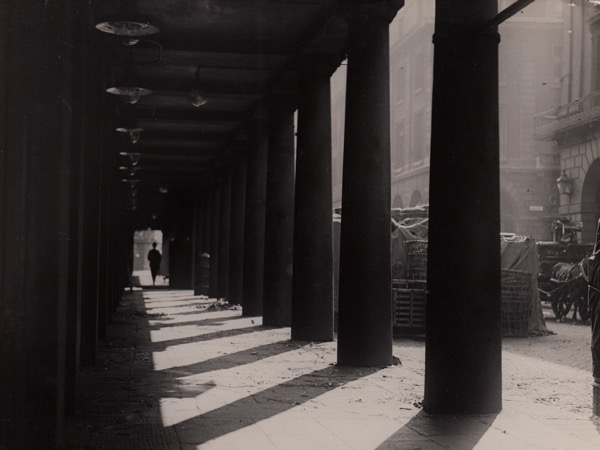
At Covent Garden Market
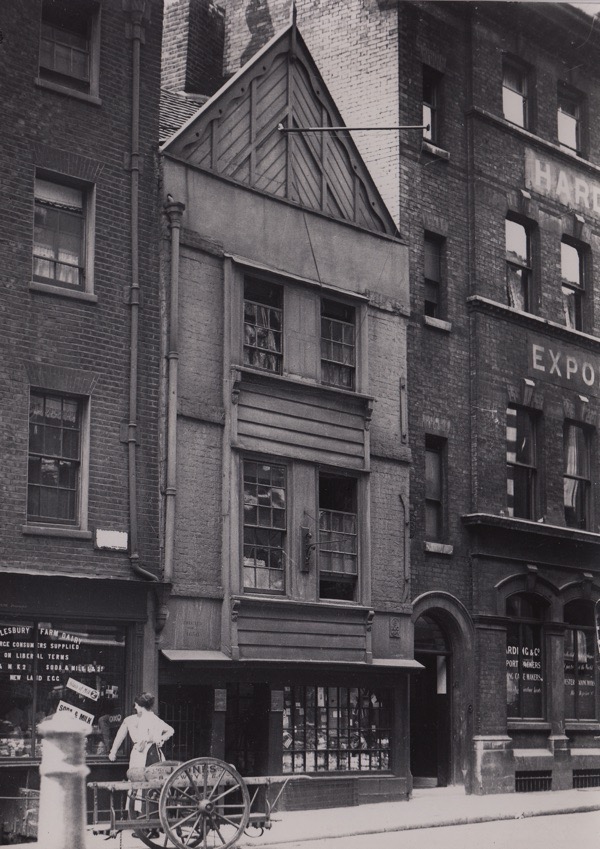
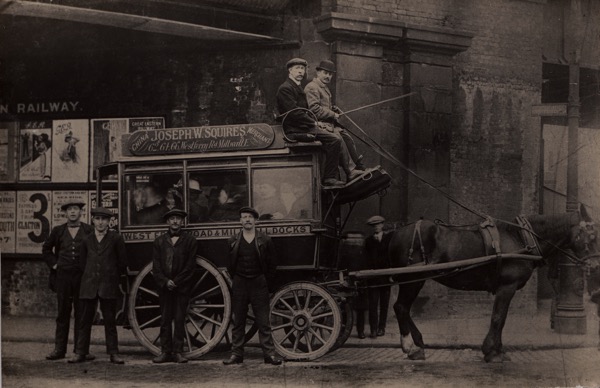
Milwall & the Island Horse Omnibus, c.1910
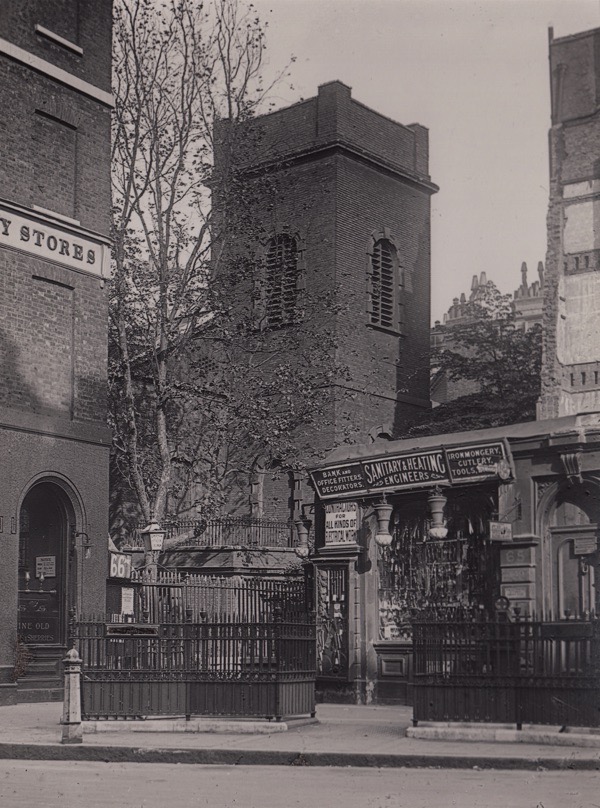
St Catherine Coleman next to Fenchurch St Station
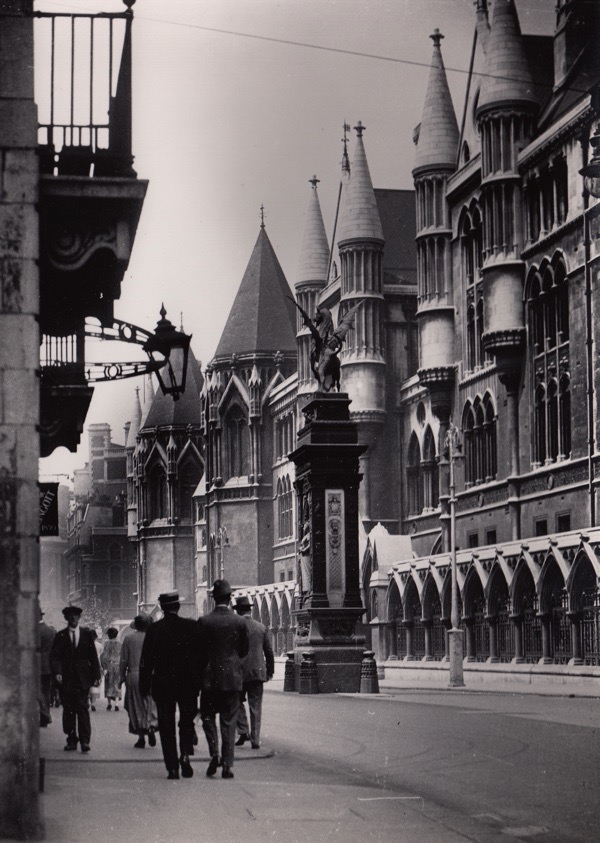
In Fleet St
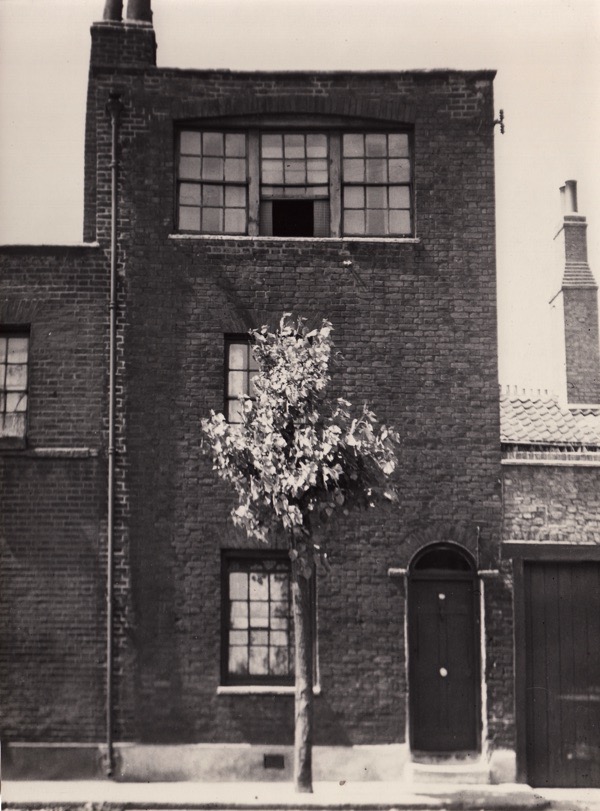
In Buckfast St, Bethnal Green
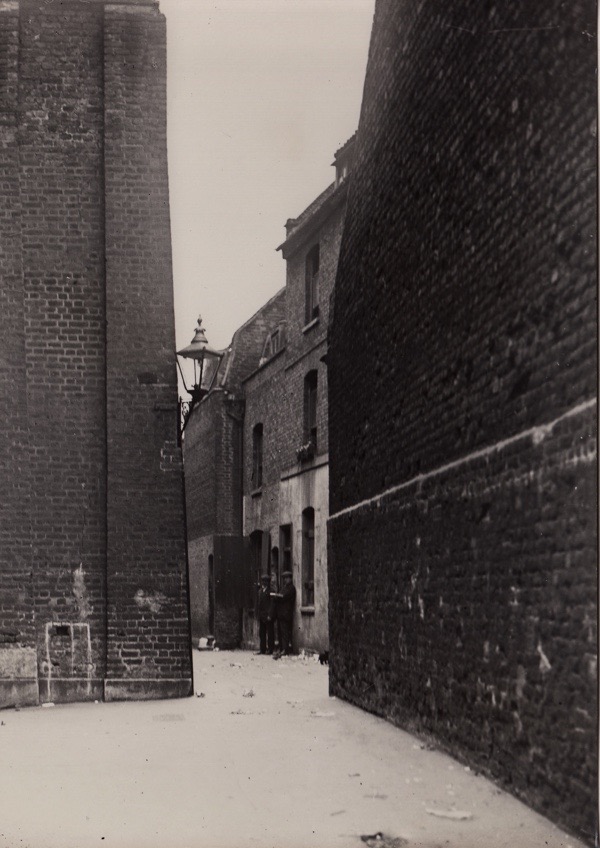
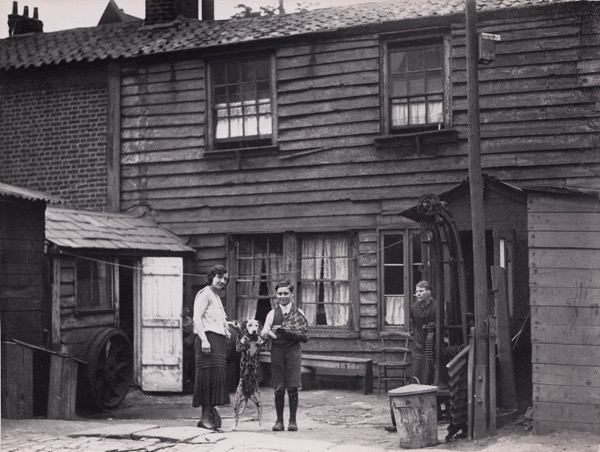
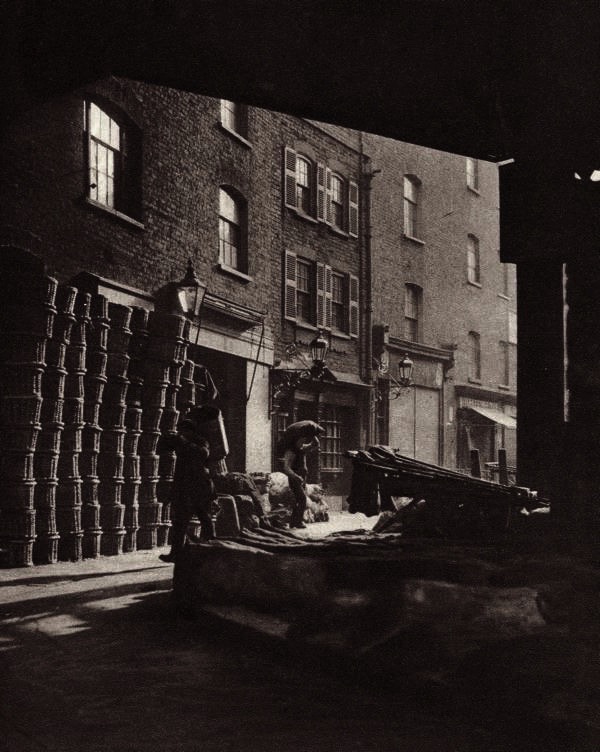
At Borough Market
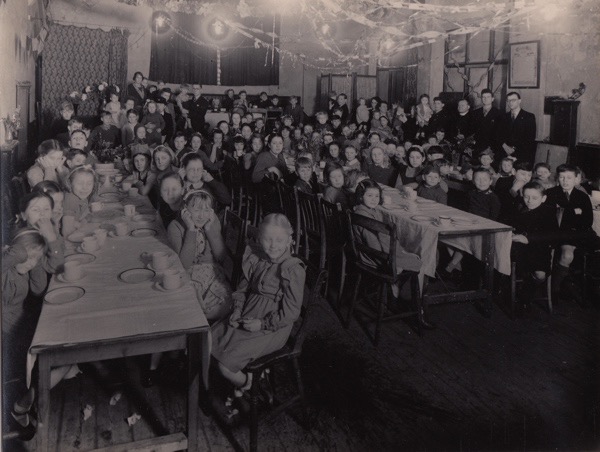

In Lombard St
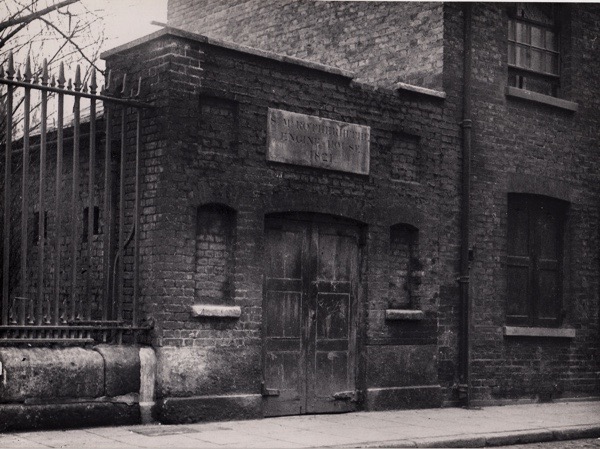
Rotherhithe Watch House
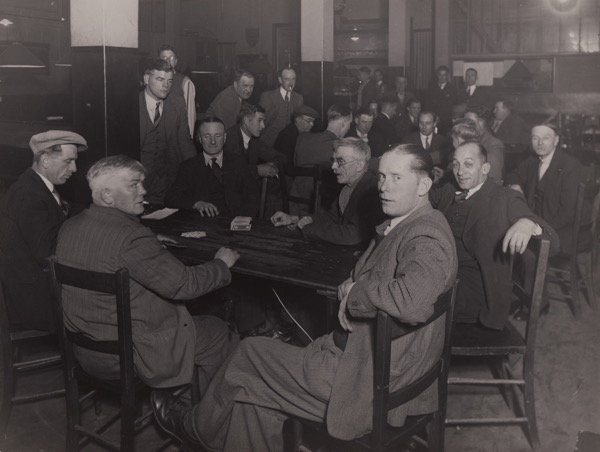
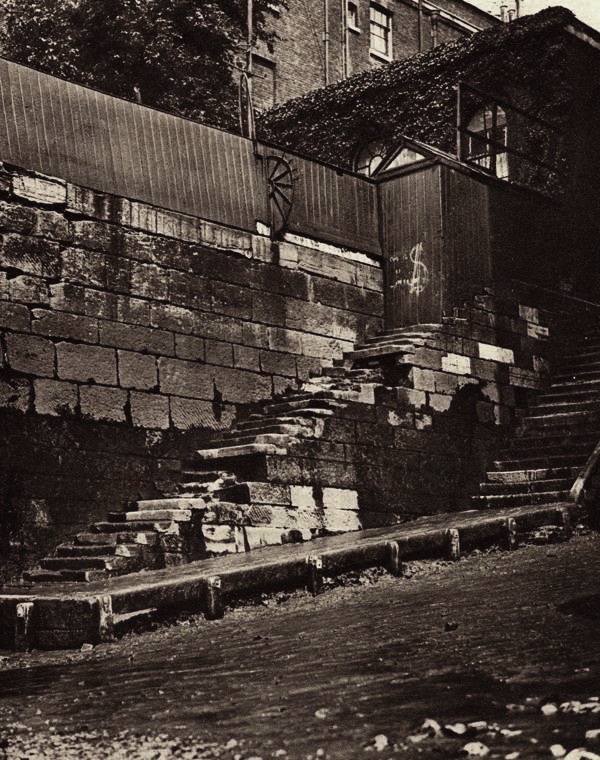
Wapping Old Stairs
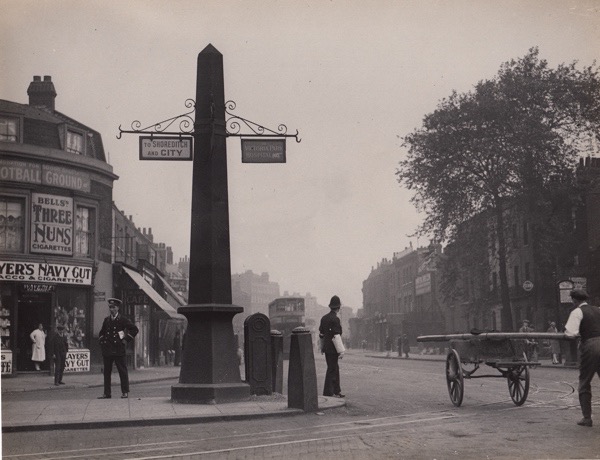
Junction of Cambridge Heath Rd & Hackney Rd
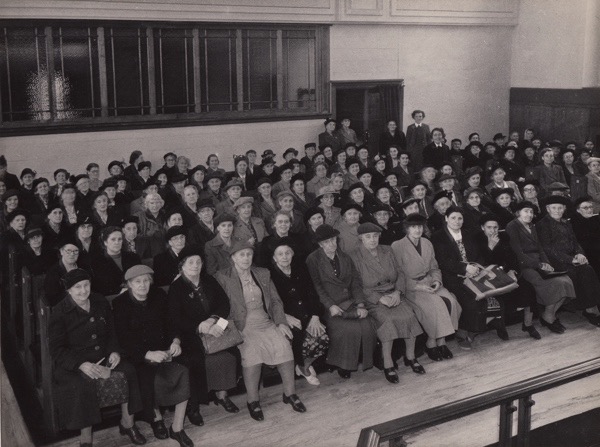
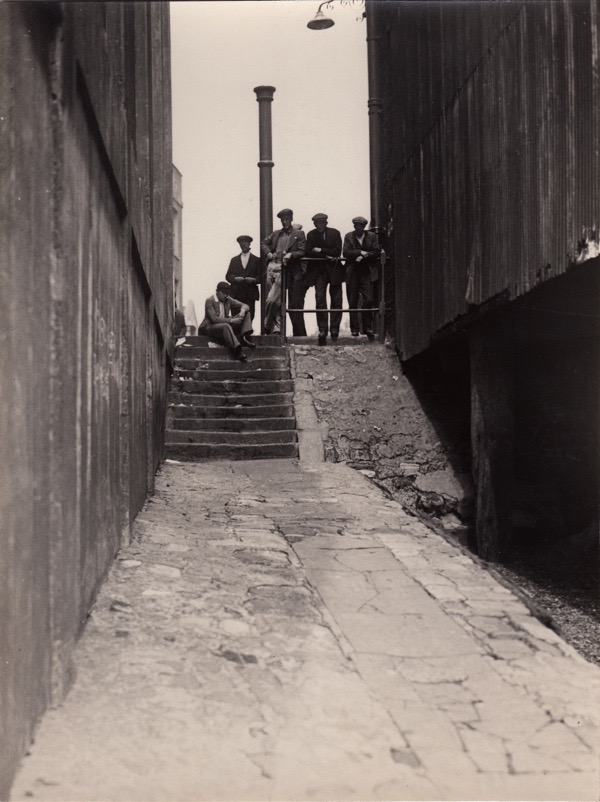
Ratcliff Stairs, Limehouse
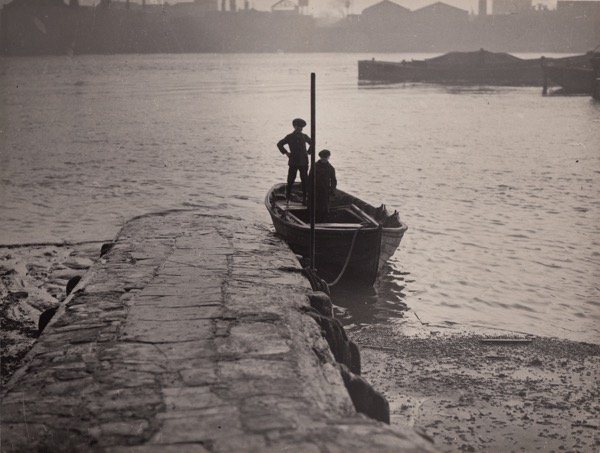
Ratcliff Causeway, Limehouse
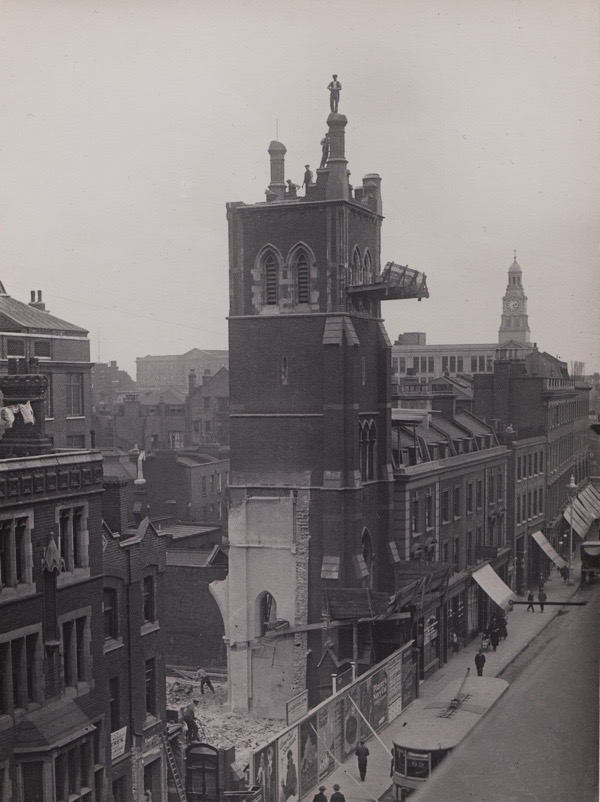
St Jude’s, Commercial St
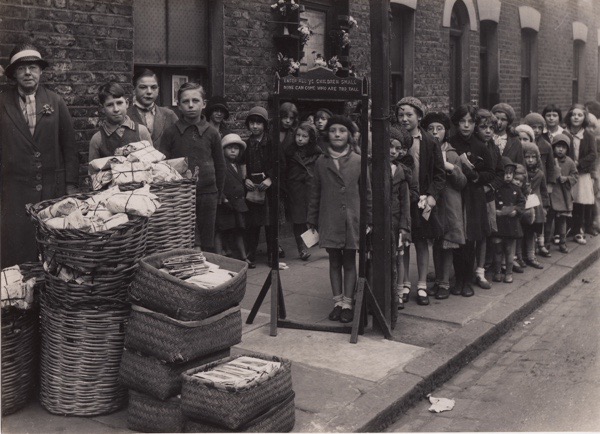
Farthing Bundles at the Fern St Settlement, Bow
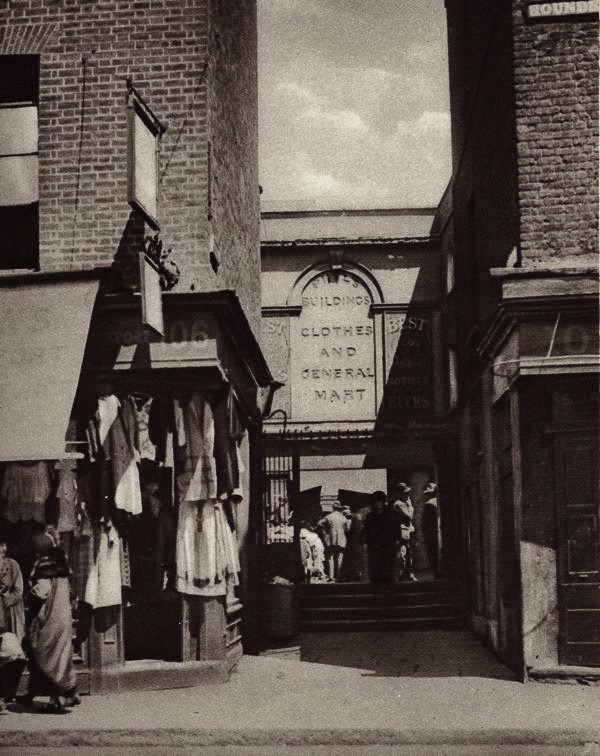
Houndsditch Rag Fair
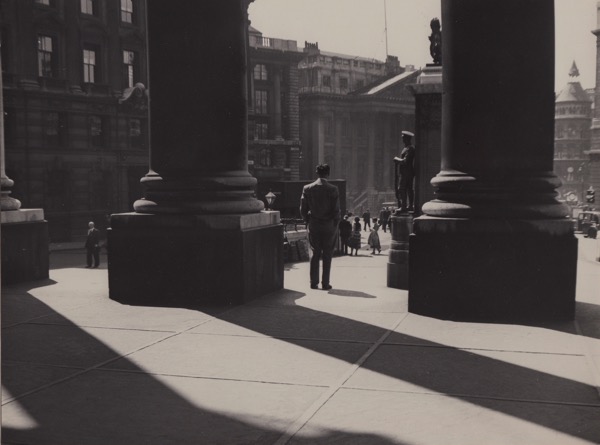
At the Royal Exchange, City of London
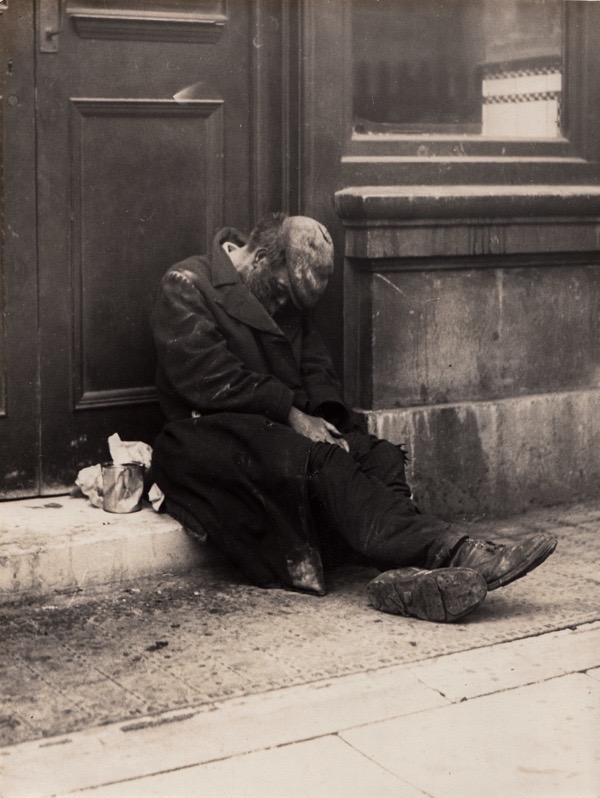
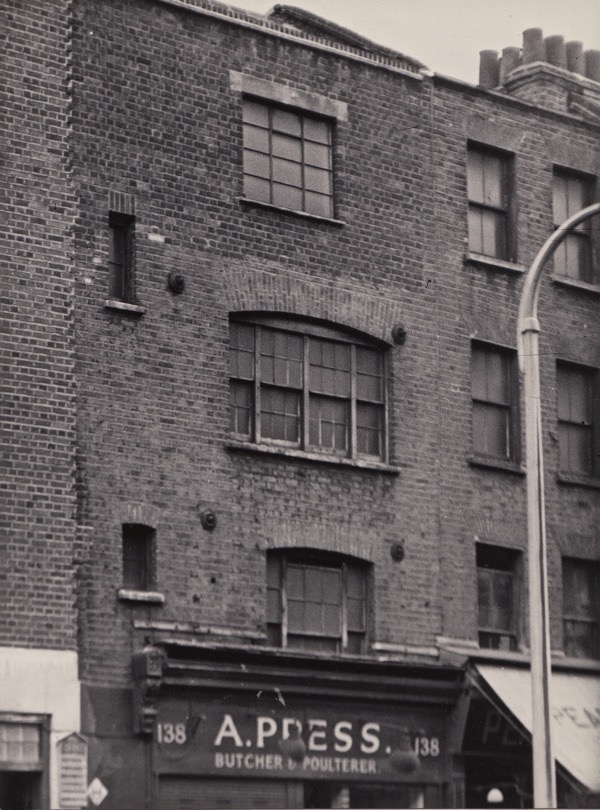
Weavers’ House, Bethnal Green Rd
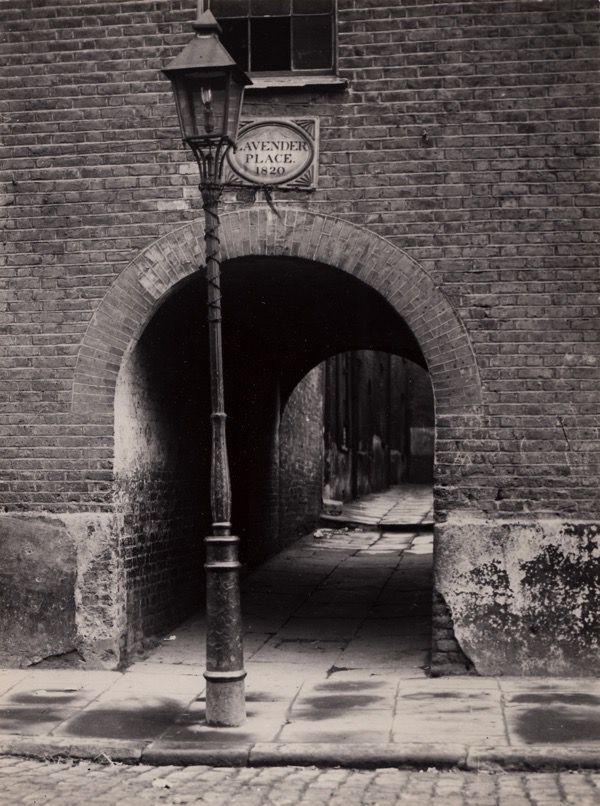
Off Pennington St, Wapping
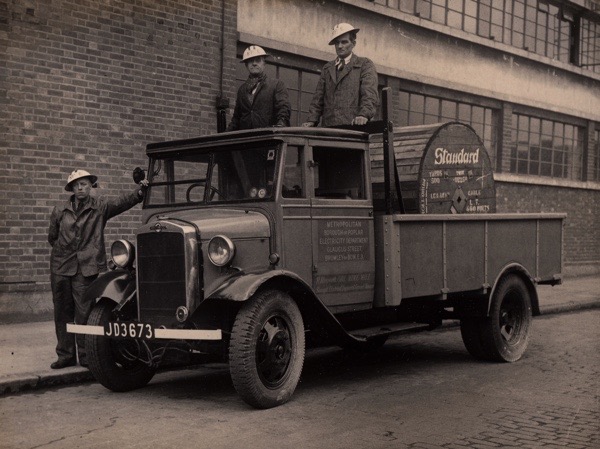
Borough of Poplar Electricity Dept
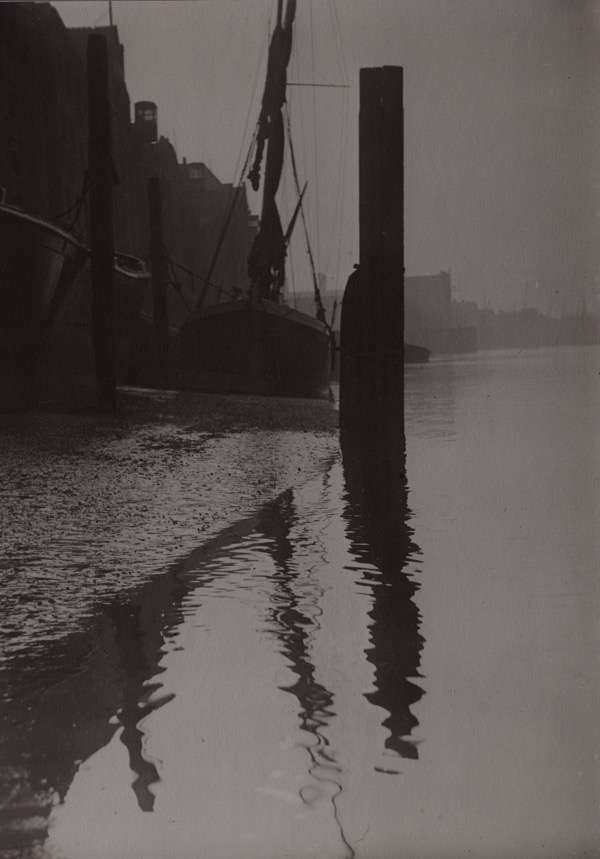
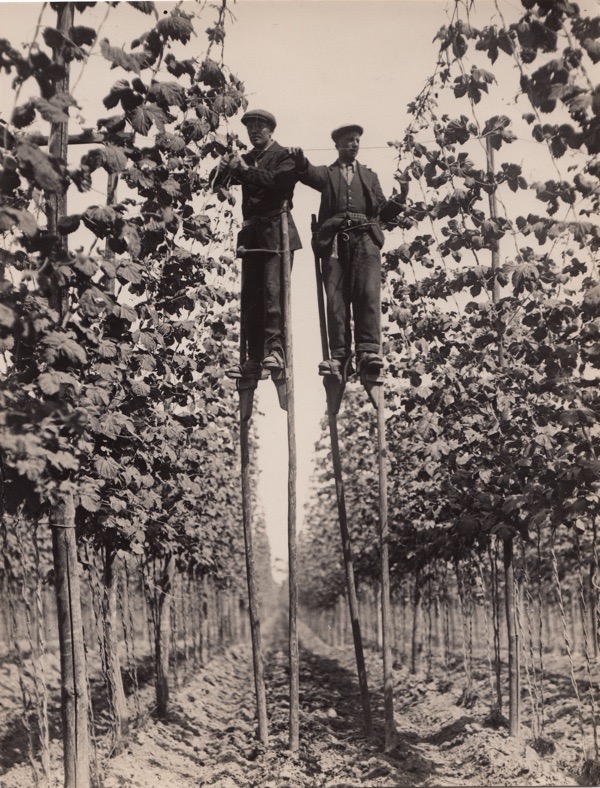
Pruning in the hop gardens of Faversham
Photographs copyright © Estate of William Whiffin
Hellen Martin & I should be very grateful if readers can identify any of the uncaptioned photographs
You may also like to read about
Faulkner’s Street Cries
These cards produced by W. & F. Faulkner Ltd and issued with Grenadier Cigarettes in 1902 are a favourite discovery in my ongoing exploration of all the versions of the Cries of London created down through the ages. Even the most sentimental images can reveal something of the reality of the working lives of hawkers, and I especially like this precisely observed set of surly, cantankerous portraits which convey the relentless nature of street trading with a mixture of wit and affection.

Flypaper seller.
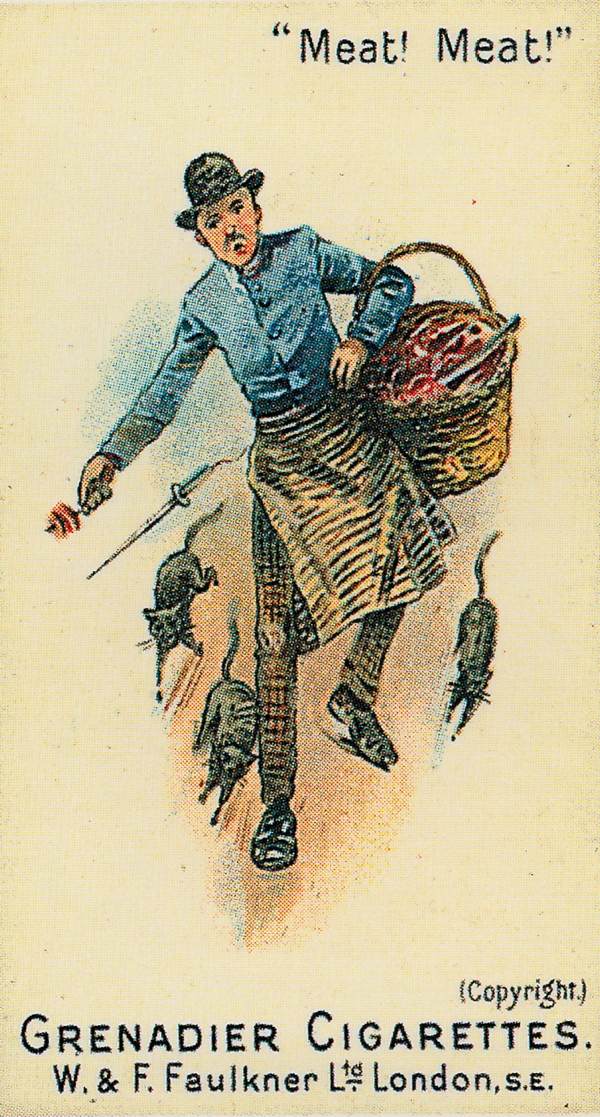
Cats’ meat man.

Ice cream seller.
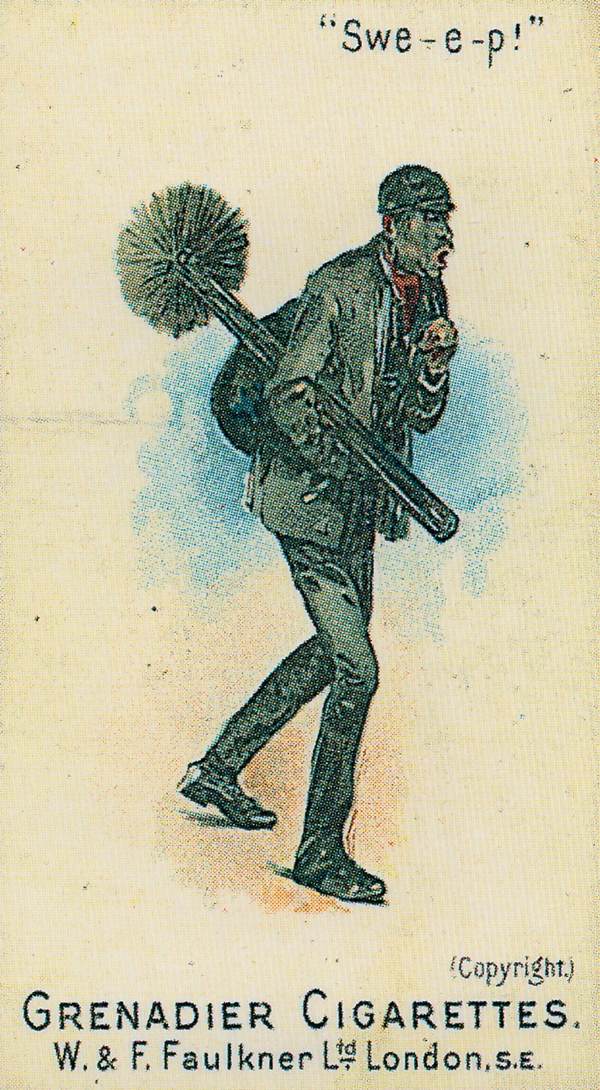
Chimney sweep.

Knife grinder.
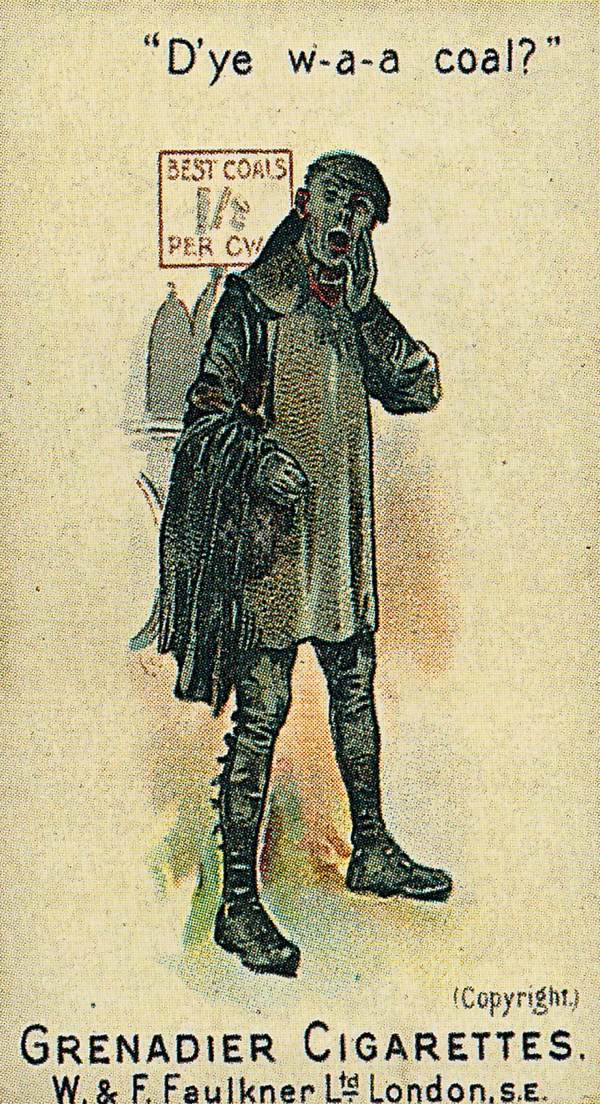
Coalman.

Baked potato seller.
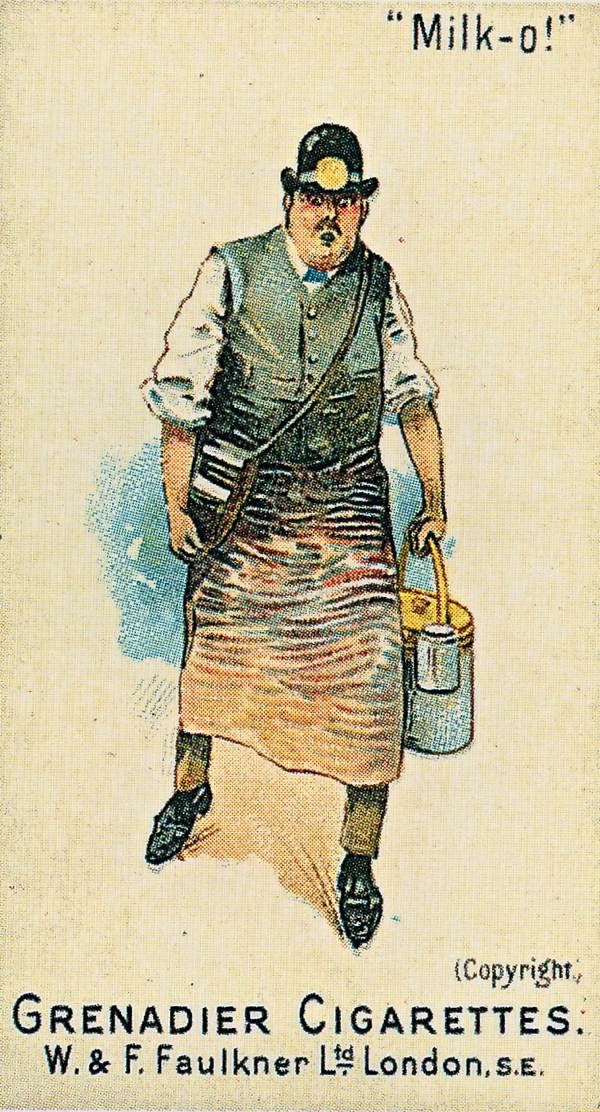
Dairyman.

Lavender seller.

Newspaper seller.

Novelties seller.
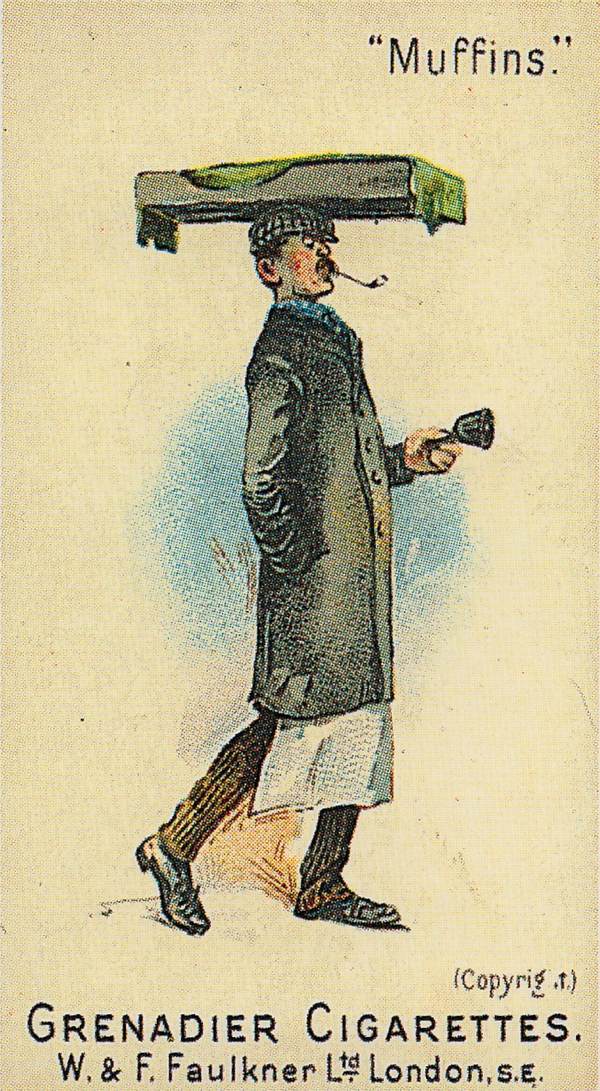
The muffin man.
You may like to take a look at these other sets of the Cries of London
William Craig Marshall’s Itinerant Traders
H.W.Petherick’s London Characters
John Thomson’s Street Life in London
Aunt Busy Bee’s New London Cries
Marcellus Laroon’s Cries of London
More John Player’s Cries of London
William Nicholson’s London Types
Francis Wheatley’s Cries of London
John Thomas Smith’s Vagabondiana of 1817
John Thomas Smith’s Vagabondiana II
John Thomas Smith’s Vagabondiana III
Thomas Rowlandson’s Lower Orders
More of Thomas Rowlandson’s Lower Orders