
Christmas At The Salvation Army
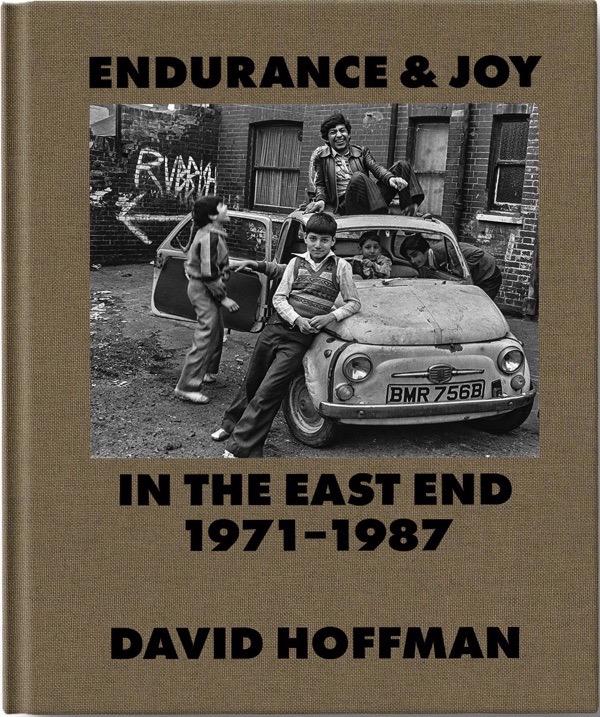
We want everyone who loves the East End to have a copy of David Hoffman’s wonderful photography book ENDURANCE & JOY IN THE EAST END 1971 – 1987, so we have reduced the price from £35 to £2o until midnight tonight.
CLICK HERE TO BUY ‘ENDURANCE & JOY IN THE EAST END’ FOR £20


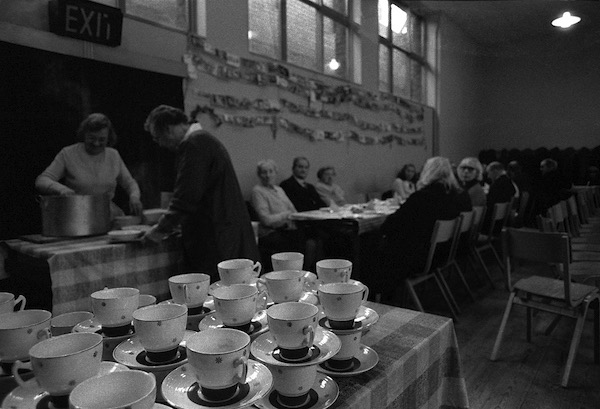
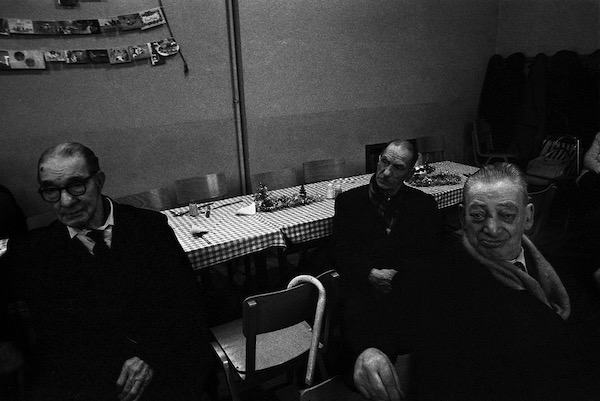
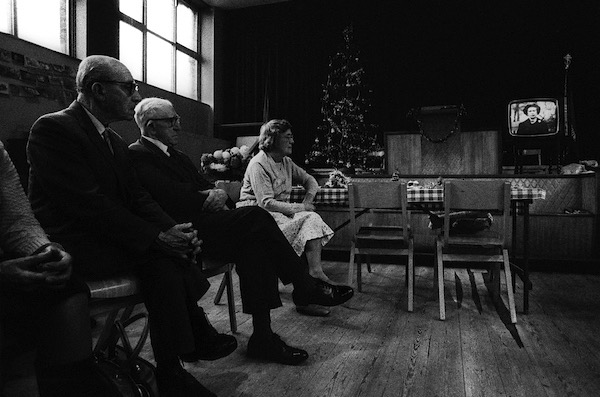
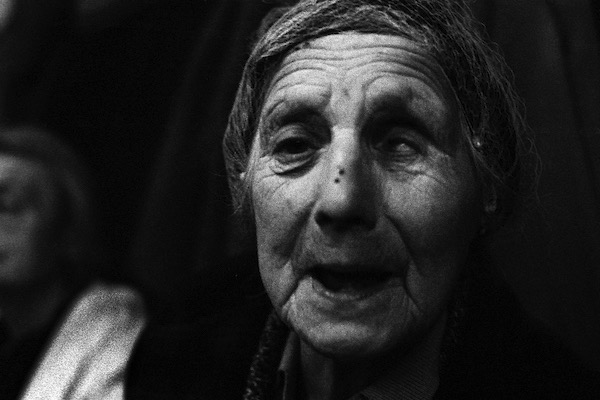
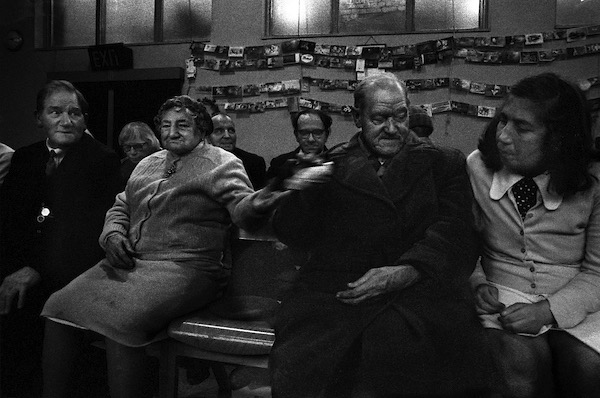
Photographer David Hoffman took these pictures at the Salvation Army Christmas Day lunch in Globe Rd in 1975
“On Christmas Day 1975, I was squatting in Fieldgate Mansions in Whitechapel and it was a bit boring because all my friends were away for the holiday. The shops were shut and I was looking for something interesting to do with the day. I had seen that the Salvation Army were holding an open Christmas lunch at Sigsworth Hall in Globe Rd so I rocked up there with my camera and, without any formality, I just started to take photographs.
It was terribly dark. I had no flash and I had to work hard in the darkroom to coax these images from the horribly under-exposed and heavily over-developed film. The prints I made at the time were flat and grey but, now that I have been able to convert them to digital files, they do look a bit better and remind me of a very different era, now lost without trace.” – David Hoffman








Photographs copyright © David Hoffman
You may also like to take a look at
David Hoffman at Fieldgate Mansions
Gillian Tindall At The White Chapel

CLICK HERE TO ORDER A COPY FOR £10
Remembering writer and historian Gillian Tindall who died on 1st October, I am publishing her account of the origins of Whitechapel.
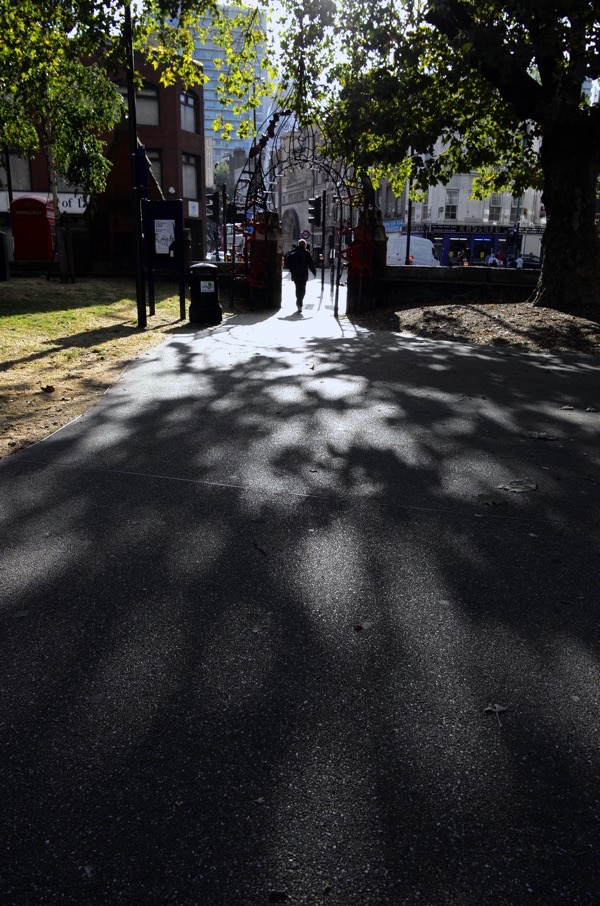
Altab Ali Park, Whitechapel
‘Oranges and lemons, say the bells of St Clements,
You owe me five farthings, say the bells of St Martins.
When will you pay me? say the bells of Old Bailey.
When I grow rich, say the bells of Shoreditch…’
These verses may have been first written down in the eighteenth century, but it has been suggested that their origins lie in the tit-for-tat executions which accompanied the Reformation in the sixteenth century:
‘Here comes a candle to light you to bed,
And here comes a chopper to chop off your head…’
Yet Whitechapel could only suggest sticks and an apple, suggesting it was not a very salubrious neighbourhood even then.
‘Sticks and an apple, say the bells of Whitechapel…’
From Aldgate, the eastern gate of the City, Whitechapel High St runs for a mile to the point where Mile End Rd starts and was long known as ‘the back door to London.’ In the fifteenth century, when a group of young noblemen on a night out in Whitechapel got into an argument with local lads which became a mass brawl, three commoners ended up dead. At that time, gentlemen usually carried daggers and no nobleman got punished.
A century later, in the Elizabethan era, there were taverns all along Whitechapel High St and in Aldgate stood the Red Lion playhouse where Shakespeare appeared early in his career. The London commentator, John Stow, complained that the street was ‘pestered with cottages and alleys’ and the fields where he had played as a child were being built over.
Three hundred years more and these dense, squalid side streets became notorious as locations of the Whitechapel Murders. In the mid-twentieth century, Whitechapel acquired new notoriety in the form of the nefarious activities of the Kray twins at The Blind Beggar, even though neither of these sensation narratives, endlessly milked today for tourists, have much to do with the reality of life in the East End.
Whitechapel has a history of mixed fortunes. Its location near both the City and the Docks, ensured that, thanks to expanding trade, many people were making a good living there in the eighteenth century. In the Georgian era, sugar refiners, rope and sail-makers, timber merchants, gun-makers, bell-founders and skilled engineers lived and worked in Whitechapel, and they were well-to-do people. Among them were Fellows of the Royal Society and authors of books on navigation for the expanding world. Captain Cook and his family had a house just beyond Mile End in the seventy-seventies, disgracefully demolished by the local authority in 1958.
Where, you may ask, did these respectable folk attend church, as they surely must have done? For centuries, the church for the huge parish of the’Tower Hamlets,’ when it contained little more than small farming settlements and a few isolated grand houses, was St Dunstan’s at Stepney. Yet already, in the Middle Ages, there were a significant number of people living just outside the City gate who did not want to trek through the mud to Stepney in winter. It was to accommodate them that a small chapel of ease was built of stone-rubble near Aldgate in the thirteenth century, rebuilt a hundred years later, given a coat of white limewash and dedicated to ‘St Mary Matfelon.’ This was the long-enduring White Chapel, which, standing out from afar, was to give its unofficial description to the place.
By the late seventeenth century, with Charles II on the throne and the old City recently burnt out in the Great Fire, it was obvious that the population of the Tower Hamlets was growing fast and one church was not enough. The parish of St Dunstan’s was divided into nine, with new churches built and St Mary’s rebuilt again, in red brick this time, to provide space for the by-now very substantial population of Whitechapel. The land round the chapel, which had unofficially received hundreds of bodies already – including probably that of Charles I’s executioner, Richard Brandon – now became a prestigious local graveyard. Sir John Cass of the Royal African Company, which was involved in the Atlantic slave trade was buried there, and so were members of the Cooke family, a clan with governmental connections and a coat of arms.
The Maddocks, another armigerous local family who were prosperous timber merchants just off Cable St, also paid for an elegant tomb of their own. Into it, between 1774 and 1810, went Nathan Maddock and his wife Elizabeth, both only in middle life, a daughter of thirteen, a sister-in-law of twenty-five, and her son when he was seventeen. It is a relief to find that Richard Maddock (who did not actually live in Whitechapel any longer but grandly in St James) was seventy when he died, and his sister seventy-nine. A James Maddock died aged nineteen, but that same year another James in the same family was negotiating the deeds of land in the area on which he intended to build and he appears to have lived so long that the tomb was full before it could accommodate him.
How do I know all this? Because the tomb, complete with a worn crest of stone feathers and a ‘demi lion rampant,’ is to be found on the site of the old churchyard to this day. It is one of only two sarcophagus tombs that have survived the clearances which took place when the ground was shut for burials in the eighteen-fifties, when the church was rebuilt for the third time in 1877, redone again after a fire in 1880, and when bombs destroyed it in 1940. With its button-lidded top, the tomb looks exactly like an enormous soup-tureen for a family of giants with a rather pretentious taste in crockery.
On seats nearby, on a grassy bank that conceals a mountain of blitz rubble, and vestigial stone walls marking the outlines of two by-gone churches, City workers eat takeaway lunches, young men smoke and look bored, while veiled young women confer over pushchairs. Whether they admire the tomb, realise what it is or simply ignore it, I cannot say.
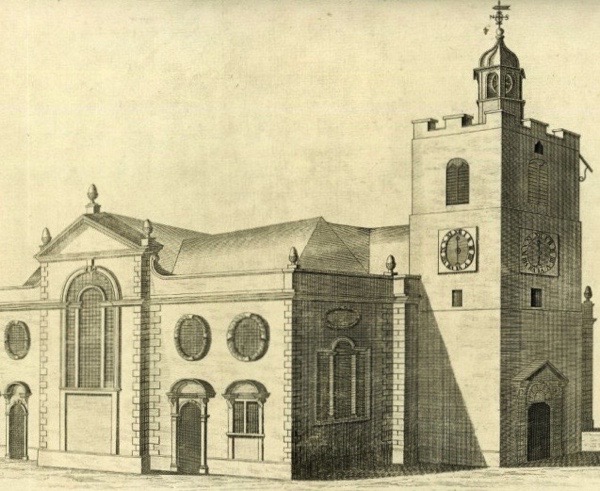
The seventeenth century incarnation of the St Mary Matfelon, the White Chapel
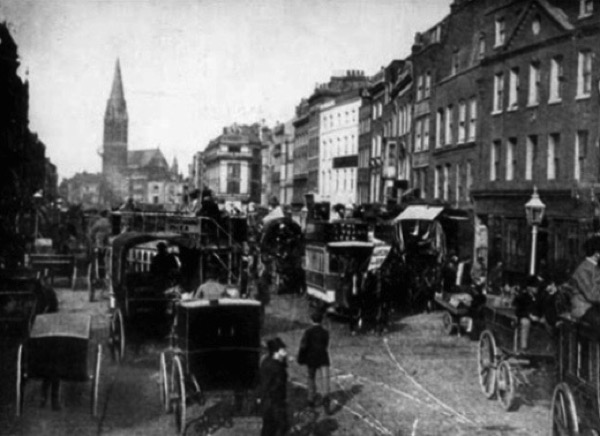
White Chapel seen from Aldgate in the early twentieth century
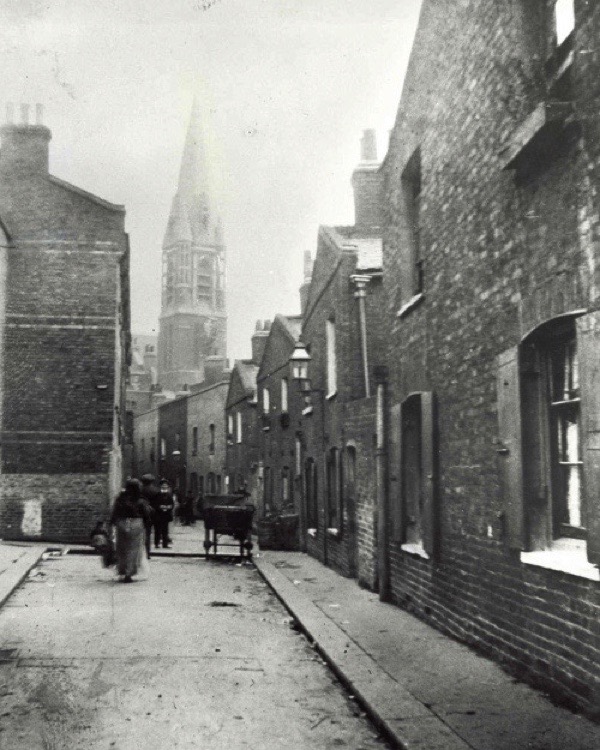
St Mary Matfelon, the White Chapel, seen from Green Dragon Yard in the nineteenth century.

White Chapel seen from the east in the early twentieth century
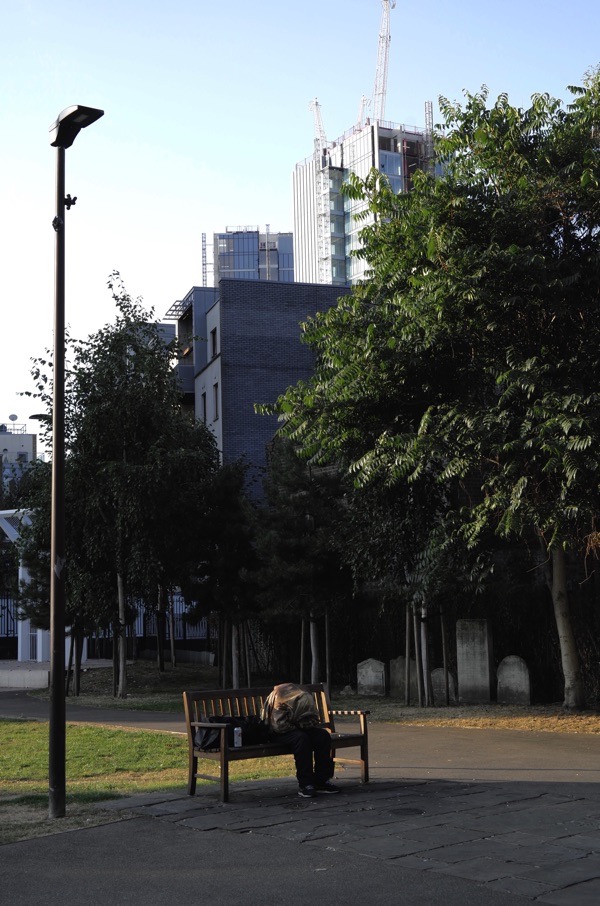
In Altab Ali Park
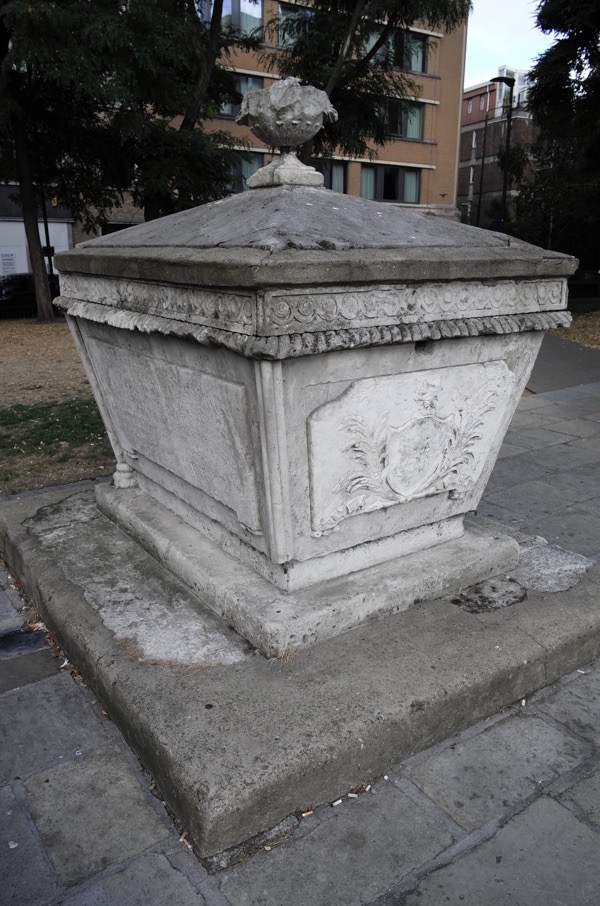
Tureen Tomb for the Maddock family in Altab Ali Park
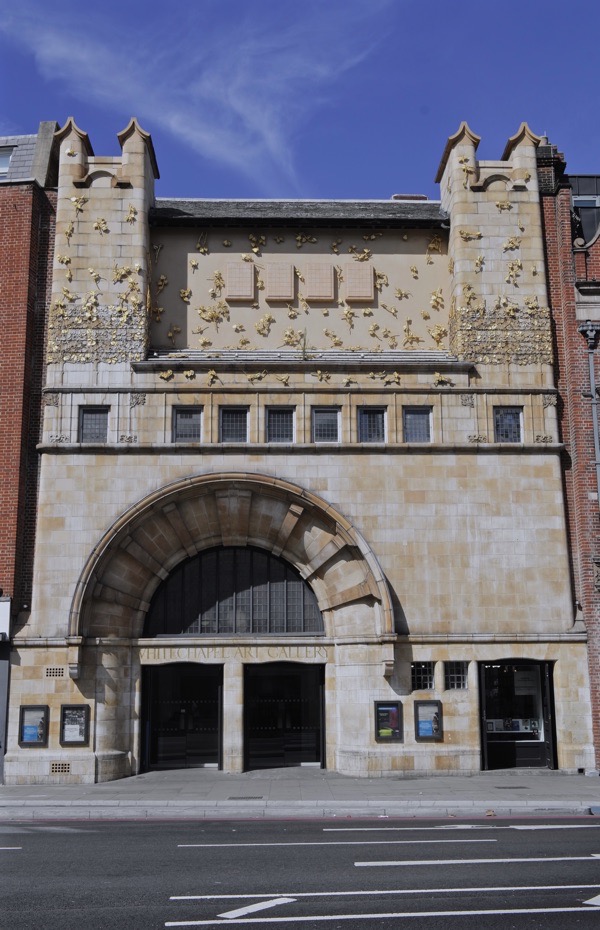
Whitechapel Art Gallery
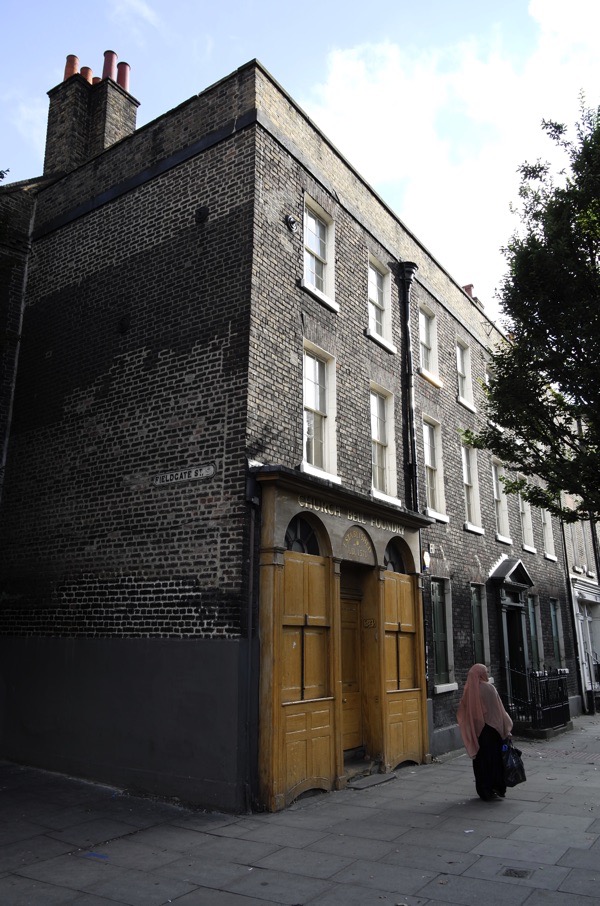
Whitechapel Bell Foundry
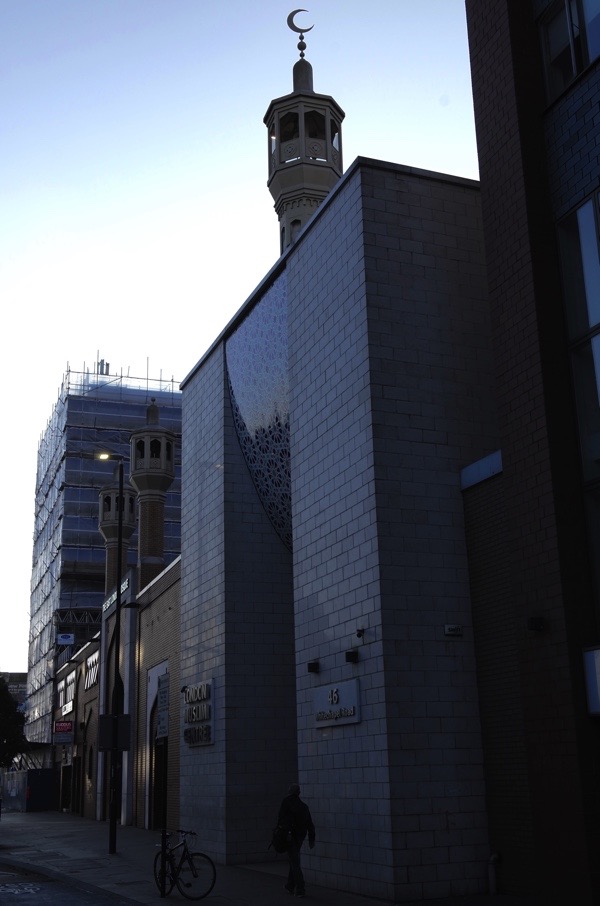
East London Mosque
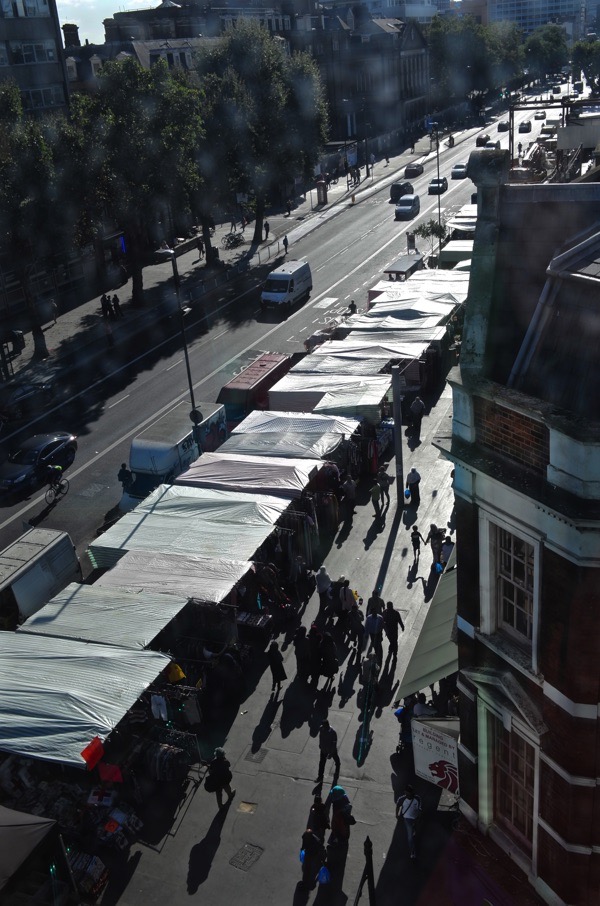
Whitechapel Market
Shopping In Old London

Tickets are available for THE GENTLE AUTHOR’S TOUR OF SPITALFIELDS on January 1st
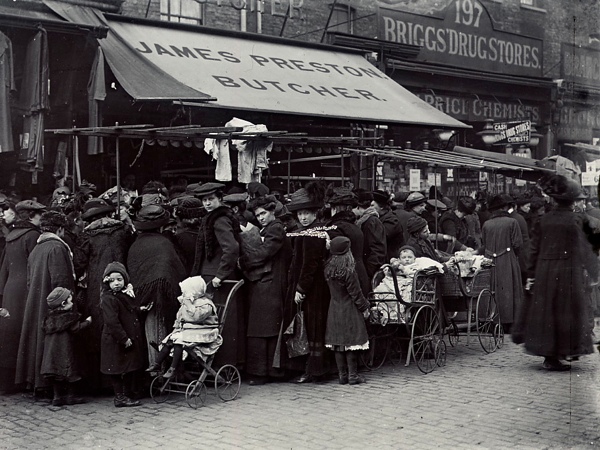
Butchers, Hoxton St c.1910
Are you short of cash and weary of Christmas shopping? Why not consider visiting the shops of old London instead? There are no supermarkets or malls but plenty of other diversions to captivate the eager shopper.
These glass slides once used for magic lantern shows by the London & Middlesex Archaeological Society at the Bishopsgate Institute offer the ideal consumer experience for a reluctant browser such as myself since, as this crowd outside a butcher in Hoxton a century ago illustrates, shopping in London has always been a fiercely competitive sport.
We can enjoy window shopping in old London safe from the temptation to pop inside and buy anything – because most of these shops do not exist anymore.
Towering over the shopping landscape of a century ago were monumental department stores, beloved destinations for the passionate shopper just as the City churches were once spiritual landmarks to pilgrims and the devout. Of particular interest to me are the two huge posters for Yardley that you can see in the Strand and on Shaftesbury Avenue, incorporating the Lavender Seller from Francis Wheatley’s Cries of London, originally painted in the seventeen-nineties. There is an intriguing paradox in this romanticised image of a street seller of two centuries earlier, used to promote a brand of twentieth century cosmetics that were manufactured in a factory in Stratford and sold through a sleek modernist flagship store, Yardley House, in the West End.
Wych St, lined with medieval shambles that predated the Fire of London and famous for its dusty old bookshops and printsellers is my kind of shopping street, demolished in 1901 to construct the Aldwych. Equally, I am fascinated by the notion of cramming commerce into church porches, such as the C. Burrell, the Dealer in Pickled Tongues & Sweetbreads who used to operate from the gatehouse of St Bartholomew the Great in Smithfield and E.H. Robinson, the optician, through whose premises you once entered St Ethelburga’s in Bishopsgate. Note that a toilet saloon was conveniently placed next door for those were nervous at the prospect of getting their eyes tested.
So let us set out together to explore the shops of old London. We do not need a shopping basket. We do not need a list. We do not even need to pay. We are shopping for wonders and delights. And we shall not have to carry anything home. This is my kind of shopping.
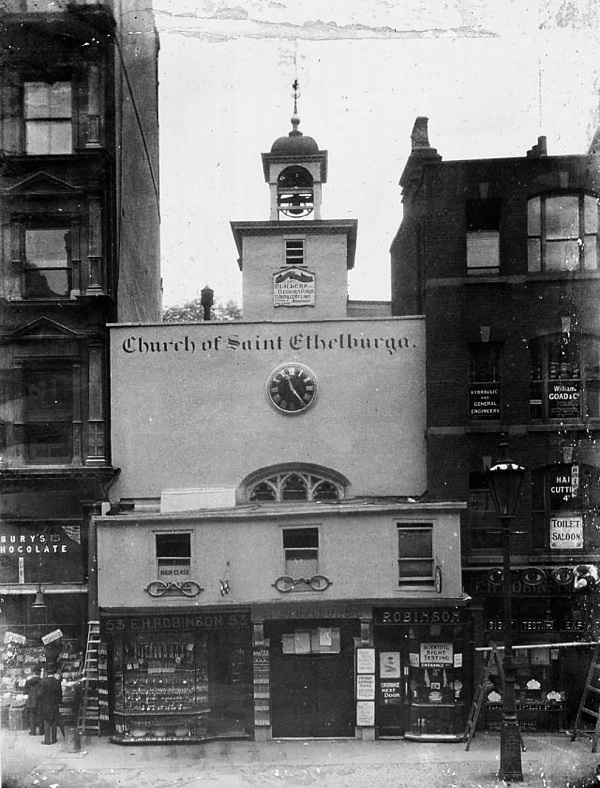
Optician built into St Ethelburga’s, Bishopsgate, c.1910
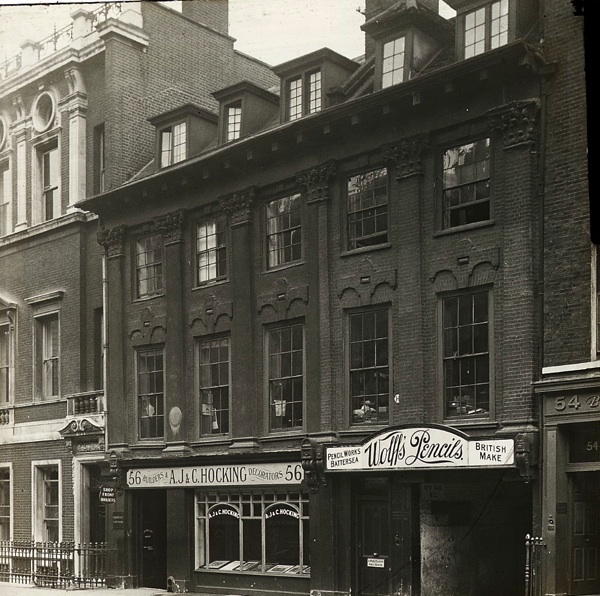
Decorators and Pencil Works, Great Queen St, c.1910
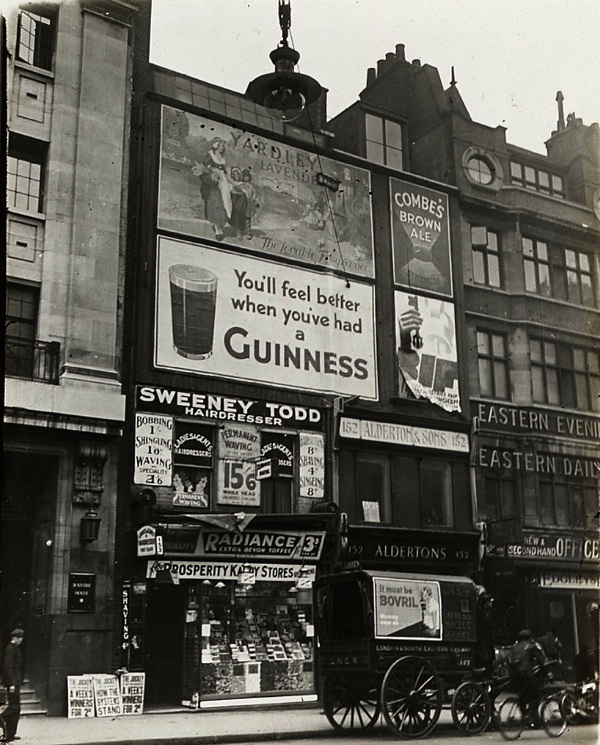
Newsagent and Hairdresser at 152 Strand, c.1930
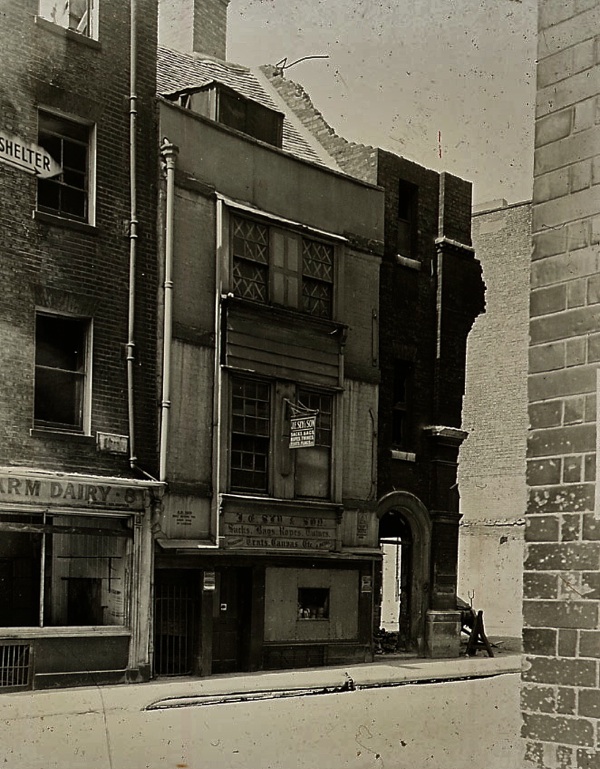
Dairy and ‘Sacks, bags, ropes, twines, tents, canvas, etc.’ Shop, c. 1940
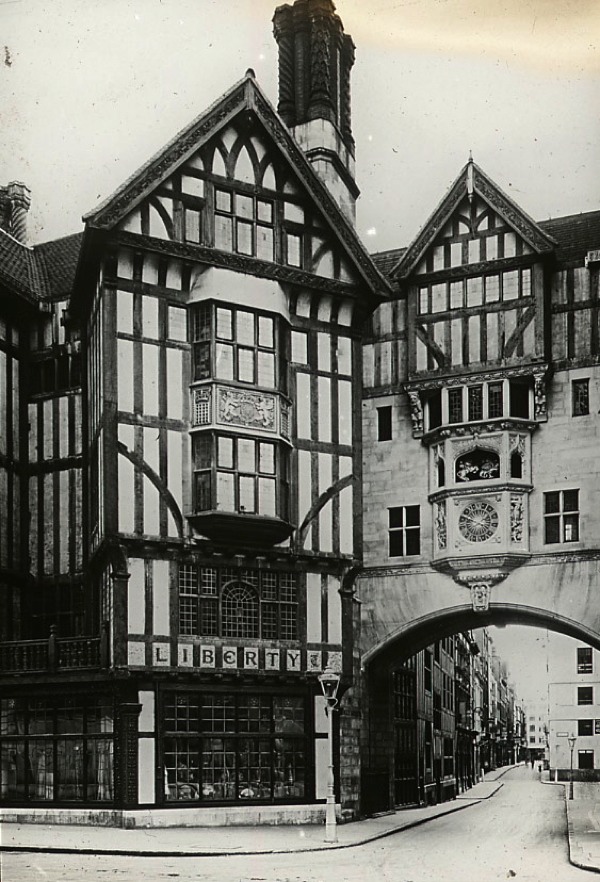
Liberty of London, c.1910

Regent St, c.1920.
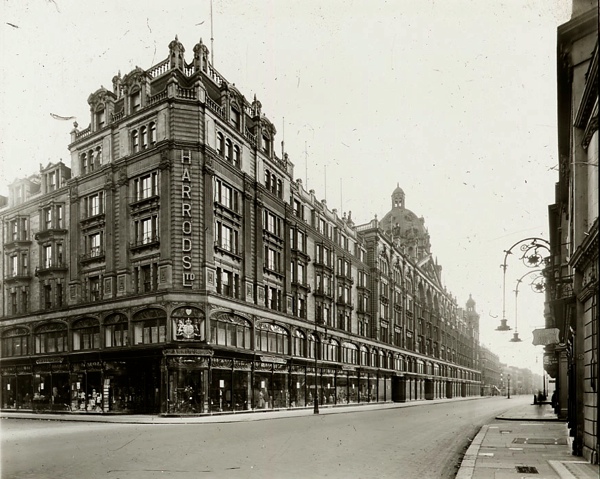
Harrods of Knightsbridge, c.1910

The Fashion Shoe Shop, c.1920 “Repetiton is the soul of advertising”
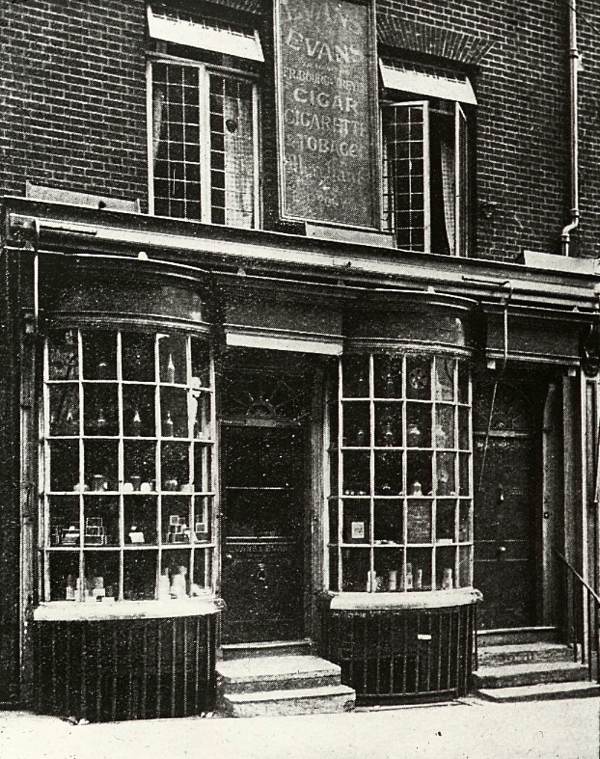
Evsns Tabacconist, Haymarket, c.1910
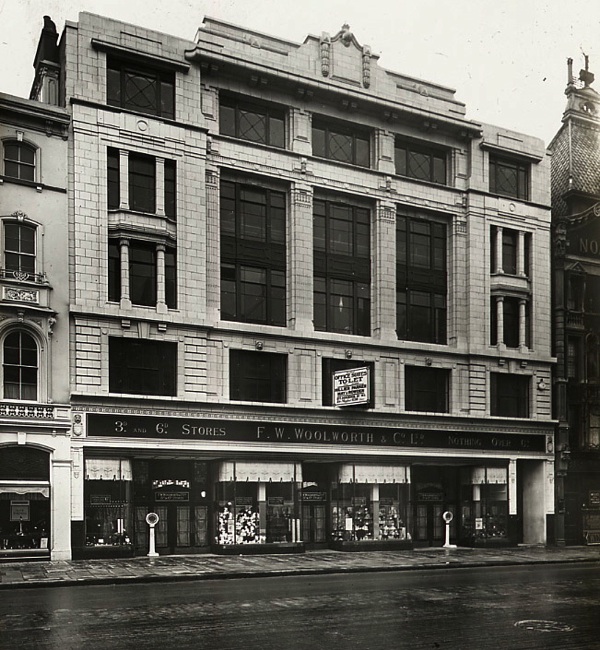
F. W. Woolworth & Co. Ltd. 3d and 6d store, c.1910
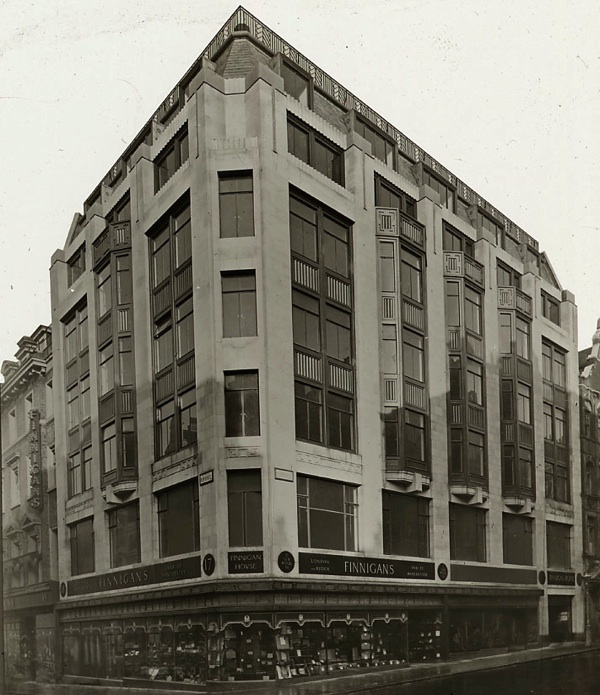
Finnigan’s of New Bond St, gold- & silversmiths, c.1910
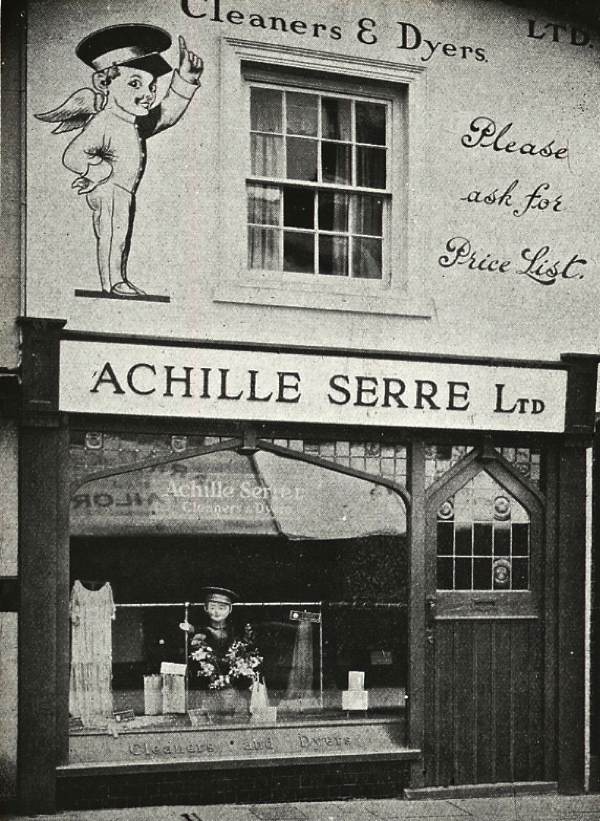
Achille Serre,Cleaner & Dyers, c. 1920
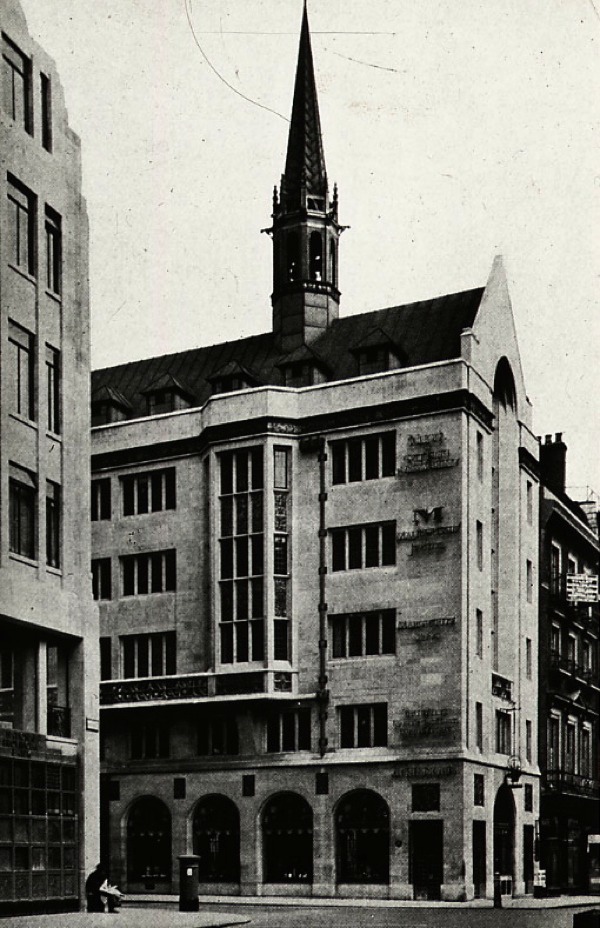
Old Bond St. c. 1910
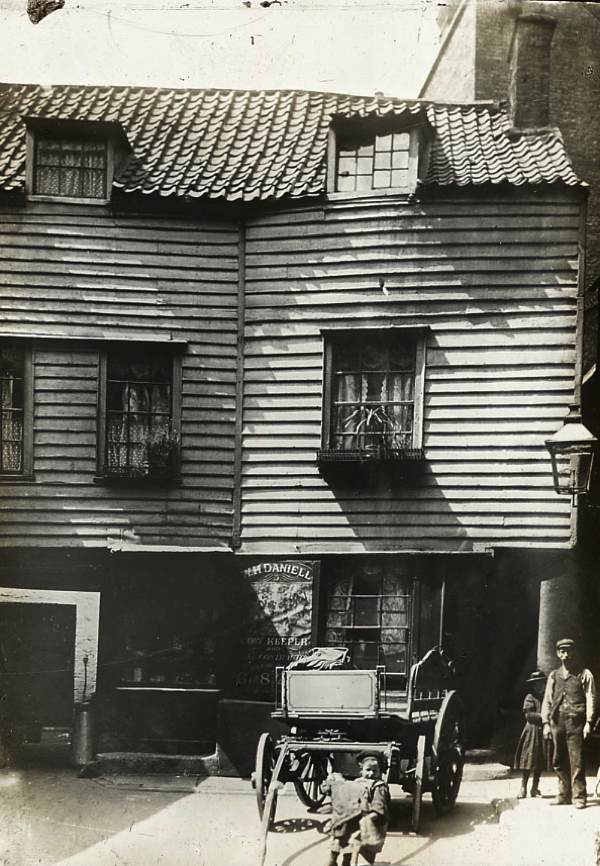
W.H.Daniel, Cow Keeper, White Hart Yard, c.1910
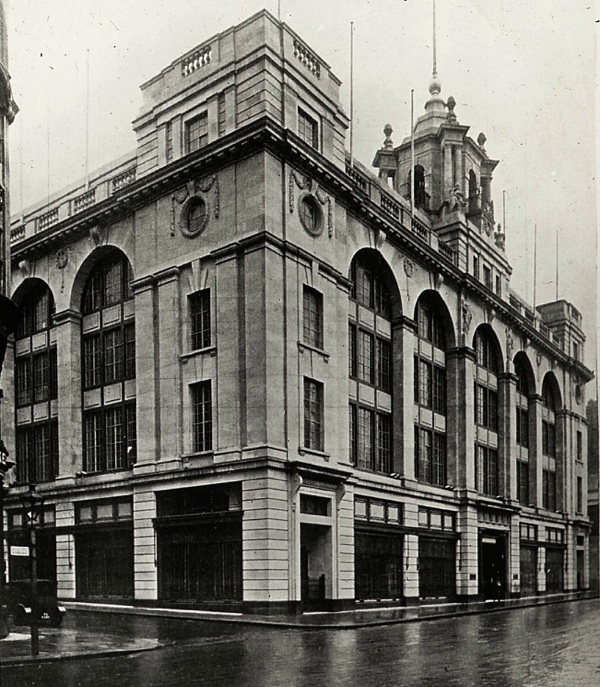
John Barker & Co. Ltd., High St Kensington, c.1910
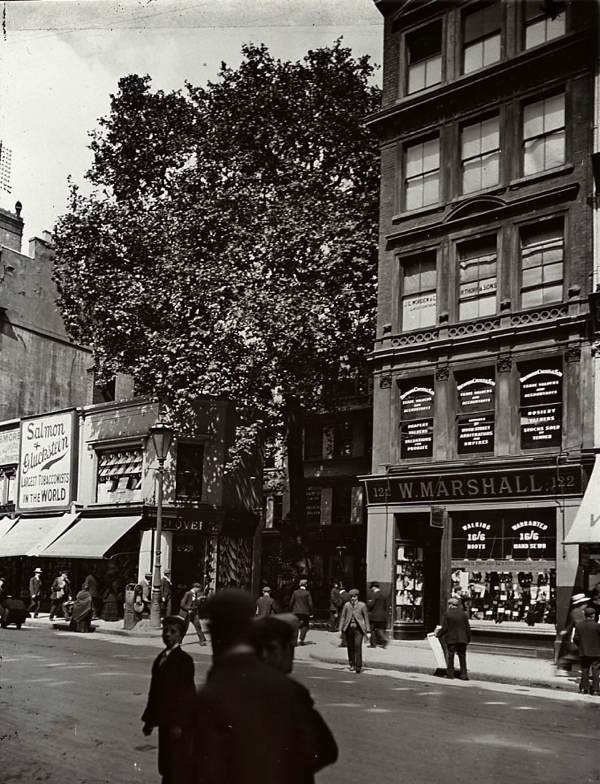
Tobacconist, Glovers and Shoe Shop, c.1910
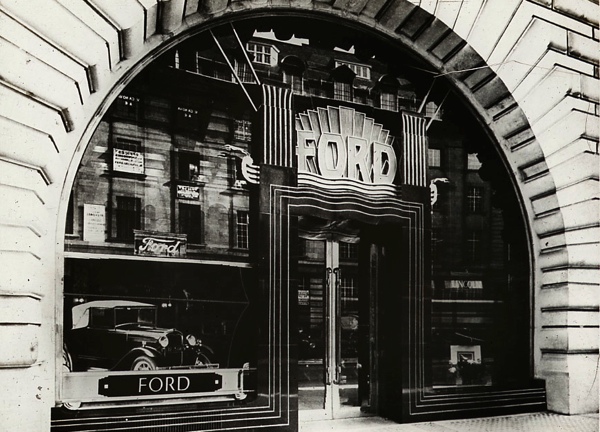
Ford Showroom, c.1925
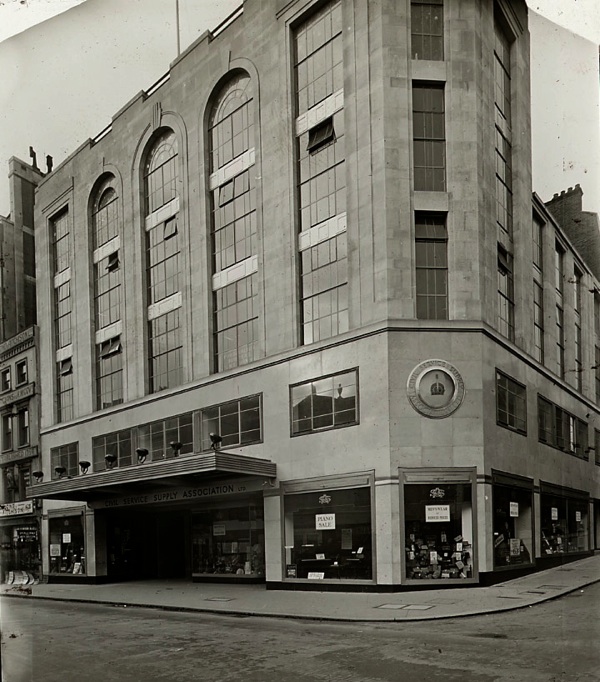
Civil Service Supply Association, c. 1930
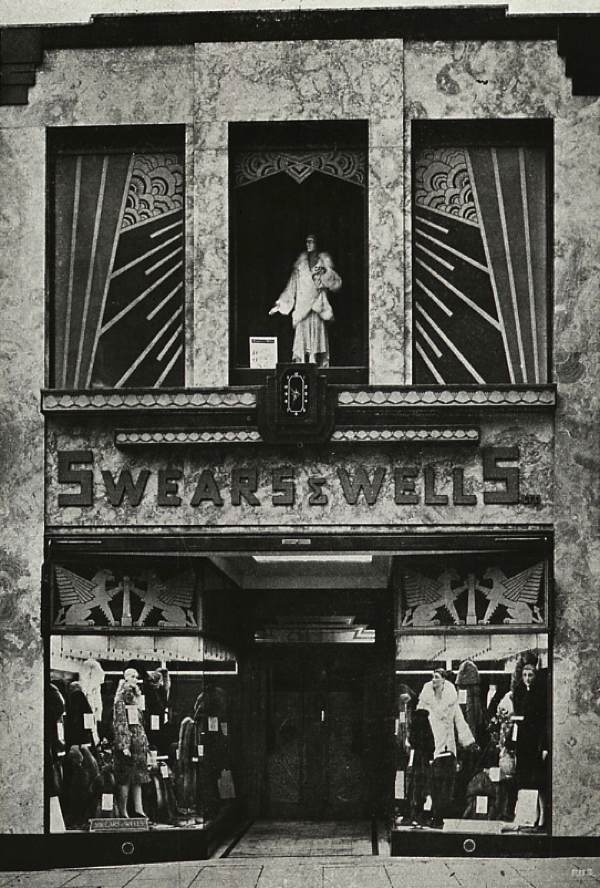
Swears & Wells Ltd, Ladies Modes, c. 1925
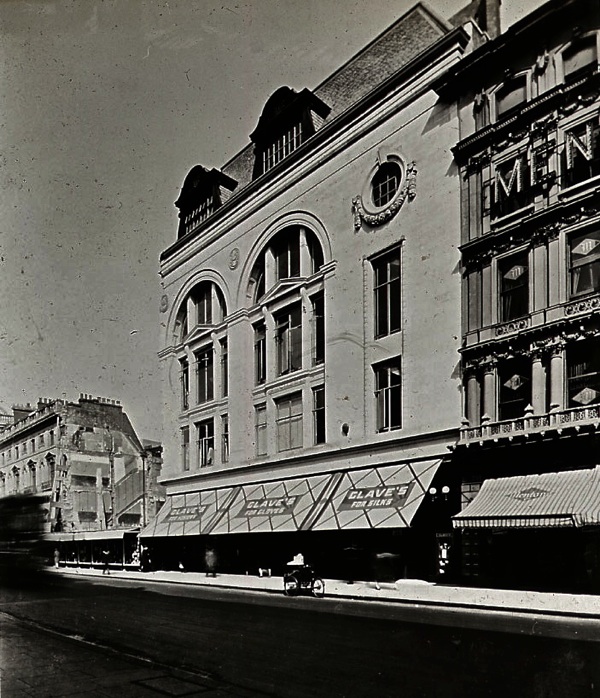
Glave’s Hosiery, c 1920
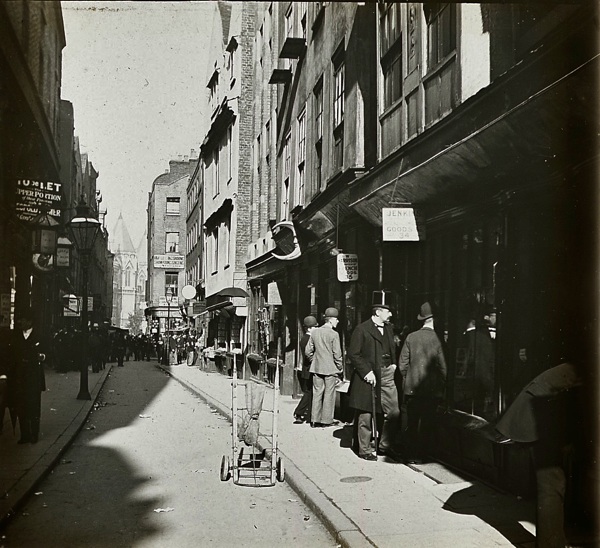
Shopping in Wych St, c. 1910 – note the sign of the crescent moon.
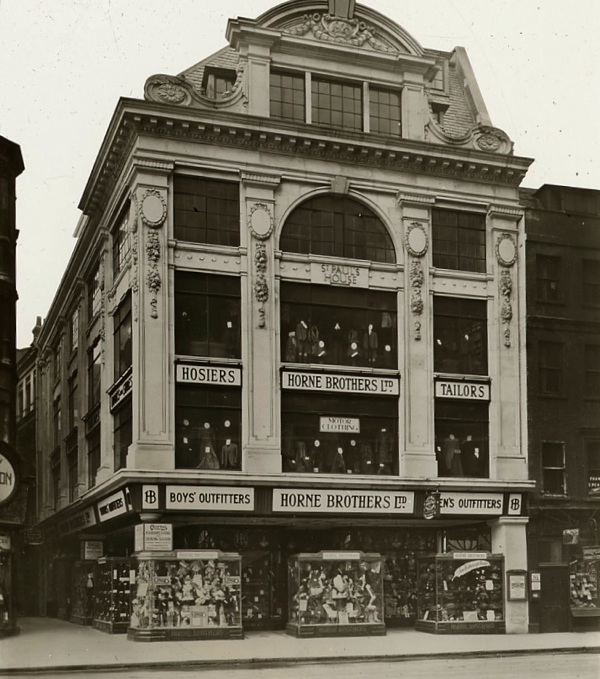
Horne Brothers Ltd, c. 1920
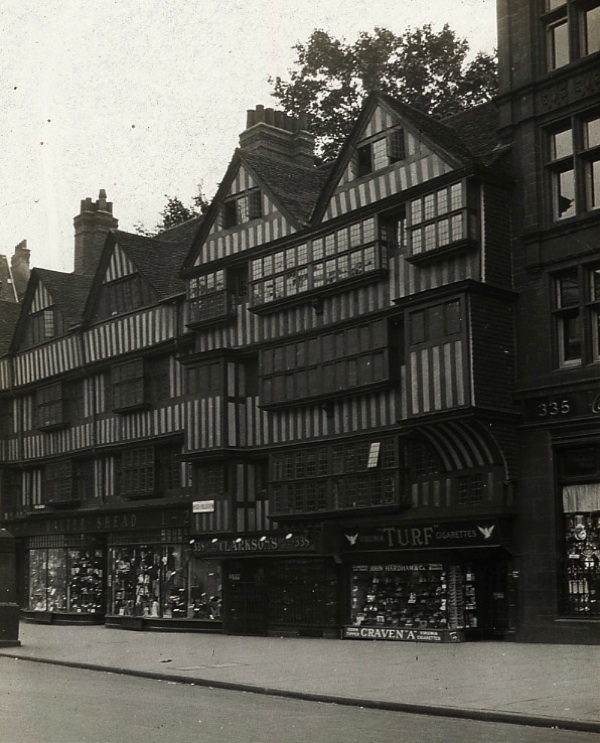
Tobacconist, High Holborn, c. 1910
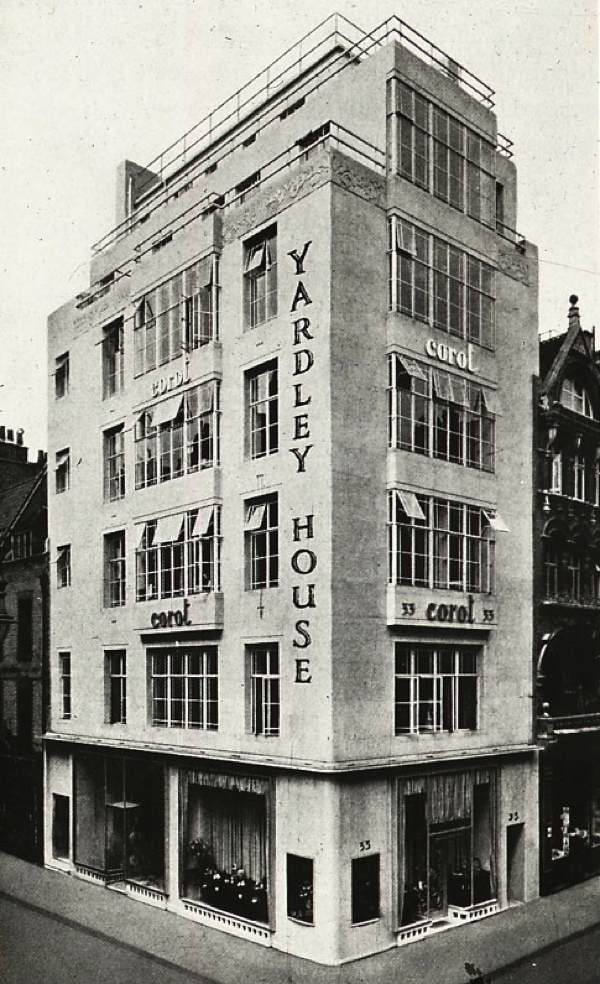
Yardley House, c. 1930

Peter Robinson, Oxford St, c. 1920

Confectionery Shop, corner of Greek St and Shaftesbury Ave, c. 1930
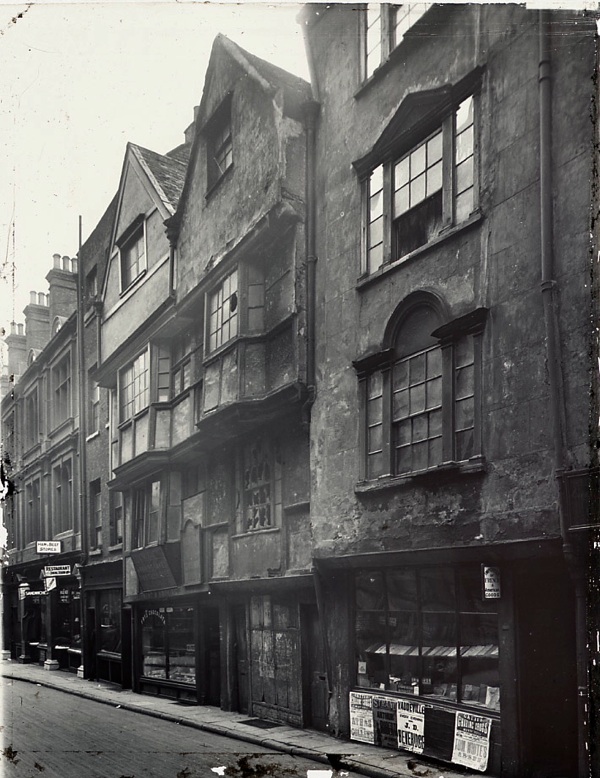
Bookseller, Wych St, c. 1890
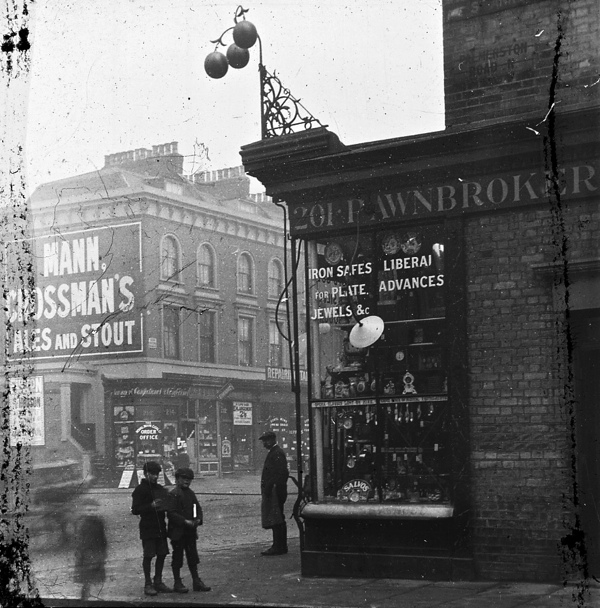
Pawnbroker, 201 Seven Sisters Rd, Finsbury Park, c. 1910
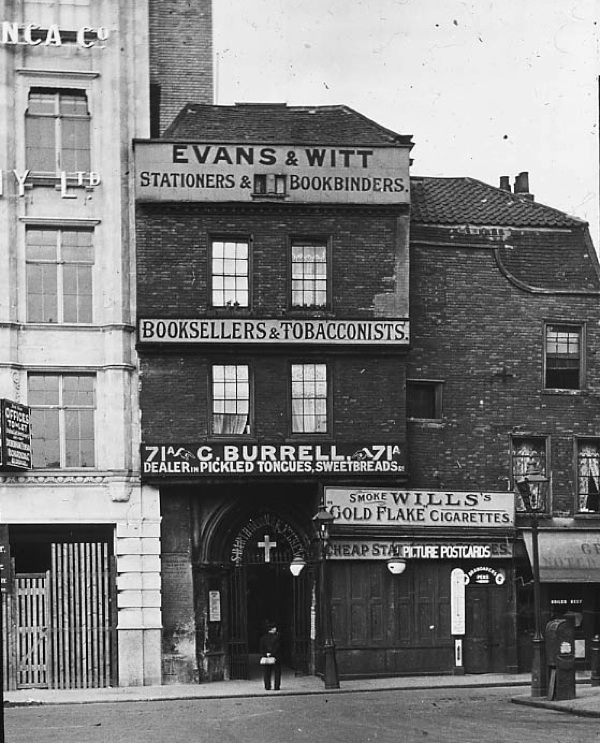
Bookseller & Tobacconist and Dealer in Pickled Tongues at the entrance to St Bartholomew’s, Smithfield, c. 1910

Oxford Circus, c. 1920
Glass slides copyright © Bishopsgate Institute
My History Of The Cries Of London
Click here to buy a signed copy of the CRIES OF LONDON
IN THE MIDST OF LIFE I WAKE in the dark city of my dreaming. It is the bellman that wakes me before dawn, crying wearily ‘Past three o’clock and a cold frosty morning,’ before he stumbles away with lamp in hand and mutt in tow through the gloomy passage. In the distance of my half-waking, I hear ‘Buy a dish of flounders’ and ‘Give you good morrow, my masters,’ before I fall back into my slumber again.
At sunrise, the streets are already teeming. ‘Fine Seville oranges, fine lemons, fine,’ cries the orange woman. ‘Buy any milk below,’ cries the dairy maid as a chorus of hawkers fills the street calling like birds chattering in trees – ‘Wood to cleave’ – ‘Fine hot cakes’ – ‘Hot eel pies’ – ‘ Buy any garlic’ – ‘Good sausages’ – ‘New sprats new’ – ‘Buy any buttons’ – ‘Featherbeds to dry’ – ‘Clove water, stomach water’ – Ripe walnuts ripe’ and Quick winkles, quick, quick, quick.’ I close the casement, bar the shutter, pull the curtain and wrap the pillow round my ears to resist the clamour.
When I wake again, it is daybreak and there is a tumult of Criers beneath my window – ‘Have you any work for a tinker?’ – ‘Buy a fine singing bird’ – ‘Sixpence a pound, fair cherries’ – ‘Any baking pears?’ – ‘Old shoes for new brooms’ – ‘Twelve pence a peck, oysters’ – ‘Lights for the cats, liver for the dogs’ – ‘Buy an almanac’ – ‘Hot spiced gingerbread’ – ‘Two bunches a penny, primroses’ – ‘Buy a barrel of samphire’ – ‘Pity the poor prisoners’ and ‘What is’t ye lack?’
I rise and walk into the street. Now they cry ‘Banana, banana, banana’ – Lamb biriani, Chicken biriani, one pound’ – ‘Standard, standard’ – ‘Come on ladies, come on ladies, one pound fish, one pound fish.’ There are fake DVD hawkers, gypsies with lucky heather, Big Issue sellers, whisperers offering ‘a smoke,’ nitrous oxide pedlars, evangelists, street dancers, ticket touts, curry touts, charity canvassers and human statues. They are offering free samples of wood-fired pizza, frappuccinos and frozen yoghurt.
Five hundred years of Cries of London passed in the street while I was dozing.
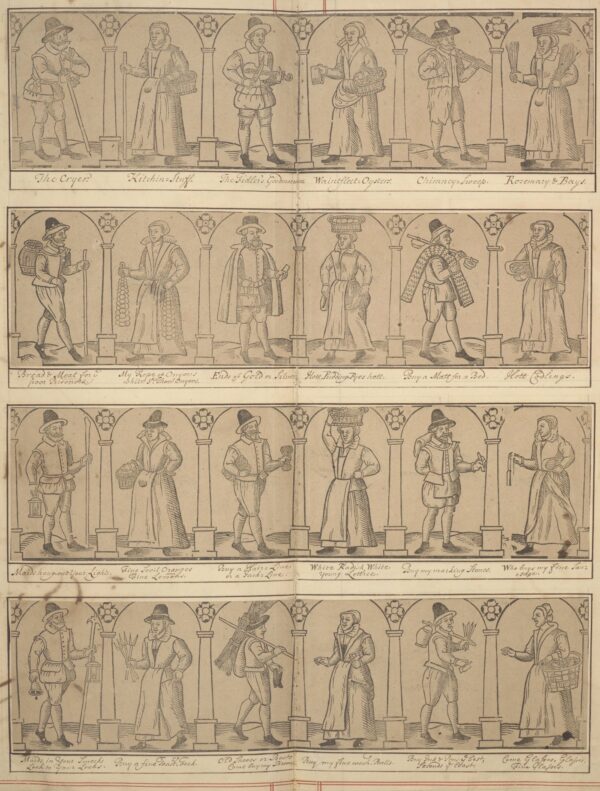
Cries of London 1600, reproduced from Samuel Pepys’ Album © Magdalene College, Cambridge
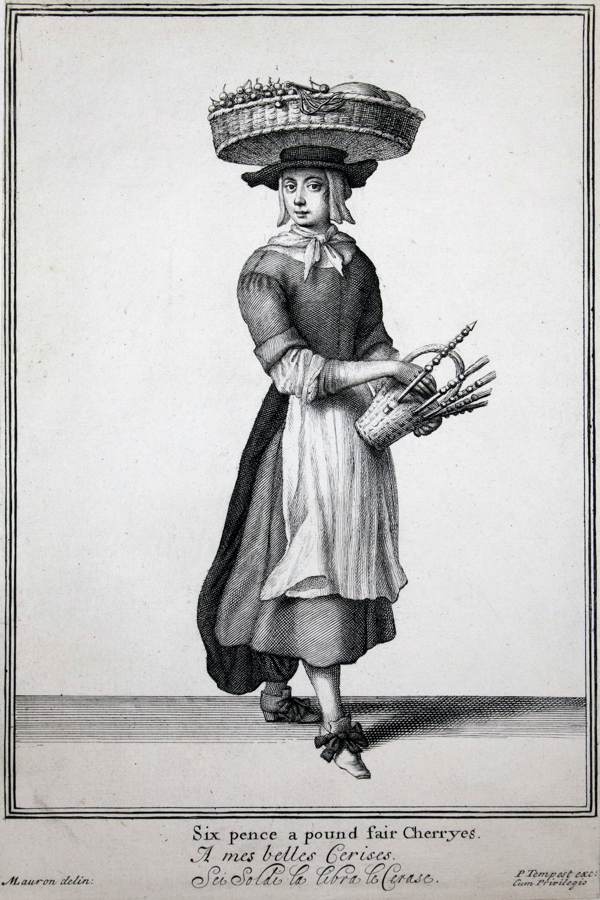
Costermonger by Marcellus Laroon, 1687 (courtesy Bishopsgate Institute)
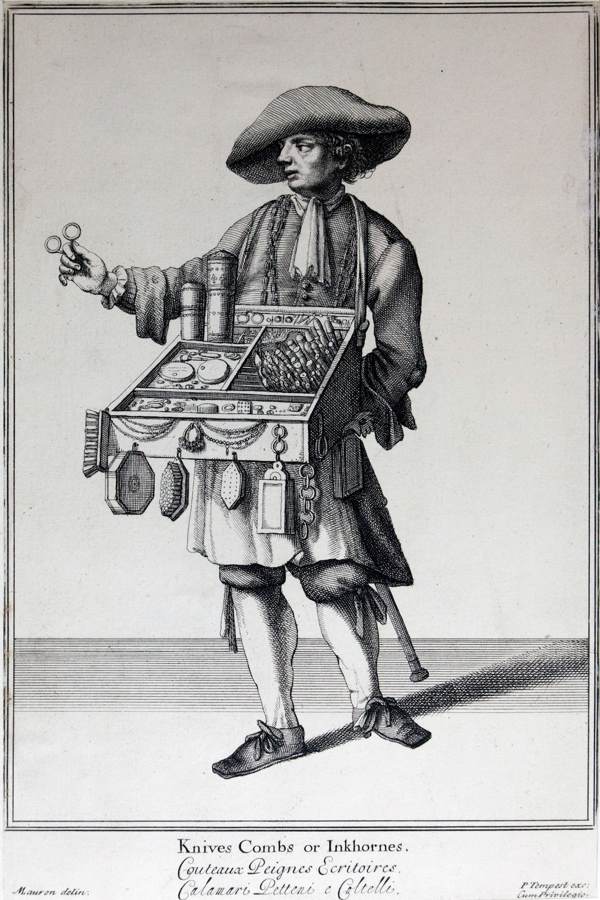
Pedlar by Marcellus Laroon, 1687 (courtesy Bishopsgate Institute)
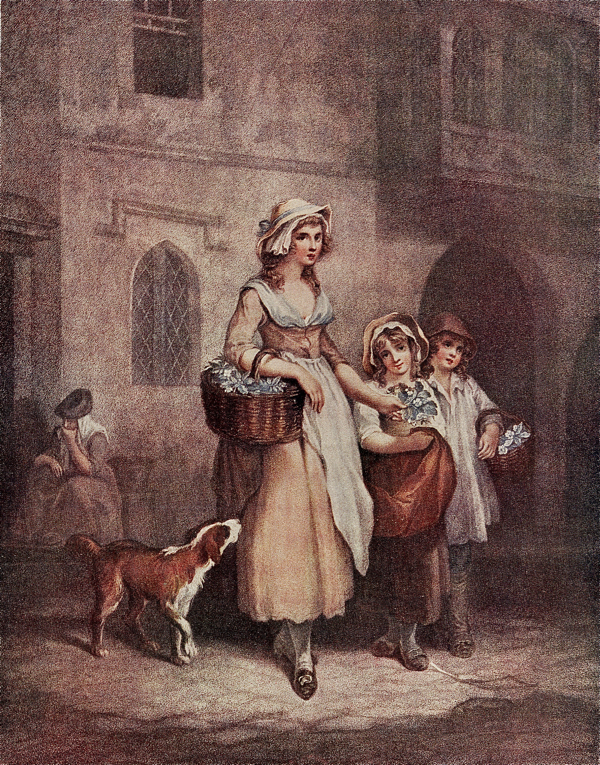
‘Two Bunches a Penny, Primroses, Two Bunches a Penny!’ The Primrose Seller by Francis Wheatley, 1793 (courtesy Bishopsgate Institute)
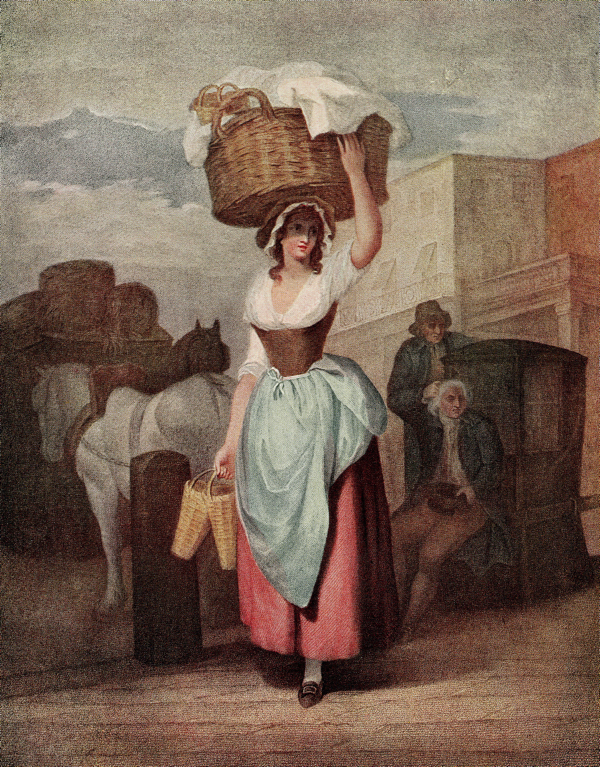
‘Strawberries, Scarlet Strawberries’ by Francis Wheatley, 1793 (image courtesy Bishopsgate Institute)
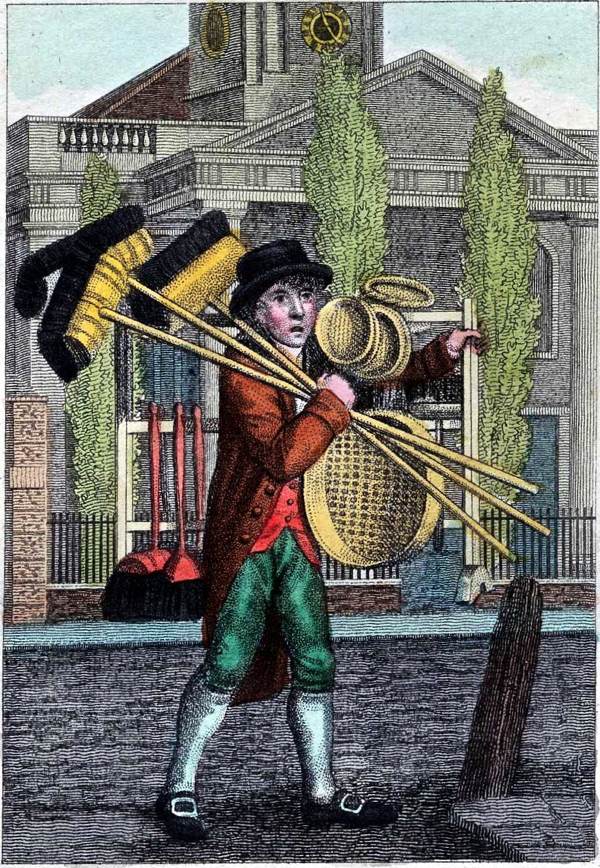
Hair Brooms outside Shoreditch Church by William Marshall Craig, 1804 (courtesy Bishopsgate Institute)
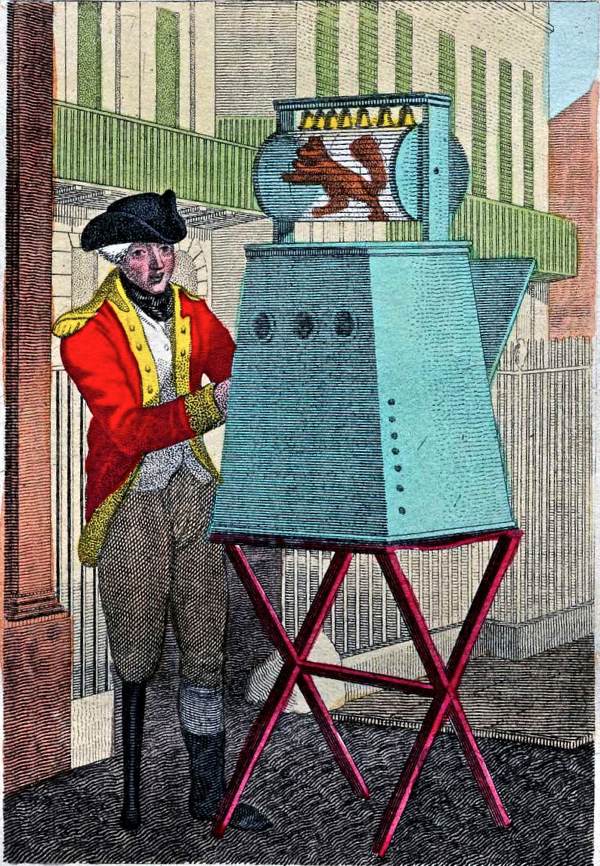
Showman with a raree show at Hyde Park Corner by William Marshall Craig, 1804 (courtesy Bishopsgate Institute)
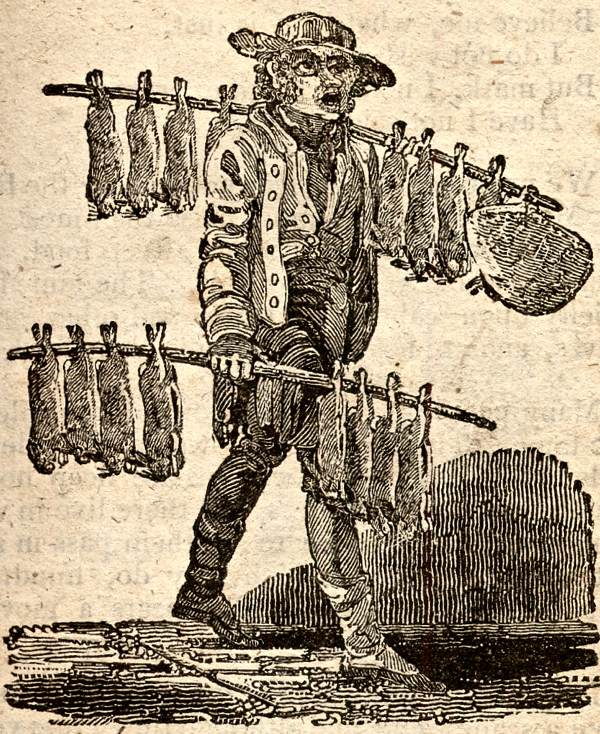
‘Rabbit, Rabbit – Nice fat Rabbit!’ by Luke Clennell 1812 (courtesy Bishopsgate Institute)
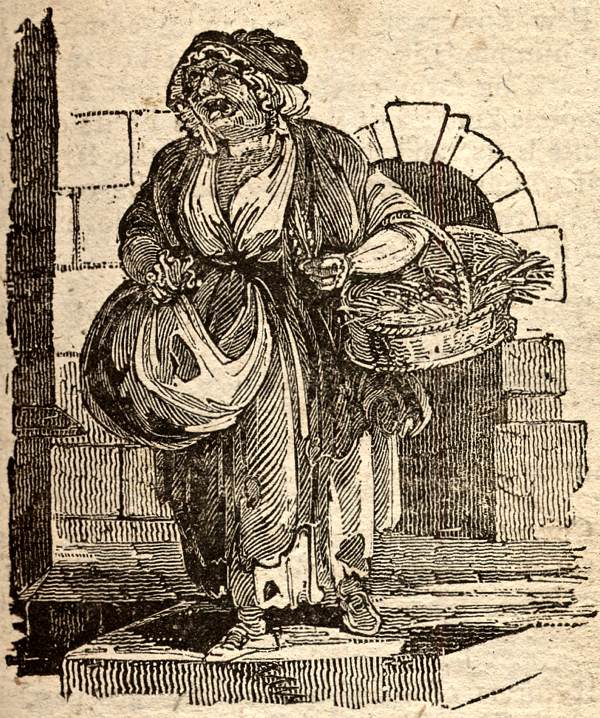
‘Lilies of the Valley, Sweet Lilies of the Valley’ by Luke Clennell 1812 (courtesy Bishopsgate Institute)
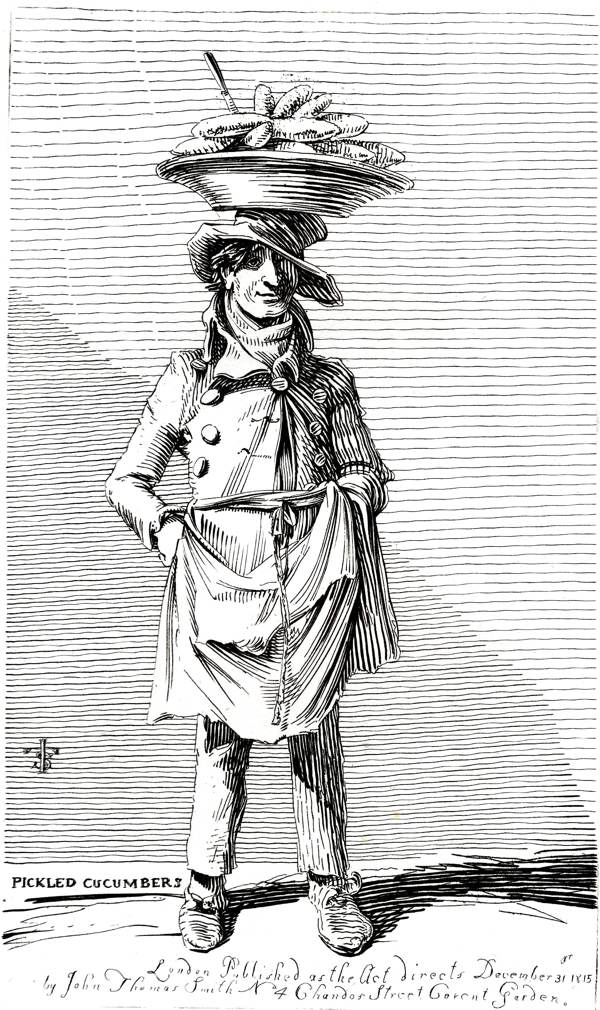
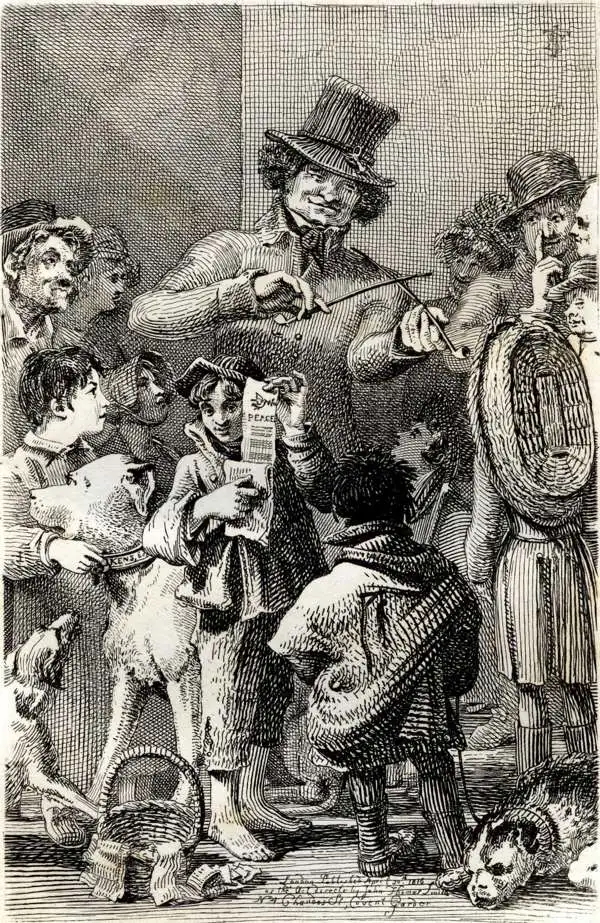
Pickled Cucumbers by John Thomas Smith, 1816 (courtesy Bishopsgate Institute)
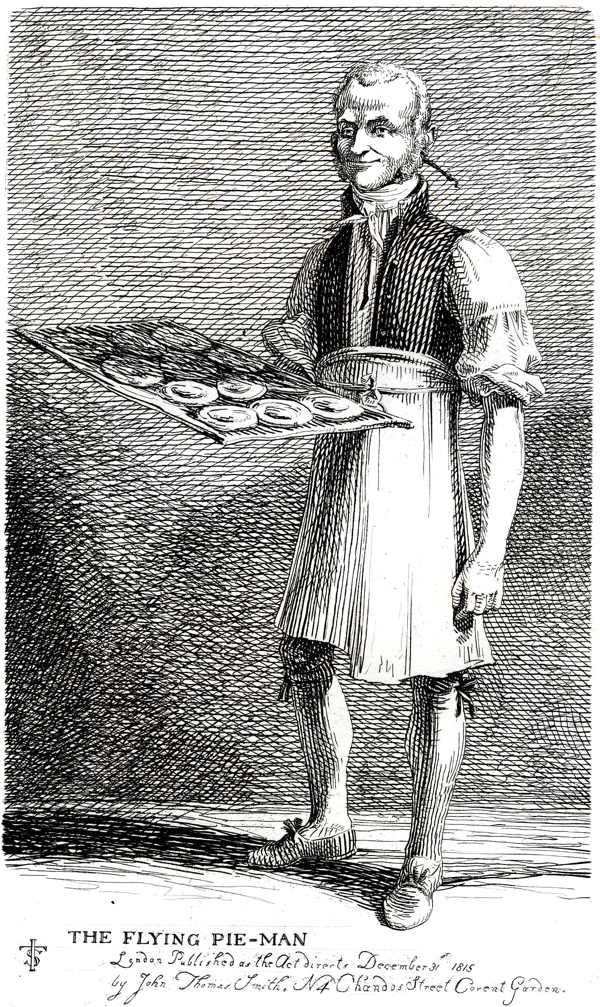
The Flying Pie Man by John Thomas Smith, 1816 (courtesy Bishopsgate Institute)
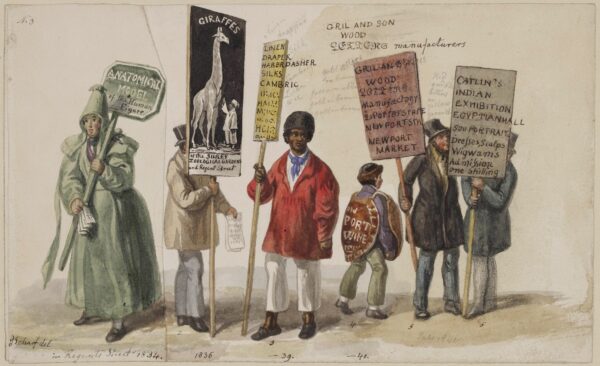
London boardmen & women by George Scharf 1825-33 © British Museum
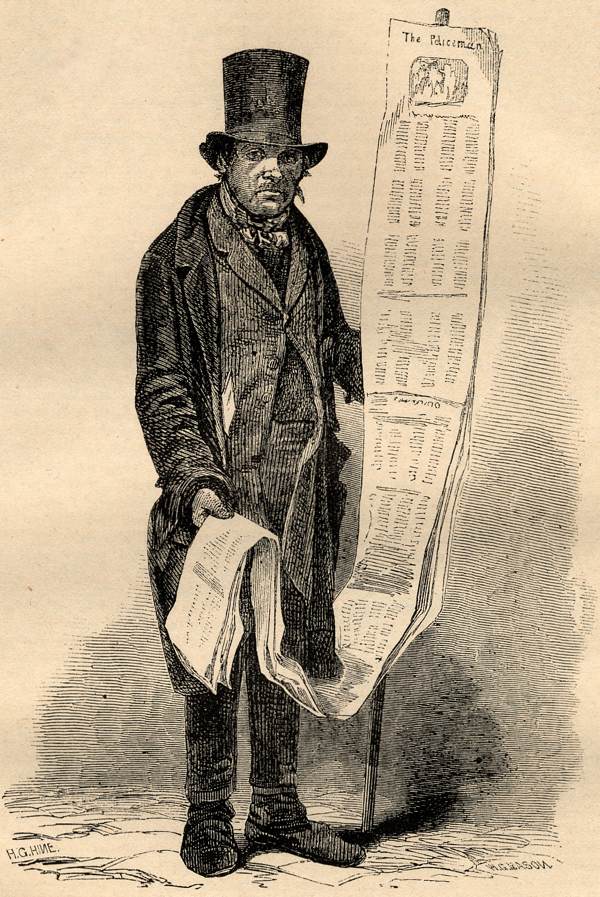
Long Song Seller, engraved from a photograph by Richard Beard, 1851 (courtesy Bishopsgate Institute)
The dispossessed and those with no other income were always able to cry their wares for sale in London. By turning their presence into performance with their Cries, they claimed the streets as their theatre – winning the lasting affections of generations of Londoners and embodying the soul of the city in the popular imagination. Thus, through time, the culture of the capital’s street Cries became integral to the distinctive identity of London.
Undertaking interviews with stallholders in Spitalfields, Brick Lane, Columbia Road and other East End markets in recent years led me to consider the cultural legacy of urban street trading. While this phenomenon might appear transitory and fleeting, I discovered a venerable tradition in the Cries of London. Yet even this genre of popular illustrated prints, which began in the seventeenth century, was itself preceded by verse such as London Lackpenny attributed to the fifteenth century poet John Lydgate that drew upon an earlier oral culture of hawkers’ Cries. From medieval times, the great number of Cries in London became recognised by travellers throughout Europe as indicative of the infinite variety of life in the British capital.
Given the former ubiquity of the Cries of London, the sophistication of many of the images, their significance as social history, and their existence as almost the only portraits of working people in London through four centuries, it astonishes me that there has been little attention paid to this subject and so I have set out to reclaim this devalued cultural tradition.
I take my cue from Samuel Pepys who pasted three sets of Cries into his albums of London & Westminster in a chronological sequence spanning a century, thereby permitting an assessment of the evolution of the style of the prints as well as social change in the capital in his era. In my book, I have supplemented these with another dozen series published over the following centuries which trace the development of the Cries right into our own time. My policy has been to collate a personal selection of those that delight me, those that speak most eloquently of the life of the street and those created by artists who demonstrated an affinity with the Criers.
Through the narrow urban thoroughfares and byways, hawkers announced their wares by calling out a repeated phrase that grew familiar to their customers, who learned to recognise the Cries of those from whom they bought regularly. By nature of repetition, these Cries acquired a musical quality as hawkers improvised upon the sounds of the words, evolving phrases into songs. Commonly, Cries also became unintelligible to those who did not already know what was being sold. Sometimes the outcome was melodic and lyrical, drawing the appreciation of bystanders, and at other times discordant and raucous as hawkers strained their voices to be heard across the longest distance.
Over time, certain Cries became widely adopted, and it is in written accounts and songbooks that we find the earliest records. Print collections of pictures of Criers also became known as ‘Cries’ and although the oldest set in London dates from around 1600, there are those from Paris which predate these by a century. Characteristically, the Cries represented peripatetic street traders or pedlars, yet other street characters were also included from the start. At first, the Cries were supplemented by the bellman and the town crier, but then preachers, beggars, musicians, performers were added as the notion of the Cries of London became expanded by artists and print sellers seeking greater novelty through elaborating upon the original premise.
Before the age of traffic, the streets of London offered a common public space for all manner of activity, trading, commerce, sport, entertainment and political rallies. Yet this arena of possibility, which is the primary source of the capital’s cultural vitality has also invited the consistent attention of those who seek policing and social control upon the premise of protecting citizens from each other, guarding against crime and preventing civil unrest. It suits the interest of those who would rule the city that, in London, street traders have always been perceived as equivocal characters with an identity barely distinguished from vagrants. Thus the suspicion that their itinerant nature facilitated thieving and illicit dealing, or that women might be selling their bodies as as well as their legitimate wares has never been dispelled.
Like the internet, the notion of the street as a space where people may communicate and do business freely can be profoundly threatening to some. It is a tension institutionalised in this country through the issuing of licences to traders, criminalising those denied such official endorsement, while on the continent of Europe the right to sell in the street is automatically granted to every citizen. Depending upon your point of view, the itinerants are those who bring life to the city through their occupation of its streets or they are outcasts who have no place in a developed modern urban environment.
When I interviewed Tony Purser on his last afternoon after fifty-two years selling flowers outside Fenchurch Street Station in the City of London, he admitted to me that as a boy he assisted his father Alfie, and, before licences were granted in 1962, they were both regularly arrested. Their stock was confiscated, they were charged three shillings and spent the night in the cells at Bishopsgate Police Station, before going back to trade again next day.
Street trading proposes an interpretation of the ancient myth of London as a city paved with gold that is not without truth. Many large British corporate retailers including Tesco, started by Jack Cohen in 1919, Marks & Spencer, started by Michael Marks in 1884, owe their origin to single stalls in markets – emphasising the value of street trading to wider economic development.
In the twentieth century, the Cries of London found their way onto cigarette cards, chocolate boxes, biscuit tins, tea towels, silk scarves, dinner services and, famously, tins of Yardley talcum powder from 1912 onwards, becoming divorced from the reality they once represented as time went by, copied and recopied by different artists.
Yet the sentimentally cheerful tones applied by hand to prints that were contrived to appeal to the casual purchaser, chime with the resilience required by traders selling in the street. And it is our respect for their spirit and resourcefulness which may account for the long lasting popularity of these poignant images of the self-respecting poor who turned their trades into performances. Even now, it is impossible to hear the cries of market traders and newspaper sellers without succumbing to their spell, as the last reverberations of a great cacophonous symphony echoing across time and through the streets of London.
Surely none can resist the romance of the Cries of London and the raffish appeal of the liberty of vagabondage, of those who had no indenture or task master, and who travelled wide throughout the city, witnessing the spectacle of its streets, speaking with a wide variety of customers, and seeing life. In the densely-populated neighbourhoods, it was the itinerants’ cries that marked the times of day and announced the changing seasons of the year. Before the motorcar, their calls were a constant of street life in London. Before advertising, their songs were the jingles that announced of the latest, freshest produce or appealing gimcrack. Before radio, television and internet, they were the harbingers of news, and gossip, and novelty ballads. These itinerants had nothing but they had possession of the city.
The Cries of London have taught me the essential truth of London street traders down through the centuries, and it is one that still holds today – they do not need your sympathy, they only want your respect, and your money.
Mr Pussy In Winter
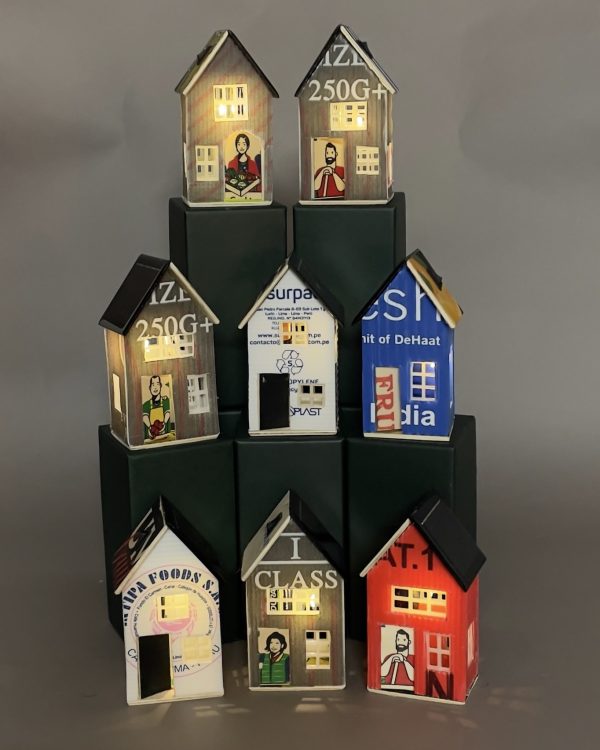
These are the last remaining solar-powered houses made out of boxes from Whitechapel Market by Spitalfields artist Robson Cezar. If you would like one of these for £45, drop me a line to spitalfieldslife@gmail.com
Today I remember my old cat, Mr Pussy. This is an extract from the biography I wrote of him, THE LIFE & TIMES OF MR PUSSY.

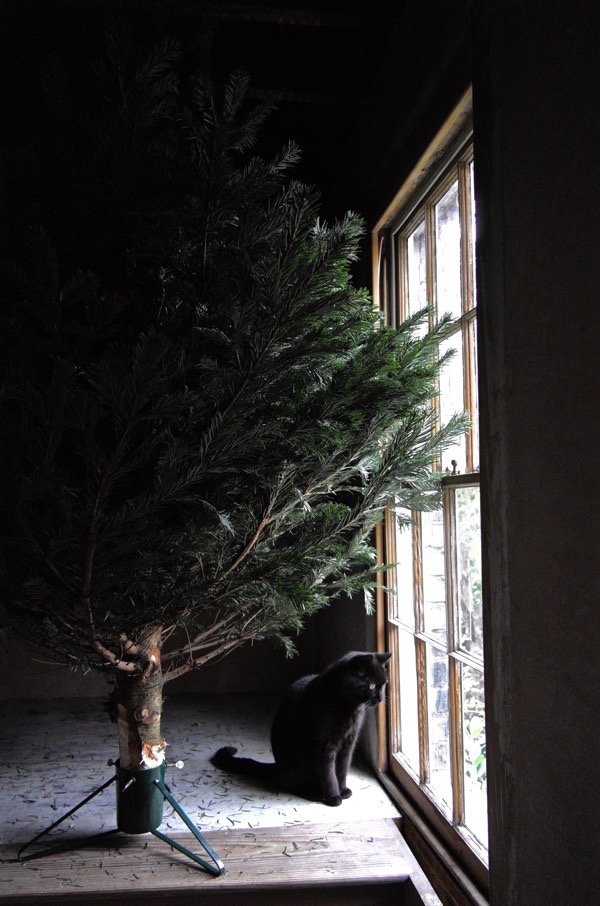
On dark winter nights, Mr Pussy seldom stirred from the chimney corner. Warmed by a fire of burning pallets, he had no need of whisky to bring him solace through the dark hours, instead he frazzled his brain in a heat-induced trance. Outside in the streets, Spitalfields might have lain under snow, the paths might have been coated in sheet ice and icicles might be hanging from the gutters, but this spectacle held no interest for Mr Pussy. Like the cavemen of ancient times, his sole fascination was with the mesmerising dance of flames in the grate. And as the season descended towards its nadir in the plunging temperatures of the frozen byways, at home Mr Pussy fell into his own warm darkness of stupefaction.
When Mr Pussy grew old and the world was no longer new to him, his curiosity was ameliorated by his love of sleeping. Once he was a brat in jet black, yet he became a gentleman in a chenille velvet suit, as tufts of white hair increasingly flecked his glossy pelt. One summer, I noticed he was getting skinny and then I discovered that his teeth had gone which meant he could no longer crunch the hard biscuits that were always his delight. Extraordinarily, he made little protest at this starvation diet, even as he lost weight through lack of food. I learnt to fill his dish with biscuits and top it up with water, so that he might satisfy his hunger by supping the resulting slush. And through this simple accommodation – plus a supplement of raw meat – his weight was restored to normal and he purred in gratification while eating again.
Once Mr Pussy was a wild rover, ranging over the fields in Devon, disappearing for days on end and returning proudly with a dead rabbit in his mouth. Yet in the end, he did not step beyond the end of the alley in Spitalfields and, in sub-zero temperatures, he only ventured outside to do his necessary business. Sprinting up the stairs and calling impatiently outside the door of the living room, he was ever eager to return to the fireside and warm his cold toes afterwards, sore from scraping at the frost in the vain attempt to dig a hole in the frozen earth. Like a visionary poet, Mr Pussy acquired a vivid internal life to insulate himself against the rigours of the world and, in the absence of sunlight, the fire provided his imaginative refuge, engendering a sublime reverie of peace and physical ease.
Yet Mr Pussy still loved to fight. If he heard cats screeching in the yard, he would race from the house to join the fray unless I could shut the door first and prevent him. Even when he had been injured and came back leaking blood from huge wounds, he appeared quite unconcerned. Only two small notches in his ears persisted as permanent evidence of this violent tendency, although I regularly checked his brow for tell-tale scratches and the occasional deep bloody furrows that sometimes caused swelling around his eyes. But I could stop him going out, even though it was a matter of concern to me that – as he aged and his reflexes lessened – he might get blinded in a fight one day, losing one of his soulful golden eyes. Since he was blissfully unaware of this possibility, I had no choice but to take consolation from his response when he could not eat, revealing that Mr Pussy had no expectations of life and consequently no fear of loss. His nature was to make his best accommodation to any exigency with grace.
Be assured, Mr Pussy could still leap up onto the kitchen counter in a single bound. He could still bring in a live mouse from the garden when he pleased and delightedly crunch its skull between his jaws on the bedroom floor. If I worked late into the night, he would still cry and tug on the bed sheets to waken me in the early morning to see the falling snow. When the fancy seized him, he could be as a sprightly as a kitten. Come the spring, he would be running up trees again, even if – in the darkest depth of winter – he only wanted to sleep by the fire.
When I was alone here in the old house in Spitalfields at night, Mr Pussy became my sole companion, the perfect accomplice for a writer. When I took to my bed to keep warm while writing my stories, he was always there as the silent assistant, curled into a ball upon the sheepskin coverlet. As the years passed and Mr Pussy strayed less from the house, I grew accustomed to his constant presence. He taught me that, rather than fear for his well-being, I needed to embrace all the circumstances and seasons that life sends, just as he did.

You may also like to read

Click here to buy a copy and have it inscribed by The Gentle Author
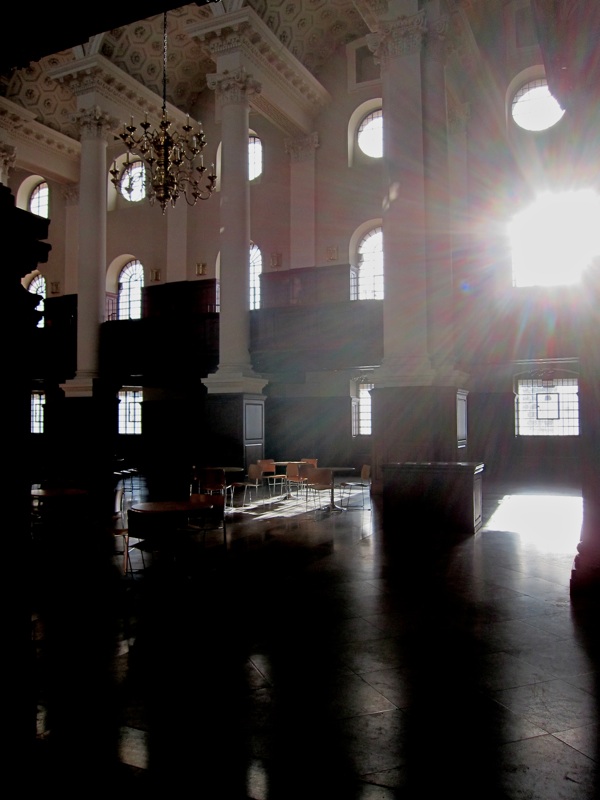
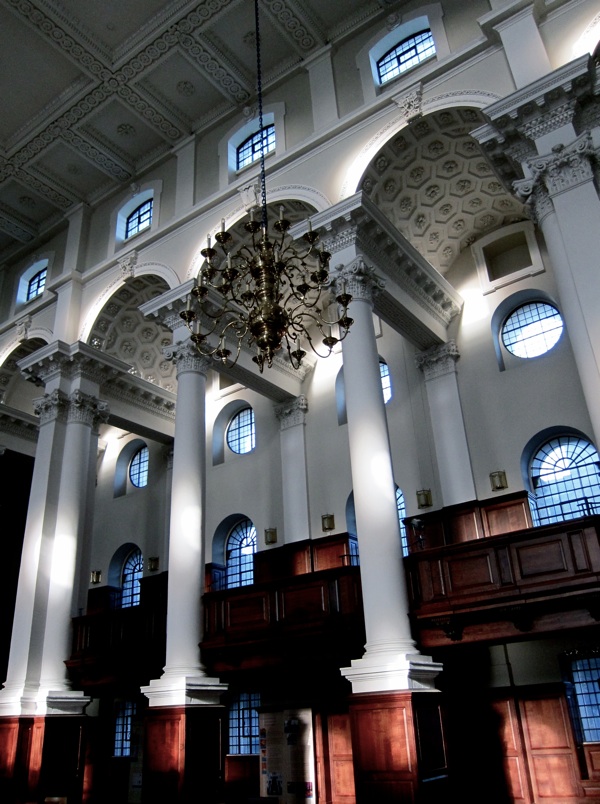
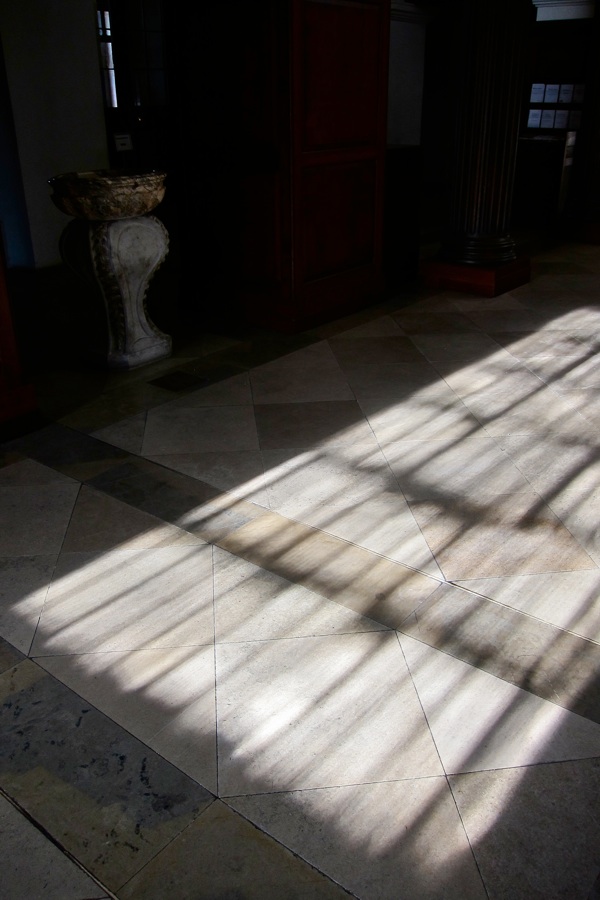
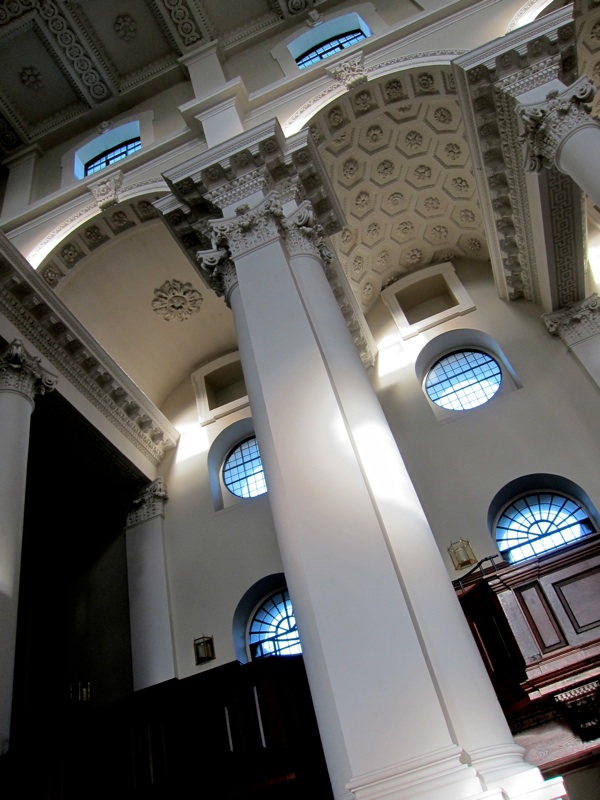
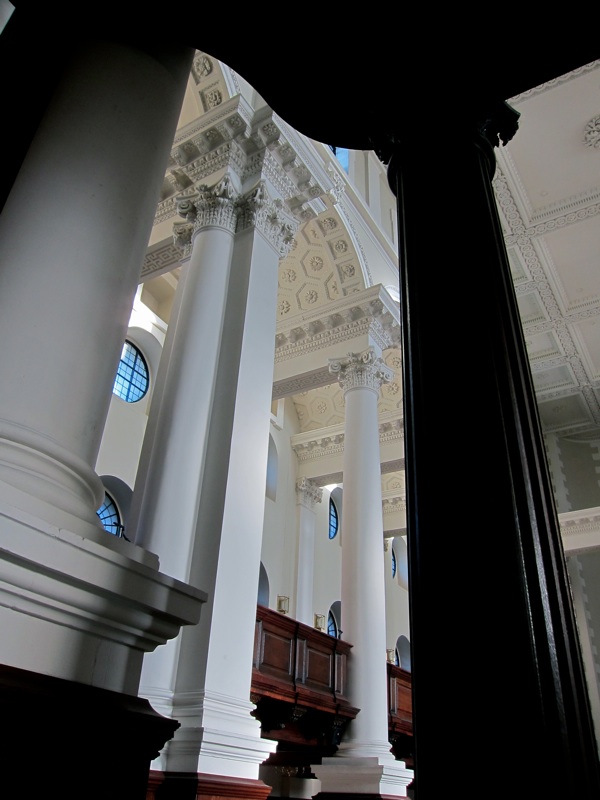
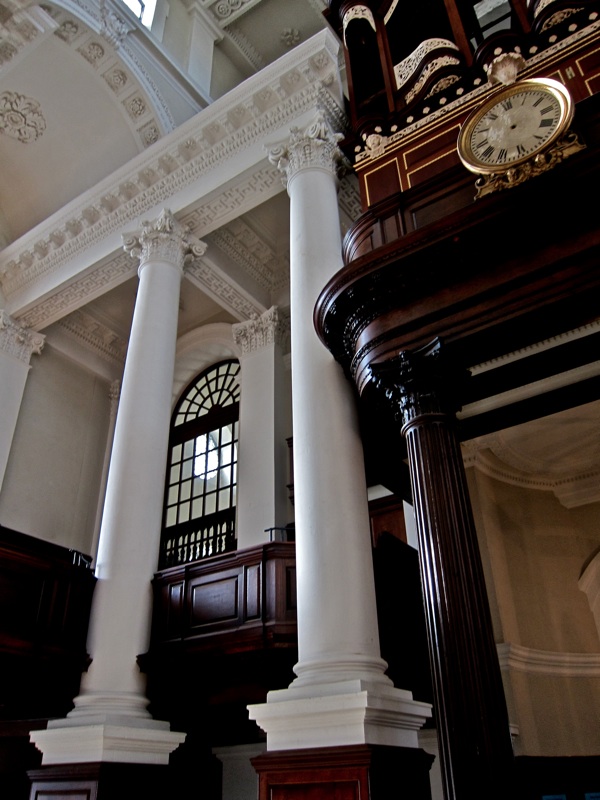
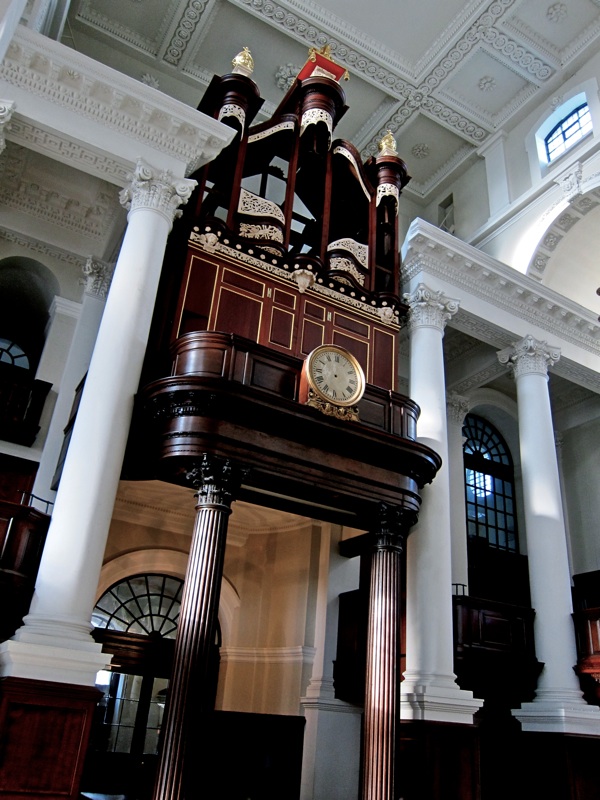
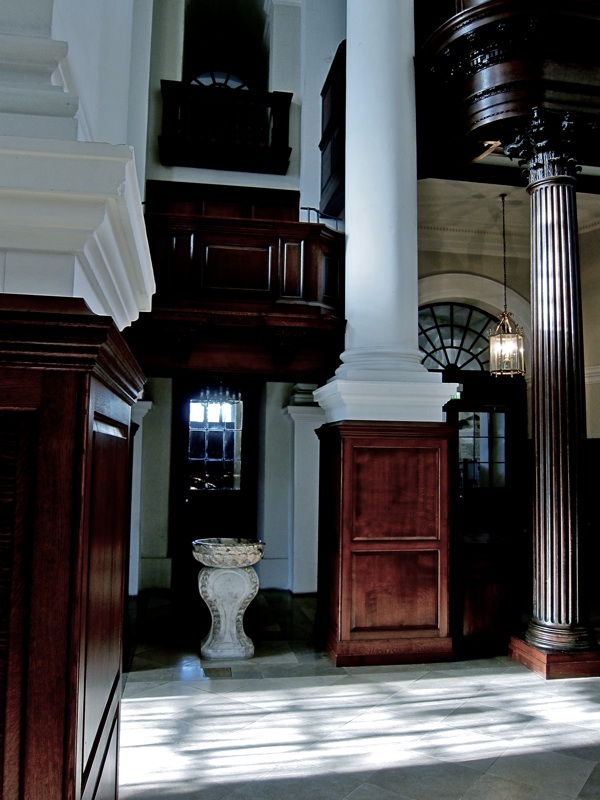
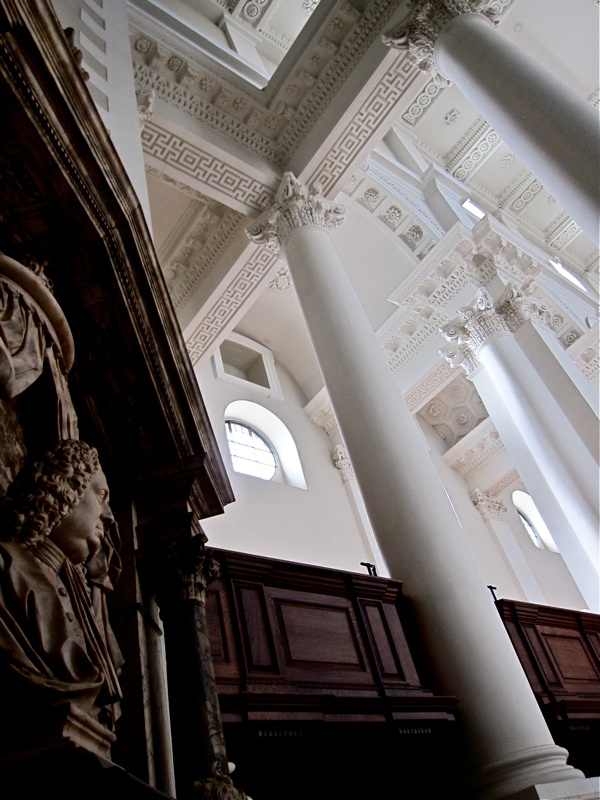
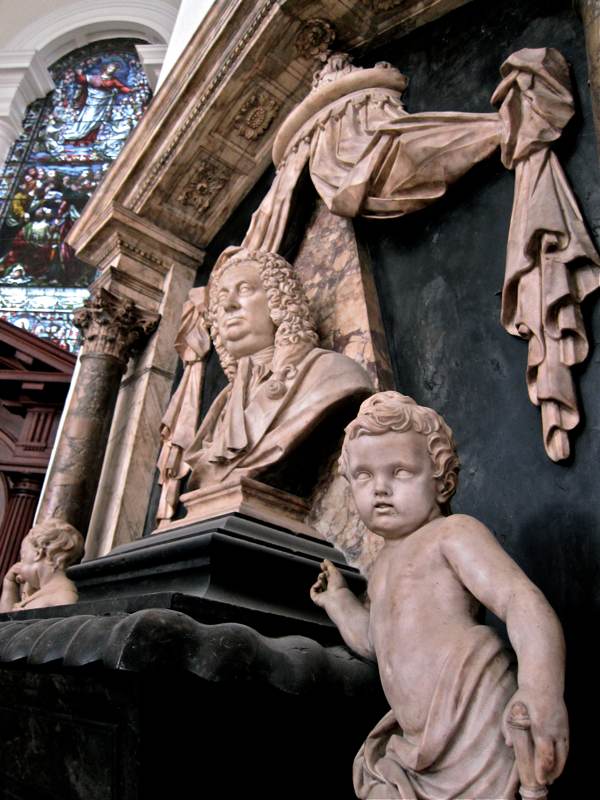
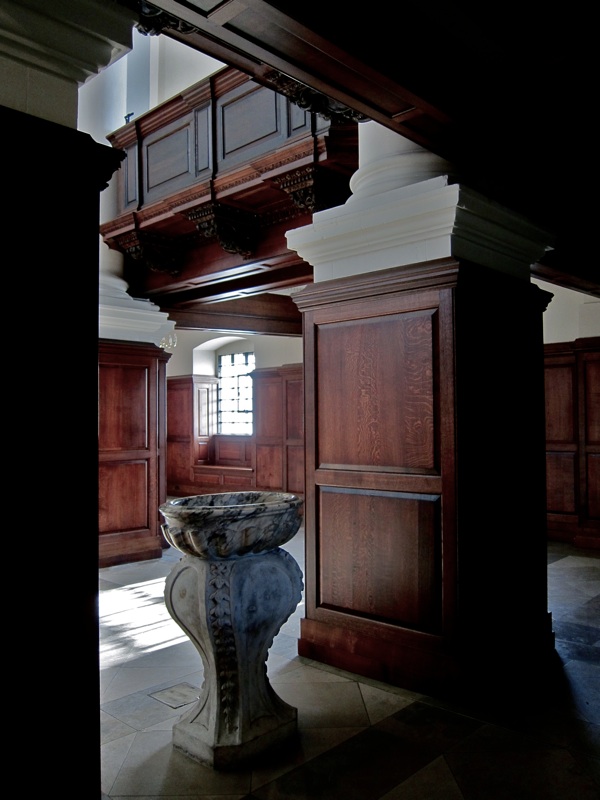
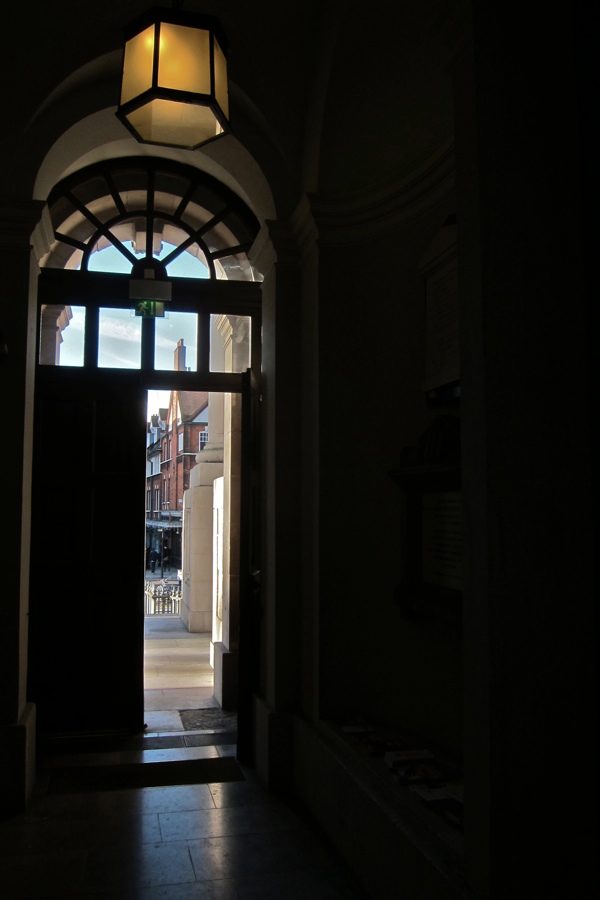
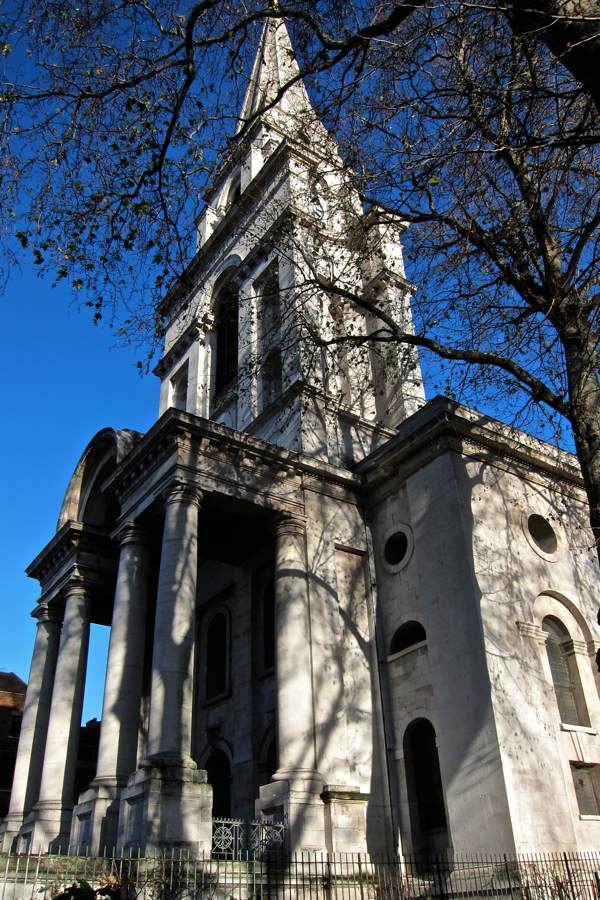
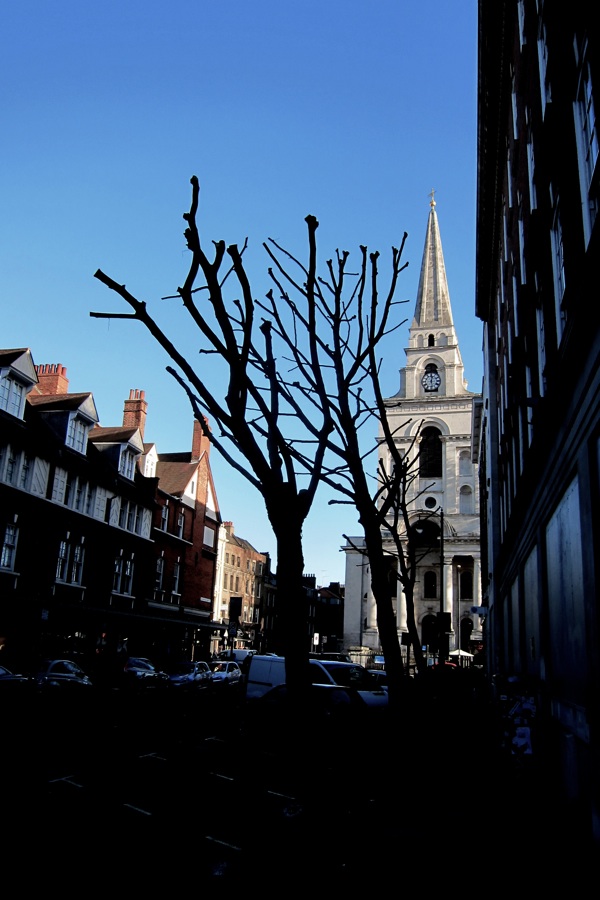
Midwinter Light at Christ Church
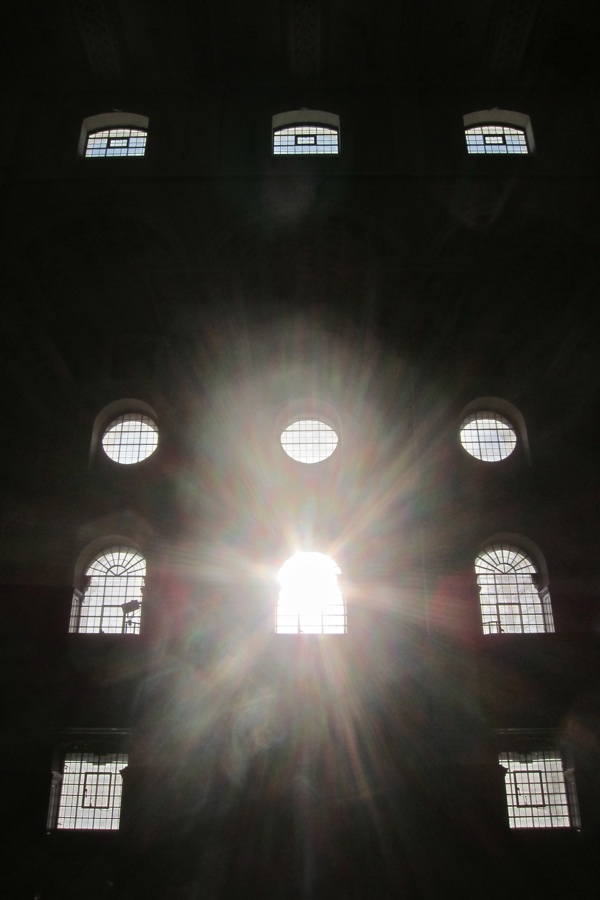
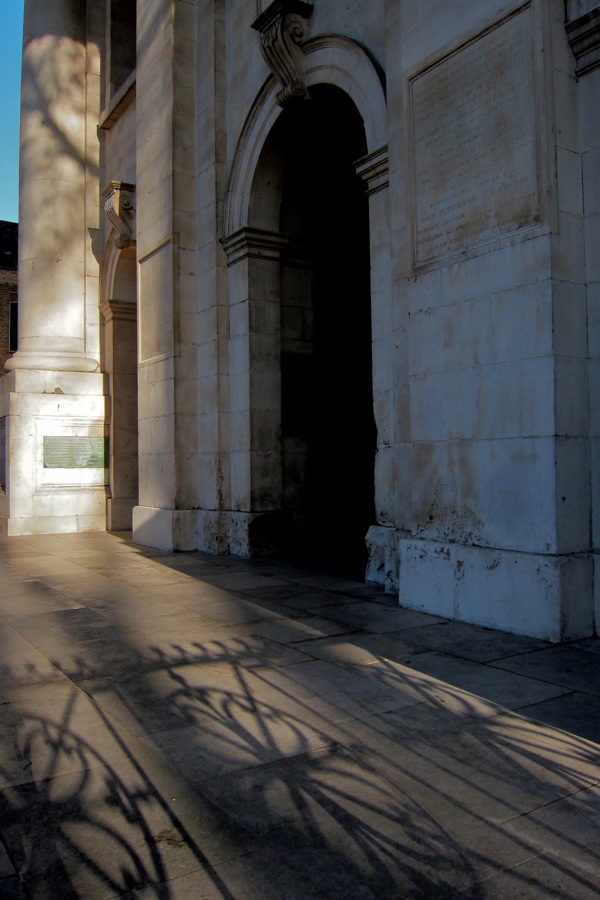
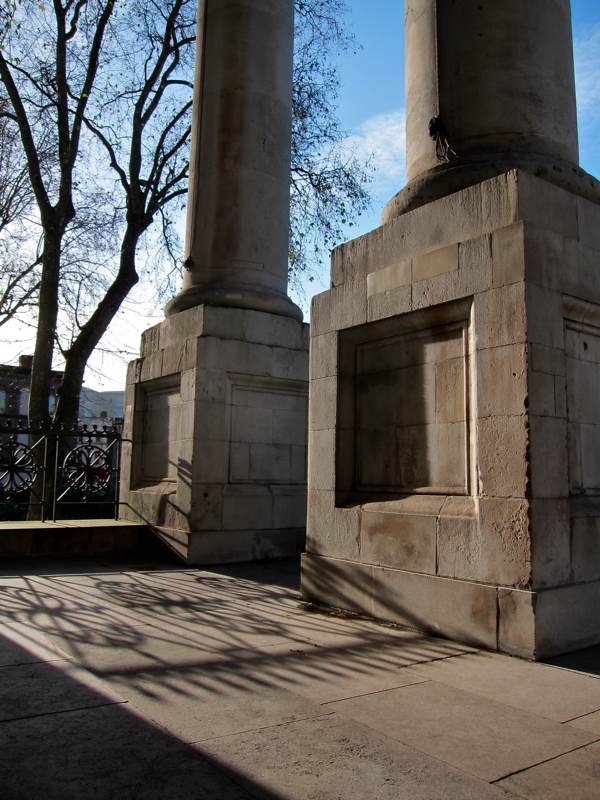
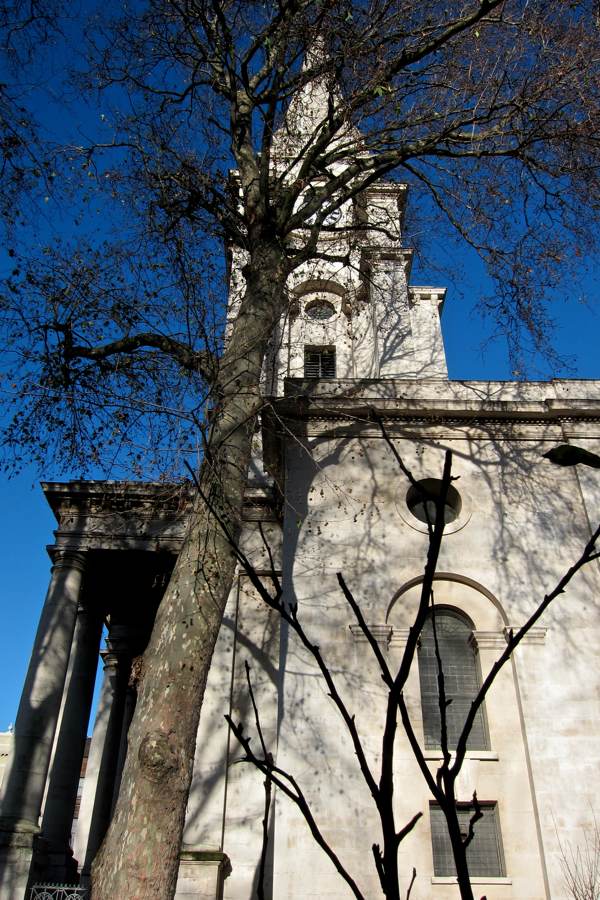
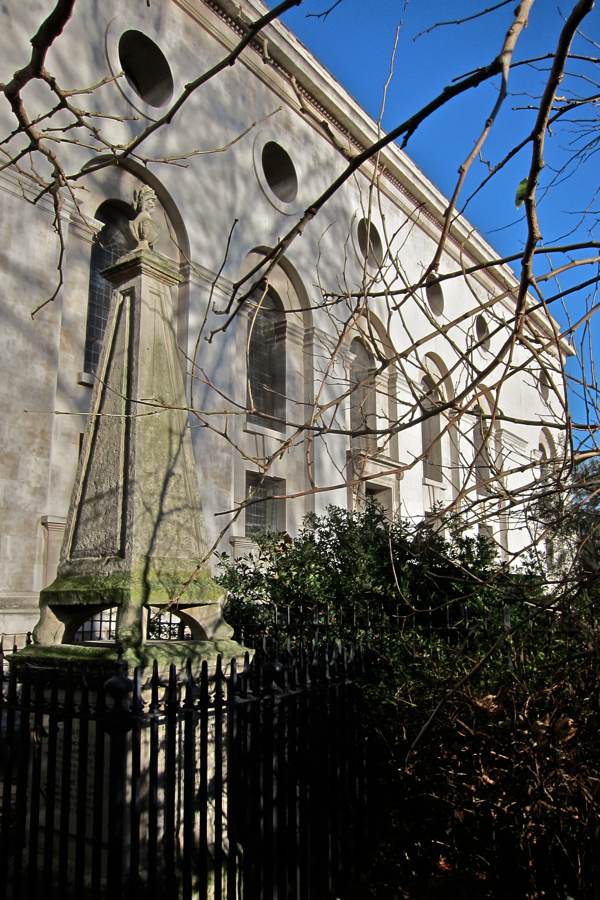
Each year in December, we get a couple of days of intense sunlight transforming Christ Church Spitalfields. At this time when the sun is at its lowest angle, the church becomes an intricate light box with powerful rays of light entering almost horizontally from the south and illuminating Nicholas Hawksmoor’s baroque architecture in startling ways. The crystalline sunlight of recent days provided the ideal conditions for such phenomena and inspired my to attempt to capture these fleeting effects of light.

You may also like to read about
The Oxford Sausage

I am proud to publish these excerpts from THE OXFORD SAUSAGE by a graduate of my writing course. The author set out to write a spicy mix of Oxford stories from a house once belonging to a city sausage maker.
I am taking bookings for the next writing course, HOW TO WRITE A BLOG THAT PEOPLE WILL WANT TO READ on February 7th & 8th. Come to Spitalfields and spend a winter weekend with me in an eighteenth century weaver’s house in Fournier St, enjoy delicious lunches and eat cakes baked to historic recipes, and learn how to write your own blog.
If you are graduate of my course and you would like me to feature your blog, please drop me a line.
A MISTLETOE TOUR FROM MAGDALEN COLLEGE TO MUSIC MEADOW
At this low ebb of year, it becomes suddenly visible – when the leaves have fallen from the trees, revealing what appear to be giant birds’ nests perched amongst the bare winter branches. These hanging baskets of vibrant green foliage are huge balls of mistletoe, magically, mysteriously, bearing fruit even through the shortest and darkest days of the year.
As it happens, at Oxford, there is an expert on mistletoe matters right here in the city. Oliver Spacey is studying the ecology and evolution of mistletoe for his PhD, and on a bright afternoon recently he was kind enough to take me on a mistletoe meander. I had always associated the plant with the Welsh border counties, Herefordshire, Worcestershire and the like. But it seems, as we strolled around Christ Church meadows and beyond, Oxford also has its fair share. And what a remarkable creature it turns out to be.
Oliver tells me mistletoe has the largest genome of any wild species in the British Isles – holding thirty times more genetic material than humans. It is also one of the very few plants to have no roots. Not restricted by gravity, it simply attaches itself to the branch of a tree, and then – like some alien high wire act – shoots an invisible tentacle into the bark and begins to grow. It takes about five years for it to form natural spheres of wishbone shaped leaves, by which time the female plant begins to produce those famous ethereal pearl-like berries under which we like to pucker up at Christmas. The plants can grow up to two metres in diameter and live for forty years.
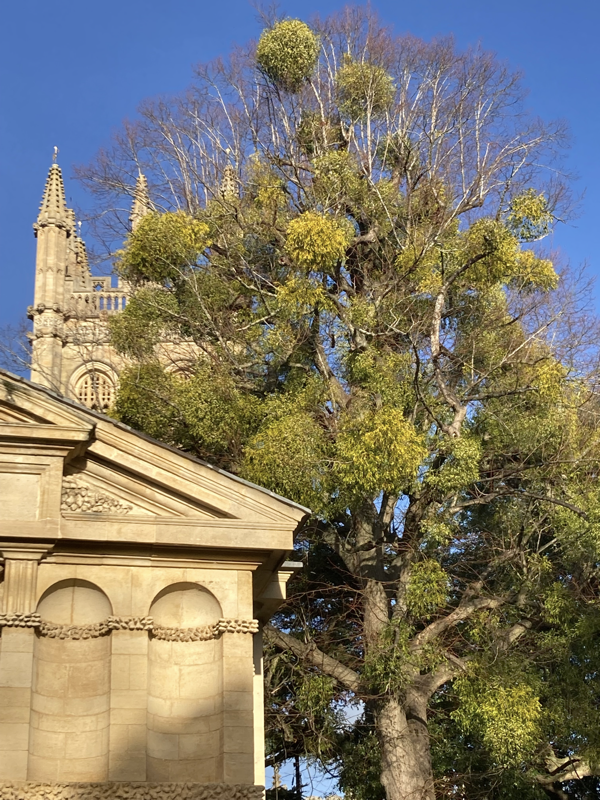
‘Mistletoe is spread by birds,’ Oliver enthuses, as he leads me north up Rose Lane and through the gates of Oxford Botanic Garden where a mass of mistletoe balls decorate a giant lime silhouetted against Magdalen College Tower. He explains that birds like the Blackcap, pick the berries, scoff the juicy and then smear the sticky seed on to the bark of the tree, while the well-named Mistle Thrush, eats the soft fruit and poops it out onto a branch. Mistletoe’s common name is derived from the Anglo-Saxon word for ‘dung’ (mistel) and ‘twig’ (tan).
Mistletoe’s ability to flourish in the depths of winter has made it as a symbol of fertility and life through the centuries, but it was the Victorians who popularised the ‘kissing ball’, a collection of evergreens that included mistletoe, as a Christmas institution.
Music Meadow, just behind St Catherine’s College on the banks of the Cherwell is a mass of wild flowers in the spring but is now set aside for sheep grazing. Here a clump of tall poplars are home to the most extraordinary collection of mistletoe – fantastical trees with hundreds upon hundreds of huge pom-poms of foliage, magically, mysteriously hanging in the sky.
I stoop to collect a fallen branch of berries, and take it home where I tie the perfect shaped ball with red ribbon and hang it in the same spot in our kitchen as I always have done, as a Christmas tradition.
Oliver Spacey is supported by The Tree Council. You can help him with his research by registering your own pictures of mistletoe on the MistleGO! app.
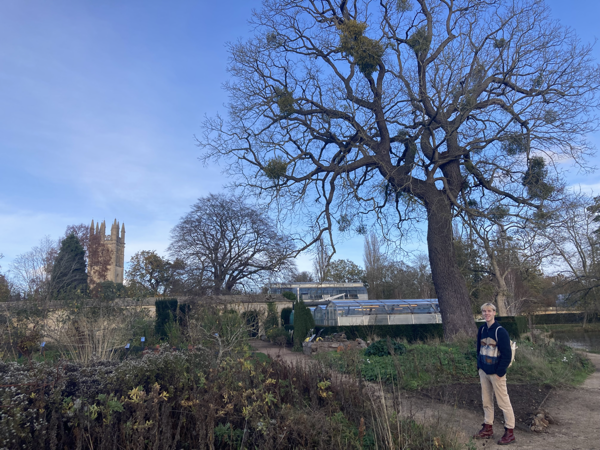
Oliver Spacey from the University’s Department of Biology at Oxford Botanic Garden

Trees laden with mistletoe in Music Meadow
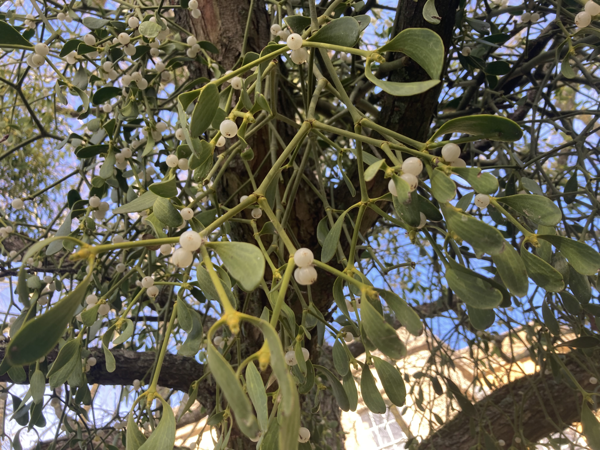
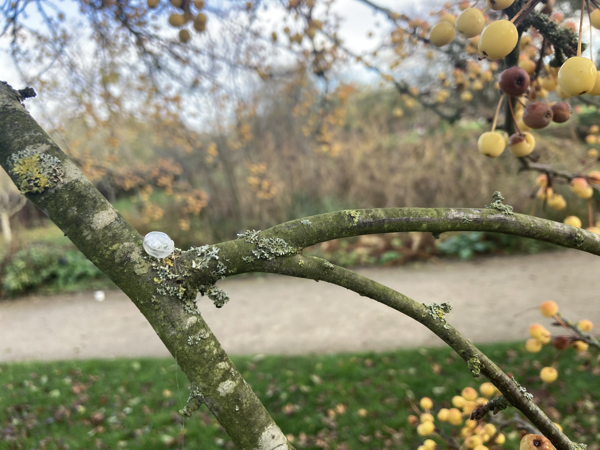
When propagating mistletoe it is important not to press it into a crevice in the bark as it needs plenty of light to grow
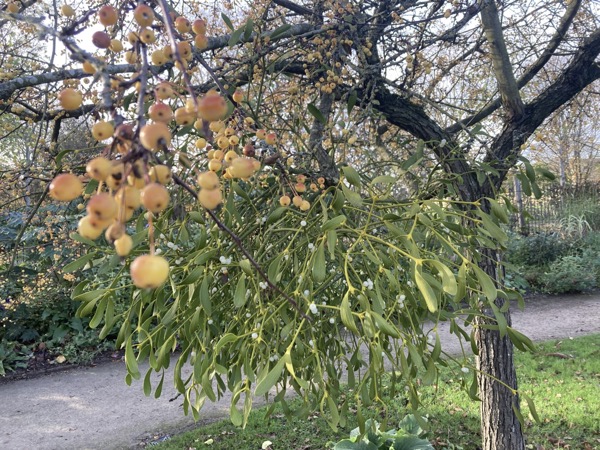
Mistletoe on an apple tree












