The Spitalfields Roman Woman

Curator of Human Osteology, Rebecca Redfern watches over her charge
In his Survey of London 1589, John Stow wrote about the discovery of pots of Roman gold coins buried in Spitalfields and it had long been understood that ancient tombs once lined the road approaching London, just as they did along the Appian Way in Rome. Yet it was only in the nineteen-nineties, when large scale excavations took place prior to the redevelopment of the Spitalfields Market, that the full extent of the Roman cemetery was uncovered.
In March 1999, a Roman stone sarcophagus containing a rare lead coffin decorated with scallop shells came to light, indicating the burial of someone of great wealth and high status. Grave goods of fine glass and jet were buried between the coffin and the sarcophagus. It was the first unopened sarcophagus to be found in London for over a century and when the entire assemblage was removed to the Museum of London, the coffin was opened to reveal the body of a young woman in her early twenties, buried in ceremonial fashion. In the week after the opening of the coffin, ten thousand Londoners came to pay their respects to the Spitalfields Roman woman. She was the most astonishing discovery of the excavations yet, as the years have passed and more has been learnt about her, the enigma of her identity has become the subject of increasing fascination.
Analysis of residue in the coffin revealed that her head lay upon a pillow of bay leaves, her body was embalmed with oils from the Arab world and the Mediterranean, and wrapped in silk which had been interwoven with fine gold thread. Traces of Tyrian purple were also found, perhaps from a blanket laid over the coffin. Such an elaborate presentation suggests she may have been displayed to her family and friends seventeen hundred years ago as part of funeral rites.
The sarcophagus and grave goods are on public exhibition at the Museum but, thanks to Rebecca Redfern, Curator of Human Osteology, Contributing Photographer Sarah Ainslie and I had the privilege to visit the Rotunda where the human remains are stored and view the skeleton of the Spitalfields Roman woman. Deep in a windowless concrete bunker filled with metal shelving stacked with cardboard boxes, containing the remains of thousands of Londoners from the past, lay the bones of the woman. We stood in silent reverence with just the sound of distant traffic echoing.
Rebecca is the informal guardian of the Spitalfields woman and remembers switching on the television to watch news of the discovery as a student. Today, she has a four-year-old daughter of her own. “The work went on for so many years that a lot of couples met working in Spitalfields,” Rebecca admitted to me, “and there is now a whole generation of ‘Spital babies’ born to those archaeologists.”
“She’s five foot three and delicately built, petite like a ballet dancer,” Rebecca continued, turning her attention swiftly from the living to the dead and gesturing protectively to the bones laid out upon the table. While some might objectify the skeleton as a specimen, Rebecca relates to the Spitalfields Roman woman and all the other twenty thousand remains in her care as human beings. “They’re able to tell us so much about themselves, it’s impossible not to regard them as people,” she assured me.
Recent research into the isotopes present in the teeth of the Spitalfields Roman woman have revealed an exact match with those found in Imperial Rome, which means that her origin can be traced not just to Italy but to Rome itself. “I find it very sad that she came so far and then died so young,” Rebecca confided, recognising the lack of any indication of the cause of death or whether the woman had given birth. Contemplating the presence of the skeleton with its delicate bones dyed brown by lead, it is apparent that the Spitalfields Roman woman holds her secrets and has many stories yet to tell.
More than seventy-five Roman burials were uncovered at the same time as the sarcophagus, many interred within wooden coffins and some only in shrouds. You might say these represented the earliest wave of immigration to arrive in Spitalfields.
“People were so mobile,” Rebecca explained to me, “We found a fourteen-year-old girl from North Africa whose mother was European. A legion from North Africa was sent to guard Hadrian’s Wall and we have found tagine cooking pots that may been theirs. I pity those men – how they must have suffered in the cold.”

The only Roman sarcophagus discovered in London in our time was uncovered in Spitalfields in 1999


Inside the stone sarcophagus an elaborately decorated lead coffin was discovered

At the Museum of London, the debris was removed to uncover the pattern of scallop shells

The lead coffin was opened to reveal the body of a young woman


Photographs of coffin & excavations copyright © Museum of London
Portrait of Rebecca Redfern & photographs of skeletal details copyright © Sarah Ainslie
You may also like to read about
St John At Spitalfields City Farm

Produce from Spitalfields City Farm
One of my great delights of 2024 was introducing Farokh Talati, Chef at St John Bread & Wine to Chris Gorgay, Grower at Spitalfields City Farm with the result that fresh produce from the farm has become an integral part of the menu at St John, where you can now enjoy vegetables grown locally and picked fresh that morning. The farm is just six minutes walk from the restaurant in Commercial St and almost every day a chef visits to select what is in season.
At harvest time last year, I accompanied Farokh and Chris on a tour around the vegetable patch and Contributing Photographer Patricia Niven came along too. Chris introduced us to his cherished produce, regaling us with the stories of their origin and cultivation while inviting us to enjoy the variety of fragrances, and taste the leaves and fruit of his plants as we made our way around the farm.
Chris’ vegetable patch is not ordered into straight lines upon bare soil, he grows his vegetables close by each other interspersed with flowers to create a beautiful grove of dense foliage where plants flourish. ‘We use marigolds as companion planting to distract aphids from the vegetables but also to attract pollinators,’ he told me, explaining his method. ‘What you plant in your growing space can really affect how much it’s going to be impacted by pests. We let some vegetables go to flower so we can harvest the seeds for next season and that attracts more beneficial insects too.’
Chris plants crops in rotation to renew the soil. ‘Potatoes take quite a lot of nutrients out of the earth which is why we will follow them the next year with chard, which is not a very heavy feeder, and replenish the soil with manure too.’
‘Here at the farm, we teach local kids how to grow vegetables and maintain their crops. Then they get to harvest and cook them, so they get the all round experience. We teach them how to save their own seeds too, so they have a sustainable approach to gardening.’
When Farokh asked if cucumbers were part of the same family of plants as melons, Chris replied in the affirmative. ‘You can often tell by the seeds, because the seeds of one genus of plants often look very similar – melon, squash and cucumber seeds look alike,’ he said.
As we made our way around, with Chris explaining the culinary potential of each of his varieties, I could see Farokh’s eyes lighting up in inspiration as Chris suggested ways that he could employ these vegetables in his cooking – which in turn became a source of wonder and delight for Chris.
‘Every time I come here I learn something new!’ Farokh declared to me. ‘I’ll go over to the farm once a week, chefs will go on other days, and Chris delivers produce maybe twice a week. And we’re always talking to each other, Chris will send me a picture of something that’s coming up soon. I’ve been over with Trevor Gulliver and Fergus Henderson too.’
‘For me it’s important for St John to have a strong sense of connection with the community and the joy that it’s given us to use this farm, and to know that we can go over there and say, ‘Can we grab this?’ or ‘Can we grab that?’ or for them to come over and put their produce down on the table in front of guests. People will be eating their lunches and in walks Chris with onions, fresh garlic and mulberries and it’s such a proud moment.’
‘It’s rare in London restaurants. In many places I’ve worked the produce is there in the morning in boxes and you can forget where it came from. I have a huge sense of pride when I brief the waiters to say, ‘This dish has come from Spitalfields City Farm and I want you to talk about it at the table.’ How proud we are to announce, ‘These were picked this morning at the farm down the road.’


Honey melon


Sweetcorn

White aubergines – the origin of the name ‘egg plant’


Runner beans


Basil and chillies


Chris Gorgay, Grower
 Marigolds and tomatoes as combination planting

Farokh Talati, Chef

Mulberries

Melons

Farokh uses fig leaves to flavour ice cream and buttermilk pudding

Fig leaf, radish and cucumber


Kudu, a bottle gourd grown from seeds brought from Bangladesh twenty five years ago

Photographs copyright © Patricia Niven
Vegetables can bought direct from the Farm Shop at Spitalfields City Farm, Buxton St, London E1 5AR
You may also like to take a look at
Spring at Spitalfields City Farm
Summer at Spitalfields City Farm
George Dodd’s Spitalfields, 1842
George Dodd came to Spitalfields to write this account for Charles Knight’s LONDON published in 1842. Dodds recalls the rural East End that still lingered in the collective memory and described the East End of weavers living in ramshackle timber and plaster dwellings which in his century would be “redeveloped” out of existence by the rising tide of brick terraces, erasing the history that existed before.

Spitalfields Market
It is not easy to express a general idea respecting Spitalfields as a district. There is a parish of that name but this parish contains a small portion only of the silk weavers and it is probable that most persons apply the term Spitalfields to the whole district where the weavers reside. In this enlarged acceptation, we will lay down something like a boundary in the following manner – begin at Shoreditch Church and proceed along the Hackney Rd till it is intersected by Regent’s Canal, follow the course of the canal to Mile End Rd and then proceed westward through Whitechapel to Aldgate, through Houndsditch to Bishopsgate, and thence northward to where the tour commenced.
This boundary encloses an irregularly-shaped district in which nearly the whole of the weavers reside and these weavers are universally known as “Spitalfields” weavers. Indeed, the entire district is frequently called Spitalfields although including large portions of Bethnal Green, Shoreditch, Whitechapel and Mile End New Town. By far the larger portion of this extensive district was open fields until comparatively modern times. Bethnal Green was really a green and Spitalfields was covered with grassy sward in the last century.
It may now not unreasonably be asked, what is “Spitalfields”? A street called Crispin St on the western side of Spitalfields Market is nearly coincident in position with the eastern wall of the Old Artillery Ground and this wall separated the Ground from the Fields which stretched out far eastward. Great indeed is the change which this portion of the district has undergone. Rows of houses, inhabited by weavers and other humble persons, and pent up far too close for the maintenance of health, now cover the green spot now known as Spitalfields.
In the evidence taken before a Committee in the House of Commons on the silk trade in 1831-2, it was stated that the population of the district in which the Spitalfields weavers resided could be no less at that time than one hundred thousand, of whom fifty thousand were entirely dependent on the silk manufacture and remaining moiety more or less dependent indirectly. The number of looms seems to vary between about fourteen to seventeen thousand and, of these, four to five thousand are unemployed in times of depression. It seems probable, as far as the means exist of determining it, that the weavers are principally English or of English origin. To the masters, however the same remark does not apply, for the names of the partners in the firms now existing, point to the French origin of manufacture in that district.
A characteristic employment or amusement of the Spitalfields weavers is the catching of birds. This is principally carried on in the months of March and October. They train “call-birds” in the most peculiar manner and there is an odd sort of emulation between them as to which of their birds will sing the longest, and the bird-catchers frequently lay considerable wagers on this, as that determines their superiority. They place them opposite each other by the width of a candle and the bird who sings the oftenest before the candle is burnt out wins the wager.
If we have, on the one hand, to record the unthrifty habits and odd propensities of the weavers, let us not forget to do them justice in other matters. In passing through Crispin St, adjoining the Spitalfields Market, we see on the western side of the way a humble building, bearing much the appearance of a weaver’s house and having the words “Mathematical Society” written up in front. Lowly and inelegant the building may be but there is a pleasure in seeing Science rear her head in a locality, even if it is humble one.
A ramble through Bethnal Green and Mile End New Town in which the weavers principally reside, presents us with many curious features illustrative of the peculiarities of the district. Proceeding through Crispin St to the Spitalfields Market, the visitor will find some of the usual arrangements of a vegetable market but potatoes, sold wholesale, form the staple commodity. He then proceeds eastwards to the Spitalfields Church, one of the “fifty new churches” built in the reign of Queen Anne and along Church St to Brick Lane. If he proceed northward up the latter, he will arrive, first, at the vast premises of Truman, Hanbury & Buxton’s brewery, and then at the Eastern Counties Railway which crosses the street at a considerable elevation. If he extends his steps eastwards, he will at once enter upon the districts inhabited by the weavers.
On passing through most of the streets, a visitor is conscious of a noiselessness, a dearth of bustle and activity. The clack of the looms is heard here and there, but not to a noisy degree. It is evident in a glance that many of the streets, all the houses were built expressly for weavers, and in walking through them we noticed the short and unhealthy appearance of the inhabitants. In one street, we met with a barber’s shop in which persons could have “a good wash for a farthing.” Here we espied a school at which children were taught “to read and work at tuppence a week.” There was a chandler’s shop at which shuttles, reeds and quills, and the smaller parts of weaving apparatus were exposed for sale in a window in company with split-peas, bundles of wood and red herrings. In one little shop, patchwork was sold at 10d, 12d and 16d a pound. At another place was a bill from the parish authorities, warning the inhabitants that they were liable to a penalty if their dwelling were kept dirty and unwholesome, and in another – we regretted this more than anything else – astrological predictions, interpretations of dreams and nativities, were to be purchased “from three pence upwards.”
In very many of the houses, the windows numbered more sheets of paper than panes of glass and no considerable number of houses were shut up altogether. We would willingly present a brighter picture, but ours is a copy from the life.

Pelham St (now Woodseer St), Spitalfields

Booth St (now Princelet St), Spitalfields
Images courtesy © Bishopsgate Insitute
Tony Jack, Truman’s Brewery Chauffeur


“I was born in Balmoral Castle and I grew up in Windsor Castle …” Tony Jack told me proudly without bragging, “… they were both pubs in Canning Town.” It was a suitably auspicious beginning for an East End hero who was barely out of his teens before he joined the RAF and sent this picture home inscribed, “To Mother, Myself in a rear cockpit of a Harvard with the sun in my eyes. Love Tony.” Yet destiny had greater things in store for Tony, he was appointed to secret government work in Princes Risborough, where his sharp young eyes qualified him as an expert in photographic interpretation of aerial surveys, snooping on Jerry. If Tony spotted activity behind enemy lines, the information was relayed to our spies in the field who went to make a reconnaissance.
From there, young Tony was transferred to work in the Cabinet War Rooms deep beneath Whitehall where he barely saw daylight for weeks on end, taking solace in rooms lit with ultraviolet to induce the sensation of sunlight. Tony was involved in developing photographs of the blitz and making maps, but at the culmination of hostilities he was brought the document that ended the war, to photograph it and make fifty copies. With his outstanding eye for detail, Tony noticed that the date had been altered in ink from 7th May to 8th May 1945, and, with the innocent audacity of youth, Tony tentatively asked Winston Churchill if he would prefer this aberration photographically removed. “The Americans wanted the war to end on one date and the Russians wanted it to end on another,” growled the great man to the impertinent young whippersnapper in triumph, “But I got my way, May 8th!” And thus the correction duly remained in place upon the historic document.
When Tony told me these stories, as we sat drinking tea in a cafe in Spitalfields, I did wonder how he could possibly follow these astounding life experiences when the war ended, but the answer was simple. Tony got a job as a chaffeur driving a Rolls Royce for the Truman Brewery in Brick Lane.
“There were seven of us and we were nicknamed the Black Crows on account of our black uniforms. We used to kick off the day by picking up the directors from railway stations and driving them to the brewery. During the day we used to drive them to and fro visiting pubs and there also was a certain private aspect, which we kept quiet about, taking their wives shopping. Most of the other chauffeurs had once driven delivery trucks for the brewery. They couldn’t tell you the names of the streets but they knew where all the pubs were, that’s how they navigated around London!”
“You couldn’t wish to work in a better environment than a brewery,” admitted Tony in rhapsodic tones, as he opened a worn plastic bag to show us his cherished cap badge and buttons that he keeps to this day. Then, caught in the emotion of the moment and experiencing a great flood of memories, Tony launched into a spontaneous eulogy about the brewery, which gained an elegaic lustre in the description.
He told me the name of the head brewer was Gun Boat Smith. He told me the brewery had two black London taxis for visiting pubs incognito, registration numbers HYL55353 & 4. He told me there were two chefs in the canteen, one named Harry was a woodcarver who carved fancy work for churches and the other was a glass engraver who could put a painting into a glass and copy it onto the surface. He told me that John Henry Buxton asked “What regiment were you in?” and when Tony revealed he was in the RAF, declared, “Well, never mind!” He told me that a man called Cyclops was responsible for the “finings” which filtered the beer, as well as repairing the bottling girls’ clogs and distributing pints of beer to the delivery men in the mornings. He told me that the phone number of John Henry Buxton’s country home was Ware 2, a source of endless amusement when you asked the operator to connect you. He told me that the brewery staff manned the roof with buckets of water when the great Bishopsgate Goods Yard fire of 1964 sent burning cinders drifting into the sky. He told me that the brewery had its own customs officer because beer was taxed as it was brewed in those days. He told me that there was always a cooper on call night and day to make repairs, in case a barrel of beer split in a pub. He told me that the dray horses sometimes got out at night and wandered around which terrified him because they were magnificent creatures. He told me that there was priest who worked in the electrical shop who would marry employees. He told me that there was a man who was solely responsible for all the uniform badges and buttons, who was TGWU representative and also the Mayor of Bethnal Green. He told me that there was a rifle range below Brick Lane which still exists today and the cleaners refused to go there alone because there were so many rats. He told me that the shire horses were all sent to a retirement home in Long Melford. He told me that the brewery organised Sports Days and Beanos on alternating Summers. He told me that the Sports Days were held at Higham Park, Chingford, where they brought in circus acts to entertain the children. He told me that the Beanos were at Margate. He told me that they hired two trains from Liverpool St to get them there, and a paddle steamer to take them on a trip over to Folkestone and back for a sit down dinner at Dreamland. He told me that there was always plenty of beer on the train coming back. He told me that they were wonderful days out. He told me that Truman’s were unique in the sense that they were self-sufficient, you had no need to go outside.
One day, Tony was candidly given advance notice by the chairman, while driving him the Rolls Royce, that the brewery was being sold to Grand Metropolitan and chauffeurs would no longer be required. So Tony switched to working as a security guard for many years. “I know every inch of the brewery,” he assured me authoritatively. Then in 1969, Tony became a cab driver which he continued to do until 2007. “I retired just before I was eighty. I was happy because I was driving around and it was all I wanted to do in life,” he confided to me with a lightness of tone, revealing endearing modesty and impressive stamina.
All the astonishing details of Tony Jack’s vibrant description of life at the brewery were whirling in my mind as we crossed Commercial St and walked down Brushfield St together in the Autumn sunlight, before shaking hands in Bishopsgate. And then he hopped on a bus to Clerkenwell, where he lived, quite the most sprightly octogenarian I have met. It must be something in the beer.

A studio portrait of Tony from the nineteen twenties.

As a young man Tony acquired the nickname “Thumbs up!”

Tony is in the centre with his head down, working on a photographic interpretation of aerial surveys of enemy territory, as part of secret government programme in Princes Risborough during World War II.

The tax disc of the Rolls Royce that Tony drove for the Truman Brewery in the nineteen fifties.

The eagle on the left was Tony’s cap badge, the THB his lapel badge, along with two sizes of buttons, all from his chauffeur’s uniform. The eagle on the right was a truck driver’s cap badge and the key fob was from an ad campaign, “Ben Truman has more hops!” They are all laid upon a letter dated 29th June 1889, analysing the chemical constituents of the beer, that Tony salvaged from a skip when Truman’s were throwing out their archive. It concludes, “I do not think the beer is at all more laxative than any Burton beer would be in this weather.”

John Henry Buxton invited the members of the Brewery Angling Club to clear the weed out of the river at his estate at Wareside, Hertfordshire, in return for letting them fish in it.

Tony’s membership card for the Truman Brewery Sports Club dated 1st March 1959.

Tony photographed his daughter Janet on the roof after a Christmas party in the nineteen fifties.

Tony’s last day as cab driver in 2007, he drove Janet up to the West End for a shopping trip.

Tony Jack
New portrait copyright © Jeremy Freedman
Pamela Cilia, ‘Bottling Girl’


Pamela Cilia
The reputation of the Truman’s bottling girls has passed into legend in Spitalfields. In the course of my interviews, so many people have regaled me with tales of this heroic tribe of independent spirited females who wore dungarees and clogs which thundered upon the cobbles as made their way through the narrow streets en masse, that I have been seeking an interview with one of these glamorous and elusive creatures for years.
Consequently, I was more than happy to make a trip to Rainham to pay a call upon Pamela Cilia, who proved to be a fine specimen of a bottling girl, full of vitality, sharp intelligence and strong opinions to this day. Illuminated by sparkling charisma and filling with joyous emotion as she recounted her story, Pamela was no disappointment.
“I loved it, I loved it, really loved it. But when my husband discovered I was going to work at Truman’s, he said, ‘I don’t want you working in that *******.’ He called it a certain place. Yet he already worked there, so I said to him, ‘If you give the place such a bad name, why are you working there?’ My first job was at Charrington’s in Mile End Rd until that closed down, then I worked for Watney Mann’s for seven years in Sidney St before they sold it to Truman’s, and that’s how we all ended up in Truman’s.
In the bottling plant, you had the filler, then you had the discharger and the labelling. The boxes came down and we filled them up. If a vacancy appeared on a machine, they did it by seniority – I think there were about seven machines. They had one ‘Galloping Major’ that done pints and quarts, and all the others were little bottles. They also had the canning machine. I was mainly on the canning machine.
We never had all this ‘safety,’ like now. We never wore glasses, we never had earpieces, so it was really dangerous, especially when the bottles went ‘bang’– especially when you had one in your hand and it exploded. You’d be getting them out of the pasteuriser, then all of a sudden ‘bang, bang bang, bang!’ because they hit against one another and they were hot from the pasteuriser.
I was forty-four and my children were all at school. In those days we lived in two rooms. Two pound a week, that’s what we paid. And my friend Doris used to take the kids to school and she used to bring them home. I clocked in at half past seven and finished at five.
When we got paid on Thursday’s, we used to go over to the Clifton – Thursday was curry day. My friend Adele said ‘I’ll take you to an Indian restaurant.’ At first, she took me to a restaurant near Middlesex Street, near the old toilets. ‘I’ll take you there for a curry,’ she offered, so I said ‘All right’ but when we ate there, I told her, ‘Oh, I don’t like that, Adele.’ The food was too hot.
The following Thursday we went to the Clifton, and on the tables were peppers. Terry, the engineer – big bloke – he said ‘Pam …’ He was going out Adele and had a row with her, they weren’t talking. He said, ‘Pam, it’s no good asking her for a roll …’ So I offered, ‘All right, I’ll get one for you.’ He said, ‘I want cheese and tomato.’ I got him two cheese and tomato rolls, but I took a pepper and took the pips out and put them in with the tomato pips. Then I gave them to him and went home afterwards, because I knew what he would do. I was a bit of a joker. I didn’t worry about anything. Nobody got me down.
My sister was different. She was a worrier. I mean, I went there one day and she was crying her eyeballs out. And they all said to me. ‘Pam, Betty’s crying,’ and I said, ‘What are you crying for?’ So she told me that Yvonne, or whatever her name was, said, ‘We can’t go home in her car if we smoke.’ I said ‘Listen, you don’t need her car. You got a pair of legs. Walk on them. Or get a cab home. Don’t let them get you down.’ Well, all the girls in there, they said ‘Pam, how brave you are, you don’t care.’
I met my partner at Truman’s. He was a student of nineteen and I was forty-eight, they used to take students on at Truman’s at busy times. One day, I was out with Adele and she said,‘Pam, I’m not coming to dinner with you today’ and I went ‘You’re not? Why’s that?’ She said to me ‘A student has asked me to have a drink with him at dinner time.’ I replied, ‘Oh, I see, we’ll see about that’. I went straight over to Bernie and asked, ‘Excuse me, can I speak to you?’ And he said ‘Yes’ and I said ‘Are you taking my friend, Adele, for a drink at dinnertime?’ He said, ‘Yes’ and I said, ‘I don’t think so.’ He said, ‘What?’ and I said again‘I don’t think so.’ He said, ‘Why’s that?’ and I said, ‘If you take her then you’ve got to take me too.’ He went, ‘Oh, alright then, you can come too,’ and I said, ‘Never mind about alright, I’m coming…’
Later, Adele met a student too. Bernie was only nineteen when I met him and I’ve been with him for thirty-eight years. I’ve got four children from my first marriage. My youngest one is sixty-one now. I got one at sixty-one, one at sixty-two, one at sixty-three and the eldest one’s three years older, she’s sixty-six. So I’ve not done bad, bringing up four kids in two rooms. I may be eighty-three but I’m still as lively as if I was twenty-one.
I was brought up in Malta because my father was Maltese. We used to come back and forth, he was a seaman. In the end, he gave up the sea because he had malaria and he was in Addenbrooke’s hospital in Cambridge, where they told him that he could get better treatment in London – so we all moved back to where my mother came from.
There were a lot of Maltese people in the East End then, but they had a very bad name. My husband was Maltese. He was a good husband but he used to hate me talking to bad girls and I’d ask him, ‘Why?’ In Stepney, you’d see the prostitutes, you had them all living in them houses next the hospital where they had furnished rooms. If they saw you with your kids, you don’t say to your child, ‘Don’t talk to her, she’s no good, she’s a so-and-so.’ That’s not me. For me, she’s a human being. Her life is her life. What happened was he said ‘Look Pam, say there’s a crowd of Maltese in Whitechapel’ – which there used to be years ago, they all gathered near the station. He said, ‘You’re not gonna talk to them. I’m being straightforward with you.’ He didn’t want me to get categorised like that or be labelled.
He didn’t want me to work at the bottling plant either, but I done it anyway. See, I’m stubborn. You had every creed, every race. I mean I’m gonna be fair because I have to, I got to swear. When I went in in the morning, I’d say ‘Good Morning, Sweary Mary,’ and she’d say to me ‘F*** off, you Maltese bastard!’
‘You Irish, you Welsh, you Scotch, you Black, you White’ – she’d have a name for every one of one of them. We had Lil, we used to call her ‘Barley-Wine Lil’ because, as soon as she came in, she’d grab a plastic cup. We’d all be thinking she was drinking tea – but she wasn’t! This was seven o’clock in the morning and she was drinking barley wine!
It was very, very good experience for me. I mean, if anything happens to me, I’ve had a good life. I loved the atmosphere, the fighting, and the swearing. And to me, they were straightforward people. Because they’d row with you today and speak to you tomorrow. They didn’t hold it against you. See, I’m a type of person can’t hold rows with people, I just want to be friends, you know.
Once, Me & Adele went down Brick Lane to the market and Sweary Mary was in front of us. We were in our welly boots and our overalls. They had these big stalls down Wentworth Street on a Friday or a Thursday, and we saw Mary – well I tell you what, I’ve never run from nobody. I said to Adele, ‘Look, Sweary Mary’s in front.’ Adele shouts out ‘Sweary Mary!’ Oh, she just turned round and shouted at us ‘F*** off, you Truman’s whores.’ Oh, did we laugh. I mean, it’s not nice really, but that was us. We couldn’t do it today. When you got home you were a different person because you were in your family.
If someone phoned me up and said ‘Pam, there is a permanent vacancy at Truman’s, would you do it?’ The answer’d be, ‘Yes.’ I’d probably go with one leg. You had your ups and downs but there was no violence and – the beer! It was nobody’s business.
Terry, the bloke I gave the peppers to, he was a comedian. It was so hot in the bottling plant that all we had on was our cross-over aprons and our bras and pants. I had a high chair, and I had to grab these cans and pull them forward. One day, he came behind my chair and – this is all because of the pepper in the cheese and tomato roll – I knew he’d get me back, but he didn’t get me straight away. He took my chair and tipped it upside down over a container for old cardboard boxes. He shook me, picking me up and throwing me off my chair into the big container. I couldn’t get out, my friends had to pass me wooden boxes so I could make steps to get out. Well you know, it was dangerous.
Yes, we had a bad name. Like I told you, my husband didn’t want me to go there because of the bad name. But it doesn’t mean to say you’re all the same. Yes, I had a laugh and joke, I’m not saying I didn’t. As I said, that bloke Terry got hold of me, he turned me upside down, my boobs went over my shoulders, and I didn’t think nothing of it. But my husband – to this day – he never knew. I didn’t see harm in it. But no, it was good, I loved it. Honest, I loved it. If it hadn’t closed down, I would still be there. I would probably be the sweeper-up!
My husband died after I left Truman’s but I had already met Bernie, and the marriage was already on the rocks. I left him in the end. I always said, ‘Once my children grow up, I’m off.’ And when my children got married, the last one, I was off. And that is how I met Bernie.
At first, they all thought that he was a policeman and I knew that thieving was going on, pinching beer. So he came in one morning and he had navy trousers on, and Adele said to me, ‘Pam, there’s a policeman in here.’ So I said, ‘What do you mean, a policeman?’ I went to him ‘Oi, are you a policeman?’ and he said, ‘No.’ Of course, when we saw him in the morning, we used to shout, ‘Morning, Officer!’ But it’s true, his father was a police sergeant at Chequers and he grew up there. We always said he was a bit of a snob.
I’m eighty-three and Bernie’ll be fifty-eight this year. We just hit it off, age didn’t make any difference. We clicked from that day we met. And he is good as gold. It was fate. I say to myself, ‘It’s fate you meeting Bernie, he wanted a bottling girl.’ He’s been in a lot of places, Bernie. He met Harold Wilson and – who’s that other prime minister? But that’s another story…”

Pamela Cilia at home in Rainham – ” I’m eighty-three and still as lively as if I was twenty-one.”


Labels courtesy Stephen Killick
Transcript by Jennifer Winkler
You may also like to read these other Truman’s stories
First Brew at the New Truman’s Brewery
Tony Jack, Chauffeur at Truman’s Brewery
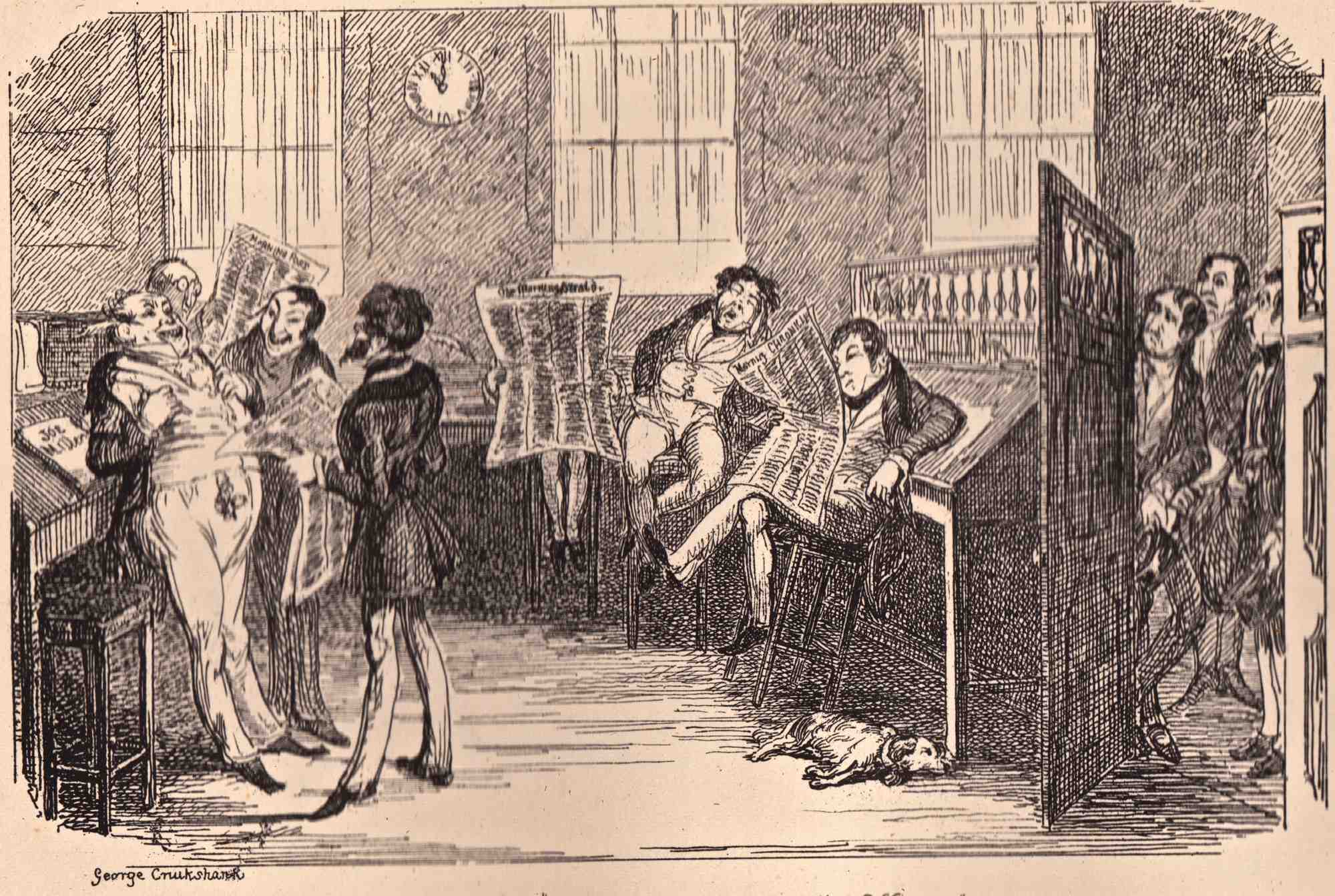
George Cruikshank’s London Summer

Click here to book for tomorrow’s TOUR OF SPITALFIELDS

JULY 1838 – Flying Showers in Battersea Fields
Should you ever require it, here is evidence of the constant volatility of English summer weather, courtesy of George Cruikshank’s Comic Almanack published by Henry Tilt of Fleet St annually between 1835 & 1853, illustrating the festivals and seasons of the year for Londoners. (Click on any of these images to enlarge)

JUNE 1835 – At the Royal Academy

JUNE 1836 – Holidays at the Public Offices

JUNE 1837 – Haymaking

JULY 1835 – At Vauxhall Gardens

JULY 1836 – Dog Days in Houndsditch

JULY 1837 – Fancy Fair

AUGUST 1836 – Bathing at Brighton

AUGUST 1837 – Regatta

SEPTEMBER 1835 – Bartholomew Fair

SEPTEMBER 1837 – Cockney Sportsmen
You may also like to take a look at
The Pointe Shoe Makers Of Hackney
Click here to book for THE GENTLE AUTHOR’S TOUR this Saturday
Photographer Patricia Niven and Novelist Sarah Winman visited the Freed of London factory in Well St to create these portraits of the Pointe Shoe Makers, an elite band of highly-skilled craftsmen who make the satin slippers worn by the world’s greatest ballerinas.

It takes two to three years to become a fully trained Pointe Shoe Maker. Hardly surprising, as each shoe is hand-made and two thirds of these shoes (including the toe ‘blocks’ themselves) are made to a Dancer’s individual specifications. Such specifications are printed onto dockets which the Makers work by. One docket was quite illegible to me – a shorthand code with the only clear words: Hessian, strong, slight taper.
There is something inaccessible and mysterious about this world – from the Makers’ symbols, to the language of the shoe, to the exclusive world of the finished product. And yet, I found the Makers to be a pragmatic group of men, into football not dance, who have become blasé about praise and who all refer to the making of these shoes as a job, irrespective of the beauty, the artistry of the finished product. They live in a world of chiaroscuro, where prima ballerinas, surrounded by bodyguards, turn up in limousines to applaud them whilst they stand at their benches six days a week producing nearly forty shoes a day, a quarter of a million shoes a year.
I asked each man if he had ever tried on a ballet shoe to get a sense of the feel – Never! – Even more remarkable then, to think that each shoe is made by touch, look, and imagination alone.
I asked each man whether he had ever been to the ballet.
I asked each man whether he calls himself a Pointe Shoe Maker or a Shoe Maker.
I asked the Maker Taksim (Anchor) what he would like people to know about his work.
He said, “I wish people could try this job. This is the hardest job I’ve ever done. My hands go numb, and I can’t feel them. Over time you get used to the pain.”
I said, “That’s what ballet dancers say about their feet.”
He said,”Really? So, their feet are our hands.”
– Sarah Winman

Taksim known as ‘Anchor’
“I’ve been here for fifteen years. I love my job and no-one tells me what to do. It came easy to me because I used to work in the leather trade and put that experience to good use. I know how the material works and moves.
I haven’t been to the ballet but I have seen my dancers on television – Leanne Benjamin, Jane Taylor to name two. I make Jane Taylor one hundred pairs of shoes a year, all 5 ½ X heel pins. I am proud to make shoes for her. I have met all my prima ballerinas and had photos taken with them. They appreciate us I think.
I have no time to go to the ballet because I work six days a week. I need to rest and put my feet up. I’m a big football fan, enjoying the tennis too, at the moment. We don’t tell people we make ballet shoes, we are just shoe makers. I make thirty-eight pairs a day and am booked up until mid December.
I was born in Cyprus. I never imagined I would have done this. When I came here thirty years ago, I expected to work in a fish and chip shop.”

Taksim’s ‘anchor.’

Taksim’s ‘anchor’ in place upon a pair of his shoes – ballerinas have been known to scratch off their Maker’s symbol to keep him exclusively for her!


Taksim’s work bench.

Fred known as ‘F’
“I was in-between jobs and went to Freed in Mercer St in Covent Garden and learned to be a Maker. I had no idea what I was getting into. My friends all worked in warehouses or were builders so I didn’t tell ‘em what I did until I’d been making shoes for a year.
Have I been to the ballet? No, you’re havin’ a larf, aren’t you?!
When I made my first shoe, I was elated, tell you the truth, that I’d done something. I started off unloading lorries, and it took three months before I got on the bench. Then did soft toes, then hard toes.
I make forty pairs a day and I have a waiting list. I call myself a shoe maker. When you hear a prima ballerina say you’re great, it’s wonderful. Then you hear it so many times…and well…
There’s really nothing glamorous about standing at a bench for ten hours. Do I enjoy making shoes? Look at me. I’m sixty-two and sweating!”

Fred’s ‘F’ on the sole a pair of his shoes.

Fred’s work bench.

Ray known as ‘Crown’
“We are given symbols when we start making shoes, so that if anything is wrong with the shoe they know who to blame! I have been here for twenty-six years. My father-in-law got me a job interview here. I get satisfaction from making the whole shoe myself. Other shoes are made by lots of people.
I love that dancers are wearing my shoes.
You are trained and learn the basics. People teach you their ways and sometimes those ways are conflicting. Then I had to find my own way. There’s a lot of trial and error. I found a style that I like and the dancers like, and I’ve kept to it.
Every dancer likes a different shoe. Each Maker is different – one might use more paste than the other. But dancers come back and stay with you for life. They will tell you what they need.
I’ve never been to the ballet, but if I watch it on the television I look at their feet. I know how to craft the shoe by touch, feel, look. I instinctively know how much paste to use, how much hessian. If the dancer wants a light block she’ll get one. If she wants a shoe with more give I do that. The dancers are fascinated to meet the makers. I make forty pairs a day. I don’t have much time off. People wait weeks to get a shoe from me. I make a lot of shoes for the New York City Ballet.
I love my job. I could never have dreamt of this, or of having my photo taken with dancers or even of someone writing down what I’m saying.
I was born around here – grew up bit with my dad and a bit with my mum. It was all a bit of an adventure. My two daughters take up my time. I made a pair of soft toes for my six year old girl. They don’t do ballet now. They have found their own interests.”

Ray’s work bench.


Ray’s ‘Crown’ on the sole of a pair of his shoes.


Daniel known as ‘Butterfly’
“My wife has been a Pointe Shoe Fitter in the Freed shop since she was sixteen. She was a dancer, went away and travelled the world. We met when she was in the Philippines, and she brought me back with her and we had babies. She went back to the shop and four months ago I started to make shoes here. I have a good teacher in Tksim, he’s a Master.
I do enjoy it. I always found it fascinating when my wife talked about dancing and shows and make-up. I always had the curiosity. Always thought, I want to be part of all that.
I haven’t been to the ballet yet, but I’ve watched it on Youtube.
Since I’ve been making shoes, I look at the dancer’s feet. I used to be a tight-rope walker and a trapeze artist. When I was a trapeze artist, I had to wear a leather glove. We made the leather gloves ourselves and the leather was so important. I understand how the leather is important for the shoe, I’d never realised it before.
I will call myself a Pointe Shoe Maker.I make twenty-four shoes a day. It has come naturally to me, but it’s very hard work. My hands and my shoulders ache. This here is the first ever shoe I made here. It gives me great satisfaction because it is a very important shoe – because this is a shoe that is not to be worn everyday in the street.
It’s craftsmanship.”

Daniel’s first shoe with his ‘Butterfly’ mark on the sole.

Daniel’s mark.

At Daniel’s work bench.

Alan known as ‘Triangle’
“I started next door in Despatch and then I was given the opportunity to come here and make shoes. I made my first pair of shoes nine years ago. Dancers come here and they thank us and applaud us.
I have been to the ballet once. I can’t remember what it was – it wasn’t really my cup of tea. I’m a DJ and prefer a different dance. My kids do ballet and I’ve made one of them a pair of shoes
I call myself a shoe maker.
If I wasn’t here, I would be painting or decorating or a barman.
We don’t see what other people see. You see something beautiful. I see a finished product, a skilled job well done.”

One of Alan’s shoes with his ‘triangle’ on the sole.

An order with the customer’s specifications.


When the block and platform have been created – this is the moment when it rests ghostly on Pointe, unaided, perfectly balanced, dancing its own breathtaking dance.

Alan’s work bench

Darren Plume, Quality Controller & Manager of the London Makers
“My grandfather worked as a storeman here thirty years ago. I left school and joined here when I was fifteen and a half years old. I started off unloading lorries, making tea, that sort of thing. I’ve been here twenty-six years now and have done mostly everything. I took over jobs as people left or retired. I never thought about leaving because I’m happy with what I do.
It’s the people who made me want to stay. I had a lot of father figures. I’ve known Ray (Crown) twenty-six years and we see each other more than we see our own families. My mates used to think I was nuts working here because they were all on building sites, but then they saw the dancers who came in and they changed their minds.
The Makers know more about the shoes than I do. The shoes go into the ovens overnight to bake and harden the block and, first thing in the morning, I check every one of them – that’s my responsibility. I also liaise with the dancers, because if they have a problem they’ll ask to visit us.
Once I used to be in awe of them, now I think they might be a little in awe of us. No shoes, no dance. The dancers rely on us a lot. Their Maker would only have to get an injury and psychologically it could affect them quite a bit.
I’ve been to the ballet twice. I saw Swan Lake at the ENO in the round five years ago. We took a Maker’s bench down there and made shoes in the foyer for the audience to see what we did. Three, four hundred people wanted to shake our hands.
When I was watching the ballet I was only looking at the shoes.
This job’s a bit like a fairytale. You can get caught up in the moment. Some days it flows, some days it’s a pig’s ear and some days you’re as happy as Larry. The most important thing as a manager is to listen to people. Then buy ‘em a coffee and make ‘em happy.”
Photographs copyright © Patricia Niven
You may also like to read about