
Thirteenth Annual Report
Tickets are available for my walking tour now
Click here to book for THE GENTLE AUTHOR’S TOUR OF SPITALFIELDS
This year, it has been a pleasure to welcome so many readers to Spitalfields in person and enjoy a ramble around the streets in your company.
Although it was never my intention to do walking tours, it has proved an unexpected delight. For years, readers had been coming to visit the locations of my stories and often, when I eavesdropped on tour guides in Spitalfields, I recognised whole sentences lifted from writing. And this was an entirely satisfactory state of affairs, until someone pointed out to me that I had the opportunity to create a better alternative to the exploitative serial killer tours that blight our neighbourhood. Thus The Gentle Author’s Tour of Spitalfields was born.
It was never my intention to get involved in politics either, yet I have found that when you write about things you love then you have no choice but to defend them if they come under threat.
As a consequence of our campaign to Save the Bethnal Green Mulberry and the Judicial Review that confirmed the legal protection for the five hundred year old tree last year, I am pleased to confirm that Crest Nicholson – developer of the former London Chest Hospital – have abandoned their plans and sold the site to Clarion Housing Group which has publicly announced commitments to ‘retaining the mulberry tree in its current location’ and ‘providing more genuinely affordable homes that meet local need.’ This is a result and we shall hold them to it.
Cuttings from Shakespeare’s Mulberry are owed to many campaign supporters. Unfortunately, the cuttings failed in 2021 and this year the owners decided to give the tree a rest from pruning in order to overcome an infection that has afflicted many mulberries recently. We hope to take new cuttings next spring and deliver them to our patient supporters in the autumn of 2023.
We were proud when Grayson Perry’s End of Covid Bell debuted at the Royal Academy Summer Exhibition this year, made in support of our ongoing campaign to Save The Whitechapel Bell Foundry. Meanwhile, the developers’ option to buy the land at the rear of the foundry – where they planned to build their tower – has lapsed, which means that the boutique hotel scheme is now dead. Over the coming year, I will be reporting on progress of The London Bell Foundry, which has been set up with the ambition of acquiring and reopening the foundry as a fully working foundry.
Thanks in no small part to the letters written by you – the readers of Spitalfields Life – the City of London Planning Committee rejected proposals to convert the historic Custom House on the Thames bank into a boutique hotel. Despite the approval of Historic England, this plan was also rejected at a Public Inquiry, opening the door to the building and quayside being opened for public access and cultural use in the manner of Somerset House.
Closest to home has been the battle to Save Brick Lane from the proposed Truman Brewery Shopping Mall. Despite seven and a half thousand objections, two councillors out of a committee of just three members voted the decision through in questionable circumstances. One who approved it claimed that they ‘could not disappoint the developer.’ The subsequent local elections in which the Mayor of Tower Hamlets, who supported the development, was voted out of power along with the councillors who approved it revealed the strength of public opinion.
We now await the verdict of the Judicial Review on whether the granting of permission for the Truman Brewery Shopping Mall was lawful. The new Mayor has pledged to develop a community-led master plan for the entire brewery site, which makes the verdict of the High Court a potential watershed for the future of Spitalfields, deciding whether community or corporate interests will prevail.
Thus, with these thoughts in mind, ends the thirteenth year in the pages of Spitalfields Life.
I am your loyal servant
The Gentle Author
Spitalfields, 26th August 2022
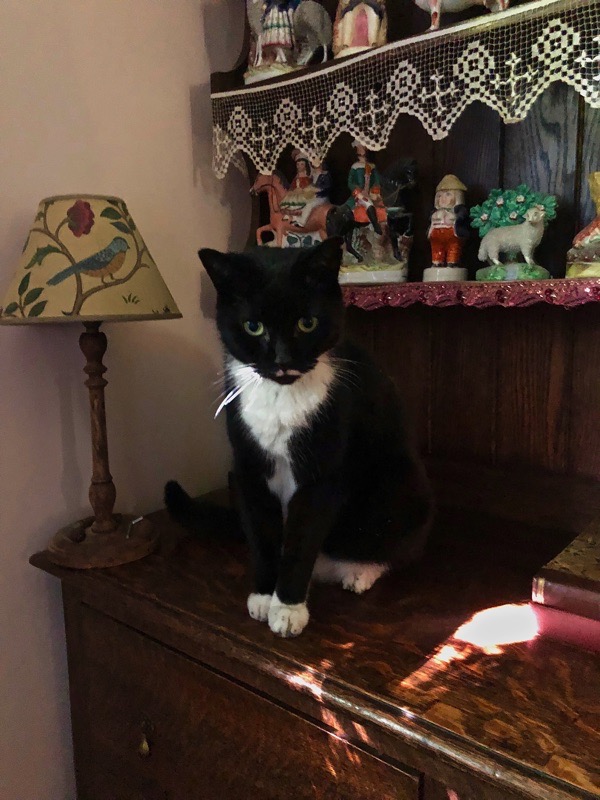
The Gentle Author’s cat, Schrodinger
You may like to read my earlier Annual Reports
At Waltham Abbey
Tickets are available for my walking tour today & Saturday
Click here to book for THE GENTLE AUTHOR’S TOUR OF SPITALFIELDS
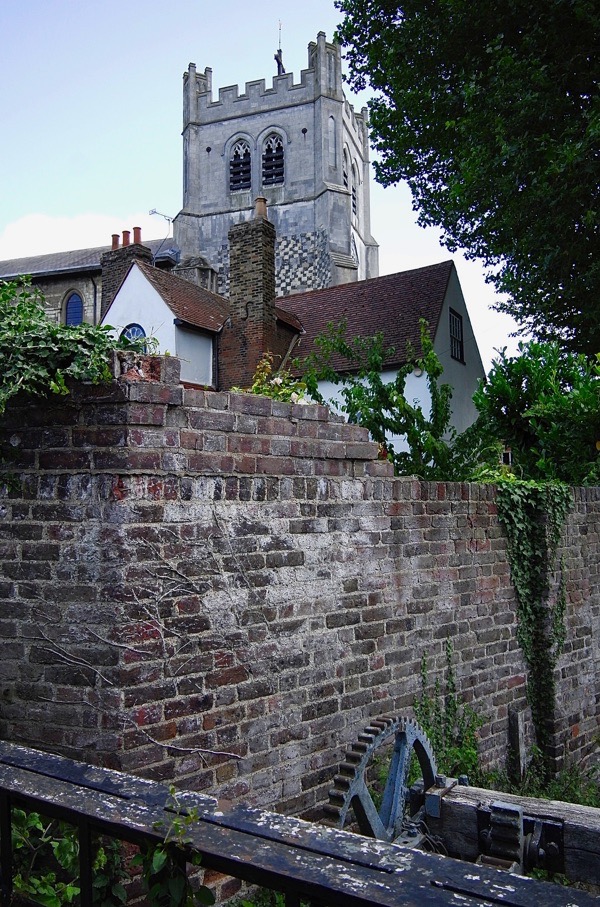
I cycled along the River Lea to Waltham Abbey. On my approach, even from the riverbank, I could see the majestic tower rising over the water meadows as the Abbey has done for the past thousand years, commanding the landscape and undiminished in visual authority.
Once you see it, you realise you are following in the footsteps of the innumerable credulous pilgrims who came here in hope of miraculous cures from the holy cross, which had reputedly relieved Harold Godwinson of a paralysis as a child before he became King Harold.
To the south of the Abbey church lies the market square, bordered with appealingly squint timber frame buildings punctuated by handsome eighteenth and nineteenth additions. Despite the proximity of the capital, the place still carries the air of an English market town.
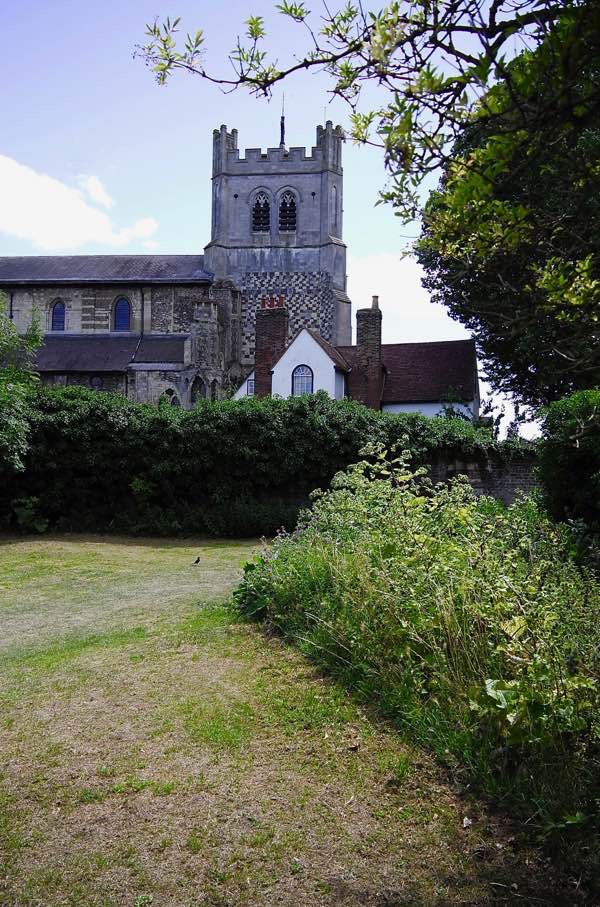
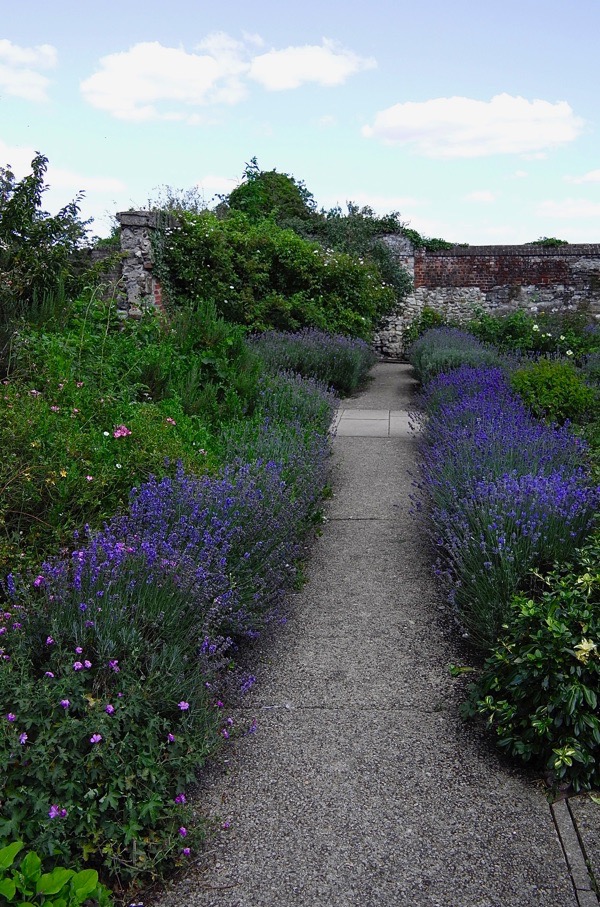
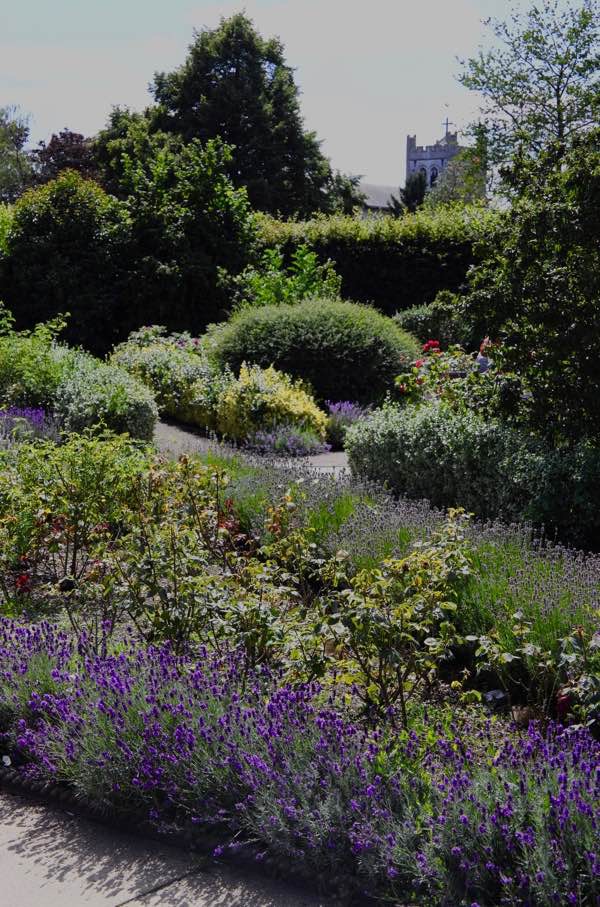
Yet the great wonder is the Abbey itself, founded in the seventh century, built up by King Harold and destroyed by Henry VIII. Despite the ravages of time, the grandeur and scale of the Abbey is still evident in the precincts which have become a public park. Although the church that impresses today is less than half the size of what it was, it is enough to fire your imagination. An imposing stone gateway greets the visitor to the park where long, battered walls outline the former extent of the buildings. A tantalising fragment of twelfth century vaulting, which formerly served as the entrance to the cloisters, encourages the leap to conjure the cloisters themselves where now is merely an empty lawn. A walled garden filled with lavender and climbing roses draws you closest to the spirit of the place.
The outline of the former Abbey church is marked upon the grass and at the eastern end lies a surprise. A plain stone engraved with the words ‘Harold King of England Obit 1066,’ indicating this is where legend has it that he was laid to rest after the Battle of Hastings. I realised that maybe the remains of the man in the tapestry, killed by the arrow in the eye, lay beneath my feet. Coming upon his stone unexpectedly halted me in my tracks.
This was one of those startling moments when there is a possibility of history being real, something tangible, causing me to reflect upon the Norman Conquest. A thousand years ago, their power found its expression in the vast complex of buildings here, which were destroyed five hundred years ago as the expression of another power.
We too live in a time of dramatic transition, emerging from the shadow of the pandemic and accommodating to our country’s divorce from Europe. I cycled from Spitalfields to Waltham Abbey as a respite from the times, yet here I was confronting it in a mossy green churchyard. The equivocal consolation of the historical perspective is that it reminds us that empires rise and fall, but life goes on.
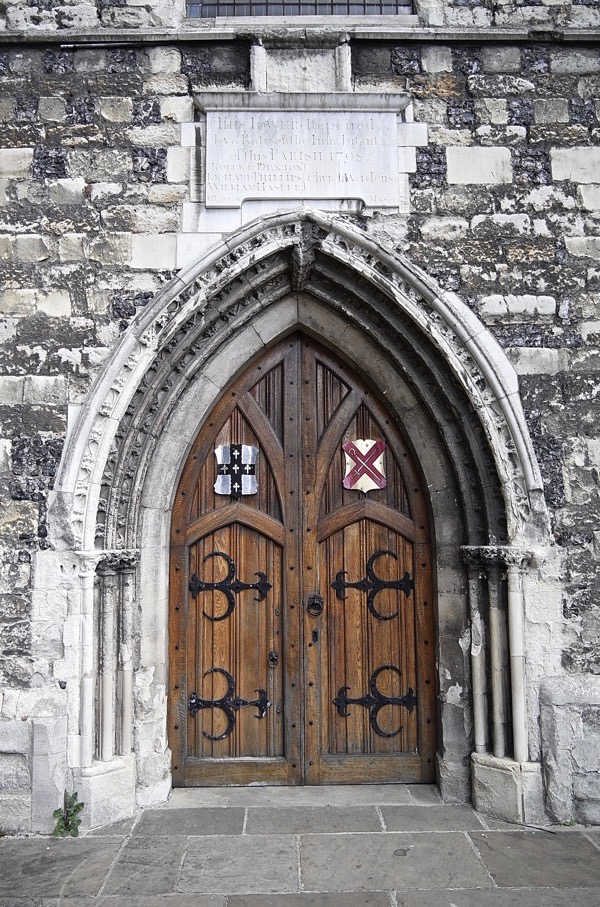
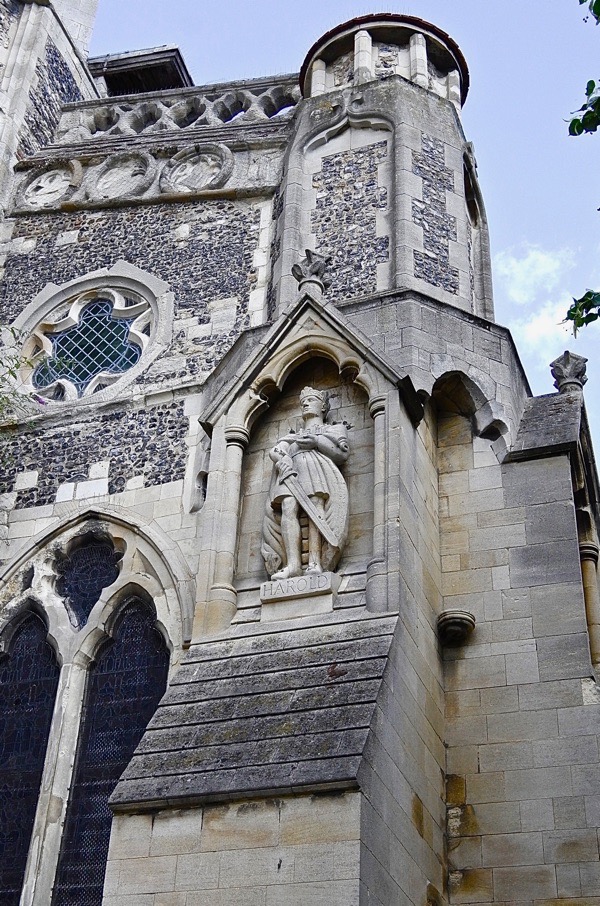
Effigy of King Harold
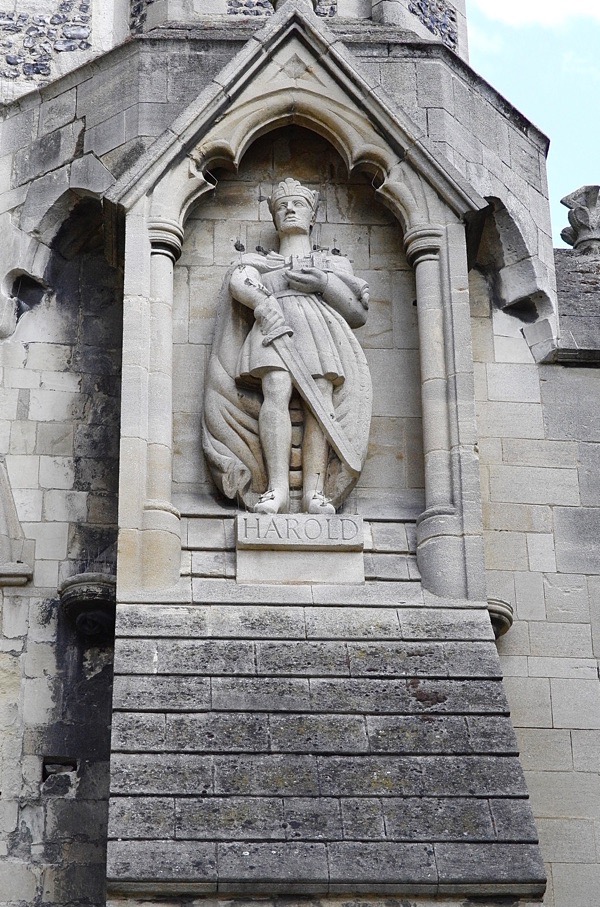
Harold cradles Waltham Abbey in his arm
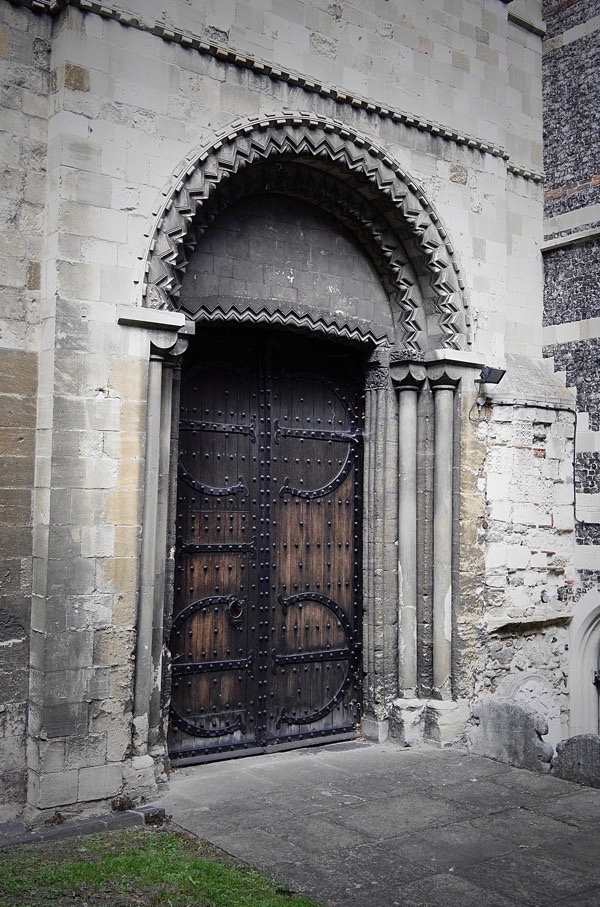
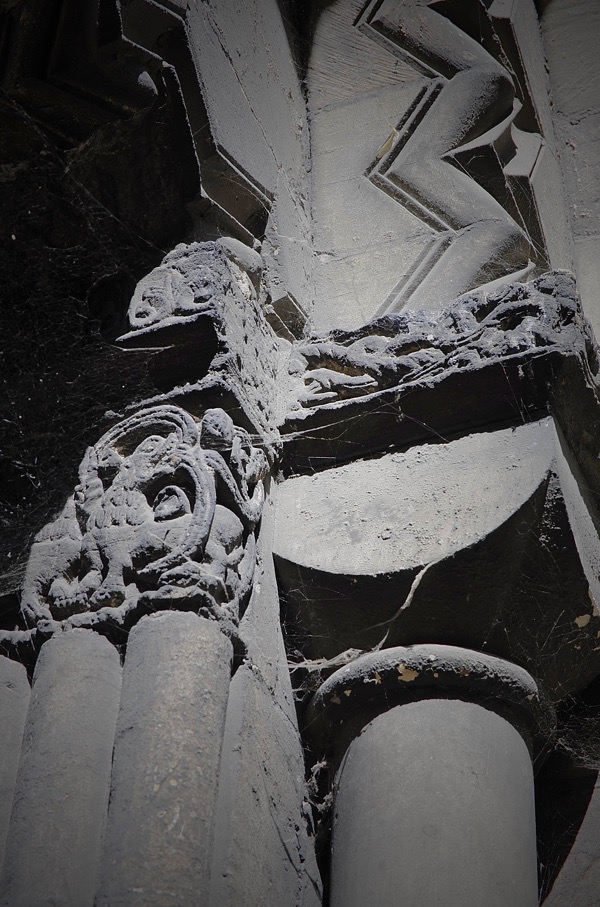
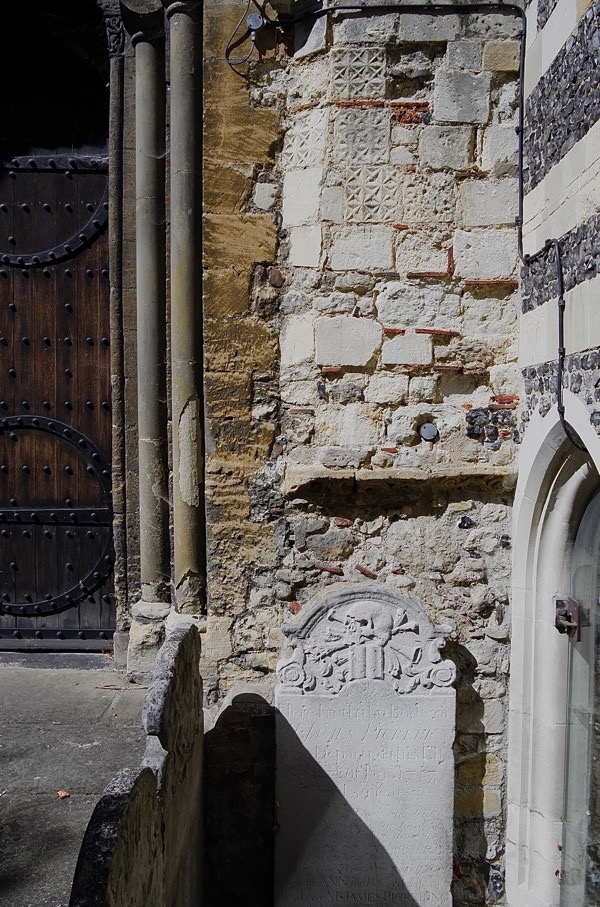
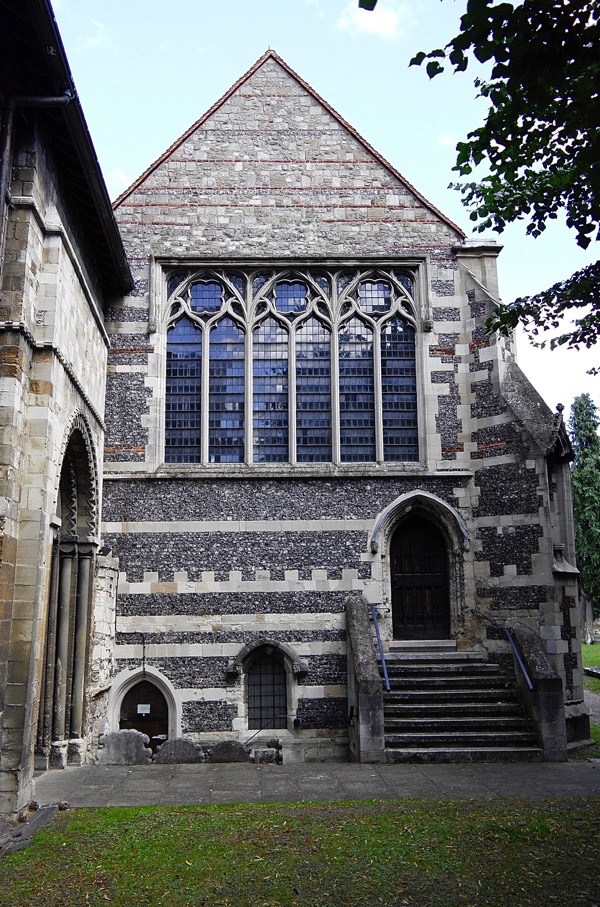
The Lady Chapel
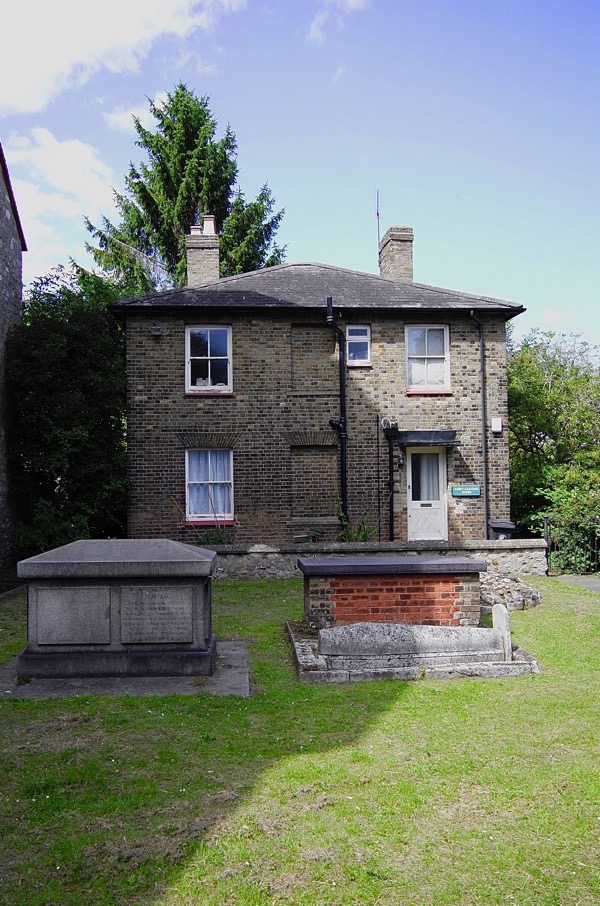
Victorian villa in the churchyard
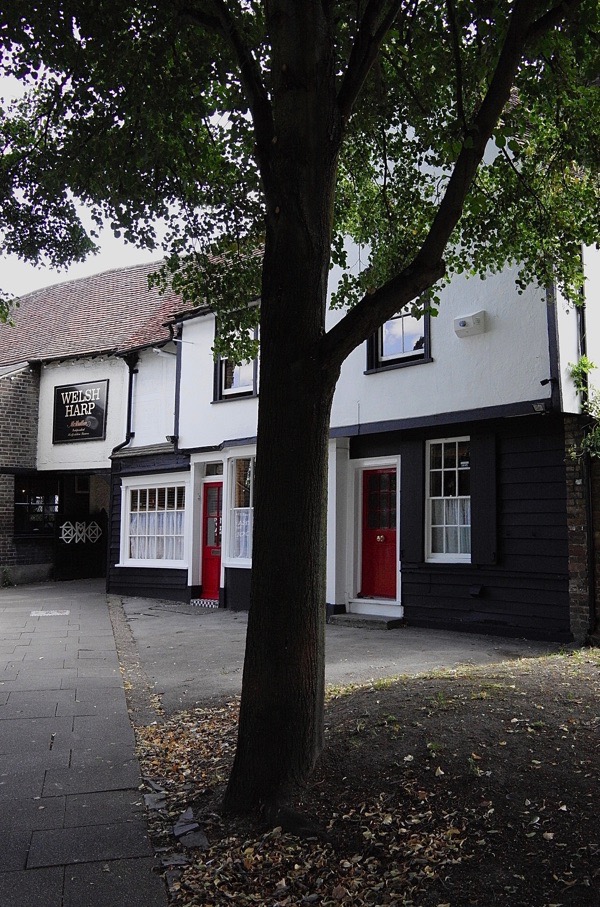
The Welsh Harp
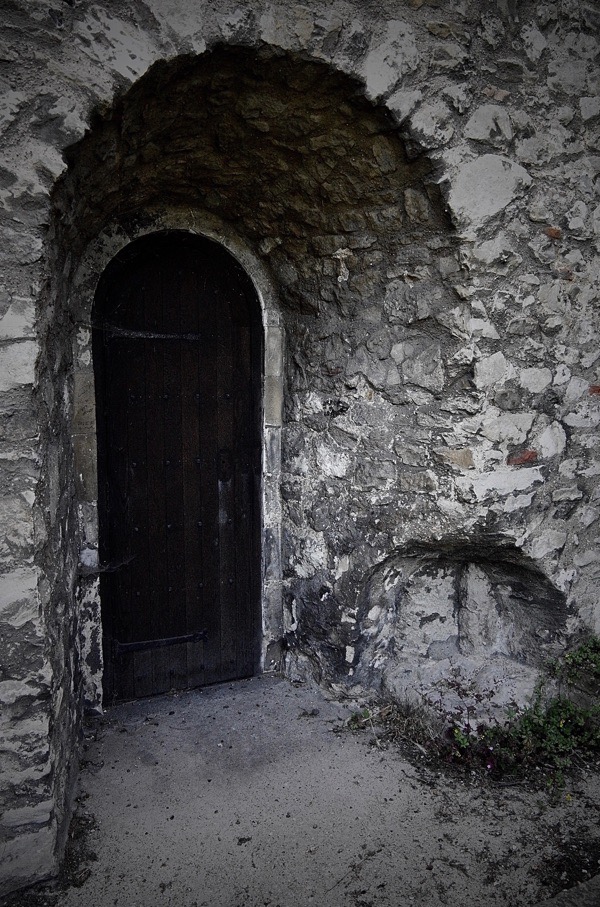
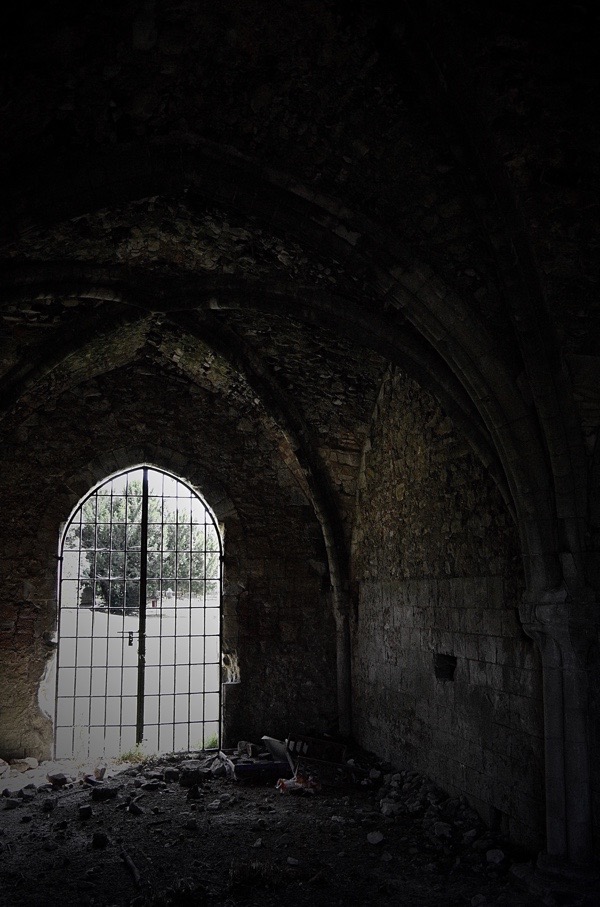
These vaults are all that is left of the twelfth century cloisters
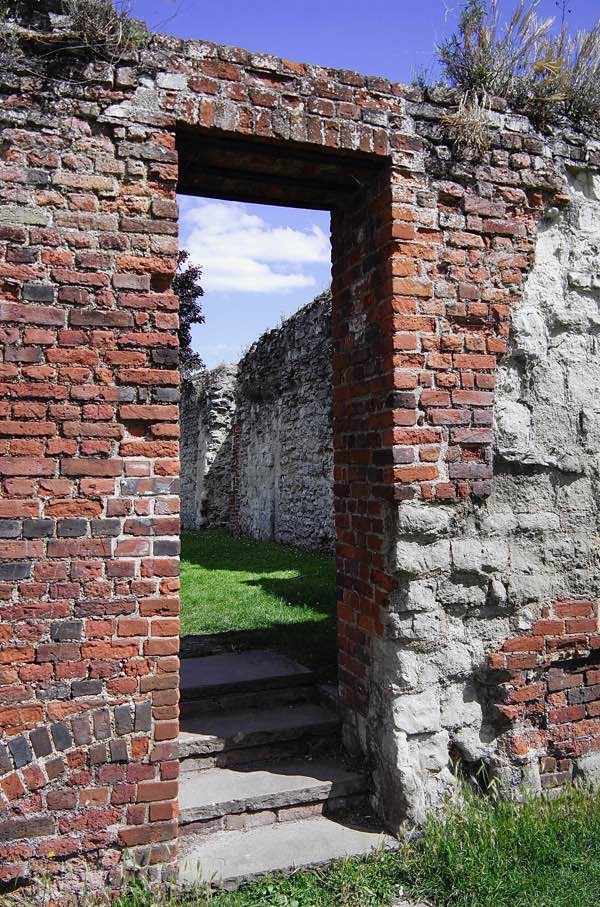
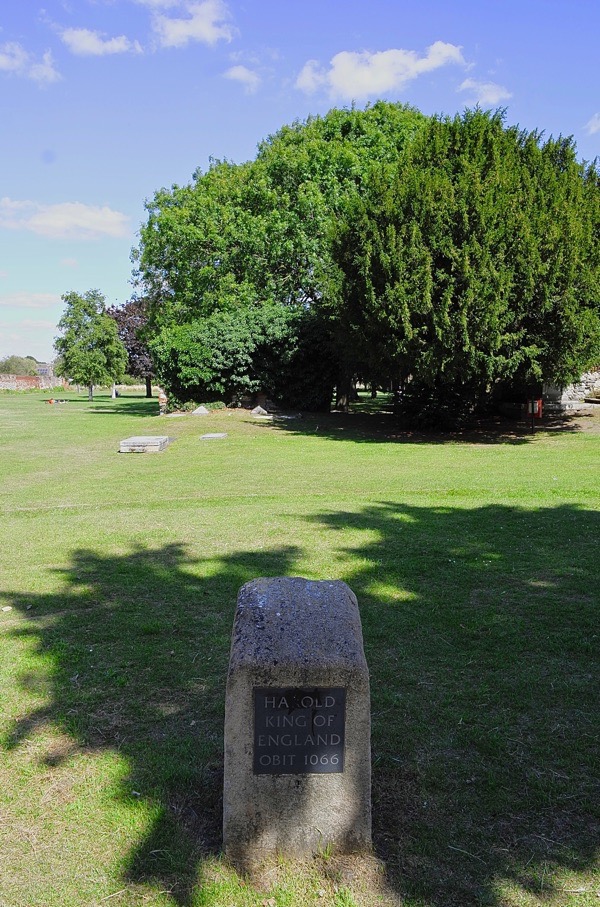
Here lies Harold, the last Anglo Saxon King of England
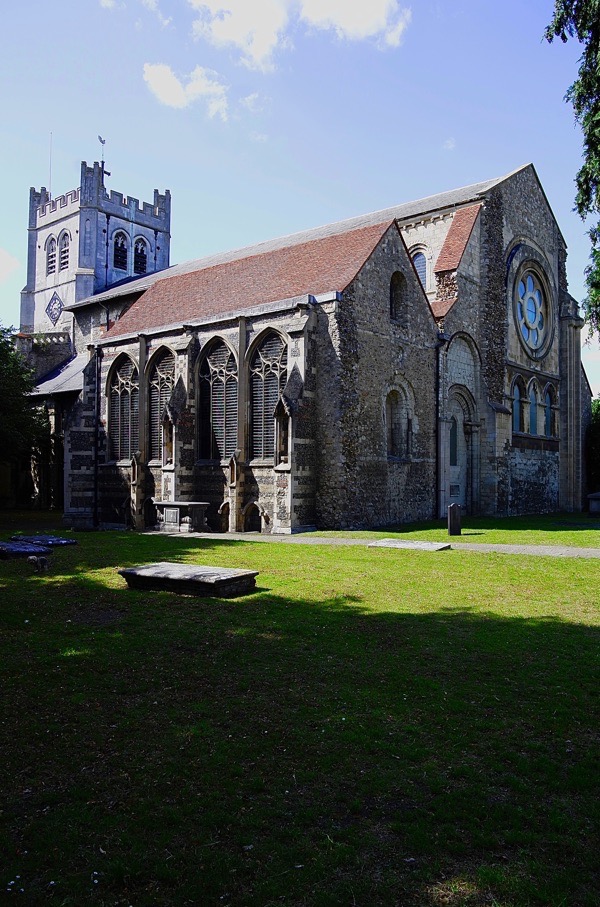
Waltham Abbey
You may also like to read about
Philip Lindsey Clark’s Sculptures In Widegate St
Tickets are available for my walking tour this Thursday & Saturday
Click here to book for THE GENTLE AUTHOR’S TOUR OF SPITALFIELDS
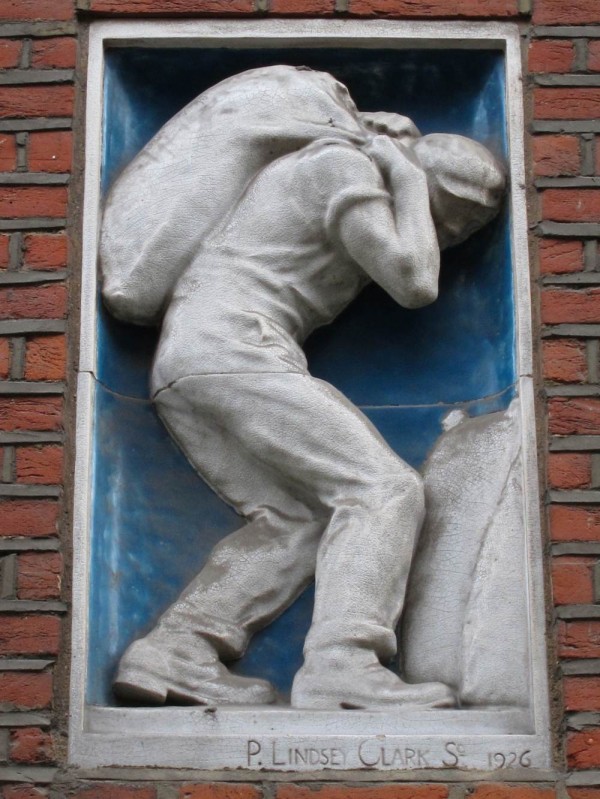
Next time you pass through Widegate St, walking from Bishopsgate towards Artillery Passage on your way to Spitalfields, lift up your eyes to see the four splendid sculptures of bakers by Philip Lindsey Clark (1889 – 1977) upon the former premises of Nordheim Model Bakery at numbers twelve and thirteen. Pause to take in the subtle proportions of this appealing yet modest building of 1926 by George Val Myers in which the sculpture is integrated so successfully, just as at Broadcasting House which Val Myers designed five years later with Eric’s Gill’s figures upon the front.
Clark’s work shares a similar ambition to illuminate the transcendental in existence and, from 1930, onwards his sculpture was exclusively of religious subjects. Born in Brixton, son of Scots architectural sculptor Robert Lindsey Clark, he trained in his father’s studio in Cheltenham and then returned to London to study at the City & Guilds School in Kennington. Enlisted in 1914, he was severely wounded in action and received a Distinguished Service Order for conspicuous gallantry. Then, after completing his training at the Royal Academy Schools, he designed a number of war memorials including those in Southwark and in Kelvingrove Park, Glasgow.
The form of these ceramic reliefs of bakers – with their white glaze and sparing use of blue as a background – recalls religious sculpture, especially stations of the cross, and there is something deeply engaging about such handsome austerely modelled figures with their self-absorbed presence, preoccupied by their work. The dignity of labour and the poetic narrative of transformation in the baking of bread is made tangible by these finely judged sculptures. My own favourite is the figure of the baker with his tray of loaves upon his shoulder in triumph, a satisfaction which anyone who makes anything will recognise, borne of the work, skill and application that is entailed in creation.
These reliefs were fired by Carters of Poole, the company that became Poole Pottery, notable for their luminous white glazes, elegant sculptural forms and spare decoration using clear natural colours. They created many of the tiles for the London Underground and their relief tiles from the 1930s can still be seen on Bethnal Green Station.
Philip Lindsey Clark’s sculptures are those of a man who grew up in the artists’ studio, yet witnessed the carnage of First World War at first hand, carrying on fighting for two days even with a piece of shrapnel buried in his head, and then turned his talents to memorialise those of his generation that were gone. After that, it is no wonder that he saw the sublime in the commonplace activity of bakers. Eventually Lindsey Clark entered a Carmelite order, leaving London and retiring to the West Country where he lived until the age of eighty-eight.
So take a moment next time you pass through Widegate St – named after the wide gate leading to the ‘spital fields that once was there – and contemplate the sculptures by Philip Lindsey Clark, embodying his vision of the holiness of bakers.
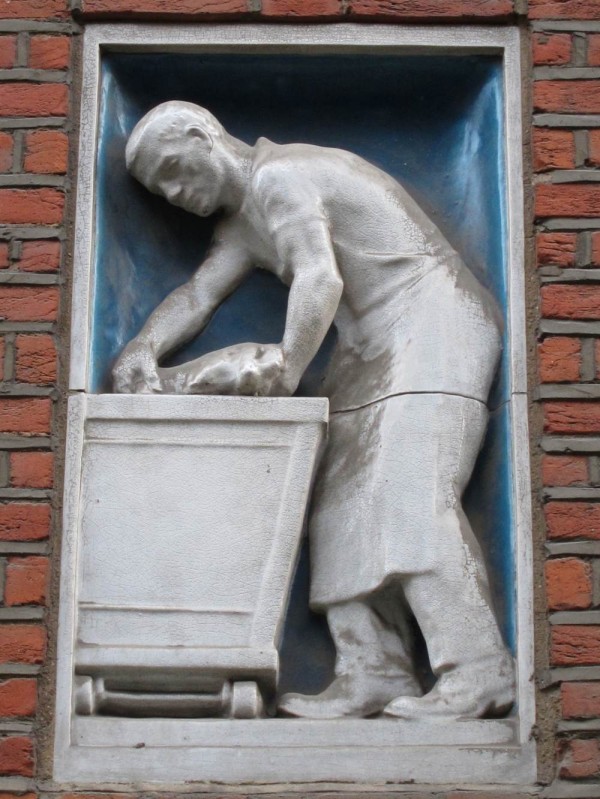
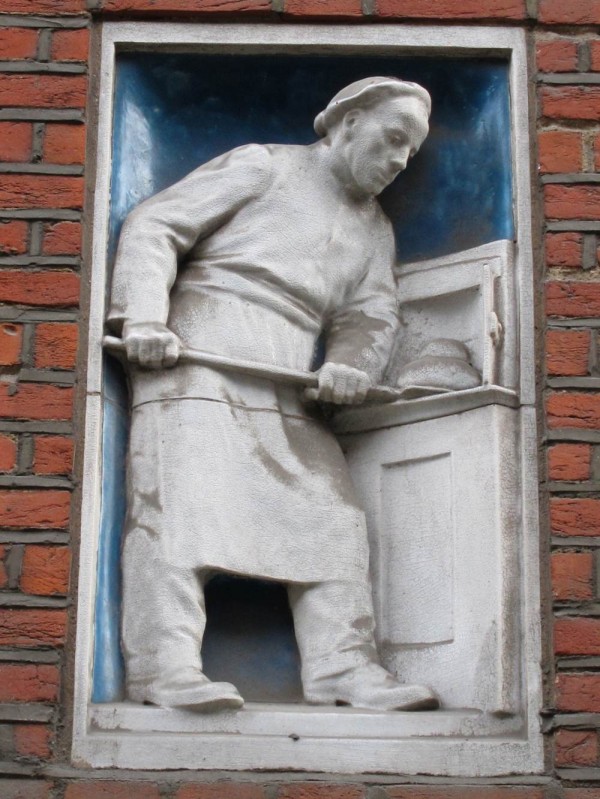
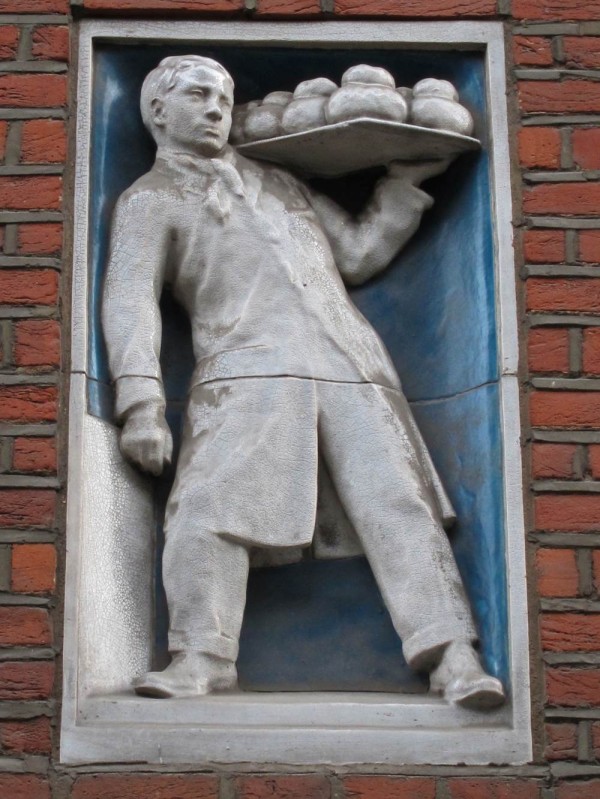
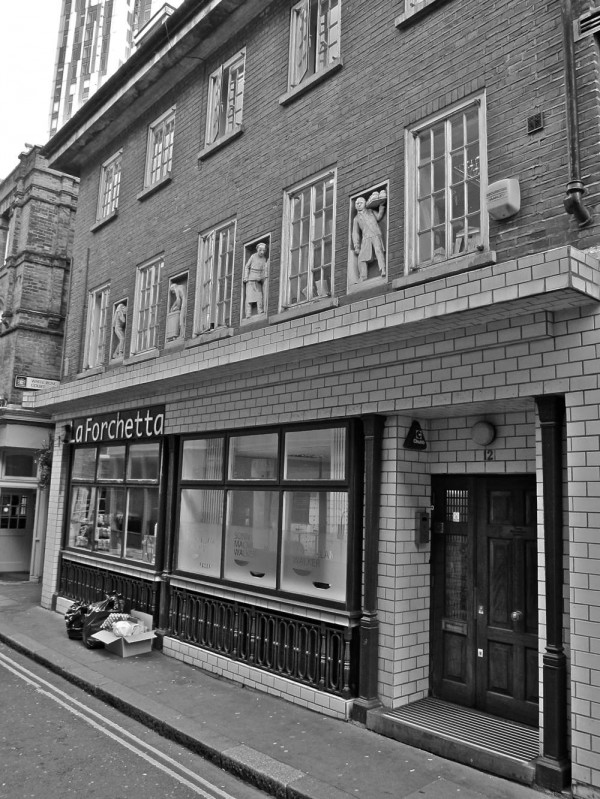
George Val Myer’s former Nordheim Model Bakery with sculptures by Philip Lindsey Clark.
You may also like to read about
A Night in the Bakery at St John
Dorothy Annan’s Murals in Farringdon St
At Embassy Electrical Supplies
Tickets are available for my walking tour this Thursday & Saturday
Click here to book for THE GENTLE AUTHOR’S TOUR OF SPITALFIELDS

Mehmet Murat
It comes as no surprise to learn that at Embassy Electrical Supplies in Clerkenwell, you can buy lightbulbs, fuses and cables, but rather more unexpected to discover that, while you are picking up your electrical hardware, you can also purchase olive oil, strings of chili peppers and pomegranate molasses courtesy of the Murat family groves in Cyprus and Turkey.
At certain fashionable restaurants nearby, “Electrical Shop Olives” are a popular feature on the menu, sending customers scurrying along to the Murats’ premises next morning to purchase their own personal supply of these fabled delicacies that have won acclaim in the global media and acquired a legendary allure among culinary enthusiasts.
How did such a thing come about, that a Clerkenwell electrical shop should be celebrated for olive oil? Mehmet Murat is the qualified electrician and gastronomic mastermind behind this singular endeavour. I found him sitting behind his desk at the rear of the shop, serving customers from his desk and fulfilling their demands whether electrical or culinary, or both, with equal largesse.
“I am an electrician by trade,” he assured me, just in case the fragrance of wild sage or seductive mixed aromas of his Mediterranean produce stacked upon the shelves might encourage me to think otherwise.
“I arrived in this country from Cyprus in 1955. My father came a few years earlier, and he got a job and a flat before he sent for us. In Cyprus, he was a barber and, according to our custom, that meant he was also a dentist. But he got a job as an agent travelling around Cyprus buying donkeys for Dr Kucuk, the leader of the Turkish Cypriots at that time – the donkeys were exported and sold to the British Army in Egypt. What he did with the money he earned was to buy plots of land around the village of Louroujina, where I was born, and plant olive saplings. He and my mother took care of them for the first year and after that they took care of themselves. Once they came to the UK, they asked relatives to watch over the groves. They used to send us a couple of containers of olive oil for our own use each year and sold the rest to the co-operative who sold it to Italians who repackaged it and sold it as Italian oil.
I trained as an electrician when I left school and I started off working for C.J. Bartley & Co in Old St. I left there and became self-employed, wiring Wimpy Bars, Golden Egg Restaurants and Mecca Bingo Halls. I was on call twenty-four hours and did electrical work for Faye Dunaway, the King of Jordan’s sister and Bill Oddie, among others. Then I bought this shop in 1979 and opened up in 1982 selling electrical supplies.
In 2002, when my father died, I decided I was going to bring all the olive oil over from Louroujina and bottle it all myself, which I still do. But when we started getting write-ups and it was chosen as the best olive oil by New York Magazine, I realised we had good olive oil. We produce it as we would for our own table. There is no other secret, except I bottle it myself – bottling plants will reheat and dilute it.
If you were to come to the village where I was born, you could ask any shopkeeper to put aside oil for your family use from his crop. I don’t see any difference, selling it here in my electrical shop in Clerkenwell. It makes sense because if I were to open up a shop selling just oil, I’d be losing money. The electrical business is still my bread and butter income, but many of the workshops that were my customers have moved out and the Congestion Charge took away more than half my business.
Now I have bought a forty-five acre farm in Turkey. It produces a thousand tons of lemons in a good year, plus pomegranate molasses, sweet paprika, candied walnuts and chili flakes. We go out and forage wild sage, wild oregano, wild St John’s wort and wild caper shoots. My wife is there at the moment with her brother who looks after the farm, and her other brother looks after the groves in Cyprus.”
Then Mehmet poured a little of his precious pale golden olive oil from a green glass bottle into a beaker and handed it to me, with instructions. The name of his farm, Murat Du Carta, was on the label beneath a picture of his mother and father. He explained I was to sip the oil, and then hold it in my mouth as it warmed to experience the full flavour, before swallowing it. The deliciously pure oil was light and flowery, yet left no aftertaste on the palate. I picked up a handful of the wild sage to inhale the evocative scent of a Mediterranean meadow, and Mehmet made me up a bag containing two bottles of olive oil, truffle-infused oil, marinated olives, cured olives, chili flakes and frankincense to carry home to Spitalfields.
We left the darkness of the tiny shop, with its electrical supplies neatly arranged upon the left and its food supplies tidily stacked upon the right. A passing cyclist came in to borrow a wrench and the atmosphere was that of a friendly village store. Outside on the pavement, in the sunshine, we joined Mark Page who forages truffles for Mehmet, and Mehmet’s son Murat (known as Mo). “I do the markets and I run the shop, and I like to eat,” he confessed to me with a wink.
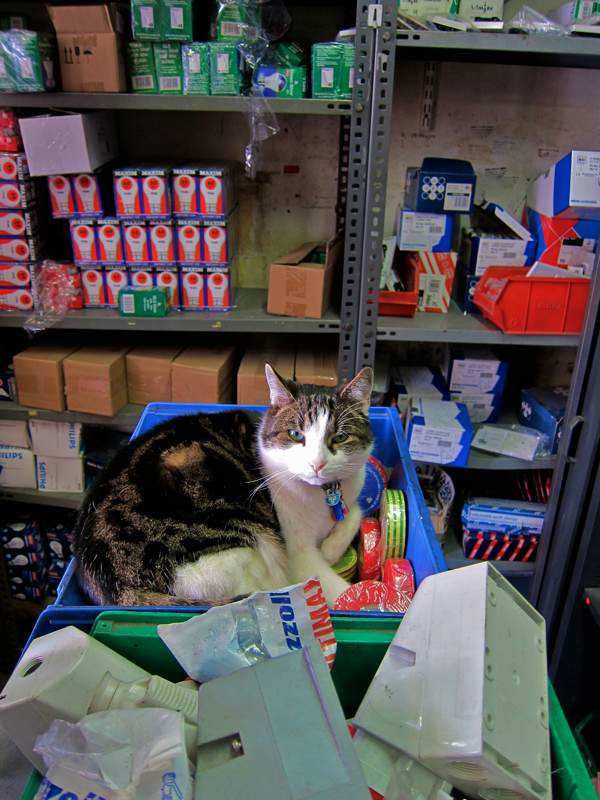
Carter, the electrical shop cat.

From left to right, Mark Page (who forages truffles), Murat Murat (known as Mo) and Mehmet Murat.
Embassy Electical Supplies, 76 Compton St, Clerkenwell, EC1V 0BN
Dicky Lumskul’s Ramble Through London
Tickets are available for my walking tour this Thursday & Saturday
Click here to book for THE GENTLE AUTHOR’S TOUR OF SPITALFIELDS
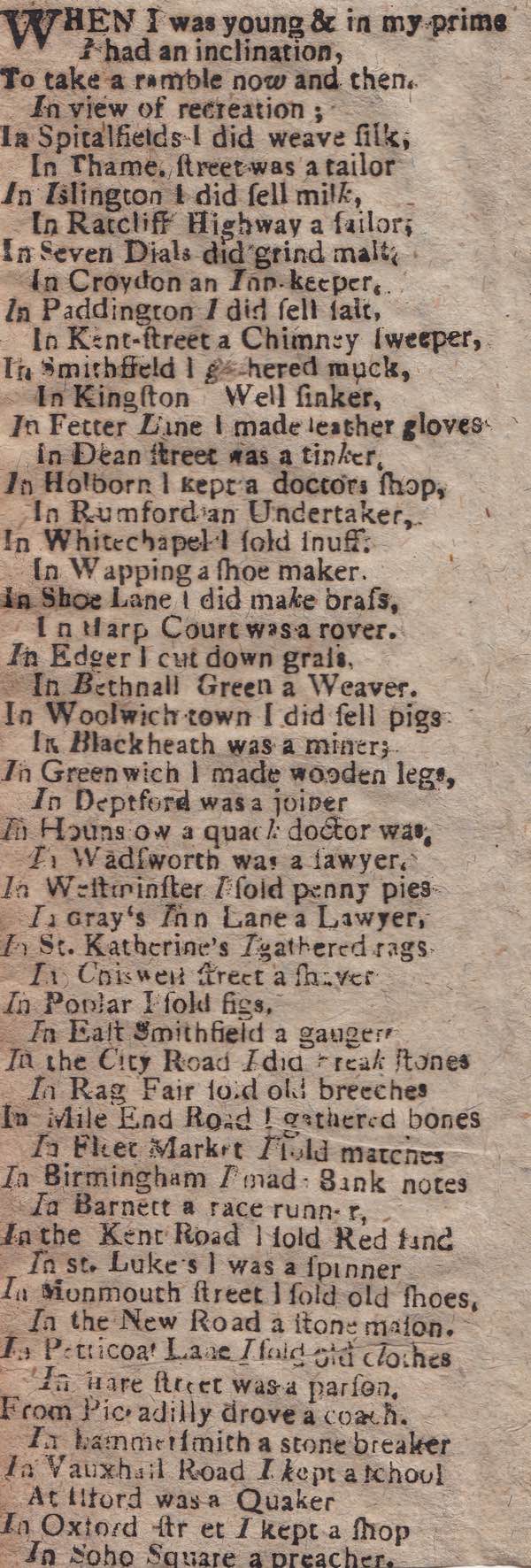
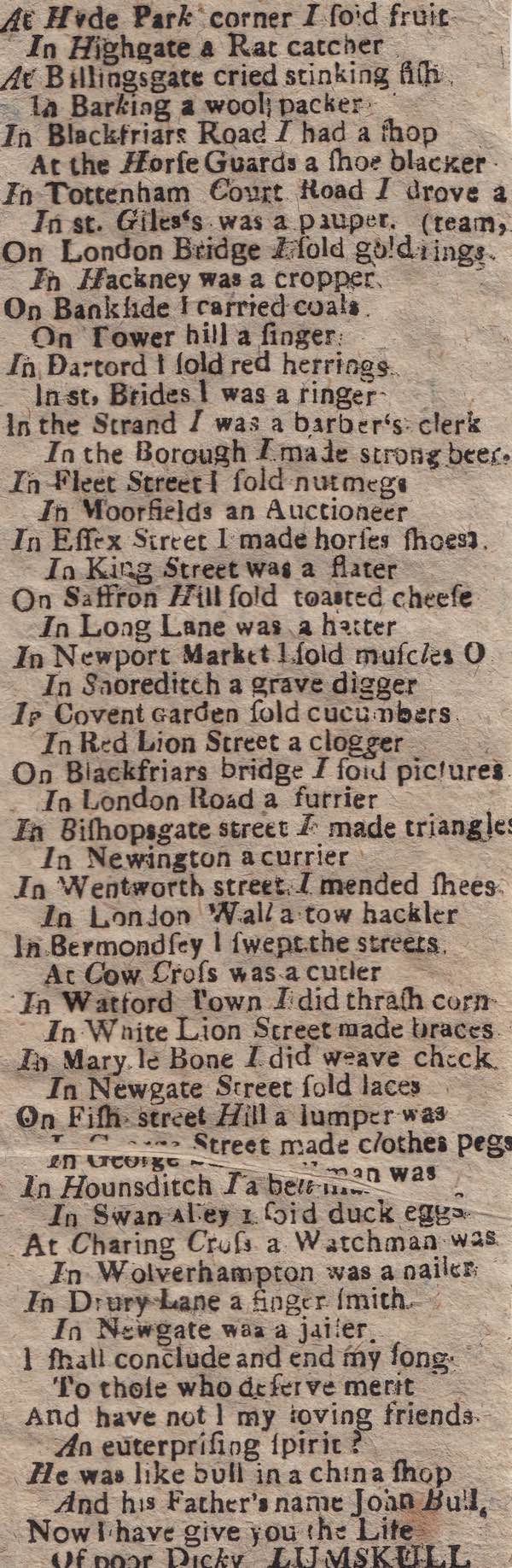
Courtesy of Mike Henbrey, it is my pleasure to publish this three-hundred-year-old ballad of the London streets and the trades you might expect to find in each of them, as printed and published by J. Pitts, Wholesale Toy & Marble Warehouse, 6 Great St Andrew Street, Seven Dials

Courtesy Mike Henbrey Collection
GLOSSARY
by Spitalfields Life Contributing Slang Lexicographer Jonathon Green
You may also like to read about
Marie Iles, Machinist
Tickets are available for my walking tour next Thursday & Saturday
Click here to book for THE GENTLE AUTHOR’S TOUR OF SPITALFIELDS

Apart from memorable excursions outside London as an evacuee, Marie Iles lived her entire life within a quarter mile of Stepney and it suited her very well. Those wartime experiences taught her the meaning and importance of home, yet living close to Stepney City Farm today she still enjoyed a reminder of the rural world she grew to love as a child.
A natural storyteller, Marie laid out the tale of her formative years for me with confidence and eloquent precision. Blessed with independent thought from an early age, Marie quickly learnt to stand up for herself and to appreciate the moral quality of people’s actions, whilst she was suffering enforced exile from her beloved Stepney amidst the tumultuous events of a world war.
It was the meeting with her husband Fred Iles that provided the sympathetic resolution of Marie’s dislocated early years and resulted in an enduring relationship which sustained them both for over sixty-five years.
“I was born on 9th August 1930 in Fair St, Stepney, while we were living upstairs in two rooms in my nan’s house, and when I was four or five we moved to Garden St. But I usually lived with my nan – whom everyone knew as Aunt Kit – because I loved her so much. I had a happy childhood playing in the streets, games like Hopscotch and Knocking Down Ginger. We was always running around and the police would pick us up and take us to Arbour Sq Police Station and give us bread and jam.
One day, I came indoors and my mum and dad had the wireless going and there was a quiet atmosphere, which was very unusual in our house, and I heard the voice of a man saying, ‘And England is at war with Germany.’ So I says to my mum, ‘Are we at war?’ and she says, ‘Yes.’ I said, ‘Are the Germans coming?’ and she said, ‘Yes, but not to Garden St.’
The siren went when I was out shopping with my nan in the old street at the side of St Dunstan’s church and, all of a sudden, there was bombs dropping and aeroplanes. My nan said, ‘You run home to your mum quick,’ but I wouldn’t leave her. So she said, ‘Run!’ and I ran on the spot to show I was running. Eventually, we got home to Garden St and my mum, who had a phobia that she might be taken ill or die with dirty feet, was saying, ‘Get a bowl of water, I’ve got to wash my feet.’ When the bombing eased up, my nan said, “I’ll take the two girls home where there is an Anderson shelter,’ and, as we came out, it was a terrifying sight – where there had been houses, there was just piles of bricks and rubble, and there was a horrible smell of smoke and, that night, the sky was red with the light of the fires.
We stayed at my nan’s a few weeks after that, until one day I was at my mother’s and she said, ‘You’re going on a holiday, you, Kitty and Johnny.’ We was excited! My mum pinned a label onto each of us with our name and address on it, and filled a carrier bag for each of us with our belongings. We went to school and there was a couple of coaches waiting, and my nan said, ‘Write to us and always say your prayers every night,’ and she put three sixpences in my hand. I thought, ‘I’ve got money and I’m going on holiday,’ and I was pleased. We all got on the coach together, me and Kitty and Johnny. Then, as we were going, I dropped my three sixpences in the excitement and it felt like the end of the world – not because of the money, but because my nan had given them to me.
We arrived at what I later found out was Denham. We was dropped at the corner of the street, and ladies came over and picked who they fancied. Johnny went with a Mrs Burrell, a lovely little country lady with red cheeks. Kitty and me, we went with Mrs Rook. She had a nice house, that was what we would call ‘posh,’ and she had a grown up son and daughter, Ken and Joyce, and her husband Mr Rook. Yet I hated it, I was so homesick and cried every night for a fortnight but my sister loved it. I asked her, ‘Why don’t you get homesick?’ She said, ‘Because you are here. Wherever you are, I am alright.’ I was her elder sister.
One morning, Mrs Rook said, ‘Why don’t you put on your coats and go out for a walk?’ And the first person we met was Mr Goddard, my headmaster from school in Stepney. He took hold of my hand and asked, ‘Have you got a nice place to stay?’ I said, ‘Yes, but I hate it I miss my home.’ So he said, ‘Look Marie, do you want me to tell your mother what you said and have her worrying about you?’ And I said, ‘ No, don’t tell her,’ and, after that, I was alright and I had a happy time. And that was when I first noticed flowers and the trees opening up. Once there was snow, and Mrs Rook sent me to Denham village for an errand, and I saw these flowers peeking up through the snow – crocuses – and I thought it was a little miracle, that flowers grew in the snow.
Then it seemed the bombing stopped and they took us back to London, and we was there for a while until they sent us off again. They put us on a train at Paddington and we stopped overnight at an army barracks and slept on the floor, and me and Kitty cuddled up under a blanket. Other kids were crying but I wasn’t homesick. In the morning, the soldiers gave us breakfast of ham and hard-boiled eggs and tea and bread and jam. We travelled on and we came to this little village near Rugby called ‘Crick.’ A Mrs Watts picked us out and she lived in Cromwell Cottage, a nice house, and she gave us three meals a day but this lady had no compassion whatsoever. She took us because she didn’t want to do war work. She turned us out at seven-thirty to go to school, and she used to go to the pictures in Rugby twice each week and we had to wait outside in the bitter cold until she came home.
When the summer comes and you’re playing outside, it doesn’t seem so bad. But, one day, we’d had our dinner and were going back to school, and I knew she had a basket of apples in the larder, so I decided to pinch one. We each took bites of the apple, sharing it between the two of us on the way to school. When we got in that evening, she says to me, ‘You thieving Cockney! You come from the slums of London and you don’t appreciate a good home.’ Now I was always a bit of a rebel – I think it was because of growing up with so many brothers – so I thought, ‘I won’t stand for this.’ So I said to Kitty, ‘We’re not going to stay here with this wicked lady.’
Down at the bottom of the hill, lived an old lady and her husband – they must have been seventy. I went there and knocked on the door and asked, ‘Could you take two evacuees?’ She said, ‘Who are they?’ I said, ‘It’s my sister and me.’ She said, ‘Alright, take the old pram and go and get all your things.’ So we went back to Mrs Watts. I said, ‘I’m leaving, I’m going somewhere else to live.’ And her husband, Jack Watts – he was one of the kindest men I ever met – he said, ‘Marie, stop and think what you are doing.’ But I never did, and that night we went down to the old lady and the old man. Talk about ‘out of the frying pan into the fire’! She never cooked, she just gave us a bit of toast sometimes. Then she decided to visit her son and daughter for a holiday, and left us alone there with the old man, her husband. He used to go into the woods all day and cut willow branches and make clothes pegs. Meanwhile, Micky – my little brother – came down because my mother was having another baby up in London. We never had a thing to eat, so we used to go to people’s allotments and pull up raw vegetables and eat them, carrots and even turnips.
There was this plum tree in the garden with this big green plum hanging on it, and before she went the old lady said, ‘I expect to see that big green plum still hanging there when I return.’ But as time went on it got riper and riper, and the day before she was due to return I couldn’t stand it no more. I picked the plum and we all had bites of it – me, Kitty and Micky. Unfortunately, when he knew the owner was due to come home, Micky wet the bed. I took the sheet off and tried to wash it myself but I left it on the line and, when she came home, she asked, ‘What’s this sheet doing on the line?’ And Micky said, ‘I wet the bed,’ and she beat him unmercifully and he hung onto my legs crying, ‘Marie, Marie.’
Once again, rebellion came to the fore, and I said to my brother and sister, ‘Come on, I’m going to walk back to London.’ It was only eighty miles. So, with what money we had, we bought some pears and we were walking up the road and we came to this little bridge and I thought, ‘I can’t walk all that way with these kids, they’re too little.’ I always had a little bag with me and I looked inside and found a stamped addressed envelope that my nan had sent me. It was a Monday, the first day of the school holidays, and I sat down and wrote my tale of woe to my nan, and I posted it and said, ‘Let’s go back.’ And, as the week went on, we seemed to forget about things.
On Friday morning, it was pouring with rain and we got up and came downstairs, and she’d cooked us a big bowl of porridge. She says to me, ‘You’ve written to your granny. You’ve got a letter, your brother’s coming down to pick you up and take you home.‘ I don’t think I ever felt as happy in all my life as I did that morning. Next morning was Saturday. We all got up, didn’t wash, and got all our things together and sat on the grass verge outside the cottage. Jimmy wasn’t on the first bus that came or the second and, by one o’ clock, I was beginning to think, ‘He’s not coming.’ We waited there all this time, and the old woman and old man never called us in to give us a drink or anything.
The four o’ clock bus came and, all of a sudden, I looked up and there was Jimmy coming down the hill. He had a navy blue suit and a red shirt and his tie was blowing in the wind. I said, ‘We’re ready! We’re ready!’ He said, ‘I’ve got to let the lady know that I’m taking you.’ So he went inside and she said, ‘I’ve had a terrible time with those children.’ And he brought us back to London, and back to my dad and my mum who was in hospital having a new baby, Paul. So I went round to stay with my nan ’til my mum came home and I was beside myself with joy.
Garden St had got bombed and my mum and dad moved to Albert Gardens but my mum never liked it because it was number thirteen, so they moved again to an eight bedroom house – because by then I had seven brothers and one sister – at forty-six Stepney Green. Jimmy went into the army and got wounded in Normandy, Bobby went to Scotland in the army, Johnny was sent to Germany and Micky was sent to Malaya, Kuala Lumpur. Then we got the rockets – the doodlebugs – and that was almost as terrifying as the bombs. You’d hear the engine of a plane and then it stopped and you’d sit there in deathly silence and suddenly there’d be a big explosion. I know it’s a wicked thing to say but you’d think, ‘Thank God it’s not us.’
Then gradually, everyone came back home again to live in Stepney Green and, after everything settled down, I went to work in the rag trade as a machinist. And when I was nineteen, I met my lovely Fred. I was coming home from Victoria Park with my friend Betty and, as we walked past The Fountain pub in the Mile End Rd, there was a coach outside. My friend said, ‘Would you like a ride in a coach?’ And, all of a sudden, Fred appeared in the door of the pub with a pint of beer in his hand and called out to the driver, ‘These two girls are looking for a ride.’ I had never been in a pub but Fred said to me, ‘Hang on, wait ’til I’ve finished this pint and I’ll walk along with you.’ So I said to my friend, ‘Who does he think he is? We don’t know him.’ We carried on walking and I heard footsteps running behind us and I knew it was Freddie and his mate. He came alongside me and said, ‘I’ve got a camera. Would you like me to come round and take your photo?’ And my friend said, ‘Take no notice of him, he’s just making it up. He hasn’t got a camera.’ Freddie said, ‘Do you mind? I’m not speaking to you. I’m speaking to her.’
And when I turned and looked at him, I fell in love with him. They say there’s no such thing as love at first sight but there is. I arranged to meet him the next night on the corner but, when I arrived, he wasn’t there – I didn’t realise he was on the other side of the road, waiting to see if I’d turn up. So I went back home and my mum was looking out the window, and she saw what happened and she said to him, ‘You’re late, young man!’ And we courted for four years because we couldn’t get anywhere to live and then we got married at St Dunstan’s, Stepney, on 1st August 1953. We got two rooms at the top of a block of flats, Dunstan House, Stepney Green. The toilet was on the landing and the sink too, but we thought it was our little paradise.
Unfortunately, we couldn’t have children, our only regret in life. But my sister Kitty, and her son Alan and his wife Susan, they’ve always shared everything with us, and looked after us through thick and thin. And every year, we go to stay with Kitty and we have a really lovely old traditional Christmas. There’s nothing we like better than to go down memory lane together, it helps to keep us all close.”

Marie & Fred in their kitchen in Rectory Sq, Stepney.

Marie, Johnny and Kitty at Denham with Mrs Rook – “I loved the country life, especially when it was conker season and there were ripe apples. If my family had been there, I’d never have left.”

Marie’s sister Kitty, hop-picking with her grandfather after the war.

Marie hits a hole in one.

Marie & Fred’s wedding, 1st August 1953

On honeymoon in Ramsgate August 1953

Marie & Fred go Flamenco.

Kitty with her children, Marie and her mother in the fifties.

Marie and her dog Rufus when they lived in the prefab in Ashfield St.

Marie & Fred at a family wedding in the eighties.
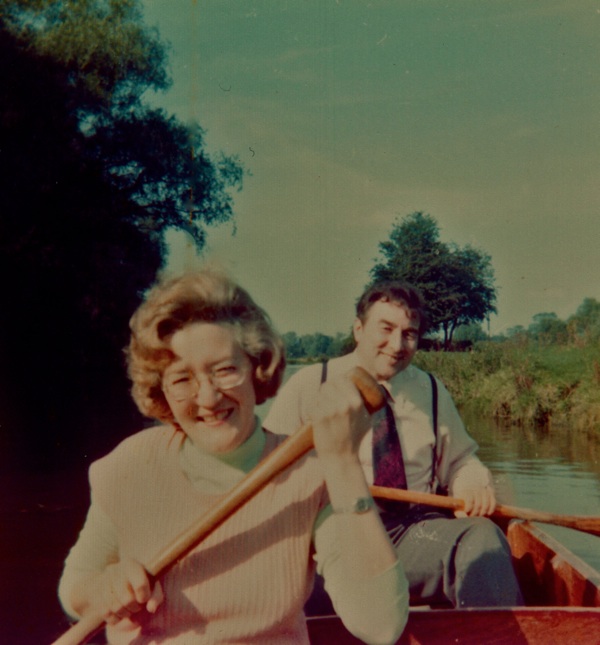
Marie & Fred enjoy an adventure on the river.

The three evacuees grown-up – Johnny, Marie and Kitty.
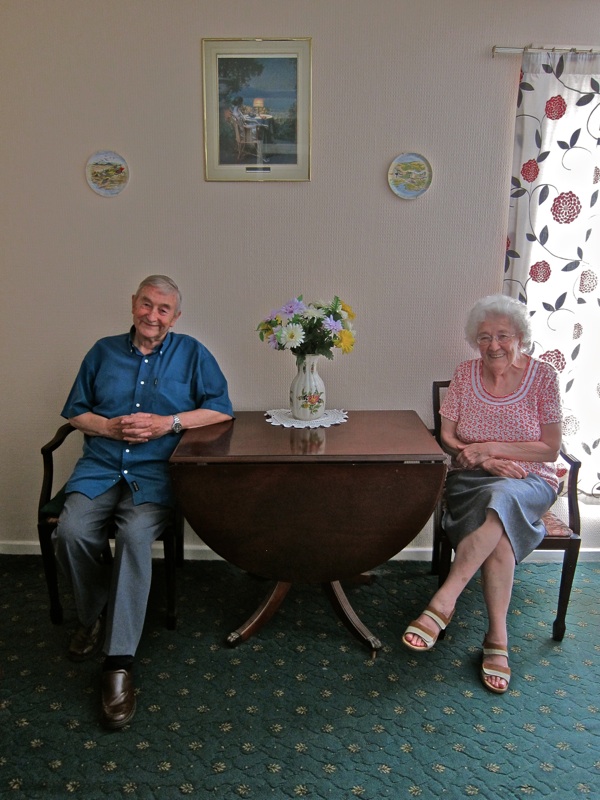
Fred & Marie celebrated their sixtieth wedding anniversary on 1st August 2013
You may also like the read about
Fiona Skrine Remembers The Sit-In At Spital Sq
Tickets are available for my walking tour tomorrow Sunday 21st August
Click here to book for THE GENTLE AUTHOR’S TOUR OF SPITALFIELDS
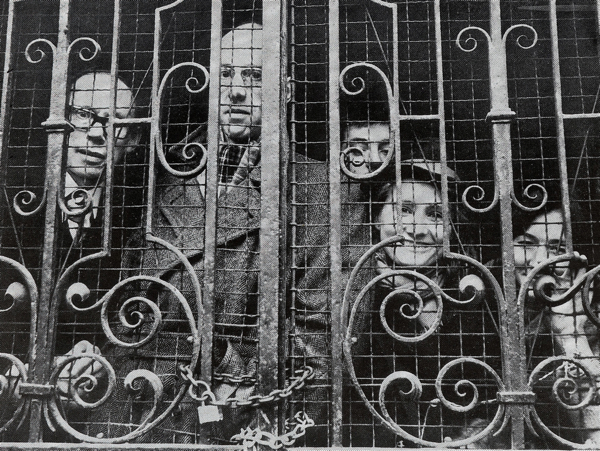
Architectural historians, Mark Girouard and Colin Amery, with Fiona Skrine and Joanna Price during their sit-in, December 1981
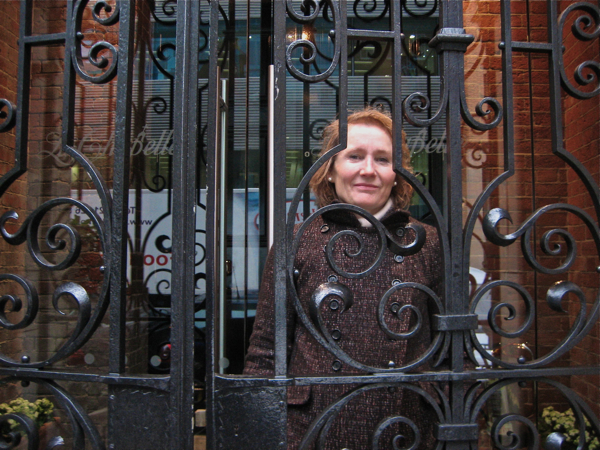
Fiona Skrine came to Spitalfields as a student and left as a married woman with three children, and in the midst of this sojourn she found herself photographed for a national newspaper as part of a sit-in organised by the Spitalfields Historic Buildings Trust to save St Botolph’s Hall in Spital Square from the bulldozers in December 1981.
During the post-war boom in fresh fruit & vegetables in the nineteen fifties, the expansion of the market had destroyed some of London’s finest Georgian houses in Spital Square, which had otherwise survived almost unchanged since Dickens visited a silk warehouse there a century earlier. But now, emboldened by a saving a couple of eighteenth century weaver’s houses in Elder St by occupying them, the Trust decided to challenge the trustees of the Central Foundation Girl’s School who wanted to demolish their school hall without entertaining the possibility that it might have a future.
It is a measure of the success of this protest, in which Fiona is proud to have played a part, that last week she was able to return to Spital Square, almost thirty years later, to admire the handsome red brick edifice in the Flemish Renaissance style which is now home to the celebrated La Chapelle restaurant, and one of the few original buildings left to grant a significant gravitas in what might otherwise be a soulless corner. In retrospect, the occupation of St Botolph’s Hall marked a change in public opinion, as the moment when the unquestioning demolition of old buildings became unacceptable. And, today, the Spitalfields Trust, which stemmed the tide of destruction in Spitalfields that began in the nineteen sixties, is itself a venerable institution, even though when it was started by a group of architectural students who adopted the tactics of radical intervention – through squatting, occupations and sit-ins – they were, as the Director Douglas Blain admitted, “street fighters.”
“My sister Anna saw the bulldozers moving in, so she rang around to get enough people into the building and have it occupied so they couldn’t knock it down.” recalled Fiona, filling with enthusiasm to savour the memory, “I took a day off college, and my friend Joey (Joanna Price) also took the day off to support me. It was so dark and cold in December. The place had been stripped out, with no floorboards, and we wished we had brought warmer clothing and a thermos. We were there for one night, and then others took over and I’d done my bit. Although next day I had to justify it because you had to sign in at college, but fortunately it was very much in the spirit of the place, (the City & Guilds Art School in Kennington where I studied decorative art techniques) and when my teacher said, ‘Where were you yesterday?’ I said, ‘I was saving a building!'”
I could not tell whether spending a freezing night in St Botolph’s Hall in December with the threat of bulldozers outside, while locked in by the police for her own safety, was a rite of passage for Fiona. Yet in spite of living in a rat-infested house at first, she developed a great affection for Spitalfields – becoming drawn into the close knit society of young people of limited means and great imaginative enterprise who set about restoring the dilapidated eighteenth century houses with their own hands. Fiona’s sister Anna Skrine and Fiona’s husband photographer Simon de Courcy Wheeler were portrayed by ceramicist Simon Pettet in the famous fireplace of delft tiles that he made for Dennis Severs’ House illustrating Spitalfields personalities of the day. So it was highly appropriate that Simon made a delft fireplace as a wedding present for Fiona and her husband, when they took on the renovation of a house in Wilkes St as their family home.
“We bought an eighteenth century house with no floors or walls, and we threw a party with candles and that was how it began.” said Fiona, proud to recount the exuberant folly of her youth, “Wilkes St was pretty grotty in those days, the smell of the hops from the brewery at the end of the street was overpowering and these huge lorries of produce for the market thundered past. The house was in bad repair, it needed to be gutted, re-roofed and the panelling put back, although there were enough original fireplaces and surviving panelling to work out how to restore it. The house cost £40,000 and my father put aside another £40,000 for the building work. I was still at art school then, but I scraped and filled and painted every inch of that house myself, I did all the manual work once the builders had left.
We bought most of our furniture on Brick Lane, it was a tremendous adventure, getting up early and carting old chairs and chests of drawers back. The early eighties were a great time to be in Spitalfields with the excitement of everyone doing up their houses. We did it ourselves because we didn’t have much money, and there was always plenty of gossip and shenanigans going on. We were endlessly in and out of each others houses in those days and the Market Cafe in Fournier St was were we all met up. I had a lovely time because, in between having three children, restoring the house in Wilkes Street was the springboard for my career as a decorative artist and my first couple of commissions were auspicious.
English Heritage asked me to reproduce the colour ways of twenty Pugin wallpapers for the Palace of Westminster that was being renovating at the time. So I spent a few months at the V&A, reproducing the colours as accurately as I could with my gouaches, and then I was commissioned to paint replicas of old wall hangings for the Tower of London. I enjoyed these historic commissions, although later my work involved me in creating new decorative schemes around London and in Europe too.
Each summer, I’d take the children to Ireland and it would be a shock to return to this soulful little house in this dark street, where you hardly saw the light and there were no trees – really quite grim, yet with lots of life too. All my children were born in the house, three home births. The midwife came on a motor bike when I had my first child, and it was 1987, the night of the hurricane, she was dodging falling chimney pots and trees.”
“I couldn’t go back to the house after we sold it, because I put too much of myself into it.” she confided in conclusion, as the emotion of the story dawned upon her.
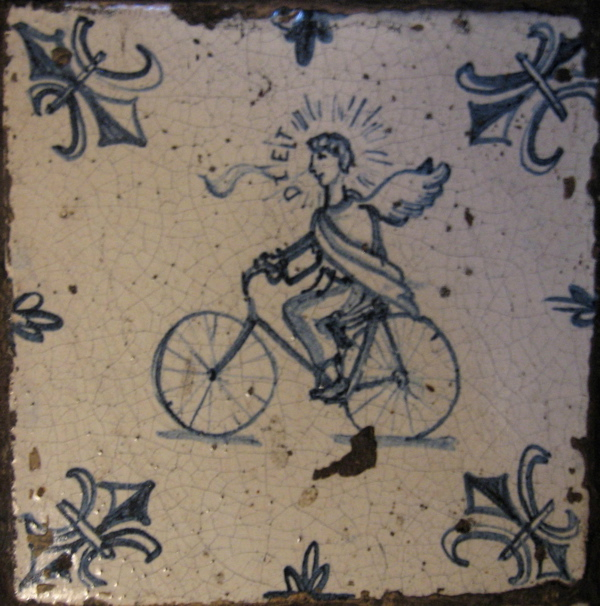
Ann Skrine, as portrayed in Simon Pettet’s tiles at Dennis Severs House
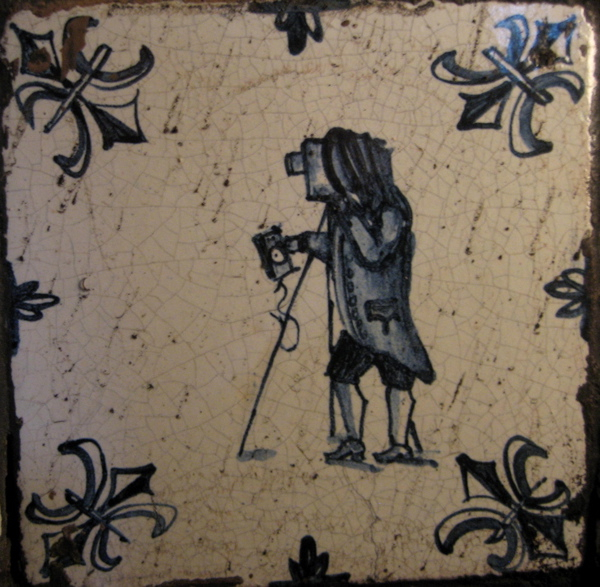
Simon de Courcy Wheeler, Fiona’s husband.
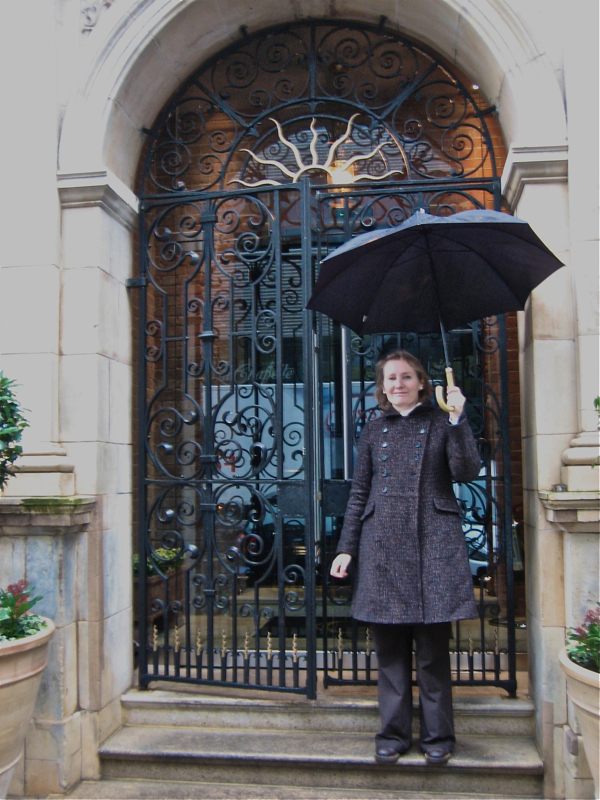
Fiona at St Botolph’s Hall












