
Libby Hall’s London Dogs
Tickets are available for my tours throughout July, August & September
Commemorating Libby Hall (1941-2023), Photographer & Collector of Dog Photography
Click to enlarge
Sometimes in London, I think I hear a lone dog barking in the distance and I wonder if it is an echo from another street or a yard. Sometimes in London, I wake late in the night and hear a dog calling out to me on the wind, in the dark silent city of my dreaming. What is this yelp I believe I hear in London, dis-embodied and far away? Is it the sound of the dogs of old London – the guard dogs, the lap dogs, the stray dogs, the police dogs, the performing dogs, the dogs of the blind, the dogs of the ratcatchers, the dogs of the watermen, the cadaver dogs, the mutts, the mongrels, the curs, the hounds and the puppies?
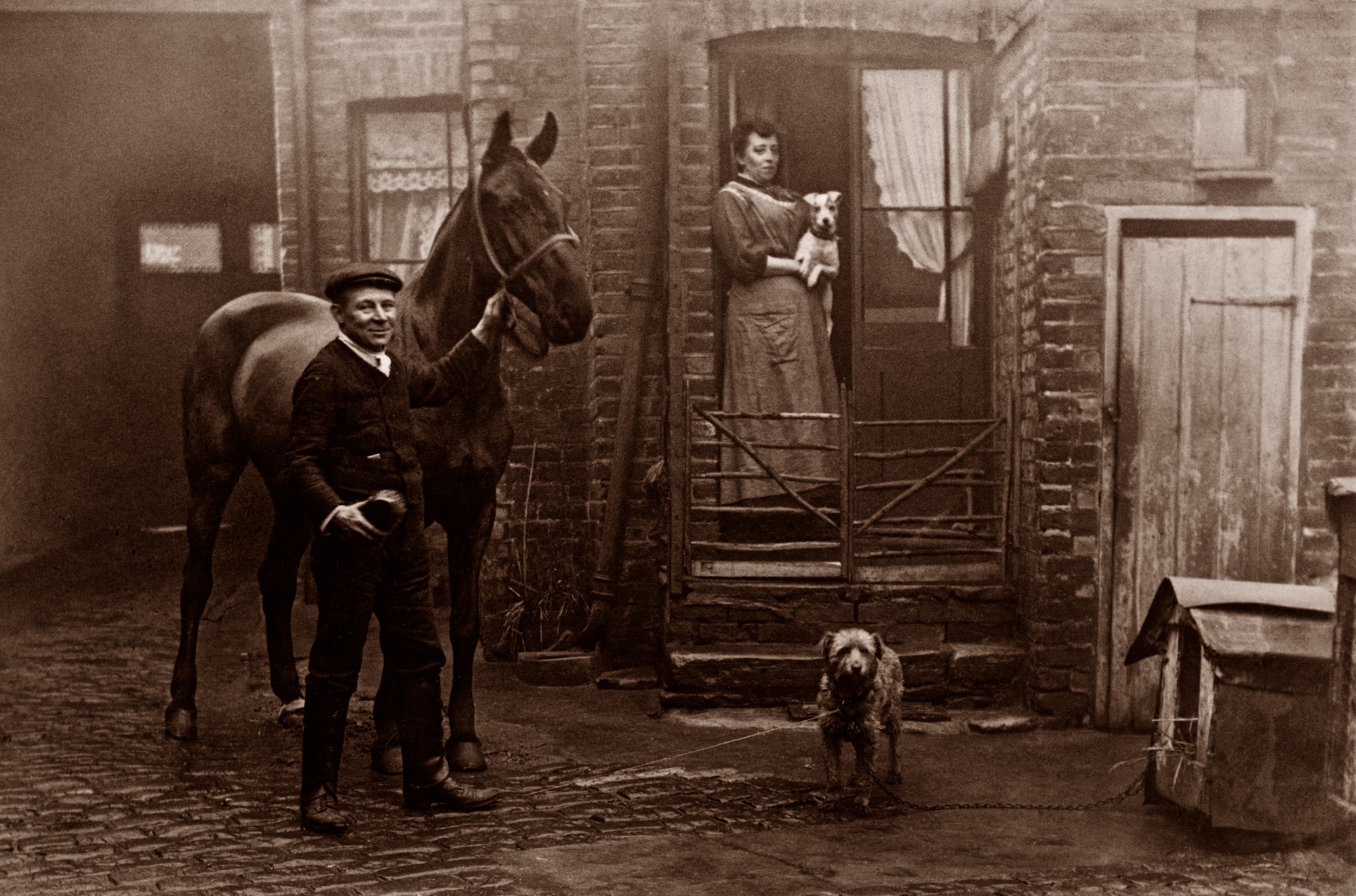
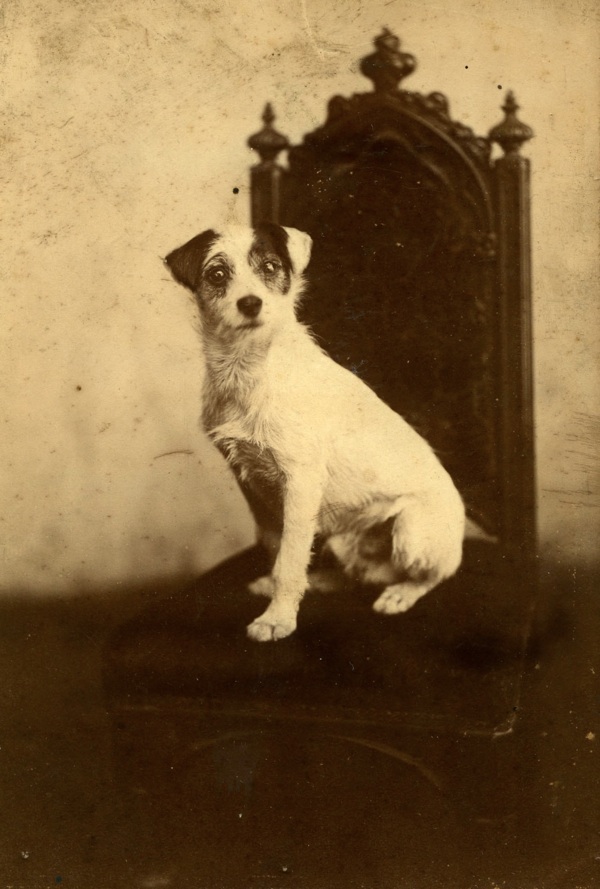
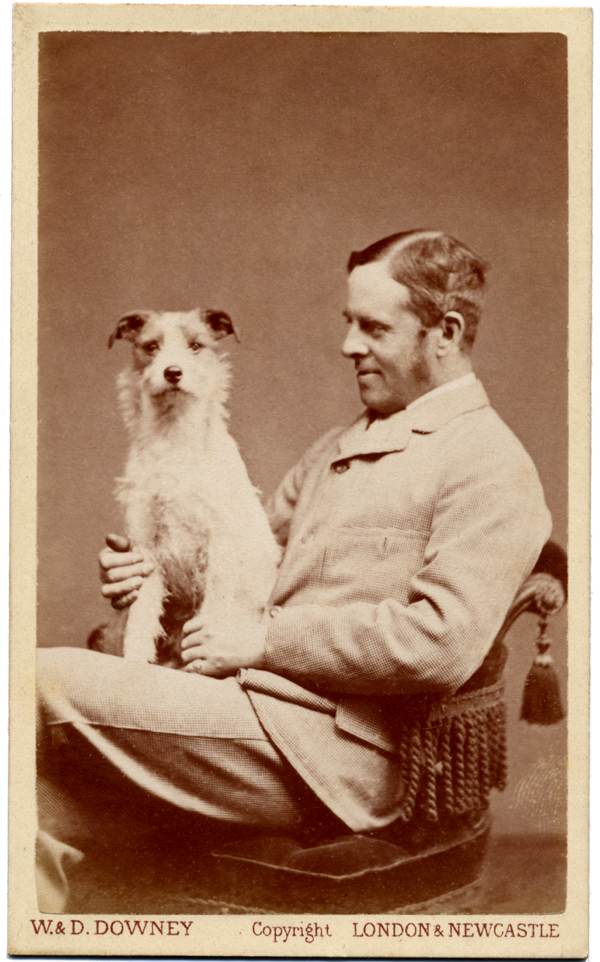
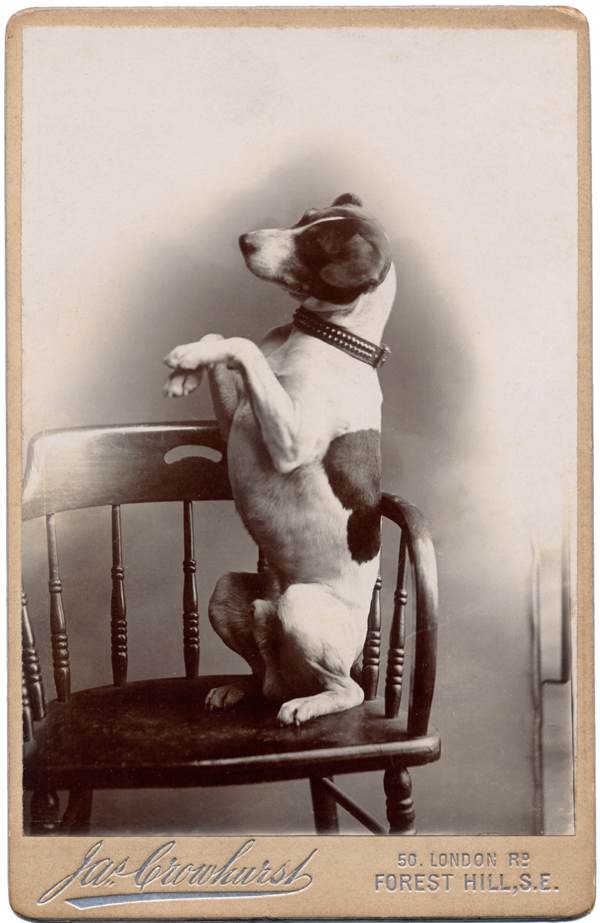
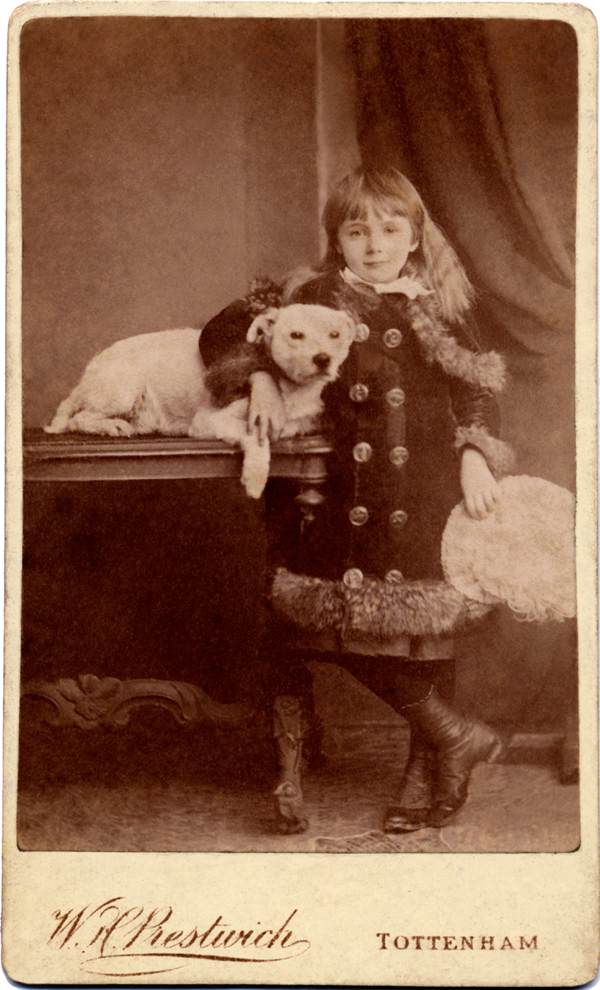
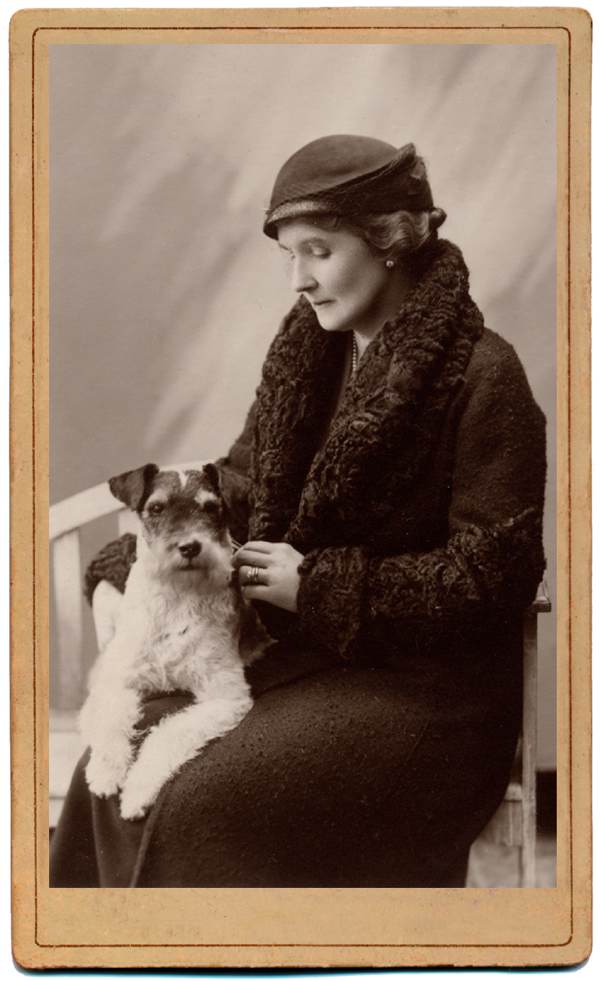
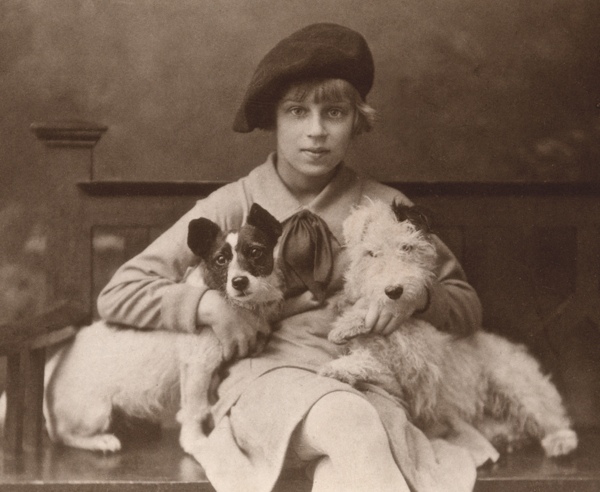
Libby Hall, who gathered possibly the largest collection of dog photography ever made by any single individual, helped me select the dogs of old London from her personal archive. We pulled out those from London photographic studios and those labelled as London. Then, Libby also picked out those that she believed are London. And here you see the photographs we chose. How eager and yet how soulful are these metropolitan dogs of yesteryear. They were not camera shy.
The complete social range is present in this selection, from the dogs of the workplace to the dogs of the boudoir, although inevitably the majority are those whose owners had the disposable income for studio portraits. These pictures reveal that while human fashions change according to the era and the class, dogs exist in an eternal present tense. Even if they are the dogs of old London and even if in our own age we pay more attention to breeds, any of these dogs could have been photographed yesterday. And the quality of emotion these creatures drew from their owners is such that the people in the pictures are brought closer to us. They might otherwise withhold their feelings or retreat behind studio poses but, because of their relationships with their dogs, we can can recognise our common humanity more readily.
These pictures were once cherished by the owners after their dogs had died but now all the owners have died too, long ago. For the most part, we do not know the names of the subjects, either canine or human. All we are left with are these poignant records of tender emotion, intimate lost moments in the history of our city.
The dogs of old London no longer cock their legs at the trees, lamps and street corners of our ancient capital, no longer pull their owners along the pavement, no longer stretch out in front of the fire, no longer keep the neighbours awake barking all night, no longer doze in the sun, no longer sit up and beg, no longer bury bones, no longer fetch sticks, no longer gobble their dinners, no longer piss in the clean laundry, no longer play dead or jump for a treats. The dogs of old London are silent now.
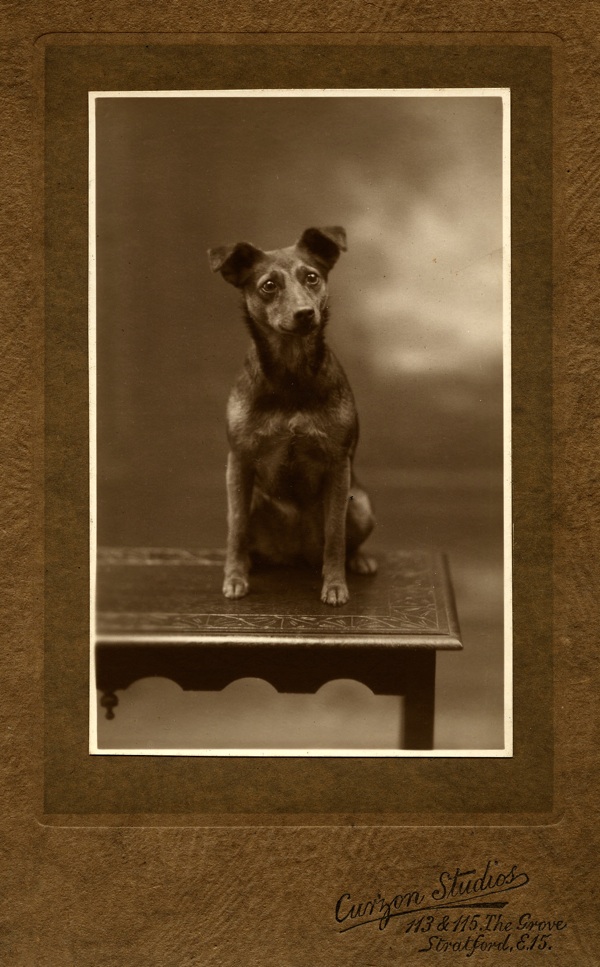


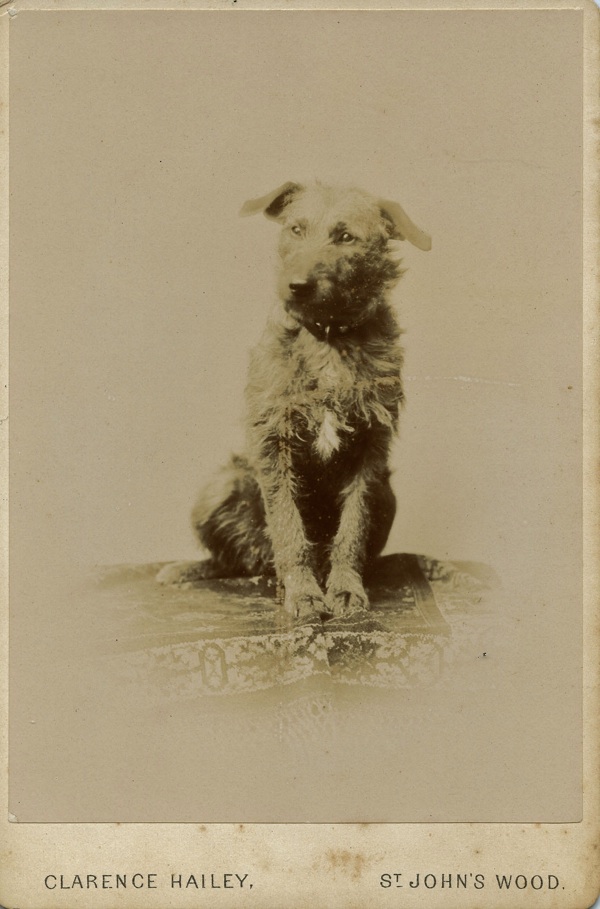
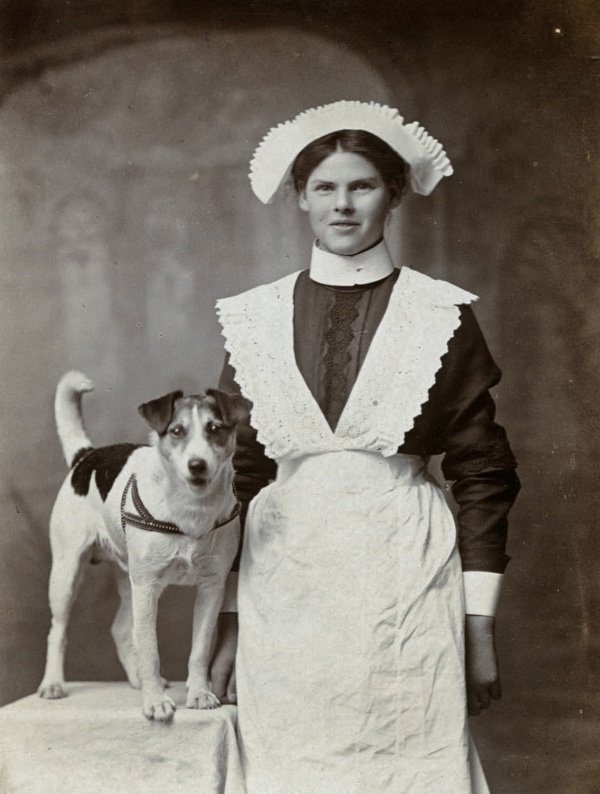
Arthur Lee, Muswell Hill, inscribed “To Ruby with love from Crystal.”

Ellen Terry was renowned for her love of dogs as much as for her acting.




W.Pearce, 422 Lewisham High St.
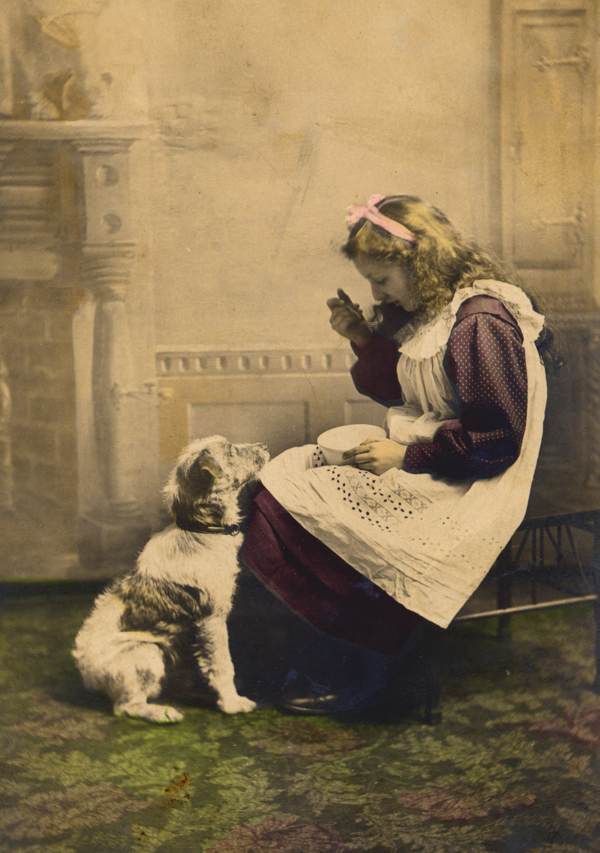
This girl and her dog were photographed many times for cards and are believed to be the photographer’s daughter and her pet.
Emberson – Wimbledon, Surbiton & Tooting.


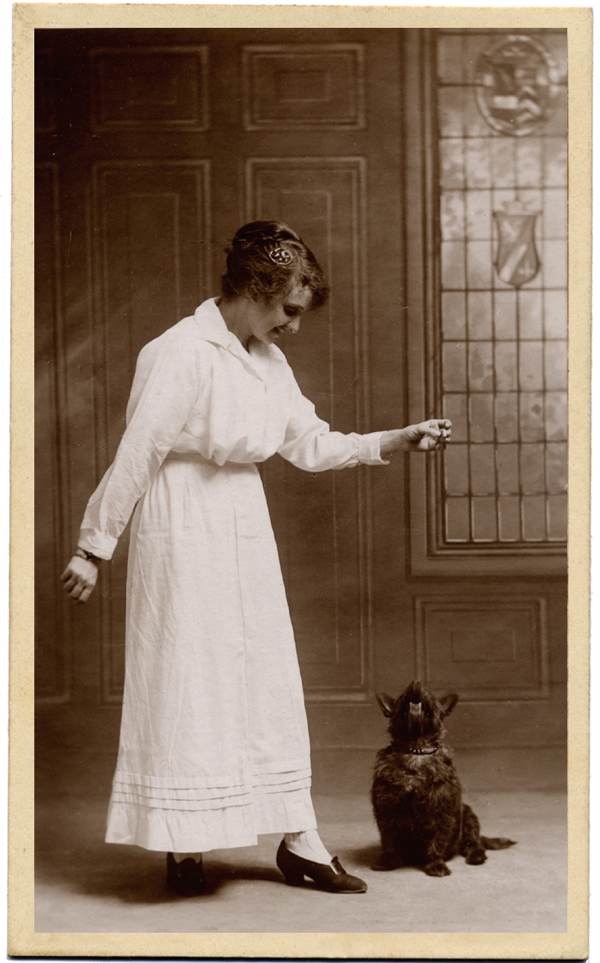
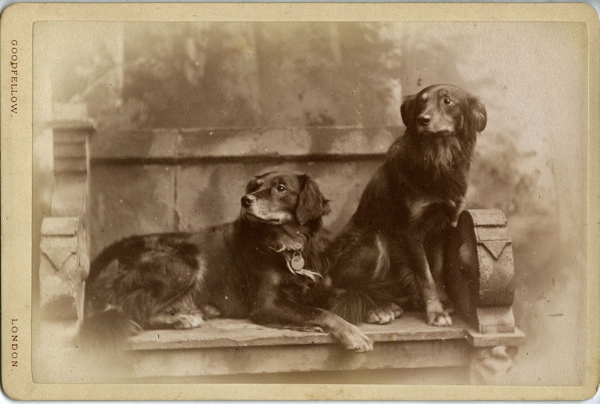

Edward VII’s dog Caesar that followed the funeral procession and became a national hero.
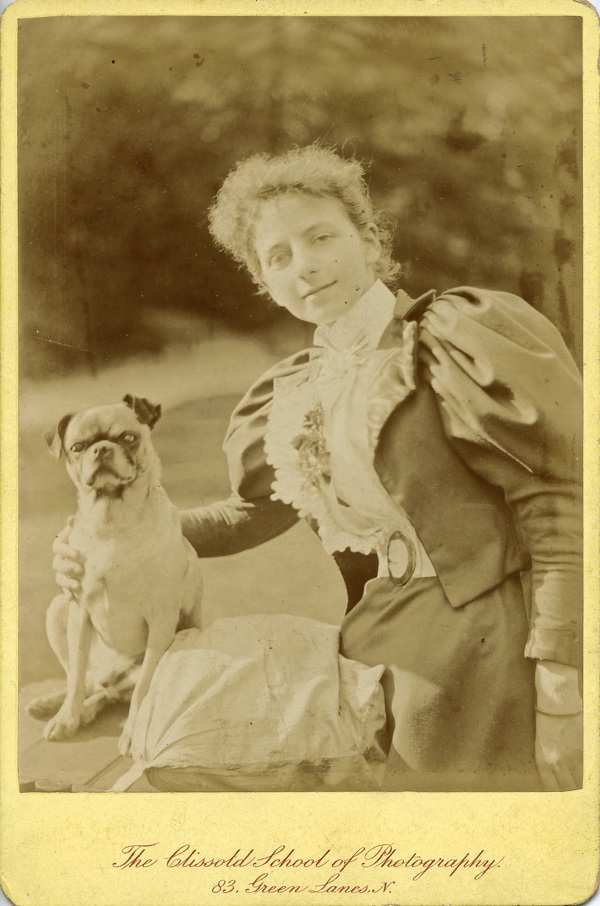

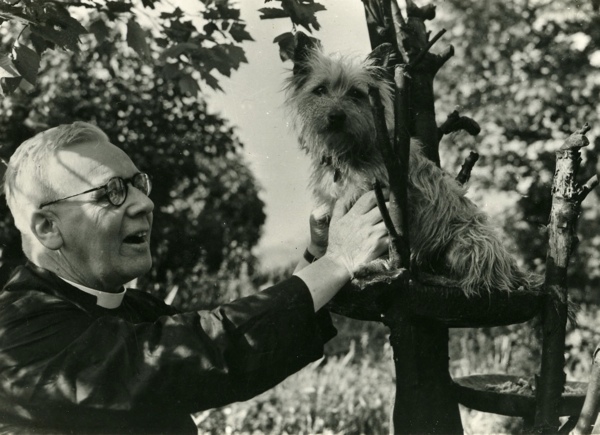


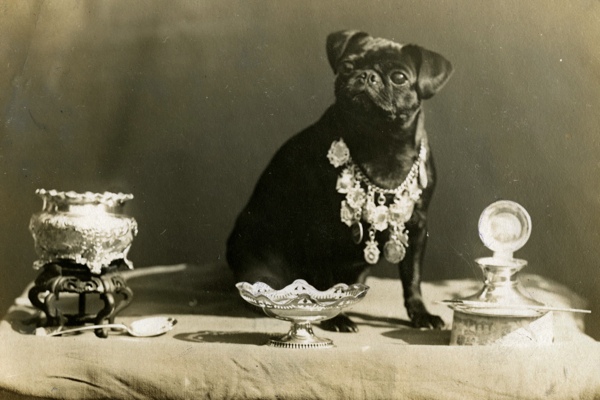
A prizewinner, surrounded by trophies and dripping with awards.

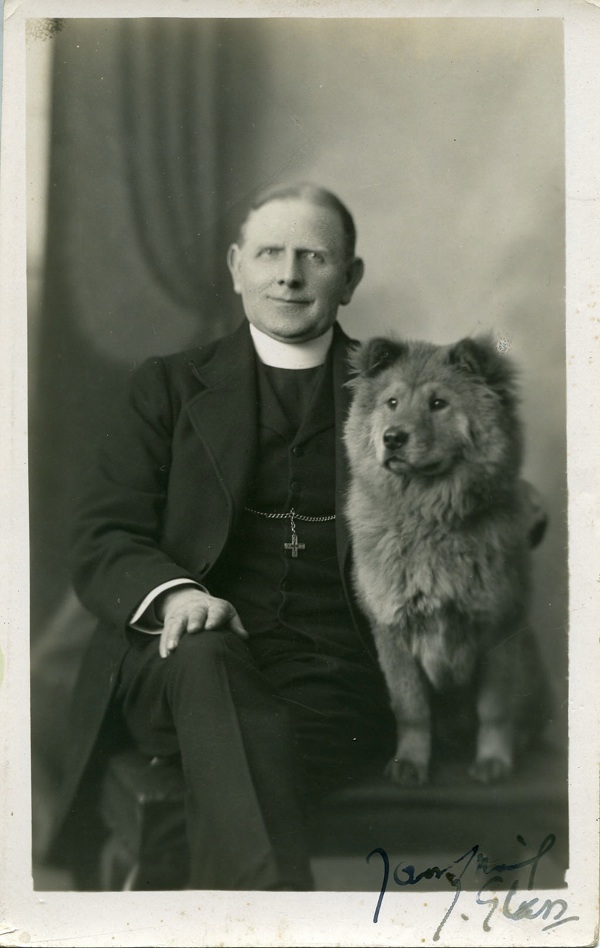
The Vicar of Leyton and his dog.


The first dog to be buried here was run over outside the gatekeeper’s lodge, setting a fashionable precedent, and within twenty-five years the gatekeeper’s garden was filled with over three hundred upper class pets.

Libby Hall, collector of dog photographs.
Photographs copyright © The Libby Hall Collection at the Bishopsgate Institute
You may like to read my profile
So Long, Libby Hall
Libby Hall (1941-2023), Photographer & Collector of Dog Photography, died last Thursday
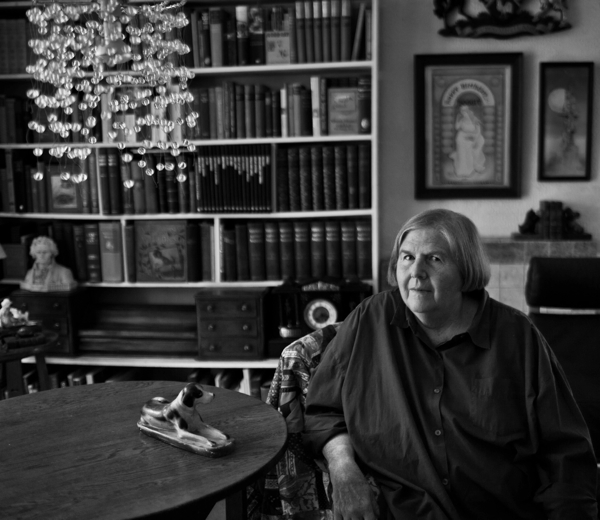
Libby Hall
Between 1966 and 2006, Libby Hall collected old photographs of dogs, amassing many thousands to assemble what is possibly the largest number of canine pictures ever gathered by any single person. Libby began collecting casually when the photographs were of negligible value, but by the end she had published four books and been priced out of the market. Yet through her actions Libby rescued an entire canon of photography from the scrap heap, seeing the poetry and sophistication in images that were previously dismissed as merely sentimental. And today, we are the beneficiaries of her visionary endeavour.
A joyful iconoclast by nature who had, “Stop! Do not resuscitate, living will extant,” tattooed on her chest – Libby Hall was a born and bred New Yorker originating from the Upper East Side of Manhattan, who moved into her house in Clapton in 1967 with her husband the newspaper cartoonist, Tony Hall, and stayed for the rest of her life.
“My husband Tony and I used to go to Kingsland Waste, where we had a friend who did house clearances, and in those days they sold old photo albums and threw away the pictures. So I used to rescue them and I began sorting out the dogs – because I always liked dogs – and it became a collection. Then I started collecting properly, looking for them at car boot sales and auctions. And eventually a publisher offered me an advance of two thousand pounds for a book of them, which was fantastic, and when each of my books was published I just used the royalties to buy more and more photographs. I had a network of dealers looking out for things for me and they would send me pictures on approval. They were nineteenth century mostly and I only collected up until 1940, because I didn’t want to invade anyone’s privacy. Noboby was interested until my first book was published in 2000, and afterwards people said I had shot myself in the foot because everybody started collecting them and they became very expensive, but by then I had between five and six thousand photographs of dogs.
Dogs have always been powerfully important to me, I’ve lived with dogs since the beginning of my days. There’s a photo of my father holding me as baby in one arm and a dog in the other – dog’s faces were imprinted upon my consciousness as early as humans, and I’ve always lived with dogs until six weeks ago when my dog Pembury died. For the last month, friends have been ringing my bell and there’s only silence because he doesn’t come and I open the door to find them in tears. It was an intense relationship because it was just the two of us, Pembury and me, and as he got older he depended on me greatly. So it is good to have my freedom now but only for a little while. At one point, we had three dogs and four cats in this house. We even had a dog and a cat that used to sleep together, during the day they’d do all the usual challenging and chasing but at night they’d curl up in a basket.
When I was eleven, I wanted a dog of my own desperately, I’d been campaigning for five years and I wanted a cocker spaniel. My father contacted a dog rescue shelter in Chester, Connecticut, and they said they had one. But as we walked past the chain link fence, there was a dog barking and we were told that it was going to be put down the next morning. Of course, we took that dog, even though he wasn’t a cocker spaniel. We wondered if they always told people this, but Chester and I were inseparable ever after.”
With touching generosity of spirit, Libby confided to me that her greatest delight is to share her collection of pictures. “What matters to me is others seeing them, I never made any money from my books because I spent it all on buying more photographs.” she said.
These photographs grow ever more compelling upon contemplation because there is always a tension between the dog and the human in each picture. The presence of the animal can unlock the emotional quality of people who might otherwise appear withheld, and the evocation of such intimacy in pictures of the long dead, who are mostly un-named, carries a soulful poetry that is all its own. Bridging the gap of time in a way that photographs solely of humans do not, Libby’s extraordinary collection constitutes an extended mediation upon mortality and the fragility of tender emotions.
“I put my heart and soul into it, and it was very hard giving up collecting, but my fourth book was the ultimate book, and it coincided with the realisation that my husband Tony was dying, so I realised that it was the end of a period of my life.” Libby concluded with a melancholy smile, sitting upon the couch where her dog Pembury had recently expired and casting her eyes thoughtfully around the pictures of dogs lining the walls. I asked Libby how she felt after she donated her collection to the Bishopsgate Institute. “I’ve got the books,” she reminded me, placing her hand upon them protectively, “I have no visual memory at all, so I keep going back to look at them.”


The two stripes on this soldier’s sleeve meant he had been wounded twice and was probably on leave recovering from the second wound when this photograph was taken.


HRH the Princess of Wales with her favourite dogs on board the royal yacht Osborne.

John Brown 1871. The dogs are Corran, Dacho, Rochie and Sharp, who was Queen Victoria’s favourite.


George Alexander, Actor/Manager, with his wife Florence.

This photograph of Mick came with the collar he is wearing.

Queen Victoria and Sharp (pictured above with John Brown) at Balmoral in 1867.


Ellen Terry.



Charles Dickens with his devoted dog Turk.


Libby’s recently deceased dog Pembury wearing the vest that was essential in his last days.

Libby on the couch where Pembury died six weeks earlier.

One of Libby’s six dog dolls’ houses. – “I think dolls’ houses with dolls are rather scary but dolls’ houses with dogs are ok.”

Libby Hall – “I put my heart and soul into it.”
Portraits of Libby Hall copyright © Martin Usborne
Dog photographs copyright © The Libby Hall Collection at the Bishopsgate Institute
Charles Jones, Photographer
Tickets are available for my tour throughout July, August & September

Garden scene with photographer’s cloth backdrop c.1900
These beautiful photographs are all that exist to speak of the life of Charles Jones. Very little is known of the events and tenor of his existence, and even the survival of these pictures was left to chance, but now they ensure him posthumous status as one of the great plant photographers. When he died in Lincolnshire in 1959, aged 92, without claiming his pension for many years and in a house without running water or electricity, almost no-one was aware that he was a photographer. And he would be completely forgotten now, if not for the fortuitous discovery made twenty-two years later at Bermondsey Market, of a box of hundreds of his golden-toned gelatin silver prints made from glass plate negatives.
Born in 1866 in Wolverhampton, Jones was an exceptionally gifted professional gardener who worked upon several private estates, most notably Ote Hall near Burgess Hill in Sussex, where his talent received the attention of The Gardener’s Chronicle of 20th September 1905.
“The present gardener, Charles Jones, has had a large share in the modelling of the gardens as they now appear, for on all sides can be seen evidence of his work in the making of flowerbeds and borders and in the planting of fruit trees. Mr Jones is quite an enthusiastic fruit grower and his delight in his well-trained trees was readily apparent…. The lack of extensive glasshouses is no deterrent to Mr Jones in producing supplies of choice fruit and flowers… By the help of wind screens, he has converted warm nooks into suitable places for the growing of tender subjects and with the aid of a few unheated frames produces a goodly supply. Thus is the resourcefulness of the ingenious gardener who has not an unlimited supply of the best appurtenances seen.”
The mystery is how Jones produced such a huge body of photography and developed his distinctive aesthetic in complete isolation. The quality of the prints and notation suggests that he regarded himself as a serious photographer although there is no evidence that he ever published or exhibited his work. A sole advert in Popular Gardening exists offering to photograph people’s gardens for half a crown, suggesting wider ambitions, yet whether anyone took him up on the offer we do not know. Jones’ grandchildren recall that, in old age, he used his own glass plates as cloches to protect his seedlings against frost – which may explain why no negatives have survived.
There is a spare quality and an uncluttered aesthetic in Jones’ images that permits them to appear contemporary a hundred years after they were taken, while the intense focus upon the minutiae of these specimens reveals both Jones’ close knowledge of his own produce and his pride as a gardener in recording his creations. Charles Jones’ sensibility, delighting in the bounty of nature and the beauty of plant forms, and fascinated with variance in growth, is one that any gardener or cook will appreciate.

Swede Green Top

Bean Runner

Stokesia Cyanea

Turnip Green Globe

Bean Longpod

Potato Midlothian Early

Pea Rival

Onion Brown Globe

Cucumber Ridge

Mangold Yellow Globe

Bean (Dwarf) Ne Plus Ultra

Mangold Red Tankard

Seedpods on the head of a Standard Rose

Ornamental Gourd

Bean Runner

Apple Gateshead Codlin

Captain Hayward

Larry’s Perfection

Pear Beurré Diel

Melon Sutton’s Superlative

Mangold Green Top

Charles Harry Jones (1866-1959) c. 1904
The Plant Kingdoms of Charles Jones by Sean Sexton & Robert Flynn Johnson is published by Thames & Hudson
You might also like to read about
The Secret Gardens of Spitalfields
Thomas Fairchild, Gardener of Hoxton
Buying Vegetables for Leila’s Shop
Stephen Gill’s Trolley Women
Tickets are available for my tour throughout July, August & September
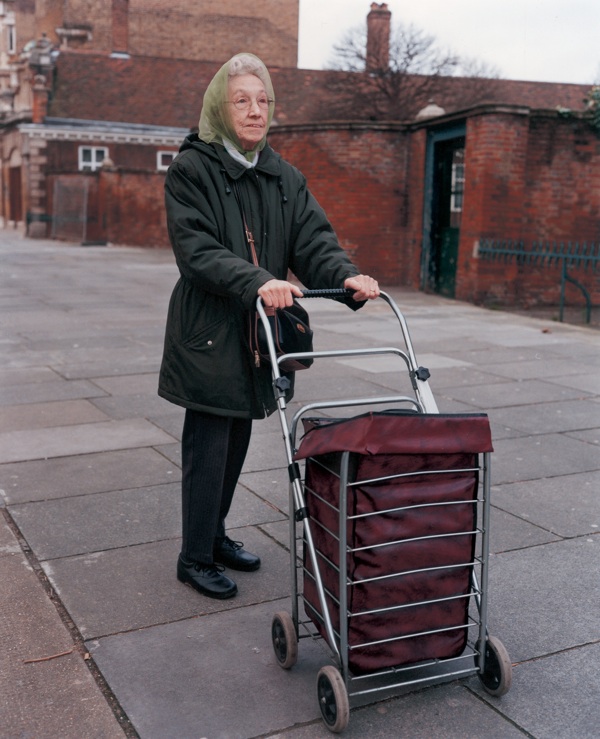
When photographer Stephen Gill slipped a disc carrying heavy photographic equipment a few years ago, he had no idea what the outcome would be. The physiotherapist advised him to buy a trolley for all his kit, and the world became different for Stephen – not only was his injured back able to recover but he found himself part of a select group of society, those who wheel trolleys around. And for someone with a creative imagination, like Stephen, this shift in perspective became the inspiration for a whole new vein of work, manifest in the fine East End Trolley Portraits you see here today.
Included now within the camaraderie of those who wheel trolleys – mostly women – Stephen learnt the significance of these humble devices as instruments of mobility, offering dominion of the pavement to their owners and permitting an independence which might otherwise be denied. More than this, Stephen found that the trolley as we know it was invented here in the East End, at Sholley Trolleys – a family business which started in the Roman Rd and is now based outside Clacton, they have been manufacturing trolleys for over thirty years.
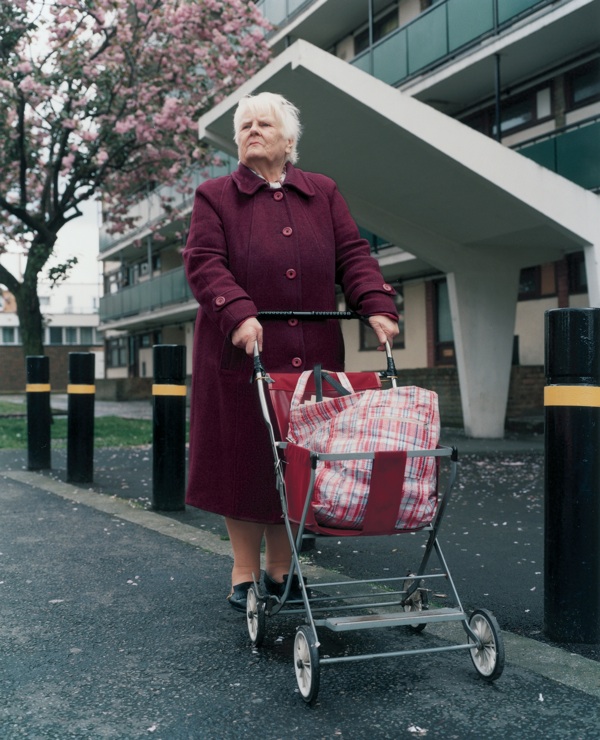
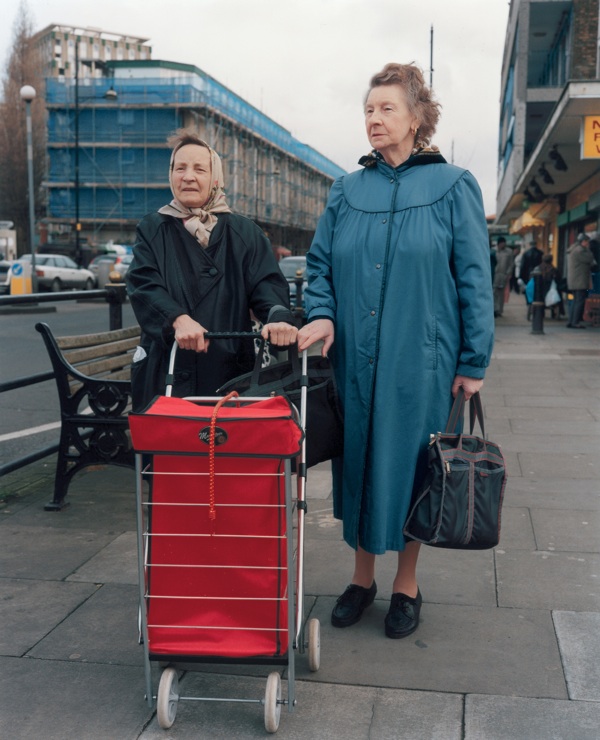
In particular, the rich palette of Stephen Gill’s dignified portraits appeals to me, veritable symphonies of deep red and blue. Commonly, people choose their preferred colour of trolley and then co-ordinate or contrast their outfits to striking effect. All these individuals seem especially at home in their environment and, in many cases – such as the trolley lady outside Trinity Green in Whitechapel, pictured above – the colours of their clothing and their trolleys harmonise so beautifully with their surroundings, it is as if they are themselves extensions of the urban landscape.
Observe the hauteur of these noble women, how they grasp the handles of their trolleys with such a firm grip, indicating the strength of their connection to the world. Like eighteenth century aristocrats painted by Gainsborough, these women claim their right to existence and take possession of the place they inhabit with unquestionable authority. Monumental in stature, sentinels wheeling their trolleys through our streets, they are the spiritual guardians of the territory.


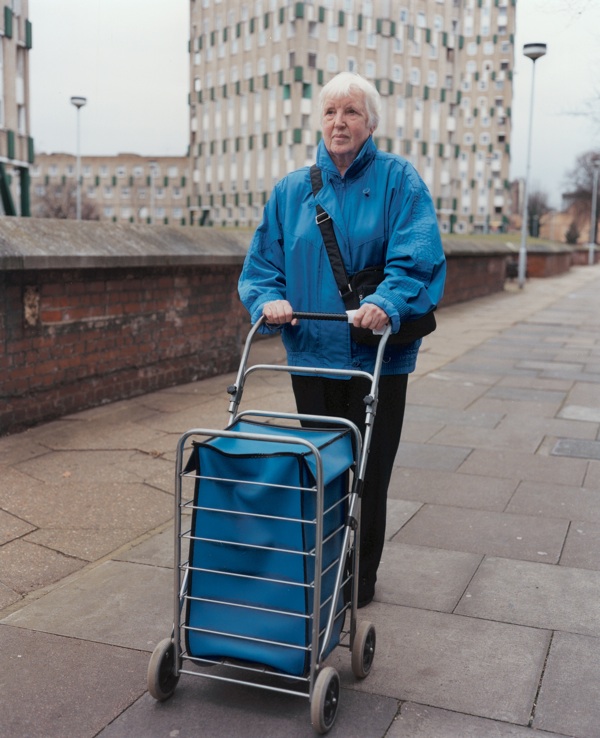


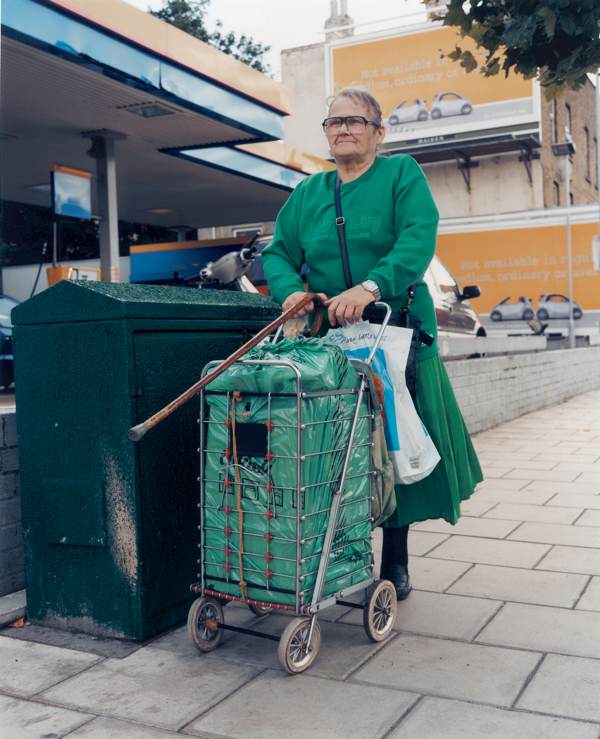
Photographs copyright © Stephen Gill
East End Beano Season
Tickets are available for my tour throughout July, August & September

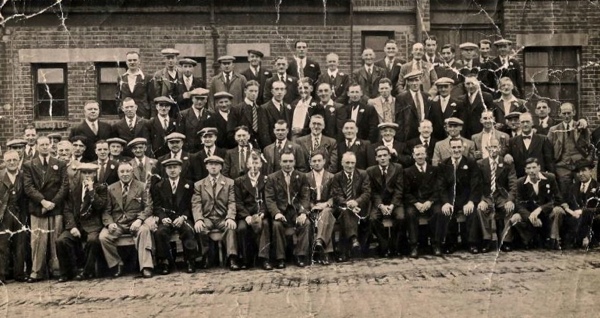
A beano from Stepney in the twenties (courtesy Irene Sheath)
We have reached that time of year again when a certain clamminess prevails in the city and East Enders turn restless, yearning for a trip to the sea or at the very least an excursion to glimpse some green fields. In the last century, pubs, workplaces and clubs organised annual summer beanos, which gave everyone the opportunity to pile into a coach and enjoy a day out, usually with liberal opportunity for refreshment and sing-songs on the way home.

Ladies’ beano from The Globe in Hartley St, Bethnal Green, in the fifties. Chris Dixon, who submitted the picture, recognises his grandmother, Flo Beazley, furthest left in the front row beside her next door neighbour Flo Wheeler, who had a fruit and vegetable stall on Green St. (courtesy Chris Dixon)
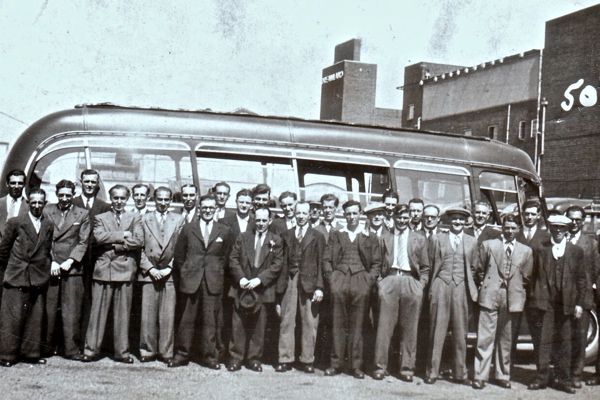
Another beano from the fifties – eighth from the left is Jim Tyrrell (1908-1991) who worked at Stepney Power Station in Limehouse and drank at the Rainbow on the Highway in Ratcliff.
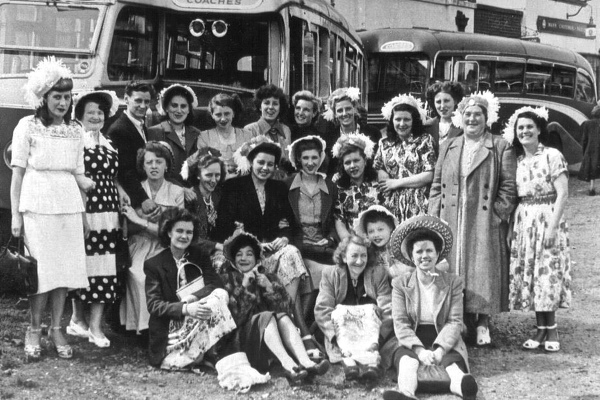
Mid-twentieth century beano from the archive of Britton’s Coaches in Cable St. (courtesy Martin Harris)
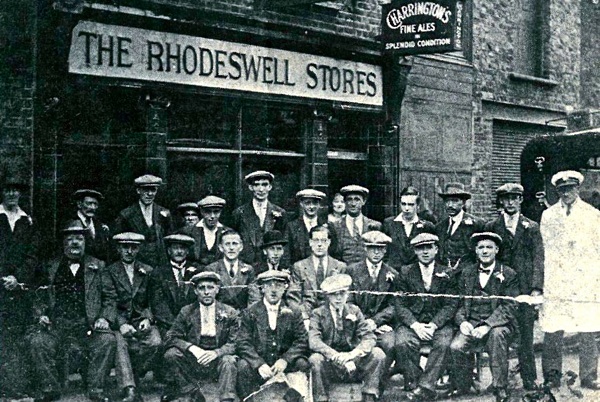
Beano from the Rhodeswell Stores, Rhodeswell Rd, Limehouse in the mid-twenties.
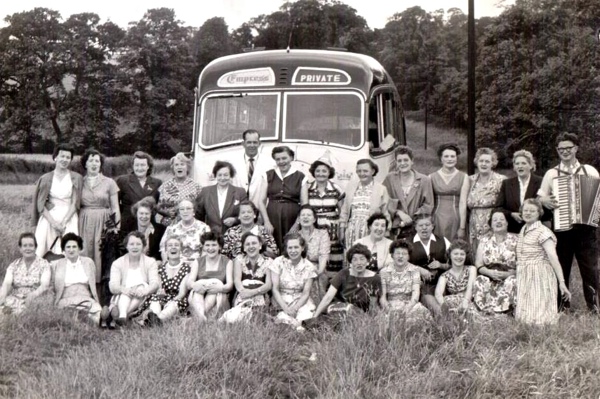
Taken on the way to Southend, this is a ladies’ beano from The Beehive in the Roman Rd during the fifties or sixties in a coach from Empress Coaches. The only men in the photo are the driver and the accordionist. Joan Lord (née Collins) who submitted the photo is the daughter of the publicans of The Beehive. (Courtesy Joan Lord)
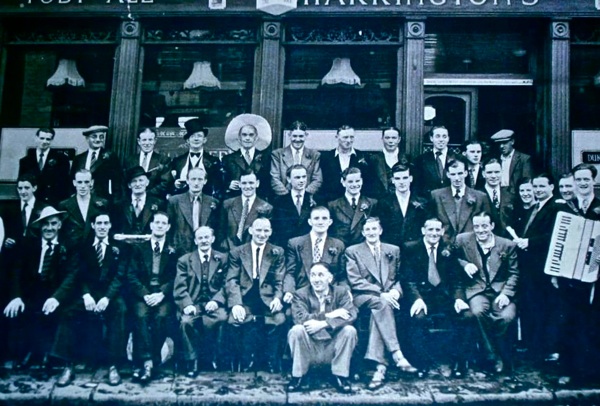
Terrie Conway Driver, who submitted this picture of a beano from The Duke of Gloucester, Seabright St, Bethnal Green, points out that her grandfather is seventh from the left in the back row. (Courtesy Terrie Conway Driver)
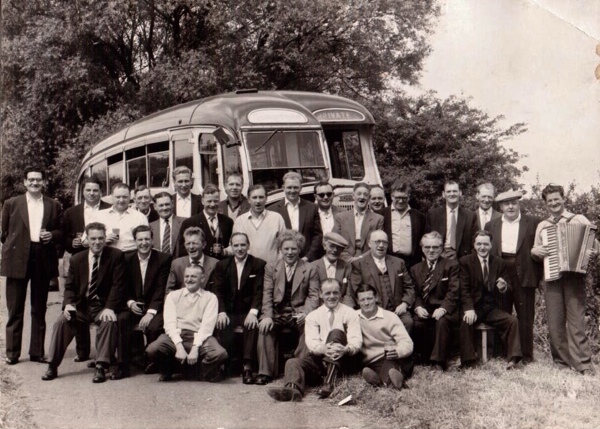
Taken on the way to Southend, this is a men’s beano from The Beehive in the Roman Rd in the fifties or sixties in a coach from Empress Coaches. (Courtesy Joan Lord)

Beano in the twenties from the Victory Public House in Ben Jonson Rd, on the corner with Carr St. Note the charabanc – the name derives from the French char à bancs (“carriage with wooden benches”) and they were originally horse-drawn.

A crowd gathers before a beano from The Queens’ Head in Chicksand St in the early fifties. John Charlton who submitted the photograph pointed out his grandfather George standing in the flat cap holding a bottle of beer on the right with John’s father Bill on the left of him, while John stands directly in front of the man in the straw hat. (Courtesy John Charlton)
Beano for Stepney Borough Council workers in the mid-twentieth century. (Courtesy Susan Armstrong)

Martin Harris, who submitted this picture, indicated that the driver, standing second from the left, is Teddy Britton, his second cousin. (Courtesy Martin Harris)
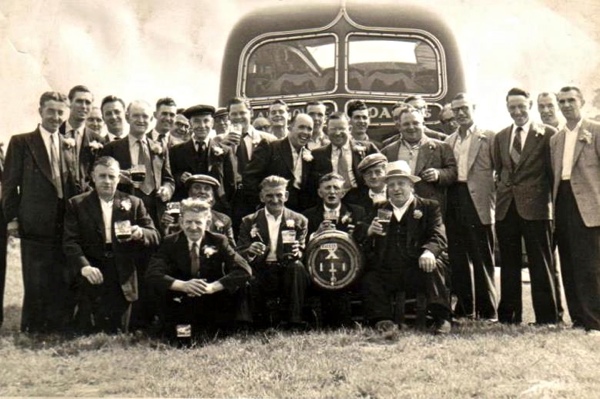
In the Panama hat is Ted Marks who owned the fish place at the side of the Martin Frobisher School, and is seen here taking his staff out on their annual beano.
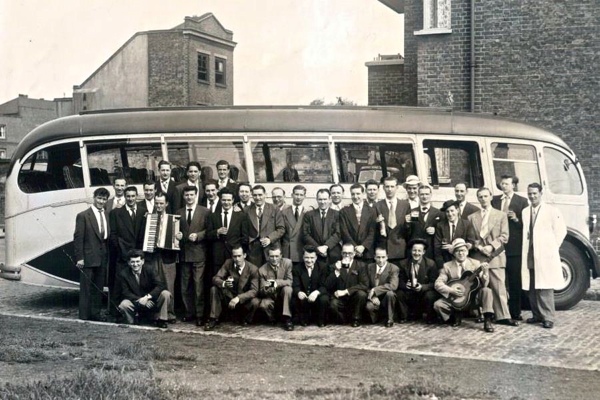
George, the father of Colin Watson who submitted this photo, is among those who went on this beano from the Taylor Walker brewery in Limehouse. (Courtesy Colin Watson)
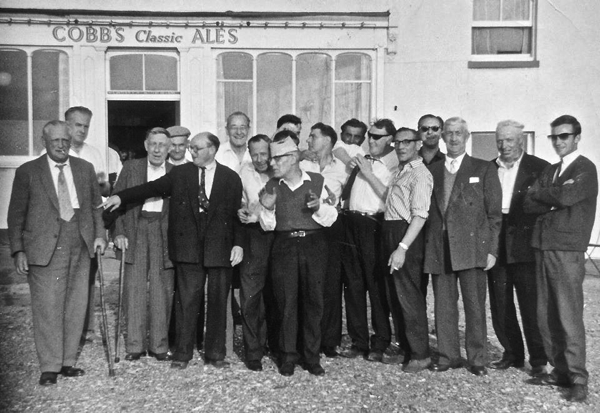
Pub beano setting out for Margate or Southend. (Courtesy John McCarthy)
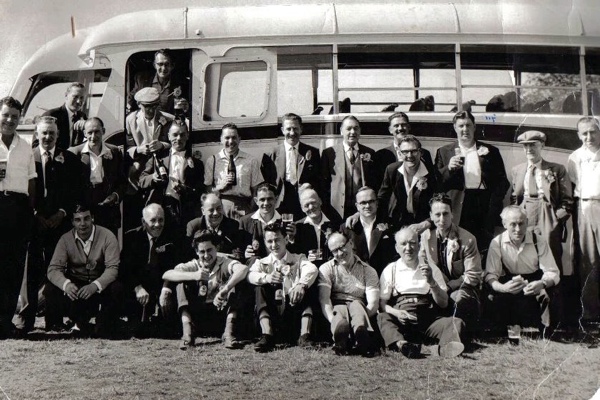
Men’s beano from c. 1960 (courtesy Cathy Cocline)
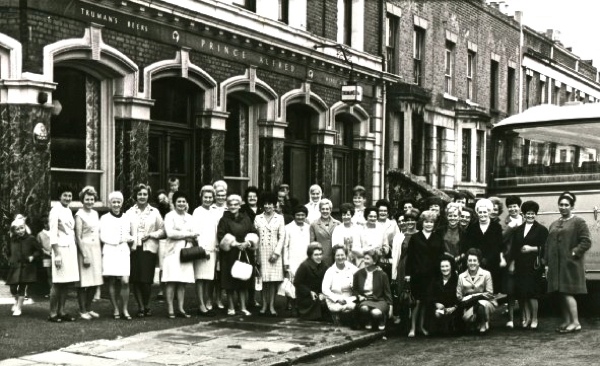
Late sixties or early seventies ladies’ beano organised by the Locksley Estate Tenants Association in Limehouse, leaving from outside The Prince Alfred in Locksley St.
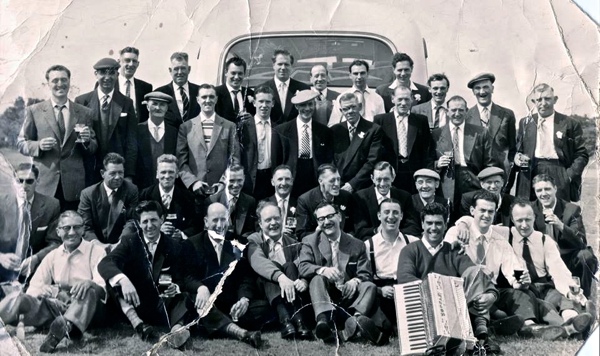
The father of John McCarthy, who submitted this photo, is on the far right squatting down with a beer in his hand, in this beano photo taken in the early sixties, which may be from his local, The Shakespeare in Bethnal Green Rd. Equally, it could be a works’ outing, as he was a dustman working for Bethnal Green Council. Typically, the men are wearing button holes and an accordionist accompanies them. Accordionists earned a fortune every summer weekend, playing at beanos. (courtesy John McCarthy)

John Sheehan, who submitted this picture, remembers it was taken on a beano to Clacton in the sixties. From left to right, you can seee John Driscoll who lived in Grosvenor Buildings, Dan Daley of Constant House, outsider Johnny Gamm from Hackney, alongside his cousin, John Sheehan from Constant House and Bill Britton from Holmsdale House. (Courtesy John Sheehan)
Images courtesy Tower Hamlets Community Homes
You may also like to read about
Bishopsgate Bicycles, 1896
Click here to book THE GENTLE AUTHOR’S TOURS for July & August
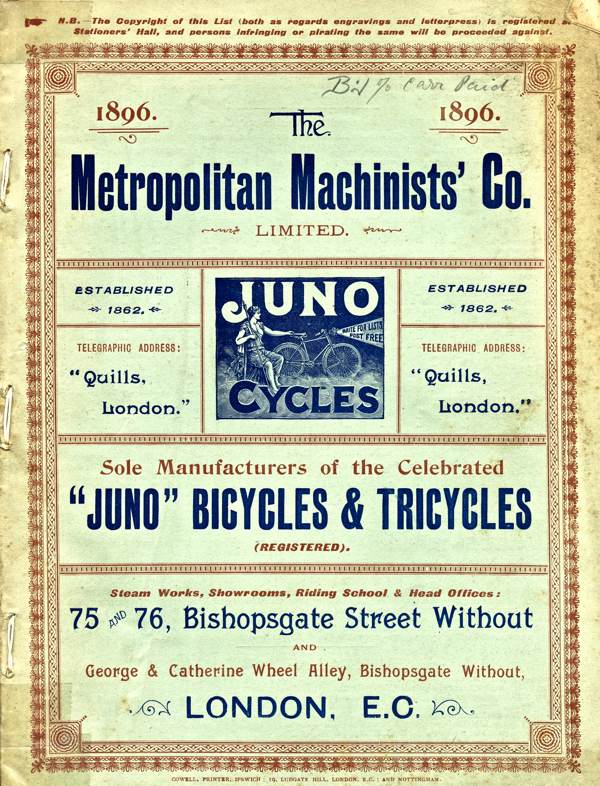
The plethora of bicycle shops around Spitalfields today is not a new phenomenon as confirmed by this 1896 catalogue for The Metropolitan Machinists’ Co, reproduced courtesy of the Bishopsgate Institute


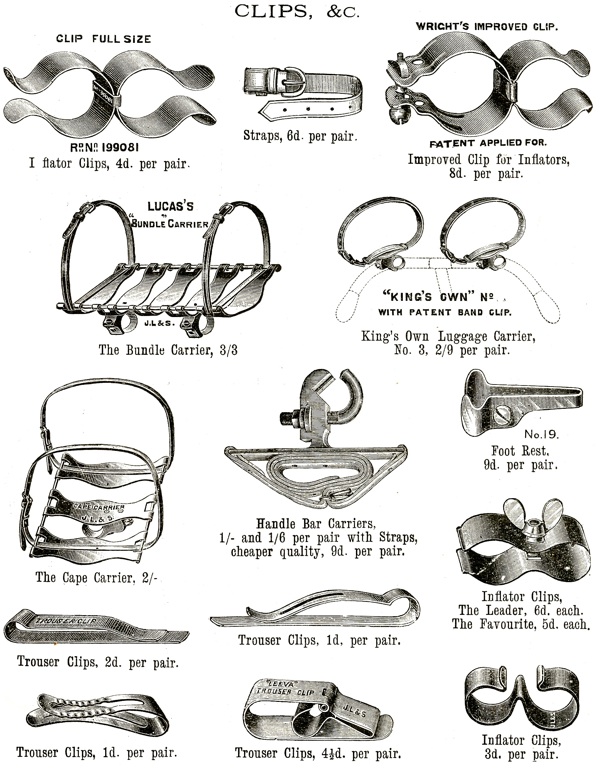

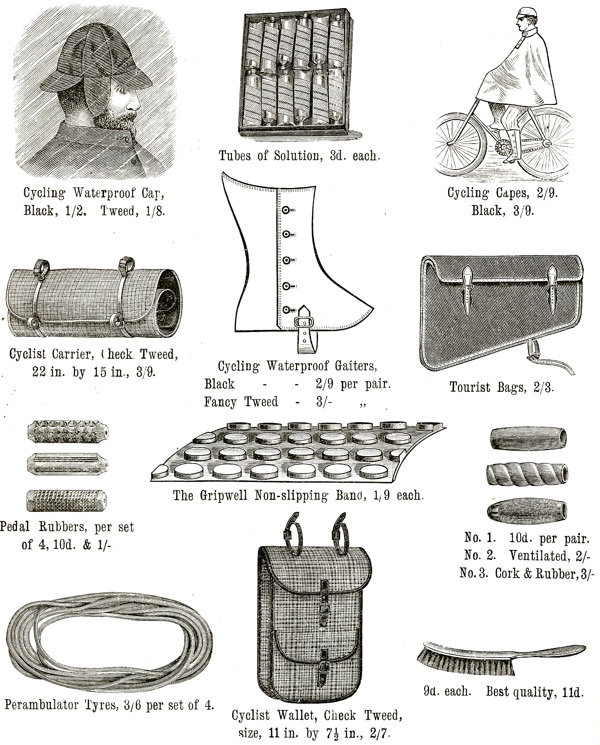

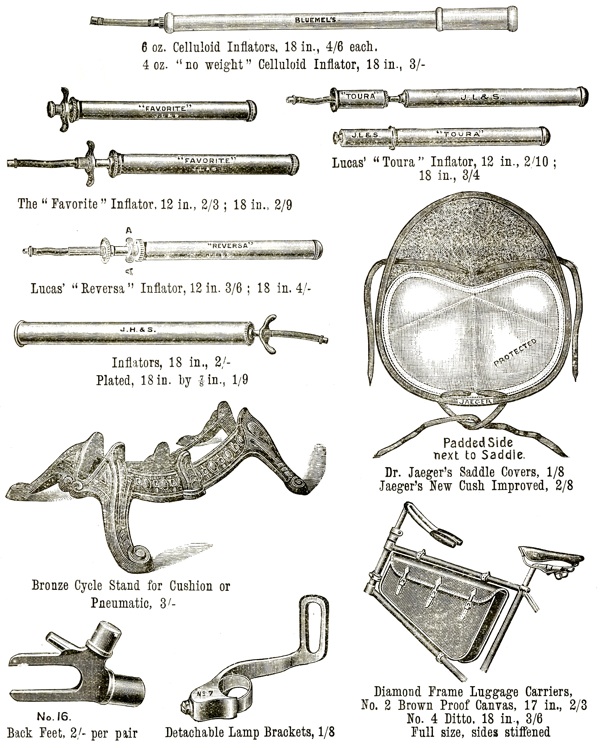


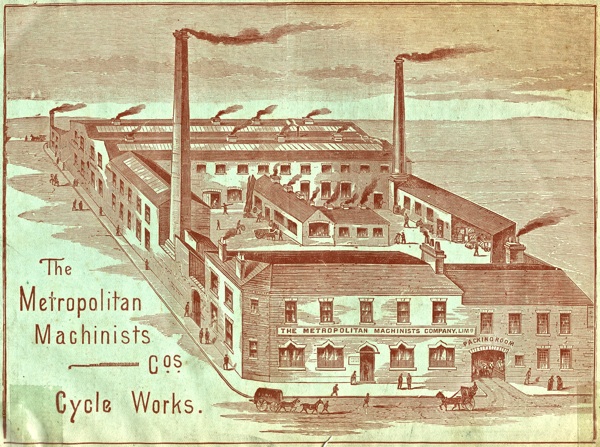
Images courtesy Bishopsgate Institute
You may also like to take a look at
Malcolm Johnson At St Botolph’s
Click here to book THE GENTLE AUTHOR’S TOURS for July & August
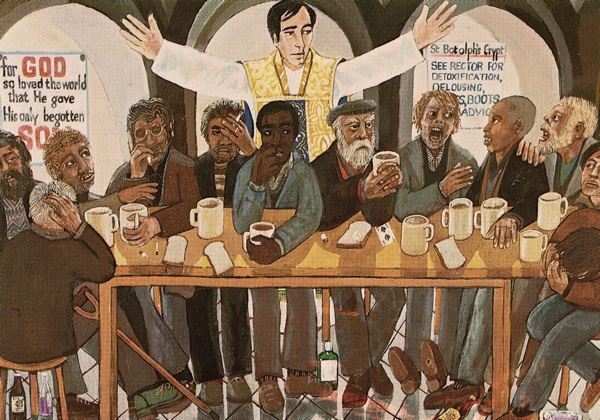
Dan Jones’ painting of Malcolm Johnson at Botolph’s, Aldgate 1982
These days, with his gentle blue eyes and white locks, Reverend Dr Malcolm Johnson is one of the most even-tempered radicals that you could meet, yet the work he did at St Botolph’s in Aldgate was truly extraordinary in its bold and compassionate nature. From 1974 until 1992, Malcolm was responsible for the ‘wet’ shelter that operated in the crypt, offering sustenance, showers and moral support to those that everyone else turned away. While other shelters refused admission to homeless people with alcohol or drugs in their possession, St Botolph’s did not and when I sought further, asking Malcolm to explain the origin of this decision, he simply said, “I believe you have to accept people as they are.”
The project at St Botolph’s was eminently pragmatic, working with people individually to find long-term accommodation in hostels and providing support in establishing a life beyond their homelessness and addiction. But shortly after Malcolm left St Botolph’s in 1992, the shelter was closed by his successor and it has sat unused for the past twenty years, making it a disappointing experience for Malcolm to return and be confronted with the shadow of his former works.
“I can’t tell you how upsetting it is, seeing it like this – it used to be such a wonderful place, full of energy and life, and now its just a store” he admitted to me when Photographer David Hoffman & I accompanied him on a visit to the disused crypt last week. Yet it proved to be a pertinent moment for reflection, as Malcolm told me the story of how it all happened.
“I had been Chaplain at Queen Mary University for seven years and specialised in counselling gay and lesbian people, so the Bishop thought I needed a quiet City parish where I could get on with my writing next. But, when I arrived. the crypt had been operating for five years and was catering for seventy homeless people each night, and I felt that wasn’t enough. I realised that we were here in the City of London surrounded by big companies, so I went to ask their assistance and I was lucky because they helped me, and I persuaded the City of London Corporation to give us seventy-thousand pounds a year too. The volunteers were all sorts, housewives, city workers after a day at the office and students from the polytechnic. I decided that it would be a wet crypt and we wouldn’t charge for food.
I was the rector upstairs and the director down here in the crypt – I believed the church had to be one outfit, upstairs and down. I went to Eddy Stride at Christ Church Spitalfields to ask what I should do, I had no experience so I had to learn. Over time, we expanded the shelter, we had quite a lot of full-time workers and we established four long-term hostels in Hackney. We were getting about two to three hundred people a night and it was quite an experience, but I was never frightened. Only once did a man take a swing at me, and all the others gathered round and grabbed him.
I missed this place so desperately when I left because you never knew what was going to happen when you walked through the door, it was wonderful, but I felt eighteen years was enough. Then, quite suddenly after I left in 1992, my successor closed the crypt and they said it went bankrupt, although I never understood what happened because we’d done a benefit at the Bank of England shortly before and, if there had been problems, I know my City friends would have come in to save it.”
The crypt of St Botolph’s is still equipped as a homeless shelter, functional but abandoned, pretty much as Malcolm left it and still harbouring emotive memories of those who passed through, many of whom are now dead. Encouragingly, Malcolm told me the current rector is considering whether it could be reopened.
This would itself be sufficient story and achievement for one man, yet there was another side to Malcolm Johnson’s ministry. As one of the first in the Church of England to come out as gay in 1969, he established the office of the Gay & Lesbian Christian Movement at St Botolph’s and even became known as the Pink Bishop for his campaigning work.
“I had always thought that if clergy can bless battleships and budgerigars, we could bless two people in love,” was his eloquent justification for his blessing of gay couples. Unsurprisingly, it was a subject that met opposition within the Church of England but, by the mid-eighties, the subject of AIDS became an unavoidable one and St Botolph’s was the first church to appoint a full-time minister to care for those affected by the HIV virus, as well as opening a dedicated hostel for this purpose.
In spite of his sadness at the closure of his shelter in the crypt, it was inspiring to meet Malcolm Johnson, a man with an open heart and a keen intelligence, who had the moral courage to recognise the truth of his own experience and apply that knowledge to better the lives of others.

“If clergy can bless battleships and budgerigars, we could bless two people in love…”
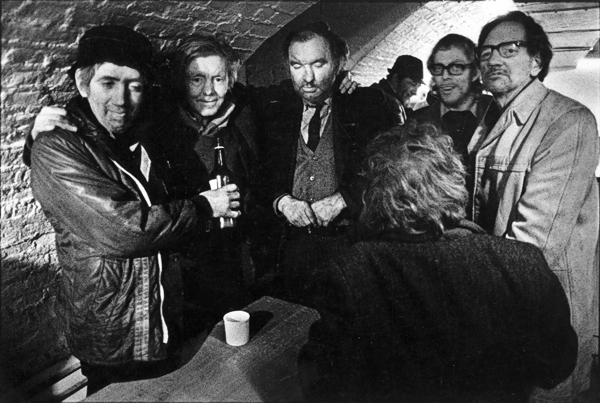
At St Botolph’s, 1978

Malcolm Johnson recalls the wet shelter in the crypt, now disused
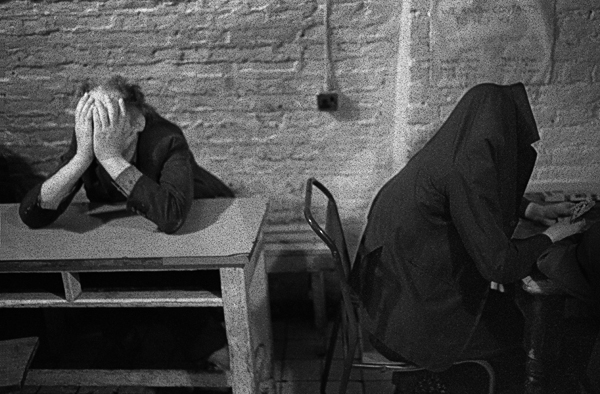
At St Botolph’s, 1978

“I believe you have to accept people as they are.”
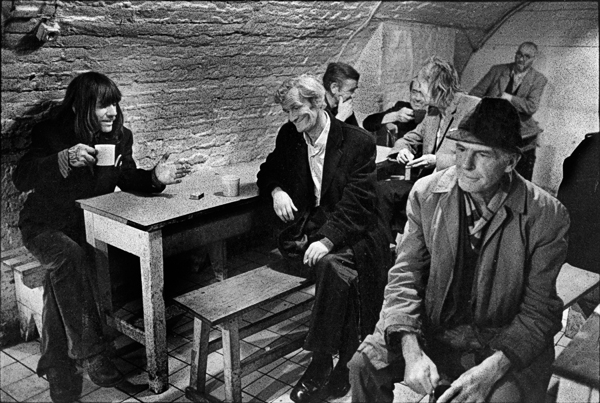
At St Botolph’s, 1978

“I can’t tell you how upsetting it is seeing it like this, it used to be such a wonderful place full of energy and life, and now it’s just a store”

Malcolm Johnson stands left at this midnight mass for the homeless at St Dunstan’s Stepney in 1978
Photographs copyright © David Hoffman
You may also like to take a look at
and the work of another heroic campaigner












