Mark Girouard, Architectural Historian

Mark Girouard
If you take a particular turning off the Portobello Rd and cast your eyes up, as you walk east, you might be lucky enough to catch a glimpse of the celebrated architectural writer Mark Girouard sitting reading at the window, high up in his old house on the corner of the square where he has lived since 1971, surrounded by a lifetime’s collection of books and pictures. At the very top of the house is a long room extending across the entire width of the terrace, where peace and quiet prevail, and the hubbub of the market recedes. This is where Mark Girouard retreats to write, in his silent eyrie high above the street.
I first became aware of Mark’s writing when I arrived at college as an undergraduate and my tutor had a copy of the newly-published “Life in the English Country House,” upon his desk and proceeded to eulogise it. Many years passed before I came to understand the significance of the book and appreciate how it changed our understanding of history, by acknowledging the endeavours all those whose existence was bound up with stately homes, not just the owners.
Mark’s work is based upon the premise that architectural history cannot be separated from social history. Previously, the emphasis was solely upon the aristocrats who owned country houses but his scholarship delineates a more complex picture which includes those who laboured below stairs and the craftsmen who devoted their skills to the realisation of the magnificent architecture that distinguishes these buildings. Consequently, if you visit one today, you will likely find that the kitchens and living quarters of the servants are given as much emphasis as the grand reception rooms, and this is due, in greater part, to Mark’s writing.
Mark’s key involvement in the saving of the old houses in Spitalfields in the seventies is less well-known, and it was this that I came to hear about, when I took the Metropolitan line over from Liverpool St to visit him one afternoon recently. “It was so extraordinary, the blindness of people, that they couldn’t see that these eighteenth century house within walking distance of the City were of any value, and it was taken for granted that they going to be redeveloped,” he admitted to me, still incredulous, more than thirty years later.
“I think Pat Trevor-Roper gave us ten thousand pounds to get started, although it may have been a loan but he never asked for it back,” Mark recalled absent-mindedly, outlining the origins of The Spitalfields Historic Buildings Trust of which he was the first Chairman, “I was working at the Architectural Press at the time and Dan Cruickshank was there too, and then Douglas Blain applied to be Secretary. He had fallen for Spitalfields and been grief struck at the demolition of Spital Sq.”
In the summer of 1977, British Land, who had acquired the old terraces in Elder St, sent the bulldozers in and Mark and his colleagues discovered they had no choice but to take matters into their own hands. Pursuing a brave course, they squatted numbers 7 & 9 Elder St, two eighteenth-century weavers’ houses which had already had their roofs removed in preparation for demolition. “British Land intended to clear the site for a bigger development, two houses had already gone and two more were slated to come down.” Mark recalled, “So we moved in and we started negotiating. After a fortnight, we briefly left the building empty and they sent in the demolition men who started work. But I managed to get hold of the Planning Officer and he stopped them because they didn’t have the correct permission, and we moved back in.”
It never struck me before that architectural historians might be distinguished by physical courage in defence of their beliefs, yet the events in Elder St prove otherwise. “We weren’t brave, we were just very confident, and aggressive,” Mark confided to me, “We went as a deputation to British Land, and we’d had quite a bit of publicity, and they gave up and sold us the houses.” This auspicious victory set The Spitalfields Trust on its way and, over the past forty years, they rescued innumerable old houses in the East End. The policy was to buy buildings of historic significance and sell them with covenants to people who undertook to restore them, investing the money from the sale back into more buildings – and thus it has gone on through the decades. “If any building that was important to us came up for sale, we bought it irrespective of whether we had the money, in the hope that we could find the money – and we always did.” Mark confessed with a mischievous grin.
Emboldened by their success in Elder St, in December 1981 members of the Trust locked themselves into St Botolph’s Hall in Spital Sq, formerly part of the Central Foundation Girls School, but in contrast to the earlier occupation which extended for months this was resolved in weeks. “It was set for demolition but we saved it!” Mark informed me simply, in his characteristic softly-spoken tone.
These two highly-publicised events, spanning Mark’s seven years as Chairman of The Spitalfields Trust, were highly influential in shifting public sympathies towards the preservation of old buildings at that time and today Mark looks back on his time in Spitalfields with affection. “There was a very nice atmosphere in those early days, because the houses we saved were sold to people who didn’t have much money and they restored them with their own hands,” he concluded fondly, “and we all met for lunch together in the Market Cafe.”

Mark Girouard among a deputation from Spitalfields who staged a sit-in at the headquarters of British Land in protest at their plan to demolish eighteenth century houses in Elder St, September 1977.

Douglas Blain, Secretary of the Spitalfields Trust with Mark Girouard at 9 Elder St.

The deputation to the headquarters of British Land, Mark Girouard stands centre with social historian Raphael Samuel, second from right.

Elder St, 1977

“We Shall Not Be Moved” read the sign over the doors of 7 & 9 Elder St.


Rear of 7 & 9 Elder St

First floor of 9 Elder St


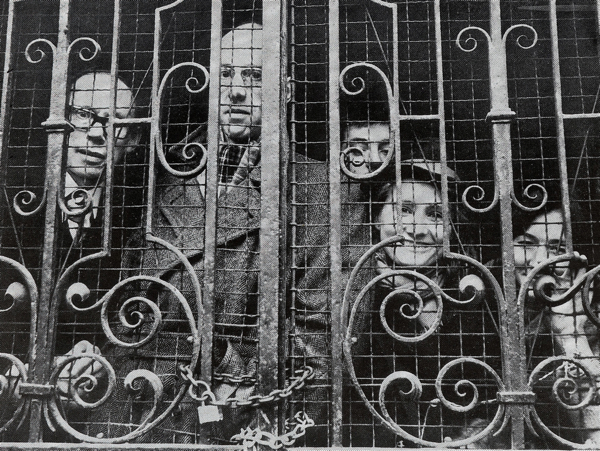
Mark Girouard, Colin Amery, Fiona Skrine and Joanna Price during the sit-in at Spital Sq, 1981.

Wilkes St in the seventies, with gaps from bomb damage still unfilled.

You may also like to read about
Alex Pink’s Spitalfields, Then & Now
As Tower Hamlets Local History Library & Archive reopens tomorrow after months of building work, it is my pleasure to publish this collaboration with Spitalfields Life Contributing Photographer Alex Pink who selected photographs of familiar locations from the archive, and then set out with his camera to revisit the same streets and discover what changes times has wrought.

Cygnet St, Brick Lane, 1932

Cygnet St, Brick Lane, c.1965
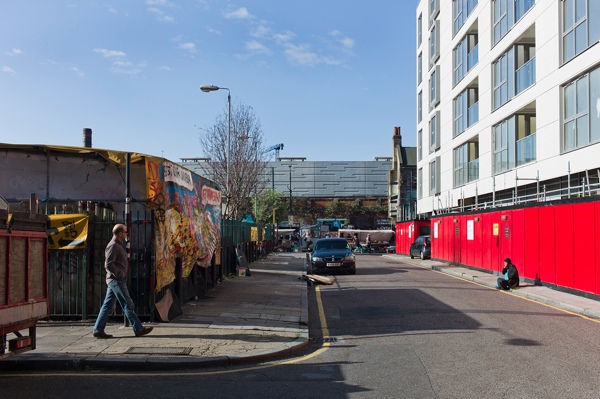
Cygnet St, Brick Lane, 2013

Corner of Brick Lane and Bethnal Green Rd, 1971

Corner of Brick Lane and Bethnal Green Rd, 2013

Brick Lane, c.1960

Brick Lane, 2013
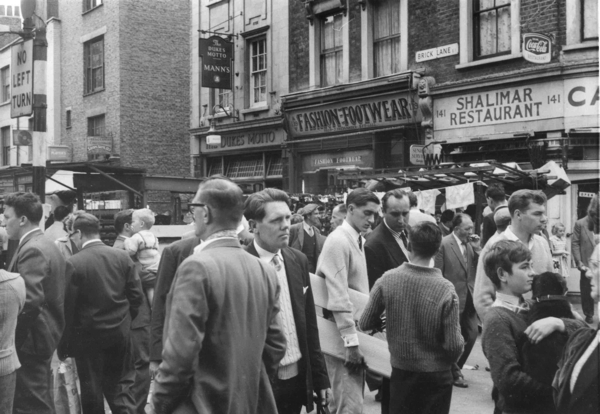
Brick Lane at the corner of Bacon St, 1974

Brick Lane at the corner of Bacon St, 2013

Corner of Sclater St and Brick Lane, 1975

Corner of Sclater St and Brick Lane, 2013
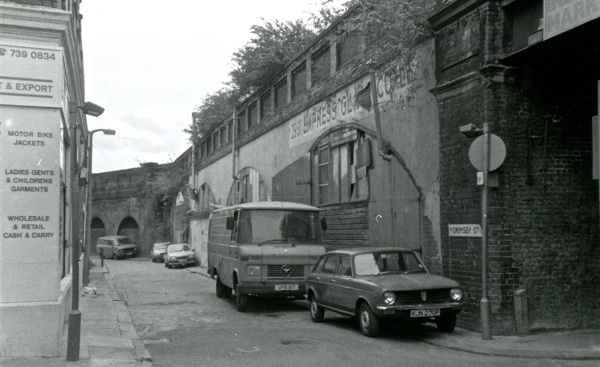
Corner of Brick Lane and Grimsby St, c. 1985

Corner of Brick Lane and Grimsby St, 2013
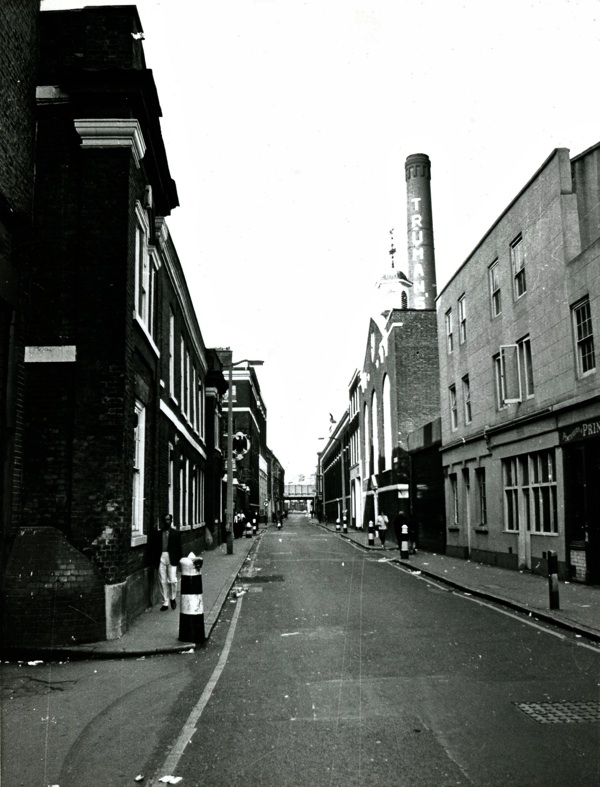
Truman Brewery, Brick Lane, c. 1973

Truman Brewery, Brick Lane, 2013

Fashion St, c.1965

Fashion St, 2013

Corner of Brick Lane and Chicksand St, c.1981
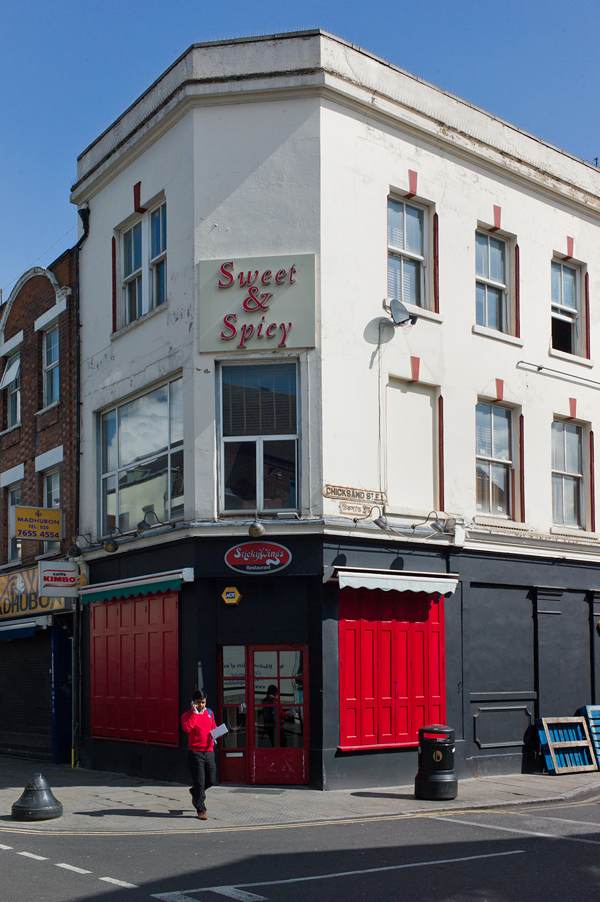
Corner of Brick Lane and Chicksand St, 2013
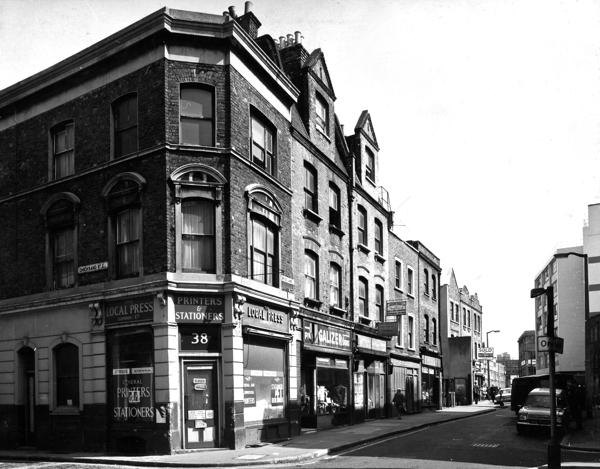
Brick Lane at the corner of Chicksand St, 1972
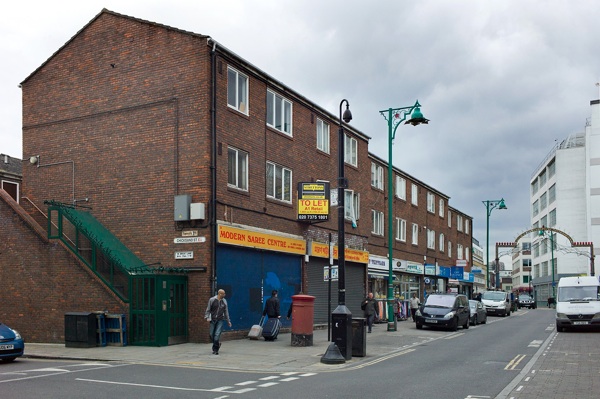
Brick Lane at the corner of Chicksand St, 2013
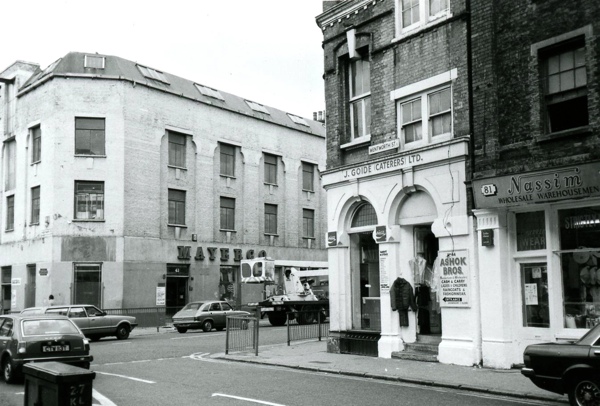
Corner of Wentworth St and Commercial St, c.1981
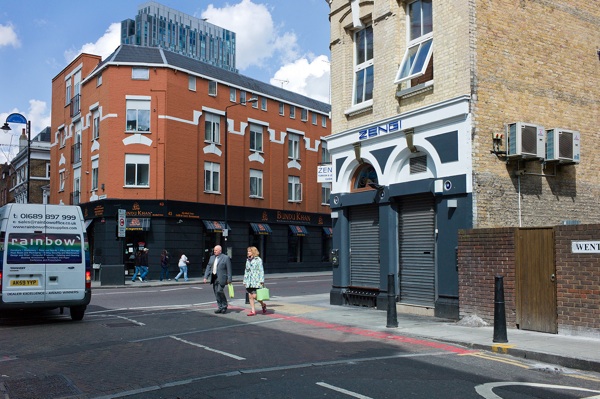
Corner of Commercial St and Wentworth St, 2013

Corner of Wentworth St and Toynbee St, 1989
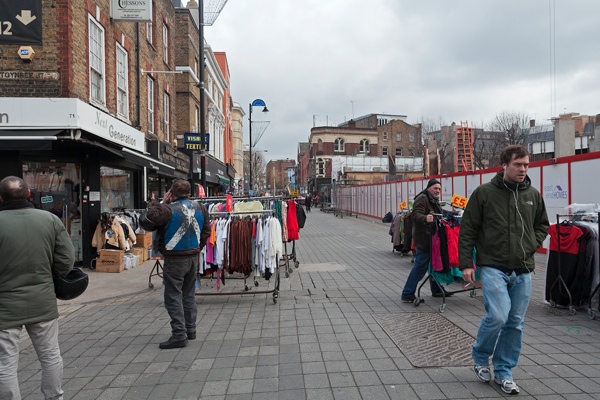
Corner of Wentworth St and Toynbee St, 2013
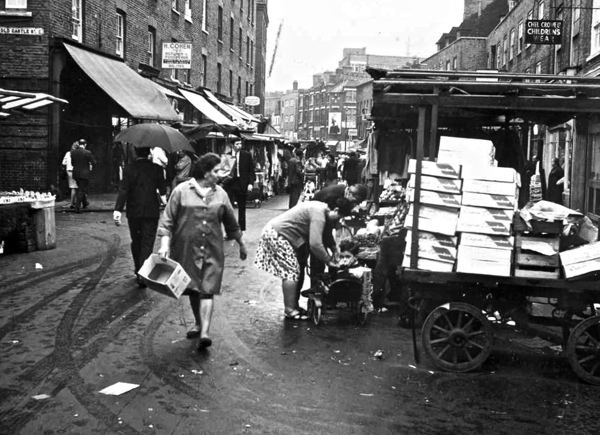
Wentworth St, 1968

Wentworth St, 1989

Wentworth St, 2013

Wentworth St from Middlesex St, 1981

Wentworth St from Miidlesex St, 2013

Wentworth St from Middlesex St, 1981
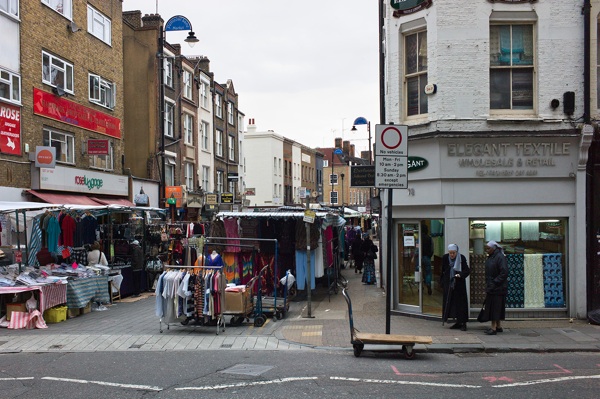
Wentworth St from Middlesex St, 2013
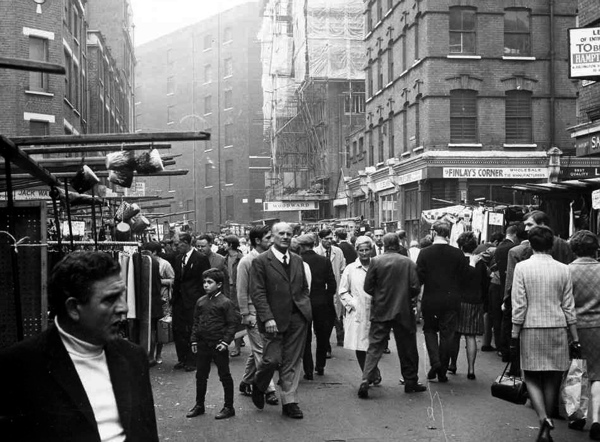
Cobb St, 1968
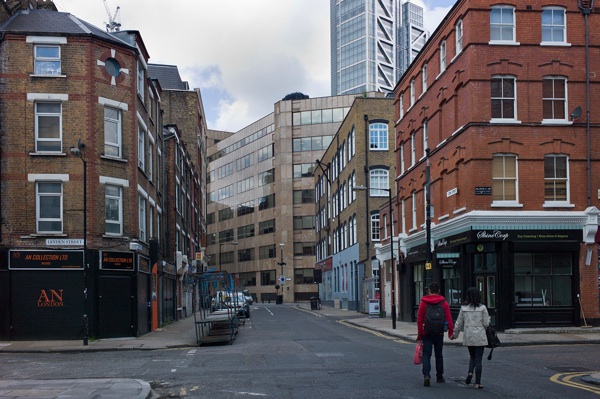
Cobb St, 2013

Elder St, c.1935
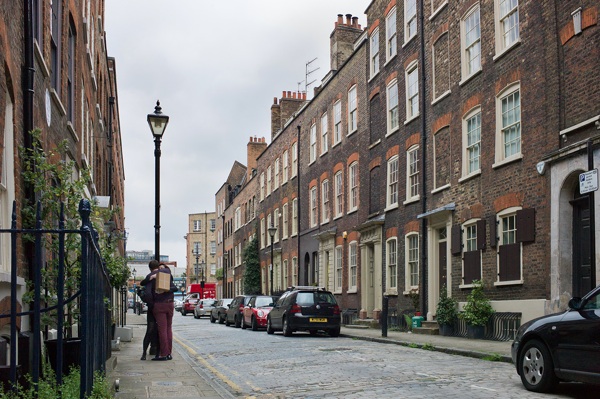
Elder St, 2013
Archive images courtesy Tower Hamlets Local History Library & Archives
New photographs copyright © Alex Pink
Visit Tower Hamlets Local History Library & Archives for opening times, collections & events.
You may also like to take a look at
In the Footsteps of C.A.Mathew
The Return of Jimmy Nash
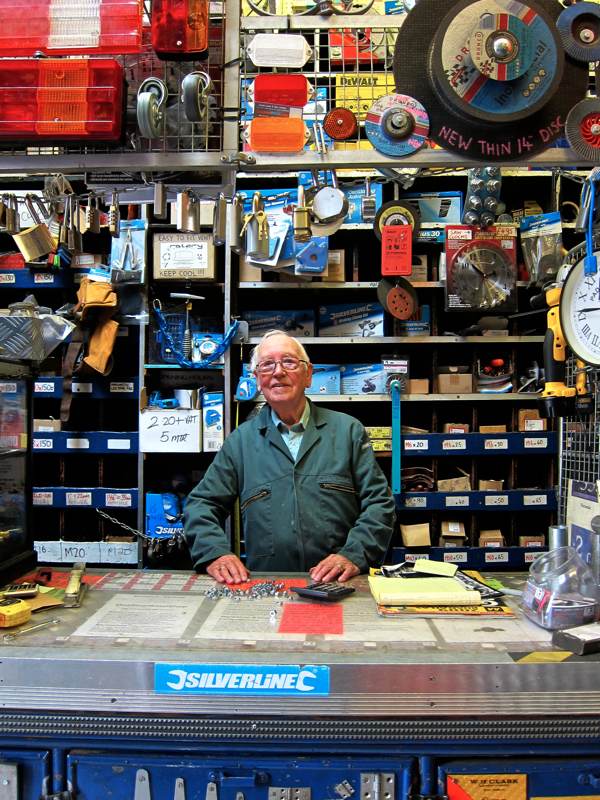
Jimmy Nash, back behind the counter for one last time
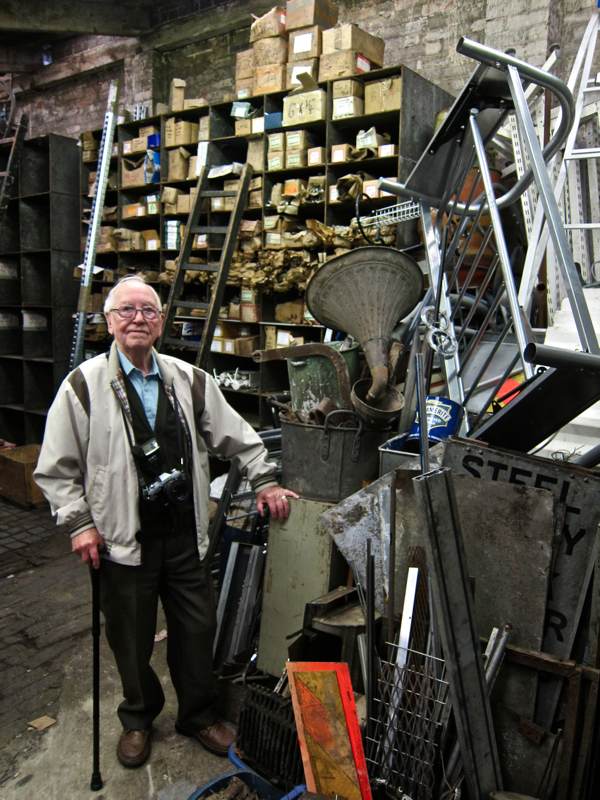
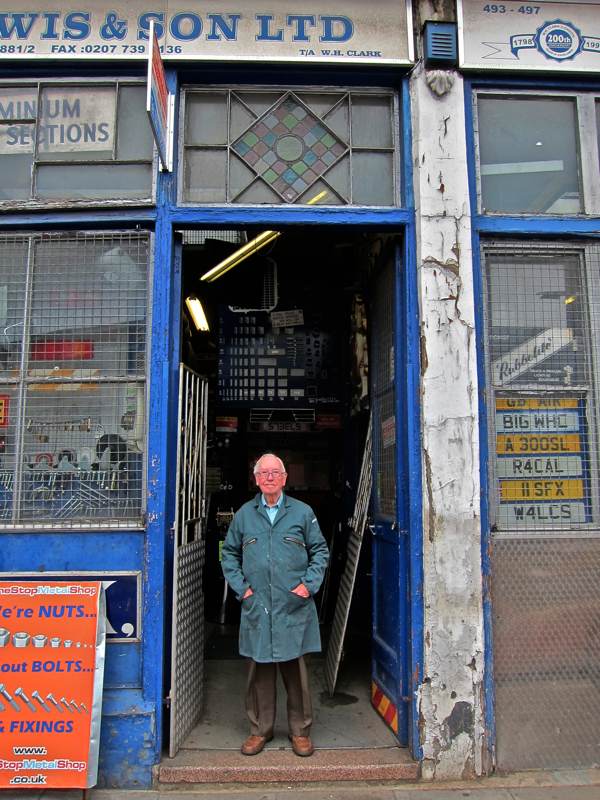
As Daniel Lewis & Son, London’s oldest ironmongers, prepares to move at the end of this month from the location in the Hackney Rd where they began in 1797, many are saddened to bid farewell to such a long-established and well-loved East End landmark. For Jimmy Nash who started there in 1942 at the age of fourteen and stayed his entire working life, becoming foreman and manager, this week was his last chance to put on his old green coat and make a sentimental pilgrimage back to the place he was employed for more than sixty-six years.
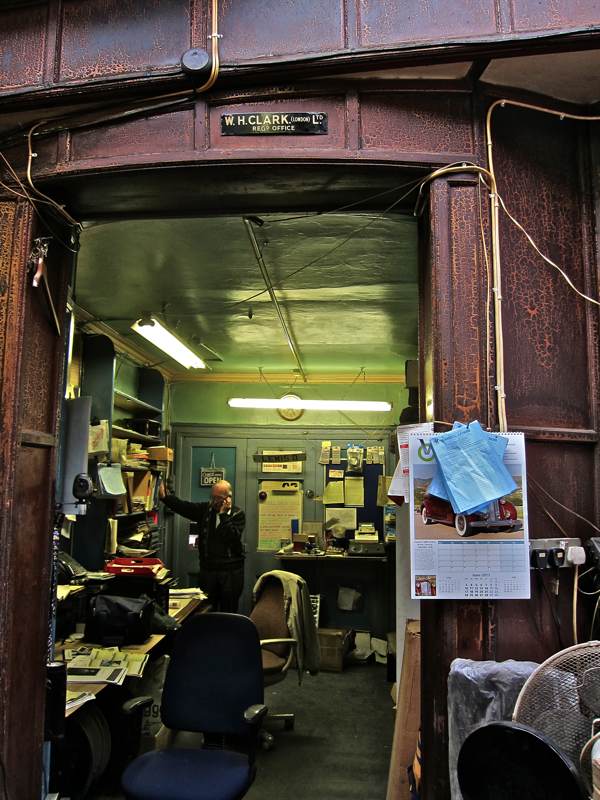
I found Jimmy already sitting in his customary position in the back office, chatting with proprietor David Lewis, just like old times. Jimmy commands a special affection from David – who had driven him up that morning from Loughton – since Jimmy was here before David’s father, Daniel Lewis, began as an office junior in 1947. Jimmy knew the company as W.H.Clark Ltd then, named after a former mayor of Bethnal Green. Yet in 2001, after his father’s death, David renamed it Daniel Lewis & Son in honour of his father and, today, Daniel Lewis’ cardigan still hangs upon a wire coathanger in the office as if he might also return, like Jimmy, for a last look around the old place.
We entered the shop and looked down the ramp towards the factory, where Jimmy first walked in at fourteen years old, more than seventy years ago. Jimmy remembered Bert Hill who gave him his job, “A very stern man, he had crafty ways – if you were taking a break, he’d walk past and check if the tea was cold and say, ‘You’ve been sitting here ten minutes.'”Jimmy remembered Joe Hallam who ran the factory and that Joe’s father had lost a leg in the First World War. Jimmy remembered how one night, during the Second World War while fire-watching here in the office, Joe’s father snapped his aluminium leg on the ramp and Jimmy helpfully riveted it back together. Upstairs in the flats, where Jimmy never went when he worked here, Jimmy remembered the two old boys who were bombed out from The Pickle Jar opposite and lived there on a peppercorn rent for the rest of their lives, and how a stash of live cartridges was discovered in the roof afterwards. Jimmy remembered the asbestos Nissen huts upon the Oval, where the industrial estate is now, that were occupied after the war by East Enders who had lost their homes. Returning to the shop, Jimmy remembered that they used to sell coster barrows for twenty pounds. In the timber shed, where he first worked, Jimmy remembered where the horses were once tethered and he found the wear on the cobbles and the manger hooks on the wall. On the shelves, Jimmy found boxes of coach bolts that were still in stock and which he remembered had been there since before he began working there. Jimmy found counter-sunk coach bolts that he and Joe Hallam had made in the forge and, although it has gone, he remembered where it was, and Jimmy remembered the Ajax threading machine too and it was still in the same place. Even though it had been tucked away in a corner, Jimmy remembered the scales from when chain was sold by weight. Jimmy remembered how they used to sit by a pot-bellied stove in the factory to eat their sandwiches in winter. Jimmy remembered how everyone had a tea can and he carried them across the road to the Italian cafe to fill them at tuppence a can. Jimmy remembered how he drilled a hole in Tony Masseys’s tea can, so it poured down his front when he drank from it. Jimmy remembered how Ernie from the coach works came with a cart barrow and they would load it up, and then tie a string to the wheel so he would walk in a circle. Jimmy remembered how a lad used to come with his bike and leave it in the shop, and so they hung it from the ceiling and he thought someone had nicked it. “We was kids so we was always up to something,” Jimmy remembered. Jimmy remembered how they all went to eat horse steaks in a cafe in the Cambridge Heath Rd, after the war, and when they complained that the horse meat was tough, were told it was not horse but donkey. Jimmy remembered how David Lewis’ father Daniel used to work at home on the books until four in the morning and come into work at seven after only three hours sleep. Jimmy remembered that Daniel was diabetic and sometimes he would froth out, and Jimmy came in the morning and found him lying there and said, “You haven’t had your injection.” Jimmy remembered that Daniel’s life was saved once by a dog licking him awake, after he passed out. Jimmy remembered when Daniel flew under Tower Bridge in a plane with the Mad Major. Jimmy remembered what a gentleman Stan Buckmaster, who started the SAS, was while he worked at the shop. Jimmy remembered when George Raft stayed at the Pickle House across the road while hiding from the Mafia. Jimmy remembered how they used to start sweeping at either end of the premises on a Friday and meet in the middle to wonder at the pile of dust that blew in from the Hackney Rd each week. Jimmy remembered that he started at two pounds five shillings a week.
Comfortable in his green coat, Jimmy was completely at home in the shop, and in the office, and in the factory. “Looking at all the old things brought back memories of fifty years ago, there were a lot of good times.” he concluded to me as we shook hands,“Everybody put a lot into it, we were all lads together, and it bred a contentment.”
In a few weeks’ time, after more than two centuries in this location, London’s oldest ironmongers will be gone from the Hackney Rd and, although he will have no reason to come back again to the place where he spent so many years, Jimmy will carry away the memories with him.
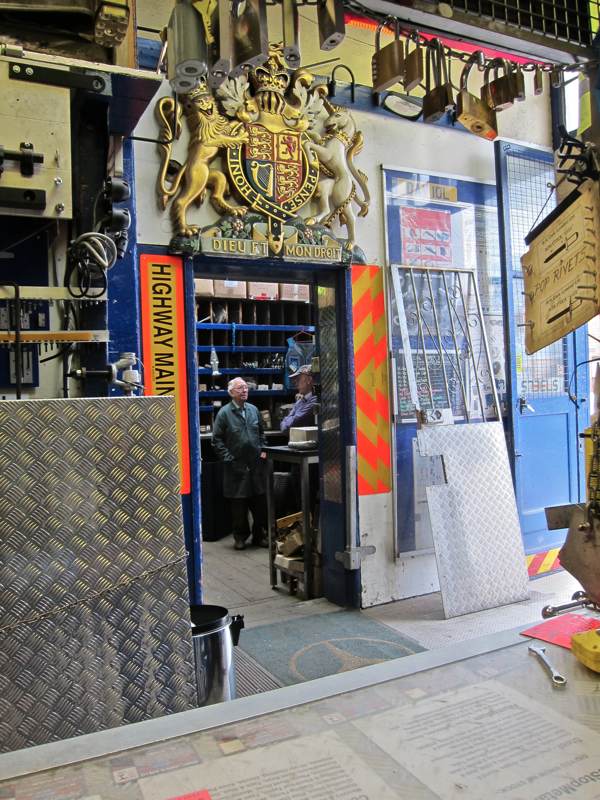
Jimmy Nash & David Lewis.
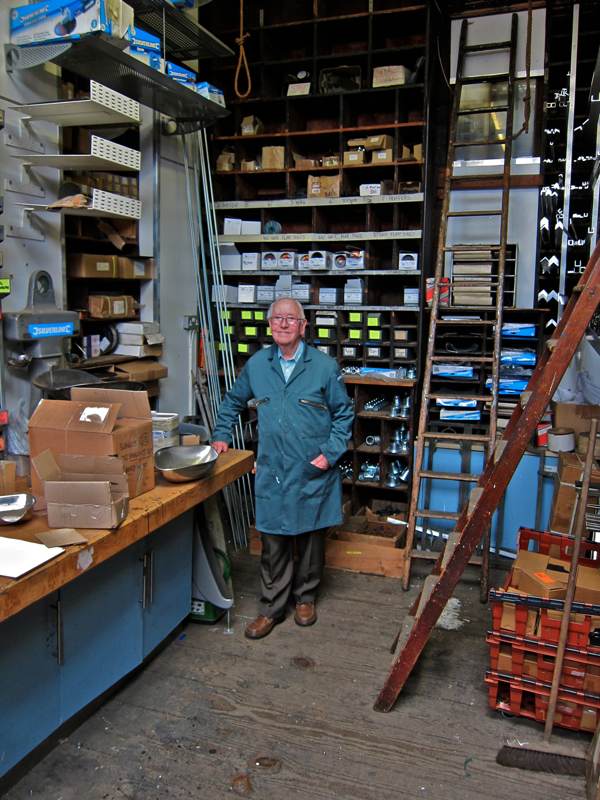
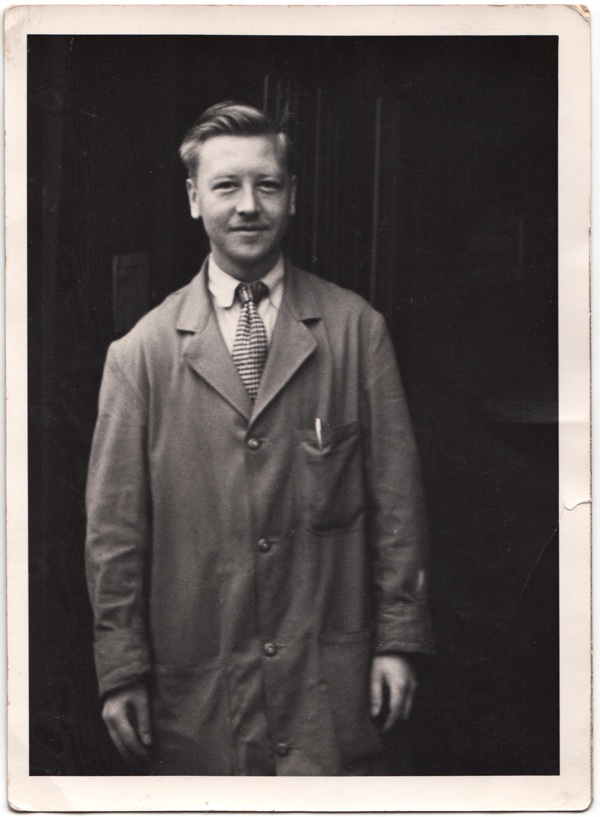
Jimmy at nineteen years old in 1947.
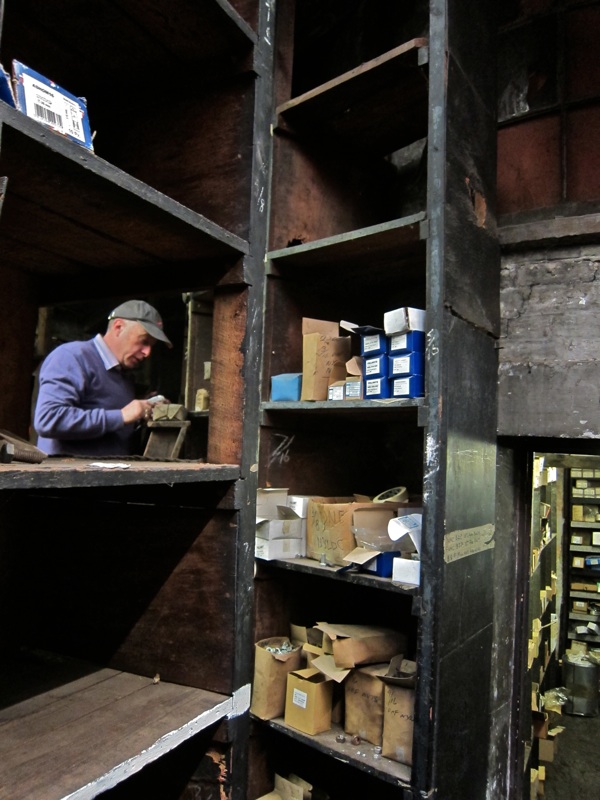
David Lewis pulls out some old stock.
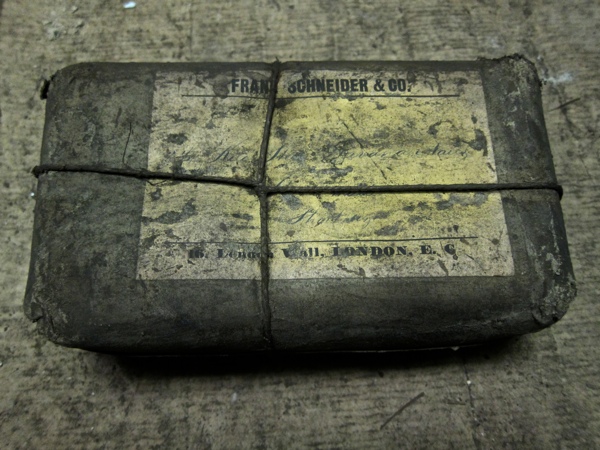
This unopened pack of nails has been in stock more than one hundred and fifty years. It is addressed to the original proprietors Presland & Sons.
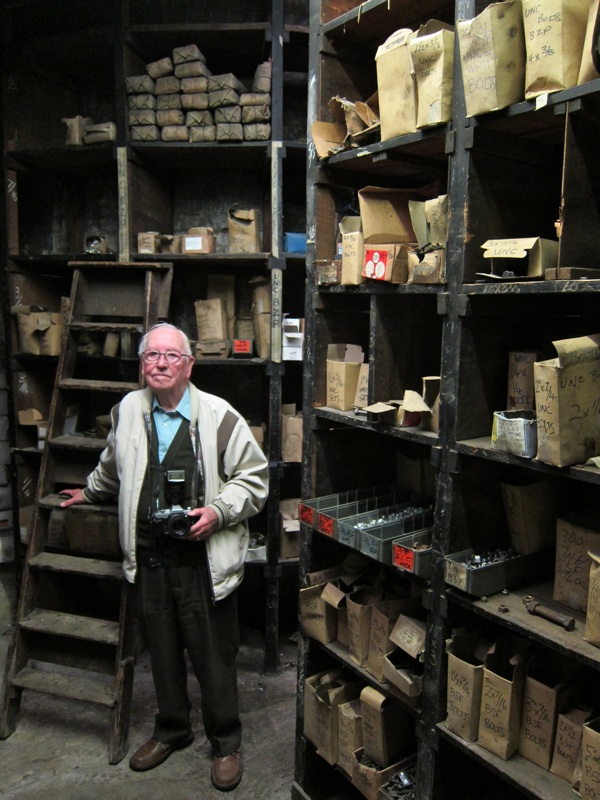
Jimmy takes his own record of the stockrooms.
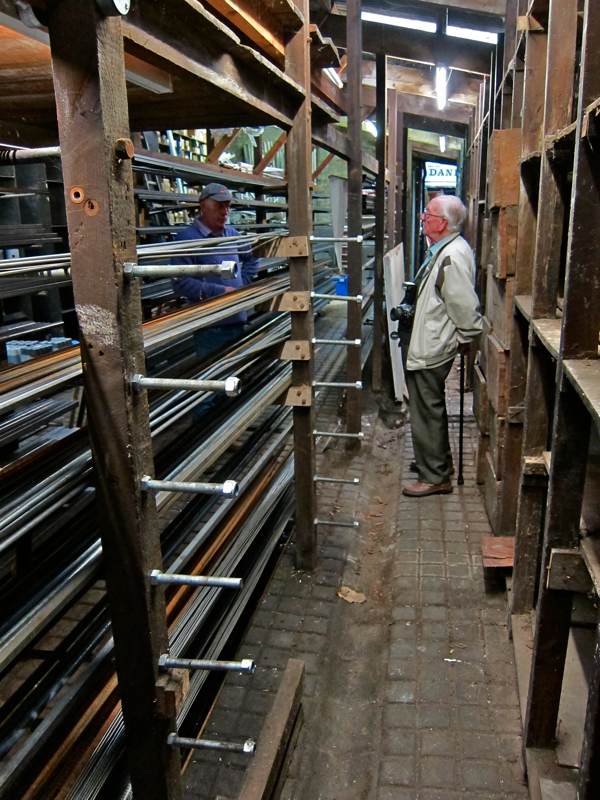
Jimmy and David chat in the timber shed where Jimmy started work in 1942.
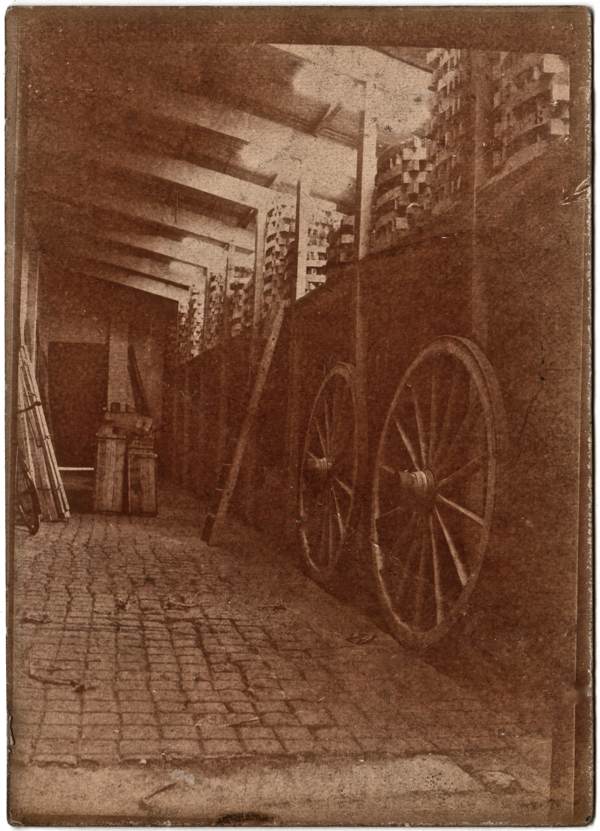
The timber shed c.1900.
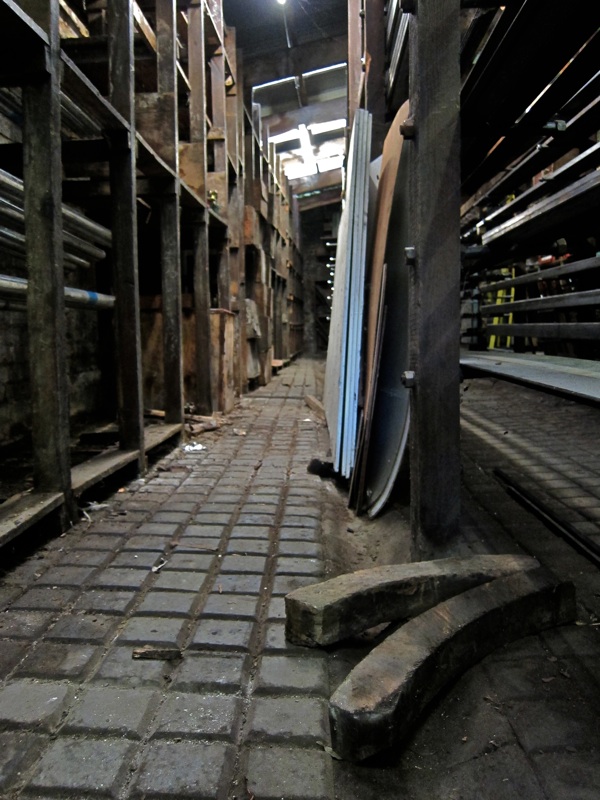
The timber shed today.
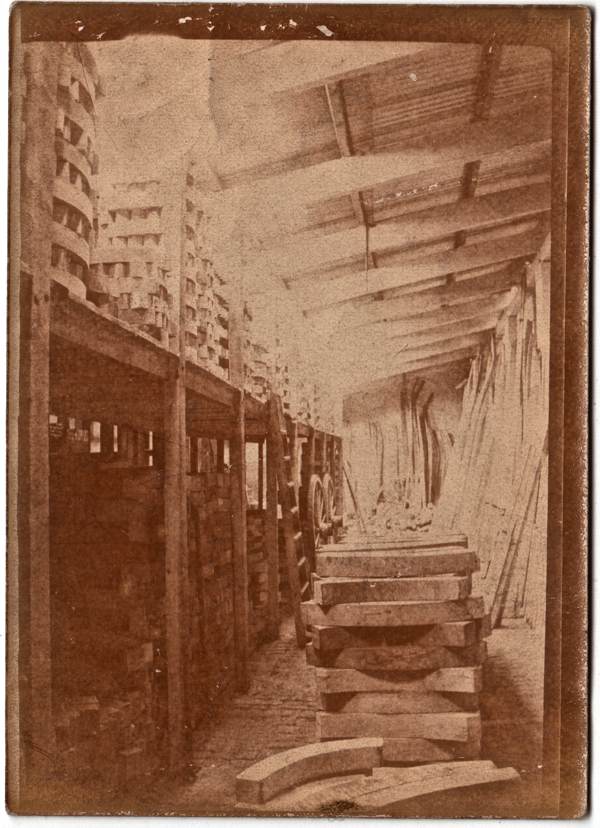
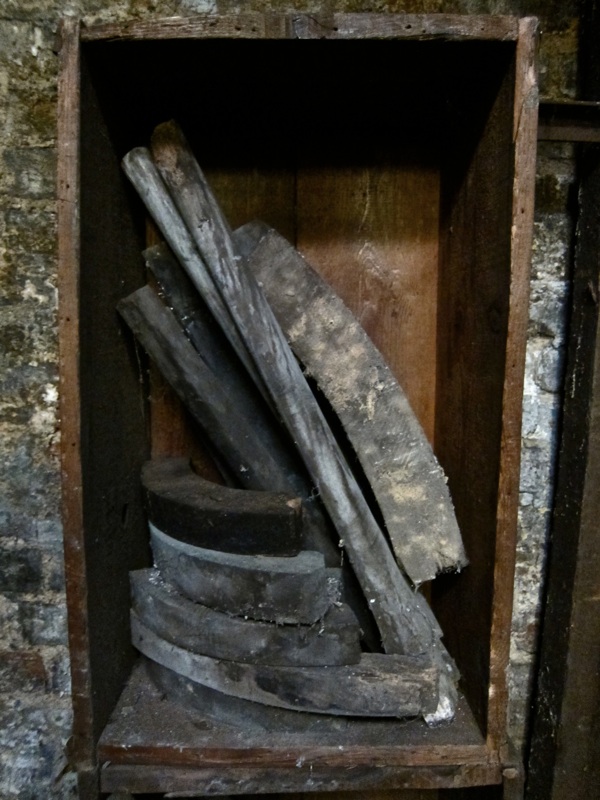
The last wooden feloes and spokes for making cartwheels left in stock.
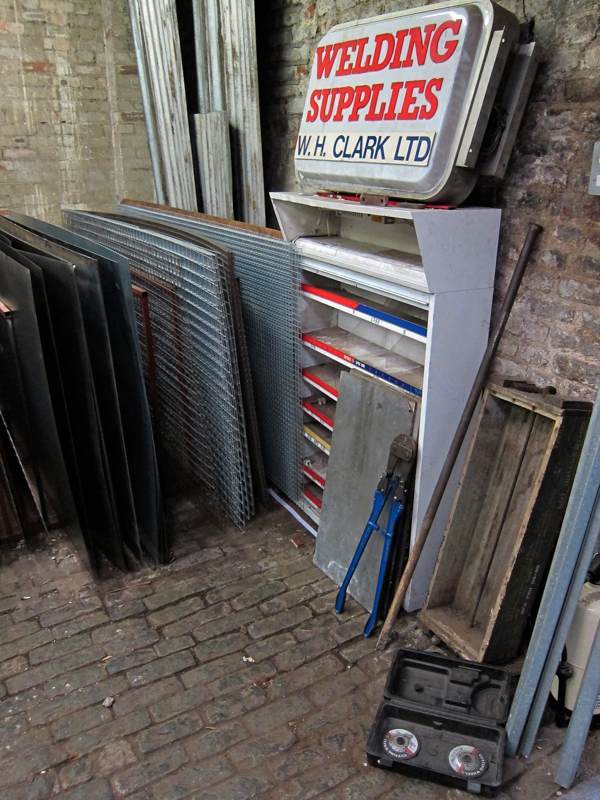
Jimmy calls his wife Gwen to let her know how he is getting on.
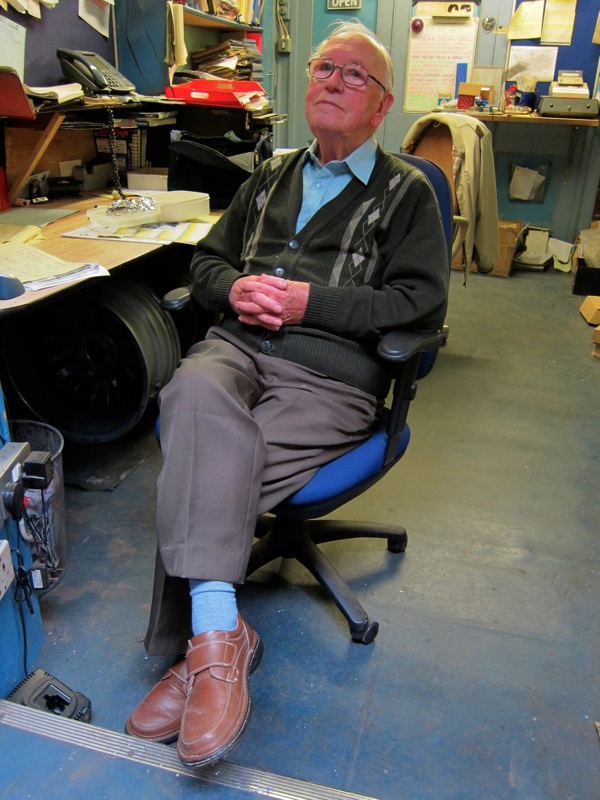
Jimmy is at home in the office where he worked his whole career.
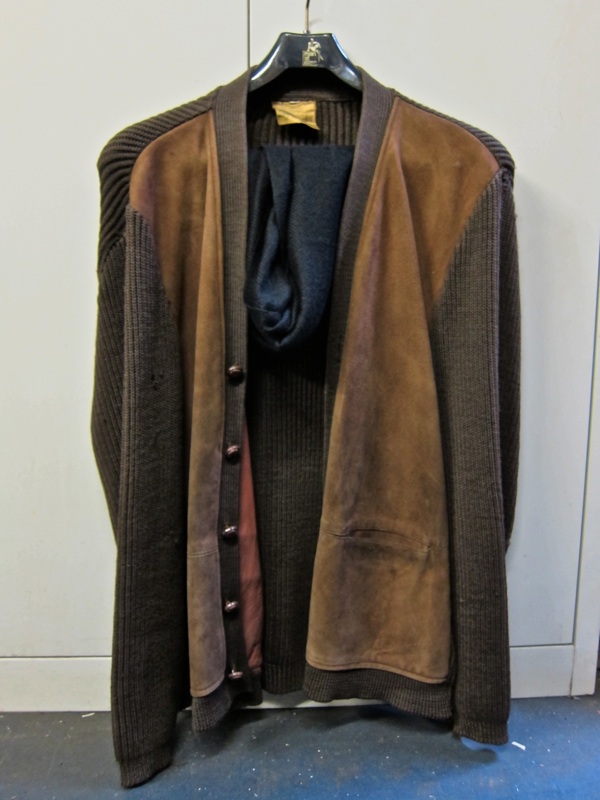
Daniel Lewis’ cardigan still hangs in the back office.
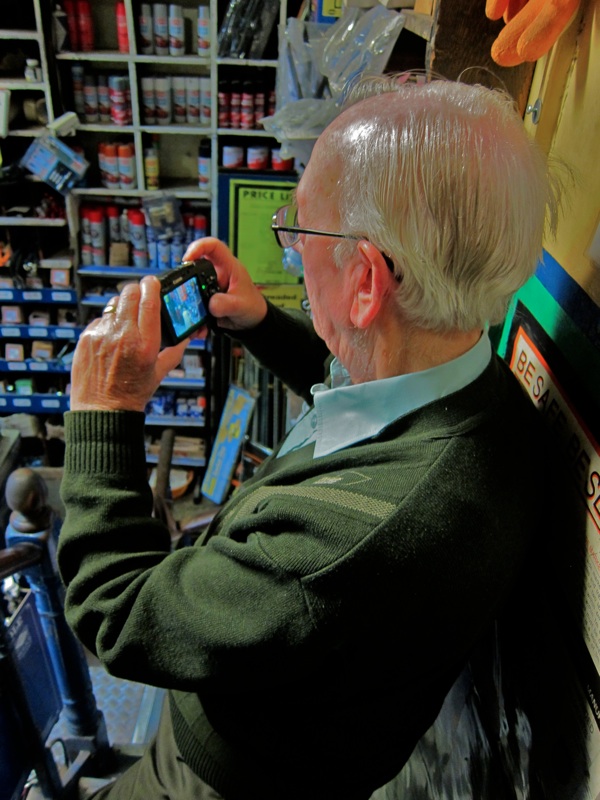
Jimmy photographs the level of custom in the busy shop.
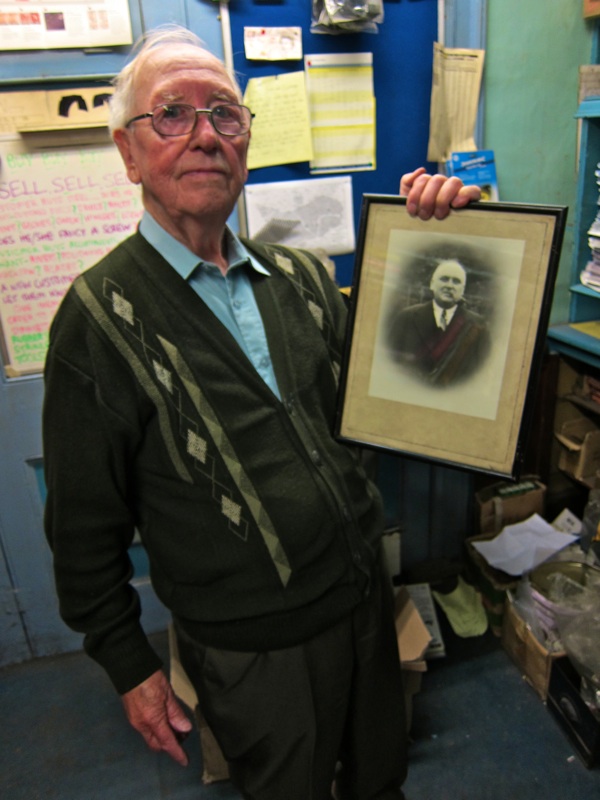
Jimmy with the portrait of his first employer Bert Hill -“A very stern man.”

Jimmy test drives Daniel Lewis & Sons’ new delivery vehicle for nuts and screws, a fifties scooter-truck.
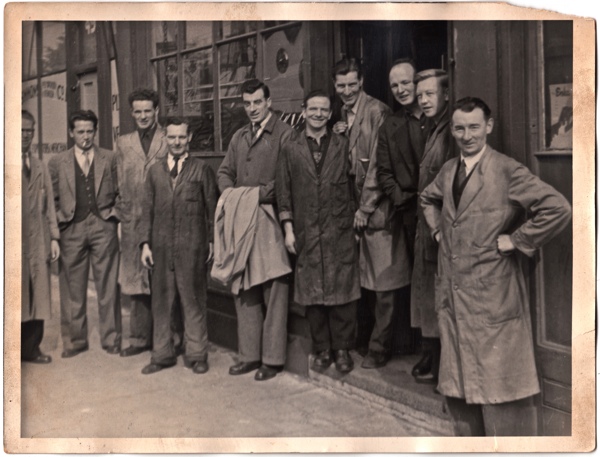
Jimmy is second from right in this staff portrait from 1947.
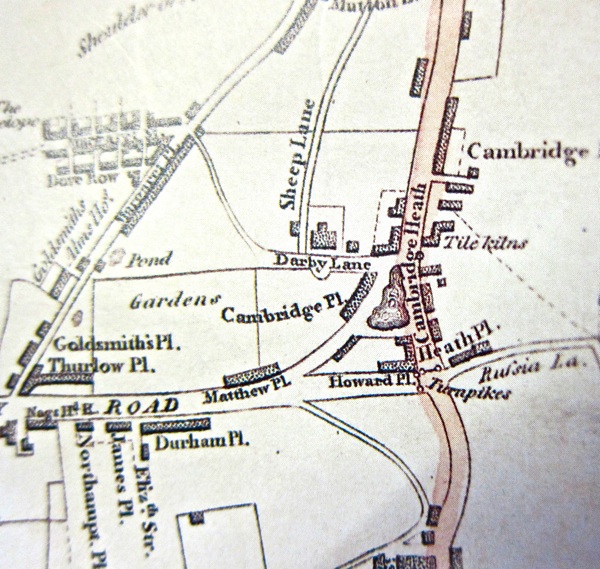
On a map of 1810, before the canal and the railway were built, ‘Howard Place’ indicates the premises of Daniel Lewis & Sons.
You may also like to read about
At London’s Oldest Ironmongers
The Stranger’s Guide to London
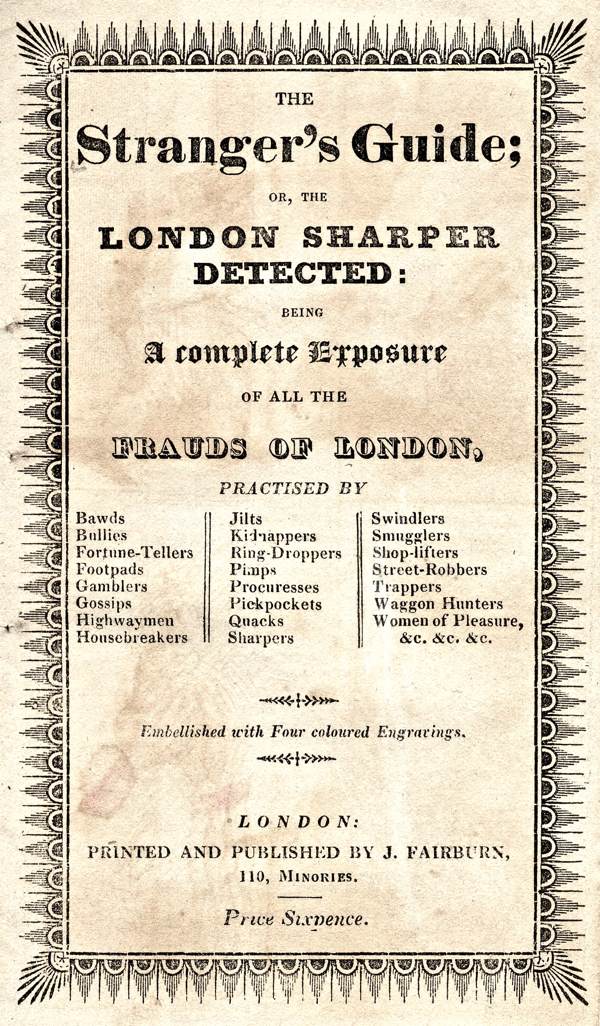
Any readers from out of town who are preparing a visit to the capital this summer might like to read these excerpts from The Stranger’s Guide, exposing all the frauds of London, that I found in the archive at the Bishopsgate Institute.
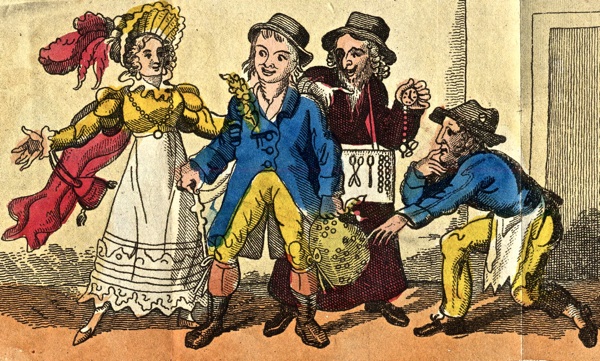
The Countryman arrived in London.
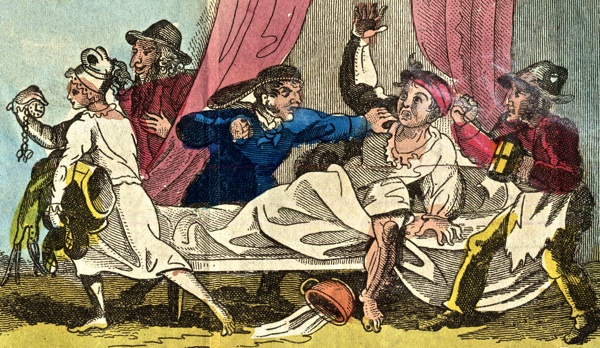
Beaten by bullies & robbed.
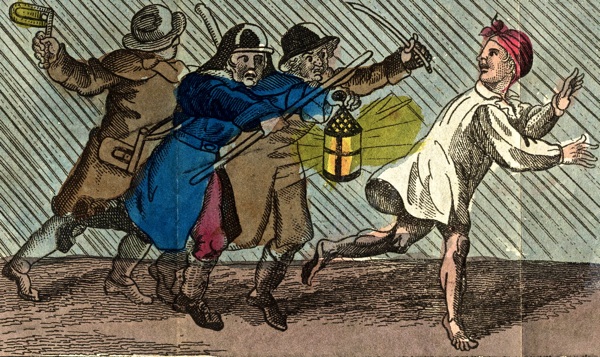
Escaped & chased by watchmen.
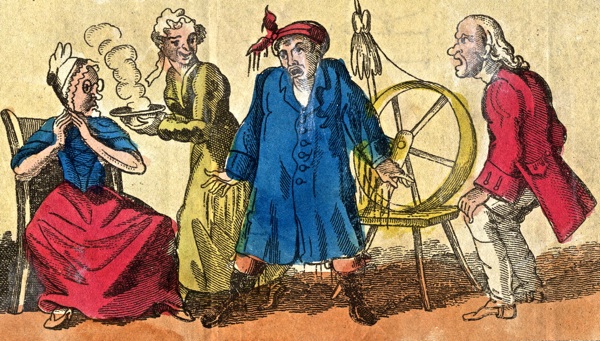
Returned home gives a queer account of London.
BAWDS – Beware, young women, of those who, without any knowledge, pretend to be acquainted with you, your families and friends. This is an old bait to entice young women to their den to be devoured by the ravenous wolves to whom the bawd is a provider. Beware, ye unthinking young men, of receiving letters of assignation to meet at her house, for such letters are calculated to ensnare you and bring you to misery and destroy your health, fame and fortune. Avoid, ye countrymen and women, the pretended friendships of strangers that welcome you to town upon the arrival of the coach and that accost you at the inns, as they generally attend there for that purpose. If you once permit them to converse with you, they will by their artful speeches, so far ingratiate themselves into your good graces as the engage your belief, get the better of your resolutions and at length bring you, by listening to their stories, to ruin and destruction.
BULLIES – Are dependent upon bawds & whores, sometimes the bully pretends to be the husband of the whore, whose bread he eats, whose quarrel he fights, and at whose call he is ready to do as commanded. It is very common for these women to bring home a gentleman and on entering the house ask the maid in a whisper if her master is at home. The maid according to former instructions replies, “No, he is gone out of town and will not return until tomorrow.” Upon which the gentleman is invited in and entertained with a story of the bully’s jealousy and the whore’s constancy. When the gentleman expresses a desire to leave and the bill being called for, he finds fault with the change, then the maid enters and says her master is below and immediately the bully appears and demands to know the gentleman’s business there – if means to debauch his wife? He then blusters and talks about bringing an action but at length is pacified by the bill being discharged.
DUFFERS – These are a set of men that play upon the credulity of both sexes, by plying at the corner of streets, courts and alleys, their contraband wares, which generally consist of silk handkerchiefs made in Spitalfields, remnants of silk purchased at the piece brokers, which they tell you are true India, and stockings from Rag Fair or Field Lane, sometimes stolen, sometimes bought at very low prices, which they declare are just smuggled in from France, and therefore can afford to give you a bargain, if you will become the purchaser. On the other hand, should you not purchase, you will get abused and your pocket picked, at which they are very dexterous. Or, should you give them money to change, they tell you they will step to the public house to get it changed and come again in an instant. Then you see them enter the house and discover later, upon enquiry, they have escaped by the back door, to your great loss and mortification.
FORTUNE TELLERS & CONJURERS – Almost all countries abound with these vermin. In London, we have several very famous in the Astrological Science, who pretend to a knowledge of future events by observations of the celestial signs of the zodiac. The better to carry on their delusions, they can tell you whether your life will be happy or miserable, rich or poor, fruitful or barren, and thousand incidents to please your fancy and raise your curiosity, insinuating at the same time (if they think you have money about you) that much good awaits you, therefore they must have a greater price for their intelligence. Who would not give or guinea, nay two – say they for the completion of their wishes, be it wisdom or wealth, rather than a half a crown to learn that they might live in folly and poverty the rest of their lives?
FOOTPADS – Are so numerous and so often described in the public papers that little new light can be thrown upon them and their practices. Daring insolence and known-down arguments are generally their first salute, after which they rifle your pockets and, if you have but little of value about you, they often maim or violently bruise you for want of that you are not in possession of. These shocking acts of these rapacious sons of plunder call for the interference of the magistracy to put a stop to their daring and consummate impudence as they exhibit, in and about the metropolis, skulking in bye-lanes, desolate places, hedges and commons, in order to waylay the unsuspecting stranger or countryman.
GAMBLERS – There are so many methods of gambling as there are trades and they move in so many spheres, from the most noble dukes and duchesses to the most abandoned chimney-sweeper, pretenders to honour and honesty, versed in various tricks and arts, by which many among the nobility and the gentry have squandered away their fortunes for the occupation of a Complete Gambler or in the true sense of the word, an Expert Gambler. The better to put you on guard against this villainy, I will mention several of the most fashionable and alluring passtimes at which various methods of deluding and cheating are practiced with some success, viz. gaming houses and horse races, cock-fighting, bowling, billiards, tennis, pharo, rouge et noir, hazard &c. together with routs, assemblies, masquerades and concerts, of a particular or private nature. In the latter of these, you will find notorious gamblers of the female sex, who deal in art and deception, as well as some more notorious male cheats who barter one commodity for another without a reference of credit or making it a debt of honour.
HANGERS-ON – These are a set of men of an indolent life, who rather than labour to gain a livelihood, will submit to any meanness that they may eat the bread of idleness. There are many kinds, some pretending to understand the sciences, others the arts, some set up for authors, others wits and the like. Hangers-on will eat or drink with you wherever you stay but will never offer to pay a farthing, however in lieu thereof, they will tell you an indecent story or sing you the latest lewd song. These you will easily find out and may easily get rid of by not treating or encouraging them upon your arrival.
HIGHWAYMEN – Are desperate and resolute persons who having spent their patrimony or lavished their substance upon whores and gamesters, take to the road, in order to retrieve their broken fortunes and either recoup them by meeting with good booty or end their lives in Newgate. The best means to avoid highwaymen is not to travel by night and in be cautious in displaying money, banknotes or other valuables at the inns you put up at, and be careful what company you join for fear they learn of whither you are going and for what purpose – if to pay or receive money, they will almost certainly waylay and rob, if not murder you.
JILTS – Are ladies of easy virtue, who, through an hypocritical sanctity of manners, and pretensions to virtue and religion, draw the countryman and inexperienced cit into their clutches. Of all whores, the jilt is the most to be avoided – for knowing more than others, she is capable of doing more mischief.
KIDNAPPERS or CRIMPS – A set of men of abandoned principles, who having lavished away their fortunes enter into the pay of the East India Company, in order to recruit their army – and, in time of war, when a guinea or two is advertised to be given to any person that brings a proper man, of five feet eight or nine inches high, these kidnappers lie in wait in different places of rendezvous, in order to entrap men for money.
RING-DROPPERS – These are a set of cheats, who frequently cheat simple people, both from the country and in London, out of their money, but most commonly practice their villainous arts upon young women. Their method is to drop a ring just before such persons come up, when they accost them thus, “Young woman, I have found a ring and I believe it is gold for it has a stamp upon it.” Immediately, an accomplice joins in, who being asked the question replies, “It is gold.” “Well” says the formers, “As this young woman saw me pick it up, she has the right to half of it.” As it often happens that the young person has but a few shillings in her pocket, the dropper says, “If you have a mind for the ring, you shall have it for what you have got in your pocket and whatever else you can give me,” which sometimes turns out to be a good handkerchief, cloak or other article. The deluded creature then shows the ring to another person in the street who informs her she is cheated by sharpers and the ring is not worth tuppence, being only brass gilt with a false stamp put on the deceive the unwary.
PICK-POCKETS – There are more pick-pockets in and about London than in all Europe besides, that make a trade and what they call a good living by their employment. The opera, playhouses, capital auctions, public gardens &c swarm with them. And, of late years, they have introduced themselves into our very churches and more particularly Methodist meetings. Therefore it would be prudent, when in a crowd, to keep one hand on your money and the other on your watch, when you find anyone push against you. Pocket books are only secure in the inside pocket with the coat buttoned and watch chains should be run through a small loop contrived for the purpose of securing the watch in the fob.
QUACKS – These are a set of vile wretches who pretend to be versed in physic and surgery, without education, or even knowledge of a common recipe. If they think the patient is able to pay handsomely, they make them believe their case is desperate and generally turn them out worse than they find them.
SETTERS – These are a dangerous set of wretches who are capable of committing any villainy, as well by trapping a rich heir into matrimony with a cast-off mistress as by coupling a young heiress to a notorious sharper, down to the lowest scene of setting debtors for the bailiff and his followers. Smitten at the first glance of a lady, you resign your heart and hand at discretion, which she immediately accepts, on a presumption that delays are dangerous. The conjugal knot being tied, you find the promised and wished-for land, houses and furniture, the property of another and not of yourself.
SMUGGLERS – These are a numerous race of people that have no other way of living than following the illegal practice of smuggling. Two different gangs are concerted in carrying on this wicked business, the first to import the goods from abroad and the other to dispose of them when landed, but if the first were taken and punished as they deserve, the latter would fall of course.
WAGON HUNTERS – These are errant thieves, that ply in the dusk of the evening to rob the wagons upon their arrival. They are equally skillful in cutting away portmanteaus, trunks and boxes from behind chaises &c, if not thoroughly watched, which is the duty of every driver to take care of, by attending to the vehicle under his charge and giving a good look-out.
Images courtesy Bishopsgate Institute
You may also like to read about
The Rise of the East End Trades Guild
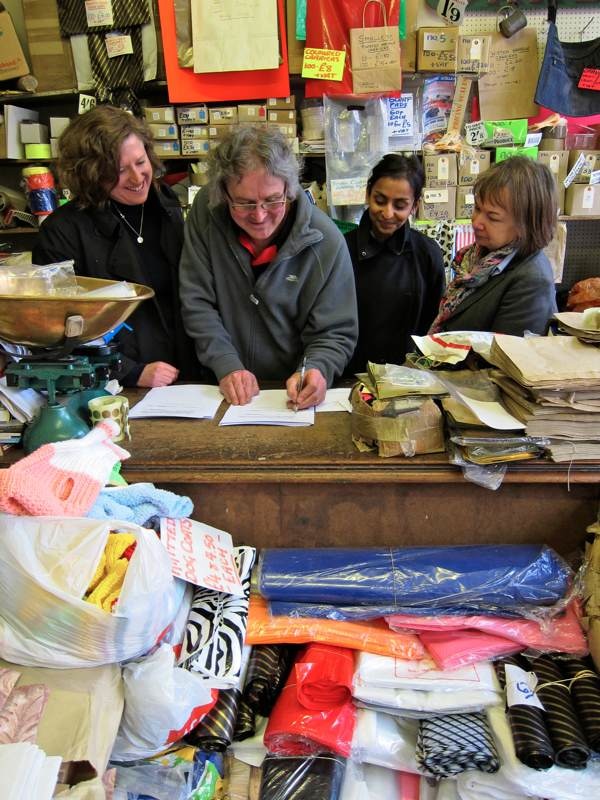
Founding members Paul Gardner, Leila McAlister, Shanaz Khan and Fiona Atkins sign the constitution of the East End Trades Guild on the counter at Gardners’ Market Sundriesmen
Since the launch of the East End Trades Guild last November, members have been busy behind the scenes forming an interim board and creating a legal constitution. Yet in parallel to this process of securing the foundations that will enable the Guild to speak as the authoritative voice for all proprietor-owned-and-run-businesses in the East End, there have been some notable successes which culminated in a meeting at Westminster this week.
A survey of the two hundred East End Trades Guild members by the New Economics Foundation revealed that collectively they represent a turnover of £77 million and employ twelve hundred people, of which almost all live locally. Additionally, Guild members contribute £17 million in wages to the local economy and pay £1.3 million in business rates. These figures contradict the assumption that small businesses are less significant financially than larger businesses, when in Tower Hamlets small businesses are the greater part of the economy. And it was not long before local government, in the form of Lutfur Rahman, Mayor of Tower Hamlets, recognised the political significance of the Guild, and requested to come and meet the members, visiting some of their businesses in February to hear members’ concerns directly.
The first tangible indication of the power of the East End Trades Guild came early in the year when shopkeepers in Whitechapel, including London Trimmings and M & G Hardware based in the Cambridge Heath Rd, were able to bargain collectively through the Guild to win compensation from Crossrail for loss of trade during the extended building works for the new rail link.
Another notable victory was in the resolution of the situation with Les Bobrow, who has been trading from a shop in Spitalfield Market for a decade with his business Wood N’ Things yet Ballymore, the owners of the building, wanted to evict him to replace him with a chainstore. After pressure from the Guild, Ballymore relented. “I cannot thank you enough for all your hard work in helping me to achieve what seemed an impossible task in securing a new lease.” admitted Les, “I realise there were many other people involved in helping me to achieve my goal whether they be members of the EETG or the general public, and public figures in prominent positions at local government level. Without your help in creating EETG to act on my behalf, I’m convinced I could not have taken on Ballymore by myself and secured a new lease.”
As an outcome of this debacle, the reluctance of Balllymore to negotiate or have dialogue with small businesses was addressed this week with a meeting in Westminster hosted by Rushanara Ali, MP for Bethnal Green & Bow. Members of the East End Trades Guild led by Shanaz Khan, Acting Chair, met John Turner, Ballymore’s Head of Planning and Gareth Keating, Ballymore’s Director of Asset Management, across a table in Portcullis House on Wednesday.
Although Ballymore have now sold the Spitalfields Market for £105 million, to set against their £800 million debt, they remain heavily involved in the vast new developments proposed for the site of the former Bishopsgate Goods Yard and it was this which formed the substance of the debate. While Ballymore made a profit on the sale of the Spitalfields Market based upon the increase in property value, their policy of leasing the shops to chains and their corporate management of the stallholders has reduced the footfall in recent years and sucked the life out of the market, with the notable exception of Thursday’s antiques market.
Challenging this shortcoming, Shanaz Khan, on behalf of the Guild, advocated the value of small independent businesses, not least as the primary reason why people come to the East End. She requested that Ballymore enter into a dialogue with the Guild about the Bishopsgate Goodsyard developments – something that could be beneficial to both parties, permitting Ballymore the opportunity to work in partnership with local businesses and creating the possibility that the new developments could have an integral relationship with the existing markets and small trades, and not simply introduce shopping malls filled with more chains into the East End. John Turner referred the Guild to Ballymore’s existing “community consultation” and invited them to take part in that. But when a Guild member pointed out that they had attended the consultation meeting for local businesses and no-one else had turned up, it became apparent that there was a widespread public mistrust of Ballymore, and the sincerity of their consultation process was questioned.
At this point, Rushanara Ali, who had followed the discussion closely, spoke up passionately. “People say to me, ‘What is it with your constituency? How come you have the highest level of child poverty alongside the highest rate of economic development.” she declared, directing her words at the Ballymore developers, “And you guys are right at the heart of it!” Growing up in Tower Hamlets, Rushanara has seen decades of economic development, starting with Canary Wharf, that has achieved little improvement in the quality of life for East Enders. Recalling the heroic yet doomed campaign to prevent Ballymore redeveloping the Spitalfields Market, she issued them with a challenge. “Tower Hamlets is a highly politicised borough” she asserted, recognising that no-one wants to see a repeat of the conflicts that characterised the Market development, “and these people are offering you a chance to work with them.”
“It’s going to be different this time,” claimed John Turner, advocating the merits of his expensively-conceived community-style consultation. “That’s what you said last time,” retorted Rushanara Ali in frustration, “Ballymore has created a lot of bad feeling and unhappiness in Tower Hamlets.” Chastened and recognising that they were not going to be let off the hook, Ballymore agreed to regular direct meetings with the East End Trades Guild with the date of first meeting set in July.
The East End Trades Guild has discovered a powerful ally in Rushanara Ali – who wants developers to face their responsibilities to residents and enrich the local economy, not simply grab land for their own ends. “I recognise you work under constraints,” she conceded to Ballymore, “but you need to meet these people part-way.”
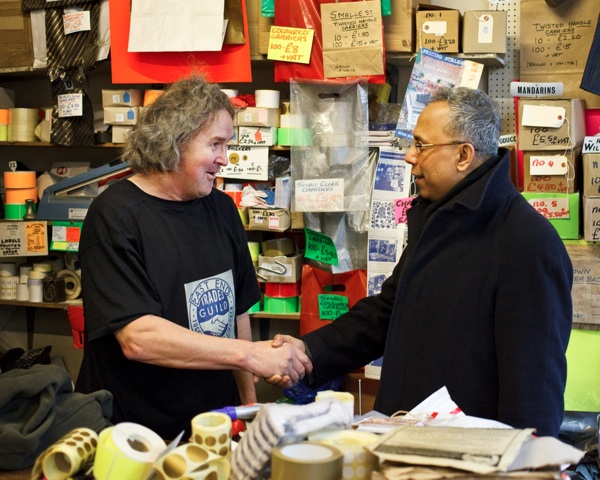
Elected Mayor of Tower Hamlets, Lutfur Rahman, congratulates Paul Gardner of Gardners’ Market Sundriesmen on founding the East End Trades Guild.

At Westminster, members of the Guild with Shanaz Khan, Acting Chair, shaking hands with John Turner of Ballymore, in the presence of Rushanara Ali, MP for Bethnal Green & Bow, initiating a new dialogue between local traders and large-scale developers.

Shanaz Khan, Acting Chair of East End Trades Guild and proprietor of Chaat Tea House in Redchurch St.

The Founding of the East End Trades Guild at Christ Church, Spitalfields, last November.
Founding photograph copyright © Martin Usborne
Westminster photographs copyright © Jeremy Freedman
You may also like the read about
The Founding of the East End Trades Guild
So Long, Tubby Isaac’s Jellied Eel Stall
It is my sad duty to report the news that the legendary Tubby Isaac’s Jellied Eel Stall in Aldgate will close forever on Friday – ninety-four years after it opened. I am republishing my feature about Tubby Isaac’s today as a tribute, and you have until the end of the week to get down there and pay your respects by enjoying a last helping of their delicious seafood.

Paul Simpson
At the furthest extent of Spitalfields where it meets Aldgate is Tubby Isaac’s Jellied Eel Stall, run today by Paul Simpson, fourth generation in this celebrated business founded in 1919, still selling the fresh seafood that was once the staple diet in this neighbourhood. Here where the traffic thunders down Aldgate High St, tucked round the corner of Goulston St, Tubby Isaac’s stall shelters from the hurly-burly. And one morning, Paul told me the story of his world-famous stall as he set up for the day, while I savoured the salty-sweet seaweed scent of the seafood and eager customers arrived to eat that famous East End delicacy, jellied eels for breakfast.
“I’ll be the last one ever to do this!” Paul confessed to me with pride tinged by melancholy, as he pulled a huge bowl of eels from the fridge,“My father, Ted Simpson, had the business before me, he got it from his Uncle Solly who took over from Tubby Isaac, who opened the first stall in 1919. Isaac ran it until 1939 when he got a whiff of another war coming and emigrated to America with his boys, so they would not be conscripted – but then they got enlisted over there instead. And when Isaac left, his nephew Solly took over the business and ran it until he died in 1975. Then my dad ran it from 1975 ’til 1989, and I’ve been here ever since.”
“I began working at the Walthamstow stall when I was fourteen – as a runner, cleaning, washing up, cutting bread, getting the beers, buying the coffees, collecting the bacon sandwiches. and sweeping up. The business isn’t what it was years ago, all the eels stalls along Roman Road and Brick Lane – they were here for a long, long time and they’ve closed. It’s a sign of the times.” he informed me plainly. Yet Paul Simpson is steadfast and philosophical, serving his regular customers daily, and taking consolation from their devotion to his stall. In fact, “Regular customers are my only customers” he admitted to me with a weary smile, “and some of them are in their eighties and nineties who used to come here with their parents!”
Understandably, Paul takes his eels very seriously. Divulging something of the magic of the preparation of this mysterious fish, he explained that when eels are boiled, the jelly exuded during the cooking sets to create a natural preservative. “Look, it creates its own jelly!” declared Paul, holding up the huge bowl of eels to show me and letting it quiver enticingly for my pleasure. The jelly was a crucial factor before refrigeration, when a family could eat from a bowl of jellied eels and then put the dish in a cold pantry, where the jelly would reset preserving it for the next day. Paul was insistent that he only sells top-quality eels, always fresh never frozen, and after a lifetime on the stall, being particular about seafood is almost his religion. “If you sell good stuff, they will come,” he reassured me, seeing that I was now anxious about the future of his stall after what he had revealed earlier.
Resuming work, removing bowls of winkles, cockles, prawns and mussels from the fridge, “It ain’t a job of enjoyment, it’s a job of necessity,” protested Paul, turning morose again, sighing as he arranged oysters in a tray, “It’s what I know, it’s what pays the bills but it ain’t the kind of job you want your kids to do, when there’s no reward for working your guts off.” Yet in spite of this bluster, it was apparent Peter harbours a self-respecting sense of independence at holding out again history, after lesser eel sellers shut up shop. “When it turns cold, I put so many clothes on I look like the Michelin man by the end of the day!” he boasted to me with a swagger, as if to convince me of his survival ability.
Then Jim arrived, one of Tubby Isaac’s regulars, a cab driver who wolfed a dish of eels doused in vinegar and liberally sprinkled with pepper, taking a couple of lobster tails with him for a snack later. Paul brightened at once to greet Jim and they fell into hasty familar chit-chat, the football, the weather and the day’s rounds, and Jim got back on the road before the traffic warden came along. “It’s like a pub here, the regulars come all day.” Paul confided to me with a residual smile. And I saw there was a certain beauty to the oasis of civility that Tubby Isaac’s manifests, where old friends can return regularly over an entire lifetime, a landmark of continuity in existence.
It is a testament to Paul Simpson’s tenacity and the quality of his fish that Tubby Isaac’s lasted so long, now that this once densely populated former Jewish neighbourhood has emptied out and the culture of which jellied eels was a part has almost vanished. Tubby Isaac’s was a stubborn fragment of an earlier world, carrying the lively history of the society it once served now all the other jellied eels stalls in Aldgate are gone and the street is no longer full with people enjoying eels. But leaving all this aside, Paul is open until the end of this week selling delicious and healthy non-fattening food, so this is your last chance to seek him out and try it for yourself.
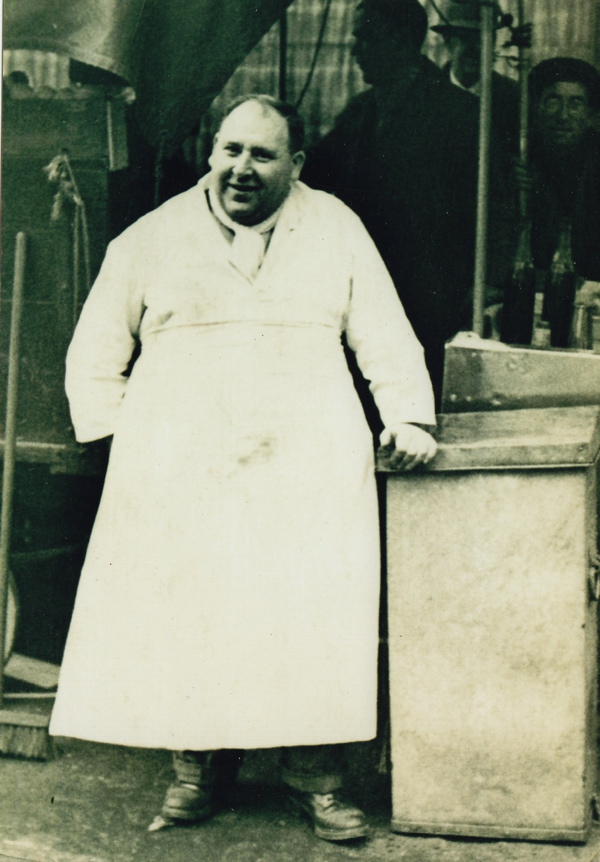
The earliest photo of “Tubby” Isaac Brenner who founded the stall in 1919.

Tubby and one of his sons in the twenties.
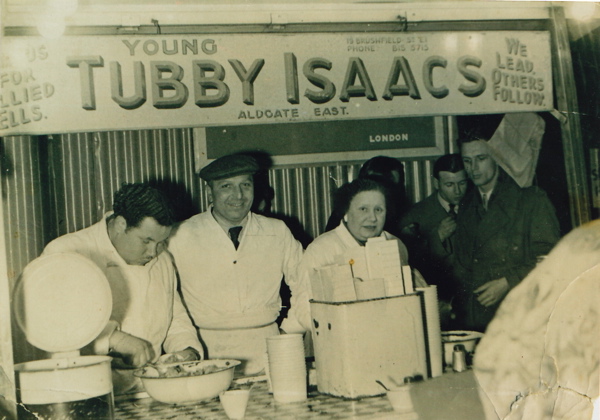
Ted Simpson, Solly and Patsy Gritzman in the forties, after Tubby and his sons left for America.
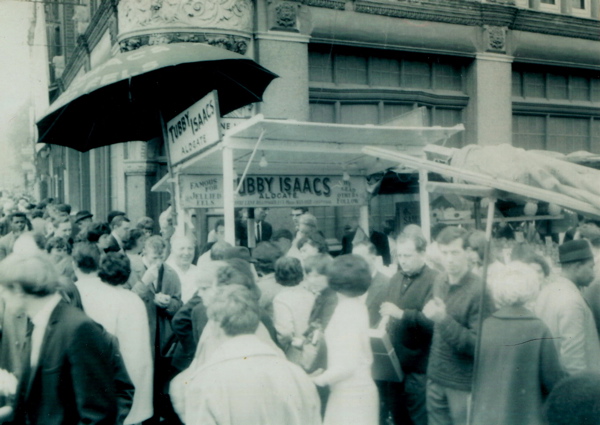
In Petticoat Lane, sixties.
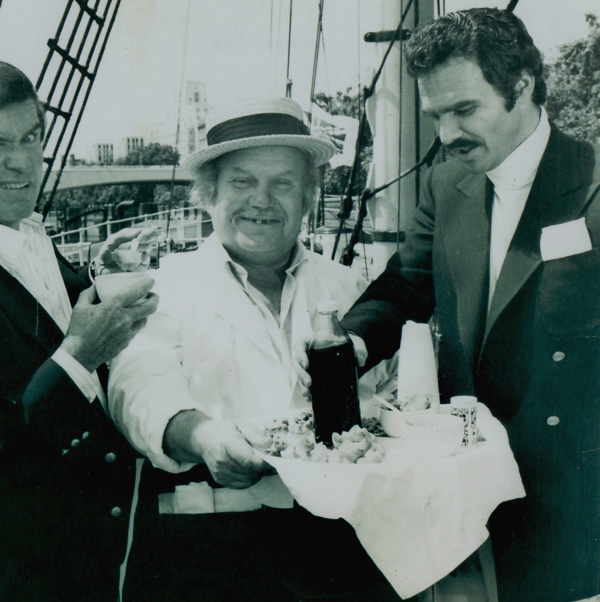
Ted serves jellied eels to Burt Reynolds and American talk show host Mike Douglas in the seventies
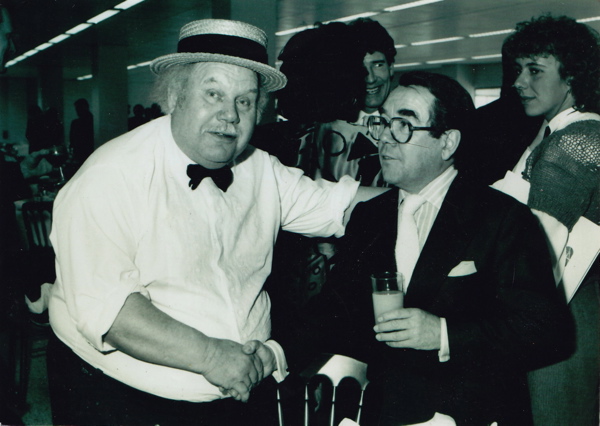
Ted shakes hands with Ronnie Corbett.
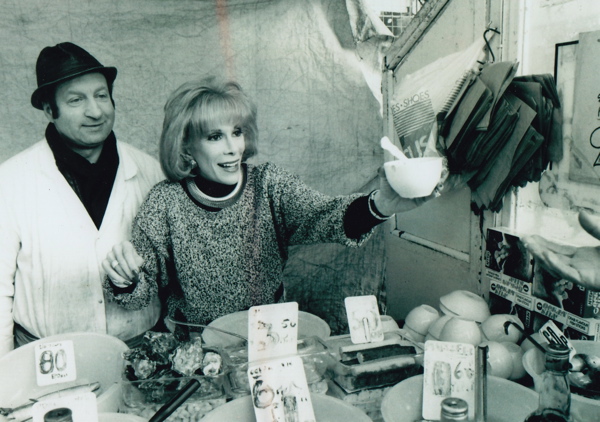
Joan Rivers helped out at the stall in the eighties.
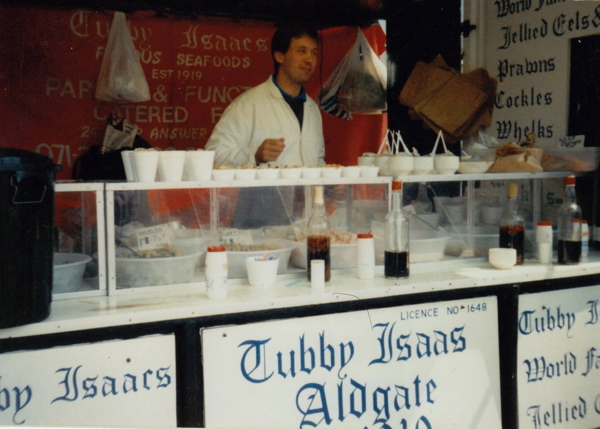
Paul Simpson at the stall in 1989, before it became refridgerated.
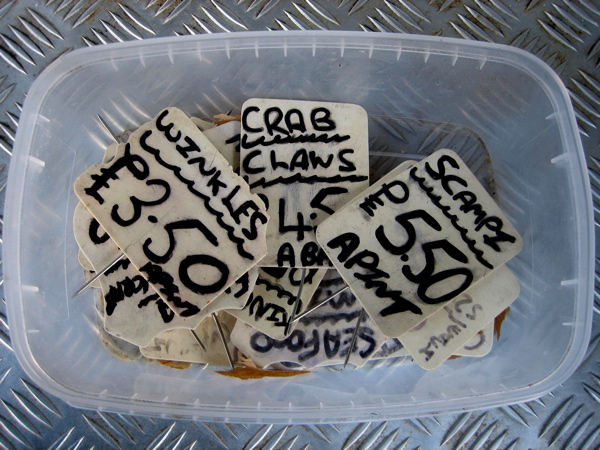

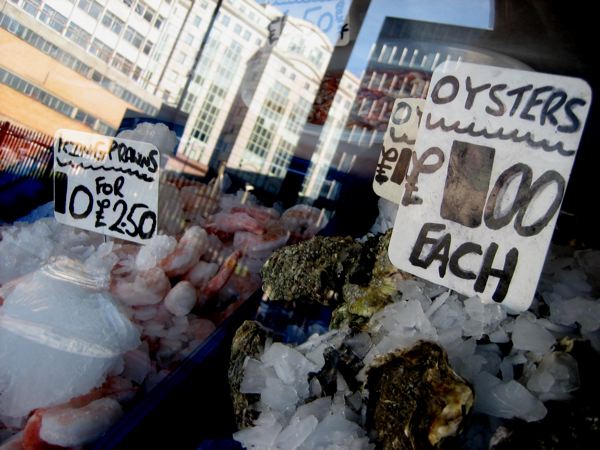

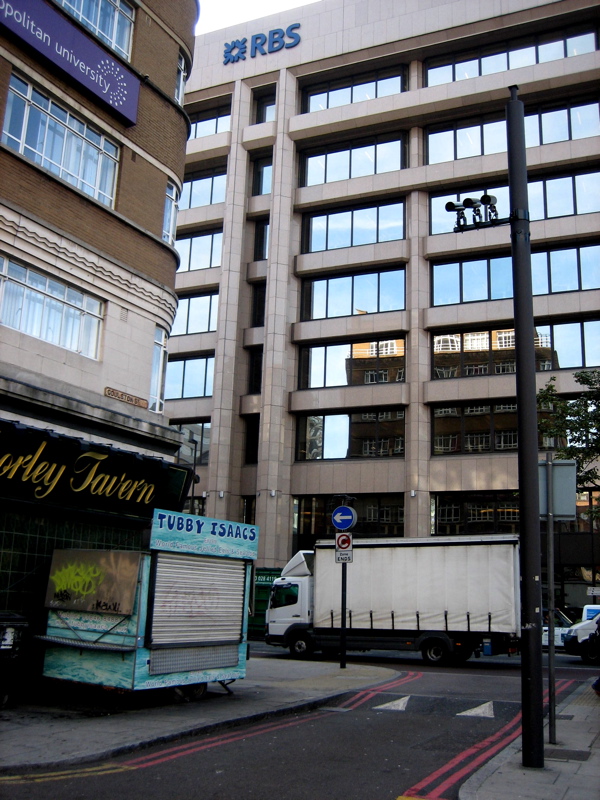
Tubby Isaacs stall in Aldgate.
You may also like to read about
Boiling the Eels at Barney’s Seafood
The Last Fish Porters of Billingsgate Market
Thomas Onwhyn’s Pictures Of London

Born in Clerkenwell in 1813, as the eldest son of a bookseller, Thomas Onwhyn created a series of cheap mass-produced satirical prints illustrating the comedy of everyday life for publishers Rock Brothers & Payne in the eighteen forties and fifties. In his time, Onwhyn was overshadowed by the talent of George Cruickshank and won notoriety for supplying pictures to pirated editions of Pickwick Papers and Nicholas Nickleby, which drew the ire of Charles Dickens who wrote of, “the singular Vileness of the Illustrations.”
Nevertheless, these fascinating ‘Pictures of London’ that I came upon in the Bishopsgate Institute demonstrate a critical intelligence, a sly humour and an unexpected political sensibility. In this social panorama,originally published as one concertina-fold strip, Onwhyn contrasts the culture and lives of rich and the poor in London with subtle comedy, tracing their interdependence yet making it quite clear where his sympathy lay.

The Court – Dress Wearers.

Dressmakers.

The Opera Box.
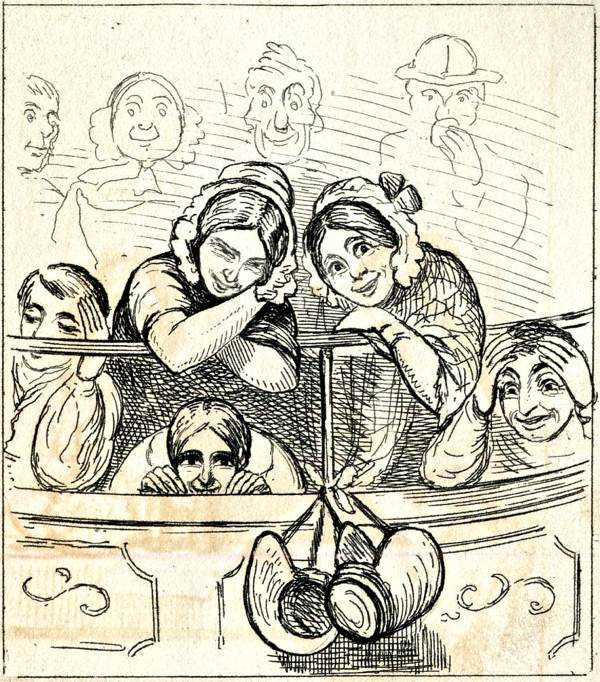
The Gallery.

The West End Dinner Party.

A Charity Dinner.

Mayfair.

Rag Fair.

Music of the Drawing Room.

Street Music.
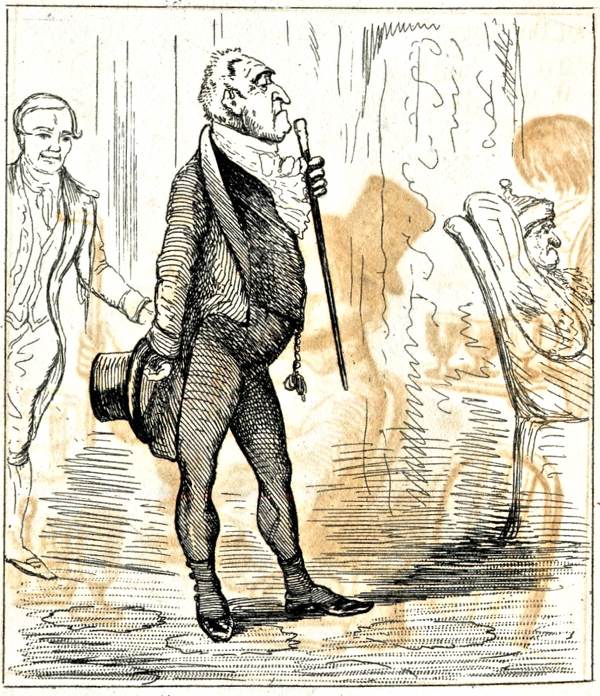
The Physician.

The Medical Student.
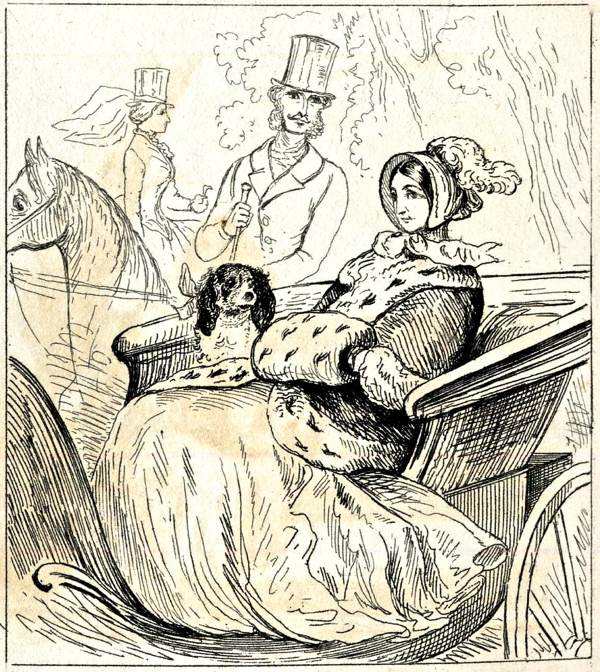
The Parks – Day.

The Parks – Night.

The Club – The Wine Bibber.

The Gin Shop – The Dram Drinker.

The Shopkeeper.

The Shirtmaker.

The Bouquet Maker.

The Basket Woman. (Initialled – T.O. Thomas Onwhyn)
Images courtesy Bishopsgate Institute
You may also like to take a look at