
The Pointe Shoe Makers of Hackney
Contributing Photographer Patricia Niven and Novelist Sarah Winman visited the Freed of London factory in Well St to create these portraits of the Pointe Shoe Makers, an elite band of highly-skilled craftsmen who make the satin slippers worn by the world’s greatest ballerinas.

It takes two to three years to become a fully trained Pointe Shoe Maker. Hardly surprising, as each shoe is hand-made and two thirds of these shoes (including the toe ‘blocks’ themselves) are made to a Dancer’s individual specifications. Such specifications are printed onto dockets which the Makers work by. One docket was quite illegible to me – a shorthand code with the only clear words: Hessian, strong, slight taper.
There is something inaccessible and mysterious about this world – from the Makers’ symbols, to the language of the shoe, to the exclusive world of the finished product. And yet, I found the Makers to be a pragmatic group of men, into football not dance, who have become blasé about praise and who all refer to the making of these shoes as a job, irrespective of the beauty, the artistry of the finished product. They live in a world of chiaroscuro, where prima ballerinas, surrounded by bodyguards, turn up in limousines to applaud them whilst they stand at their benches six days a week producing nearly forty shoes a day, a quarter of a million shoes a year.
I asked each man if he had ever tried on a ballet shoe to get a sense of the feel – Never! – Even more remarkable then, to think that each shoe is made by touch, look, and imagination alone.
I asked each man whether he had ever been to the ballet.
I asked each man whether he calls himself a Pointe Shoe Maker or a Shoe Maker.
I asked the Maker Taksim (Anchor) what he would like people to know about his work.
He said, “I wish people could try this job. This is the hardest job I’ve ever done. My hands go numb, and I can’t feel them. Over time you get used to the pain.”
I said, “That’s what ballet dancers say about their feet.”
He said,”Really? So, their feet are our hands.”
– Sarah Winman

Taksim known as ‘Anchor’
“I’ve been here for fifteen years. I love my job and no-one tells me what to do. It came easy to me because I used to work in the leather trade and put that experience to good use. I know how the material works and moves.
I haven’t been to the ballet but I have seen my dancers on television – Leanne Benjamin, Jane Taylor to name two. I make Jane Taylor one hundred pairs of shoes a year, all 5 ½ X heel pins. I am proud to make shoes for her. I have met all my prima ballerinas and had photos taken with them. They appreciate us I think.
I have no time to go to the ballet because I work six days a week. I need to rest and put my feet up. I’m a big football fan, enjoying the tennis too, at the moment. We don’t tell people we make ballet shoes, we are just shoe makers. I make thirty-eight pairs a day and am booked up until mid December.
I was born in Cyprus. I never imagined I would have done this. When I came here thirty years ago, I expected to work in a fish and chip shop.”
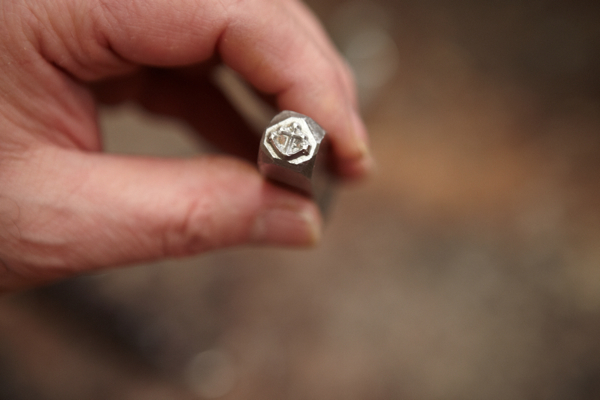
Taksim’s ‘anchor.’

Taksim’s ‘anchor’ in place upon a pair of his shoes – ballerinas have been known to scratch off their Maker’s symbol to keep him exclusively for her!

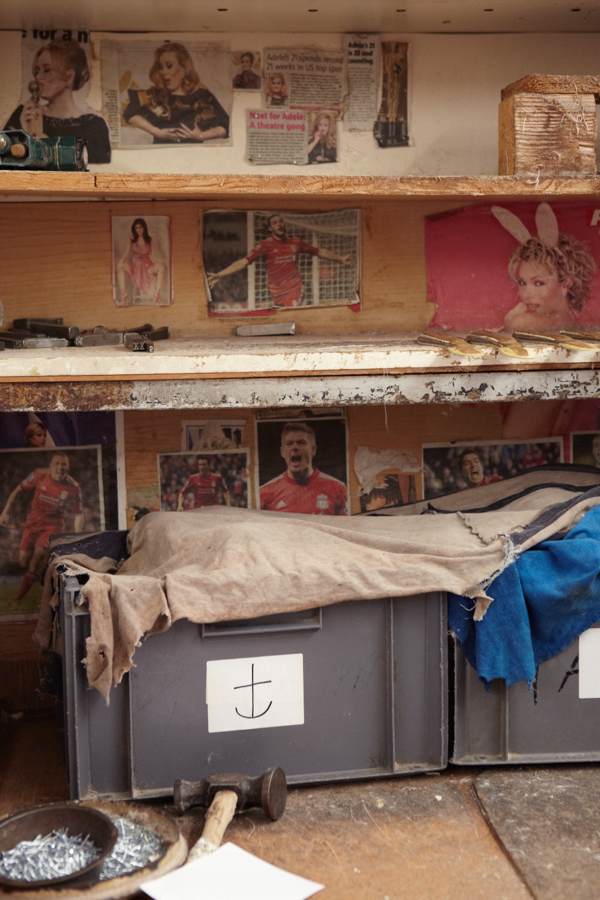
Taksim’s work bench.

Fred known as ‘F’
“I was in-between jobs and went to Freed in Mercer St in Covent Garden and learned to be a Maker. I had no idea what I was getting into. My friends all worked in warehouses or were builders so I didn’t tell ‘em what I did until I’d been making shoes for a year.
Have I been to the ballet? No, you’re havin’ a larf, aren’t you?!
When I made my first shoe, I was elated, tell you the truth, that I’d done something. I started off unloading lorries, and it took three months before I got on the bench. Then did soft toes, then hard toes.
I make forty pairs a day and I have a waiting list. I call myself a shoe maker. When you hear a prima ballerina say you’re great, it’s wonderful. Then you hear it so many times…and well…
There’s really nothing glamorous about standing at a bench for ten hours. Do I enjoy making shoes? Look at me. I’m sixty-two and sweating!”
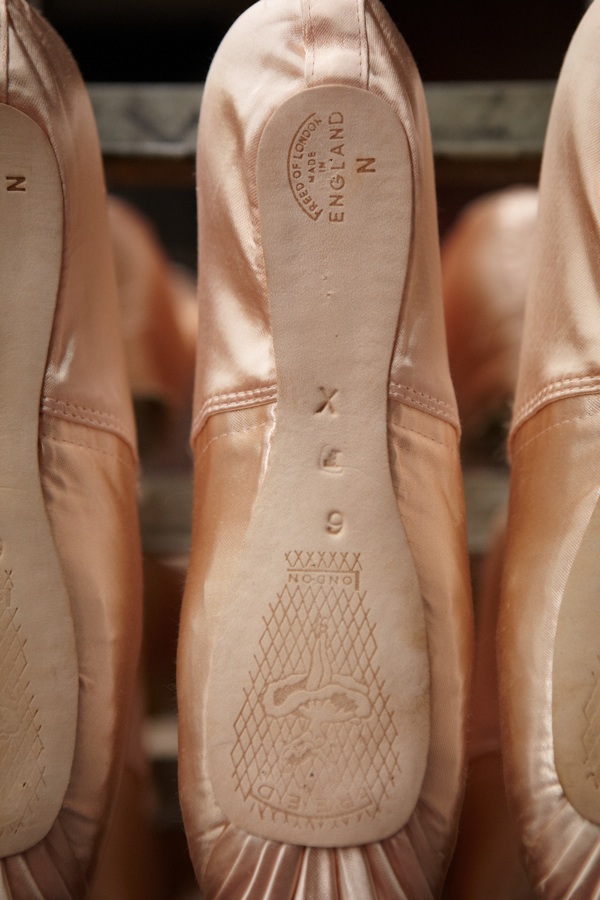
Fred’s ‘F’ on the sole a pair of his shoes.
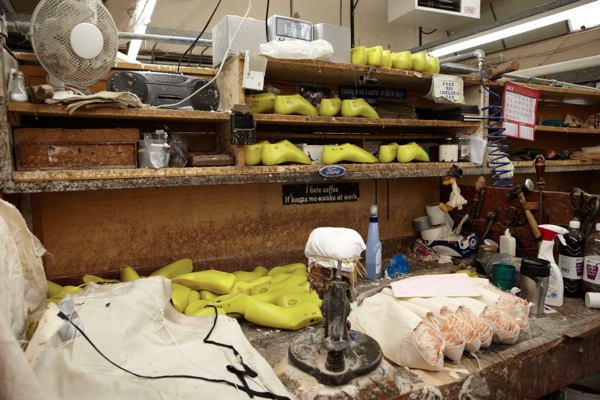
Fred’s work bench.

Ray known as ‘Crown’
“We are given symbols when we start making shoes, so that if anything is wrong with the shoe they know who to blame! I have been here for twenty-six years. My father-in-law got me a job interview here. I get satisfaction from making the whole shoe myself. Other shoes are made by lots of people.
I love that dancers are wearing my shoes.
You are trained and learn the basics. People teach you their ways and sometimes those ways are conflicting. Then I had to find my own way. There’s a lot of trial and error. I found a style that I like and the dancers like, and I’ve kept to it.
Every dancer likes a different shoe. Each Maker is different – one might use more paste than the other. But dancers come back and stay with you for life. They will tell you what they need.
I’ve never been to the ballet, but if I watch it on the television I look at their feet. I know how to craft the shoe by touch, feel, look. I instinctively know how much paste to use, how much hessian. If the dancer wants a light block she’ll get one. If she wants a shoe with more give I do that. The dancers are fascinated to meet the makers. I make forty pairs a day. I don’t have much time off. People wait weeks to get a shoe from me. I make a lot of shoes for the New York City Ballet.
I love my job. I could never have dreamt of this, or of having my photo taken with dancers or even of someone writing down what I’m saying.
I was born around here – grew up bit with my dad and a bit with my mum. It was all a bit of an adventure. My two daughters take up my time. I made a pair of soft toes for my six year old girl. They don’t do ballet now. They have found their own interests.”
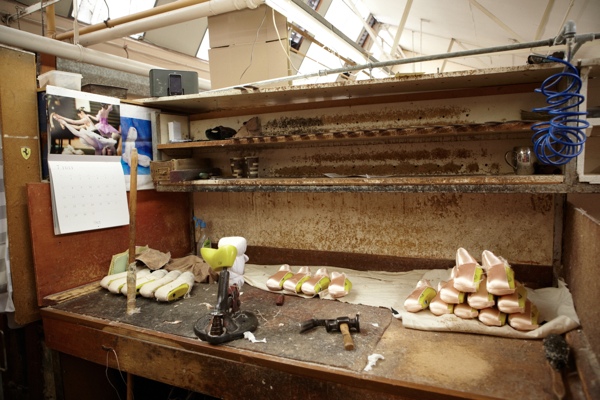
Ray’s work bench.
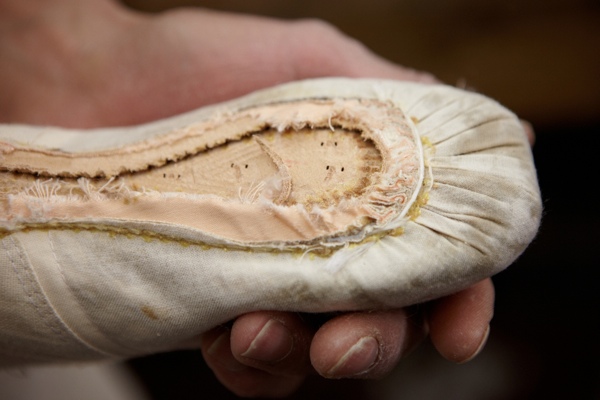
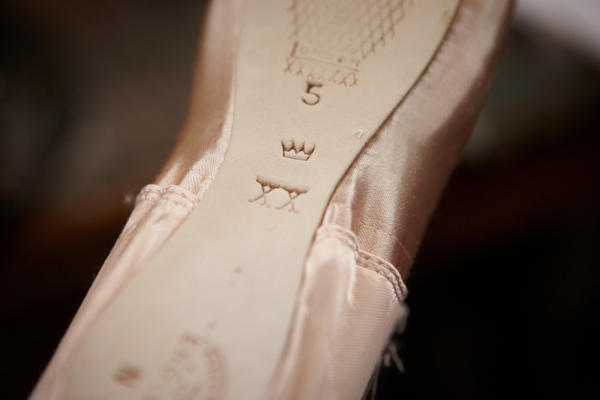
Ray’s ‘Crown’ on the sole of a pair of his shoes.

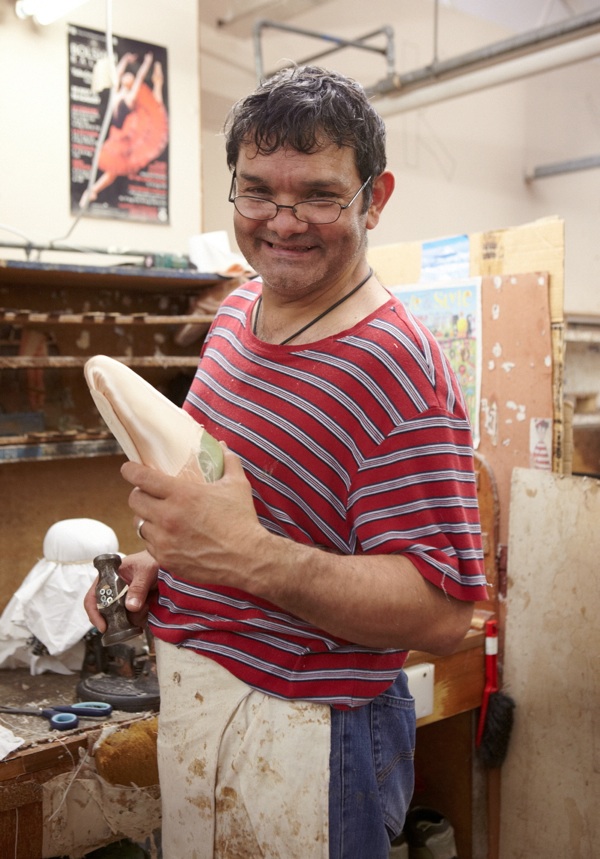
Daniel known as ‘Butterfly’
“My wife has been a Pointe Shoe Fitter in the Freed shop since she was sixteen. She was a dancer, went away and travelled the world. We met when she was in the Philippines, and she brought me back with her and we had babies. She went back to the shop and four months ago I started to make shoes here. I have a good teacher in Tksim, he’s a Master.
I do enjoy it. I always found it fascinating when my wife talked about dancing and shows and make-up. I always had the curiosity. Always thought, I want to be part of all that.
I haven’t been to the ballet yet, but I’ve watched it on Youtube.
Since I’ve been making shoes, I look at the dancer’s feet. I used to be a tight-rope walker and a trapeze artist. When I was a trapeze artist, I had to wear a leather glove. We made the leather gloves ourselves and the leather was so important. I understand how the leather is important for the shoe, I’d never realised it before.
I will call myself a Pointe Shoe Maker.I make twenty-four shoes a day. It has come naturally to me, but it’s very hard work. My hands and my shoulders ache. This here is the first ever shoe I made here. It gives me great satisfaction because it is a very important shoe – because this is a shoe that is not to be worn everyday in the street.
It’s craftsmanship.”

Daniel’s first shoe with his ‘Butterfly’ mark on the sole.
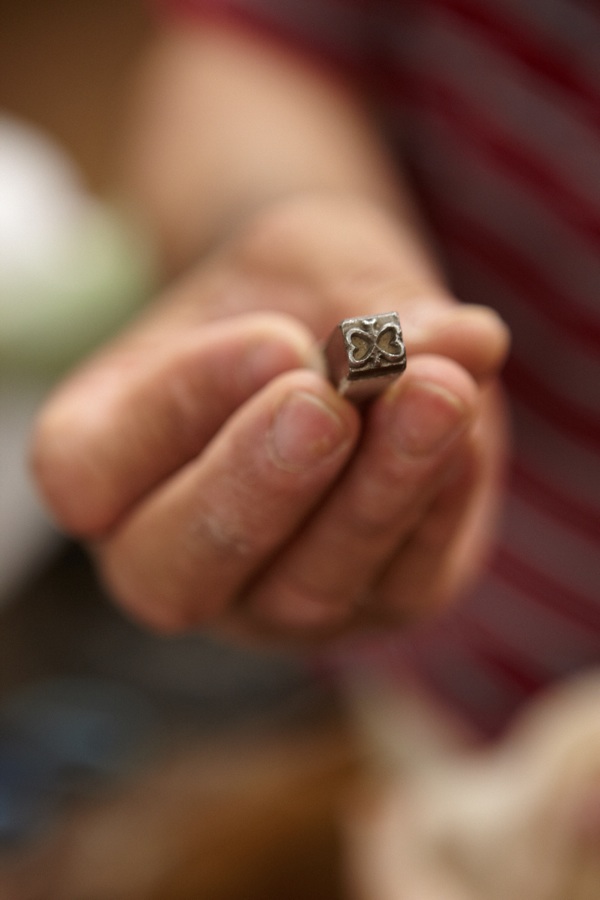
Daniel’s mark.
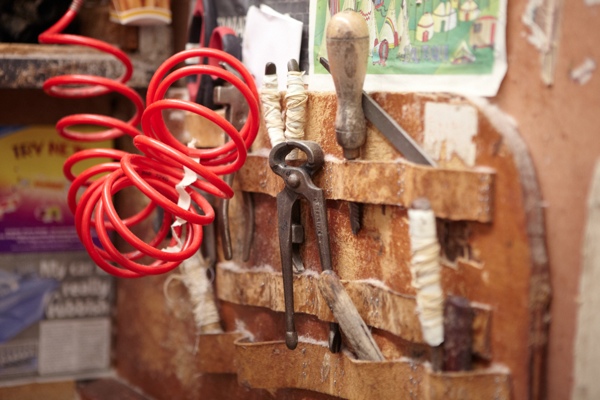
At Daniel’s work bench.
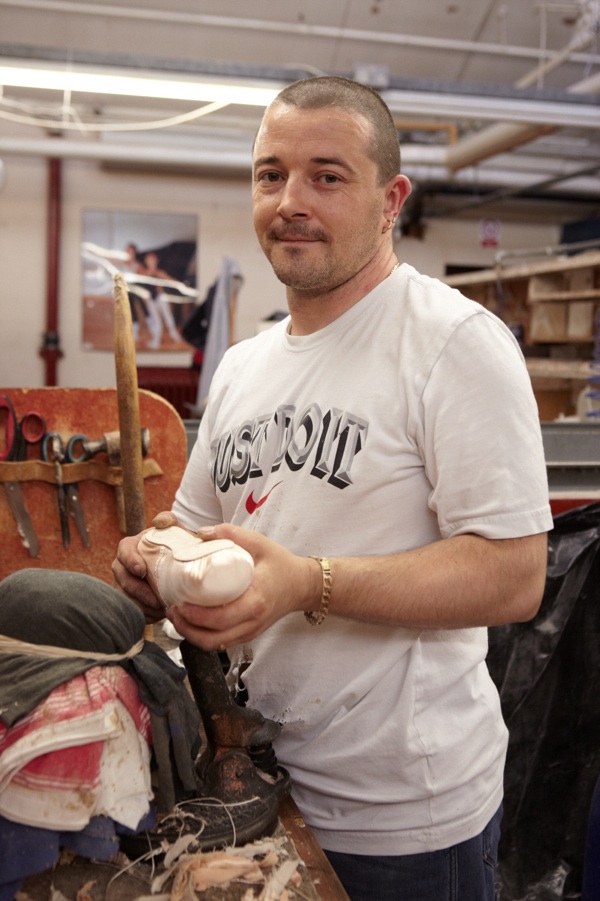
Alan known as ‘Triangle’
“I started next door in Despatch and then I was given the opportunity to come here and make shoes. I made my first pair of shoes nine years ago. Dancers come here and they thank us and applaud us.
I have been to the ballet once. I can’t remember what it was – it wasn’t really my cup of tea. I’m a DJ and prefer a different dance. My kids do ballet and I’ve made one of them a pair of shoes
I call myself a shoe maker.
If I wasn’t here, I would be painting or decorating or a barman.
We don’t see what other people see. You see something beautiful. I see a finished product, a skilled job well done.”

One of Alan’s shoes with his ‘triangle’ on the sole.
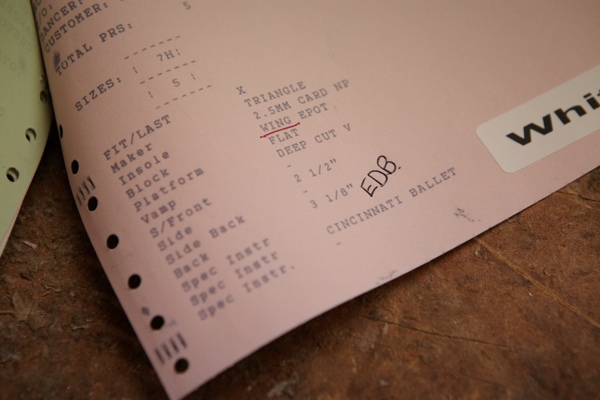
An order with the customer’s specifications.

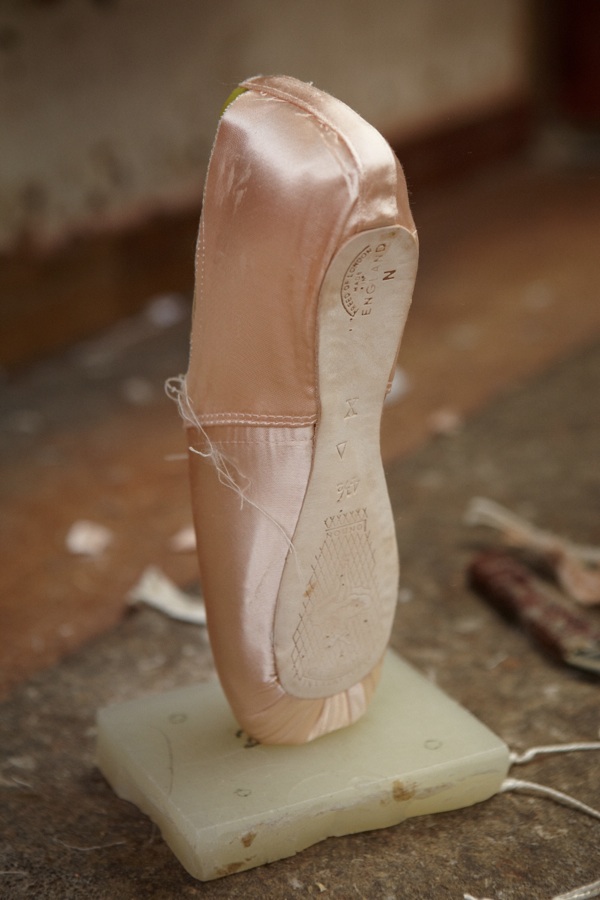
When the block and platform have been created – this is the moment when it rests ghostly on Pointe, unaided, perfectly balanced, dancing its own breathtaking dance.
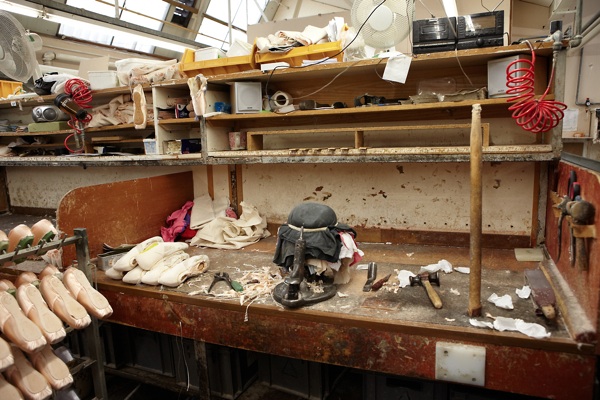
Alan’s work bench

Darren Plume, Quality Controller & Manager of the London Makers
“My grandfather worked as a storeman here thirty years ago. I left school and joined here when I was fifteen and a half years old. I started off unloading lorries, making tea, that sort of thing. I’ve been here twenty-six years now and have done mostly everything. I took over jobs as people left or retired. I never thought about leaving because I’m happy with what I do.
It’s the people who made me want to stay. I had a lot of father figures. I’ve known Ray (Crown) twenty-six years and we see each other more than we see our own families. My mates used to think I was nuts working here because they were all on building sites, but then they saw the dancers who came in and they changed their minds.
The Makers know more about the shoes than I do. The shoes go into the ovens overnight to bake and harden the block and, first thing in the morning, I check every one of them – that’s my responsibility. I also liaise with the dancers, because if they have a problem they’ll ask to visit us.
Once I used to be in awe of them, now I think they might be a little in awe of us. No shoes, no dance. The dancers rely on us a lot. Their Maker would only have to get an injury and psychologically it could affect them quite a bit.
I’ve been to the ballet twice. I saw Swan Lake at the ENO in the round five years ago. We took a Maker’s bench down there and made shoes in the foyer for the audience to see what we did. Three, four hundred people wanted to shake our hands.
When I was watching the ballet I was only looking at the shoes.
This job’s a bit like a fairytale. You can get caught up in the moment. Some days it flows, some days it’s a pig’s ear and some days you’re as happy as Larry. The most important thing as a manager is to listen to people. Then buy ‘em a coffee and make ‘em happy.”
Photographs copyright © Patricia Niven
You may also like to read about
Moyra Peralta in Spitalfields

Men sleeping outside Itchy Park
“I felt Spitalfields was my home at one time, even though I was never resident there apart from staying at Providence Row for the occasional night.” admitted photographer Moyra Peralta when she showed me these pictures, taken while working in the shelter in Crispin St during the seventies and eighties.
“Every time I look at these, I see myself there,” she confided, contemplating her affectionate portraits of those she once knew who lived rough upon the streets of Spitalfields, “yet it doesn’t feel like me anymore, now that I am no longer in touch and I have no idea how many have died.” Despite its obvious social documentary quality, Moyra’s photography is deeply personal work.
Recalling the days when she and her partner, Rodger, studied under Jorge Lewinsky in the sixties, Moyra revealed the basis of her vision. “It opened up the mental apparatus to see photography not as an amateur hobby but as something fundamental to life. And it was doing the Soup Run that triggered off the urge to record. At first, I couldn’t believe what I saw, because in the day you didn’t see it. At night, you see a lot of things you wouldn’t otherwise see – hundreds of men sleeping at the back of a hotel in Central London, when there was no sign of them by day because they went to the day shelter.”
Forsaking her chosen path as a teacher, Moyra spent more than a decade working in shelters and on the street, befriending those with no other place to go and taking their pictures. “I started out as a volunteer on the night Soup Run, but once I got to know the men individually, I thought – that’s it, I don’t want to be anywhere else. I realised they didn’t lose their soul, and that spirit was what turned me from a volunteer into a full-time worker at Providence Row,” she confessed.
“Our children were exposed to the scene and spent every Christmas with us at the night shelter where we volunteered. We used to have people home for the weekend as long as they didn’t drink, but I think they found it quite a struggle to stay sober for two days. I could quite understand why people would drink, when it’s so cold you can’t sleep and you’re scared of being attacked by ‘normal’ people.”

Gerry B. in his cubicle at Providence Row – “Gerry sent me a letter containing only a few lavender seeds and a one pound note – the significance of which I shall never know, for Gerry died a few days later. He always had been so very kind and I never quite knew why. Like many before him, his remains were laid in a pauper’s grave.
I remember, above all, his intervention on my first evening at work, when men in the dormitory had planned a surprise to test the reaction of the greenhorn on the night shift. Forewarned is forearmed, and the equanimity with which I viewed a row of bare bottoms in beds along the dormitory wall stood me in good stead for future interaction.”

“The women’s entrance at the corner of Crispin St & Artillery Lane, where Sister Paul is seen handing out clean shirts to a small group of men.”

Dining Room at Providence Row.

“The two Marys, known as ‘Cotton Pickin’ and ‘Foxie,’ making sandwiches at Providence Row for the daily distribution in Crispin St.”

Providence Row Night Refuge, Crispin St.

Men waiting for sandwiches outside Providence Row Night Refuge, 1973. “Established in 1880, this refuge offered free shelter and food to those who needed it for over one hundred years.”

Market lorries in Crispin St.

White’s Row and Tenterground.

Charlie & Bob outside Christ Church. “Charlie was a well-known East End character and Bob was my co-worker at the night shelter.”

Charlie, Bob & J.W. “Charlie rendering ‘Danny Boy’ to his captive audience.”

Charlie & Bob.

Sleeping in a niche, Christ Church 1975. “The crypt was opened in 1965 as a rehabilitation hostel for meths and crude spirit drinkers.”

Mary M. in Spitalfields.

“In Brushfield St beside Spitalfields Market, Dougie is seen having his lunch at ‘Bonfire Corner.’ Traditionally there had been a fire on this corner since the fifties.”

Sylvia, Tenterground 1978. “This homeless woman slept rough but accepted meals from Providence Row in Crispin St.”

Brushfield St, 1976. “Discarded vegetables at the closing of each market day proved a godsend to people on low incomes.”

Painter, Providence Row.

The bonfire corner at Spitalfields Market, 1973. “There had been deaths here from market lorries reversing. Ted McV., however, died of malnutrition and exposure. “

Peggy

Old Mary, seventies.
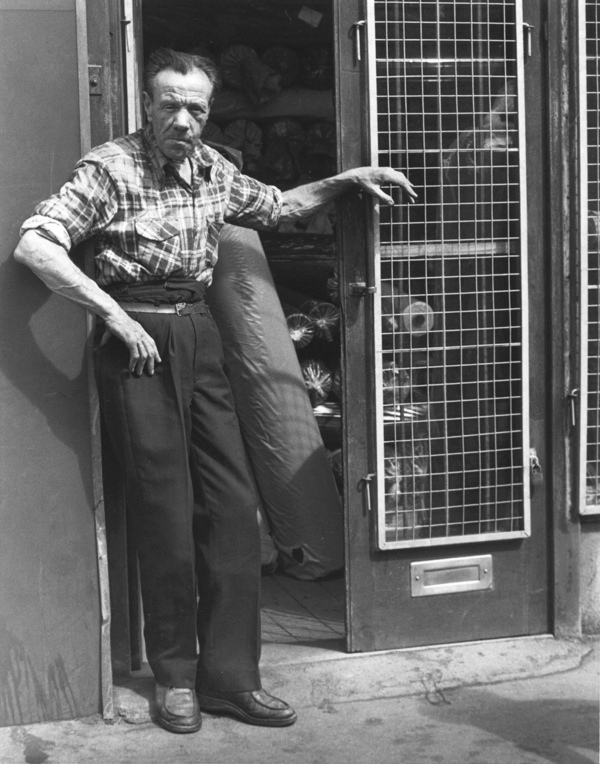
John Jamieson, Commercial St 1979.

John Jamieson smiling.

J.W. with harmonica

J.W. & Pauline in Whitechapel, eighties

Pauline in Whitechapel, eighties.
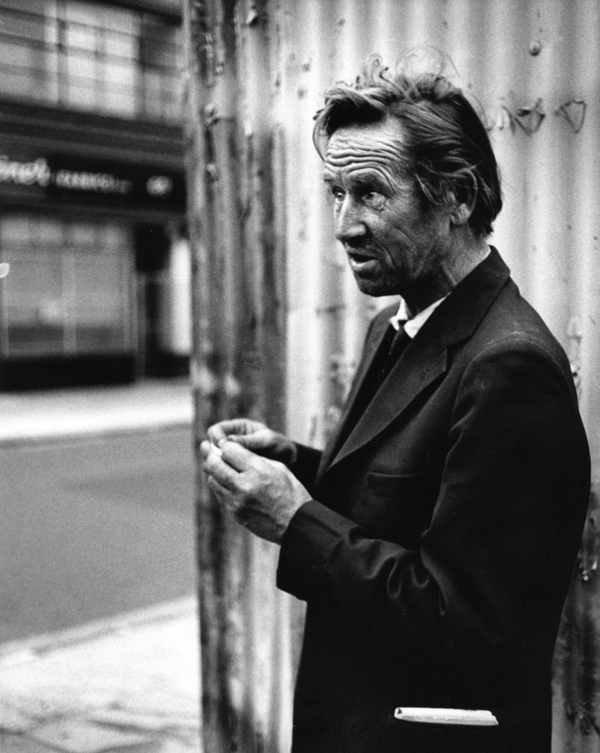
Willie G. in pensive mood, rolling a fag in Whitechapel, 1976.

Gunthorpe St, 1974

Michael, Cable St 1973
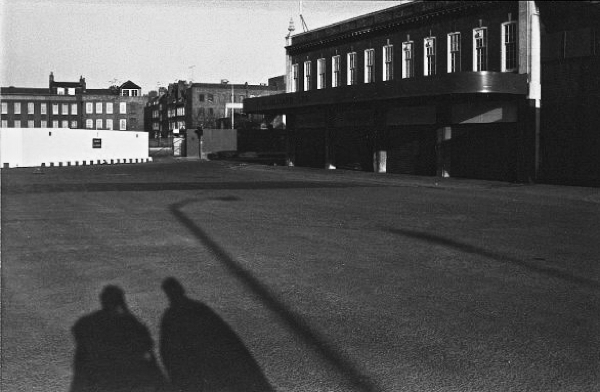
Moyra & her partner Rodger in Spitalfields, late seventies.
Photographs copyright © Moyra Peralta
Signed copies of ‘NEARLY INVISIBLE,’ including these photographs and more by Moyra Peralta plus writing by John Berger & Alan Bennett, are available directly from Moyra. Email moyra.peralta@zen.co.uk to get your copy.
You may also like to read about
The Doss Houses of Spitalfields
Kate Griffin & The Music Hall Murders
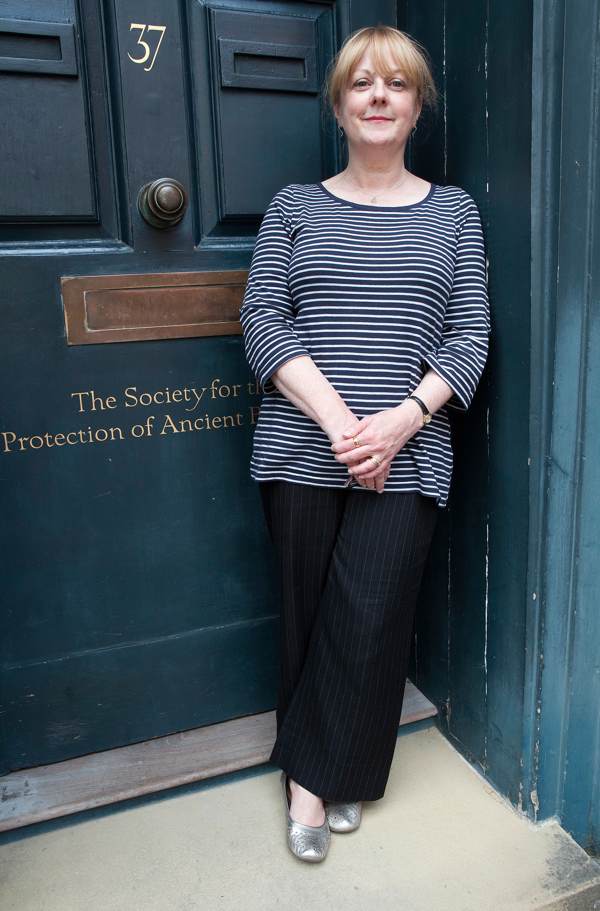
Kate Griffin
“It has been my privilege to stand in The Gentle Author’s shoes for the last week and to meet so many interesting people in the course of writing these pieces – as you will have detected, I am fascinated by London and its stories.
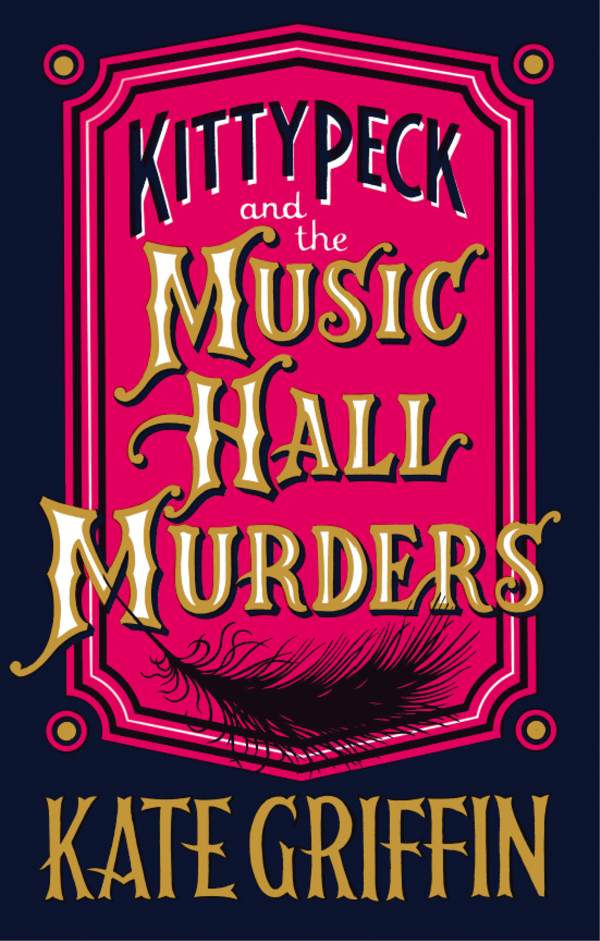
Kitty Peck and the Music Hall Murders (published by Faber and Faber) is a distillation of tales I have heard from my family over the years and of my own, slightly off-beat, enthusiasms and interests. I am happy to admit to being a connoisseur of those classic fog-bound Hammer films, the cobbled streets of Sherlock Holmes and the cheap, spangled glamour of the Music Hall. My novel is a cocktail of all the things that, for me, represent the dark essence of Victorian London – with a romping dash of studied theatricality.
Importantly, I have deliberately placed a clutch of strong female characters at the centre of the action because, all too often, it is the men who dominate tales of old London, whether as proto-coppers or sinister miscreants. From my own family history, I know just how important and tough the women of Limehouse and the hinterland of the docks in the East End really were.
If you decide to read more I hope you will enjoy it and let me know – I am on twitter @KateAGriffin
In the meantime, thanks for reading my posts this week and thanks to The Gentle Author for publishing them. I shall leave you with the opening scene from Kitty Peck and the Music Hall Murders...”
Kate Griffin, Spital Sq
Lady Ginger’s fingers were black. From the flaking tips of her long, curling nails to the crinkled skin just visible beneath the clacking jumble of rings, her hands were stained like a coal boy’s.
Not that she’d sully her fingers with anything as menial as a scuttle, you understand. Oh no, Lady Ginger was too grand for that.
She lifted the pipe to her lips again and sucked noisily, all the while watching me with those hooded eyes.
The room was dark and the air smelt like Mrs Conway’s special paint box at The Gaudy.
Tell the truth, it always makes me feel a bit noxious when I clean up Mrs Conway’s dressing table after a show. That ‘lucky’ cologne she uses honks like a fox in a fessional. That’s what Lucca says, and he’s from Italy where the Romans are, so he ought to know.
Anyhow, I just stood there fiddling with the frayed cuffs of my best frock, waiting for Lady Ginger to say something.
After a moment she inhaled deeply, took the pipe out of her mouth, closed her eyes and leaned back into the pile of embroidered cushions that passed for furniture. The bangles on her skinny yellow arms jingled as she settled into the nest of silk.
I didn’t know what to do. I looked over at the man standing guard in front of the door, but he didn’t make a move, just kept staring at the bird cage hanging up by the shuttered window.
I took a couple of steps forward and cleared my throat. If the old woman had fallen asleep, perhaps I could wake her up?
Nothing.
Now I was a bit closer I could see her tarry lips – the fine lines etched around her tiny mouth were black, too. It looked like she’d swallowed a spider and it was trying to get out again.
Opium’s a horrible thing. Ma always said it was smoke from the Devil’s nostrils and that it could coil you tighter than a hangman’s noose. Not that Joey had taken any notice of her.
I coughed loudly, but still the old lady didn’t budge. I was beginning to think that she might be dead when the parrot went off.
‘Pretty girl, pretty girl…’
Lady Ginger’s eyes snapped open and she grinned up at me – her mouth all wet and dark. No teeth, as far as I could see.
‘You are seldom wrong, Jacobin. She’s a pretty piece indeed.’
I was amazed.
Lady Ginger’s voice was 100 years younger than the rest of her. All high and fluttery like a girl’s. And posh, too – very cultured it was. I’d never been near enough to hear her before. Down at the docks when she visits with her lascar boys there’s always been too much bumping and shouting to hear what she’s saying to them – and, anyway, I’ve kept a distance since Joey. When she comes to The Gaudy – not often, mind – she’s got her special curtained box near the stage with its own staircase and door to the side alley, so we never see her arrive or leave and we never see who’s with her, neither. It’s always best not to ask too many questions in Paradise.
‘So, you are Kitty Peck?’
Lady Ginger shifted on her pile of cushions and pulled herself up into a sitting position. The loose gown she wore swamped her scrawny frame as she adjusted her legs and crossed them. Her feet were bare and now I saw she even had rings on her gnarly toes.
She reached for her long pipe and began to suck again, all the while staring up at me.
Then she spoke in that odd little voice.
‘I had dealings with your brother, Joseph, wasn’t it? Fair like you, and handsome with it. Now what became of him, I wonder?’
I didn’t answer. We both knew what had happened to Joey.
‘Cat got your tongue, Kitty Peck?’ Her long eyes narrowed and she smiled. Then she reached for an ebony writing box next to the cushion pile, the bangles on her arms clacking and jangling as she hauled it onto her lap. Opening the lid so that I couldn’t see inside, she began to rummage.
‘Well, I can’t say I blame you for not wanting to talk about him. A bad business, that was.’
My belly boiled and I had to fight the urge to say something I’d regret.
‘Joey’s been… gone for two years now, and I miss him every day.’
‘Do you now? Miss a murderer? What a loyal little sister you are Kitty Peck.’
Murderer?
He’d worked for The Lady, right enough – and everyone in Paradise knew what that meant – but Joey wasn’t no murderer. He couldn’t even put a half-dead bird chewed up by a cat out of its misery. He’d left that sort of thing to me.
I opened my mouth, but nothing came out.
Lady Ginger grinned wider, her eyes glinting in the thin candlelight.
I could see her more clearly now. It was the closest I’d ever been to the woman who put the fear into half of London, and as I stood there I realised with a shock that she was a faker.
All this time I’d thought she was a Chinawoman, but that long plait, those fingernails, those clothes, those jewels – they were just a costume. Lady Ginger was as English as I was.
‘Still, loyalty is a quality I value,’ she continued, producing a green leather case no bigger than a matchbox from the depths of the writing box. She flicked open the shagreen lid with one of her long black fingernails and shook three tiny red dice into the palm of her hand.
‘Do you know what these are, Miss Peck?’
I shook my head.
‘They are the future.’ She raised her open palm so that I could see the dice more clearly. Now I looked, these wasn’t like the dice played by men at the back of The Gaudy. Instead of the usual dots, the faces were covered with golden patterns.
Lady Ginger closed her fingers and shook her fist. I could hear the dice clicking against her rings.
Then she spat three times on the wooden floorboards next to her cushions and dropped the dice into the triangle formed by the glistening blobs of black saliva.
She stared down for a moment and then she began to chuckle. ‘Come closer, Kitty Peck, and tell me what you see.’
Now, she’s not a woman to cross. For all I wanted to back out of that stinking room, skiddle down the winding stairs and get as far away from Lady Ginger’s Palace as possible, I didn’t want to rile her. So I bent down and looked at the dice – all three showed the same pattern.
I reached forward to take up the nearest one, but – quick as a limelight flare – she lashed out, scratching my wrist with one of them curled nails.
‘No one touches the dice, but me. However, I will allow you to read them. What do you see?’
I rubbed my wrist and cleared my throat. ‘Nothing, Lady. Not numbers leastways.’
I stared hard at the golden swirling shape repeated on the top of the three red cubes and realised that the pattern had a head and what looked like wings.
‘It might be a dragon?’ I ventured.
Lady Ginger swept up the dice and poured them back into the green case. Then she stared at me.
‘You show promise, Miss Peck. Very few people are able to read the I-ching by intuition alone. It seems I have chosen well. And the dice confirmed that – although three dragons warn of an element of risk.’
She reached for her pipe and sucked noisily again until the little carved bowl at the end began to glow and a thin trail of sickly sweet smoke coiled up into the air. All the while she looked at me and I was reminded of Mr Fitzpatrick at The Gaudy when he’s assessing a new girl for the chorus.
As it turned out, I wasn’t far wrong about that.
“Do you have a head for heights?…”
Click here to buy a copy of Kitty Peck & The Music Hall Murders!
Portrait of Kate Griffin copyright © Colin O’Brien
Angela Flanders, Perfumer

Angela Flanders
There is something magical about Angela Flanders‘ secret workshop. Her little room in Bethnal Green is lined with bottles full of scented oils, the contents of each one carefully inscribed in silver ink. It does not take a huge leap of imagination to see Angela as a modern-day alchemist, mixing potions and precious substances together until they are transmuted into something miraculous.
Small and neat with bright grey eyes and an inquisitive – almost academic – spirit, she could easily be transported back in time into the orbit of Spitalfield’s most famous herbalist Nicholas Culpeper. She refers to her bottles of essential oils as “my library of ingredients.” The air of Angela’s workroom – a private, experimental space – is heady with the scent of flowers, spices and resins from all over the world. If you could capture it in a bottle you could almost carry the globe in your pocket.
She surveys the bottles and vials lined up on the shelves behind her. “I don’t think you could call what I do remotely conventional or scientific, I just follow my instincts. Sometimes I spend the whole day here mixing and trying different combinations to see what happens. I always start with the base notes because an old ‘nose’ in France once told me: ‘You wouldn’t build a house from the roof down; you must always start with the foundations’. So that’s what I do”.
“I play with layering separate ingredients here in the workshop, other times I’ll carry the idea of a scent around with me for several days, wondering where to take it. Then something pops into my head – a new ingredient to add to the mix that blends and lifts. Usually those flashes are absolutely right. To be honest, I don’t know why it works, but I think it must be a happy combination of instinct, inspiration and experience.”
She smiles, “I suppose you could relate it to good food? I think it’s a little bit like that programme Ready Steady Cook where people brought a bag full of the most unlikely ingredients to the TV studio and a chef would produce something mouth-watering. Creating perfume is similar – you develop an olfactory palette.”
Angela has been based in Columbia Rd since 1985 and, appropriately, given that London’s best-loved flower market is on her doorstep, for much of that time, she has worked with scent. When she first found her premises – a former shoe shop dating from around 1850 – it had been closed up and forgotten for 25 years. “We had to get a locksmith to let us in,” she recalls, “It was in quite a state. The roof was shot and there was a terrible smell, but it was full of all its original features and I was determined to keep as much as I could. I saw it as somewhere in need of care and attention. I fell in love with it.”
One of the fascinating things about talking to people this week has been the connections. I was delighted to learn that The Society for the Protection of Ancient Buildings where I work, was Angela’s first port of call – nearly thirty years ago – when trying to find information about the right things to do to care for her lovely old premises
“The walls were painted a dark blue-grey and I wanted to keep it,” she explains, “I wasn’t sure what to do, but SPAB advised me to leave the paintwork alone and to simply scrub it, wash it down and then wax-polish it. So that’s exactly what I did and it brightened up beautifully.”
Initially, Angela intended to run her own decorative paint business from Columbia Rd. A graduate of Manchester School of Art, she worked in theatre design and as a costume designer at the BBC. Subsequently, she attended courses in Interior Design at the Inchbald School and at Hackney Building College and her plan was to work primarily with furniture. But remember that “terrible smell” mentioned earlier? It was finding something to remedy the problem that set Angela on the perfume trail. She began to buy and then to make her own pot pourri, using essential oils and dried flowers – and people liked what she made.
“It was something that just grew,” she says, “I suppose I loved doing it because I’d always enjoyed making things and transforming things. With the pot pourris I think I was enjoying conjuring up atmospheres for rooms – scents that might suggest the past or a mood. At first I’d go to Spitalfields Market and buy the odd box of flowers and I’d dry them out by hanging them all round this building. Then I went to Covent Garden and bought a few more things from a merchant and within a year the business had expanded so much that I was taking in van-loads of flower deliveries. It was then that I realised that I couldn’t take on any more furniture commissions, because this was clearly the right thing to do.”
The perfume business is a direct result of Angela’s early experiments with essential oils and dried flowers. “I’ve got this theory that if you are on the right path people help you and that certainly happened to me,” Angela confided.
Sometimes assistance has come out of the blue. “It was odd,” she says,“One day I was in an antiques shop and I felt myself guided, literally, to the back shelf where there was a book by a nineteenth century perfumer called Septimus Piesse. It’s mainly him holding forth on scent and his opinions and it includes some of his formulas too, one of which I have used. It has become one of my bibles.”
Although she readily admits that she is entirely self-taught, perfumes by Angela Flanders have won international acclaim. Last year, Precious One – a rich floral created to celebrate the fifth anniversary of her daughter Kate’s elegant boutique, Precious in Artillery Passage – wafted off with the award for Best New Independent Fragrance at the annual Fragrance Foundation Awards Ceremony. Known as the Fifis, this is the scent industry equivalent of the Oscars. The decision, based on a blind ‘nosing’ by eminent fragrance writers and journalists was unanimous and Angela is still clearly delighted by her success. “We didn’t for a moment think we would win, because we were up against such stiff competition. It was marvellous.”
Intriguingly, since working with scent, she has discovered that the East End has a history of perfume manufacture. Essential oil distillers Bush Boake & Allen traded from premises near Broadway Market and today, the offices of Penhaligons are situated near Artillery Passage, Spitalfields, where Angela now has a second shop just along from her daughter’s.
“There’s a strong tradition of perfume making in this part of London. In fact, historically, a lot of the scents made here were sold in the City and in the West End.” She grins ruefully. “That’s the old story, isn’t it? The West End made its money off the talents of the East End, but it’s always been true. Think of the furniture makers, the gilders and the wood carvers who worked here for generations – all of them making a living as artisan craftsmen. I like to think that’s what I do – make things.”
When Angela moved into Columbia Rd she was in the vanguard of the new wave of small artisan businesses that now make it such a destination. “The flower market had flourished for one hundred and fifty years when we arrived, but it was a very different place then. At the time, as well as me, there was Jones’ Dairy, a deli and the Fred Bare hat shop. But slowly, slowly it took off. Someone once said to me, ‘If you can run a shop in Columbia Road, you can run a shop anywhere.’ I think that’s quite right!”
Angela pauses and looks at the glittering bottles surrounding around us in her shop. The colours of the liquids range from pale greens and delicate aqua shades to the deep golden tones of the darker woody fragrances that have become an Angela Flanders signature.
After a moment she nods and continues. “I also think I’m very lucky because I don’t have to satisfy the concerns of the big companies. I can play, I can have fun and I can make very small amounts of a scent. Being tiny, you can afford to be brave! Very often perfumers are forced to work to a commercial brief and it can be difficult for them. I’m not bound by that – I can explore and I treat myself to that freedom every day. Really, I just pootle along here in Bethnal Green and it’s wonderful.”


Angela Flanders and her daughter, Kate Evans.
Photographs copyright © Jeremy Freedman
Angela Flanders, 96 Columbia Rd (Sunday only, 10am to 3pm) & 4 Artillery Passage (Monday to Friday 11am to 6.30pm)
You may also like to read about
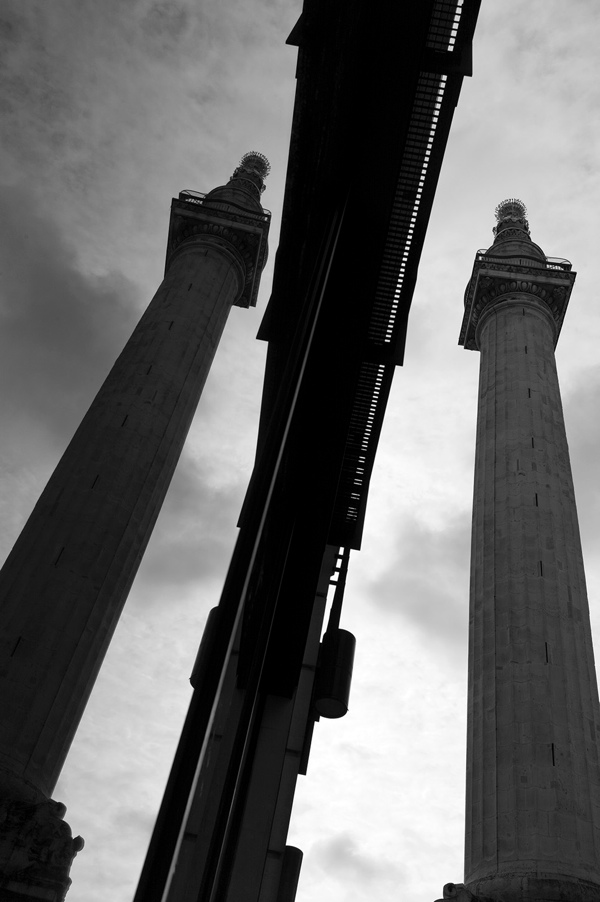
At The Monument
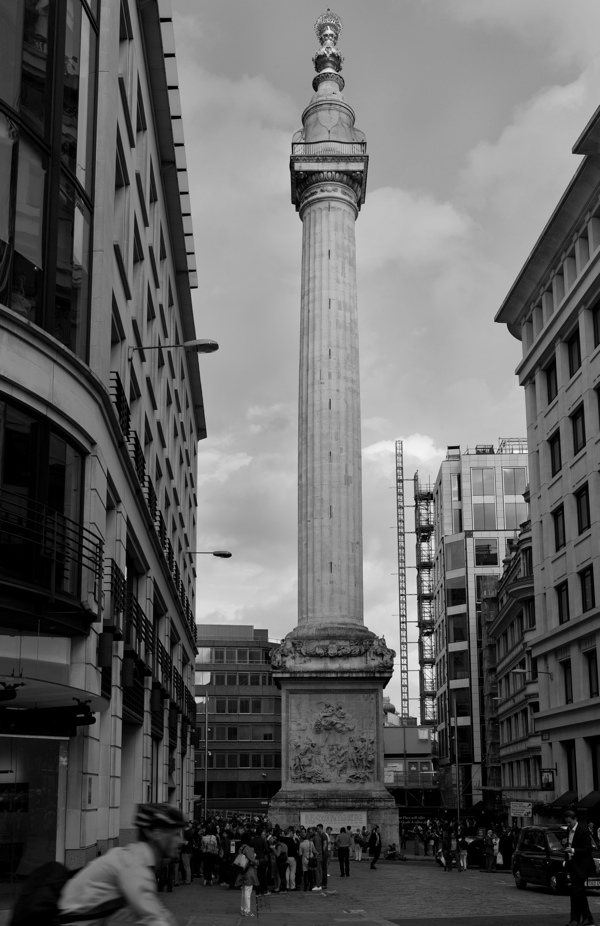
If you lay The Monument on its side to the West, the flame hits the spot in Pudding Lane where the fire broke out in Mr Farriner’s bakery during the early hours of 2nd September, 1666.
One of my earliest London memories is climbing to the top of The Monument with my dad when I was around four years old. I remember clearly pushing through the turnstile and dodging through people’s legs to reach the enticing black marble staircase that spiralled up through the centre of the column.
I could not wait to get to the top and see the view. Once we were up there and my dad lifted me onto his shoulders – so that I was even higher than everyone around us on the narrow stone platform – the thrill was electrifying. Yet I doubt ‘Health & Safety’ would allow that these days, even though the top of The Monument is now securely caged as a protection against pigeons, and a deterrent to potential suicides. (There were a few of those in the past.)
When I was four, I raced up those three hundred and eleven stairs but returning – in the company of Spitalfields Life Contributing Photographer Alex Pink – forty-six years later, I make the ascent at a much more leisurely pace. In fact, I stop several times and lean against the curved wall of cool Portland stone. Ostensibly, this is to allow an excited party of school children to pass as they loop back down the narrow stairs but, actually, I pause because the muscles in my legs are crying out for mercy and I am beginning to wonder if there could be an oxygen cylinder around the next turn of the stair.
Guide Mandy Thurkle grins as I gasp for breath. “You could say it keeps us fit. There are always two of us here on duty and, between us, we have to go up four times a day to make our regular checks. They say the calories you’ve burned off when you reach the top is the equivalent of a Mars Bar – not that I’m tempted. I’m not that keen on them.” She stands aside in the narrow entrance through the plinth as another party of school children jostles into the little atrium at the foot of the stairwell. There is an ‘ooh’ of excitement as they cluster together and crane their necks to look up at the stone steps coiling above them. “I love working here,” Mandy says, “I love the interaction with the visitors, seeing their reactions and answering their questions – the children’s are usually the best.”
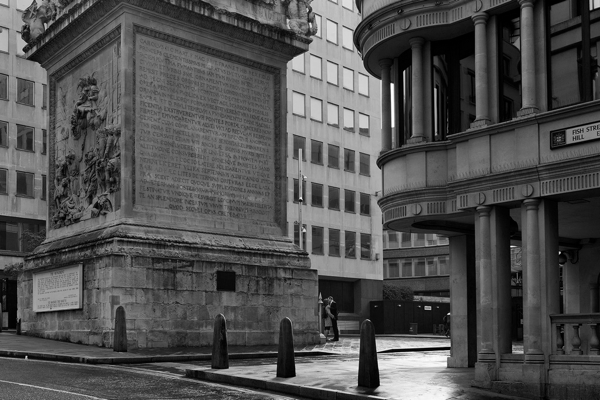
Built to commemorate the rebuilding of the City after the Great Fire of London in 1666, The Monument – still the tallest isolated stone column in the world – attracts more than 220,000 visitors a year. Designed by Robert Hooke under the supervision of Christopher Wren, it was one of the first visitor attractions in London to admit paying entrants. Back in the eighteenth century, early wardens and their families actually lived in the cell-like basement beneath the massive plinth. This room was originally designed to house Hooke’s astronomical observatory – he dreamed of using the new building as a giant telescope while Wren saw it as a useful place to conduct his gravity experiments.
It is easy to imagine those first wardens welcoming a succession of bewigged and patch-faced sightseers eager to view the newly-rising city from the finest vantage point. Once, The Monument was a towering landmark, clearly visible from any angle in the City, now that it is confined by ugly, boxy offices, its former significance is obscured by walls of glass and concrete. In any other great European capital, the little piazza in which it stands would become a destination in itself, flanked by coffee shops or smart boutiques, but these days you come upon this extraordinary building almost accidentally.
French-born Nathalie Rebillon-Lopez, Monument Assistant Exhibition Manager, agrees, “In France, I worked for the equivalent of English Heritage and they would never have allowed a building like this to be hemmed in. There is a rule that development cannot take place within fifty metres of an important site.” She shrugs, “But then, Paris is sometimes like a giant museum. You have to move with the times and things have to change. I often think London is good at that – it is very open to creativity and eclecticism, it is always alive.”
Of course, Nathalie is right but as we speak in the little paved square it is hard not to feel oppressed by the sheer scale of the new ‘Walkie Talkie’ building lumbering ever upwards in the streets beyond. Where The Monument is all about elegant neo-classical balance, the ‘Walkie Talkie’ is a cumbersome affront to the skyline – a visual joke that is not very funny. Monument guide Mandy, who has worked at the building and at its sister attraction Tower Bridge for twenty-three years, shares my misgivings. “I get a little bit upset at the top sometimes,” she confides, “I look down and see all the tiny old churches and their spires completely lost amongst the new buildings and it seems wrong.”
Not surprisingly, given that the Great Fire of London is a component of Key Stage One on the national curriculum, many of The Monument’s visitors today are under ten-years-old. They all receive a certificate on leaving to prove that they have been to the top. “Usually they are very well behaved,” says Nathalie approvingly,“We have to monitor stickers on the walls and things like chewing gum and even the odd bit of graffiti, but generally with those unwelcome additions, adults are more likely to be the offenders!”
The interior of The Monument – all two hundred and two feet of it – is cleaned by a team of regulars who come in three times a week at night when the visitors are gone. They must be the fittest cleaning crew in London! “They use simple mops and buckets to clean the marble stairs from top to bottom,” Nathalie explains, “We have to treat the building very, very gently because it is Grade One listed. We cannot make any changes or alterations without consulting English Heritage – even our turnstile, which we no longer use, is listed.”
When I first visited The Monument back in the sixties, it was black with soot and pollution. Today, after the major conservation work, the creamy Portland stone gleams almost as brightly as the gilded flame at the very top.
“We welcome visitors from all over the world and a surprising number of Londoners come here too,” says Nathalie, “It’s important to people – it’s part of the fabric of the city. It has a good feeling and it’s a very romantic place. For a fee, we allow people to come here after hours and propose with the whole of London spread out below them. Imagine that!” Standing on the viewing platform at the very top of the column, it is not hard to see why that would be appealing. Despite the development taking place in every direction, the view is simply breathtaking. Here at the very heart of old London you can look down on the streets below and still see, quite clearly, the imprint of the ancient, incinerated city that The Monument was built to commemorate.
Once I manage to catch my breath, I ask if people ever give up before they reach the top and the spectacular view. Nathalie laughs, “That’s quite rare. Once they’ve started most people are very determined. Just occasionally we might have a visitor who can’t make it because of vertigo, but we always give them a refund.”
For my money, whether you are a tourist or native, the best three pounds you could possibly spend in the City of London is the the entry fee to The Monument. And if you visited regularly you could ditch the gym membership!
(In September, Kate Griffin’s first book for children ‘The Jade Boy ‘ will be published by Templar – a dark tale of sorcery, secrets and what really caused the Great Fire of London.)
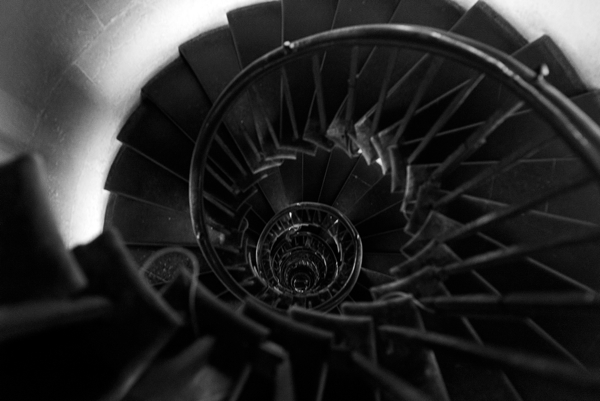
“my legs are crying out for mercy”
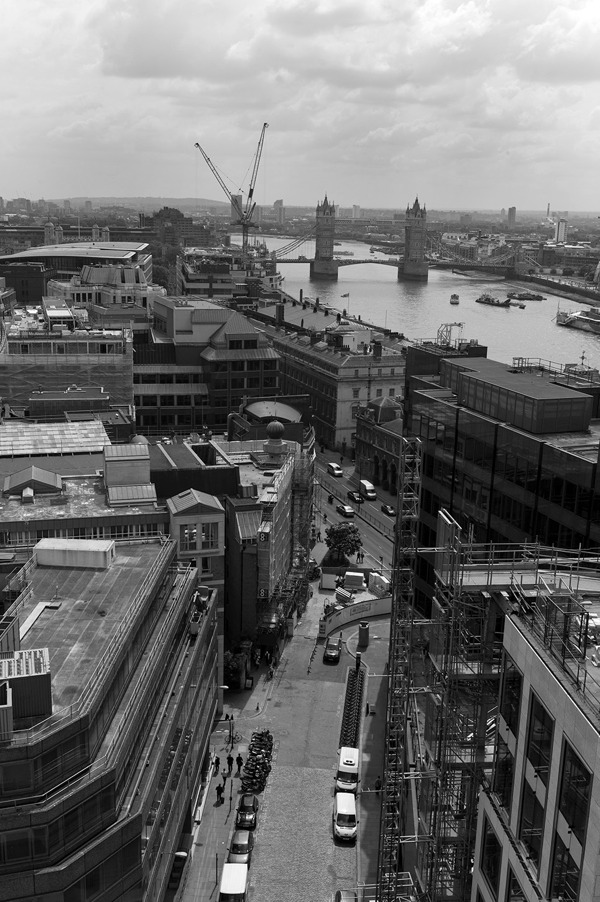
The view from the top photographed by Alex Pink
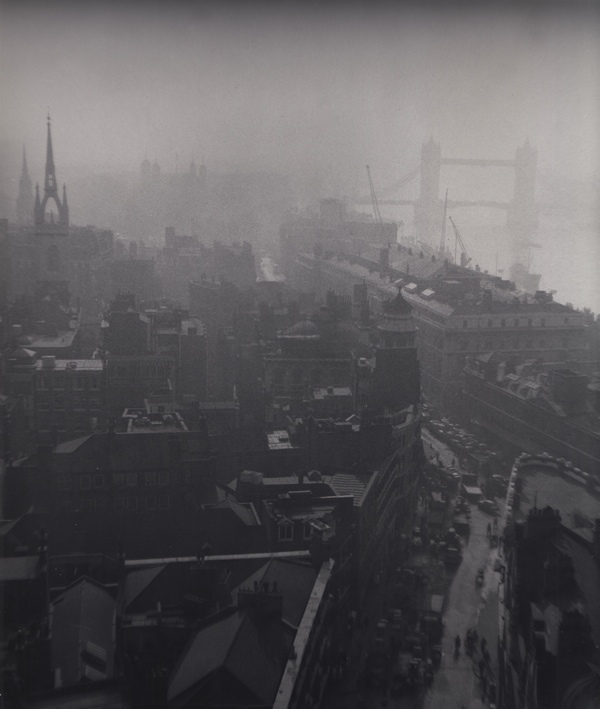
The view from the top photographed fifty years ago by Roland Collins
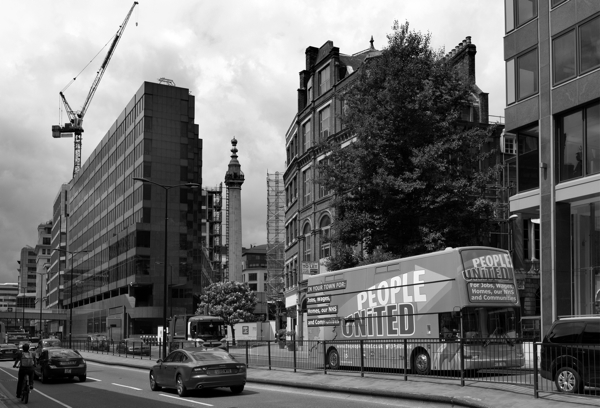
The Monument seen from Billingsgate.
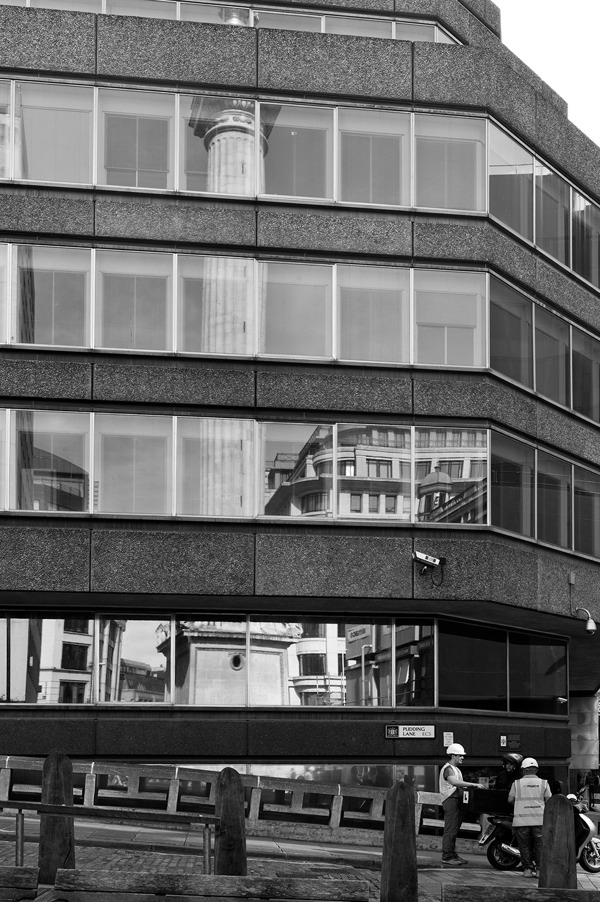
In Pudding Lane
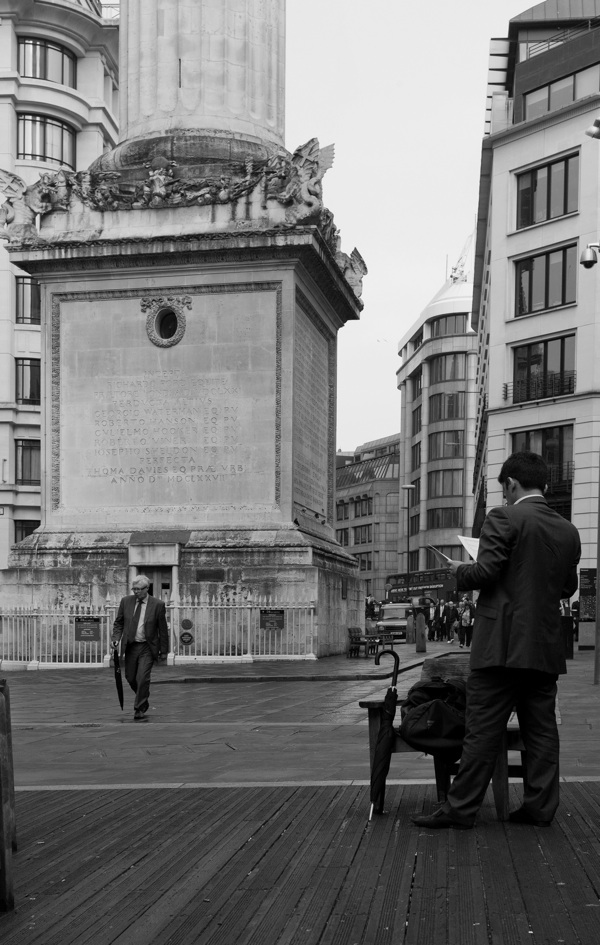
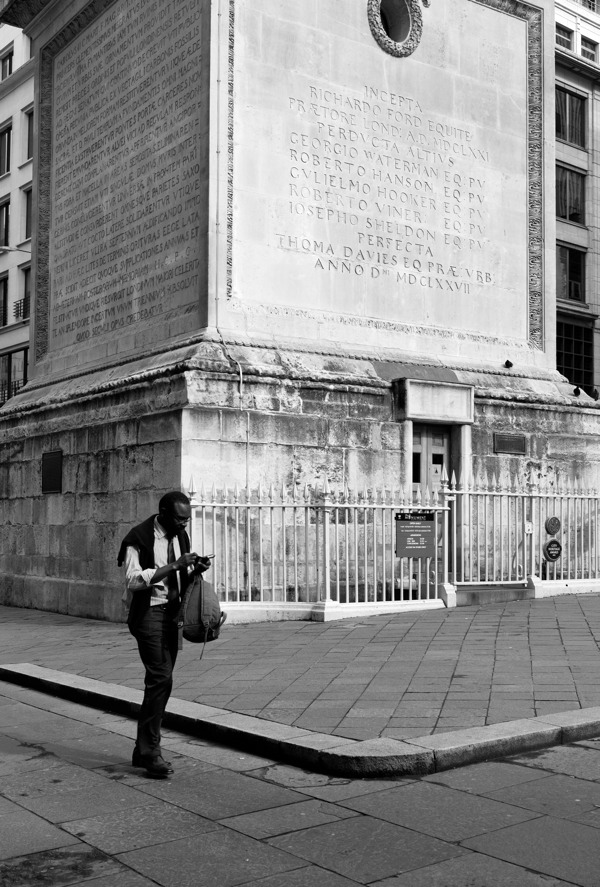

Mandy Thurkle –“You could say it keeps us fit. There are always two of us here on duty and, between us, we have to go up four times a day to make our regular checks.”
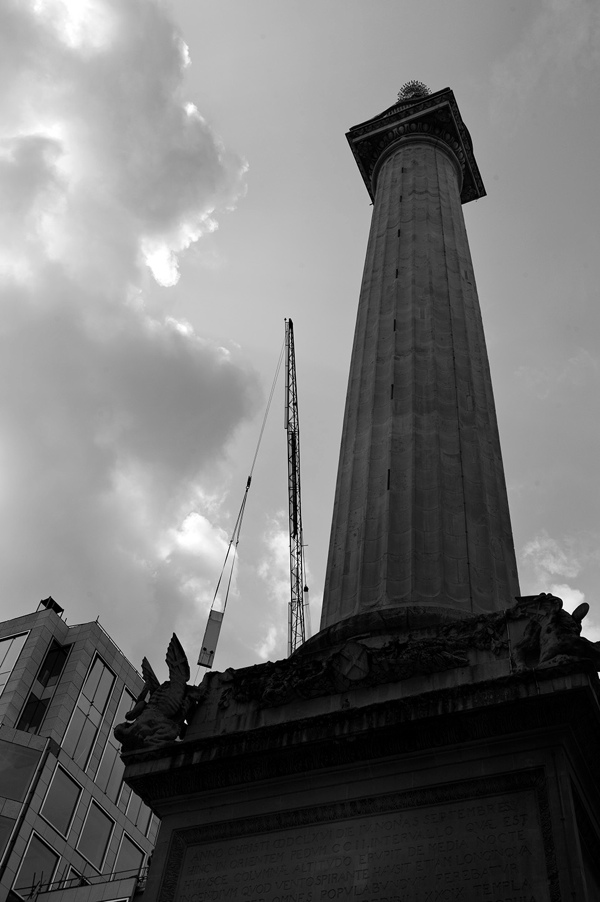
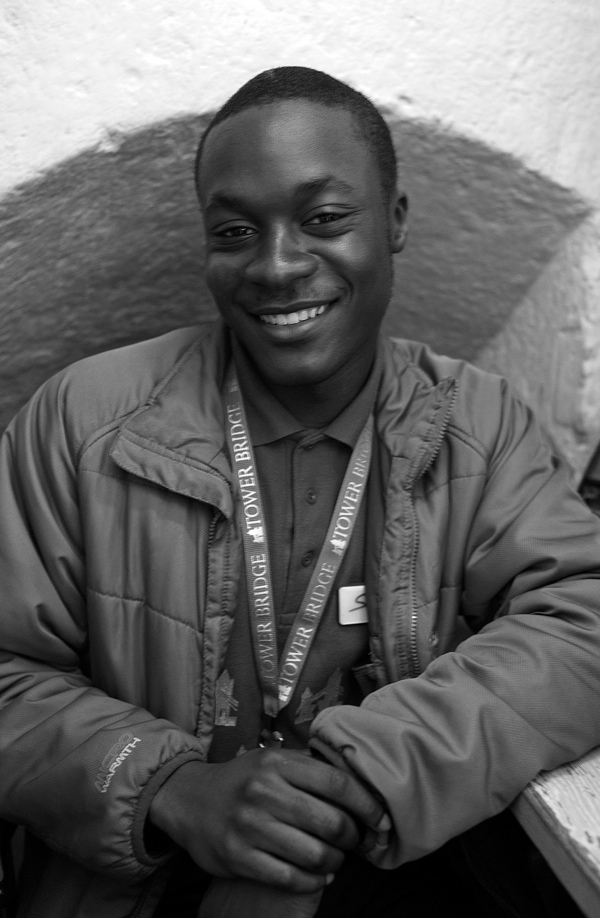
Sean Thompson-Patterson, first day of work at The Monument.
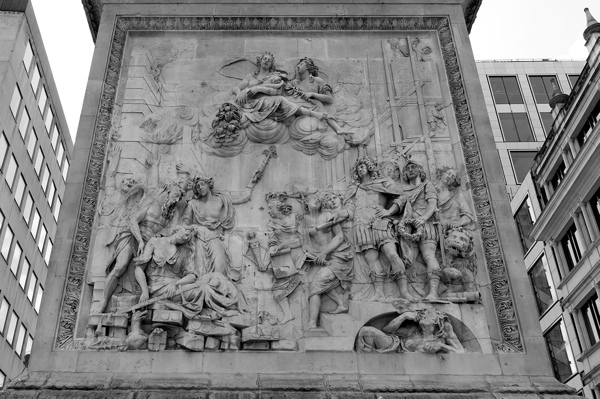
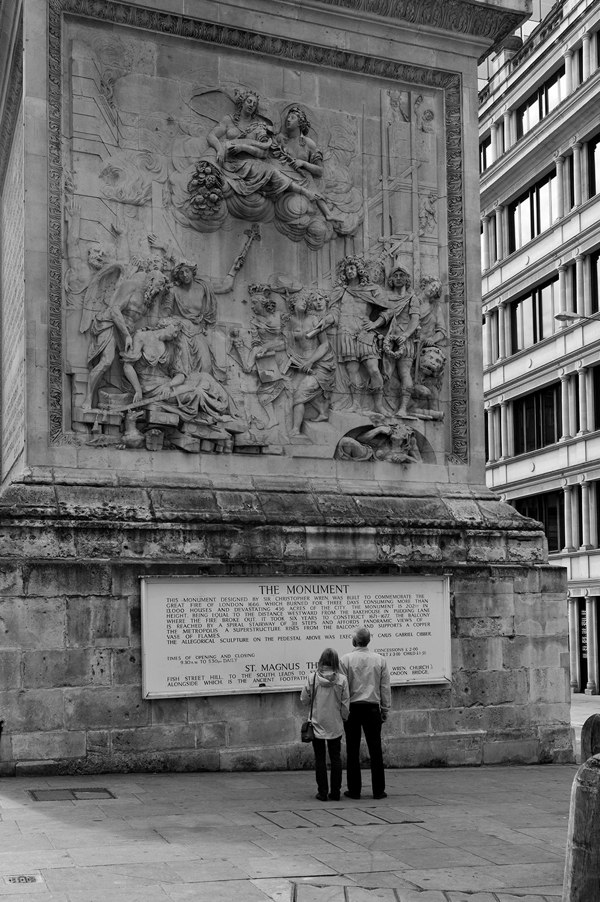
The reclining woman on the left is the City ‘injured by fire.’ The beehive at her feet represents the industry that will help to rebuild the City. The winged creature behind her is Time which will help the City to regain her feet again. Charles II stands on the right in a Roman breastplate, putting things to rights. At his feet Envy is disappearing into a hole, while Peace and Plenty float on a cloud above the scene.
Photographs copyright © Alex Pink
The Monument, Fish St Hill, EC3R 6DB . Open daily. Summer (April – September) 9:30am – 6pm. Winter (October -March) 9:30am – 5:30pm.
Bill Judd, Boxer

Bill Judd
“That was brilliant!” A boy no older than nine years old pulls free from his dad and runs to his mum who has come to meet them both outside the KO Muay Thai Gym HQ situated beneath three railway arches in Globe Rd, Bethnal Green. The woman grins as she catches her son’s hand and her brightly patterned shalwar kameez flutters in the breeze. “You will be a champion?” she asks, ruffling his hair.
It is Saturday morning, and sessions for children aged between seven and twelve at the gym are just coming to a close. Girls and boys jostle out into the sunlight, many of the boys stopping to admire the gleaming Ducati motorbikes lined up on the forecourt of the workshop in the arch next door. “You’ll have to wait until you’re a bit older and bit richer before you can have one of them.” Gym owner Bill Judd smiles as one of the tiny fighters ogles a particularly impressive red model. “When I’m famous?” the boy asks.
It is not beyond the realms of possibility. The KO Gym has a track record in training, nurturing and producing world-class competitors in the emerging sport of Muay Thai Boxing. Current World Champions Amanda Kelly and Greg Wotton are just two of the gym’s success stories.
Back inside the cavernous arched space, adults are beginning to drill. It is almost like watching a ballet as two heavily-padded men circle each other. Suddenly, one of them lashes out with his foot and the heavy ‘whumph’ as it makes contact with the pad secured to the other man’s arm demonstrates the force and strength of the strike. They repeat the sequence on the red foam matting, then that kick comes again – swift, high and viciously accurate. Although it is clear this is a fierce contact sport, there is a rhythmic grace and elegance that is beautiful.
It is mesmerising to watch the pair of them work through the choreographed moves that will enable them to perform fluidly and instinctively when they are in the ring. Each time they run through the combination, they are establishing a pattern in their brains and muscles that will allow them to act on auto-pilot in a real fight.
Bill Judd, who studied Sports Science at university in Australia in the seventies, explains,“It’s technical, by repeating the moves again and again you create neurological pathways in your brain. When you’re learning to drive a car you come to a point when you don’t have to think about what you’re doing anymore. Muhammad Ali would disrupt his opponents in the ring by whispering something in their ear – that would make them angry and break their concentration. Their automatic responses would stop and then he’d go in. It’s all psychology.”
Born in East London of Irish stock, Bill is the son of a boxer. As a child, he followed in his father’s footsteps training at a traditional East End boxing club, Fairbairn House. But from an early age he was also involved with Judo, which led him to compete at international level in Japan. It was there that he first became aware of Kick Boxing and he subsequently went on to win a world Kick Boxing title.
He smiles ruefully, “As a champion Kick Boxer I thought I knew it all, but when I came up against a very experienced Thai Boxer I soon found out I didn’t! I was a cocky so-and-so back then and I got completely hammered. I wanted to find out more – that’s how it started really. There was just something about the history and culture of Muay Thai that got to me. The whole ethos of it appealed – the structure, the strategic element. I went on to train –and train hard – with a very famous master in Thailand.”
He brought hard training and the very particular culture of Thailand’s national sport back with him when he returned to the East End. The KO gym opened in 1976 and today it offers classes in Muay Thai, traditional boxing and the increasingly popular discipline of Mixed Martial Arts.
Initially, Thai Boxing was viewed as something outside the mainstream, but that has changed. The sport is on the verge of Olympic recognition and the KO Gym, which is revered in Thai Boxing circles throughout the country, attracts people from all walks of life. City boys spar with Bangladeshi boys from the estates in Tower Hamlets. Heavily accented Eastern immigrants – from Russia, Poland and Lithuania – spar with easy-framed, street-sharp black lads. Some people here – men and women – are professional fighters, some are here simply to keep fit while others use the controlled explosion of Muay Thai technique as an outlet to relieve the stress of modern living.
Bill explains, “This place is all about community. It’s something that’s increasingly lacking from the East End these days but, here, we cross all boundaries of religion, nationality, cultures, class and race. We have members who are Muslims, Christians, Jews, Hindus and atheists – you name it, they’re here. It’s amazing the diversity of languages spoken in the gym, but everyone understands the ‘language’ of the sport. It’s like a home, everyone leaves their prejudices at the door. It’s how a community should be.”
With his clipped grey hair, piercing blue eyes and compact build, Bill Judd has quiet authority – a natural dignity. You listen when he speaks and you get the strong feeling that the people who attend the KO gym see him as a mentor. It is obvious that he takes particular pride in the young people who attend sessions. “First and foremost it’s fun,” he says, “but it also gives them discipline, confidence, a sense of progress, and it encourages tolerance.” He pauses for thought, “Most of all, I think it gives them somewhere they feel they belong. It’s better to be part of this sort of community than part of a gang that idolises violence and money.”
As well as bringing a new heart to this community, the gym also continues an East End tradition. Just up the road in Paradise Row, opposite St John’s Church on Bethnal Green, stands Daniel Mendoza’s house, complete with blue plaque. Though he stood five foot seven inches and weighed only one hundred and sixty pounds, Mendoza was England’s sixteenth Heavyweight Champion from 1792 to 1795. He was the only Middleweight to ever win the Heavyweight Championship of the World. In 1789, Mendoza opened his own Boxing Academy and published ‘The Art of Boxing’ on modern ‘scientific’ boxing style – a book from which every fighter has learned since. Notably, he was Jewish and his success and popularity helped transform the popular English stereotype of a Jew from a weak, defenceless person into someone deserving of respect.
‘Respect’ is an important word for Bill, it crops up often in our conversation. He is absolutely clear that everyone who comes to the gym should show respect for the art of Muay Thai and for each other.“I’m proud that everyone round here knows this place,” he says,“It’s become a landmark and people respect it – the kids respect it and their parents respect it too.” Then he thinks for a moment and nods to himself, “Yeah, I am carrying on a tradition here and I’m proud of that. But I’m also proud of what I see people achieve here through hard work and determination.
“It’s not fighting spirit that wins, it’s the indomitable spirit – rising to the challenge. Some people climb mountains, some people swim in the wild, some people go deep into the earth to find caverns that no-one’s seen before.
“Whatever you do, you’ve got see it through to the finish.”
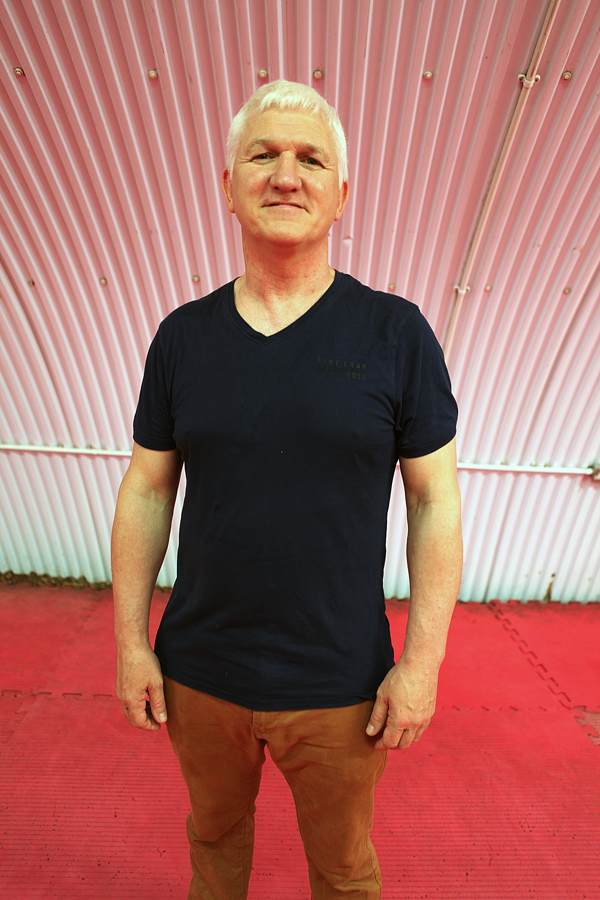
“It’s not fighting spirit that wins, it’s the indomitable spirit”
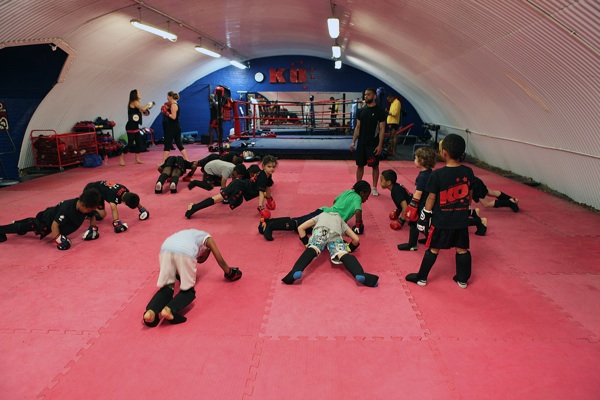


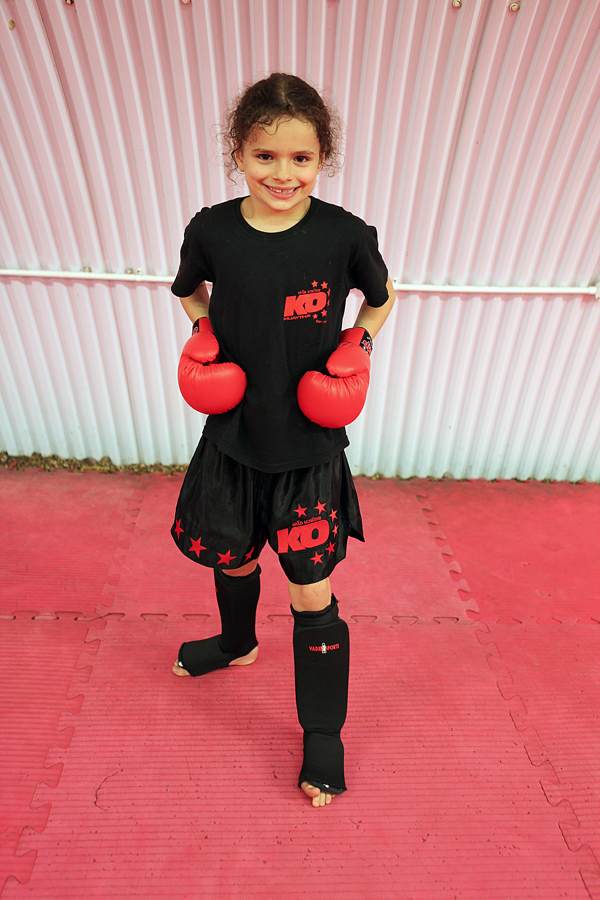

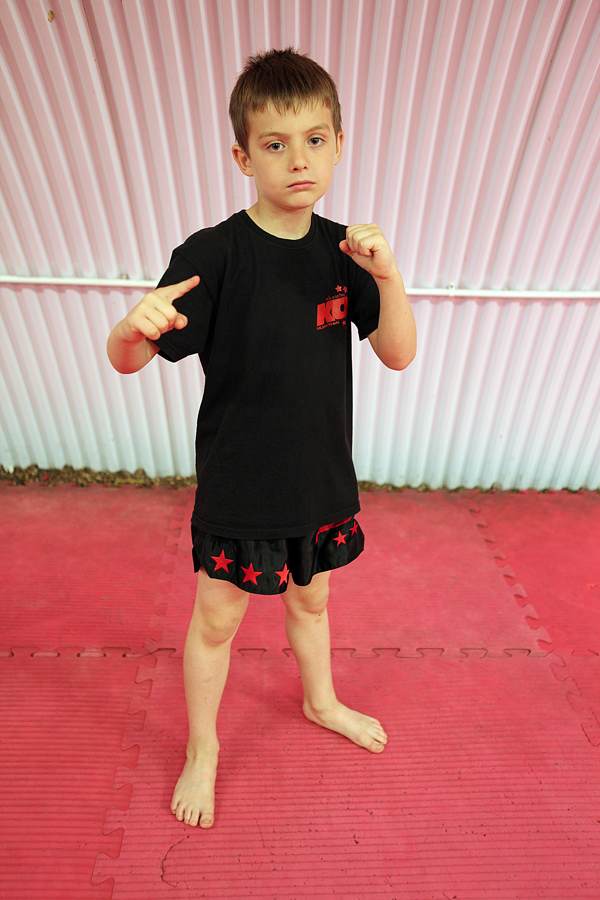

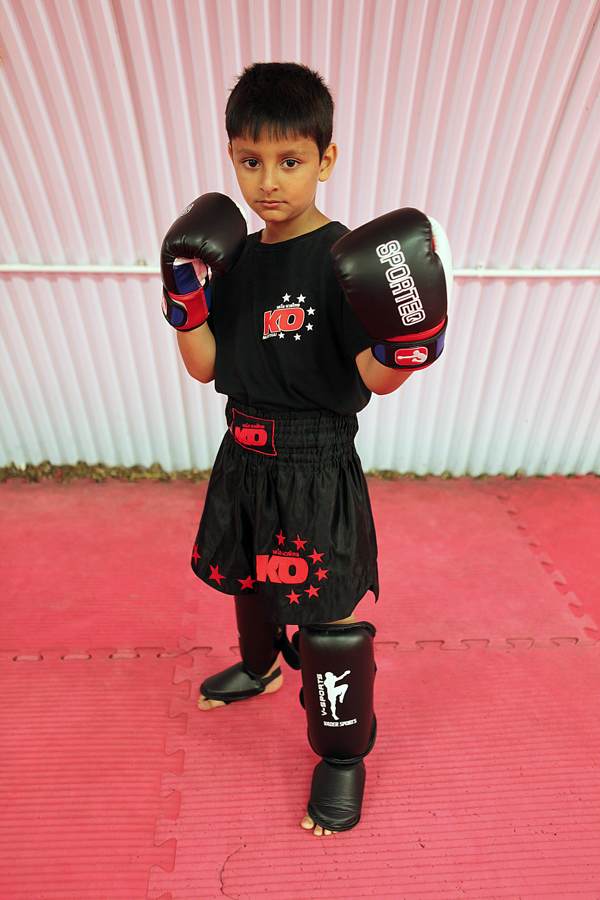

Abdul Yassine, Trainer
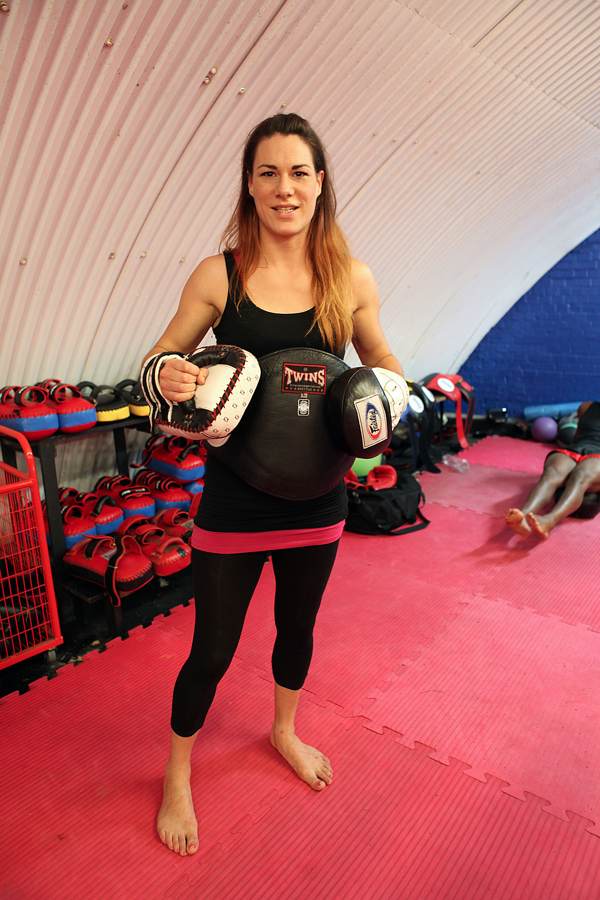
Amanda Kelly, current WMC, MAD, and ISKA World Champion, fights between 58kg and 63kg. She has beaten all the top names in women’s Muay Thai including Julie Kitchen and is considered, pound for pound, best female fighter in World Muay Thai.
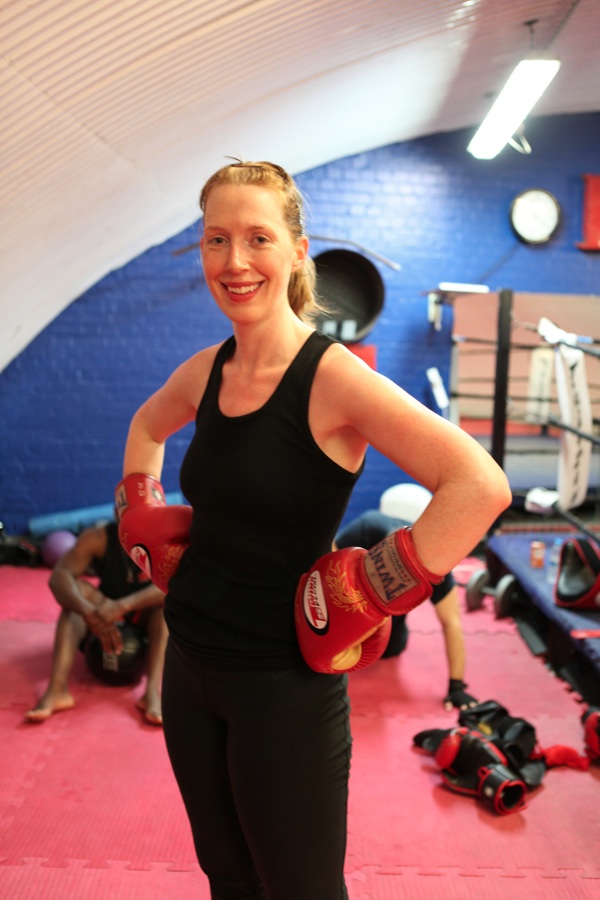
Danielle Anderson is being trained by Amanda Kelly
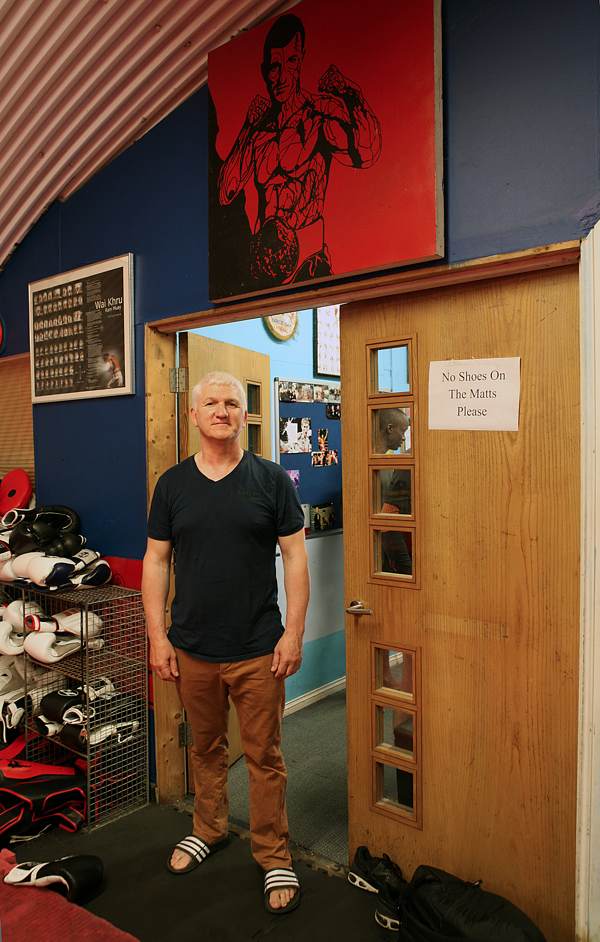
Bill Judd, Boxer
Photographs copyright © Colin O’Brien
The KO Gym HQ, 186 The Arches, Globe Rd, E1 4ET
You may also like to read about
Ron Cooper, Lightweight Champion Boxer
Sammy McCarthy, Flyweight Champion
Sylvester Mittee, Welterweight Champion
Simon Mooney at the Repton Boxing Club
David Robinson, Chairman of the Repton Boxing Club
Tony Burns, Coach at the Repton Boxing Club
John Claridge’s Boxers (Round One)
John Claridge’s Boxers (Round Two)
John Claridge’s Boxers (Round Three)
John Claridge’s Boxers (Round Four)
John Claridge’s Boxers (Round Five)
John Claridge’s Boxers (Round Six)
John Claridge’s Boxers (Round Seven)
John Claridge’s Boxers (Round Eight)
John Claridge’s Boxers (Round Nine)
John Claridge’s Boxers (Round Ten)
Matthew Slocombe, Bottle Expert
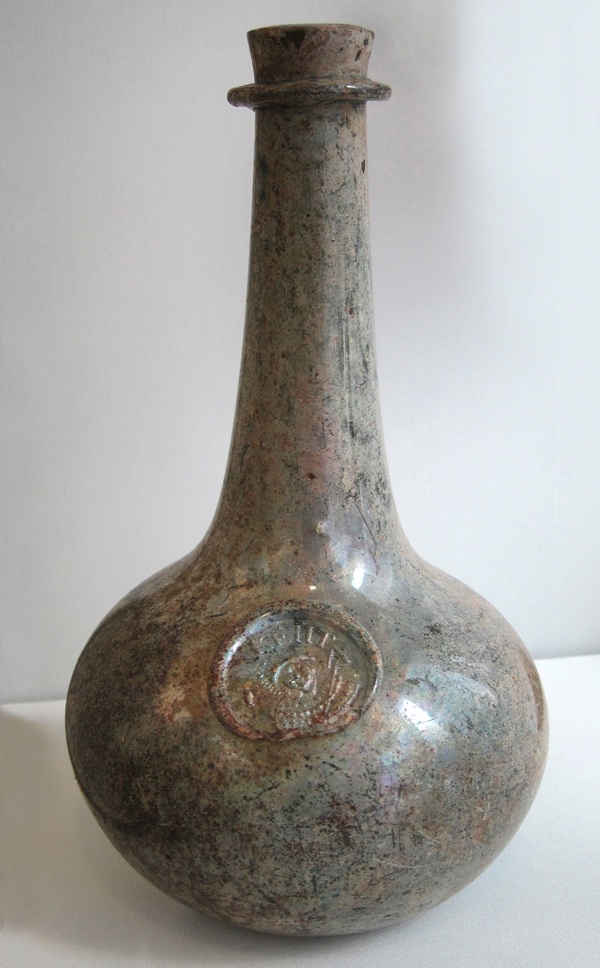
The Bishopsgate Bottle
If you present Matthew Slocombe, Director of the Society for the Protection of Ancient Buildings, with a bottle, his eyes light up. Do not run away with the wrong idea though – the bottle has to be empty and at least two hundred years old.
“Yes, I admit it – I am a bottle man.” Matthew grins, “I’ve been fascinated since the age of eleven. Some boys are interested in cars or model trains, for me it was bottles. It began when we went to stay with some family friends who had a rustic cottage in the Marches on the Welsh border. There were some bits of broken glass poking out of a bank in the garden and I started excavating.”
“It turned out that hundred years or so earlier, the inhabitants of the cottage had simply been chucking their refuse over the hedge and their ‘rubbish’ was still there. That was when I first became interested. As a boy, my particular passion was quack cure medicine bottles. My absolute dream was to find a nineteenth century bottle for the wonderfully-named Radam’s Microbe Killer, mainly – I think – because it had a skeleton being bashed by a man with a club on the front!”
This enthusiasm grew and developed – as Matthew became more knowledgeable about bottles and their history he started to seek out even earlier finds, particularly ancient wine bottles. “I became a guerrilla bottler,” he says, “I used to look for likely places – usually old tips or ancient cess pits – where I could go digging. It seems odd, I happily admit it, but it’s impossible to emphasise the buzz of being on a site and delving down into the past to get to the ‘gold’.” He pauses for a moment and winces,“Archaeologists would be horrified to hear me say that – and quite rightly. These days I would be much more careful and ethical.”
An Architectural Historian, Matthew is something of a Bottle Expert, having published pamphlets and essays on the subject. His own collection of historic glass is displayed at his home in West Sussex. “Glass is fragile, but that’s the great beauty of it. At home my bottles are on a glass shelf suspended above the staircase. I like the drama and the jeopardy of that. That’s the thing about historic bottles – they are so old and so delicate and yet they have survived into the present.”
Appropriately, one of London’s most significant and earliest bottle-making sites was discovered close to the Society of the Preservation of Ancient Buildings’ offices in Spitalfields. In 1549, eight Murano glass workers from Italy arrived in London and set up their furnace in the Crutched-Friars Monastery. When the site burned down in 1575, glass house manager Giacomo Verzelini established a new furnace and thriving business in Broad St.
Matthew explains how important this was, both in terms of his hobby and his work with old buildings, “This is where the connection between the two happens for me. What you have down the road in Broad St is the development of glass for bottles and glass for windows hand-in-hand . Remember, up to this point, windows were a massive status symbol – light in a building was something only the very rich could afford. So this was a moment of a new technology surging forward, glass was the plastic of the Tudor age – solving all your household needs in one go!”
In the sixteenth century, glass suddenly became disposable, which is why it has found today in so many building sites across the City. Matthew explains, “Anyone with a Georgian house in Spitalfields would probably find old bottles – fragments at least – in their garden.”
“And they’d probably find them in other places too – in roof spaces, fireplaces and hidden beneath doorways. But these would be witch bottles, filled with items and fluids used in folk magic, sealed and deliberately concealed in the building. Some bottles would have been intended for protection others were curses.” He frowns,“As director of the Society for the Preservation of Ancient Buildings, I strongly advise people against poking around in old chimneys or destroying the fabric of a building in the hope of finding a witch bottle.”
Collectors of early English wine bottles – Matthew included – particularly prize the mid-seventeenth century shaft and globe type. These are the earliest forms to survive in any number because the methods used in their manufacture made them more robust than their predecessors. The fact that these bottles are sometimes impressed with a seal, denoting original ownership (both by taverns and by wealthy individuals), is especially significant and thrilling to an enthusiast.
An exceptional example is on permanent display just a stone’s throw from the Society’s headquarters in Spital Sq, in the entrance hall of the modern offices at number two hundred and eighty-eight Bishopsgate. To a casual passer-by, the damaged bottle in the case might look like an unexceptional chunk of brown glass, but to the expert it is a magical piece. Excavated from the site when the foundations were going in, the bottle bears the seal of Thomas and Ann Kent.
Vintners records for the City of London show that the Kents were tenants of the King’s Head in Chancery Lane from 1630 until 1660. Thus there is strong evidence that any bottle seal relating to the Kents at the Kings Head must date from 1660 or before, making the Bishopsgate Bottle traceable survival of an exeptional early specimen.
“It is a fantastic thing,” says Matthew, adding rather wistfully, “It’s a bottle I would love to own. I can honestly say I walk past it every day on my way into the office to make sure it’s okay.”
“For any true bottle collector, the dream is to find an old bottle that can be linked with an individual through its seal, or a bottle that can be linked to a point in time because they are so completely dateable. The Bishopsgate Bottle does both which makes it important.” He thinks for a moment,“The Holy Grail would, I think, be to find something with the seal of Samuel Pepys. He was a proven drinker – the diaries show that. It would be the Tutankhamen’s tomb of all bottle finds.”
Tantalisingly, the Bishopsgate Bottle is linked, tangentially, to the celebrated diarist. Pepys visited the Kents’ establishment in Chancery Lane on June 26th 1660, noting, “Went to the King’s Head and had very good sport with one Mr Nicholls, a prating coxcomb that would be a poet but would not be got to repeat any of his verses.” On October 23ed 1663, the diary records that Samuel inspected his own “new bottles…with my crest upon them.”
Yet Matthew’s own ambition when it comes to expanding his collection is more modest. “To find a bottle marked with the seal of Peter Ogier who built number 37 Spital Square would be marvellous. Now that, for me, would be a very special bottle indeed.” he admits.
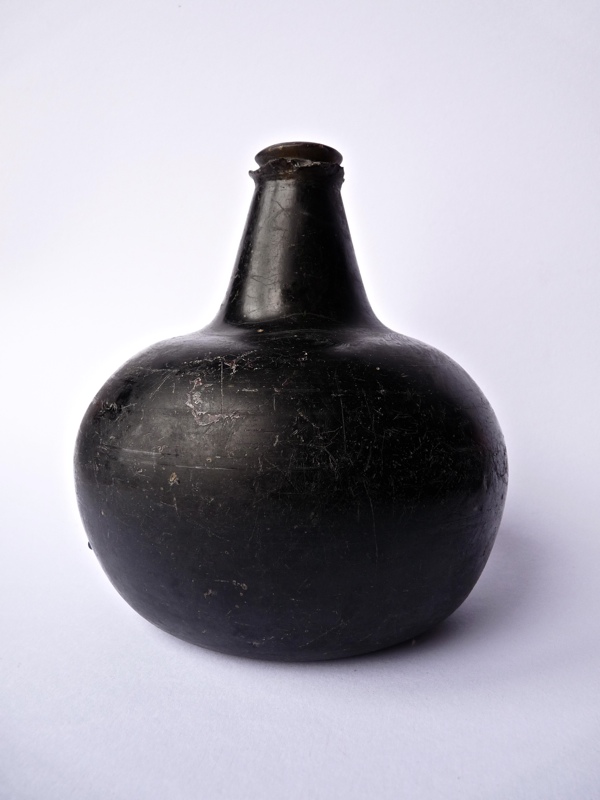
English wine bottle 1690s
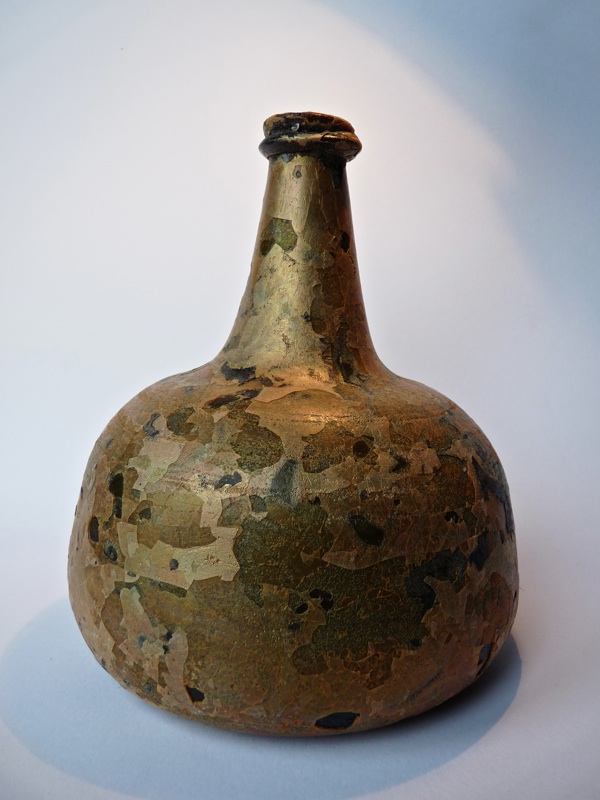
English wine bottle of 1720 with surface irridescence caused by burial in the earth
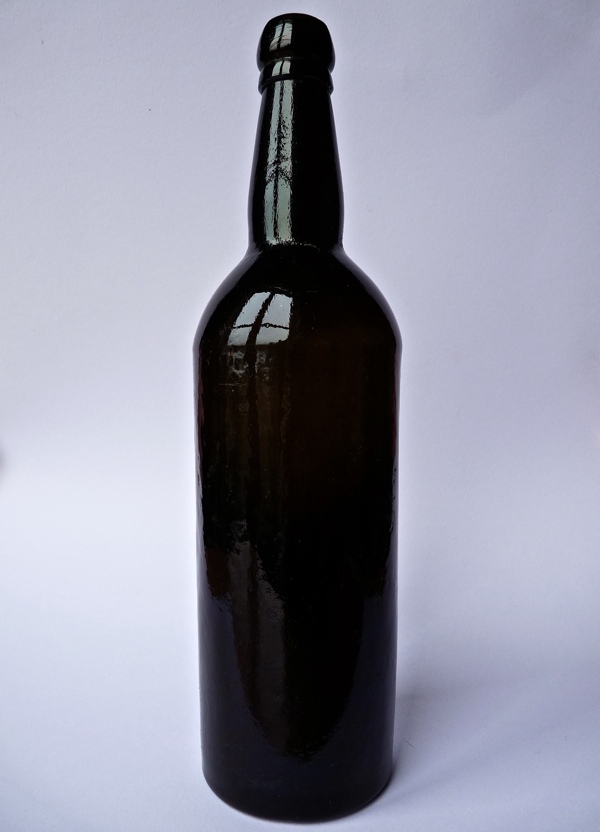
English wine bottle 1730s
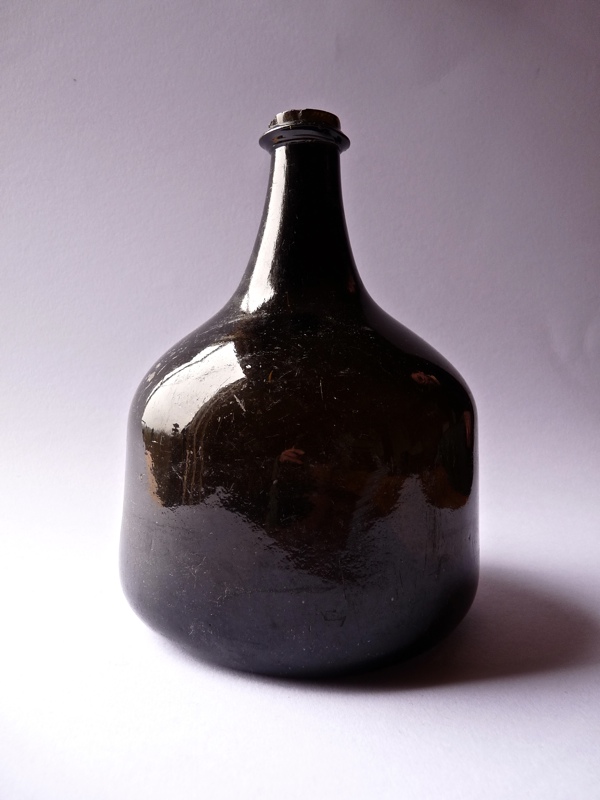
1790s English wine bottle from a shipwreck with contents, bought by Matthew aged twelve.
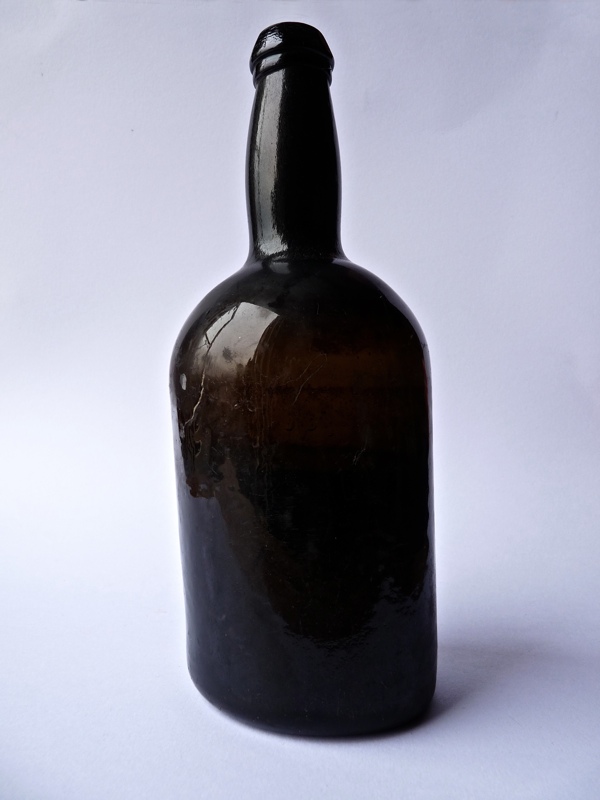
English wine bottle of c. 1850, dug up by Matthew
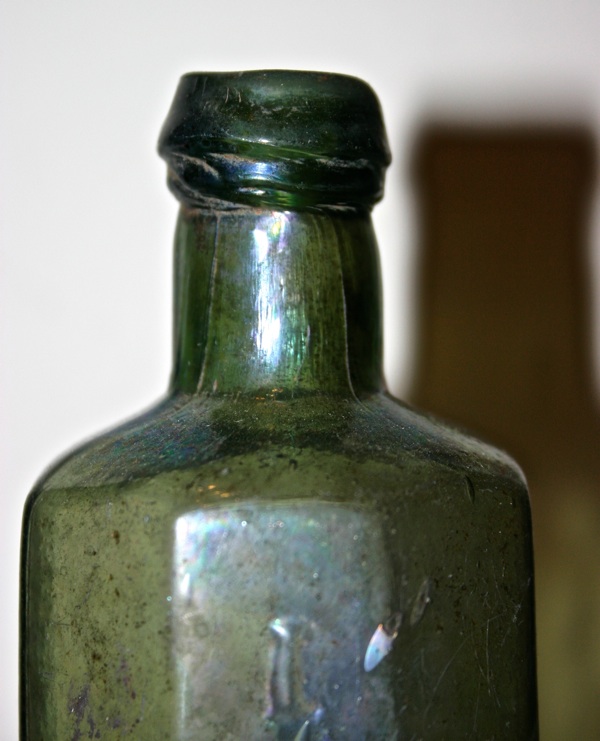
Hand-applied lip to an early nineteenth medicine bottle from the East End

Some of Matthew’s collection.

Matthew Slocombe, architectural historian and bottle expert, with his son Felix.
Photographs copyright © Matthew Slocombe
You may also like to read about












