
Marie Iles, Machinist

Apart from memorable excursions outside London as an evacuee, Marie Iles has lived her entire life within a quarter mile of Stepney and it suits her very well. Those wartime experiences taught her the meaning and importance of home, yet living close to Stepney City Farm today she still enjoys a reminder of the rural world she grew to love as a child.
A natural storyteller, Marie laid out the tale of her formative years for me with confidence and eloquent precision. Blessed with independent thought from an early age, Marie quickly learnt to stand up for herself and to appreciate the moral quality of people’s actions, whilst suffering enforced exile from her beloved Stepney amidst the tumultuous events of a world war.
Recently Marie celebrated her Diamond Wedding Anniversary, and it was the meeting with her husband Fred Iles that provided the sympathetic resolution of her dislocated early years and resulted in an enduring relationship which has sustained them both for the last sixty years.
“I was born on 9th August 1930 in Fair St, Stepney, while we were living upstairs in two rooms in my nan’s house, and when I was four or five we moved to Garden St. But I usually lived with my nan – whom everyone knew as Aunt Kit – because I loved her so much. I had a happy childhood playing in the streets, games like Hopscotch and Knocking Down Ginger. We was always running around and the police would pick us up and take us to Arbor Sq Police Station and give us bread and jam.
One day, I came indoors and my mum and dad had the wireless going and there was a quiet atmosphere, which was very unusual in our house, and I heard the voice of a man saying, ‘And England is at war with Germany.’ So I says to my mum, ‘Are we at war?’ and she says, ‘Yes.’ I said, ‘Are the Germans coming?’ and she said, ‘Yes, but not to Garden St.’
The siren went when I was out shopping with my nan in the old street at the side of St Dunstan’s church and, all of a sudden, there was bombs dropping and aeroplanes. My nan said, ‘You run home to your mum quick,’ but I wouldn’t leave her. So she said, ‘Run!’ and I ran on the spot to show I was running. Eventually, we got home to Garden St and my mum, who had a phobia that she might be taken ill or die with dirty feet, was saying, ‘Get a bowl of water, I’ve got to wash my feet.’ When the bombing eased up, my nan said, “I’ll take the two girls home where there is an Anderson shelter,’ and, as we came out, it was a terrifying sight – where there had been houses, there was just piles of bricks and rubble, and there was a horrible smell of smoke and, that night, the sky was red with the light of the fires.
We stayed at my nan’s a few weeks after that, until one day I was at my mother’s and she said, ‘You’re going on a holiday, you, Kitty and Johnny.’ We was excited! My mum pinned a label onto each of us with our name and address on it, and filled a carrier bag for each of us with our belongings. We went to school and there was a couple of coaches waiting, and my nan said, ‘Write to us and always say your prayers every night,’ and she put three sixpences in my hand. I thought, ‘I’ve got money and I’m going on holiday,’ and I was pleased. We all got on the coach together, me and Kitty and Johnny. Then, as we were going, I dropped my three sixpences in the excitement and it felt like the end of the world – not because of the money, but because my nan had given them to me.
We arrived at what I later found out was Denham. We was dropped at the corner of the street, and ladies came over and picked who they fancied. Johnny went with a Mrs Burrell, a lovely little country lady with red cheeks. Kitty and me, we went with Mrs Rook. She had a nice house, that was what we would call ‘posh,’ and she had a grown up son and daughter, Ken and Joyce, and her husband Mr Rook. Yet I hated it, I was so homesick and cried every night for a fortnight but my sister loved it. I asked her, ‘Why don’t you get homesick?’ She said, ‘Because you are here. Wherever you are, I am alright.’ I was her elder sister.
One morning, Mrs Rook said, ‘Why don’t you put on your coats and go out for a walk?’ And the first person we met was Mr Goddard, my headmaster from school in Stepney. He took hold of my hand and asked, ‘Have you got a nice place to stay?’ I said, ‘Yes, but I hate it I miss my home.’ So he said, ‘Look Marie, do you want me to tell your mother what you said and have her worrying about you?’ And I said, ‘ No, don’t tell her,’ and, after that, I was alright and I had a happy time. And that was when I first noticed flowers and the trees opening up. Once there was snow, and Mrs Rook sent me to Denham village for an errand, and I saw these flowers peeking up through the snow – crocuses – and I thought it was a little miracle, that flowers grew in the snow.
Then it seemed the bombing stopped and they took us back to London, and we was there for a while until they sent us off again. They put us on a train at Paddington and we stopped overnight at an army barracks and slept on the floor, and me and Kitty cuddled up under a blanket. Other kids were crying but I wasn’t homesick. In the morning, the soldiers gave us breakfast of ham and hard-boiled eggs and tea and bread and jam. We travelled on and we came to this little village near Rugby called ‘Crick.’ A Mrs Watts picked us out and she lived in Cromwell Cottage, a nice house, and she gave us three meals a day but this lady had no compassion whatsoever. She took us because she didn’t want to do war work. She turned us out at seven-thirty to go to school, and she used to go to the pictures in Rugby twice each week and we had to wait outside in the bitter cold until she came home.
When the summer comes and you’re playing outside, it doesn’t seem so bad. But, one day, we’d had our dinner and were going back to school, and I knew she had a basket of apples in the larder, so I decided to pinch one. We each took bites of the apple, sharing it between the two of us on the way to school. When we got in that evening, she says to me, ‘You thieving Cockney! You come from the slums of London and you don’t appreciate a good home.’ Now I was always a bit of a rebel – I think it was because of growing up with so many brothers – so I thought, ‘I won’t stand for this.’ So I said to Kitty, ‘We’re not going to stay here with this wicked lady.’
Down at the bottom of the hill, lived an old lady and her husband – they must have been seventy. I went there and knocked on the door and asked, ‘Could you take two evacuees?’ She said, ‘Who are they?’ I said, ‘It’s my sister and me.’ She said, ‘Alright, take the old pram and go and get all your things.’ So we went back to Mrs Watts. I said, ‘I’m leaving, I’m going somewhere else to live.’ And her husband, Jack Watts – he was one of the kindest men I ever met – he said, ‘Marie, stop and think what you are doing.’ But I never did, and that night we went down to the old lady and the old man. Talk about ‘out of the frying pan into the fire’! She never cooked, she just gave us a bit of toast sometimes. Then she decided to visit her son and daughter for a holiday, and left us alone there with the old man, her husband. He used to go into the woods all day and cut willow branches and make clothes pegs. Meanwhile, Micky – my little brother – came down because my mother was having another baby up in London. We never had a thing to eat, so we used to go to people’s allotments and pull up raw vegetables and eat them, carrots and even turnips.
There was this plum tree in the garden with this big green plum hanging on it, and before she went the old lady said, ‘I expect to see that big green plum still hanging there when I return.’ But as time went on it got riper and riper, and the day before she was due to return I couldn’t stand it no more. I picked the plum and we all had bites of it – me, Kitty and Micky. Unfortunately, when he knew the owner was due to come home, Micky wet the bed. I took the sheet off and tried to wash it myself but I left it on the line and, when she came home, she asked, ‘What’s this sheet doing on the line?’ And Micky said, ‘I wet the bed,’ and she beat him unmercifully and he hung onto my legs crying, ‘Marie, Marie.’
Once again, rebellion came to the fore, and I said to my brother and sister, ‘Come on, I’m going to walk back to London.’ It was only eighty miles. So, with what money we had, we bought some pears and we were walking up the road and we came to this little bridge and I thought, ‘I can’t walk all that way with these kids, they’re too little.’ I always had a little bag with me and I looked inside and found a stamped addressed envelope that my nan had sent me. It was a Monday, the first day of the school holidays, and I sat down and wrote my tale of woe to my nan, and I posted it and said, ‘Let’s go back.’ And, as the week went on, we seemed to forget about things.
On Friday morning, it was pouring with rain and we got up and came downstairs, and she’d cooked us a big bowl of porridge. She says to me, ‘You’ve written to your granny. You’ve got a letter, your brother’s coming down to pick you up and take you home.‘ I don’t think I ever felt as happy in all my life as I did that morning. Next morning was Saturday. We all got up, didn’t wash, and got all our things together and sat on the grass verge outside the cottage. Jimmy wasn’t on the first bus that came or the second and, by one o’ clock, I was beginning to think, ‘He’s not coming.’ We waited there all this time, and the old woman and old man never called us in to give us a drink or anything.
The four o’ clock bus came and, all of a sudden, I looked up and there was Jimmy coming down the hill. He had a navy blue suit and a red shirt and his tie was blowing in the wind. I said, ‘We’re ready! We’re ready!’ He said, ‘I’ve got to let the lady know that I’m taking you.’ So he went inside and she said, ‘I’ve had a terrible time with those children.’ And he brought us back to London, and back to my dad and my mum who was in hospital having a new baby, Paul. So I went round to stay with my nan ’til my mum came home and I was beside myself with joy.
Garden St had got bombed and my mum and dad moved to Albert Gardens but my mum never liked it because it was number thirteen, so they moved again to an eight bedroom house – because by then I had seven brothers and one sister – at forty-six Stepney Green. Jimmy went into the army and got wounded in Normandy, Bobby went to Scotland in the army, Johnny was sent to Germany and Micky was sent to Malaya, Kuala Lumpur. Then we got the rockets – the doodlebugs – and that was almost as terrifying as the bombs. You’d hear the engine of a plane and then it stopped and you’d sit there in deathly silence and suddenly there’d be a big explosion. I know it’s a wicked thing to say but you’d think, ‘Thank God it’s not us.’
Then gradually, everyone came back home again to live in Stepney Green and, after everything settled down, I went to work in the rag trade as a machinist. And when I was nineteen, I met my lovely Fred. I was coming home from Victoria Park with my friend Betty and, as we walked past The Fountain pub in the Mile End Rd, there was a coach outside. My friend said, ‘Would you like a ride in a coach?’ And, all of a sudden, Fred appeared in the door of the pub with a pint of beer in his hand and called out to the driver, ‘These two girls are looking for a ride.’ I had never been in a pub but Fred said to me, ‘Hang on, wait ’til I’ve finished this pint and I’ll walk along with you.’ So I said to my friend, ‘Who does he think he is? We don’t know him.’ We carried on walking and I heard footsteps running behind us and I knew it was Freddie and his mate. He came alongside me and said, ‘I’ve got a camera. Would you like me to come round and take your photo?’ And my friend said, ‘Take no notice of him, he’s just making it up. He hasn’t got a camera.’ Freddie said, ‘Do you mind? I’m not speaking to you. I’m speaking to her.’
And when I turned and looked at him, I fell in love with him. They say there’s no such thing as love at first sight but there is. I arranged to meet him the next night on the corner but, when I arrived, he wasn’t there – I didn’t realise he was on the other side of the road, waiting to see if I’d turn up. So I went back home and my mum was looking out the window, and she saw what happened and she said to him, ‘You’re later, young man!’ And we courted for four years because we couldn’t get anywhere to live and then we got married at St Dunstan’s, Stepney, on 1st August 1953. We got two rooms at the top of a block of flats, Dunstan House, Stepney Green. The toilet was on the landing and the sink too, but we thought it was our little paradise.
Unfortunately, we couldn’t have children, our only regret in life. But my sister Kitty, and her son Alan and his wife Susan, they’ve always shared everything with us, and looked after us through thick and thin. And every year, we go to stay with Kitty and we have a really lovely old traditional Christmas. There’s nothing we like better than to go down memory lane together, it helps to keep us all close.”

Marie & Fred in their kitchen in Rectory Sq, Stepney.

Marie, Johnny and Kitty at Denham with Mrs Rook – “I loved the country life, especially when it was conker season and there were ripe apples. If my family had been there, I’d never have left.”

Marie’s sister Kitty, hop-picking with her grandfather after the war.

Marie hits a hole in one.

Marie & Fred’s wedding, 1st August 1953

On honeymoon in Ramsgate August 1953

Marie & Fred go Flamenco.

Kitty with her children, Marie and her mother in the fifties.

Marie and her dog Rufus when they lived in the prefab in Ashfield St.

Marie & Fred at a family wedding in the eighties.
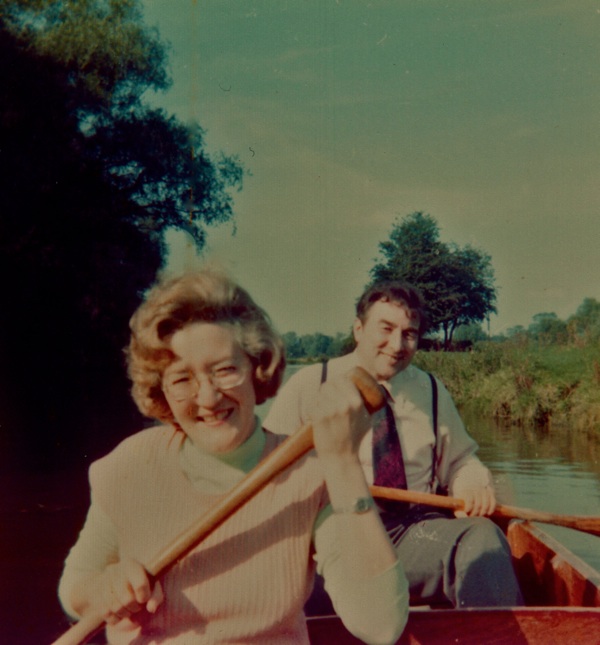
Marie & Fred enjoy an adventure on the river.

The three evacuees grown-up – Johnny, Marie and Kitty.
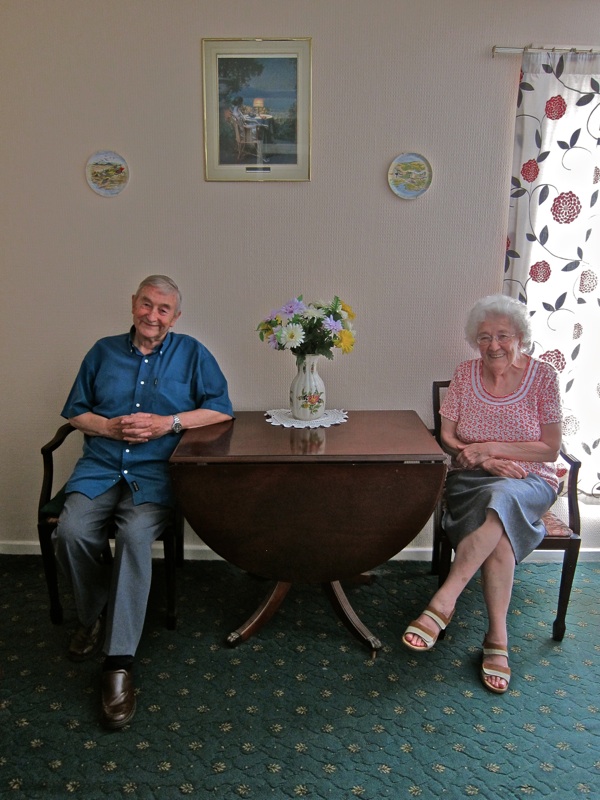
Fred & Marie celebrated their sixtieth wedding anniversary on 1st August 2013.
You may also like the read about
In Search of the Spitalfields Nippers

Portrait of Tommy Nail, Courtesy of The Religious Society of Friends
“Let me introduce you to the Spitalfields Nippers of 1901-2 as photographed by Horace Warner. Although the origin of these pictures is something of an enigma, these frisky nippers of a century ago require no introduction or explanation, because they assert themselves as the mettlesome inhabitants of their territory. Geographically, they are creatures of the secret byways, alleys and yards that lace the neighbourhood. Imaginatively, theirs is a discrete society independent of adults, in which they are resourceful and sufficient, doing their own washing, chopping wood, nursing babies and even making money by cleaning windows and running errands.”
Horace Warner’s breathtaking series of portraits known as the Spitalfields Nippers have long been one of the sets of photographs that have excited most interest in these pages, and so it is a great delight to be able to publish them in print courtesy of The Religious Society of Friends in my forthcoming book The Gentle Author’s London Album, alongside my other favourite pictures from Spitalfields Life.
I first came upon the Nippers in a pamphlet published to accompany an exhibition in 1975 and, even in primitive reproduction in one colour, it was apparent that they were a distinctive set of pictures of the highest quality. The pamphlet explained that the photographs were first published in 1911 in the annual report of the charitable Bedford Institute in Quaker St, Spitalfields, and were a selection from more than two hundred and forty that existed.
At that time, I tried to learn more about Horace Warner and the Nippers but my research led nowhere. Although the Bedford Institute still stands in Quaker St, it was closed long ago and I found that the archives had been passed from one organisation to another until no-one knew where they were.
Yet the photographs haunted me, and I was convinced that Warner’s prints still existed somewhere. His pictures demonstrate such a sympathetic sensibility towards his subjects that I wanted to know who he was, and there was also the tantalising possibility of the more than two hundred unseen photographs.
Aware that the Bedford Institute was a Quaker Mission, we contacted The Religious Society of Friends in the Euston Rd and asked them to look in their archive. Imagine my delight, when the message back came that, after a search, the original prints were discovered there preserved in good condition, just a mile from Spitalfields. At Friends House, Melissa Atkinson led me to a tiny desk in the corner of the basement and opened a box to reveal twenty-five of Warner’s own prints of his photographs, possessing a lustrous tone and sharp detail that imparted an extra quality of life to these extraordinary pictures. Thanks to the lucid vision of Horace Warner, the presence and gaze of these children remains vivid, more than a century after the photographs were taken.
Additionally, the archive contains unpublished pictures that show the yards of Spitalfields, between buildings with the characteristic long windows that indicate domestic weavers’ workshops. More than this, there was a letter from Gwen McGilvray, Horace Warner’s daughter, which dates the photographs to 1901-2, ten years earlier than was previously believed, and gives names for several of the children which permits me to publish a small selection of portraits here today with their names for the very first time.
I learnt that Horace Warner (1871-1939) was superintendent of the Sunday School at the Bedford Institute and knew many of the children he photographed personally, which accounts for playful relationship of photographer and subject exhibited in many of his pictures. A wallpaper printer and designer by trade, Warner taught himself photography at home in Highbury and worked at the family business of Jeffrey & Co in the Essex Rd where they printed wallpaper for William Morris.
You will be able to see a larger selection of the Spitalfields Nippers, reproduced from the original prints, in The Gentle Author’s London Album in October. But in the meantime, I could not resist introducing these Nippers to you by name, and enquiring if anyone knows how I can contact the descendants of Horace Warner and his daughter Gwen McGilvray – because I should dearly like to discover if the other two hundred and forty portraits exist?

Isaac Levy cleaning windows

Charlie Long and Dolly Green, dressed in a special frock.

Dominic & Dennis, two brothers

Lizzie Flynn & Dolly Green

Lizzie Flynn

This boy is wearing Horace Warner’s hat
Photographs copyright © The Religious Society of Friends in Britain
You may also like to take a look at
The Return of Crescent Trading

The boys are back!
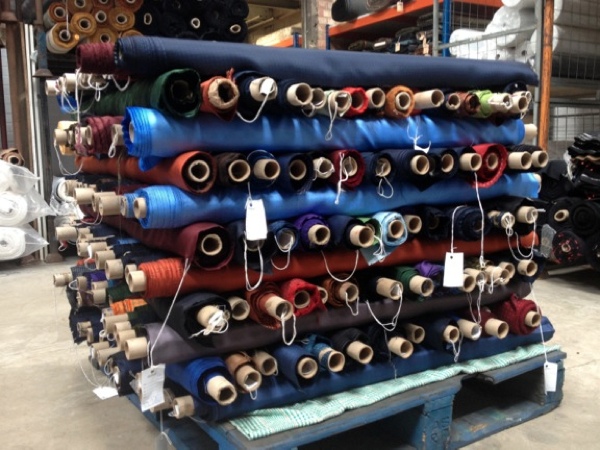
No doubt you remember my pals Philip Pittack & Martin White – the Mike & Bernie Winters of the textile business – famous for their ceaseless repartee and classy taste in fabrics? They run Crescent Trading, Spitalfields’ last cloth warehouse, and possess more than one hundred and twenty years of experience in the trade between them.
Last winter, they suffered a fire that nearly put them out of business but, displaying singular tenacity and strength of purpose, they are now open again with their premises restored and an entirely new stock of cloth.
During the interim, I visited regularly to offer moral support while they carried on trading with a hole in the roof, arriving to discover Martin lugubrious in Wellington boots as he spent four hours each day sweeping out rain water and Philip shedding sentimental tears over fire-damaged rolls of rare cashmere. Every single piece of fabric had to go, the roof had to be replaced, and the interior restored and repainted. Yet through all the grim winter months, Philip & Martin came into work each day, greeting customers brightly in spite of their pitiful circumstance.
“It cost us everything,” admitted Philip last week, sitting with Martin in their newly-painted office and looking out in wonder upon the shelves of brand new stock in the refurbished warehouse. It was a rare moment of contemplation, afforded now that they have reached the other side of their ordeal. Having witnessed the extended struggle, I enquired why they did not simply close the business and retire after the fire – a question that Martin seized upon with a passion. “This is our life and our livelihood,” he declared, his eyes shining and his voice raised, ” We love doing it and, as long as there’s breath in us, we will continue – we are not interested in retiring.”
“Jews don’t give up,” was Philip’s simple summation, crossing his arms demonstratively with a broad smile as, from the other side of the room, Martin nodded in agreement.
“It’s a way of life, and it’s been my way of life for sixty years,” Martin assured me, turning to catch Philip’s eye as he proceeded to speak for them both, “We’ve been wrapped up in fabrics all our lives. We love touching fabrics. In Yiddish, it’s called ‘tupping.’ To understand fabrics, you’ve got to touch them and know the feel in your hand.”
“We are passing on our knowledge about fabric to fashion students and young designers that even their teachers don’t know,” continued Philip, picking up Martin’s drift, “We like the youngsters coming in and having a laugh, it keeps us young.”
“I couldn’t afford to retire,” barked Martin in comic affront, as an afterthought, recalling my initial question.
“We’ve worked bloody hard,” declared Philip, folding his hands with incontrovertible authority and pride, and casting his eyes around the refurbished warehouse to meet Martin’s gaze in an exchange of unspoken understanding.
I was delighted by such a lively display of emotion which demonstrated that Philip & Martin are undaunted by the fire and undiminished in enthusiasm for business, even after all these years. Their warehouse in Quaker St is the last remnant of the textile trade that occupied Spitalfields for centuries, and Philip & Martin embody the culture with aplomb. At Crescent Trading, you will discover an infinite variety of ends of runs and surplus stock of high-end fabrics, mostly from British mills. The place is a magnet for students and fashion designers, and – once again- during business hours you may walk in and reliably encounter a lively social scene, centred around the selection and purchase of luxury textiles at bargain prices.

Martin organises his new stock in the refurbished warehouse.


Photographs copyright © Jeremy Freedman
Crescent Trading, Quaker Court/Pindoria Mews, Quaker St, E1 6SN. Open Sunday-Friday.
You may like to read my earlier stories about Crescent Trading.
Philip Pittack & Martin White, Cloth Merchants
All change at Crescent Trading
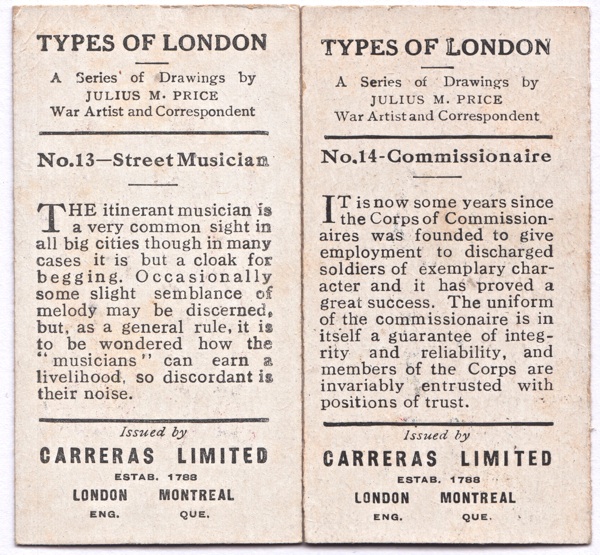
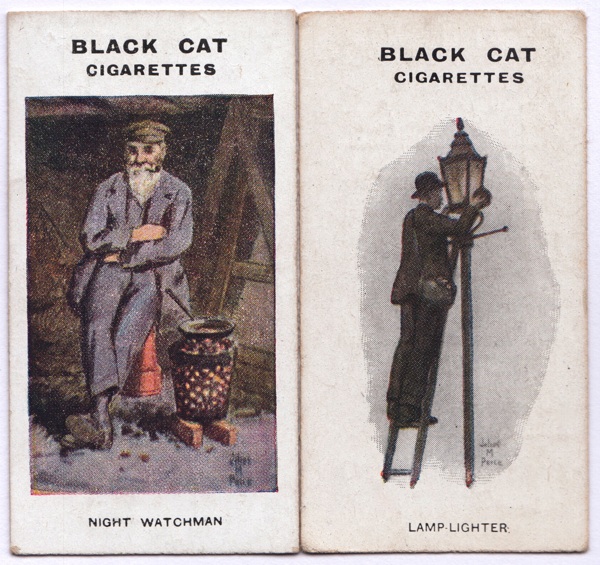
Julius Mendes Price’s London Types, 2
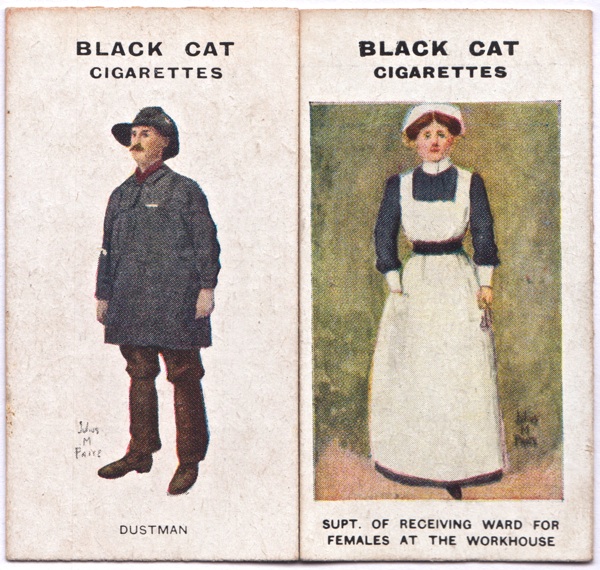
Here is the second set of London Types designed and written by celebrated war artist Julius Mendes Price and issued by Carreras with Black Cat Cigarettes in 1919. Although Price reveals a strange fascination with those involved in social control, he counters this with a generous appreciation of those employed in the most menial occupations. Given the pick of these jobs, I think I should choose to be the Keeper of the Ape House at the Zoo.



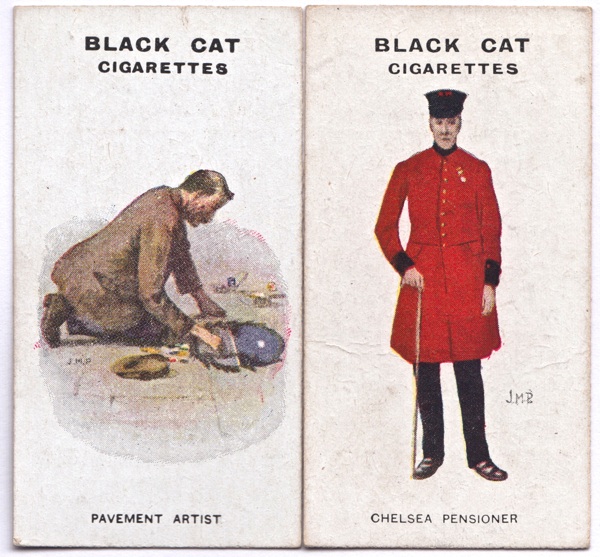

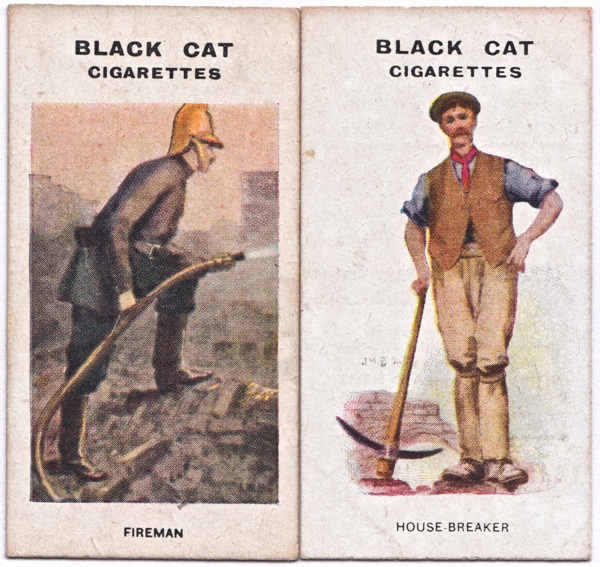


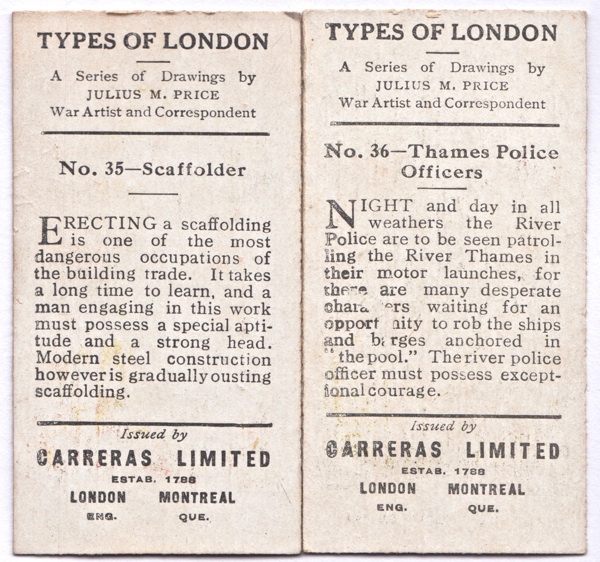


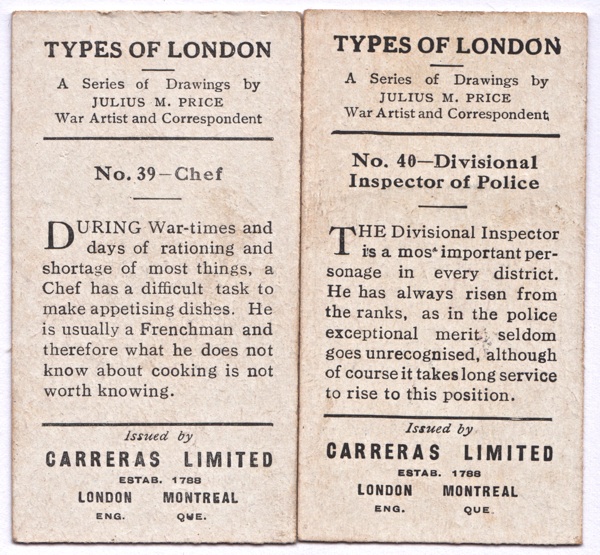
You may also like to take a look at these other cigarette card sets of the Cries of London
Julius Mendes Price’s London Types 1
William Caslon, Letter Founder
Learning of the work of William Caslon, whose Doric & Brunel typefaces, newly digitised by Paul Barnes, are being used by David Pearson in The Gentle Author’s London Album, I was inspired to write this brief account of the life of Britain’s most celebrated letter founder.

Portrait by Francis Kyte, 1740
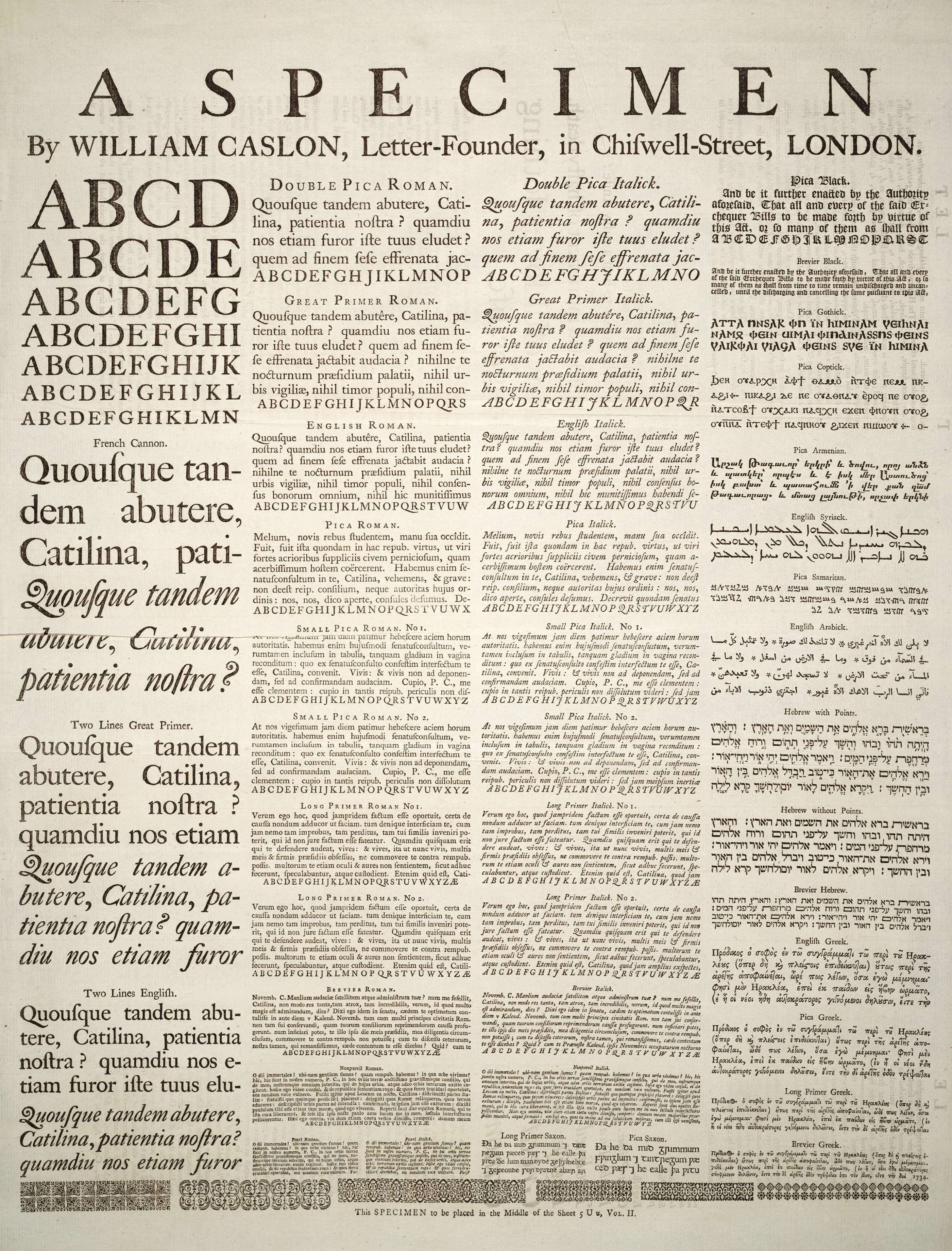
Double-click to enlarge William Caslon’s Specimen of Typefaces from 1734
William Caslon was the first major letter founder in London and, nearly three centuries later, remains the pre-eminent letter founder this country has produced. Before Caslon, there was little letter founding in Britain and most type was imported – even Shakespeare’s First Folio was printed with French type. But Caslon’s achievement was to realise designs and produce type which have been widely used ever since. And it all happened here, around the eastern fringes of the City of London. The Caslon family tomb stands alone today in front of St Luke’s Old St, just yards from where William Caslon started his first letter foundry in Helmet Row in 1727 and, with pleasing consistency, it is lettered in Caslon type.
A native of Cradley in Worcestershire and the son of a shoemaker, Caslon was apprenticed as a Loriner (or metalworker) to Edward Cookes in the Minories in 1706. Here the young apprentice learnt the essentials of metal casting that were to prove so crucial to his career but, most significantly, he undertook the engraving of letters onto gun barrels. Equally, the company produced punches of letters for book-binding and there is a legend that Caslon’s talent for type design was first spotted by a printer, coming upon his lettering upon the spine of a book in a shop.
Marrying the sister of a fellow apprentice in 1719, Caslon set up his first type foundry in Helmet Row in 1727. This initiative was based upon the success of a commission for the Society for the Promotion of Christian Knowledge who required an Arabic typeface to be used in religious texts distributed among Christian communities in the Middle East. Yet it was in the creation of his distinctly English version of Roman letters and italics, derived from the Dutch typefaces that were most commonly used in London at that time, which was the decisive factor in the establishment of Caslon’s reputation.
Caslon’s first type Specimen of 1734 exemplifies a confidence and clarity of design which has become so familiar that it is difficult to appreciate in retrospect. The Specimen offered a range of styles and sizes of type with an unprecedented authority and a distinctive personality which is immediately recognisable. As a consequence of the legibility and grace of Caslon’s work, his became the default choice of typeface for books and all kinds of publications in the English-speaking world for the next two centuries.
Caslon’s own background in engraving and metalwork was the ideal preparation for the cutting of letter punches and, among the related trades of watch-making and instrument-making which thrived in the City of London, he was able to find others with the necessary skills. Each letter had to be cut by hand at first and some of these punches are preserved at St Bride Printing Library – breathtakingly intricate pieces of metalwork upon a microscopic scale. Once complete, these punches were impressed into copper to make moulds, known as matrices, that were used for the casting of type for printing.
Moving in 1727 to larger premises in Ironmongers’ Row, by 1730 Caslon had eclipsed his competitors, securing the exclusive contract to supply type to the King’s printers. Later, Benjamin Franklin was to choose Caslon’s type for printing both the Declaration of Independence and the American Constitution.
In 1734, Caslon established himself in his permanent premises in Chiswell St, where the letter foundry continued until 1936. At this address, he staged monthly concerts upon an organ fitted into his music room, serving beer that he brewed himself. Caslon had inaugurated a long-standing dynasty, naming his first son William and, by 1742, specimens designed by William Caslon junior were being produced. It was a pattern that, like the typefaces, was replicated until well into the twentieth century. Caslon retired in 1750 to a house in the Hackney Rd opposite the Nag’s Head (where Hackney City Farm is today), and soon after he moved into his country house in Bethnal Green, where he died in 1766.
Within a generation, Caslon’s first types acquired the moniker Caslon Old Face, referring to their antique credentials yet, with innumerable recuttings, these typefaces have persisted to the present day when other types that once superceded them have been long forgotten. Caslon’s letters are often characterised as distinctively British in their sensibility and there is a lack of uniformity among them which sets them apart from their European counterparts, yet the merit of Caslon’s letters is their ability to mingle harmoniously among their fellows and create a pleasing texture upon the page – balancing the requirements of order and variety to achieve a satisfying unity.

In Helmet Row, off Old St, where William Caslon established his first type foundry in 1727.

William Caslon’s letter foundry in 1750

The Caslon letter foundry in 1900 (Photograph from St Bride Printing Library)
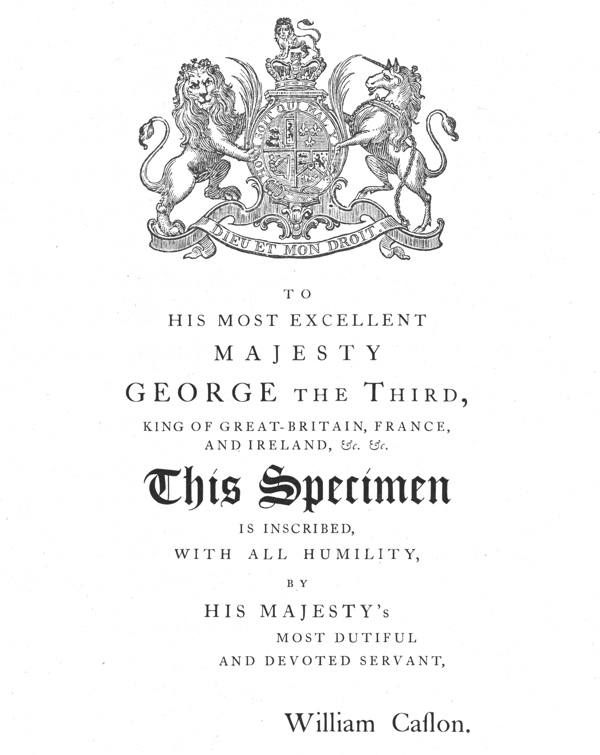 Dedication page of William Caslon’s Specimen
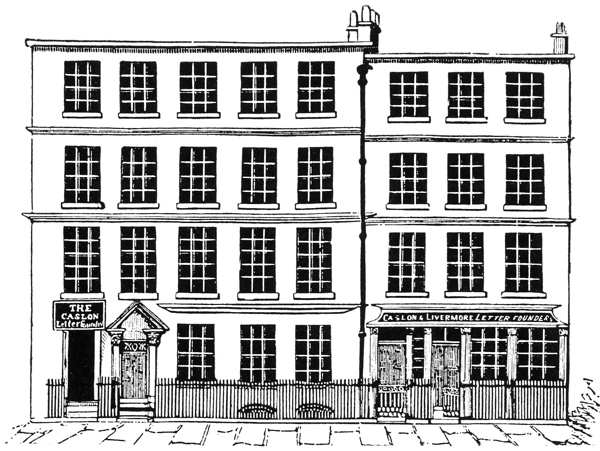
The Caslon Letter Foundry in Chiswell St ran from 1734 until 1936.

Elisabeth Caslon (known as the Widow Caslon) who ran the foundry after her husband’s death

William Caslon II (born 1720, died 1778)

William Caslon III (born 1754, died 1833)
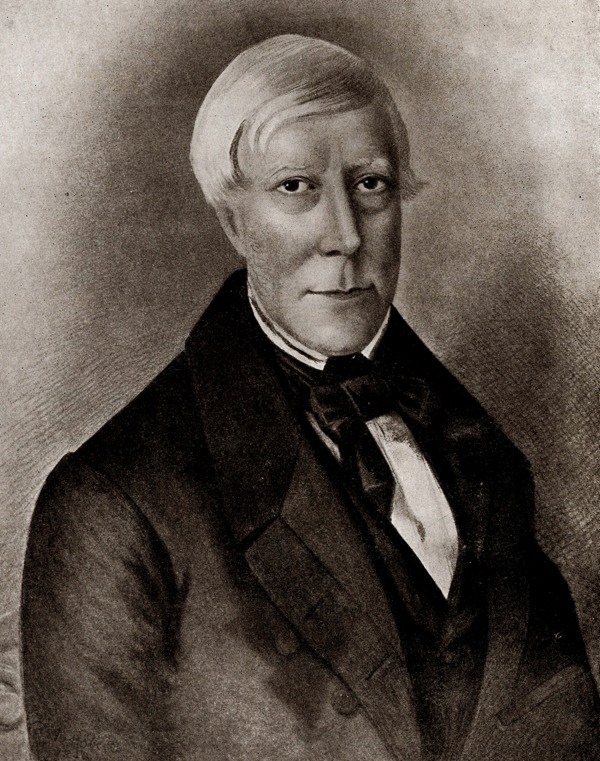
Henry William Caslon IV (born 1786, died 1850)

Henry William Caslon V (born 1814, died 1874)

Display faces became very popular in the nineteenth century.

Vignettes from a nineteenth century Caslon Specimen Book.
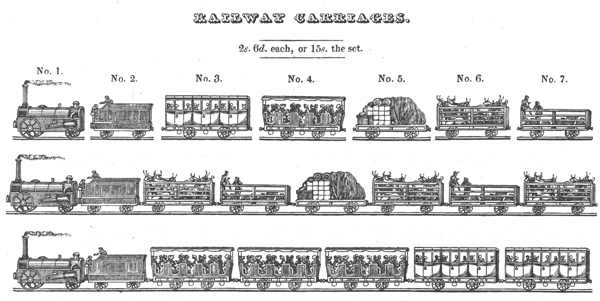
Steam trains from a Caslon Specimen Book.

The Caslon Family tomb at St Luke’s Old St.
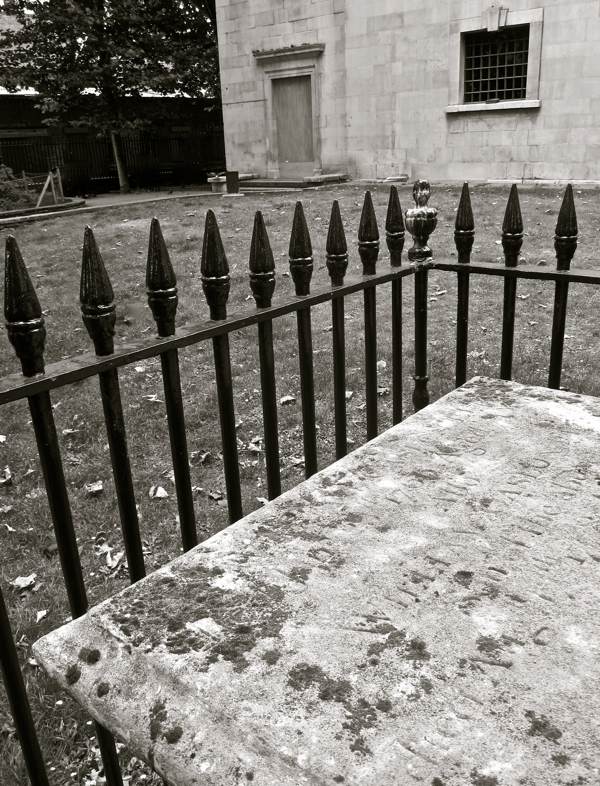
Caslon letters on Caslon’s tomb.

Unless otherwise ascribed all archive images courtesy Bishopsgate Institute
You may also like to read about
Julius Mendes Price’s London Types
It is my greatest delight to show these examples of London Types, designed and written by the celebrated war artist Julius Mendes Price and issued with Carreras Black Cat Cigarettes in 1919. After months of searching, these are the latest acquisition in my ever-growing collection of London Street Cries down through the ages. Some of these images – such as the cats’ meat man – are barely changed from earlier centuries, yet others – such as the telephone girl – are undeniably part of the modern world.
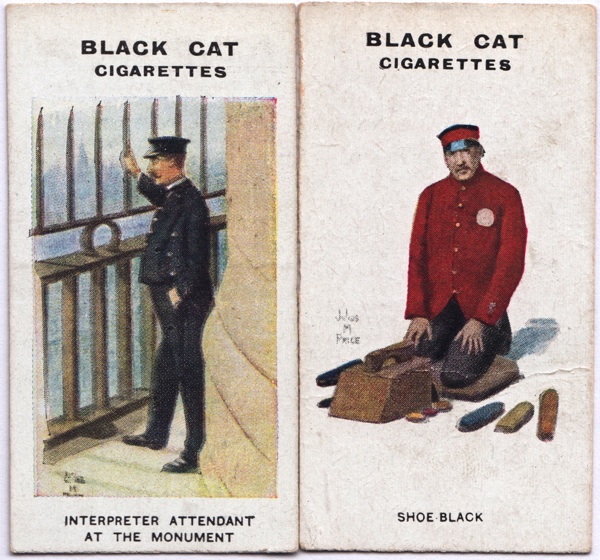


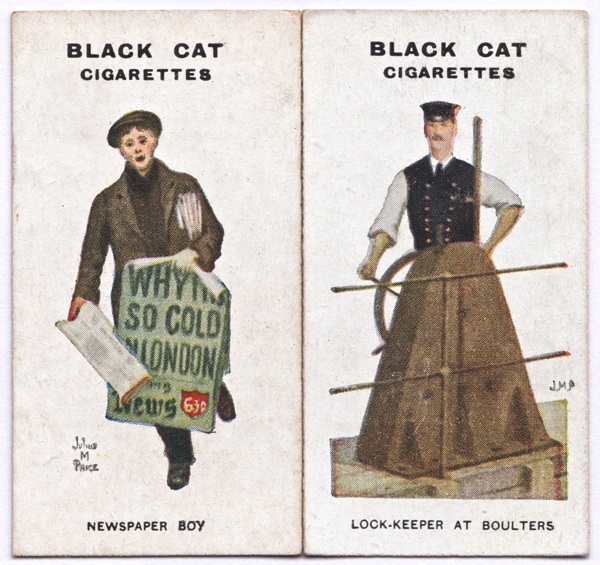

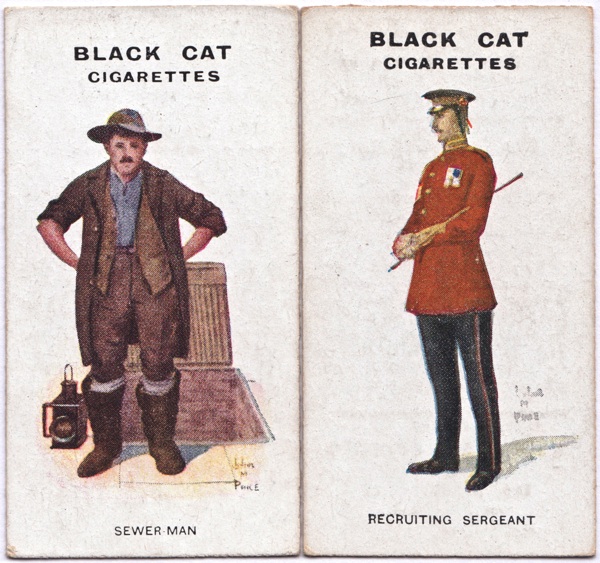


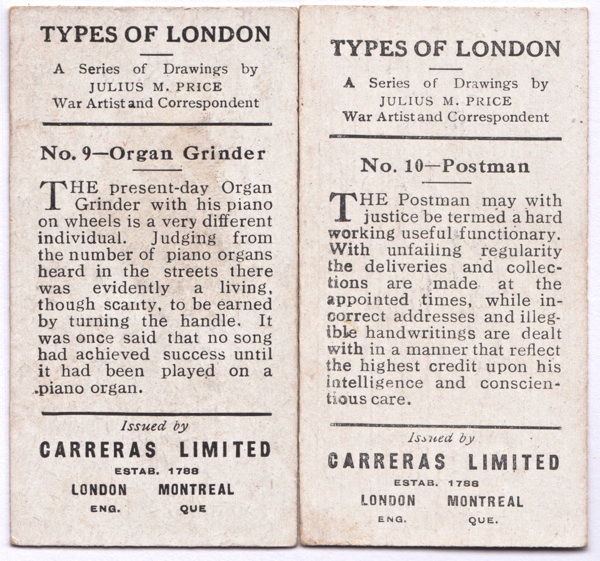
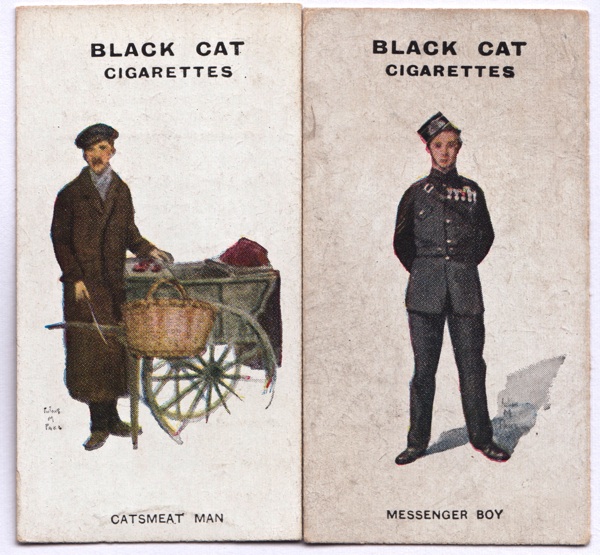


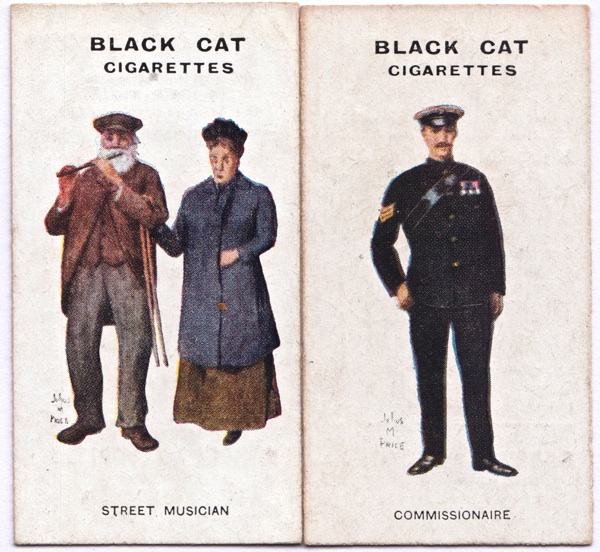


You may also like to take a look at these other sets of the Cries of London
More John Player’s Cries of London
More Samuel Pepys’ Cries of London
Geoffrey Fletcher’s Pavement Pounders
William Craig Marshall’s Itinerant Traders
H.W.Petherick’s London Characters
John Thomson’s Street Life in London
Aunt Busy Bee’s New London Cries
Marcellus Laroon’s Cries of London
William Nicholson’s London Types
Francis Wheatley’s Cries of London
John Thomas Smith’s Vagabondiana of 1817
John Thomas Smith’s Vagabondiana II
John Thomas Smith’s Vagabondiana III
Thomas Rowlandson’s Lower Orders
At Barts Pathology Museum
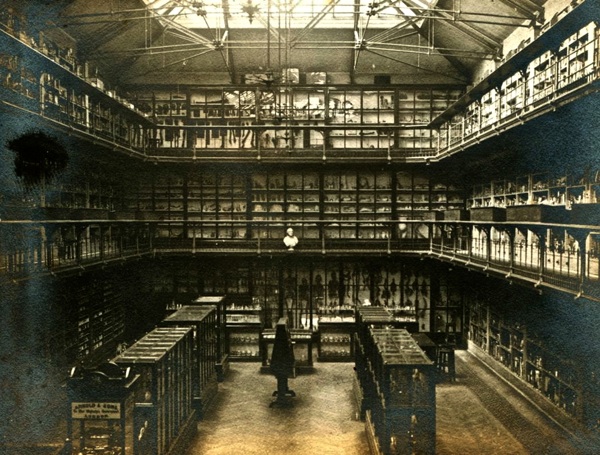
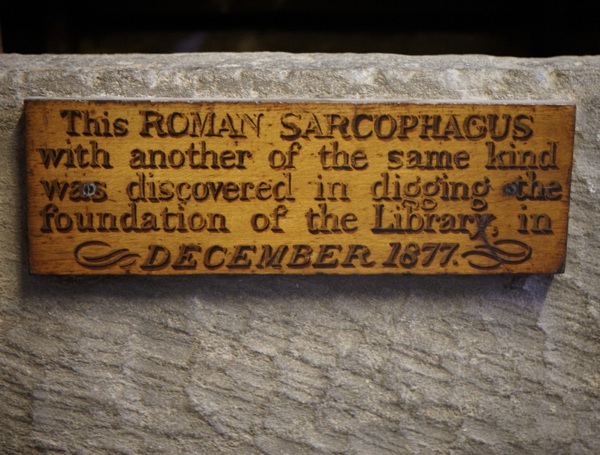
You enter a door at the hospital and over it are the words, ‘Whatsoever thy hand findeth to do, do it with thy might.’ Then the first thing you come upon as you climb the stairs is a vast stone sarcophagus, stored on the landing as if it were a spare piece of medical equipment. It is wedged half open as if the inhabitant had climbed out and could return at any moment, and a sign above it warns ‘Smoking Prohibited,’ just in case they considered lighting up.
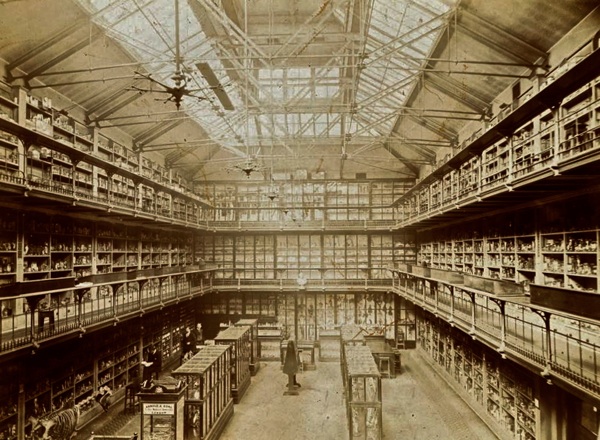
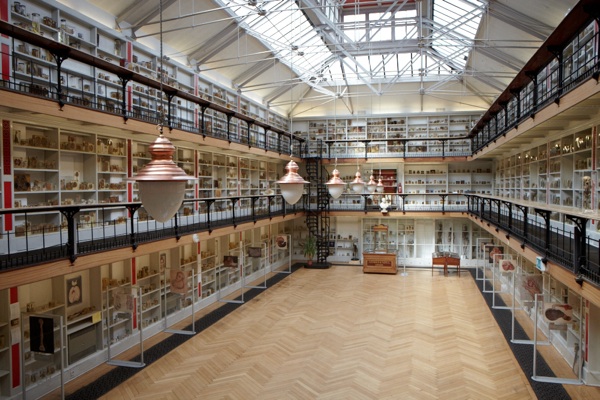
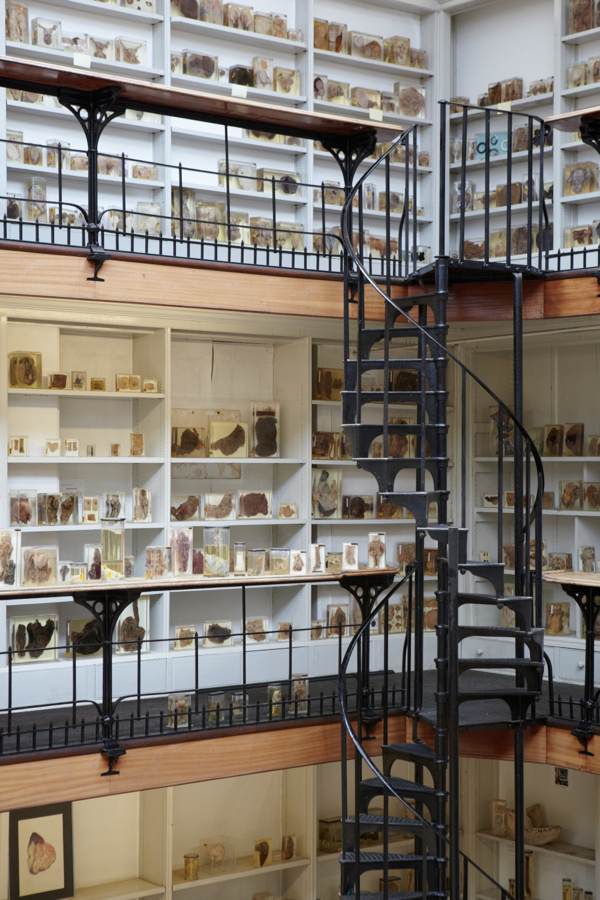
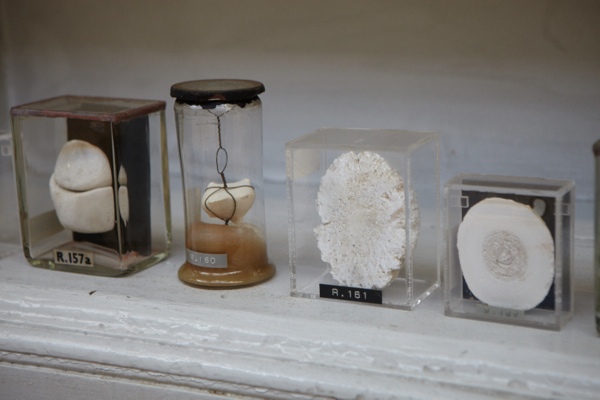
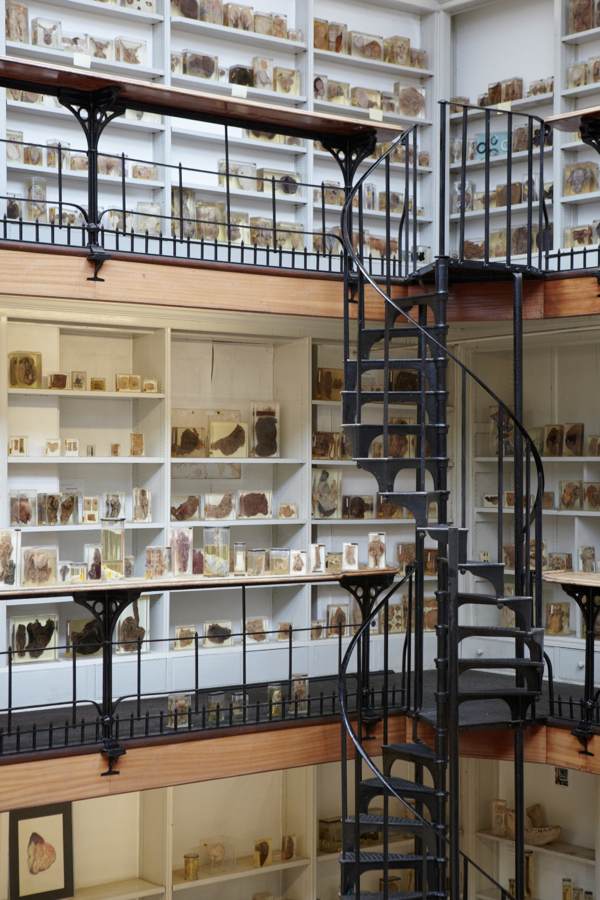
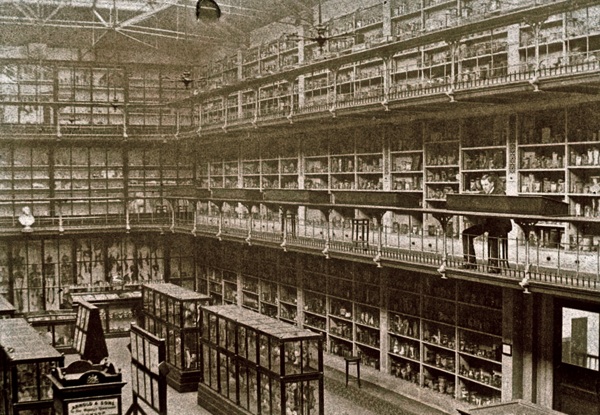
By the time you reach the top of the winding staircase in this lonely corner of West Smithfield, you are emotionally prepared to enter Barts Pathology Museum – one of the saddest and strangest places I have ever been. Arranged in bottles and jars, preserved in fluids and organised upon shelves spanning three storeys, is a vast, encyclopaedic collection of human body parts acquired by the hospital over centuries, for the study of anatomy and ailments. There are more varieties of carcinomas and hernias, more malformations and deformations, more ways that the human body can be blighted and broken than in your worst nightmares.
Each one of the five thousand specimens represents a different example of human suffering, and you stand overawed to see pain quantified and categorised in this way. Gazing around from the centre of the room at the expansive galleries that run floor to ceiling, I became wary to approach the display in any direction out of reluctance at what I might discover.
In such a circumstance, Contributing Photographer Patricia Niven & I were grateful to be greeted by the pragmatic enthusiasm of Carla Valentine, Technical Assistant Curator. “I’m a mortician,” she admitted reassuringly, “for eight years, I worked in mortuaries doing autopsies, but this is what I always wanted to do. I wanted to do it since I was ten, I think some people are born to do this. I was always cutting up slugs and worms from the garden, and probably I was a weird child.”
Carla has been employed to work upon the conservation of the collection.“They’re all leaking over there,” she revealed, gesturing to a long gallery lined with organs in bottles that she has been transferring into safe containers. I learnt that in recent decades, the practice of preserving new specimens has ceased, except in rare cases. “The only people who are placed in here now are those who choose to be,” Carla explained helpfully, “if, for example, they have some unusual cancer that they want to have put on display.”
Eager to reward our interest, Carla drew our attention to the case of foreign objects extracted from the human body – the toothbrush removed from the oesophagus in 1944, the pencil case removed from the bladder in 1932, the needle removed from the heart in 1879, the torch removed from the rectum in 1933 and the metal dart removed from the brain at an unspecified date. It became apparent that each specimen had its own story, even if they were not always obvious.
“We have a lot of Victorian factory workers,” Carla informed me, moving on and indicating a case of semi-disintegrated jaw bones that were examples of ‘Phossy Jaw’ – the condition acquired by those who worked with phosphorus in the manufacture of matches. Beside them were specimens that illustrated ‘Chimney Sweeps’ Cancer’ – the testicular cancer that came about as a result of a life spent climbing up chimneys. And then there was the fractured mandible of the fourteen year old boy whose head was caught between the rollers of a rotary printing machine and died a week later. And I shall not easily forget the metal cap designed to hold together the broken pieces of the skull of a man run over by a carriage, that enabled him to live several years after.
Proudly, Carla showed us the inguinal hernia from around 1750 that is the earliest specimen in the collection, preserved by Percivall Potts – one of the museum’s most celebrated curators. “Unfortunately the perspex box was leaking, so I decided that – for the safety of the specimen and for aesthetic appeal – I would put the hernia into a glass pot with fresh fluid.” Carla confided to me cheerfully. You stand helpless in front of these examples and others, nodding politely at the explanations and feeling numb as you seek to discover a relationship with what you are seeing. The skull of John Bellingham who murdered the Prime Minister in 1812 and the skull of a Norman killed at the Battle of Hastings in 1066 leer back at you, and a vision of the largest centipede you ever saw in your life that, although safely preserved in a glass bottle, nevertheless wriggles deep into your consciousness.
There is certain grim grandeur to this museum designed by Edward l’Anson in 1878, where mustachioed busts of James Paget and John Hunter, two nineteenth curators, stare eternally upon their creations from either end of the gallery. Once you have confronted the detail for yourself, you cannot but admire the moral courage of those who were unflinching in their pursuit of medical science. As Carla Valentine concluded sagely, this is a museum of how we got to where we are today in medicine. Yet I could not resist a surge of personal grief when confronted with particular examples of afflictions suffered by those I have known closely and so, after everything I had seen, it made me grateful for my own good health.
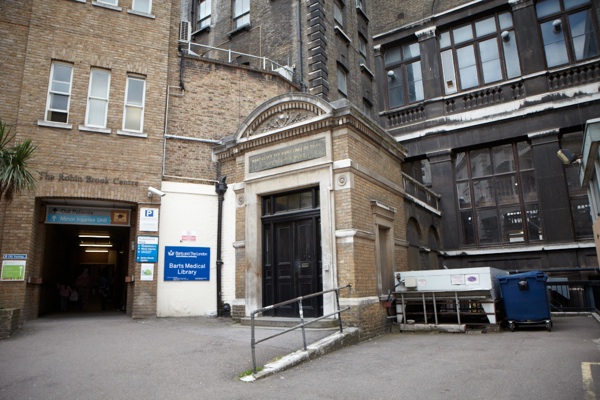
In a lonely corner of the hospital.
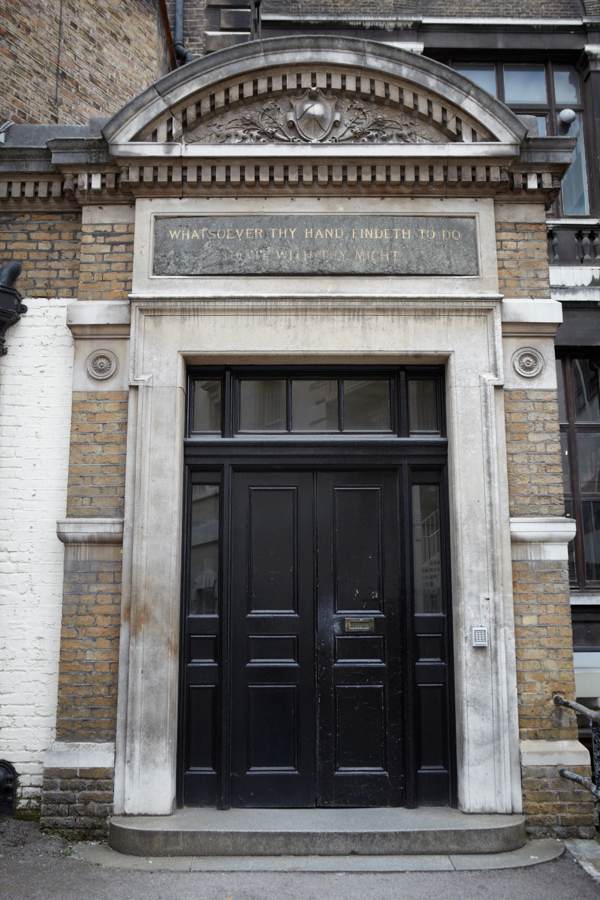
“Whatsoever they hand findeth to do, do it with thy might”
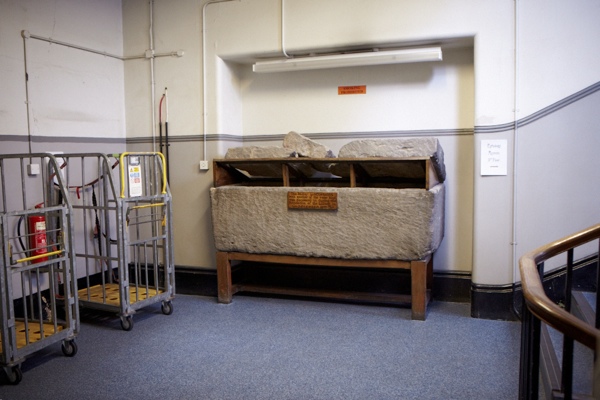
The sarcophagus on the stair.
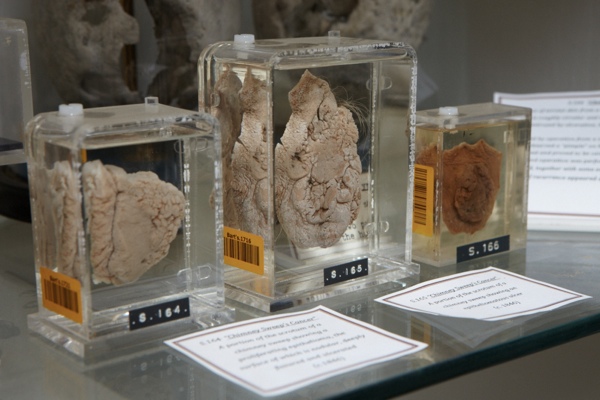
Specimens of ‘Chimney Sweeps’ Cancer’
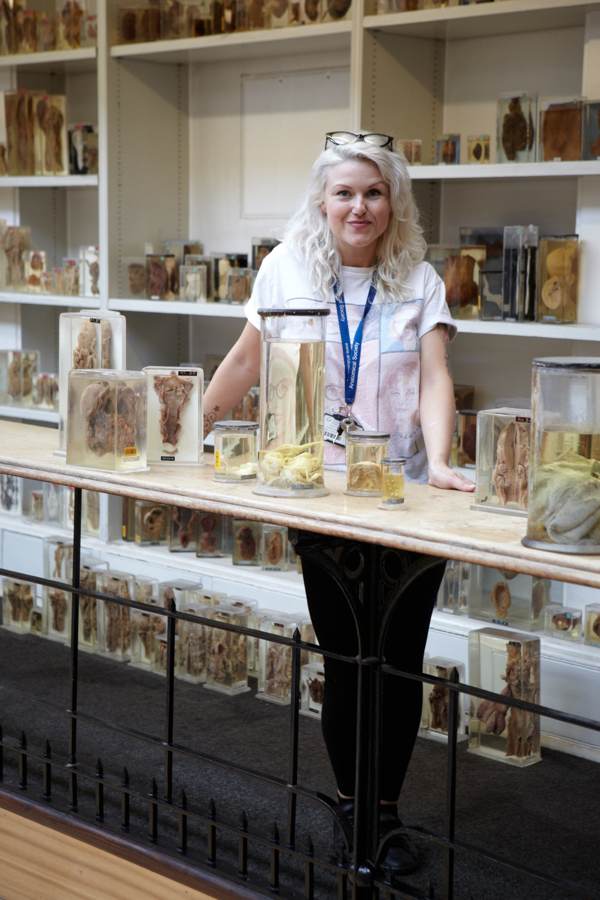
Carla Valentine, Technical Assistant Curator & Mortician.
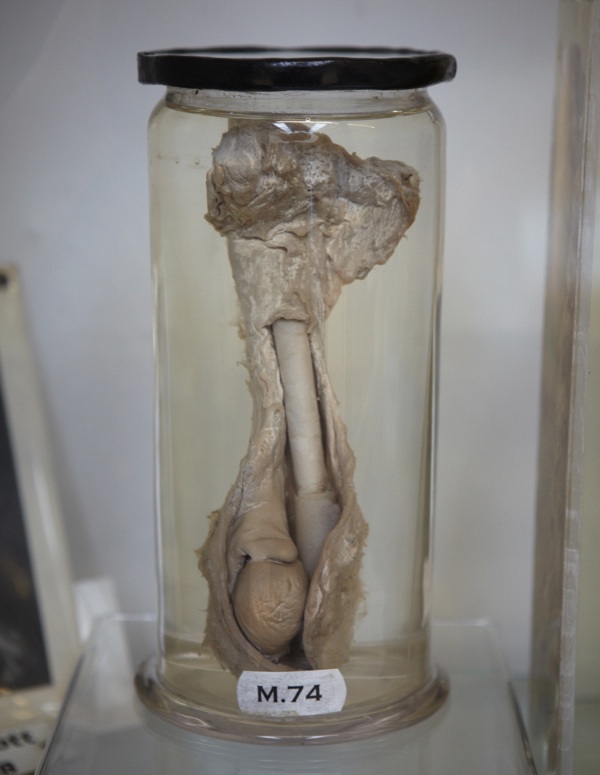
The oldest specimen is this inguinal hernia from around 1750, preserved by by Percivall Potts.
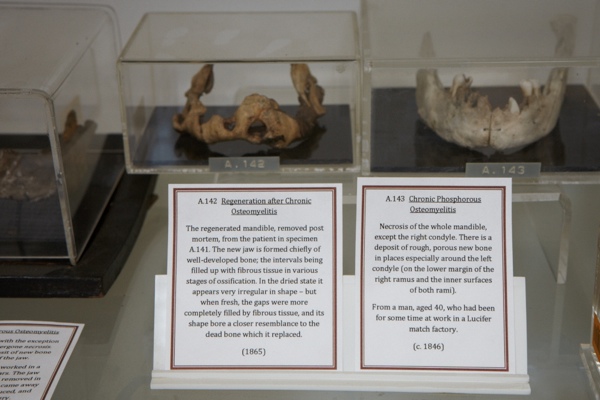
Specimens of ‘Phossy jaw’ – a decay of the jaw bone caused by exposure to phosphorus and suffered by workers in East End match factories in the nineteenth century.
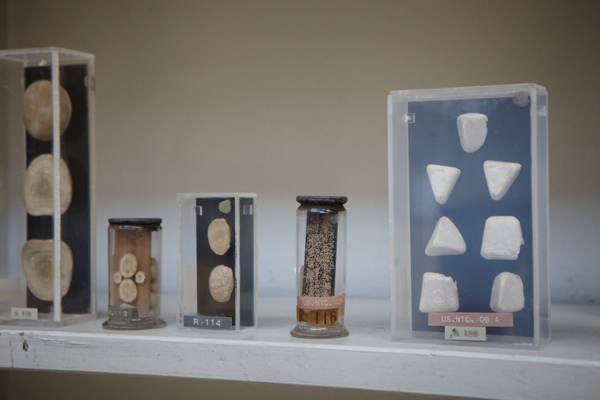
Bladder stones
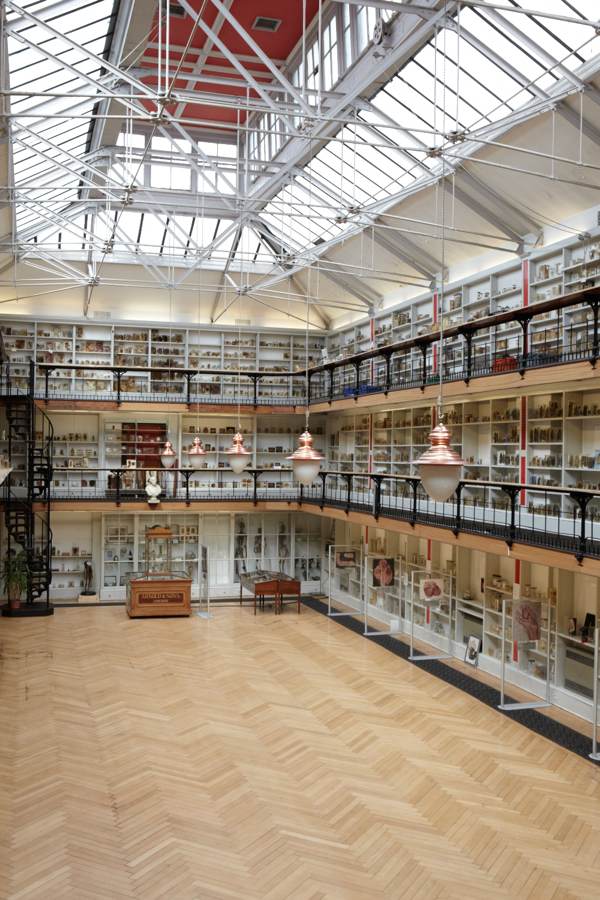
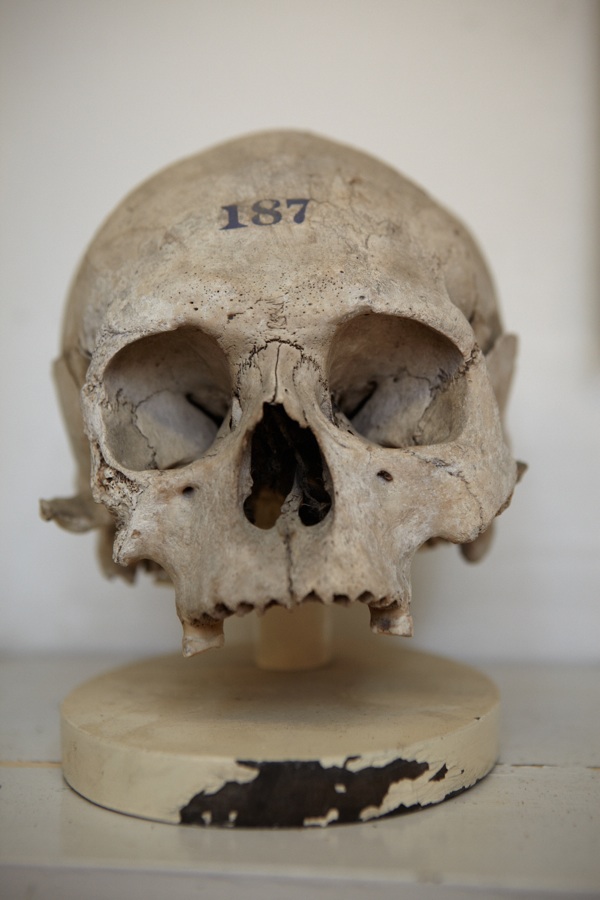
Skull of John Bellingham, the assassin who killed the Prime Minister, Spencer Percival, in 1812.
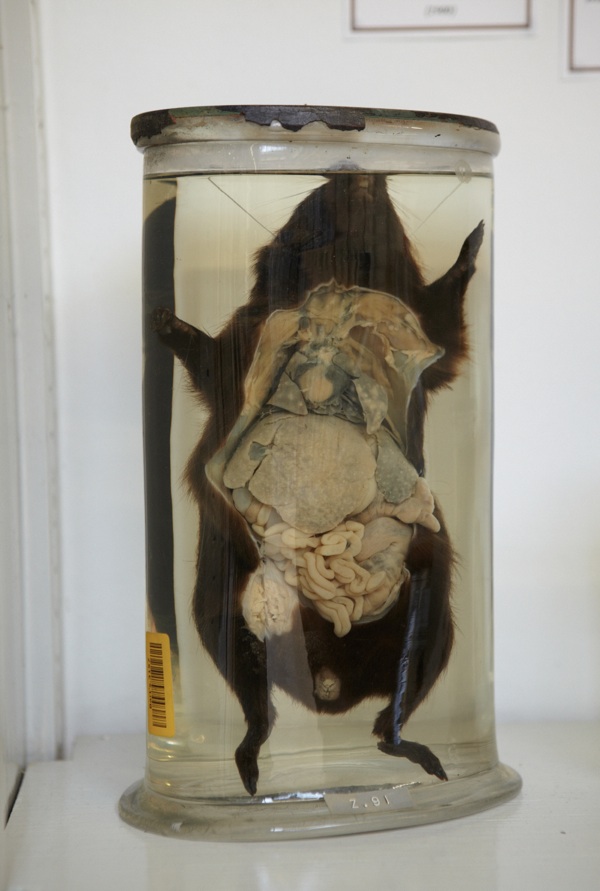
A rat that suffered from tuberculosis
Photographs copyright © Patricia Niven
Archive images courtesy of the Royal London Hospital Archives
Follow the Pathology Museum blog Potts’ Pots
Learn about forthcoming Autumn Seminars at the Pathology Museum.
You may also like to read about












