
Bob Mazzer’s Porn Pilgrimage
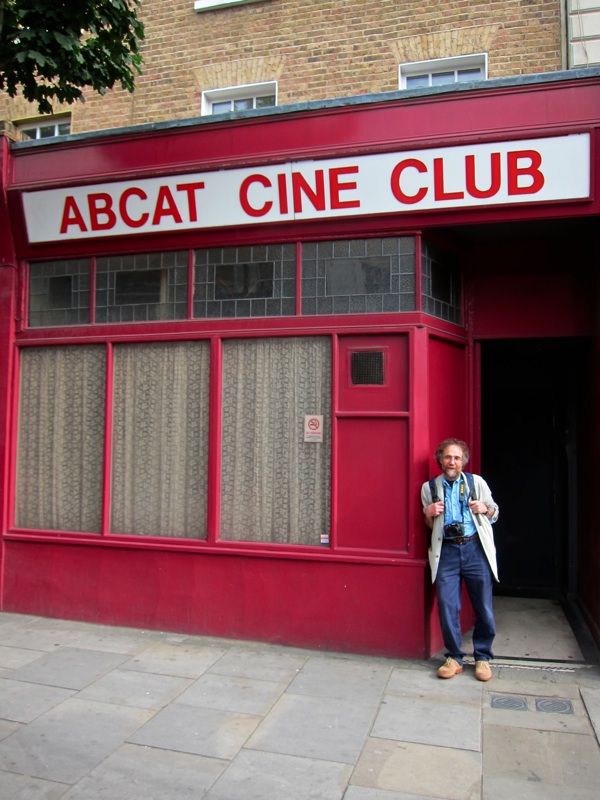
Bob Mazzer outside Abcat Cinema Club in the Caledonian Rd
I met photographer Bob Mazzer at Kings Cross Station recently and we set out through the streets on a porn pilgrimage to discover the location of the sleazy cinema where he worked as a projectionist more than thirty years ago. Surveying the first terrace we came to in York Way, Bob speculated that the cinema he worked at might have been where the new shops are, but we decided to walk further to explore and, before long, we arrived at the Caledonian Rd.
Here we came across the Abcat Cine Club and Bob stopped in his tracks, shocked to realise that this was the cinema where he had worked. In spite of all the changes in Kings Cross, it still existed. A businessman walked past us and entered the discreet frontage and then, as we approached, the ticket seller from behind the front desk came out to enjoy the afternoon sun. A senior gentleman with cropped white hair and a pink face, he put his cup of tea down on the traffic bollard on the corner and lit a cigarette.
Introductions were made and we struck up a conversation with this amiable chap, who even remembered some of the people that Bob had worked with at the cinema, so many years ago. But then he interrupted our chat abruptly and ran off in a different direction, disappearing inside a shopfront labelled “Oscars” in a side street, and leaving his teacup on the bollard. Minutes later, he returned and apologised, revealing that Oscars was a gay cinema and it was his job to sell tickets for both the Abcat Cine Club and Oscars, hence the necessity to stand on the street corner where he could see people approaching either venue.
Naturally, once the famous Abcat Cine Club which was the object of Bob’s porn pilgrimage had been discovered, I was intrigued to learn more of his brief career in the sex industry and graciously he obliged by telling me the whole story.
“When I answered an advert in the Evening Standard for an 8mm film projectionist, I knew I wasn’t going to be working at the Odeon Leicester Sq but in some seedy joint. I was curious to know what that sleazy twilight world was like and I felt that my years at art school had been sufficient preparation for becoming a projectionist showing blue movies.
I had been living in rural Wales, but my mother died so I moved back to London to be with father in the flat at Woodberry Down and I needed a way to make a living. I was quite upfront with him about it and he didn’t seem to mind. As a result of my job at the Abcat Cinema Club, I was able to equip myself with a dark room and it ramped up my photography, giving me freedom to do what I wanted to do. What I liked about the job was the shifts, you either worked six until ten or two until six. The hours suited me and I must have been getting eighty pounds a week. I was very comfortable for a year and put money away to buy camera equipment. Up ’til then I had no money, but now I was paid cash in hand so I could to take my friends out for dinner and pay for their taxis home. Suddenly, I found I had a lot of friends who wanted to visit me at work and some were even feminists.
I remember it being quite a cosy little scene. I sat in the projectionist’s booth and there were two projectors, and you projected through a hole in the wall. The place held about fifty people, but I never looked through the hole in the wall, so I have no idea what went on. I can remember the first film I saw, it was Scandavian. It was an education for me because I had never seen anything like that before. I was staggered. It was a Swedish film about a mother and a daughter on a sexcapade in London, there were even shots of them in Trafalgar Sq and I’m sure someone cracked a joke about Nelson’s Column.
There were two people working at the cinema, the projectionist and the doorman – you were never there on your own in case there was a problem. It was relatively tame at Kings Cross and the year I worked there was uneventful, nothing ever happened. Then I was transferred to Paddington to the Office Cinema Club where I was much more on the front line, and I had to man the desk and project the films all on my own. Paddington was rougher than Kings Cross in a strange way.
There was no frontage, just a big sign saying the Office Cinema Club and you went through a doorway between two shops, up the stairs and along a passage, to where I sat at a desk in front of a window with a view down Praed St. From this desk, I could take the money and then step up onto a platform to work the projectors, and I had a TV to watch while the customers were watching the films. One day, a smart business man came in, wearing a pin stripe suit and with a buxom woman upon each arm, I don’t know what he was up to and I didn’t spy. Upstairs, there was a gay cinema than ran on a cassette system, so I rarely needed to go up there. Occasionally, I had to sweep up and discovered things I’d rather not see.
The place got raided by the police from Paddington Green Station every few months and the films would get confiscated. I’d ring the boss and say, ‘We’ve been raided again,’ and he’d bring round new films and open up again. We ended up in court where they projected the films in the courtroom in front of the jury. The barrister stood up and said, ‘This is insanity, it’s a club and it’s private,’ and we got off. It was nice to see the law made an ass of, even if it was little scary. The whole relationship between the police and the people who ran the cinema was a comedy.
I was sitting at my desk one day and the telephone rang, and it was a woman asking if her son was there. This young lad would shuffle up the stairs and, in those days, if anyone looked over eighteen you let them in. His mother was phoning up to find out if he was there and she was relieved when she knew where he was. She just wanted to know that he was safely at the Office Cinema, sitting watching blue movies. It happened a couple of times.
Then I got held up and that was it. I was sitting minding my own business when I heard the door go downstairs but I didn’t look up, and then I felt the cold steel of a gun at my head. I looked up and there were these two guys, a black guy and a white guy. It was obvious what was going on. The white guy set about taking money and projectors and films while I was led into the loo by the black guy who had a knife and he tied me up with blue garden twine. It was slippy and I could have undone it but I was scared. I thought, ‘Is this where I end my days, dead in the toilet of a blue movie cinema?’ Not a nice end, and I’d just met the girl of my dreams who is now my wife.
I can still see the knife in his hand. I looked at his face and I thought it was interesting face with streamlined features. They left me unharmed and I untied myself. I waited ten minutes and then I made a phone call. The boss came round, and he thought it was an inside job and he sacked me. The same police who had raided us were now called in to investigate, and the boss called up a week later and said, ‘Bob, do you want to come back?’ But when I got the sack I thought, ‘That’s fine by me.'”
You may also like to take a look at
The Ploys of Mr Pussy
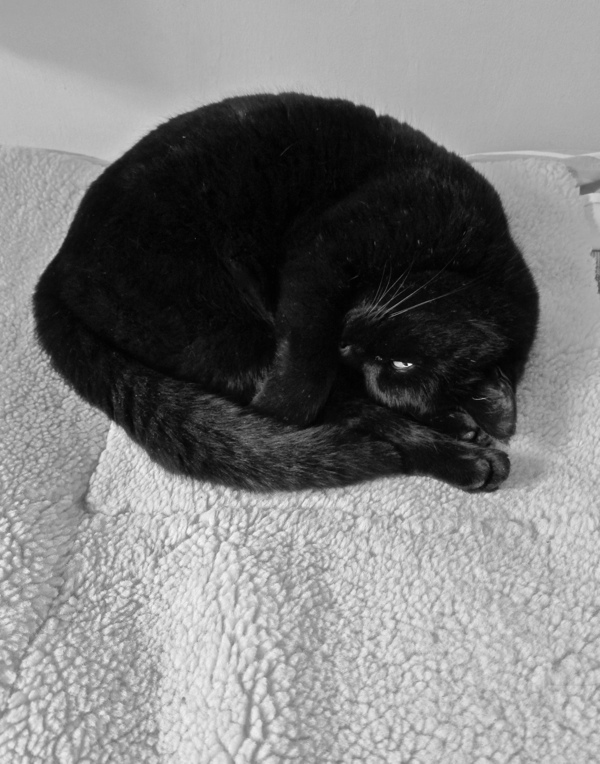
Mr Pussy may appear self-possessed, yet he is circumspect. He keeps a keen eye upon the life of the household and no detail escapes his attention. In spite of his sufficiency, domestic harmony is essential to his peace of mind. Like those lonely watchmen who once patrolled the city at night, Mr Pussy monitors the premises and the residents. He loves routine. He seeks regular confirmation that the rhythm of life is stable and ensures that his place in the household remains constant. He desires equilibrium and he wants the world to be unchanging. He is the self-appointed guardian of the peace. He is assiduous and he sets an example. He is the model of poise and master of the subtle persuasion necessary to maintain the harmony he craves. He has his ways and means. He has ploys.
He wants me to be at home and stay at home. In his ideal world, I would not stray beyond the house and the garden. He does not. Everything he needs is here. This is the world. He cannot imagine what could be of interest beyond his personal utopia. Possessing a medieval mind-set, he thinks only the void lies beyond his known universe. Yet he is patient with my frequent absence. His ploy is to wait.
Assuming the role of a sentinel, he settles down in a vantage point to pass the hours until my return. Innumerable times, I have turned the corner and seen him there – a dark shape – waiting expectantly at the end of alley. He will lift his head at the moment of recognition and, as I walk towards him, he will leap up and run to meet me, rubbing against my legs in greeting. Then he will step aside to clear the path and let me go past, following along behind like an escort or a shepherd. He will not accompany me into the house at once. He likes to see me go inside and shut the front door, so that he may savour the long-awaited homecoming and be satisfied that all is well outside, before entering through his flap and following me upstairs.
A favoured vantage point of his is the first floor sill, where he presides from above, and, if he is not immediately visible upon my approach up the alley, then I know that, if I raise my gaze, it will be met by two golden eyes peering down at me inquisitively from the window. Upon entering the house, he will appear at the top of the stairs, stretching his stiff limbs from crouching upon the ledge and peering at me curiously to assess my mood.
If I should change into my slippers and settle in a chair at once to open letters or read, without paying him attention, he will coax me from my preoccupation. His ploy is to remove my slippers by curling up around them, gripping them in his claws, and pulling them off. He can achieve such an act with expert precision and, if I still do not acknowledge him, he can use his sharp claws to inflict jabbing pain as an eloquent indication of his frustration at my absence and my callous disregard of his existence. Yet events only rarely reach such a dramatic conclusion, since I have learnt to take the hint and lay aside the object of my attention, as soon as he curls up round my slippers.
Delighting in frequent catnaps at regular intervals, Mr Pussy will not tolerate me sleeping beyond dawn. He wants me to conform to his timetable. When his old ploy of scratching at my bed sheets grows too tiresome, I shut him out of the bedroom and ignore his cries. Then he will claw at the upholstered chair outside the door, knowing this will raise my ire. Yet I have found that if I lay a few sheets of paper upon the chair, he will accept this novelty as a concession, settling down upon the paper and granting me my wish to sleep uninterrupted for a few more hours.
Mr Pussy never sought for scraps at dinner until recently. He is not hungry – it is a ploy. If I indulge him, he rarely eats what I offer, he is satisfied merely to taste. He hopes that I can be taught to grant him this privilege as an automatic recognition of his status within the household, as one who has the right to participate in meals. Afterwards, he always licks his lips in delight at the curious flavours of human food and leaves the house directly to patrol the vicinity, reassured once more that his position is secure.
Thus Mr Pussy has his ploys and, thanks to his expert stewardship, peace is maintained and the world runs smoothly in our corner of Spitalfields.

Slumbering
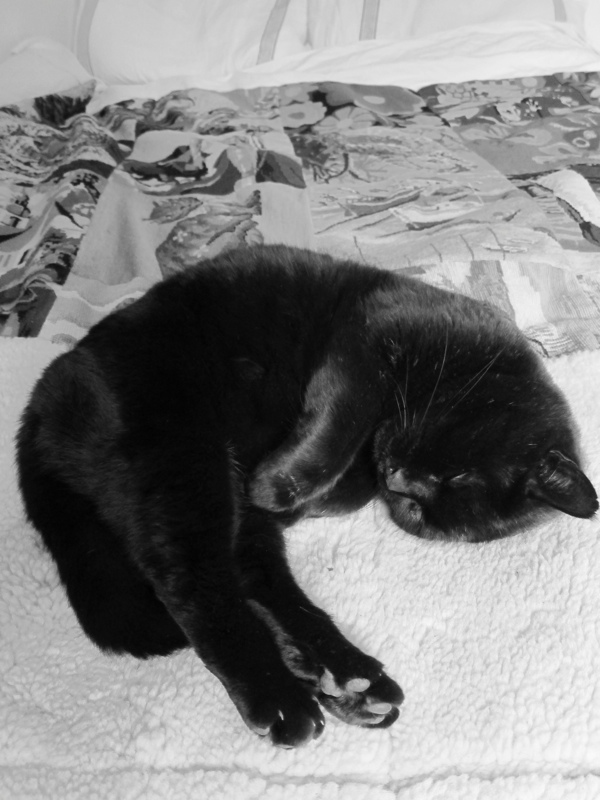
Dreaming
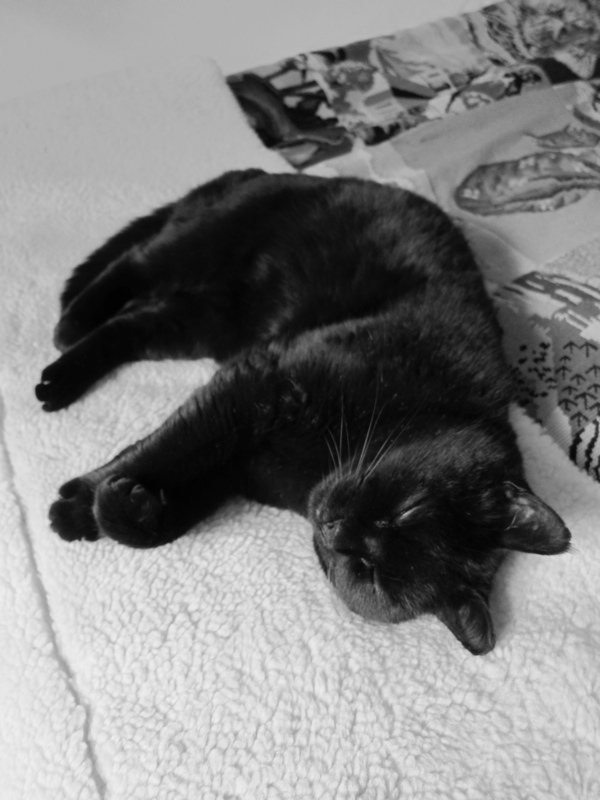
Dozing

Awakening
You may also like to read
and take a look at
The Cats of Spitalfields (Part One)
Colin O’Brien at the Fair
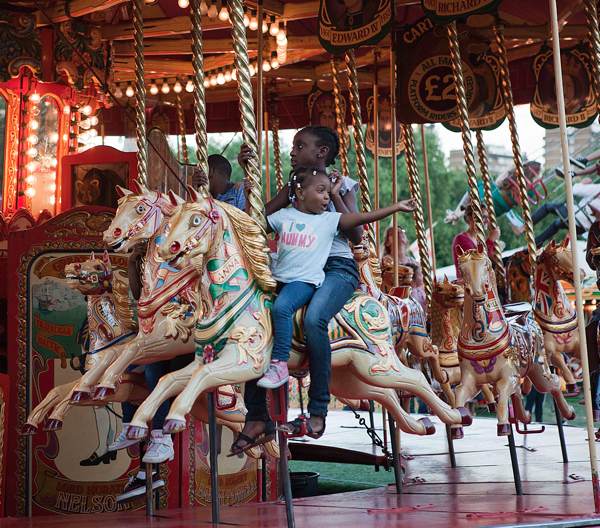
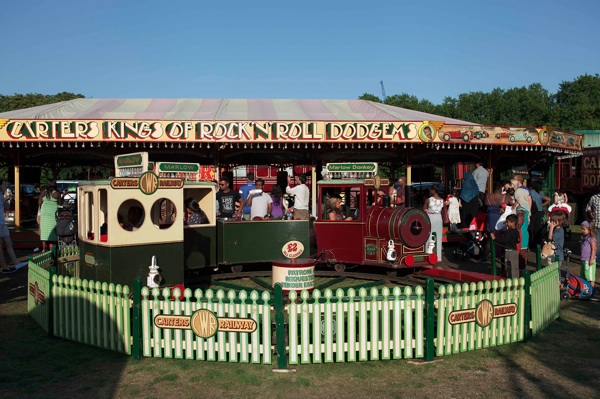
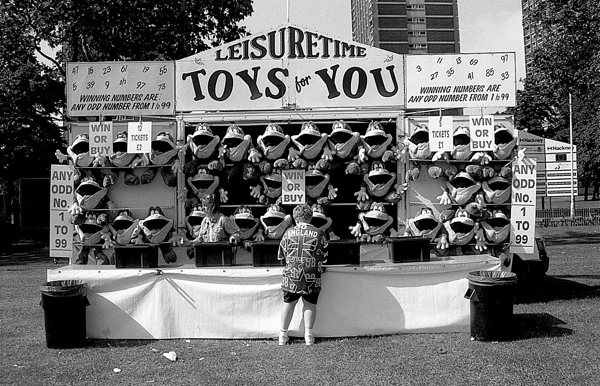
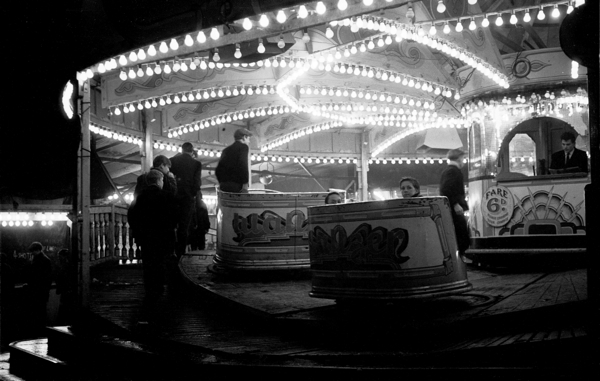
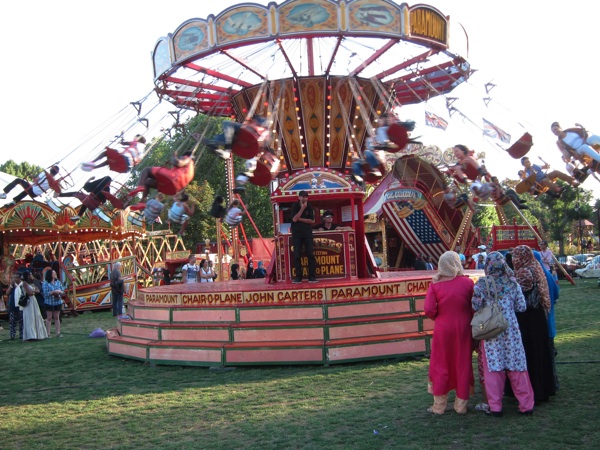
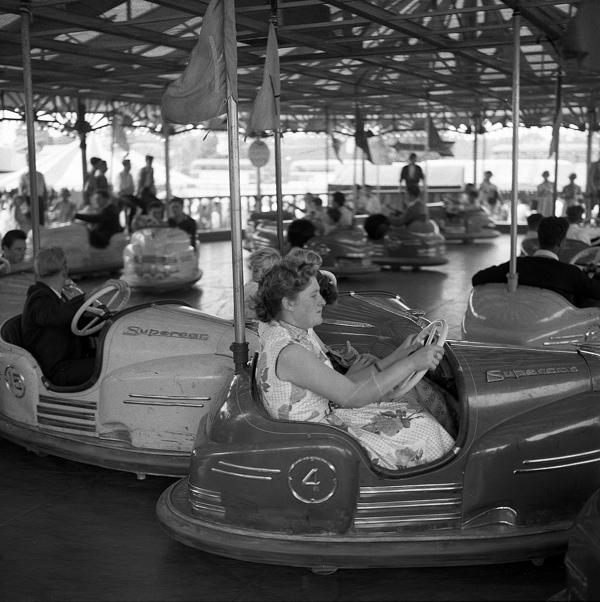
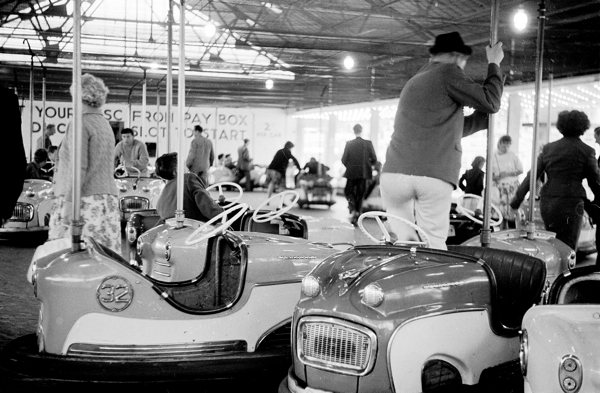
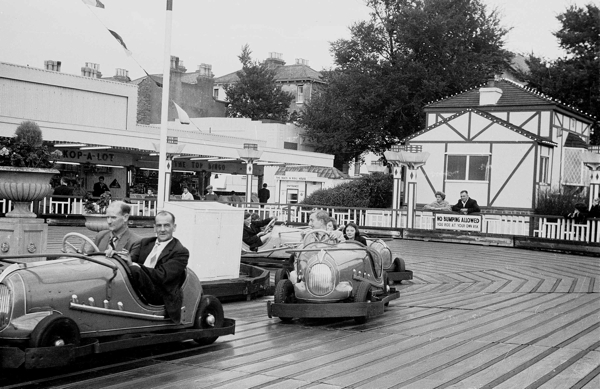
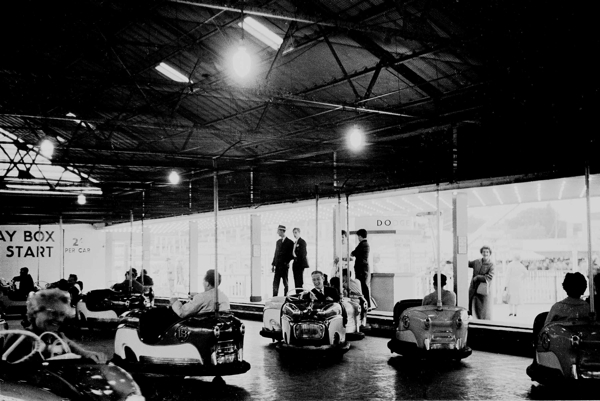
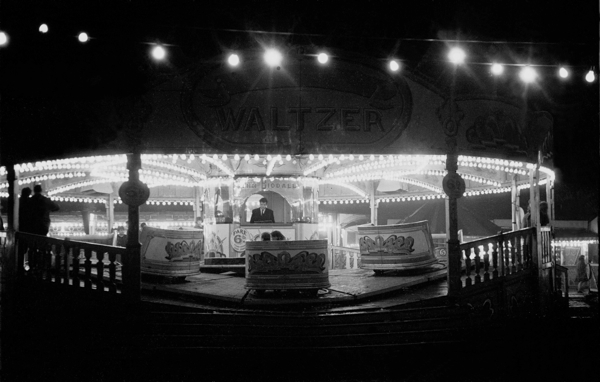
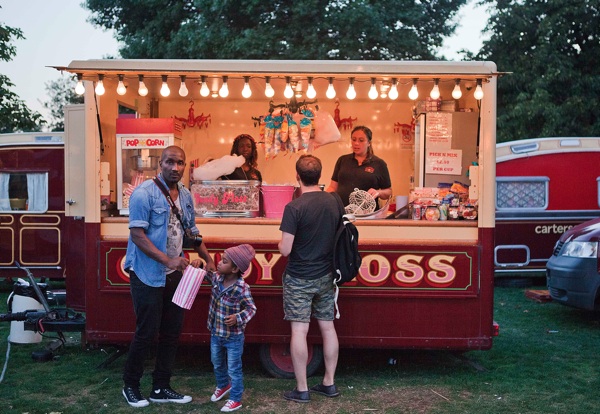
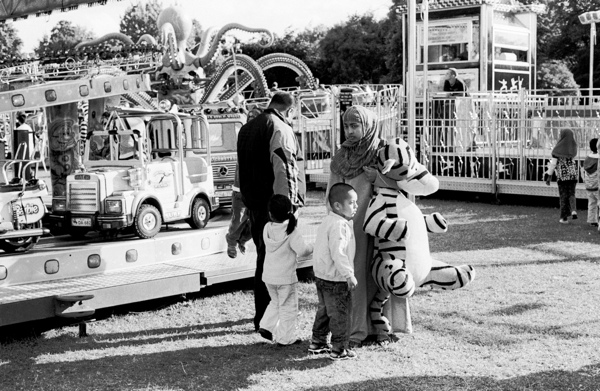
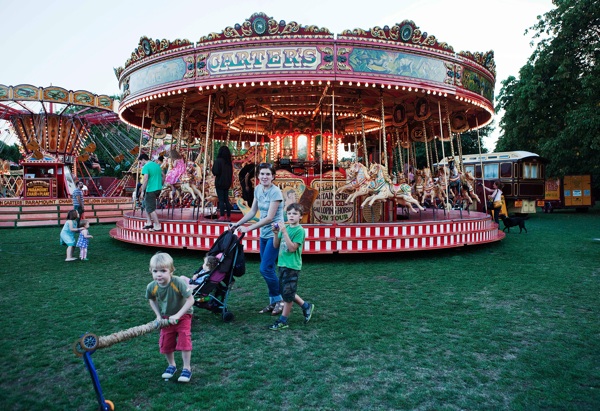
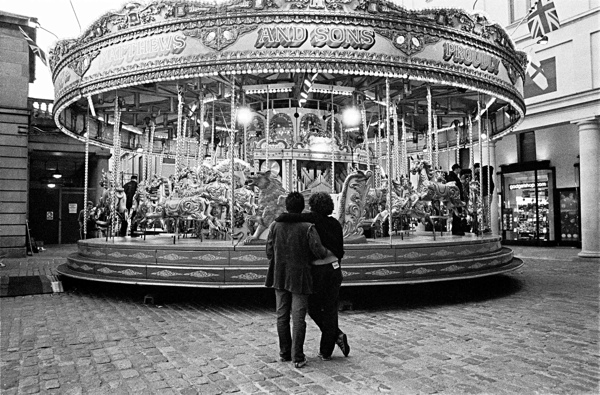
Last month, after Colin O’Brien & I interviewed Anna Carter of Carters’ Steam Fair in Victoria Park, Colin went back alone to take photographs of the fair in action, which I am delighted to publish today alongside a selection of his earlier fairground pictures stretching back over half a century.
“I can remember when I first went to the fair, it was 1946 when I was six years old,” Colin admitted to me fondly, “My father came back from the war in 1945 and took me to the Victory celebrations in Piccadilly Circus, but I was scared of the crowds – so, the next year, he took me to the fair on Hampstead Heath and I wasn’t scared of the crowd because I liked the movement and the colour. I always feel safe in a fairground crowd just as I do in a market crowd, and I love the cries of the stallholders. But I don’t like the rides so much, I’m scared of the Big Dipper and I’ve never been on it to this day. My favourite has always been the Dodgems, even before I could drive and it was my father at the wheel, it was fantastic.”
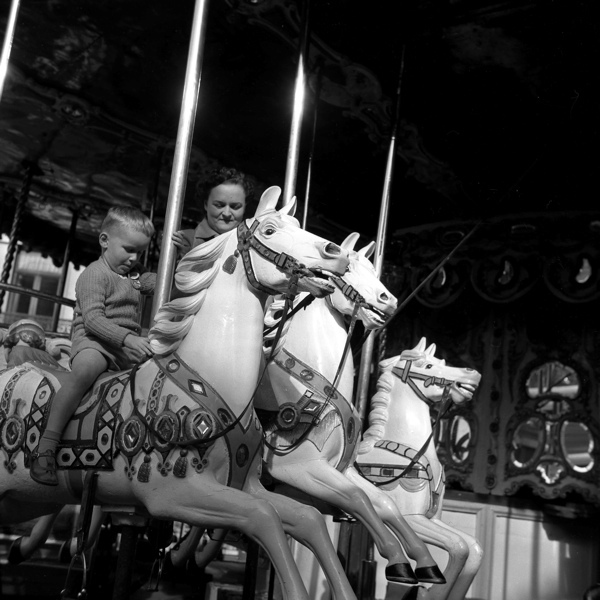
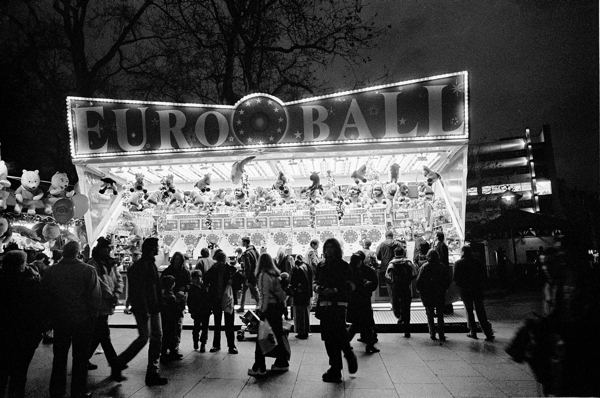
Colin’s fairground pictures fascinate me because, in spite of all the changes in the world, there are many instances where the rides themselves have barely changed at all. “It is has been a formative subject in my photography because, when I didn’t have any money and couldn’t afford to go on the rides, I used to take pictures instead,” Colin told to me, revealing how he compensated imaginatively for his own for lack of resources and how that fired his creativity during those threadbare years.
Rather than feeling excluded, Colin delights in witnessing others’ joy. “Fairgrounds are a wonderful subject, because I enjoy seeing people enjoying themselves and, during the war and after the war, people didn’t get many opportunities to enjoy themselves,” he confided to me.












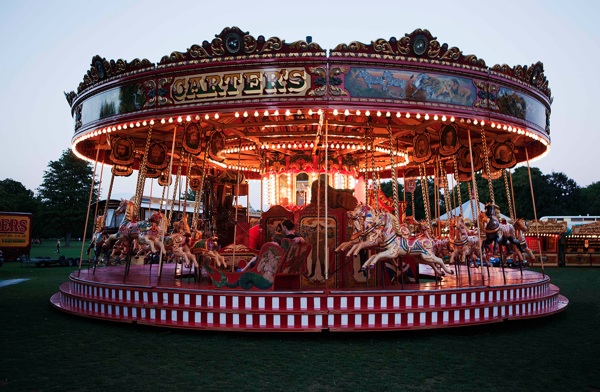


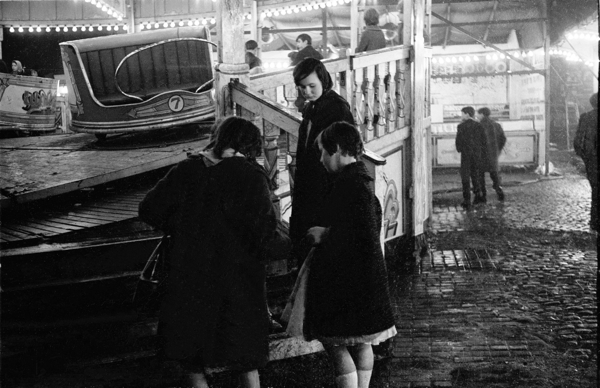


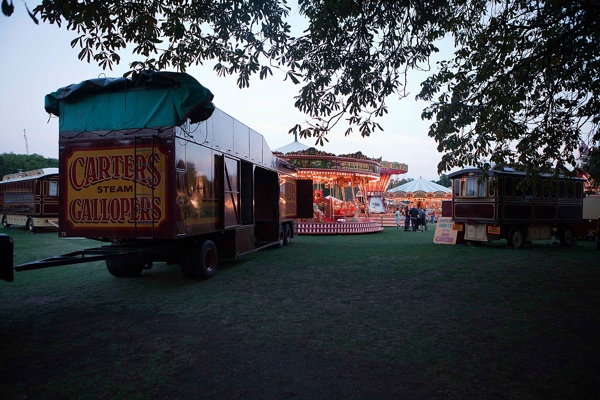
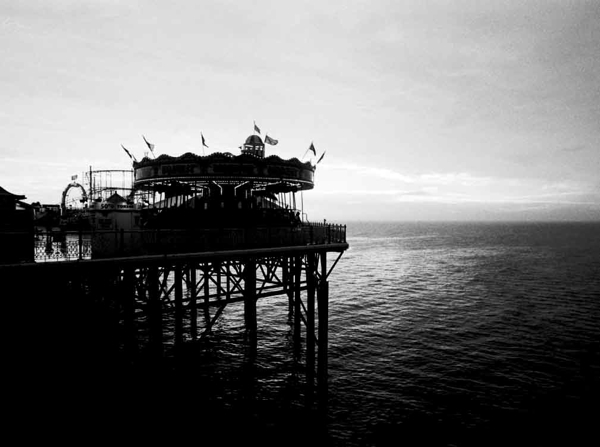
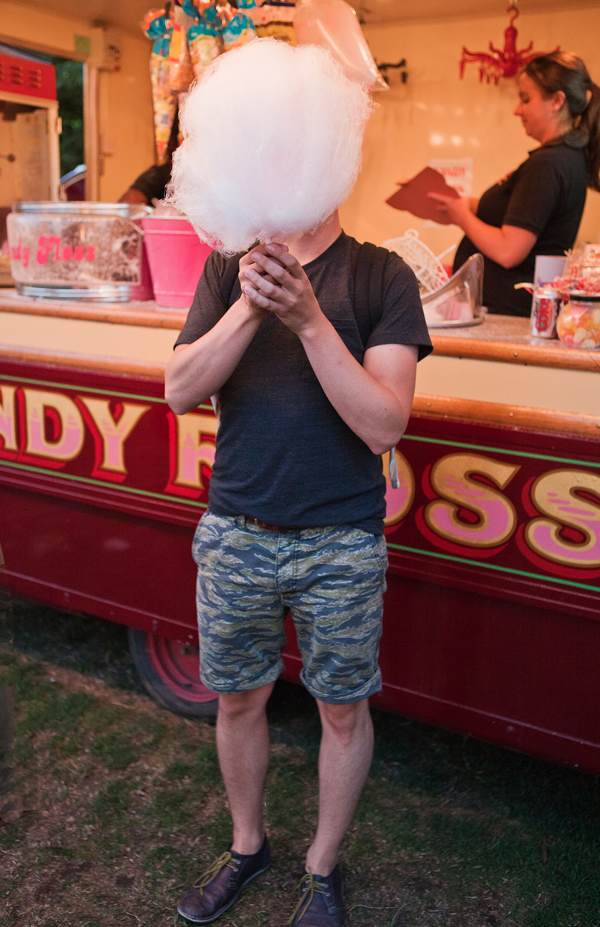
Photographs copyright © Colin O’Brien
Carters Steam Fair is at Westway Common, Caterham, this weekend and at Croxley Green next weekend, 14th & 15th September.
You may like to look at these other pictures by Colin O’Brien
Colin O’Brien’s Clerkenwell Car Crashes
Colin O’Brien’s Kids on the Street
Travellers’ Children in London Fields
Colin O’Brien’s Brick Lane Market
On Saturday 7th September 1940
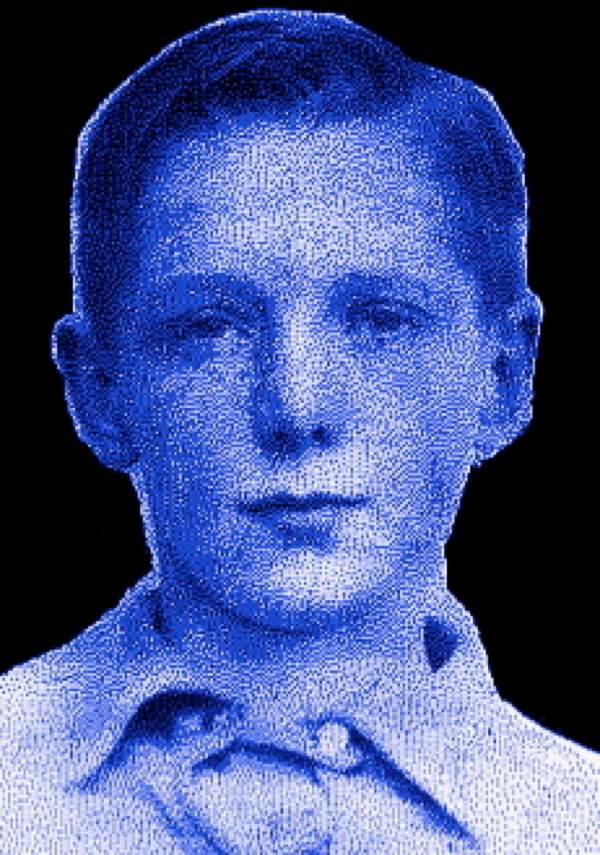
Tom Betts
On Saturday 7th September 1940, life changed abruptly for twelve-year-old Tom Betts. It was the first day of the London Blitz, when bombs came raining down from the sky upon the East End and, that night, one fell into the shelter beneath the Old Columbia Market, where Tom and his family took refuge. It exploded killing more than forty people and, although Tom was seriously injured, he was lucky to escape with his life. Yet the events of that night brought an unexpected and sudden end to his childhood.
“I am happy to say that although my story was horrific, my life has been good since.” Tom reassured me when I spoke with him, “I went into the RAF at seventeen years old and then married at twenty-two in 1950. I became a specialist school teacher and I have a great and active life which I share with my lovely wife Betsy and two children.”
When Tom and Betsy asked to join the housing list in Bethnal Green after the war, they were told there was a twenty-five year wait. But then Tom learnt that new homes were being offered in the new town of Corby in return for six weeks work. “I got a job running the first bowling alley and I got a house, and that was beautiful,” he informed me in fond recollection.
Tom rarely visits Bethnal Green, the location of his formative experiences, anymore. It has changed almost beyond recognition, yet today he is returning to lay a wreath in Columbia Rd in remembrance of the events of that other Saturday, more than seventy years ago, when life broke apart.
“It was a very warm, cloudless Saturday, just like any other early September day. We lived in Columbia Buildings in Bethnal Green, part of a grand project built by Madam Burdett Coutts – of the banking world – as a philanthropic venture in the eighteen-sixties. It was an enormous Gothic creation that comprised a covered market, accommodation for several hundred, plus shops and storage for the traders. We had our own church, swimming pool and baths, and the luxury of a laundry on the fifth floor – it was by no means the typical East End block of flats, it was something far more majestic.
That Saturday, after my mother had cooked breakfast for my brother & me, I went out with friends knocking on doors to take orders of coke from the local gas works. Doing our bit for the war effort earned us threepence a sack which was enough to buy pie and eels, and also the means to go to the Saturday cinema. In the afternoon, the sirens began but since we had some light air raids in the previous nights, we were not too alarmed. Yet that day was different, there was much more anti-aircraft gun activity, so we were more curious and climbed up six floors onto the roof to take a better look. There were hundreds of German airplanes, flying so low that the crosses on their wings were clear to see. Then bombs began dropping from them and landing on the docks. It was bizarre – I remember looking down at the square below where children were playing, oblivious to the destruction not too far away.
Eventually, the all-clear sounded and because of the raid my mother was late for the weekly shopping trip into Bethnal Green Road. It took about an hour to buy the weekend groceries and our usual Superman comics. When we arrived home, we found that the water to the flats had been cut off. We learned later that this was due to the amount of water being used to fight the fires and, as evening came, the flames from the docks were very bright. I was sent to the standpipe in the next street to fetch water and I had just filled my bucket when a woman came out to tell us she had heard on the radio that another wave of bombers were on their way. So, fearing an even more ferocious attack, I raced home to persuade my mother to go to the shelter – a large area previously used as storage under the Market Square.
We were not too familiar with the shelter and had only used it once before, when there was light bombing. It was large – about one and a half football pitches in size, divided it into two equal parts by a wall. We had all been given the luxury of a sheet of corrugated metal to sleep on. The shelter began to get warmer and, with over a hundred people down there, it became very hot. Everyone was calm and in one spot there was a wedding party going on they were laughing and singing. The noise outside told us all that bombs were falling and the occasional rumble indicated they were getting closer.
As the night went on I must have fallen asleep, but I remember feeling very uncomfortable and hearing my mother next to me, chatting to my aunt. All that I can recollect after that was feeling giddy and sick. Still feeling very giddy, I opened my eyes. It was dark. I could hear screams and whistles. Startled, I remembered where I was and began to feel around for my mother and brother, as it was impossible to see. The air was full of dust and it was pitch black. In the far distance I could see a tiny light from a small bulb. I could not get my bearings. Still lying on the ground, I focused on the dim glow coming from that bulb in the distance. It was hanging above the exit doors.
I saw silhouettes of people pouring out of these doors, so I began to crawl towards the source of the light and I crawled over a sheet of metal covered by a blanket where a woman sat. She screamed at me to get off as she did not want her blanket covered in blood, but her words made no sense – what blood was she talking about? I felt my head. I had assumed that the sticky liquid I could feel was perspiration. It wasn’t. I began to realise that I was the source of the blood she was referring to.
As I neared the light, I realised fully what had happened and remembered that within the shelter was a First Aid room, as I had been to it as a volunteer to be bandaged up weeks earlier. So, instead of going into the street, I pushed my way towards the First Aid room and, after I nearly forced the door, they let me in. Inside, there were about twenty people including one of my friends. A nurse bandaged my head and we sat in there for what seemed like hours. When the ambulance cars arrived, I was led by two ARP wardens out into the street that was as light as day from the glow of the fires. The warden who was holding my arm asked me to put on a blanket that he held. He said it was for shock. The converted ambulance took me to the Mildmay Mission Hospital where they were really working hard, looking after dozens of casualties.
After being re-bandaged, I was taken onto another ambulance – this time with four stretchers in it and an attendant First Aid worker. It was an horrendous journey, all the time the raid continued, and often we stopped and turned around to avoid blocked streets. At one stage, the woman First Aider who was with us told the driver, through the slot in the cab, that the man on the stretcher above me had died. This really did scare me and when she touched me on the head I shouted out, “I’m not dead.” I am glad she believed me. The driver tried several hospitals and I could hear them saying, “Sorry mate we are full.” Eventually, a hospital in Kingsland Rd took us in.
I was cleaned up and put into a room alone, still listening to the guns and bombs raining down. At last, I heard the all-clear and felt a lot easier. It was now daylight. It sounds silly now but I waited in that room for a whole day before another person came. It was a nun. She gave me some jelly to eat and some warm tea to drink. Later, a nurse came in and changed my dressings – making me feel calmer. That evening, an uncle came to see me. He had traced me from the previous hospital and he told me that my father was on his way down from RAF Sealand in Cheshire to see me. I began to fret over my mother and brother, knowing that we had all been separated.
By an incredible twist of fate, it appears that a fifty kilogramme bomb had fallen through a ventilation shaft and exploded in the centre of the shelter, which was an approved Air Raid Shelter and an ARP depot. My mother, brother and I were less than fifteen feet from that ventilator, which was made from glass! How unlucky and how unbelievable that such a shelter could be built. To this day, I still do not know how many people died in that approved air raid shelter.
When night fell on the 8th September, the raiders returned. This time I really felt scared as I was alone, some four storeys up in a small room, listening to the bombs crashing down. Early next morning, a nurse came in with some tea and food. Then, about ten o’clock, two ambulance men carried me down the stairs to the front of the hospital where a Greenline coach, converted to carry stretchers, was waiting and I was taken to the Chase Farm Hospital in Enfield.
Arriving there, I was taken straight to the ward at the top of the block where I was bathed, fed and prepared for stitches to be put into my head. This was a rather painful experience as I was kept in my bed as they stitched. They were talking extremely kindly to me but it really hurt. At one stage, a black man from a ship who was unable to speak a word of English went berserk. Unable to understand anything going on around him, he screamed in his own language and began to throw things around the ward. I was concerned that he might hit the doctors while the needle was going into my head. However, eventually he was restrained and my head was sewn up and dressed.
After ten days, my father found me and told me that he had been looking for my mother since the event. By the time he discovered which hospital she was in, she had already died of her injuries. It appeared that she had been taken to a hospital and initially she was unable to speak but, when she was able to so, had given her maiden name making it impossible to trace her. I discovered that my brother had escaped without any injuries and was with my grandmother. I was devastated and I still have feelings of guilt because, on that day, I was the one who had insisted we all went to the shelter.
After a few weeks, I was allowed up and began to help on the wards and I worked the washing-up machine which was in another part of the hospital. I remember at one stage while cleaning up a casualty, a man who had been brought in, I noticed a piece of brick imbedded in his ear. I called a nurse and remember feeling that I was contributing something to the hospital. Although I felt well in myself, my head wound refused to heal and so I remained in hospital receiving an occasional visit from my grandmother.
Christmas came and a nurse took me on an outing to Enfield Town. It was a wonderful treat, she even bought me a waffle with honey on it – a treasured memory during a dreadful time. In the New Year, I underwent surgery and skin was grafted from my leg onto my head. I believe that this technique was in its infancy at the time. I stayed in the main hospital until May and was then transferred to a convalescent home, where I remained until the late August when my grandfather came and took me back to the Buildings where we lived. When I saw the first of my friends, they told me they were convinced I had been killed in the air raid. I assured them that that was not the case.
My grandfather had an allotment and the King came to visit, and spoke to us. He asked what I was doing and I said, “I’m helping my grandfather.” Then, on 24th March 1944, I was having breakfast in my grandfather’s kitchen in Columbia Buildings when the last bomb of the war fell upon Vallance Rd. My porridge flew up in the air, out of the bowl, and landed upon my leg burning the skin. So, on the very first day of the bombing and on the last day, I got hurt by a bomb!”
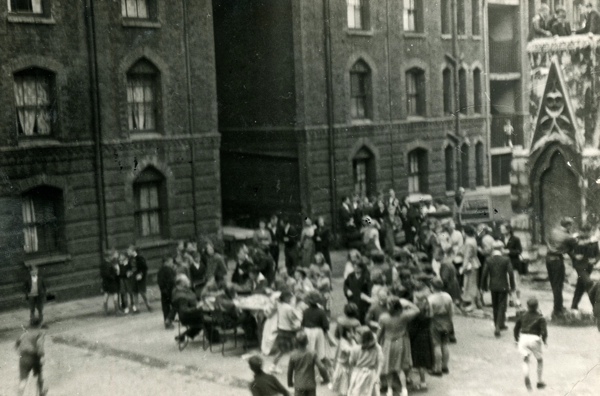
Columbia Buildings where Tom grew up
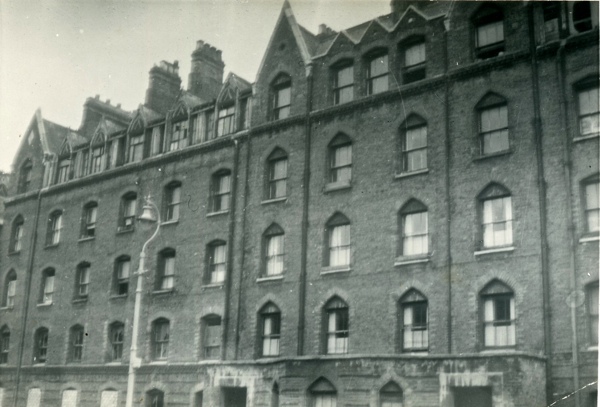
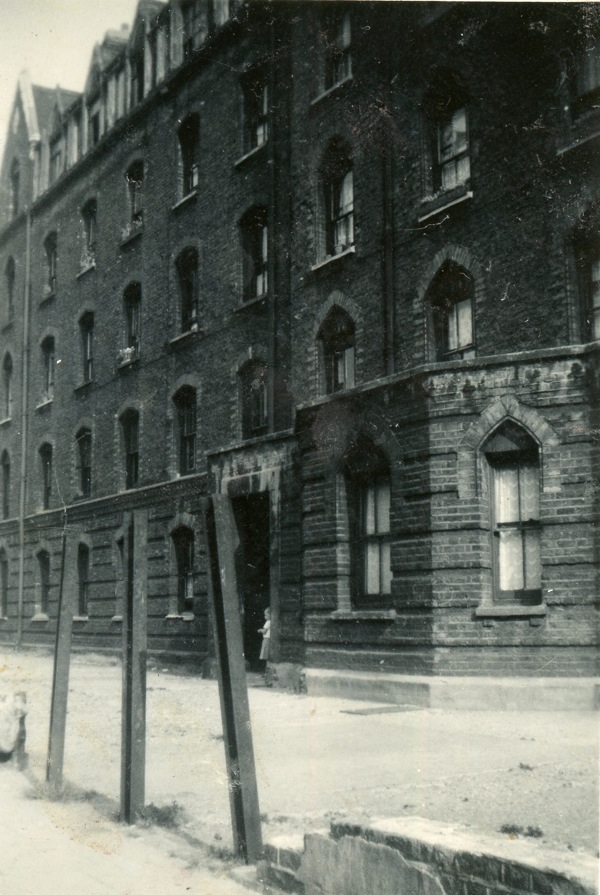
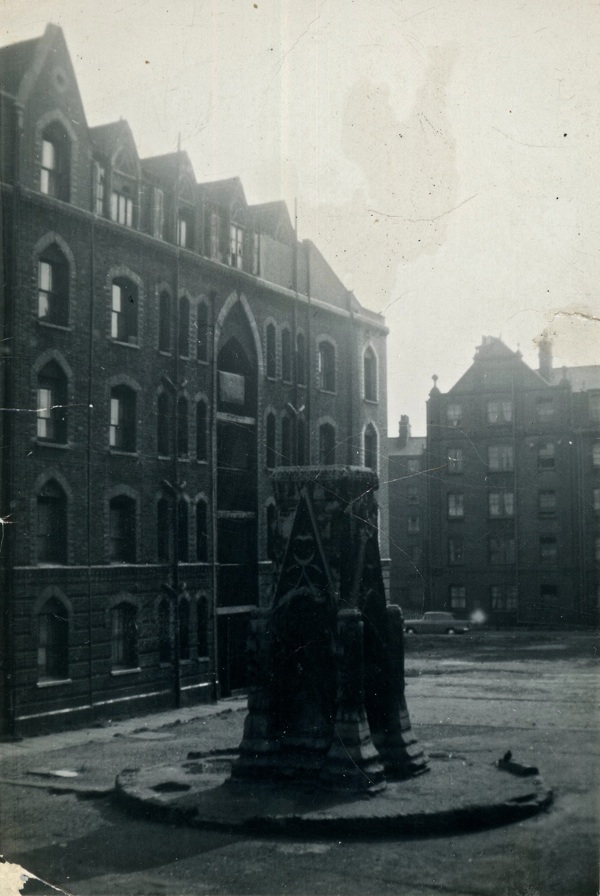
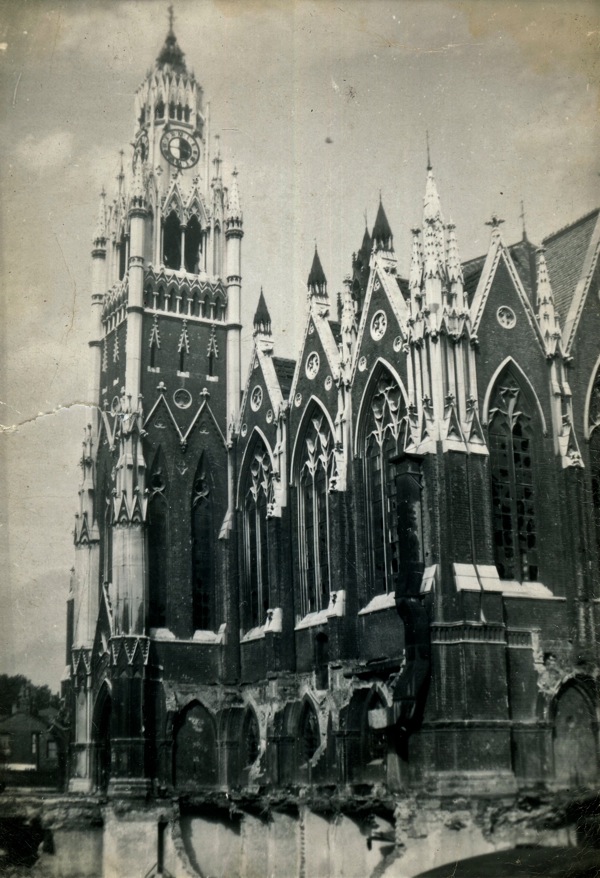
Columbia Market constructed by Angela Burdett Coutts at the suggestion of Charles Dickens in 1859
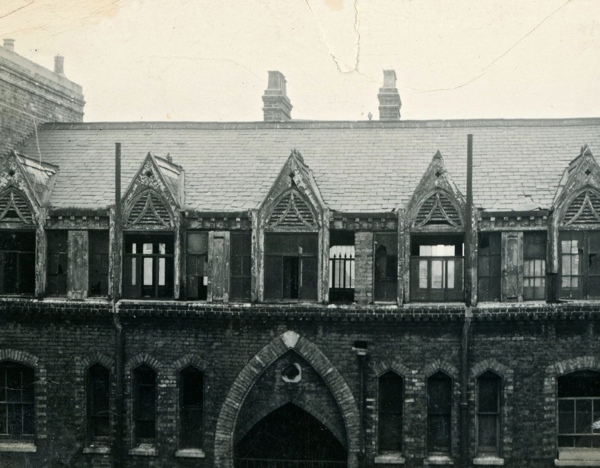
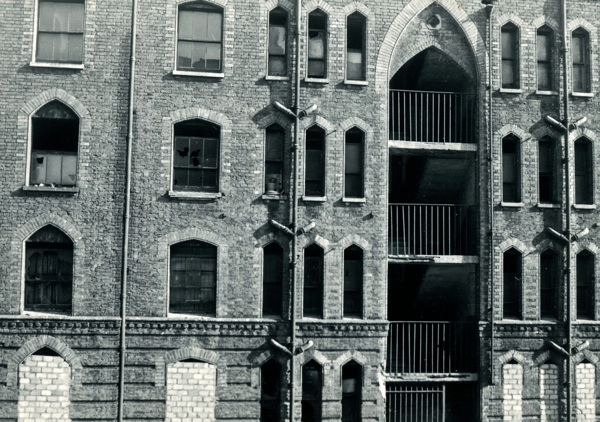
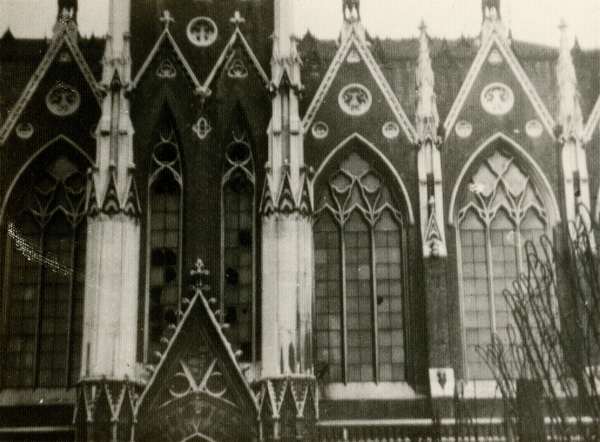
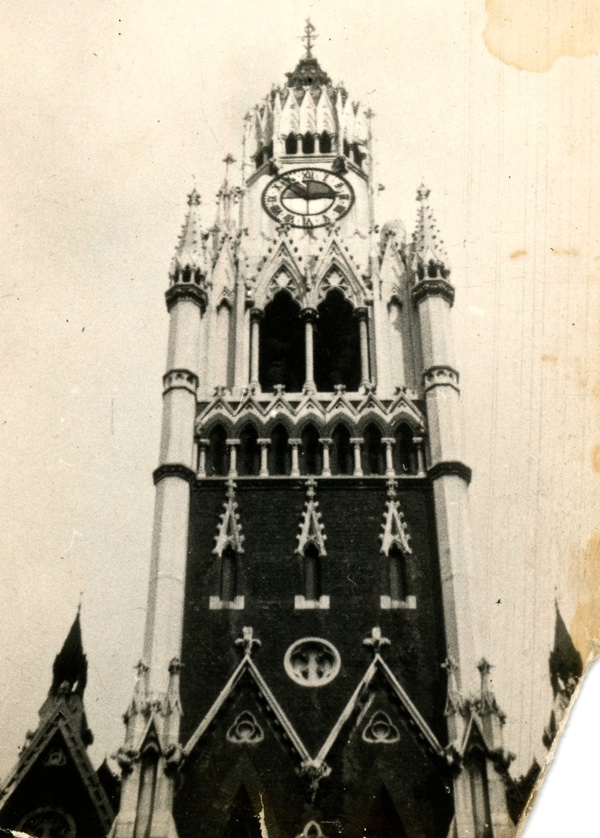
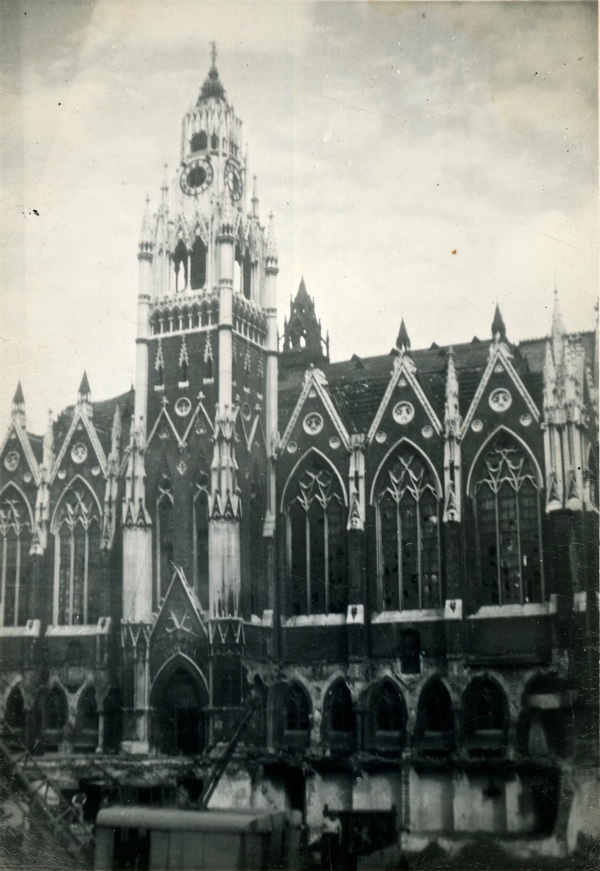
Old Columbia Market during demolition in 1958, with the cellars that served as a shelter visible.
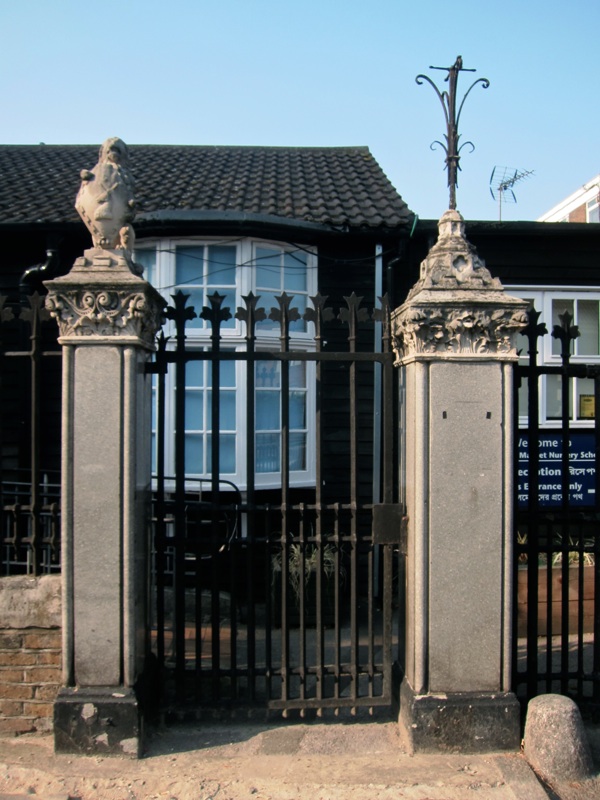
These stone pillars in Columbia Rd are all that remains today of the Old Columbia Market
Photos of Old Columbia Market courtesy of Tower Hamlets Local History Library & Archives
Commemorating the anniversary of the bombing of the air raid shelter beneath the Old Columbia Market Sq in which more than forty people lost their lives on the first day of the Blitz, 7th September 1940, there will be a wreath-laying next to Sivill House on Columbia Rd today at 1:00pm.
You may also like to read about
So Long, Leslie Norris of Bethnal Green
As a tribute to Leslie Norris who died on Wednesday, I am republishing my profile of an East Ender who was a much-loved and widely-respected member of his community.

Leading this splendid parade advancing manfully down the Old Ford Rd is Leslie Norris, Warrant Officer of the London District Air Training Corps, at the head of the very first Bethnal Green Carnival in 1952 – and such was the joy that Leslie felt in being at the centre of his community, evident in this heroic image, that it remained undiminished even half a century later.
Growing up in the streets around Hackney Rd, Leslie earned the nickname “Ginger” and although – at eighty-five – only a few fiery-red hairs in his eyebrows remained as clues to its origin, when I visited Leslie in his home in Essex, he was eager to declare his enduring emotional loyalty to Bethnal Green. “Even though I live in Romford, I am an East Ender,” he confirmed to me absolutely with a grin.
Born at 26 Hassard St, Bethnal Green, to Florence, a French polisher and Albert, a seed merchant, Leslie grew up “with a whole family of aunts and uncles all within a mile of each other,” and the interweaving streets around Columbia Rd were the centre of his world. “Friday evenings we’d do jobs for the Jewish women,” recalled Leslie, laughing in delight at how resourceful he and his pals were at the age of ten. “We’d get sixpence from Mrs Leibowitz, Mrs Brodsky and Mrs Bukowski. We would run errands, clear up and light the fires for them because they weren’t allowed to work. And we used to go to the Spitalfields Market at closing time with a knife and ask for offcuts of fruit in a bag for our mums – and that would be our supply for the week.”
At first, when Leslie’s father took over his uncle’s sawdust business, Leslie helped out by delivering the sawdust to jewellers in Hatton Garden, but his first proper job was as a “glue-boy” in a furniture factory in Columbia Rd. “At the age of fourteen, I once pushed a barrow with an oak dining table and four chairs all the way to St. Anne’s Rd in Tottenham – I know it was 7th September 1940, because afterwards I had to rush home and put on a suit for my brother’s wedding. And then that night, during a raid, three of my cousins were killed,” he recalled in sober contemplation. Next, Leslie went on to work in a saw mill in Ezra St – but the events of September 1940 meant that he had already determined to join up as soon as he was old enough and in 1943, after training, he became a wireless officer in the Royal Corps of Signals, serving in Burma.
Back home after the war, Leslie centred his existence around St. Hilda’s East on the Boundary Estate. “It was the place everyone met in those days. We’d go every night. We used to love to dance – even though we only had five records to dance to!” he enthused. Blessed with the charisma of a born leader, Leslie became both Chair of the Senior Club and Captain of the football team at twenty-four, organising camping trips and days out – involving his contemporaries from the neighbourhood who all became life-long friends. And the exuberant photographs capture the spirit of carefree summer jaunts and youthful high jinks that prevailed, illustrating how St. Hilda’s performed a crucial social function. As Leslie confirmed with a gleam in his eye. “Twenty marriages came out of those years at the club,” he boasted, “including my own” – indicating a photograph of his wife who died in 2007. Leslie had known Joyce since she was seven and they married on the 29th March, 1952.
“Joyce was determined we should marry in St. Leonards, Shoreditch, but we were out of their parish and the Reverend, a guy by the name of Rutter, wouldn’t permit it,” admitted Leslie. Fortunately, a priest who Leslie knew during the war stepped in and performed the ceremony “with bells and everything,” he informed me, triumphantly. And when thick snow made wedding photos impossible outside the church, Leslie & Joyce led the wedding party over to St Hilda’s East to use the gymnasium for their pictures.
Years later, Leslie discovered his great-great-great-grandfather, John Norris, had married at St Leonards in 1786. And he and Joyce returned to where Leslie’s ancestors had made their vows more than two centuries earlier. “We went back for our fiftieth wedding anniversary in 2002 and renewed our vows,” Leslie revealed to me, recalling the congregation of nearly two hundred that came to greet him and Joyce. “It was beautiful to be back again,” he confided to me, “Some joker even asked if I was wearing the same suit!”
In the fifty years that passed between the two ceremonies at St Leonards, Leslie worked as a butcher at Smithfield, maintaining his ties with the area and becoming a Freeman of the City of London – even though he moved from Bethnal Green with Joyce and their two children in 1968 to live among the green fields of Romford. Inspired by his passionate sense of community, Leslie was President of the St John’s Ambulance, Mile End Division, for thirty years and became Vice President of the South West Essex Burma Star Association, earning the O.B.E. for his service to others.
“I still sing the school song to myself every night,” Leslie told me, revealing the depth of the connection he felt to Bethnal Green, and, quite unselfconsciously, he sang the opening verse, beginning, “Columbia, the name we treasure/ Thy name ever dear to me/ Thy memories will always bring me pleasure/ Though far away I may be…” just as he remembered hearing other soldiers sing it in the tents in the jungle when he was serving in Burma so many years ago.
And, as I listened, Leslie Norris became “Ginger” Norris again and I understood the indelible impression that the life of this small patch of streets in Bethnal Green had made in shaping his destiny.


Post-war celebrations in Cuff Place, where Leslie and Joyce lived for the first twenty years of their marriage – Joyce stands at the centre of the lower picture.

Leslie (on the left) with pals in Bethnal Green.

Leslie as captain of the St Hilda’s football team.

Leslie and Joyce on their first date, Southend, Easter 1949.

The first kiss.

On a Summer camping trip from St Hilda’s East.


Leslie and Joyce.

Leslie and the boys enjoyed getting into drag for a lark.

Joyce did the washing up in a field.

Leslie swept Joyce off her feet.

Leslie and Joyce on their wedding day after the marriage at St Leonard’s, Shoreditch, 29th March 1952, – photographed in the gymnasium at St Hilda’s due to heavy snowfall.

“We used to go every year to Ramsgate in the Summer, to the same house, for sixteen years”

Joyce sits among family on the beach at Ramsgate in the sixties.

A gathering at Leslie and Joyce’s in Romford in the seventies.

Joyce and friends enjoy a knees up.

Leslie and Joyce, 1973.

Leslie Norris of Bethnal Green
Commemorating the anniversary of the bombing of the air raid shelter beneath the Old Columbia Market Sq in which more than forty people lost their lives on the first day of the Blitz, 7th September 1940, there will be a wreath-laying next to Sivill House on Columbia Rd tomorrow at 1:00pm.
More Drypoint Etchings by Peta Bridle
Illustrator Peta Bridle sent me more of her beautiful drypoint etchings of some of my favourite people and places in the East End, which she has been working on over the summer. I love all the detail, and the depth of tone and richness of hatching this ancient technique offers, romancing these familiar locations into myth.

Wapping Old Stairs – “To reach the stairs you have a to go along a tiny passage to the side of the Town of Ramsgate. Originally, the stairs were a ferry point for people wishing to catch a boat along the river. I think they are quite beautiful and I like to see the marks of the masons’ tools, still left on the stones after all this time.”
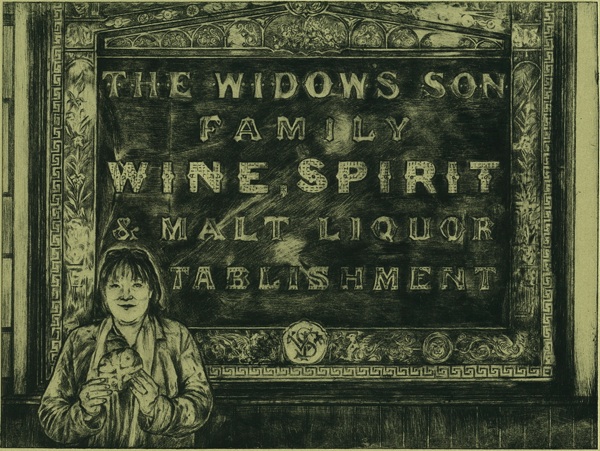
The Widow’s Son, Bow – “The landlady stands holding a hot cross bun in front of a large glass Victorian mirror with the pub name etched onto it. Every Good Friday, they have a custom where a sailor adds a new bun in a net hanging over the bar to celebrate the widow who once lived here, who made her drowned sailor son a hot cross bun each Easter in remembrance.”

Newham Bookshop, Barking Rd – “It is a real proper independent bookshop and they are celebrating being open for thirty-five years this year”

Newham Bookshop – This is the other side of the bookshop, the children’s side.”
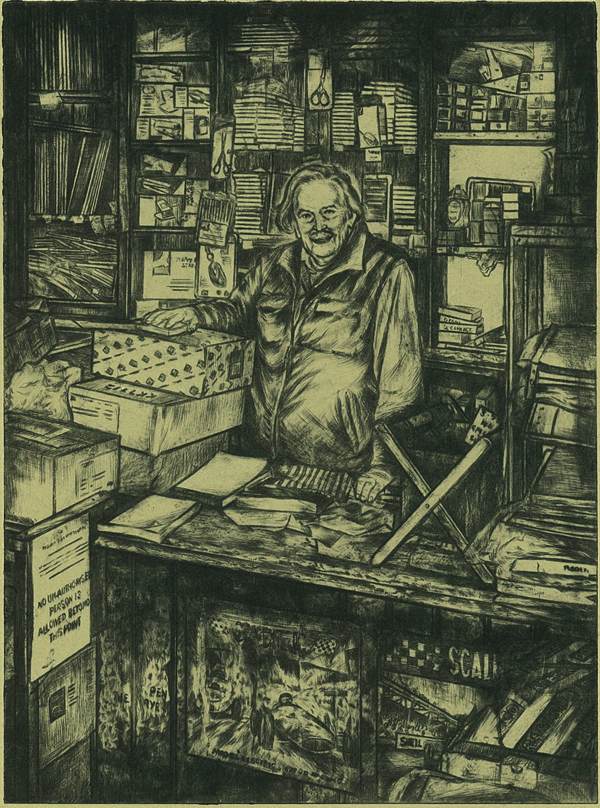
Gary Arber, Third Generation Printer & Flying Ace, Roman Rd – “I love the glass display cabinets behind him, stuffed full of paper and notepads, and the Scalectric posters stuck on the front of the counter. There was string hanging down from the ceiling too and boxes everywhere!”

Anna Pellicci – “She is surrounded by her customers and it was Christmas, so the decorations are up.”
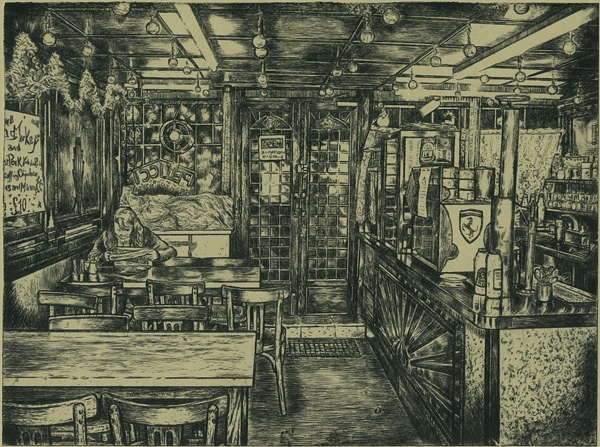
E.Pellicci, Bethnal Green Rd. “Nevio Pellicci kindly allowed me to make a couple of visits to take pictures as reference to create this etching. It was at Christmas time and after they closed for the afternoon. Daisy my daughter is sitting in the corner.”

Paul Gardner at Gardners’ Market Sundriesmen, Commercial St. “I did buy a few bags off Paul whilst I was there!”
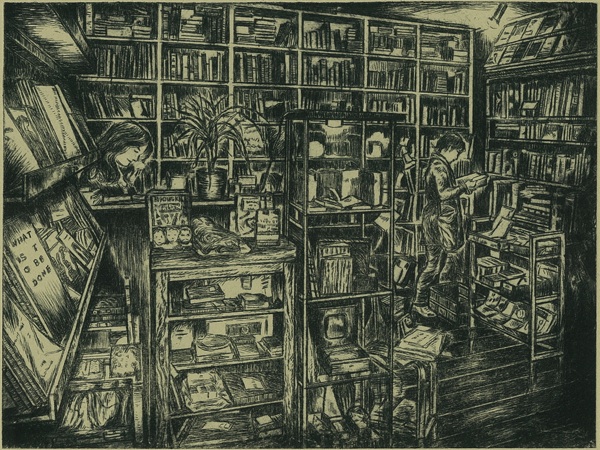
Tanya Peixoto at bookartbookshop, Pitfield St. “I am friends with Tanya who runs this shop and she has stocked my homemade books in the past.”
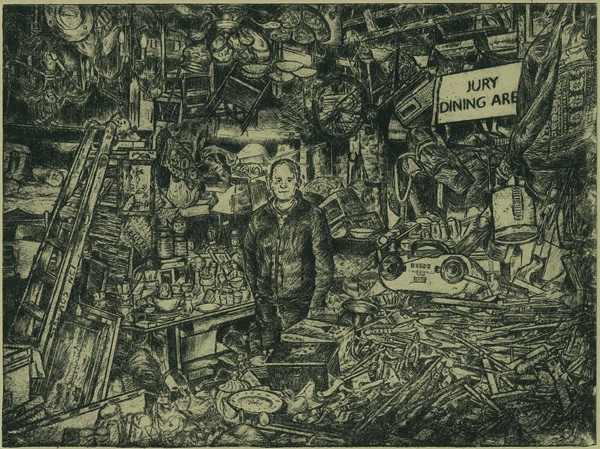
Des at Des & Lorraine’s Junk Shop, Bacon St. “An amazing place that I want to re-visit since I never got to look round it properly …”

Liverpool St Station
Prints copyright © Peta Bridle
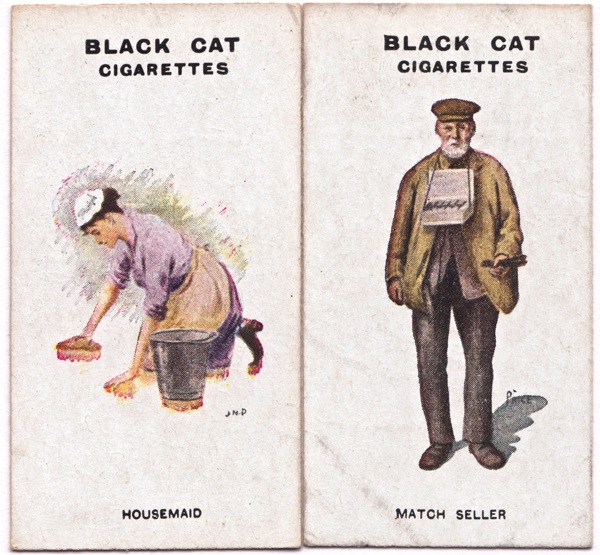
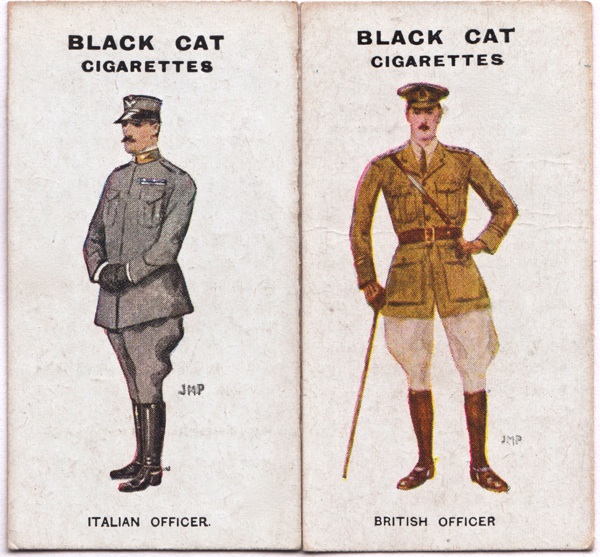
Julius Mendes Price’s London Types, 4
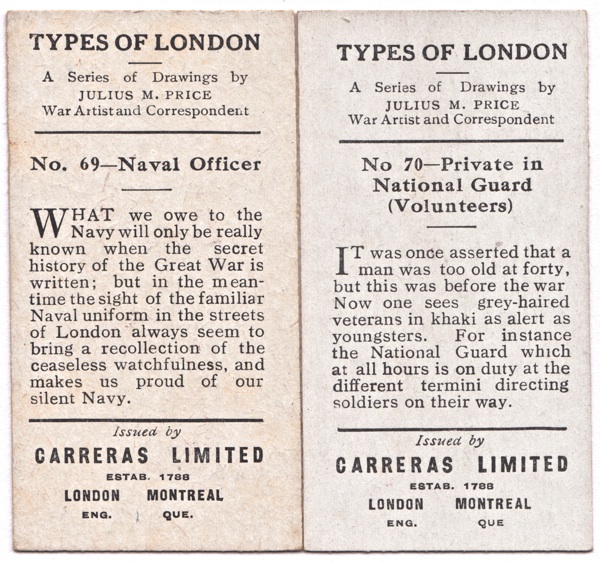
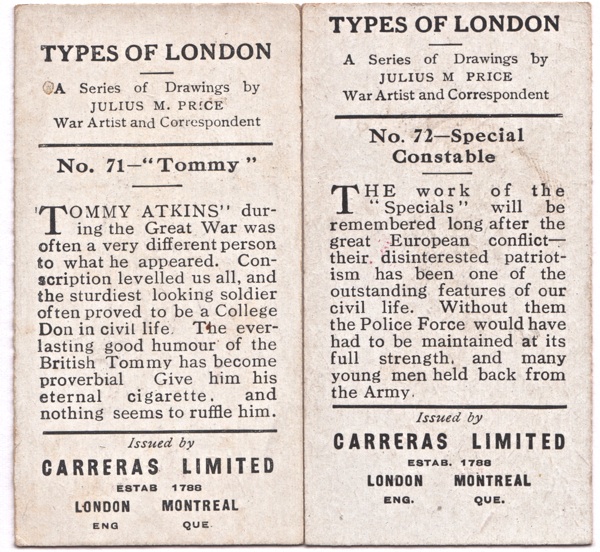
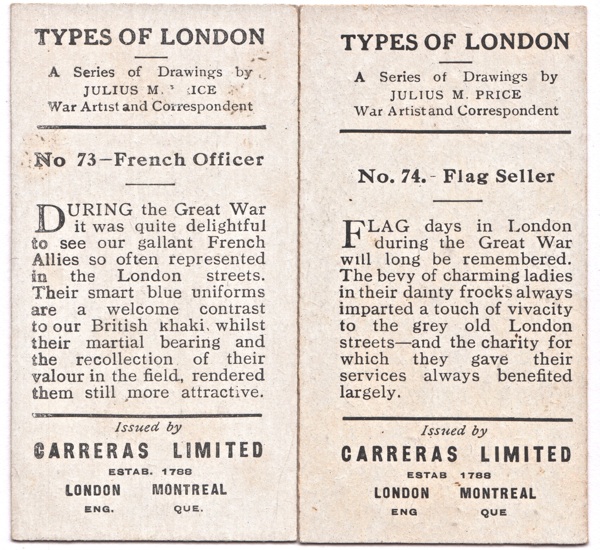
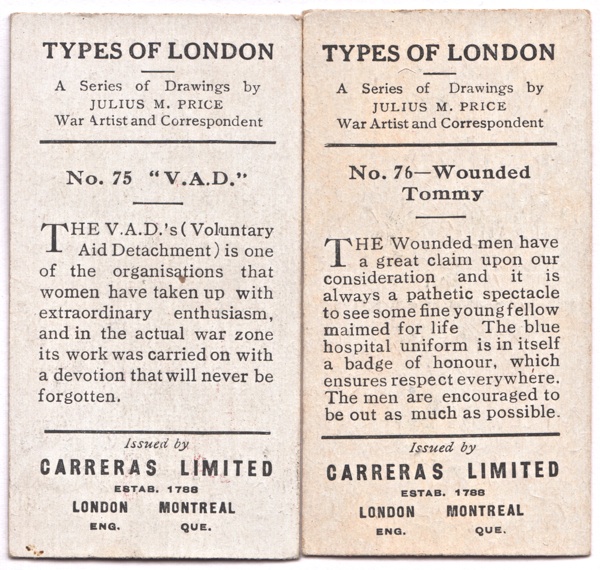
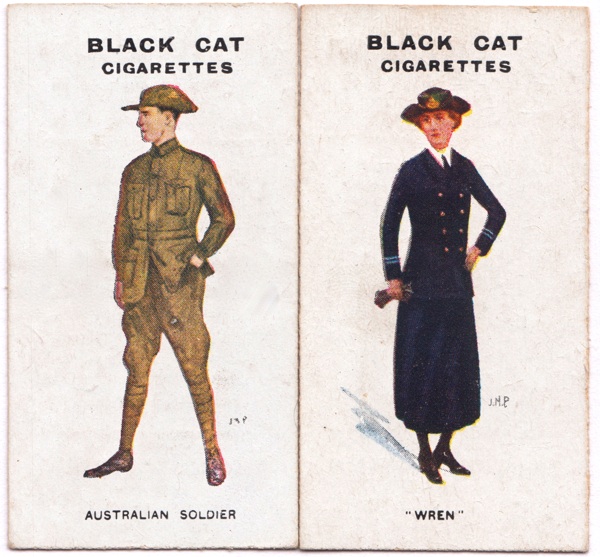
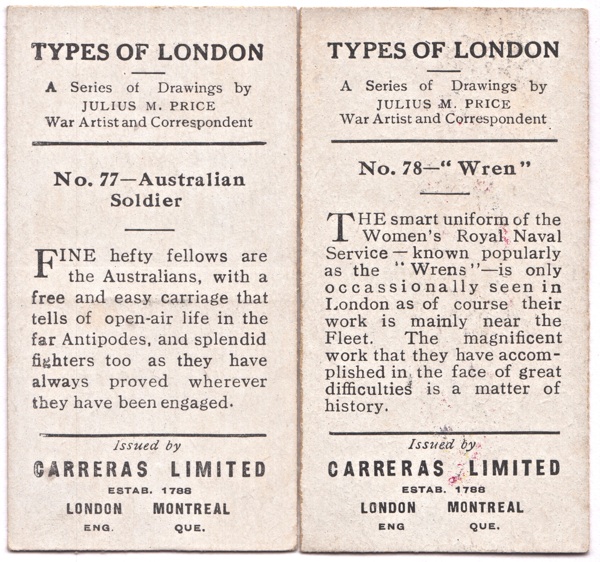
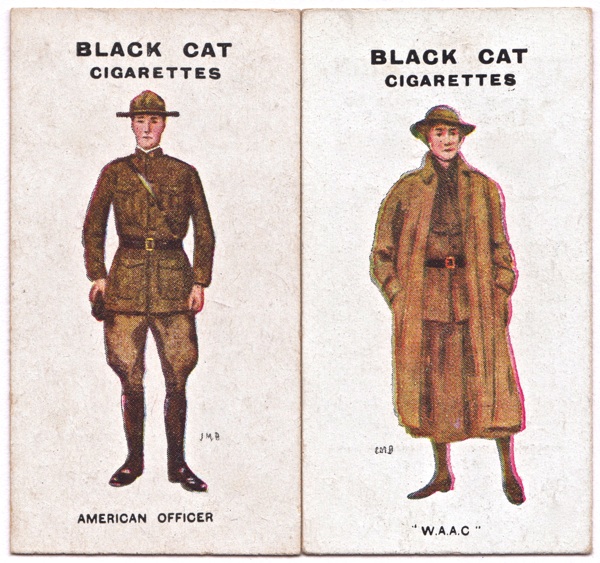
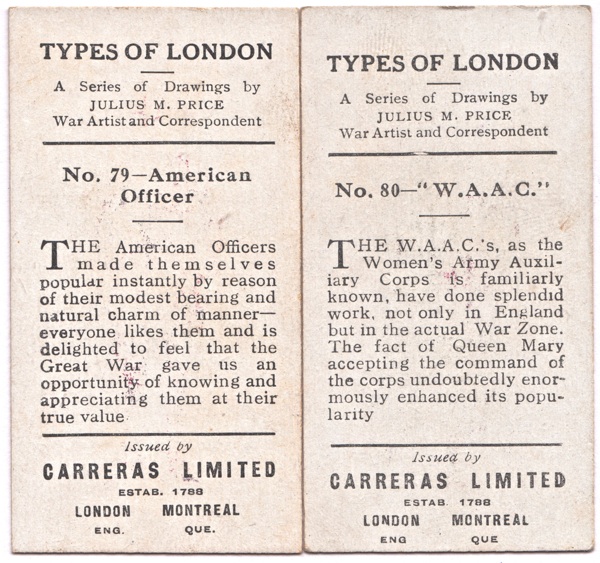
This is the fourth and final series of London Types designed and written by artist Julius Mendes Price and issued by Carreras with Black Cat Cigarettes in 1919. The presence of the war dominates this set but the Representation of the People Act of 1918, which gave the vote to women over the age of thirty, was a landmark for women’s suffrage and the advance that women achieved through participation in the war effort is manifest here in a number of roles.








You may also like to take a look at these other cigarette card sets of the Cries of London
Julius Mendes Price’s London Types 1
Julius Mendes Price’s London Types 2
Julius Mendes Price’s London Types 3












