
The Musclemen of Bethnal Green

Savvas Kyriacou, known as ‘Sav,’ at Muscleworks
As “Diamonds” by Rhianna beats loud on the stereo, I eavesdrop in on a conversation between three men who are comparing themselves in a mirror. They look like extras from a gladiatorial movie – minus the loin cloth, leather sandals and shields – waiting in the wings before they film the bare-fisted knuckle fight with the famished tiger inside the Coliseum. These men had just completed a workout and were gleaming with sweat under the fluorescent lighting. With their tops off, they were inspecting each other’s chests and six-packs. “Put that away man, you’ve gotten fat,” one teases another. A single gold tooth punctuates his smile. “It’s true, you know, I have,” says the friend being interrogated and begins to put his vest back on. The third, a little more encouraging, says, “you must go along with your age and size, bro. There is no point being something you’re not.” The banter continues in this vein as they pinch, poke and pull at each others knurls, curves and knots.
To say the men are big, or muscled, would be an understatement. They are that and more. Muscleworks Gym’s website explains that this “mecca of bodybuilding” has a startling collection of apparatus to become “bigger, stronger and faster,” including “handpicked gym eighty, hammer strength and cybex machines both plate loaded and selectorised alongside tonnes of barbells, bumper plates and dumbbells all the way up to 180lbs.” All around the two-storey gymnasium, there were more of them: heaving, pushing, grunting, lifting and slamming heavy weights. Their teeth glared, faces strained, veins bulged as they pulled air in furiously and blew out full and fast. Some worked with others, their partners helping count reps, loading bits of metal onto machinery. Older assisting younger, experienced guiding novices. The gym reflected the diversity of Bethnal Green and indeed London. Above them all, hanging from the low ceiling, are those they literally look up to and model themselves on – hundreds of laminated posters and photographs of champions of bodybuilding competitions (what the gladiatorial bouts have been reduced to), many of whom train and have been coached at no.2 Hague Street, including eight time Mr Olympia, Ronnie Coleman.
Amongst the dizzying array are pictures of Savvas Kyriacou, ‘Sav,’ who set the gym up in 1988 when competing as a bodybuilder himself. In one black and white image, he is seen posing on stage in a pair of Speedos during the 1992 Southeast Britain Bodybuilding Championships. He looks just above the camera, both hands clenched in fists – right curled above his head and left just above his hip. Growing up, Sav had a predilection for films which starred the nineteen- fifties America bodybuilder and actor Steve Reeves, whose titles include ‘Tarzan,’ ‘Hercules,’ ‘Hercules Unchained’ and ‘Duel of the Titans’. Sav went on to win that competition. He is a busy, busy man these days, organising bodybuilding competitions himself now, with one due to take place in a matter of weeks. When he eventually allows himself a few minutes to talk, he explains how he ended up creating such an influential gym dedicated exclusively to bodybuilding.
“I moved to the UK in 1974. I was fourteen and a half years old. It was during the Turkish War, when they invaded Cyprus. I was allowed to leave because I was under sixteen, otherwise, I would have had to join the army. I stayed with relatives and at fifteen got a job at a cash-and-carry in Stoke Newington. Very early in the mornings, I would go to Spitalfields Market to buy produce for the shop. At seventeen, I got a driving license and would do this before I went to school in the mornings and then after school worked in the shop. I had to do it, there was no one to support me. I couldn’t really study and there was no chance of going to uni anyway as I was foreign and wouldn’t have been able to afford the fees. This made me wonder what I could do with my life that wouldn’t mean having to go to the market and cash-&-carry each and every day. At the time, gyms and health-clubs were not what they are today, they were mostly council run places and not very good. So, at twenty-four, I opened my first gym in Tottenham. I like to think that this was the beginning of breaking new frontiers.
I had begun training at twenty-one and was good at it. I soon started questioning the whole way bodybuilding was being taught. I thought it was archaic, medieval even. None of it was really scientific. The majority of people wanted to be like Arnold Schwarzenegger but what they didn’t understand was that although his genes allowed him to be like that, everybody is different, their bodies are different which means that they can’t be Arnold. At twenty-three, I won my first competition. It felt like a footballer scoring a goal, a goalkeeper winning a save. It felt good.” He since went on to win Mr Cyprus twice.
Half way during our talk, Sav is called away. He has to teach someone how to pose for a competition. Following detailed instructions, the man steps forward, raises his arms elegantly into the air as a ballet dancer might, wrists cocked delicately, one leg out in front. He clenches hard. and the tiny ribbons and rivulets of muscles and veins appear on full display. Others look and stare. With his plumage unfurled, the man lowers his head and beams at his tutor.
Afterwards, Sav says “I love the fact that you are in control of what you do. You are an artist, creating something. It’s difficult to explain to someone who doesn’t do it why someone would want to build up their body. It’s self-satisfying, an addiction. It’s like a religion. If you do it right, it’s healthy.
I try and advocate that you don’t have to do it for hours. Five hours per week is fine. Having knowledge about what you are doing is crucial. It’s like the difference between a black cab and an ordinary taxi: a black cab will take you straight to where you want to go, whereas a taxi will go all over the place, looking for the right destination.
Anyone who knows anything about bodybuilding, knows us. We have trained thousands of people and coached many champions. The whole atmosphere is important to people. If I moved into a bigger place, something I have considered, people wouldn’t like it. This building, here, this is Muscleworks. I have another place in Stoke Newington, one in Enfield and one for women on Bethnal Green Rd. They are all different, but this place is the original. I wanted to create the best gym in London, pure body building, just like the ones in the US. I think I’ve achieved my aim. It’s now not just the best in London, but the most successful in the UK.”


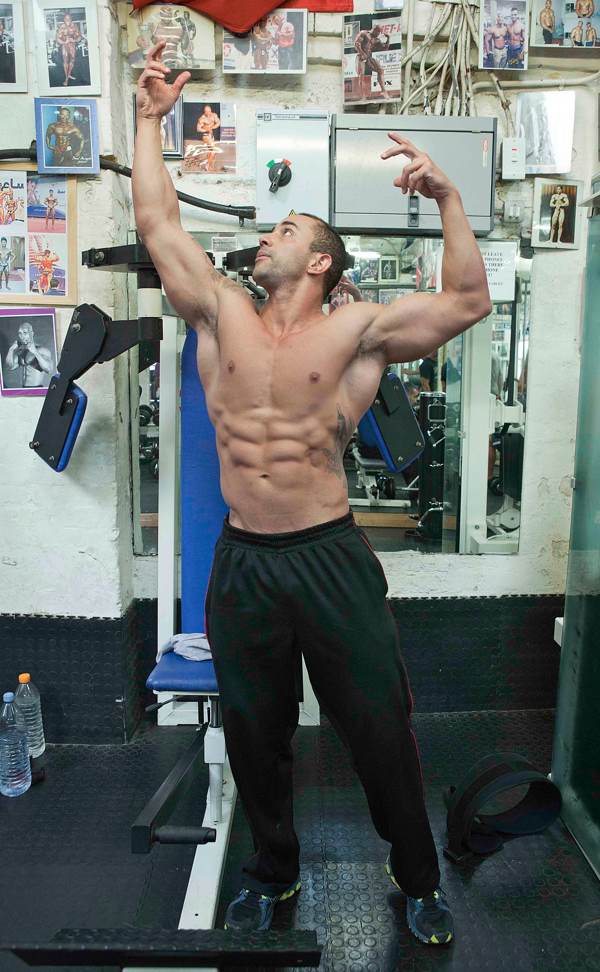

Francisco
“I’ve been training for quite a few years, but it is only now that I want to enter into competitions. I started coming here because I wasn’t progressing much elsewhere. Now that I’m training properly, I do it every three days, with one day off in between. At the moment, I’m dieting to compete. In the morning, I eat oats and eggs. My carbs are brown rice and sweet potatoes. I eat chicken breast, meat, fish and green vegetables. No dessert.”


Rocky
“I’ve been coming here since I was seventeen. I grew up around here. Everyone comes here to train. It feels good. I do it to relieve stress, it’s a total stress buster, helping me keep focused. Sav has done a lot for us, he’s like a father to a lot of people. The place has history, there are good people here. I’ve been doing it for so many years now that it’s become a part of me.”

Nathan
“I’ve always enjoyed fitness. I want to gain size and muscle mass. I started five years ago in Australia, where I am from. It’s not for others, but about achieving a goal – a personal thing – wanting to exceed my own expectations. I want to compete one day, maybe the under 75kg class. I massively respect these big guys, they have obtained these amazing physics but my optimum body image will be toned, athletic, built. It’s about a sense of fulfilment, when you look at yourself in the mirror. But diet, sleep and negative thoughts all affect your goal and the endless pursuit.”

Brian
“This is one of the best gyms in London, the atmosphere is great. I train for an hour and twenty minutes, after work, five to six days a week. I’ve been doing it for around ten years. I always feel better afterwards. I have my own schedule. If I go for a week without doing it, I feel terrible. I don’t have the ‘Eye of the Tiger’ on my headphones, no, I listen to ‘System of a Down’ or techno or house music.”

Jay
“I’ve always been skinny, believe it or not. But obviously I worked hard and progressed. I’m now entering a competition later this month.”

Photographs copyright © Colin O’Brien
Learn more about Sav Kuriacou’s Total Fitness Bodybuilding Extravaganza on 22nd September
You may also like to take a look at
Arful Nessa, Gardener
It is my pleasure to welcome Delwar Hussain as guest writer for the next seven days, celebrating the publication of his first book Boundaries Undermined by Hurst. Delwar was born and bred in Spitalfields, and he commences with this tender portrait of his mother. Meanwhile, I shall be making the trip to Somerset to supervise the printing of my Album at Butler, Tanner & Dennis in Frome, and thus I leave you in Delwar’s safe hands until my return on Monday 23rd September.
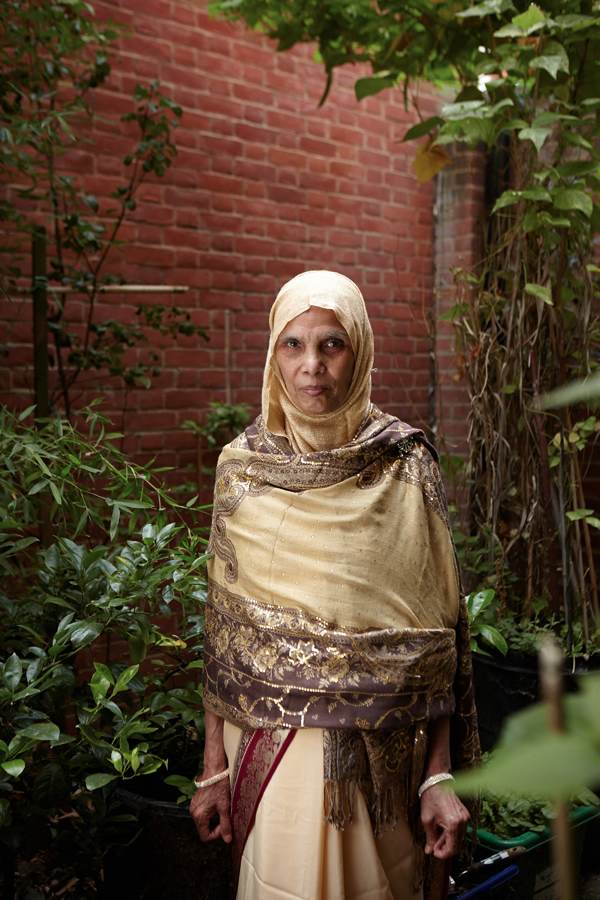
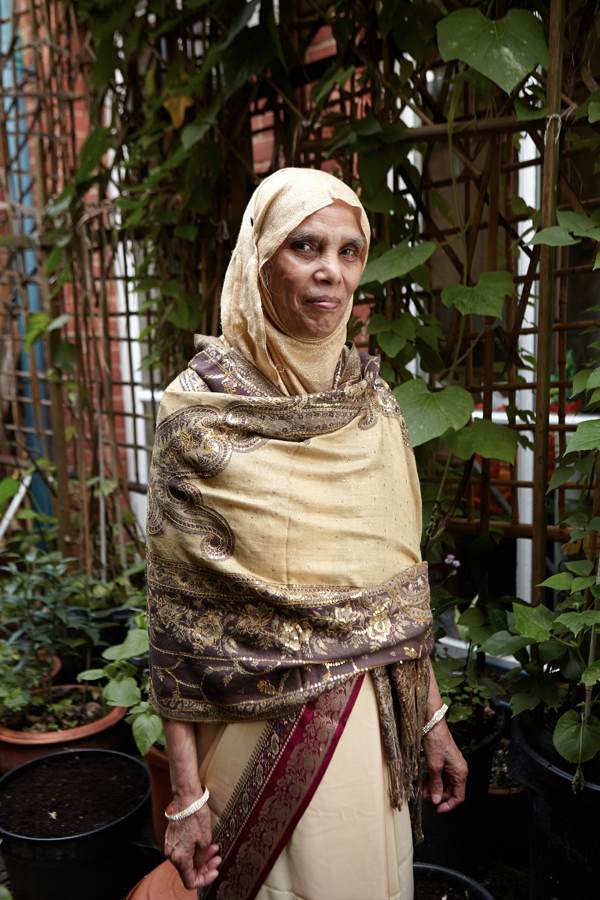
Arful Nessa in her garden in Puma Court
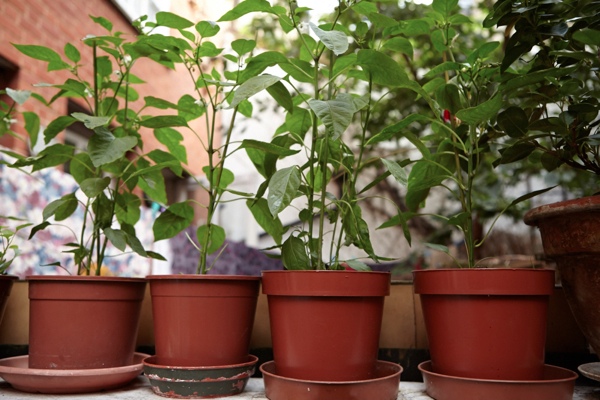
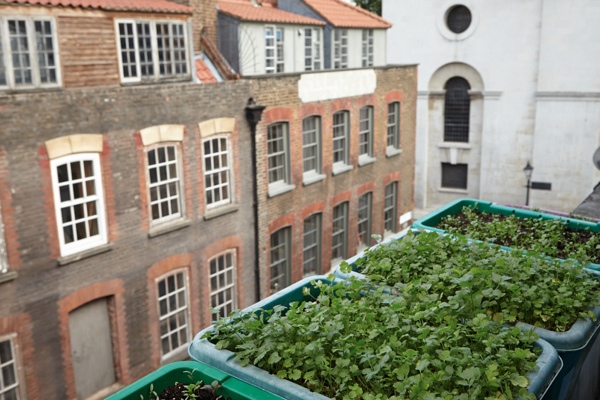
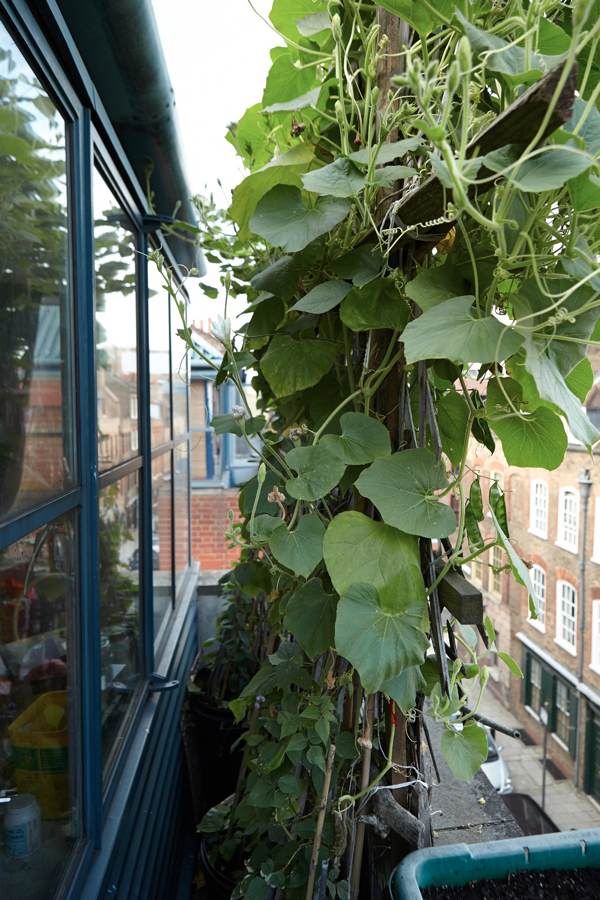
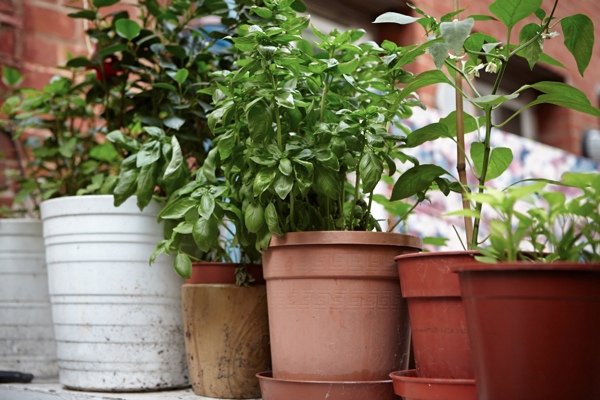
My mother is the first to admit that when it comes to growing anything, the success rate cannot be predicted – some years are simply better than others. But this summer has, on the whole, been a good one. Despite the aubergines not putting in a show, she has had quite a few runner beans, chillies galore, enough coriander to garnish an army with, mulas (a long white radish), potatoes and dhengas (a tall, dark pink stalk, almost like a savoury rhubarb). She has also transferred the olive tree into the ground, as well as the plum tree, and the neem tree and pomegranate followed suit recently. The latter, which she grew from a seed, is a non-descript small shrub with small, shiny, pointy leaves. The trees all seem to have taken well to the positions she has chosen for them, but this is not always the case, as the dry, brittle carcass of a fig tree attests. The bushy orange and lemon trees did not make it into the ground either. My mother is not confident that they would like it there, so they continue to live in the big, black, dustbins that she insists on collecting.
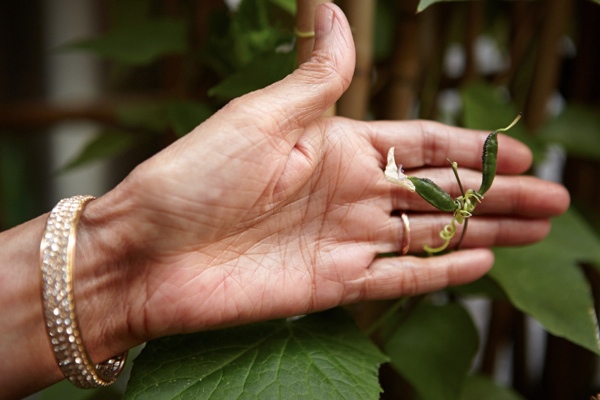
But of all of her achievements this year, it is the gourd that she is particularly pleased with. Neighbours and relatives from far and wide have already been notified of its appearance. The vegetable has always been elusive to her throughout the many years that she has been gardening, building all sorts of wooden and bamboo frames to support them without gain. “I’ve always wanted to grow one, but I never managed to until now. It is probably because we don’t get much sun here. The garden is surrounded on all sides by brick walls.” Today, the perfectly spherical, green and white globe, resembling a small disco ball, dangles precariously in the sky, held on to by its strong, twisty, protective vines. Behind it, the tall, white steeple of Christ Church looms large over the entire garden.
As Patricia Niven takes photographs of my mother on this still, warm evening, together with the greenery that we are surrounded by, we are reminded of the other lives carrying on outside of the red-bricked walls. Against the quiet hum of the cars and sirens on Commercial St, the more prominent chirping of little birds come in from nearby gardens and rooftops. The shrieks of children playing and the long, yawn-like, ancient drawl of the azaan, the call to prayer from the Brick Lane mosque, drifts in too. It is always an unusual experience interviewing a family member, especially one that happens to be your mother. Nonetheless, over the years, I have done so a number of times, usually for university projects. This is the first time that I am formally questioning her about a subject that she herself is actually interested in and not one picked by her son.
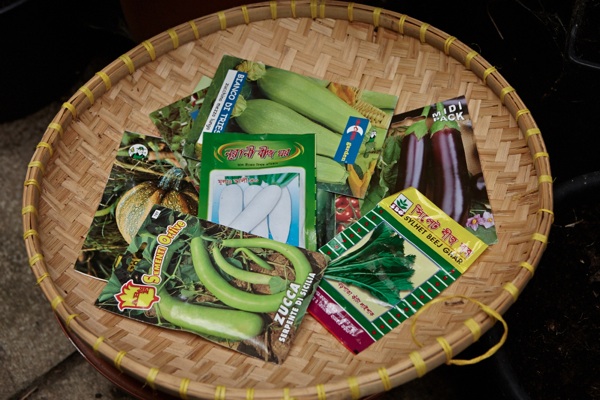
“I garden because I enjoy doing so. People say that gardening is healthy, that it is good for you to be outside, to stroke the leaves, to smell the fruit, to feel the soil. When I moved to London in the nineteen-seventies I was in my twenties. No one taught me how to do any of it, I learnt instinctively. When I was young, I would watch my parents in the village in Bangladesh. They would grow aubergines, mustard, rice, mangoes, jackfruits, guavas and so many spices and herbs. Your father and I first lived in a small, crowded flat in Wapping where there was not even a single tree to look at outside, let alone inside. Then we moved to New Rd. We rented a house from the hospital and it came with a massive garden in the back. It was so big, you would never have been able to fill the place up with trees. I started growing spinach, coriander and mustard. Your father would get the seeds for me in little bundles when he travelled back from Bangladesh. But unfortunately we had to leave that house because it didn’t have an indoor toilet or bath: the toilet was in the garden and we had a tin bath propped up in the kitchen. We would fill it up with water and by the time it reached the top, the water would be cold. The same tin bath followed us to the present house, where we used it as a pond for some ducks that we kept and then later to grow potatoes in.”
A friend of mine said recently that he has never seen my mother actually getting her hands dirty, let alone holding a trowel or spade. Despite this, she always manages to grow huge amounts. I laughed and, in jest, said that this is because she gets my brothers and sisters and I to do most of the lumbering work for her. However, the more I thought about it, the more I think my friend had a point. Much of the gardening she does involves standing at the kitchen door or on the balconies upstairs on the third floor of the house where she grows the coriander, looking intently, surveying, absorbed in the plants. Occasionally she may walk over to something which she will touch, rub, pick at or uncoil. She moves a pot from one place to another, gives the attention of a watering jug here or there, but most of all, it involves staying still, studying, contemplating.
But of course, there is more to it than the impression she gives. “Throughout the year, I save seeds from things that we eat. If they don’t grow, well, then, they don’t grow, but I will give them a try. Around January-February time, I sow the seeds in pots. I keep them dotted around the house so that they don’t get cold. In March and April, I put the pots outside in the garden and rotate them around so that they can get as much sun as possible. Just before the summer, some of them are transferred into bigger pots. I then just keep my eye on them as they grow.”
Having lived in London for over thirty years, my mother is very much rooted to the house and to Spitalfields. Even so, she will still confess to not being very good at growing English plants. If ever there was a gardening test in the same vein as the cricket one as dreamed up by Norman Tebbit, my mother would probably fail. Mediterranean, African, Middle Eastern and Asian plants and trees dominate her world. “My apple tree is probably around ten years old, but it just doesn’t seem to want to grow. I’ve often thought about taking it out of the ground and putting something else in its place, but we’ve been together for too long. Now that I have my gourd, I would like to try my own apple”.
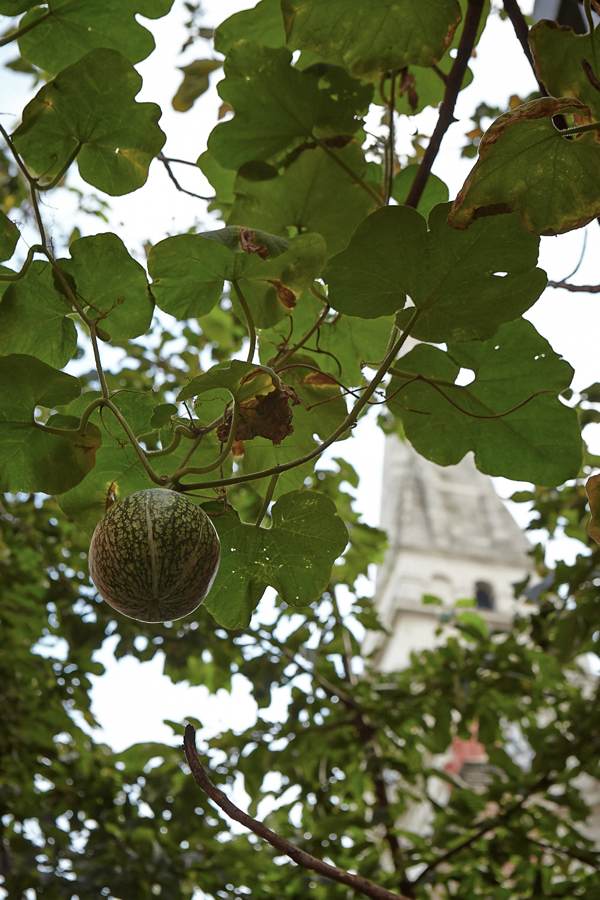
The tall, white steeple of Christ Church looms large over the entire garden
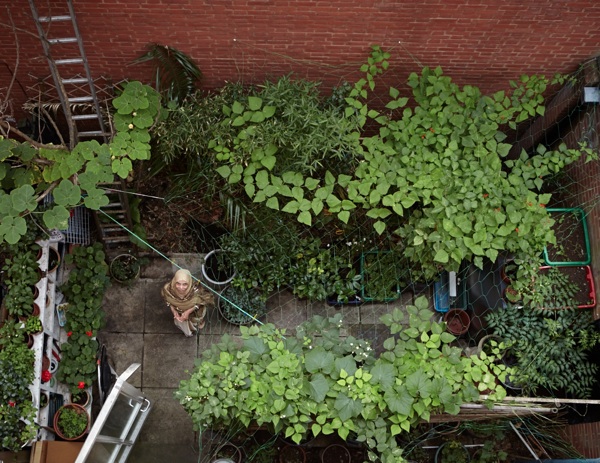

Arful Nessa, Gardener
Photographs copyright © Patricia Niven
You may also like to read about
The Secret Gardens of Spitalfields
Nicholas Culpeper in Spitalfields
Gardening Club at Virginia Rd School
The Gentle Author’s Party at Christ Church




Copies will be available at bookshops nationwide. If you are a retailer and you would like to sell copies in your shop contact Bridget Latimer Jones who deals with trade orders bridgetlj@faber.co.uk
More Hop Picking Pictures
Celebrating Hop Picking Season and the opening of the new Truman’s Brewery today, it is my pleasure to publish more favourite Hop Picking Pictures selected from the archive of Tower Hamlets Community Housing. Hopping was hard work, yet it was an opportunity for the whole family to enjoy time together with plenty of high jinks, drinking and even the potential for romance.

Taken in September 1958 at Moat Farm, Five Oak Green, Kent. Sitting on the bin is Miss Whitby with Patrick Mahoney, young John Mahoney and Sheila Tarling (now Mahoney) – Sheila & Patrick were picking to save up for their engagement party in October

Maryann Lowry’s Nan, Maggie ,on the left with her Great-Grandmother, Maryann, in the check shirt in the hop gardens, c.1910

Having a rest in hop gardens at Whitbread’s Farm, Beltring, Kent in 1966. In the back row are Mary Brownlow, Sean Locke, Linda Locke, Kate Milchard, Chris Locke & Margie Brownlow with Kevin Locke and Terry Locke in front.

Margie Brownlow & her Mum Kate Milchard at Whitbreads Farm in Beltring, Kent in 1967. These huts were two stories high. The children playing outside are – Timmy Kaylor, Chrissy Locke, Terry Locke, Sean Locke, Linda Locke & Kevin Locke.

Chris Locke, Sally Brownlow, Linda Brownlow, Kate Milchard, Margie Brownlow, Terry Locke & Mary Brownlow at Whitbread’s Farm, Beltring, Kent in 1962

Johnno Mahoney, Superintendant of the Caretakers on the Bancroft Estate in Stepney, driving the “Mahoney Special” at Five Oak Green in 1947

The Clarkson family in the hop gardens in Staplehurst. Gladys Clarkson , Edith Clarkson, William Clarkson, Rose Clarkson & Henry Norris.

John Moore, Ross, Janet Ambler, Maureen Irish & Dennis Mortimer in 1950 at Luck’s Farm, East Peckham, Kent

Kate Fairclough, Mrs Callaghan, Mary Fairclough & Iris Fairclough at Moat Farm, Five Oak Green, Kent in 1972

A gang of Hoppers from Wapping outside the brick huts at Stilstead Farm, Tonbridge, Kent with Jim Tuck & John James in the back. In the middle row the first person on the left is unknown, but the others are Rose Tuck, holding Terry Tuck, Rose Tuck, Danny Tuck & Nell Jenkins. In the front are Alan Jenkins, Brian Tuck, Pat Tuck, Jean Tuck, Terry Taylor & Brian Taylor.

Nanny Barnes, Harriet Hefflin, “Minie” Mahoney & Patsy Mahoney at Ploggs Hall Farm

In the Hop Gardens at Jack Thompsett’s Farm at Fowl Hall, near Paddock Wood in Kent in the late forties. Alfie Raines, Edie Cooper, Margie Gorst & Lizzie Raines

The Day family from Kirks Place, Limehouse, at Highwoods Farm in Collier St, Kent in the fifties

Annie Smith, Bill Daniels, Pearl Brown & Nell Daniels waiting for the measurer in the Hop Garden at Hoathley’s Farm, Hook Green, Kent

On the common outside the huts at at Hoathley’s Farm, Hook Green, Kent – you can see the oasthouses in the distance. Rita Daniels, Colleen Brown, Maureen Brown, Marie Brown, Billy Daniels, Gerald Brown & Teddy Hart , with Sylvie Mason & Pearlie Brown standing.

The Outram family from Arbour Sq outside their huts at Hubbles Farm, Hunton, Kent. Unusually these were detached huts but, like all the others, they made of corrugated tin and all had one small window – simply basic rooms, roughly eleven feet square

Janis Randall being held by her mother Joyce Lee andalongside her is her father, Alfred Lee in a hop garden, near Faversham in September 1950

David & Vivian Lee sitting on a log on the common outside Nissen huts used to house hop pickers

Gerald Brown, Billy Daniels & Dennis Woodham in the hop gardens at Gatehouse Farm near Brenchley, Kent, in the fifties

Nelly Jones from St Paul’s Way with Eileen Mahoney, and in the background is Eileen’s mum, “Minie” Mahoney. Taken in the fifties in the Hop Gardens at Ploggs Hall Farm, between Paddock Wood and Five Oak Green.

At Jack Thompsett’s Farm at Fowl Hall, near Paddock Wood in Kent

Ploggs Hall Farm Ladies Football Team. Back Row – Fred Archer, Lil Callaghan, Harriet Jones, Unknown, Unknown, Nanny Barnes, Liz Weeks, Harriet Hefflin, Johnno Mahoney. Front Row – Doris Hurst Eileen Mahoney & Nellie Jones

John Moore, Ross, Janet Ambler, Maureen Irish & Dennis Mortimer in 1950 at Luck’s Farm, East Peckham, Kent

The Outram and Pyburn families outside a Kent pub in 1957, showing clockwise Kitty Tyrrell, Mary Pyburn, Charlie Protheroe, Rene Protheroe, Wag Outram, Derek Protheroe in the pram, Annie Lazel, Tom Pyburn, Bill Dignum & Nancy Wright.
You can download hop picking booklets published by Tower Hamlets Community Housing
Readers are invited to the opening of the New Truman’s Brewery, 2-3 Stour Rd, Hackney Wick, E2 2NT, today Saturday 14th September 2pm – 10pm with Opening Ceremony at 4pm
You may also like to take a look at
Hop Picking Pictures
Celebrating Hop Picking Season and the launch of the new Truman’s Brewery this week, it is my pleasure to publish this selection of favourite Hop Picking Pictures from the archive of Tower Hamlets Community Housing. Traditionally, this was the time when East Enders headed down to the Hop Farms, embracing the opportunity of a breath of country air and earning a few bob too.

Bill Brownlow, Margie Brownlow, Terry Brownlow & Kate Milchard, with Keith Brownlow & Kevin Locke in front, at Guinness’ Northland’s Farm at Bodiam, Sussex, in 1958. Guinness bought land at Bodiam in 1905 and eight hundred acres were devoted to hop growing at its peak.

Julie Mason, Ted Hart, Edward Hart & friends at Hoathleys Farm, Hook Green, near Lamberhurst, Kent

Lou Osbourn, Derek Protheroe & Kate Day at Goudhurst Farm

Margie Brownlow & Charlie Brownlow with Keith Brownlow, Kate Milchard & Terry Brownlow in front at Guinness’ Northland’s Farm at Bodiam, Sussex, in 1950

Mr & Mrs Gallagher with Kitty Adams & Jackie Gallagher from Westport St, Stepney, in the hop gardens at Pembles Farm, Five Oak Green, Kent in 1959

Jackie Harrop, Joan Day & George Rogers at Whitbread’s Farm, Beltring, Kent in 1949

Mag Day (on the left at the back) in the hop gardens with others at Highwood’s Farm, Collier St, in 1938

Pop Harrop at Whitbread’s Farm, Beltring, Kent in 1949

Sarah Watt, Mrs Hopkins, Steven Allen, Ann Allen, Tom, Albert Allen & Sally Watt in the hop gardens at Jack Thompsett’s Den Farm, Collier St, Kent in 1943

Harry Watt, Tom Shuffle, Mary Shuffle, Sally Watt, Julie Callagher, Ada Watt & Sarah Watt in the hop gardens at Jack Thompsett’s Den Farm, Collier St, Kent in the fifties

Harry Watt, Sally Watt, Sarah Watt holding Terry Ellames in the hop gardens at Jack Thompsett’s Den Farm, Collier St, Kent in 1957

Harry Ayres, a pole puller, in the hop gardens at Diamond Place Farm, Nettlestead, Kent

Emmie Rist, Theresa Webber, Kit Webber & Eileen Ayres in the hop gardens at Diamond Place Farm, Nettlestead, Kent

Kit Webber with her Aunt Mary, her Dad Sam Webber and her Mum, Emmie Ris,t in the hop gardens at Diamond Place Farm, Nettlestead, Kent

Harry Ayres with his wife Kit Webber in the hop gardens at Diamond Place Farm, Nettlestead, Kent.

Richard Pyburn, Mag Day, Patty Seach and Kitty Gray from Kirks Place, Limehouse, in the hop gardens at Highwoods Farm, Collier St, Kent

The Gorst and Webber families at Jack Thompsett’s Farm, Fowle Hall, Kent in the forties

Kitty Waters with sons Terry & John outside the huts at Pembles Farm, Five Oak Green, Kent in 1952

Mr & Mrs Gallagher from Westport St, Stepney, with their grandchildren in the hop gardens at Pembles Farm, Five Oak Green, Kent in 1958

Sybil Ogden, Doris Cossey, Danny Tyrrell & Sally Hawes near Yalding, Kent

John Doree, Alice Thomas, Celia Doree & Mavis Doree in the hop gardens near Cranbrook, Kent

Bill Thomas & his wife Annie, in the hop gardens near Cranbrook, Kent

The Castleman Family from Poplar hop picking in the twenties

Terry & Margie Brownlow at Guinness’ Northland’s Farm at Bodiam in Sussex in 1949

Alfie Raines, Johnny Raines, Charlie Cushway, Les Benjamin & Tommy Webber in the Hop Gardens at Jack Thompsett’s Farm at Fowl Hall near Paddock Wood in Kent
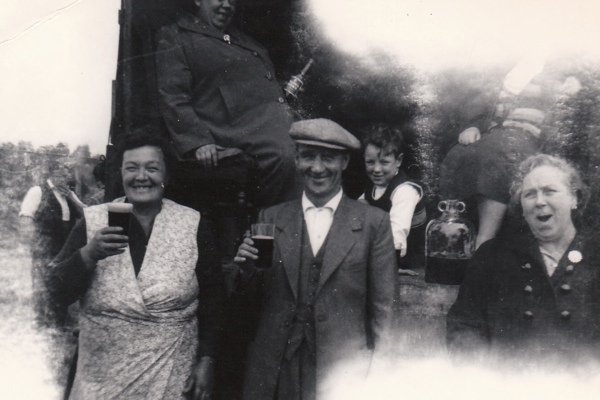
Lal Outram, Wag Outram & Mary Day on the common at Jack Thompsett’s Farm at Fowl Hall near Paddock Wood in Kent in 1955

Sally Watt’s Hop Picker’s account book from Jack Thompsett’s Den Farm, Collier St, Kent in the fifties

You can download hop picking booklets published by Tower Hamlets Community Housing
Readers are invited to the opening of the New Truman’s Brewery, 2-3 Stour Rd, Hackney Wick, E2 2NT, this Saturday 14th September 2pm – 10pm with Opening Ceremony at 4pm
You may also like to take a look at
First Brew at the New Truman’s Brewery
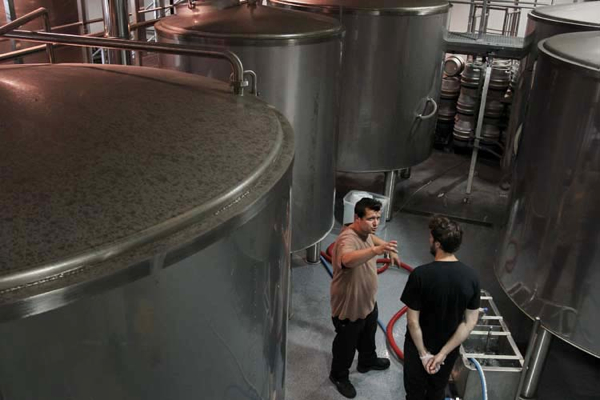
When Truman’s Brewery closed in Brick Lane in the last century after brewing there continuously since 1666, there was a widespread recognition that the soul of the place had been diminished – which makes it a great joy for me to announce the glorious news to you today that Truman’s Beer is back brewing in a new brewery in the East End.
Contributing Photographer Simon Mooney & I were privileged to be the first to visit the New Truman’s Brewery and join Master Brewer, Ben Ott, as he set the whole thing in motion again, using yeast from the old brewery that has been cryogenically preserved at the National Yeast Bank in Norwich for decades.
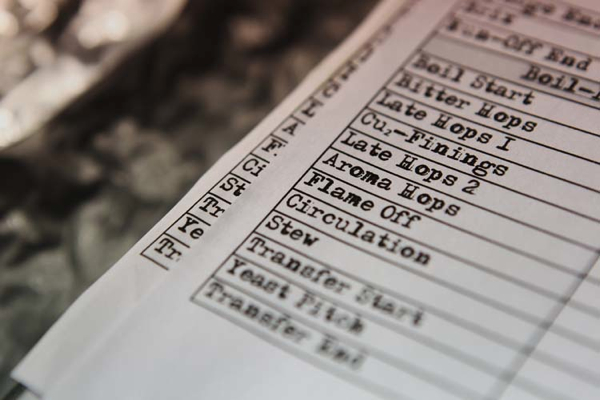
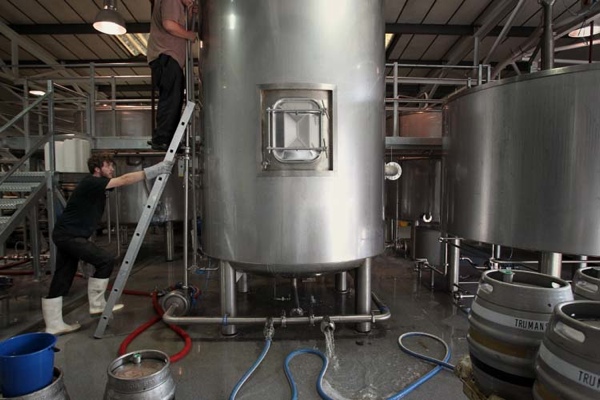
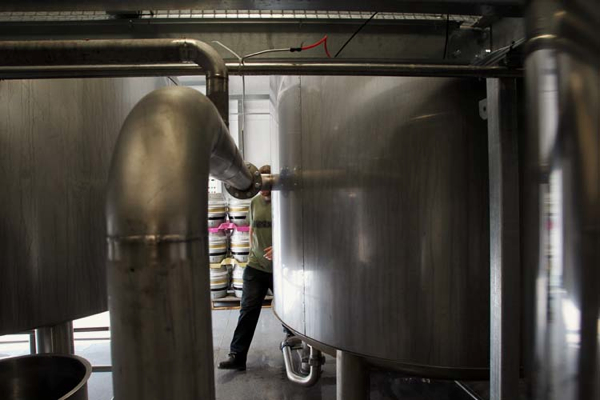
As I turned the corner in Hackney Wick at seven on that misty morning of early autumn, the unmistakeable whiff of a brewery caught my attention, even before it came into sight, and when I entered the brewery itself I was greeted with clouds of vapour emanating from the plant. Emerging from the humid haze to meet me, as if he had materialised like a sorcerer out of the ether, Ben was ready to undertake the seven-to-eight hour sequence of alchemical transformation from raw ingredients into the forty barrels of golden nectar which comprise a day’s brewing.
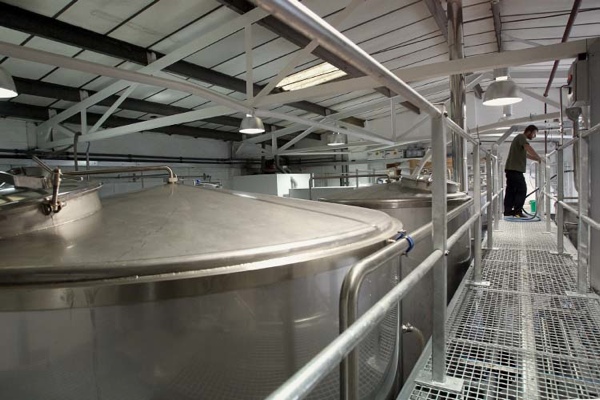
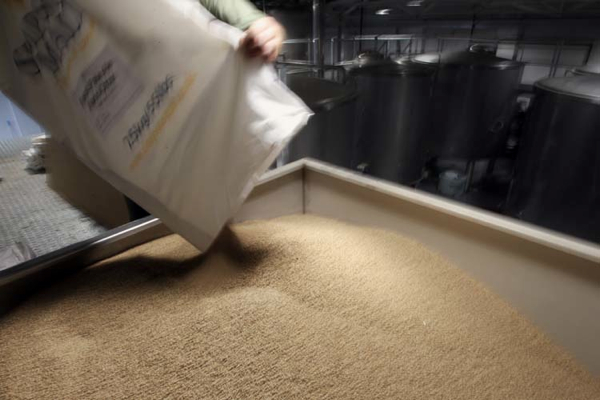
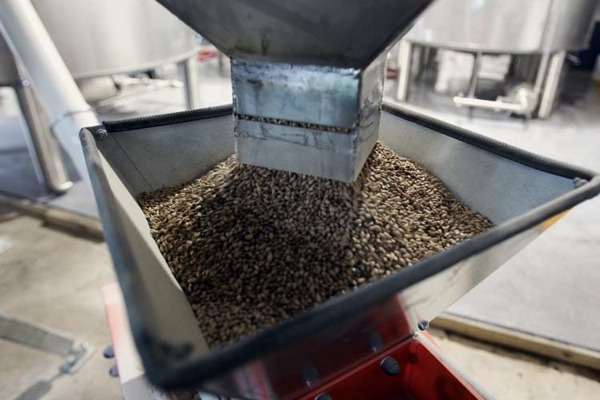
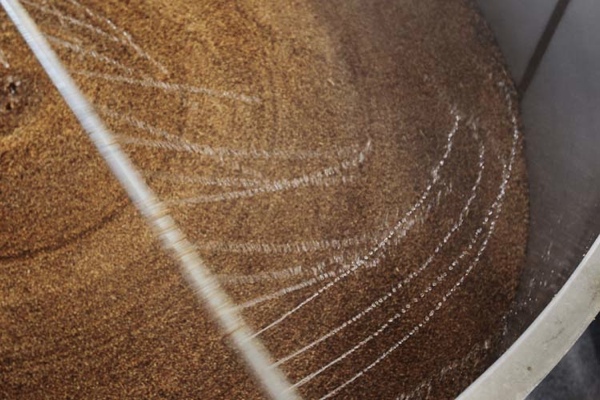
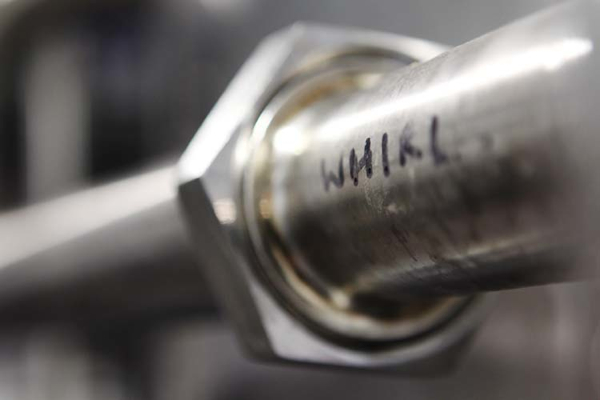
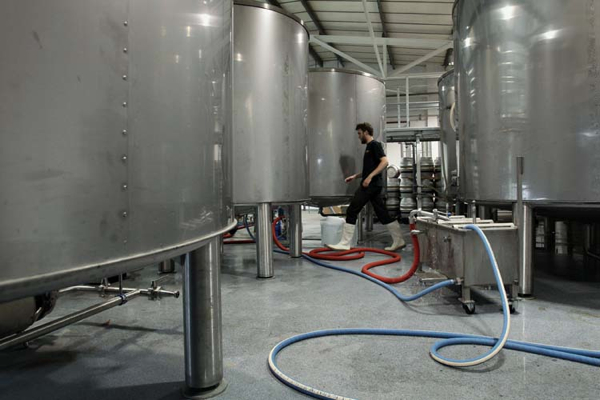
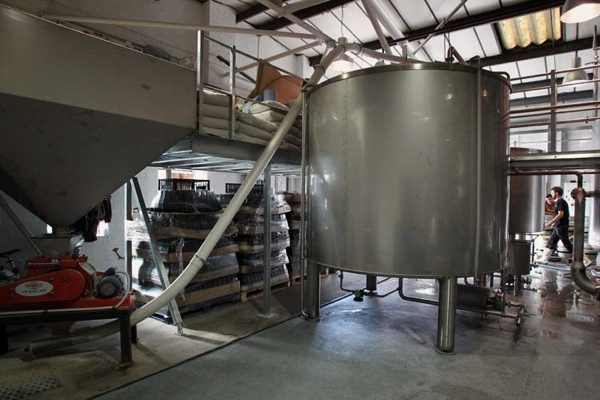
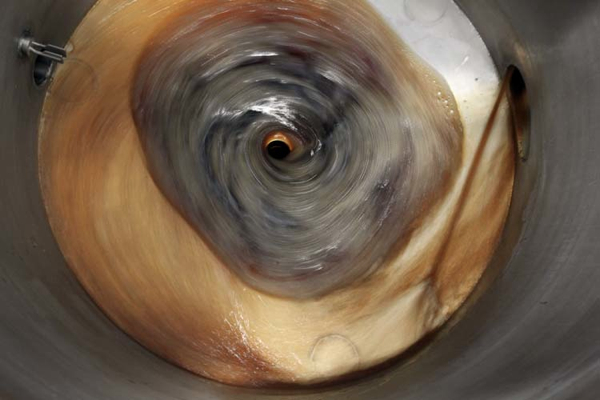
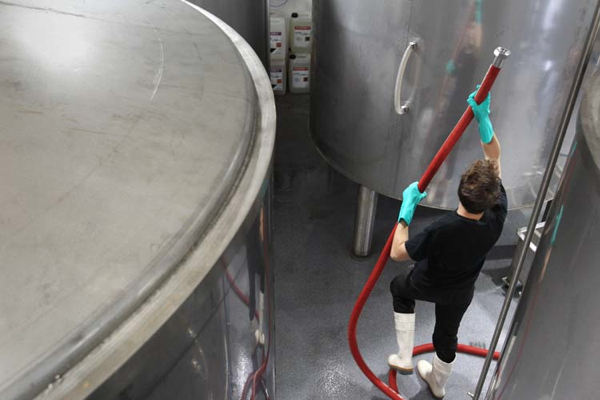
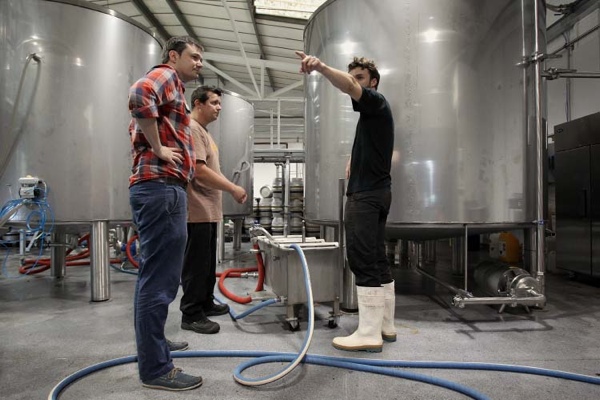
Gesturing to his magnificent array of gleaming new steel vessels stretching up to the ceiling, Ben explained that he was sluicing the lines with fresh water prior to mashing – the process by which malted grains are soaked to create a dark liquid ‘wort.’ At my feet, the floor was awash with drainage from the system as, from above, the golden grain cascaded down into the hot water of the mash tun, releasing a sweet porridge-like aroma into the steamy atmosphere. Once the grain was soaked, sparging began – rinsing hot water through the mash to create a whirl and, once it was time to run off the wort from the tun – three hours later – it was very pleasant to drink a glass of this warm sweet pungent liquid that, in brewer’s lore, is considered a universal panacea warding off all illness.
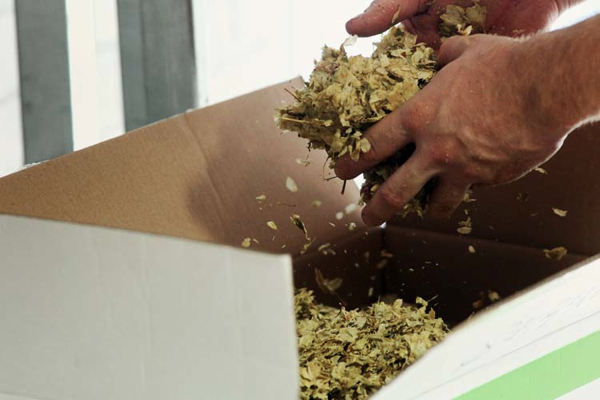
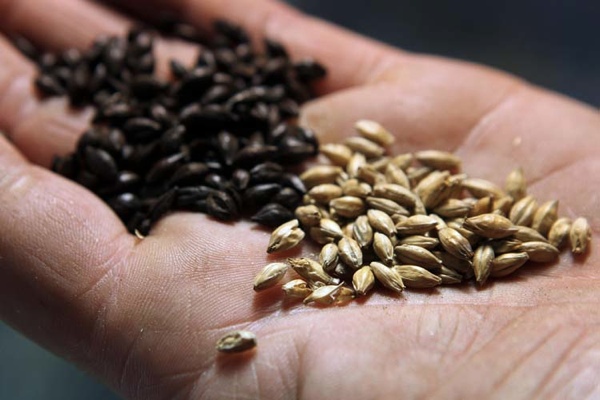
Ben took me up to the grain store, reaching excitedly into sacks of barley, rye and wheat, and producing handfuls of malted grain, toasted to different tones from pale golden to chocolate brown, and we chewed thoughtfully upon the dry husks comparing the subtle distinctions of flavour. Then he unsealed tinfoil bags of hops, inviting me to stick my nose deep inside and inhale, contrasting earthy citrus aromas of flowers grown in different locations. “It’s a fantastic hop, I could smell it all day,” confessed Ben, holding up a cherished specimen. Despite his generous temperament, sparkly eyes and cheeky quiff, it is obvious that Ben is a man driven by a passion and, even as he supervised the work of the day, I was aware of his intense mental activity, holding the entire brewing process in his mind, and weighing all the infinite variables of the day’s brewing, even the effects of the weather. The New Truman’s Brewery is in Ben Ott’s mind as much as it in the temporal world.
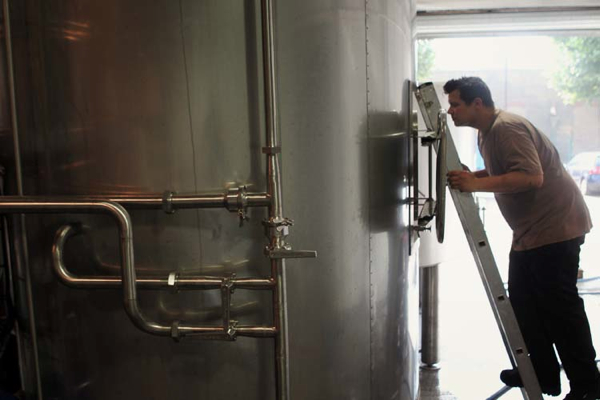
By then, it was time for the wort to be transferred to the enormous copper, standing upon metal legs in the centre of the brewery like a lunar module, and, once the liquid came to the boil inside, it was ready for the addition of hops – requiring Ben to climb up a step ladder and open a hatch in the top of the vessel to drop in the hop flowers that contribute such a distinctive fragrant aroma to the brew.
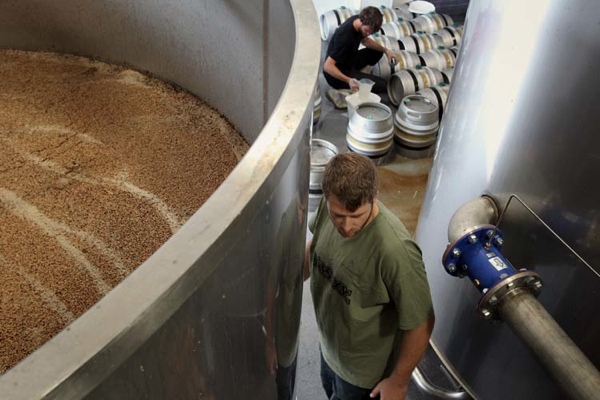
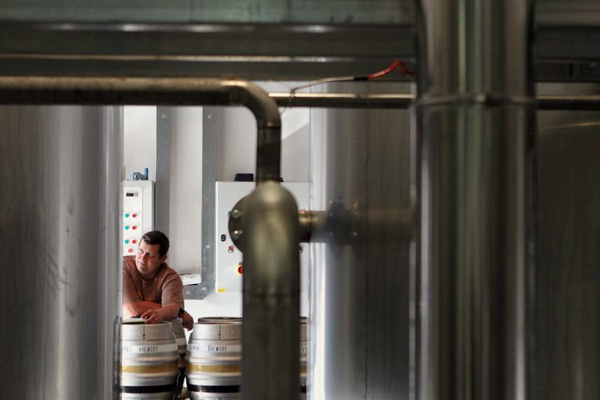
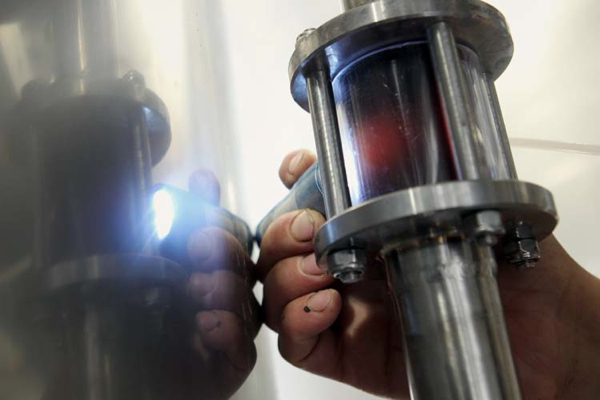
Hours passed and the sun moved round the sky to shine in through the huge doors, sending sparkling reflections of light from the watery floor dancing around the vast space, as Ben strode around with Sandro, his fellow Brewer, in the narrow passages between the steel cylinders, turning levers and checking the progress of his creation critically. At the rear were fermentation tanks containing the product of his previous days’ brewing and, as we opened each of the hatches to peer inside, the yeast was at a different stage of its work – from complete stillness in one to vibrant bubbling life in another.
“It has a lot to do with chemistry,” Ben admitted to me when I asked him to assess his role, “But you’ve got to go deep to create a new beer, I sat here for months to work out what I would do. You need artistry, and I’ve created something new – Truman’s Keeper – based upon a recipe brewed by Trumans’s in 1880, ninety-nine years before I was born.”
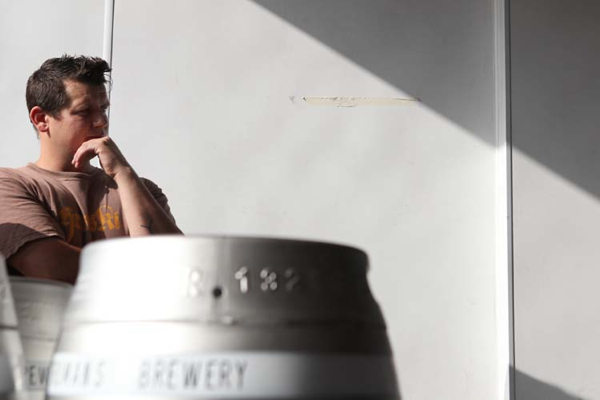
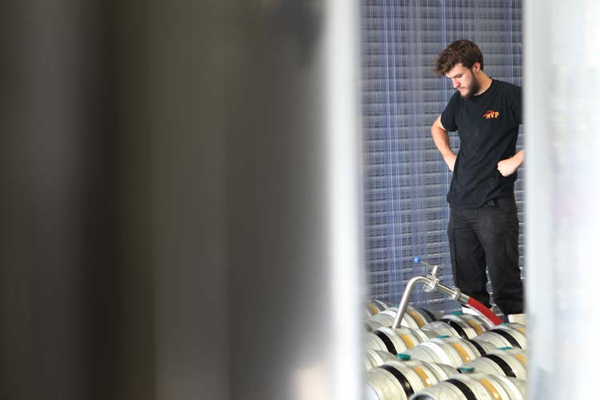
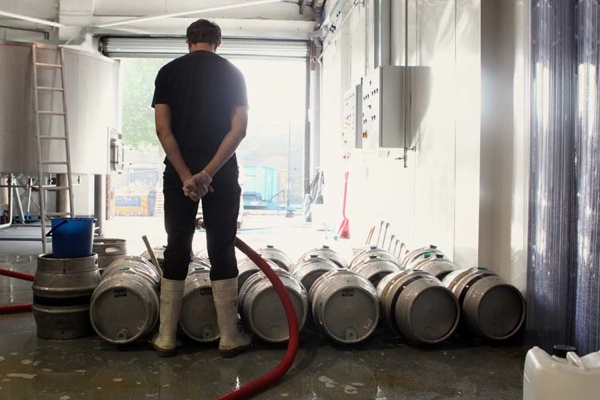
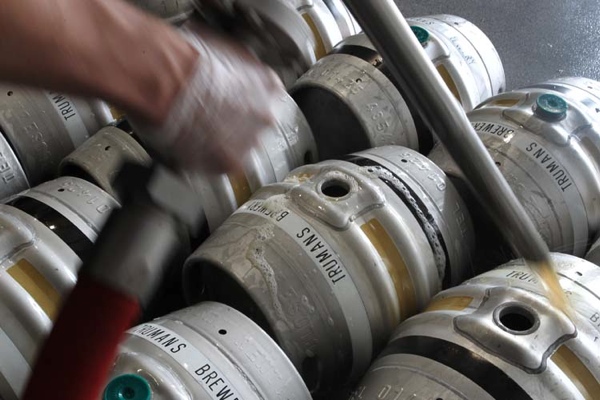
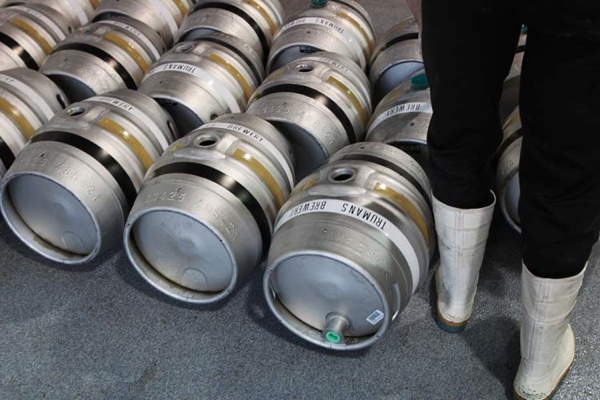
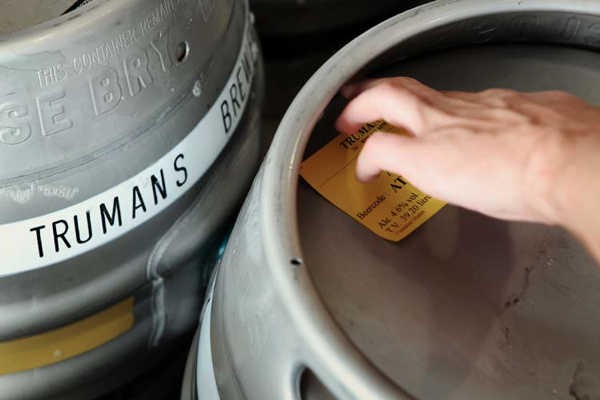
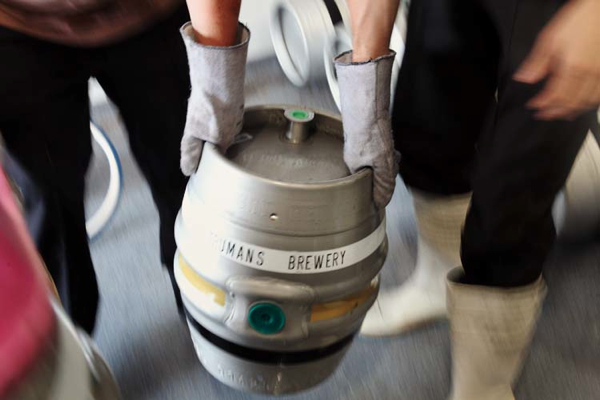
Once the day’s brew had cooled, it would be stored in one of these vessels and the yeast added last of all. After three to four days of fermentation, it would be chilled down for a further two days before the beer was ready to be put into casks. Upon the other side of the brewery, Caldwell, the Brewery Assistant was already filling steel firkins from a long hose attached to one of the fermentation tanks containing a brew from last week.
Thus, the whole process was underway, and Truman’s Brewery is producing beer to quench the thirst of the East End once more. Throughout London, the signage from the former brewery survives upon innumerable pubs, yet it was proclaiming the name of Truman’s Beer in empty words until this week – when they all regain their meaning once again – because Truman’s is back, Truman’s is real again and Truman’s is here to stay.


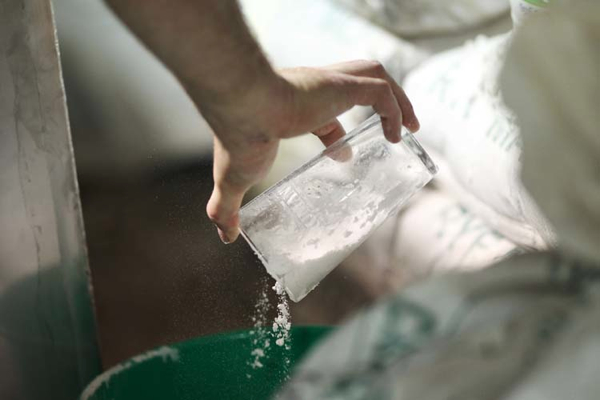
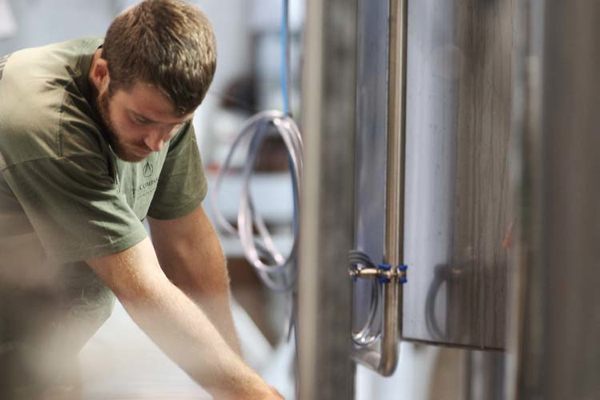
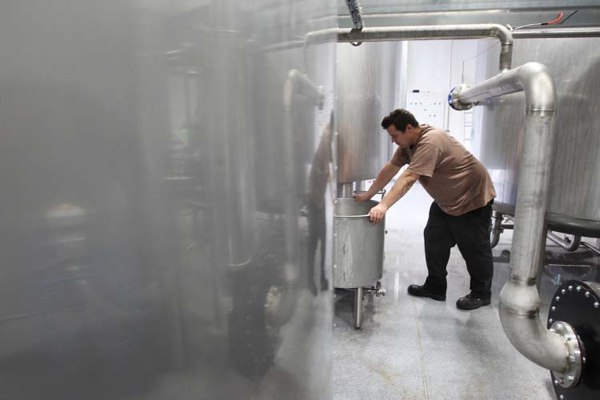
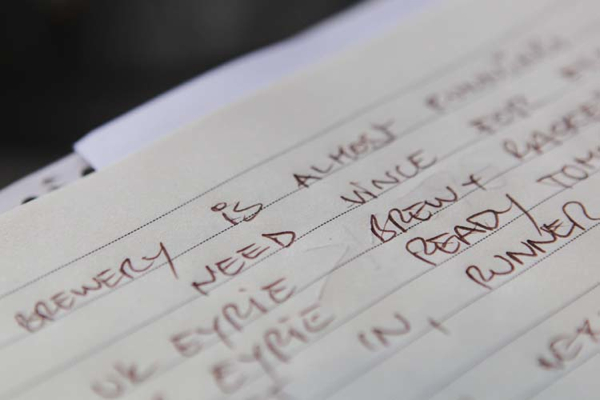

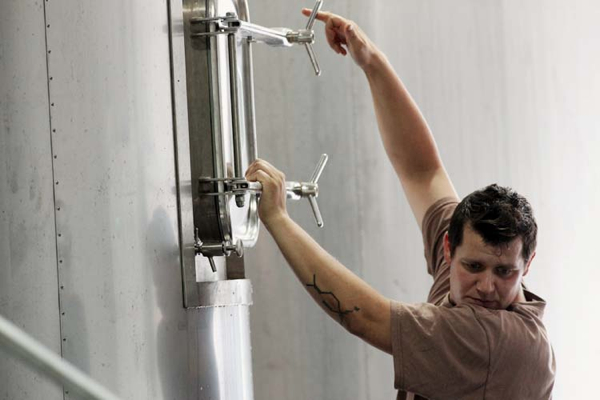
Photographs copyright © Simon Mooney
Readers are invited to the opening of the New Truman’s Brewery, 2-3 Stour Rd, Hackney Wick, E2 2NT, this Saturday 14th September 2pm – 10pm with Opening Ceremony at 4pm
You may also like to read about
Tony Jack, Chauffeur at Truman’s Brewery
Leo Giordani, K C Continental Stores
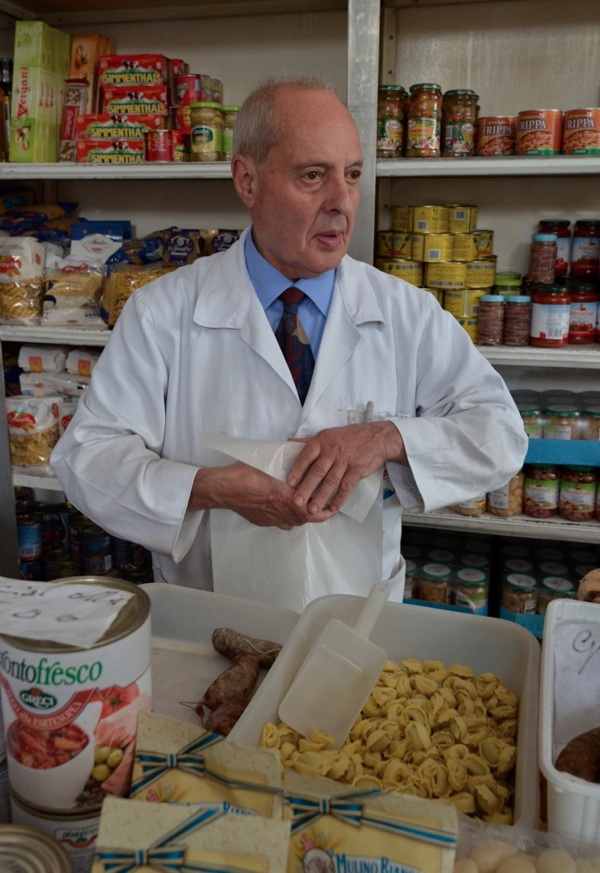
Leo Giordani wraps up my Parmesan
Leo Giordani is eighty years old and has not had a holiday in twenty-two years, yet he is the picture of vitality and good humour. In his delicatessen in the Caledonian Rd, you discover a constant stream of loyal customers many of whom have been coming for three decades to exchange banter in Italian and cart off delicious salami, ham, sausages, olives, cheese, pasta, bread, wine and oil sold at his exceptionally reasonable prices. Clean shaven in collar and tie, and sporting an immaculately-pressed white coat, Leo stands with his hands clasped like a priest – surveying the passing world with a beatific smile.
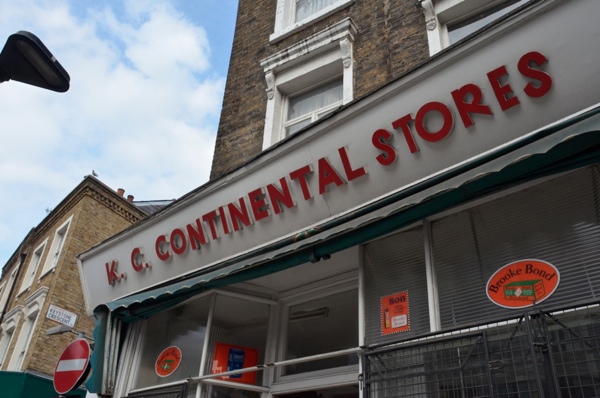
While the transformation of Kings Cross and its environs has taken place around him, Leo and his shop have remained unchanged – and all the better for it. His red front door matches his hand-made three-dimensional wooden lettering, spelling out “K C Continental Stores” upon the fascia, which contrasts elegantly with the eau de nil tiles at ground level. Note the charming old glass advertisements for Brooke Bond Tea and PG tips before you step over the sunburst doormat into Leo’s realm.
On the right and left, are glass-fronted cabinets displaying packets of pasta in every variety you could imagine. On the counter, sit freshly-made sausages and ravioli and mozzarella, while the walls behind are lined with shelves crammed with cans and bottles displaying brightly coloured labels in Italian. Straight ahead is a chilled cabinet of cheese while to the left is a chilled cabinet of salamis and suspended above all this are rails hung with a magnificent selection of hams and sausages.
Taking avantage of the wooden chair, strategically placed for weary customers, I settled down to observe the drama as Leo greeted everyone personally and customers grew visibly excited at all the enticing smells and colours of the delicacies on offer – and, in between all this, Leo told me the story of his beautiful shop.
“I opened Kings Cross Continental Stores on 1st October 1964, so I have been here forty-nine years. I came from Italy with my wife Noreena to work as waiters at the Italian Embassy but, after three years, the Ambassador went off to America so we stayed here. We knew about food but it took us a long time to learn how to run the shop and speak the language as well. I’ve always been very respectful with my customers, because you have to be good with them if you want them to come back. In those days, it was different here – better, because there were more shops, two fish shops, three greengrocers and a butcher. We had everything and now there’s nothing.
There were plenty of Italians living here, Keystone Crescent was all Italian then, but the old people died and the young people moved away. My customers used to be more Italian than English, but now I get more English than Italian – yet the English know more about this food than the Italians these days.
I have run this shop myself all these years, though sometimes my wife helped out with serving, cleaning and doing everything else that needs to be done. I get in here at nine each morning and I close at six because I’m not young anymore. For the last ten years, we have lived in Muswell Hill but I stay upstairs above the shop during the week while my wife is back in Muswell Hill picking up our grandchildren from school. Every night, I cook and wash-up for myself, and it’s a bit hard but I can make simple things like spaghetti.
If I retired and watched television, I would not be myself. I don’t like to do nothing – I prefer working. The business has always been good here, but we are working for the Council now – they are my landlords, so I pay rent and Council Tax to them. We’ve got plenty of customers and we make money but, in recent years, there’s been nothing left after we paid the bills. We took a lot of money at Christmas yet my son, who works for Barclays, did my accounts and he said, ‘You’ve got nothing left.’ I’ll go on for another year and then retire. I really enjoy this job even if it is hard work and I’d feel sorry for my customers if I retired.”
In spite of Leo’s threats of retirement, I think he will be there for as long as he can, so I encourage you to pop over to K C Continental Stores next time you are passing through. Leo can make you a sandwich of Parma ham or salami in ciabatta and reminisce about old Kings Cross. And I recommend you pick up some delicious fresh Italian sausages, olives and parmesan – as I did – while you are there, too.
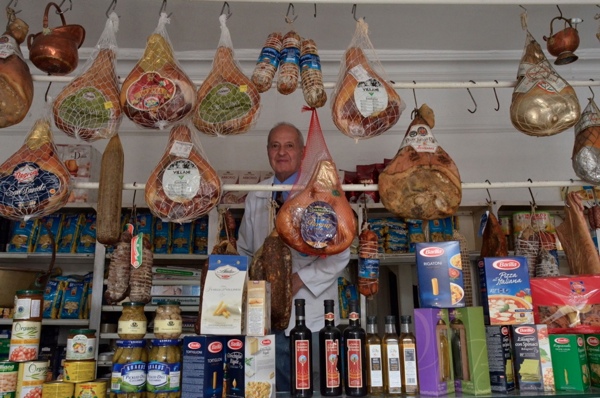
Rails hung with a magnificent selection of hams and sausages
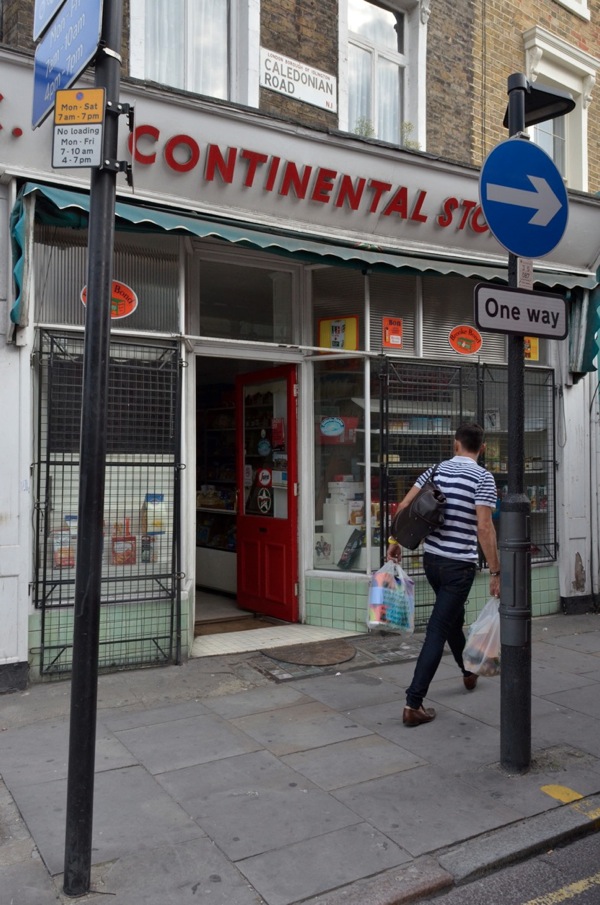
Leo’s red front door matches his hand-made lettering, spelling out “K C Continental Stores”
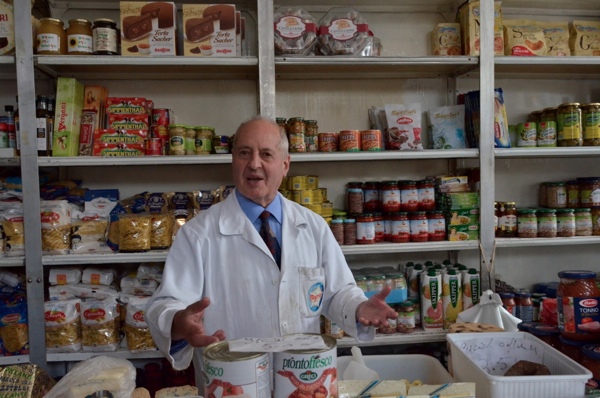
“the English know more about this food than the Italians these days…”
Photographs copyright © Bob Mazzer
Kings Cross Continental Stores, 26 Caledonian Rd, N1 9DU












