
More Wax Sellers of Wentworth St

Adetayo Abimbola, Franceskka Fabrics
Two years ago, I asked Contributing Photographer Jeremy Freedman to take portraits of the magnificent women who sell Holland Wax, French Lace and Swiss Voile on Wentworth St. The results were so spectacular that I suggested he extend the portfolio and today you see his complete series of textile goddesses – celebrating these shrewd businesswomen who are bold trendsetters, designing their own fabrics, modelling their creations, defining the fashion and styling their customers too.
When I did my first set of interviews, it was winter and the fabric shops shone like coloured beacons in the gloom but, returning at the height of summer, I found the dazzling colours of the textiles in sympathy with the soaring temperatures. As before, I started at Franceskka Fabrics, opened by Franceskka Ambimbola as the first shop on this street that is now the European centre for African fabrics.
Franceskka was in Nigeria, where she has two other shops, but she had left her international business empire in the capable hands of her three daughters – Abby, Tayo and Joki. “It’s good working for your mum,” admited Abby, “she’s created a foundation for us to build upon.” Abby, who has a degree in Business Studies, deals with textile orders, while Tayo specialises in selling expensive lace and Joki takes care of bridal and internet sales. It is a measure of their enterprise that they now have a full-time tailor on the premises, one of the few men to be employed in Wentworth St.
Just a few doors down, Monique Azenor, who has been running Monique Textiles for more than ten years, had a similar tale to tell of a female dynasty in the making. “It’s a family business – my mum, my sister and my two daughters are involved,” she told me, confirming hers as an exclusively female endeavour. “In Nigeria, the only way you can take care of your children is to open a shop,” Monique explained, “You don’t have much unless you can make your own living and keep your children around you too.”
“I’ve been in this business thirteen years,” Honey of Honey Textiles revealed to me, “I used to have a shop called Honey’s World where I sold everything and ran a hair salon too, but it became unbearable having to stand all day when I became pregnant, so that’s when I decided to digress. I came to see my aunt who ran Benny’ Textiles and told her my plight, and she helped me get this shop.” Today, Honey’s is one of the largest fabric shops on Wentworth St and Honey runs it all from the comfort of an office chair. “It’s mostly women that go into this, it’s a cultural thing that’s passed down,” she assured me, “I like it, it’s something I desired to do and I feel fulfilled doing it. I can stand up and sit down when I please!”
Across the road at Vida Fabrics, Franca Aina prides herself on her bold designs aimed at the youthful, more fashionable market. “Women run these shops because women like buying from women,” she informed me, “A woman can talk to another woman.” Franca has another three shops in Nigeria and her success is characteristic of the jet-setting lifestyle enjoyed by all her colleagues in Wentworth St – women who design their fabrics and visit their manufacturers in the Far East, Italy, Switzerland and Holland regularly, while managing retail outlets in Africa and Europe.
Anna Maria Garthwaite, the most famous designer of eighteenth century silk, who ran her business with her sister from her premises in Princelet St, would recognise more than a little in common with the wax sellers of Wentworth St – they are the noble inheritors of her vibrant endeavour in Spitalfields.

Franceskka Ambimbola, Franceskka Fabrics

Josephine Yokessa, Beauty Solutions

Sheba Eferoghene, Novo Fashions

Tayo Raheem, Royal Fashions

Fola Mustapha, Fola Textile
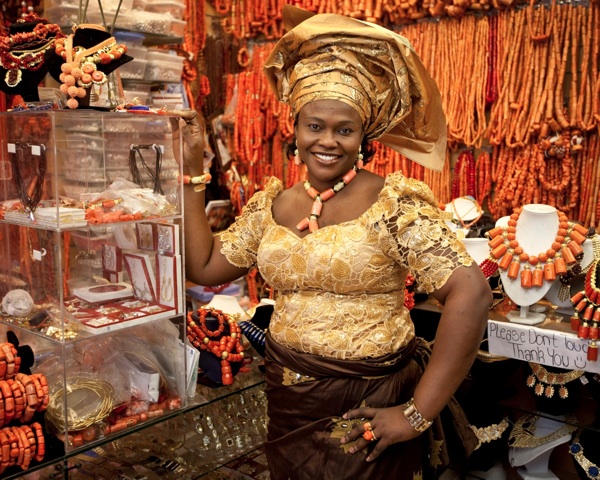
Onome Efebeh-Atano, Beauty Stones

Honey, Honey Textiles

Bola Ilori AKA Madame Boltex, Boltex Textiles

Veronica Ogunmola, Monique Texiles

Tayo Oladele, Tayo Fashions & Textiles

Benke Adetoro, Benke Fashions

Monique Azenabor, Monique Textiles

Franca Aina, Vina Textiles
Photographs copyright © Jeremy Freedman
You may like to read at my original feature
The Wax Sellers of Wentworth St
and take a look
A Walk From Shoeburyness to Chalkwell
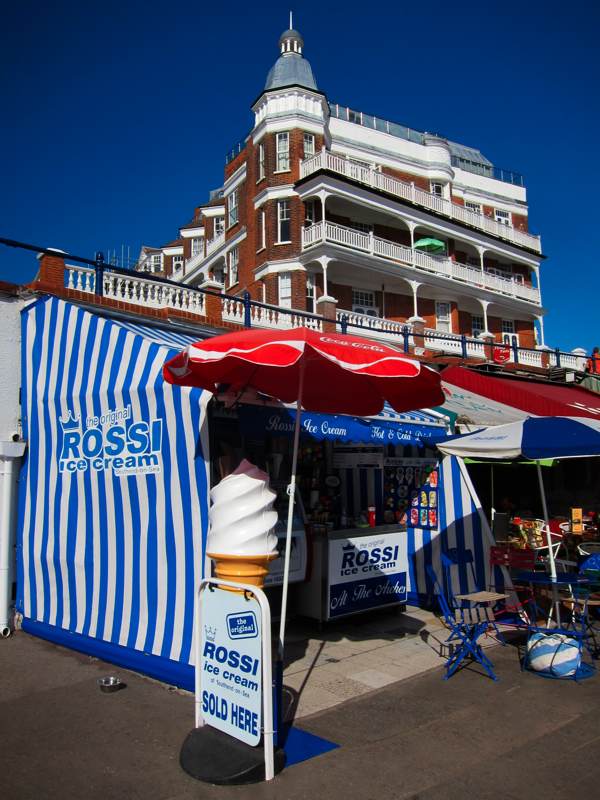
At Westcliff
At the end of August, I always feel the need to leave the city and go to the sea, taking advantage of the last days of sunshine before the season changes. Admitting that I have spent too much of these last months at my desk in neglect of summer, I found myself on the train out of Fenchurch St Station with the East End receding like a dream.
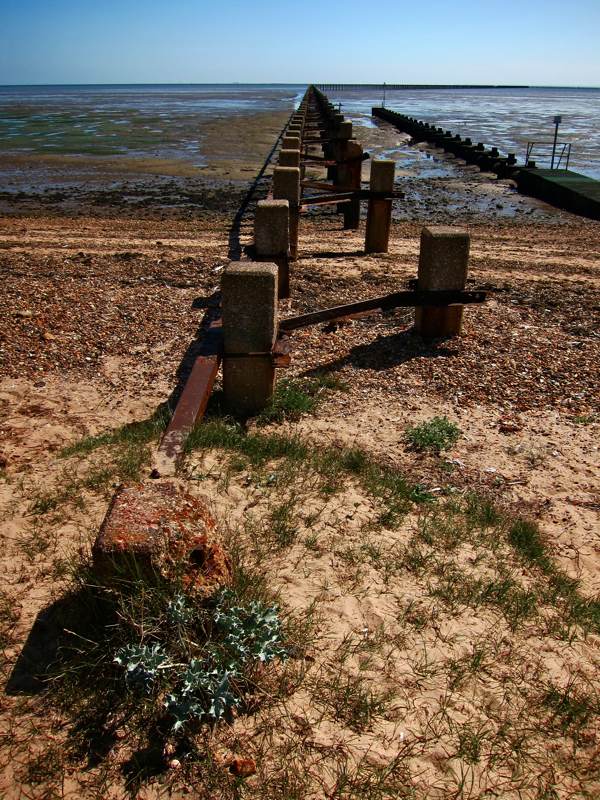
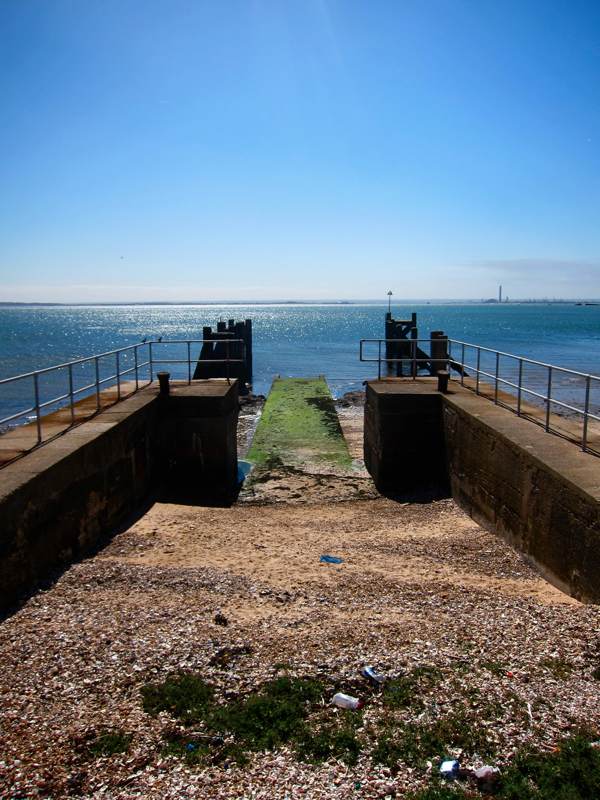
At Shoeburyness, the ocean lay before me gleaming like a tin roof beneath a flawless azure sky. Surely no-one fails to be surprised by the sea, always more expansive than the image you carry in your mind. I sat upon the warm buttery-yellow sand of East Beach to assimilate this vast landscape before me, humbled by the open space after too long in narrow streets.
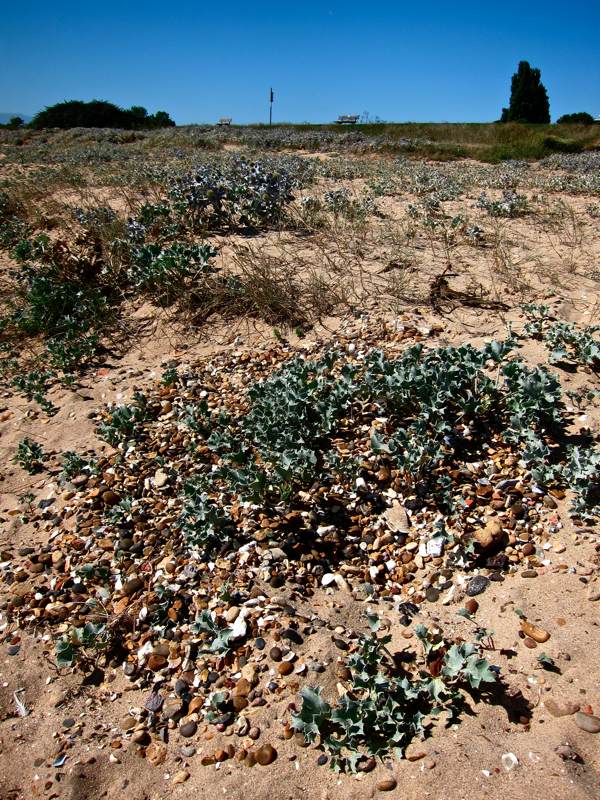
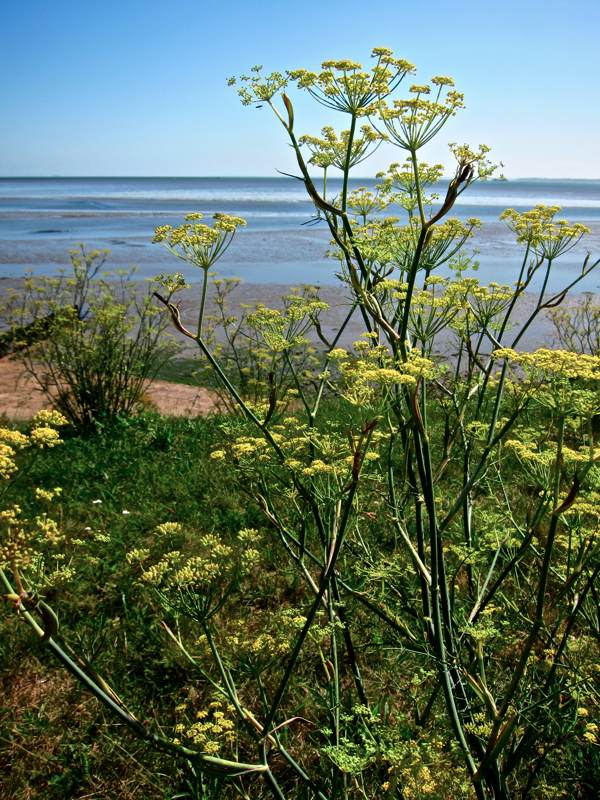
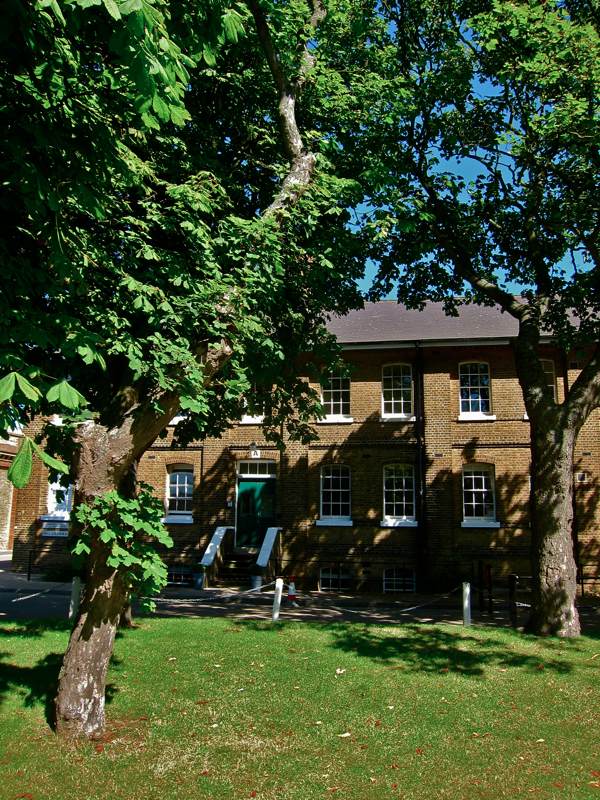
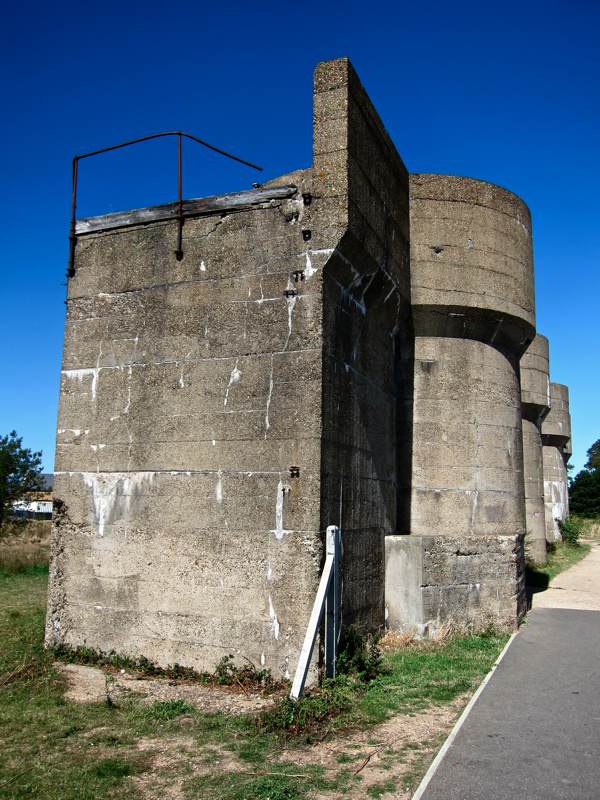
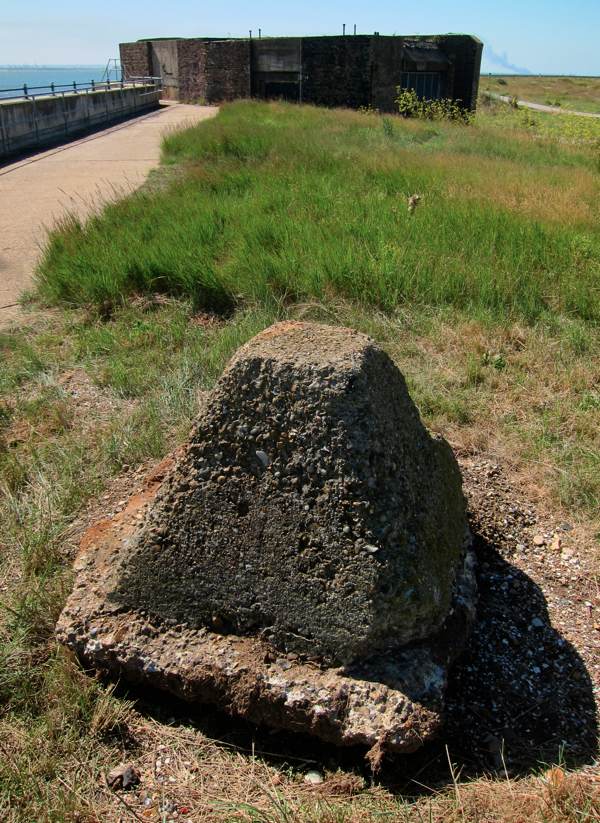
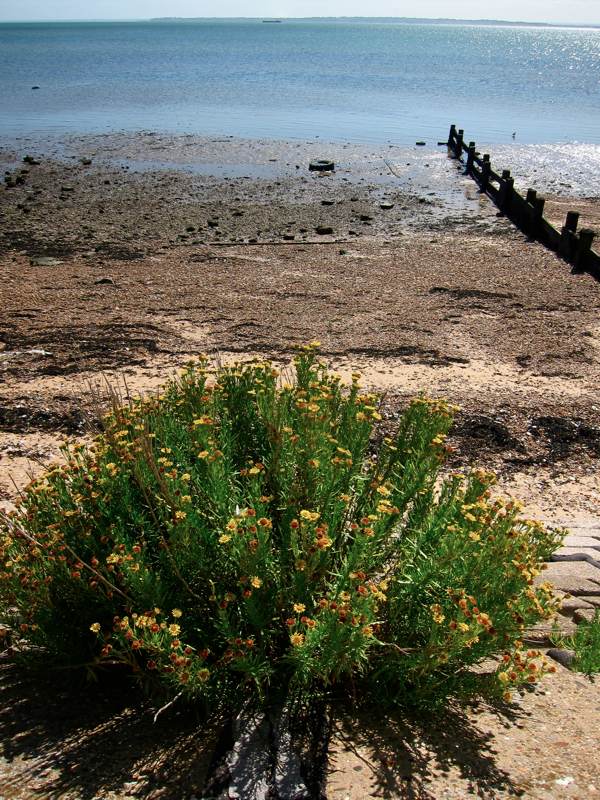
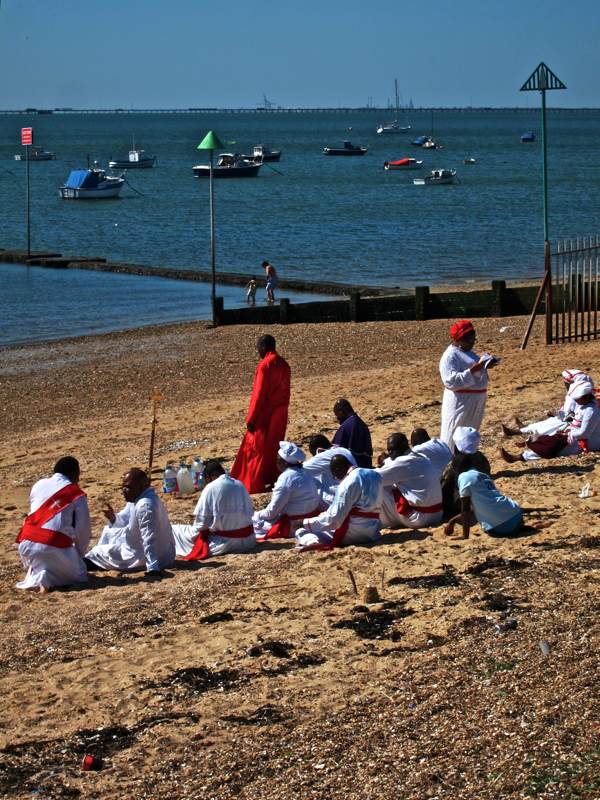
Military fences obstructed my intention of walking east across open land towards the River Roach, so instead I turned west, following the coast path through a wildlife reserve embellished with abandoned structures of warfare now being appropriated by nature. Local myth speaks of an ancient settlement lost beneath the sands and archaeology has revealed an Iron Age camp, confirming the strategic importance of this site overlooking the estuary where Shoebury Garrison was established in 1854. Wild fennel, sea holly, coltstfoot and stonecrop grow freely upon the sea wall, where the works of man are sublimated by greater forces. It came as no surprise to encounter a religious service enacted upon the shingle here, with priests in white robes and red sashes presiding, like their Celtic predecessors, upon unyielding waves lapping at the beach.
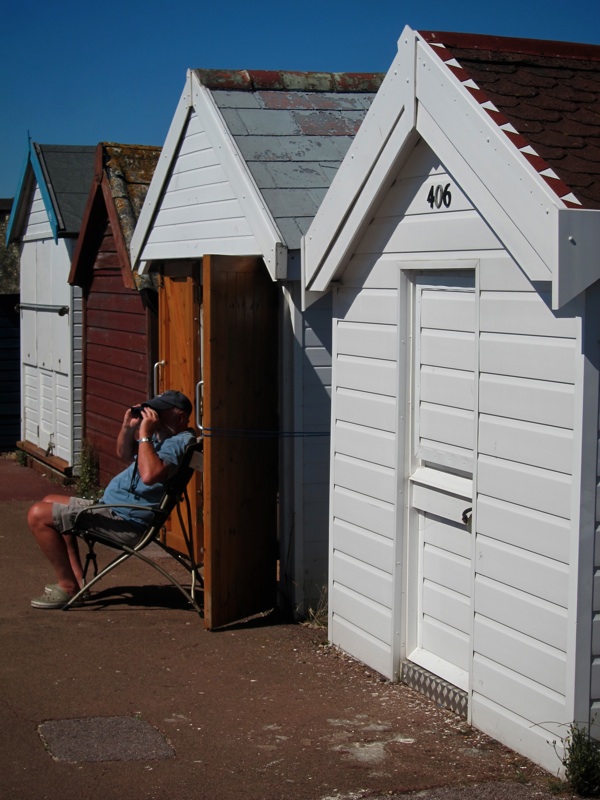
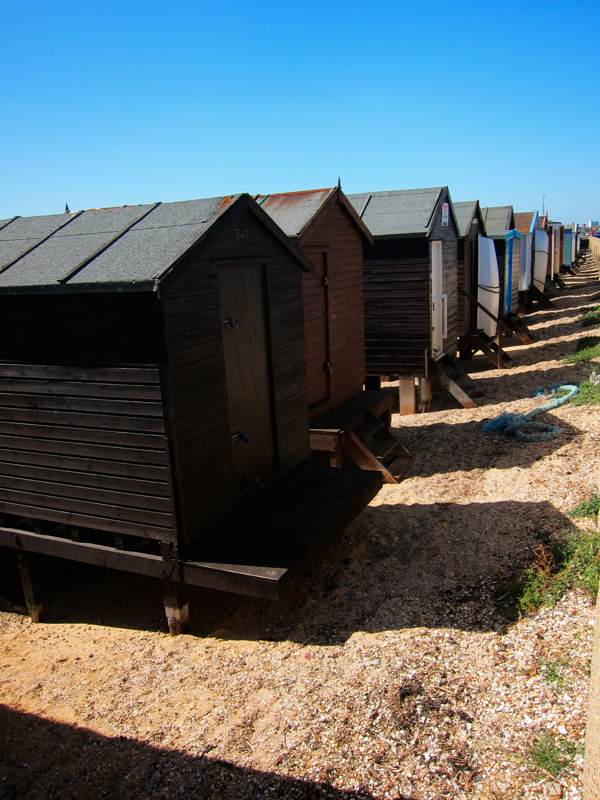
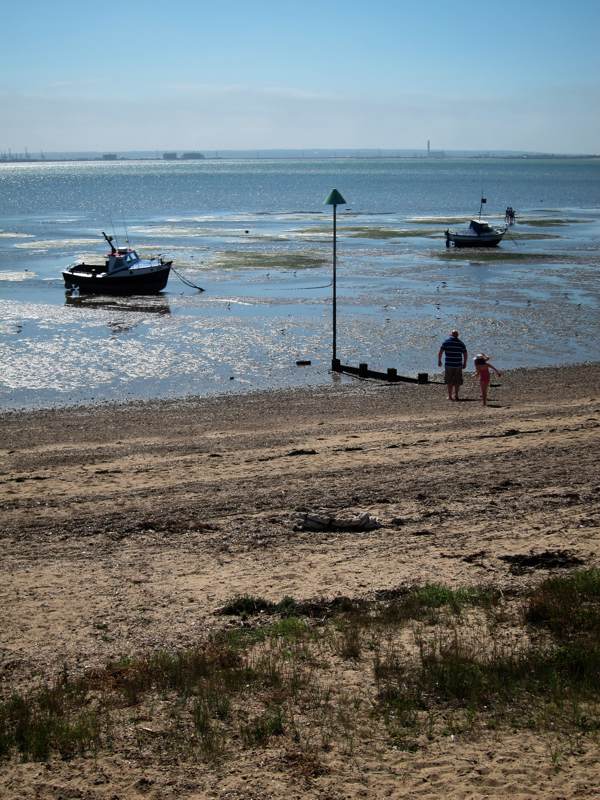
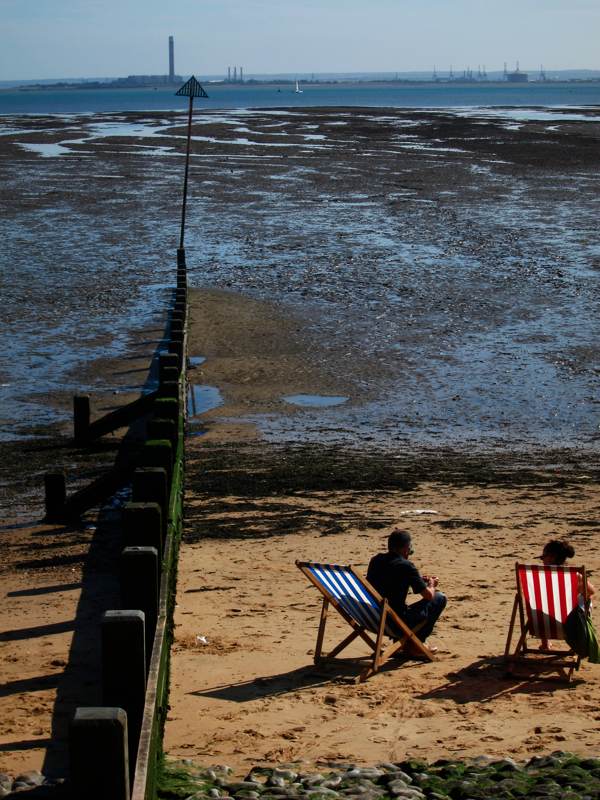
Then, in a sudden change of atmosphere, leaving the reserve and crossing a road brought me to Thorpe Bay with its regimented lines of cabins that serve to domesticate the shoreline. Yet even on this baking Saturday in August, just a few lone sun worshippers were setting out their deck chairs and upholding their secular rituals beneath the glassy sky. Meanwhile, an equal languor prevailed below the tideline where yachts sat marooned and inert upon the glistening mud.
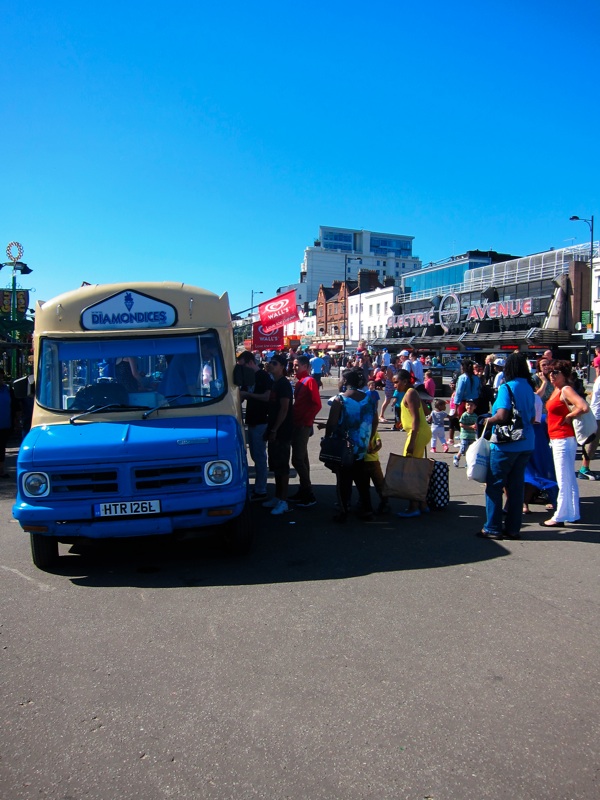
The long pier and white towers upon the horizon led me on, absorbed now in walking, even if the featureless esplanade offered no sense of progress until, turning a shallow corner, I found myself in the midst of the throng of Southend with its endless diversions and hullabaloo. Extended family groups clung together, laden with bags and babies, and huddling as if they were refugees caught in the middle of a battle, while my own attention danced and darted, drawn by amusement arcades, crazy golf, souvenir and novelty shops, and pleasure parks. In the event, I took a nap in the shade of a pine tree upon the cliff overlooking Adventure Island, where fellow day-trippers were screaming in terror while being flung around on white-knuckle rides that looped and twisted for their enjoyment.
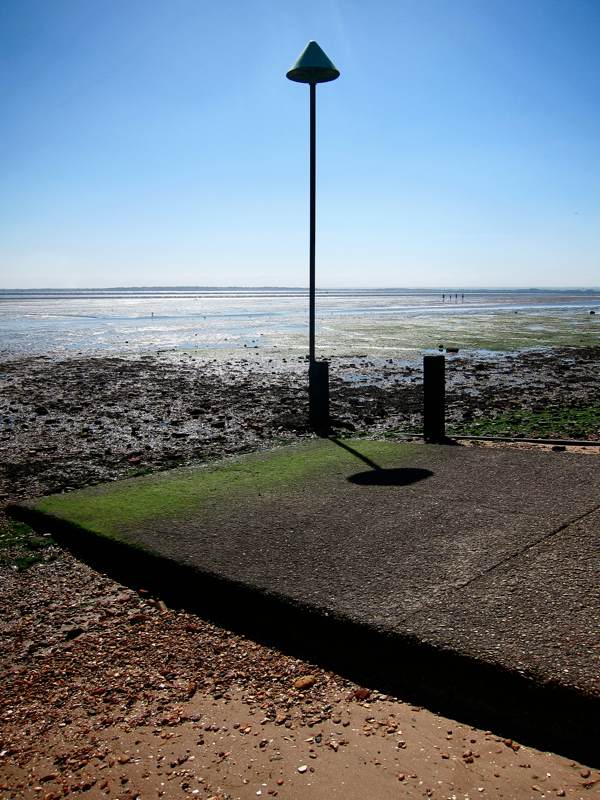
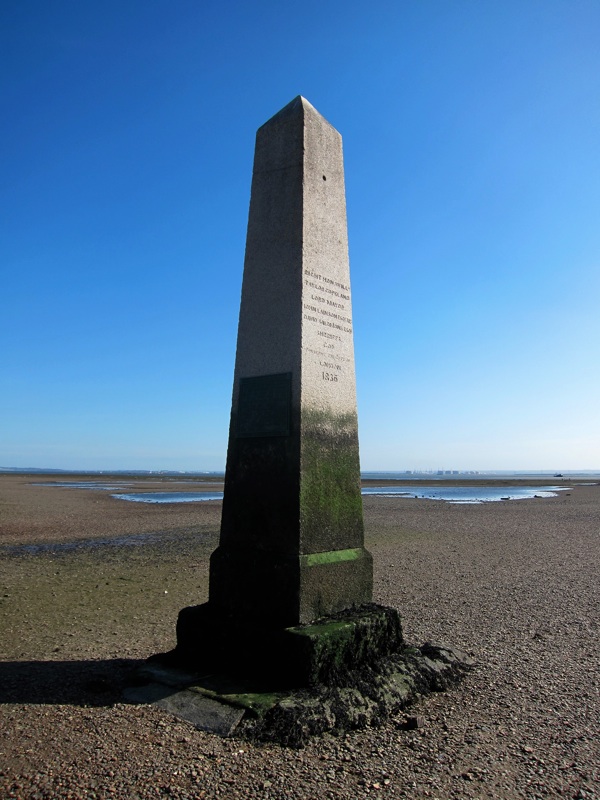
Walking on, the frenzied action relented as the sedate charms of Westcliff made themselves apparent in the form of elaborate nineteenth-century balconied villas. The tide had retreated still further and the declining sun reflected golden off the pools where lonely beach-comers strayed. A stone obelisk upon the strand indicated the boundary of the Thames and its estuary, and beyond lay a causeway across the mud banks where a long procession of curious ramblers were walking out to the horizon.
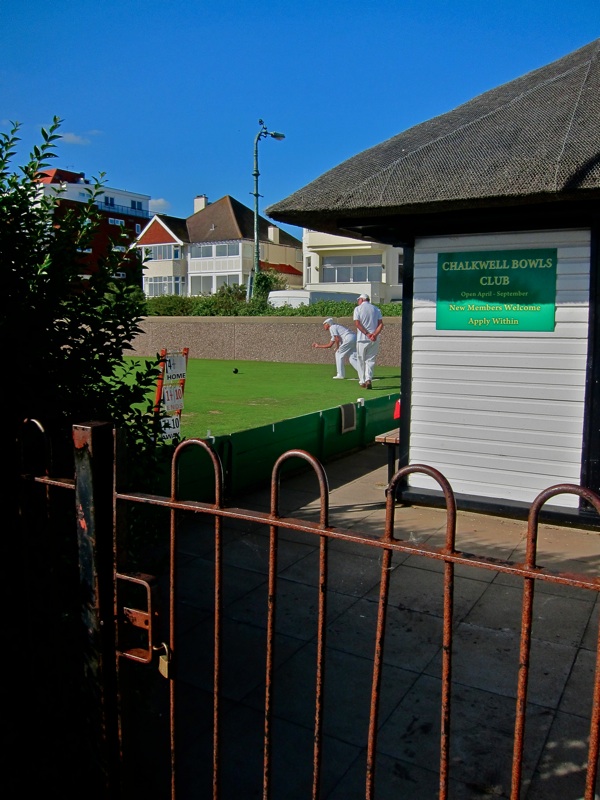
In overt contrast to the demonstrative thrill-seekers of Southend, I spied bowls played upon lawns discreetly screened by well-kept privet hedges in Chalkwell. Here my walk ended and I took the opportunity of reflection upon the day’s journey, stringing together the disparate locations that comprise this stretch of coast. Dozing on the train, I awoke in Fenchurch St Station and as I wandered back through the familiar deserted City, it could have been as if my adventure had been but a fantasy – if it were not for the residual sensation of sunshine and wind upon my skin that was evidence I had been somewhere else.
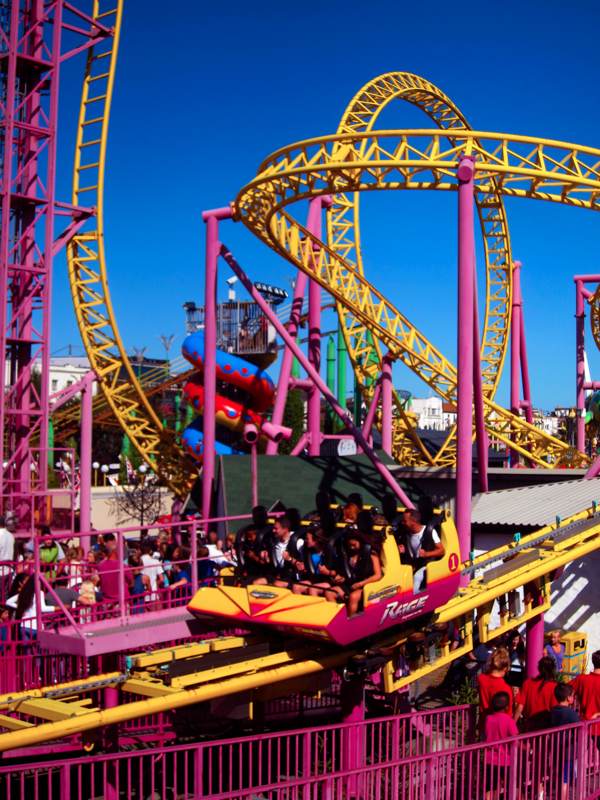
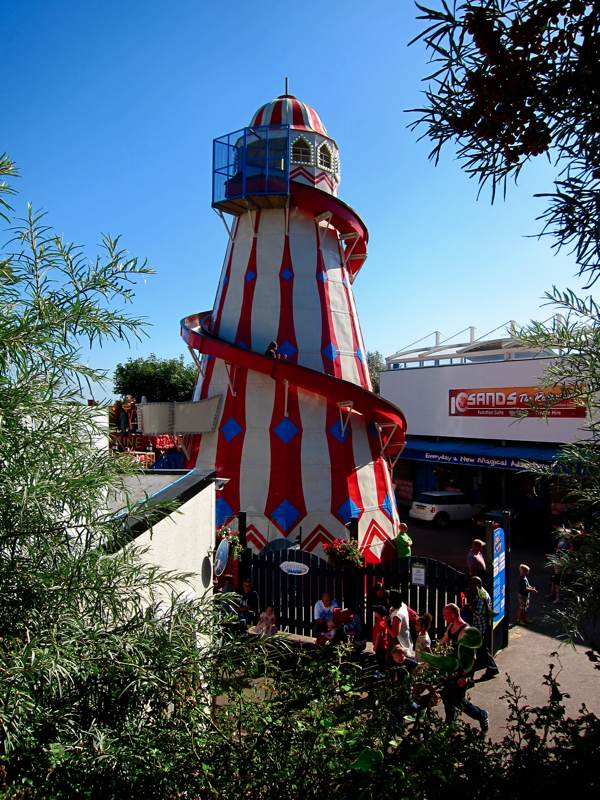
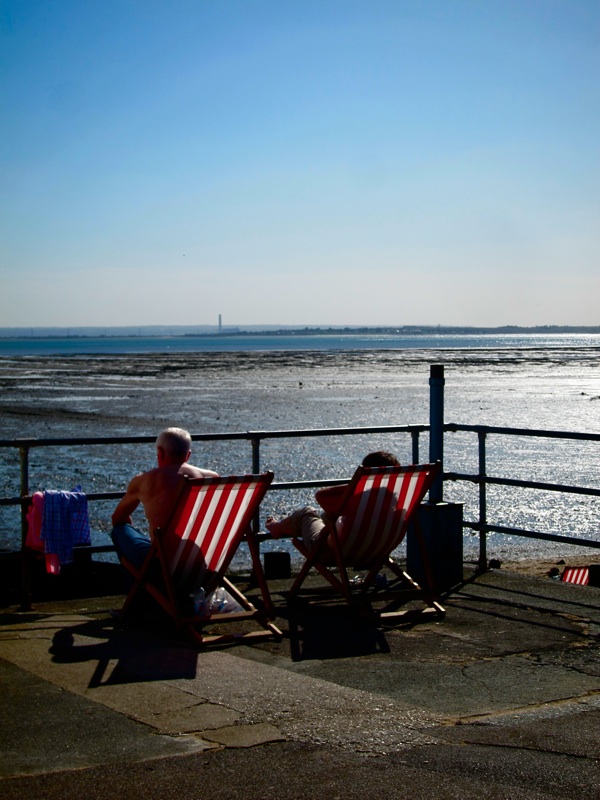
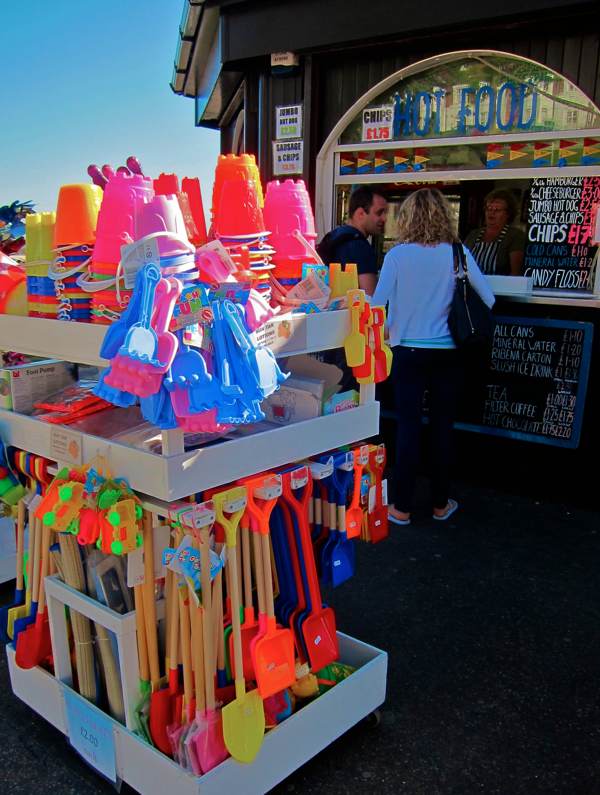
You may like to read about my previous trips beyond Spitalfields at this time of year
The East End in the Afternoon

There is little traffic on the road, children are at play, housewives linger in doorways, old men doze outside the library and, in the distance, a rag and bone man’s cart clatters down the street. This is the East End in the afternoon, as photographed by newspaper artist Tony Hall in the nineteen sixties while wandering with his camera in the quiet hours between shifts on The Evening News in Fleet St.
“Tony cared very much about the sense of community here.” Libby Hall, Tony’s wife, recalled, “He loved the warmth of the East End. And when he photographed buildings it was always for the human element, not just the aesthetic.”
Contemplating Tony’s clear-eyed photos – half a century after they were taken – raises questions about the changes enacted upon the East End in the intervening years. Most obviously, the loss of the pubs and corner shops which Tony portrayed with such affection in pictures that remind us of the importance of these meeting places, drawing people into a close relationship with their immediate environment.
“He photographed the pubs and little shops that he knew were on the edge of disappearing,” Libby Hall confirmed for me, ‘He loved the history of the East End, the Victorian overlap, and the sense that it was the last of Dickens’ London.”
In 1972, Tony Hall left The Evening News and with his new job came a new shift pattern which did not grant him afternoons off – thus drawing his East End photographic odyssey to a close. Yet for one who did not consider himself a photographer, Tony Hall’s opus comprises a tender vision of breathtaking clarity, constructed with purpose and insight as a social record. Speaking of her late husband, Libby Hall emphasises the prescience that lay behind Tony’s wanderings with his camera in the afternoon. “He knew what he was photographing and he recognised the significance of it.” she admitted.
These beautiful streetscapes – published here for the first time – are a selection of pictures from the legacy of approximately one thousand photographs by Tony Hall held in the archive at the Bishopsgate Institute.


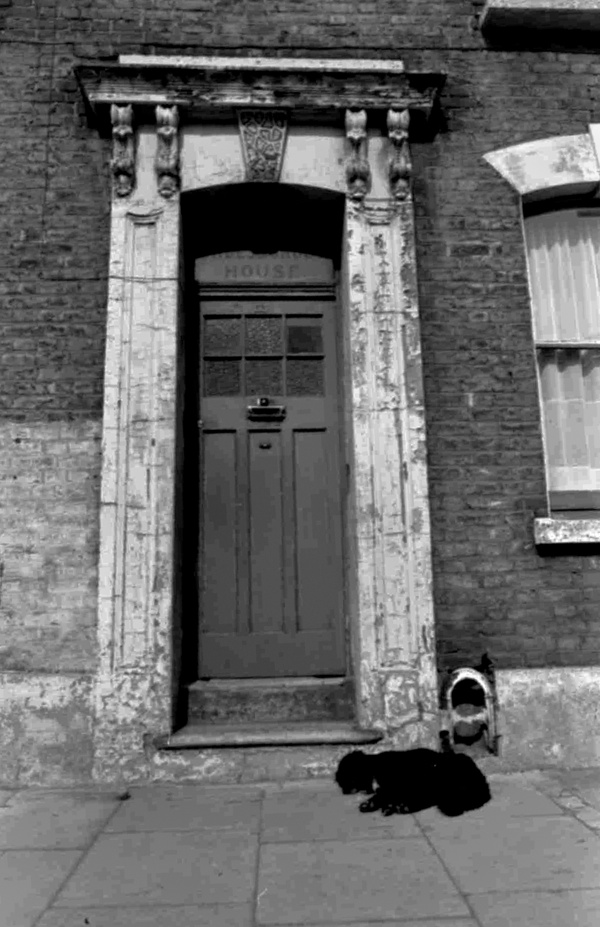


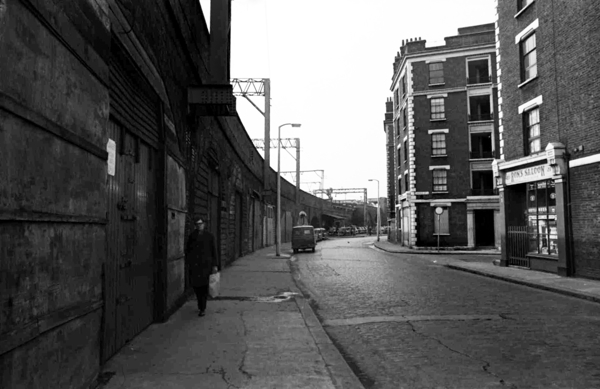
Three Colts Lane

Gunthorpe St


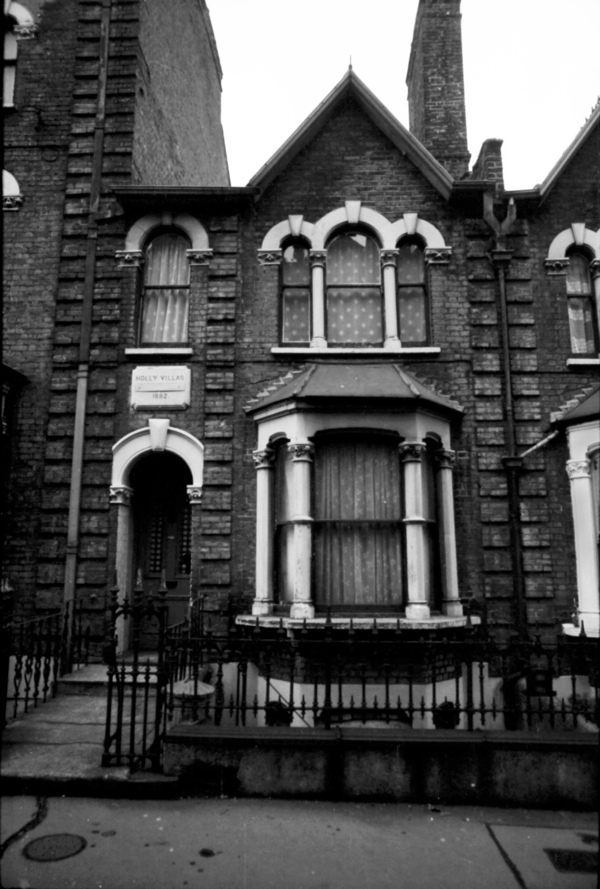


Ridley Rd Market


Stepney Green


Photographs copyright © Libby Hall
Images Courtesy of the Tony Hall Archive at the Bishopsgate Institute
Libby Hall & I would be delighted if any readers can assist in identifying the locations and subjects of Tony Hall’s photographs.
You may also like to read
Tony Hall’s East End Panoramas
At The George Tavern

Pauline Forster, publican at The George in Commercial Rd
Let me admit, The George in Commercial Rd is one of my favourite pubs in the East End. From the first moment I walked through the door, I knew I had discovered somewhere special. In the magnificently shabby bar room, with gleaming tiles and appealingly mismatched furniture all glowing in the afternoon light filtering through coloured glass windows, there was not a scrap of the tidying up and modernisation that blights the atmosphere of too many old pubs. There was no music and no advertising – it was peaceful, and I was smitten by the unique charisma of The George.
Curious to learn more, I paid a visit upon the owner recently, who has been described to me as one of the last great publicans of the East End, and I was far from disappointed to explore behind the scenes at this legendary institution because what I found was beyond what I ever imagined.
Pauline Forster, artist and publican of The George, brought up her five sons in a remote valley in Gloucestershire. It was only ten years ago that she bought The George and her sons came up to London with her, but in the intervening decade they all met partners in the bar and moved out. Yet such a satisfactory outcome of events was not the result of any master-plan on Pauline’s part, merely the consequence of a fortuitous accident in which she stumbled upon The George when it was lying neglected and fell in love with it, buying it on impulse a week later, even though it had never been her intention to become a publican.
“It’s a beauty, this building!” she declared to me as I followed her along the dark passage from the barroom, up a winding stair and through innumerable doors to enter her kitchen upon the first floor. “When I came to view it, there were twenty others after it but they only wanted to know how many flats they could fit in, none of them were interested in it as a pub.” she informed me in response to my gasps of wonder as she led me through the vast stairwell with its wide staircase and a sequence of high-ceilinged rooms with old fireplaces, before we arrived at her office lined with crowded bookcases reaching towards the ceiling. “The interior was all very seventies but I was hooked, I could see the potential.” she confided, “I gravitated to the bar and I started possessing it. I sat and waited until everyone else had gone and then I told the agent I would buy it for cash if he called off the auction.”
With characteristic audacity, Pauline made this offer even though she did not have the cash but somehow she wrangled a means to borrow the money at short notice, boldly taking possession, exchanging contracts and moving in three days later, before finding a mortgage. It was due to her personal strength of purpose that The George survived as a pub, and thanks to her intelligence and flair that it has prospered in recent years.“I thought, ‘I’ve got to open the bar, it would be a sin not to,'” she assured me, widening her sharp grey eyes to emphasise such a self evident truth, “I decided to open it and that’s what I did.”
Ten years of renovations later, the false ceilings and recently installed modern wall coverings have been stripped away to reveal the structure of the building, and this summer the early nineteenth stucco facade will be revealed in all its glory to the Commercial Rd. “I’m used to taking on challenges and I’m a hardworking person,” Pauline admitted, “I don’t mind doing quite a bit of work myself, you’ll see me up scaffolding chipping cement off and painting windows.”
Yet in parallel with the uncovering of the fabric of this magnificent old building – still harbouring the atmosphere of another age – has been the remarkable discovery of the long history of the pub which once stood here in the fields beside the Queen’s Highway to Essex before there were any other buildings nearby, more than seven hundred years ago. When Commercial Rd was cut through by the East India Company in the early nineteenth century, the orientation of the building changed and a new stuccoed frontage was added declaring a new name, The George. Before this it was known as The Halfway House, referenced by Geoffrey Chaucer in The Reeve’s Tale written in the thirteen eighties when he lived above the gate at Aldgate and by Samuel Pepys who recorded numerous visits during the sixteen sixties.
A narrow yard labelled Aylward St behind the pub, now used as a garden, is all that remains today of the old road which once brought all the trade to The Halfway House. In the eighteenth century, the inn became famous for its adjoining botanic garden where exotic plants imported from every corner of the globe through the London Docks were cultivated. John Roque’s map of 1742 shows the garden extending as far as the Ratcliffe Highway. At this time, William Bennett – cornfactor and biscuit baker of Whitechapel Fields – is recorded as gardener, cultivating as many as three hundred and fifty pineapples in lush gardens that served as a popular destination for Londoners seeking an excursion beyond the city. As further evidence of the drawing power of the The Halfway House, the celebrated maritime painter Robert Dodd was commissioned to paint a canvas of “The Glorious Battle of the Fifth of June” for the dining room, a picture that now resides in the Maritime Museum in Greenwich.
When you have ascended through all the diverse spaces of The George to reach the attic, you almost expect to look from the dormer windows and see green fields with masts of ships on the river beyond, as you once could. I was filled with wonder to learn just a few of the secrets of this ancient coaching inn that predates the East End, yet thanks to Pauline Forster has survived to adorn the East End today, and I know I shall return because there are so many more stories to be uncovered here. I left Pauline mixing pure pigments with lime wash to arrive at the ideal tint for the facade. “I don’t get time to do my own paintings anymore,” she confessed, “This is my work of art now.”

The George is covered with scaffolding while renovation takes place.

Nineteenth century tiling in the bar.
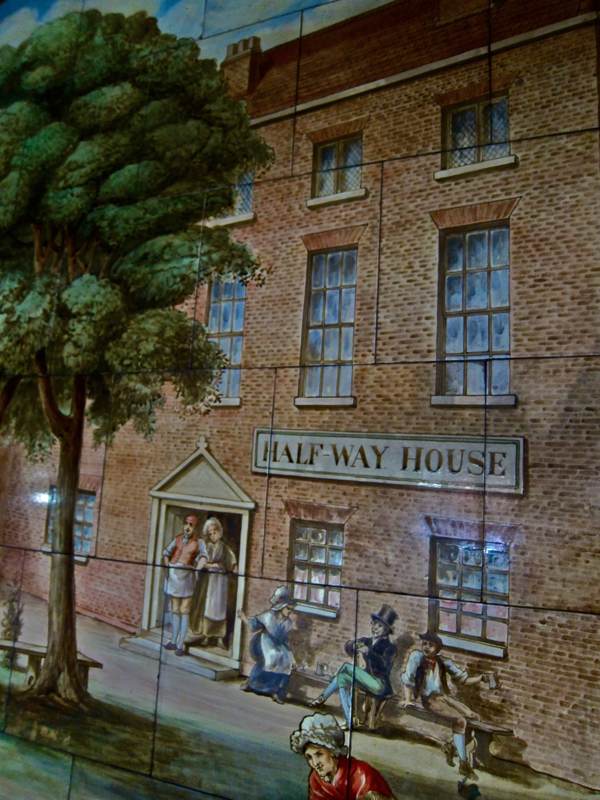
A ceramic mural illustrates The George in its earlier incarnation as The Halfway House.
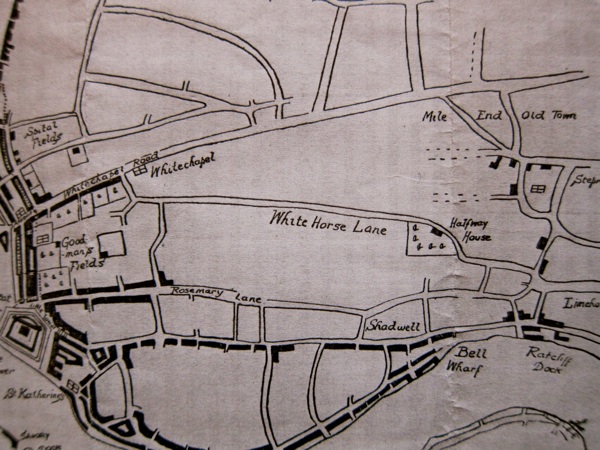
Stepney in 1600 showing The Halfway House and botanic garden on White Horse Lane, long before Commercial Rd was cut through by the East India Company in the early nineteenth century.

The Halfway House in the seventeenth century.
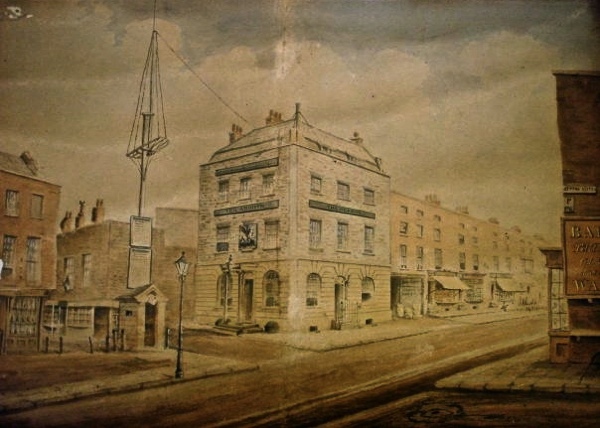
The Halfway House became The George and the orientation of the building was changed in the nineteenth century when Commercial Rd was cut through. Note the toll booth and early telegraph mast.
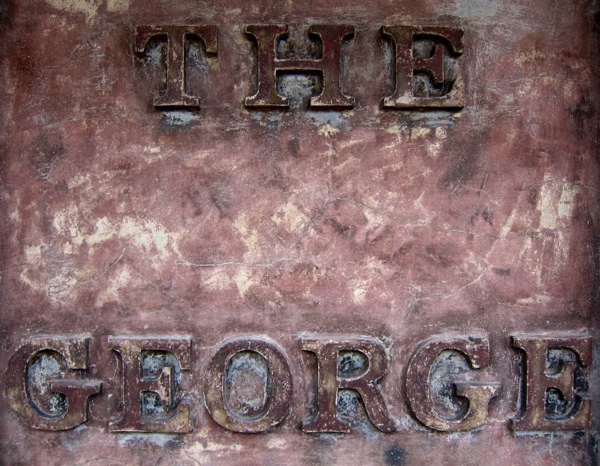
The stucco facade is currently under restoration.

The Georgian theatre serves as the pub’s entertainment suite.

In the attic, where Pauline lived when she first moved in.

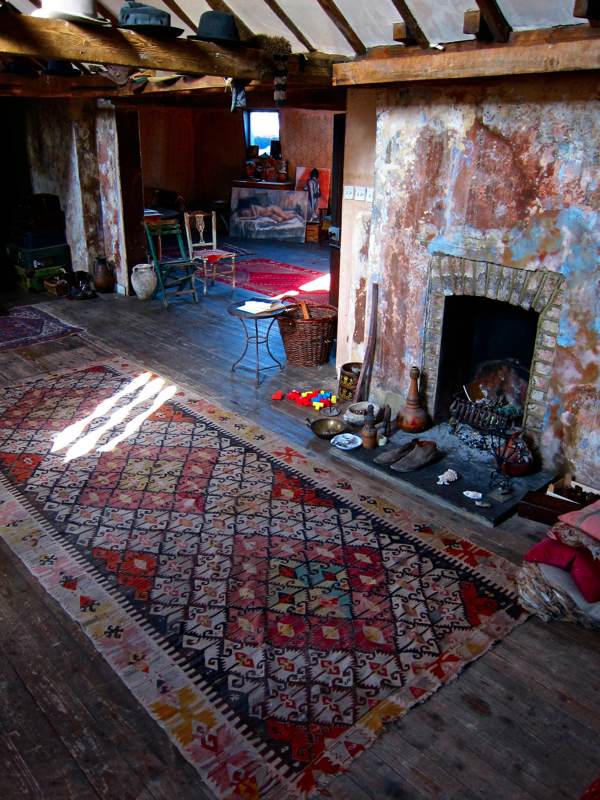

A selection of Pauline’s paintings.

Pauline’s collection includes the dried-out carcass of a rat from Brick Lane.

Bedroom under the eaves.
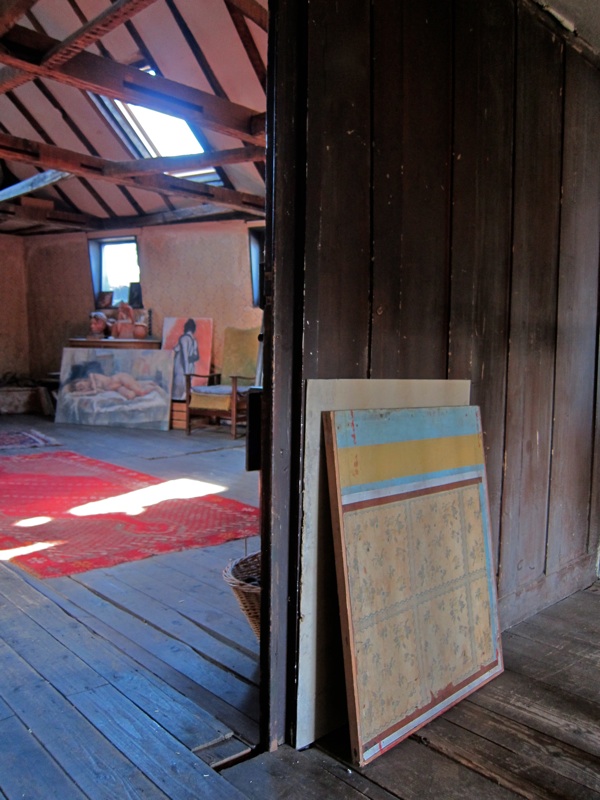
Entrance to the attic.

Pauline’s studio.
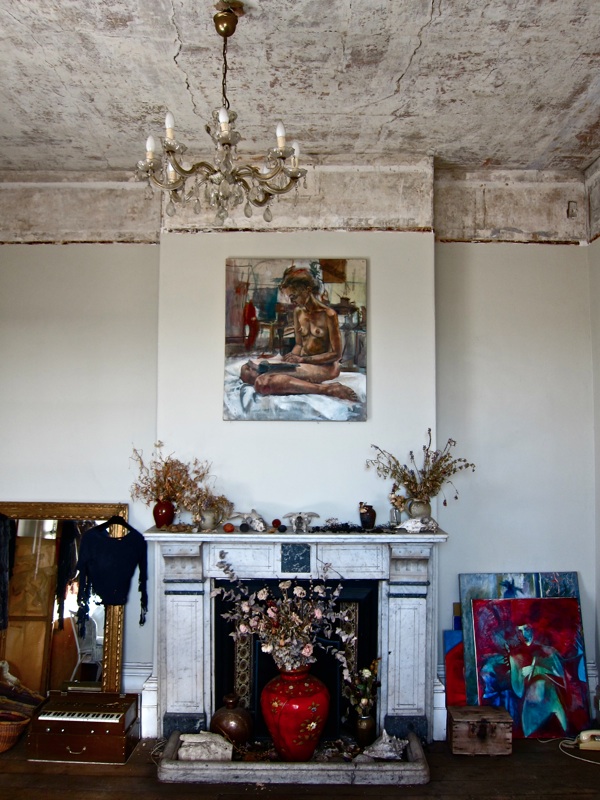
Living room.

Living room with view down Commercial Rd.
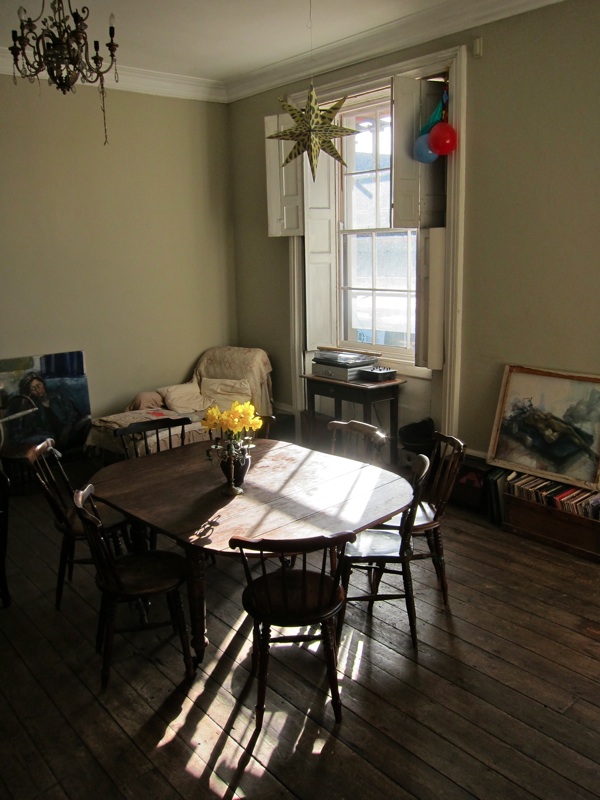
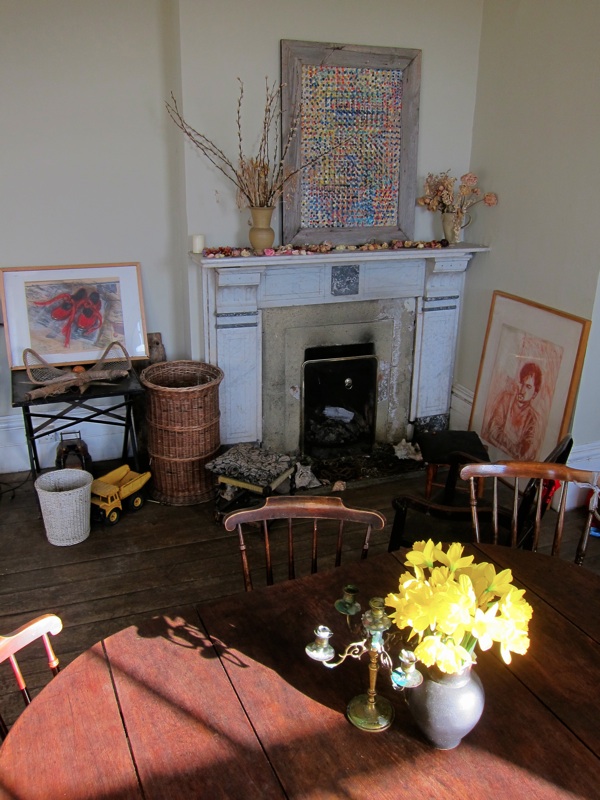
Dining Room.
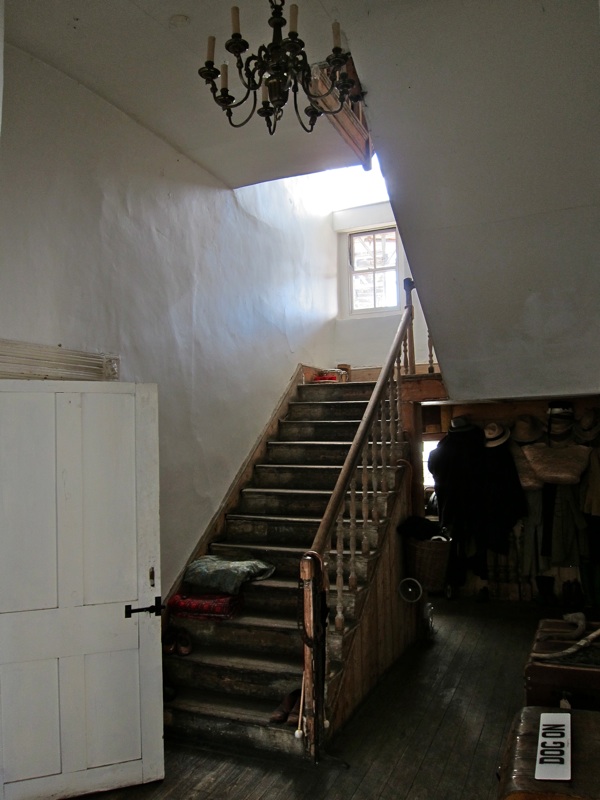
Wide eighteenth century staircase.
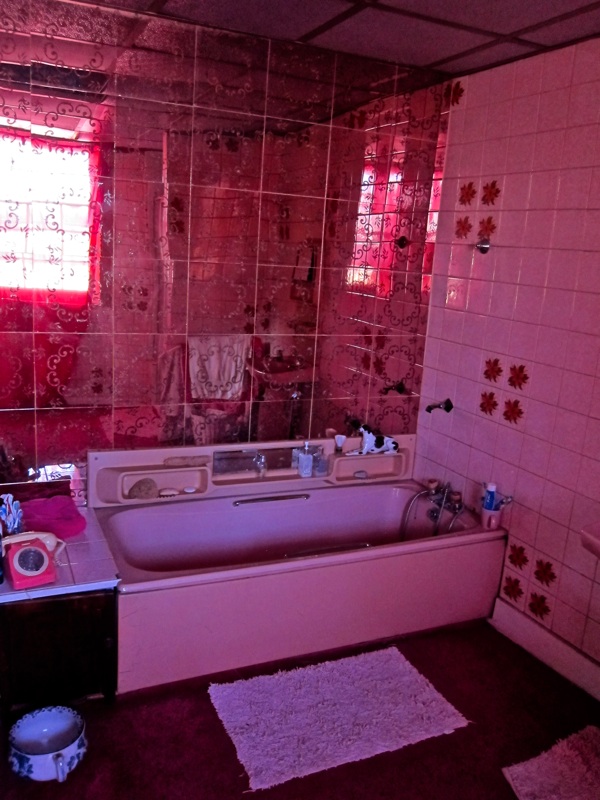
Pauline’s bathroom with matching telephone, the last fragment of the nineteen seventies interior that once extended throughout the building.

In Pauline’s office.
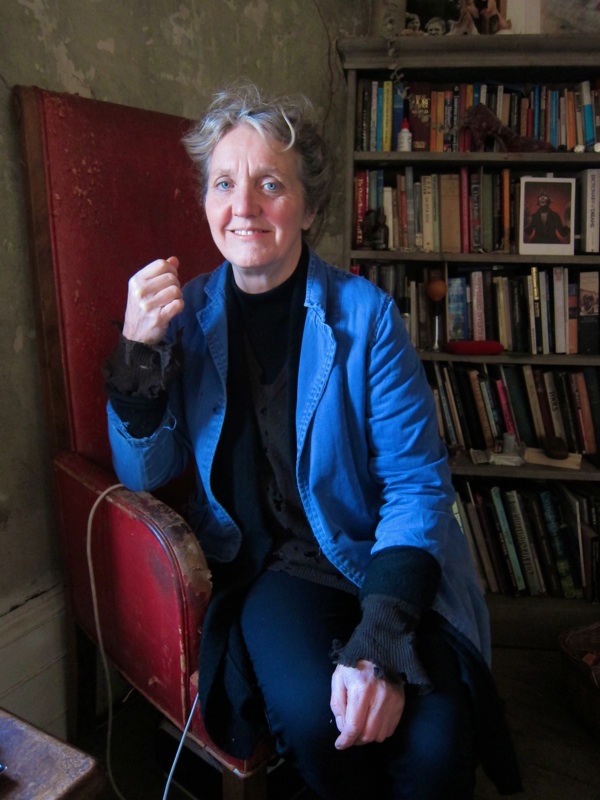
Pauline Forster, Artist & Publican.
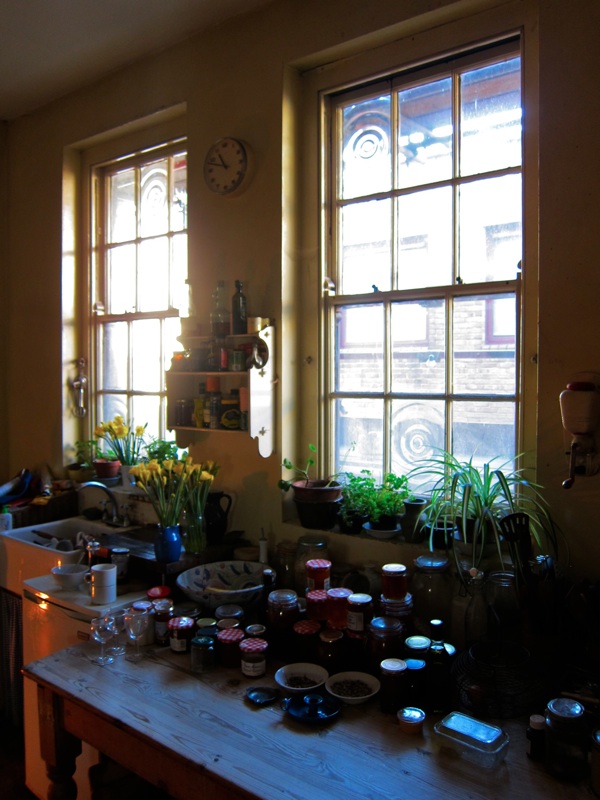
Kitchen looking out onto the former Queen’s Highway, now the pub garden.

Pauline’s newly-made Seville marmalade.
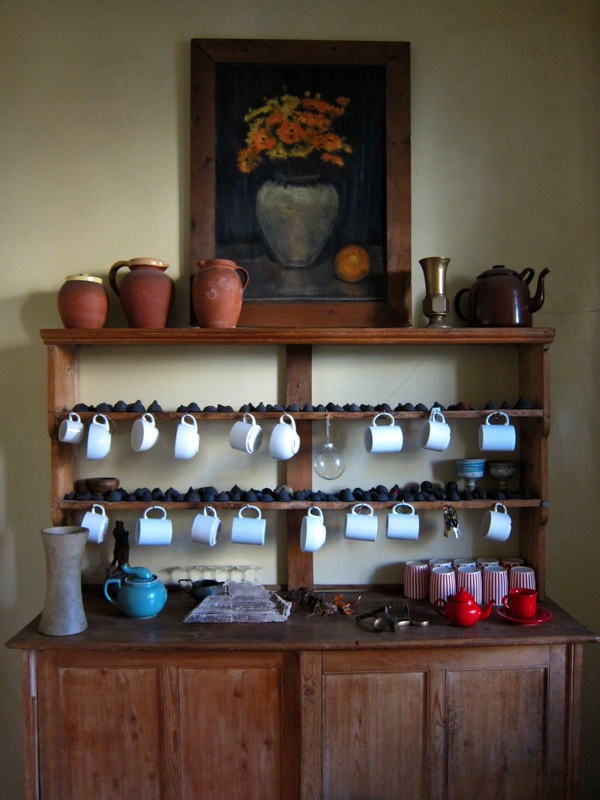
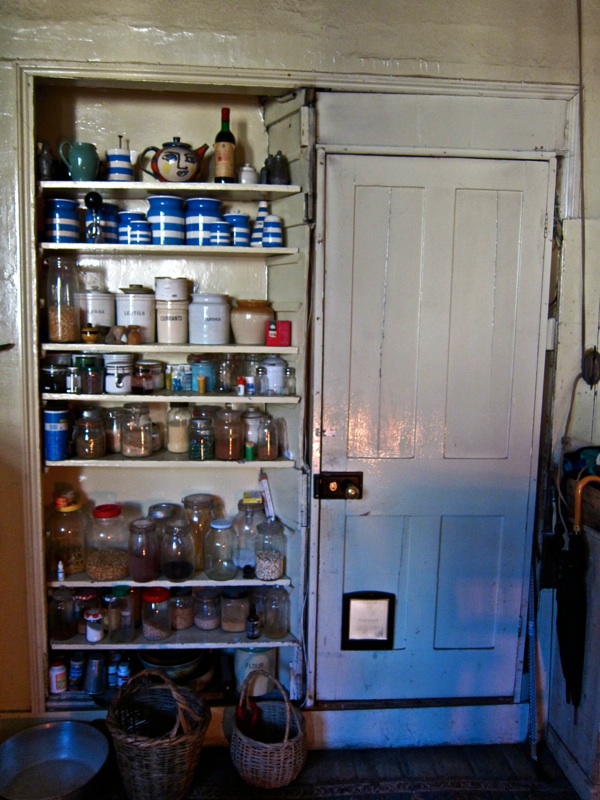
Kitchen dresser.

Pauline’s cat keeps close to the fire in the kitchen.
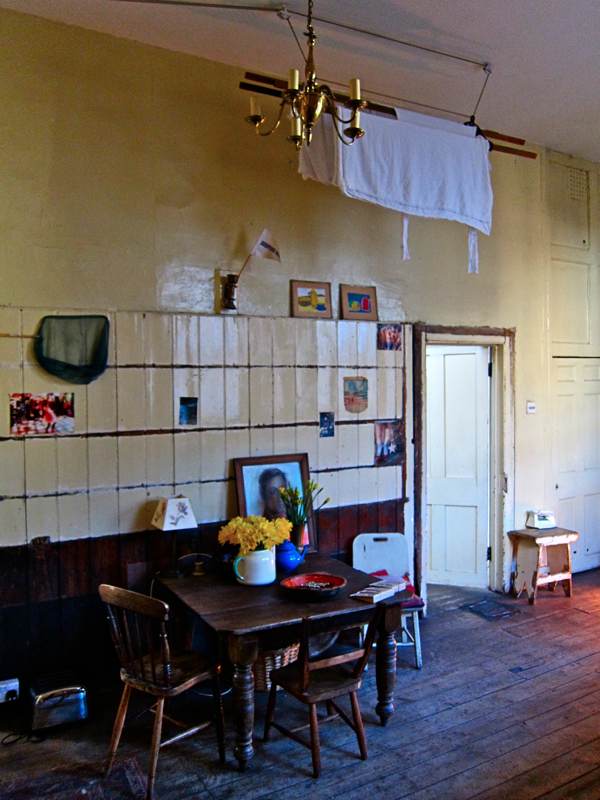


Pauline hits the light-up dancefloor at “Stepney’s” nightclub next door.
The George, 373 Commercial Rd, E1 0LA (corner of Jubilee St).
You may also like to read about
Sandra Esqulant, The Golden Heart
The Carpenter’s Arms, Gangster Pub
Save Clerkenwell Fire Station

Clerkenwell Fire Station is the oldest operating fire station in Britain, serving the people of London continuously from its handsome red brick tower at the junction of Rosebery Avenue and Farringdon Rd since 1872. Contributing Photographer Colin O’Brien grew up a quarter of a mile from here in Victoria Dwellings, a tenement just down the road at the corner of Clerkenwell Rd and Farringdon Rd, and as a young photographer in the nineteen sixties he leaned out of the window to photograph the Clerkenwell firemen when they came to extinguish a conflagration in his building.
So when I learned that there was a possibility that Clerkenwell Fire Station might shut forever, I realised that Colin and I needed to pay a visit upon the firefighters of Clerkenwell, to celebrate these heroic individuals and record their brave endeavours, lest this be the end of their operations here after one hundred and forty years. In spite of the fact that they had all received letters inviting them to take voluntary redundancy, we found them in buoyant mood and it was only towards the end of our visit I learnt that several members of the watch had recently received awards for bravery after saving people trapped in a cradle high above the new University College London Hospital in Gower St.
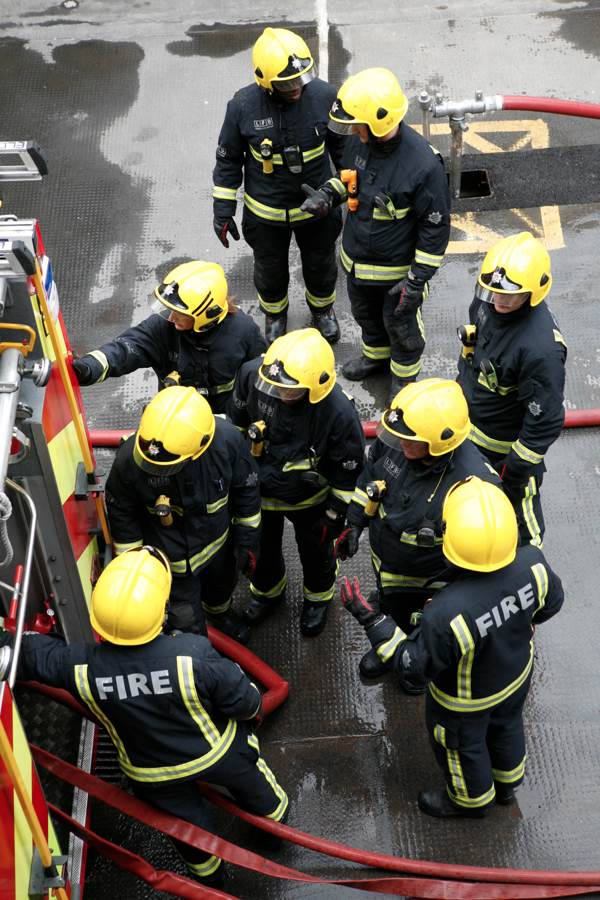
Firefighters work in “watches” of fourteen and there are four watches at Clerkenwell Fire Station who work alternating shifts, two days of 9:30am until 8pm and two days of 8pm until 9:30am, a total of forty-eight working hours each week followed by three days off, thus providing cover every hour, every day of the year. Colin and I had the privilege of being the guests of Tim Dixey’s watch, arriving in the morning to discover the team around the table in the mess, at the end of the days’s briefing before they headed out to the yard to run through the drill that is a constant of life as a firefighter, designed to hone the co-ordination, proficiency and team work of the watch.
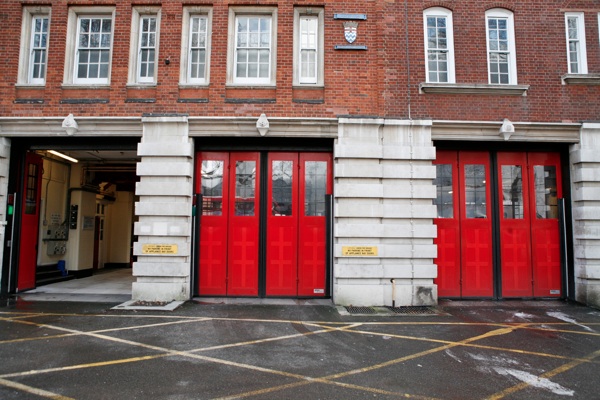
Although the fire station opened in 1872, it is still fully functional and it was a pleasure to see the working parts of the old building cherished – freshly painted, cleaned and maintained in tip-top order, still in daily use for the purpose for which they were built. On the Farringdon Rd side of the building are two wooden doors, a narrower one originally used for the hand cart fire engine and a wider one for the horse drawn engine.
Tim Dixey, a veteran of twenty-nine years in the service who joined at eighteen years old, explained that the founders of the Metropolitan Fire Brigade in 1866 came from a naval background and every station was designed to be sufficient to itself. “They were conceived as ships on land,” he told us. Many of the early firefighters were ex-naval men who were comfortable with heights and familiar with ropework, introducing the structure of shifts and terminology of “watches” that is still used in the fire service today.
Meeting the firefighters of Tim’s watch for the first time, Colin and I were touched by the generosity of spirit and emotional openness with which they accepted our presence. I recognised the depth of trust necessary between those who risk their lives in the course of their work and must depend upon each other absolutely. We were surprised to meet a father and son, Andy Simkins and Dave Smith, working together as firefighters in the same watch, yet it only served to enforce the sense of intimate reliance among the crew.
At Tim’s request, firefighter Gregg Edwards took us on a tour of the upper floors of the station which have been disused for decades. With views across the rooftops to the City, we found the washrooms of the eighteen seventies with huge white sinks lined up for the firemen of a century ago to wash the soot off their faces. In the next room, an elaborate series of metal racks offered arcane facilities for drying wet uniforms in a heated chamber. Walking through another door, we entered the former accommodation of firefighters under the eaves. There were neat delft tied fireplaces and rooms still lined with faded nursery wallpaper. Abandoned in the middle of the last century, when the firefighters sought a degree of independence from their employers, these flats are now designated “unfit for purpose” even though with a modicum of repairs they could be a boon to the firefighters of today, who are unable to afford housing locally and must commute long distances as a consequence.
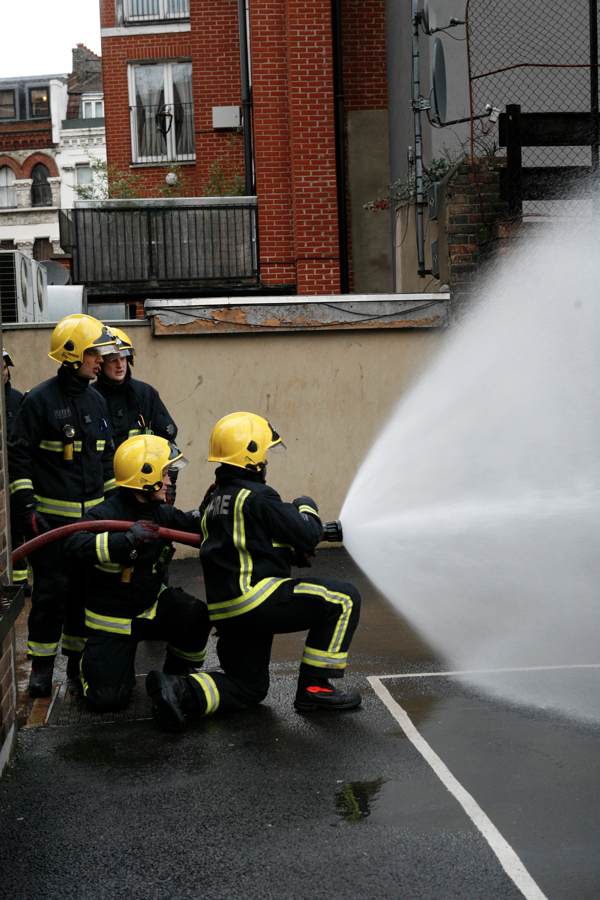
Then we had the opportunity to watch the fire drill as the watch in their yellow and black overalls, swarming like bumble bees, slid the tall aluminium ladder off the engine, extending it to the highest extremity of the tower. We asked some obvious questions, about the whether the fireman’s lift is still practised and enquired about the frequency of cats stuck in trees. “You’re not supposed to carry people down ladders,” we were told, “But, if it needs that, we will.” We learnt that rescuing felines did not take up a great deal of the fightfighters’ time. “How many skeletons of cats do you see in trees?” quipped Dave Smith, speaking with authority after twenty years in the service.
And then a call came in. Tim Dixey waved a slip of paper that reported a mother who had locked herself out of her flat when the wind blew her front door shut, trapping her baby inside.“We all go and we don’t leave anyone behind,” Tim joked, introducing a personal tenet, as he and his fellow firefighters climbed aboard their engine. In a moment, the truck turned into the Farringdon Rd, disappearing into the traffic as the siren faded into the distance, and Colin and I were left standing.

Colin O’Brien’s photograph of firemen at Victoria Dwellings in the nineteen sixties.
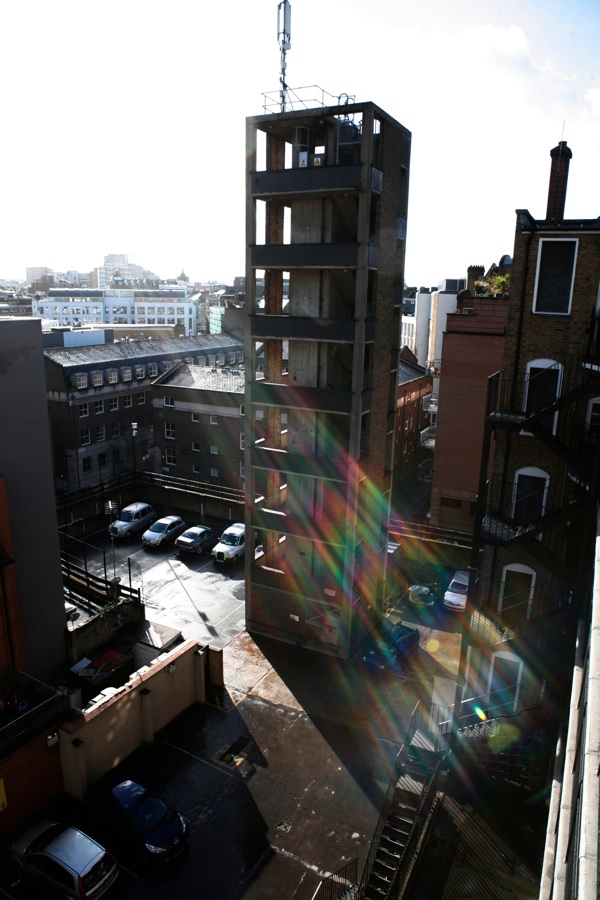
Tower used for firefighting exercises and as a lookout.


Firefighter Craig Wellock, six years in the fire service.
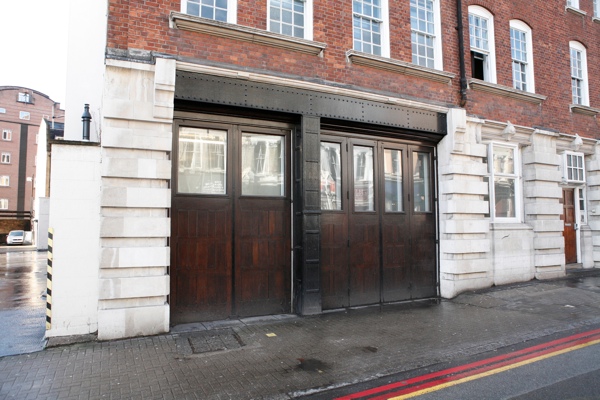
In 1872, the door on the left was for the handcart fire engine and the door on the right for the horse-drawn fire engine.
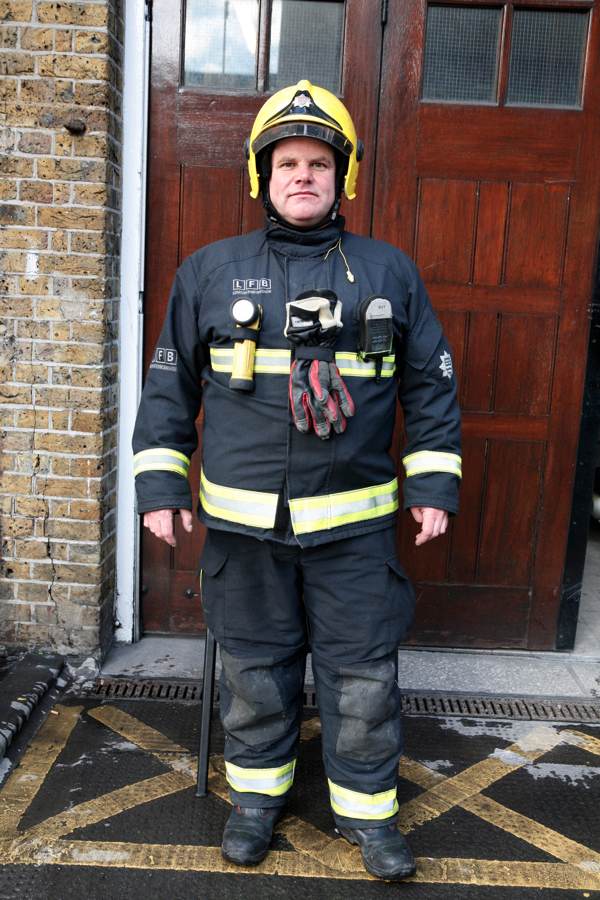
Firefighter Dave Smith, twenty years in the fire service.
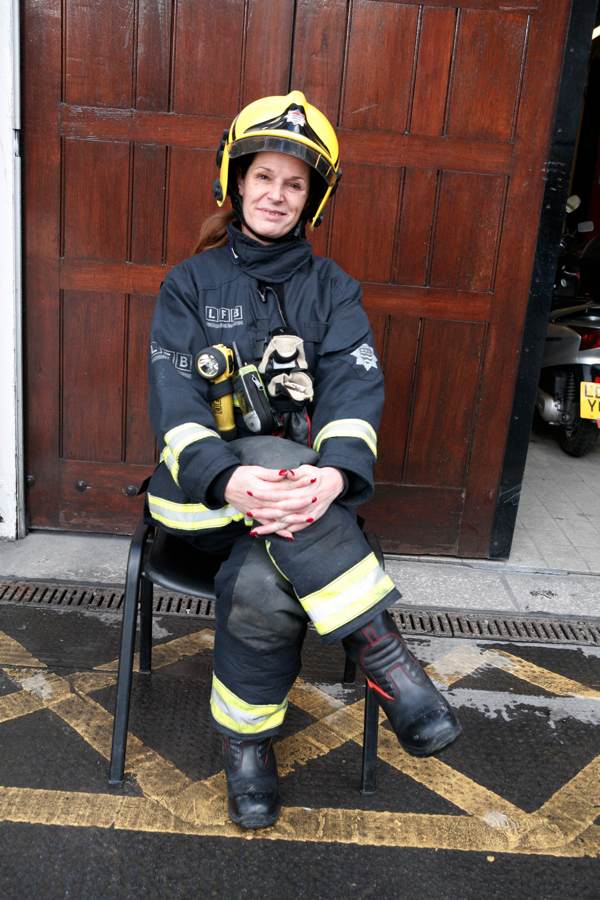
Firefighter Mandy Watts, thirteen years in the fire service.

Wash room from 1872, used by firefighters on their return from duty.

Father and son firefighters, Andy Simkins and Dave White – twenty-six years and six years in the fire service respectively.
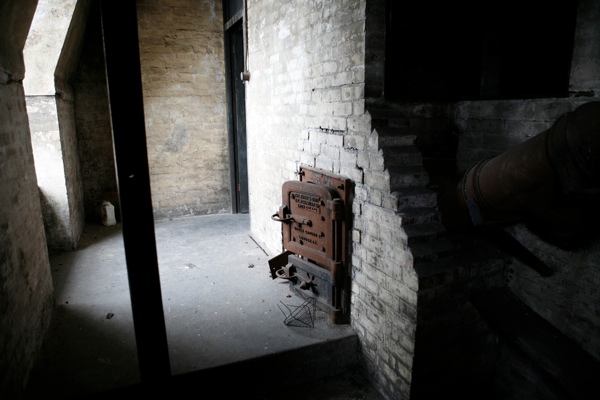
Disused furnace to heat the drying room for wet uniforms, dating from 1872.
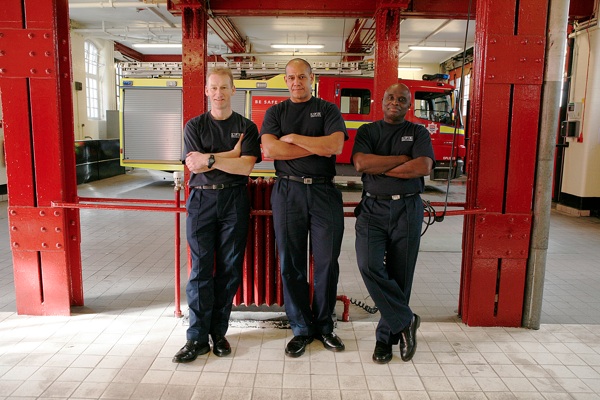
Firefighters Gregg Edwards, Merrick Josephs and Henry Ayanful.

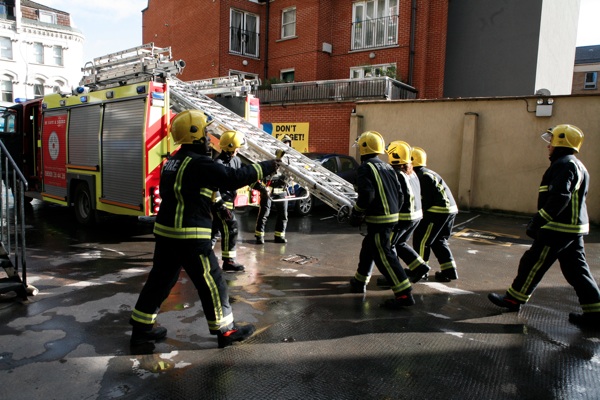

Firefighters Gregg Edwards, Henry Ayanful, Watch Manager Tim Dixey, Firefighters Nasir Jilani and Merrick Josephs.

The change in the brickwork indicates where the station was expanded in the eighteen eighties.

Firefighter Gregg Edwards.

The view from the accommodation floor where firefighters once lived with their families.

Firefighter Henry Ayanful, twenty-one years in the fire service.


Station Manager Steve Gray, twenty-five years in the fire service.
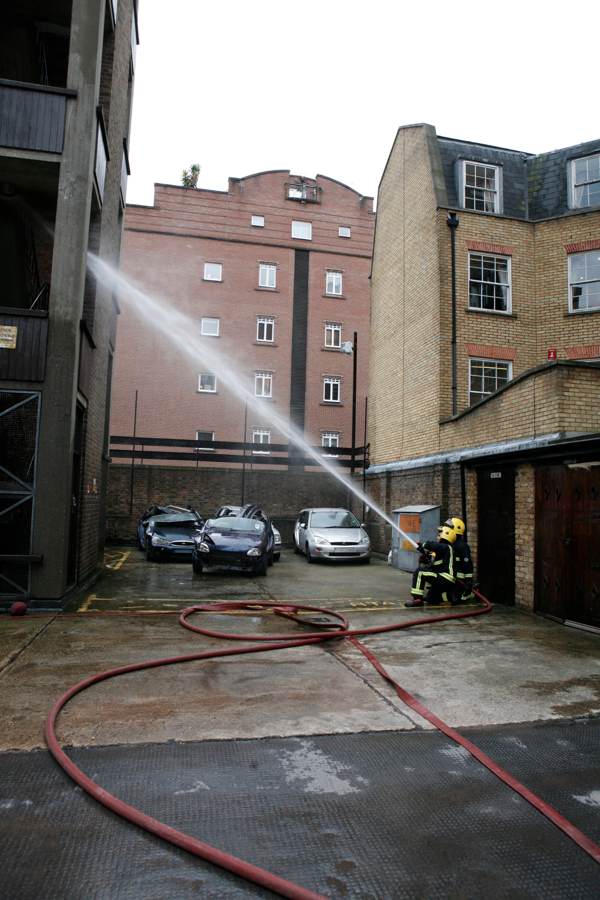
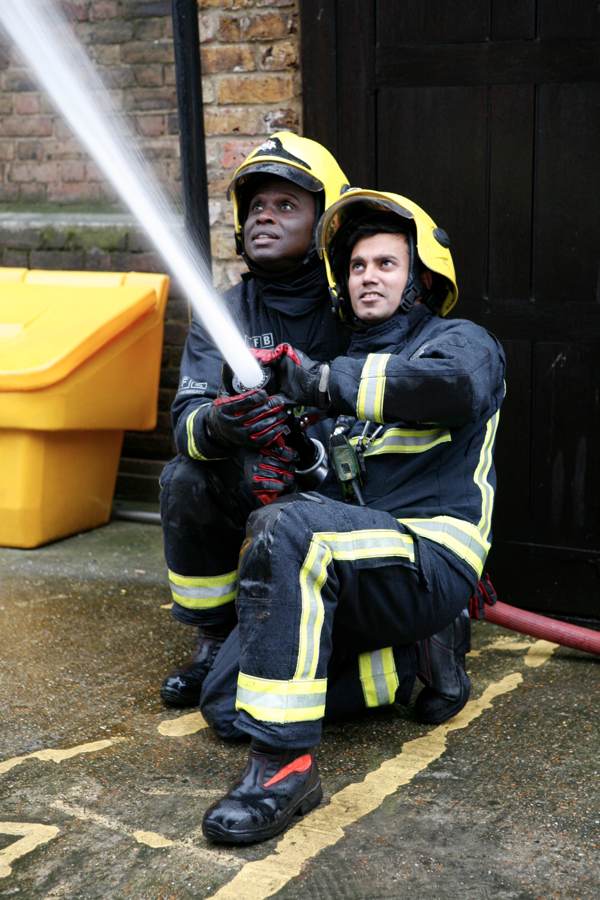


Watch Manager Tim Dixey – twenty-nine years in the fire service, joined at the age of eighteen.

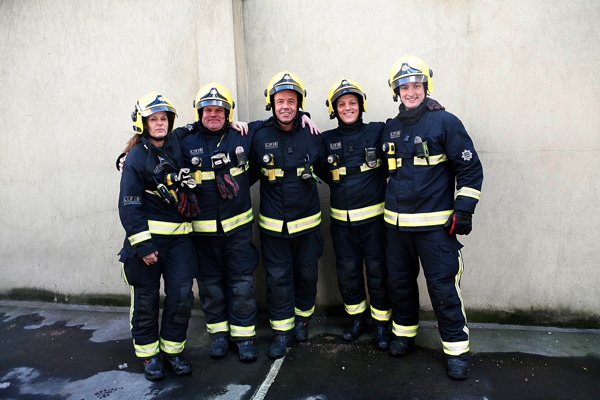
Firefighters Mandy Watts, Dave Smith, Andy Simkins, Dave White and Craig Wellock.
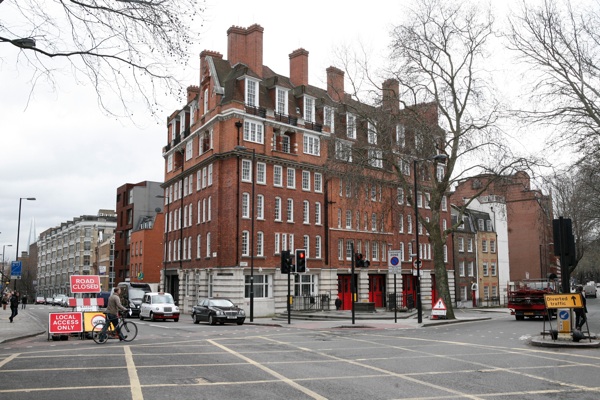
Clerkenwell Fire Station, Britain’s oldest operating fire station.
Photographs copyright © Colin O’Brien
Sign the petition to save Clerkenwell Fire Station here
You may like to look at these other pictures by Colin O’Brien
Colin O’Brien’s Clerkenwell Car Crashes
Colin O’Brien’s Kids on the Street
Travellers’ Children in London Fields
Colin O’Brien’s Brick Lane Market
Cecile Moss of Old Montague St

Cecile aged four
Although Cecile Moss lived in Old Montague St for fourteen years, this is the only photograph taken of her in Spitalfields, and it was taken for a precise purpose. A photographer came round to take it in 1955, the year Cecile arrived from Jamaica aged four years old, and the picture was sent back to her family in the Caribbean as evidence that she was attending a proper Catholic school with a smart uniform and therefore all was well in London. Yet in contrast to the image of middle class respectability which Cecile’s mother strove to maintain, the family lived together in one room in a tenement and the reason there are no other photographs is because they had no money for a camera.
Almost no trace survives today of the Old Montague St that Cecile knew – a busy thoroughfare crowded with diverse life, filled with slum dwelllings, punctuated by a bomb site and a sugar factory, and lined with small shops and cafes. There, long-established Jewish traders sat alongside dodgy coffees bars in which Maltese, Somalis, Caribbeans and others congregated to do illicit business. In fact, Old Montague St offered a rich and stimulating playground to a young child filled with wonder and curiosity, as Cecile was.
The novel presence of black people proved a challenge to many East Enders at that time. “Sometimes, they knotted their handkerchiefs when they saw me,” recalled Cecile with mixed emotion, “and they’d say, ‘If you see a black person that’s good luck.'” Fortunately, Cecile’s mother’s professional status as a teacher proved to be an unexpected boost to Cecile in this new society and later Cecile became a teacher herself, an occupation that she pursues today from her home in New Cross Gate where she lives with her children and grandchildren. “Since the new overground train, I’ve spent a lot more time in the East End and I still have a lot of friends there.” she admitted to me when I visited her last week, “As you grow older, you tend to want to go back to your home.”
“We came to England from Jamaica in 1955, me, my sister Clorine and my mother, Marlene Moss, to Old Montague St in Spitalfields. She left my father and came over to live with her sister, Daisy. I was four years old and I didn’t know I was coming to England, I was traumatised. But I remember what I was wearing, I wore a double-breasted coat with a velvet Peter Pan collar and lace-up shoes. My mother was a teacher in Jamaica and she didn’t want us to look like refugees arriving in England. The voyage lasted ten days and we were met by my uncle at Southampton. It was very confined on the boat so that when I got off, I kept on running around.
We lived in a building where the Spitalfields health centre is today. We were 9b, above a shop where two elderly Jewish sisters lived. My mother cried for days because we had to share one toilet with three other floors, so it was really quite disgusting. I was told that I had come to get a doll. But it was an ugly chalky-skinned blond doll, and I was so angry and upset that I threw it away and smashed it, which made my aunt think I was a very ungrateful little girl. My mother,my sister and I all lived in one room. My sister was eleven and she remained silent, whereas my mum and I just cried a lot. I missed my family in Jamaica.
Because we were Catholics, we went to St Anne’s Catholic church and mother got talking to the priest. He told her she could teach in St Gregory, a Secondary Modern in Wood Close, doing supply work. When she started at the school she was shocked. One of the pupils was absent from the register and they said, ‘He’s gone down for GBH.’ My mother came back and asked my aunt, ‘What is this GBH?’ She said she was going introduce Shakespeare to the school but they said,‘We don’t want you bringing any of your kind of rubbish here!’
I went to St Patrick’s school around the back of St Anne’s and my sister, because she had already passed the eleven-plus, went to Our Lady’s convent in Stamford Hill. Yet I only lasted two weeks at St Patrick’s because the kids hit me and pushed me over. I can’t remember if they called me racist names, but I know I was terribly unhappy. My mother took me away and sent me to Stamford Hill too. I was five years old, and she put me on the 653 bus and told the conductor where to let me off. The people on the bus would look after me and I never missed my stop. I felt safe. So we lived in the East End but we went to school in North London. That was unusual but, because my mother was a teacher, we were middle class, even though we lived in Old Montague St which was a slum. Old Montague St had quite a reputation for drugs. There were dark tenements with dark passages with dark dealings.
When my mum got a permanent job at St Agnes’ school in Bow, she took me away from Our Lady’s at seven years old. So I never went back to school in Spitalfields but I used to play out on the street a lot. Most of the children I played with were second generation Irish with names like Touhy, O’Shea, Latimer and Daley – that’s who I grew up with. There was an older Irish boy who looked out for me, he said I was part of the gang. He told us we mustn’t speak to the people on Brick Lane because they were Jewish. He was looked after by his grandmother. She was a character. Every Saturday night, she went to the pub on the corner of Chicksand St and filled a jug with port or whatever and stumbled back singing, ‘Daisy, Daisy give me your answer do.’ And my mother cried and said, ‘Look what we have come down to.’ One day, the old lady, she tied a skipping rope across the street to stop the traffic so that we could play. When the police came along, she said, ‘The children have got nowhere to play.’ And we were all shocked, but later they opened a playground on the corner of Old Montague St and Vallance Rd.
I loved going to Petticoat Lane. Every Friday, my aunt would go and get a chicken – you could choose one and they would kill it for you. There were street entertainers, an organ grinder and man who lay on a bed of hot coals. Walking up Wentworth St, there were all Jewish shops with barrels of pickles and olives outside. I was fascinated but my mother said, ‘That’s not our food.’ A lot of the stallholders were quite friendly to me and my mother because they thought we were the next wave of immigrants. There was a cafe I walked past with my mum, it was full of black-skinned men but I couldn’t understand what they were saying even though they were like us. They were Somalis. The men outside, they’d give me sixpence and put me on their knee. They liked to see me because they were away from their own children. I think we were some of the first West Indians here, there were no other black kids.
I spent a lot of time in the fleapit cinema on Brick Lane on Saturdays. But by the time I turned seven, my mum stopped me playing out. She forbade me, so my wanderings around Spitalfields stopped and I don’t mix with the kids on the street anymore. Instead I became more friendly with the kids I was at school with in Bow.
My aunt Daisy went back to Jamaica and my sister returned when she was eighteen. So it was just me and my mum in the end. We shared a bedroom and we had a sitting room, with the kitchen in the hallway. I was very embarrassed about where I lived and I didn’t bring friends home because it was a slum. All this time, my mother was not divorced, she was still married and it really held her back. She even had to ask a friend to his name down for her to be able to buy a television.
There was a hardware shop and other shops run by Jewish people, where they got on well with my mother. There was a bit of snobbishness because she was a teacher. It used to cushion me too, I was Mrs Moss’ daughter. When she complained, they used to say to her, ‘Never mind, we had it, now it’s your turn.’ Referring the racial prejudice, they meant it was something you put up with, then it would pass. And by the time I left Spitalfields, it was the Bengalis coming in, so it was quite profound what they said – it was a rite of passage at that time.
When I was eighteen, we moved out. Looking back on it, I’ve got to say it was a happy time. I knew when I’d forgotten Jamaica and made my transition to England. I played a lot on the stairs and I pretended to have a ‘post office’ there. One day my mother was there too, washing some clothes on the landing and she corrected my speech. ‘It’s not ‘spag-ETTEE,” she said, ‘It’s ‘spaghetti” And, I realised then, that was because I’d left Jamaica behind and I spoke Cockney.
Today I often teach immigrants, children for whom English is their second language, and I can say to them, ‘I know what you are going through.'”

Old Montague St 1965 by Geoffrey Fletcher


Cecile Moss
Working People & a Dog
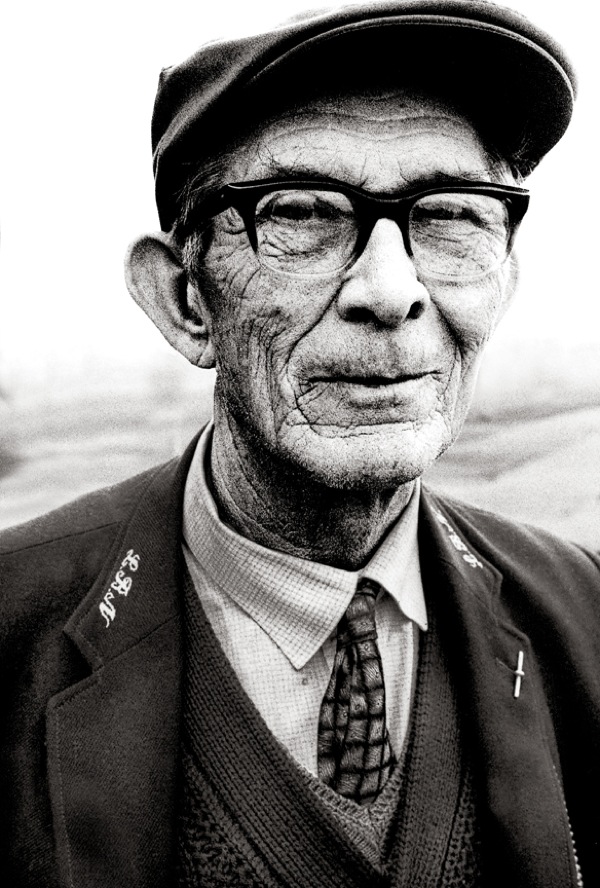
Groundsman, E.15 (1965)
“This is the groundsman at the Memorial Ground where I played football aged ten in 1954.”
Some of my favourite people are the shopkeepers and those that do the small trades – who between them have contributed the major part to the identity of the East End over the years. And when I see their old premises redeveloped, I often think in regret, “I wish someone had gone round and taken portraits of these people who carried the spirit of the place.” So you can imagine my delight and gratitude to see this splendid set of photos and discover that during the sixties photographer John Claridge had the insight to take such pictures, exactly as I had hoped.
When John went back ten years later to the pitch near West Ham Station where he played football as a child, he found the groundsman was just as he remembered, with his cardigan and tie, and he took the photograph you see above. There is a dignified modesty to this fine portrait – a quality shared by all of those published here – expressed through a relaxed demeanour.
These subjects present themselves to John’s lens as emotionally open yet retaining possession of themselves, and this translates into a vital relationship with the viewer. To each of these people, John was one of their own kind and they were comfortable being photographed by him. And, thanks to the humanity of John’s vision, we have the privilege to become party to this intimacy today.

Kosher Butcher, E2 (1962) – “The chicken was none too happy!”

Brewery, Spitalfields (1964) Clocking in at the Truman Brewery, Brick Lane.
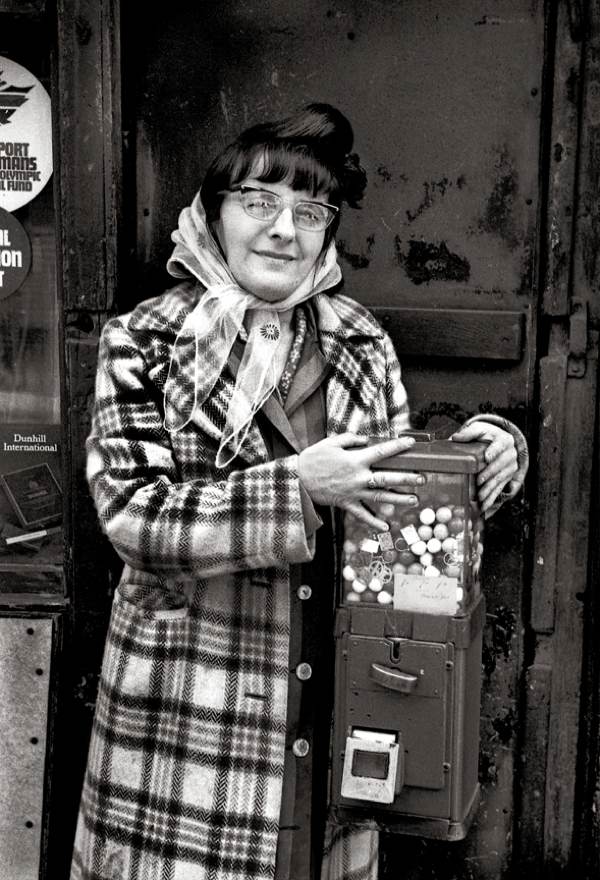
Lady with Gumball Machine, Spitalfields (1967) – “She came out of her kiosk and asked, ‘Will you photograph me with my gumball machine?'”

Saveloy Stall, Spitalfields (1967) – “It was a cold day, so I had two hot dogs.”

Whitechapel Bell Foundry, E1 (1982) Established in 1598, where the Liberty Bell and Big Ben were cast.
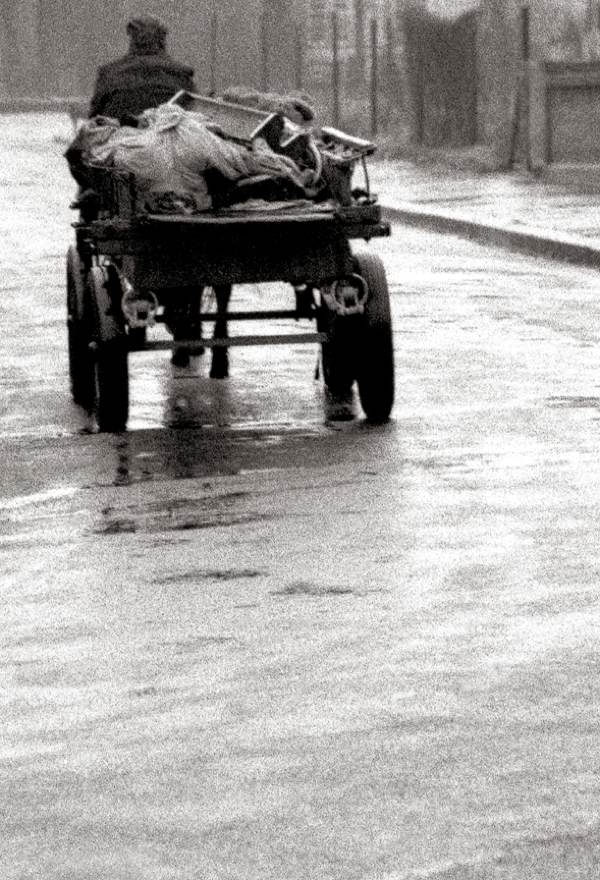
Rag & Bone Man, E13 (1961) – “Down my street in Plaistow, there were not many cars about – all you could hear was the clip-clop of the horse on the wet road.”
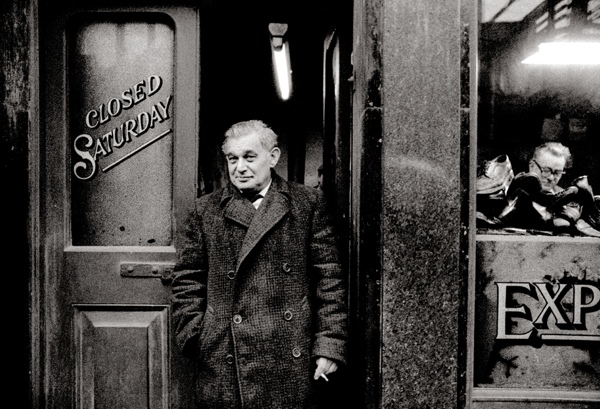
Shoe Repairs Closed Saturday, Spitalfields (1969) – “I asked, ‘Why are you open on Saturday?’ He replied, ‘I was just busy.'”

Spice, E1 (1976) – “Taken at a spice warehouse in Wapping. The smells were fantastic, you could smell it down the street.”

Portrait, Spitalfields (1966) – “This is a group portrait of friends outside of their shop. The two brothers who ran the shop, the lady who worked round the corner and the guy who worked in the back.”

Anglo Pak Muslim Butcher, E2 (1962)

Butchers, Spitalfields (1966) -“I had just finished taking a picture next door, when this lady came out with a joint of meat and asked me to take her photograph with it.”

Fishmongers, E1 (1966) Early morning, unloading fish from Grimsby.

Beigel Baker, E2 (1967) -“After a party at about four or five in the morning, we used to end up at Rinkoff’s in Vallance Rd for smoked salmon beigels.”

Newsagent, Spitalfields (1966) -“I said, ‘Shame about Walt Disney dying, can I take your picture next to it?’ and he said, ‘Alright.'”

Selling Shoes, Spitafields (1963) – “My dad used to tell me what his dad told him, ‘If you’ve got a good pair of shoes, you own the world.'”

Strudel, E2 (1962) – “You’ll like this, boy!’ I had just taken a photograph outside this lady’s shop. I said, ‘I think your window looks beautiful.’ and she asked me in for a slice of apple strudel. It was fantastic! But she would not accept any money, it was a gift. She said, ‘You took a picture of my shop.'”

Number 92, Spitalfields (1964)

Tubby Isaac’s, Spitalfields (1982) – “Aaahhh Tubby’s, where I’ve had many a fine eel.”

Junkyard Dog, E16 (1982) – “I was climbing over the wall into this junkyard. All was quiet, when I noticed this pair of forbidding eyes – then I made my exit.”
Photographs copyright © John Claridge
You may also like to take a look at
Along the Thames with John Claridge
At the Salvation Army with John Claridge












