The Many Spoons Of Barn The Spoon
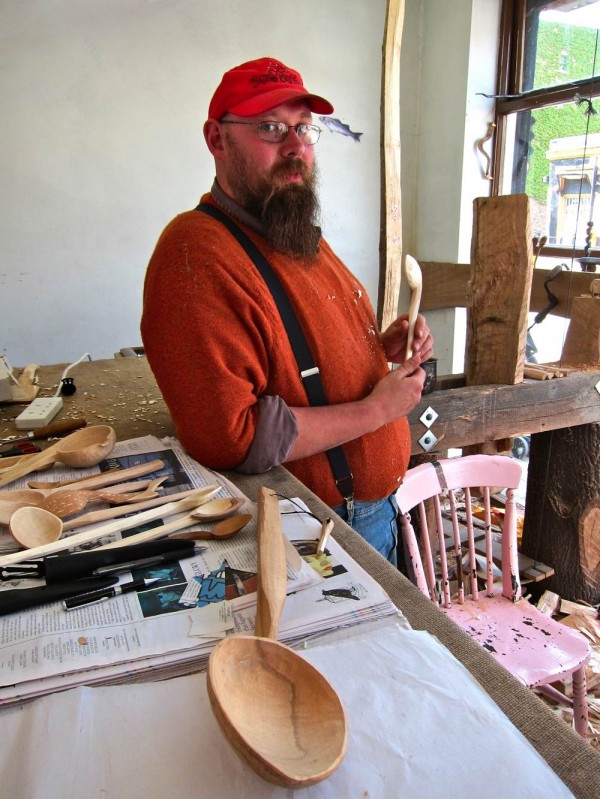
Eighteen months after he opened his shop, I paid a call upon my good friend Barnaby Carder, widely known as Barn the Spoon, in the Hackney Rd last week to see how he was getting along – and I was delighted to discover him in high spirits and learn that the spoon business is booming. “I feel there’s no turning back,” he admitted to me, speaking as he whittled furiously while surrounded by wood chips, “I’m more in love with making spoons than ever.”
“Things are going brilliantly,” he continued, “Spoonfest, my international festival of spoon-carving in Edale is sold out, I’m teaching spoon carving at Tate Britain in July and I’m giving a lecture on making a living from craft at the Pitt Rivers Museum. It’s all going on!” Such is the rise of the one with the uncontested claim to be Britain’s top spoon carver.
Around us were scattered diverse spoons of all shapes and sizes, comprising the evidence of Barn’s ceaseless labour and exuberant creativity in spoon-carving – every one a masterpiece of its kind. Taking an example of each in hand, I asked him to explain to me their form and function – and below you can see prized specimens of the many spoons of Barn the Spoon.

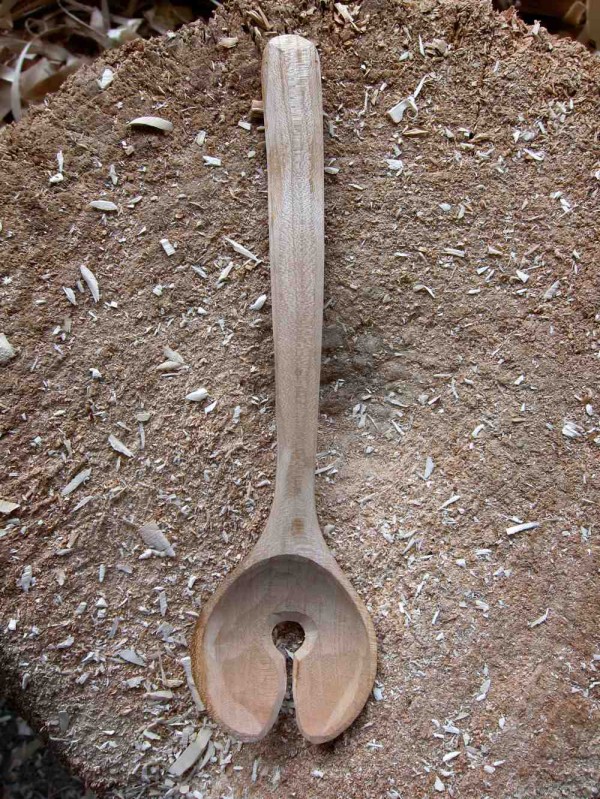
“It’s not a fork, it’s a straining spoon for wet stuff like salad”
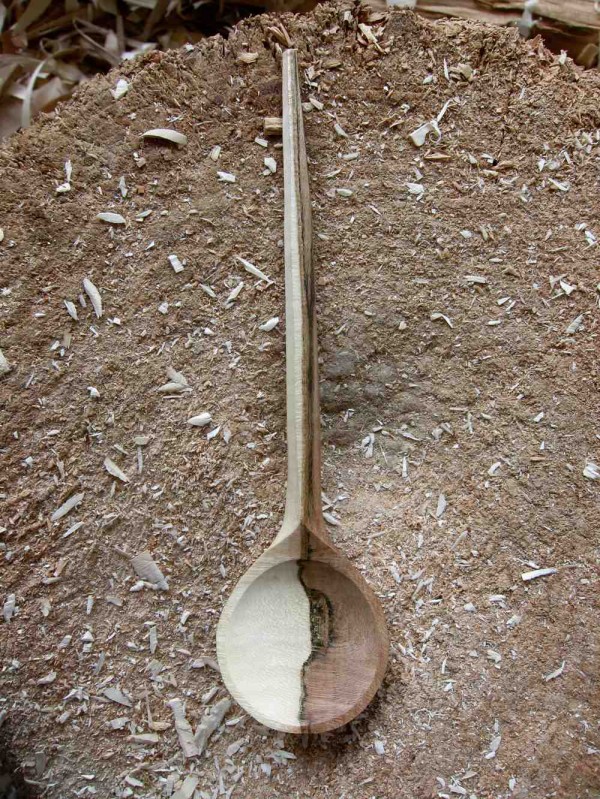
“Based on a medieval eating spoon from the Museum of London in Sycamore with a mineral stain”
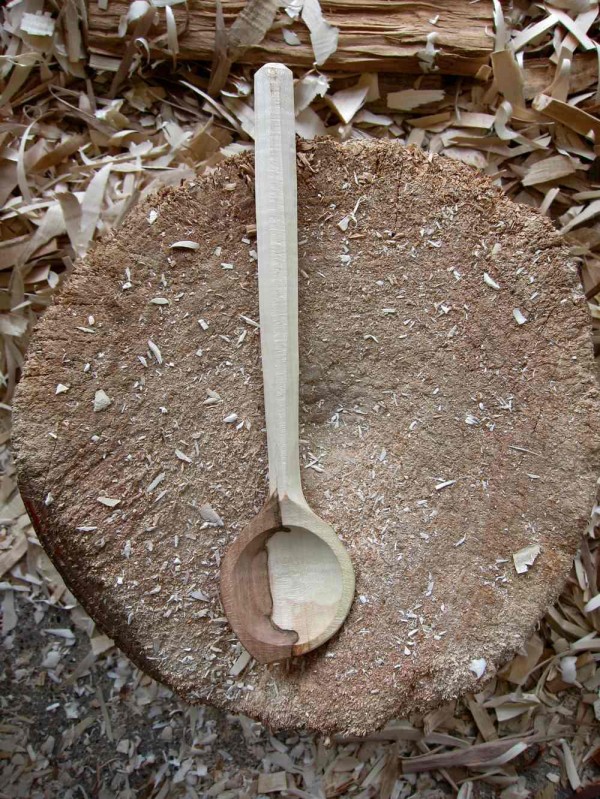
“A Sycamore cooking spoon with a mineral stain, shaped so you can scrape the dish”
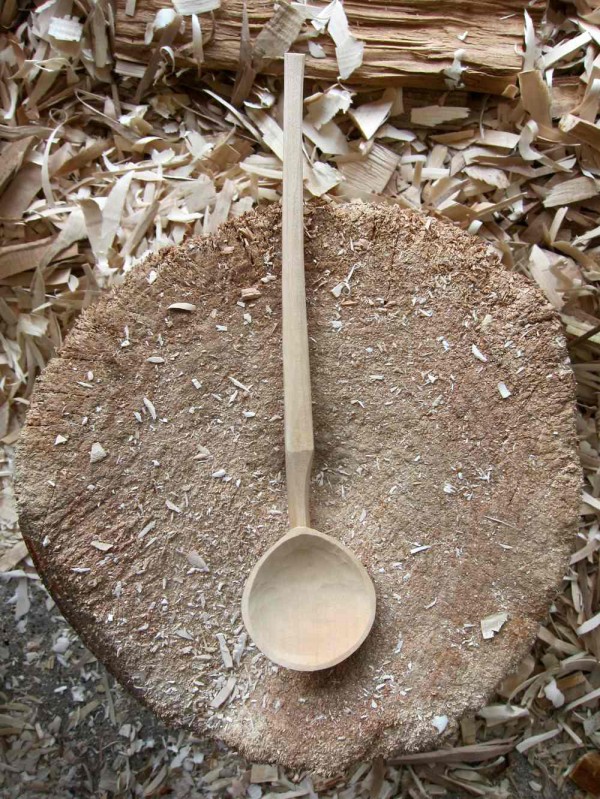
“Long-handled soup spoon in Birch”
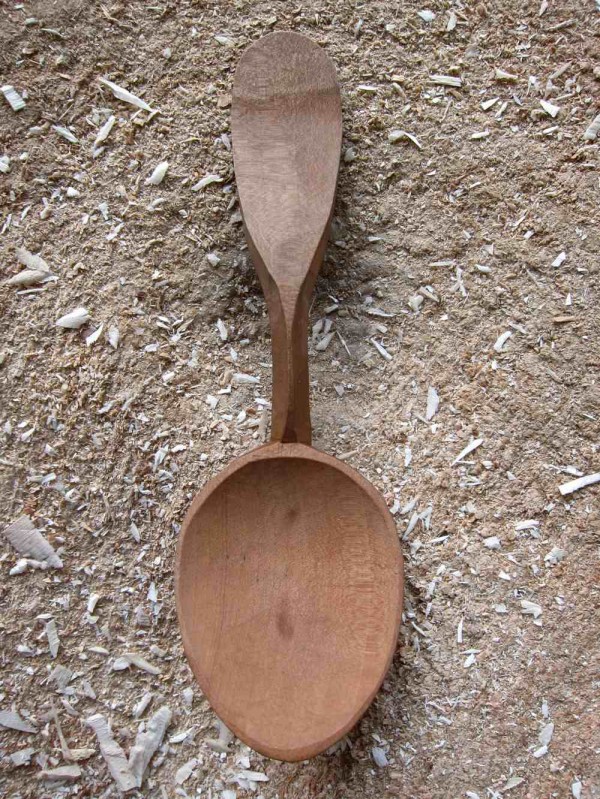
“A Hawthorn eating spoon with a thumb grip that makes it very functional”

“This tea caddy spoon in Cherry wood is the perfect measure for two cups of tea”
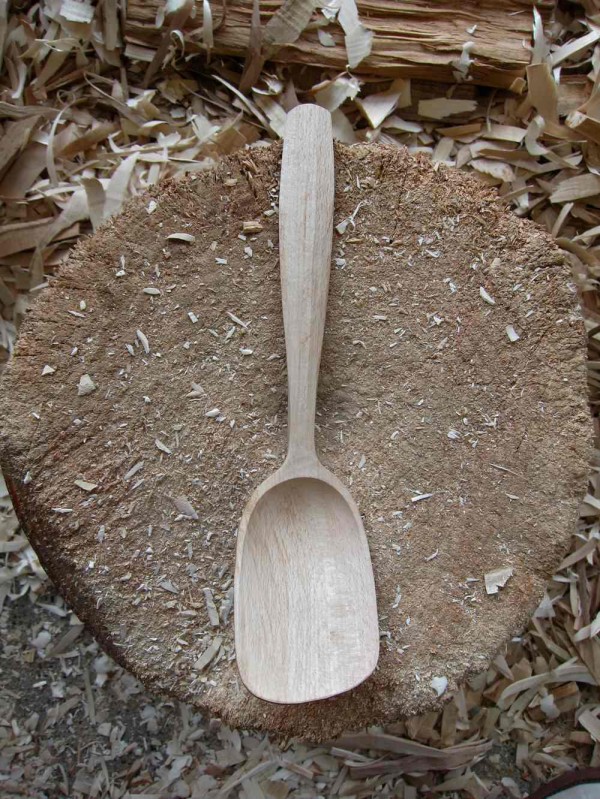
“Assymetric cooking spoon in Sycamore, shaped so you can cook and serve with it.”
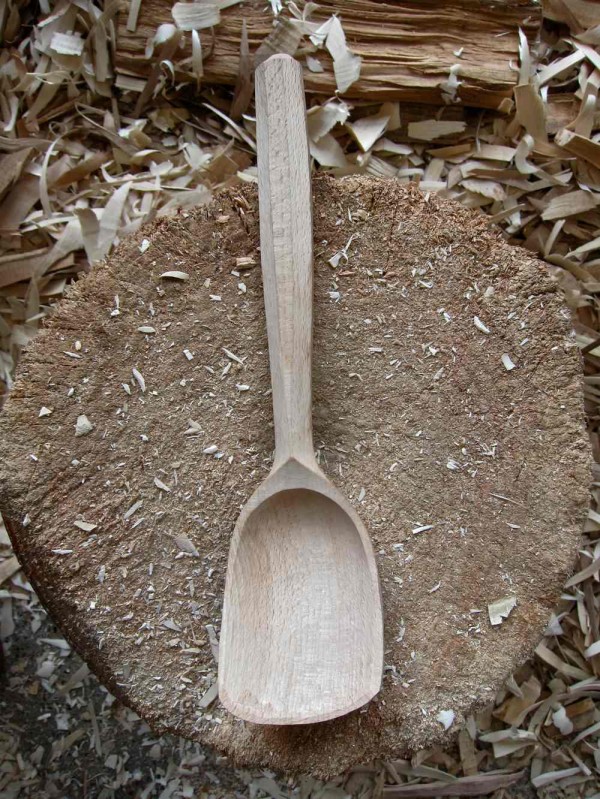
“Assymetric cooking spoon in Beech, carved from a bent branch so the grain follows the direction of the shovel so it’s stronger and won’t split”
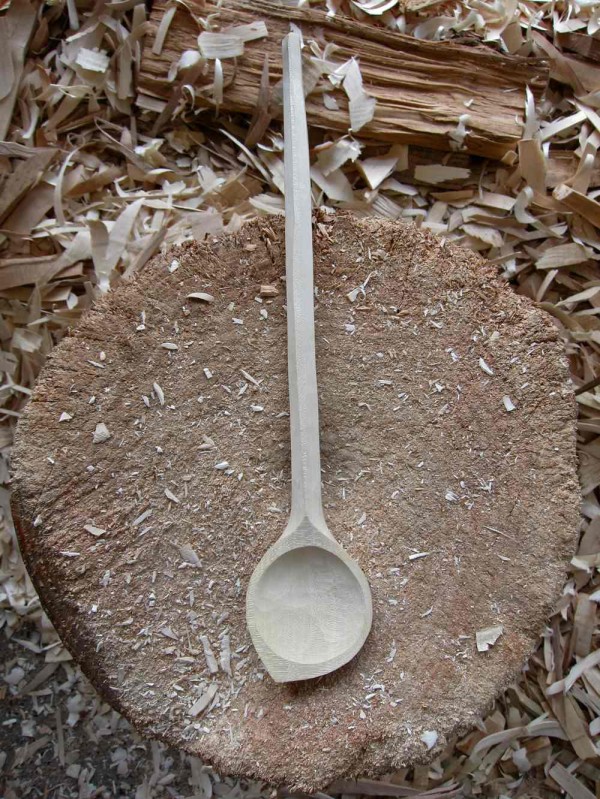
“Another cooking spoon in a medieval design with a tapering handle in Sycamore”
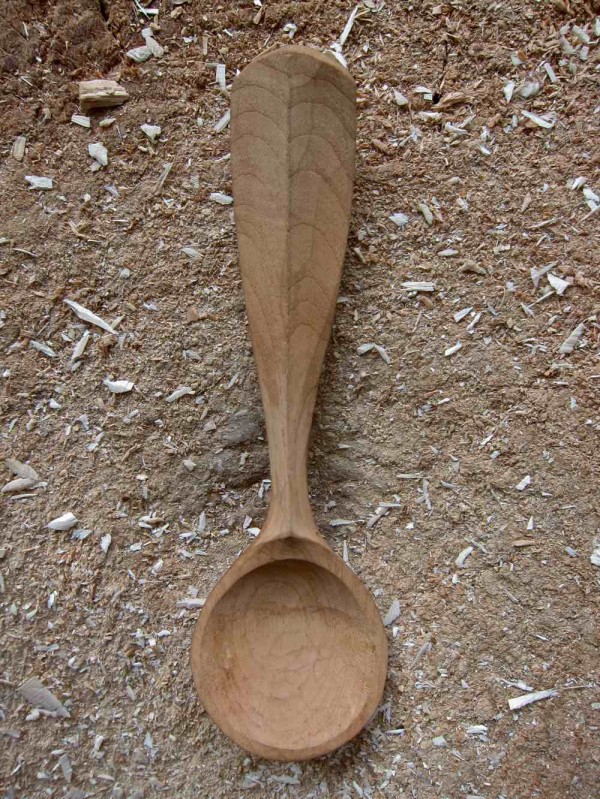
“A little sugar spoon in Cherry wood”
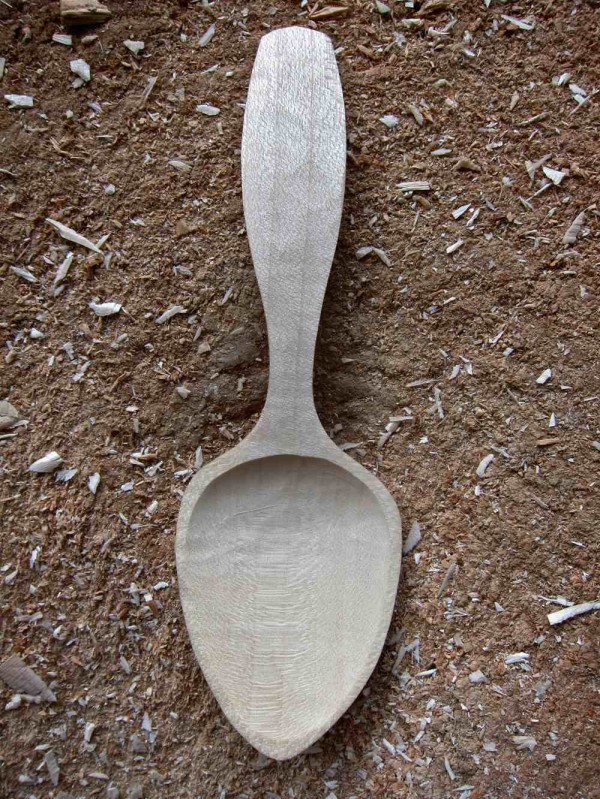
“A child’s eating spoon in Sycamore”
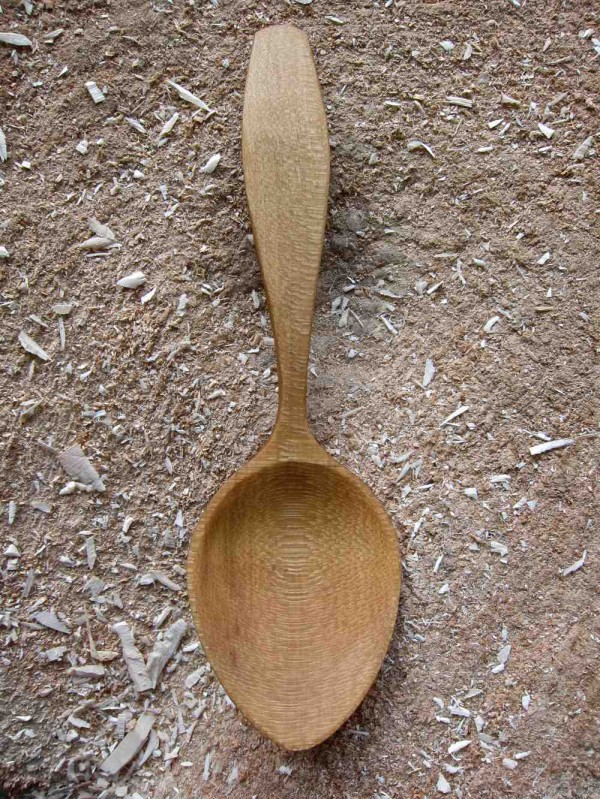
“This Sycamore spoon oiled with linseed oil was inspired by the Swedish style, as taught to me by Jared Stonedahl”
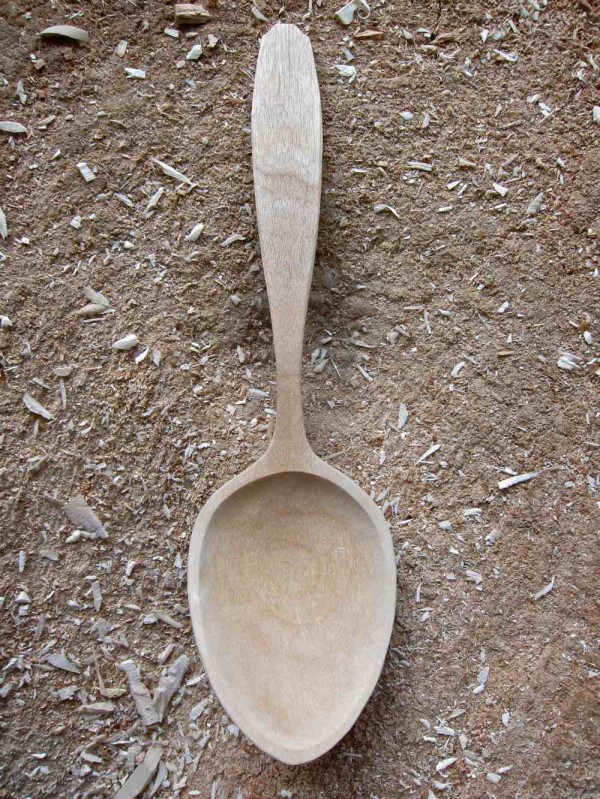
“This is a similar spoon in the Swedish style in Birch. You can see the rings in the bowl, that’s because it’s made from a split branch, cut in the opposite direction to the grain, so you can carve the bowl down into the pith.”
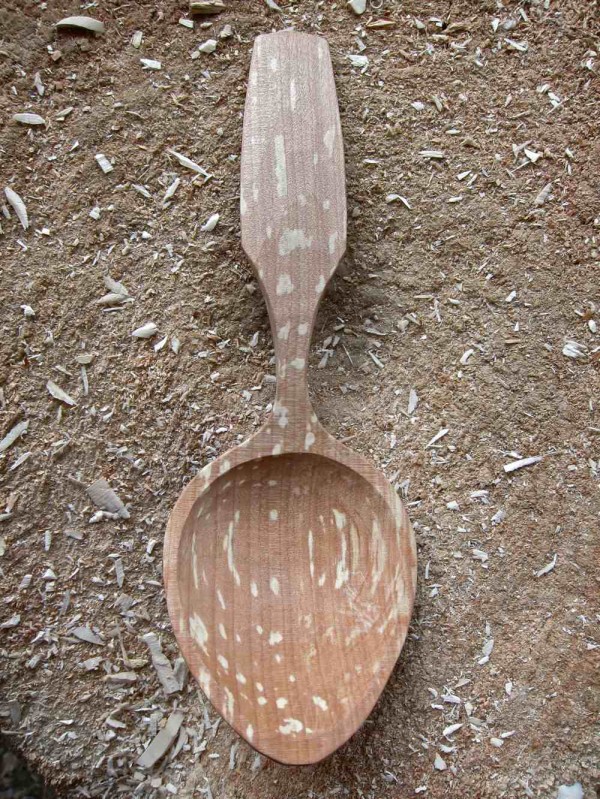
“Another Swedish style spoon, this time in spalted Alder – the fleck in the wood is created by a fungus”
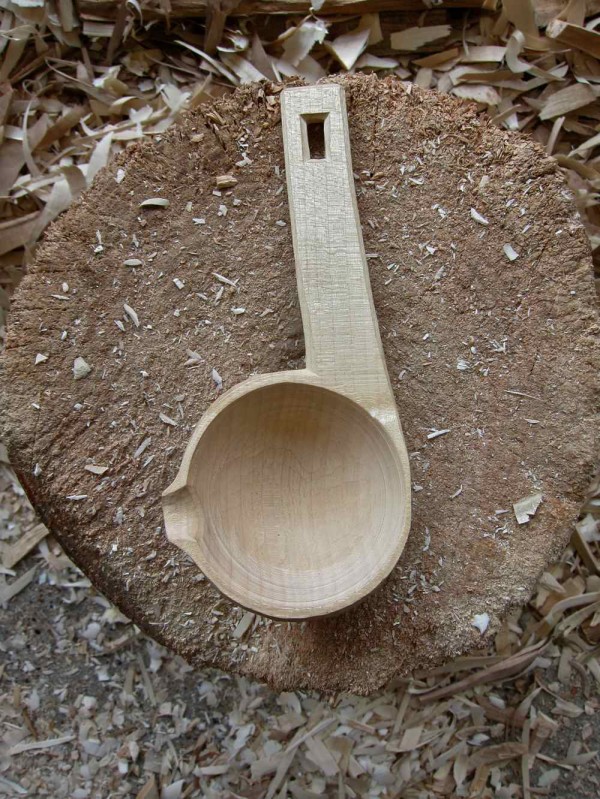
“A left-handed pouring ladle based on a Roman example in the Museum of London”
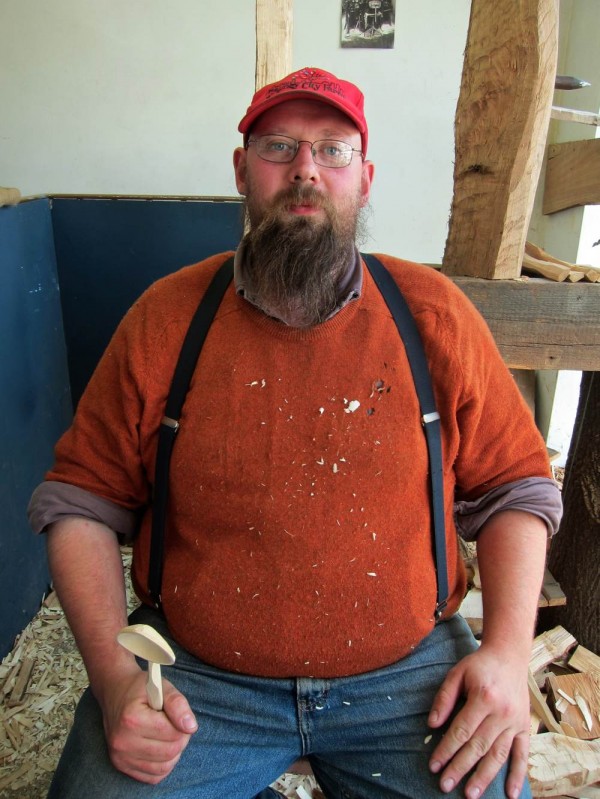
Barn the Spoon, 260 Hackney Rd, E2 7SJ. (10am-5pm, Friday-Sunday)
You might also like to read
Barn the Spoon at Bow Cemetery
Adverts From Shoreditch Borough Guide
The London of Borough of Shoreditch existed from 1899 until 1965. Yet although it ceased to be a political entity long ago, thanks to the official guides preserved in the Bishopsgate Institute, we may do our Saturday shopping there – especially if we are in line for some quality cabinet-making, upholstery or bedding.





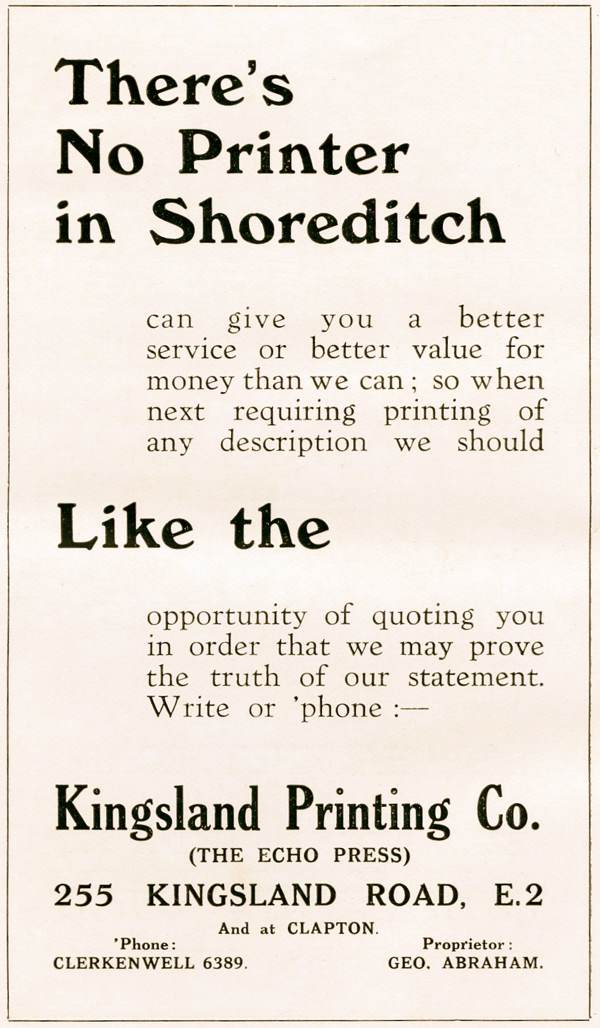


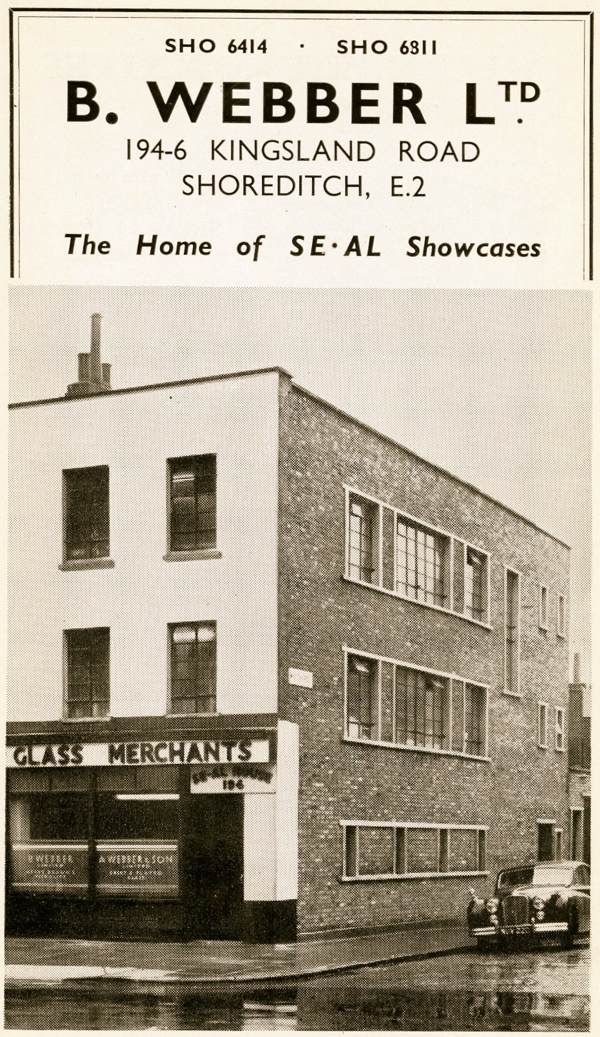



Images courtesy Bishopsgate Institute
You might also like to take a look at
Women’s Day At The Whitechapel Mission

Friday is Women’s Day at the Whitechapel Mission and, after our first visit to the Mission on Easter Tuesday, Photographer Colin O’Brien and I were honoured to be invited back to join the happy gathering last week.
A long line was already assembling in the street even before the door opened at midday, when the crowd poured in to the canteen eager for pie and mash and custard trifle, and the weekly companionship of females that is on offer here. Josephine from Poplar is always first in the line and she had been waiting on the pavement since ten o’clock in excited anticipation of this event which forms the climax of her week. As Sue Miller, the Day Centre Manager explained to me, “This is where you can be who you are and no-one will judge you.”
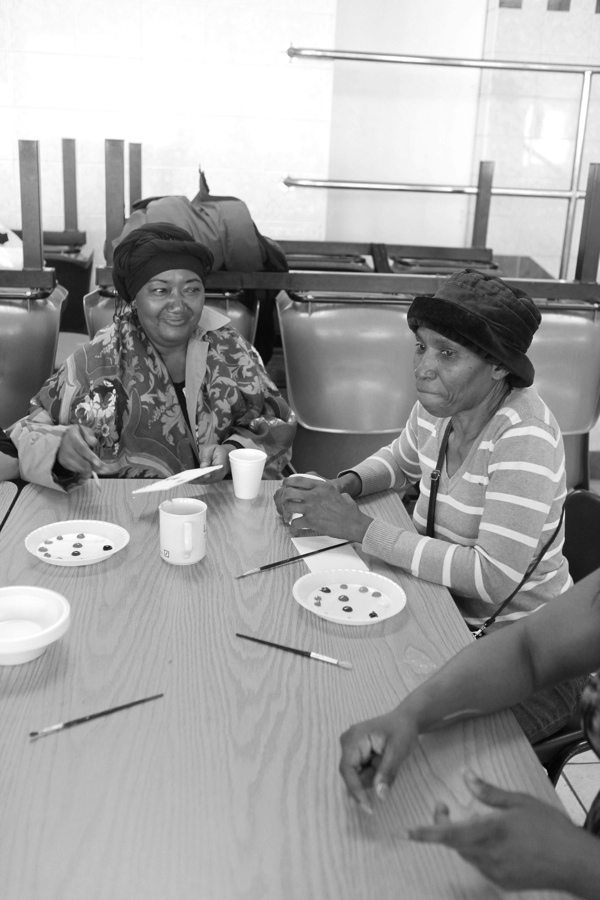
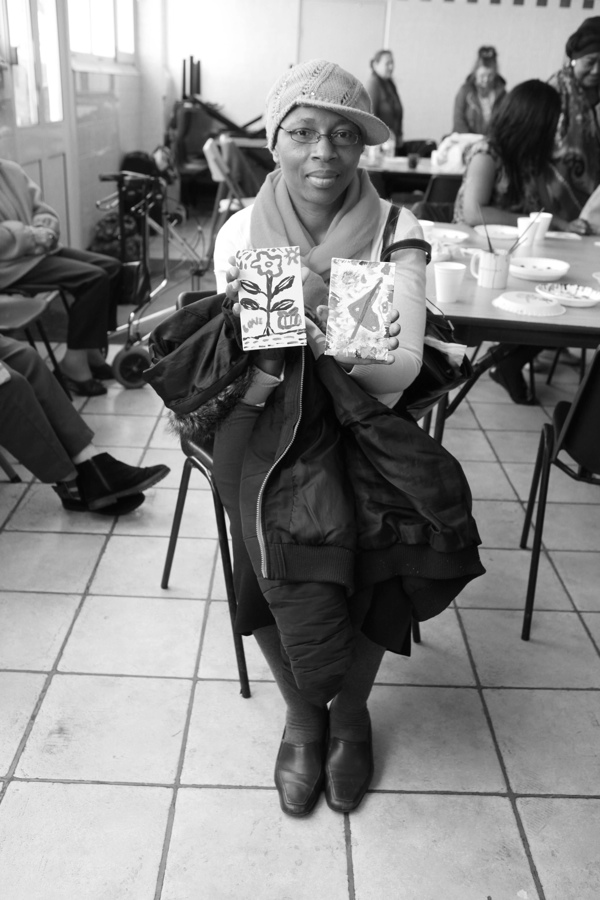
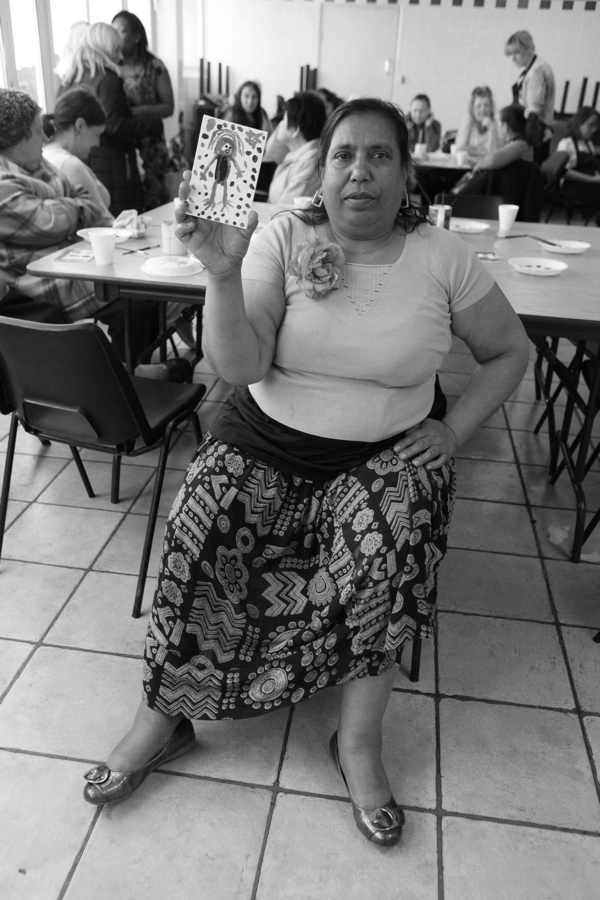
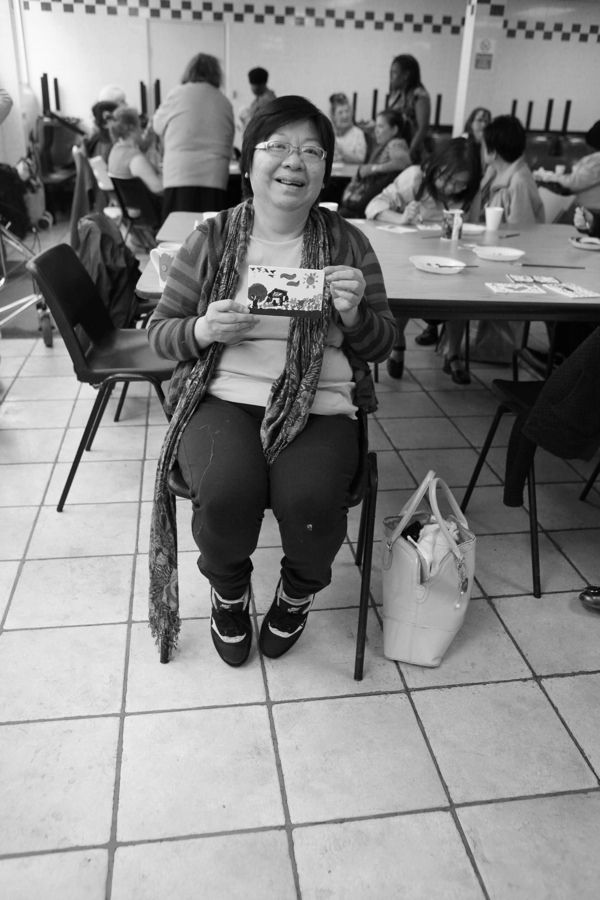
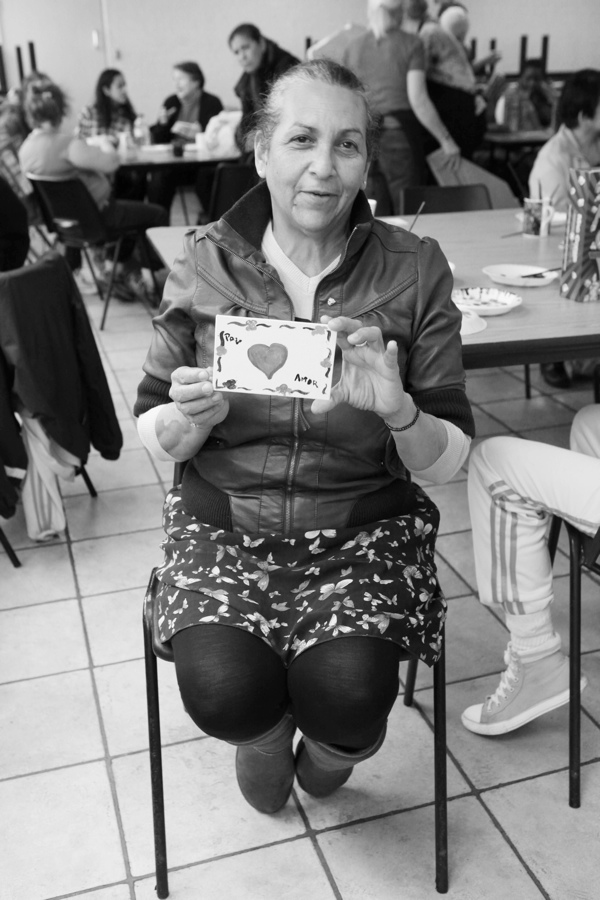
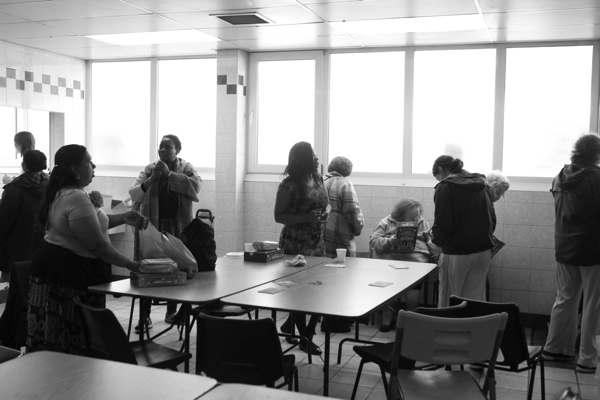
Settling down to lunch, the women sought out their friends and companions, and an atmosphere of quiet expectation filled the room once the plates were cleared away. Each week, there is a different activity, ranging from pampering- including facials, pedicure and massage – to cooking and styling. This week, Sue distributed tiny canvasses the size of postcards along with brushes and paints, outlining the brief to create a picture upon the theme of ‘new beginnings.’
You might think such an occupation would be dismissed as trivial by this group of street-smart worldly-wise women, yet a quiet descended upon the room as some serious contemplation took place with bitings of lips and scratchings of heads. So many decisions were required. Beyond the frosted glass panels, Whitechapel receded for an hour and joyful creative endeavour prevailed.
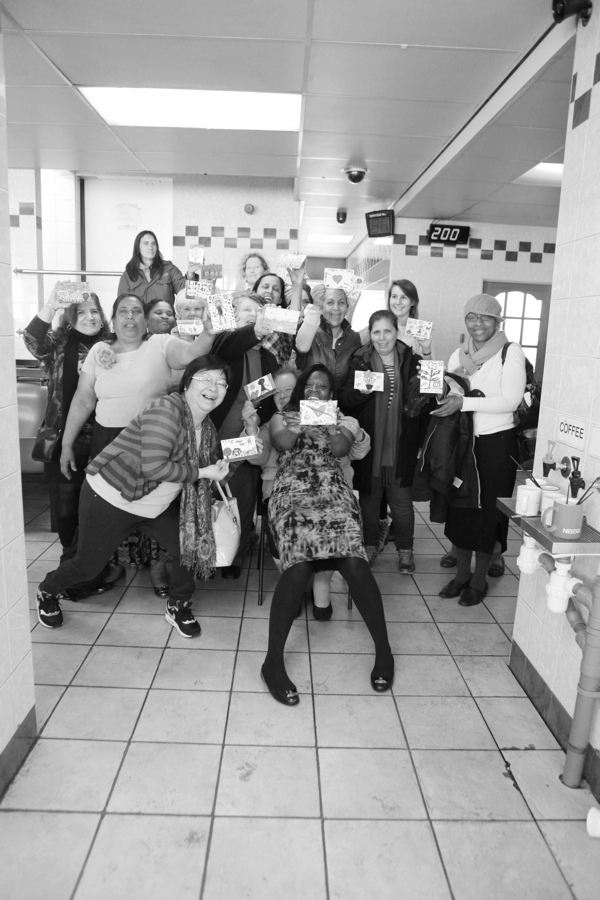
Once the pictures had been conjured into existence, Colin took portraits of the proud creators and their works, and a sense of collective euphoria erupted at the group photo. But then it was time for the ritual distribution of modest gifts that is the culmination of the afternoon and, clutching boxes of popcorn, the women filed reluctantly out into the street to face to challenges of life again.
Cheerful farewells counteracted the sadness of departure, qualified by brave calls of “See you next week!”

“We’re sisters from Whitechapel, we’ve been coming here for thirty-five years”

Sue, Day Centre Manager, explains the art project
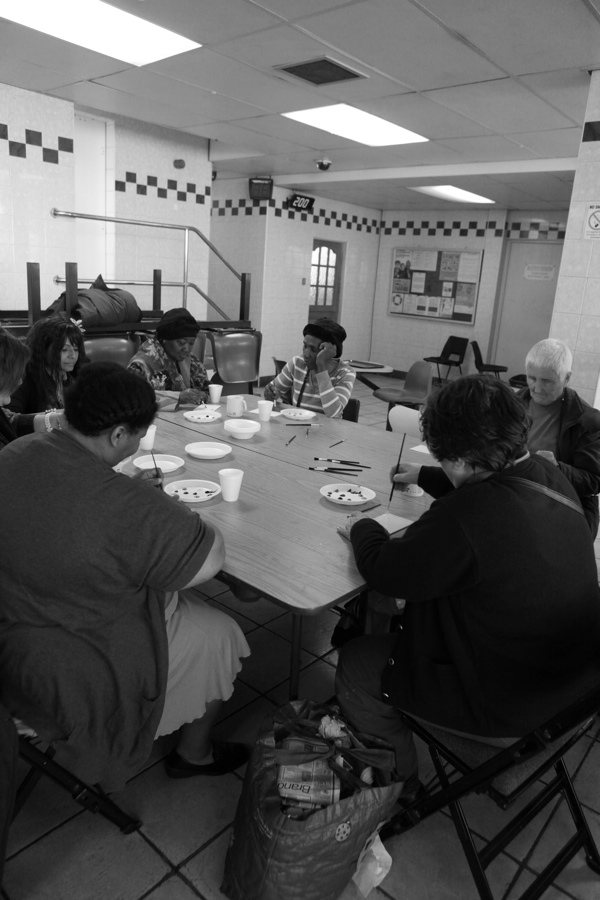






Time to leave


“See you next week!”
Photographs copyright © Colin O’Brien
Click here to learn more about The Whitechapel Mission
You may also like to read about
Janet Brooke’s City Churches
Christ Church Spitalfields
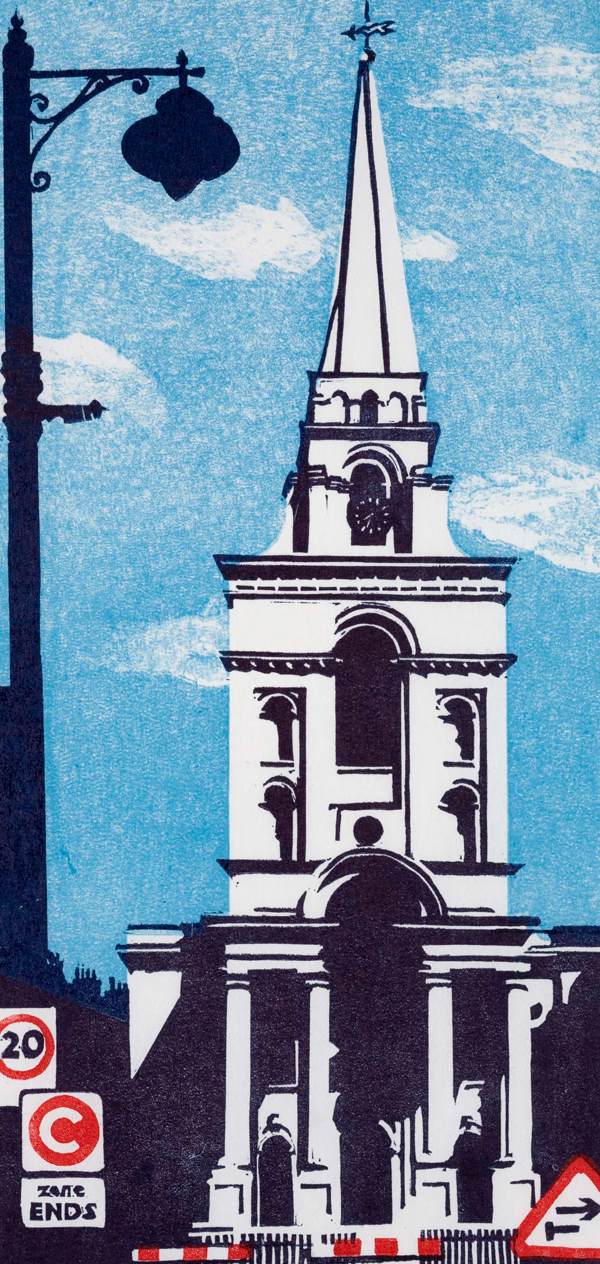
Knowing how much I love the City Churches, Janet Brooke sent me this breathtaking series of linocuts portraying some favourite examples. “Each design is carved into a piece of lino and printed on my Imperial Press which was built in 1832 in Curtain Rd, Shoreditch,” Janet explained, “I cut separate blocks for each colour which have to be carefully registered to fit together.”
I was thrilled by such an ambitious use of a modest technique which – in Janet’s hands – is ideally suited to the dramatic architectural geometry of these magnificent structures. “I am fascinated by the way these buildings, which were once high points of the City, are now hidden amidst the landscape of contemporary London,” Janet admitted to me.
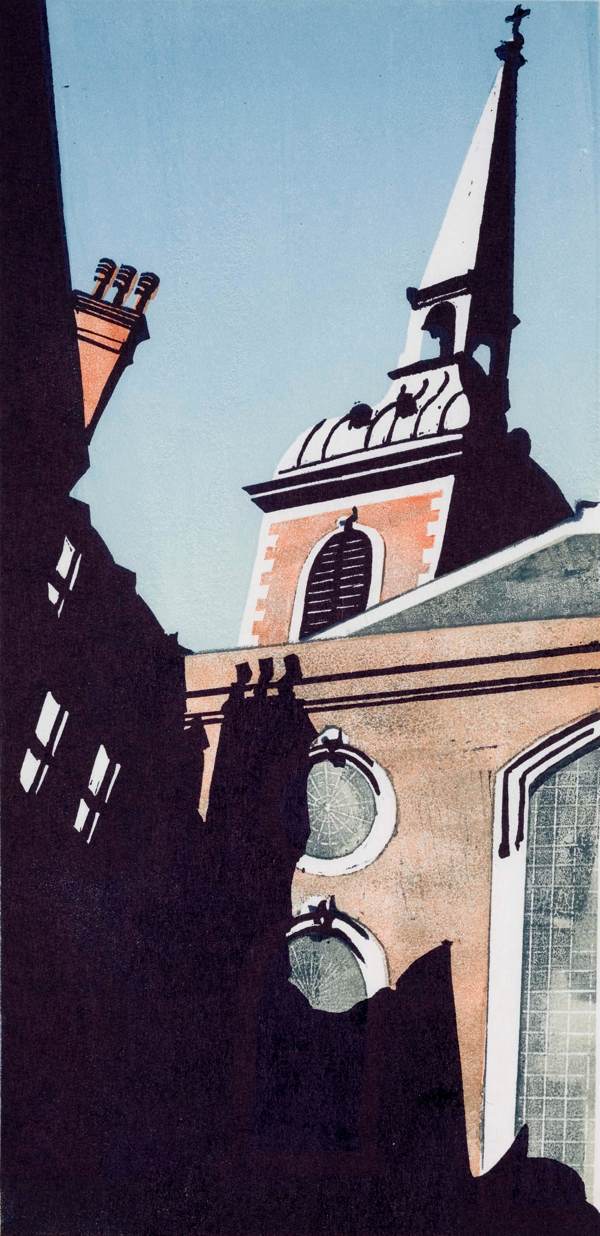
St Mary Abchurch
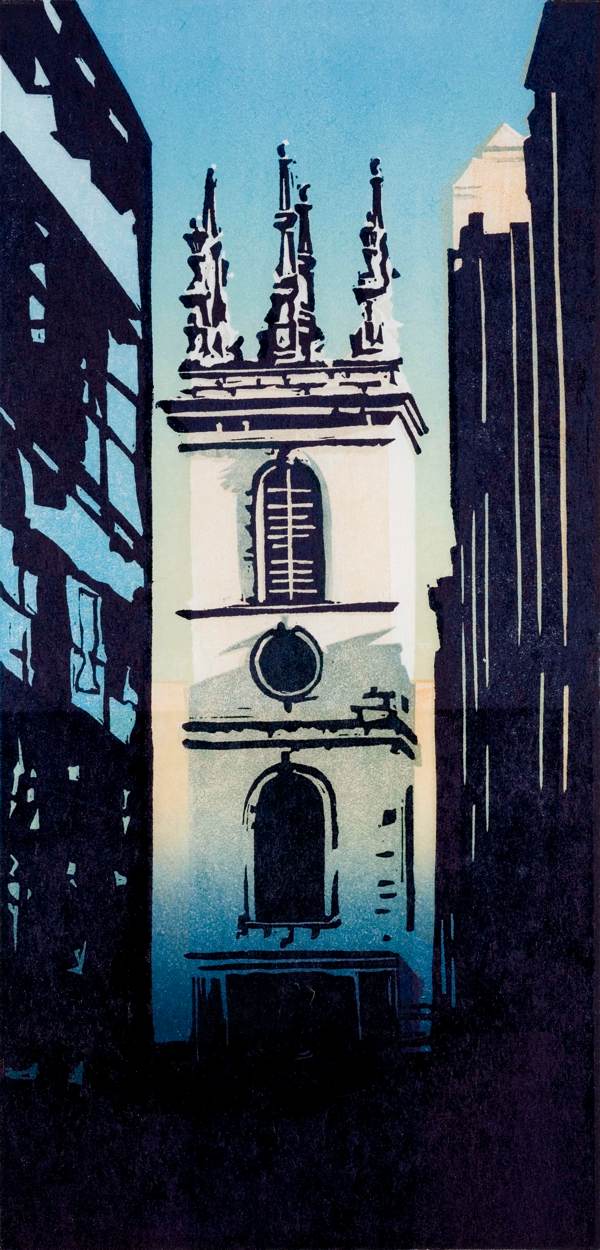
St Mary Somerset
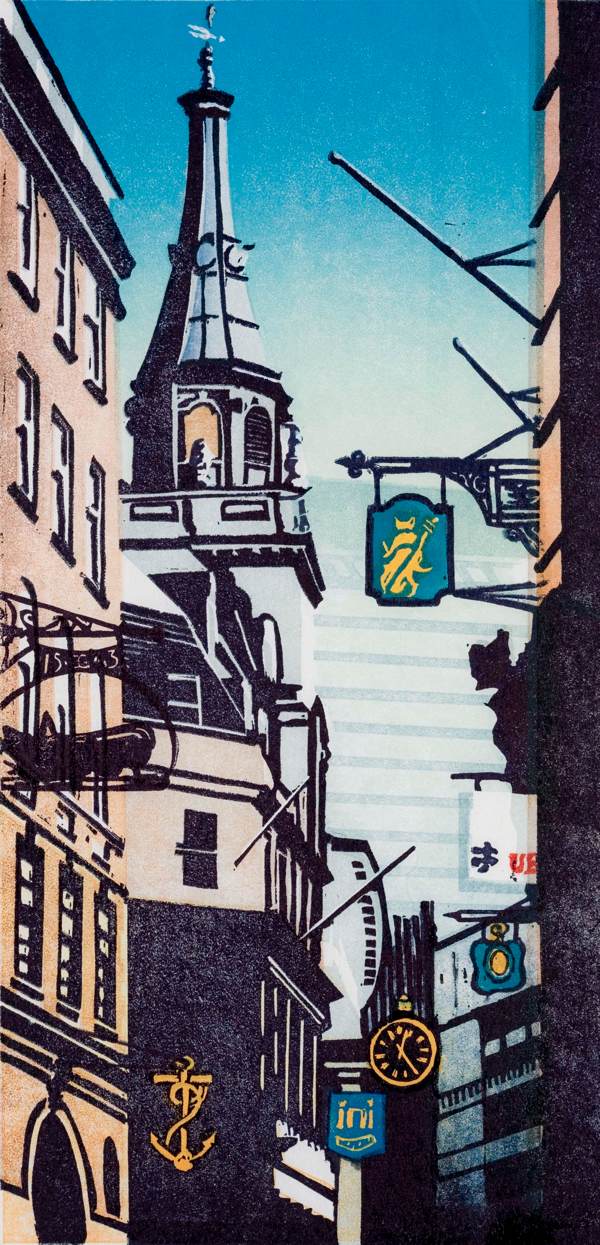
St Edmund King & Martyr
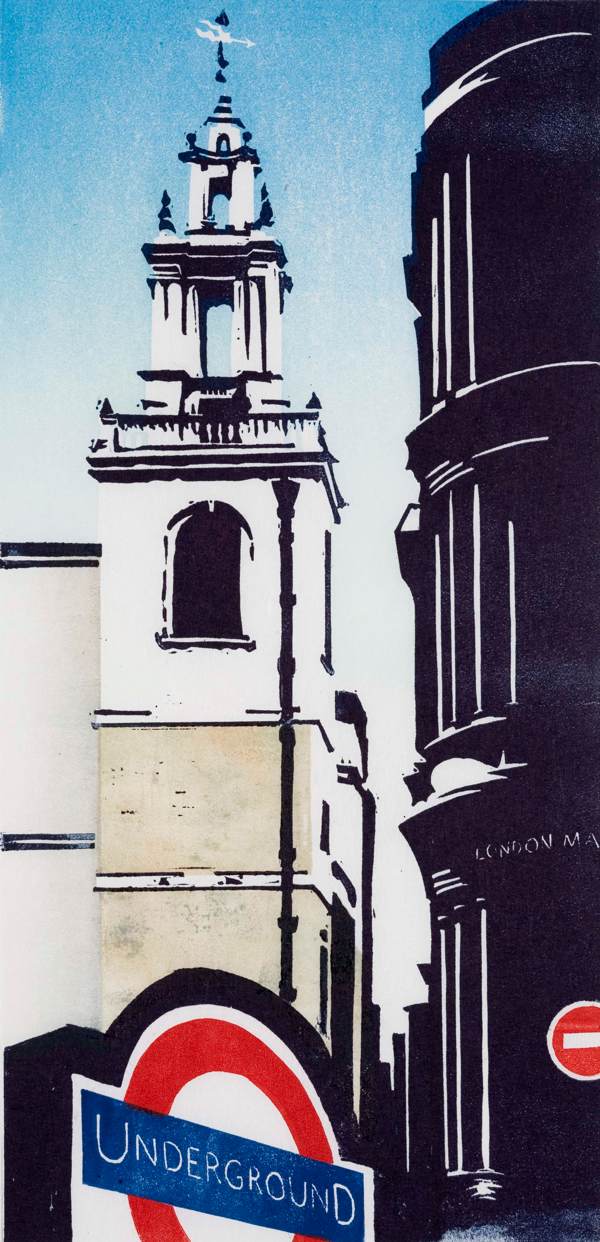
St Stephen Walbrook

St Augustine Watling St
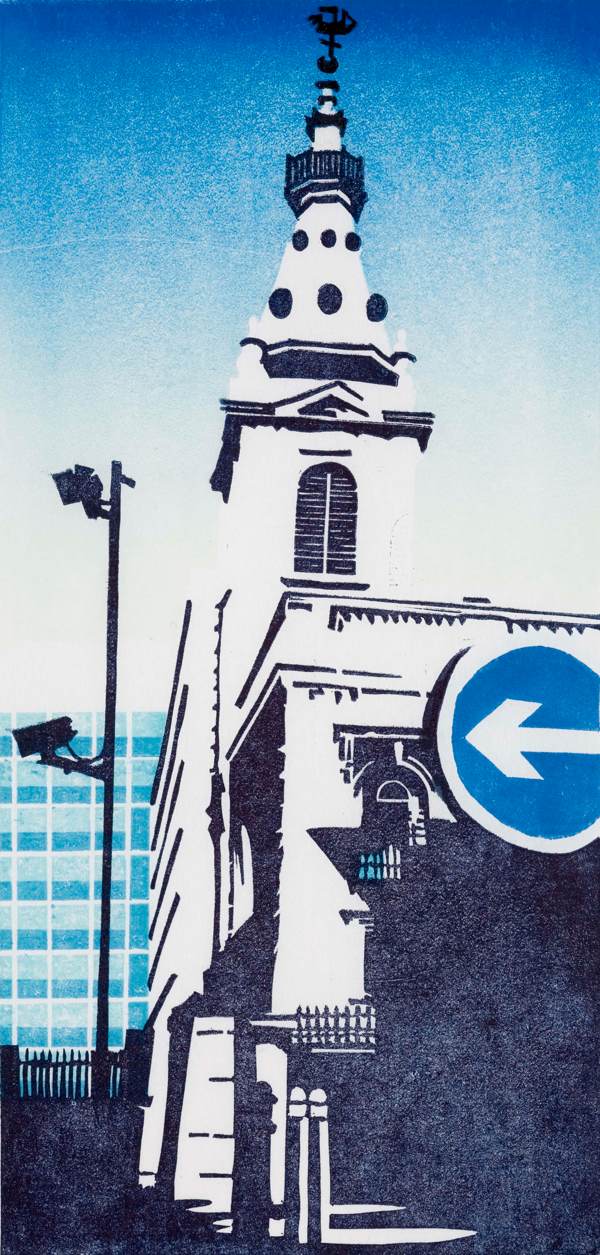
St Nicholas Cole Abbey

St Michael Paternoster Royal
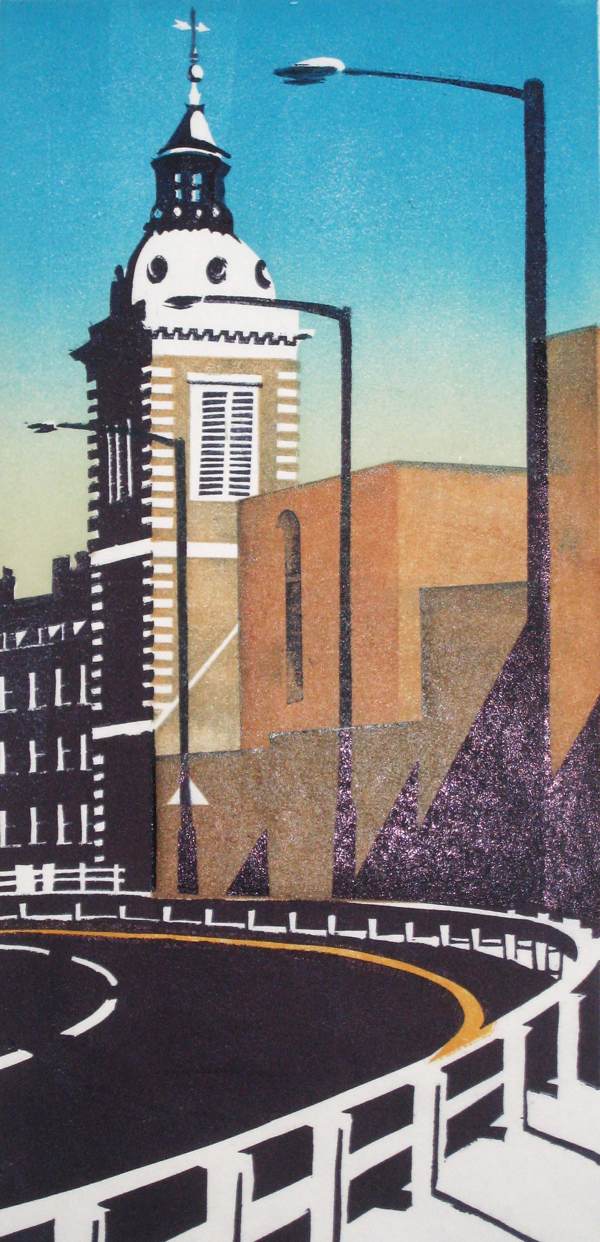
St Benet Paul’s Wharf
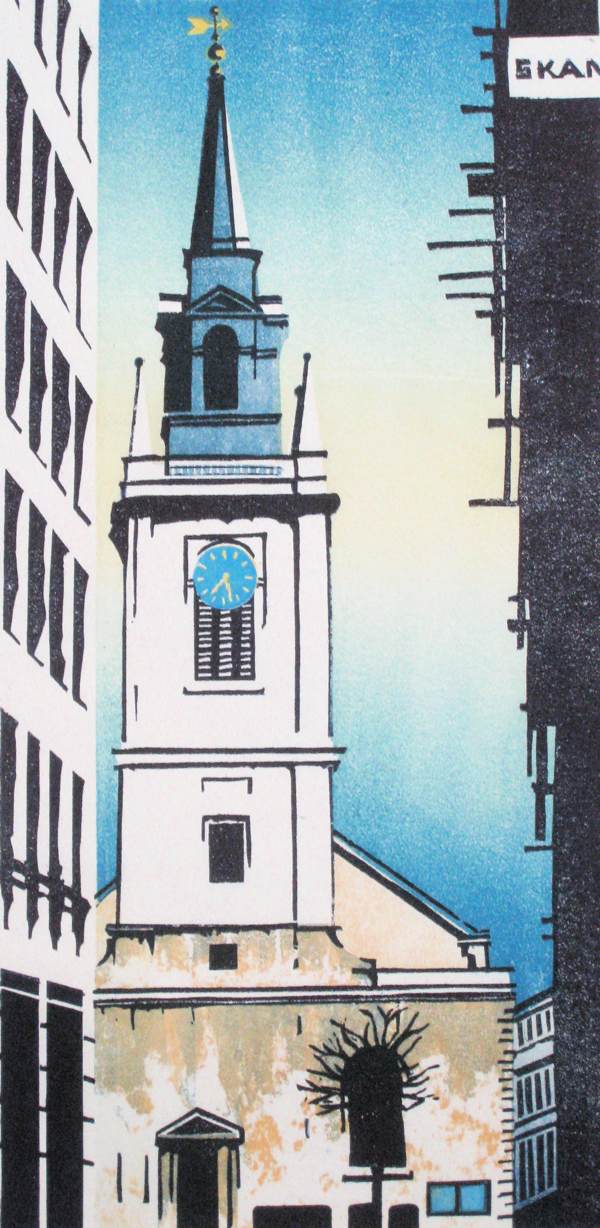
St Lawrence Jewry
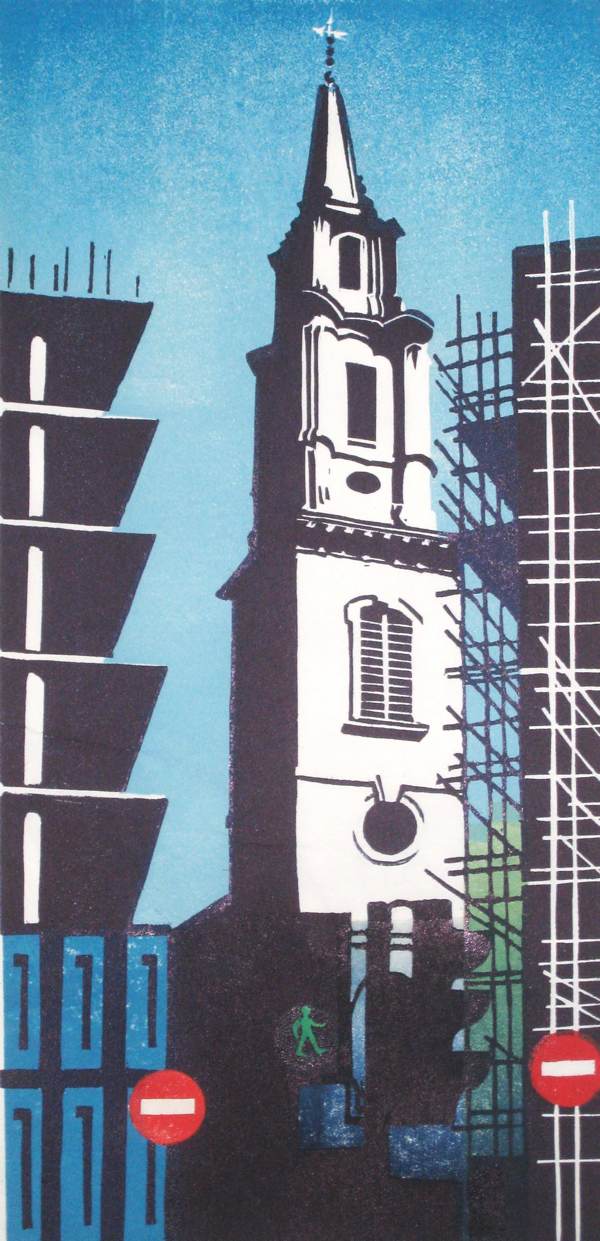
St Vedast alias Foster
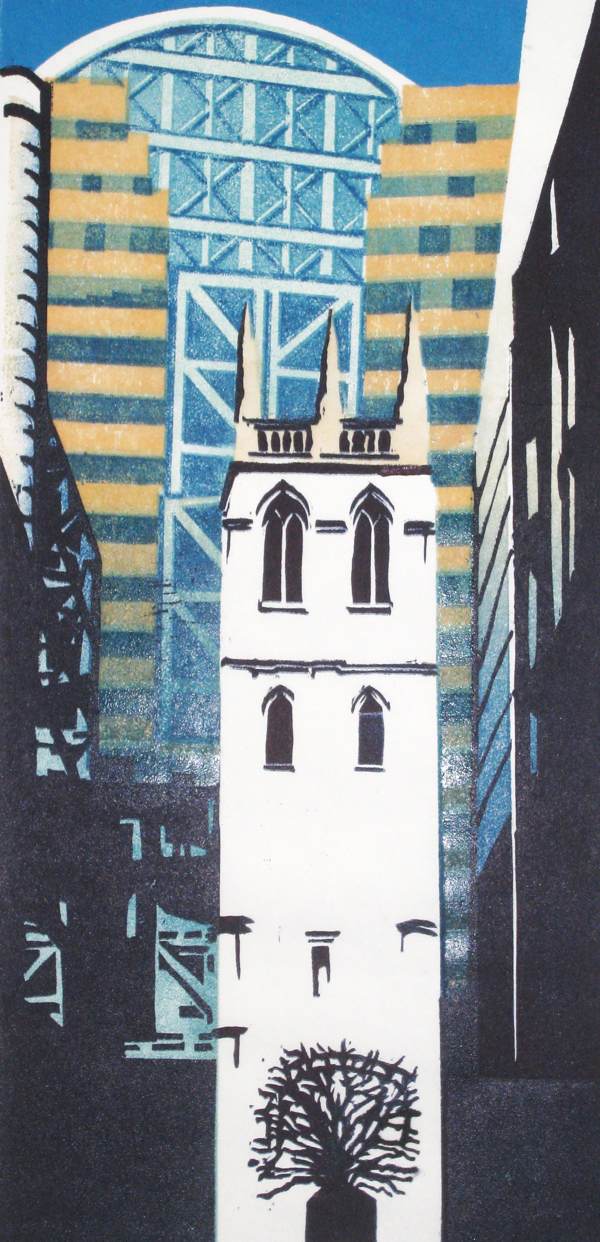
St Alban Wood St

St Magnus the Martyr
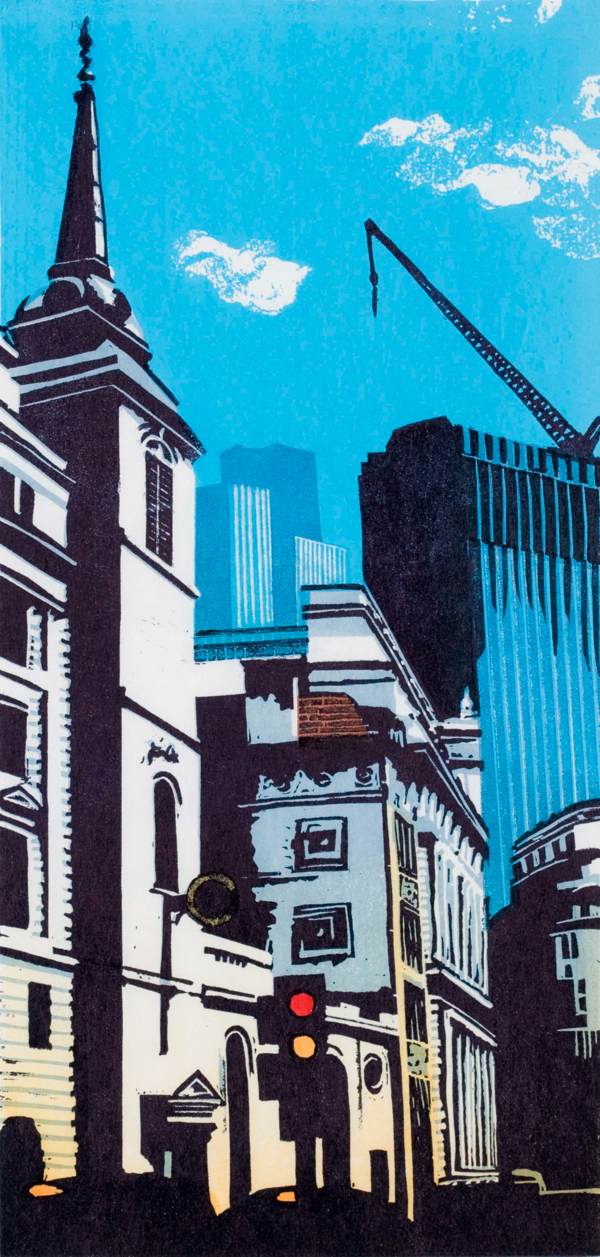
St Margaret Lothbury
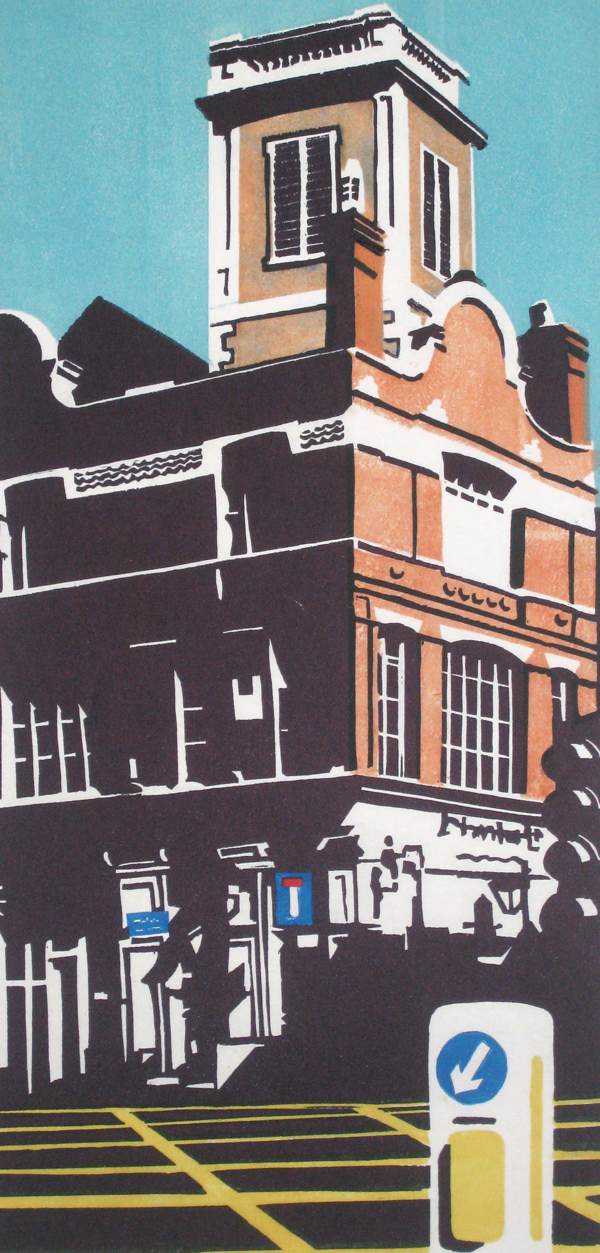
St Andrew by the Wardrobe
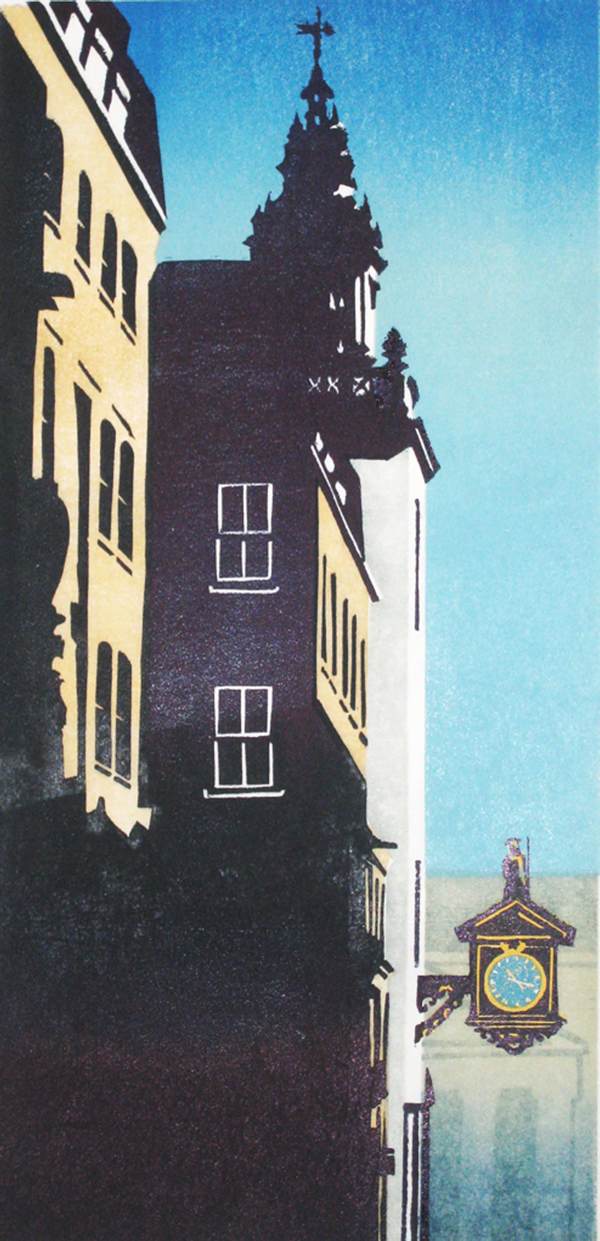
St James Garlickhythe
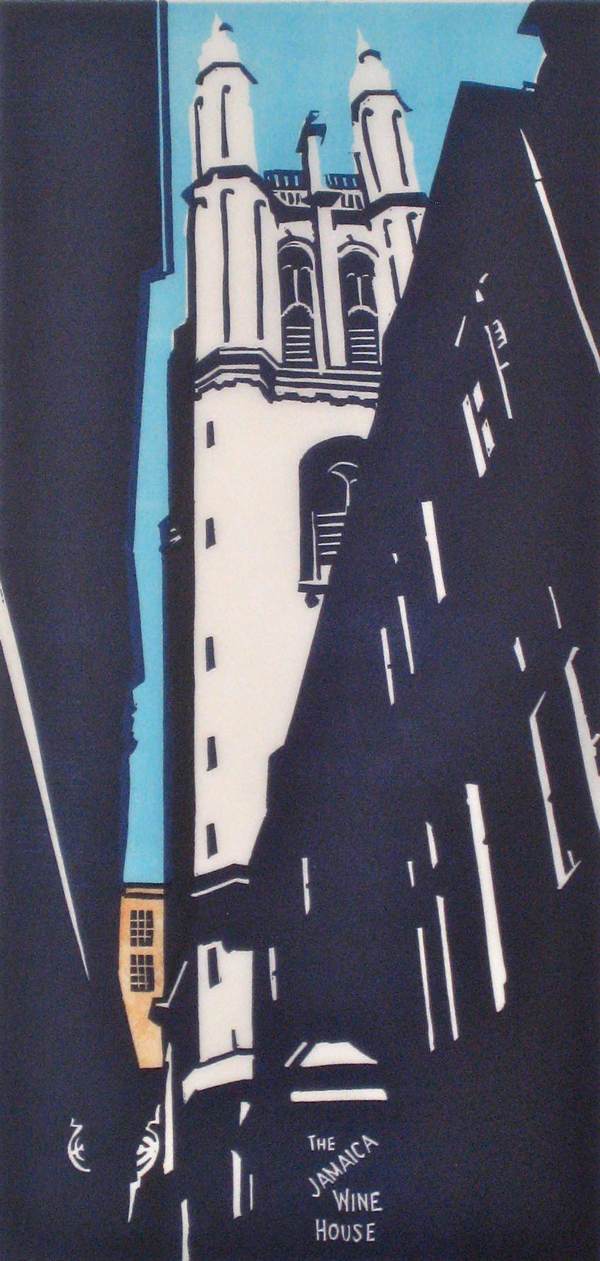
St Michael Cornhill
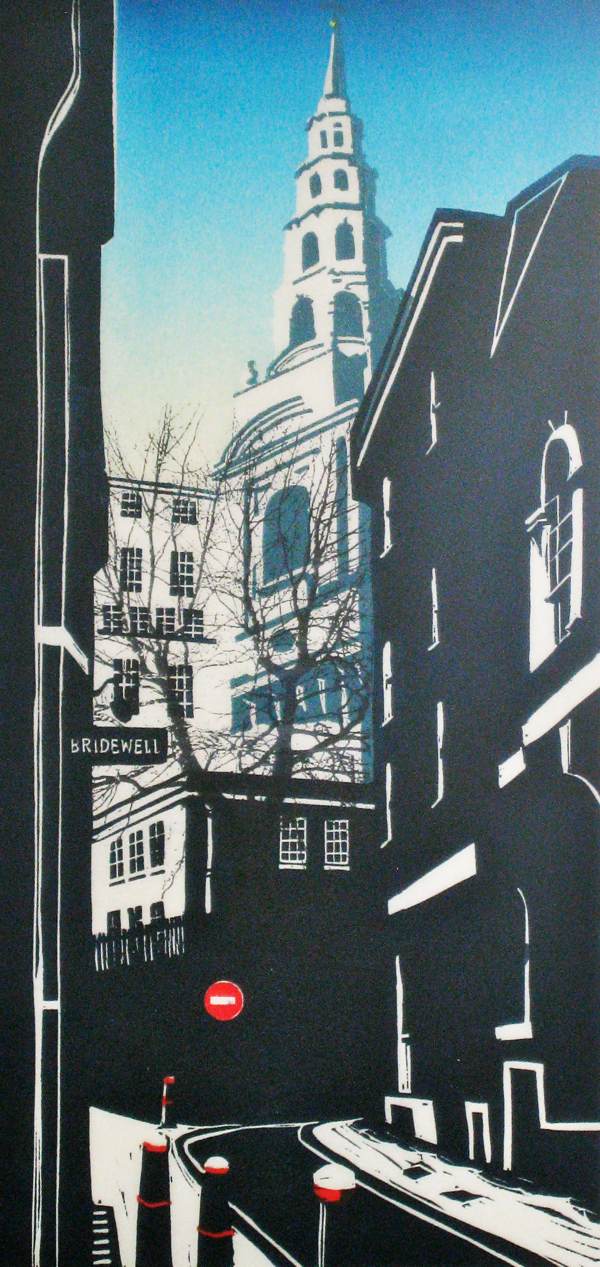
St Brides
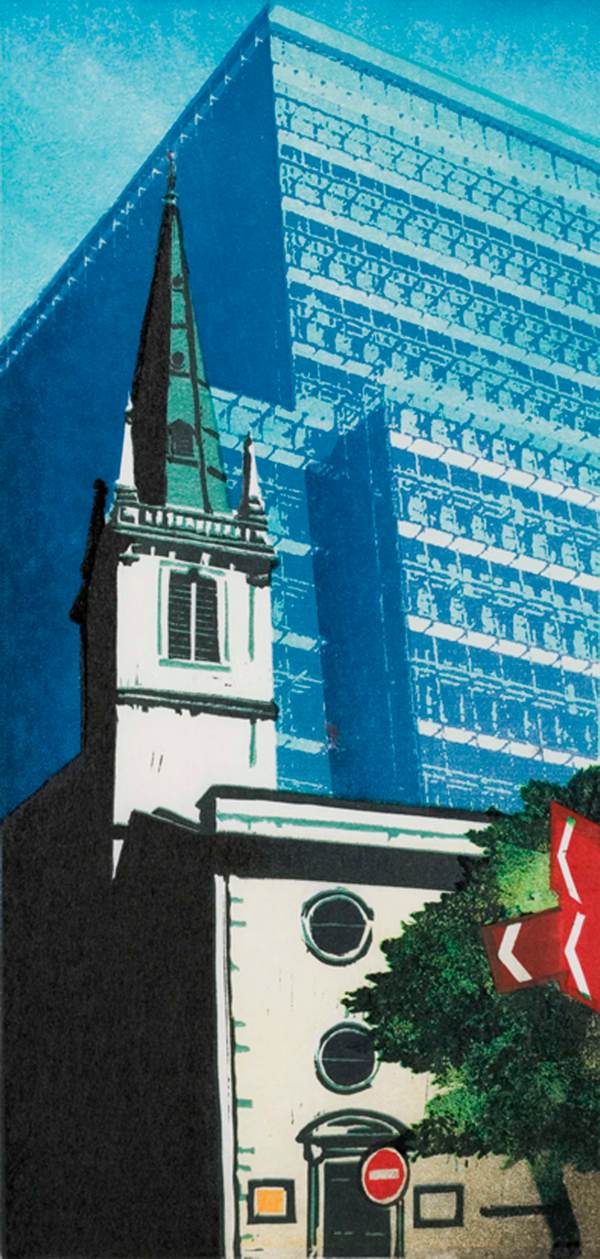
St Margaret Pattens
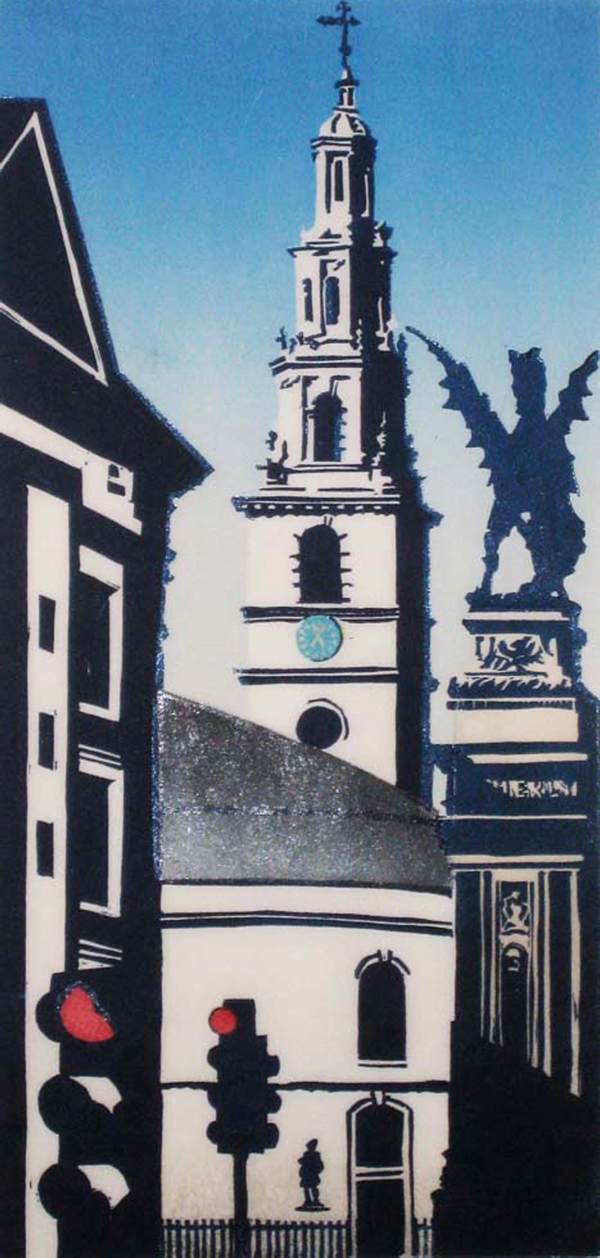
St Clement Danes

Images copyright © Janet Brooke
You may also like to take a look at
The City Churches of Old London
So Long, Butler & Tanner
When I started publishing books, I knew we must print them in England and support the survival of our home print industry. It was my privilege to work with Butler & Tanner, one of the greats of the golden age of British printing, which sadly went into administration yesterday with the loss of one hundred jobs. Thus a company that started in 1845 is no more and its history ends here.
For Spitalfields Life Books, they produced The Gentle Author’s London Album, Brick Lane by Phil Maxwell, and a week ago I visited them for the printing of Underground by Bob Mazzer – one of the very last books to be produced by Butler & Tanner – which is to be published on 12th June.

W.T.Butler’s Steam Printing works in Frome, 1857
Everyone who loves books knows the name of Butler & Tanner, Britain’s oldest and foremost colour printer – established in Frome in 1845 and recently known as Butler, Tanner & Dennis. This was the printer that Allen Lane went to in 1935 to print Ariel, the first Penguin Book, and it was my great delight to go down to Somerset with Book Designer, David Pearson, and Contributing Photographer, Patricia Niven, to see the pages of The Gentle Author’s London Album roll off the presses at the same print works last year.
We met at Paddington Station before dawn and the sun was just rising as the train sped through the West Country to deliver us to Frome, where we walked from the station to our destination in the aptly-named Caxton Rd. Upon arrival at the unexpectedly quiet print works, we were ushered into a waiting room and told that the first page would be ready shortly. Once we were led through into the factory we encountered the clamour of the machines, where vast presses – each one the size of whale – were spewing forth huge pages of print.
Here we met printers Paul Wrintmore and Clive Acres, and I saw pages of the Album for the first time, laid upon a brightly-lit table that simulated daylight. To my right, the great machine sat humming to itself with impatience as it waited to run off thousands of copies. But first we had to give our approval and I had to sign off the sheet. Each sheet contains twenty-four pages and here, in these unfamiliar surroundings, I was delighted to find my old friends The Dogs of Old London, The Pointe Shoe Makers, The Car Crashes of Clerkenwell and The Spitalfields Nippers. This was one of those moments when you confront something entirely familiar as if you are seeing it for the first time. It all looked well to me, with sharp details and good definition even within the darker areas of the pictures and, where there were flat areas of colour, the tones were even. I could find no flaw.
Yet I stood back, deferring to David Pearson as the design professional, and he leaned over close, casting his critical gaze upon his beautiful pages. The printers stood behind us, exchanging expectant glaces in silence. This was not a moment to discover a mistake and thankfully we did not find any. Most importantly, we were both satisfied with the quality of the printing and I signed the sheet, setting the great press in motion. After a tour of the factory, we came back to see the second sheet and were satisfied again and I signed it off too, content now to leave the rest of the book in the safe hands of the printers.
The early start and the emotionalism of the occasion caught up with us, and we were happy to climb back onto a train and, feeling relieved, we dozed all the way back to Paddington. Yet I took copies of each of the sheets of the Album with me as souvenirs and, when I got back to Spitalfields, I examined them for errors – but I did not find any.

Book Designer, David Pearson, with pages of The Gentle Author’s London Album

W.T. Butler, 1850
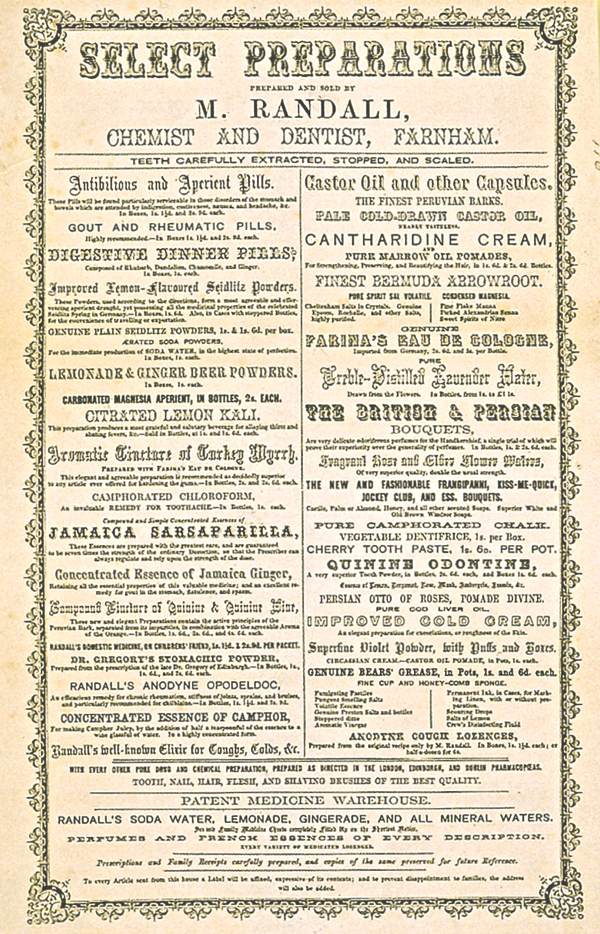
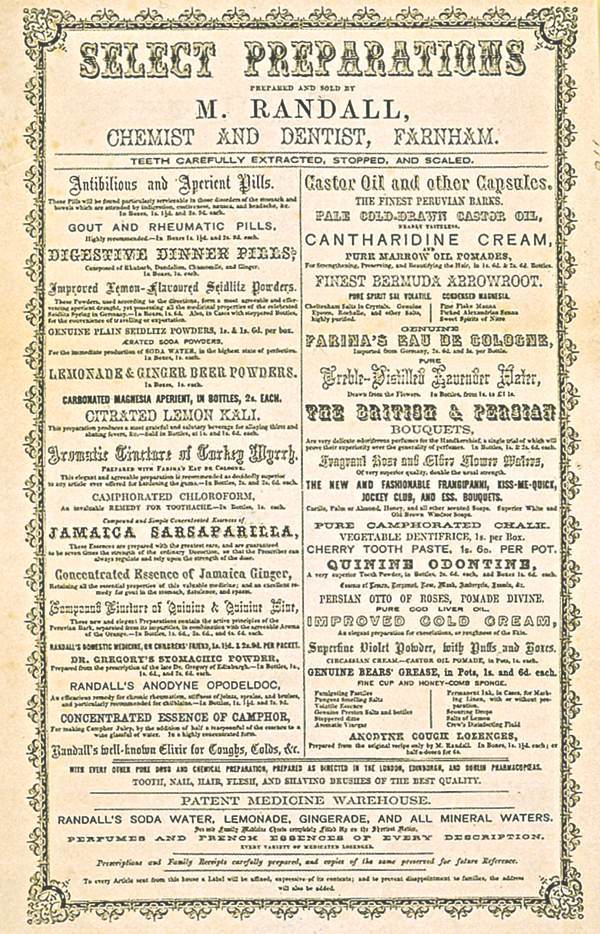
Early print specimen from Butler & Tanner
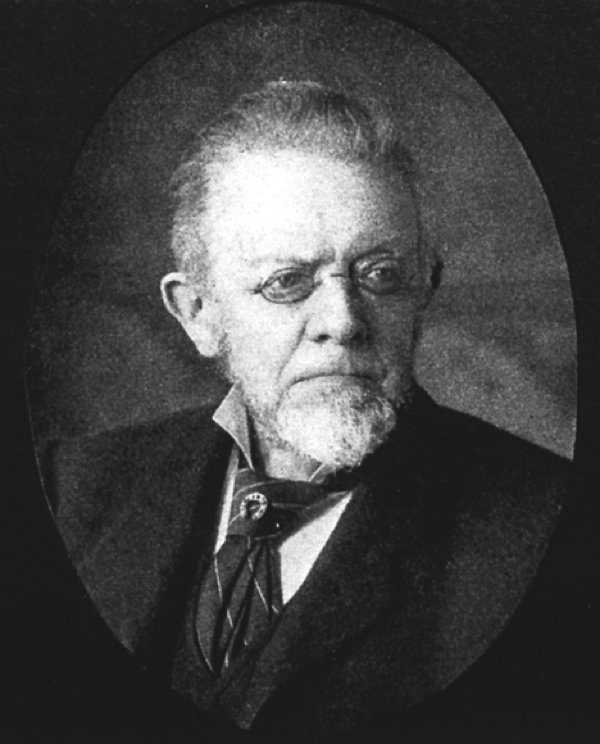
Joseph Tanner went into partnership with W.T. Butler in 1863
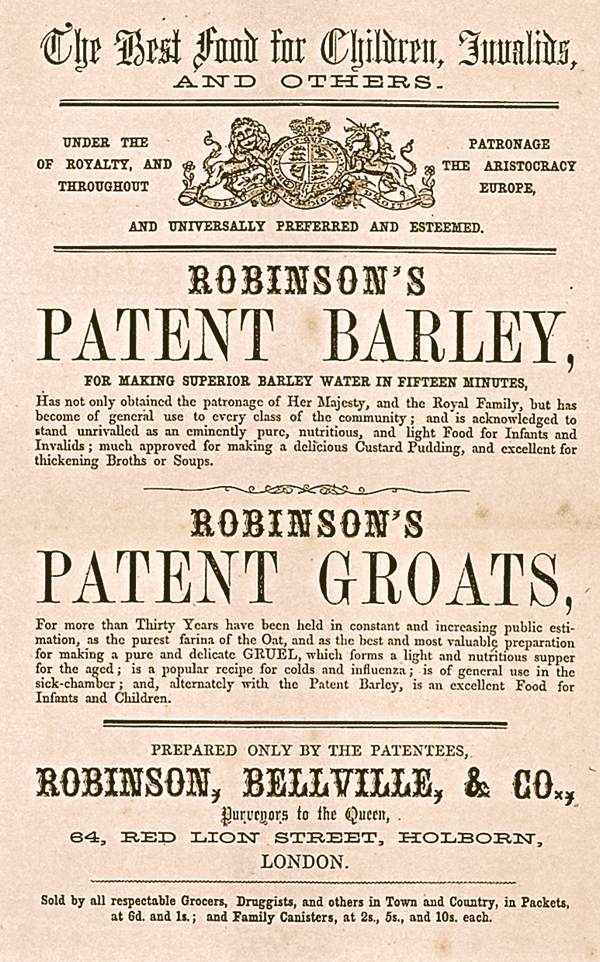
Early print specimen by Butler & Tanner

Butler & Tanner Print Works, 1905

Paper to print The Gentle Author’s London Album

Setting up the type, 1920

A special colour of ink mixed for The Gentle Author’s London Album

Adjusting the press, 1930

Pumping the ink to print The Gentle Author’s London Album
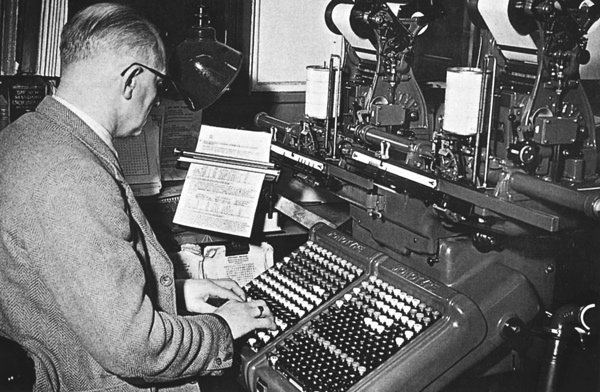
Typesetting, 1950

David Pearson inspects one of the plates to print The Gentle Author’s London Album

Printing machine, 1935

Heidelberg Speedmaster XL 162 printing press, standing by

Printing Works Beano, 1950

Paul Wrintmore, one of the printers of The Gentle Author’s London Album, with the first page

Plate making, 1950

Clive Acres, one of the printers of The Gentle Author’s London Album

Printing press, 1950

The first page of the Album to come off the press

Digital typesetting, 1970

David Pearson scrutinises the first page
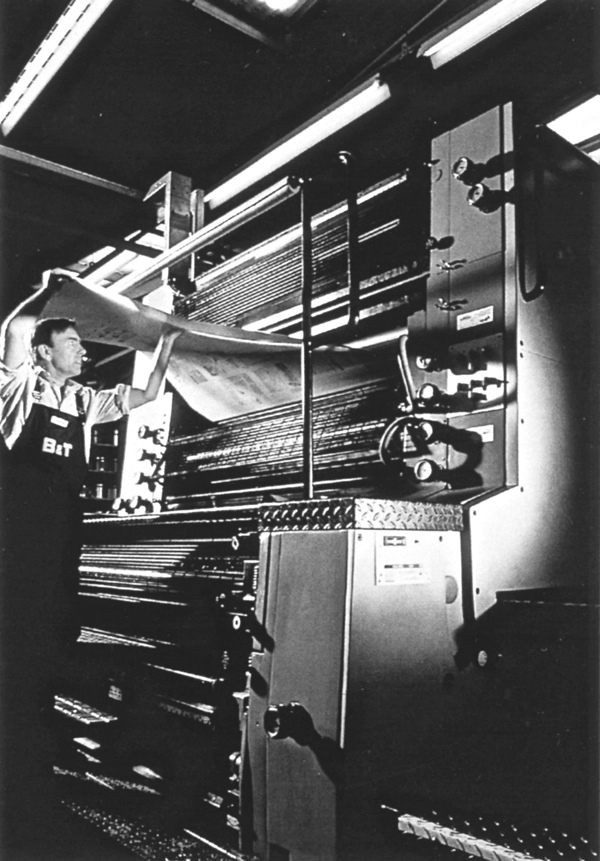
Printing press, 1978

Sewn-together copies heading for the bindery

Digital printing, 1988

In the bindery

1912, Sherlock Holmes

1935, Ariel – the first Penguin Book

1950, The Lion, the Witch & the Wardrobe

1965, James Bond

2013, The Gentle Author’s London Album
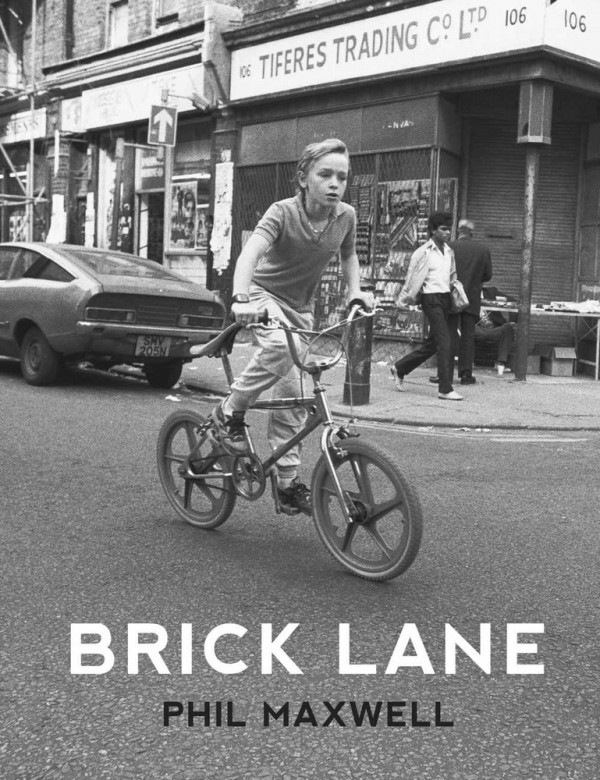
2014, Brick Lane

2014, Underground
Colour photographs copyright © Patricia Niven
Archive images courtesy of Butler, Tanner & Dennis
An exhibition of the work of Book Designer, David Pearson runs at Kemistry Gallery in Charlotte Rd, Shoreditch, until 28th June
You may also like to read about
In Fleet St

Walking between Spitalfields and the West End, Fleet St has emerged as a favourite route in recent years, because the detail of this magnificent thoroughfare never ceases to fascinate me with new interest – and so I spent a morning wandering there yesterday with my camera to record some of these sights for you.

Alsal Watches

Royal Courts of Justice by George Edward Street, opened 1882
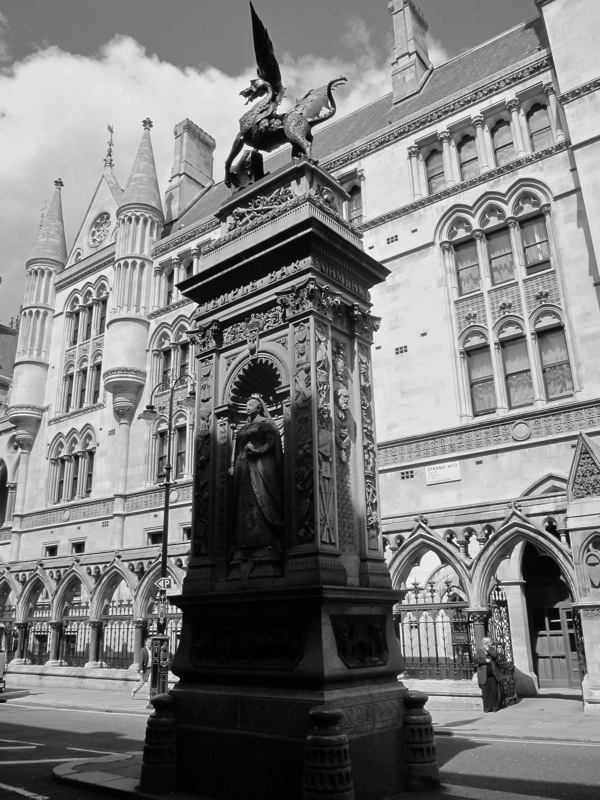
This marker at the entrance to the City of London was unveiled in 1880 and is the work of Horace Jones, architect of Tower Bridge and Smithfield, Billingsgate and Leadenhall Markets

Hoare’s Bank from Hen & Chicken Court

Hoare’s Bank founded in 1672
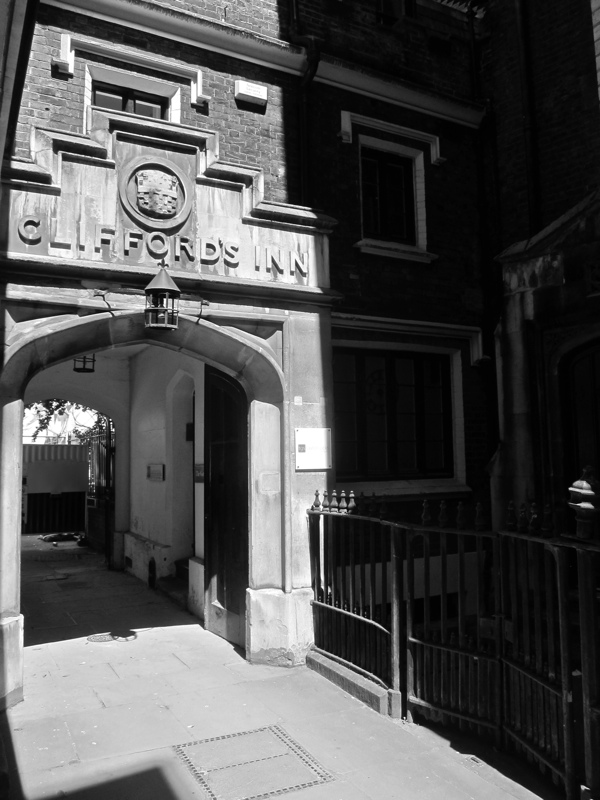
Clifford’s Inn founded in 1344


Entrance to Middle Temple, 1684


St Dunstan-in-the-West


Angels at the entrance to St Dunstan-in-the-West

Statue of Queen Elizabeth I that once stood upon the west side of Ludgate, demolished in 1760
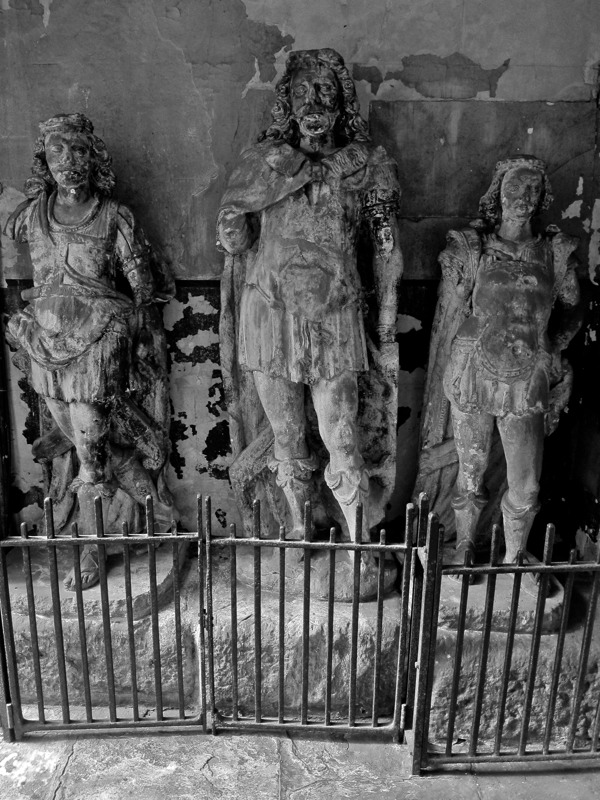
Sixteenth century statues of King Lud and his sons that originally stood upon the east side of Ludgate
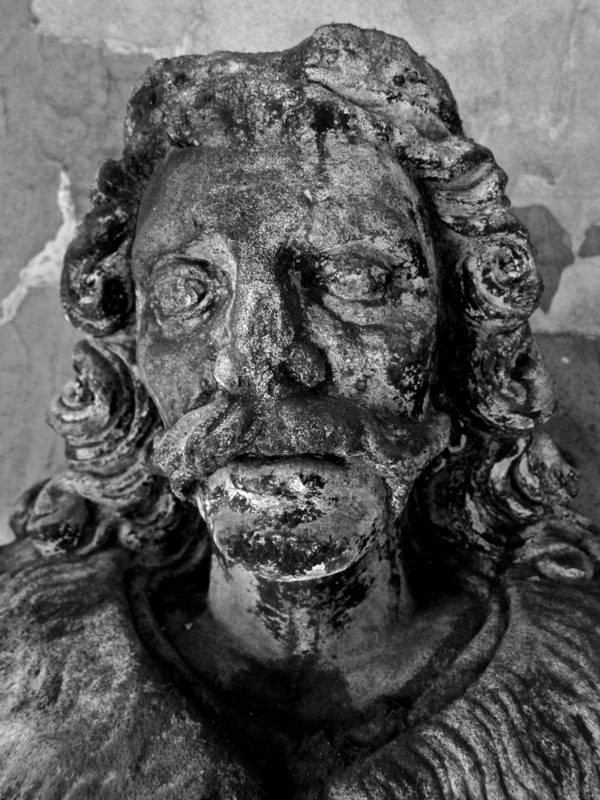
Old King Lud

Removed in 1878, Christopher Wren’s Temple Bar now stands at the entrance to Paternoster Sq
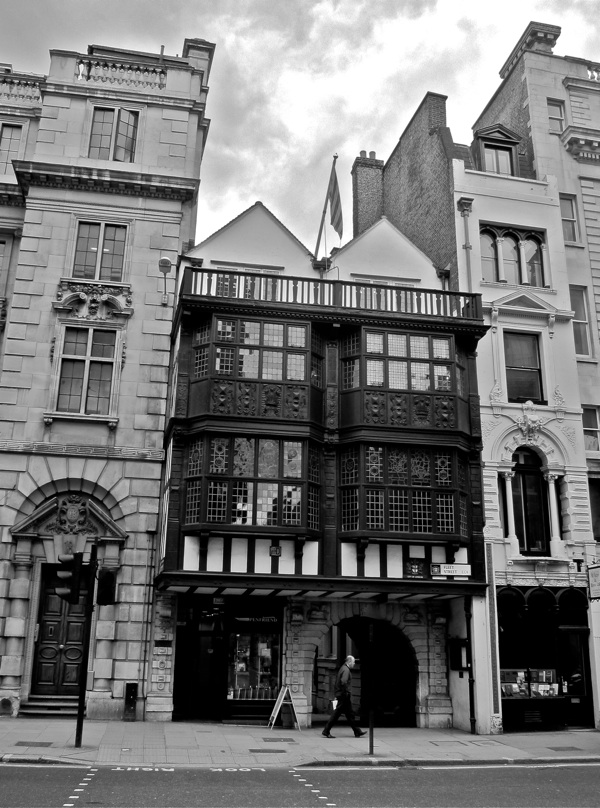
Prince Henry’s Room over entrance to Inner Temple, 1610

St Brides by Christopher Wren, 1672, reflected in the Daily Express building by Ellis & Clarke, 1932


St Bartholomew House by Herbert Huntly-Gordon, 1900

Carving upon The George

Pulpit in St Clement Danes by Grinling Gibbons

Eagles in St Clement Danes

Statue of Dr Samuel Johnson

Looking east down Fleet St
Julie Begum On Brick Lane
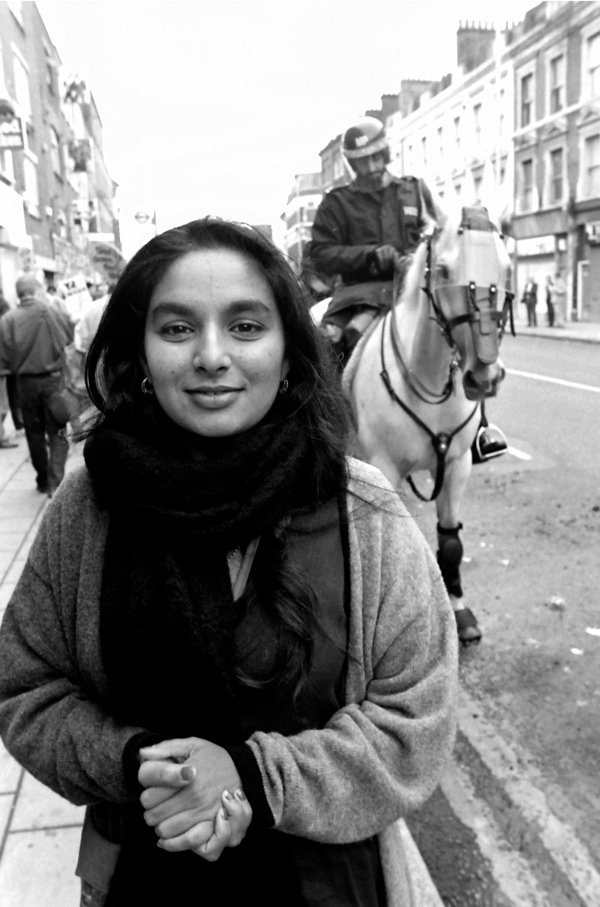
When Julie Begum came to the launch for Phil Maxwell’s BRICK LANE recently, she was astonished to open the book and confront this photograph of herself, taken twenty years ago, which she had never seen before. “It was strange to see myself,” she admitted to me, “I was pleased but also sad, because I’m not that person anymore.”
The picture appears as part of sequence taken by Phil during the Anti-Fascist protests of the eighties and nineties, and I was struck by the dramatic tension in the photograph between Julie’s relaxed, generous smile and the approaching figure of the mounted policeman coming up behind in riot gear.
I know Julie from her current work with the Boundary Estate Women’s Group at St Hilda’s Community Centre, so I paid her a visit recently at her home just off Brick Lane to learn more about the background to this curious picture.
“It was at the time when Derek Beackon of the British National Party was elected as councillor in Millwall by just eight votes in 1993. I was one of a number who formed ‘Women Unite Against Racism.’ We realised we needed to do something, so we staged a conference at Tower Hamlets College and more than one hundred women from different backgrounds came along and we decided upon a plan.
Our aim was to create a women’s presence in the male-dominated protest movement and we made sure there was no cult of the leader in our group, and that many different people spoke at our meetings. We went door to door and encourage women to vote, because we wanted to give support to women who were too frightened to go out and vote.
The photo was taken on the day of a protest again the BNP in Bethnal Green, the police were there in huge numbers. It was important to have a mix of people, men and women, and young and old – because police can behave very differently if it is just young men they are dealing with. There was a lot of solidarity and it was nice.
The police had dogs and officers on horseback, and I remember the police wanted to set the dogs on the young men. So we women got in front to protect them and the police had to stop because we were women. I think it’s important not to give in to the sense of tension and excitement in these situations – we tried to keep everyone calm and peaceful.
It was a good time, even though we had sleepless nights. It was a year of madness but people came together from all walks of life and we felt we were part of the heritage of protest against fascism in the East End.”

Julie Begum at home

Julie Begum cooking with members of St Hilda’s women’s group

Julie Begum in her kitchen

Julie Begum (top right) with members of her women’s group at Geffrye Museum
Brick Lane photo copyright © Phil Maxwell
Recent photographs copyright © Sarah Ainslie
You may also like to read about
The Apotheosis Of Phil Maxwell
Rob Wells, The Boy On The Bicycle