
Old Girls Of The Central Foundation School
Writer Linda Wilkinson, ex-School Captain and celebrated author of two books about Columbia Rd, went along with Contributing Photographer Patricia Niven to this year’s Central Foundation School for Girls Reunion to do these interviews and portraits of the Old Girls.
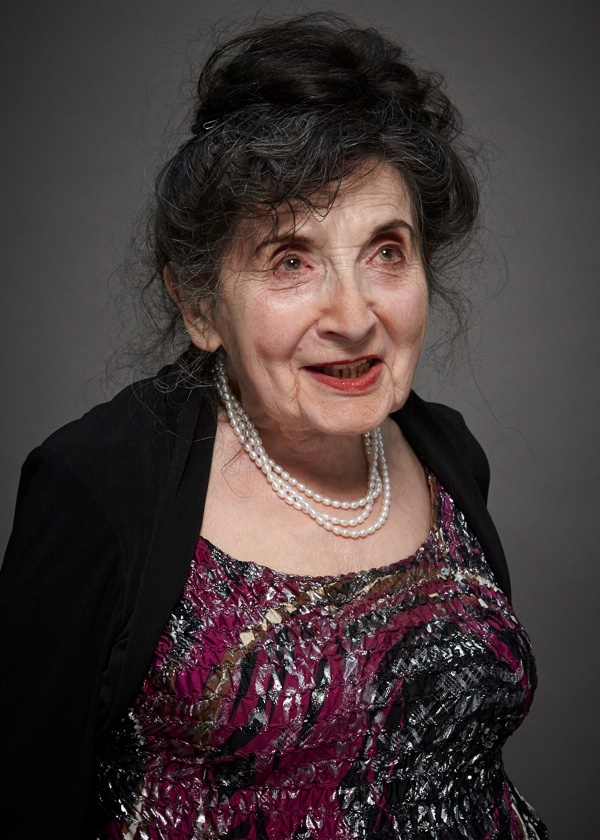
Millie Rich, 1929-1934
I left in 1934 to go to St Martins School of Art. I loved the school, it was very different then to the attitudes that prevail now. You were very respectful of the teachers, you always stood up when they entered the room. We did Latin with Miss Green who married one of the governors. Many of the girls were from the East End and were first generation English, so you inhabited two cultures and, in order to survive, you spoke in one way at the school and in another way at home. Life was a lot less socially comfortable for us than it is today.

Shula Rich (known as Ruth at school), Millie Rich’s daughter
I always wanted to go to the Central Foundation School because my mother and my father both went there (the boy’s school is in Cowper St). In addition, it closed at 3pm whereas every other school closed at 4pm, so I could go home like a City worker. I would sit on the train back to Balham reading my Evening Standard.
Later we moved to Ilford. On public transport you had to wear your beret, but I had a great big bee-hive and was part of a girl gang – we folded our berets in half and pinned them with two clips behind our hair. Whenever a teacher caught us on the tube and told us we weren’t wearing our berets, we could say “Oh yes we are,” and we’d show them the back of our heads. After school, we could either go and talk to the market men – which was a great treat – or somehow go into Dirty Dick’s to do some pulling.
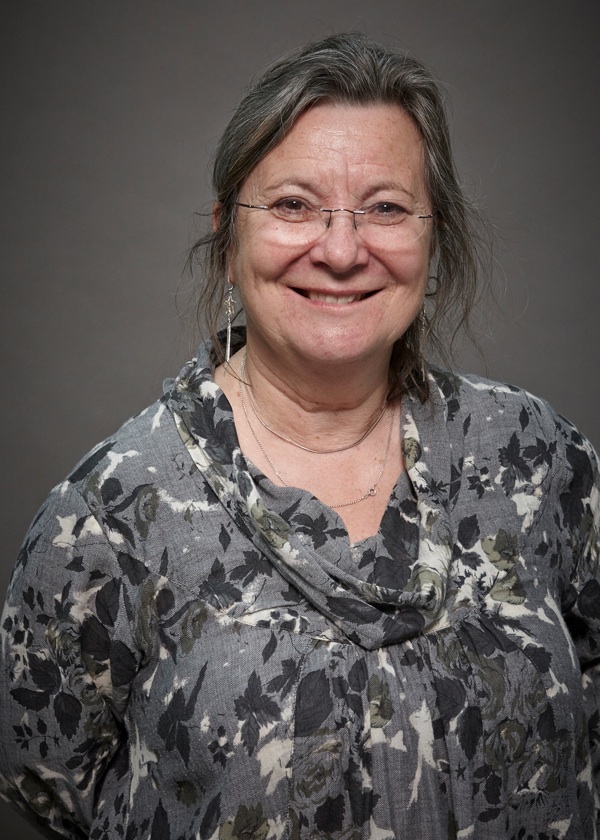
Patsy Butt (née Felt), 1963-1968
We had a fabulous uniform – gaberdine macs with red lining in the hood, so that everyone knew you were a Spital Sq girl. I loved the friends, loved the teachers. The fact that, having grown up in an area where you didn’t realise you could own your own home and that bathrooms were inside the house, to be tutored into a world where you could join in with anybody and anything – What can you say about an education that does that for you? Fabulous!

Nadjie Butler (née Huseyin), 1971-1977
There are so many memories it is hard to pick a special one, but the most fun I had was doing the sports and the sports days, and going down to the playing fields at Buckhurst Hill. I remember laughing a lot and making some really good friends and enjoying my education here. It gave me the ability to look forward in life. Not only giving me the foundation to have a long and successful employment, but also it taught me a really good lot of manners and morals that I have taken through my life.
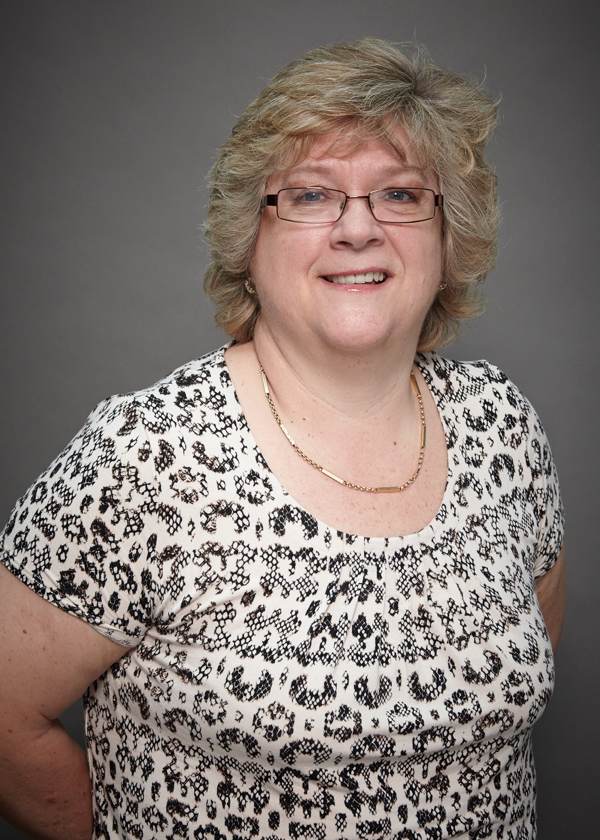
Sandra Smith (née Foster), 1971-1977
My main claim to fame was that I did a solo performance in a concert for the late Richard Beckinsdale. One of the girls we were at school with was the daughter of his manager, so he came along to the school to hear us. We had a very good day. The school was a great place – what a great education we had! A lot of the friends I made then I have kept in touch with over the years.
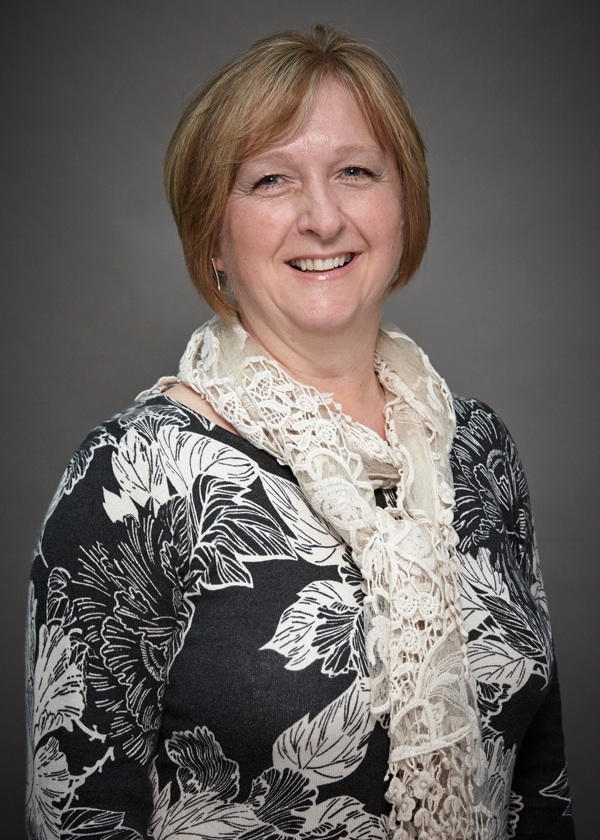
Carol Salmon (née Foster), 1973-1979
I remember as a first year doing cross country running at Buckhurst Hill, and I remember falling into a ditch and being completely covered in mud. I ended up having to go home wearing another girl’s knickers as I didn’t have a spare pair. God I was so embarrassed! The school certainly gave me the tools for life – in the end I became a Police Officer.
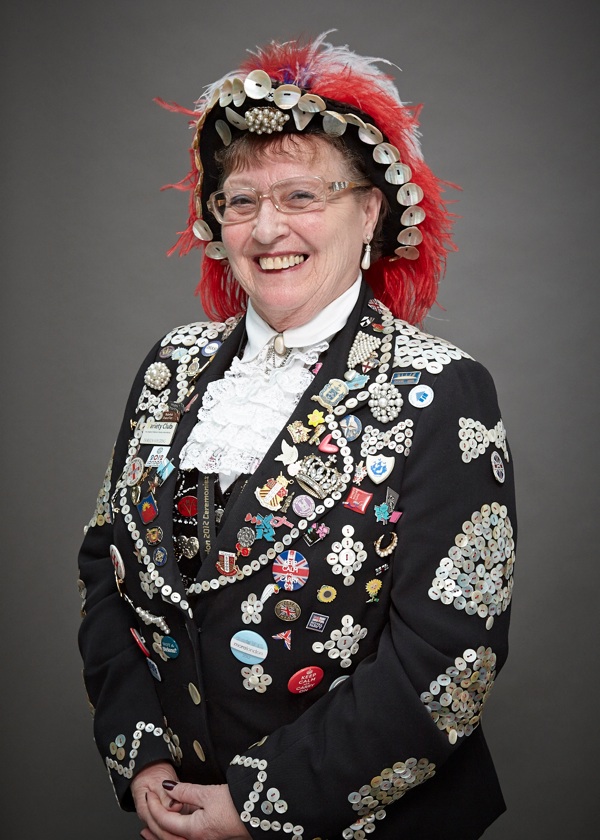
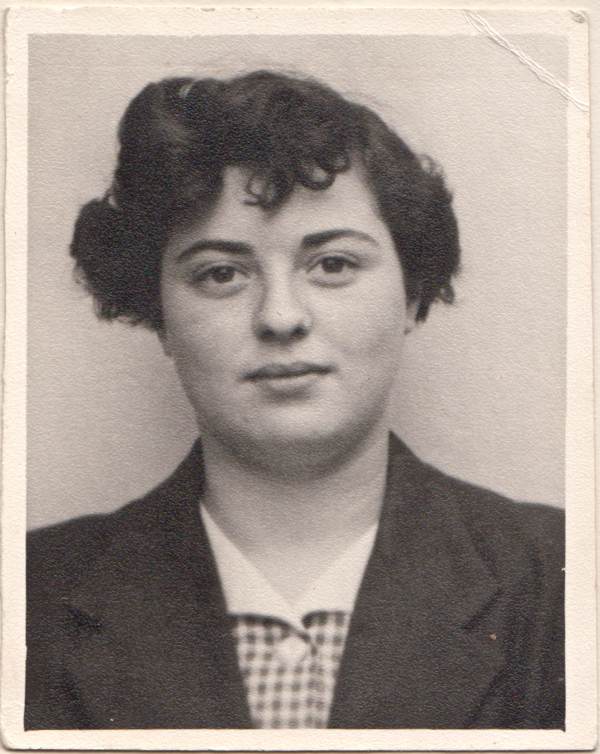
Doreen Golding (née Jackson), 1953
Doreen returned to the East End having moved to Redbridge during WWII where she briefly attended Beale Grammar School. After her father died in an accident, her mother and their family came back to the East End. As Central Foundation School was the local grammar school, Doreen’s mother came knocking assuming that her daughter would just get in.
I had been out of education for six months because, when my father died, mum had pulled us all out of school whilst she decided what to do next. Also the standard here (at Central Foundation School) was so much higher than my school in Redbridge. I was told if I wanted to get in, I would have to sit another exam. That is my first recollection of this school, of sitting in the sixth form taking an exam with all the big girls standing around me. I started here in 1953 and it was a wonderful school. My old grammar school had a brown uniform and the headmistress here at the time was very kind. She told me and mum that, as my uniform was virtually new, I could wear it until it wore out. So there I sat, a splodge of brown in a sea of bottle green.

Lydia Shine (née Andrews), 1953-1959
I was not terribly academic but I enjoyed my time here, I found it very stimulating. The teaching we had was above excellent, and it has left me wanting to seek knowledge and made me interested in life, in things, people, history and literature – all the things that somehow get missed these days. After school, I started teacher training but I found it wasn’t for me. Then I went into the Civil Service and worked in the Law Courts for a while. I got married, had a family and then worked in office jobs etc. I also went into care work and have found a lot of fulfilment in that. In retrospect, I think I should have been a nurse.
In latter life, I found a big interest in music which I think probably stemmed from Central Foundation School. I have sung in various choirs, some of them quite prestigious so that has really become a big part of my life.
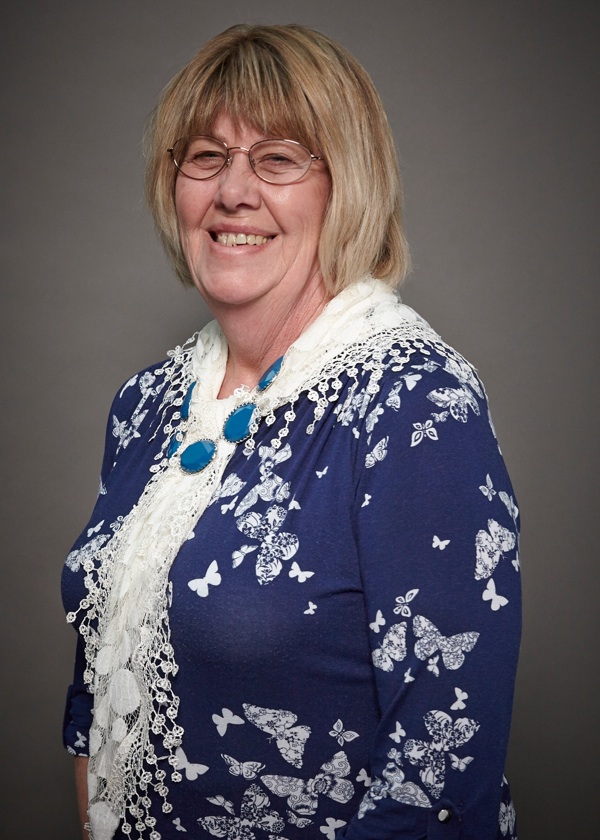
Christine Beesley (née Andrews), 1957-1964
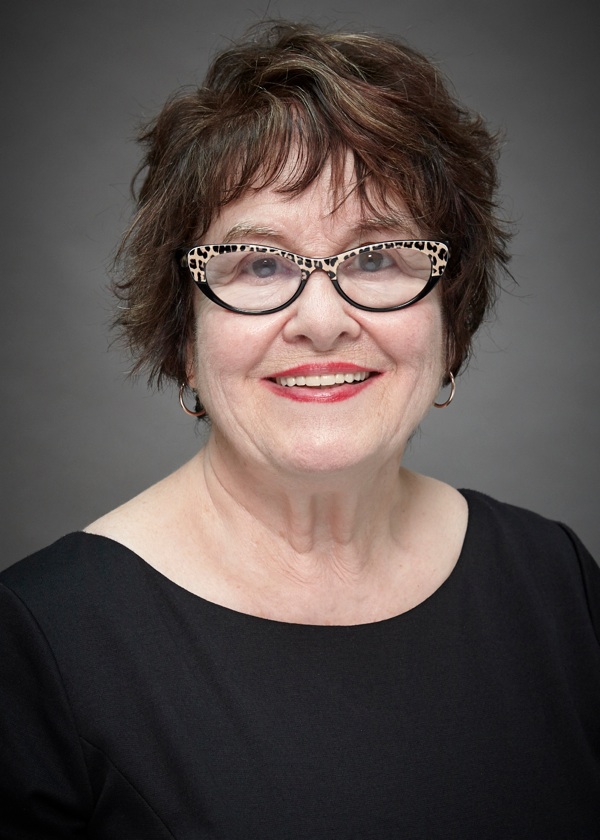
Maureen Modica (née Franks), 1953-1959
It was like ‘The Prime of Miss Jean Brodie,’ very much so. If you weren’t going to be university fodder, forget it. To get married and have a family, or anything mundane like that, was for the lower echelons.
I didn’t go to university but exploited being a linguist and the only way that I could do that was on the continental telephone exchange and then in various foreign banks. The languages I speak are French, German and Italian. I can get by in Spanish. If you were in the A form – as I was – Latin was obligatory and French for almost everybody, but because I wanted to do German I had to wait until I was in the sixth form and do a crash course.
I never had a cookery lesson. When I got married ,I had no idea why potatoes, meat and veg all put on at the same time didn’t work. At first, I used to say to my husband, “Can’t we go out?” He said, “Not forever!”

Sandra Dryer (née McKay), 1954
I was a terrible teenager, I did nothing at school. I wasted my time there but, when I was forty, I went to study. I did a degree, went on to do a Masters, and I tutored at a Sixth Form College where I became the Head of the Department of Theatre Arts.

Elspeth Parris, 1967-1972
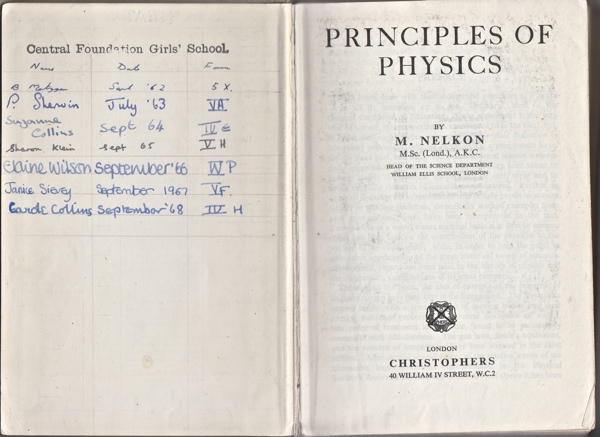
The school was a very good place for me to have gone to. I really did need the Headmistress, especially Mrs Dunford’s attitude to people, but educationally – in terms of academic stuff – it wasn’t actually that good for me. I was very much science-based and in those days it was assumed that if you were going to a good university, and I had the scholarship to go to a good university, that you had Latin. You had to have Latin to get into Oxford or Cambridge. Latin was a direct clash in the timetable with Physics, so I couldn’t do Physics. I eventually did Physics totally from scratch at university as a mature student.
However, the attitude to us as people – for a child as troubled as I was – was really what I needed. It gave me the chance at some kind of self-esteem. But academically, it really didn’t work for me. I eventually got to university much, much later and did Maths when I was thirty but my health collapsed and I wasn’t able to finish it. But the school’s ethos, that people matter, brought me back and I went on and did Social Work at university. Then, about four years ago, I trained for the church to be a Lay Minister within the Church in Wales. I eventually got a degree from the Open University. Currently, due to ill health I am unable to work, so have decided to lead a very simply life which gives me time to reflect on how I may serve the world, something I have always wanted to do.
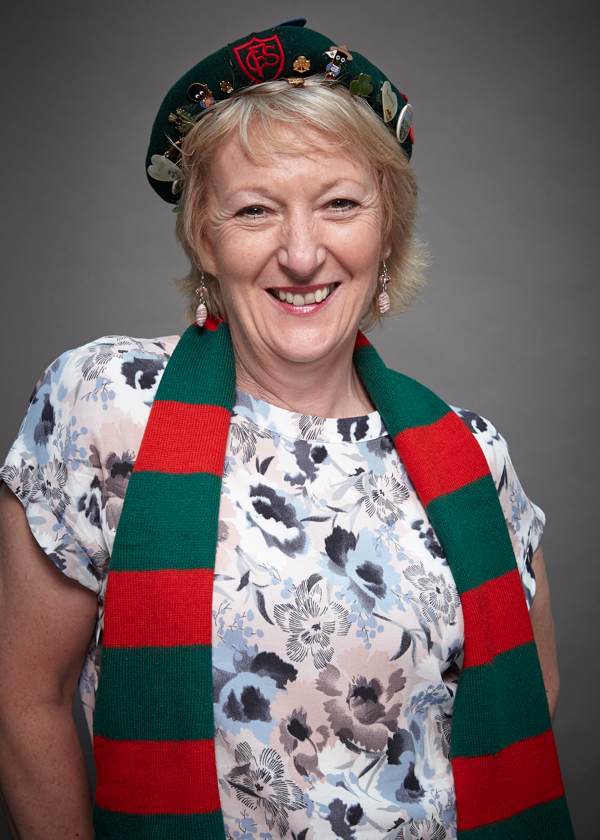
Lesley Young (née Pratt), 1969-1974, wearing her school scarf, beret and badges
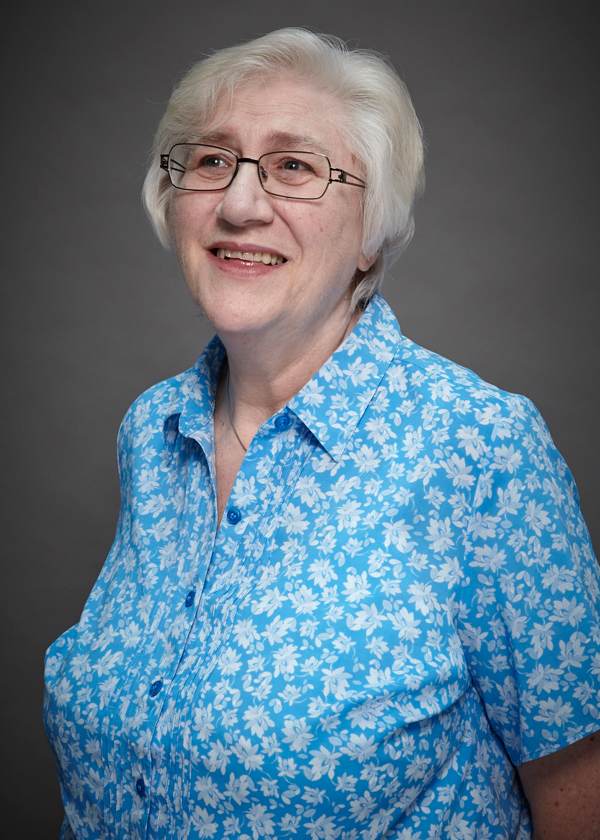
Pat Baker (née Vanderstenn), 1952-1958
I loved school but I hated my junior school in East Ham because the teacher wouldn’t mark my work as I didn’t have very nice handwriting. At Central Foundation School, nobody took any notice of that. I stayed on and went into the secretarial sixth form with Miss Heath, the first year she was at the school. She was good, she got us all jobs. She sent us to an employment agency off Moorgate where she knew the lady who owned it. We all got a job from that. Eventually, I worked at BP and I loved it there.

Gillian Weinberg (née Taler)
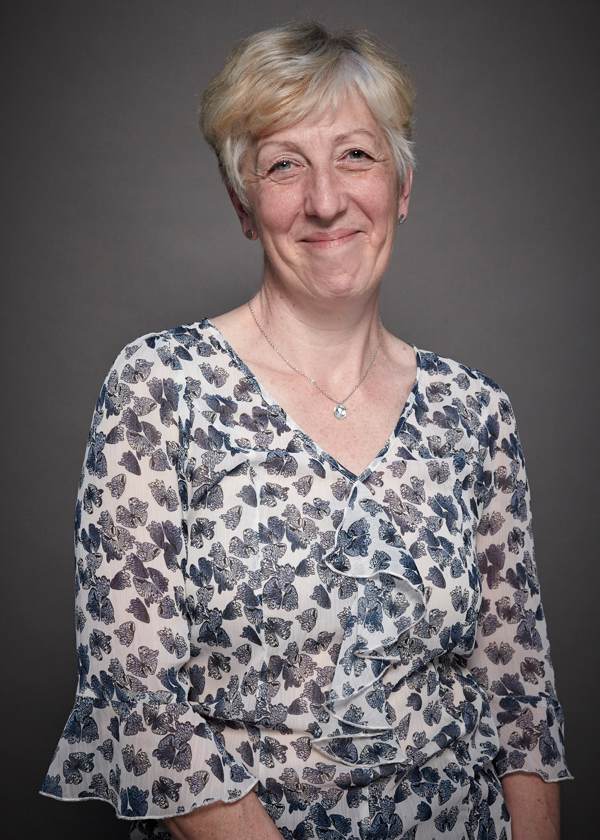
Jacky Chase (née Francom), 1971-1978
The things I remember most are the things they took us out to do – all the extracurricular activities, like the sport. I remember getting on the coach to go out to Buckhurst Hill for athletics and to the pool for swimming. The fact that, even though we were in the middle of a big city, they made provision for you was amazing.
Then the school trips – I remember going to Switzerland skiing and that was the first time I had ever been out of the country. To go with school friends, and teachers, and the have such a fabulous time was wonderful. To be able to experience other cultures and to be able to use some of our French, which we never thought we would have been able to do.
It was just everything that went with it, an all-round education – it wasn’t just academic stuff, it was everything else that we had the chance to see and do. We were taken to ballets, theatre and the opera. The chance to experience all that was just brilliant.

Joanne Veness, 1971-1976
I left just before my fifteenth birthday having taken my O levels and thinking that I had everything I needed to know about the world. I realise that I was very privileged to have had the education that I did. I didn’t make the most of it though. I remember most the camaraderie that we girls had, which continues on to this day. We still meet every three months or so and all the memories come out. If you’ve forgotten, there is someone who reminds you. Things like the big green knickers we wore for sports and being sick at the end of having tried to run the 800 metres. I am delighted and privileged to have gone to the school.

Miss Audrey Leary (Teacher of French, Spanish and a little bit of History for Nellie Holt)
I came to London from Ipswich in the early sixties. My History wasn’t very good, but I decided to do the Norman period and thought it would be a wonderful idea if the girls did a newspaper about the landing of the Normans. It was an absolutely awful idea but Nellie the Head of History let me do it – this would have been in 1961.
I went with the school when it went it moved in 1975. Elaine (Dunford) did a fabulous job of combining the two schools and we, the staff, got on so well together that it was a good experience all around. I was very apprehensive about coming today. I thought nobody would remember me and I wouldn’t recognise anybody, but one girl said, “Come over here and sit with us.” You were a lovely bunch of girls.
(Note: Miss Nellie Holt was a beloved Head of History, she was clever, funny and – true to say – a little eccentric.)

Reunion of 2014
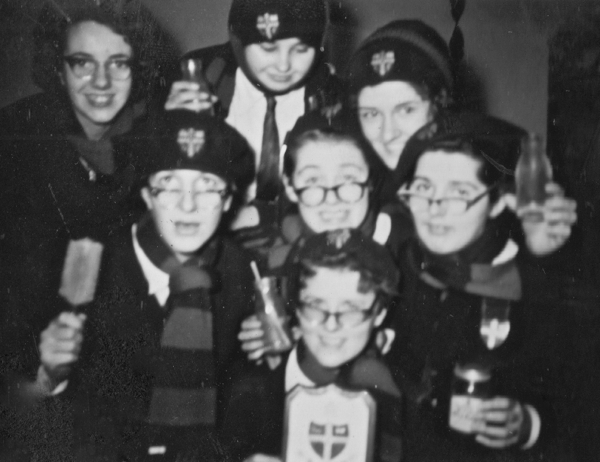
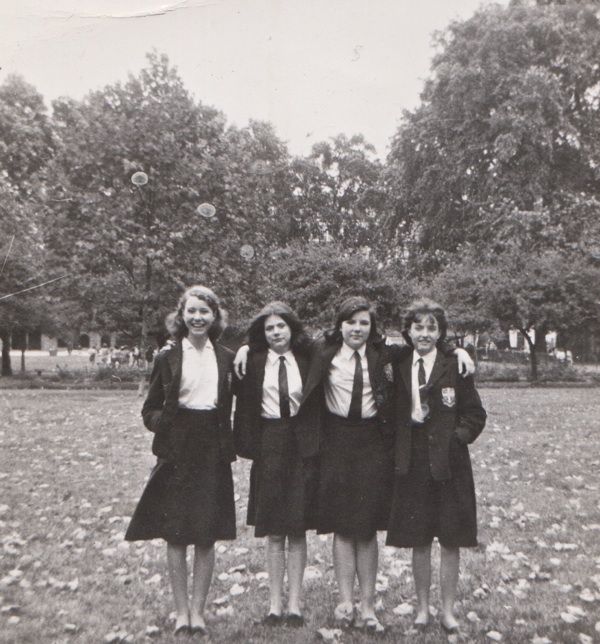
In the Prefect’s Room , Christmas 1958
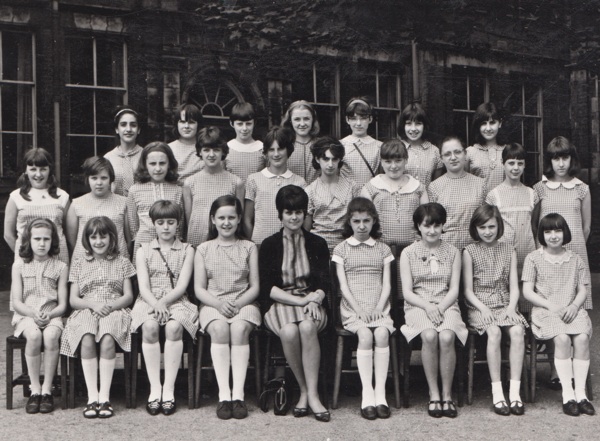
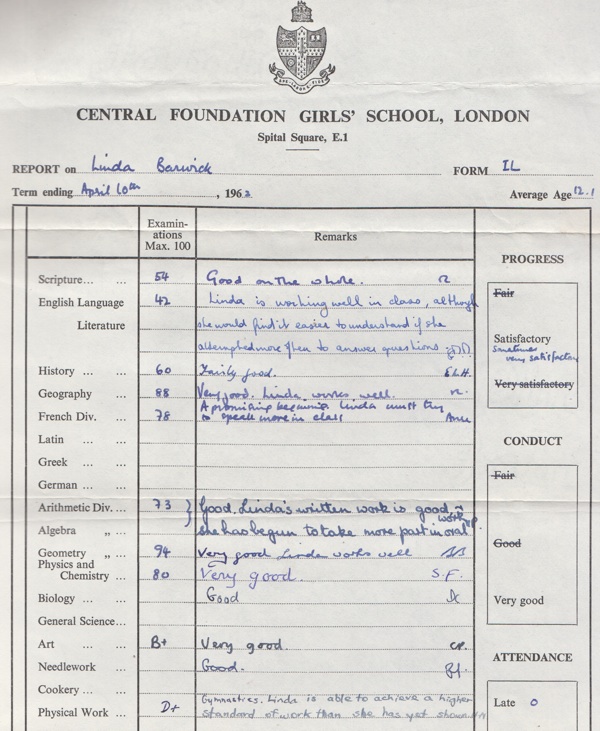
16th September, 1966
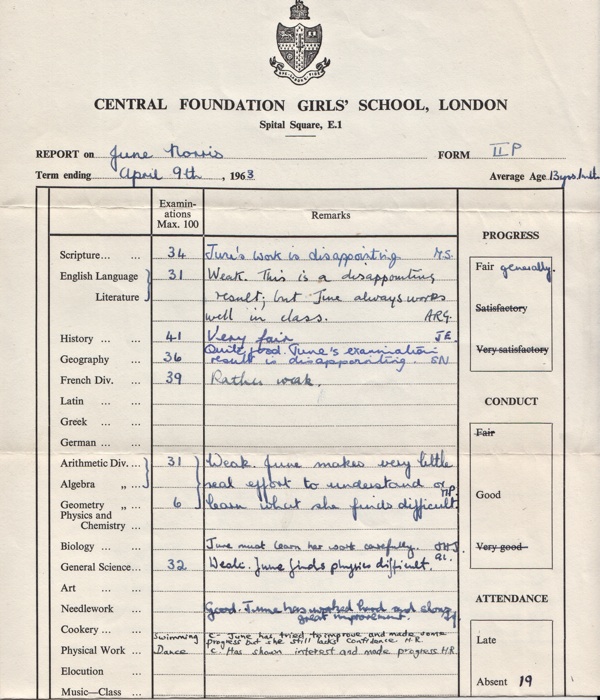
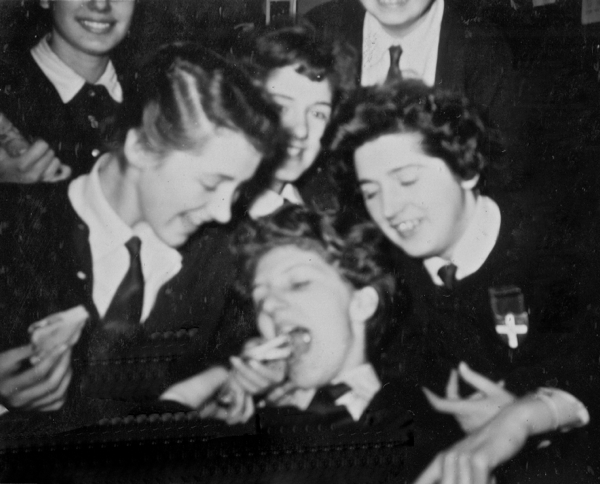
In the Prefect’s Room, Christmas 1958
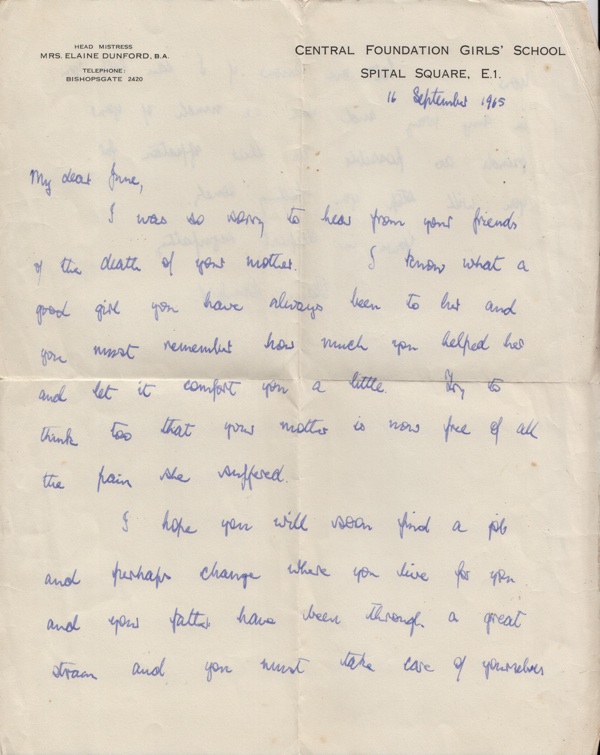
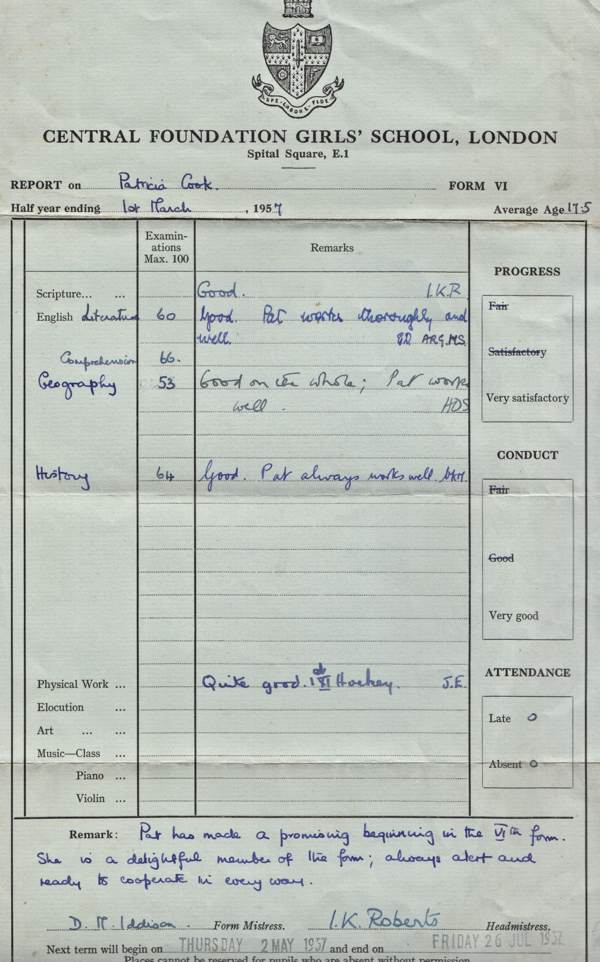
Letter from Headmistress Elaine Dunford to a pupil upon the death of their mother
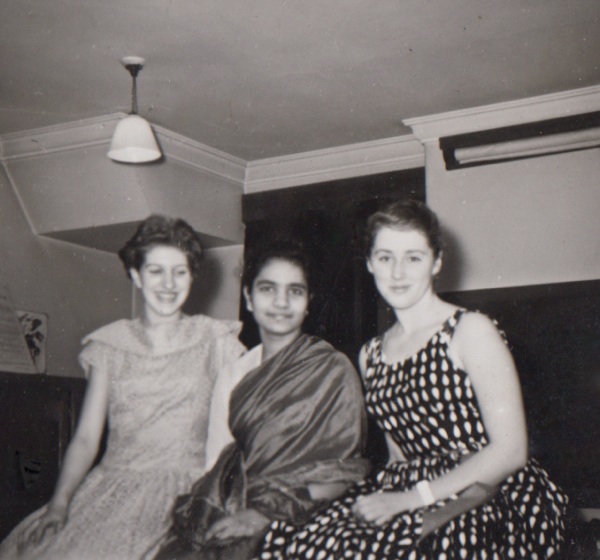
Bev, Sue & George in the Prefect’s Room, Christmas, 1958
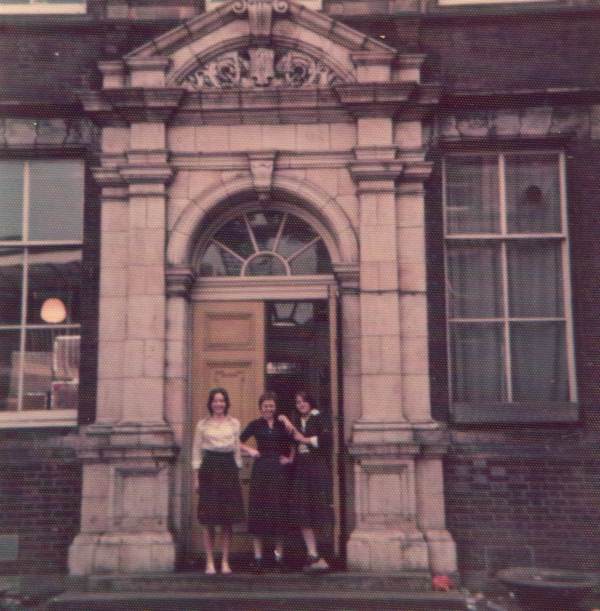
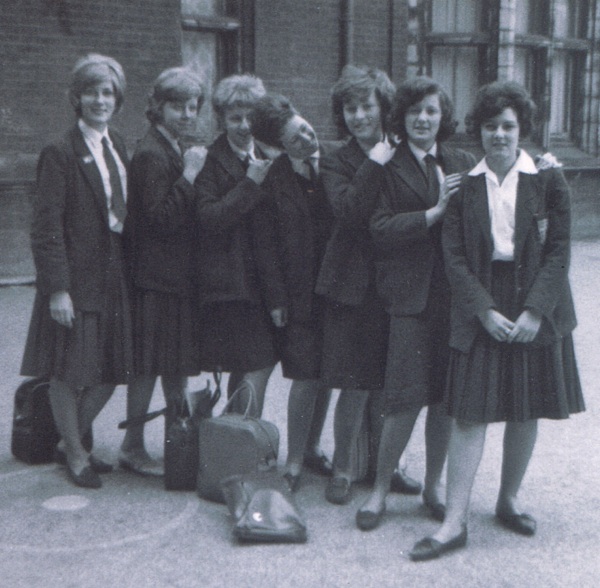
Photo taken on the day of the closing of Central Foundation School in Spital Sq 1975
Photographs copyright © Patricia Niven
The Bishopsgate Institute is collecting a digital archive of memorabilia from Central Foundation School for Girls. If you have photographs, reports, magazines or any other material that the Institute can copy for the archive, please contact the Archivist Stefan.Dickers@bishopsgate.org.uk
You may also like to read about
At The Central Foundation School for Girls in Spital Sq
The First Reunion of the Central Foundation School for Girls
You may recall last year it was my delight to collaborate with Beryl Happe in staging the first reunion of the Central School Foundation School for Girls at their former School Hall in Spital Sq which now houses the Galvin Restaurant.
This year there was also a Service of Thanksgiving at St Botolph’s, Bishishopsgate, and the tea party swelled from sixty to ninety guests with a long waiting list too. Today, writer Linda Wilkinson, ex-School Captain and celebrated author of two books about Columbia Rd, recalls her memories of Spital Sq. She and Contributing Photographer Patricia Niven went along to the reunion to create a series of portraits and interviews with the Old Girls that we will be publishing tomorrow.
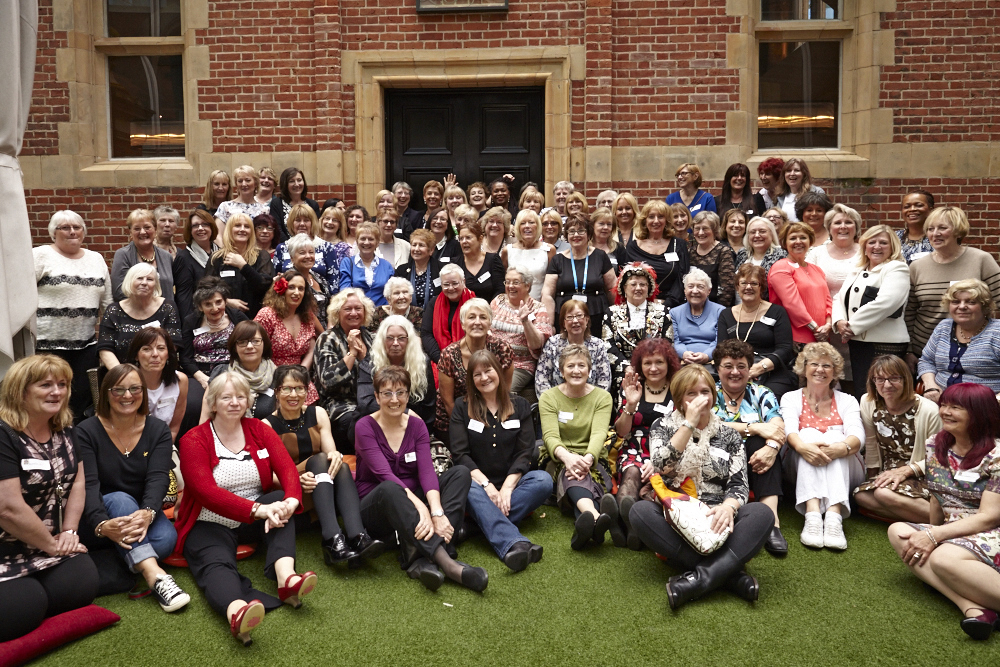
Reunion of 2014 (Click to enlarge)
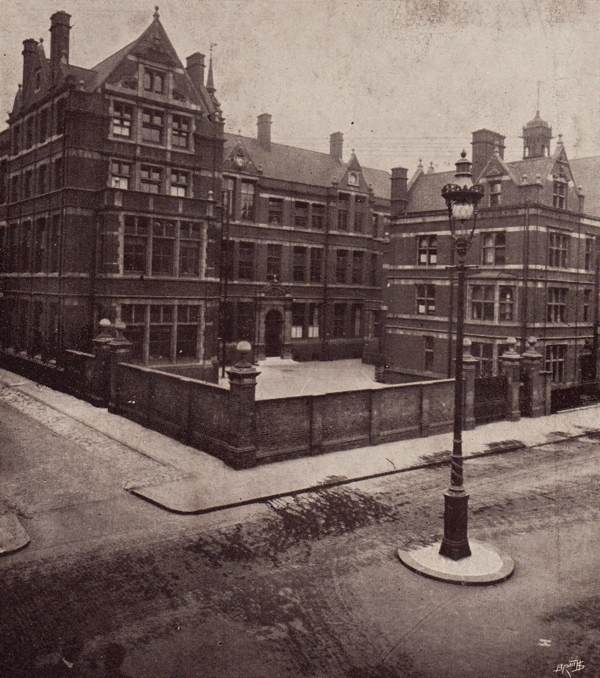
I had been away from Bethnal Green for twelve years when I moved back in 1986. One day on a walk through Spitalfields, I came across the shell of what was left of my old School Hall. Some things set in your mind as immutable, such was Central Foundation School for Girls. I went away and read about the valiant fight that had taken place to save the building but – as over the years it fell further into decrepitude – I felt something more should be done.
Some friends ran a drinks company, and we thought that we might buy it and turn it into a restaurant – so we contacted the agent who was handling the building and went to visit. Where the trampoline once stood, pigeons droppings had created their own strange artwork. The fabric of the roof was only kept watertight with a tarpaulin and the proud marble pillars were scratched and damaged – but the hole where I had managed to throw a shot put through the dais was still there.
We had no resources to take on such a task, so I walked away convinced that the bulldozers would finally remove all trace of it. Then, in 2009, a sign appeared stating that a restaurant was due to open there and I was delighted. There was a website so, being an Old Girl of the Central Foundation School and former School Captain, I wrote and offered to open the restaurant for them. A polite email from Sara Galvin of the restaurant management, asking me to write an article for their magazine about the school, firmly put me in my place.
I wrote my recollections and I got invited to the launch of the restaurant in my old School Hall. What I had not mentioned in my article was the ethos of the place and the staff, led by the headmistress Mrs Dunford – because we had a fabulous education there. I can say that Central Foundation School changed my life completely.
Yet my mother and father had been very chary of my desire to go to Spital Sq, as it was known locally. At the pre-entry interview with the Headmistress, my mother was frosty when she was quizzed as to my suitability to attend. On being asked what the problem was she said, “It’ll worry her brain. All that learning.”
Mother was politely asked to sit outside.
“Well, Linda dear,” Elaine Dunford said, “And what do you think?”
My brain survived.
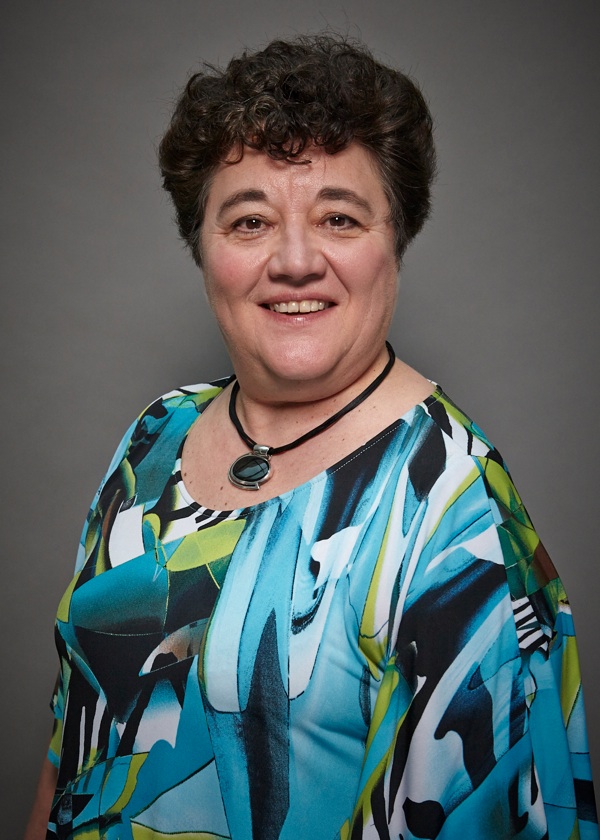
RECOLLECTIONS OF CENTRAL FOUNDATION SCHOOL by Linda Wilkinson
Grace Crack was like the rest of us, a bright kid from London’s East End, with one exceptional quality – she utterly loathed going to school. One day before a Bank Holiday, she rammed the ball cock in the main tank of the school wide open. How she had managed to climb into the loft space was never revealed, but we imagine Grace had accomplices.
When the housekeepers returned to open up after the break they were met by a torrent of water. The school was comprehensively flooded, and this being a Grammar School, and if my memory serves me correctly, Grace was similarly comprehensively expelled.
At one time, it was a fee paying school and by the mid-twentieth century it still retained a few students whom, we were told, were private pupils. I cannot vouch for this but some of the girls commuted from as far away as Orpington in Kent so I imagine it was true.
The rest of us were a motley bunch. Many were Costermongers’ daughters from the almost-exclusively Jewish markets that peppered the area. The biggest of those of course was Spitalfields Fruit & Vegetable Market, then on our very doorstep. In summer, the smell of rotting vegetables perfumed the air. In winter, tramps settled around bonfires on the almost derelict Spital Sq. It was eerie to come across this Dickensian aspect of London when the swinging sixties was at its height.
Our teachers were a mixture of bright young things, the first real batch of the post-war generation and the old guard. All of this was overseen by the elegant and free spirited headmistress, Elaine Dunford, a wonderful teacher both of English and of life itself.
The old guard had some notables, amongst them Miss Jenkins. She was a brogue and tweed wearing harridan in her sixties who taught biology. She told us that she and her brother were two of the products of human breeding experiments between the Huxleys and Darwins. If so, eccentricity was their main product but she was also a great teacher and could bring science alive in a way I have seldom come across since.
Miss Russell (“roll the ‘R’ dear”) was rumoured to be Bertrand Russell’s sister. She took on the task of removing our glottal stops with true brio. Elocution was not something most of us had bargained for when we got into the school. We all knew we had to do Latin, which I loathed almost as much as Grace had hated school, but standing on a table reciting “I am a little Christmas Tree,” when I was the chubbiest in the class never filled me with glee. Even if turning us ‘Gels’ into ladies was a bit more of a trial than Miss Russell had expected, she never wavered. Yet, later in life, when public speaking became part of my life, I was more than grateful to that tiny bird-like woman whom at the age of fourteen I found faintly ridiculous.
Ranged on the other side of the staff room were the Communists. To a woman, the younger teachers espoused a red philosophy. No more so than when the 1968 Paris riots erupted and a good few of them upped and went over to join in. At the start of the next new term, we were encouraged to stand and applaud as they processed down the Hall with their bandages and plaster casts worn for all to see, like a political version of ‘Chariots of Fire’.
I shall never forget the poor plumber who came to unblock the drain beneath the sink in the caretaker’s utility room and was seen running screaming from the school with Mr Reeves, the caretaker, in hot pursuit carrying a human skull. “Come back, it’s bound to be Roman,” he cried. The school was built on a Roman burial site.
It was a fun and sometimes challenging schooling. I sometimes wonder how the present day doyens of education would react to a history lesson being halted whilst the teacher told us of yet another failed attempt to have sex the night before. It certainly beat Alexander the Great or the Punic Wars as a topic.
So our Hall is now a restaurant, a fitting use for a place that has seen a lot of life, fun and laughter over the years. It is a shame that Old Girl Georgia Brown (Lilian Klopf), who was the first ever Nancy in Lionel Bart’s ‘Oliver!’ is not alive to entertain us there.
As for Grace Crack, she was rumoured to have emigrated.
The Bishopsgate Institute is collecting a digital archive of memorabilia from Central Foundation School for Girls. If you have photographs, reports, magazines or any other material that the Institute can copy for the archive, please contact the Archivist Stefan.Dickers@bishopsgate.org.uk
You may also like to read about
The First Reunion of the Central Foundation School for Girls
John Thomas Smith’s Old London Cries
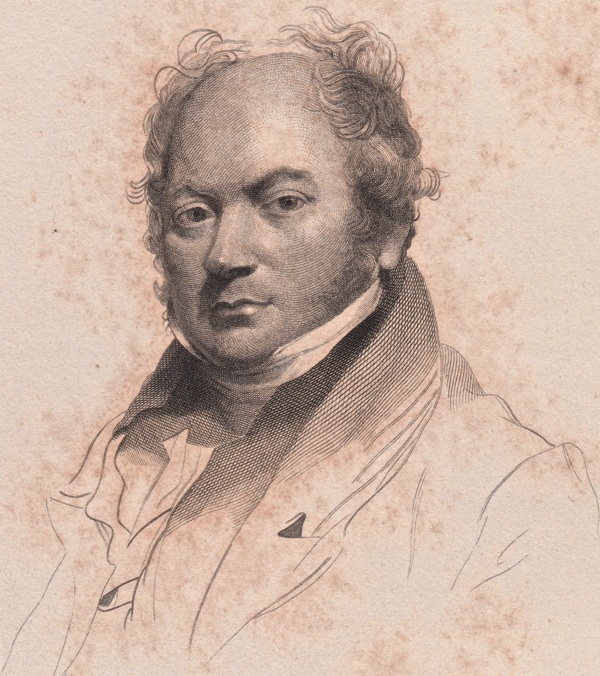
John Thomas Smith also known as ‘Antiquary Smith’ (1766–1833)
My interest in the Cries of London originally stemmed from writing about the market traders in Spitalfields and thus I was fascinated to discover that – two hundred years ago – John Thomas Smith drew the street hawkers in London and it led him to look back at images from earlier centuries too. Similarly, Samuel Pepys collected prints of the Cries of London of his own day and from the past, which makes me wonder about my illustrious predecessors in this particular cultural vein and whether they also shared my passion for these prints as the only historical record of the fleeting street life of our ancient city.
A colourful character who claimed to have been born in the back of a Hackney carriage, John Thomas Smith became keeper of prints at the British Museum and demonstrated a superlative draftsmanship in his vivid street portraits – with such keen likenesses that, on one famous occasion, his subjects became suspicious he was working for the police and chased him down the street in a mob. The prints shown here are Smith’s drawings of prints from the seventeenth century which especially appealed to him, and that he discovered in the course of his work as an archivist.
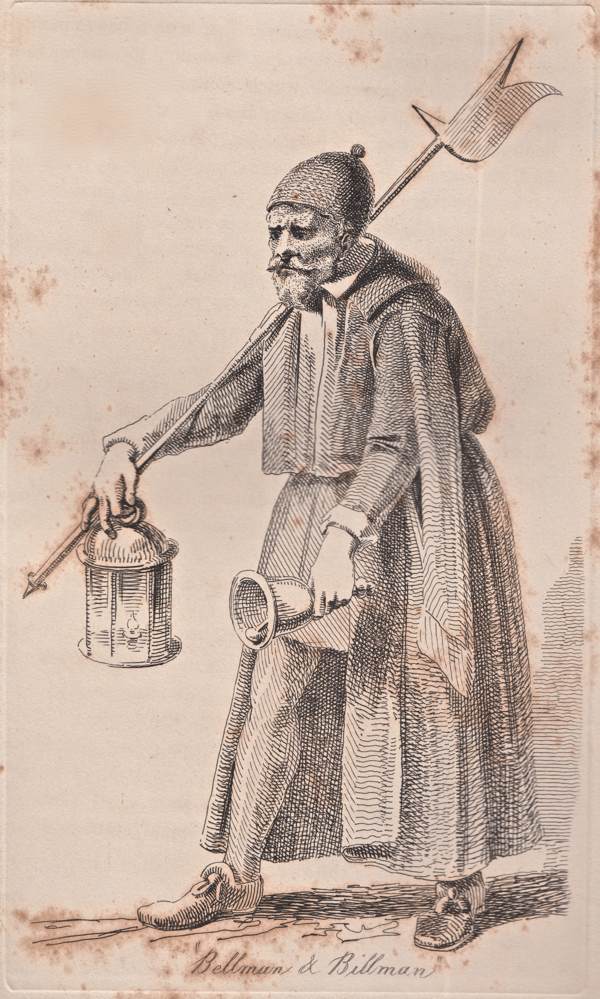
Bellman (Copied from a print prefixed to ‘Villanies discovered by Lanthorne and Candlelight’ by Thomas Dekker 1616)
“The Childe of Darkness, a common Night-walker, a man that had no man to wait upon him, but onely a dog, one that was a disordered person, and at midnight would beate at men’s doores, bidding them ( in mere mockerie) to look to their candles when they themselves were in their dead sleeps, and albeit he was an officer, yet he was but of light carriage, being known by the name of the Bellman of London.”
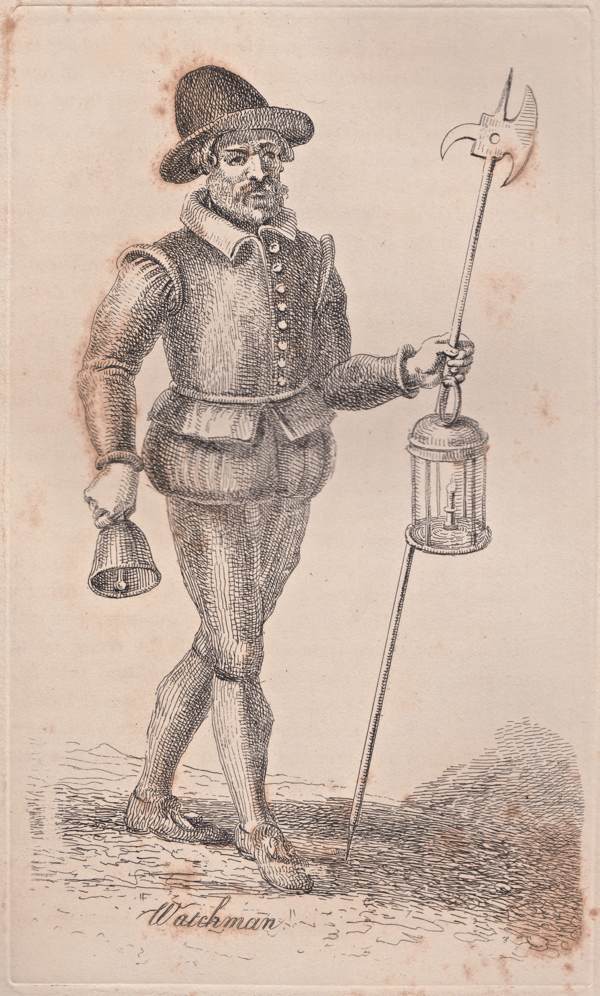
Watchman (Copied from a woodcut sheet engraved at the time of James I)
“The marching Watch contained in number two thousand men, part of them being old souldiers, of skill to be captaines, lieutenants, serjeants, corporals &c. The poore men taking wages, besides that every one had a strawne hat, with no badge painted, and his breakfast in the morning.”
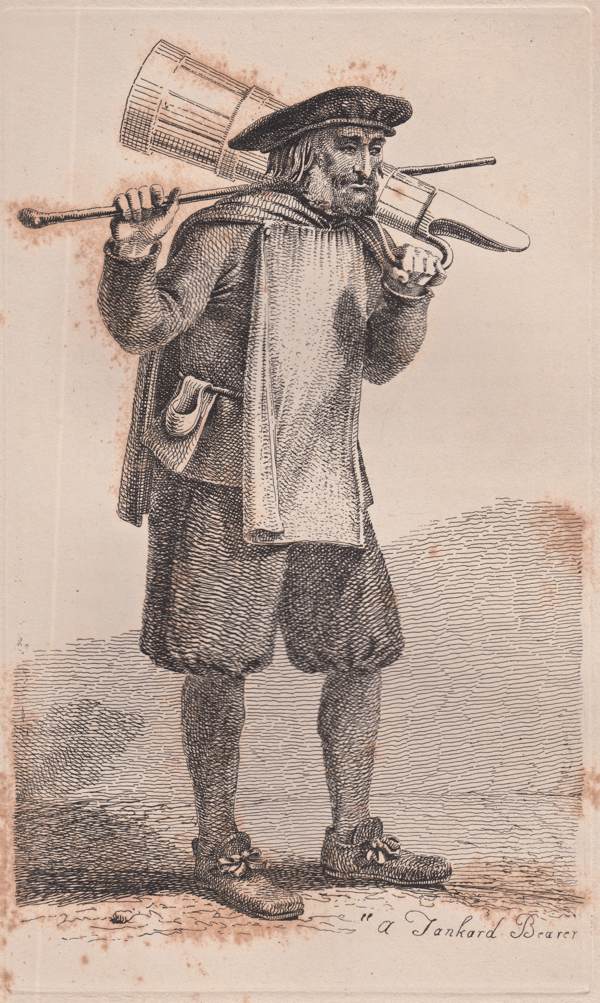
Water Carrier (Copied from a set of Cries & Callings of London published by Overton)
“When the conduits first supplied the inhabitants, there were a number of men who for a fixed sum carried the water to the adjoining houses. The tankard was borne upon the shoulder and, to keep the carrier dry, two towels were fastened upon him, one to fall before him and the other to cover his back.”
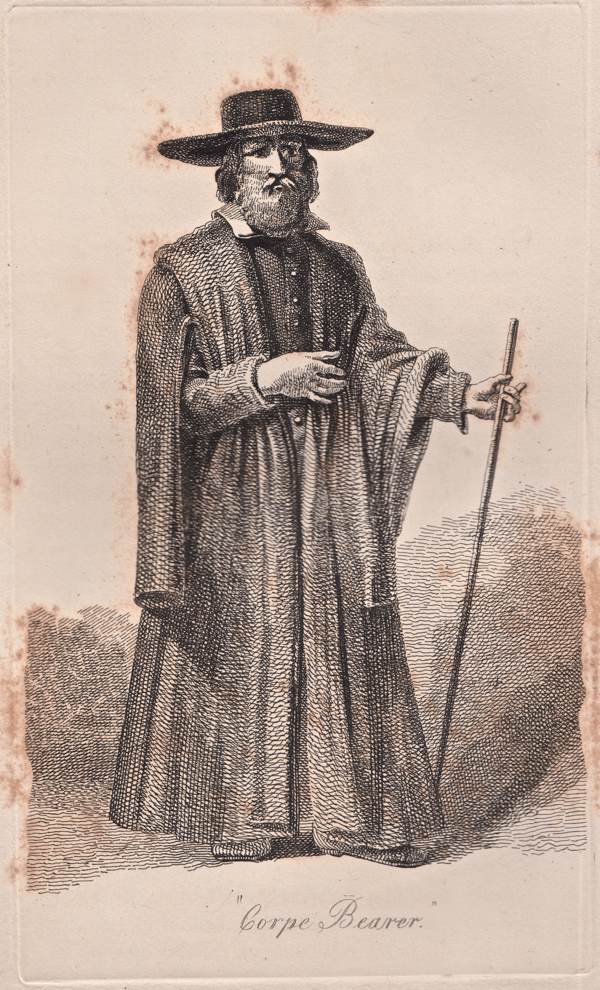
Corpse-Bearer
“When the Plague was at its height, it was the business of the Corpse-Bearers to give directions to the Car-Men who went through the City with bells, which they rang at the same time crying, ‘Bring out your Dead.'”
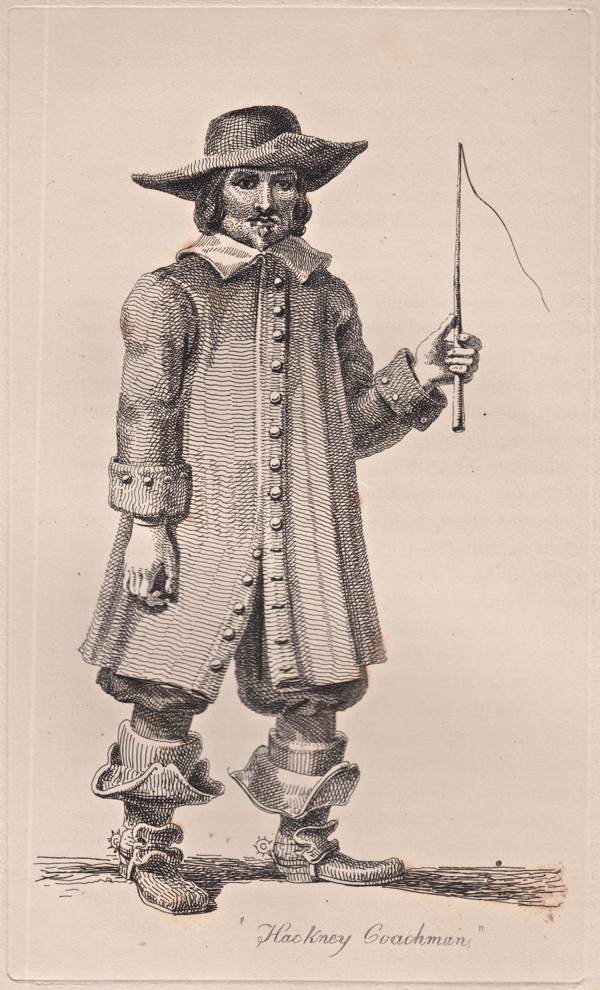
Hackney Coachman (Copied from a print published by Overton in the reign of Charles II)
The early Hackney Coachman did not sit upon the box as the present drivers do, but upon the horse, like a postilion – his whip is short for that purpose, his boots which have large open broad tops, must have been much in the way when exposed to the weight of the rain. His hat was pretty broad and so far he was screened from the weather. In 1637, the number of Hackney Coaches in London was restricted to fifty but by 1802 it was eleven hundred.”
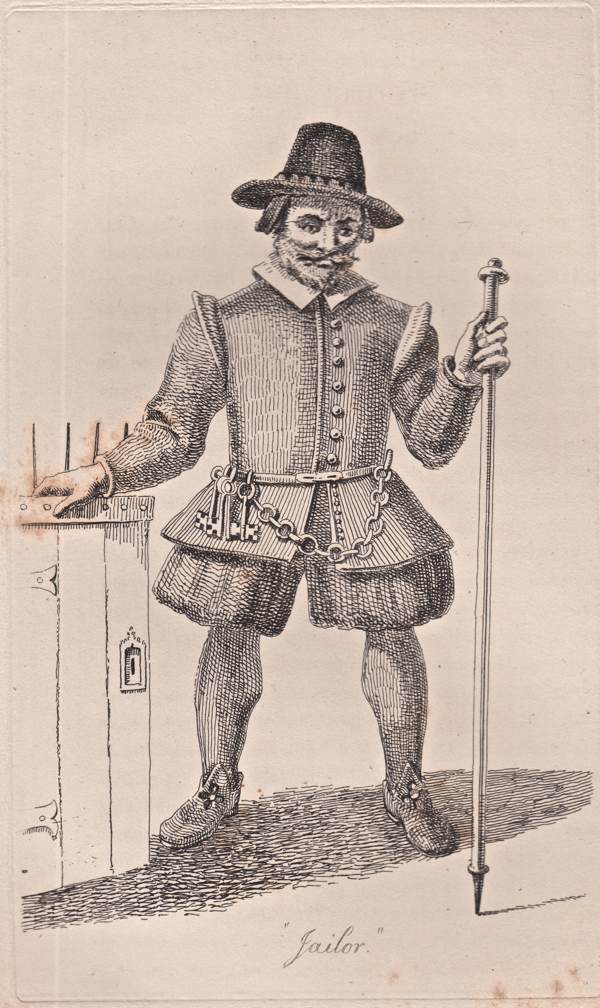
Jailor (Copied from Essayes & Characters of a Prison & Prisoners by Geffray Mynshul of Grays Inn, 1638)
“If marble-hearted Jaylors were so haplesse happy as to be mistaken and be made Kings, they would, instead of iron to their grates, have barres made of men’s ribs.”
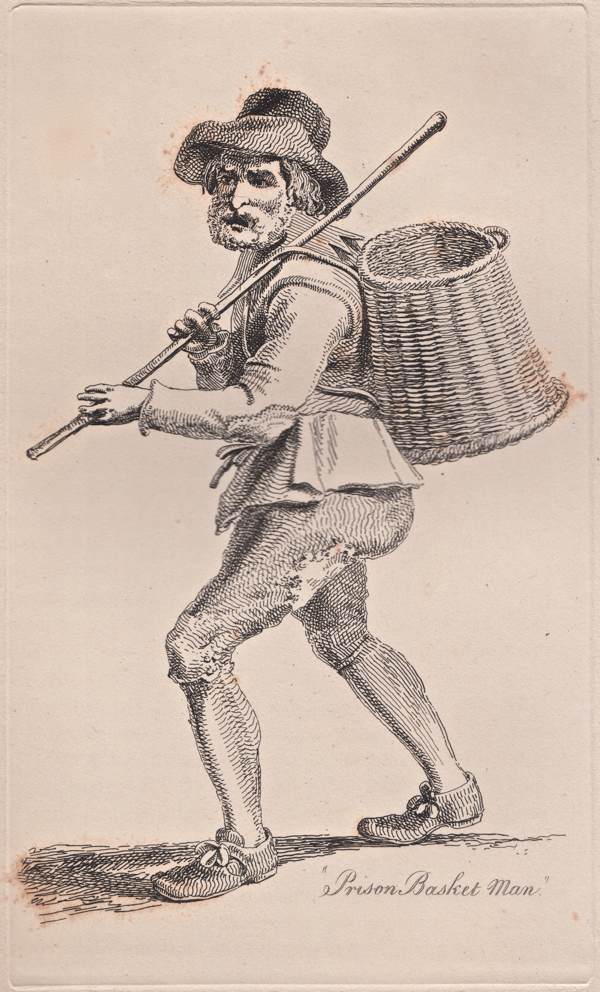
Prison Basket Man (Copied from a print published by Overton in the reign of Charles II)
“One of those men who were sent out to beg broken meat for the poor prisoners. This custom which perhaps was as ancient as our Religious Houses has long been done away by an allowance of meat and bread having been made to those prisoners who are destitute of support. It was the business of such men to claim the attention of the public by their cry of ‘Some broken breade and meate for ye poore prisonors! For the Lord’s Sake, pitty the poore!'”
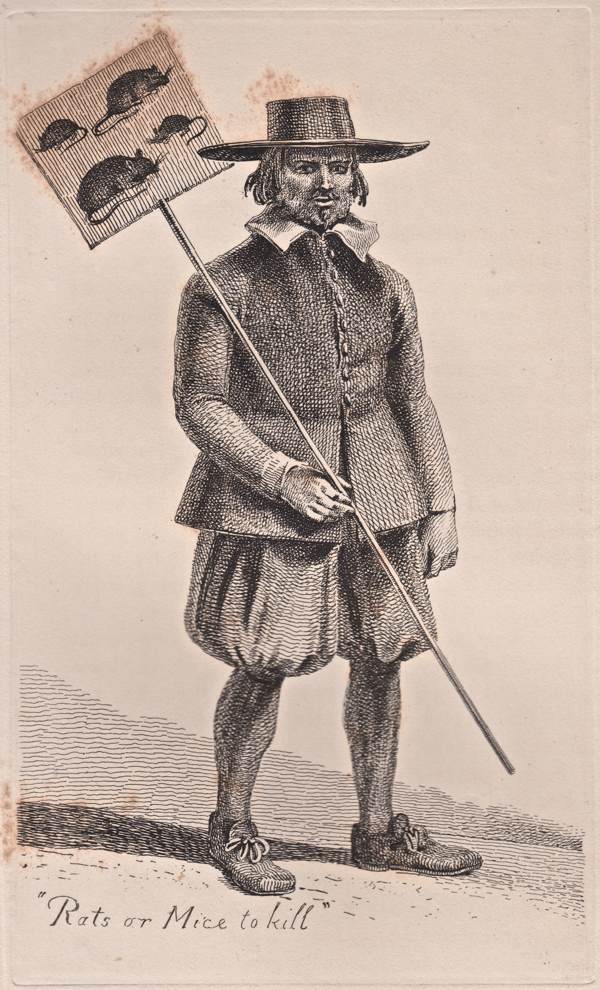
Rat Catcher (Copied from Cries of Bologna, etched by Simon Guillain from drawings by Annibal Carracci, 1646)
“There are two types of rats in this country, the black which was formerly very common but is now rarely seen, bring superseded by the large brown kind, called the Norway rat. The Rat Catcher had representations of rats and mice painted upon a square cloth fastened to a pole like a flag, which he carried across his shoulder.”
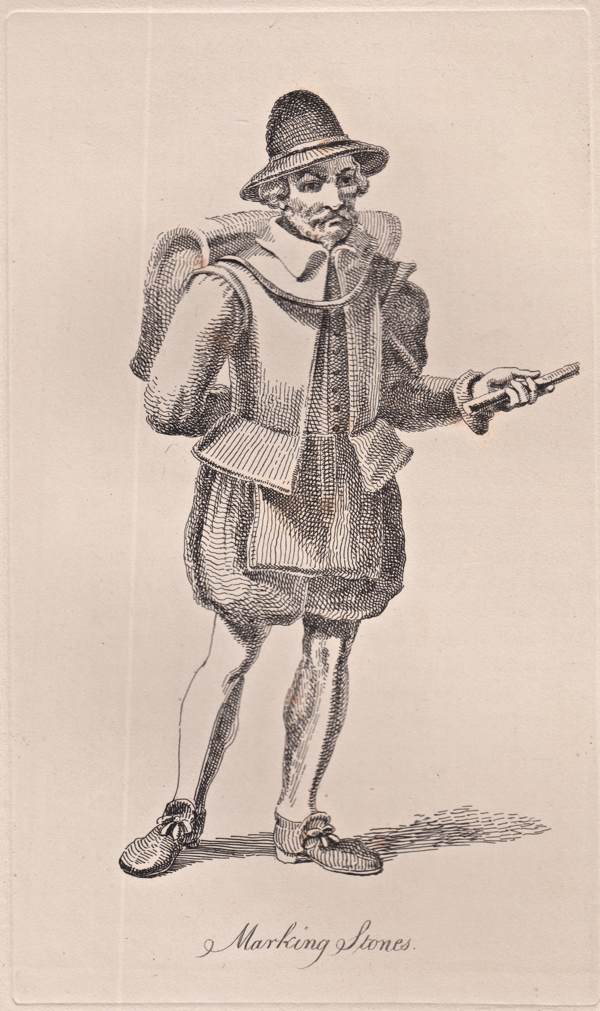
Marking Stones (Copied from a woodcut engraved in the time of James I)
“The marking stones were either of a red colour or comprised of black lead. They were used in the marking of linen so that washing could not take the mark out.”
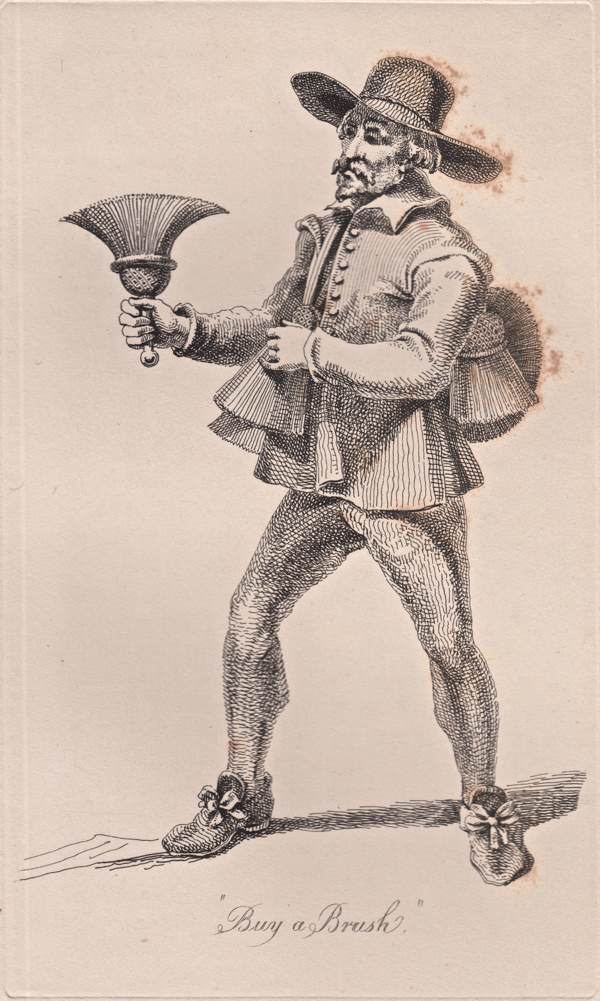
Buy A Brush (Copied from a print published by Overton in the reign of Charles II)
“In those days, floors were not wetted but rubbed dry, even until they bore a very high polish, particularly when it was the fashion to to inlay staircases and floors of rooms with yellow, black and brown woods. These floors were rubbed by the servants who wore the brushes on their feet and they are in some instances so highly polished that they are dangerous to walk upon.”
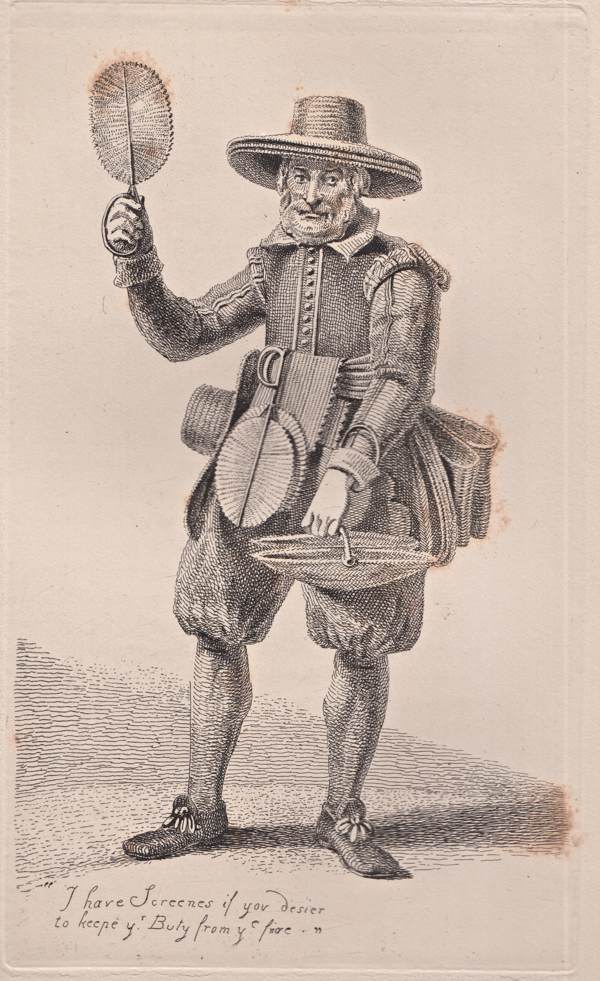
Fire Screens (Copied from a print published by Overton in the reign of Charles II)
“It appears from the extreme neatness of this man and the goods which he exhibits for sale, that they were of a very superior quality, probably of foreign manufacture and possibly from Leghorn, from whence hats similar to those on his head were first brought into England”
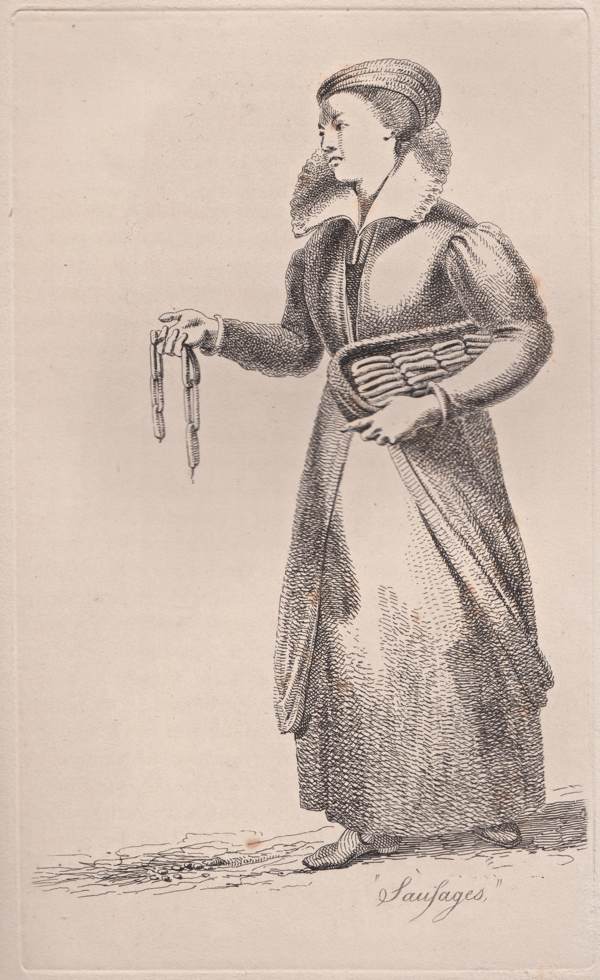
Sausages (Copied from a print published by Overton in the reign of Charles II)
“The pork shops of Fetter Lane have been for upwards of one hundred and fifty years famous for their sausages, but those wretched vendors of sausages who cared not what they made them of in cellars in St Giles were continually persecuting their unfortunate neighbours, to whom they were as offensive as the melters of tallow, bone burners, soap boilers and cat gut cleaners.”
Take a look at John Thomas Smith’s drawings of nineteenth century street traders
Herb Lester’s Pub Crawl
My old friend Herb Lester – who published the Map of Spitalfields Life a few years ag0 – took me on a pub crawl recently in celebration of his new guide book A London Pub For Every Occasion and here are Herb’s annotations, with helpful excuses for visiting a few favourite ports of call.
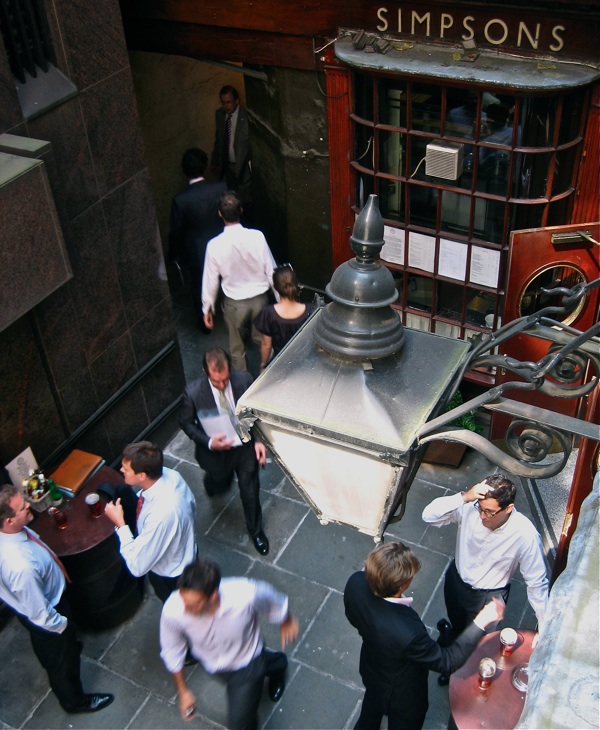
“Because it’s never too early”
Simpson’s Tavern, Ball Court, 38½ Cornhill, City of London
If breakfast in a tavern appeals but perhaps without the aroma of last night’s slops, at this remarkably unaltered eighteenth-century establishment you can tuck in to a full English (Cumberland sausage, bacon, black or white pudding, egg, mushrooms, tomato, baked beans and unlimited toast), porridge or simple poached eggs, and order your sharpener from the separate bar area. Of course, coffee and tea are also available, but it’s nice to know the option’s there.
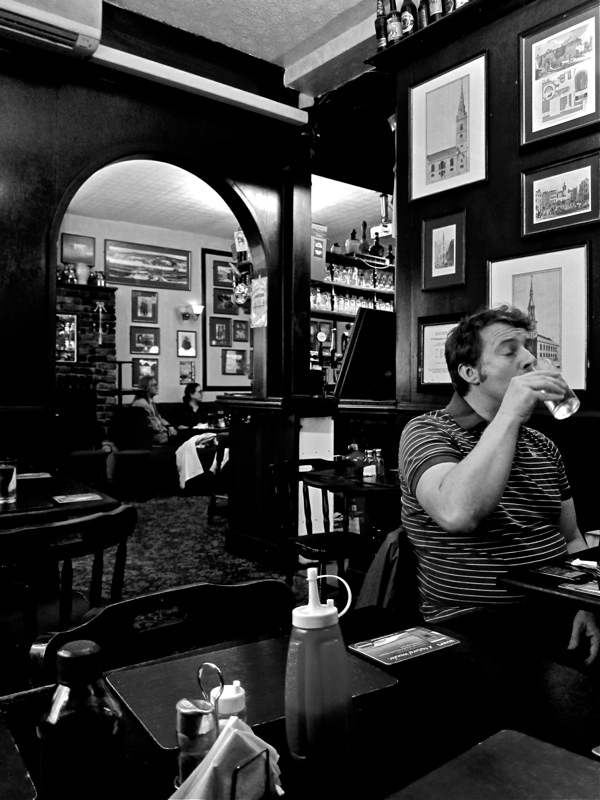
“Because we like the cat”
The Pride of Spitalfields, 3 Heneage St, Spitalfields
At the southern end of Brick Lane, just where the curry house barkers are at their most vociferous, is a small turning and, after a few paces, this retreat. As worn and comfortable as an old pair of slippers, the interior is lived-in and unfussy, the ale excellent, and the presence of Lenny, a large and unflappable feline, only adds to it appeal. It’s small, with one main bar and a room off to the right, and it can get crowded – not such a bad thing in a place as convivial as this.

“Because it’s not what it seems”
The Crown & Sugar Loaf, 26 Bride Lane, Fleet St
To all appearances, a small but stunning time warp Victorian pub with mosaic tiled floor, fireplace, marble bar, etched mirrors all around and leaded windows. Cushioned benches line the wall facing the bar, and there are tables and chairs too, with plenty of room for standing. With no TV or music and an overwhelmingly male clientele, it really does feel it’s from another time, all of which makes its history more interesting. Originally part of the neighbouring Punch Tavern on Fleet St, this only dates from 2004 and its wonderful interior is new and salvaged.
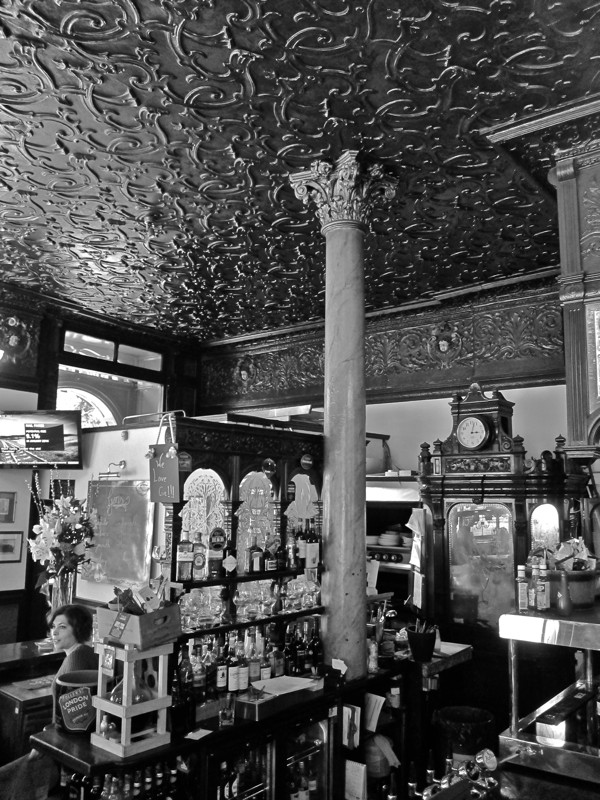
“Because it’s beautiful”
The Viaduct Tavern, 126 Newgate St, Newgate
Should you find yourself staggering from the Old Bailey in need of a stiff drink, fortification is available directly opposite in this stately semi-circular Victorian pub, constructed at the eastern end of Holborn Viaduct. Those in more contemplative mood may pause to take in the etched glass, gilded mirrors, three paintings of sorrowful maidens and abundant carved woodwork. The pub’s original separate drinking areas are long gone, but one rare surviving feature is an elegant booth of etched glass and carved wood at the back of the bar that would have been used as an office of sorts by the landlord.
“Because there’s nowhere quite like it”
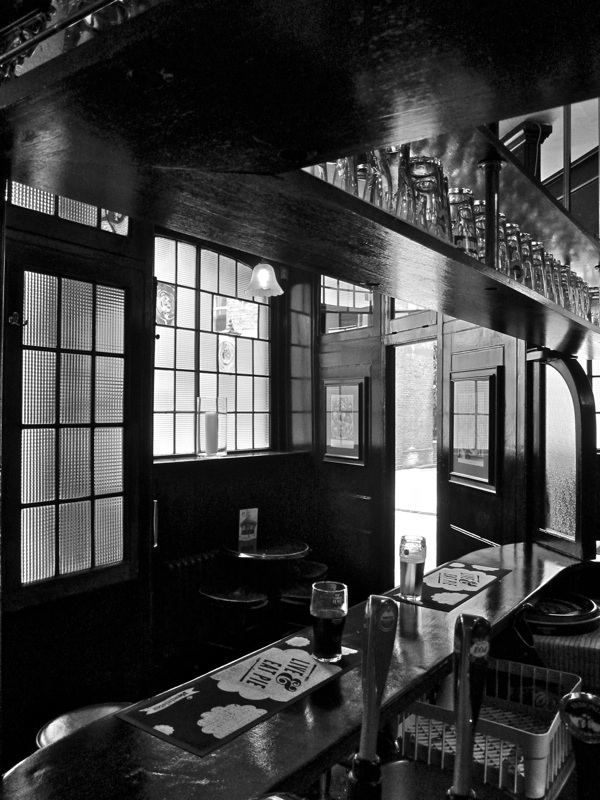
The Hand & Shears, 1 Middle St, Cloth Fair, Smithfield
The owners of this wonderful little pub have made the wise decision to hold on to its three distinct bars – public, saloon and private, the latter large enough to accommodate a table of three and perhaps six standing, and there’s even a snug too. Despite its modest size, it has the feeling of a being a place to explore, with more doors than seems possible for so small a space. A friendly and attentive landlord with a taste for interesting ales only adds to its appeal, as does its location on Cloth Fair, a street so lovely even Sir John Betjeman chose to live here, at number 43.
“Because it’s beautiful”
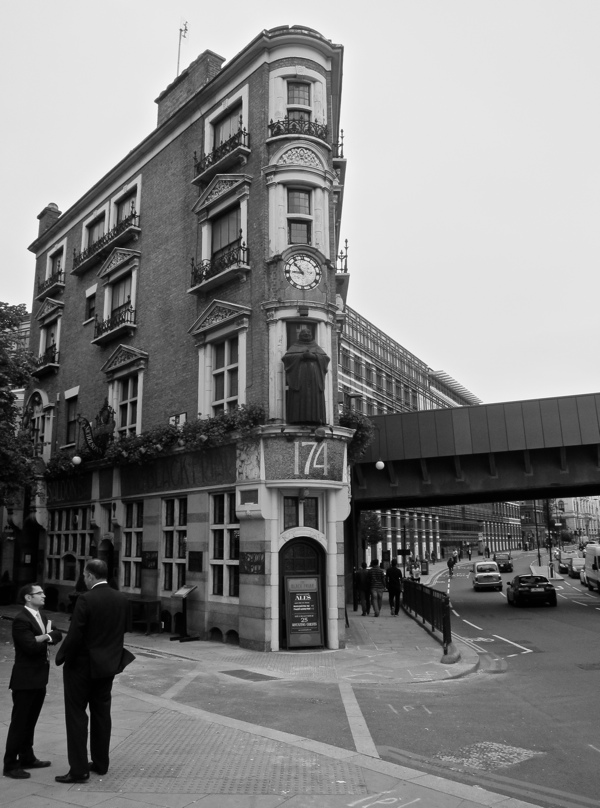
The Blackfriar, 174 Queen Victoria St, Blackfriars
Among the many reasons we have to be grateful to John Betjeman is the survival of this wonderful public house, an opulent art nouveau monument that is merely glorious from the street but quite overwhelming once inside. The interior has a honeyed glow, almost ecclesiastic in atmosphere, with elaborate tile work, copper and plaster friezes, and everywhere disconcertingly jolly monks looming, ‘both holy and leering’, as one observer noted. It’s best visited in the morning or afternoon to avoid the lunch and after-work crowds that can hinder one’s appreciation.
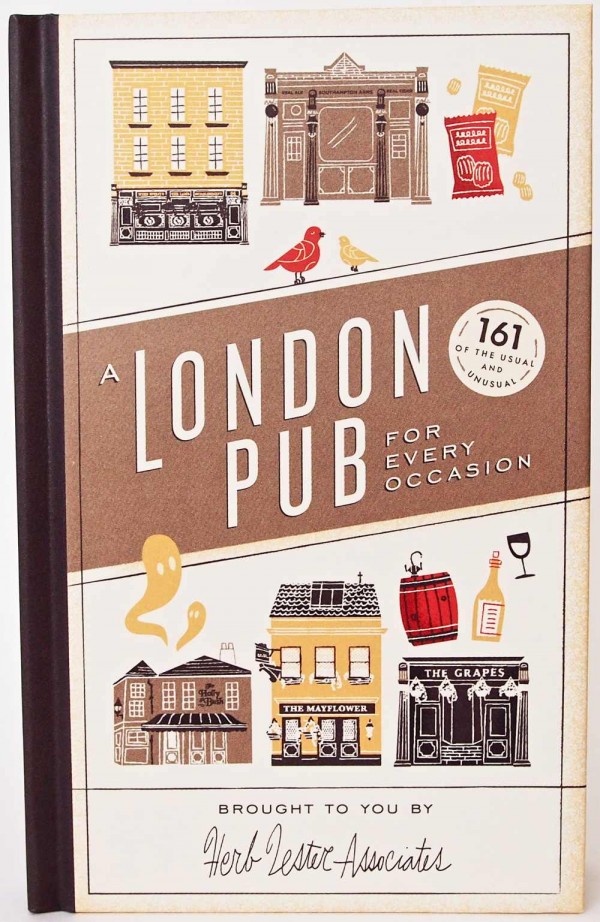
Click here to buy a copy of Herb Lester’s A PUB FOR EVERY OCCASION for £10
You may also like to take a look at
The Gentle Author’s Next Pub Crawl
The Gentle Author’s Spitalfields Pub Crawl
The Gentle Author’s Dead Pubs Crawl
The Gentle Author’s Next Dead Pubs Crawl
The Gentle Author’s Wapping Pub Crawl
At John Keats’ House
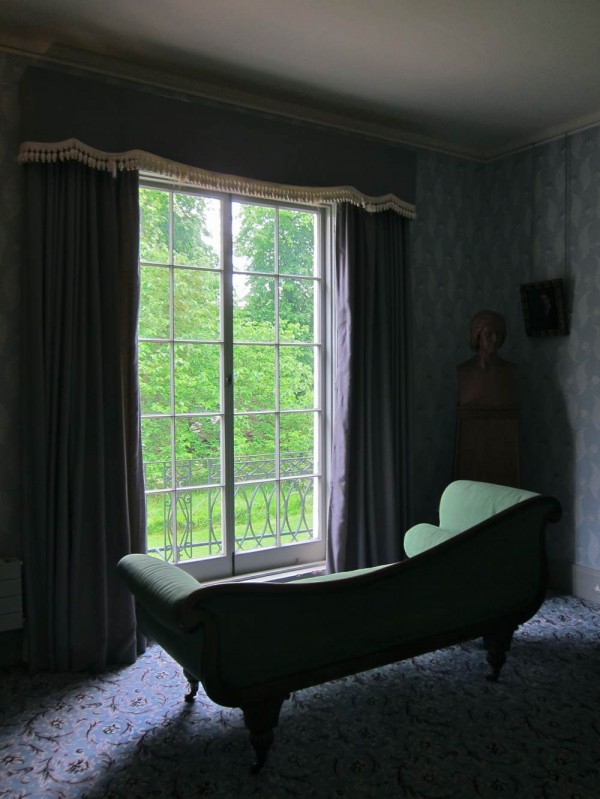
“Much more comfortable than a dull room upstairs, where one gets tired of the pattern of the bed curtains” – Keats was moved to this room on 8th February 1820 at the onset of tuberculosis
I set out yesterday with the intention to photograph the morning sunshine in John Keats’ study at his house in Hampstead. Upon my arrival, the sky turned occluded yet I realised this overcast day was perhaps better suited to the literary history that passed between these walls two centuries ago. The property was never Keats’ House in any real sense but, rather, where he had a couple of rooms for eighteen months as a sub-let in a shared dwelling.
Born in a tavern in Moorgate in 1795, where the Globe stands today, and baptised at St Botolph’s Bishopsgate, John Keats was ridiculed by John Gibson Lockhart in Blackwood’s magazine in 1817 for being of the ‘Cockney School,’ implying his rhymes suggested working class speech. Qualifying at first as an Apothecary and then studying to be a Surgeon, in 1816 John Keats sacrificed both these professions in favour of poetry. “It is a better and a wiser thing to be a starved Apothecary than a starved Poet, so back to the shop Mr John, back to plasters, pills, and ointment boxes,” wrote Lockhart condescendingly, but Keats was not dissuaded from his chosen path.
Early on the morning of 1st December 1818, after passing the night nursing his brother Tom through the terminal stage of tuberculosis at 1 Well Walk, Hampstead, John Keats walked down the hill to the semi-detached villas known as Wentworth Place to visit his friend Charles Armitage Brown. He invited Keats to move in with him, sharing his half of the house and contributing to the household expenses.
John Keats’ arrival at Wentworth Place was also the entry to a time when he found love with Fanny Brawne, who moved in with her mother to the other half of the villa, as well as his arrival at the period of his greatest creativity as a poet. It was a brief interlude that was brought to an end in early 1820 when Keats discovered he had tuberculosis like his brother, from whom he had almost certainly contracted the infection.
Within three weeks of moving in, Keats suffered from a severe sore throat and worried for his own health as he struggled to complete his epic ‘Hyperion,’ yet his spirits were raised by an invitation for Christmas from Mrs Brawne at Elm Cottage and the growing attachment to her daughter Fanny, whom he had previously described as “animated, lively and even witty.”
In April, the tenants vacated the other part of Wentworth Place and Mrs Brawne moved in with her daughters, which meant that John Keats met the eighteen-year-old Fanny Brawne continuously in the gardens that surround the house. At any moment, he might glance her from the window and thus their affection grew, leading to the understanding of an engagement for marriage between them. This romance coincided with a flowering of creativity on Keats’ part, including the composition of of his celebrated ‘Ode to a Nightingale,’ inspired by hearing the nightingale sing while on a walk across Hampstead Heath
Yet Keats spent the summer away from Hampstead, visiting the Isle of Wight, Winchester and Bath, while engaging in an emotionally-conflicted correspondence with Fanny and pursuing the flow of poetic composition that had begun in the spring. Although Keats wrote to Brown of his attraction to return to Fanny, admitting “I like and cannot help it,” perversely he took rooms in Great College St rather than moving back to Wentworth Place. But on Keats’ return to Hampstead to collect his possessions on 10th October, Fanny Brawne opened the door to him and he was smitten by her generosity and confidence, and his hesitation dissolved. He moved back to Wentworth Place almost at once and presented Fanny with a garnet ring, even though he could not afford to marry.
Living in such close proximity to the object of his affection led Keats to adopt a vegetarian diet in the hope of lessening his physical desire. During the long harsh winter that followed, Keats was often isolated at Wentworth Place by heavy snow and freezing fog, making only occasional trips down to London to visit literary friends. Catching a late coach back to Hampstead, Keats had left his new warm coat behind at Wentworth Place and sat on the top of the coach to save money. Descending in Pond St, Keats felt feverish but, by the time he reached Wentworth Place, he was coughing blood and realised he had suffered a lung haermorrhage. Yet he wrote that all he could think of was, “the love that has been my pleasure and torment.” He was twenty-four years old.
At first Mrs Brawne tried to keep Fanny and John Keats apart in the tiny house and he wrote her twenty-two letters in six weeks, but it proved impossible to sustain the separation and she permitted her daughter to visit him every day while he was recuperating. Keats could not see her without recognising that death would separate them and he wrote a poem entitled ‘To Fanny’ in recrimination against himself.
The tragedy of the situation was compounded when Brown, Keats’ landlord, decided to lease his part of Wentworth Place, forcing Keats to leave in the spring. At the beginning of May, he moved to cheaper lodgings in Kentish Town, still within a mile of Fanny Brawne. In July, ‘Hyperion’ was published but by then he realised was living in the shadow of death and told a friend he was suffering from a broken heart.
In August, Keats went to Wentworth Place in distress and laid himself upon the mercy of Mrs Brawne, who took him in and permitted him to live under the same roof as her daughter for a few weeks before he travelled to Italy for his health. On Wednesday 13th September 1820, John Keats walked with Fanny Brawne from Wentworth Place to the coach stop in Pond Place and they said their last farewells. Fanny went home and wrote “Mr Keats left Hampstead” in her copy of the Literary Pocket Book that he gave her for Christmas 1818. They did not meet again and Keats never returned to Wentworth Place, dying in Rome on 23rd February 1821.
Within decades, the railway came to Hampstead and then the tube train, and the village became a suburb. An actress bought Wentworth Place, redeveloping it by combining the two houses into one and adding a large dining room on the side. In 1920, the house was threatened with demolition to make way for a block of flats. However, funds were raised to restore the house as a memorial to Keats. Thus you may visit it today and enter the place John Keats and Fanny Brawne fell in love, and where he wrote some of the greatest poems in our language.
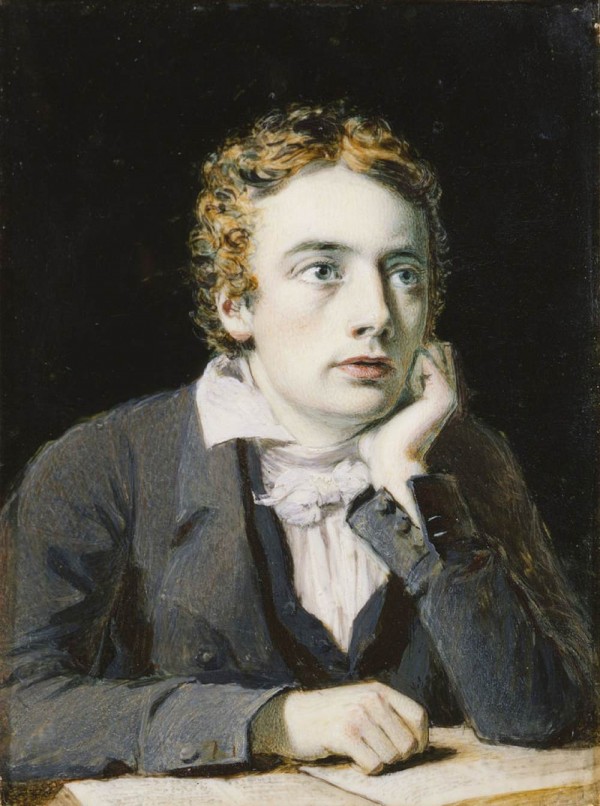
John Keats in 1819 when he lived at Wentworth Place
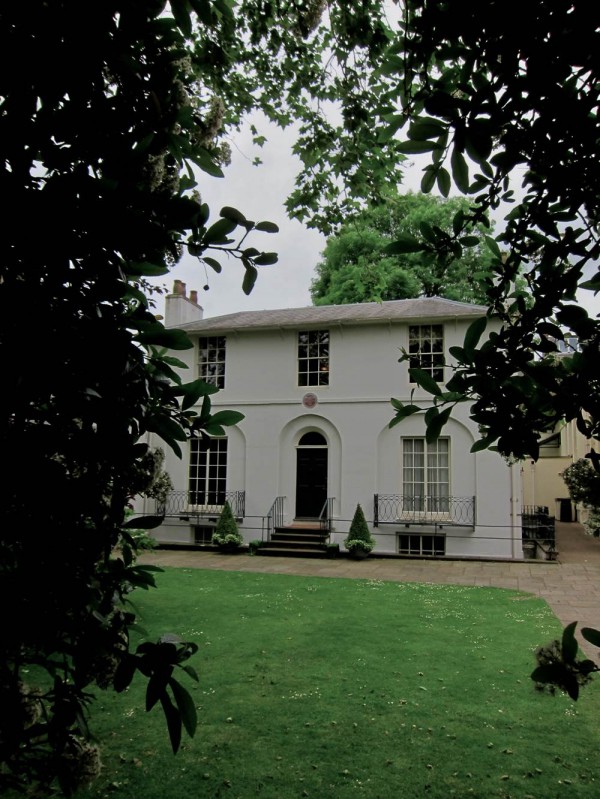
Wentworth Place, completed 1816 as one of the first houses to be built in Lower Hampstead Heath
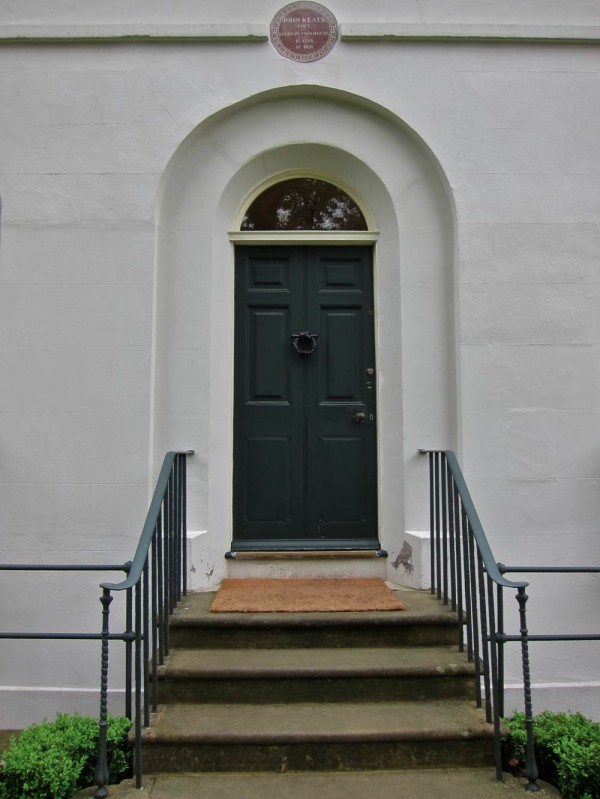
John Keats lived here
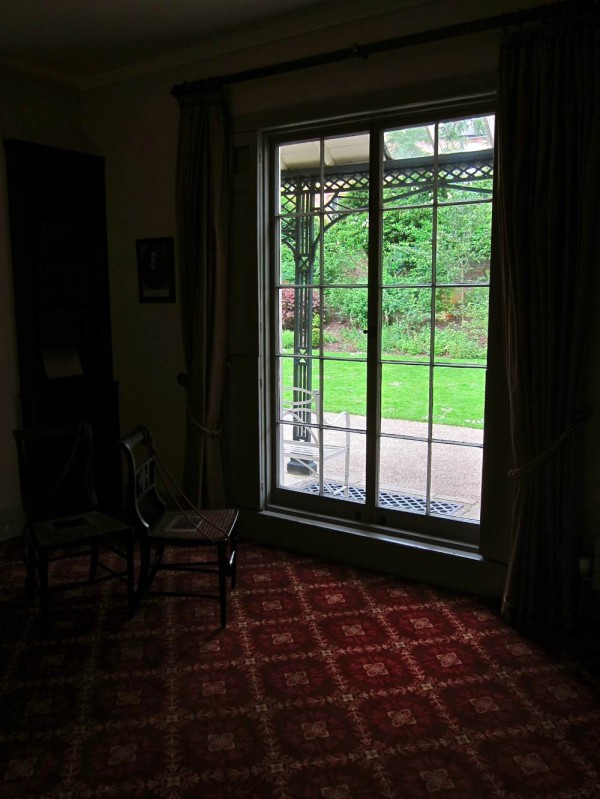
In John Keats’ study
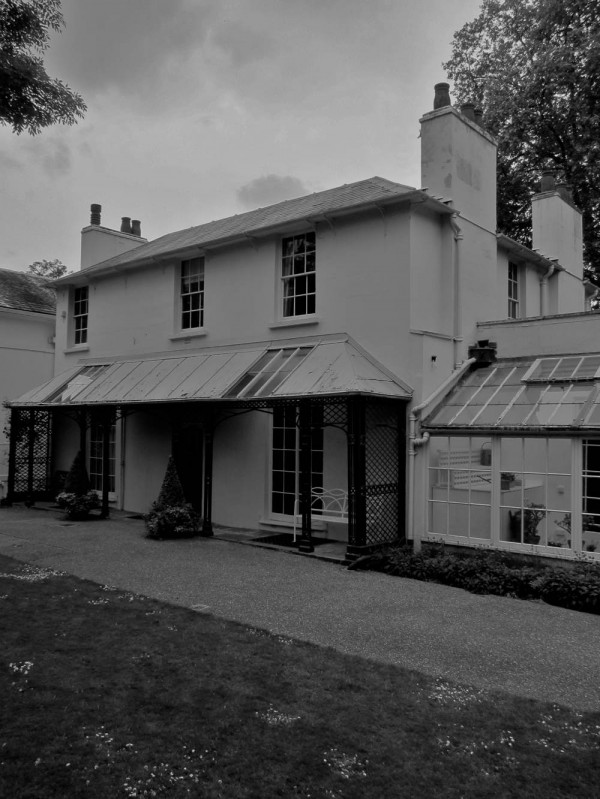
The right hand room on the ground floor was John Keats’ study and the room above was his bedroom
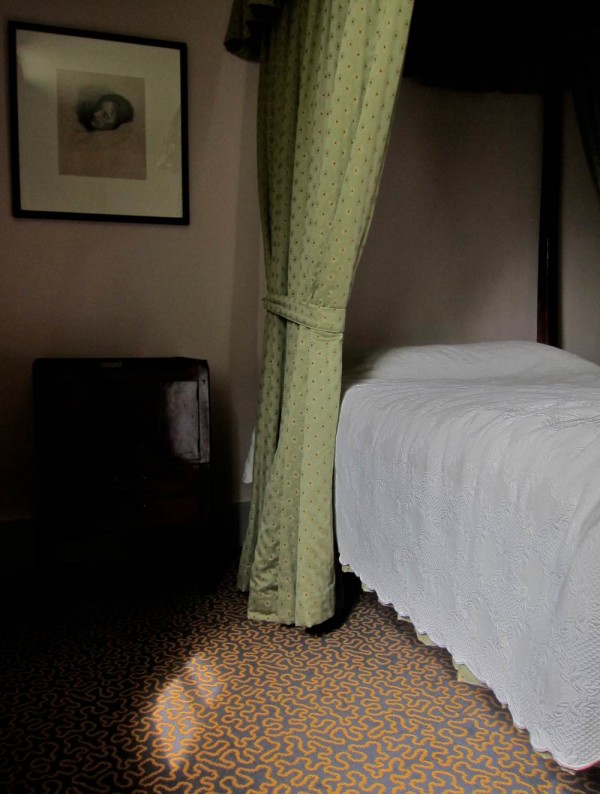
Keats’ room where he learnt he had tuberculosis which had killed his brother Tom a year earlier
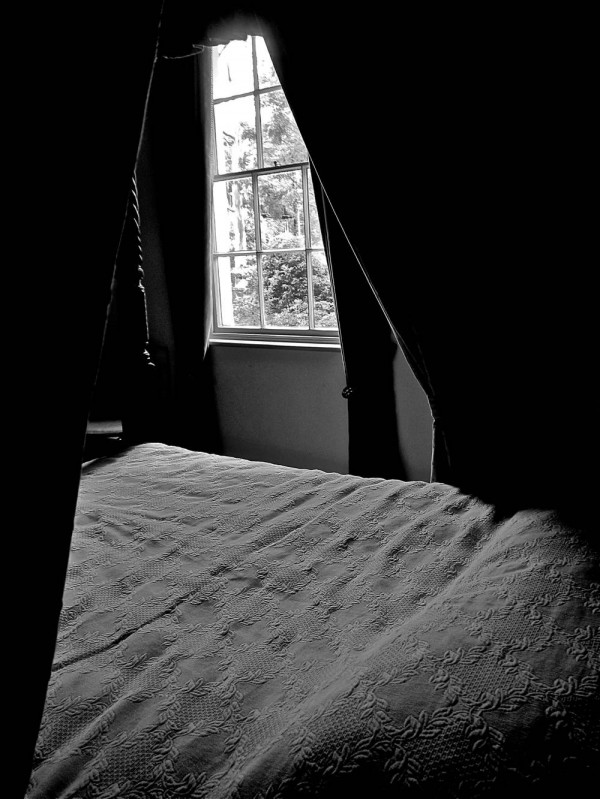
“Dearest Fanny … They say I must remain confined to this room for some time. The consciousness that you love me will make a pleasant prison of the house next to yours.” 4th February, 1820
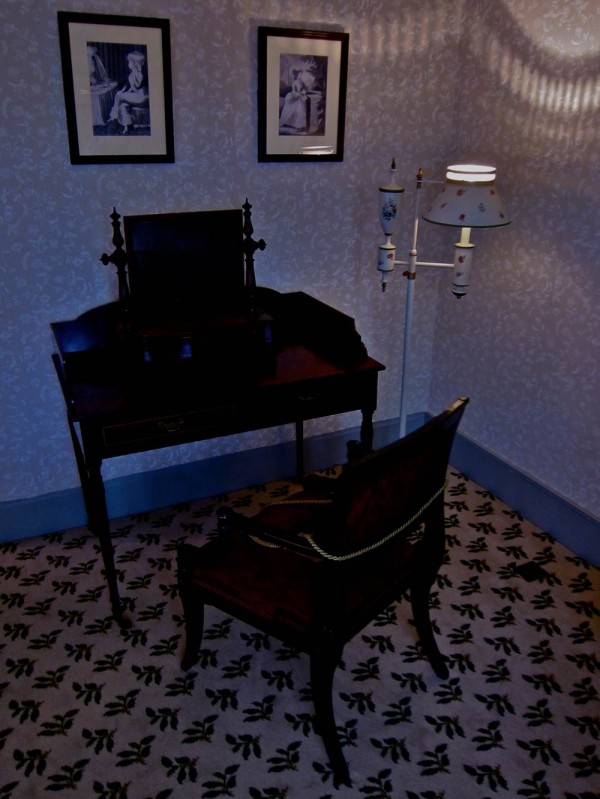
In Fanny Brawne’s room
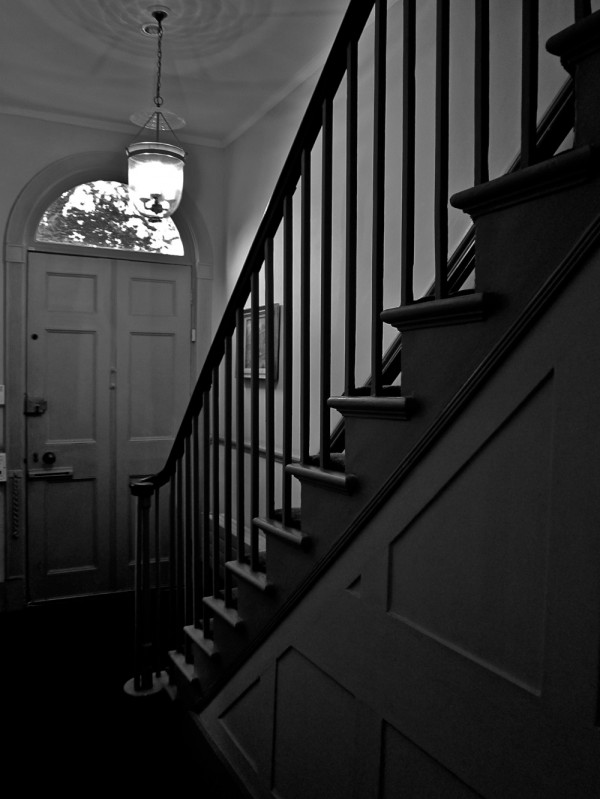
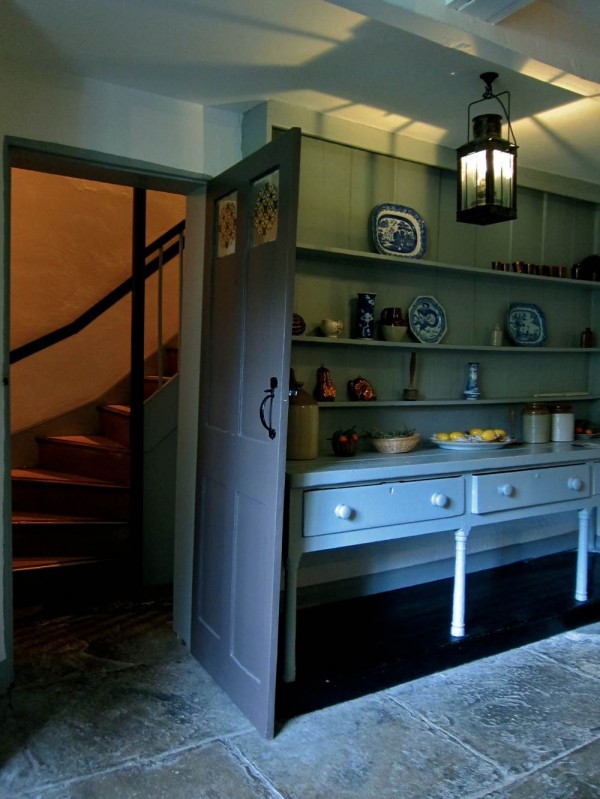
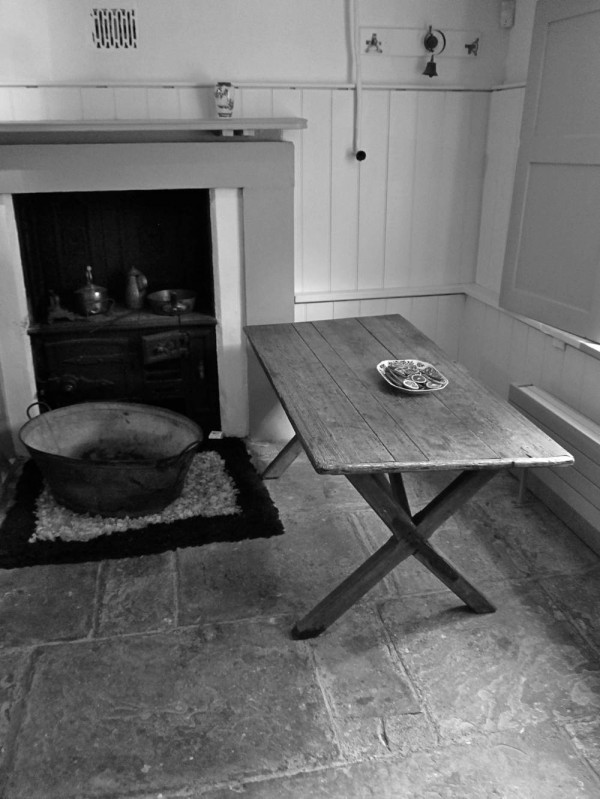
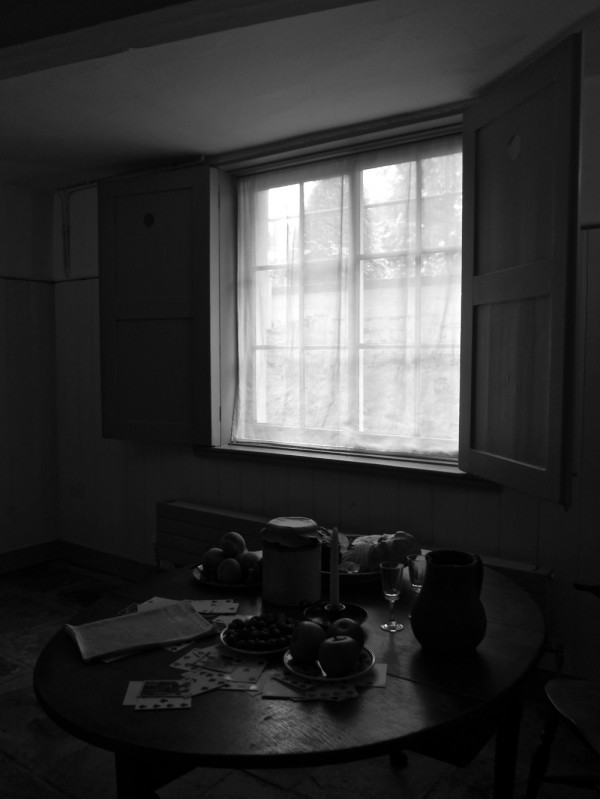
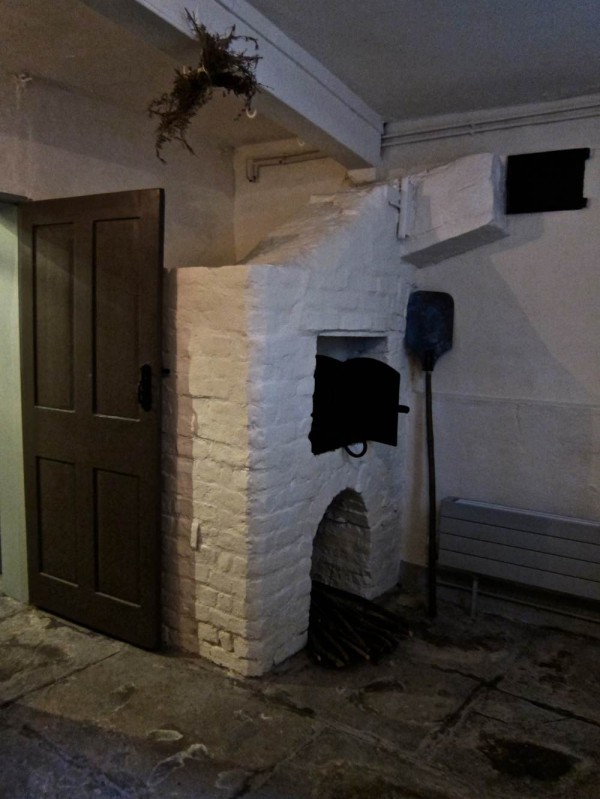
The boiler for hot water. The house had no running water which had to be brought from the pump.
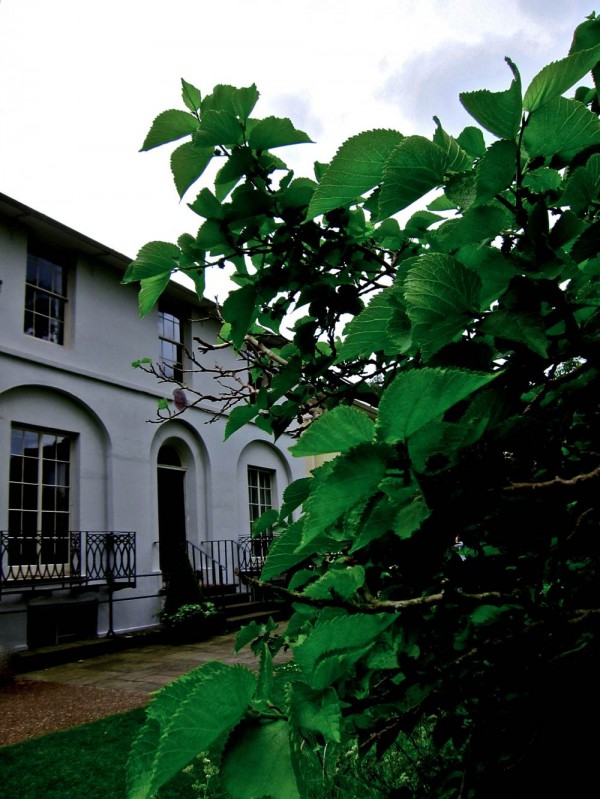
The Mulberry tree is believed to have been planted in the seventeenth century and predates the house.
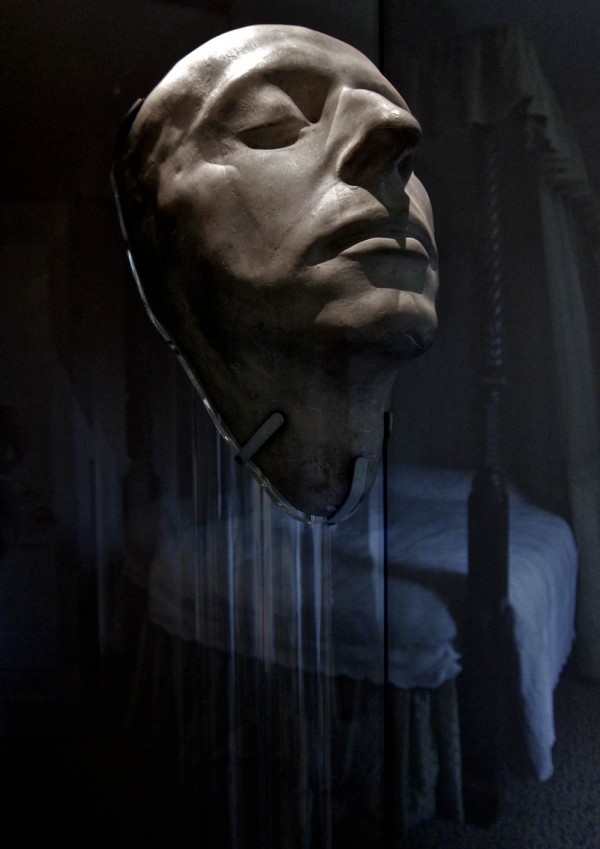
The death mask in John Keats’ bedroom at Wentworth Place
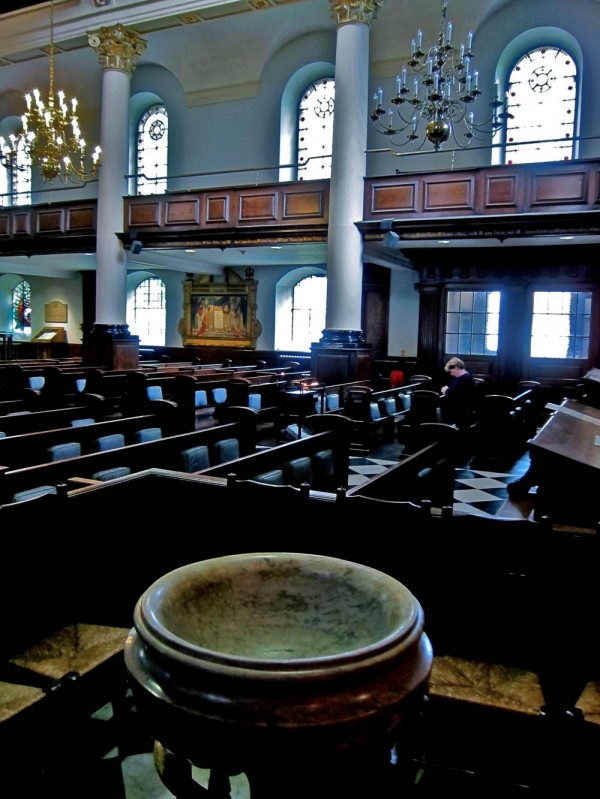
The font at St Botolph’s, Bishopsgate, where John Keats was baptised in 1795
Visit Keats House, Keats Grove, Hampstead, NW3 2RR
You may also like to read about
Viscountess Boudica Goes Cornish
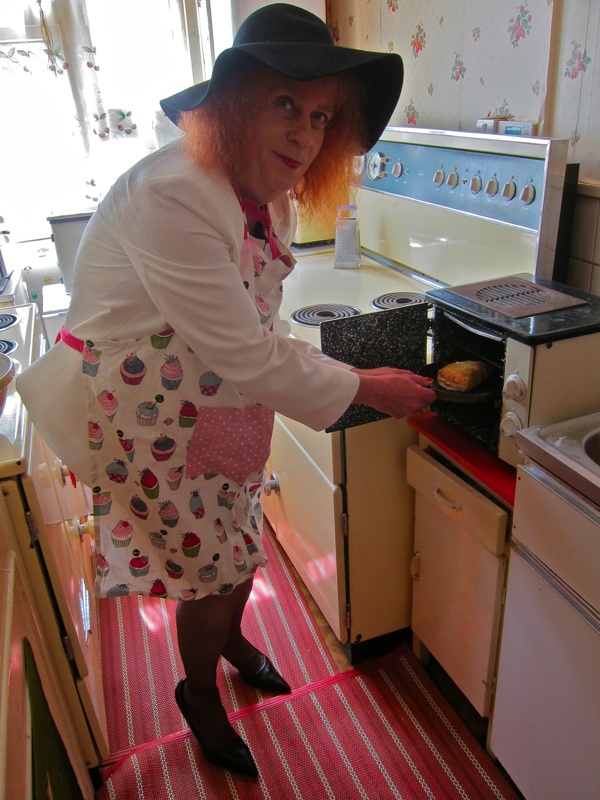
Boudica bakes a hot pasty in her Baby Belling
I am half-Cornish on my mother’s side, so – when Viscountess Boudica invited me over to Bethnal Green for a freshly-baked pasty yesterday – it was a summons I was unable to resist. Since the Cornish have been officially recognised as a national minority by the European Court of Human Rights recently and, given that they have no special feast day, Viscountess Boudica took it upon herself as a champion of minorities to celebrate their culture this week.
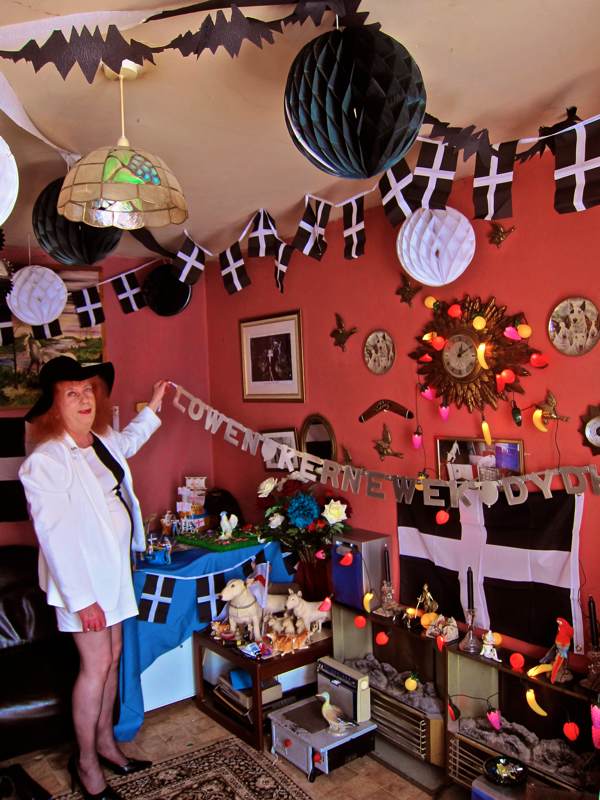
Never one to do anything by half, Viscountess Boudica answered the door dressed in the Cornish colours of black and white and then ushered me excitedly into her living room – where I have seen so many seasonal decorations through the past year – now festooned in Cornish flags and where even the television is black and white. In one corner, was Boudica’s home made tableau of Cornish pirates and, in another corner, her cheeky Cornish pixie.
“More than four hundred years ago, when my family got hoiked out of Ireland due to Queen Elizabeth and her troops, they fled to France and then lived in Cornwall before going to Kemble in Gloucestershire,” she revealed to me, “so this is a thankyou.” A proud advocate of all things Celtic, Boudica displayed her enamel lapel badge of crossed flags, illustrating the solidarity of Ireland and Cornwall.
“It’s a magical place and they still have druids there,” she assured me, speaking fondly as she served up the piping hot pasties, “the people are very friendly and they stand up for themselves – they are a proud race.” The sunshine streamed in the window as we enjoyed our steaming pasties and then Viscountess Boudica pulled out her Cornish dictionary, so I tactfully made my farewell and left her to her linguistic studies.
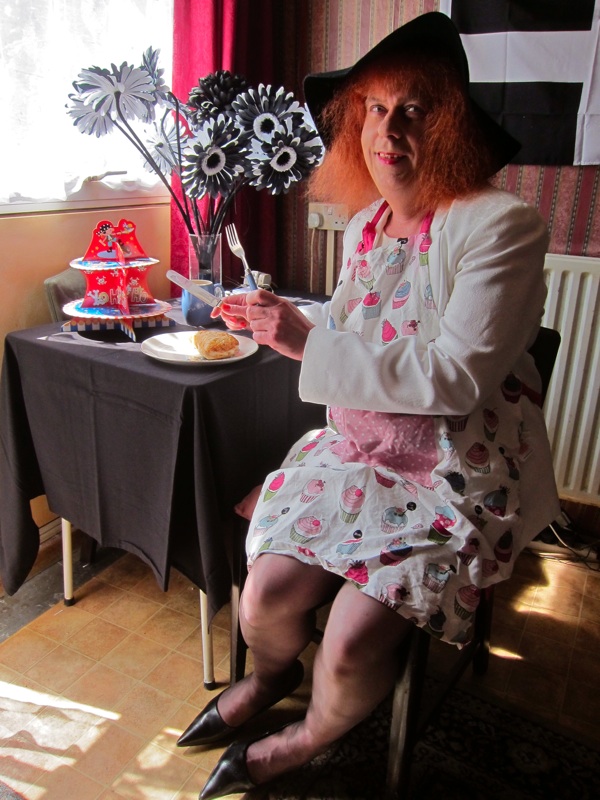
Boudica enjoys her Cornish pasty
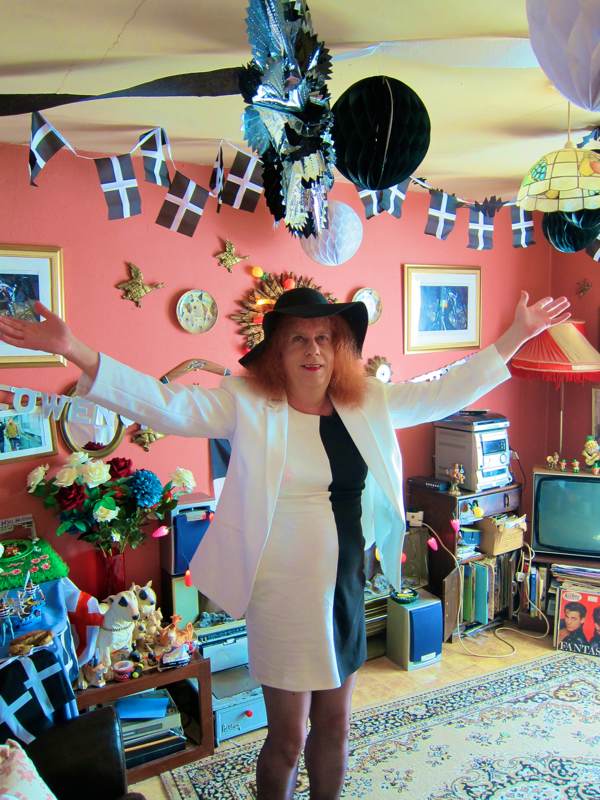
“Yeghes da!”
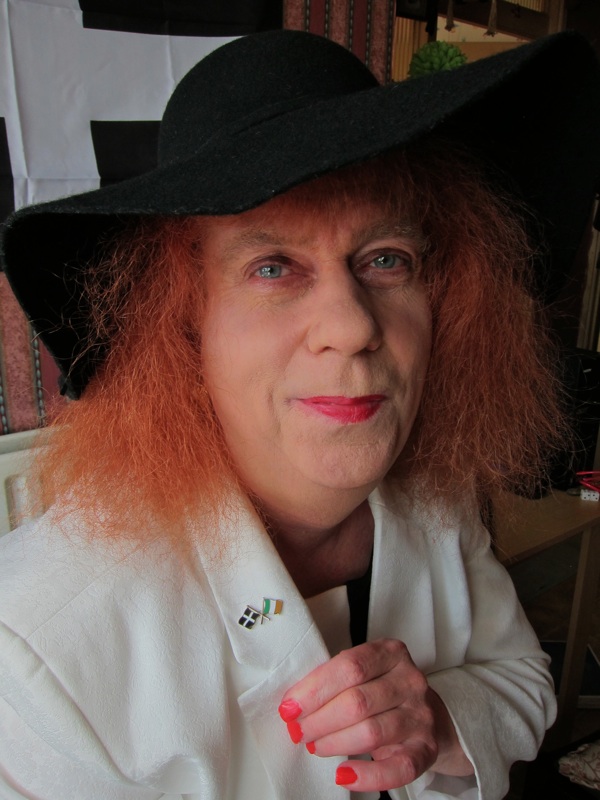
Boudica with her badge of allegiance between the Irish and the Cornish
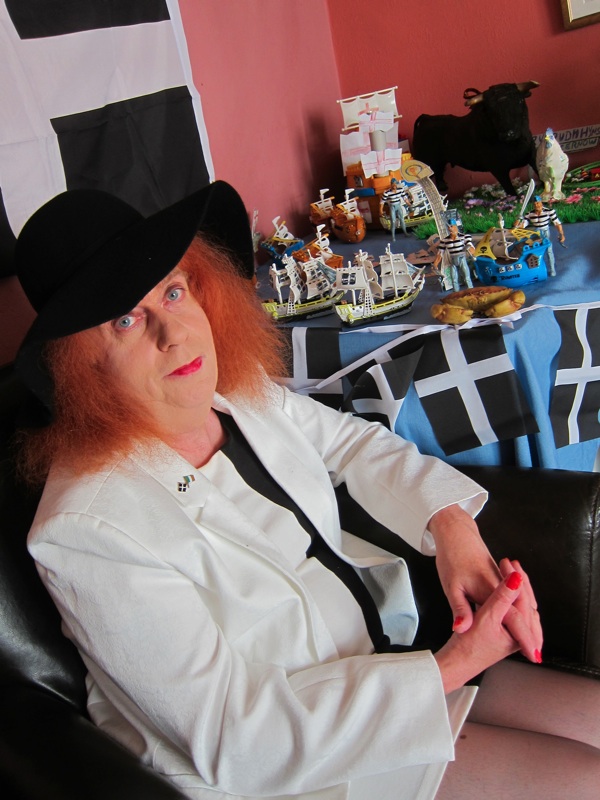
Boudica with her pirate tableau – “the pirates are synonymous with Cornwall”
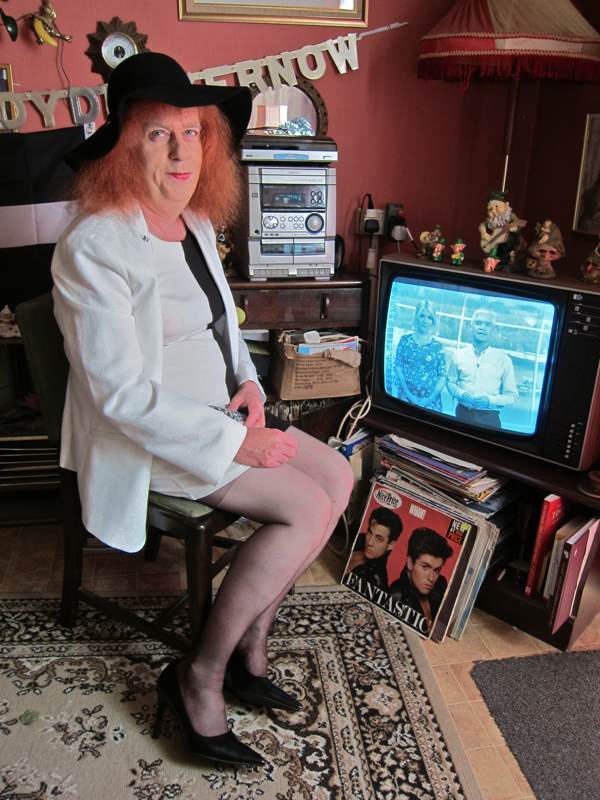
Boudica is one of thirteen thousand viewers who still have a black and white television licence – “A colour licence is £150 but black and white is only £50, so I save £100 a year!”
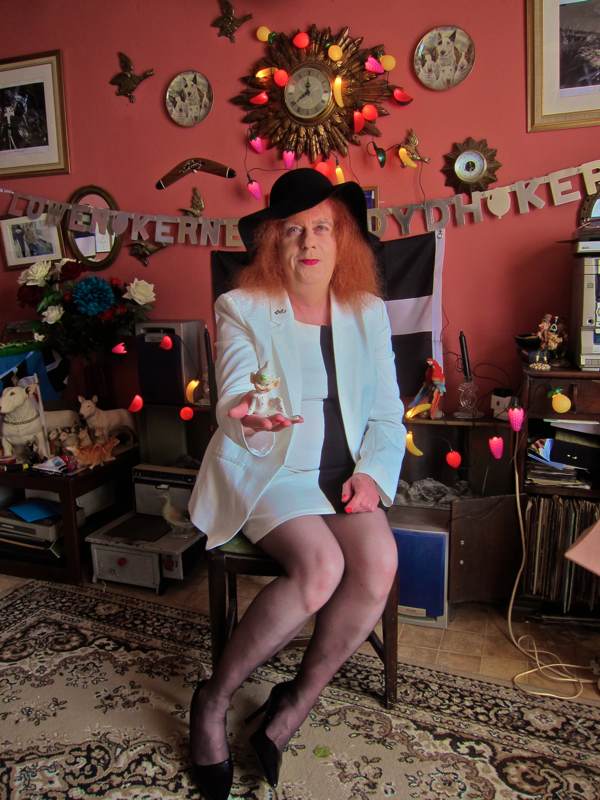
Boudica with her Cornish pixie – ” I got him from a car-boot sale for 50p, he called out to me and I just had to have him.”
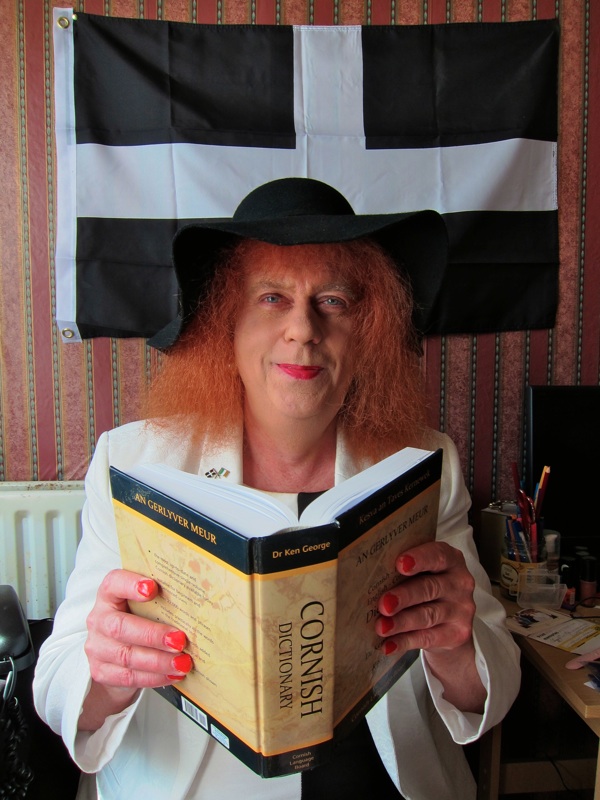
“Nyns yw unn tavas nevra lowr!”
Be sure to follow Viscountess Boudica’s blog There’s More To Life Than Heaven & Earth
Take a look at
Viscountess Boudica’s Domestic Appliances
Viscountess Boudica’s Halloween
Viscountess Boudica’s Christmas
Viscountess Boudica’s Valentine’s Day
Viscountess Boudica’s St Patrick’s Day
Read my original profile of Mark Petty, Trendsetter
and take a look at Mark Petty’s Multicoloured Coats
Lost In Long Forgotten London
If you got lost in the six volumes of Walter Thornbury’s London Old & New you might never find your way out again. Published in the eighteen-seventies, they recall a London which had already vanished in atmospheric engravings that entice the viewer to visit the dirty, shabby, narrow labyrinthine streets leading to Thieving Lane, by way of Butcher’s Row and Bleeding Heart Yard.

Butcher’s Row, Fleet St, 1800

The Old Fish Shop by Temple Bar, 1846

Exeter Change Menagerie in the Strand, 1826
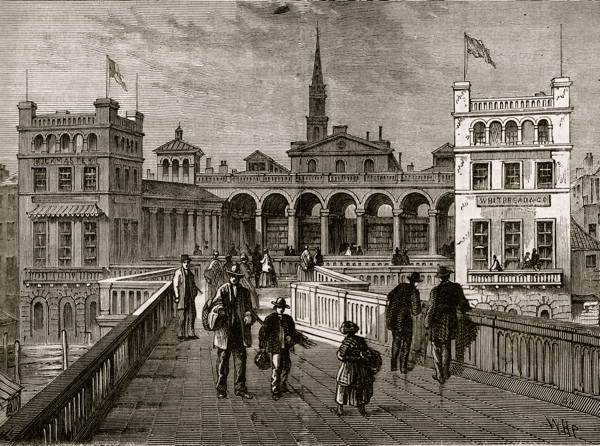
Hungerford Bridge with Hungerford Market, 1850

At the Panopticon in Leicester Sq, 1854

Holbein Gateway in Whitehall, 1739

Thieving Lane in Westminster, 1808

Old London Bridge, 1796
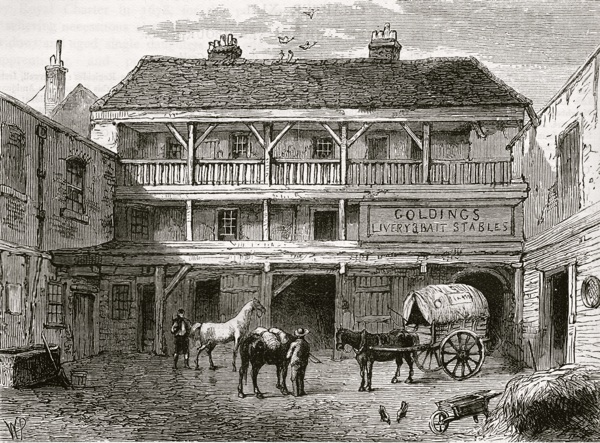
Black Bull Inn, Gray’s Inn Lane

Cold Harbour, Upper Thames St, City of London

Billingsgate, 1820
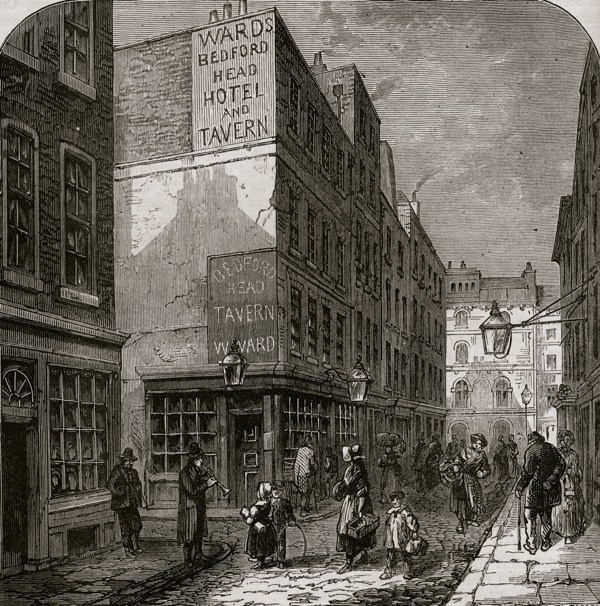
Bedford Head Tavern, Covent Garden

Coal Exchange, City of London, 1876

The Cock & Magpie, Drury Lane

Roman remains discovered at Bilingsgate

Hick’s Hall in Clerkenwell, 1730

Former church of St James Clerkenwell

Door of Newgate Prison

Fleet Market
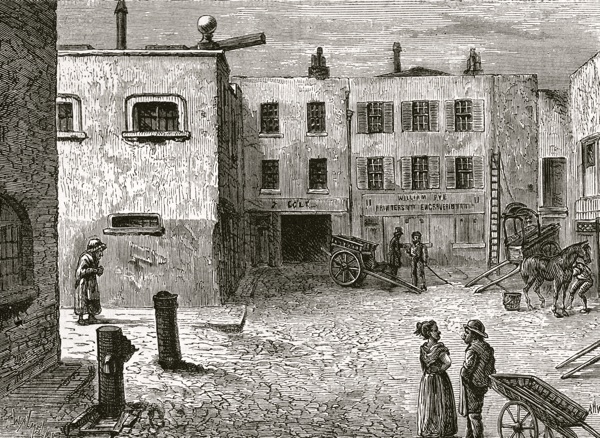
Bleeding Heart Yard in Hatton Garden

Prince Henry’s House in the Barbican

Fortune Theatre, Whitecross St, 1811

Coldbath House in Clerkenwell, 1811

Milford Lane, off the Strand, 1820
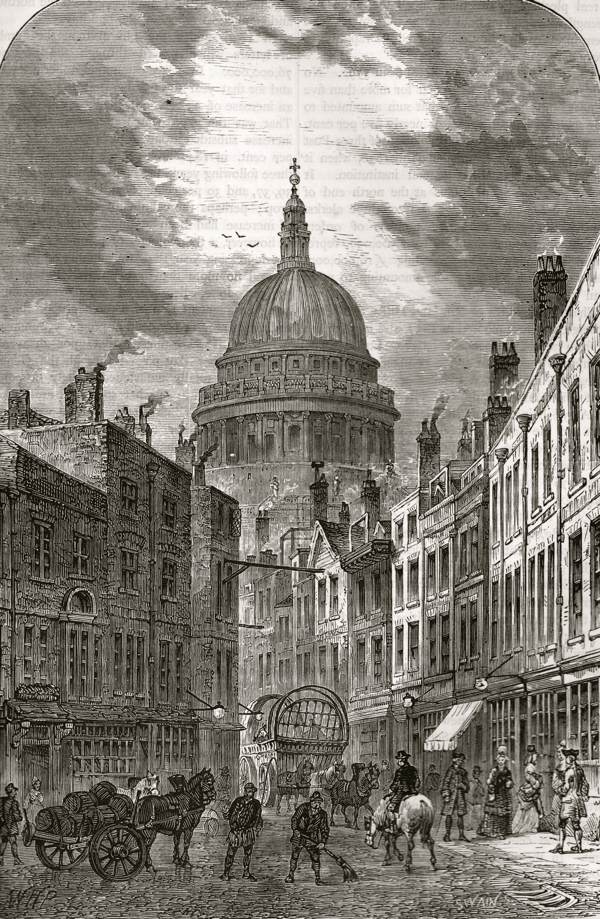
St Martin’s-Le-Grand, 1760

Old Bethlehem Hospital (Bedlam), Moorfields, in 1750
Images courtesy Bishopsgate Institute
You may also like to take a look at












