
In Old Clerkenwell

In St John’s Path
At weekends, when the crowds throng in Spitalfields, I sometimes walk over to Clerkenwell. Apart from those carousing in Exmouth Market, the place is like a ghost town on Saturday & Sunday, leaving the visitor free to explore the streets in peace – as I did yesterday with my camera.
There is a particular ramshackle quality to this quarter of London that especially appeals to me, where every street is either winding around a corner or sloping away down the hill, or both. Many of my formative experiences as a writer occurred in Clerkenwell, since from 1990 I rented a tiny office in Clerkenwell Close for ten years or so, and went there every day to write. When I could not write, I wandered the streets which became familiar to me as the urban landscape of my contemplation and, over time, I learnt something of their history too.
I wander around Clerkenwell and I think about the Mystery plays performed by clerks on the Green in the medieval era, about how the Close still follows the former cloister of the Priory of St John, about Wat Tyler addressing his rebel force upon the Green, about Oliver Cromwell’s house in Clerkenwell Close that had orchards down to the Fleet River, about the monstrous Middlesex House of Detention where thousands met their deaths, about Joseph Grimaldi playing at Sadler’s Wells, about Charles Dickens sitting with his reporter’s notebook in the Court House, about Vladimir Ilyich Lenin having a drink in the Crown, about Arnold Bennett’s Riceyman Steps and George Gissing’s The Nether World – two magnificent Clerkenwell novels – and, more recently, I think of Colin O’Brien photographing car crashes in the Clerkenwell Rd.

In Britton St

St John’s Gate, where Hogarth’s father ran a Latin-speaking Coffee House
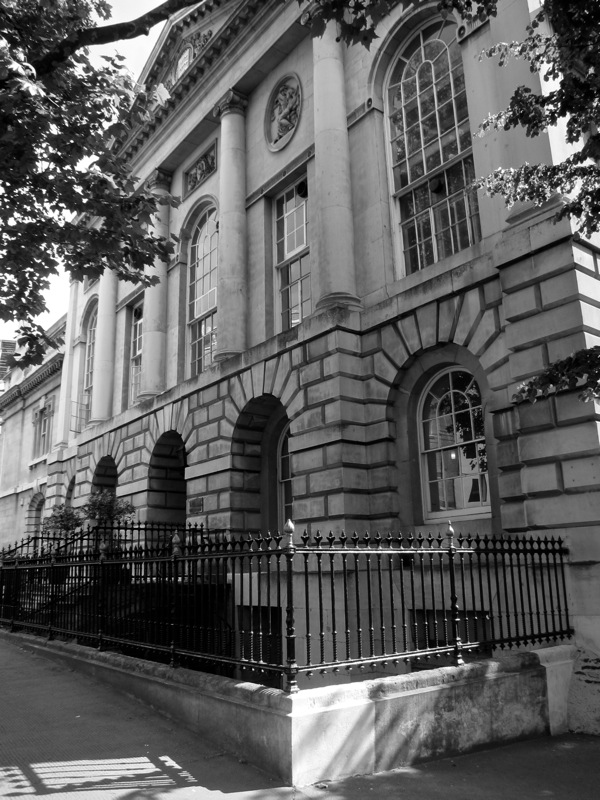
Old Court House, Clerkenwell Green, where Dickens served as a cub reporter

Door at the rear of the Court House

On Clerkenwell Green

St James, Clerkenwell, by James Carr 1792

At the rear of the church

The church gates

In Pear Tree Court

In Amwell St

In Wilmington Sq

In Clerkenwell Close, where Oliver met the Artful Dodger in ‘Oliver Twist’
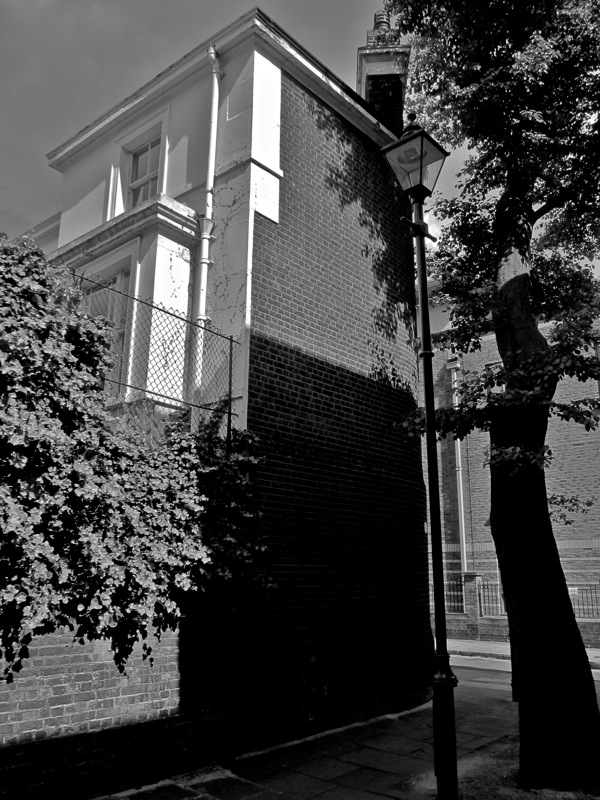
The old wall of the former Middlesex House of Detention

St James Clerkenwell

Farmiloe Building, St John St

In Passing Alley

Finsbury Savings Bank, Sekforde St since 1840 – customers included Charles Dickens

Sekforde Arms, since 1838

Sekforde St

Sekforde Arms

In Hayward’s Place

Woodbridge Chapel

Gleave & Co, Watch Repair Supplies, Albemarle Way

In Herbal Hill
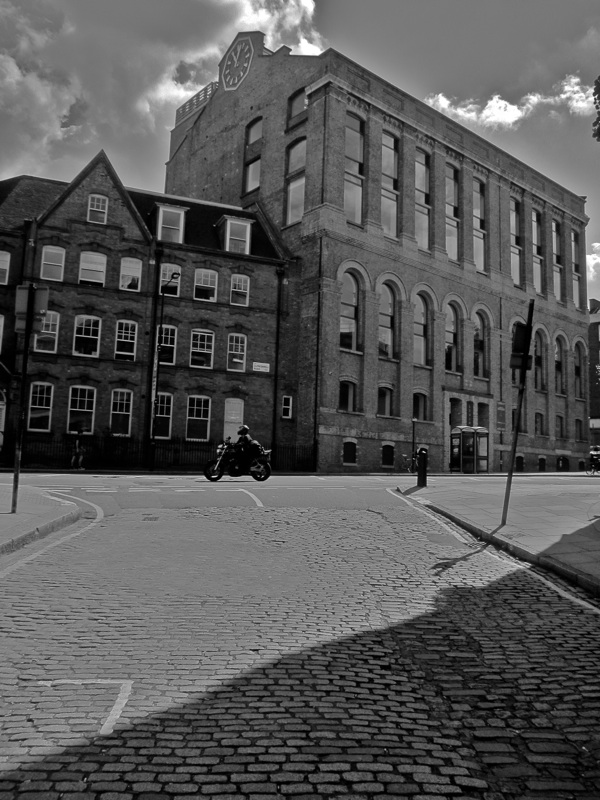
In Back Hill

The Castle in Cowcross St since 1830

Coach & Horses in Ray St since 1808

Clerkenwell Fire Station, formerly Britain’s oldest 1872- 2014

Our Most Holy Redeemer, Exmouth Market

In Exmouth Market

Exmouth Arms since 1825

In Cafe Kick

Farringdon Tool Supplies, Exmouth Market
You may also like to take a look at
Hazuan Hashim’s Summer Whitechapel Skies
On Midsummer’s Day, we bring you up to date with Hazuan Hashim‘s latest meteorological photographic surveys from the eleventh floor of the tower block in Whitechapel where he lives. Recent months have been characterised by the prevalence of clouds overhead – yet Hazuan’s photographs encourage us to not be oppressed by overcast skies but to become connoisseurs of cumulonimbus.
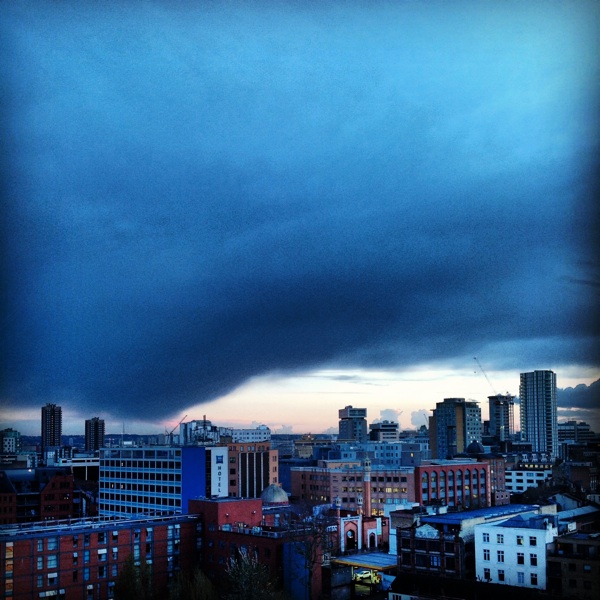
22nd March, 6:14pm

23rd March, 12:51pm

4th April, 7:23pm

6th May, 9:53am

6th May, 9:54am
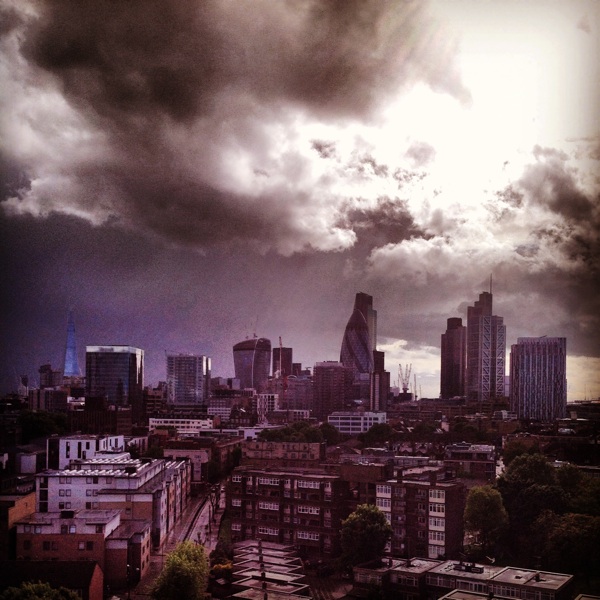
10th May, 4:46pm
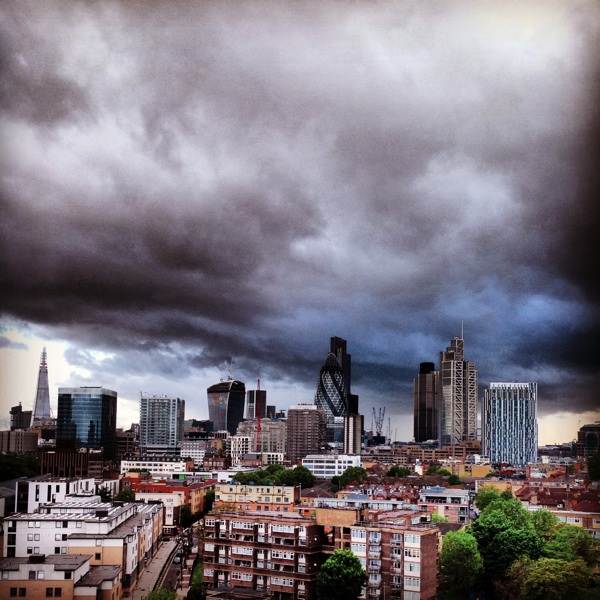
10th May, 5:51pm

12th May, 2:09pm

12th May, 2:10pm
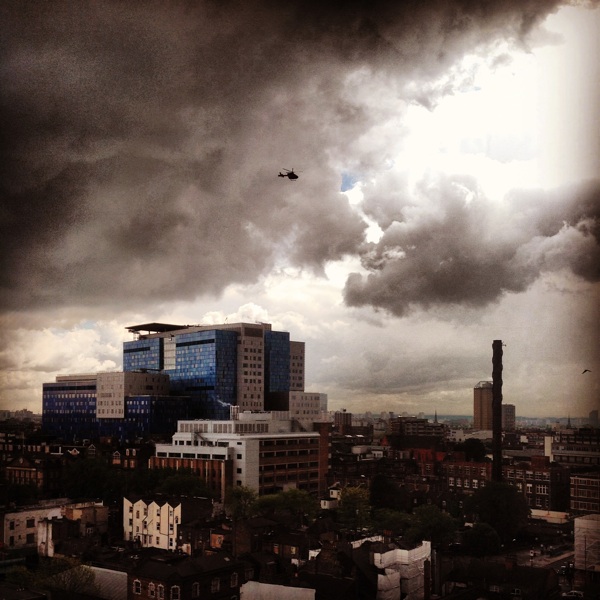
12th May, 7:59pm

13th May, 12:21pm
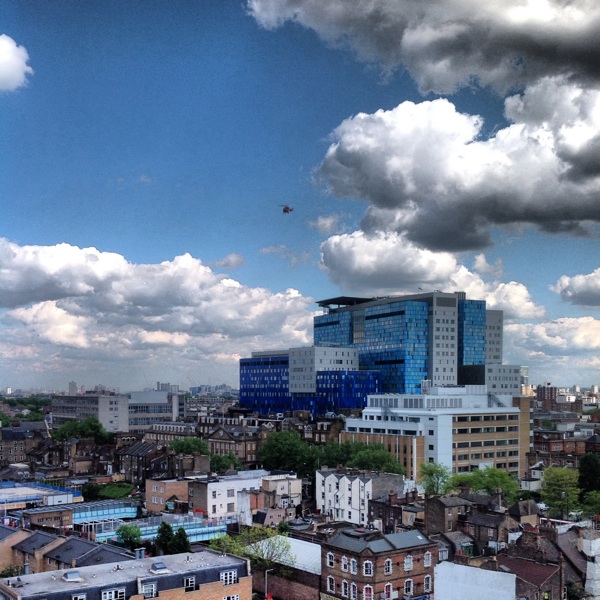
14th May, 3:54pm

20th May, 12:40pm

23rd May, 6:26pm

24th May, 1:54pm
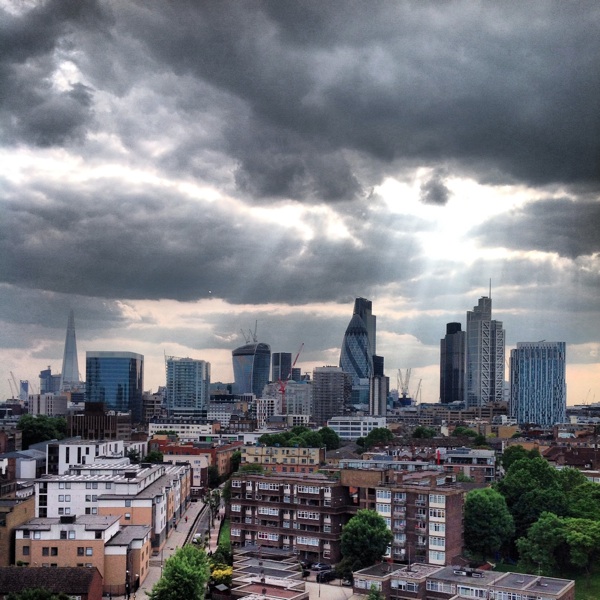
1st June, 4:47pm

4th June, 12:49pm

5th June, 11:52am

5th June, 9:22pm

8th June, 8:49pm
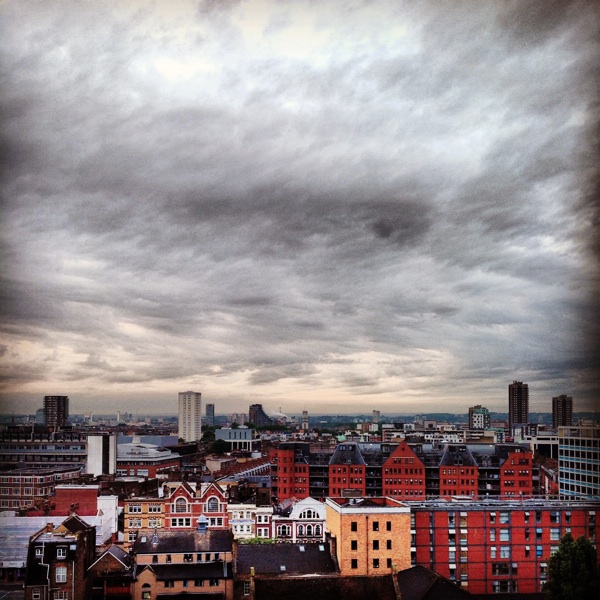
9th June, 8:48pm

9th June, 9:19pm
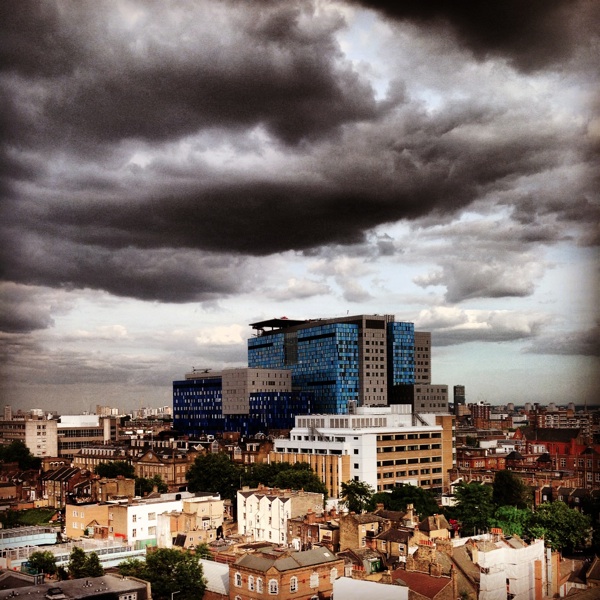
11th June, 6:34pm
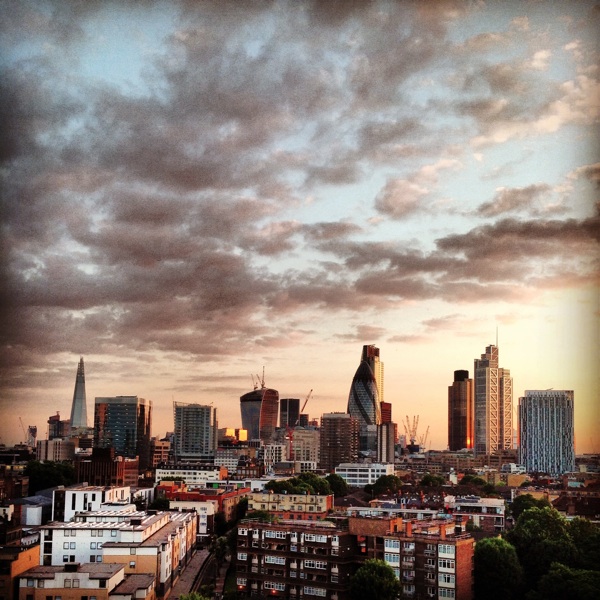
12th June, 6:42am
Photographs copyright © Hazuan Hashim
You may also like to read about
The Summer Of Love 1814
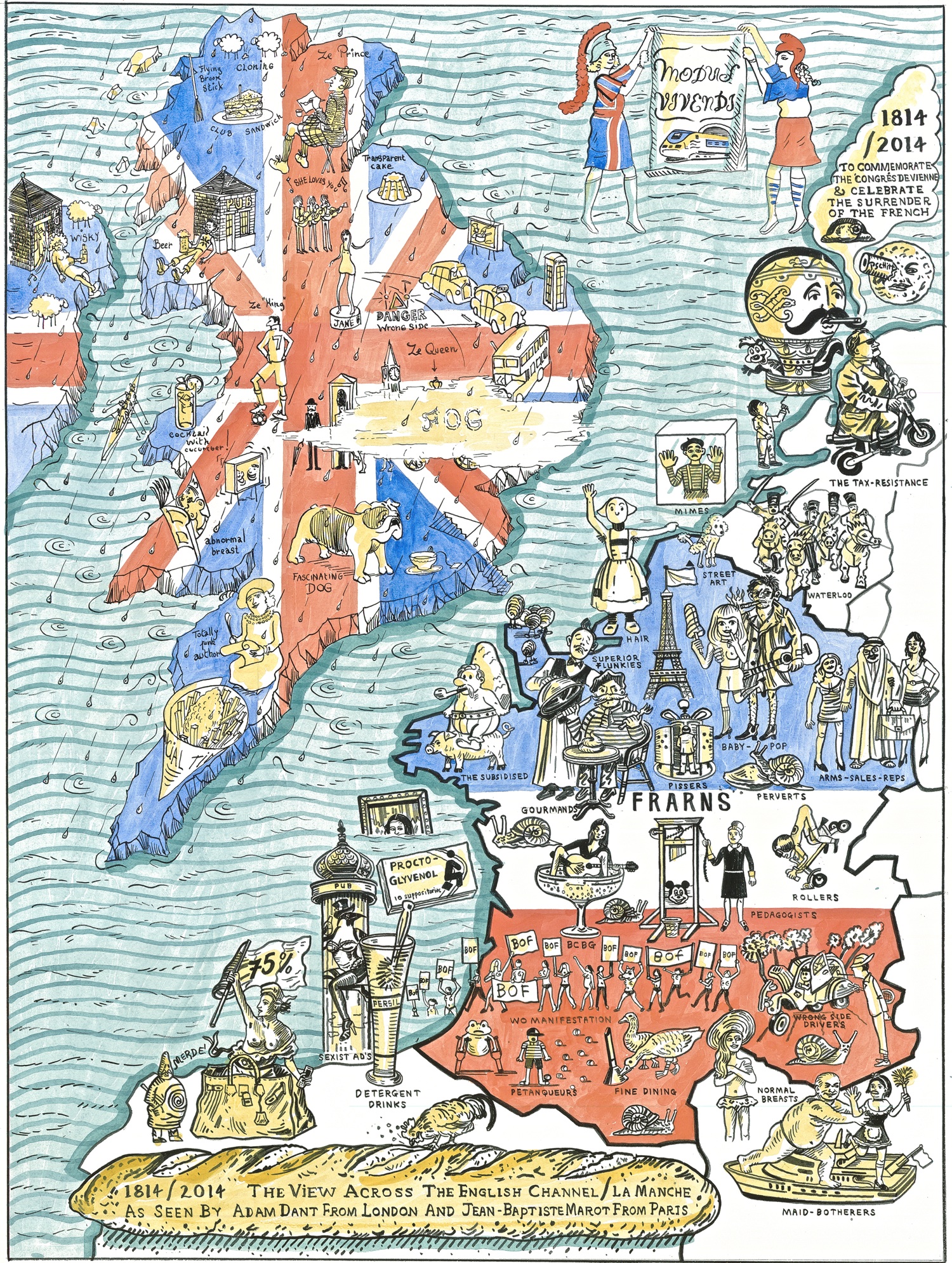
Click Adam Dant & Jean-Baptiste Marot’s map to spot Prince Charles, The Beatles, Jane Birkin, Barbara Cartland, Georges Meliès, Marcel Proust, The Montgolfier Brothers, Pepé le Pew, Gerard Depardieu, Marcel Marceau, Béccasine, Serge Gainsbourg, Catherine Deneuve, José Bové, Brigitte Bardot, Dominique Strauss-Kahn, Ubu Roi & Femen
In the Centenary of the outbreak of the First World War, Sir John Soane’s Museum celebrates the Bicentenary of the end of the Napoleonic Wars between Britain and France with an exhibition entitled Peace Breaks Out! which opens today.
Complementing the show, the Museum asked me to introduce them to some of the artists of Spitalfields Life, who have created new works to be shown alongside the historic artefacts and today I am publishing some of these creations with a few original items that inspired them.
Cartographer extraordinaire Adam Dant collaborated with his Gallic counterpart Jean-Baptiste Marot on a map in which each portrays the other’s culture. Alice Pattullo & Laura Knight have created prints inspired by objects in the exhibition, while Paul Bommer has made a series of themed Delft tiles. Romilly Saumarez Smith & Lucy Gledhill working as Savage & Chong are showing their jewellery and Bridie Hall is making a selection of decoupage using images from the show.
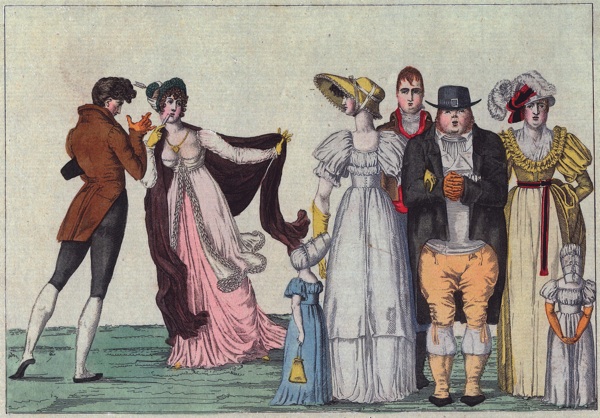
The English Family in Paris, Anon c. 1814
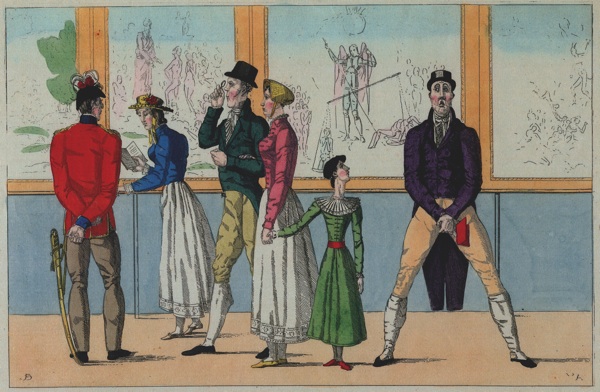
The English Family at the Museum in Paris, Anon c.1814
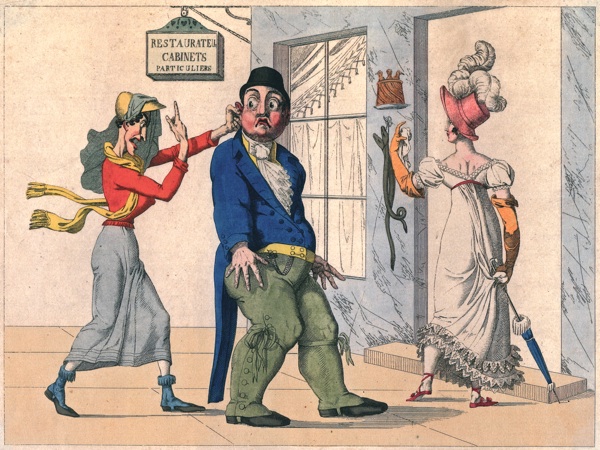
An Englishwoman tears her husband away from the attractions of Paris, Anon c.1818
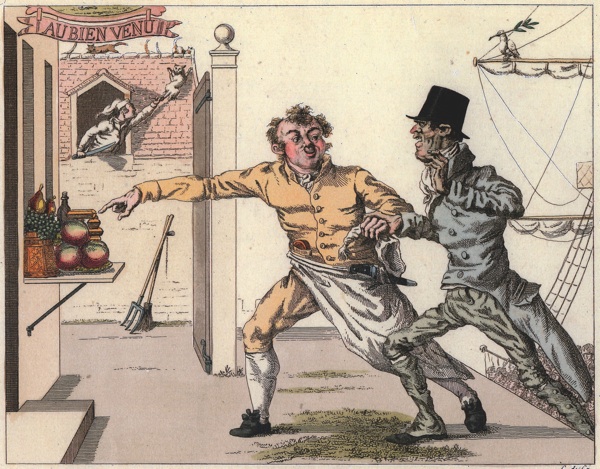
The Englishman arrives in France, Godisart de Cari c.1814/5
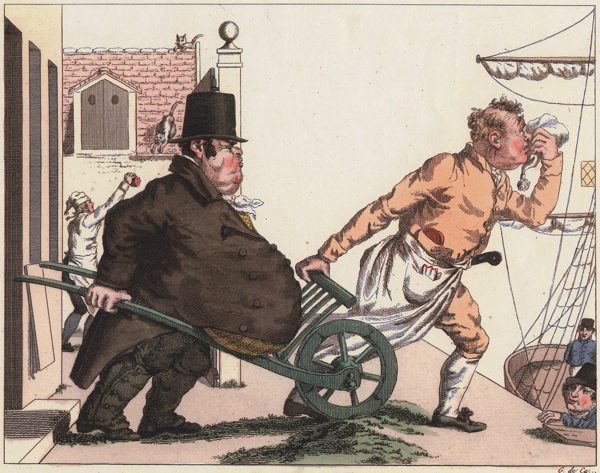
The Englishman returns from France, Godisart de Cari c.1814/5
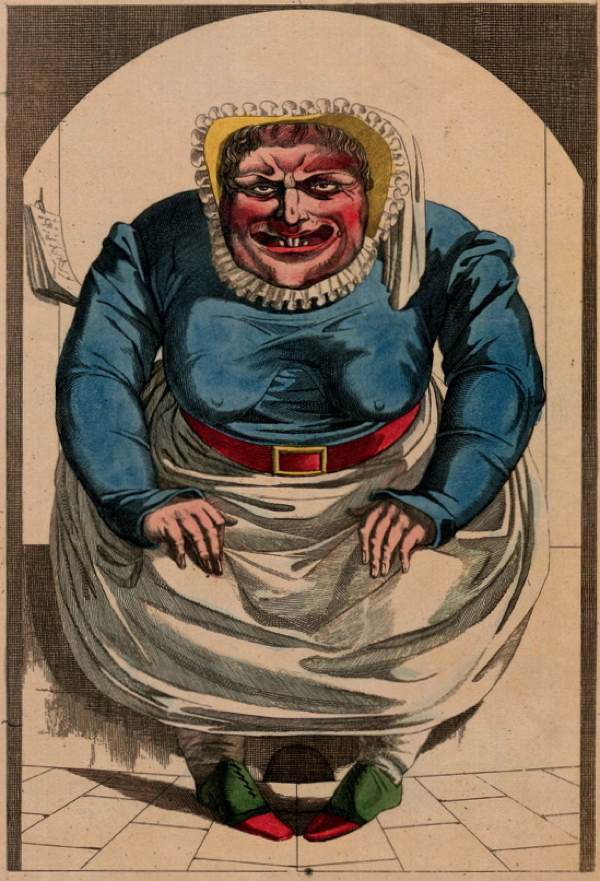
Frenchwoman after a meal in England, Anon c.1814
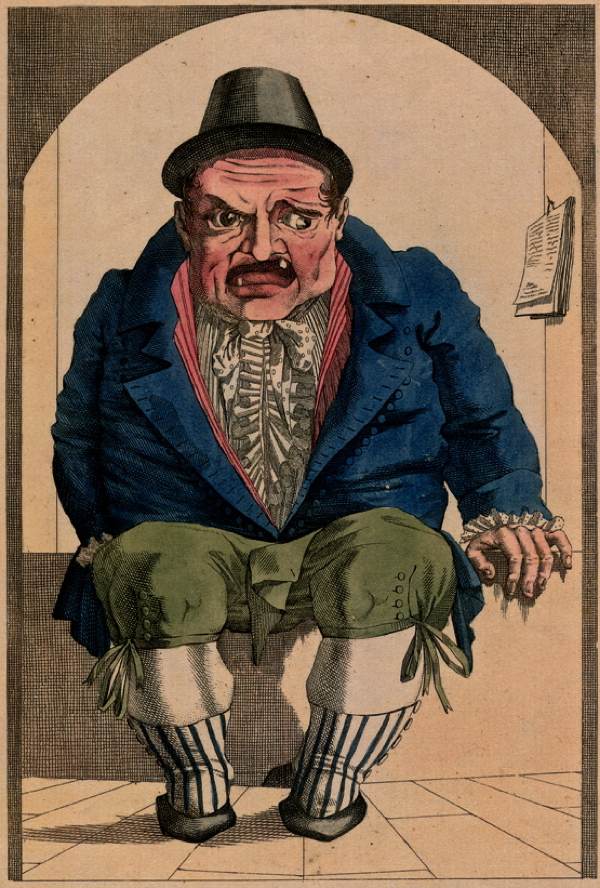
Frenchman after a meal in England, Anon c. 1814
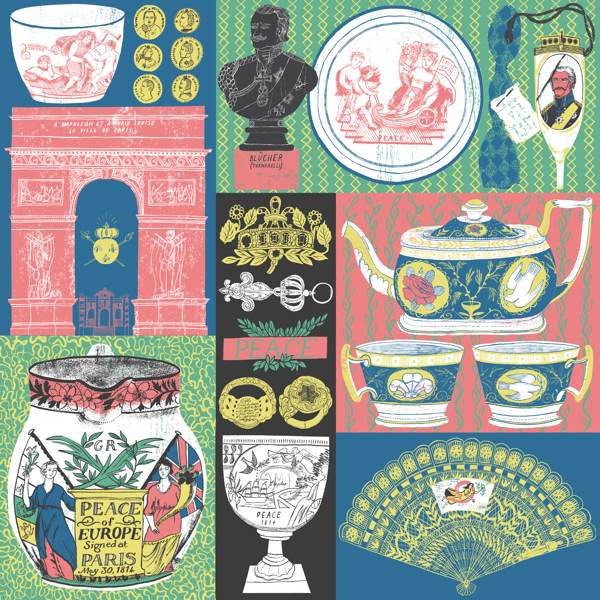
Screenprint by Alice Pattullo, 2014 – “Many of the items in this exhibition are souvenirs celebrating the peace brought about at the end of the War. I thought it would be interesting to record these as a print, which in itself can become a souvenir of this exhibition, and commemorate the stylistic influences that crossed the newly-reopened channel from Paris.”
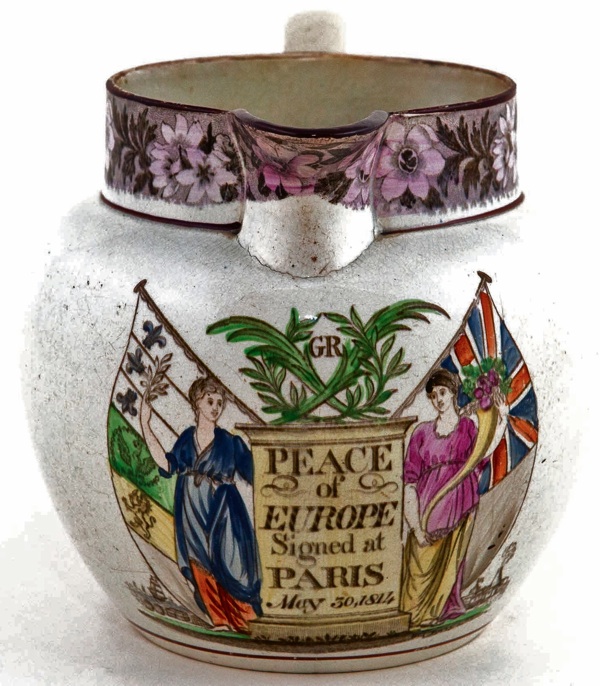
Peace of Paris jug, Bristol Pottery 1814
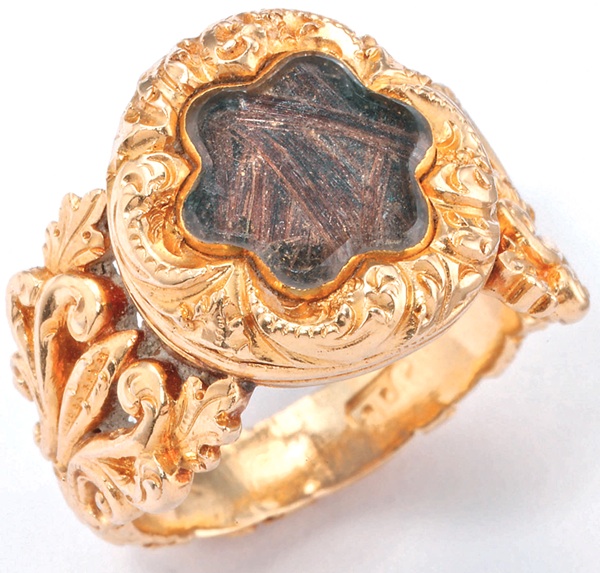
Mourning ring with lock of Napoleon’s hair presented to John Soane, 1822
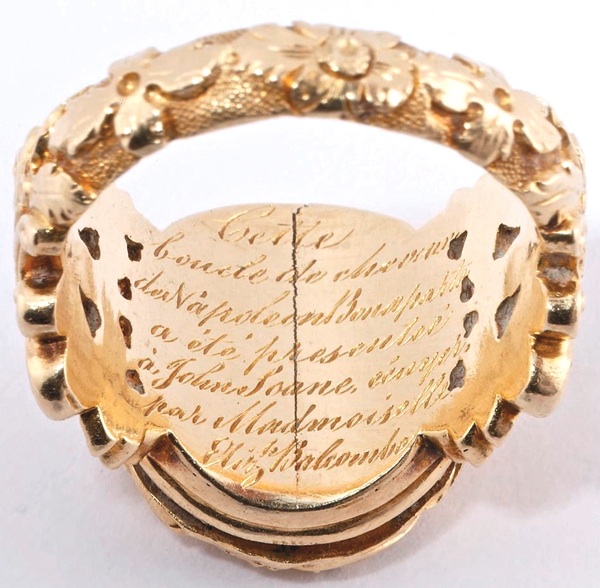
Inscription on the ring by Elizabeth Balcombe who presented the ring to Soane
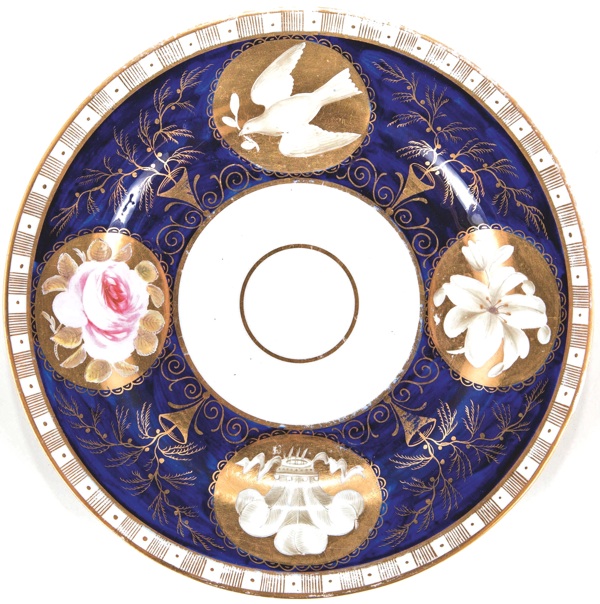
Plate from a Peace of Paris teaset, Coalport Pottery 1814
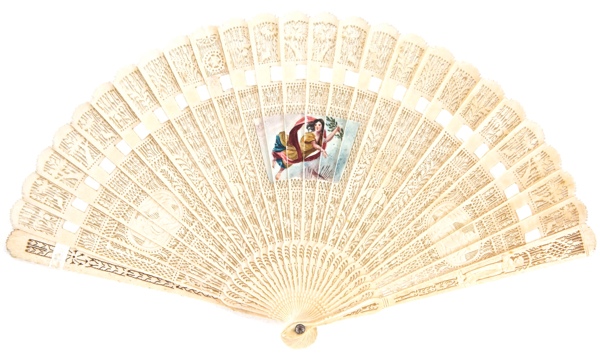
Brisé Opera Fan with a panel representing Peace, c. 1814 – made in China for European market
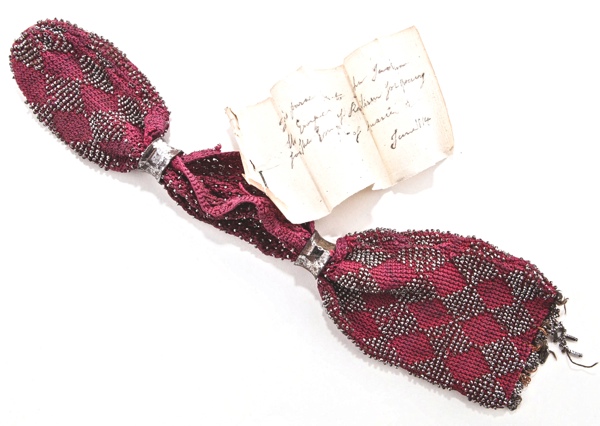
Purse given to Pugilist Gentleman John Jackson for sparring for the Emperor of Russia, 1814
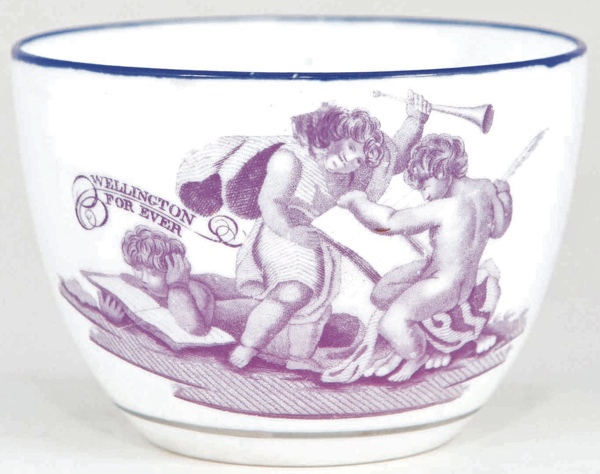
Commemorative cup, transferware c. 1814
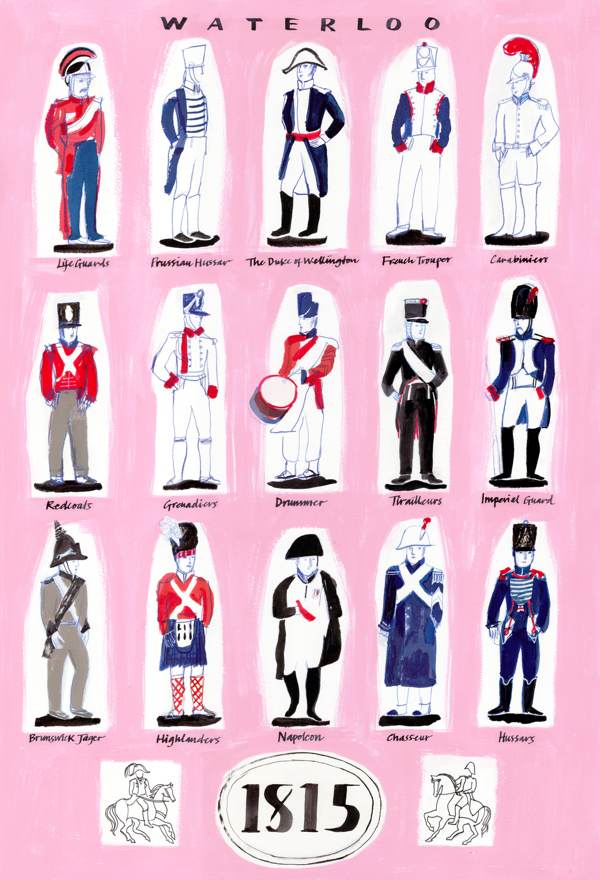
Screenprint by Laura Knight, 2014 – “The Napoleonic period is a huge subject of which I have only touched the surface,but the uniforms stood out immediately for me as highly decorative,theatrical and impractical,reflecting the many ways in which these wars were choreographed,staged and played out.”
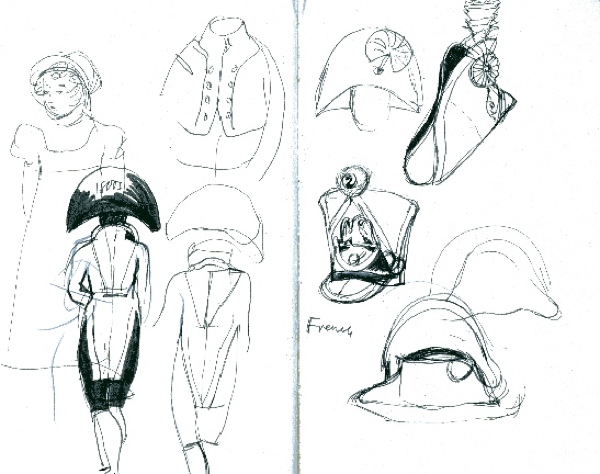
Pages from Laura Knight’s sketchbook, 2014
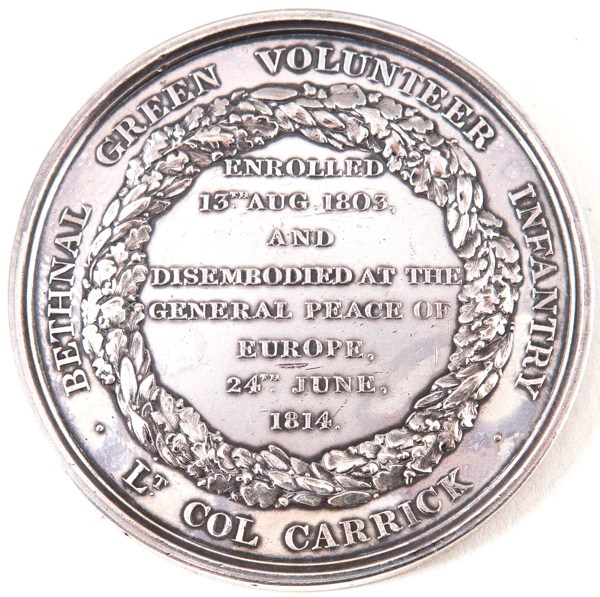 Medal for the disbanding of the Bethnal Green Volunteers, 1814
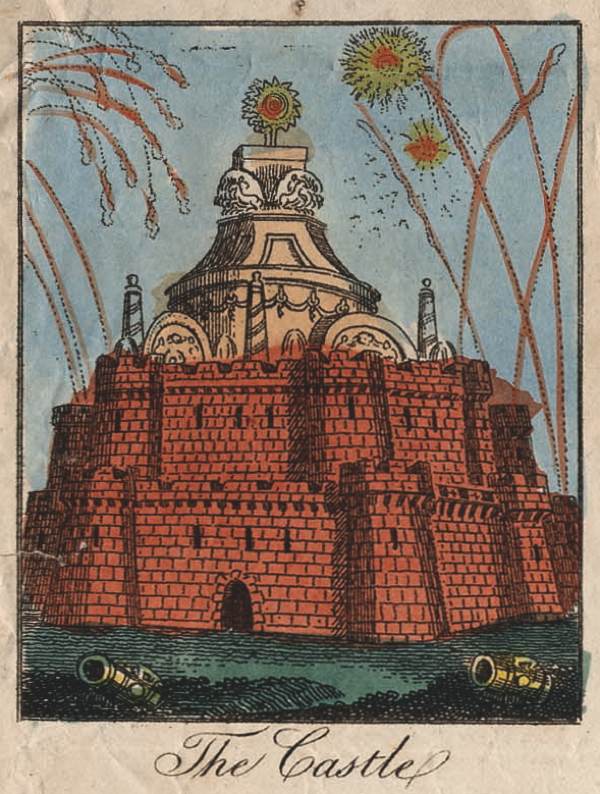
John Fairburn’s illustration of the Grand National Jubilee, 1814
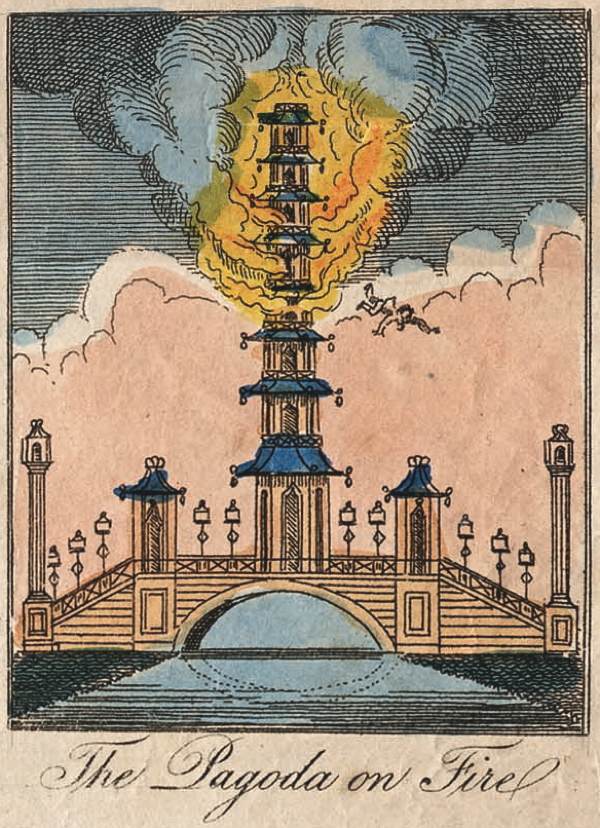
John Fairburn’s illustration of the Pagoda at the Grand National Jubilee, 1814
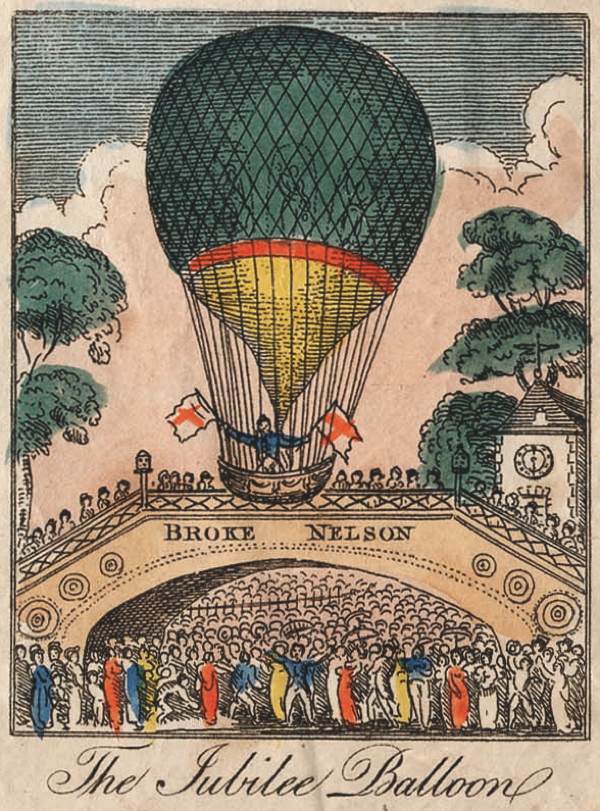
John Fairburn’s illustration of Sadler’s Balloon Ascent at the Grand National Jubilee, 1814
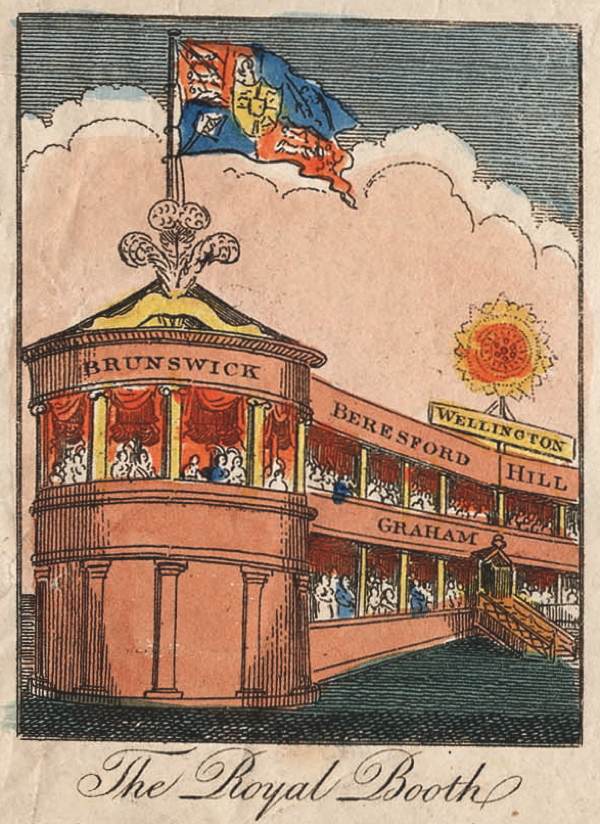
John Fairburn’s illustration of the Royal Booth at the Grand National Jubilee, 1814
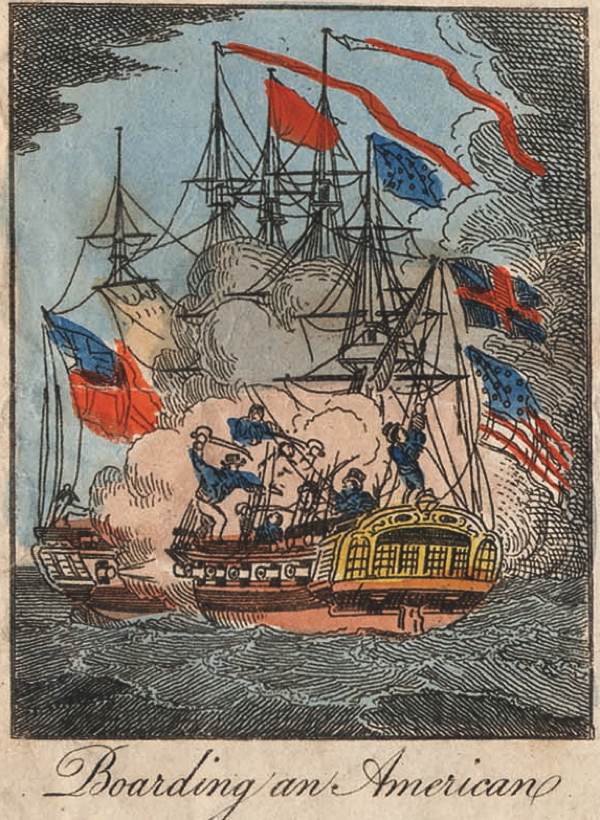
John Fairburn’s illustration of the sham fight on the Serpentine at the Grand National Jubilee, 1814
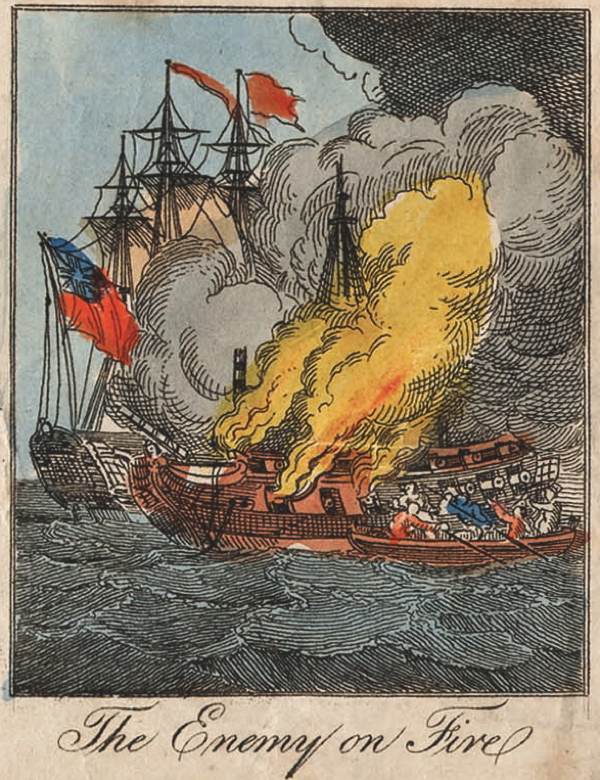
John Fairburn’s illustration of the sea battle on the Serpentine at the Grand National Jubilee, 1814
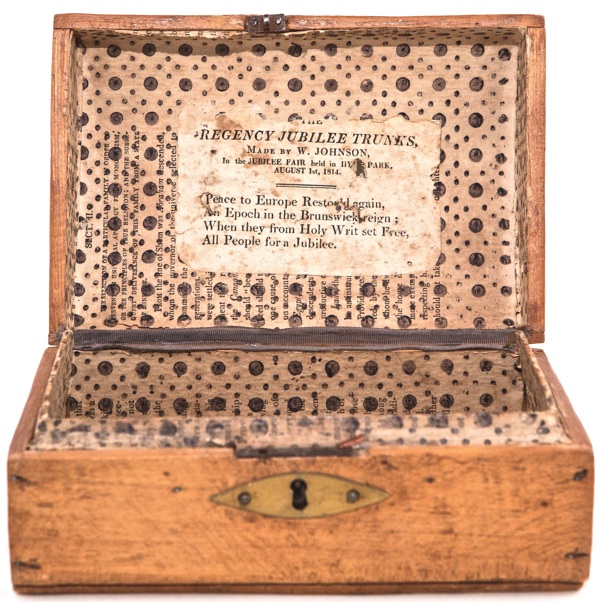
Jubilee Trunk made in Hyde Park during the fair, 1814
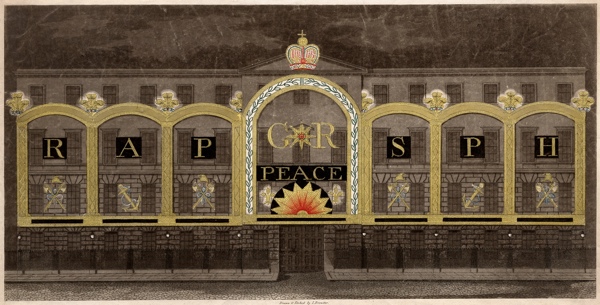
View of the Excise Office as illuminated on 9th, 10th & 11th June 1814
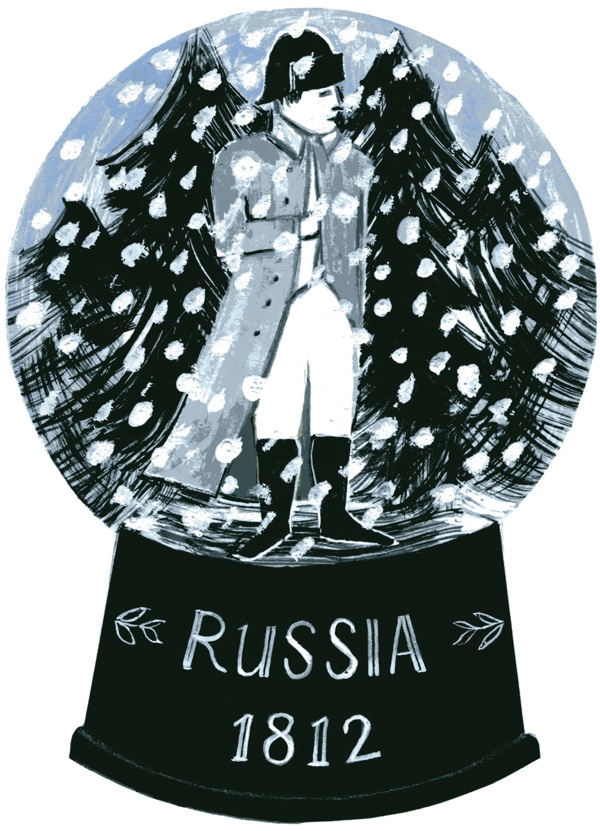
Card by Laura Knight, 2014
PEACE BREAKS OUT! runs at Sir John Soane’s Museum, Lincoln’s Inn Fields from today until 13th September
You may also like to read about
Adam Dant’s Map of the Coffee Houses
Lost 18th Century Houses In Spitalfields
The terraces of silk merchants’ houses in Spitalfields declare their history readily, yet there are other more modest buildings of the same era which survive as the last vestiges of the workshops and dwellings where the weavers pursued their trade. You might easily walk past without even noticing these undemonstrative structures, standing disregarded like silent old men in the crowd.
I am indebted to Peter Guillery and his book The Small House in Eighteenth Century London for highlighting these buildings where the weavers worked, which are equally significant historically as the more flamboyant homes of those who profited from their labour.
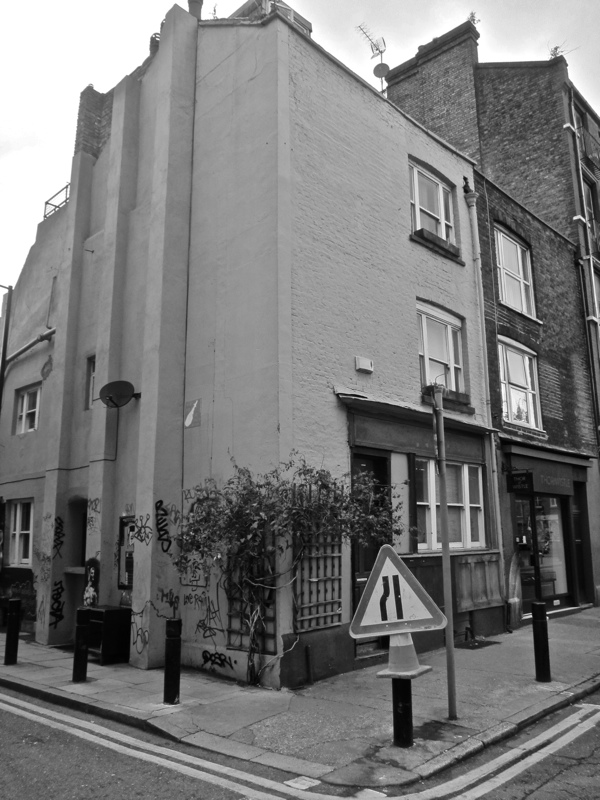
3 & 5 Club Row, two survivors of a terrace of six four-room houses built 1764-6
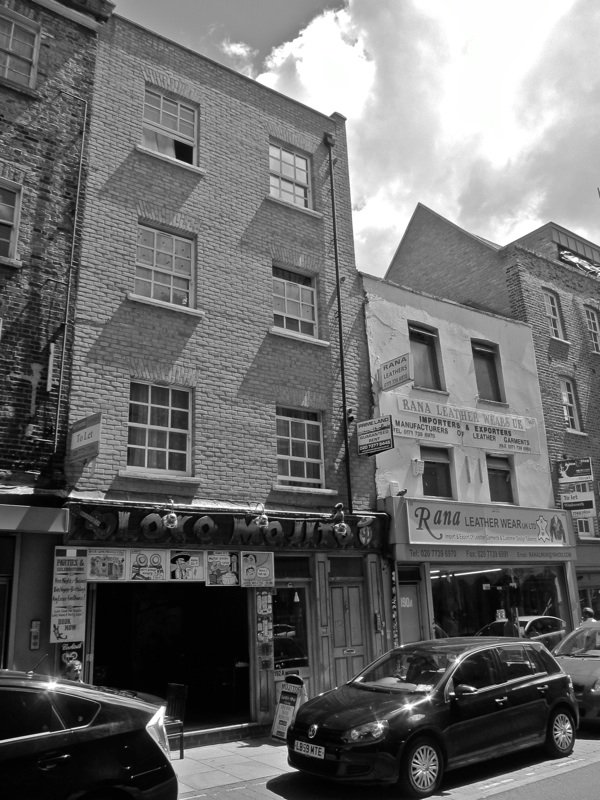
190 & 192 Brick Lane, weavers’ houses of 1778-9 built by James Laverdure (alias Green), Carpenter
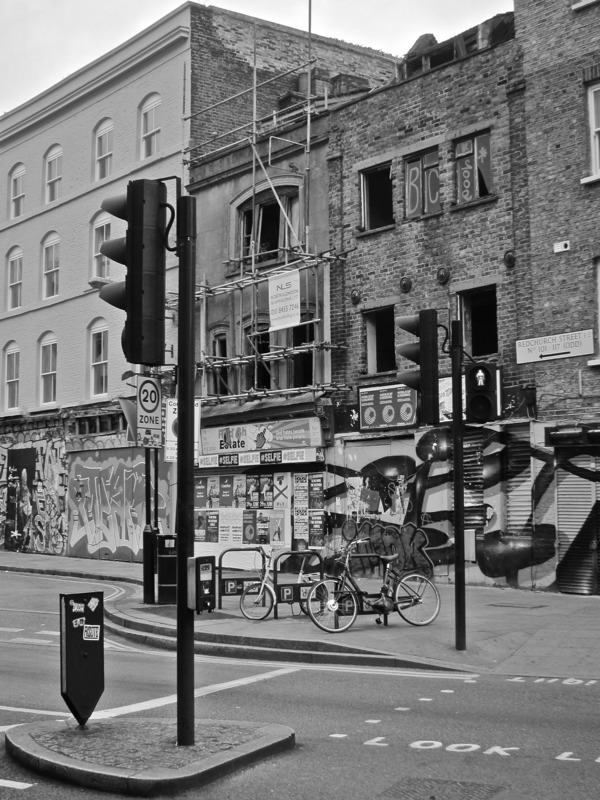
113 & 115 Bethnal Green Rd, two five room houses of c.1735 probably built by William Farmer, Carpenter
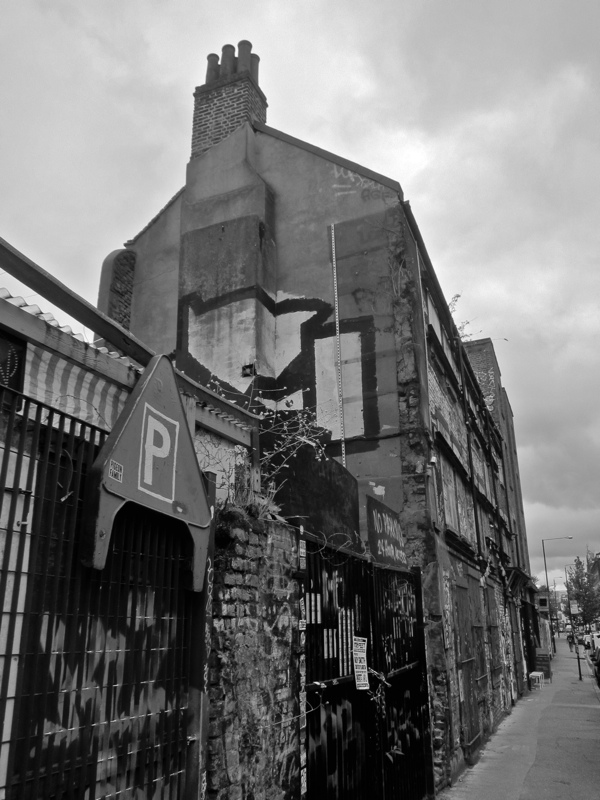
70-74 Sclater St, three houses built for weavers c.1719
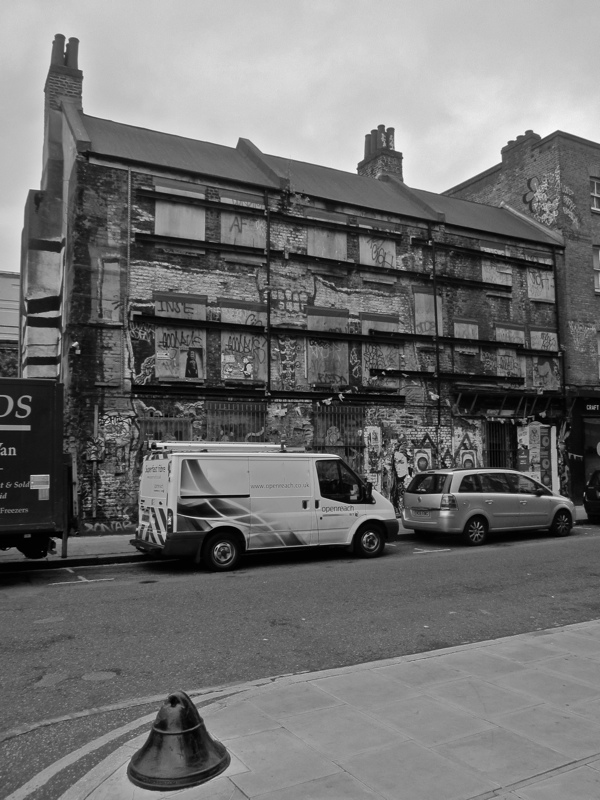
70-74 Sclater St, No 70 was refronted in 1777

97 & 99 Sclater St, built c 1720
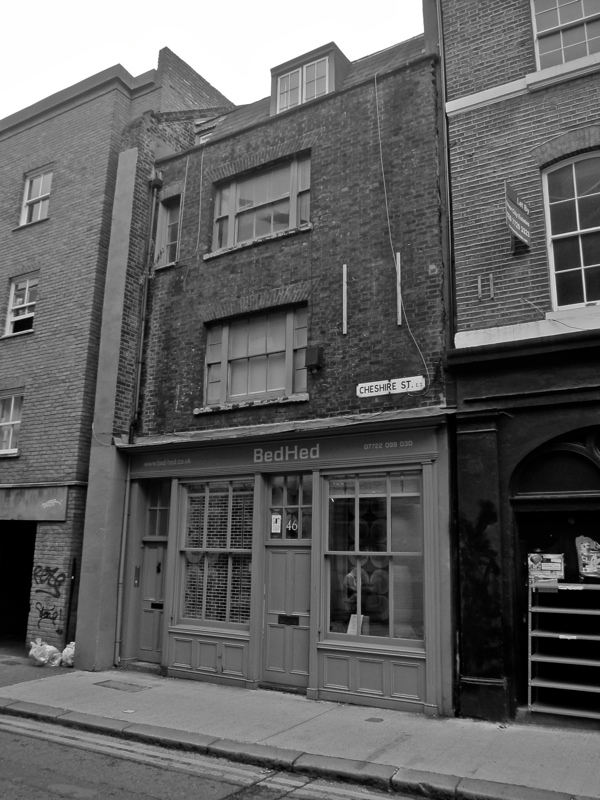
46 Cheshire St, built in the sixteen-seventies
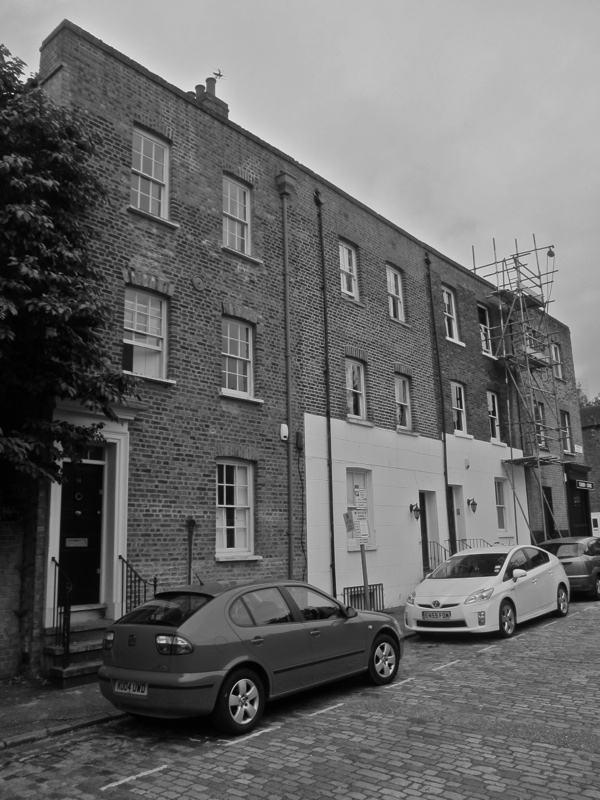
4a – 6a Padbury Court, probably built c. 1760

125 Brick Lane, shop and workshop tenement probably built in 1778 for Daniel Dellacort, a distiller
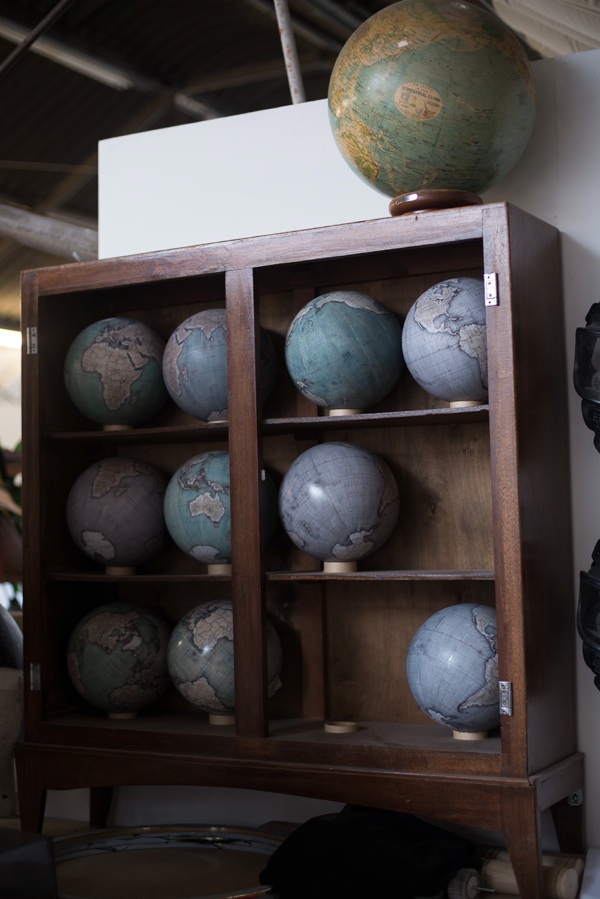
Peter Bellerby, Globemaker
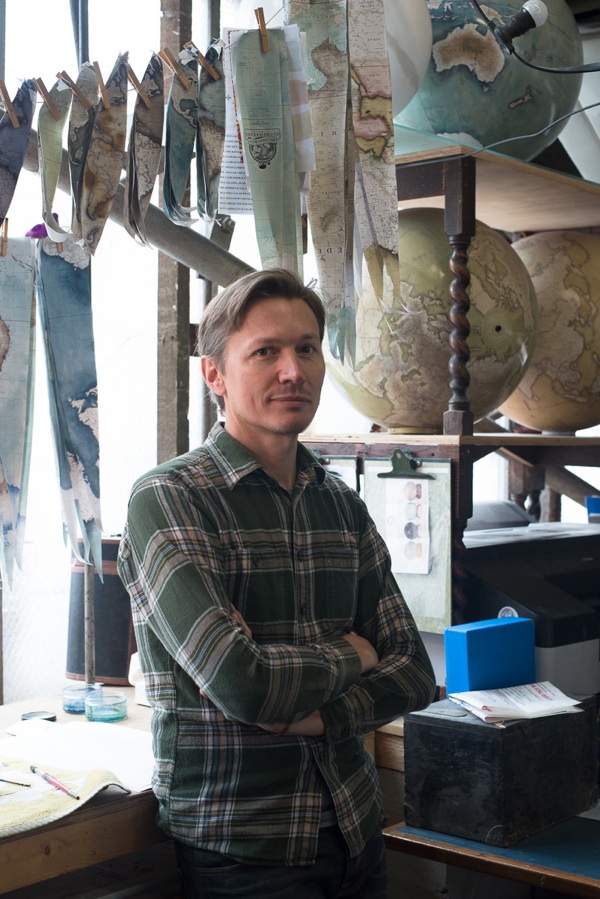
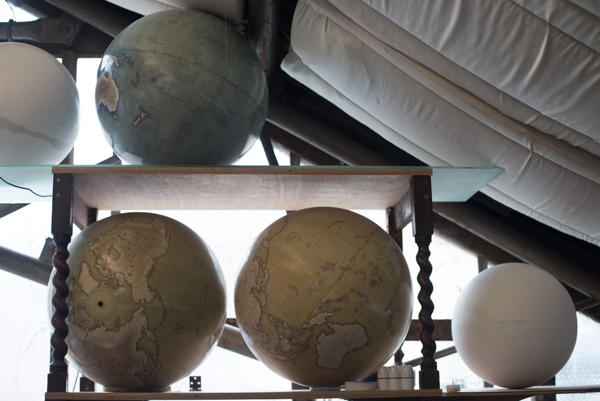
Just a couple of years ago, Peter Bellerby of Bellerby & Co was unable find a proper globe to buy his father for an eightieth birthday present. Now Peter is to be found in his very own globe factory in Stoke Newington and hatching plans to set up another in New York – to meet the growing international demand for globes which he expects to exceed ten times his current output within five years. A man with global ambitions, you might say.
Yet Peter is quietly spoken with deferential good manners and obviously commands great respect from his handful of employees, who also share his enthusiasm and delight in these strange metaphysical baubles which serve as pertinent reminders of our true insignificance in the grand scheme of things.
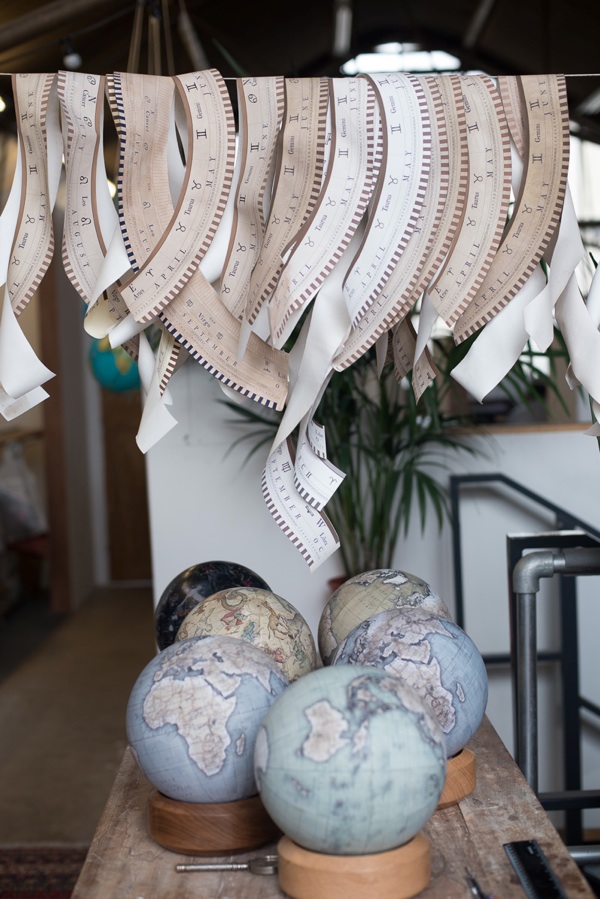
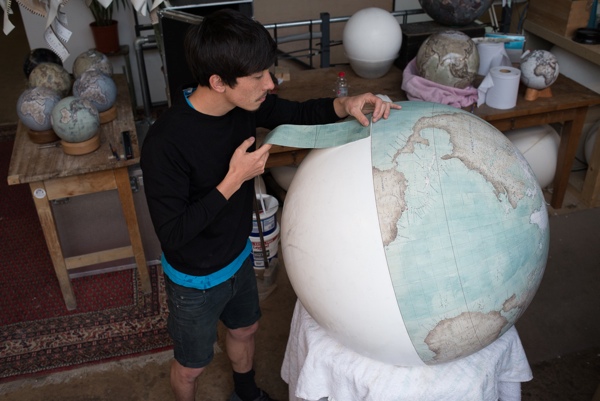
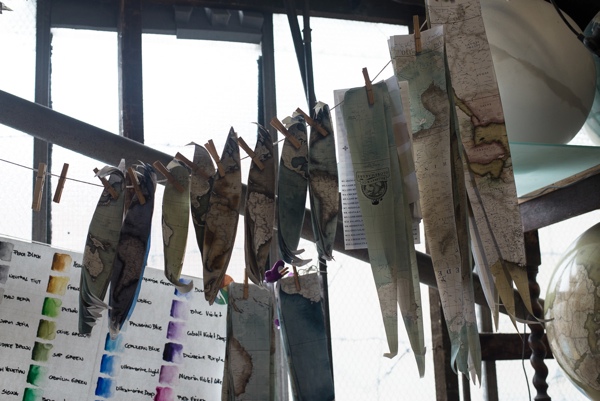
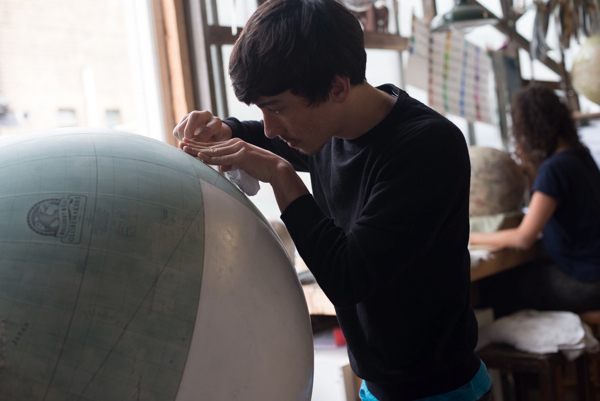
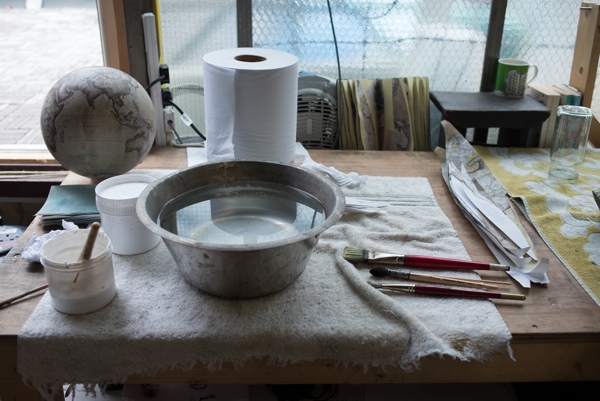
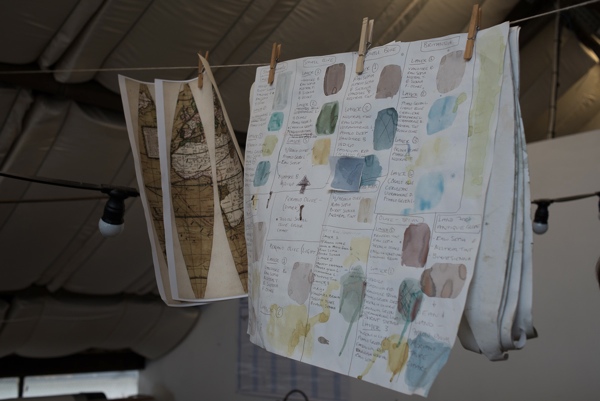
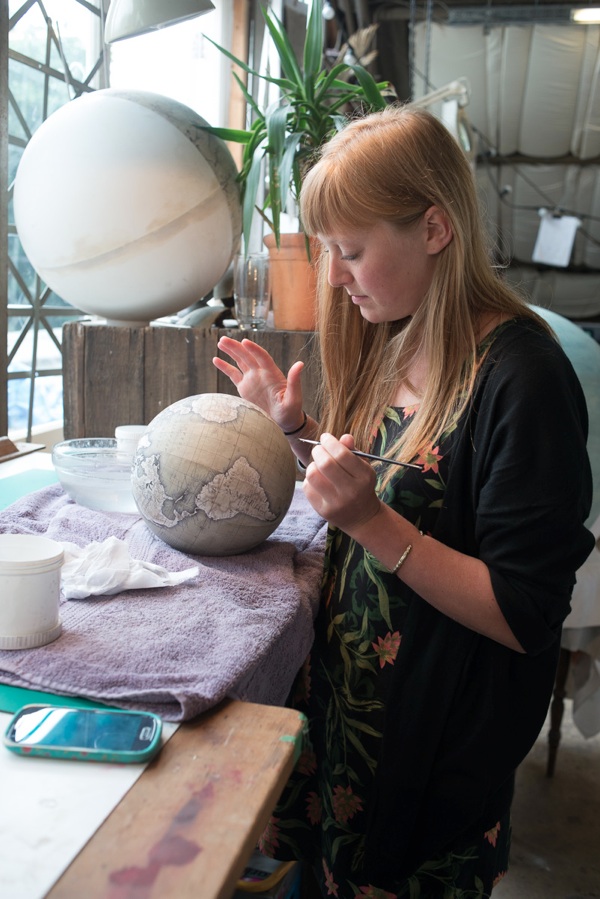
A concentrated hush prevailed as Contributing Photographer Sarah Ainslie & I ascended the old staircase in the former warehouse where we discovered the globemakers at work on the top floor, painstakingly glueing the long strips of paper in the shape of slices of orange peel (or gores as they are properly known) onto the the spheres and tinting them with fine paintbrushes to achieve an immaculate result.
“I get bored easily,” Peter confessed to me, revealing the true source of his compulsion, “But making globes is really the best job you can have, because you have to get into the zone and slow your mind down.”
“Back in the old days, they were incredibly good at making globes but that had been lost,” he continued, “I had nothing to go by.” Disappointed by the degradation of his chosen art over the last century, Peter revealed that, as globes became decorative features rather than functional objects, accuracy was lost – citing an example in which overlapping gores wiped out half of Iceland. “What’s the point of that?,” he queried rhetorically, rolling his eyes in weary disdain.
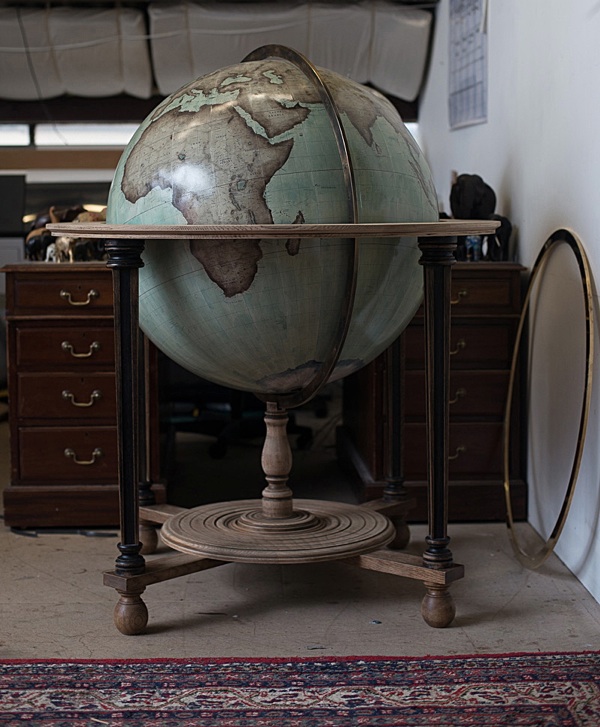
“People want something that will be with them for life,” he assured me, reaching out his arms around a huge globe as if he were going to embrace it but setting it spinning instead with a beautiful motion, that turned and turned seemingly of its own volition, thanks to the advanced technology of modern bearings.
Even more remarkable are his table-top globes which sit upon a ring with bearings set into it, these spin with a satisfying whirr that evokes the music of the spheres. Through successfully pursuing his unlikely inspiration, Peter Bellerby has established himself as the world leader in the manufacture of globes and brought a new industry to the East End serving a growing export market.
To demonstrate the strength of his plaster of paris casting – yet to my great alarm – Peter placed one on the floor and leapt upon it. Once I had peeled my fingers from my eyes and observed him, balancing there playfully, I thought, “This is a man that bestrides the globe.”
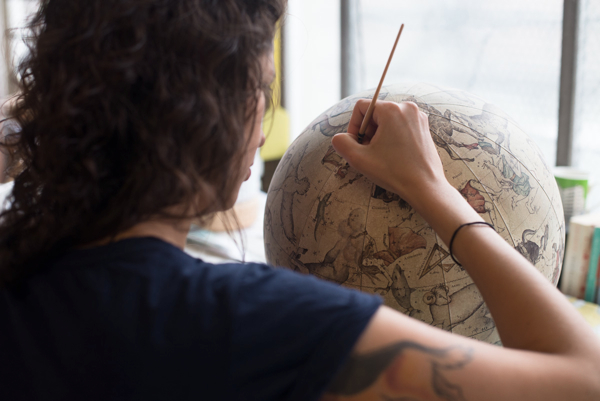
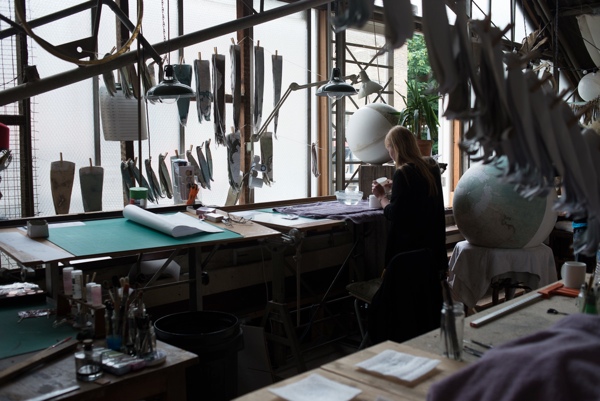
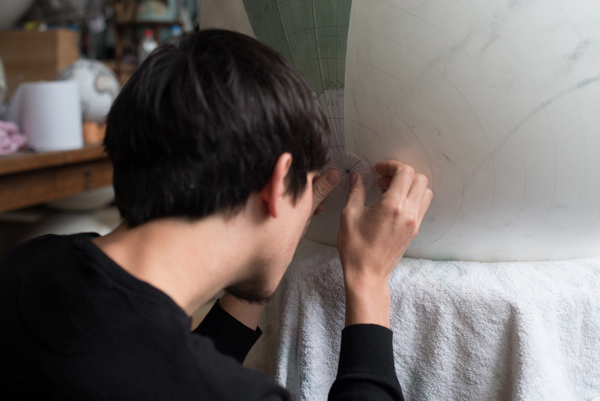
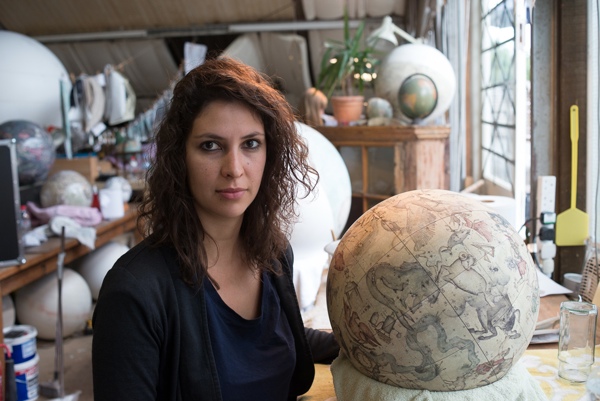
Isis Linguanotto, Globepainter
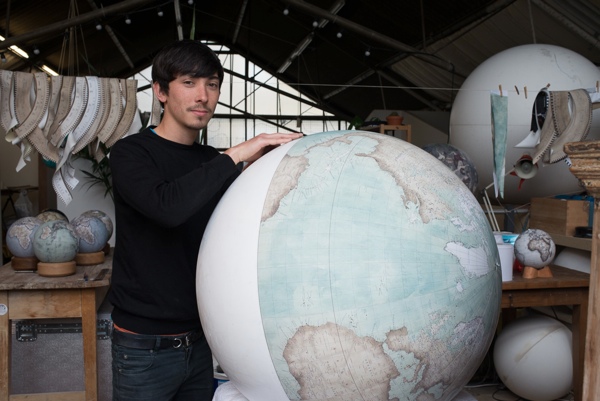
John Wright, Globemaker
Chloe Dalrymple, Globemaker
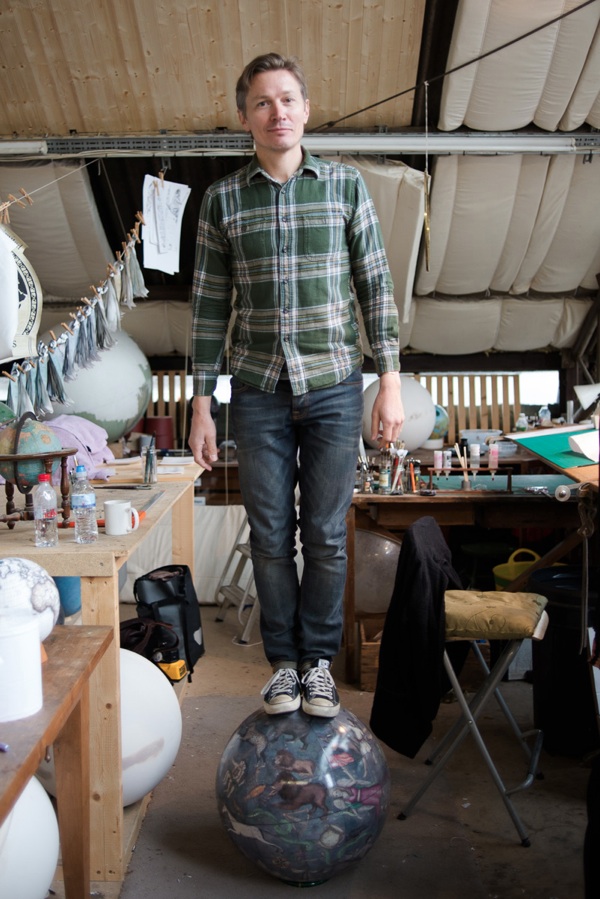
Peter Bellerby, on top of the globe
Photographs copyright © Sarah Ainslie
More Birds Of Spitalfields
When I published my Birds of Spitalfields, selected from Thomas Bewick’s History of British Birds 1797, I invited readers to send in their additions to my survey and today I publish this list accompanied by the relevant extra plates.
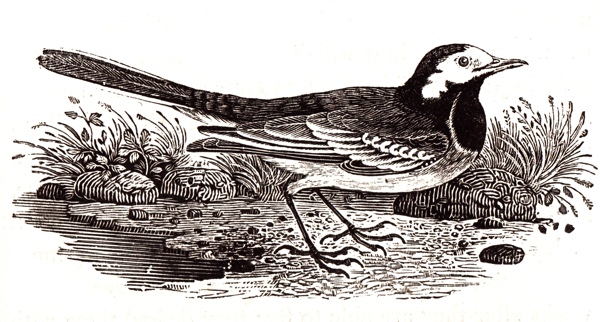
Pied Wagtail – spotted by Ash on the Holland Estate, Petticoat Lane
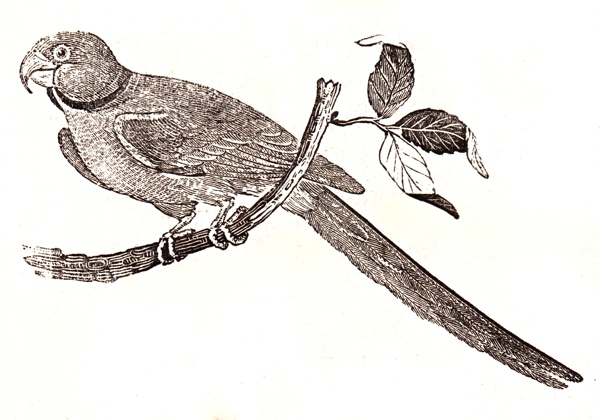 Rose-ringed Parrakeet – an occasional visitor
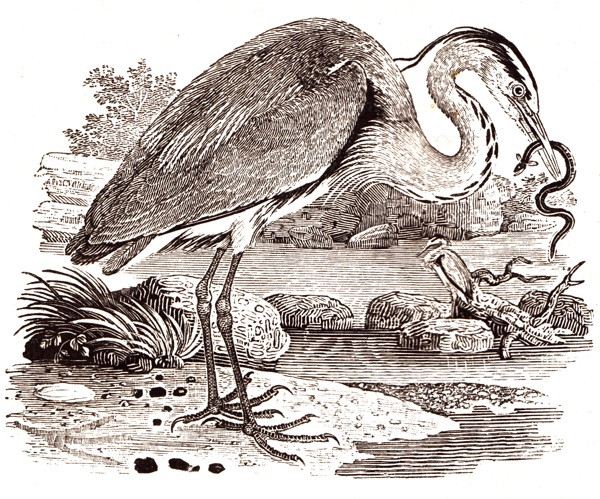 Heron – spotted flying overhead in Spitalfields
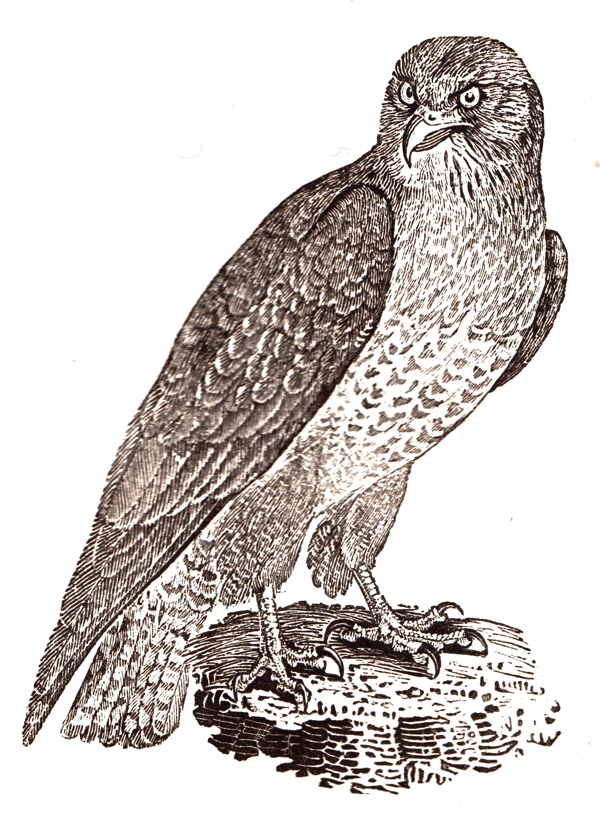 Buzzard – spotted over Holland Estate, Petticoat Lane
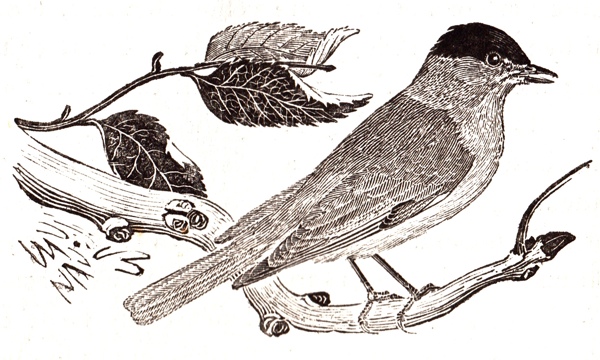
Blackcap – spotted by Libby Hall in Clapton
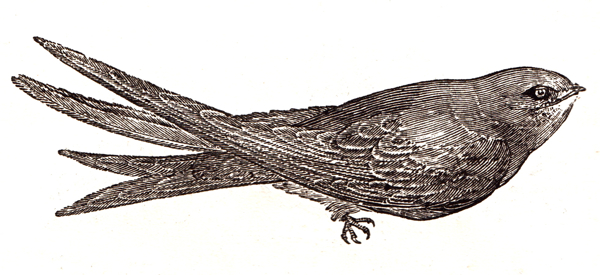 Swift – spotted by Ian Harper around Christ Church
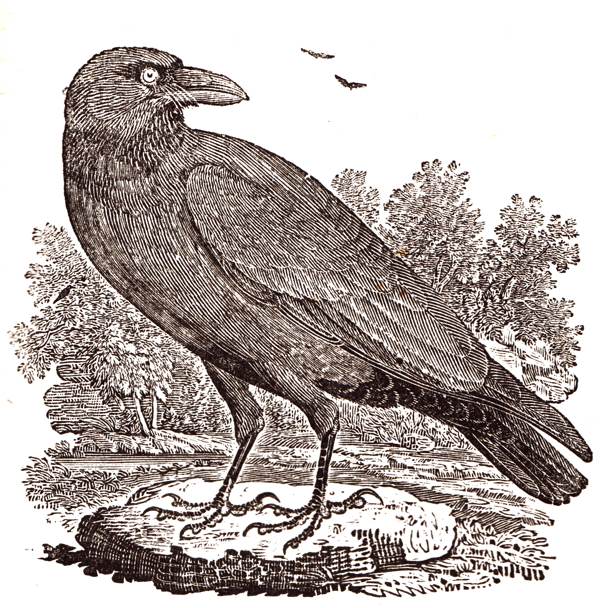
Raven – spotted by Ian Harper & Jim Howett around Christ Church

Kite – spotted by Ian Harper & Jim Howett around Christ Church
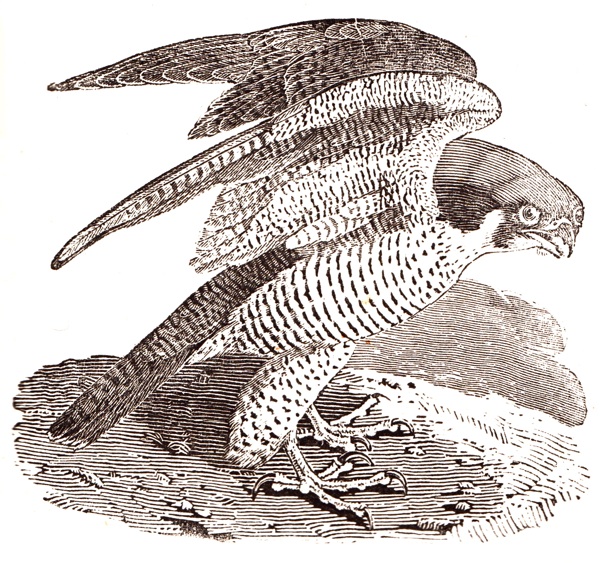
Sparrowhawk – spotted by Vivienne in Islington
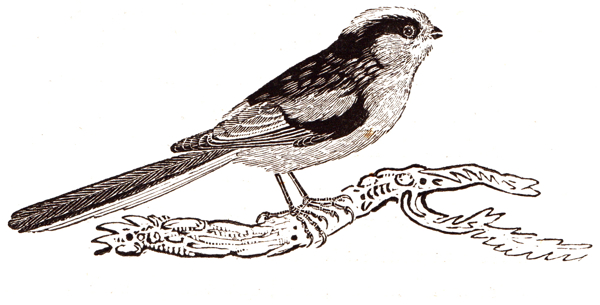
Long-tailed Tit – spotted in Wapping
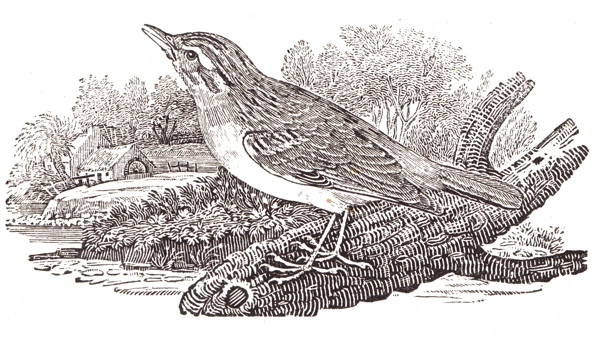
Willow Warbler – spotted by Tony Valsamidis in Whitechapel
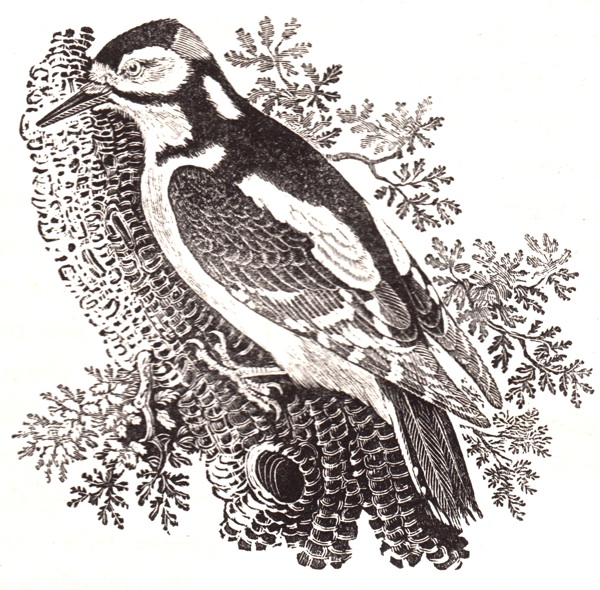
Greater Spotted Woodpecker – spotted by Annie Martin in Finsbury Park
You may also like to take a look at
Clive Murphy, Autograph Hunter
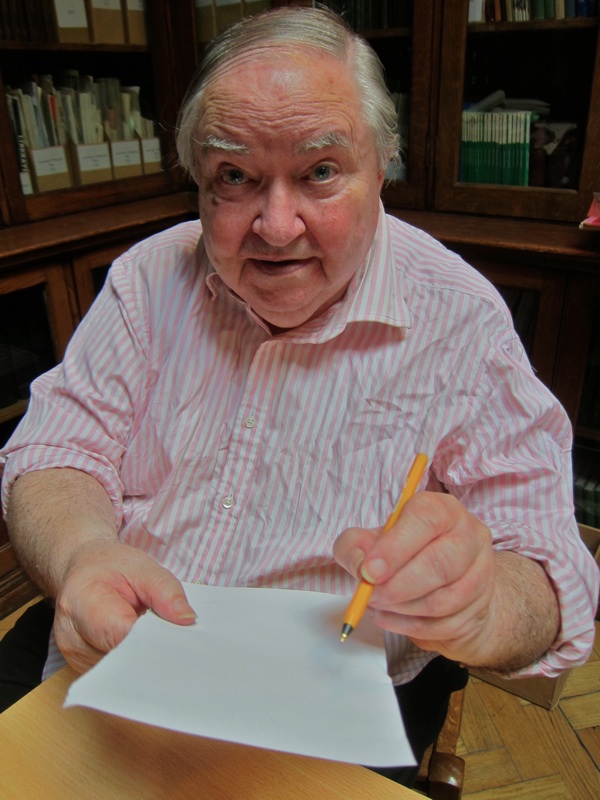
“May I have your autograph?”
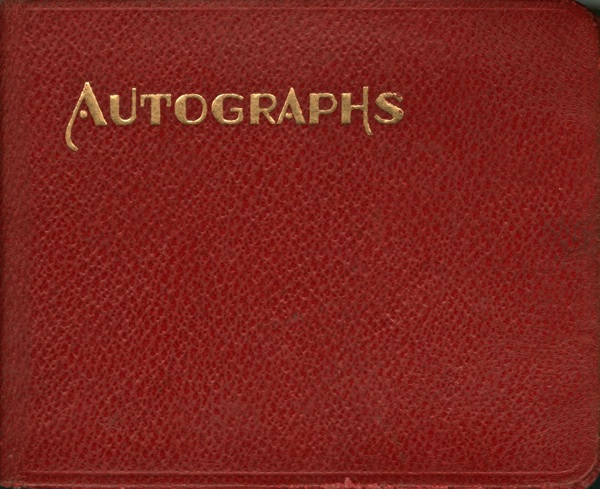
My friend Clive Murphy, Oral Historian, Novelist, Writer of Ribald Rhymes, Philumenist, Snapper and Exhibitionist, was once also an Autograph Hunter. “I was already collecting at eight, writing around to radio personalities for their autographs,” he recalled fondly, “When I went to Castle Park Prep School it became my craze. Although it was a lot of work writing the letters, it was very exciting waiting for the replies.”
Recently, when Clive gave many of his personal papers to the Bishopsgate Institute, his childhood Autograph Album from the late forties came to light and we spent an hour going through it together. With its pages of inspirational verse written by teachers and autographed studio portraits of radio personalities from long ago, this modest volume is a poignant evocation of the post-war affluent middle class world in Dublin that Clive left behind. “It was a phase I went through,” he assured me with finality, once we had studied the Album.
Growing up in a sheltered suburb, Clive’s well-connected mother hoped he might eventually become Solicitor to Trinity College but instead, once he qualified, Clive ran away to London in search of the bright lights and became Lift Attendant at Lyons Corner House in the Strand.
Subsequently, Clive won success for his novels and a ground-breaking series of oral history books, entitled ‘Ordinary Lives.’ Thus he rejected the privileged world of his upbringing – and the fascination with celebrity incarnated in his Album – for a modest existence comprising menial jobs and rented rooms, while exploring his personal interest as a writer in the lives of working people.
In 1974, Clive moved into a tiny flat above the Aladin Curry House on Brick Lane where he lives happily to this day. “There I was living in a goldfish bowl, but here I am a non-entity,” he admitted to me without regret.
(Clive is currently working on the oral autobiography of Joan the Cat Lady of Spitalfields, entitled ‘Angel Of The Shadows.’ He kept in regular touch with her from 1991 until her death in 2011.)
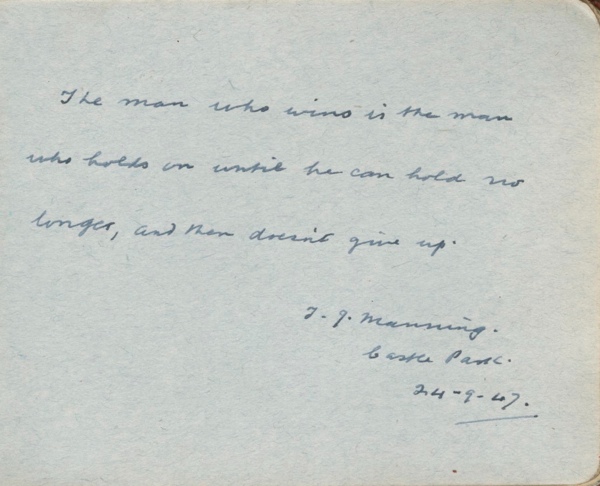
“My Latin teacher”
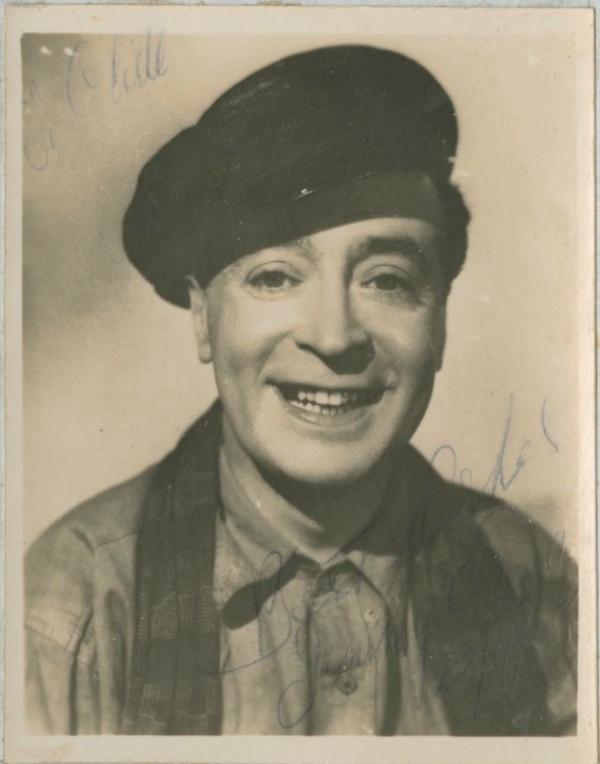
Jimmy O’Dea – “The most famous Dublin comedian that ever was – I think I stood at the Stage Door of the Gaiety Theatre to get that. I went there every year to the Pantomime. The great shame at school was if you went to a matinee, everyone wanted to go in the evening when the jokes were much naughtier. I don’t know why they call it ‘adult’ humour – it doesn’t say much for adults does it?”
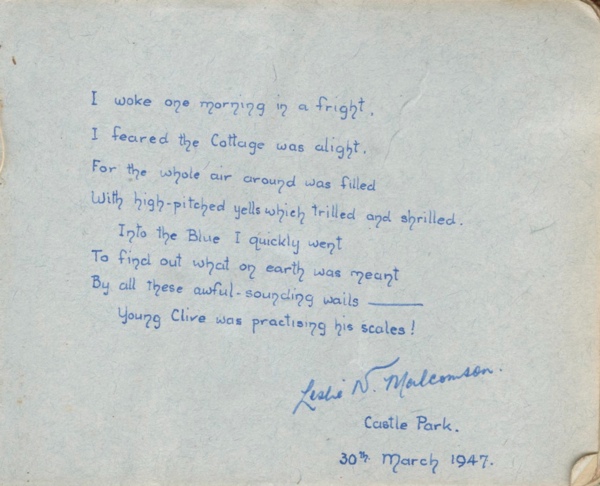
Leslie Malcolmson – “A most gifted teacher of English who would go to infinite pains upon behalf of favoured pupils such as myself. He thought I might have some talent. He directed me in the role of ‘Dopey’ in ‘Snow White & the Seven Dwarfs.'”
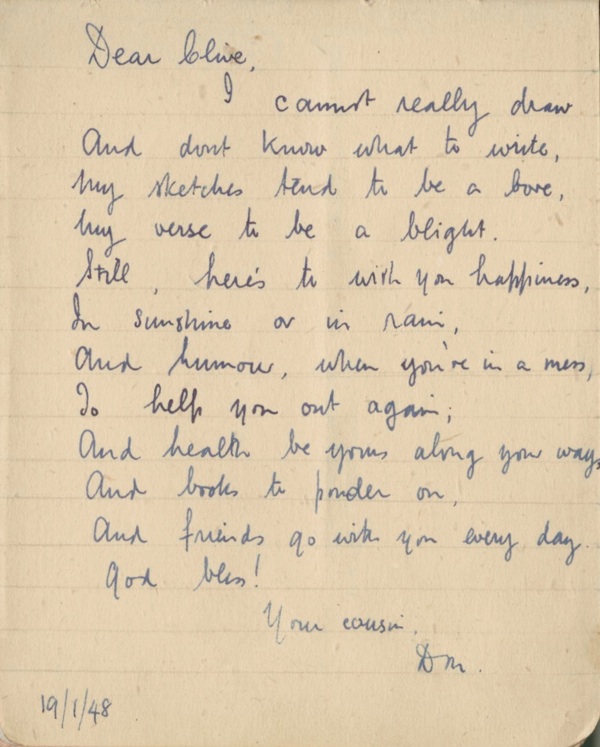
Donald Wormell – “He became Provost of Trinity College, Dublin, but he didn’t like it and had to be relieved of it. All public speeches were done by him in Latin.”
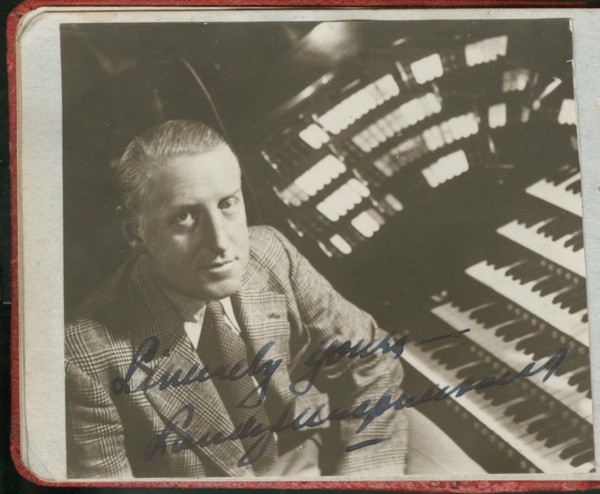
Sandy McPherson “A popular organist, the kind of music that would be played in the cinema before the film begins. I heard him play many times on the radio.”
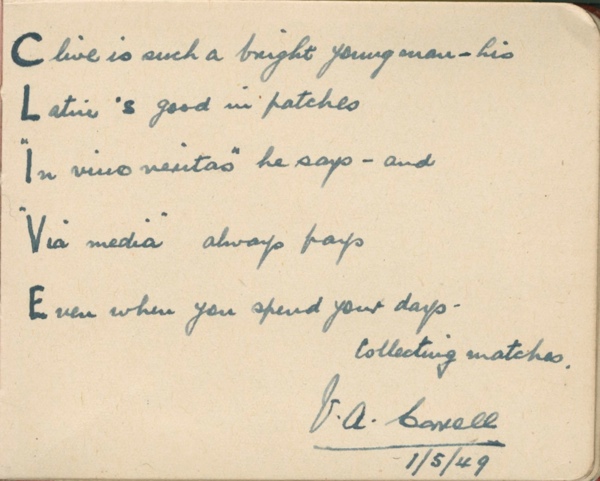
“He and his wife were close friends of my mother. We often went to the theatre together and I called him ‘uncle.’ He was a Director of the Bank of Ireland.”
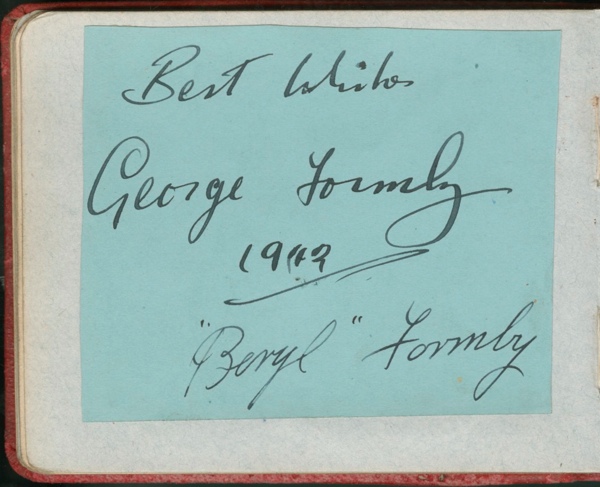
“This was a real coup”

Kenneth Horne – “He was with Richard Murdoch in ‘Much Binding in the Marsh.'”
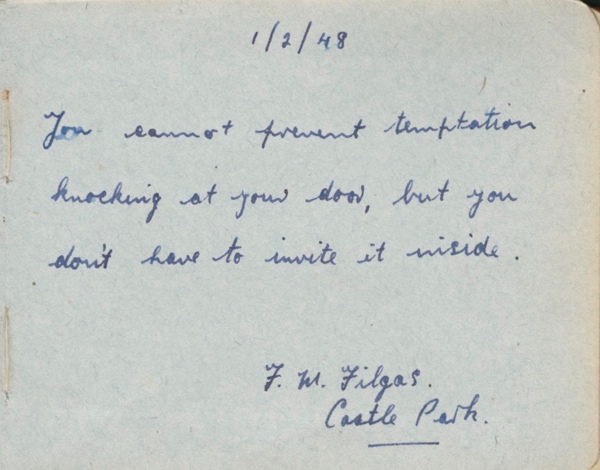
“This was written by my English teacher”
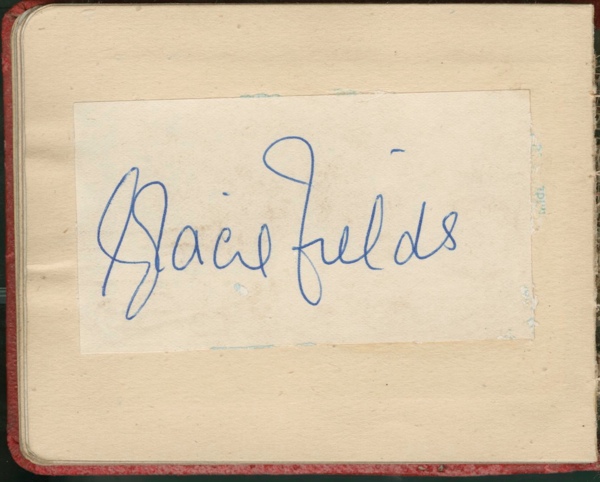
Gracie Fields – “I was a terrific fan of Gracie Fields, she had a gift of being terribly funny. ‘The biggest aspidistra in the world,’ she made it sound terribly rude. But she could sing ‘Wish me luck as you wave me goodbye’ and be terribly serious. She had this marvellous untrained voice.”
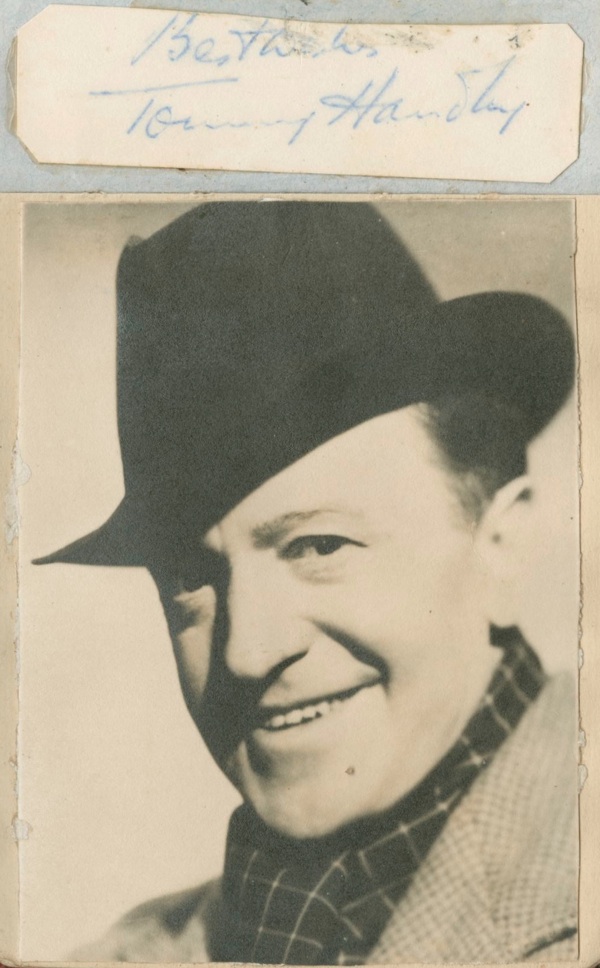
Tommy Handley – “We listened in to ‘I.T.M.A’ at Prep School.”
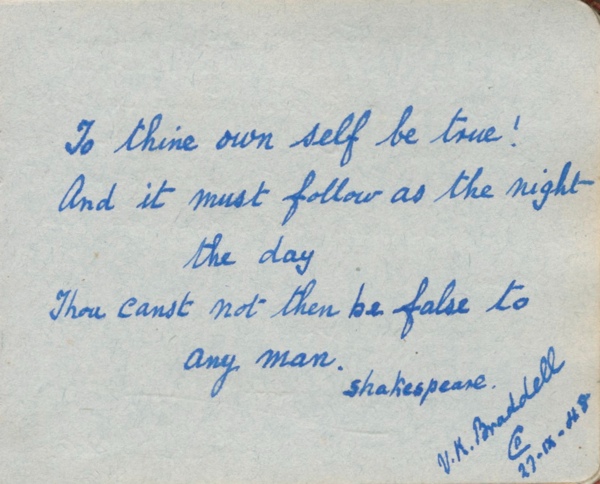
“This was my first teacher at eight years old. We called here ‘Braddy Depth Charge’ because she was a large lady. She wrote this when I left at thirteen.”
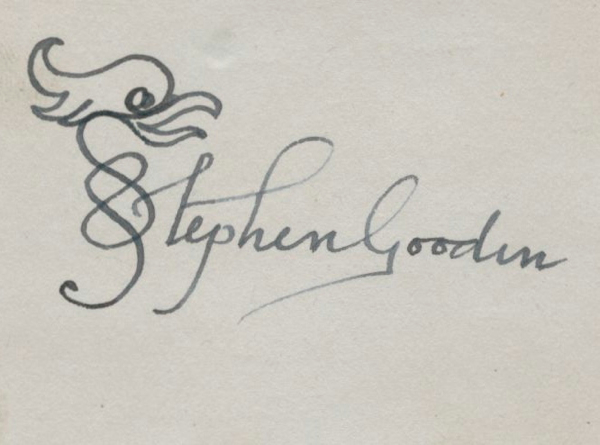
Stephen Goodin – “He designed some of Britain’s coinage. When he died I got his cast-offs – his tailcoat and his dinner jacket.”
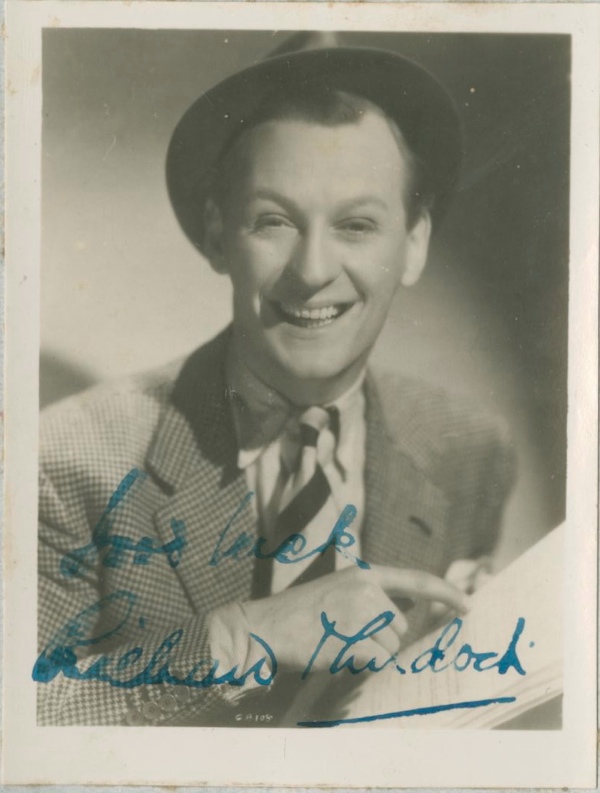
“I especially like this picture of Richard Murdoch star of ‘Much Binding in the Marsh.’ As with the others, he was kind enough to send it to me even though I couldn’t enclose a stamped addressed envelope as Irish stamps were no use in the United Kingdom.”
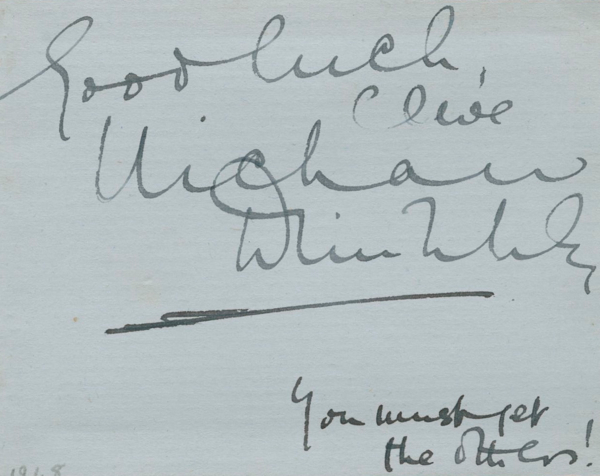
Richard Dimbleby, Broadcaster –“I asked him to get me the signatures of everyone else on a show and – as you can see – he wrote ‘You must get the others!'”
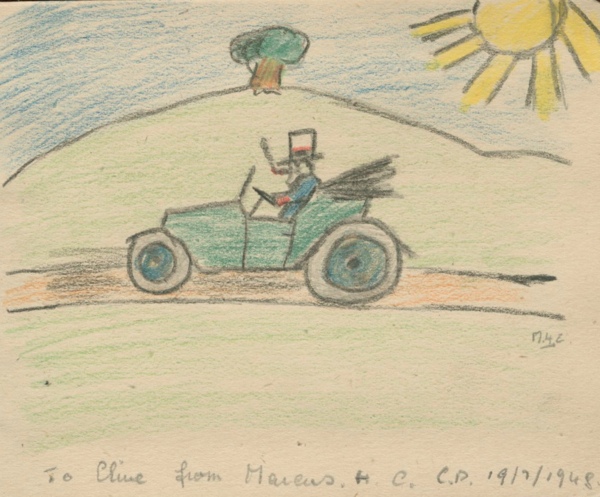
“This is a drawing by Marcus Clements, my best friend at Castle Park Prep School. When he went to Eton, he never spoke to me again, not even when he returned to the school on a visit. It’s a pretty little drawing.”
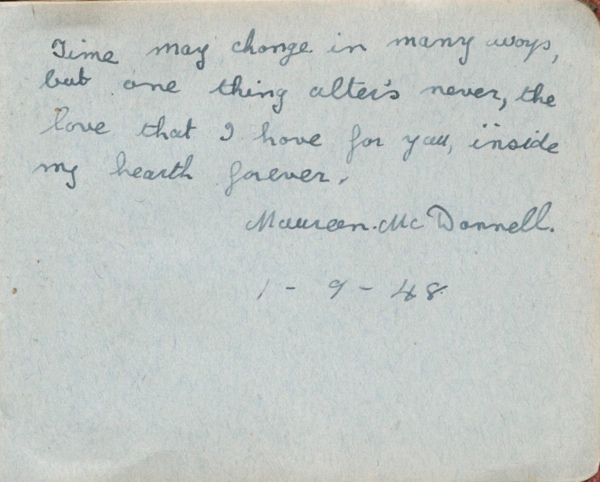
“My mother’s housekeeper, Maureen McDonnell, was my favourite person in the world, apart from my mother. Although she worked in Woolworths, she devoted her life to taking care of me and my mother. I’m very happy to read what she wrote because she really did mean it.”
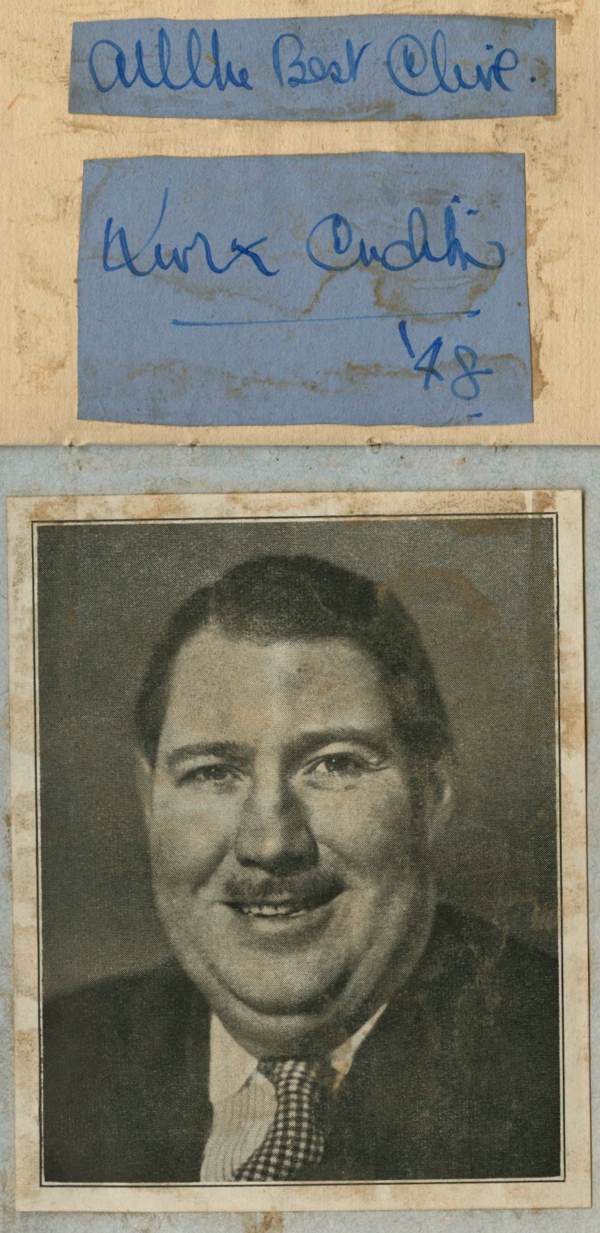
“I haven’t the slightest idea who this genial fellow is. Oh yes, he was conjurer – the Great Bamboozlem and he appeared at the Olympia, Dublin.”
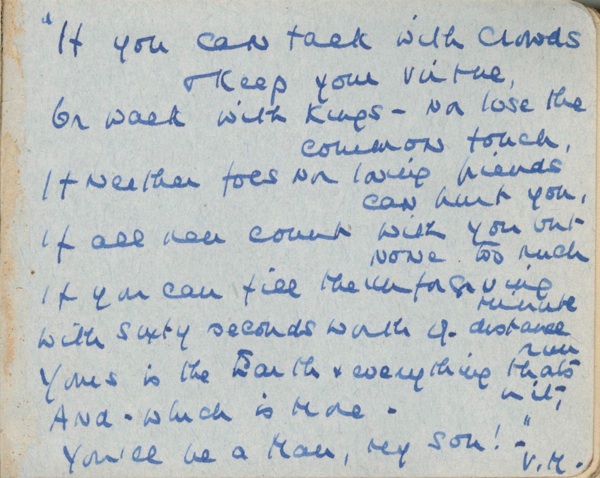
“When I was thirteen and moving on to Public School, my mother wrote out the last verse of Rudyard Kipling’s ‘If” for me. If you live by that poem, you’ve got principles to last your whole life. There’s nothing in it that isn’t useful.”

Clive Murphy as a schoolboy in the back garden in Dublin
Images courtesy of Bishopsgate Institute
You may also like to read about












