
At Bob Mazzer’s Launch
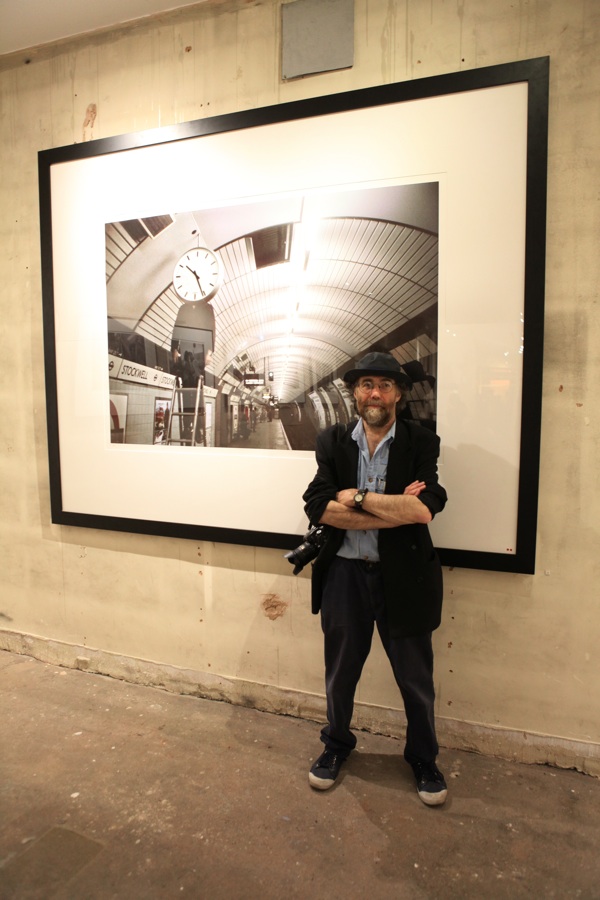
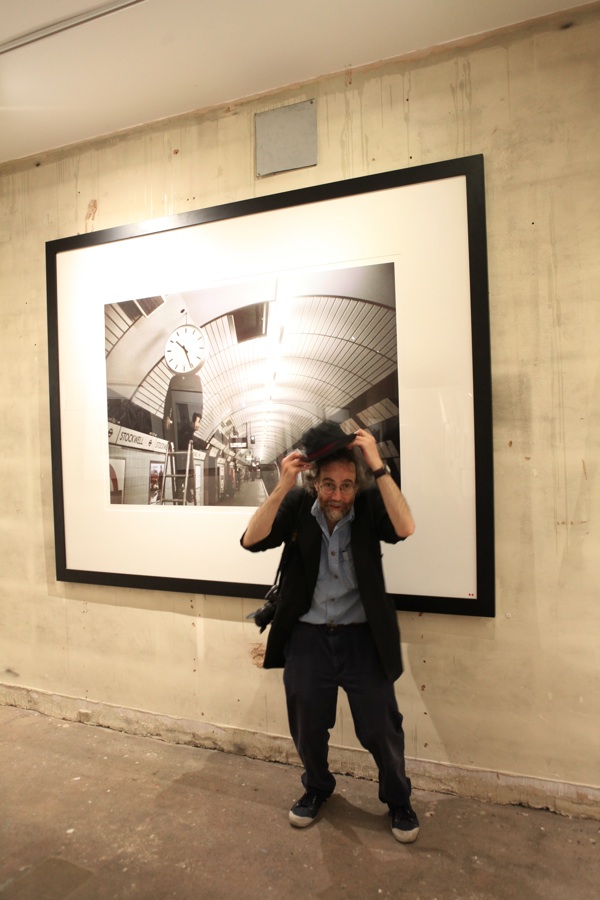
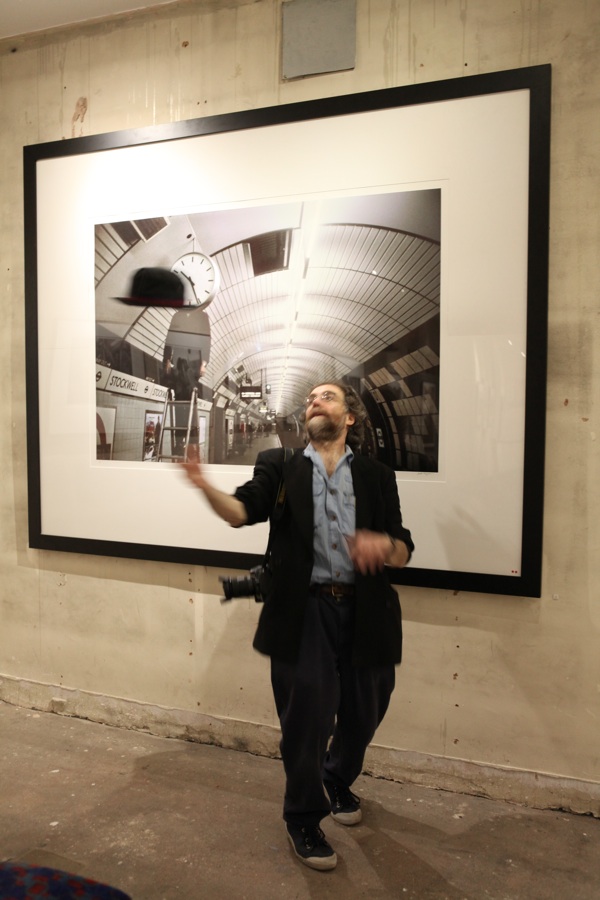
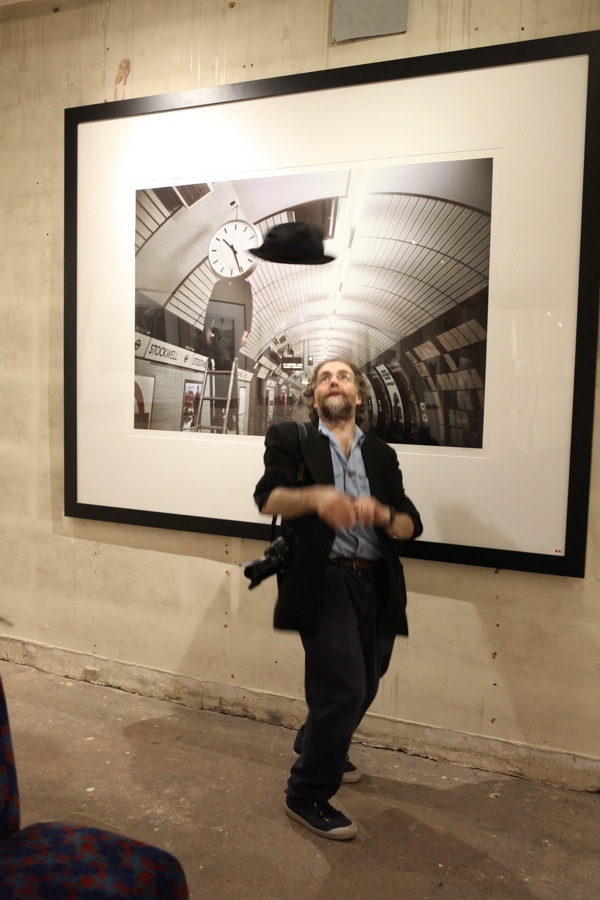

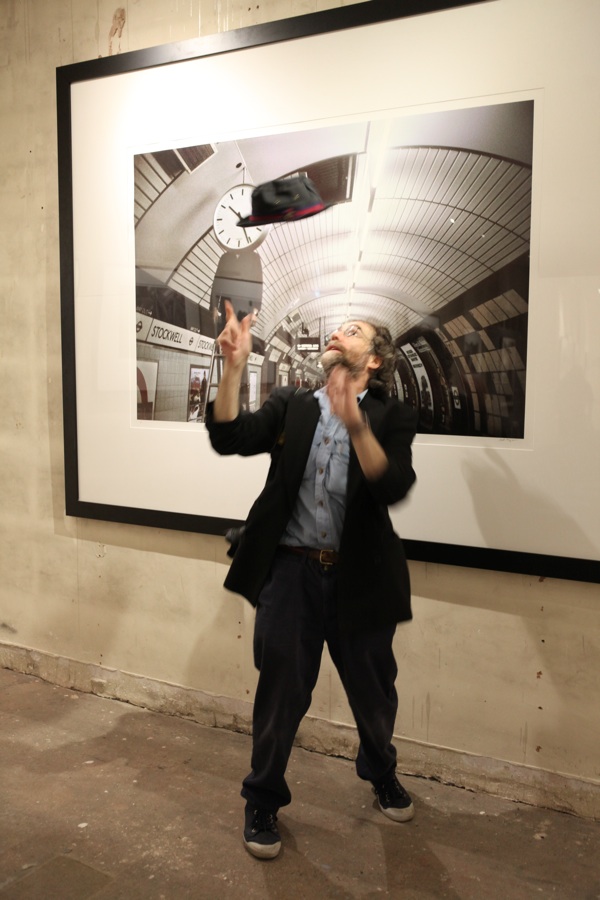
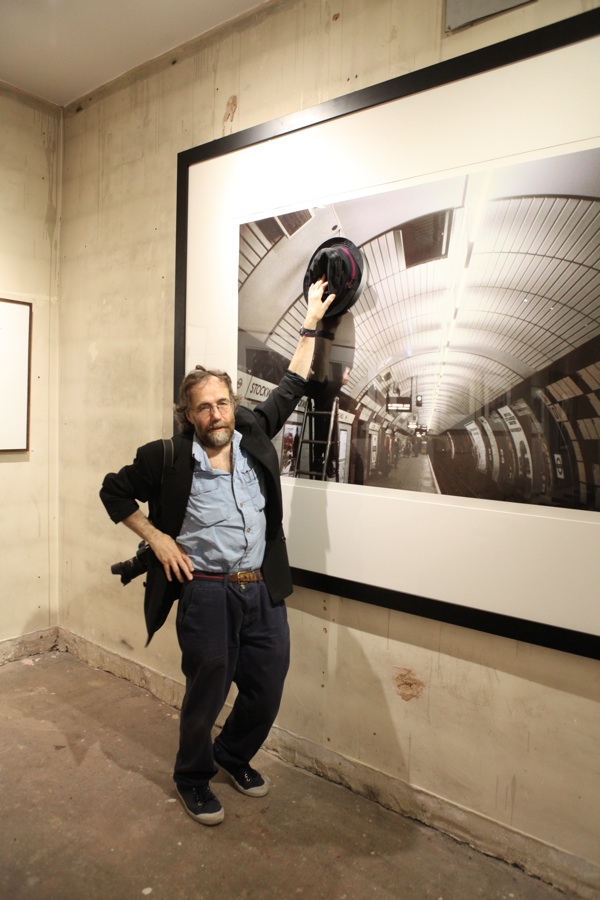
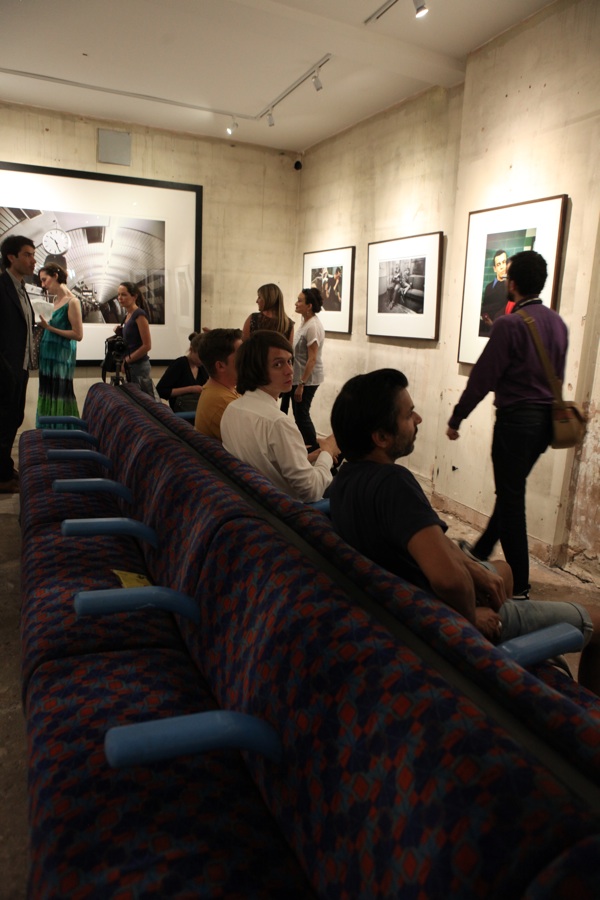
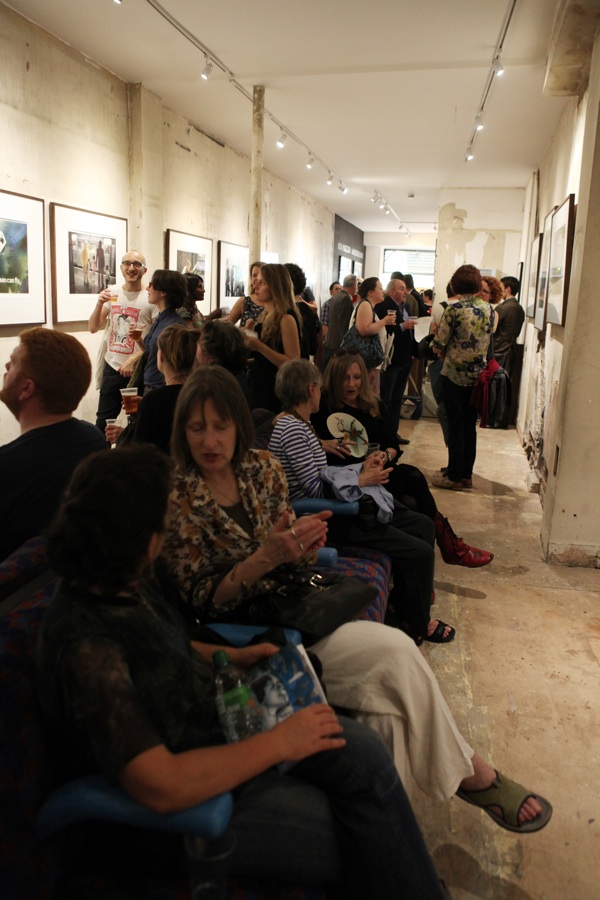
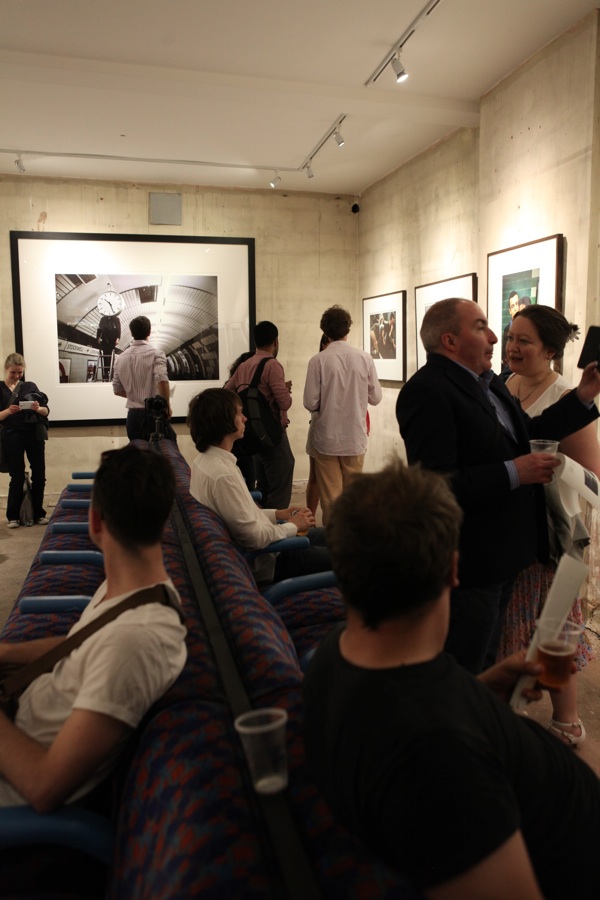
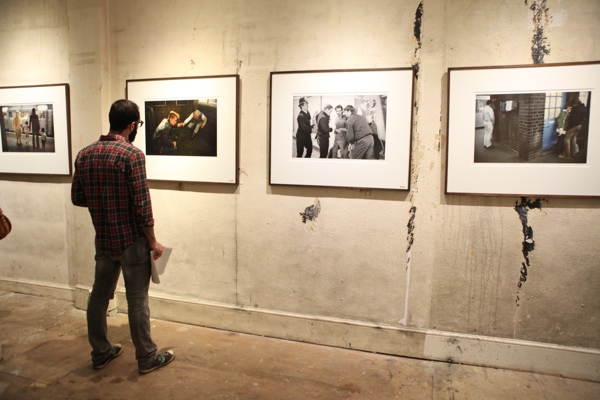
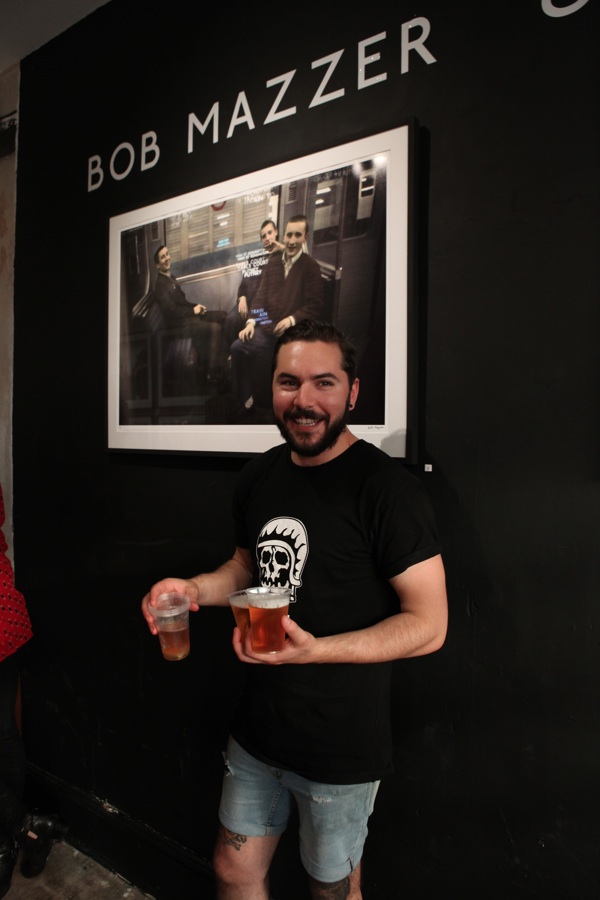
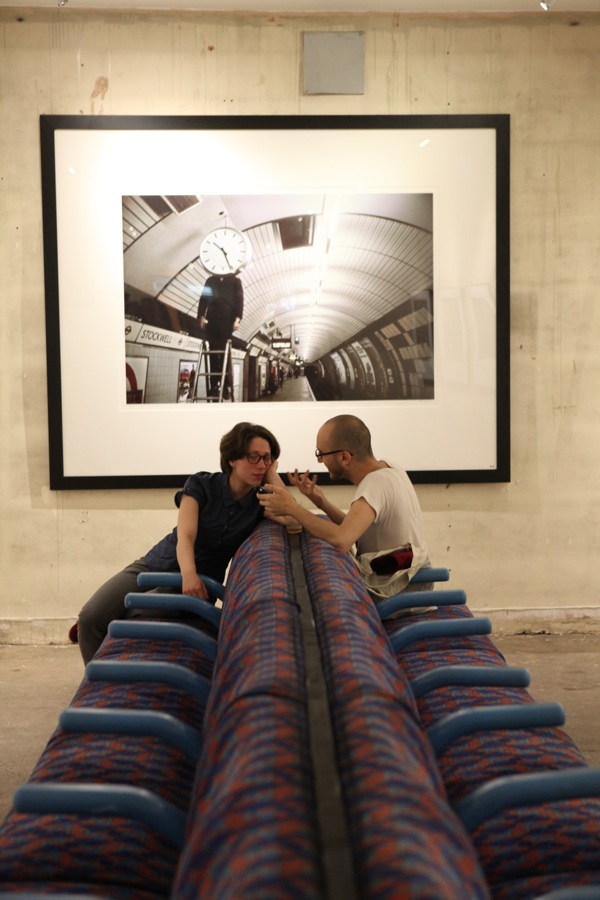
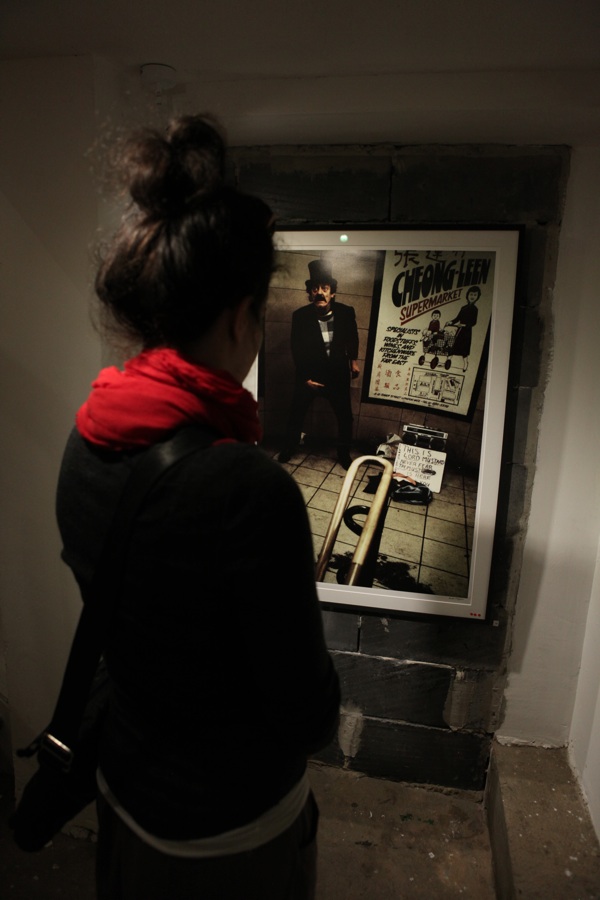
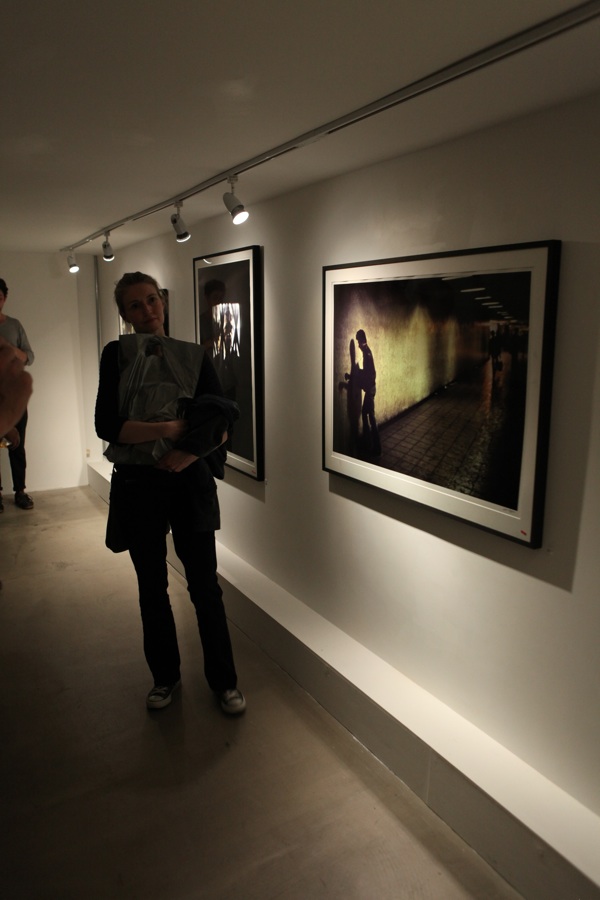
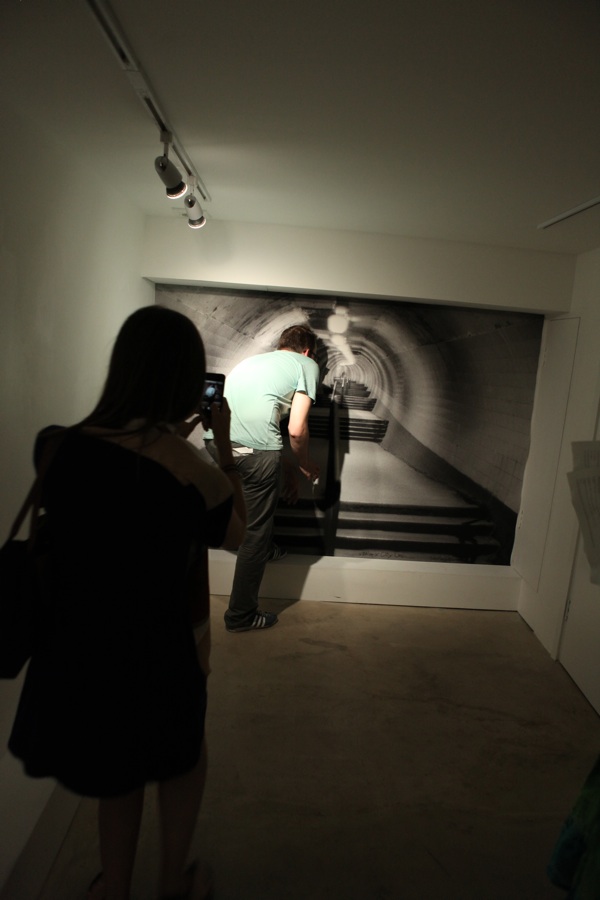
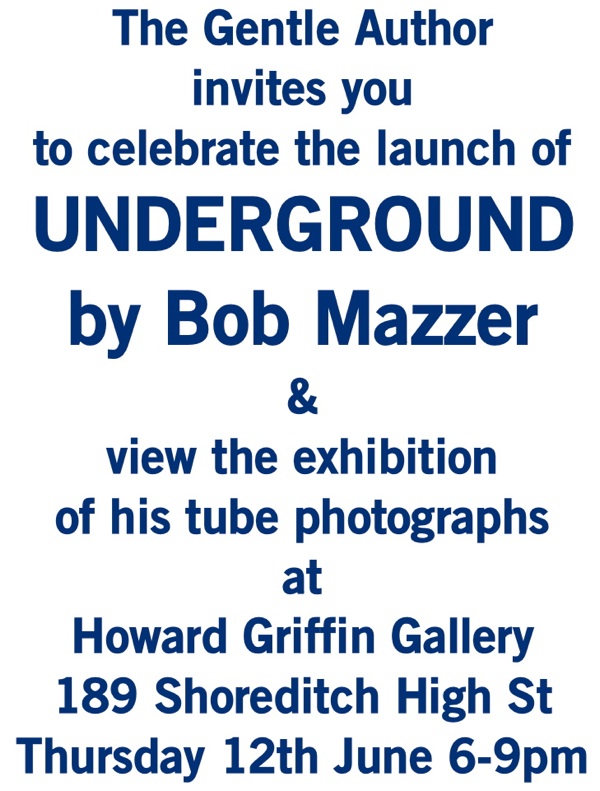
We had a grand celebration on Thursday when we launched Bob Mazzer’s UNDERGROUND and opened his debut exhibition at Howard Griffin Gallery in Shoreditch on the same night with a party fuelled by Truman’s Beer. For Bob, it was the culmination of forty years taking pictures on the tube and a moment of triumph that he exalted by skylarking in the gallery and tossing his hat in the air, as captured by Colin O’Brien – Bob’s pal and fellow Spitalfields Life Contributing Photographer.
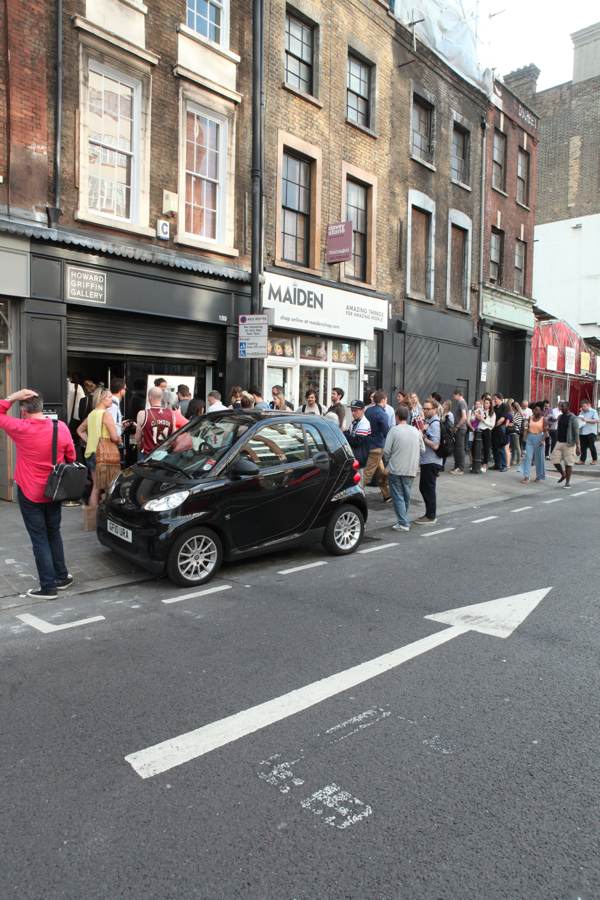
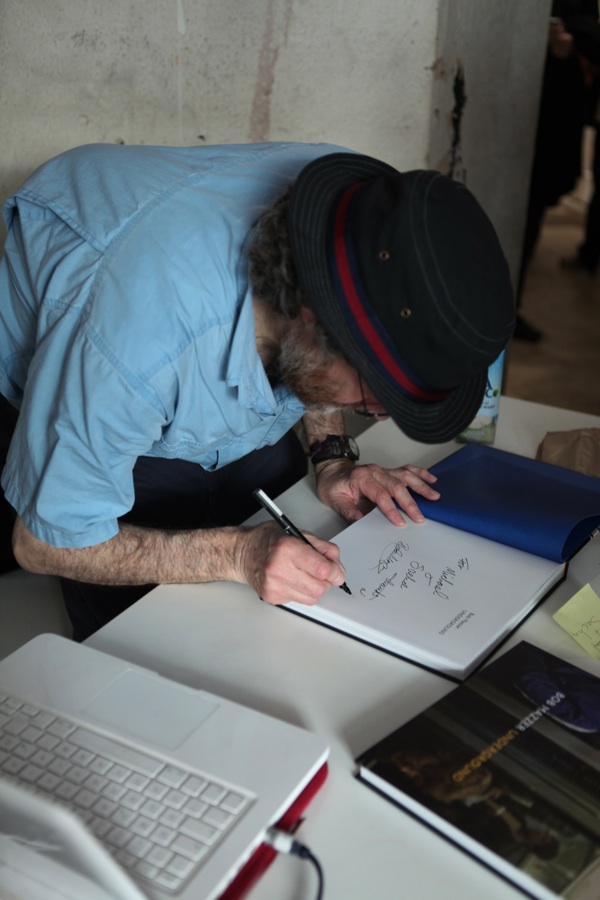
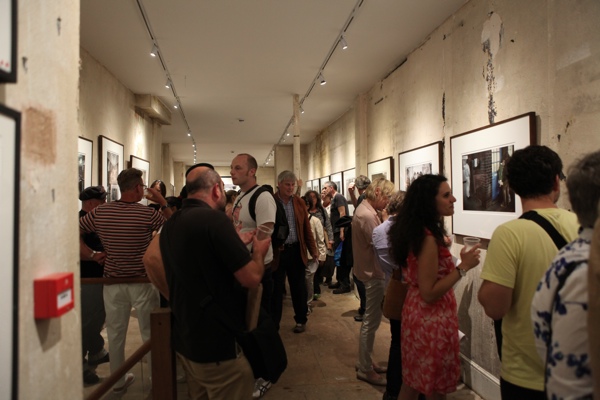
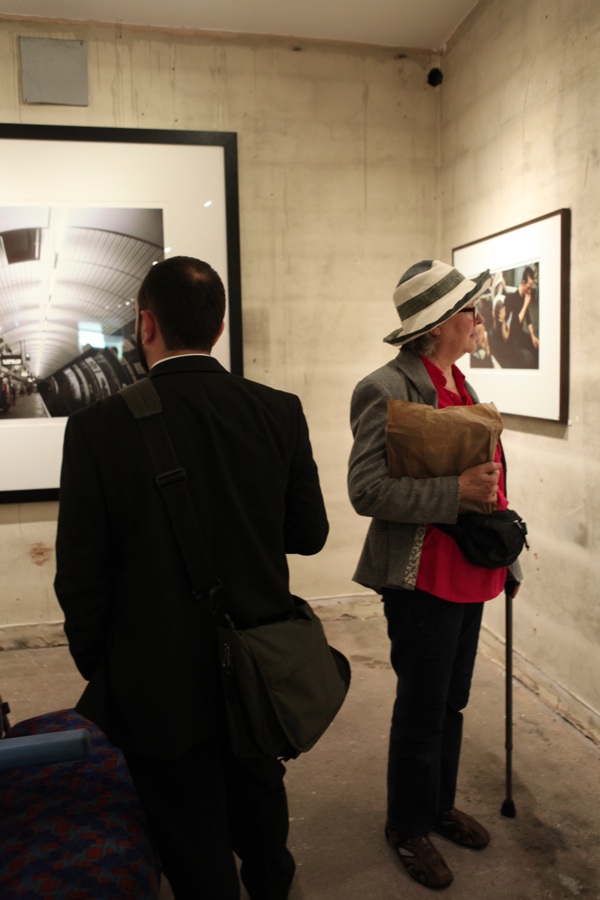
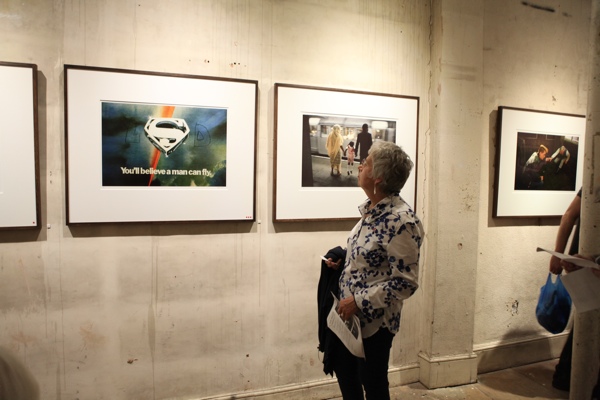
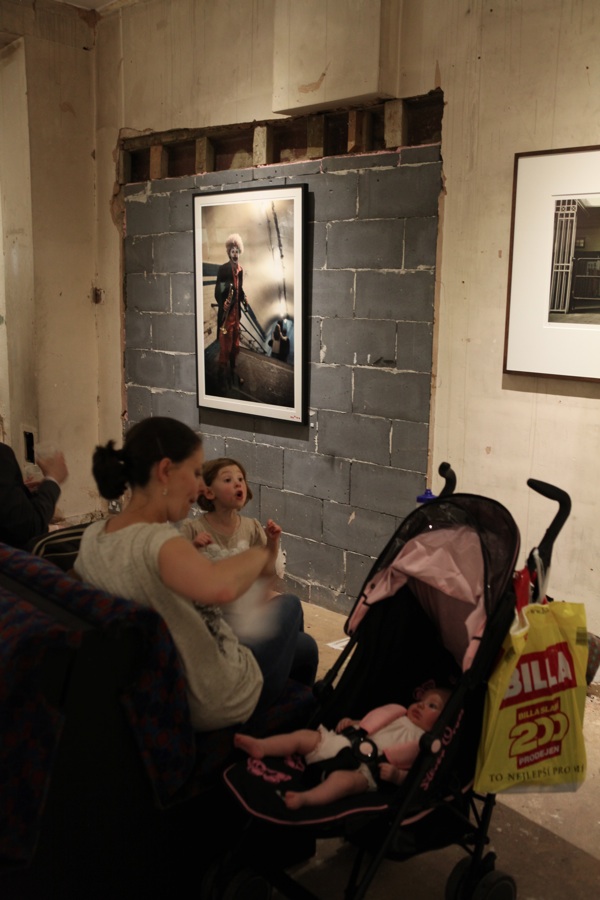
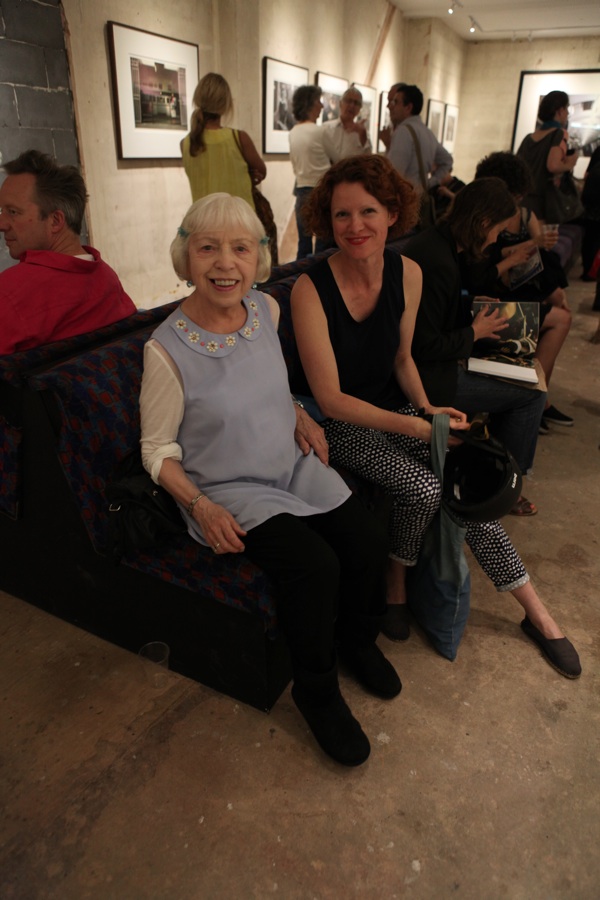
Singer Henrietta Keeper & Photographer Patricia Niven
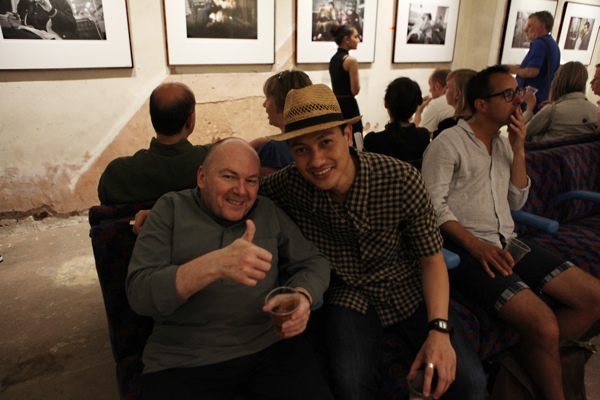
Photographer Phil Maxwell & Filmmaker Hazuan Hashim
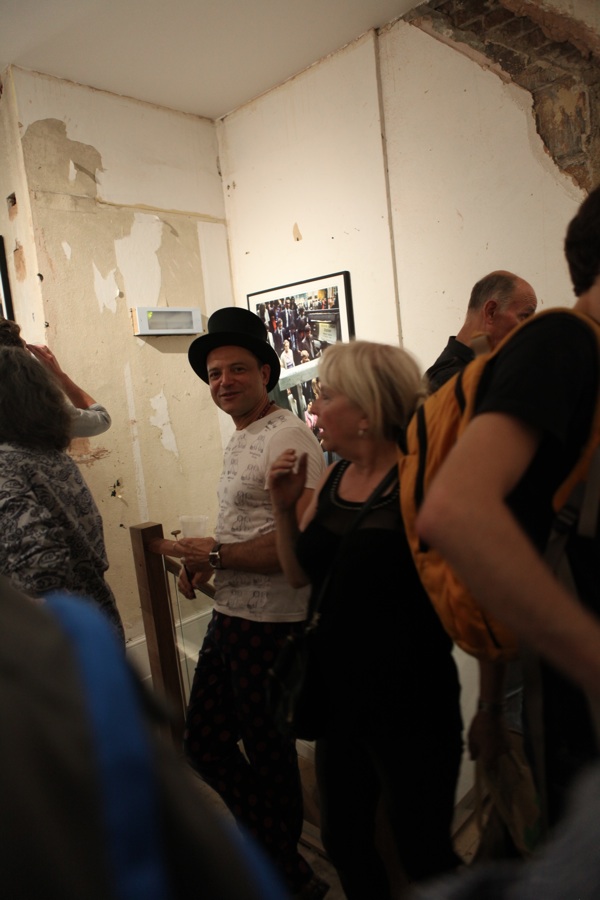
Robson Cezar, King of the Bottletops
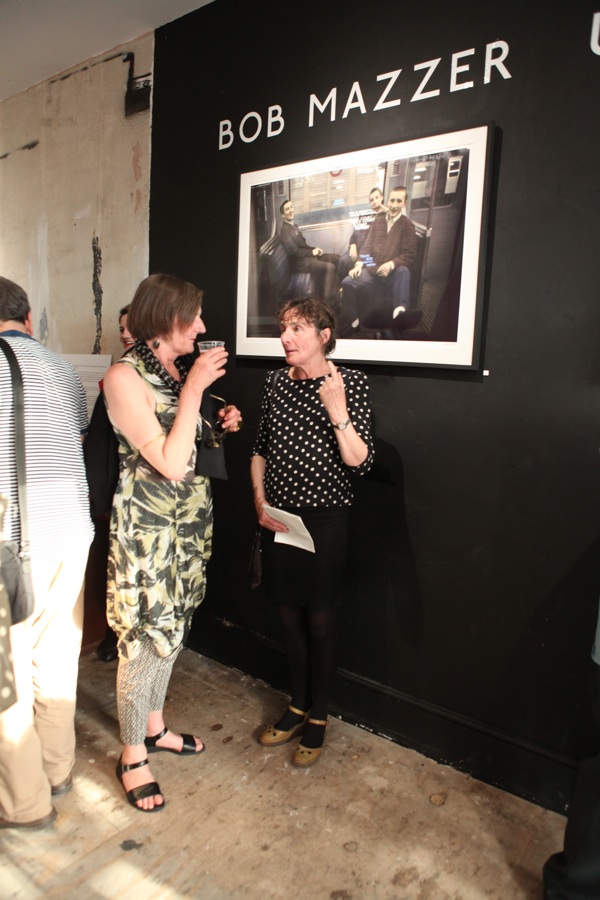
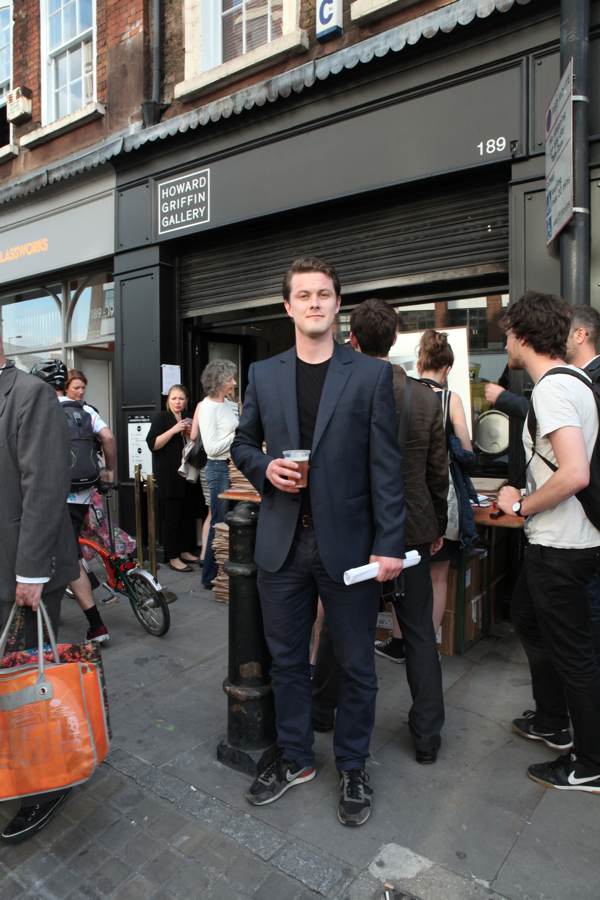
Richard Howard Griffin, Gallery Owner
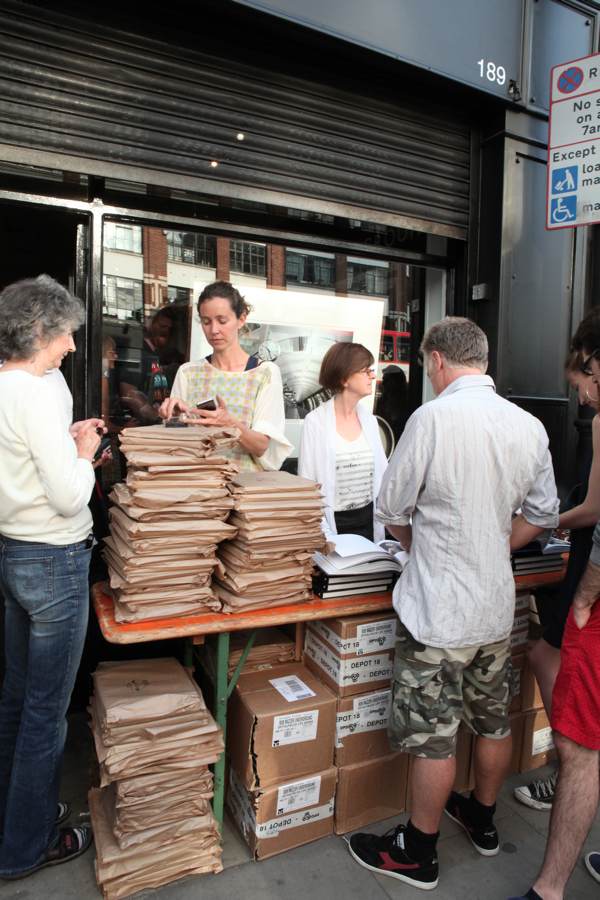

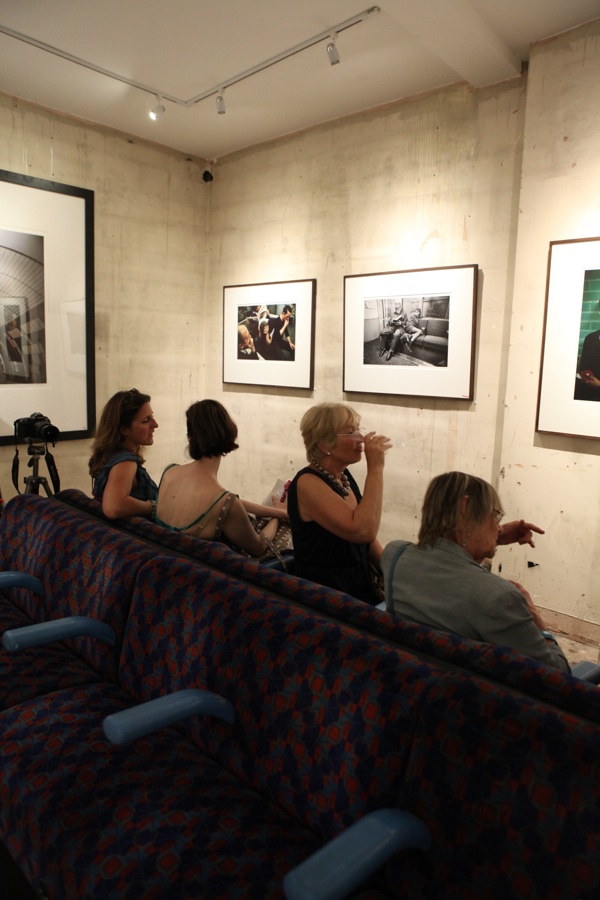
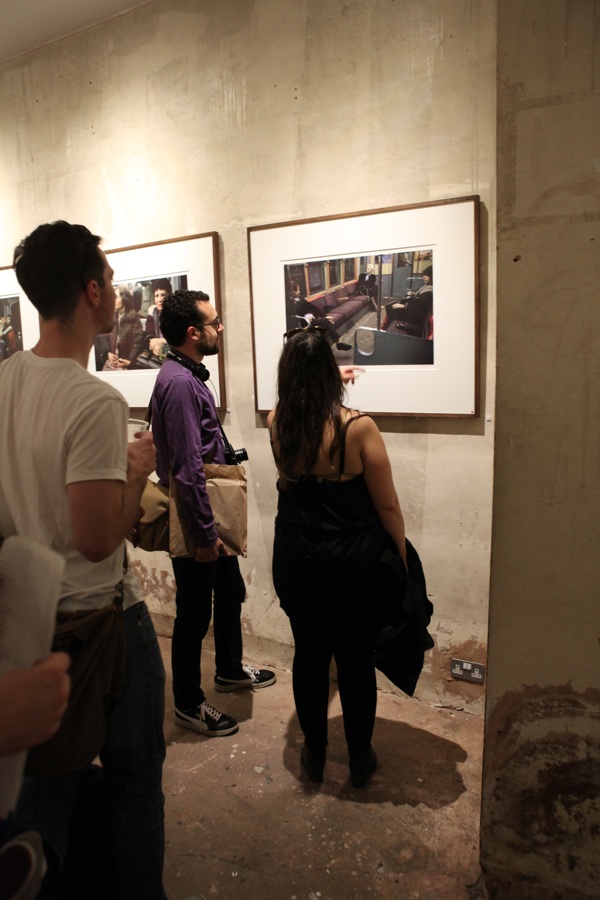
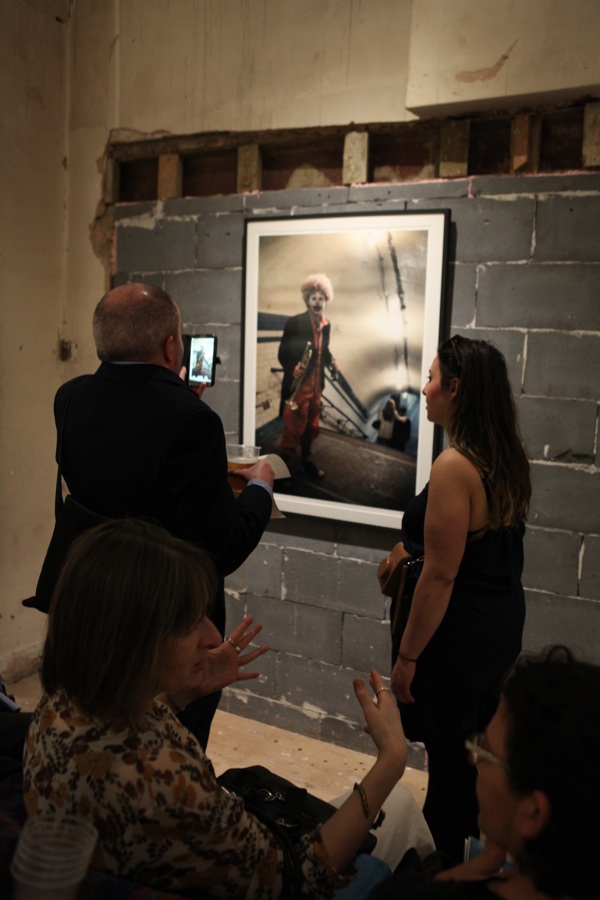
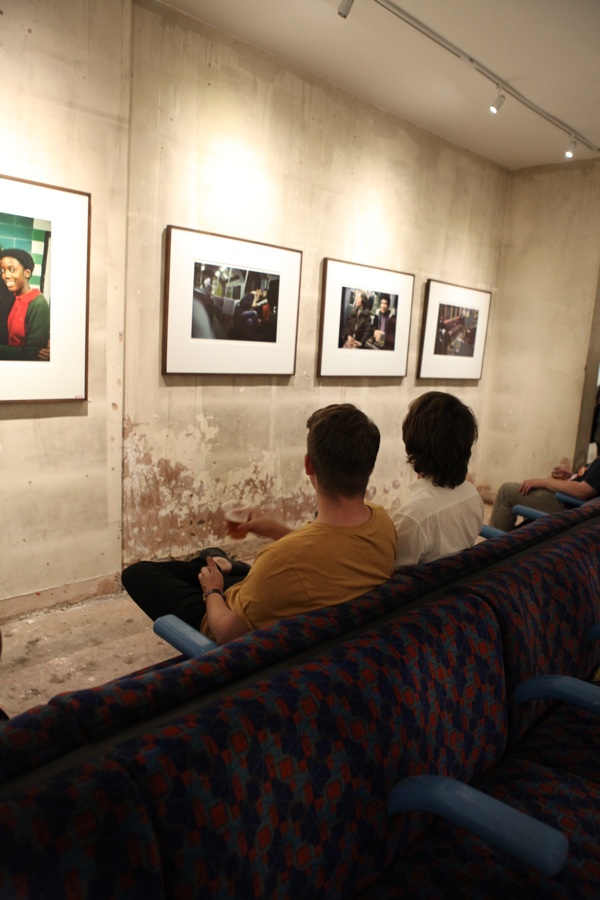
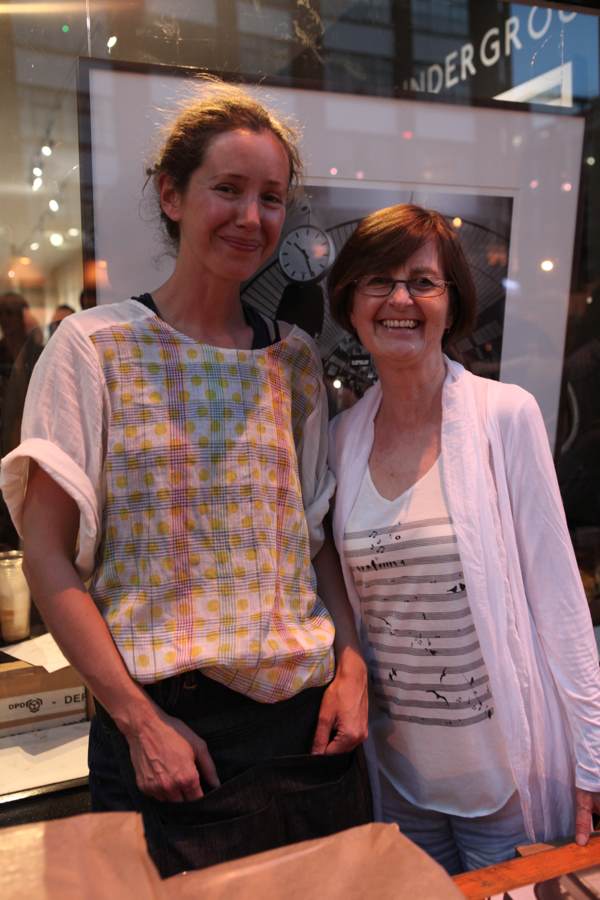
Rose Pomeroy & Vicky Stewart, Booksellers

The Gentle Author In The Tower
Next Monday 16th June, I shall be giving a MAGIC LANTERN SHOW in St Augustine’s Tower in Hackney, showing one hundred of my favourite photographs of London old and new, and telling the stories of the people and the places.
The event starts at 7:30pm and doors open at 7pm, affording the opportunity to view the medieval tower. Admission is free but numbers are strictly limited, so you must book in advance by emailing info@hhbt.org.uk or calling 020 8986 0029 .
Below you can read my account of my visit to St Augustine’s Tower last autumn.

St Augustine’s Tower
I wonder how many people even notice this old tower, secreted behind the betting office in the centre of Hackney? Without a second glance, it might easily get dismissed as a left-over from a Victorian church that got demolished. Yet few realise St Augustine’s Tower has been here longer than anything else, since 1292 to be precise.
“It is an uncompromising medieval building, the only one we have in Hackney,” Laurie Elks, the custodian of the tower, admitted to me as we ascended its one hundred and thirty-five steps, “and, above all, it is a physical experience.” Climbing the narrowing staircase between rough stone walls, we reached the top of the tower and scattered the indignant crows who, after more than seven centuries, understandably consider it their right to perch uninterrupted upon the weather vane. They have seen all the changes from their vantage point, how the drover’s road became a red route, how London advanced and swallowed up the village as the railway steamed through.
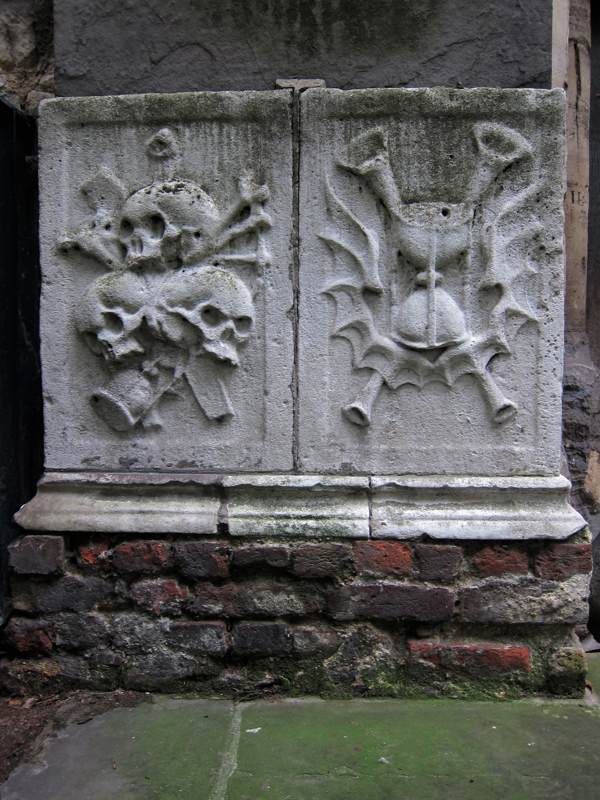
Yet inside the tower, change has been less dramatic and Laurie is proud of the lovingly-preserved cobwebs that festoon the nooks and crevices of his cherished pile, offering a haven for shadows and dust, and garnished with some impressive ancient graffiti. The skulls and hourglasses graven upon stone panels beside the entrance set the tone for this curious melancholic relic, sequestered among old trees just turning colour now as autumn crocuses sprout among the graves. You enter through a makeshift wooden screen, cobbled together at the end of the eighteenth century out of bits and pieces of seventeenth century timber. On the right stands an outsize table tomb with magnificent lettering incised into dark granite recording the death of Capt Robert Deane, on the fourth day of February 1699, and his daughters Mary & Katherine and his son Robert, who all went before him.
“There was no-one to wind the clock,” revealed Laurie with a plaintive grimace, as we stood on the second floor confronting the rare late-sixteenth-century timepiece that was once the only measure of time in Hackney, “so I persuaded my sixteen-year-old daughter, Sam, that she would like to do it and she did – until she grew unreliable – when I realised that I had wanted to wind the clock myself all along. I would come at two in the morning every Saturday and go to the all-night Tesco and buy a can of beans or something. Then I would let myself in and, sometimes, I didn’t put on the light because I know the building so well – and that was when I fell in love with it.” Reluctantly, Laurie has relinquished his nocturnal visits since auto-winding was introduced to preserve the clock’s historic mechanism.
It was the Knights Templar who gave the tower its name when they owned land here, until the order was suppressed in 1308 and their estates passed to the Knights of St John in Clerkenwell who renamed the church that was attached to the tower as St John-at-Hackney. Later, Christopher Urstwick, a confidant of Henry VII before he became king, retired to Hackney as rector of the church and used his wealth to rebuild it. Yet, to the right of the entrance to the tower, rough early medieval stonework is still visible beneath the evenly-laid layers of sixteenth century Kentish ragstone – bounty of the courtier’s wealth – that surmount it.
When the village of Hackney became subsumed into the metropolis, with rows of new houses thrown up by speculators, a new church was built down the road in 1797, but it was done on the cheap and the tower was not strong enough to carry the weight of the bells. Meanwhile, the demolition contractor employed to take down the old church was defeated by the sturdy old tower and it was retained to hold the bells until enough money was raised to strengthen the new one. Years later, once this had been effected, the fashion for Neo-Classical had been supplanted by Gothic and it suited the taste of the day to preserve the old tower as an appealing landmark to remind everyone of centuries gone by.
Thus, no-one can say they live in Hackney until they have made the pilgrimage to St Augustine’s Tower – where Laurie is waiting to greet you – and climbed the narrow stairs to the roof, because this is the epicentre and the receptacle of time, the still place in the midst of the mayhem at the top of Mare St.


The view from the top of the tower towards the City of London.


A bumper crop of conkers in Hackney this year, as seen from the parapet.

Laurie Elks, Custodian of the Tower


St Augustine’s Tower is open on the last Sunday of every month (except December) from 2pm-4:30pm
Thankyou Butler & Tanner!
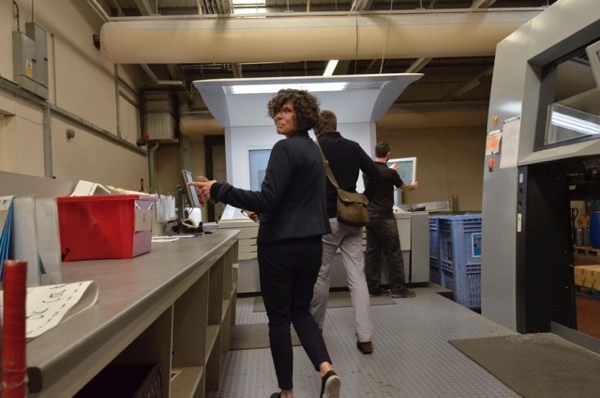
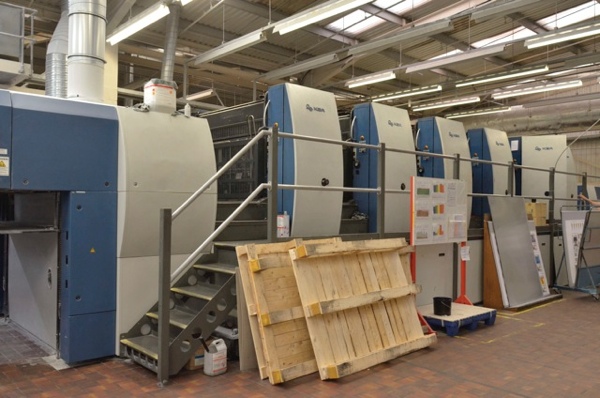
A month ago, photographer Bob Mazzer, book designer Friederike Huber & I visited the historic printing works of Butler & Tanner (Britain’s oldest established printer, in Frome since 1845) to see the printing of Bob’s book UNDERGROUND which I published yesterday.
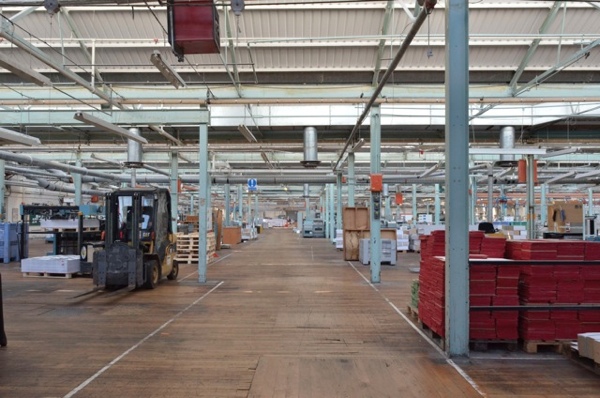
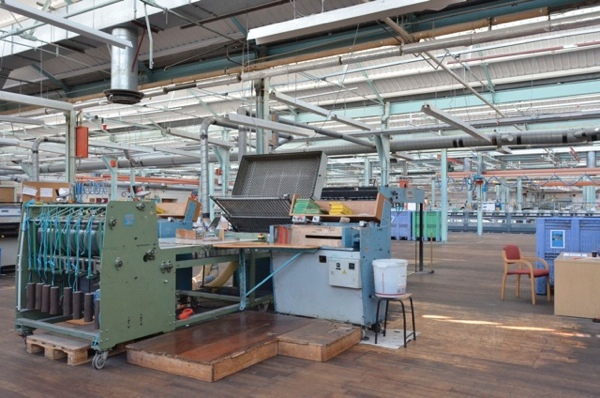
No-one knew that a couple of days later the company would go into administration and, on the day of our visit, we were told that it had been the longest factory tour ever – on account of Bob’s insistence upon photographing every aspect of the production of his book. Yet now these photographs exist as a poignant tribute to those people who made Butler & Tanner one of the great names in British printing.
I have no doubt that there will be future editions of UNDERGROUND and other books of Bob Mazzer’s photography, but the one to have will always be the legendary first edition which was also the last book ever printed by Butler & Tanner.
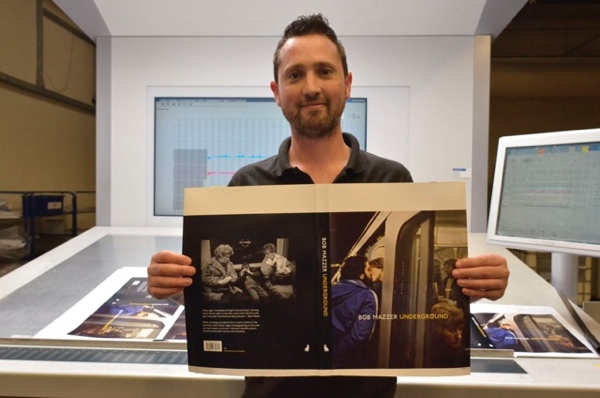
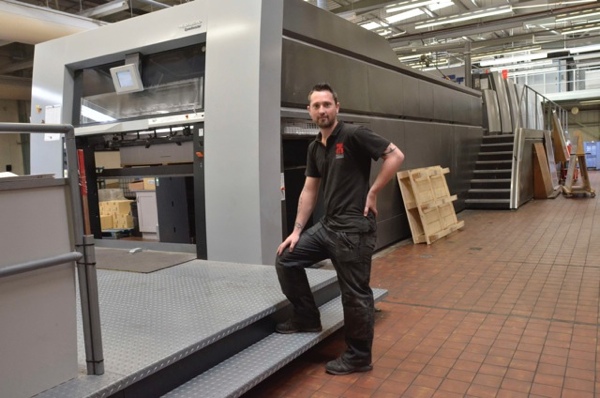
The Master Printer who printed UNDERGROUND
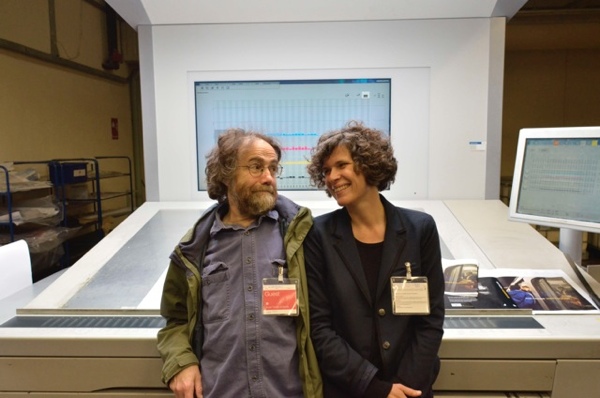
Bob Mazzer & Friederike Huber
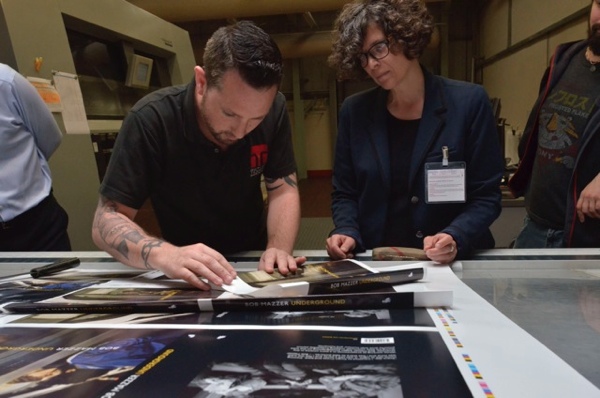
Fred checks the cover
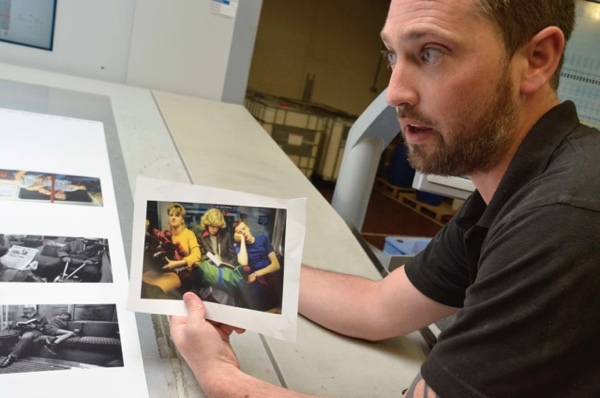
Checking the colour quality of the photographs
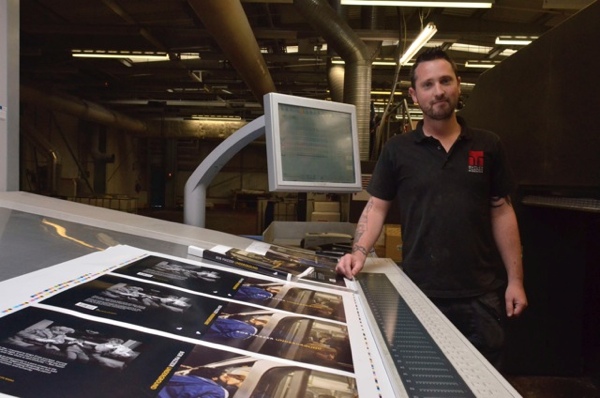
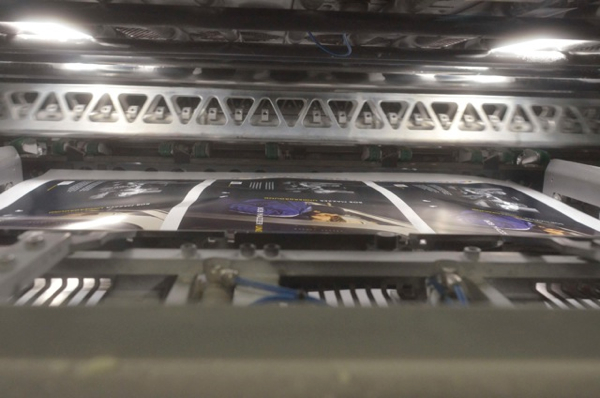
The covers roll off the press
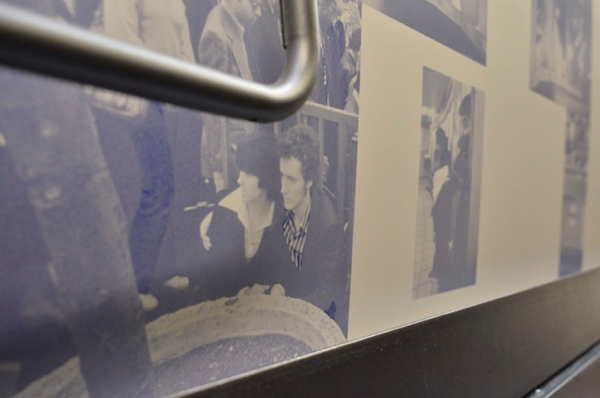
Plates ready to print UNDERGROUND
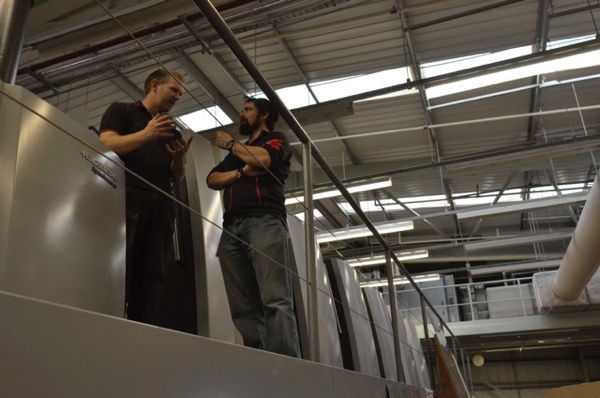
Bob’s son Arthur gets into a discussion with a printer
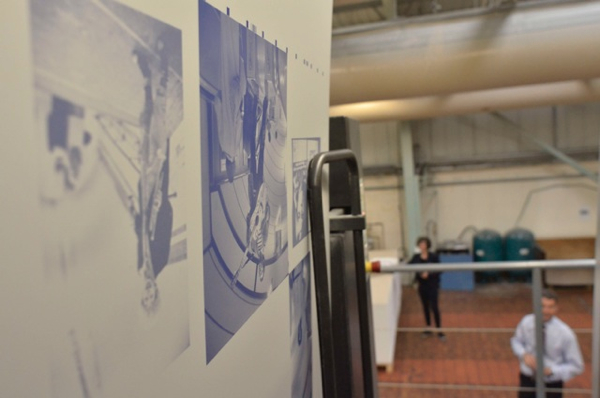
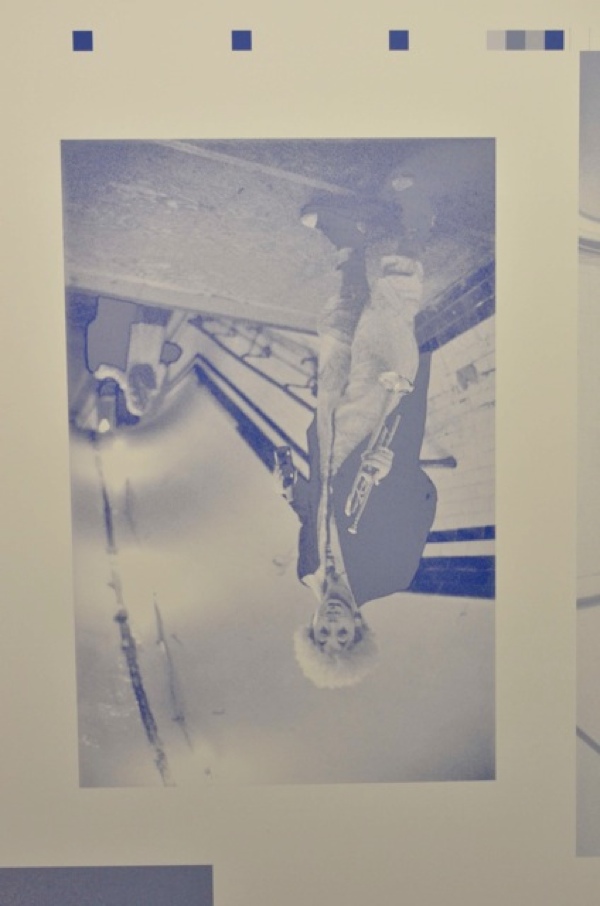
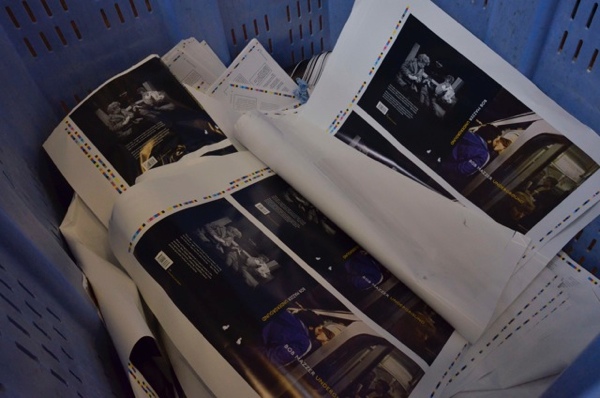
Reject prints of the cover
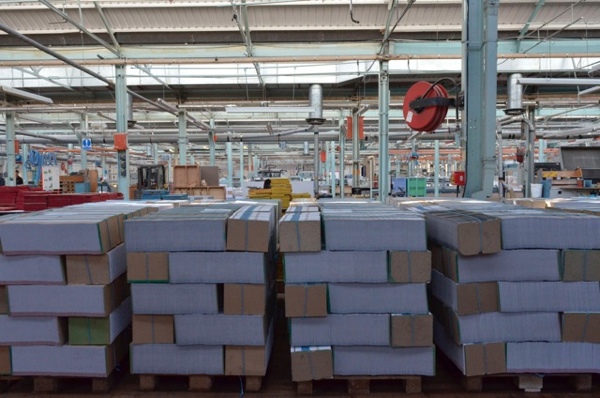
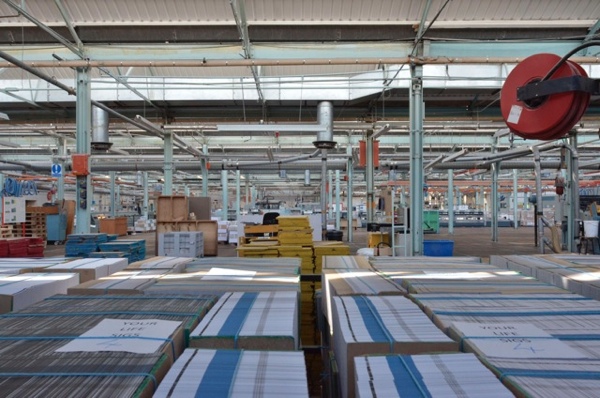
Completed pages ready for collating
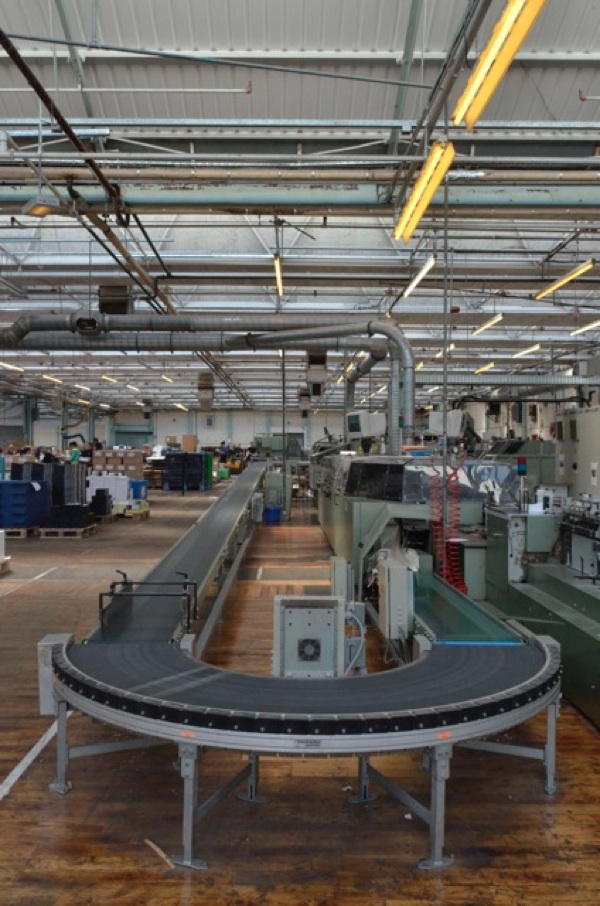
The binding department
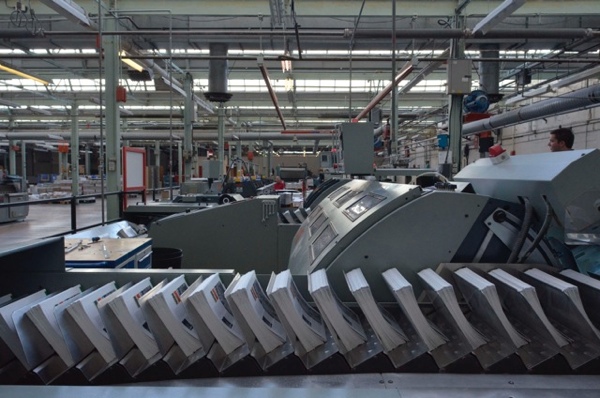
Collated pages
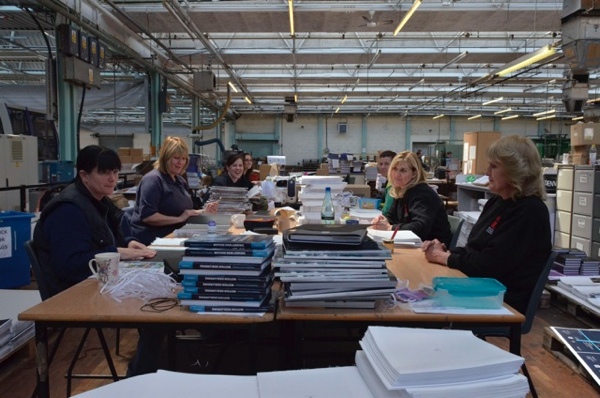
The women of the binding department
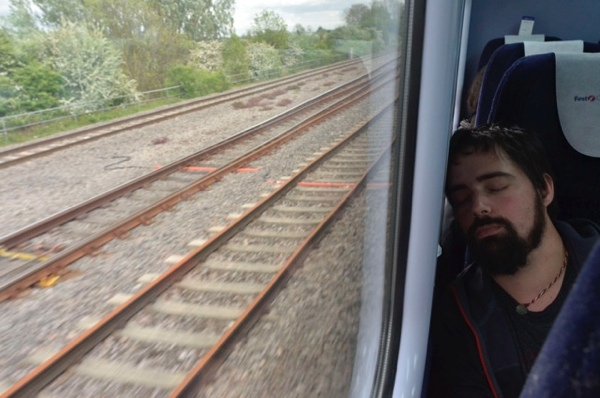
Bob’s son Arthur sleeps all the way back to London
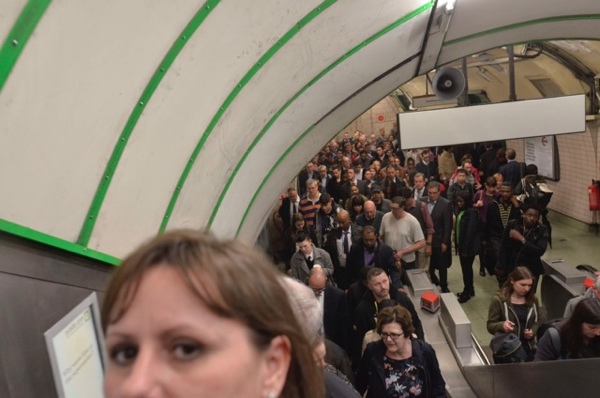 Back on the tube again!
CLICK HERE TO ORDER A COPY OF BOB MAZZER’S UNDERGROUND FOR £20
Photographs copyright © Bob Mazzer
You may also like to read about
On Bob Mazzer’s Publication Day
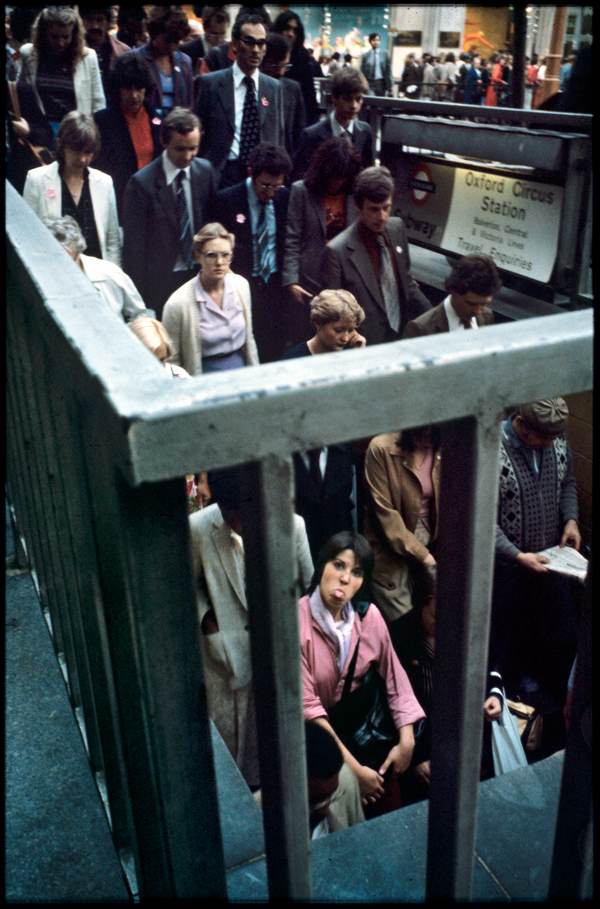
Less than a year ago, I published Bob Mazzer’s tube photographs on Spitalfields Life and they spread out across the internet from here, reaching a huge audience and winning acclaim for their humour and humanity. Today, it is my great delight to publish a beautiful two hundred page hardback book of these irresistibly joyous images.
[youtube k3qLEFFR4iI nolink]
This book is published with the generous investment of the following readers of Spitalfields Life:
Rose Ades, Fiona Atkins, Millie Baker, Beata Bishop. Andrew Burgess, Rosemary Burton, Robson Cezar, Adrian Clarke, Ellida Dawes, Stephane Derone, Charlie de Wet, David Ethier, Diana Fawcett, Lynda Finn, Jan Fuscoe, Susie Ford & Jonathon Green, Alex Graham, Ed Griffiths, Libby Hall, Carolyn Hirst (on behalf of Rowland Hirst), Elissa James & Duncan Watson, Michael Keating, Julia Meadows, Sinead McQuillan, Jack Murphy, Colin O’Brien, Jan O’Brien, William Palin & Heloise Palin, Sian Phillips & Rodney Archer, Jonathan Pryce & Kate Fahy, Honor Rhodes, Tim Sayer, Elizabeth Scott, David Sweetland, Penelope Thompson, The Watts Family, Tracey Williams (in memory of Keith Yeomans), Julian Woodford and Erminia Yardley.
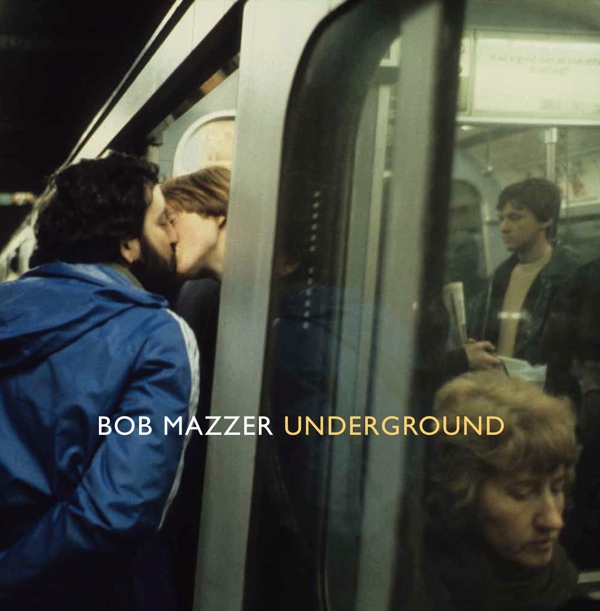
CLICK HERE TO ORDER A COPY OF BOB MAZZER’S UNDERGROUND FOR £20

 .
.
Next Wednesday 18th June at 7pm at Waterstones Piccadilly, Bob Mazzer will be showing his favourite tube photographs and telling the stories of taking pictures on the underground through four decades. Admission is free but you must reserve a place by emailing piccadilly @waterstones.com
You may also like to read about
At Goldsmiths’ Hall
While Bob Mazzer has been hanging his photographs at the Howard Griffin Gallery in advance of tomorrow’s book launch, I went over to the City to admire the glories of Goldsmith’s Hall

The Leopard is the symbol of the Goldsmiths’ Company
Whenever I walk through the City to St Paul’s, I always marvel at the great blocks of stone which form the plinth of this building on the corner of Gresham St and Foster Lane – and observing the fossils interred within the Haytor granite commonly sets me wondering at the great expanse of geological time.
Yet Goldsmith’s Hall has stood upon this site since 1339 and the current hall is only the third incarnation in seven hundred years, which makes this one of the City’s most ancient tenures. The surrounding streets were once home to the goldsmiths’ industry in London and it was here they met to devise a system of Assay in the fifteenth century, so that the quality of the precious metal might be assured through “Hallmarking.” The origin of the term refers to the former obligation upon goldsmiths to bring their works to the Hall for Assaying and marking and, all these years later, Goldsmiths’ Hall remains the location of the Assay Office. The leopard’s head – which has always been the mark of the London Assay Office – recalls King Richard II, whose symbol this was and who granted the company its charter in 1393.
Passing through the austere stone facade, you are confronted by a huge painting of 1752 – portraying no less than six Lord Mayors of London gazing down at you with a critical intensity. You are impressed. From here you walk into the huge marble lined stairwell and ascend in accumulating awe to the reception rooms upon the first floor, where the glint of gold is everywhere. The scale of the Livery Hall is such that you do not comprehend how a room so vast can be contained within such a restricted site, while the lavish panelled Drawing Room in the French style with its lush crimson carpet proposes a worthy stand-in for Buckingham Palace in many recent films, and exists just on the right side of garish.
A figure of St Dunstan greets you at the top of the stairs, glowing so golden he appears composed of flame. A two thousand year old Roman hunting deity awaits you the Court Room, dug up in the construction in 1830. A marble bust of Richard II broods upon the landing, sceptical of your worthiness to enter the lofty company of the venerable bankers and magnates whose names adorn the board recording wardens stretching back to the fourteenth century. In every corner, portraits of these former wardens peer out imperiously at you, swathed in dark robes, clutching skulls and holding their council. I was alone with my camera but these empty palatial rooms are inhabited by multiple familiar spirits and echo with seven centuries of history.

“observing the fossils interred within the Haytor granite commonly sets me wondering at the great expanse of geological time”

St Dunstan is the patron saint of smiths

The four statues of 1835 by Samuel Nixon represent the seasons of the year

Staircase by Philip Hardwick of 1835

William IV presides


The figure of St Dunstan holding tongs and crozier was carved in 1744 for the Goldsmiths’ barge

Dome over the stairwell

Richard II who granted the Goldsmiths their charter in 1393

The Court Room

Philip Hardwick’s ceiling in imitation of a seventeenth century original

Roman effigy of a hunting deity dug up in 1830 during the construction of the hall

The Drawing Room

Clock for the Turkish market designed by George Clarke c.1750


Eleven experts worked for five months to make the Wilton carpet

Ormolu candelabra of 1830 in the Drawing Room
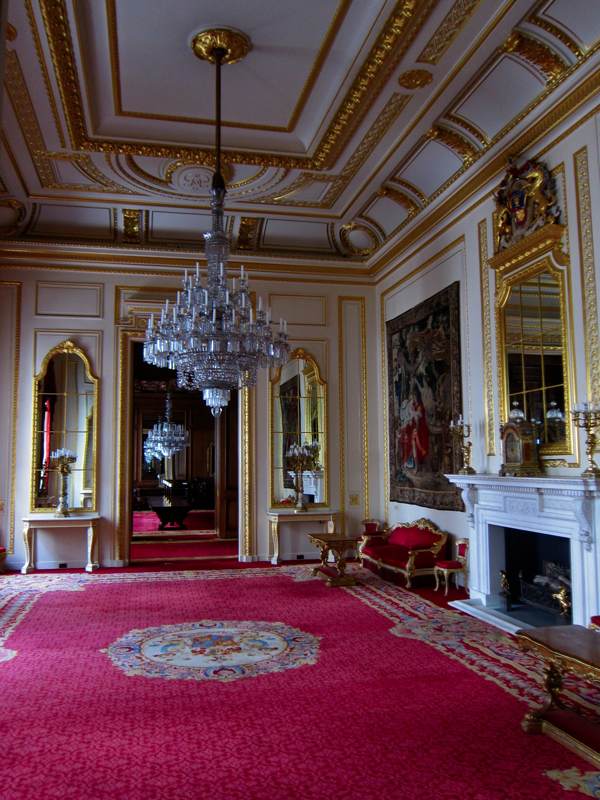

The Drawing Room, 1895

Mirror in the Livery Hall

The Livery Hall


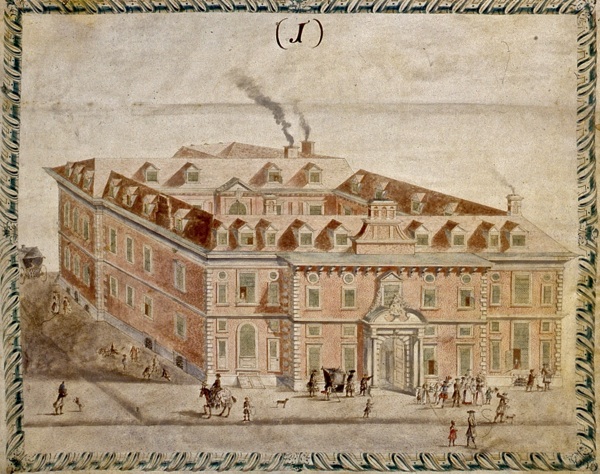
The second Goldsmiths’ Hall, 1692

The current Goldsmiths’ Hall, watercolour by Herbert Finn 1913

Benn’s Club of Alderman, 1752 – containing six Lord Mayors of London

Although the Hall is not open to the public, as part of the forthcoming Huguenot Threads festival, there will be a free visit in July.
It is also possible to join a tour booked through the website of The Goldsmiths’ Company and to attend the Goldsmiths’ Fair held annually each autumn.
You may also like to read about
Two Houses In Spitalfields
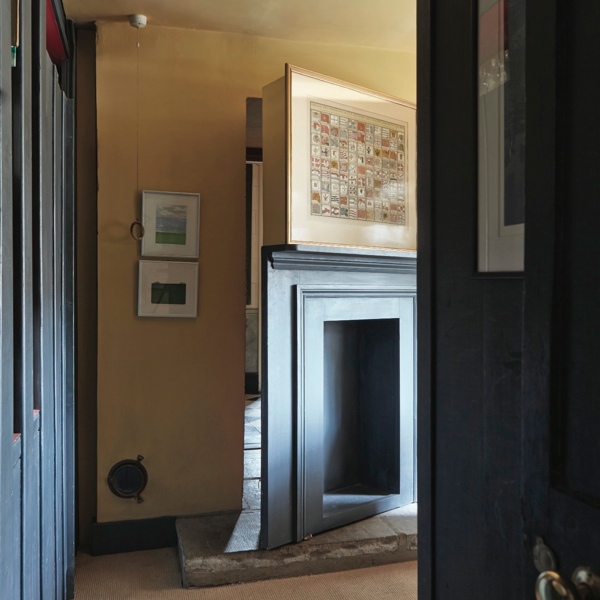
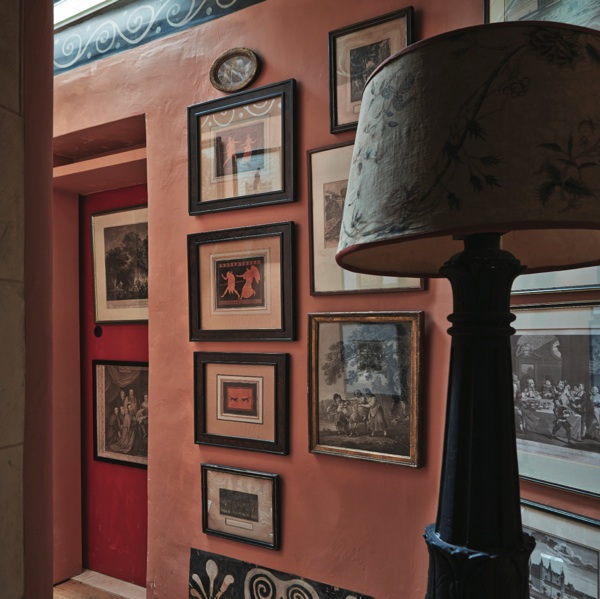
This is the secret door concealed behind the fireplace that connects the dwellings of Jocasta Innes, the Cook, Writer & Paint Specialist, and Richard MacCormac, the Architect, in Heneage St. It was my good fortune to step through this doorway upon my very first visit to Spitalfields, many years ago, and I think the wonder of this experience was instrumental in drawing me to this place.
Even then, it was apparent that this extraordinary architectural feature revealed the metaphorical nature of the two different houses it linked, each manifesting their owners’ contrasted sensibilities yet by their connection emblematic of the personal relationship which bound them together. Now Richard MacCormac has published a book entitled Two Houses In Spitalfields with atmospheric photographs by Jan Baldwin that serves as a poignant record of the life he shared there with Jocasta Innes who died last year.
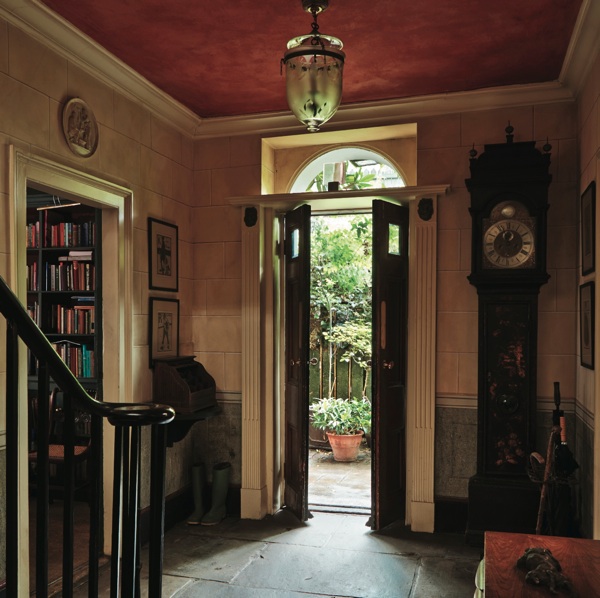
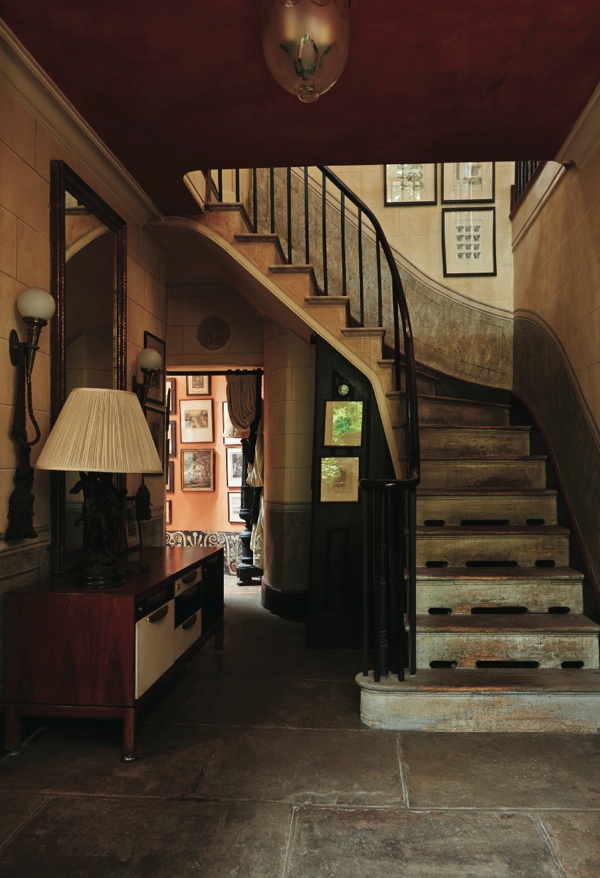
Hallway of Jocasta Innes’ house
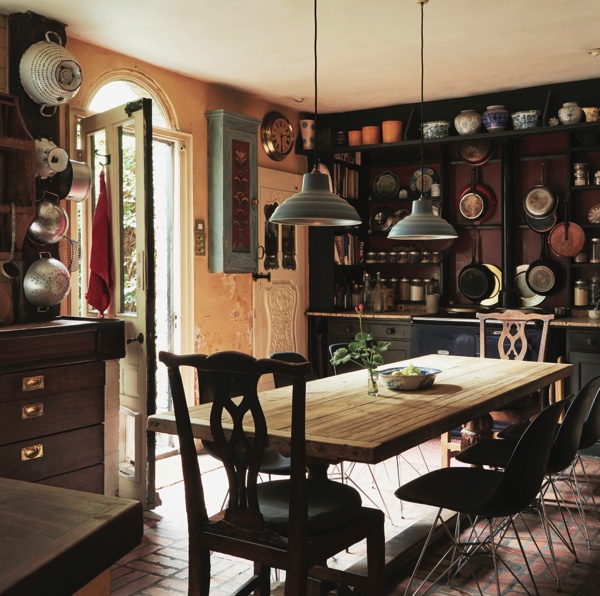
Jocasta Innes’ kitchen
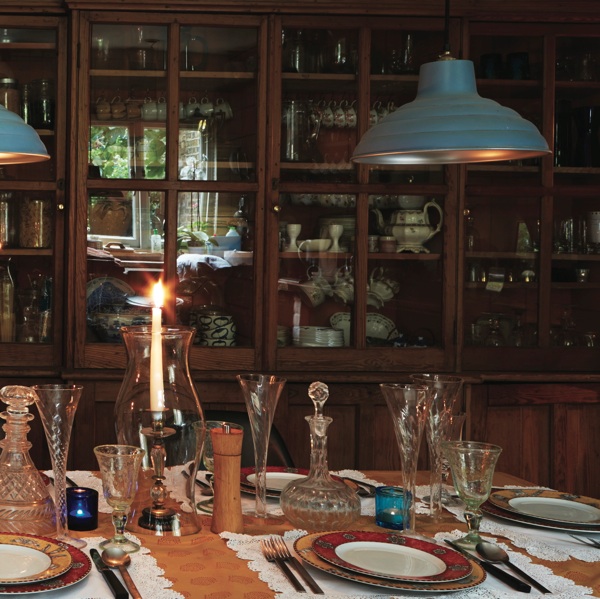

Jocasta Innes’ library with portrait of her mother
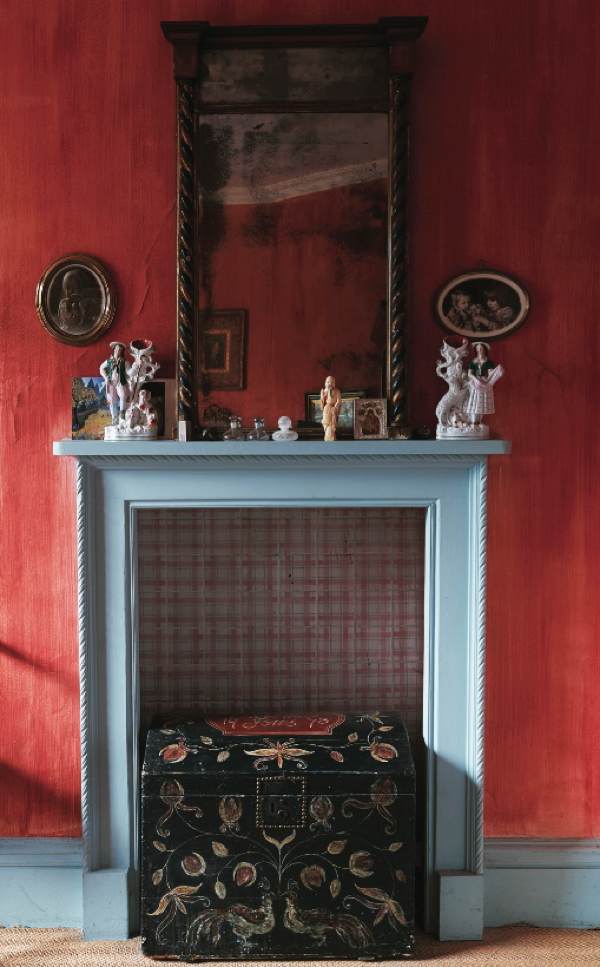
Chest in Jocasta Innes’ bedroom
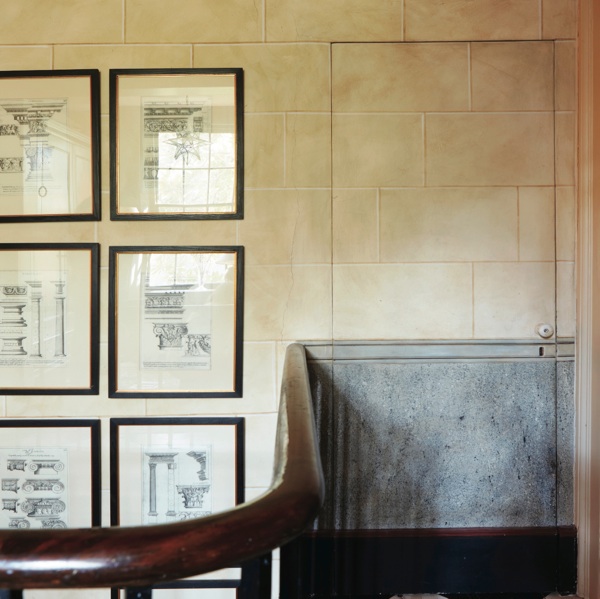
Secret door on the landing in Jocasta Innes’ house leading to Richard MacCormac’s house
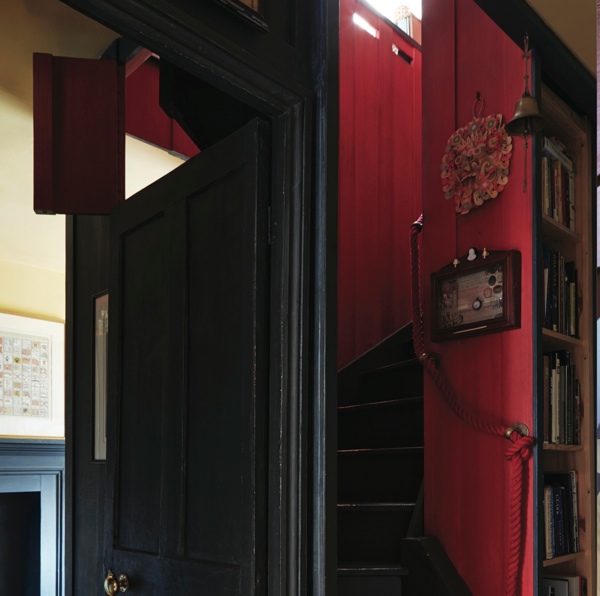
View back from Richard MacCormac’s house towards the secret door
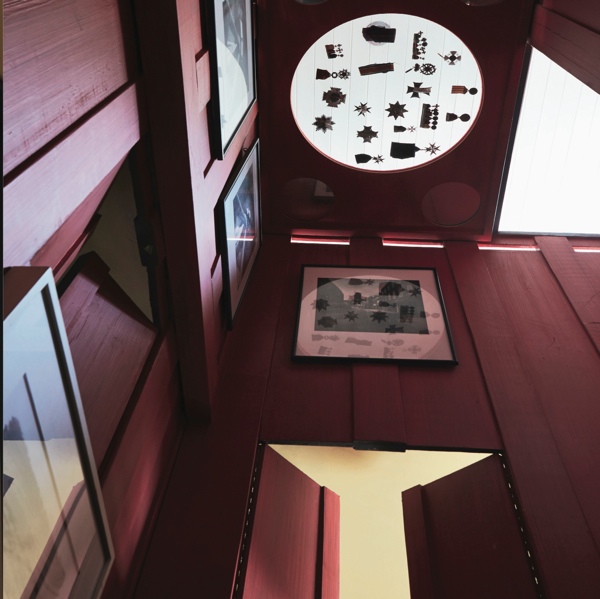
Stairwell with display of medals belonging to Richard MacCormac’s ancestors
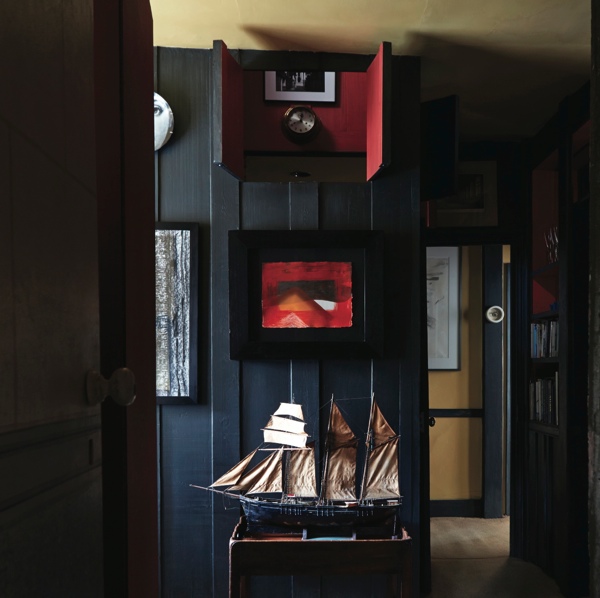

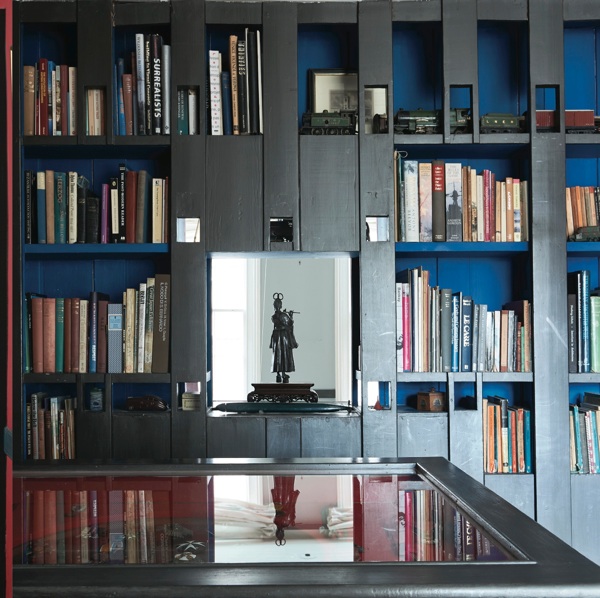
Richard MacCormac’s library
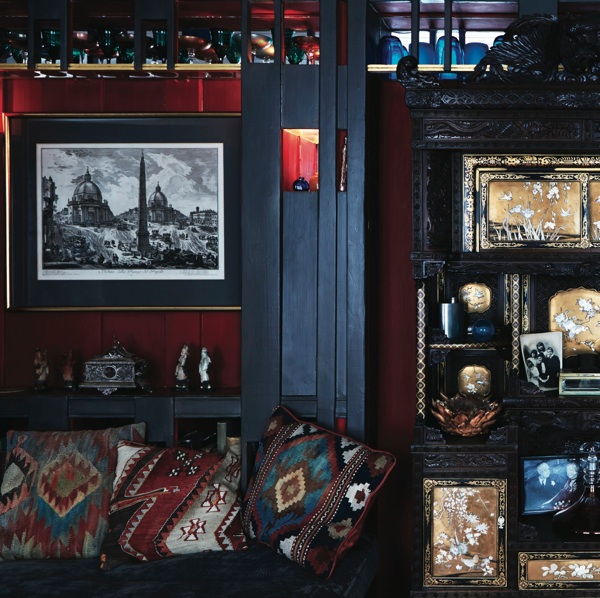
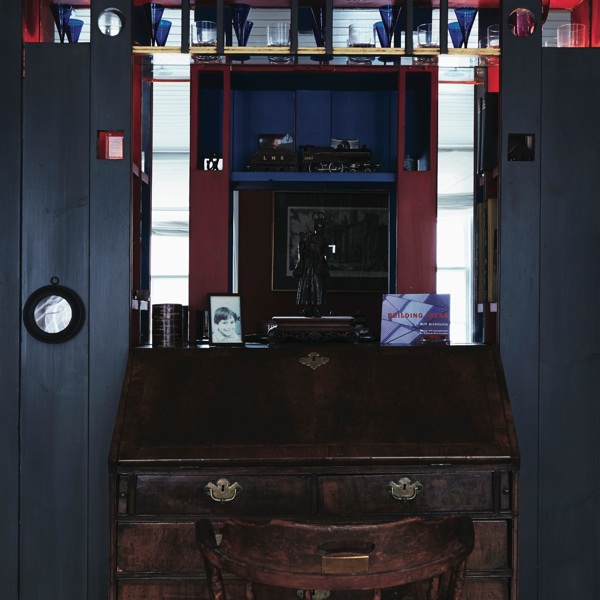
Folding desk in Richard MacCormac’s study
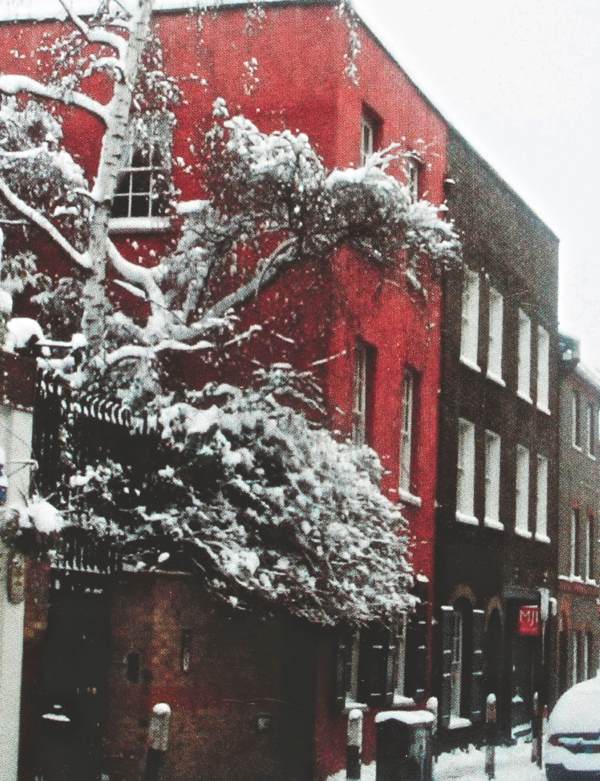
“The two Spitalfields houses, and our lives, were bound together, continually touched by our shared interests. They have many characteristics in common – illusion, allusion, surprise, humour and, of course, colour, but with the distinct identities which reflect us both” – Richard MacCormac
All photographs except exterior shot © Jan Baldwin
Exterior photograph © Hélène Rollin
A limited number of copies for Two Houses in Spitalfields by Richard MacCormac with photographs by Jan Baldwin are available for sale in aid of Maggie’s Centres from www.maccormac.net
You may also like to read about
The Baldaccis of Petticoat Lane
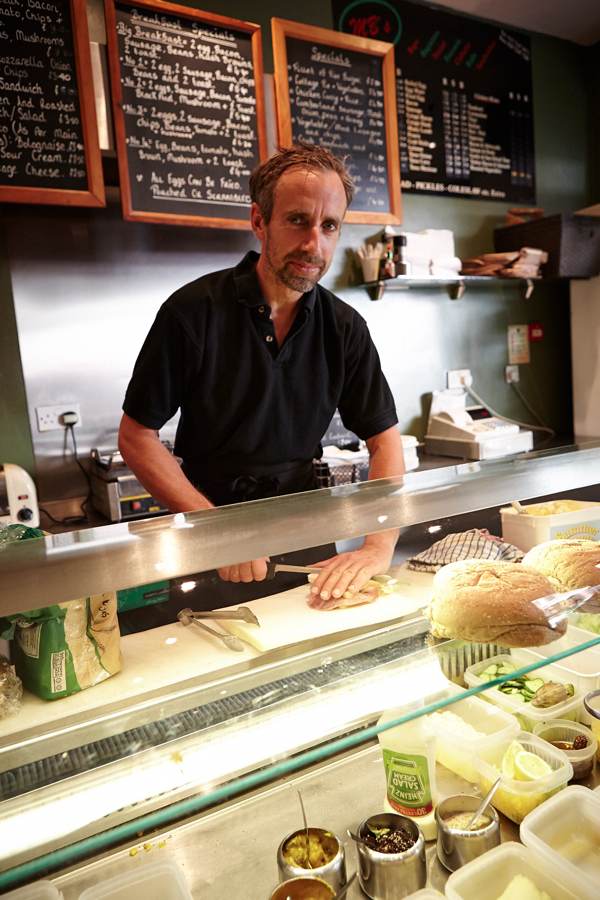
Matthew Baldacci – “This is what I do and this is what I will be doing”
Since 1830, Petticoat Lane has been known as Middlesex St and yet it is still widely referred to by its earlier name. Such is the enigma of this ancient thoroughfare and market that is recognised more by what it was than what it is. Yet the enduring life of Petticoat Lane is still there to be found, if you look close enough.
Behind a curious concrete staircase that leads nowhere on Middlesex St, you will find MB’s Cafe with faded old photographs upon the walls of Baldacci’s Cafe. M B stands for Matthew Baldacci who runs this cafe and another of the same name round the corner in Harrow Place with his father Peter. Together they are the second and third generations in this family business, begun here by Matthew’s grandfather Umberto.
The original cafes and the street in the photographs where Umberto lived and worked have long gone, lost beneath a brutalist concrete development – the one with the staircase leading nowhere. Yet in spite of this architectural transformation, the Baldacci family and their cafe remain to carry the story of the Lane.
Reflecting the nature of this border territory where the City of London meets the East End, the two Baldacci cafes are oriented to serve customers from both directions. MB’s in Harrow Place is where Matthew greets the City workers by name as they pick up their sandwiches and rolls daily, while MB’s in Middlesex St is where you can find the stalwarts of Petticoat Lane tucking in to their cooked lunches. It was at the latter establishment, hidden discreetly under the stairs, that I met with Peter recently and he filled me in with the Baldacci history.
“It all started with my father Umberto Baldacci, he came over from Italy at fourteen years old and worked in a cafe. He lived in the buildings in Stoney Lane and he opened up his first cafe there in 1932 and they did quite well because he got a second one in the late forties on Petticoat Lane. The one in Stoney Lane was more cooked meals while the one in Petticoat Lane was sandwiches and rolls.
My father was born in 1905 and worked until the end, when he died at seventy-three in 1979. My mother Maria, she worked in the kitchen all day long from early morning and then she cooked his dinner afterwards, that’s how things were in those days – a man expected everything. She worked until three years before she died. When you look back, it wasn’t easy for an Italian woman but I don’t think she’d have wanted anything else. She had come over from Italy at an early age and lived in Kings Cross. I don’t know how they met. My father never went back, he made his home here. I can’t even understand Italian. It’s my one regret that I never learnt Italian.
They built a nice business and he was very happy. The Jewish people made him welcome and it really helped a lot. In school holidays, I used to come and work from the age of thirteen in 1962, maybe earlier, and when I was sixteen I started full time. I started washing up and filing rolls. I loved it. The East End was a very different place then and Petticoat Lane was alive with all different kinds of traders. It was fantastic.
I get up around four-thirty each morning and get down here by five-thirty, I like to be open by six. Then I close by four and I’m home by four-thirty. I can cook, I do everything, if anyone can’t come in I cover for them. I’ve worked in this cafe for twenty-nine years, but I’ve been full time for fifty-three years in total. We’ve got one customer Benny, he’s been coming for seventy years. He lives in Petticoat Tower and comes in each morning for his breakfast. My son Matthew joined me twenty-five years ago and we changed the name to ‘MB’s’.”
At the conclusion of Peter’s tale, Matthew Baldacci arrived fresh from completing the busy lunch service round the corner in Harrow Place. “I started working Sundays when I was fourteen, it was expected but I didn’t not want to do it. I started full time at sixteen, twenty-five years ago.” he revealed, meeting his father’s eyes with a protective smile, “My dad does the book work and I do the running of it. We’re very close.”
Matthew revealed there is a sense of change in the air around Petticoat Lane these days and a hope that it is only a matter of time before the escalating life of Spitalfields and the City will spill over into this backwater bringing increased trade. Thus, after all the transformations that the Baldcaccis have seen through three generations, Matthew remains ebullient for the future. “This is what I do and this is what I will be doing,” he assured me confidently, “I have two sons and it’s a probability that one of them will go into it.”
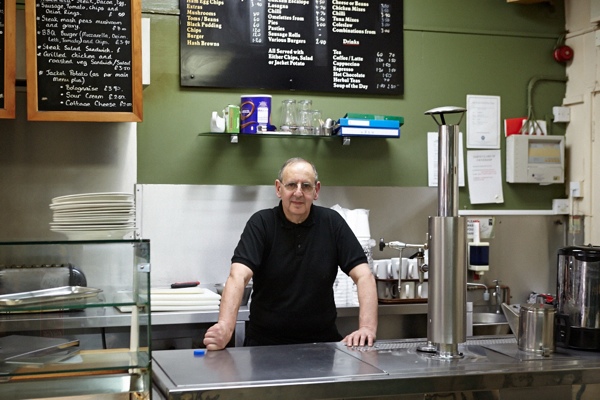
Peter Baldacci
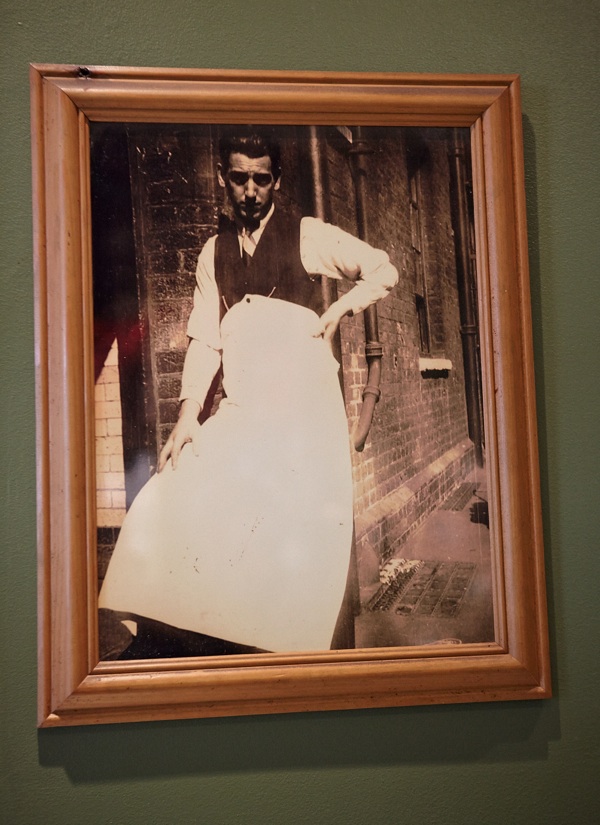
Umberto Baldacci
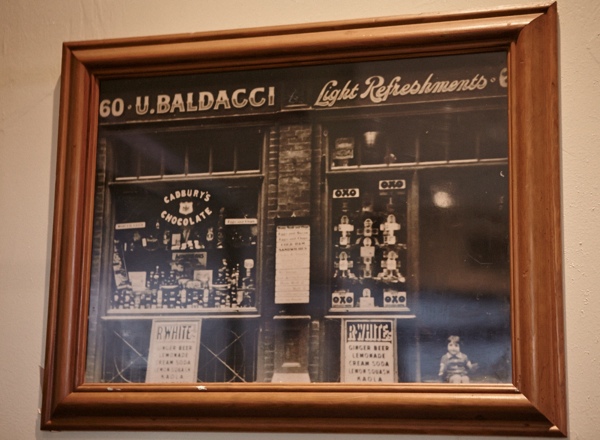
Umberto Baldacci’s Cafe in Stoney Lane
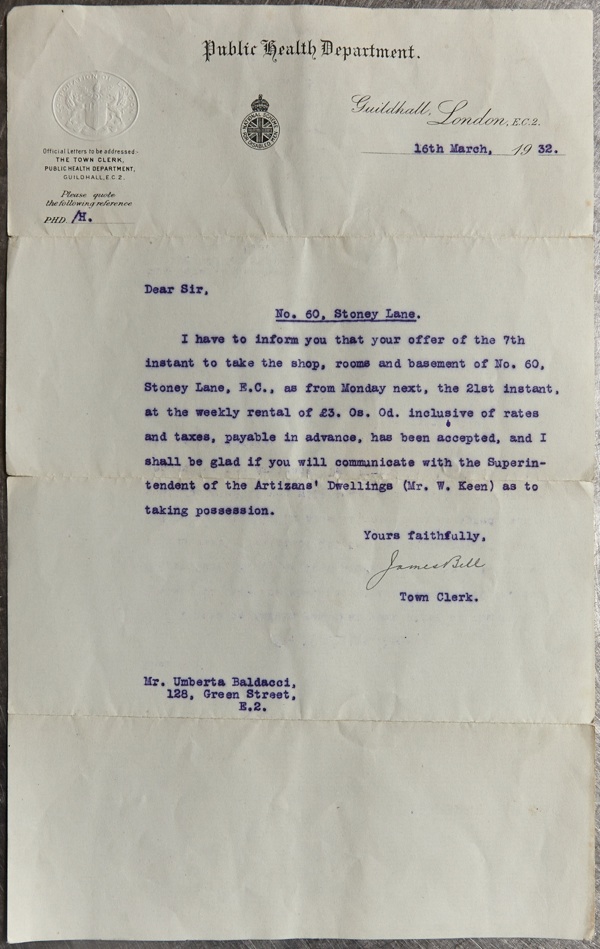
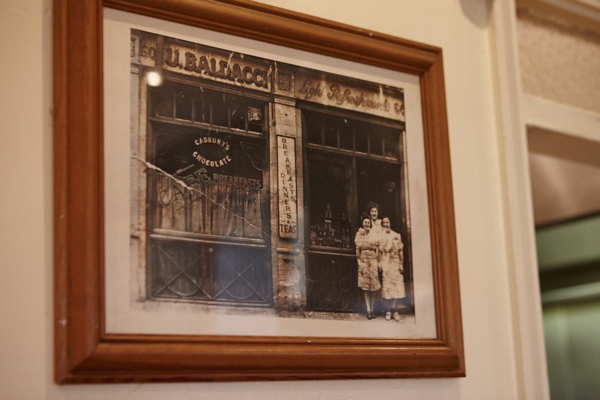
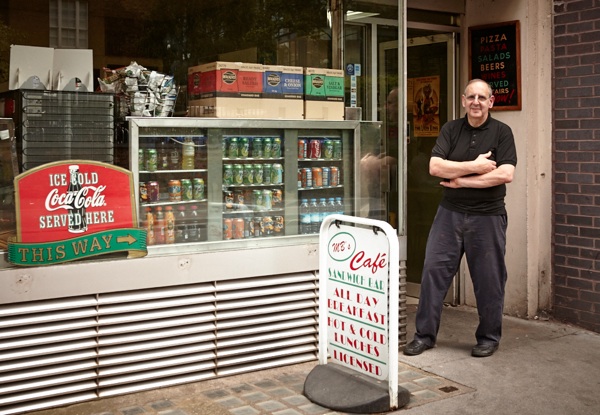
Peter outside MB’s Cafe in Harrow Place
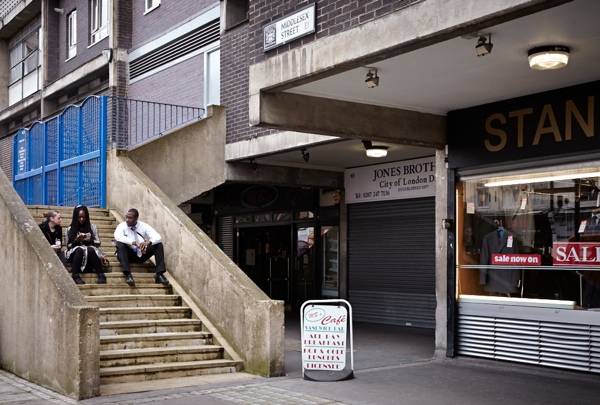
MB’s Cafe under the stairs on Middlesex St
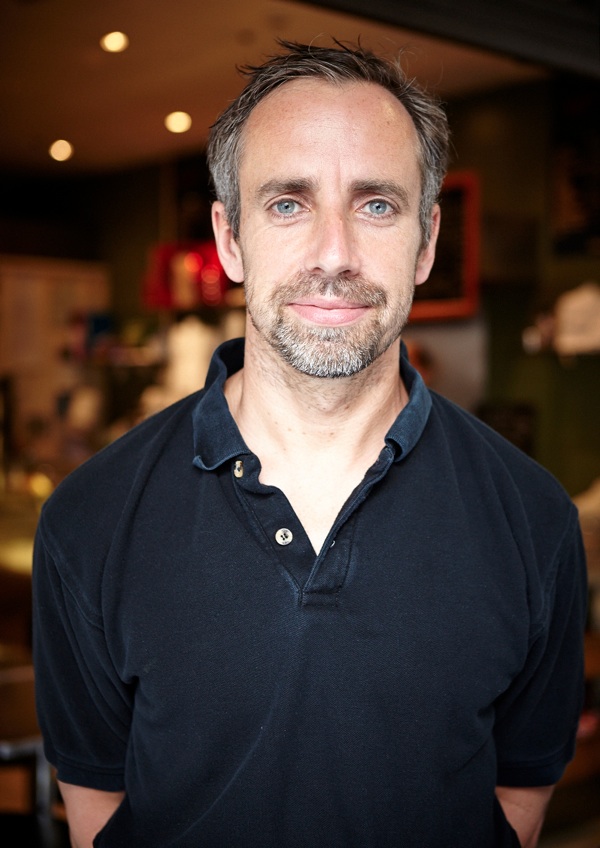
Matthew Baldacci
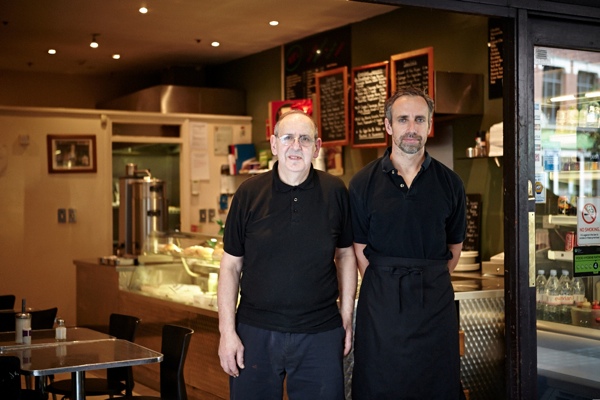
Peter & Matthew Baldacci
Photographs copyright © Patricia Niven
You may also like to read about












