At The Mannequin Factory
In the Museum Department
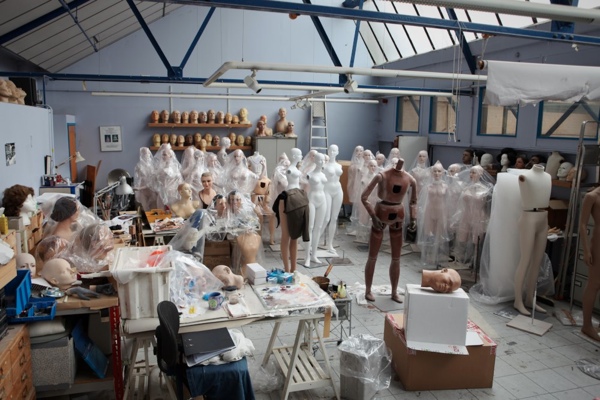
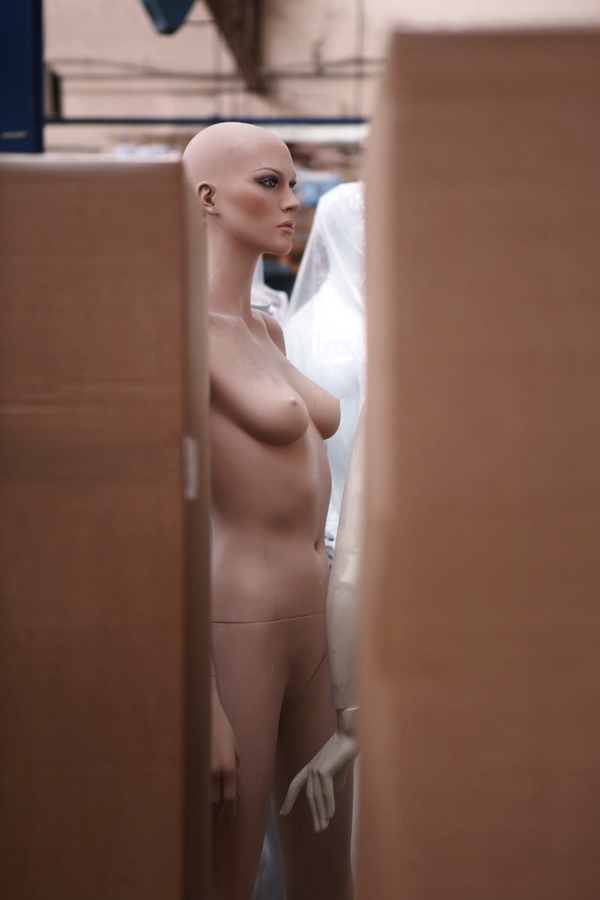
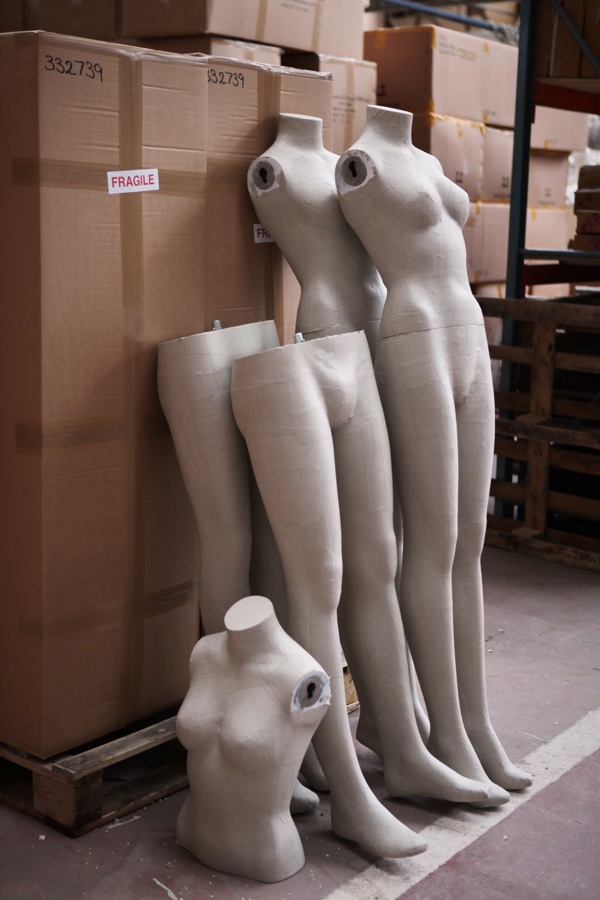
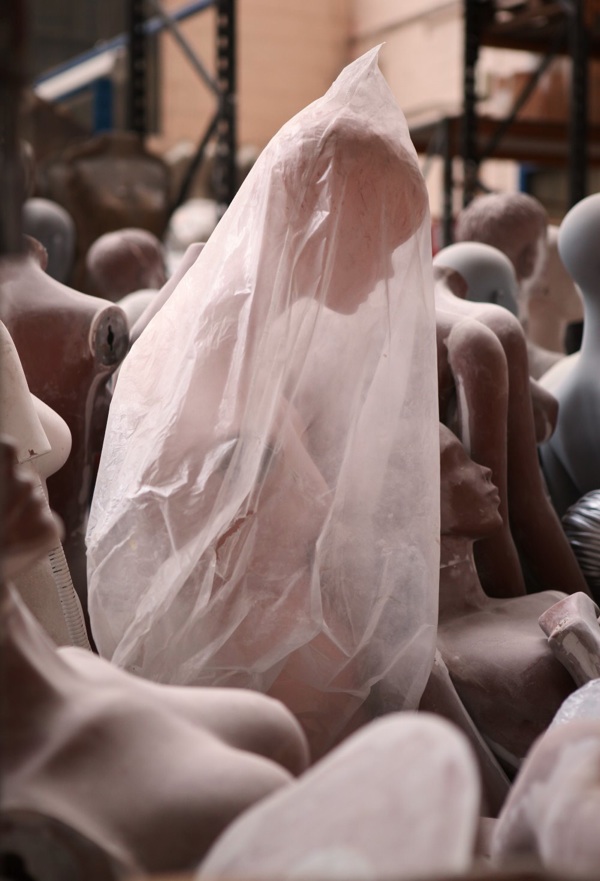
You are never alone at the mannequin factory. Wherever you turn at Proportion>London’s manufacturing operation in Walthamstow, there is always someone else in the room with you – and, even if these naked figures are inanimate, you cannot ignore their presence.
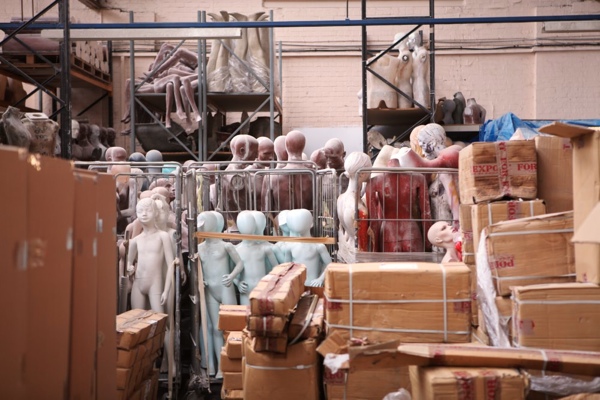
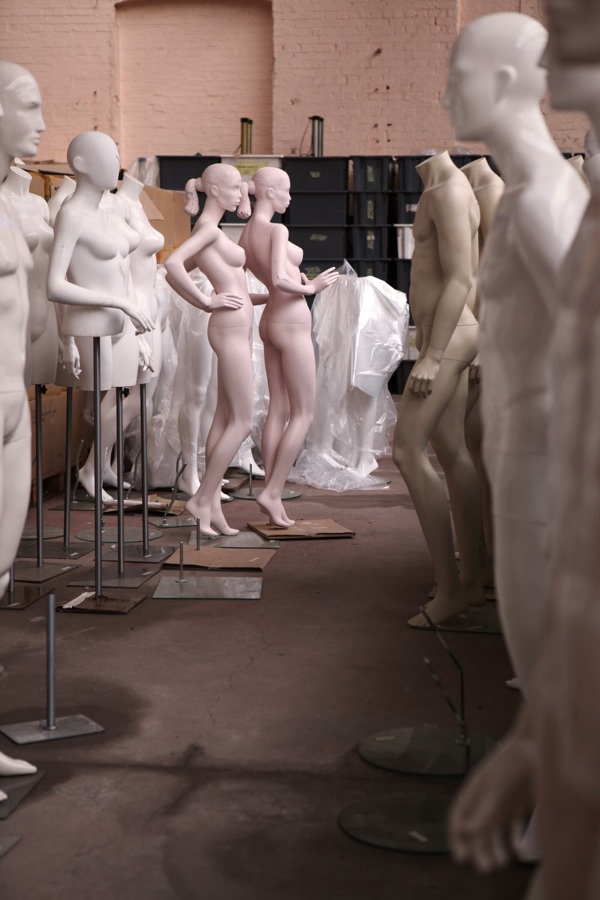
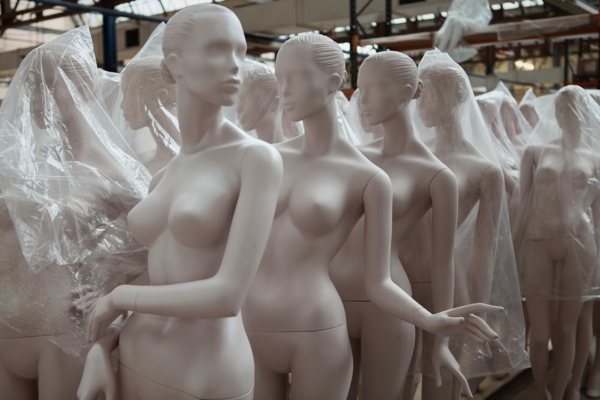
Eighty people work in the factory yet they are outnumbered by mannequins and, when Contributing Photographer Patricia Niven & I walked into the building, the first thing we saw were hordes of them lined up as far as the eye could see.
It might easily turn ugly if the mannequins decided to rebel but – fortunately – they are placid, waiting patiently for their time to go out into the world. Perhaps their good nature is explained by the love and care lavished upon them by their creators, producing well-balanced shop dummies with perfect bodies. Those created in this particular Eden are shameless in their nudity, even if their destiny lies in clothing. These are pedigree mannequins manufactured by Britain’s leading supplier for many of the most famous High St brands and fashion houses. More than eighty per cent migrate, constituting a global retail display diaspora originating from Walthamstow.
Built in 1911 for manufacturing buses to transport recruits to the First World War, the handsome factory in Blackhorse Lane has seen many incarnations – used for manufacturing chocolates and then footwear before it became the birthplace for a new race of mannequins in 2000. “Thirteen years ago, I was in shoe manufacturing,” explained Peter Ferstendik, the owner, “but the industry was destroyed by the Far East and we had no option but to cease production, so then I decided to buy this company and improve it.”
Seigel & Stockman was founded in Paris in 1867 and began trading in London in the nineteen-twenties, manufacturing paper maché dummies for couture houses and dressmakers’ showrooms, and benefitting from the rise of department stores. When Peter acquired the company, it was independent of the parent and operating with fifteen employees from a factory Old St, still making mannequins in the traditional manner as it had done for one hundred and thirty years.
Today, with five times the staff, Proportion>London produces fibreglass models alongside the original paper maché and has diversified into a wide range of display mannequins for retail and museum use that are continually redesigned and updated. “Our competitors copy our mannequins,” admitted Peter, with more than a hint of swagger,“but we are always a year ahead. The only time we should worry is if they stop copying us!”

Peter Ferstendik, Chairman of the company – “We live and breathe retail display”

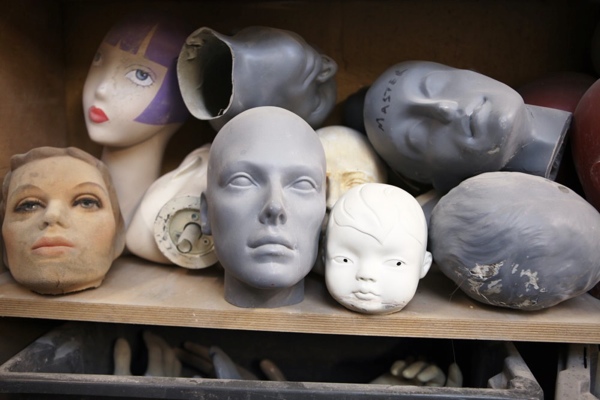

Leon Silva, Supervisor for Paper Maché – “I am the only original employee from Old St – when I started here in 1993, we just had paper maché but now fibreglass is the thing.”

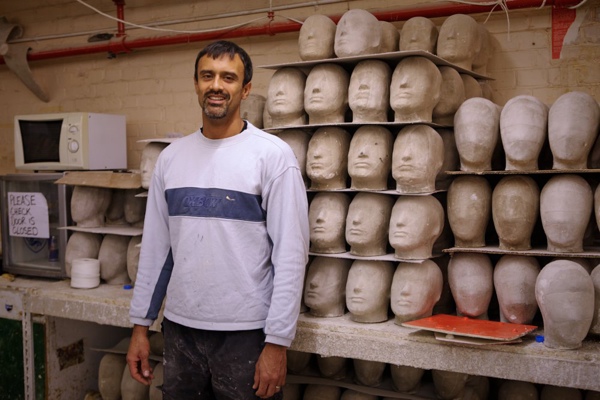
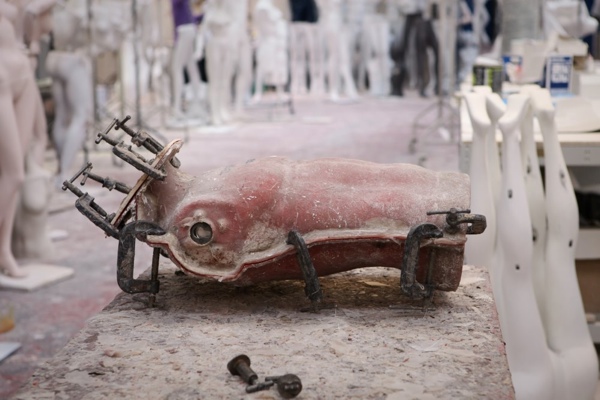
Mayur Bhadalia, Mould Maker – “Since 1987, I worked in this factory as a shoemaker, but in 2000 I became a mould maker.”

Mark Deans, Mould Maker – “I’ve always made models, since I was a boy”
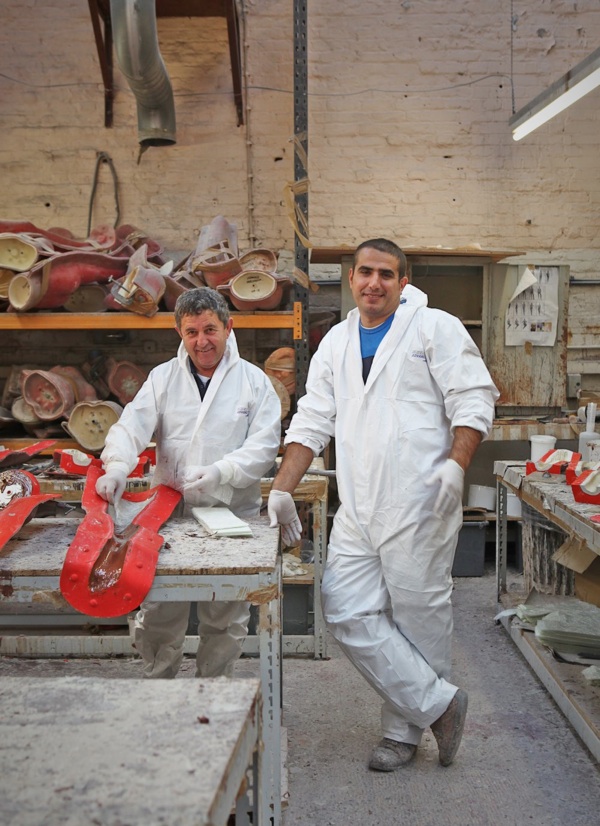
Arjan Shbani & Basil Simoni, Laminators
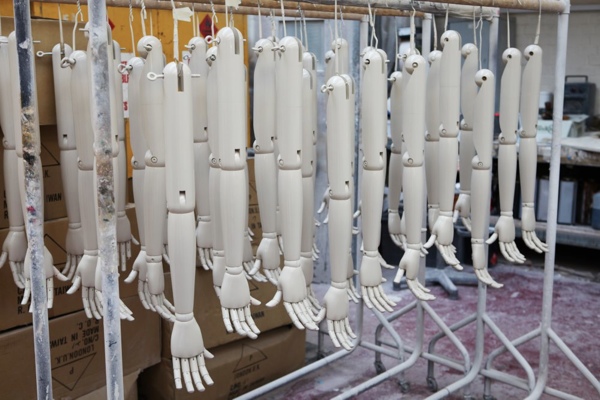

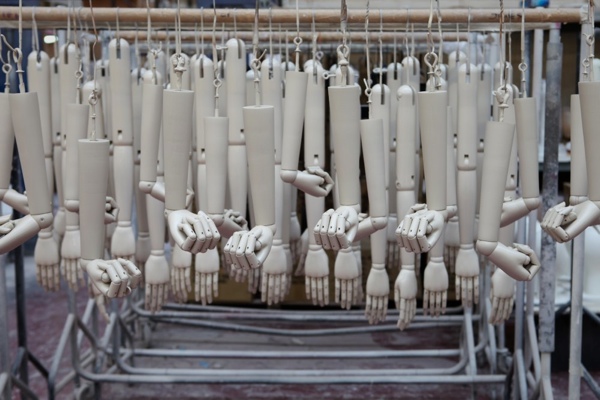
Des Riviere & Dilhan Mustafa, wood finishers. Des – “When I started I did whole figures but now I just do arms.”

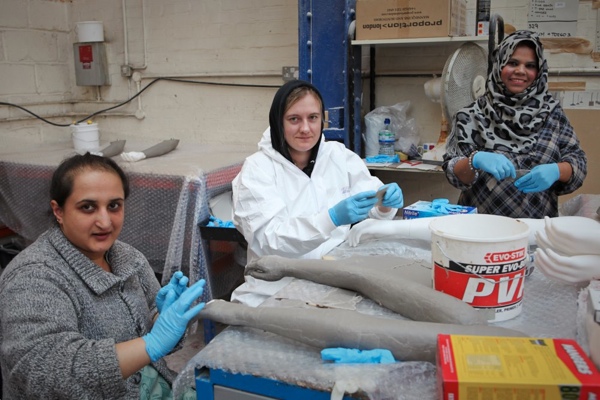
Ghazala Asghar, Anna Ostrowko & Amina Burosee

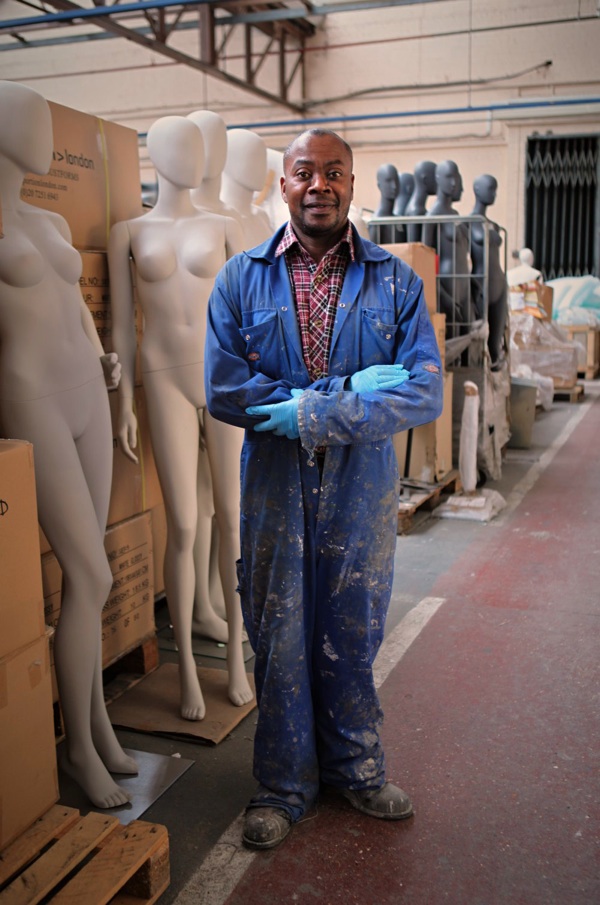
Andrew Thomas, Cleaner & Odd Jobs Man – “I used to pack chocolates here twenty years ago.”
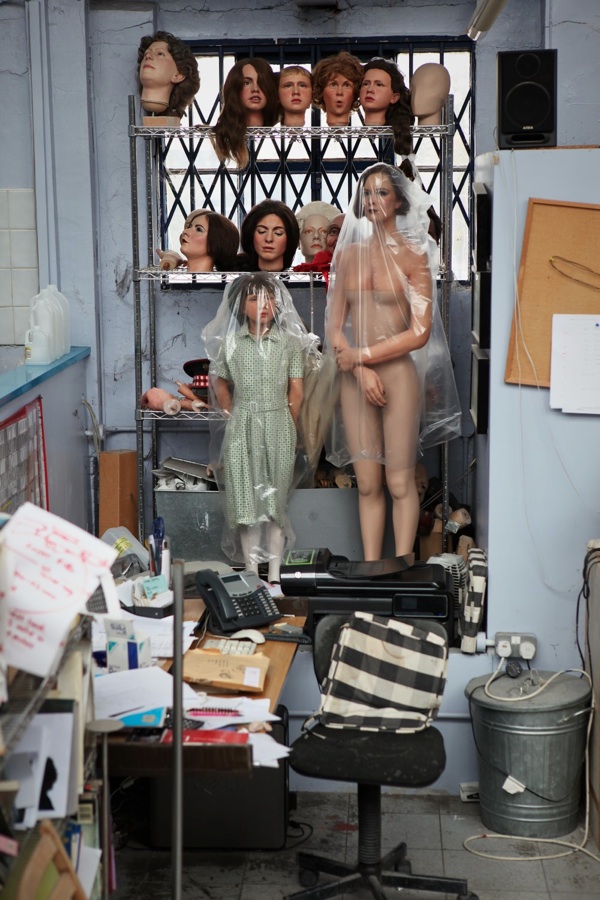
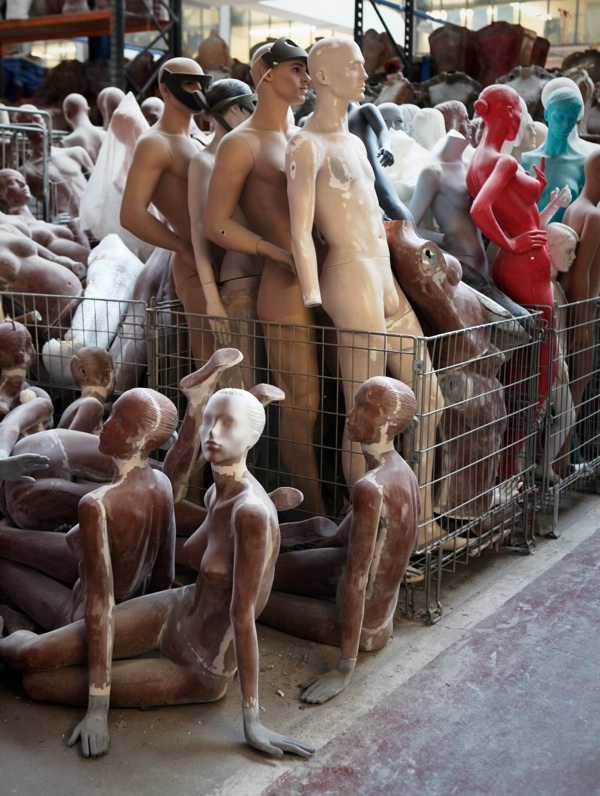
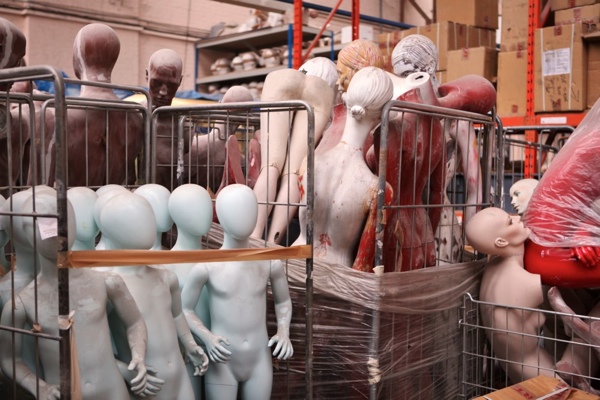
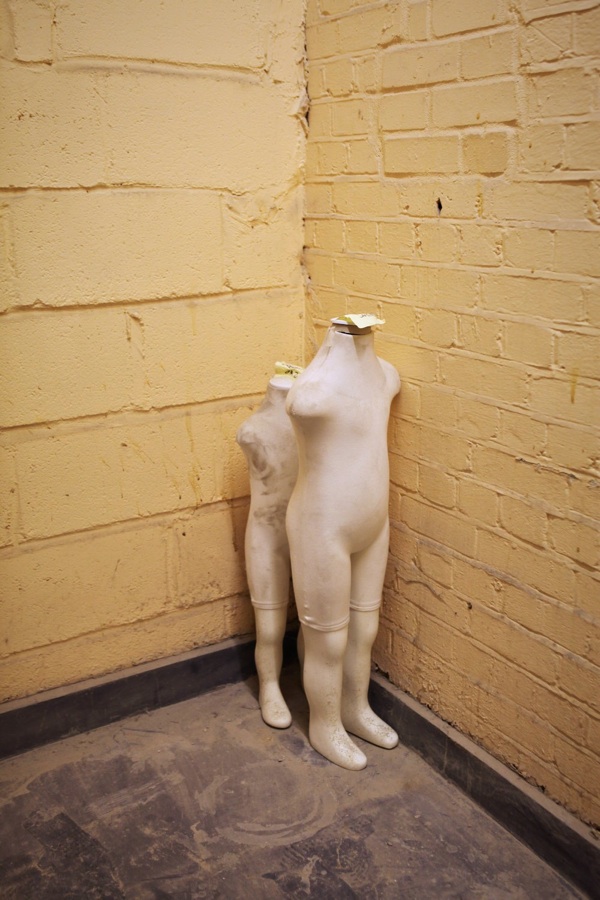
Old museum dummies
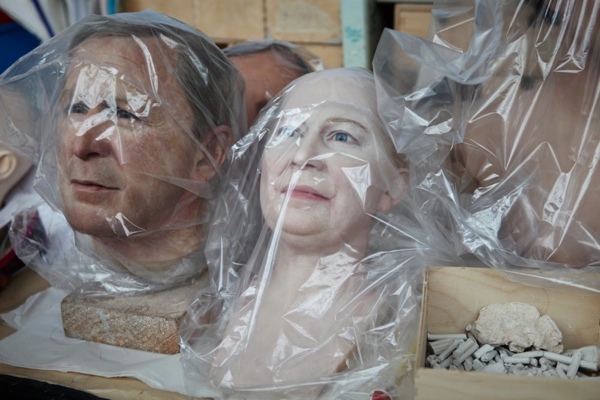
George Bush & The Queen
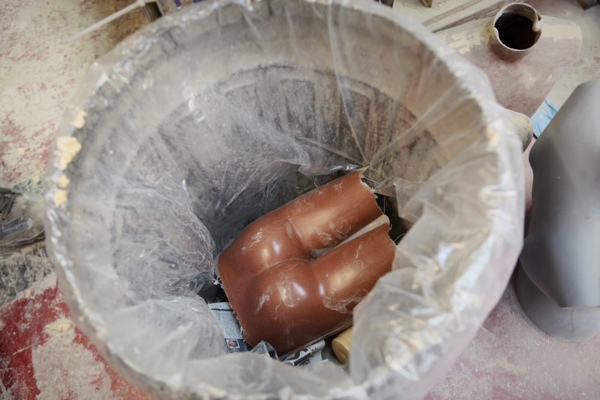
Photographs copyright © Patricia Niven
You may also like to read
Marie Iles, Machinist

Apart from memorable excursions outside London as an evacuee, Marie Iles has lived her entire life within a quarter mile of Stepney and it suits her very well. Those wartime experiences taught her the meaning and importance of home, yet living close to Stepney City Farm today she still enjoys a reminder of the rural world she grew to love as a child.
A natural storyteller, Marie laid out the tale of her formative years for me with confidence and eloquent precision. Blessed with independent thought from an early age, Marie quickly learnt to stand up for herself and to appreciate the moral quality of people’s actions, whilst she was suffering enforced exile from her beloved Stepney amidst the tumultuous events of a world war.
Recently Marie celebrated her Diamond Wedding Anniversary, and it was the meeting with her husband Fred Iles that provided the sympathetic resolution of her dislocated early years and resulted in an enduring relationship which has sustained them both for the last sixty years.
“I was born on 9th August 1930 in Fair St, Stepney, while we were living upstairs in two rooms in my nan’s house, and when I was four or five we moved to Garden St. But I usually lived with my nan – whom everyone knew as Aunt Kit – because I loved her so much. I had a happy childhood playing in the streets, games like Hopscotch and Knocking Down Ginger. We was always running around and the police would pick us up and take us to Arbour Sq Police Station and give us bread and jam.
One day, I came indoors and my mum and dad had the wireless going and there was a quiet atmosphere, which was very unusual in our house, and I heard the voice of a man saying, ‘And England is at war with Germany.’ So I says to my mum, ‘Are we at war?’ and she says, ‘Yes.’ I said, ‘Are the Germans coming?’ and she said, ‘Yes, but not to Garden St.’
The siren went when I was out shopping with my nan in the old street at the side of St Dunstan’s church and, all of a sudden, there was bombs dropping and aeroplanes. My nan said, ‘You run home to your mum quick,’ but I wouldn’t leave her. So she said, ‘Run!’ and I ran on the spot to show I was running. Eventually, we got home to Garden St and my mum, who had a phobia that she might be taken ill or die with dirty feet, was saying, ‘Get a bowl of water, I’ve got to wash my feet.’ When the bombing eased up, my nan said, “I’ll take the two girls home where there is an Anderson shelter,’ and, as we came out, it was a terrifying sight – where there had been houses, there was just piles of bricks and rubble, and there was a horrible smell of smoke and, that night, the sky was red with the light of the fires.
We stayed at my nan’s a few weeks after that, until one day I was at my mother’s and she said, ‘You’re going on a holiday, you, Kitty and Johnny.’ We was excited! My mum pinned a label onto each of us with our name and address on it, and filled a carrier bag for each of us with our belongings. We went to school and there was a couple of coaches waiting, and my nan said, ‘Write to us and always say your prayers every night,’ and she put three sixpences in my hand. I thought, ‘I’ve got money and I’m going on holiday,’ and I was pleased. We all got on the coach together, me and Kitty and Johnny. Then, as we were going, I dropped my three sixpences in the excitement and it felt like the end of the world – not because of the money, but because my nan had given them to me.
We arrived at what I later found out was Denham. We was dropped at the corner of the street, and ladies came over and picked who they fancied. Johnny went with a Mrs Burrell, a lovely little country lady with red cheeks. Kitty and me, we went with Mrs Rook. She had a nice house, that was what we would call ‘posh,’ and she had a grown up son and daughter, Ken and Joyce, and her husband Mr Rook. Yet I hated it, I was so homesick and cried every night for a fortnight but my sister loved it. I asked her, ‘Why don’t you get homesick?’ She said, ‘Because you are here. Wherever you are, I am alright.’ I was her elder sister.
One morning, Mrs Rook said, ‘Why don’t you put on your coats and go out for a walk?’ And the first person we met was Mr Goddard, my headmaster from school in Stepney. He took hold of my hand and asked, ‘Have you got a nice place to stay?’ I said, ‘Yes, but I hate it I miss my home.’ So he said, ‘Look Marie, do you want me to tell your mother what you said and have her worrying about you?’ And I said, ‘ No, don’t tell her,’ and, after that, I was alright and I had a happy time. And that was when I first noticed flowers and the trees opening up. Once there was snow, and Mrs Rook sent me to Denham village for an errand, and I saw these flowers peeking up through the snow – crocuses – and I thought it was a little miracle, that flowers grew in the snow.
Then it seemed the bombing stopped and they took us back to London, and we was there for a while until they sent us off again. They put us on a train at Paddington and we stopped overnight at an army barracks and slept on the floor, and me and Kitty cuddled up under a blanket. Other kids were crying but I wasn’t homesick. In the morning, the soldiers gave us breakfast of ham and hard-boiled eggs and tea and bread and jam. We travelled on and we came to this little village near Rugby called ‘Crick.’ A Mrs Watts picked us out and she lived in Cromwell Cottage, a nice house, and she gave us three meals a day but this lady had no compassion whatsoever. She took us because she didn’t want to do war work. She turned us out at seven-thirty to go to school, and she used to go to the pictures in Rugby twice each week and we had to wait outside in the bitter cold until she came home.
When the summer comes and you’re playing outside, it doesn’t seem so bad. But, one day, we’d had our dinner and were going back to school, and I knew she had a basket of apples in the larder, so I decided to pinch one. We each took bites of the apple, sharing it between the two of us on the way to school. When we got in that evening, she says to me, ‘You thieving Cockney! You come from the slums of London and you don’t appreciate a good home.’ Now I was always a bit of a rebel – I think it was because of growing up with so many brothers – so I thought, ‘I won’t stand for this.’ So I said to Kitty, ‘We’re not going to stay here with this wicked lady.’
Down at the bottom of the hill, lived an old lady and her husband – they must have been seventy. I went there and knocked on the door and asked, ‘Could you take two evacuees?’ She said, ‘Who are they?’ I said, ‘It’s my sister and me.’ She said, ‘Alright, take the old pram and go and get all your things.’ So we went back to Mrs Watts. I said, ‘I’m leaving, I’m going somewhere else to live.’ And her husband, Jack Watts – he was one of the kindest men I ever met – he said, ‘Marie, stop and think what you are doing.’ But I never did, and that night we went down to the old lady and the old man. Talk about ‘out of the frying pan into the fire’! She never cooked, she just gave us a bit of toast sometimes. Then she decided to visit her son and daughter for a holiday, and left us alone there with the old man, her husband. He used to go into the woods all day and cut willow branches and make clothes pegs. Meanwhile, Micky – my little brother – came down because my mother was having another baby up in London. We never had a thing to eat, so we used to go to people’s allotments and pull up raw vegetables and eat them, carrots and even turnips.
There was this plum tree in the garden with this big green plum hanging on it, and before she went the old lady said, ‘I expect to see that big green plum still hanging there when I return.’ But as time went on it got riper and riper, and the day before she was due to return I couldn’t stand it no more. I picked the plum and we all had bites of it – me, Kitty and Micky. Unfortunately, when he knew the owner was due to come home, Micky wet the bed. I took the sheet off and tried to wash it myself but I left it on the line and, when she came home, she asked, ‘What’s this sheet doing on the line?’ And Micky said, ‘I wet the bed,’ and she beat him unmercifully and he hung onto my legs crying, ‘Marie, Marie.’
Once again, rebellion came to the fore, and I said to my brother and sister, ‘Come on, I’m going to walk back to London.’ It was only eighty miles. So, with what money we had, we bought some pears and we were walking up the road and we came to this little bridge and I thought, ‘I can’t walk all that way with these kids, they’re too little.’ I always had a little bag with me and I looked inside and found a stamped addressed envelope that my nan had sent me. It was a Monday, the first day of the school holidays, and I sat down and wrote my tale of woe to my nan, and I posted it and said, ‘Let’s go back.’ And, as the week went on, we seemed to forget about things.
On Friday morning, it was pouring with rain and we got up and came downstairs, and she’d cooked us a big bowl of porridge. She says to me, ‘You’ve written to your granny. You’ve got a letter, your brother’s coming down to pick you up and take you home.‘ I don’t think I ever felt as happy in all my life as I did that morning. Next morning was Saturday. We all got up, didn’t wash, and got all our things together and sat on the grass verge outside the cottage. Jimmy wasn’t on the first bus that came or the second and, by one o’ clock, I was beginning to think, ‘He’s not coming.’ We waited there all this time, and the old woman and old man never called us in to give us a drink or anything.
The four o’ clock bus came and, all of a sudden, I looked up and there was Jimmy coming down the hill. He had a navy blue suit and a red shirt and his tie was blowing in the wind. I said, ‘We’re ready! We’re ready!’ He said, ‘I’ve got to let the lady know that I’m taking you.’ So he went inside and she said, ‘I’ve had a terrible time with those children.’ And he brought us back to London, and back to my dad and my mum who was in hospital having a new baby, Paul. So I went round to stay with my nan ’til my mum came home and I was beside myself with joy.
Garden St had got bombed and my mum and dad moved to Albert Gardens but my mum never liked it because it was number thirteen, so they moved again to an eight bedroom house – because by then I had seven brothers and one sister – at forty-six Stepney Green. Jimmy went into the army and got wounded in Normandy, Bobby went to Scotland in the army, Johnny was sent to Germany and Micky was sent to Malaya, Kuala Lumpur. Then we got the rockets – the doodlebugs – and that was almost as terrifying as the bombs. You’d hear the engine of a plane and then it stopped and you’d sit there in deathly silence and suddenly there’d be a big explosion. I know it’s a wicked thing to say but you’d think, ‘Thank God it’s not us.’
Then gradually, everyone came back home again to live in Stepney Green and, after everything settled down, I went to work in the rag trade as a machinist. And when I was nineteen, I met my lovely Fred. I was coming home from Victoria Park with my friend Betty and, as we walked past The Fountain pub in the Mile End Rd, there was a coach outside. My friend said, ‘Would you like a ride in a coach?’ And, all of a sudden, Fred appeared in the door of the pub with a pint of beer in his hand and called out to the driver, ‘These two girls are looking for a ride.’ I had never been in a pub but Fred said to me, ‘Hang on, wait ’til I’ve finished this pint and I’ll walk along with you.’ So I said to my friend, ‘Who does he think he is? We don’t know him.’ We carried on walking and I heard footsteps running behind us and I knew it was Freddie and his mate. He came alongside me and said, ‘I’ve got a camera. Would you like me to come round and take your photo?’ And my friend said, ‘Take no notice of him, he’s just making it up. He hasn’t got a camera.’ Freddie said, ‘Do you mind? I’m not speaking to you. I’m speaking to her.’
And when I turned and looked at him, I fell in love with him. They say there’s no such thing as love at first sight but there is. I arranged to meet him the next night on the corner but, when I arrived, he wasn’t there – I didn’t realise he was on the other side of the road, waiting to see if I’d turn up. So I went back home and my mum was looking out the window, and she saw what happened and she said to him, ‘You’re later, young man!’ And we courted for four years because we couldn’t get anywhere to live and then we got married at St Dunstan’s, Stepney, on 1st August 1953. We got two rooms at the top of a block of flats, Dunstan House, Stepney Green. The toilet was on the landing and the sink too, but we thought it was our little paradise.
Unfortunately, we couldn’t have children, our only regret in life. But my sister Kitty, and her son Alan and his wife Susan, they’ve always shared everything with us, and looked after us through thick and thin. And every year, we go to stay with Kitty and we have a really lovely old traditional Christmas. There’s nothing we like better than to go down memory lane together, it helps to keep us all close.”

Marie & Fred in their kitchen in Rectory Sq, Stepney.

Marie, Johnny and Kitty at Denham with Mrs Rook – “I loved the country life, especially when it was conker season and there were ripe apples. If my family had been there, I’d never have left.”

Marie’s sister Kitty, hop-picking with her grandfather after the war.

Marie hits a hole in one.

Marie & Fred’s wedding, 1st August 1953

On honeymoon in Ramsgate August 1953

Marie & Fred go Flamenco.

Kitty with her children, Marie and her mother in the fifties.

Marie and her dog Rufus when they lived in the prefab in Ashfield St.

Marie & Fred at a family wedding in the eighties.
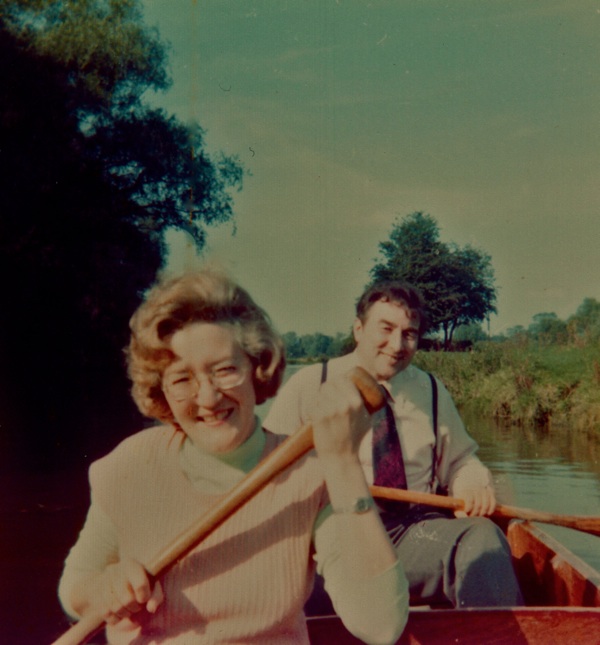
Marie & Fred enjoy an adventure on the river.

The three evacuees grown-up – Johnny, Marie and Kitty.
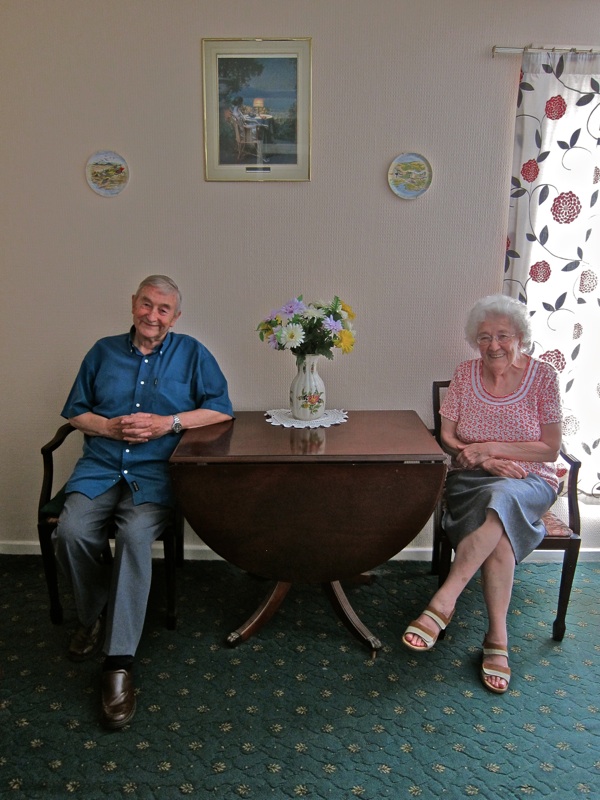
Fred & Marie celebrated their sixtieth wedding anniversary on 1st August 2013.
You may also like the read about
At The Caslon Letter Foundry
While researching the work of William Caslon, the first British type founder, whose Doric & Brunel typefaces, newly digitised by Paul Barnes, were used by David Pearson in The Gentle Author’s London Album, I came upon this wonderful collection of photographs of the Caslon Letter Foundry in the St Bride Printing Library.

22/23 Chiswell St with Caslon’s delivery van outside the foundry
William Caslon set up his type foundry in Chiswell St in 1737, where it operated without any significant change in the methods of production until 1937. These historic photographs taken in 1902, upon the occasion of the opening of the new Caslon factory in Hackney Wick, record both the final decades of the unchanged work of traditional type-founding, as well as the mechanisation of the process that would eventually lead to the industry being swept away by the end of the century.

The Directors’ Room with portraits of William Caslon and Elizabeth Caslon.

Sydney Caslon Smith in his office

Clerks’ office, 15th November 1902. A woman sits at her typewriter in the centre of the office.

Type store with fonts being made up in packets by women and boys working by candlelight.

Another view of the type store with women making up packets of fonts.

Another view of the type store.

Another part of the type store.
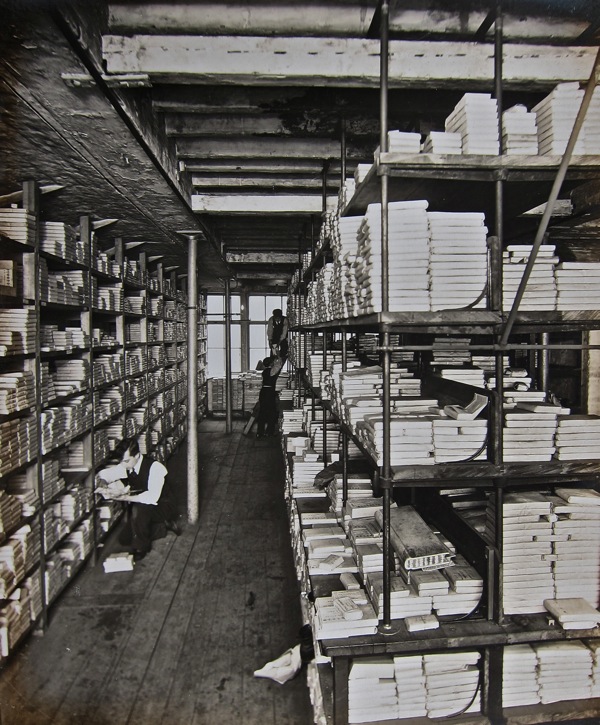
In the type store.
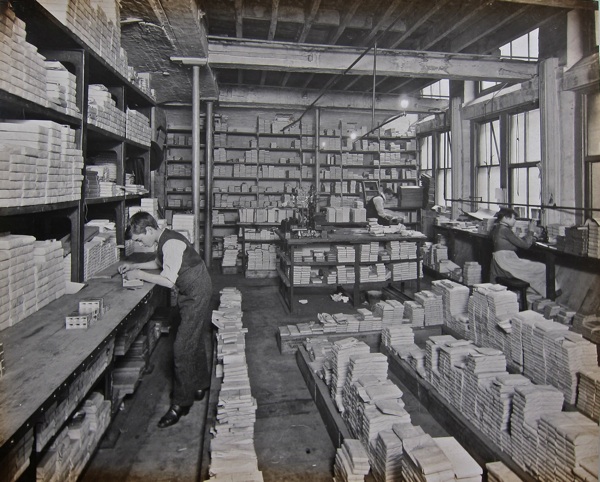
A boy makes up a packet of fonts in the type store.

Room of printers’ supplies including type cases, forme trolleys and electro cabinets.
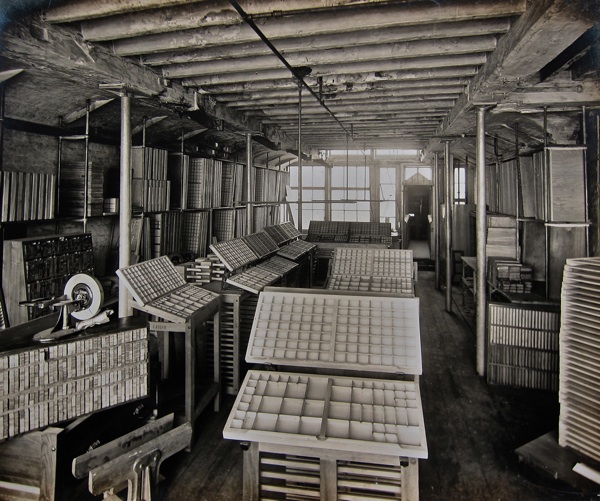
Another view of the printers’ supplies store.

Printing office on an upper floor with pages of type specimens being set and printed on Albion and Imperial handpresses.

Packing department with crates labelled GER, GWR, LNWR, CALCUTTA, BOMBAY, and SYDNEY.

New Caslon Letter Foundry at Rothbury Rd, Hackney Wick, 1902.

Harold Arthur Caslon Smith at his rolltop desk in Hackney Wick with type specimens from 1780 on the wall, Friday 7th November, 1902.

Machine shop with plane, lathes and overhead belting.

Gas engines and man with oil can.

Lathes in the Machine Shop.

Hand forging in the Machine Shop.

Another view of lathes in the Machine Shop.

Type store with fonts being made up into packets.
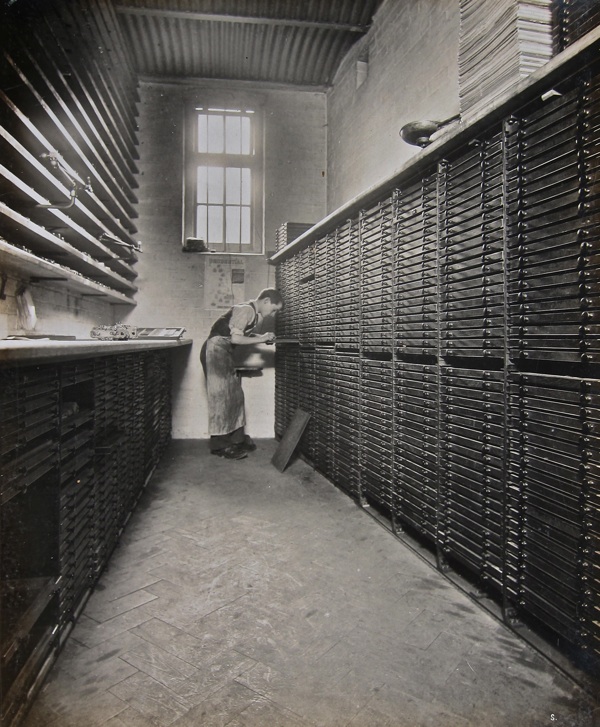
Type matrix and mould store.
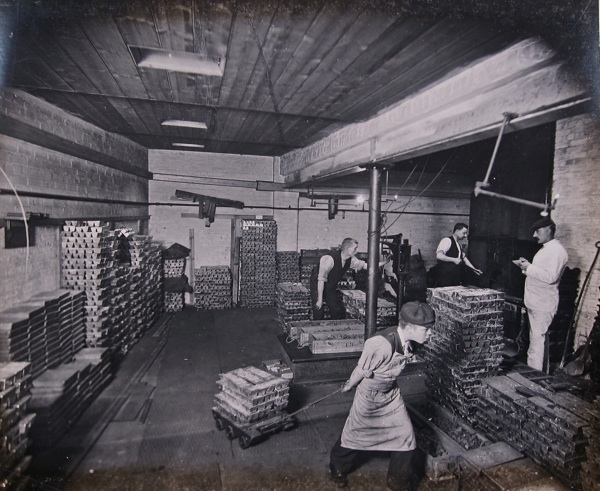
Metal store with boy hauling pigs upon a trolley.

Casting Shop, with women breaking off excess metal and rubbing the type at the window.

Another view of the Casting Shop.
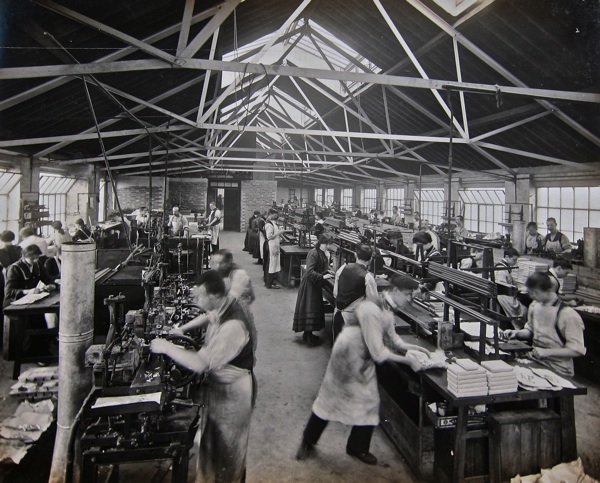
Another view of the Casting Shop.

Founting Shop, with women breaking up the type and a man dressing the type.

Casting metal furniture.

Boys at work in the Brass Rule Shop.

Boys making packets of fonts in the Despatch Shop, with delivery van waiting outside the door.

Machine shop on the top floor with a fly-press in the bottom left.

Woodwork Shop.

Brass Rule Shop, hand-planing the rules.

Caretaker’s cottage with caretaker’s wife and the factory cat.
Photographs courtesy St Bride Printing Library
You may also like to read about
William Caslon, Letter Founder
Fifth Annual Report
Five years ago, I began to write daily in these pages without any expectation of where it might lead or what the outcome might be, and now the business of seeking a story and getting photographs and putting it all together has become my way of life. I consider myself privileged to pursue an occupation that offers such a constantly renewing source of interest, avoiding any possibility of boredom and providing an ongoing education upon the subject of human life.
Regular readers will be familiar with my recurring preoccupations and ongoing enthusiasms yet, as I go about my primary task of seeking subjects for interview in the East End, I never know what I shall discover. Even after five years, I still do not know what story I am going to write next but I have learnt to trust in the knowledge that, although I rarely have any stories planned beyond a few days ahead, material will always appear – and, as this anniversary confirms, it does.
It is my hope that no-one can predict what they will discover each day in these posts and the spontaneous, ever-shifting circumstances which lead to the creation of these stories mean that commonly I do not decide what I am going to write until the night before. My aim is to publish each new story at one minute past midnight but, as night-birds will have noticed, it often happens much later because I am still writing for a few hours beyond the appointed time. The rule is – I cannot go to sleep until I have finished my story, which concentrates the mind wonderfully.
Increasingly, readers write to send pictures, submit suggestions and offer introductions. Many leads arrive this way, providing the opportunity to do interviews, take pictures and write stories that might not otherwise be possible. A year ago, I did not know about the tube photographs of Bob Mazzer or Horace Warner’s portraits of the Spitalfields Nippers of of 1901, so it fills me with excited anticipation to wonder what else may arrive in future.
A highlight of this year was the launch of the East End Preservation Society last November as a means to bring together all those who care about the East End at this time of crisis, when too many old buildings are being needlessly destroyed. The overruling of the unanimous vote by Tower Hamlets Council to save the Spitalfields Fruit & Wool Exchange by Boris Johnson, Mayor of London, and the demolition of the Queen Elizabeth Children’s Hospital without any significant public consultation, are two recent events that underlined the necessity of collective action. Encouragingly, the saving of the attractive nineteenth century terrace in Valance Rd, which is the last surviving fragment of the Pavilion Theatre complex, was a heartening early victory for the Society as it faces up to challenge the overblown and soulless developments proposed for Norton Folgate and the Bishopsgate Goodsyard.
It never occurred to me that publishing on the internet might lead to publishing printed books but I am very proud that in the last year, alongside the daily posts, four books have appeared under the Spitalfields Life Books imprint – Travellers’ Children in London Fields by Colin O’Brien, The Gentle Author’s London Album, Brick Lane by Phil Maxwell and Underground by Bob Mazzer. These titles were made possible by the generous investment of the readers of Spitalfields Life.
This November, I look forward to publishing the complete Spitalfields Nippers by Horace Warner from 1901 – including the twenty photographs he gave to the Bedford Institute in 1911 alongside more than a hundred portraits from his personal albums in the possession of his grandson, which have never been seen before outside the immediate family. We are currently undertaking research to discover what became of each of the children in Horace Warner’s pictures and this will be revealed in the book.
As long term readers know, my ambition is to publish ten thousand stories here in these pages which, at the rate of one a day, will take twenty-seven years and four months. It was an undertaking I adopted when I realised both my parents died at the same age and that I had ten thousand days left until I reached that age myself. In the five years since I began, I have produced more than eighteen hundred stories, leaving me twenty-two years and four months to meet my goal. As a writer, this task was the best means I could devise to ensure I made the most of my time.
Thus the path has been laid down and now I plan to continue along it. These first five years have more than exceeded my expectations, brought me a great deal of joy and introduced me to such a multitude of inspiring people. Yet, as I go forward, I am aware that more possibilities become available all the time, so I hope you will stay with me, because I can guarantee it will be an eventful journey we shall have together.
And thus, with all these thoughts in mind, I come to the end of this fifth year of Spitalfields Life.
I am your loyal servant
The Gentle Author
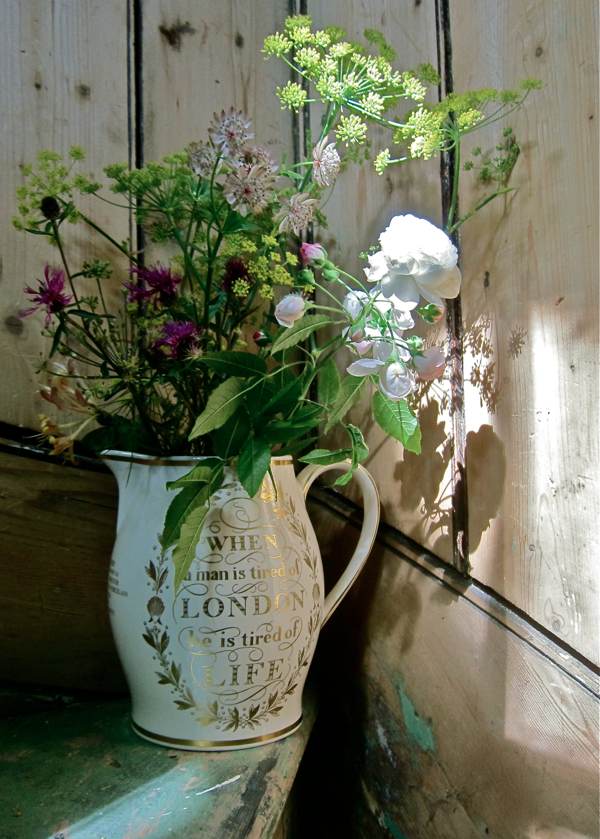
For the next week, I shall be publishing favourite stories from the past year and resuming with new stories on Monday 1st September.
You may like to read my earlier Annual Reports
At The London Library
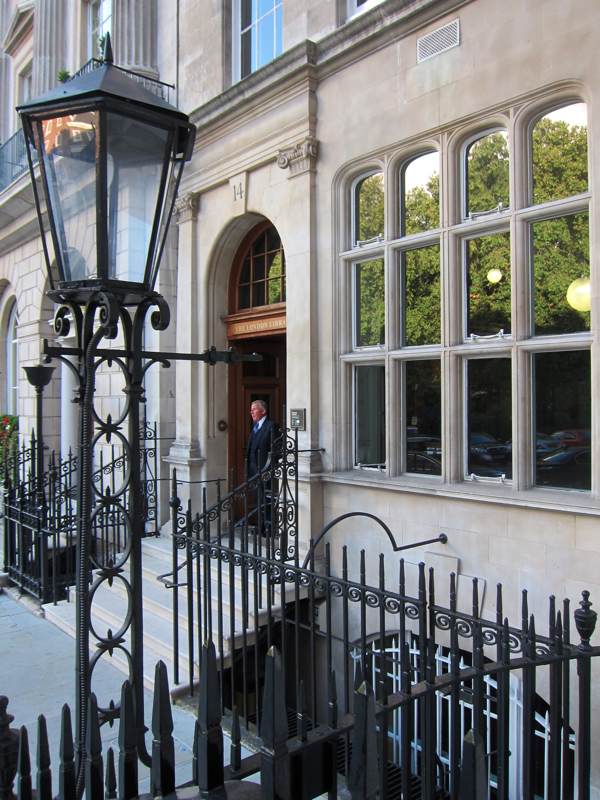
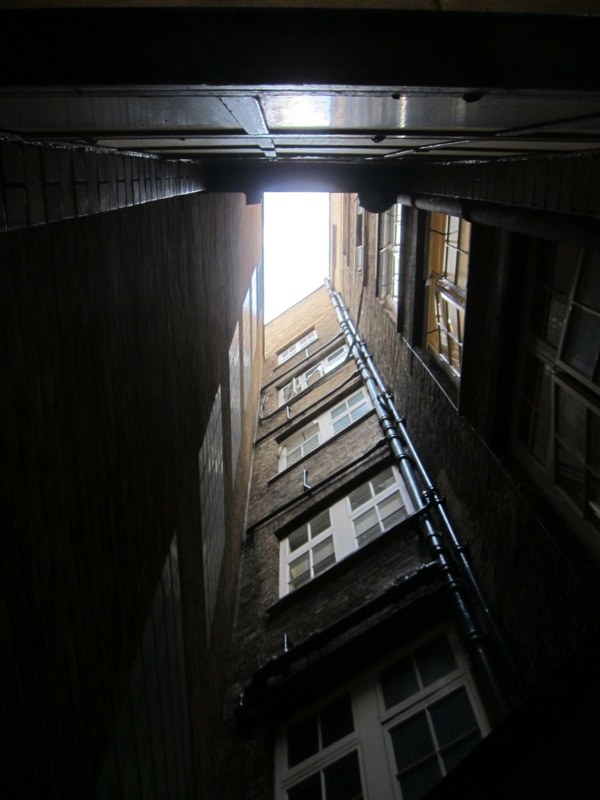
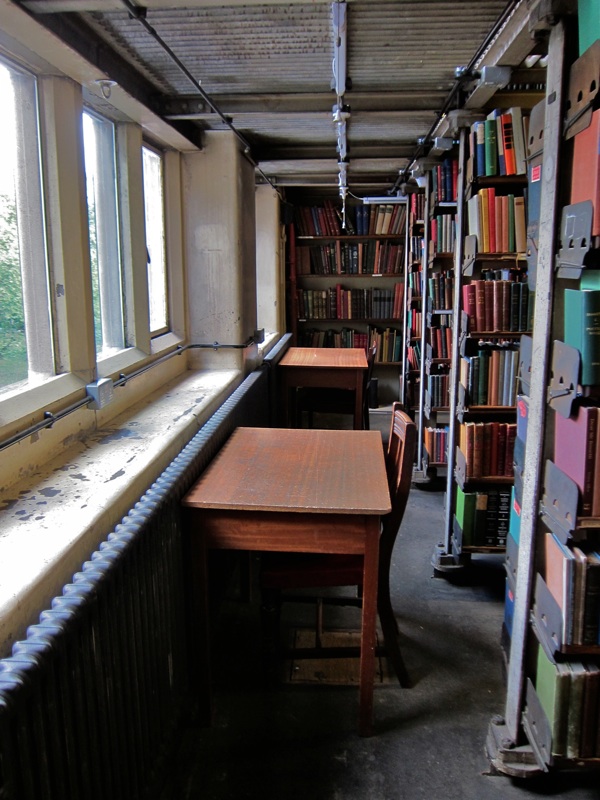
Like an old book jammed into a crowded bookcase, the London Library sits wedged in the corner of St James’ Sq. Years ago, I had the privilege of a subsidised membership for a spell, and I loved to come here and browse the labyrinth of shelves containing over a million volumes. Thus it was a sentimental pilgrimage to return this week for a visit, deliver copies of my own books for their collection, and take a tour around the newly-refurbished premises.
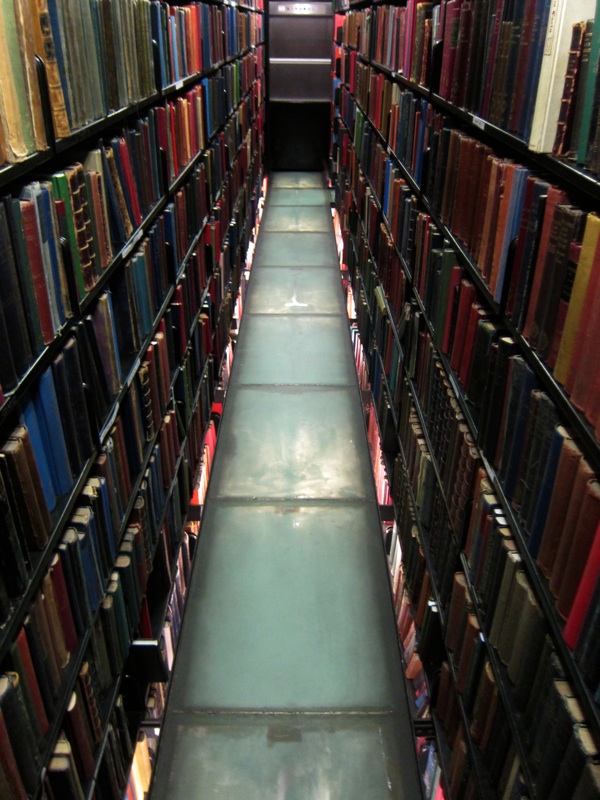
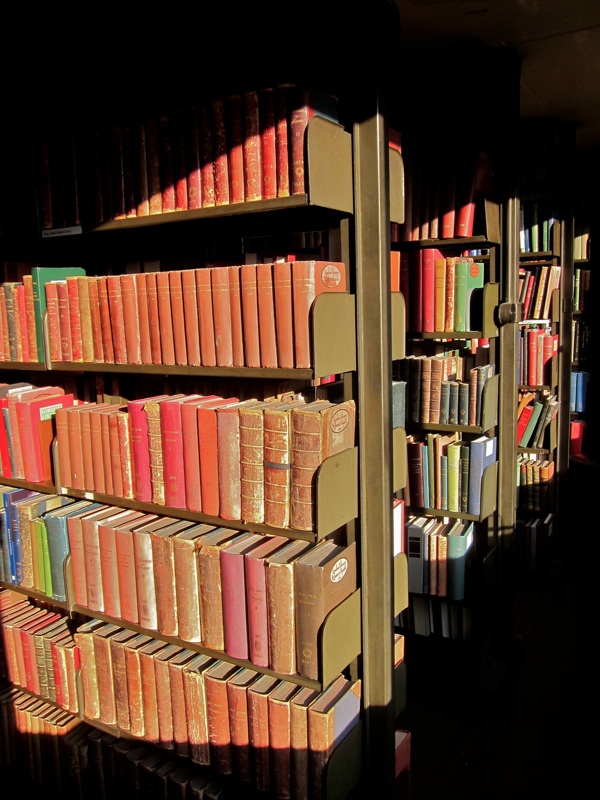
Before I joined the London Library, I had been defeated by the catalogues of the great libraries, with their obscure numerical systems and form-filling requirements just so that you might return to consult the books you wanted now, on another day. At the London Library, there is none of this soul-destroying rigmarole and you are free to explore the collection by wandering among the miles of bookshelves, engendering unexpected discoveries and facilitating the pursuit of whims that would be impossible in libraries where the stack is closed to readers.
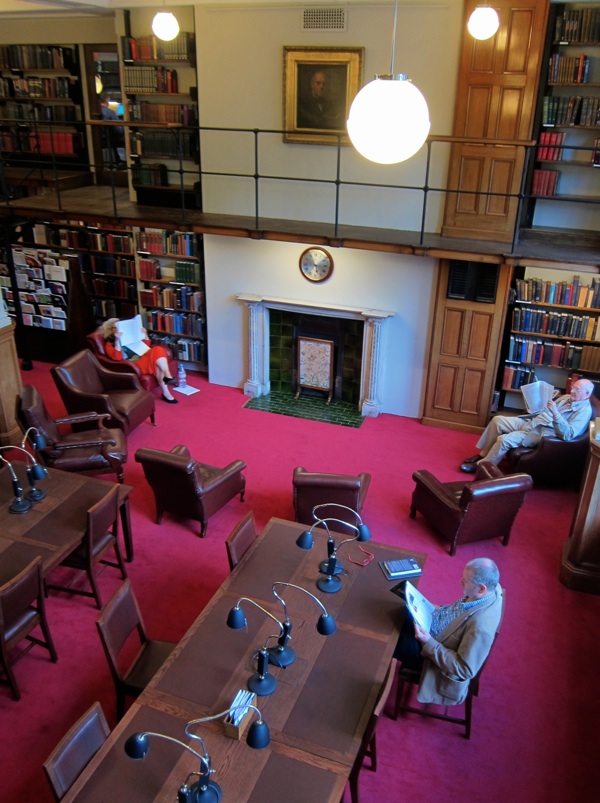
Once you walk through the narrow entrance, the building widens out with staircases leading off in different directions. On the first floor at the front is the magnificent nineteenth-century reading room with leather armchairs arranged around the fire. I cannot have been the first writer to shame myself by coming here in the winter months to escape a cold house and take advantage of the central heating, but then fallen into a doze instead of reading.
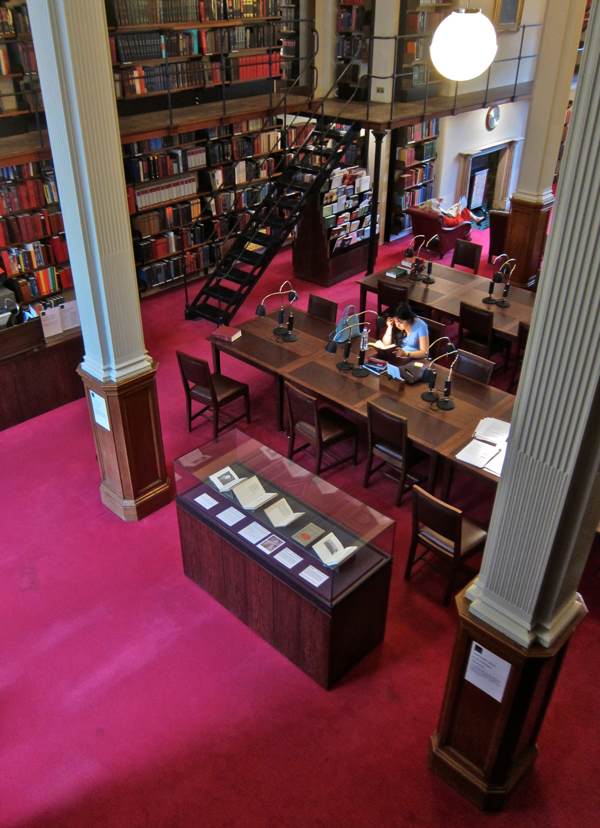
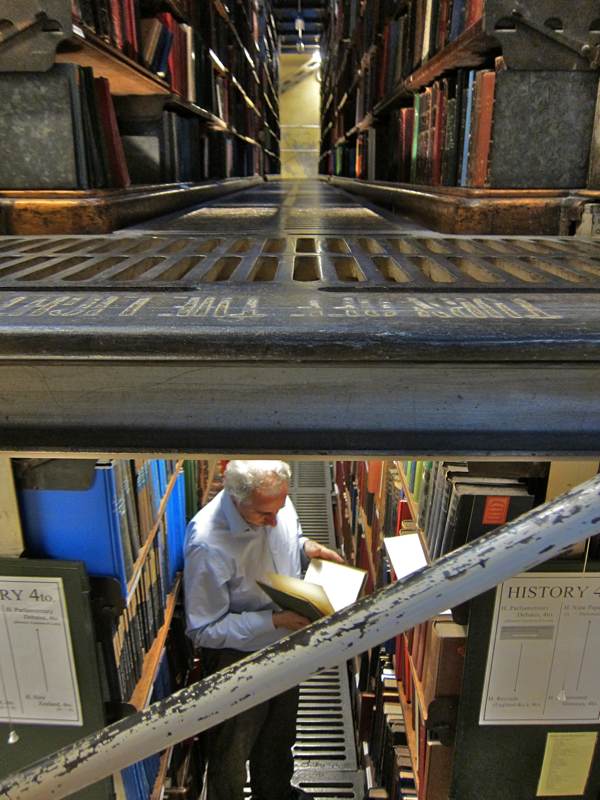
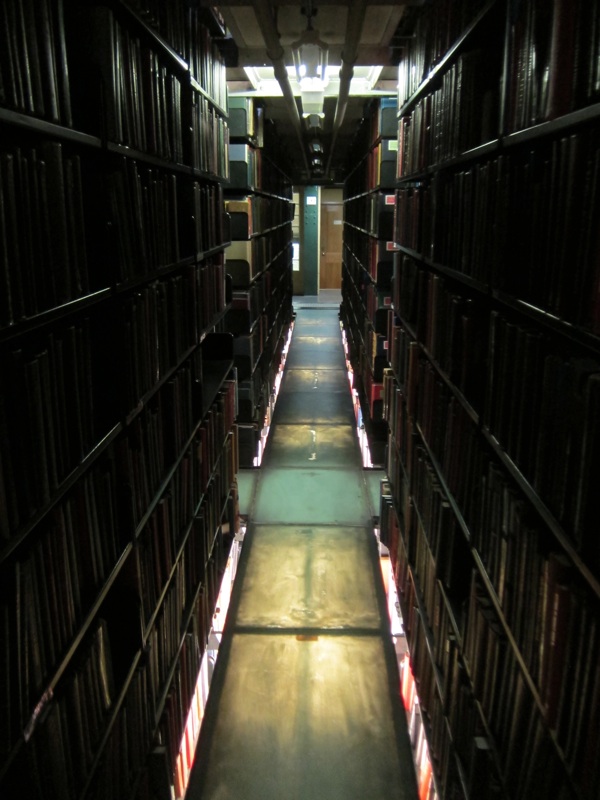
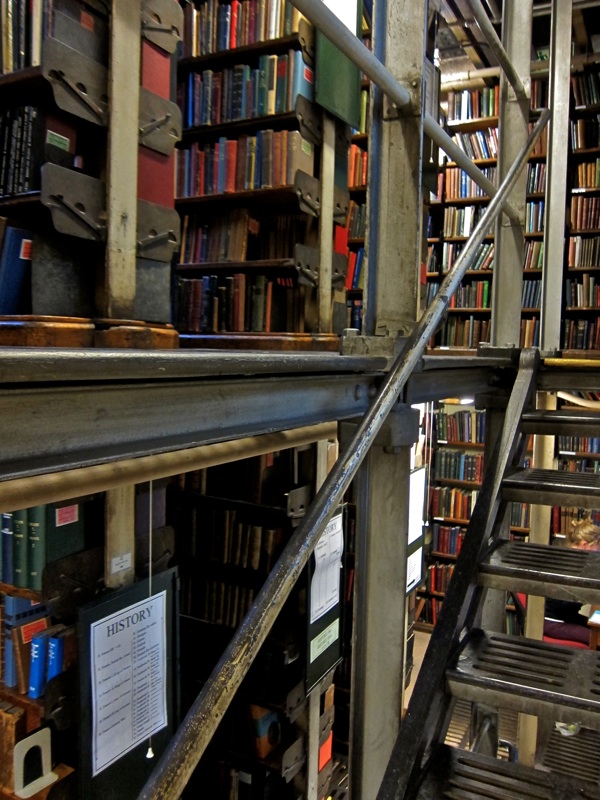
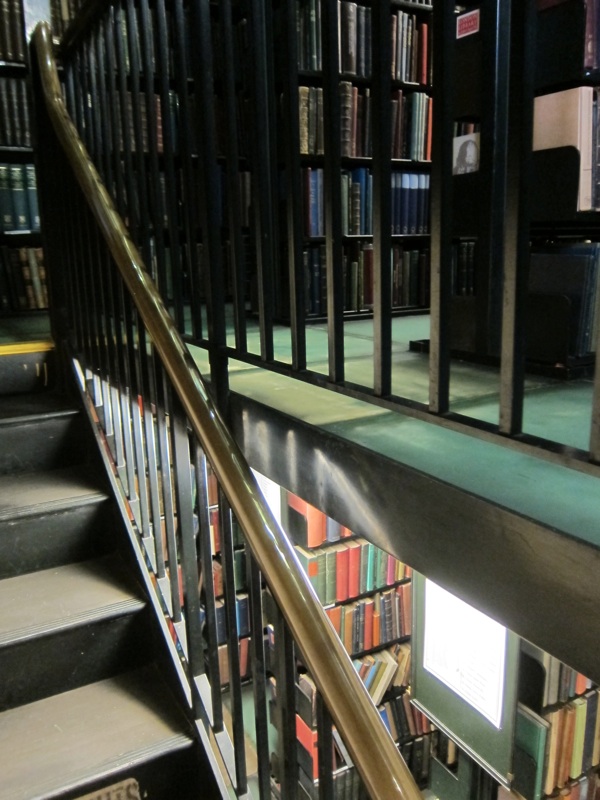
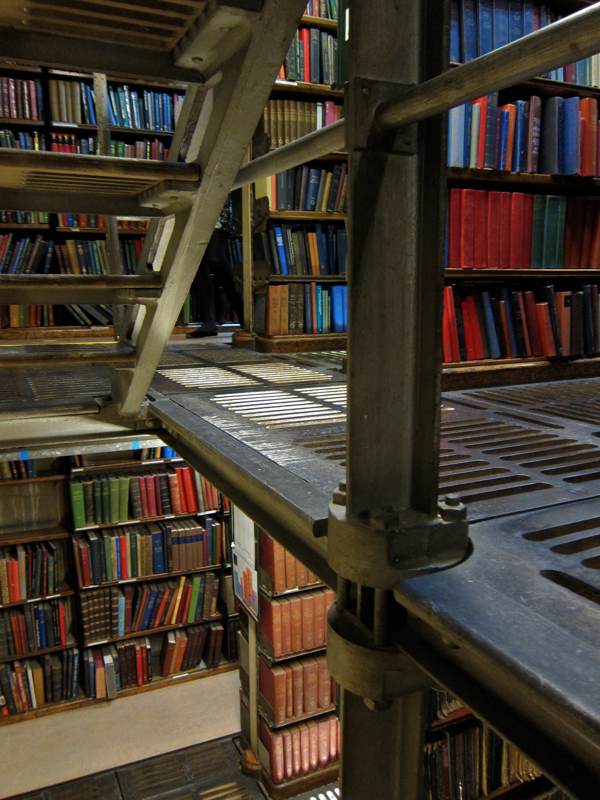
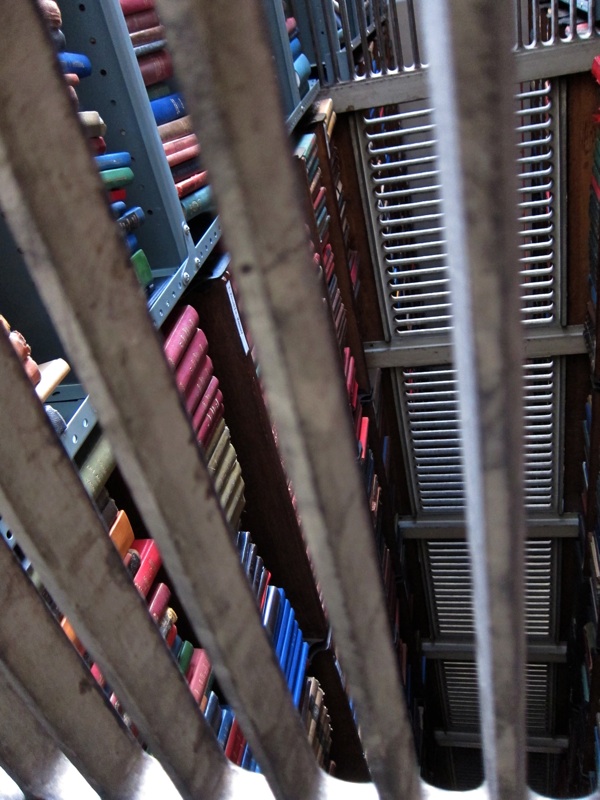
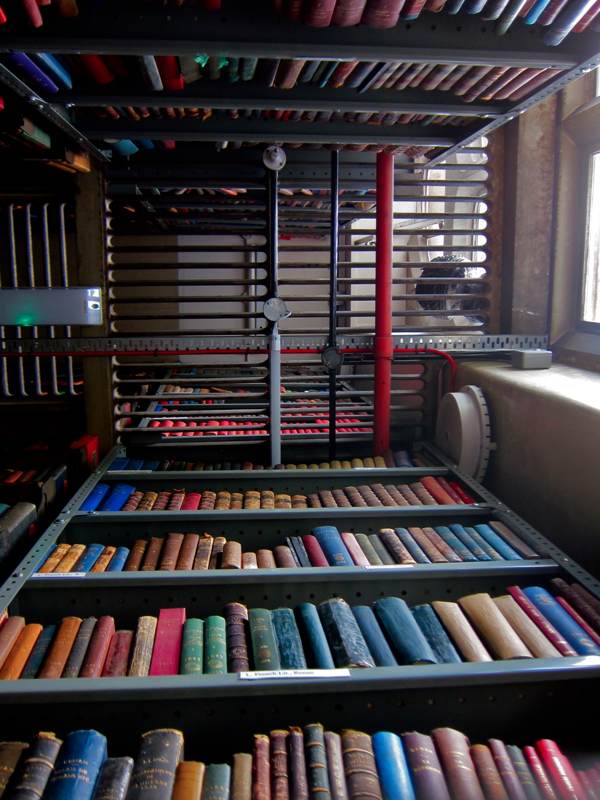
Beyond the reading room, lies the stack of books that is the true wonder of this library. Towering shelves rise through three or four storeys with gantries of translucent glass and metal grilles which permit access for readers. Wandering in pursuit of a particular volume, you may come to yourself in the midst of this structure and be overcome with vertigo, gazing down through the floors below or peering up at the stack above.
It is a physical experience that has its intellectual counterpart when you take a volume from the shelf and open it – standing there in the depths of the building – and begin to realise how many books there are that you will not ever read, even if you spent the rest of yours days in there. You recognise the limitless depth of the intellectual literary universe. This is one of those places of which it may truly be said that you can go in and never come out again in this life. How fortunate then that the London Library permits its readers to borrow a generous number of books and keep them for months on end, as long as no-one else wants them.
When I first came to the London Library, I was quite early in my quest for the subjects that would engage my working life as writer and, in many ways, this was a fruitful place to search and tap the reserves of past literary endeavour. I found it inspiring, after first discovering classic pieces of writing through their paperback reprints, to encounter those same works in their early editions upon the shelves here and it brought those writers closer to see their books as they saw them. In my mind, I equated the darkness of the stacks with a mine where I searched, delving into the collective imagination. Isolated from daylight, to me it was a timeless netherworld where the spirits of past authors lingered, waiting to be sought out.
At the beginning of my life as a writer, I used to read far more than I wrote but – as the years passed – the balance has shifted and now I am so busy producing my stories every day that I hardly have any time left to read anymore. With this thought in mind, I left the London Library and did not envy the bookworms. I walked out through the crowded streets of Piccadilly, alive with the drama of human existence in the afternoon sunlight, and I realised that the city is my library of infinite curiosity now and everyone I meet is a book – even if, in my modest interviews, I commonly only get as far as the first chapter.
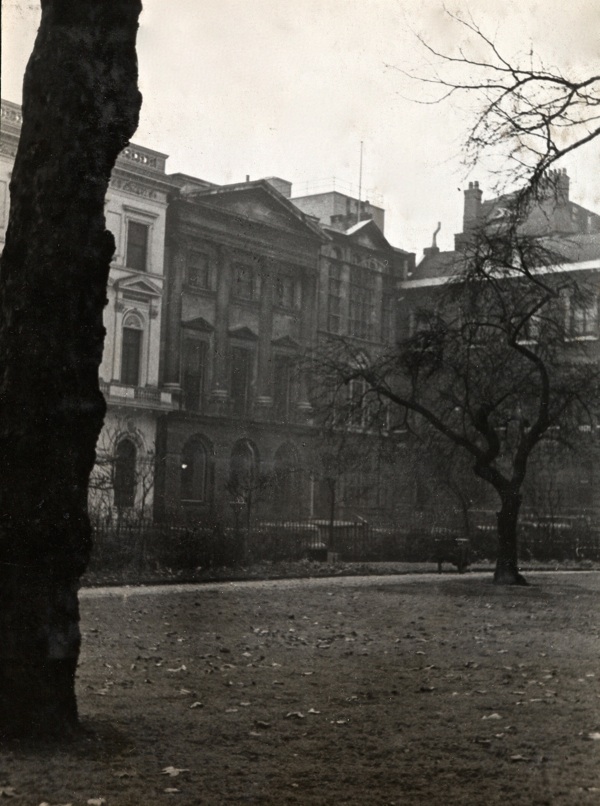
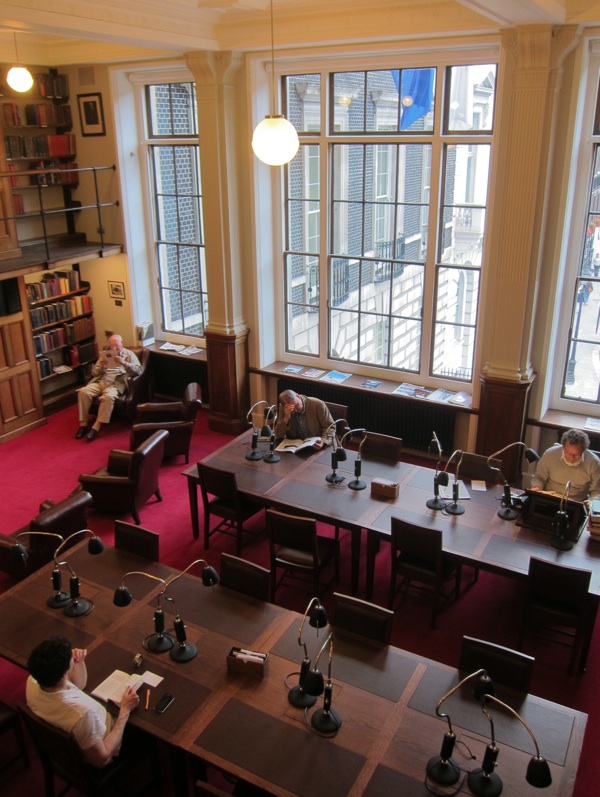
The reading room
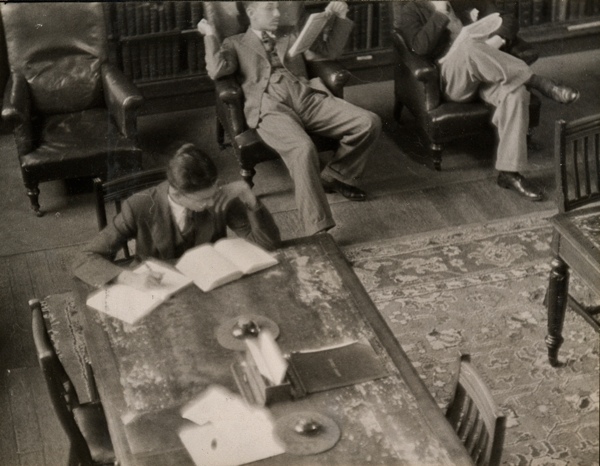
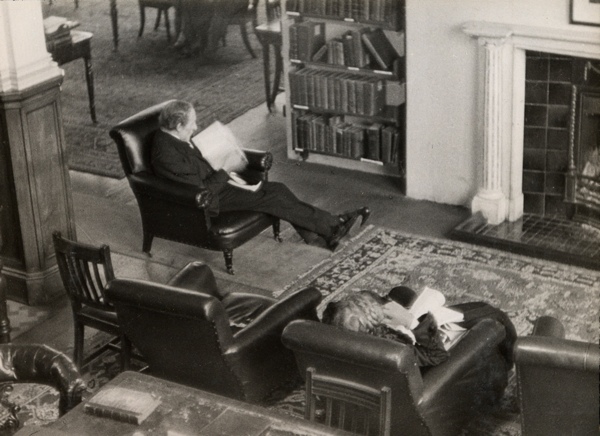
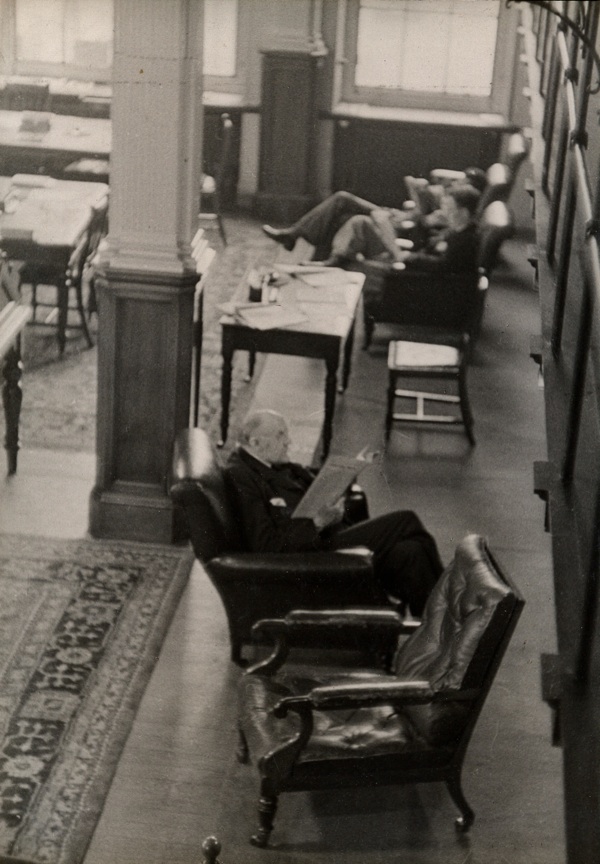
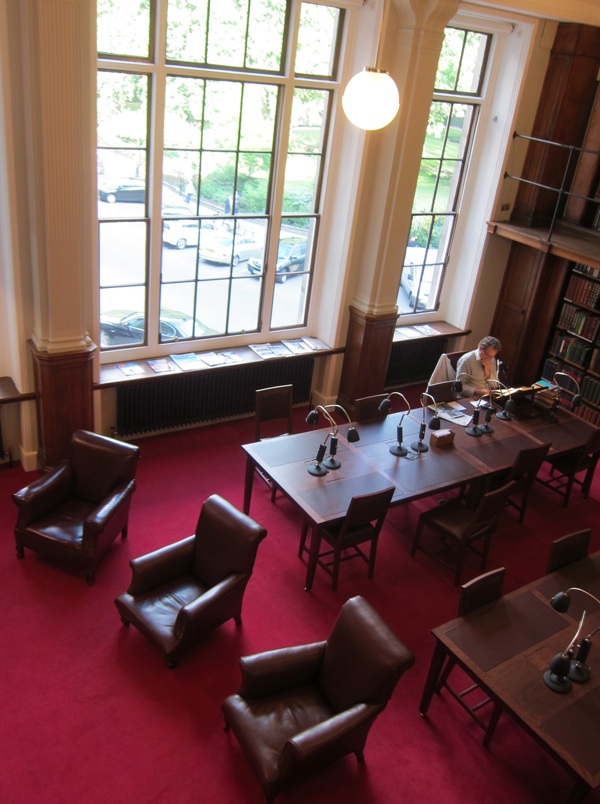
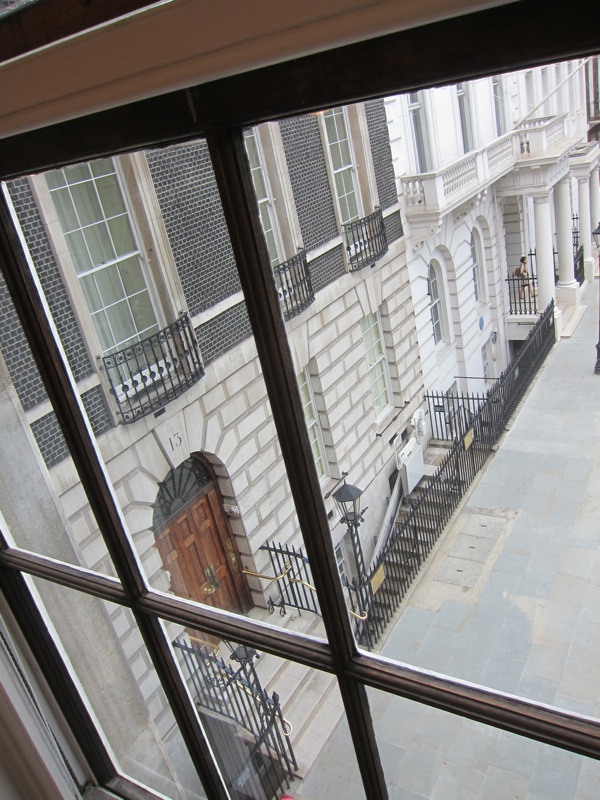
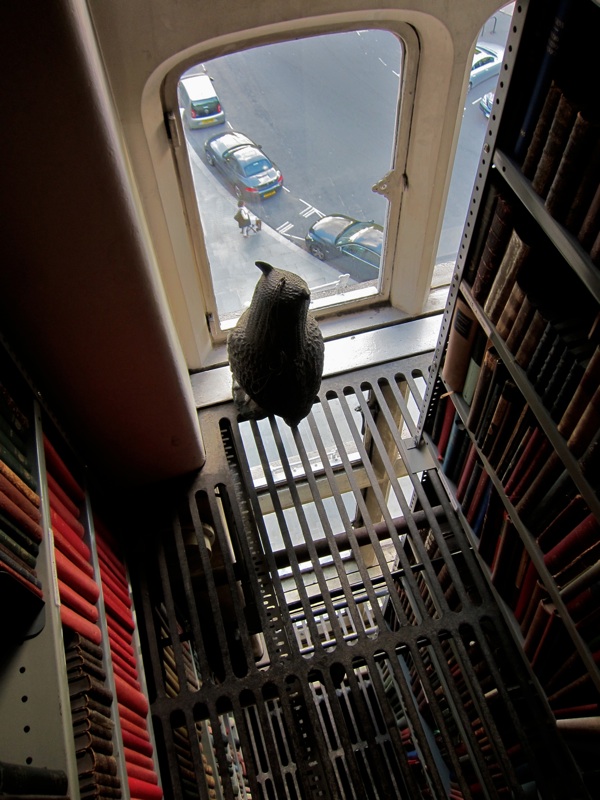
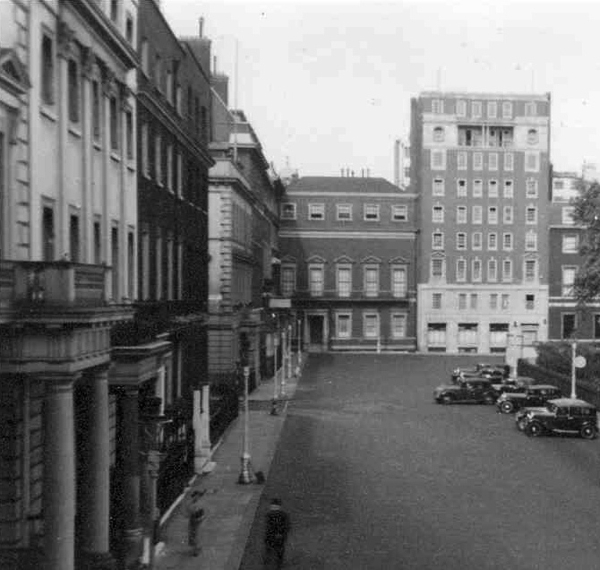
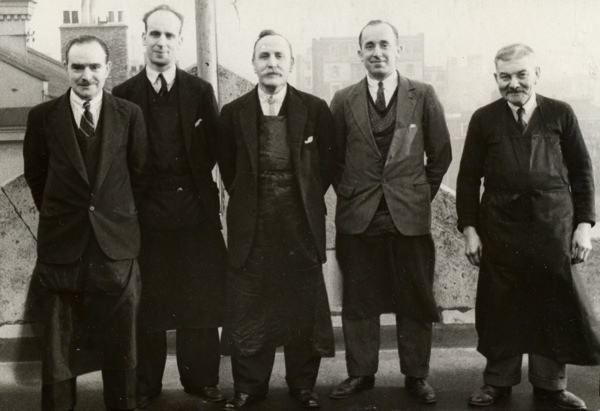
Librarians of 1935
Archive photographs courtesy of London Library
The London Library , 14 St James’s Sq, SW1Y 4LG
At The Little Yellow Watch Shop
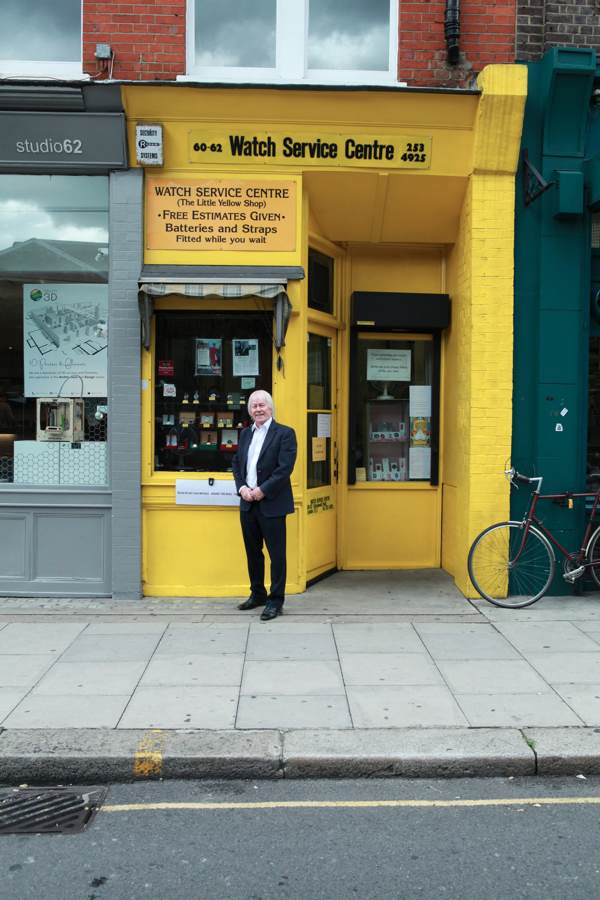
John Lloyd, Watch Repairer
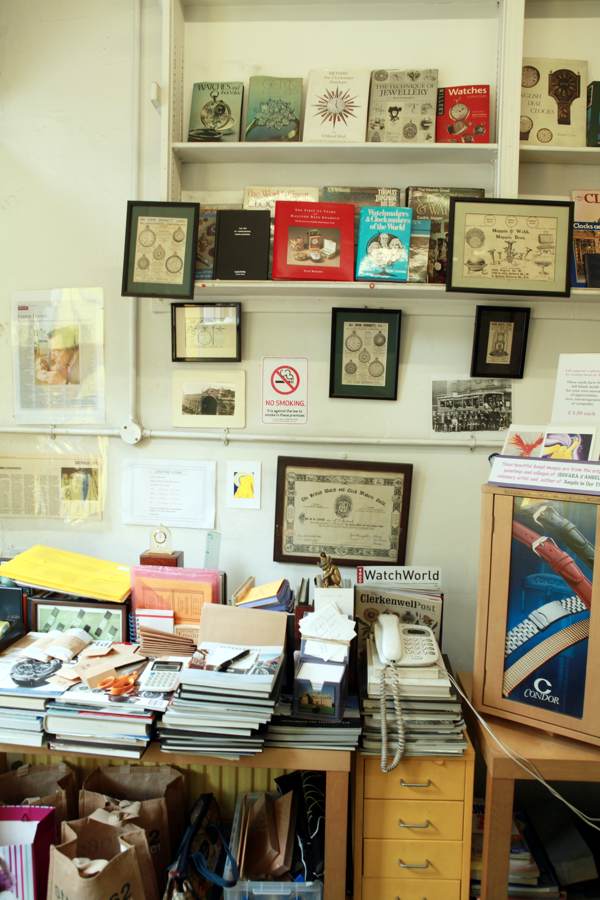
When you step into The Little Yellow Watch Shop in the Clerkenwell Rd, you discover yourself among an eager line of customers clutching their precious timepieces patiently and awaiting the moment they can hand them into the safe hands of John Lloyd, the watch repairer who has worked in Clerkenwell longer than any other. With his long snowy white locks, John looks like a magus, as if by merely peering down critically over his long nose at a broken watch and snapping his fingers, he could conjure it back into life.
While John works his charm, his wife Annie Lloyd fulfils the role of magician’s assistant with consummate grace, taking down all the necessary information from the owner and keeping everything moving with superlative efficiency. Together they preside over a hundred watches a week arriving for repair, and thereby maintain the tradition of clock-making and repair that has occupied Clerkenwell for centuries.
John has worked in the Clerkenwell Rd since 1956 and remembers when every shop between St John St and Goswell Rd was a watch repair or watch materials supply shop. Today, although his business is now one of just a tiny handful remaining in Clerkenwell, it is apparent that there is a healthy demand for his services to sustain him for as long as he pleases.
“I’m from Shepherd’s Bush originally and my stepfather had a watch repair stall in Romford Market,” John admitted to me, “I was only eleven when I started to work with him, but I quickly took to it.”
“I first came to Clerkenwell in the nineteen-forties, when I did a three year course in Instrument Making at the Northampton Polytechnic, now known as the City University. Then I joined A. Shoot & Sons in Whitechapel at seventeen years old, was conscripted for National Service at eighteen and returned to my job again in 1956. Shoot & Sons supplied watch materials from a tall thin building at 85 Whitechapel High St next to the Whitechapel Gallery, but in that year we moved to Whitworth Buildings in Clerkenwell and then to the corner of St John St & Clerkenwell Rd in 1959. At Shoot & Sons, I used to go to the manager Leslie Lawson at weekends and we stripped down antique watches together – not many people these days know the inside workings of a watch.”
In 1992, when Shoot & Sons Ltd closed after more than thirty years on the corner, John moved to the kiosk fifty yards away at 60 Clerkwenwell Rd which was even smaller than the current Little Watch Shop. He opened it in partnership with his colleague Barry Benjamin but, when Barry became ill after just three years, John continued the business alone until his wife Annie came in one day a week and then later joined him full time. What was once a miniscule kiosk has expanded into a tiny shop where John presides happily from behind the counter, surrounded by photos of old Clerkenwell and his step-father’s sign from Romford market where John started out in the nineteen-forties.
“People ask me when I ‘m going to retire,” John confided to me gleefully, “but I’m already past retirement age – I’m having too much fun here.”
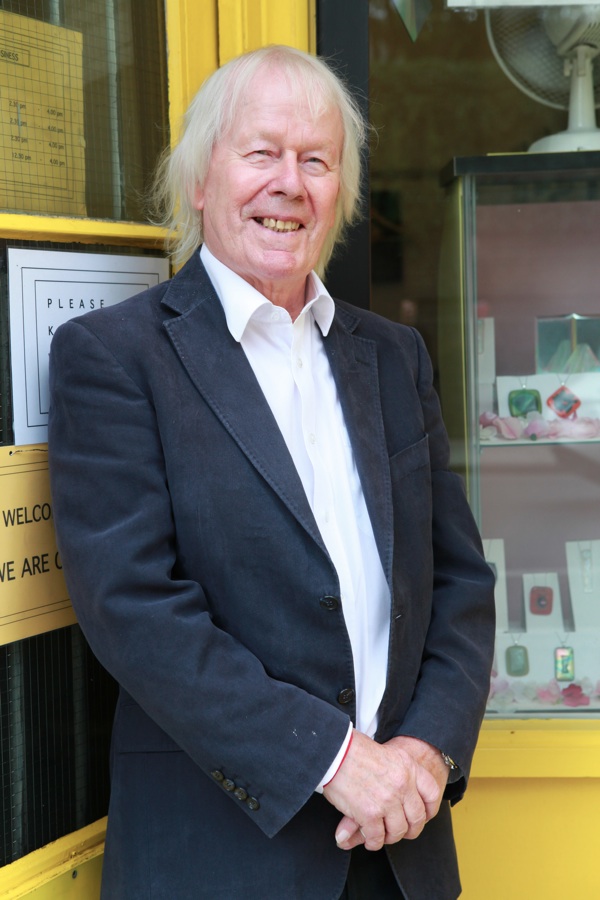
John Lloyd – Clerkenwell’s longest-serving member of the watch business
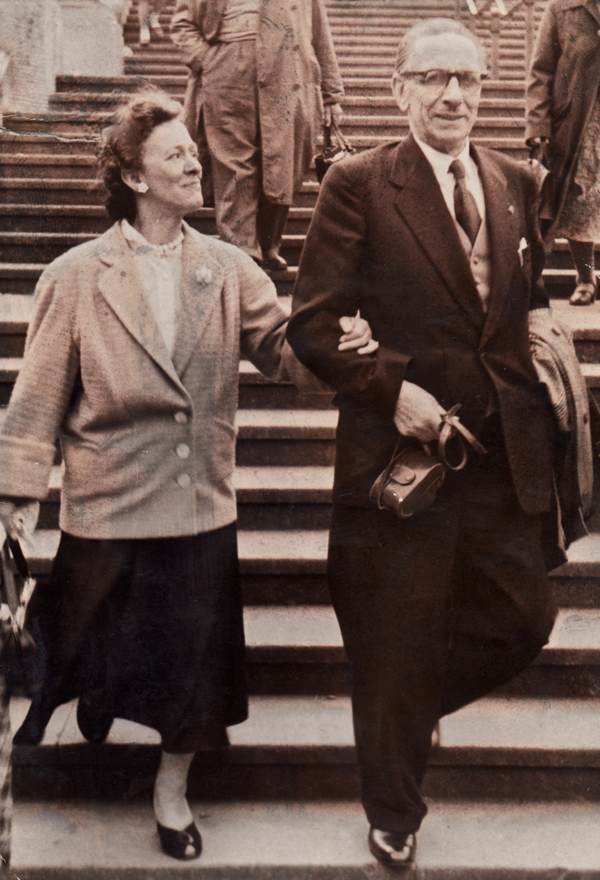
John’s mother and stepfather in Brighton, 1954
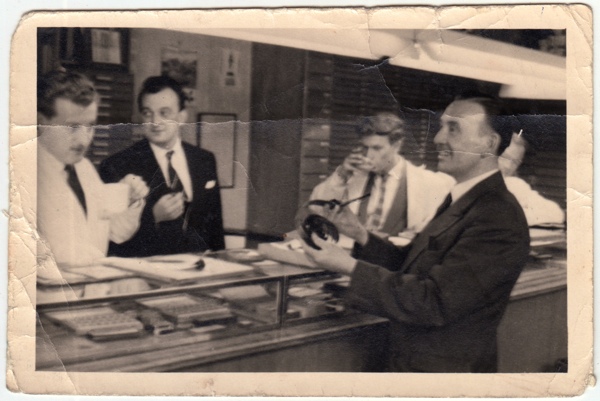
At Shoot & Sons Ltd
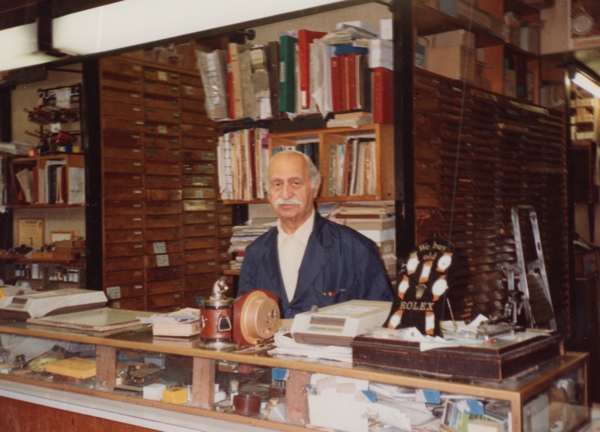
Maurice Shoot, John’s boss from the early fifties until his retirement in 1989
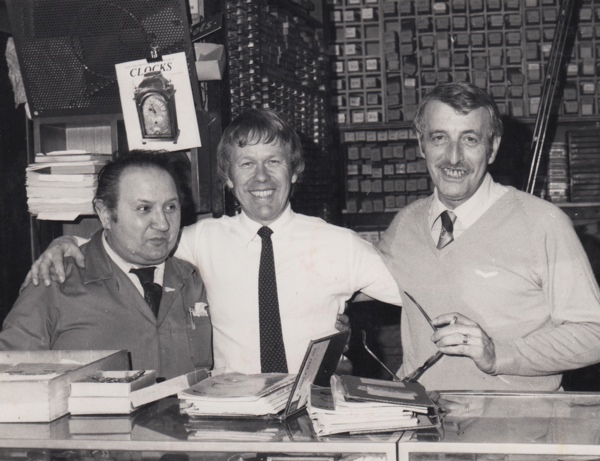
Phil, John and Barry at Shoots
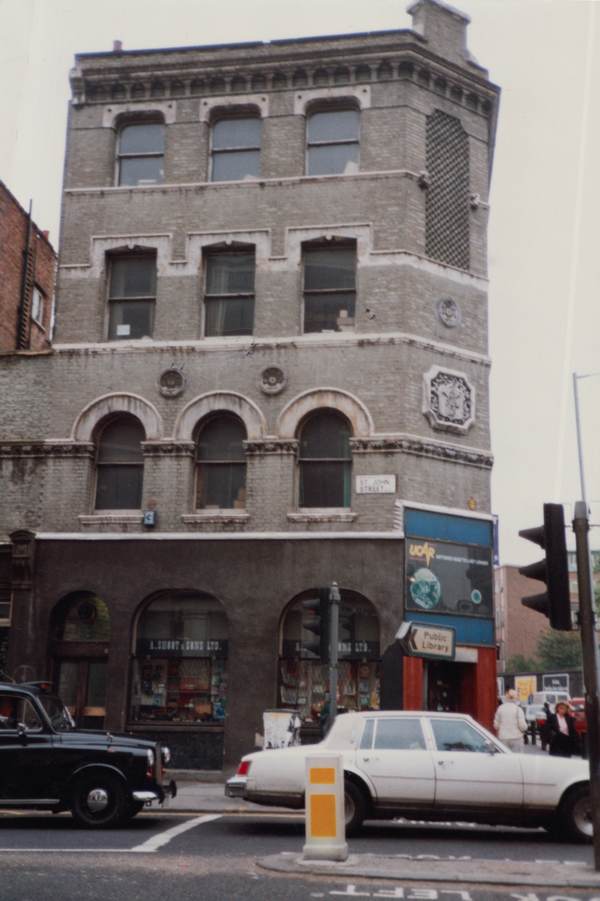
Shoot & Sons Ltd on the corner of St John St & Clerkenwell Rd in the eighties
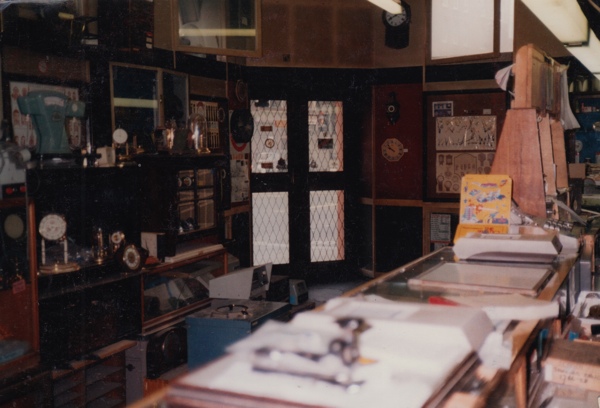
The interior of the shop at Shoot & Sons Ltd
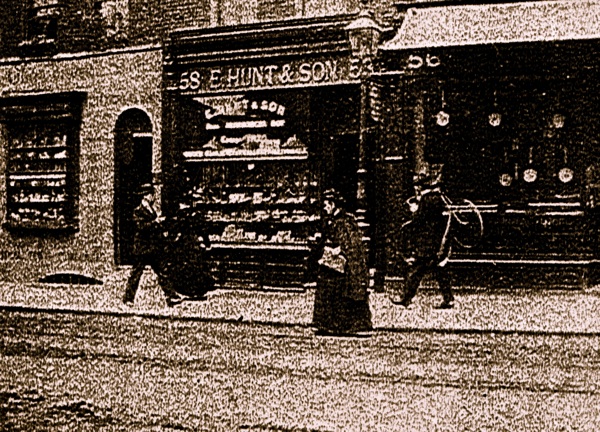
60 Clerkenwell Rd in 1900, note the watch and clock shops
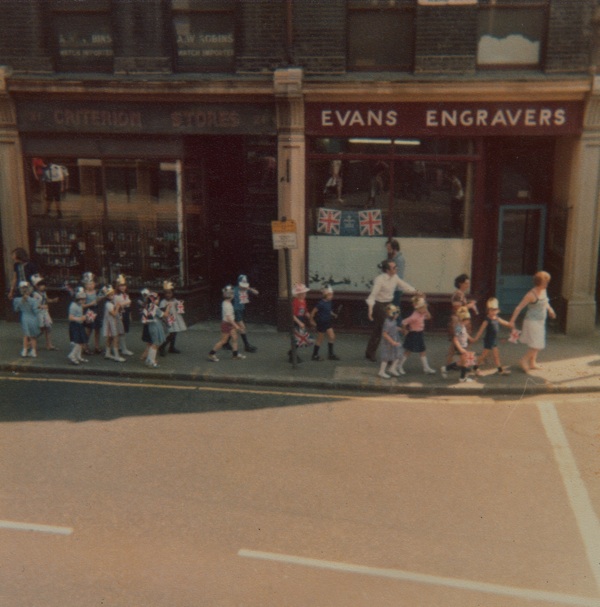
Clerkenwell Rd in the sixties
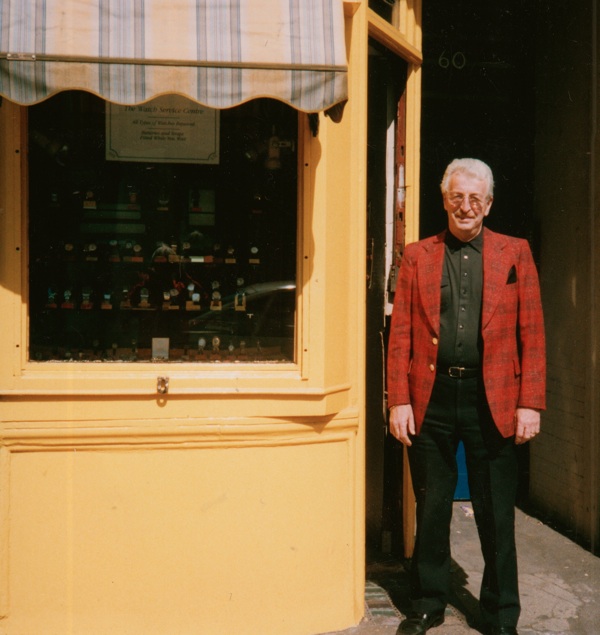
Barry Benjamin outside the original Little Yellow Shop
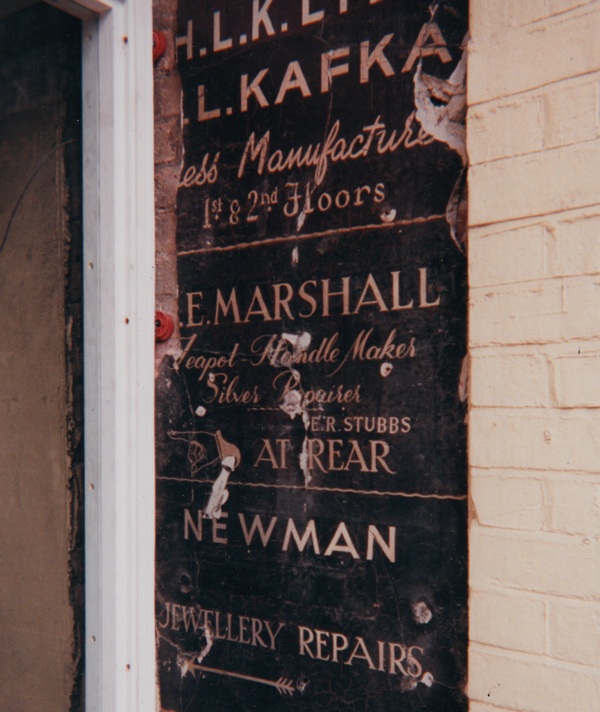
Signs uncovered in the expansion of the Little Yellow Shop
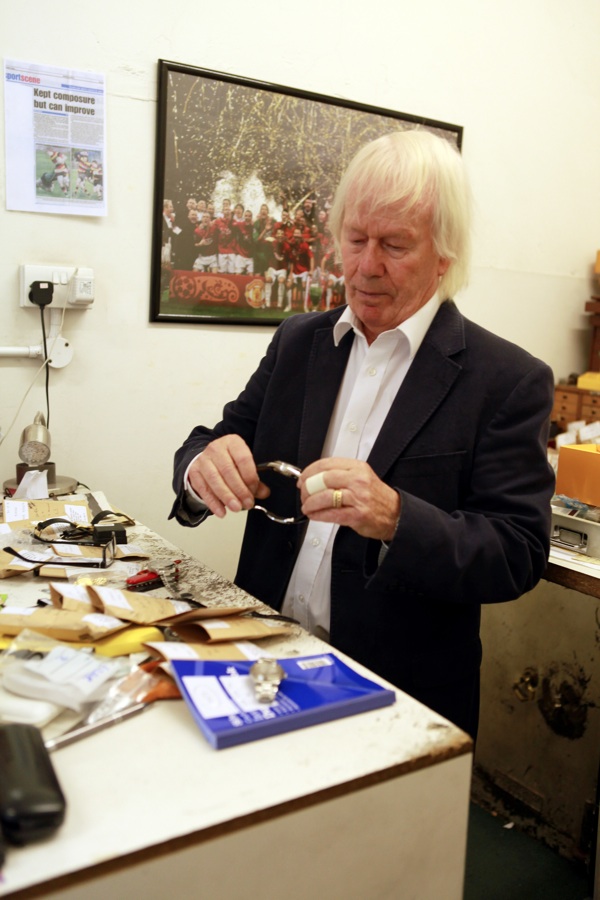
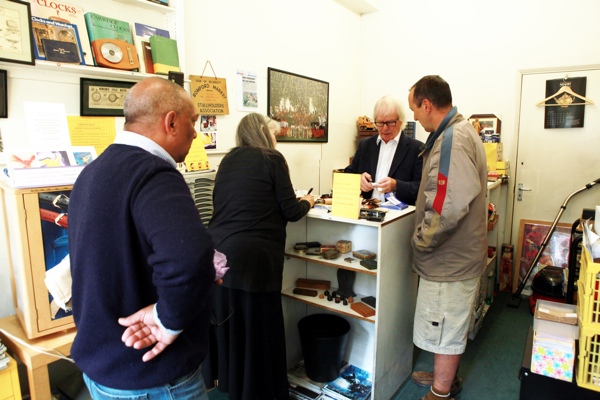
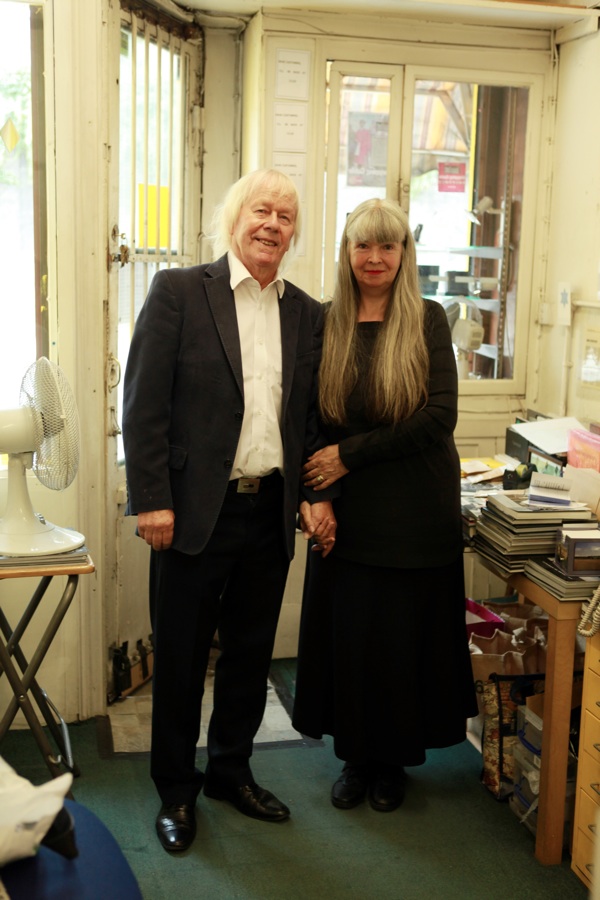
John & Annie Lloyd
New photographs © Colin O’Brien
The Little Yellow Shop, watch service centre, 60 Clerkenwell Rd, EC1
You may like to read these other Clerkenwell stories
At Embassy Electrical Supplies
Yet More Of Hindley’s Cries Of London
In his History of the Cries of London, Ancient & Modern of 1884, Charles Hindley reused many woodblocks from earlier publications and these below date from much earlier in the century. Each one no larger than a thumbnail, this tiny series is remarkable for the sense of urgency conveyed as many of the sellers strive to sell their wares, and also for the incidental details – such as the cat in the potato seller print, the watchman’s rattle, the fins on the eels’ heads, the dog that wants a mutton pie and the child holding out a plate in hope of a muffin.
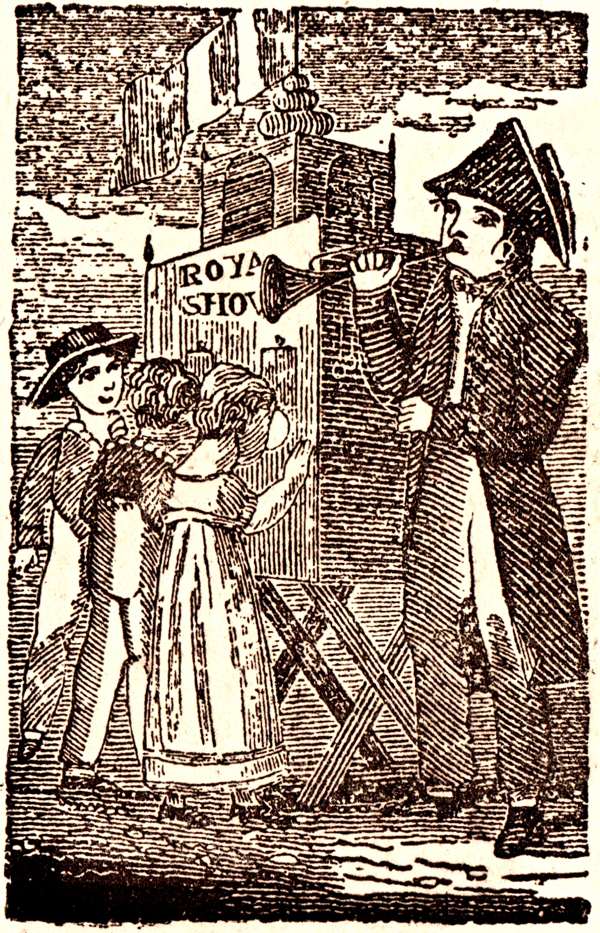
Come take a Peep, Boys, take a Peep! Girls, I’ve the Wonder of the World!
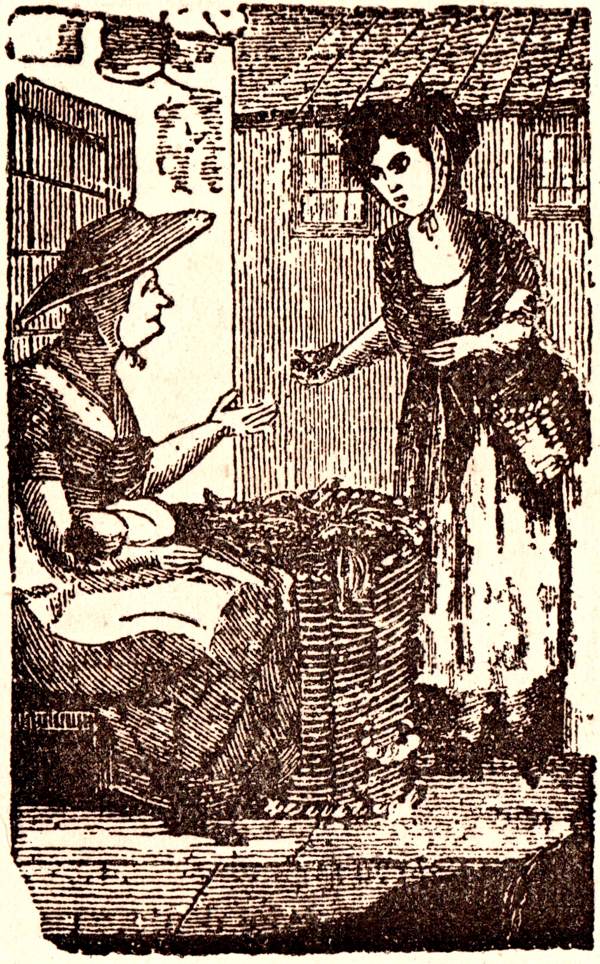
Water Cresses! Fine Spring Water Cresses! Three bunches a Penny, young Water Cresses!
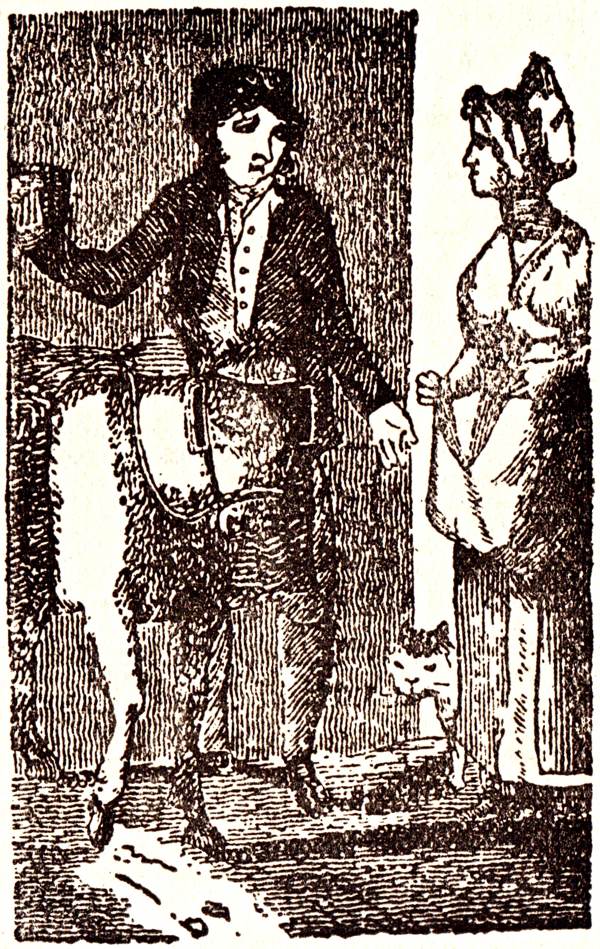
Buy fine Kidney Potatoes! New Potatoes! Fine Kidney Potatoes! Potatoes, O!
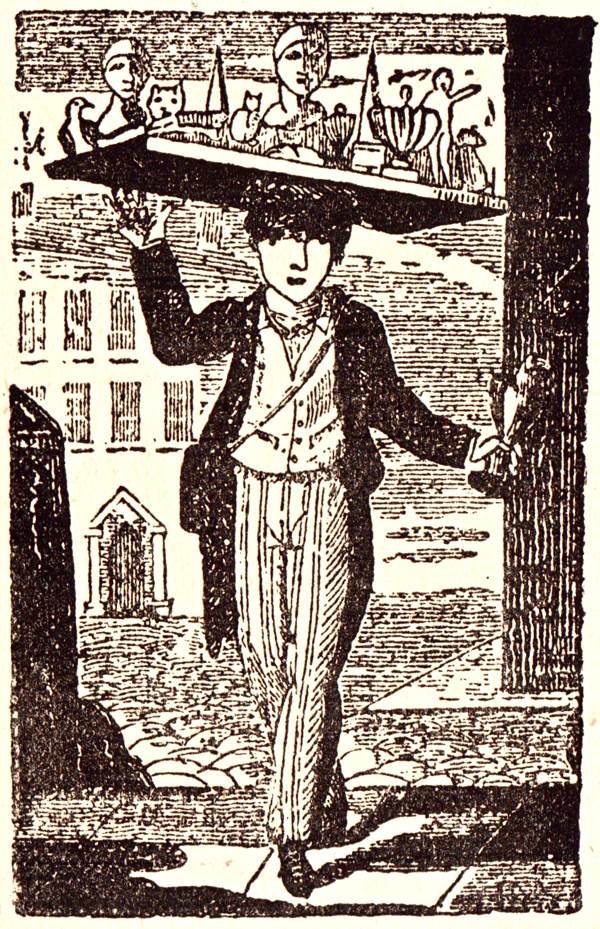
Buy Images! Good and cheap! Images, very good – very cheap!
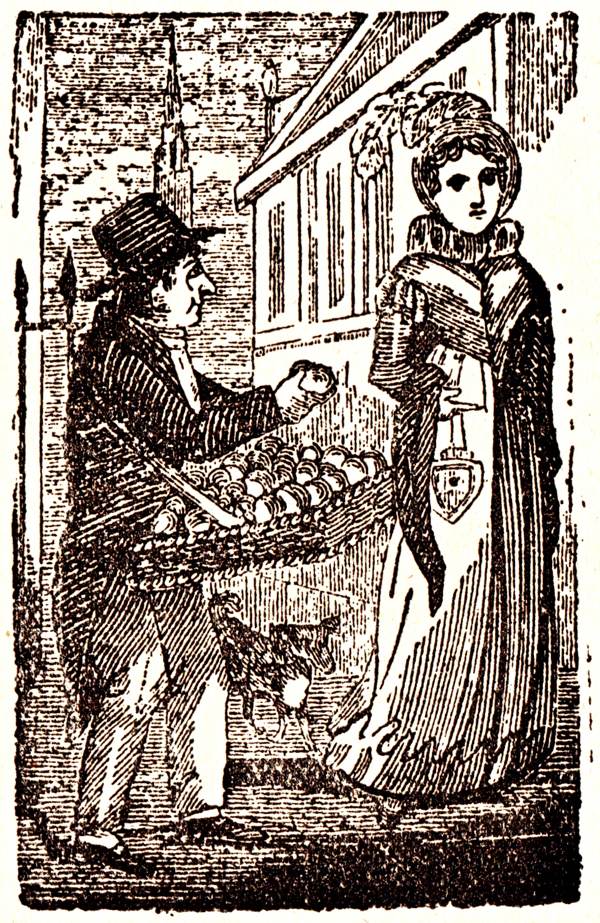
Fine China Oranges, sweet as sugar! The are very fine, and cheap, too, today
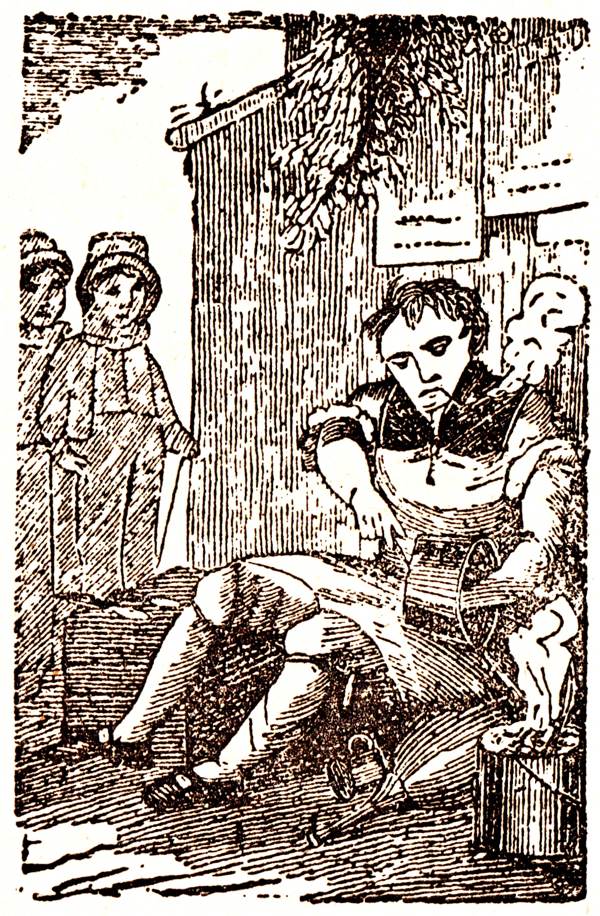
Kettles to mend! Any Pots to Mend?
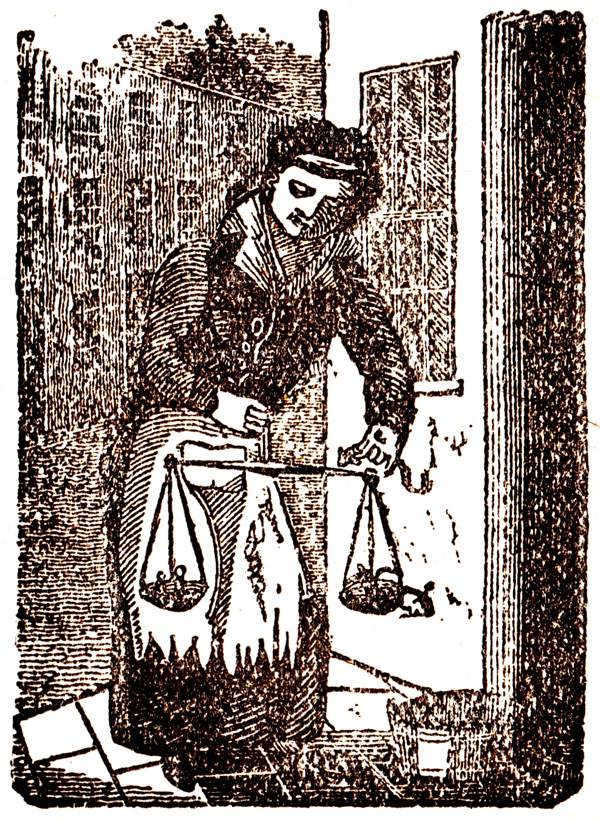
Eels, fine Silver Eels! Dutch Eels! They are all alive – Silver Eels!
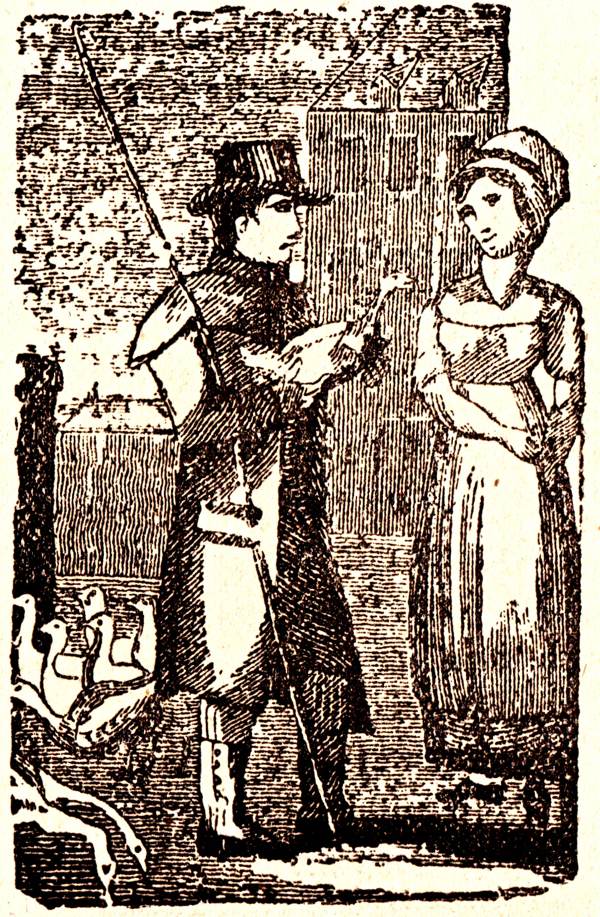
Buy my young chickens! Buy ’em alive, O! Buy of the Fowlman, and have ’em alive, O!
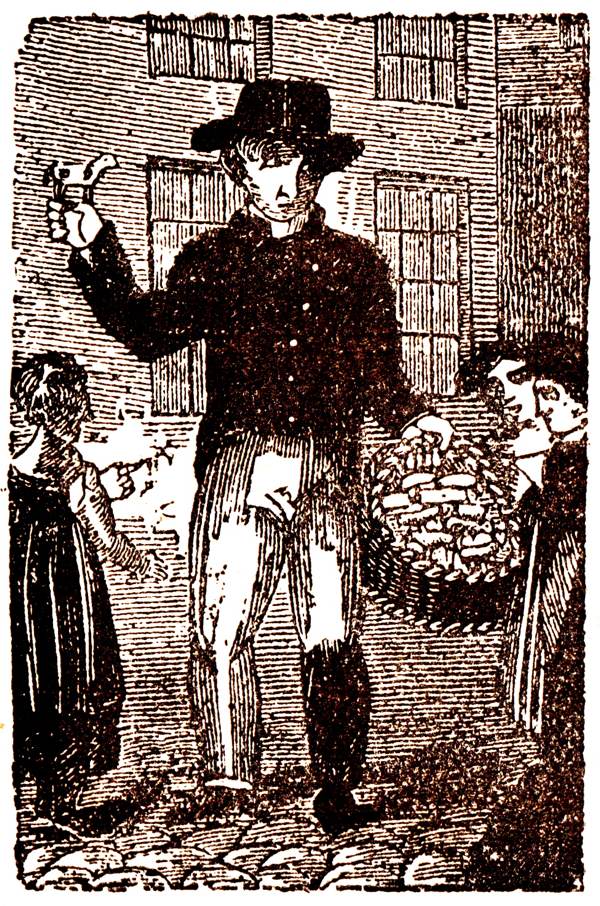
Toy Lambs to sell! Toy Lambs to sell!
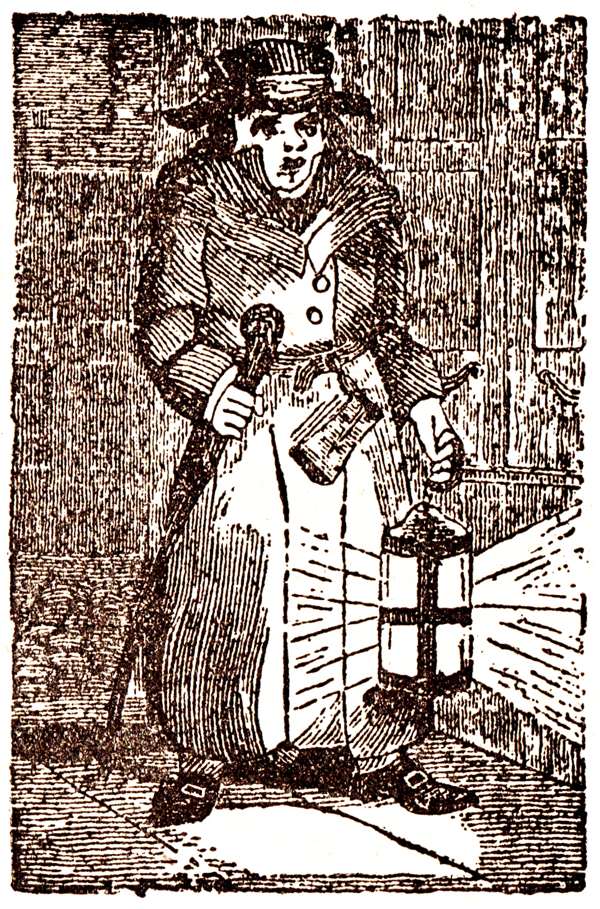
Past twelve o’clock and a misty morning! Past twelve o’clock and mind I give you warning!
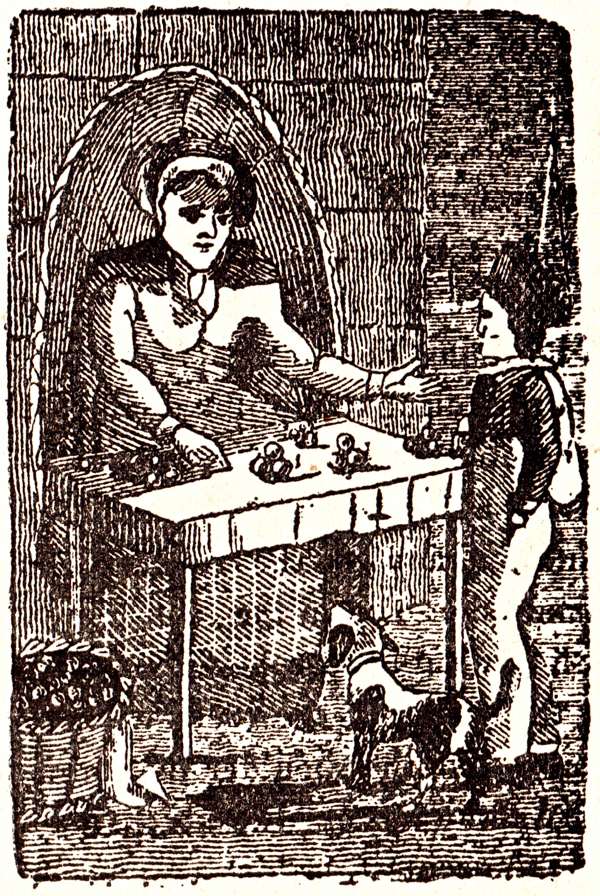
Golden Pippins of the right sort, boys! Golden Pippins of the right sort, girls!
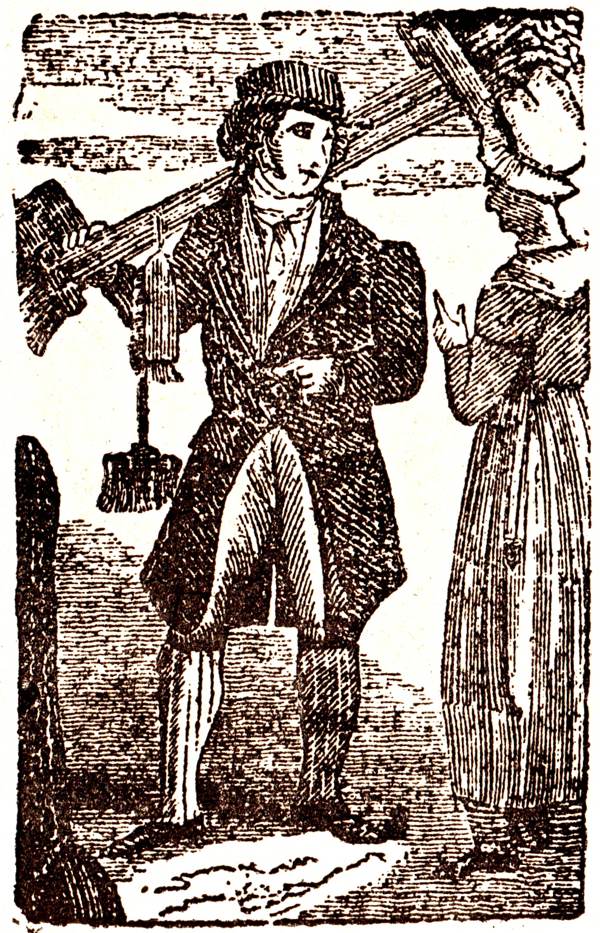
Buy a Mop! Buy a Broom! Good today! Buy a Broom! Buy a Mop, I say!
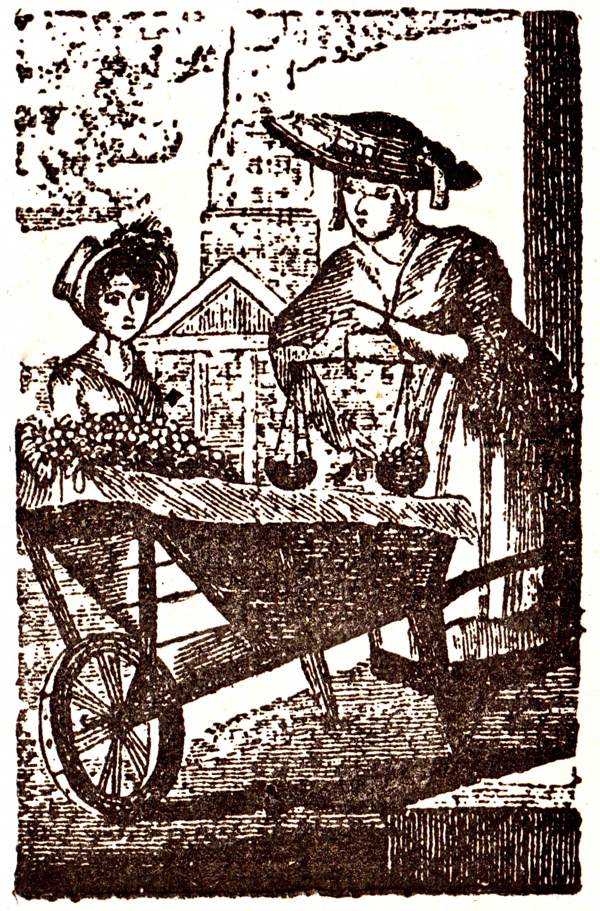
Buy ’em by the stick, or buy ’em by the pound, Cherries ripe, all round and sound!
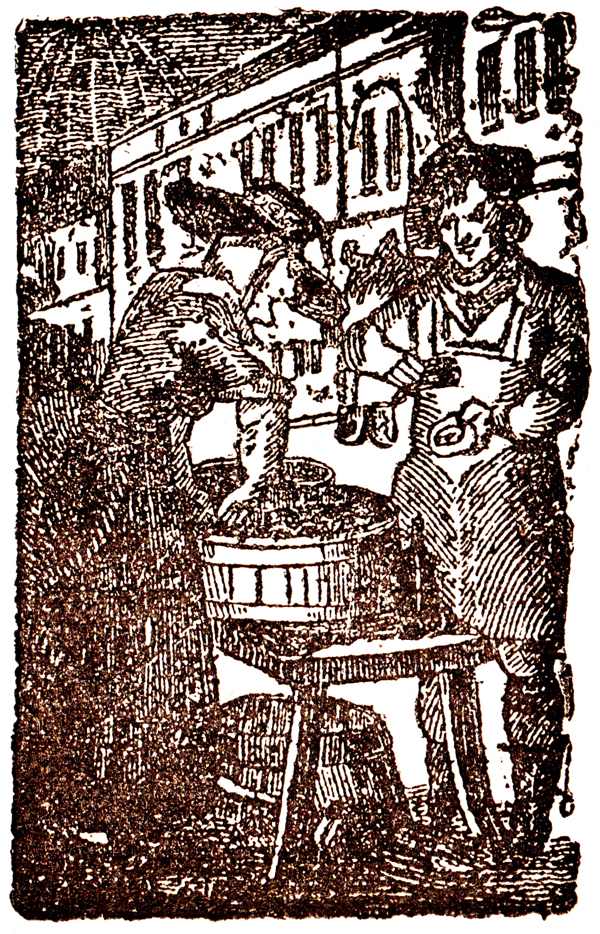
Oysters, fresh and alive, three a penny, O! When they are all sold I shan’t have any, O!
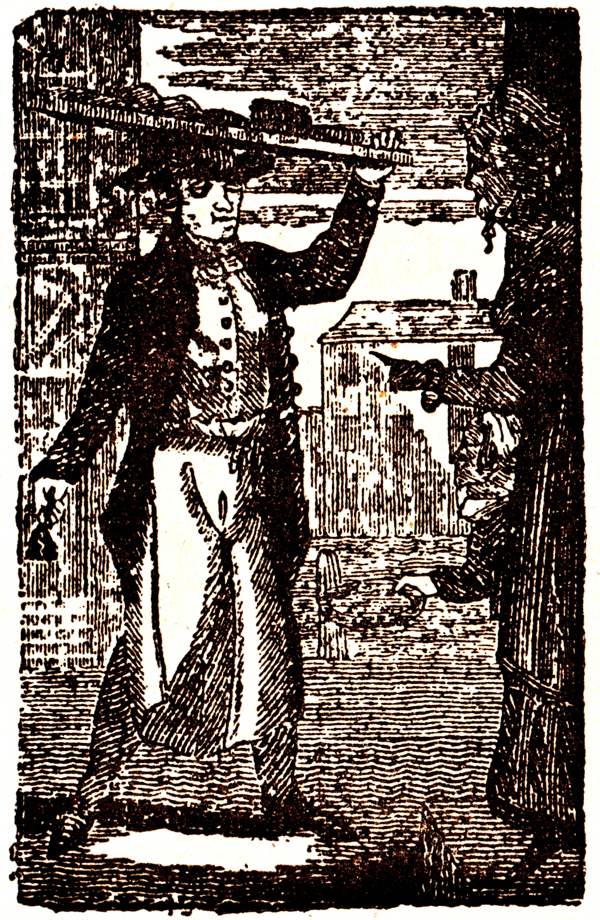
Muffins O! Crumpets! Muffins, today! Crumpets! Muffins! Fresh today!
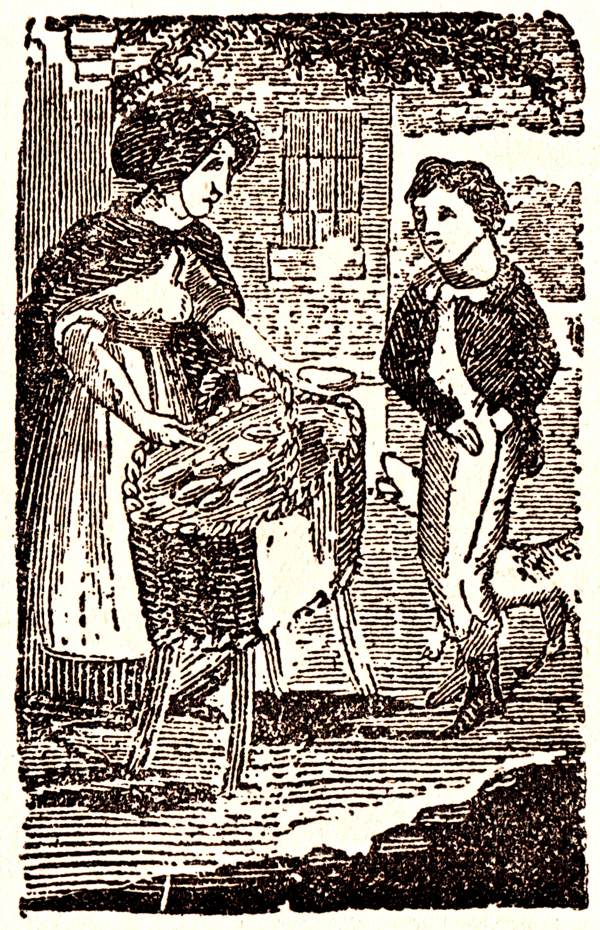
Mutton Pies! Mutton Pies! Mutton Pies! Come feast your eyes with my Mutton Pies!
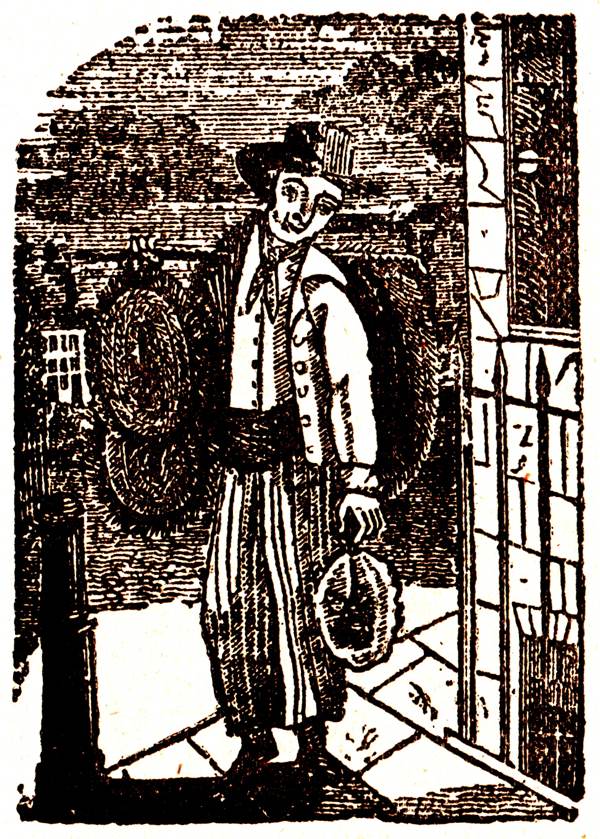
Door Mat! Door Mat! Buy a Door Mat! Rope Mat! Rope Mat! Buy a Rope Mat!
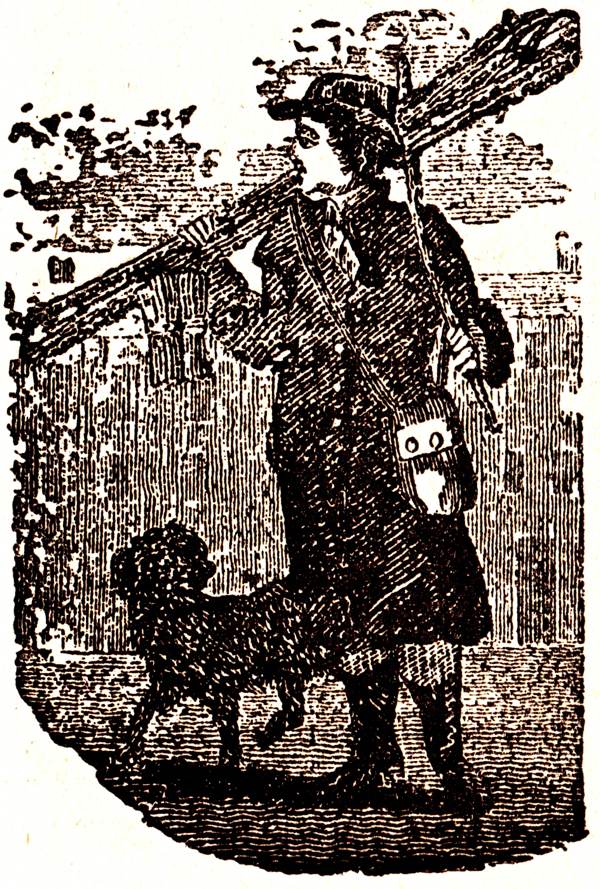
Clothes Props! Clothes Props! I say, very good Clothes Props, all long and strong, today!
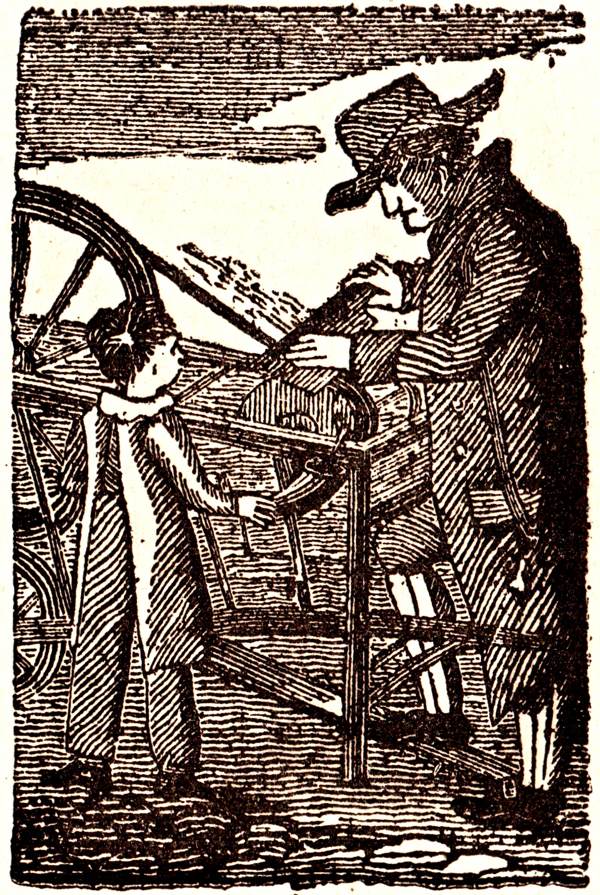
Any Knives or Scissors to Grind today? Big Knives or little Knives, or Scissors to Grind, O!
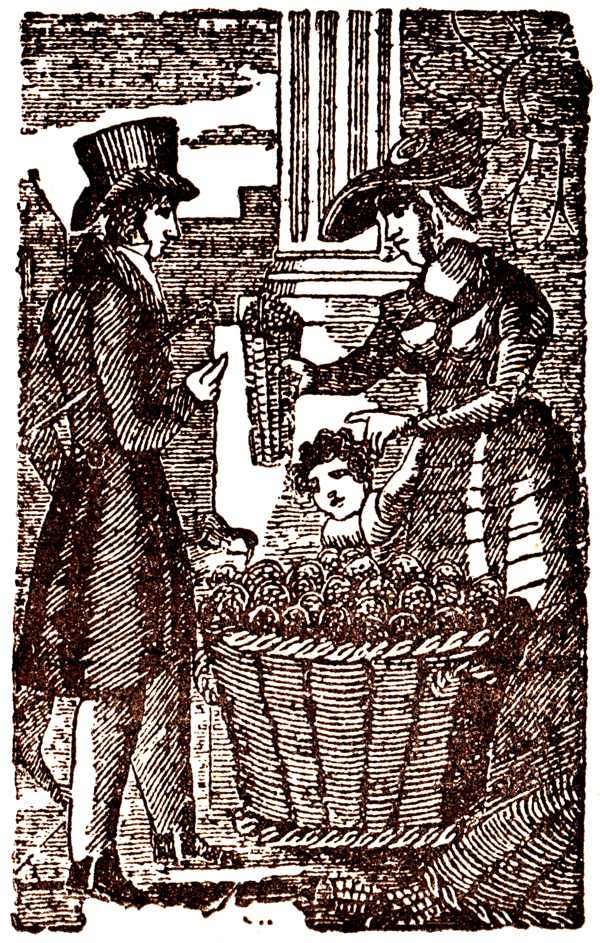
Ripe Strawberries! A groat a pottle, today. Only a groat a pottle, is what I say!
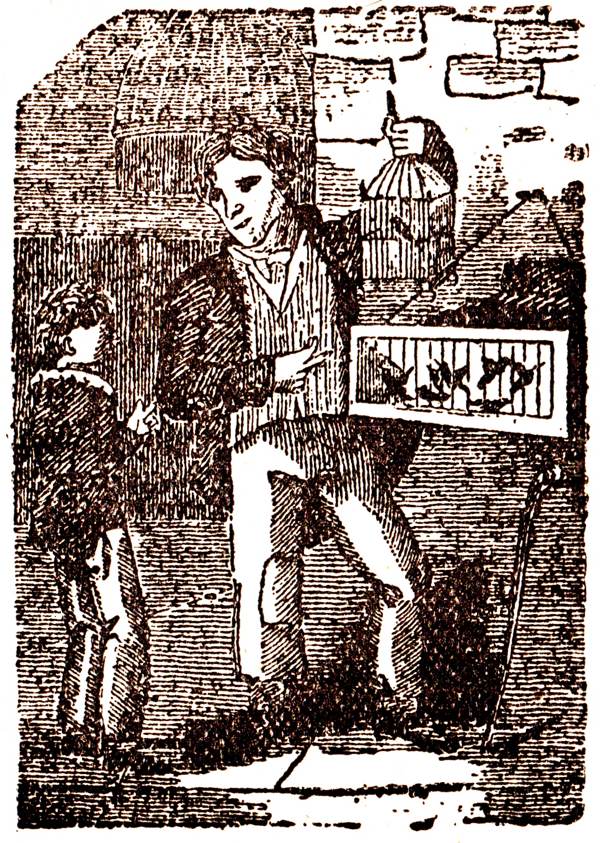
Have pity, have pity upon the poor little birds, who only make music and cannot sing words!
You may like to take a look at the text I have written about the Cries of London upon the British Library’s DISCOVERING LITERATURE website
Peruse these other sets of the Cries of London I have collected
More John Player’s Cries of London
More Samuel Pepys’ Cries of London
Geoffrey Fletcher’s Pavement Pounders
William Craig Marshall’s Itinerant Traders
H.W.Petherick’s London Characters
John Thomson’s Street Life in London
Aunt Busy Bee’s New London Cries
Marcellus Laroon’s Cries of London
William Nicholson’s London Types
Francis Wheatley’s Cries of London
John Thomas Smith’s Vagabondiana of 1817
John Thomas Smith’s Vagabondiana II
John Thomas Smith’s Vagabondiana III
Thomas Rowlandson’s Lower Orders