So Long, George Cossington the Steeplejack
George Cossington died last week at the age of eighty-one and and today I publish my interview with him, as a tribute to one of the last of London’s heroic steeplejacks to work without a safety harness.
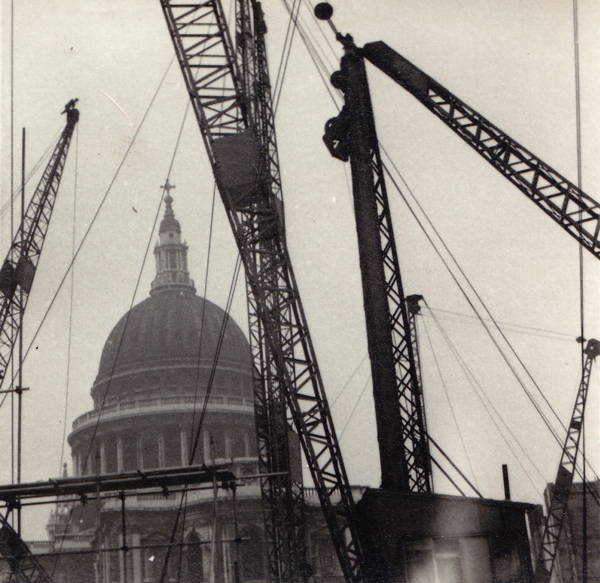
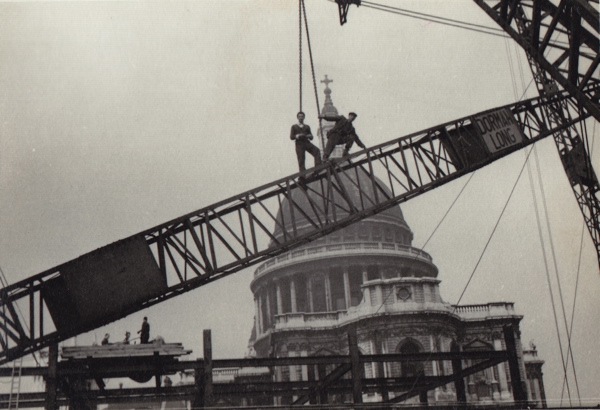
This is George Cossington in the top left of this picture, photographed in the pursuit of his trade as a steeplejack & steel erector, perched at the very top of a one hundred and fifty foot jib during the construction of Paternoster Square, next to St Paul’s Cathedral in 1958.
Seeing this vertiginous image, you will no doubt be relieved to know that George survived to tell the tales of his daring aerial adventures, still fit and full of swagger at eighty-one. ” In my day, you weren’t called a steel erector, you were called a spider man. I used to run up a sixty rung ladder in less than a minute and come down in less than twenty seconds – you just put your hands and feet on the sides and slid down! ” he bragged, with a modest smile that confirmed it was the truth.
George’s father was a steeplejack who once climbed Big Ben to fix the hands on the clock face and worked as chargehand on the construction on the Bank of England. So in 1947, when George left school at fourteen, there was no question about his future career, “All my friends were going into the Merchant Navy but when I came home with the form, my dad said, ‘No. You’re going into my trade so you get a pension.'” In fact, three out of the five boys in George’s family became steeplejacks, a significant measure of George’s father’s confidence in his own profession.
“My father, uncle and my brothers, we all loved it! There was none of this Health & Safety shit then, you learnt to be careful. What started coming in was the safety harness, a big belt with a hook on it attached to a rope – we hardly used them. There was no such thing as a crash helmet. Me and my brothers, we used to watch each other to check we put the bolts in correctly. It was all done properly, even without today’s safeguards.
I was apprenticed to Freddie Waite of Stratford. I started off as a tea boy. You learn as the months by, and then someone else becomes the tea boy and you learn how to adjust swivel bolts, rigging up steel beams, and how to sling a beam for the crane to lift. It takes well over a year before you start going off the ground. You had to learn rigging, slinging, welding, acetylene burning, and rope splicing. It takes five years to become a steeplejack. We used to walk the purlins that were four inches wide, you can’t do that today. Before scaffolding, we used wooden poles held together with wire bands, like they still do in the Far East. You had to know how to tie the wire bands securely, because it wasn’t an easy job going up to forty feet.
I enjoyed it, but I didn’t enjoy it when it was wet or cold. The crane used to take us in a bucket and put us on top of the steel work. In the Winter you could freeze. If it was a frosty night, we had a big fire in an oil drum and wrapped the chain around the fire to get the frost out of it, because if you didn’t it could snap like a carrot – a fifteen ton chain.
The day I fell, I was cutting some steelwork at Beckton Gas Works and it pissed down with rain, so they called us down. When I went back up again later, I cut one end of a beam without realising I had already cut the other end. I was seventeen years old. I was very lucky – my dad couldn’t believe it – a corrugated iron roof broke my fall. I had a few bruises, and a scar to this day. They called an ambulance but I was standing up by the time it came. I think I was only off work for a week, but I knew a couple of fellows that fell to their deaths.
My dad was still working up high until he was sixty-six. When he was the family foreman, he looked the business in a bowler hat. He taught me splicing and slinging, and he knew every sort of knot there was. He wouldn’t do anything you couldn’t do. He could throw a three-quarter inch bolt forty feet up for me to catch from a beam. Our last job together was on John Lewis in Oxford St. We were a hundred feet up in the air and he walked along beams as if they were on the ground.
I’ve never had a problem with heights. I’ve stood on the spider plate at the very top of a crane, three hundred and fifty feet up without a rope. I did it just for a laugh, but if my dad had seen me he’d have shot me…”
George retired at forty-five when he was required to wear a helmet on site, because he belonged to an earlier world that put more trust in human skill than safety procedures. When he spoke of pegging his own ladder to scale a factory chimney, I recognised a continuum with those that once climbed the spires of cathedrals, trusting their lives in the application of a skill which now exists only in the strictly controlled conditions of sport. Thankfully, with the advent of modern cranes and cherry pickers, men are no longer required to risk their lives in this way, but it only serves to increase my respect for the unacknowledged heroism of George Cossington, his brothers, his father, uncle and all of those in this city who fearlessly undertook these death-defying challenges as part of their daily routine. When you meet a steeplejack at the fine age of eighty-one, his very existence confirms his skill and proficiency in his former profession.
Because Freddie Waite bought a camera in 1958 to record the construction of Paternoster House, we have the privilege to see these rare images today, photographed by those working on the site. And while Paternoster House may already be history – demolished for a subsequent development – in the meantime there are enough monumental structures still standing that George worked on, like Shell House, the Chiswick Flyover, the Edmonton Incinerator towers and the chimney at the Bryant & May Factory, to remind us of his heroic thirty year career as a steeplejack & steel erector.
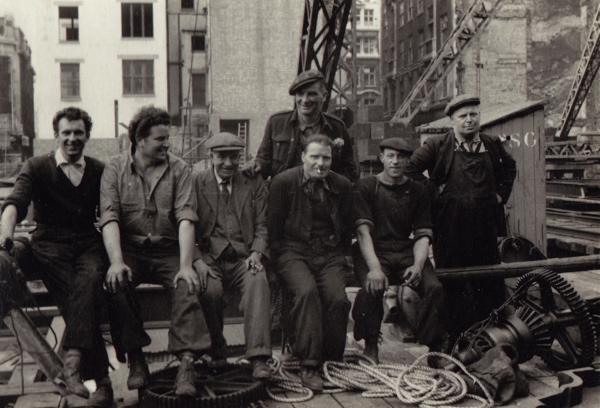
George (on the left) with the team, Kenny the master electrician, Ron the crane driver, then two slewmen and the foreman standing at the end, with Freddie (the master steeplejack that George was apprenticed to) standing at the back.
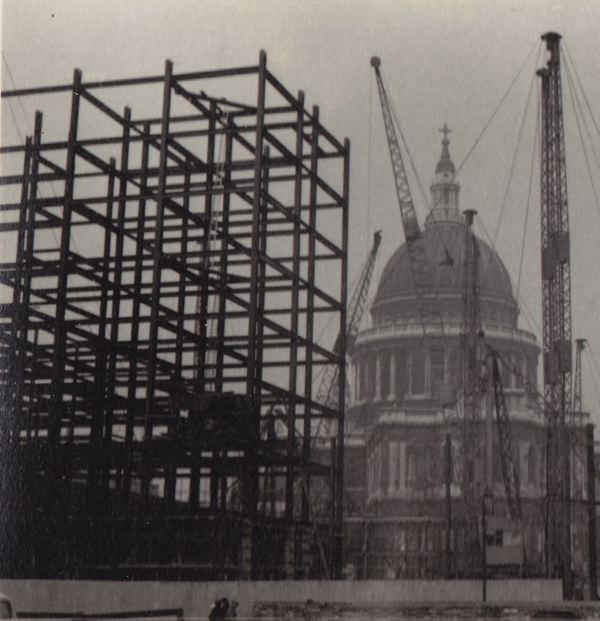
George is to be seen at top of the lower jib in the centre of the picture, between the steel structure and St Paul’s
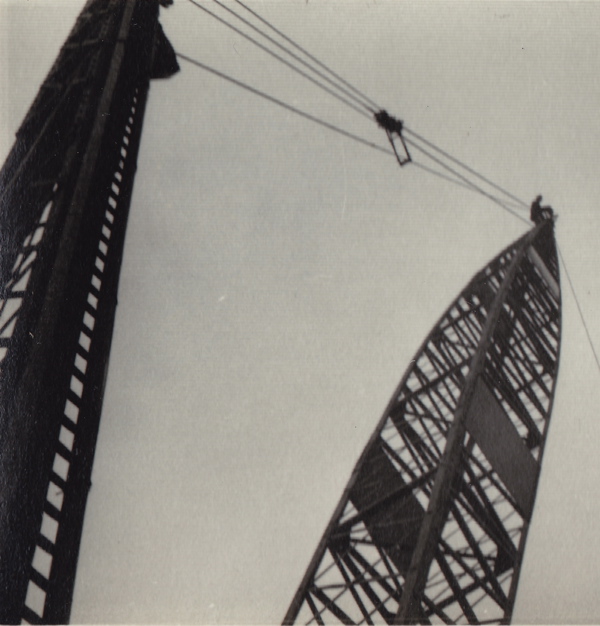
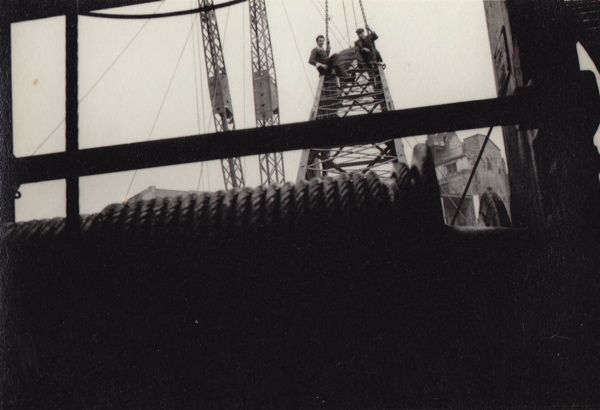
George & Freddie at the end of the jib, as viewed from the boom.
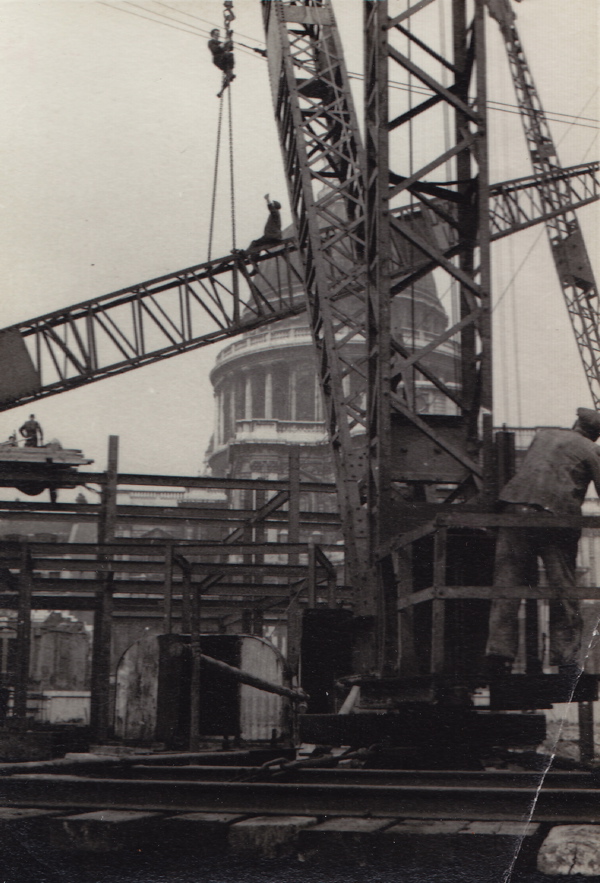
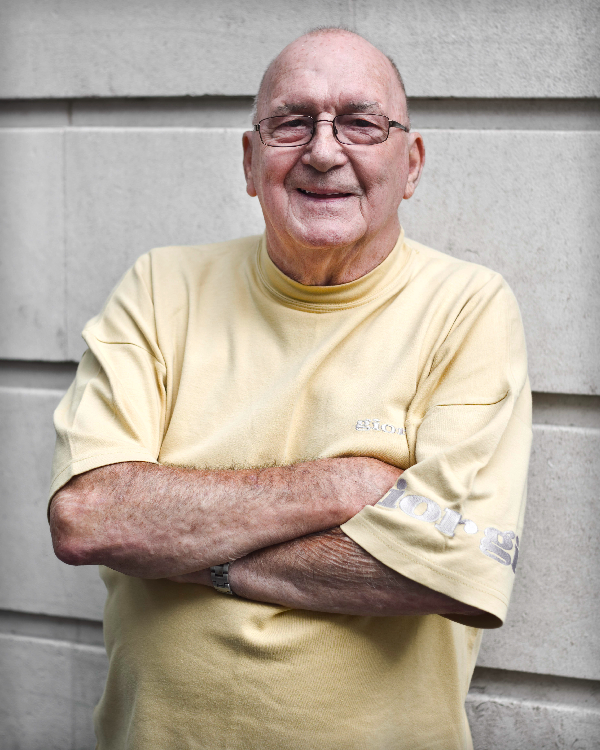
George Cossington
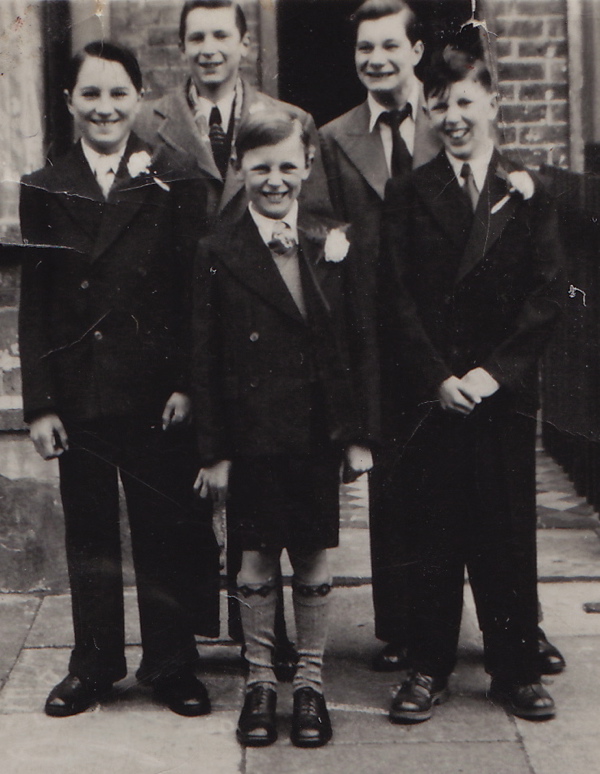
The Cossington boys, George (back left) pictured with his brothers Brian, Sid and Bob (front row, left to right) and Joey (back right) outside the family home in Rochester Avenue, Upton Park, E13. George, Brian and Joey all became steeplejacks like their father, while Sid and Bob became master bricklayers.
Portrait copyright © Jeremy Freedman
At The Whitechapel Mission
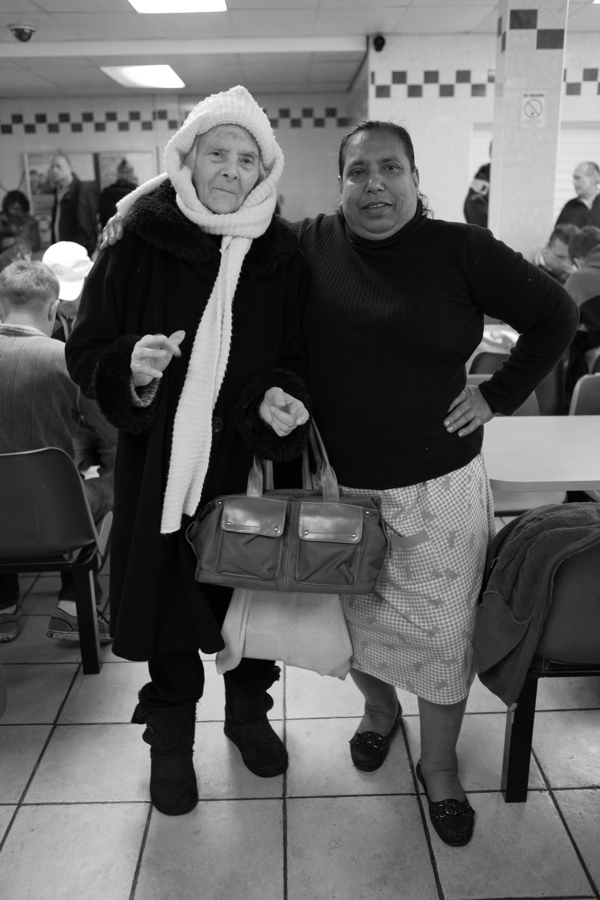
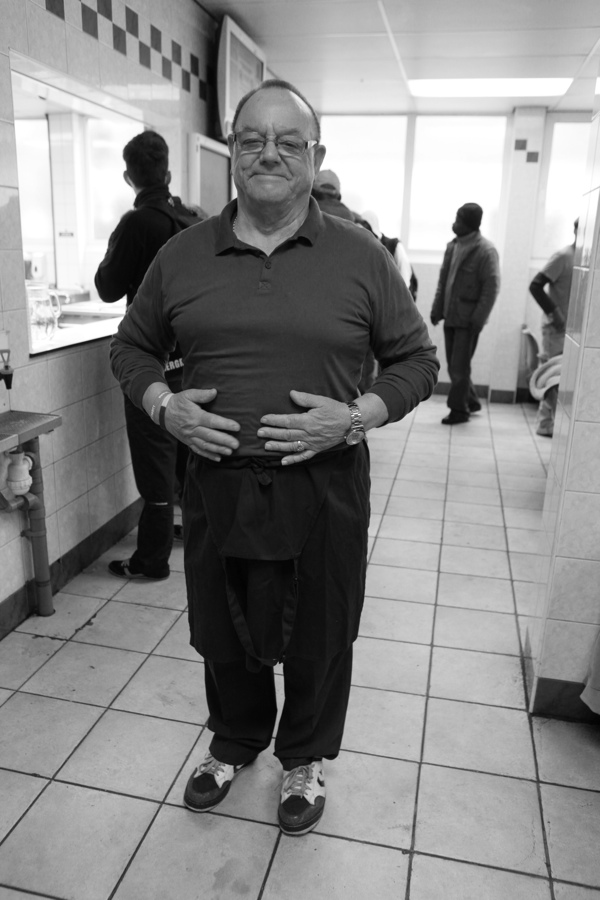
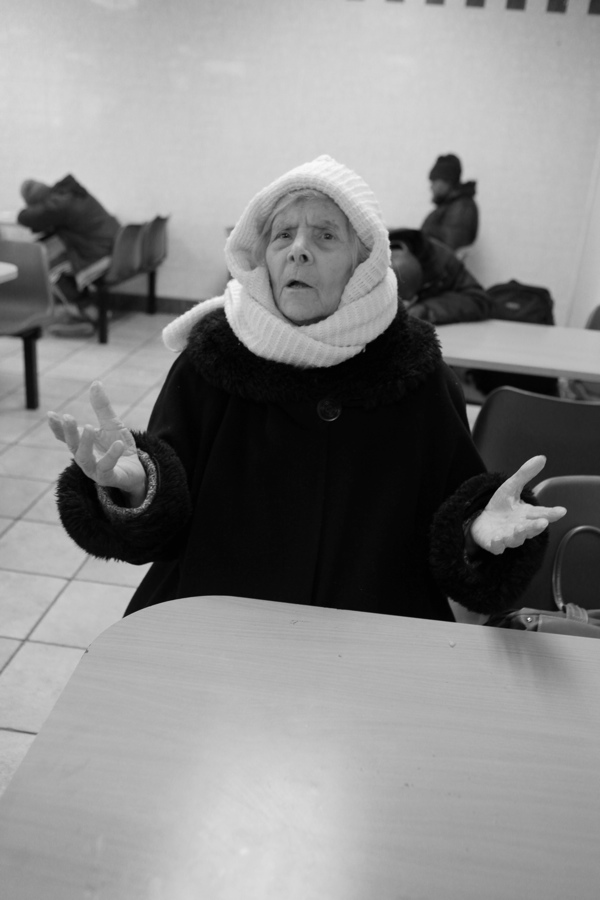
At dawn on Easter Tuesday, while most of the world was still sleeping, Contributing Photographer Colin O’Brien & I paid a visit to the Whitechapel Mission which has been caring for the homeless and needy since 1876. The original building, constructed as the “Working Lads Institute” in 1885, still stands next to Whitechapel Underground Station, but these days the Mission operates from a seventies brick and concrete edifice east of the Royal London Hospital.
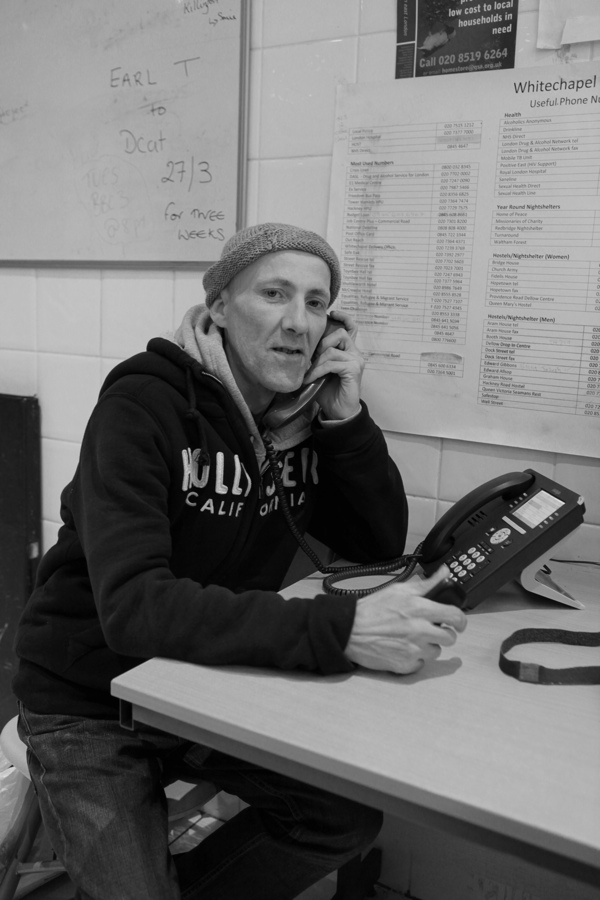
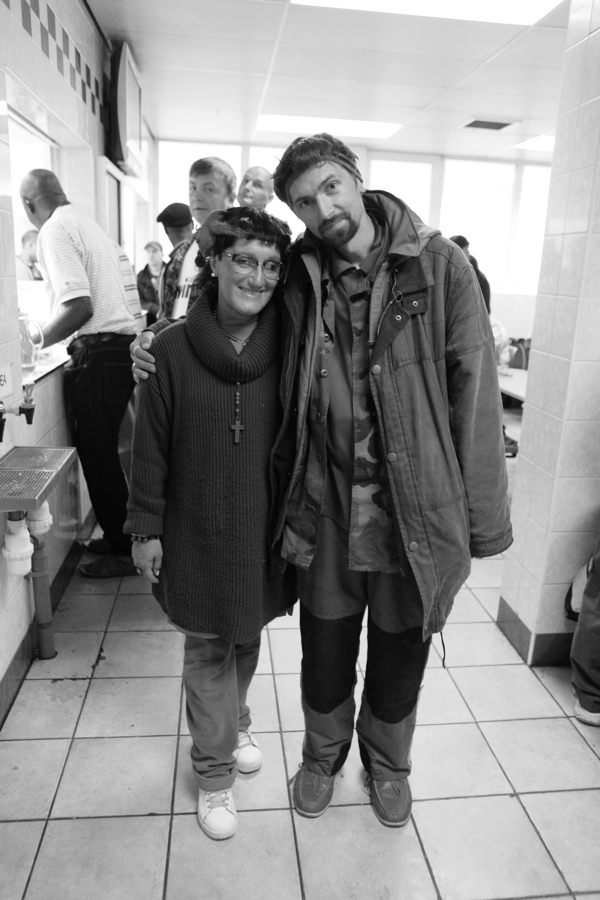
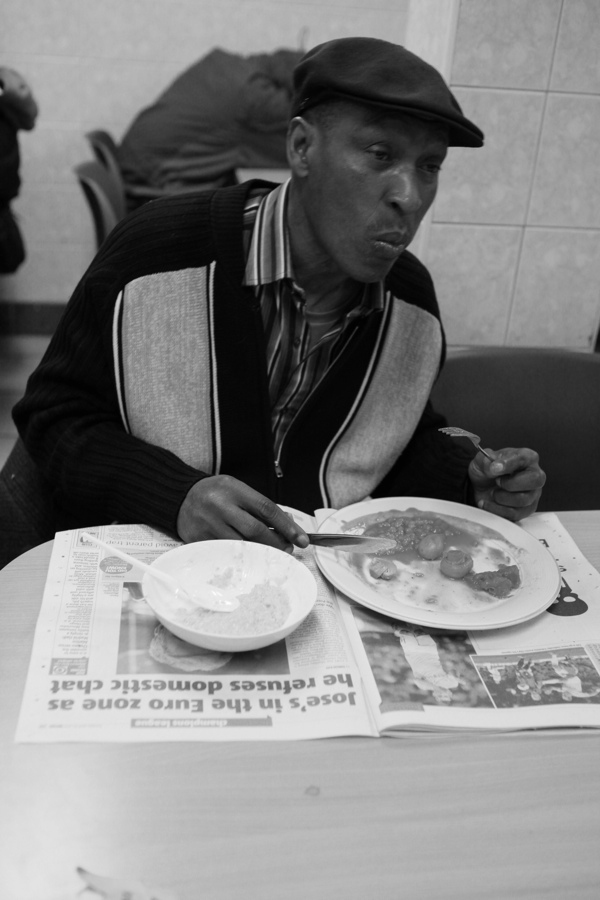
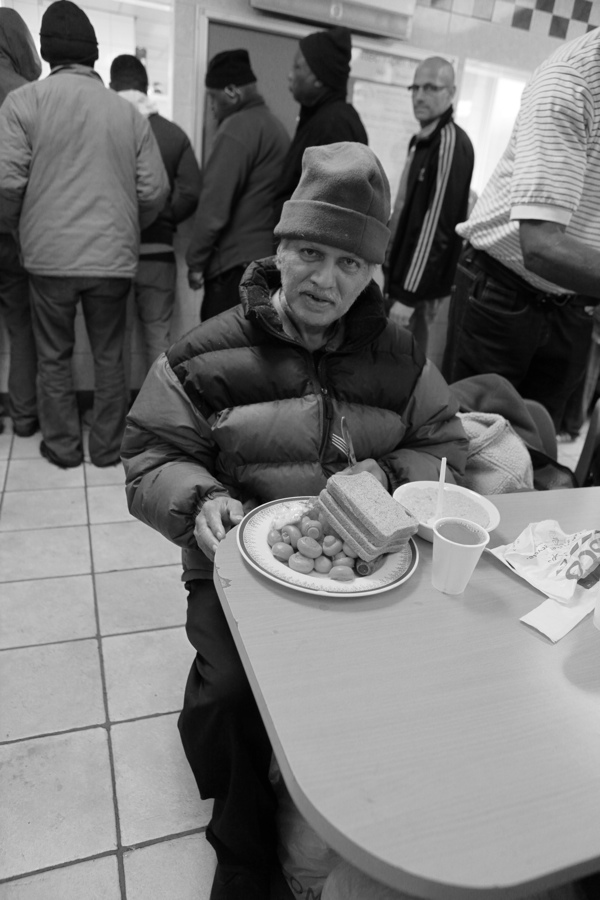
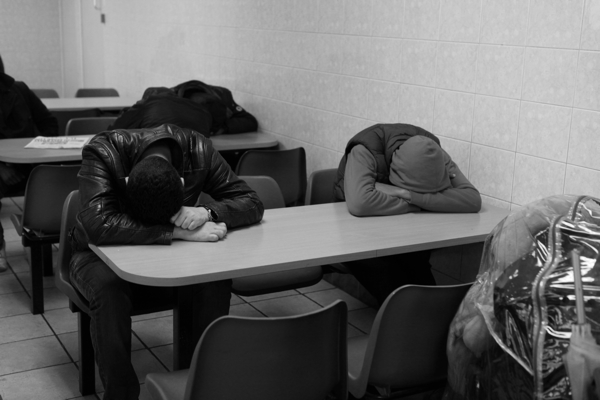
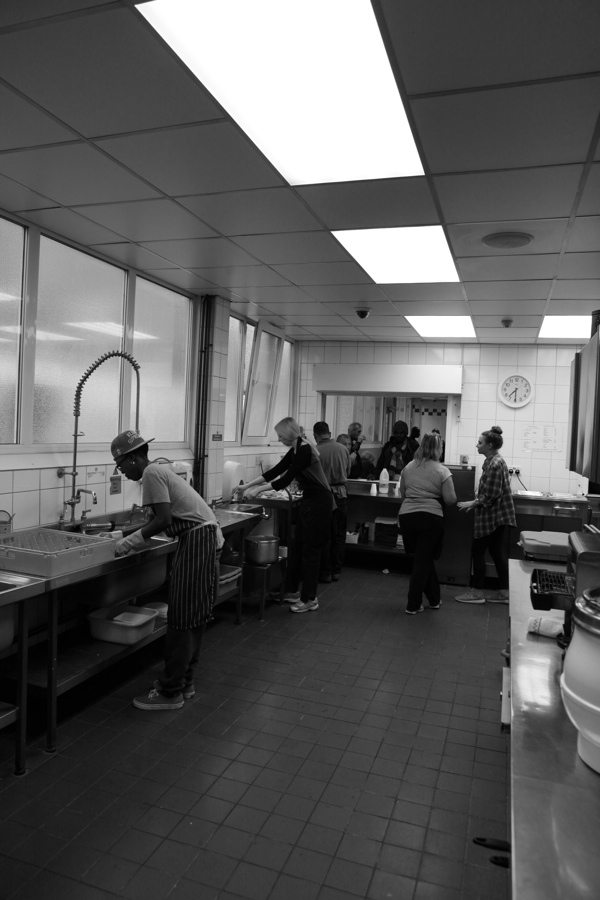
Whitechapel Rd was desolate at that hour but inside the Mission we encountered a warm community and were touched by the generous welcome we received there. Many of these people had been out on the street all night, yet they immediately included us within the particular camaraderie which exists among those who share comparable experiences of life and attend the day centre here regularly. Between six and eleven each morning, the door is open. Breakfast is served, showers are available, clothes are distributed, there is the opportunity to make phone calls and collect mail, and to seek the necessary advice which could lead to life off the street.
Our guide was Tony Miller, Director of the Mission, who has lived, worked and brought up his family in this building for the last thirty-five years. Charismatic and remarkably fresh-faced for one who opens up his door to the capital’s homeless every day of the year, he explained that if the temperature drops below freezing they offer a refuge for those sleeping rough. In the winter before last, Tony had around one hundred and fifty people sleeping upon every available inch of floor space and, while the other staff were off-duty, he sat watch through the long hours of the night. As a consequence, he contracted a rare and virulent strain of Tuberculosis from which he has only just recovered.
Yet Tony’s passion for the Whitechapel Mission remains undimmed by this grim interlude. “I lost five stone and I still want to make a difference! They started this Mission in 1876 because they were angry that, in their day, there were people without homes and here we are today in 2014 and the problem is still with us,” he declared, filling with emotion, before distinguishing for me some of the strains of humanity who stream through his door daily. There are those who were once living in care – many have mental health problems and around a third grew up in orphanages. There are those who are have no skills and cannot support themselves. There are the angry ones who feel let down and maybe lost their homes – these, Tony says, are the easiest to help. Around a sixth are ex-servicemen without education or skills, and around a third are mentally ill. “The ones that get me the most are those young people who leave the care system without education or prospects and end up on the street within twelve months,” he confided. Last year, the Mission supported one hundred and thirty-four people off the street and into flats, and two hundred people into hostel accommodation.
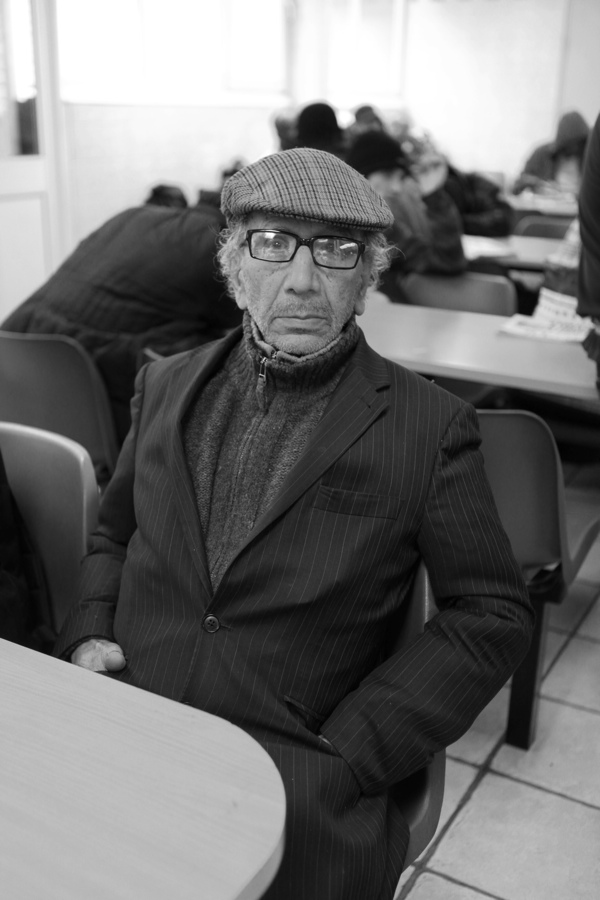
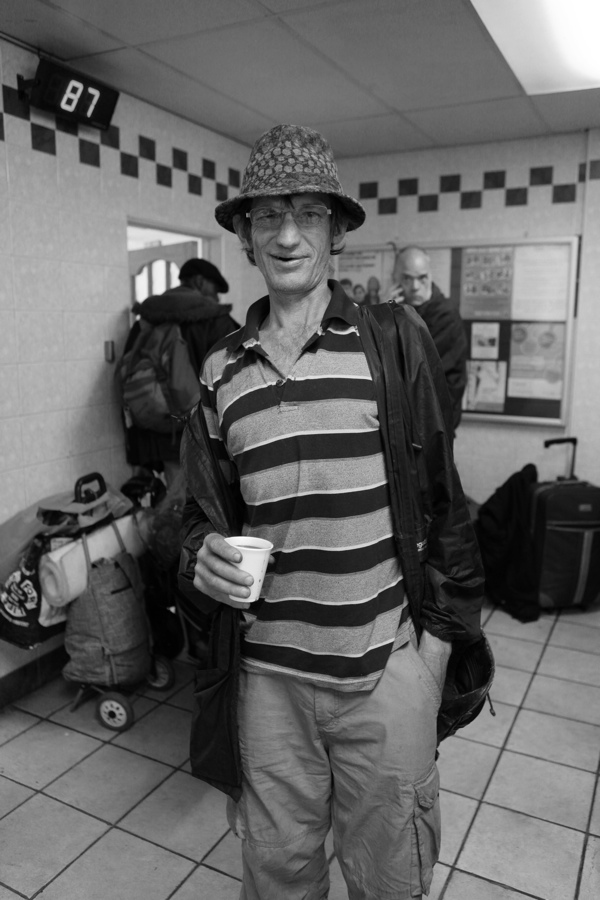
“Most people want reconnection, but they can live on the streets for twenty years after a row,” Tony assured me, “So, if we can ring up mum and they can say ‘sorry,’ then we’ll happily sub them for a bus ticket home if it means one less person on the street.” As we walked through the cafeteria, diners came up to welcome and engage us in multiple extended conversations, telling their stories and trusting Colin O’Brien to take their pictures.
“These people have validated my life – giving me a purpose and a job, and that makes me guilty because, from other people’s suffering, I live,“ Tony revealed in regret, “It’s a disgrace that this place is still here and it’s still needed, it should have been closed down years ago.”

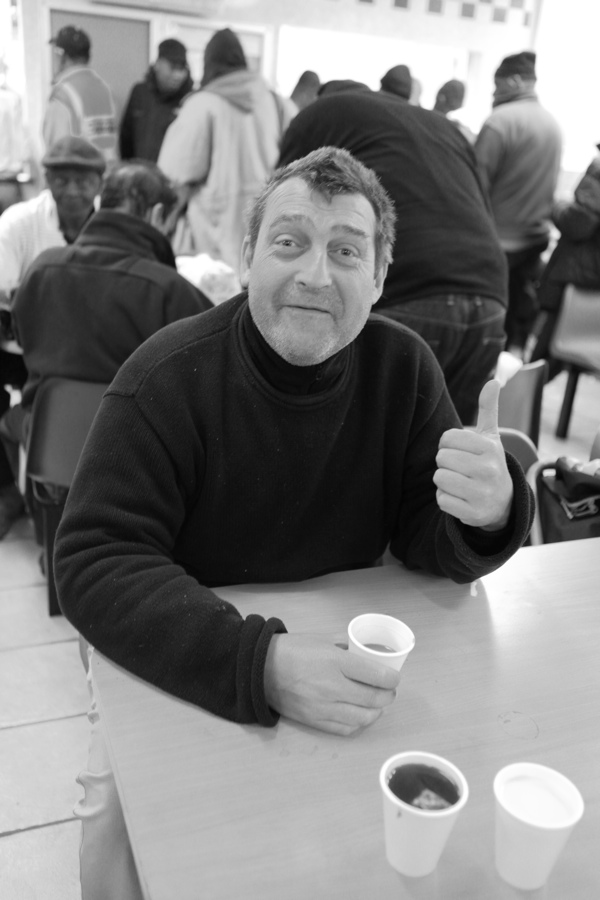
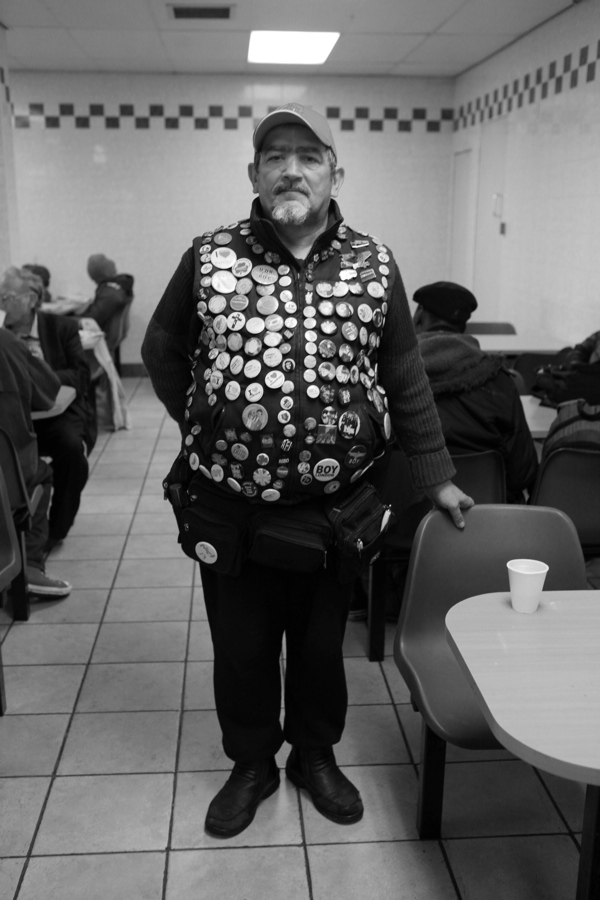
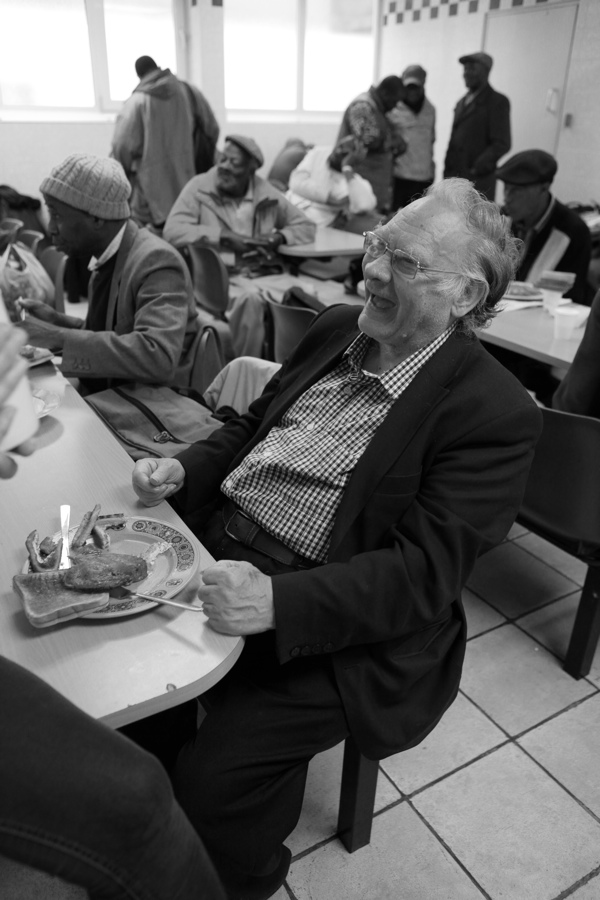
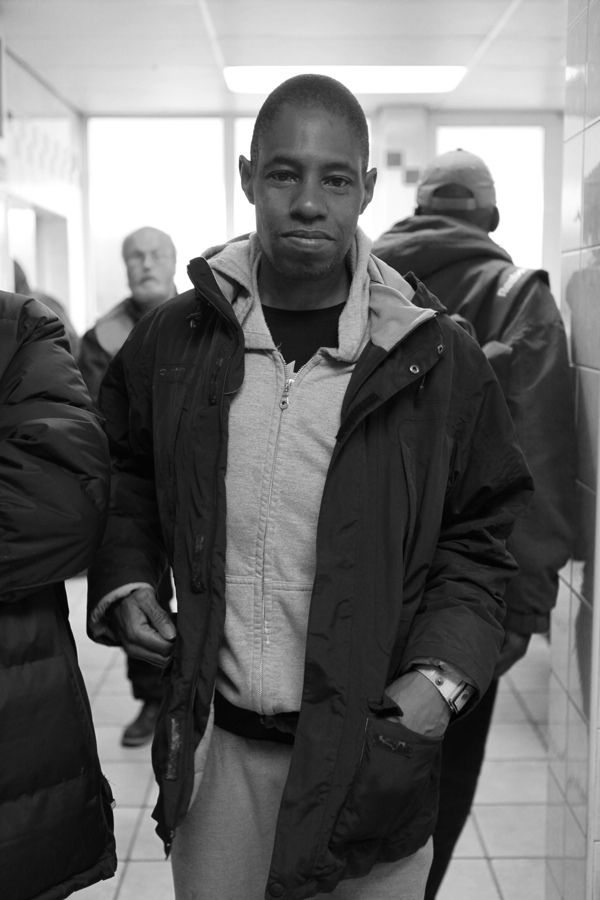
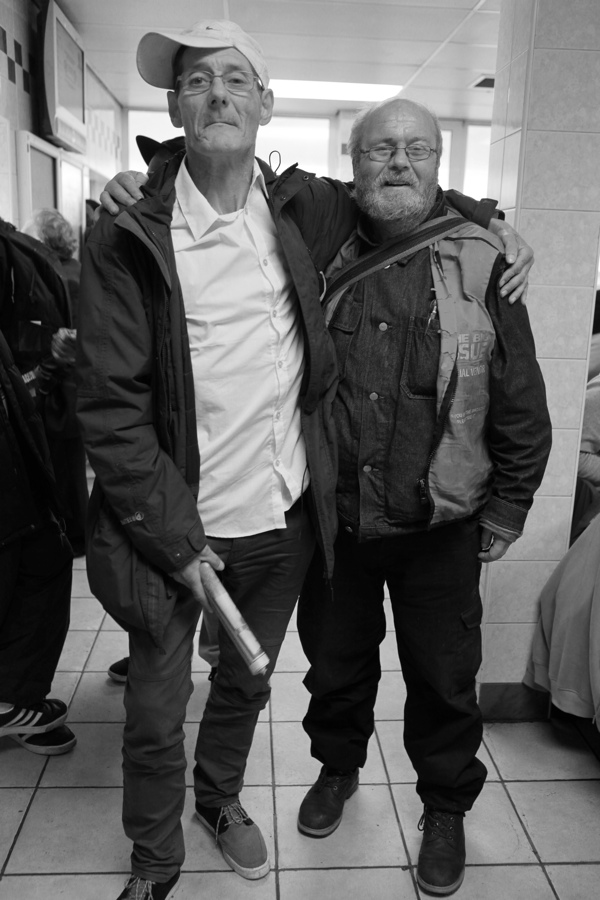
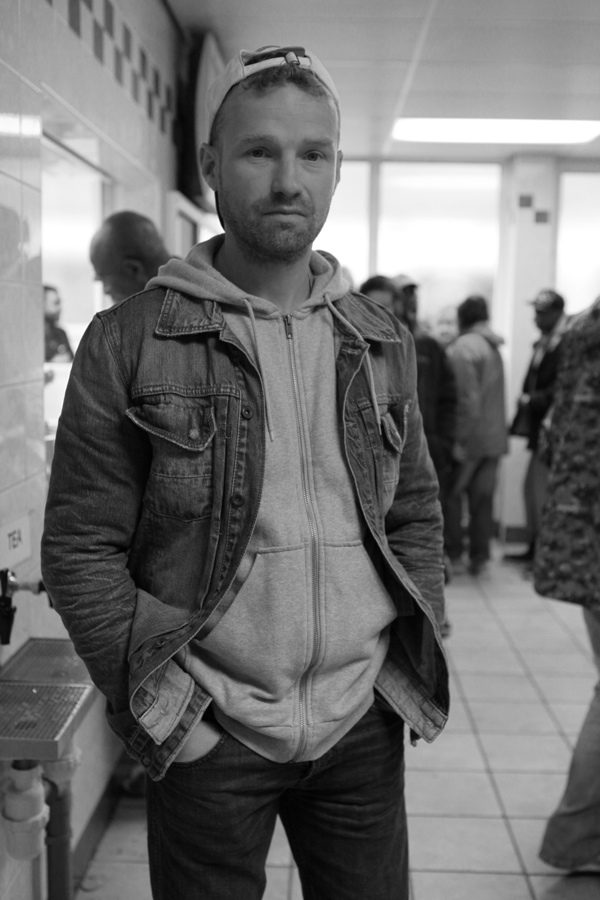
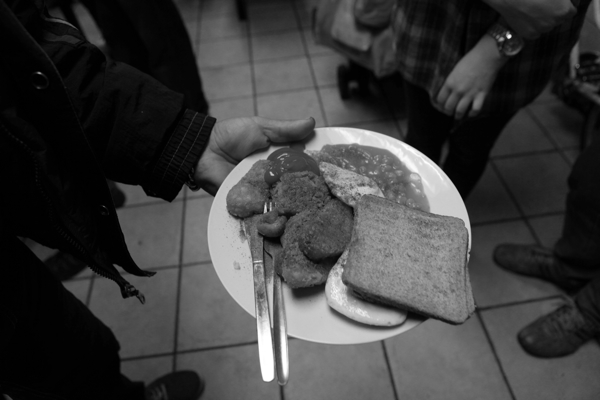
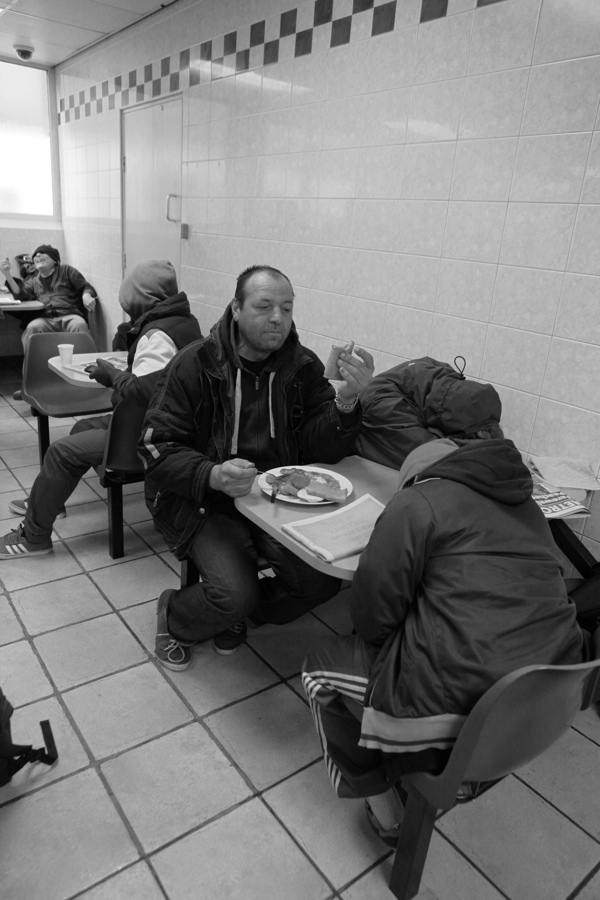
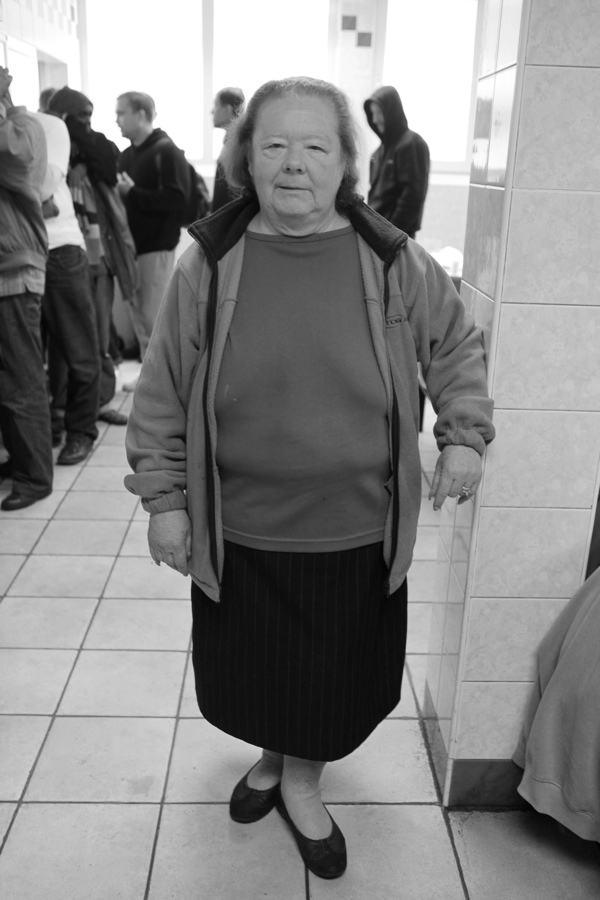
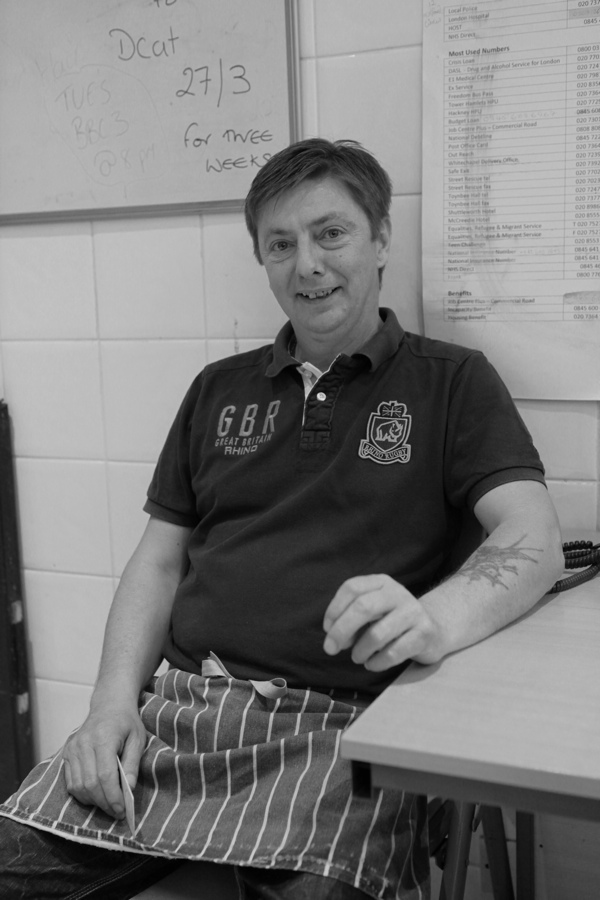
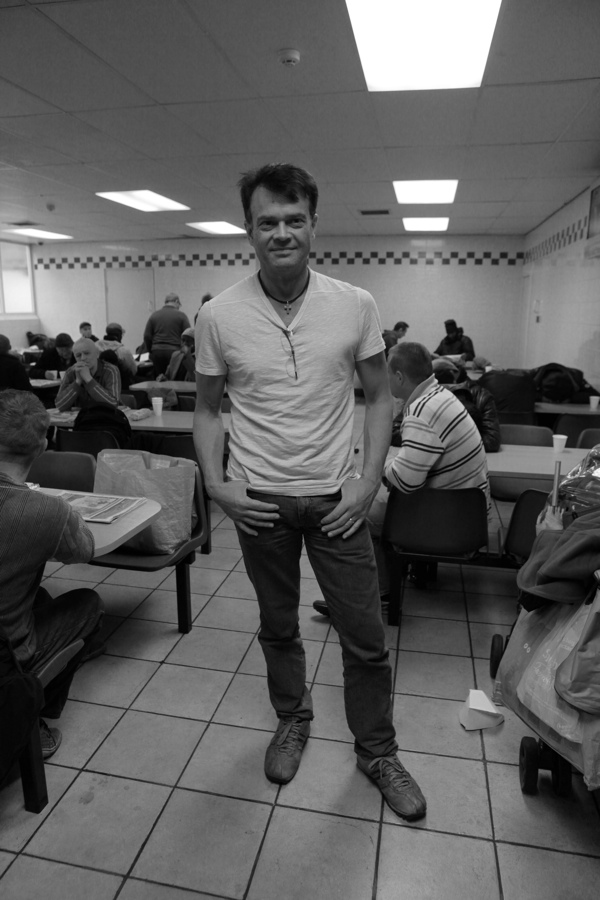
Tony Miller, resident Director of the Whitechapel Mission for the past thirty-five years
Photographs copyright © Colin O’Brien
Click here to learn more about The Whitechapel Mission
You may also like to take a look at
On The Buses With Colin O’Brien

The restored prototype RT1 of 1939 in Piccadilly Circus
A magical time warp appeared to manifest itself in London, when Saturday shoppers were surprised by buses of past eras – many more than sixty years old – arriving unexpectedly, as if conjured from the ether, to whisk them away to the West End. In fact, it was a celebration of seventy-five years of the classic RT London bus organised by the London Bus Museum, in which fifty vintage vehicles returned to service for one day, offering free rides to all.
The buses gathered at the Ash Grove Depot next to London Fields before departure, so Contributing Photographer Colin O’Brien & I put on our anoraks and joined the happy throng of enthusiasts, mesmerised by the return of these beautiful historic buses, polished to perfection for this special day.
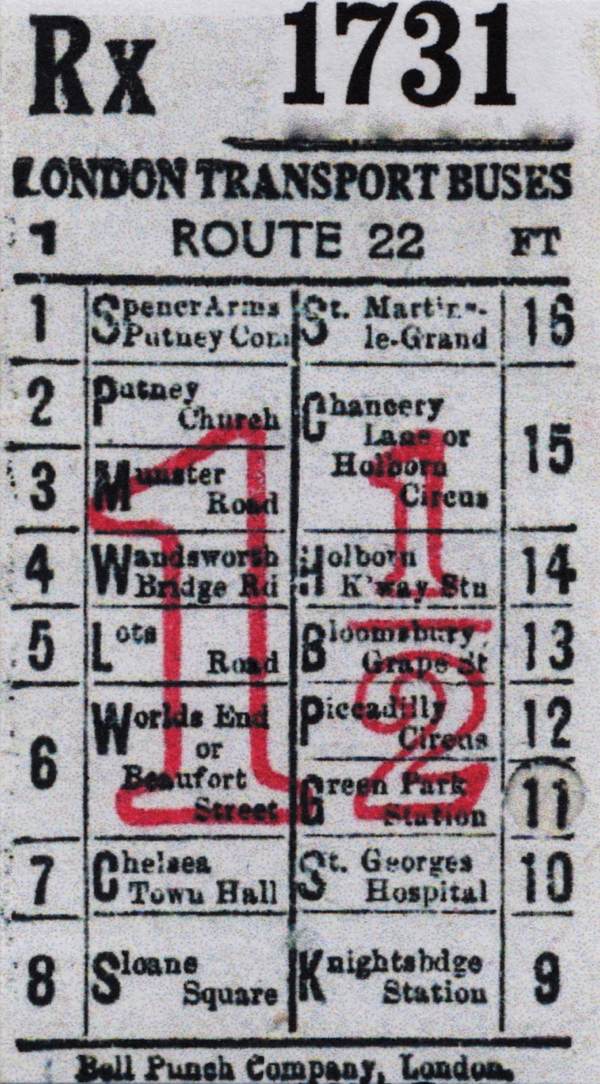
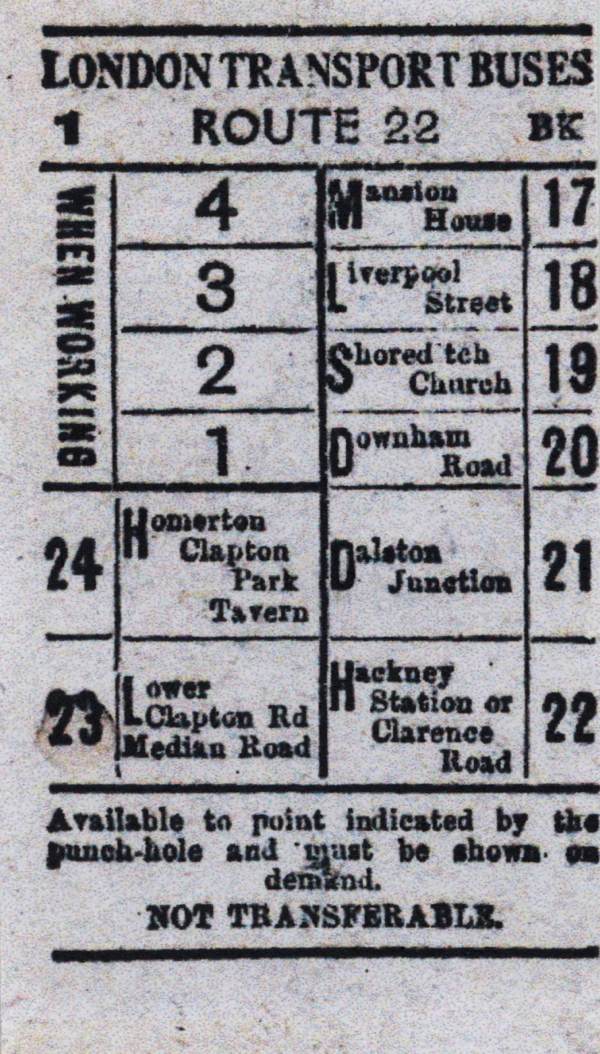
Unquestionably, the star attraction was the original prototype of the RT1 which first entered service on route 22 between Putney Common and Homerton on 9th August 1939, just weeks before the outbreak of World War II. The RT1 marked the culmination of a programme to design the ultimate London bus, featuring the latest in construction and engineering for passenger and crew comfort. Now fully restored to its former magnificence, it led the fleet from the depot out into the London streets yesterday.
Colin & I hopped aboard and made our way upstairs, and we discovered that we were upon a trip into memory. The checkerboard velvet upholstery, the wind-down windows, wooden floors, the cream paintwork, the “Push Once” bell and the “Do Not Spit” sign were all powerfully evocative of another time. But before we could contemplate further, the bus departed with that once-familar ding-ding of the bell and we enjoyed a smooth ride with just the occasionally rocky patch, whenever the bus lurched round corners, swinging around like one of those stage coaches of old.
Our great delight from the top deck was to observe the expressions of wonder and joy appear upon the faces of vaguely-bored Londoners at bus stops, astonished at the unexpected arrival of these glossy chariots from another age, skinnier and with rounder corners that our contemporary buses, and embellished with colourful advertisements from the past.
At Piccadilly Circus, we hopped off again and positioned ourselves strategically upon a traffic island so that Colin might photograph the old buses as they came through, standing out with decorative flourish like swans upon the river. We waited for hours, searching the distant traffic expectantly to capture the trophy shots you see below.
In spite of all the changes, these charismatic buses still looked entirely at home upon the streets. Held in great affection by Londoners, they are interwoven with the identity of the city itself and their descendants still ply the same routes every hour of the day and night – but we were overjoyed to see the return of the much-loved ancestors, reminding us of our collective past and reclaiming their old routes for a day.
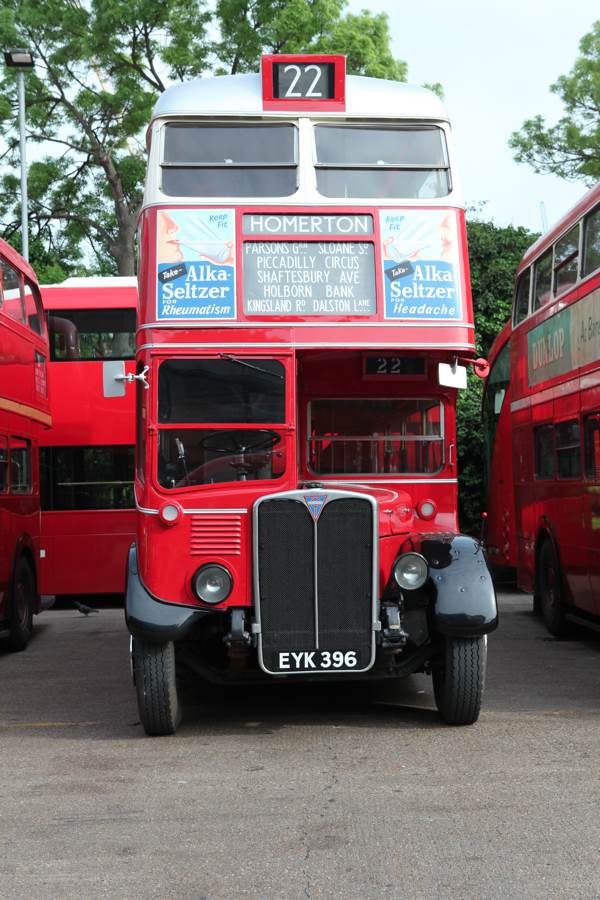
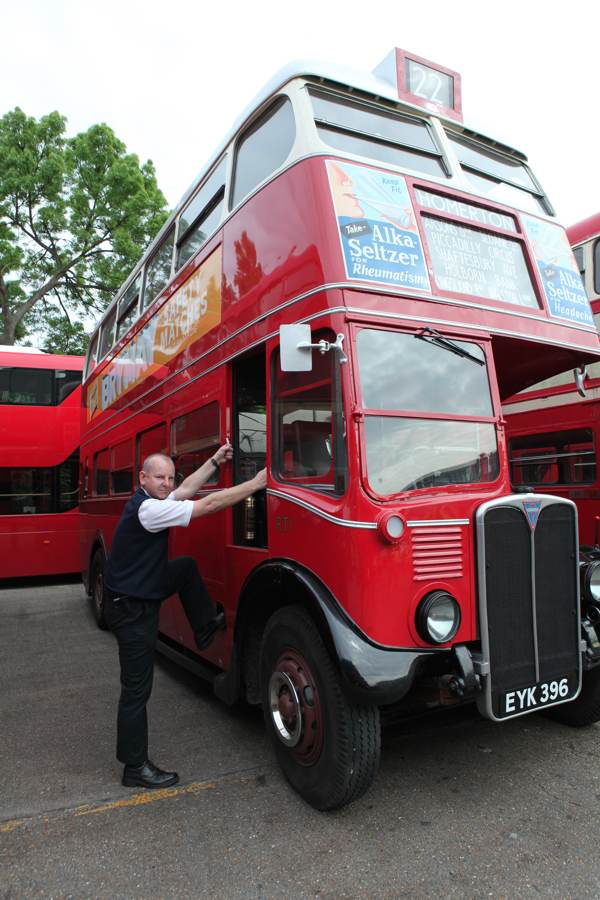
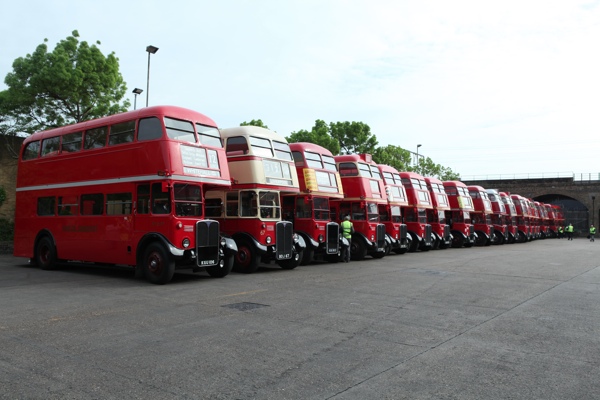
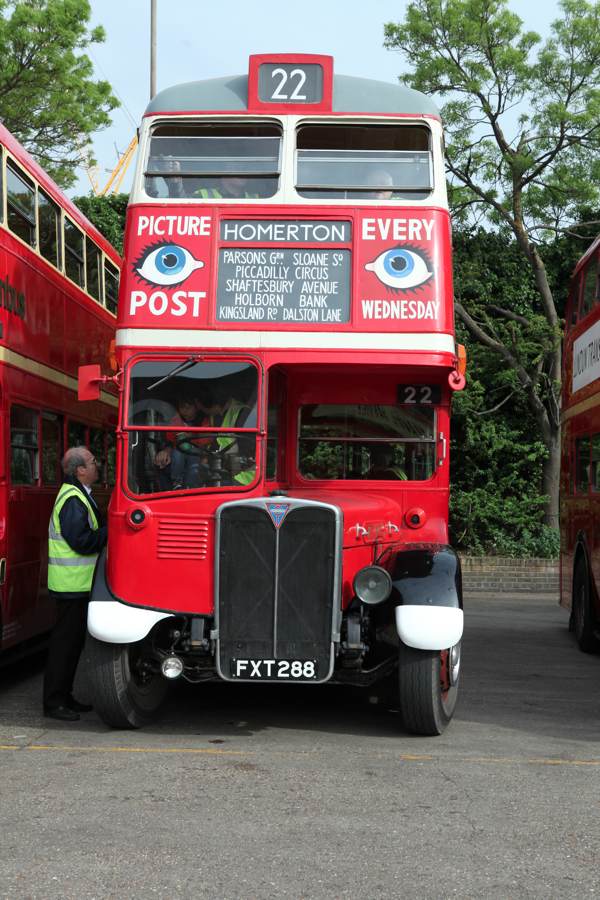
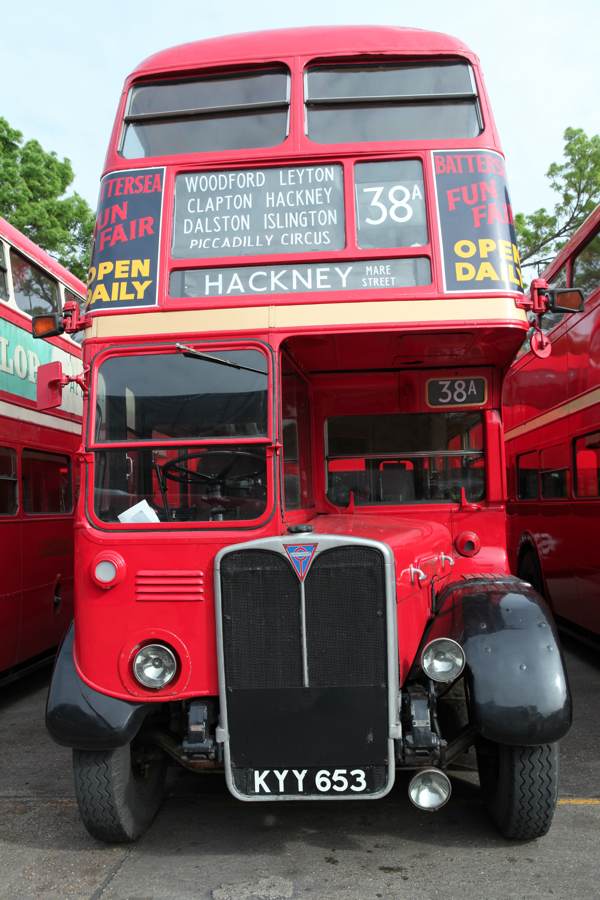
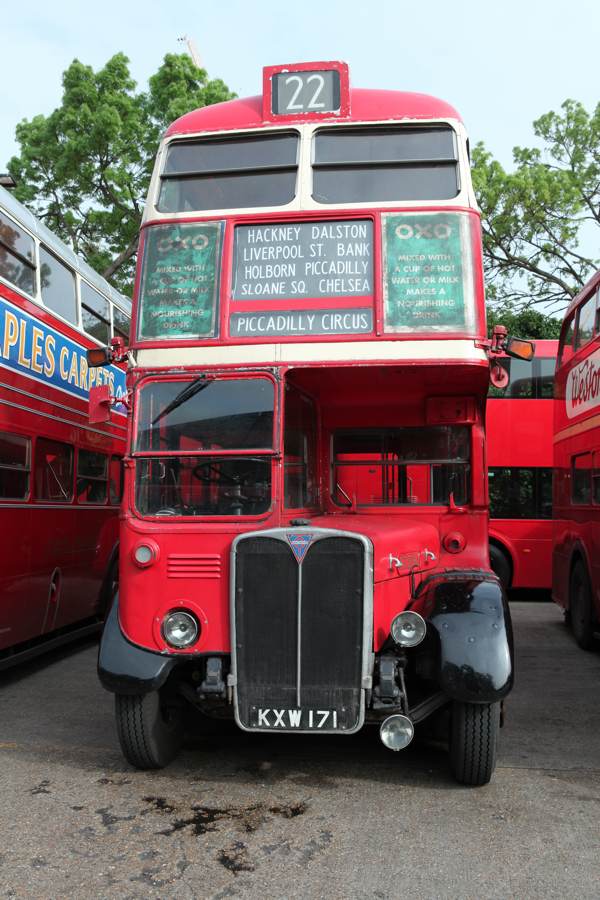
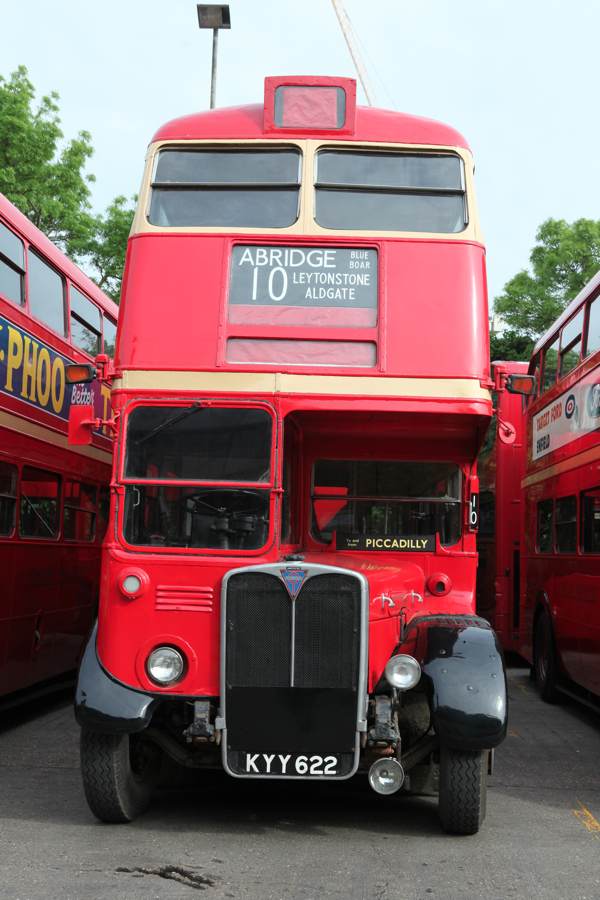
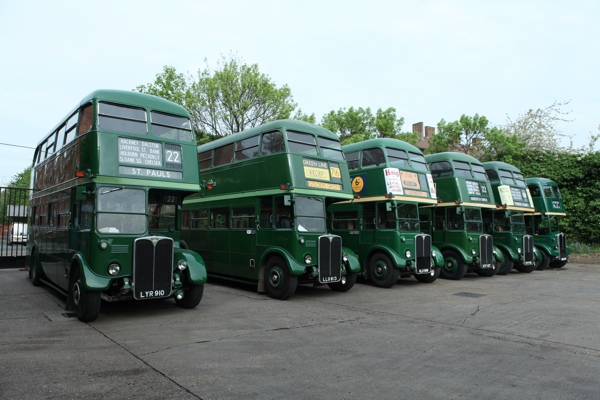
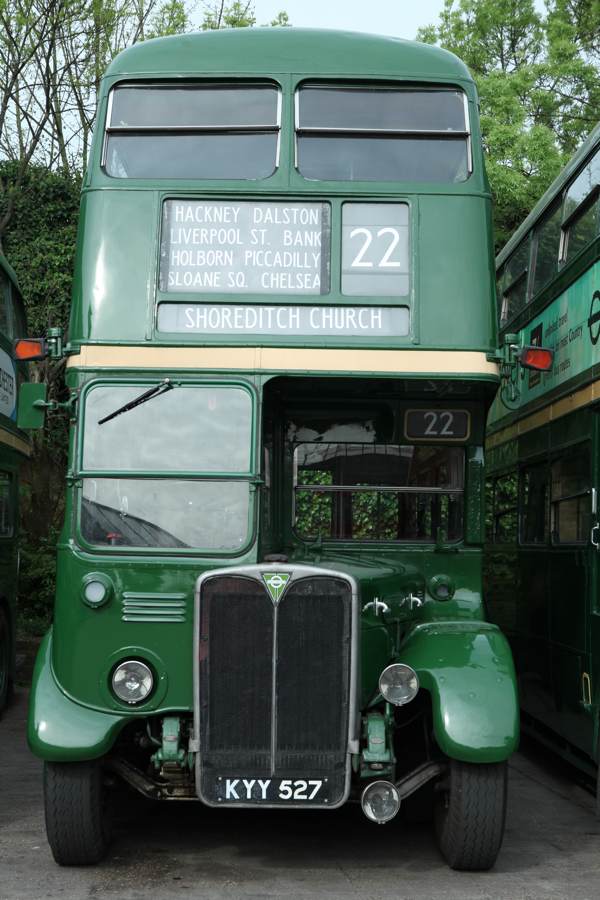
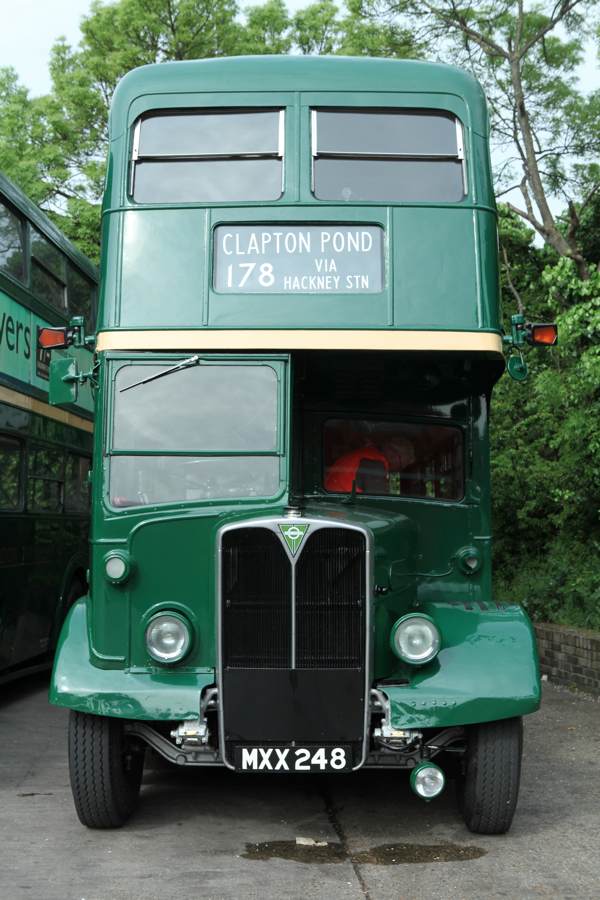
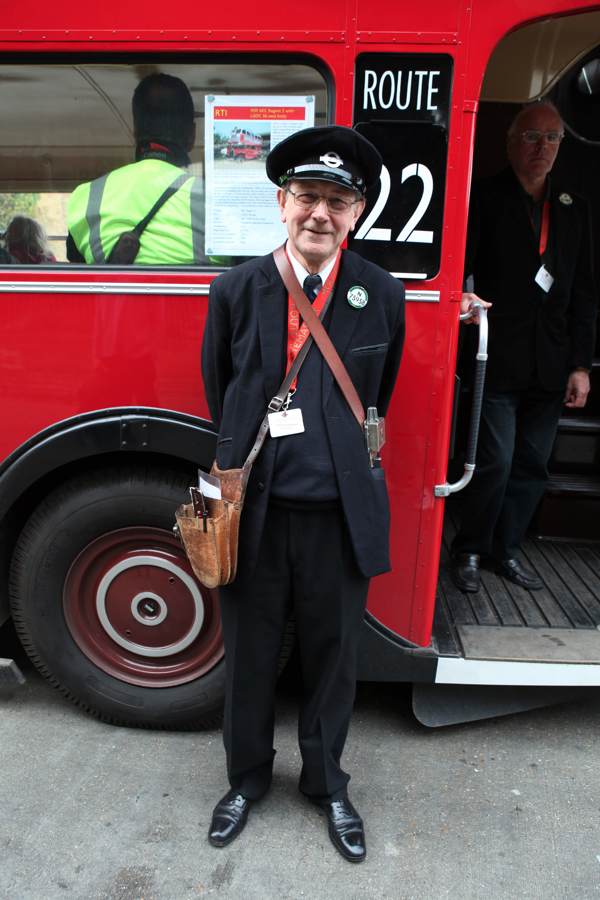
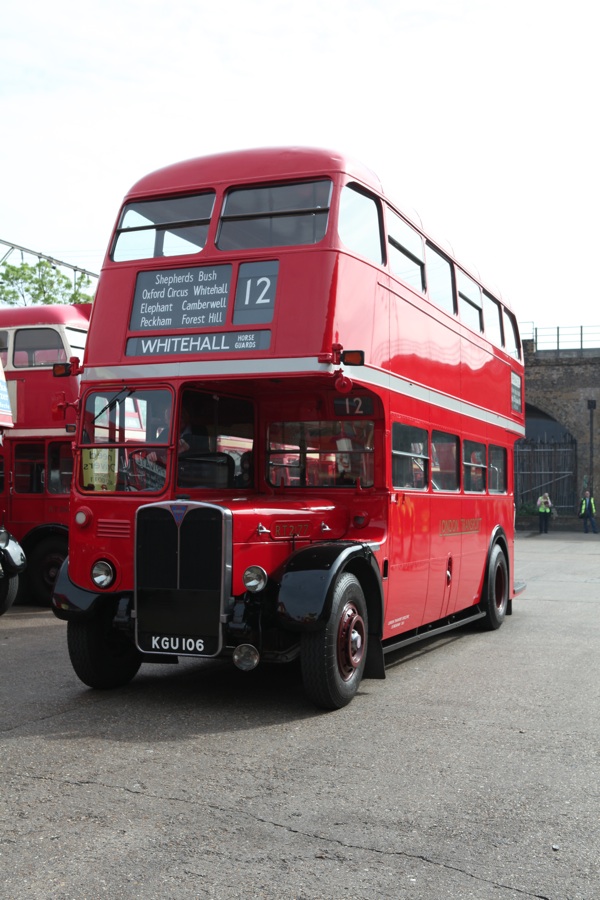
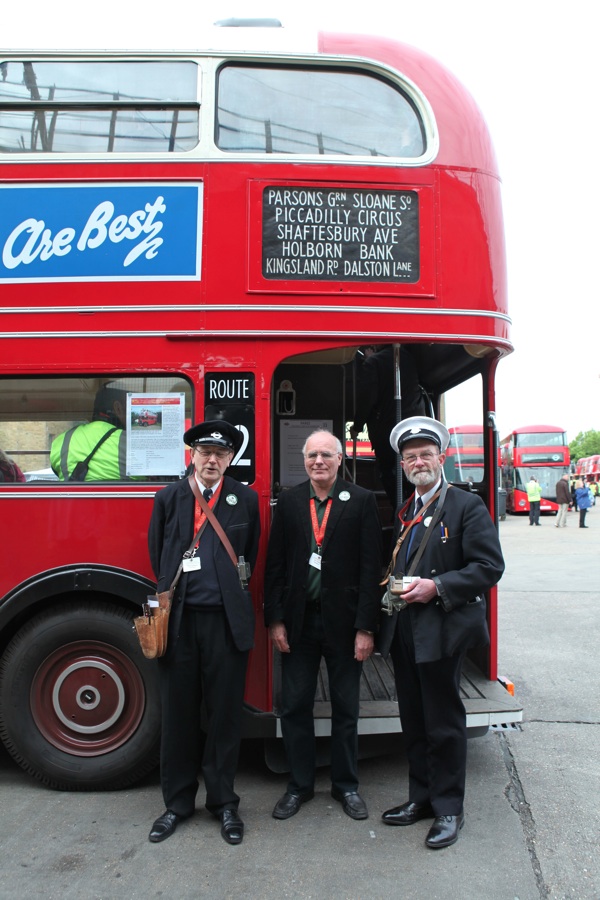

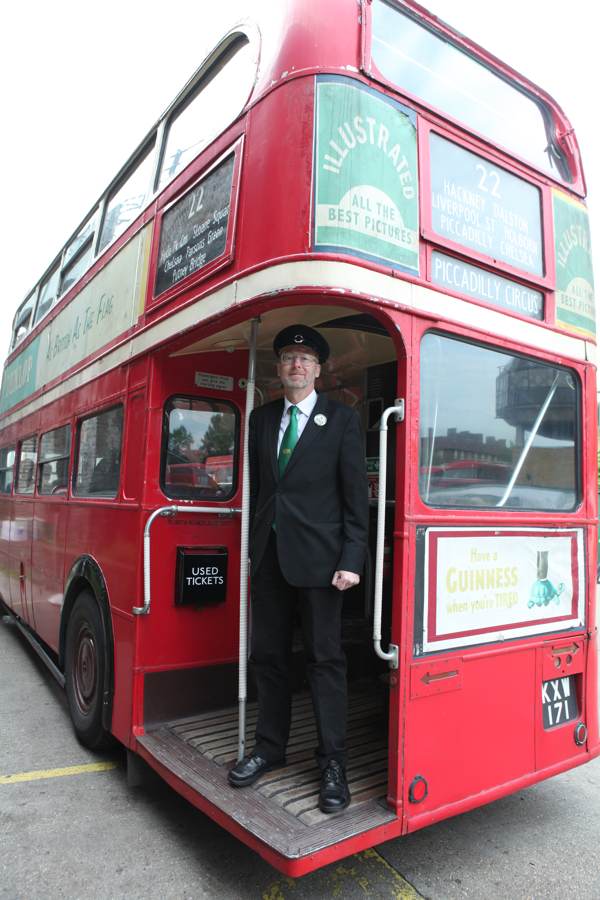
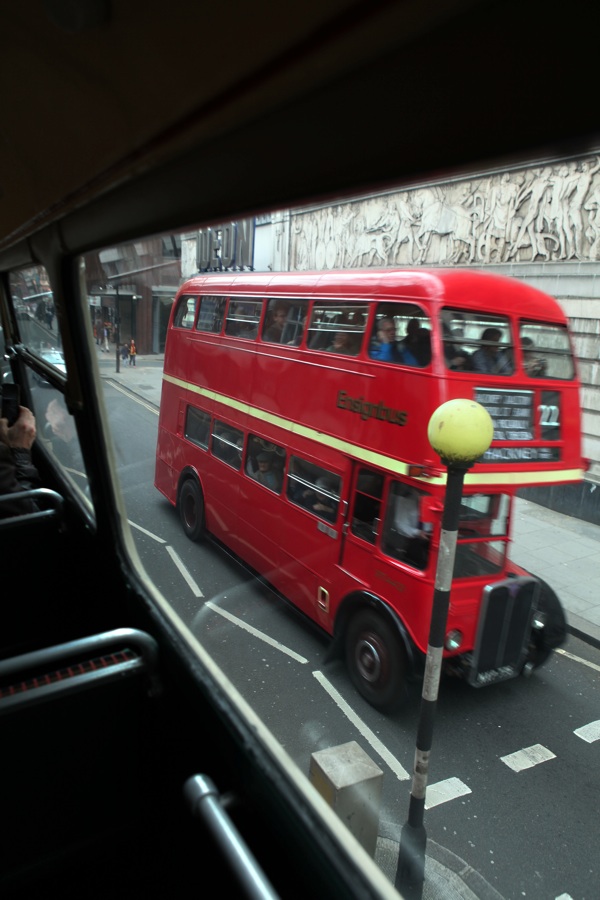
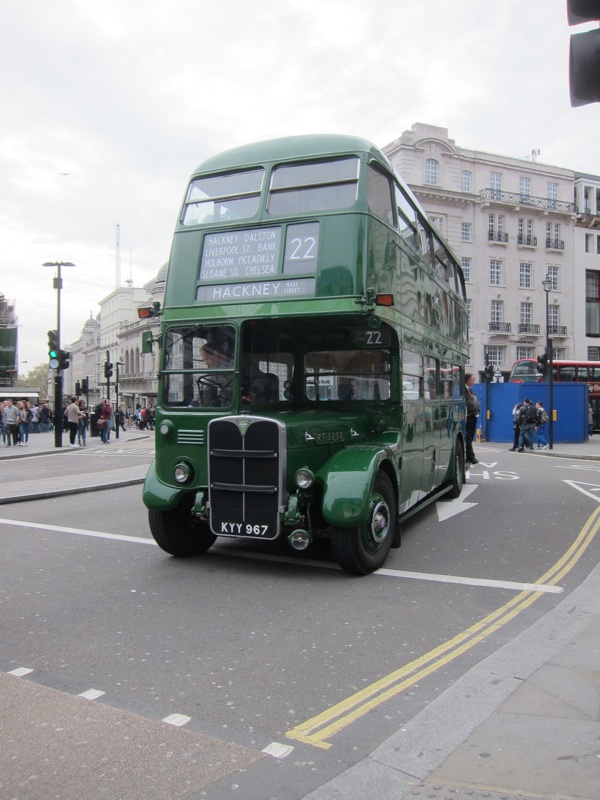
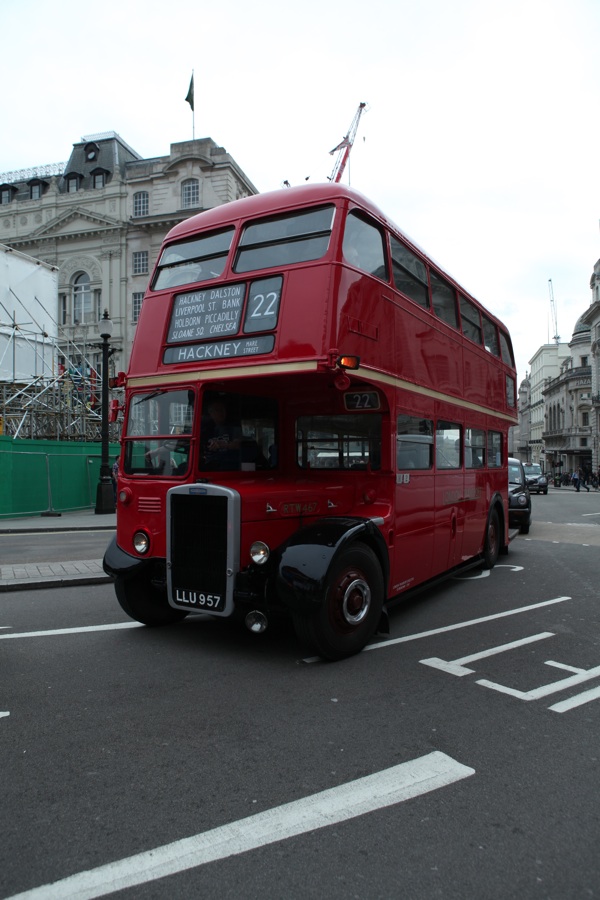
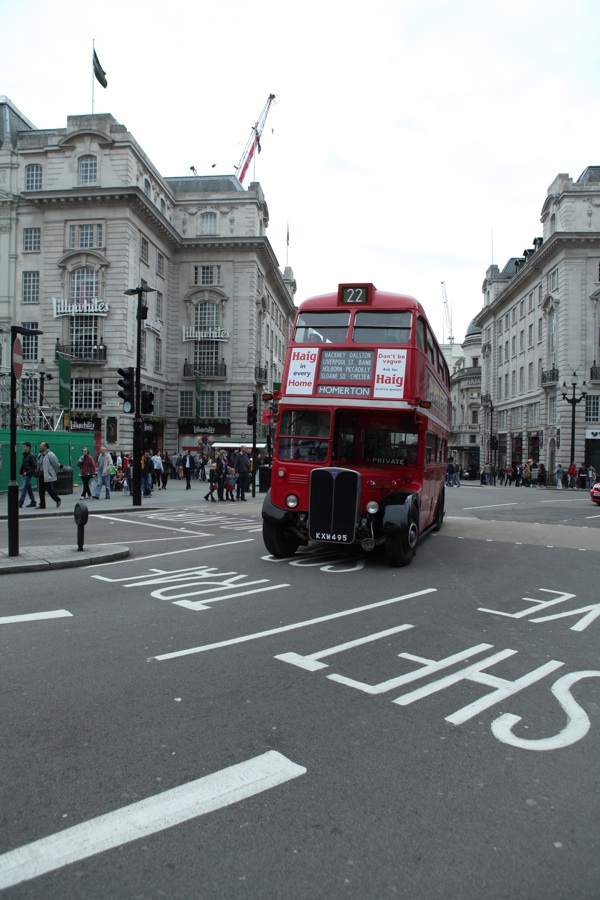
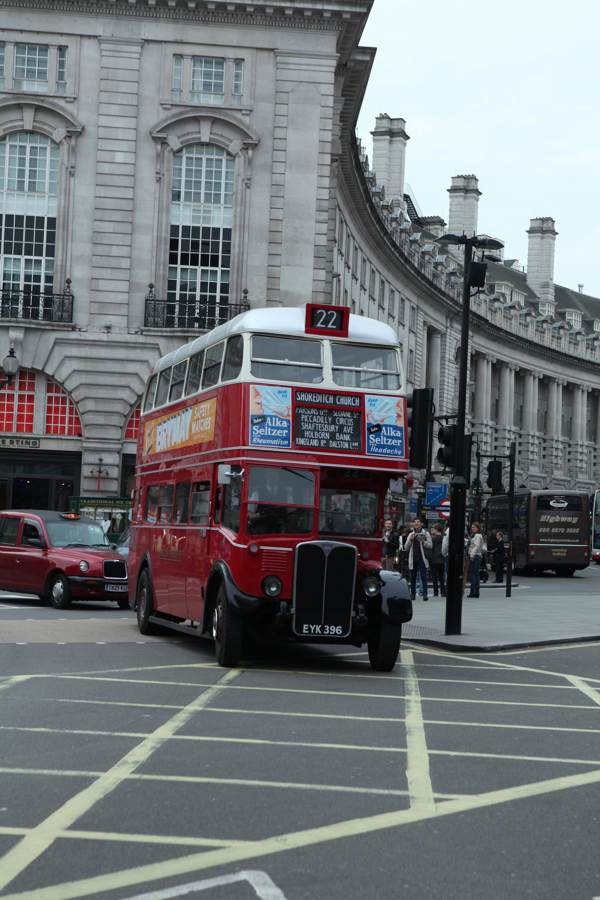
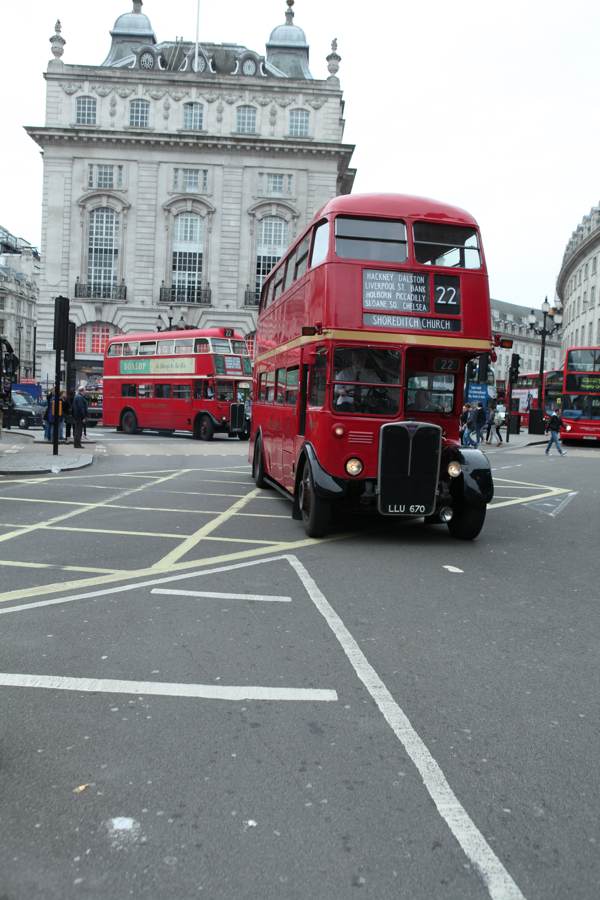
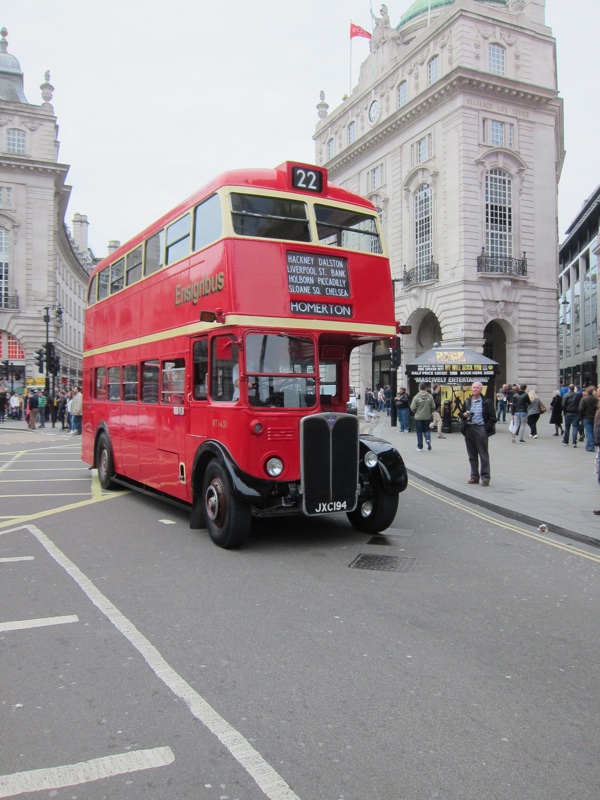
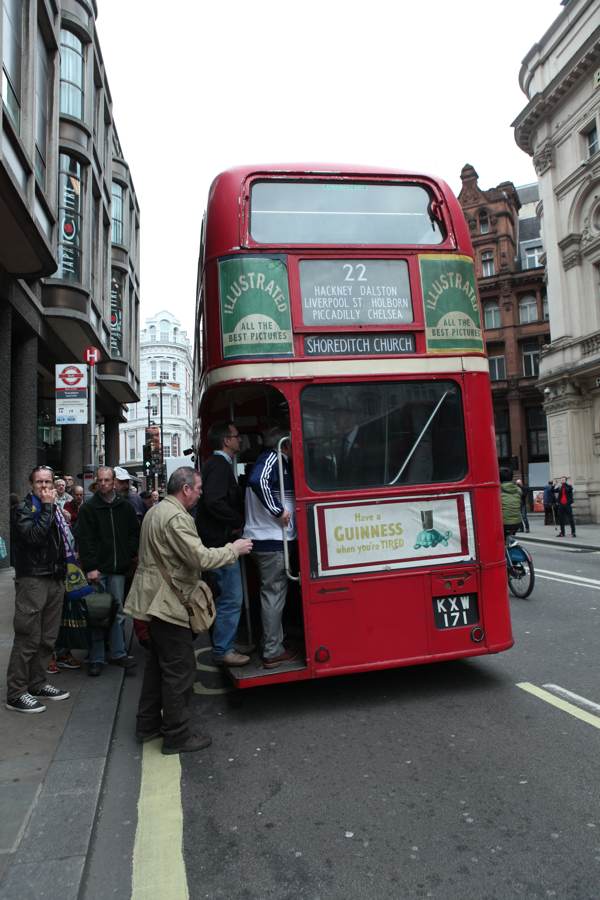
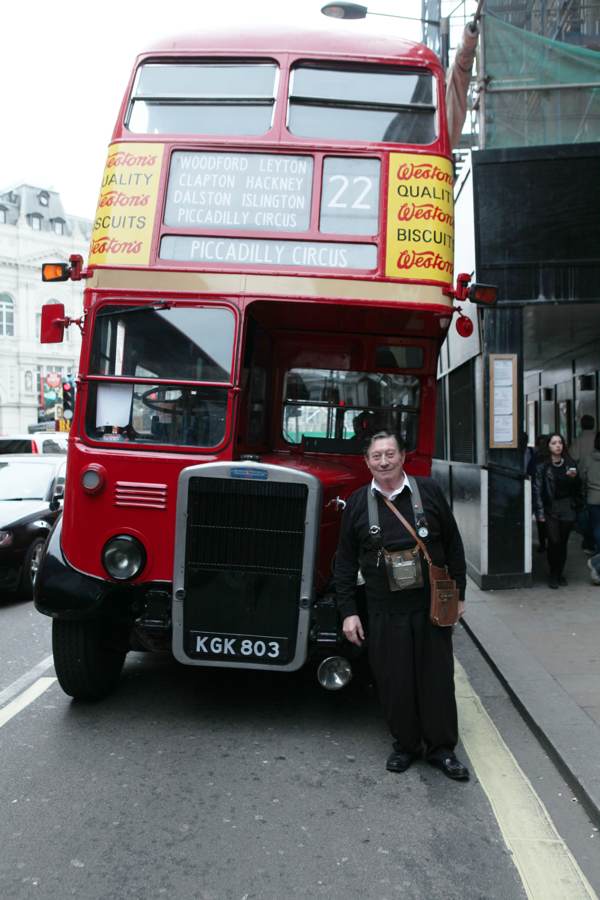
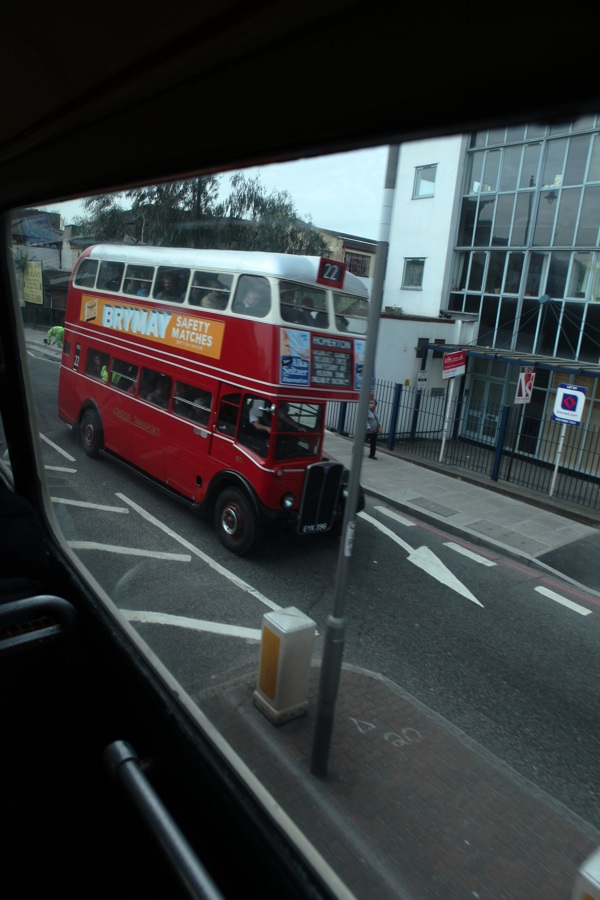
Photographs copyright © Colin O’Brien
You also like to read about
Peter Sargent, Butcher
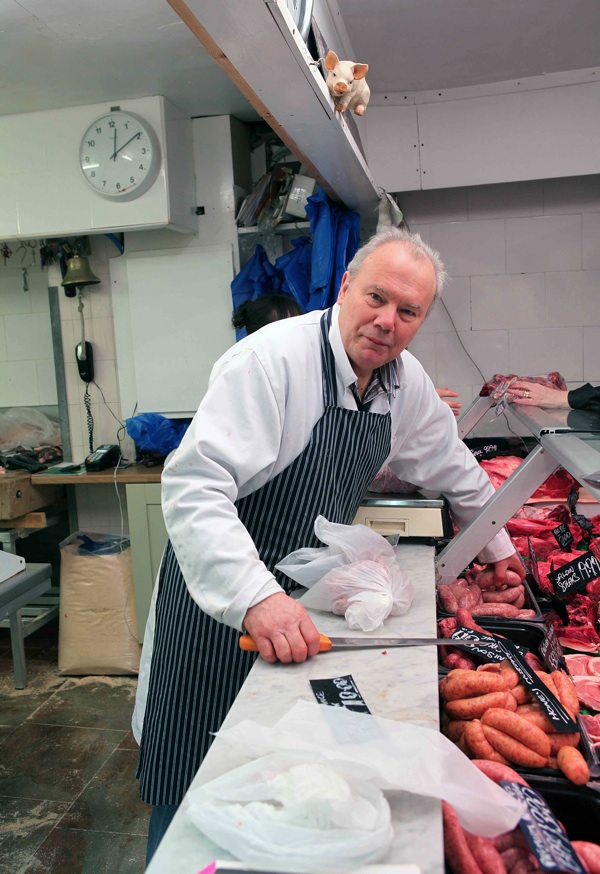
Peter Sargent
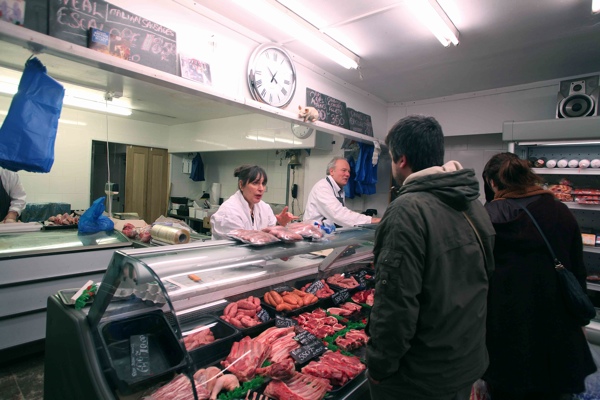
In 1983, when Peter Sargent took on his shop, there were seven other butchers in Bethnal Green but now his is the only one left. Two years ago it looked like Peter’s might go the way of the rest, until he took the initiative of placing a discreet sign on the opposite side of the zebra crossing outside his shop. Directed at those on their way to the supermarket, it said, “Have a look in butcher’s opposite before you go in Tesco.”
This cheeky intervention raised the ire of the supermarket chain, won Peter a feature in the local paper and drew everyone’s attention to the plain truth that you get better quality meat at a better price at an independent butcher than at a supermarket.“Tesco threatened legal action,” admitted Peter, his eyes gleaming in defiance, “They came over while I was unloading my van to tell me they were serious, but I told them where to go.” Shortly afterwards, it was revealed that Tesco had been selling horsemeat and Peter left a bale of hay outside his shop. “I invited customers to drop it off if they were going across the road,” he revealed to me with a grin of triumph.
This unlikely incident proved to be a turning point for Peter’s business which has been in the ascendancy ever since. “There’s not many of my old East End customers left anymore and I was close to calling it a day,” he confided to me, “but I’ve found that the young people who are moving in, they want to buy their meat from a proper butcher’s shop.”
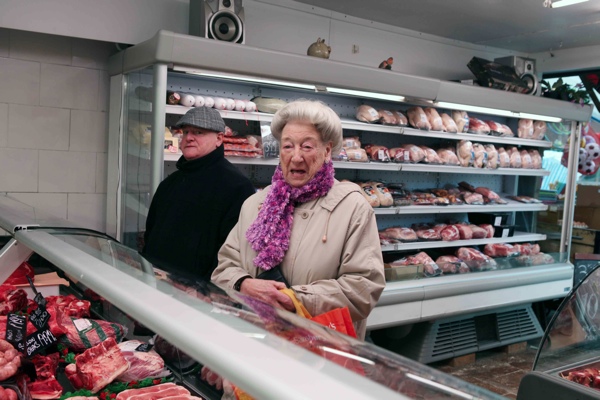
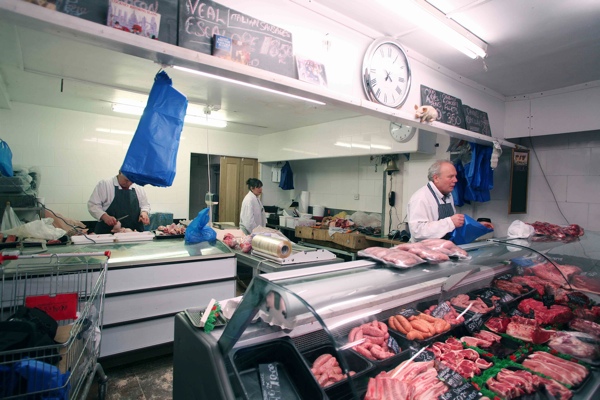
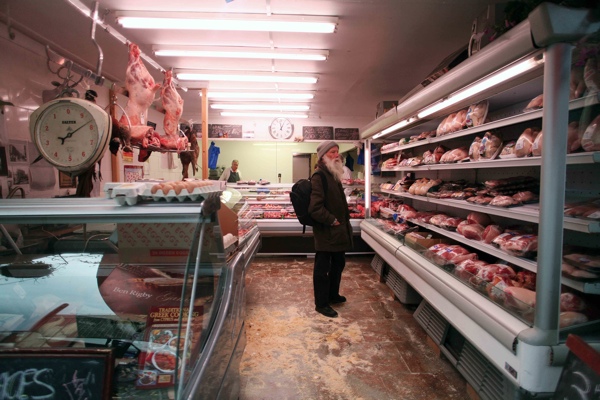
In celebration of this change of fortune in the local butchery trade, Contributing Photographer Colin O’Brien & I paid a visit behind the counter recently to bring you this report, and we each came away with sawdust on our boots and the gift of a packet of the freshly-made sausages for which Peter’s shop is renowned.
“I started as a Saturday boy in Walthamstow, when I was sixteen, in 1970,” Peter told me, “and then it became a full-time job when I left school at eighteen.” Over the next ten years, Peter worked in each of half a dozen shops belonging to the same owner, including the one in Bethnal Green, until they all shut and he lost his job. Speaking with the bank that his ex-employer was in debt to, Peter agreed to take on the shop and, when they asked if he had a down payment, Peter’s wife Jackie produced ten pounds from her handbag.
Since then, Peter has been working twelve hours a day, six days a week, at his shop in Bethnal Green – arriving around eight each morning after a daily visit to Smithfield to collect supplies. “I love it and I hate it, I can’t leave it alone,” he confessed to me, placing a hand on his chest to indicate the depth of emotion, “it’s very exciting in a Saturday when all the customers arrive, but it can be depressing when nobody comes.”
Peter is supported by fellow butcher Vic Evenett and the pair make an amiable double-act behind the counter, ensuring that an atmosphere of good-humoured anarchy prevails. “I started as a ‘humper’ at Smithfield in 1964 for six years, then I had my own shop in Bow for twenty-three years, then one in Walthamstow Market, Caledonian Rd and Roman Rd, but none of them did very very well because I had to pay too much rent,” Vic informed me, “I came here twenty years ago to help Peter out for a few days and I stayed on.”
In a recent refit, an old advert was discovered pasted onto the wall and Peter had the new tiles placed around it so that customers may see the illustration of his shop when it was a tripe dresser in 1920. Yet Peter will tell you proudly that his shop actually dates from 1860 and he became visibly excited when I began talking about the centuries-old tradition of butchery in Whitechapel. And then he and Vic began exchanging significant glances as I explained how Dick Turpin is sometimes said to have been an apprentice butcher locally.
Thankfully, East Enders old and new took notice of Peter’s sign, “Have a look in butcher’s opposite before you go in Tesco,” and he and Vic – the last butchers in Bethnal Green – will be able to continue to make an honest living without the necessity of turning highwaymen.
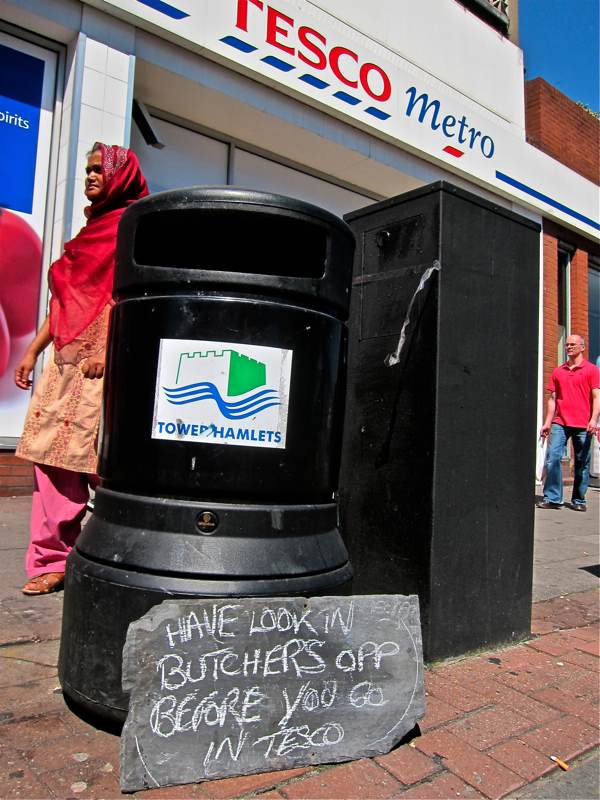
Peter’s sign outside Tesco, July 2012
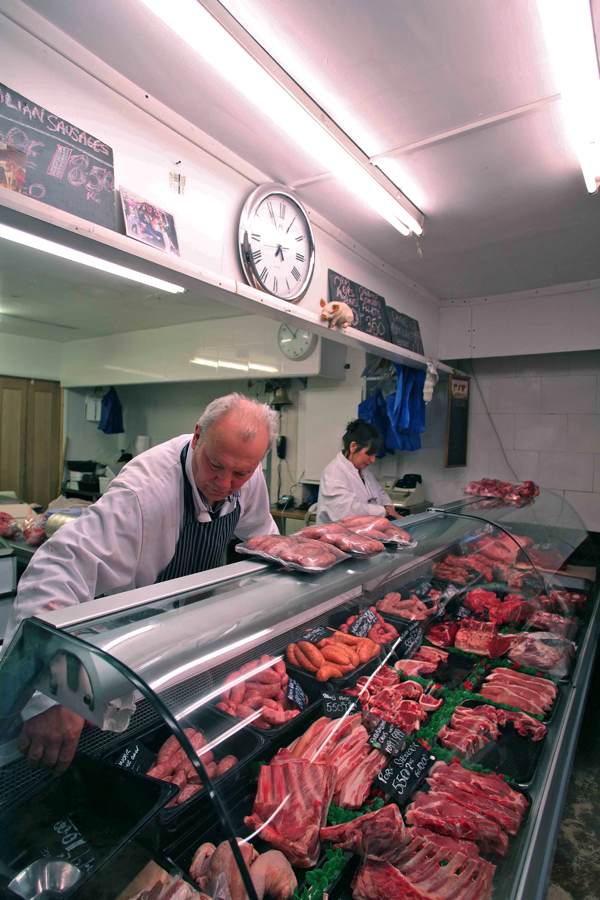
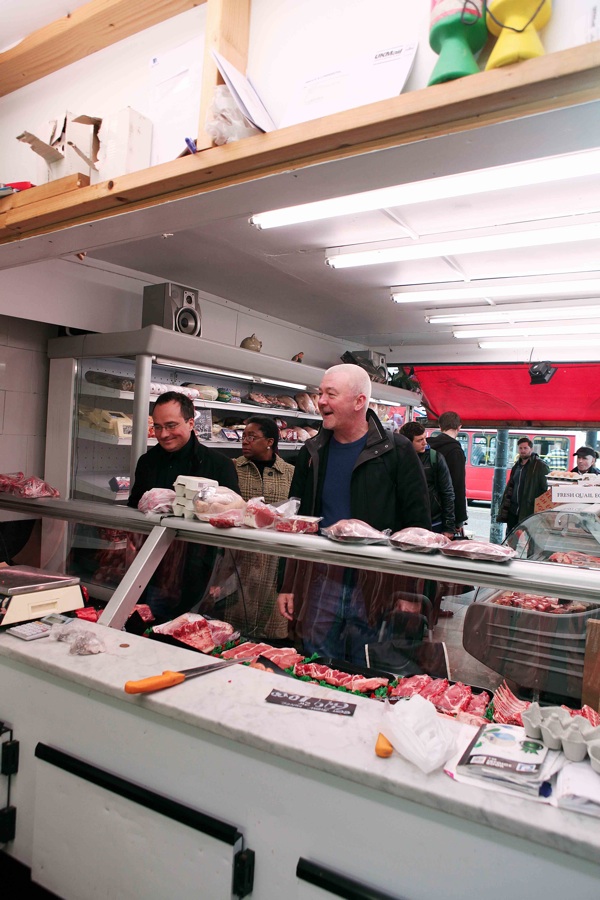
Excited customers on Saturday morning
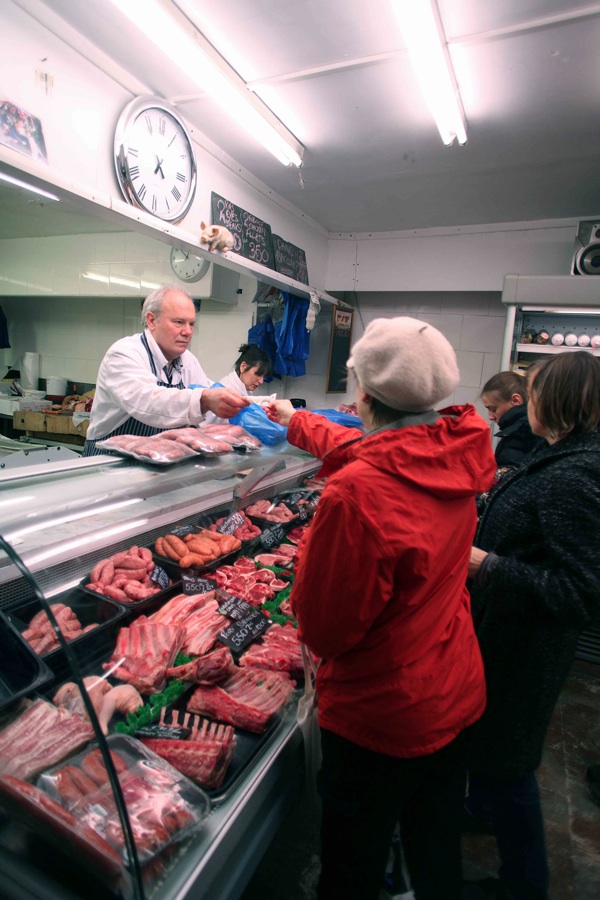
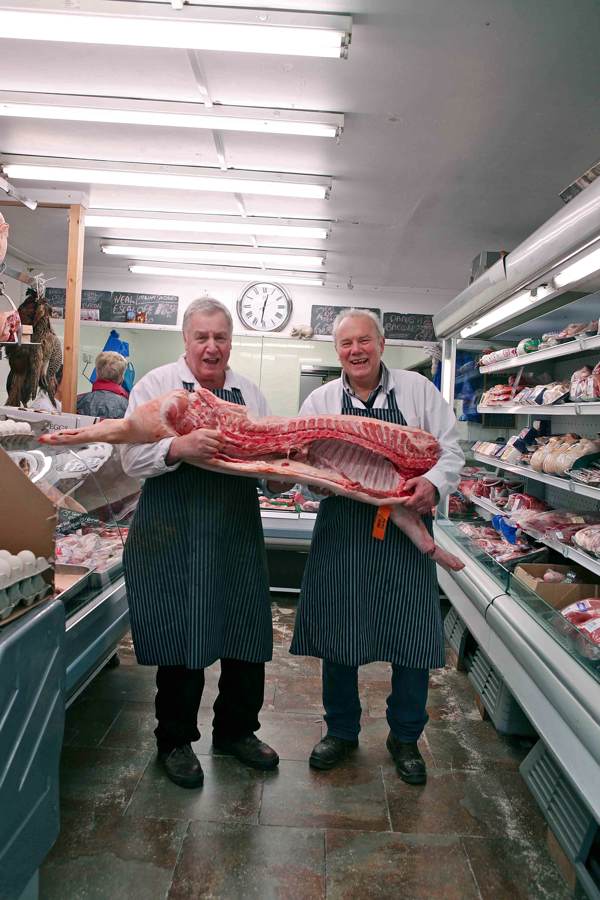
Vic Evenett & Peter Sargent
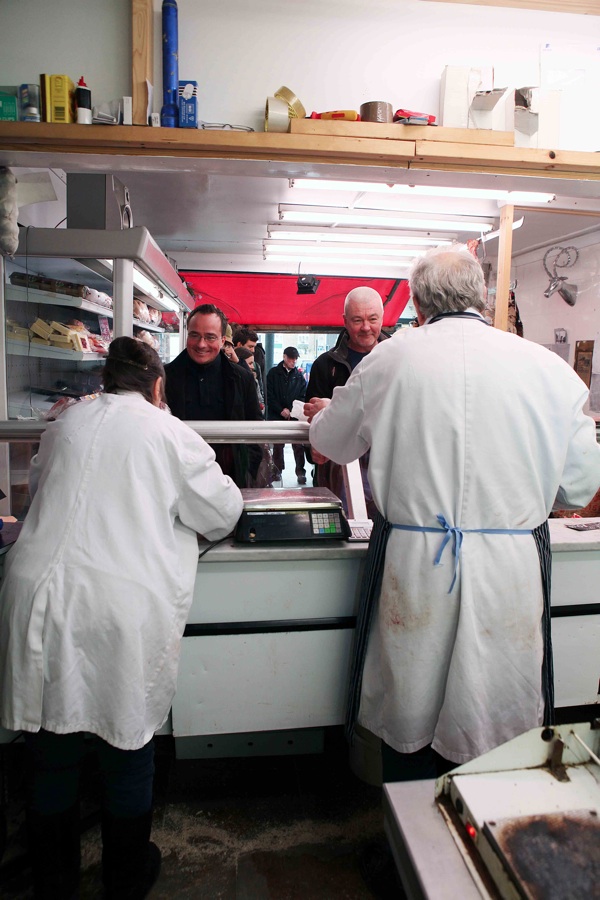
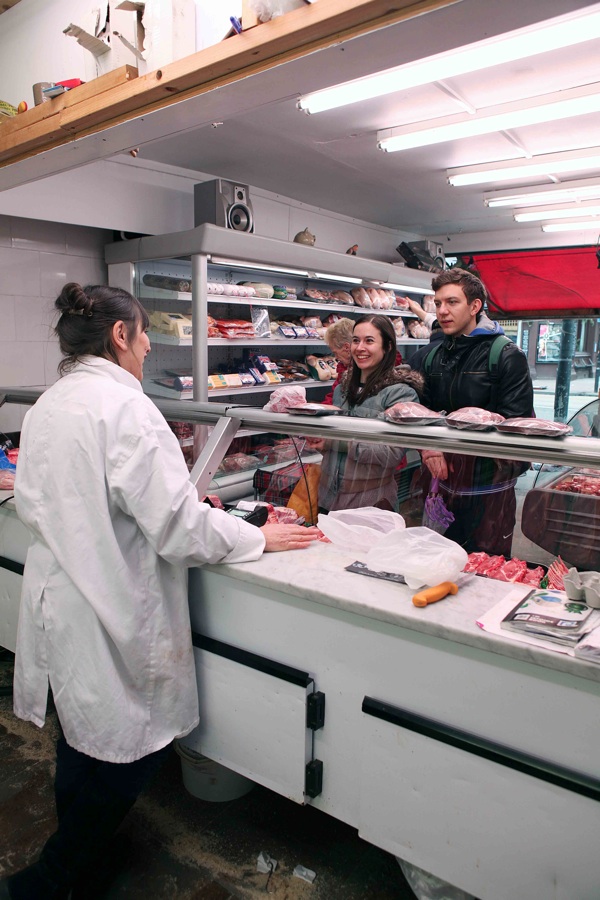
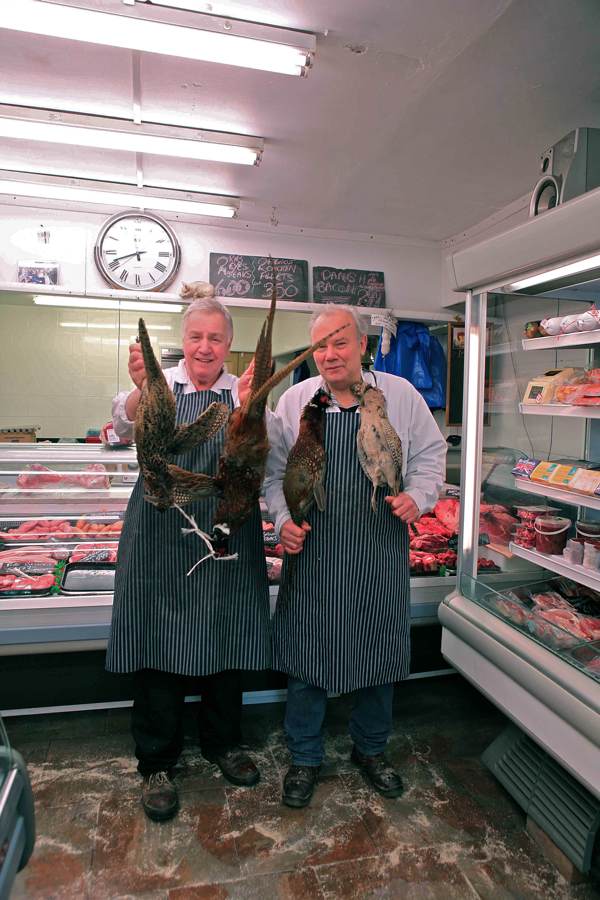
Peter & Vic sold more than five hundred game birds last Christmas
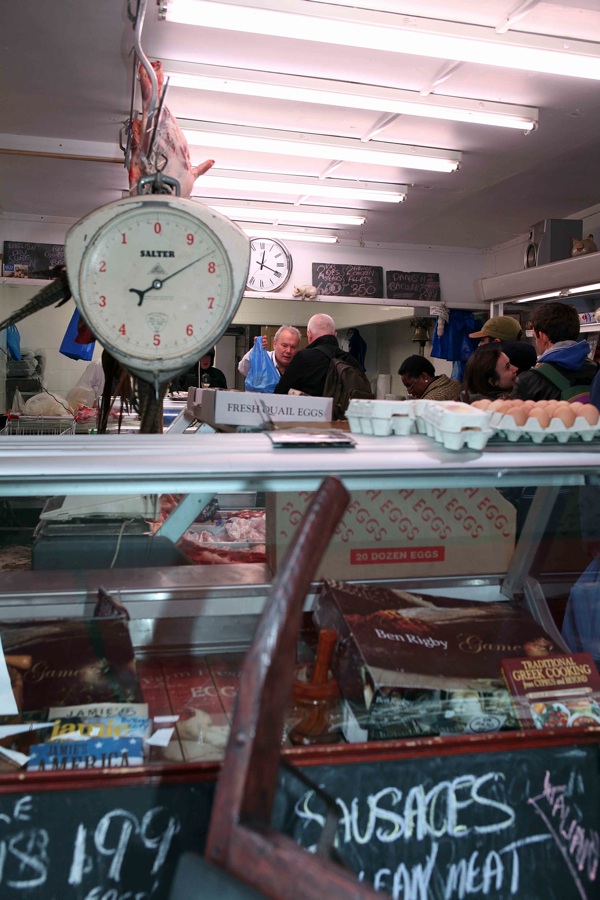
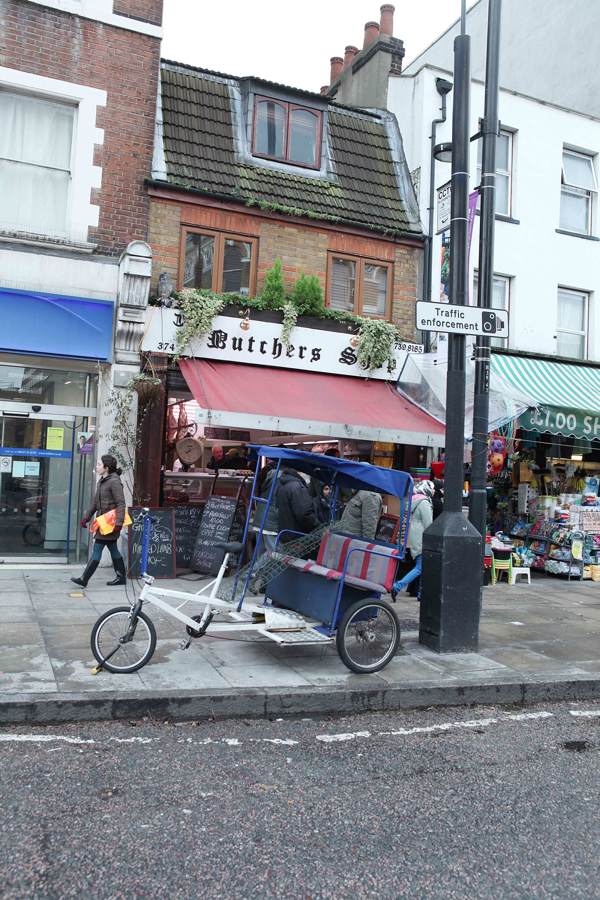
The Butcher’s Shop, 374 Bethnal Green Rd, E2
Photographs copyright © Colin O’Brien
You may also like to read about
Billy & Charley’s Shadwell Shams

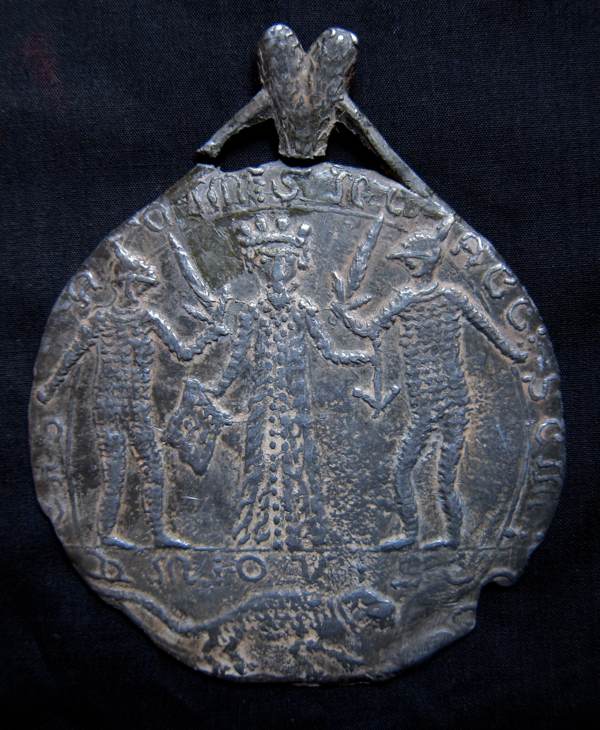
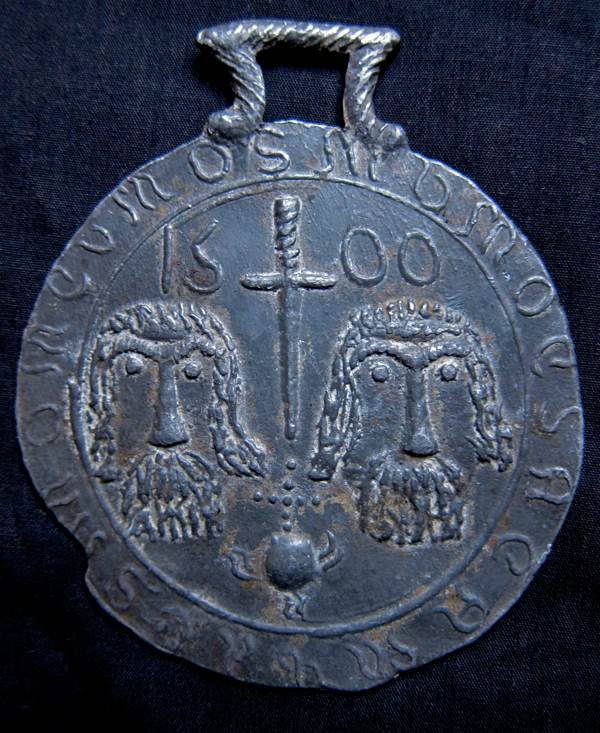
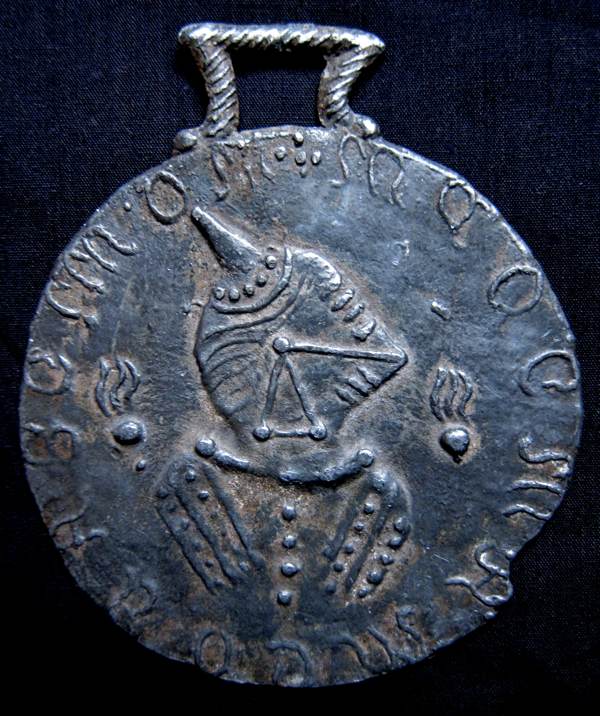
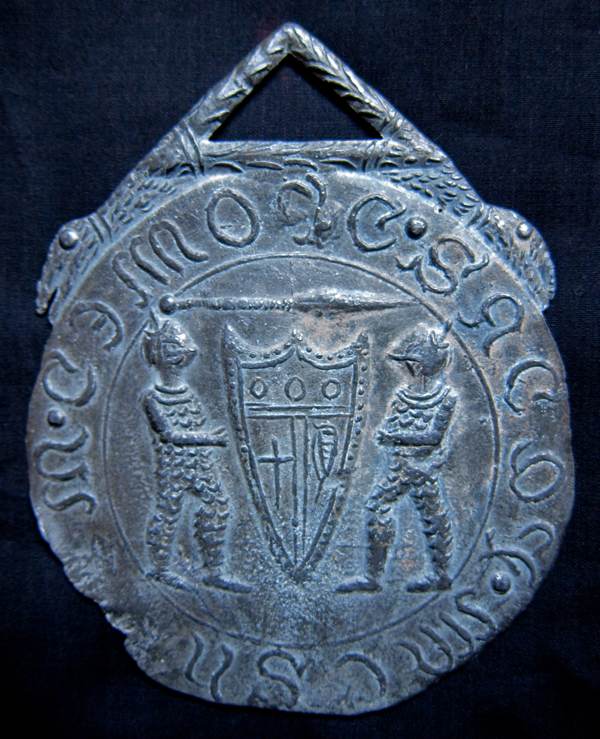
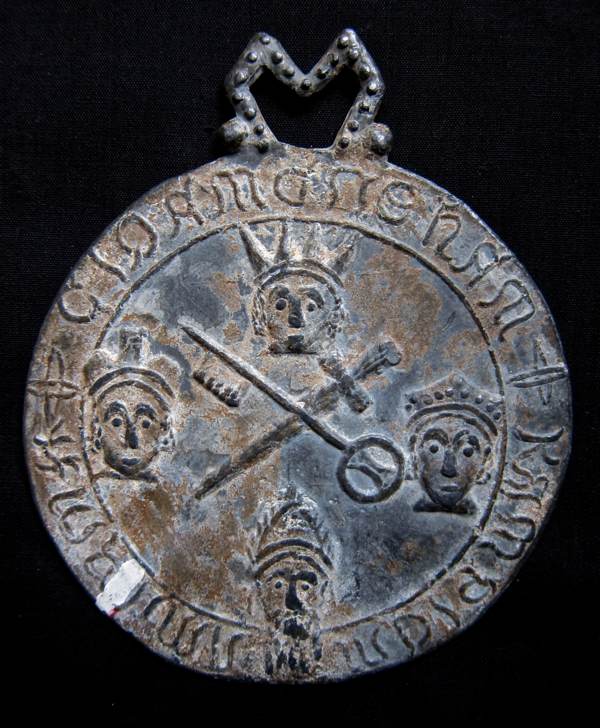
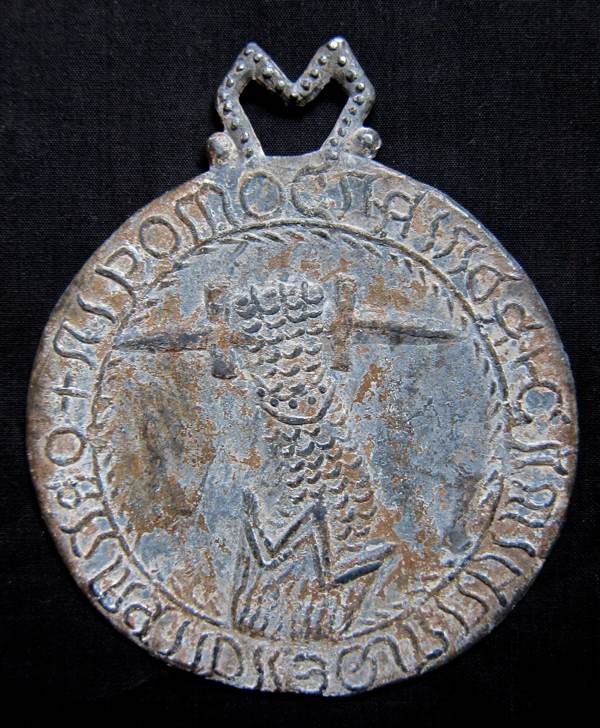
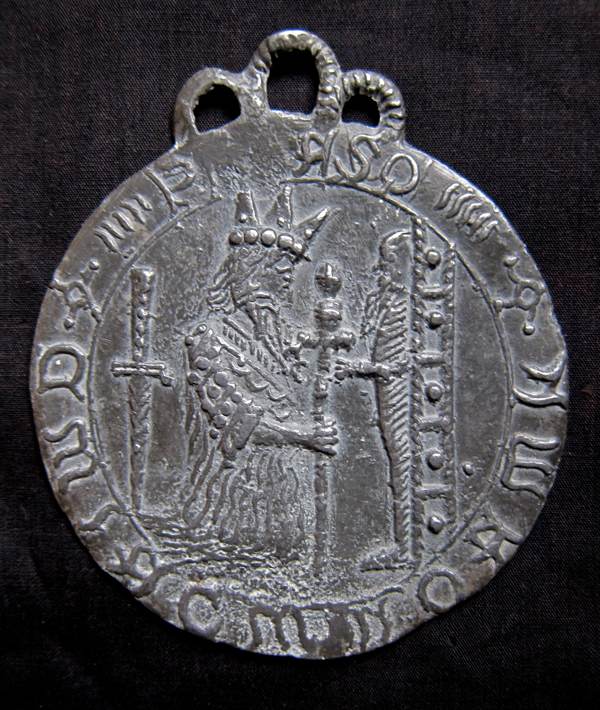
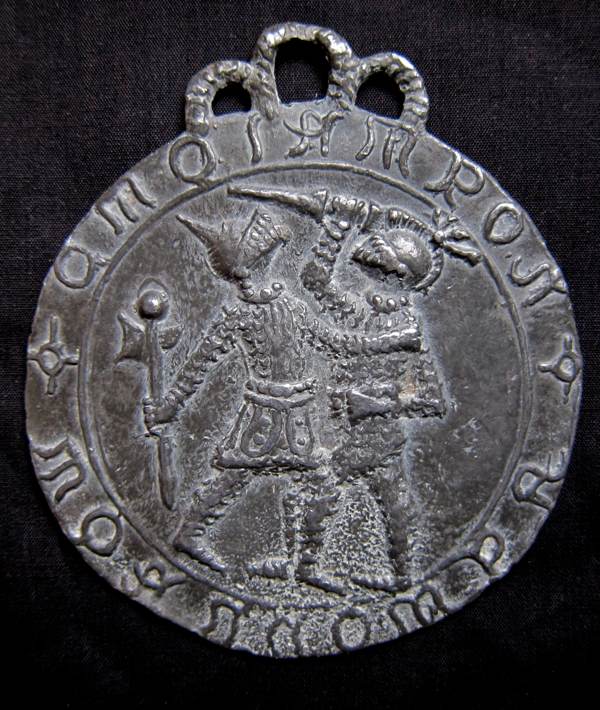
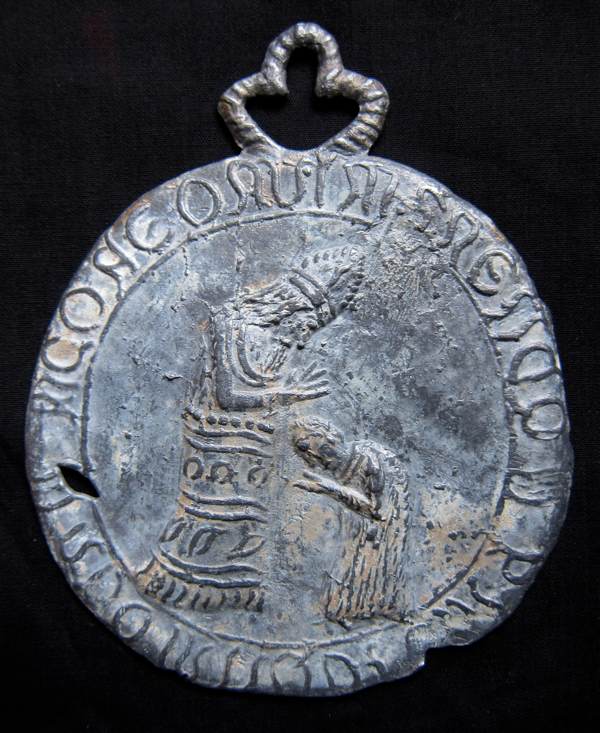
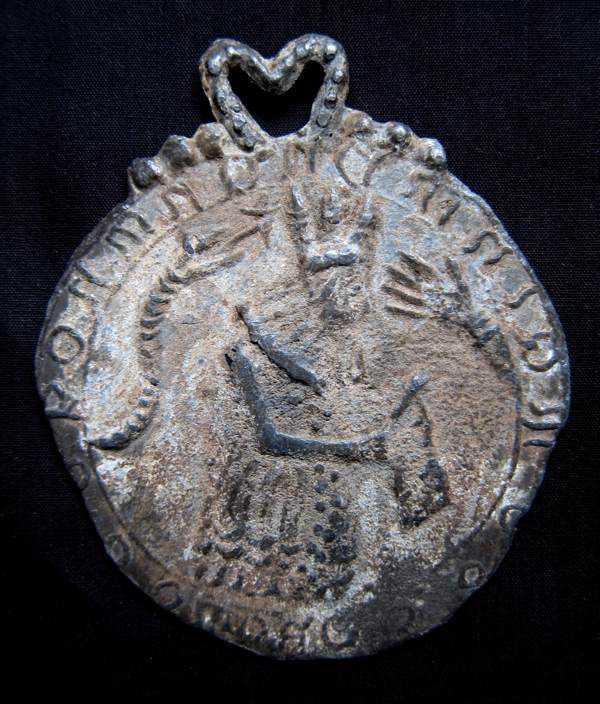
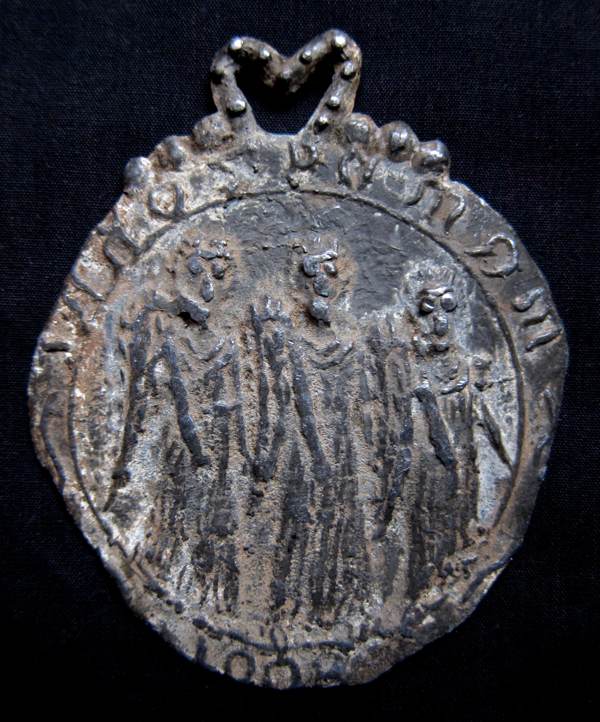
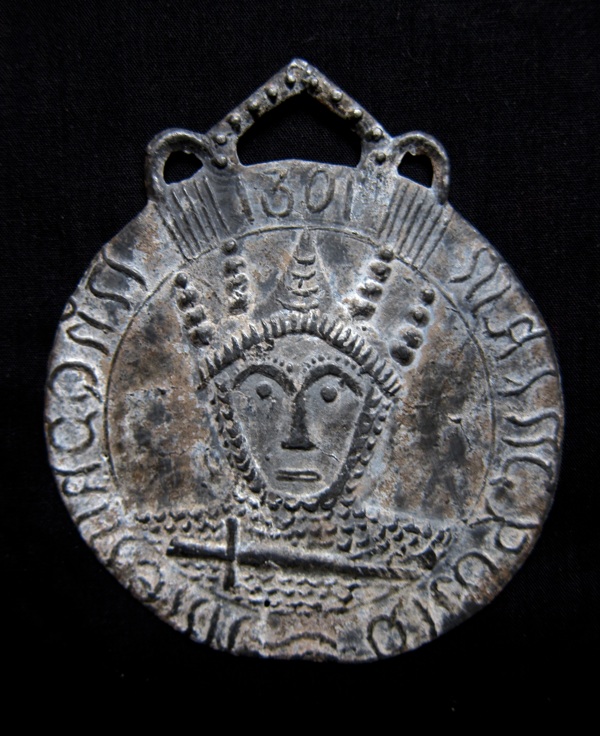
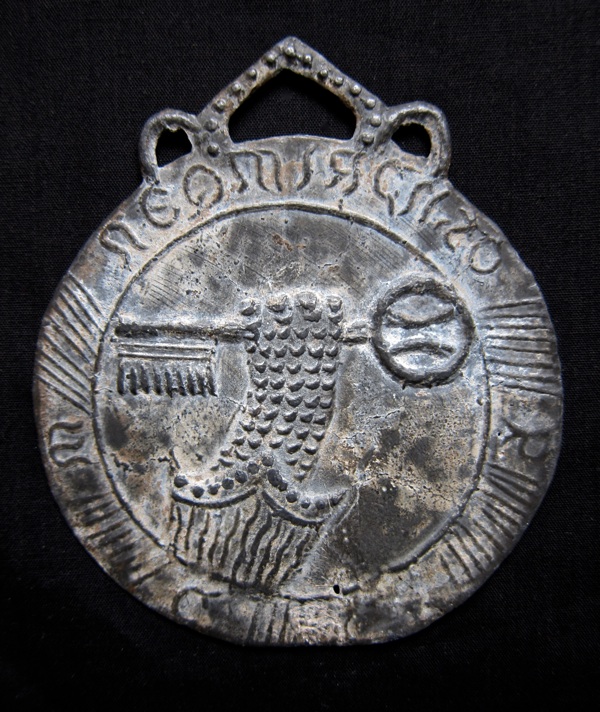
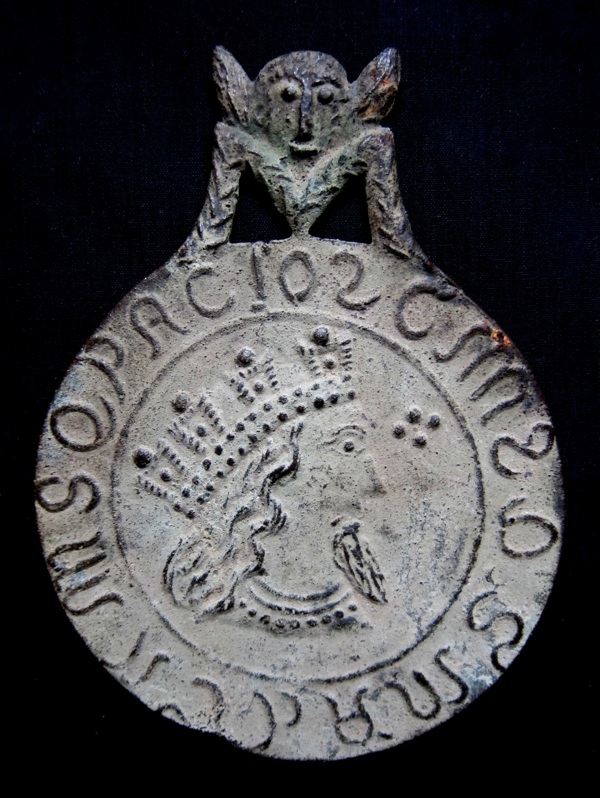
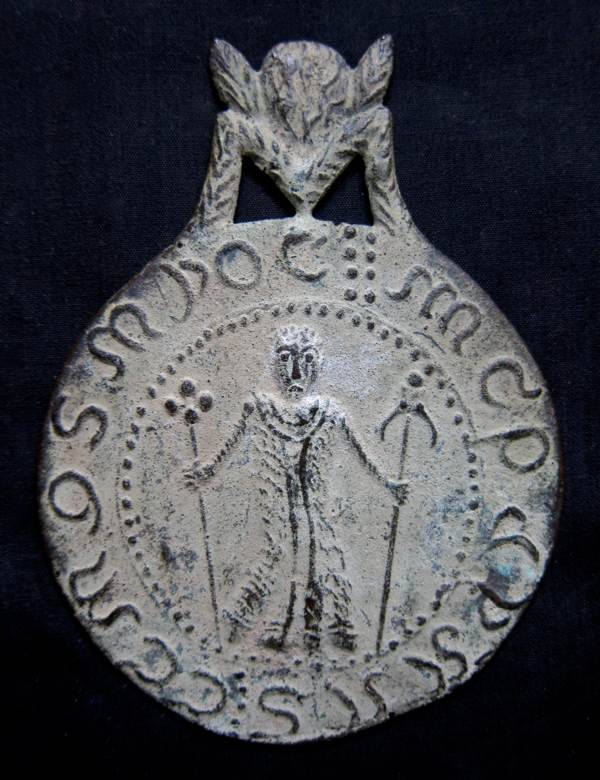
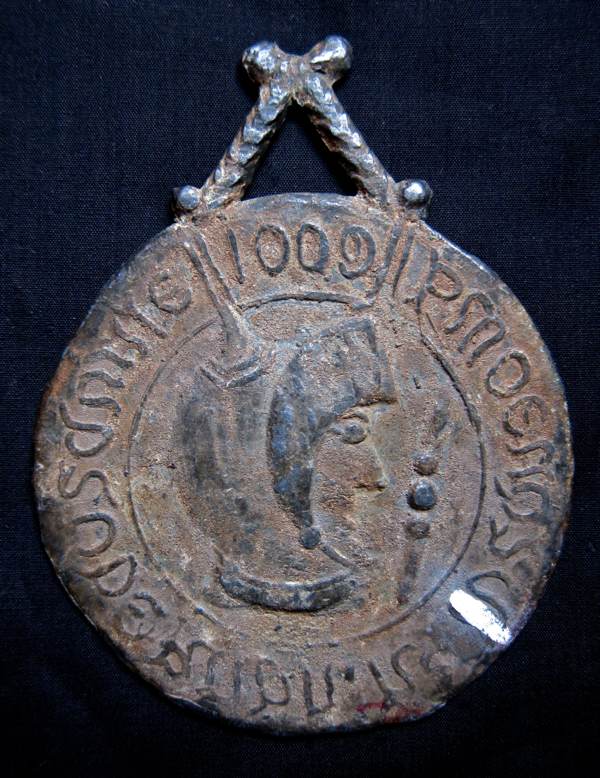
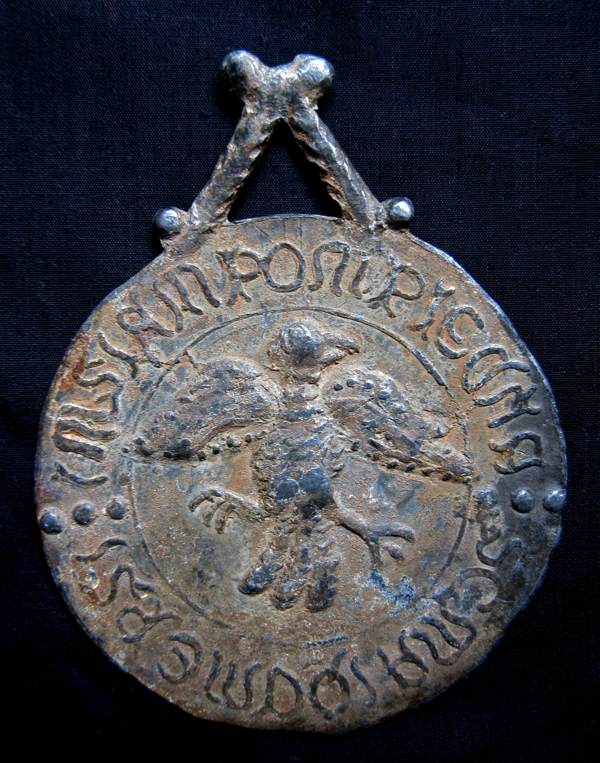
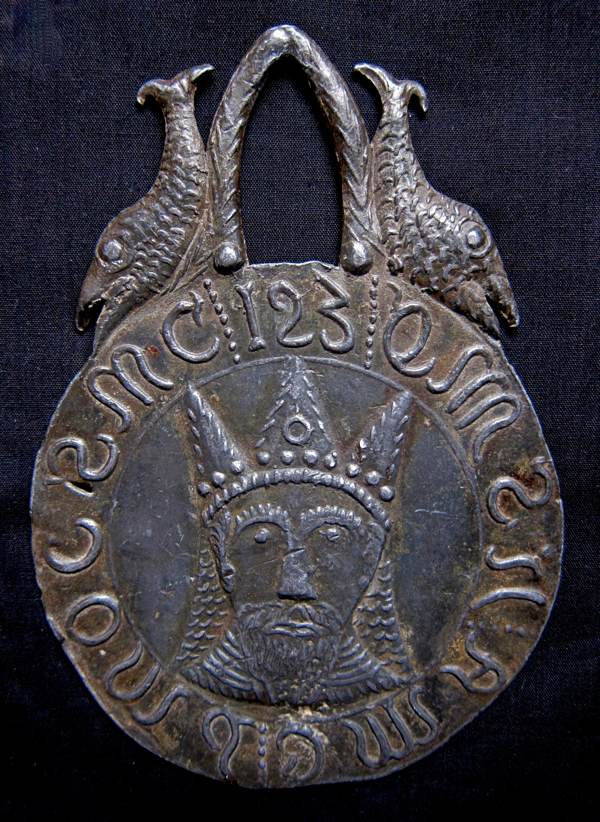
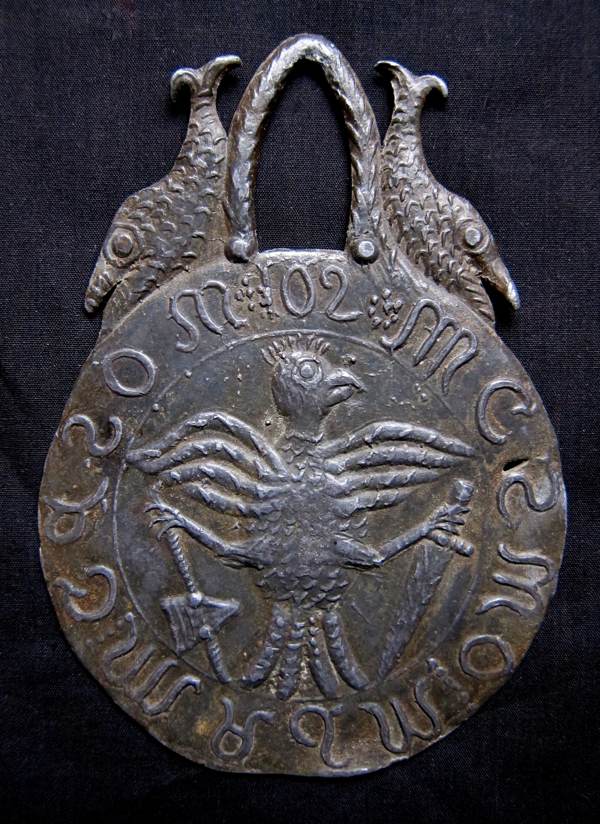
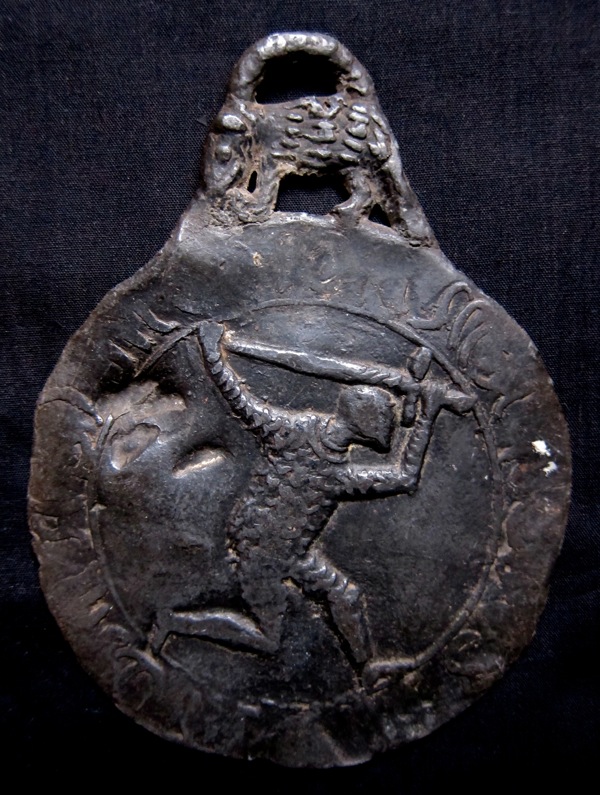
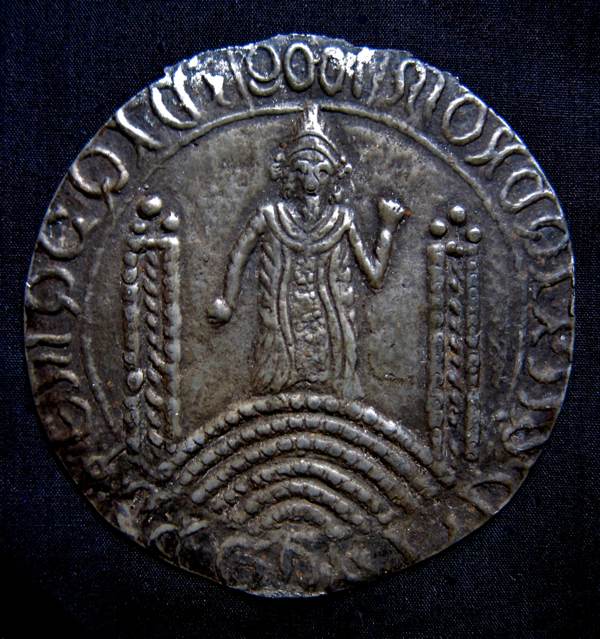
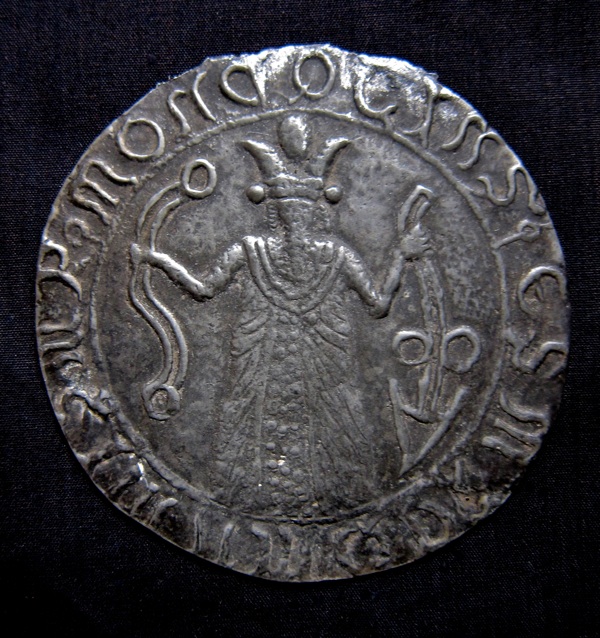
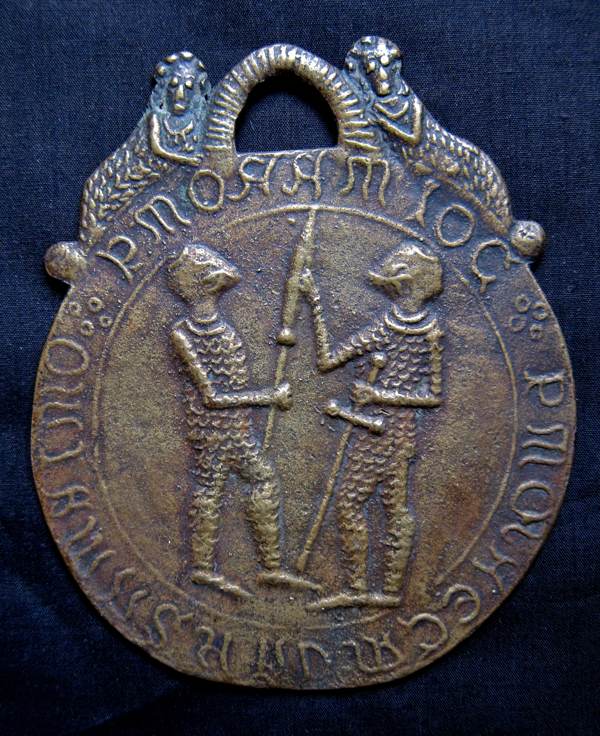
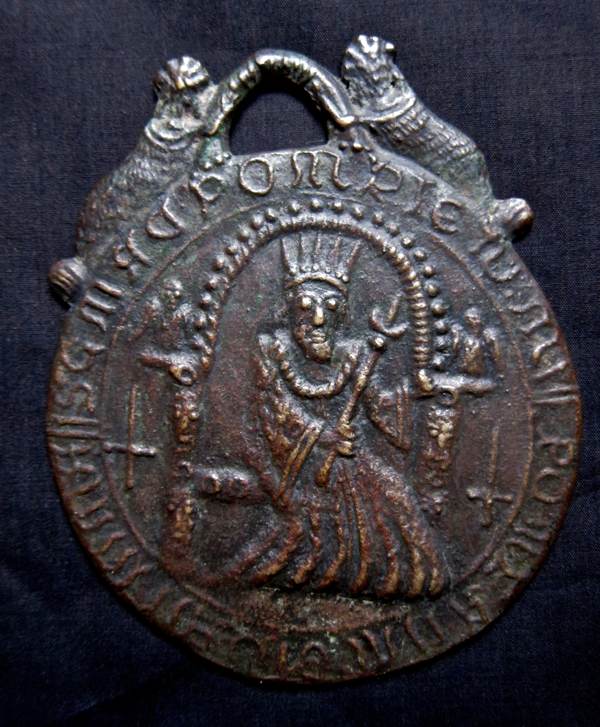
William Smith & Charles Eaton – better known as Billy & Charley – were a couple of Thames mudlarks who sold artefacts they claimed to have found in the Thames in Shadwell and elsewhere. Yet this threadbare veil of fiction concealed the astonishing resourcefulness and creativity that these two illiterate East Enders demonstrated in designing and casting tens of thousands of cod-medieval trinkets – eventually referred to as “Shadwell Shams” – which had the nineteenth century archaeological establishment running around in circles of confusion and misdirection for decades.
“They were intelligent but without knowledge,” explained collector Philip Mernick, outlining the central mystery of Billy & Charley, “someone told them ‘If you can make these, you can get money for them.’ Yet someone must also have given them the designs, because I find it hard to believe they had the imagination to invent all these – but maybe they did?”
Working in Rosemary Lane, significantly placed close to the Royal Mint, Billy & Charley operated in an area where small workshops casting maritime fixtures and fittings for the docks were common. Between 1856 until 1870, they used lead alloy and cut into plaster of paris with nails and knives to create moulds, finishing their counterfeit antiquities with acid to simulate the effects of age. Formerly, they made money as mudlarks selling their Thames discoveries to a dealer, William Edwards, whom Billy first met in 1845. Edwards described Billy & Charley as “his boys” and became their fence, passing on their fakes to George Eastwood, a more established antiques dealer based in the City Rd.
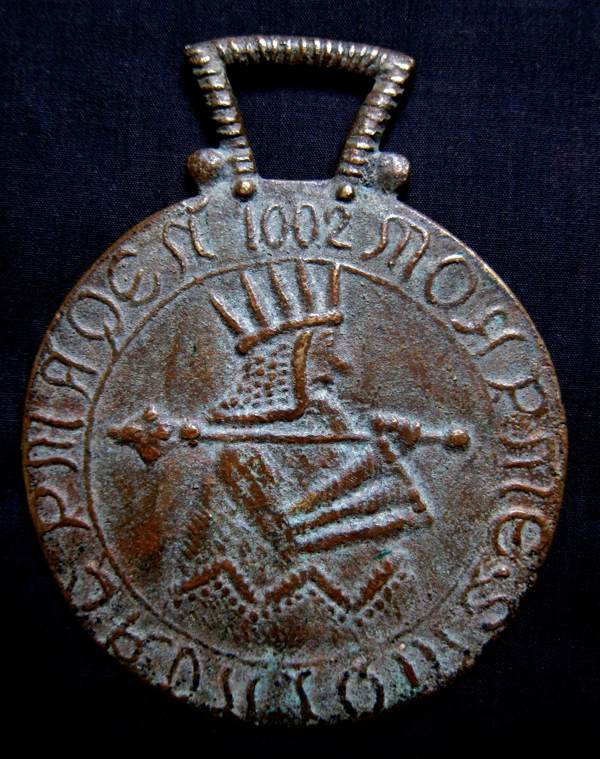
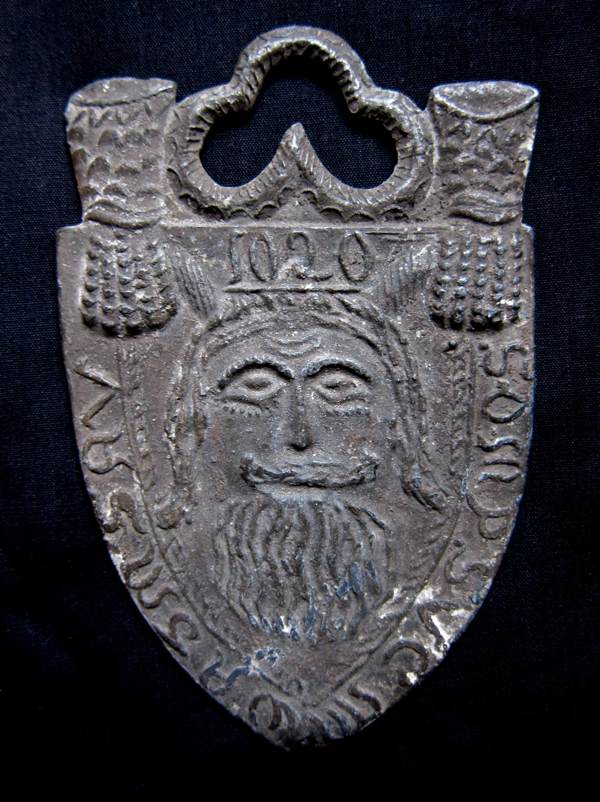
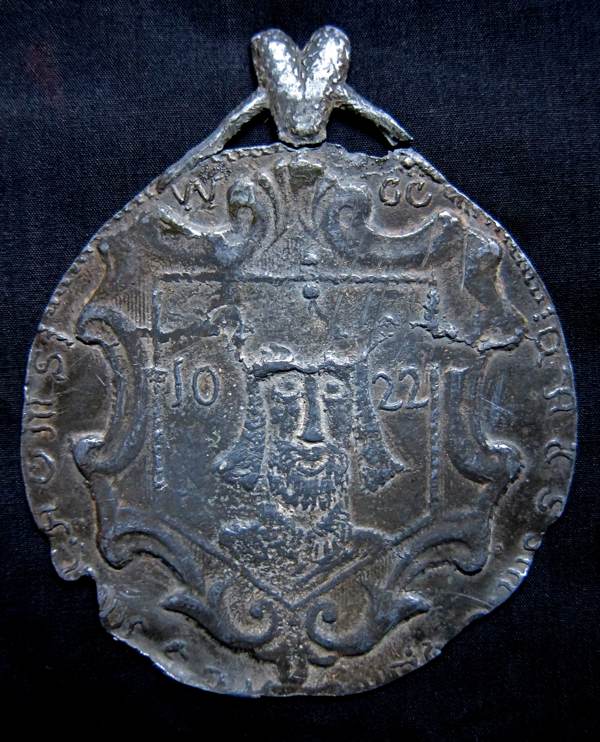
Badges, such as these from Philip Mernick’s collection, were their commonest productions – costing less than tuppence to make, yet selling for half a crown. These items were eagerly acquired in a new market for antiquities among the middle class who had spare cash but not sufficient education to understand what they were buying. Yet many eminent figures were also duped, including the archaeologist, Charles Roach Smith, who was convinced the artefacts were from the sixteenth century, suggesting that they could not be forgeries if there was no original from which they were copied. Similarly, Rev Thomas Hugo, Vicar of St Botolph’s, Bishopsgate, took an interest, believing them to be medieval pilgrims’ badges.
The question became a matter for the courts in August 1858 when the dealer George Eastwood sued The Athenaeum for accusing him of selling fakes. Eastwood testified he paid £296 to William Edwards for over a thousand objects that Edwards had originally bought for £200. Speaking both for himself and Charley, Billy Smith – described in the record as a “rough looking man” – assured the court that they had found the items in the Thames and earned £400 from the sale. Without further evidence, the judge returned a verdict of not guilty upon the publisher since Eastwood had not been named explicitly in print.
The publicity generated by the trial proved ideal for the opening of Eastwood’s new shop, moving his business from City Rd to Haymarket in 1859 and enjoying a boost in sales of Billy & Charley’s creations. Yet, two years later, the bottom fell out of the market when a sceptical member of the Society of Antiquaries visited Shadwell Dock and uncovered the truth from a sewer hunter who confirmed Billy & Charley’s covert means of production.
As they were losing credibility, Billy & Charley were becoming more accomplished and ambitious in their works, branching out into more elaborate designs and casting in brass. It led them to travel beyond the capital, in hope of escaping their reputation and selling their wares. They were arrested in Windsor in 1867 but, without sufficient ground for prosecution, they were released. By 1869, their designs could be bought for a penny each.
A year later, Charley died of consumption in a tenement in Wellclose Sq at thirty-five years old. The same year, Billy was forced to admit that he copied the design of a badge from a butter mould – and thus he vanishes from the historical record.
It is a wonder that the archaeological establishment were fooled for so long by Billy & Charley, when their pseudo-medieval designs include Arabic dates that were not used in Europe before the fifteenth century. Maybe the conviction and fluency of their work persuaded the original purchasers of its authenticity? Far from crude or cynical productions, Billy & Charley’s creations possess character, humour and even panache, suggesting they are the outcome of an ingenious delight – one which could even find inspiration for a pilgrim’s badge in a butter mould. Studying these works, it becomes apparent that there is a creative intelligence at work which, in another time, might be celebrated as the talent of an artist or designer, even if in Billy & Charley’s world it found its only outlet in semi-criminal activity.
Yet the final irony lies with Billy & Charley – today their Shadwell Shams are commonly worth more than the genuine antiquities they forged.






You may also like to read about
Giorgione In Clapton
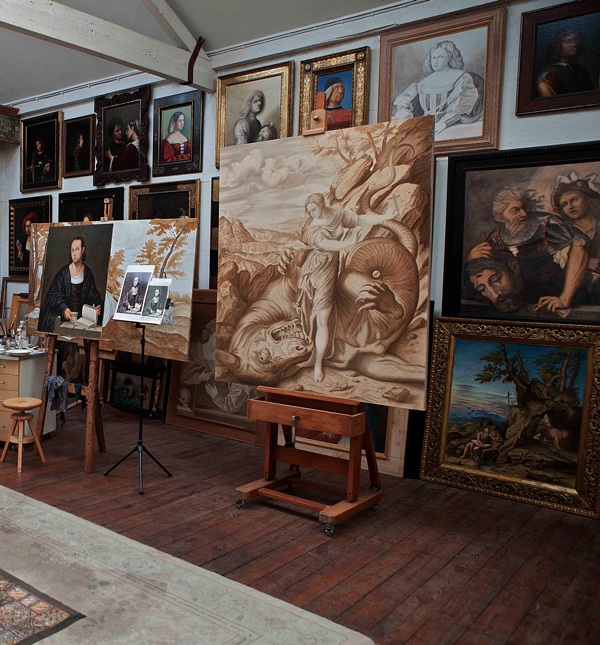
You enter a disused tramshed in Clapton, climb a ramshackle staircase and discover yourself in the studio of Giorgione, one of the greatest Venetian artists of the High Renaissance, who died in 1510. How can this be? Here in a room of comparable size to one of the smaller chambers at the National Gallery you are confronted with an array of masterpieces – familiar works, like Giorgione’s most famous painting The Tempest, surrounded by others that were thought to be lost, known only by engravings. Potentially the lair of an art thief or a master forger, it is some kind of miracle you have stumbled upon.
Neither thief nor forger, the magus responsible for working this magic is Danny Easterbrook who has devoted the last sixteen years to repainting the canon of works of Giorgione at the rate of three a year, using all the correct pigments and practices of Giorgione’s time. It is an extraordinary project rendered all the more astonishing by its location in this deserted tramshed and thus it is no surprise to discover that Danny is almost as passionate about the building as he is about Giorgione.
“The Tudor palace of Brooke House, dating from 1470, stood across the road from here until it was demolished in 1955,” Danny explained, widening his eyes in wonder, “The stables and coach yard for Brooke House were on this side of the road, becoming the Clapton Coachworks and, in 1873, The Lea Bridge Tramway Depot.”
The tramshed was shut more than a century ago, when the system switched from horsepower to electricity in 1907, and since then the buildings have served as a warehouse for Jack Cohen, the founder of Tesco, and as the home to the Odessa recording studios, employed by Iron Maiden, Dire Straits, The Police and Pete Doherty among others. Until recently, the entire complex was in use as artists’ studios and crafts workshops, but they have all gone now, except Danny and a small company selling foam rubber.
The imminent demolition of the building underscores the melancholy of Giorgione’s dreamlike paintings, that emphasise the transient, ephemeral nature of the world, and colours Danny’s quest to recover something lost centuries ago. Vasari believed Giorgione to be the peer of Leonardo and Michelangelo, yet today only a handful of paintings are ascribed to him and his reputation has faded to an enigma that matches the mysterious nature of his subjects. “We don’t know much about Giorgione, he died young and he’s been obscured by Titian, who was his pupil,” admitted Danny with a frown, “Many of his paintings have been taken away from him and given to Titian.”
“When I came to London from New Zealand in the seventies, I was a bass player,” Danny revealed, speaking of his own past,“but a painter lived across the road and it sparked my interest. Since the late eighties, I’ve been painting and making lutes.” Then he took one from a whole line of different lutes he had made, hanging upon the wall, and began to improvise upon it with the ease of a virtuoso, and I realised I was in the company of a genuine Renaissance man.
A talented individual with a fierce scholarly intelligence, Danny has immersed himself in Venetian culture of Giorgione’s time, exploring the provenance of disputed works, and – in his versions – removing overpainting and images that have been added, in order to get closer to Giorgione. Through his intimate understanding of Giorgione, Danny seeks to restore the reputation of his beloved master by demonstrating the true range of his achievements in painting.
It is an endeavour that sits somewhere in between art history and conceptual art, and Danny’s accomplishment is breathtaking – even manufacturing elaborate gilt frames for each of the paintings in the authentic method. You look around the room and you realise you are seeing something impossible, something even Giorgione never saw – all his works in one room. Through comparison, Danny is beginning to construct a tentative sequence of Giorgione’s paintings and also, through comparison, to establish that paintings misattributed to others are in fact the work of Giorgione.
Ten years ago, Danny spent a year putting a new roof on his studio which is also his home, high up in the former stables of the former tramshed. He has been a good custodian of a dignified old building but now he is forced to leave, he can find nowhere else in Hackney to continue his project and is looking at moving to Wales or the West Country. “When I came here it was cheap and you didn’t have to work a sixty hour week just to pay the rent, it was a perfect space for what I wanted,” he confessed to me regretfully.
Yet it is apparent that Danny’s visionary project will carry him forward wherever he goes. “I believe Giorgione painted sixty or so paintings,” he admitted to me, “and if I live long enough I’ll run out of paintings to paint.”
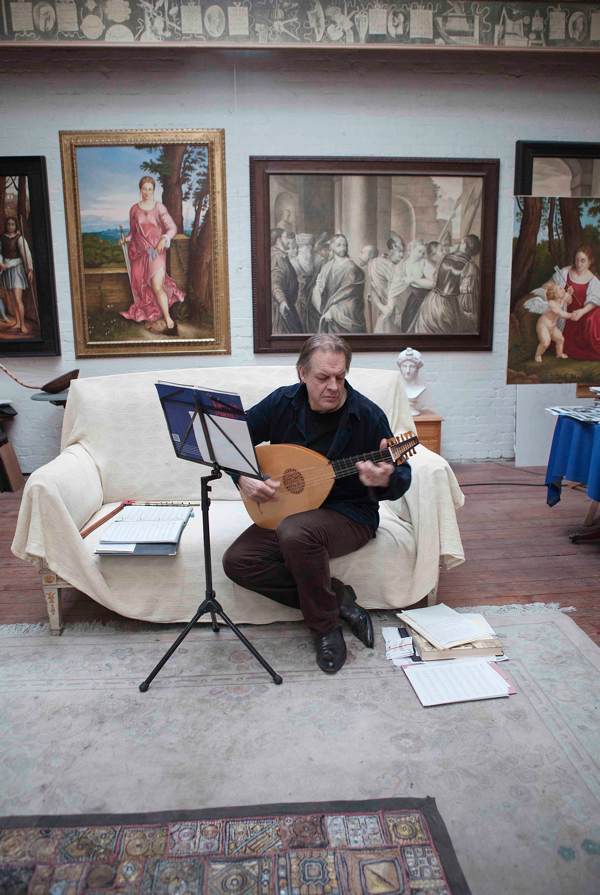
Danny Easterbrook

Danny Easterbrook’s studio
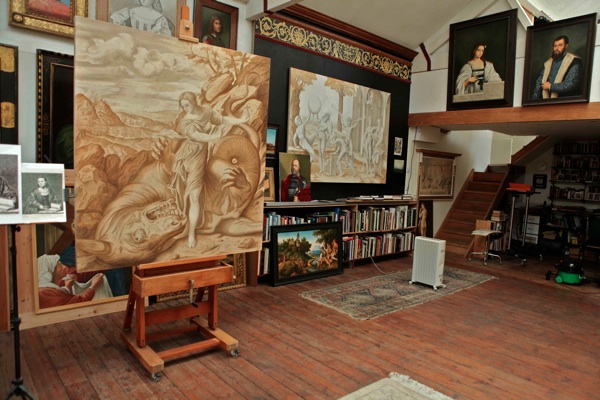
A corner of the studio
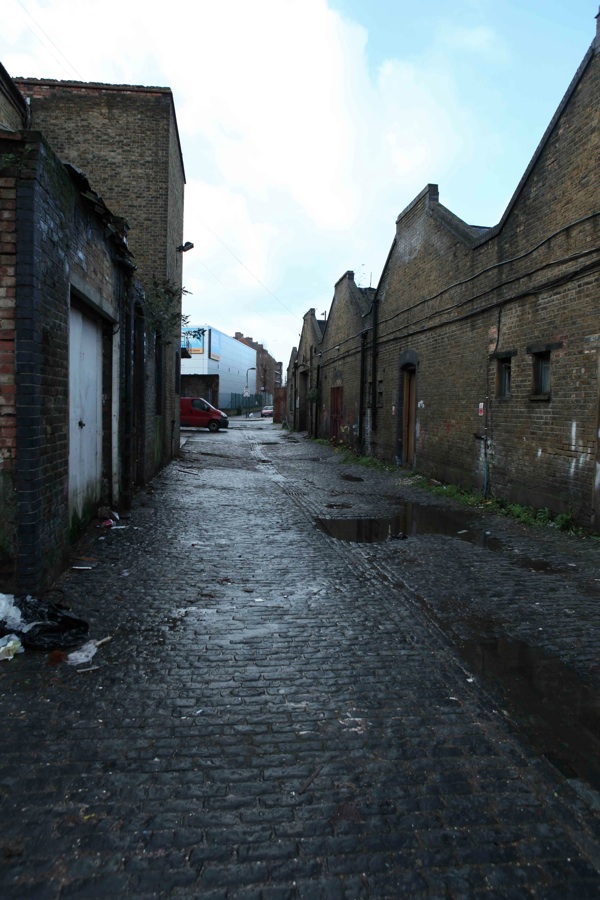
The old stableyard
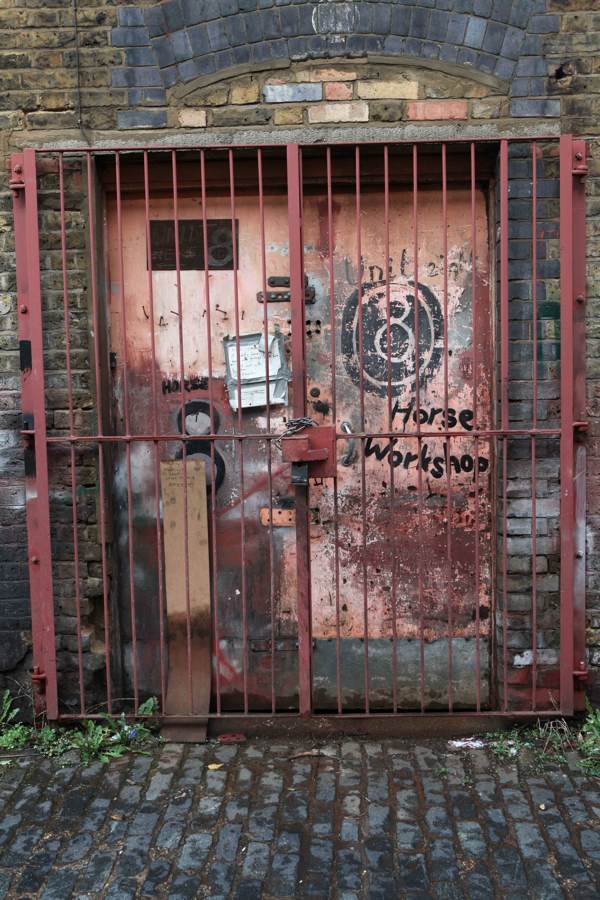
A blacksmith operated from here until recently
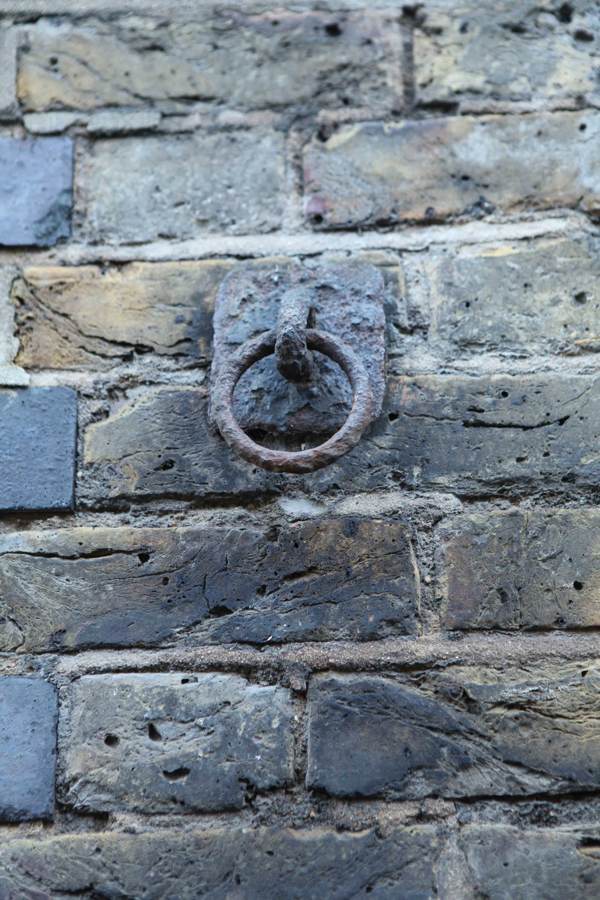
A ring to tether a horse
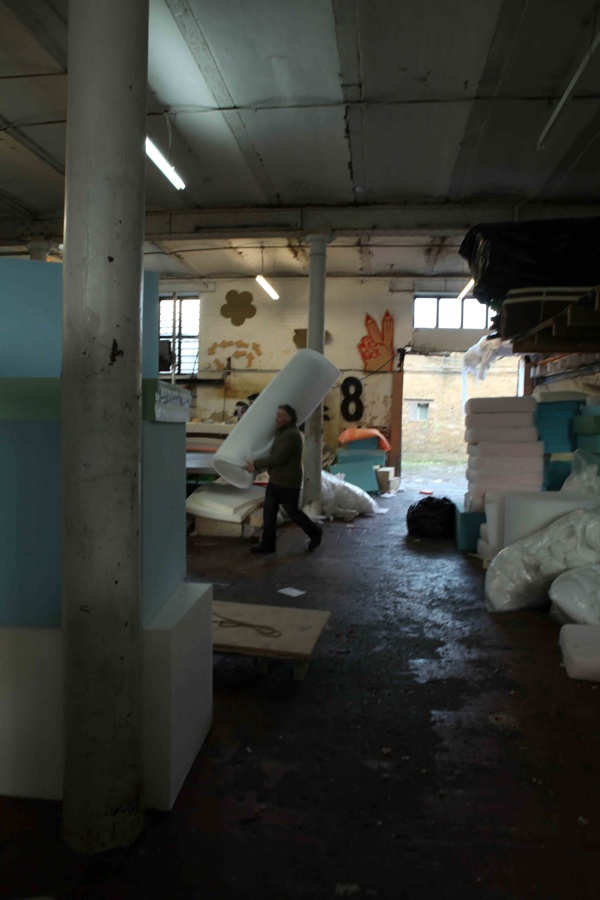
This foam rubber company is the last business still operating in the tramshed
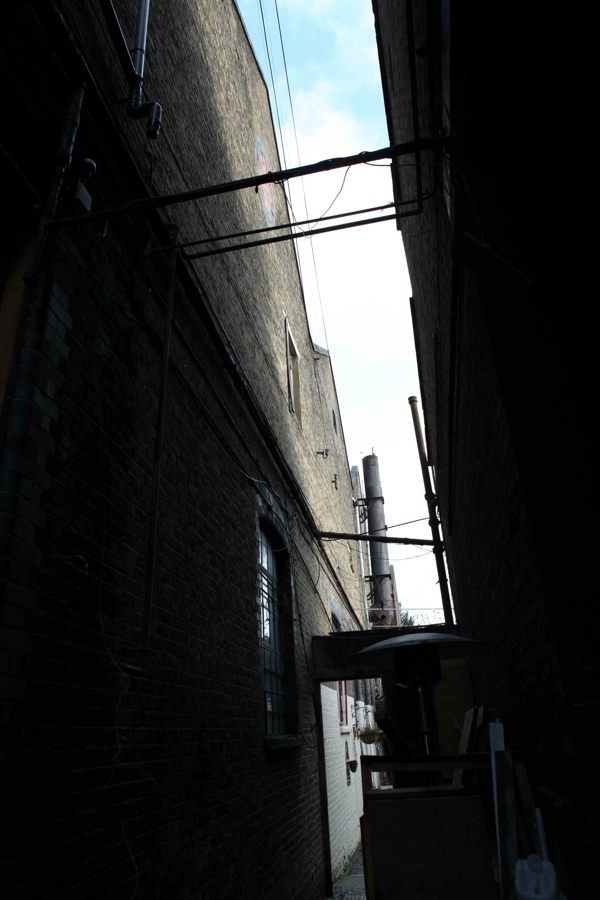
A hidden passage at the tramshed
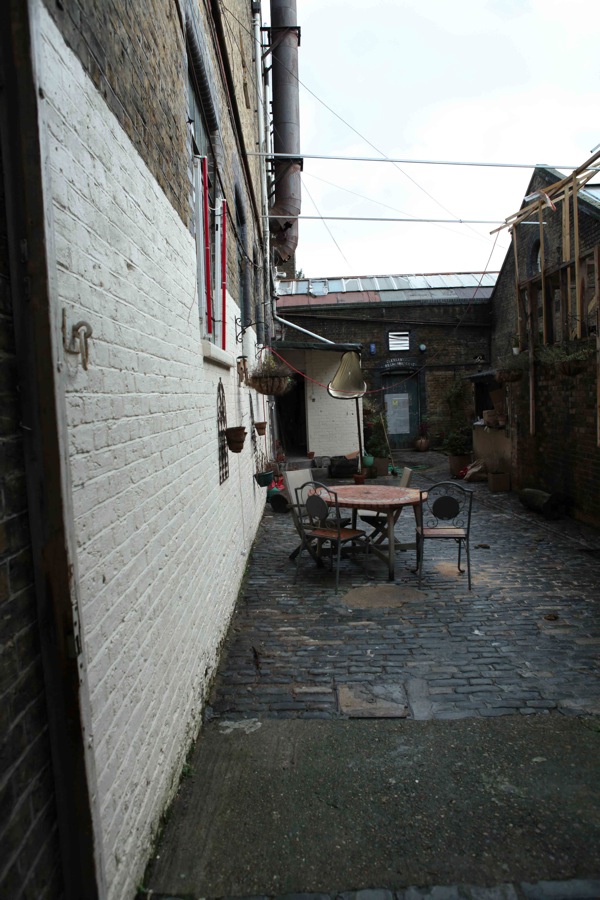
A secret yard at the tramshed
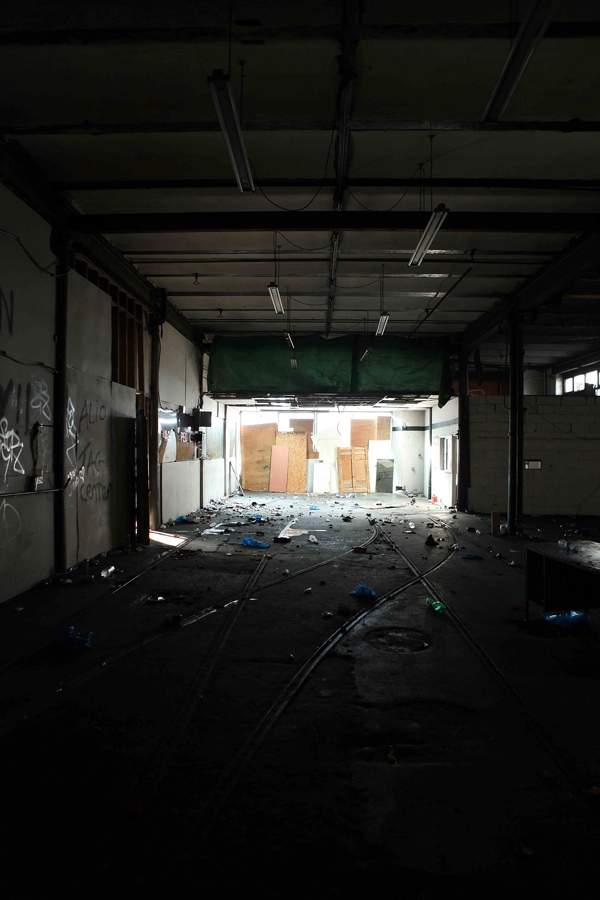
The North Metropolitan Tramways Company Depot was opened in 1873

Rails where the trams once ran

Brooke House in the twenties
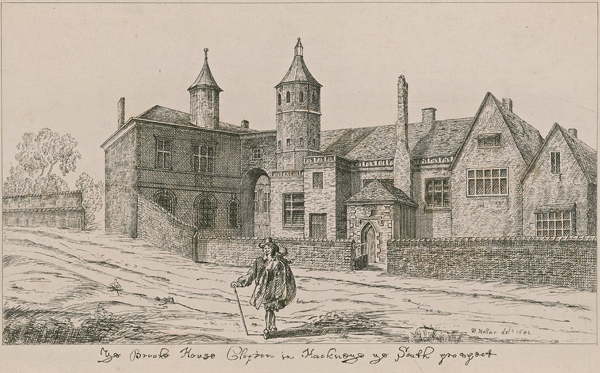
Brooke House in the eighteen-eighties, drawn in the style of Wenceslas Hollar
Photographs copyright © Colin O’Brien
At The Ghost Parade
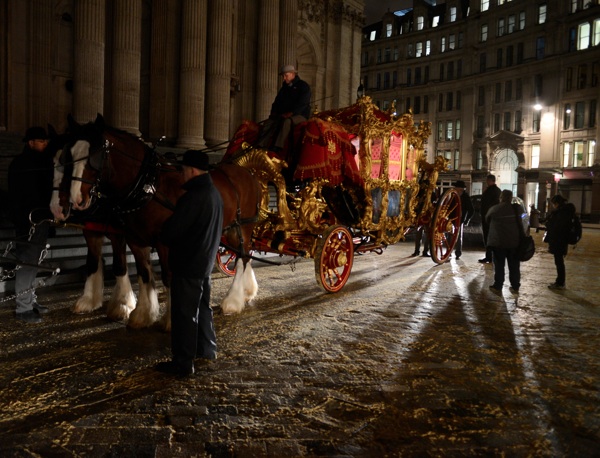
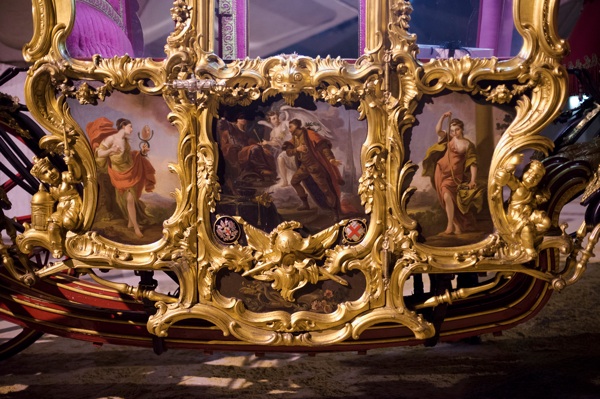
Lord Mayor’s Coach of 1757 stands outside St Paul’s Cathedral at 5am
Just to make sure the Lord Mayor’s Show goes without a hitch in the City of London, each year a nocturnal rehearsal is held at dead of night known as the ‘Ghost Parade.’ This is necessary because, although the Show has been running for centuries, there are new performers every year, namely the Lord Mayor Elect and six dray horses.
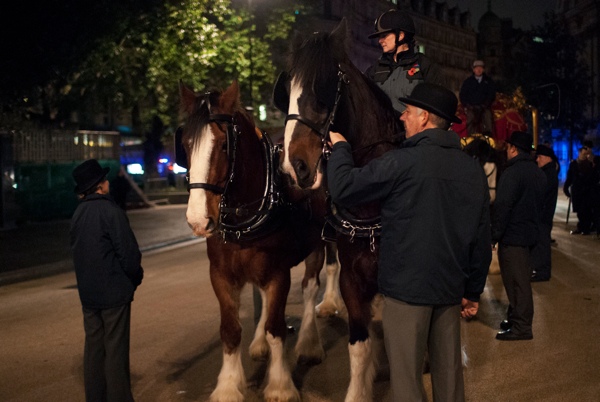
The dray horses were out in the pouring rain dragging a cart around the route twice, just to get familiar with it, even before Contributing Photographer Sarah Ainslie & I arrived in the Guildhall yard at 4:30am in the morning. Just as they were returning from another circuit, the gleaming two-hundred-and-fifty-year-old coach was being wheeled out. We were greeted by Dominic Reid, Pageantmaster for the last twenty-one parades, and successor to his father, John Reid, who oversaw twenty before him. “We have six minutes to get from here to the Mansion House,” he assured me, checking his watch conscientiously.
Already, the shining dray horses were being harnessed to the golden fairytale carriage as Fiona Woolf, the second-only female Lord Mayor in eight hundred years, was posing for photographers in front of it. A team of maintenance men stood by to ensure that there was no repeat of the previous year, when one of the wheels on the antiquated coach got stuck after sand clogged the axle. Men in bowler hats and long brown twill coats conferred, reconciling their plans before they set off. On the day of the parade there would be a three and a half mile procession, but that night it was just the coach and six.
Into the empty square outside the Bank of England rolled the carriage as police riders held back the traffic until the Lord Mayor Elect had descended outside the Mansion House, taking tactfully delivered instructions from the Pageantmaster upon protocol – different ways to remove her hat, different hand shakes and, above all, where to stand. Then the constituencies gathered around a wooden table, including a posse of fellows in sharp suits, military representatives who would have their men here on Saturday en masse. Rehearsing the signing of the Mayor’s treaty of allegiance to the Armed Forces was the matter of attention. “What happens if it rains?” asked a naive first-timer. “It gets wet and we sign another later,” replied the voice of experienced pragmatism.
“She’s not of Royal stock, so she has to rehearse,” whispered a helpful policeman, leaning in close and enunciating into my ear, as before my eyes the Lord Mayor Elect reached from the carriage with her tricorn hat in hand and waved to the non-existent crowds in Poultry. Beneath the spire of St Mary-Le-Bow they passed and skirted the great cathedral to arrive outside the west front of St Paul’s. Whilst at the south entrance, the Lord Mayor Elect practised receiving a bible presented by the Bishop of London and holding her hat at the same time, the empty coach waited.
Beneath the overhanging frontage lowering in the gloom now the flood-lights were off, the golden carriage glowed mysteriously, lit from within and reflecting in the pavement that had acquired a sheen from the gently falling rain – as if it were an apparition materialised from the ether.
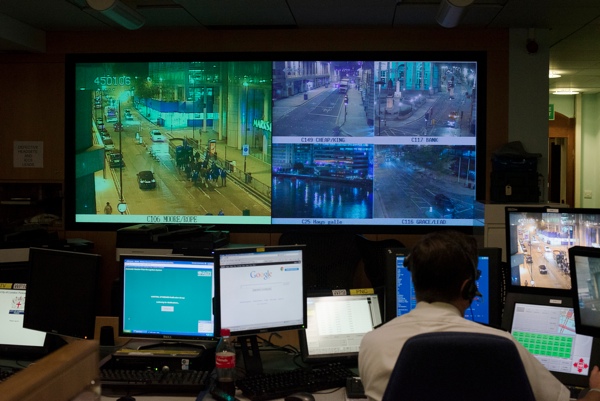
The dray horses appear on the screen in the Police Control Room in Wood St
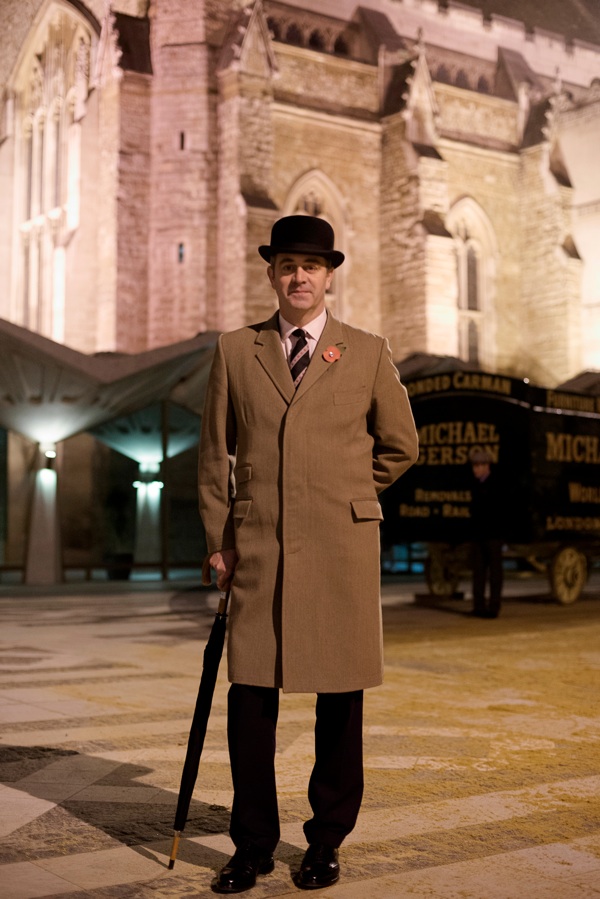
Dominic Reid, Pageantmaster since 1991
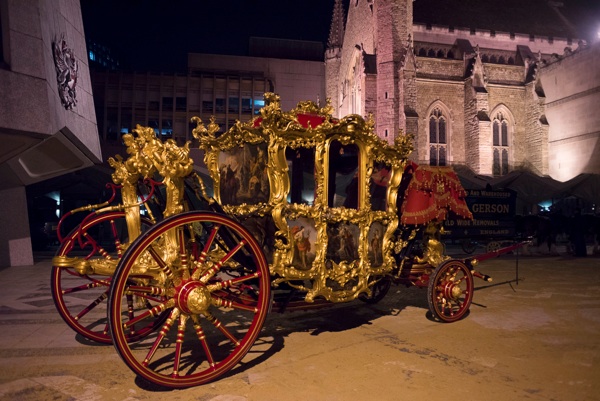
The Coach stands waiting the Guildhall Yard
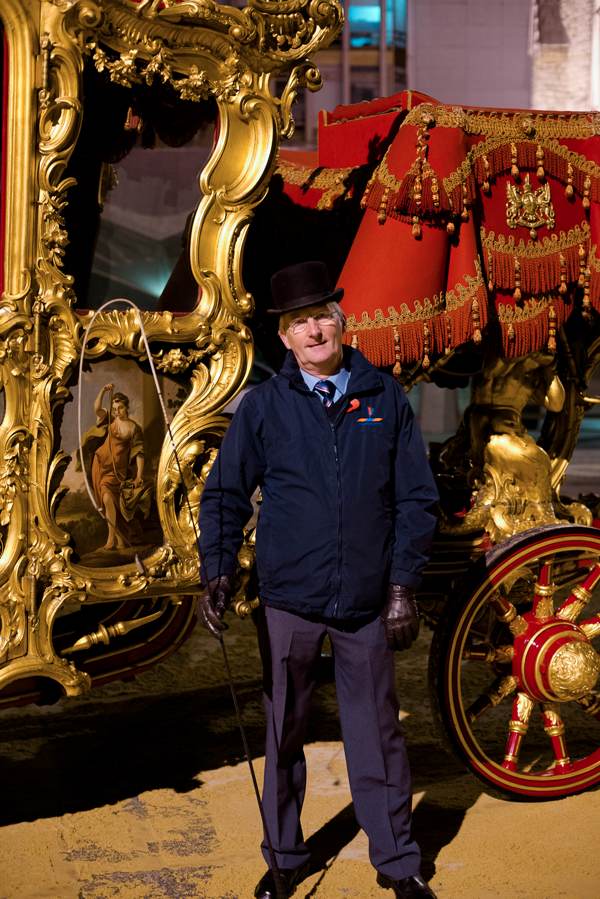
David Scott, Coach Doorman since 2007
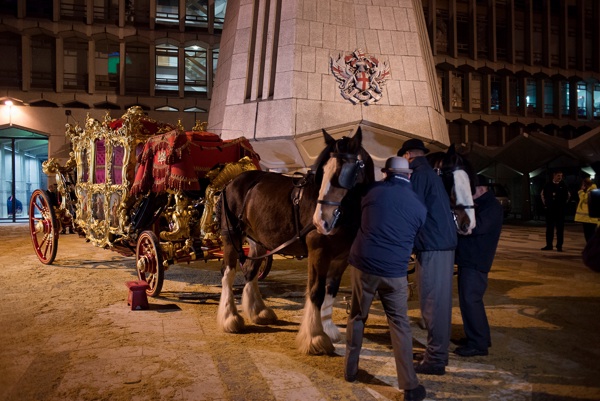
Harnessing the dray horses
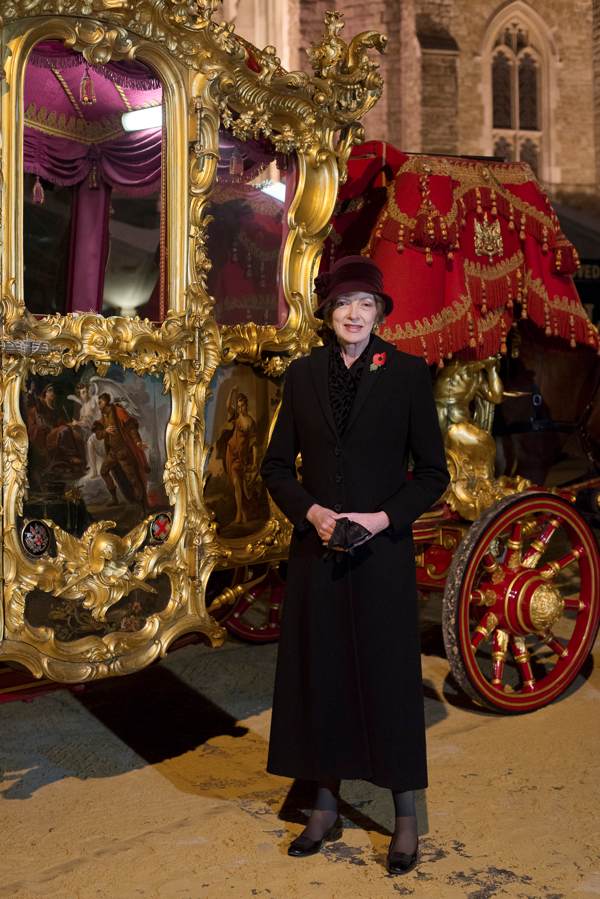
Fiona Woolf, Lord Mayor Elect – the second female in eight hundred years
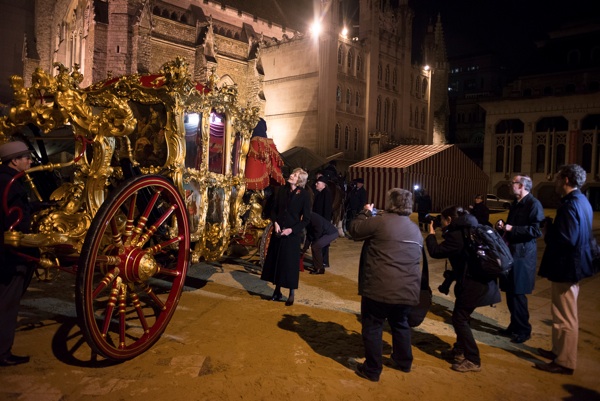
Press photographers and the Lord Mayor Elect
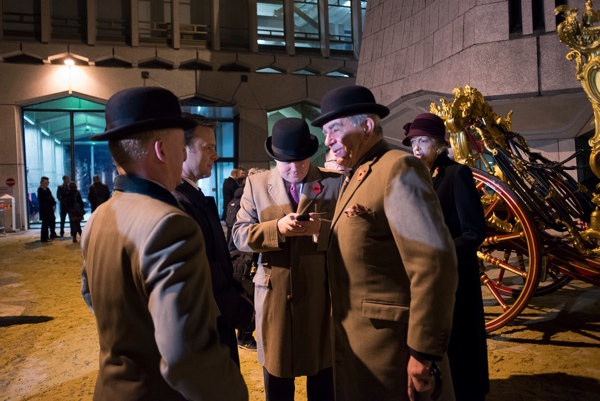
Men in bowler hats make plans
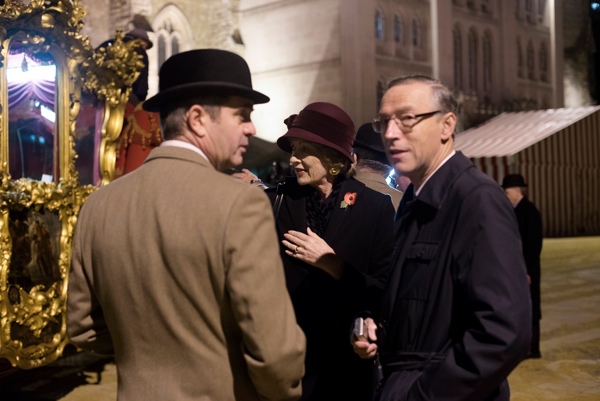
Pageantmaster confers with Lord Mayor Elect and Lord Mayor Elect’s husband, Nicholas Woolf
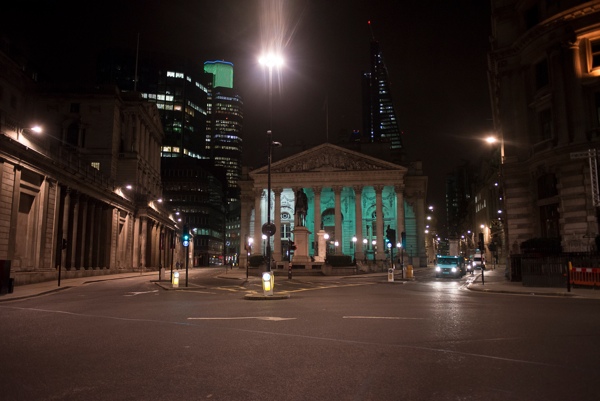
Empty streets at the Bank awaiting the procession
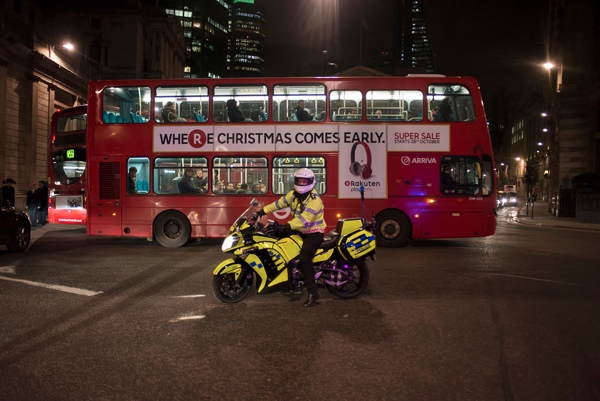
Police rider halts the traffic
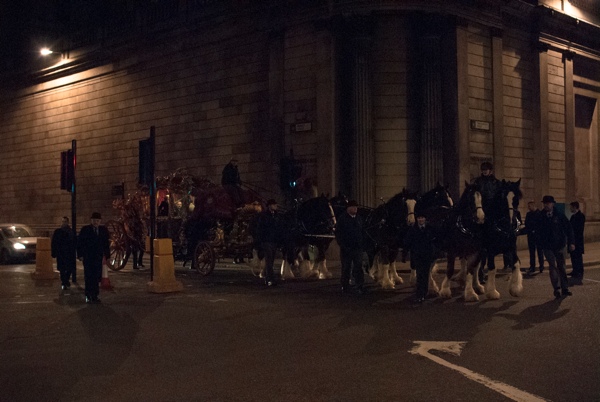
The coach passes the Bank of England
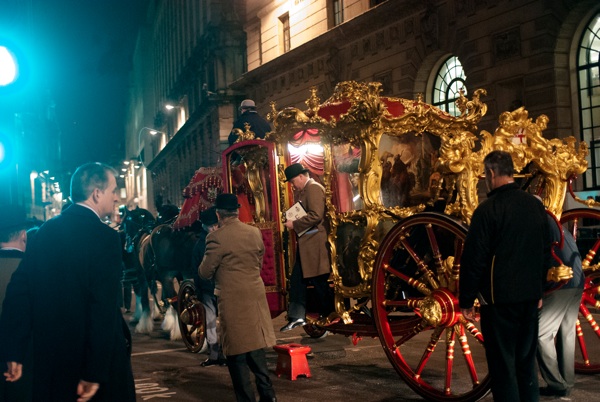
Descending at the Mansion House
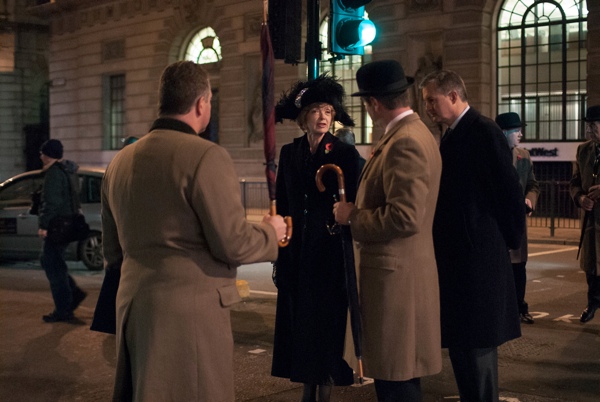
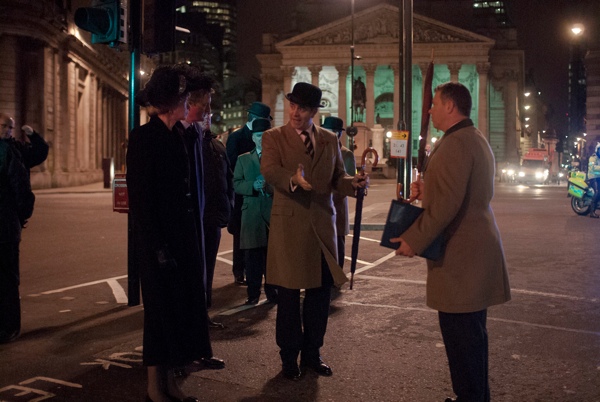
Pageantmaster explains what is required of the Lord Mayor
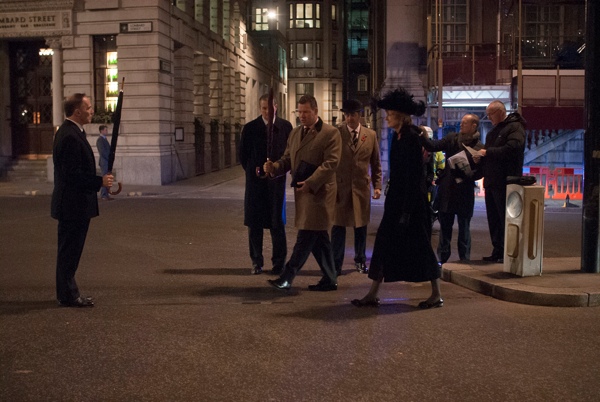
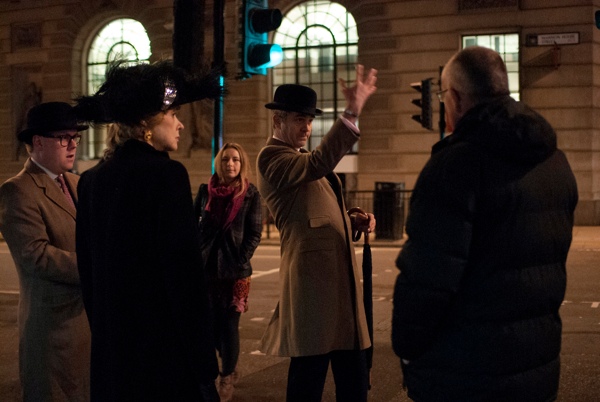
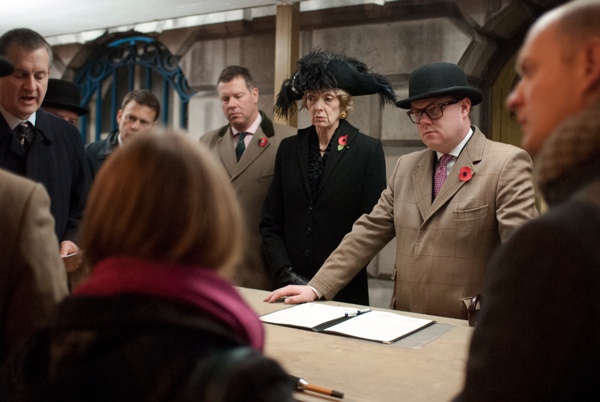
Waiting to practise signing the treaty with the Armed Forces outside the Mansion House
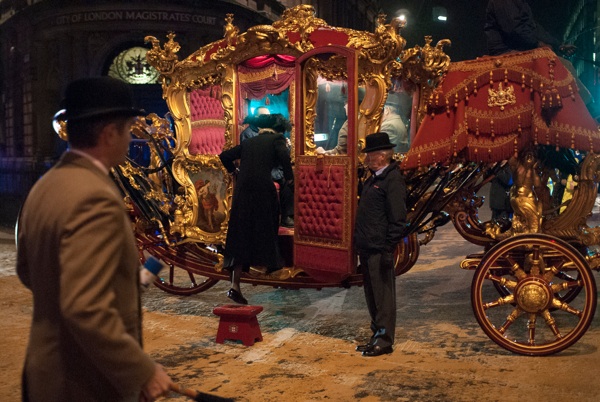
Practising climbing into the carriage
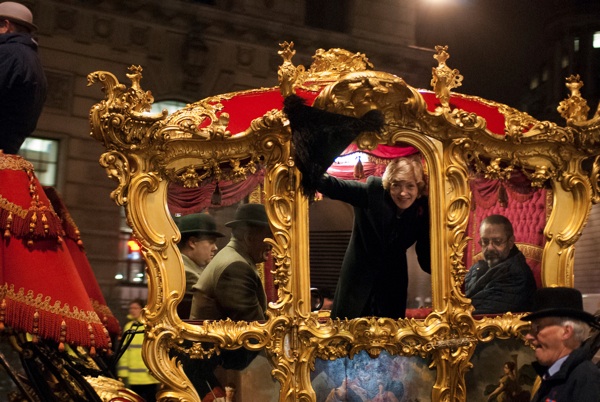
Practising waving
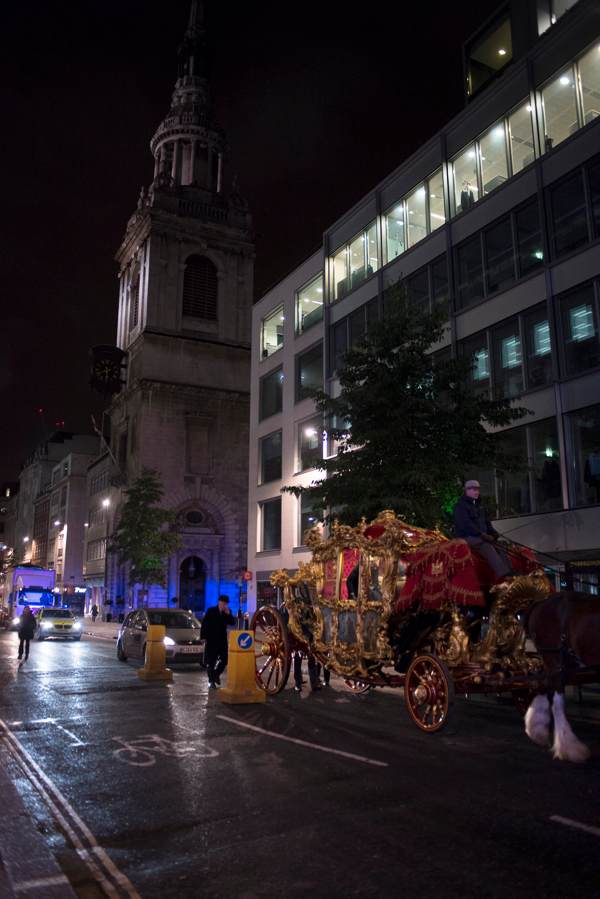
The coach approaches up Cheapside past St Mary-Le-Bow
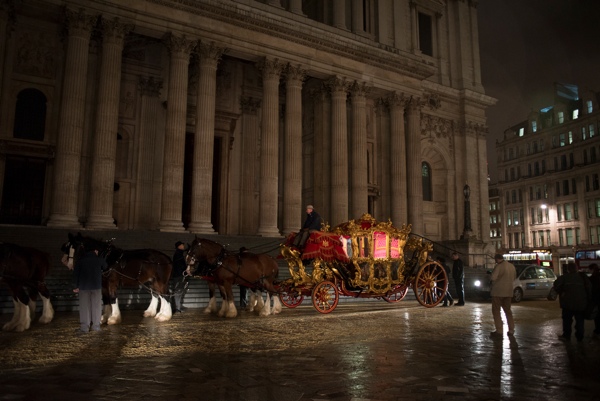
Arrival at St Paul’s
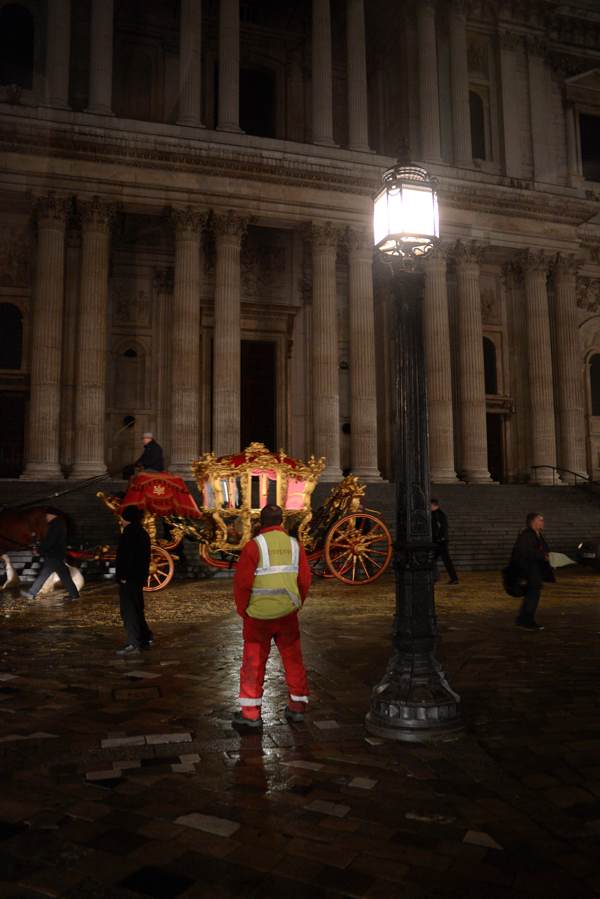
“Beneath the overhanging frontage, lowering in the gloom now the flood-lights were off, the golden carriage glowed mysteriously”
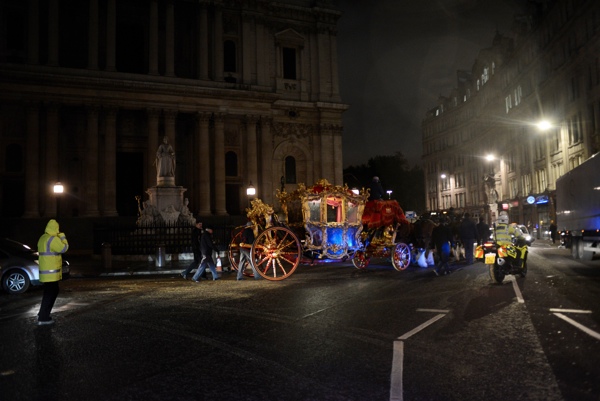
“as if it were an apparition materialised from the ether”
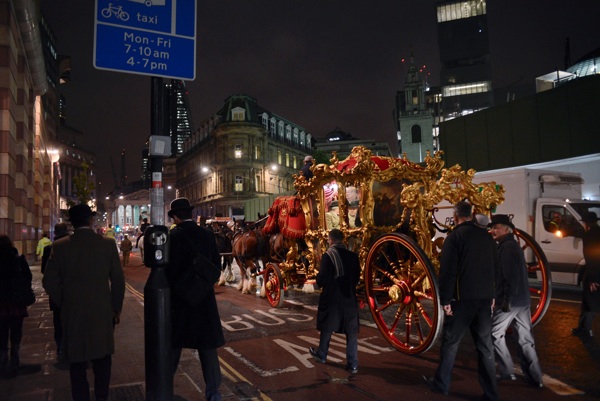
Returning home
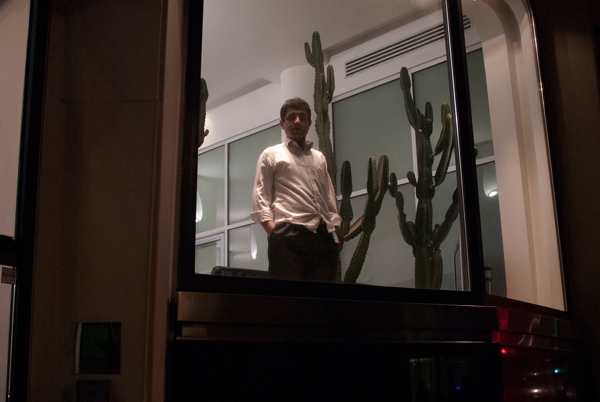
Night shift office worker gets a surprise
Photographs copyright © Sarah Ainslie