
Nicholas Hawksmoor’s Churches

Help publication by preordering now and we will post you a copy signed by Tessa Hunkin at the end of September in advance of publication on October 2nd. Additionally, we are including a complimentary copy of A Hoxton Childhood (cover price £20) with all pre-orders in the United Kingdom. CLICK HERE TO ORDER YOUR COPY

St George’s, Bloomsbury 1716 – 1731
In 1711 Nicholas Hawksmoor was fifty years old yet, although he had already worked with Christopher Wren on St Paul’s Cathedral and for John Vanbrugh on Castle Howard, the buildings that were to make his name were still to come. In that year, an Act of Parliament created the Commission for Building Fifty New Churches to serve the growing population on the fringes of the expanding city. Only twelve of these churches were ever built, but Nicholas Hawksmoor designed six of them and – miraculously – they have all survived, displaying his unique architectural talent to subsequent generations and permitting his reputation to rise as time has passed.
Living in the parish of Christ Church and within easy reach of the other five Hawksmoor churches, I realised that sooner or later I should make a pilgrimage to visit them all. And so, taking advantage of some fleeting spells of sunlight and clear skies in recent days, I set out to the west, the south and to the east from Spitalfields to photograph these curious edifices.
In 1710, the roof of the ancient church of St Alfege in Greenwich collapsed and the parishioners petitioned the Commission to rebuild it and Hawksmoor took this on as the first of his London churches. Exceeding any repair, he remodelled the building entirely, although his design was “improved” and the pilasters added to the exterior by fellow architect Thomas Archer, compromising the clean geometric lines that characterise Hawksmoor’s other churches. His vision was further undermined when the Commission refused to fund replacing the medieval tower with an octagonal lantern as he wished, so he retained the motif, employing it at St George-in-the-East a few years later. Latterly, the tower of St Alfege was refaced and reworked by Hawksmoor’s collaborator John James in 1730. Yet in spite of the different hands at work, the structure presents a satisfyingly harmonious continuity of design today, even if the signature of Hawksmoor is less visible than in his other churches.
Before Hawksmoor’s involvement with St Alfege was complete in 1716, he had already begun designs for St George-in-the-East, St Anne’s Limehouse and Christ Church Spitalfields. In each case, he was constructing new churches without any limitation of pre-existing structures or the meddling hands of other architects. These three churches share many characteristics, of arched doorways counterpointed by arched and circular windows, and towers that ascend telescopically, in graduated steps, resolving into a spire at Christ Church, a lantern at St George-in-the-East and a square tower at St Anne’s. This is an energetic forceful mode of architecture, expressed in bold geometric shapes that could easily become overbearing if the different elements of the design were not balanced within the structure, but the success of these churches is that they are always proportionate to themselves. While the outcome of Hawksmoor’s architecture is that they are awe-inspiring buildings to approach, cutting anyone down to size, conversely they grant an increased sense of power to those stepping from the door. These are churches designed to make you feel small when you go in and big when you come out.
In 1716, Hawksmoor began work on what were to be the last two of his solo designs for churches, St Mary Woolnoth and St George’s, Bloomsbury. Moving beyond the vocabulary of his three East End churches, he took both of these designs in equally ambitious but entirely different and original directions. St Mary Woolnoth in the City of London was constructed upon a restricted site and is the smallest of Hawksmoor’s churches, yet the limitation of space resulted in an intense sombre design, as if the energy of his larger buildings were compressed and it is a dynamic structure held in tense equilibrium, like a coiled spring or a bellows camera held shut.
St George’s Bloomsbury was the last of Hawksmoor’s churches and his most eccentric, completed in 1731 when he was seventy as the culmination of twenty extraordinarily creative years. Working again upon a constricted site, he contrived a building with a portico based upon the Temple of Bacchus in Baalbek and a stepped tower based upon the Mausoleum at Halicarnassus which he adorned with a statue of George I upon the top, flanked by the lion and unicorn to celebrate the recent defeat of the Jacobites. Undertaken with such confidence and panache, Hawksmoor’s design is almost convincing and the enclosed location spares exposure, permitting the viewer to see only ever a portion of the building from any of the available angles.
The brooding presence of Hawksmoor’s churches has inspired all manner of mythologies woven around the man and his edifices. Yet the true paradox of Hawksmoor’s work stems from the fact that while he worked in the Classical style, he could never afford the opportunity to undertake the Grand Tour and see the works of the Renaissance masters and ruins of antiquity for himself. Thus, he fashioned his own English interpretation which was an expression of a Gothic imagination working in the language of Classical architecture. It is this curious disconnection that makes his architecture so fascinating and gives it such power. Nicholas Hawksmoor was incapable of the cool emotional restraint implicit in Classicism, he imbued it with a ferocity that was the quintessence of English Baroque.
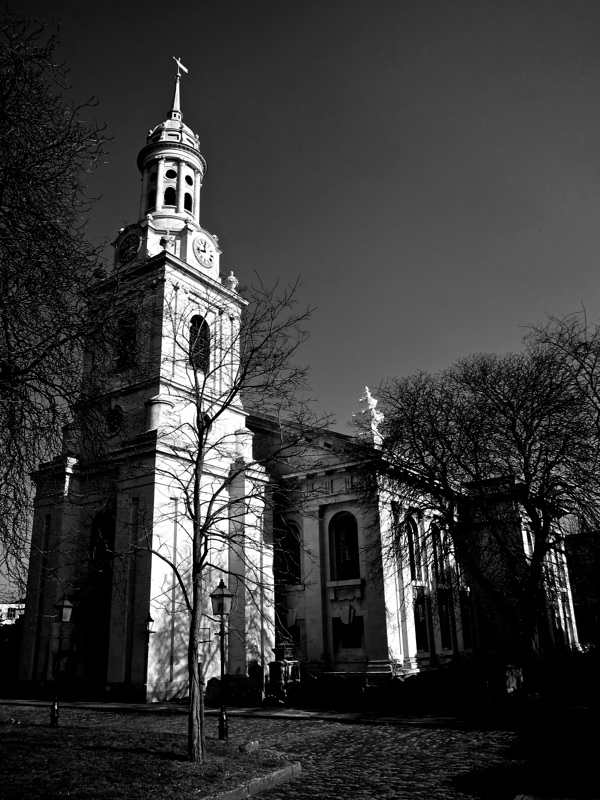
St Alfege, Greenwich 1712-16

St Mary Woolnoth, Bank 1716-24
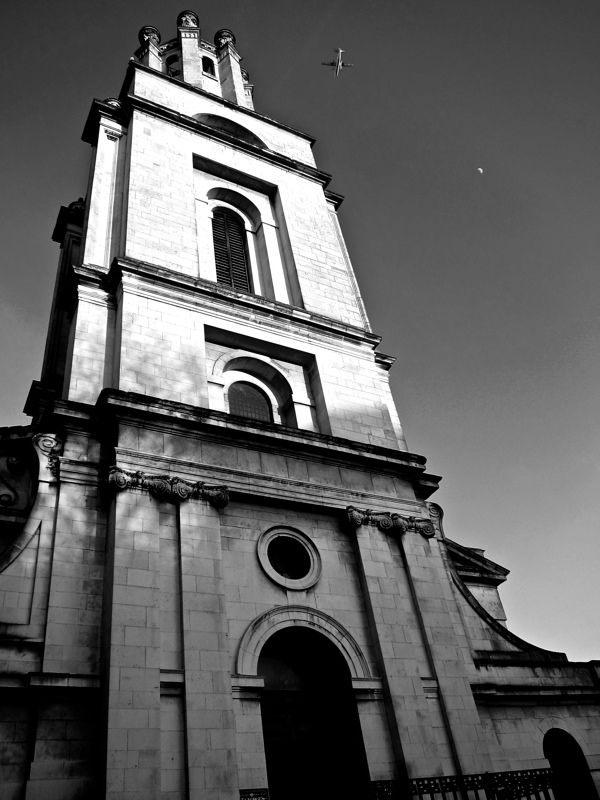
St George-in-the-East, Wapping 1714-1729

St Anne’s, Limehouse 1714-1730

Christ Church, Spitalfields 1714-1729
You may also like to take a look at
Fran May’s Brick Lane
Help publication by preordering now and we will post you a copy signed by Tessa Hunkin at the end of September in advance of publication on October 2nd. Additionally, we are including a complimentary copy of A Hoxton Childhood (cover price £20) with all pre-orders in the United Kingdom. CLICK HERE TO ORDER YOUR COPY
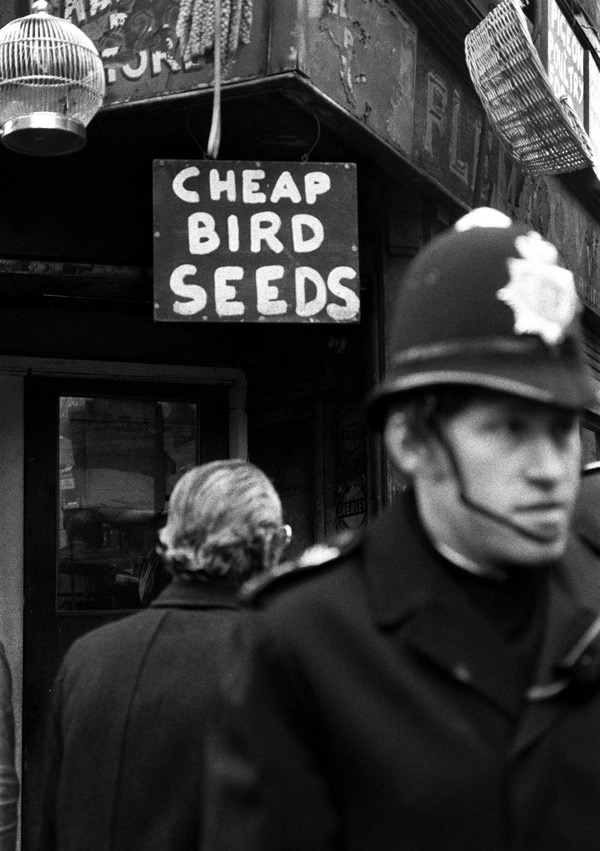
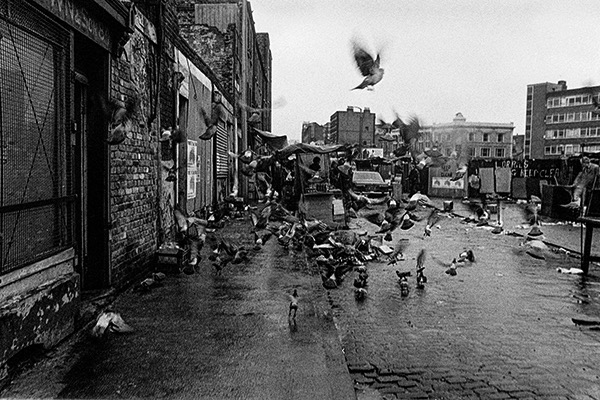
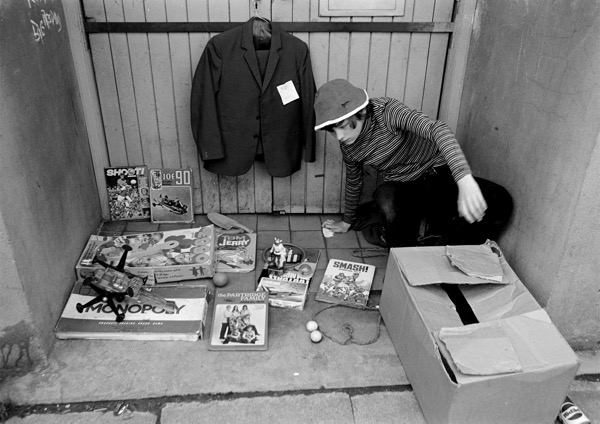
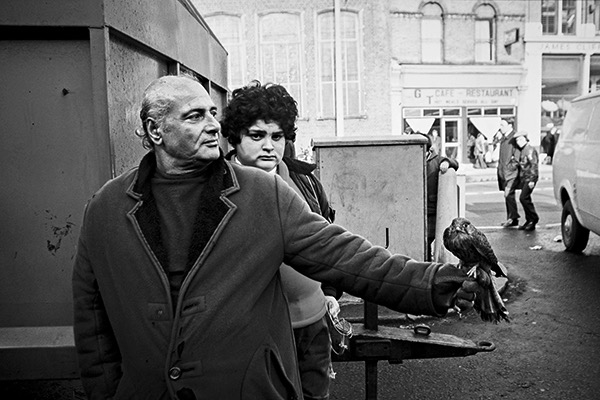
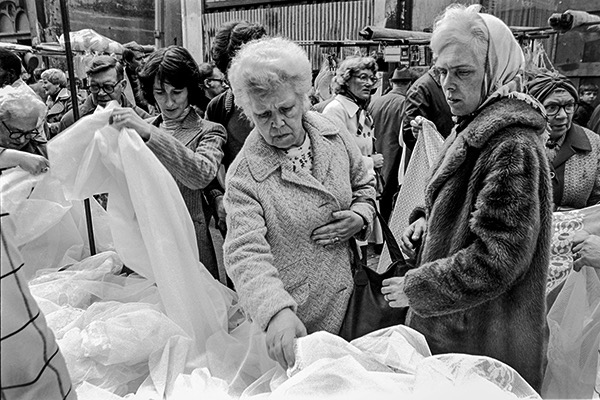
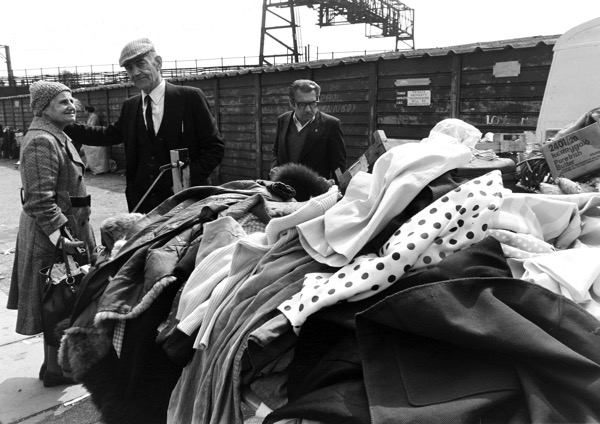
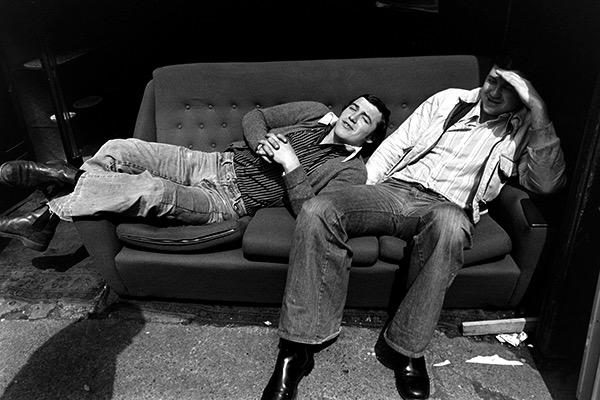
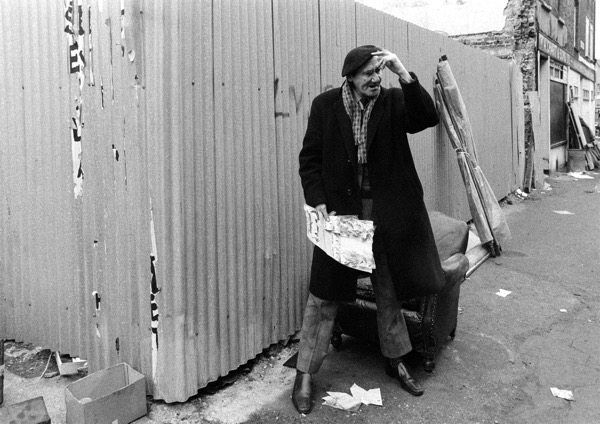
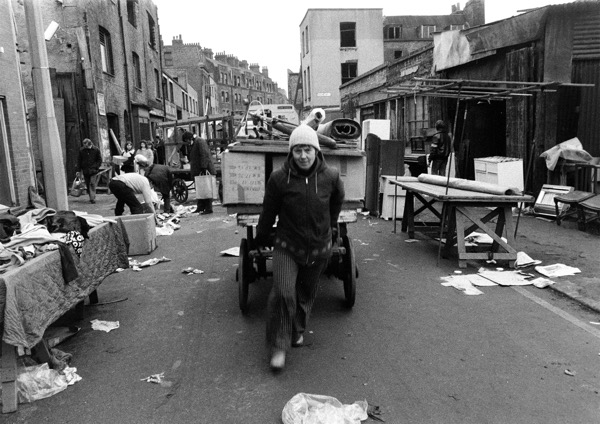
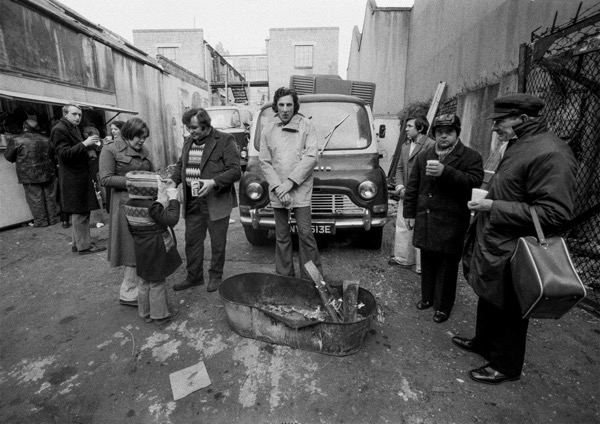
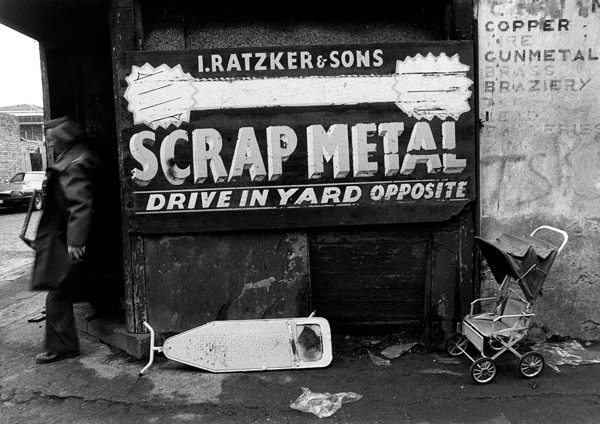
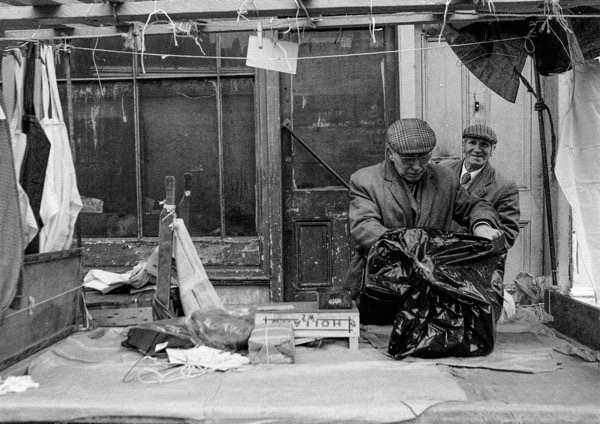
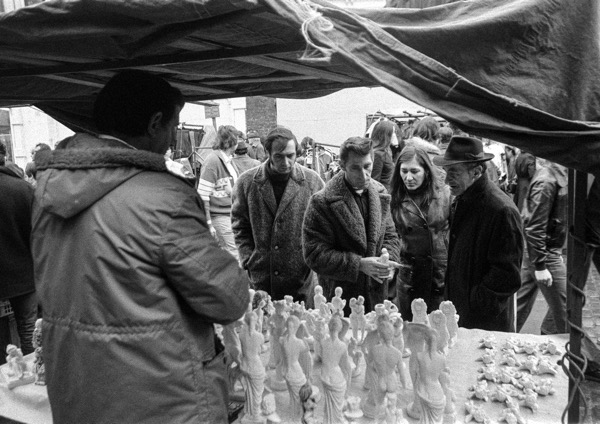
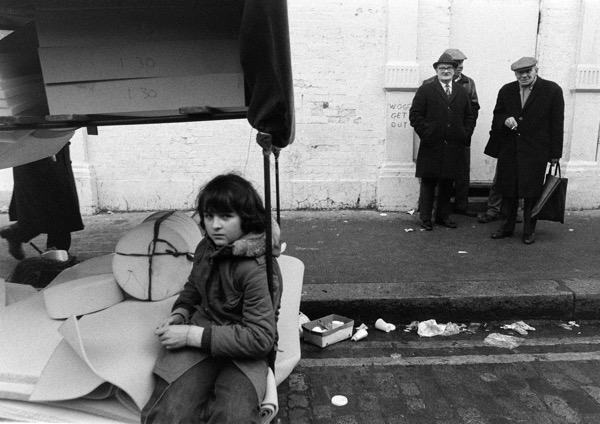
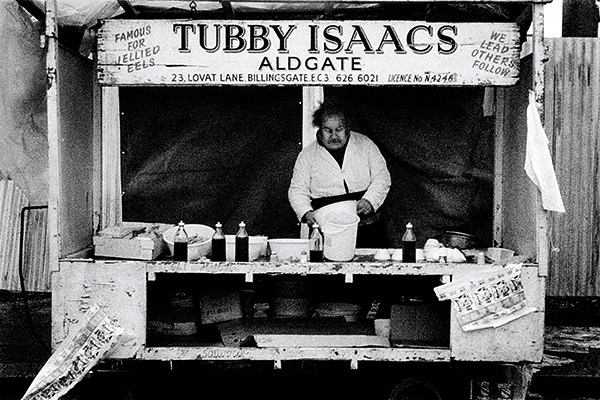
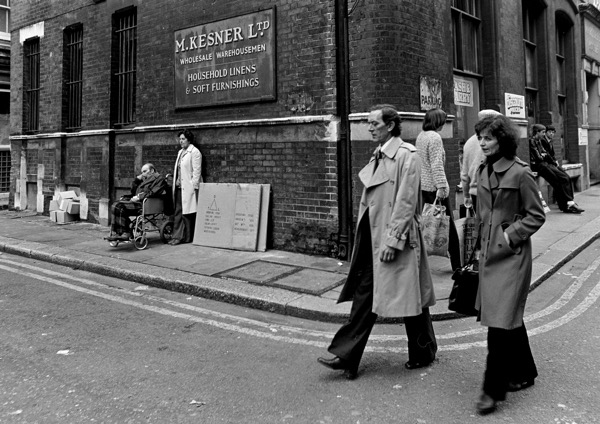
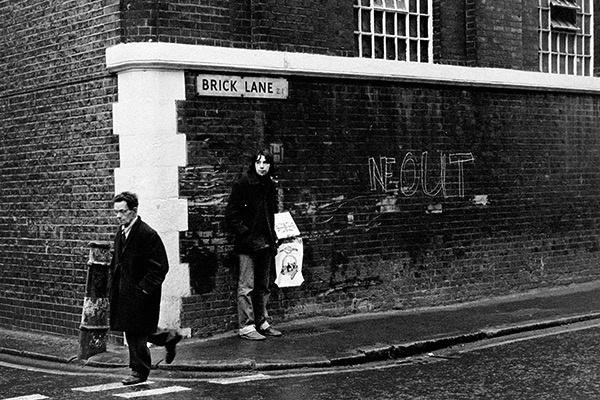
In 1976, Fran May arrived in London at the age of twenty-one to study photography at the Royal College of Art and some of the first pictures she took were of Brick Lane.
“At first, exploring London was daunting, too big and exhausting. Someone suggested I visited Brick Lane, but I would have to get there at dawn for the best of it. An early bird by nature, this was not too difficult. And what a reward. I wore my hair long and had a duffle coat—the perfect disguise. My dominant eye is my left eye, so the camera is always in front of my face. It is like the child of two who covers their eyes and thinks you cannot see them. I had become invisible too. I went time and time again. It was like stepping into a different world, a different universe, a film set. Characters, faces, businesses, from another time, caught in a time warp.
Head of Photography, John Hedgecoe, came to me one day and said I had been selected to be taught by Bill Brandt. The first time I went to his house near Kensington Church St, I took my landscape photographs. I confess I did not know all of Bill Brandt’s work, but I knew of the nudes on the beach. I rang his bell, acknowledged by a woman’s voice, the door clicked open. Once through the open front door, a voice called from beyond. “Come in. Come in.”
Bill sat before a fire in the grate, the light from the flames flickering on his face. “What have you brought me?” he asked in his gentle voice. I placed my portfolio on the floor and lifted the pictures to him one by one. He was silent until he looked at me and said, “I don’t think I can teach you anything, do you?” I did not know how to take this. I packed everything away, thanked him and left.
A couple of days later, I bumped into John Hedgecoe again in the corridor. “How did you get on with Bill Brandt?” he asked. I told him I didn’t think I should go again because Bill had said he couldn’t teach me anything. “No, you must go see him again. You must make the most of your opportunities”. So off I went, this time taking some of the images I had taken while at Sheffield and the more recent ones shot in Brick Lane.
This was a different experience. Bill studied each one for a long time. Seated on the footstool at his feet, Bill moved his reading light nearer and re-settled himself in his chair. I studied the firelight flickering on his face. Then he put the pile of photographs flat on his lap, breaking the silence and said, “Ah, Fran. Let me tell you something. Never loose these images, don’t think of them just as student work, for they will have social significance one day”. His eyes twinkled as he smiled at me.
I returned one more time to visit Bill Brandt. He told me he had not really known what he had achieved until later. The photographs he had taken were commissioned jobs. When they were put together in a particular order, they meant something new and that the passage of time mattered. Well, I did keep these images.”
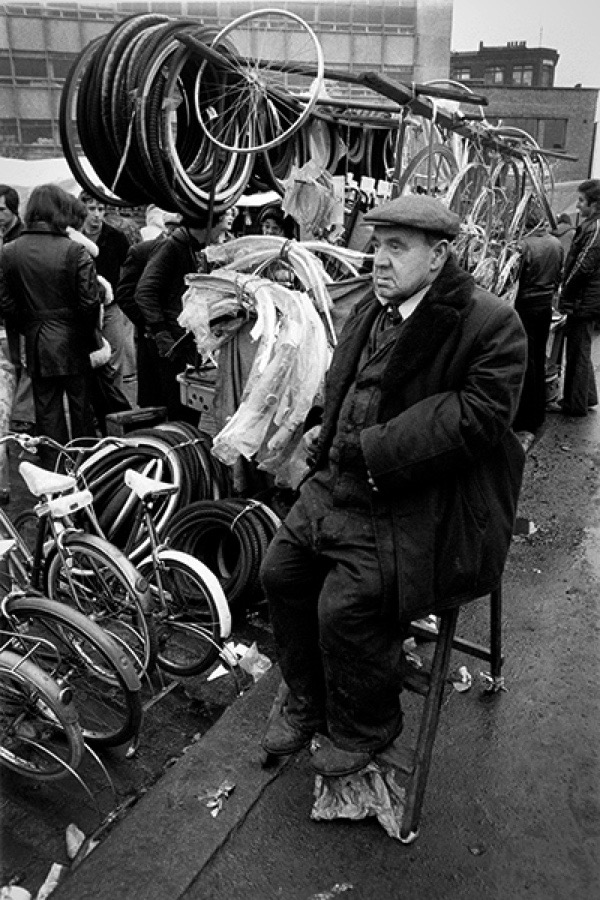
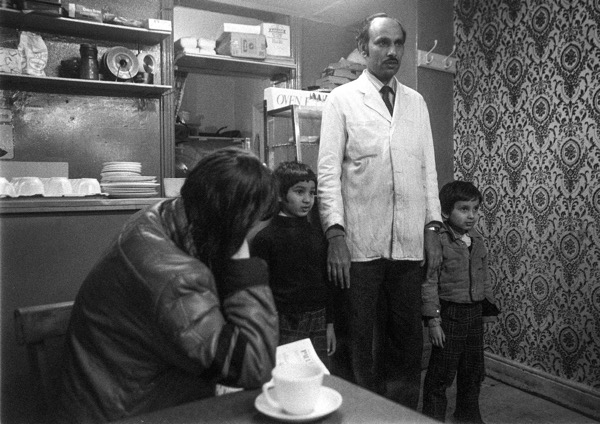
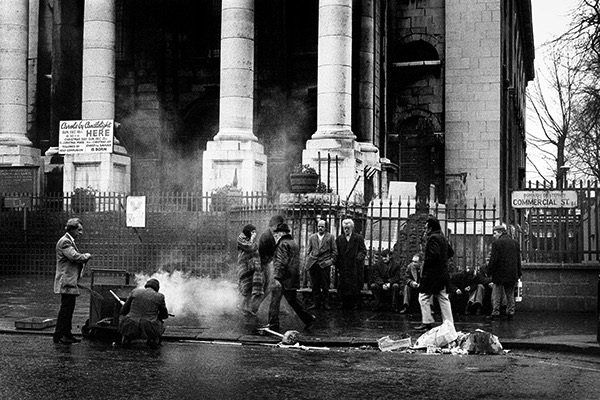
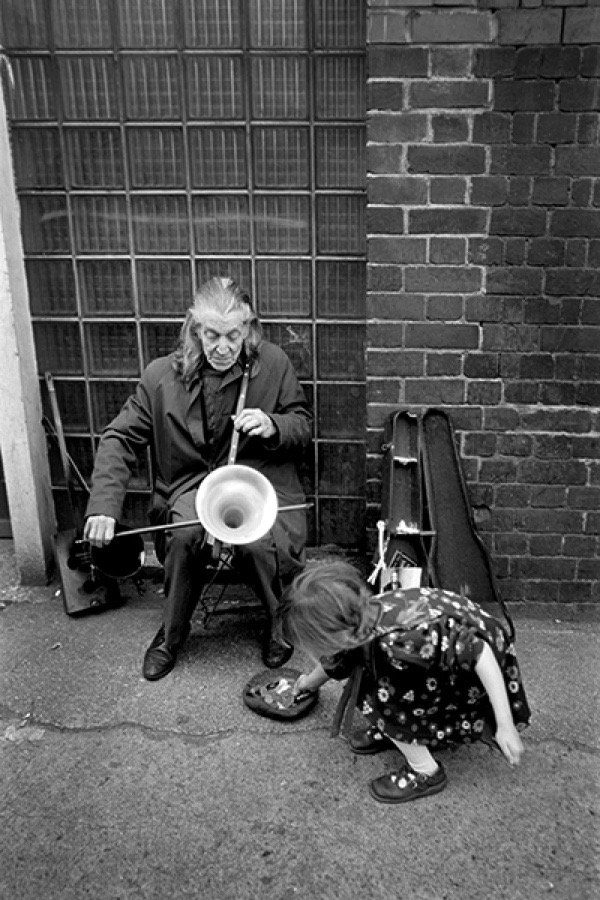
Photographs © Fran May
You may also like to take a look at
Raju Vaidyanathan’s Brick Lane
At Bethnal Green Weightlifting Club
TICKETS AVAILABLE SATURDAYS 30TH AUGUST & 6TH SEPTEMBER. Join me for a ramble through 2000 years of culture and history at the heart of old London followed by tea and cakes served in a 300-year-old house overlooking Christ Church, Spitalfields. CLICK HERE TO BOOK YOUR TICKET

Dominic Patmore, Powerlifter
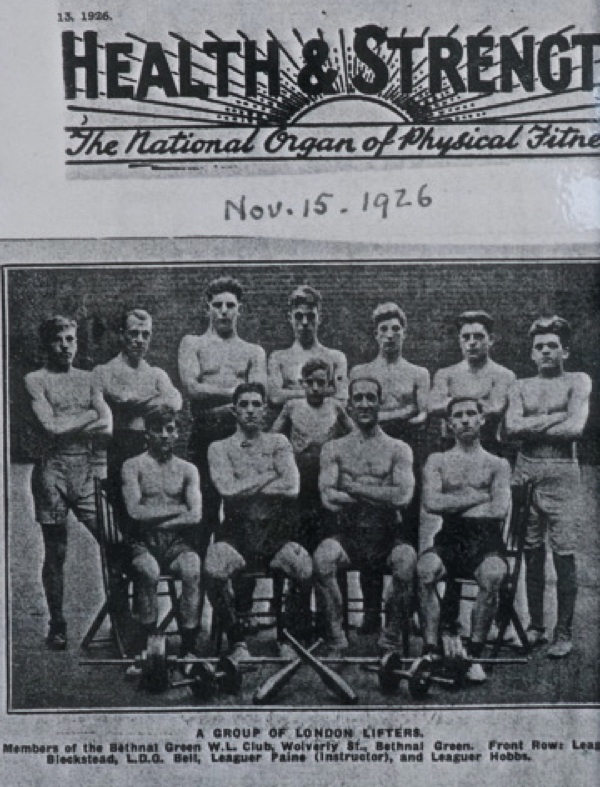
In Turin St, there is a single-storey brick building so unassuming that even the locals do not know what it is, yet this is home to the celebrated Bethnal Green Weightlifting Club. The esteemed members believe their association dates from 1926, but a poster for the New Bethnal Green Weightlifting & Physical Culture Club on the wall inside the gym, dated 1931, suggests that its origin may be earlier.
Even the most senior member, Ron Whitton of Columbia Rd, is a relative newcomer who joined in 1946. He greeted Contributing Photographer Sarah Ainslie & I when we paid a visit, fresh from his twice-weekly swim in the Serpentine and preparing for his twice-weekly weightlifting session to follow. A sprightly octogenarian, Ron is a shining exemplar of the health benefits of body-building and weightlifting. “I’ve always been a keep fit guy,” he vouched, indicating the photos of his former glories upon the wall,“there’s not many guys of eighty-three still training.”
“In 1946, it was just an old shed in the playground with one or two bars and a set of dumbbells, where a couple of guys who’d come out of the forces started weight-training,” Ron recalled fondly, casting his eyes around the hallowed space, “Around 1948, Jack Brenda, Secretary of the Club, opened up this place but it was like something out of the Hammer House of Horrors then, it had been closed for years and there was no equipment, but we got it going and we’ve been here ever since.”
On Saturday morning, we encountered a mutually respectful crew of all sizes of male and female weightlifters absorbed in their training session, punctuated with intense cathartic moments when a major lift was ventured and one among them heaved and strained, channelling the support of their comrades egging them on, before throwing the weight down with a clang onto the mat. Although there were those who had the obvious advantage of size, most compelling in their lifts were those skinny individuals of diminutive stature who appeared to summon resources of strength from the ether in lifting weights that looked far beyond their apparent capacity.
“I started because I liked the idea of being strong,” powerlifter Laura Porter admitted to me, “but now I’m obsessed – it’s the satisfaction when you get a new personal best. I’m not super-duper strong yet, but I’m not bad and I like the feeling of being powerful.”
“It’s a good thing for women to do because it’s good for your bone strength, counteracting any tendency to brittle bones,” she revealed with a blush, “I’m approaching forty so I think about these things, but I hope to be weightlifting and competing in my sixties and beyond.”
A relaxed family atmosphere prevails at Bethnal Green Weightlifting Club, uniting enthusiasts of all ages and walks of life. “There was a time when every London borough had places like these but now there only two left in the entire capital,” Martin Bass, Club Secretary informed me, readily indicated pals that joined with him over forty years ago – and demonstrating the modest camaraderie among all those who seek transcendence of their physical and spiritual limits, here in confines of the gym, as a counterpoint to the external challenges of life’s journey beyond its walls.

Ron Whitton, still weighlifting at eighty-three

Ron is second from right at the Bethnal Green Physique Contest of 1952 – London’s first body-building contest. “all the other have passed away”

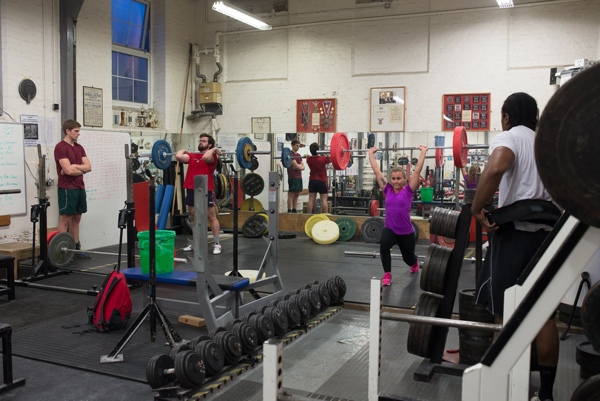
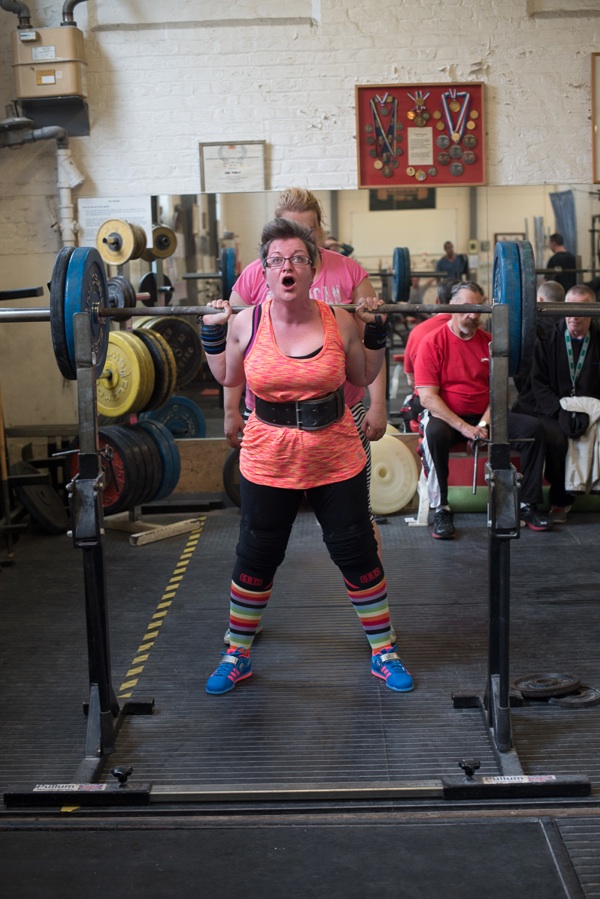
Laura Porter, Powerlifter
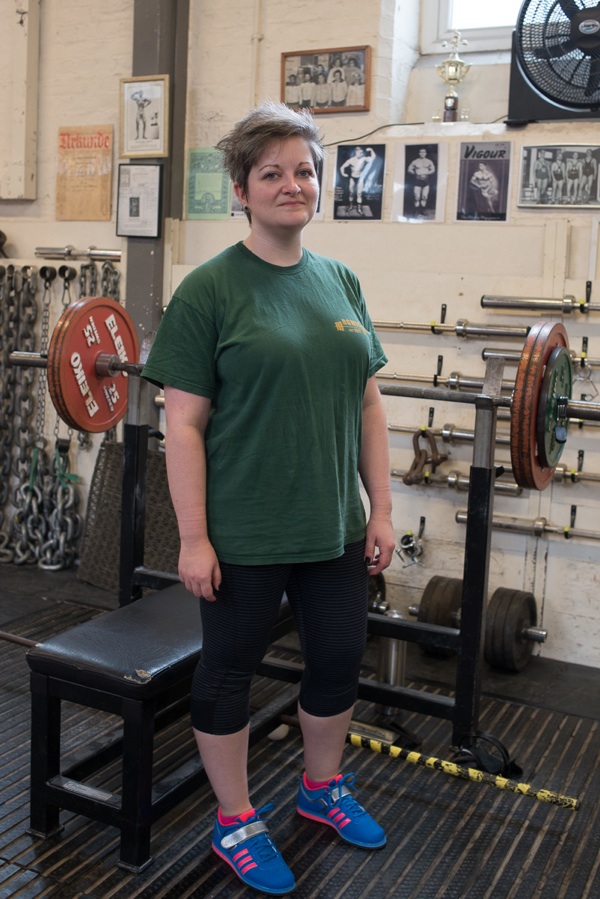
Laura – “I like the feeling of being powerful”

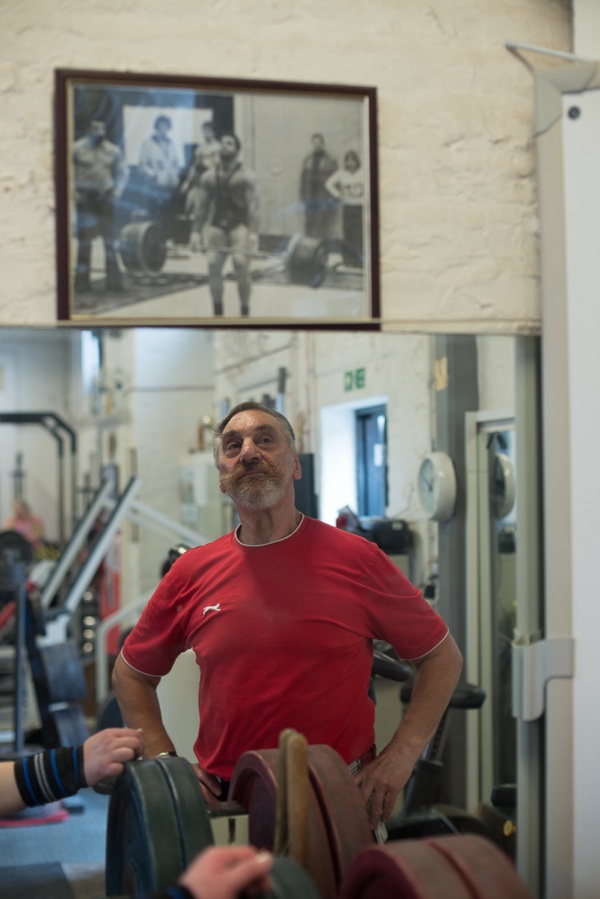

Martin Bass, Club Secretary and Member for forty-five years
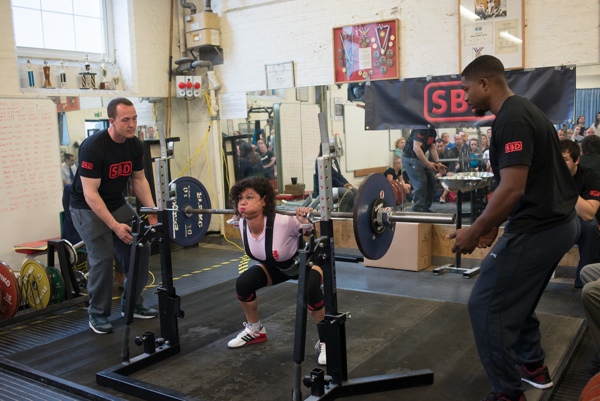
At the Women’s Powerlifting Contest
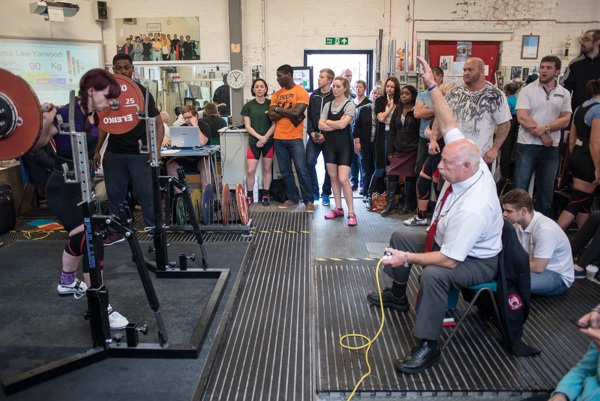
Photographs copyright © Sarah Ainslie
Bethnal Green Weightlifting Club, 229 Bethnal Green Rd, E2 6AB – entrance in Turin St
You may also like to read about
The Musclemen of Bethnal Green
Chris Chappell, Master of Taoism
Simon Mooney At the Repton Boxing Club
The Loneliness Of Schrodinger

TICKETS AVAILABLE SATURDAYS 30TH AUGUST & 6TH SEPTEMBER. Join me for a ramble through 2000 years of culture and history at the heart of old London followed by tea and cakes served in a 300-year-old house overlooking Christ Church, Spitalfields. CLICK HERE TO BOOK YOUR TICKET
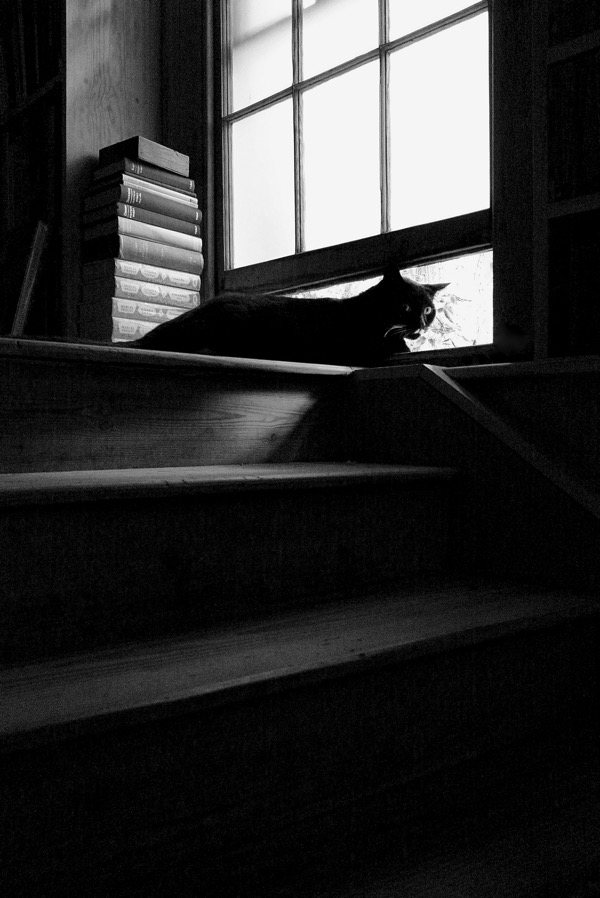
No-one knows where Schrodinger came from. He wandered in from the street one day and made his home in Shoreditch Church, where he lived for two years before he came to me in Spitalfields. In his vulnerability, Schrodinger learned to be lonely as a means of survival. Loneliness became his friend and his self-sufficiency protected him when life was uncertain.
On the street, Schrodinger experienced the capricious nature of humanity. He discovered their indifference to a stray cat. When the church offered Schrodinger a refuge, he spent long nights patrolling the empty building in the dark. Whenever he drew unwanted attention from dogs in the churchyard, he could escape through a metal grille into the crypt and sleep among the dusty coffins. Thus Schrodinger discovered an affinity with solitude.
When Schrodinger arrived in Spitalfields, he hid behind the old wing chair when anyone entered the room and looked over his shoulder warily while eating. If I approached him sitting on the floor, he frequently sprang up to run away – but keeping as much space around him as he did in Shoreditch Church proved a challenge in my house. He was a creature of hauteur who would not tolerate being stroked or petted and he never sought the opportunity to sit upon my lap as you might expect a cat to do.
Yet his caution was punctuated by sudden expressions of affection, especially when I presented him with plates of fresh food – as if he could not control his gratitude at such unexpected kindness. By the standards of domestic cats, Schrodinger’s expectations were low and he did not presume any privilege. Only in his sleep was he no longer vigilant. At night I came upon him taking his ease, stretched out and defenceless, even if by day he was circumspect.
These signs gave me hope that Schrodinger might overcome his loneliness and accept that he now has a permanent home where he will always be safe. I often saw him looking at me suspiciously, sizing me up. I wondered if he was questioning how long this episode of good fortune might last and whether it was only a matter of time before he was abandoned on the street again. If loneliness is his custom and source of security, Schrodinger cannot sacrifice it as long as he has uncertainty over his circumstance.
One day while I was writing at my desk, Schrodinger climbed up silently and slipped into the gap between me and the back of the chair. A round face appeared beneath my right armpit and a black tail curled round beneath my left armpit as he rubbed himself against my back and purred affectionately. Schrodinger had found a space where he fitted perfectly. Even if he still remained wary when I encountered him face to face, it was unquestionable progress.
To my delight, this new behaviour evolved quickly. So that he waited each day for me to sit at my desk and then ran to leap up, settling down there, snug between me and the back of the chair. As I sit writing now, I can feel his warmth against the small of my back. I wish I could say that he dictated stories to me but the fact is we inhabit separate reveries. We are peaceful in our mutual companionship that requires no eye contact, and I keep this private intimacy in mind when Schrodinger displays his habitual self-possession in other circumstances.
These days when I walk towards him sitting on the carpet, Schrodinger does not move out of the way in skittish discontent. He sits still, holding his ground and knowing that I will step over him or walk round. He spreads his shoulders and stretches out his front legs in the manner of the Sphinx, expressing a certain assurance in his territory and his right to be there.
As the summer has passed, Schrodinger’s confidence has grown. He will approach visitors to greet them and if I reach out a hand to him, he lifts his head up to meet it now. He knows I am not indifferent to him but I do not require him to become a cuddly domesticated subordinate either.We can exchange glances, even if he is more comfortable inhabiting his implacable vigil.
I observe Schrodinger’s internal isolation ebbing away as he becomes accustomed to his new life with me in Spitalfields, yet I respect his dignified self-possession, his remote sufficiency and his introspection. Loneliness shaped Schrodinger’s personality and it has endowed him with courage and strength of character. Loneliness is an essential part of Schrodinger’s nature. Schrodinger’s loneliness is his wisdom.
You may like to read my earlier story about Schrodinger


Order this handsome collection of stories of my old cat THE LIFE & TIMES OF MR PUSSY, A Memoir Of A Favourite Cat
At 38 Princelet St
TICKETS AVAILABLE THIS SATURDAY 30TH AUGUST. Join me for a ramble through 2000 years of culture and history at the heart of old London followed by tea and cakes served in a 300-year-old house overlooking Christ Church, Spitalfields. CLICK HERE TO BOOK
In this except from A MODEST LIVING, Memoirs of a Cockney Sikh, the first London Sikh biography, Suresh Singh tells the story of his family who lived in their house in Princelet St for seventy years, longer than any other family in Spitalfields.
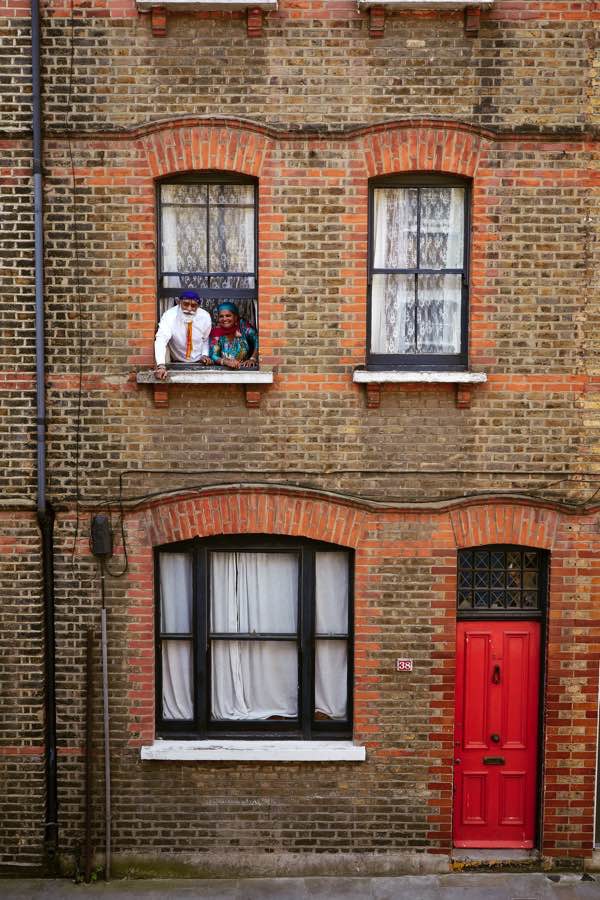
Suresh Singh and his wife Jagir at 38 Princelet St (Photograph by Patricia Niven)

Joginder Singh at 38 Princelet St
Dad came with very little. In 1949, he left his village in the north of India, carrying a small satchel with a tin of shoe polish and not much else. Because he was from the shoemaking caste he thought he could shine peoples’ shoes in London and that was what he did at first.
Somebody told Dad that you could sleep in doorways in Spitalfields and quickly find work there. The porters piled up their barrows and it fell on the floor in abundance, so you could easily collect enough fruit and vegetables for a week. He knew people would leave you alone and you could get by. I think something drew him to Spitalfields.
A man called Mama Nanak came to London before my father. He was a friend of the family and a wheeler-dealer, a dodgy guy. No-one ever said much about him but there is a photograph of him in his suit with a big moustache. He was an enterprising, entrepreneurial man. Eventually, he went to work at Heathrow Airport cleaning toilets and moved to Southall. He brought Sikhs over and said to them, ‘You can stay here.’ He was someone who worked his way around things. He and Dad got hold of a house from a Jewish furrier. In those days, you could just buy the keys.
Our house, it was a slum then. Official records state it was vacant at the time. Dad wanted a big house so that he could welcome his mates and soon there were as many as fifty people living in it. You ask any Punjabi from here to Glasgow who arrived in Spitalfields in the fifties and they will tell you they lived at 38 Princelet Street, even if it was for one night. Some people even walked from Heathrow Airport. They were hot-bedding, with one person getting up to go to work and another climbing into the same bed. It was pretty rough but it was a place where people got on. You could mingle in Spitalfields if you had a big overcoat and a hat, tucking yourself into the area with its smell of bonfires, the brewery, and the fruit and vegetable market.
It was a dark place at night but Dad had a sense of direction even though he could not read or write. He found his way by landmarks. Hawksmoor’s tall spire of Christ Church, with its illuminated clock, dominated the neighbourhood. Even when it was dirty, Christ Church was pretty swag, and Dad liked it. Although there were tramps outside and the bustling Spitaltfields market was across the road, he believed you could elevate yourself out of it.
Our house was in the next street and Liverpool Street station was beyond. On Sundays you could pick up stuff for nothing in the flea markets and Dad got most of our furniture there. In the surrounding streets were Maltese families, Irish families, Hassidic and other Jewish families. It was a mishmash of people and Dad was in his element. Spitalfields pulled him in. The Punjab and the East End of London were two different worlds. I think the docks and the river led him to this place, where you could get by even if you had very little.
Dad found it very difficult to get work because he had a beard and long hair wrapped up in a turban. Some Sikhs shaved their heads. He was told there was a guy in Glasgow who would do it with an accompanying ritual. Dad took the coach to Glasgow to the rough part of the tenement blocks. The guy said to my Dad, ‘This is how you get a job in England.’ He took Dad into the yard and removed his turban and shaved his hair and his beard off. They said that day, ‘Joginder Singh wailed at the top of his voice.’ Dad said, ‘Now my Sikhism is from within.’ He realised that he was in a foreign land but he could keep his faith inside. He made that sacrifice to get a job.
Dad worked in Liverpool Street station and Old Broad Street shining shoes on and off for fifteen years. He did not mind it, although others in the house often asked, ‘Why do you want to do that? You’ve come to England, why do you want to get down on your knees and shine shoes?’ Dad answered, ‘That is a lovely thing to do.’
When he came back from Glasgow, he got a job at once on a building site. People in the house thought, ‘Oh well he shaves, he gets a Wilkinson blade from the market and he keeps himself clean-cut.’ Yet Dad always wore the clothes of a Punjabi Sikh in the house, even if outside he wore proper tailored suits with a nice cut from a good Jewish tailor. These were bought down Brick Lane or in Cheshire Street and probably came off a stiff but they were bespoke. His friends always used to laugh, ‘Joginder Singh, the suits are very beautiful – don’t know how you got them?’ He always kept his shoes polished too, that was very important to him. Even today, I always keep my shoes polished.
I think it is funny but also sad that Dad would do that. Why did he put his pyjamas on and become like a proper Punjabi in the house, but dress in a suit before he went out? I think if he had put a coat over his pyjamas to go out he probably would have got away with it, but he never did. He always valued being in Britain and he worked really hard. I think Spitalfields welcomed him for that.
Dad was always bringing home down-and-outs he met in the street. Often, Dad would invite his vagabond friend Karama but Mum would say, ‘Keep him downstairs,’ because he was infested. So Dad sat him in the yard, shaved his hair off and set it alight, and as they burnt, the fleas would pop like sparklers. I remember Mum being at the end of her tether sometimes because Dad fed these down-and-outs. We still eat the same diet today and, if anybody comes, they eat what we eat. We do not say, ‘We’ve got friends coming, we’ve got to get special food.’ It is what it is, that was how it was and how it is today. It was the same when Mum was here and she passed it on to Jagir, my wife.
Dad became the owner of 38 Princelet Street in 1951, about two years after he arrived in London. I remember the house being full of people, with three gas meters and cookers upstairs and downstairs. My view was of kneecaps and shoes. Mr Ford, the environmental health officer was knocking on the door all the time saying, ‘We’re going to close you down.’ When I was a child we lived on the top floor, which was just an open space with the walls knocked through and the rafters uncovered with two skylights.
Our house was quite broken down and we did not have hot water or central heating. We used to bathe outside in the yard. I remember putting pans on the gas, heating up water. Once it boiled, we tipped it into a bucket and carried it down into the yard then topped it up with cold water. Dad washed in cold water and when he threw it on him, he yelled ‘Wah Hey Guru!’ The joke in the community was that Joginder Singh was a holy man because he kept shouting ‘Wah Hey Guru!’ but really it was the shock of cold water.
Some Sikhs did not want to stay with us, saying, ‘How can you live among Muslims and Jews?’ and he replied, ‘At least they don’t gossip, so you go and I’ll stay here.’ Our house was an open house and for many people it was a safe house – especially when Dad was there.

Joginder Singh in the kitchen at 38 Princelet St – “I think it is funny but also sad that Dad would do that. Why did he put his pyjamas on and become like a proper Punjabi in the house, but dress in a suit before he went out?”
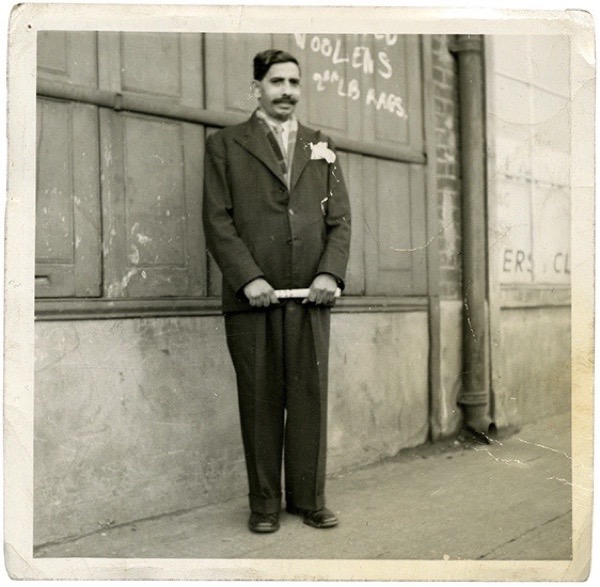
Mama Nanak – “He was an enterprising, entrepreneurial man. Eventually, he went to work at Heathrow Airport cleaning toilets and moved to Southall.”
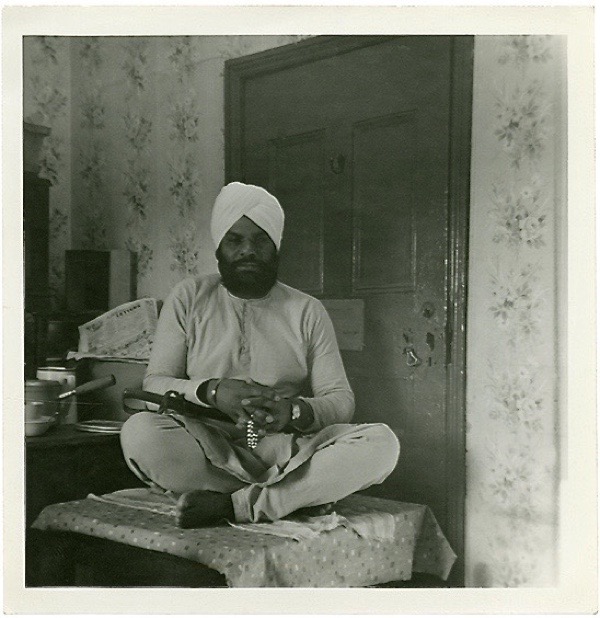
Joginder Singh

Click here to order a copy of A MODEST LIVING for £20

Bill Crome, Spitalfields Window Cleaner
TICKETS AVAILABLE SATURDAY 30TH AUGUST. Join me for a ramble through 2000 years of culture and history at the heart of old London followed by tea and cakes served in a 300-year-old house overlooking Christ Church, Spitalfields. CLICK HERE TO BOOK
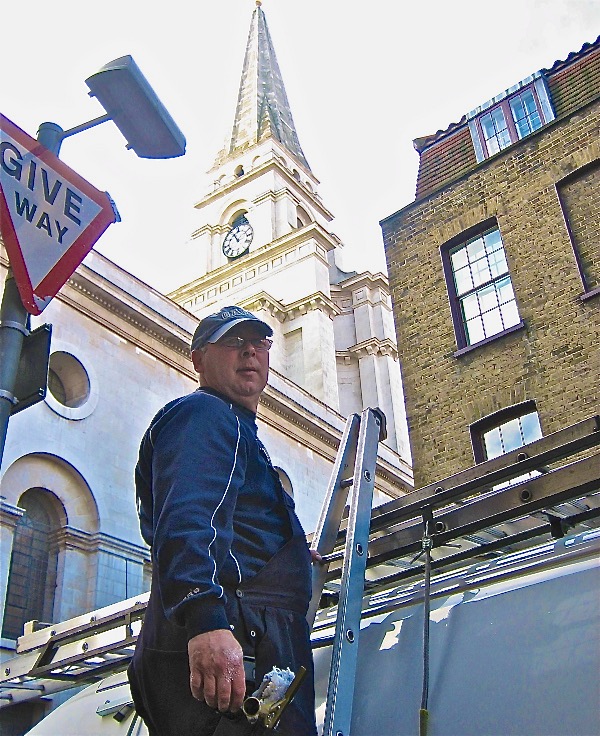
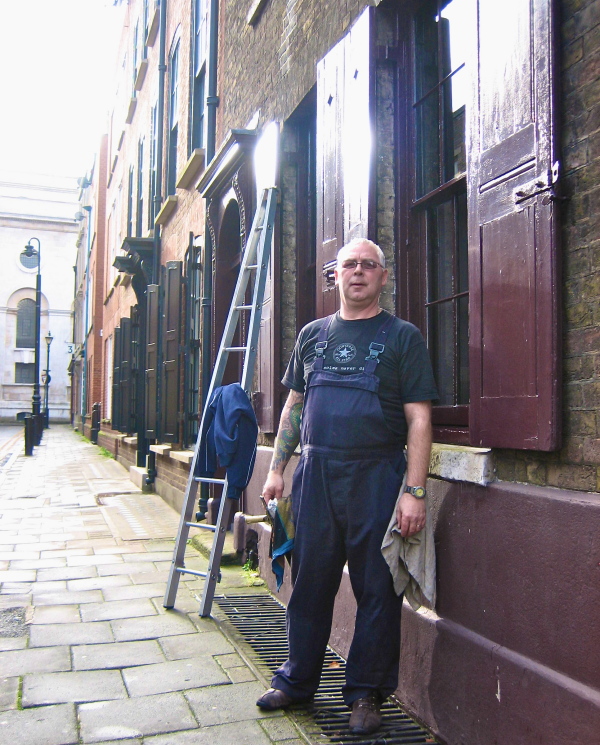
This is Bill Crome, a window cleaner of thirty years’ experience in the trade who makes a speciality of cleaning the windows of the old houses in the East End. You might assume cleaning windows is a relatively mundane occupation and that, apart from the risk of falling off a ladder, the job is otherwise without hazard – yet Bill’s experiences have proved quite the contrary, because he has supernatural encounters in the course of his work that would make your hair stand on end.
“It wasn’t a career choice,” admitted Bill with phlegmatic good humour, “When I left school, a man who had a window cleaning business lived across the road from me, so I asked his son for a job and I’ve been stuck in it ever since. I have at least sixty regulars, shops and houses, and quite a few are here in Spitalfields. I like the freedom, the meeting of people and the fact that I haven’t got a boss on my back.” In spite of growing competition from contractors who offer cleaning, security and window cleaning as a package to large offices, Bill has maintained his business manfully but now he faces a challenge of another nature entirely. Although, before I elaborate, let me emphasise that Bill Crome is one of the sanest, most down-to-earth men you could hope to meet.
“I’ve heard there is a window cleaner in Spitalfields who sees ghosts,”I said, to broach the delicate subject as respectfully as I could. “That’s me,” he confessed without hesitation, colouring a little and lowering his voice, “I’ve seen quite a few. Five years ago, at the Society for the Protection of Ancient Buildings in Spital Sq, I saw a sailor on the second floor. I was outside cleaning the window and this sailor passed in front of me. He was pulling his coat on. He put his arms in the sleeves, moving as he did so, and then walked through the wall. He looked the sailor on the Players Navy Cut cigarette packet – from around 1900 I would guess – in his full uniform.
And then I saw a twelve year old girl on the stair, she was bent down, peering at me through the staircase. I was about to clean the window and I could feel someone watching me, then as I turned she was on the next floor looking down at me. She had on a grey dress with a white pinafore over the top. And she had a blank stare.
I did some research. I went to a Spiritualist Church in Wandsworth and one of the Spiritualists said to me, ‘You’ve got a friend who’s a sailor haven’t you?’ They told me how to deal with it. When we investigated we found it was to do with the old paintings at the Society for the Protection of Ancient Buildings. Amongst the collection were portraits of a sailor and of a girl. Once I was walking up to the top floor, and I looked at the picture of the girl, and she had a smiling face – but when I went back to collect my squeegee, I looked again and she had a frown. It sounds really stupid doesn’t it? I found a leaflet in the house explaining about the history of the paintings and how the family that gave them was dying off. The paintings are off the wall now yet they had a nice feeling about them, of sweetness and calm.”
Bill confirmed that since the paintings were taken down, he has seen no more ghosts while cleaning windows in Spital Sq and the episode is concluded, though the implications of these sinister events have been life-changing, as he explained when he told me of his next encounter with the otherwordly.
“I was cleaning the windows of a house in Sheerness, and I looked into the glass and I saw the reflection of an old man right behind me. I could see his full person, a six -oot-four-inch-very-tall man, standing behind me in a collarless shirt. But when I turned round there was no-one there.
I went down to the basement, cleaning the windows, and I felt like someone was climbing on my back. Then I started heaving, I was frozen to the spot. All I kept thinking was, ‘I’ve got to finish this window,’ but as soon as I came out of the basement I felt very scared. Speaking to a lady down the road, she told me that in this same house, in the same window, a builder got thrown off his ladder in the past year and there was no explanation for it.
I won’t go back and do that house again, I can tell you.”
As Bill confided his stories, he spoke deliberately, taking his time and maintaining eye contact as he chose his words carefully. I could see that the mere act of telling drew emotions, as Bill re-experienced the intensity of these uncanny events whilst struggling to maintain equanimity. My assumption was that although Bill’s experience at the Society for the Protection of Ancient Buildings might be attributed to a localised phenomenon, what happened in Sheerness suggests that Bill himself is the catalyst for these sightings.
“I feel that I have opened myself up to it because I’ve been to the Spiritualist Church a few times,” he revealed to me. “I do expect to see more ghosts because I work in a lot of old properties, especially round Spitalfields. I don’t dread it but I don’t look forward to it either. It has also made me feel like I do want to become a Spiritualist, and every time I go along, they say, ‘Are you a member of the church?’ But I don’t know, I don’t know what can of worms I’ve opened up.”
Bill’s testimony was touching in its frankness – neither bragging nor dramatising – instead he was thinking out loud, puzzling over these mysterious events in a search for understanding. As we walked together among the streets of ancient dwellings in the shadow of the old church in Spitalfields where many of the residents are his customers, I naturally asked Bill Crome if he has seen any ghosts in these houses. At once, he turned reticent, stopping in his tracks and insisting that he maintain discretion. “I don’t tell my customers if I see ghosts in their houses,” he informed me absolutely, looking me in the eye, “They don’t need to know and I don’t want to go scaremongering.”

Thomas Newington’s Recipes
TICKETS AVAILABLE SATURDAY 30TH AUGUST. Join me for a ramble through 2000 years of culture and history at the heart of old London followed by tea and cakes served in a 300-year-old house overlooking Christ Church, Spitalfields. CLICK HERE TO BOOK
At this harvest season, I thought you might take inspiration from these recipes – culinary and medicinal – from Thomas Newington‘s book that he wrote in 1715 while in domestic service in Brighton, illustrated with wood engravings by Reynolds Stone. Do let me know how you get on.
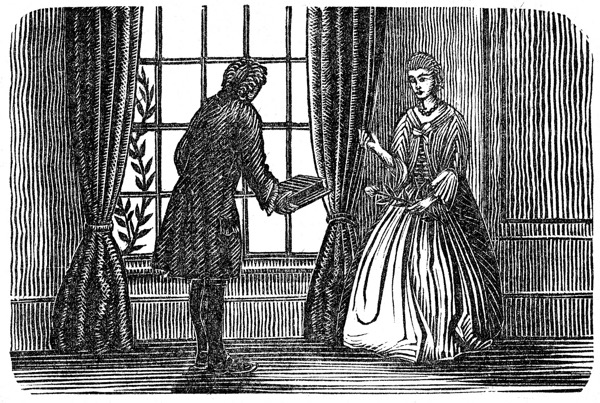
Madam, Perhaps you may wonder to see your Receipts thus increased in Bulk and Number, Especily when you consider that they come from me who cannot make pretentions to things of thy nature, but haveing in my hands some Excelent Manuscripts of Phisick, Cookery, Preserves &c which were the Palladium of Many Noble Familyes, I did imagine that by blending them together, which in themselves were so choice and valuable, they woud magnifie and Illustrate each other.
Madam, I might well fear lest these rude and unpolished lines should offend you but that I hope your goodness will rather smile at the faults commited than censure them.
However I desire your Ladyships pardon for presenting things so unworthy to your View and except the goodwill of him who in all Duty is bound to be.
Your Ladyships Most Humble & most Obeiant Sarvant,
Thomas Newington
Brighthelmstone, May the 20: 1719
HOW TO KILL & ROAST A PIGG
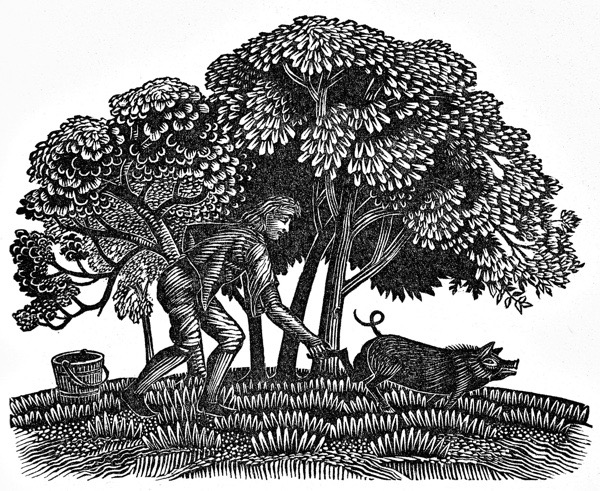
Take your Pigg and hold the head down in a Payle of cold Watter untill strangeled, then hang him up buy the heals and fley him, then open him, then chine him down the back as you doe a porker first cuting of his head, then cut him in fower quarters, then lard two of the quarters with lemon peele and other two with tops of Time, then spit and roast them. The head requeares more roasting than the braines with a little Sage and grave for sauce.
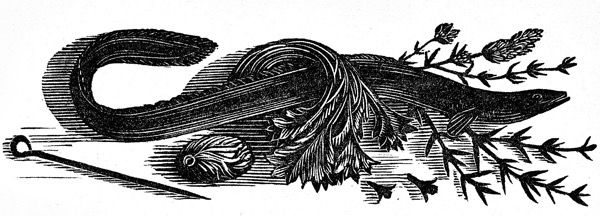
TO SPITCHCOCK EELS
Pull of the skins to the taile, then strow on them a little cloves, Mace, peper & salt, a little time and savory and parsly shred very fine. Then draw up the skinn and turn them up in the shape of S, and some round. Run a skure through them, then frye or boyle them and lay them round other fish.
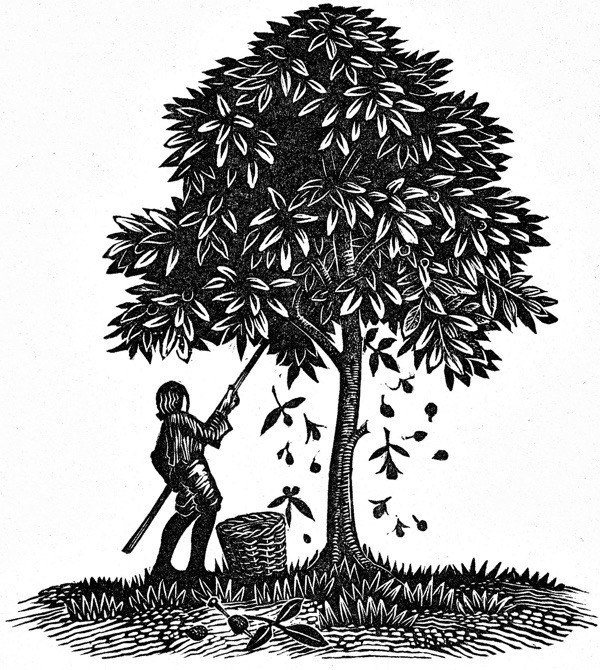
TO PRESERVE GREENE WALNUTS
Take your wallnuts when they be so young that a pin will go through them, then set them on fire and let them boyle in fair Watter till the bitterness go out, shifting it once or twice. Then take to every pound of Walnuts a pound of lofe sugar, half a pint of watter, boyleing till they be tender in this surrupe. Then let them stand to soak in this surrupe 3 or 4 dayes, then take them out and prick 3 or 4 holes in each sticking half a Clove and a little Cynament in each, but if you fear it will be to strong of the spice omit some of them. Then set on your surrupe and skim it, adding a pound more of sugar. Boyle them therein to thick syrrupe and let them stand for a fortnight or three Weekes, then boyle them up and add more sugar if you see Occasion. They are Cordial to take in a Morning, good for the stomach and Loosen the Body.
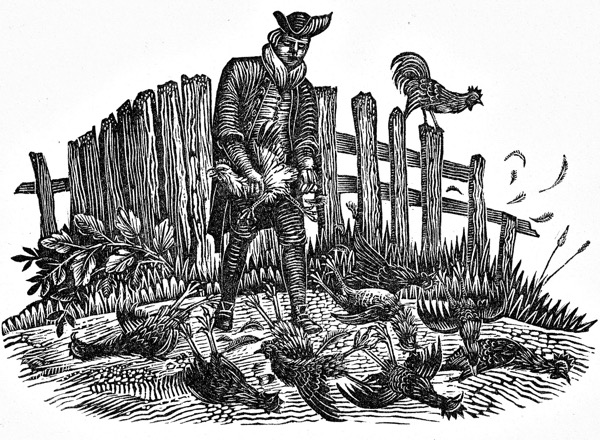
A REMEDY FOR THE PLAGUE
Among the excelent and aproved medecines for the Pestilence, there is none worthy and avaylable when the sore appeareth. Then take a Cock Pullet and pluck of the fethers of the taile or hinderpart till the rump be bare, then hold the bare of the said Pullet to the sore and the pullet will gape and labour for life and in the end he will dye. Then take another Pullet and doe the like and so another as the Pullets do dye, for when the Poyson is Drawn out the last Pullet that is offered therto will live. The sore Presently is assuaged and the party recovereth.

A SURRUP FOR THE PRESERVATION OF LONG LIFE RECOMMENDD TO THE RIGHT HONBLE MARY COUNTESS OF FEVERSHAM BY DR PETER DUMOULIN OF CANTERBURY JUNE YE 2, 1682
An Eminent Officer in the great Army with the Emperour Charles the 5th sent into Barbary had his quarters there Assigned him in an Old Gentlemans House with whom by mutall offices of Humanity he soone contracted a singular Freindship. Seeing him looke very Old yet very Fresh and Vigourous he asked him how old he was – he answerd he was 132 years old, that till Sixty Yeares of Age he had been a good Fellow takeing little care of his health but that then he had begun to take a spoonfull of surrup every morning fasting, which ever since has keept him in health. Being Desired to impart that receipt to his Guest he freely granted it and the Officer being returned to his Cuntry made use of that surrup and with it Preserved himself and many more, yet kept the Receipt secret till haveing attained by this surrupe ninety two years of Age, he made a scruple to keep it secret any longer and publisht for the Common good.
Take of the juices of mercurial eight pounds, of the juice of Burridg two pounds, of the juice of Buglosse two pounds. Mingle these with twelve pounds of clarrified Honey, the whitest you can gett, let them boyle together aboyling and paas them through a Hypocras Bag of new flannell. Infuse in three pints of White Wine, a quarter of a pound Gentian Root and half a pound of Irish root or blew Flower de Lis. Let them be infused twenty fower houers then straind without squeezing, put the liquor to that of the herbs and Hony, boyle them well together to constistence of a surrup. You must order the matter so that one thing stays not for the other but that all be ready together. A spoonfull of this surrup is to be taken every morning Fasting.
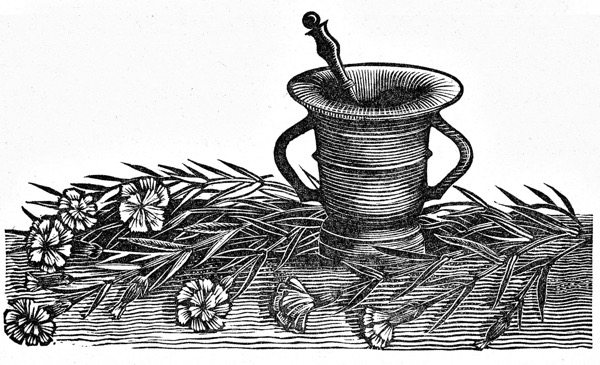
TO MAKE SURRUPE OF CLOVE GILY FLOWERS
Take a pound of the flowers when they are cleane cut from their white bottom and beat them into a stone Mortar till they be very fine all. Then haveing Fair watter very well boyled, take a quart of it boyling hott and pour it to them in the Mortar, then cover it close and let it stand all night, and the next dat streyne them out and to every pint of this Liquor take a pound and a half of Duble Refine Lofe Sugar beaten, then put your sugar and set it on the fire and boyle it and, when it is clean scimed, take it of and pour it into a silver or Earthen Bason and so let it stand uncovered till the next day, then glass it up and stop it close and set it not but where it may stand coole & it will keep the better.
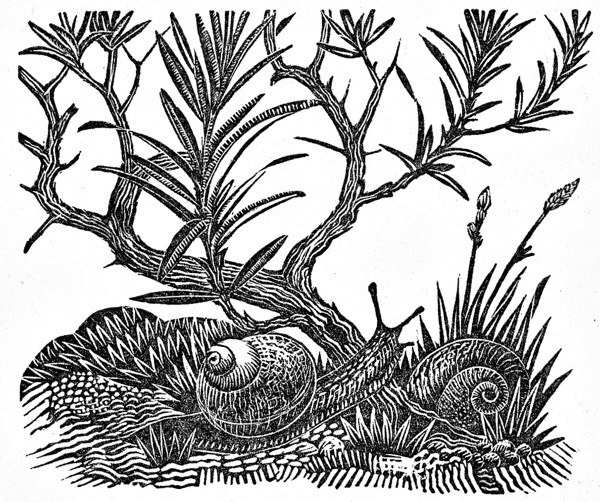
A SNAYLE WATTER IS GOOD IN A CONSUMPTION OR JAUNDICE TO CLEAR THE SKIN OR REVIVE YE SPIRRITS
Take a Peck of Garden Snayles in their Shells. Gather them as near as you can out of lavender or Rosemary and not in trees or grass. Wash them in a Tubb three times in Beere, then make your Chimney very clean and power out a bushall of charcole and, when they are well kindled, make a great hole with a fire shovell and put in your Snayles and Put in some of your cleane burnt coals among them and let roast till they leave makeing a noise. Then you must take them forth with a knife and clean them with a cleane Cloathpick and wipe away the coales and green froth that will be upon them. Then beat them in a mortar shells and all.
Take also a Quart of Earthworms, slitt and scower them with salt, then wash them in whitewine till you have taken away all the filth from them, and put them into a stone Mortar and beat them to peices. Then take a sweet, clean Iron pott which you will sett your limbeck on, then take 2 Ms. of Angellica and lay it in the bottome of your Pott and 2 Ms. of Sallendine, on the top of that putt in 2 quarts of Rosemary Flowers, Bearsfoot, Egrimony, the redest Dock roots you can get, the barbery bark, Wood Sorrell, bettony, of each three handfulls, 1 handfull of Rue, of Flengreek and Turmerick, of each one ounce well beaten.
Then lay your Snayles and wormes on top of your herbs and flowers and power upon them the strongest Ale you can gett fower gallons, and two gallons of the best sack and let it stand all night or longer, stirring Divers times. In the morning put in two ounces of Cloves, twelve ounces of hartshorne, six ounces of ivory, the waight of two shillings of Saffron. The Cloves must be bruised. You must not stir it after these last things are in.
Then set it on your limbeck and close it fast with Rye Past and receive your water in Pintes. The first is the strongest and so smaller, the smallest may be mended by puting in some of the strongest. When you use it, take three spoonfulls of beere or Ale to two spoonfulls of the strongest and to this three quarts of cowslips flowers, one quart of Buglose and buridg flowers and 3 Ms. of liverworth.
If you will, you should feed your Snayles with sallendine and barbery leaves and bough, and the wash them in new milk fower times and then in a Tubb of strong Ale so that they may be very cleane, and then burn them.
You may also like to read about












