At Gravesend
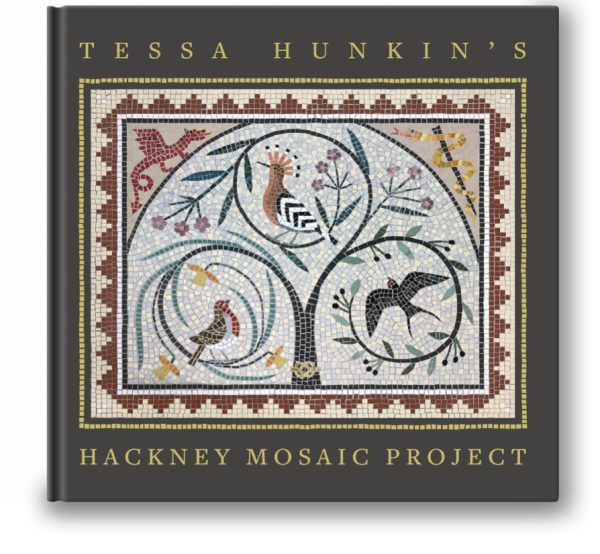
You can help publication by preordering now and we will post you a copy signed by Tessa Hunkin at the end of September in advance of publication on October 2nd. Additionally, we are including a complimentary copy of A Hoxton Childhood (cover price £20) with all pre-orders in the United Kingdom. CLICK HERE TO ORDER YOUR COPY
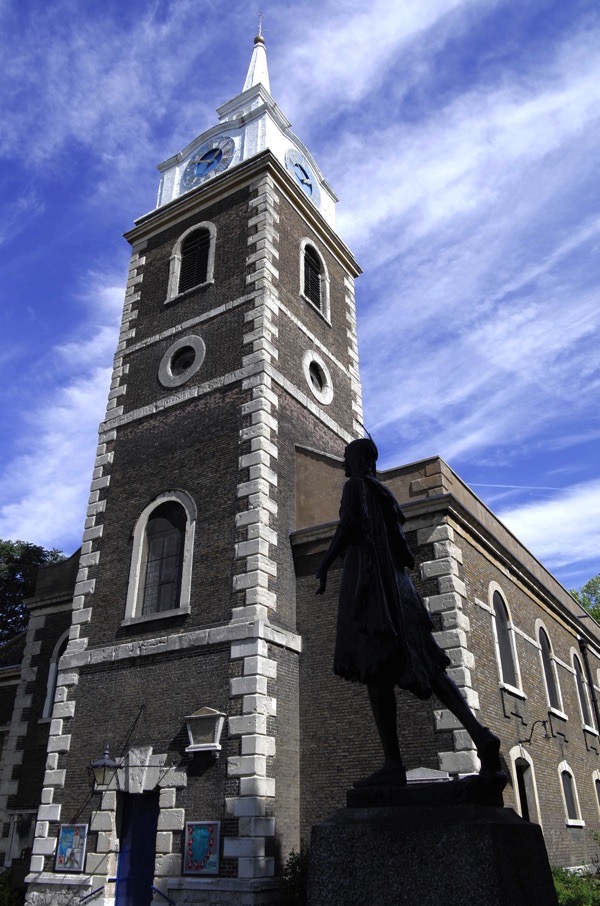
St George’s where Pocahontas is buried
It was at Gravesend that Pocahontas, one of the very first Americans to visit Europe, landed when illness forced her to abandon her return journey on March 21st 1617. The ship turned from its course before it left the Thames estuary and sought harbour at Gravesend where Pocahontas died just a few hours after coming ashore. Only twenty-one, she experienced much in her short life and left a young son, Thomas. He was taken back to London and completed her aborted journey home in adulthood, while his mother was buried at St George’s church, where today a handsome bronze figure embodies her presence to greet the pilgrims.
A brisk walk up the steep High St was sufficient to displace these plangent thoughts, replacing them with astonishment at the number of tattoo parlours and nail bars in such a small stretch of shops. Well-tended hanging baskets of flowers at every turn spoke eloquently of civic pride, while the many high quality buildings from earlier centuries evidenced the former wealth of Gravesend.
The appealing architectural vernacular of this shambolic medieval High St, interspersed by the Victorian grandeur of the Market Hall and the Carnegie Library, enticed me up the hill to the square where a group of senior Sikh gentlemen sat, happily passing the time of day and looking dapper in their turbans of multiple hues of blue.
Before long, hunger beckoned and I set off past Bawley Bay, where families once emigrated to the Antipodes, and St Andrew’s Mission church, built out over the water in 1871, and the Clarendon Royal Hotel, conceived as a palace for James II, and the Customs House of 1812, and the fourteenth century Milton Chantry, the oldest building in Gravesend, and the New Tavern Fort, constructed in expectation of an invasion by the French.
My destination was the Promenade Cafe, an elegant thirties pavilion set back from the sea behind a wide lawn, thronging with customers, young and old, and everyone quite at home. This eastern stretch of Gravesend is where local residents, especially families, come to enjoy their leisure, offering paddling, feeding the swans, dog-walking and the quiet spectacle of passing traffic in the estuary. Among other hungry customers, I sat patiently at my table until a waiter should call out the number of my dinner ticket and deliver my plate of fish and chips.
‘Number Six!’ called the waiter, wielding a tray laden with two steaming fish dinners and inspiring everyone to turn their heads to see who was to be the lucky recipient. ‘Number Six?’ the waiter bawled at the top of his voice. Mystified by lack of any response, ‘Number Six?’ he queried, before returning inside shaking his head in disappointment. Puzzled glances passed between the dinners until a senior gentleman in a corner perked up. ‘Did he say Number Six?’ he asked, speaking his thoughts out loud. Observing nods of assent from neighbouring tables, he leapt to his feet clutching his ticket and hurried inside declaiming, ‘He didn’t speak loud enough, did he?’ and ‘What’s wrong with you, can’t you speak up?’
East of the promenade and over the canal, an atmosphere of extravagant post-industrial decay prevails. I walked for a mile along an overgrown narrow path between huge abandoned factories to emerge in a light industrial estate where small businesses still thrive, mostly in maritime related trades. At the very end, where the Higham Marshes begin sits the Ship & Lobster, occupying a position as the first and last pub on the Thames. Of significant history and in a breathtaking location, it was refreshing to encounter this friendly unpretentious local pub that serves the community of workers from the industrial estate, and has successfully evaded tourism or tarting up.
I had one more landmark to discover. Sitting on the hill above Gravesend, the Guru Nanak Darbar Gurdwara Sikh Temple looks for all the world as if had been magically transported there by a genie from the Arabian Nights. Built entirely of gleaming white marble, on an equal scale to a European cathedral, this a compelling piece of architecture rendered even more remarkable by its unexpected location. Approaching through the elaborate gatehouse pavilion, I could not resist crossing the car park and walking right up to it – I should not have been surprised if it had vanished like a mirage.
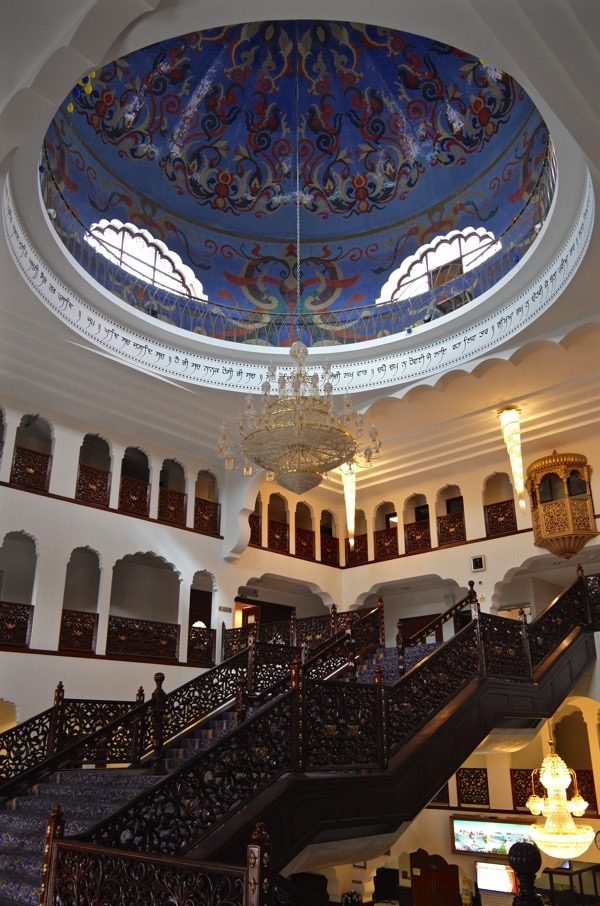
A woman in long coloured robes hurried towards me. Immediately, I felt that I had trespassed and prepared my apology, but instead she welcomed me openly and invited me inside, explaining where I could find a cloth to cover my head and where I could leave my shoes if I wanted to attend a service. The interior of the temple with its enormous blue dome, lined with mosaic, and ceremonial staircase was no less impressive than the exterior. Yet the atmosphere was relaxed and I found myself reciprocating polite nods with worshippers passing in the hallway. My foray into the world of the Sikhs.
The shadows were lengthening and my feet were sore but I was enchanted by my day trip to Gravesend. Gravesend has so much to recommend it, I thought.
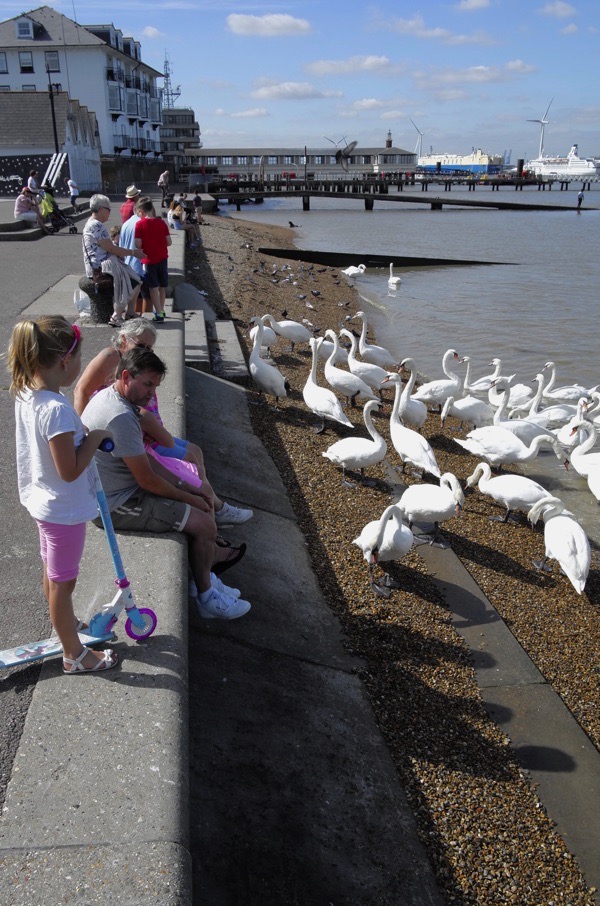
On the riverfront at Gravesend
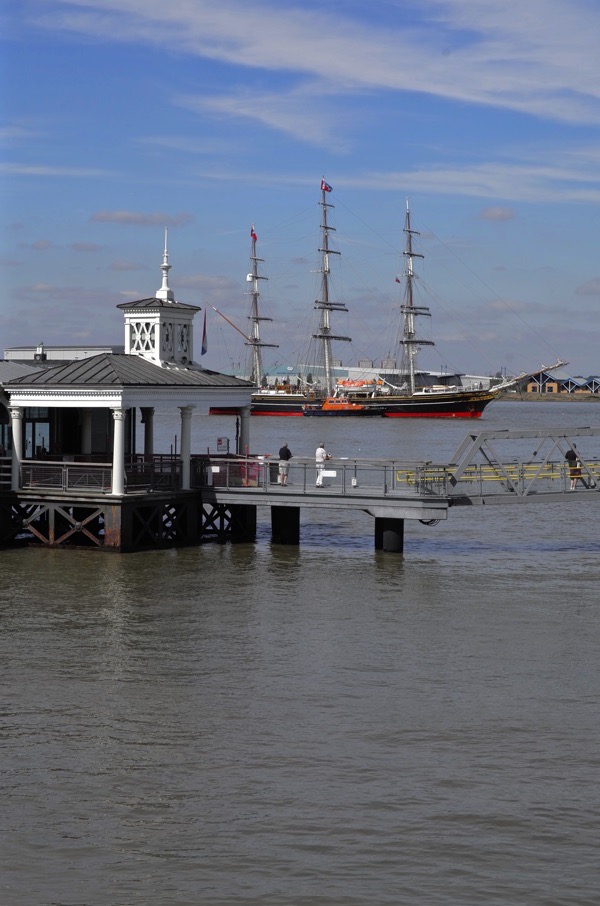
Gravesend has the oldest cast iron pier in Britain
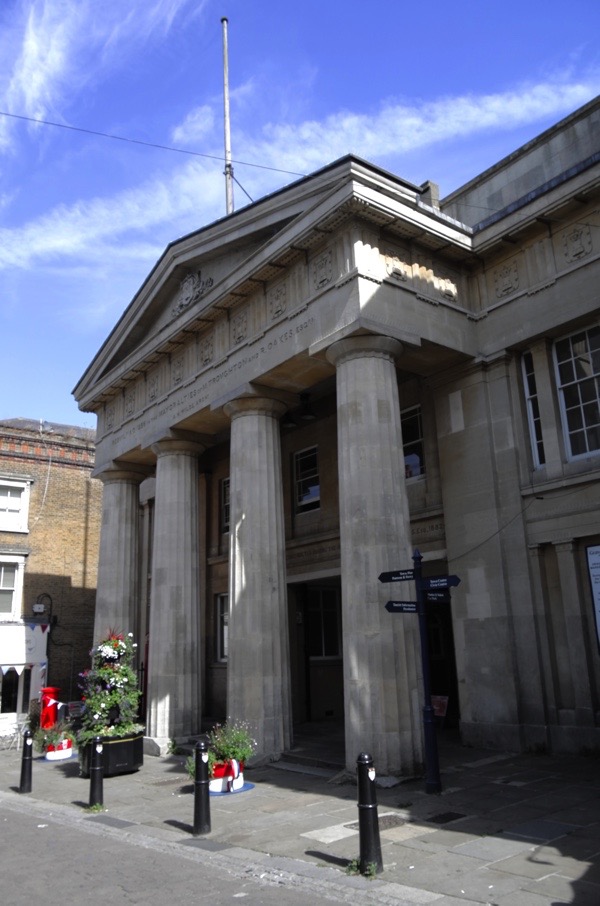
Gravesend Market
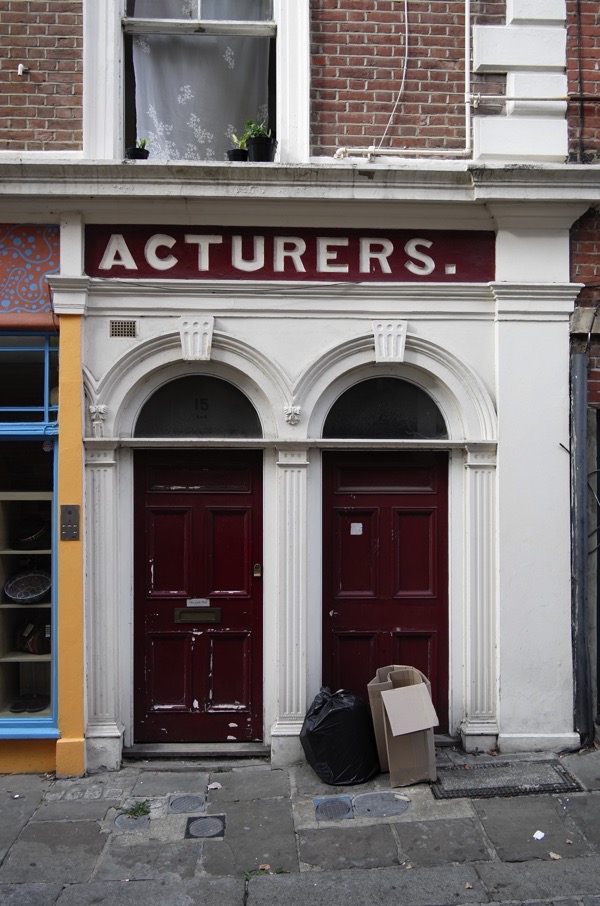
Former manufacturers
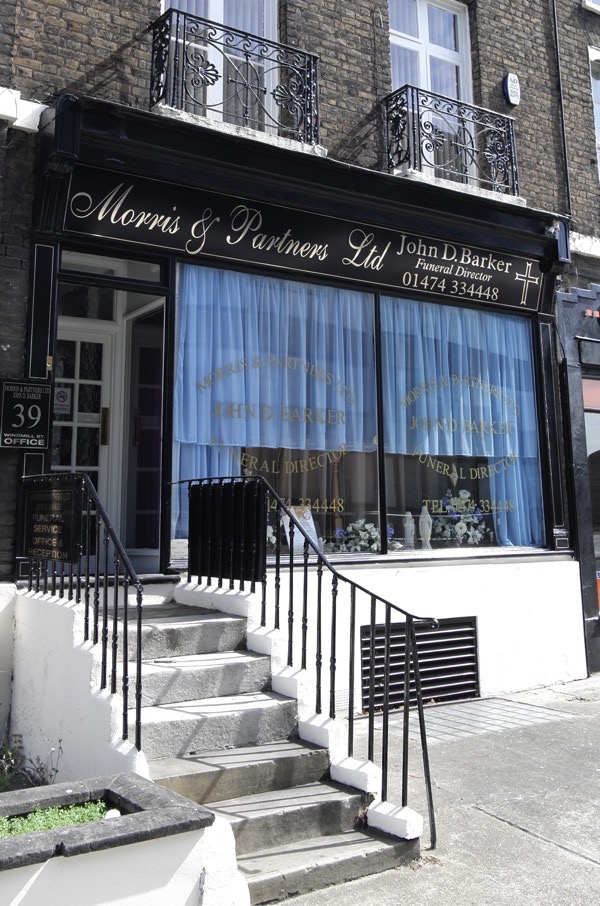
Traditional Undertaker at Gravesend
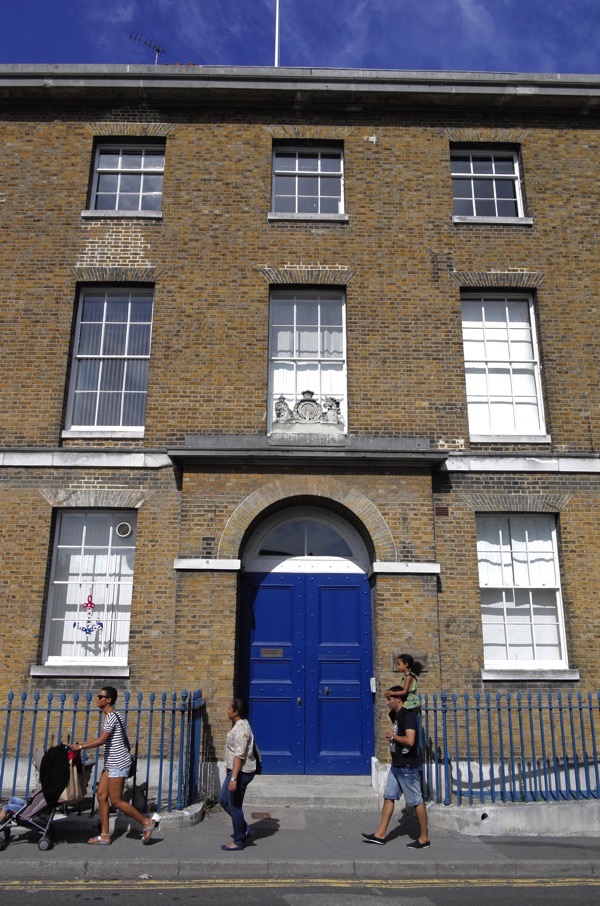
Customs House
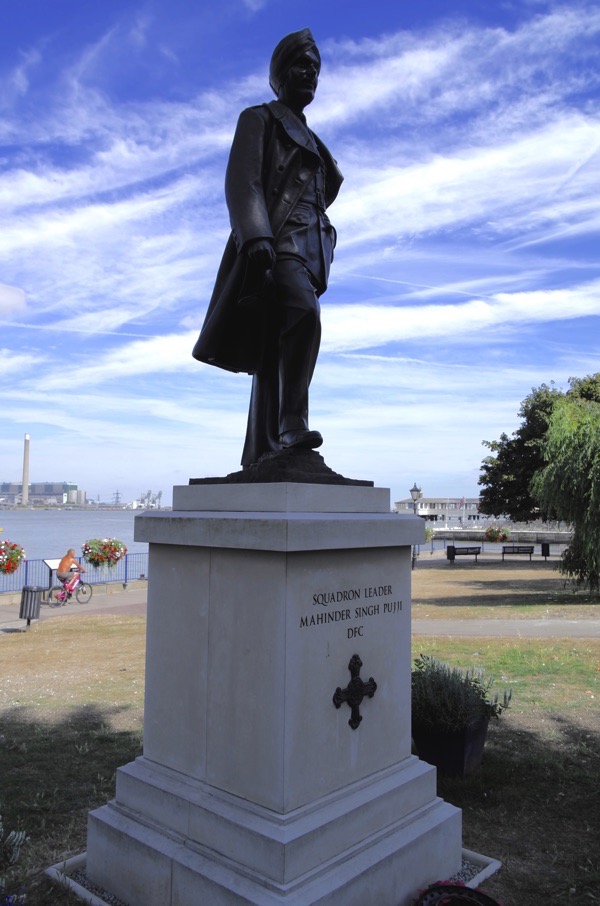
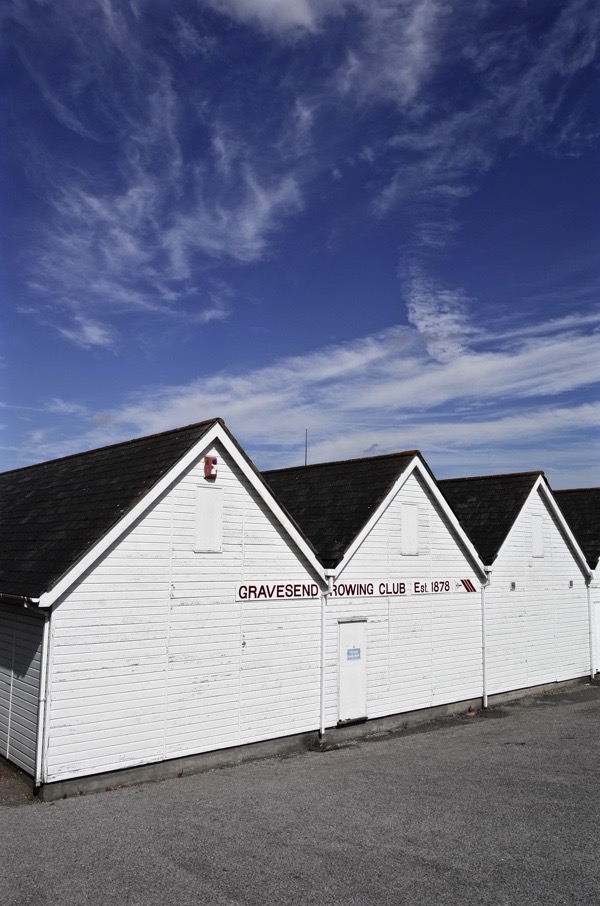
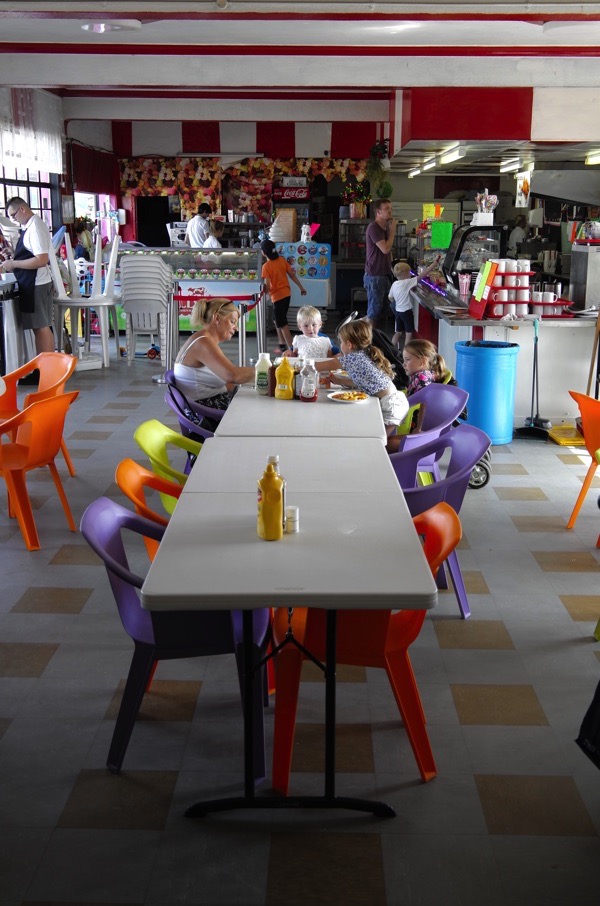
At the Promenade Cafe
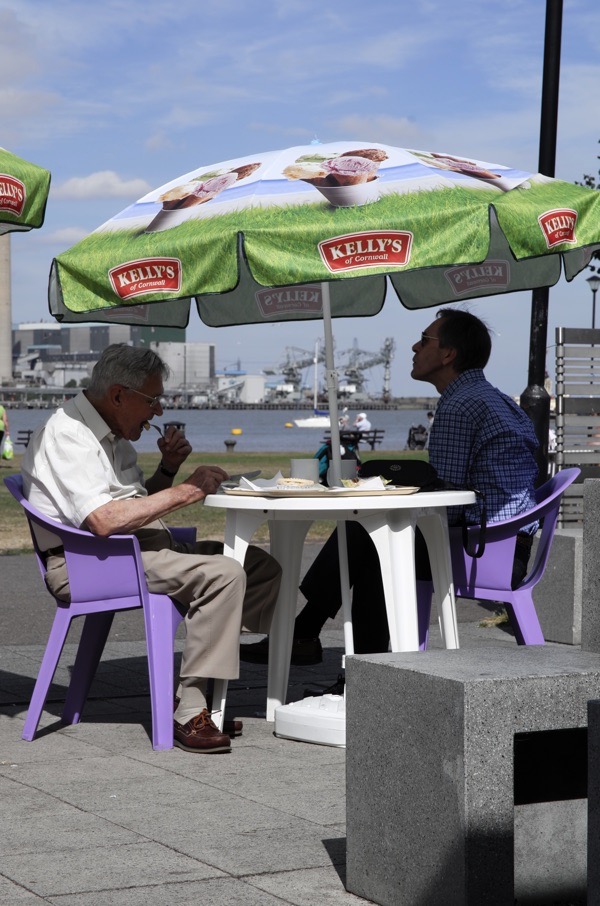
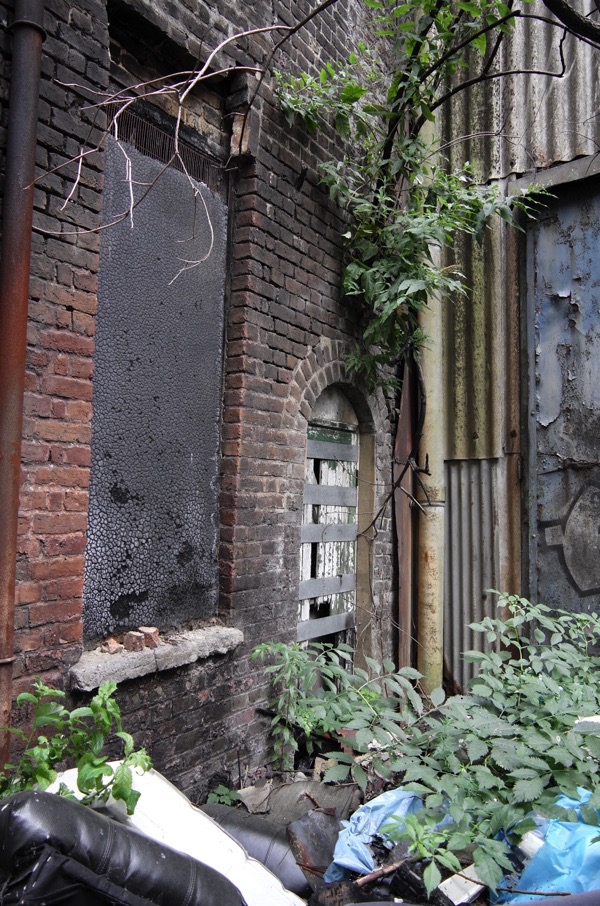
Along Wharf Rd
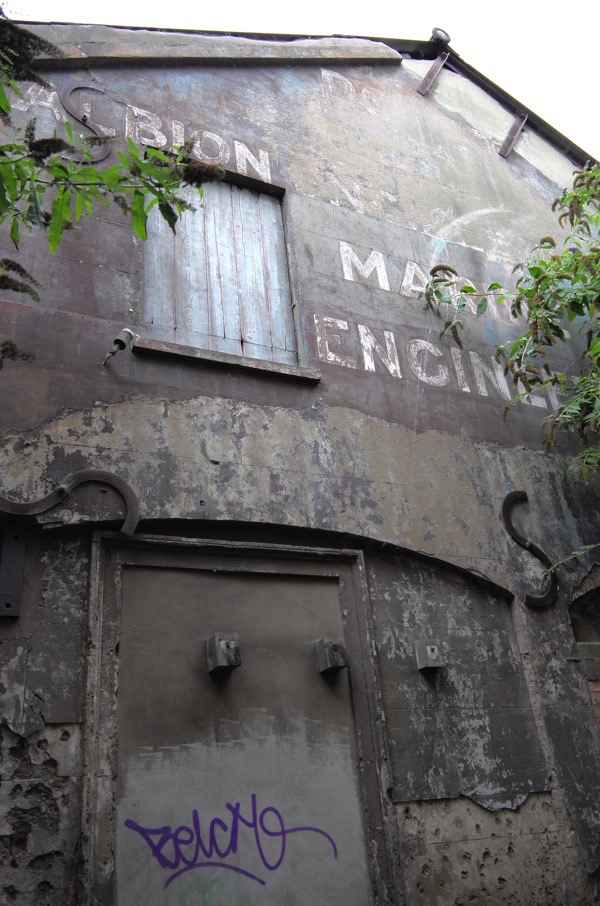
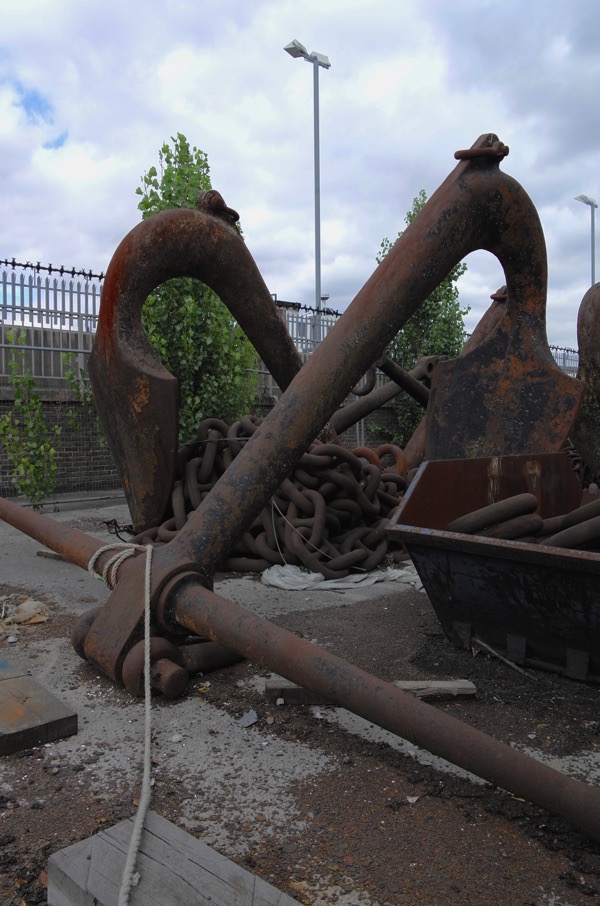
In Mark Lane
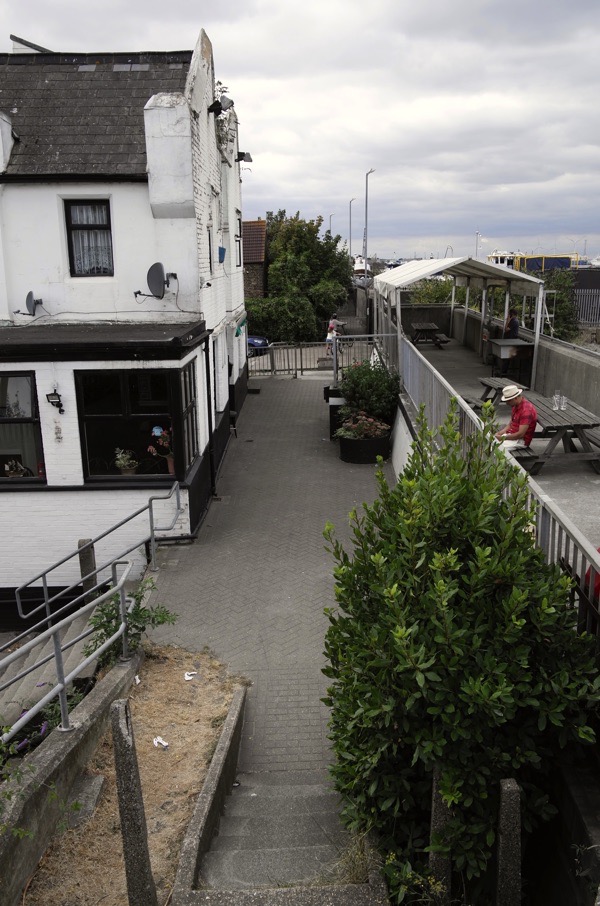
The Ship & Lobster, the first and last pub on the Thames. Featured in Great Expectations, this pub was supposedly founded when Charles II and his brother James raced barges here.
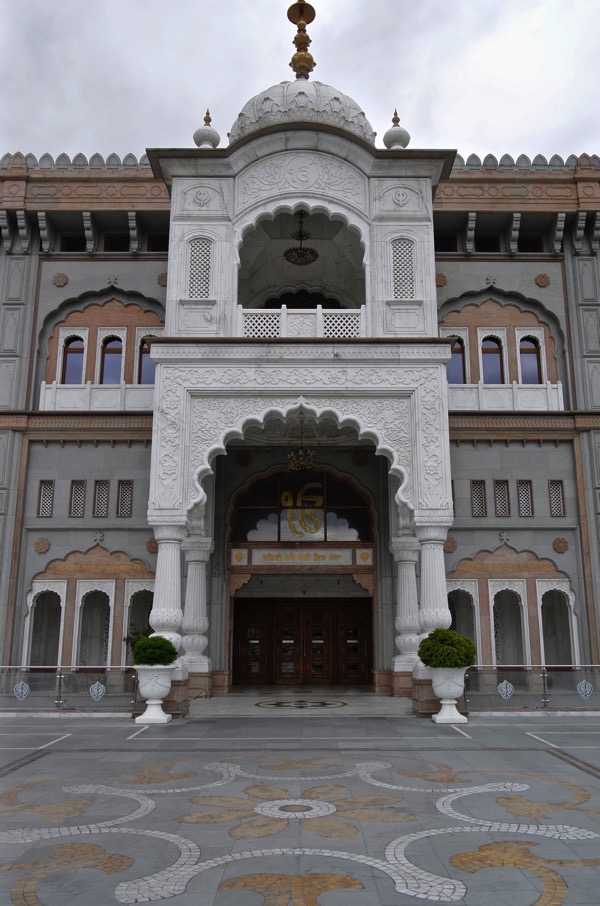
Guru Nanak Darbar Gurdwara, Sikh Temple
Plan your trip at www.visitgravesend.co.uk
Sixteenth Annual Report
Sixteen years ago this week, I began to publish a daily post in these pages.
In this year’s report, I am delighted to announce two pieces of good news. Firstly, the Truman Brewery’s office development has been rejected by Tower Hamlets Council. Secondly, the book of Tessa Hunkin’s Hackney Mosaic Project will be published by Spitalfields Life Books on 2nd October.
SAVE BRICK LANE
As a result of years of campaigning by Save Brick Lane, the community came together in Spitalfields to demand housing not offices on the former Truman Brewery site and the elected councillors responded by rejecting the plans for a corporate gated plaza unanimously in July.
There are over 23,000 people on the housing list in Tower Hamlets and the Truman Brewery site has the potential to offer 345 homes for local people but the proposed development only offers 6 units of social housing.
Yet the story does not end here because there will be a public inquiry in October which will make a recommendation to the Secretary of State who will make a final decision next year.
TESSA HUNKIN’S HACKNEY MOSAIC PROJECT
Thanks to the support of you – the readers of Spitalfields Life – who contributed to our crowdfund in the spring, our plan to publish a handsome hardback monograph of the work of Tessa Hunkin’s Hackney Mosaic Project has come to fruition.
Over the past months, we have been working behind the scenes to compile a beautiful art book, photographing the mosaics, editing the text and designing the pages. In July, Tessa travelled to Vicenza to oversee the printing and ensure that the mosaics are reproduced exactly as she wants them to be seen.
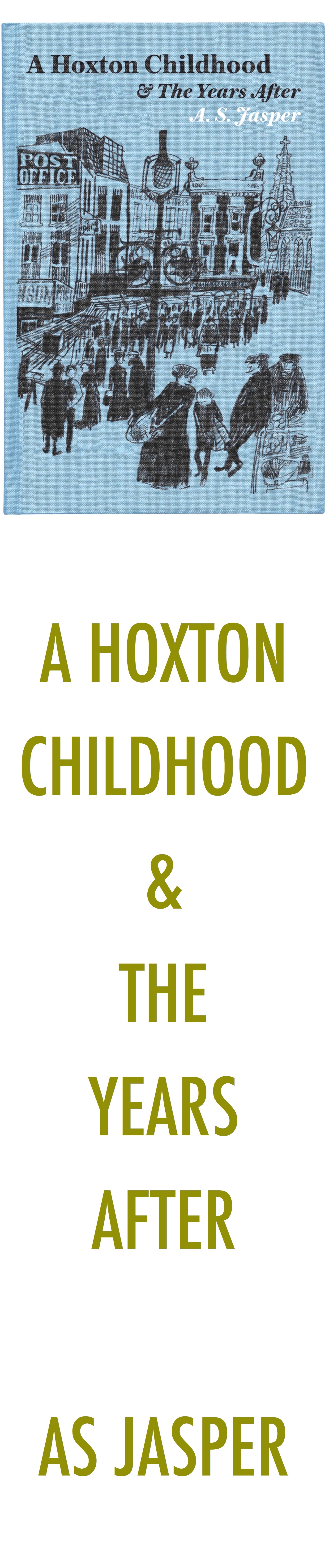
You can help publication by preordering now and we will post you a copy signed by Tessa Hunkin at the end of September. Additionally, we are including a complimentary copy of A Hoxton Childhood (cover price £20) with all pre-orders in the United Kingdom.
Both Save Brick Lane and Hackney Mosaic Project are inspirational examples of local people coming together to work collectively to improve their neighbourhoods and in such troubled times we need to celebrate these endeavours that give everybody hope.
With these thoughts in mind, thus ends another year in the pages of Spitalfields Life.
I am your loyal servant
The Gentle Author
Spitalfields,
22nd August 2025
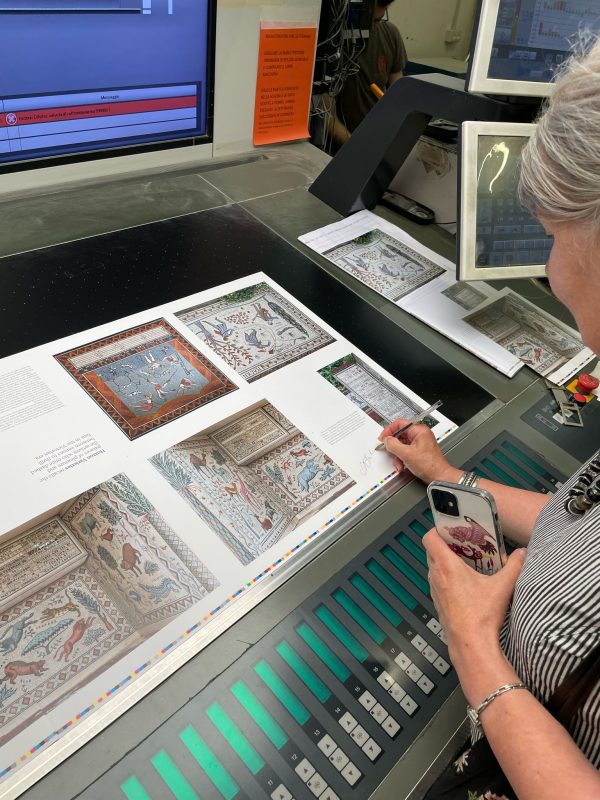
Tessa Hunkin signs off pages of her book at the printer
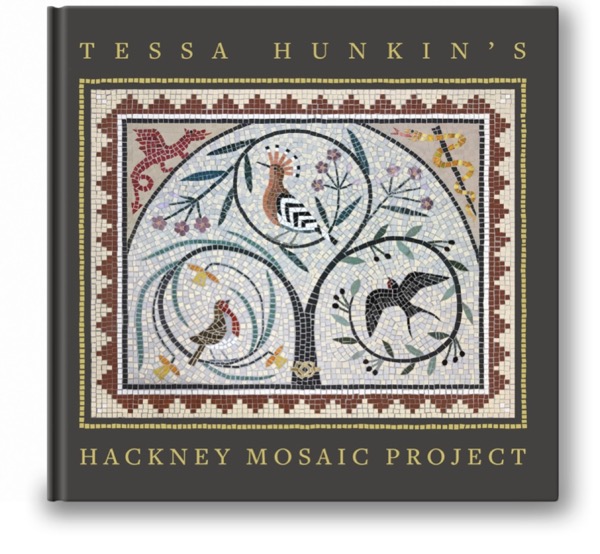
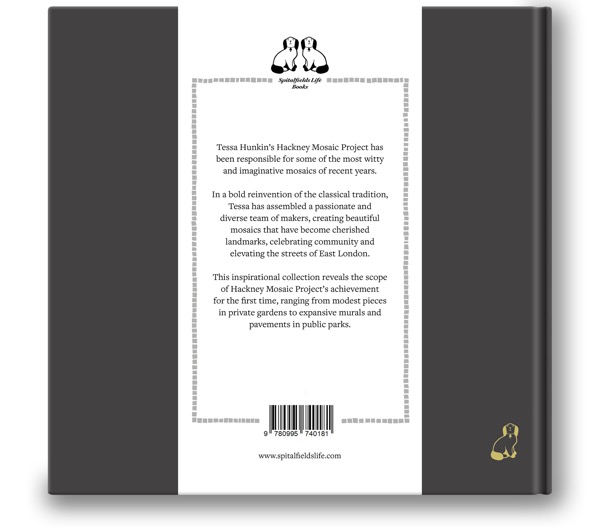
CLICK HERE TO ORDER YOUR SIGNED COPY AND GET A FREE COPY OF ‘A HOXTON CHILDHOOD’
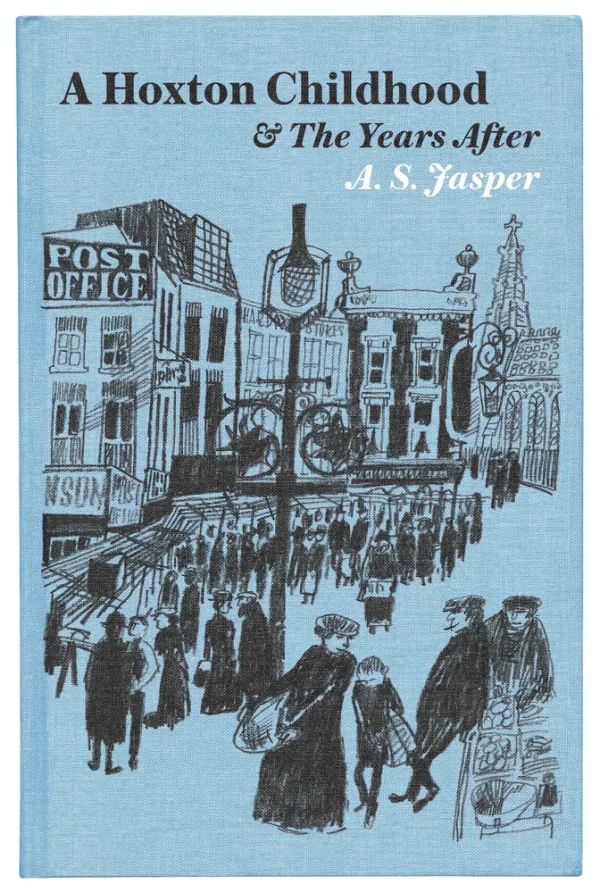
We are sending a complimentary copy of A Hoxton Childhood with all preorders in the United Kingdom

Schroedinger is currently on holiday
At Dirty Dick’s
Book now for my tours through August, September & October
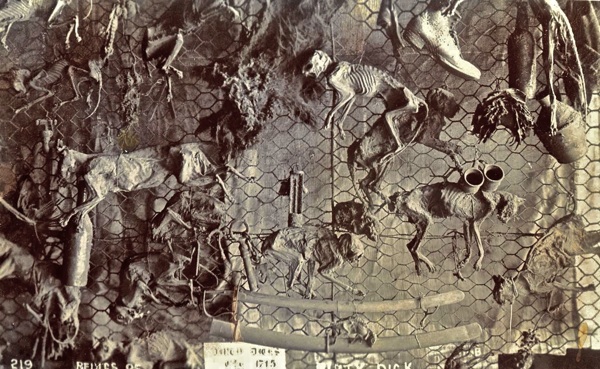
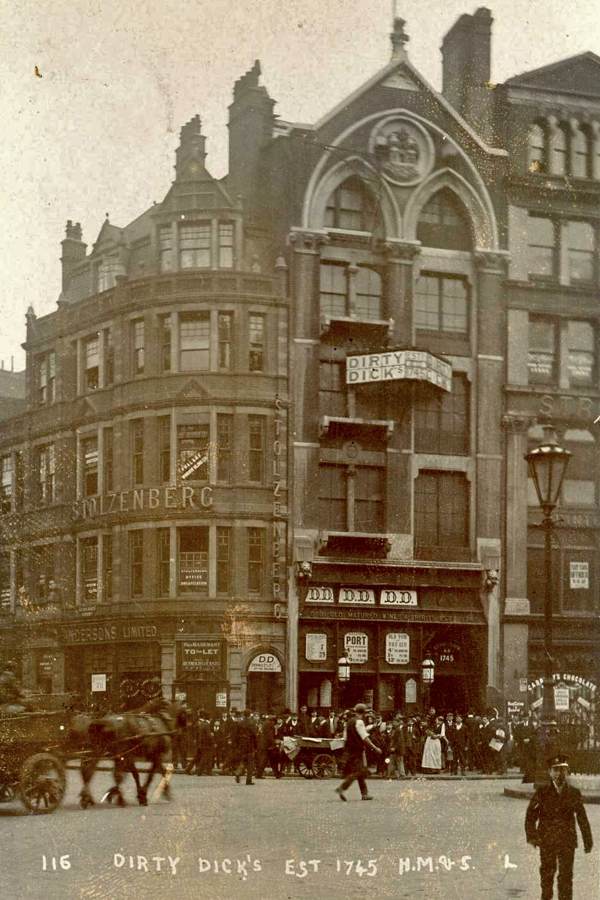
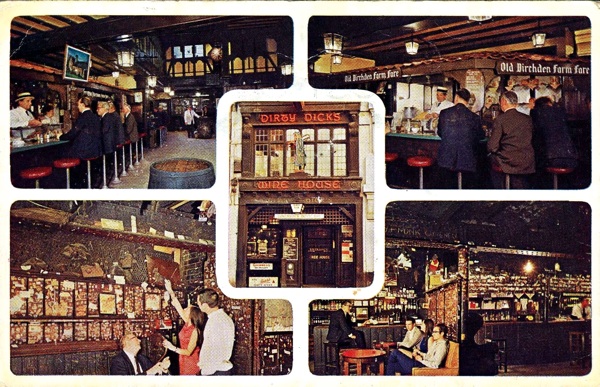
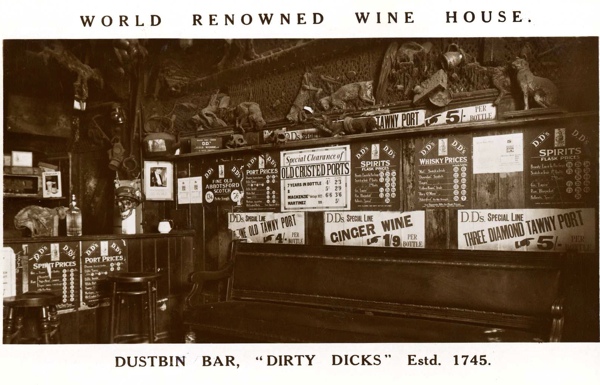
These are the dead cats that once hung behind the counter of the celebrated “Dustbin Bar” at Dirty Dick’s Old Port Wine & Spirit House in Bishopsgate. It is a location that holds a special place in my affections as the first pub I ever went into in London, one day after work at the Bishopsgate Institute.
Although this was longer ago than I care to admit and regrettably the cats in this picture had already gone by then, yet I still recall the sense of expectation, entering the narrow frontage and walking back, and back, and back through the warren of rooms with sawdust on the floor – descending ever deeper into the bowels of the city, it seemed. And I can only imagine how this strange drama might have been enhanced by the presence of umpteen dead cats suspended from the ceiling.
This was how it was described in 1866 – “A small public house or rather a tap of a wholesale wine and spirit business…a warehouse or barn without floorboards – a low ceiling, with cobweb festoons dangling from the black rafters – a pewter bar battered and dirty, floating with beer – numberless gas pipes tied anyhow along the struts and posts to conduct the spirits from the barrels to the taps – sample phials and labelled bottles of wine and spirits on shelves – everything covered with virgin dust and cobwebs.”
Yet all was not as it might seem, because the presence of these curious artefacts was not due to unselfconscious eccentricity, it was an early and highly successful example of what we should call a “theme pub.” Established in 1745 as The Old Jerusalem, the drinking house took the name of Dirty Dick’s in 1814 and adopted his story along with it. The original of Dirty Dick was Nathaniel Bentley, a successful merchant with a hardware shop and warehouse in Leadenhall St in the mid-eighteenth century. After his bride-to-be died on their wedding day – so the legend goes – he never cleaned up again, never washed or changed his clothes. “It’s of no use, if I wash my hands today, they will be dirty again tomorrow,” he declared. Bentley died in 1809, and the Bishopsgate Distillers appropriated this story of the notorious dirty hardware merchant, adorning their bar with dead cats and cobwebs to perpetuate the legend.
Charles Dickens knew Dirty Dick’s and was fascinated with this myth of one who sealed up the door on the wedding breakfast and left the cake and table decorations to acquire dust eternally. In a letter to the printer of his weekly publication “Household Words” dated 30th December 1852, he wrote “Don’t leave out the Dirty Old Man, he is capital.” And it has been suggested that Nathaniel Bentley was the inspiration for the character of Miss Havisham in “Great Expectations.”
Dirty Dick’s was rebuilt in the eighteen seventies, though the cellars are of an earlier date, and now the bizarre artefacts are banished to a glass case, yet it is still worth a visit. Explore the wonky half-timbered spaces and seek out the secluded panelled rooms at the rear, where you can enjoy a quiet drink away from the commotion of Bishopsgate to contemplate the ancient coaching inns that once lined this street, long before the age of the railway and the motor car.
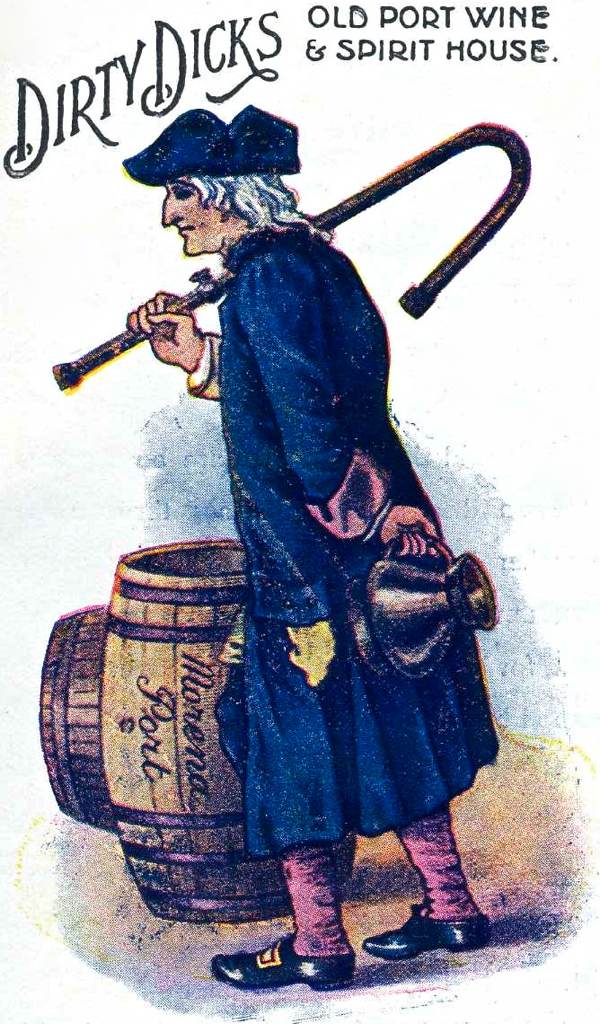
Nathaniel Richard Bentley – the origin of the myth of Dirty Dick.

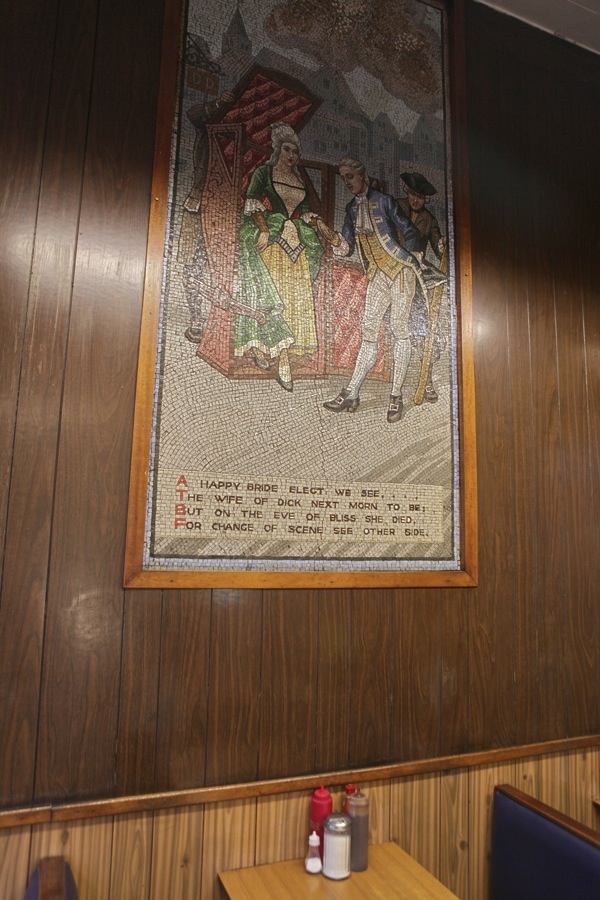
Part of the former City Corner Cafe – now a takeaway food joint -was once an alley leading into Dirty Dick’s adorned with a series of these mosaics which illustrated the tale.


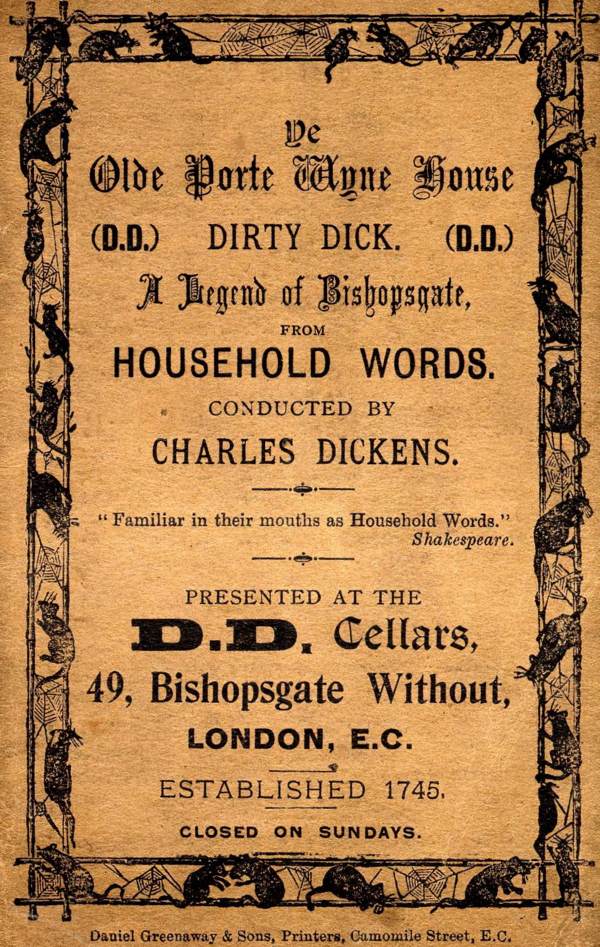
Dirty Dick by William Allingham
A Lay of Leadenhall
In a dirty old house lived a Dirty Old Man.
Soap, towels or brushes were not in his plan;
For forty long years as the neighbours declared,
His house never once had been cleaned or repaired.
‘Twas a scandal and a shame to the business-like street,
One terrible blot in a ledger so neat;
The old shop with its glasses,black bottles and vats,
And the rest of the mansion a run for the rats.
Outside, the old plaster, all splatter and stain,
Looked spotty in sunshine, and streaky in rain;
The window-sills sprouted with mildewy grass,
And the panes being broken, were known to be glass.
On a rickety signboard no learning could spell,
The merchant who sold, or the goods he’d to sell;
But for house and for man, a new title took growth,
Like a fungus the dirt gave a name to them both.
Within these there were carpets and cushions of dust,
The wood was half rot, and the metal half rust;
Old curtains—half cobwebs—hung grimly aloof;
‘Twas a spiders’ elysium from cellar to roof.
There, king of the spiders, the Dirty Old man,
Lives busy, and dirty, as ever he can;
With dirt on his fingers and dirt on his face,
The dirty old man thinks the dirt no disgrace.
From his wig to his shoes, from his coat to his shirt,
His clothes are a proverb—a marvel of dirt;
The dirt is prevading, unfading, exceeding,
Yet the Dirty Old Man has learning and breeding.
Fine folks from their carriages, noble and fair,
Have entered his shop, less to buy than to stare,
And afterwards said, though the dirt was so frightful,
The Dirty Man’s manners were truly delightful.
But they pried not upstairs thro’ the dirt and the gloom,
Nor peeped at the door of the wonderful room
That gossips made much of in accents subdued,
But whose inside no one might brag to have viewed.
That room, forty years since, folks settled and decked it,
The luncheon’s prepared, and the guests are expected,
The handsome young host he is gallant and gay,
For his love and her friends are expected today.
With solid and dainty the table is dressed—
The wine beams its brightest—flowers bloom their best;
Yet the host will not smile, and no guest will appear,
For his sweetheart is dead, as he shortly shall hear.
Full forty years since turned the key in that door,
‘Tis a room deaf and dumb ’mid the city’s uproar;
The guests for whose joyance that table was spread,
May now enter as ghosts, for they’re everyone dead.
Though a chink in the shutter dim lights come and go,
The seats are in order, the dishes a row;
But the luncheon was wealth to the rat and the mouse,
Whose descendants have long left the dirty old house.
Cup and platter are masked in thick layers of dust,
The flowers fallen to powder, the wine swath’d in crust,
A nosegay was laid before one special chair,
And the faded blue ribbon that bound it is there.
The old man has played out his part in the scene
Wherever he now is let’s hope he’s more clean;
Yet give we a thought, free of scoffing or ban,
To that Dirty Old House and that Dirty Old Man.
(First published by Charles Dickens in Household Words, 1853)
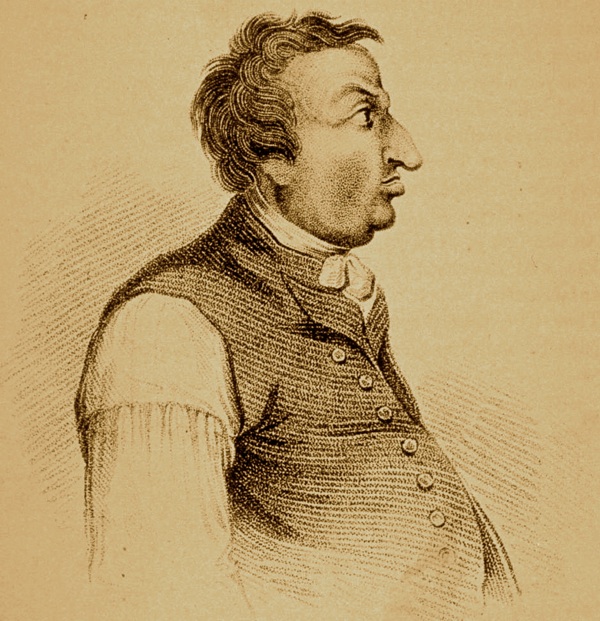
Nathaniel Bentley, Eccentric Character & Hardwareman of Leadenhall St – the well-known Dirty Dick
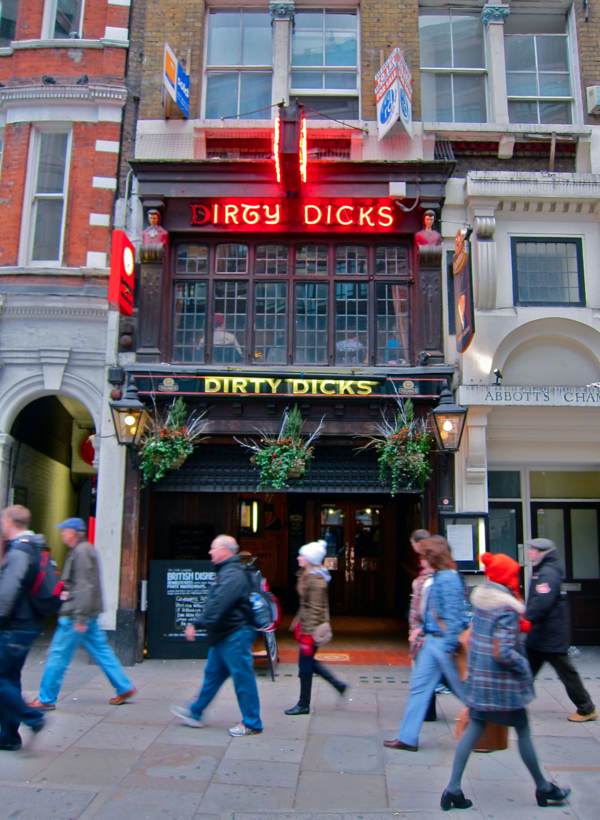
Photograph of City Corner Cafe copyright © Patricia Niven
Archive pictures courtesy of Bishopsgate Institute
You may also like to read about
Fred Iles, Meter Fixer
Book now for my tours through August, September & October

Fred & Marie Iles with Smudge
Fred Iles was born half a mile from his allotment in Stepney and his wife Marie grew up in Garden St that once stood where the allotment is today. They were married in St Dunstan’s, just across the road, and lived fifty yards away in Rectory Sq. As for Smudge, she is a local too and gave birth to two litters in the allotment shed.
Fred grows potatoes, cabbages, strawberries, gooseberries, runner beans and nasturtiums to draw the bees in his allotment, which is a small enclosure at the heart of Stepney City Farm. Surrounded by on all sides by other plots, this is a secluded corner sheltered from the wind where Fred can pass his time gardening peacefully in the company of his cat.
Fred had a good crop of strawberries this year and, while boney old Smudge patrolled the territory, Marie searched among the runner beans and discovered the first pickable specimens of the season.
“We never had a garden of our own. My grandfather Edmund lived with us when I was a child, he had come up to London from Bristol originally with two children and he ended up with four sons and three daughters. He was a great pigeon fancier and our backyard was all pigeon lofts where he kept three hundred pigeons – that’s a lot of pigeons. He was very successful at it and when he was dying he called me into his bedroom and showed me his box of medals and asked me to take one. I picked the silver one because it had a picture of a pigeon on it. There were gold ones I could have picked but I was too young to understand. He told me that Iles is a French name and that my ancestor fought in Napoleon’s army and was brought over to Bristol as prisoner of war and then stayed.
I was born in 1926 just half a mile from here in Hartford St, in a little cobbled yard called Wades Place. My father William was a seaman in his younger days and he went all over the world. I don’t know how he learnt about classical music but he was very knowledgeable and he used to play the Gounod’s Faust and Viennese waltzes on his harmonica for me.
I was here for part of the Blitz. It started on a Saturday afternoon at 3pm. I was in the yard and I heard the roar of the aeroplanes. I was thirteen and I thought it was our planes coming back, but it wasn’t. My father took me inside and we sat under the stairs which we thought was the safest place. I couldn’t see anything but I could hear the sound of the anti-aircraft guns and the engines of the planes and, at my age, I found it very exciting.
By the time they came back to bomb the docks, we had an Anderson shelter in the garden and we sat there listening to the sound of bombs dropping. My father decided it was too much and sent me and my mother and my sister to his brother in Oxford. He worked in the Morris factory which, at that time, was building aeroplanes and he got me job at fifteen making cowling panels for the side engines of Hawker Hurricanes. It was exciting work but it was miserable waiting in the cold for the bus to go to work at seven in the morning.
I got called up to the army on D-Day, June 6th 1944 and I was eighteen years old on my birthday, 30th June. They summoned me for 20th July, the day they tried to assassinate Hitler, so I had three weeks freedom before they put me in the army. By the time I’d learnt to shoot a gun, for some unknown reason they put me in the Royal Electrical Mechanical Engineers. I was posted to the anti-aircraft guns around London and then they sent me to an experimental laboratory in Shoeburyness where they were working on radar. I found I had an easy time for three and a half years until I was discharged in 1947.
I went to the Labour Exchange and the man said, ‘There’s not much going but I like the look of you so why not come and work on this side of the counter? And when a good job comes in you can get it.’ I worked there for six months, and my father was unemployed and he came in and signed on the dole. After six months, the London Electricity Board came along and I worked there for twenty-six years, at first in the office and then as a meter fixer.
When I started here at the allotment, it was quite hard. It was still a bomb site and I had to clear the bomb damage before I could plant anything. There were just six of us pensioners then and I needed something to do in my spare time. They retired me at sixty in 1986, but I started my allotment here four years before that. Smudge turned up on the allotment one day, fifteen years ago. And I thought ‘poor old cat’ and decided to feed it, so she made the allotment her home and now I have to come and feed her every day.”
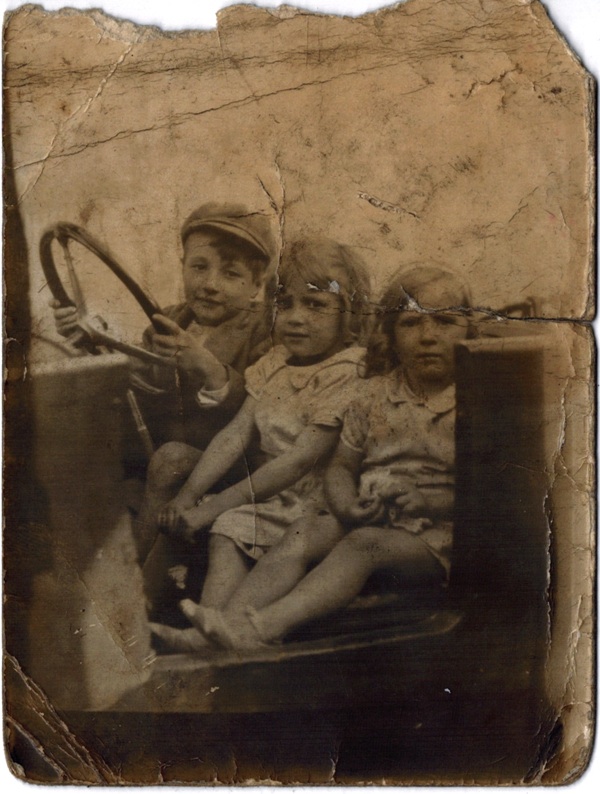
Fred aged five with his sister Phyllis and cousin Rosamund in 1931, taken by Griffiths in the Roman Rd

Fred in uniform at eighteen years old, 1944

Fred and his pal Gimlet in Shoeburyness

Fred stands at the base of the aerial in Shoeburyness.

Fred (left) enjoys a pint with Bernard & Jack at Shoeburyness in 1946

Fred (top left) with pals on the beach at Shoeburyness
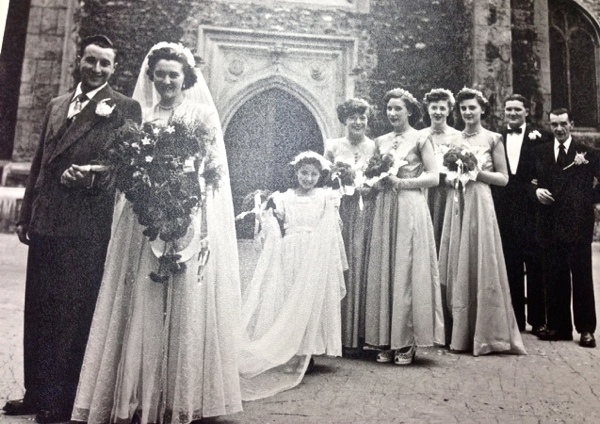
Fred & Marie get married at St Dunstan’s Stepney, 1st August 1953

Fred & Marie on their wedding day.

Fred in the seventies.
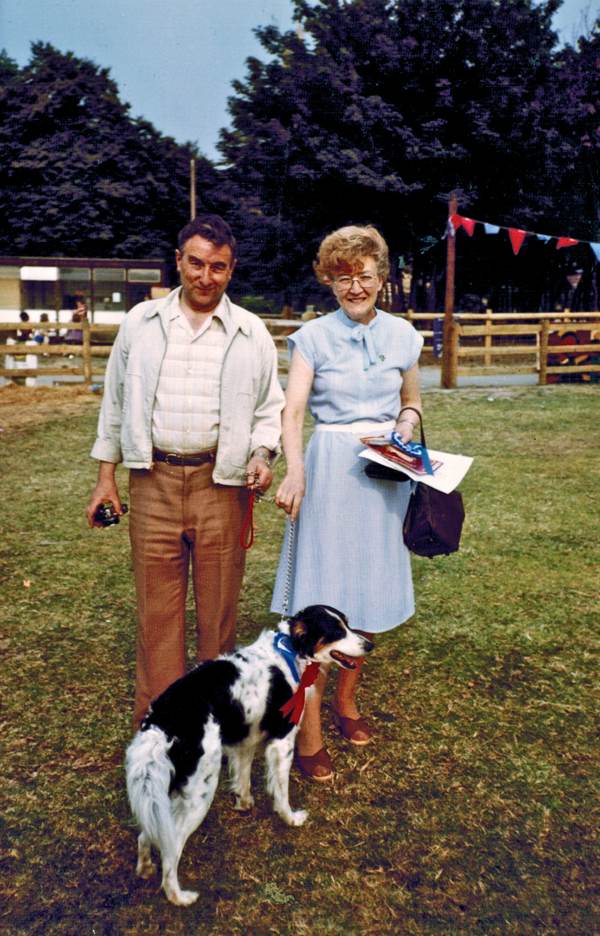
Fred & Marie with their prizewinning dog Rufus, in July 1984 at Stepney City Farm – when Rufus won the dog with the waggliest tail and best mongrel.
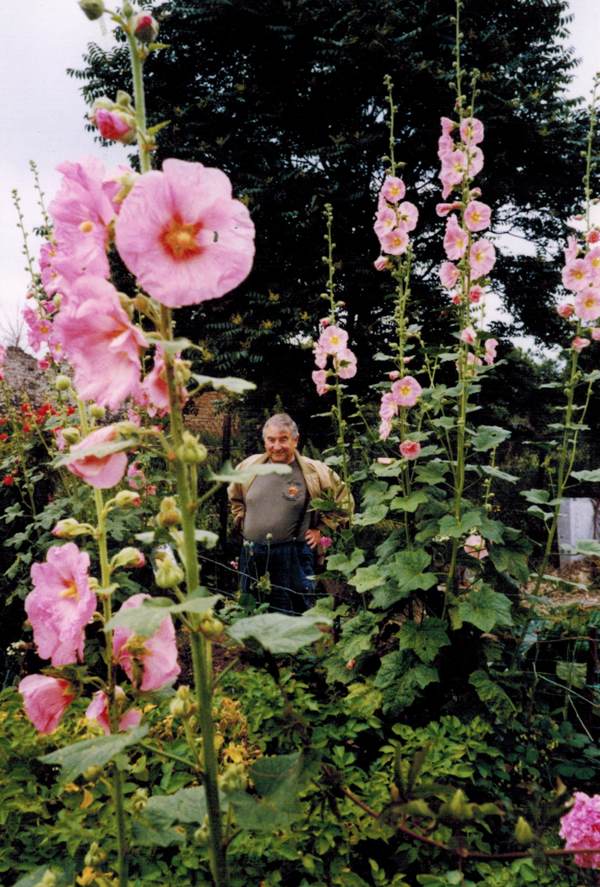
Fred grew some magnificent hollyhocks on the allotment in the nineties
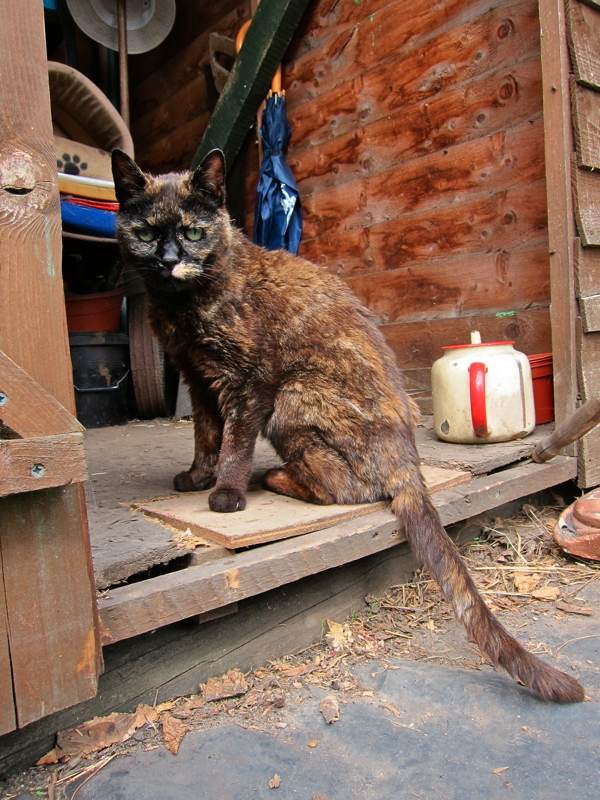
“Smudge turned up on the allotment fifteen years ago. And I thought ‘poor old cat’ and I decided to feed it, so she made the allotment her home and now I come every day to feed her.”

Fred and Smudge
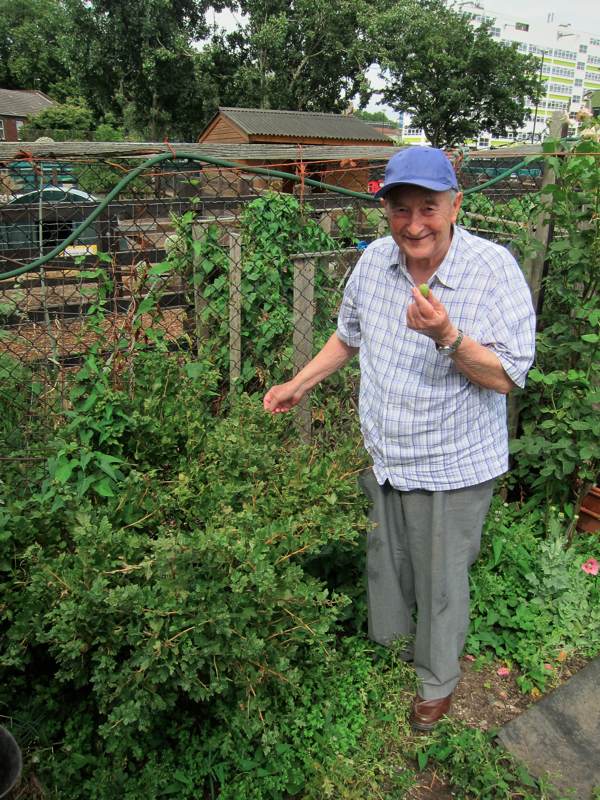
Gooseberry time in Stepney

Fred & Marie Iles celebrated their sixty-fifth wedding anniversary in 2018
Stepney City Farm runs a Farmers’ Market every Saturday from 10am – 3pm, selling food from local producers at affordable prices.
You may also like to read about
Lyndie Wright, Puppeteer
Book now for my tours through August, September & October
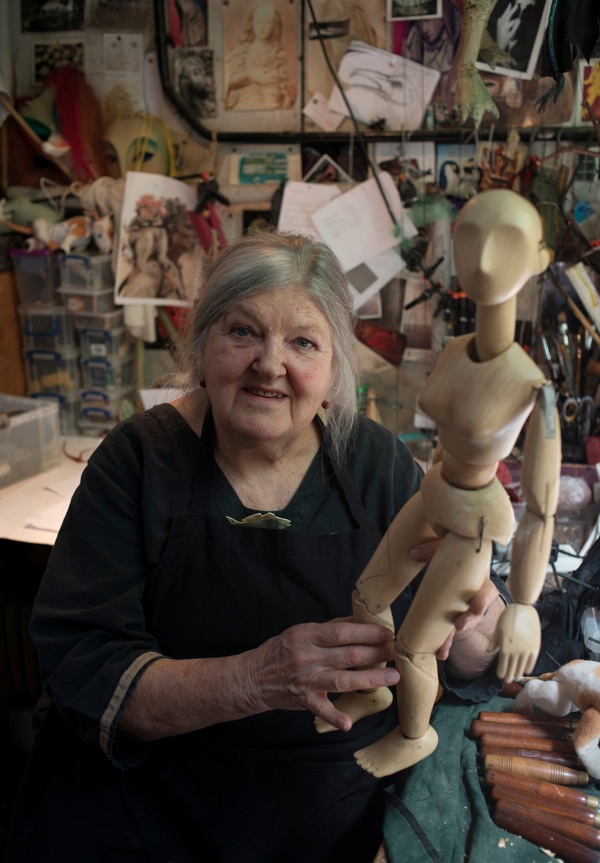
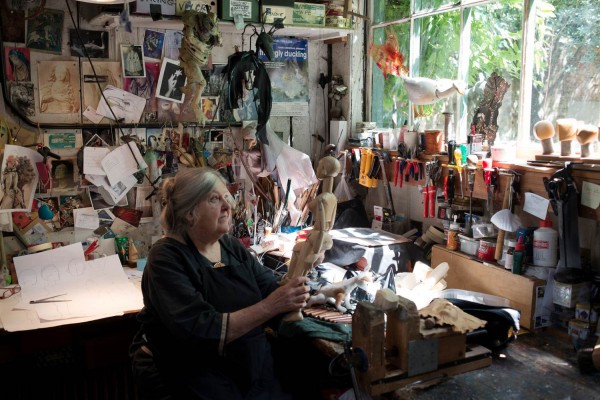
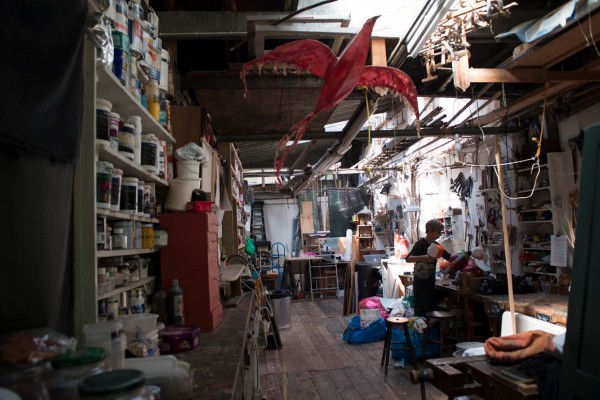
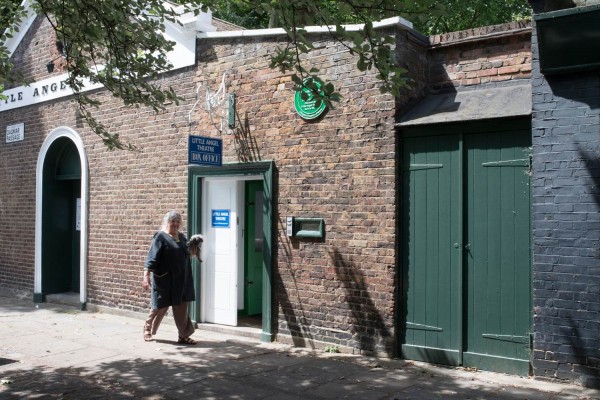
As a child, I was spellbound by the magic of puppets and it is an enchantment that has never lost its allure, so I was entranced to visit The Little Angel Theatre in Islington. All these years, I knew it was there – sequestered in a hidden square beyond the Green and best approached through a narrow alley overgrown with creepers like a secret cave.
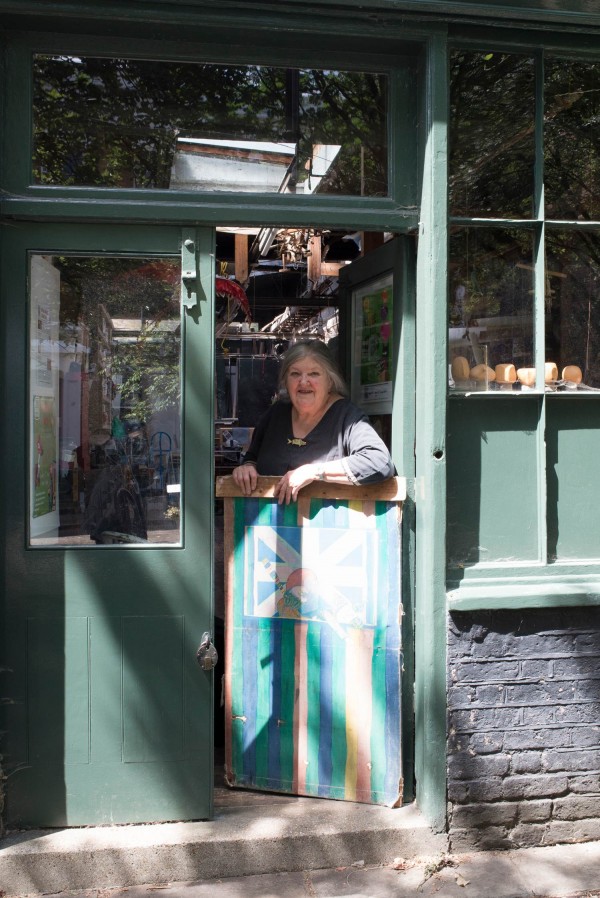
Contributing Photographer Sarah Ainslie & I were welcomed by Lyndie Wright who co-founded the theatre in 1961 with her husband John in the shell of an abandoned Temperance Chapel. “We bought the theatre for seven hundred and fifty pounds,” she admitted cheerfully, letting us in through the side door,“but we didn’t realise we had bought the workshop and cottage as well.”
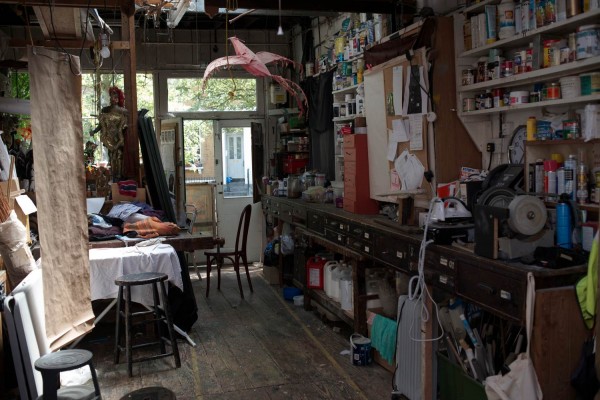
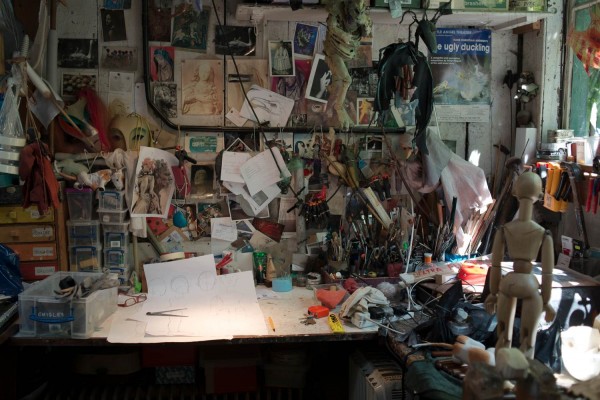
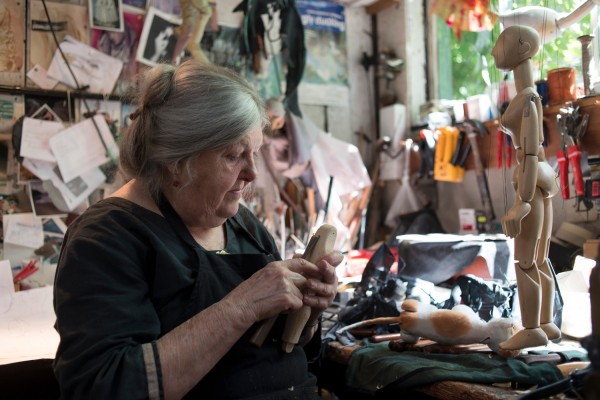
More than half a century later, Lyndie still lives in the tiny cottage and we discovered her carving a marionette in the beautiful old workshop. “People travel for hours to get to work, but I just have to walk across the yard,” she exclaimed over her shoulder, absorbed in concentration upon the mysterious process of conjuring a puppet into life. “Carving a marionette is like making a sculpture,” she explained as she worked upon the leg of an indeterminate figure, “each piece has to be a sculpture in its own right and then it all adds up to a bigger sculpture.” In spite of its lack of features, the figure already possessed a presence of its own and as Lyndie turned and fondled it, scrutinising every part like puzzled doctor with a silent patient, there was a curious interaction taking place, as if she were waiting for it to speak.
“I made puppets as a child,” she revealed by way of explanation, when she noticed me observing her fascination. Growing up and going to art school in South Africa, Lyndie applied for a job with John Wright who was already an established puppet master, only to be disappointed that nothing was available. “But then I got a telegram,” she added, “and it was off on an eight month tour including Zimbabwe.”
After the tour, Lyndie came to Britain continue her studies at Central School of Art and John was seeking a location to create a puppet theatre in London. “The chapel had no roof on it and we had to approach the Temperance Society to buy it,” Lyndie recalled, “We did everything ourselves at the beginning, even laying the floorboards and scraping the walls.” Constructed upon a corner of a disused graveyard, they discovered human remains while excavating the chapel to create raked seating as part of the transformation into a theatre with a fly tower and bridge for operating the marionettes. Today, the dignified old frontage stands proudly and the auditorium retains a sense of a sacred space, with attentive children in rows replacing the holy teetotallers of a former age.
“I had intended to return to South Africa, but I had fallen in love with John so there was no going back,” Lyndie confided fondly, “in those days, we sold the tickets, worked the puppets, performed the shows, and then rushed round and made the coffee in the interval – there were just five of us.” At first it was called The Little Angel Marionette Theatre, emphasising the string puppets which were the focus of the repertoire but, as the medium has evolved and performers are now commonly visible to the audience, it became simply The Little Angel Theatre. Yet Lyndie retains a special affection for the marionettes, as the oldest, most-mysterious form of puppetry in which the operators are hidden and a certain magic prevails, lending itself naturally to the telling of stories from mythology and fairytales.
John Wright died in 1991 but the group of five that started with him in Islington in 1961 were collectively responsible for the growth and development in the art of puppetry that has flourished in this country in recent decades, centred upon The Little Angel Theatre. Generations of puppeteers started here and return constantly bringing new ideas, and generations of children who first discovered the wonder of the puppet theatre at The Little Angel come back to share it with their own children.
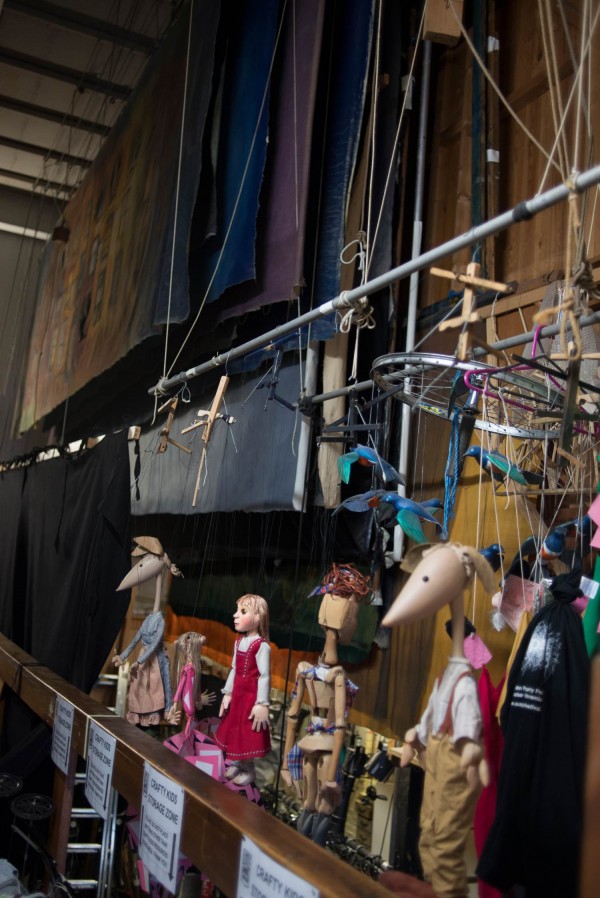
“The less you show the audience, the more they have to imagine and the more they get out of it,” Lyndie said to me, as we stood together upon the bridge where the puppeteers control the marionettes, high in the fly tower. The theatre was dark and the stage was empty and the flies were hung with scenery ready to descend and the puppets were waiting to spring into life. It was an exciting world of infinite imaginative possibility and I could understand how you might happily spend your life in thrall to it, as Lyndie has done.
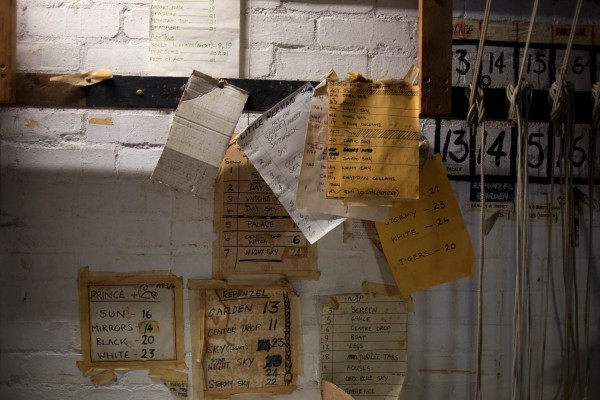
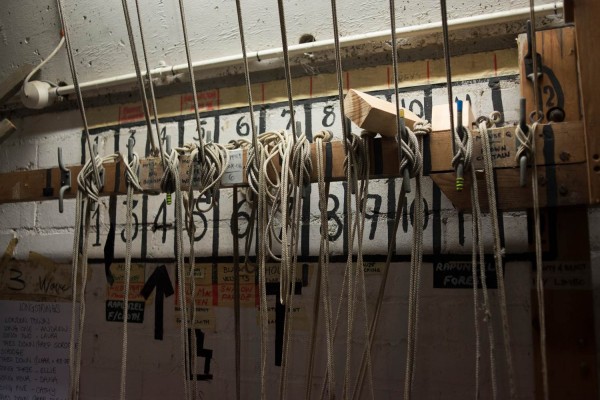
Old cue scripts, still up in the flies from productions long ago
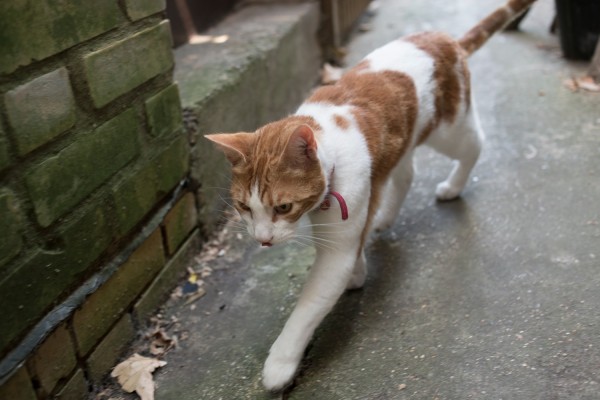
Larry, the theatrical cat
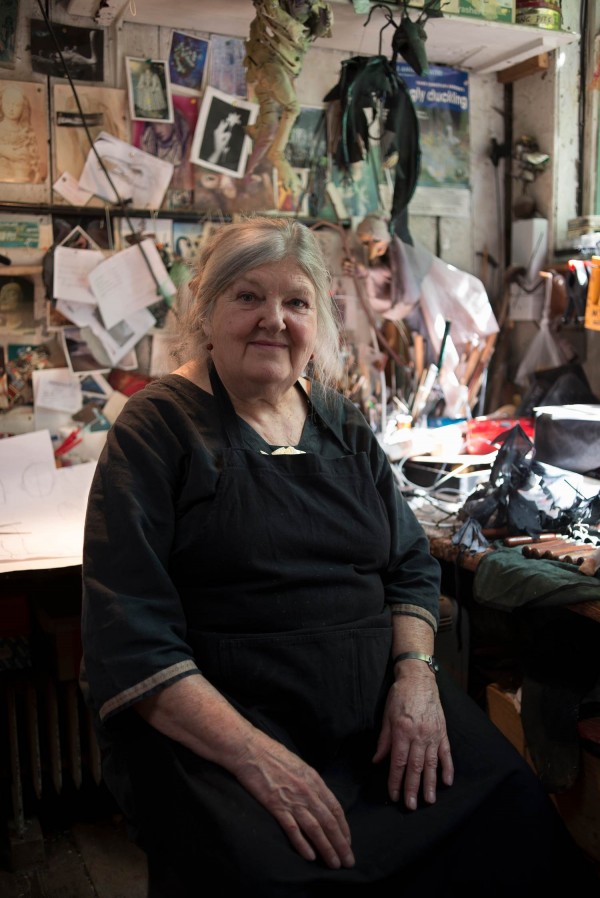
Lyndie Wright
Photographs copyright © Sarah Ainslie
Visit The Little Angel Theatre website for details of current productions
Doreen Fletcher’s Early Drawings
Book now for my tours through August, September & October
Doreen Fletcher is an astonishingly brilliant draughtswoman. Even though her drawings are often undertaken as preparation for paintings, they stand as art works in their own right.
Readers are already familiar with Doreen Fletcher‘s paintings of the East End that I published in a monograph and which were exhibited with such success at her retrospective the Nunnery Gallery a few years ago. Today it is my pleasure to introduce you to a selection of her early pencil drawings which originate from the Potteries where Doreen grew up. These pictures were done by Doreen in her teens and early twenties, and have never been see together before publicly.
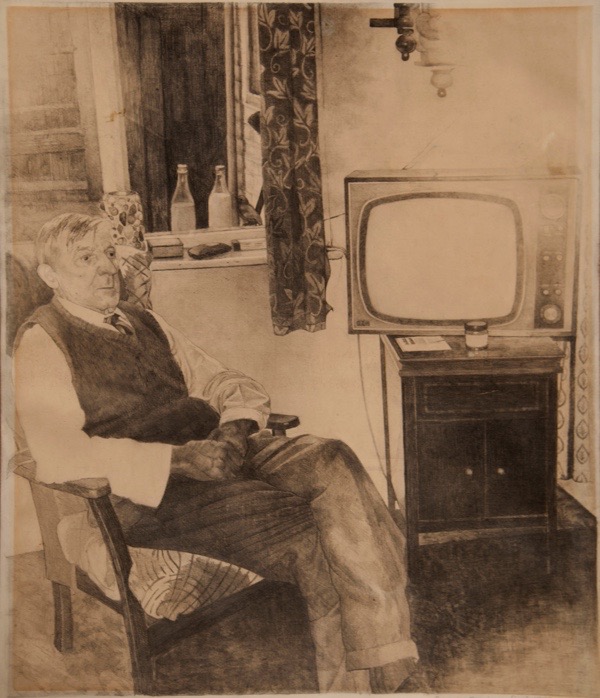
Grandad at Prospect Terrace, 1975
“My grandad was a hard man when young, it was said he could break a brick with his bare fist. A survivor of Ypres, he gravitated to Knutton Forge in Warrington after the war where he met my grandmother, the daughter of a local shop-keeper who was forever making and losing money. As my granddad was twelve years older, it was assumed that he would die first but he was left a widower at the age of eighty-four and lived on for another eight years, despite a life of heavy smoking and beer consumption. To the end, he remained unable even to make a sandwich for himself, although he was a dab hand at making wreaths, a cottage industry in which the whole family took part every Christmas.”
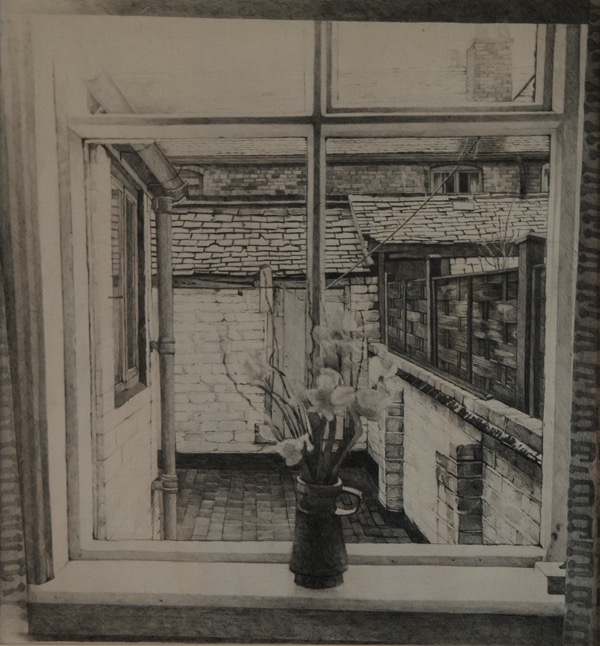
View from our living room window, 17 Bailey St, 1975
“This was the view I saw from our living room window every morning, from when I was a tiny child until I left home at the age of twenty. It was identical to thousands of other views from other houses. At the end of the yard there was a row of three shacks – a coal house, an outside loo and a tool storage area. There was very little colour in those streets, save for the odd dandelion and escaped budgerigar, although sparrows abounded and there were pigeon fanciers with coops.
The house where I grew up was in a dip amongst row upon row of terraced houses, built in the eighteen-sixties to house mill workers. They were huddled together, forming a tight knit community of families, with corner shops surviving by selling produce on tick and a couple of pubs. Most of the inhabitants had been born within a few miles of Newcastle-under-Lyme, the only exceptions being an Italian couple from Milan who came to work in the mill, and a few Polish and Yugoslav refugees who spoke almost no English and who had a special delicatessen on the other side of town. All were accepted.”
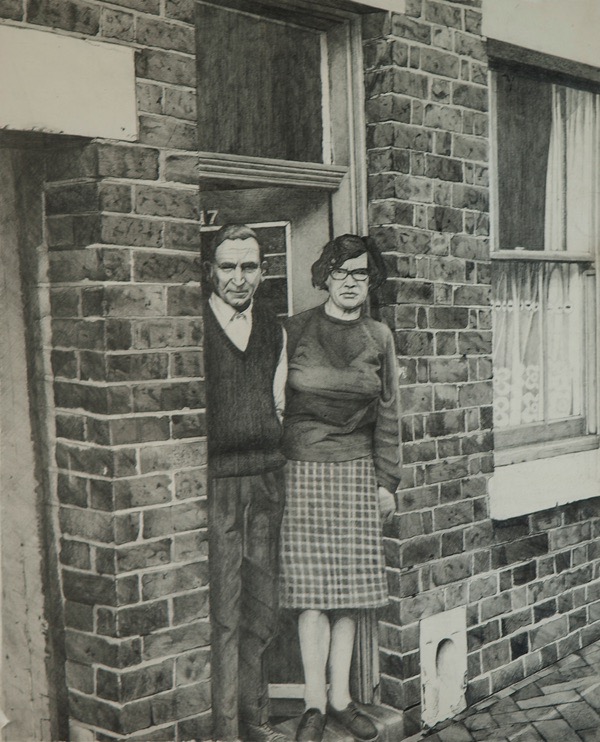
Mum & Dad on the Front Step, 1976
“Alice, my mother, worked in a munitions factory during the war and became a servant afterwards. It gave her ideas about not having the newspaper on the table and no tomato ketchup, and healthy eating. Colin, my dad, was a farm worker who wanted to be a vet but did not like school and suffering a year long illness when he was seven deprived him of the education he needed.
After I was born, they moved into the town from Stableford because he could earn more money there. When they started installing pylons in the late fifties, he worked on that. Later he worked putting in pipes for North Sea Gas too but, when he was fifty-seven, he had a brain haemorrhage at work, probably caused by a pneumatic drill, and never worked again.”
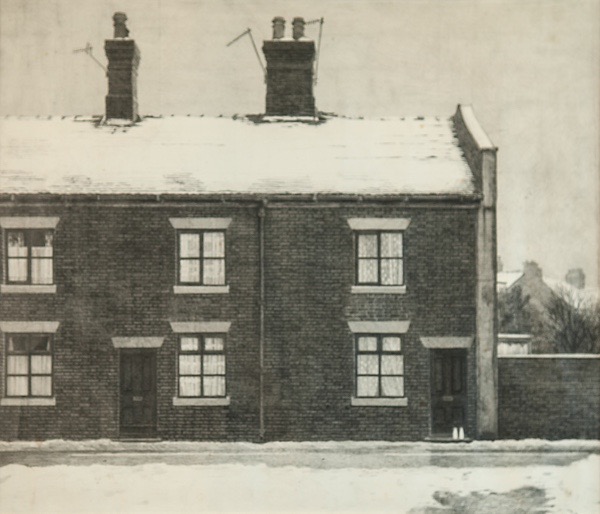
Houses Under Snow, 1980
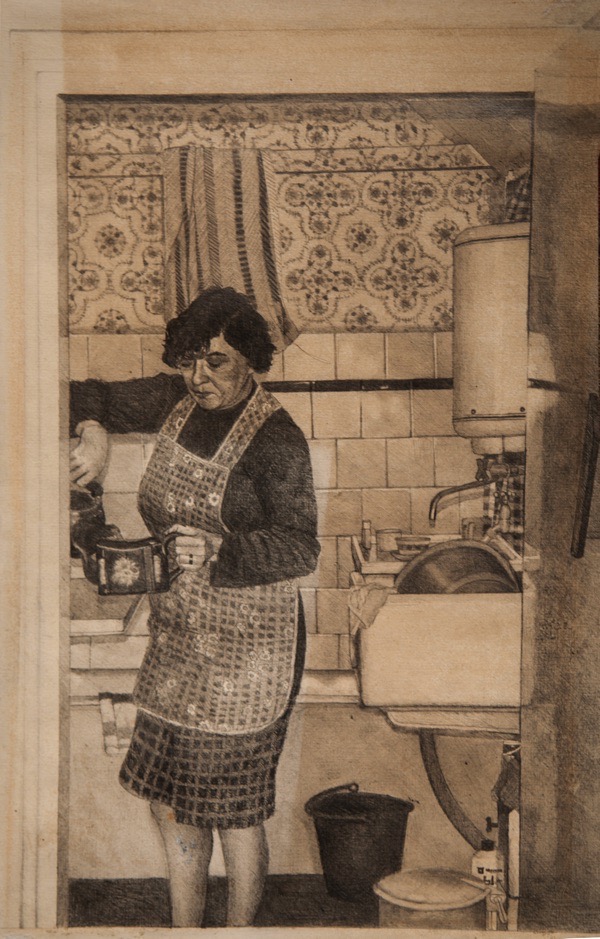
Mother in the kitchen, Bailey St, 1975
“The scullery was a tiny multi-purpose extension. The cooker was by the entrance on the left, in front of my mother, and, on the other side, was a washing machine with a mangle. My mum is pouring water from a kettle kept on a shelf of the kitchen cabinet. I can still remember the midnight blue and gold hues of the teapot. I bought it as a present, thinking it was very posh and sophisticated unlike the common brown tea-pots in daily use.”
Directly behind her you can see a bath, which was considered upwardly-mobile when it was installed in 1957. There were no taps, the hot water came from the geyser on her right, so by the time there was enough to bathe, the hot water was lukewarm.”
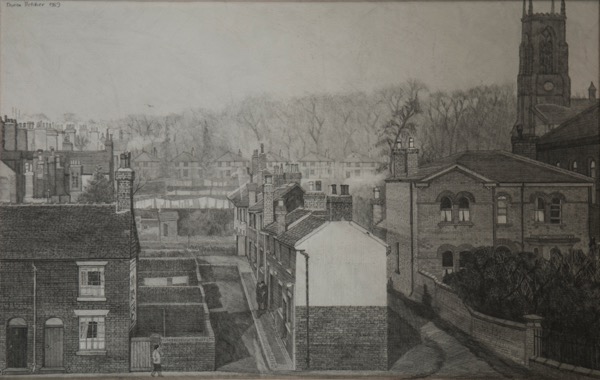
St Giles, 1989
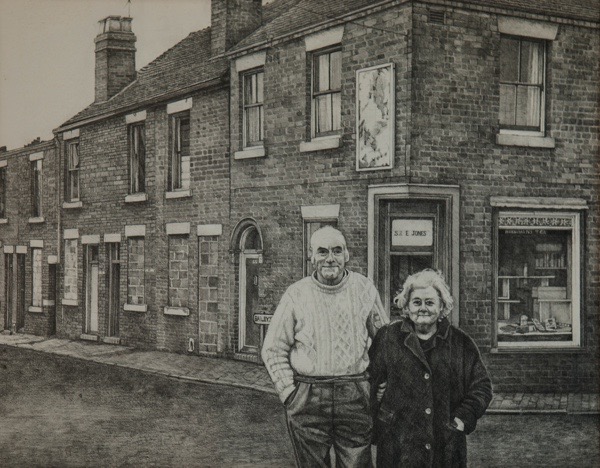
Corner Shop, Bailey St, 1975
“Almost every street had one or sometimes two corner shops, where provisions were bought on ‘tic’ with the bill paid, hopefully, on Friday. This was the morning after most workers got their wages. Mr & Mrs Jones ran the shop favoured by my mother and their daughter was an art student, so they were happy to pose for me.”
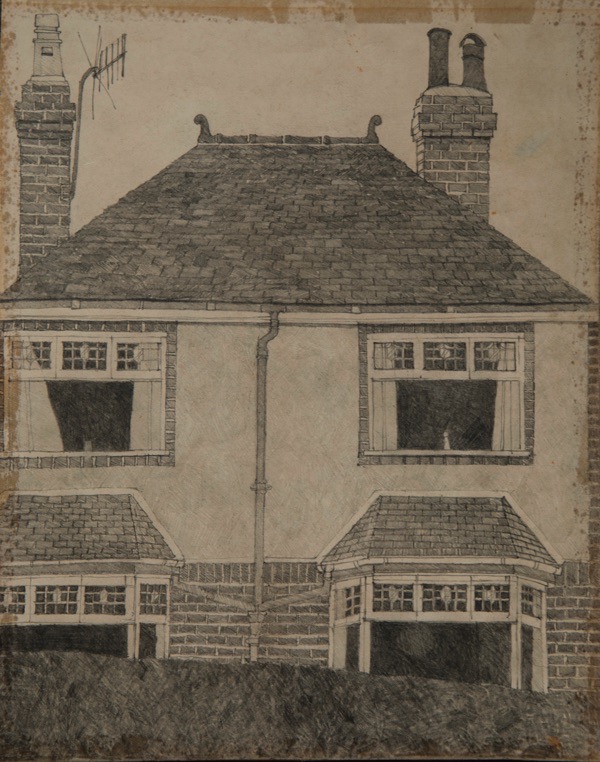
House in Whitfield Ave, 1977
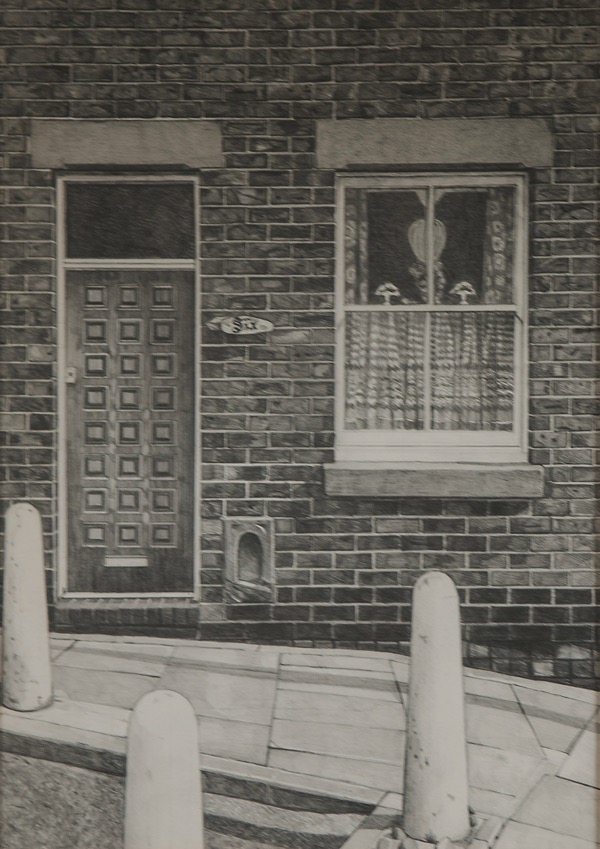
House in Fenton, 1987
“Visits to Newcastle took on a new poignancy once my former home was demolished and I began to document the facades of the terraces that remained, wandering the streets often with my dad in tow, carrying a scrappy sketchbook and a camera I bought second hand.”
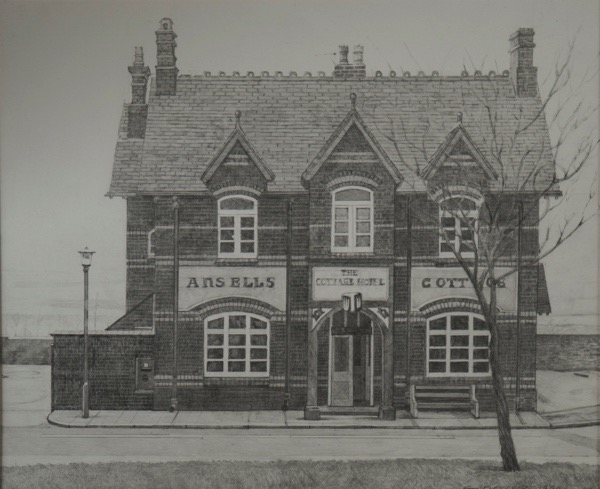
The Cottage Inn, Tunstall, 1998
“My grandparents ran ‘The Cottage Inn’ during the war and my dad my worked at nearby Shelton Bar Ironworks while courting my mum. After the war, the family moved to Prospect Terrace, Newcastle. Their dog, Paddy, moved with them but he used to take the bus every day at 11 am back to the pub in Tunstall. Everyone knew him, including all the bus conductors.”
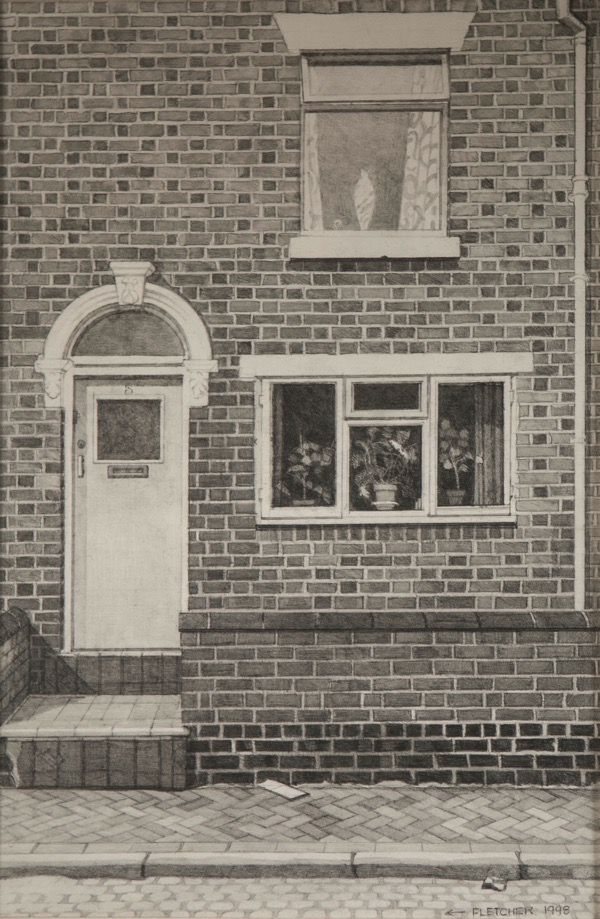
House in New Ashfields, 1998
“I sold the painting I did from this drawing. I was attracted by the neat geometry of the brickwork. This house was in the New Ashfields, built a few decades later than the Old Ashfields where I grew up. The houses were generally more spacious and upmarket than my streets.”
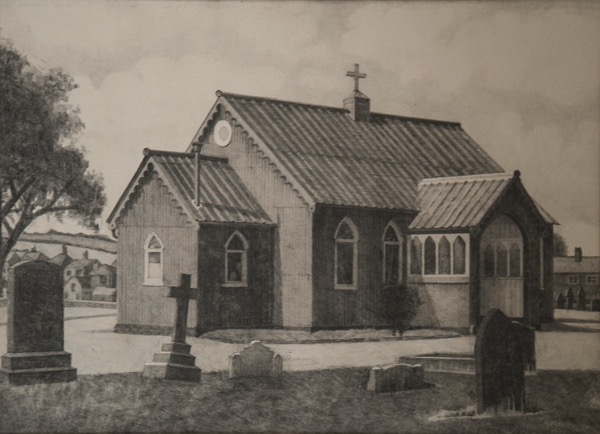
Chapel in Silverdale, 1983
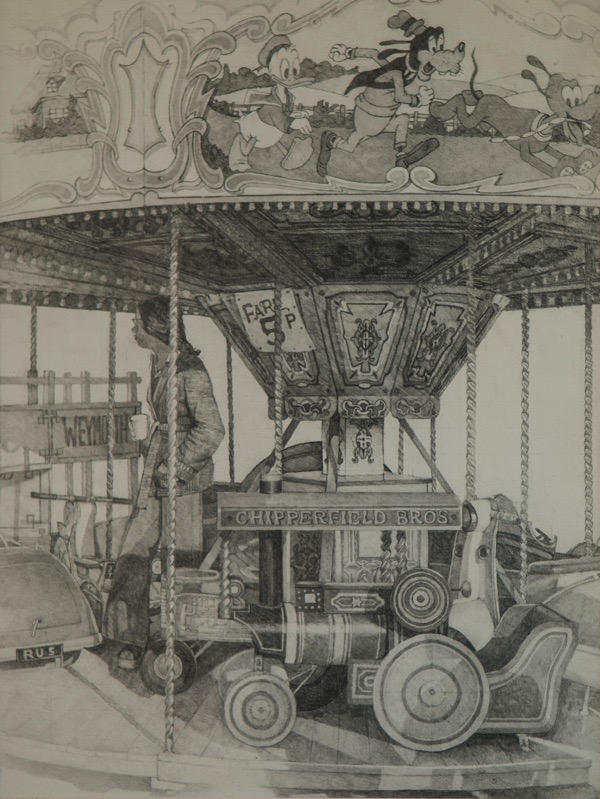
Fairground, 1977
“Every Summer, a fair came to Newcastle during the ‘Wakes’, two weeks in July when the potteries closed down and those who could afford it went away to stay in a boarding house or caravan in Rhyl, Blackpool or – for the more adventurous – Great Yarmouth. For those of us, who stayed behind there was the fun of the fair, with hotdogs and candyfloss.The summer I made this drawing, I visited Abergele in North Wales, where my boyfriend’s grandparents had retired. They lived in a bungalow in a suburban avenue close to the sea and, while I was there, we visited an amusement park in Rhyl. It was here I was persuaded, against my better judgement, onto a ride and I recall praying for the horizon to re-establish itself. It was the first and last time I ever took a fairground ride.”
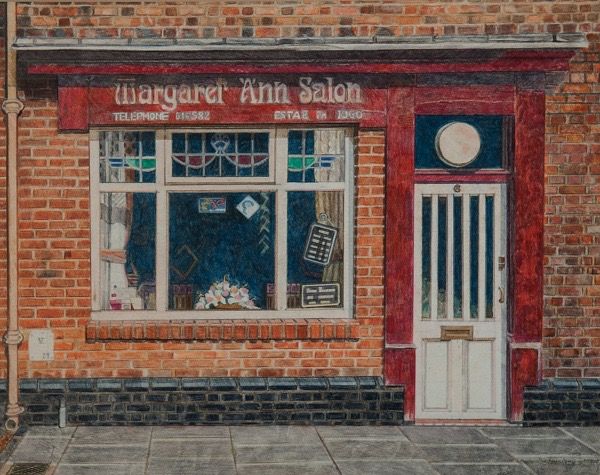
Margaret Ann Hair Salon, 1995
Drawings copyright © Doreen Fletcher
You may also like to take a look at
Terry Bloomfield, Fish Dealer & Photographer
Book now for my tours through August, September & October
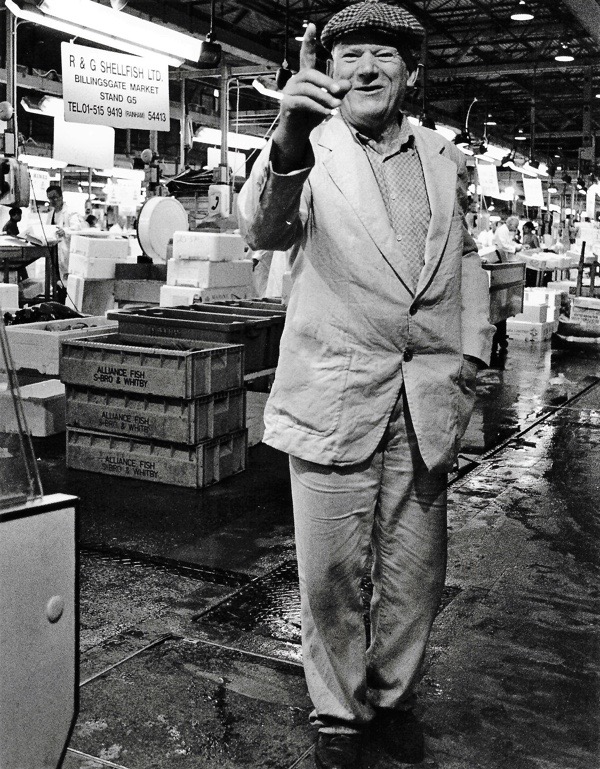
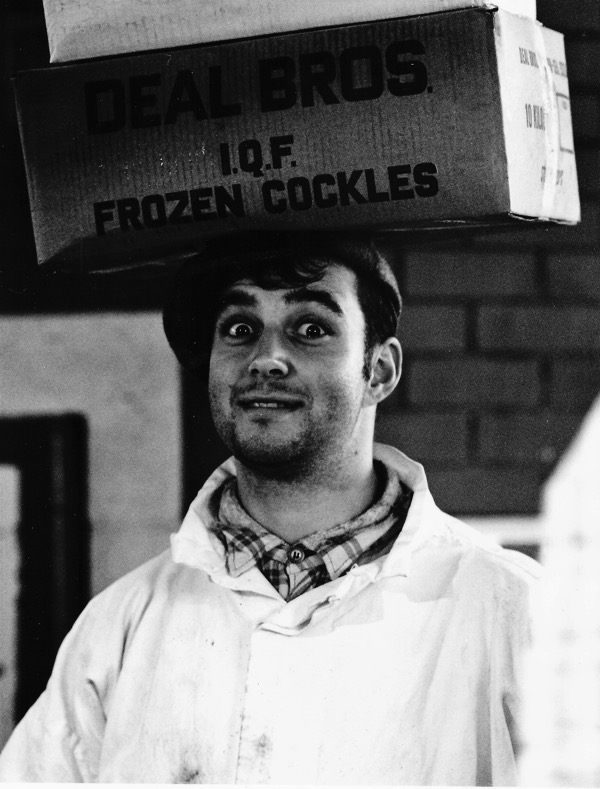
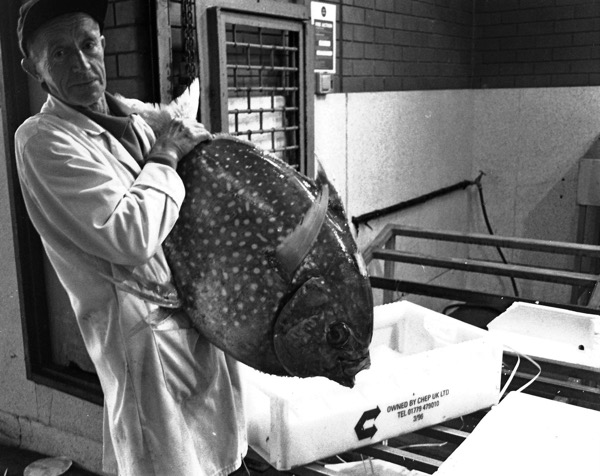
Terry Bloomfield was born in 1934 and grew up in Columbia Rd as the third generation of a family that worked at Billingsgate, where he ran his own shellfish business. Between 1982, when the market moved to the Isle of Dogs, and 2011, when Terry retired, he recorded the life of Billingsgate in thousands of black and white photographs which reveal a candid insider’s viewpoint of this extraordinary nocturnal phenomenon.
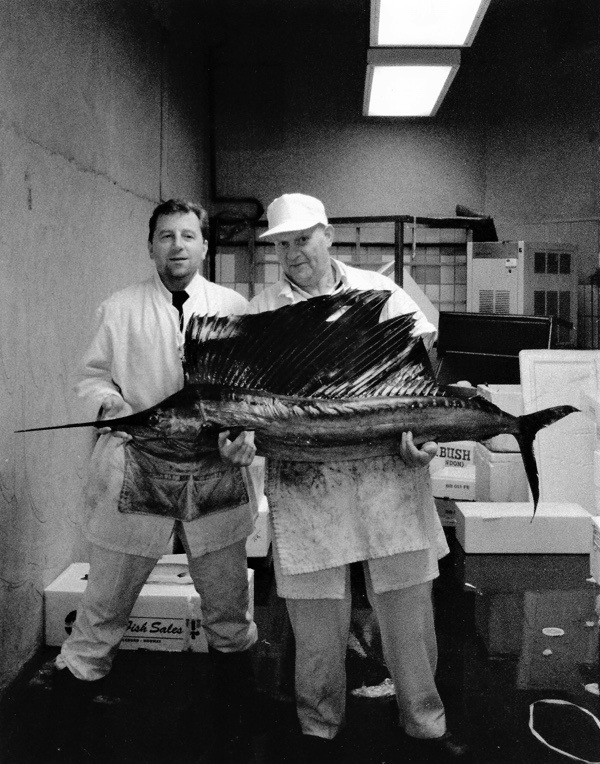
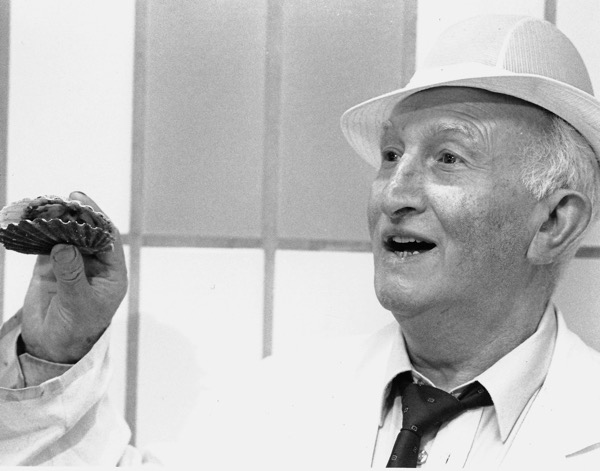
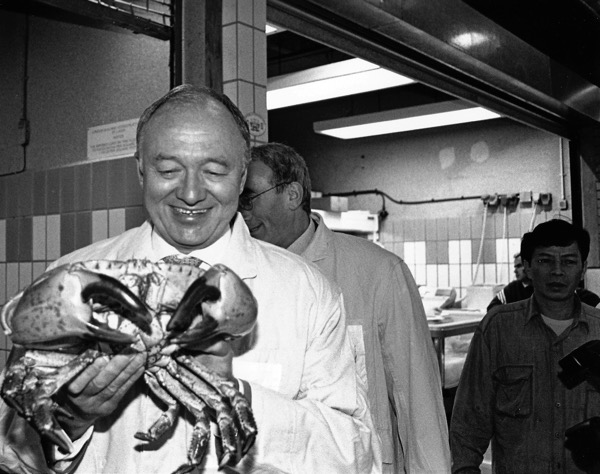
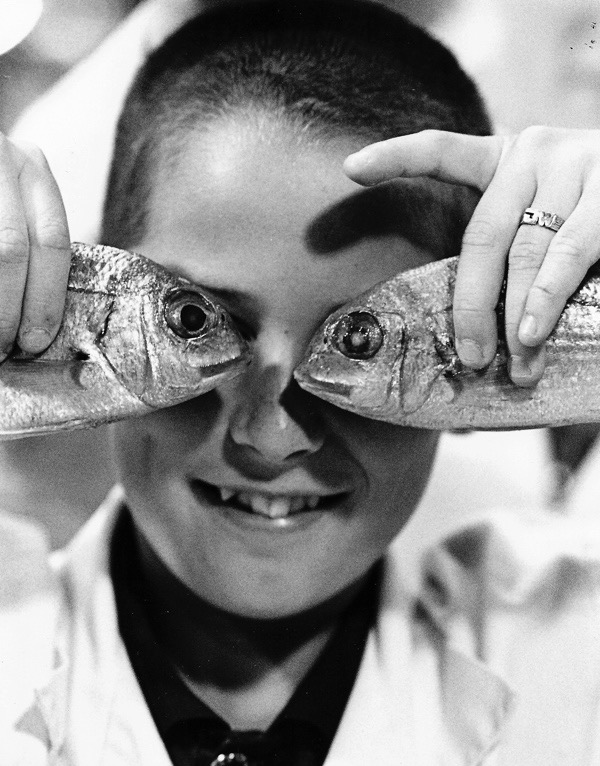
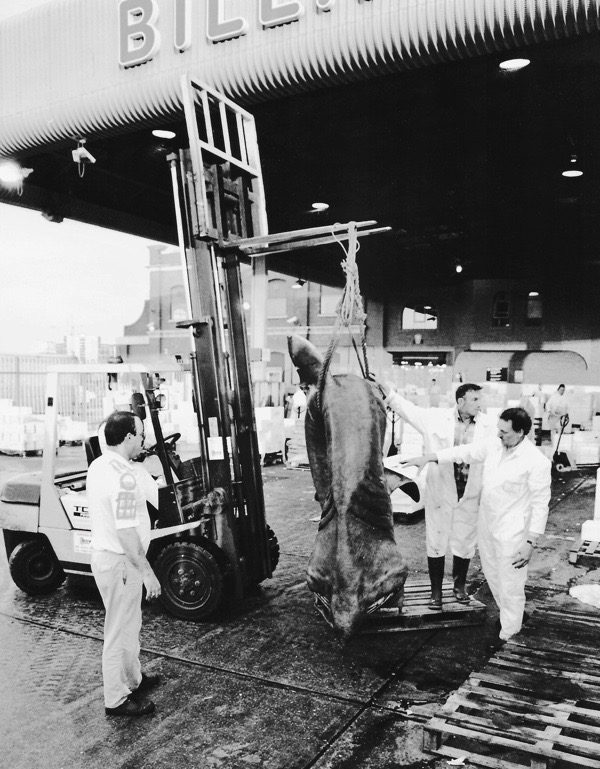
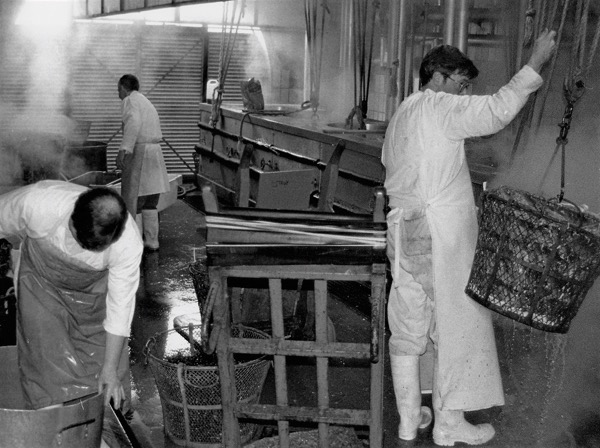
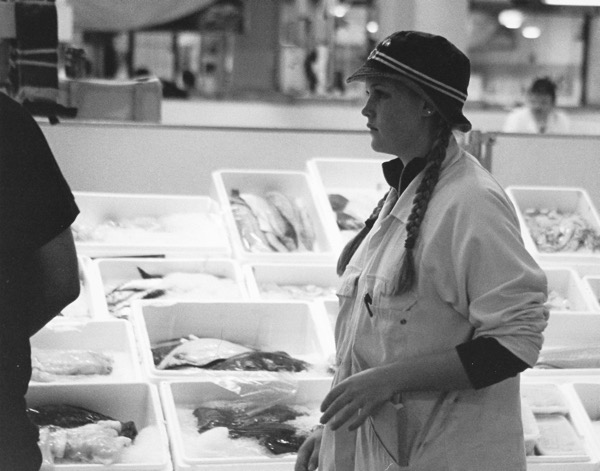
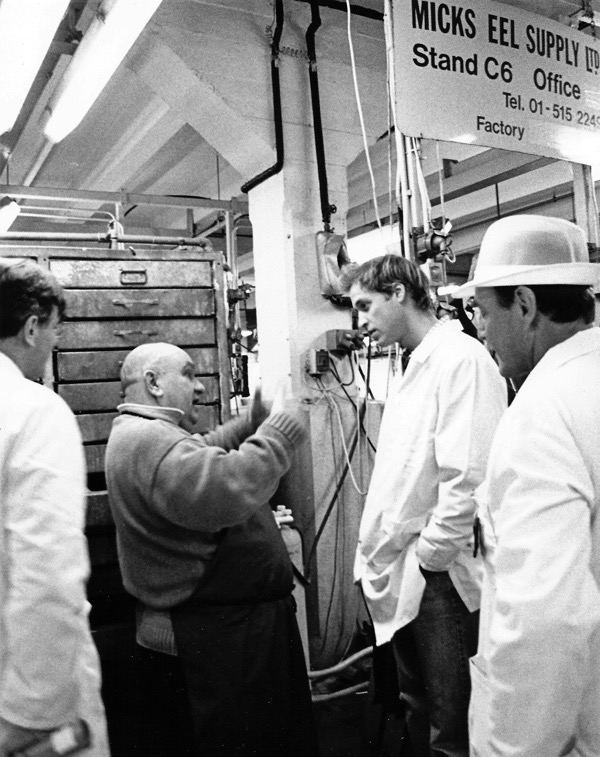
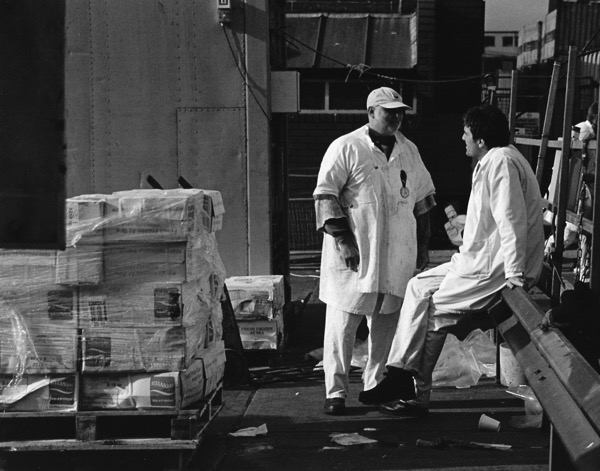
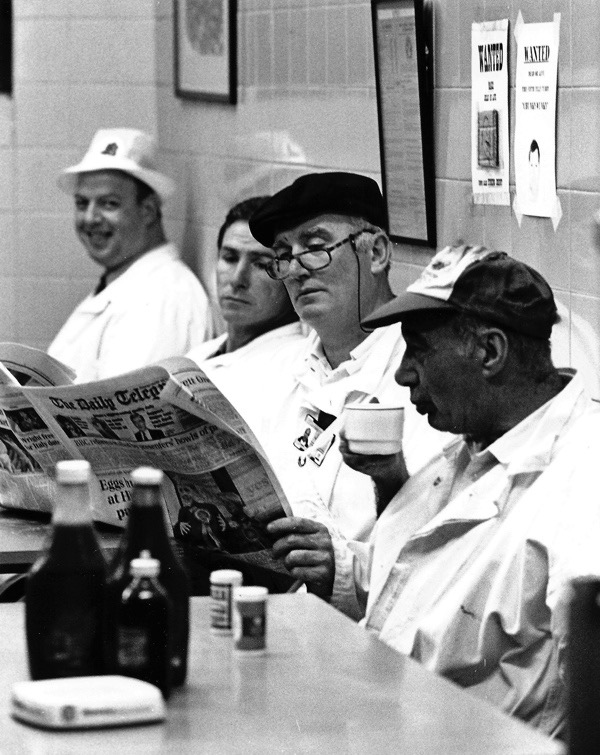
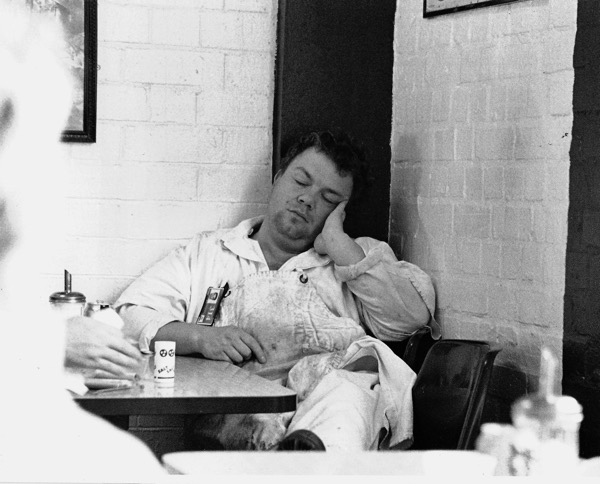
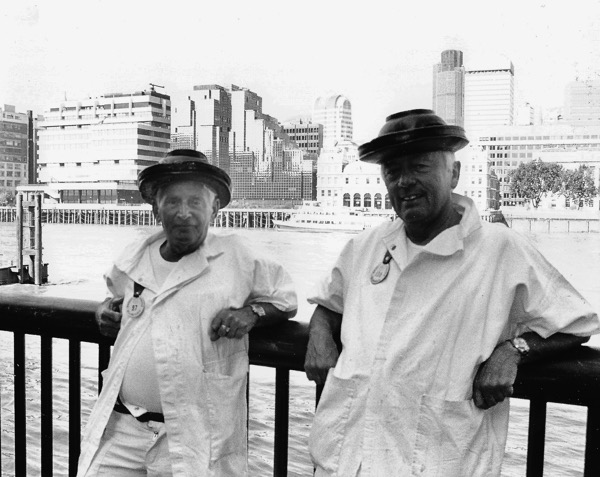
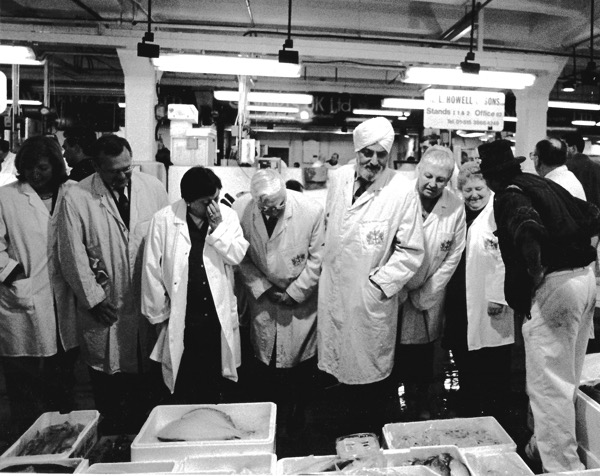

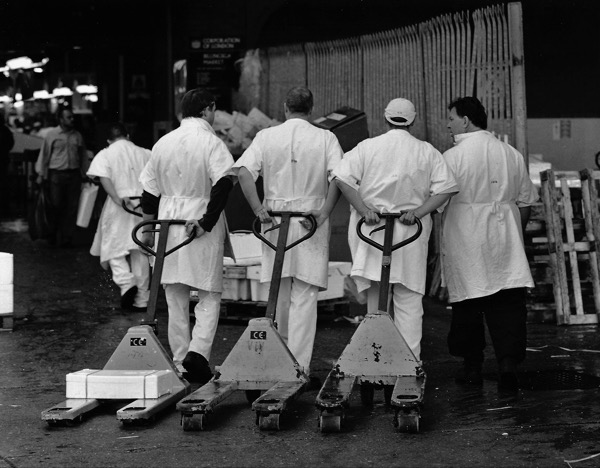
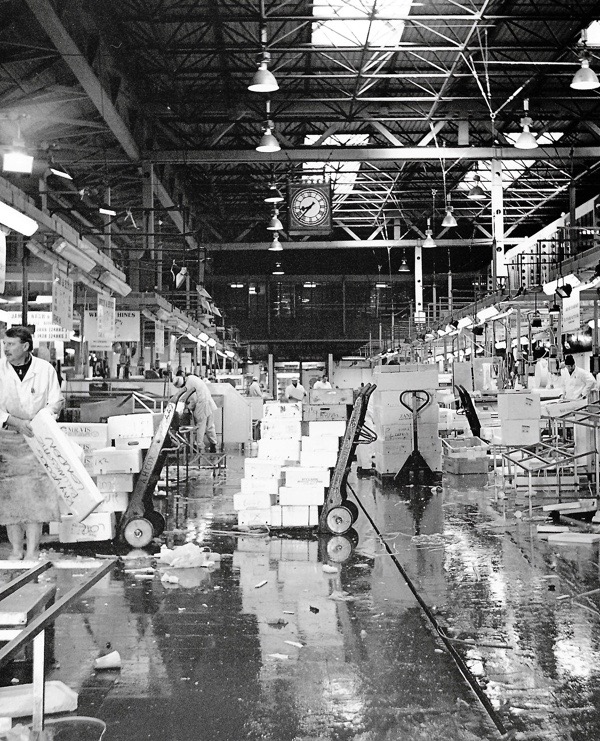
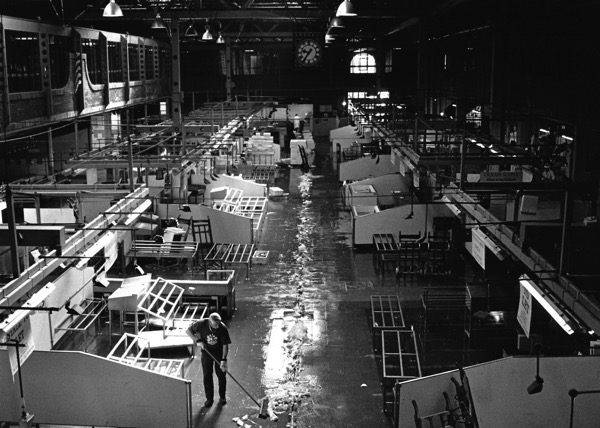
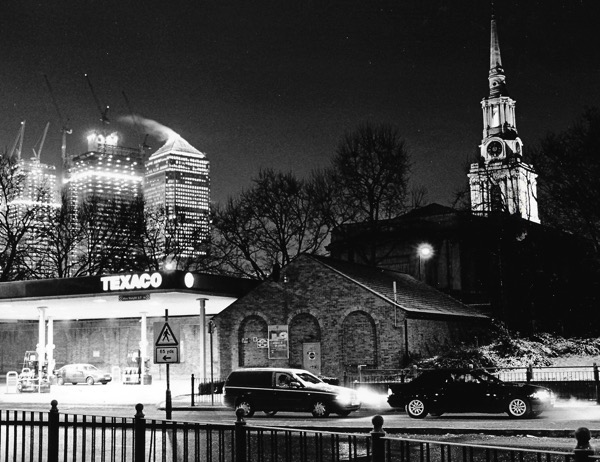
Photographs copyright © Terry Bloomfield
You may also like to read these other Billingsgate stories