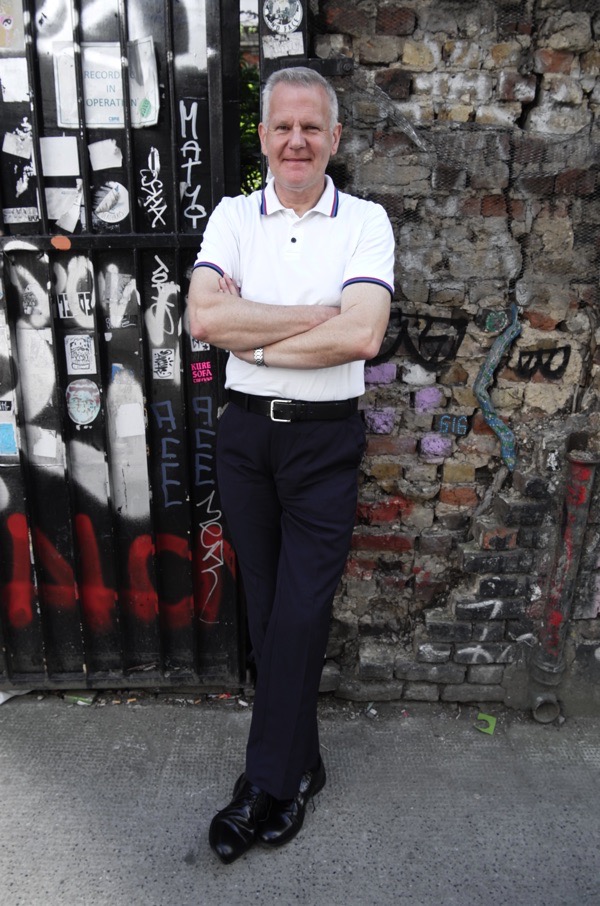
Robert Green, Sclater St Market Trader
One quiet afternoon, over a couple of drinks in the back bar at The Carpenters Arms in Cheshire St, Robert Green told The Gentle Author the epic story of his family’s involvement in the market through three generations and over almost a century
Robert Green – My connection to the Sclater St Market goes right back to my father’s father, Edward Green, who started down here in the twenties. He used to sell bird seed. In those days, it was a big animal market and pigeons were the number one thing. Every man in the East End used to levitate his way down towards Club Row, as it was known then. So my grandfather ended up down here selling bird seed on a regular basis and, as soon as he was old enough, Ronald, my father – who was born in 1921 – started coming down here with him too. My grandfather was in the Coldstream Guards. He got wounded and sent to the military hospital at Woolwich. After he came out of there, he began trading down the market on Sundays.
In the thirties, my father started thinking about market trading himself but he did not join the animal market, he decided to go into clothing – which we are still doing today, selling a few socks and things like. He traded all through the war and I remember him telling me about the first time they had an air raid siren – he said he had never seen the market pack up so fast, everyone was gone in about ten minutes.
After the war, a lot of buildings had gone. That plot behind my stall where the ‘Avant Garde’ Tower is now was one big wasteland. A lot of people set up stalls on that piece of ground. The owners of the properties had not got any war damage compensation, so no one really planned to do anything. It was just left as wasteland and people started trading there, which was how my father ended up on a bomb site. He traded there from 1948 until the mid-fifties, which is when we got the licence in the market. He had been applying for the licence all that time while he was working in a menswear shop in Green St during the week and trading on Sundays, until he got prosecuted for illegal trading– a five pound fine and ten shillings cost. Finally in 1955 – just before I was born – he managed to get a licence. A pitch became available and the council offered him a permanent licence, so he took that.
The Gentle Author – Why did it take so long to get a licence?
Robert Green – You simply could not get a licence in those days, it was such a busy market that there was literally no space. All the pitches were taken. Nowadays it is easy to forget, but relatively recently – from pre-war days up to the fifties, even the early seventies – on a Sunday, you go could down your local high street and hear a pin drop. There was nothing open. If you wanted to go anywhere and do any shopping or look around, the only place to go on a Sunday morning was down the market. In Tower Hamlets, on Sunday there was Petticoat Lane, Club Row and Columbia Rd. Virtually all the men in the local area used to make their way towards Club Row Market because it was the place to be on a Sunday morning. It was always known as a local market, whereas Petticoat Lane was a bit touristy, attracting people from far and wide.
The Gentle Author – My parents went to Petticoat Lane on their honeymoon in 1958.
Robert Green – Imagine someone saying that now! “I’m taking you to Petticoat Lane for your honeymoon,” I do not think it would go down too well. Incredible when you think how times have changed. Down here in Club Row, it was mostly pets and birds in particular. If you look at any photos from the fifties and sixties or earlier, nine out of every ten people would be men. Very few women used to come down, it was always known as a man’s market mostly because of the association with birds, which were an exclusively masculine interest in those days.
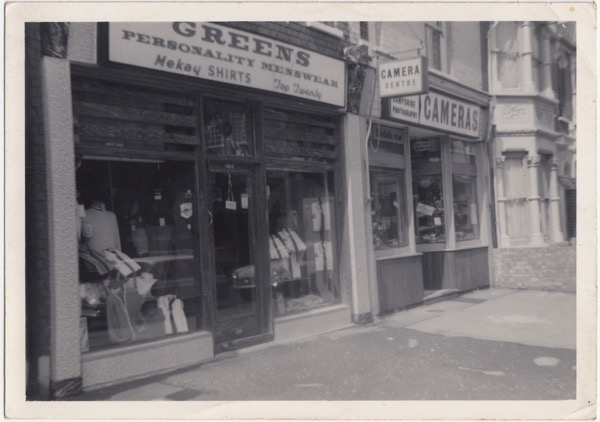
Originally we had one pitch from which we traded all through the forties and fifties. By the late fifties, my father had made a little bit of money in the market so he managed to acquire the shop in Upton Park which acted as a base.
The Gentle Author – Your grandfather was dealing in bird seed, why do you think your father switched to shirts?
Robert Green – When my father left school, he started working in a pawnbrokers at Canning Town and they used to deal in a certain amount of clothing. Then he got a job in a department store near Canning Town called ‘Stabbings’ and he worked in menswear. Then he transferred to another one at Upton Park – ‘Woodmanses,’ which had a menswear department too. Finally, he ended up working in a menswear shop next to the Odeon at Upton Park. It was called ‘Finkles’ and my dad worked for the Jewish man that ran it for ten years, so he built up a background in clothing. When he eventually got his own shop in Green St, it took off because he became an agency for a lot of big firms – Fred Perry, Raelbrooks – all the top names of the time. That enabled him to have a fantastic trade because a lot of shops could not even get those brands, so having them in a market put him streets ahead of everybody else. By the sixties, we had two stalls in the market. We had two vans and two drivers – on an average Sunday we had about six people working on our stalls.
The Gentle Author – Was a lot of this clothing manufactured locally?
Robert Green – In those days, it was all manufactured in England and a lot of them were London-based firms. Raelbrooks was in Walthamstow and Fred Perry’s factory was up in Tottenham. Double Two was a Wakefield shirt company, they had two factories – Barnsley and Cleckheaton – up in Yorkshire. We used to go there two or three times a year, once we could buy a lot of stock. In the market, it used to be absolutely phenomenal. During the sixties, when I was still at school, I was down here every Sunday and I spent all morning wandering round the market. Then I came back and spent a few hours sitting under the stall in a cardboard car, eating sweets.
The Gentle Author – What were your first impressions of the market?
Robert Green – I thought it was incredibly exciting, I could not wait to get down here every Sunday even though I was only about ten years old. You could find stalls for everything under the sun.
In those days, every Sunday was like Wembley at Cup Final – you had to push your way through the crowd, shoulder to shoulder. We used to have them about five or six deep round our stall. If you walked away from the stall, you could not get back, it was be so crowded. It was an absolute magnet. I have seen people fighting over a yard of space because they did not have enough room for their stall. It was so crowded you would not believe it. Now you could drive a bus through here and it would not touch anything.
There were so many characters too. Going to the market in the fifties and sixties was like street theatre. Even if you did not want to buy anything, you could spend the morning being entertained because all the stalls had characters who had their own routines.
Beside our pitch we had two brothers – they used to sell crockery, tea sets and china. They started off by spreading out this massive tea service, cups on top, saucers, and they would have the whole thing piled up with about fifty pieces of china. Eventually, they would throw the whole lot up in the air, crash it down onto the stall and shout out a price. I must have seen them do that thousands and thousands of times, but I never once saw them break anything. It was a real skill, there was an art to it. As a boy, I used to be fascinated, standing there for ages watching them over and over again, waiting for them to drop something, but they never did.
There was an elderly man with his daughter who stood one stall away from us, they sold that white paste you clean cookers with, which gets the grease off and grime. It was his own concoction because in those days there was no real consumer legislation. I remember his daughter. She was probably in her thirties and she looked like a film star, always very glamorous – the most unlikely person you could imagine on a market stall. She had bright blonde hair, always wore bright red lipstick and she dressed very smart.
They took it in turns to demonstrate and he would get these old grimy cooker pieces out, spread this stuff on, then give you the spiel and, after a few minutes, magically wipe all the dirt off and it would be beautiful and clean. Then, to demonstrate how safe it was, he would put his finger in the tin, scoop a dollop out and clean his teeth with it, to show that – no matter what you did – it was not going to do you any harm. I used to stand there for hours and hours watching. Almost every other stall had someone doing this type of thing. It was a day out.
On the other hand, I have mixed feelings about the animal market because I am a passionate supporter of animal welfare. There were genuine people but I would not dispute there were also a lot of unscrupulous people who attached themselves to it as well. You did get a lot of things going on that should not have been allowed and, during the eighties, the animal rights campaigners began arriving each week, so eventually it got outlawed and you could no longer trade in animals. It did have a massive effect on the market because probably a third of the people who used to go down there only went for the animals, so that was a real turning point.
In one way, I am glad the market changed but there were a lot of innocent victims who got pushed out at the same time. Palmers’ pet shop, for example, established over a hundred years. I knew Mr Palmer well, his father had been there since the turn of the nineteenth century. They spent all week bagging up birdseed and, on Sunday, the whole lot would go out in one morning. There used to be a queue of people outside right up until they closed at two o’clock in the afternoon. In the late eighties, Mr. Palmer retired and a West Indian who was running the place for him took over the business until redevelopment forced him out. I still keep in touch with him, he is back in Trinidad now but he phones up occasionally.
The Gentle Author – Do you remember the Bishopsgate goods yard fire?
Robert Green – It was on a Saturday night. We used to go out for walks after the shop closed and we had been out one Saturday night when we came home and it was on the newsreel. My father looked up and my mother said, “There’s a big fire up in Shoreditch somewhere, it’s on the news now.” My father said, “Ere, that’s the goods yard! What’s going to happen to the market? It’s coming up to one of the busiest times of the year – we won’t be able to trade tomorrow.” It was in the run up to Christmas 1964. My father said, “This is one of the busiest days of the year – it’s a disaster!” On Sunday morning, we set off as usual but we could not get anywhere near Sclater St. There were firemen everywhere. The whole of Sclater St was covered in fire hoses, they had the road blocked off. My father said, “Oh this is terrible, we’re going to lose a whole day’s trading.”
There were twice as many people there as normal, because you had all the usual market crowd plus a lot of others who had watched the news and come to see what had happened. By around ten o’clock, the fire was over apart from trails of smoke here and there, so the fire brigade decided to clear the hoses and the police let us down Sclater St.
In those days, the market inspectors were very strict. They came round at one o’clock and that was the end of trading. They all looked like Blakey out of ‘On the Buses,’ they had long trenchcoats and peaked caps and they would come round with a clipboard, very stern. “One o’clock, stop trading, stop serving, start packing up!” So at ten o’clock we only had three hours to trade, yet that turned out to be one of the busiest Sundays we ever had. I remember my father telling me we were so busy that he had to send one of the drivers back in the van to the shop to get more stock. Yet, although it was a disaster that turned out to be an amazing success from a business point of view, I cannot forget the people who lost their lives in that fire – a customs officer and a railway worker.
That fire transformed the place and it never really got back to normal. Thousands and thousands of people used to be in and out of the goods yard all the time but, after the fire, it made the area desolate during the week. From Monday to Saturday, you would see nobody you knew. Eventually they pulled the goods yard down but in the meantime the market had got to the stage where, over thirty years after the war, it was the same as it had been since the bombs dropped. I remember there were old burnt out cars abandoned on the bomb site and, where the cellars once were and they had levelled it off, the ground dipped down. I used to play and lark about over there. All through the seventies, the bomb site was full of stalls, there was literally hundreds and hundreds of stalls, and that created a massive uplift in the market because it had almost gone to four times its size. It all merged into one and we probably did more trade in the seventies than during the fifties and sixties.
The Gentle Author – By this point, you were running the family pitches?
Robert Green – I was coming up to leaving school and my father did not even ask me, he just assumed that I would start working for him, so in 1971 when I left at the end of the summer term, he said, “You have a couple of weeks off and then you can start working for me.” So I had two weeks’ holiday – I did not go anywhere, I was just loafing about – and then I started working in the shop and, from then on, I was in the market every Sunday serving on the stalls with my sister Pat.
I was only a teenager but I had new ideas and, after a year or two, when I had found my ground, I started to put more and more into the business and we began to build it up, so by the mid-seventies we were doing more trade than ever. We drove down here with two big vanloads and came back with virtually nothing. We used to have a little crowd of people waiting for us when we arrived at the stall. People used to come up and say, “Give us one of them in white, blue, cream, in this size,” and that was it, a dozen at a time.
In the late seventies, there was a period of rapid inflation. We were putting up prices four or five times a year and that was reflected in lower sales, and we got into a vicious spiral. Then the animal market went and there was a 50% drop in our business. By then the trading laws had changed, so the market was no longer the place to be on a Sunday morning because the high streets shops were open too and there were car boot sales opening all over the place.
We kept going because it is what we do but we got rid of one of the pitches. We were back to where started yet, although the trade was not there and we were not making money any more, I do not ever remember my father even vaguely suggesting that we might not be there. Whether the trade was there or not, he still had the same attitude.
Since 1971, I have only missed seven Sundays. Six of those were in 1976 when I broke my leg and could not walk, and the other one I had to miss because the licence was being changed into my name and the council stopped me trading for a week. I ignored it and went down there but, the following week, they came up and said, “If you’re here next week, we’re going to prosecute you because you’re not allowed to be here.” I still went down there actually but I was not trading.
In 1996, my father went to hospital and they said, “You’ve got cancer and there’s nothing we can do about it,” and they gave him six months to live. As it happens he went on for just over a year. He still kept going down the market but, when it came to the last few months, he got pretty bad and he could not. He had been here every Christmas since the nineteen-twenties when he used to come down with his father. He was very sick but he said to me, “I want to go down there for the last Sunday’s trading.” I told him, “You can’t go down there dad, you can’t hardly walk ,” but he said, “I want to go down there.”
So, on the last Sunday’s trading before Christmas, me and Pat came down here and traded as we always do and packed up a little bit early and went back. By the time I got back to the shop it was four o’clock in the afternoon. I brought him downstairs and into the car. I drove him back up there to market and I said, “Well come on then, obviously you’ve missed the day, but you can still say you’ve actually been here for the last Sunday.”
By the time I got him here and parked up near our pitch, everybody had gone. It was raining, so it was wet, cold and windy and he was in a terrible state. I got him out of the car and walked him over and he stood on the pitch. We both stood there and neither of us said anything but I knew he was thinking the same as me, he was running through in his mind all the years he had been standing there. We stood for about ten or fifteen minutes looking up and down the road. Neither of us said a word, and then eventually I said, “Come on dad, you can’t stay here now, it’s cold and it’s wet.”
I walked him back and got him into the car and then, after almost seventy years of being down here every Sunday, he left Sclater St for the last time and two weeks after that he was dead, just after Christmas.
I thought to myself, “What he would want me to do? He would want me to prove myself, prove my own worth, that I could do just as much as he did.” So I threw myself into the work wholeheartedly. I was working twenty hours a day in the shop. I was there until one o’clock in the morning unpacking stock. I was out all the time going round wholesalers and suppliers. For a year or two it paid off. We ended up doing as much trade as we used to do years ago but then, because I was successful at it, I found did not want to do it anymore. I had proved that I could, I had been as successful as he had. I had fought against adversity but I did not see any point in carrying on and I started to get a few health problems.
I went to my doctor and he said to me,“You’re going to have to make radical changes because you’re heading for catastrophe.” I had never had a holiday since I was ten years old when my father took me to Torquay. That was the only holiday I ever had, but even then it was only Monday to Saturday, because we had to go on Monday and come back on Saturday so we did not miss the market on Sunday. My doctor said to me, “You’re not that young any more” – by that stage I was nearly fifty – “You can’t do a hundred hours a week.”
We were getting a lot of problems in the shop – burglaries and robberies all the time – things had totally transformed in Upton Park. We had to keep the door locked during the day even though the shop was open. So it was a choice – either the market or the shop. There was no way I could lose the market, so I discussed it with my sister and we decided to sell the shop. Since fifty, I have gone into sort of semi-retirement and at the end of this year I will be sixty. I do not think I would be here now if I had not taken my doctor’s advice because I could not have carried on like that. After I sold my father’s shop, I was wracked with guilt for three or four years but I am sure I made the right choice.
We have not made any money in the market for the last four or five years and most weeks it costs me money to be here, but I do not care. I am coming down here because it is where we have always been, it is tradition. I know everybody down here – it is like a social club more than anything.
To a lot of people, the market is like a family, they feel comfortable down here. You get those who are on the fringe of society, they do not really fit in elsewhere, these people seem to levitate towards it because they feel comfortable here. These days you hear so much about community spirit but they do not know what they are talking about. Having a shiny block of flats is not generating community spirit, it is completely missing the point. What is going on down here in the market and what has happened in the past, that really is a community spirit. People feel comfortable, they feel that they are part of something and when they are not here they feel as if they are on the outside looking in at everybody else but they love it in the market because they really feel this is where they belong, you know.
Transcript by Rachel Blaylock
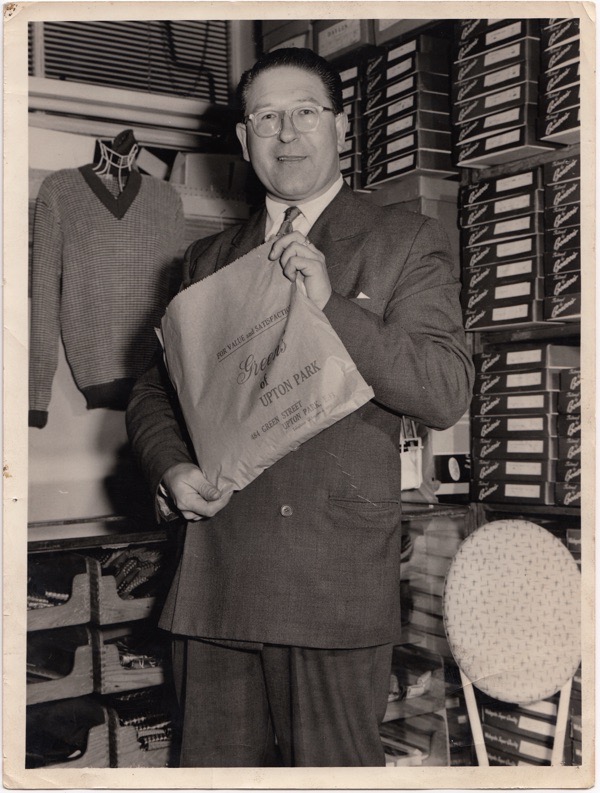
Ronald Green trading in shirts in the fifties
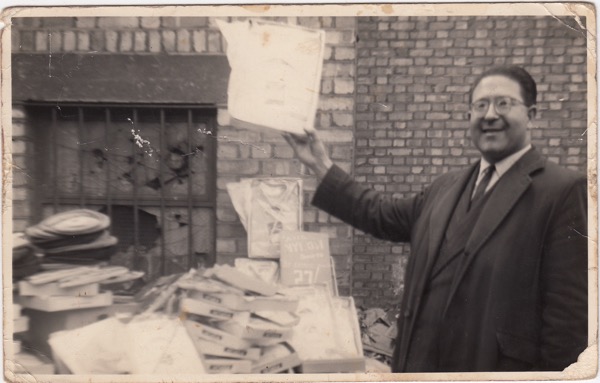
Ronald sells shirts on a bomb site in Sclater St in the fifties
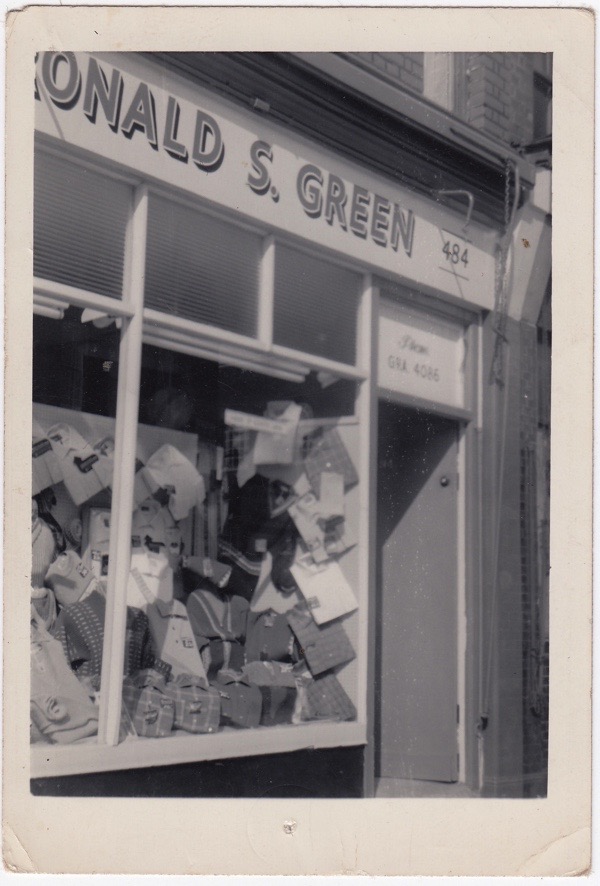
Ronald Green’s shop in Upton Park
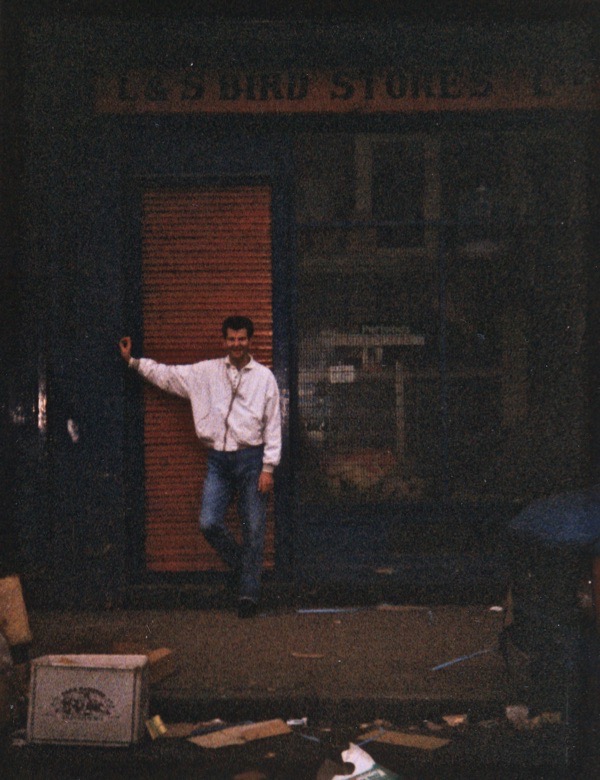
Robert Green outside L&S Bird Stores in Sclater St in the seventies
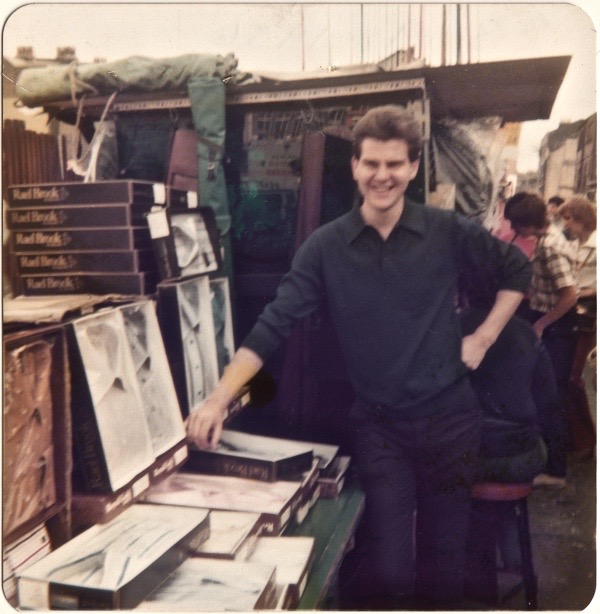
Robert minds the stall as a youngster in the seventies
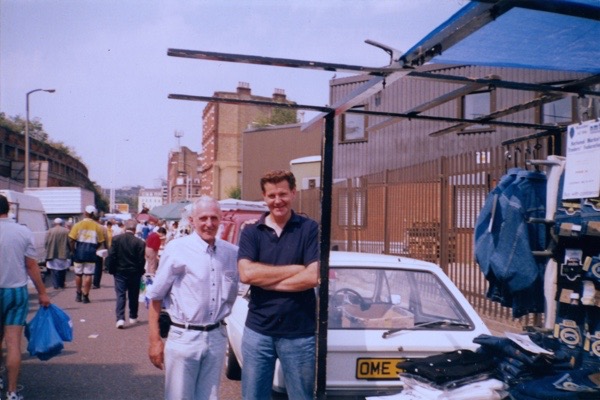
Ronald & Robert Green in Sclater St in the eighties
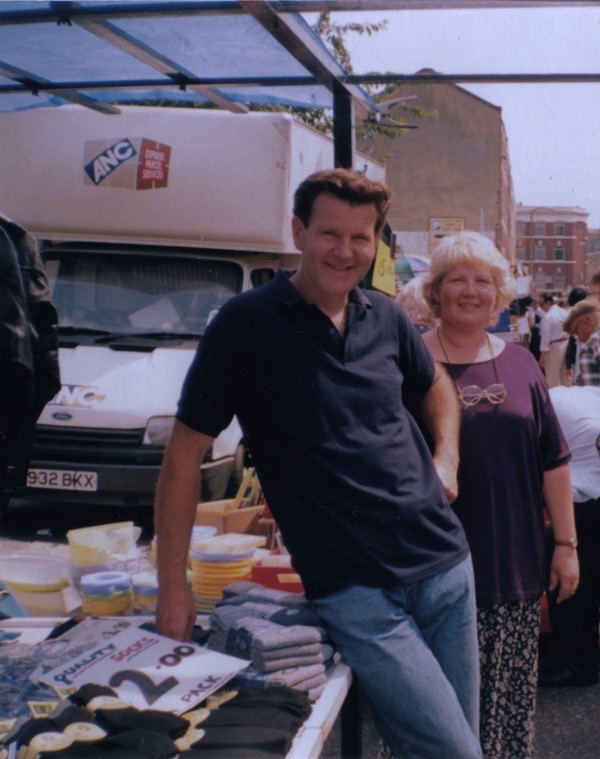
Robert & Patricia Green in the eighties
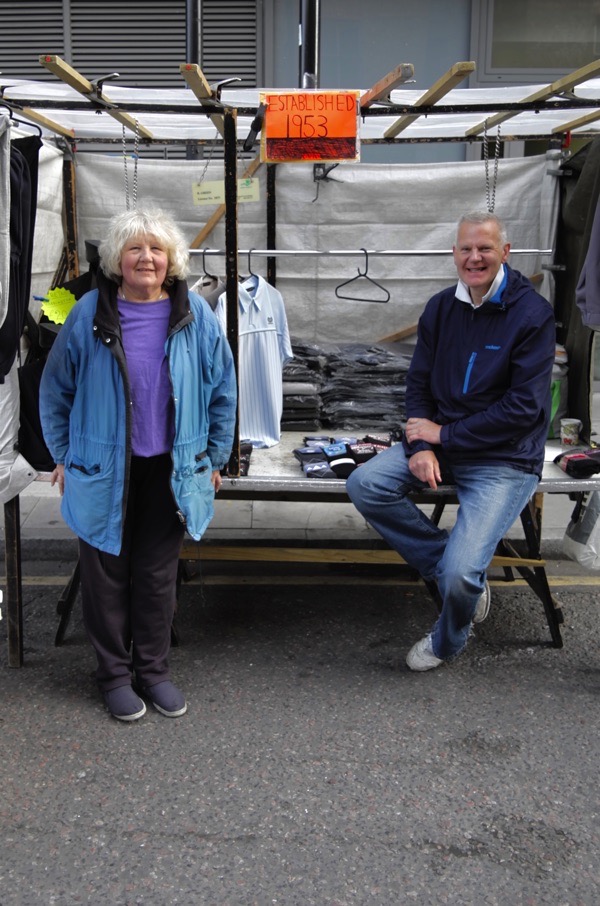
Patricia & Robert Green selling shirts on Sclater St today
You may also like to read about
Oranges & Lemons Churches
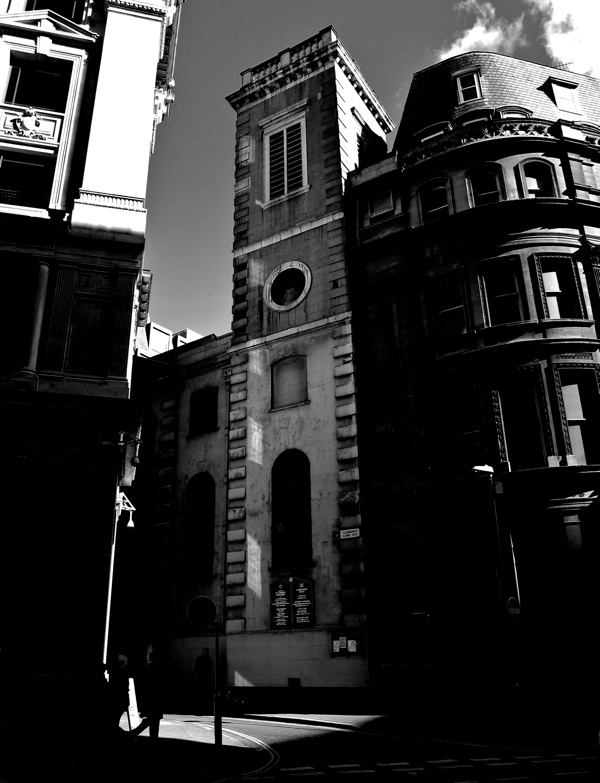
St Clement’s, Eastcheap
“Oranges and lemons,” say the bells of St. Clement’s.

Site of St Martin Orgar, Martin Lane
“You owe me five farthings,” say the bells of St. Martin’s.
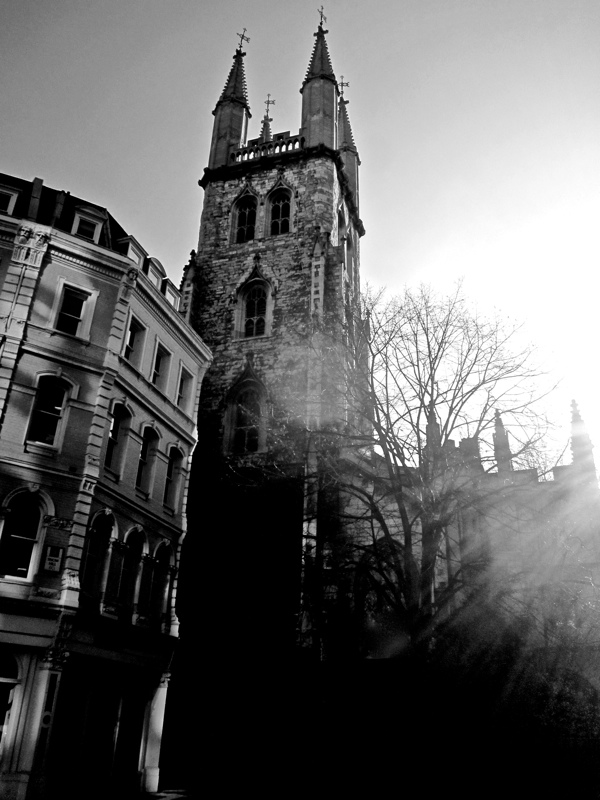
St Sepulchre-without-Newgate
“When will you pay me?” say the bells of Old Bailey.
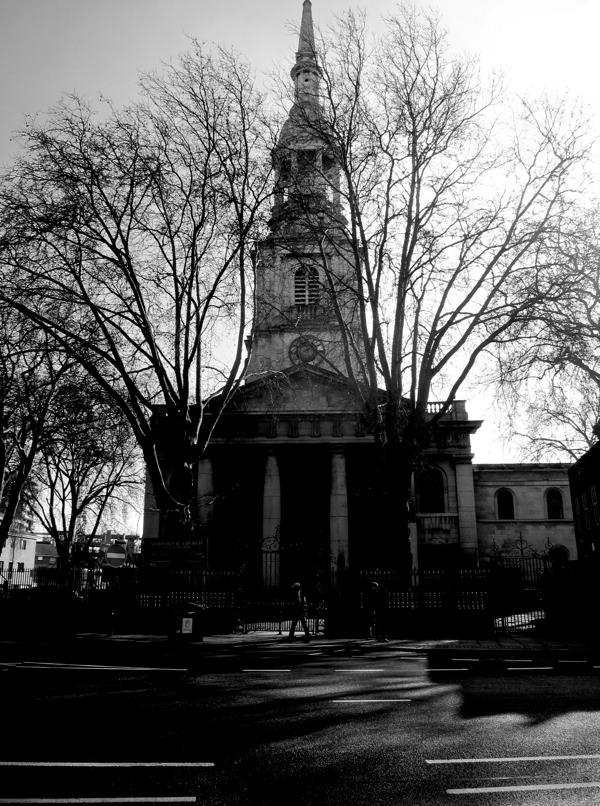
St Leonard’s, Shoreditch
“When I grow rich,” say the bells of Shoreditch.
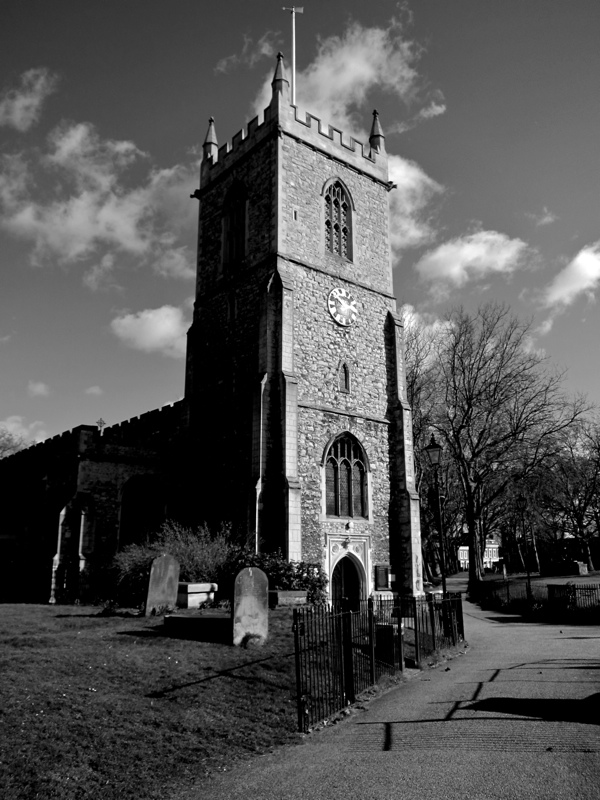
St Dunstan’s, Stepney
“When will that be?” say the bells of Stepney.

St Mary Le Bow, Cheapside
“I do not know,” says the great bell of Bow.
You may also like to take a look at
Anna Maria Garthwaite, Silk Designer
Zara Anishanslin, author of Portrait of a Woman in Silk, Hidden Histories of the British Atlantic World, is speaking about Anna Maria Garthwaite, the most celebrated textile designer of the eighteenth century, at the Huguenot Museum in Rochester tomorrow Saturday 8th June at 2pm. Click here for tickets
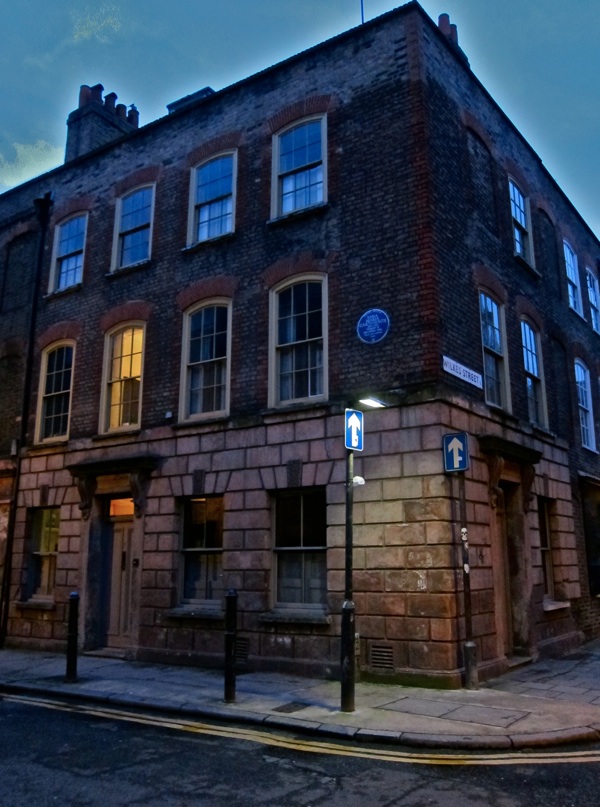
Anna Maria Garthwaite’s house
Two unmarried sisters, one a widow and one a spinster, moved from York to Spitalfields at the end of the seventeen-twenties. It seemed an unlikely time of life for them to relocate, as both were in their early forties. But they were hardly alone in their choice. When the sisters arrived in Spitalfields, it was experiencing a building and population boom. They lived in Princes St (now Princelet St) only a short walk from the Spitalfields Market, which had been a local fixture since the sixteen-eighties. But their terrace of newly constructed townhouses had been laid out only a decade before. The neighbourhood stood under the shadow of architect Nicholas Hawksmoor’s masterpiece, Christ Church Spitalfields, itself just completed in 1729. The two sisters were drawn to their new house on one of Spitalfields’s newer streets by the same thing that had brought many of their neighbours there too. They came for the industry that became synonymous with the area in the eighteenth century: silk weaving. For when the two sisters moved to London, it was in part so the younger of the two, Anna Maria Garthwaite (1688-1763), could launch her career as a silk designer.
Eighteenth-century silk designers like Garthwaite were skilled labourers. They drew designs that showed weavers what patterns of colour and decoration to follow to create lengths of silk on their looms. Many designers were weavers or had trained as master weavers. Silk designers almost always worked independently, on commission. The London silk industry made all sorts of textiles but was most renowned for its flowered silks. Named for their floral or botanical patterns, flowered silks were distinctively designed, produced to order, and usually limited to only four pieces woven from a single design.
Almost all Spitalfields flowered silk was meant for clothing rather than interior decoration or upholstery, used to make elegant dresses and petticoats for women and elaborate waistcoats for men. Fashion depended then – as it still does – on enticing consumers with novelty and variety. In the Spitalfields silk industry, it was designers like Garthwaite who had power to produce this desired variety. This was because from the seventeen-twenties to the late seventeen-fifties, when Garthwaite worked, novelty in eighteenth-century silk depended largely on the creation of new textile patterns, which changed more rapidly than the cut of clothing.
A highly prolific designer, Garthwaite drew hundreds of patterns, their flowered silk designs blossoming in watercolour and pencil curves across grids of ruled paper. Her silks, with designs ranging from naturalistic flowers to stylised Asian patterns, spread throughout the Atlantic World. From Scandinavia to South Carolina, men, women, and children walked, ate, danced, and posed for portraits wearing Garthwaite-designed silks, like the one painted by Robert Feke in 1746 of a wealthy Philadelphia merchant’s wife, Anne Shippen Willing, which inspired my book. Her silks survive in museums across Europe and America as mutely shimmering testaments to her long-ago popularity.
But Garthwaite’s success was improbable. Unlike many other known silk designers in eighteenth-century London, who tended to be of French Huguenot descent, she was English. Her distinctiveness lay fundamentally in the simple fact that she was a woman. Although other women certainly worked in London’s silk industry, few worked as silk designers. Garthwaite is the only woman whose designs survive. Most women who practiced skilled trades like weaving did so because their father or husband did too. Garthwaite, by contrast, did not ply her trade because a male relative had done so. Nor did she receive formal training or start her career as a young woman. Instead, Garthwaite, who never married, did not begin her professional design career until she was middle-aged. Moreover, her family background added to the improbability of her career choice. For Garthwaite was no weaver’s daughter. Instead, she was the daughter of a Cambridge-educated Anglican minister from Lincolnshire, with family connections to the Royal Society and the English nobility.
How did this spinster daughter of a Lincolnshire minister manage, in her forties, to launch a successful London design career? How did she gain the technical expertise required to design complicated patterns? Why did she never marry? Some of these questions have no known answers. And unless a stash of previously unearthed evidence comes to light, some of them never will. Despite Garthwaite’s prolific career and popularity, she remains an enigma. Records make it evident that she was not only literate but educated and financially solvent. There is no obvious reason her historical trail should be so faint. Yet she left little more documentation than an anonymous, illiterate, impoverished woman of her time might have. There is minimal archival material beyond her will: no letters, diary, business or advertising records. Anna Maria Garthwaite’s story serves as a reminder that sometimes even the educated and well-known are silenced in traditional historical sources.
Garthwaite did, however, leave a rich trove of objects and images. These speak for her. They include her house in Spitalfields, the silk woven to her designs, and more than eight hundred labeled watercolour designs. They can be read much like a diary, and they begin to give voice to this otherwise mute figure.
Garthwaite’s Spitalfields townhouse was more than a home. It was also where she designed her patterns and conducted her trade. Of all the houses on Princes St, her corner house was one of the best suited for conducting business. Its two-door layout gave it a distinct advantage. The front door opened into a formal stair hall. The other, on the street leading up to Christ Church, opened directly into a room separated from the rest of the house by an internal door. The family of women (Garthwaite, her widowed older sister, their young ward, Mary Bacon, and a few women servants) could come and go in private through the first door, leaving the corner ground floor room free for business activities. Business callers could enter the house without interacting with anyone besides Garthwaite or possibly a servant, while remaining similarly undisturbed by family noise and distraction.
Above this ground floor shop was the genteel space of the first-floor drawing room. This particular room had two discrete but overlapping functions. It was a space of both labour and sociability. Decorated with the highest level of architectural finish in the house, this room would have been where the Garthwaite sisters entertained guests. It was also, however, very likely Garthwaite’s atelier, or studio. It was here that she sketched, painted, and transferred onto gridded paper her watercolour and pencil designs. Its corner location and large second floor windows had the practical benefit of strong, clear light for drawing and painting.
Garthwaite’s studio drawing room was a room with a view. Out of this room’s windows, Garthwaite could see the mercers and master weavers who walked to her house to buy her textile designs. She also could see Christ Church Spitalfields, the church she and her sister attended and where they both would be buried. Perhaps this minister’s daughter found comfort in the familiar sight of an Anglican church and inspiration in its calm Palladian beauty. Certainly, architectural elements popped up in Garthwaite’s designs from time to time.
Garthwaite’s designs were produced in Spitalfields, but they owed their existence to global natural history networks and the demands of the North American colonial market, the English silk industry’s most important market outside of London. Her popular designs both mirrored the larger British cultural fascination with gardens and helped foster a craze for wearing botanical landscapes in silk around the British Empire. Her designs shaped a shared visual experience throughout the British empire. In the seventeen-fifties and sixties, for example, women in colonial New York, Ireland, and England, for example, all wore dresses made of the same Garthwaite pattern—each woven in different colours (red, yellow, and pink). These women never met, or even knew of one another. Yet their lives materially connected by touching and wearing Garthwaite silk.
Garthwaite, like the majority of the eighteenth-century Spitalfields silk designers whose work has been identified, had personal ties to London’s scientific community. But of these designers, Garthwaite was the sole woman. Garthwaite’s relationship with her brother-in-law apothecary Vincent Bacon—a fellow Spitalfields resident and a member of the Royal Society—was a particularly important one for fostering her ties to these networks. As a member of the Apothecaries’ Guild, which maintained it, Bacon had access to Chelsea Physic Garden—one of England’s great botanical gardens, filled with exotic flowers and plants from America and Africa. Women like Garthwaite frequented the Garden to view and sketch plants and flowers, a reminder that in eighteenth-century Britain, women did not serve as passive recipients of male knowledge about botanicals. Less obviously than Royal Society members or male apothecaries, but no less truly, Garthwaite and the women who wore her flowered silks were members of a global network in which the scientific and the fashionable coalesced.
Some of Garthwaite’s most remarkable designs featured aloes. Aloes were one of the most fascinating of botanical species to Georgian gardeners. Along with their medicinal properties and exotic African origins, aloes’ considerable variety in appearance fascinated eighteenth-century botanists. Garthwaite accurately captured their celebrated diversity by drawing different types of aloes in a number of patterns, using distinctive, spiky leaves to set them apart.
Garthwaite often combined more prosaic florals with these exotic plants, showing them growing intertwined and grafted together. Mingling the exotic with the local, Garthwaite grafted an aloe onto an English rose. Despite their botanical impossibility, she took care to draw the hybrid plants realistically, in a style that mimicked botanical drawings done from life studies. Her designer’s eye shows the same fascinated appreciation for plants embraced by Royal Society members. Woven into a brocaded tabby silk, her aloe-rose hybrid blossomed across a silk in which the multicoloured botanical plants and flowers floated on a cream background. Viewers of this silk saw something very similar to a botanical illustration on white paper. Garthwaite used North American plants that were the popular subjects of such illustrations, all of which could be found exported into London gardens, including magnolia, Turk’s cap lilies, and mountain laurel. Pennsylvania botanist John Bartram first sent live mountain – or what he called “common” – laurel plants across the Atlantic to London in 1735. By 1740, they had bloomed in England. Bartram also sent Turk’s cap lilies between 1738 and 1740. Only a few years later, both specimens also flowered in Garthwaite’s designs.
Like gardens in England and North America, flowered silk was a material embodiment of the global culture of the curious. Far from being simply a frivolous fashionable commodity, flowered silk could signify its wearer’s participation in a global network of Enlightenment intellect. We are accustomed to thinking of how men (and some women) exchanged natural history knowledge through plant and seed specimens, in published books, and in exchanges of letters between the curious on both sides of the Atlantic. But in traveling around the empire, fashionable commodities like silk also transported natural history knowledge. This was especially important for women, excluded or under-represented as they were in groups like the Royal Society.
A woman’s silk might advertise her erudite hobbies as well as her fashion sense. The same learned members of the Royal Society who enjoyed studying aloes surely would have enjoyed the puzzle of deciding exactly which aloe they were seeing on Garthwaite’s silk designs. A woman wearing a dress decorated with such aloes, at the same time, could use her silk to interject her own knowledge of such exotic botanicals into a conversation. In an eighteenth-century world that delighted in visual and verbal puns and allusions, they too might build transatlantic communities.
Like the British Empire itself, Garthwaite’s designs were a mélange of the far-flung and the everyday, a blend of the European, African, Asian, and American. Each of these exotic sites of imperial expansion was present in her designs through the plants and flowers she included. From her small corner of Spitalfields, Anna Maria Garthwaite designed topographical textiles that mapped the botanical landscape of Britain’s global empire.
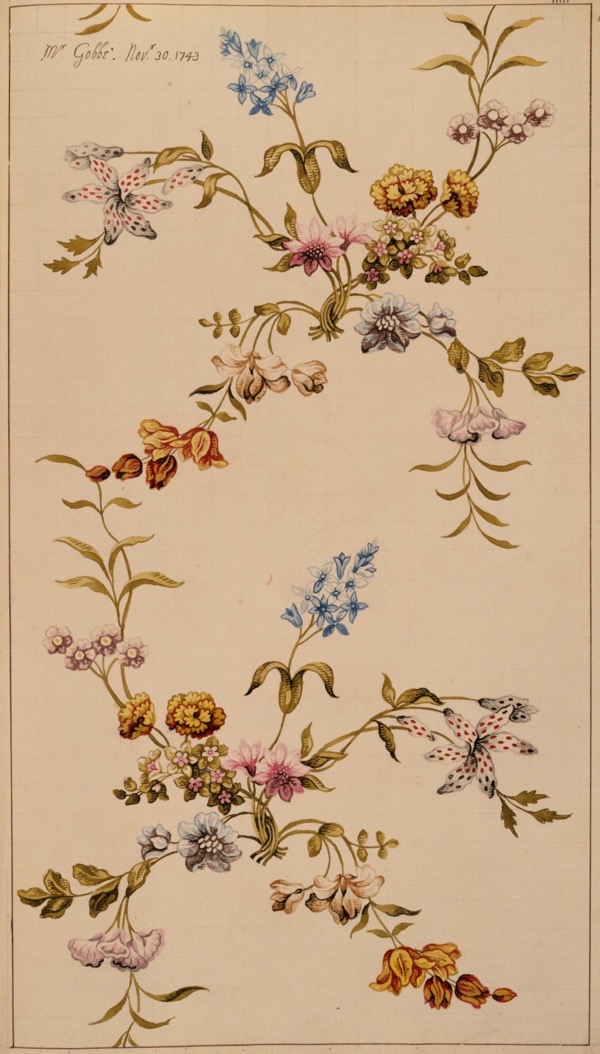
Silk design with spotted lilies by Anna Maria Garthwaite, watercolour on paper, 1743 (Courtesy Victoria & Albert Museum)
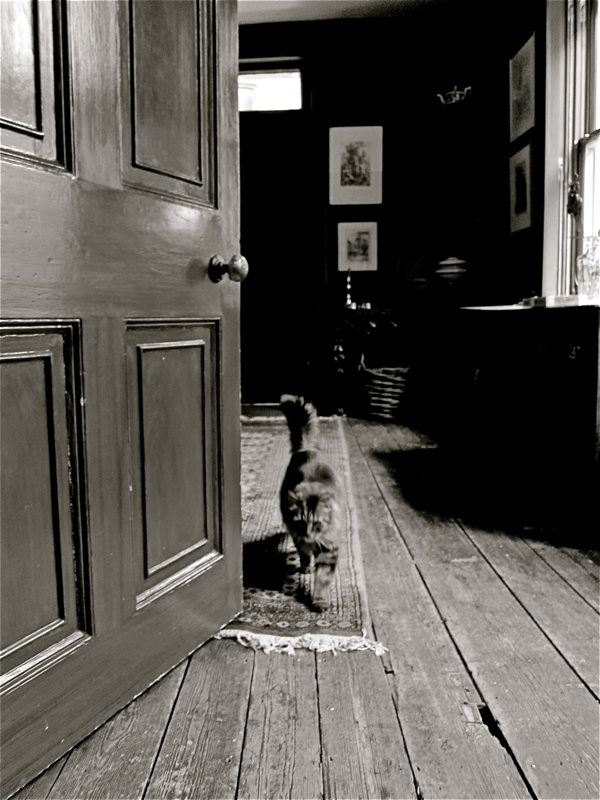
In Anna Maria Garthwaite’s receiving room on the ground floor where customers were entertained
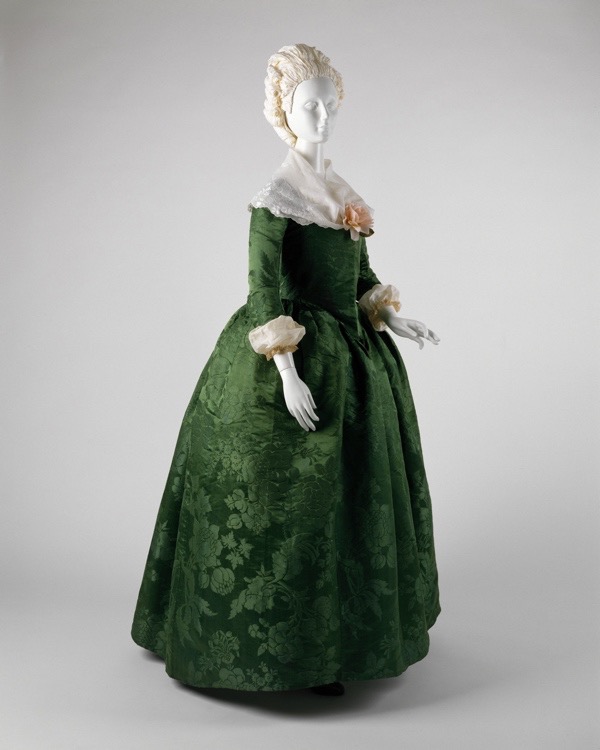
Dress made in America of silk designed by Anna Maria Garthwaite, c.1775 (Courtesy of the Metropolitan Museum of Art)
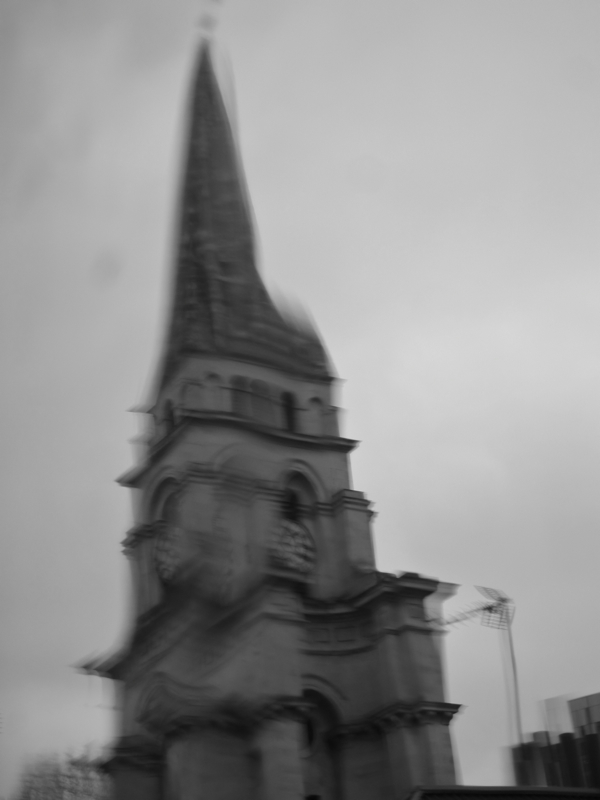
The spire of Christ Church seen through the glass in Anna Maria Garthwaite’s work room
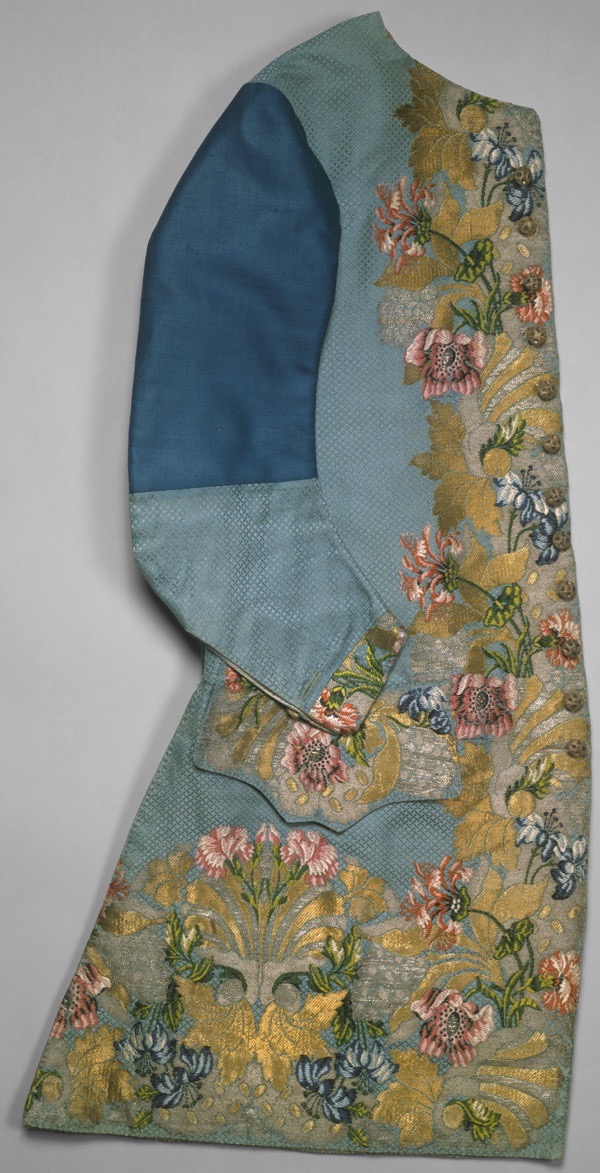
Waistcoat with silk designed by Anna Maria Garthwaite, woven by Peter Lekeux, 1747 (Courtesy of the Metropolitan Museum of Art)
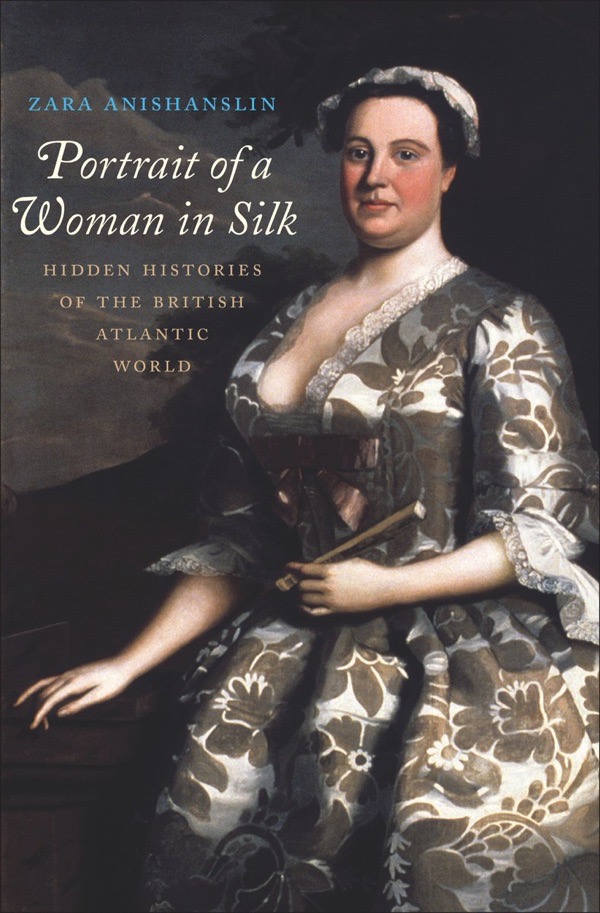
In Portrait of a Woman in a Silk Dress, Historian Zara Anishanslin examines the worlds of the four people who produced, wore, and portrayed a single dress: Simon Julins, Spitalfields Weaver, Anna Maria Garthwaite, Silk Designer, Anne Shippen Williams, Philadelphia Merchant’s Wife, and Robert Feke, New England Painter.
You may also like to take a look at
At Anna Maria Garthwaite’s House
The King Of The Bottletops in Bow
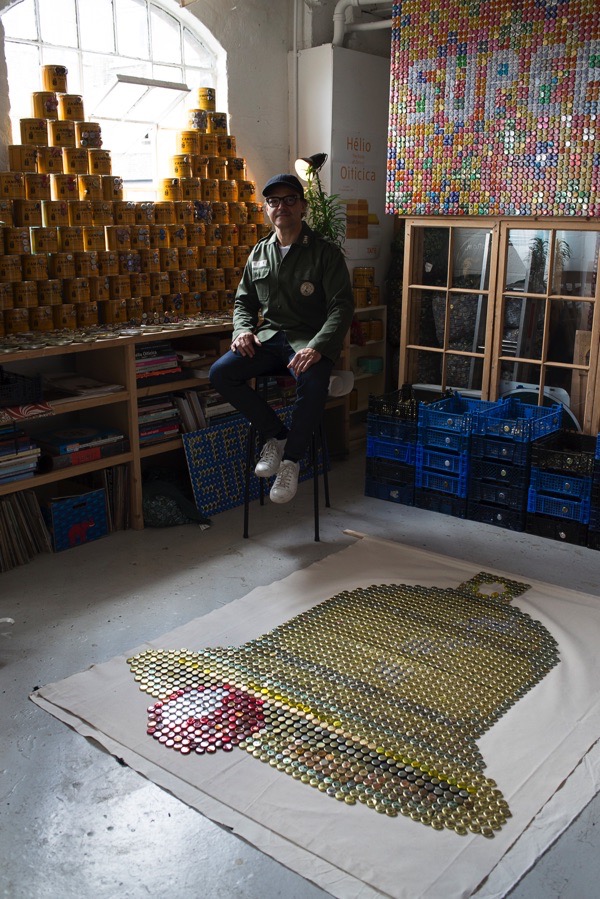
Contributing Photographer Sarah Ainslie visited Robson Cezar, the artist known as the King of the Bottletops, at his studio in Bow where he contrives mind-boggling pictures with bottletops he collects from East End pubs. Robson showed off some of his recent works to Sarah, championing campaigns both local and global.
Along with many of the other artists at Bow Arts, Robson Cezar will be opening his studio as part of Open Studios at Bow Rd next Friday 14th and Saturday 15th June. On Saturday, Robson will be offering visitors the opportunity to have a go and learn how to make your own bottletop masterpiece.
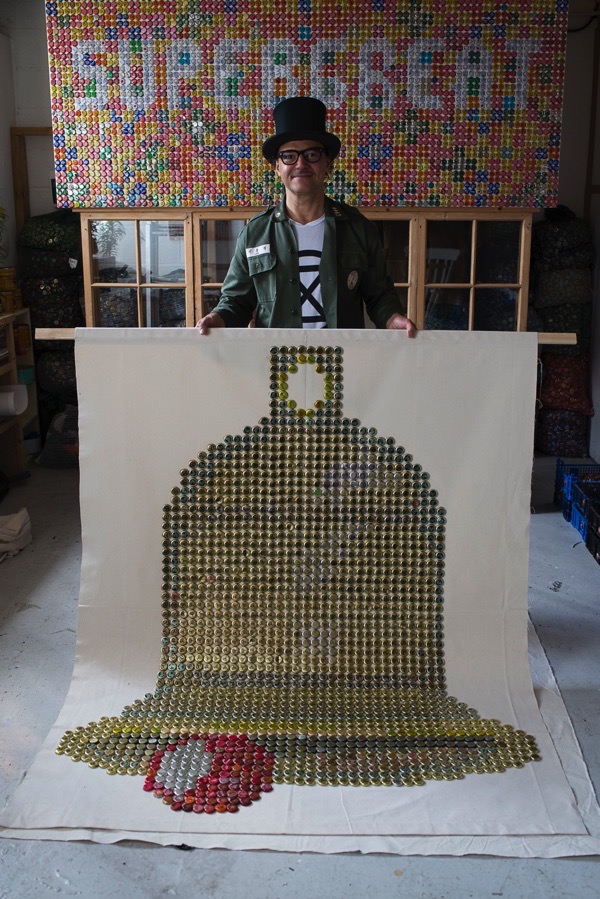
Save the Whitechapel Bell Foundry
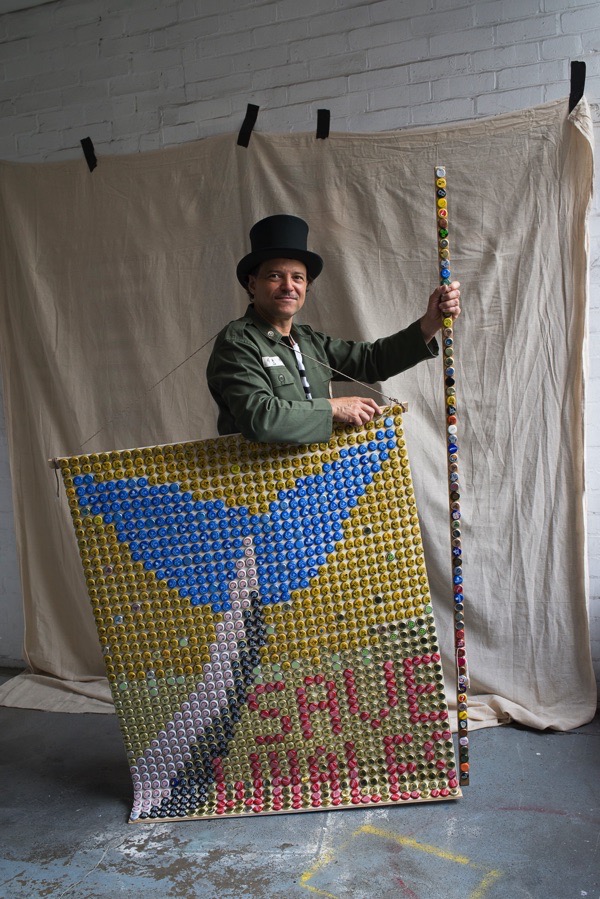
Save Whales

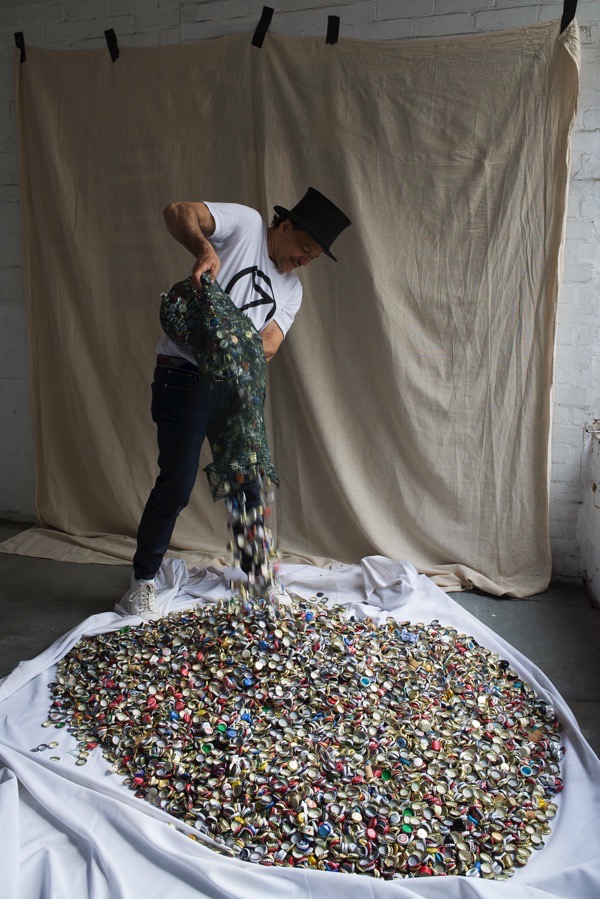
Bottletops from East End pubs
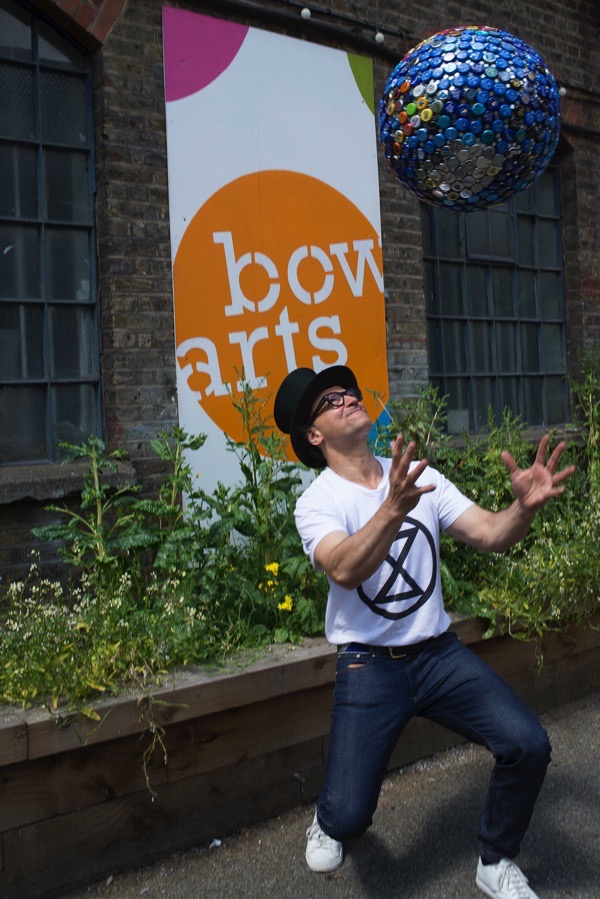

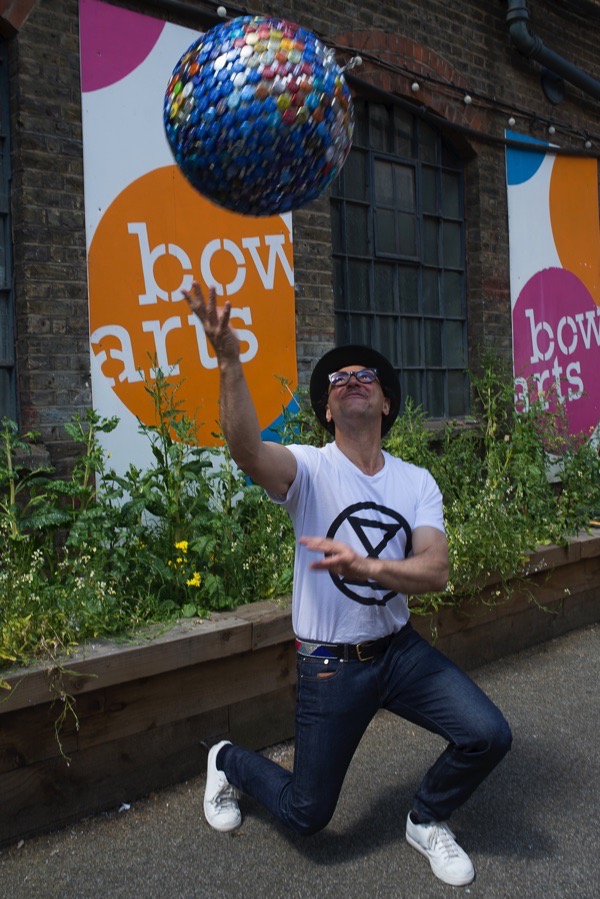
Photographs © Sarah Ainslie
Open Studios at Bow Arts, Bow Rd, Friday 14th & Saturday 15th June
You may also like to take a look at
Robson Cezar, King of the Bottletops
King of the Bottletops at St Katharine’s Precinct
In Mile End Old Town
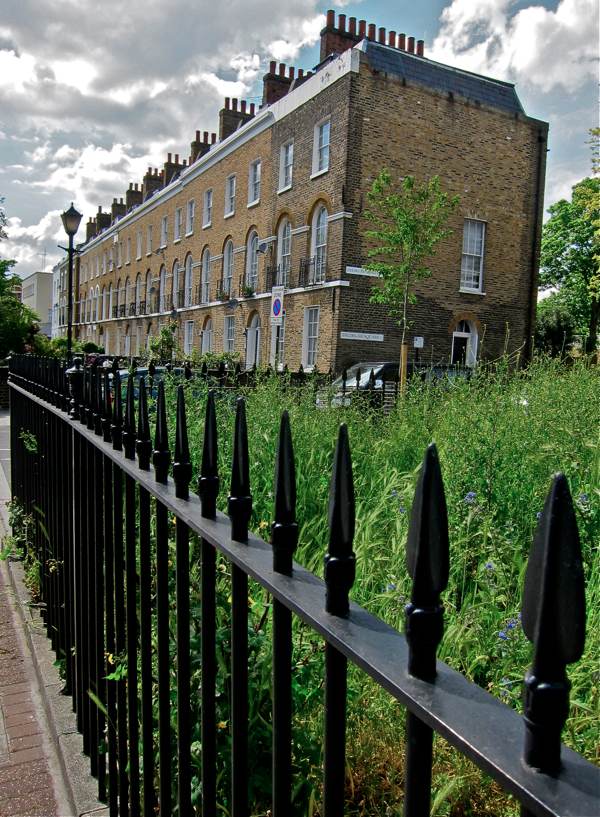
Much of the streetscape of the East End was broken in the last century, with fine squares lost in Stepney, Spitalfields and Haggerston, yet in Mile End an entire quarter of early-nineetenth century construction still exists surrounding Tredegar Sq (1823-9) and is cherished to this day. Taking advantage of the dramatic lighting afforded by the June weather, I spent an afternoon in these streets with my camera. Within a stone’s throw of what was once St Clement’s Hospital, formerly the City of London Union Workhouse, I discovered a stuccoed terrace worthy of Belgravia – while the intervening streets were filled by houses which manifested all the degrees of social and economic distinctions that lay between the two. Mile End Old Town reveals a microcosm of nineteenth century society.
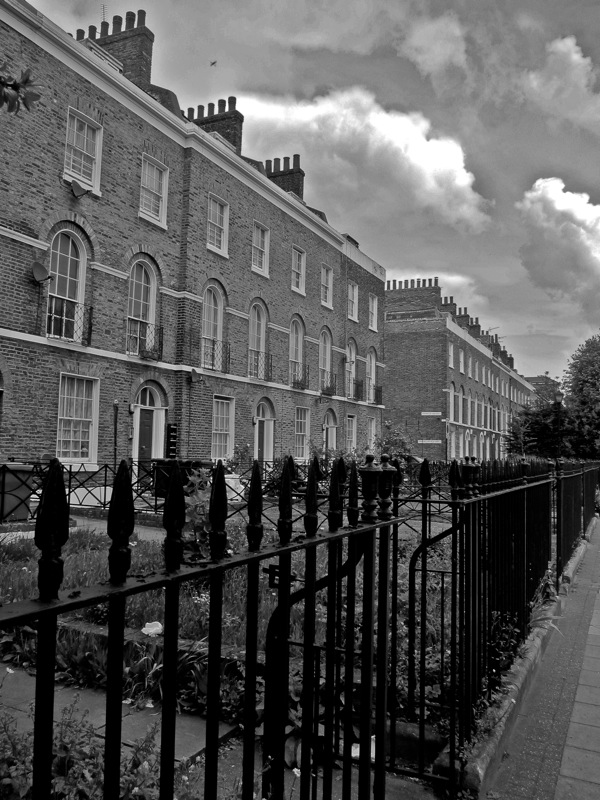
Terrace in Mile End Rd erected by Ratcliffe builder, William Marshall ,in 1822-4
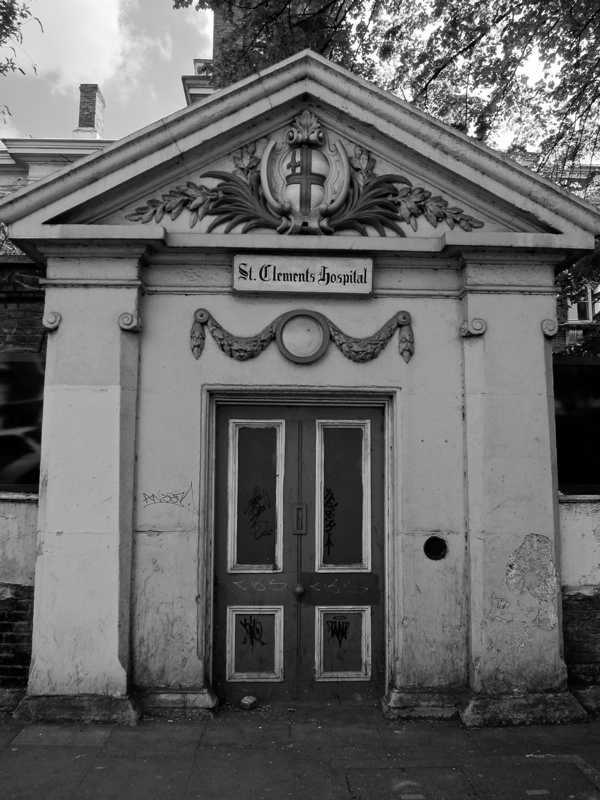
Formerly the City of London Union Workhouse, 1849
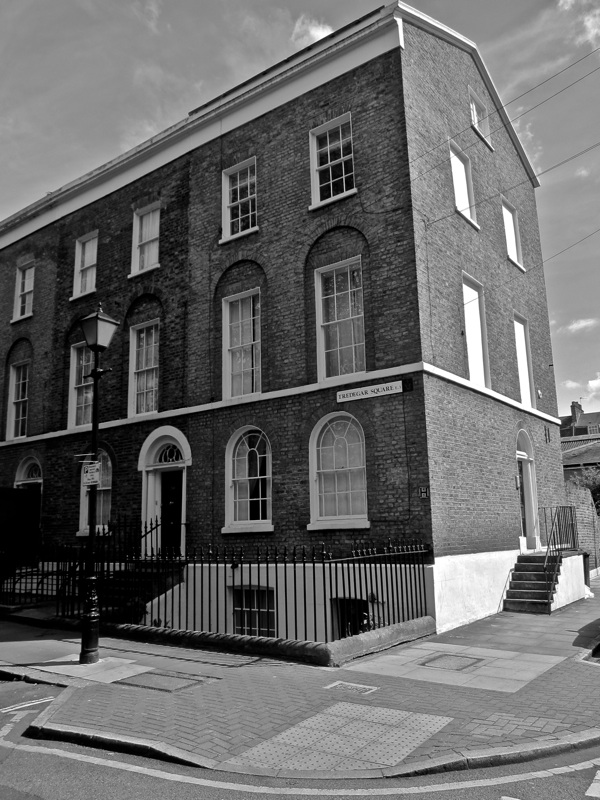
Tredegar Sq, 1828-9
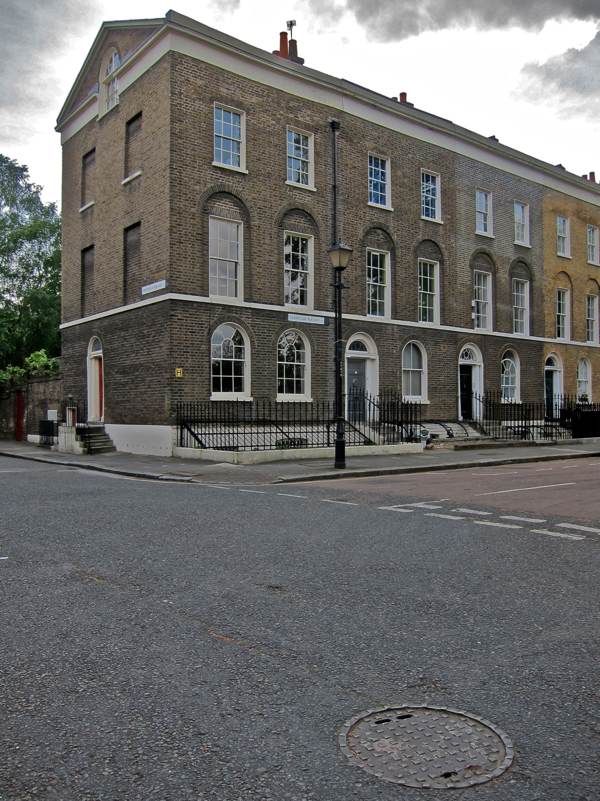
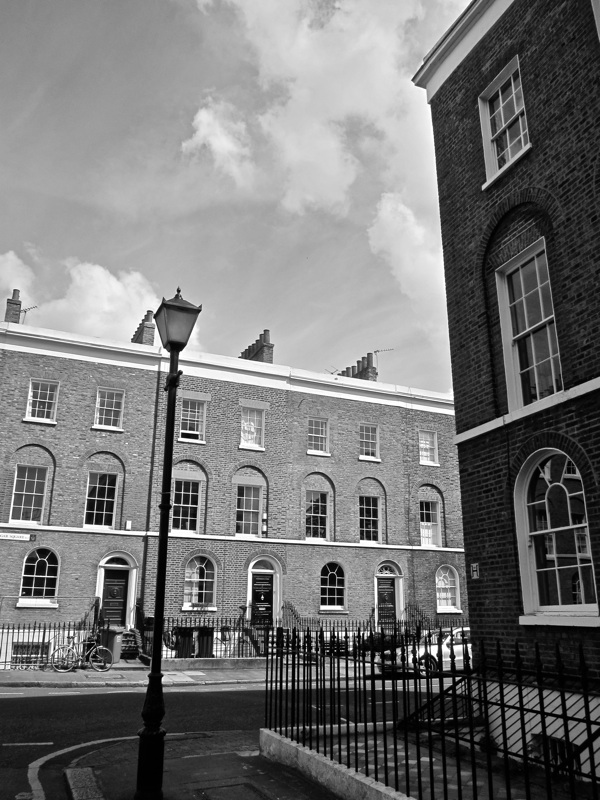
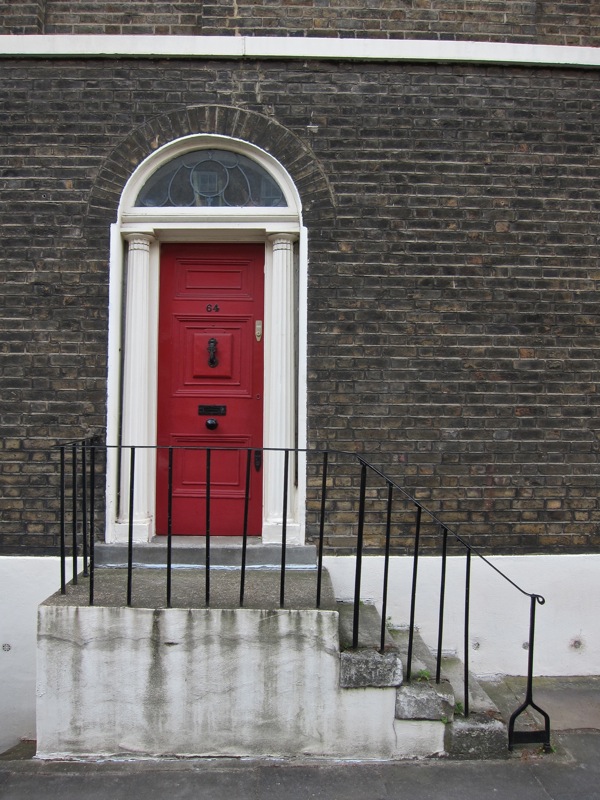
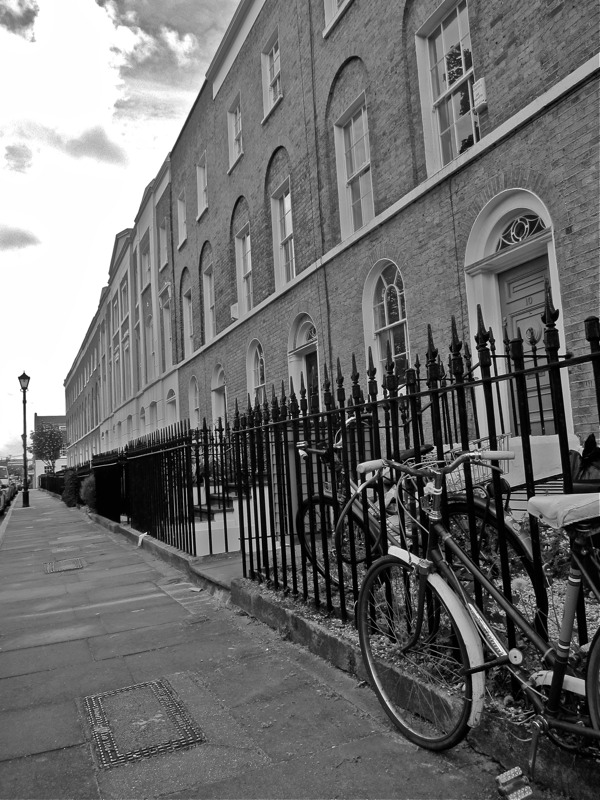
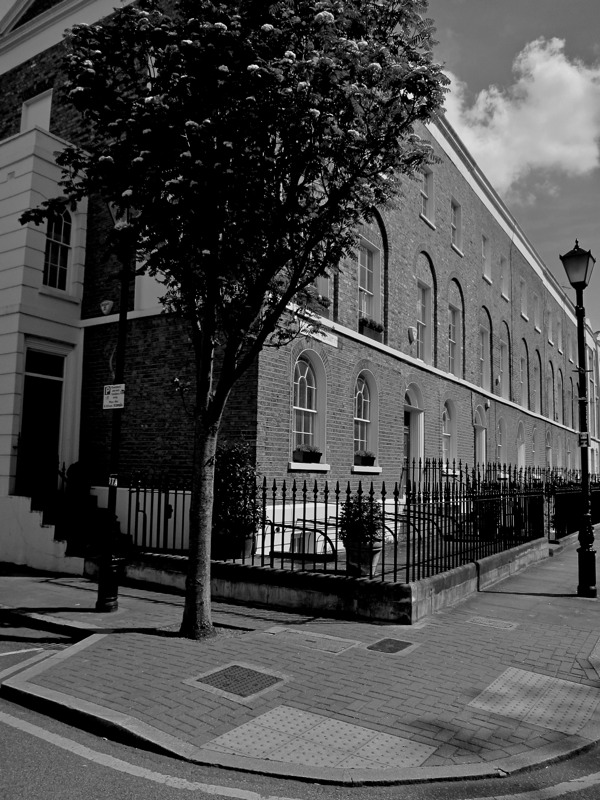
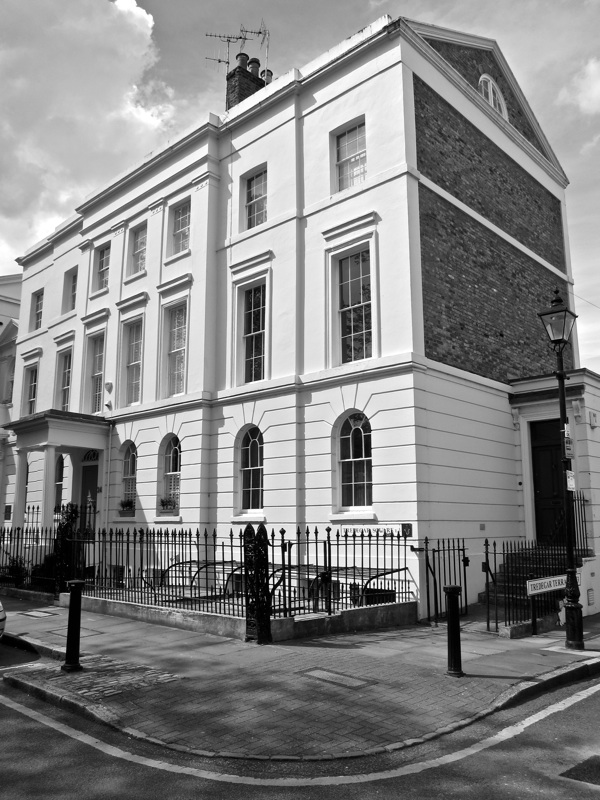
Stucco was applied upon the north side of Tredegar Sq in the eighteen-thirties
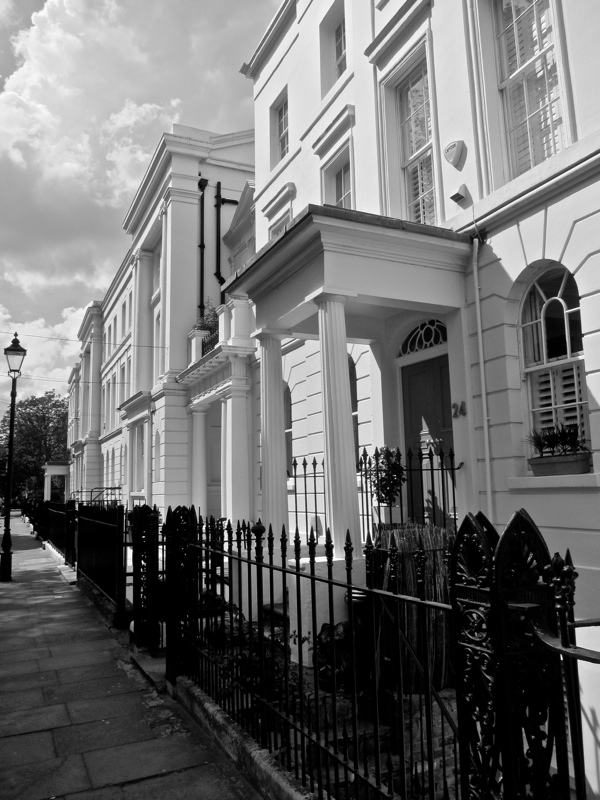
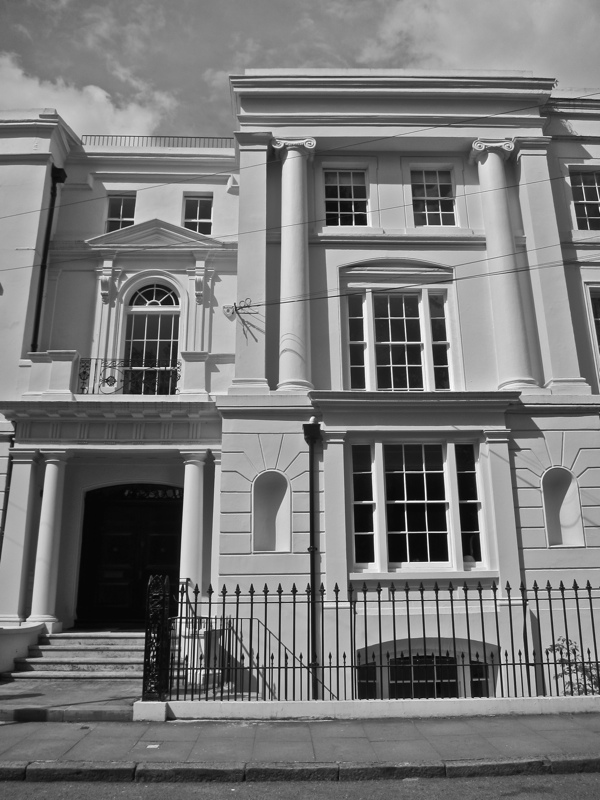
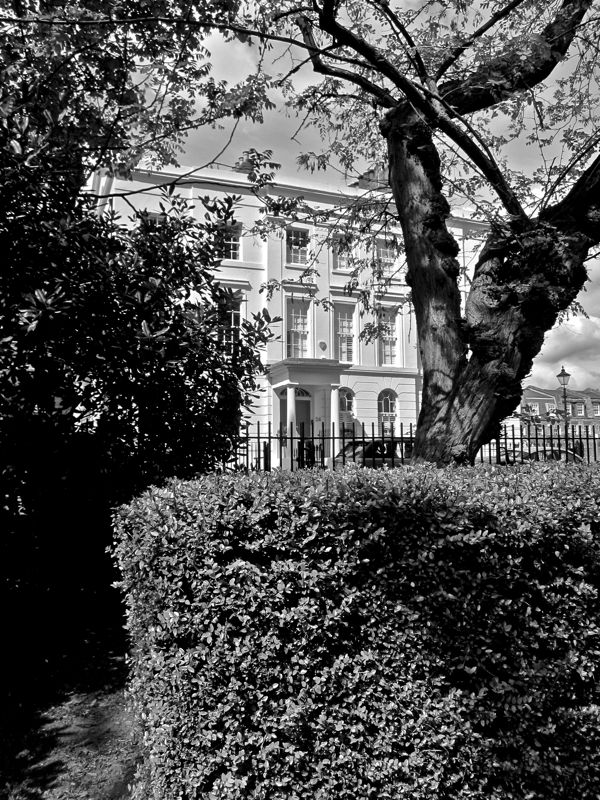
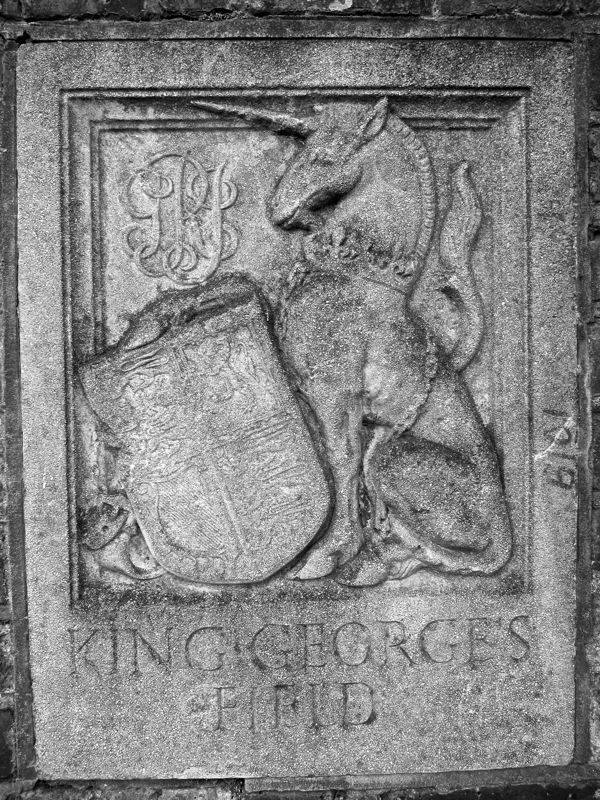
Tredegar Square was re-landscaped in 1951
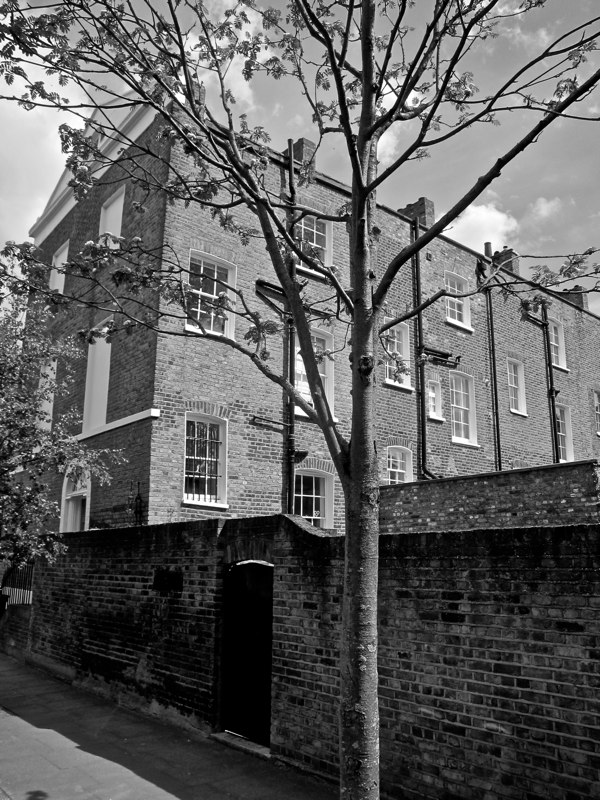
40 Tredegar Sq was formerly home to brush-maker Henry Wainwright who murdered his mistress and buried her dismembered body under the floor of his Whitechapel warehouse in 1875
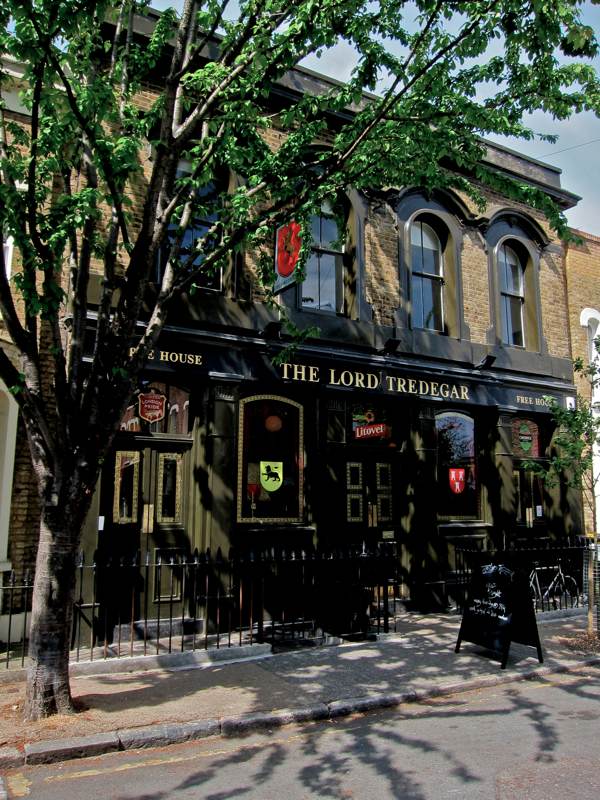
Litchfield Rd – Sir Charles Morgan, Lord Tredegar sold this land for development
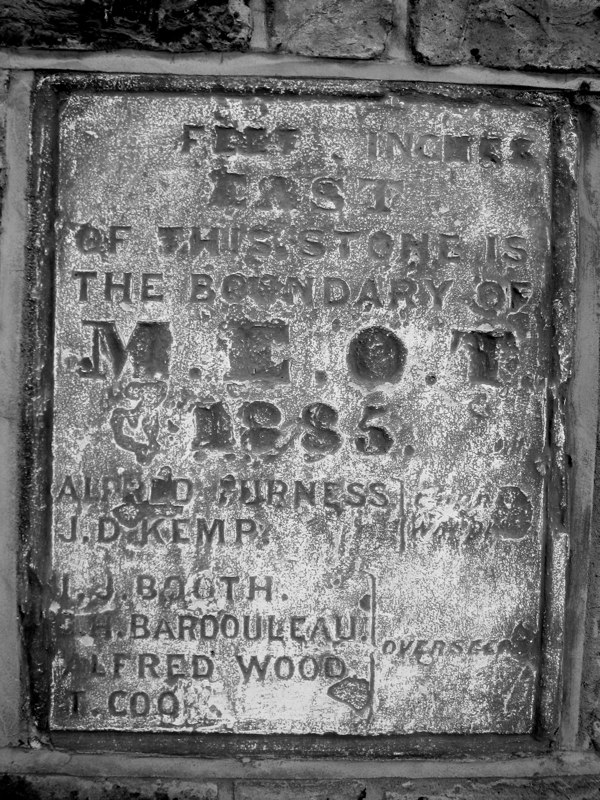
In Coborn Rd
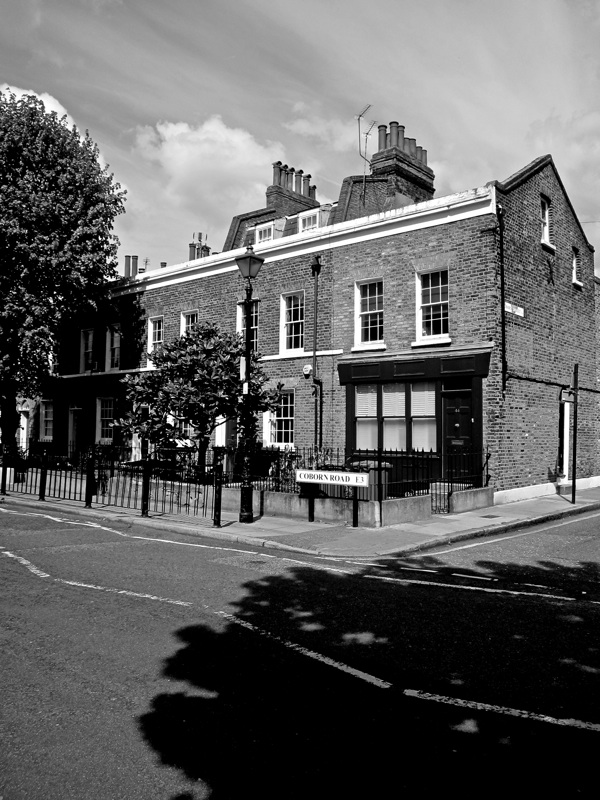
Coborn Rd
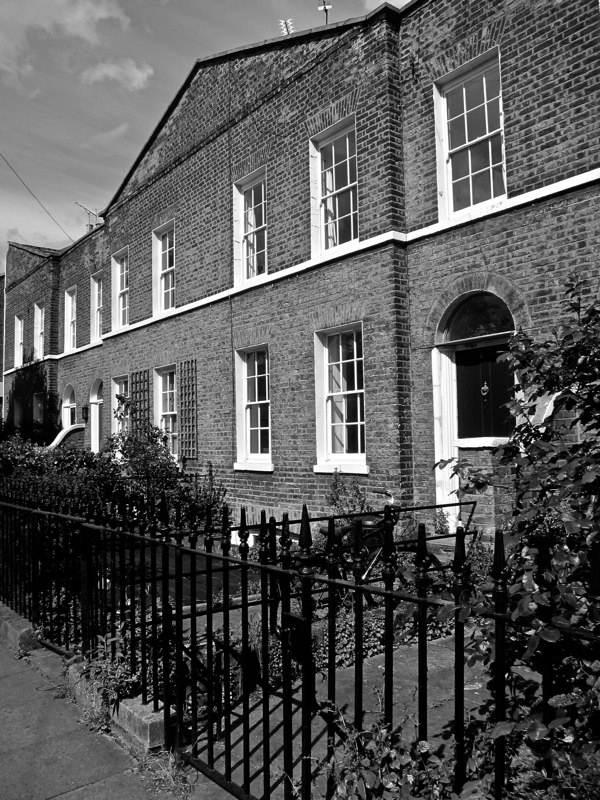
Coborn Rd
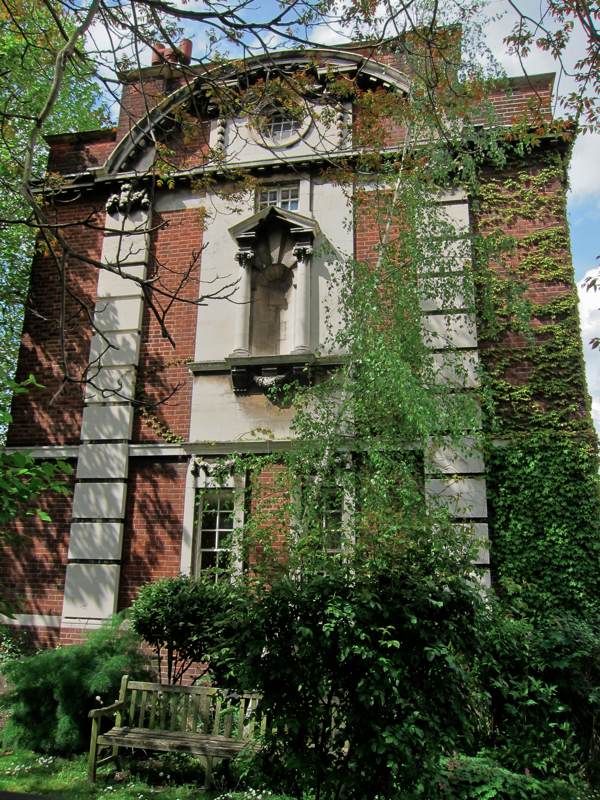
Central Foundation School for Girls, Morgan St
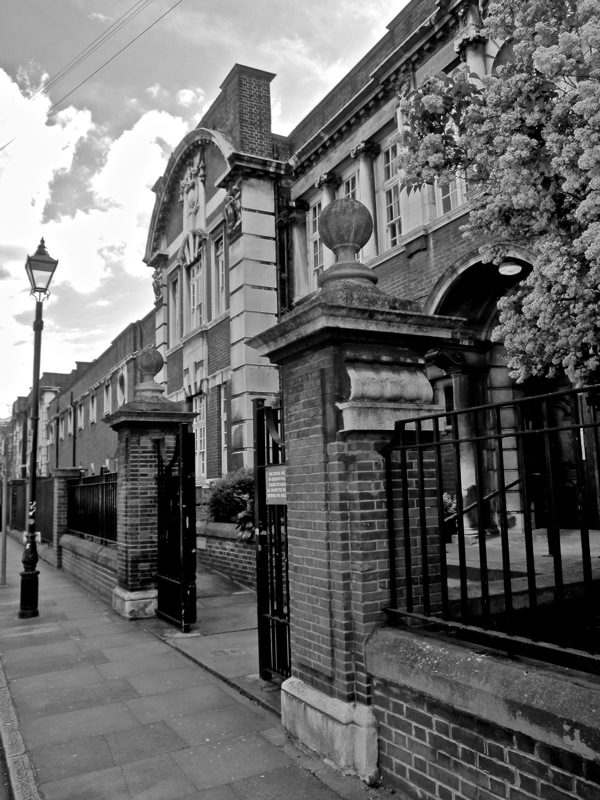
School Entrance, College Terrace
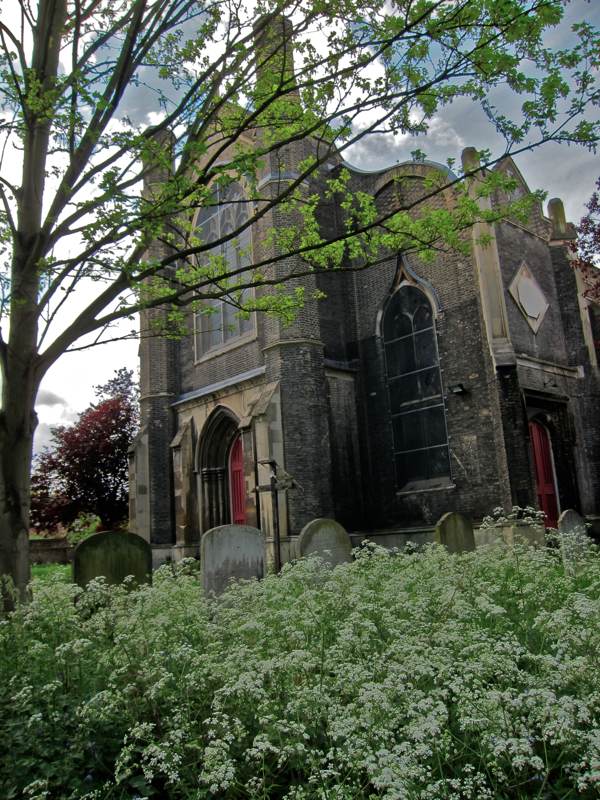
Holy Trinity Church, Morgan St
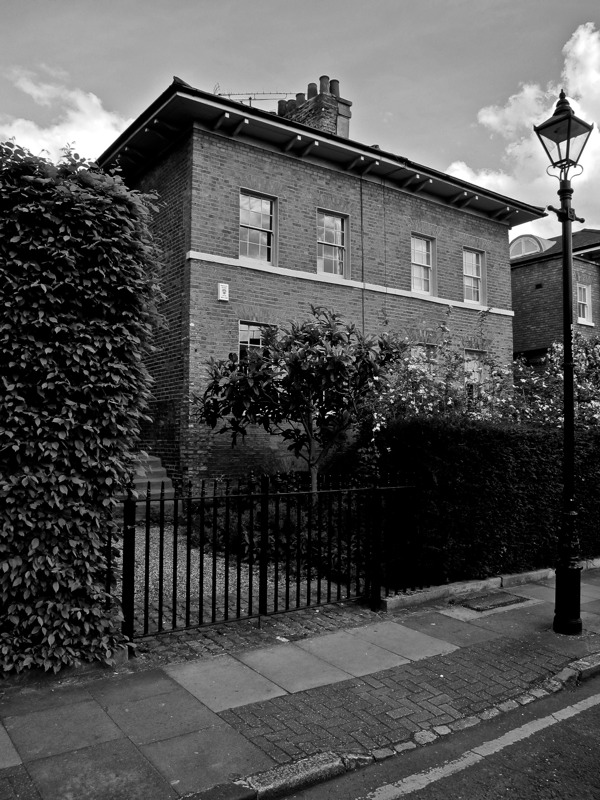
Eighteen-thirties villa, Rhondda Grove
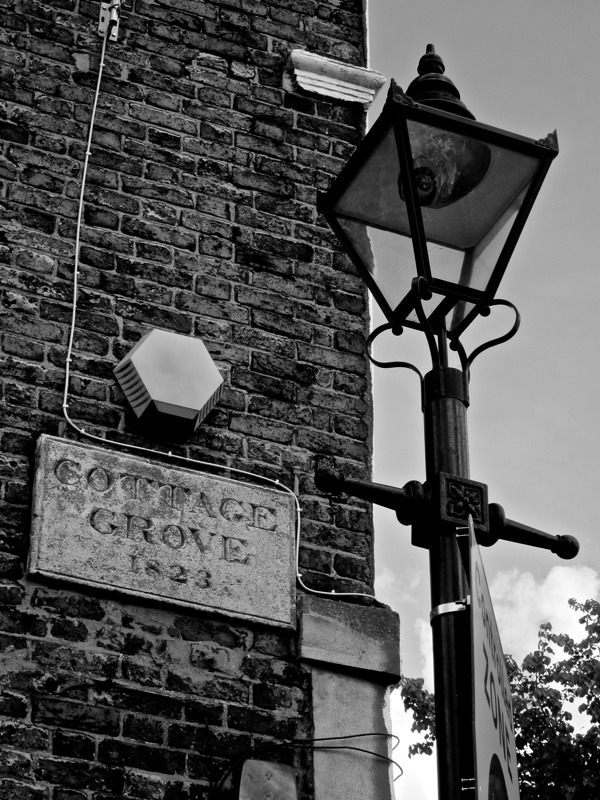
Cottage Grove of 1823, now Rhondda Grove
You may also like to take a look at
Bobby Prentice, Waterman & Lighterman
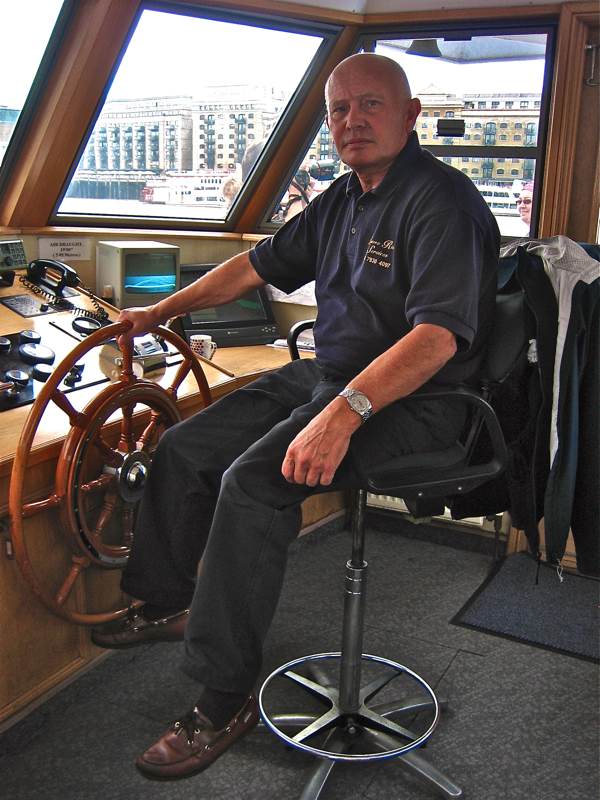
Bobby Prentice, Waterman & Lighterman, is a well respected personality along the river. Today he is the skipper of a pleasure boat ferrying tourists between Hungerford Bridge and Greenwich, but his relationship with the Thames is lifelong and profound. Bobby holds the record for the Doggett’s Coat & Badge Race, is one of the Vintner’s Company Swan Upping Team, and his legendary prowess as a rower even includes successive attempts to row the Atlantic Ocean. Amiable and possessing a striking natural gravity, there is no doubt that Bobby is a hardy soul.
Originally, Watermen were those who took passengers across the river, and today it is necessary to win your Doggett’s Coat and Badge – in the annual race held each June – to be able to call yourself a true Waterman. In a critical distinction, Lightermen were those who transported goods, lightening the load of cargo vessels with their barges which were called “Lighters.” Both professions are of ancient origin upon the Thames and, in his career, Bobby has been both a Waterman & a Lighterman.
On a sparkling afternoon, I joined Bobby and his son Robert in the cabin of the Sarpenden and – as we slid down river from Hungerford Bridge along King’s Reach and through the Pool of London, passing under Tower Bridge – he outlined his relationship with this powerful watercourse that defines our city.
“I was born and bred in Wapping, all my family come from Wapping. In 1969, at the age of sixteen, I was apprenticed to my father Robert. His father Robert was a Lighterman before him and his father Robert before that, which makes me the fourth as far as we know – there may well have been other Robert Prentices before – and my son Robert is also a Lighterman. We worked for the Mercantile Lighterage Co and in those days Fords at Dagenham did a lot of manufacturing, and we used to deliver knocked down kit ( that’s all the parts to assemble a car) to West India Dock, London Docks, Royal Albert Docks, Victoria Docks, Tilbury Docks and to Sheerness on the Medway for export.
I chose to do it, but my father didn’t want me to because the docks were already closing. When I wanted to leave school at fifteen, he encouraged me to stay on a year to get my exams. But I loved every minute of being on the river. I joined Poplar & Blackwall Rowing Club at ten and I spent all my youth on the river. I had the river in me. I used to go and work with my father as a little boy, just as children do today – I often have my grandchildren on the boat with me.
I did a five year apprenticeship, and a lot of Watermen & Lightermen still apprentice their children for five years, even though you can get a boat driver’s licence in two. My grandfather bought me my first sculling boat for £100 in 1968 and I won the Junior International Championship in 1970 and 1971, and represented Britain in the Youth World Championships. I won the Doggett’s Coat & Badge in 1973, then the double sculls at Henley with Martin Spencer, and subsequently Martin & I won three Home Internationals for England and two National Championships.
When I finished my apprenticeship, I spent my first two years in West India Dock. Once I got my licence, it enabled me to tow barges behind tugs and much more. I was one of the “jazz hands,” which is like being a journeyman. At twenty-two I got moved down to Grays in Essex and became a Tug Skipper, but in 1982 the Mercantile Lighterage Co folded as a consequence of the decline of the docks. The only lighterage left now is “rough goods’ – London’s waste, and my youngest son does that – towing the barges down to Mucky Flats and Pitsea Creek. This current business, Crown River Cruises, started in 1986, we began with one boat and we’ve got five now, and we do scheduled services. I still row.”
Yet no-one who works on the Thames can ultimately resist the tidal pull of that great expanse of water beyond and in Bobby Prentice’s case this attraction led him to try to cross the Atlantic in a rowing boat.
“Like most nutty things I’ve done it started in a pub. We’d been to a Doggett’s function and one of the lads suggesting rowing the Atlantic and I said , “No, I’ve finished serious rowing.” But then I went for a walk along Hadrian’s Wall and came back, and I decided to do it. We entered the Atlantic Race in 2005 from Gomera in the Canary Islands to Antigua and we set off a fortnight before Christmas in bad weather. It was hard mentally, but I made an agreement with my wife that I’d call her every Sunday at six on the satellite phone and I looked forward to it.
After seven weeks rowing, it became a lottery who was going to capsize next – “bombing” we call it. The boat was so small, you’re literally living in a coffin. Then, early one morning, we bombed out and spent forty-nine hours in a life raft. My wife handled it very well when they called to say I was “lost” – “He’s done that before,” she said, “He’ll be back.” When I was in the life raft I’d just had my weekly call and the satellite phone was at the bottom of the ocean. They didn’t know where we were and the beacon we had was faulty, we didn’t know if it worked. I was lying in the raft and my elbow blistered from trying to hold the beacon up the satellite. I was trying not to sleep because of the hypothermia and hoping someone had picked up my signal, which only gave a seven mile vicinity of my position. We were picked up by 160,000 ton tanker called “The Towman.” The ship was searching an area of 1500 square miles. It was an oil tanker with an Indian crew, they were lovely people. After ten days on the ship, we ended up in Gabon and were repatriated to Heathrow.
We decided to have another go in 2008, this time with four in the crew, but we had several breakdowns and aborted after ten days, ending up in the Verde Islands. So I thought, “That’s the end of it, I’m never going to do it again.” Then Simon Chalke approached me and said, “We’re building a twelve man boat. and we want to go for the Atlantic record.” I had turned fifty-six at the time and I said, “It’s not fair on those in the crew who are twenty,” because the rota was six hours rowing and six hours rest. But Ian Couch, the skipper, had already rowed the Atlantic and the Indian Ocean, and he wanted me on board, so I went for it. It was hard to tell my wife, but when I broke the news, she said, “Tell me something I didn’t know.”
I’d gone out in late November for training and come back again for Christmas. We were on standby waiting for the weather to clear, and then I got the call on Boxing Day and we set out a few days later in very early January. We didn’t break any records but we landed in Barbados after thirty-eight days, further South than we intended because of the weather conditions. I still haven’t been to Antigua.”
And then, even as I was still reeling from this account, Bobby shook hands and hopped off the boat at Tower Bridge leaving me in the company of his son Robert, the skipper of the ship, for the rest of the trip to the Thames Barrier. “So are you planning to row the Atlantic too?” I asked, wondering if this challenge might now become a rite of passage for successive Robert Prentices. “I wouldn’t discount the possibility,” he declared with relish as he stood with hands upon the wheel, his beady eyes twinkling excitedly at this enticing possibility.
I sat beside Robert on the bridge and he spoke animatedly as we travelled on through Limehouse Reach, Greenwich Reach, Blackwall Reach, Bugsby’s Reach and Woolwich Reach. He told me about the porpoises, dolphins and hundreds of seals he sees on the river, and how the whale in Westminster was not the first on the Thames because he saw one at Purfleet.
One Robert Prentice had disembarked, another Robert Prentice took his place at the wheel – the fourth and fifth Robert Prentices respectively – Watermen & Lightermen steering vessels through time as the mighty Thames flowed on.
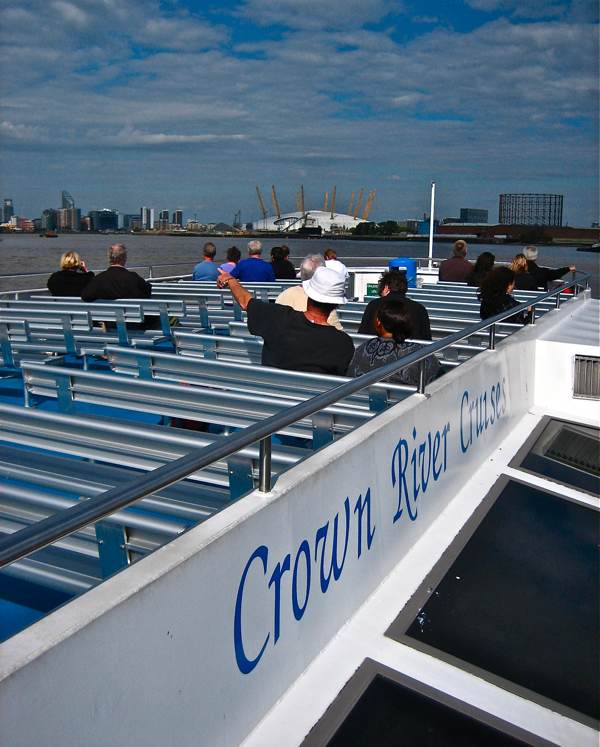
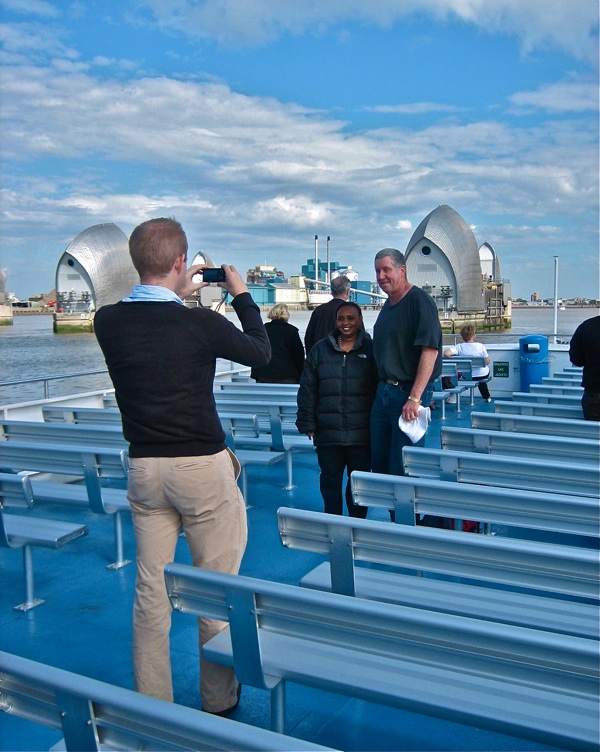
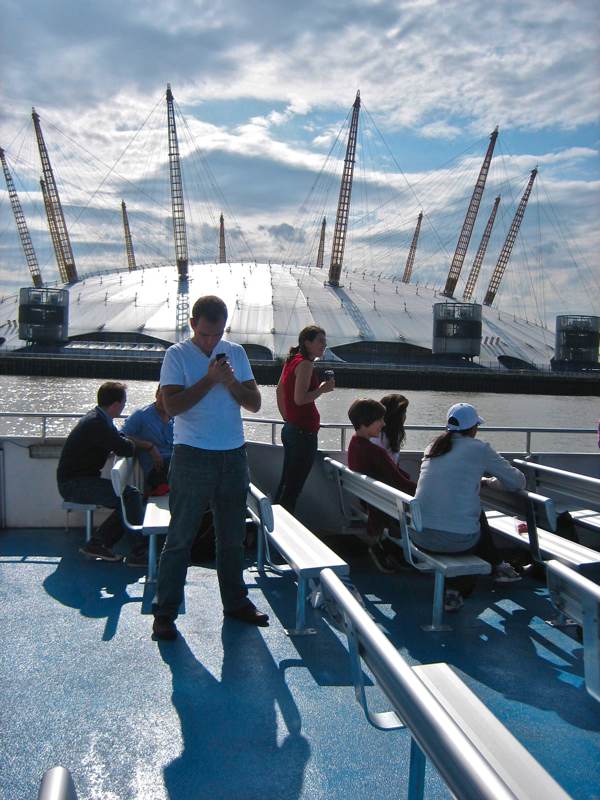
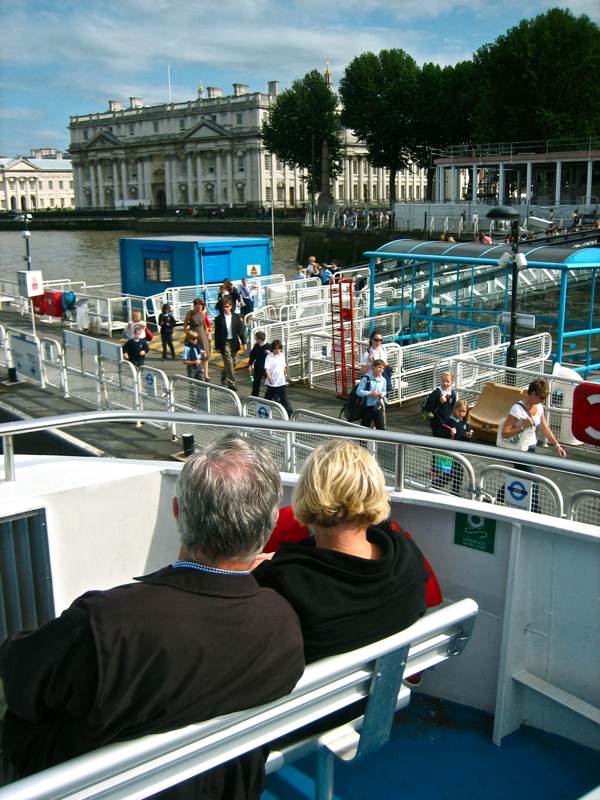
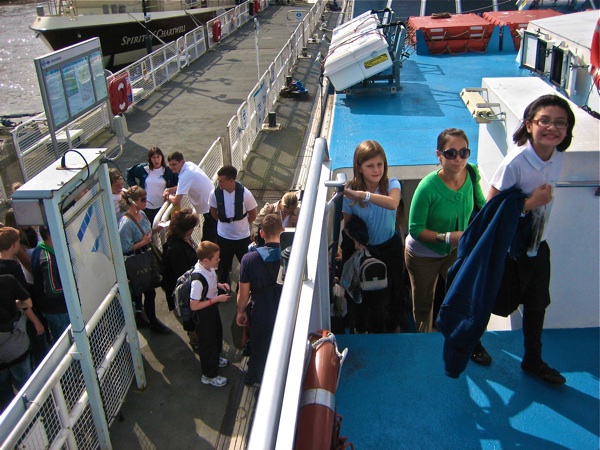
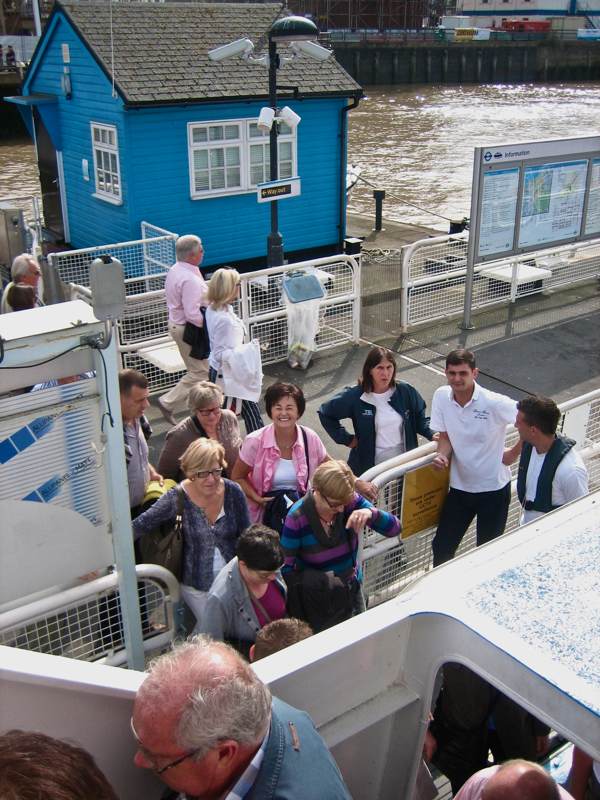
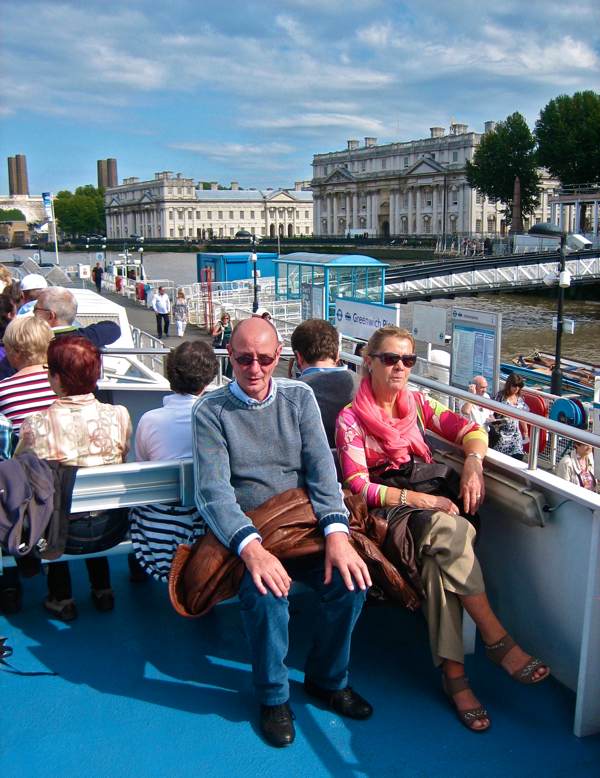
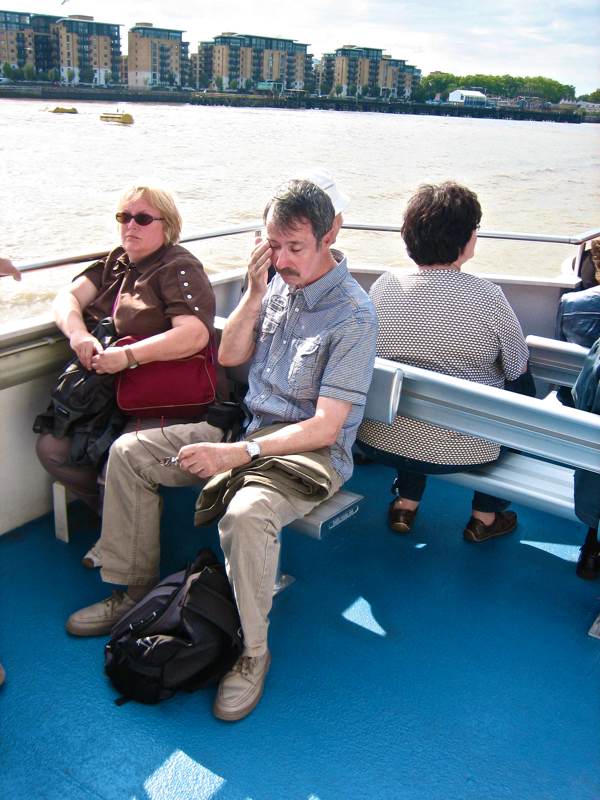
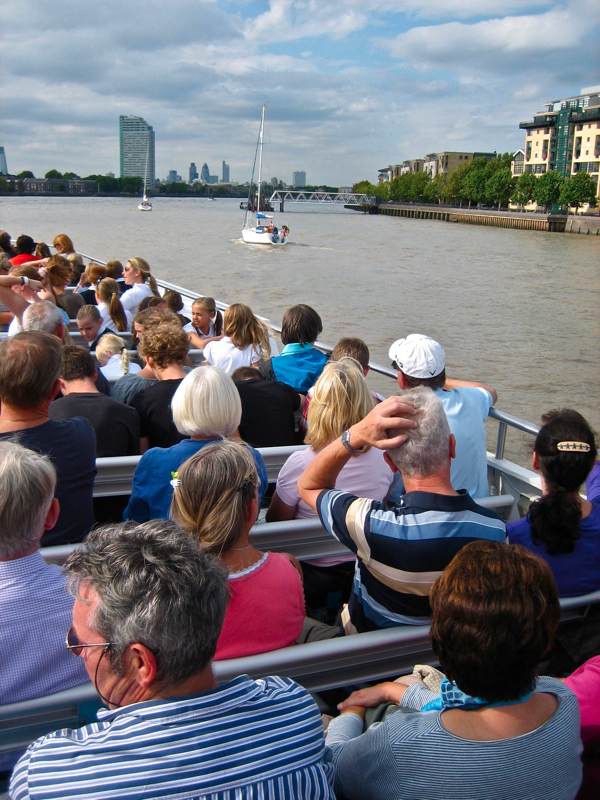
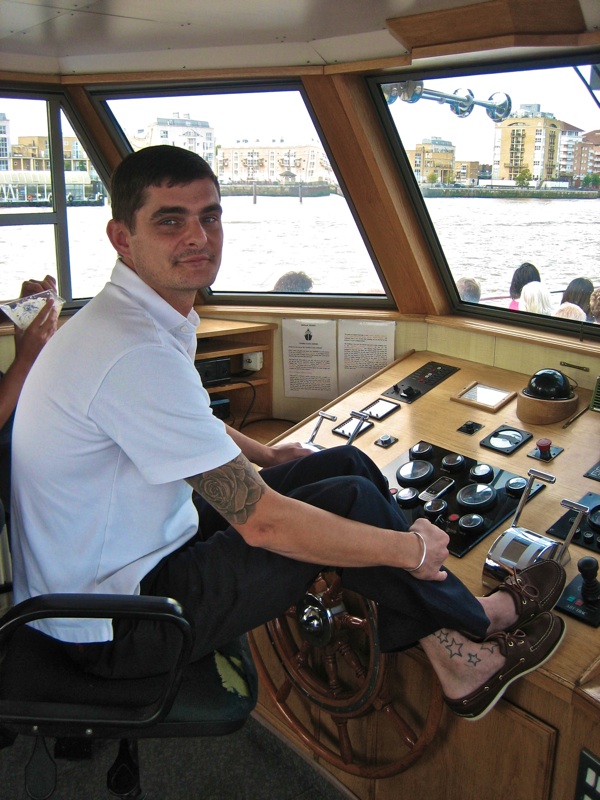
Robert Prentice, fifth generation Waterman & Lighterman
You may like to read these other stories about Lightermen & the Thames
Gardening On The Roundabout

I went back to lend Caroline Bousfield a hand on the roundabout in Victoria Park Village where she has been gardening for the past fifteen years with spectacular results.
Wearing the regulation high-visibility vests that are an essential safety requirement for gardening on a roundabout, we crossed the road carrying secateurs and baskets. The roundabout presented an impressive display of flowers, including valerian, marigolds, evening primrose, cosmos, achillea and euphorbia – all set against the dramatically contrasted foliage of Caroline’s planting which creates such a luxuriant vision for those passing on the bus or shopping on the other side of the street.
“It was before the days of guerrilla gardening,” Caroline informed me, revealing that when she first began gardening on the roundabout, it was borne out of a gardener’s frustration in witnessing the neglect of such an attractive location for planting. “There was just a mass of green vegetation with straggly weeds around the edge. Every time I walked past it my fingers would itch to pull some of it out and plant something better in its place. And I think I did, once or twice, before I realised I should ask permission.” she admitted, as if she had no choice in her actions. Over the intervening years, Caroline has entered into an agreement with the council to lease the roundabout so that she can continue tending it on their behalf. “I think things have changed and Hackney Council is more open to this kind of thing nowadays,” she confirmed sagely, as we started work, cutting lavender in handfuls while the buses and trucks sped past just feet away.
Yet the pungent scent and the absorption of the work induced a state of concentration in which the presence of the traffic did not register. We were consumed by our task, gathering lavender but leaving enough for the bees that swarmed upon the plants, equally preoccupied in their work. Then it was time for tidying up. I undertook the unravelling of bindweed which was choking the smaller shrubs, while Caroline pruned the buddleias. As the branches were cut away, she called me over to see the scattered paper and foil food packets revealed beneath – the debris of foxes’ takeway dinners scavenged from the bins and enjoyed here in peace, as a moonlight picnic within the depths of the shrubbery at the heart of the roundabout.
Carrying the armfuls of pruned branches off the roundabout proved to be an activity which required a certain knack to find the gap in the traffic and haul it across to the pavement in time. In this task, Caroline demonstrated expertise borne of experience and an innate sense of timing, while I undertook the less challenging work of carrying the lavender. Then we stashed the sweet-smelling basket in Caroline’s pottery workshop nearby where she has been making and selling her own pots since 1975. Here she stores the lavender in the loft of this former carriage house, and when Caroline fires the kiln it fills the entire workshop with a powerful and intoxicating scent. By making her lavender up into bags and selling it through the local shops, Caroline makes enough money to pay for any new plants that are added to the roundabout each year. Although she also confided to me that she was off on holiday to Cornwall, where she hoped to get some seeds of a deeper-coloured valerian which grows wild on the cliffs there.
People driving past and travelling on buses may wonder about the mystery of the familiar “lady on the roundabout,” but there is no secret. Over fifteen years, Caroline has created a widely-admired garden and a known landmark, distinguished by a more lyrical style of planting than the standardised design of the corporate-sponsored roundabouts which exist elsewhere. During this time, Caroline’s roundabout has become a centrepiece for the life that surrounds it and a symbol of the thriving community in Victoria Park Village. Today, Caroline’s roundabout pays for itself and sustains itself without watering. Caroline’s roundabout owes its existence to her knowledge, insight and imagination, and her passionate and committed gardening.
“People do notice,” she confided to me in modest satisfaction, as she sat in the cool of the workshop to take a break, drink a glass of water and catch her breath.


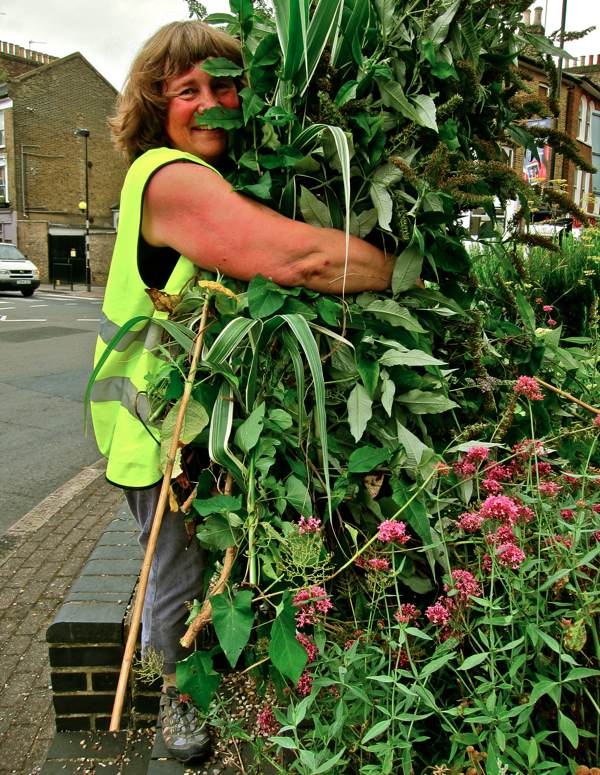


“a certain knack to find the gap in the traffic and haul it across to the pavement in time”

Enough lavender left to satisfy the bees

Caroline Bousfield – “People do notice.”
You may also like to read about