
At The Jewish Soup Kitchen

Click here to book your spring walk through Spitalfields
Click here to book your walk through the City of London

Originally established in 1854 in Leman St, the Jewish Soup Kitchen opened in Brune St in 1902 and, even though it closed in 1992, the building in Spitalfields still proclaims its purpose to the world in bold ceramic lettering across the fascia. These days few remember when it was supplying groceries to fifteen hundred people weekly, which makes Photographer Stuart Freedman’s pictures especially interesting as a glimpse of one of the last vestiges of the Jewish East End.
“After I finished studying Politics at university, I decided I wanted to be a photographer but I didn’t know how to do it,” Stuart recalled, contemplating these pictures taken in 1990 at the very beginning of his career. “Although I was brought up in Dalston, my father had grown up in Stepney in the thirties and, invariably, when we used to go walking together we always ended up in Petticoat Lane, which seemed to have a talismanic quality for him. So I think I was following in his footsteps.”
“I used to wander with my camera and, one day, I was just walking around taking pictures, when I moseyed in to the Soup Kitchen and said ‘Can I take photographs?’ and they said, ‘Yes.’ “I didn’t realise what I was doing because now they seem to be the only pictures of this place in existence. You could smell that area then – the smell of damp in old men’s coats and the poverty.”
For the past twenty-five years Stuart Freedman has worked internationally as a photojournalist, yet he was surprised to come upon new soup kitchens recently while on assignment in the north of England. “The poverty is back,” he revealed to me in regret,“which makes these pictures relevant all over again.”

Groceries awaiting collection

A volunteer offers a second hand coat to an old lady

An old woman collects her grocery allowance

A volunteer distributes donated groceries

View from behind the hatch

A couple await their food parcel

An ex-boxer arrives to collect his weekly rations

An old boxer’s portrait, taken while waiting to collect his groceries

An elderly man leaves the soup kitchen with his supplies
Photographs copyright © Stuart Freedman
You can read more about the Soup Kitchen here
You may also like to take a look at
At Paul Pindar’s House
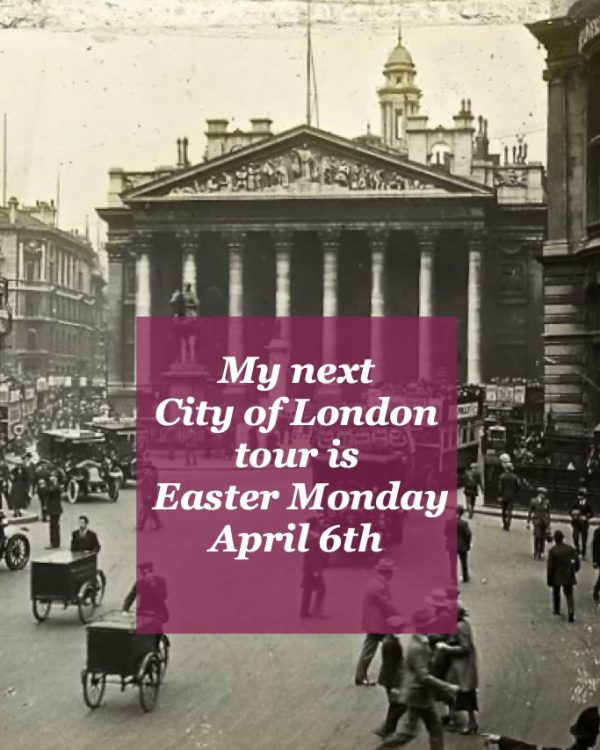
Meet me on Easter Monday on the steps of St Paul’s for a tour of sightseeing and storytelling, rambling through the alleys and byways of the Square Mile in search of the wonders and wickedness of the City of London. Click here to book
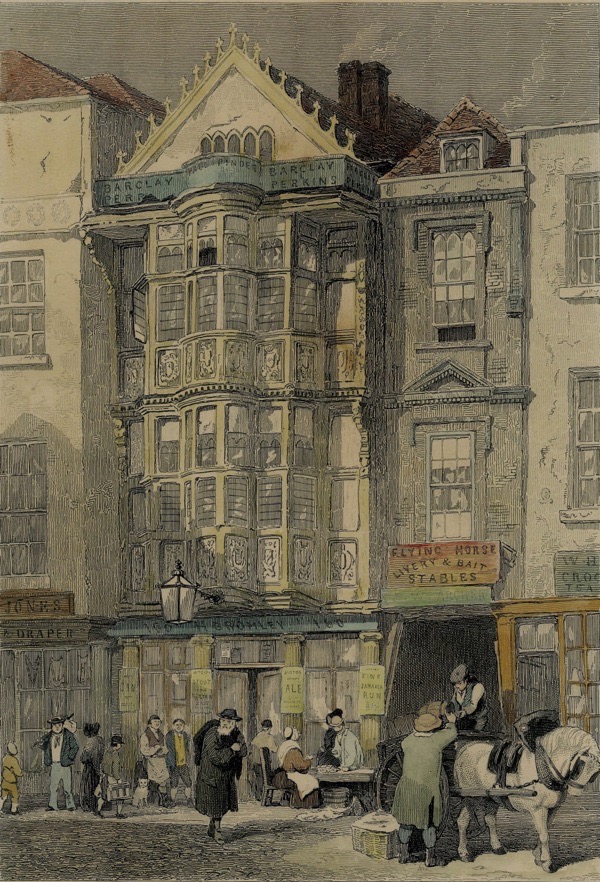
House of Sir Paul Pindar by J.W. Amber
If William Shakespeare passed along Bishopsgate around 1600, he might have observed the construction of one of the finest of the mansions that formerly lined this ancient thoroughfare, Sir Paul Pindar’s house situated on the west side of the highway beyond the City wall next to the Priory of St Mary Bethlehem.
Paul Pindar was a City merchant who became British Consul to Aleppo and subsequently James I’s Ambassador to Constantinople. Although he returned home from his postings regularly, he did not take permanent residence in his house until 1623 when he was fifty-eight and between 1617-18 it served as the London abode of Pietro Contarini, Venetian Ambassador to the Court of St James.
Who can say what precious gifts from Sultan Mehmet III comprised the inventory of Ottoman treasures that once filled this fine house in Bishopsgate? Pindar’s wealth and loyalty to the monarch was such that he made vast loans to James and Charles I who both dined at his house, as well as contributing ten thousand pounds to the rebuilding of St Paul’s Cathedral. Yet Charles’ overthrow in 1649 meant that Pindar was never repaid and he died with huge debts at the age of eighty-five in 1650. What times he had seen, in a life that stretched from the glory days of Elizabeth I to the decapitation of Charles I.
Remarkably, Paul Pindar’s house survived the Great Fire along with the rest of Bishopsgate which preserved its late-medieval character, lined with shambles and grand mansions, until it was redeveloped in the nineteenth century. His presence was memorialised when the building became a tavern by the name of The Paul Pindar in the eighteenth century.
Reading the correspondence of CR Ashbee from the eighteen-eighties in the archives of the Society for the Protection of Ancient Buildings in Spital Sq, I was astonished to discover that, after Ashbee’s successfully campaign to save the Trinity Green Almshouses in Whitechapel, he pursued an ultimately fruitless attempt to rescue Paul Pindar’s house from the developers who were expanding Liverpool St Station.
In his poignant letters, arguments which remain familiar in our own time are advanced in the face of the unremitting commercial ambition of the railway magnates. CR Ashbee reminded them of the virtue in retaining an important and attractive building which carried the history of the place, even proposing that – if they could not keep it in its entirety – preserving the facade integrated into their new railway station would prove a popular feature. His words were disregarded but, since Paul Pindar’s house stood where the Bishopsgate entrance to Liverpool St Station is now, I cannot pass through without imagining what might have been and confronting the melancholy recognition that the former glories of Paul Pindar’s house are forever lost in time, as a place we can never visit.
The elaborately carved frontage, which concealed a residence much deeper than it was wide, was lopped off when the building was demolished in 1890 after surviving almost three hundred years in Bishopsgate. Once the oak joinery was dis-assembled, it was cleaned of any residual paint according to the curatorial practice of the time and installed at the Victoria & Albert Museum in South Kensington when it opened in 1909. You can visit this today at the museum, where the intricate dark wooden facade of Paul Pindar’s beautiful house – familiar to James I, Charles I and perhaps to Shakespeare too – sits upon the wall as the enigmatic husk of something extraordinary. It is an exquisite husk, yet a husk nonetheless.
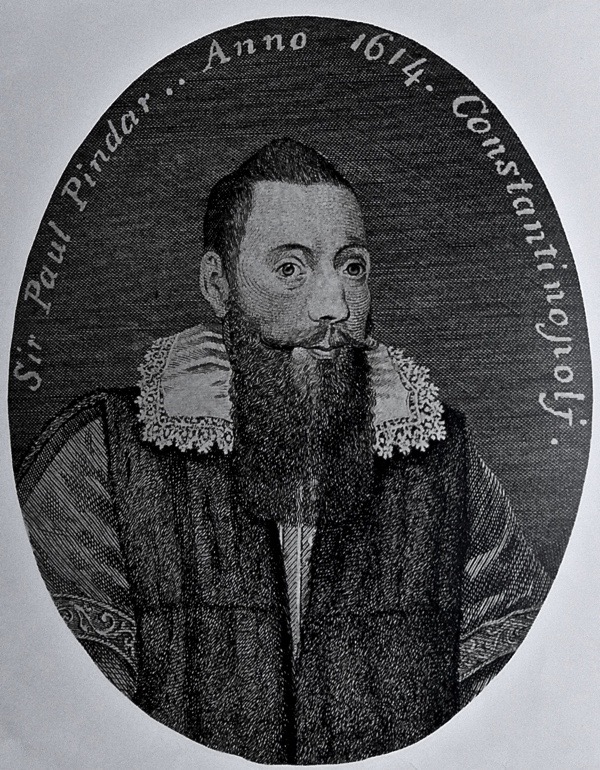
Sir Paul Pindar (1565–1650)
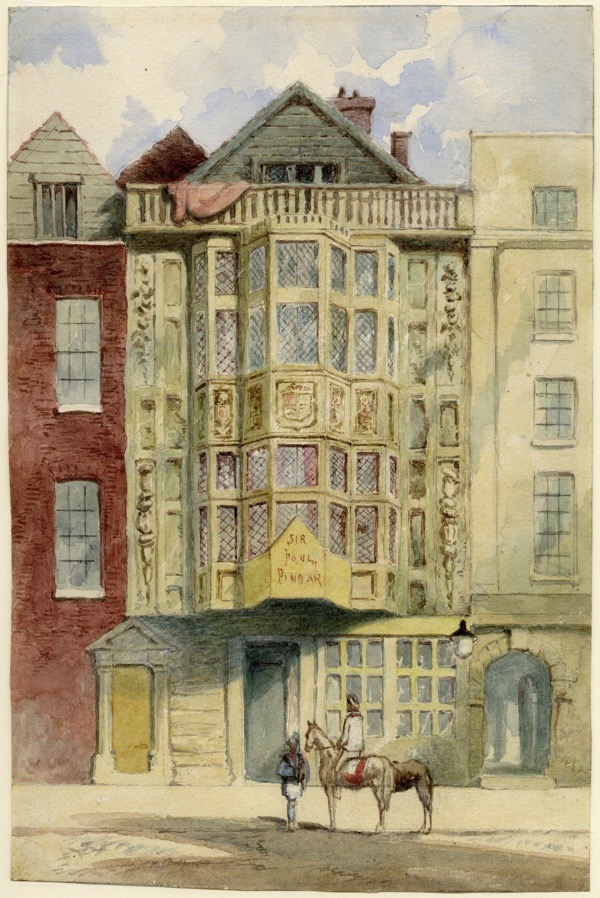
Paul Pindar’s House by F.Shepherd
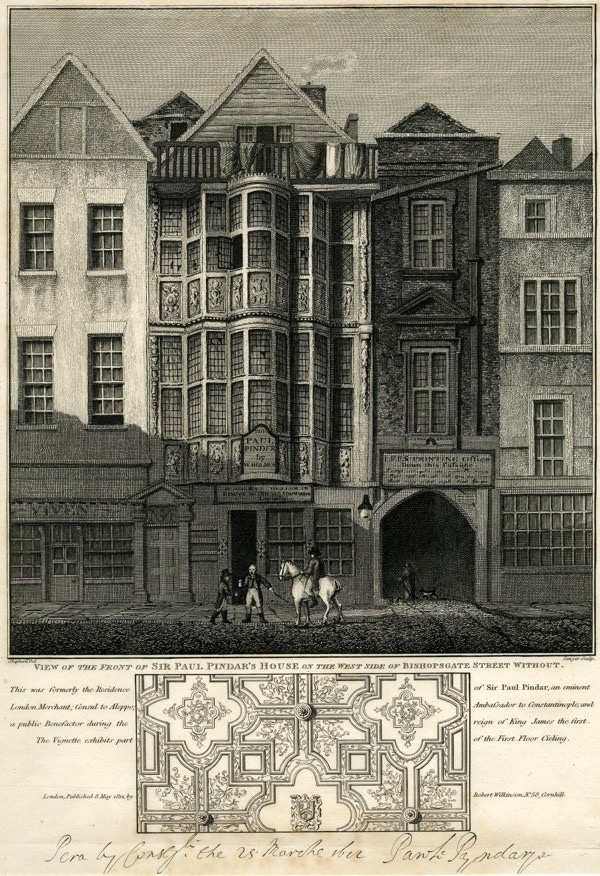
View of Paul Pindar’s House, 1812
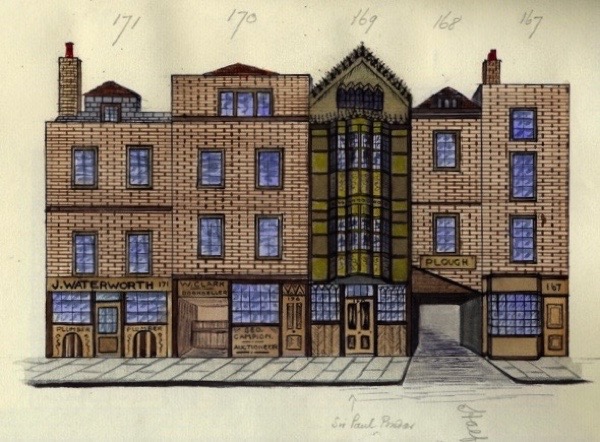
Street view, 1838
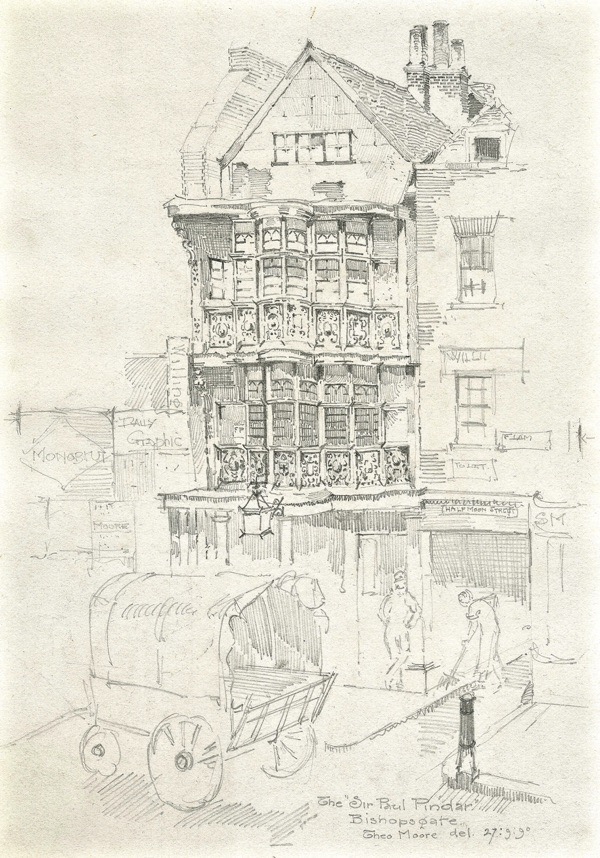
The Sir Paul Pindar by Theo Moore, 1890
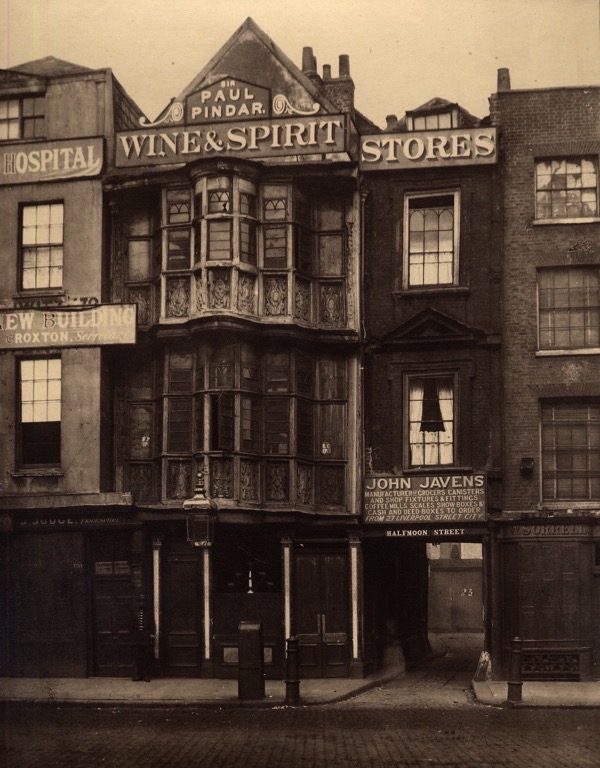
The Sir Paul Pindar photographed by Henry Dixon, 1890
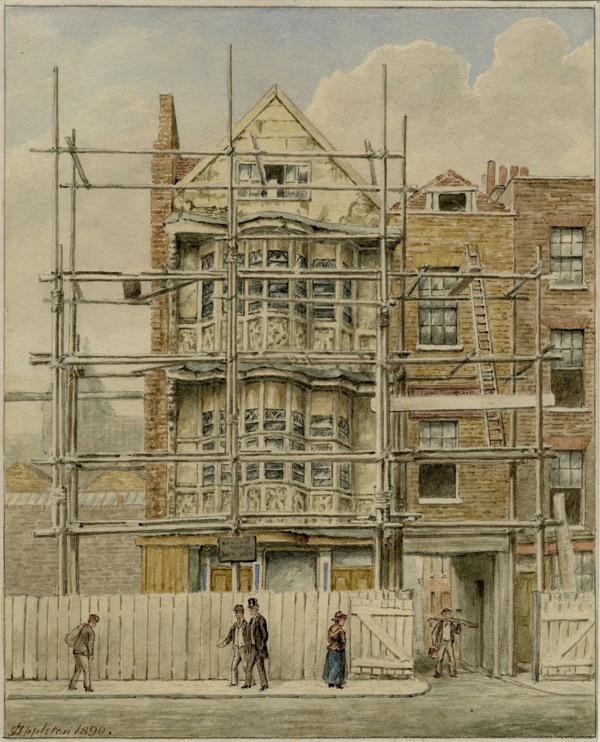
Paul Pindar’s House as it appeared before demolition by J.Appleton, 1890

Facade of Paul Pindar’s House at the Victoria & Albert Museum
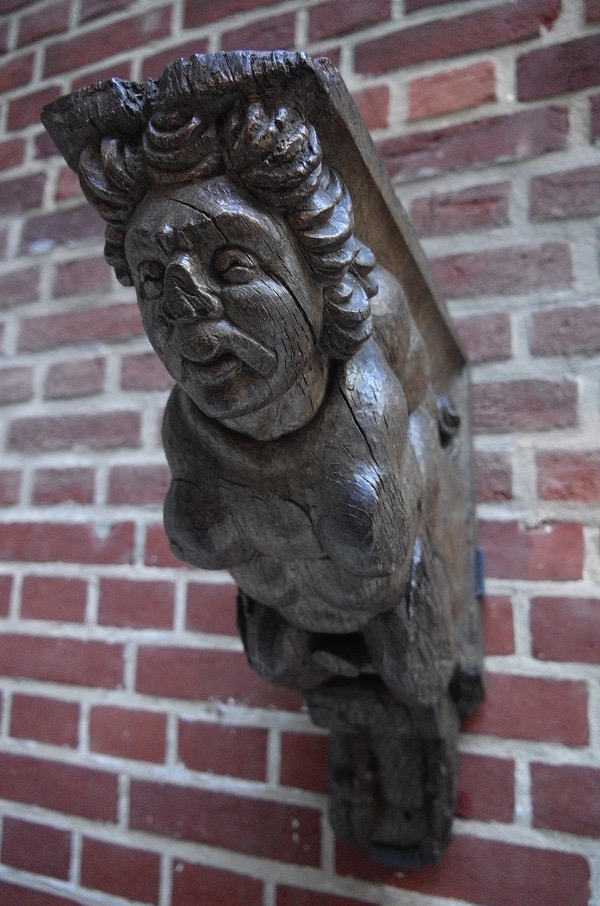
Bracket from Paul Pindar’s House at the Victoria & Albert Museum

Paul Pindar’s Summer House, Half Moon Alley, drawn by John Thomas Smith, c. 1800
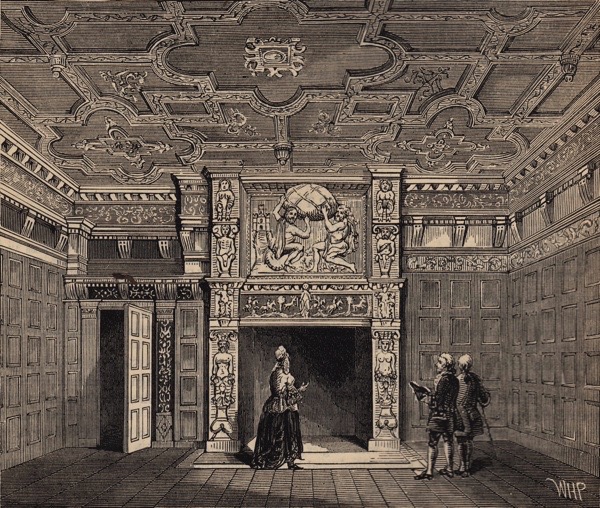
Panelled room in Paul Pindar’s House
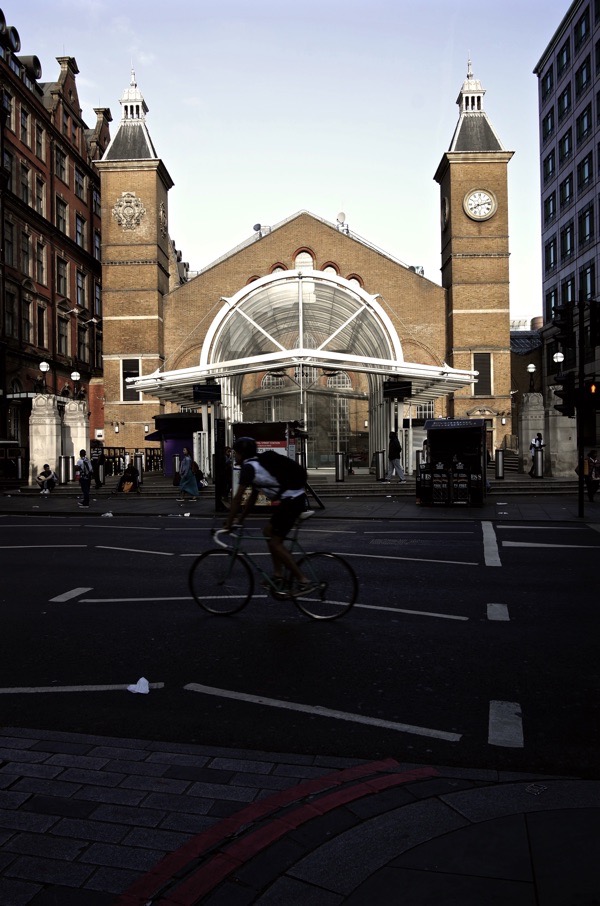
Bishopsgate entrance to Liverpool St Station
Archive images courtesy Bishopsgate Institute
You may also like to read about
The Romance of Old Bishopsgate
Chinnee Kaur, My Mum
Suresh Singh recalls the life of his mother in this extract from A MODEST LIVING, MEMOIRS OF A COCKNEY SIKH
 Mum with me in the yard at 38 Princelet St shortly after we left hospital
Mum came to join Dad in London in 1955, bringing my elder sister. I think she quickly became absorbed by motherhood and childbearing. She did not stay healthy because the house was so overcrowded. First she got asthma from the dust mites in the mattresses and then she got tuberculosis. Yet she remained a very generous woman and welcomed everybody. She tolerated our mad house and never said she wanted to live like other Sikh families. She never sought domestic comforts. She understood Dad’s beliefs and adapted to life in England in her own way. To look at Mum, you would think that she never left India. She just stayed in her Punjabi clothes, as if she had arrived yesterday.
She was always cooking in big pans for lots of people, brewing masala tea with milk on the gas ring. It seemed nothing ever boiled over. She had mastered it to an art, the size of the gas flame and the circumference of the pan. She made dals, cooked spinach, and roasted chicken at weekends. We kept a big sack of brown flour in a dustbin, twenty-five kilos, and she loved making chapatis in abundance. They were buttered with Anchor butter, wrapped in cloth to keep them soft and stacked one on top ofthe other in an aluminium pot with a lid. We always thought there was an endless bundle because they never ran out. On Friday someone would bring a freshly-killed chicken from the kosher chicken shop in Petticoat Lane or, as a treat, Dad would buy fish and chips from Alfies on Brick Lane. On Sunday and special occasions Mum would make prashad.
At the end of each week, Dad gave his unopened pay-packet to Mum. She kept it so if the family needed money in India she could get it. They never had a bank account, but had a way of hiding valuables in the house. They sent money through Grewal, the grocer in Artillery Passage, who had a means of exchanging it for rupees.
Mum spent quite a bit of time in hospitals before I was born and then with me in the baby clinic, where she met other women – English, Irish, Scottish, Jewish, Maltese, Pakistani and West Indian. They were all very poor and became friends because they came from big families. They were devoted to their own faiths and shared a strong sense of duty to their families. Every Friday while Mum was in Mile End hospital in Bancroft Road they gave each woman a bottle of Guinness for strength because they believed the iron was good for the blood. As a Sikh, Mum did not drink alcohol so she put the bottles in her bedside cupboard. It was like a drinks cabinet. The Irish women came and she gave them one each, and they all became close.
I remember these women visiting our house. They called her Mrs Singh and she corrected them, saying, ‘No, I am Mrs Kaur.’ They would ask, ‘Are you separated from Mr Singh?’ She was shocked that anyone would ask such a question but explained, ‘No, no, it’s our Sikh faith that men are called Singh and women are called Kaur.’ Singh means lion and Kaur means princess. Mum would then take the opportunity to talk about her faith and how this naming was initiated by the tenth guru, Guru Gobind Singh.
Mum cultivated these warm relationships. She never judged anybody and had a gift for bringing women together regardless of their appearance, way of life or who they were. I think she inherited that quality from her dad who was a wise man. I was the luckiest in the family to spend so much time at home with my parents. They taught me how to hold a family together.
Mum wanted to stay at home and Dad never sent her out to work. She valued the responsibility of keeping the house, caring for her children and others in the family. He valued and trusted her judgement in keeping the household in order. She loved walking us to Christ Church School and enjoyed the social life at the school gate. We came home for dinner every day because the school meals were tasteless, without any spices.
Once my cousins’ wives started coming over from the Punjab and staying with us, Mum took them to the clinic and they would spend time together. She demonstrated how to put a terry nappy on a baby with a safety pin, and how to boil nappies in a pan with Daz on the gas ring to get them nice and white again. She was a mother to them, these newly-wed women who came and stayed for a while. She taught them a few tricks of the trade.
When I was born in 1962, I already had my eldest sister from India, my second sister and my brother. There were always other children in the house, so often I did not know who was family and who was not. Dad had adopted one of our cousins from India and I just thought all these people were family. I called everybody brother or sister. Food was cooked in a large pan and we all ate chapatis together on the floor. It was a simple but hard-working life.
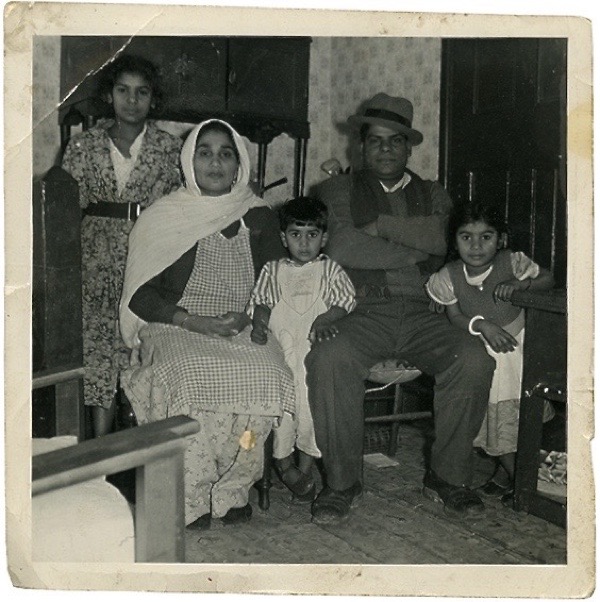
Our family
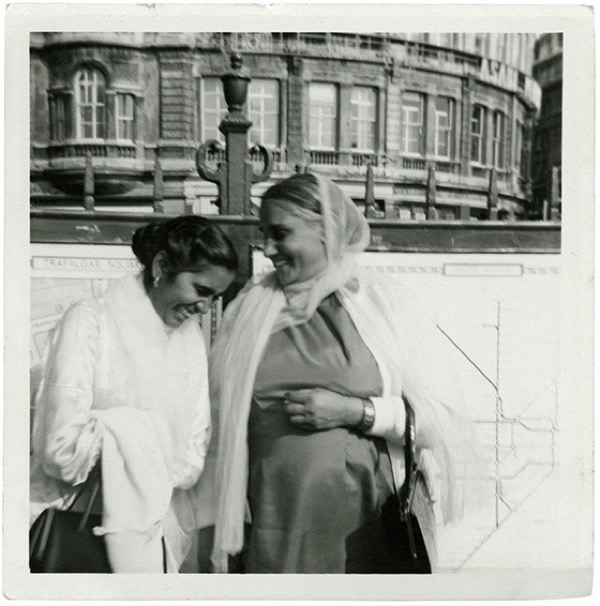
Mum with a friend in Trafalgar Sq
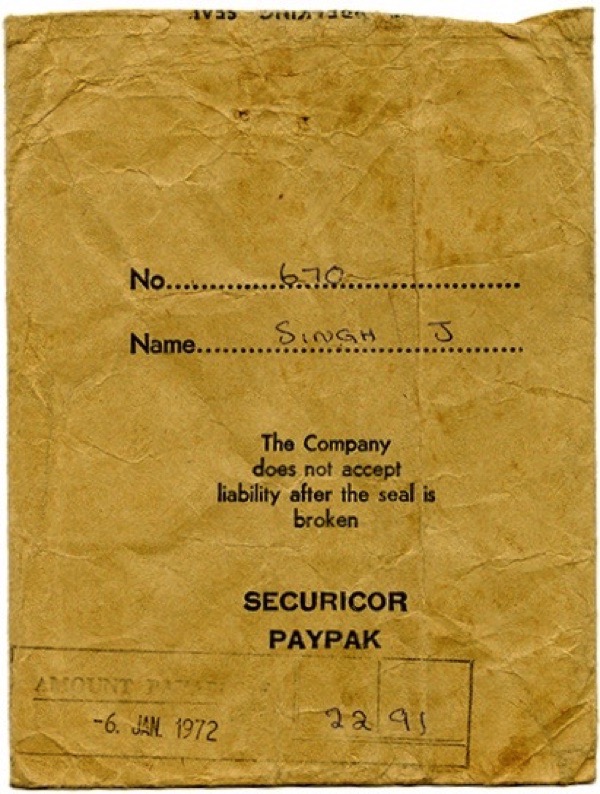
Dad’s pay packet
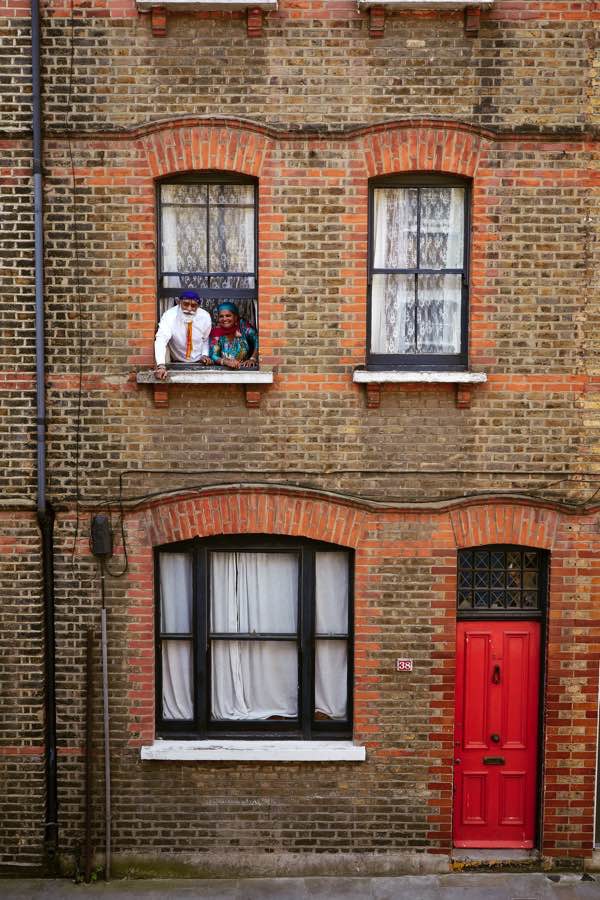
Suresh Singh & Jagir Kaur at 38 Princelet St (Photograph by Patricia Niven)
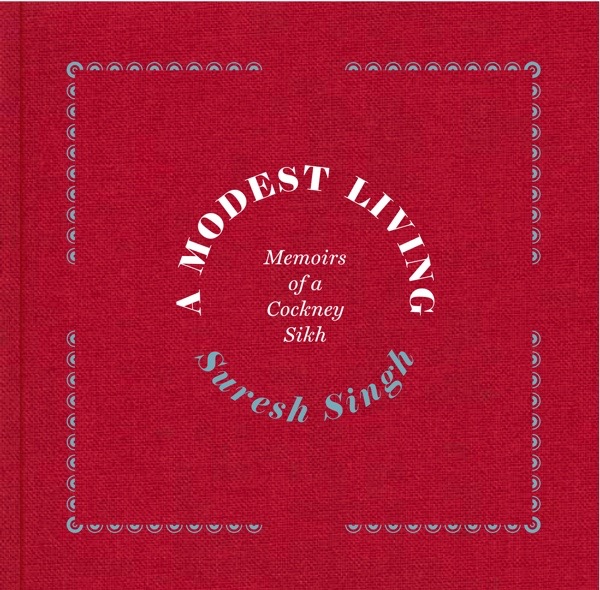
Click here to order a copy of A MODEST LIVING
In this first London Sikh biography, Suresh tells the story of his family who have lived in their house in Princelet St for nearly seventy years, longer I believe than any other family in Spitalfields. In the book, chapters of biography are alternated with a series of Sikh recipes by Jagir Kaur, Suresh’s wife.
The Trade Cards Of Old London
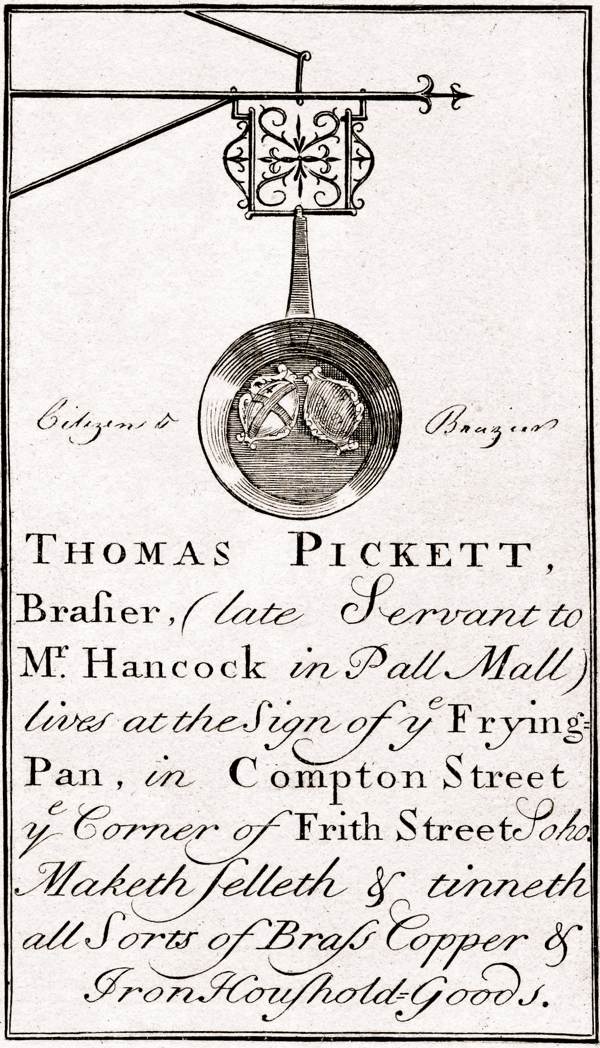
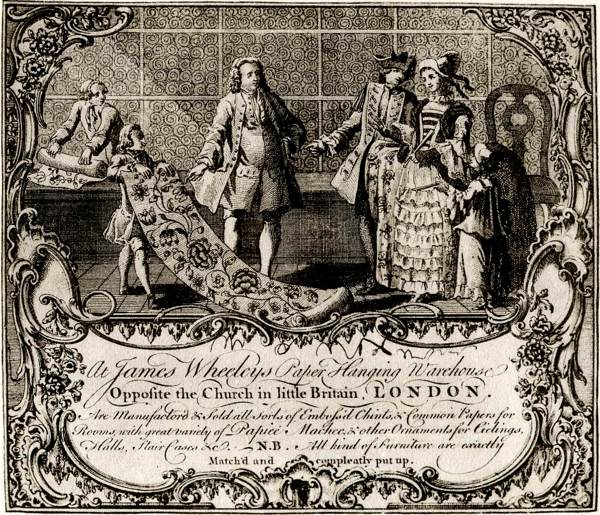
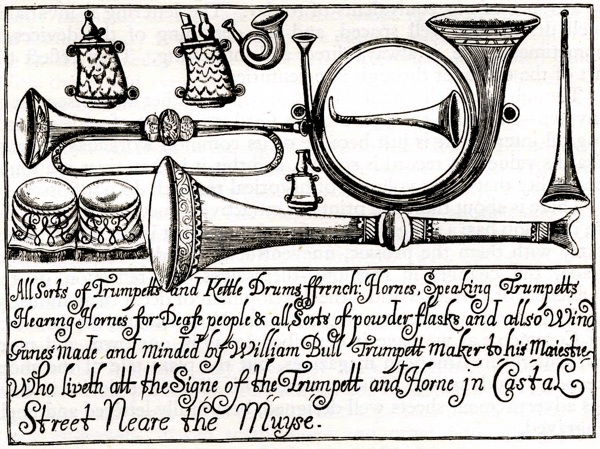
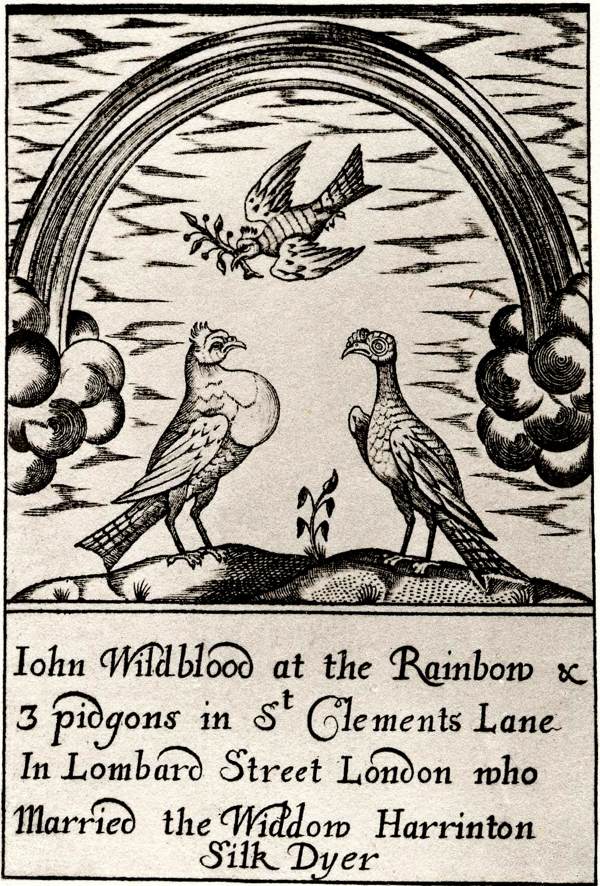
Is your purse or wallet like mine, bulging with old trade cards? Do you always take a card from people handing them out in the street, just to be friendly? Do you pick up interesting cards in idle moments, intending to look at them later, and find them months afterwards in your pocket and wonder how they got there? So it has been for over three hundred years in London, since the beginning of the seventeenth century when trade cards began to be produced as the first advertising. Here is a selection of cards you might find, rummaging through a drawer in the eighteenth century.
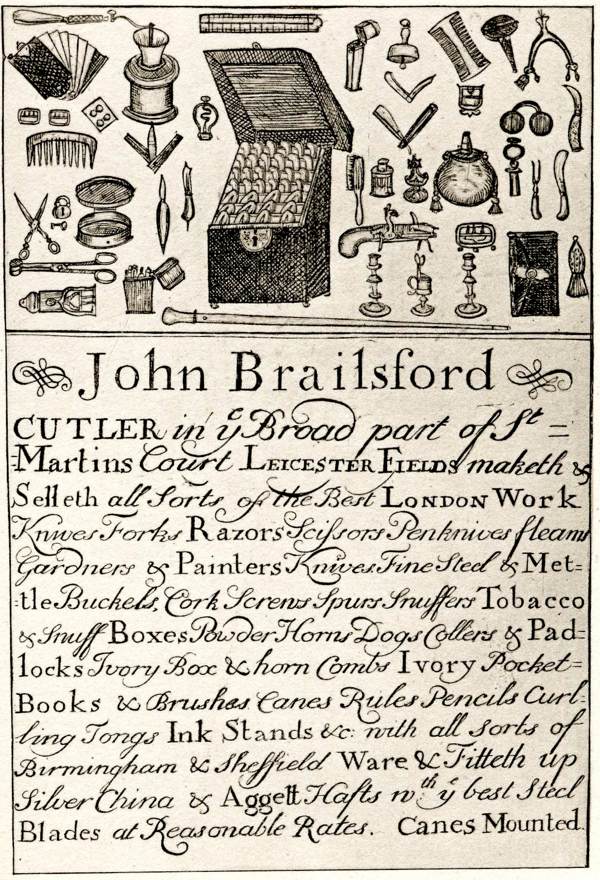
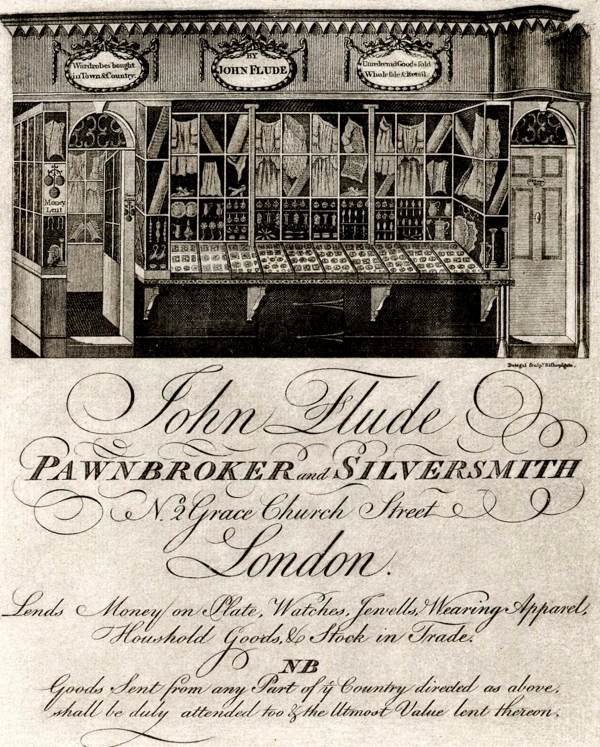
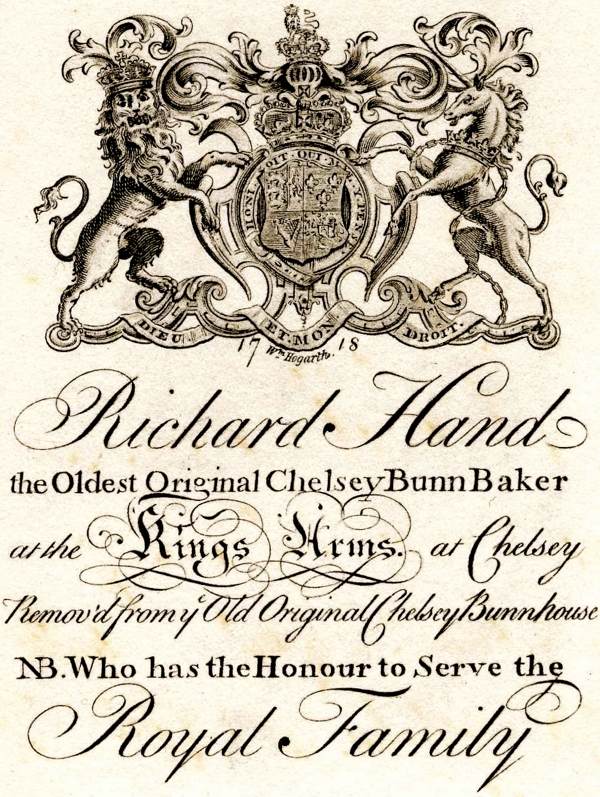






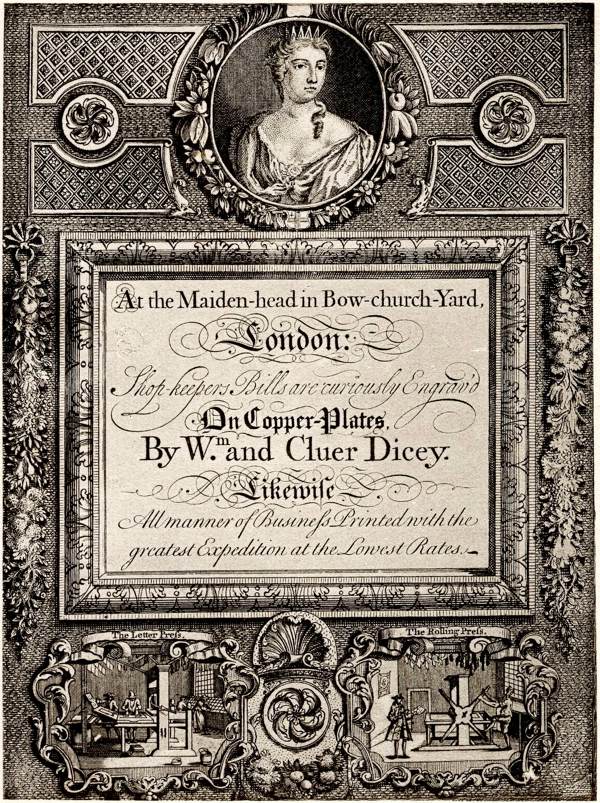

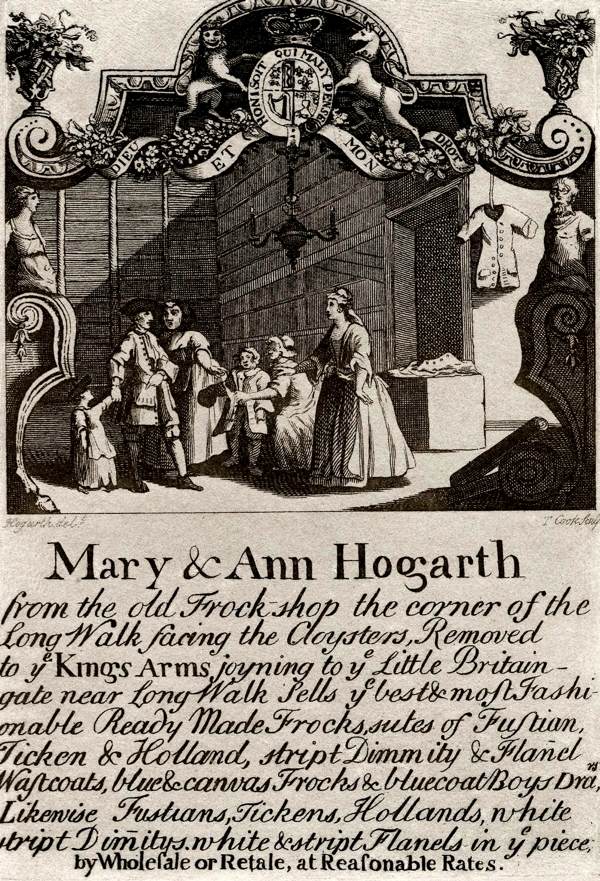
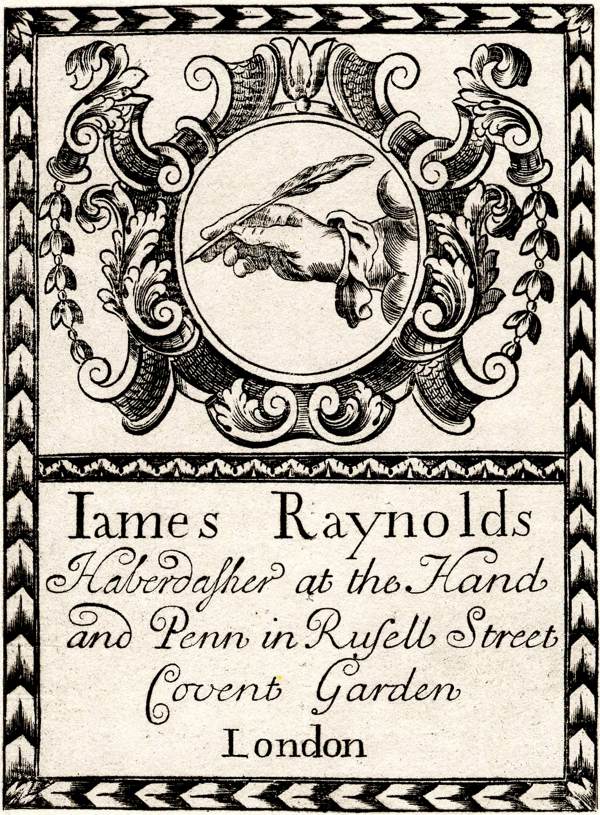
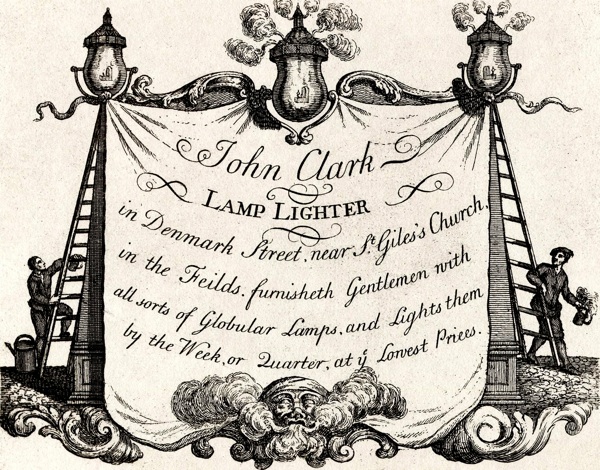
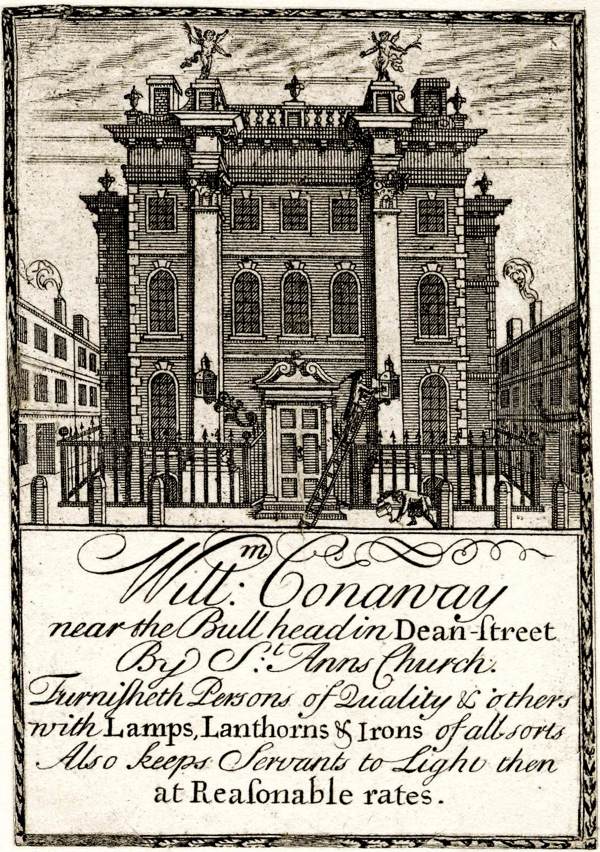
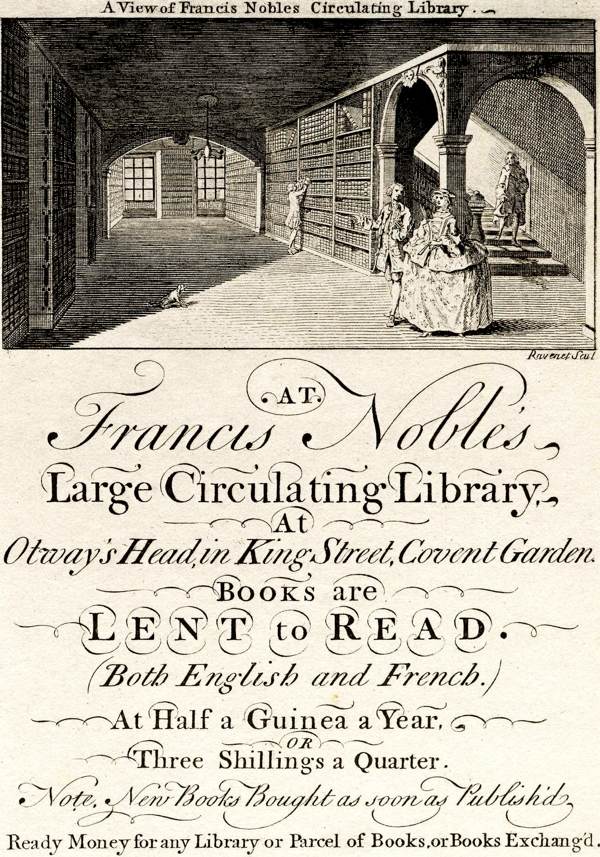
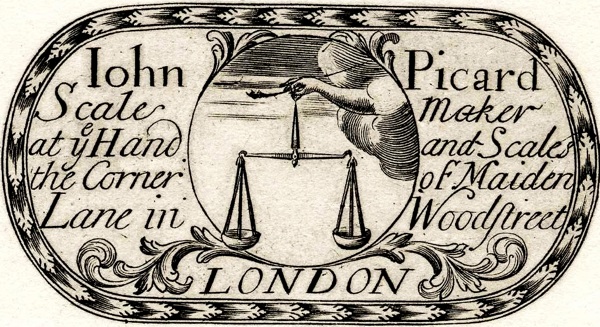

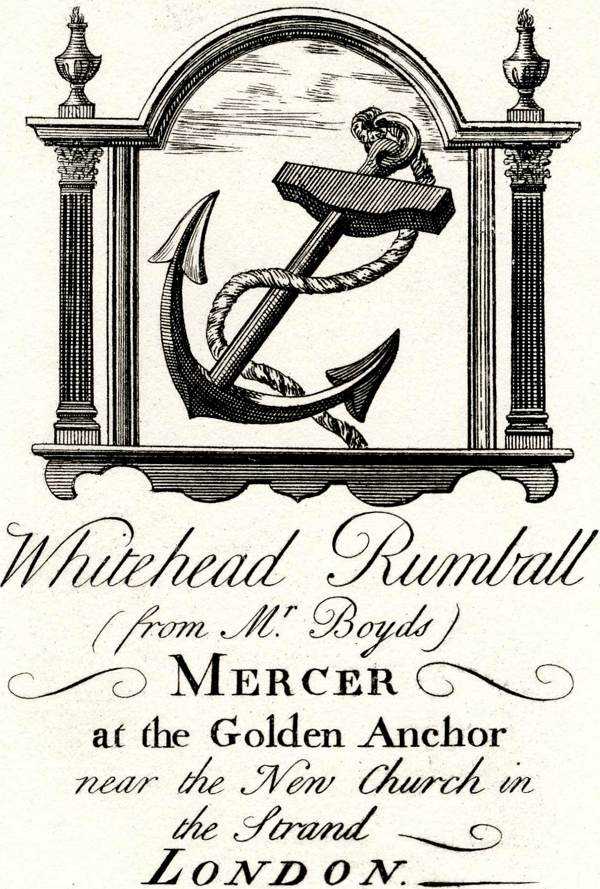
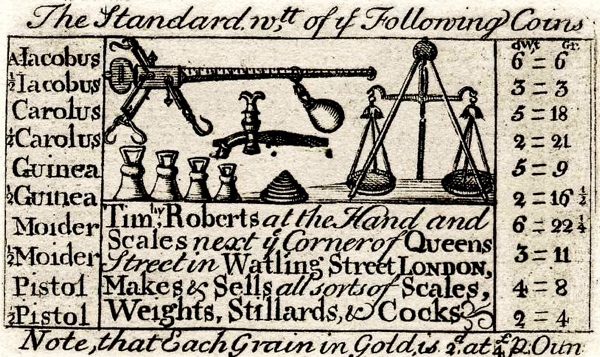
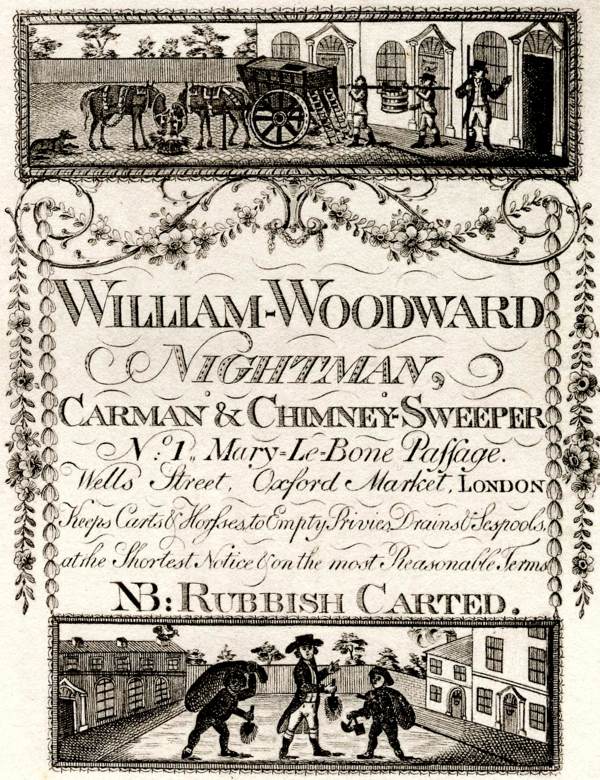
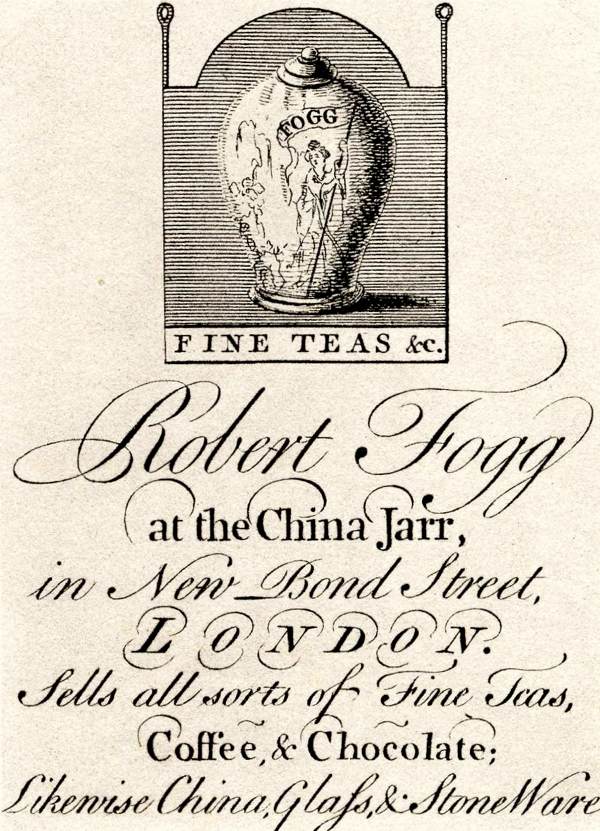
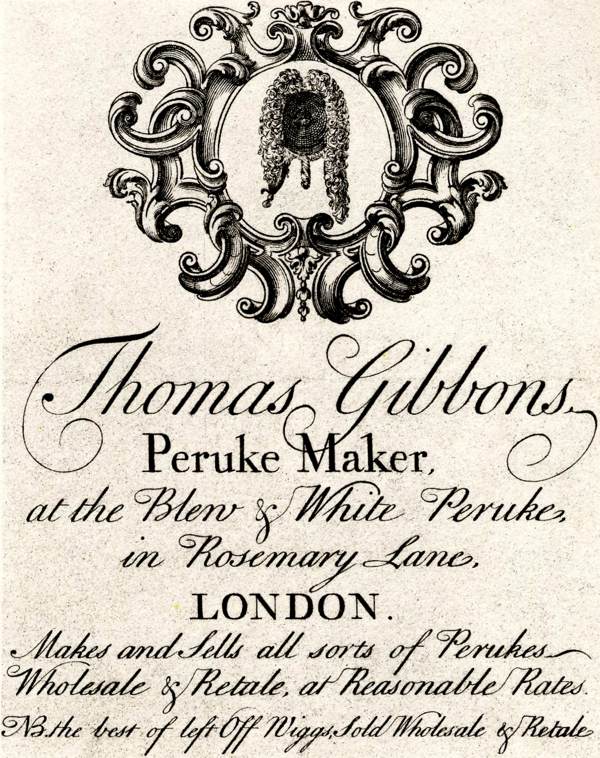
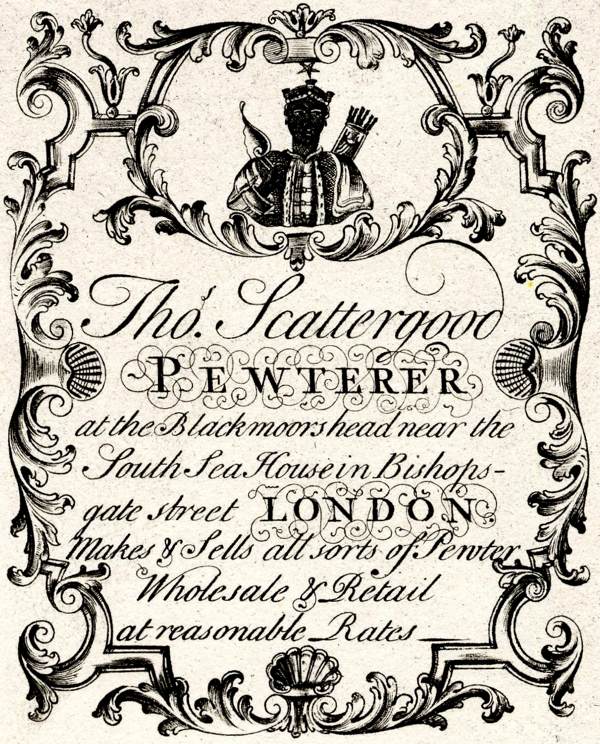
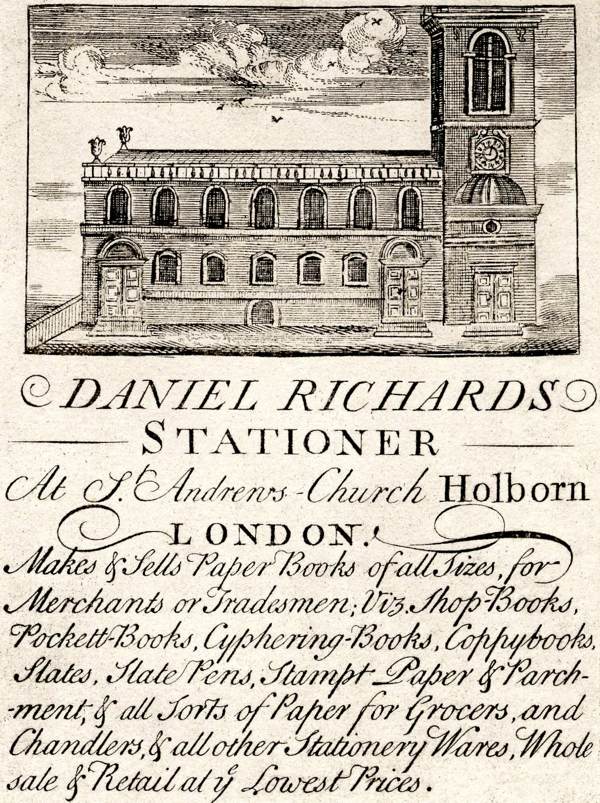


Images courtesy Bishopsgate Institute
You might also like to take a look at
The Coalholes Of Spitalfields

Since I wrote about sculptor Keith Bowler’s Roundels, describing how he set new manhole covers into the pavements of Spitalfields with motifs to commemorate all the people, cultures and trades that have passed through, I have been noticing the old ones that inspired him in the first place. This one from the eighteen eighties in Fournier St is undoubtably the most snazzy in the neighbourhood with its dynamic sunburst and catherine wheel spiral. So much wit and grace applied to the design of a modest coalhole cover, it redefines the notion of utilitarian design. In Bath, Bristol, Brighton and Edinburgh, I have seen whole streets where each house has a different design of coalhole cover, like mismatched buttons on a long overcoat, but in Spitalfields they are sparser and you have to look further to find them.
There is a second example of this Clark, Hunt & Co sunburst, that I like so much, in Redchurch St, just a hundred yards from the former showrooms at 159/60 Shoreditch High St of this company who called themselves the Middlesex Iron Works – founded in 1838, proud contractors to the H.M. War Office, the Admiralty and London County Council. And like many local ironworks, gone long ago, but outlived by their sturdy cast iron products. Alfred Solomons of 195 Caledonian Rd is another name I found here in Spitalfields on a couple of manhole covers, with some rather fetching, almost orientalist, nineteenth century flourishes. I discovered that the Jewish Chronicle reported the birth of a son to Alfred’s wife Celia on 18th December 1894 at the Caledonian Rd address, so these plates commemorate them personally now.
Meanwhile Hayward Brothers of 187 & 189 Union St, Borough, are the most ubiquitous of the named manufacturers with their handsome iron artefacts in the pavements of our neighbourhood. They were founded by William & Edward Hayward, glaziers who had been trading since 1783 when they bought Robert Henley’s ironmongery business in 1838. As glaziers they brought a whole new progressive mentality to the humble production of coalhole covers, patenting the addition of prisms that admitted light to the cellar below. You can see one of their “semi-prismatic pavement lights” illustrated below, in Calvert Avenue. Such was the success of this company that by 1921 they opened a factory in Enfield, and even invented the “crete-o-lux” concrete system which was used to repave Regent St, but they ceased trading in the nineteen seventies when smokeless zones were introduced in London and coal fires ceased. Regrettably, Spitalfields cannot boast a coalhole by the most celebrated nineteenth century manufacturer, by virtue of their name, A.Smellie of Westminster. The nearest example is in Elizabeth St, Victoria, where I shall have to make a pilgrimage to see it.
Unfailingly, my fascination with the city is deepened by the discovery of new details like these, harbouring human stories waiting to be uncovered by the curious. Even neglected and trodden beneath a million feet, by virtue of being in the street, these ingenious covers remind us of their long dead makers’ names more effectively than any tombstone in a churchyard. There was rain blowing in the wind yesterday but when the sun came out afterwards, the beautiful old iron covers shone brightly like medals – for those who had the eyes to see them – emblazoned upon the streets of Spitalfields.
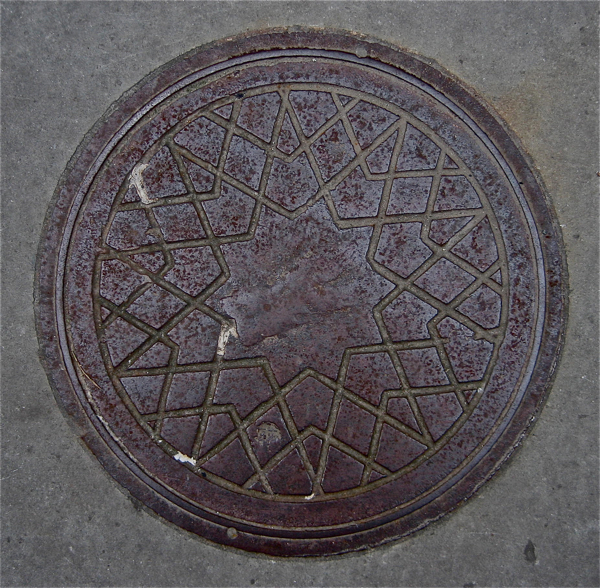
In Old Broad St.

In Fournier St, a nineteenth century coalhole cover by Alfred Solomons, 195 Caledonian Rd – I am reliable informed there are similar covers in Doughty St and around Bloomsbury.
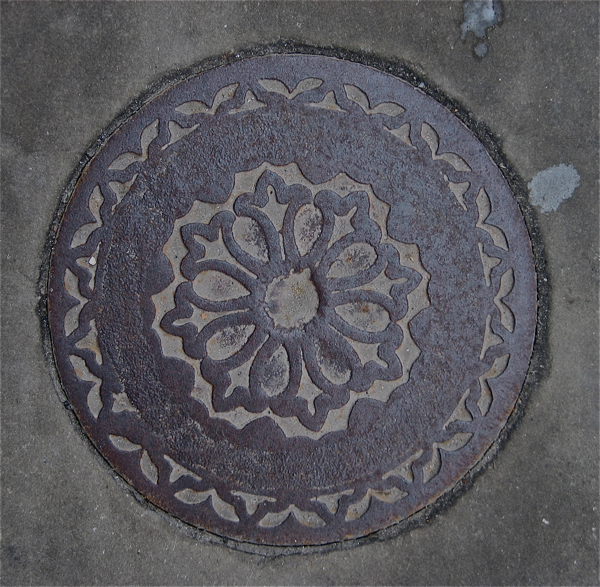
A more minimal variant on the same design by Alfred Solomons.

Hayward Brothers’ “Patent Self-Locking Semi-Prismatic Pavement Light” in Calvert Avenue.

A more recent example of Hayward Brothers’ self -locking plate.

In Gunthorpe St, this drain cover commemorates Stepney Borough Council created in 1900 and abolished in 1965.

At the Rectory in Fournier St, this early plate by Hayward Brothers of 187 & 189 Union St, Borough, which is also to be found in Lower Richmond Rd.

Another by Haywood Brothers in Spitalfields – although unlabelled, it follows the design of the plate above.

Bullseye in Chance St
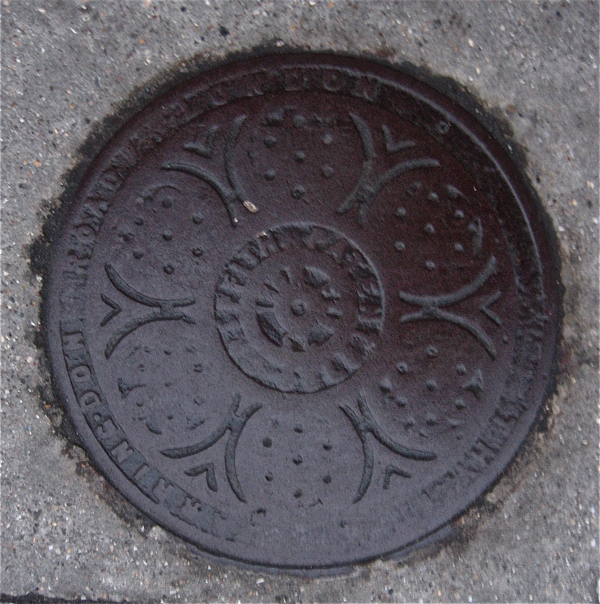
In Commercial St, at the junction with Elder St, is this worn plate is made by Griffith of Farringdon Rd, Clerkenwell

In Middlesex St. LCC – London County Council was abolished in 1965. Can it be only co-incidental that this old manhole cover in Petticoat Lane Market, in the former Jewish quarter, has a star of David at the centre?
You may also like to read about
Spring Bulbs At Bow Cemetery

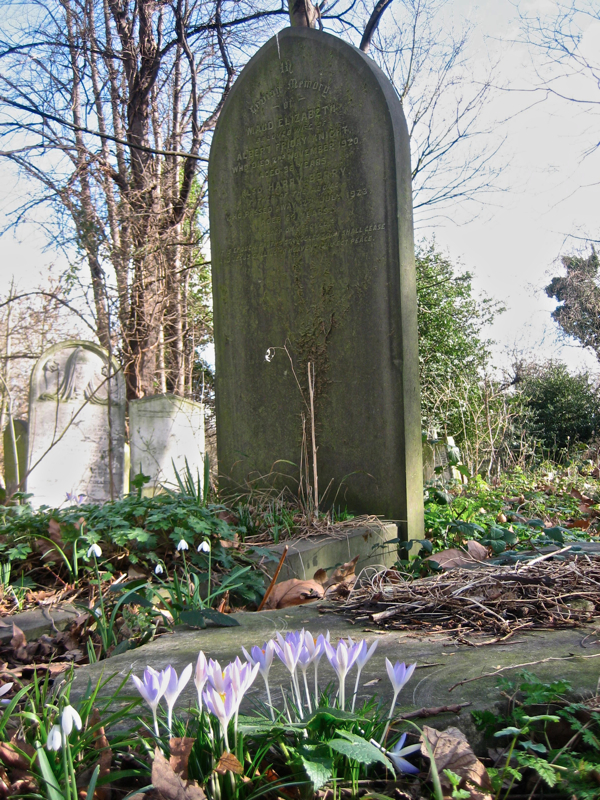
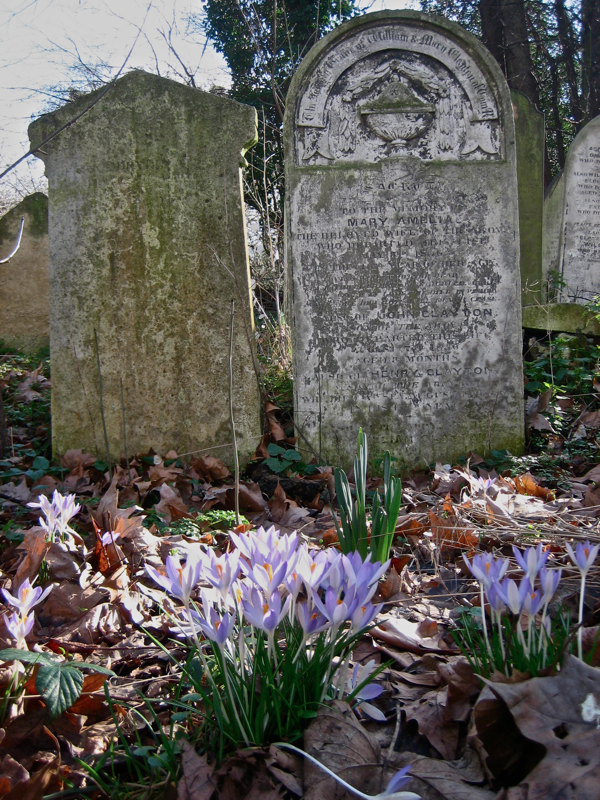
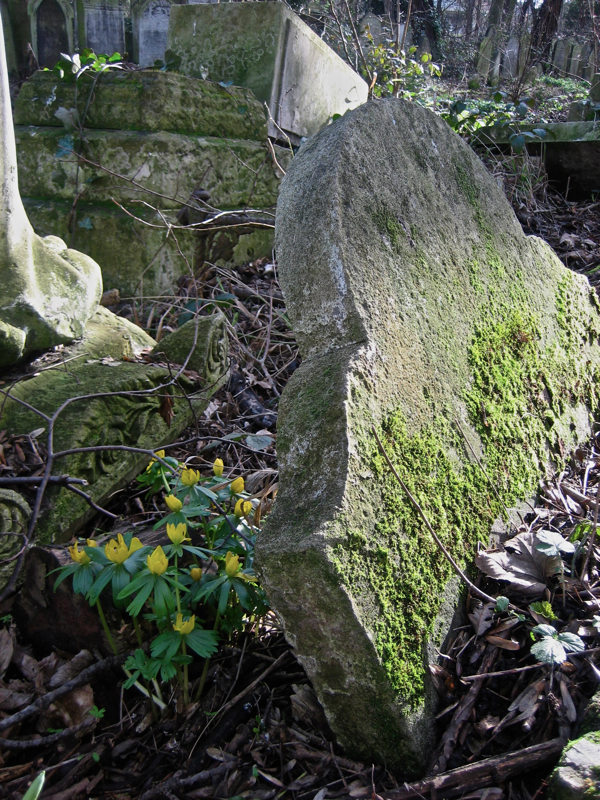
Seduced by the promise of spring offered by the change in the weather, I decided to return to Bow Cemetery to see if the bulbs were showing yet. Already I have some snowdrops, hellebores and a few primroses in flower in my Spitalfields garden, but at Bow I was welcomed by thousands of crocuses of every colour and variety spangling the graveyard with their gleaming flowers. Beaten and bowed, grey-faced and sneezing, coughing and shivering, the harsh winter has taken it out of me, but seeing these sprouting bulbs in such profusion restored my hope that benign weather will come before too long.
Some of my earliest crayon drawings are of snowdrops, and the annual miracle of bulbs erupting out of the barren earth never ceases to touch my heart – an emotionalism amplified in a cemetery to see life spring abundant and graceful in the landscape of death. The numberless dead of East London – the poor buried for the most part in unmarked communal graves – are coming back to us as perfect tiny flowers of white, purple and yellow, and the sober background of grey tombs and stones serves to emphasis the curious delicate life of these vibrant blooms, glowing in the sunshine.
Here within the shelter of the old walls, the bulbs are further ahead than elsewhere the East End and I arrived at Bow Cemetery just as the snowdrops were coming to an end, the crocuses were in full flower and the daffodils were beginning. Thus a sequence of flowers is set in motion, with bulbs continuing through until April when the bluebells will come leading us through to the acceleration of summer growth, blanketing the cemetery in lush foliage again.
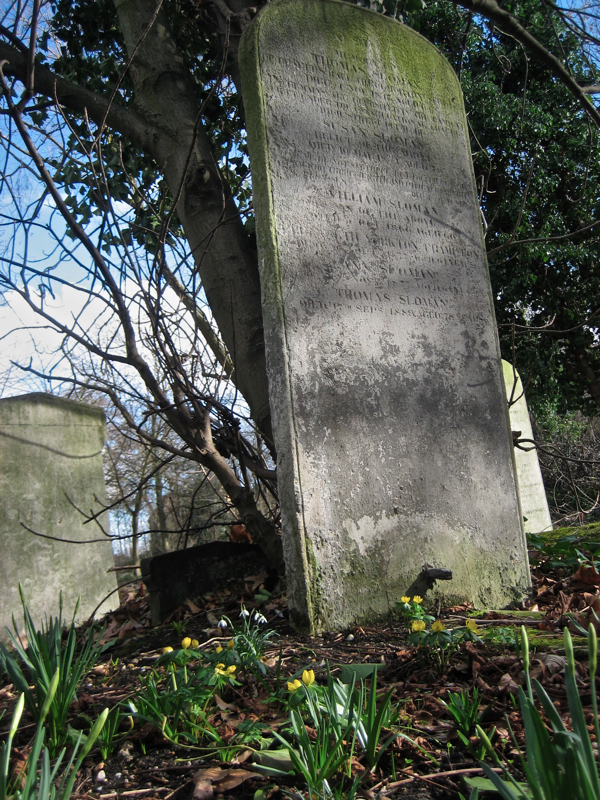
As before, I found myself alone in the vast cemetery save a few Magpies, Crows and some errant squirrels, chasing each other around. Walking further into the woodland, I found yellow winter aconites gleaming bright against the grey tombstones and, crouching down, I discovered wild Violets in flower too. Beneath an intense blue sky, to the chorus of birdsong echoing among the trees, spring was making a showing.
Stepping into a clearing, I came upon a Red Admiral butterfly basking upon a broken tombstone, as if to draw my attention to the text upon it, “Sadly Missed,” commenting upon this precious day of sunshine. Butterflies are rare in the city in any season, but to see a Red Admiral, which is a sight of high summer, in February is extraordinary. My first assumption was that I was witnessing the single day in the tenuous life of this vulnerable creature, but in fact the hardy Red Admiral is one of the last to be seen before the onset of frost and can emerge from months of hibernation to enjoy single days of sunlight. Such is the solemn poetry of a lone butterfly in winter.
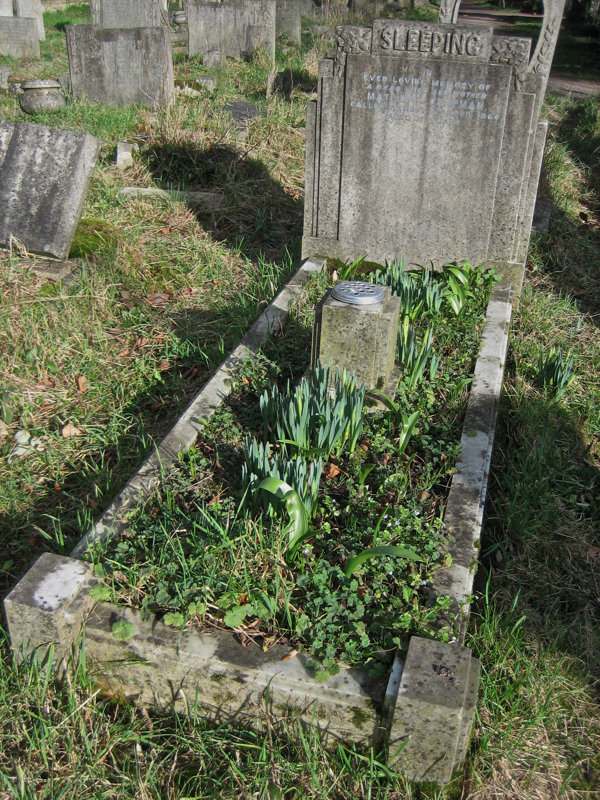
The spring bulbs are awakening from their winter sleep.
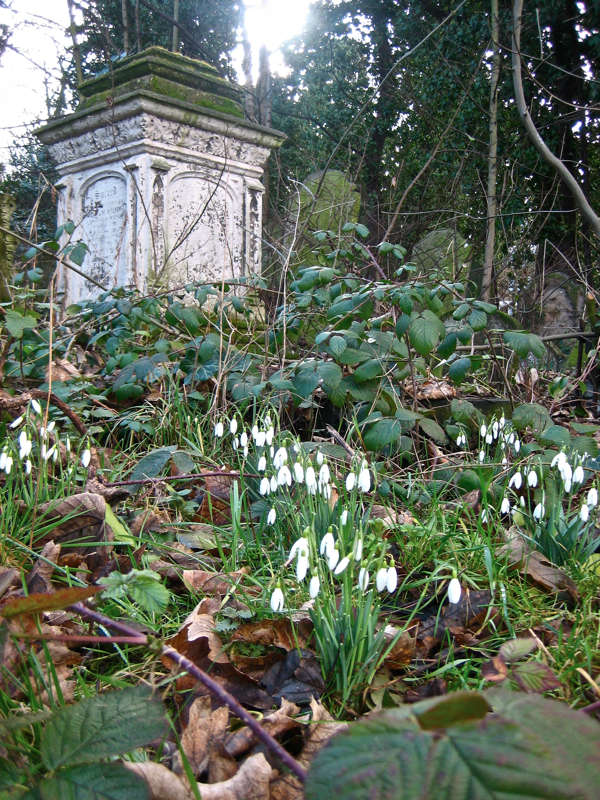
Snowdrops
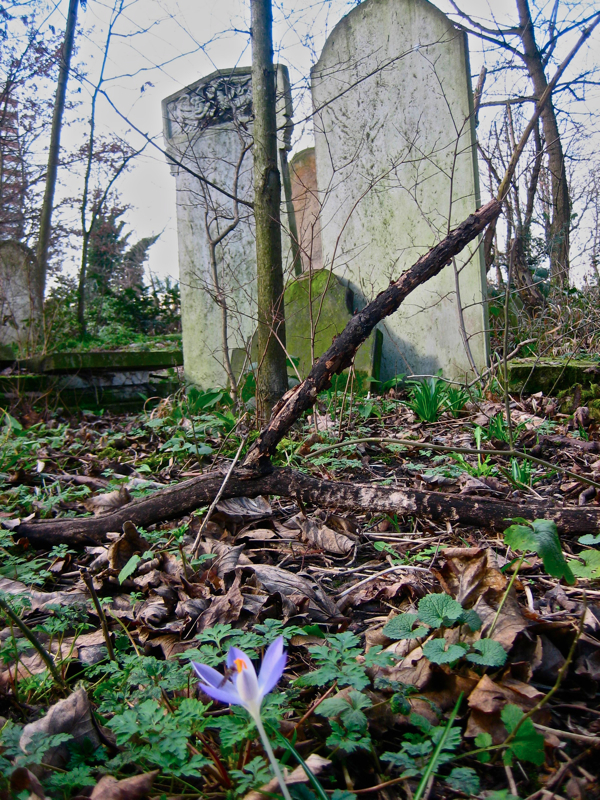
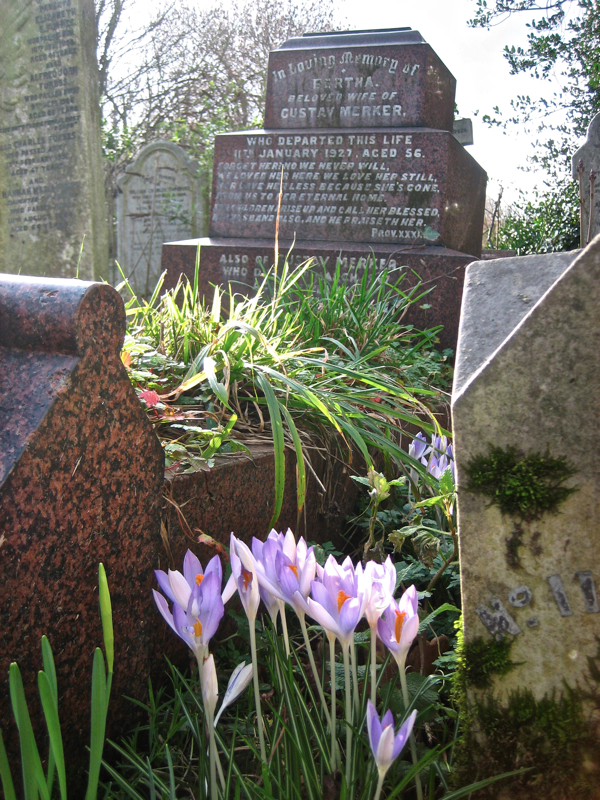
Crocuses
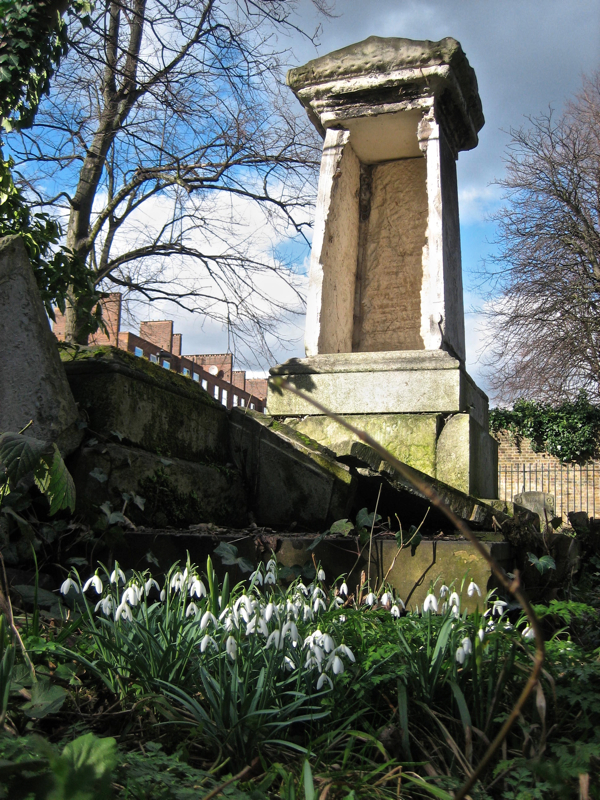
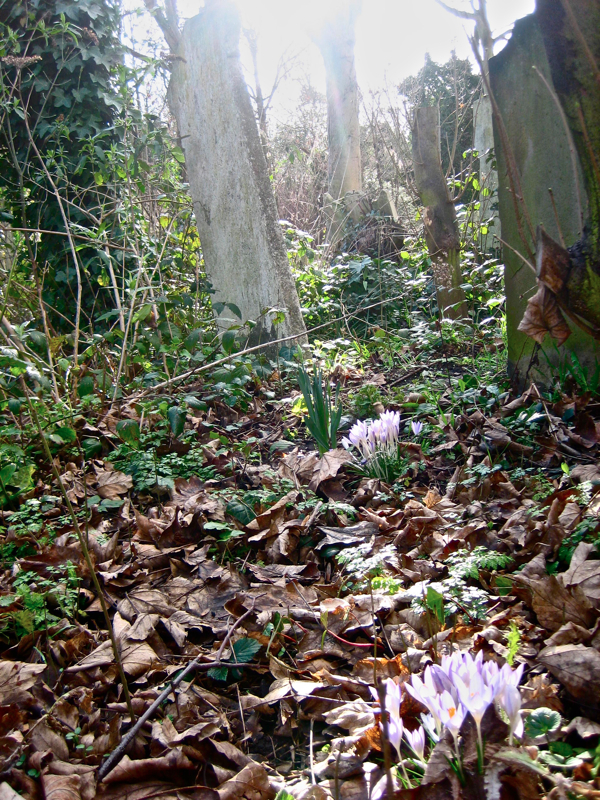
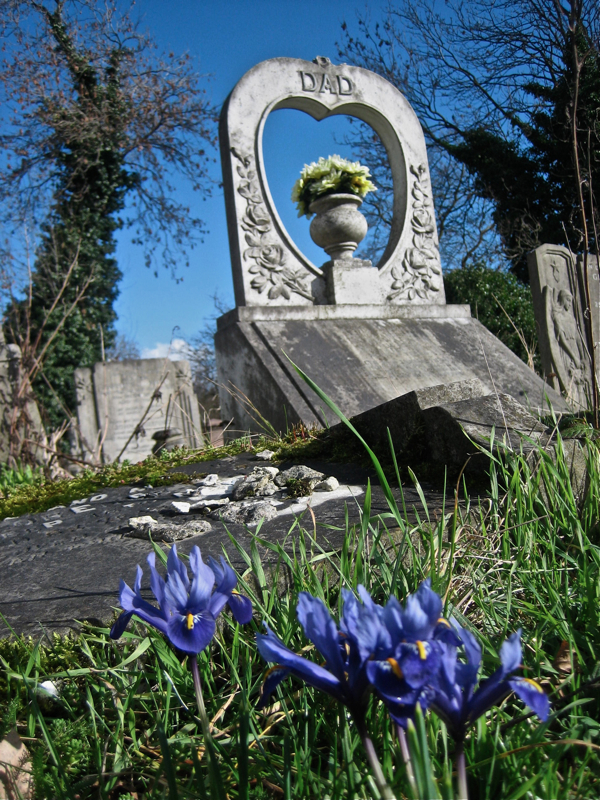
Dwarf Iris
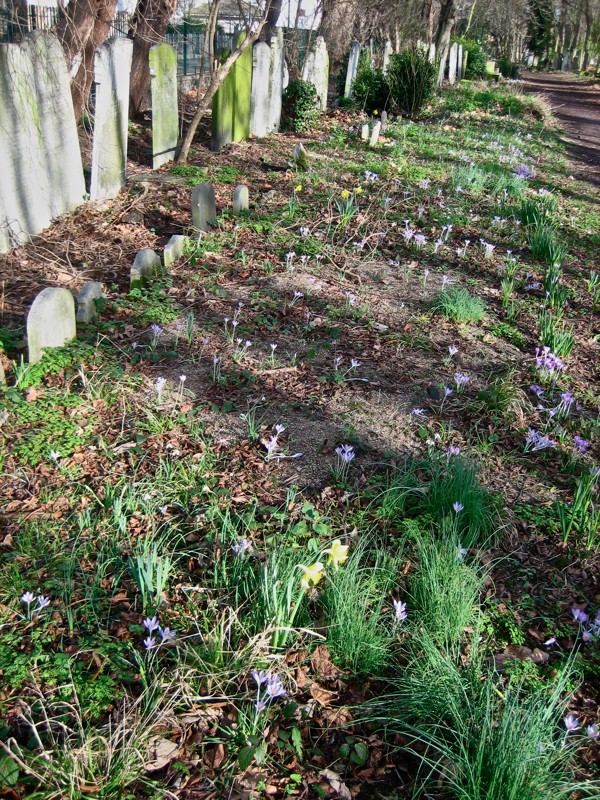
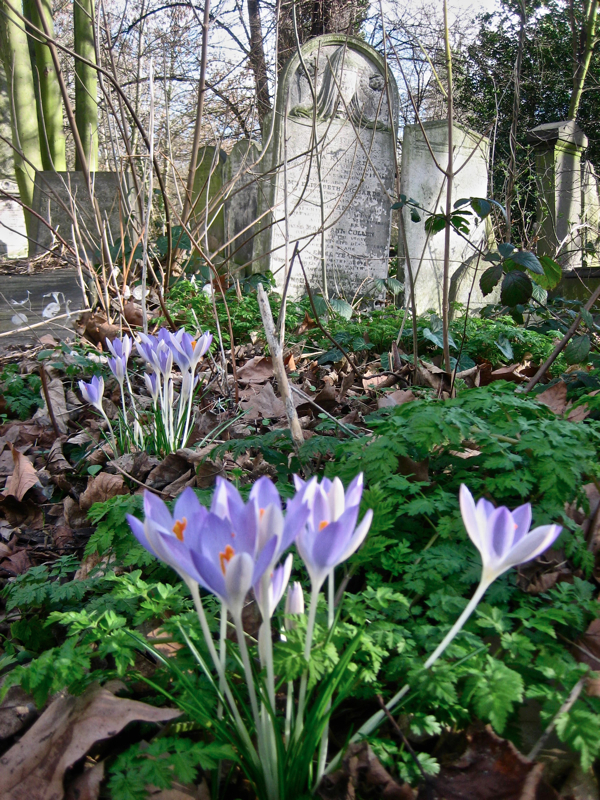
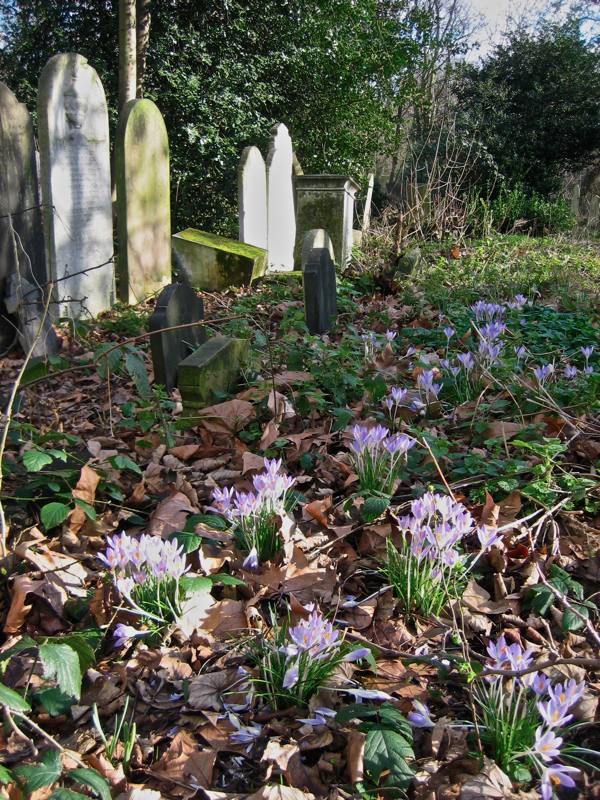
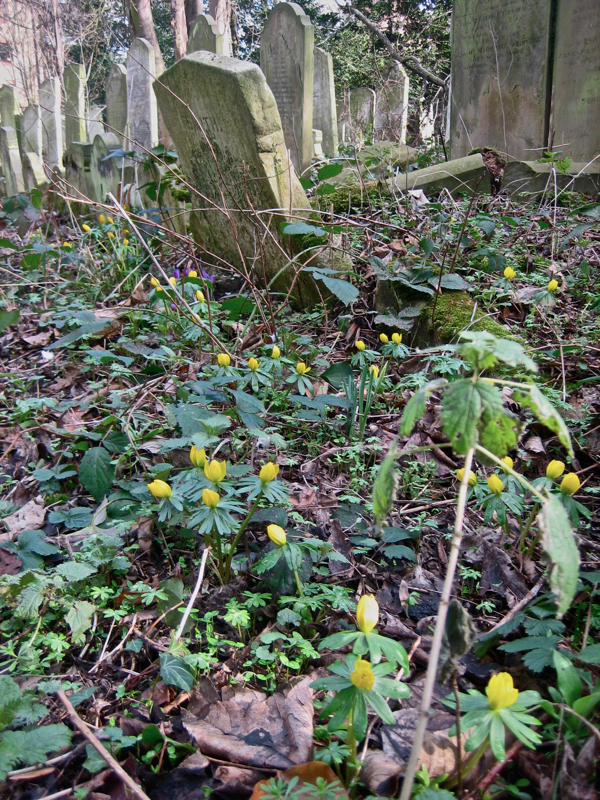
Winter Aconites

Daffodils will be in flower next week.
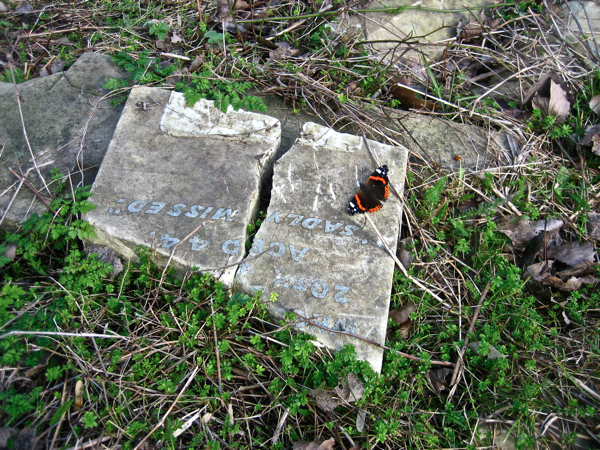
A single Red Admiral butterfly, out of season in February – “sadly missed”
Find out more at Friends of Tower Hamlets Cemetery Park
You may also like to read about
Libby Hall, Photographer
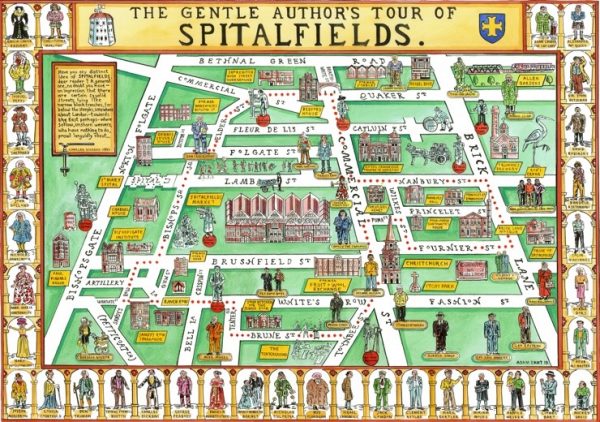
Click here to book for my tours from March to September
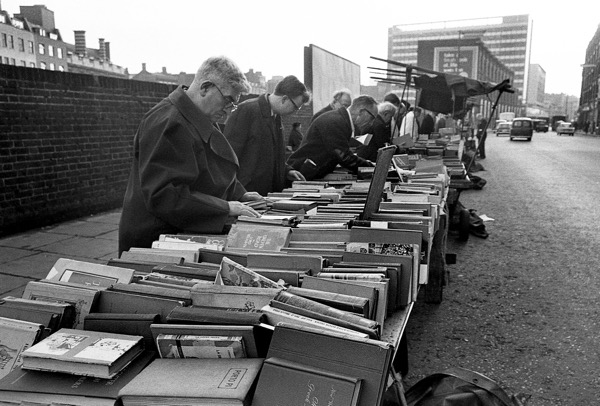
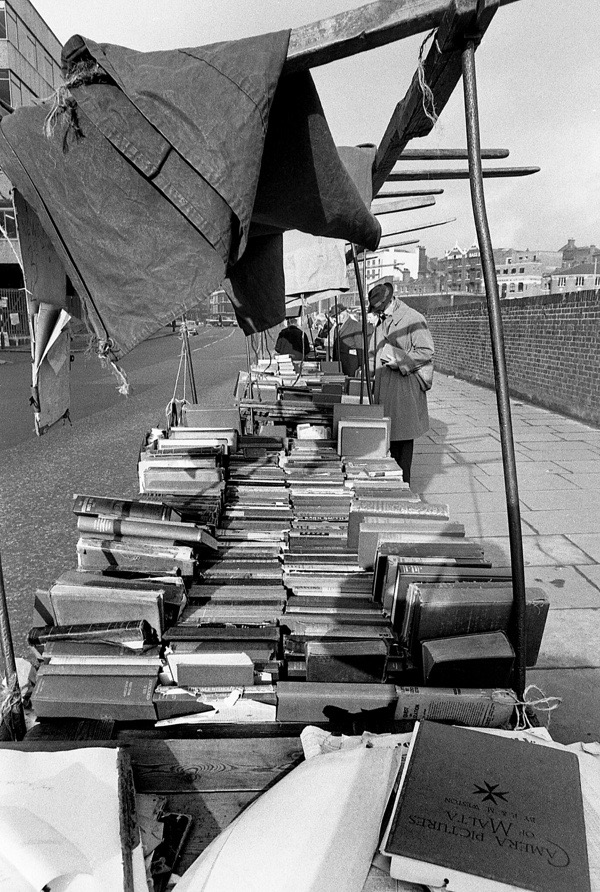
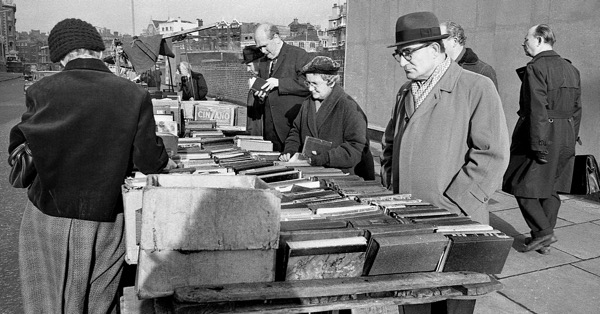
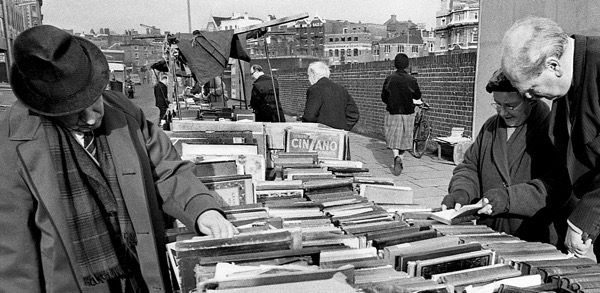
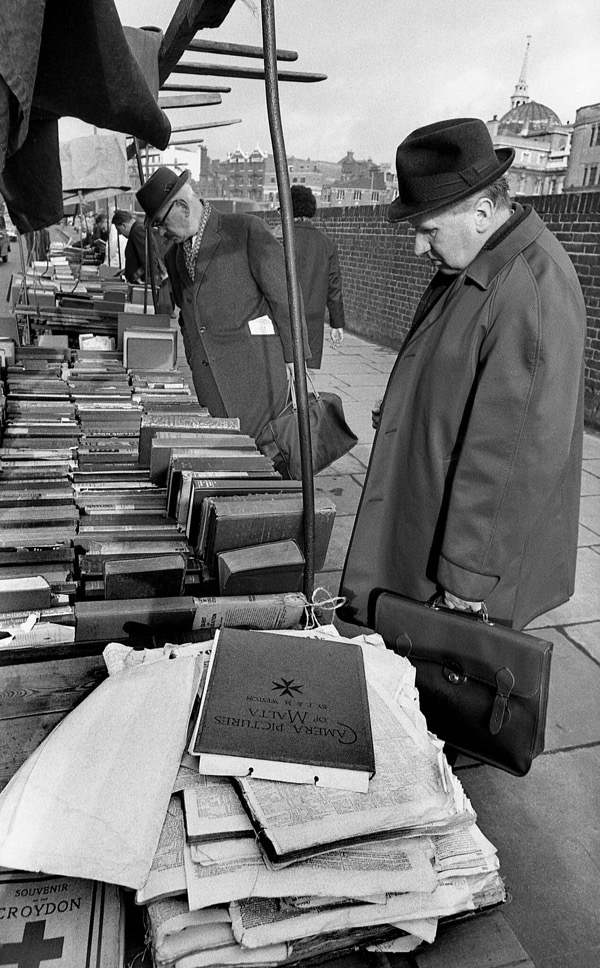
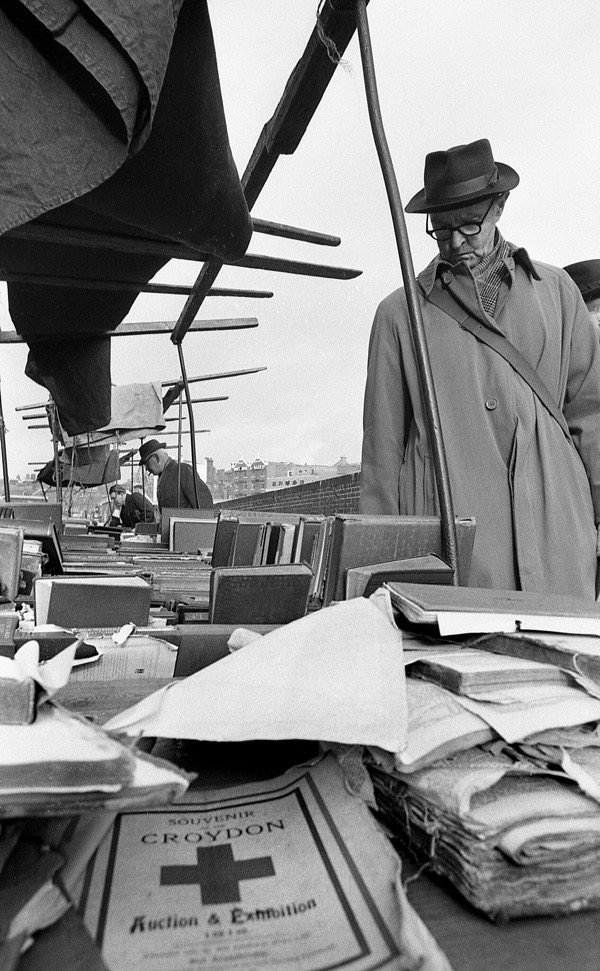
When Libby Hall (1941-2023) was a press photographer in the sixties, based in Clerkenwell and travelling back and forth from her home in Clapton, she occasionally photographed her immediate surroundings as a diversion from her daily work. Yet half a century later these almost inconsequential outtakes have transformed into a powerful evocation of a lost era.
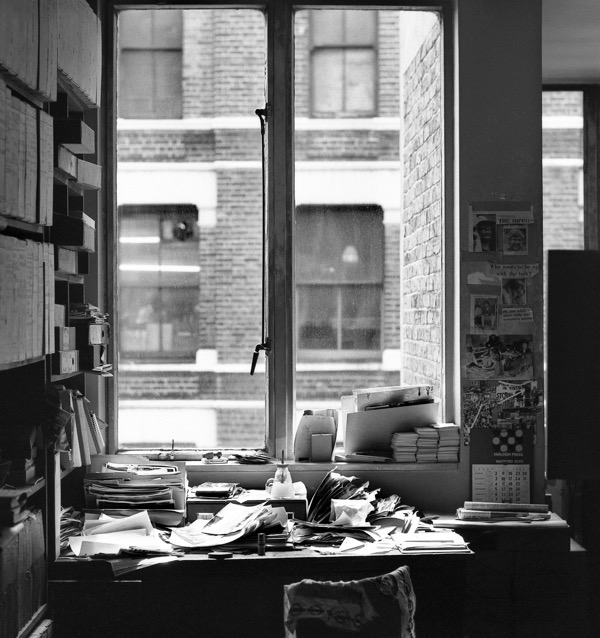
Libby Hall’s desk In Farringdon Rd
‘These photographs were mostly just lens tests, or moments of light that appealed to me on my journeys back and forth to work as a press photographer. The bookstalls were immediately across the street from the newspaper I worked for. I do miss those wonderful bookstalls even though they used up a considerable chunk of my then meagre wages. It was impossible to pass by without having a look – but then what treasures there were to be found!’ – Libby Hall
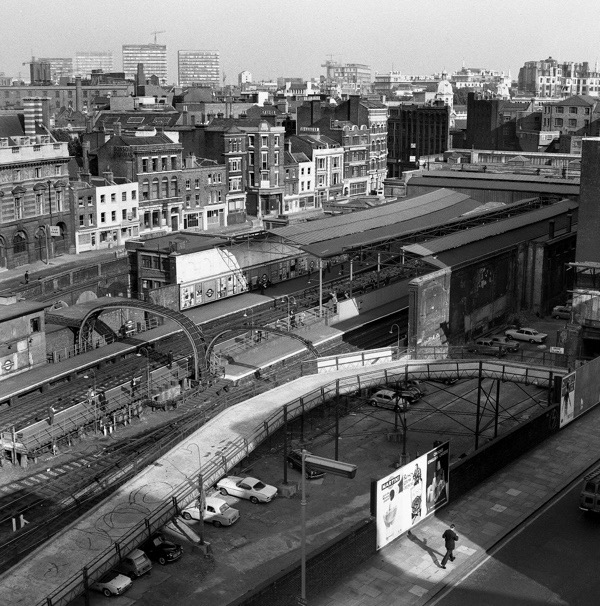
Looking down onto Farringdon Rd
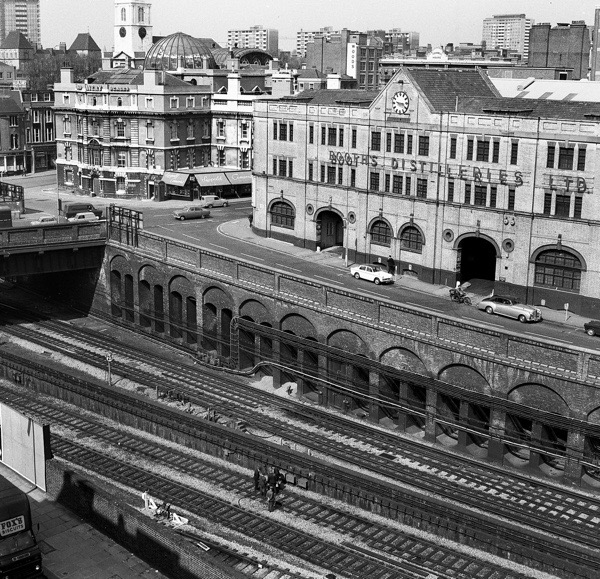
Looking across to Turnmills St, Clerkenwell Session House and Booth’s Gin Distillery
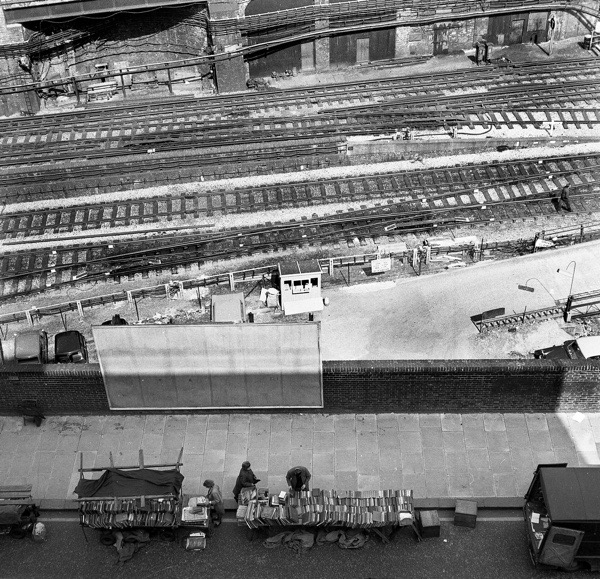
Bookstalls in Farringdon Rd
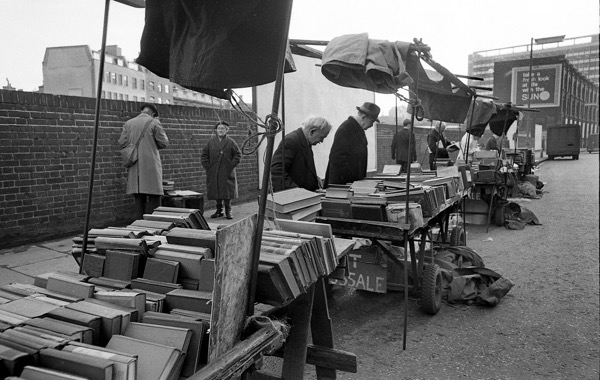
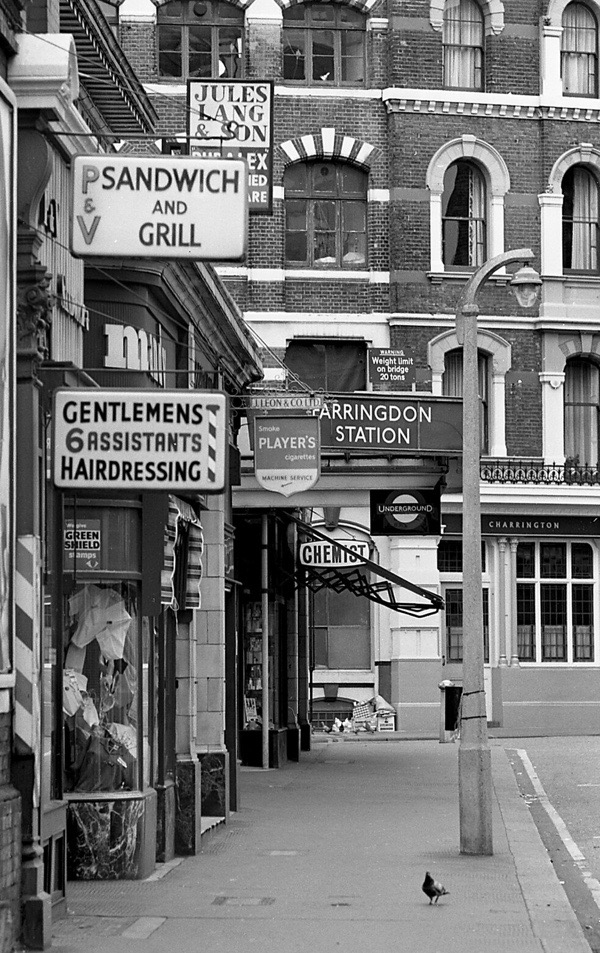
Farringdon Station
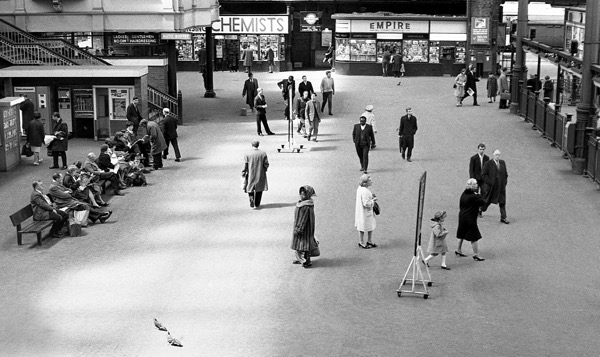
Liverpool St Station
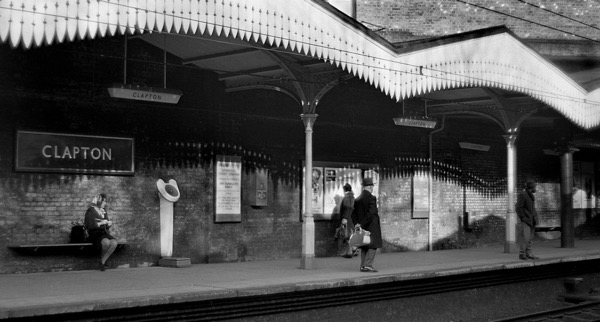
Clapton Station
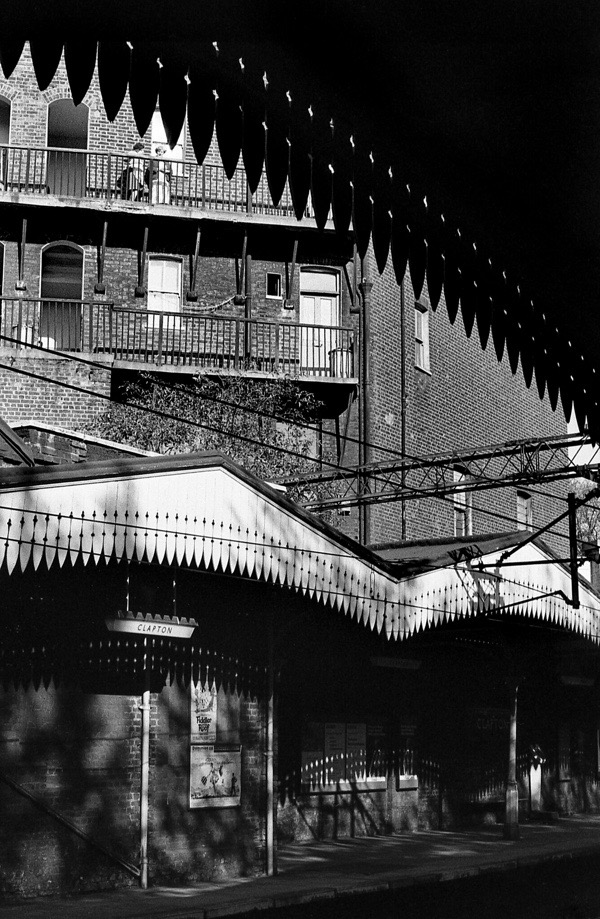
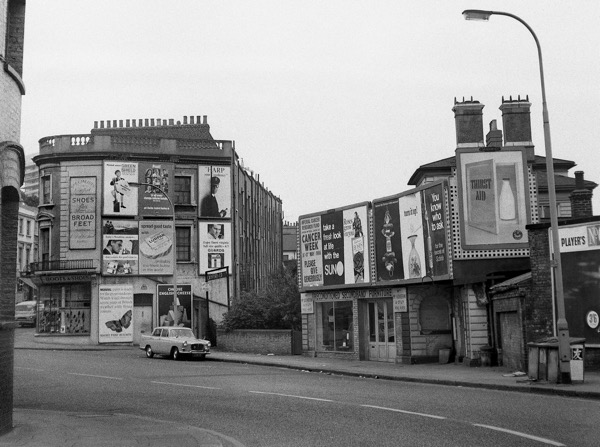
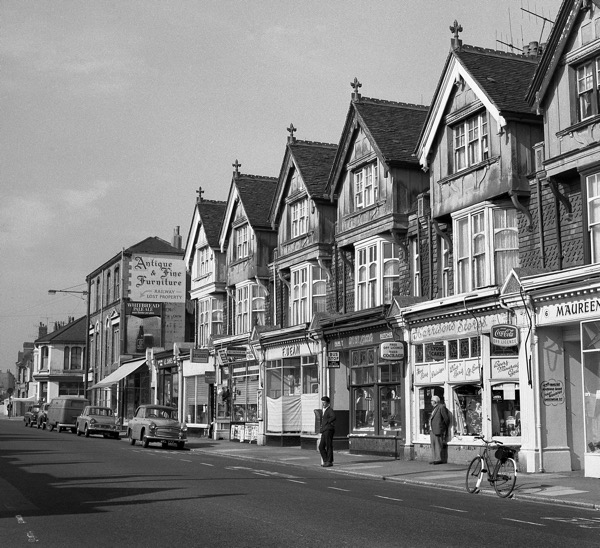
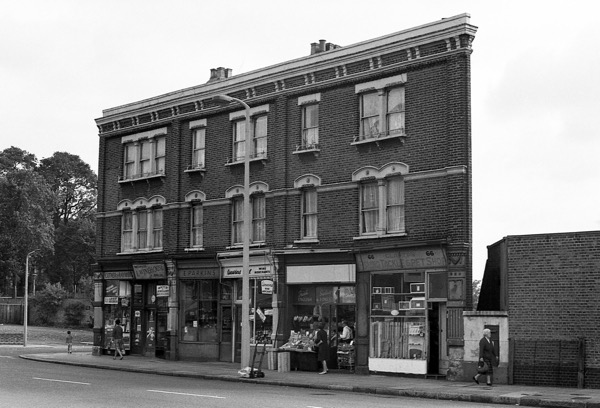
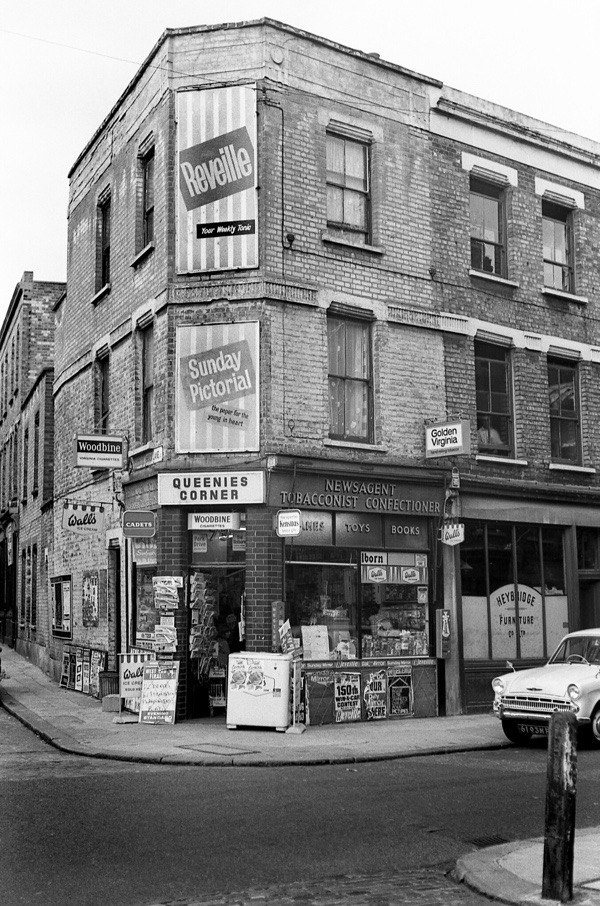
Photographs copyright © Estate of Libby Hall
You may also like to take a look at












