
So Long, Bobby Cummines OBE
Criminologist Dick Hobbs remembers Bobby Cummines who died on Thursday aged seventy-four
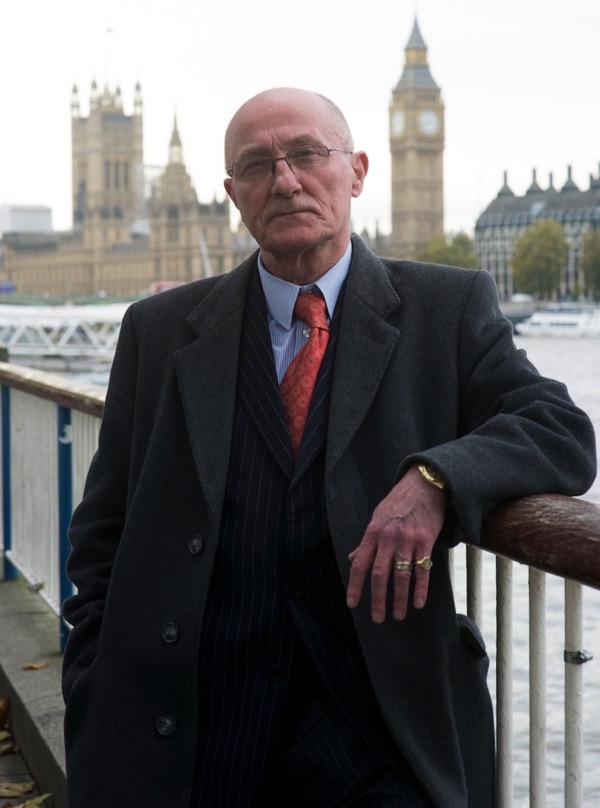
“The Queen told me I had a really colourful background”
Fifty years ago, working class London was a cluster of self-contained villages boasting their own distinct occupations, football teams, and skulduggery. Indeed, every neighbourhood had its own villains and theft, robbery and a little light extortion were their crimes of choice. On a rainy day on the South Bank, Contributing Photographer Sarah Ainslie & I met a friend of mine who was an enthusiastic and prominent player in that world.
By the late sixties, most of the big names of London’s underworld were buried deep in the prison system and any neighbourhood crime firm raising its head above the parapet was quickly crushed by a police force fearing attempts to fill the vacuum left by the Krays and the Richardsons. The days of the high profile self-congratulatory London gangster were over and anybody serious about a career in crime learnt the hard way to keep a low profile. Consequently, for a non-insider to hear about villains from another manor was most unusual. However, the name ‘Bobby Cummines’ was increasingly being mentioned in somewhat hushed tones in pub conversations across London.
Brought up as part of a big law-abiding family in King’s Cross, by the time Bobby Cummines left school at the age of sixteen he was already honing his reputation through a range of scams and schemes. But with a recently-acquired job in a shipping office and the prospect of a career in Customs & Excise ahead of him, Bobby’s life took a turn for the worse upon his first serious encounter with the police. “I was in a park with my mates when somebody let off a starting pistol. The police were called and began bullying these younger kids. They were aggressive and shouldn’t have been talking to these kids without an adult present, so I stood up to them.” The police left and returned soon after. “They pointed to a cut-throat razor that was on the ground and claimed it was mine that I had took it out of my pocket and threw it on the floor. It was a fit-up. My dad was a straight-goer and thought the police were like Dixon of Dock Green. He said the police would never plant evidence. He told me to plead guilty and that I’d get a fine and it’ll be forgotten about in a few years.”
Bobby did as he was told and his dad paid the ten shilling fine. However, Bobby’s bosses at the shipping office found out about the case and sacked him. “I was gutted, I thought, if you want me to be bad, ‘I’ll show you how bad I can be.'” Within a year, he was in the Old Bailey charged with possession of a shotgun and armed robbery. While he waited for his case to come up, he met the Kray Twins who were about to be tried for murder. The twins were sentenced to life imprisonment and Bobby was sent to a Detention Centre for the possession of a sawn off shotgun. “It was supposed to be a short sharp shock, but it was just violence practised against vulnerable kids. I came out of there tougher and angrier than ever.”
Bobby became a committed and violent professional criminal. “We used to give local kids a few bob to chuck a brick through the window of some business. They would claim on the insurance, but if they made three claims their premium would go up. So after two bricks we would move in and for a few quid no more bricks and no upping of the premium.” Bobby and his crew were soon “minding” a wide range of businesses in a territory “that stretched from Highbury Corner to the Archway, across to Finsbury Park, and the edge of Caledonian Rd.” But this territory was fiercely contested with other groups of violent predators, and Bobby led a tight-knit group of co-offenders through several years of violent confrontation. At five foot six inches tall, Bobby learnt early on that he had to be more violent than the opposition, and his weapon of choice was a sawn-off shotgun. “When people ask why I used guns, I always tell them I was sick of getting my nice suits messed up. Anyway guns save time.”
Quickly, Bobby became a highly dangerous offender prepared to use violence to obtain money. However, he stood trial for murder when a robbery went wrong and a man that he tied up choked to death. Bobby was found not guilty of murder, but served five years of a seven and a half year sentence for manslaughter. “Over the years that unnecessary death has haunted me.”
On his release ,Bobby continued in his chosen career, showing considerable ability as an organiser, and becoming deadly serious about the crime business. “I made sure that there was never any photos of us floating about, and I didn’t drink, I always had bitter lemon. I needed to stay sharp.” But while he eschewed alcohol, Bobby did develop a penchant for armed robbery. At this time, bandits were pillaging large bundles of cash from banks, building societies and security vans, and Bobby and his crew were particularly successful.
Inevitably, Bobby was arrested by armed police and sentenced to twelve years in prison – “In the end it was almost a relief. I’ve done some horrendous things – extreme violence – I never deny that. I deserved every day I got in prison because it was lunacy. If I had carried on, I would either have been shot dead by the police or innocent members of the public could have been shot.”
In prison, he enhanced an already formidable reputation for violence and confrontation, and at one time held the governor of a maximum security prison as a hostage. “Well, they said that but he was on his rounds and I knew they was taking prisoners down the wing and giving out beatings. So I pulled him about it and he screamed that he was being taken hostage.” This incident added considerably to his reputation.
In Parkhurst Prison, Bobby negotiated a truce between Reggie Kray and Charlie Richardson in order to prevent serious violence between members of the two gangs who had been imprisoned over a decade earlier. He achieved this by carrying the blade from a pair of garden shears up his sleeve. “Everybody was walking around tooled up. It was a brutal place, one of my friends was killed over an onion. There was another bloke who had murdered his child as he felt the world was too cruel and nasty for his beautiful son to live in. Others reckoned they were being visited by angels. We had IRA, UDA, allsorts, Colonel Gaddafi’s top man in the Libyan army. The ‘p’ in prison stands for paranoia. Some of the people in there are pathetic. You have 50/60 year old men doing a ten stretch strutting about in boxer shorts and trainers trying to look nineteen, talking about jobs they are going to do when they get out. I’ve never understood why they do that. I never saw a lot of rehabilitation going on”.
Charlie Richardson had a huge impact on Bobby. “He told me I had a good brain but if I carried on I would end up dead or on a life sentence. He told me to get into education – it would earn me money without hurting anyone. Charlie got me reading. Education was my liberation. Prison brutalises people. When you’re inside, you don’t serve a sentence—you survive a sentence. I’m grateful that education humanised me.” Bobby successfully lobbied for a transfer to Maidstone Prison which had an education unit. Here he became education orderly, and with the support of his Probation Officer and a sympathetic Prison Governor, enrolled on an Open University course and started to think about the future.
On leaving prison, Bobby at first struggled to make a living, finding potential employers reluctant to take on an ex-con. “To live an honest life, I had to be dishonest about my past.” He persevered, taking a £100-a-week job stacking shelves and dealing with hostage negotiations and suicide management as a volunteer with the Kent Probation Service. Bobby went on to hold responsible positions in various companies and gained a degree in Housing from Greenwich University.
However, his initial struggles to gain employment inspired Bobby to join Mark Leach, the founder of Unlock, the National Association of Reformed Offenders, becoming CEO when Mark stood down. Initially operating from Bobby’s garage, and boasting Sir Stephen Tumim, a former judge and Her Majesty’s Chief Inspector of Prisons as its founding President, Unlock became a powerful force in the rehabilitation of offenders, and when Bobby teamed up with the ex-Chief Inspector of Prisons Sir David Ramsbottom who succeeded Tumin, the pair provided an effective authoritative political voice. “I became media savvy. Few people seemed to know what they was talking about when it came to the needs of somebody coming out of prison. How to get a job, insurance, a bank account. Employers were saying that they couldn’t employ ex offenders as staff were paid through the BACS system and former offenders didn’t have bank accounts.”
Unlock provided practical support and advice and developed a particular expertise in tackling the financial exclusion of ex-offenders. Bobby is a very persuasive man, and gradually the banks and insurance industry – sectors not renowned for their social awareness – came on board, and the lives of some of the most excluded were materially changed for the better, largely as the result of the energy and intellect of an ex-offender who left school at the age of sixteen. The one time violent dynamo of pre-gentrified seventies Islington had become an eloquent advocate of social reform.
Bobby was invited to sit upon numerous government committees and policy reviews. For instance, he was a member of the Home Affairs Select Committee inquiry into the Rehabilitation of Offenders’ Act, becoming an expert witness to the Home Affairs Select Committee on prisoner education, and a specialist adviser in the 2004 public inquiry into murder of Zahid Mubarek in Feltham Young Offenders’ Institution. He also served on the board of HM Inspector of Prisons and advised the Irish government on their Rehabilitation of Offenders Act. In 2006, Bobby travelled to South Africa on a fact-finding mission to look at how their prisons were run, as part of a trip sponsored by a firm of solicitors.
Bobby liked to speak to groups of young people in schools and colleges and, at these events, this ex-violent criminal does not pull his punches. “Tools (weapons) are for fools, drugs are for mugs,” he assured them. A regular speaker at conferences and events, when Coutts Bank awarded £10,000 to Unlock, Bobby revealed, “one of the directors said he was pleased to see me in his bank without a crash helmet and a gun.”
In 2011, Unlock won The Guardian’s Charity of the Year Award and the same year Bobby received the OBE. “The Queen told me I had a really colourful background and she was pleased to award me the OBE. That’s the nicest way I can think of someone telling me I’ve got a lot of form.” From working class King’s Cross to Buckingham Palace via a solitary cell had been quite a journey. Bobby had proved to be a more successful campaigner, fund raiser and government advisor than he ever was a criminal.
Just before we parted, I asked Bobby if he had time for a drink, but he declined by explaining, “I need to be back, I agreed to meet up with a young boy who is going off the rails a bit. I know what he is doing, what he is up to. I told him bring his little firm with him. I will sort them out.” I have no doubt he did just that.
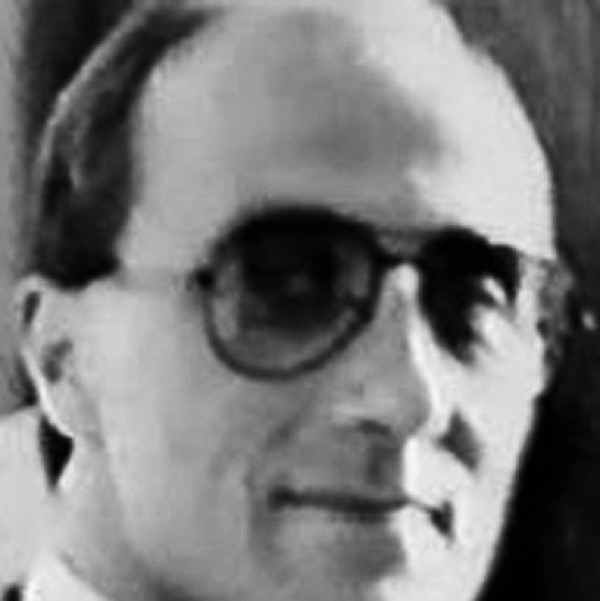
Bobby Cummines in the seventies – “When I was well at it”
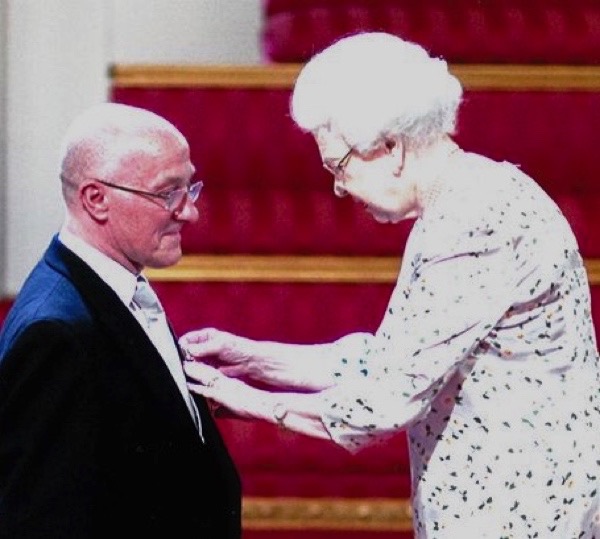
Bobby receiving the OBE in 2011 – “She was pleased to award me the OBE”
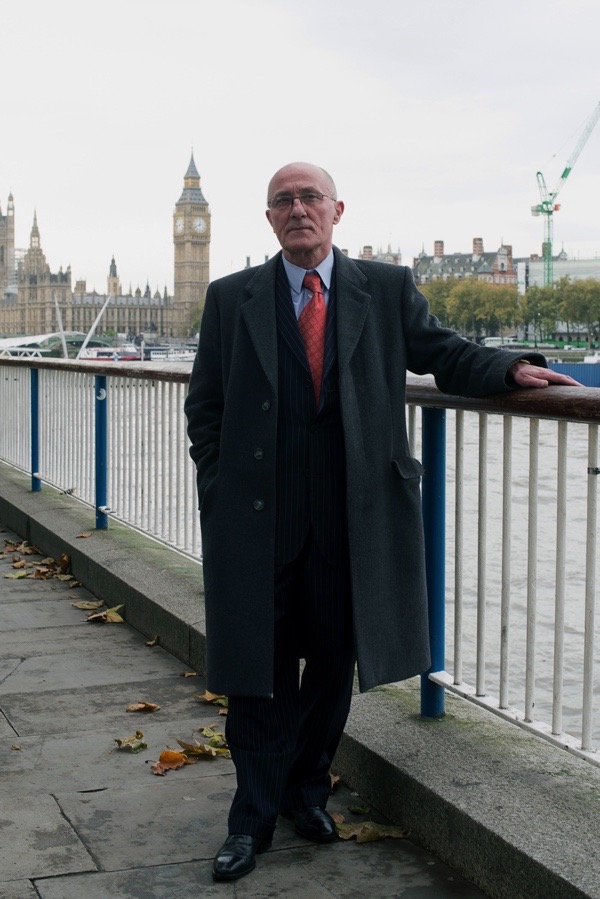
Bobby Cummines OBE
Portraits copyright © Sarah Ainslie
You may also like to read about
The Bakers Of Widegate St
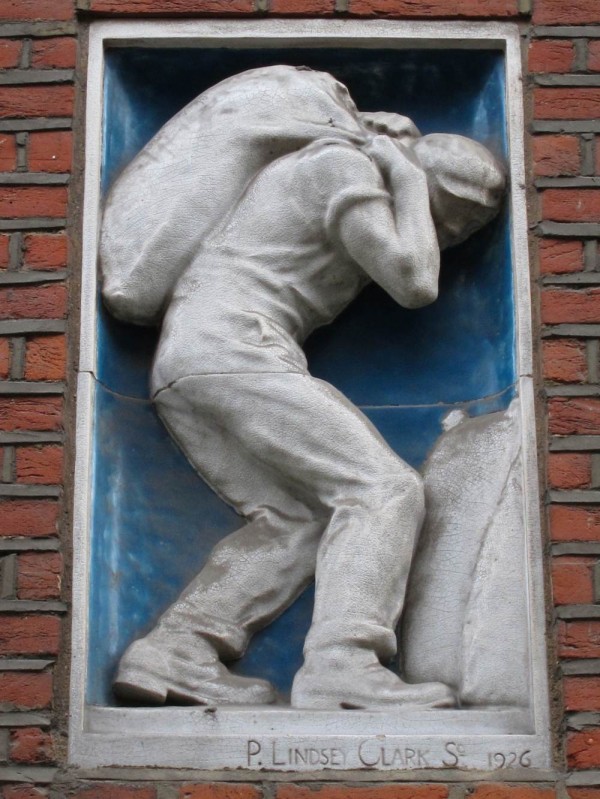
Next time you pass through Widegate St, walking from Bishopsgate towards Artillery Passage on your way to Spitalfields, lift up your eyes to see the four splendid sculptures of bakers by Philip Lindsey Clark (1889 – 1977) upon the former premises of Nordheim Model Bakery at numbers twelve and thirteen. Pause to take in the subtle proportions of this appealing yet modest building of 1926 by George Val Myers, the architect of Broadcasting House.
Born in Brixton, son of Scots architectural sculptor Robert Lindsey Clark, Philip trained in his father’s studio in Cheltenham and then returned to London to study at the City & Guilds School in Kennington. Enlisted in 1914, he was severely wounded in action and received a Distinguished Service Order for conspicuous gallantry. Then, after completing his training at the Royal Academy Schools, he designed a number of war memorials including those in Southwark and in Kelvingrove Park, Glasgow.
The form of these ceramic reliefs of bakers – with their white glaze and sparing use of blue as a background – recalls religious sculpture, especially stations of the cross, and there is something deeply engaging about such handsome, austerely-modelled figures with their self-absorbed presence, preoccupied by their work. The dignity of labour and the poetic narrative of transformation in the baking of bread is made tangible by these finely judged sculptures. My own favourite is the figure of the baker with his tray of loaves upon his shoulder in triumph, a satisfaction which anyone who makes anything will recognise, borne of the work, skill and application that is entailed in creation.
These reliefs were fired by Carters of Poole, the company that became Poole Pottery, notable for their luminous white glazes, elegant sculptural forms and spare decoration using clear natural colours. They created many of the tiles for the London Underground and their relief tiles from the 1930s can still be seen on Bethnal Green Station.
Philip Lindsey Clark’s sculptures are those of a man who grew up in the artists’ studio, yet witnessed the carnage of First World War at first hand, carrying on fighting for two days even with a piece of shrapnel buried in his head, and then turned his talents to memorialise those of his generation that were gone. After that, it is no wonder that he saw the sublime in the commonplace activity of bakers yet, from 1930 onwards, his sculpture was exclusively of religious subjects. Eventually Lindsey Clark entered a Carmelite order, leaving London and retiring to the West Country where he lived until the age of eighty-eight.
So take a moment next time you pass through Widegate St – named after the wide gate leading to the ‘spital fields that once were there – and contemplate the sculptures by Philip Lindsey Clark, embodying his vision of the holiness of bakers.
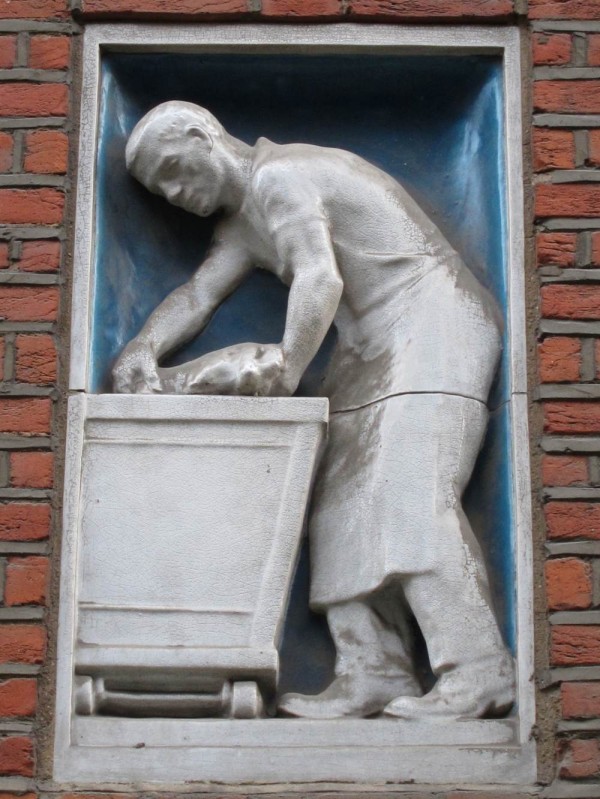
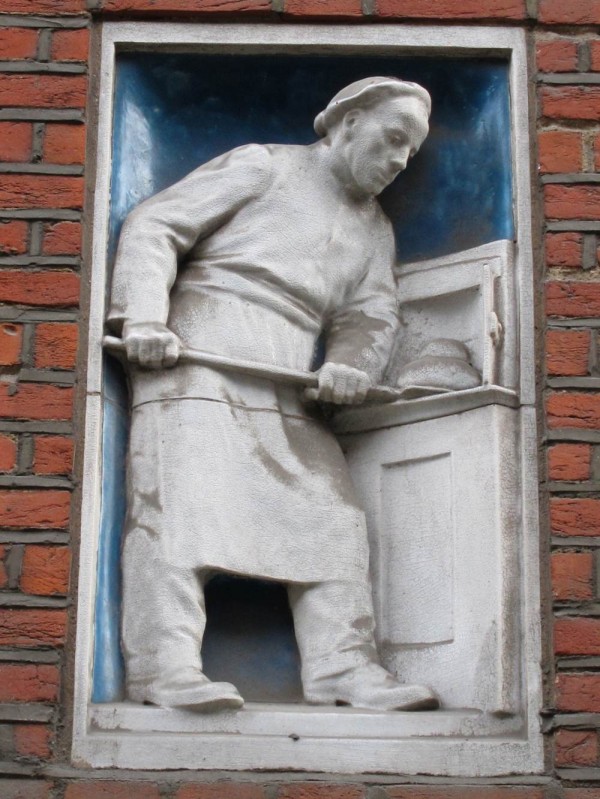
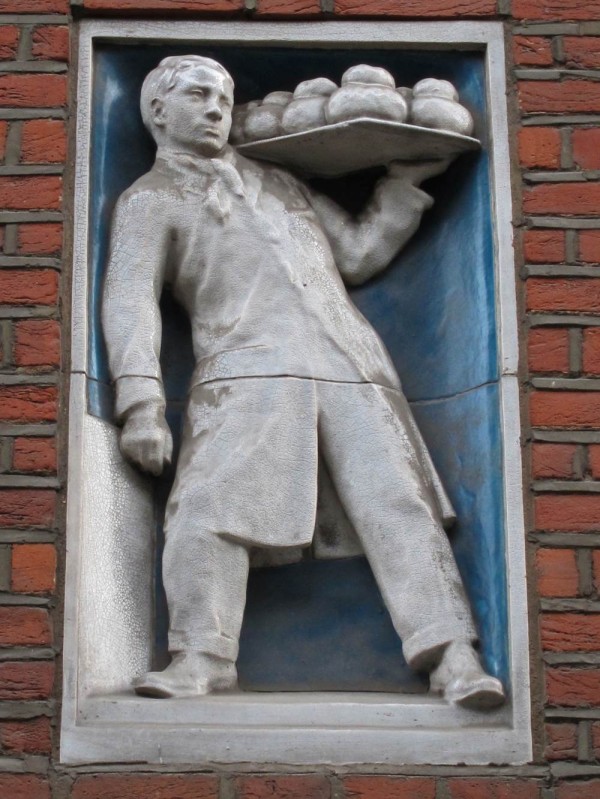
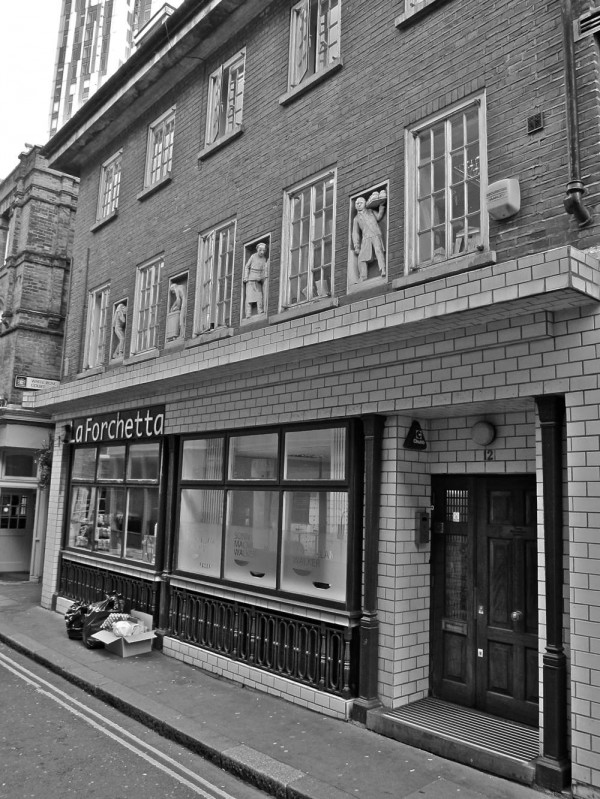
George Val Myer’s former Nordheim Model Bakery with sculptures by Philip Lindsey Clark
You may also like to read about
A Night in the Bakery at St John
Dorothy Annan’s Murals in Farringdon St
Barry Weston’s Blues Dances
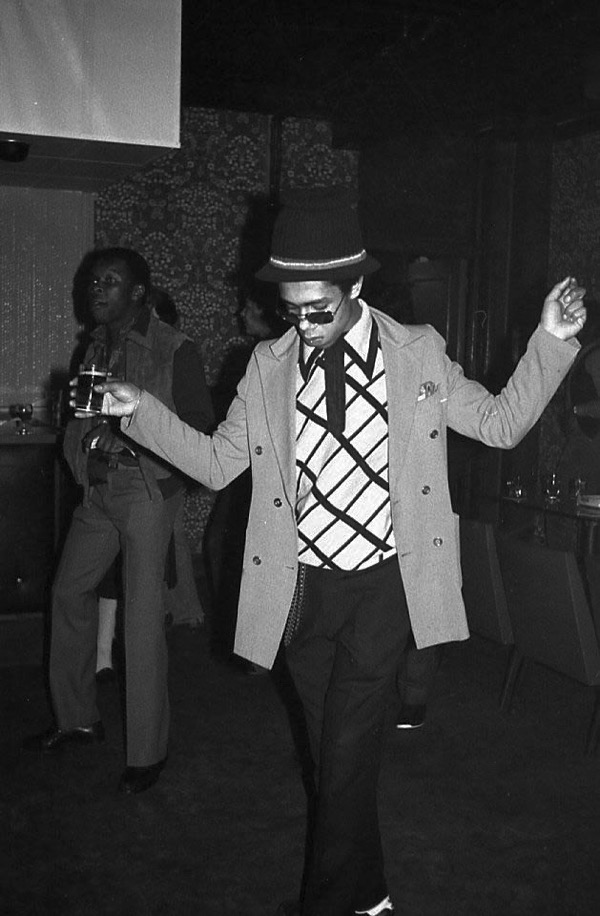
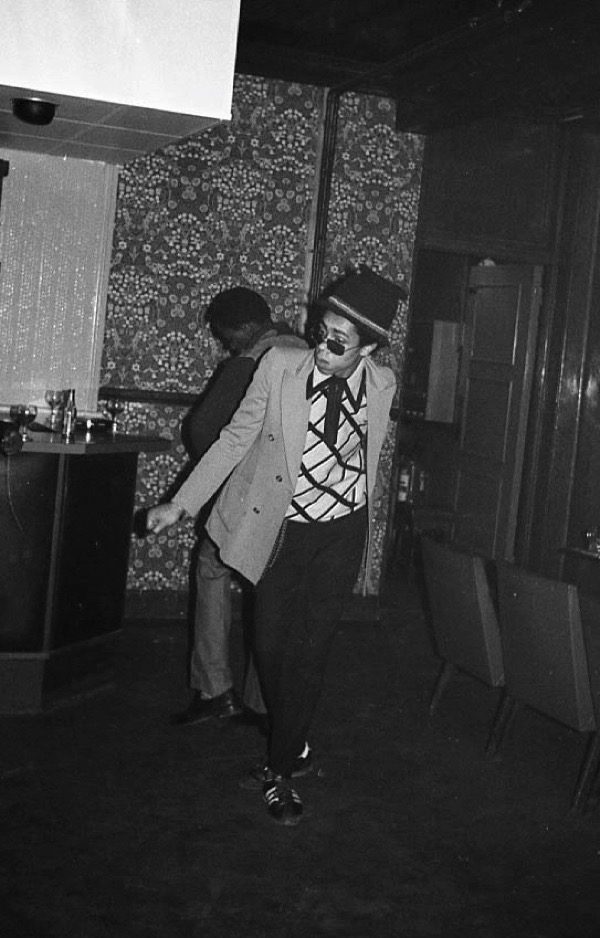
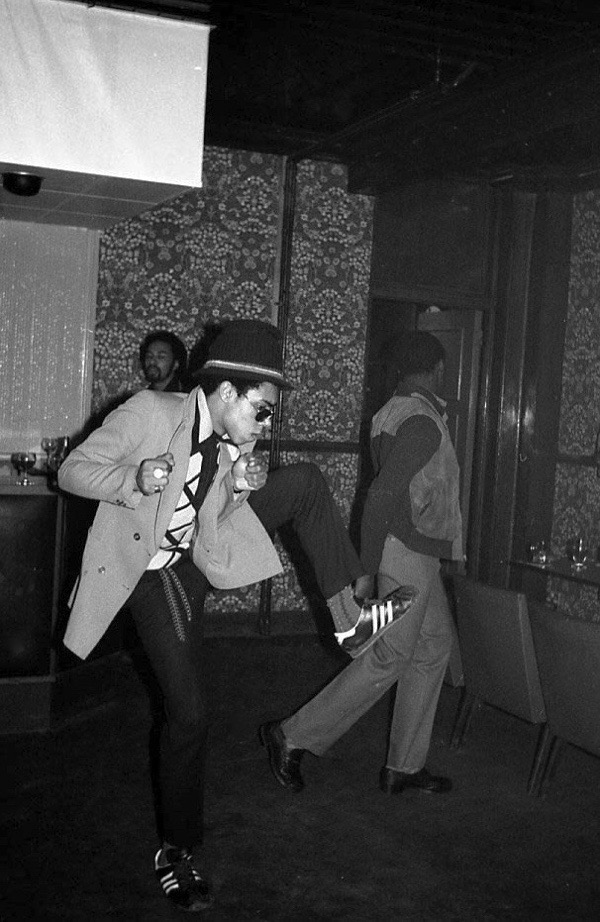
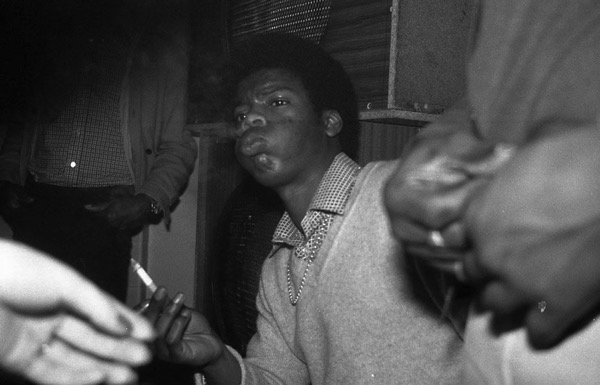
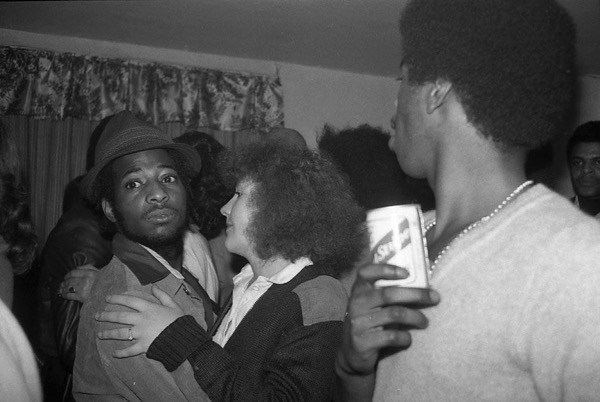
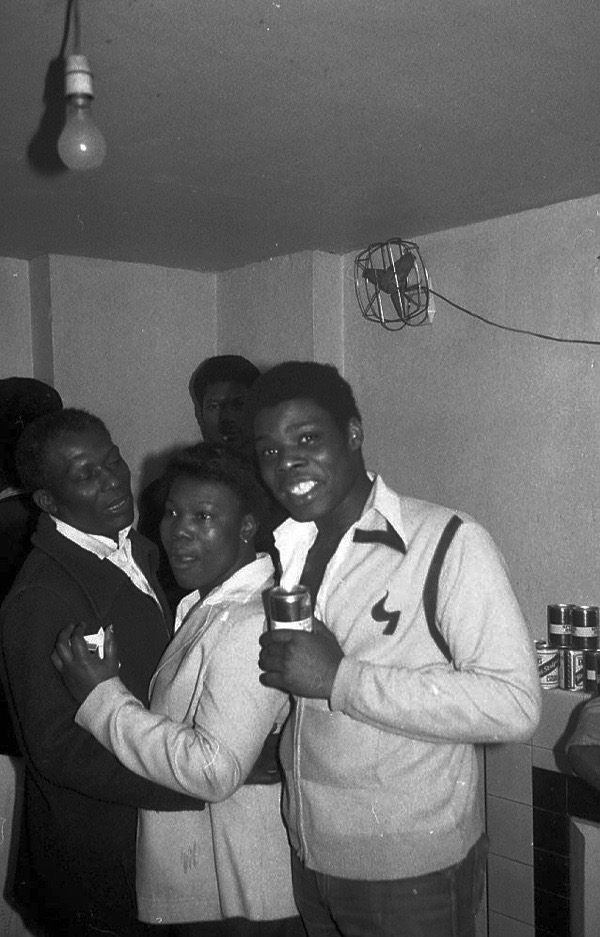
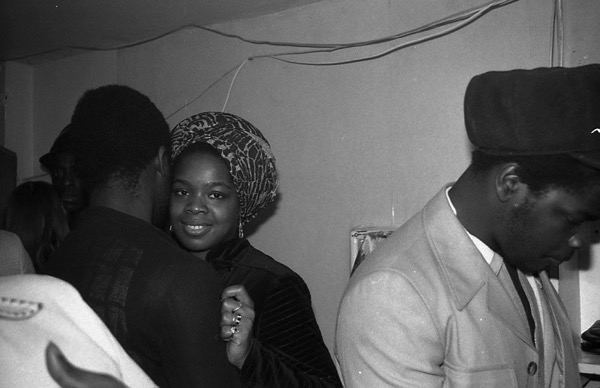
Photographer Barry Weston introduces his exuberant pictures of the Blues Dances held in Greenwich and Woolwich in the eighties, published for the first time here today.
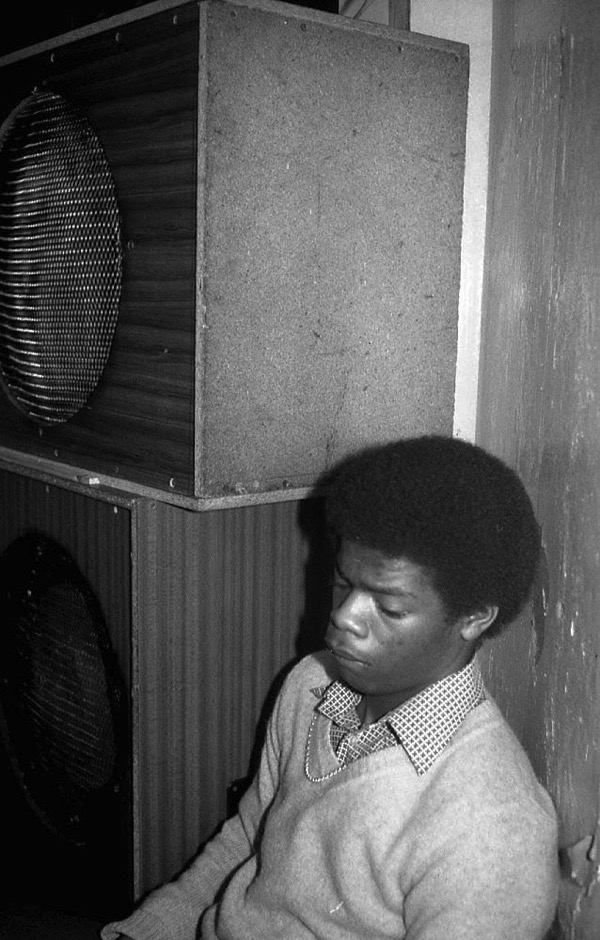
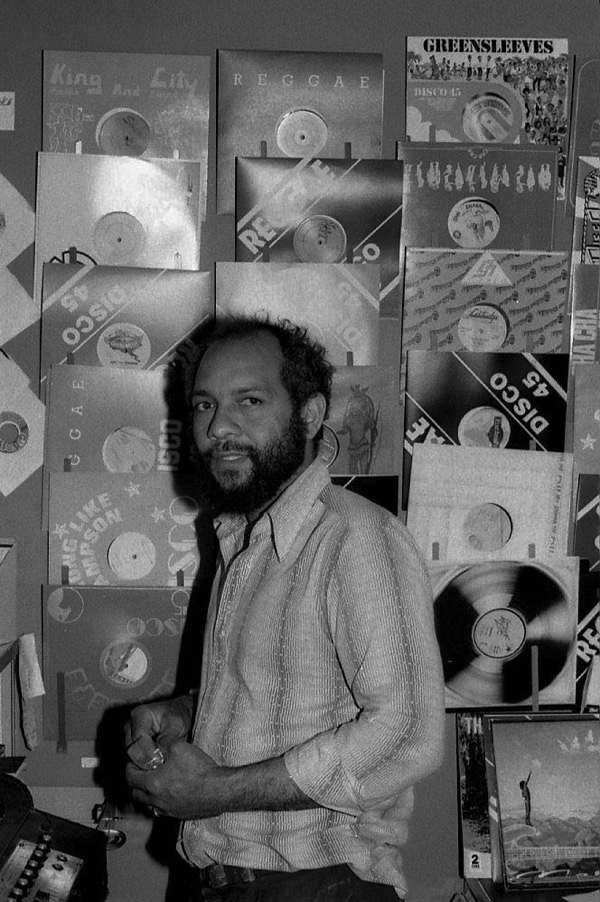
‘My route into the Blues Dances began in the mid-seventies when I ventured into a newly opened reggae record shop by Plumstead station. The shop was tiny, an end-of-row one-storey triangle barely six foot at its widest.
I was looking for the album King Tubby Meets The Upsetter at Grass Roots of Dub which I had read a review of and, although the owner, Noldie, did not have a copy, he asked if I was in a hurry and then played me some of the latest tunes he had. After selecting a small stack of singles I settled up and Noldie added a final 45 to the bag with the words ‘I think you’ll like this one.’ Sure enough Burn Babylon by Sylford Walker was the best of the bunch and with that I was hooked, returning every free day I had for the rest of the decade.
Through Noldie I met Lloyd ‘Junior’ McQueen and we started to hang out together at the Lord Howick pub in Woolwich. Noldie later arranged a slot DJ-ing at the Howick. Friday to Sunday, with me playing the Friday night and opening the other two nights from early ’78 to late ’79.
In ‘79 Junior started playing the Blues Dance at Guilford Grove in Greenwich. The Blues was run by Ghent & Mary in the basement of their large family house. At that time Blues Dances gave the Black British community a place to hang out and dance to reggae, free from the hassle that so often happened in pubs and clubs at the time, particularly when the National Front was at its most active.
We would leave the Howick on a Saturday night and then start the Blues at around half eleven at night, the dance running through to the early hours when the buses started again. It was a running joke to play the Jah Stitch toast with the lyrics ‘milkman coming in the morning’ just as the electric float and the clinking bottles could be heard before the first hint of dawn.
Junior would play through the the night with support from his brother Danny. I would step up and play a short set to give them a break and a chance to have a plate of Mary’s delicious food. To this day nothing can compare to fried red mullet goatfish at three in the morning with a Red Stripe to wash it down.
In early 1980, after seven years of working, I applied to the London College of Printing Art Foundation course as a mature student. To add to my portfolio I borrowed an Olympus Trip 35, a decent point-and-shoot compact camera, to teach myself the basics of photography. I was also planning on moving across to South London, so wanted to capture what had been a large part of my life over the preceding years.
These photos were taken over three consecutive Saturdays, mostly at the Blues Dance at Guildford Grove. One film roll starts at the Howick with George Thompson at the decks. Some photos show the bus trip between the Howick and the Blues and other pictures were taken at Noldie’s second, far bigger, record shop in 1981.
Between the time the photos were taken in 1980 and 1981, there was the appalling tragedy of the New Cross Fire at a party just half a mile down the road from Guildford Grove. This was movingly documented in Steve McQueen’s three part TV program Uprising about the fire and its consequences. The roots of Black British music sprang from Blues Dances like these, once running in West Indian communities in many cities, which have now largely disappeared.’ – Barry Weston
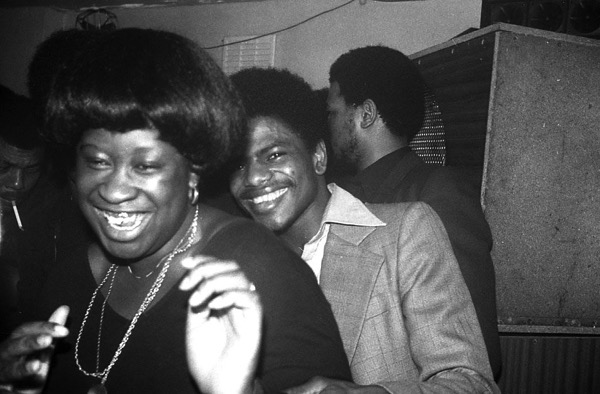
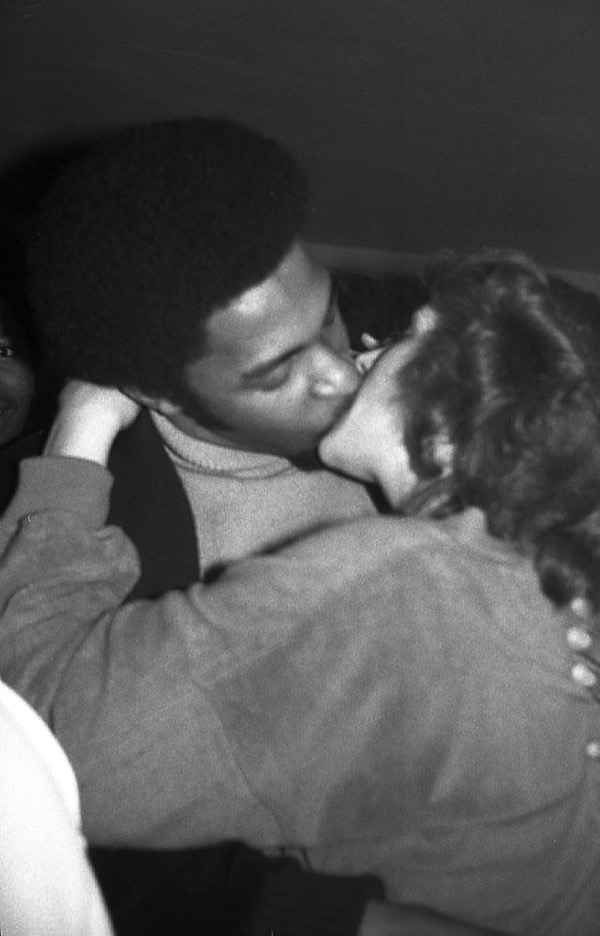
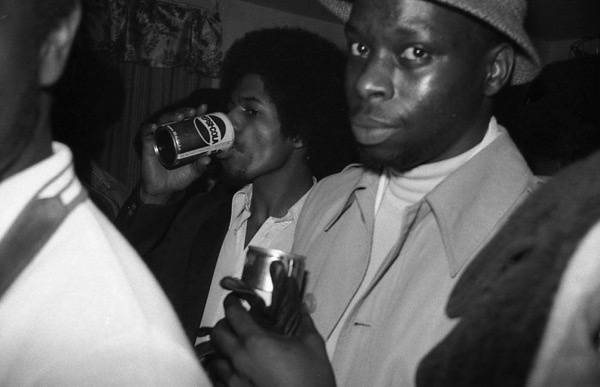
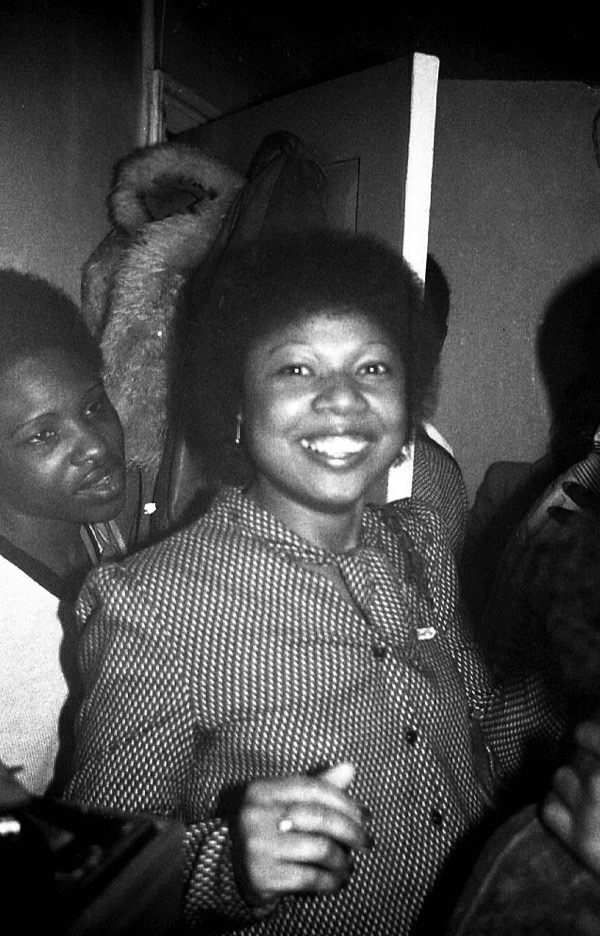
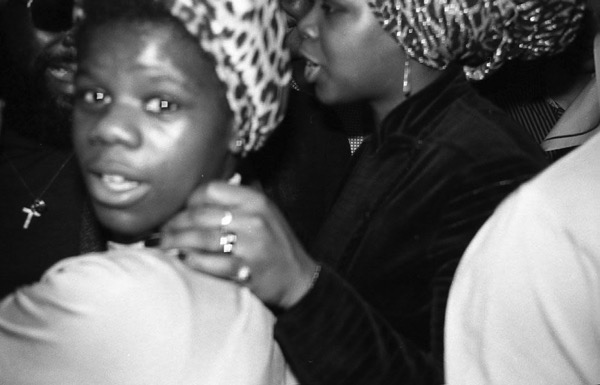
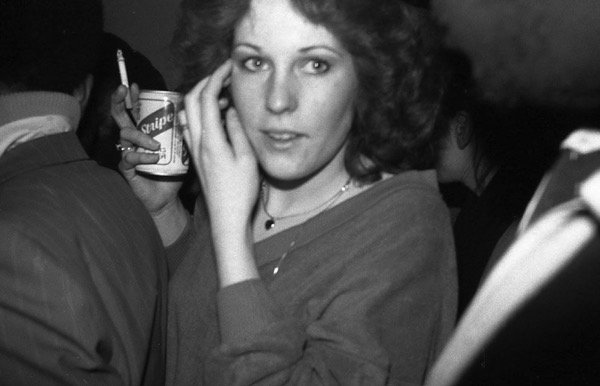
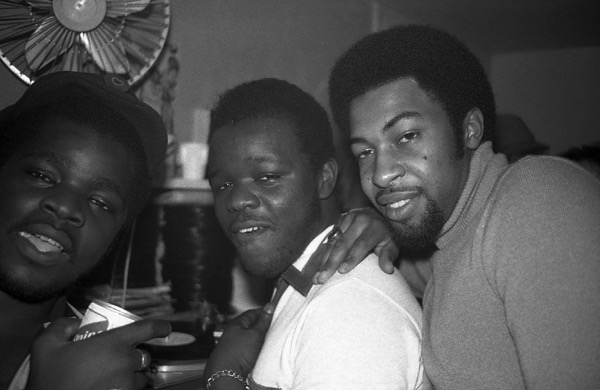
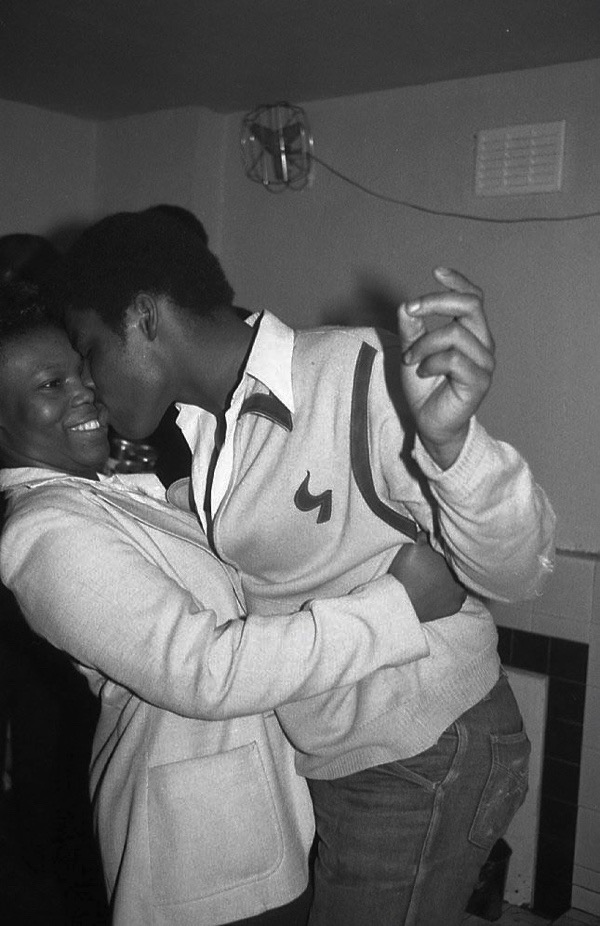
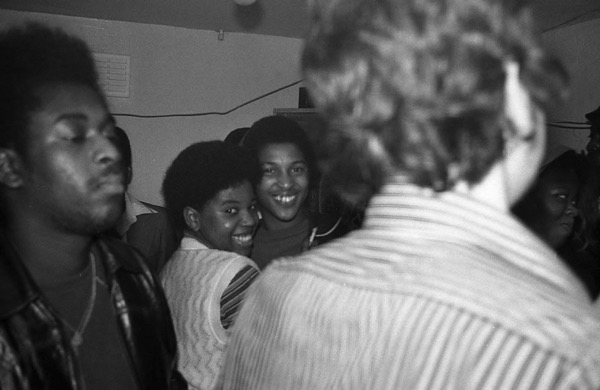
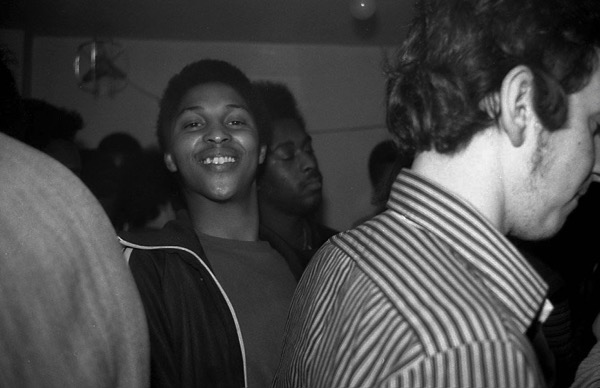
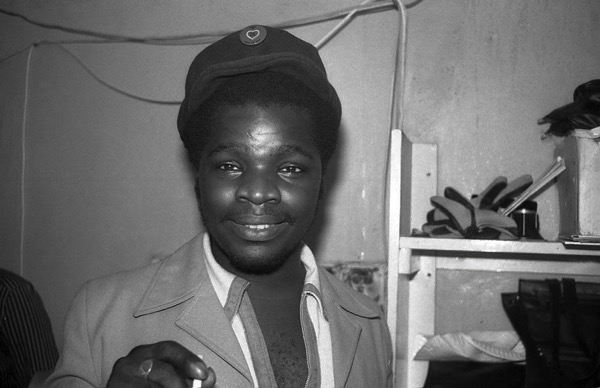
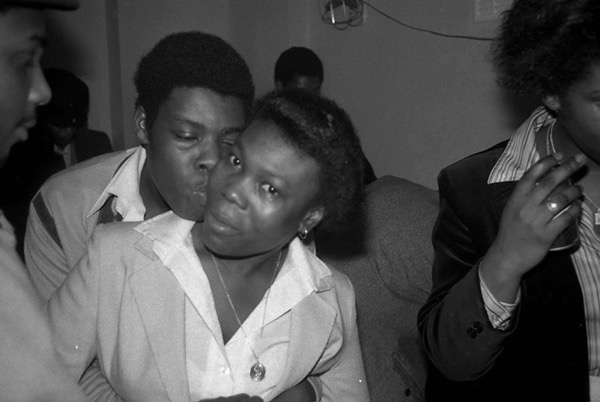
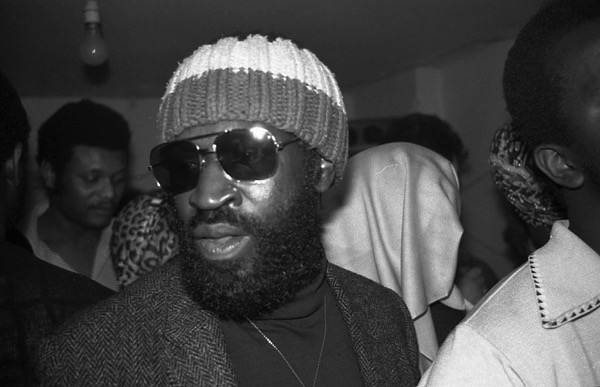
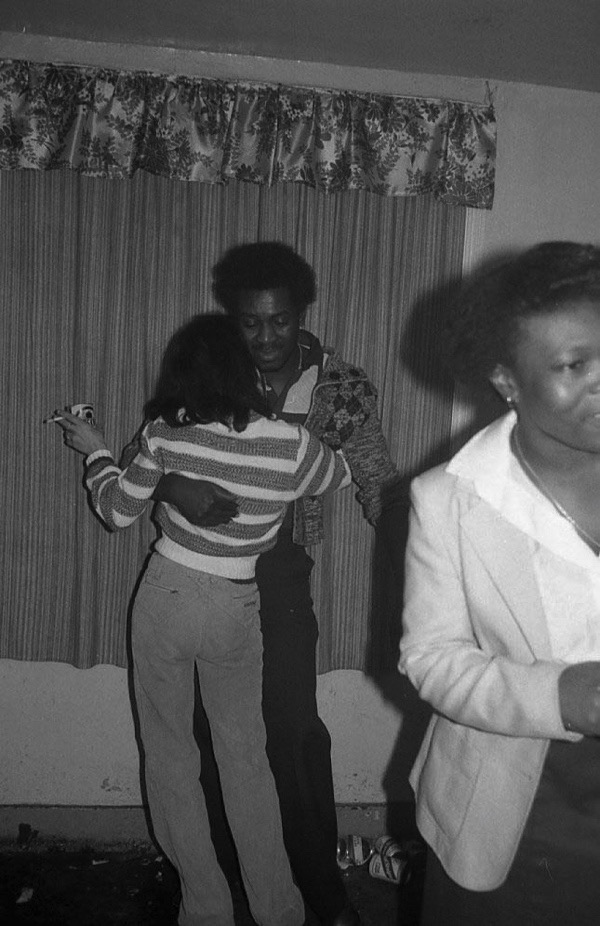
Photographs copyright © Barry Weston
A Door In Cornhill
JOIN ME FOR FOR A WALK THROUGH THE CITY OF LONDON THIS EASTER

The Bronte sisters visit their publisher in Cornhill, 1848
An ancient thoroughfare with a mythic past, Cornhill takes its name from one of the three former hills of the City of London – an incline barely perceptible today after centuries of human activity upon this site, building and razing, rearranging the land. This is a place does not declare its multilayered history – even though the Roman forum was here and the earliest site of Christian worship in England was here too, dating from 179 AD, and also the first coffee house was opened here by Pasqua Rosee in 1652, the Turk who introduced coffee to London. Yet a pair of carved mahogany doors, designed by the sculptor Walter Gilbert in 1939 at 32 Cornhill – opposite the old pump – bring episodes from this rich past alive in eight graceful tableaux.
Walter Gilbert (1871-1946) was a designer and craftsman who developed his visual style in the Arts & Crafts movement at the end of the nineteenth century and then applied it to a wide range of architectural commissions in the twentieth century, including the gates of Buckingham Palace, sculpture for the facade of Selfridges and some distinctive war memorials. In this instance, he modelled the reliefs in clay which were then translated into wood carvings by B.P Arnold at H. H. Martyn & Co Ltd of Cheltenham.
Gilbert’s elegant reliefs appeal to me for the laconic humour that observes the cool autocracy of King Lucius and the sullen obedience of his architects, and for the sense of human detail that emphasises W. M. Thackeray’s curls at his collar in the meeting with Anne and Charlotte Bronte at the offices of their publisher Smith, Elder & Co. In each instance, history is given depth by an awareness of social politics and the selection of telling detail. These eight panels take us on a journey from the early medieval world of omnipotent monarchy and religious penance through the days of exploitative clergy exerting controls on the people, to the rise of the tradesman and merchants who created the City we know today.
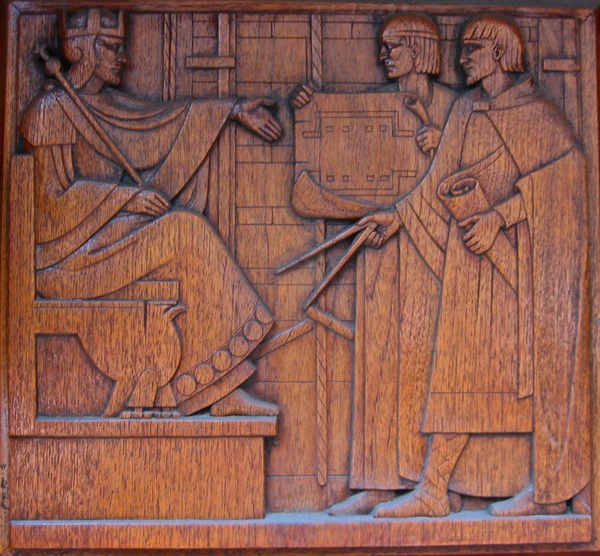
“St Peter’s Cornhill founded by King Lucius 179 AD to be an Archbishop’s see and chief church of his kingdom and so it endured for the space of four hundred years until the coming of Augustine the monk of Canterbury.”

“Eleanor, Duchess of Gloucester, did penance walking barefoot to St Michael’s Church from Queen Hithe, 1441.”

“Cornhill was an ancient soke of the Bishop of London who had the Seigneurial oven in which all tenants were obliged to bake their bread and pay furnage or baking dues.”
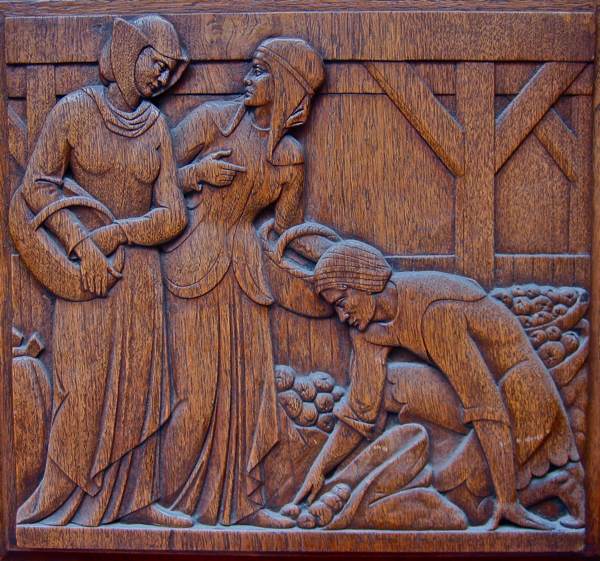
“Cornhill is the only market allowed to be held afternoon in the fourteenth century.”

“Birchin Lane, Cornhill, place of considerable trade for men’s apparel, 1604.”

“Garraway’s Coffee House, a place of great commercial transaction and frequented by people of quality.”

“Pope’s Head Tavern in existence in 1750 belonging to Merchant Taylor’s Company, the Vinters were prominent in the life of Cornhill Ward.”

You might also like to read about
When John Claridge Met Tommy Cooper
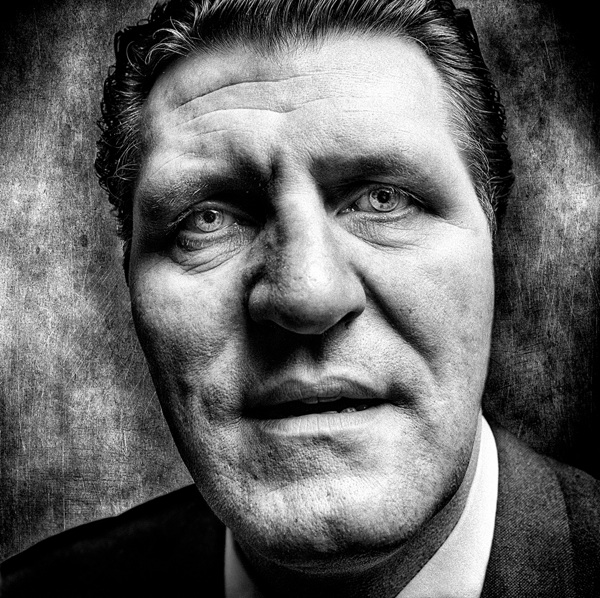
“I’m on a whisky diet . . . last week I lost three days!”
It has to be the ultimate comedy exit – to collapse and die onstage in front of millions of viewers, as Tommy Cooper did on 15th April 1984. The failed magic trick which unexpectedly turned out right had become such a familiar element of his act that, when he fell to the floor at Her Majesty’s Theatre live on national television, the audience cracked up with laughter until they realised the tragedy of the moment. “Just like that!” – to quote his most famous catch phrase.
Yet Tommy Cooper had always displayed a disquieting mixture of mania and studied incompetence in his performances, endearing him to audiences who laughed in recognition at his barely-concealed sense of despair. It was an act honed over relentless years playing in the merciless crucible of the variety circuit. The joke was on Tommy, he was a virtuoso at self-humiliation and a fierce parody of his own self-parody, and the poignancy of it was heart-breaking.
In 1967, Dennis Hackett editor of Nova, commissioned John Claridge to photograph Tommy Cooper for the magazine. “He called me up and said, ‘We’re doing a thing on Tommy, could you take some photographs at Thames TV?'” John recalled fondly, “So I took my Hasselblad along in case I had some spare time and, once I had done the colour pictures, I asked Tommy, ‘Have you got a moment, I’d like to do some serious photographs?'”
“When he looked at me, it was very difficult not to break into laughter. We did three rolls of film and it was getting intense, quite serious. He said, ‘This is serious, isn’t it?’ and then he went ‘Aha!’ and I was in fits of laughter.”
“He was courteous to me and, when I said I loved Laurel & Hardy, he started doing impressions of Oliver Hardy until I had tears running down my face and I had to stop him. I think the pictures tell the story, there’s some fun photographs and some serious photographs – I know he had his demons, but I found him a lovely man, very gracious.”

“I said to the chef, ‘Why have you got your hand in the alphabet soup?’ He said, ‘I’m groping for words!'”
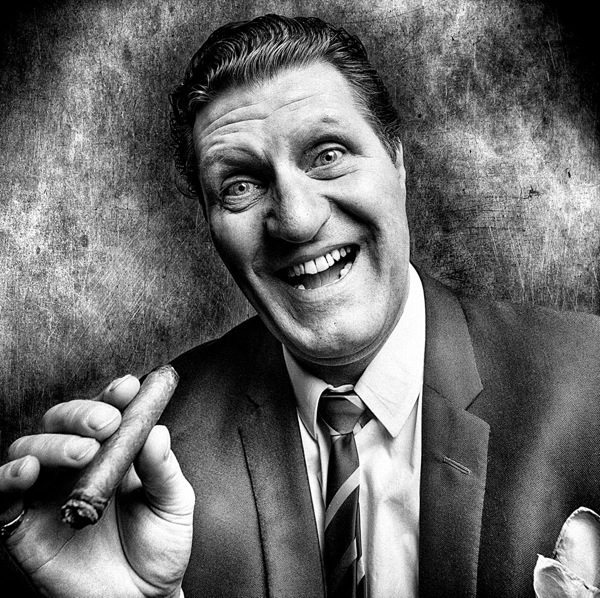
“Two cannibals were eating a clown – one said to the other, ‘Does he taste funny to you?'”
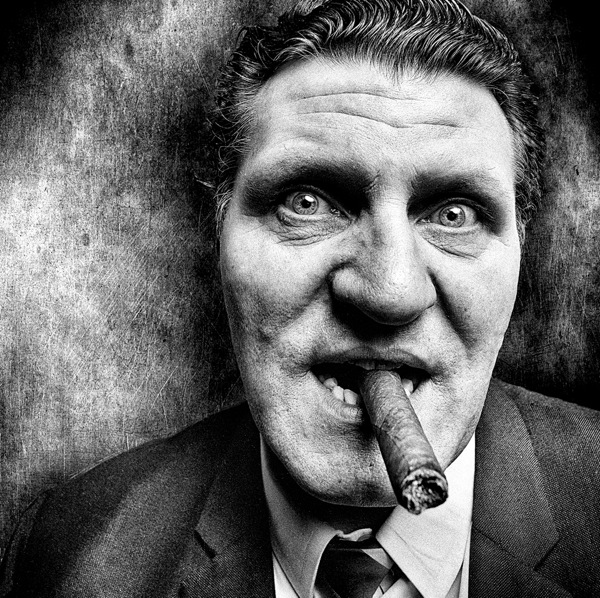
“My doctor told me to drink a bottle of wine after a hot bath, but I couldn’t even finish drinking the hot bath!”
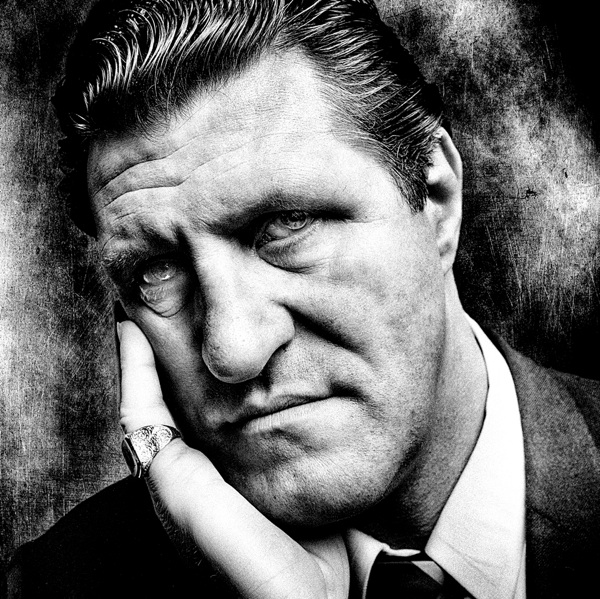
“Gambling has brought our family together. We had to move to a smaller house.”
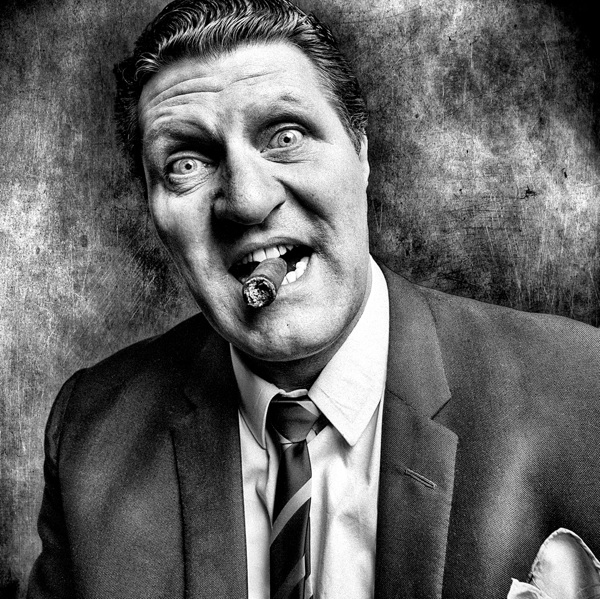
“I sleep like a baby . . I wake up screaming every morning around 3am.”
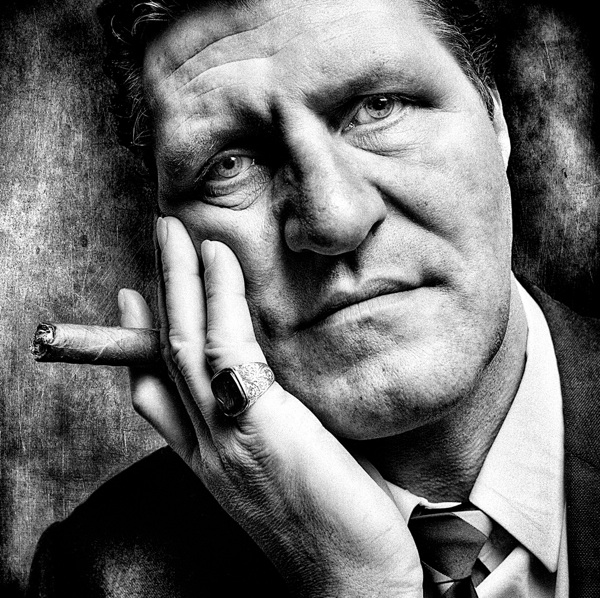
“Never tell people your troubles. Half of them are not interested and the other half are glad you’re getting what’s coming to you.”
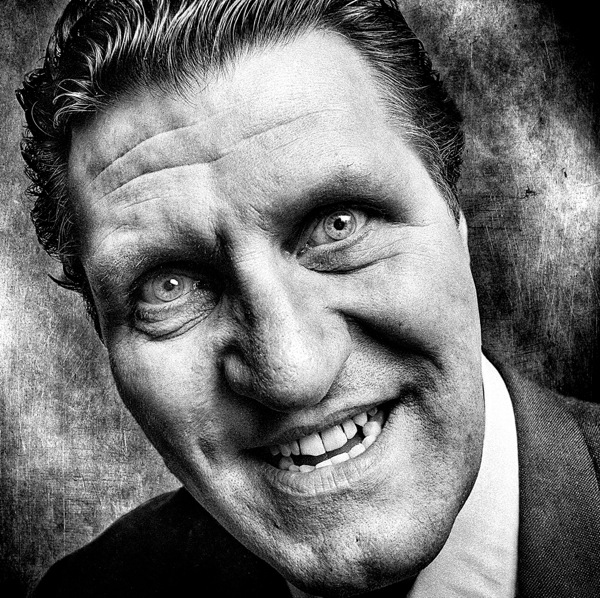
“I went to a fortune teller and she looked at my hands. She said, ‘Your future looks pretty black.’ I said, ‘Are you kidding? I’ve still got my gloves on!”
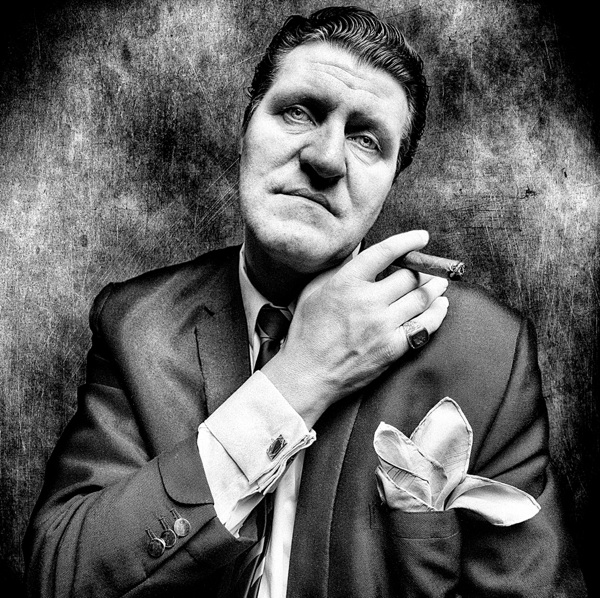
“Last night I dreamt I was eating a ten pound marshmallow. When I woke up, my pillow had gone.”
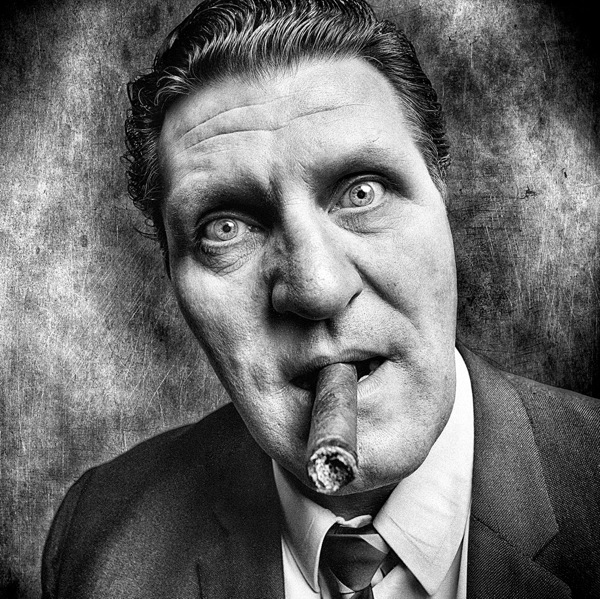
“What do you call an out-of-work jester? Nobody’s fool!”
Photographs copyright © John Claridge
You may also like to take a look at
John Claridge’s Boxers (Round One)
John Claridge’s Boxers (Round Two)
John Claridge’s Boxers (Round Three)
John Claridge’s Boxers (Round Four)
John Claridge’s Boxers (Round Five)
John Claridge’s Boxers (Round Six)
John Claridge’s Boxers (Round Seven)
John Claridge’s Boxers (Round Eight)
John Claridge’s Boxers (Round Nine)
John Claridge’s Boxers (Round Ten)
At The Fan Museum
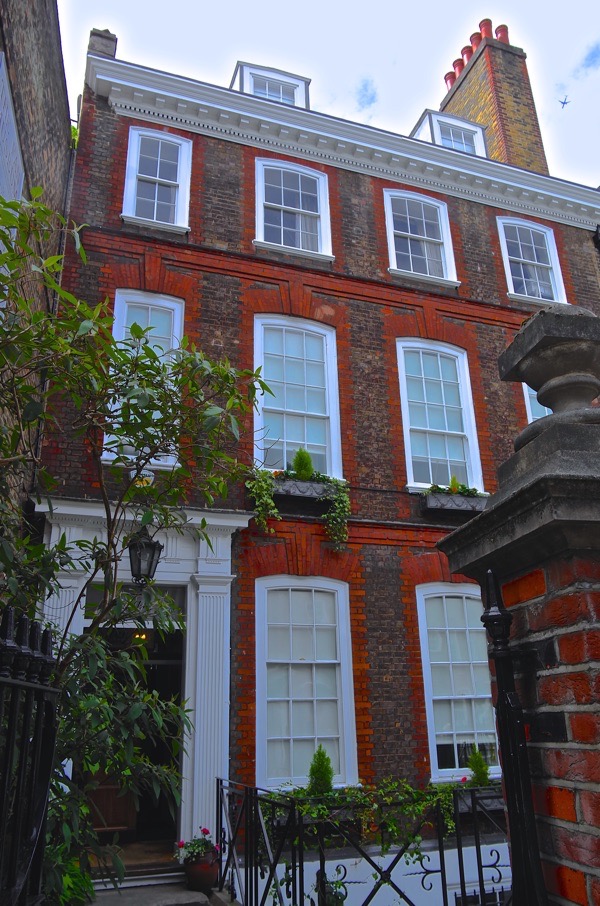
The Fan Museum in Greenwich is the brainchild of Helene Alexander who has devoted her life with an heroic passion to assembling the world’s greatest collection of fans – which currently stands at over five thousand, dating from the eleventh century to the present day.
In doing so, Mrs Alexander has demanded a reassessment of these fascinating objects that were once dismissed by historians as mere feminine frippery but are now rightly recognised as windows into the societies in which they were made and used, and upon the changing position of women through time.
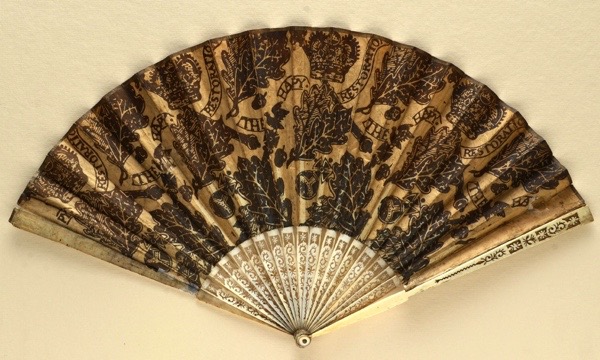
Folding fan with bone monture & woodblock printed leaf commemorating the Restoration of Charles II. English, c. 1660 (Helene Alexander Collection)
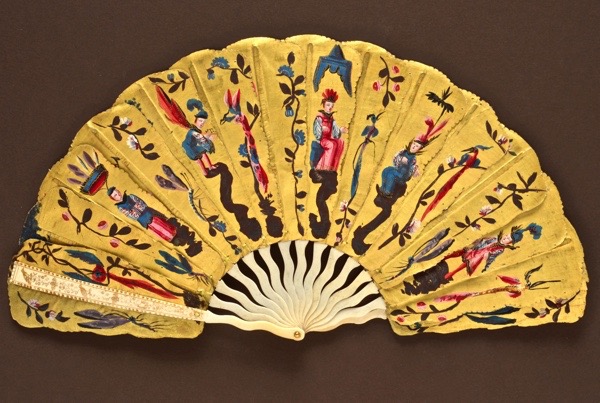
Folding fan (opens two ways) with ivory monture. Each stick is affixed to a painted palmette. European (probably French), c. 1670s (Helene Alexander Collection)
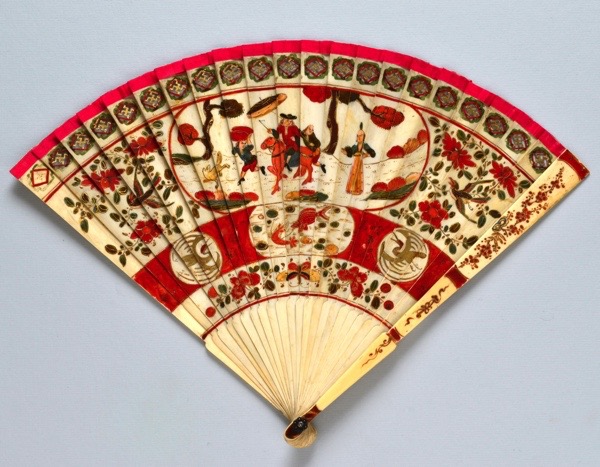
Ivory brisé fan painted with curious depictions of European figures. Chinese for export, c. 1700(Helene Alexander Collection)
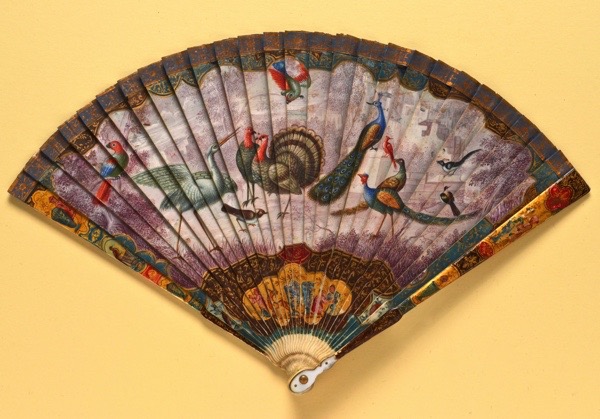
Ivory brisé fan painted in the style of Hondecoeter. Dutch, c. 1700 (Helene Alexander Collection)
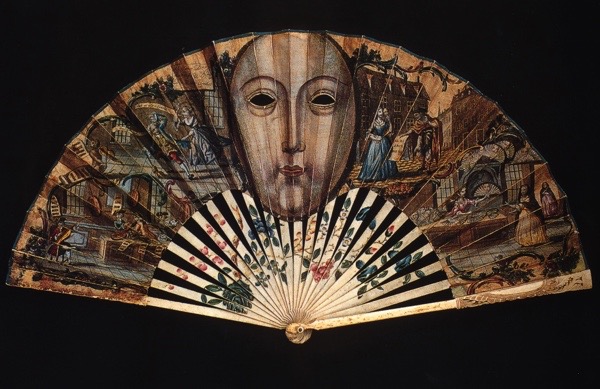
Folding fan with bone monture. The printed & hand-coloured leaf has a mask motif with peepholes. English, c. 1730
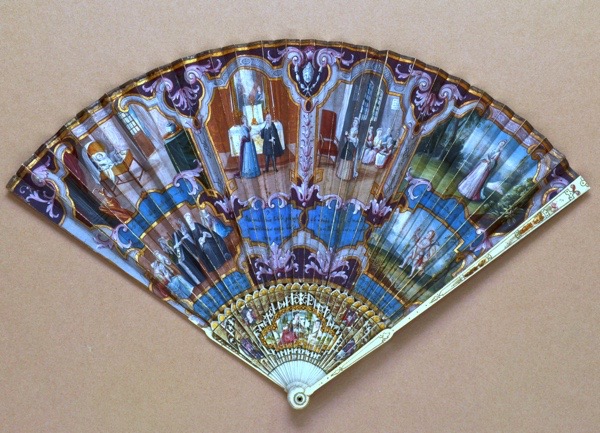
Folding fan with ivory monture, the guards with silver piqué work. The leaf is painted on the obverse with vignettes themed around the life cycle of one man. European (possibly German) c. 1730/40 (Helene Alexander Collection)
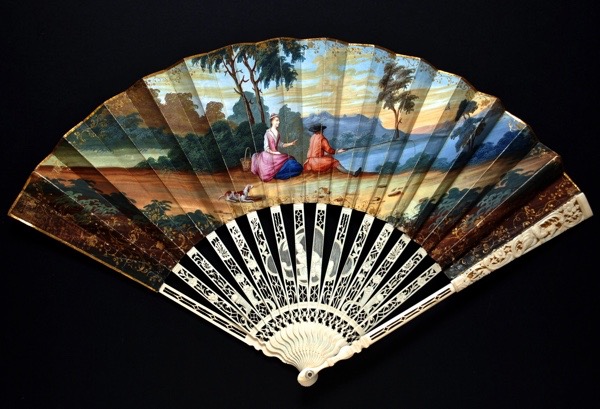
Folding fan with ivory monture & painted leaf. English, c. 1740s (Helene Alexander Collection)
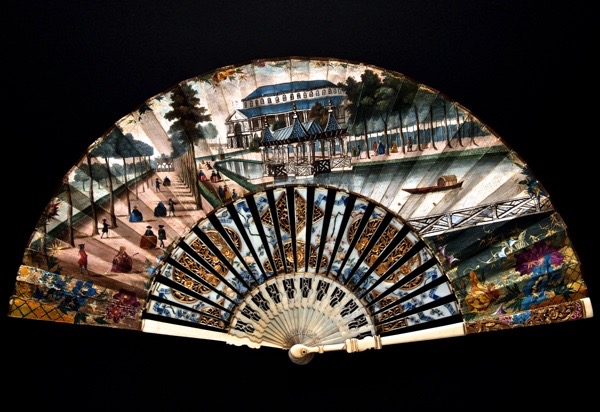
Folding fan with ivory monture & painted leaf, showing Ranelagh Pleasure Gardens. English, c. 1750s
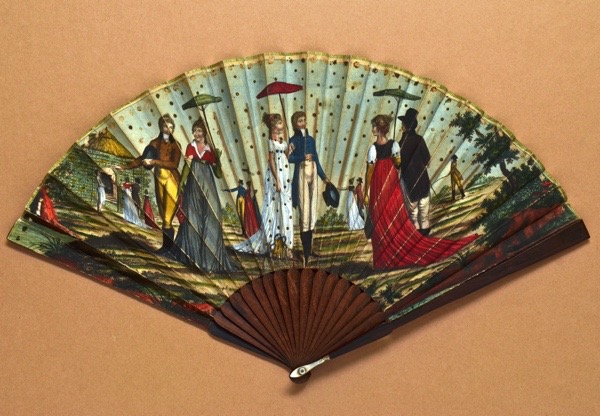
Folding fan with wooden monture & printed leaf, showing couples promenading. French, c. 1795-1800 (Helene Alexander Collection)
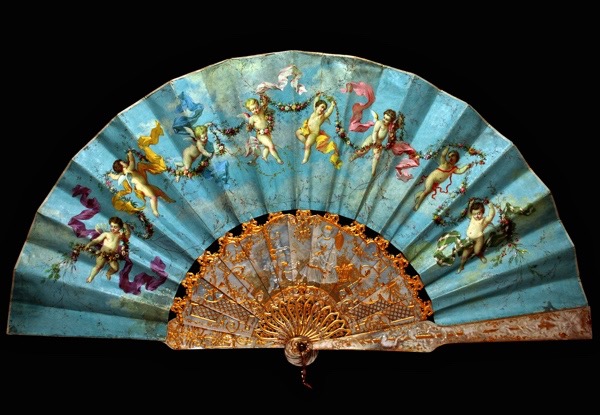
Folding fan with gilt mother of pearl monture & painted leaf, signed ‘E. Parmentier. ’ French, c. 1860s
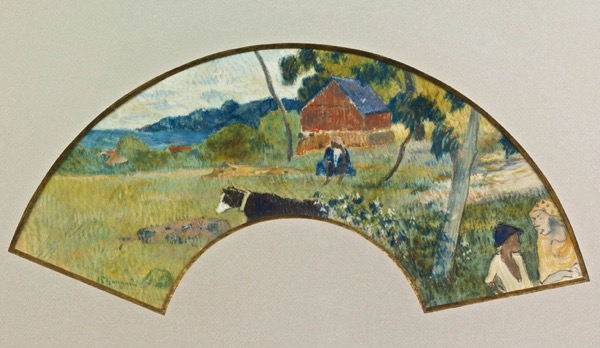
‘Landscape in Martinique’, design for a fan by Paul Gauguin. Watercolour & pastel on paper. French, c. 1887
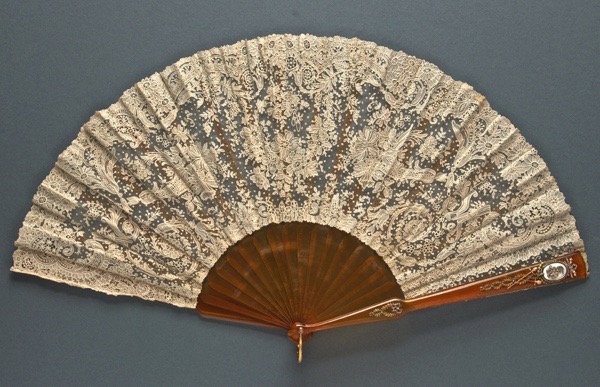
Folding fan with blonde tortoiseshell monture, one guard set with guioché enamelling, silver & gold work by Fabergé. Fine Brussels lace leaf. French/Russian, c. 1880s (Helene Alexander Collection)
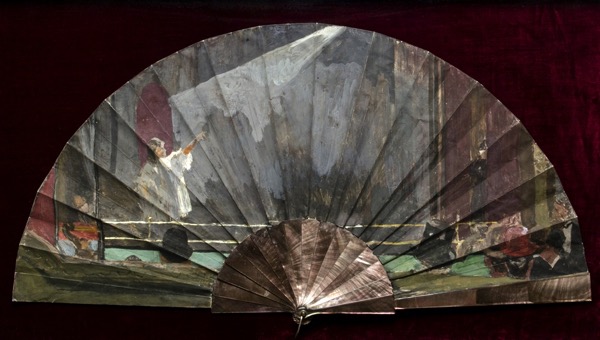
Folding fan with smoked mother of pearl monture, the leaf painted by Walter Sickert with a music hall scene showing Little Dot Hetherington at the Old Bedford Theatre. English, c. 1890
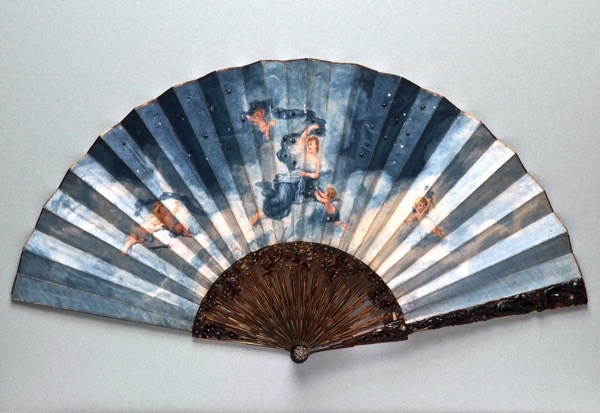
Folding fan with tortoiseshell monture carved to resemble sunrays. Canepin leaf studded with rose diamonds & rock crystal, & painted with a female figure & putti amidst clouds, signed ‘G. Lasellaz ’92’. French, c. 1892 (Helene Alexander Collection)
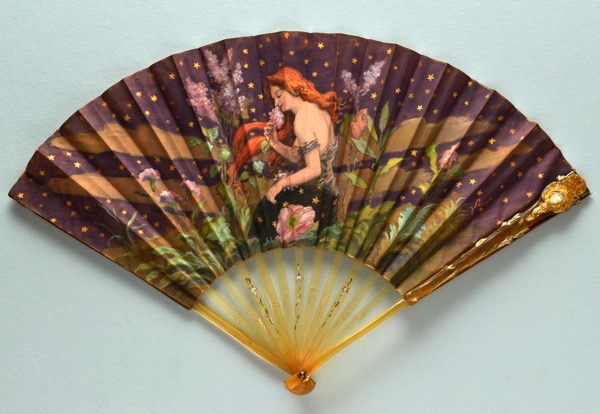
Folding fan with horn monture & painted leaf, signed ‘Luc. F.’ French, c. 1900
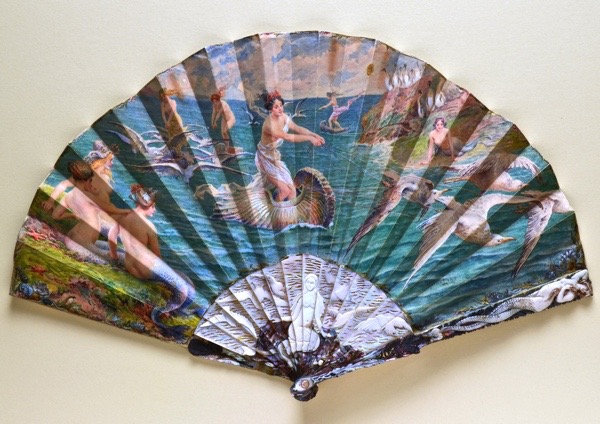
Folding fan with ivory & mother of pearl monture, the painted leaf, signed (Maurice) ‘Leloir.’ French, c. 1900 (Helene Alexander Collection)
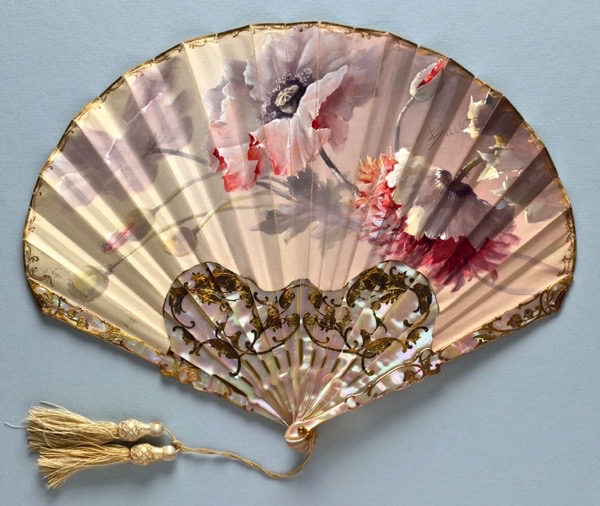
Folding fan with mother of pearl monture & painted leaf, signed ‘Billotey.’ French, c. 1905 (Helene Alexander Collection)
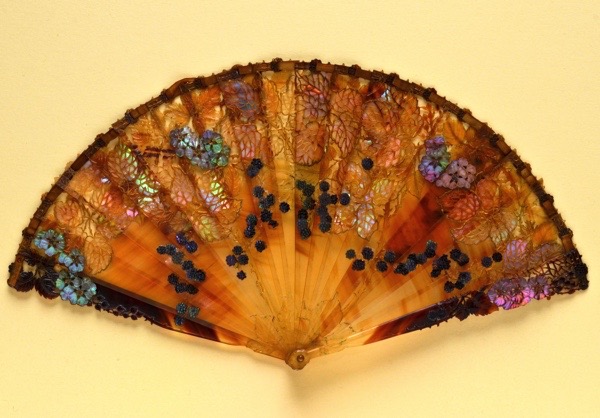
Horn brisé fan with design of brambles & insets of mother of pearl. French, c.1905 (Helene Alexander Collection)
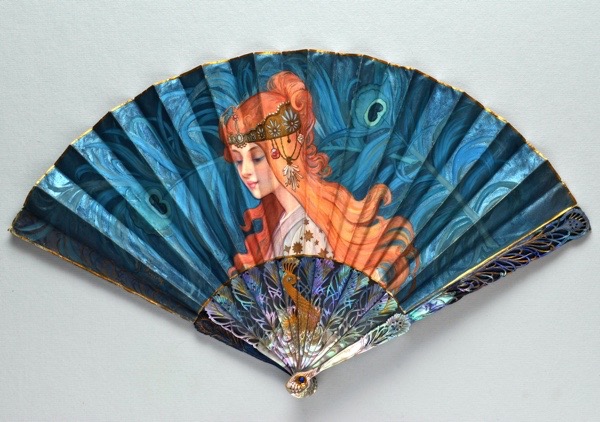
Folding fan with Art Nouveau style tinted mother of pearl monture & painted leaf, signed ‘G. Darcey.’ French, c. 1905 (Helene Alexander Collection)
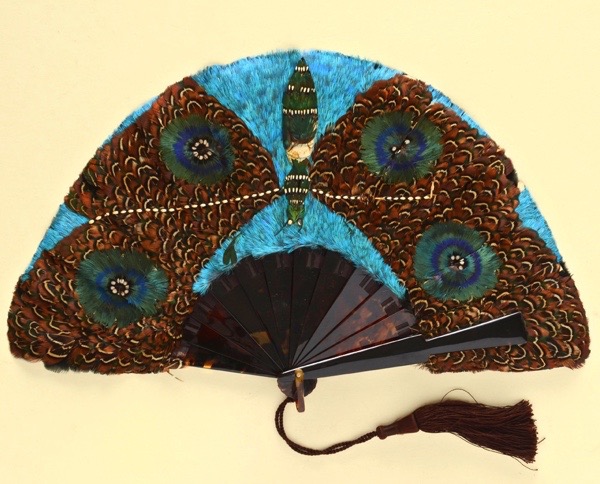
Folding fan with tortoiseshell monture & feather ‘marquetry’ leaf. French, c. 1920
Visit The Fan Museum, 12 Crooms Hill, Greenwich, SE10 8ER
At The Pellicci Museum

This is Lucinda Rogers‘ drawing of E.Pellicci in the Bethnal Green Rd, London’s most celebrated family-run cafe, into the third generation now and in business for over a century – and continuing to welcome East Enders who have been coming for generations to sit in the cosy marquetry-lined interior and enjoy the honest, keenly-priced meals prepared every day from fresh ingredients.
E.Pellicci is a marvel. It is so beautiful it is listed, the food is always exemplary and I every time I come here I leave heartened to have met someone new.
I found Lucinda Rogers’ drawing on the wall in one of the small upper rooms that now serves as an informal museum of the history of the cafe, curated by Maria Pellicci’s nephew – Toni, a bright-eyed Neapolitan, who has been working here since he left school in Lucca in Tuscany and came to London in 1970. He led me up the narrow staircase, opened the door of the low-ceilinged room and with a single shy gesture of his arm indicated the family museum. Toni has lined the walls with press cuttings, photographs and all kinds of memorabilia, which tell the story of the ascendancy of Pellicci’s, attended by a few statues of saints to give the pleasing aura of a shrine to this cherished collection.
Primo Pellici began working in the cafe in 1900 and it was here in these two rooms that his wife Elide brought up his seven children single-handedly, whilst running the cafe below to keep the family after her husband’s death in 1931. Elide is the E.Pellicci whose initial is still emblazoned in chrome upon the primrose-hued vitroglass fascia and her portrait remains, she and her husband counterbalance each other eternally on either side of the serving hatch in the cafe. In 1921, Nevio senior was born in the front room here. He ran the cafe until his death in 2008, superceded as head of the family business today by his wife Maria who possesses a natural authority and charisma that makes her a worthy successor to Elide.
As I sat alone in the quiet of the room, leafing through the albums, surrounded by the walls of press coverage, Maria came upstairs from the kitchen to join me. She pointed out the flat roof at the rear where her former husband Nevio played as a child. “He was very happy here,” she assured me with a tender smile, standing silently and casting her eyes between the two empty rooms – sensing the emotional presence of the crowded family life that once filled in this space that is now a modest store room and an office. Maria and Nevio brought up their children in a terraced house around the corner in Derbyshire St, and these days Toni goes round each morning early to pick her up from there, before they start work around six at the cafe she runs with her son Nevio and daughter Anna.
Pellicci’s collection tells a very particular history of the twentieth century and beyond – of immigration, of wars, of coronations and gangsters too. But, more than this, it is a history of wonderful meals, a history of very hard work, a history of great family pride, and a history of happiness and love.

Primo Pellicci still presides upon the cafe where he started work in 1900

Primo’s children, Nevio and Mary Pellicci, 1930

Pellicci’s wartime licence issued to Elide Pellicci in 1939 by the Ministry of Food

Pellicci’s paper bag issued to celebrate the Coronation of Elizabeth II in 1953 – note the phone number, Bishopsgate 1542

Mary and Maria Pellicci, Trafalgar Sq, 1963


Nevio junior, aged seven, skylarking outside the house in Derbyshire St with pals Claudio and Alfie

Nevio senior and Toni, 1980

Pellicci’s customers in 1980

Nevio senior, 1980

Nevio and Toni


Christmas card from Charlie Kray, 1980
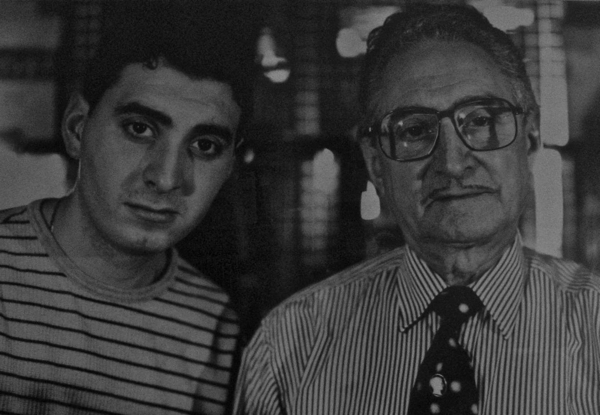
Nevio junior and Nevio senior

George Flay’s montage of the world of Pellicci’s

Nevio Senior, 2005


Salvatore Zaccaria, known as Toni, curator of the Pellicci Museum
You may also enjoy reading












