
Even More Delft Tiles by Paul Bommer
For those who missed Paul Bommer‘s exhibition in Wilkes St last month, it my pleasure to publish the fourth and last batch of his faux delft tiles from that show, many inspired by stories here in the pages of Spitafields Life. Subsequently, Paul has been inundated with commissions to design new delft tile fireplaces for old houses in Spitalfields – I will keep you posted of developments.


The Auriculas of Spitalfields.


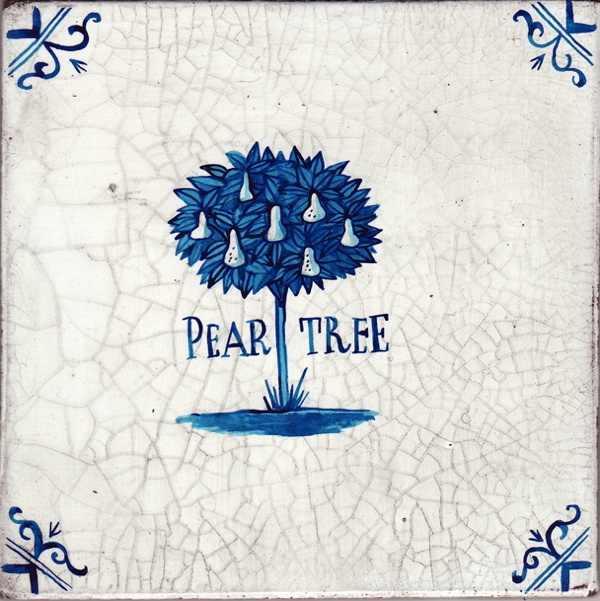
The Pear Tree where John Williams, suspect in the Ratcliffe Highway Murders was arrested.
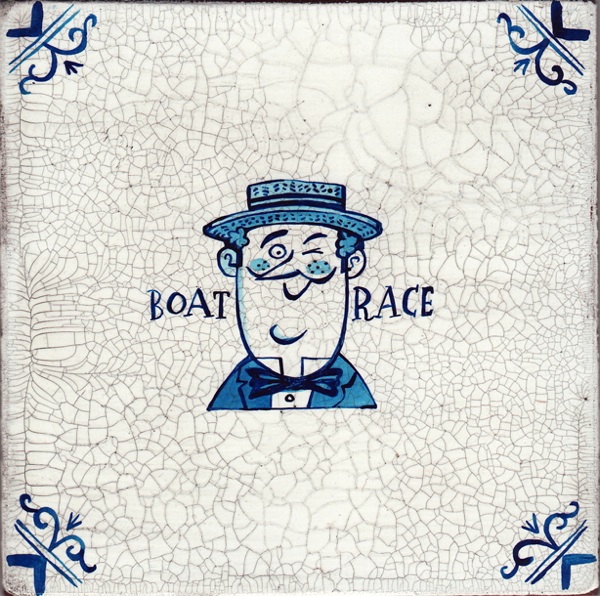
Rhyming slang.
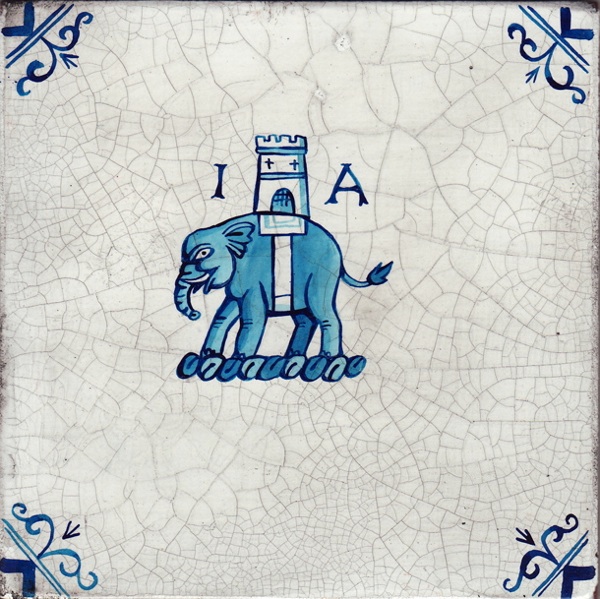
From The Signs of Old London.
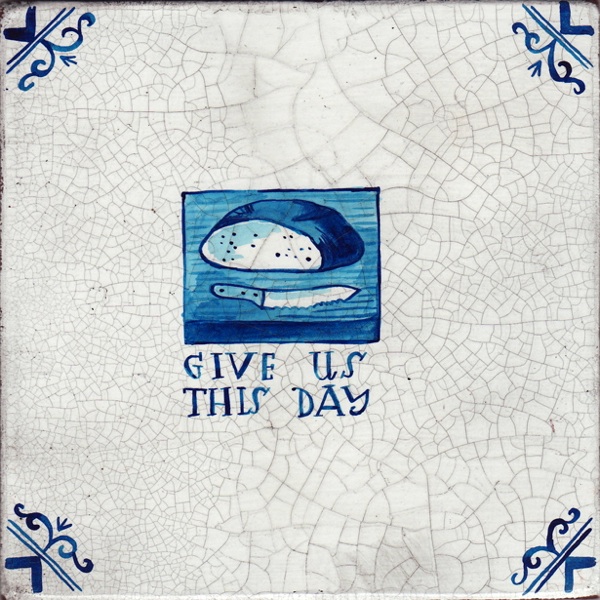
A Night in the Bakery at St John.
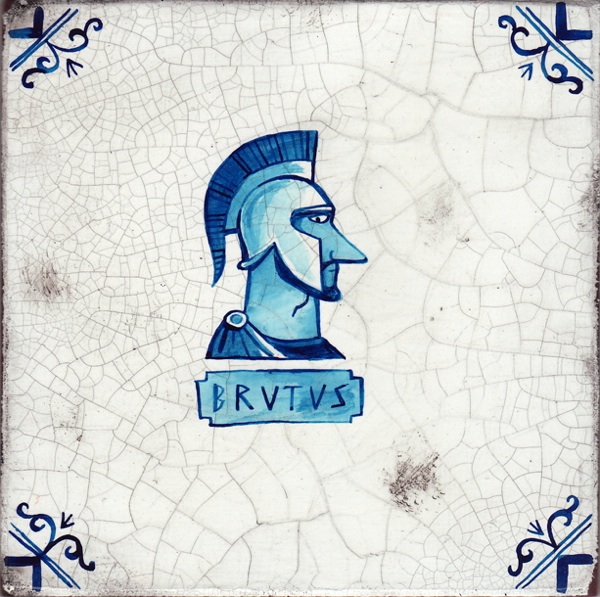
According to legend, Brutus came from Troy to found London.
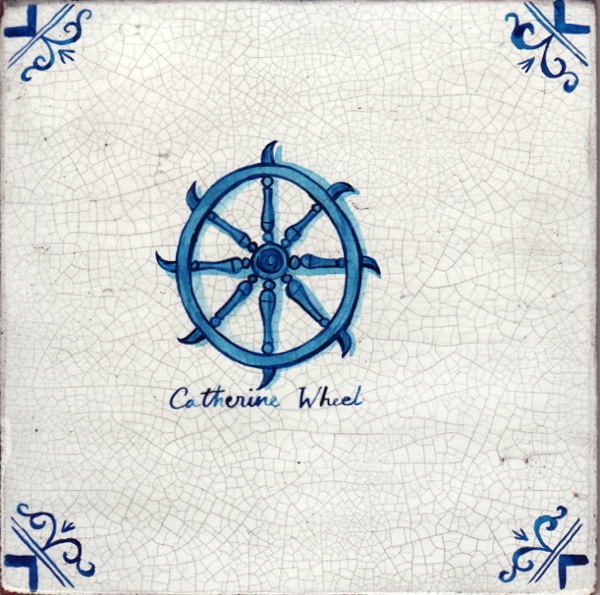
Catherine Wheel Alley, Spitalfields.
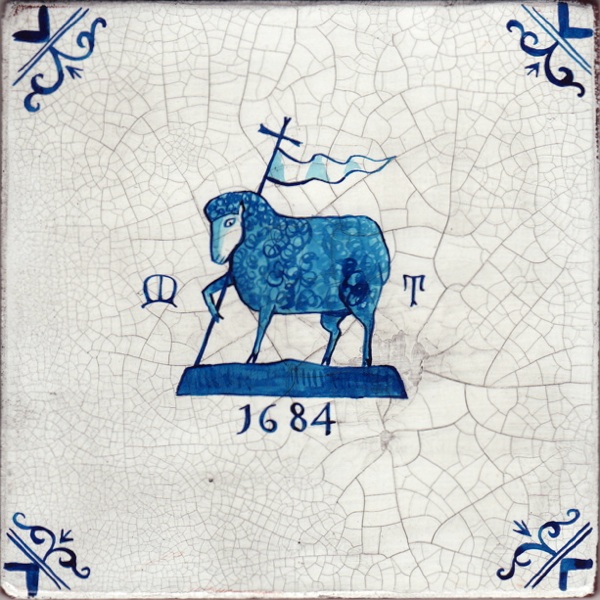
From The Signs of Old London.
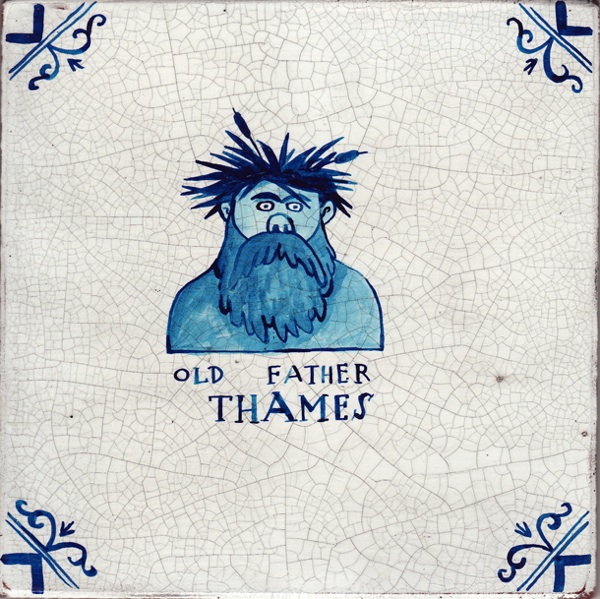
Old Father Thames.
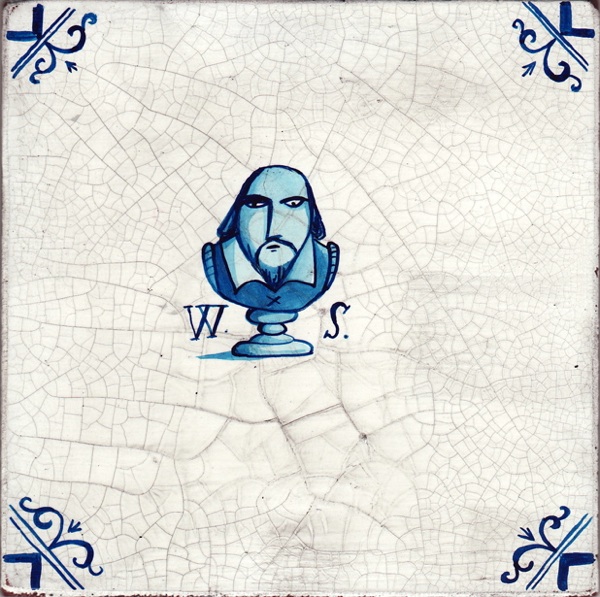
William Shakespeare in Spitalfields.

Grasshopper, symbol of Thomas Gresham, from The Signs of Old London.
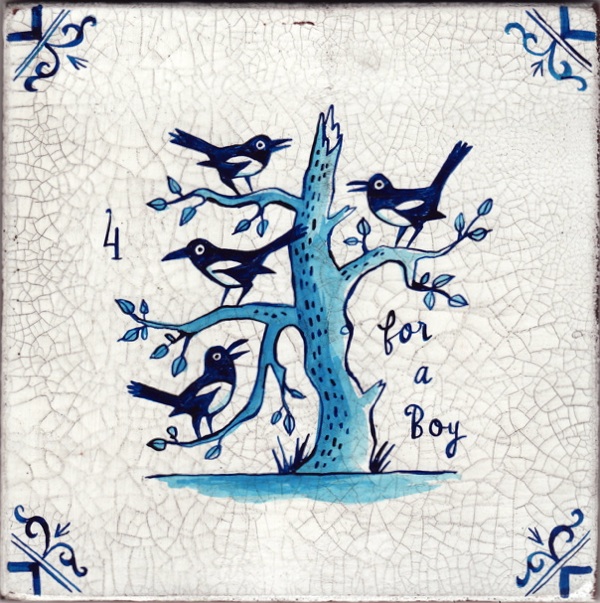
“Three for a girl and four for a …”
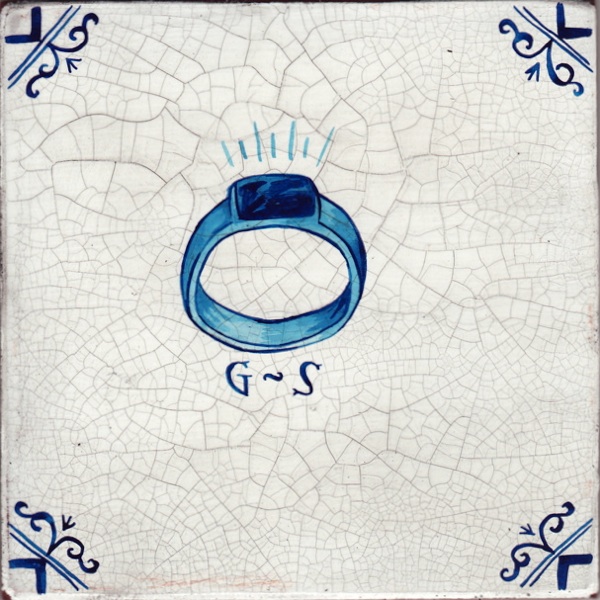
Garnet St, Wapping.

Rhyming slang.
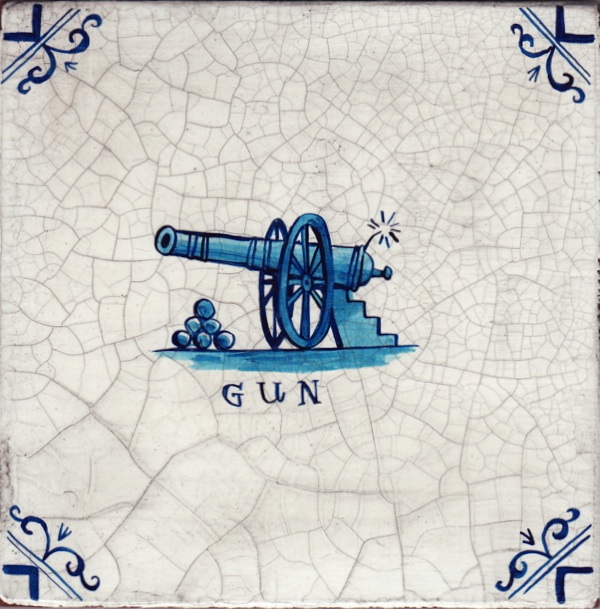
The Gun, Brushfield St.

Half Moon, Holywell St, from The Signs of Old London.

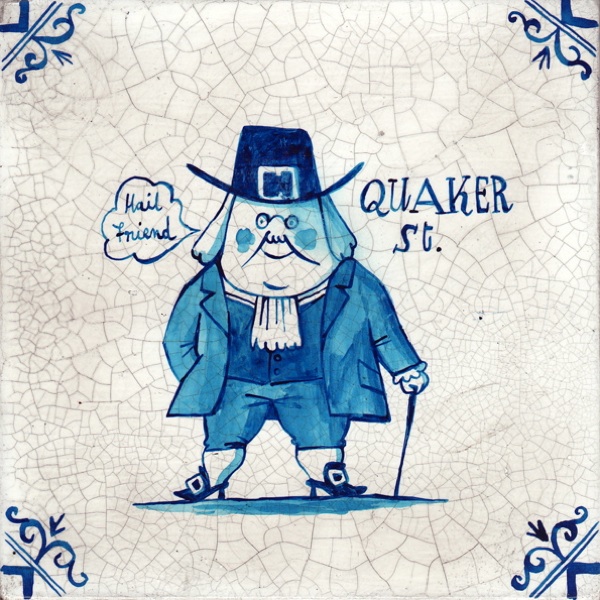
Quaker St, Spitalfields.

The Fox, Lombard St, from The Signs of Old London.

Images copyright © Paul Bommer
You may like to see the earlier selections of
More of Paul Bommer’s Delft Tiles
Yet More of Paul Bommer’s Delft Tiles
and also read about
In a Lonely Place

Pedley St Arch, Spitalfields, 1987
Photographer John Claridge told me that he enjoys his own company, which casts an equivocation upon the title he gave this set of pictures – published here for the first time – that he took in the East End between 1960 and 1987. As a kid photographer from Plaistow, succumbing to the thrall of Film Noir and Italian Neo-Realism, John set out with his camera to look at his own territory in the light of these inspirations. And the result is a collection of intriguingly moody images that reveal unexpected beauty, humanity, and even humour, in locations devoid of figures, yet tense with dramatic potential.
Two themes are emergent in these depopulated pictures of the East End in eternal half-light. One theme is the unlikely placing of familiar objects in locations that propose hidden narratives and the other theme is spaces that contain the anticipation of a human presence. Both are strategies inviting the viewer to ask questions, investigate the nature of the photograph and draw their own conclusion.
When John photographs a pair of shoes in the street, or a pram, or a pair of sofas, or an armchair, or even a clapped-out old car, there is always a sense that these things have been put there deliberately as part of a mysterious scenario, not abandoned but awaiting their owners’ return. Similarly, mannequins in a window or a picture of a girl used to repair a pane of glass, also appear meaningful in an unexplained way, asking us to do our own detective work. And the old sign announcing “News of the World” above a door unopened in years makes its own statement of existential significance. Scrutinise John’s picture of Upton Park station disappearing into the dawn mist, or the receding columns of E16, or the pictures of the Pedley St arch, each ripe with suspense. Would you be surprised to see a hoodlum in a fedora with a gun step from the shadows, or an amorous femme fatale in a trench coat come strolling to a rendezvous?
While many left the East End after the war to seek new lives in the suburbs, there were others who stayed and were comfortable living among the bombsites and empty houses, and in his youth John counted himself in the latter category. “I didn’t find it depressing,” he assured me, “because there was still a kind of community. I loved it. There was destruction everywhere yet you couldn’t destroy people’s spirits. But when they took their gardens away and put people in towers where they didn’t know their neighbours, that was destruction of another kind.”
John is keenly aware that outsiders may project their own tragic interpretations upon these pictures of dereliction but, as one who is not ashamed to call himself a Romantic, he asks – “Is it really a lonely place, or is it all in the mind?”

Mannequins, E1, 1968.
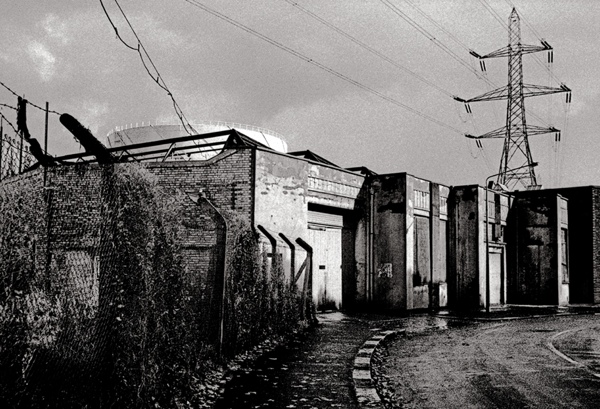
Pylon in Early Morning, E3, 1968.
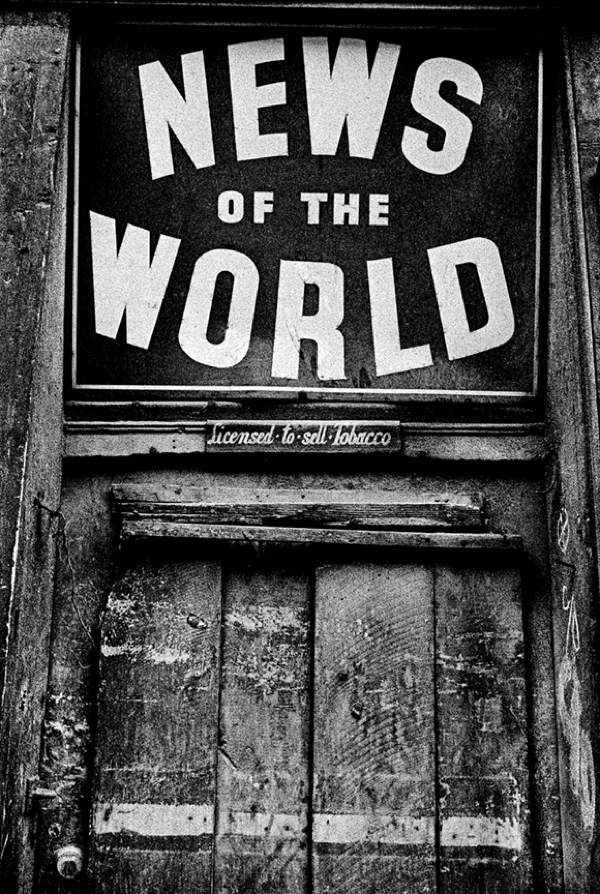
News of the World, E1, 1968.
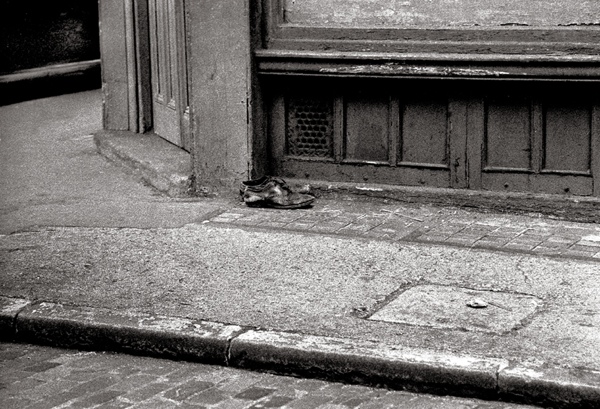
Shoes, E2, 1963.
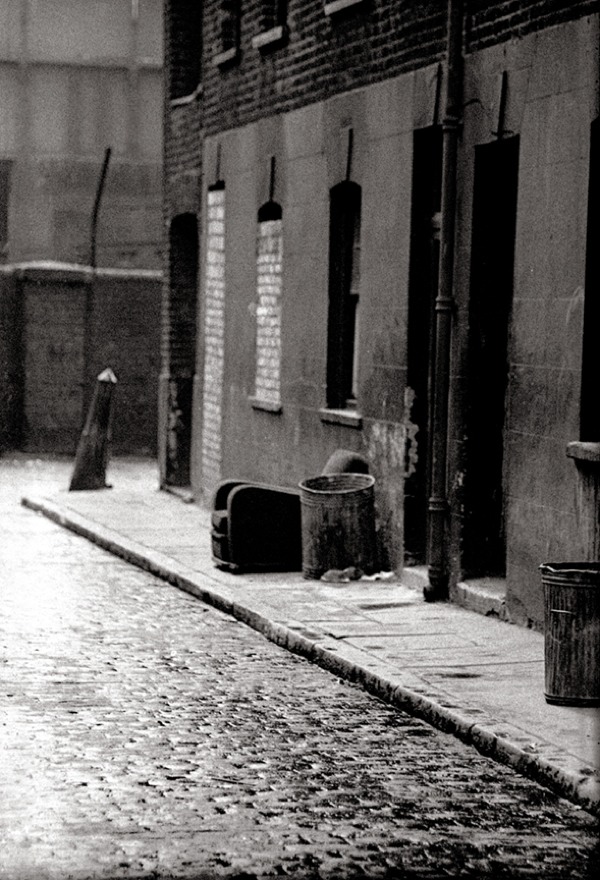
Armchair, E1, 1965.
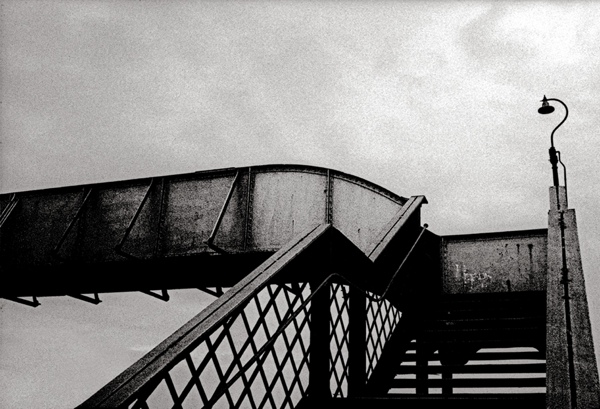
Lamp, E16, 1982.
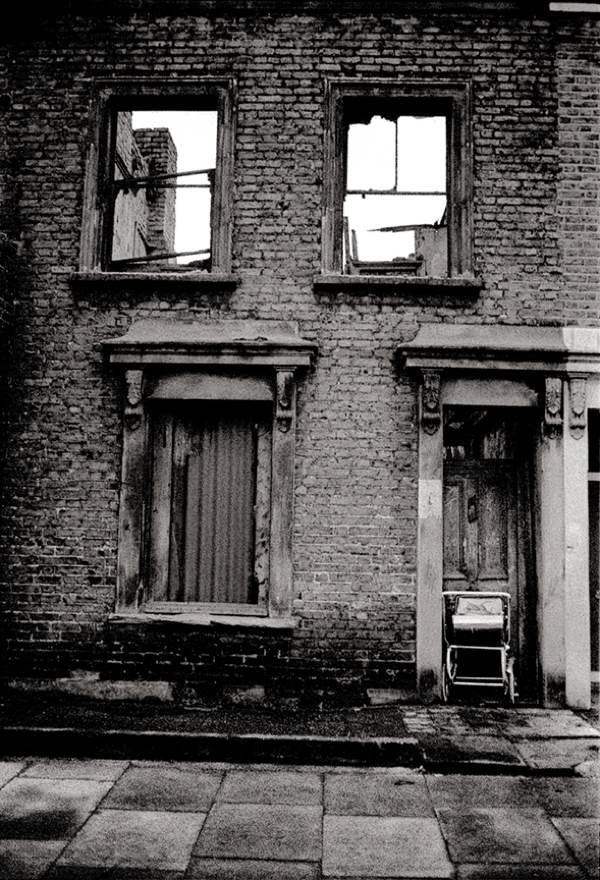
Pram, E14, 1968.
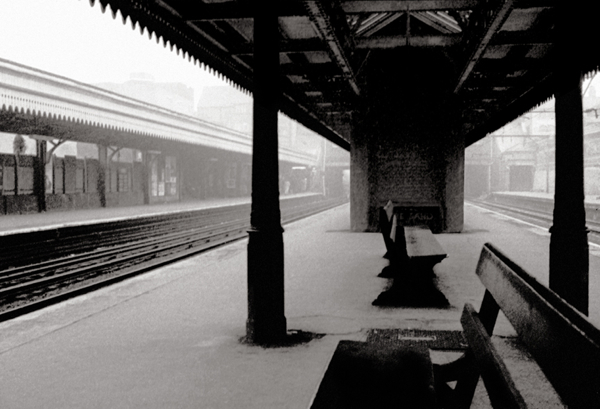
Upton Park at Dawn, E13, 1966.

Circus Poster, E7, 1975.
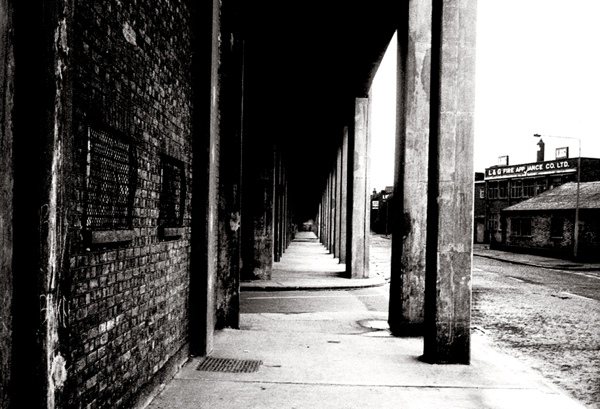
Columns, E15, 1982.

Sewer Bank, E13, 1963.
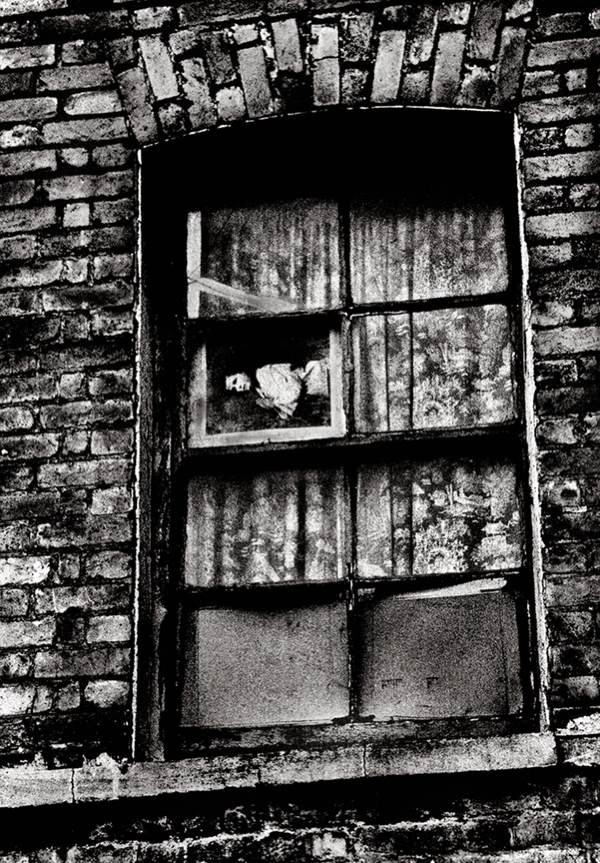
Girl in the Window, E2, 1966.
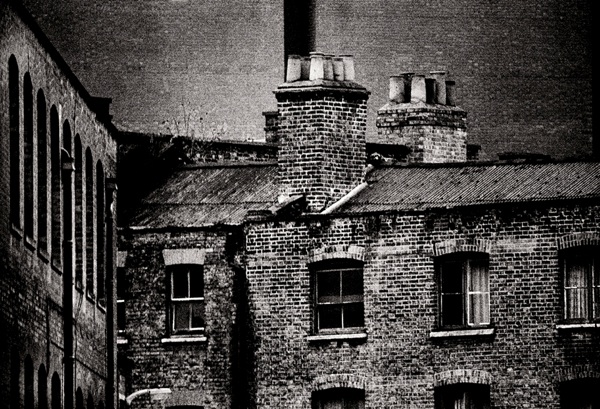
End of the Street, E1, 1982
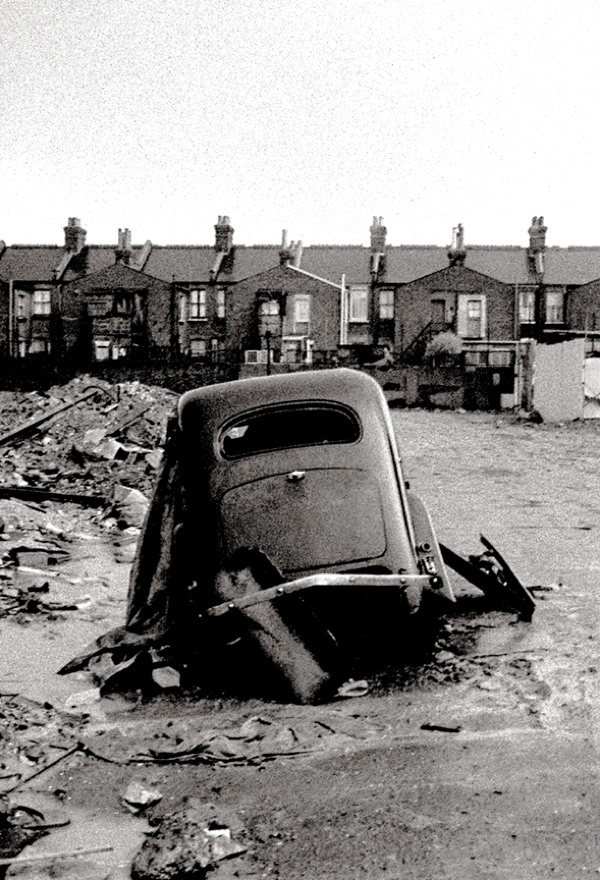
Ford, E13, 1961.
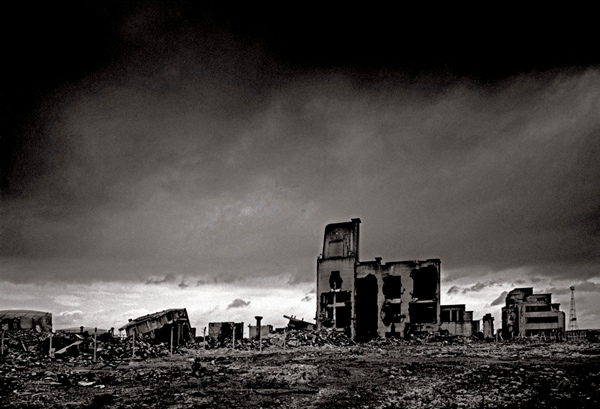
Beckton Gas Works, E6, 1987.
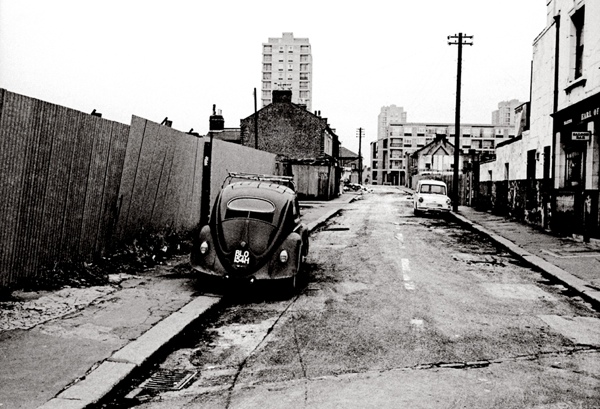
Volkswagon, E14, 1970.

Half a Building, E13, 1962.
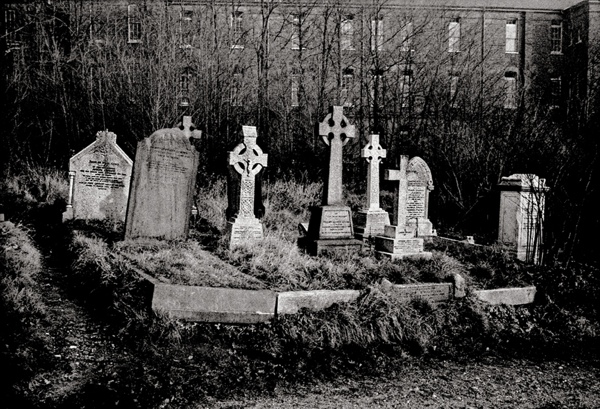
Gravestones, E7, 1960.

Pedley St Arch, Spitalfields, 1987.
Photographs copyright © John Claridge
You may also like to take a look at
Tif Hunter’s Maltby St Portraits (Part Two)
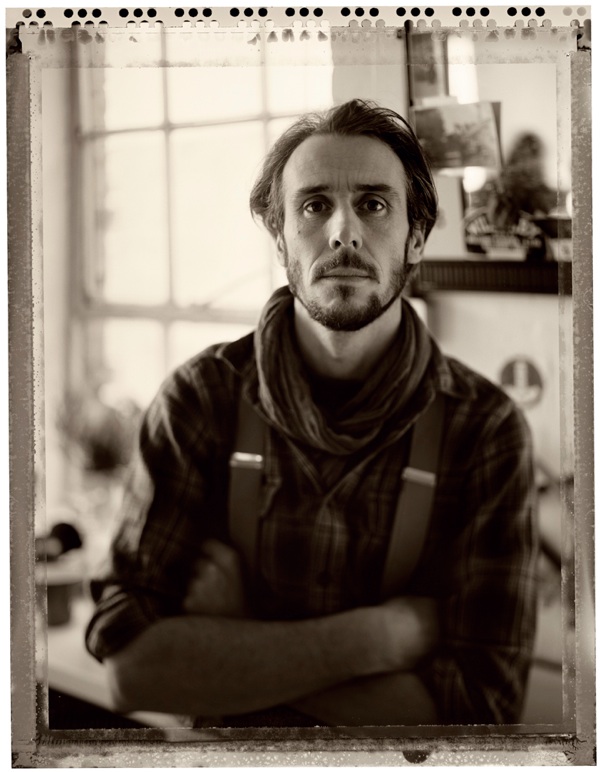
Steve Benbow, London Honey Company
Once upon a time, Steve Benbow, the urban beekeeper, sold honey from the back of an old Morris Traveller in Brushfield St at the entrance to the Spitalfields Market. You may recall when Steve was first introduced in these pages, seeking homes for bees, and then – through the intervention of one of our readers – he was granted the roof of the Tate Gallery to keep his hives. These days, Steve has a railway arch in Maltby St, Bermondsey, and it was here that Tif Hunter took this portrait as part of his series recording the community of those who have created this flourishing endeavour, selling honestly produced food and drawing customers from across the London every Saturday morning.
Yet even as Tif completed his set of portraits, other railway arches opened up just a little further down the line at Spa Terminus, and some of the traders from Maltby St transferred to these larger spaces while new companies moved into those which had been vacated – confirming the contingent nature of all markets, endlessly shifting and evolving as street commerce ebbs and flows in the city.
Taken with a 5×4 nineteenth-century-style camera using just a single exposure for each portrait, Tif’s pictures are remarkable for their spontaneity, emphasising the ephemeral quality of the image. But when he set out to take these luminous photographs, he did not realise that Maltby St itself would change so quickly, granting them an extra level of transient poetry. Fortuitously, Tif Hunter’s set of portraits exists now as the record of a critical moment at Maltby St – the time before this current metamorphosis began.
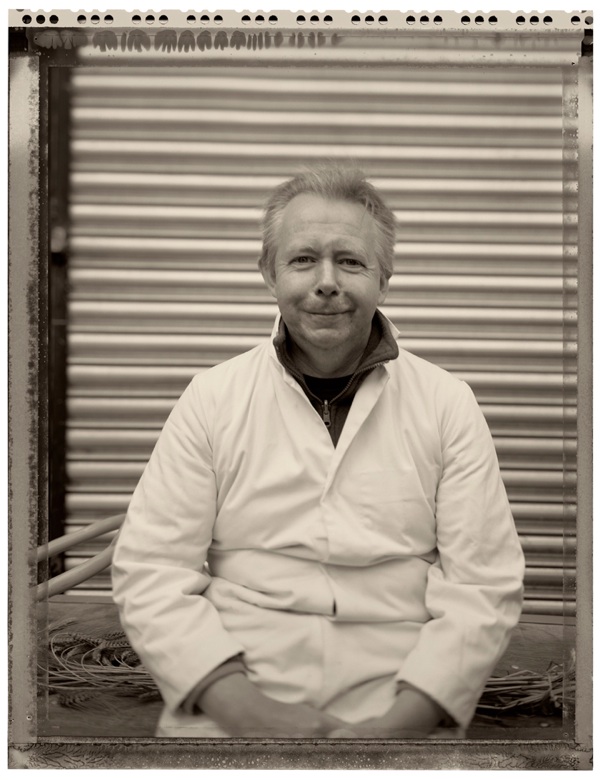
Philip – Jacob’s Ladder Farms

Lucie – The Ham & Cheese Company

Archie – Coleman Coffee Roasters

Kitty – La Grotta Ices

Roy – Neal’s Yard Dairy

Paul – Tayshaw Limited

Flori – Monmouth Coffee Company

Archie – The Ham & Cheese Company

Claire – Violet Bakery

Roberto – Monmouth Coffee Company

Alaena – Kase Swiss
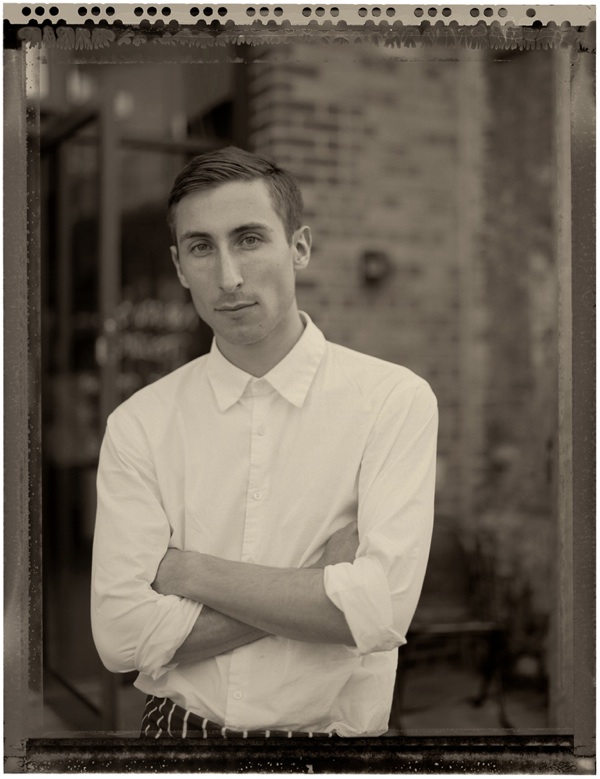
Harry – 40 Maltby St

Barbara – Kernel Brewery

Harry – Fern Verrow

Georgia – St John Bakery

Tristan – Fern Verrow

Lucy – St John Bakery

Nathan – The Butchery Ltd

Tania – Kernel Brewery
Photographs copyright © Tif Hunter
You may also like to see
Tif Hunter’s Maltby St Portraits (Part One)
and read about
The Auriculas of Spitalfields

An auricula theatre
In horticultural lore, auriculas have always been associated with Spitalfields and writer Patricia Cleveland-Peck has a mission to bring them back again. She believes that the Huguenots brought them here more than three centuries ago, perhaps snatching a twist of seeds as they fled their homeland and then cultivating them in the enclosed gardens of the merchants’ grand houses, and in the weavers’ yards and allotments, thus initiating a passionate culture of domestic horticulture among the working people of the East End which endures to this day.
You only have to cast your eyes upon the wonder of an auricula theatre filled with specimens in bloom – as I did in Patricia’s Sussex garden last week – to understand why these most artificial of flowers can hold you in thrall with the infinite variety of their colour and form. “They are much more like pets than plants,” Patricia admitted to me as we stood in her greenhouse surrounded by seedlings,“because you have to look after them daily, feed them twice a week in the growing season, remove offshoots and repot them once a year. Yet they’re not hard to grow and it’s very relaxing, the perfect antidote to writing, because when you are stuck for an idea you can always tend your auriculas.” Patricia taught herself old French and Latin to research the history of the auricula, but the summit of her investigation was when she reached the top of the Kitzbüheler Horn, high in the Austrian Alps where the ancestor plants of the cultivated varieties are to be found.
Auriculas were first recorded in England in the Elizabethan period as a passtime of the elite but it was in the eighteenth and nineteenth centuries that they became a widespread passion amongst horticulturalists of all classes. In 1795, John Thelwall, son of a Spitalfields silk mercer wrote, “I remember the time myself when a man who was a tolerable workman in the fields had generally beside the apartment in which he carried on his vocation, a small summer house and a narrow slip of a garden at the outskirts of the town where he spent his Monday either in flying his pigeons or raising his tulips.” Auriculas were included alongside tulips among those prized species known as the “Floristry Flowers,” plants renowned for their status, which were grown for competition by flower fanciers at “Florists’ Feasts,” the precursors of the modern flower show. These events were recorded as taking place in Spitalfields with prizes such as a copper kettle or a ladle and, after the day’s judging, the plants were all placed upon a long table where the contests sat to enjoy a meal together known as “a shilling ordinary.”
In the nineteenth century, Henry Mayhew wrote of the weavers of Spitalfields that “their love of flowers to this day is a strongly marked characteristic of the class.” and, in 1840, Edward Church who lived in Spital Sq recorded that “the weavers were almost the only botanists of their day in the metropolis.” It was this enthusiasm that maintained a regular flower market in Bethnal Green which eventually segued into the Columbia Rd Flower Market of our day.
Known variously in the past as ricklers, painted ladies and bears’ ears, auriculas come in different classes, show auriculas, alpines, doubles, stripes and borders – each class containing a vast diversity of variants. Beyond their aesthetic appeal, Patricia is interested in the political, religious, cultural and economic history of the auricula, but the best starting point to commence your relationship with this fascinating plant is to feast your eyes upon the dizzying collective spectacle of star performers gathered in an auricula theatre. As Sacheverell Sitwell once wrote, “The perfection of a stage auricula is that of the most exquisite Meissen porcelain or of the most lovely silk stuffs of Isfahan and yet it is a living growing thing.”
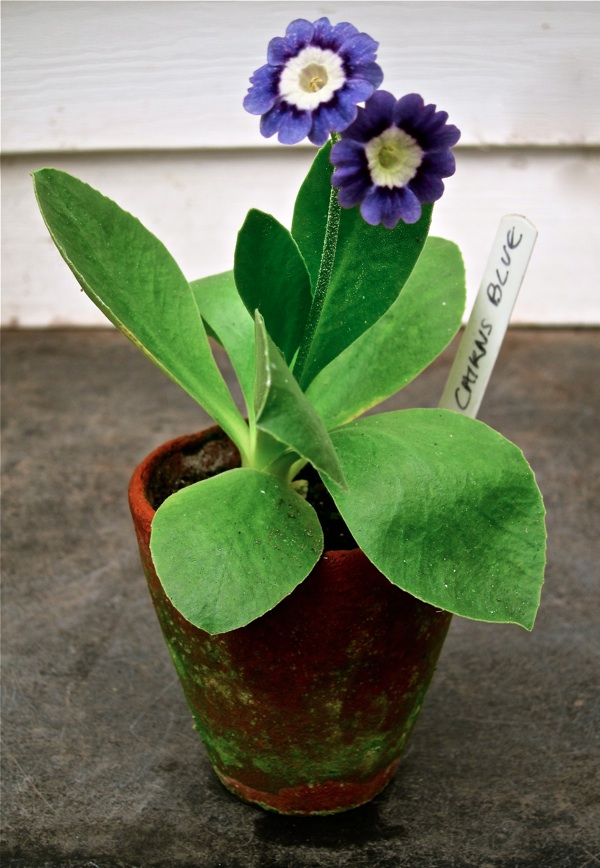
Mrs Cairns Old Blue – a border auricula

Glenelg – a show-fancy green-edged auricula

Piers Telford – a gold-centred alpine auricula

Taffetta – a show-self auricula

Seen a Ghost – a show-striped auricula

Sirius – gold-centred alpine auricula

Coventry St – a show-self auricula
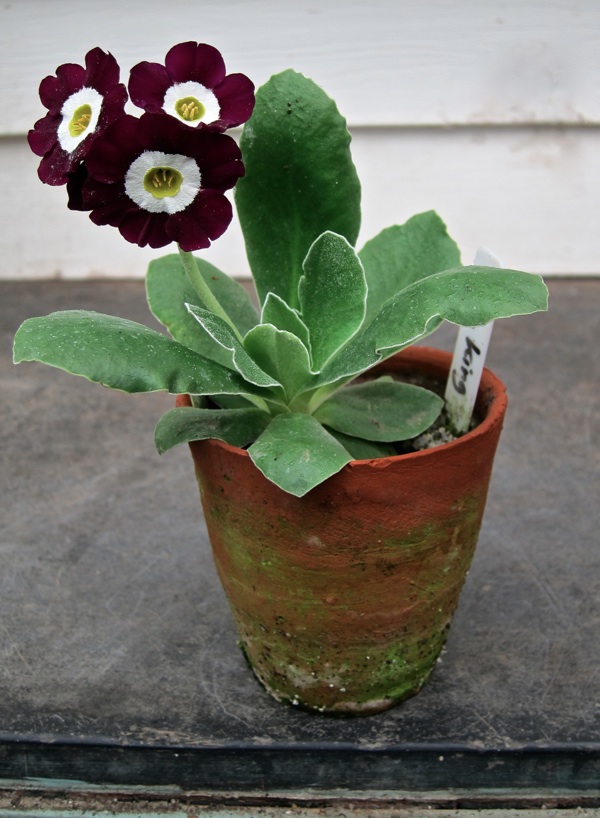
M. L. King – show-self auricula
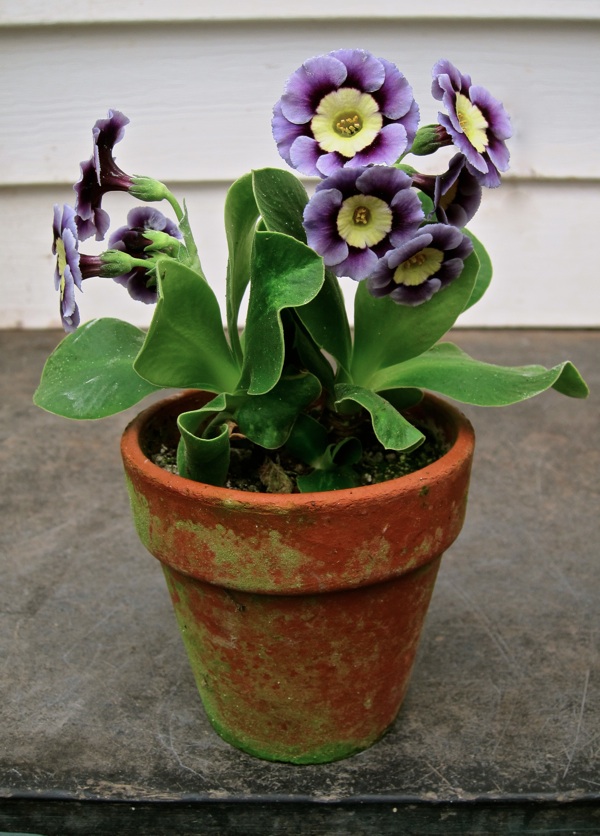
Mrs Herne – gold-centred alpine auricula

Dales Red – border auricula

Pink Gem – double auricula

Summer Wine – gold-centred alpine auricula

McWatt’s Blue – border auricula

Rajah – show-fancy auricula

Cornmeal – show-green-edged auricula
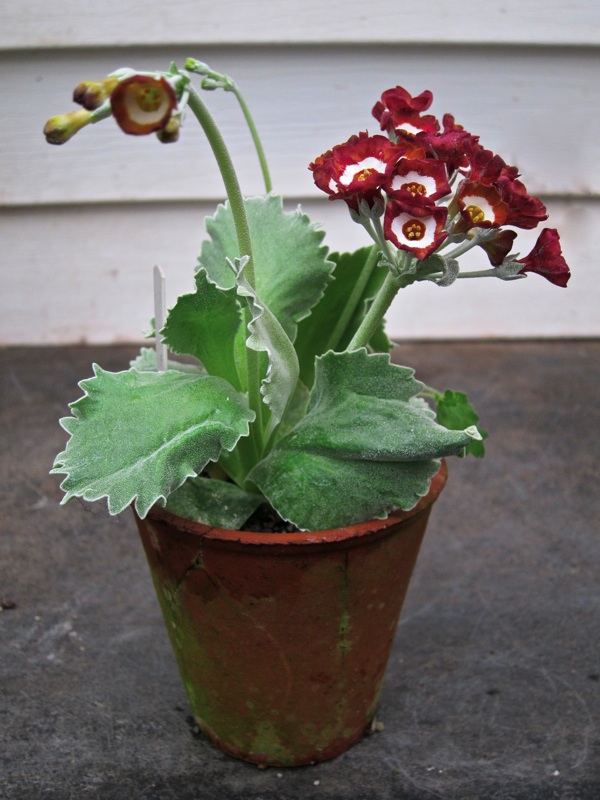
Fanny Meerbeek – show-fancy auricula

Piglet – double auricula

Basuto – gold-centred alpine auricula

Blue Velvet – border auricula

Patricia Cleveland-Peck in her greenhouse.

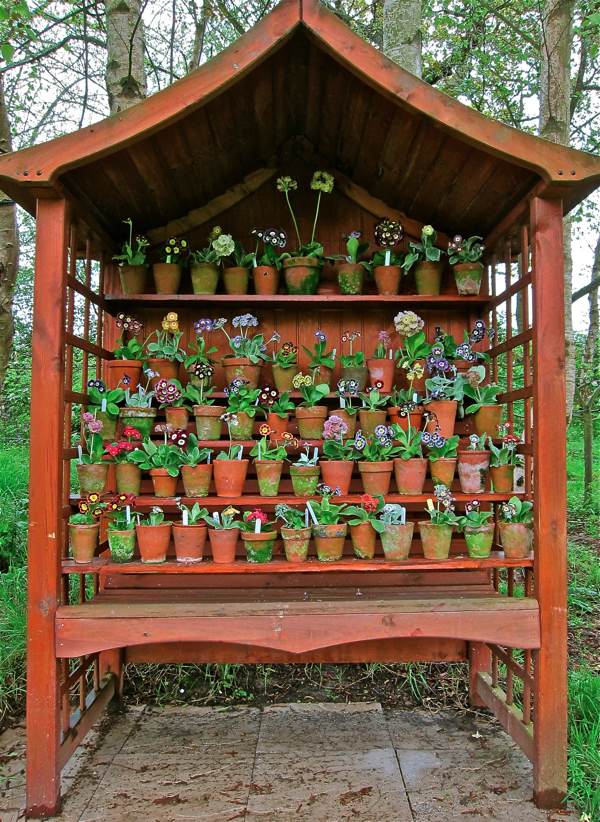
Next year, I hope to arrange to bring Patricia Cleveland-Peck’s auricula theatre to display in Spitalfields and invite you all to see it, but in the meantime I recommend her magnificent and authoritative work Auriculas Through the Ages, available here
You may also like to take a look at
Faulkner’s Street Cries
These cards produced by W. & F. Faulkner Ltd and issued with Grenadier Cigarettes in 1902 are the latest discovery in my ongoing exploration of the myriad versions of the Cries of London created down through the ages. Even the most sentimental images can reveal something of the reality of the working lives of hawkers, and I especially like this precisely observed set of surly, cantankerous portraits which convey the relentless nature of street trading with a rare mixture of wit and affection.

Flypaper seller.
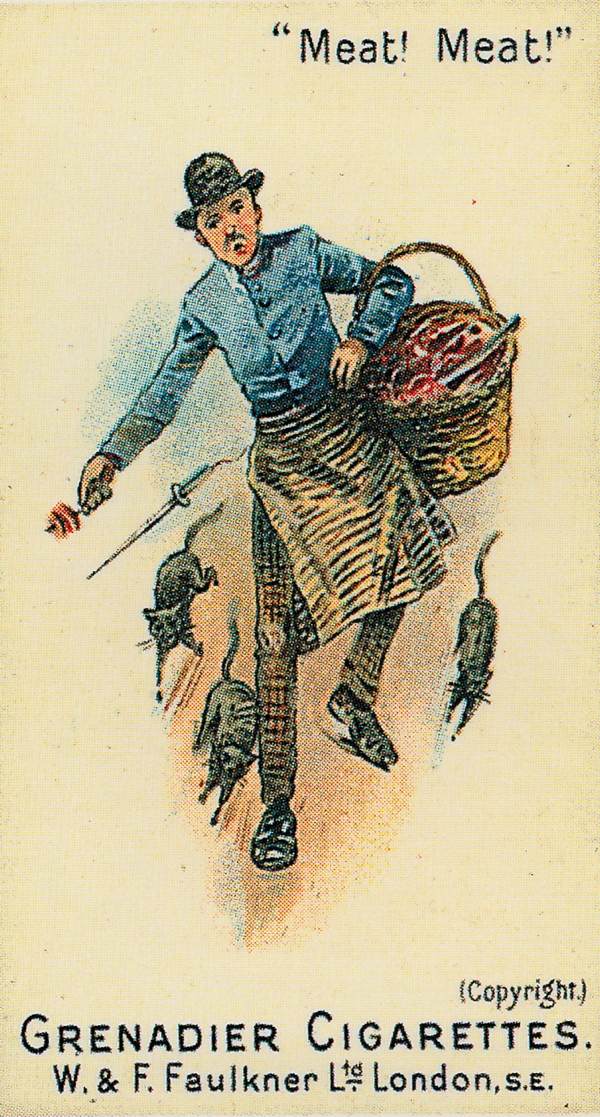
Cats’ meat man.

Ice cream seller.
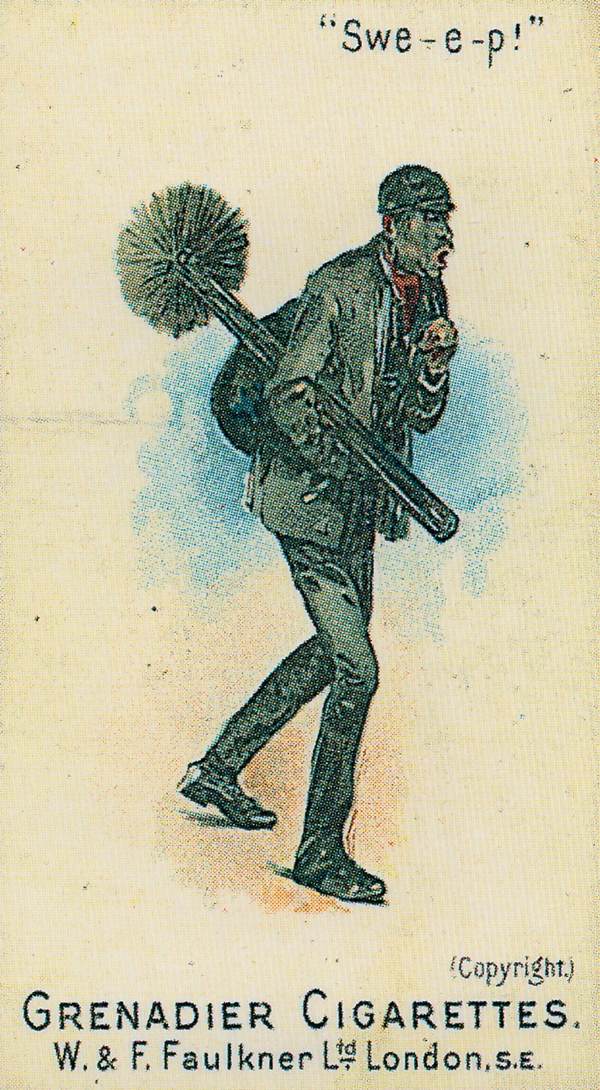
Chimney sweep.

Knife grinder.
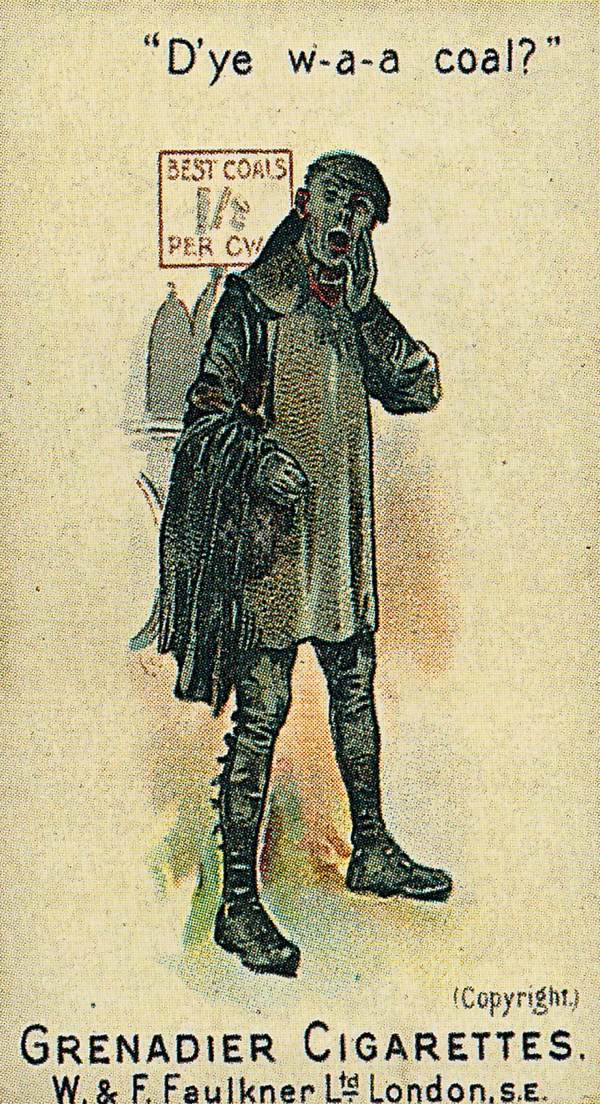
Coalman.

Baked potato seller.
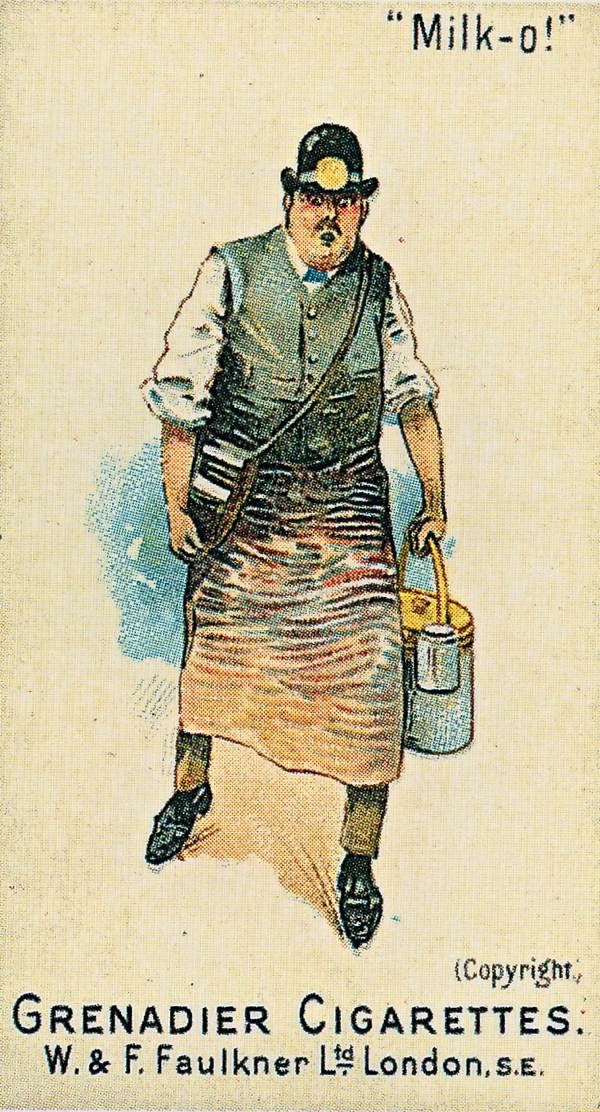
Dairyman.

Lavender seller.

Newspaper seller.

Novelties seller.
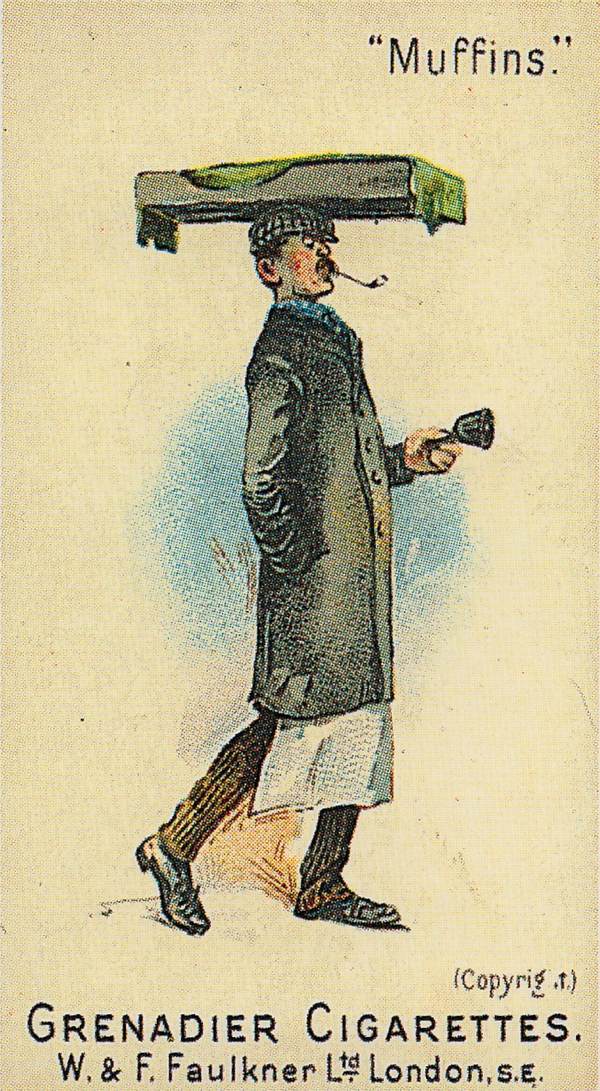
The muffin man.
You may like to take a look at these other sets of the Cries of London
William Craig Marshall’s Itinerant Traders
H.W.Petherick’s London Characters
John Thomson’s Street Life in London
Aunt Busy Bee’s New London Cries
Marcellus Laroon’s Cries of London
More John Player’s Cries of London
William Nicholson’s London Types
Francis Wheatley’s Cries of London
John Thomas Smith’s Vagabondiana of 1817
John Thomas Smith’s Vagabondiana II
John Thomas Smith’s Vagabondiana III
Thomas Rowlandson’s Lower Orders
The Printer, the Sculptor & the Huguenot
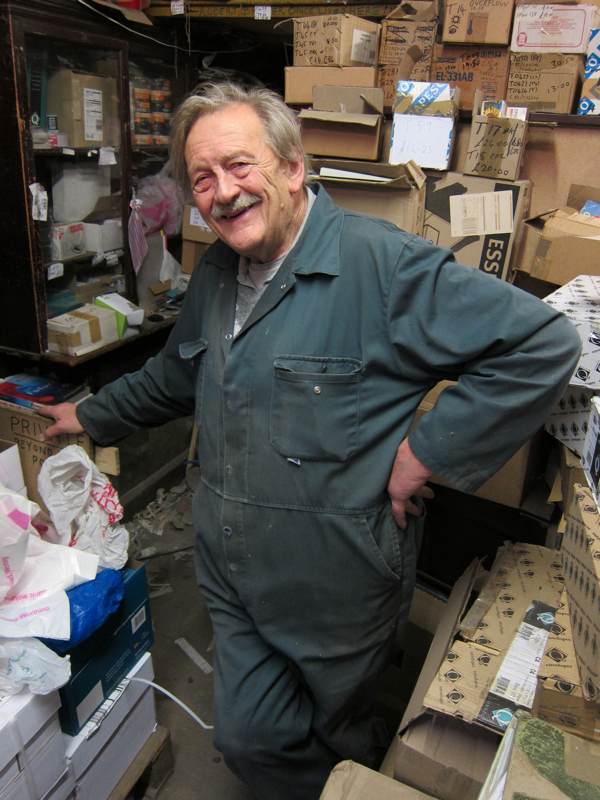
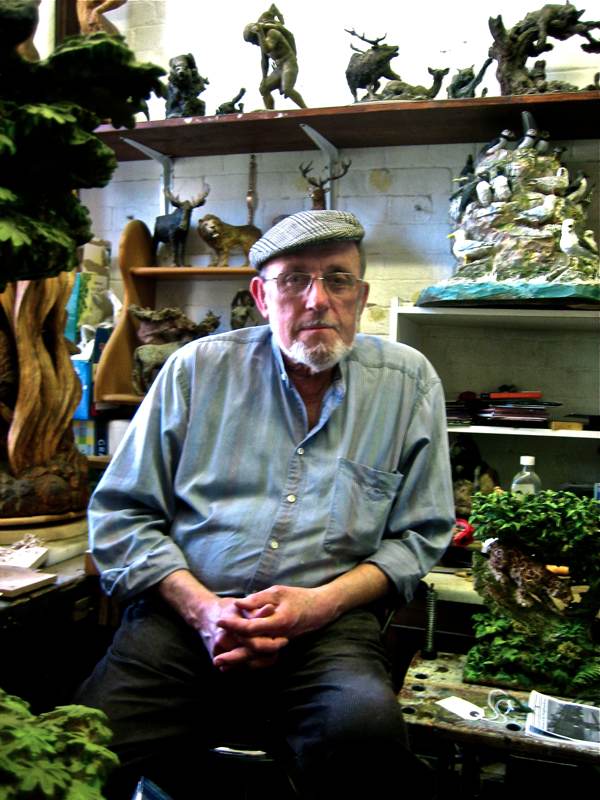
Please join me for a CHIT CHAT at LXV Books, 65 Roman Rd, Bethnal Green next Thursday 17th May at 7pm with my good friends Gary Arber, the printer, Roy Emmins, the sculptor, and Stanley Rondeau, the eighth generation Huguenot.
Tickets are £3, available from LVX Books 020 8983 2087 or email admin@lxvbooks.com. Wine will be served and books signed afterwards.

Crudgie, Motorbicycle Courier
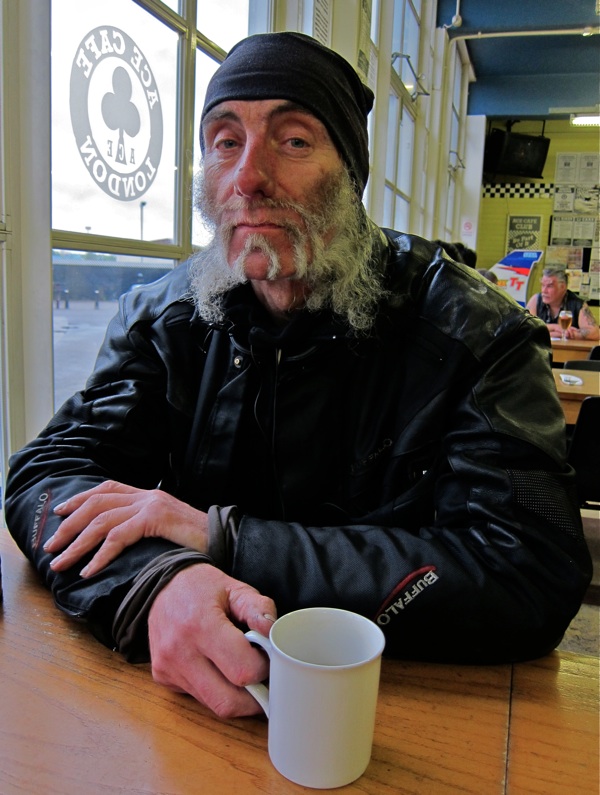
Behold the noble Crudgie!
I have been hoping for the opportunity to catch up with Crudgie ever since we were first introduced at the Fish Harvest Festival last year, so this week I was delighted to accept his invitation to meet at that legendary bikers’ rendezvous, the Ace Cafe on the North Circular.
Over six foot six in height, clad head to toe in black leather, with extravagant facial hair trained into straggling locks and carrying the unmistakable whiff of engine oil wherever he goes, Crudgie makes an unforgettable impression. Crudgie’s monumental stature, beady roving eyes and bold craggy features adorned with personal topiary, give him the presence of one from medieval mythology, like Merlin on a motorbike. Yet in spite of his awesome appearance and gruff voice, I found Crudgie a warm and friendly personality, even if he does not suffer fools gladly, issuing fearsome warnings to pedestrians not to get in his way.
“I’m only called by my surname, Crudgington. “Ington” means family living in an enclosed dwelling, and “crud” is a variation of curd, so they were probably cheesemakers. There’s a place in Shropshire named Crudgington, but there’s nobody buried in the church with that name, nobody living there with that name either and nobody that lives there has ever heard of anybody called Crudgington. The shortened version of my name came about when I went to play rugby and cricket where everyone gets a nickname ending in “ie.” I’ve swum for the county, and competed as an athlete in the four hundred metres and javelin, as well.
I grew up in Billericay, famous for being the first place to count the votes in the General Election. My father was builder called Henry but everyone knew him as Nobby. I went into banking for ten years in Essex but I couldn’t get on with it, even though I was the youngest person ever to pass the banking exam. So then I went to work in insurance in the City, I worked for Barclays for ten years and played for their rugby team until they couldn’t afford to fund it anymore. In the nineteen nineties, I felt I was getting nowhere in insurance so I started motorbicycle couriering. I got a motorbike from my parents for fifteenth birthday, so I’ve always been a biker and I do thousands of miles on it every year, going to sporting events, meet-ups and scrambles.
It’s the camaraderie of it that appeals to me, meeting up with your mates, but unfortunately you are perceived as an outlaw. I have been stopped eighty-nine times in twenty-one years by the police. Apparently, couriers are the second most-disliked Londoners after Estate Agents. It’s because people get scared out of their wits when they are not thinking where they are going and a courier brushes by and gives them the shock of their life. People should look where they are going. If you are going to hit a pedestrian, it’s best to hit them them straight on, that way they get thrown over the handlebars. A few cuts and bruises, but nobody gets killed by a motorbicycle. Whereas if you veer to either side to avoid them, the danger is you clip them with your handlebars and it sends you into a tailspin, and you fall off.
I’m a member of the most important biker club – The 59 Club, set up by Father Bill Shergold in 1959. He was a vicar who was a biker, and he wanted to bring the mods and rockers together, so he opened up in a church hall in West London in 1961 and on the first day he had Cliff Richard & The Shadows performing there. Then in 1985, it moved to Yorkton St, Bethnal Green. It was open three days a week, and you could go in and have a cup of tea after work. They had a bike repair workshop for maintenance, two snooker tables and a stage where lots of bands performed. And once a year, you could go to a church service. They moved to Plaistow now, but everybody that was in it is still in it – it’s the largest bike club in the world.
There’s only a few British couriers left, most are Brazilians now. It used to be Polish until they earned enough money and all went back home. Once upon a time, there was a lot of money in it though it’s gone down thanks to technology, but the beauty is you can work when you like and you get to go interesting places that you’d never go otherwise. I’ve picked up the Queen’s hair products from SW3 and driven into Buckingham Palace to deliver them. I do a lot of deliveries for film companies and quite often I stay around on set to watch, especially if it’s in some interesting stately home that you wouldn’t normally get to visit. If I have to go somewhere on a journey out of London, I always take time to visit the museum or castle or whatever there is to see.
I’ve worked from nine until seven for years, but I’ve decided I’m only going to do nine thirty to six because I’m getting old. If I had independent funds, I wouldn’t be riding anymore. I haven’t missed a day in quite a few years and I’ve only ever had one week off in twenty years…”
When I arrived at the Ace Cafe, I saw Crudgie’s bike outside and I spotted him through the window, head and shoulders above his fellows. Inside, a long counter ran along one wall, facing a line of windows looking out on the North Circular, and the space in between was filled by tables, scattered with helmets to indicate those which were reserved by customers. Once Crudgie had greeted me with a firm bikers’ handshake, we settled by the window where he squeezed every drop from his teabag to achieve a beverage that was so strong it was almost black. A characteristic Crudgie brew.
Like the questing knight or the solitary cowboy, Crudgie has no choice but to follow his ordained path through the world, yet he is a law unto himself and the grime he acquires speeding through the traffic is his proud badge of independence. A loner riding the city streets with his magnificent nose faced into the wind, Crudgie is his own master.
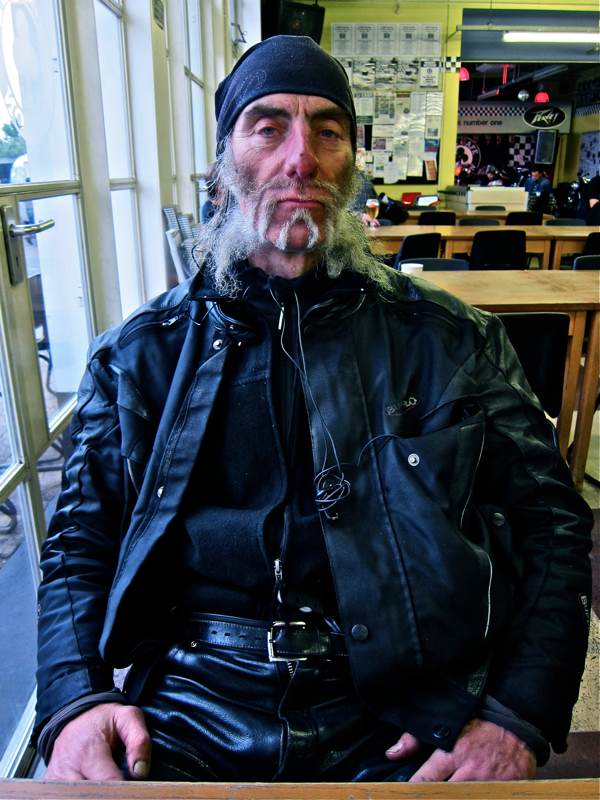
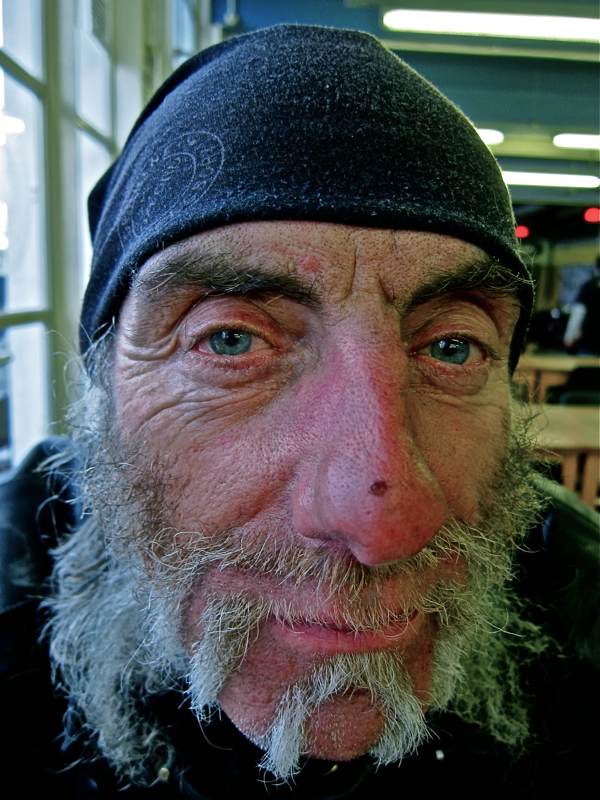

Crudgie at the Ace Cafe on the North Circular. “- Like Merlin on a motorbike.”
You may also like to read












