An Old House In Whitechapel

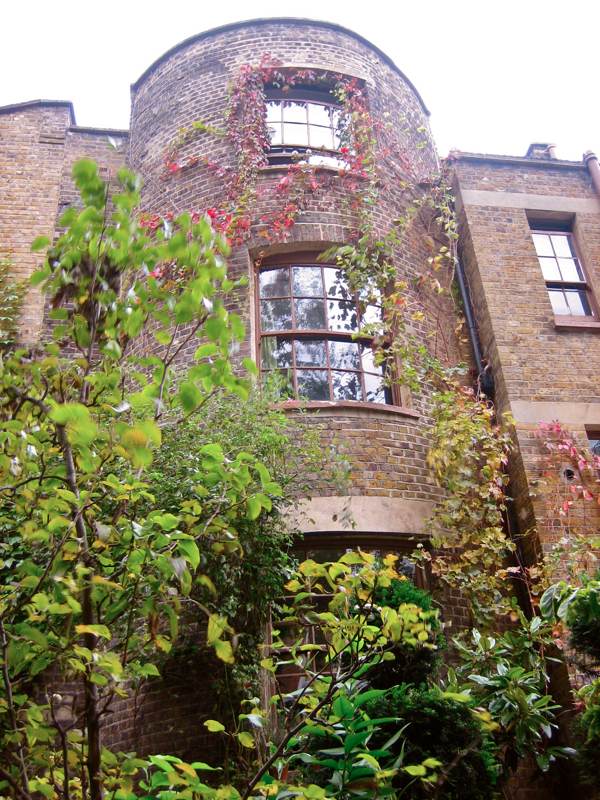
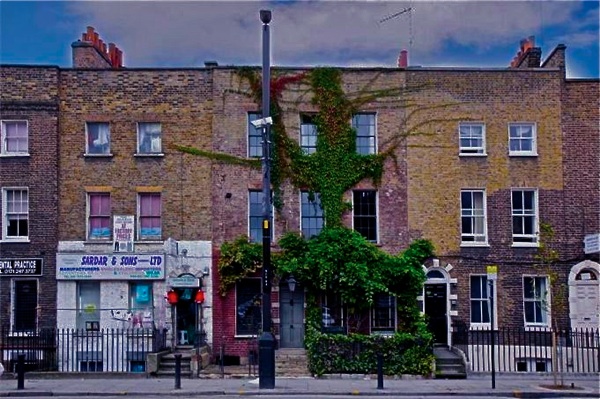
There is a magnificent old house in New Rd in Whitechapel, rich in patina and heavy with creepers, yet surrounded on either side by offices and workshops. It appears an untouched survival from an earlier age, and I half-expect to see an old, old man climbing the worn steps, the original resident of the house where nothing has changed. He is now over two hundred years old and oblivious to the transformation in the world around him. I shall call him Mr Redman.
New Rd follows the line of a rampart constructed as the Eastern defence of the City of London at the time of the English Civil War, and the Whitechapel Mound – which formerly stood upon the site of the Royal London Hospital and to which some infer mystical significance – was a bulwark attached to this earthwork. Around 1750, the rampart was flattened and laid out as New Rd where speculative builders constructed terraces and sold them to sea captains and merchants from the nearby docks. Gloucester Terrace, containing the old house in question, was built in 1797 – facing fields to the East and with mews to the rear, both gone long ago.
The first recorded owners in the early nineteenth century were the Redman family who made their living in the shipping business. They had three sons – a sea captain who became one of the elder brethren at Trinity House on Tower Hill, another who was a ship owner and a third who started a chandlery business in the basement kitchen, establishing independent premises for his enterprise in the 1840s. By the 1850s, the family had prospered and moved to Kentish Town, and by the 1880s the house was Jewish owned, as the surrounding streets became a ghetto for those fleeing for their lives from Eastern Europe. The ground floor was opened up as a tailoring shop and through the twentieth century the upper floors also became clothing workshops as Pakistanis and then Bengalis arrived, creating a reputation for New Rd as the prime location for the manufacture of school uniforms.
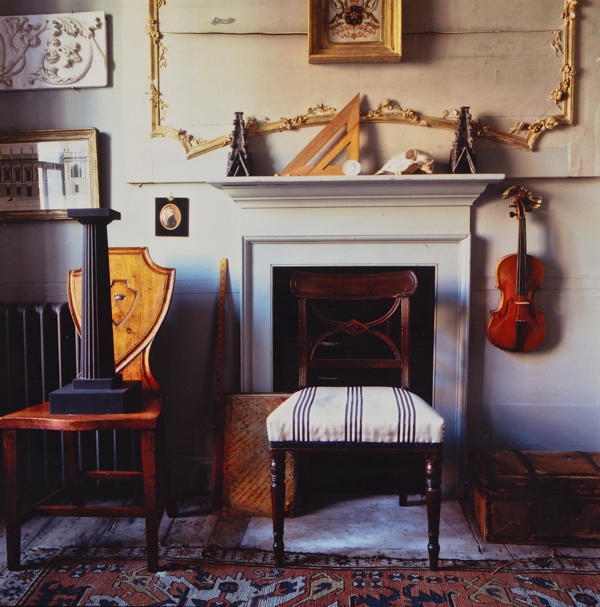
When Tim Whittaker, director of the Spitalfields Trust, bought the old house from a maker of twin sets, it had not been inhabited for more than thirty years. Tim took up the nineteenth century floorboards on the ground floor, laid down when it was converted to a shop, and he found the worn Georgian floor beneath, with lines that indicated the former position of the partition walls, allowing him to reinstate them in an arrangement close to the original. With a lifetime’s experience of working with old buildings, both for the National Trust and more recently in Spitalfields, Tim set out to make no impositions upon the house and, after ten years of renovations, his achievement is to have restored it as a seamless whole.
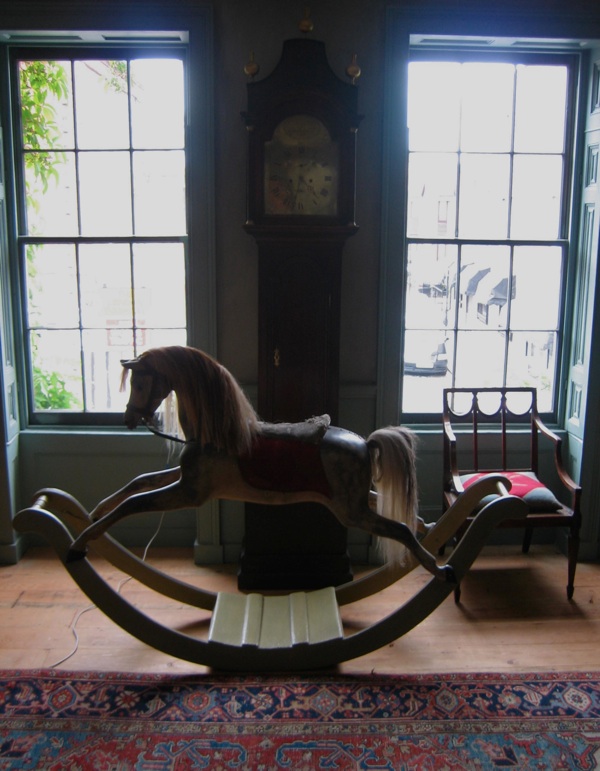
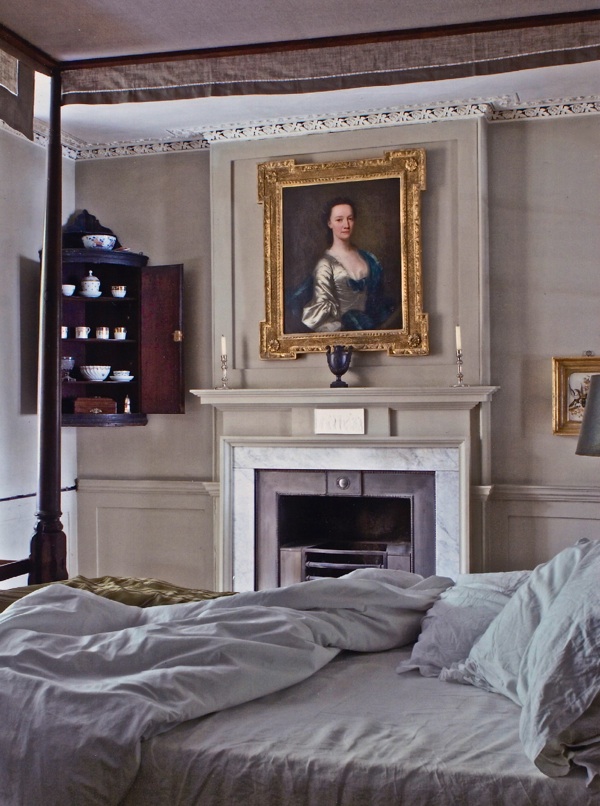
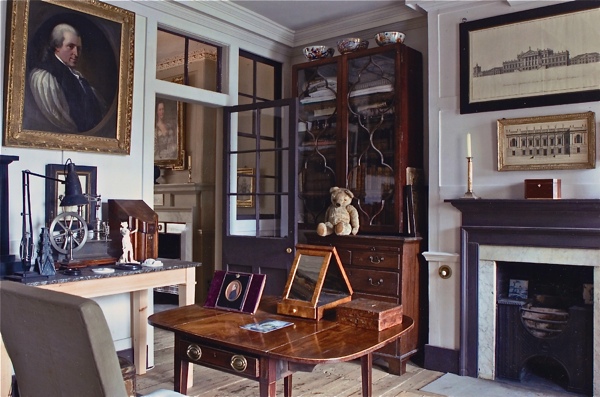
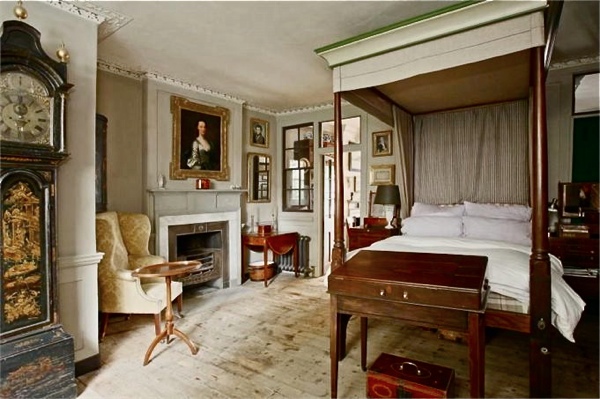
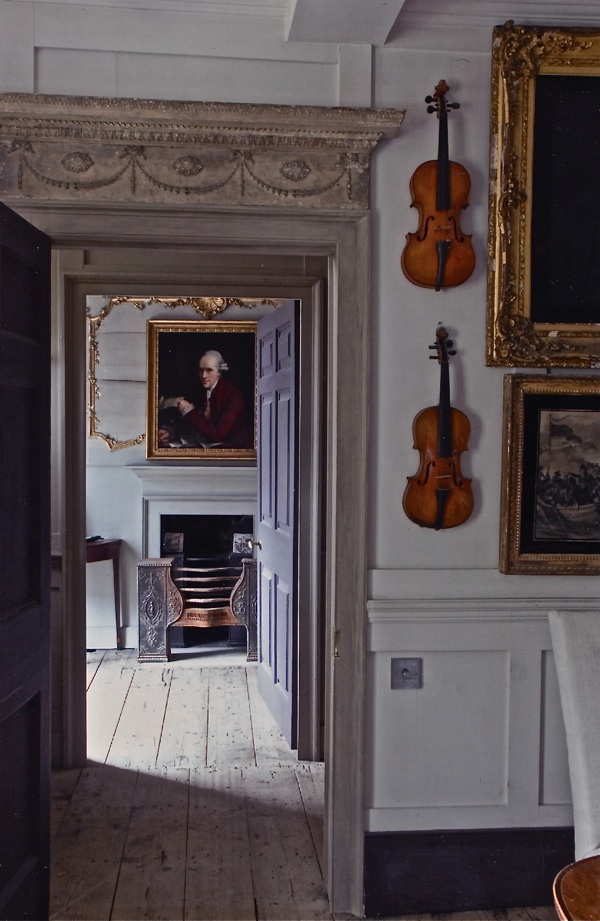
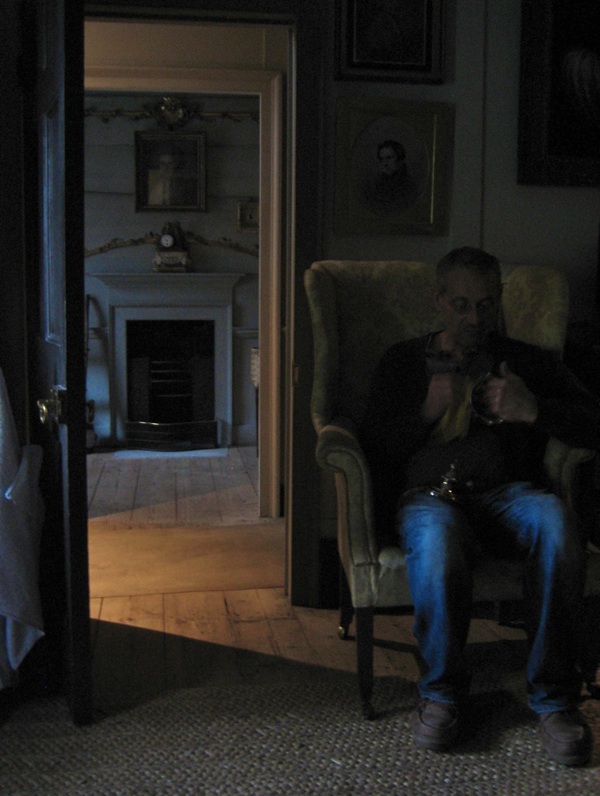
With a trained eye, Tim sought to replace the missing fireplaces with suitable examples of the period and where possible he used salvaged timbers to harmonise with the textures that two centuries of use have imparted to this dignified old edifice, which has been both workplace and dwelling. Offering interesting, idiosyncratic spaces and subtle eye-catching detail, this was never a grand house but an everyday living environment, full of charm.
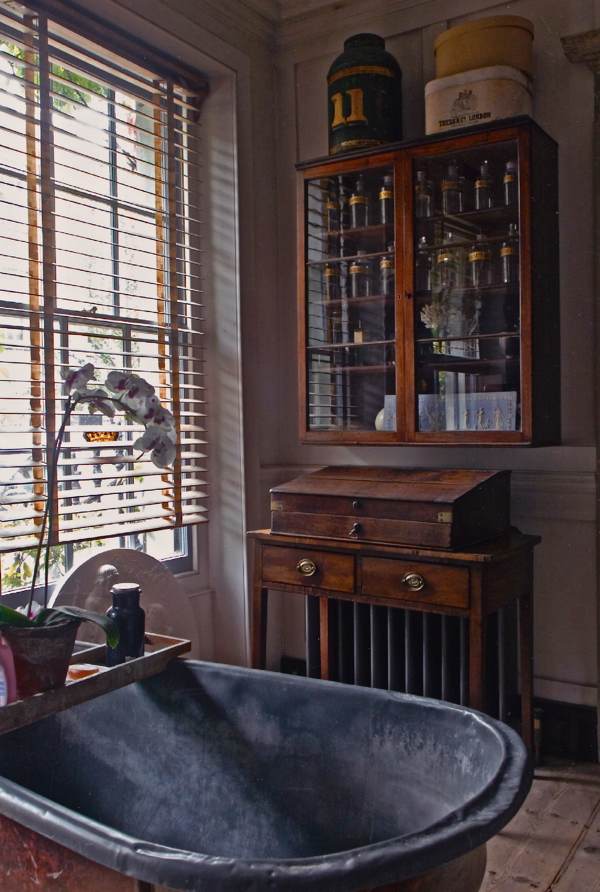
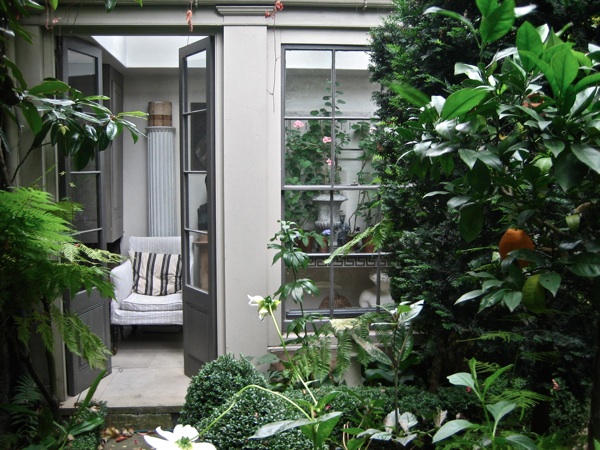
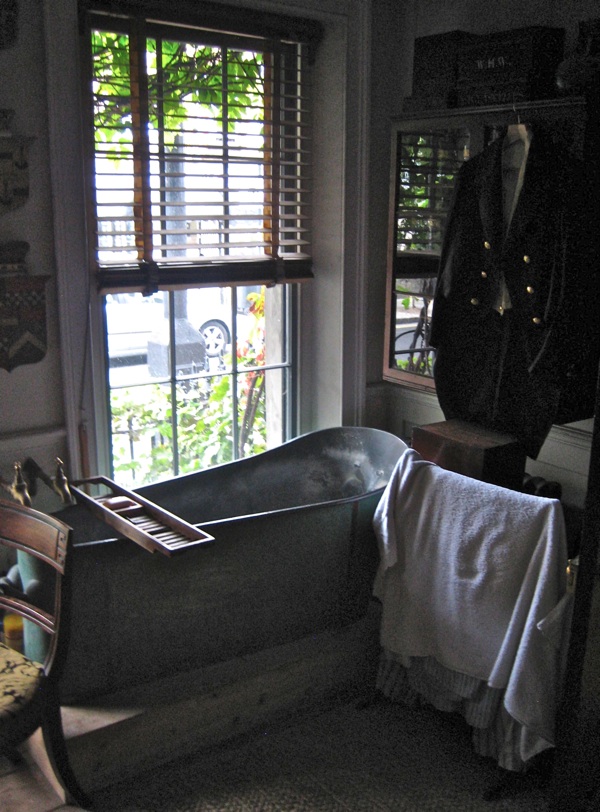
Reflecting this utilitarian spirit, Tim has installed a bath in the first room on the ground floor and delights to sit here, soaking in hot water and peering out the window at the ceaseless parade of life, up and down New Rd. Yet step through into the room at the back and sounds of the street fade away. Here, fine eighteenth century plasterwork – with details of ears of corn and oak leaves – draws your eye, leading you to a drunken bay window, tilted to one side, and creating the distinct impression of being upon a ship. Only, instead of looking upon an expanse of ocean, you discover a dense garden where dahlias grow six feet high and oranges ripen in the climate protected between high walls.
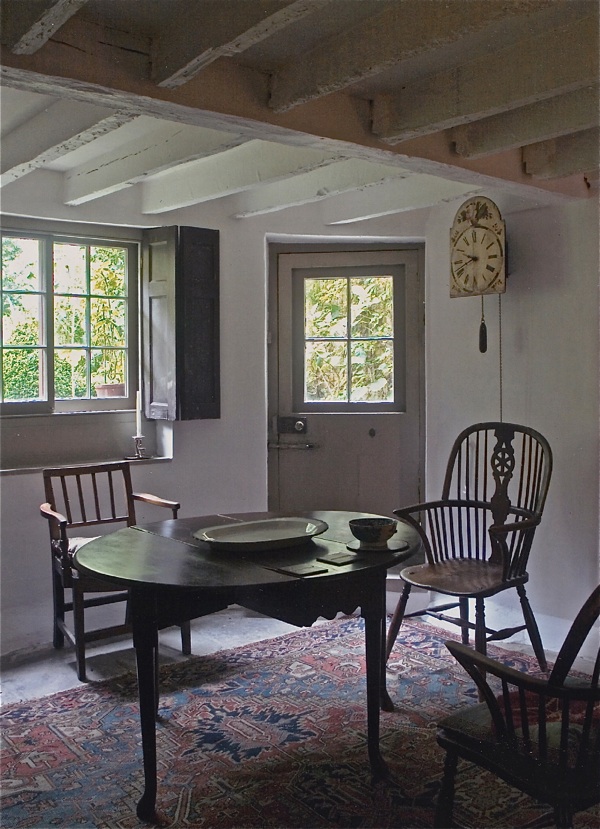
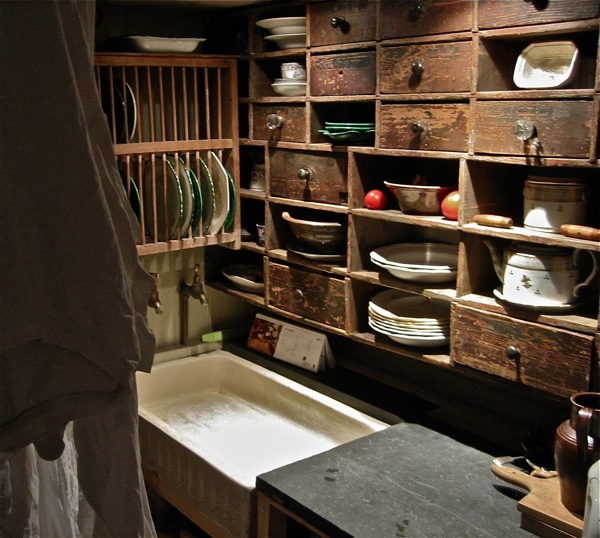
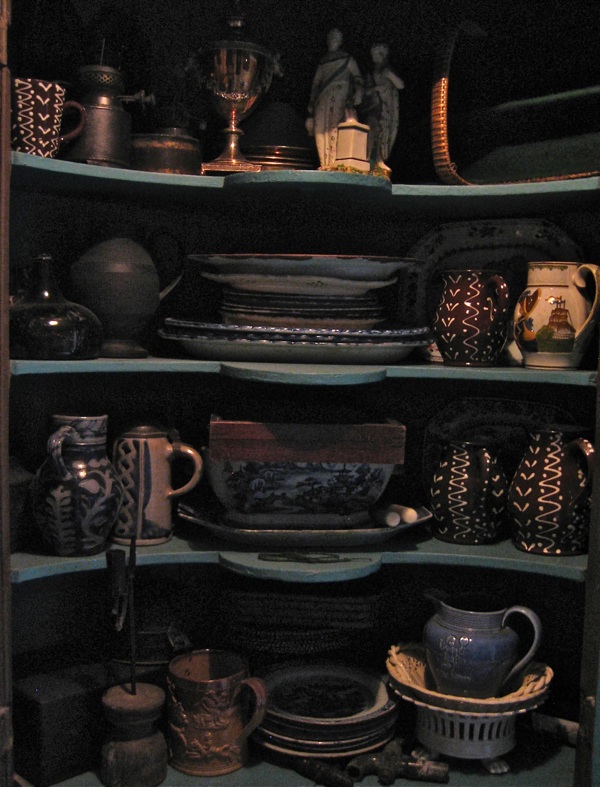
Step down to the basement, where Tim lifted the flagstones that were laid directly upon earth in rooms just six feet high, digging deeper to lay a damp course and lower the floor, before relaying them and creating the cosiest spaces in the house. “When I started, I didn’t have much money, so I took my time and the house told me what it should be like – it led me, and I stopped telling it what it should be,” explained Tim with a bemused smile, as we sipped hot tea at the kitchen table whilst peering out to the dark clouds lowering over Whitechapel that morning. “I wanted the house to work as it did in the early years of its life in the first decades of the nineteenth century, because that was the period I felt romantic about,” he admitted to me with a blush at his own sentiment, casting his eyes around lovingly at his glorious collection of old china and portraits that fills the house.
Amidst the clatter of Whitechapel, the old house in New Rd stands as an enclave of peace where – thanks to Tim Whittaker – the world of two centuries ago still lingers and where, if old, old Mr Redman should return and climb the worn steps to put his key in the lock after a long, long voyage, he would discover his house shipshape and welcoming – just as he might expect it.

Photographs 3,4,5,9 & 10 © Tim Clinch
You may also like to read about
The Romance of Old Whitechapel
or
The Return Of Norah Pam

Norah Pam first came to Spitalfields in August 1931 and made a return visit recently, just to see how things were ticking over in her old neighbourhood eighty years later. Here you can see her standing outside 11 Victoria Cottages, where her great-grandparents Lewis Carr, a silk dyer, and his wife Louisa came to live with their three children, shortly after the terrace was built in the 1860s. Norah was delighted to see that the gardens are well kept – just as she remembers them in her childhood in the 1930s.
By 1881, the family had moved to the flats at the rear of the cottages, known as Albert Family Dwellings and it was there that Norah grew up. She still has vivid memories of these formative years in Spitalfields, even though she only came to live in the Dwellings at the age of six and left in 1940 at the age of fifteen when the bombing of London made it too risky to stay.
It was my pleasure to introduce Norah to Spitalfields resident Mavis Bullwinkle who also grew up in Albert Family Dwellings in the 1930s, which was the cause of considerable mutual excitement since – although Mavis does not remember Norah – Norah, being seven years older, remembers seventy-nine year old Mavis being born. “You were such a little baby,” she recalled sweetly, causing Mavis to blush, “I remember when your sister was born, she had golden curls and blue eyes and everyone doted on her, and my mother said to me, ‘Pay some attention to the little girl standing at the side of the pram,’and that was you.”
This was a cause of great amusement to Mavis, who shrieked with girlish delight to confirm this unexpected recollection. “Yes, that’s right” she exclaimed in surprise, “My hair was was straight as die!” Yet all these years later, this conversation was evidence that Norah had taken notice of her mother’s instruction. “I can see you now coming down the stairs beside the pram,” she added, thinking back across time, on the occasion of meeting someone she had not seen in more than seventy years.
We all sat in a garden at Victoria Cottages and enjoyed a sunny morning chatting together, while Norah brought out her family photographs, which span dizzying amounts of time, and beguiled us with her account of her Spitalfields childhood.
We moved into a flat in Albert Family Dwellings to be close to my grandmother – the family had been in Spitalfields since the 1840s.
I went to All Saints School in Buxton St. Some of the children were quite poor. I had a friend whose father was a ganger – a roadworker – and if it rained he got no work and he had no money. Several children had parents who were builders, they couldn’t work in bad weather either. Some were railway people, and if they had big families they couldn’t manage. My friend’s family worked in the parcels office, they were comfortable, they even had a holiday because they got free travel. There was a lot of poverty because in 1931 all public service workers had a pound cut from their pay – a wage of three pounds and five shillings a week went down to two pounds and five shillings a week. It was a significant amount of money and people had to cut back.
I wasn’t allowed to play outside. I was an only child and very protected, but I caught Scarlet Fever. I was taken to Homerton in the fever ambulance which was grey. My parents weren’t allowed to visit. They would bring a parcel each week and stand outside. The flat was sealed and the bedding taken away for fumigation, and my father had to have three days off work because it was so contagious. Then after six weeks, they said I had Nasal Diptheria and I had to stay another six weeks, so it was very harrowing for all of us. My mother cried when people asked how I was.
When the war came, everyone was evacuated but, because I had been seriously ill, I pleaded with my parents to let me stay at home, and there was no school, so I had a heyday. I remember the bombing of the docks. On that day, I went on my own to Dalston on the bus to buy a skirt at Marks & Spencer. The air raid siren went at two o’clock and we were told to get off the bus and go to a shelter. Then, at four, I bought my skirt and walked back to Spitalfields.
I wanted a pair of silk stockings to go with my skirt and in Hanbury St there was a little shop that sold everything. The owner was Noah Cohen, so I went to his shop and there was this little old lady and her daughter who was in her thirties. Noah let them go into the back to change and he told me their story. The girl had been in the bath when the air raid siren went and her mother called her to go to the Anderson shelter. The house was in Jamaica St and it got a direct hit, but they were saved by the shelter and all she had left was the dress she put on when she got out of the bath. Her mother had come to buy her a set of underwear to go to a night shelter in a school, and he let her change into her new clothes. I often wondered what happened to that woman because a lot of the schools were hit.
I went home and, by the time I got to the Cottages, I was running because I could smell the fires burning at the docks. And, as my mother opened the door, the people upstairs were coming down for safety. We sat in the doorway and my mother made tea while the bombs fell. The German planes made a particular noise. They got nearer and nearer and nearer, and you heard the bombs dropping, and you thought, “This is us,” and then they went over.
The people in the building across the road all left, and they set their cats and dogs loose. We found a dog in the street and my mother called it “Victory “because she said, “We’re going to have victory! They can continue bombing but we won’t give in. They can do what they like.” We kept him for seven years and he died on 31st May 1946, on my twenty-first birthday, in his sleep.
Then, in 1940, a landmine fell on the Crown & Leek in Deal St and they evacuated a mile around, and that’s when we all decided to leave. But even after we moved out, I was always coming back to see my friends. I missed by friends. And my father said, “But I thought you wanted a house with a garden?!”
Today, the Albert Family Dwellings have long gone, demolished in 1975. Mavis Bullwinkle who lived in the Dwellings until the end and now lives a quarter a mile away, told me she had not been over to this area of Spitalfields for thirty years, “Because I miss them so much.” The pair of terraces named Victoria and Albert Cottages, and St Anne’s Church, are all that remain now of the world that Norah and Mavis knew in their childhood. Yet for a couple of hours it came alive again, as they sat in the garden and shared recollections of the two old ladies who ran the sweetshop across the road – gone more than half a century ago – the mission hall that moved to Bethnal Green in 1935, and of the teachers at Sir John Cass School where they were both pupils before the war.
In contrast to the general assumption of poverty in the East End, Norah and Mavis’ history reveals a more complex social picture of people of different incomes living in close proximity. Norah and Mavis were also keen to emphasise the self-respecting ethic they grew up with.“They think we were all prostitutes and drunks, and we were dirty, but our working class morality was strong,” declared Mavis, turning passionate, “We didn’t think we were poor, we had enough to eat and we never wasted anything.” A statement which prompted the exchange of a glance of unity between the two women.
Then it was time to say goodbye – once Norah Pam and Mavis Bullwinkle had swapped numbers, because a new friendship had been kindled that morning. Norah took one last glance at the gardens of Victoria Cottages, where her great-grandparents lived one hundred and fifty years ago, and looked up to the space in the sky where Albert Family Dwellings once stood. “I had a happy childhood here,” she said.
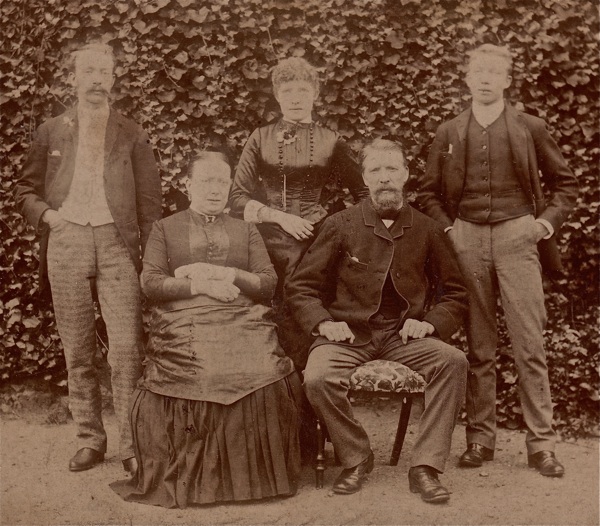
Norah’s great grandparents, Lewis and Louisa Carr, and their children, Lewis, Louisa Ann and George – the residents of 11 Victoria Cottages, Spitalfields. On the reverse of this photograph Norah has written, “When my great-grandfather became a widower, he went to lunch each Sunday with my gran, always arriving wearing wearing a tall silk hat.”

Norah’s great uncle, Lewis Carr. He became a vaccination officer for Smallpox and lived on Cheshire St.

Norah’s grandmother, Louisa Ann Carr as a young woman. She worked at home sewing waistcoat buttons for Savile Row.

Norah’s grandmother, Louisa Ann, as an older woman at Albert Family Dwellings.

Norah’s parents’ on their wedding day.

Norah’s father Edward Samuel Simmonds in 1939.
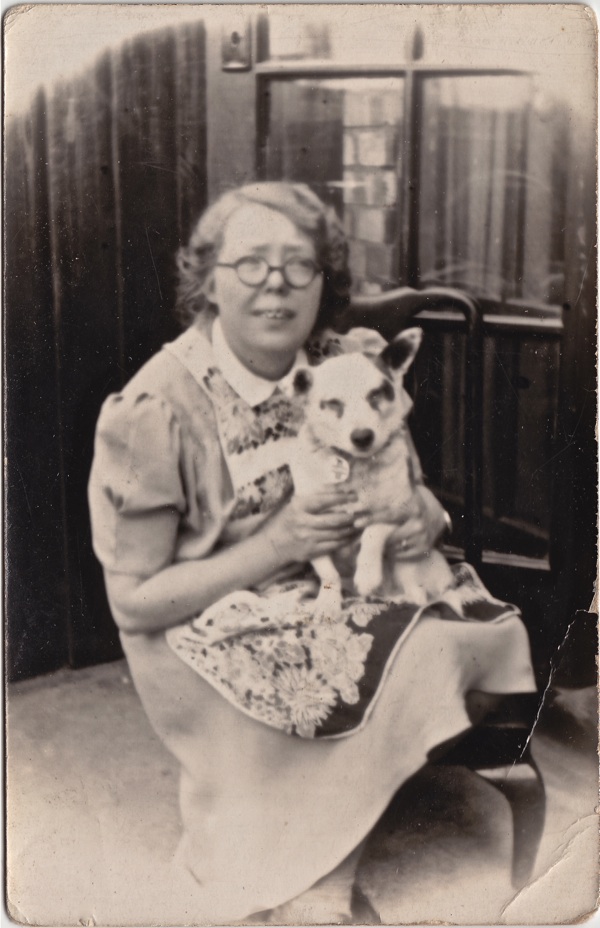
Norah’s mother, Violet Louisa Simmonds, with their dog Victory.

Norah’s class at All Saints’ School, Buxton St in 1934. Nine year old Norah is in the check dress with spectacles, third from the right in the first row seated on chairs. Norah’s glasses were from Mr Stutter, the optician in Bishopsgate.

Norah in 1940, aged fifteen.

Norah and Mavis both grew up in the Albert Family Dwellings in Deal St that were demolished in 1975.

The last May Queen at Sir John Cass School in 1939, Mavis is third from the right in the front row of girls standing.

Mavis’ Aunt Ada and her mother Gwen in Deal St outside the Albert Family Dwellings in the 1920s.

Norah Pam & Mavis Bullwinkle at Victoria Cottages.
You may like to read my profile of Mavis Bullwinkle, Secretary
Among the Lightermen

At the bottom of Anchor & Hope Lane, you will find the last lighterage company on the upper reaches of the Thames. Begun in 1896 as William Cory & Sons, delivering coal to London and filling the empty barges with rubbish for the return journey, today Cory Environmental is a vast corporate endeavour, compacting the capital’s waste, transporting it downriver by barge and incinerating it at Belvedere in Kent.
These “rough goods,” as the lightermen term them, are now the only commercial cargo transported on the Thames, once the primary thoroughfare of our city. Yet in spite of all the changes on the river, the task of the lighterman has remained essentially unchanged for centuries. Originally, each barge or “lighter” was rowed or punted by one lighterman with a boy to assist, lightening the cargo of merchant ships delivering to the Port of London. In the nineteenth century, the introduction of steam powered tug boats allowed the lighters to be towed in multiples, but the equation of one-lighterman-one-lighter persisted. And when I joined John Dwan – skipper of the tugboat Recovery – for a day, his crew consisted of mate, engineer and two lightermen to go aboard the barges, manoeuvring and leashing them as required.
We set out upriver from Charlton Pier under an overcast sky, with barges of empty containers in tow for delivery to the depots at Walbrook in the City of London, Cringle in Battersea and Wangas in Wandsworth. “It’s a contact sport! You don’t put your hands in your pockets – that’s the first thing you learn,” John declared with relish when the sturdily-built tug lurched and rolled as the barges were shunted around prior to departure, bouncing off the rubber enforced sides of the boat and clanging together with a boom which resonated like thunder. Starting on the river at age fifteen, becoming a skipper at twenty-one, John has held licences as both waterman & lighterman since 1972, like his father Albert, and grandfathers Gosso Williams and Charlie Dwan before him. And going back as far as he knows – for at least four generations – all the men in John’s family worked afloat. “Most of the people you speak to on the Thames will have ancestors who worked on the river.” he promised me.
Once we reached central London, the clouds parted and – apart from occasional passenger boats – we had the expanse of sparkling water to ourselves. Coming under Hungerford Bridge in the small tugboat just above water level, the Wheel loomed over us on the left while Big Ben and the houses of Parliament rose up to the right, seemingly to create a theatrical spectacle for our sole enjoyment, at the centre of the river. “It’s the best way to see London,” said John in understatement, thinking out loud for my benefit.
We were joined by mate John Hughes, John Dwan’s long time accomplice on the river. They were at school together, started out afloat together as pleasure boat skippers at the age of twenty-one, and now both have sons working on the Thames. With a riverine ancestry as long as his partner, John Hughes can talk of his great-grandfather who was in the great docks strike of 1889. “Years ago there were thousands of us lightermen, if we weren’t happy, the docks shut down. We didn’t really worry what we said, but these days we’ve had to tone it down a bit.” he confided to me with a playful grimace. “The older lightermen could navigate their way in the fog by smell, there were three hundred miles of wharf space then and every one smelled differently. I remember, when I was a boy, coming out of Barking Creek once at three or five in the morning and sitting in the back of the boat, when I looked behind me it was daylight while in front of me it was night, pitch black, like the end of the world. When it was cold, the skippers used to give you a tot of gin…”
Thus a pattern was set for the day – of leisurely discourse and wondering at the ever-changing spectacle of the river, punctuated by bouts of intense activity, shunting the barges at each depot. Every barge has tethering posts at either end and on each side, permitting them to be shifted in any direction by a tug boat. Yet such manoeuvres were rarely straightforward, with plenty of work for the lightermen, walking up and down perilously narrow ledges along the sides of the barges with ropes – attaching and reattaching them to different corners of the barge so the tug could pull the vessels in different directions and thereby achieve the desired position.
Dexterity in handling boats is a prerequisite in this job and these men have been doing it their whole lives, coaxing five hundred ton barges to travel in exactly the right direction. London’s Victorian bridges were built for the fifty ton barges of their day which gives John Dwan little margin for error when towing several of his vessels through at once. Although he makes it appear effortless, it was apparent that the consequences of an error would be disastrous. “The industry hasn’t changed, the barges just got bigger!” he quipped.
“We’re river men and we don’t want to go to sea.” John Dwan informed me, speaking for his crew, outlining how the lighterman gets to enjoy life afloat and go home to his family at the end of the day. “The only difference between us and a lorry driver is the road don’t change.” he proposed unconvincingly.
As we returned down the Thames with full containers, I looked up at the city workers crossing bridges. We were within metres yet they did not see me, because we were in separate worlds – and I understood how the life of a lightermen encourages a propensity for independent thought, observing life from the water. We passed Charlton, where we set out, and travelled on through the afternoon to the vast complex at Belvedere in Kent, where red cranes like giant spiders lifted the containers from the barges. Even six months ago, London’s waste had been creating landfill at Mucking but now, after incineration, the metal can be recycled and the ashes are used to manufacture breeze blocks, which can return to rebuild the city.
After so many generations, the lightermen feel the loss of all the wharves which once lined the Port of London, leaving nowhere to unload even if someone wanted to return to river transport for freight. River transport should be the ideal way to take lorries off the road and transport commodities into London, but the removal of the infrastructure makes such a move impossible, at present. “We’re sliding into history,” John Hughes told me, shaking his head as we sailed in the lone vessel down the empty river where once was the busiest dock in the world. Yet the lightermen are still here for the foreseeable future, and keeping their hands in, lest the tide should change in their favour.


John Dwan, skipper of the tugboat Recovery


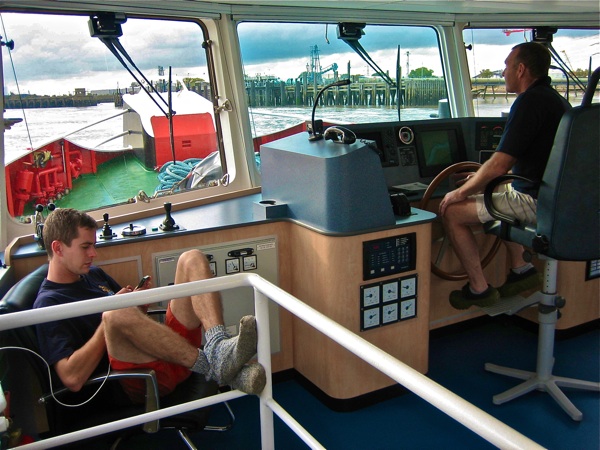

John Dwan & John Hughes – both watermen & lightermen – they were at school together and worked on the Thames over forty years.

William Cory & Sons now known as Cory Environmental, London’s last lighterage company.

Outside the Anchor & Hope
You may also like to read about
Paul Bommer & Christopher Smart & His Cat Jeoffry
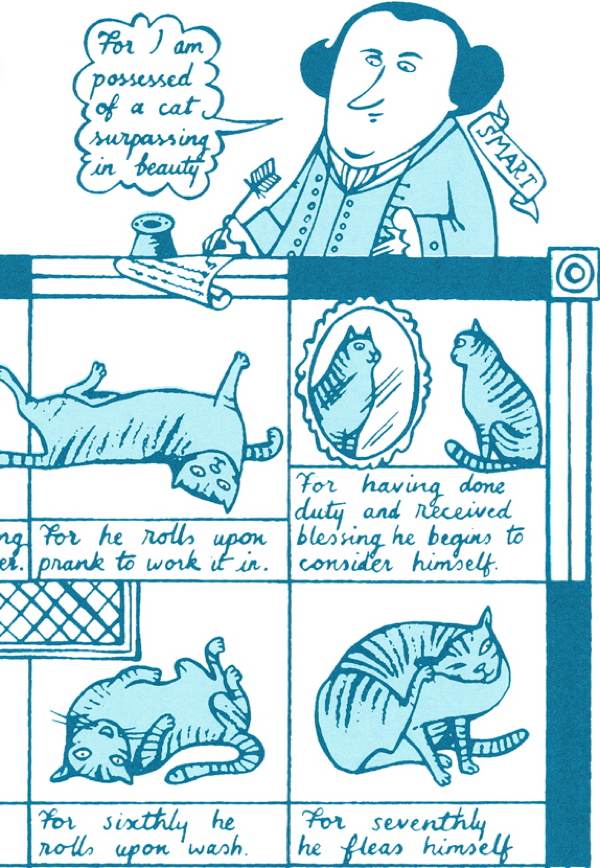
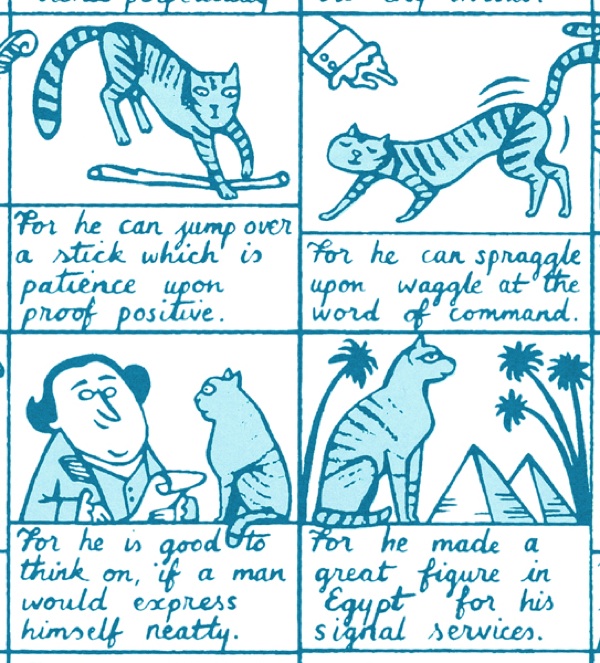
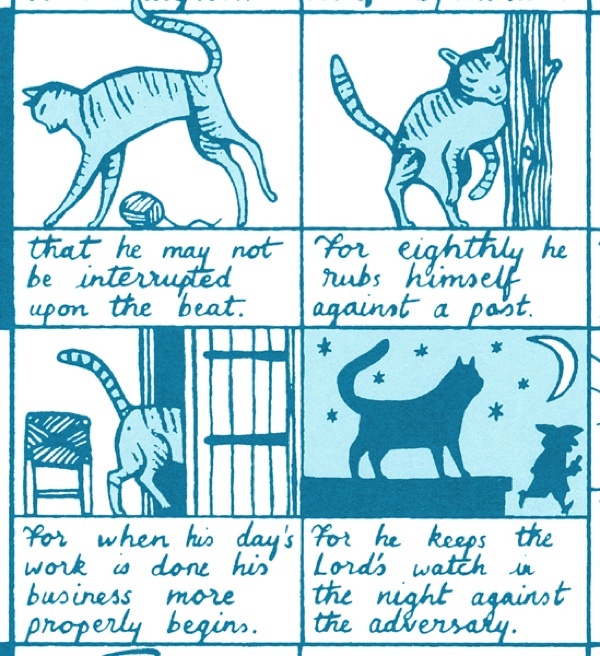
Whenever I walk along Old St, I always think of the brilliant eighteenth century poet Christopher Smart, who once lived here in the St Luke’s Hospital for Lunatics with only his cat Jeoffry for solace, on the spot where the Co-operative and Argos are today. So when artist Paul Bommer asked me to suggest a subject for an illustrated print, I had no hesitation in proposing Christopher Smart’s eulogy to his cat Jeoffry, the best description of the character of a cat that I know. And, to my amazement and delight, Paul has illustrated all eighty-nine lines, each one with an apposite feline image.
In an age when only aristocrats with private incomes were able to be poets, Christopher Smart was a superlative talent who struggled to make his path through the world, and his emotional behaviour became increasingly volatile as result. With small means, he fell into debt whilst a student at Cambridge and even though his literary talent was acknowledged with awards and scholarships, his delight in high jinks and theatrical performances did not find favour with the University. Once he married Anna Maria Canaan, Smart was unable to remain at Cambridge and came to London, seeking to make ends meet in the precarious realm of Grub St. His prolific literary career turned to pamphleteering and satire, publishing hundreds of works in a desperate attempt to keep his wife and two little daughters, Marianne and Elizabeth Ann.
Eventually, he signed a contract to write a weekly magazine, The Universal Visitor, and the strain of producing this caused Smart to have a fit, sometimes ascribed as the origin of his madness. Yet there are divergent opinions as to whether he was mad at all, or whether his consignment to the madhouse was in some way political on the part of John Newbery, the man who was both Smart’s publisher and father-in-law. However, Smart made a religious conversion at this time, and there is an account of him approaching strangers in St James’ Park and inviting them to pray with him.
In Smart’s day, Old St was the edge of the built up city with market gardens and smallholdings beyond. The maps of St Luke’s Hospital show gardens behind and it was possible that like John Clare in the Northamptonshire Lunatic Asylum, Smart was simply left alone to tend the garden and get on with his writing. Consigned at first on 6th May 1757 as a “curable” patient, Smart was designated “incurable” whilst there and subsequently transferred to Mr Potter’s asylum in Bethnal Green as a cheaper option. Meanwhile his wife Anna Maria took their two daughters to Ireland and he never saw them again. In 1763, Smart was released through intervention of friends and lived eight another years, imprisoned for debt in King’s Bench Walk Prison in April 1770, he died there in May 1771.
“For I Will Consider My Cat Jeoffry” was never printed in Smart’s day, it was first published in 1939 after being discovered in manuscript amongst Smart’s papers, and subsequently W.H. Auden gave a copy to Benjamin Britten who wrote a famous setting as part of a choral work entitled “Rejoice in the Lamb” in 1942.
The irony is that the “madness” of Christopher Smart, which was his unravelling as a writer in his own time, signified the creation of him as a poet who spoke beyond his age. Smart is sometimes idenitified as one of the Augustan poets, notable for their formality of style and content, but the idiosyncratic language, fresh observation and fluid form of “For I Will Consider My Cat Jeoffry” break through the poetic convention of his period and allow the poem to speak across the centuries.
It is the tender observation present in these lines that touches me most, speaking of the fascination of a cat as a source of joy for one with nothing else in the world. In fact, Smart was often known as Kit or Kitty and I wonder if he saw an image of himself in Jeoffry and it liberated him from the tyranny of his circumstance. Simply by following his nature, Jeoffry becomes holy in Christopher Smart’s eyes, exemplifying the the wonder of all creation.
It was a triumphant observation for a man who was losing his life, yet it is all the more remarkable that it is solely through this playful masterpiece he is remembered today. He did not know that, at the moment of disintegration, his words were gaining immortality thanks to the presence of his cat Jeoffry. And this is why, whenever I walk along Old St with my face turned to the wind, I cannot help thinking of poor Christopher Smart.

Christopher Smart (1722-71)
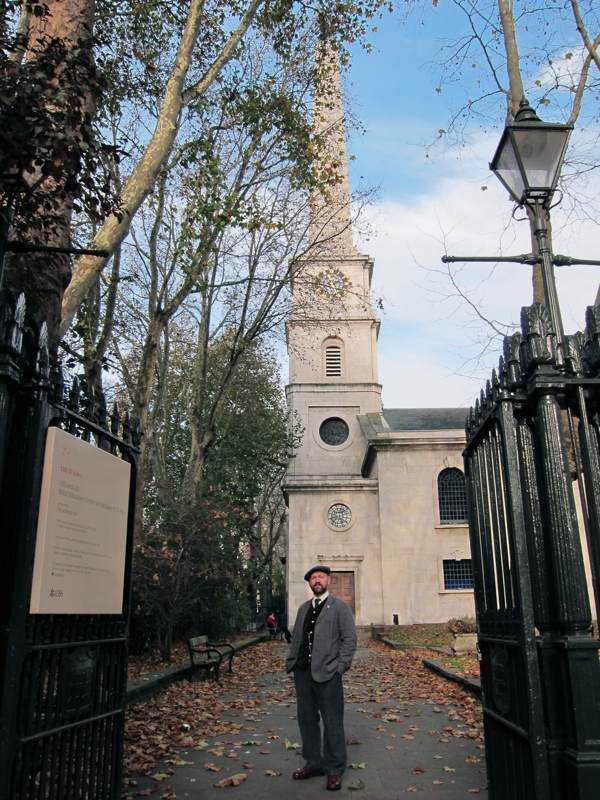
Paul Bommer at St Luke’s, Old St.


The St Luke’s Hospital for Lunatics in Old St where Christopher Smart lived with his cat Jeoffry on a site now occupied by Argos and The Co-operative.

St Luke’s Hospital for Lunatics, Old St, in the nineteenth century.

Paul Bommer in the rose garden on the site of the former St Luke’s Hospital garden where Christopher Smart’s cat Jeoffry once roamed.

Paul Bommer’s print of Christopher Smart’s “For I will consider my cat Jeoffry.”

The Gentle Author’s cat Mr Pussy.

Paul Bommer’s delft tile portrait of Mr Pussy.

Copies of Paul Bommer’s limited edition print of Christopher Smart’s “For I will consider my cat Jeoffry” are available from the Spitalfields Life online shop.
Artwork copyright © Paul Bommer
Archive image from Bishopsgate Institute
You may also like to read about
Boundary Estate Cooking Portraits

This is Julie Begum of the Boundary Women’s Group dishing up a curry that she cooked for Spitalfields Life contributing photographer Sarah Ainslie. It was part of a collaboration between Sarah and members of the group, in which they cooked food and Sarah took pictures – and, as a consequence, both parties have enjoyed getting to know each other over some delicious meals. Naturally, I took the opportunity to join the feast, dropping in to one of the weekly meetings, that take place every Tuesday morning at the St Hilda’s Community Centre on the Boundary Estate, to learn something of what it is all about.
“I’ve been coming since 2005,” explained Sabeha Miah, who runs the group today, “I moved here and I had a young son, and I felt very isolated – but being in the group gives you a chance to breathe and you feel part of something bigger.” When Sabeha first joined, the need was for language classes and so the group all learnt English together. Subsequently, interests have broadened into other kinds of activities including a financial literacy course, the creation of an ambitious tapestry that was displayed at the Museum of London and the development of a food co-op which allows local people to buy food at low prices.
But at the core of the endeavour is cooking and conversation – providing a rare opportunity for these women to talk freely amongst their peers and discuss serious issues such as politics, sex education and the place of religion, all whilst preparing and eating a meal together. “I’m forty-two and I have been coming three or four years,” revealed Julie Begum, talking plainly, “We talk about being women in London, trying to run our lives and make other people happy too – all the things we need to do.”
Once the food was cooked, we helped ourselves from the dishes laid upon the counter, engendering lively curiosity over the different recipes employed, which gave full scope to the wit and raucous humour of the members of the group. “I really look forward to coming every Tuesday. My child is seven and I am at home the rest of the week,” the softly spoken Halima Khatun confided to me as the conversation level subsided and a hush descended upon the table while we savoured our food. “What could be more civilised?” I thought as a satisfied silence presided, “- than a group of women meeting each week to share their experiences over lunch.”
Sarah offered the opportunity to the members to have their portraits taken and you see some examples of these collaborations here. “The consensus was they wanted the portraits to be quite formal and they brought outfits to wear,” explained Sarah,“they chose how they wanted to present themselves.” From Sarah’s fascination and the excitement of the women at exploring photographic images of themselves, I could see this was only the beginning. “It quickly evolved to the point where they said, “Are you coming next week?”” Sarah confessed to me, delightedly, “I’ve become part of the group now and I’m going back to do more.”

Sabeha Miah’s recipe for Onion Bhajis Finely slice some onions, coriander, fresh chillies and ginger – roughly mix up together by hand. To this mixture add half and half mix besan (chick pea flower) and plain flour until all mixture is coated. Slowly add some warm water to this mixture until a smooth batter is formed around the onions etc (adding more water/bison/flour if you feel it is needed). In a deep frying pan with an inch depth of hot vegetable oil, slowly drop ping-pong ball sized blobs of the mixture in, turning once or twice until golden, then remove. Eat while fresh and warm!

Sufia’s Fish Curry Recipe Fry onion, green chili, bay leaves, curry powder, salt and coriander in oil, then add fish, then water. No need to cook long – the fish is ready quick.


Mahmuda Jaigirdas – in her Asian clothes

Sultana Begum – My husband likes to get in the kitchen. I used to say, “Get out, I’m the woman! The kitchen is my domain – if you got any suggestions you can cook it yourself!” Now he does cook, things he’s watched me make. He says, “You have to stand there and really lovingly watch your curry while it cooks.” I say, “No,” while it simmers, I go on the internet.

Mahmuda Jaigirdas – in her western clothes


Julie Begum’s recipe for Sardine Curry This is my favourite quick home cooking recipe after a long hard day’s work. Ingredients – half a kilo of sardines, two tomatoes, one onion, three green chilis, one teaspoon of red chili powder, half a teaspoon of turmeric powder, one teaspoon of coriander, one piece of ginger, eight cloves of garlic, one dessert spoon of lemon juice and salt as required. Procedure – Cut and clean the fresh sardines (score on both sides) or just open the tins ( I prefer the ones in tomato sauce). Heat oil in a pan. Add sliced onion, green chili, ginger, garlic and saute well.To this, add red chili powder, turmeric powder, salt, lemon juice and tomato slices. Saute well until tomatoes are done. Add water as required and until fish are cooked. Serve with fresh coriander and a slice of lemon with white basmati rice. Yum!

Sabeha Miah – her recipe for simple Dhal Add dhal (two hundred grams of red lentils) to a pot and wash until water runs clean. Put on a stove on a medium heat. Add a teaspoon of haldi (turmeric), salt to taste and a bay leaf. Leave pot covered, stirring from time to time, until all the dhal has turned mushy. Once at this stage – In a frying pan containing two tablespoons of hot oil, add four cloves of crushed garlic and three to four dried red chilis. When garlic has browned and chilis have turned a very dark red, add to the pot of dhal and stir in ( be careful as the oil and dhal will spit). Add chopped coriander to finish.

Jobeda’s recipe for Ghajjar Ka Halwar Ingredients: dozen grated carrots, half pint of milk, sugar, cinnamon sticks/cardamon, little bit of single cream, raisins, ghee and mixed nuts. Step one – boil milk with sugar, cinnamon sticks, cardamon, add the grated carrots and let it cook for thirty minutes. Step two – add single cream, for extra sweetness, and raisins after fifteen/twenty minutes. Step three – stir in ghee in the last five minutes. Step four – add mixed nuts for decoration. End result all milk should be gone.


Photographs copyright © Sarah Ainslie
You may also like to take a look at the Curry Chefs of Brick Lane
Third Annual Report
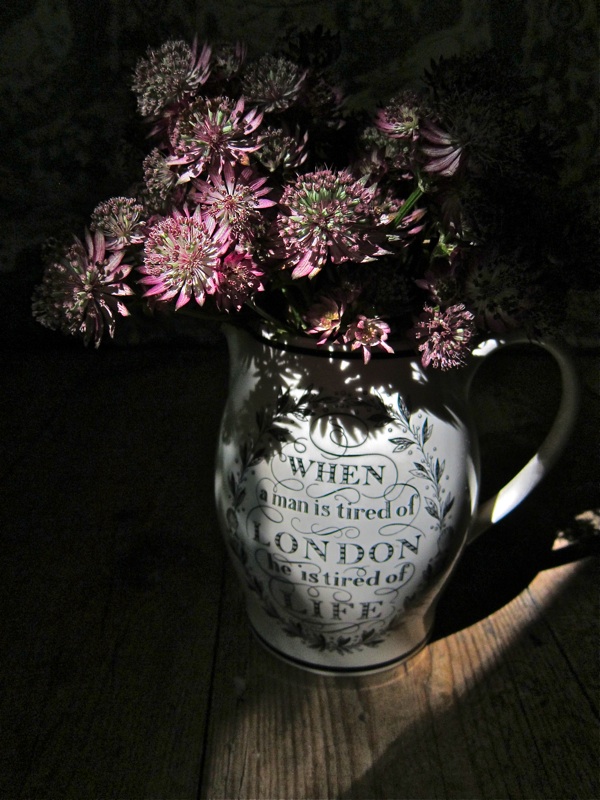
Three years ago, I set out in pursuit of a hare-brained ambition to write ten thousand stories and now – even if you discount my distinguished guest authors, the picture sets and the occasional repeats – I have written over a thousand. Already this number enters the realm of more than I can grasp, but it also strengthens my resolve by making the possibility of reaching ten thousand seem more credible.
I often think of the “Arabian Nights,” one of my favourite collections of stories. I have so many different versions upon my shelves and over the years I have amassed a trove of illustrations, posters, cards, scraps, films and even figures relating to the “Tales Of The Thousand & One Nights.”
You will recall the Sultan was convinced of the innate deceitfulness of women and therefore unable to find a satisfactory wife, executing each of the failed candidates, which was surely the ultimate deterrent to successful matchmaking. Yet Scheherazade conceived the ploy of telling the Sultan a story each night and not finishing it until the next night, when she commenced another one immediately. The Sultan was rapt and, after one thousand and one nights, Scheherazade and he had produced three children. By then he had no intention of executing the beloved mother of his family. But, most significantly, through her tenacious pursuit of storytelling, Scheherazade revealed the common humanity she shared with the Sultan and, in doing so, educated him beyond his moral prejudice against women. The multiplicity of tales in the “Arabian Nights” show that everyone has motives for their actions which resist simple moral judgement and that neither sex is more or less deceitful than the other.
Even though – thankfully – I do not have the possibility of a death sentence hanging over me at dawn, I feel I may now presume to have some special understanding of the circumstance of Scheherazade, because I know what it means to tell a story every night for a thousand nights. Unlike her, my imperative is self-imposed and I am blessed with a sympathetic audience, although I do feel the need keenly to give of my best each night and I often work into the early hours until weariness begins to take grasp upon my consciousness. My imagination is released when the tethers of daily concerns are cut away, as my thoughts drift towards the inevitable sleep, and this drowsy moment is commonly when the nightly essay takes flight. Over the course of writing these first thousand stories, my mind has become trained to berth each piece of writing before I take my slumber and I know of readers in other time zones who read my new story each night before they go to sleep, which makes these nocturnal tales of a kind.
After the first three years of my “Tales Of The Ten Thousand & One Nights,” only the opening of the narrative has unfurled and, like Scheherazade, I do not know where it will lead. Like her, I am also part of this story as well as being the teller. But, unlike Scheherazade, who knew the stories she was going to tell, mine are revealed to me as I learn about the people around me day by day and new characters are introduced all the time. It makes the evolution of these tales a shared discovery for both the reader and the writer equally – though I sometimes wonder if, perhaps, there is an overview which is granted to you, my audience, that is not available to me.
For many years almost no-one read or even saw what I wrote, but doggedly I carried on writing just the same because I knew nothing else. All that time, I was searching for a direction that I found quite unexpectedly when I began to write Spitalfields Life, even though old friends remind me now that I was always telling them stories of the kind which fill these pages – as if it were somehow inevitable. Yet the wonder has been that I have discovered such an appreciative audience which has brought a joyous momentum to my work and been instrumental in the success of the book of Spitalfields Life too.
Naturally, each of these anniversaries proposes a moment of assessment and I must confess to you that, as a writer who worked for so long without readers, recognition, or even income, this has been an extraordinary year of fulfilment and delight. Let me admit, I chose ten thousand stories as my target because I calculated this was the number of days I had until I reached the age at which both my parents died. It was a conceit to force me to make the most of my time. Since I began, more than a tenth of those days have passed but I can look back and know that they were well spent, and this permits me to look forward in excited anticipation to those which lie ahead.
So, I hope you will not find it entirely whimsical if I suggest that, after more than a thousand stories, I may now lay claim to the title of “the Scheherazade of Whitechapel.”
And thus, with all these thoughts in mind, I come to the end of this third year of Spitalfields Life.
I am your loyal servant
The Gentle Author
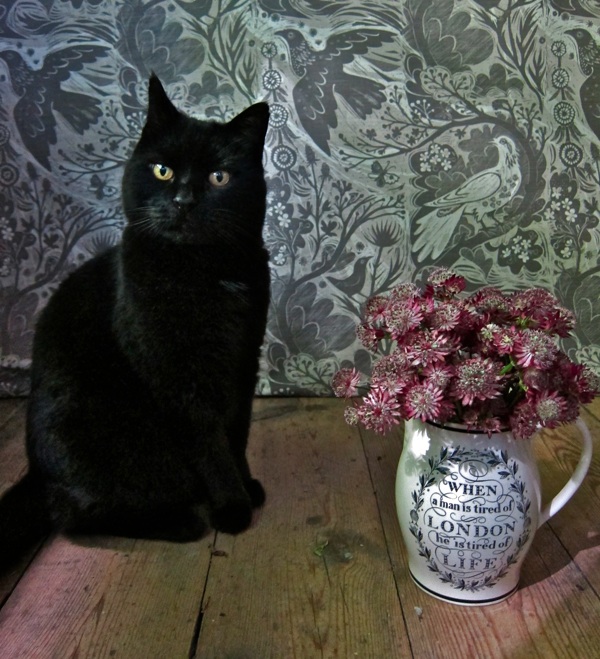

A thousand stories’ worth of notebooks.

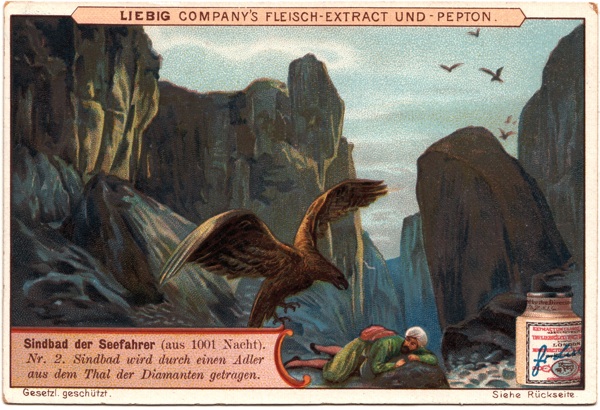




The Adventures of Sinbad the Sailor, chromolithographic collector’s cards offered with Liebig’s Meat Extract, Antwerp 1901.
For the next week I shall be revisiting some favourites from the past year and then resume with new stories on Monday 3rd September.
You may also like to read
So Long, Nina Bawden
Novelist Nina Bawden, who was a friend and inspiration to me, died yesterday aged eighty-seven and I republish my profile of her as a tribute to a woman of outstanding literary talent and moral courage.

In recent years, a recurring highlight in my existence has been the opportunity to walk from Spitalfields through Hoxton and along the canal path up to Islington to enjoy a light lunch with the sublimely elegant novelist Nina Bawden, who lived in an old terrace backing onto the canal and whom I considered it a great honour to count as my friend.
I first met Nina when I took my copy of “Carrie’s War” along to a bookshop and queued up with all the hundreds of other children to have it signed by the famous author. She appeared to my child’s eyes as the incarnation of adult grace and authoritative literary intellect, and it is an opinion that I have had no reason to qualify, except to say that my estimation of Nina grew as I came to know her.
Years after that book signing, Kaye Webb, Nina’s editor who had encouraged my own nascent efforts at writing, rang me up at six-thirty one evening to say she had just remembered Nina and her husband Austen Kark were coming to dinner that very night and she had nothing to give them. At this time Kaye was over eighty and housebound, so I sprinted through the supermarket to arrive breathless at Kaye’s flat beside the canal in Little Venice by seven-thirty – and when Nina and Austen arrived at eight, dinner was in the oven.
They were an impressive couple, Austen (who was Head of the BBC World Service) handsome in a well-tailored suit and Nina, a classically beautiful woman, stylish in a Jean Muir dress. I regret that I cannot recall more of the evening, but I was working so hard to conceal my anxiety over the hasty cuisine that I was completely overawed. Naturally, in such sympathetic company, it all passed off smoothly and I only revealed the whole truth to Nina more than twenty years later after Kaye and Austen had both died. Given this unlikely background to our friendship, it was my great pleasure to get to know Nina a little better once we became “neighbours” on this side of London.
Born in East London in 1925, Nina was evacuated during the blitz and then became amongst the first of her post-war generation to go up to Oxford. At Somerville College, she had the temerity to attempt to persuade fellow undergraduate Margaret Thatcher (Margaret Roberts as she was then) to join the Labour Party, that enshrined the spirit of egalitarianism which defined those years. Even then, young Margaret displayed the hard-nosed pragmatism that was her trademark, declaring that she joined the Conservatives because they were less fashionable and consequently, with less competition, she would have a better chance of making it into parliament.
The catalogue of Nina’s literary achievement, which stretches from the early fifties into the new century, consists of over forty novels, twenty-three for adults and nineteen for children. A canon that is almost unparalleled among her contemporaries and that, in its phenomenal social range and variety, can be read as an account of the transformation brought about by the idealistic post-war culture of the Welfare State, and of its short-comings too.
Nina met Austen, the love of her life, by chance on the top of a bus in 1953 when they were both in their twenties and married to other people. They both divorced to remarry, finding happiness together in a marriage that lasted until Austen’s death in 2002. At first,they created a family home in Chertsey, moving in 1979 to Islington, when it was still an unfashionable place to live. Although the terrace where she lived is now considered rather grand, Nina told me she understood they were originally built for the servants and mistresses of those on the better side of Islington.
Nina was someone who instinctively knew how to live, and through her persistent application to the art of writing novels and in her family life with Austen and their children, she won great happiness and fulfillment. I know this because I sensed it in her bright spirit and powerfully magnanimity, but equally I knew that her life was touched with grief and tragedy in ways that gave her innate warmth and generosity an exceptional poignancy. When Nina’s 1972 novel “The Birds on the Trees,” was shortlisted for the lost Booker prize in 2010, she re-read it and recalled it had been inspired by the suicide of her son Nicky, “When bad things happen, you absorb them into yourself and make use of them in novels.” she said soberly, “In the case of Austen, I had a fight with the railways.”
On 1oth May 2002, Nina and Austen boarded a train at Kings Cross to got to Cambridge for a friend’s birthday party. They never arrived. The train derailed at over one hundred miles an hour and Nina’s carriage detached itself, rolling perpendicular to the direction of travel and entering Potters Bar station to straddle the platforms horizontally. Austen was killed instantly and Nina was cut from the wreckage at the point of death, with every bone in her body broken. In total, seven people died and more than seventy were injured that day.
After multiple surgeries and, defying the predictions of her doctors, Nina stood up again through sheer willpower, walked again and returned to live in the home that she had shared with Austen. In grief at the loss of Austen and no longer with his emotional support, Nina found herself exposed in a brutally politicised new world, “I suppose I am lucky to have lived so long believing that most men are for the most part honourable. And lucky to have taken a profession in which owning up and telling the truth is rarely a financial disadvantage” she wrote. Nothing in her experience prepared her for the corporate executives of the privatised rail companies who refused to admit liability or even apologise in case their share price went down. It was apparent at once that the crash was caused by poorly maintained points as the maintenance company had cut corners to increase profitability at the expense of safety, but they denied it to the end.
Refused legal aid by a government who for their own reasons deemed the case of the survivors seeking to establish liability as “not in the public interest,” it was only when Nina stepped forward to lead the fight herself, setting out to take the rail companies to the High Court personally, that they finally admitted liability. If Nina had lost her case, she risked forfeiting her home to pay legal costs. But after losing so much, inspired by her love for Austen, Nina was determined to see it through and, in doing so, she won compensation for all the survivors.
You can read Nina’s own account of this experience in “Dear Austen,” a series of letters that she wrote to her dead husband to explain what happened. “When we bought tickets for this railway journey we had expected a safe arrival, not an earthquake smashing lives into pieces,” wrote Nina to Austen,“I dislike the word ‘victim’. I dislike being told that I ‘lost’ my husband – as if I had idly abandoned you by the side of the railway track like a pair of unwanted old shoes. You were killed. I didn’t lose you. And I am not a victim, I am an angry survivor.”
Sometimes extraordinary events can reveal extraordinary qualities in human beings and Nina Bawden proved herself to be truly extraordinary, not only as a top class novelist but also as a woman with moral courage who risked everything to stand up for justice. It is one thing to write as a humanitarian, but is another to fight for your beliefs when you are at your most vulnerable – this was the moment when Nina transformed from writer to protagonist, and became a heroine in the process. Nina may not have looked like an obvious heroine because she was so fragile and retiring, but her strength was on the inside.
Whenever I visited Nina, my sanity was restored. I walked home to Spitalfields along the canal and the world seemed a richer place as I carried the aura of her gentle presence with me. Concluding our conversation in the study one day, before we went downstairs to enjoy our lunch – on what turned out to be one of my last visits – Nina smiled radiantly to me and said, ” I’ve decided to get on with my novel…” in a line that sounded like a defiant challenge to the universe.
Our final conversation was when, after a silence of many months, Nina rang to offer her congratulations on my book of Spitalfields Life, and it made me realise that our friendship had travelled a long way since we first met. Now it is with great regret that – unlike Carrie in Nina’s most celebrated book – I must accept I can never go back. l shall never walk back along the towpath to have lunch with Nina again, though I shall carry her inspiration with me for always.
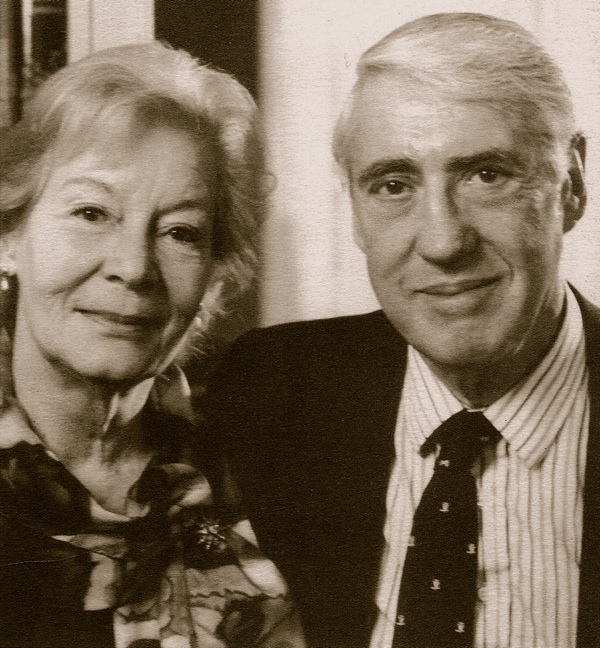
Nina Bawden (1925-2012) with her husband Austen Kark (1926–2002)